Persona
Tommaso Tesei
Scholar of late-antique traditions and the Quran who proposes an earlier layer for the Syriac Alexander Legend.
Variantes del nombre: Tommaso Tesei
Contexto y fuentes →Una herramienta de lectura
Definiciones breves de nombres, conceptos y lugares. Abra un registro para leer su contexto, sus fuentes y los materiales relacionados.
1047 definiciones
Persona
Scholar of late-antique traditions and the Quran who proposes an earlier layer for the Syriac Alexander Legend.
Variantes del nombre: Tommaso Tesei
Contexto y fuentes →
Modern AI-generated conceptual scene of a scholastic study; not a portrait of Thomas Aquinas or a documented reconstruction of his room or manuscripts
Persona
Thomas Aquinas (c. 1225–1274): Dominican philosopher and theologian whose unfinished Summa theologiae examines divine being and simplicity, immutability, and the relationship of reasoning to revelation.
Variantes del nombre: Thomas Aquinas, Aquinas, Thomas of Aquino
Contexto y fuentes →Persona
Scholar of Christian apocrypha who edited Greek and Syriac infancy traditions.
Variantes del nombre: Tony Burke
Contexto y fuentes →Persona
Norwegian scholar of the New Testament and Philo of Alexandria, professor emeritus since 2014.
Variantes del nombre: Torrey Seland
Contexto y fuentes →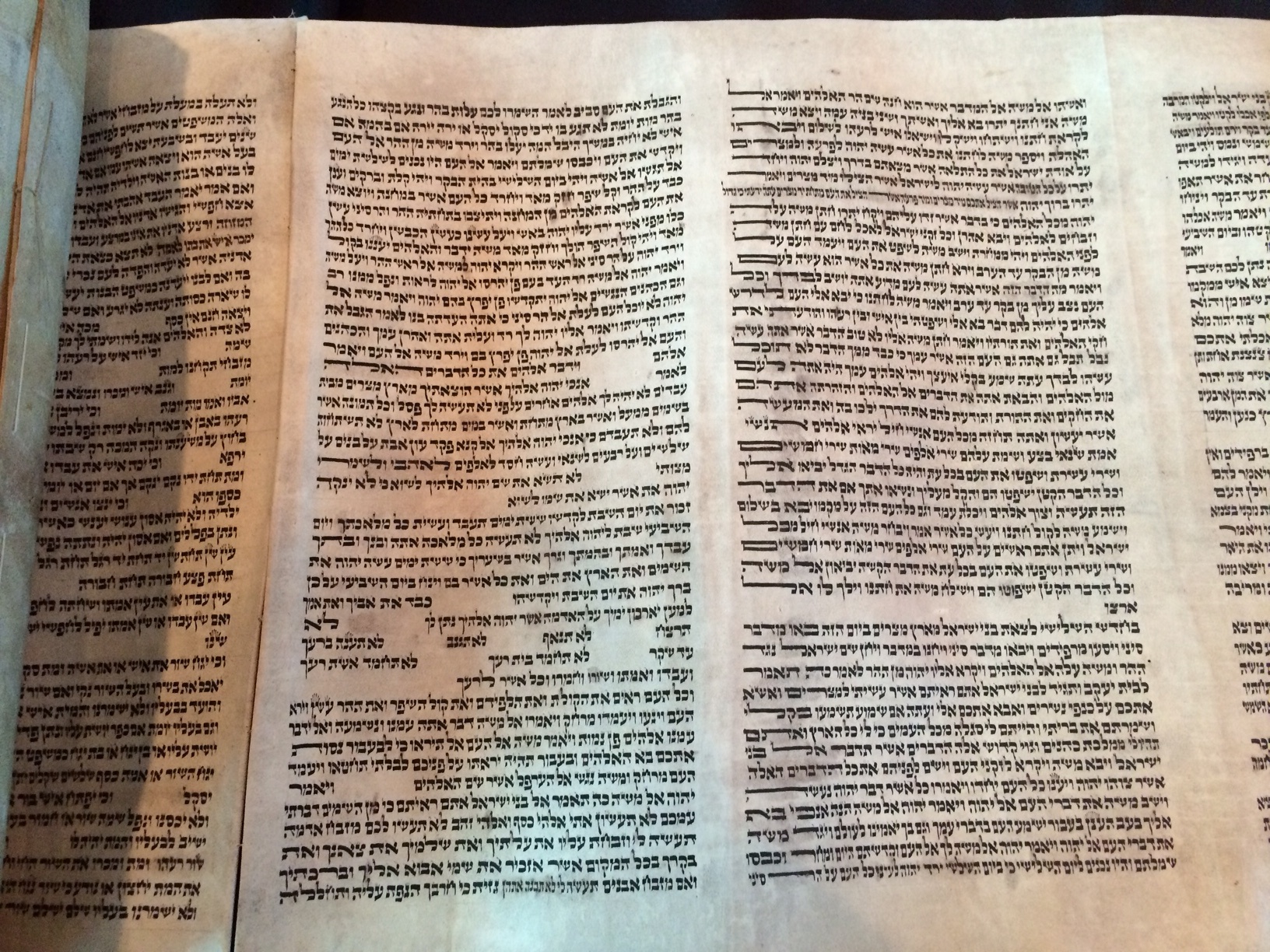
A Torah scroll partly unrolled for reading, photographed by Jacob Gucker on 11 February 2016. It illustrates the scroll format and Hebrew writing; the file page does not document this copy’s date or location. It is not a dated witness to the books’ composition
Entidad
The first five books of the Jewish and Christian Bible: Genesis, Exodus, Leviticus, Numbers and Deuteronomy. They combine narrative and law from creation to Moses’ death; in Jewish usage, “Torah” can also encompass a wider body of authoritative teaching.
Variantes del nombre: Torah, Pentateuch, five books of Moses
Contexto y fuentes →Persona
Bar-Ilan Hebrew Bible scholar studying prophecy, temples and Judah in ancient Near Eastern contexts.
Variantes del nombre: Tova Ganzel
Contexto y fuentes →
Branching paths symbolize the circulation of images and stories; a newly generated metaphorical cover, not an artifact or a map of proven transmission
Entidad
An explanatory model in which several texts draw on circulating stories or imagery; it proves neither direct copying nor a particular lost original on its own.
Variantes del nombre: Shared tradition
Contexto y fuentes →
Distinct claims: population contact alone does not prove reading or narrative transfer
Entidad
The passing-on of words, narratives or knowledge through hearing, performance and learning, sometimes alongside writing; degrees of stability vary with genre, setting and controls.
Variantes del nombre: Oral transmission
Contexto y fuentes →
Modern generated conceptual cover: intertwined light above an open book evokes a history of interpretation; it is not an ancient object, an image of the divine being, or evidence for the Trinity’s origins
Entidad
Christian formulation of divine unity and Father/Son/Spirit distinction, with a history of debate.
Variantes del nombre: Trinity, Holy Trinity, trinitarian
Contexto y fuentes →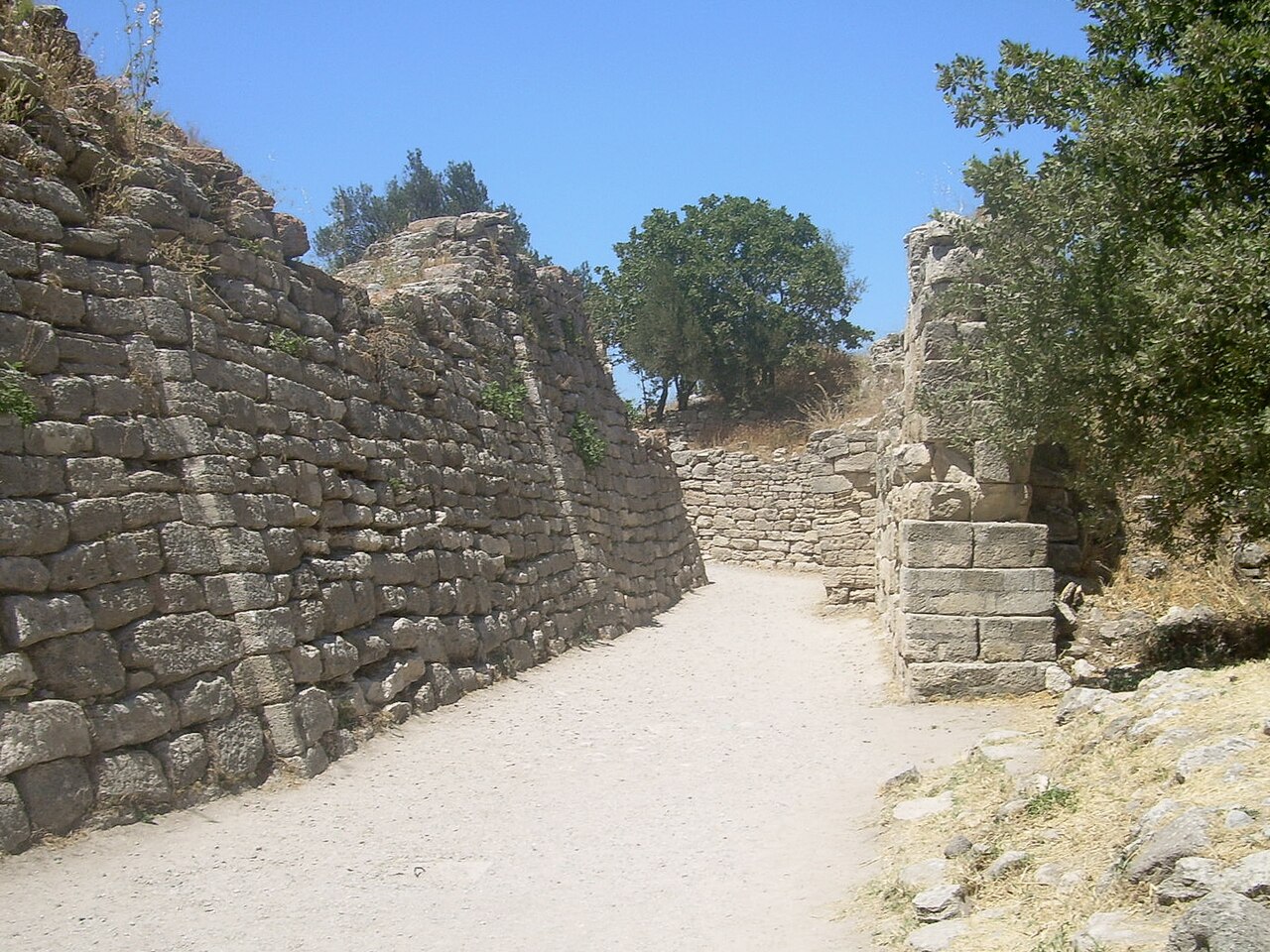
Archaeological walls at Troy/Hisarlik in present-day Turkey, photographed in 2012. The site’s remains alone do not establish the Iliad’s detailed account of the Trojan War
Yacimiento
Archaeological site in northwestern Turkey associated with Troy in Greek tradition.
Variantes del nombre: Troy / Hisarlık
Contexto y fuentes →Persona
Tryggve N. D. Mettinger (1940–2023) was a Swedish Old Testament scholar and professor of Old Testament exegesis at Lund from 1978 to 2003.
Variantes del nombre: Tryggve N. D. Mettinger
Contexto y fuentes →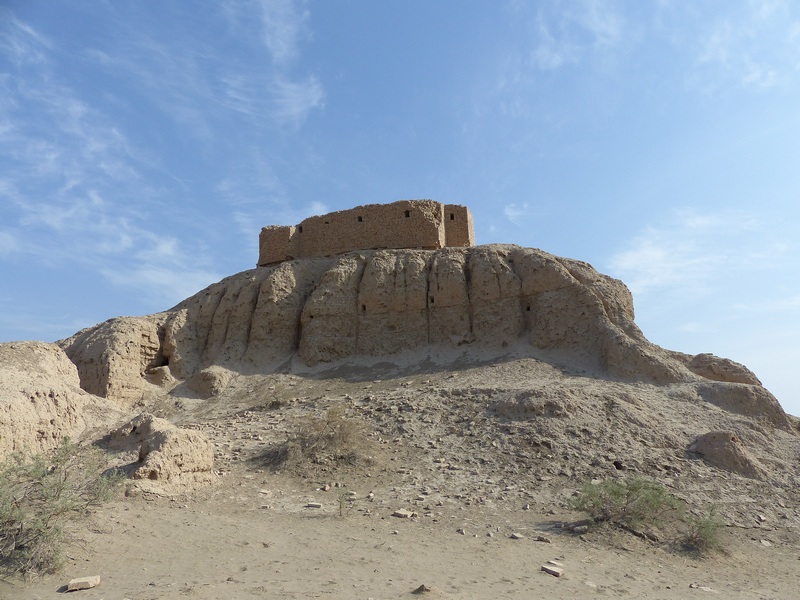
View of the archaeological site of Nippur, Iraq, photographed by Marjon Verburg. Context for the area associated with Tummal, not an identification of Tummal or Ninlil’s temple; no date is assigned to the visible building
Yacimiento
Cult centre of Ninlil in the Nippur region, not securely located; remembered in a text about successive royal restorations.
Variantes del nombre: Tummal
Contexto y fuentes →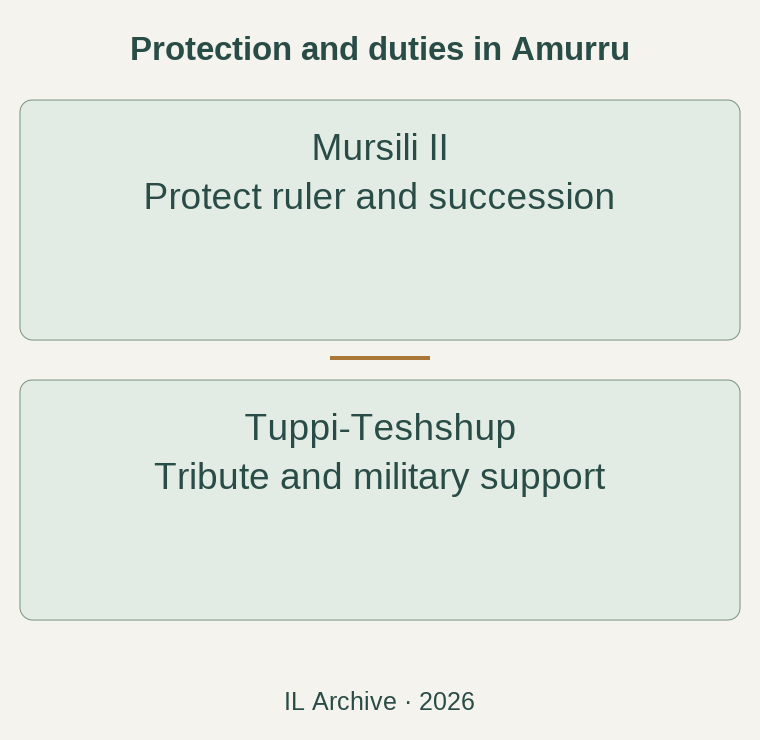
Modern diagram explaining the specified relationship in the witness; not an ancient tablet or portrait, or a boundary map
Persona
Ruler of Amurru in the late fourteenth century BCE and party to Mursili II’s treaty.
Variantes del nombre: Tuppi-Teshshup
Contexto y fuentes →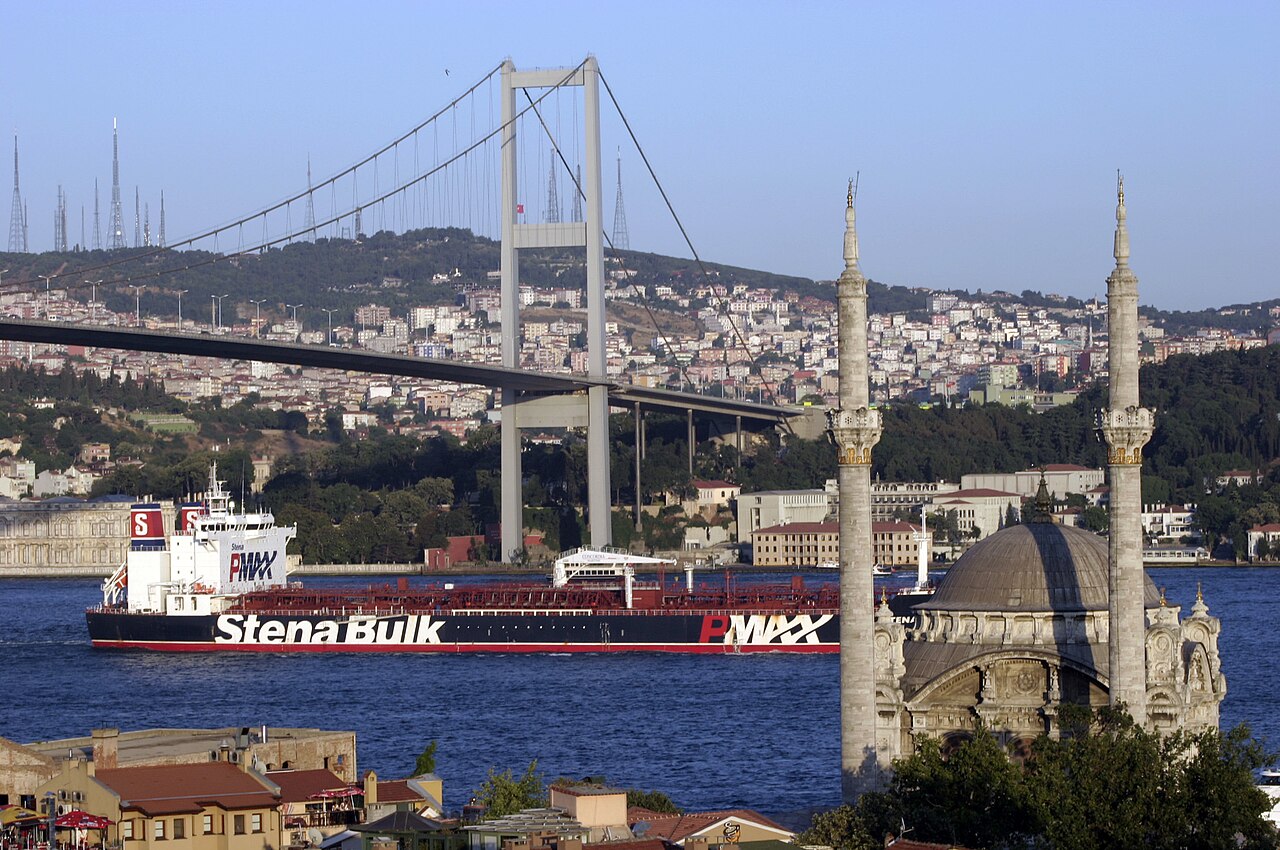
Ortaköy Mosque and the Bosphorus Bridge in Istanbul, Turkey, June 2008. A modern view of the strait and the bridge joining the city’s European and Asian shores
Yacimiento
Turkey is a modern country including Anatolia and territory in southeastern Europe
Variantes del nombre: Turkey, Türkiye
Contexto y fuentes →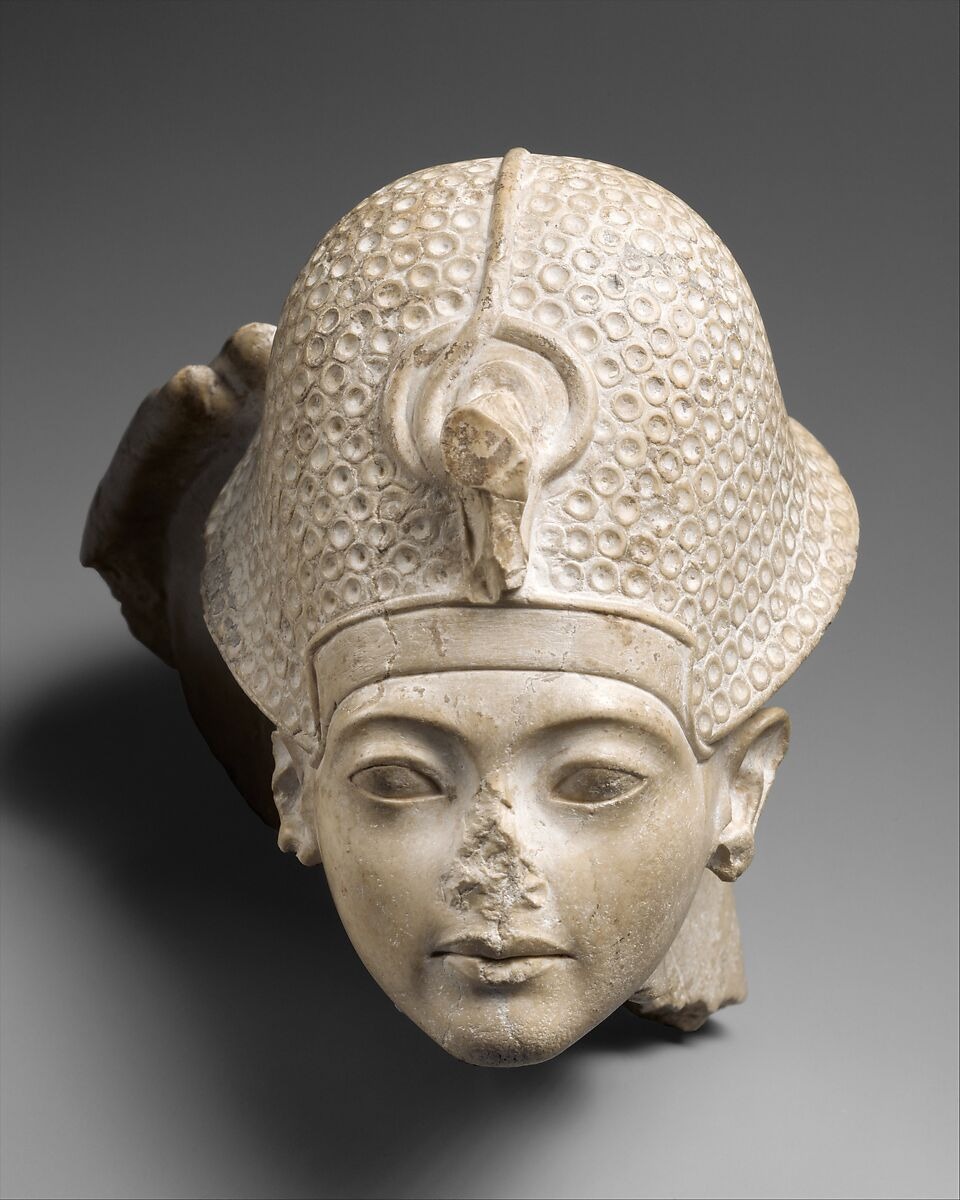
Tutankhamun’s head and remains of Amun’s hand on the crown, limestone, Dynasty 18, The Met 50.6. Fragment of a statue group, not a complete Amun statue; context for renewed royal relations with Amun. Uncropped display copy
Persona
Late Eighteenth-Dynasty Egyptian king, originally Tutankhaten, later Tutankhamun as official patronage of Amun resumed. Famous for tomb KV62; aspects of his parentage and death are debated.
Variantes del nombre: Tutankhamun, Tutankhamen, Tutankhaten, Nebkheperure
Contexto y fuentes →Persona
Assyriologist and scholar of Mesopotamian religion, emeritus professor at Brandeis University.
Variantes del nombre: Tzvi Abusch
Contexto y fuentes →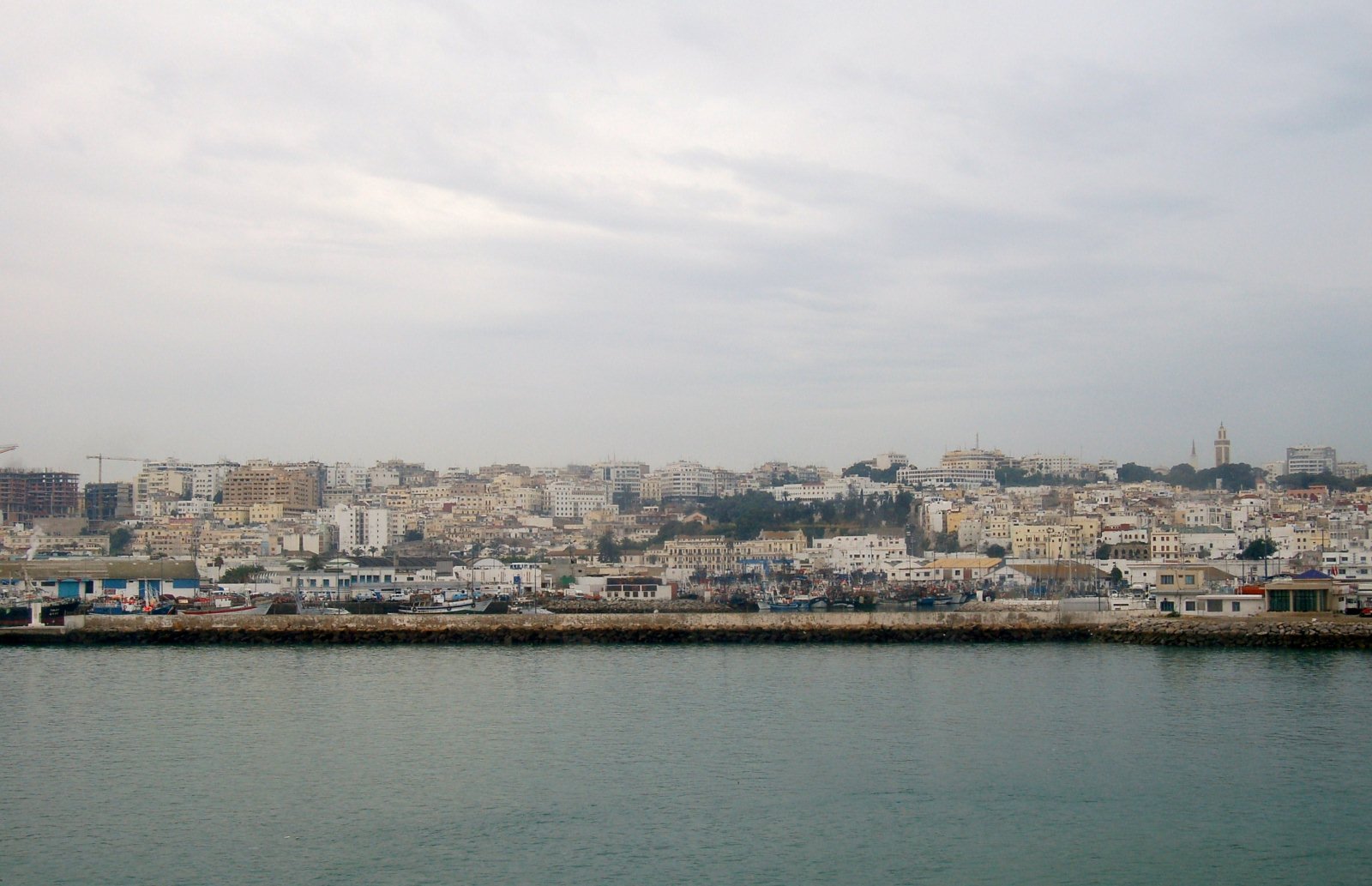
Tangier and its port from the sea, 18 September 2008; a modern city view, not a confirmed location of Moses' story
Yacimiento
City in northern Morocco by the Strait of Gibraltar, proposed in one interpretation of the Quran's meeting of the seas.
Variantes del nombre: Tangier, Tanger
Contexto y fuentes →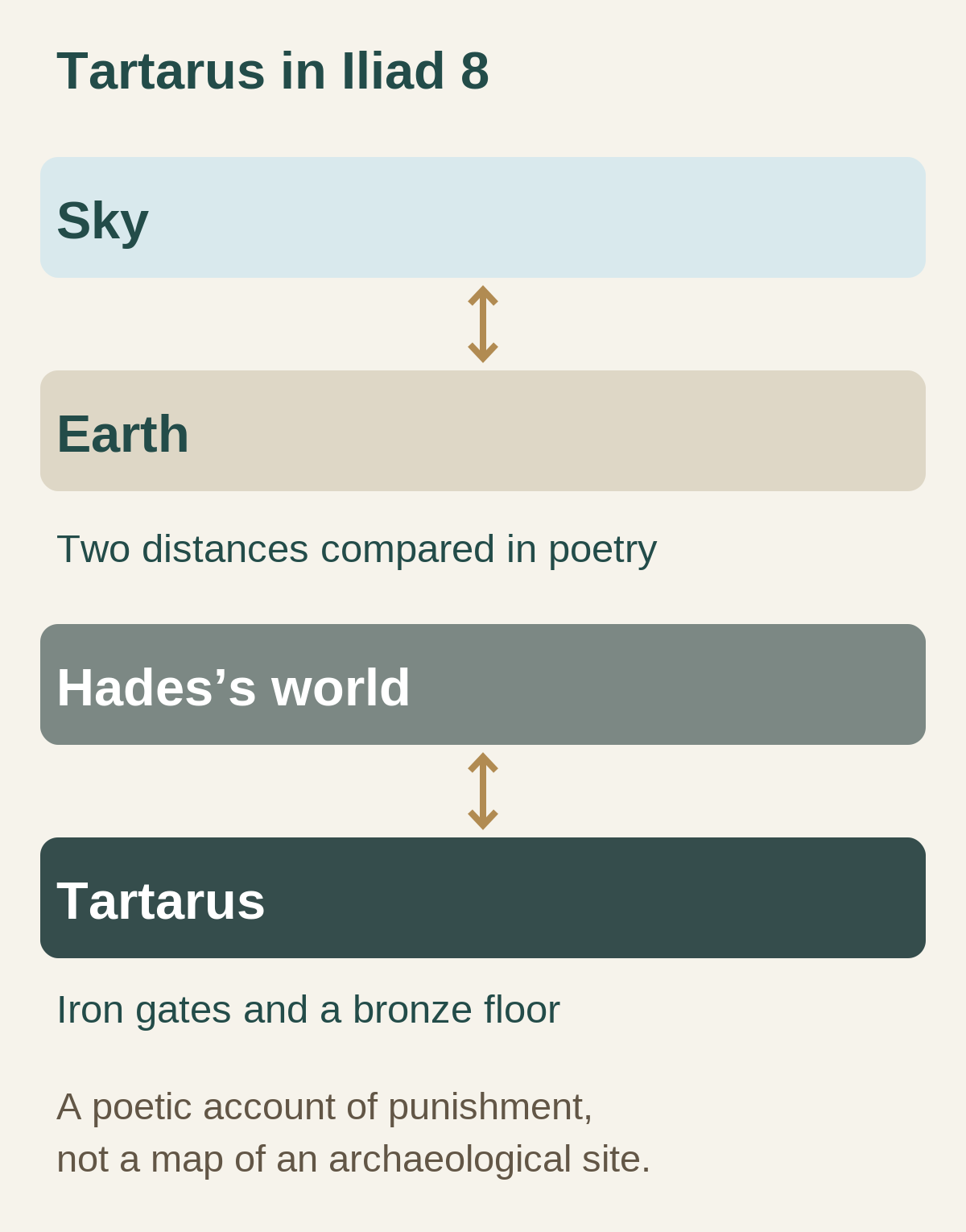
Modern explanatory diagram of Tartarus in Iliad 8.13–16: depth compared with the distance between sky and earth, with iron gates and a bronze threshold. A poetic comparison, rather than an archaeological map
Entidad
Deep abyss in Greek poetic imagination, named by Zeus as a place of punishment in the Iliad.
Variantes del nombre: Tartarus
Contexto y fuentes →
Rocky Black Sea coast in the Crimean peninsula, modern photograph. Regional context for Tauris, not the site of Iphigenia's temple in the play
Yacimiento
Ancient Greek name for Taurian territory on the Black Sea, associated with today's Crimean peninsula; the setting of Euripides' Iphigenia play.
Variantes del nombre: Taurica, Land of the Taurians
Contexto y fuentes →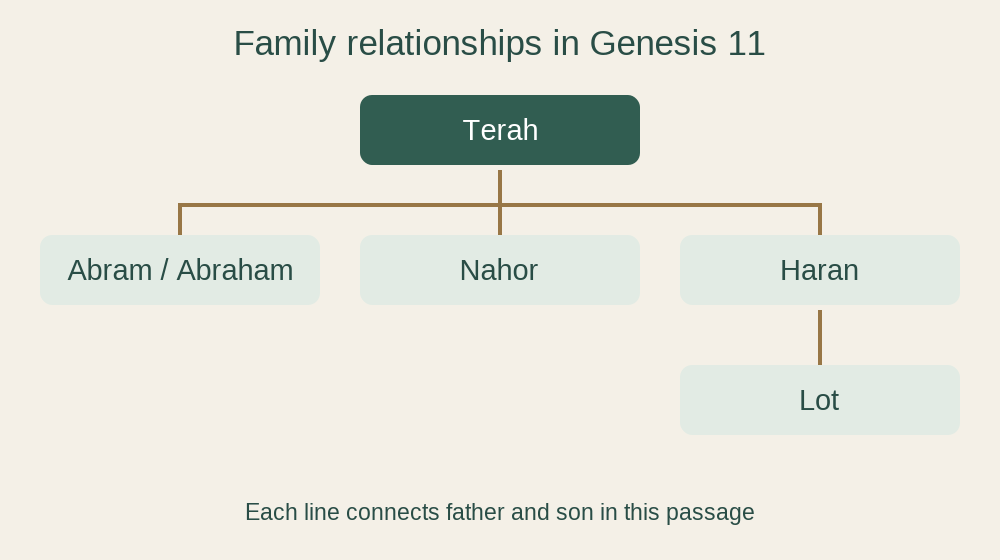
Modern diagram of family relationships in Genesis 11; the highlighted node identifies this entry’s figure. It explains the narrative’s genealogy, not physical likenesses or independent proof of their lives
Persona
Father of Abram, Nahor and Haran in Genesis; later idol-breaking narratives give him different roles.
Variantes del nombre: Terah
Contexto y fuentes →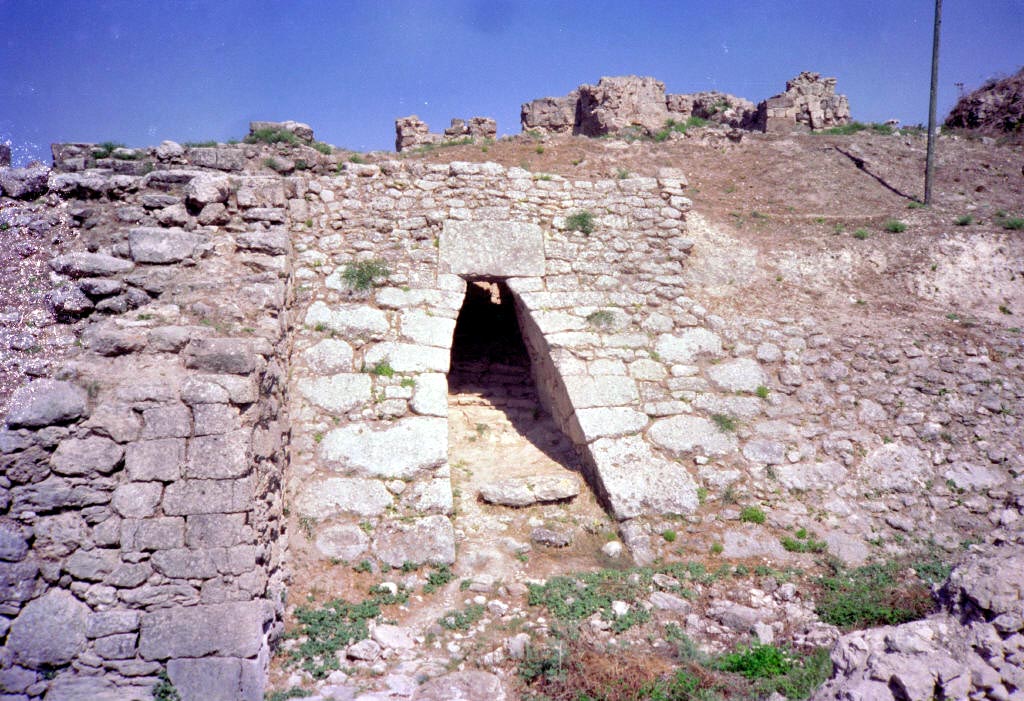
Entrance to Ugarit at Ras Shamra, near Latakia; photographed in August 1989. A modern photograph of the archaeological site, reused unchanged
Yacimiento
Ancient city and kingdom at Ras Shamra on the Syrian coast, flourishing between the fourteenth and early twelfth centuries BCE and preserving multilingual archives.
Variantes del nombre: Ugarit, Ras Shamra
Contexto y fuentes →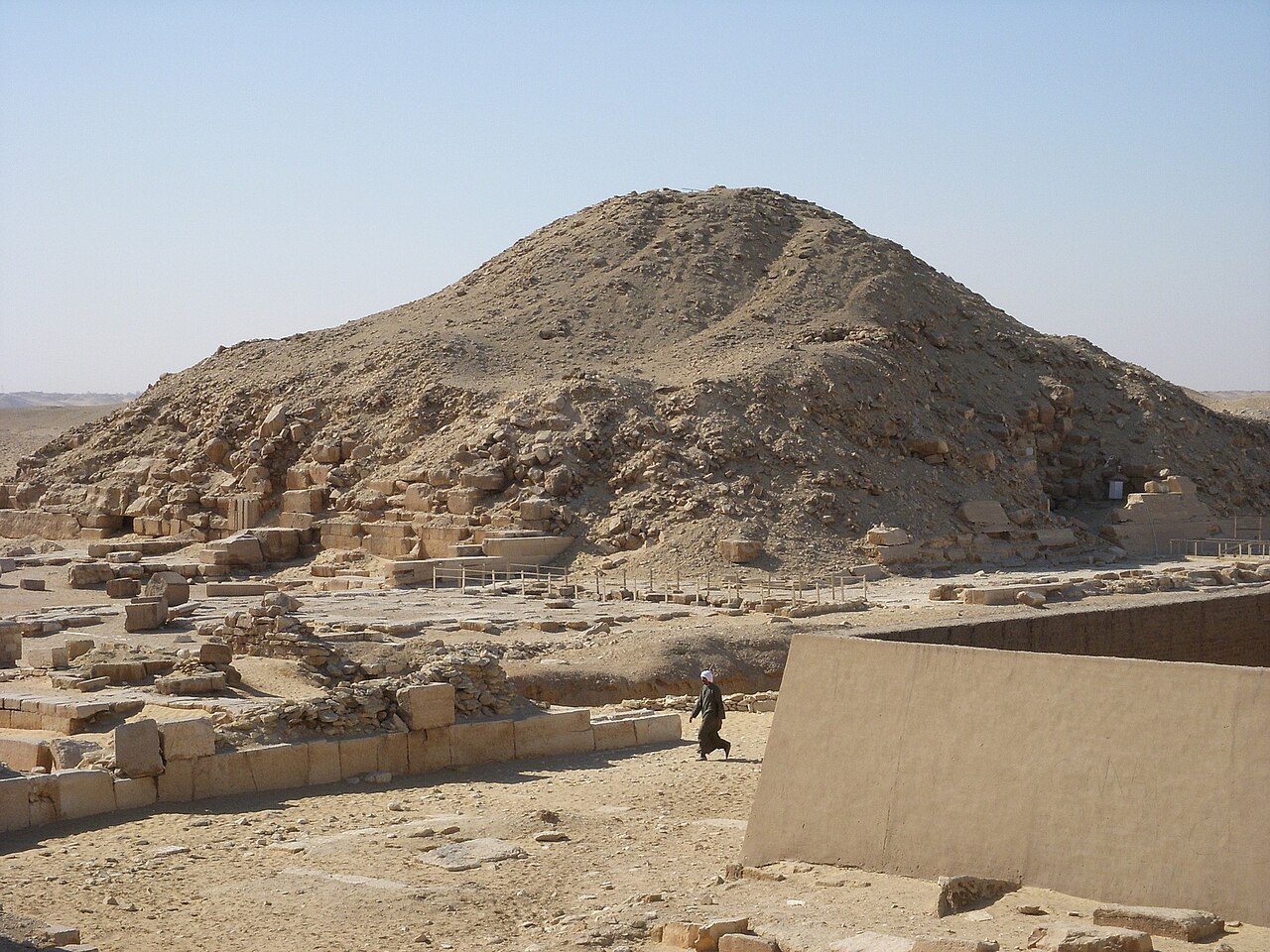
The remains of Unas’s pyramid at Saqqara, from the late Fifth Dynasty, around the twenty-fourth century BCE. Its interior preserves the earliest known Pyramid Texts inscribed in a royal pyramid. Photograph by Vincent Brown, 2017
Persona
Unas was the last king of Egypt’s Fifth Dynasty, in the late third millennium BCE
Variantes del nombre: Unas
Contexto y fuentes →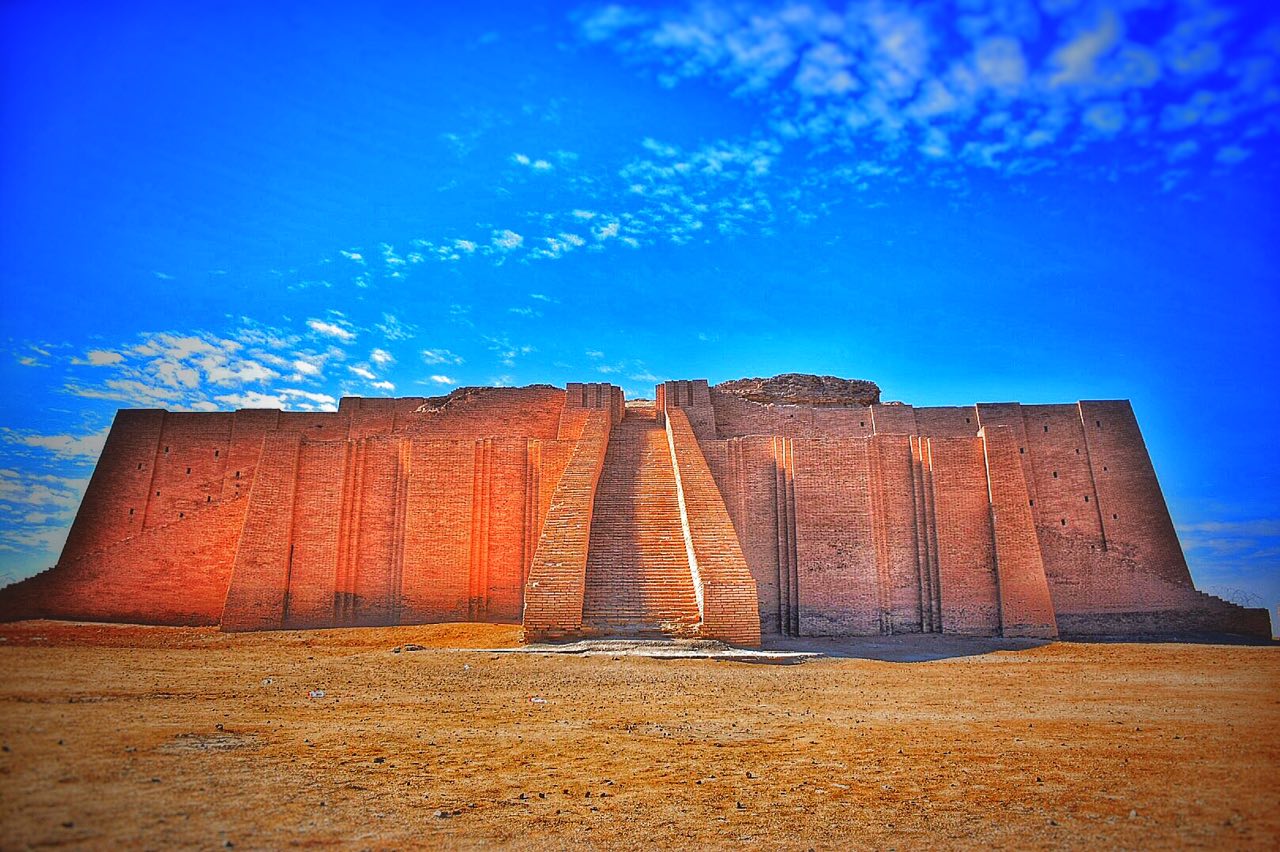
The ziggurat of Ur near Nasiriyah in southern Iraq. The original monument dates to about 2100 BCE; the visible façade and stairs include modern restorations. Photograph by Amjedha95,5 February 2018. This is the archaeological site associated with Ur, not proof of Abraham’s narrated events there
Yacimiento
City named in Genesis’s account of Abraham’s family, commonly associated with archaeological Ur near Nasiriyah in southern Iraq.
Variantes del nombre: Ur of the Chaldeans, Ur of the Chaldees
Contexto y fuentes →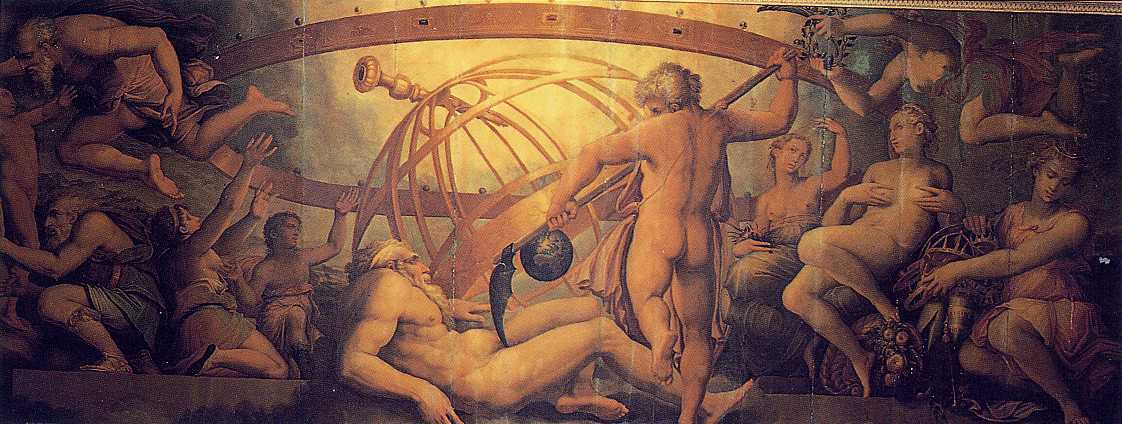
The assault on Ouranos in a sixteenth-century work by Vasari and Gherardi, Palazzo Vecchio, Florence. Later artistic reception, not an ancient Greek witness or a contemporary image of Hesiod’s time
Entidad
Sky as a divine figure in Greek poetry; Kronos’s father in Hesiod.
Variantes del nombre: Ouranos, Uranus
Contexto y fuentes →
Modern generated symbolic illustration: scroll, lamp, astronomical instrument and star-filled sky. It evokes light and Uriel’s explanation of the luminaries in Enoch; neither an ancient document nor a portrait of the angel or a historical school
Entidad
Hebrew name containing “El,” borne by humans in Chronicles and an angel in 1 Enoch and 4 Ezra. Roles vary by text; no Ugaritic divine origin is established.
Variantes del nombre: Uriel
Contexto y fuentes →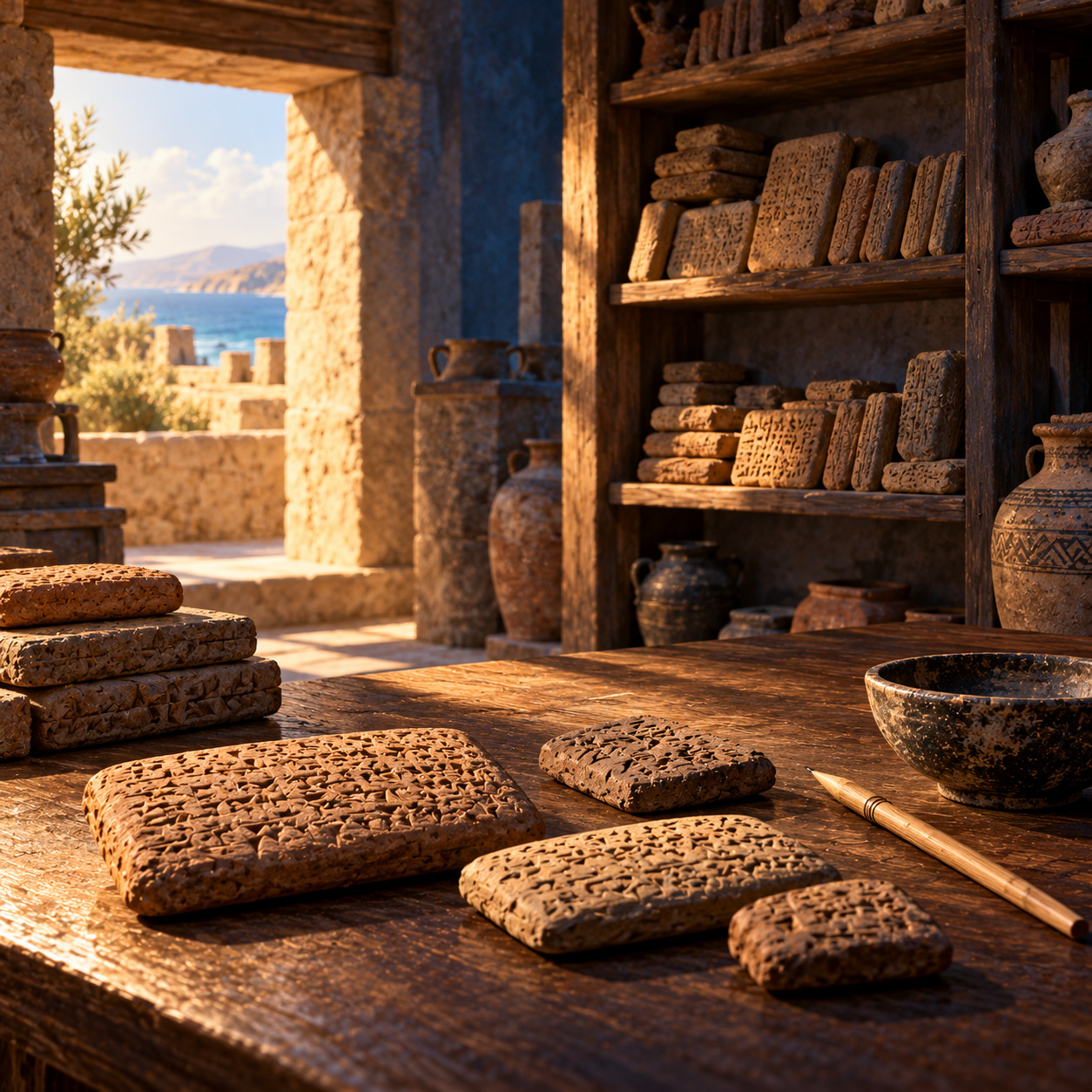
Modern generated conceptual scene suggesting tablet storage in a Bronze Age household; not a photograph of Urtenu’s house or an archaeologically verified reconstruction, and the marks are not readable texts
Entidad
Urtenu was an elite figure of Late Bronze Age Ugarit, associated with a house and tablet archives in the city’s southern sector; correspondence links him with court affairs and trade, although his precise office is uncertain.
Variantes del nombre: Urtenu, Urtēnu, House of Urtenu
Contexto y fuentes →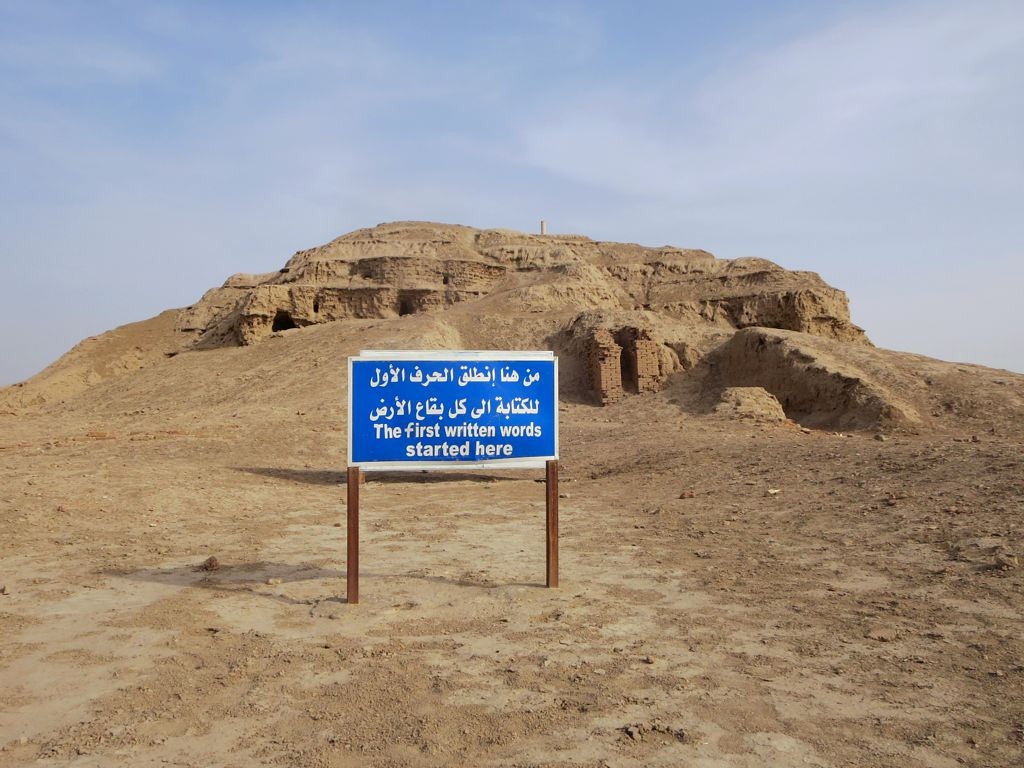
Architectural remains at Uruk/Warka, photographed by David Stanley, 9 April 2016. The sign is modern; its claim about first writing is not independent evidence of global priority or an exact invention date
Yacimiento
Ancient city at Warka in southern Iraq, a major urban centre around 3200 BCE that preserved early writing and accounting tablets.
Variantes del nombre: Uruk, Warka
Contexto y fuentes →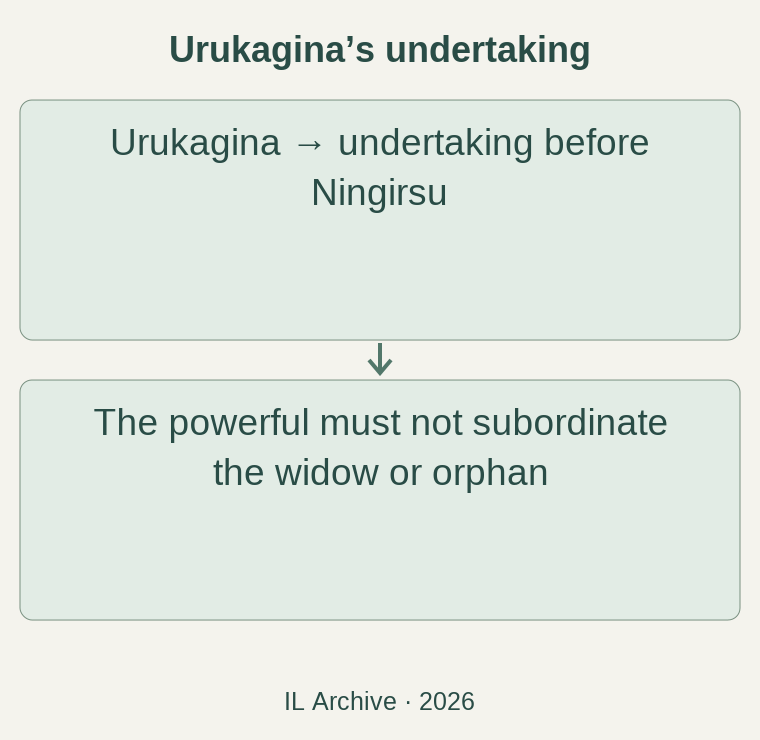
Modern diagram of the relationship or demand in the specified text; not an artifact photograph, a divine likeness or a portrait
Persona
Ruler of Lagash around 2350 BCE, associated with reform inscriptions concerning burdens and justice.
Variantes del nombre: Urukagina, ruler of Lagash
Contexto y fuentes →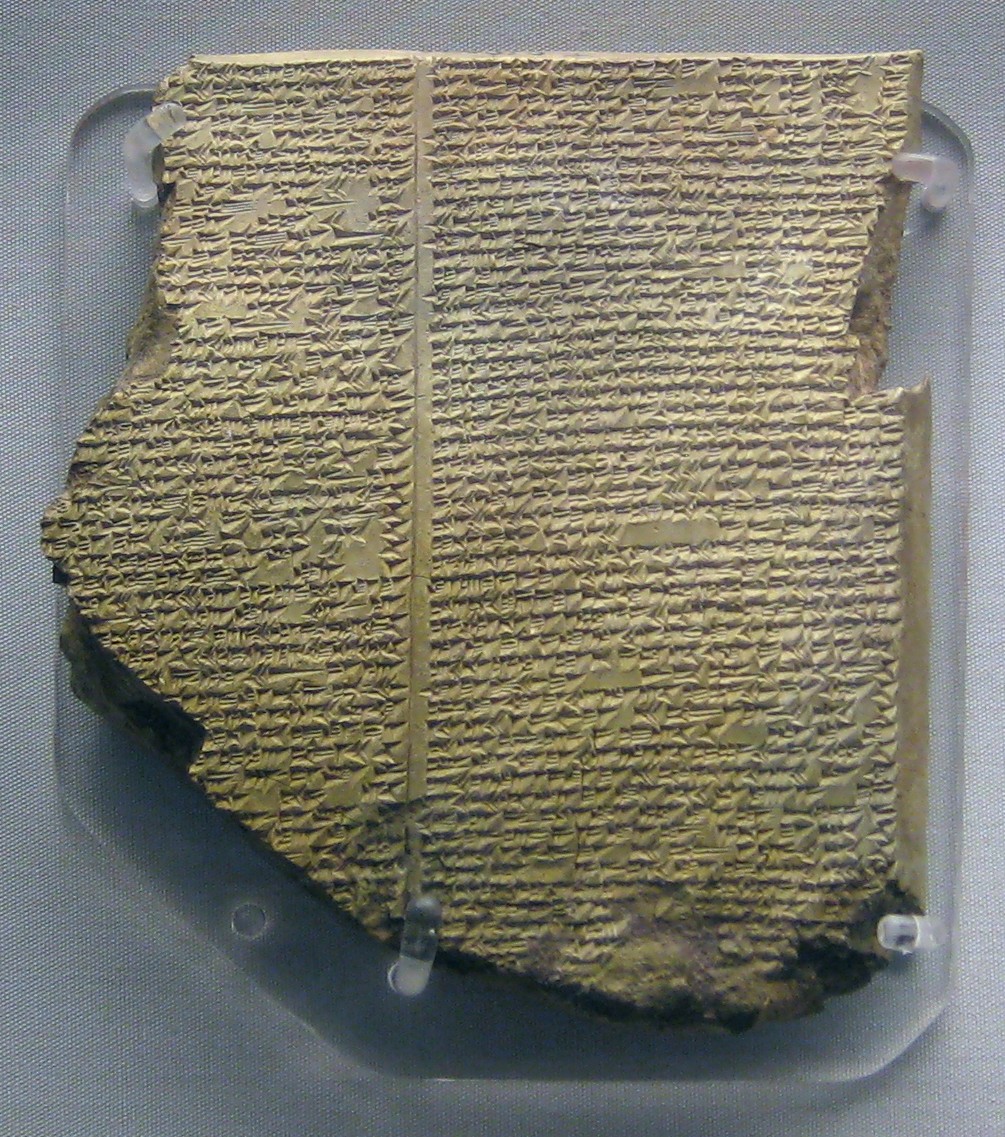
The Flood Tablet, British Museum K.3375: a seventh-century BCE Neo-Assyrian fragment from Ashurbanipal’s library at Nineveh, preserving part of Gilgamesh XI. Photographed 24 June 2010. A witness to the story’s transmission, not a portrait of Utnapishtim or evidence that the flood occurred; it does not alone preserve every line of the composite edition
Entidad
The flood hero of Standard Babylonian Gilgamesh, granted exceptional life with his wife by the gods. He tells Gilgamesh how he survived; his name overlaps with Atrahasis and Ziusudra traditions without making their narratives identical.
Variantes del nombre: Utnapishtim, Uta-napishti, Utanapishti
Contexto y fuentes →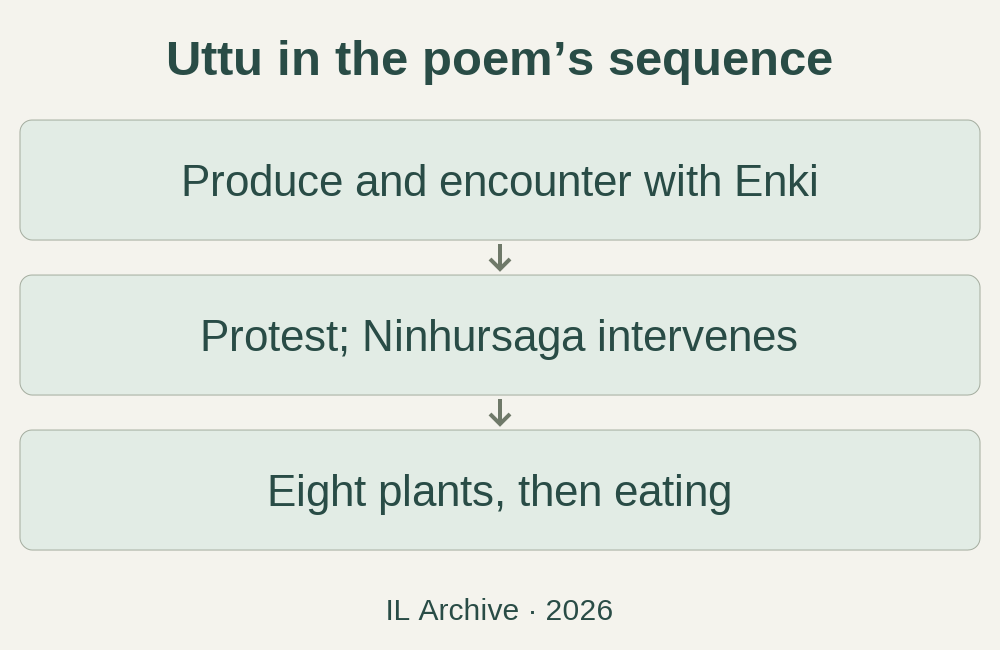
Modern witness-specific explanatory diagram of a sequence or linguistic relationship, not a portrait or fabricated artifact
Entidad
Goddess whose encounter with Enki belongs to the sequence of births and plants in Enki and Ninhursaga.
Variantes del nombre: Uttu, divine figure in Enki’s poem
Contexto y fuentes →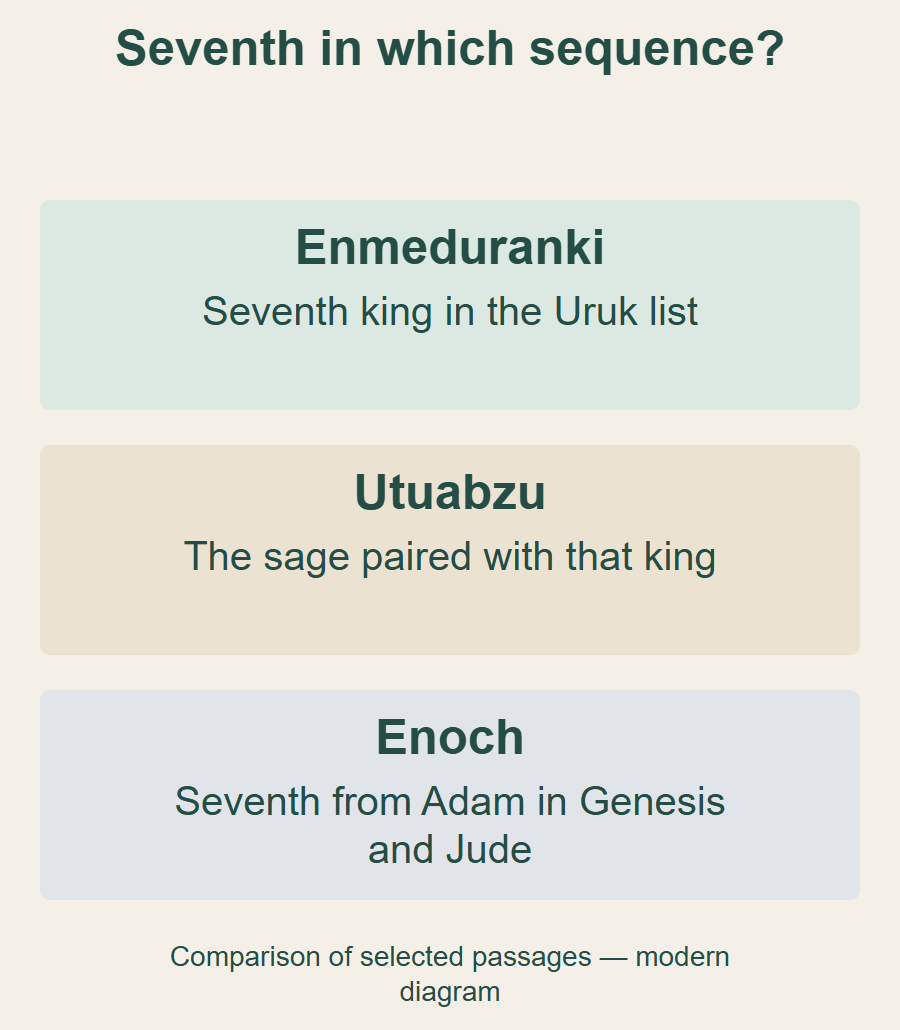
Modern comparative chart distinguishing the seventh king Enmeduranki from his corresponding sage Utuabzu, alongside Enoch’s seventh position in Genesis. This is not an image of the ancient tablet
Persona
Utuabzu is a sage in the Uruk List of Kings and Sages, preserved on a tablet copied in 165 BCE. The list pairs him with the seventh king, Enmeduranki.
Variantes del nombre: Utuabzu
Contexto y fuentes →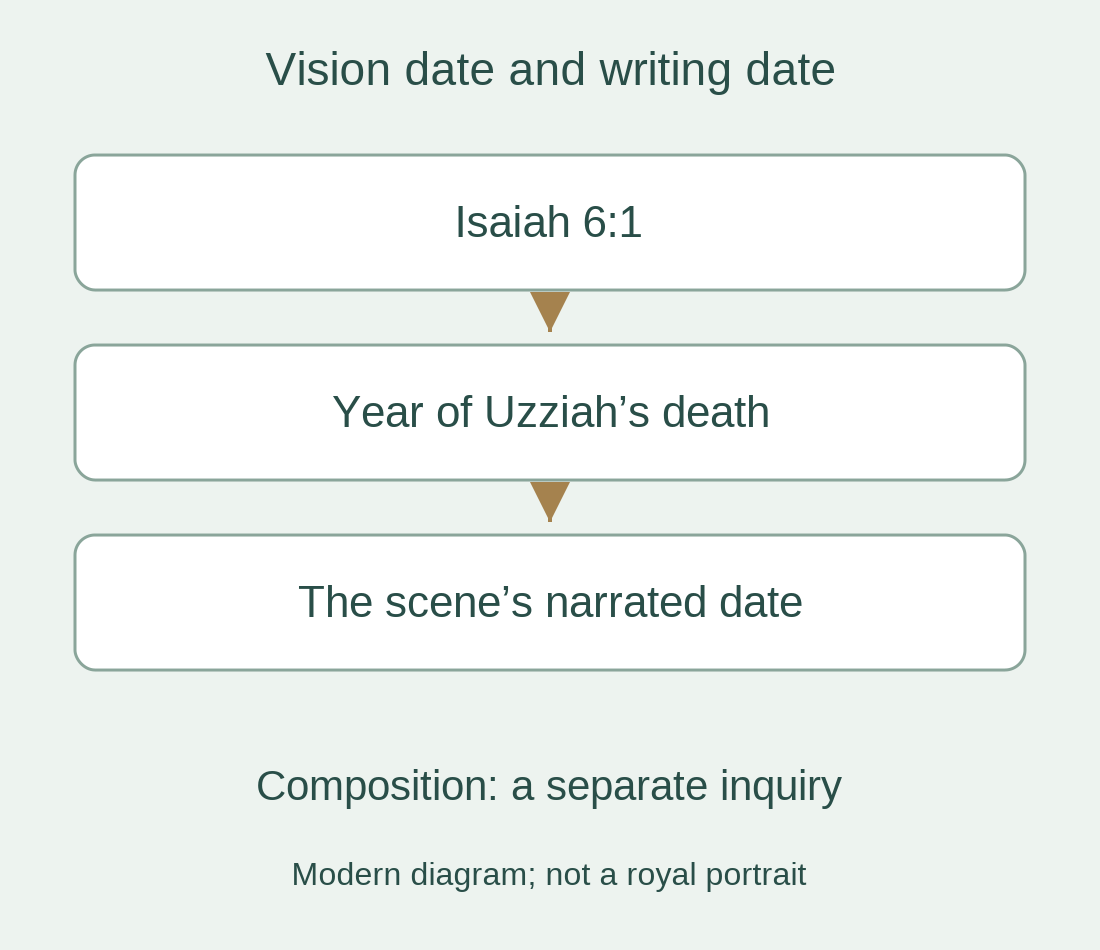
Modern diagram; not a royal portrait. Composition: a separate inquiry
Persona
King of Judah in the biblical narrative; Isaiah 6 dates its vision to his death year, a date for the scene rather than the book’s composition.
Variantes del nombre: Uzziah king of Judah, Uzziah
Contexto y fuentes →Persona
Historian researching Arabia and the Near East in Late Antiquity and the Middle Ages.
Variantes del nombre: Valentina A. Grasso
Contexto y fuentes →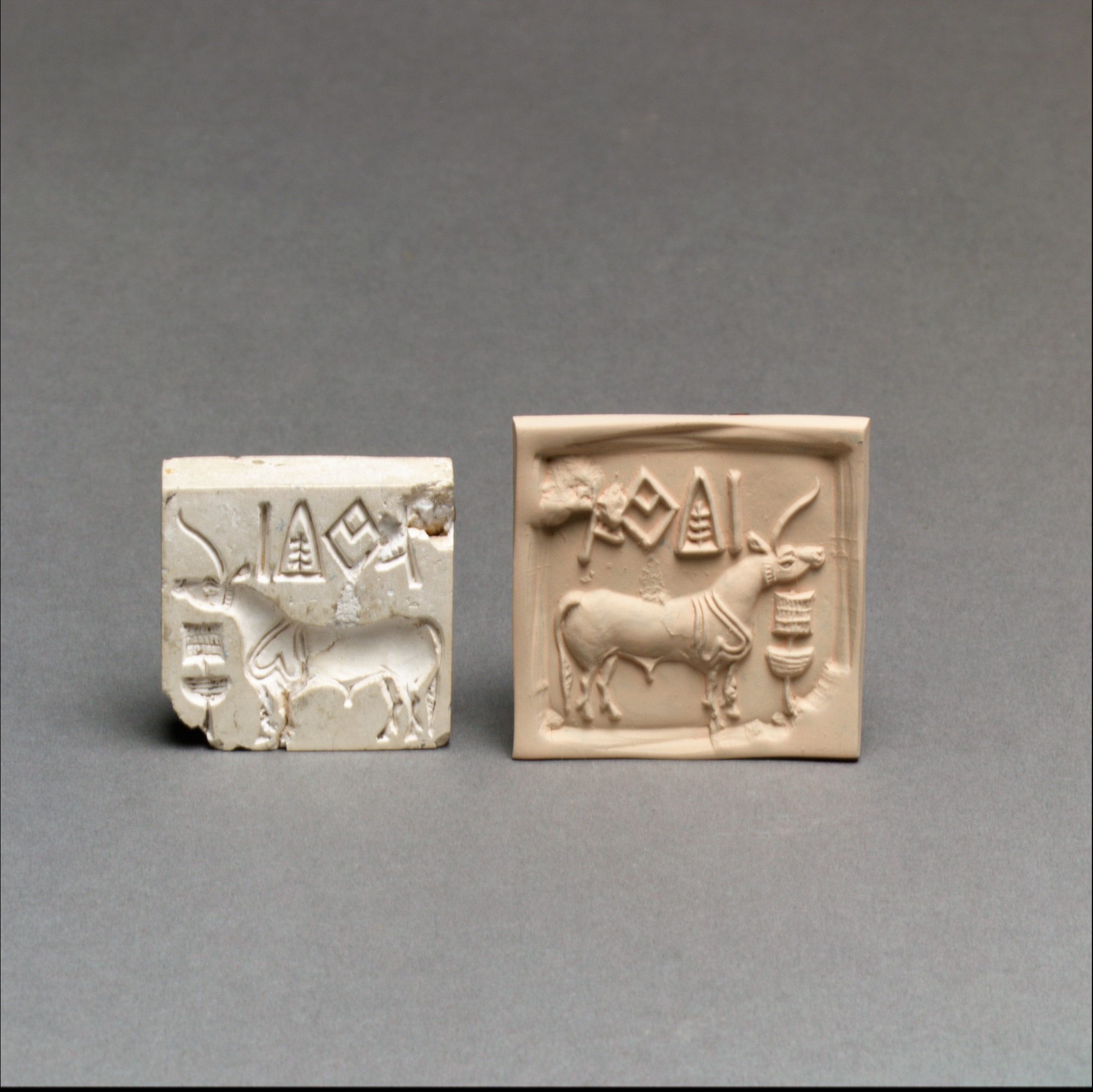
Indus seal and modern impression, about 2600–1900 BCE; Met 49.40.1. A single-horned animal and script signs are visible; this is not an identified flood text
Yacimiento
South Asian region associated with the Indus civilization, connected with the Near East in the third millennium BCE.
Variantes del nombre: Indus Valley, historical region
Contexto y fuentes →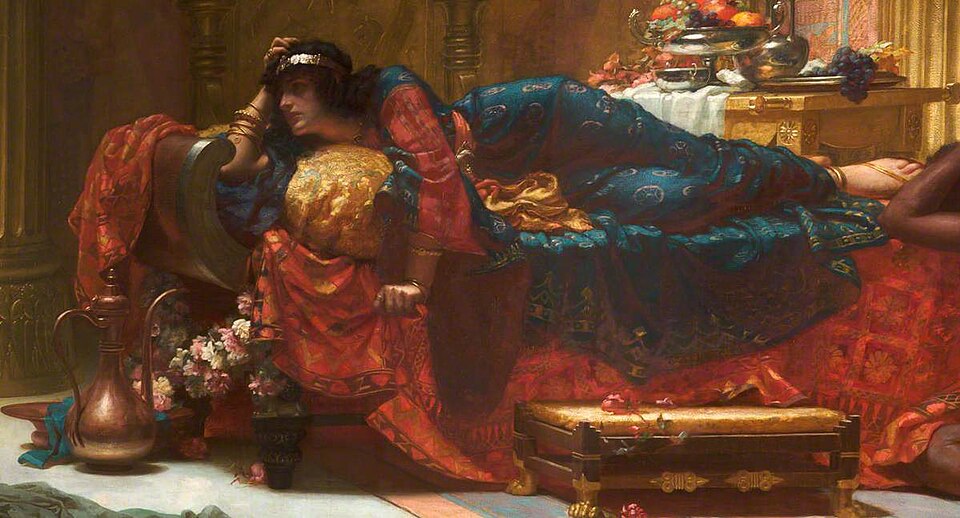
Vashti Deposed,painting by Ernest Normand(1857–1923),Gallery Oldham 4.96. Later artistic imagining of the queen’s fate; furnishings and dress are the artist’s construction, not evidence for the ancient palace
Persona
The queen whose refusal to appear and removal are narrated in Esther 1, before Esther’s selection.
Variantes del nombre: Vashti in Esther, Vashti
Contexto y fuentes →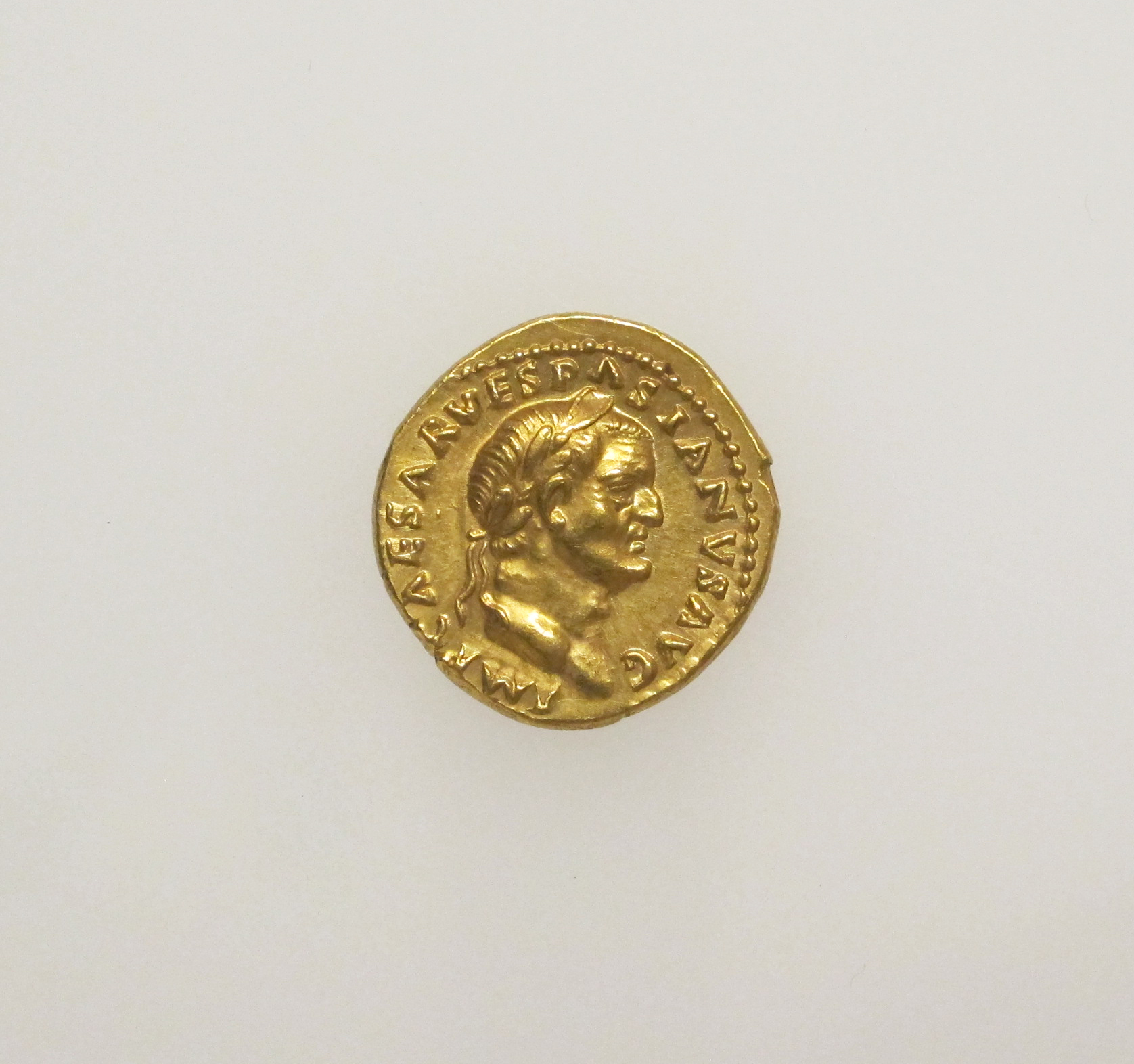
Roman gold aureus bearing Vespasian's portrait and name, minted in 70 CE. A contemporary witness to the emperor, not to Josephus's exorcism scene. Met 99.35.154; public domain
Persona
Roman emperor from 69 to 79 CE; Josephus names him among the audience of an exorcism linked to Solomon.
Variantes del nombre: Vespasian
Contexto y fuentes →Persona
Vicente Dobroruka researches Iranian and Jewish traditions and ancient apocalyptic literature.
Variantes del nombre: Vicente Dobroruka
Contexto y fuentes →
Modern AI-generated symbolic cover: an uninscribed scroll beneath an imagined sky. It is neither an Enoch manuscript nor a documented descent of the Watchers
Entidad
Designation of a heavenly being in ancient Jewish literature: a holy messenger in Daniel, but a rebellious group in First Enoch. It is not automatically equivalent to demons or giants’ spirits.
Variantes del nombre: Watchers; watcher angels
Contexto y fuentes →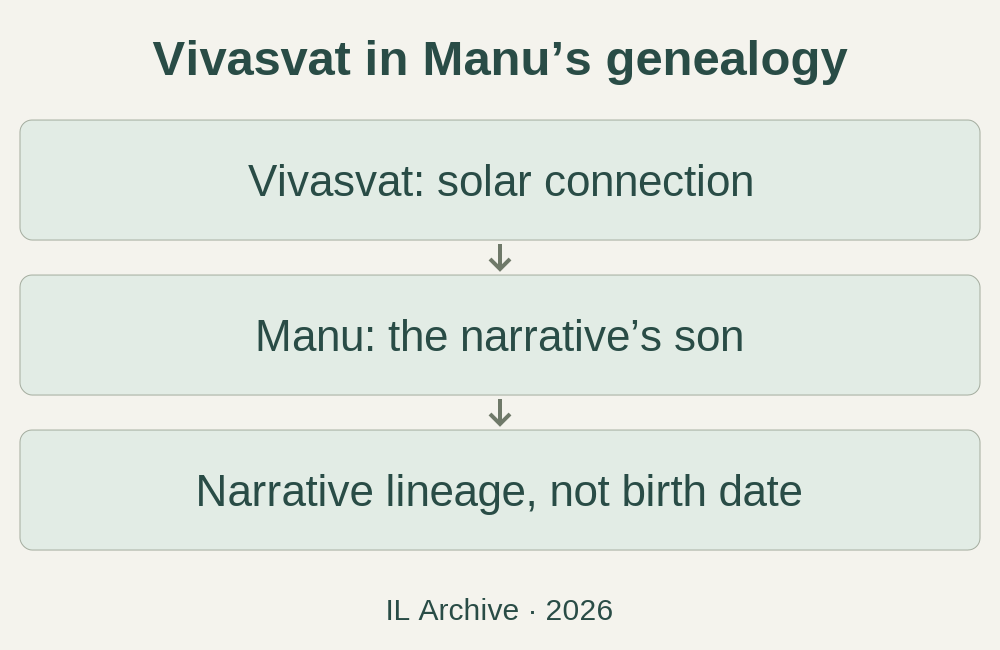
Modern explanatory diagram of narrative sequence and relationships, not a manuscript reproduction or portrait
Entidad
Solar figure in Manu’s genealogy; the epic flood account calls Manu his son.
Variantes del nombre: Vivasvat, Manu’s solar father, Vivasvān
Contexto y fuentes →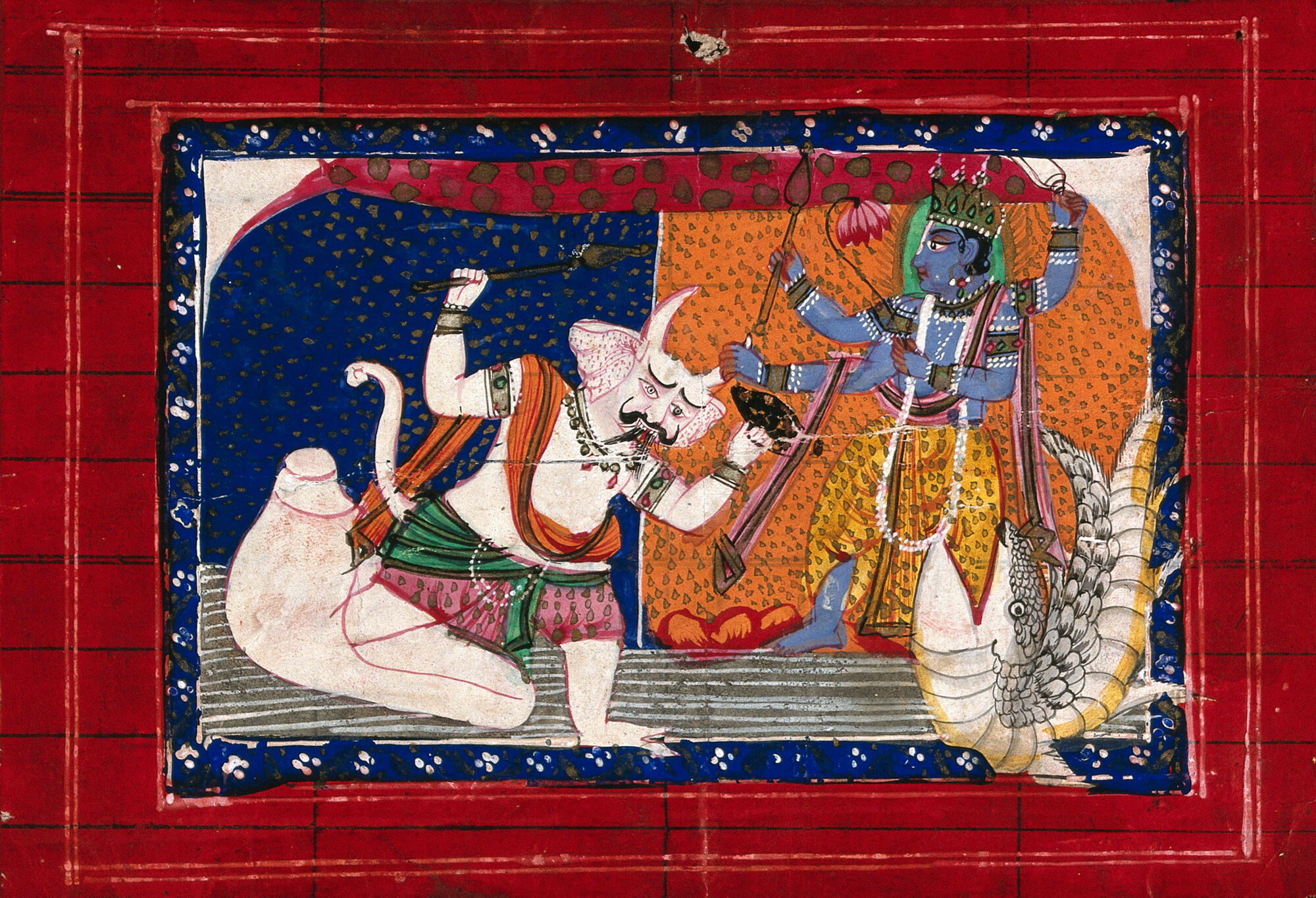
Viṣṇu as Matsya fighting a demon emerging from a conch; gouache, Wellcome Collection 27738i. The catalogue gives no date. Artistic reception of the Vaiṣṇava form, not Manu’s boat scene or the earliest Vedic fish
Entidad
Hindu deity with whom the saving fish is identified in later Vaiṣṇava versions.
Variantes del nombre: Viṣṇu, Vishnu, Vāsudeva, Keśava, Janārdana
Contexto y fuentes →