Yacimiento
Samaria: ciudad y región
Traducción automática. Lea el original en inglés.
Antigua ciudad y región administrativa; el yacimiento de la ciudad está en Sebastia, al noroeste de Nablus, en Cisjordania.
Última revisión:
Texto
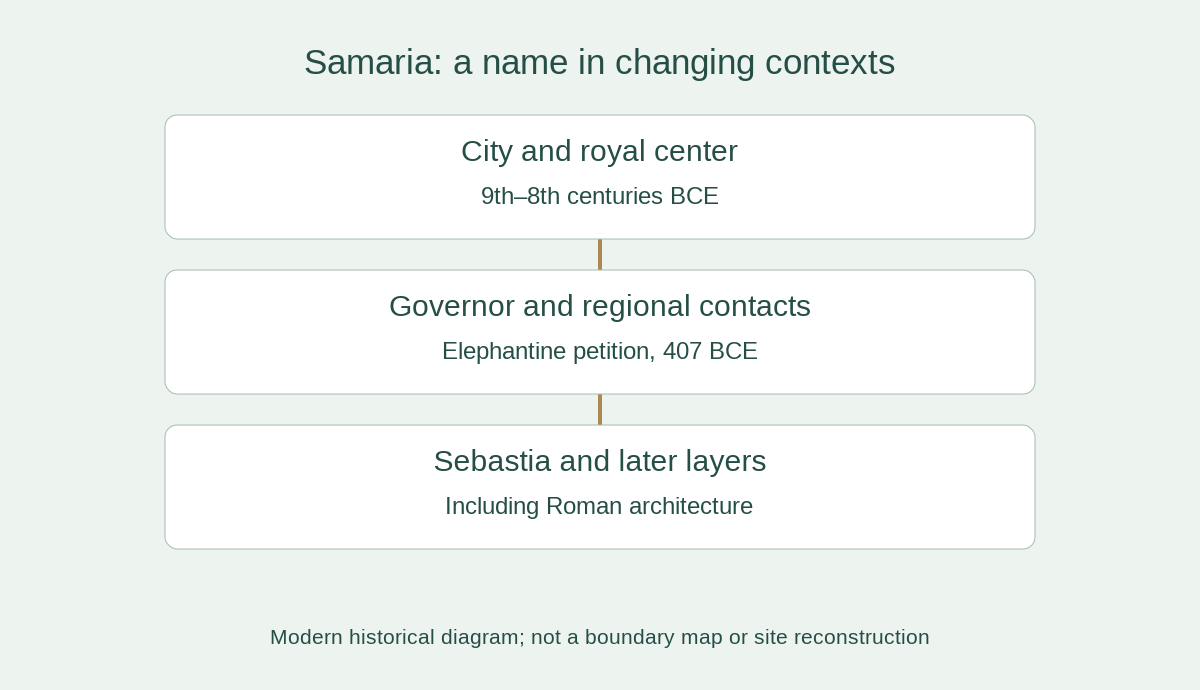
Samaria fue una antigua ciudad asociada al reino de Israel en los siglos IX y VIII a. n., y un nombre regional usado bajo dominio persa. Su yacimiento en Sebastia, al noroeste de Nablus, en Cisjordania, conserva varios periodos arqueológicos.[1][3]
La petición de Elefantina del 407 a. n. e. nombra al gobernador de Samaria y sus contactos con los hijos de este. Aquí el nombre se refiere a la administración y a la correspondencia; deben distinguirse la ciudad y la región.[2]
Referencias y notas
- UNESCO, Decision 48 COM 8B.3, Sebastia, 2026; location and successive archaeological periods. Brief synthesis and criterion (iii); Roman buildings are not Persian administration. Volver al texto ↑
- Temple-rebuilding petition, TAD A4.7, translated by K. C. Hanson. Lines 1–30; senders, addressee and their contacts. Volver al texto ↑
- University of Bern, The Ivory Carvings from Samaria. Project opening: royal capital in the ninth–eighth centuries BCE; project photographs not reused without a licence. Volver al texto ↑
Proponer una corrección · Proponga una fuente para este registro
Citar este registro
IL Archive, «Samaria: ciudad y región», https://ilarchive.com/es/sites/samaria-ancient-city-region