Regina y Barates Capítulo 1
Dos inscripciones para Regina
Un monumento de South Shields conserva detalles sobre Regina y Barates en latín y arameo palmireno. El episodio sigue cada inscripción por separado, desde la dedicatoria latina hasta la palabra de duelo en arameo.
FuentesPase las páginas con las flechas, el teclado o deslizando el dedo.
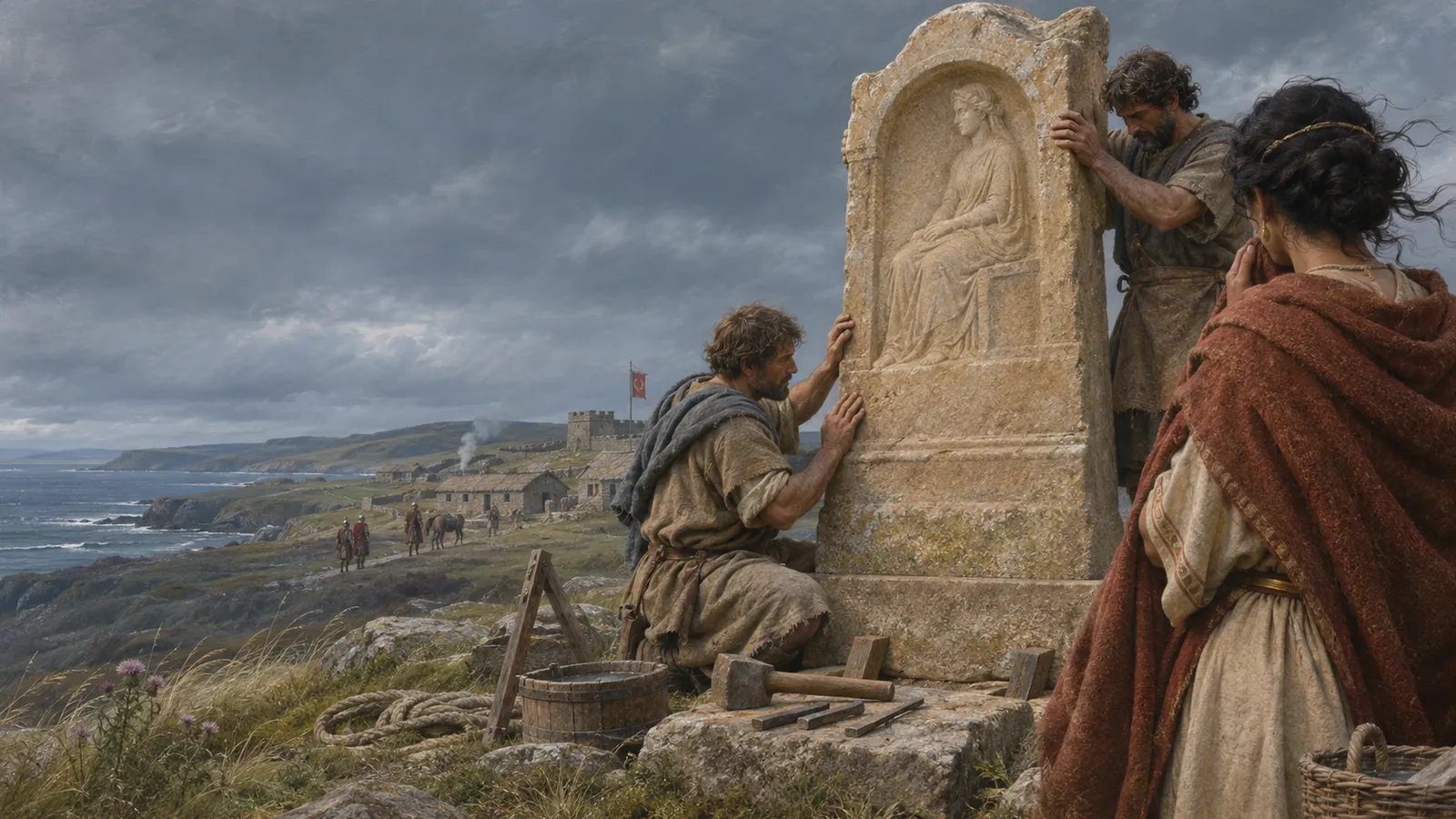
UN MONUMENTO
Un monumento de piedra hallado en South Shields en 1878 lleva un texto en latín encima de una línea en arameo palmireno. Jeremy Hutton y Catherine Bonesho publican y traducen las dos inscripciones.
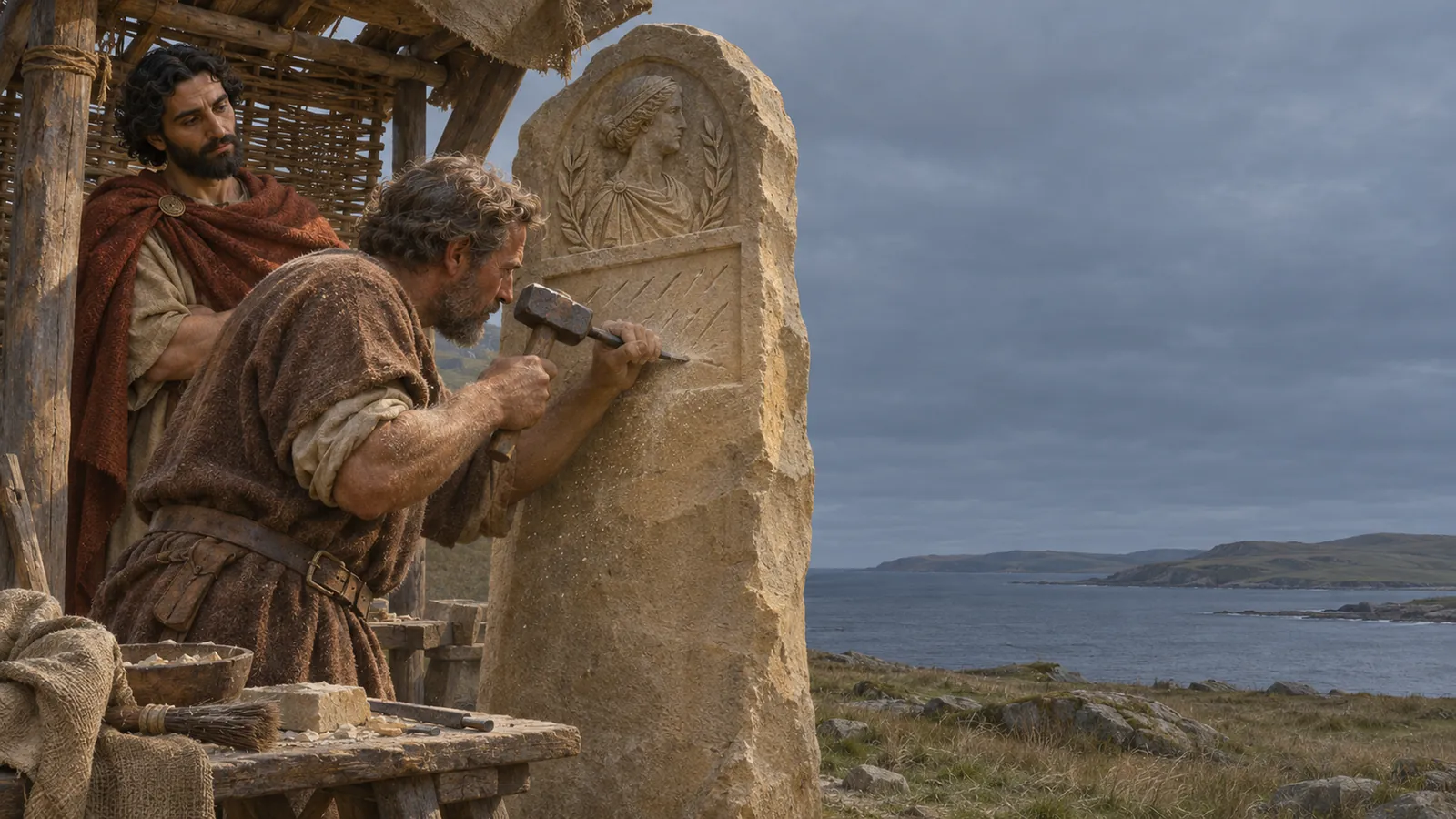
El latín comienza con una dedicatoria a los espíritus de los muertos. Nombra a Regina y la identifica como una liberta.

LA INSCRIPCIÓN LATINA
La inscripción latina presenta a Regina como esposa de Barates. Dice que Barates era palmireno.
La inscripción latina dice que Regina era del pueblo catuallauno y que tenía treinta años. Los traductores suplen el verbo que indica que vivió ese tiempo.

En la traducción publicada, la línea en arameo palmireno identifica a Regina como liberta de Barates. El nombre de él aparece en su forma palmirena.

EL LAMENTO
La línea en arameo palmireno termina con una sola palabra de duelo, que Hutton y Bonesho traducen como ay.
Fin del capítulo 1
Todas las páginas




Fuentes
The complete Latin and Palmyrene Aramaic inscriptions on the South Shields memorial have the respective references RIB 1065 and PAT 0246. This reading follows the texts and translations on pp. 271–272 in Jeremy M. Hutton and Catherine E. Bonesho’s contribution to Epigraphy, Philology, and the Hebrew Bible, SBL Press, 2015.
Ediciones consultadas
- SBL Press, Epigraphy, Philology, and the Hebrew Bible, publisher’s edition
- Hutton and Bonesho, pp. 271–272, inscriptions and translations
- Hutton and Bonesho, pp. 275–277, the names and freed status
Notas sobre este relato
Page 1, the bilingual memorial. Hutton and Bonesho introduce RIB 1065 and PAT 0246 on p. 271. Page 272 gives their English translations. The discovery year refers to the find.
Page 2, Latin line 1, dedication and status. The standard formula to the spirits of the dead opens the Latin text. The published translation supplies the verb of dedicating in square brackets. It renders the status term as “free-woman,” and the authors use the conventional “freedwoman” in their later discussion.
Page 3, Latin lines 1–2, marriage and Barates. The Latin calls Regina the wife of Barates and identifies him as a Palmyrene. The edition prints the word for wife on line 1 and the name and origin on line 2.
Page 4, Latin line 3, people and age. The authors’ translation gives “Catuallaunian” based on the reading noted at p. 271, note 66. The number is thirty.
Page 5, Palmyrene Aramaic line 1, names and status. The published translation on p. 272 names Regina and calls her the freedwoman of the person named Barates in the Latin. Hutton and Bonesho align the Palmyrene spelling with Barates on p. 275. On pp. 276–277 they discuss the literal status phrase and consider whether its context could carry a marital connotation.
Page 6, Palmyrene Aramaic line 1, lament. The line ends in the word the translators render as “Alas!” The reading ends there. The neighboring example in the article concerns a separate memorial.
The published readings provide the text of both inscriptions.
Los versos antiguos de cada página
- Page 1: Hutton and Bonesho (2015), Regina memorial, p. 271, description of RIB 1065 and PAT 0246
- Page 2: Hutton and Bonesho (2015), Regina memorial, p. 272, Latin line 1, dedication and status
- Page 3: Hutton and Bonesho (2015), Regina memorial, p. 272, Latin lines 1–2, relationship and origin of Barates
- Page 4: Hutton and Bonesho (2015), Regina memorial, p. 272, Latin line 3 and note 66
- Page 5: Hutton and Bonesho (2015), Regina memorial, p. 272, Aramaic line 1, names and status; 275–277, discussion
- Page 6: Hutton and Bonesho (2015), Regina memorial, p. 272, Aramaic line 1, final expression
Ilustraciones hechas por IL Archive con herramientas de IA; el texto se basa en las fuentes antiguas (véanse las fuentes al final de cada capítulo).