Yacimiento
Tell Fekheriyeh, yacimiento de inscripción bilingüe
Traducción automática. Lea el original en inglés.
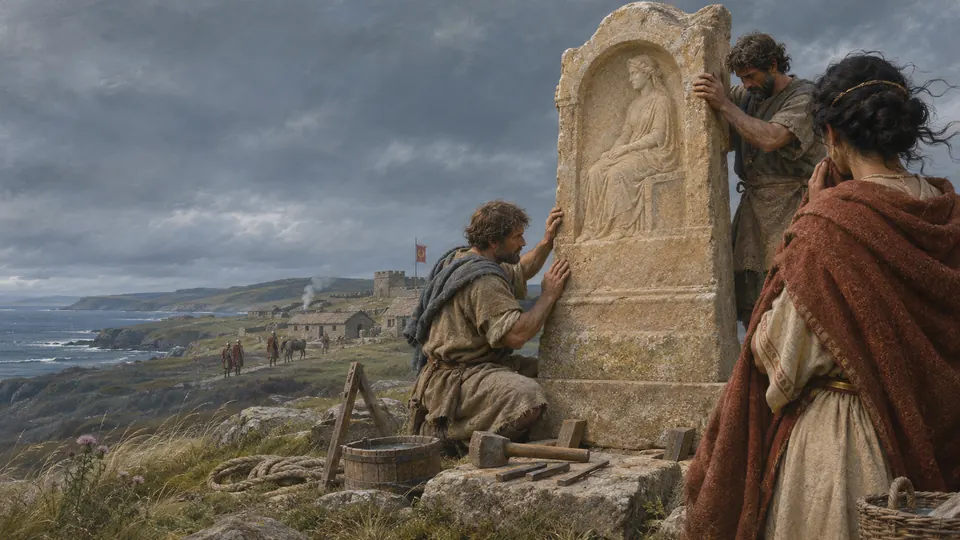
Yacimiento sirio donde en 1979 se halló una estatua con inscripciones en acadio y arameo, que suele datarse en el siglo IX a. n. e.
Última revisión:
Texto
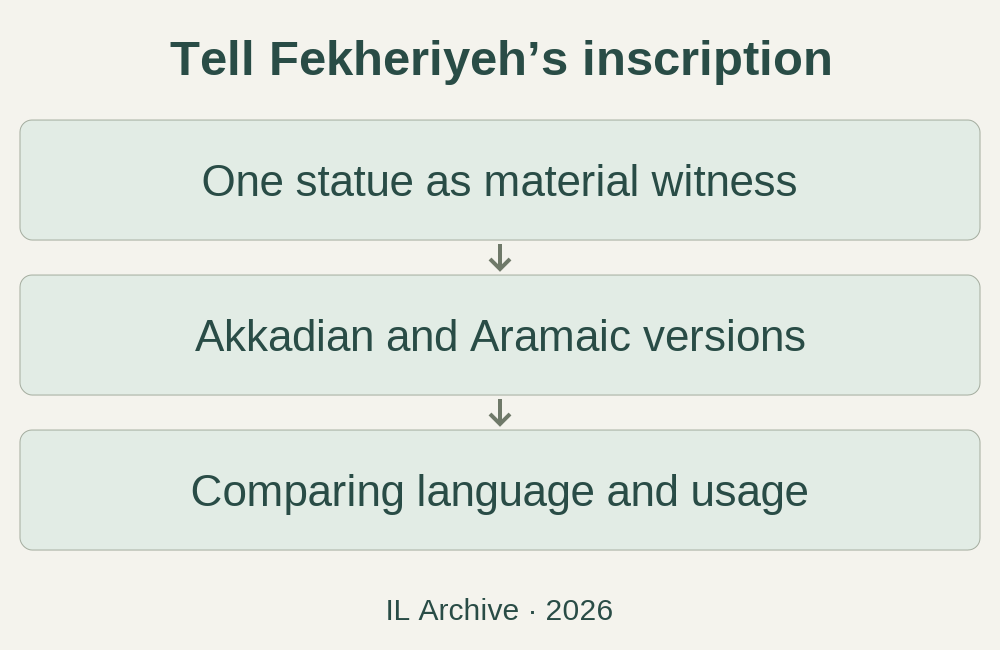
Tell Fekheriyeh es un yacimiento sirio conocido por una estatua hallada en 1979 que lleva inscripciones en arameo y en acadio asirio. Al tratar las expresiones literarias, el estudio de Laura Quick sitúa en el siglo IX a. n. e. el testimonio arameo. [1][2]
Para la etimología de Edén, Millard utiliza una expresión aramea de la inscripción para apoyar un origenOrígenesChristian exegete and theologian from Alexandria (c. 185–253), known for biblical textual comparison, commentaries and On First Principles. His works survive in Greek and through later translations and quotations.Glosario · Pulse para leer la explicación semítico occidental vinculado a la abundancia. Ese argumento lingüístico no identifica el yacimiento con el Edén. [3]
Referencias y notas
- Dušek and Mynářová, 2016: Charles University abstract on the 1979 statue discovery and two texts, not full chapter. Dušek and Mynářová, 2016: Charles University abstract on the 1979 statue discovery and two texts, not full chapter. Volver al texto ↑
- Laura Quick, To Hear and to Accept, 2016, pp. 413–429: publisher abstract only. Laura Quick, To Hear and to Accept, 2016, pp. 413–429: publisher abstract only. Volver al texto ↑
- Millard, 1984: accessible pp. 103–104 reread, with earlier selective reading log; hosting-site automated summary not used. Millard, 1984: accessible pp. 103–104 reread, with earlier selective reading log; hosting-site automated summary not used. Volver al texto ↑
Proponer una corrección · Proponga una fuente para este registro
Citar este registro
IL Archive, «Tell Fekheriyeh, yacimiento de inscripción bilingüe», https://ilarchive.com/es/sites/tell-fekheriyeh-inscription-site