Sargón y el río Capítulo 1
La cesta y el huerto
En este fragmento de la leyenda acadia del nacimiento, Sargón cuenta cómo el río lo llevó hasta Aqqi, el aguador. Aqqi lo cría como hijo adoptivo y le encarga el cuidado de su huerto. El episodio sigue las siete líneas traducidas por Jonathan Valk.
FuentesPase las páginas con las flechas, el teclado o deslizando el dedo.
LA LEYENDA DEL NACIMIENTO
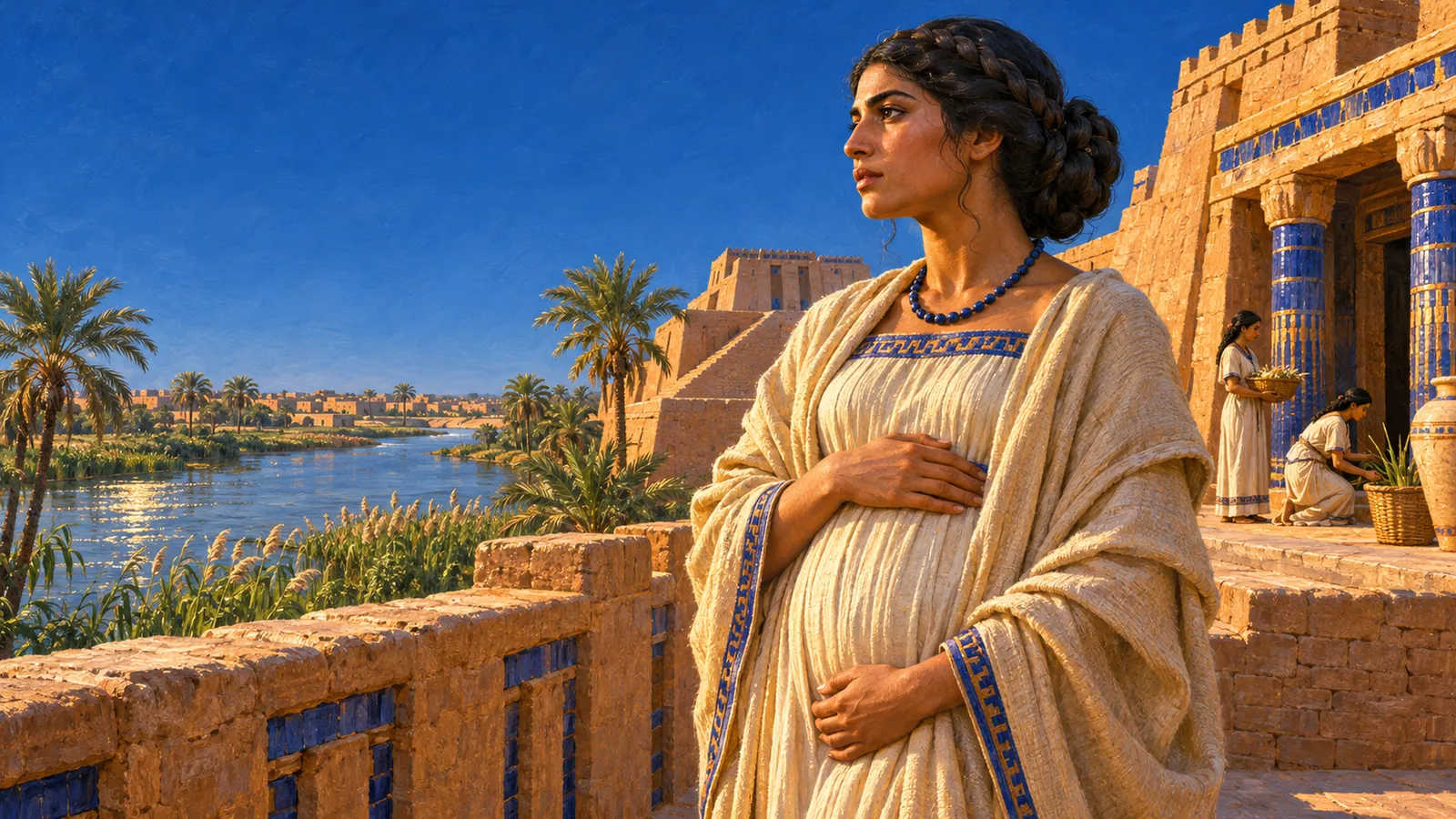
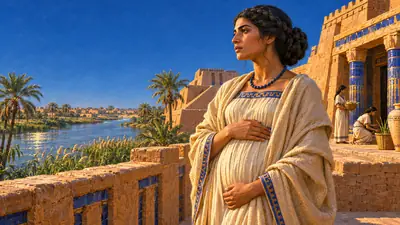
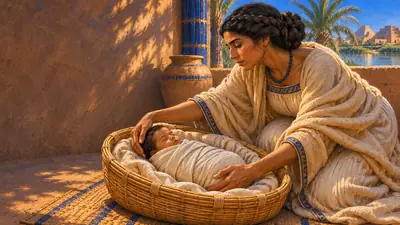
En el fragmento de la leyenda del nacimiento de Sargón traducido por Jonathan Valk, Sargón habla de su concepción y dice que su madre era una sacerdotisa ēn.
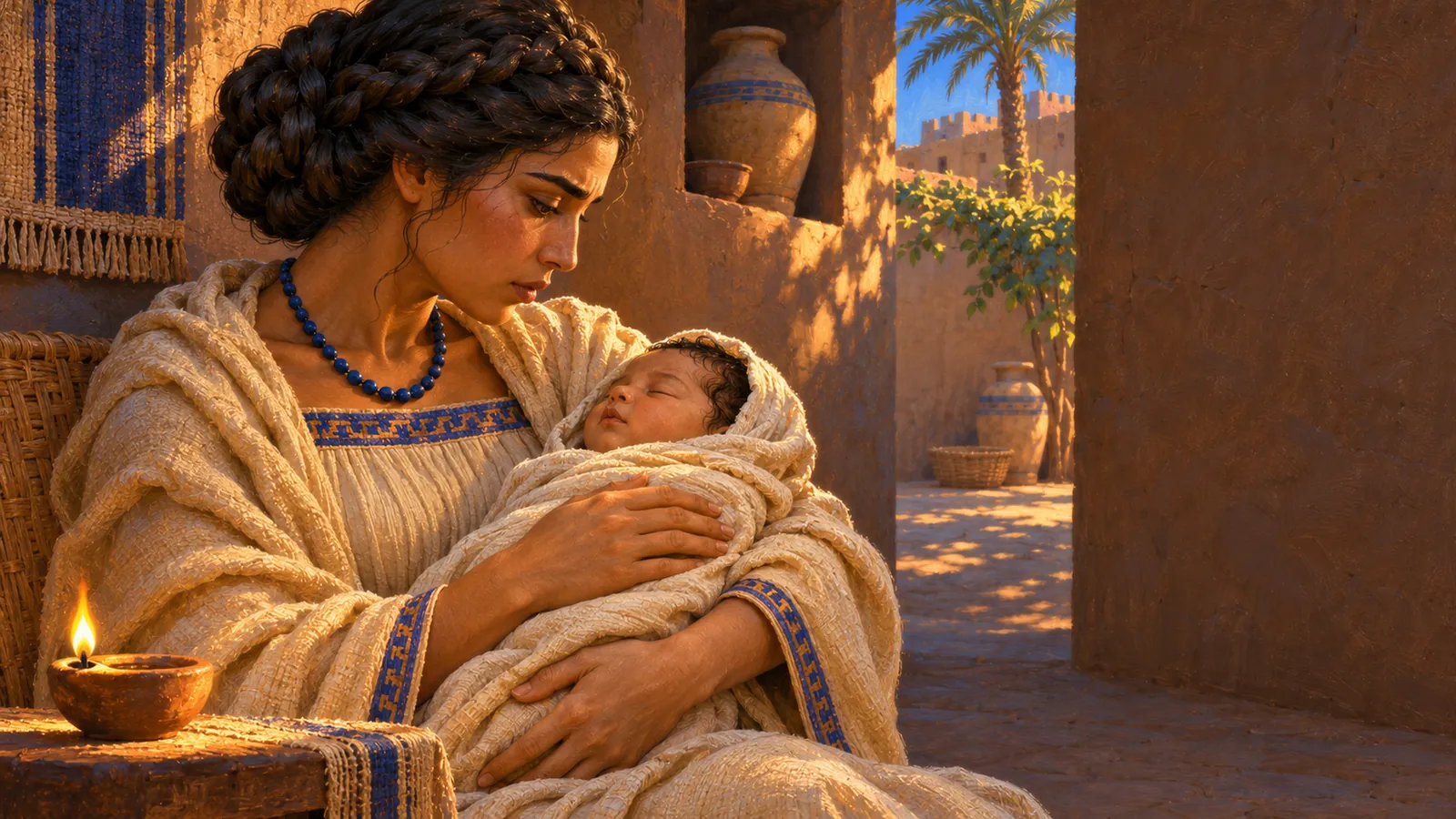
En la segunda parte de la primera línea, Sargón dice que su madre lo dio a luz en secreto.
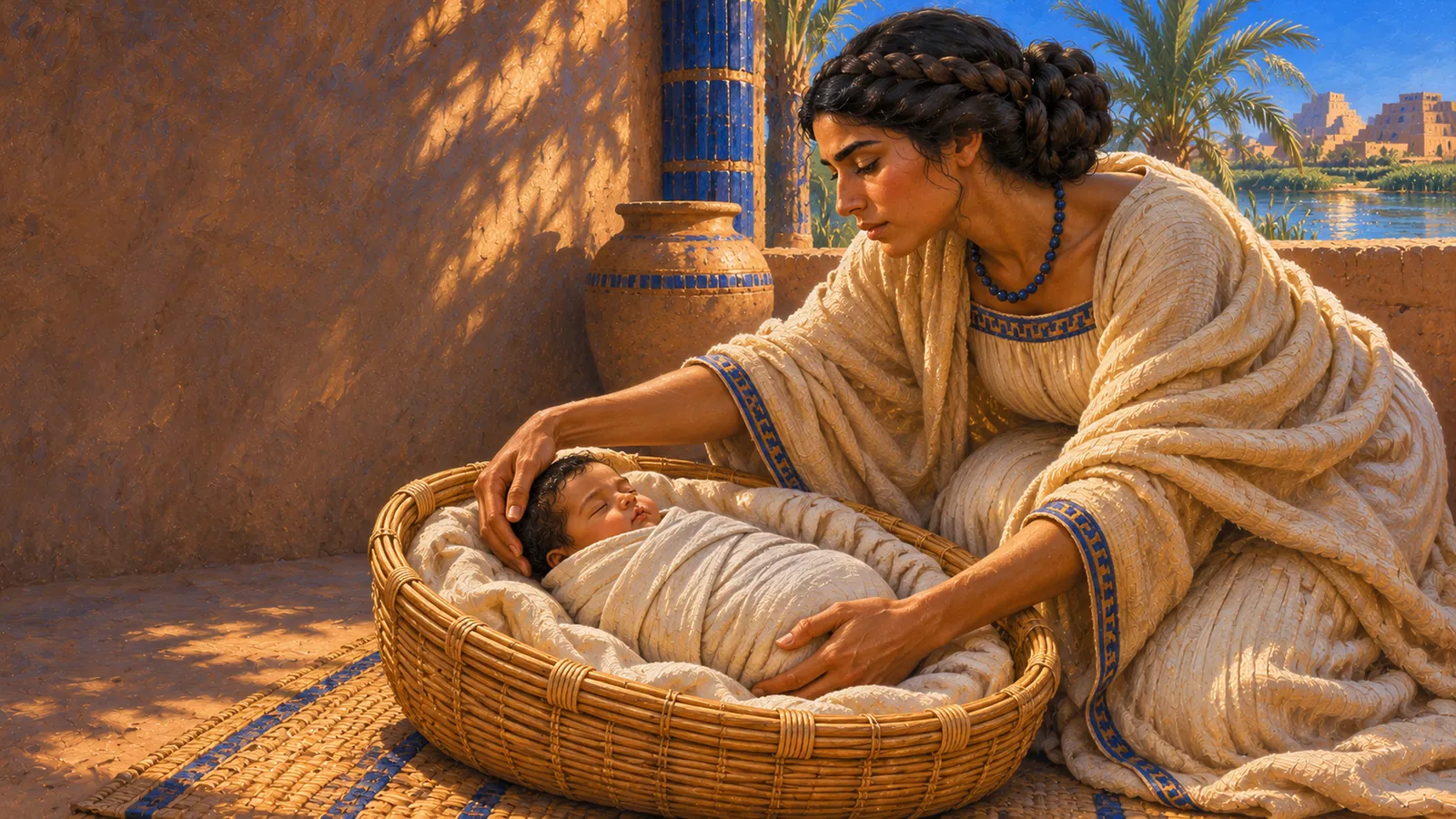
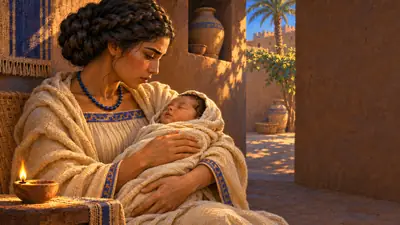
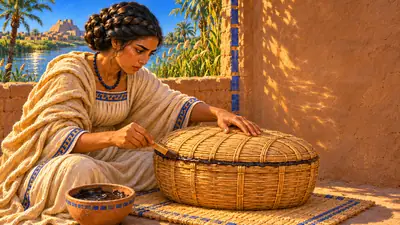
Sargón dice que, después de nacer, su madre lo puso en una cesta hecha de juncos.
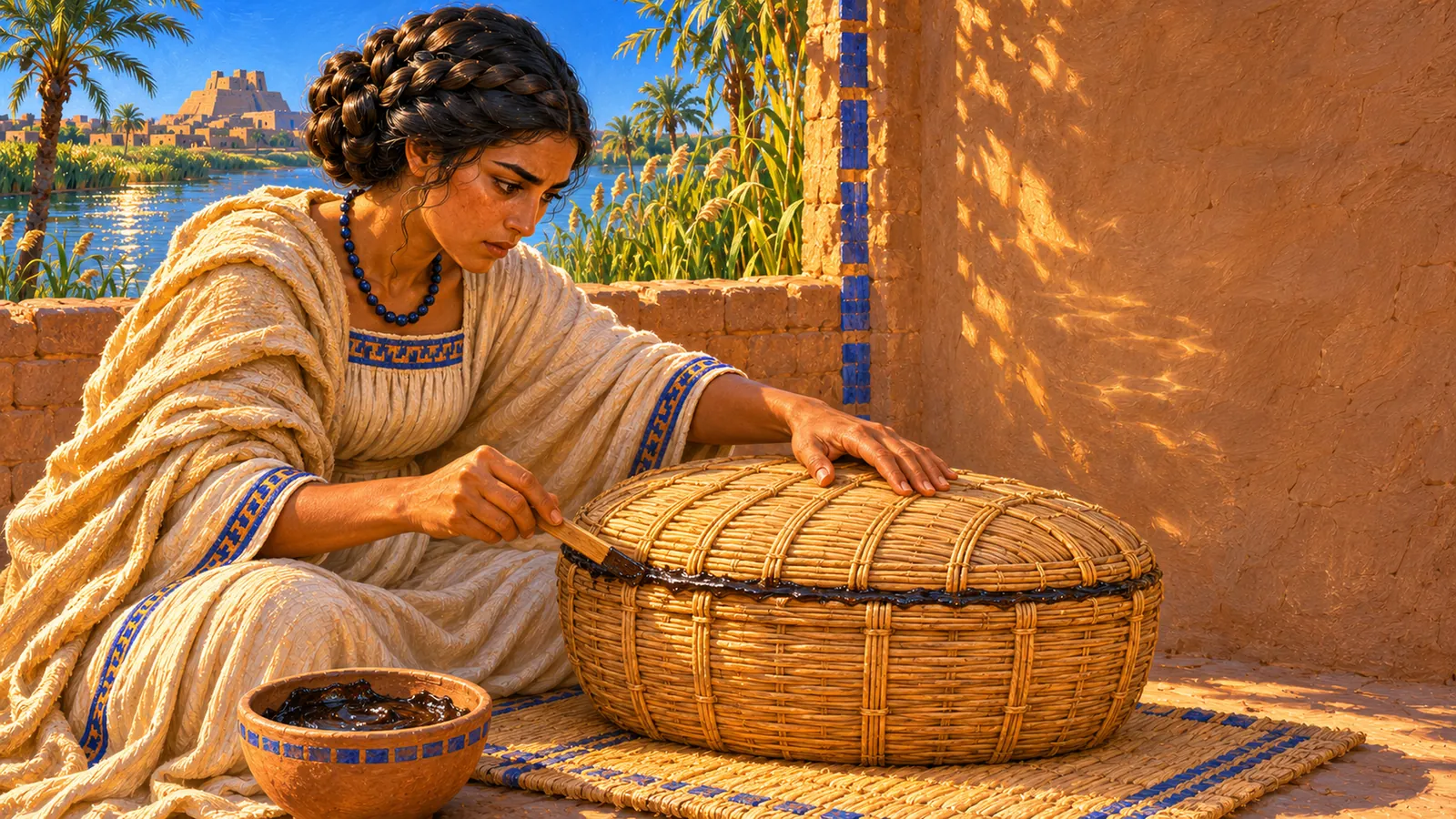
Sargón dice que su madre selló la abertura con betún. Valk aclara en una nota que la expresión en primera persona se refiere a la abertura de la cesta.
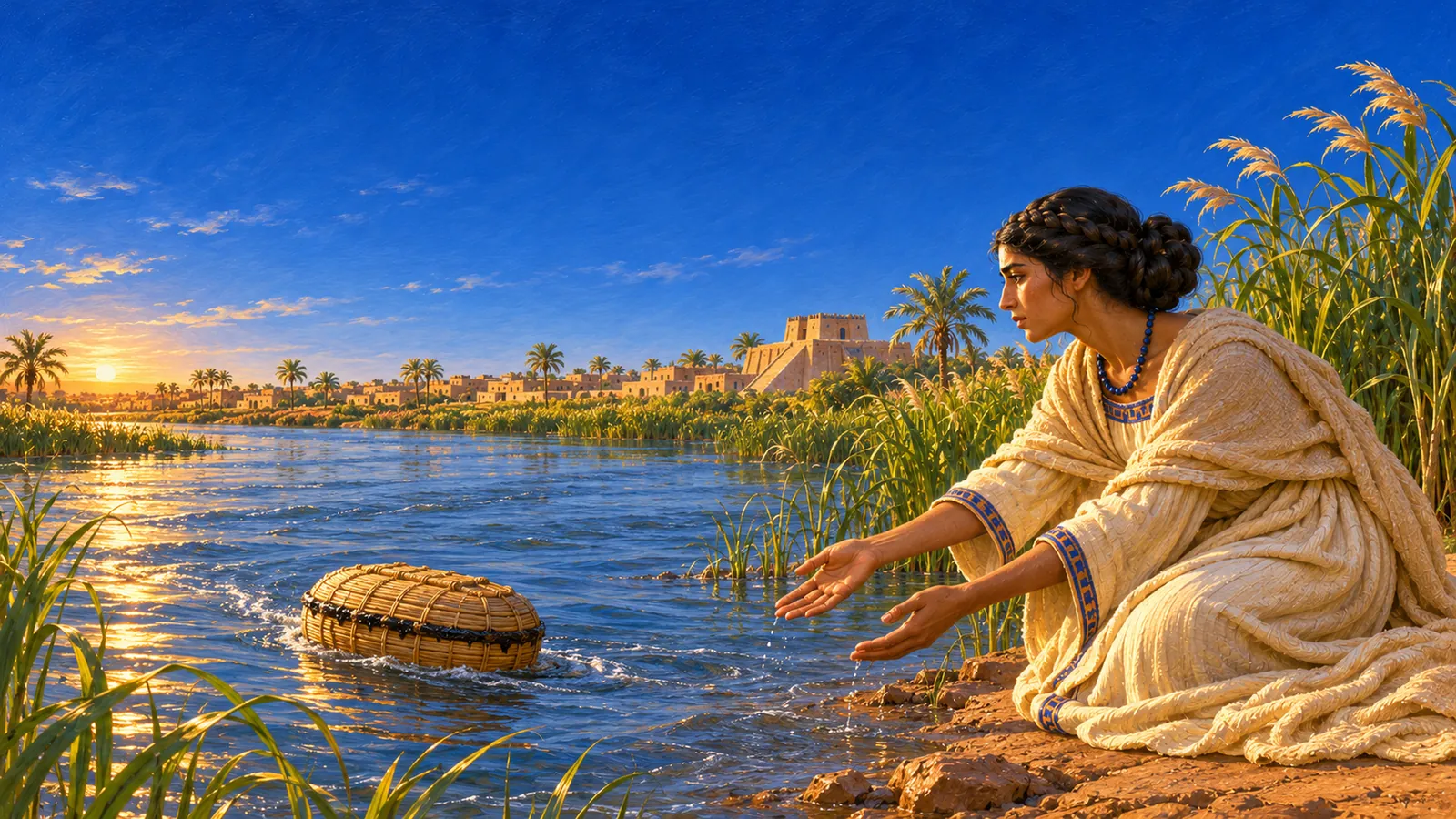
EL RÍO
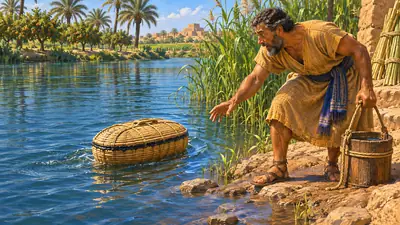
Sargón dice que su madre lo puso en el río. En su relato, no podía salir del agua.
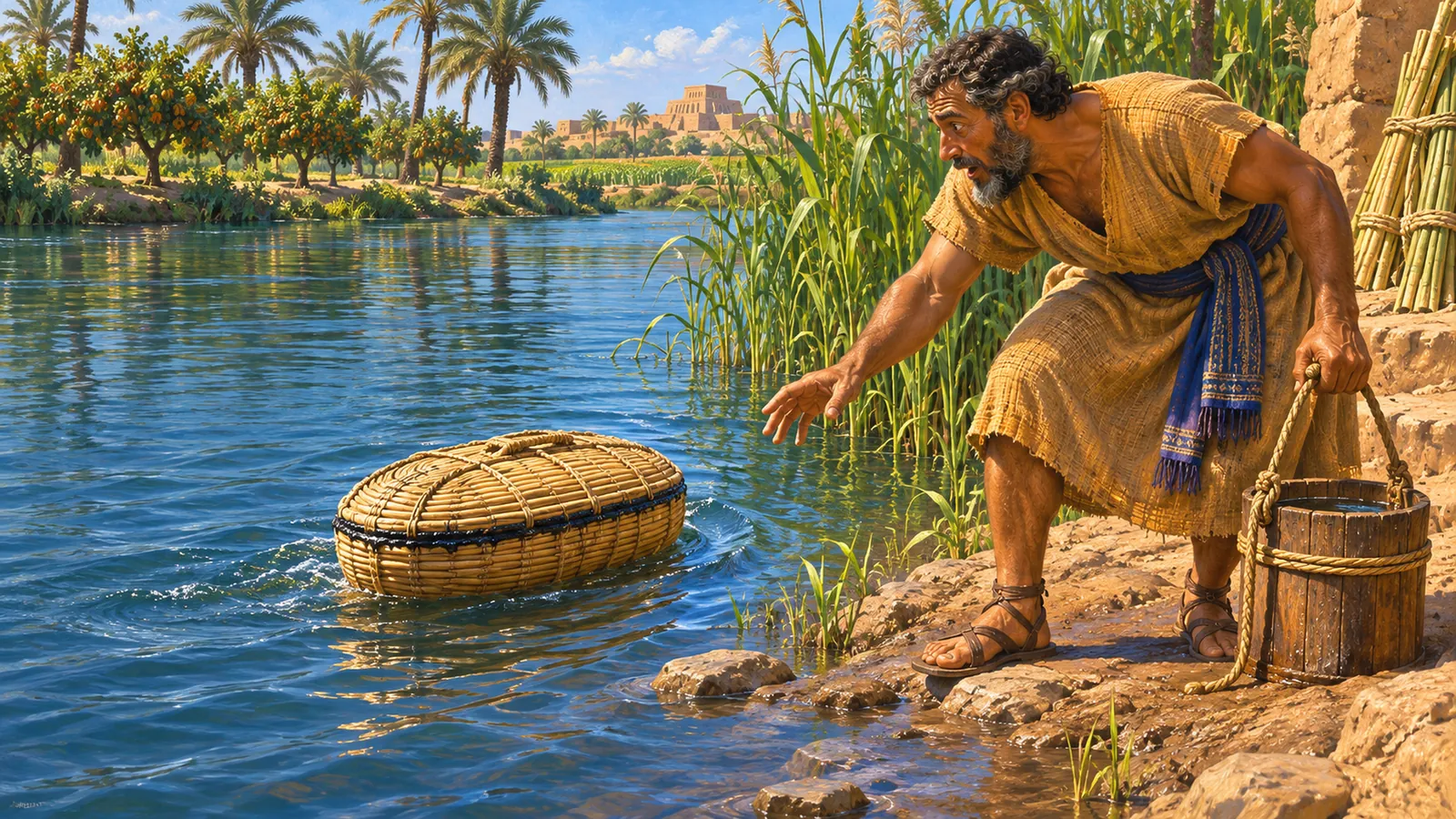
Sargón dice que el río lo llevó hasta un hombre llamado Aqqi, cuyo trabajo era sacar agua.
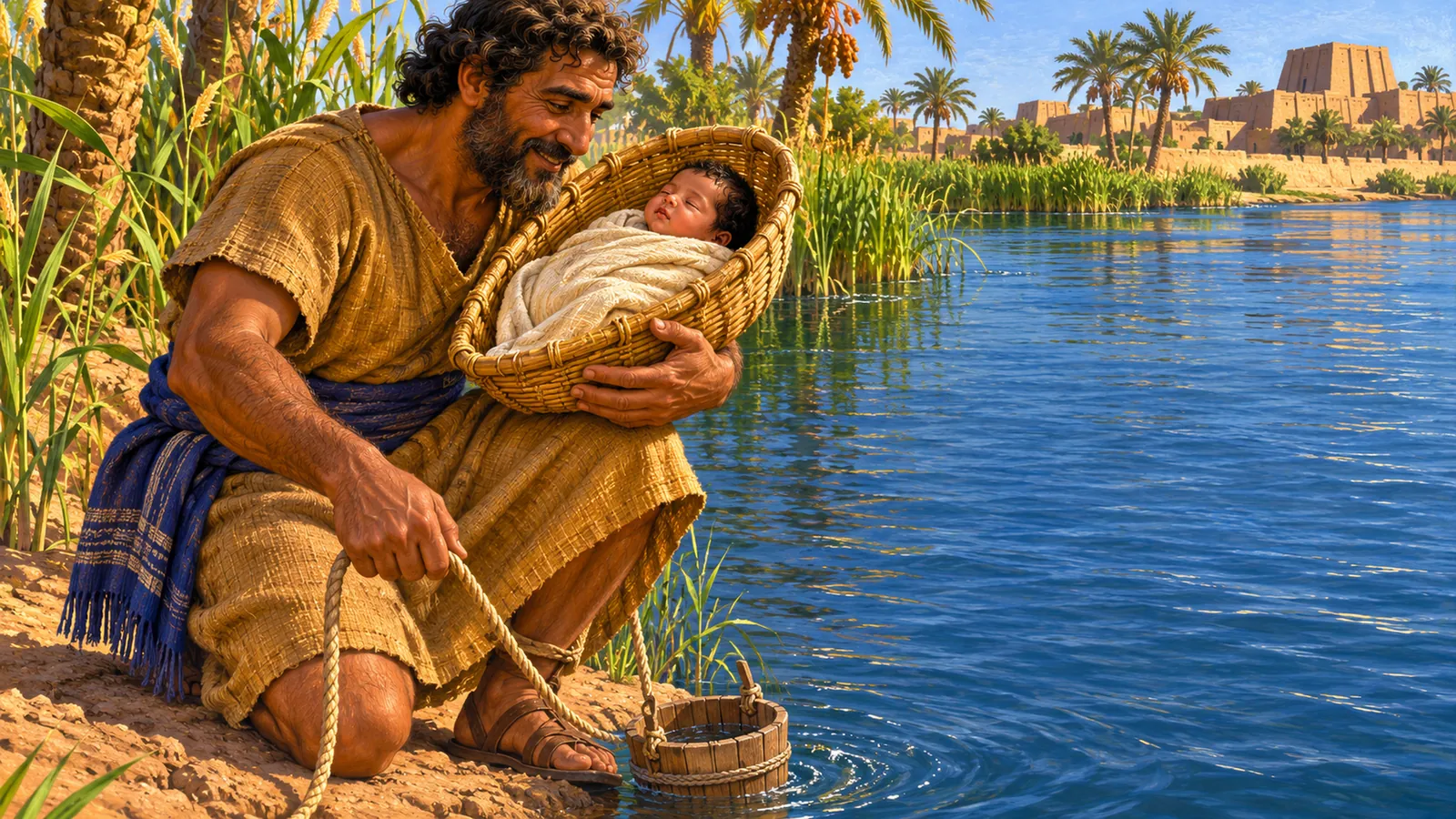
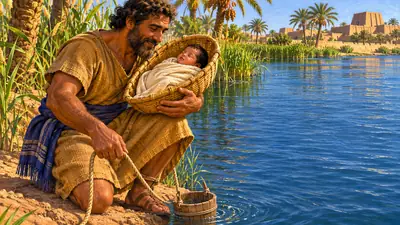
Sargón dice que Aqqi lo levantó mientras bajaba el cubo que usaba para sacar agua del río.
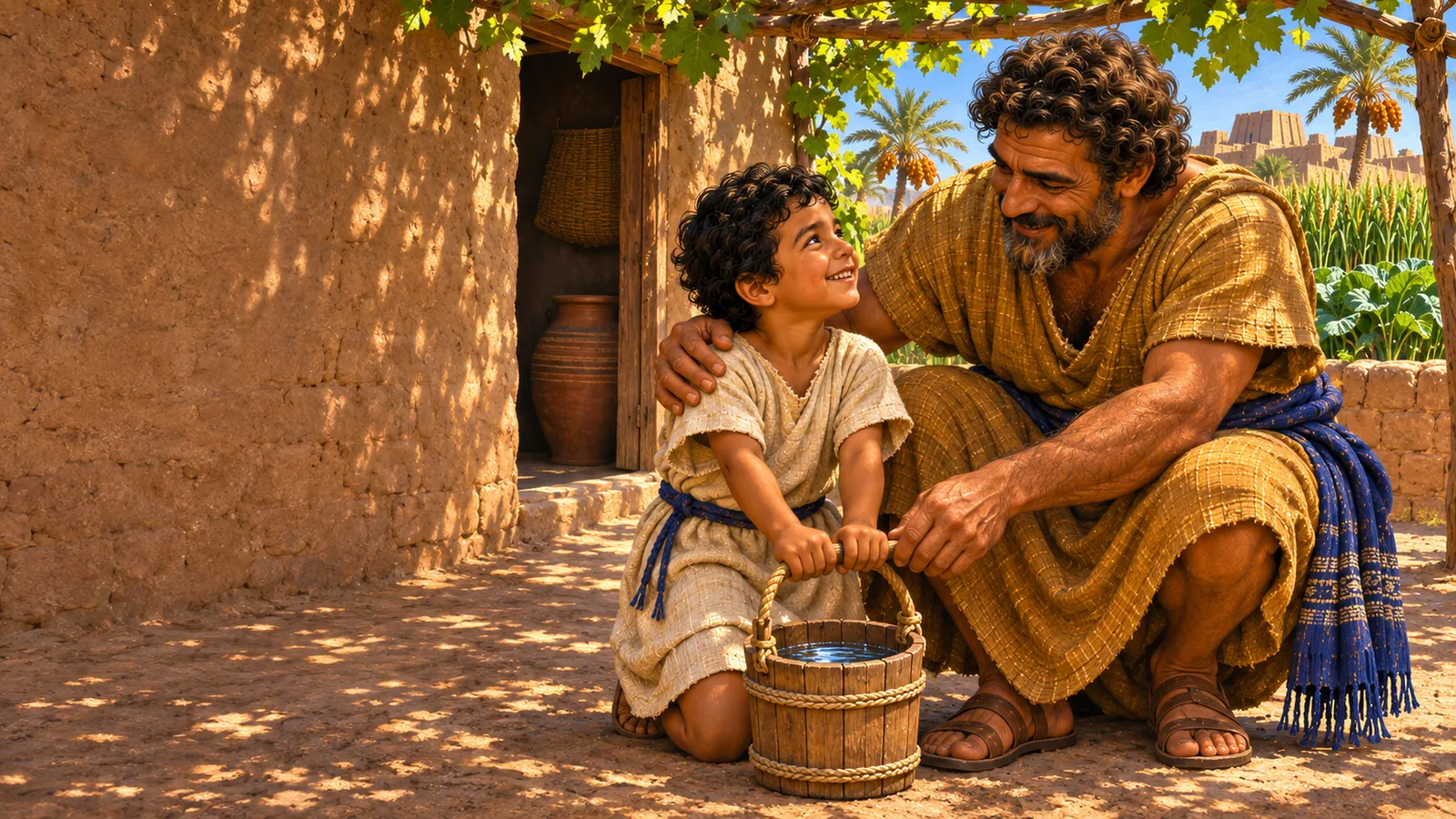
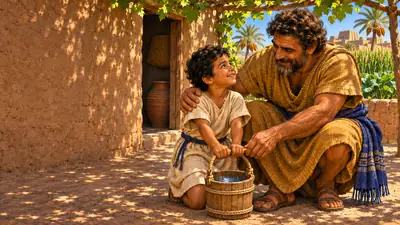
Sargón dice que Aqqi, el aguador, lo crio como hijo adoptivo después de sacarlo del río.
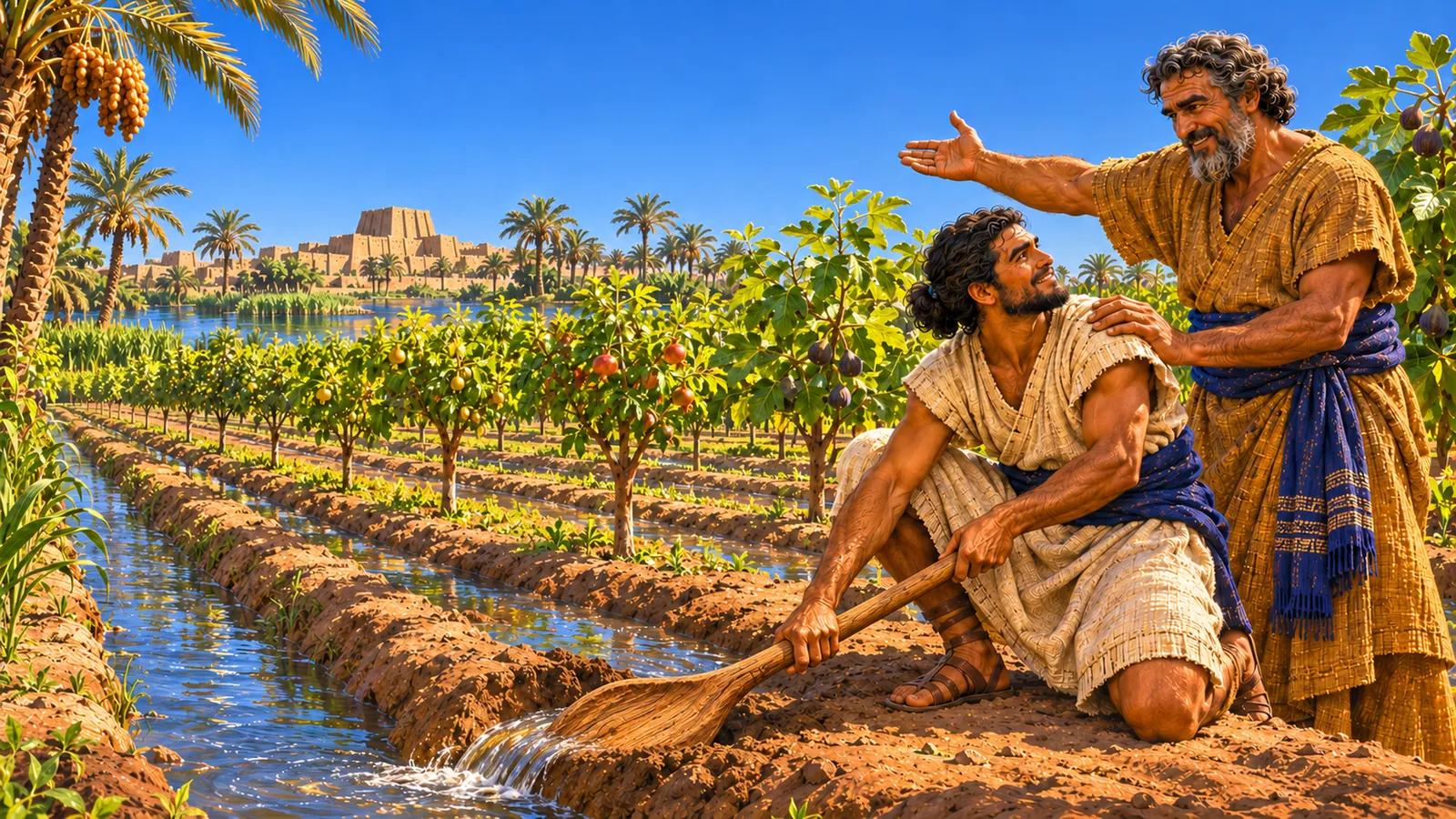
EL HUERTO
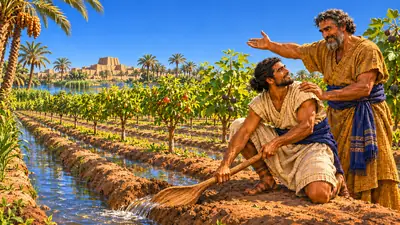
En la última línea del fragmento, Sargón dice que Aqqi le encomendó después el cultivo de su huerto.
Fin del capítulo 1
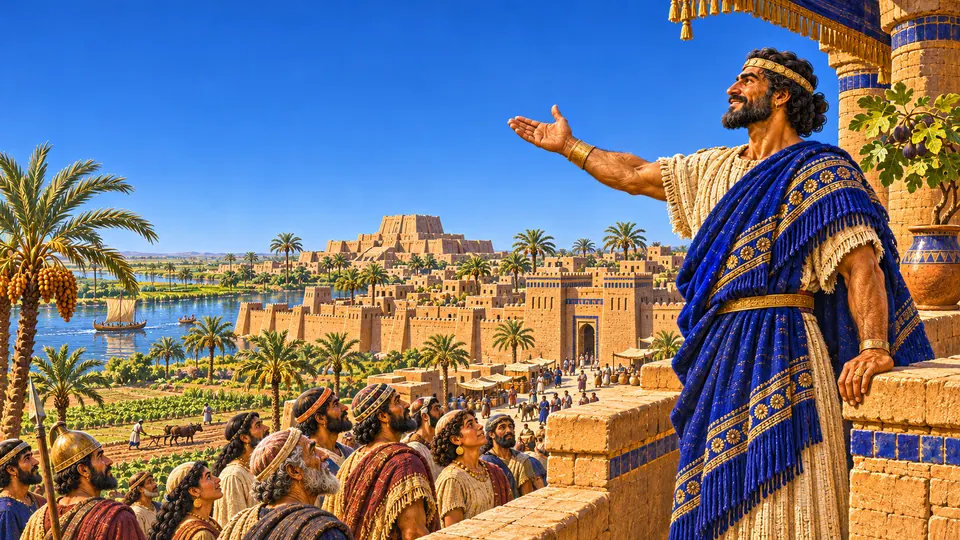
Todas las páginas

Fuentes
738 of the Journal of the Economic and Social History of the Orient 59 (2016). Valk discusses the basket opening in note 161 and lists the editions used in note 162. The quoted selection leads from the secret birth to the orchard assignment. The CDLI record is a separate manuscript reference. The artwork shows unoccupied ancient riverbanks and ordinary work materials.
Ediciones consultadas
- Jonathan Valk’s article, University of Helsinki institutional copy, p. 738
- Journal of the Economic and Social History of the Orient, Brill
- CDLI object record P365306 for a manuscript witness
Notas sobre este relato
Pages 1–2, line 5. Jonathan Valk prints the Akkadian and an English translation on p. 738 of “They Enjoy Syrup and Ghee at Tables of Silver and Gold: Infant Loss in Ancient Mesopotamia,” *Journal of the Economic and Social History of the Orient* 59 (2016), pp. 695–749. The site reading begins at the first clause of numbered line 5. Sargon speaks in the first person. His mother, an ēn-priestess, conceives him and gives birth to him in secret. The two clauses form two scenes.
Pages 3–4, line 6 and note 161. The line first gives the reed basket and then says the opening is sealed with bitumen. Valk’s note explains that the possessive literally says “my” in the first person and that the word refers to the opening of the basket. The two clauses form two scenes.
Page 5, line 7. The mother sets Sargon in the river, from which he cannot escape in Valk’s translation. The river is unnamed in this excerpt.
Page 6, line 8. Sargon says the river carries him to Aqqi, whom the line calls a water-drawer.
Page 7, line 9. Aqqi lifts Sargon while lowering his bucket in Valk’s translation.
Page 8, line 10. Sargon says that Aqqi raises him as his adopted son.
Page 9, line 11. Aqqi puts Sargon to work as his orchard-cultivator. This is the final numbered line that Valk quotes on this page. His discussion of Ištar and kingship follows the quoted excerpt in surrounding prose and falls outside this reading.
Los versos antiguos de cada página
- Page 1: Valk 2016, p. 738, Sargon Birth Legend, line 5, opening clause
- Page 2: Valk 2016, p. 738, Sargon Birth Legend, line 5, closing clause
- Page 3: Valk 2016, p. 738, Sargon Birth Legend, line 6, first clause
- Page 4: Valk 2016, p. 738, Sargon Birth Legend, line 6, second clause and note 161
- Page 5: Valk 2016, p. 738, Sargon Birth Legend, line 7
- Page 6: Valk 2016, p. 738, Sargon Birth Legend, line 8
- Page 7: Valk 2016, p. 738, Sargon Birth Legend, line 9
- Page 8: Valk 2016, p. 738, Sargon Birth Legend, line 10
- Page 9: Valk 2016, p. 738, Sargon Birth Legend, line 11
Ilustraciones hechas por IL Archive con herramientas de IA; el texto se basa en las fuentes antiguas (véanse las fuentes al final de cada capítulo).