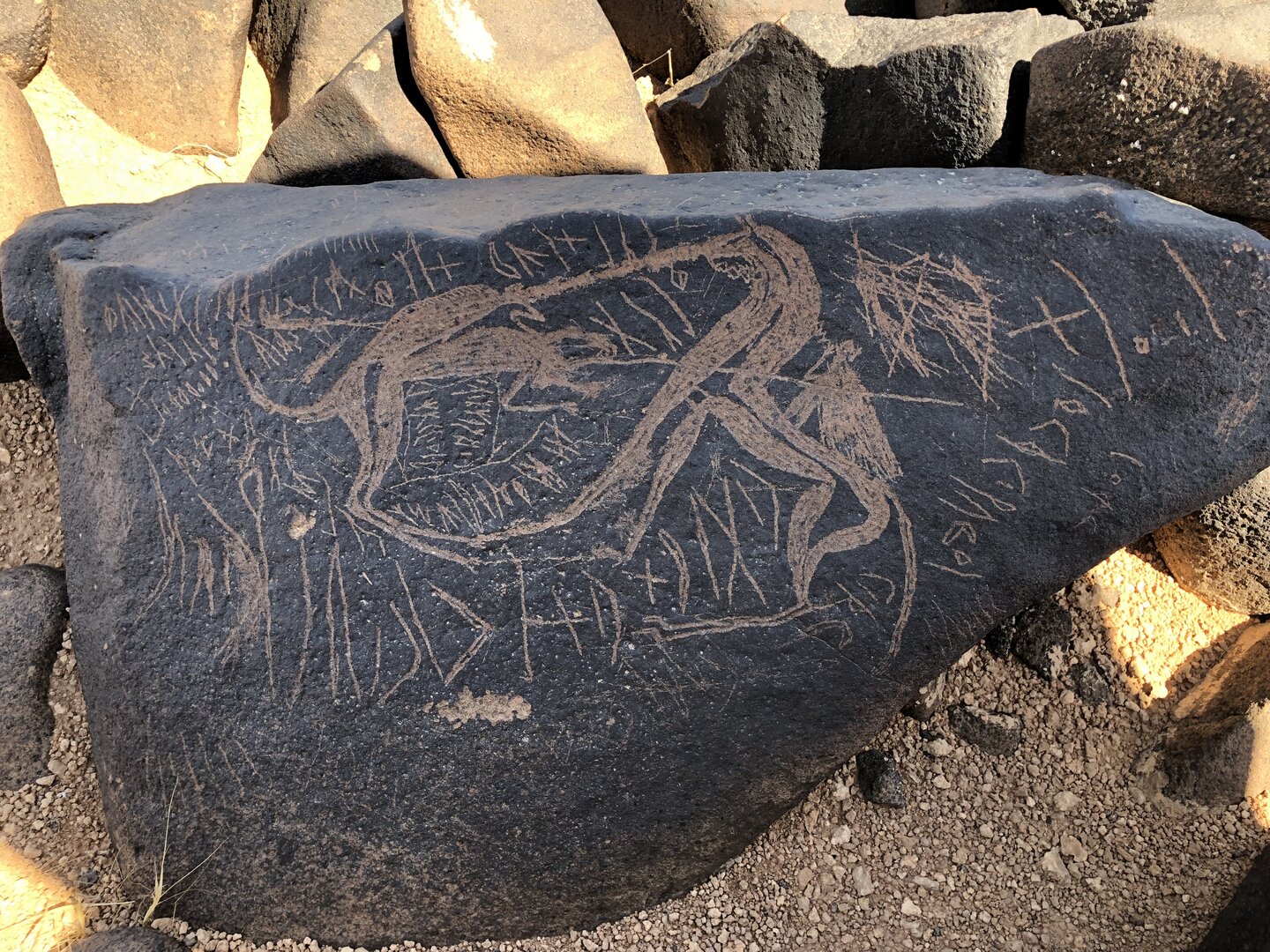
Rock bearing Safaitic inscription BES19s 77.1 and associated carvings, Firʿ Wādī al-Khuḍarī, Al-Mafraq, Jordan; recorded in 2019 and listed in situ by OCIANA. The published reading invokes Allat and later requests relief from lh (interpreted as Allah). OCIANA describes a predator, a person and a mounted rescuer, not images identified as deities
Entidade
An Ancient North Arabian consonantal script used for rock inscriptions recording names, kinship, pastoral movement and prayers in the pre-Islamic deserts of Syria, Jordan and northern Arabia.
Variantes do nome: Safaitic, Safaitic script, Safaitic inscriptions
Contexto e fontes →
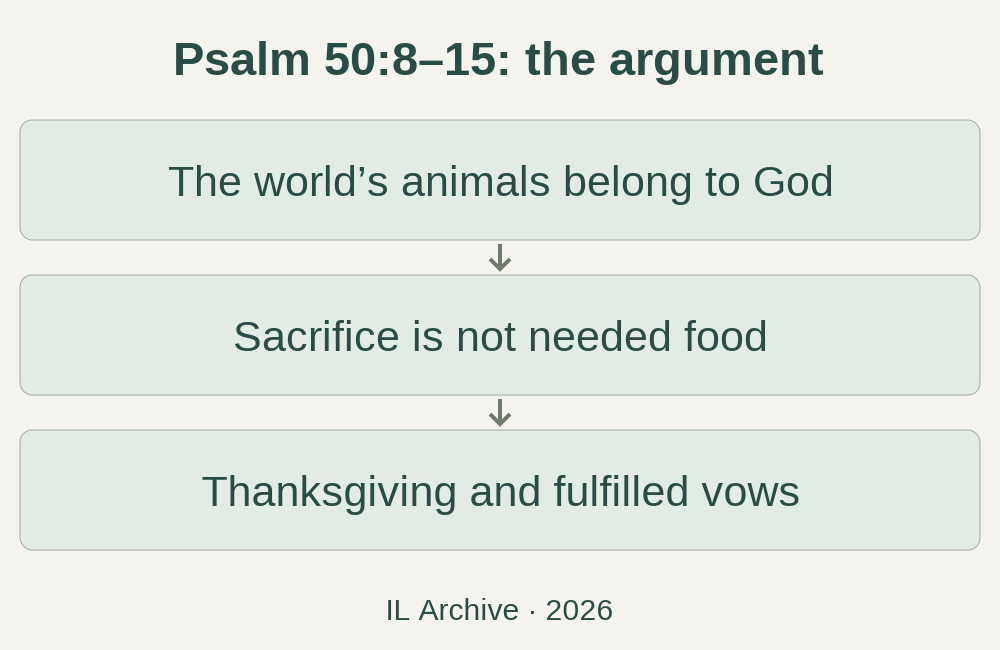
Modern explanatory diagram of the argument or character’s role in the specified passage; not an ancient manuscript or a goddess portrait
Texto antigo
Hebrew poem rejecting divine need for sacrificial flesh and calling for thanksgiving and fulfilled vows.
Variantes do nome: Psalm 50 and sacrifice
Contexto e fontes →
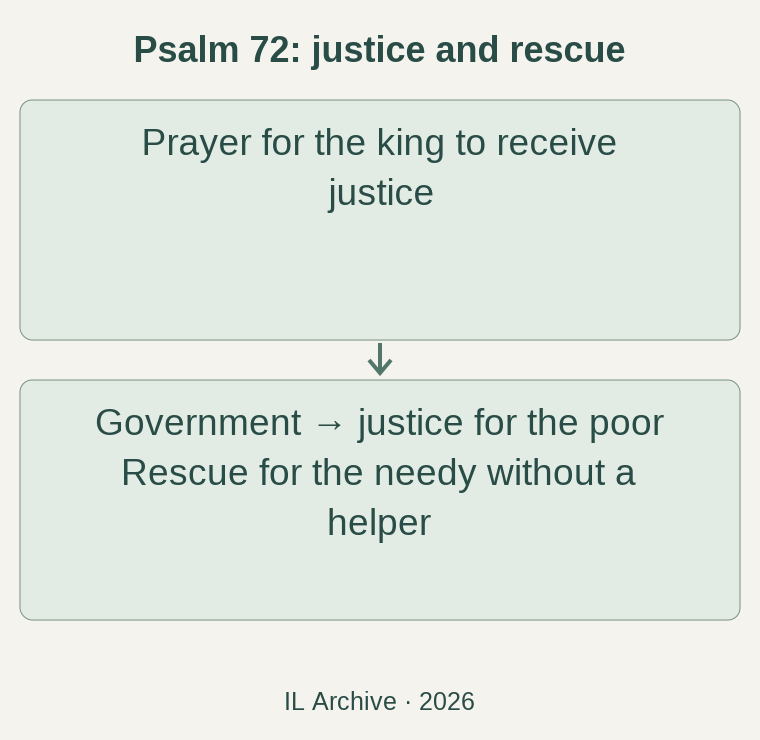
Modern diagram of the relationship or demand in the specified text; not an artifact photograph, a divine likeness or a portrait
Texto antigo
Hebrew prayer for a king who judges the poor fairly and rescues the needy without a helper.
Variantes do nome: Psalm 72 and royal justice
Contexto e fontes →
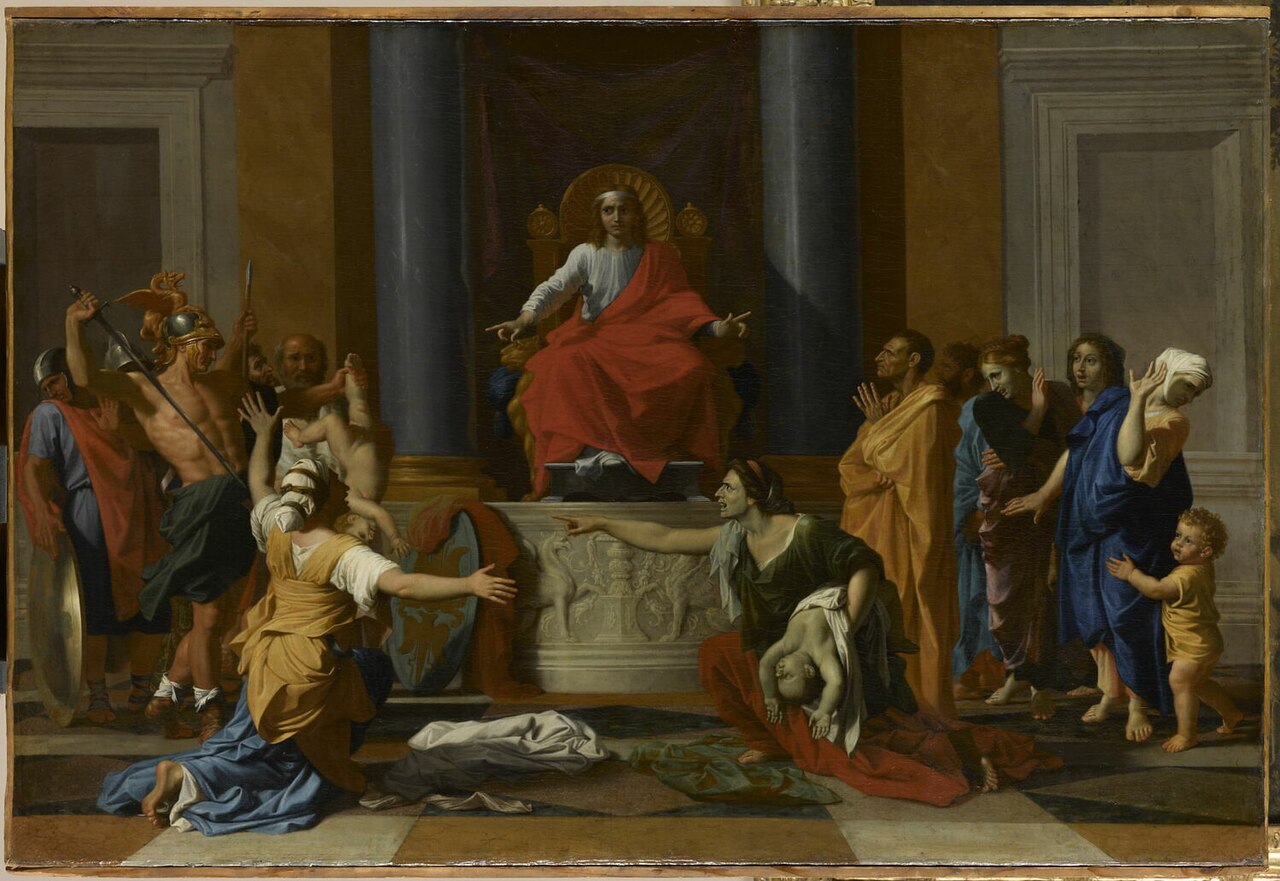
The Judgment of Solomon, an oil painting by Nicolas Poussin from 1649, in the Louvre, INV 7277. It depicts the judgement between two women in 1 Kings 3 and illustrates the story’s reception in seventeenth-century European art
Pessoa
Solomon is the biblical king, David’s son, associated in Kings with Jerusalem and building the temple
Variantes do nome: King Solomon
Contexto e fontes →
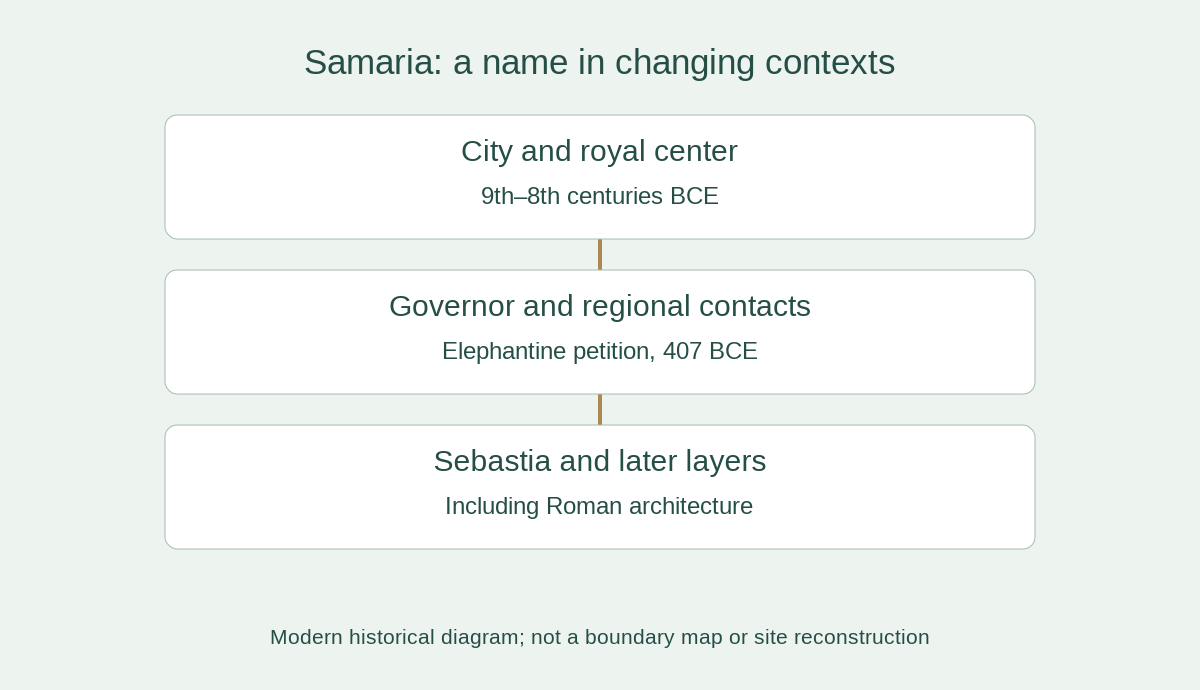
Modern diagram distinguishing the royal city, the governor’s context in the Elephantine petition and Sebastia’s later layers. Not a photograph or a map of boundaries
Sítio
Ancient city and administrative region; the city’s site is at Sebastia, northwest of Nablus in the West Bank.
Variantes do nome: Samaria
Contexto e fontes →
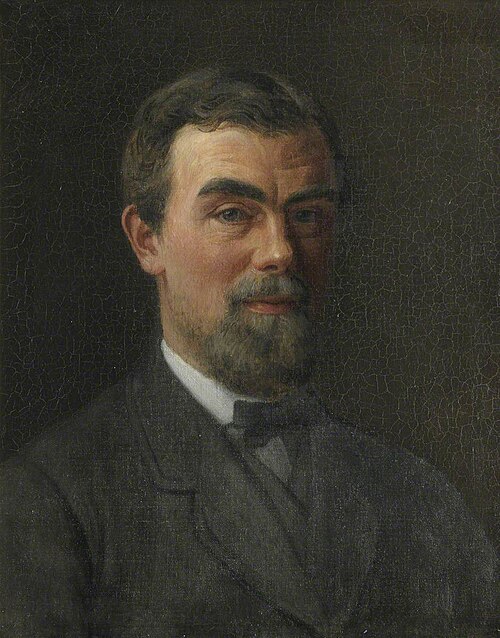
Samuel Butler’s self-portrait of 1878, held by St John’s College, Cambridge. A digital reproduction of a painting, rather than a photograph of the person
Pessoa
English writer and translator of Homer who lived from 1835 to 1902.
Variantes do nome: Samuel Butler
Contexto e fontes →
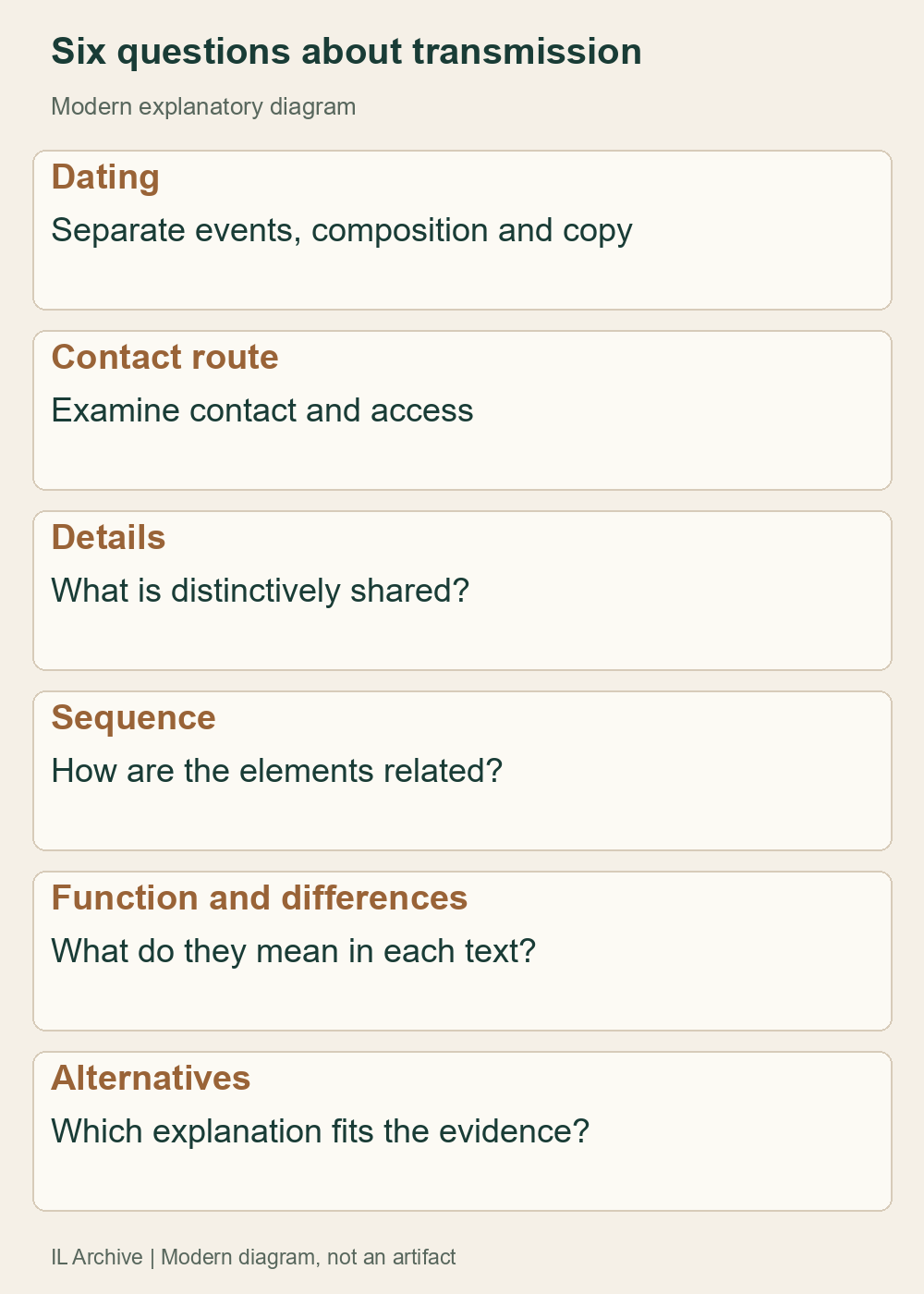
Modern IL Archive diagram of six questions for testing textual relationships; neither a photograph of Sandmel nor a historical document about him
Pessoa
Samuel Sandmel (1911–1979): American Jewish rabbi and scholar of the New Testament and Hellenistic Judaism, author of “Parallelomania” (1962) and works on early Christianity and Jewish–Christian understanding.
Variantes do nome: Samuel Sandmel, Sandmel
Contexto e fontes →
Pessoa
Scholar of Iranian traditions and religious interaction; curator of the National Library of Israel’s Islam and Middle East collection.
Variantes do nome: Samuel Thrope
Contexto e fontes →
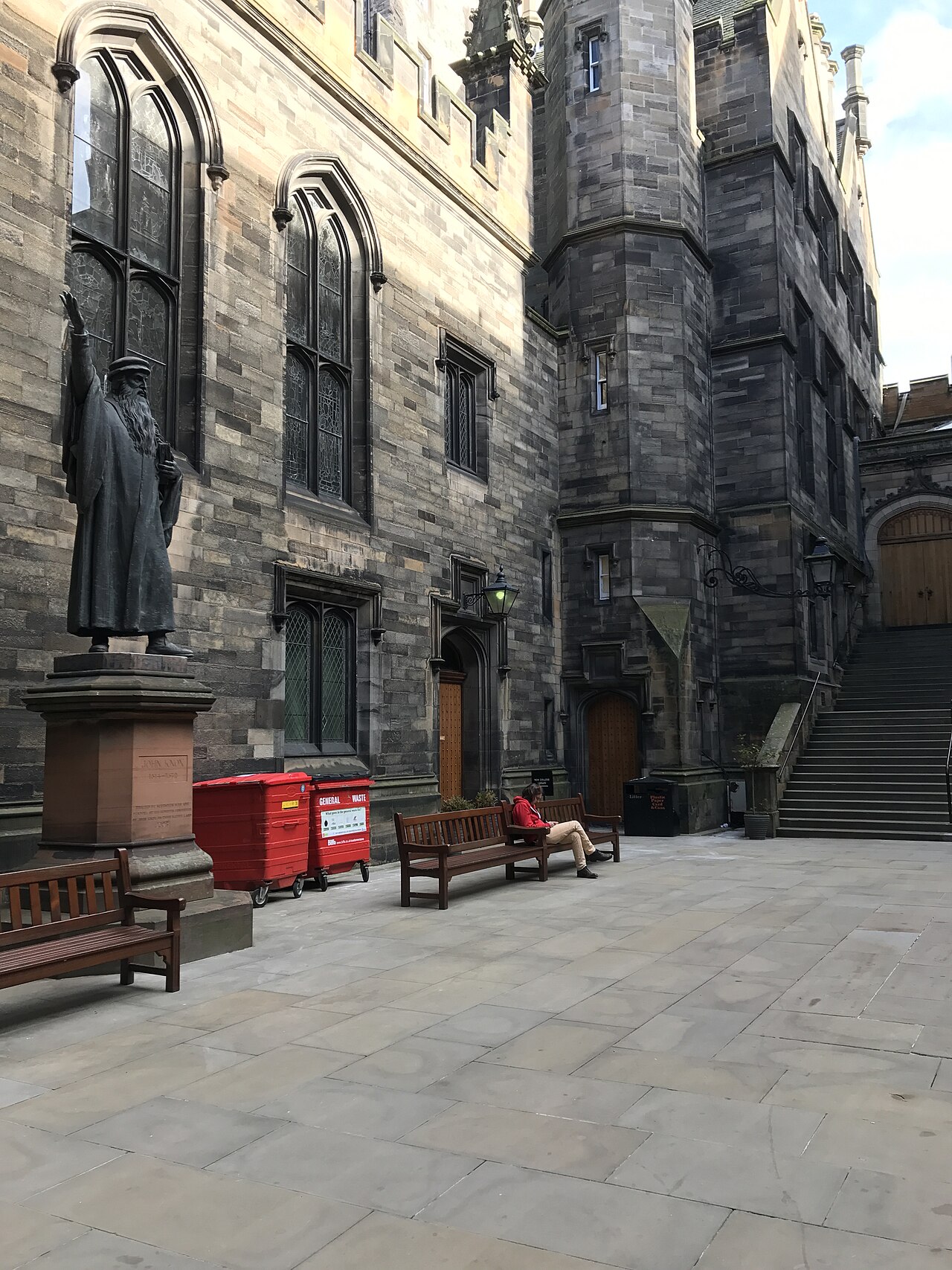
New College courtyard, University of Edinburgh, photographed in 2017. Institutional context for Cho’s thesis, completed in 2007; neither a portrait nor a photograph from the thesis year
Pessoa
Researcher who studied the ranks and roles of heavenly beings in Ugarit and the Hebrew Bible.
Variantes do nome: Sang Youl Cho
Contexto e fontes →
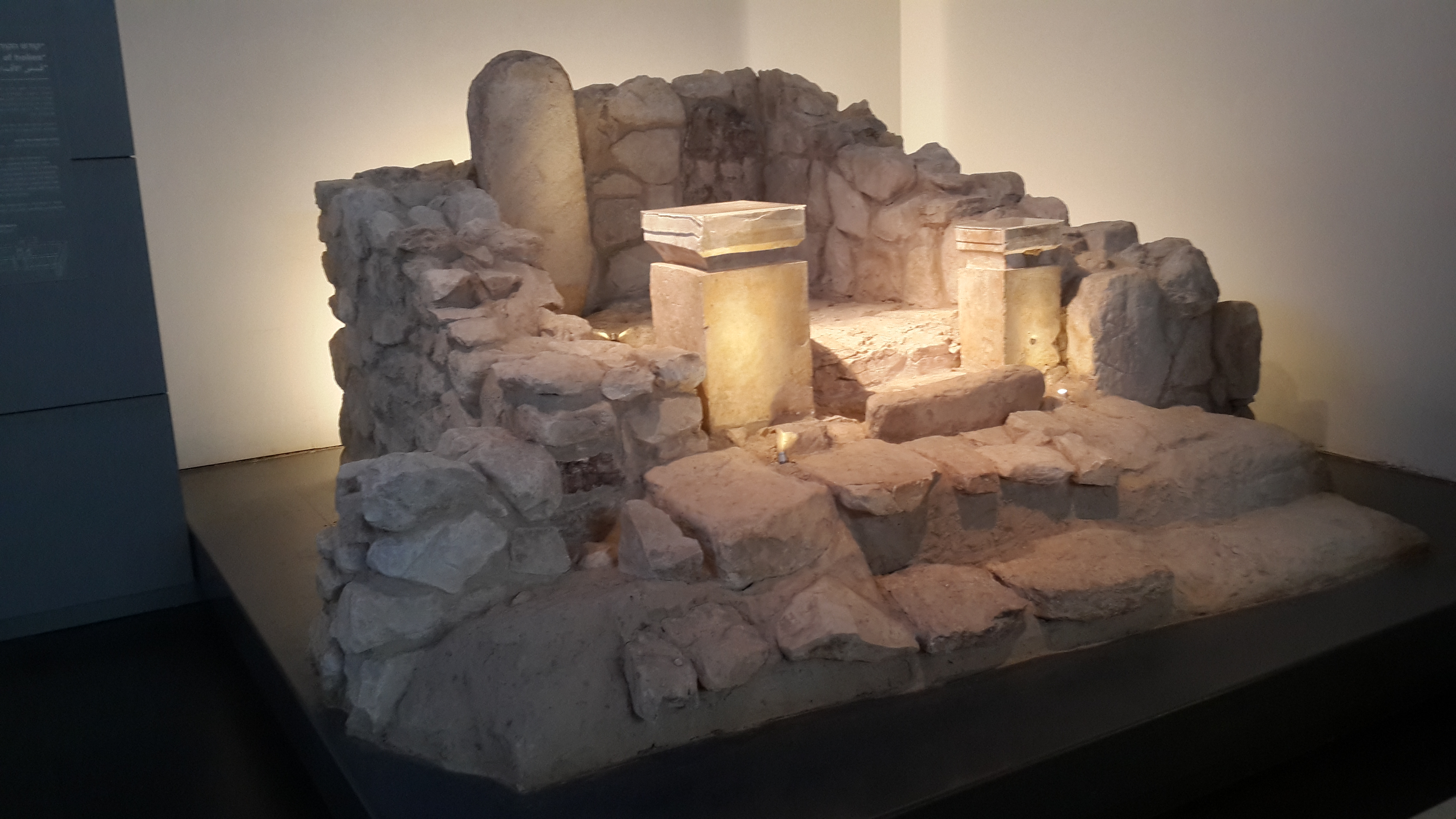
Modern reconstruction of Arad’s eighth-century BCE inner sanctuary in the Israel Museum: standing stone and two small altars. Archaeological comparison, not Jerusalem’s Holy of Holies
Entidade
Most sacred inner zone of the biblical sanctuary. Kings places the Ark beneath its cherubim; Leviticus regulates approach behind the curtain. Wilderness and Jerusalem temple traditions describe distinct settings.
Variantes do nome: Holy of Holies, inner sanctuary
Contexto e fontes →
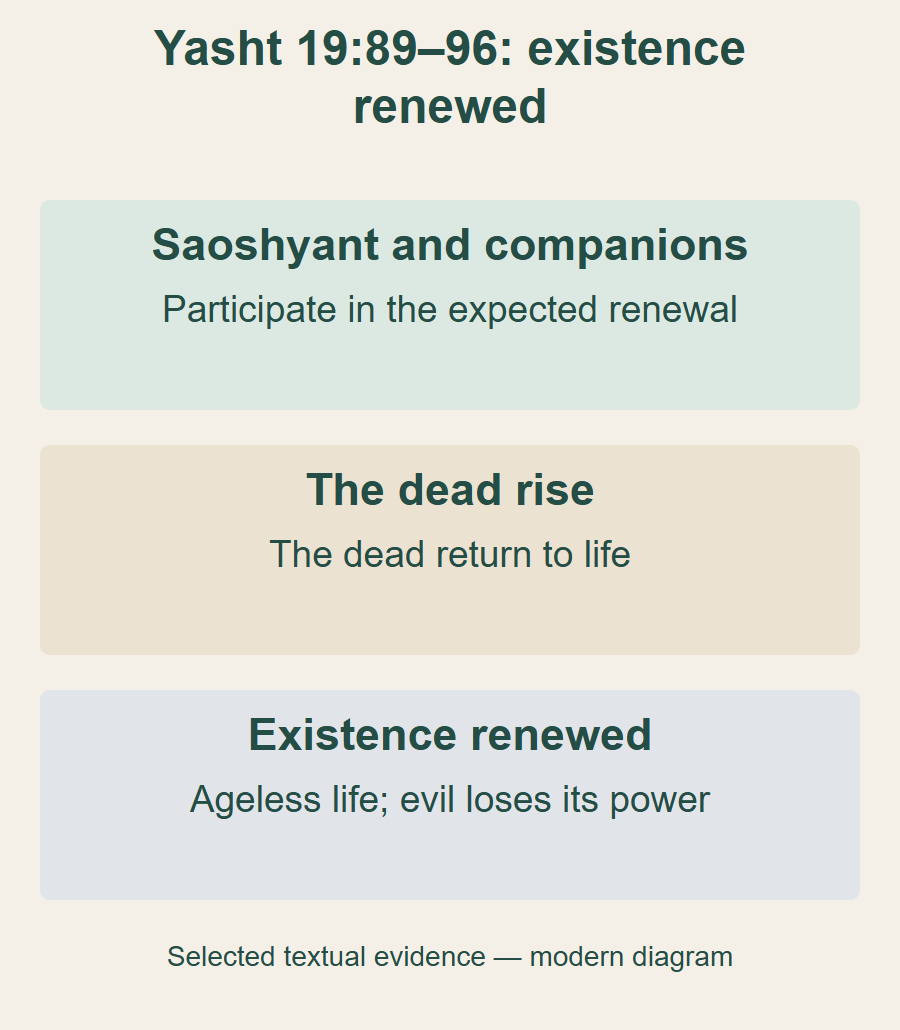
Modern chart of Yasht19:89–96: Saoshyant and companions, the dead rising and existence renewed. A textual sequence without an invented likeness
Entidade
Saoshyant is an Avestan term for a benefactor, with an eschatological savior sense in Zoroastrian texts.
Variantes do nome: Saoshyant
Contexto e fontes →
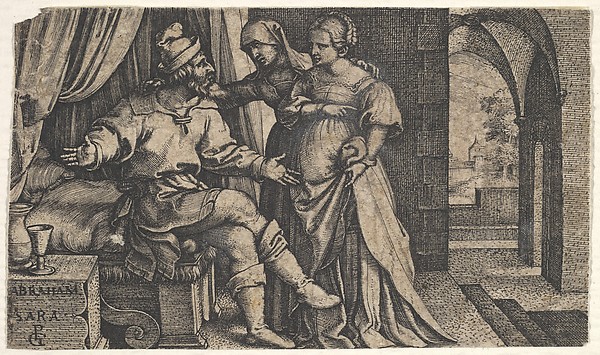
Georg Pencz, Sarah Presenting Hagar to Abraham, ca. 1543, The Met 2012.136.766.2; later artistic depiction
Pessoa
Abraham's wife and Isaac's mother in Genesis; her story with Hagar and Ishmael appears in chapters 16 and 21, not in the Genesis 22 scene itself.
Variantes do nome: Sarai
Contexto e fontes →
Pessoa
Scholar of biblical texts, scribal education and legal formation.
Variantes do nome: Sara Milstein
Contexto e fontes →
Pessoa
University of Edinburgh scholar of patristics and early Christian history.
Variantes do nome: Sara Parvis
Contexto e fontes →
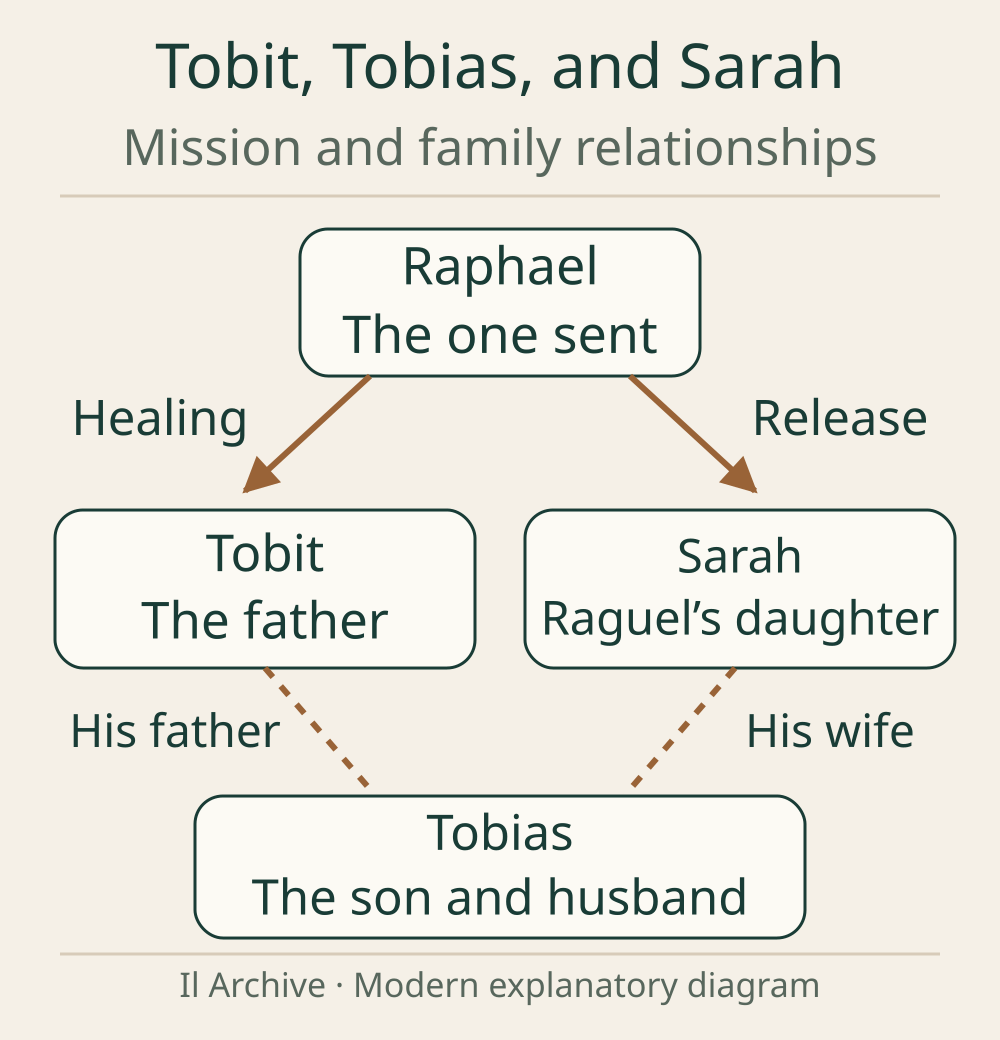
Modern role diagram for Tobit 3 and 11–12. Solid arrows show Raphael’s mission; dashed links show Tobias’s relationships with his father Tobit and his wife Sarah daughter of Raguel. The son treats his father’s eyes under Raphael’s guidance. Not a medical chart or historical portrait
Pessoa
Tobias’s wife in the narrative, not Sarah the wife of Abraham.
Variantes do nome: Sarah daughter of Raguel, Sarah in Tobit
Contexto e fontes →
Pessoa
Religion scholar who has studied the textual diversity and demonology of the Testament of Solomon.
Variantes do nome: Sarah L. Schwarz
Contexto e fontes →
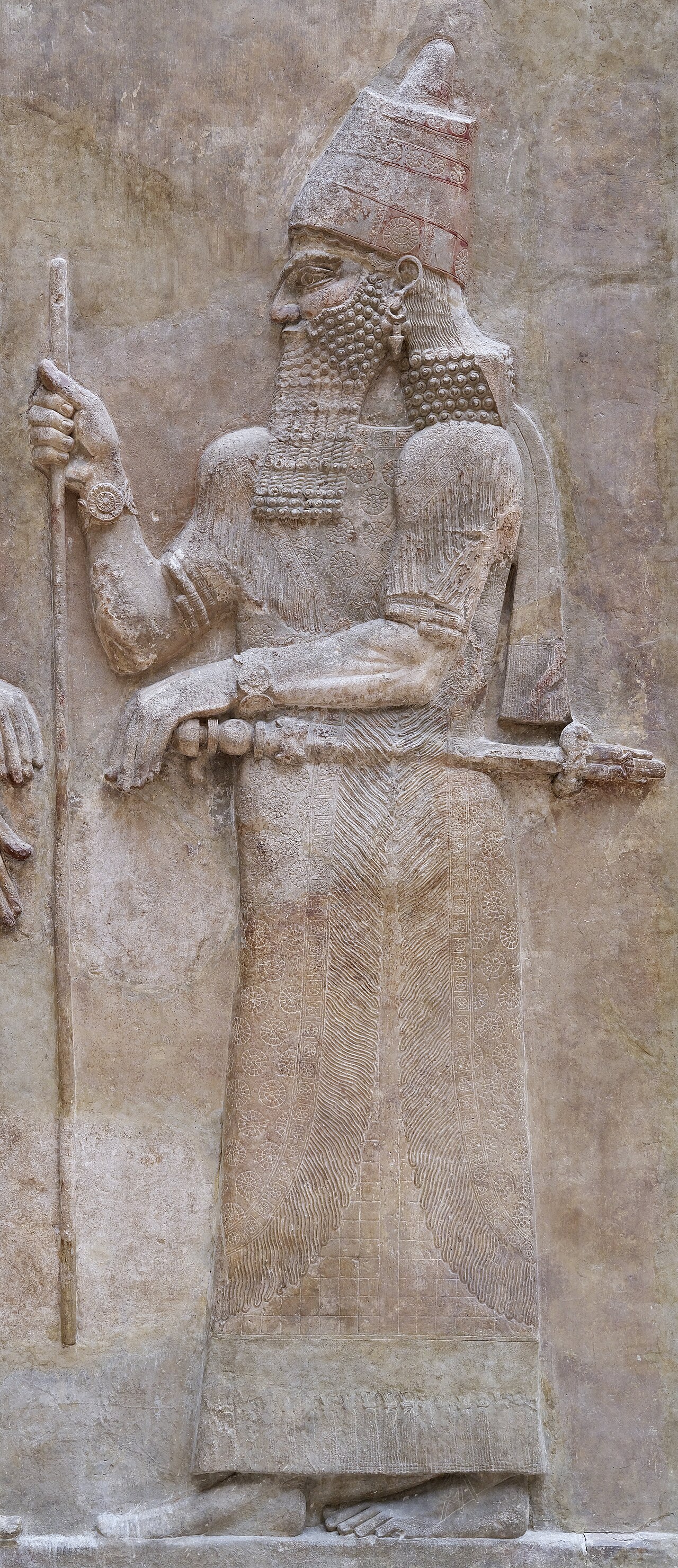
Sargon II in a relief from Dur-Sharrukin, modern Khorsabad in Iraq, dated by the Louvre to his reign, 721–705 BCE. This source crop shows the king in the scene catalogued as AO 19873 and AO 19874
Pessoa
Sargon II was an Assyrian king of the late eighth century BCE; ORACC dates his reign about 721–705 BCE
Variantes do nome: Sargon II, Sargon the Second
Contexto e fontes →
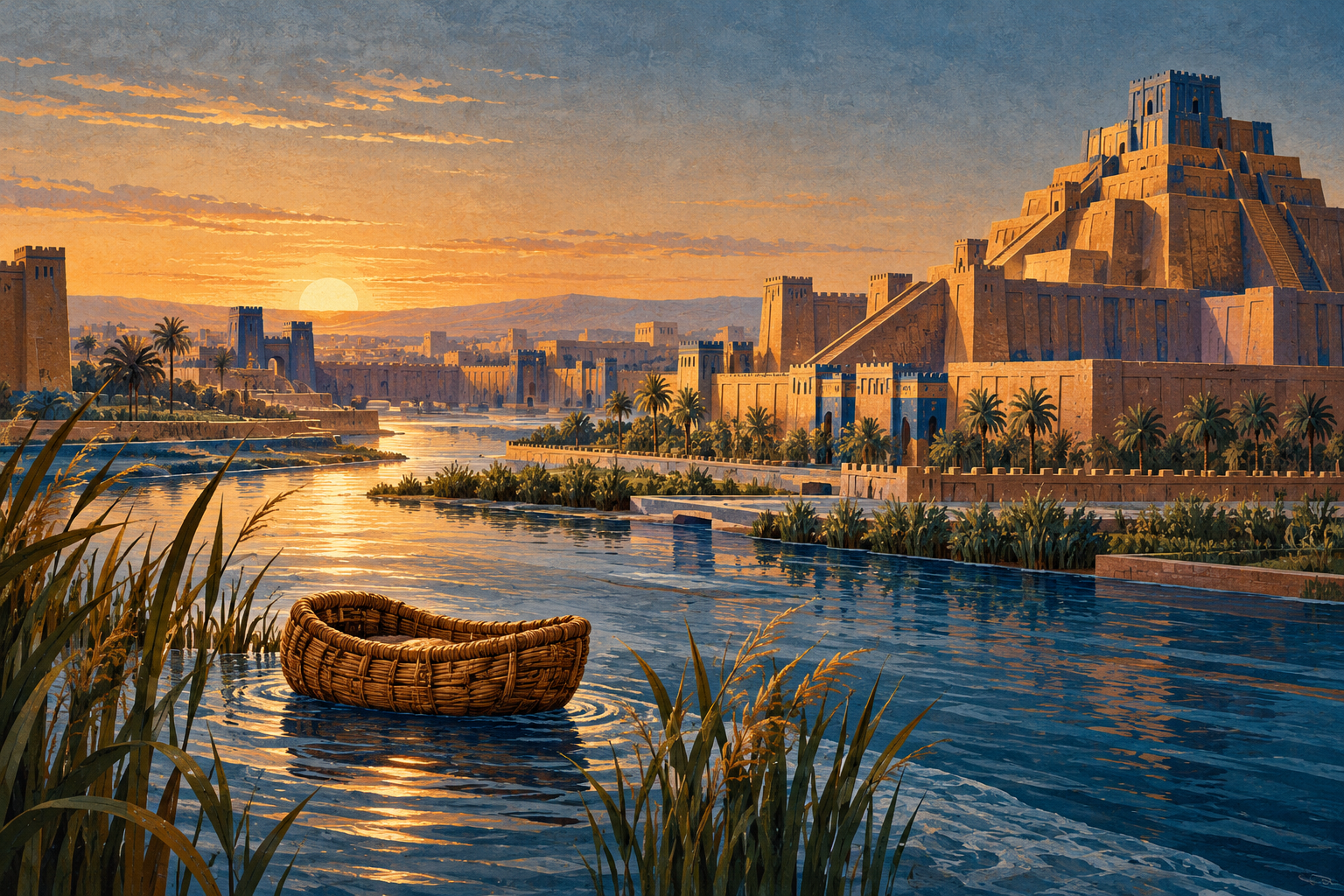
Modern imaginative scene inspired by Mesopotamia and the river-basket motif; neither a portrait of Sargon nor an archaeological reconstruction of Agade
Pessoa
Sargon of Akkad was a historical third-millennium BCE ruler and founder of the Akkadian dynasty; royal accounts of his campaigns must be distinguished from later stories of his birth and rise.
Variantes do nome: Sargon of Akkad, Sargon I
Contexto e fontes →
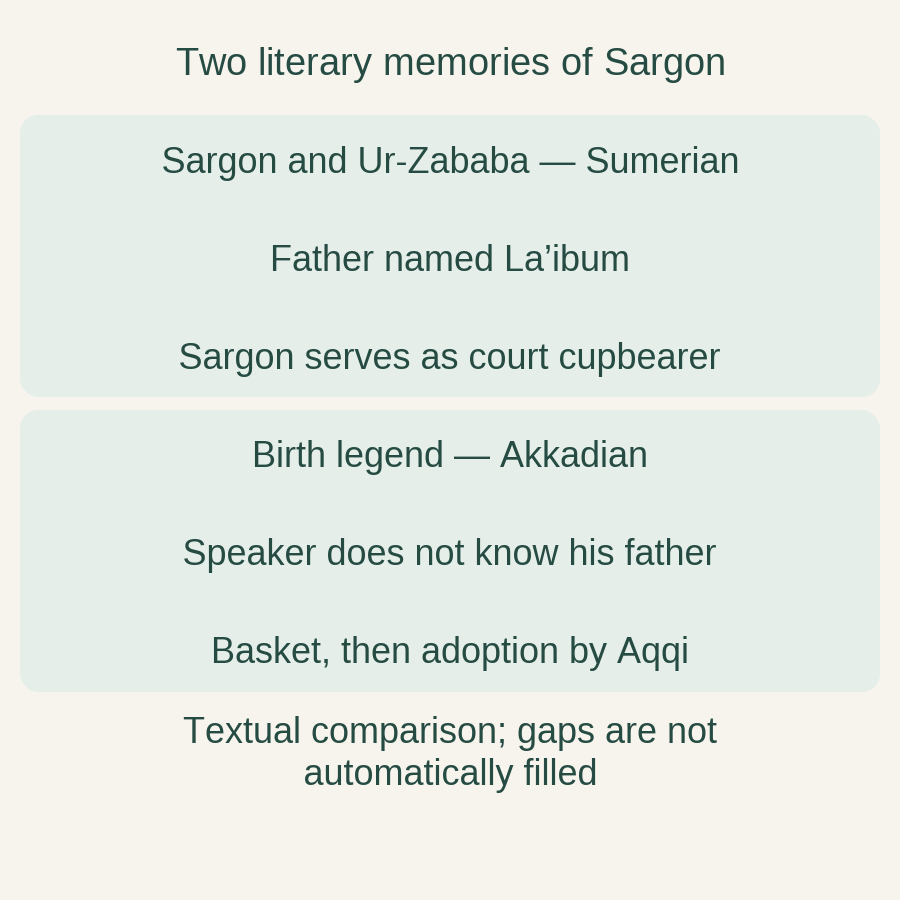
Modern comparison of two literary witnesses to Sargon’s family and early life; not an ancient artifact
Texto antigo
Fragmentarily preserved Sumerian composition depicting Sargon as Ur-Zababa’s cupbearer and naming his father La’ibum, distinct from the Akkadian birth legend.
Variantes do nome: Sargon and Ur-Zababa
Contexto e fontes →
Pessoa
Satoko Ehara authored a 2024 study of Tammuz lamentation in sources from the Islamic period.
Variantes do nome: Satoko Ehara
Contexto e fontes →
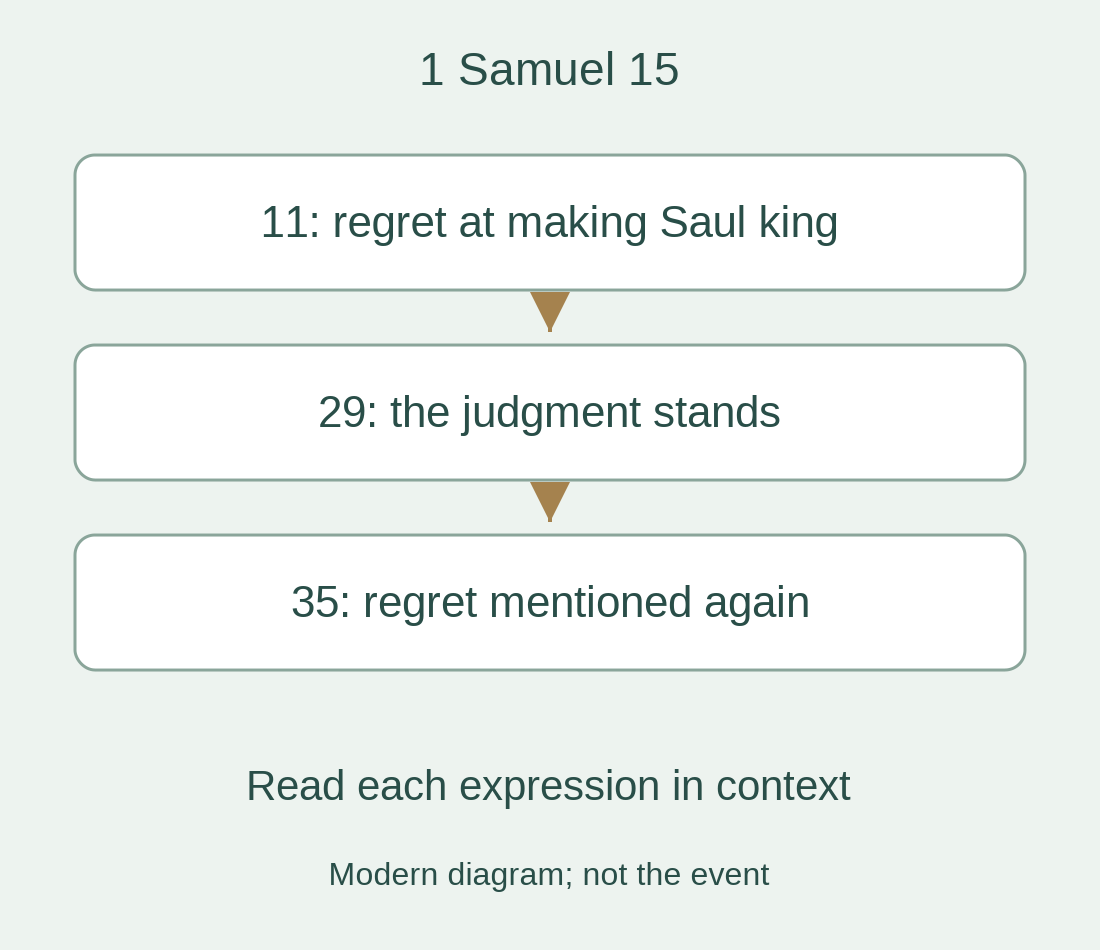
Modern diagram; not the event. Read each expression in context
Pessoa
King in the Samuel narratives; 1 Samuel 15 combines regret over his appointment with the finality of the judgment against him.
Variantes do nome: Saul king of Israel, Saul
Contexto e fontes →
Pessoa
University of Washington scholar of ancient Near Eastern languages and religions.
Variantes do nome: Scott B. Noegel
Contexto e fontes →
Pessoa
Syriac literature scholar who distinguishes the Syriac Alexander Romance, Christian Legend and poem.
Variantes do nome: Sebastian P. Brock
Contexto e fontes →
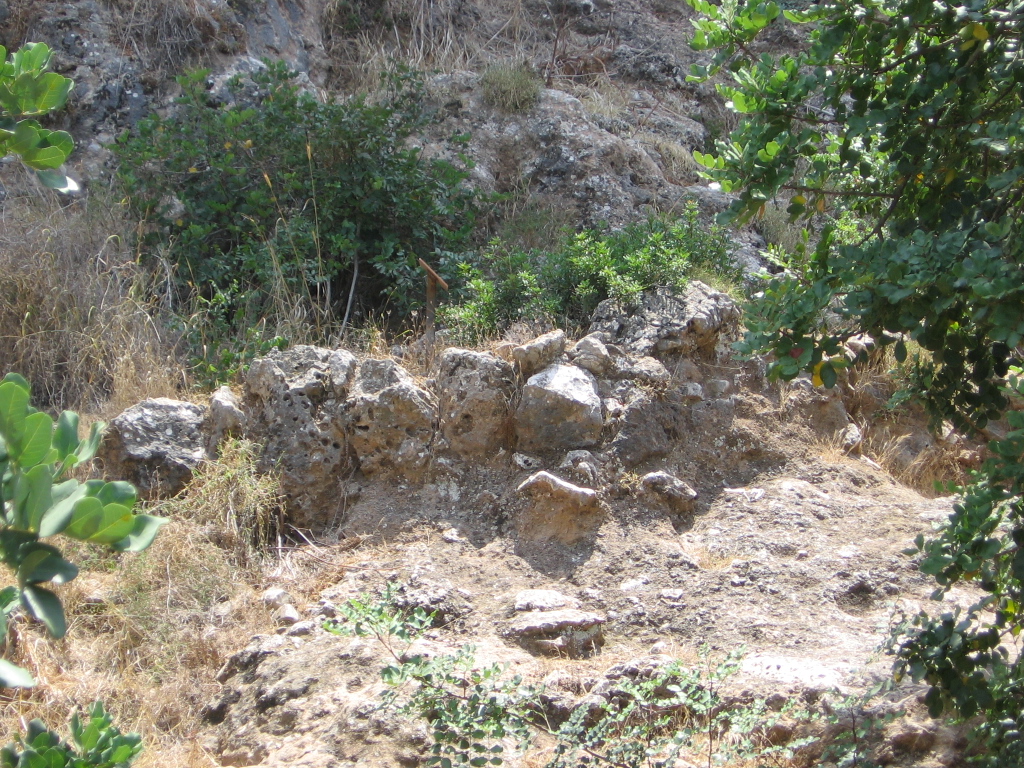
Remains of a supporting wall of a Natufian house at el-Wad Terrace, Mount Carmel. A modern photograph of ancient architecture, not Ain Mallaha or Wadi Hammeh 27; a durable building alone does not establish occupation duration
Entidade
Reduced residential mobility and prolonged occupation of a place: a concept distinct from agriculture, assessed through evidence beyond the presence of buildings.
Variantes do nome: sedentism, residential sedentism, semi-sedentism
Contexto e fontes →
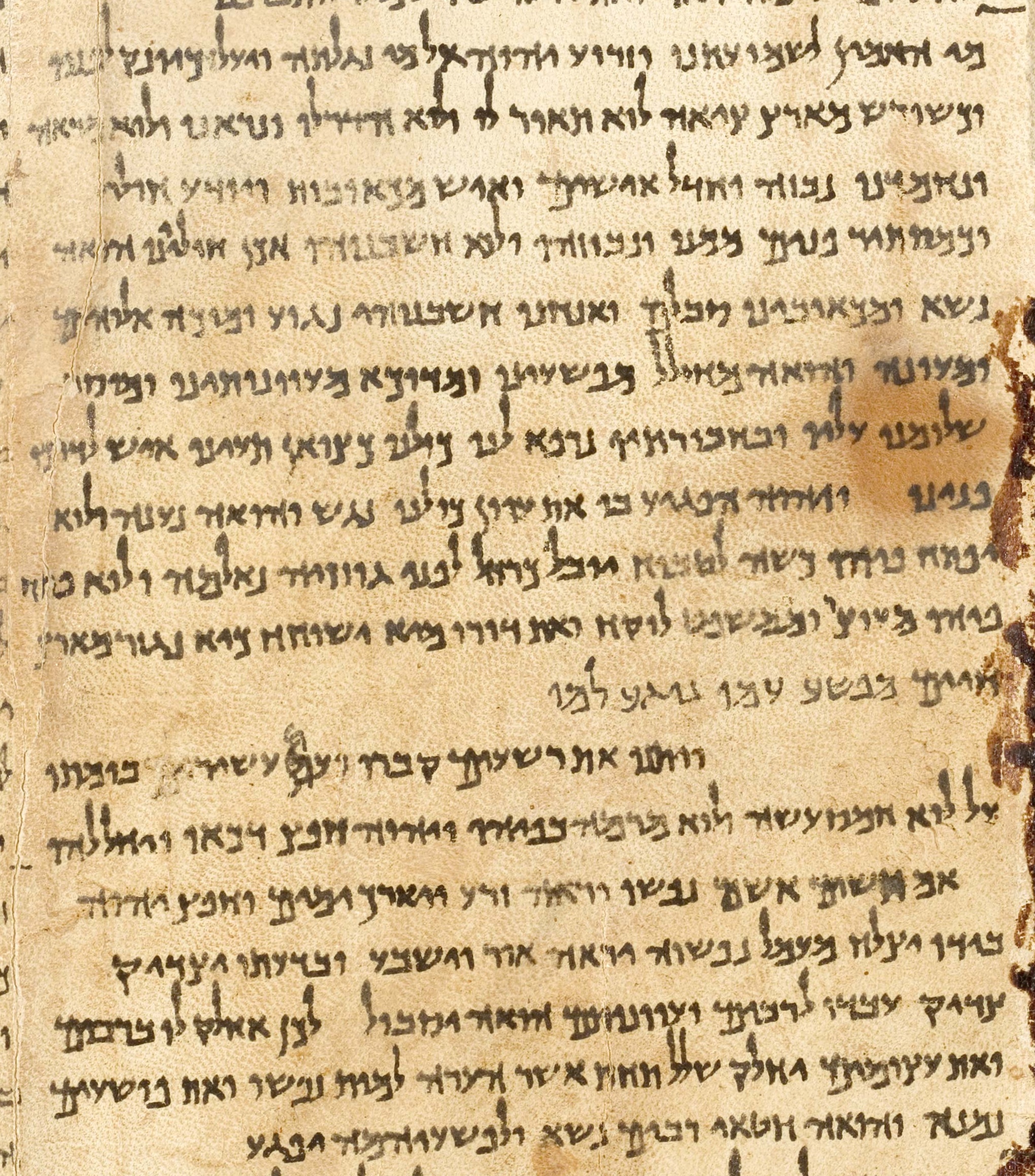
Isaiah 53 in the Great Isaiah Scroll (1QIsaa) from Qumran, a second-century BCE copy. The photograph witnesses textual transmission, not the suffering servant’s identity or the collection’s date of composition
Entidade
Scholarly label for Isaiah 40–55, associated substantially with exile and Cyrus; neither an identified biography nor proof of a single author or date.
Variantes do nome: Second Isaiah, Deutero-Isaiah, Isaiah 40–55
Contexto e fontes →
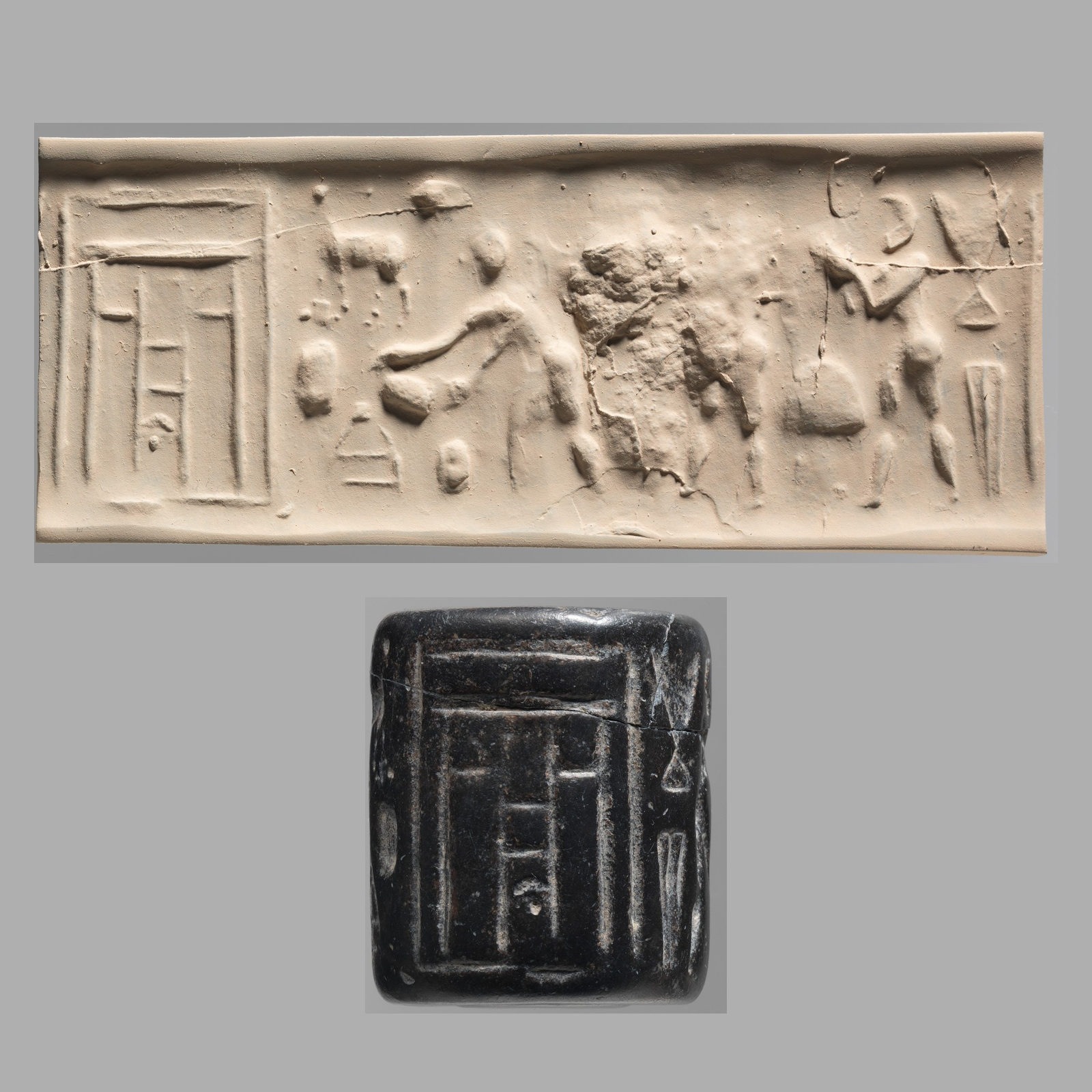
Modern editorial montage of two crops from one museum photograph: ABOVE, a modern clay impression showing the design; BELOW, the ancient limestone cylinder, Met 1983.314.1 (ca. 3500–3100 BCE). The enlarged, stacked arrangement is modern, not two independent ancient finds
Entidade
Small engraved cylinder rolled over soft clay to leave an extended image. Used to secure, document and identify administrative actions; its pictures do not automatically constitute writing.
Variantes do nome: cylinder seal, cylinder seals
Contexto e fontes →
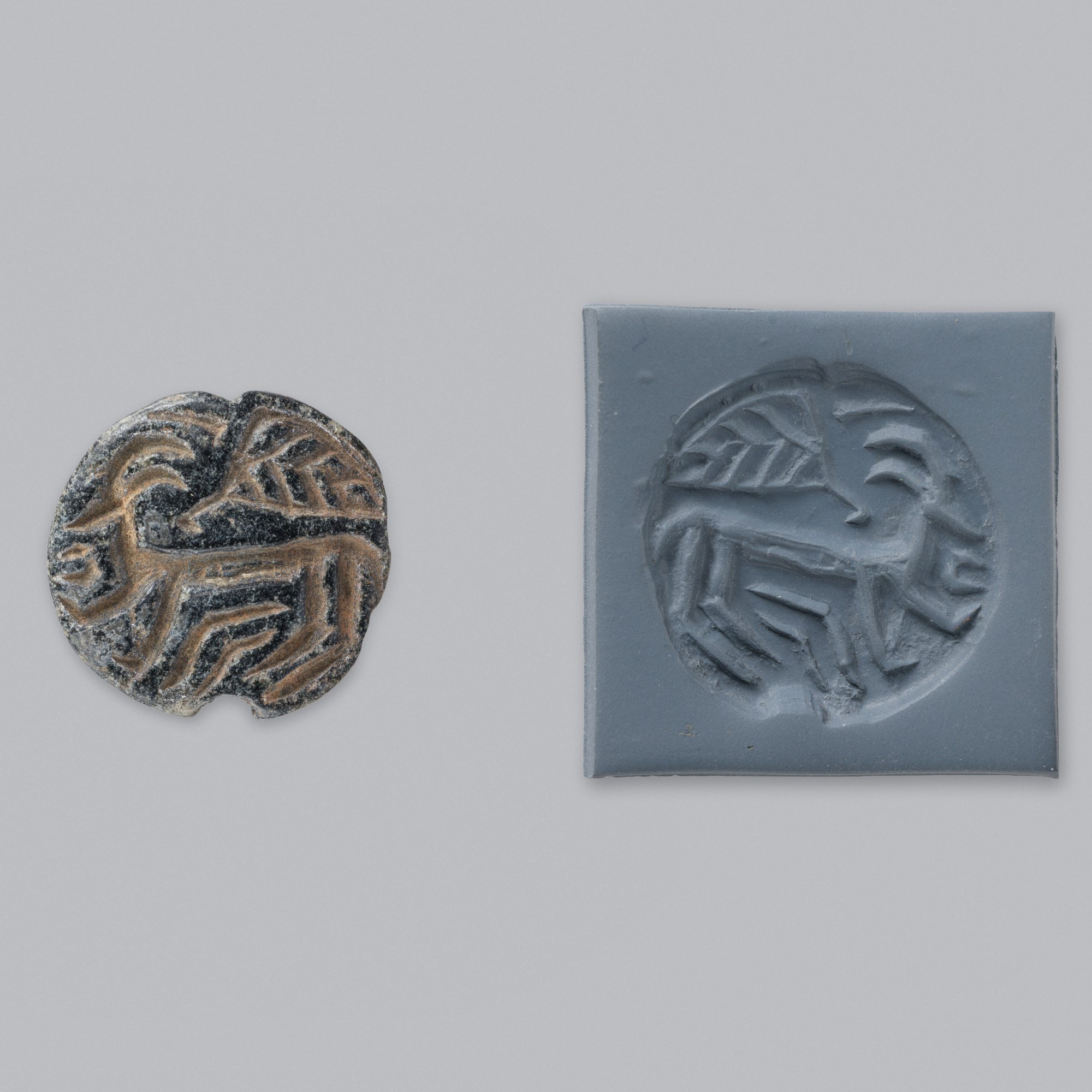
Sixth–fifth-millennium BCE stamp seal attributed to Syria or Anatolia, beside a modern museum-made impression. Square derivative of the original museum photograph, without invented archaeological content. Accession 1984.175.13
Entidade
A small engraved implement pressed into soft clay to leave an impression, unlike a rolled cylinder seal. Its uses are investigated through sealings, find contexts and wear; imagery alone establishes neither writing nor belief.
Variantes do nome: stamp seal, stamp seals
Contexto e fontes →
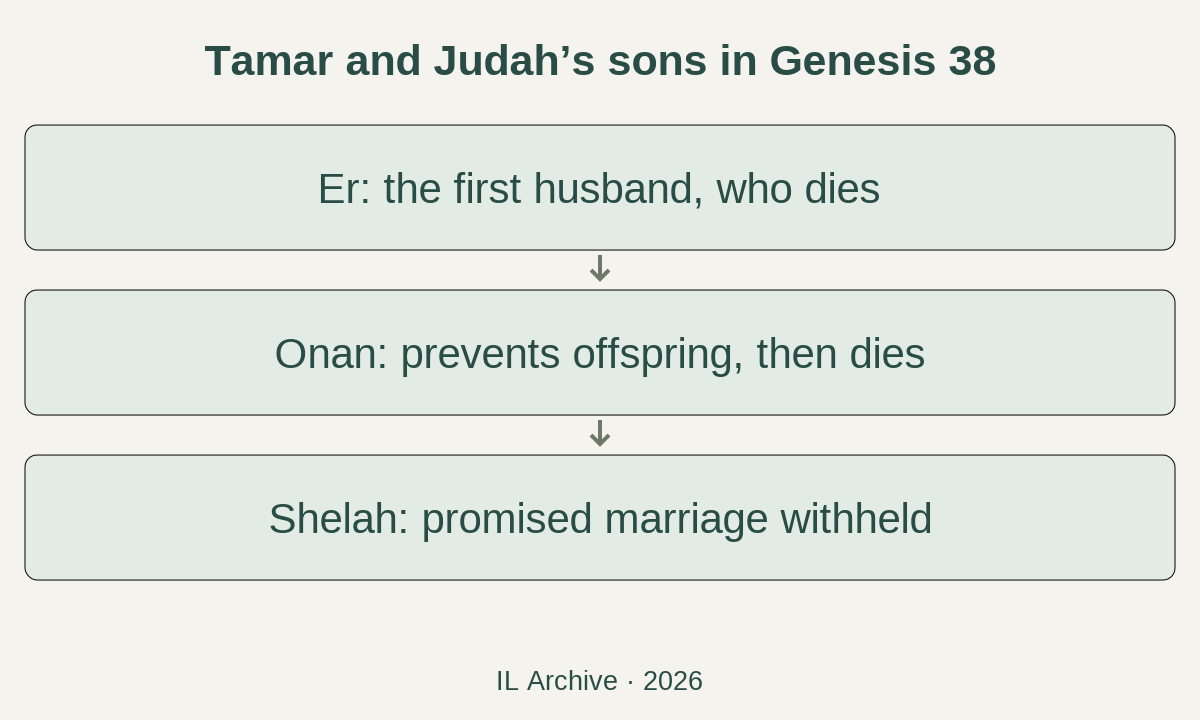
Modern explanatory diagram of relationships or cases in the specified witnesses; not portraits, a legal tablet or an ancient manuscript
Pessoa
Judah’s son whose promised marriage to Tamar is withheld after maturity.
Variantes do nome: Shelah, son of Judah
Contexto e fontes →
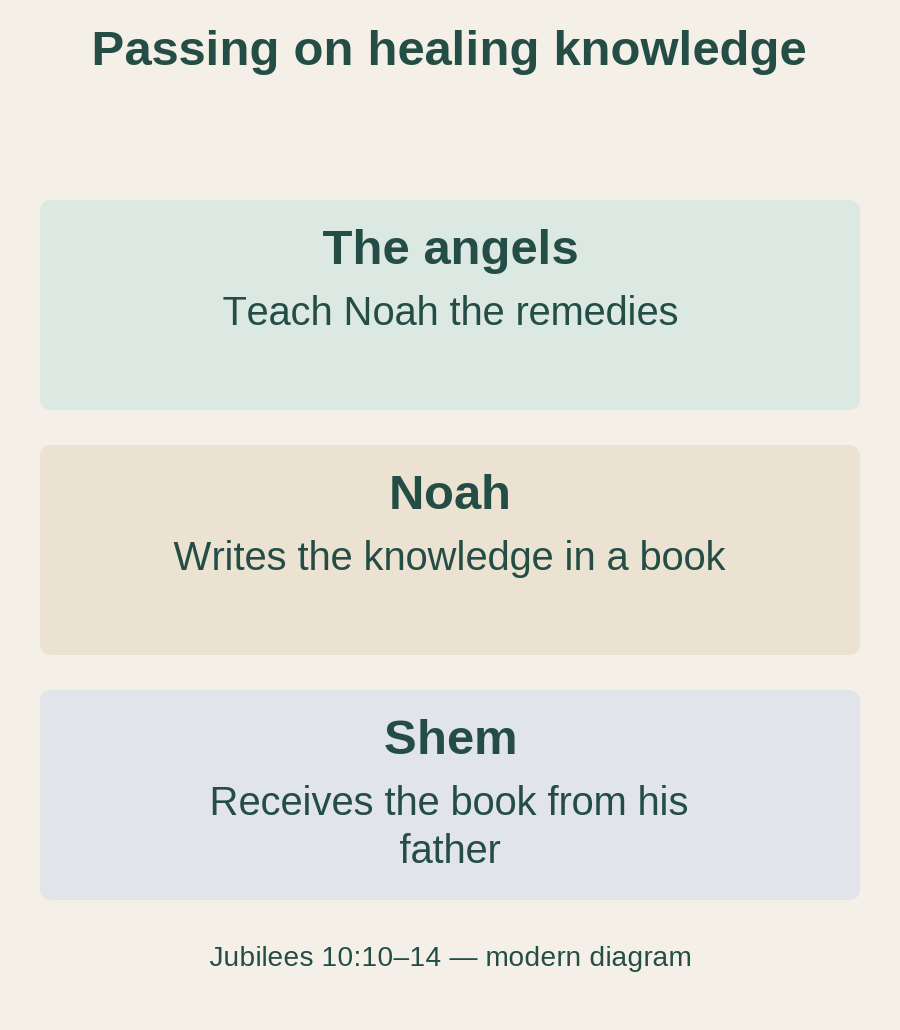
Healing knowledge in Jubilees 10: angels teach Noah, Noah writes, and Shem receives the book. A modern explanatory diagram, not an image of a discovered medical manuscript
Pessoa
Noah’s son who receives his book of remedies in Jubilees 10, representing transmission of knowledge between generations within the account.
Variantes do nome: Shem, son of Noah
Contexto e fontes →
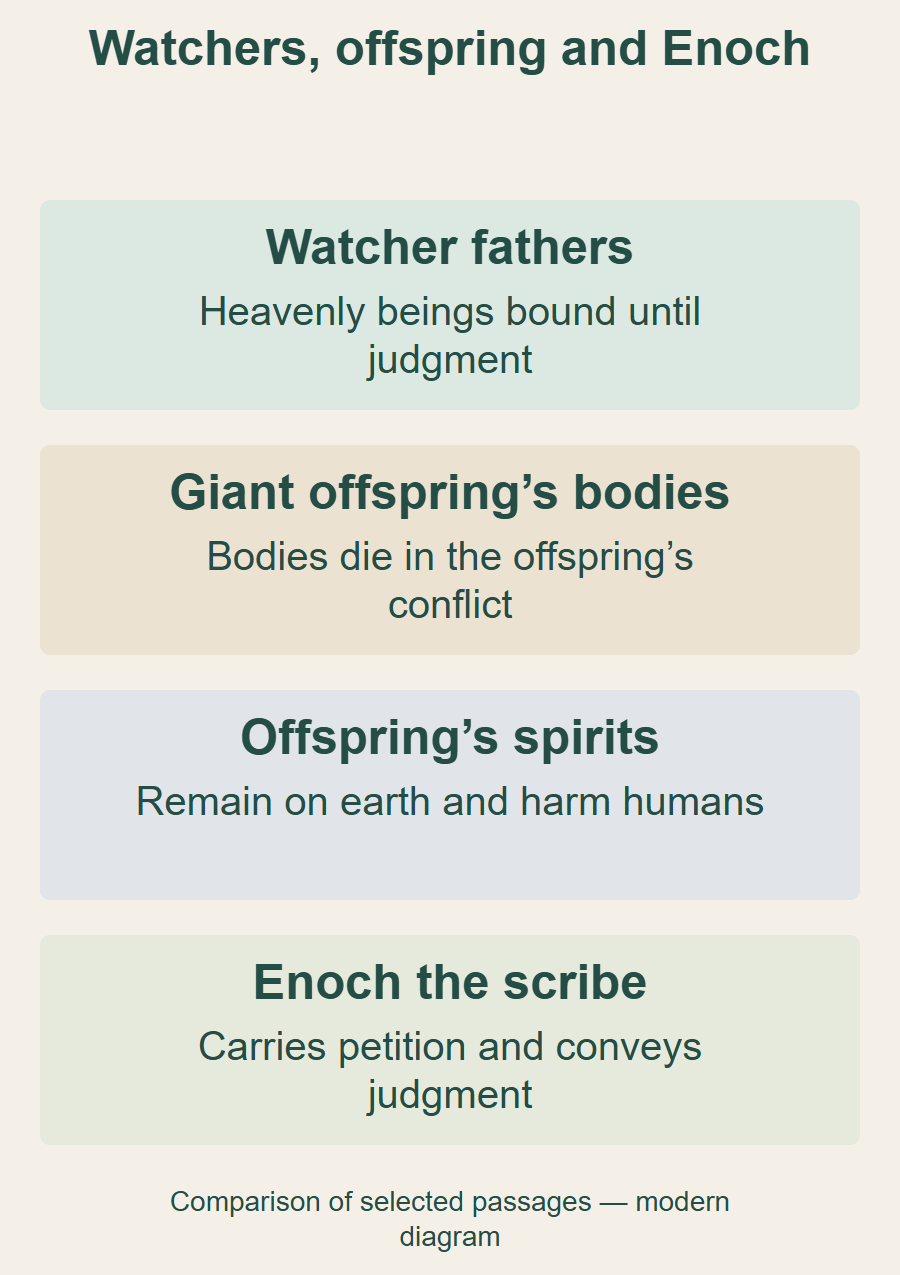
Modern chart of roles in 1 Enoch: Watchers, offspring, spirits and Enoch the scribe; not an ancient likeness of Shemihazah
Pessoa
Shemihazah is a leader of the Watchers in 1 Enoch, associated with their collective oath and binding until judgment.
Variantes do nome: Shemihazah, Semjaza
Contexto e fontes →
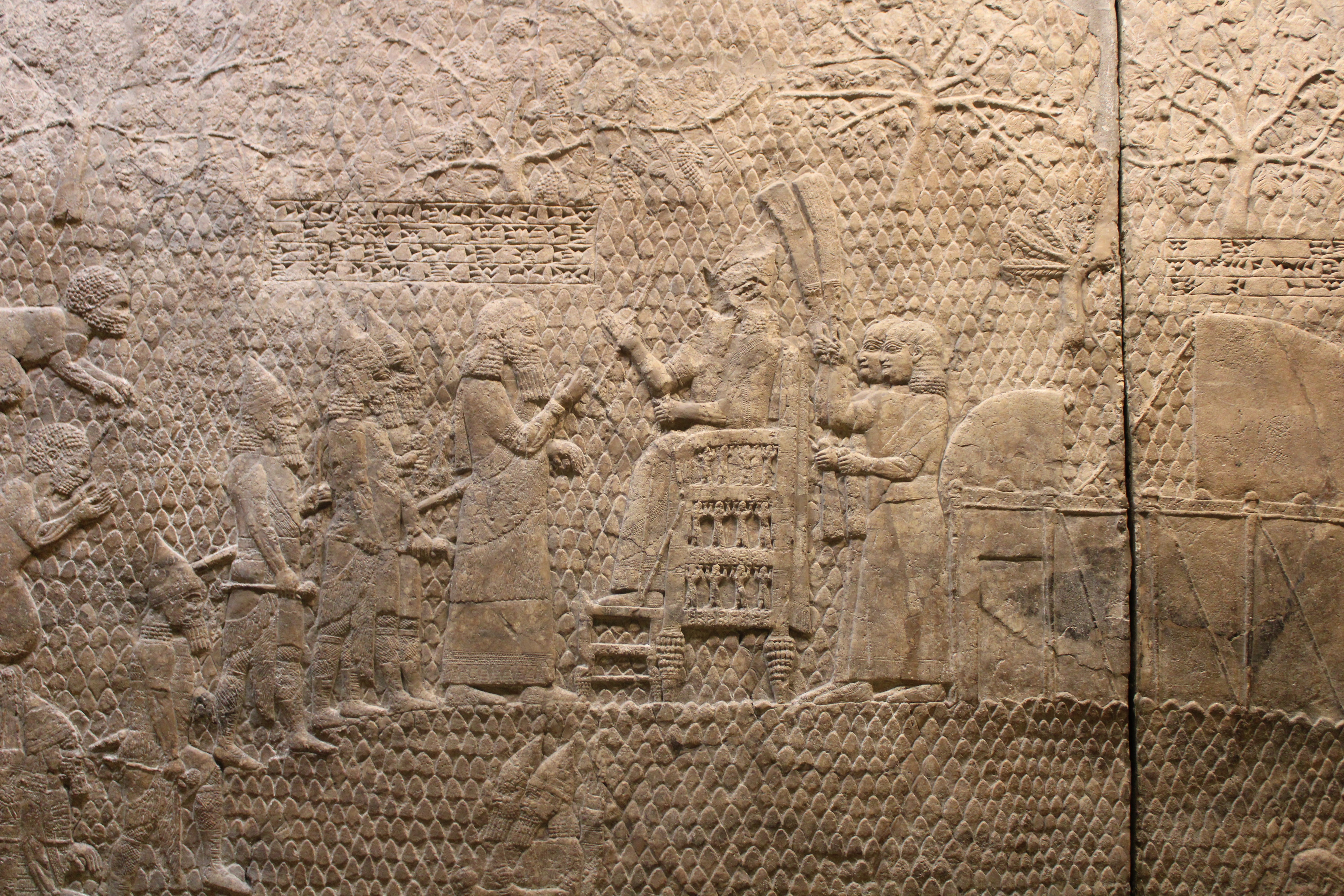
Sennacherib enthroned receiving submission after Lachish’s capture; Nineveh palace relief, about 700–692 BCE. His face is damaged. Royal victory representation, not an Ahiqar scene
Pessoa
Assyrian king, 704–681 BCE; part of Ahiqar’s story is set at his court.
Variantes do nome: Sennacherib, king of Assyria, Sennacherib
Contexto e fontes →
Modern AI-generated expressive cover: imagined scrolls and a harbor scene evoke the passage of writing between languages. Not a manuscript photograph or a verified reconstruction of Ptolemaic Alexandria
Entidade
A name for the varied ancient Greek translations and writings associated with Jewish scripture; beginning with the Torah, the texts differ across books and manuscripts.
Variantes do nome: Septuagint
Contexto e fontes →
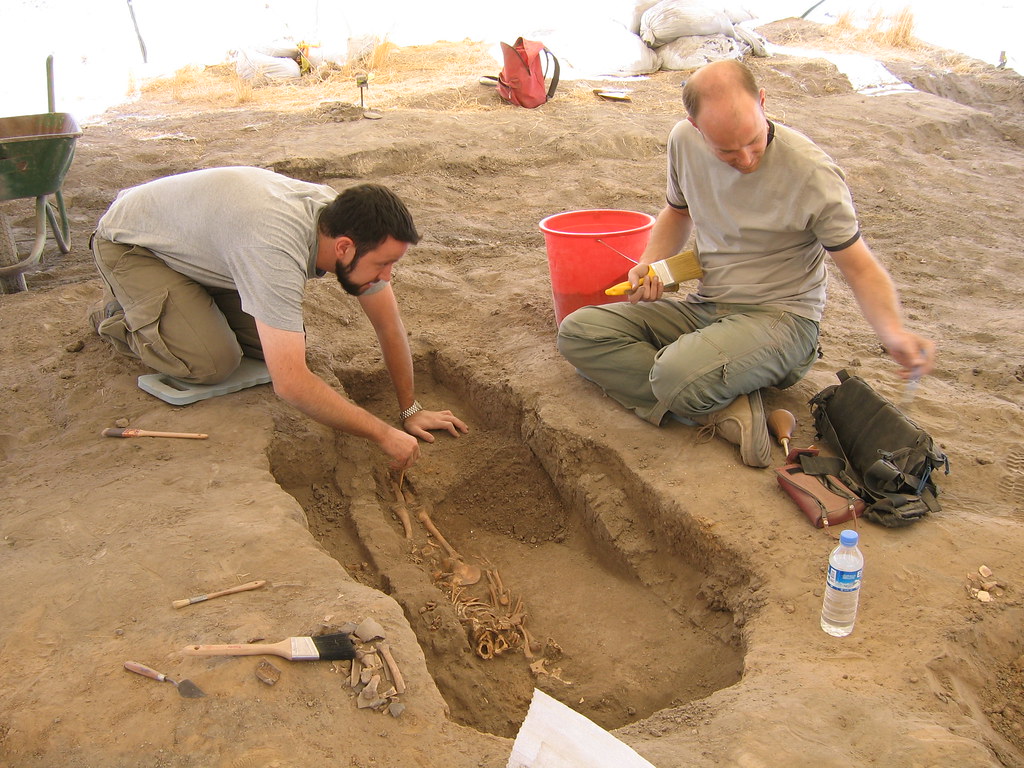
Excavation of a child burial at Çatalhöyük, 30 July 2006. A photograph of modern archaeological work; it does not by itself establish the grave’s date or relation to house-use phases
Entidade
Deposition of the dead within a settlement’s built area; burial beneath a domestic floor is one form.
Variantes do nome: intramural burial, subfloor burial
Contexto e fontes →
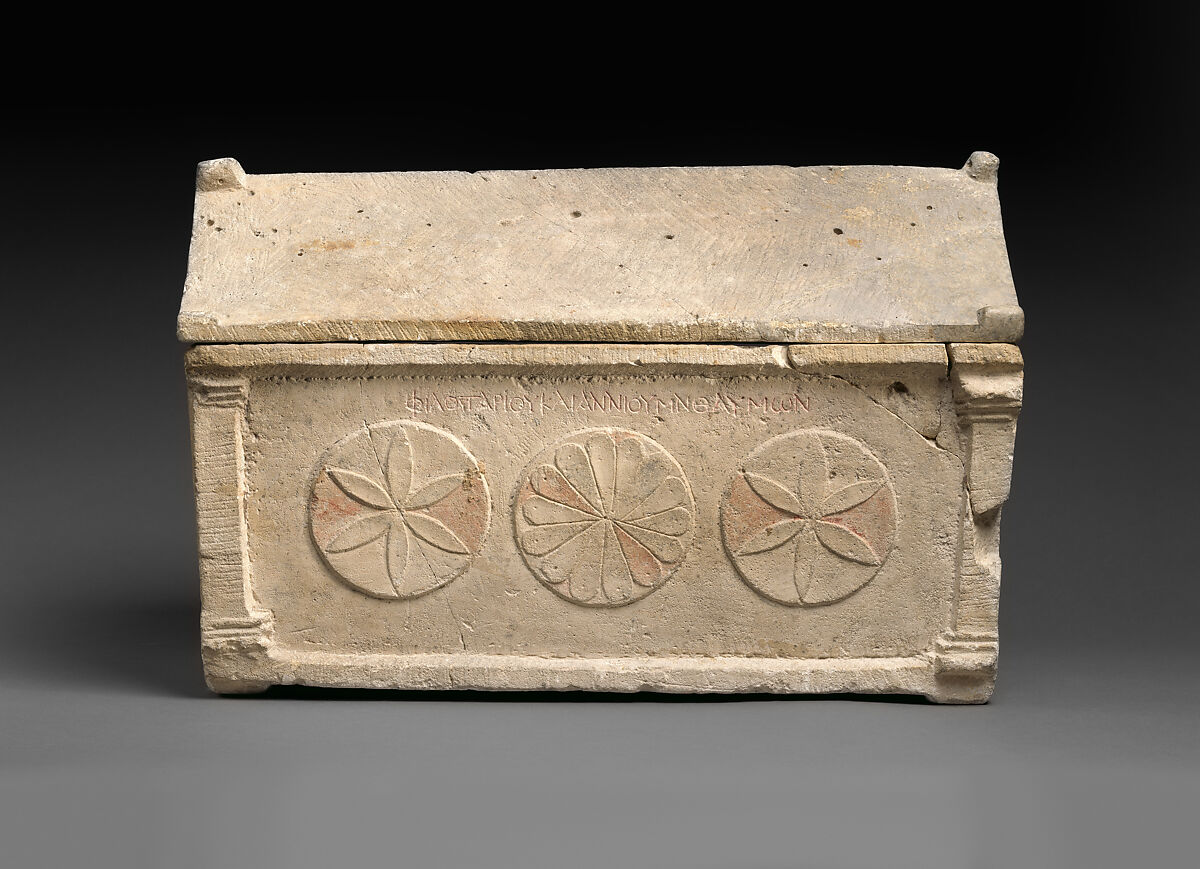
Limestone ossuary with lid, ca. 1st century BCE–1st century CE, Metropolitan Museum of Art, X.248.11a, b. A later example of collecting remains, not a Natufian or Neolithic burial
Entidade
Redeposition of human remains or selected elements after an earlier stage of treatment; established from context, not disarticulation alone.
Variantes do nome: secondary burial, redeposition of human remains
Contexto e fontes →

Six imagined wings around light above an altar: a newly generated symbolic cover inspired by Isaiah 6, not an ancient artifact or verified reconstruction of seraphim or the temple
Entidade
Six-winged attendants of the throne in Isaiah 6, associated with praise and purification. Related Hebrew wording also refers to serpents; seraphim are not automatically cherubim or all angels.
Variantes do nome: seraphim, seraph
Contexto e fontes →
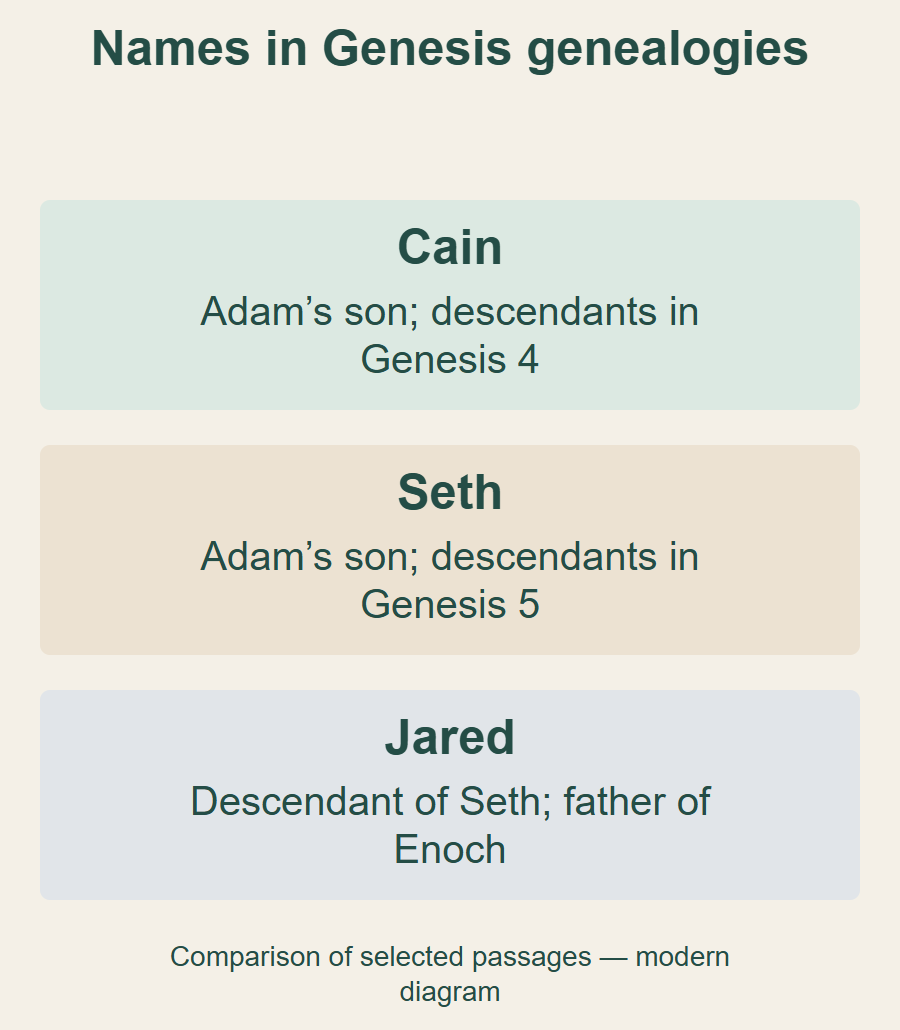
Modern chart distinguishing the Cain and Seth branches in Genesis and Jared’s position; textual relationships, not a reconstructed historical genealogy
Pessoa
Seth is Adam’s son in Genesis; Augustine interprets the sons of God as his descendants.
Variantes do nome: Seth
Contexto e fontes →
Pessoa
Scholar of ancient Judaism, wisdom and narrative; assistant professor at Radboud University, with research on Ahiqar.
Variantes do nome: Seth A. Bledsoe, Seth Bledsoe
Contexto e fontes →
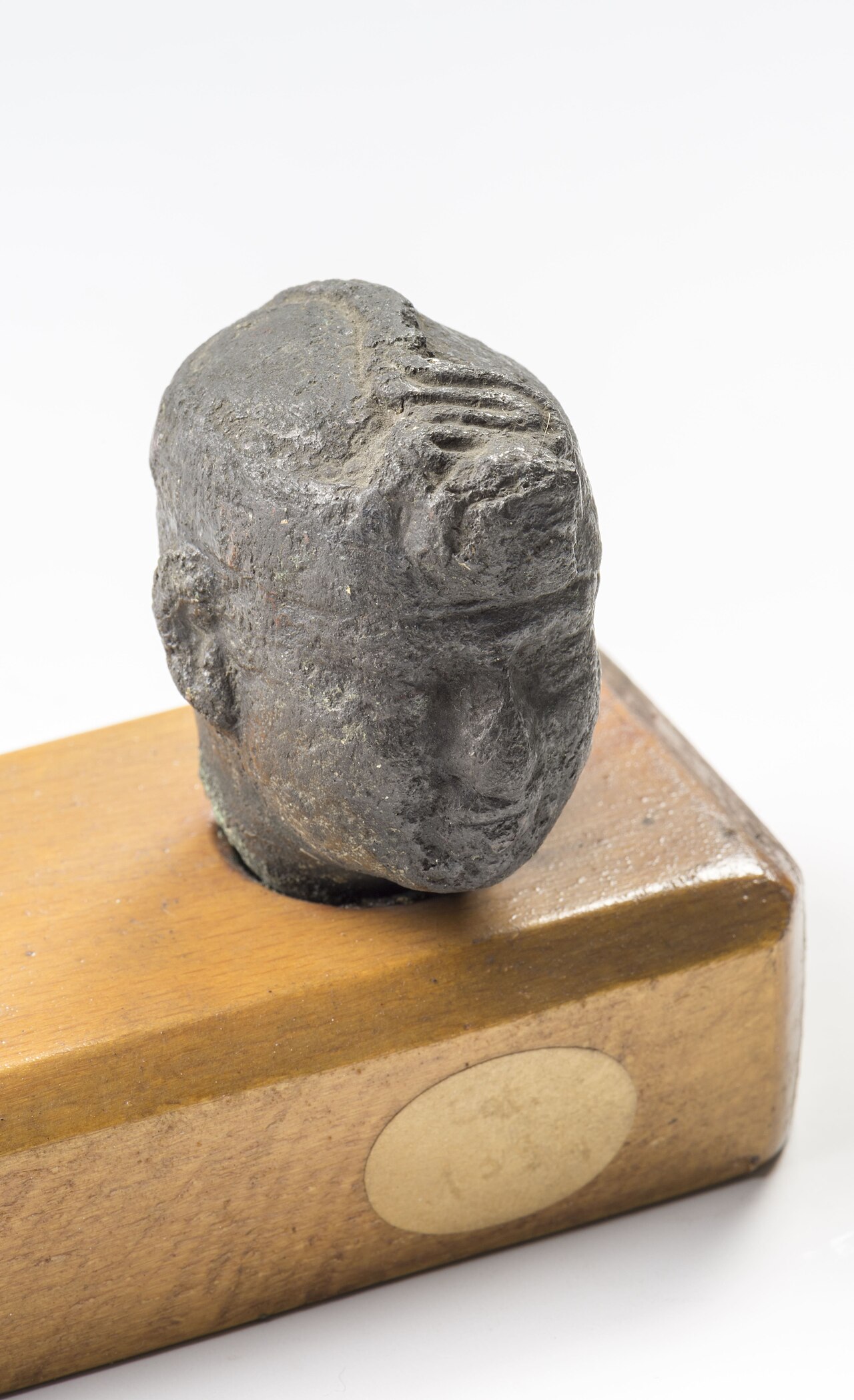
Bronze head from a statuette identified by Turin’s Museo Egizio as King Shabaka, of the Twenty-fifth Dynasty. The museum dates the object to 722–655 BCE; inventory Cat. 1394. The image is released by the museum under CC0
Pessoa
Shabaka was a Kushite king of Egypt’s Twenty-fifth Dynasty in the late eighth century BCE
Variantes do nome: Shabaka
Contexto e fontes →
Pessoa
Yeshiva University scholar of Mesopotamian literature and law and their biblical and later relationships.
Variantes do nome: Shalom E. Holtz, Assyriologist and biblical scholar
Contexto e fontes →
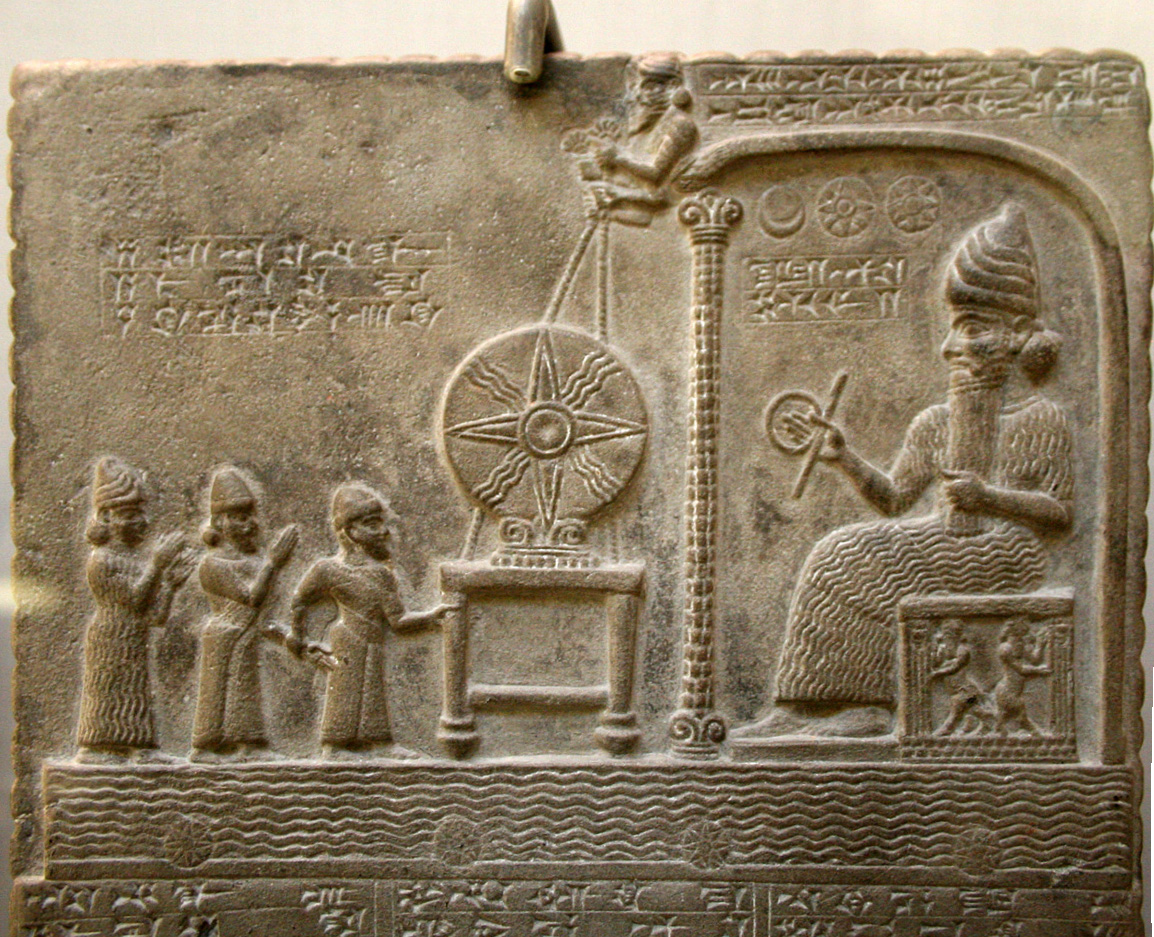
Relief at the top of the Sun-God Tablet from Sippar, ninth century BCE. Shamash sits before a solar disc; a Babylonian king and two intermediary figures stand to the left. British Museum, 91000. Photograph by Prioryman, 22 January 2012
Entidade
Mesopotamian god of the sun and justice, shown before Hammurabi on an eighteenth-century BCE stele preserved in the Louvre.
Variantes do nome: Shamash, Šamaš
Contexto e fontes →