Sítio
Samaria: cidade e região
Tradução automática. Leia o original em inglês.
Antiga cidade e região administrativa; o sítio da cidade fica em Sebastia, a noroeste de Nablus, na Cisjordânia.
Última revisão:
Texto
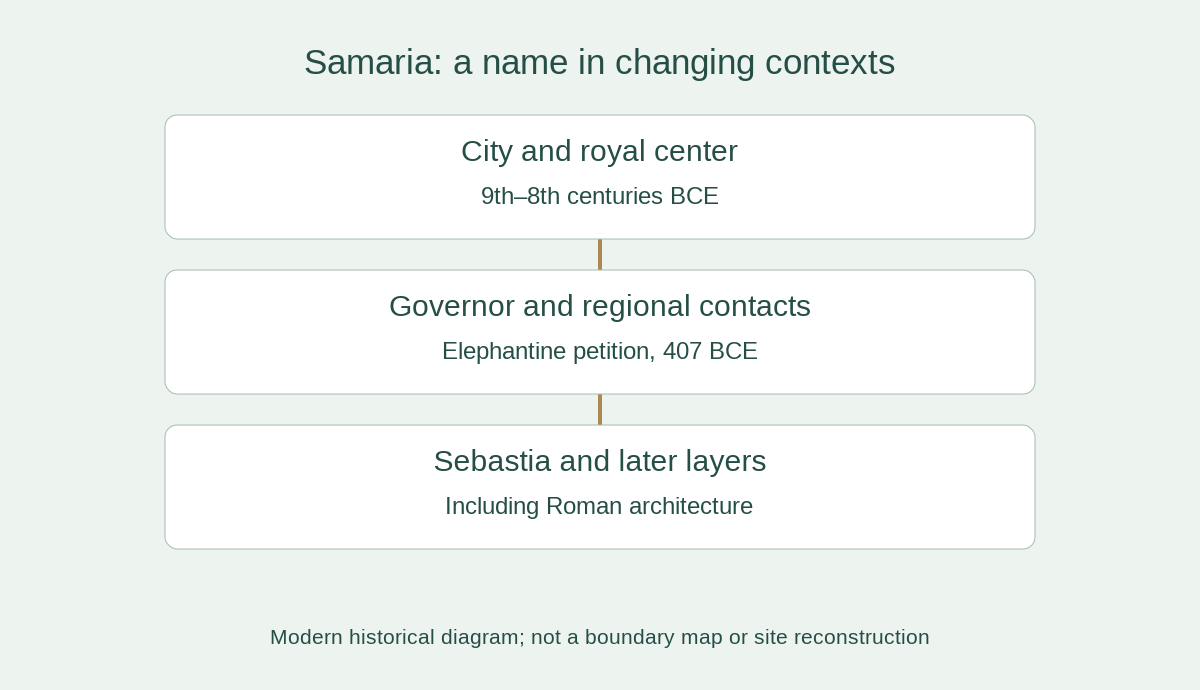
Samaria foi uma antiga cidade associada ao reino de Israel nos séculos IX e VIII AEC, e um nome regional usado sob domínio persa. Seu sítio em Sebastia, a noroeste de Nablus, na Cisjordânia, preserva vários períodos arqueológicos.[1][3]
A petição de Elefantina, de 407 AEC, nomeia o governador de Samaria e os contatos com seus filhos. Aqui, o nome diz respeito à administração e à correspondência; a cidade e a região devem ser distinguidas.[2]
Referências e notas
- UNESCO, Decision 48 COM 8B.3, Sebastia, 2026; location and successive archaeological periods. Brief synthesis and criterion (iii); Roman buildings are not Persian administration. Voltar ao texto ↑
- Temple-rebuilding petition, TAD A4.7, translated by K. C. Hanson. Lines 1–30; senders, addressee and their contacts. Voltar ao texto ↑
- University of Bern, The Ivory Carvings from Samaria. Project opening: royal capital in the ninth–eighth centuries BCE; project photographs not reused without a licence. Voltar ao texto ↑
Sugerir uma correção · Sugerir uma fonte para este registro
Citar este registro
IL Archive, «Samaria: cidade e região», https://ilarchive.com/pt/sites/samaria-ancient-city-region