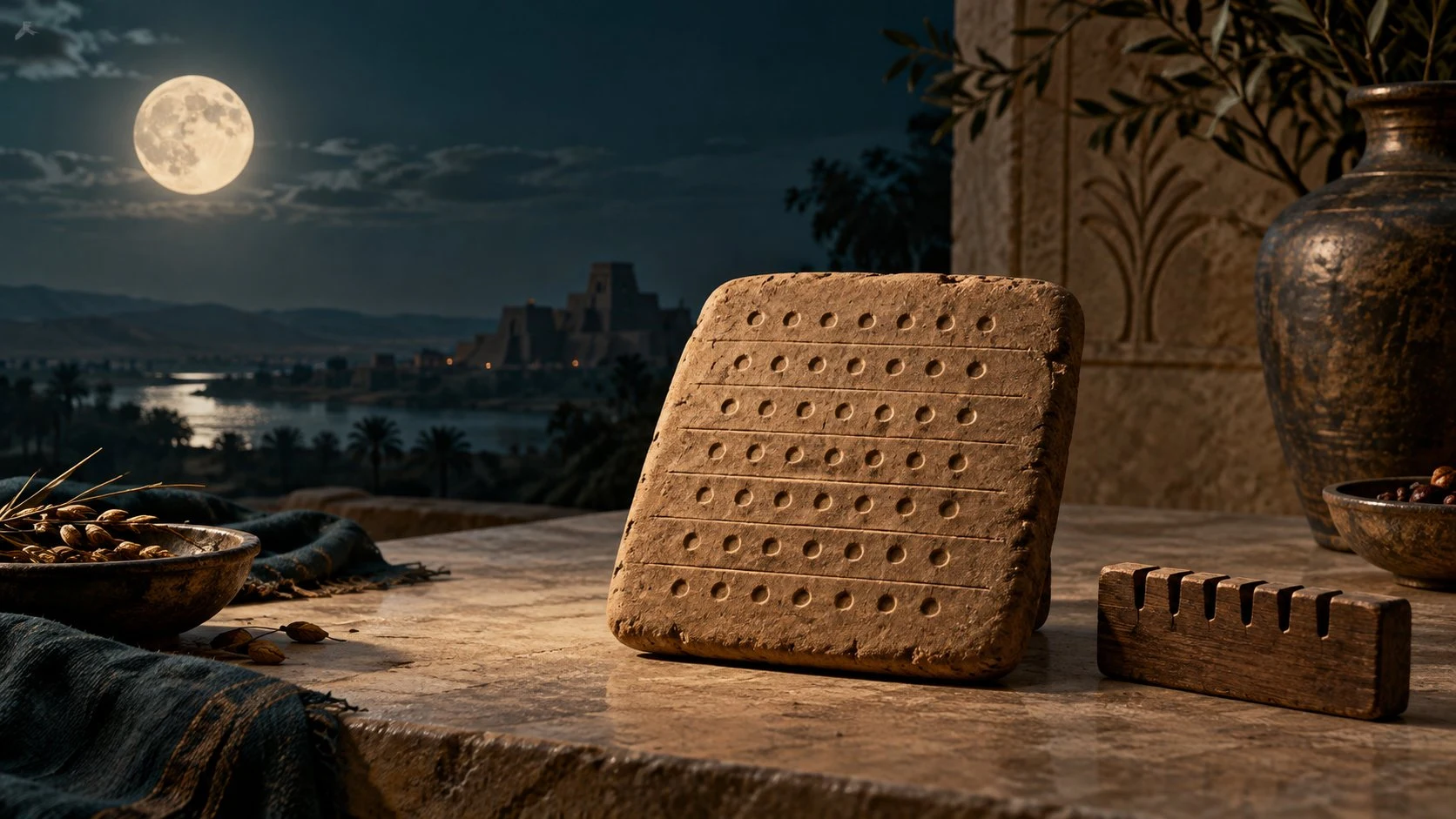
Modern generated conceptual illustration of a mid-month moon and an imaginary counting tablet. It is not an artifact photograph, a deciphered calendar or a reconstruction of a documented rite
Entidade
Šapattu is an Akkadian term attested for the lunar mid-month day or a half-month in time reckoning. A historical derivation of the weekly Hebrew Sabbath from it remains contested.
Variantes do nome: shapattu, shabattu
Contexto e fontes →
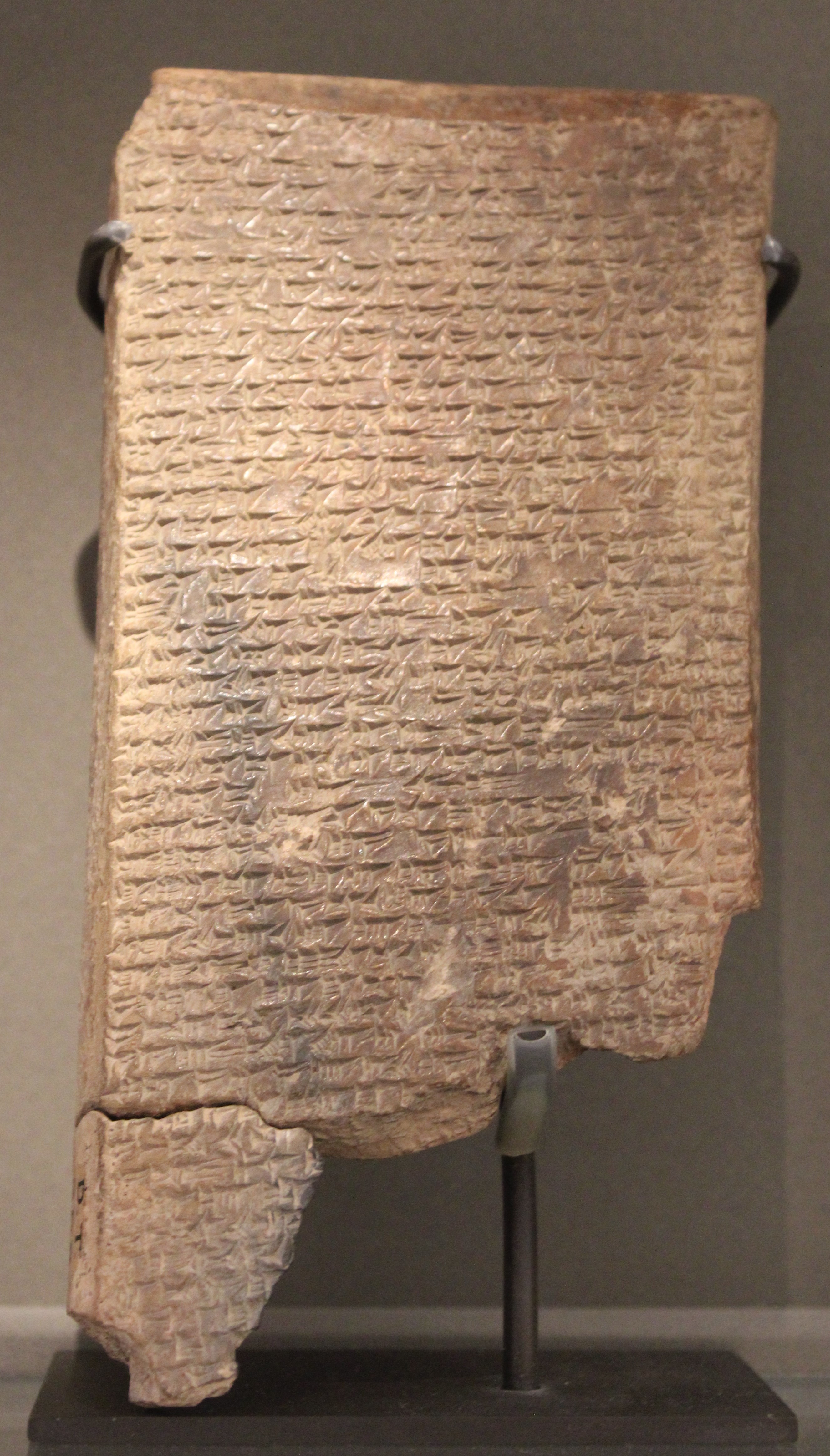
Nineveh witness to Ludlul tablet II, K.2518+DT.358, seventh century BCE, British Museum collection, on loan at the Louvre. Part of the work telling Šubši’s story, not his likeness or the tablet III passage naming him
Pessoa
Šubši-mešrê-Šakkan is the protagonist of Ludlul bēl nēmeqi, the Babylonian poem moving from loss of standing and illness to healing and praise of Marduk.
Variantes do nome: Šubši-mešrê-Šakkan
Contexto e fontes →
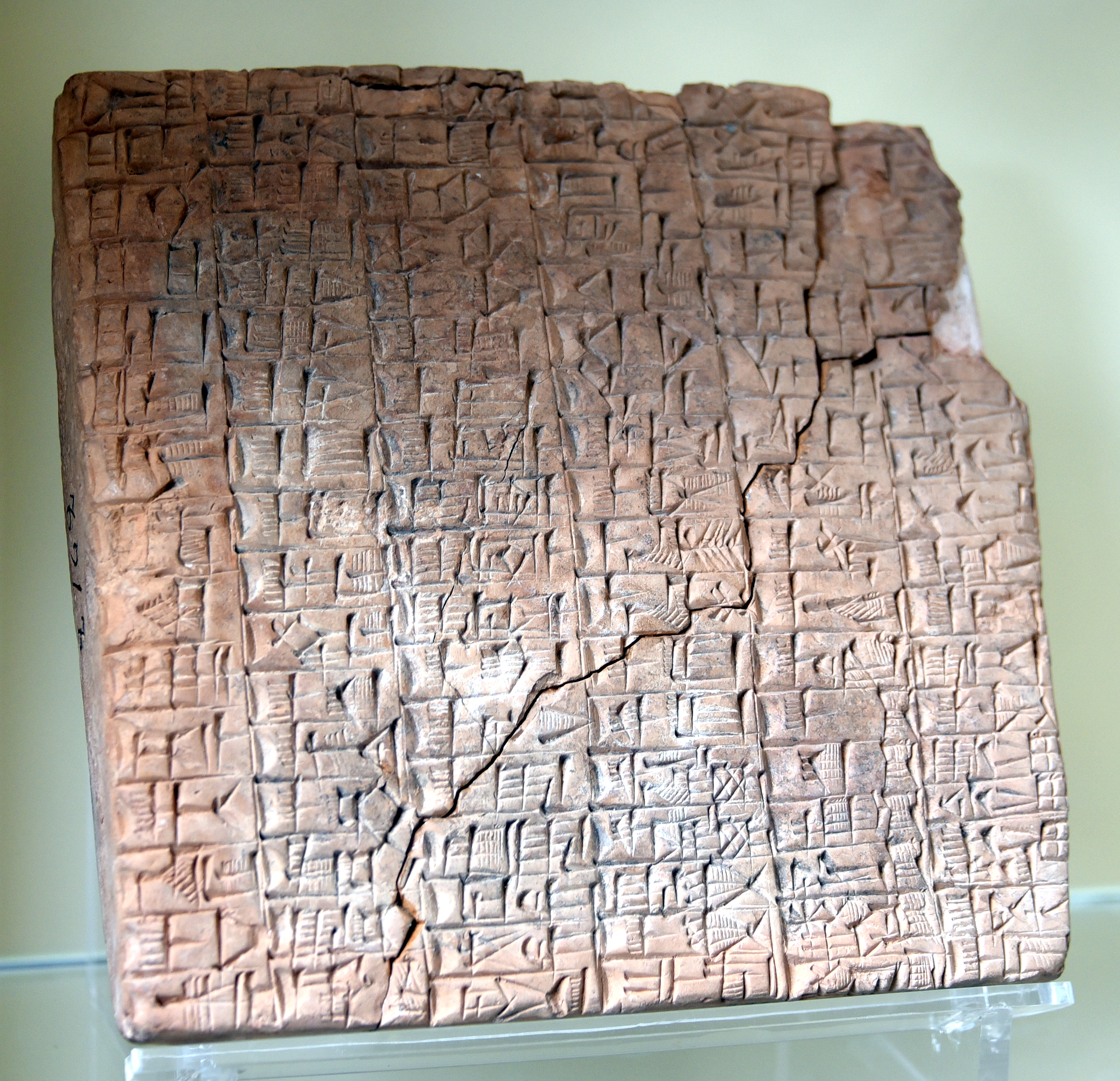
Professions-list tablet from Šuruppak (Tell Fara), c. 2600–2500 BCE, Pergamon Museum. Evidence of the city’s written culture, not a view of Sud’s temple
Sítio
Sumerian city at Tell Fara, Iraq, associated with Sud; distinct from Ereš in Enlil and Sud.
Variantes do nome: Šuruppak, Shuruppak, Tell Fara
Contexto e fontes →

Modern generated symbolic cover evoking Mesopotamian counting: imagined clay tokens, not an artifact or an attested depiction of the ŠAR₂ sign or 3,600 objects
Entidade
Sumerian numeral meaning 3,600 = 60×60. Its use for years or other quantities depends on the text; Akkadian šar “king” is distinct. No orbital period follows from the number alone.
Variantes do nome: šar₂, Sumerian shar 3600
Contexto e fontes →
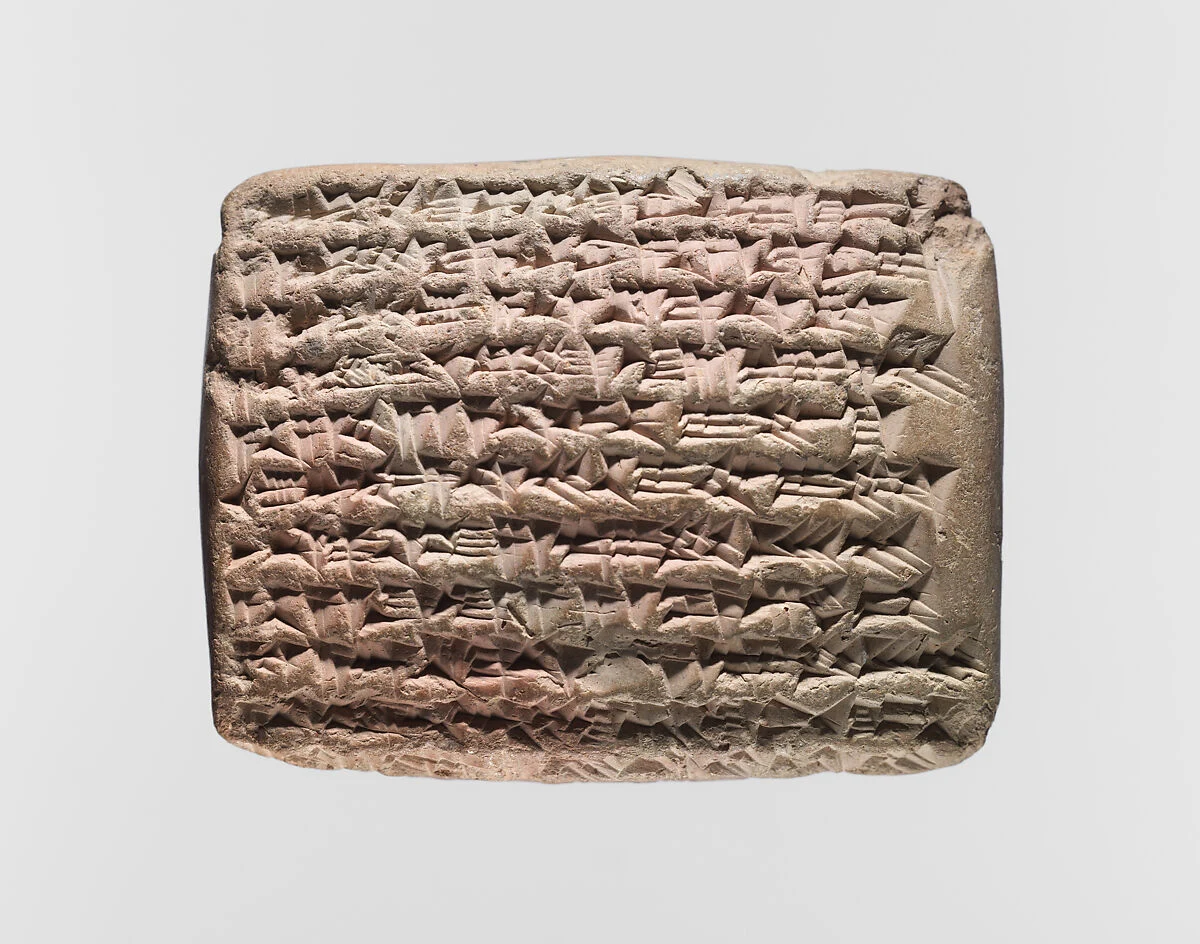
Cuneiform tablet from Babylon, ca. 554 BCE, Met 79.7.11. The museum records a proxy purchase of an enslaved person; NaBuCCo summarizes the sale of a woman and her son. This later Babylonian document is neither a Hebrew biblical text nor evidence that Torah provisions were enforced
Entidade
Hebrew עֶבֶד (*ʿeved*): an enslaved person, servant, subject or official according to context; the word alone does not specify legal status or service length.
Variantes do nome: ʿeved, ʿeḇeḏ, Hebrew ʿeved
Contexto e fontes →

Modern AI-generated conceptual image of a path toward the horizon, suggesting religious orientation; not a photograph of an archaeological site, Abraham, or a historical ḥanīf community
Entidade
A Qur’anic description of Abraham and those devoted to God rather than association; its etymology and the history of pre-Islamic “ḥanīfs” remain debated.
Variantes do nome: hanif, ḥanīf, ḥanīfiyya, hunafa
Contexto e fontes →

Modern AI-generated conceptual cover: imagined papyrus fragments over a symbolic Nile landscape. It does not depict the actual P.13464, its script or a documented findspot
Artefato
Aramaic papyrus letter from Elephantine, dated to year five of Darius II (419/418 BCE), with Nisan dates and ritual expressions; “Passover” is a restoration and the reading remains debated.
Variantes do nome: Passover Letter, Passover Papyrus, Elephantine Passover Letter
Contexto e fontes →