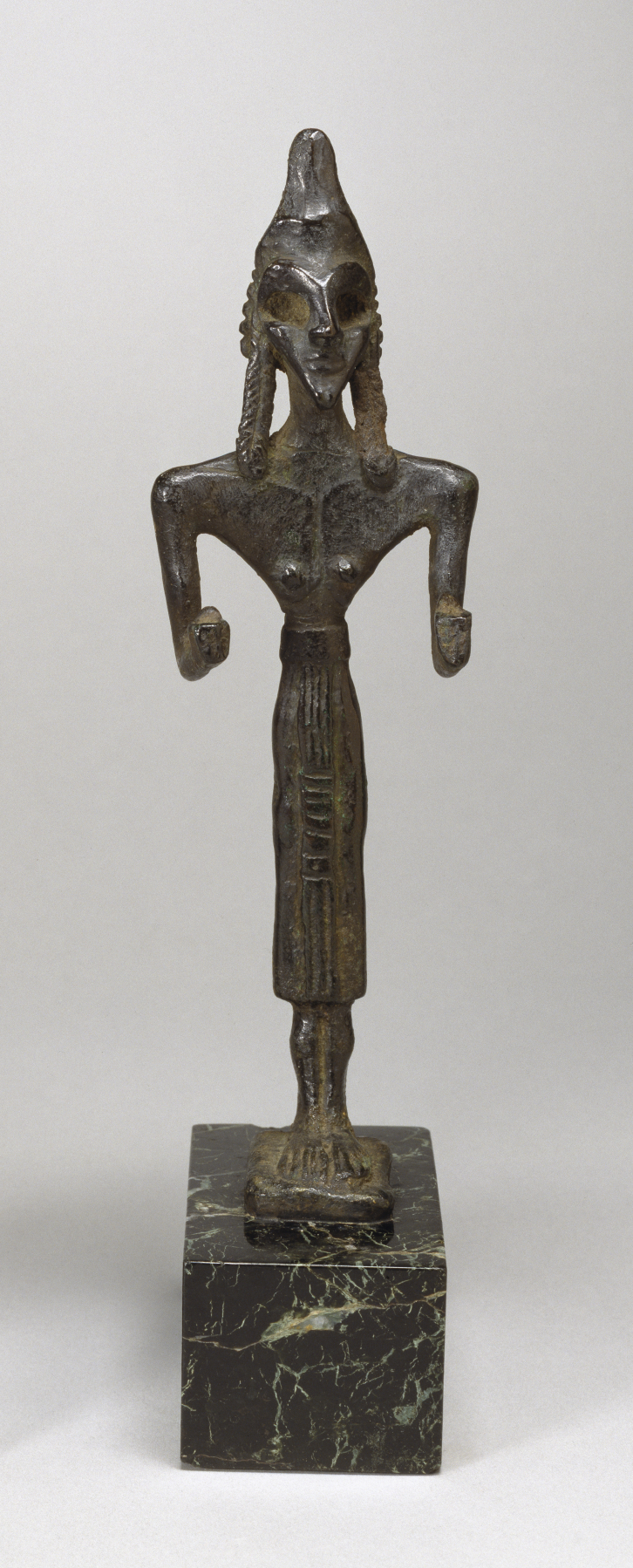
Bronze female votive figurine, early second millennium BCE; Walters Art Museum, accession 54.2487. Catalogued by the museum as Anat; this image neither depicts Baal’s palace episode nor independently establishes the goddess’s appearance at Ugarit
Entidade
Anat is an ancient Near Eastern goddess attested at Mari, Ugarit and in Egypt. In Ugaritic narratives she is a warrior, Baal’s ally and a mourner for him; her roles vary by tradition and context.
Variantes do nome: Anat
Contexto e fontes →
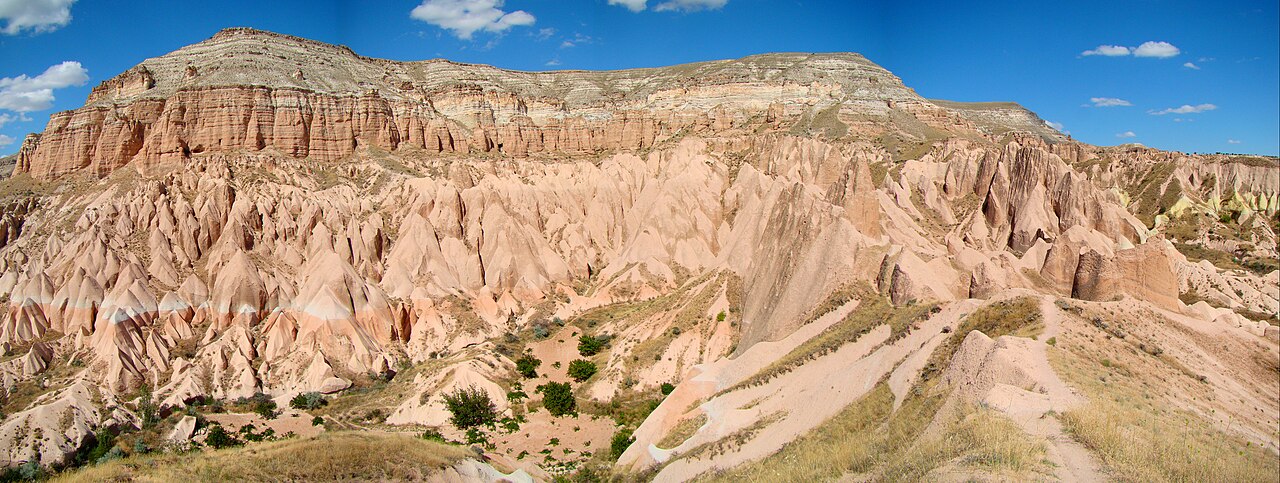
Aktepe Hill near Göreme in Cappadocia, central Anatolia in present-day Turkey, 31 July 2009. A landscape photograph, not a representation of one particular ancient kingdom or people
Sítio
Anatolia is the region occupying the Asian part of present-day Turkey
Variantes do nome: Anatolia
Contexto e fontes →

Modern AI-generated symbolic image of throne, fire and books in Daniel 7; imaginative artwork, not an artifact, verified reconstruction or portrait of El
Entidade
Aramaic title of the enthroned divine judge in Daniel 7:9–14, associated with white head hair, a fiery throne and books of judgment; the text mentions no beard.
Variantes do nome: Ancient of Days, Ancient One (Daniel 7)
Contexto e fontes →
Pessoa
Marquette University scholar of ancient Judaism and Christianity, specializing in Jewish apocalypticism and mysticism in relation to Christian origins.
Variantes do nome: Andrei Orlov, Andrei A. Orlov
Contexto e fontes →
Pessoa
Independent biblical and philosophy scholar studying New Testament interpretation.
Variantes do nome: Andrew Perry
Contexto e fontes →
Pessoa
Assyriologist and editor of Gilgamesh, and emeritus professor of Babylonian at SOAS.
Variantes do nome: Andrew R. George, Andrew George
Contexto e fontes →
Pessoa
Scholar of Hebrew and Aramaic epigraphy and philology, using inscriptions to study Judah and cult.
Variantes do nome: André Lemaire
Contexto e fontes →
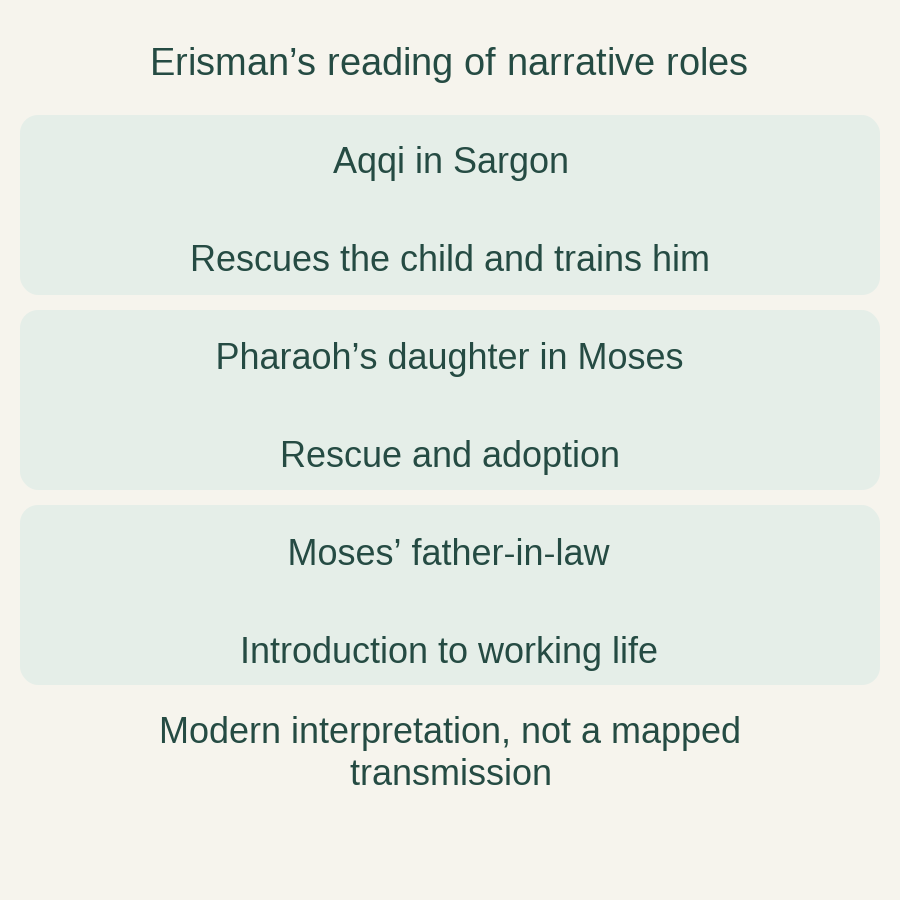
Modern diagram of narrative roles in Erisman’s interpretation; not a portrait or a proven route of transmission
Pessoa
Scholar of the Bible and ancient Near East, working on wilderness narratives, the growth of the Torah and political interpretation.
Variantes do nome: Angela Roskop Erisman
Contexto e fontes →

Modern generated symbolic cover: an imagined blank book and wing-like light evoke written traditions about heavenly messengers. Neither a real manuscript nor an authenticated historical or religious representation
Entidade
Study and organization of angels and heavenly beings: names, ranks and roles within particular traditions, without assuming one fixed system.
Variantes do nome: angelology, study of angels
Contexto e fontes →
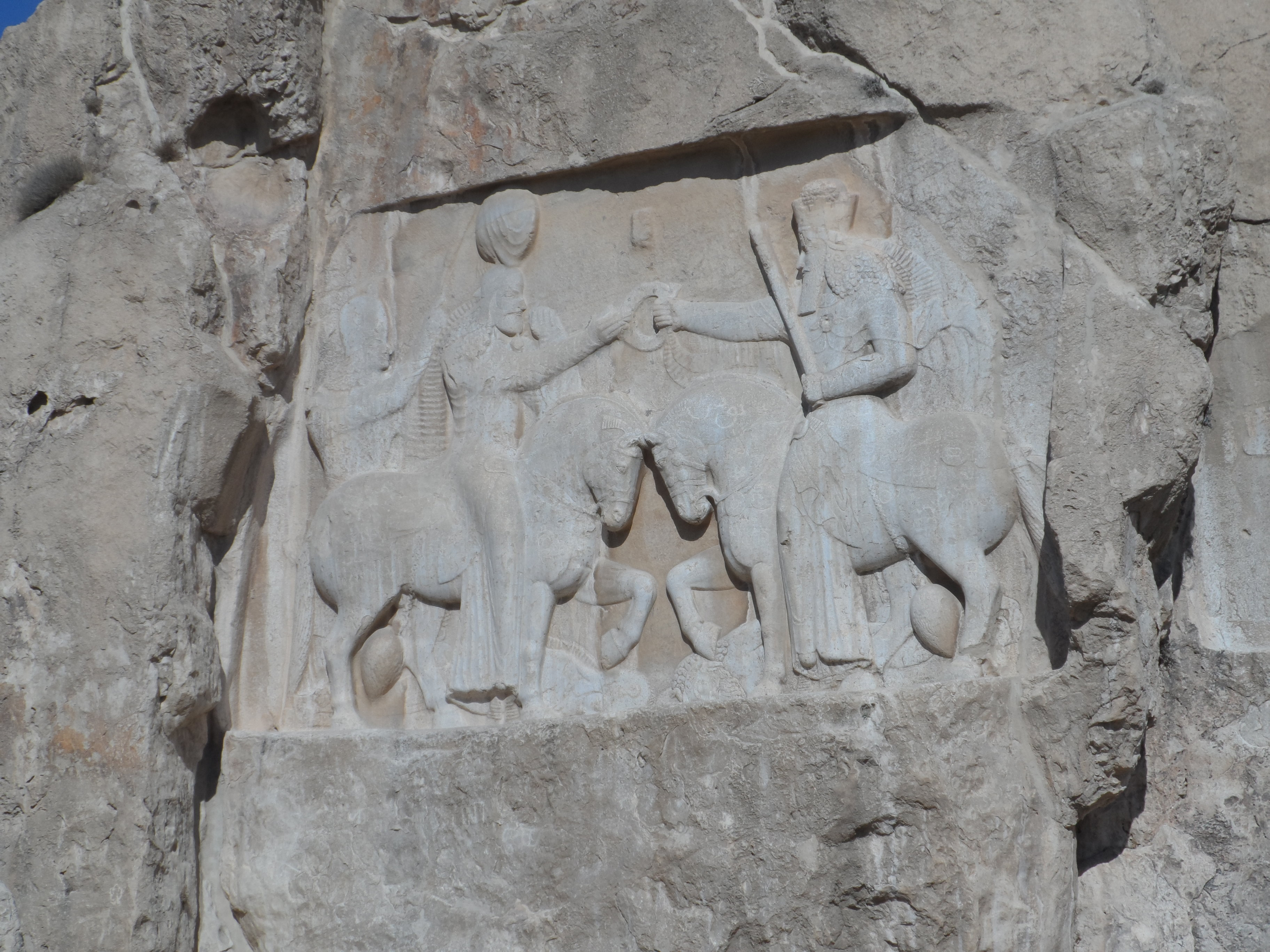
Ardashir I’s investiture relief at Naqsh-e Rostam, third century CE. Heinz Luschey in Encyclopaedia Iranica interprets the figure beneath Ohrmazd’s horse, on the right, as symbolizing Ahriman. This is a specific Sasanian witness, not an illustration of every textual stratum. Small details are clearer when enlarged
Entidade
The hostile spirit in Zoroastrian texts: Gathic wording, Younger Avestan counter-creation and Ahriman in Middle Persian cosmology.
Variantes do nome: Angra Mainyu, Aŋra Mainiiu, Ahriman
Contexto e fontes →
Modern generated symbolic scene: a standing stone and an empty space. Not an archaeological photograph, verified reconstruction, or evidence of a ban on divine images
Entidade
Divine presence expressed in worship without a central anthropomorphic or zoomorphic image; it may describe an image-free practice or an explicit rejection, depending on contextual evidence.
Variantes do nome: aniconism, aniconic practice
Contexto e fontes →

Newly generated imaginative cover: a luminous message between two fictional gateways; neither an ancient object nor a reconstruction of an angel or historical site
Entidade
Hebrew malʾakh (מַלְאָךְ) means “envoy,” human or heavenly according to the passage. Messenger roles vary; the word alone proves neither wings nor an earlier divine identity.
Variantes do nome: malʾakh, heavenly messenger
Contexto e fontes →
Pessoa
A scholar of Greek literature and ancient religious imagery, including the demonic in the Septuagint and interpretations of Azazel.
Variantes do nome: Anna Angelini
Contexto e fontes →
Pessoa
Annette Yoshiko Reed studies ancient Judaism, early Christianity and their relationships in late antiquity, and is a professor at Harvard Divinity School.
Variantes do nome: Annette Yoshiko Reed
Contexto e fontes →

Modern generated symbolic scene of tree rings and a luminous timeline suggesting calibration; neither a photographed scientific sample nor a plotted calibration dataset
Entidade
cal BP denotes calibrated calendar years before the fixed reference year 1950, not raw ¹⁴C BP measurements; calibrated intervals depend on the curve, sample and probability model.
Variantes do nome: cal BP, calibrated BP
Contexto e fontes →
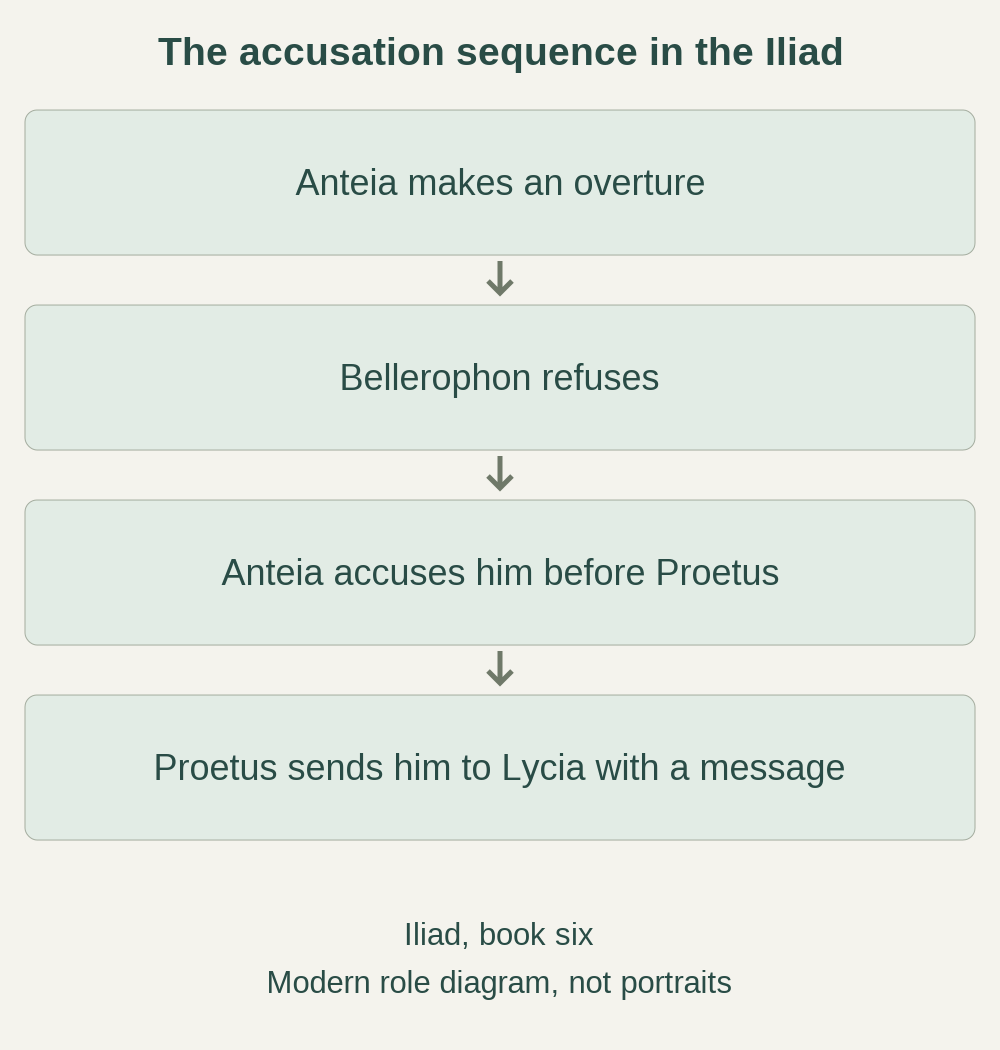
Modern diagram of Anteia, Bellerophon and Proetus in the Iliad episode; explains sequence without deciding other texts’ dependence
Pessoa
Proetus’s wife in the Iliad, accusing Bellerophon after he refuses her overture.
Variantes do nome: Anteia in the Iliad, Anteia
Contexto e fontes →
Pessoa
British New Testament scholar and Anglican theologian, 1930–2018.
Variantes do nome: Anthony Ernest Harvey, A. E. Harvey
Contexto e fontes →
Pessoa
Anthony P. SooHoo studies ancient Near Eastern cultures and received his doctorate from New York University’s Institute for the Study of the Ancient World in 2019.
Variantes do nome: Anthony P. SooHoo
Contexto e fontes →
Modern conceptual depiction of southern Levantine highlands, evoking the setting discussed in research on early Israel; neither archaeological photography nor a verified reconstruction of any settlement or period
Entidade
Name attested for a population on the Merneptah Stele around 1208 BCE, later for the northern Iron Age kingdom and for broader textual and religious identities; the senses are not identical.
Variantes do nome: Israel, ancient Israel
Contexto e fontes →
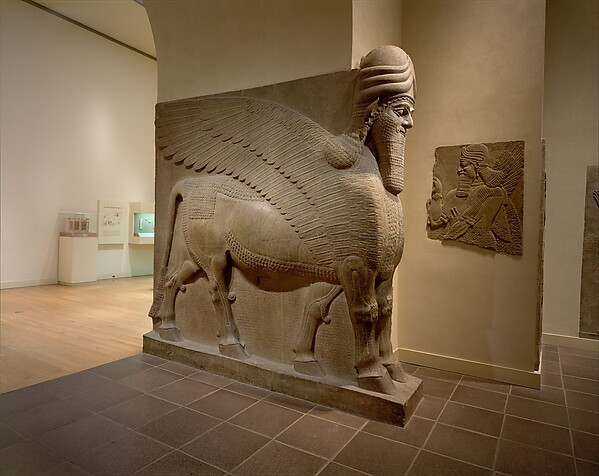
Assyrian lamassu: human-headed winged bull from Nimrud (Kalhu), ca. 883–859 BCE, The Met, 32.143.1. An example of Assyrian palace art, not an image of every ancient Near Eastern society or a depiction of El
Entidade
Modern scholarly label for ancient societies of Mesopotamia, the Levant, Anatolia and Iran, sometimes extending to Egypt and other neighbours depending on the study; not one civilization or religion.
Variantes do nome: Ancient Near East
Contexto e fontes →

Modern AI-generated conceptual cover evoking cities, routes and textual cultures of late antiquity. A fictional composite, not an archaeological photograph or a reconstruction of any identified location
Período
A flexible historians’ framework for transformations around the third to eighth centuries CE across the Mediterranean, Iran and Arabia, with variable boundaries.
Variantes do nome: late antiquity, Late Antiquity
Contexto e fontes →
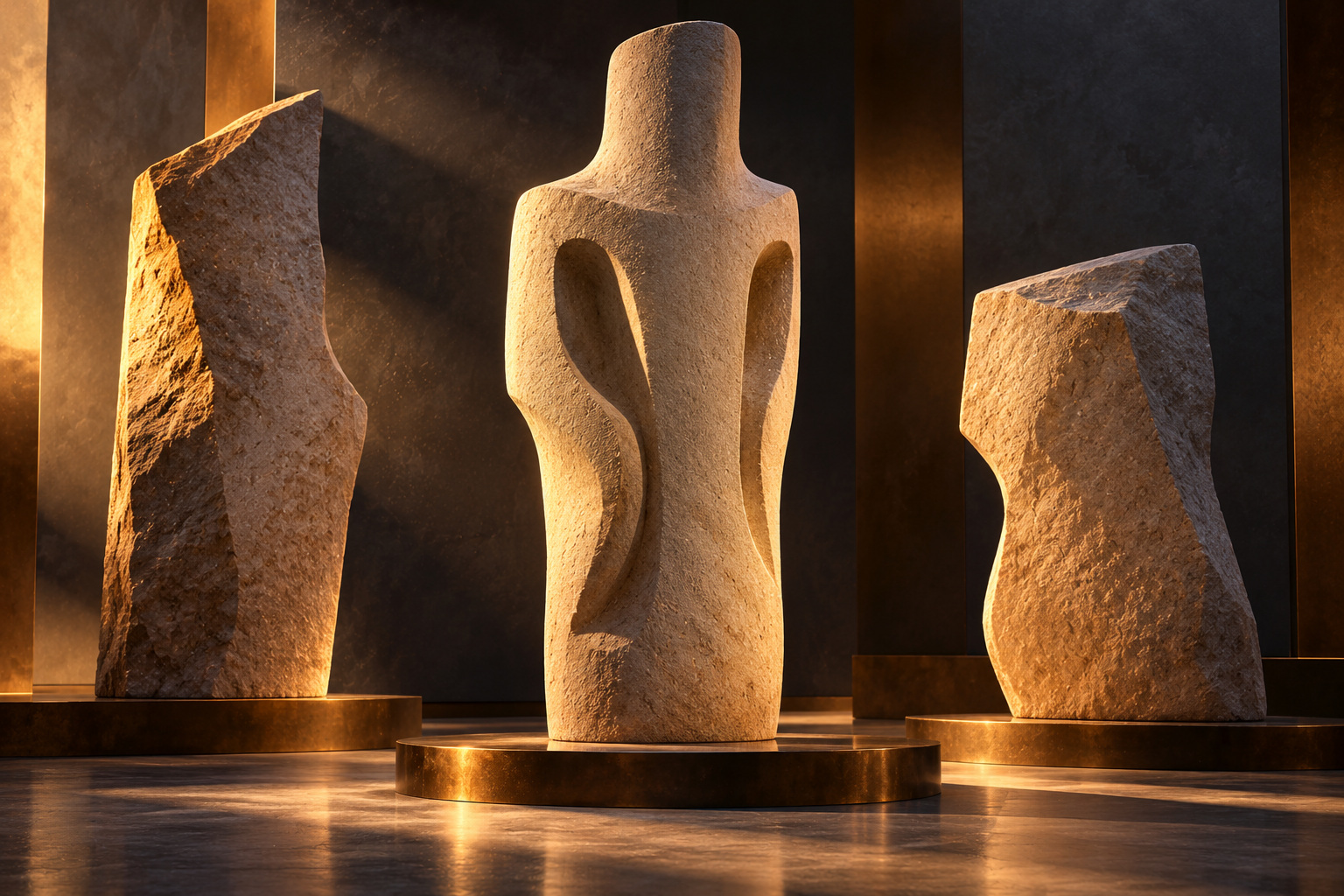
Modern AI-generated conceptual illustration: imaginary stone forms evoking an abstract human body. Not excavated artefacts or a reconstruction of a pillar at Göbekli Tepe
Entidade
Representation of a thing or being with human traits. It describes visible or linguistically attributed features, not by itself a person, ancestor or deity.
Variantes do nome: anthropomorphism, anthropomorphic, humanlike form
Contexto e fontes →

Modern AI-generated conceptual artwork: a hand-shaped shadow over imagined pages evokes the difference between wording, appearance and interpretation. Not an artifact, real manuscript or depiction of God
Entidade
Attribution of human features or feelings, such as hands, face and anger, to God. Language, visions, interpretation and beliefs about corporeality require separate analysis.
Variantes do nome: Divine anthropomorphism, divine anthropomorphic language
Contexto e fontes →
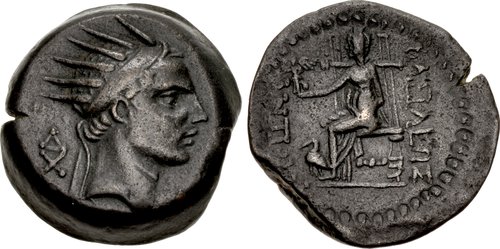
Bronze coin of Antiochus IV Epiphanes, Seleucia on the Tigris, about173/172–164BCE; CNG,TritonXXII,313. Royal portrait at left; seated goddess holding Nike at right, not a Daniel scene
Pessoa
Antiochus IV Epiphanes was a Seleucid king who ruled from175 to164 BCE.
Variantes do nome: Antiochus IV Epiphanes
Contexto e fontes →
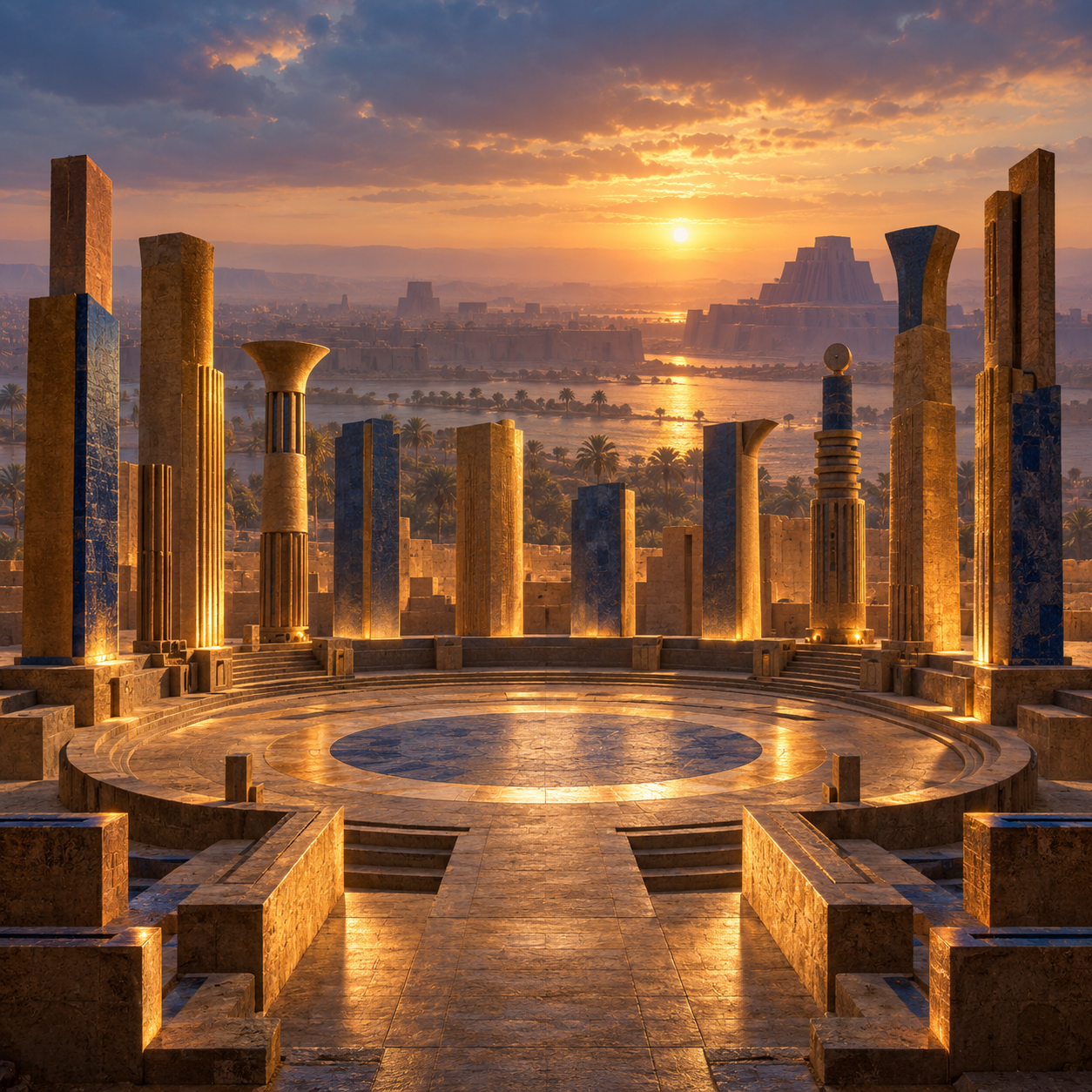
Modern generated conceptual scene evoking a divine assembly in an imagined Mesopotamian setting; neither an ancient image of the Anunna nor a documented reconstruction of a site or temple
Entidade
Anunna/Anunnaki is a collective designation for Mesopotamian gods whose scope varies by text and period; it is not a group with one fixed membership or number.
Variantes do nome: Anunna, Anuna, Anunnaki, Anunnaku
Contexto e fontes →
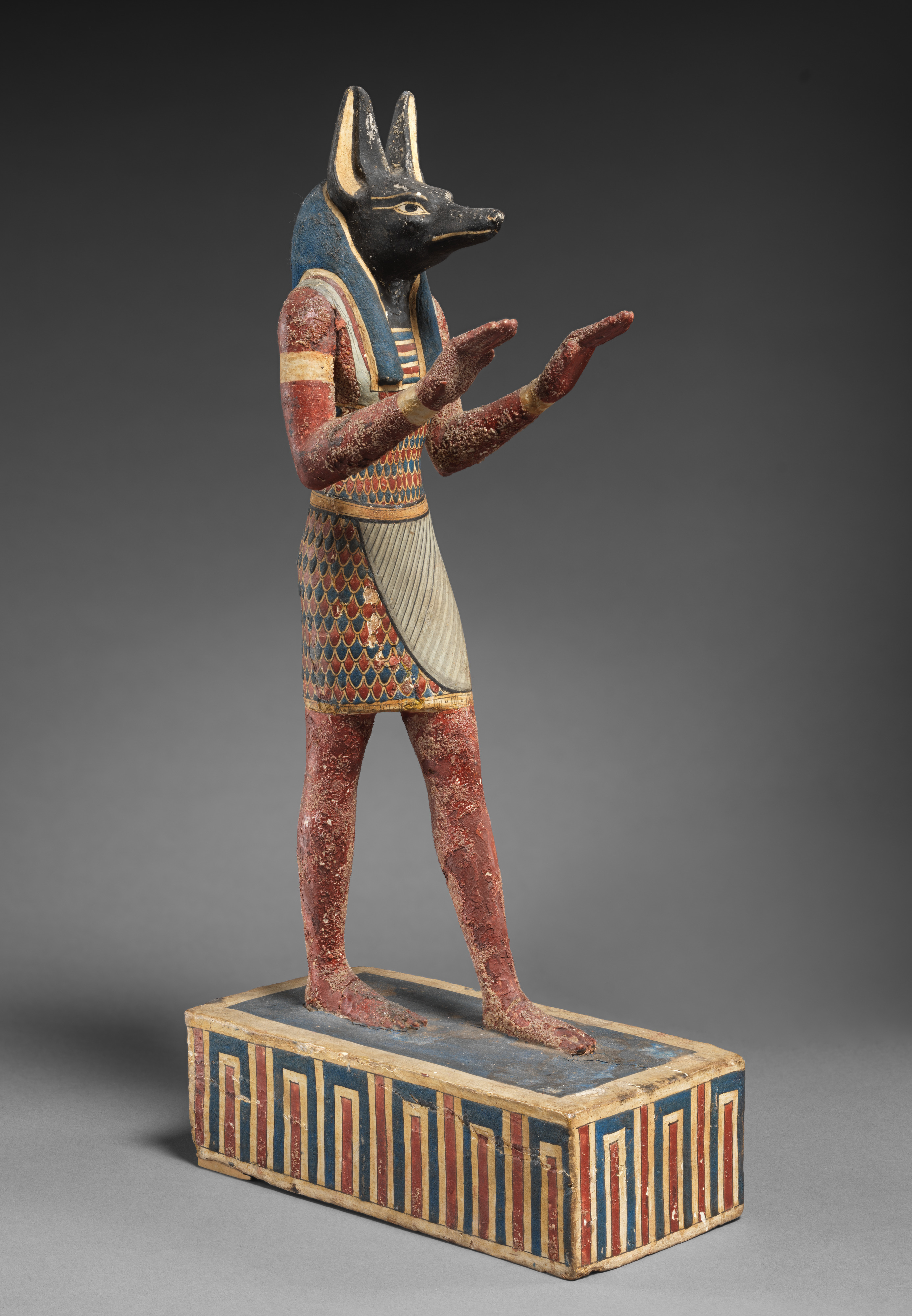
Painted plastered-wood statuette of a canid-headed god, probably Anubis; Egypt,332–30 BCE. Met38.5; actual object with the museum’s qualified identification
Entidade
Anubis is an Egyptian deity associated with the dead and the balance in heart-weighing scenes.
Variantes do nome: Anubis
Contexto e fontes →
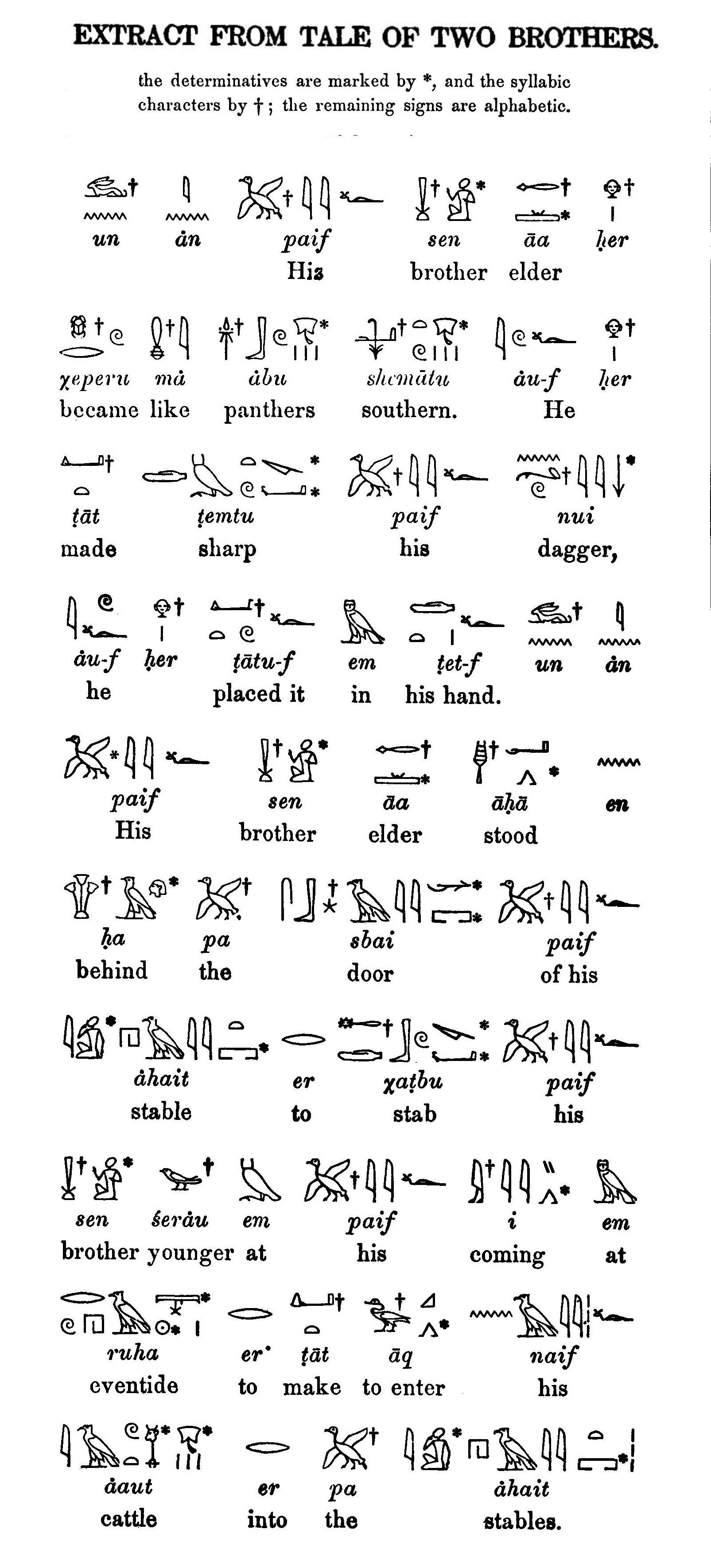
Printed Two Brothers excerpt in Wallis Budge’s Egyptian Language, 1889, pp. 38–39: educational hieroglyphic transcription with English glosses of the armed elder brother. Not a photograph of the hieratic papyrus or Inena’s signature
Pessoa
Elder brother called Anub or Anubis in the tale, initially believing his wife’s charge, then recognizing her deception.
Variantes do nome: Anubis, Bata’s elder brother, Anub in the Two Brothers
Contexto e fontes →
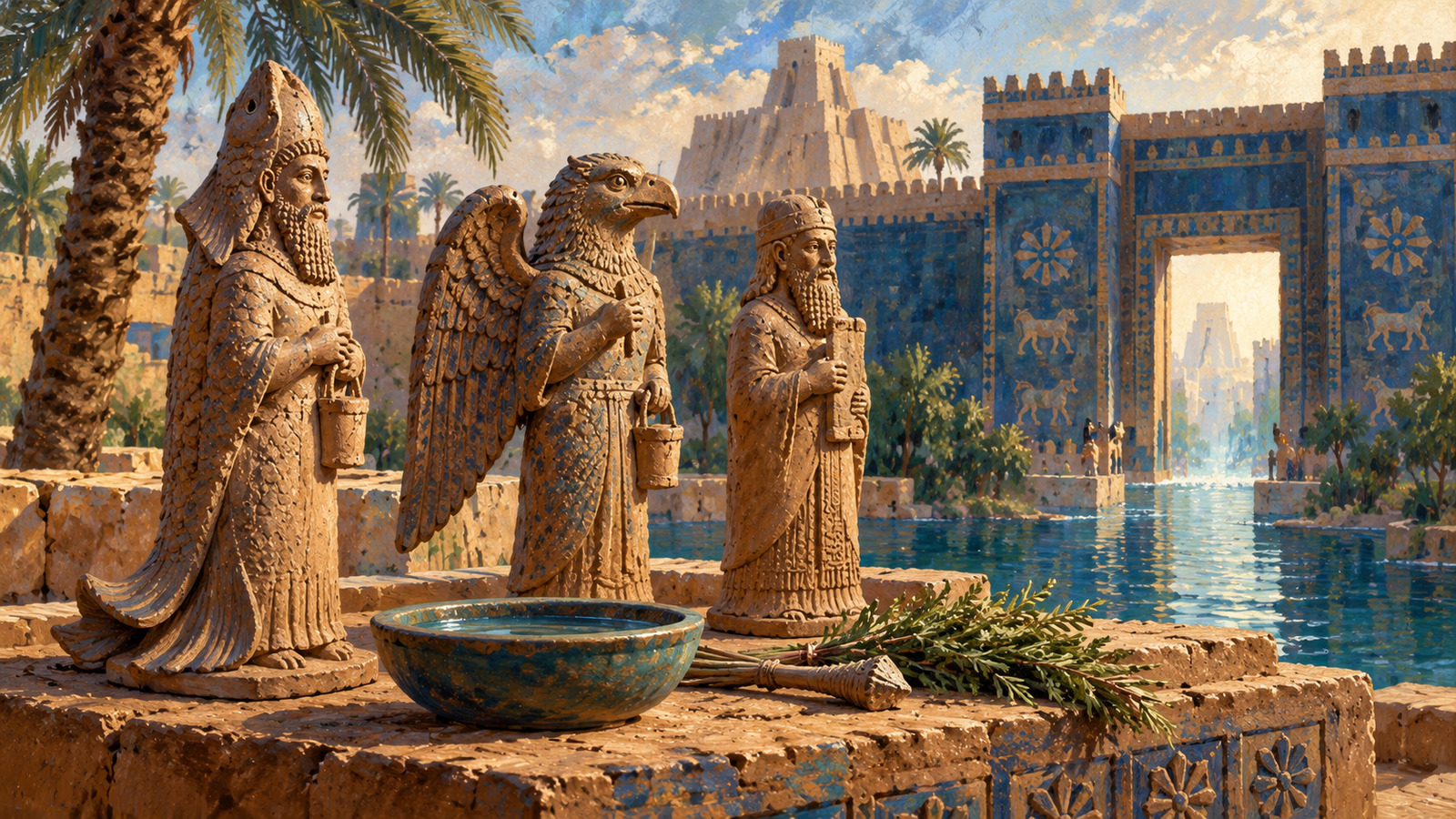
Contemporary AI-generated interpretive illustration (2026) symbolically combining motifs associated with sages and protective figurines in an imagined cityscape; not an ancient object or a documented reconstruction
Entidade
An Akkadian term for a sage or expert. Specific texts describe seven primordial sages; rituals use related protective figures. Neither the titles nor the depicted forms are always identical.
Variantes do nome: apkallu, apkallū
Contexto e fontes →

A contemporary interpretive image of Abraham between the idol workshop and the ascent toward a throne with celestial wheels; generated artwork, not a manuscript or artefact photograph
Entidade
A self-contained source-critical study of the Apocalypse of Abraham, its Slavonic witnesses, date, idol polemic, heavenly vision, chapter 29, and contrasts with the Testament and other Abrahamic traditions.
Variantes do nome: Apocalypse of Abraham
Contexto e fontes →
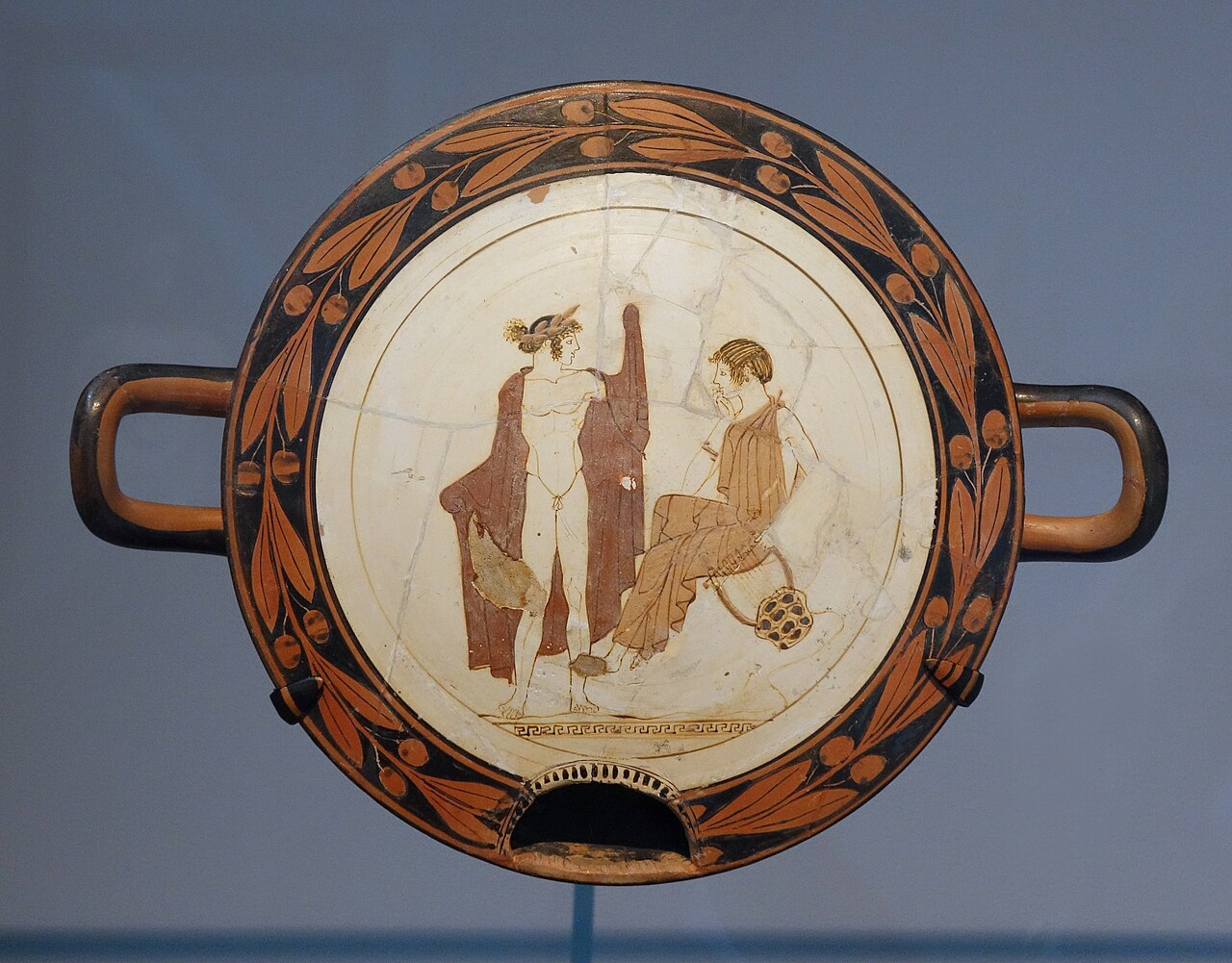
Apollo and a Muse on an Attic white-ground cup; Museum of Fine Arts, Boston, 00.356. An ancient representation of the god, rather than a particular Iliadic assembly scene
Entidade
God of music and prophecy in Greek traditions, also participating in the Iliad’s events.
Variantes do nome: Apollo
Contexto e fontes →
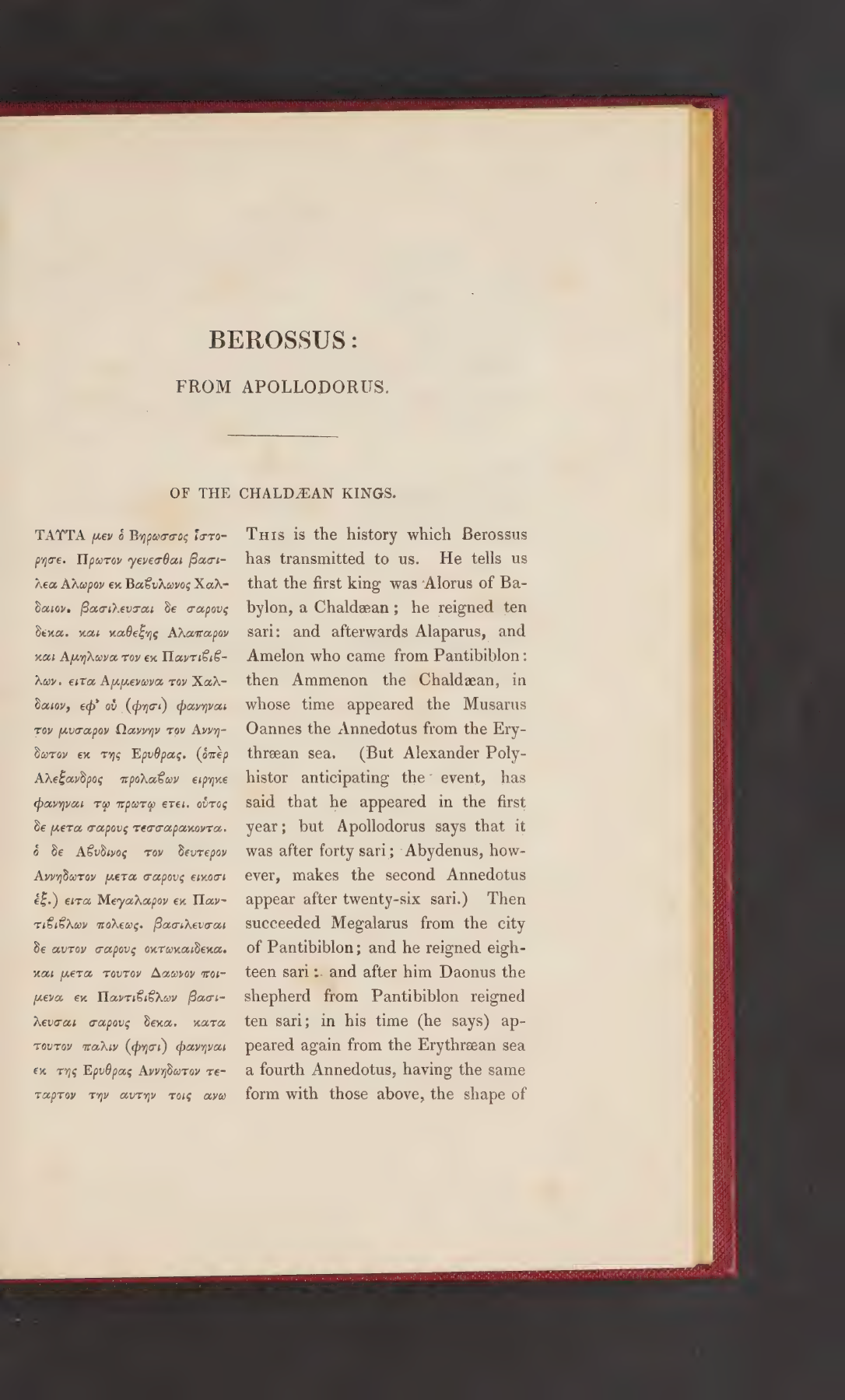
Opening of the fragment printed under Apollodorus’s name in Cory’s edition, London, 1828. It concerns Chaldaean kings; this is not a page of the Library attributed to Apollodorus
Pessoa
Apollodorus is a name in the transmission of Berossus on Babylonian kings and teaching beings.
Variantes do nome: Apollodorus in the transmission of Berossus
Contexto e fontes →
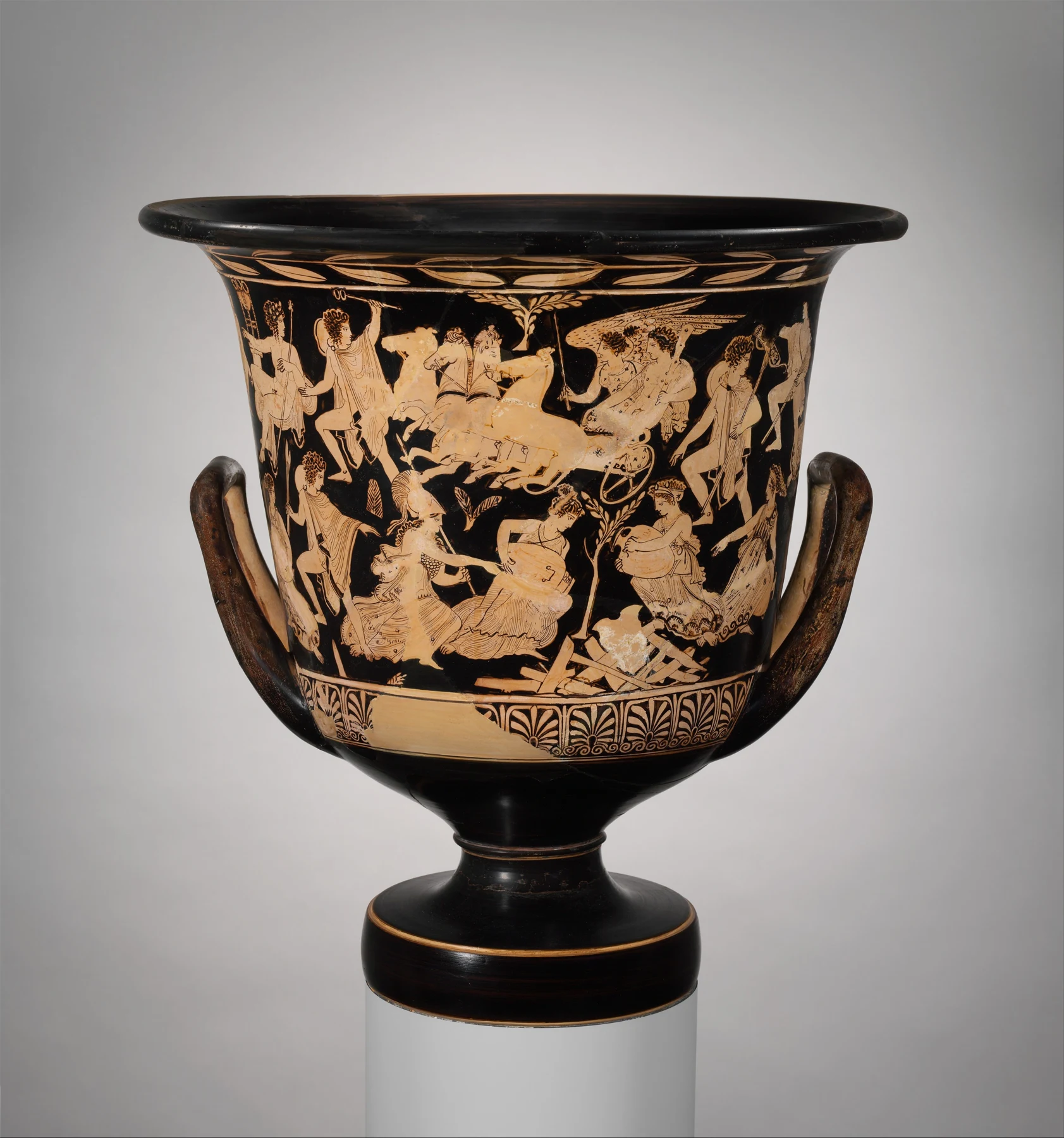
Attic red-figure vessel, 4th century BCE; depicts Heracles’s apotheosis, not Alcestis’s rescue. Metropolitan Museum, 52.11.18; public-domain photograph
Entidade
Attribution of divine standing to a hero, person or ruler in narrative, worship or official recognition; distinct from mere immortality, hero cult or return to life.
Variantes do nome: apotheosis
Contexto e fontes →
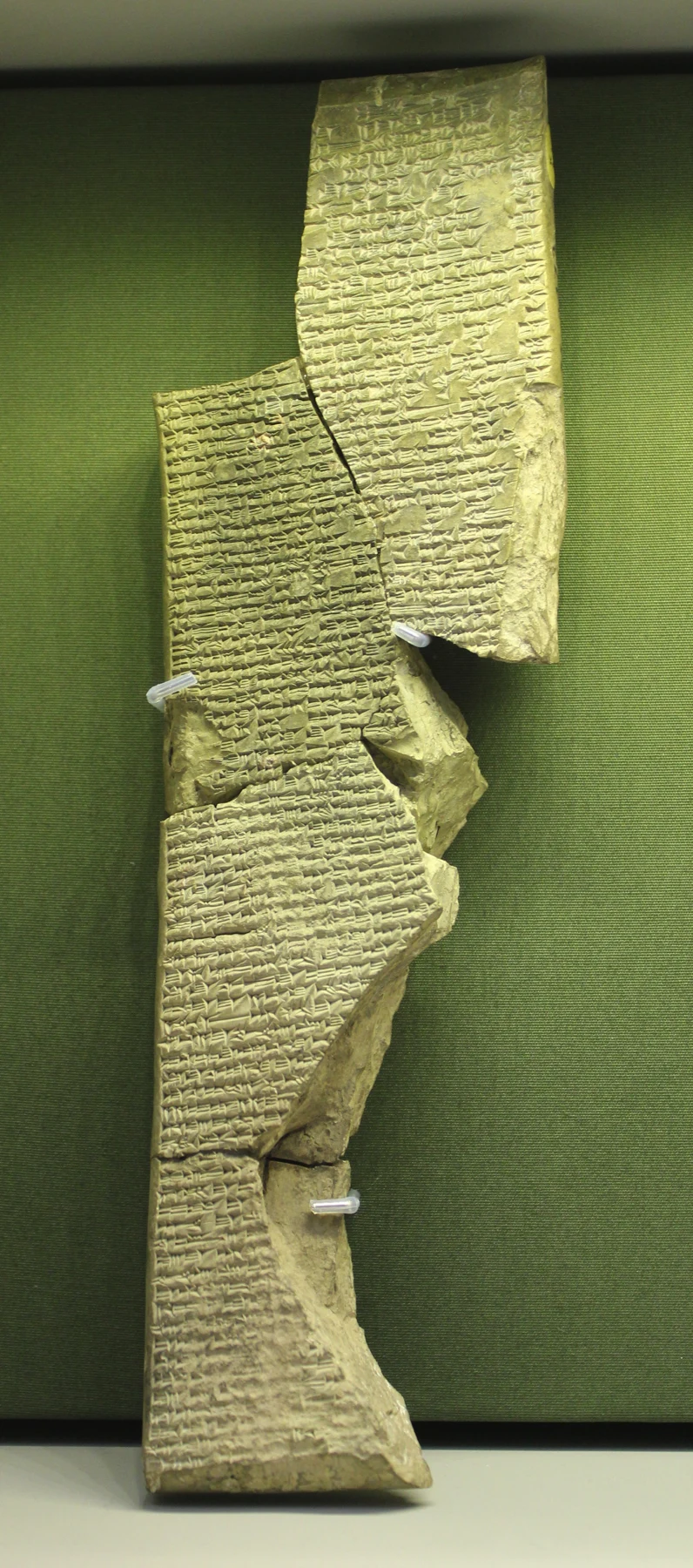
Cuneiform witness K.3473 (CDLI P365283) to Tablet III of Enuma Elish, Nineveh/Kuyunjik, Neo-Assyrian period; British Museum. A manuscript photograph, not Tablet I or a depiction of Apsû
Entidade
Apsû: primordial watery ancestor in Enuma Elish, killed by Ea after plotting against the younger gods. Ea’s sanctuary later bears the same name; distinct in context from the broader cosmic Abzu.
Variantes do nome: Apsû, Apsu
Contexto e fontes →
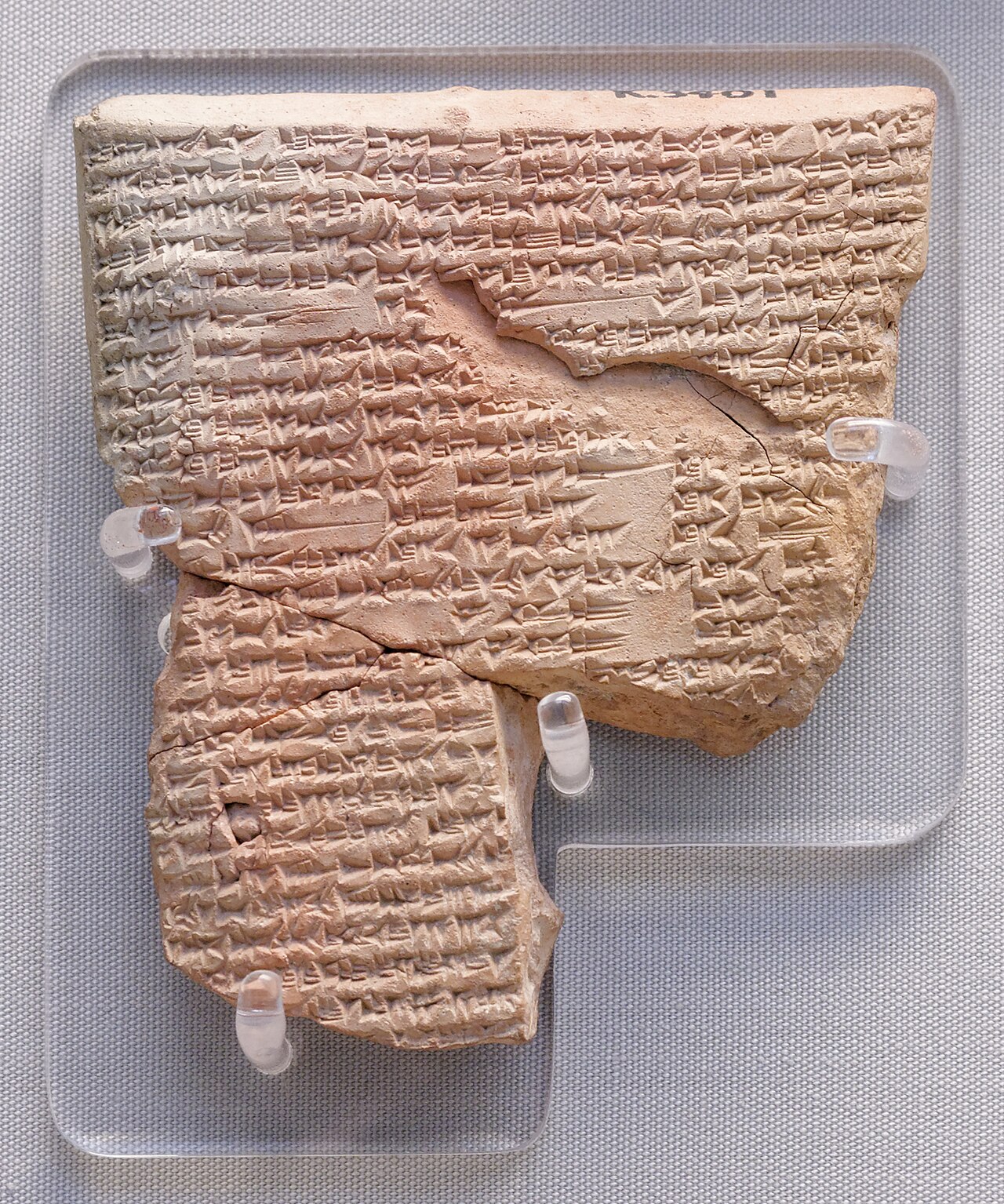
A clay tablet from Nineveh preserving Sargon’s birth legend, in which Aqqi is the irrigator who adopts the child. A seventh-century BCE Assyrian copy, British Museum K.3401. Photograph by Marie-Lan Nguyen, 2012; the narrative is later than the king’s lifetime
Pessoa
Aqqi is the irrigator who finds the child in the river and adopts him in Sargon of Akkad’s birth story
Variantes do nome: Aqqi, Akki
Contexto e fontes →
Entidade
Acheron evokes the realm of the dead in Greek literature. In Theocritus’s Adonis song it is the place from which the god returns.
Variantes do nome: Acheron in Greek literature
Contexto e fontes →
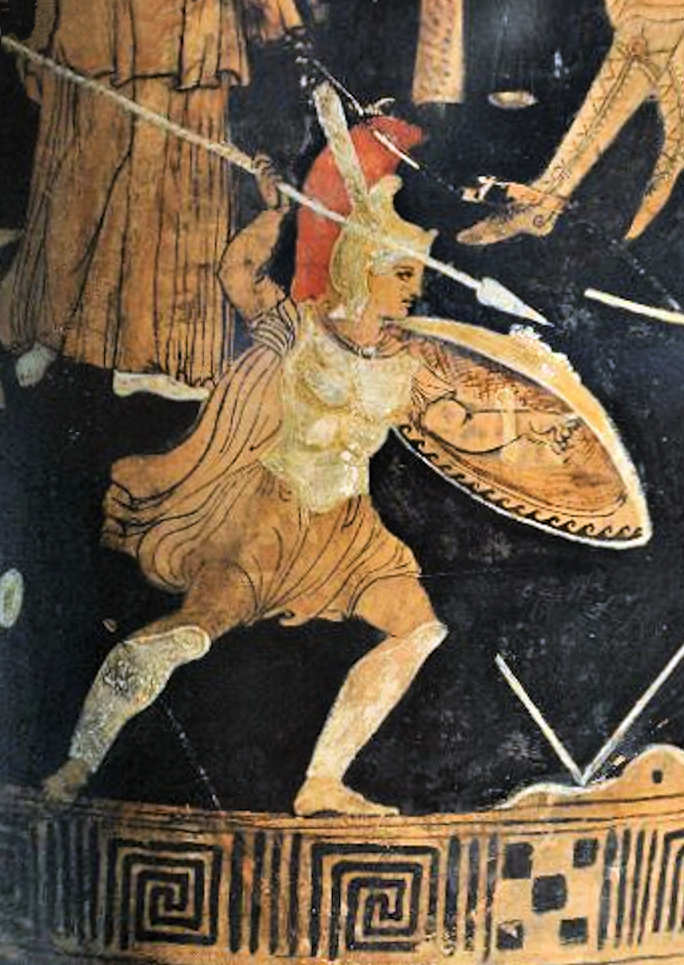
Achilles fighting Memnon on a vase of about 330–320 BCE; National Museum of Antiquities, Leiden, AMM 1. The scene belongs to broader Trojan War traditions, rather than the Iliad itself
Pessoa
Important hero of the Iliad, whose anger and participation shape the poem’s warfare.
Variantes do nome: Achilles
Contexto e fontes →
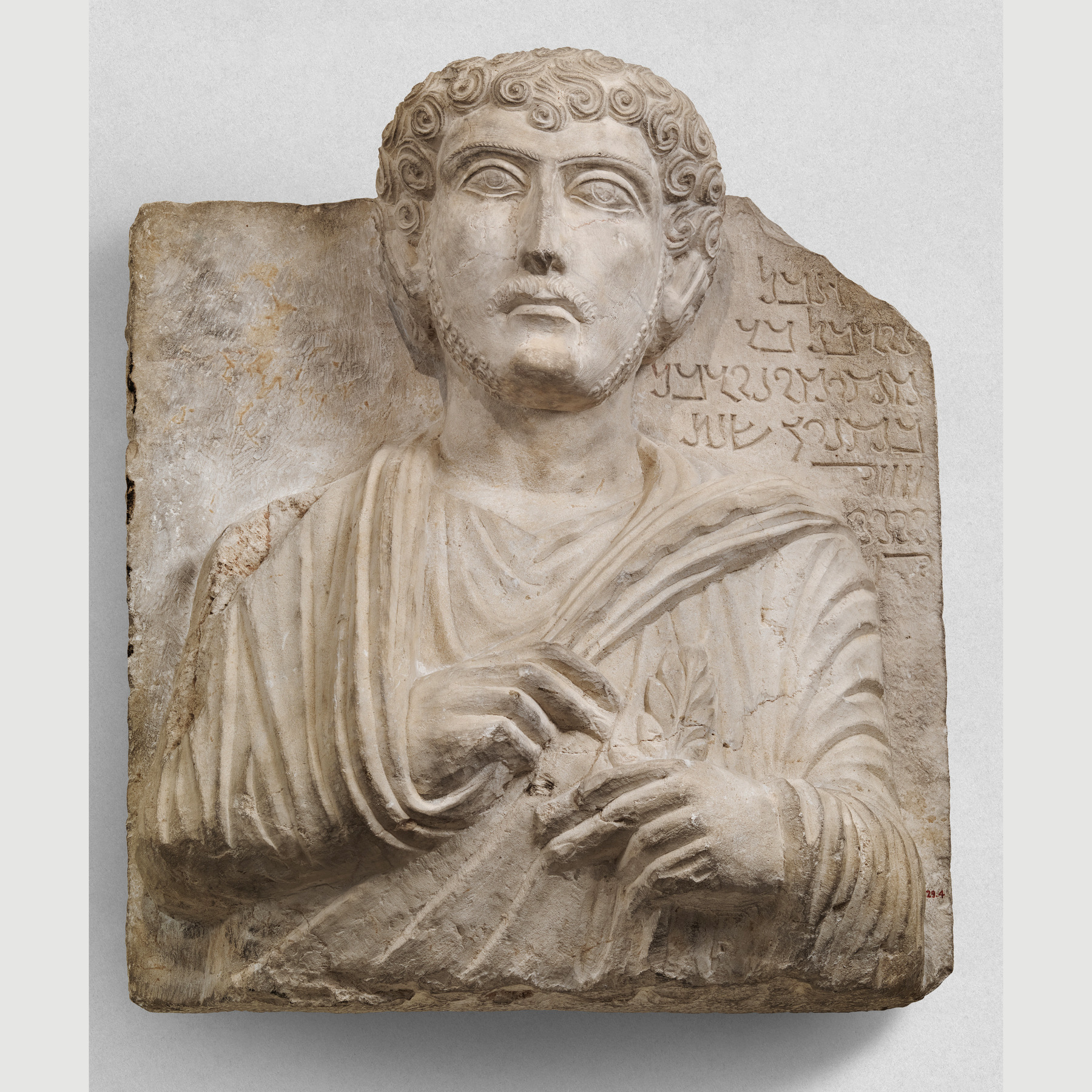
Limestone funerary relief from Palmyra, ca. 181 CE; The Met, 02.29.4. Its Palmyrene Aramaic inscription identifies the deceased, his ancestry, and a date. This is a cropped, modestly tone-adjusted museum photograph, not an example of every Aramaic dialect
Entidade
Northwest Semitic language varieties documented since the early first millennium BCE, including Old and Imperial Aramaic, Syriac, Jewish dialects, and living Neo-Aramaic forms.
Variantes do nome: Aramaic
Contexto e fontes →
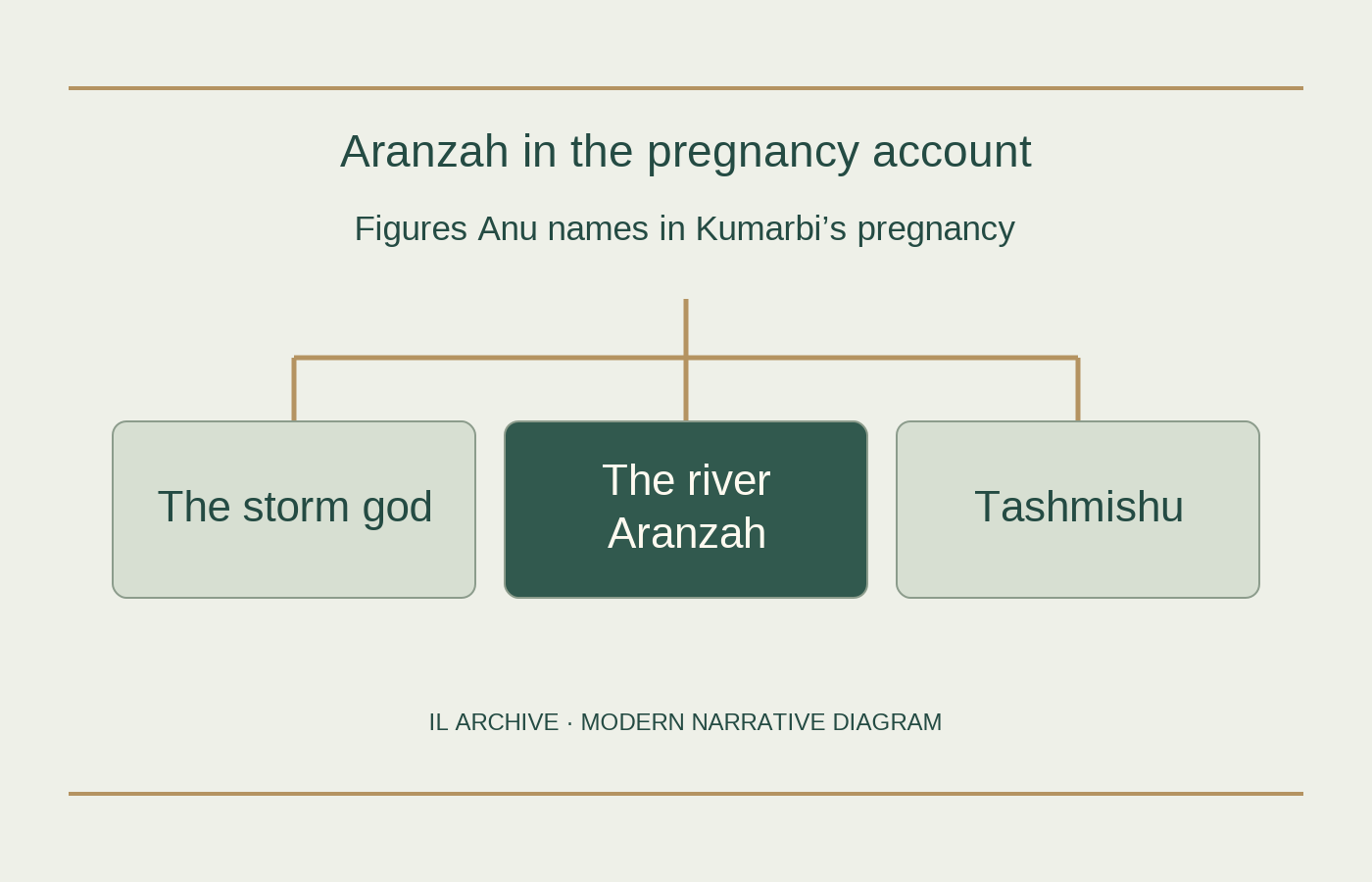
Modern diagram of Kumarbi’s pregnancy list, highlighting Aranzah as a river divine figure. Branches group names in the scene; not a river map or the order of every birth event
Entidade
River as a divine figure, named among those Kumarbi carries in the Hittite song.
Variantes do nome: Aranzah, Aranzakh
Contexto e fontes →
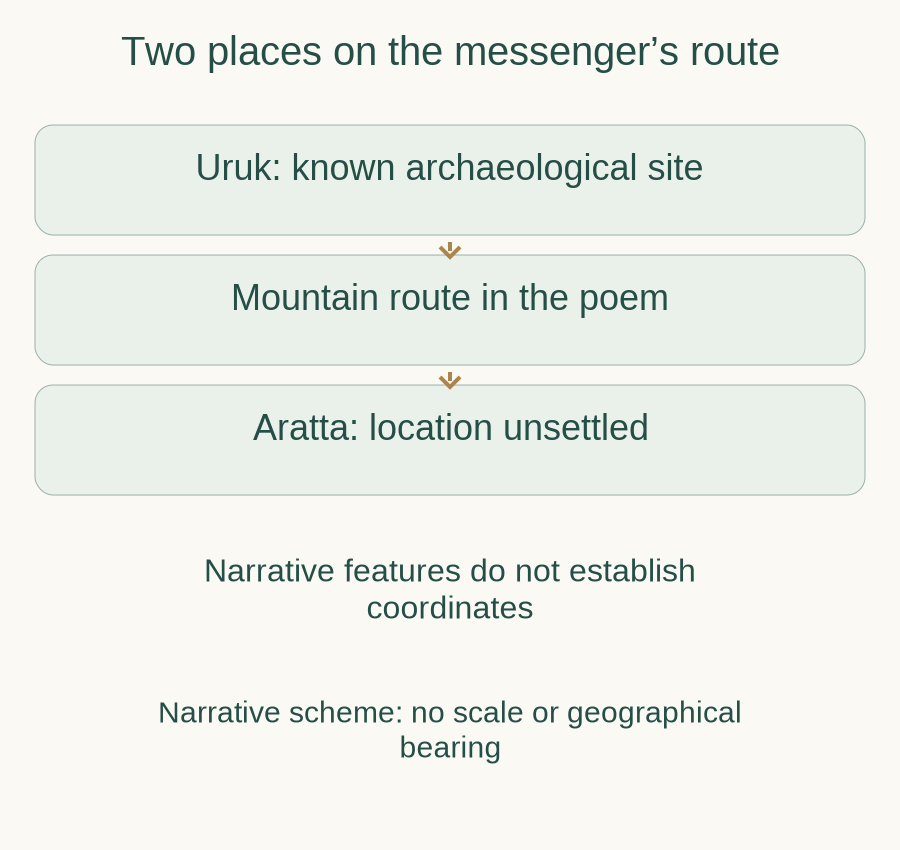
Modern IL Archive explanatory diagram: Two places on the messenger’s route. Not a reproduction of an ancient artifact
Sítio
Aratta is a place in Sumerian literature visited by Uruk’s messenger in Enmerkar’s story; its historical location is unsettled.
Variantes do nome: Aratta
Contexto e fontes →
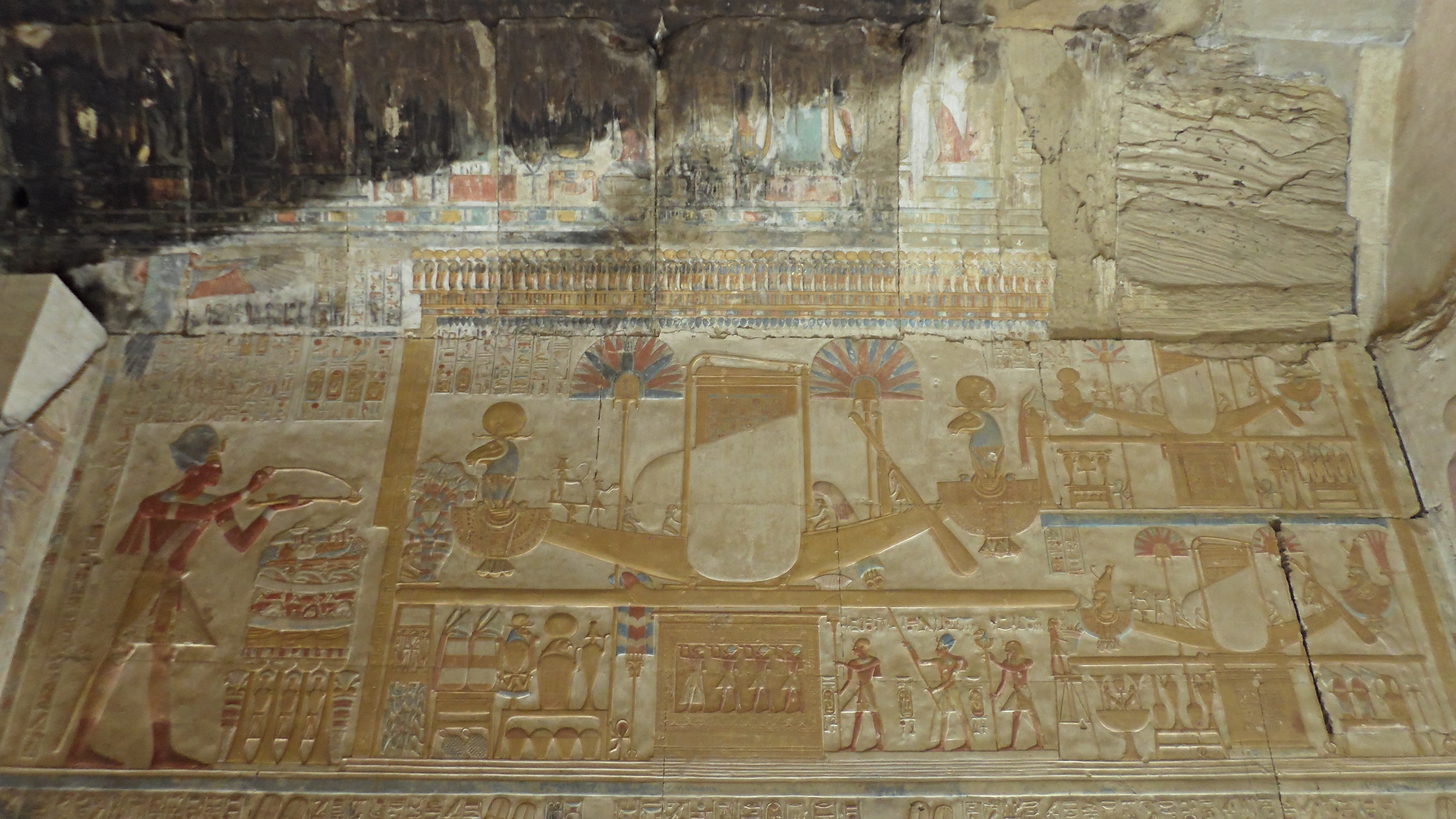
Reliefs of the ritual barks of Amun, Khonsu, and Mut; Amun chapel, Seti I temple, Abydos. Egyptian comparison, not the Ark or proof of its derivation
Entidade
Portable sacred chest in the Hebrew Bible, associated with the covenant tablets and divine presence. Descriptions and roles differ in Exodus, Deuteronomy, Samuel, and Kings. It is distinct from Noah’s vessel.
Variantes do nome: Ark of the Covenant, Ark of the Testimony
Contexto e fontes →