Pessoa
Edward L. Greenstein
Edward L. Greenstein is a Hebrew Bible scholar and professor emeritus in Bar-Ilan University’s Bible Department.
Variantes do nome: Edward L. Greenstein, Edward Greenstein, Greenstein
Contexto e fontes →Um apoio à leitura
Definições breves de nomes, conceitos e lugares. Abra um registro para ler o contexto, as fontes e os materiais relacionados.
1047 definições
Pessoa
Edward L. Greenstein is a Hebrew Bible scholar and professor emeritus in Bar-Ilan University’s Bible Department.
Variantes do nome: Edward L. Greenstein, Edward Greenstein, Greenstein
Contexto e fontes →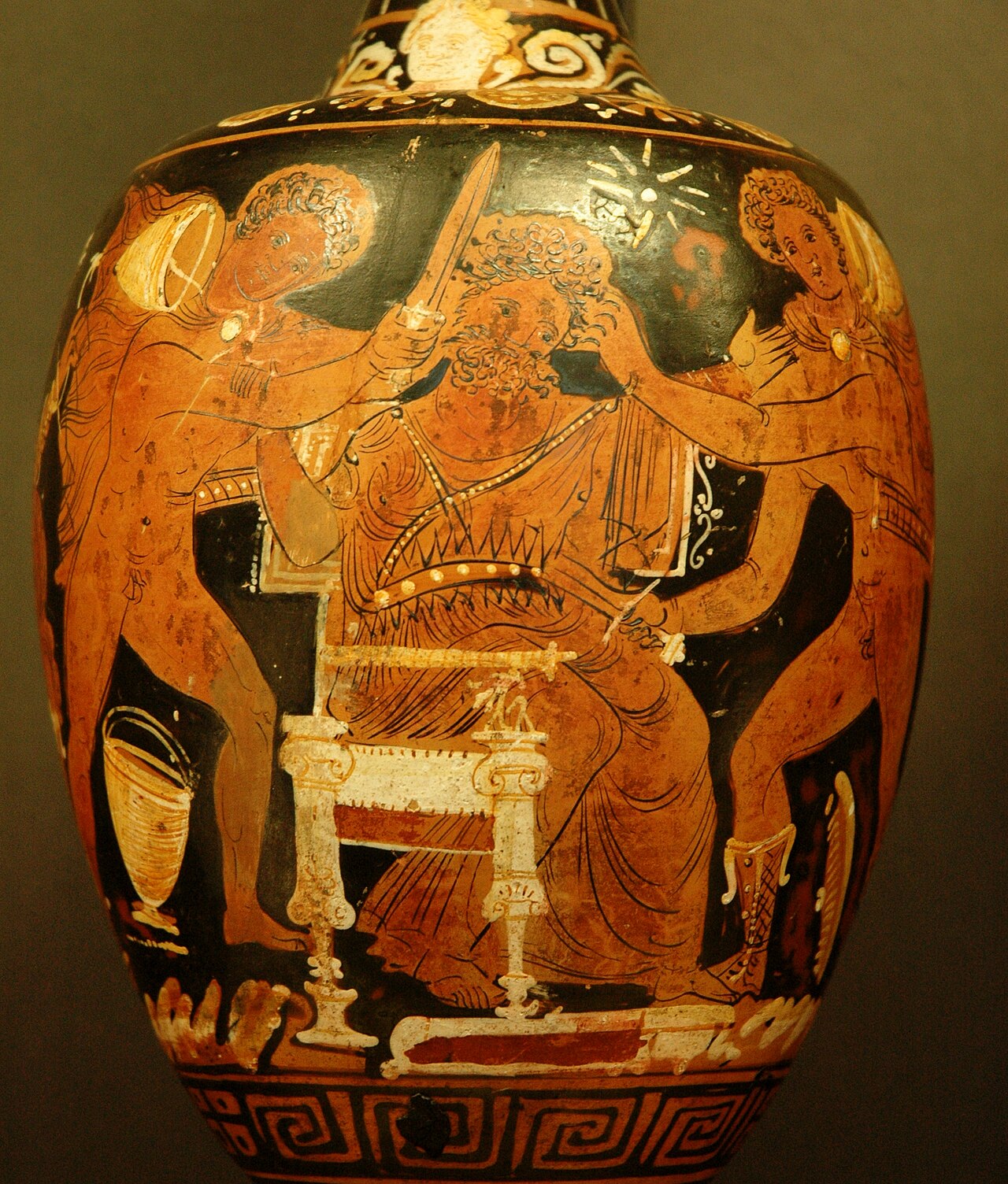
Death of Aegisthus on a Greek vase of about 320 BCE; Louvre K 320, Wind Group. The artwork depicts the revenge story, rather than the Odyssey’s first assembly itself
Pessoa
Human figure in Greek narrative whose fate Zeus recalls at the Odyssey’s opening.
Variantes do nome: Aegisthus
Contexto e fontes →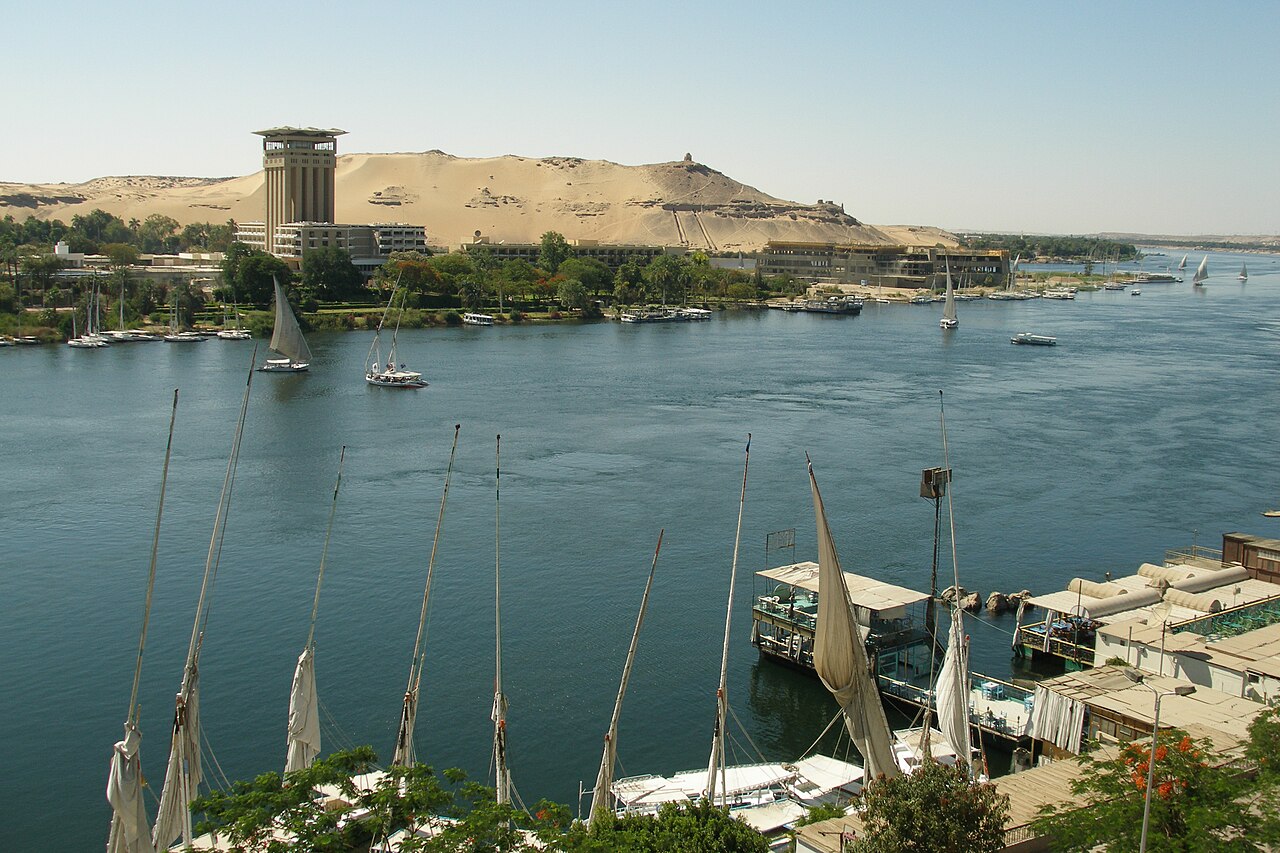
The Nile at Aswan in southern Egypt, 23 May 2007. A modern view of the river, its banks and sailing boats, illustrating part of the Nile Valley’s geographical setting
Sítio
Egypt lies mainly in northeastern Africa and includes the Sinai Peninsula in Asia
Variantes do nome: Egypt, ancient Egypt
Contexto e fontes →Pessoa
Scholar of the Hebrew Bible, ancient Judaism and the Dead Sea Scrolls; professor at KU Leuven from 2009 to 2024, with research on Jubilees’ textual growth.
Variantes do nome: Eibert Tigchelaar, Eibert J. C. Tigchelaar
Contexto e fontes →Pessoa
A Hebrew Bible scholar studying death, lament, and nature’s ritual agency in Jonah 2.
Variantes do nome: Ekaterina E. Kozlova
Contexto e fontes →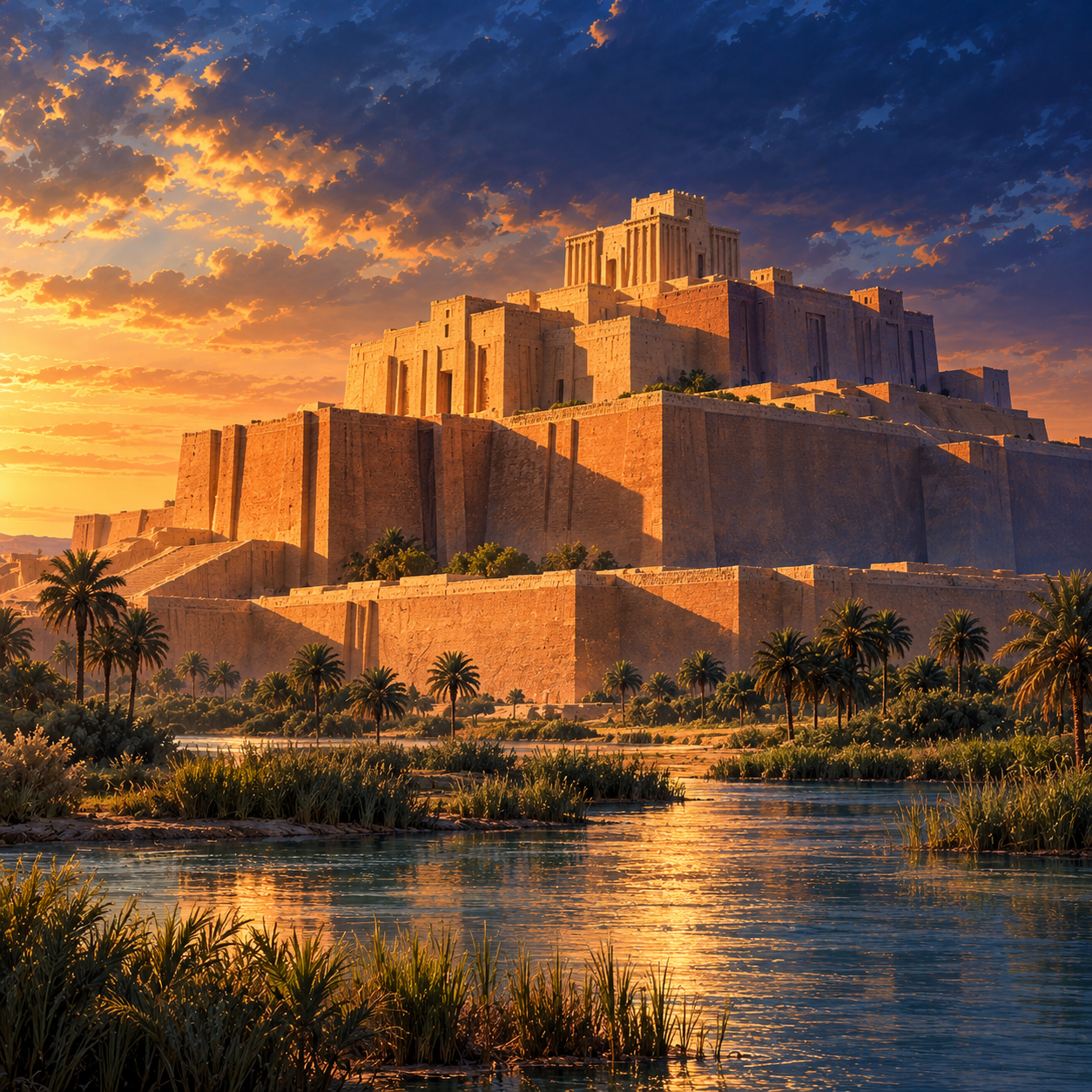
Modern AI-generated concept artwork of an imagined Mesopotamian-inspired sanctuary; not a photograph or verified reconstruction of Ekur, its temple or ziggurat
Entidade
Ekur (“Mountain House”) was Enlil’s chief sanctuary at Nippur, present-day Iraq; the name may extend to its precinct. Hymns and royal inscriptions attest to its prestige and rebuilding across periods; it is not simply the ziggurat.
Variantes do nome: Ekur, E-kur
Contexto e fontes →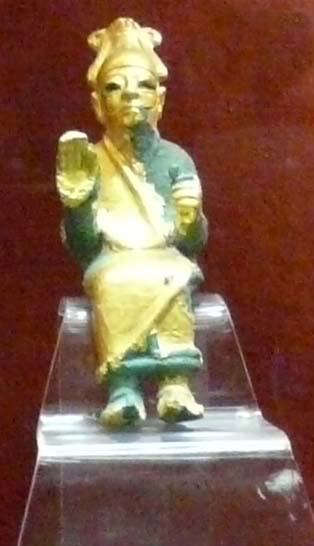
Small gilded-bronze statuette of a seated god from Ugarit, ca. 1400–1300 BCE, National Museum of Damascus S 3573. Tentatively identified as El on stylistic grounds; no inscription on the object confirms his name. Photographed in 2008
Entidade
El is a senior deity in Late Bronze Age Ugaritic texts, portrayed as father of the divine family and a council authority, alongside his consort Athirat. This entry does not cover every linguistic use of El.
Variantes do nome: El
Contexto e fontes →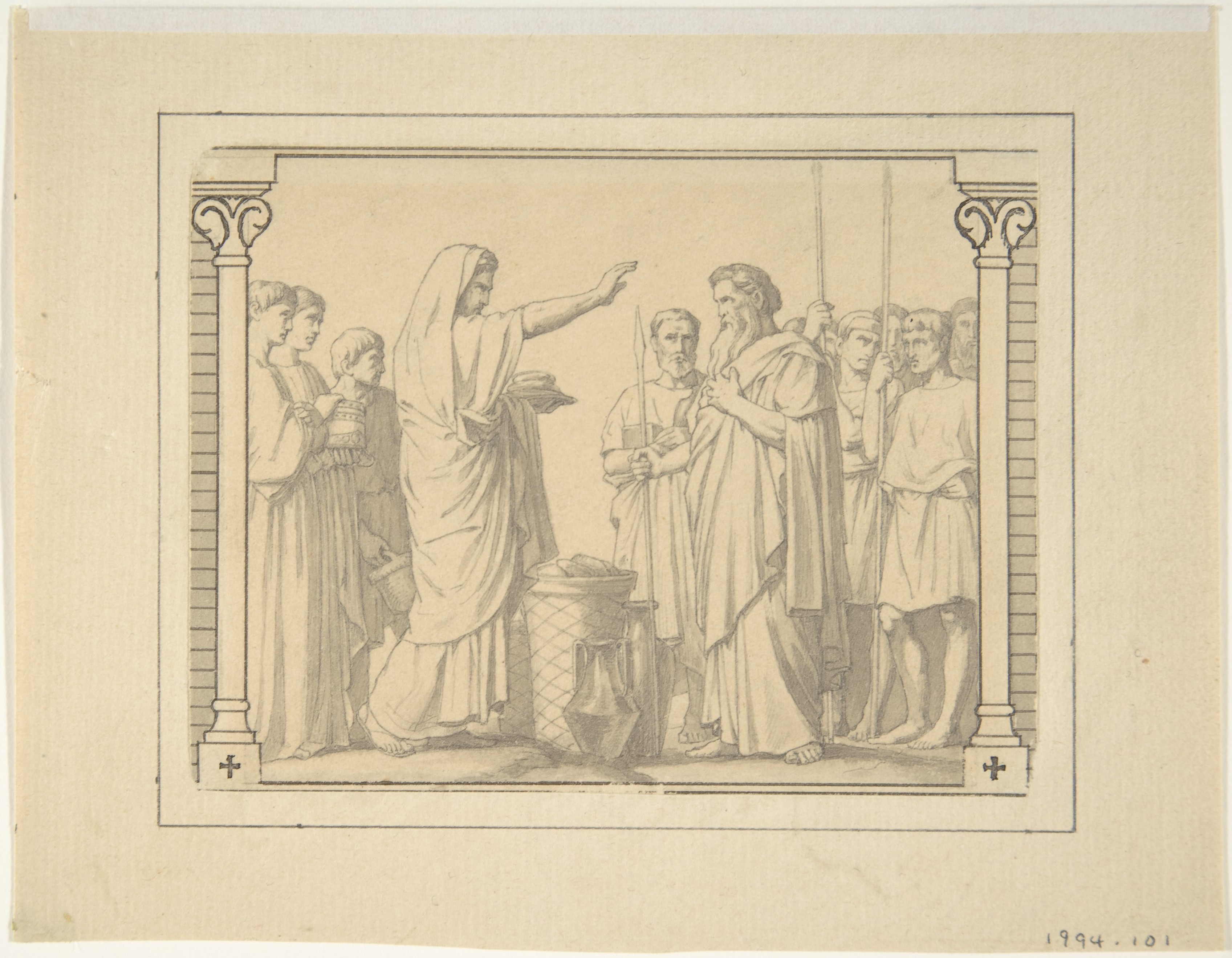
Melchizedek Presenting Abraham with Bread and Wine, a drawing by Hippolyte Flandrin, 1835–64, The Met, 1994.101. A later artistic reception of Genesis 14, not a historical image of the meeting or evidence of El Elyon’s appearance
Entidade
A Hebrew expression meaning “God Most High.” Genesis 14 identifies its bearer with Yahweh, while the Most High’s identity in Deuteronomy 32 remains debated separately from its manuscript readings.
Variantes do nome: El Elyon
Contexto e fontes →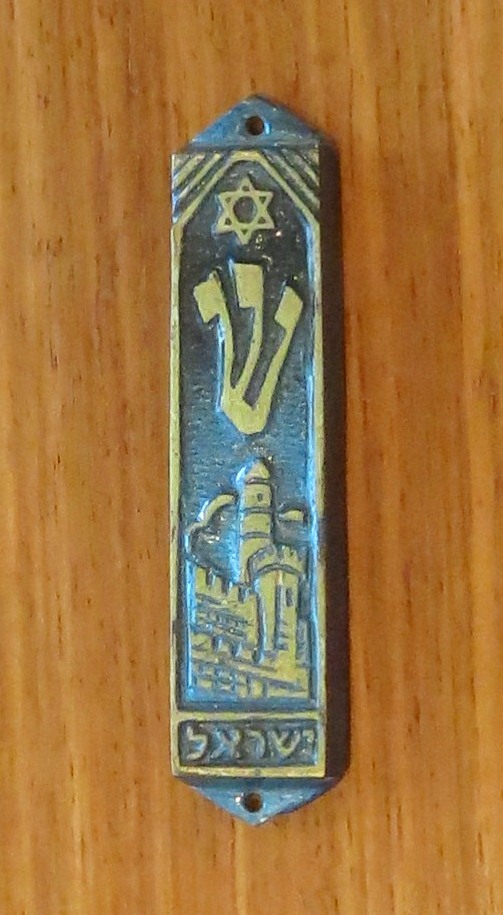
A mezuzah case from Macedonia, photographed in 2013. It bears ש, shin, used as an abbreviation of Shaddai in this tradition. It illustrates the name’s later Jewish reception; the file metadata do not date the case’s manufacture. It is not a witness from the ancestral period or a portrait of a deity
Entidade
A compound El name or title associated with ancestral narratives and identified with Yahweh in Exodus 6; Shaddai’s meaning and etymology remain uncertain.
Variantes do nome: El Shaddai
Contexto e fontes →Pessoa
A Jewish man whose exorcism Josephus says he witnessed before Vespasian; distinct from the biblical Eleazar son of Aaron.
Variantes do nome: Eleazar the exorcist
Contexto e fontes →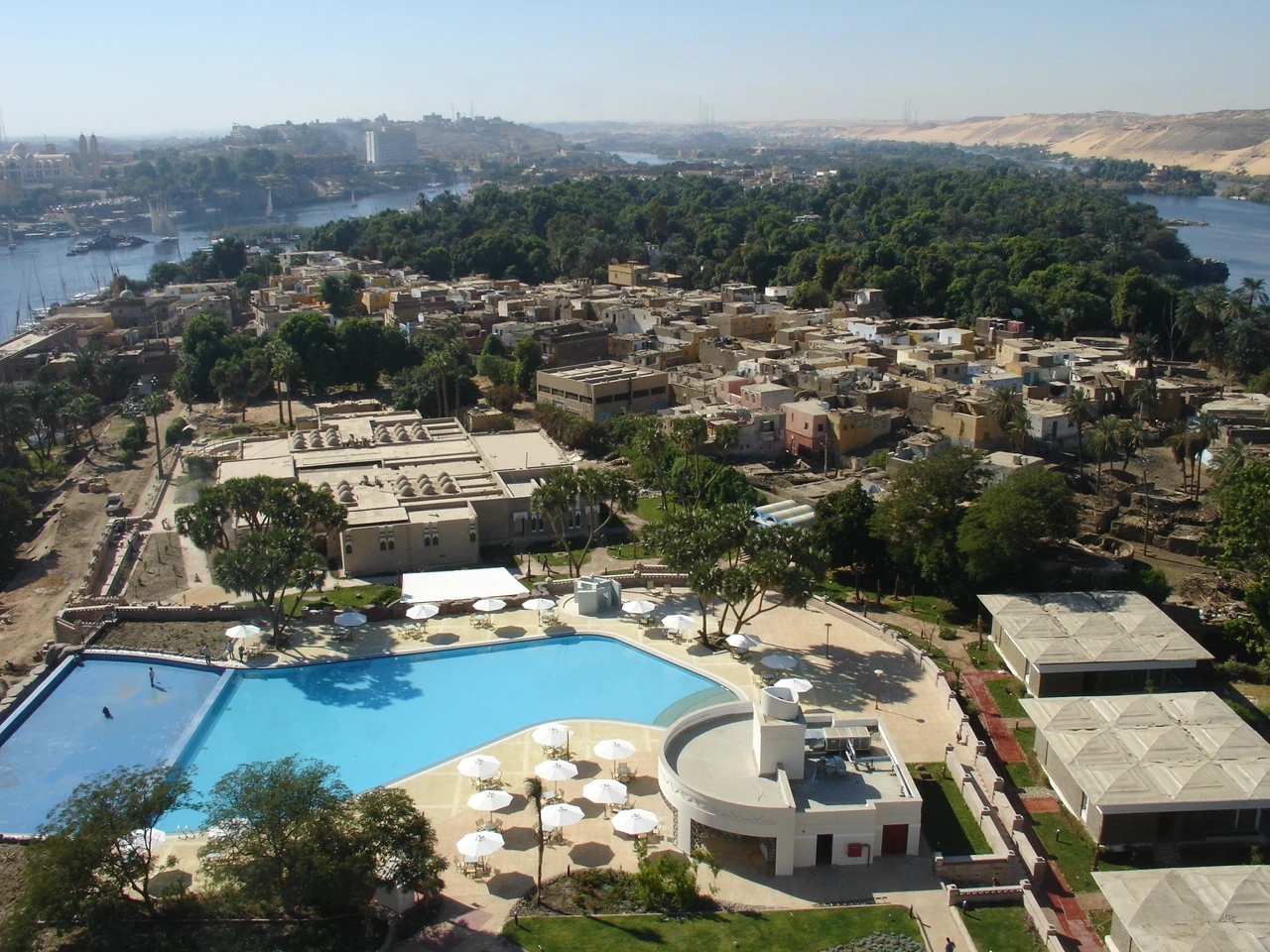
Modern view of Elephantine Island and the Nile near Aswan; geographical context, not the remains of Yaho’s temple
Sítio
Elephantine / Yeb, near Aswan at the Nile’s First Cataract, preserves a long-lived Egyptian town, temples of Khnum and Satet, and Persian-period garrisons. Aramaic papyri document several communities, including Judeans and Yaho’s temple, whose rebuilding was sought in 407 BCE; claims and archaeological interpretations must be distinguished.
Variantes do nome: Elephantine, Yeb
Contexto e fontes →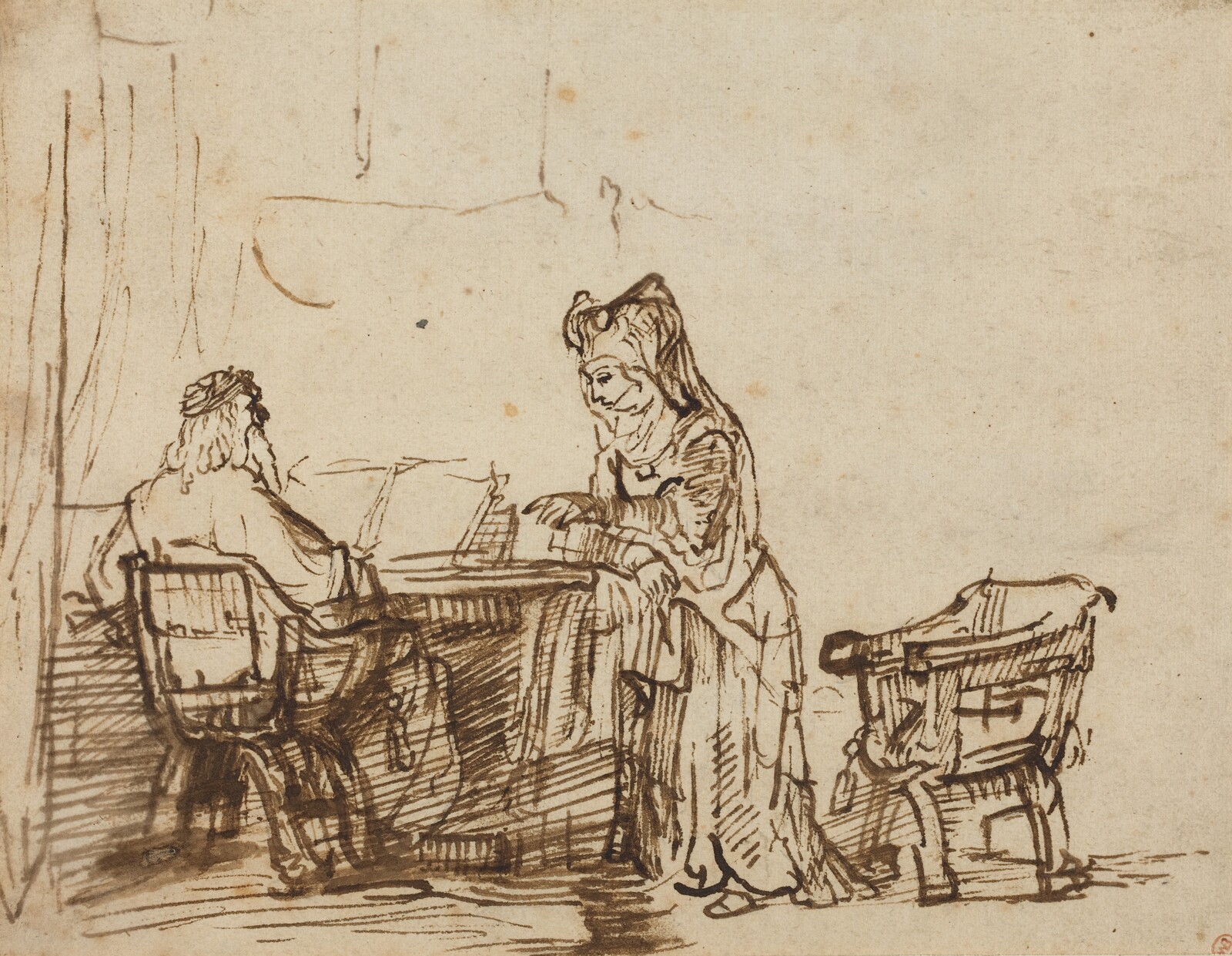
Eli and Hannah in an anonymous drawing after Rembrandt (1606–1669). A later rendering of their conversation, not contemporary portraiture. National Gallery of Art, 1942.9.667
Pessoa
Priest in 1 Samuel who speaks with Hannah; his sons are called “sons of Belial” in an account of abuses concerning offerings.
Variantes do nome: Eli the priest
Contexto e fontes →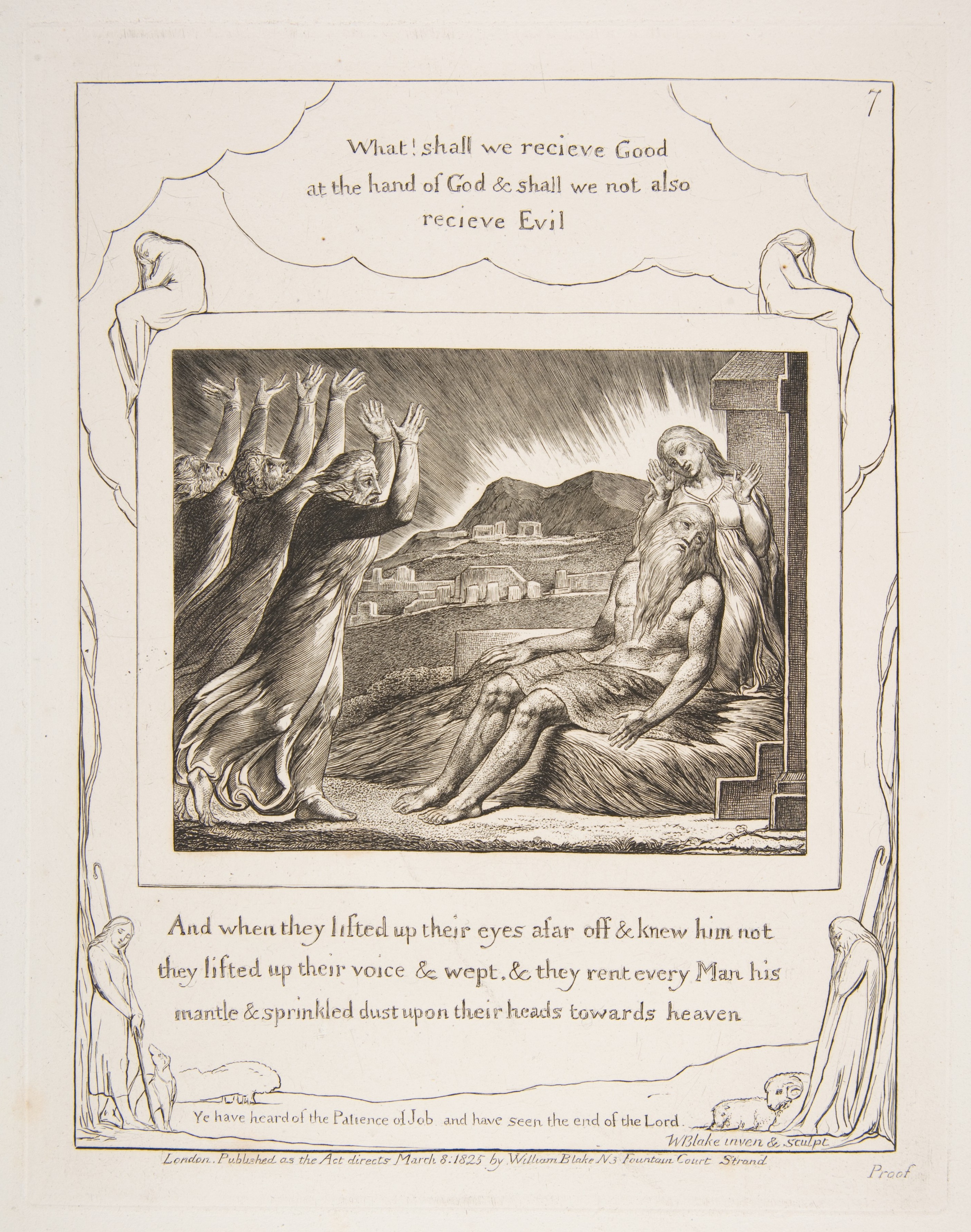
William Blake, Job’s Comforters,1825–26, engraving, Met 17.17.1–7. Later artistic reception of the friends’ arrival in Job 2; not Eliphaz’s historical appearance or an identification of one particular figure as him
Pessoa
Eliphaz the Temanite is one of Job’s three friends in the Hebrew book.
Variantes do nome: Eliphaz the Temanite in Job
Contexto e fontes →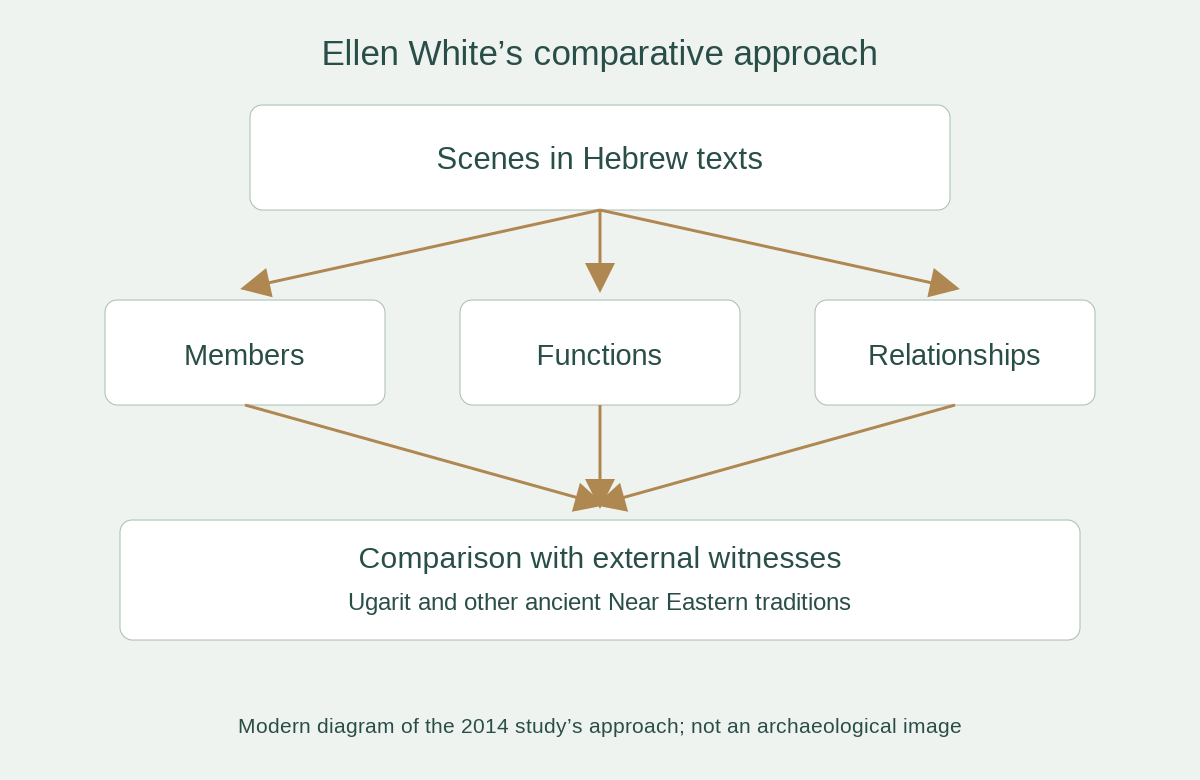
Modern diagram of Ellen White’s approach: examining members, functions and relationships in Hebrew scenes before external comparison. Not a portrait or ancient council image
Pessoa
Hebrew Bible scholar, born in 1978 according to her publisher, author of Yahweh’s Council: Its Structure and Membership (2014).
Variantes do nome: Ellen White divine council
Contexto e fontes →
Imagined papers and a library in a modern conceptual cover about the transmission of religious vocabulary; not a real Hebrew manuscript or an archaeological reconstruction
Entidade
Eloah (אֱלוֹהַּ) is a singular Hebrew noun meaning “a god” or “God,” common in Job but also used for other gods. It is not the proper name of a separate deity.
Variantes do nome: Eloah
Contexto e fontes →
Modern conceptual cover for reading “Elohim”: many points of light converge above blank parchment to suggest the difference between a word’s grammatical form and its referent. Digitally generated artwork, not an ancient artifact, manuscript or historical reconstruction
Entidade
A Hebrew word with plural morphology, used for “gods” or for a singular deity according to context.
Variantes do nome: Elohim
Contexto e fontes →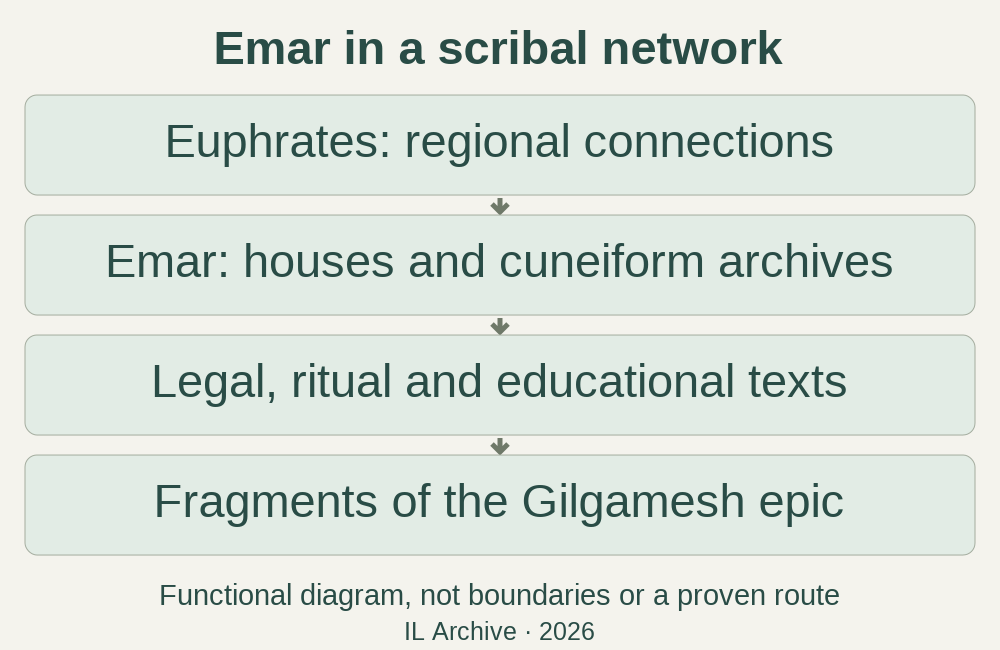
Modern diagram linking Emar’s location and archive functions; does not assert a specific Eden transmission route
Sítio
Ancient Euphrates city in Syria with Late Bronze Age cuneiform archives and Gilgamesh fragments.
Variantes do nome: Emar, ancient Meskene, Emar
Contexto e fontes →Pessoa
Scholar of Greek and Sanskrit epics and professor of History and Classics at St. Catherine University.
Variantes do nome: Emily Blanchard West
Contexto e fontes →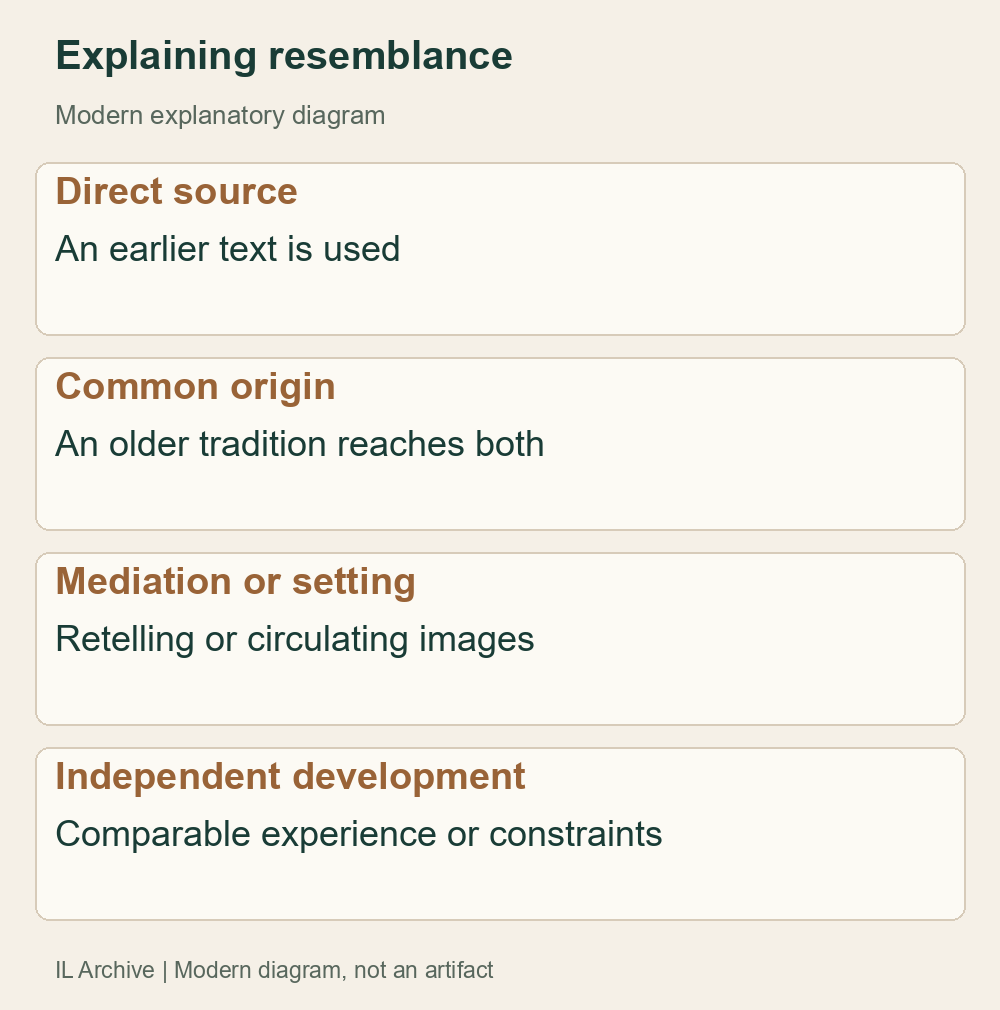
Alternatives can overlap; this diagram does not document a particular narrative’s route
Entidade
Use of verbal or narrative material from an earlier text or tradition in a later work, distinguishing evidence of transfer from mere resemblance.
Variantes do nome: Literary borrowing
Contexto e fontes →
A modern AI-generated symbolic image of light and human fabric for the idea of incarnation; neither a manuscript, artifact, nor a historically verified depiction of Jesus
Entidade
Christian belief that God’s Word assumed genuinely human existence in Jesus Christ; early formulations differ from later conciliar definitions and from mere divine appearances.
Variantes do nome: Christian incarnation
Contexto e fontes →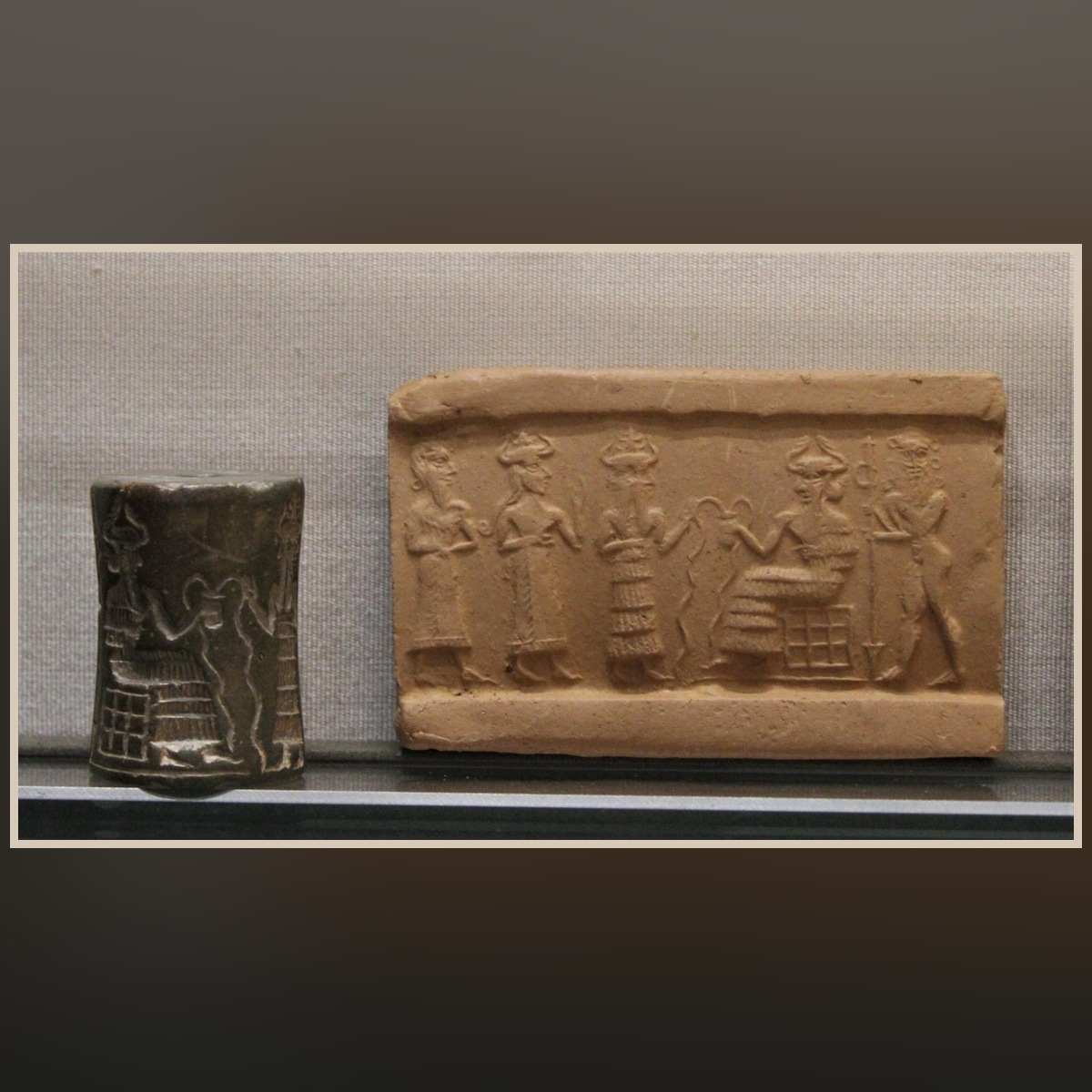
Akkadian cylinder seal MNB 1905 and a modern impression of its design, Louvre, c. 2340–2200 BCE. Newly squared and framed presentation of Zunkir’s photograph, with blurred background; seal and impression are fully retained. Not a depiction of Eridu’s earliest temple
Entidade
Mesopotamian deity also known as Ea, linked with Eridu and the Abzu (deep fresh waters), wisdom, incantations, and narratives of creation and cosmic order. Later written attestations do not identify the deity of Eridu’s earliest layers.
Variantes do nome: Enki, Ea, Nudimmud
Contexto e fontes →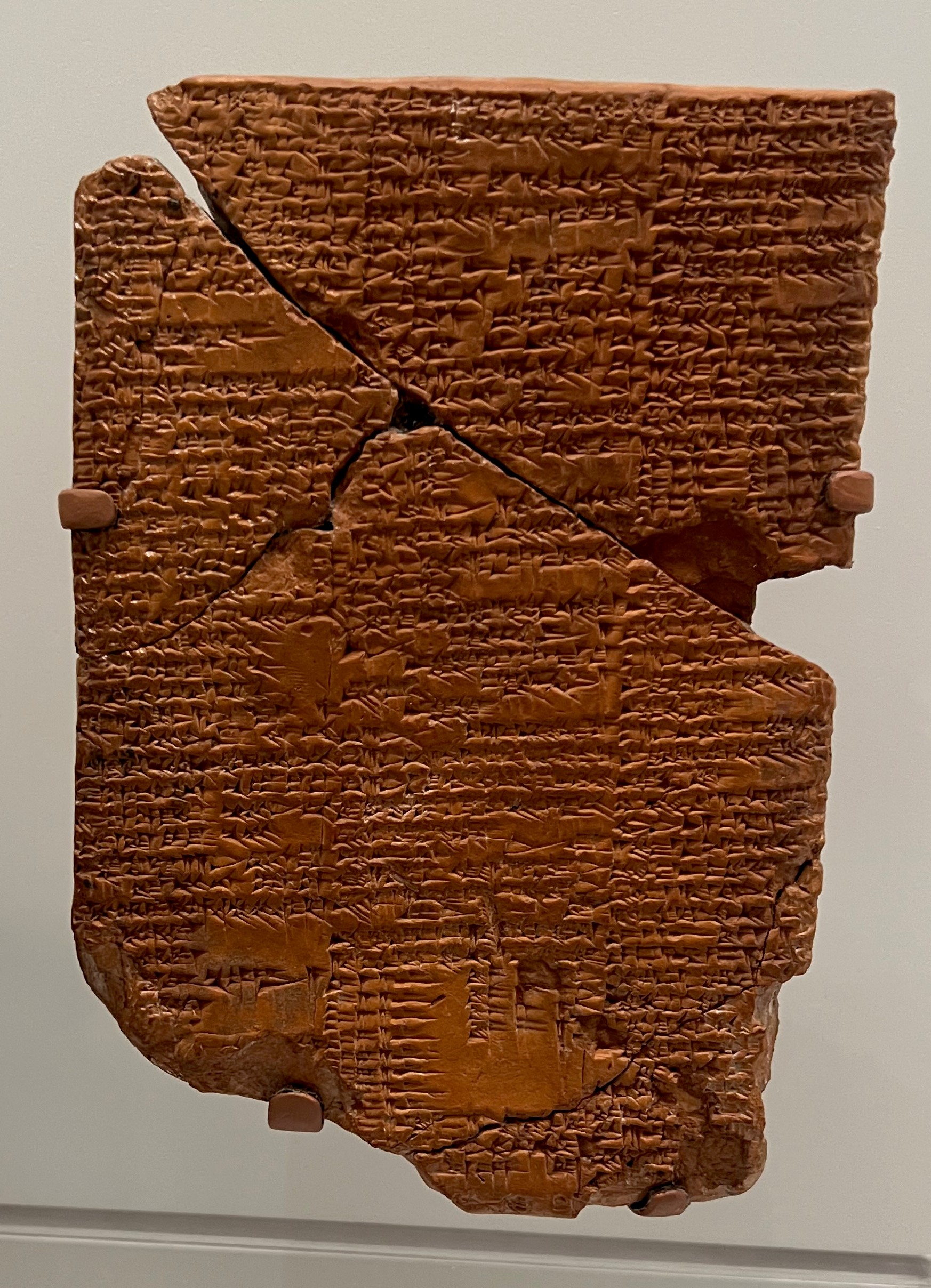
Enki and Ninhursaga tablet CBS 4561 from Nippur, about 1900–1600 BCE, Penn Museum. Photograph by Onceinawhile, 26 August 2022; one ancient witness, not every manuscript in the composite edition
Texto antigo
Sumerian poem preserved in Old Babylonian copies, concerning Dilmun, water, birth and Enki’s illness and healing.
Variantes do nome: Enki and Ninhursaga, Sumerian poem
Contexto e fontes →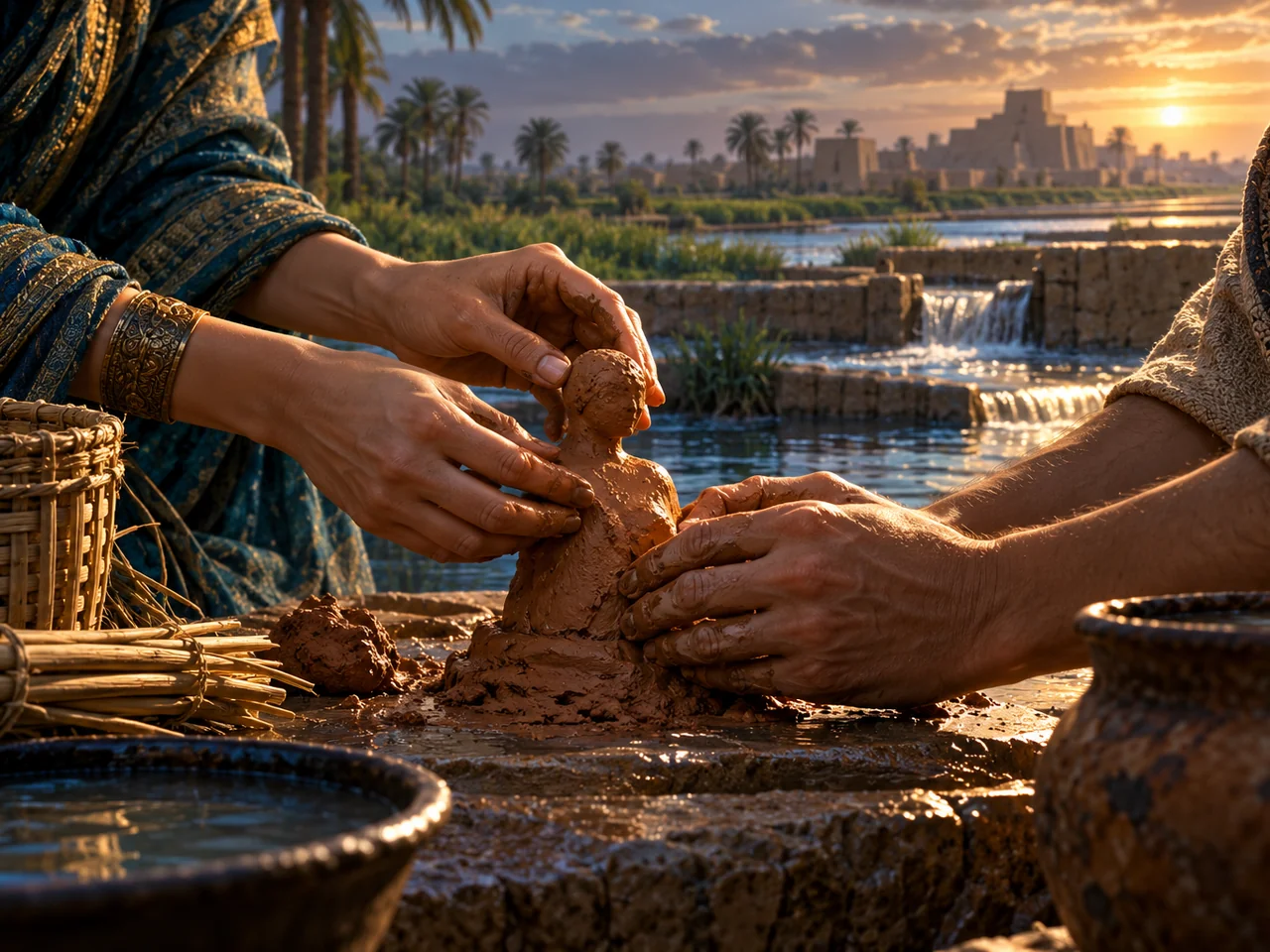
Modern interpretive illustration of shaping a human from clay, with water and baskets evoking the work in “Enki and Ninmaḫ”. AI-generated; not an ancient artifact or an authenticated reconstruction of the gods or setting
Texto antigo
Sumerian work on humanity’s creation to relieve the gods’ labour, and Enki and Ninmaḫ’s contest over bodies, destinies and sustenance; with manuscript evidence, variant readings and dating limits.
Variantes do nome: Enki and Ninmah, Enki and Ninmaḫ
Contexto e fontes →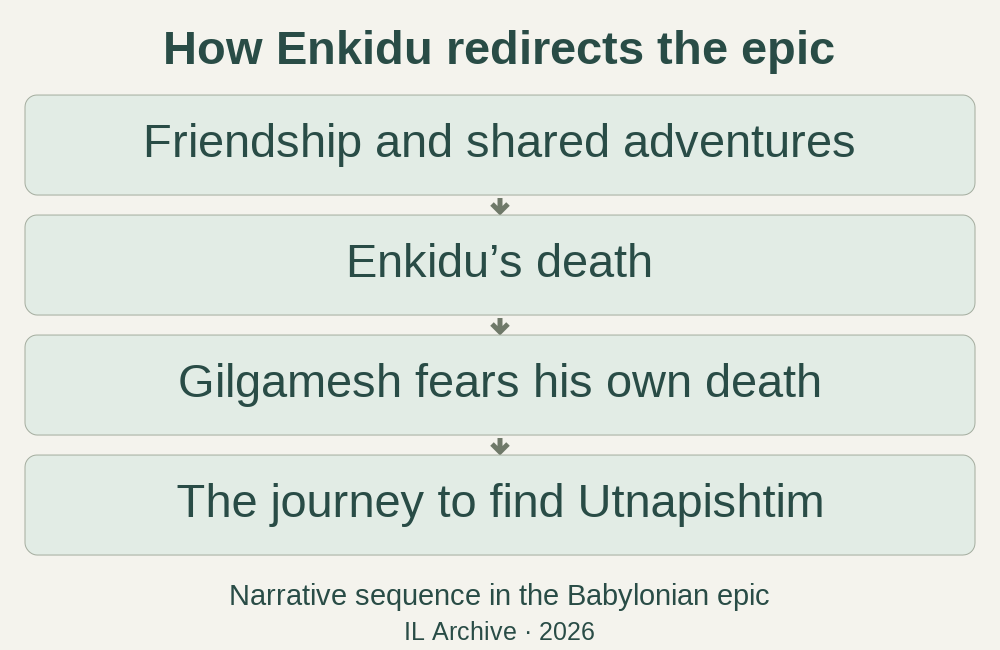
Modern explanatory diagram of narrative sequence and Enkidu’s role, not an ancient image or portrait
Pessoa
Gilgamesh’s companion in the Babylonian epic; his death sets the king searching for life beyond mortality.
Variantes do nome: Enkidu, Gilgamesh’s companion, Enkidu
Contexto e fontes →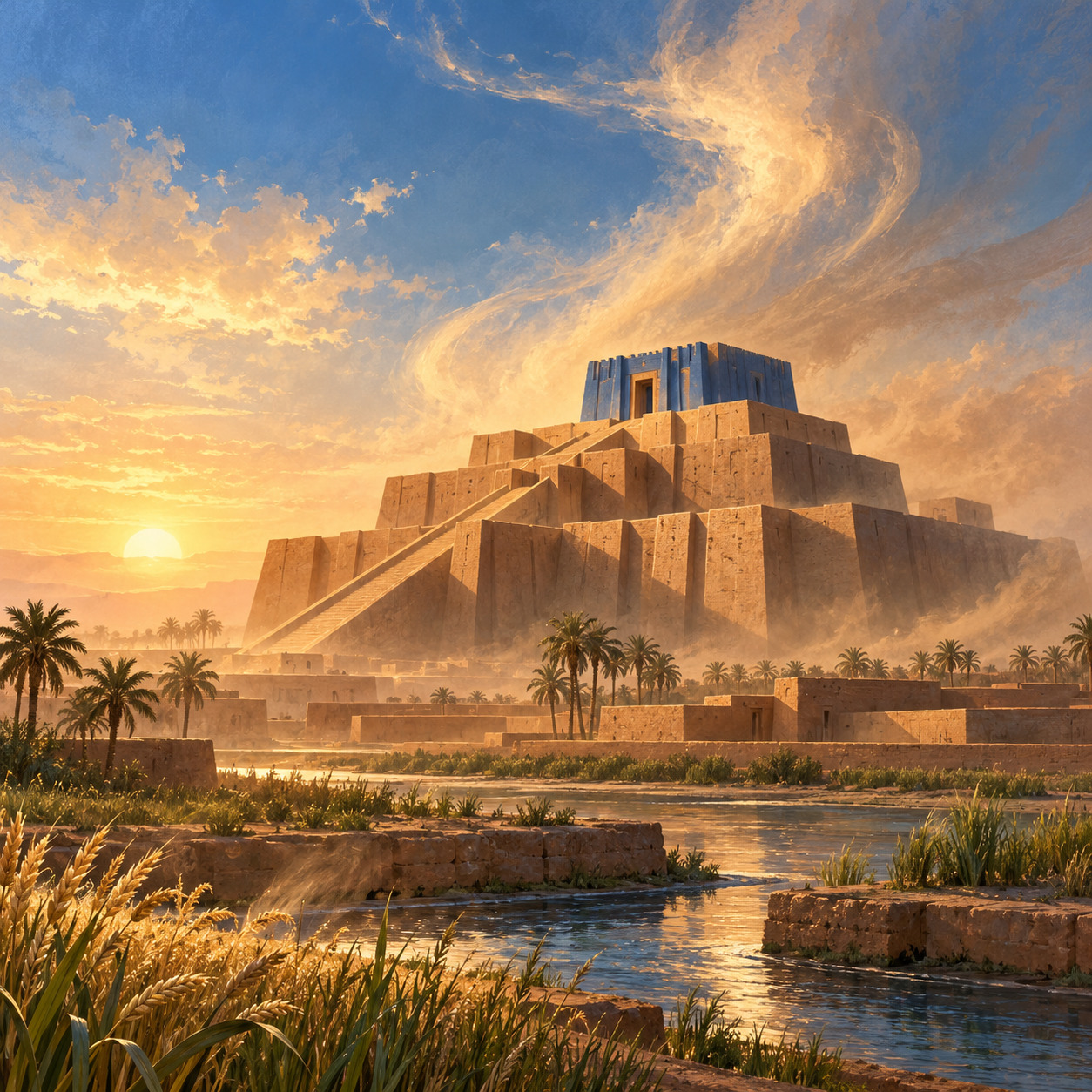
Modern AI-generated imaginative scene of terraced sacred architecture in a riverine Mesopotamian-inspired landscape. Not a Nippur photograph, a verified reconstruction of Ekur, or an image of Enlil
Entidade
Enlil/Ellil: a major Mesopotamian god associated with destinies, kingship, and Ekur at Nippur, already prominent in third-millennium god lists. His name’s origin and cult beginnings remain debated.
Variantes do nome: Enlil, Ellil, Nunamnir
Contexto e fontes →
Modern AI-generated symbolic cover: an empty dais and a luminous sign of authority evoke Enlilship; neither an archaeological object nor an established reconstruction
Entidade
An Akkadian designation for Enlil’s paramount standing, granted to Marduk in Hammurabi’s prologue; it does not make the two gods identical.
Variantes do nome: ellilūtu, Enlilship
Contexto e fontes →
New AI-generated symbolic cover evoking Sippar’s sun, a storm, and oil observed upon water; not an ancient artifact or historical portrait of Enmeduranki
Entidade
Antediluvian king in Mesopotamian traditions, named in a Sumerian king list and depicted by an Akkadian legend as a transmitter of divinatory knowledge; distinct from Utuabzu and Enoch.
Variantes do nome: Enmeduranki, En-men-dur-ana
Contexto e fontes →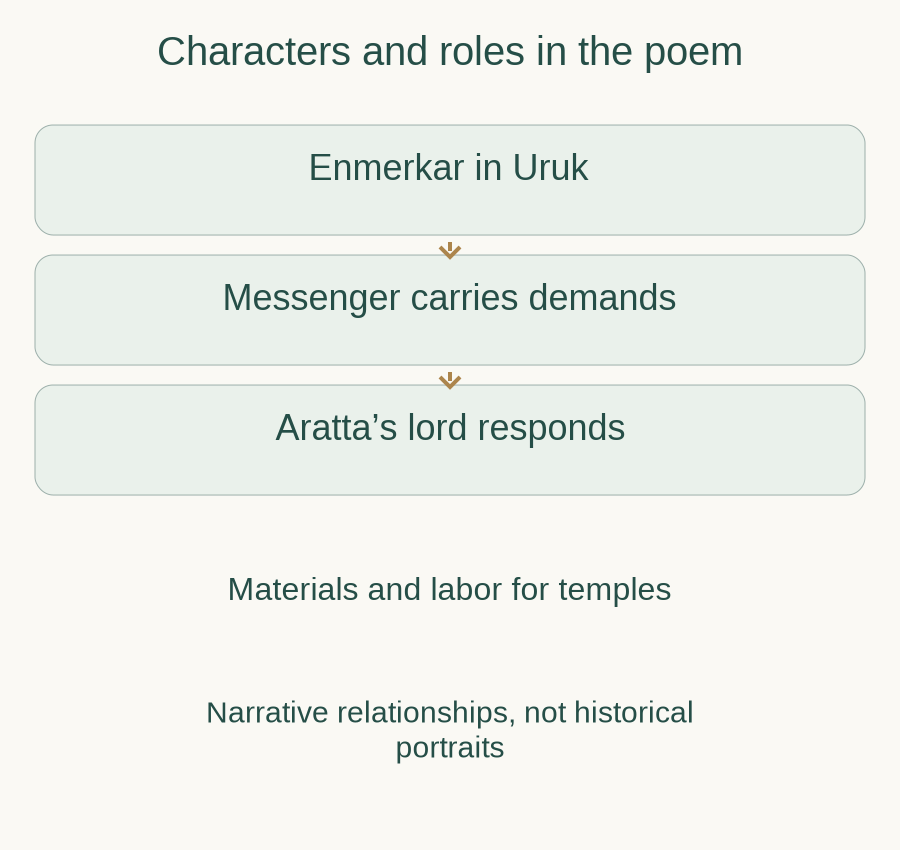
Modern IL Archive explanatory diagram: Characters and roles in the poem. Not a reproduction of an ancient artifact
Pessoa
Enmerkar is a ruler of Uruk in Sumerian literature and the protagonist of a poem about rivalry with Aratta’s lord.
Variantes do nome: Enmerkar
Contexto e fontes →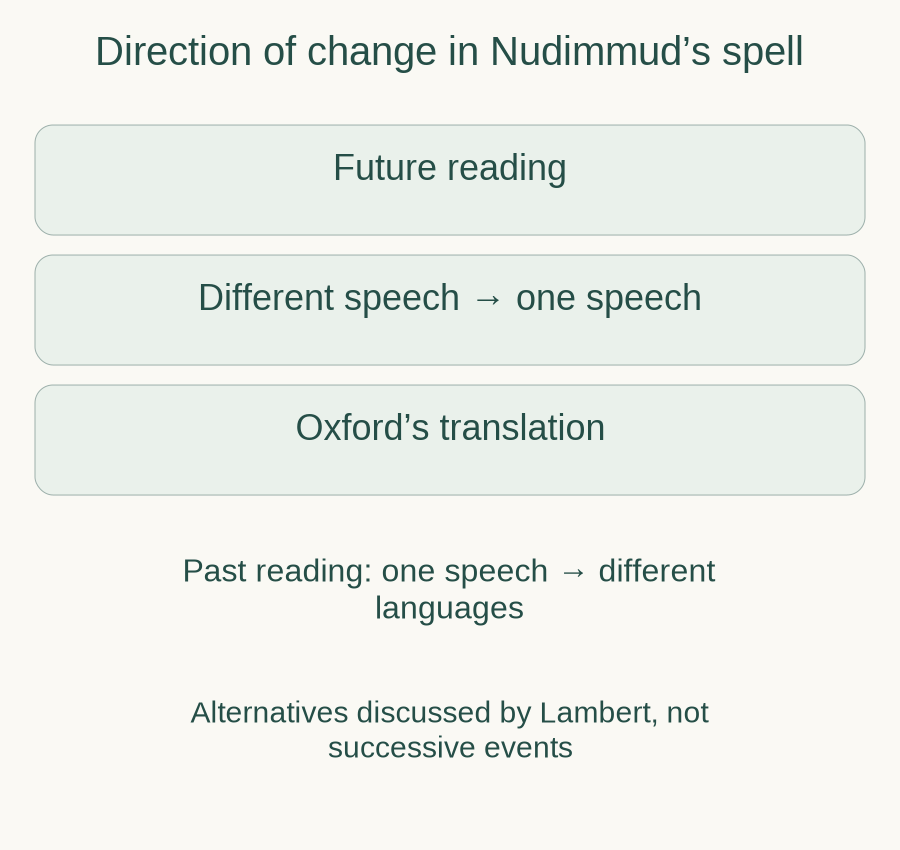
Modern IL Archive explanatory diagram: Direction of change in Nudimmud’s spell. Not a reproduction of an ancient artifact
Texto antigo
A Sumerian poem of rivalry, messages and temples, containing an incantation about the speech of different peoples.
Variantes do nome: Enmerkar and the Lord of Aratta
Contexto e fontes →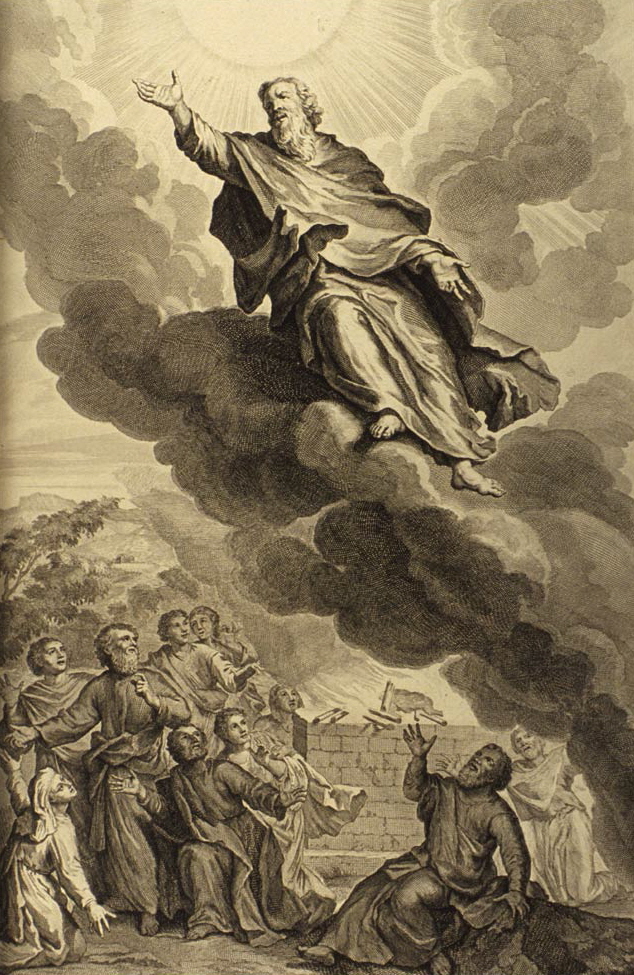
God took Enoch, an artistic interpretation of Genesis 5:24 in Figures de la Bible, The Hague, 1728. Illustrations by Gerard Hoet and others; evidence of later artistic reception
Pessoa
Enoch son of Jared is a figure in the genealogy of Genesis 5, seventh when counted from Adam.
Variantes do nome: Enoch son of Jared
Contexto e fontes →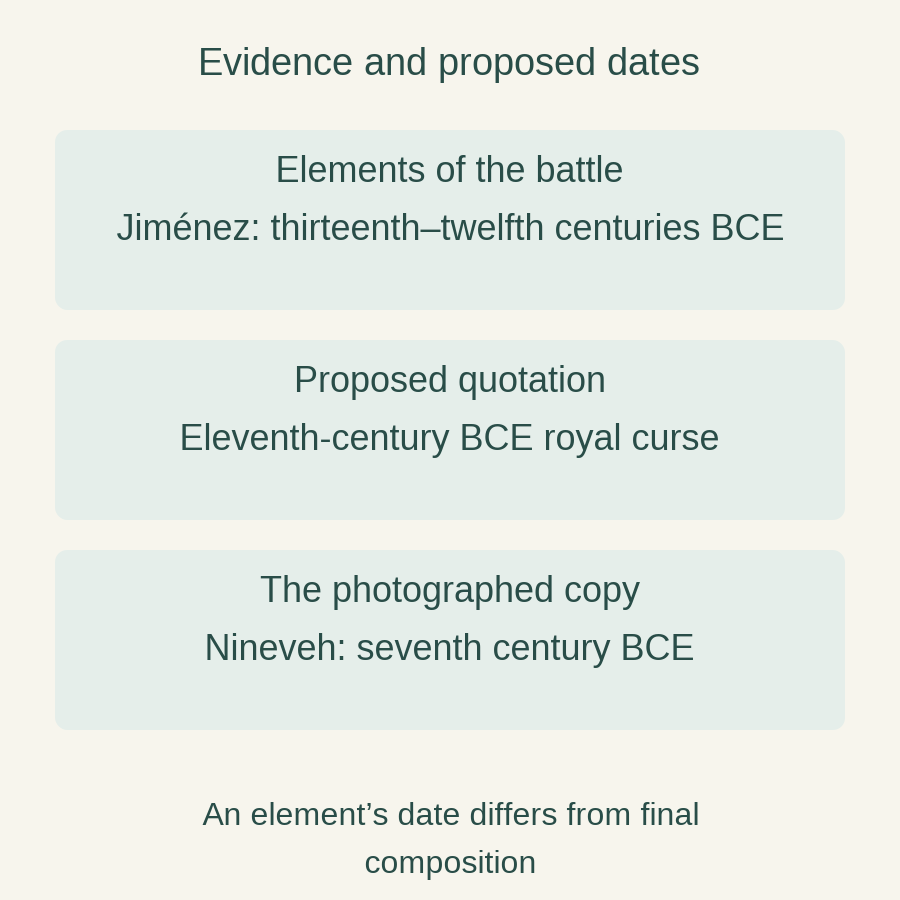
Modern diagram distinguishing a tradition’s elements, a proposed quotation and the surviving copy; not a portrait of Jiménez
Pessoa
Assyriologist and scholar of Babylonian literature, professor of ancient Oriental languages at LMU Munich, working on reconstructing and dating cuneiform texts.
Variantes do nome: Enrique Jiménez
Contexto e fontes →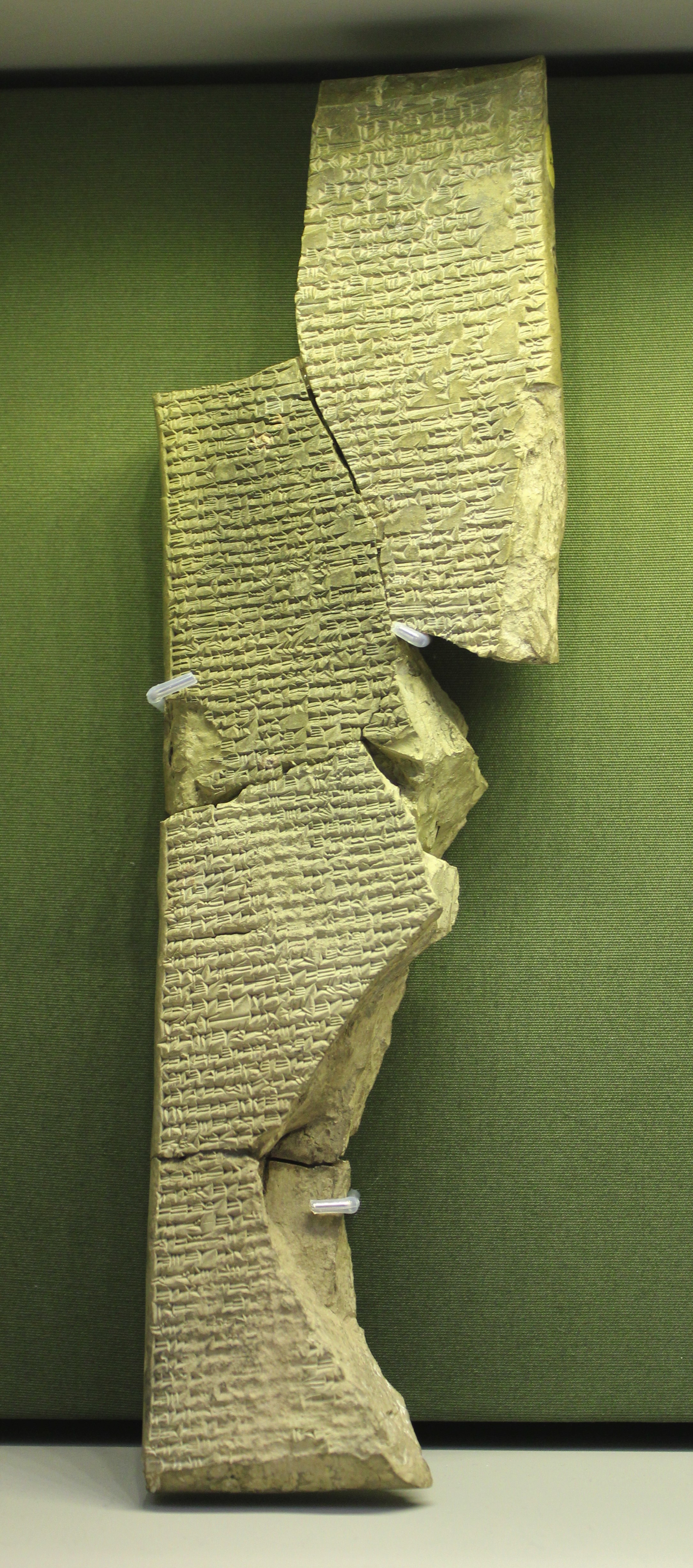
Joined fragments of Tablet III of Enuma Elish, from Neo-Assyrian Nineveh, British Museum (K.3473+ group; CDLI P365283). This is a partial manuscript of the poem, not the witness to the human-creation passage in Tablet VI. Photograph, 2020
Entidade
A seven-tablet Babylonian creation poem in Akkadian, recounting Marduk’s rise, victory over Tiamat, cosmic ordering and human creation, and culminating in praise through fifty names. Its composition date is debated; later manuscripts and recitation traditions preserve it.
Variantes do nome: Enuma Elish, Enūma eliš, Babylonian Epic of Creation
Contexto e fontes →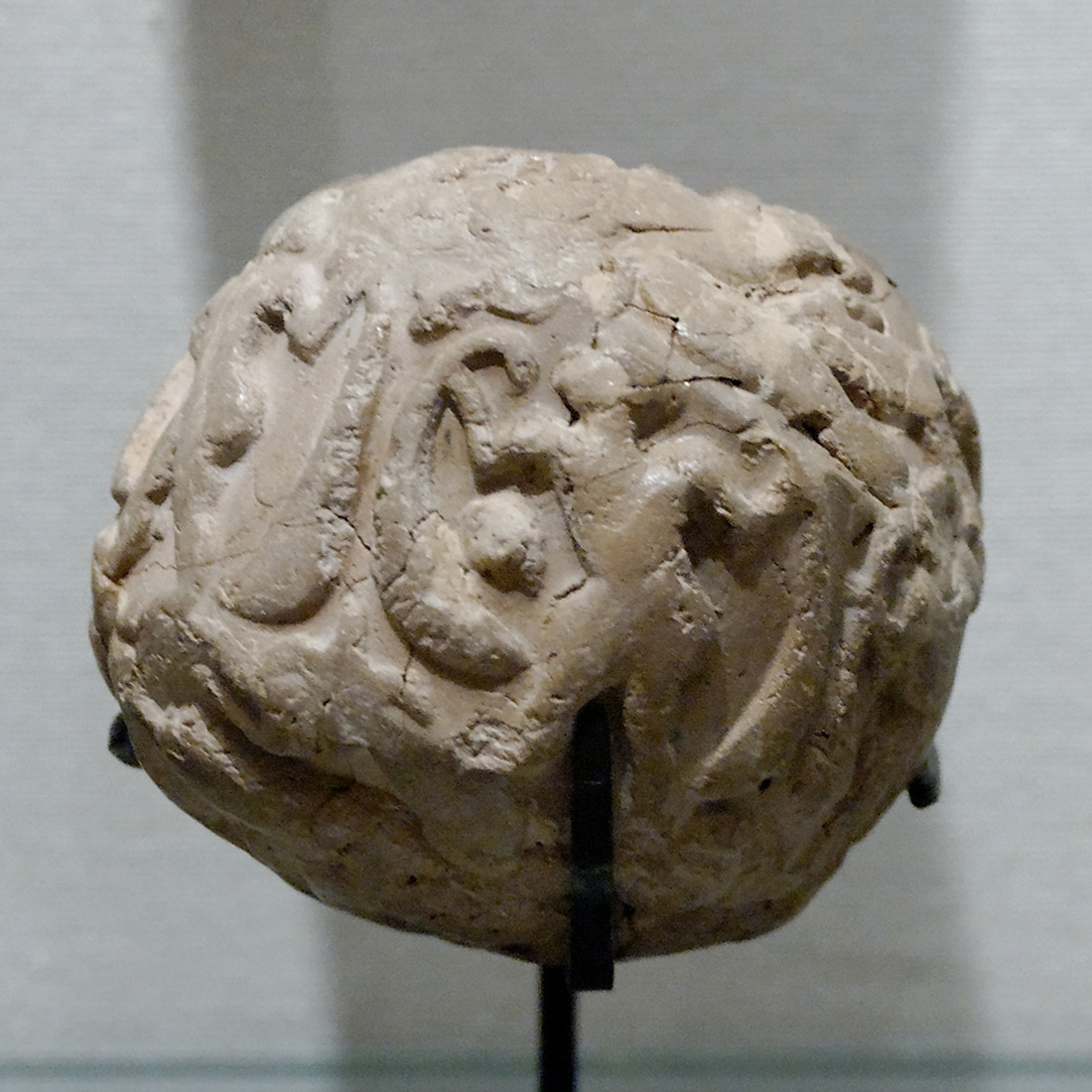
Cover crop: sealed clay envelope from Susa, Louvre Sb 1932 (museum date c. 3500–2900 BCE). Square crop of the original photograph; associated displayed tokens appear in the full photograph in the article
Entidade
A hollow clay container used in early administration, sometimes enclosing counting tokens and carrying external seal impressions or marks. Distinct from solid sealings; it is not an established ancestor of all writing.
Variantes do nome: clay envelopes, clay envelope, hollow clay envelopes
Contexto e fontes →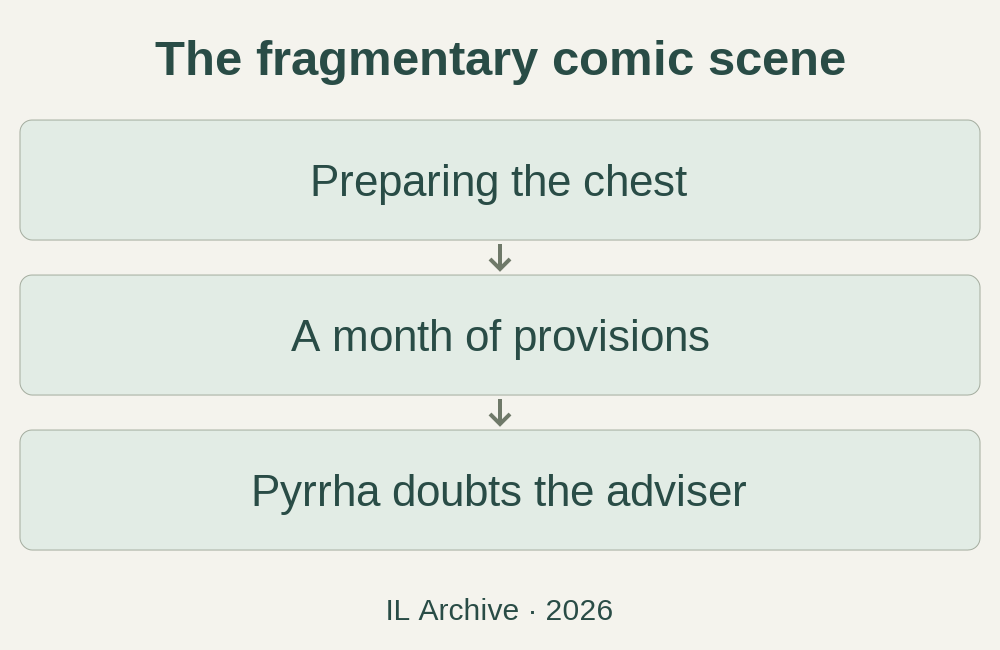
Modern explanatory diagram of one literary witness’s sequence or relationships, not a manuscript, portrait or demonstrated transmission route
Pessoa
Comic poet active in the early fifth century BCE, whose fragments preserve an early Pyrrha and Deucalion treatment.
Variantes do nome: Epicharmus, Greek comic poet
Contexto e fontes →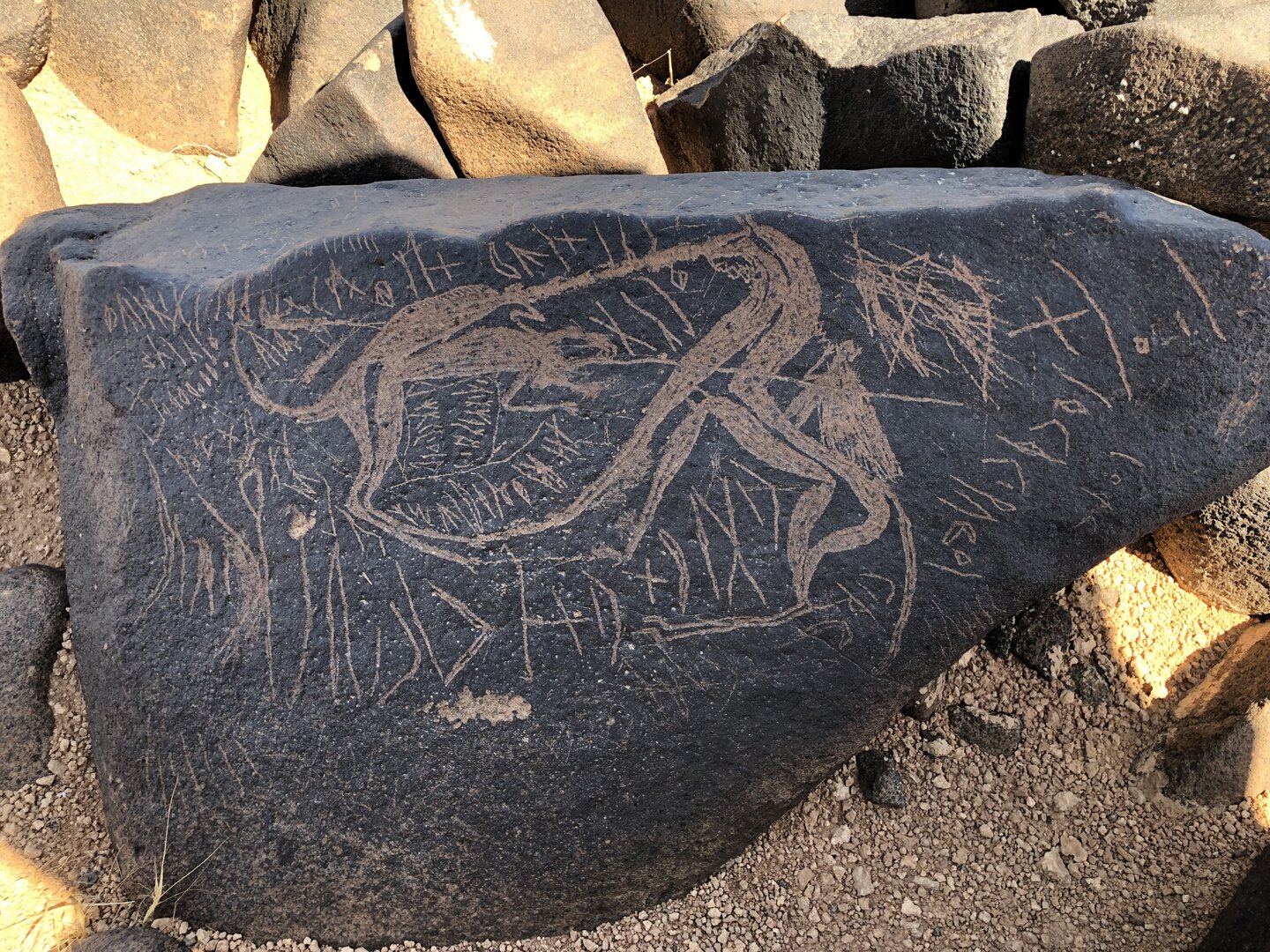
BES19s 77.1, Firʿ Wadi al-Khudari, Mafraq, Jordan. Its reading invokes Allat and then Allah. This photograph shows stone and writing; animal and human drawings are not identified as depictions of these deities. Original preserved without cropping or alteration
Entidade
The study of writing preserved on physical objects and monuments: its documentation, reading, dating, translation, material context and historical interpretation.
Variantes do nome: epigraphy
Contexto e fontes →
Modern AI-generated conceptual cover: an imagined traveller above an invented river city, walls and temple. Not the historical Gilgamesh, an ancient artifact or an evidence-based reconstruction of Uruk
Entidade
A Babylonian literary work with multiple recensions, preceded by separate Sumerian poems on Uruk’s king and Enkidu. Its standard form explores friendship, death, the flood and the limits of seeking eternal life.
Variantes do nome: Epic of Gilgamesh, Gilgamesh epic
Contexto e fontes →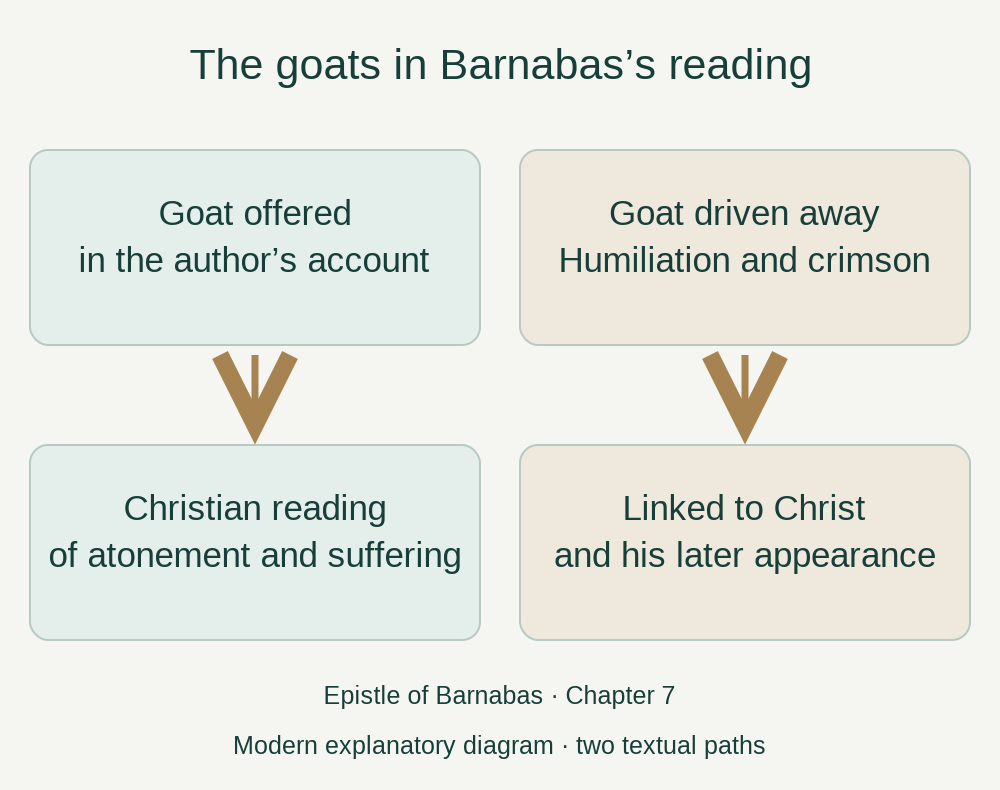
The two goats as figures of Christ, his suffering and later appearance in Barnabas 7. A modern diagram of the Christian text’s interpretation, not a reconstruction of every earlier rite
Texto antigo
An early Christian text usually placed in the late first or early second century CE; chapter 7 interprets the two goats as figures of Christ.
Variantes do nome: Epistle of Barnabas
Contexto e fontes →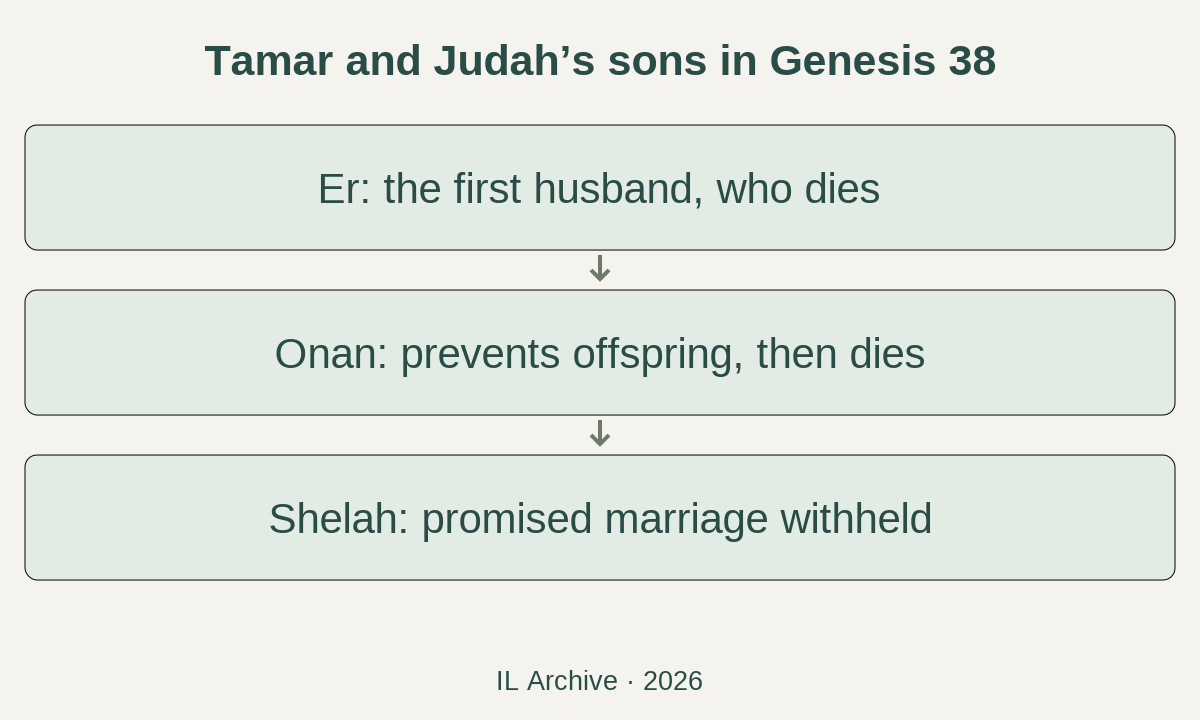
Modern explanatory diagram of relationships or cases in the specified witnesses; not portraits, a legal tablet or an ancient manuscript
Pessoa
Judah’s firstborn and Tamar’s husband, whose death is narrated in Genesis 38.
Variantes do nome: Er, son of Judah
Contexto e fontes →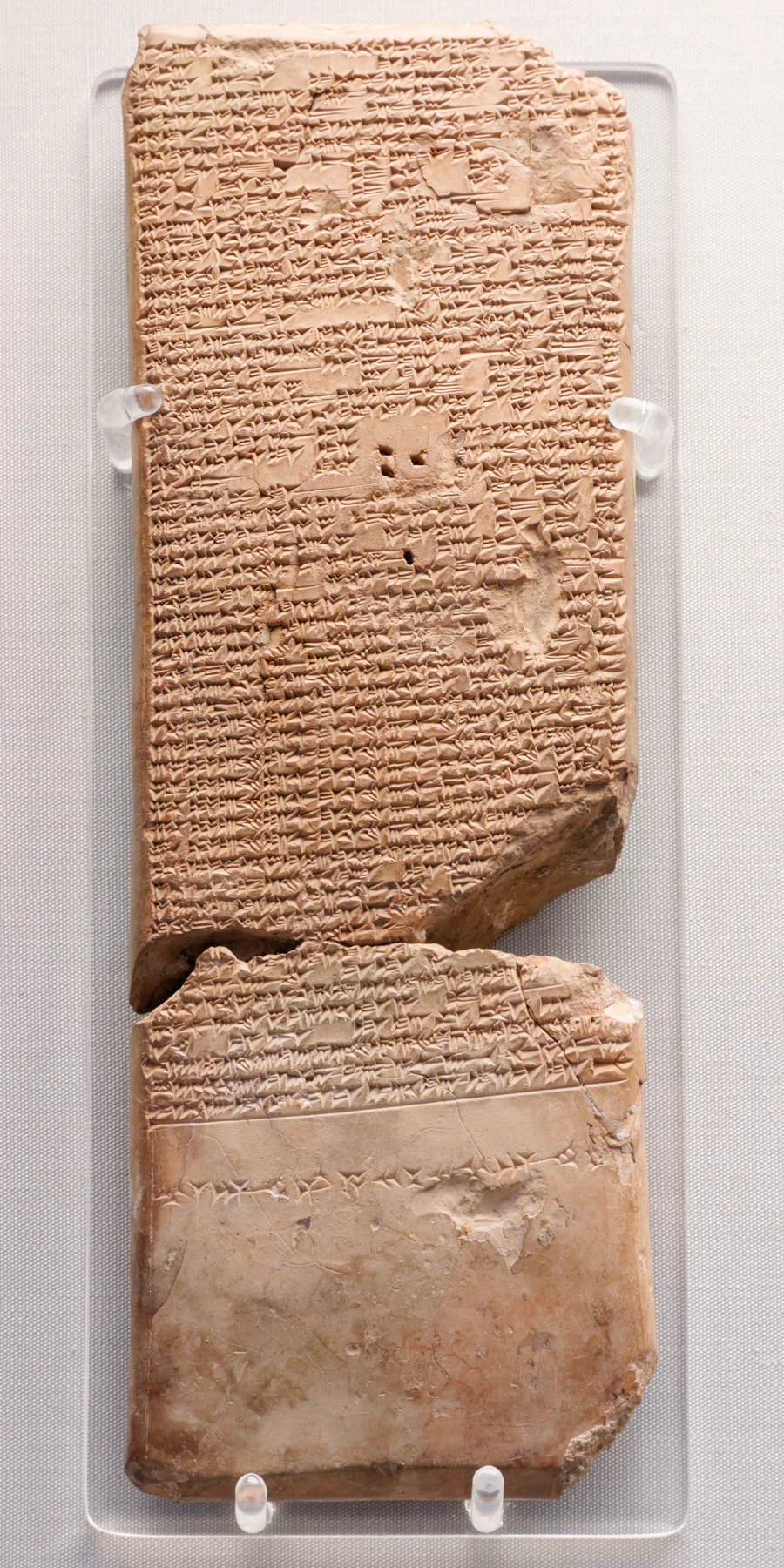
K.162, Akkadian copy of Ishtar’s Descent from Ashurbanipal’s library at Nineveh, seventh century BCE, British Museum. Not a tablet of the Sumerian Inanna composition
Entidade
Mesopotamian goddess ruling the netherworld; Inanna’s sister in descent texts, with varying accounts of her relationship with Nergal.
Variantes do nome: Ereshkigal
Contexto e fontes →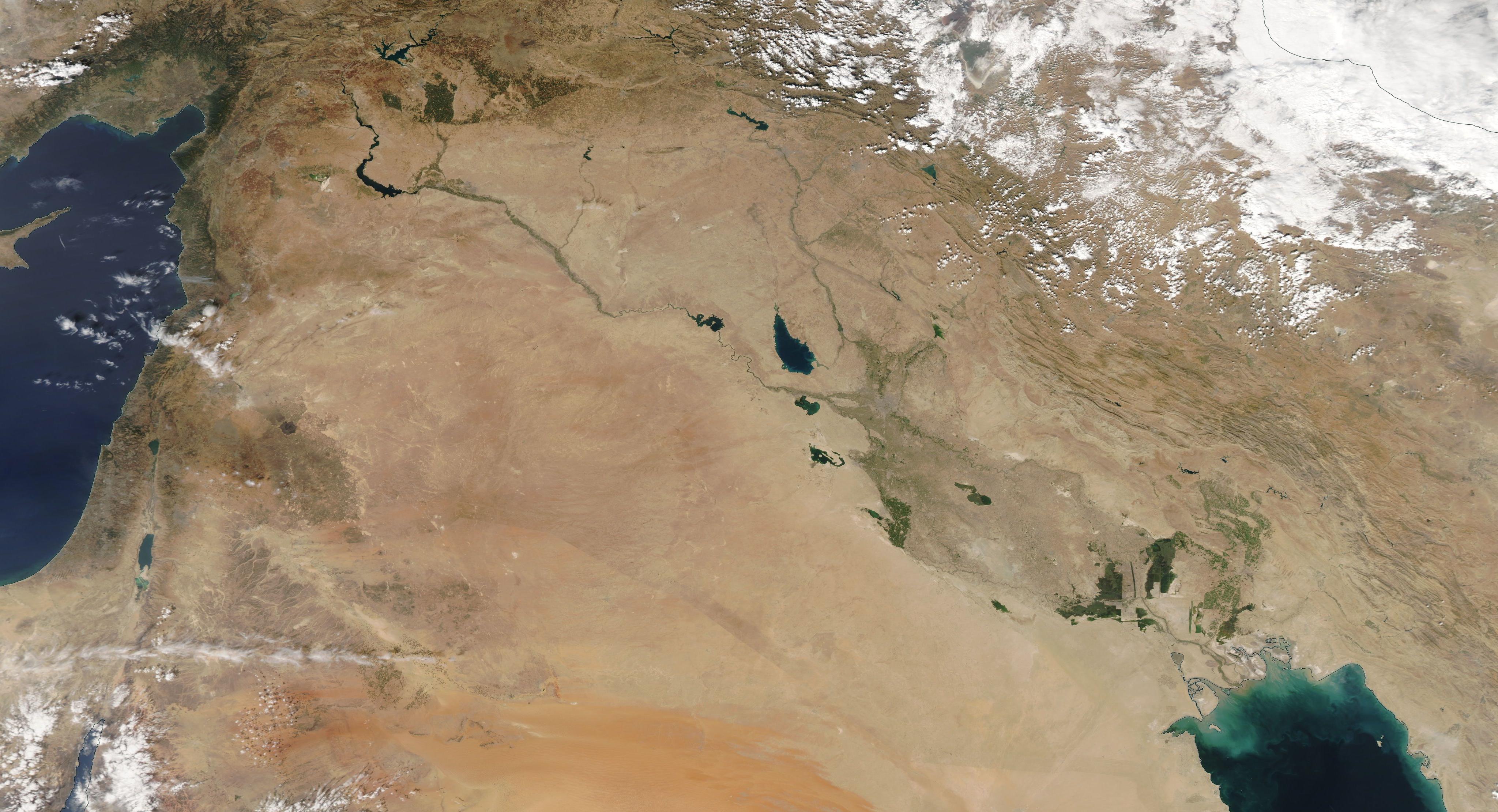
Satellite view of Mesopotamia and its surroundings, NASA, 9 October 2020. Modern geographical context; it neither locates unidentified Ereš nor reconstructs ancient river courses
Sítio
Sumerian city associated with Nisaba; its archaeological location remains uncertain. Not the goddess Ereshkigal.
Variantes do nome: Ereš, Eresh
Contexto e fontes →