Gilgamesh, Enkidu e o mundo subterrâneo Capítulo 1
A árvore de Uruk
Um vento do sul arranca pela raiz uma árvore junto ao Eufrates. Inanna leva-a para Uruk e pede ajuda quando três seres se instalam nela. Gilgamesh dá a Inanna madeira para uma cadeira e uma cama e faz dois objetos para um jogo. Os objetos caem no mundo subterrâneo.
FontesVire as páginas com as setas, o teclado ou deslizando o dedo.

A ÁRVORE DE URUK
O relato remonta àqueles dias distantes, àquelas noites distantes, àqueles anos distantes.
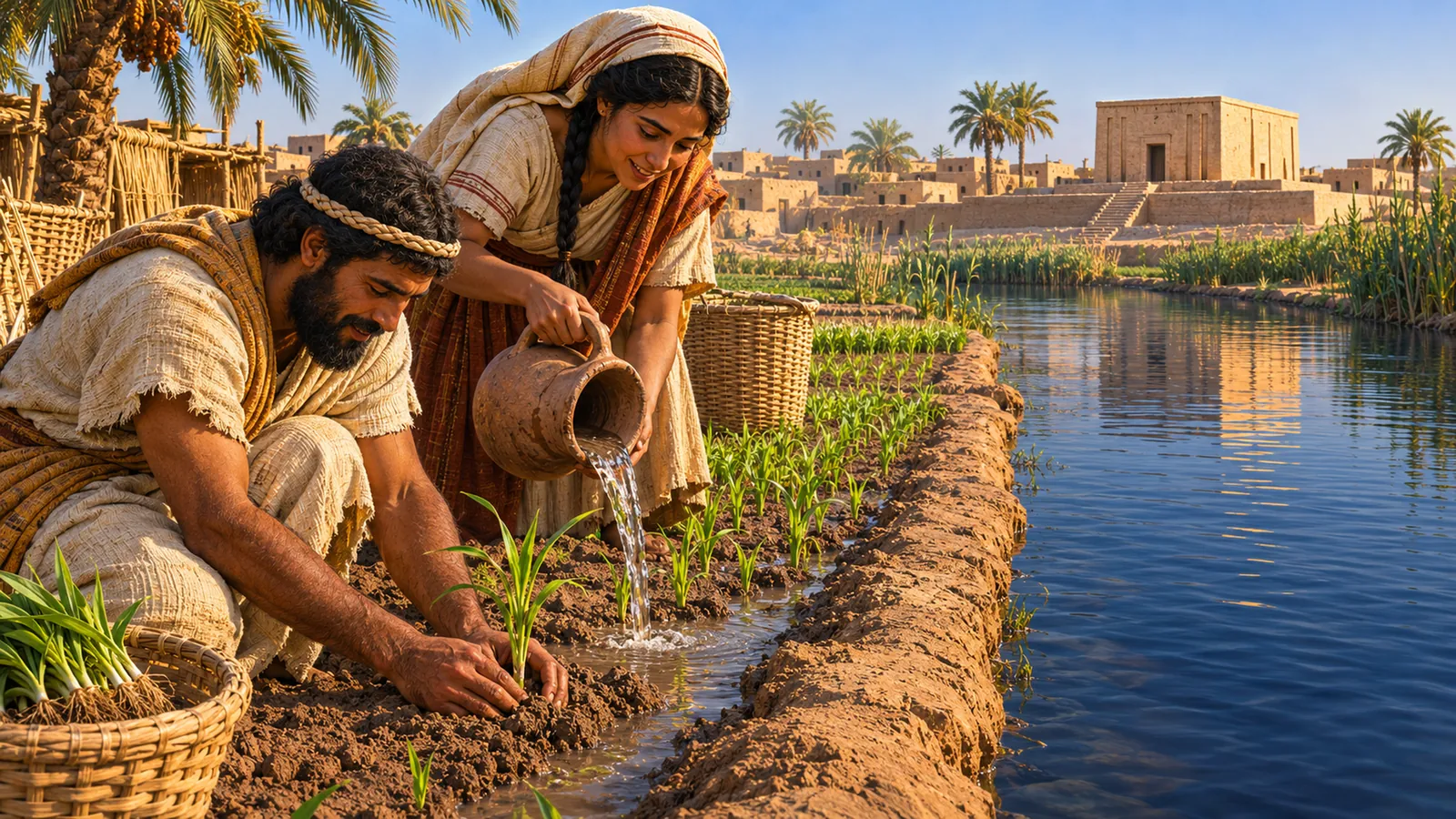
Naqueles dias, as coisas necessárias surgiram pela primeira vez e foram cuidadas como deviam ser.
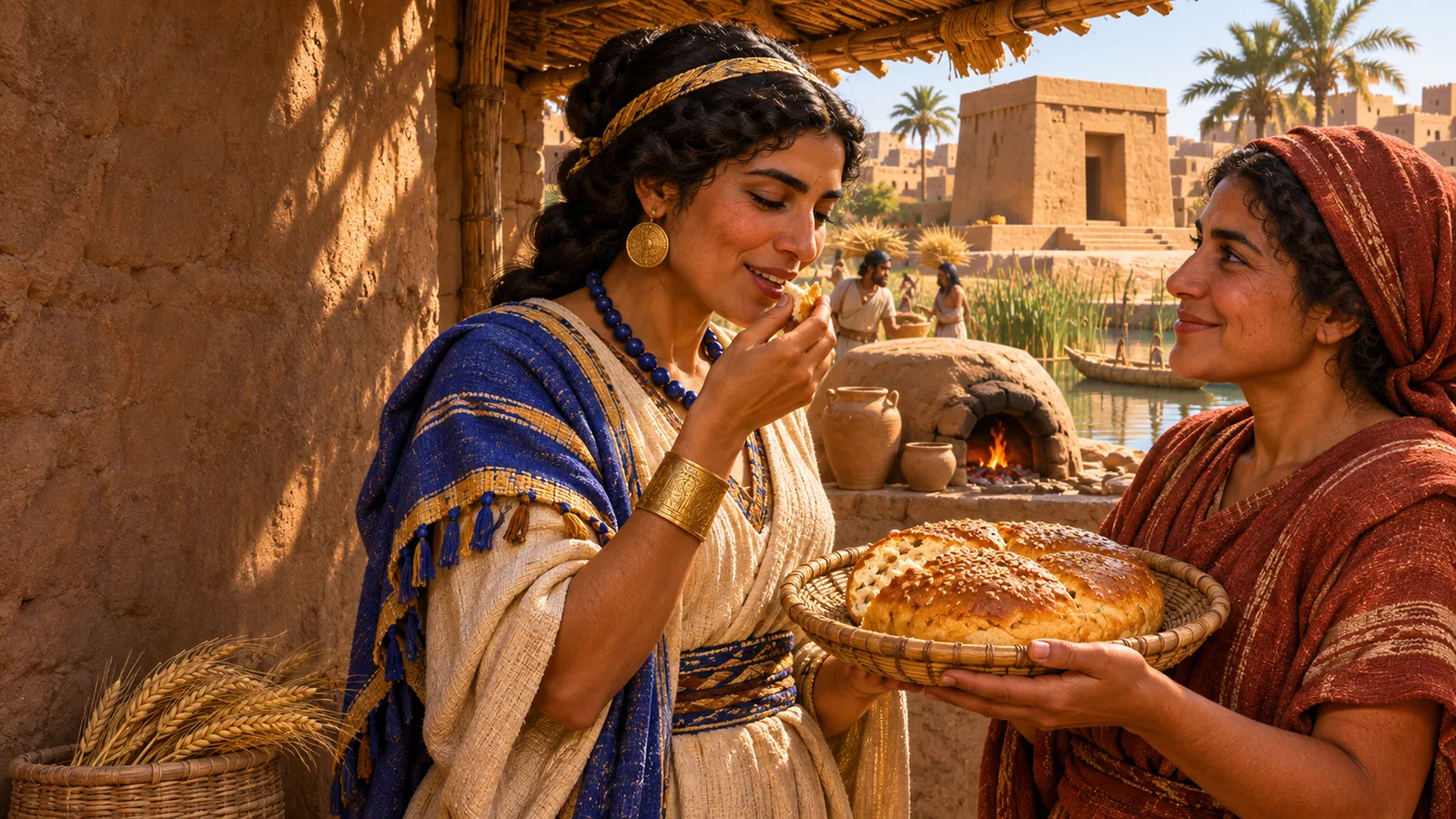
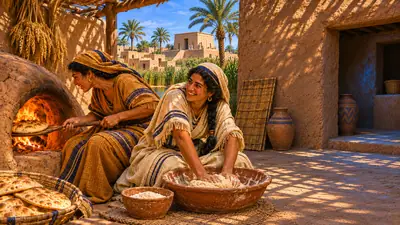
Provou-se pão pela primeira vez nos santuários da terra, diz o poema.
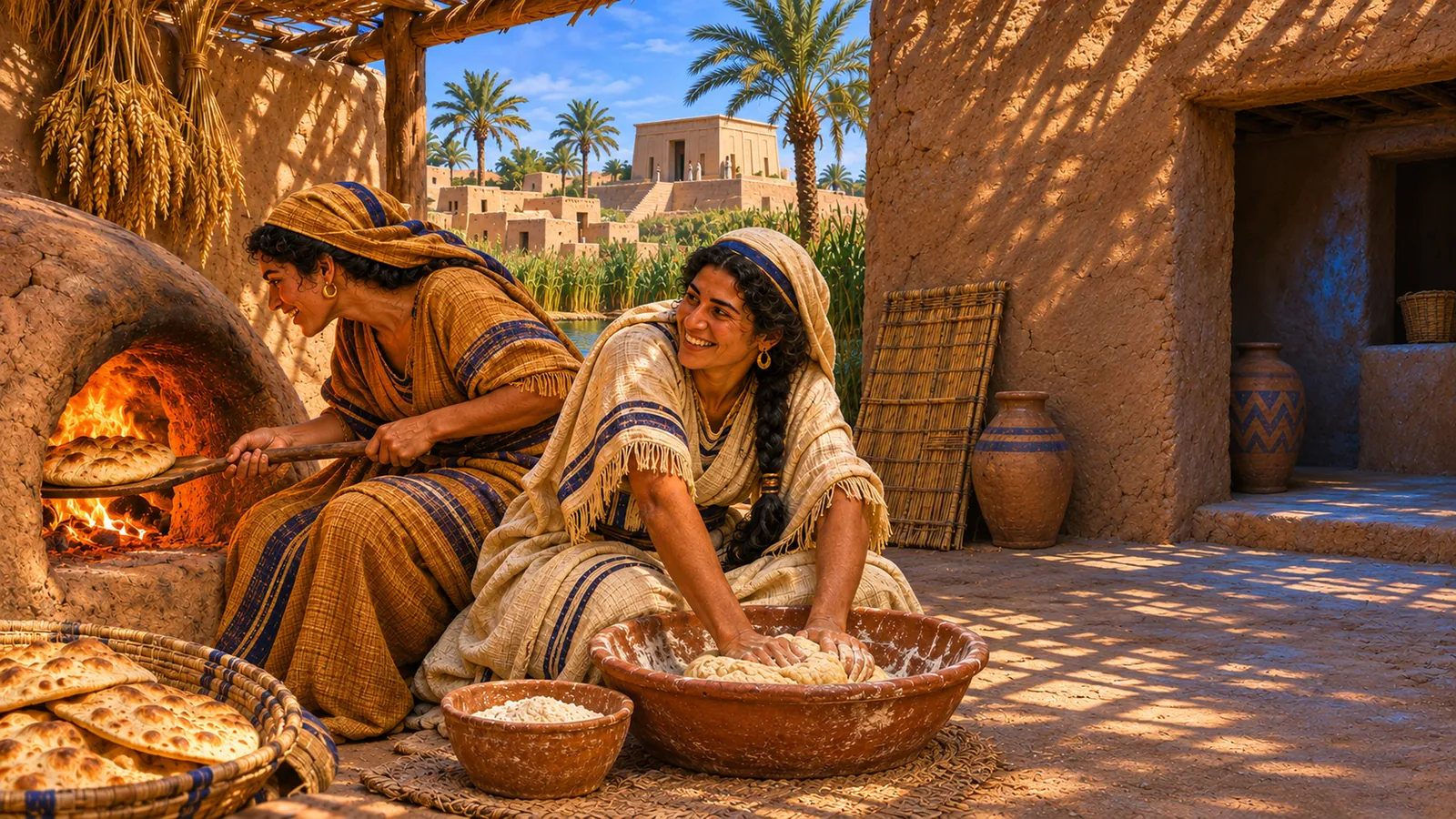
Naqueles anos distantes, puseram-se a funcionar os fornos da terra, como recorda o poema.

Os céus foram separados da terra, e a terra foi apartada dos céus. Estabeleceu-se a fama da humanidade.
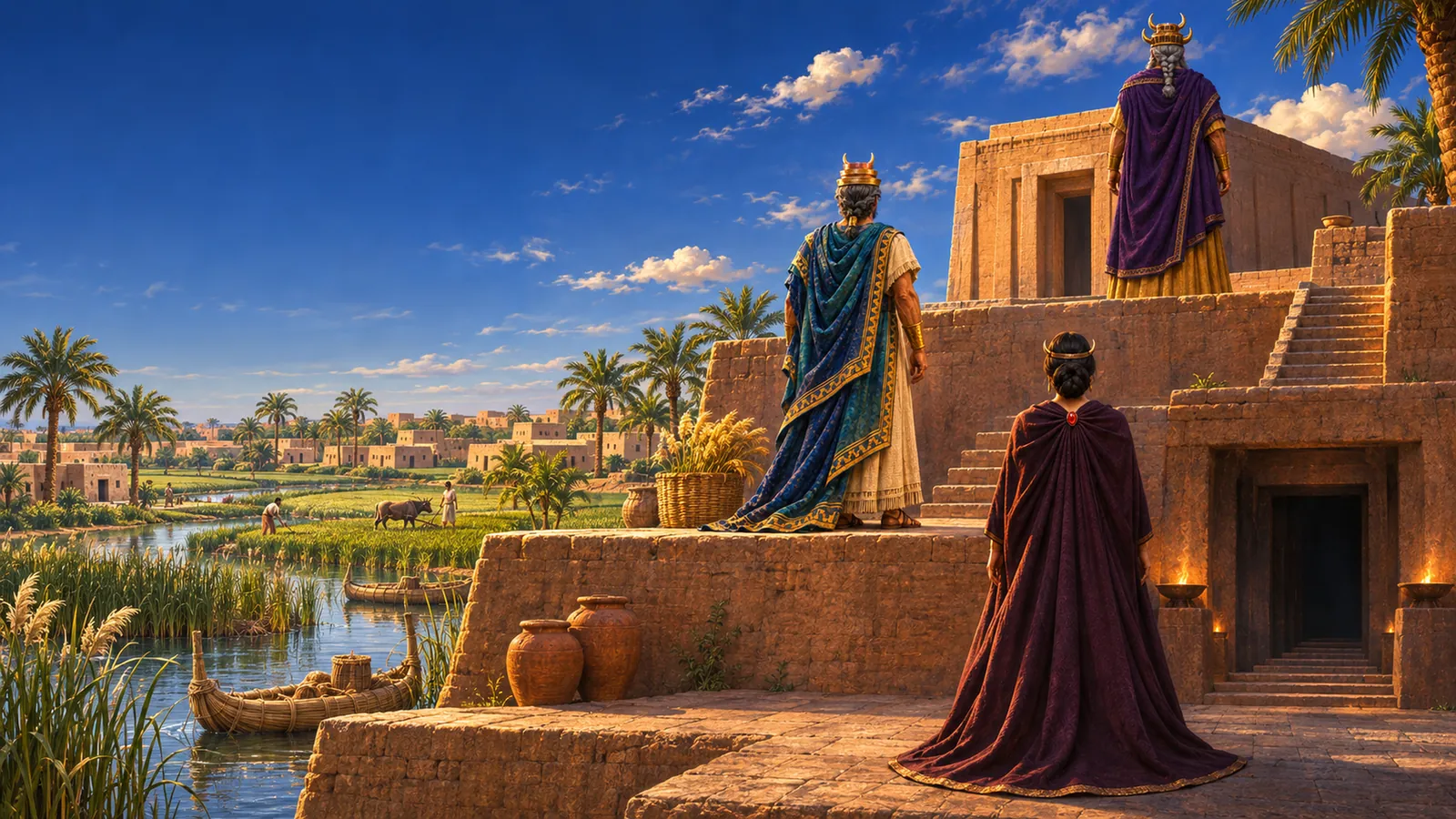
An tomou para si os céus, Enlil tomou a terra, e Ereshkigal recebeu o mundo subterrâneo como dádiva.

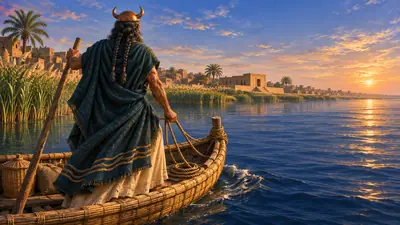
O pai fez-se ao rio rumo ao mundo subterrâneo. O poema chama-lhe Enki ao contar a sua partida.

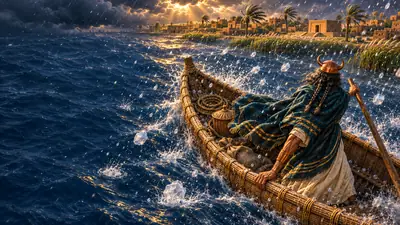
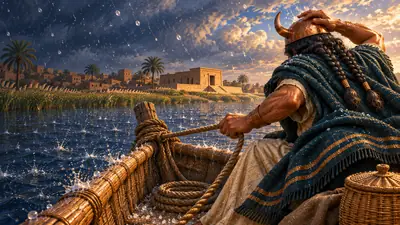
Uma tempestade de pedras de granizo pequenas e grandes levantou-se contra Enki. O poema compara as menores a martelos leves e as maiores talvez a pedras de catapulta.

A quilha do pequeno barco de Enki tremia na tempestade, como se tartarugas a empurrassem.

As ondas erguiam-se à proa como lobos prestes a devorá-lo e arremetiam à popa como um leão.

A ÁRVORE HALUB
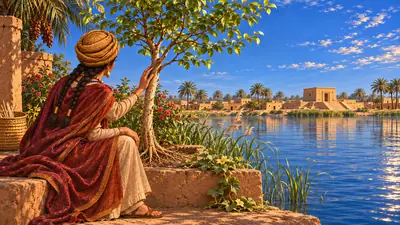
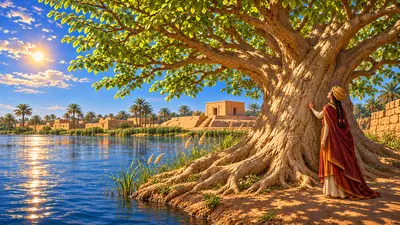
Uma única árvore halub crescia na margem do Eufrates de águas puras, onde era regada pelo rio.

Do sul soprou um vento tão forte que arrancou a árvore halub da margem do Eufrates.

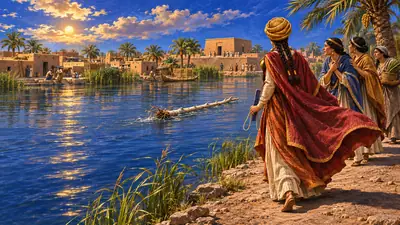
O vento sul despojou a árvore dos ramos. O Eufrates arrastou a árvore desenraizada e levou-a consigo.
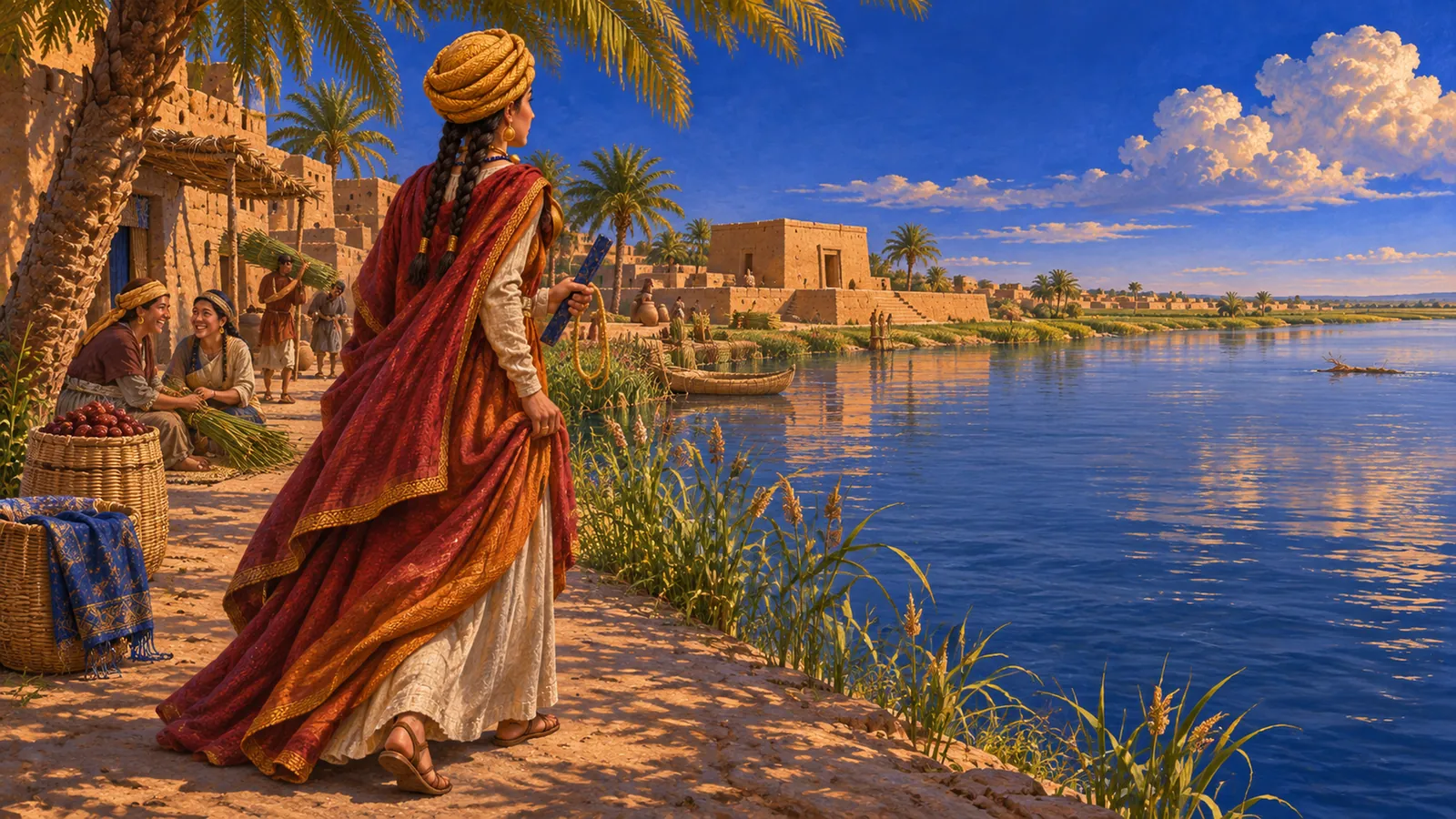
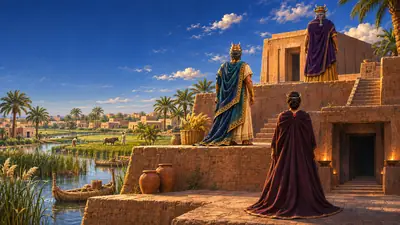
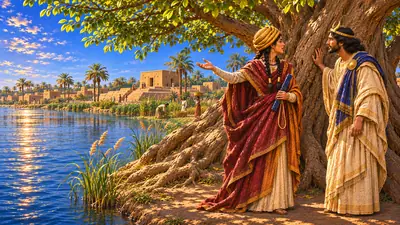
Uma mulher seguia o seu caminho, uma mulher que escutava as palavras de An e as palavras de Enlil.
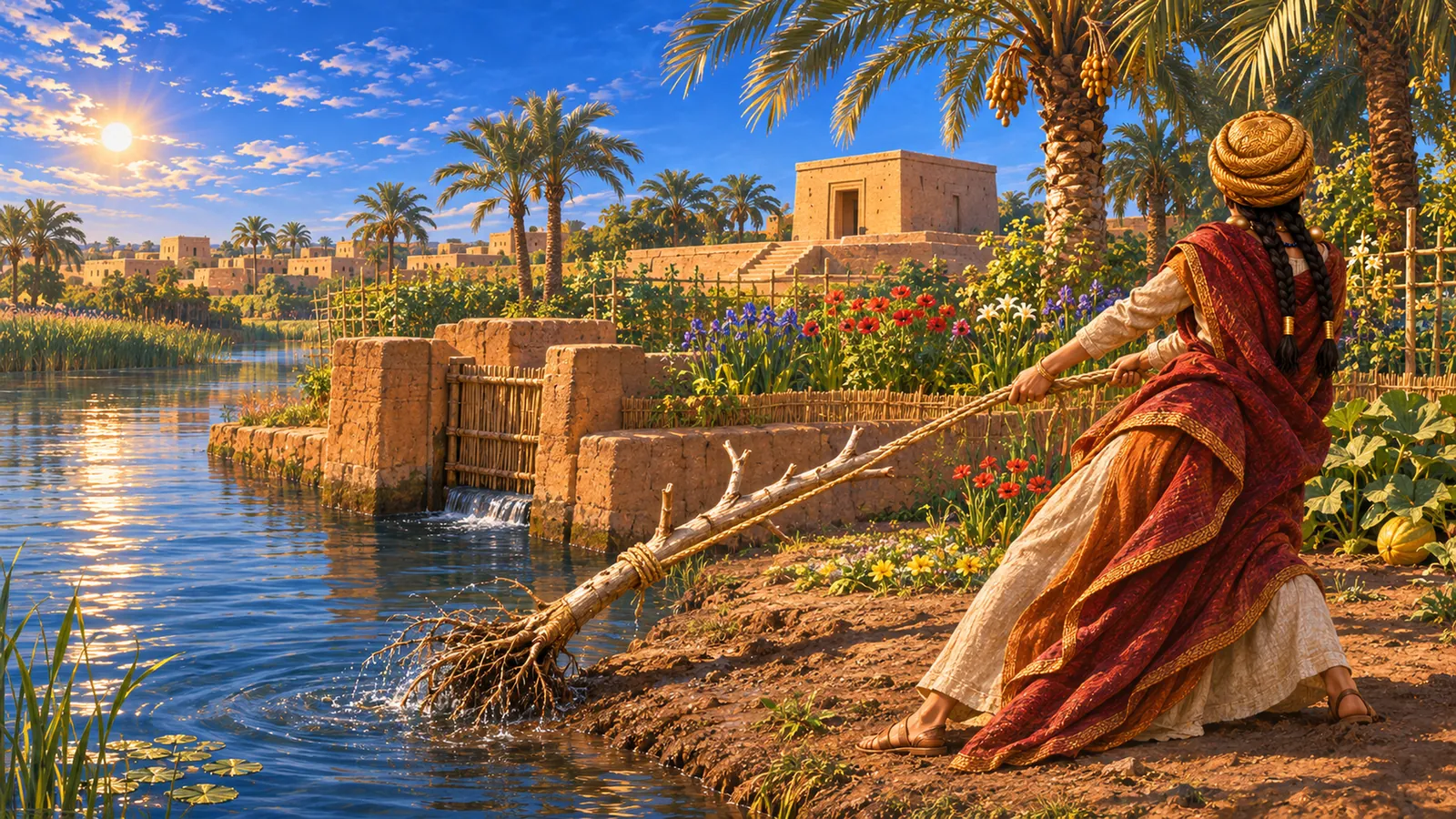
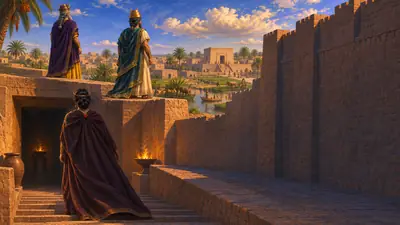
Levou a árvore para a cidade de Uruk e trouxe-a para o viçoso jardim de Inanna.
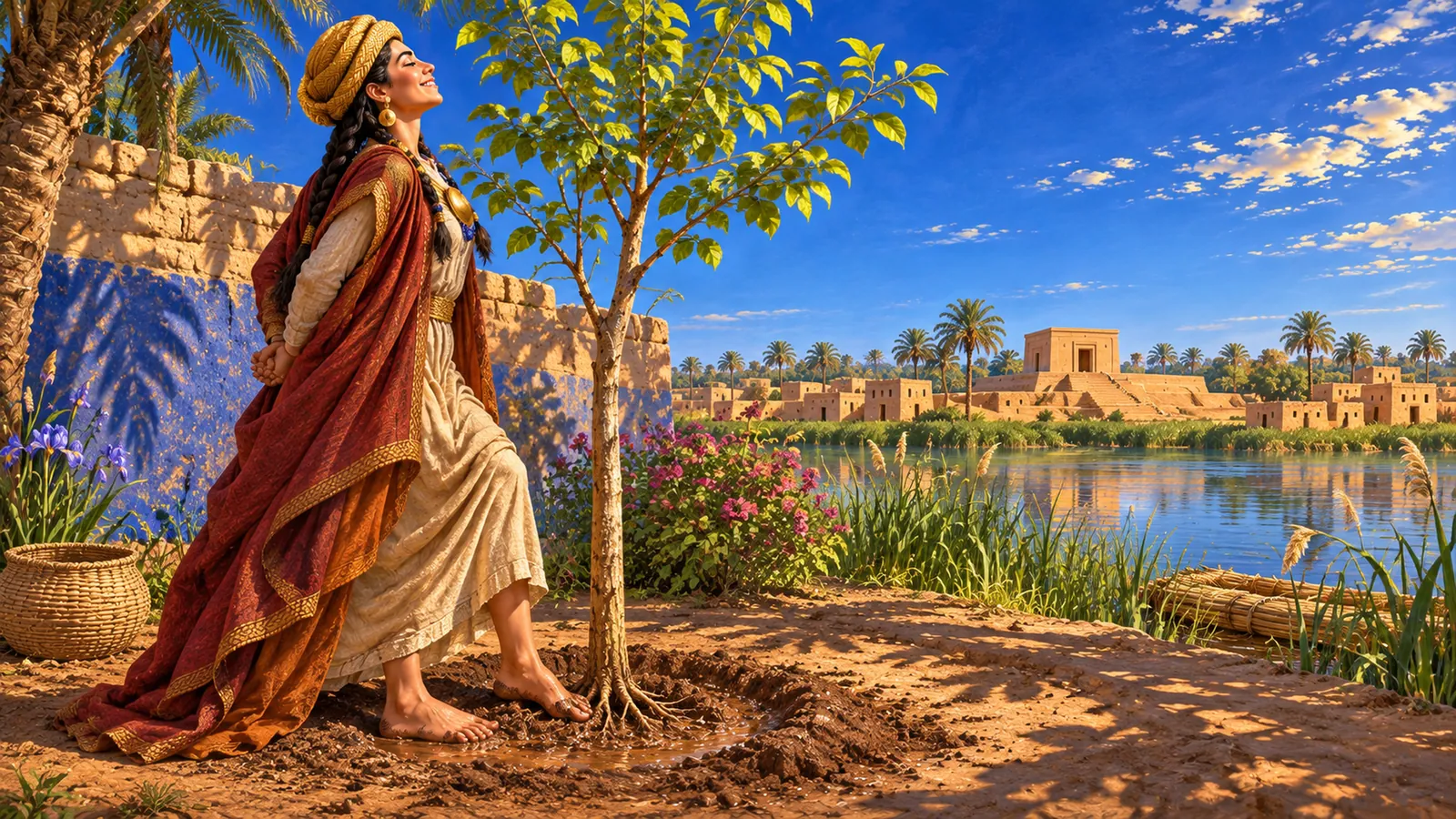
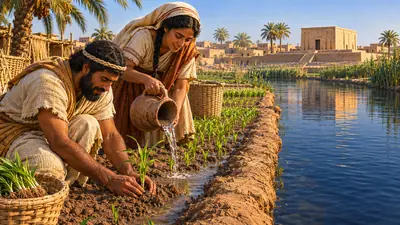
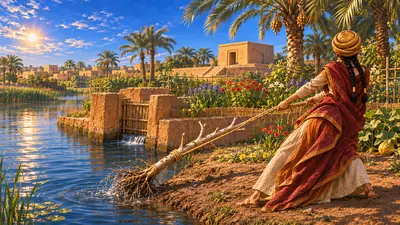
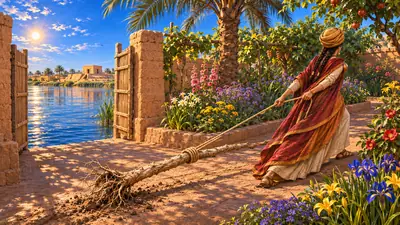
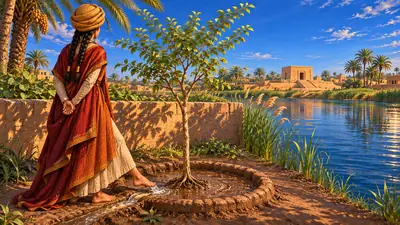
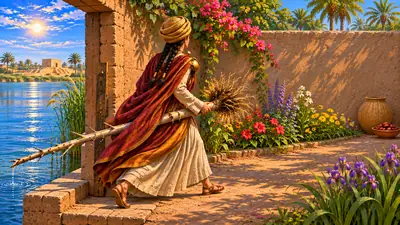
A mulher pôs a árvore halub na terra do jardim. O poema diz que a plantou usando apenas os pés.

A mulher também regou a árvore halub no jardim. Para isso, usou apenas os pés.
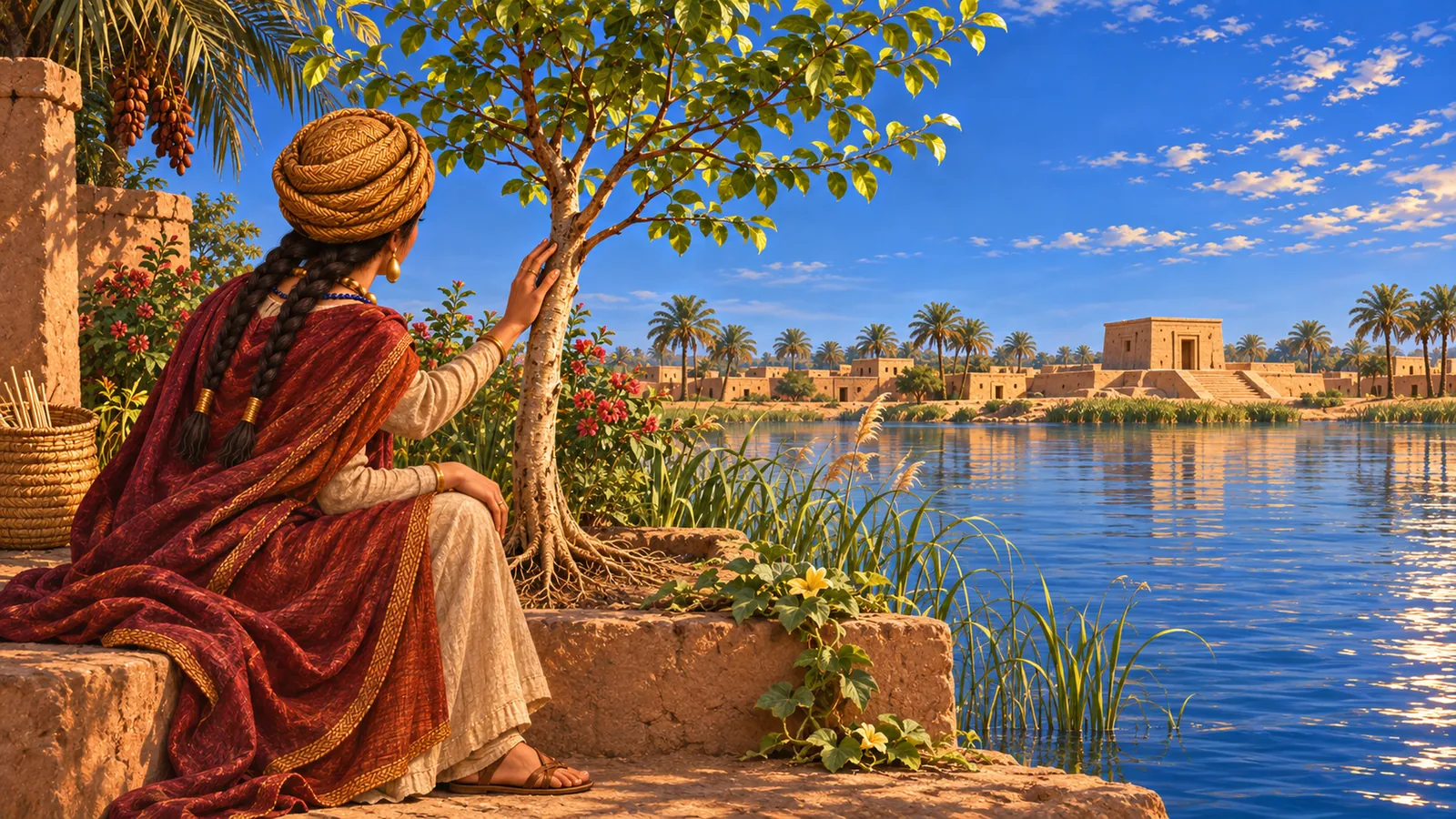
Perguntou quando a árvore se tornaria um belo assento onde se pudesse sentar. Perguntou quando se tornaria um belo leito onde se pudesse deitar.
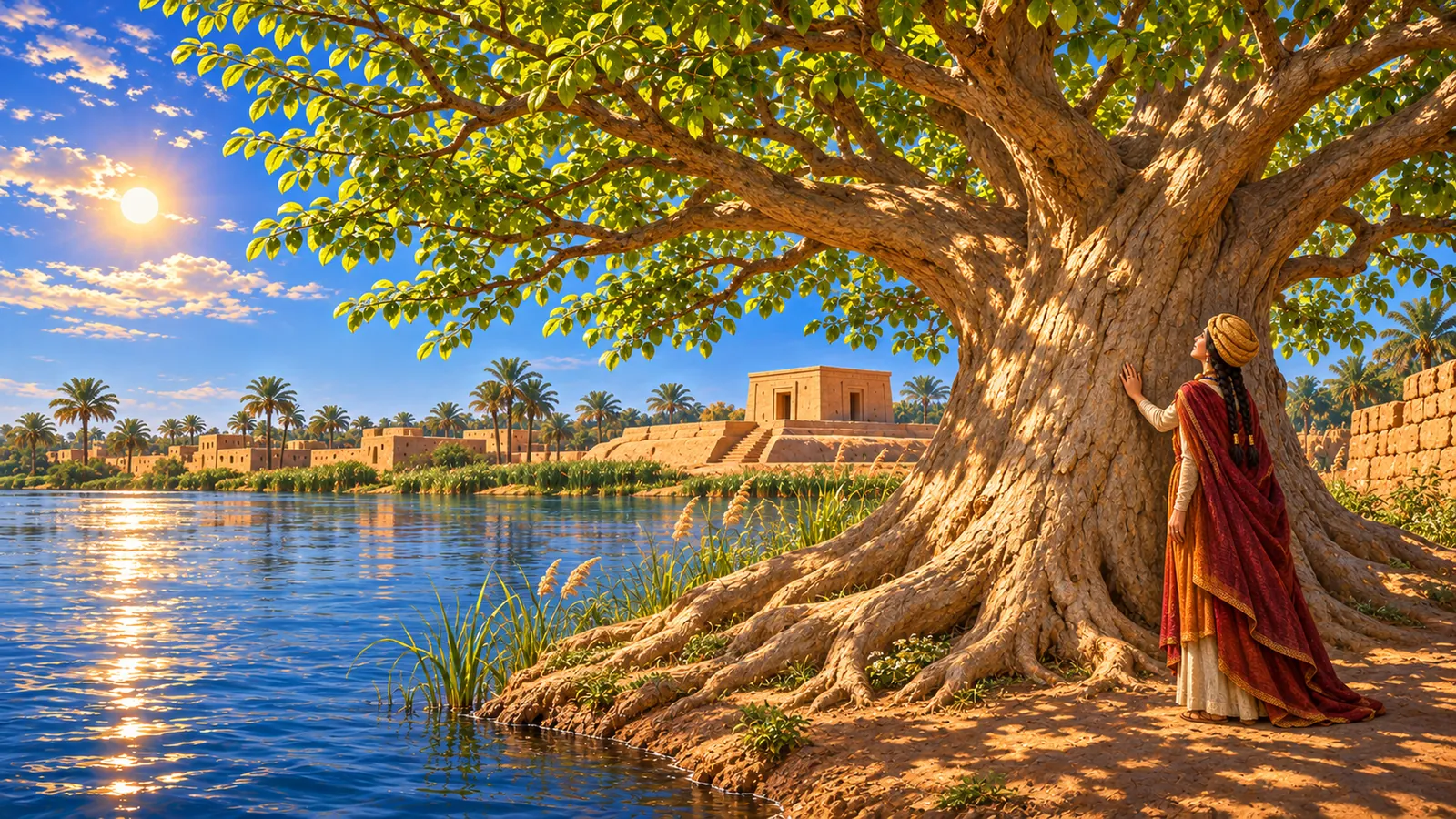
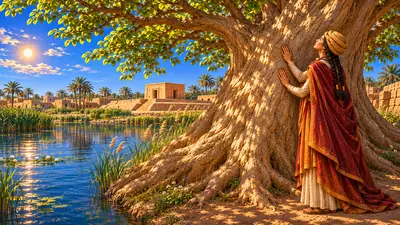
Passaram cinco anos, depois dez. A árvore cresceu imensamente ao longo desses anos, e a casca permaneceu intacta.
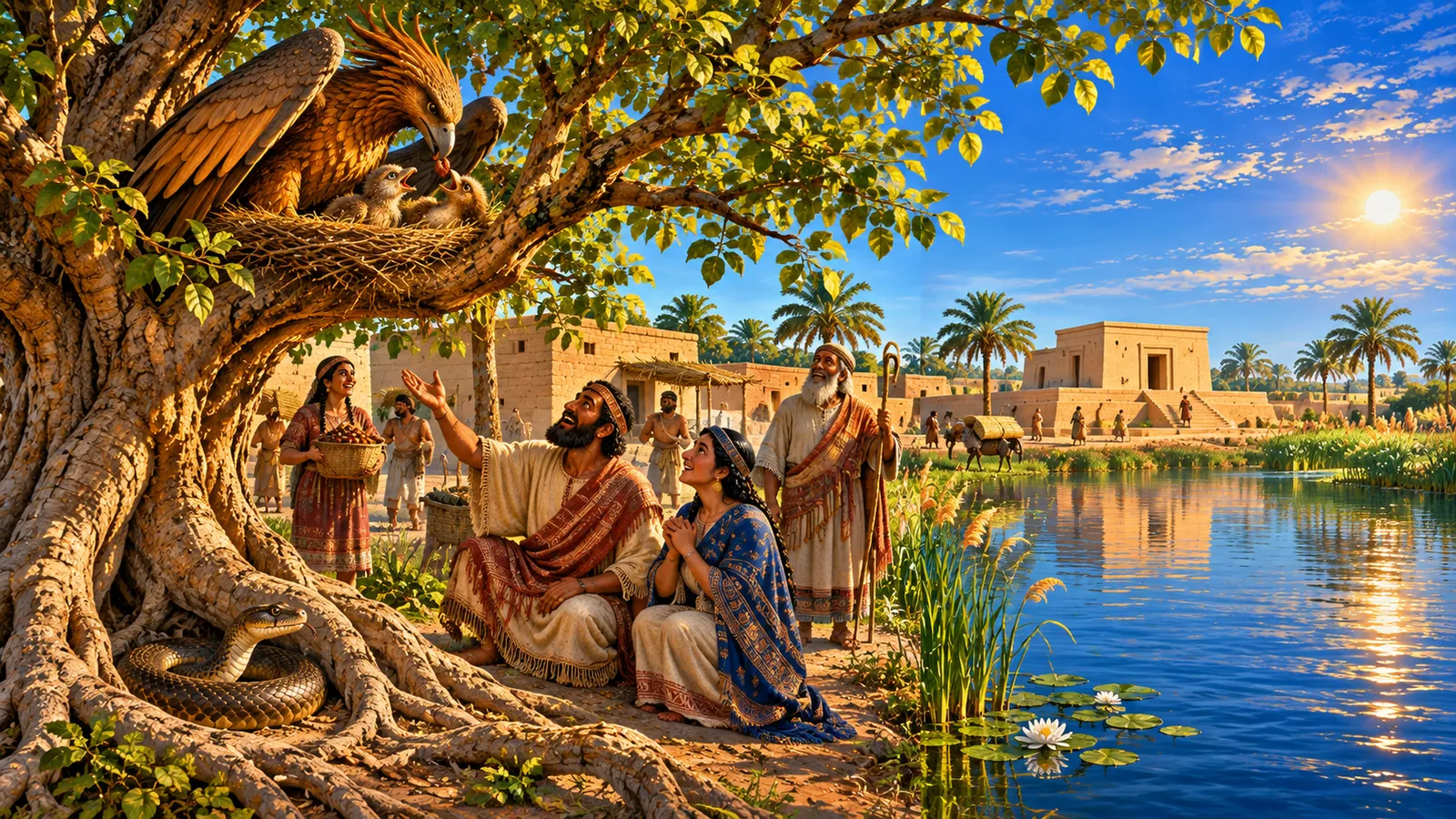
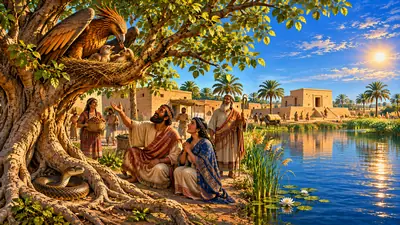
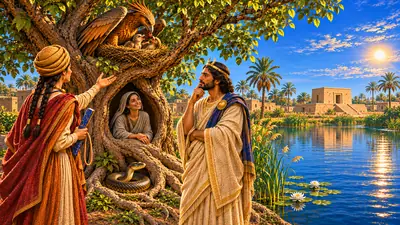
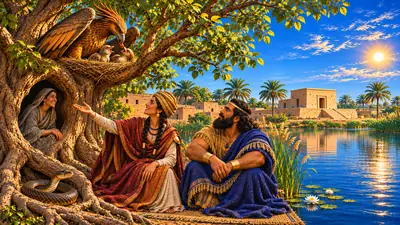
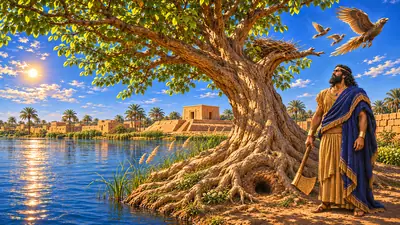
Uma serpente sobre a qual os encantamentos não tinham efeito fez ninho nas raízes da árvore. Nos ramos, a ave Anzud instalou as crias.
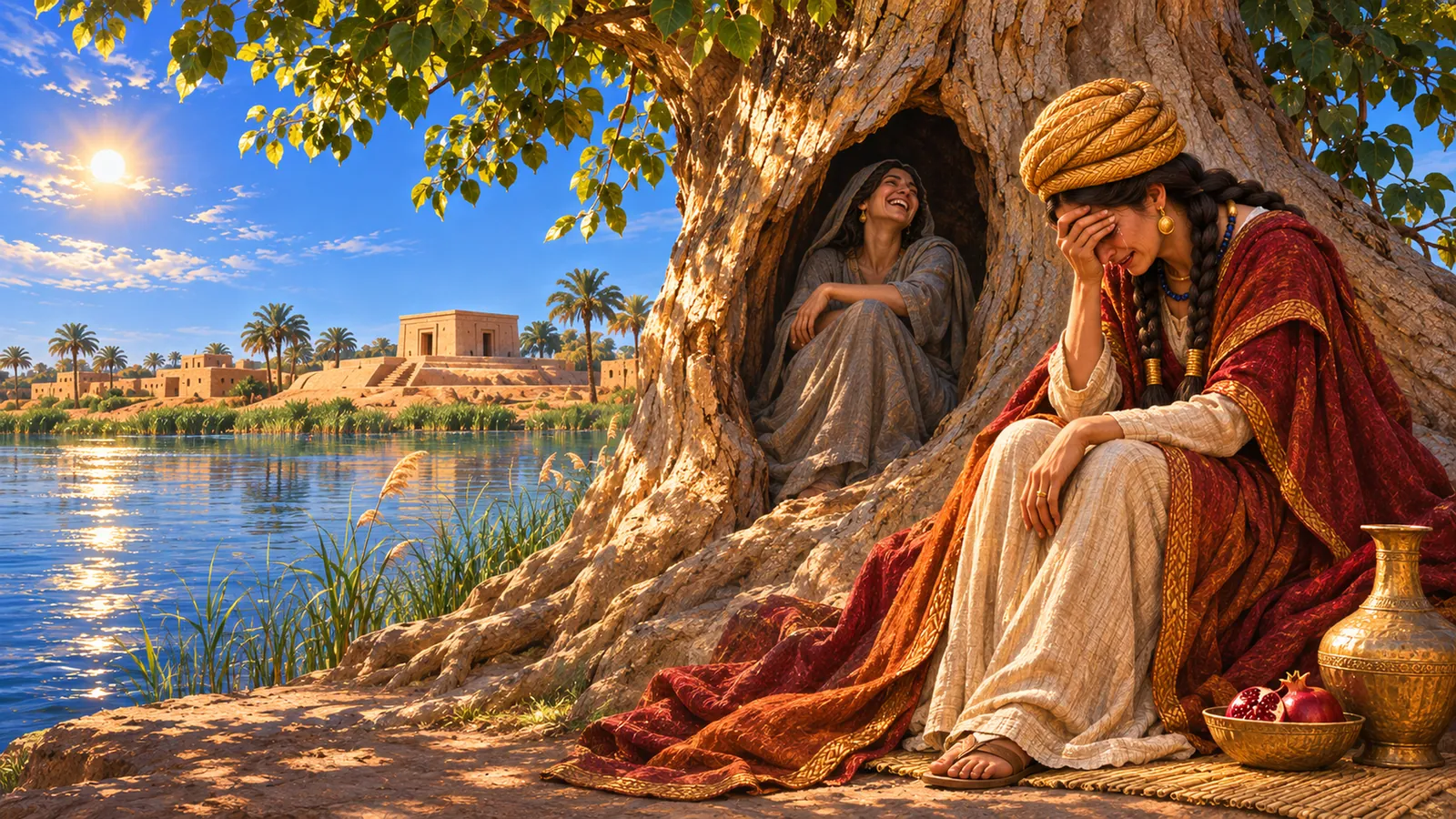
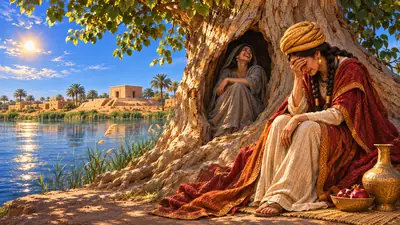
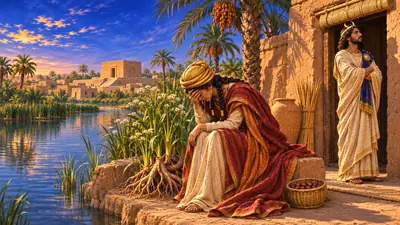
No tronco, uma donzela fantasma fez a sua morada e ria de coração alegre. Inanna chorou.
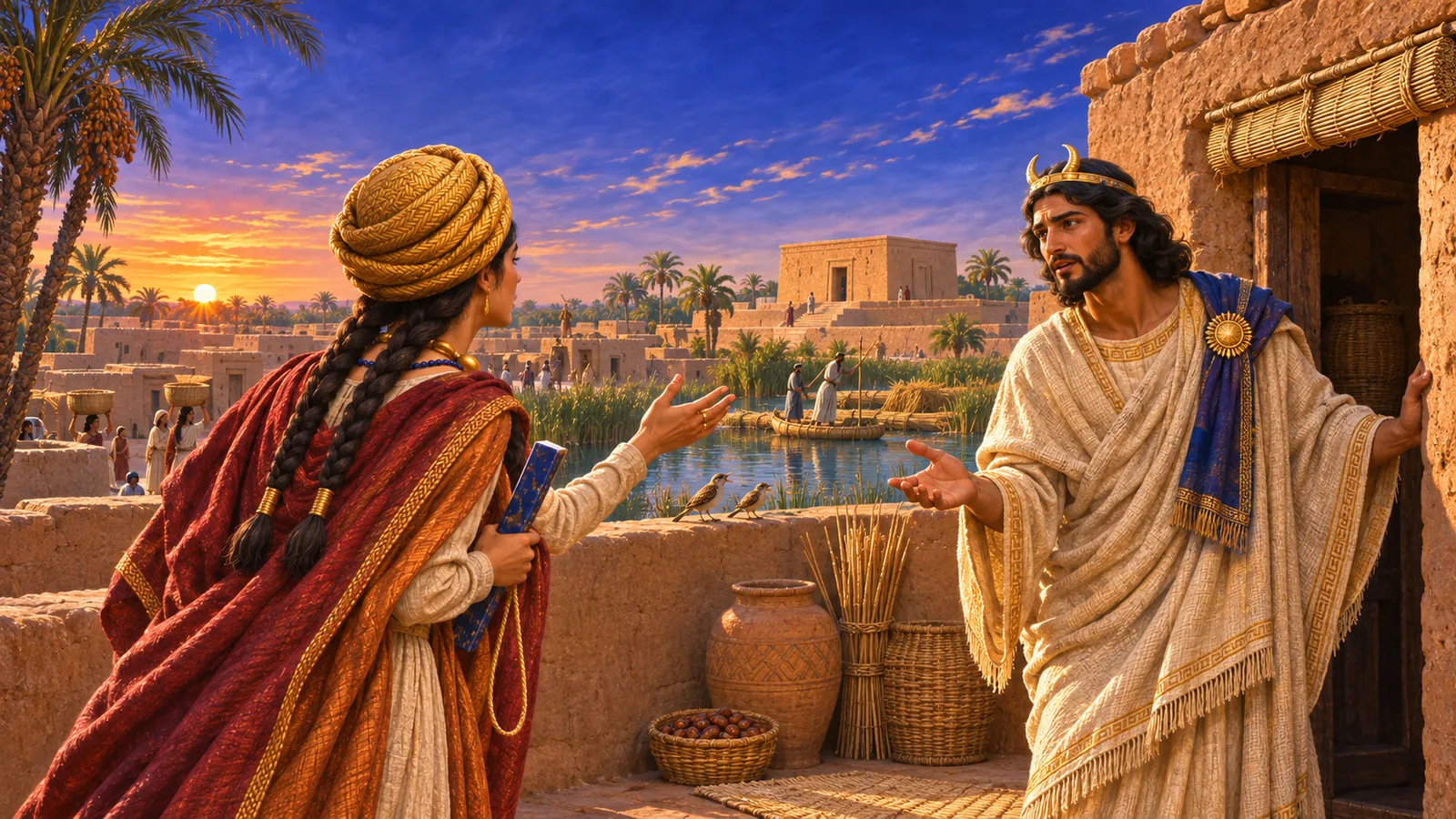
A ALVORADA
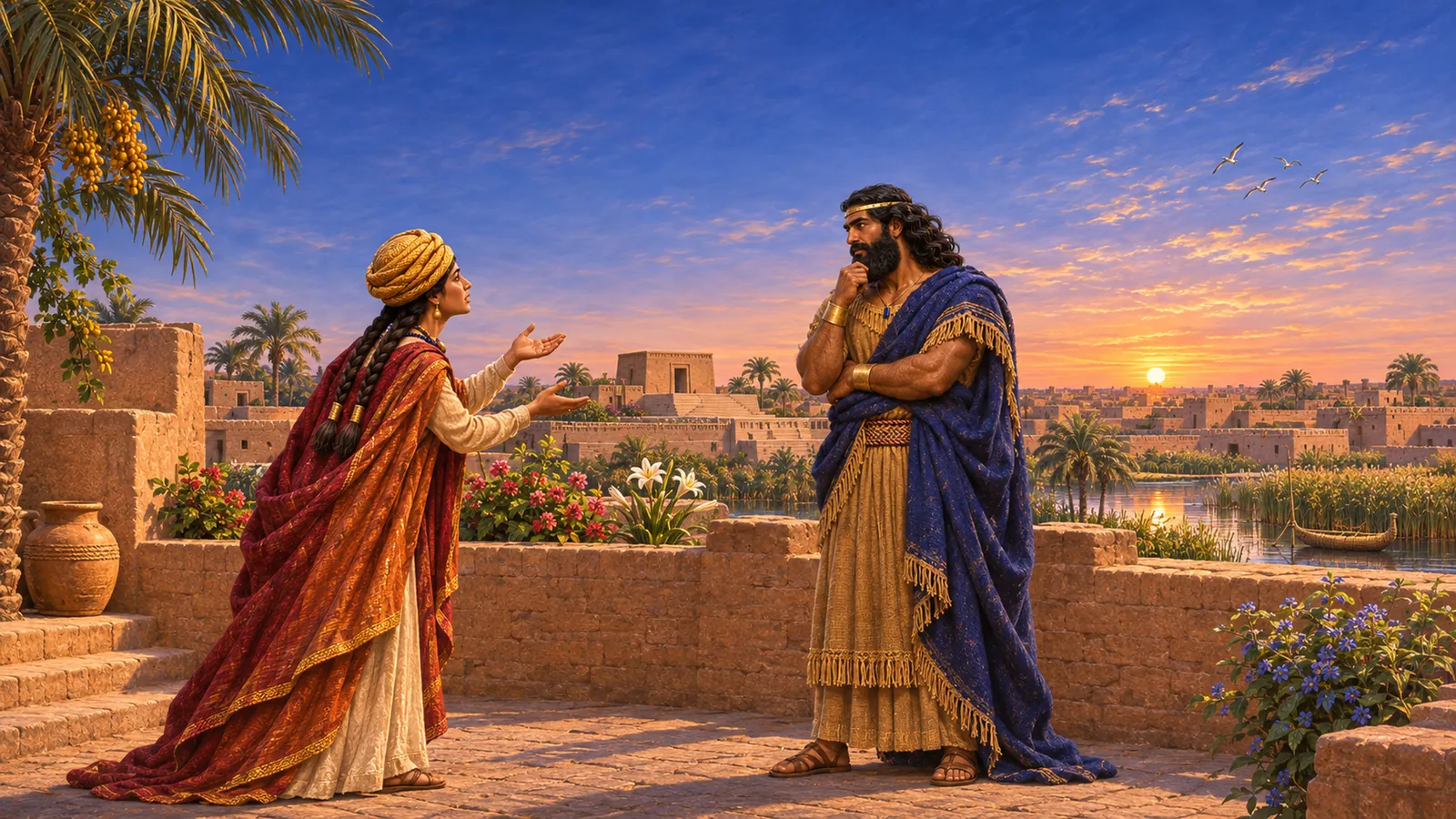
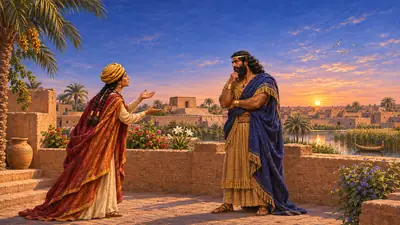
O horizonte clareou e os pássaros pequenos começaram a chilrear. Utu tinha saído dos seus aposentos quando a irmã Inanna lhe falou.
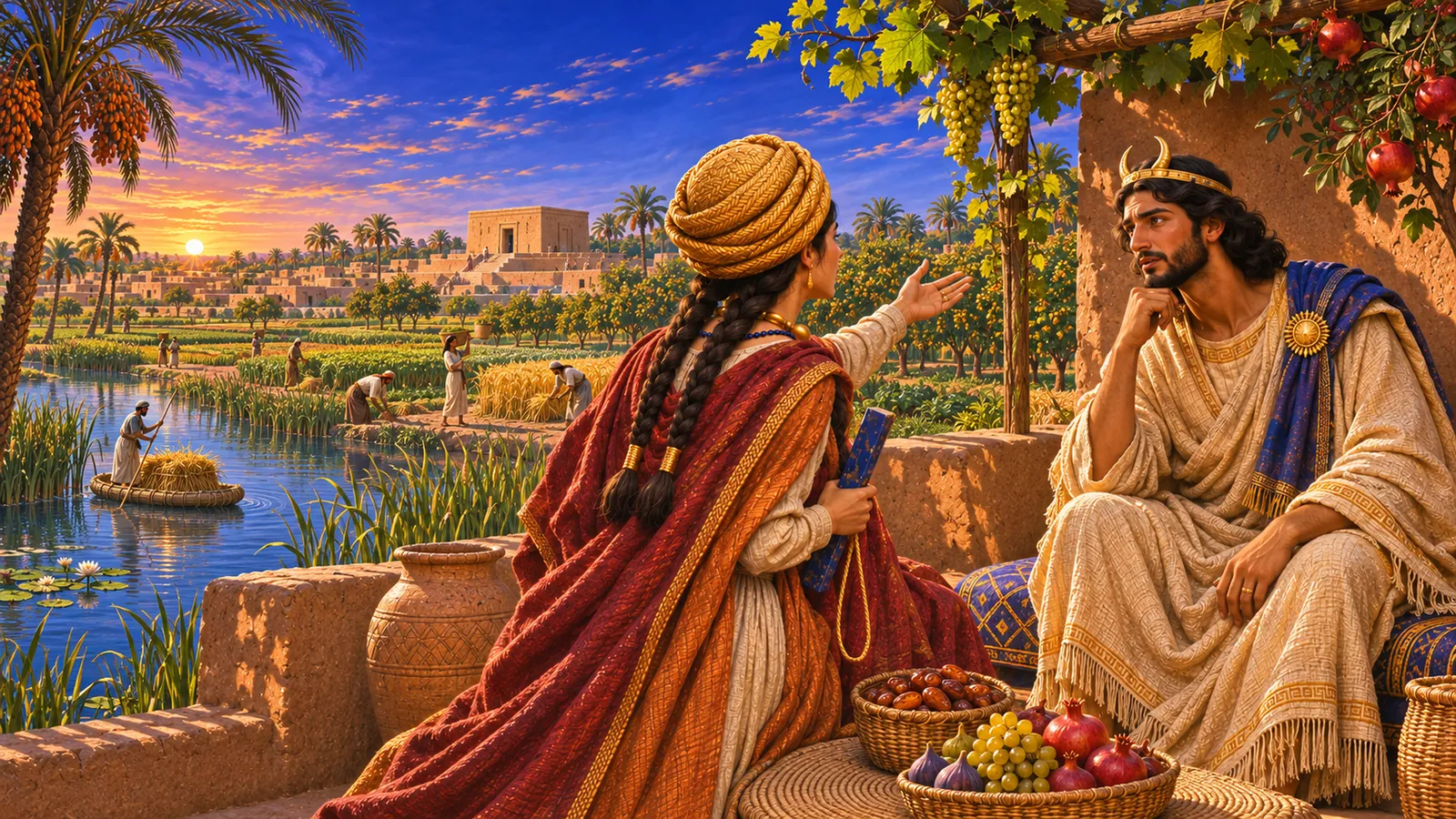
Inanna fez o irmão recordar os dias em que o destino foi determinado. Nesses dias, disse-lhe, a abundância transbordava na terra.
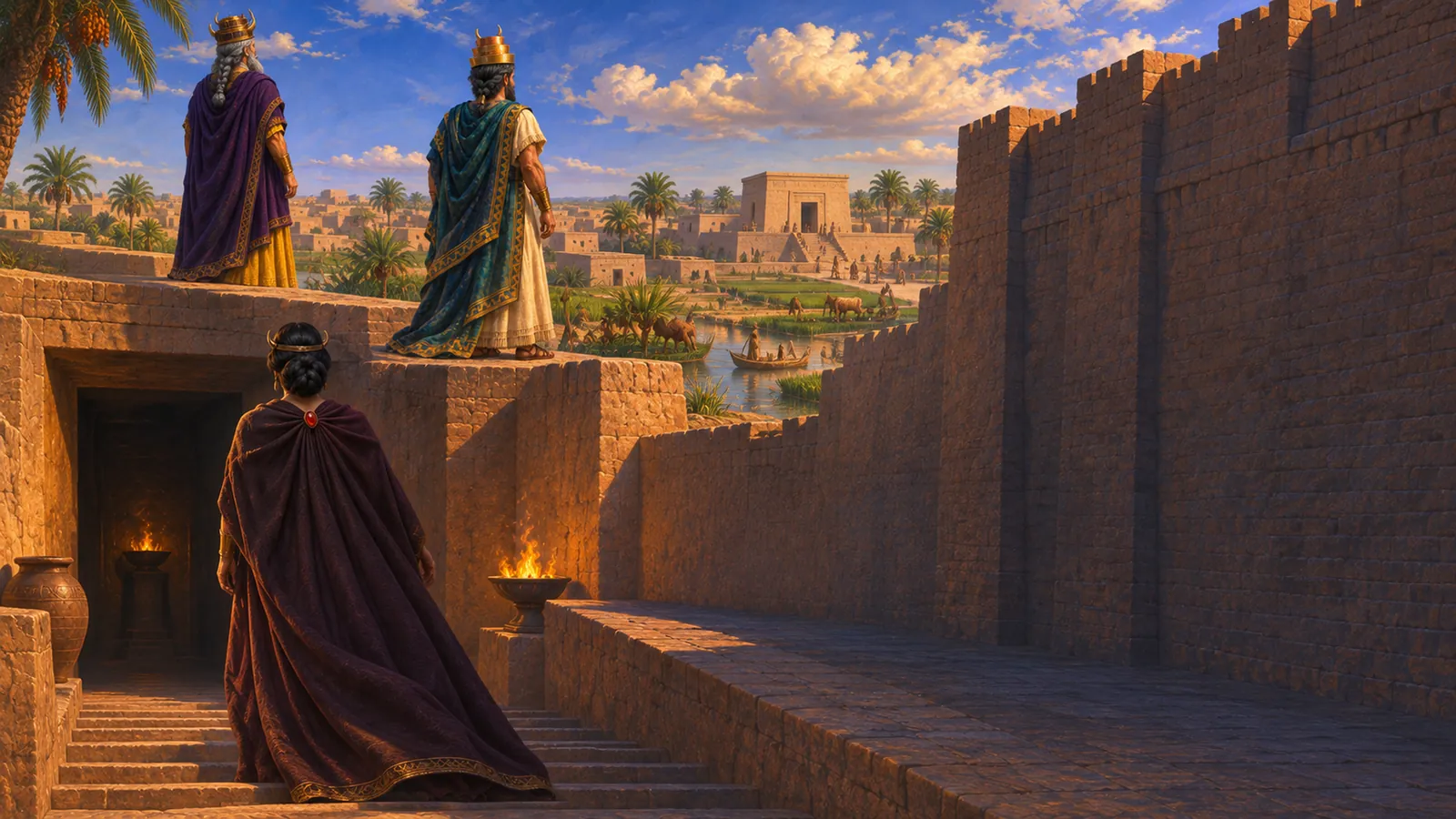
No seu relato, An tinha tomado os céus e Enlil a terra. O mundo dos mortos fora dado de presente a Ereshkigal.

Contou como Enki partiu de barco para o mundo dos mortos. Uma tempestade de granizo miúdo caiu sobre o senhor, e outra de pedras grandes sobre Enki. O poema compara-as a martelos leves e talvez a pedras de catapulta.

Disse que a quilha do pequeno barco tremia como se umas tartarugas lhe batessem. À proa, as ondas erguiam-se como lobos para devorar o senhor. À popa, investiam contra Enki como um leão.
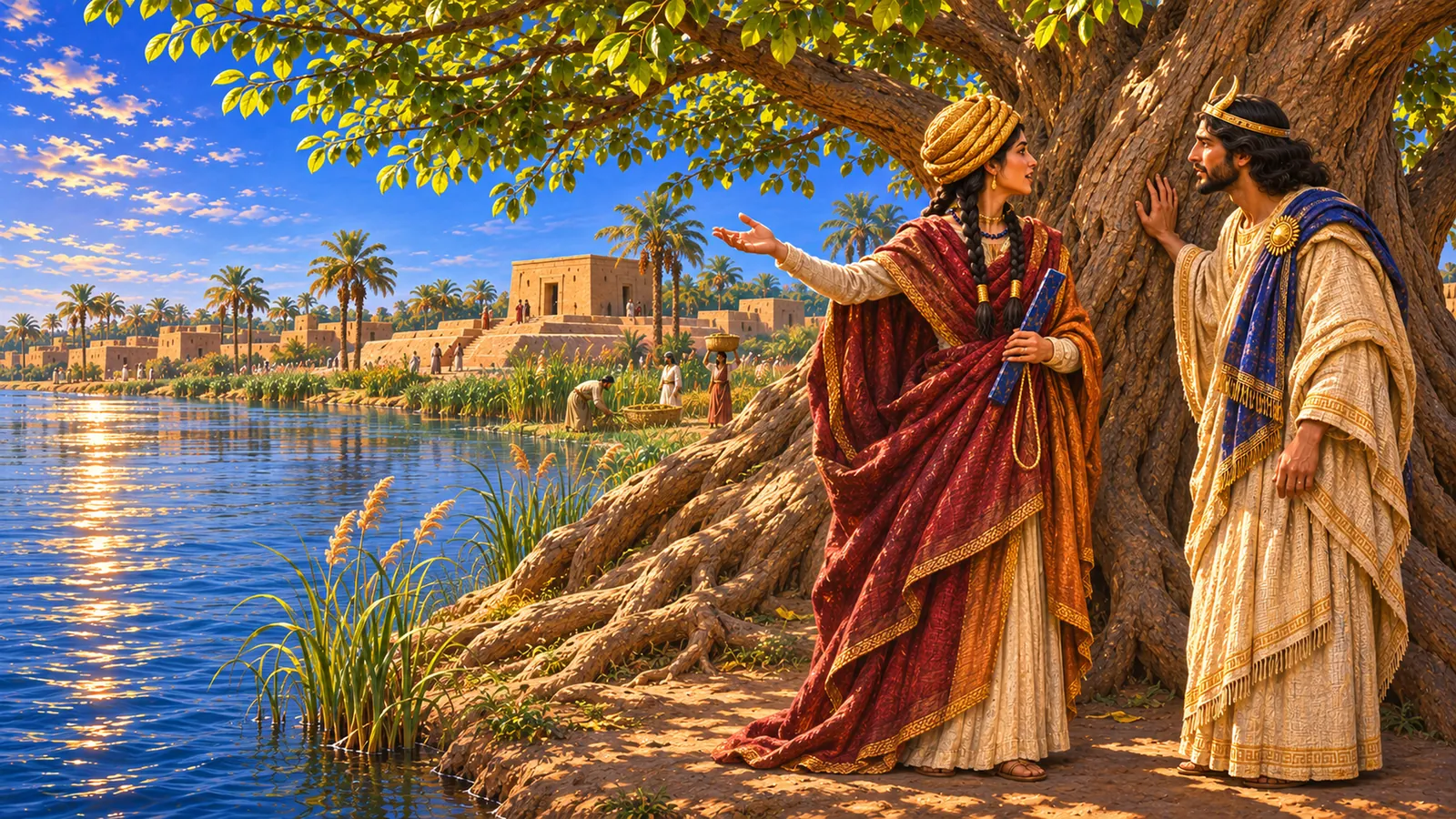
Inanna recordou a única árvore halub que crescia na margem do Eufrates. Disse que o próprio Eufrates a regava.

Um vento do sul arrancou a árvore pela raiz e despojou-a dos ramos. Inanna disse que o Eufrates apanhou a árvore e a levou dali.
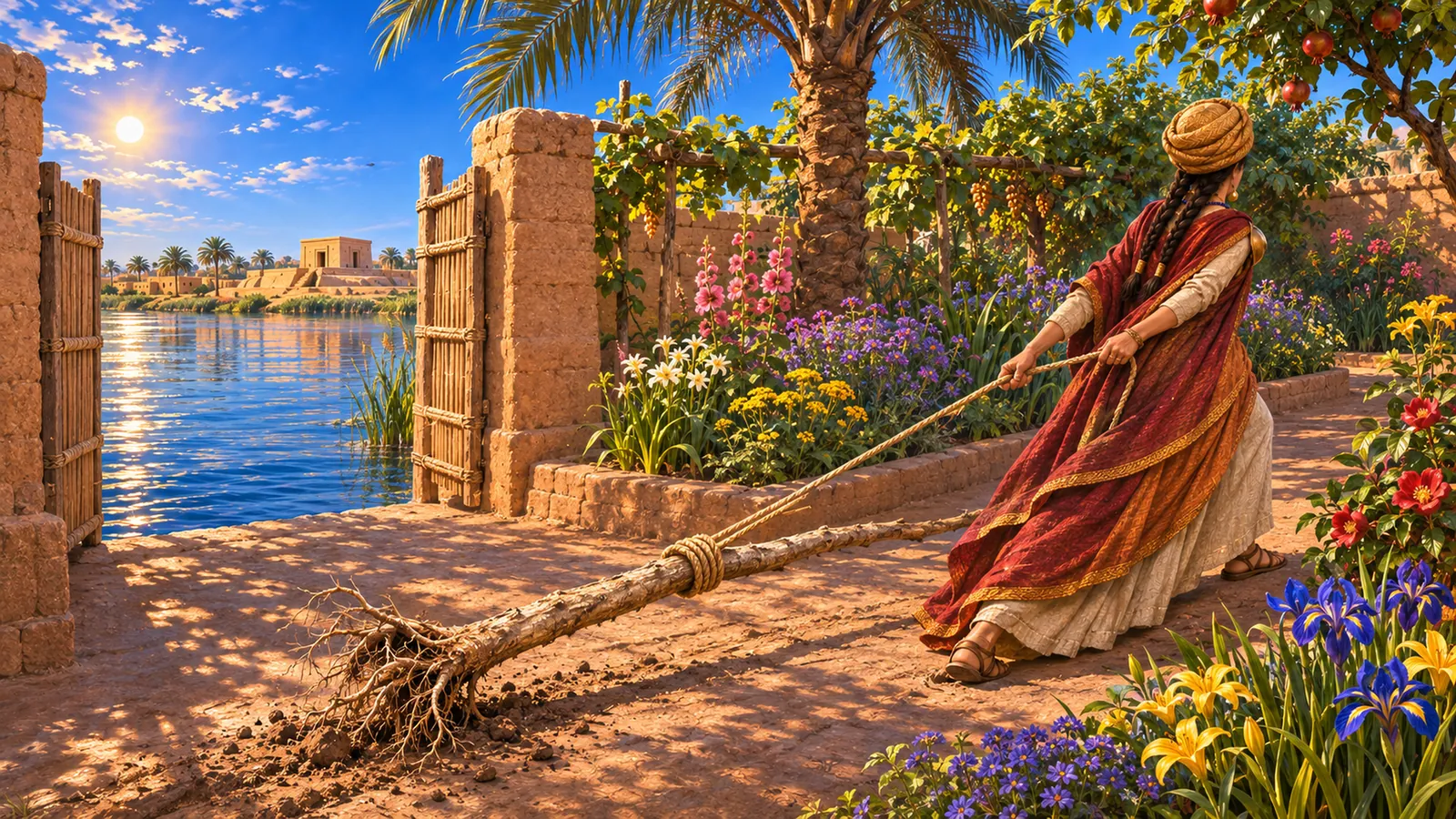
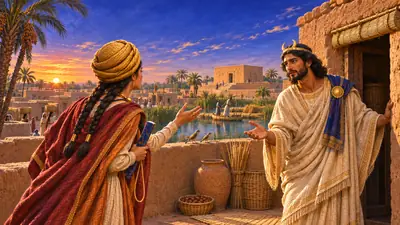
Disse a Utu que era ela a mulher que tinha respeitado as palavras de An e Enlil. Tinha levado a árvore para Uruk, para o seu próprio jardim luxuriante.
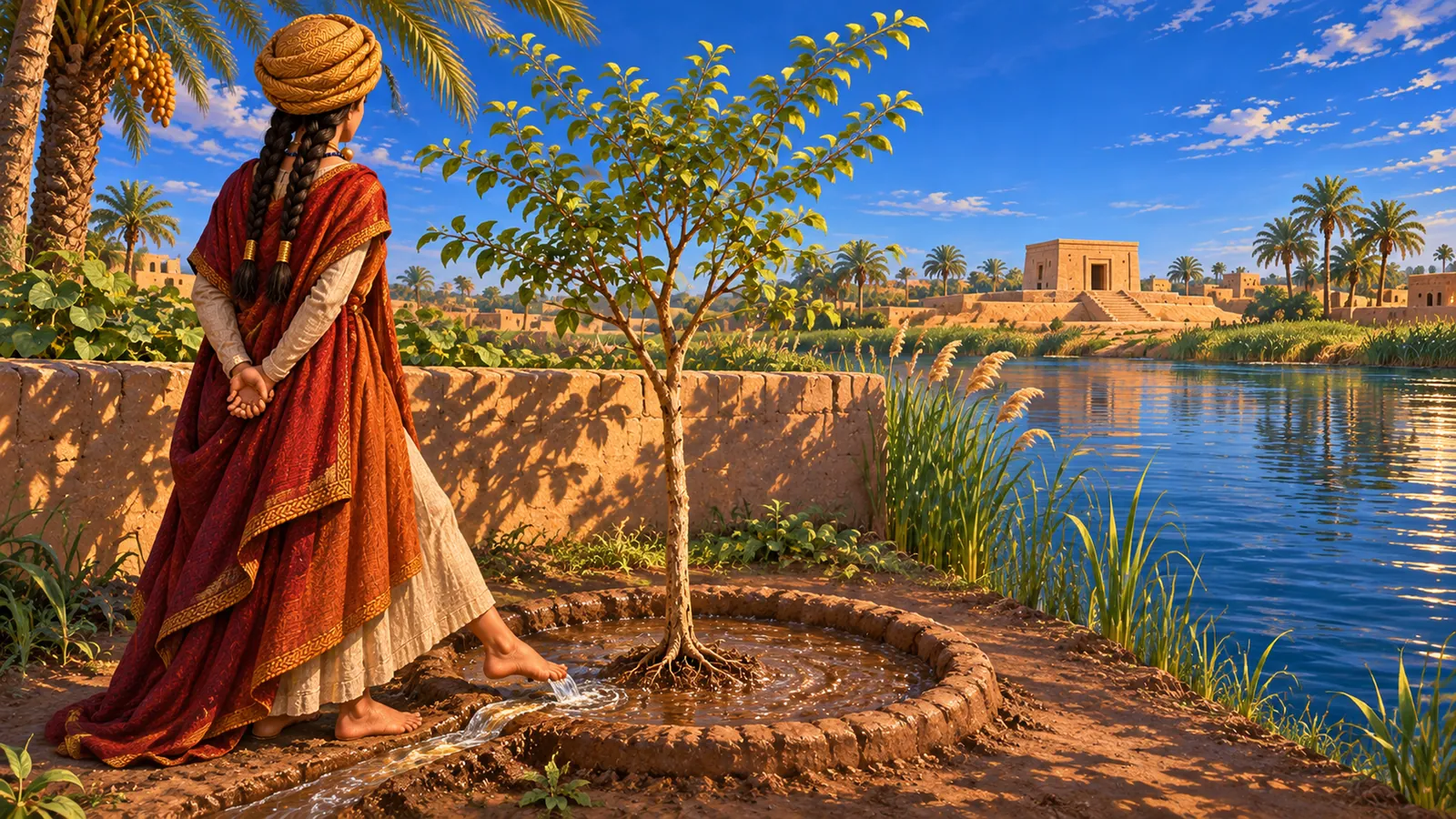
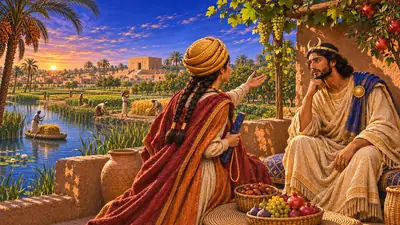
Inanna contou a Utu que tinha plantado e regado o halub no seu jardim, das duas vezes usando apenas os pés.
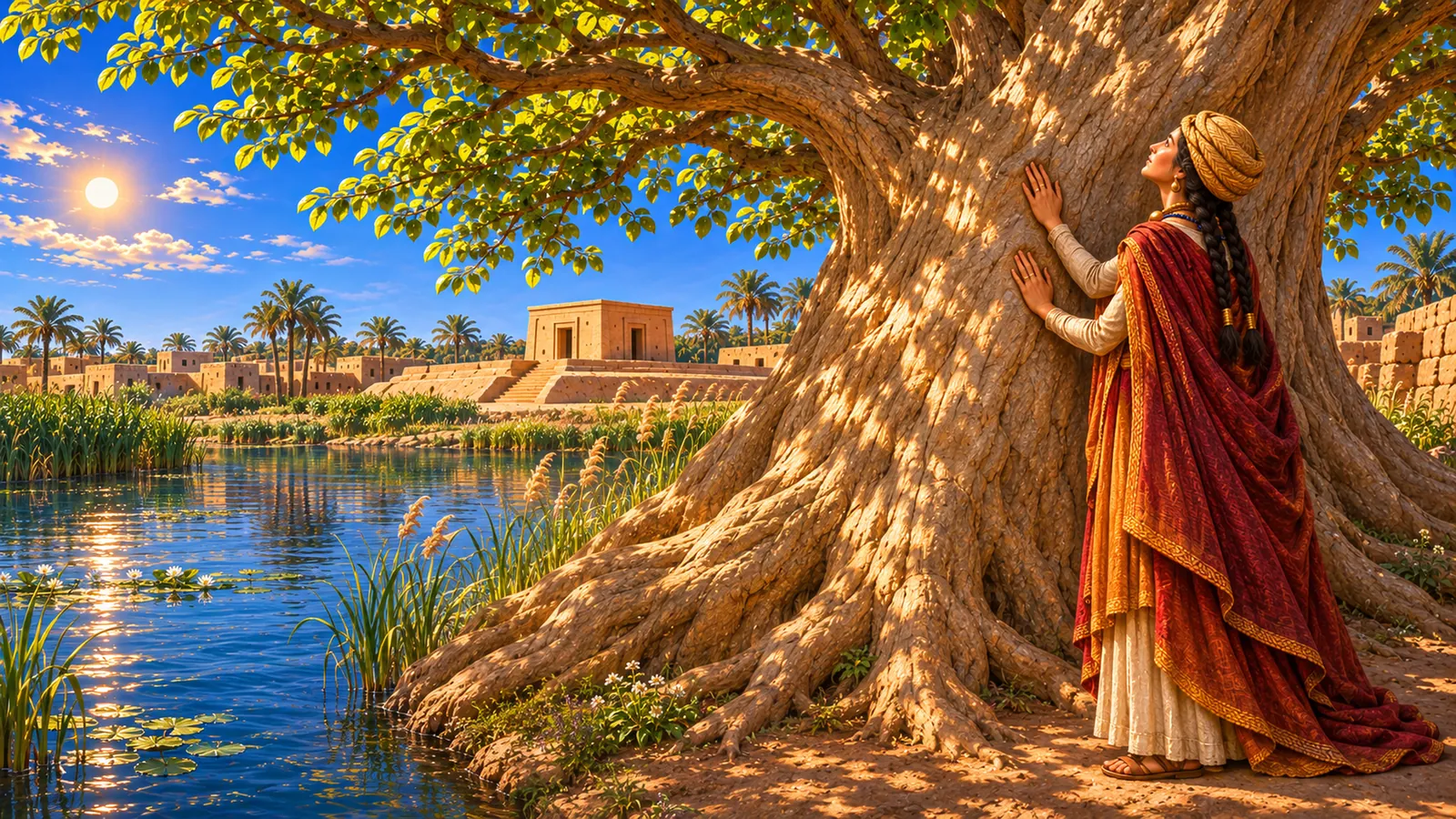
Recordou o desejo de ter um belo assento onde se sentar e um belo leito onde se deitar. Passaram cinco anos, depois dez. A árvore cresceu imensamente e a sua casca ficou intacta.
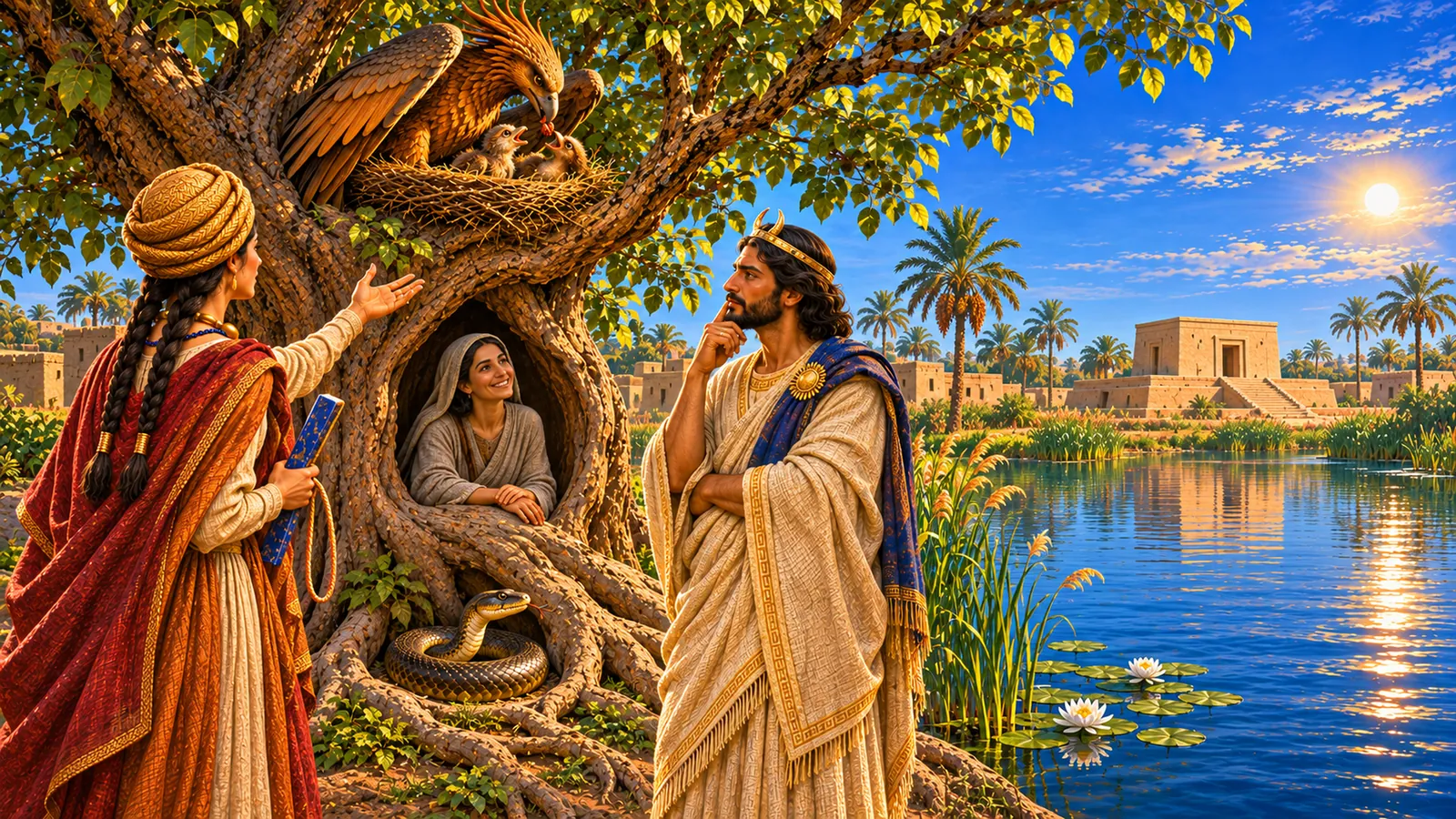
Falou a Utu da serpente nas raízes sobre a qual os encantamentos não tinham efeito, da ave Anzud e das crias nos ramos, e da donzela fantasma que fez a sua morada no tronco e ria de coração alegre.
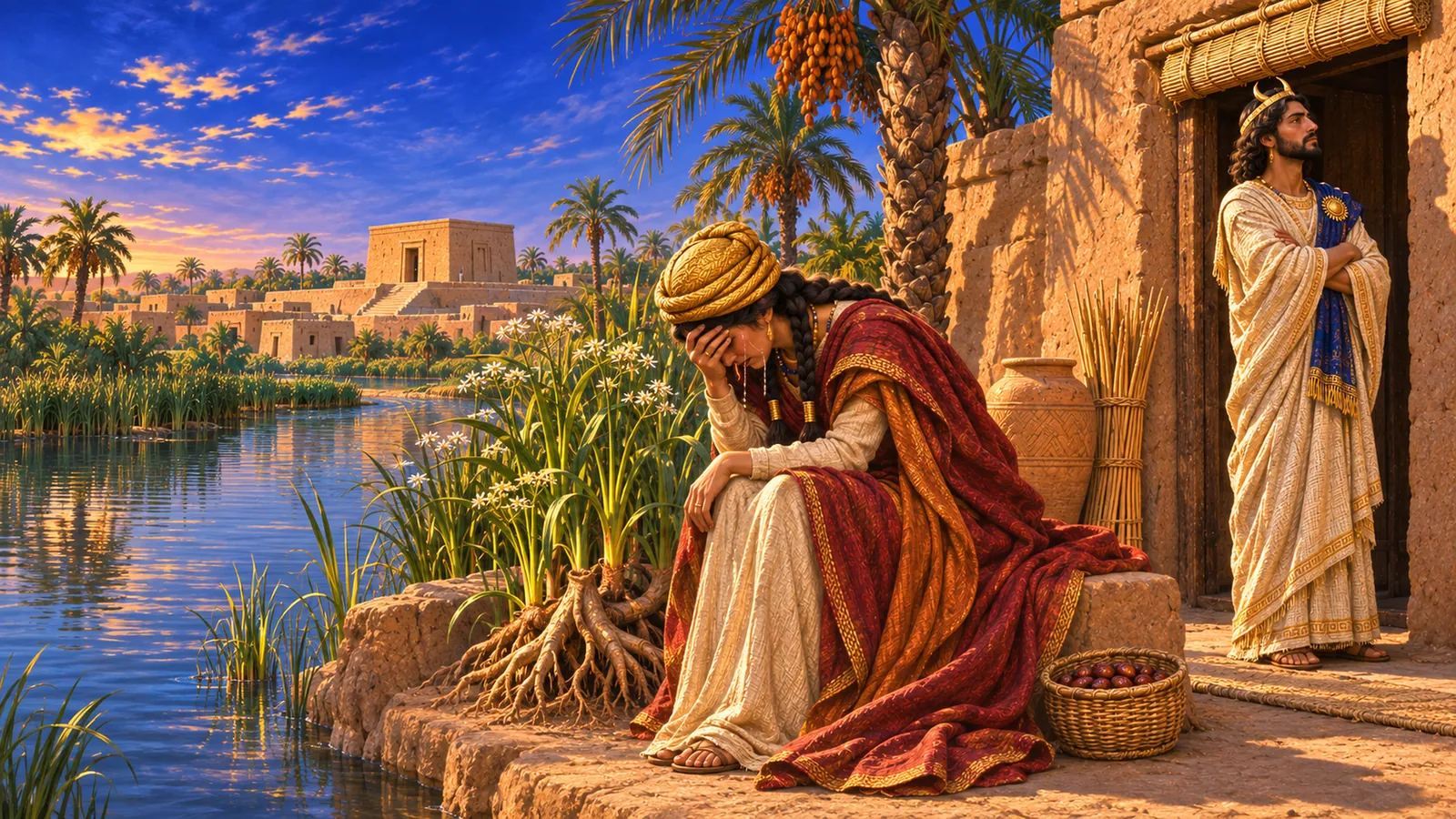
O relato terminou com as suas próprias lágrimas. O poema diz que o irmão Utu, o jovem guerreiro, não a apoiou nesta questão.
A SÚPLICA
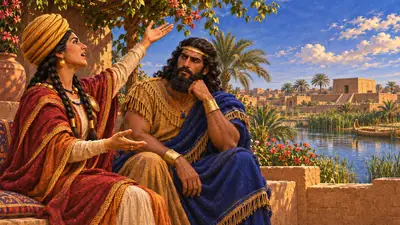
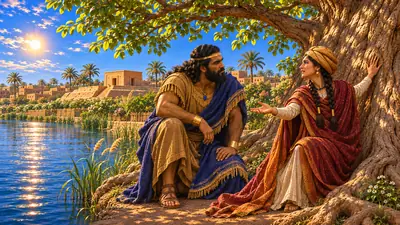
Quando rompeu a aurora e as aves começaram a cantar, Inanna falou ao guerreiro Gilgamesh. Chamou-lhe irmão.
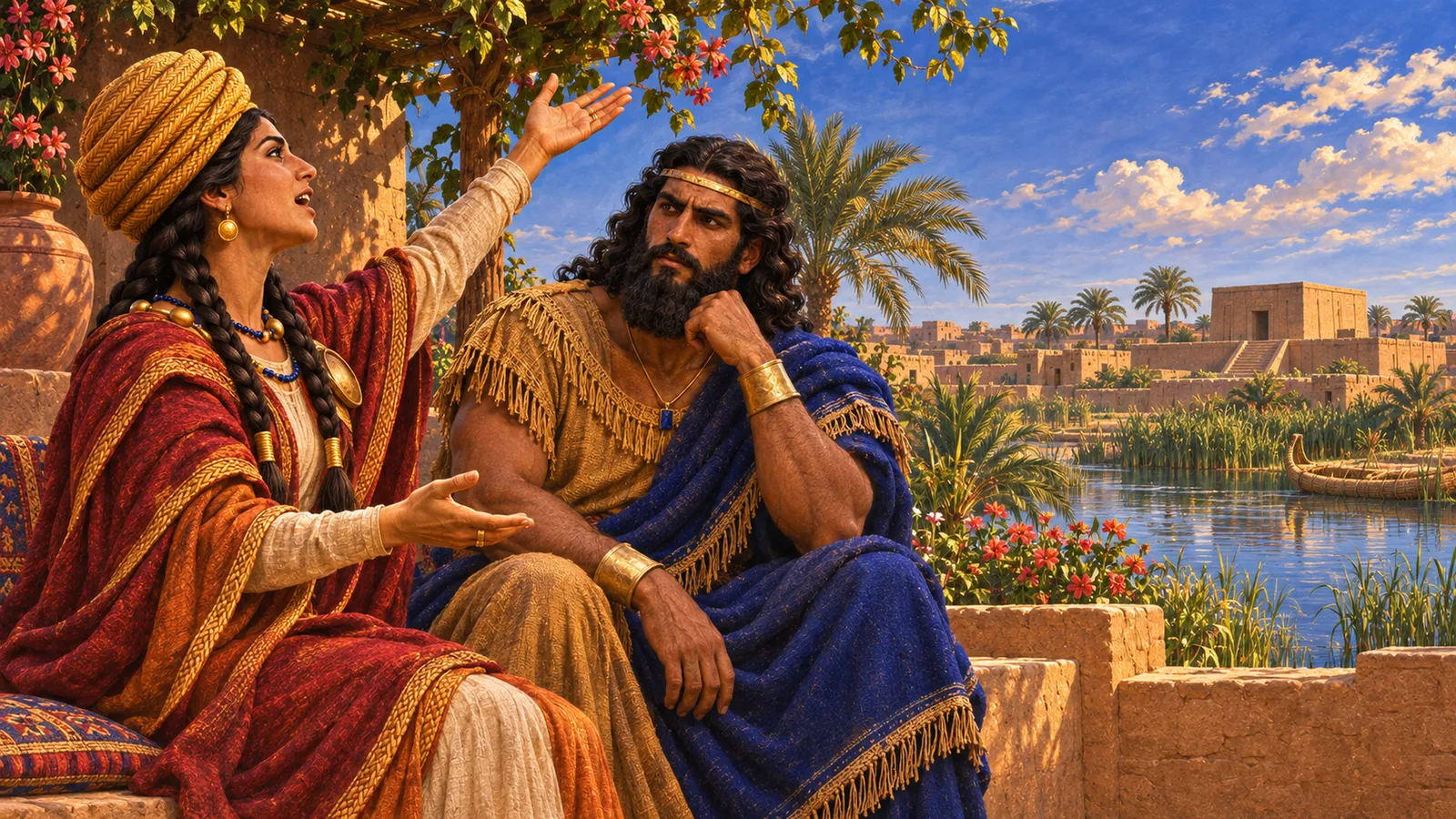
Recordou os dias em que se fixaram os destinos e a abundância enchia a terra. An tinha tomado o céu, Enlil tinha tomado a terra e Ereshkigal tinha recebido o mundo subterrâneo como dádiva.

Inanna contou como Enki partiu de barco para o mundo subterrâneo. No seu relato, granizo miúdo caiu sobre o senhor e granizo grande sobre Enki. Comparou o granizo miúdo a martelos leves.

Descreveu o pequeno barco a tremer como se tartarugas lhe batessem na quilha. As ondas da proa eram como lobos, e as da popa como um leão.

Inanna recordou uma árvore halub que crescia junto ao Eufrates e recebia água do rio. O vento sul arrancou-a pela raiz e desnudou os seus ramos. O rio levou-a.
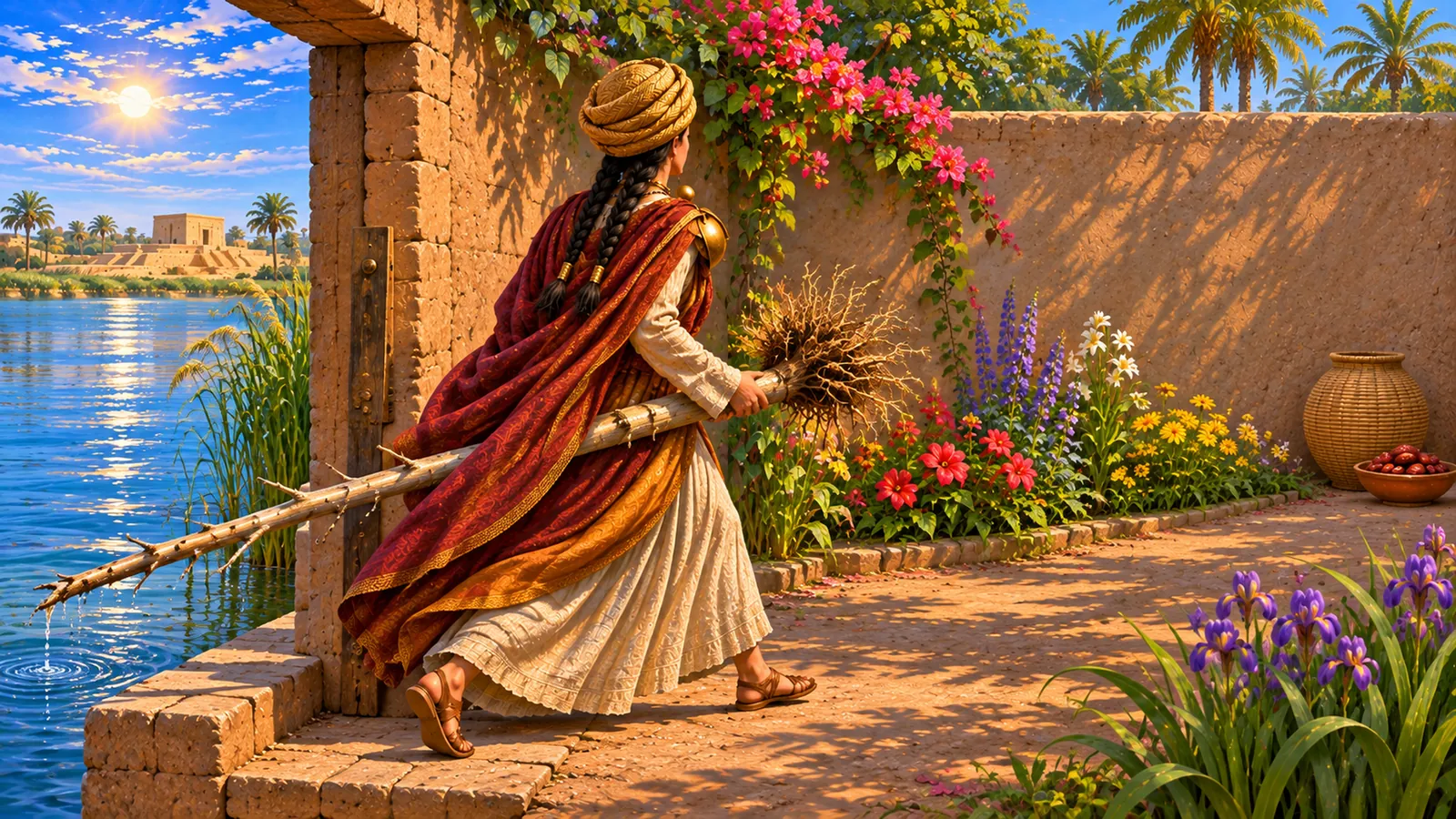
Inanna disse que caminhava respeitando as palavras de An e Enlil. Apanhou a árvore e levou-a para o seu jardim em Uruk.
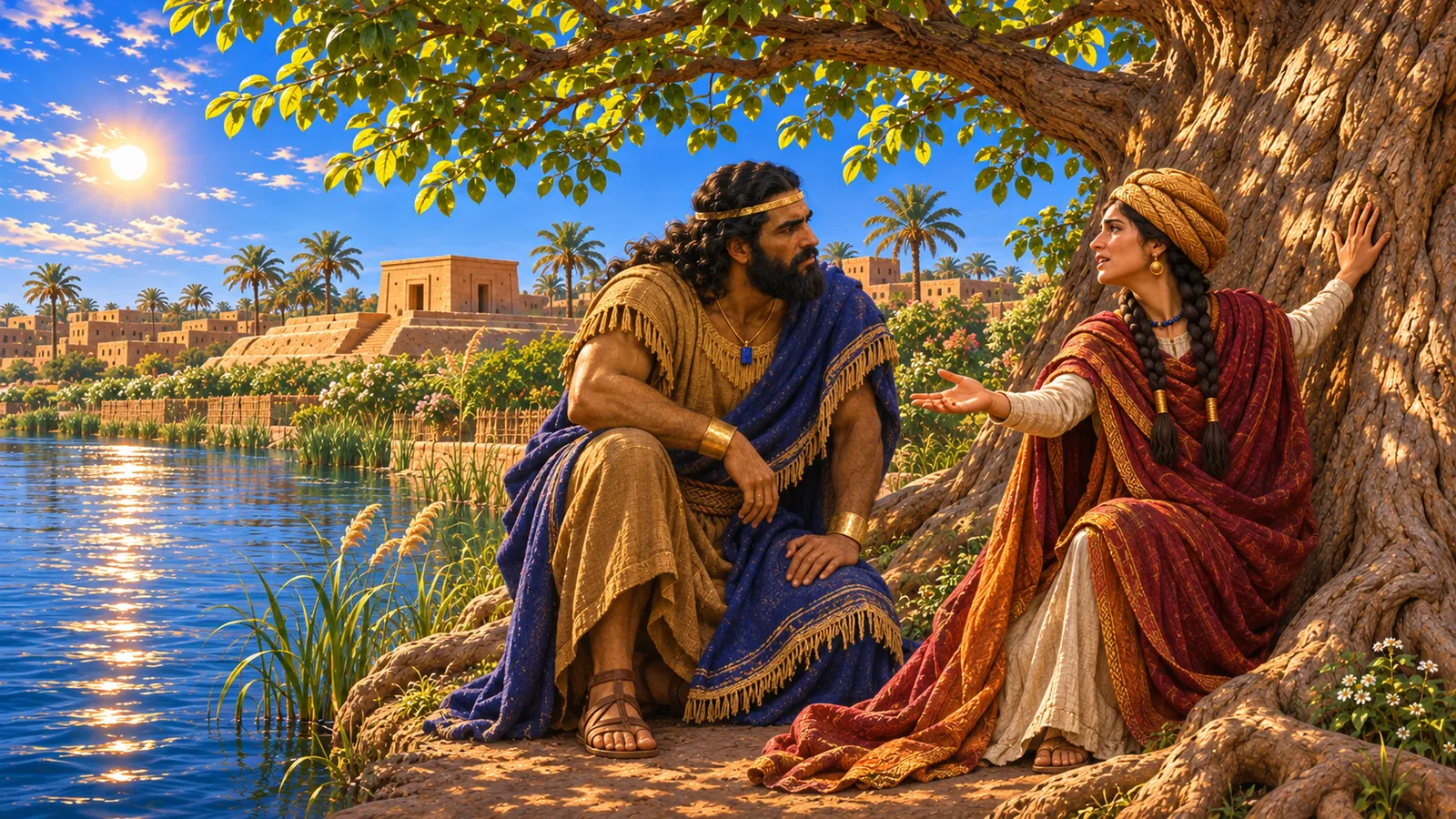
Contou como plantou e regou a árvore com os pés. Esperava que um dia lhe desse uma cadeira e uma cama.
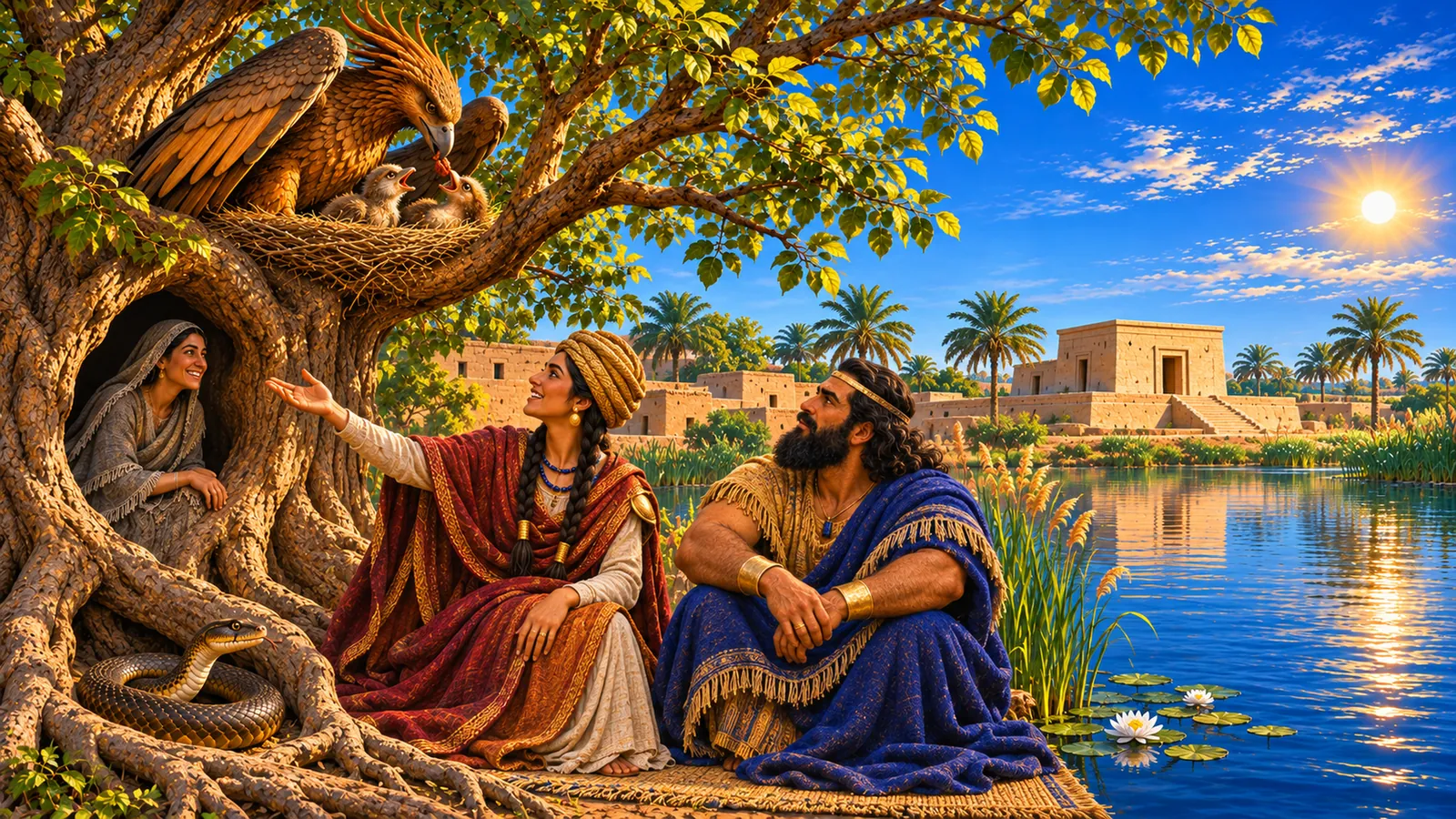
Passaram cinco anos, depois dez, disse ela, e a árvore tornou-se enorme. Recordou a serpente imune a encantamentos nas raízes, a ave Anzud e as suas crias nos ramos e a jovem fantasma no tronco.
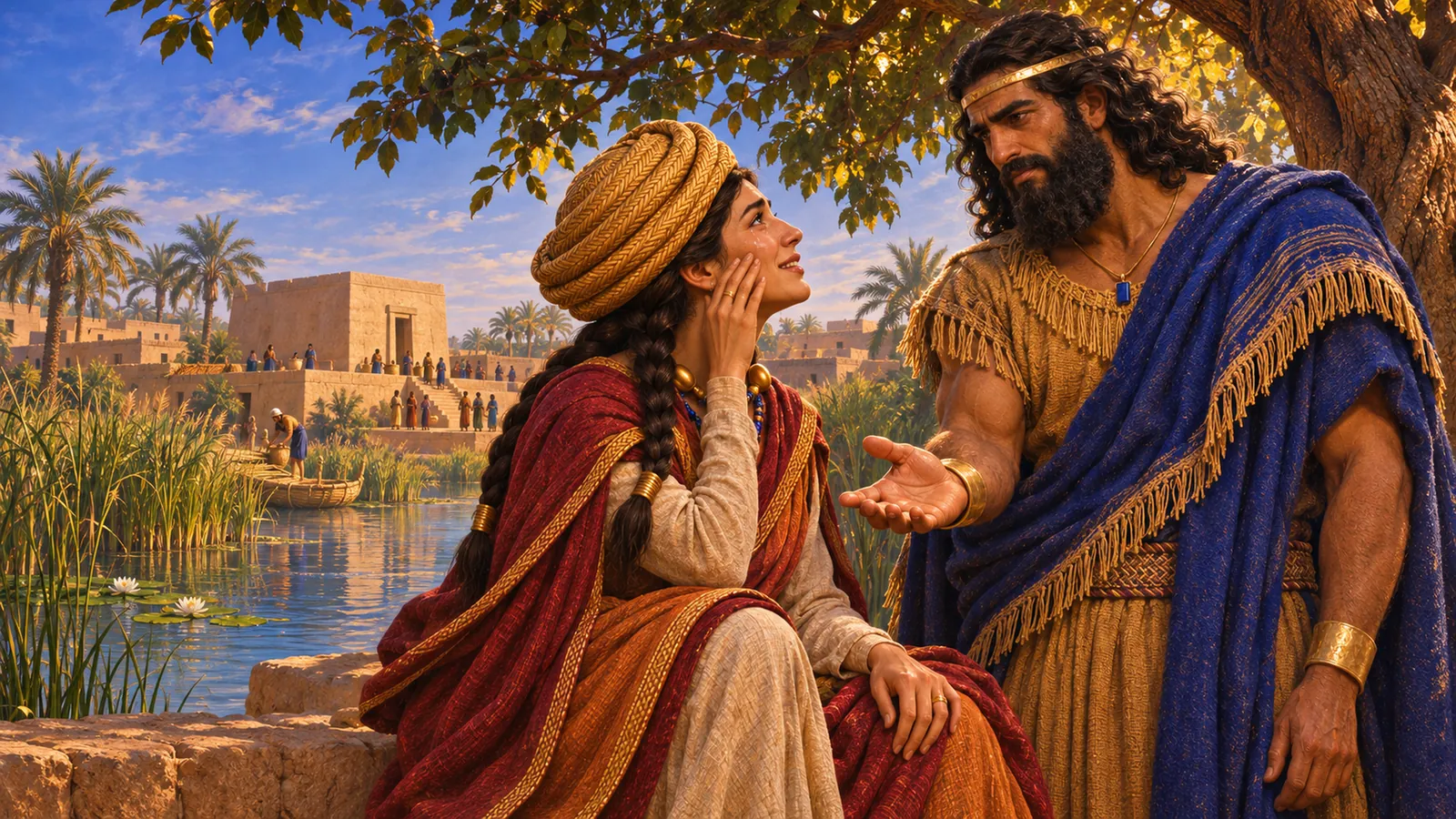
Inanna chorou ao terminar o seu relato. Ao ouvir o que a irmã lhe contara, o guerreiro Gilgamesh ficou do seu lado.
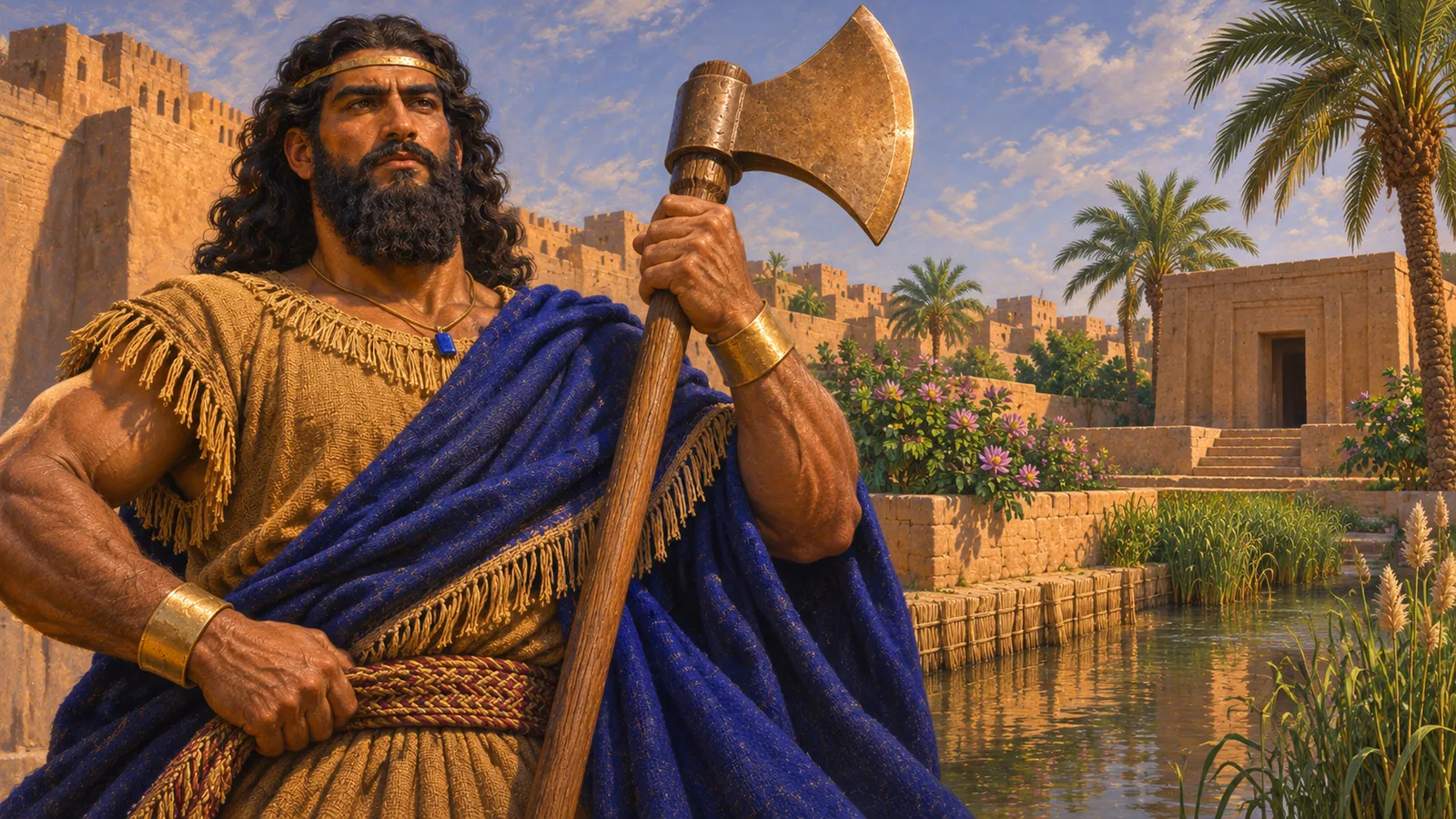
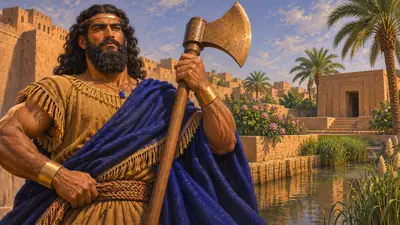
Gilgamesh apertou um cinto pesado à cintura. Pegou no machado de bronze que usava nas suas expedições. O poema dá pesos extraordinários para ambos.
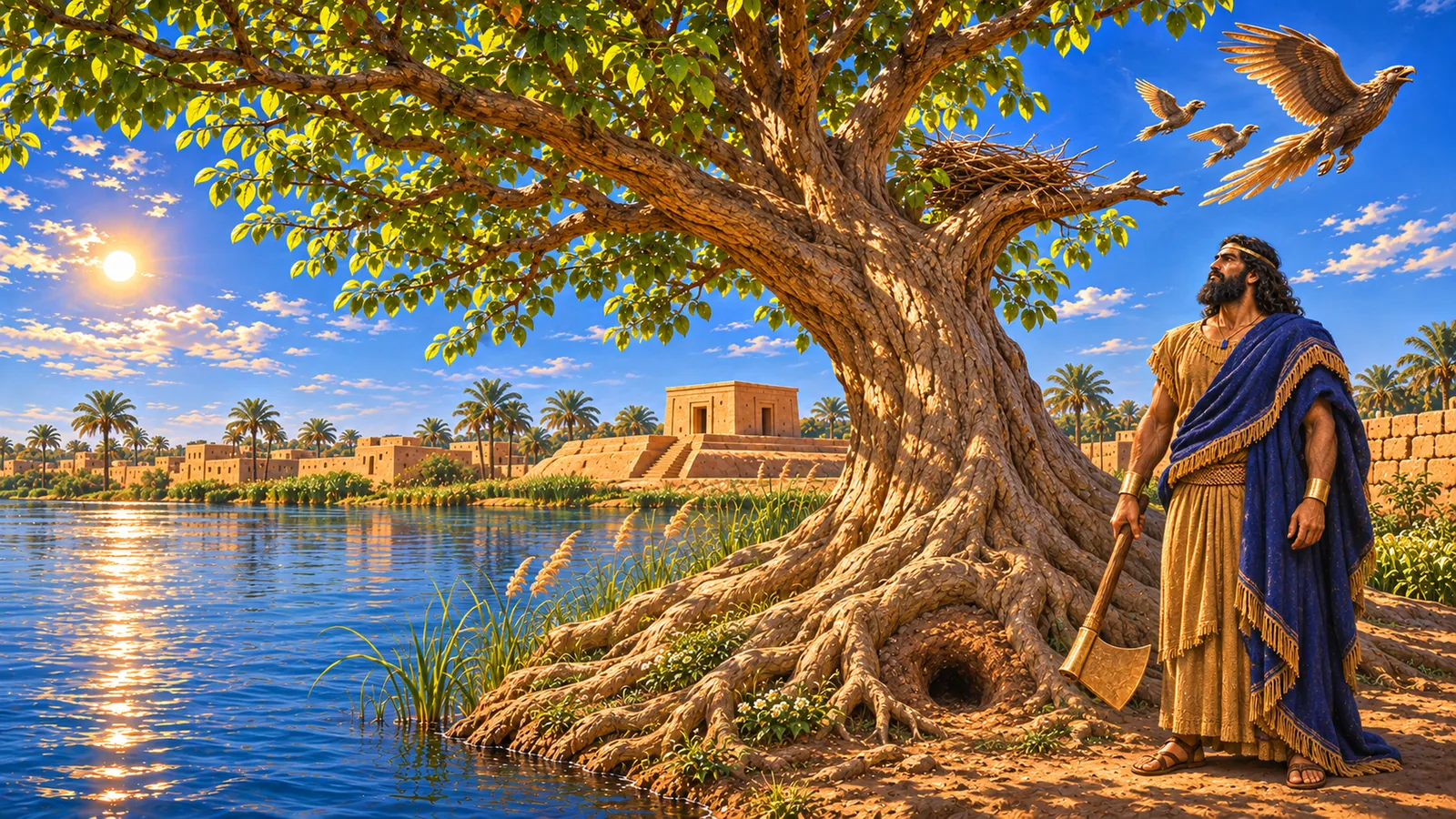
Gilgamesh matou a serpente que vivia junto às raízes e era imune a encantamentos. A ave Anzud levou as suas crias dos ramos e foi para as montanhas.
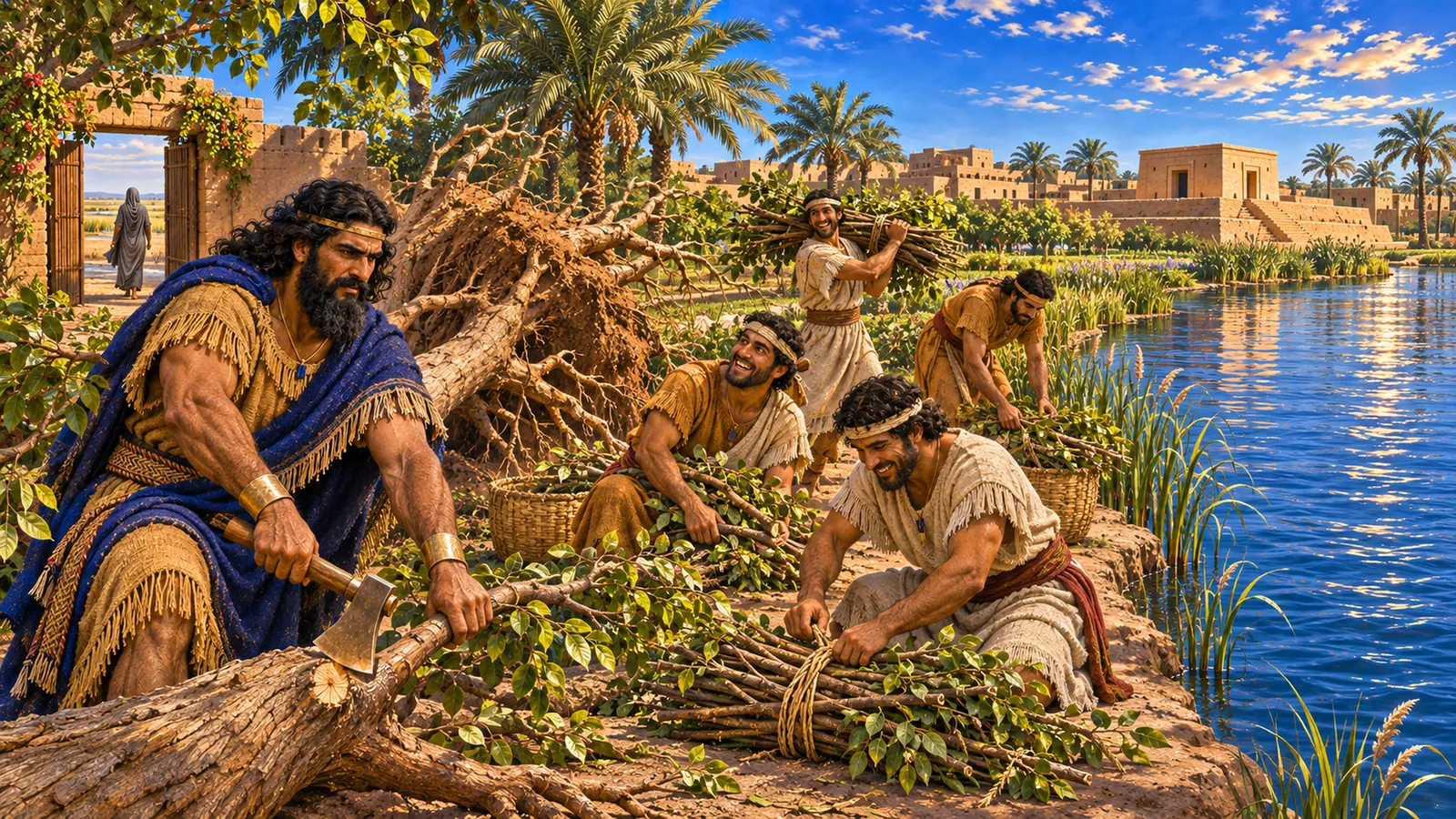
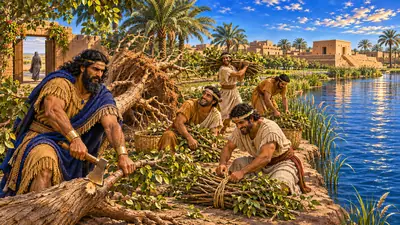
A jovem fantasma procurou refúgio num lugar ermo. Gilgamesh arrancou a árvore pela raiz e despojou-a dos ramos. Os jovens da cidade cortaram os ramos e juntaram-nos em feixes.
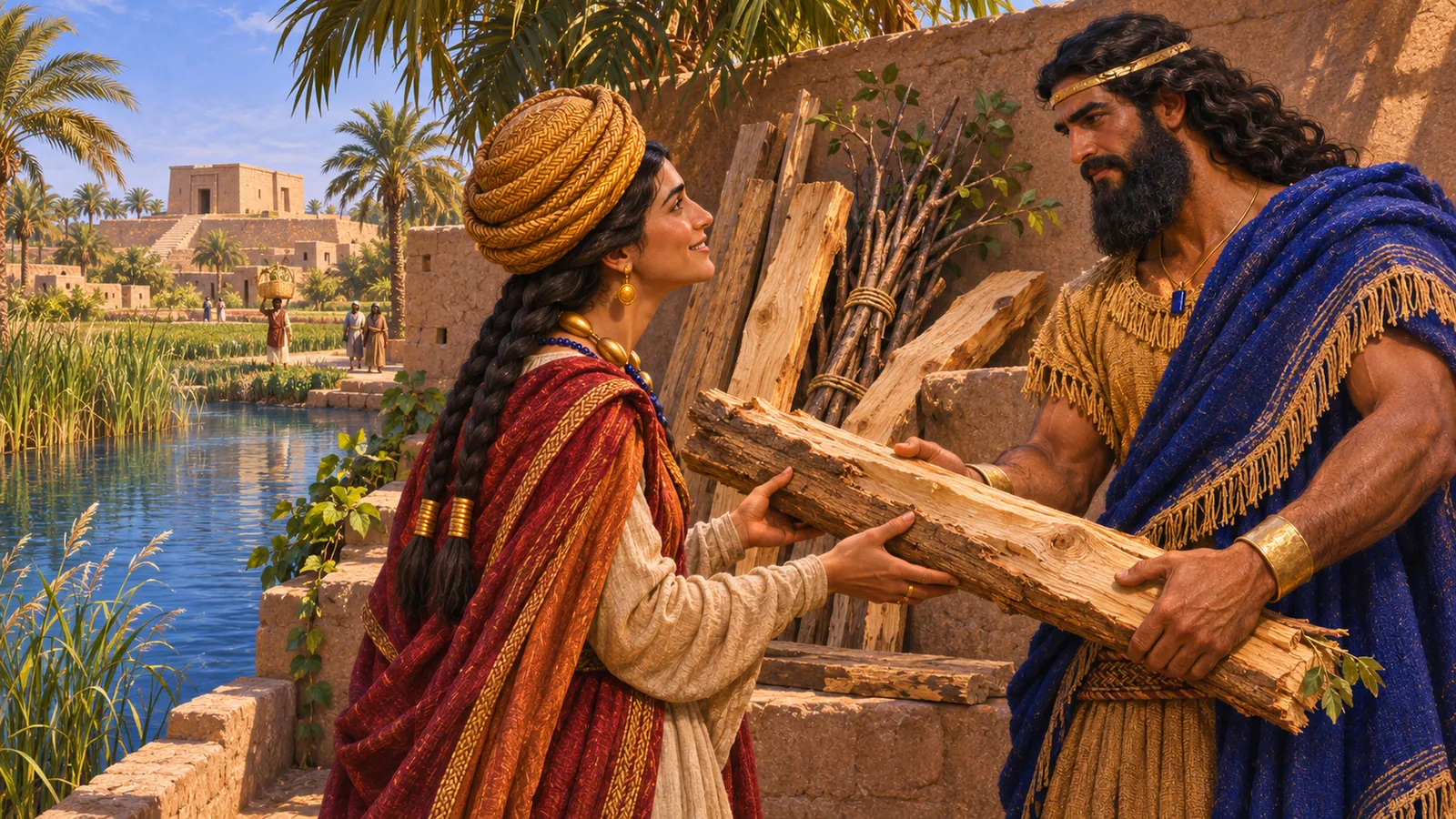
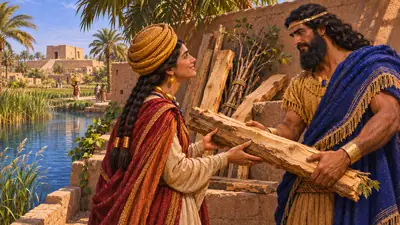
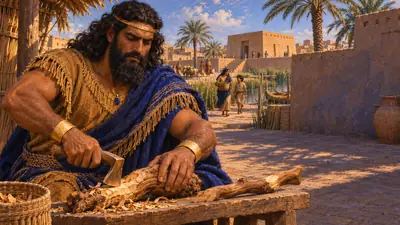
Gilgamesh deu a madeira da árvore a Inanna para a cadeira em que esperara sentar-se e para a cama em que esperara deitar-se.
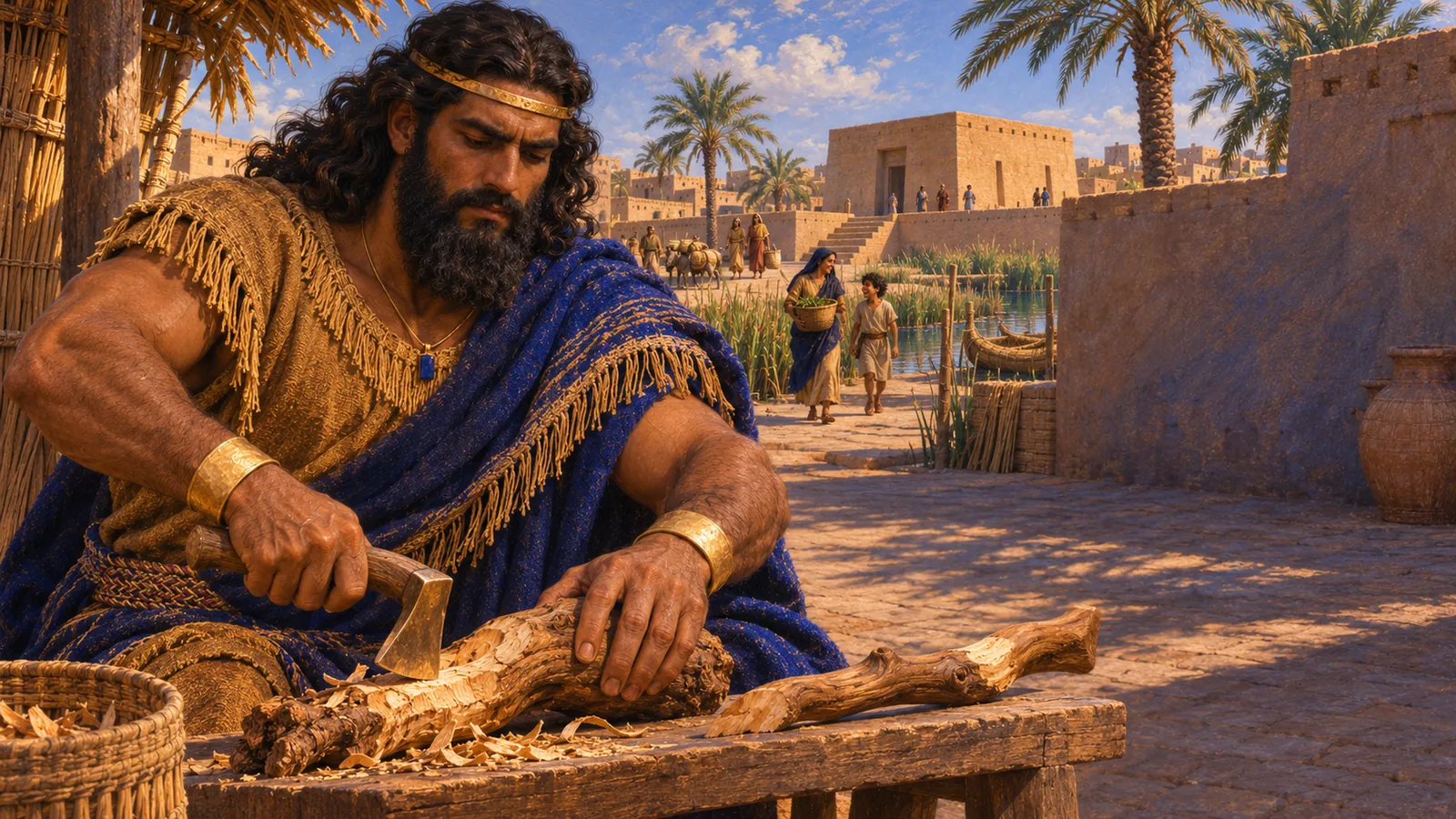
Das raízes, Gilgamesh fez para si um ellag. Dos ramos fez um ekidma. Eram os dois objetos com que iria jogar.
JOGO
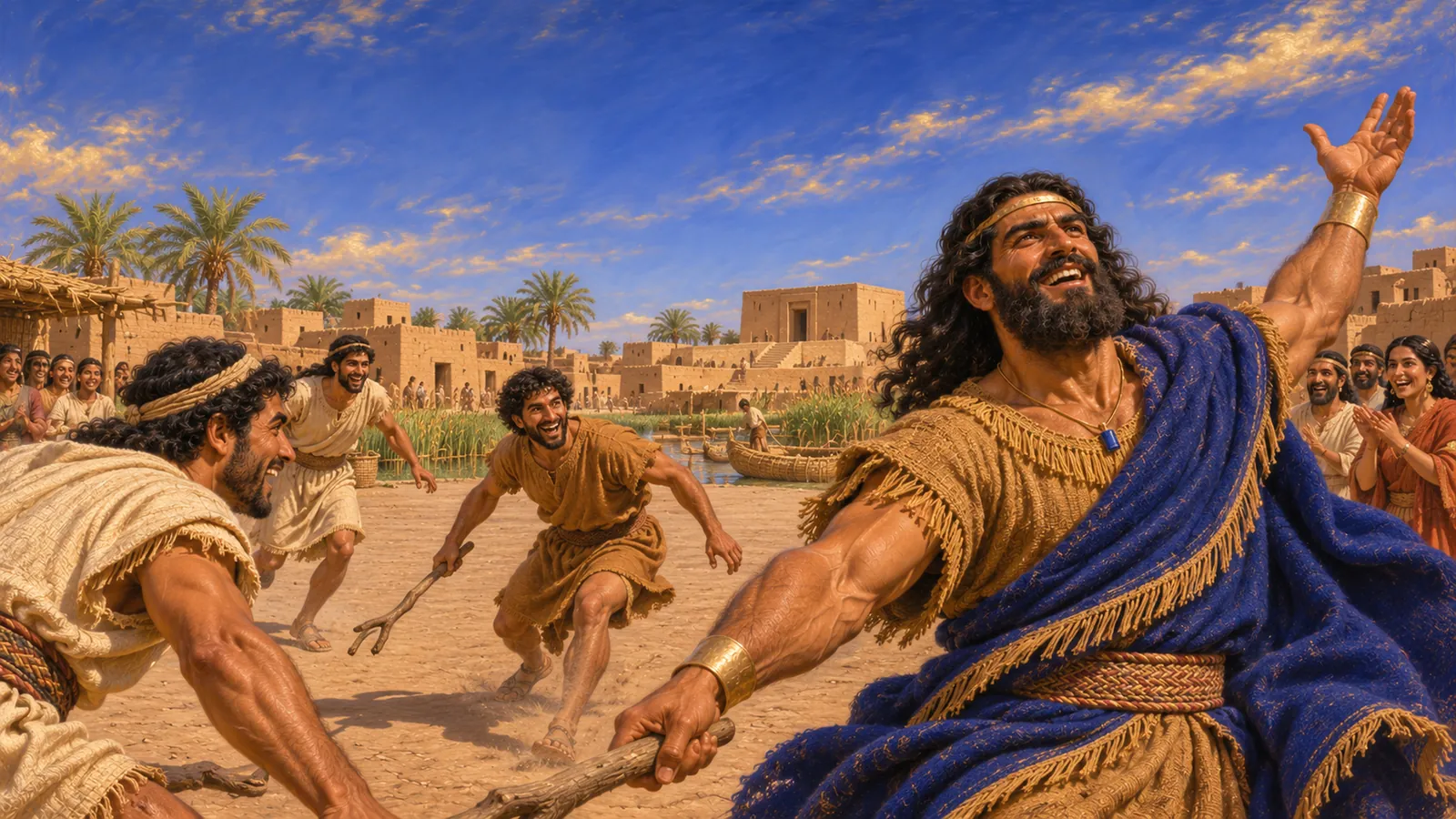
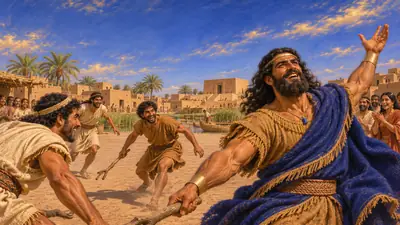
Gilgamesh jogou ellag na praça ampla e gabou-se ali. Nunca queria deixar de jogar. Nos manuscritos de Ur, os rapazes da cidade também jogam.
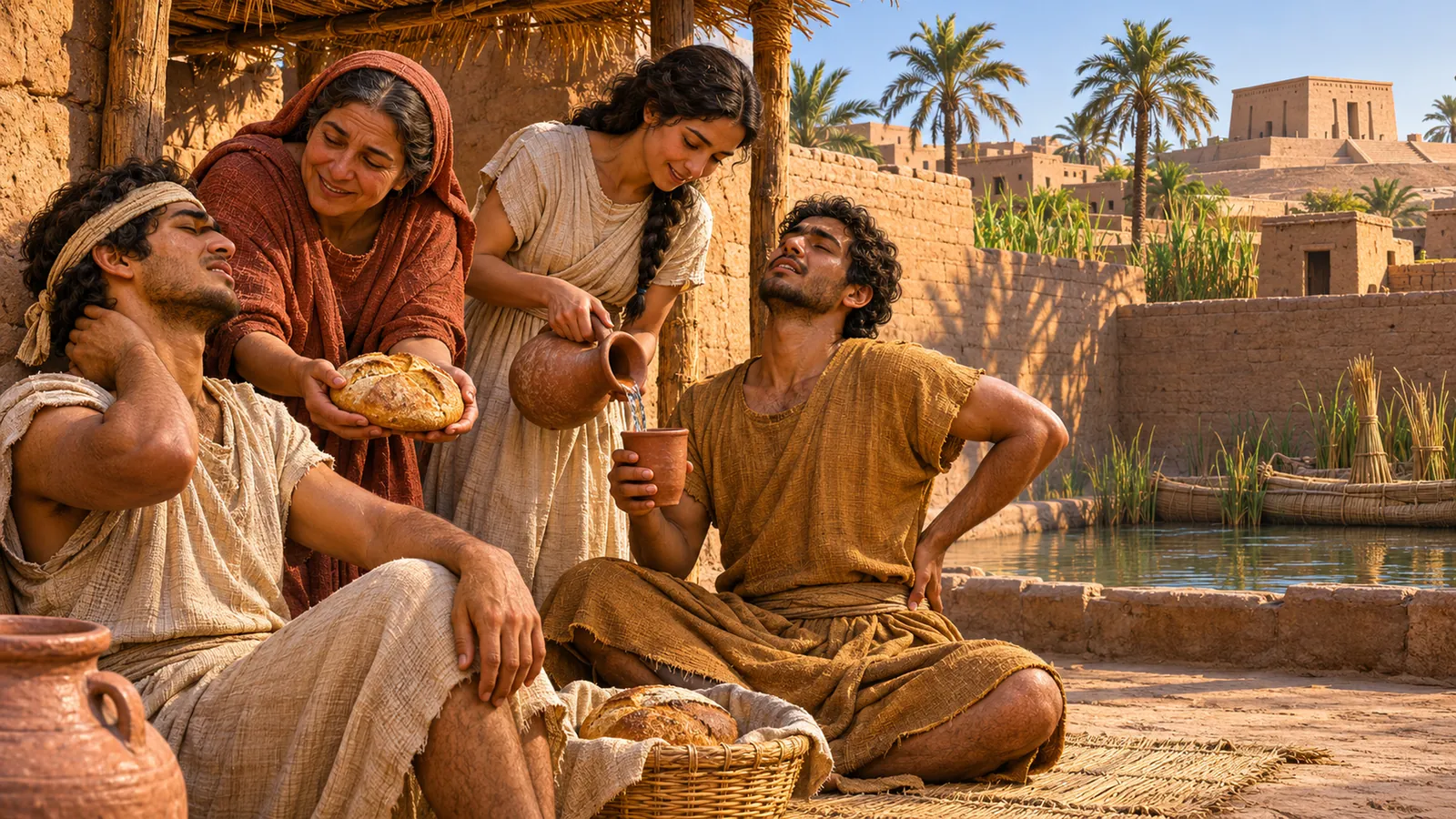
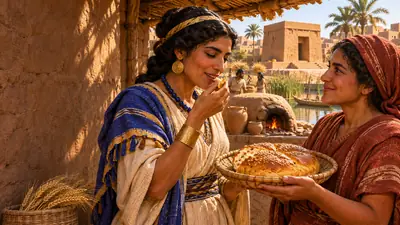
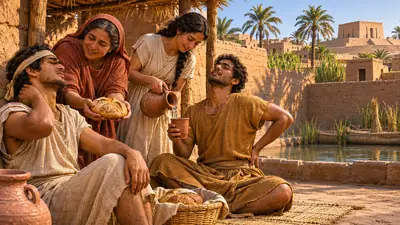
Os jogadores queixavam-se de dores no pescoço e nas ancas. As mães levaram pão aos filhos, e as irmãs verteram água para os irmãos.
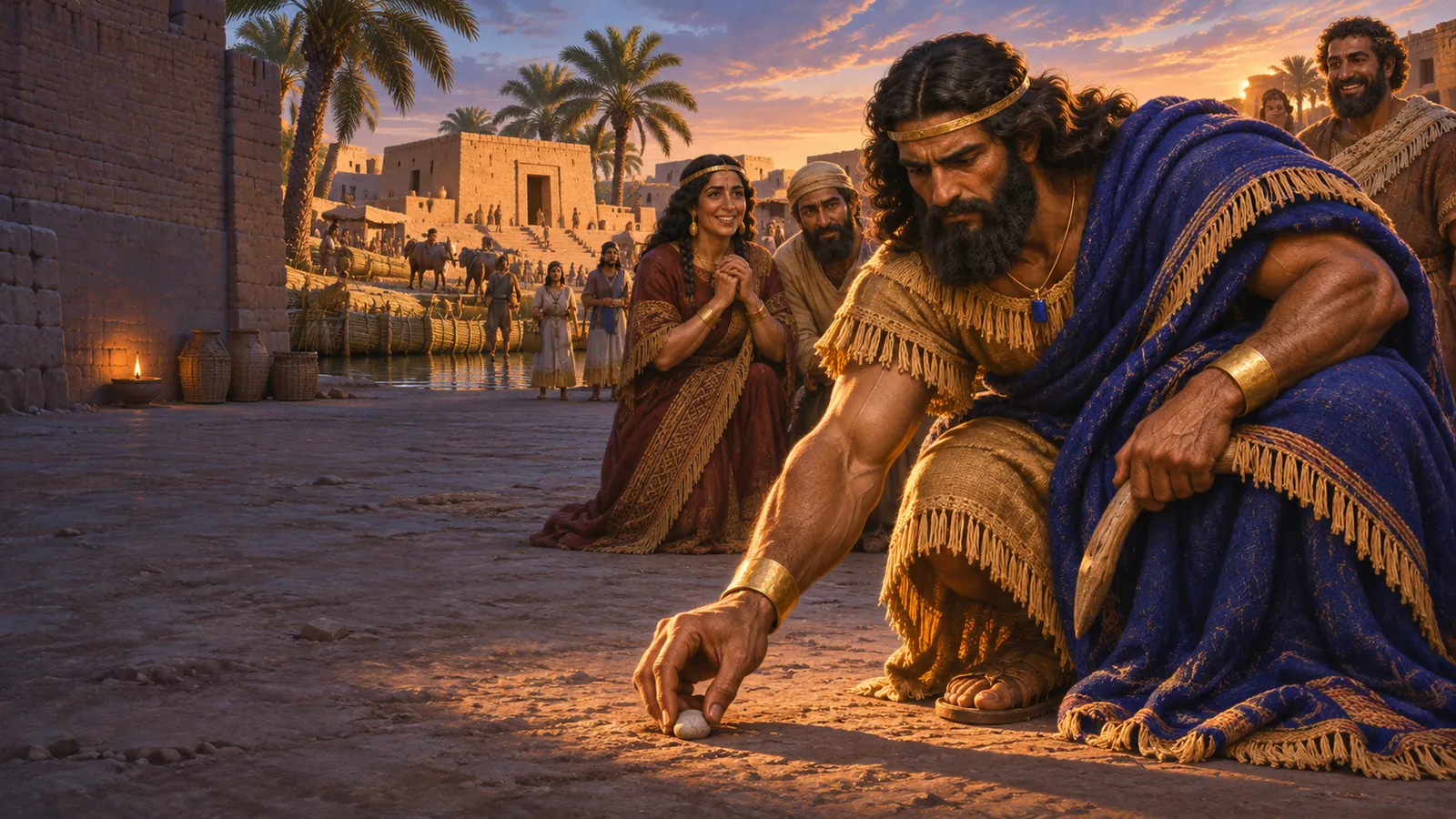
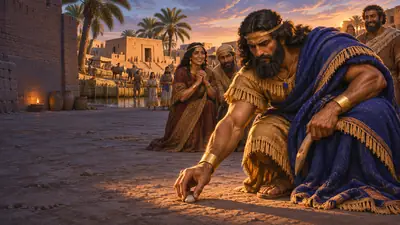
Ao cair da tarde, Gilgamesh marcou o lugar onde o ellag tinha estado. Apanhou-o e levou-o para casa.
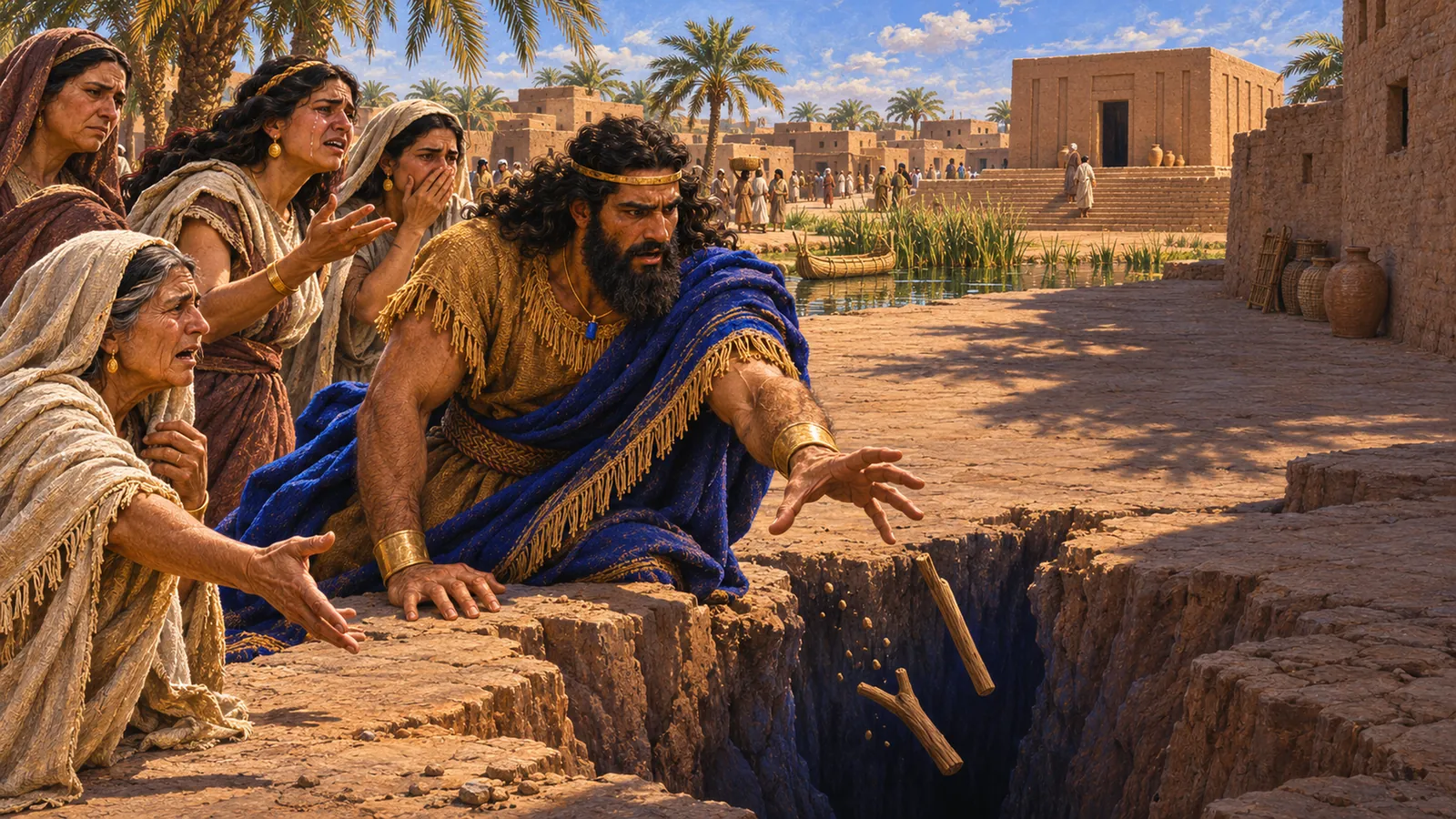
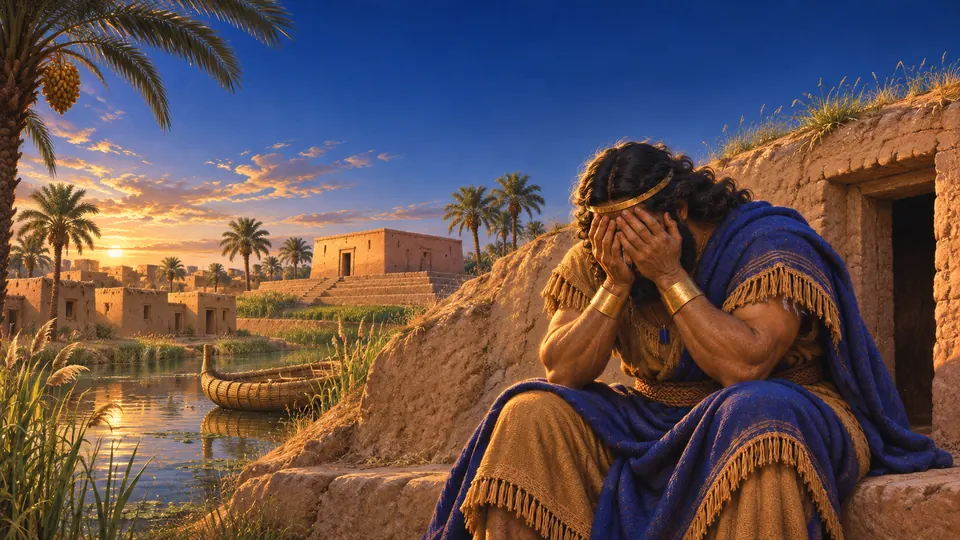
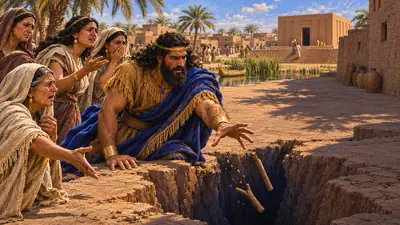
De manhã, as viúvas acusaram-no e as jovens queixaram-se. As suas palavras fizeram cair o ellag e o ekidma até ao fundo do mundo subterrâneo.
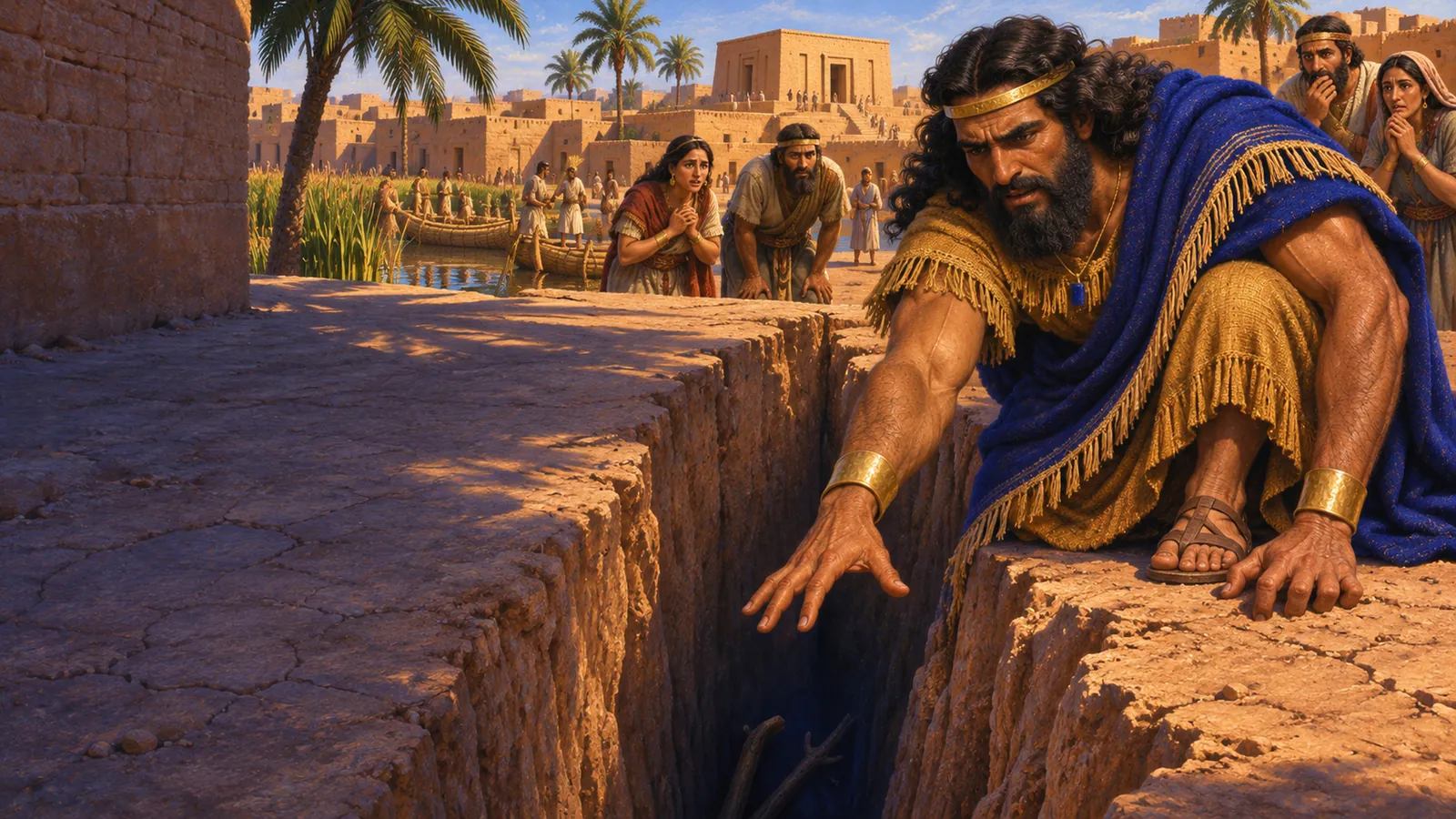
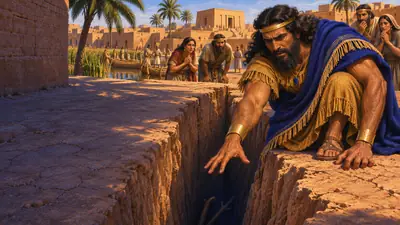
Gilgamesh tentou alcançar os dois objetos primeiro com a mão e depois com o pé. Nenhuma das peças de jogo estava ao seu alcance.
Fim do capítulo 1
Todas as páginas















Fontes
Oxford’s Version A groups lines in its English translation. Page notes identify the events within each printed group and mark readings from individual manuscripts. The names Gilgamesh, Inanna, Ereshkigal and Uruk appear as Gilgamec, Inana, Erec-kigala and Unug in the Oxford translation.
Edições consultadas
Notas sobre este reconto
Pages 1–6, Version A 1–26. The retelling condenses the repeated formula and treats the assignments as part of the poem’s ancient account. Oxford prints Erec-kigala for Ereshkigal.
Pages 7–10, Version A 1–26. The repeated departure formula names the father and then Enki. The hail is small and large. The keel, bow and stern respectively carry the turtle, wolf and lion comparisons.
Pages 11–15, Version A 27–35. The poem says halub tree. The retelling preserves that name. The south wind uproots it and strips its branches, and the Euphrates carries it away. In this initial account a woman heeds the words of An and Enlil and brings the tree into Inanna’s garden at Uruk. In the later retelling to Utu the speaker says she was that woman. Oxford prints Unug and Inana.
16–21 · Version A 36–46. The woman plants the tree using her feet on page 16 and waters it using her feet on page 17. Her questions about the chair and bed are on page 18. Page 19 preserves the progression five years, ten years, the growth of the tree and its unsplit bark. Page 20 identifies the snake immune to incantations at the roots and the Anzud bird settling its young in the branches. Page 21 keeps Oxford’s designation of the phantom maid in the trunk, her joyful laugh and Inanna’s crying. The text gives the maid no proper name in this paragraph.
22–26 · Version A 47–69. The dawn formula presents little birds calling, Utu leaving his bedchamber and his sister addressing him. Pages 23–24 give Inanna’s account of destiny, abundance and the allotment of the realms. Page 25 follows her account of Enki setting sail and the small hail against “the lord” and large hail against Enki. Page 26 keeps the comparisons of the keel to a boat butted by turtles, the bow waves to wolves and the stern waves to a lion.
27–29 · Version A 70–78. Page 27 gives the rooted tree on the Euphrates, with the river watering it. Oxford queries the last occurrence of the repeated phrase “a single tree.” Page 28 gives the south wind, stripping of the branches and carrying away by the river. Page 29 gives Inanna’s account of herself as the woman who heeded An and Enlil and brought the tree into her garden in Uruk.
30–33 · Version A 79–90. Page 30 keeps the use of feet for both planting and watering. Oxford’s composite names Inanna in the first-person watering clause. One manuscript reads “the woman.” Pages 31–32 repeat her wishes for chair and bed, the elapsed years, growth and unsplit bark, and the three occupants in root, branches and trunk order. In this passage the quoted account shifts from first person to third person for part of the description. Page 33 places Inanna’s tears at the close of what she tells Utu. The narrative then says Utu did not stand by her in the matter.
Pages 34–37 (Version A 91–113). The dawn formula mentions Utu leaving his bedchamber. Here Inanna addresses Gilgamesh as her brother. She repeats the allotment of the realms and Enki’s voyage. The turtles, wolves and lion belong to the comparisons for the disturbed boat and water.
Pages 38–39 (Version A 114–122). Oxford places a question mark after the repeated phrase “a single tree.” She tells how the south wind uprooted it and stripped its branches, the river carried it away, and she brought it to her garden in Unug, the Sumerian name of Uruk. The term halub is left in the edition’s transliteration.
Pages 40–42 (Version A 123–135). The poem says the bark stayed unbroken after the tree grew. The root, branches and trunk are the homes of the snake, the Anzud bird with its young, and the phantom maid with her joyful laugh. One manuscript has Inanna say in the first person that she cried. In the composite her crying is recounted in the third person. The verse then says Gilgamesh stood by her.
Page 43 (Version A 136–150). The belt has damaged wording, and one manuscript has a break where the main reading describes fastening it. The belt weighs 50 minas, felt by Gilgamesh as 30 shekels. The bronze axe he took on expeditions weighs seven talents and seven minas. The two conspicuous weights belong to the poem’s description.
Pages 44–45 (Version A 136–150). Gilgamesh kills the snake at the roots. The Anzud bird takes its young to the mountains, and the phantom maid seeks refuge in the wilderness. Oxford marks the verb for her leaving the dwelling as uncertain. Gilgamesh uproots the tree and strips its branches. The men of his city cut the branches and bundle them, while one manuscript reads that they pile them up.
Pages 46–47 (Version A 136–150). Gilgamesh gives wood to Inanna for her chair and then for her bed. He makes the ellag from the roots and the ekidma from the branches. The following passage shows him playing, and the edition retains the names of the two implements. Oxford says that the pronunciation of ekidma is unknown. A modern reading aid for the name is only an approximation.
Page 48, ETCSL 1.8.1.4, Version A, lines 151–165. Gilgamesh plays ellag in the broad square and praises himself repeatedly. The Ur manuscripts add the young men playing too. The exact form of the game and its implements is uncertain.
Page 49, lines 151–165. The Oxford translation has a broken phrase involving a team and the widows’ children. The complaints name pain in the neck and hips. Mothers bring bread to sons and sisters pour water for brothers. The retelling keeps the pain and relief and leaves the broken assignment of the players open.
Pages 50–51, lines 151–165. He marks the spot at evening and takes the ellag home. His morning action at the spot is damaged. The widows’ accusation and the young girls’ complaint bring the fall of both objects.
Page 52, lines 151–165. He tries with his hand and his foot and cannot reach the pieces. A manuscript uses “touch” in both clauses, and one adds another fragmentary attempt. Continue at the gate of Ganzer in 166–175. Oxford notes at 136–150 that the correct pronunciation of ekidma is unknown.
Os versos antigos de cada página
- Page 1: ETCSL 1.8.1.4, Version A, lines 1–26
- Page 2: ETCSL 1.8.1.4, Version A, lines 1–26
- Page 3: ETCSL 1.8.1.4, Version A, lines 1–26
- Page 4: ETCSL 1.8.1.4, Version A, lines 1–26
- Page 5: ETCSL 1.8.1.4, Version A, lines 1–26
- Page 6: ETCSL 1.8.1.4, Version A, lines 1–26
- Page 7: ETCSL 1.8.1.4, Version A, lines 1–26
- Page 8: ETCSL 1.8.1.4, Version A, lines 1–26
- Page 9: ETCSL 1.8.1.4, Version A, lines 1–26
- Page 10: ETCSL 1.8.1.4, Version A, lines 1–26
- Page 11: ETCSL 1.8.1.4, Version A, lines 27–35
- Page 12: ETCSL 1.8.1.4, Version A, lines 27–35
- Page 13: ETCSL 1.8.1.4, Version A, lines 27–35
- Page 14: ETCSL 1.8.1.4, Version A, lines 27–35
- Page 15: ETCSL 1.8.1.4, Version A, lines 27–35
- Page 16: ETCSL 1.8.1.4, Version A, lines 36–46
- Page 17: ETCSL 1.8.1.4, Version A, lines 36–46
The left is unbroken taupe clay with soft shade and no definite line, reflected object or branch. - Page 18: ETCSL 1.8.1.4, Version A, lines 36–46
- Page 19: ETCSL 1.8.1.4, Version A, lines 36–46
- Page 20: ETCSL 1.8.1.4, Version A, lines 36–46
- Page 21: ETCSL 1.8.1.4, Version A, lines 36–46
- Page 22: ETCSL 1.8.1.4, Version A, lines 47–69
- Page 23: ETCSL 1.8.1.4, Version A, lines 47–69
- Page 24: ETCSL 1.8.1.4, Version A, lines 47–69
- Page 25: ETCSL 1.8.1.4, Version A, lines 47–69
- Page 26: ETCSL 1.8.1.4, Version A, lines 47–69
- Page 27: ETCSL 1.8.1.4, Version A, lines 70–78
- Page 28: ETCSL 1.8.1.4, Version A, lines 70–78
- Page 29: ETCSL 1.8.1.4, Version A, lines 70–78
- Page 30: ETCSL 1.8.1.4, Version A, lines 79–90
- Page 31: ETCSL 1.8.1.4, Version A, lines 79–90
Left is the continuous low-contrast clay shade of a near wall, with no boundaries, furniture edges or bark lines. - Page 32: ETCSL 1.8.1.4, Version A, lines 79–90
- Page 33: ETCSL 1.8.1.4, Version A, lines 79–90
- Page 34: ETCSL 1.8.1.4, Version A, lines 91–113
- Page 35: ETCSL 1.8.1.4, Version A, lines 91–113
The right is a single low-contrast stretch of warm blue-grey air and distant ground, with no distinct line crossing it. - Page 36: ETCSL 1.8.1.4, Version A, lines 91–113
- Page 37: ETCSL 1.8.1.4, Version A, lines 91–113
Small broken water swells stay near it on the left. - Page 38: ETCSL 1.8.1.4, Version A, lines 114–122
- Page 39: ETCSL 1.8.1.4, Version A, lines 114–122
A low mudbrick garden wall and a plain open side entrance occupy the far lower-left, with a short curved line of wet ochre path. - Page 40: ETCSL 1.8.1.4, Version A, lines 123–135
- Page 41: ETCSL 1.8.1.4, Version A, lines 123–135
- Page 42: ETCSL 1.8.1.4, Version A, lines 123–135
- Page 43: ETCSL 1.8.1.4, Version A, lines 136–150
- Page 44: ETCSL 1.8.1.4, Version A, lines 136–150
- Page 45: ETCSL 1.8.1.4, Version A, lines 136–150
- Page 46: ETCSL 1.8.1.4, Version A, lines 136–150
- Page 47: ETCSL 1.8.1.4, Version A, lines 136–150
- Page 48: ETCSL 1.8.1.4, Version A, lines 151–165
- Page 49: ETCSL 1.8.1.4, Version A, lines 151–165
- Page 50: ETCSL 1.8.1.4, Version A, lines 151–165
- Page 51: ETCSL 1.8.1.4, Version A, lines 151–165
- Page 52: ETCSL 1.8.1.4, Version A, lines 151–165
Ilustrações feitas pelo IL Archive com ferramentas de IA; o texto baseia-se nas fontes antigas (veja as fontes no fim de cada capítulo).