Ísis e Osíris Capítulo 1
Os cinco dias acrescentados
O relato de Plutarco começa com cinco dias acrescentados ao ano e com os nascimentos celebrados nesses dias. Osíris torna-se rei e ensina a cultivar a terra. Depois de uma conspiração de Set levar um cofre ao mar, Ísis parte à sua procura.
FontesVire as páginas com as setas, o teclado ou deslizando o dedo.
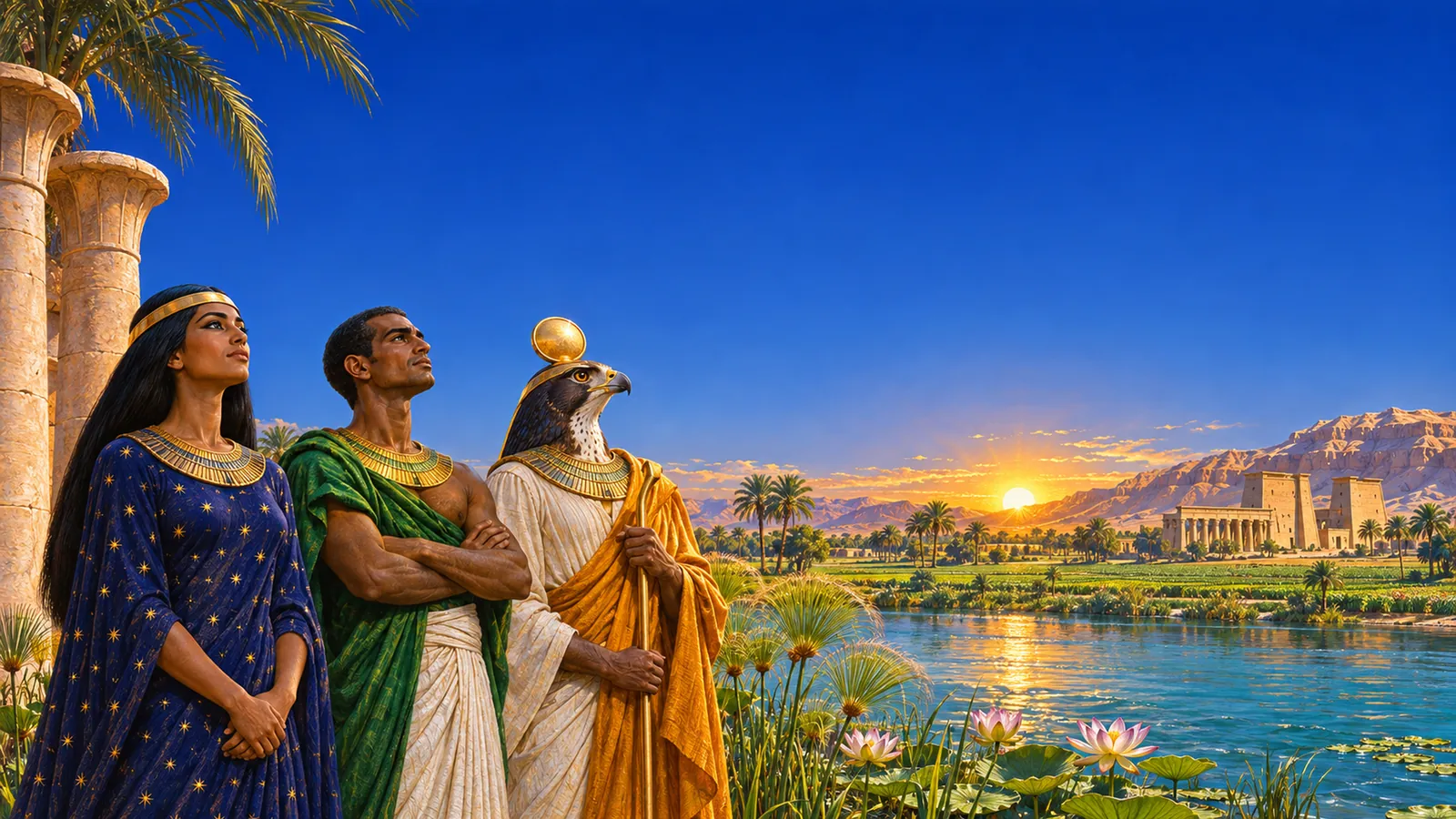
CINCO DIAS
Na versão de um mito egípcio contada por Plutarco, acrescentaram-se cinco dias ao ano. A história que os explica começa com Nut, Geb e Rá, o deus do sol.
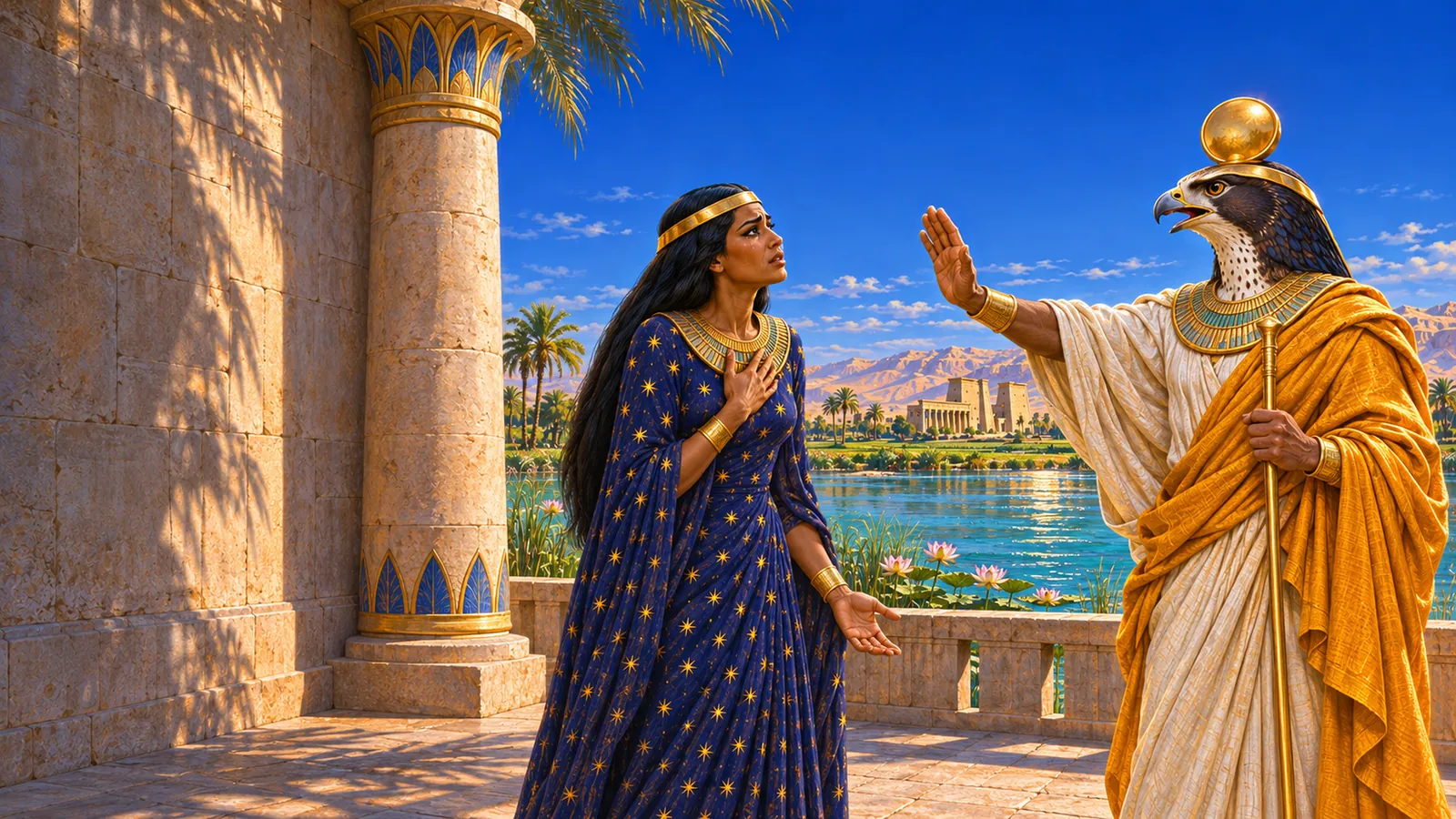
Rá descobriu que Nut e Geb tinham estado juntos em segredo. Amaldiçoou Nut para que ela não pudesse dar à luz em mês nem ano algum.
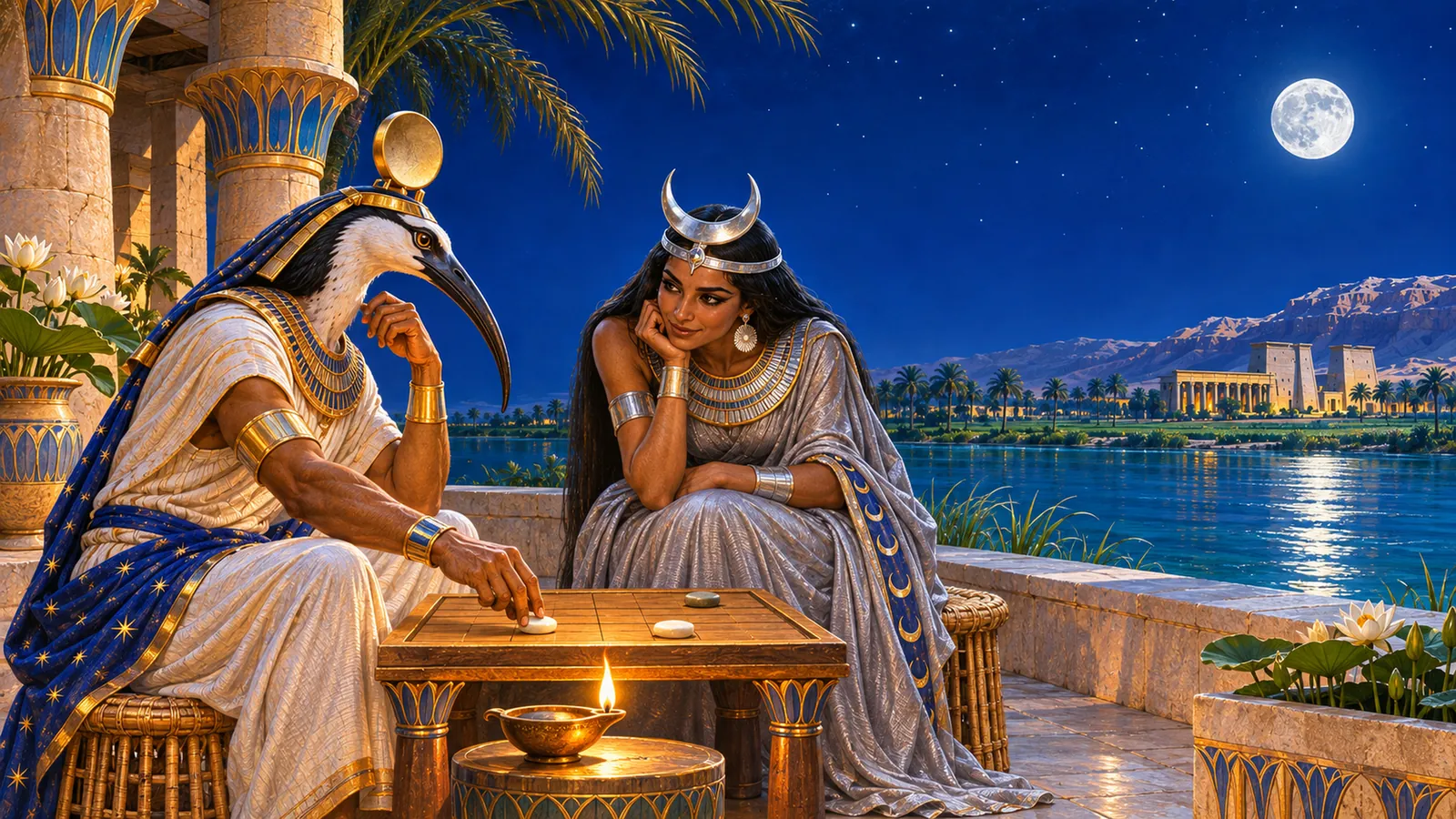
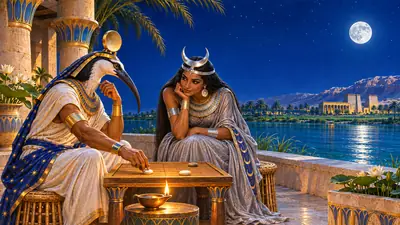
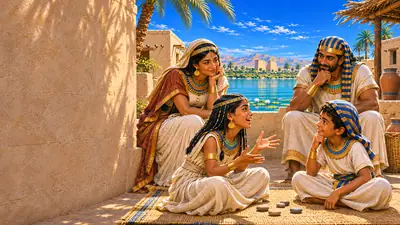
Tot, que amava Nut, veio em seu auxílio. Jogou um jogo de tabuleiro com a Lua.
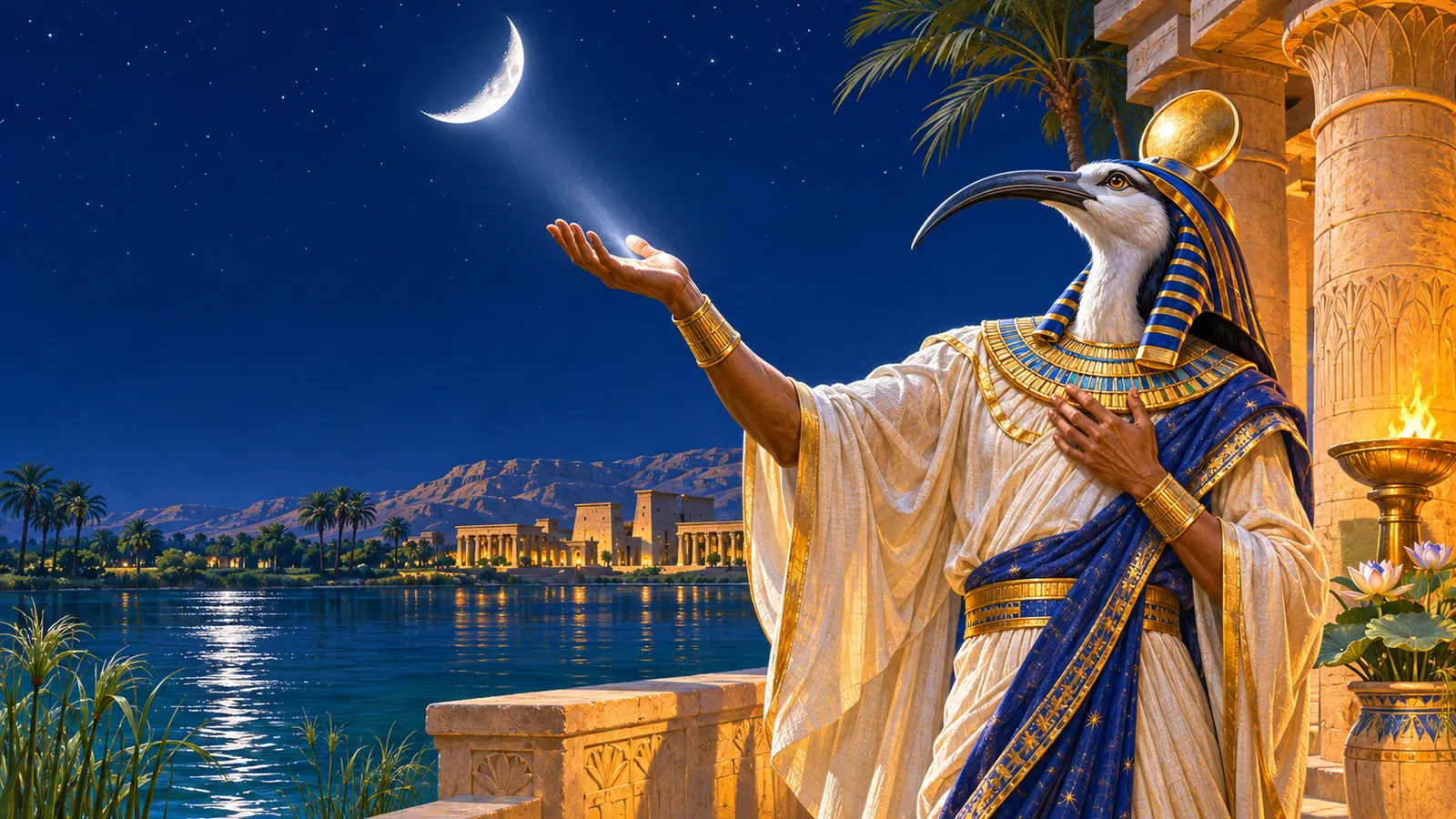
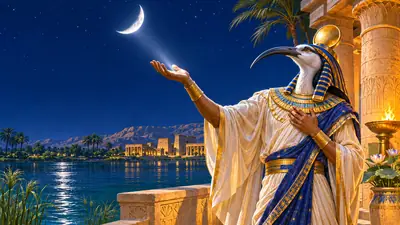
O relato diz que Tot ganhou uma septuagésima parte de cada período em que a Lua brilhava.
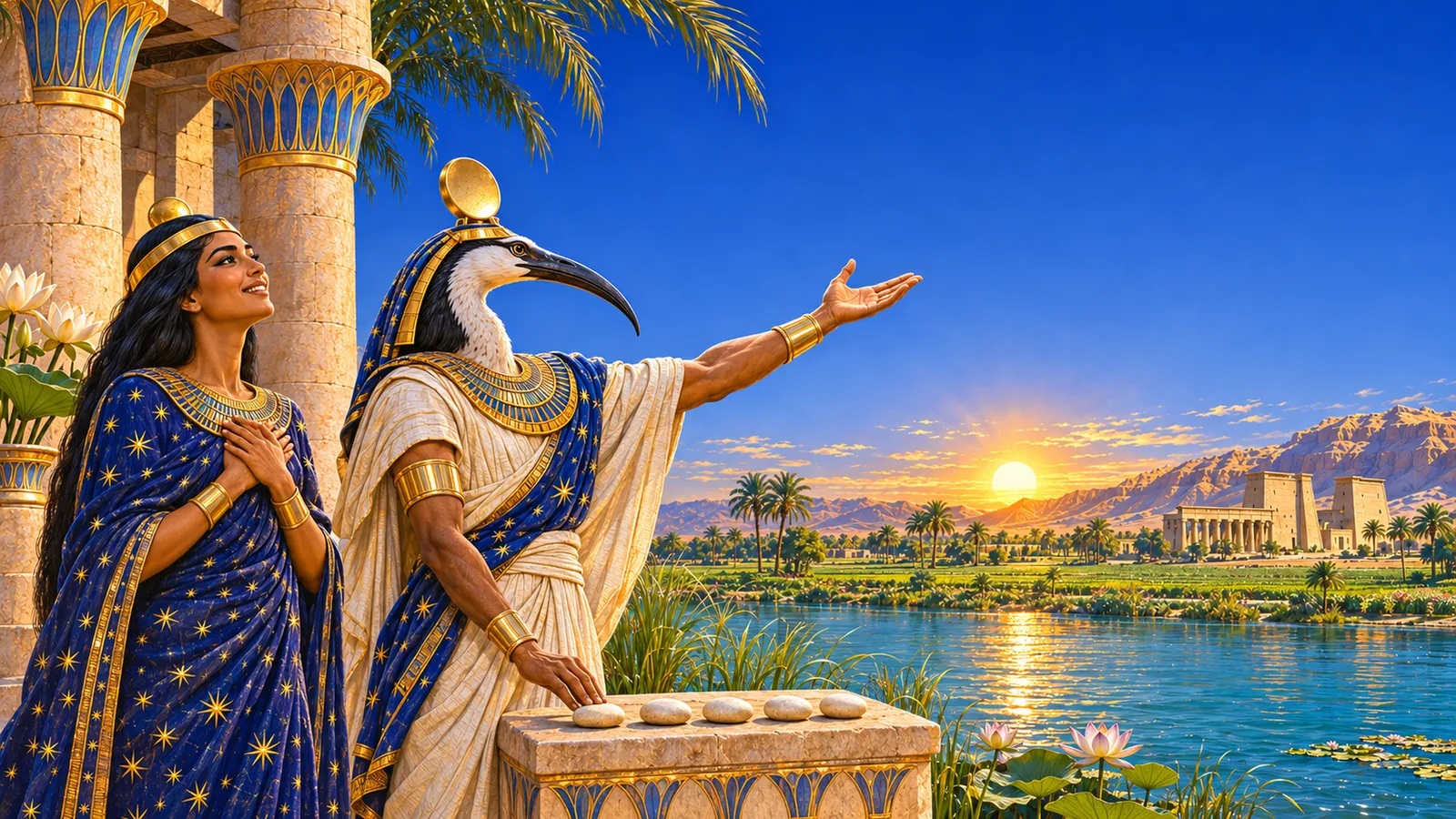
Tot juntou as porções até perfazer cinco dias e acrescentou-os ao ano antigo. Segundo o relato, antes disso o ano durava trezentos e sessenta dias.
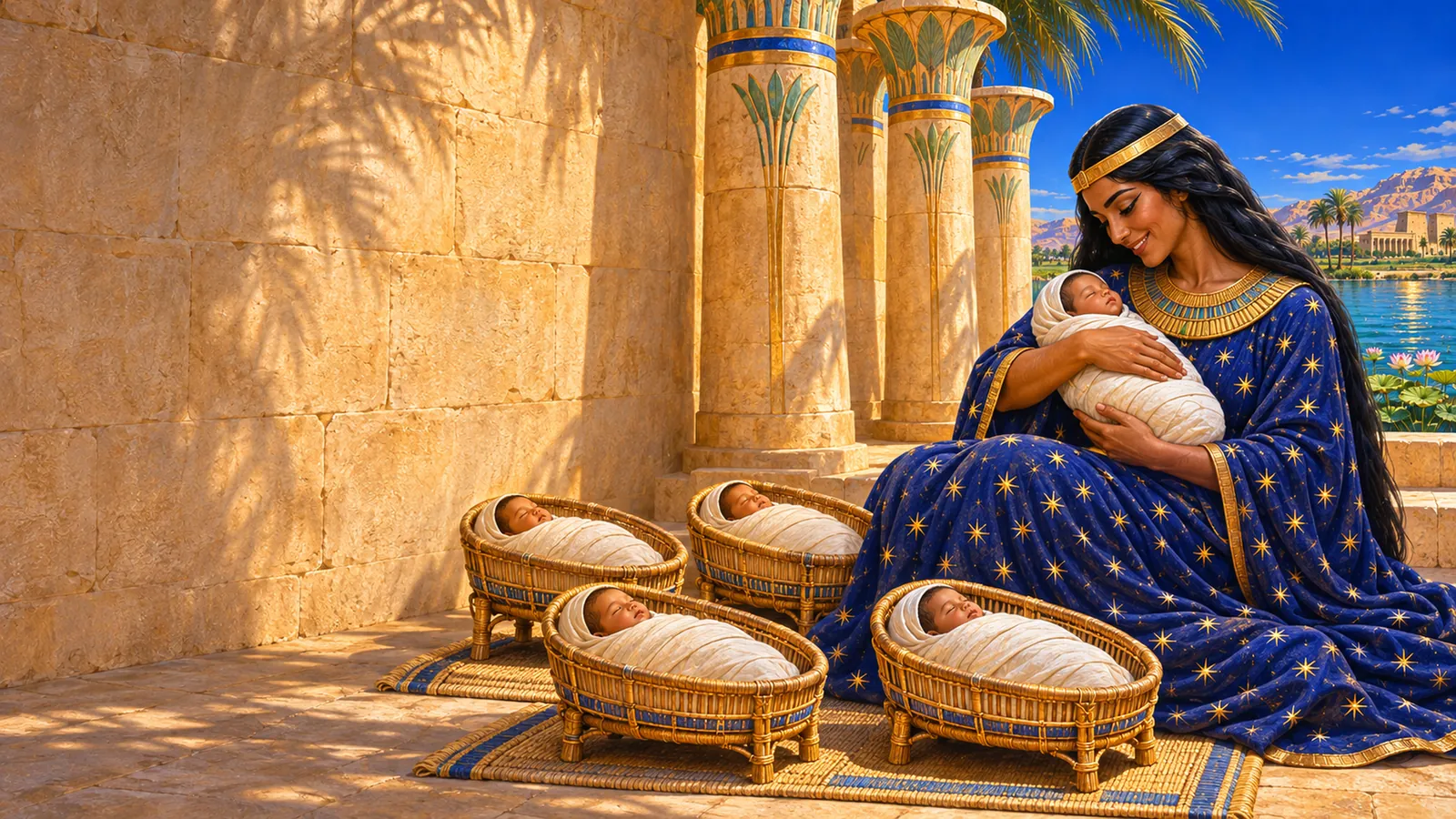
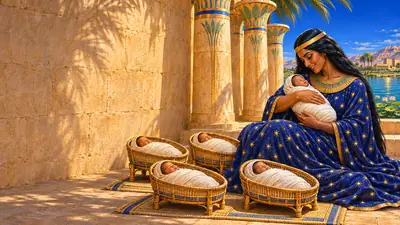
No relato de Plutarco, os egípcios celebravam esses cinco dias adicionais como os aniversários dos seus deuses. Ele conta os nascimentos pela sua ordem.
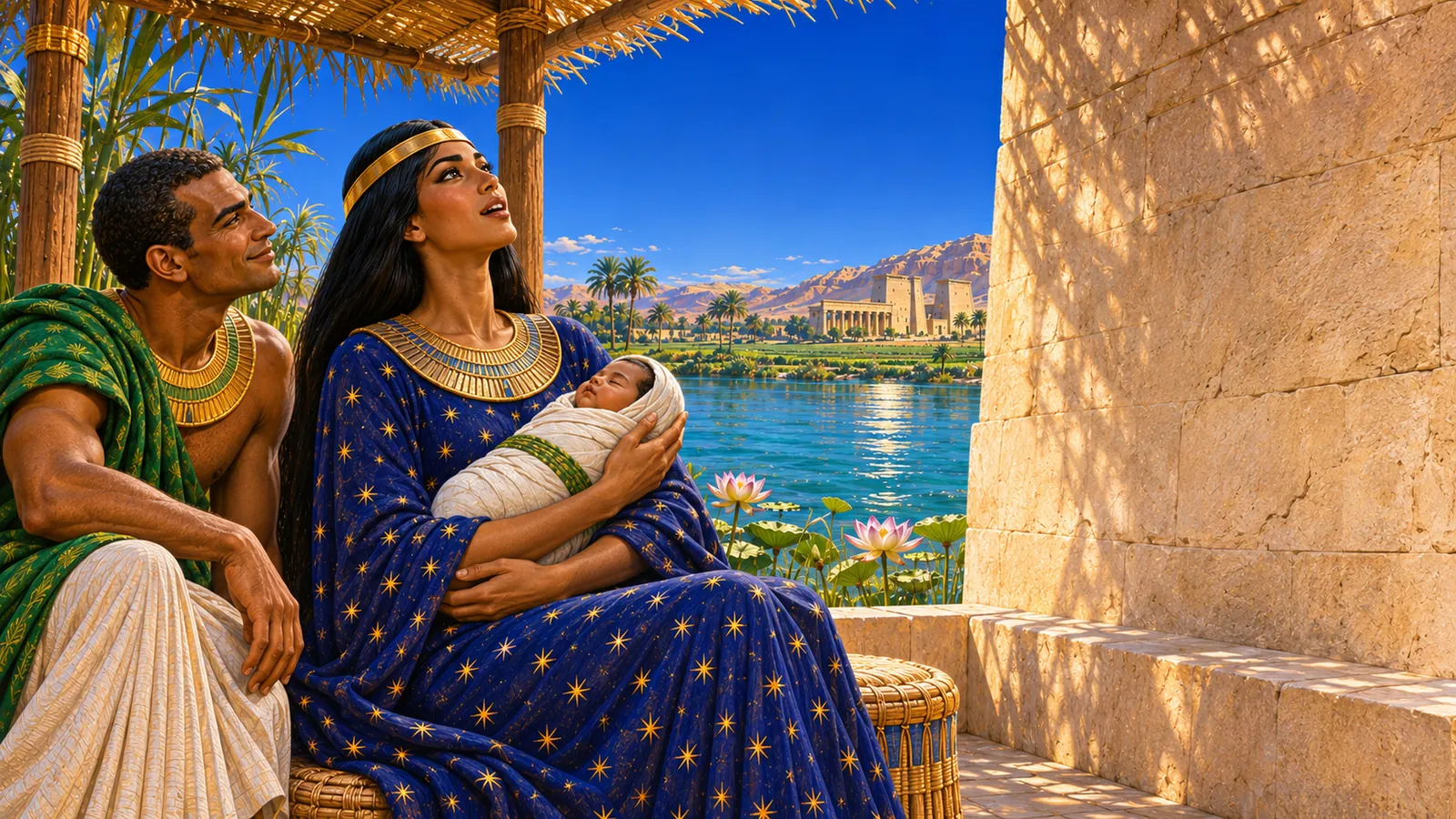
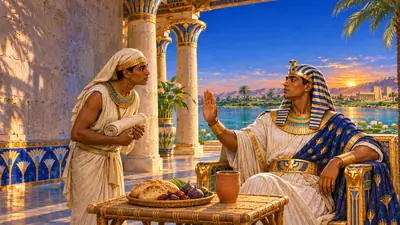
No primeiro dia acrescentado nasceu Osíris. Quando veio ao mundo, uma voz anunciou o nascimento do senhor de toda a terra.
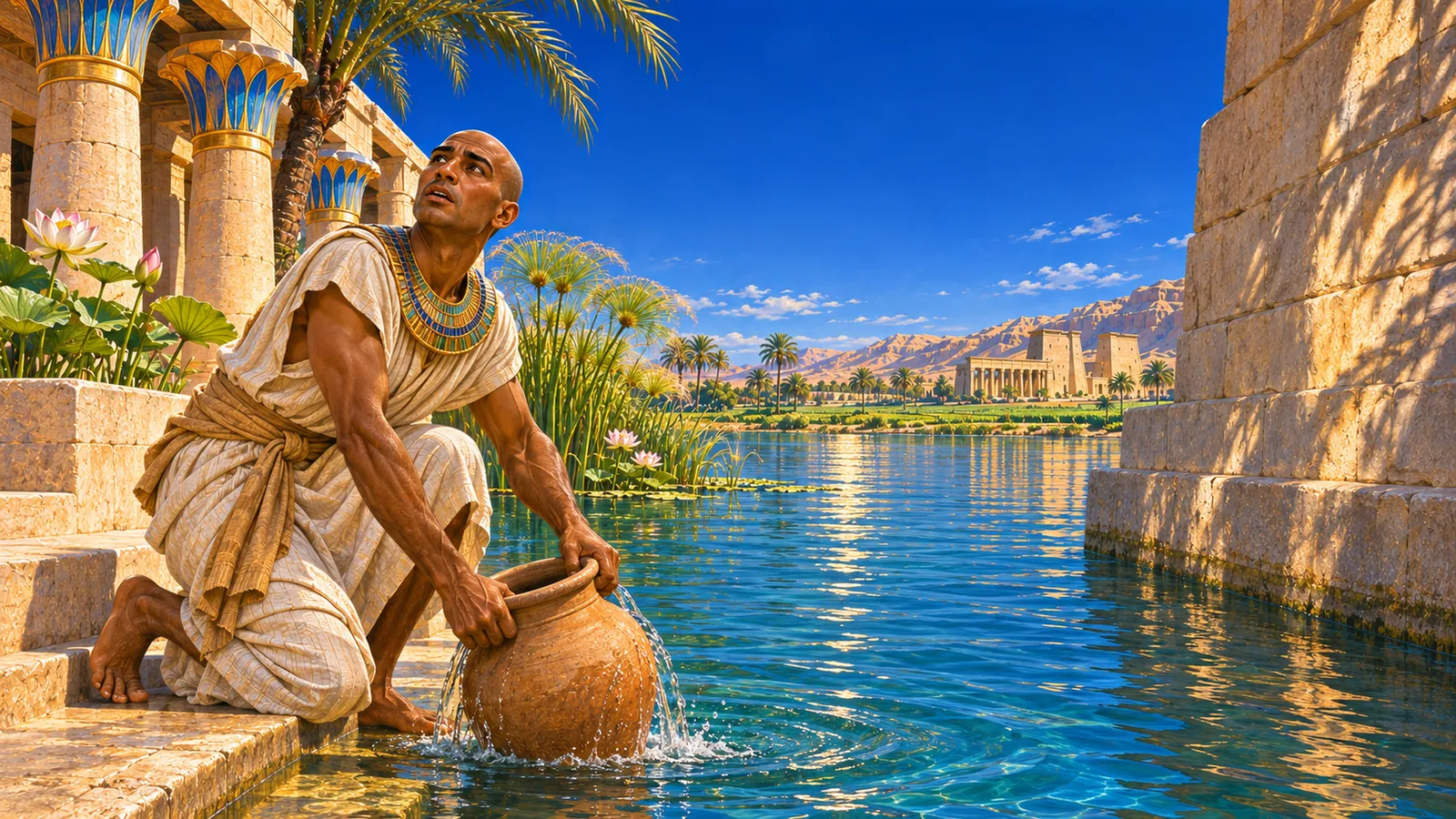
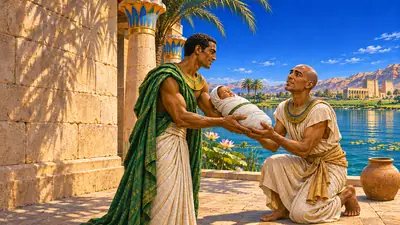
Noutra versão do anúncio, um homem chamado Pâmiles ia buscar água a um templo em Tebas. Ali ouviu uma voz.
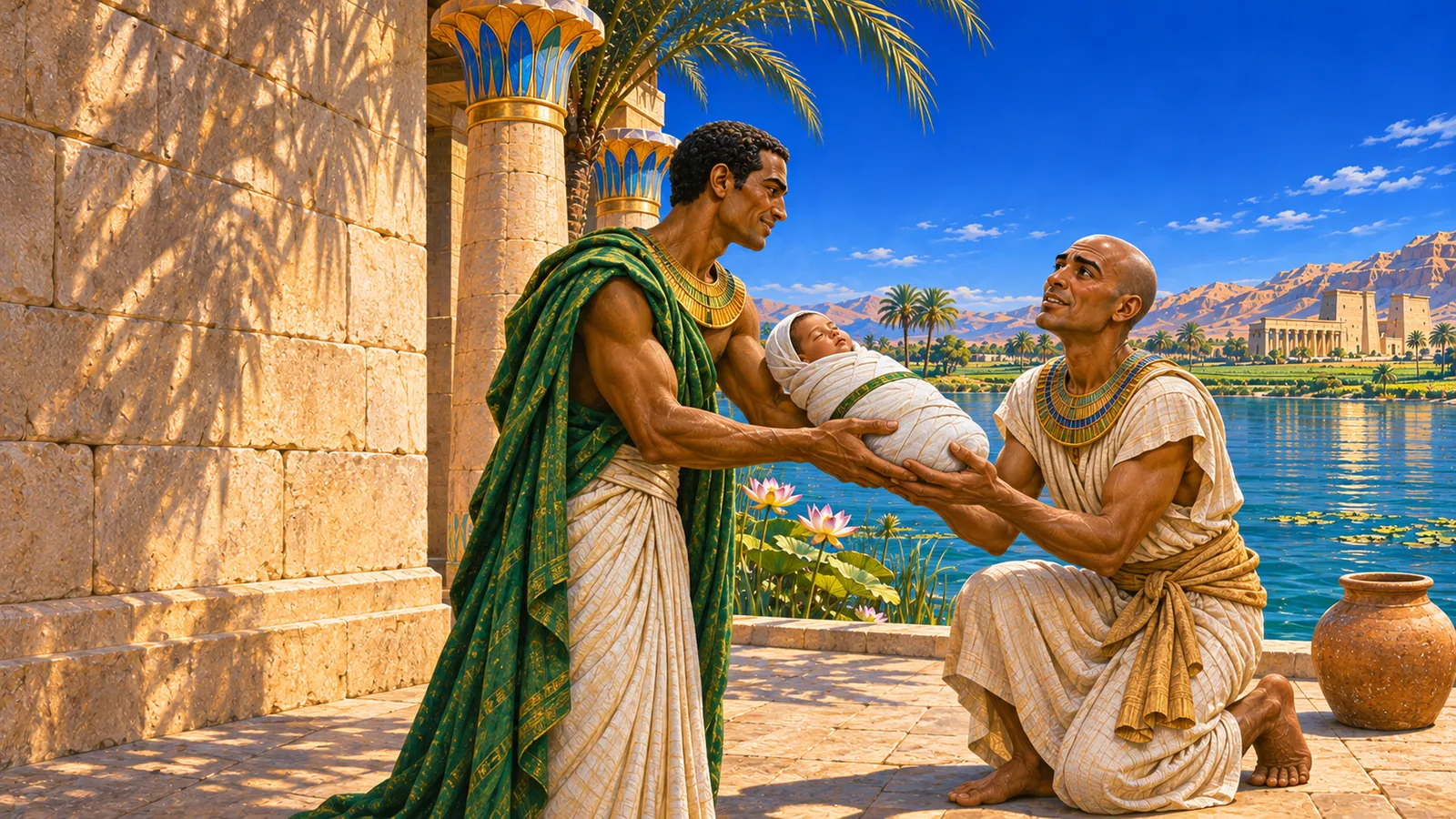
A voz disse a Pâmiles que anunciasse o nascimento de Osíris. Geb confiou-lhe a criação da criança, e uma festa chamada Pamílias comemorou o acontecimento.
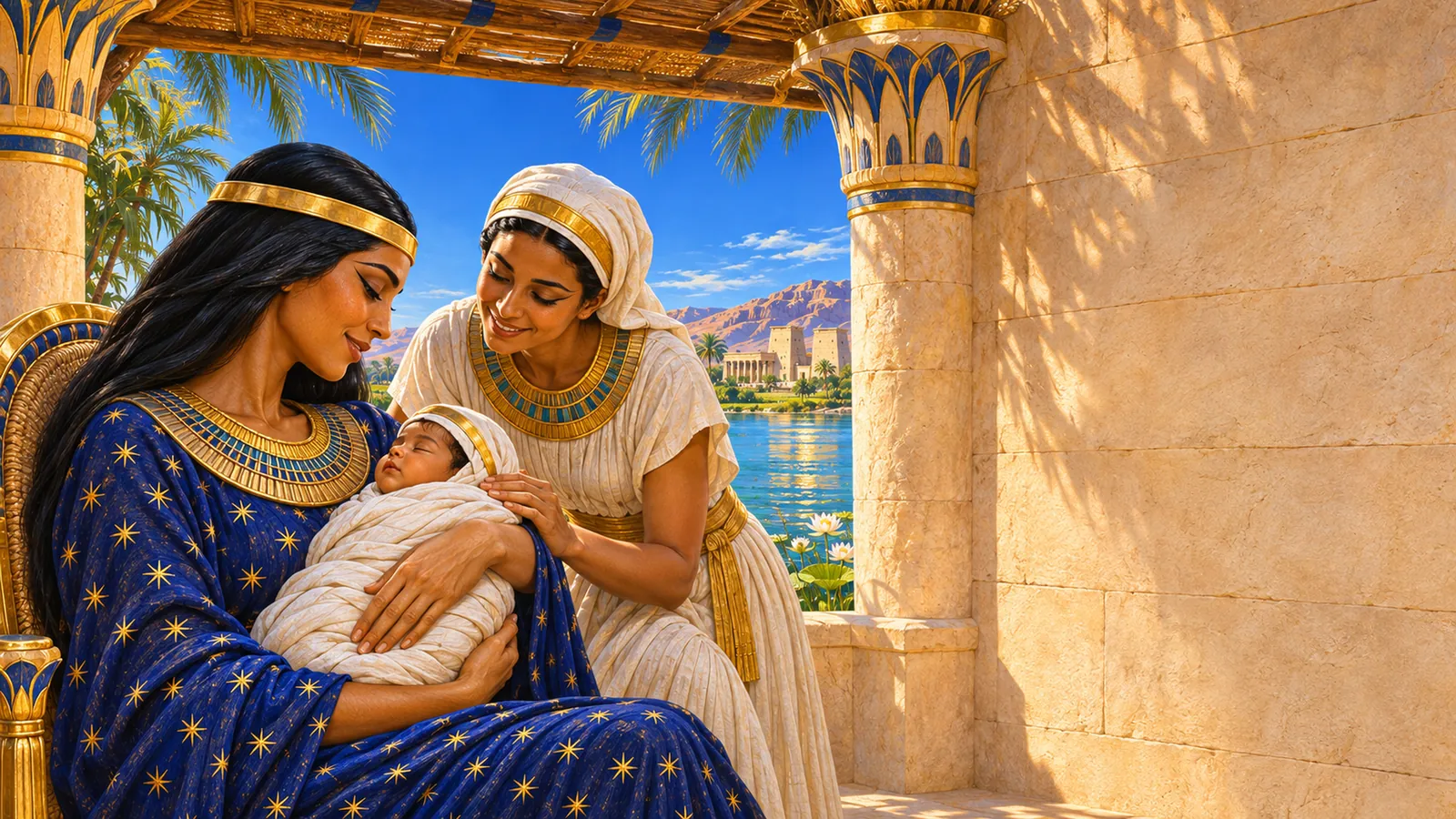
No segundo dia acrescentado nasceu Aruéris. Entre os nomes que Plutarco lhe dá está Hórus, o Velho.
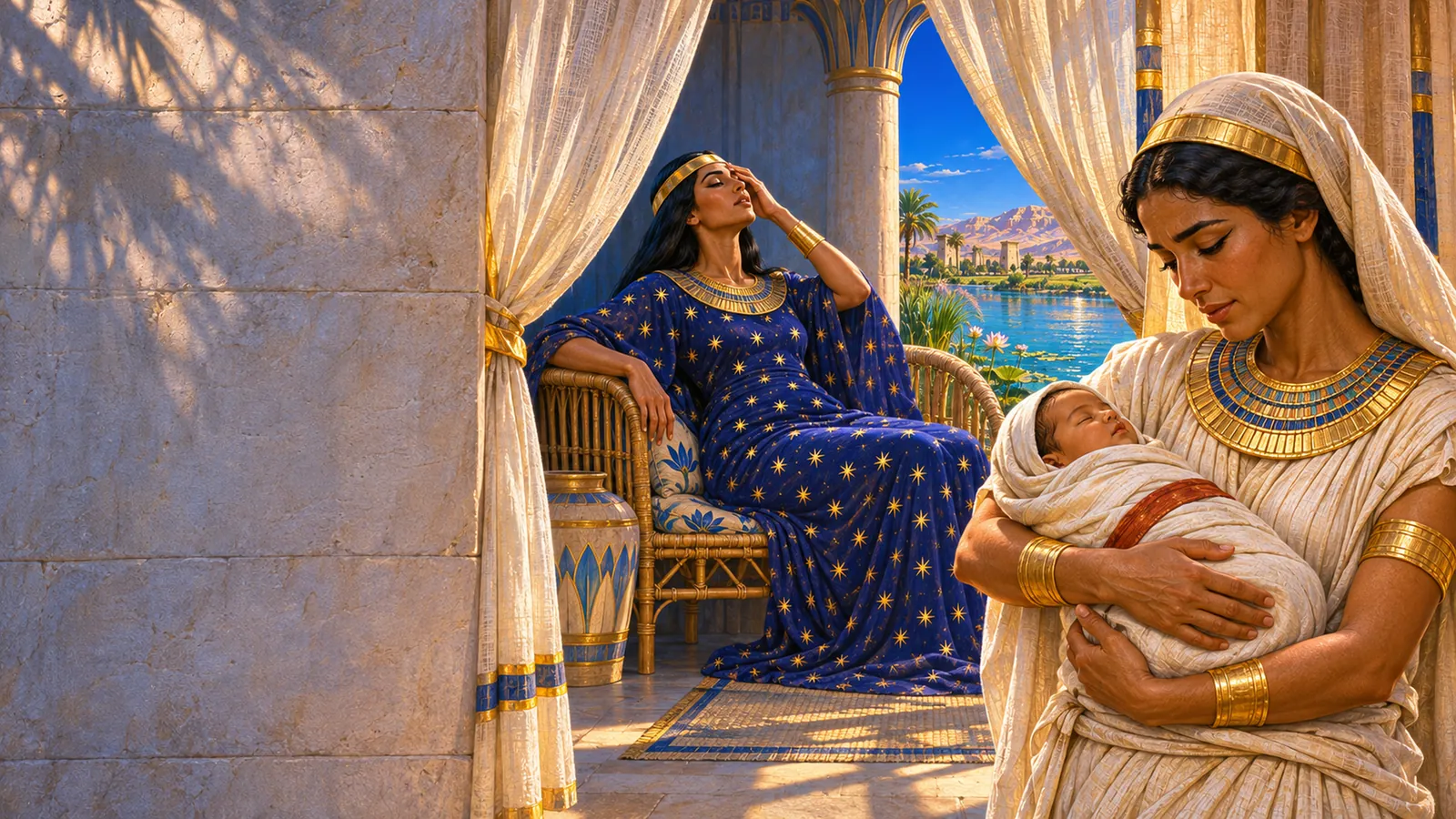
No terceiro dia acrescentado nasceu Set. Plutarco diz que forçou a saída por uma ferida que abriu no flanco da mãe.
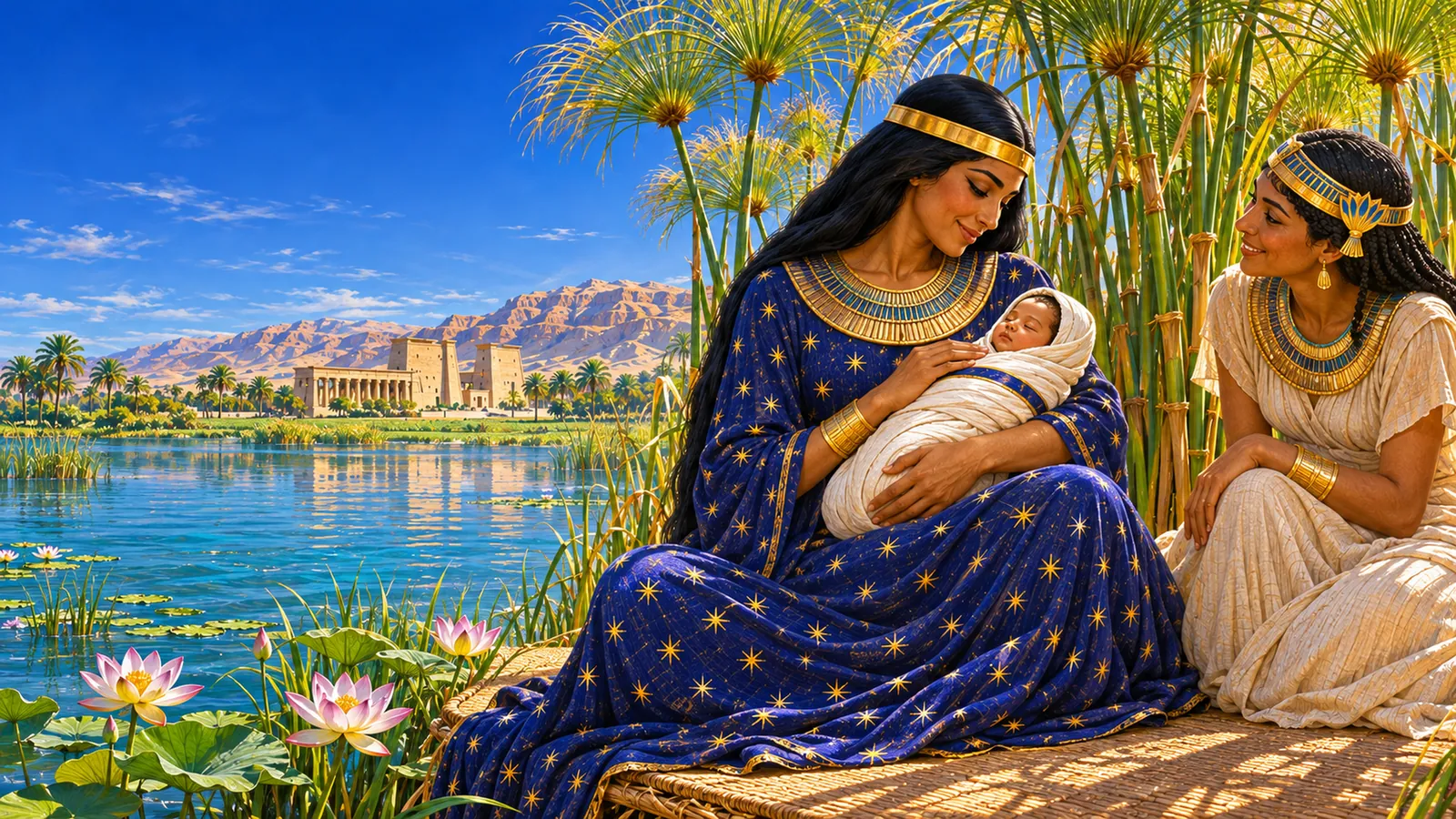
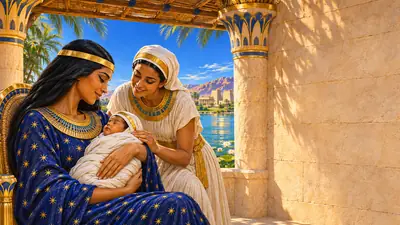
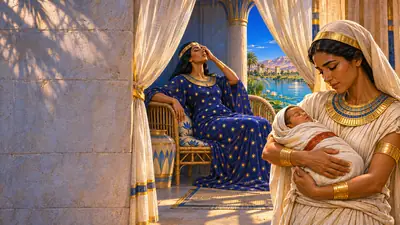
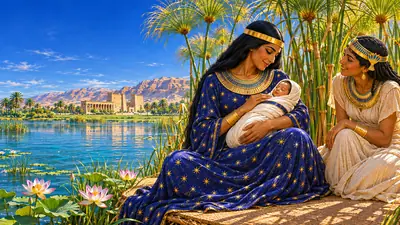
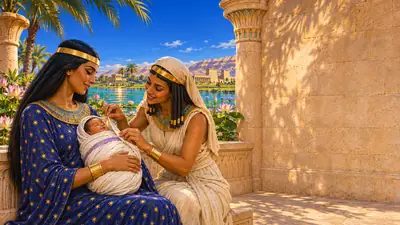
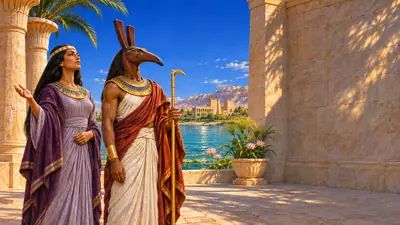
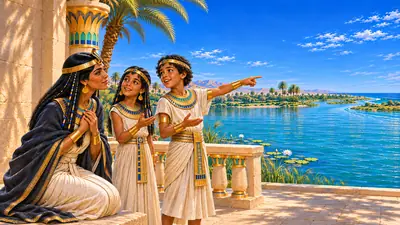
No quarto dos cinco dias acrescentados ao ano, Ísis nasceu nos pântanos do Egito.
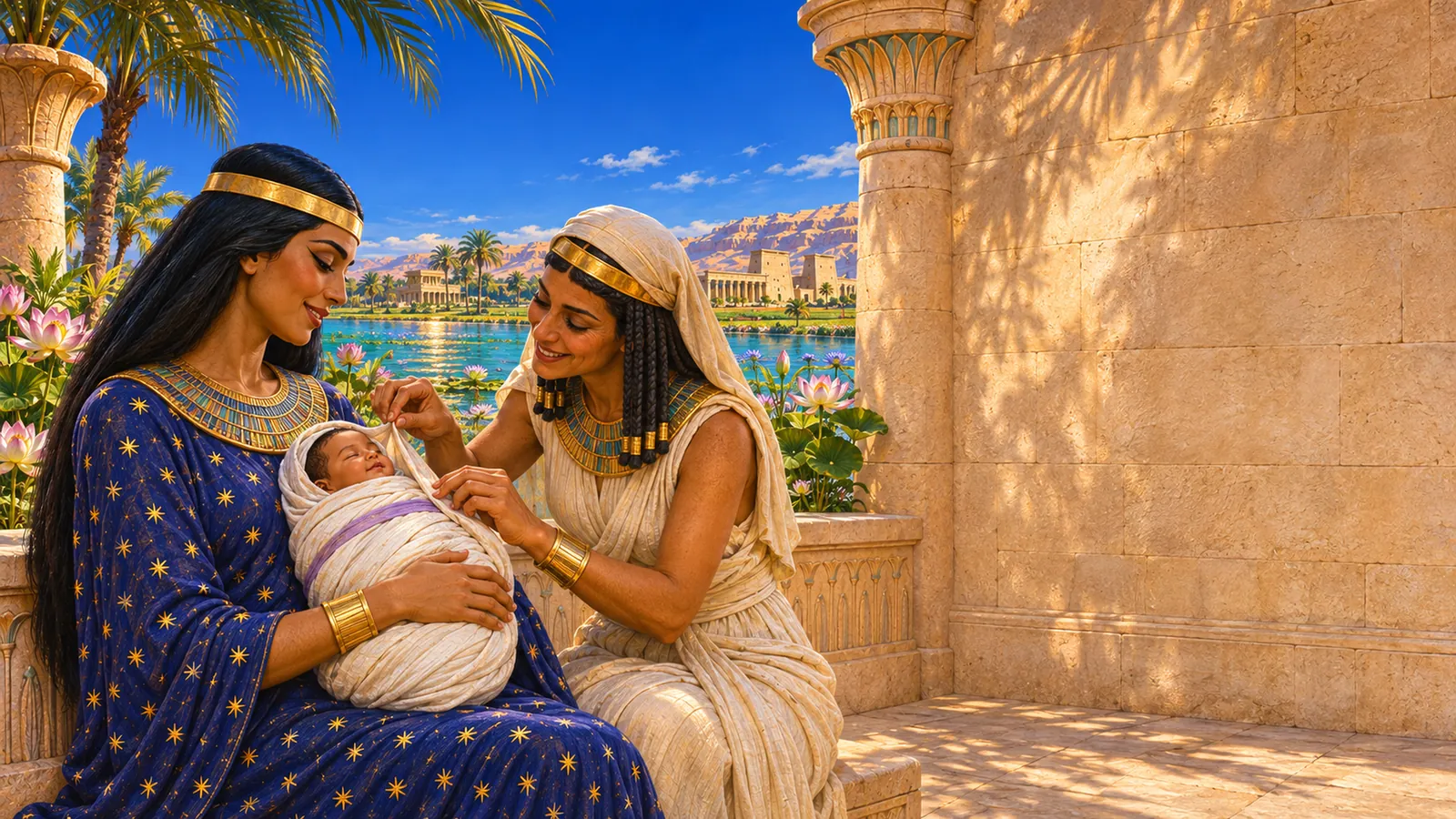
Néftis nasceu no quinto e último dia acrescentado, completando a série de nascimentos no relato de Plutarco.
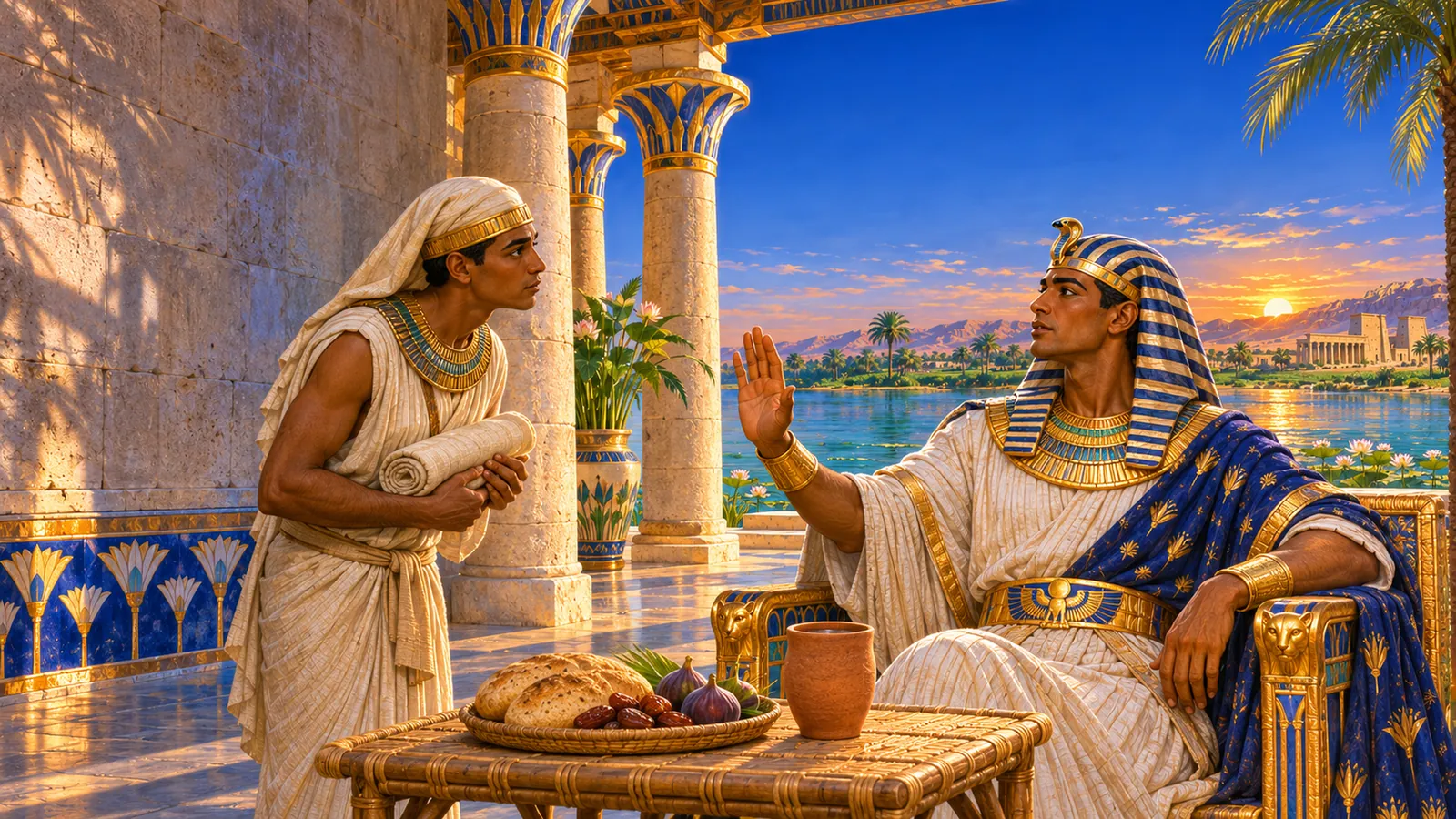
Numa genealogia, Rá é pai de Osíris e de Hórus, o Velho, Tot é pai de Ísis, e Geb é pai de Set e Néftis. Os reis consideravam o dia de Set um dia de mau agouro e adiavam os negócios, a comida e a bebida até ao anoitecer.
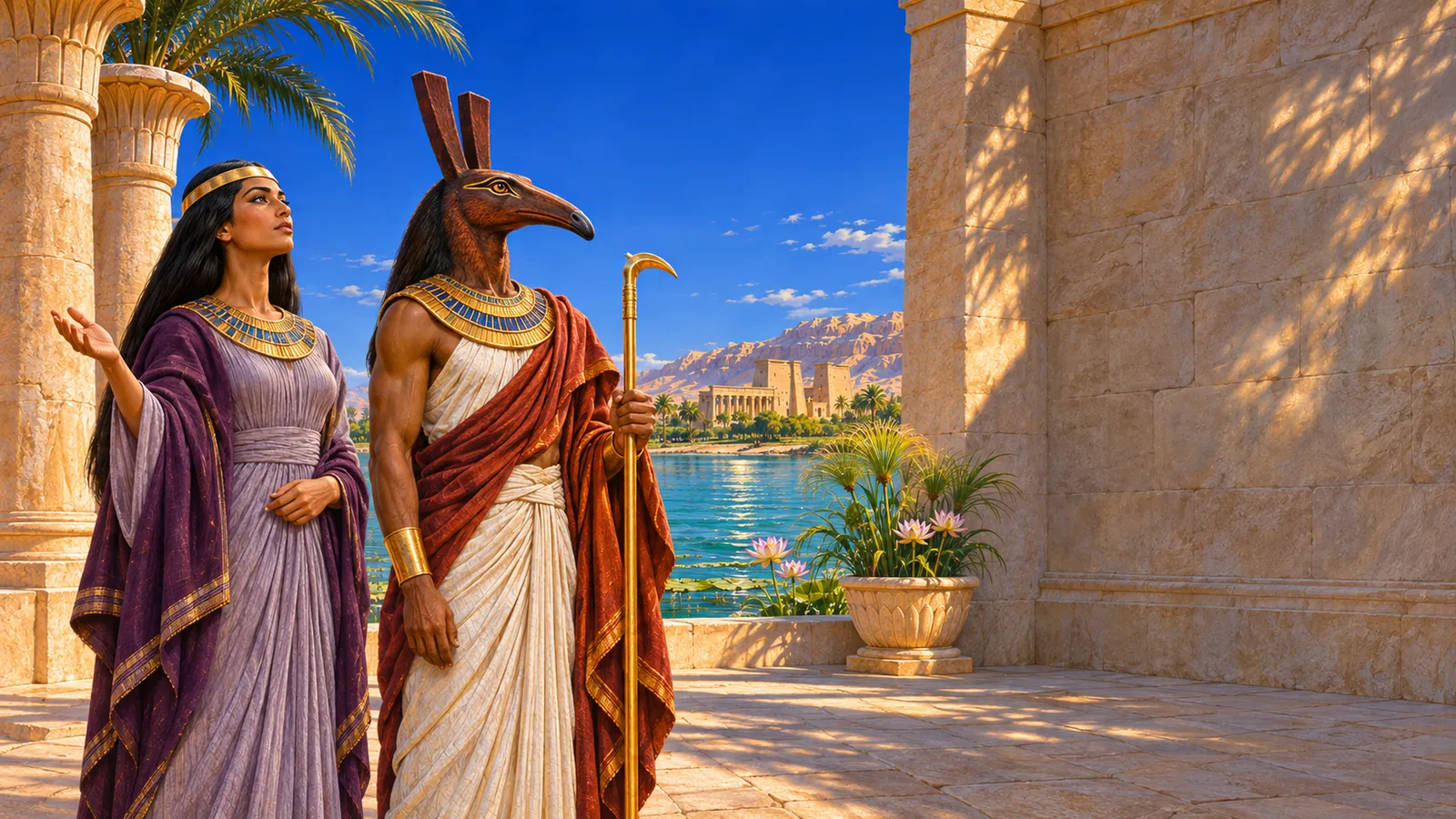
Plutarco diz que Set se casou com Néftis. Dá também uma versão em que Ísis e Osíris se uniram antes de nascer e Hórus, o Velho, era seu filho.
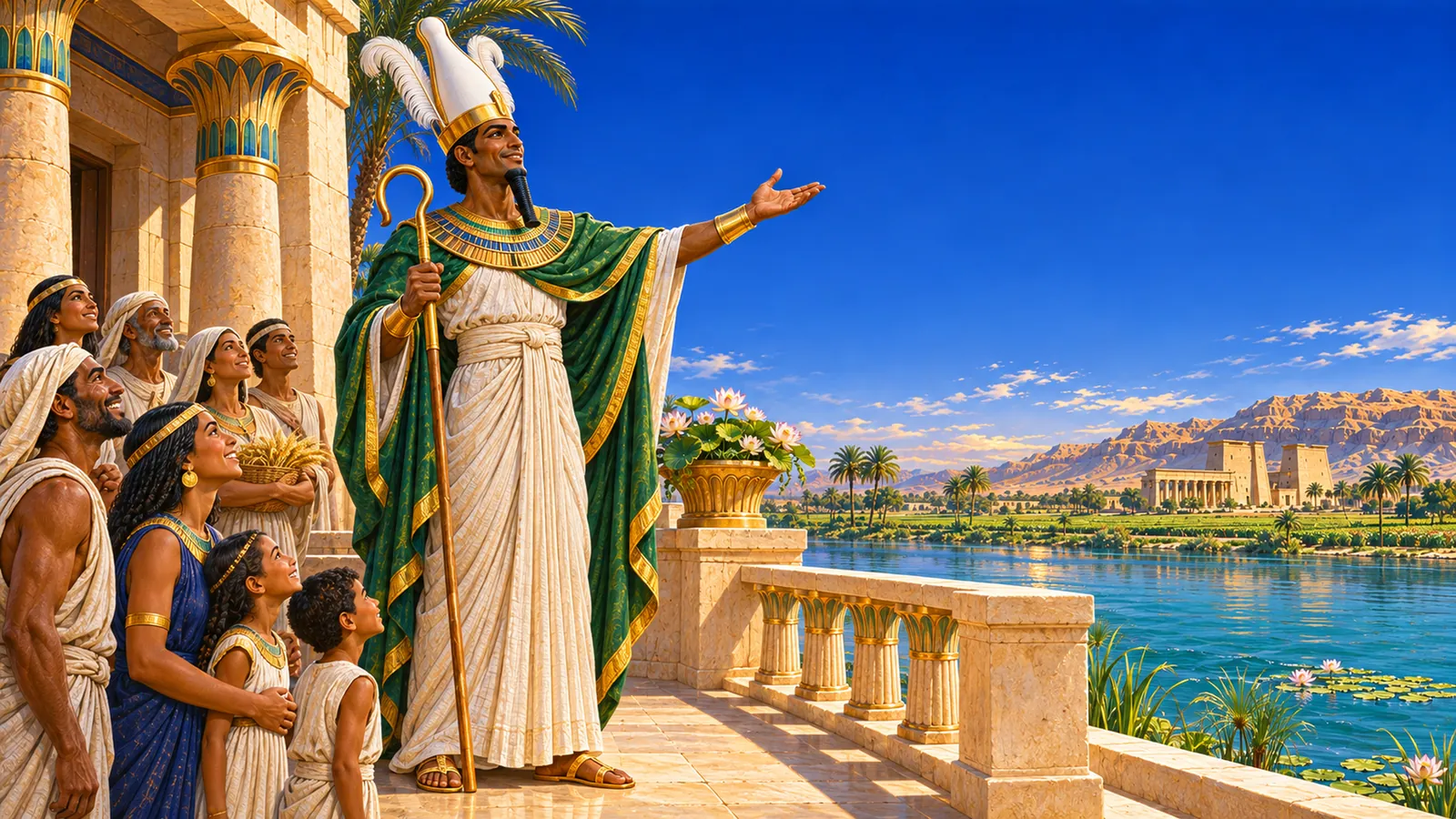
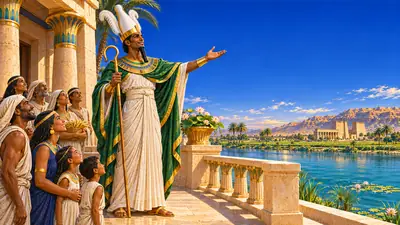
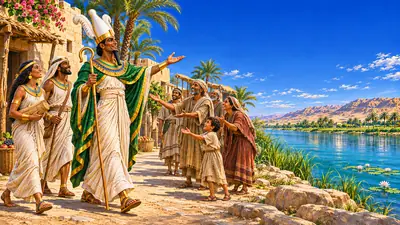
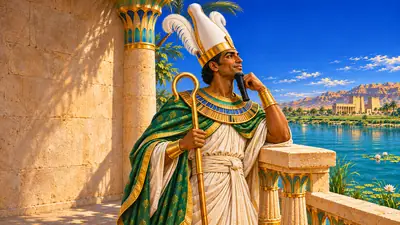
No relato de Plutarco, Osíris tornou-se rei do Egito. Conta-se que se pôs a mudar a maneira de viver do seu povo.
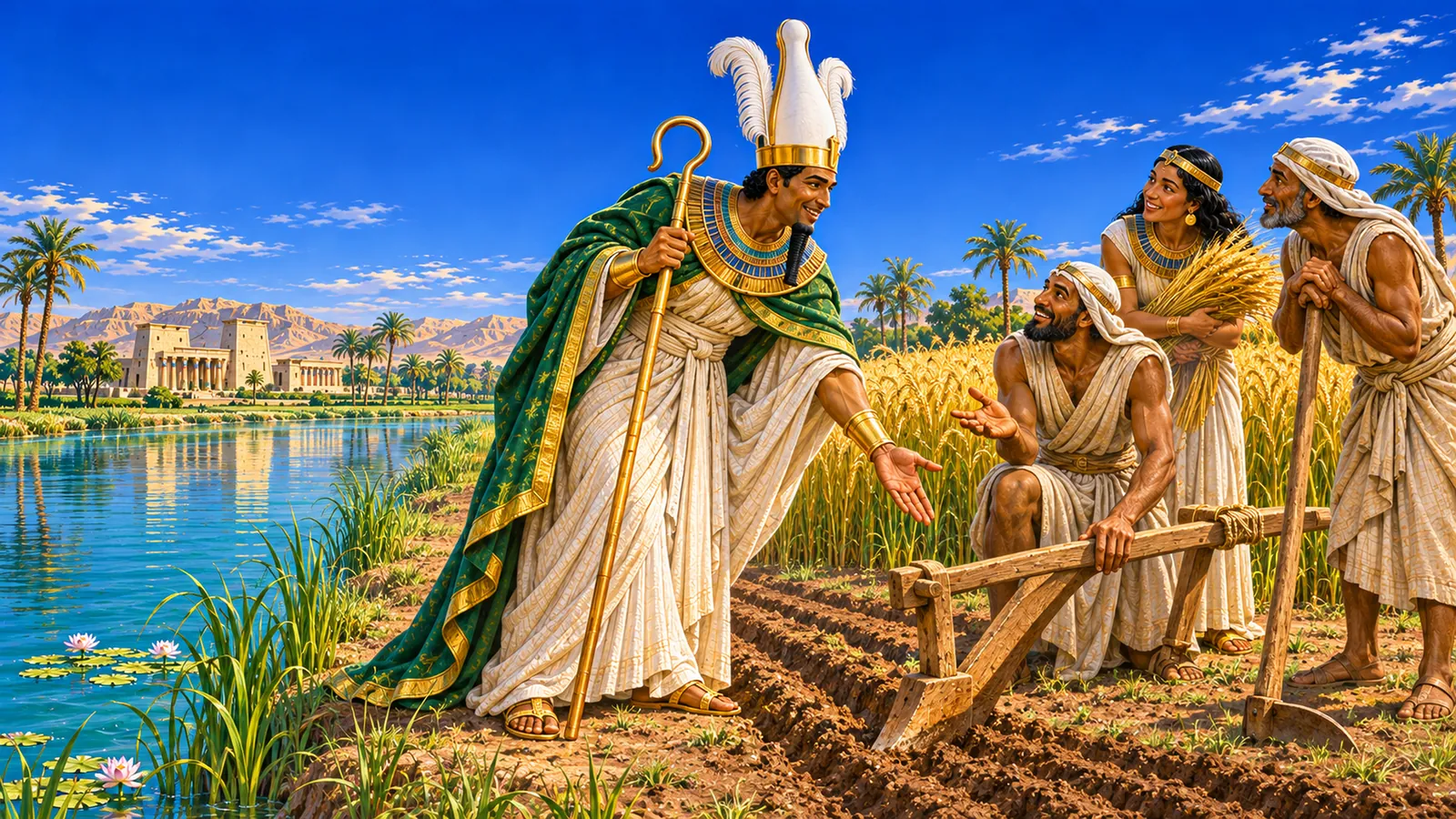
EGITO
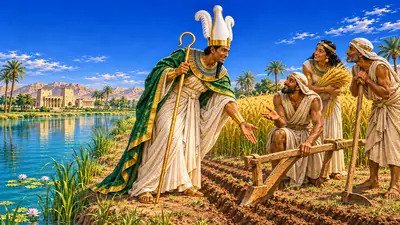
Conta-se que Osíris ensinou o seu povo a cultivar a terra e a melhorar as colheitas. Deu-lhe leis e ensinou-o a honrar os deuses.
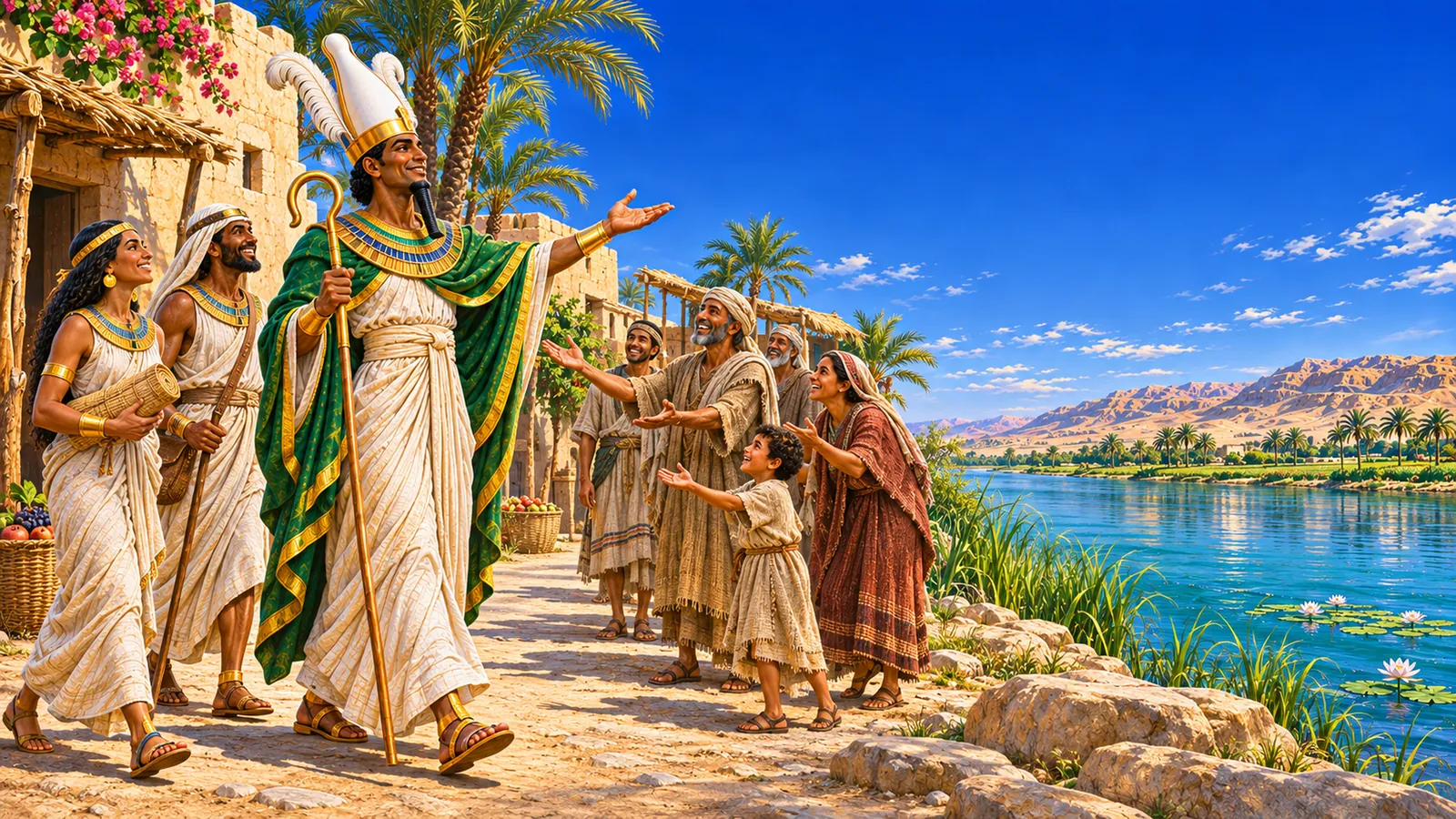
No relato, Osíris viajou para além do Egito. Queria que as pessoas das terras que visitava seguissem os costumes que ensinara no seu país.
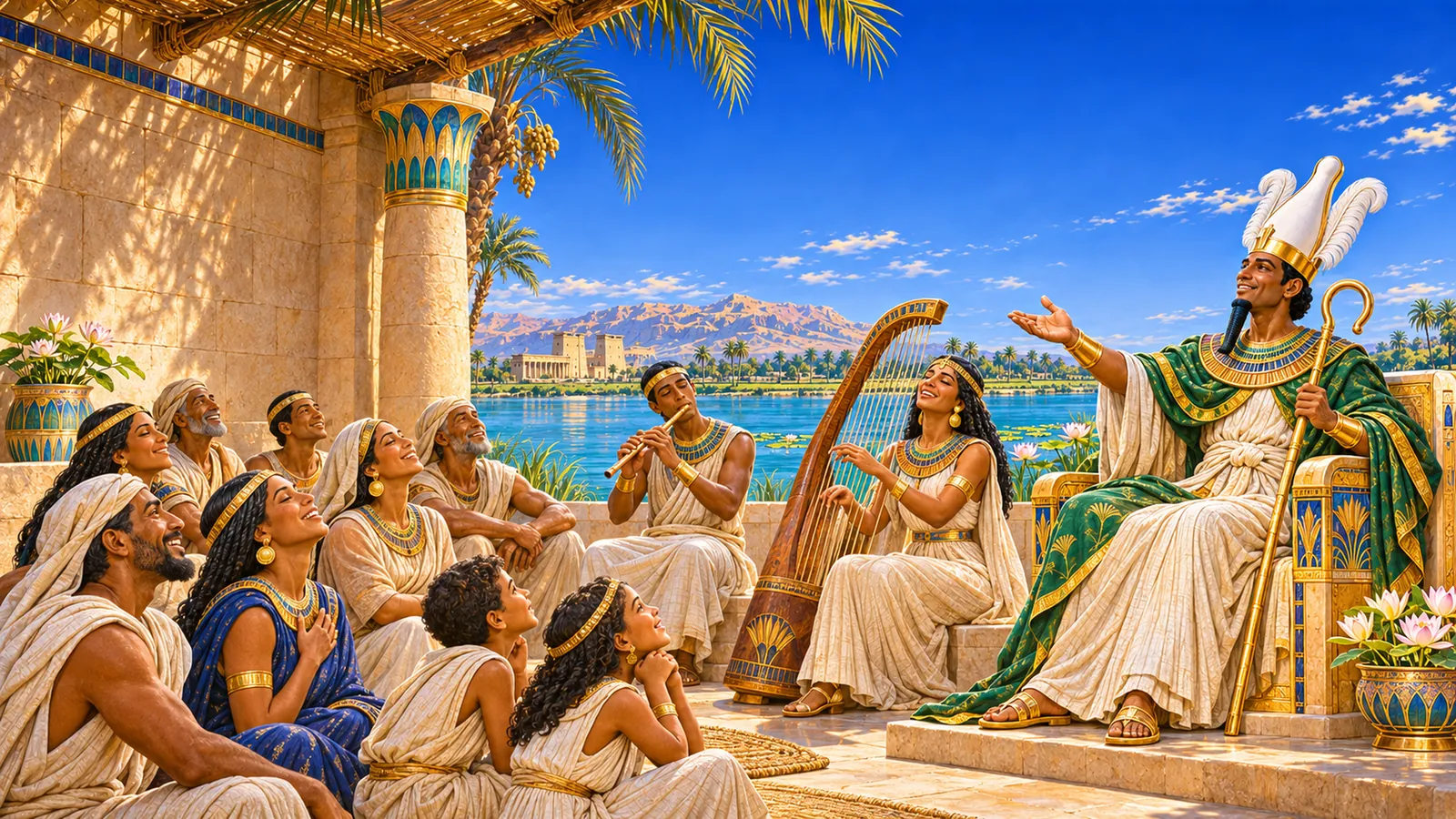
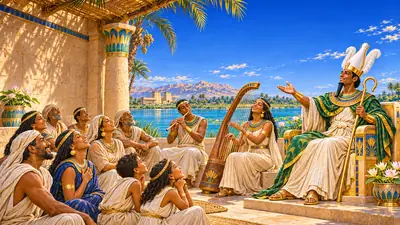
Plutarco diz que Osíris persuadiu as pessoas ao expor as suas razões em hinos e cânticos acompanhados de música. Não as obrigou pela força das armas.
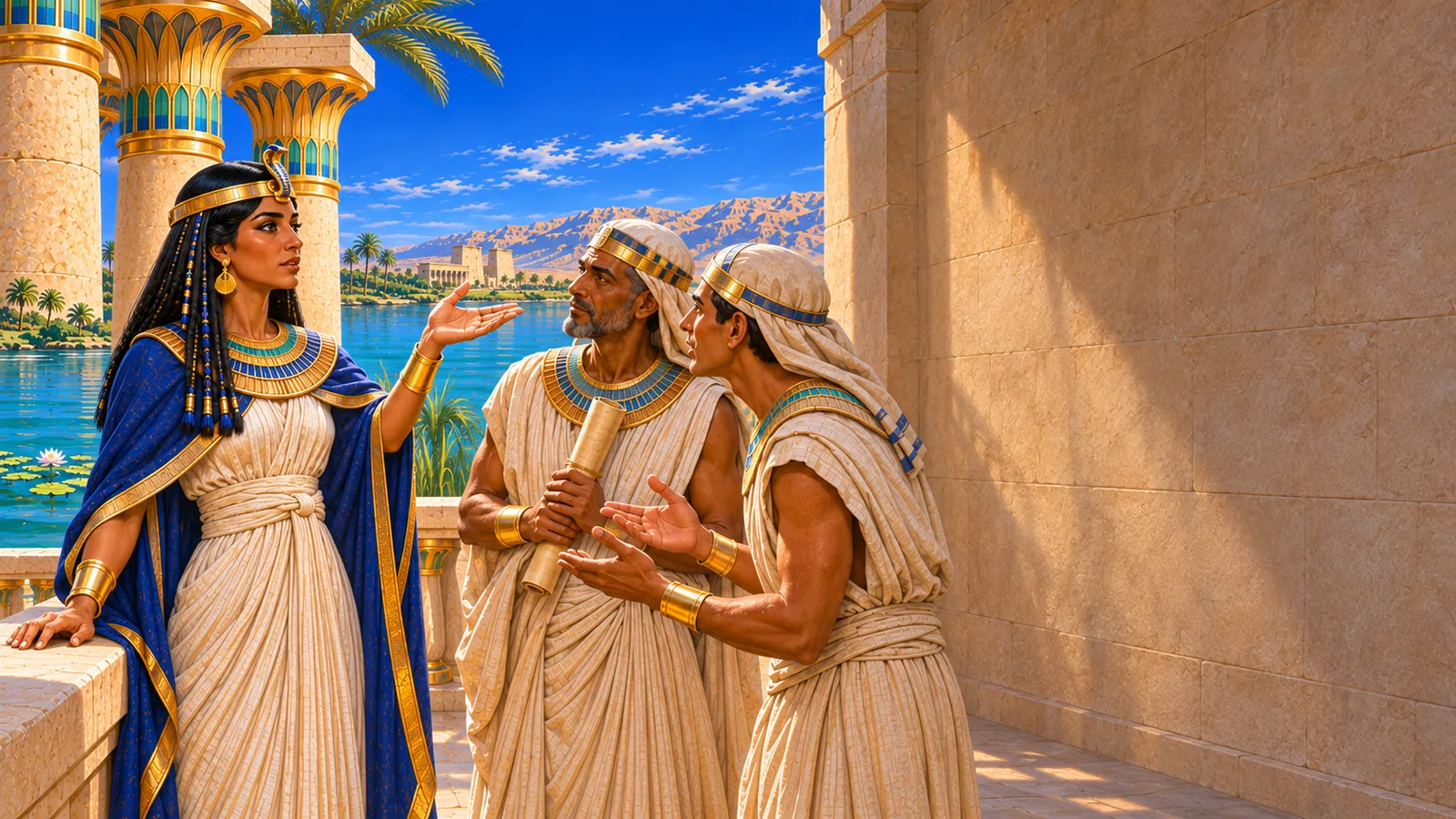
Durante a ausência de Osíris, Ísis governou e manteve-se alerta. Set não encontrou ocasião para agir enquanto ela se manteve vigilante.
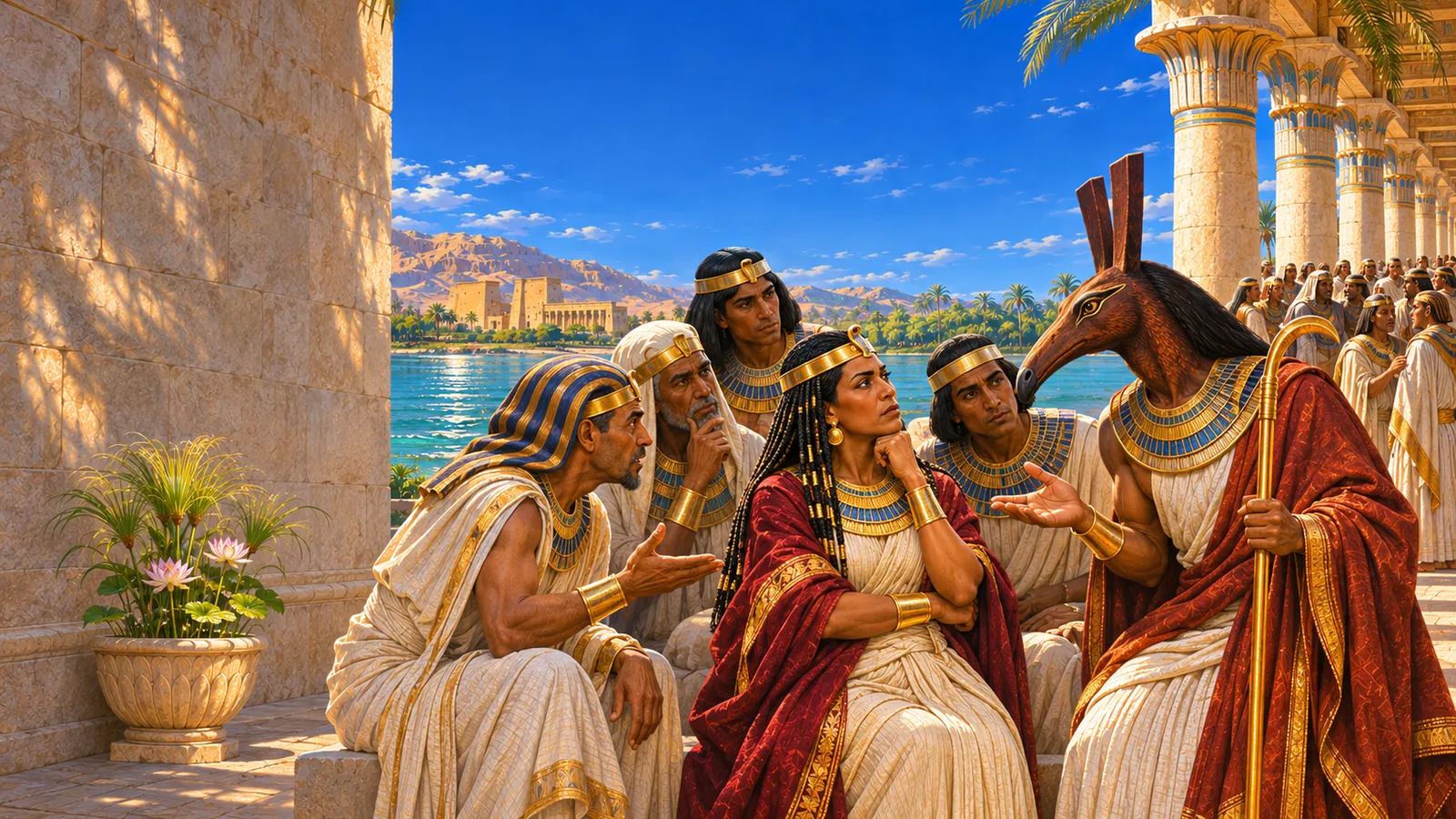
Depois do regresso de Osíris, Set convenceu outras setenta e duas pessoas a juntarem-se à sua conspiração. Juntou-se-lhes também uma rainha chamada Aso, que se encontrava então no Egito.
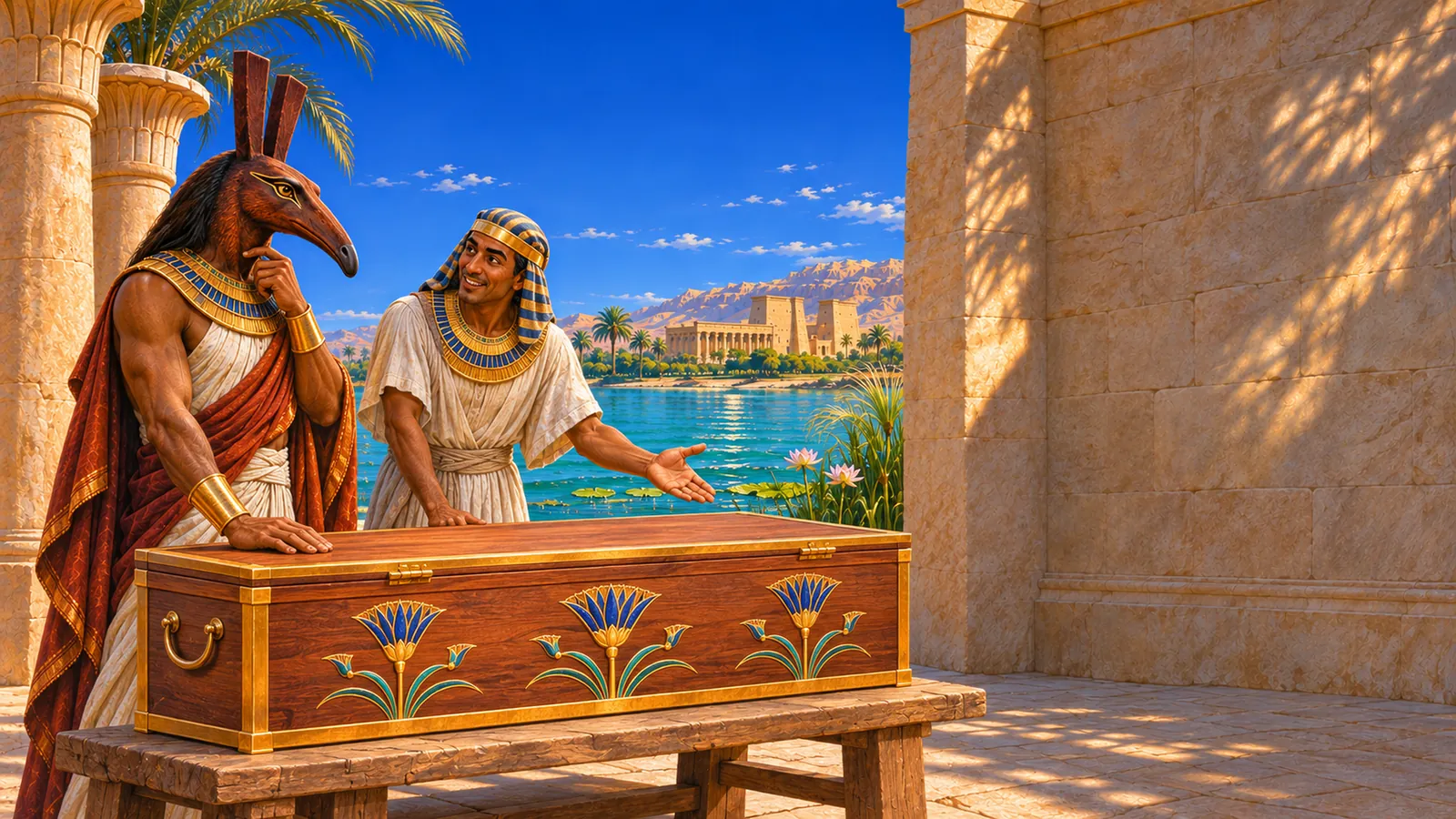
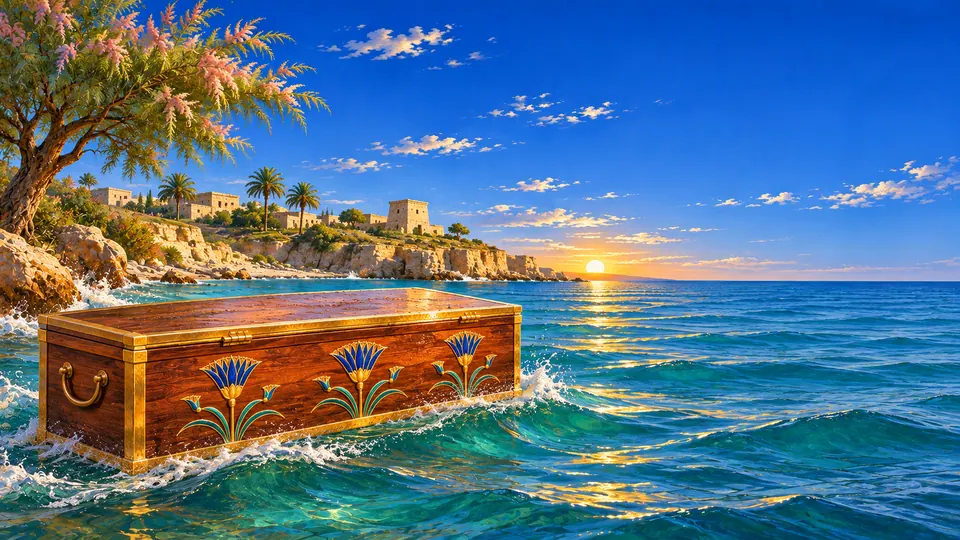
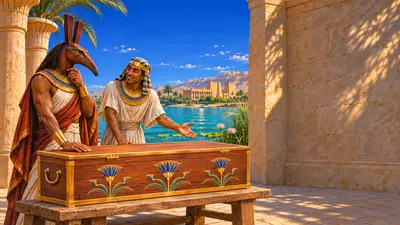
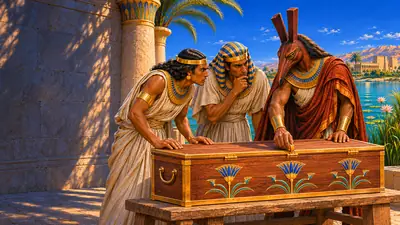
A conspiração de Set girava em torno de um baú finamente decorado. No relato de Plutarco, Set mandou fazê-lo à medida de Osíris.
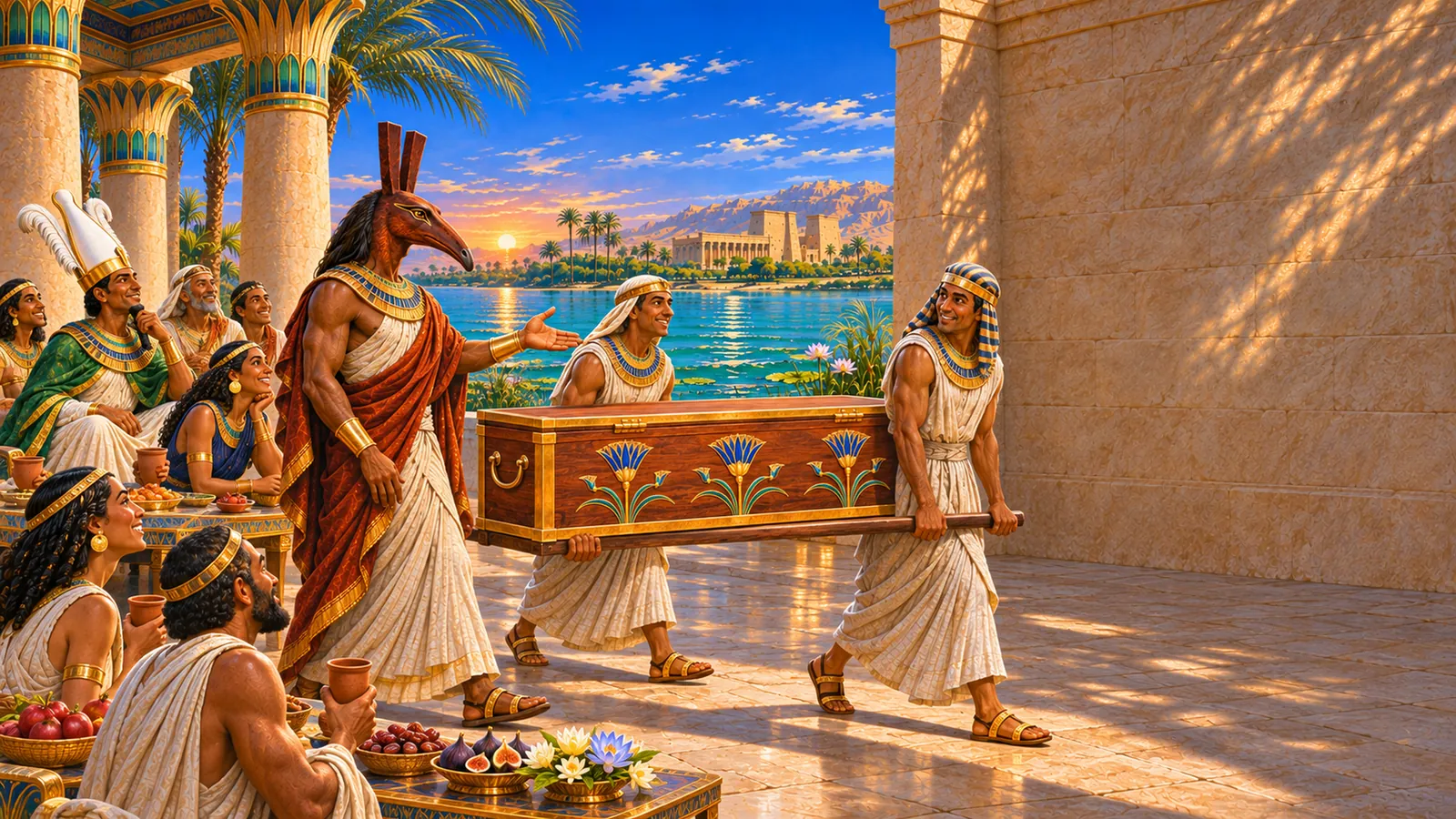
O BAÚ
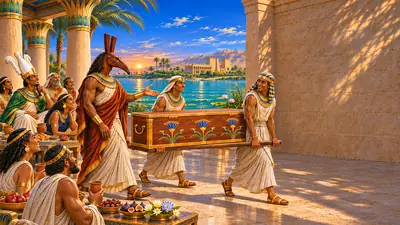
Set levou o baú para a sala onde dava o banquete. Os convidados admiraram-no quando o viram ali.
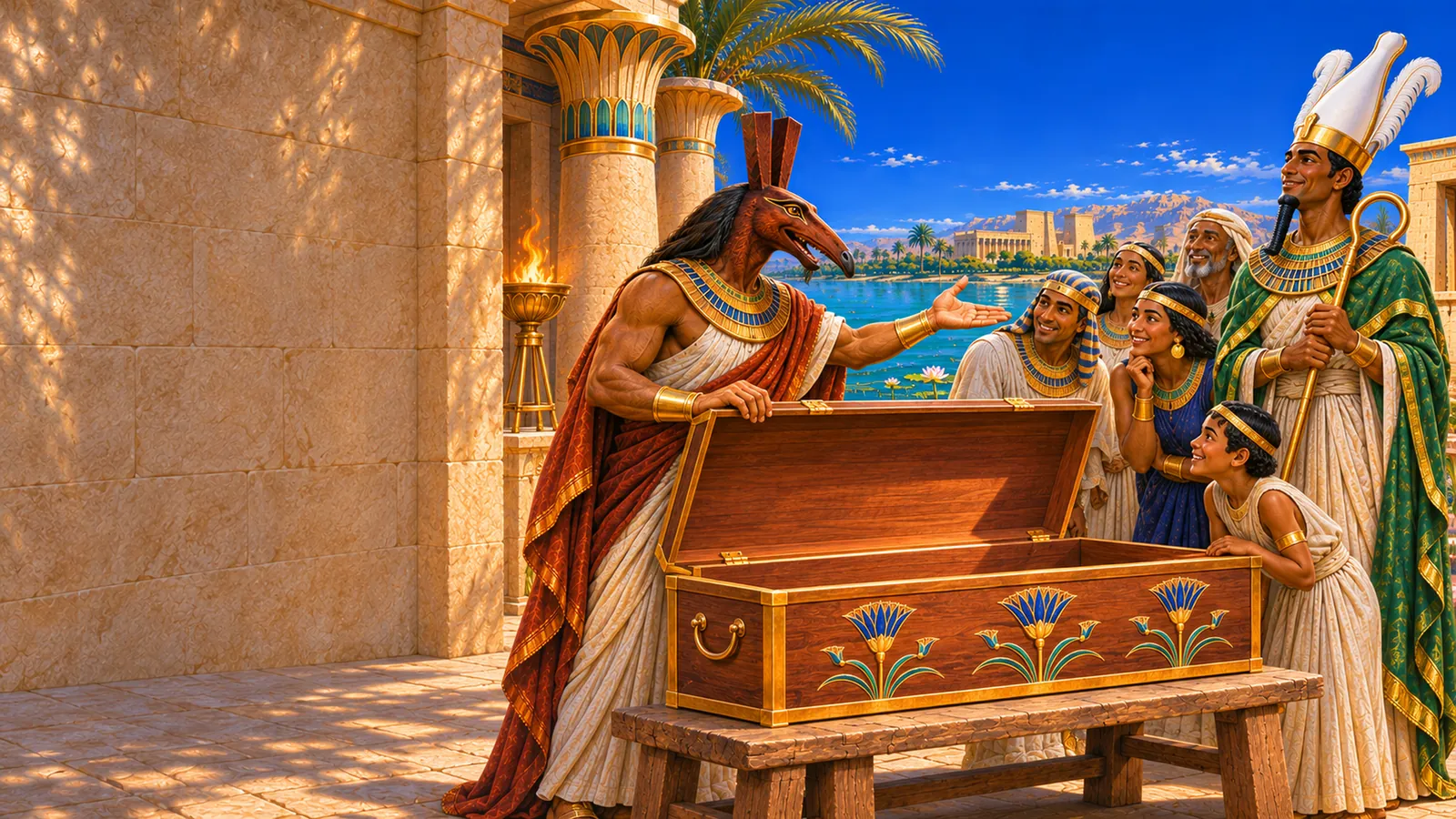
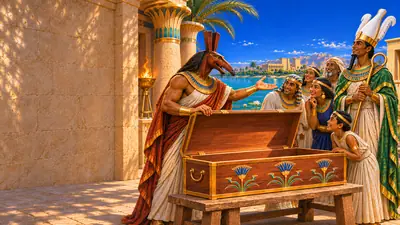
Set falou como se estivesse a brincar. Prometeu o baú ao convidado que nele coubesse.
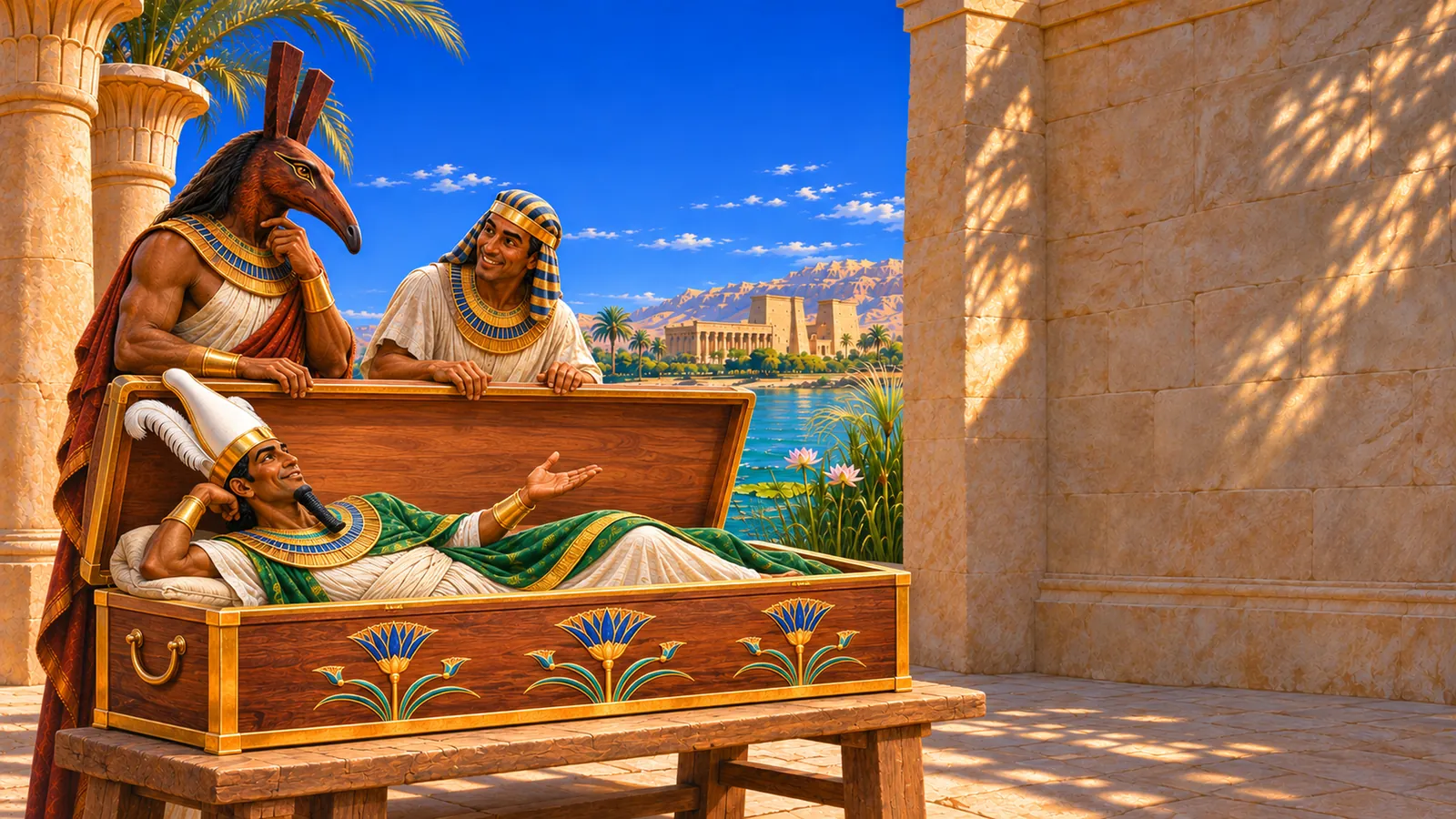
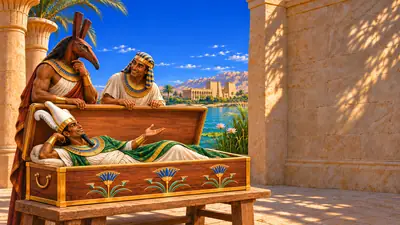
Os convidados experimentaram o baú um a um, mas não serviu a nenhum deles. Quando chegou a sua vez, Osíris deitou-se lá dentro.
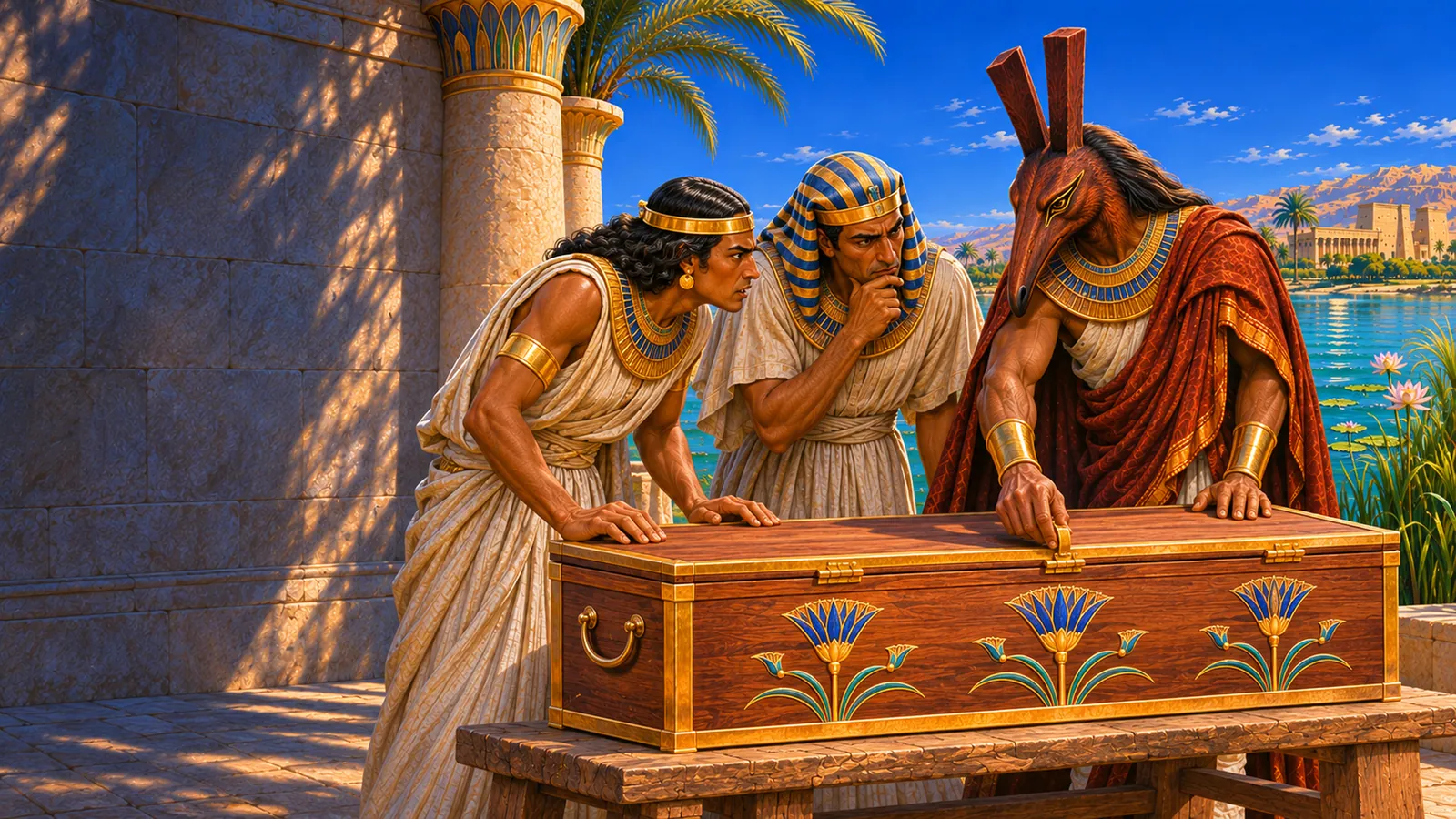
No relato de Plutarco, os que se tinham juntado à conspiração fecharam o baú com Osíris lá dentro. Ele ficou preso.
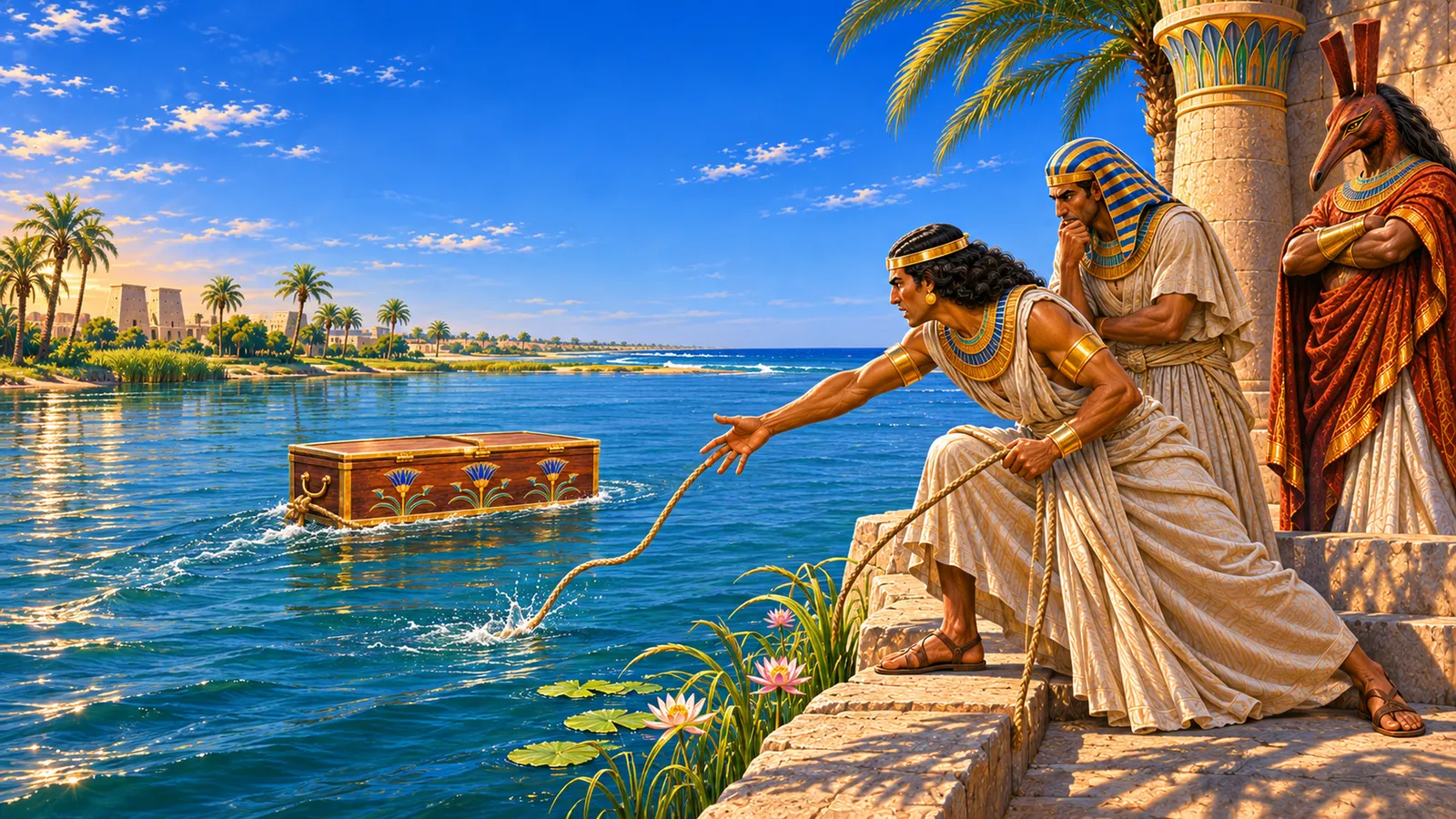
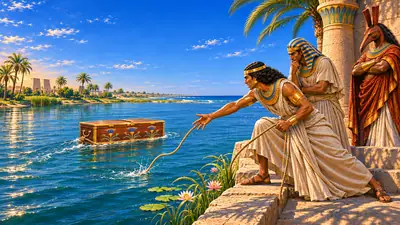
Levaram o baú fechado até ao Nilo. No relato, ele seguiu para o mar pela foz tanítica do rio.
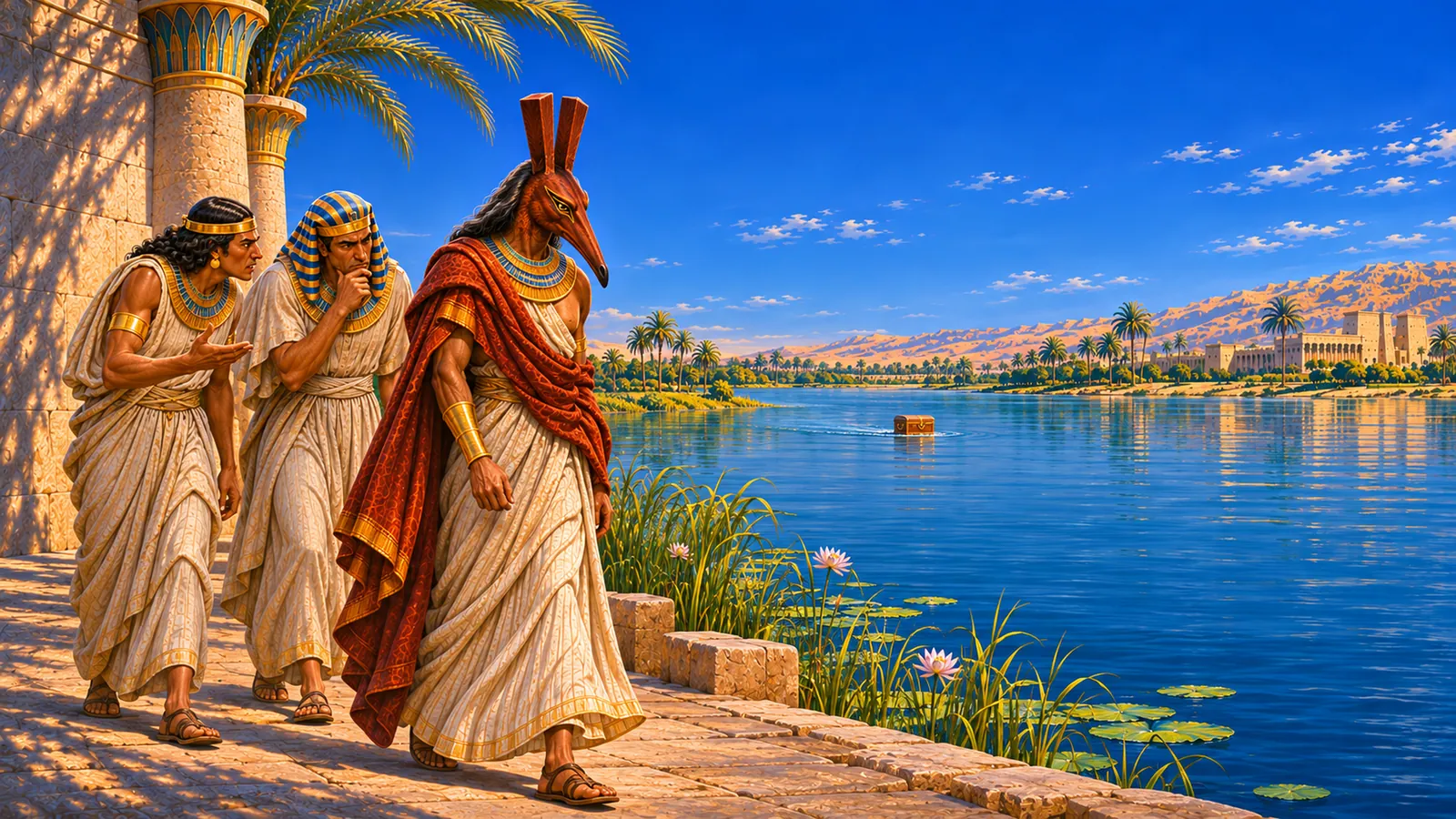
Plutarco relaciona a história com a aversão que, segundo diz, aquela foz do Nilo inspirava. Situa o acontecimento no décimo sétimo dia do mês de Athyr.
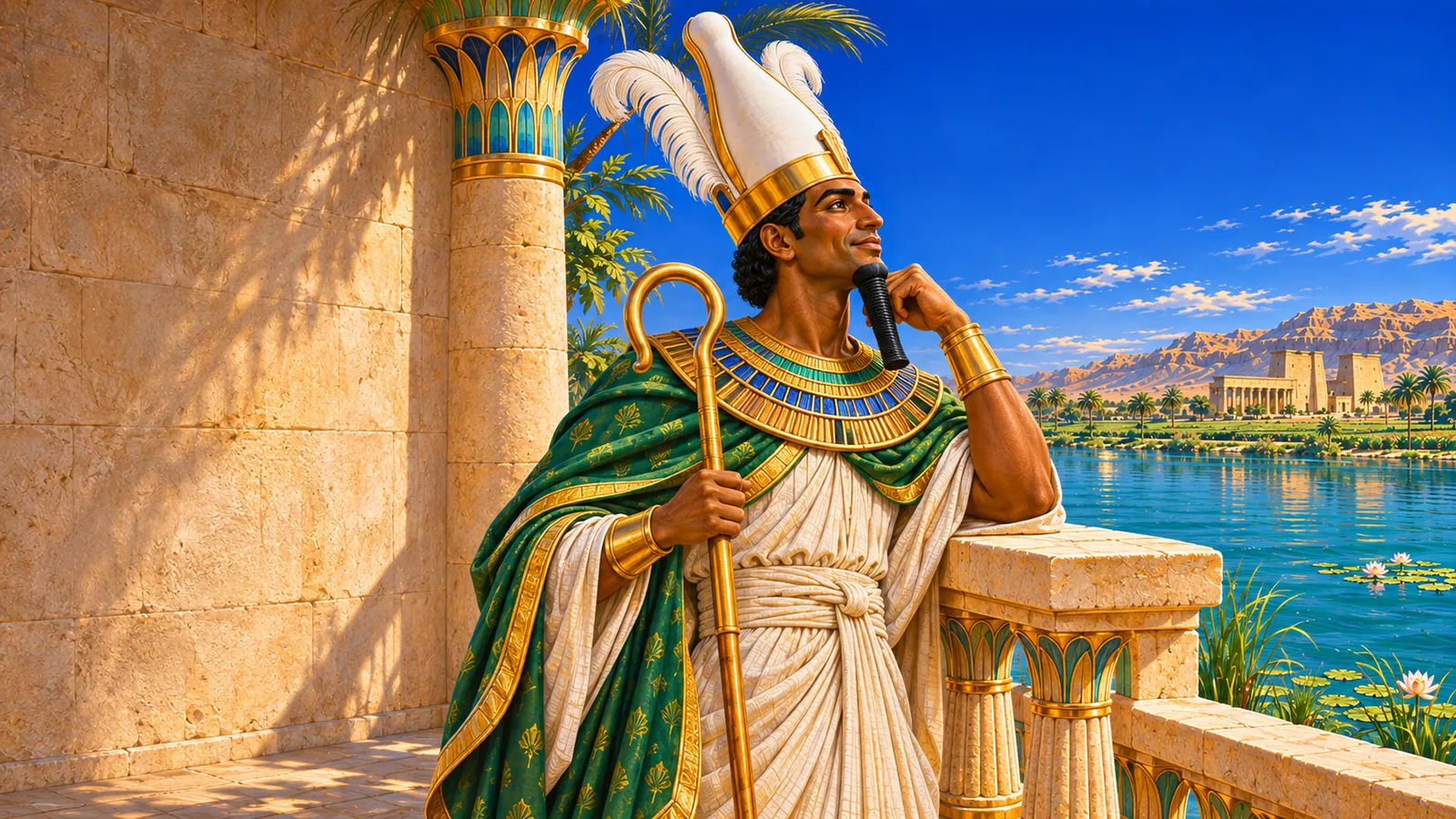
Uns situavam o acontecimento no vigésimo oitavo ano do reinado de Osíris. Outros diziam que o próprio Osíris tinha vinte e oito anos quando isso aconteceu.
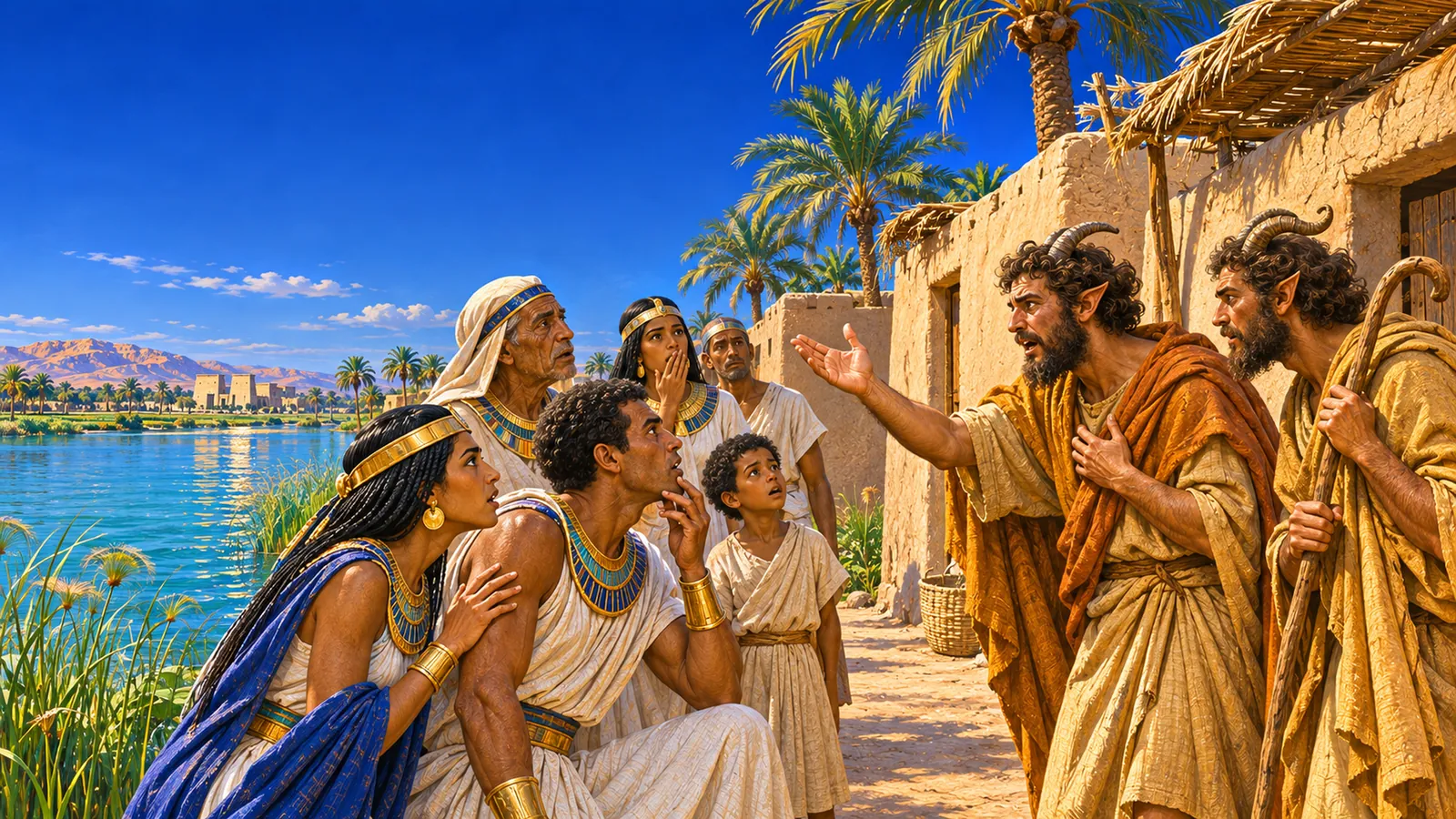
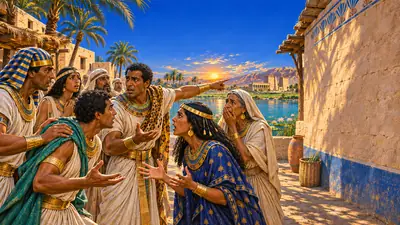
Nos arredores de Quémis, os seres que Plutarco chama Panes e sátiros foram os primeiros a saber o que acontecera a Osíris. Depois contaram-no ao povo.
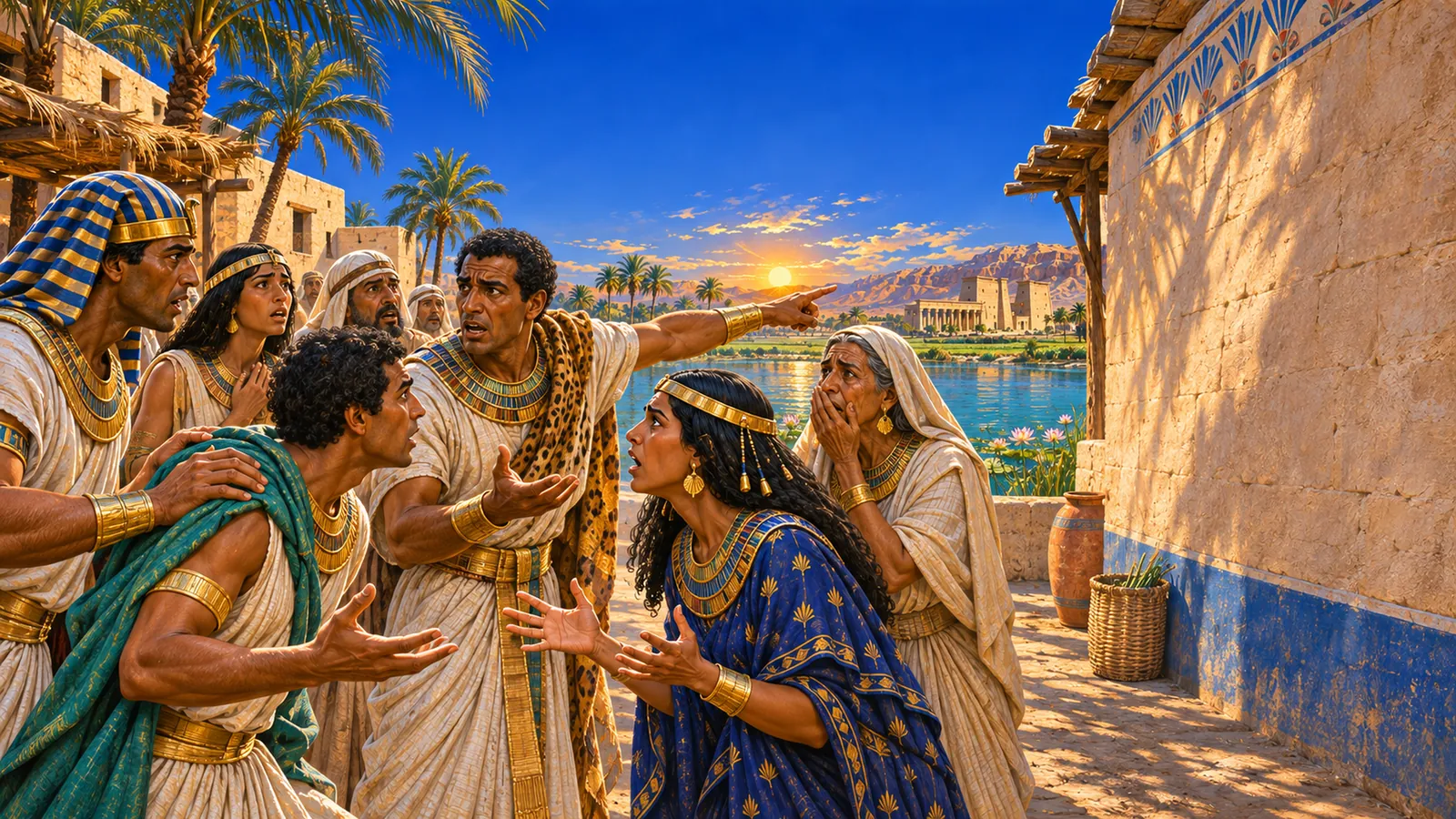
A NOTÍCIA
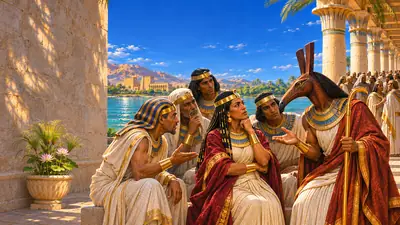
Quando a notícia chegou ao povo, o medo espalhou-se de súbito. Plutarco conta esta parte da história para explicar o nome que se dá ao pânico repentino.
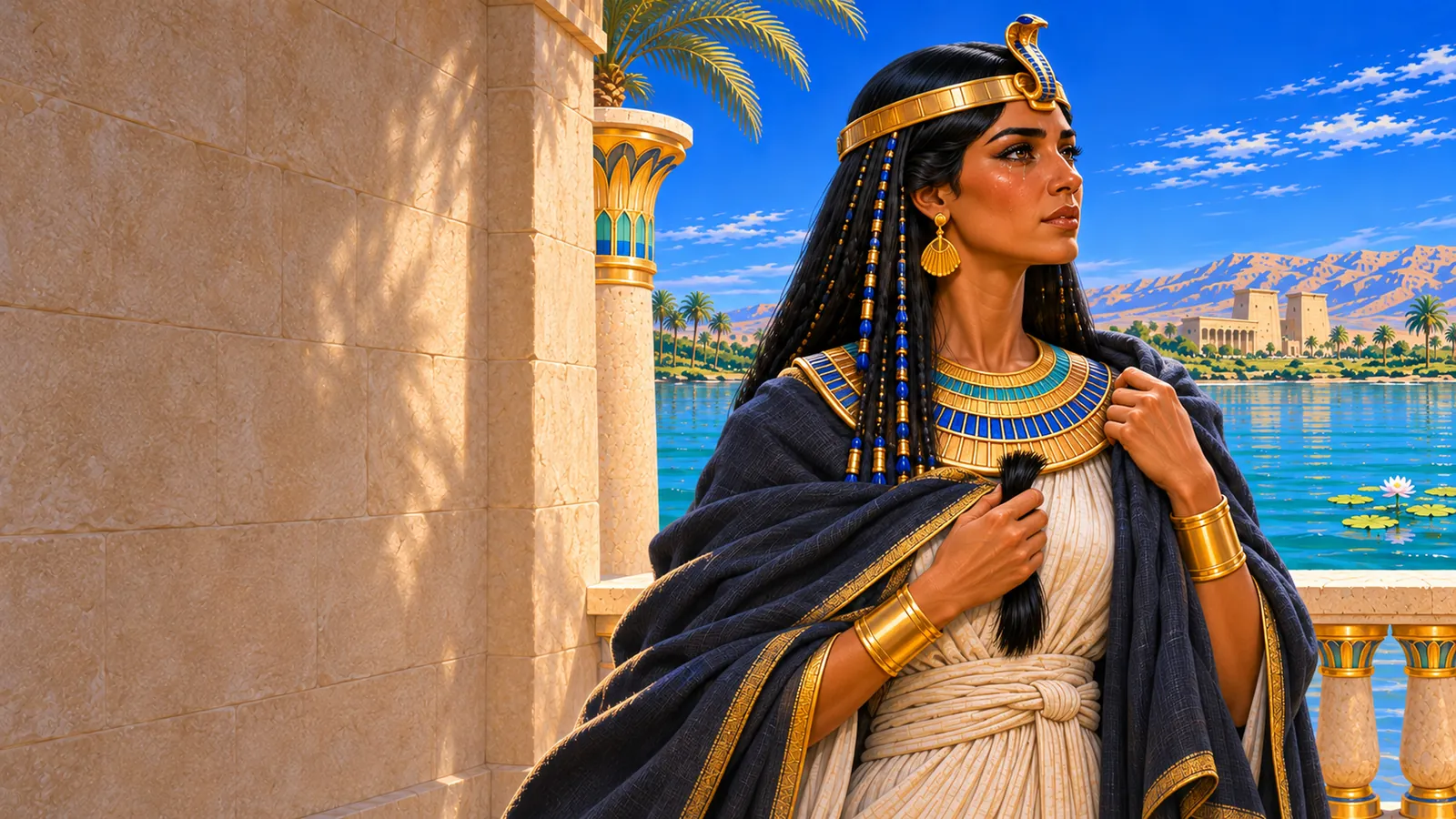
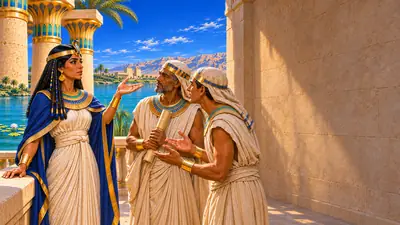
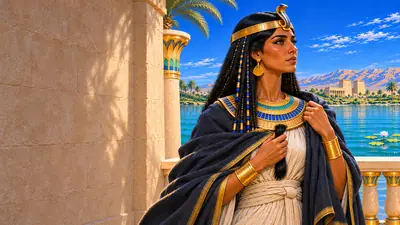
Assim que Ísis soube da notícia, cortou uma madeixa do cabelo. Ali mesmo vestiu as suas roupas de luto.
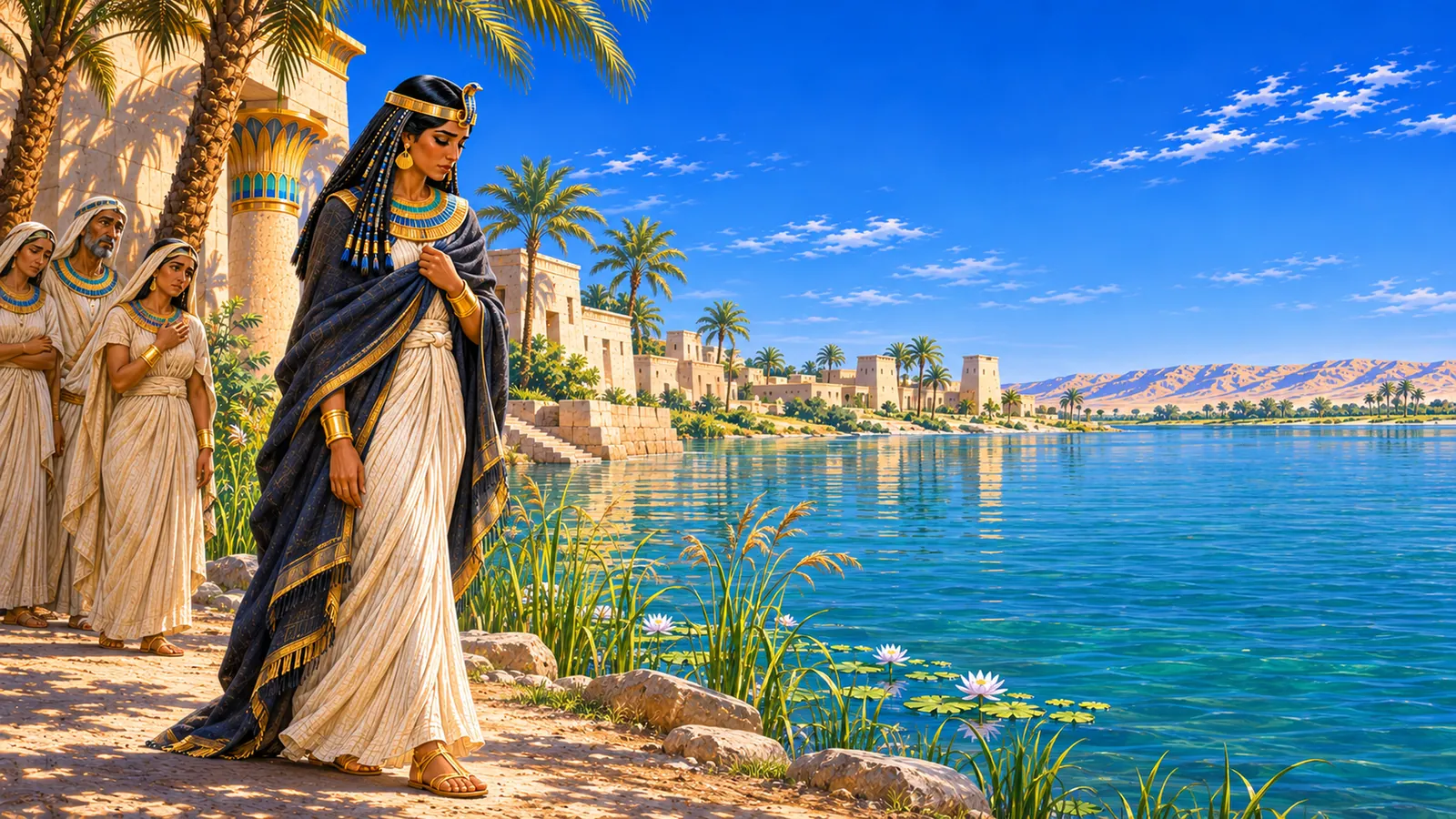
A história associa o lugar onde Ísis começou o seu luto ao nome de Coptos. Alguns entendiam esse nome como luto, enquanto outros o liam como privação.
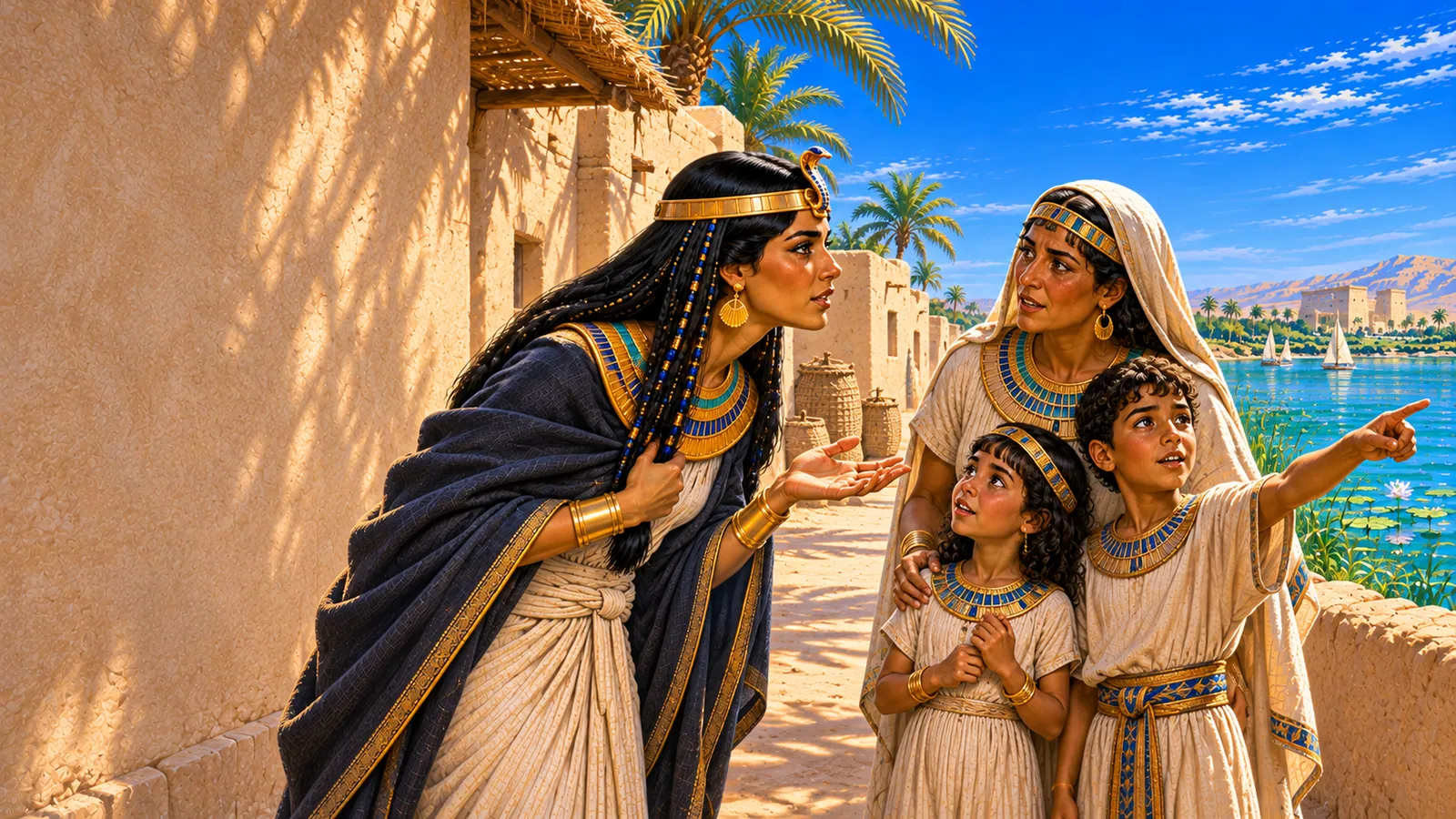
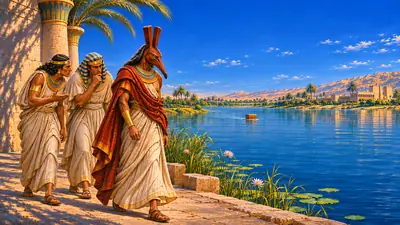
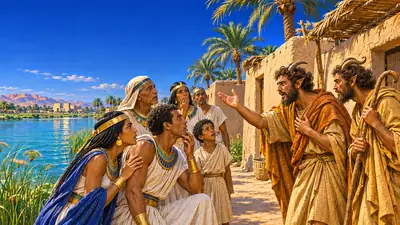
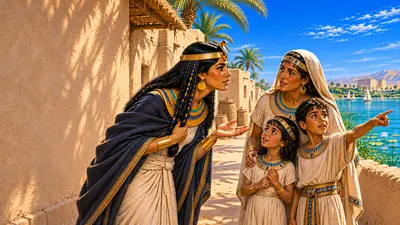
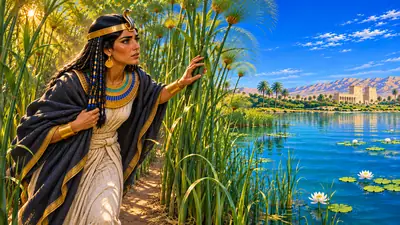
Ísis foi de lugar em lugar, ansiosa por qualquer notícia do cofre. Perguntou a todos os que encontrou, incluindo algumas crianças, se o tinham visto.
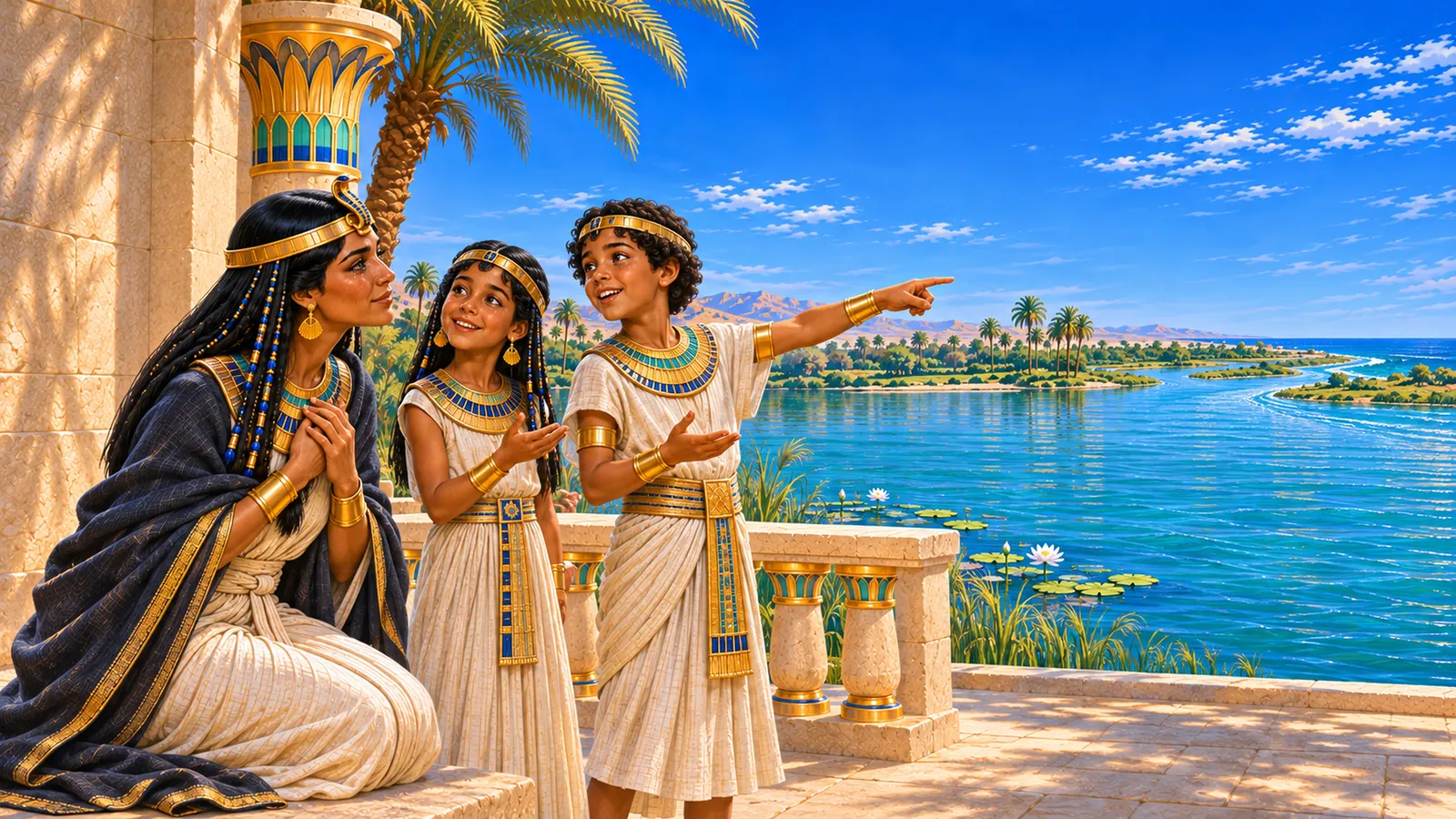
As crianças tinham visto como o cofre fora levado. Disseram a Ísis por que foz do Nilo o tinham levado até ao mar.
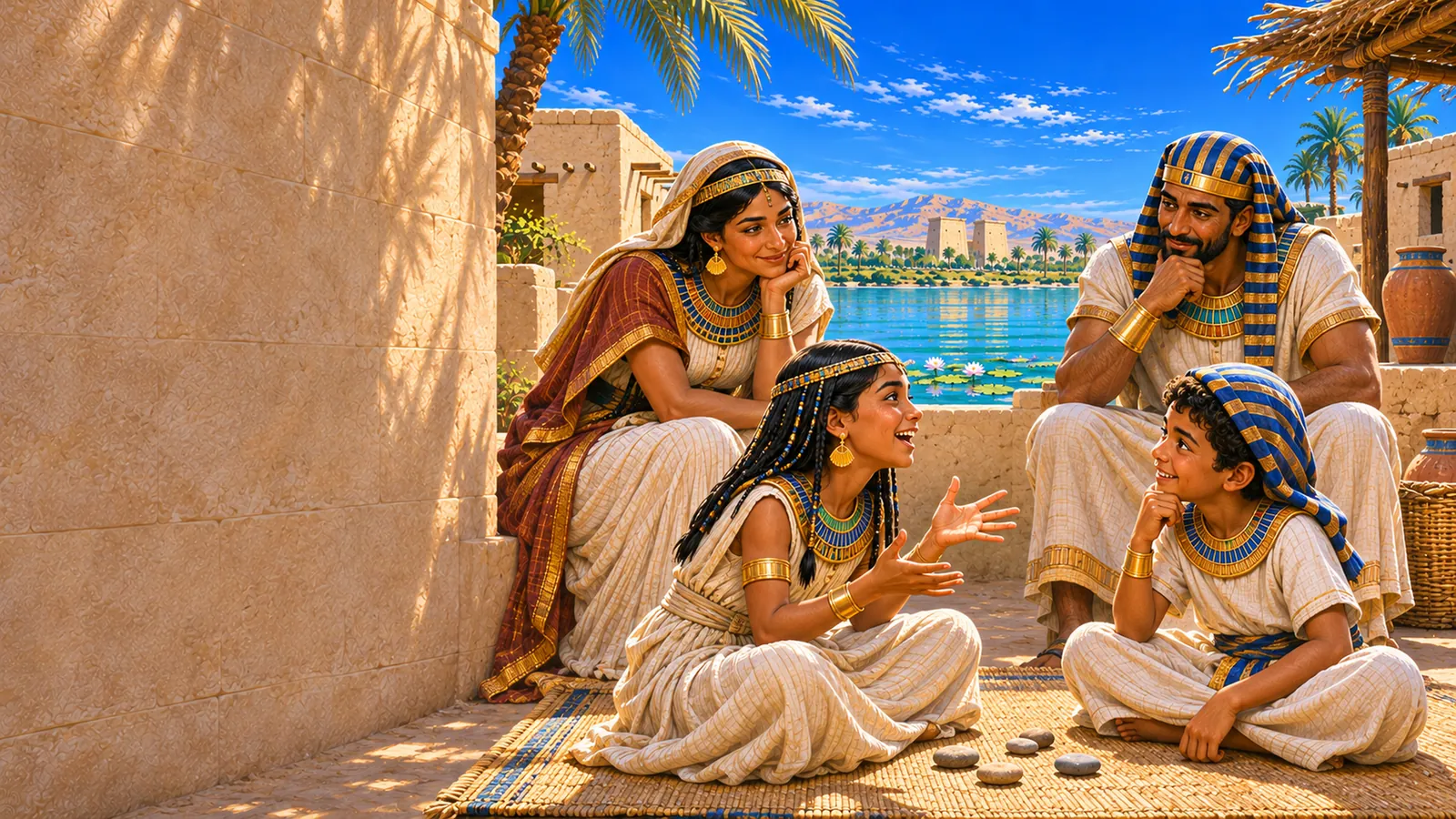
O relato usa a resposta das crianças para explicar um costume. Diz que as pessoas procuravam presságios naquilo que as crianças diziam por acaso enquanto brincavam.
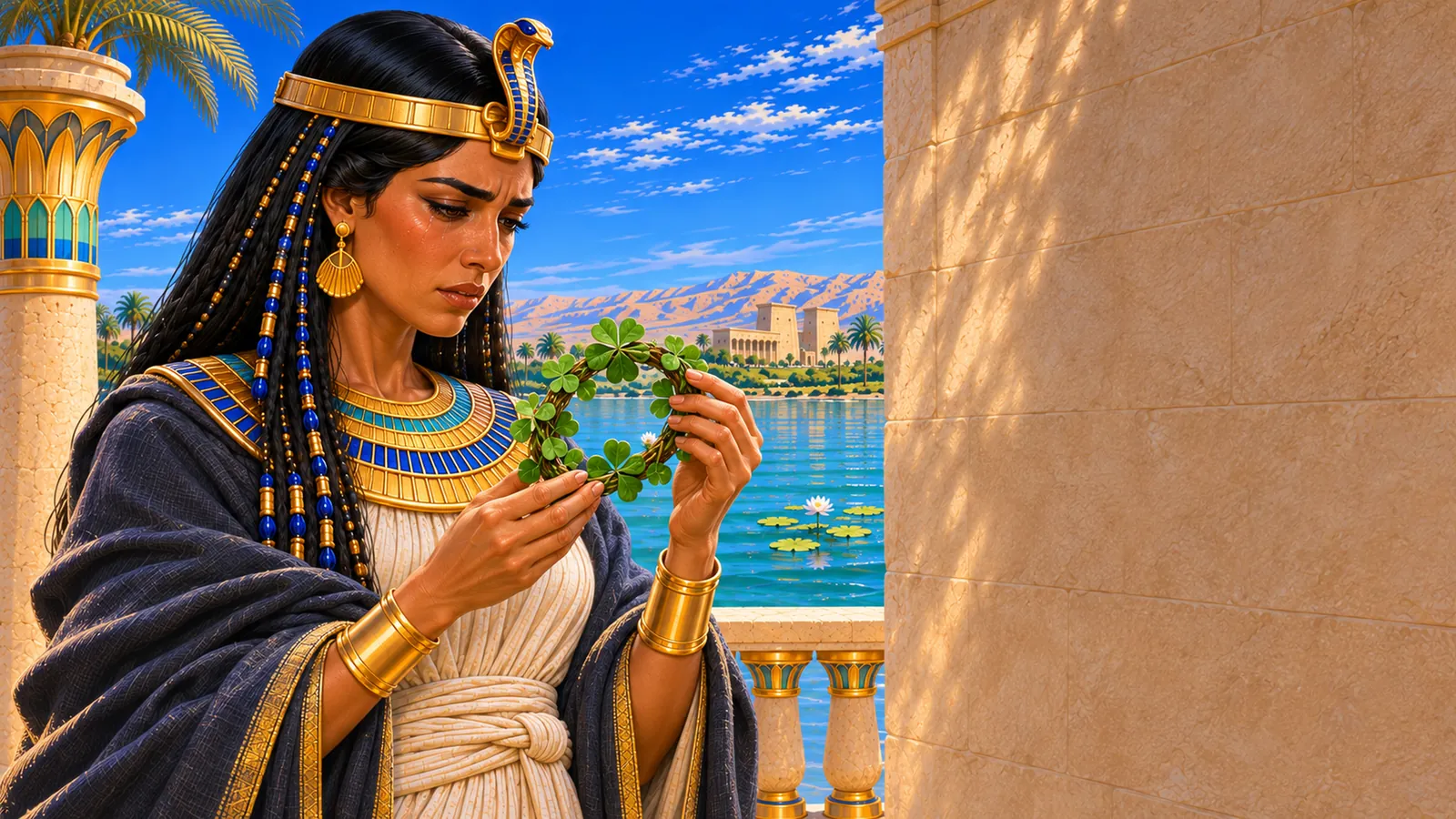
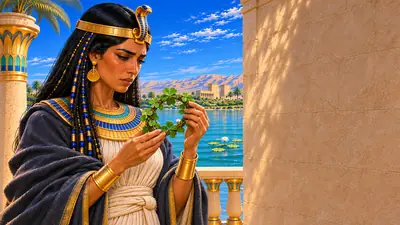
Ísis soube que Néftis enganara Osíris, que dormira com ela pensando que era Ísis. Uma grinalda de meliloto que ele deixara com Néftis ajudou Ísis a compreender o que sucedera.
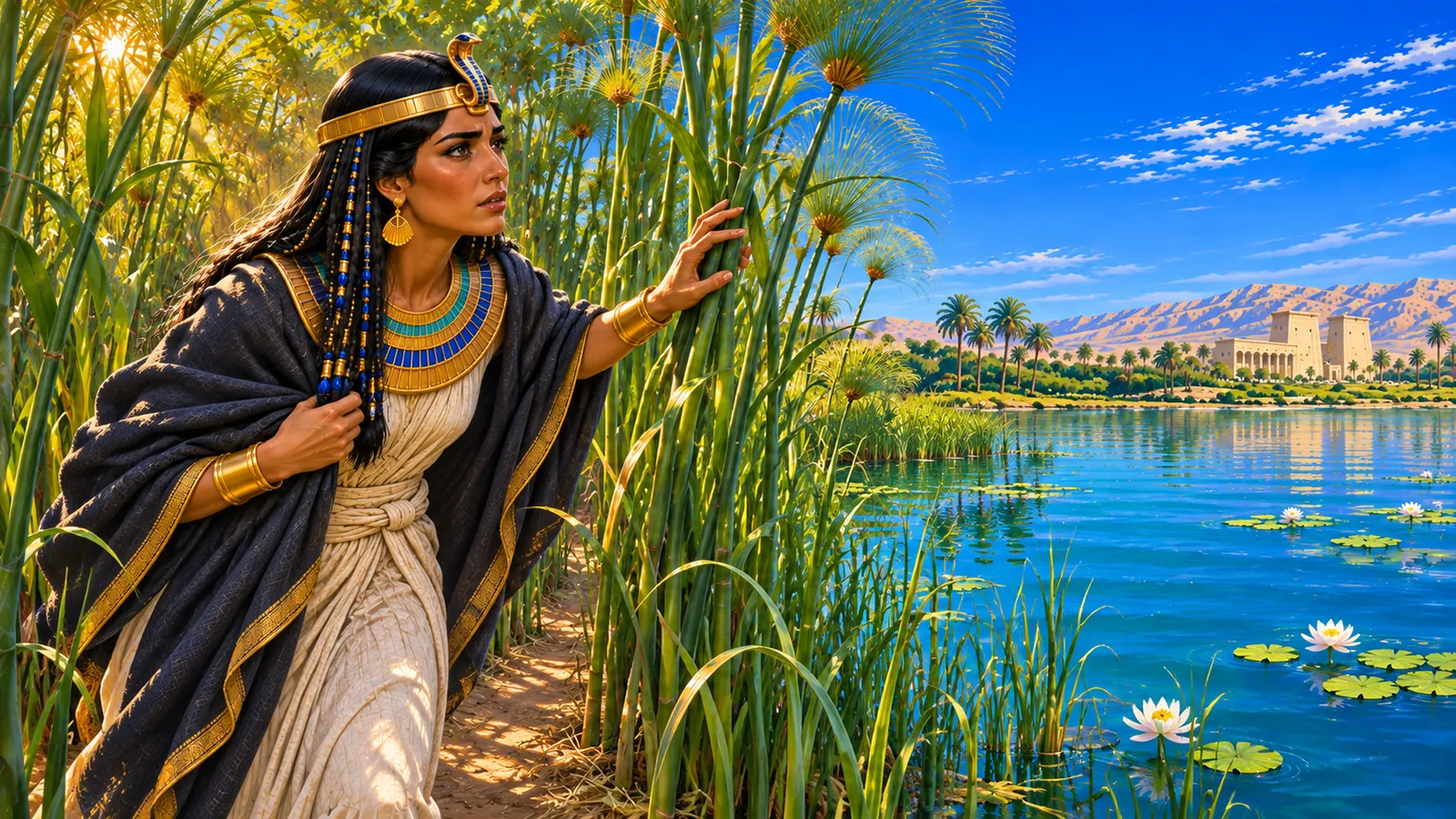
Néftis temia a ira de Set e abandonara a criança assim que esta nasceu. Ísis partiu então em busca dela.
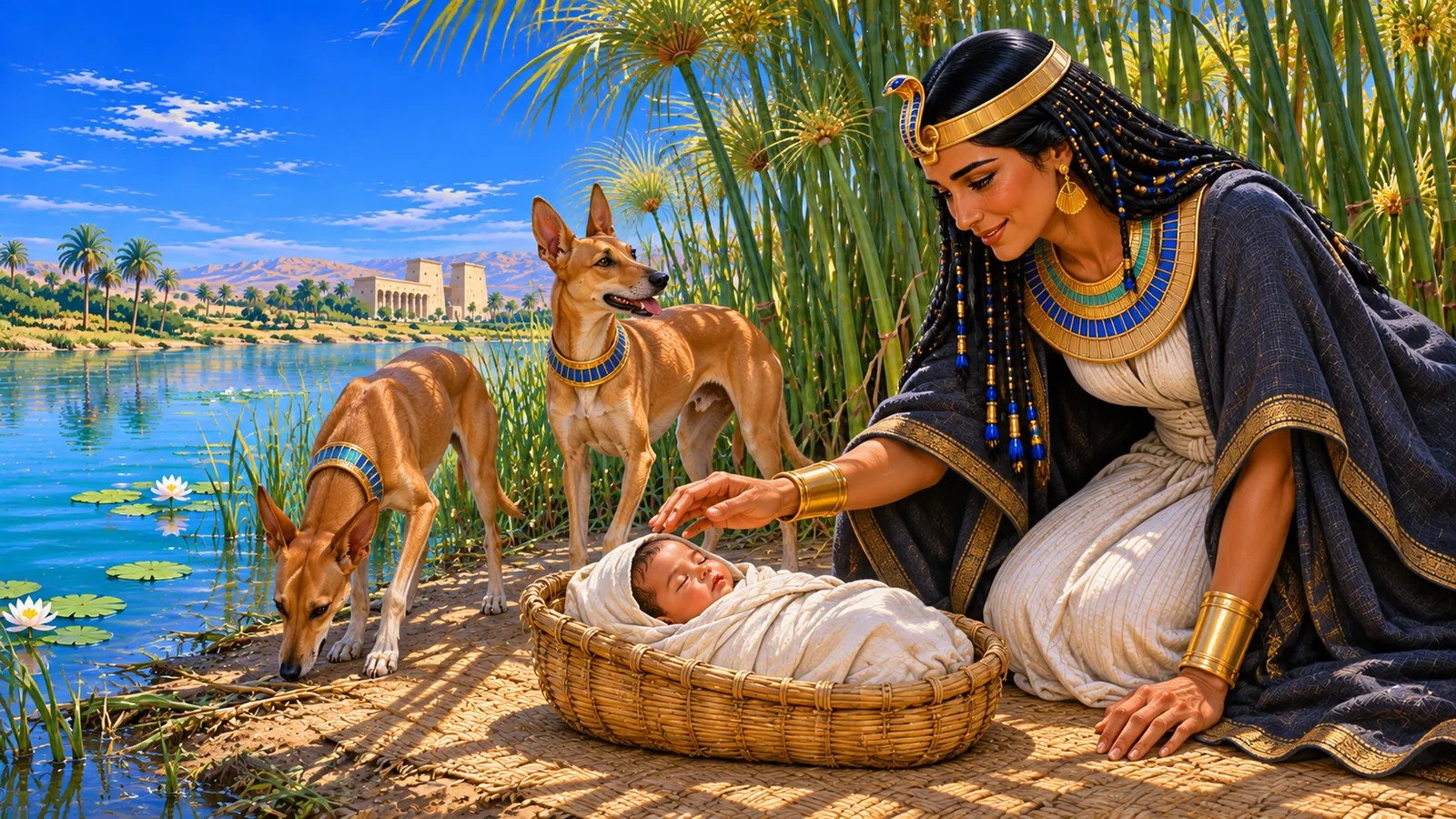
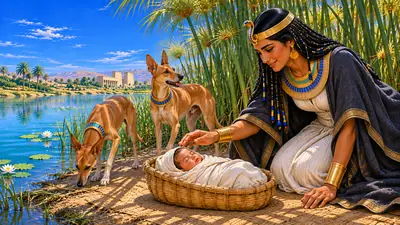
A busca foi difícil. Por fim, uns cães levaram Ísis ao lugar onde a criança fora deixada, e ela encontrou-a ali.
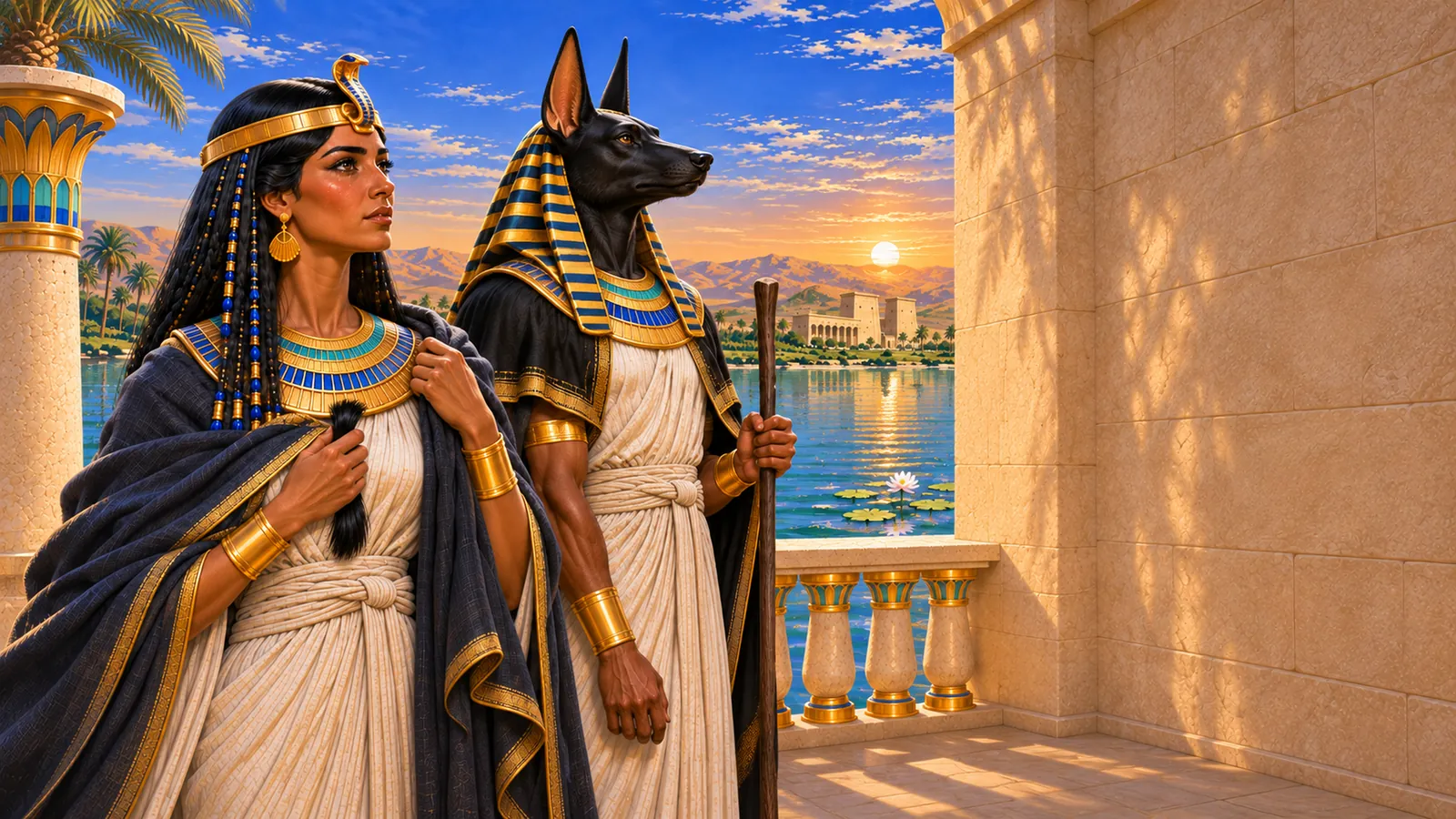
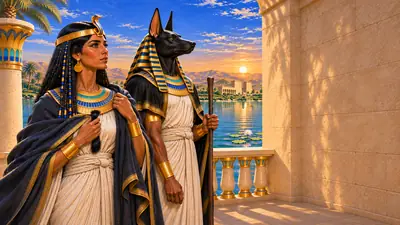
Ísis acolheu a criança e criou-a. Com o tempo, ele passou a ficar ao seu lado como guarda e companheiro constante.
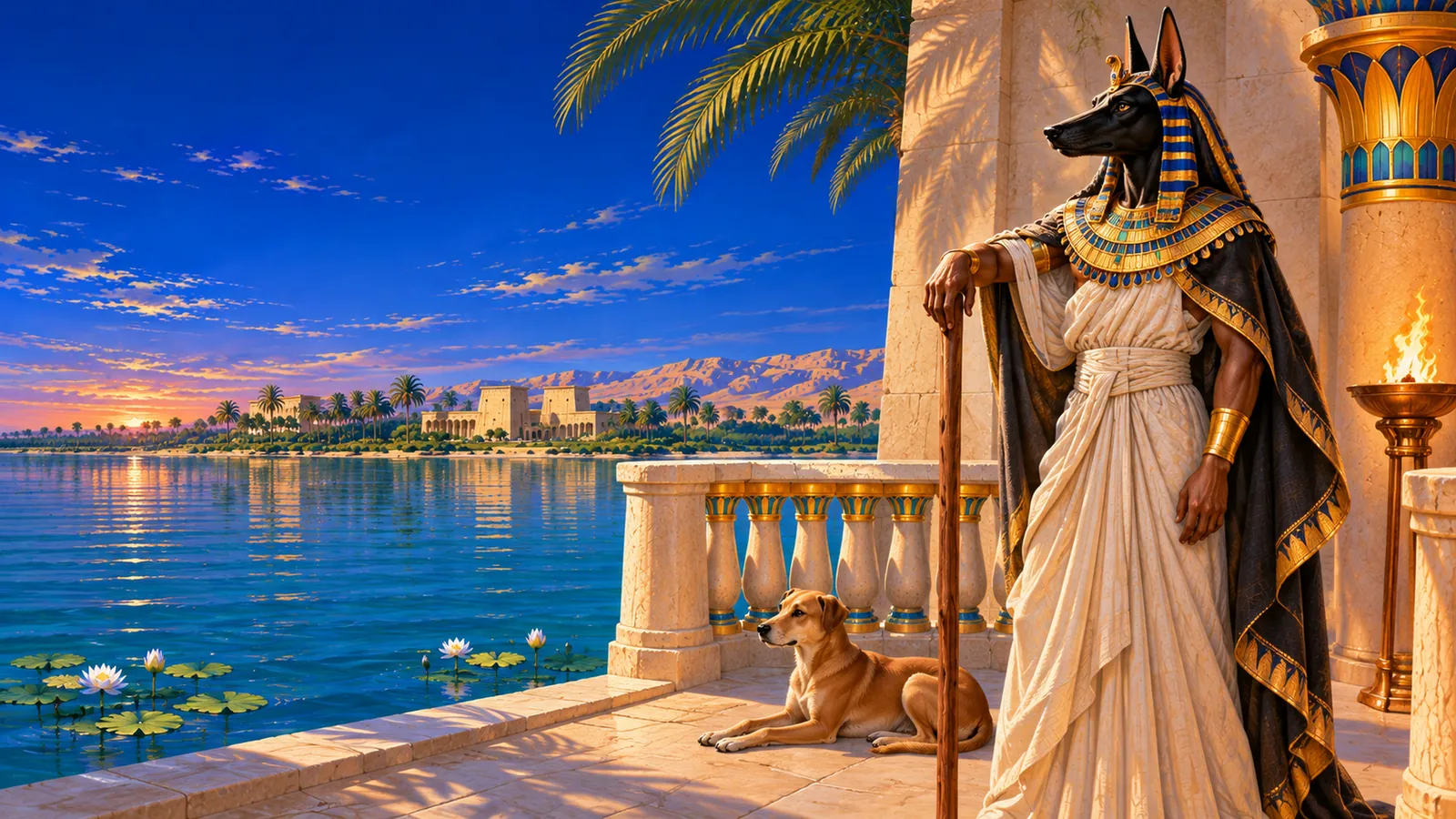
O relato chama Anúbis a esse guarda. Diz que ele vela pelos deuses como um cão vela pelas pessoas que protege.

NO MAR
A busca do cofre levou Ísis para longe do lugar onde começara. O mar já o tinha conduzido a uma costa a que o narrador chama Biblos.
Fim do capítulo 1
Todas as páginas






Fontes
Page notes give line positions in the published Project Gutenberg HTML. The name Byblos follows the narrative. The location remains uncertain in these sources.
Edições consultadas
- E. A. Wallis Budge, Egyptian Ideas of the Future Life, third edition, 1908, Chapter II
- Plutarch’s narrative in Samuel Squire’s translation as quoted in Chapter II
- Budge’s footnote for Samuel Squire’s Cambridge edition, 1744
- Budge’s note on the name Byblos
Notas sobre este reconto
**Edition.** Plutarch’s *On Isis and Osiris*, Samuel Squire’s Cambridge translation (1744), as quoted in E. A. Wallis Budge’s *Egyptian Ideas of the Future Life*, third edition (1908), chapter II. The introduction at raw HTML 1148–1158 identifies Plutarch and Squire, whose edition is specified in note 42. The local raw HTML lines below are verification locators. [Budge 1908, Project Gutenberg ebook 11277](https://www.gutenberg.org/ebooks/11277)
**P01, 1148–1158 and 1162–1167.** The opening frames the events as Plutarch’s retelling. The five days are the result of the game at 1171–1175. This page introduces the story’s premise in advance of those events.
**P02, 1162–1168.** Squire says that Rhea was with Saturn in secret, that the Sun discovered her, and that he cursed her to give birth in no month or year. Budge’s notes 43–45 identify Rhea with Nut, Saturn with Seb (Geb), and the Sun with Ra.
**P03, 1168–1171.** Squire’s Mercury loves Nut and plays with the Moon in return for favors she has granted him. Squire’s “plays at tables” is presented as a board game. The story gives no board design or rules in this passage.
This is what Plutarch reports about the custom.
**P07, 1176–1178.** Osiris is born on the first day.
**P08, 1179–1182.** An explicitly different account says that Pamyles heard the announcement while fetching water from the temple of Jupiter at Thebes. The spoken version names the city and leaves the Greek temple designation in this note.
Geb entrusts the child’s upbringing to him. Plutarch says the Pamylia commemorated this event and compares it to the Greek Phalliphoria or Priapeia.
**P10, 1186–1188.** Aroueris is born on day two. Budge’s note 46 gives Hera-ur, Horus the Elder. Squire also records Apollo as a name some give him.
**P11, 1188–1192 and note 47.** Squire calls the third child Typho, whom Budge identifies as Set.
**P12, 1192–1194.** Isis is born on the fourth added day in the marshes of Egypt.
**P13, 1193–1194.** Squire says Nepthys is born on the last day. The edition gives Teleute and Aphrodite as names used by some and Nike as one used by others. Those names remain in this note.
**P14, 1195–1201.** One reported genealogy assigns the first two children to the Sun (Ra), Isis to Mercury (Thoth), and Typho (Set) and Nephthys to Saturn (Geb). The next page retains the reported variant fatherhood of Horus the Elder without joining it to this genealogy.
Page 15 (Budge 1908, chapter II, raw HTML 1201–1205). Squire writes Typho and Nepthys for Set and Nephthys. He says they married. He then recounts the pre-birth union of Isis and Osiris, naming Aroueris, or the elder Orus, as their child. This is a different genealogy from the account in lines 1195–1197. Horus the Elder is the presentation name here.
Page 16 (1207–1209). Osiris has become king of Egypt and undertakes to change the way his people live. Squire’s English describes their previous way of life as “indigent and barbarous.” Those terms belong to the older account.
Page 17 (1209–1212). Osiris teaches cultivation and improving crops, gives laws to govern conduct, and instructs his people about reverence and worship due to the gods.
Pages 18–19 (1212–1218). Osiris travels beyond Egypt in the story. Squire says he persuades people through reasoning communicated in hymns and songs with musical instruments. The text expressly distinguishes his persuasion from compulsion by force of arms.
Page 20 (1219–1222). Isis governs vigilantly while Osiris is absent. Squire says this leaves Typho no opportunity to change anything in the state.
Page 21 (1222–1225). After Osiris returns, Typho persuades seventy-two other people to join the plot and also has the help of Aso, a queen then in Egypt. Squire calls her “a certain queen of Ethiopia.” The place label belongs to the older rendering.
Page 22 (1225–1229). Squire describes its fine appearance and ornament.
Page 23 (1229–1230). In his banqueting room Set presents the chest, and those present admire it.
Pages 24–25 (1230–1234). The guests try one after another. Osiris lies down last.
Page 26 (1234–1236). The conspirators close the chest with Osiris inside and trap him.
Page 27 (1236–1238). This retelling uses Tanaitic.
Page 28 (1238–1242). The date in the narrative is the seventeenth of Athyr. The ordinal is on line 1241 and the month starts line 1242. The following page gives the two accounts involving the number twenty-eight.
### Pages 29–42 · The news and the search
Os versos antigos de cada página
- Page 1: Plutarch, Squire 1744 in Budge 1908, chapter II, HTML 1148–1158, 1162–1167
The whole upper text field is calm deep blue-violet morning sky, still one continuous soft tone. - Page 2: Plutarch, Squire 1744 in Budge 1908, chapter II, HTML 1162–1168
- Page 3: Plutarch, Squire 1744 in Budge 1908, chapter II, HTML 1168–1171
- Page 4: Plutarch, Squire 1744 in Budge 1908, chapter II, HTML 1170–1173
- Page 5: Plutarch, Squire 1744 in Budge 1908, chapter II, HTML 1172–1175
- Page 6: Plutarch, Squire 1744 in Budge 1908, chapter II, HTML 1174–1176
- Page 7: Plutarch, Squire 1744 in Budge 1908, chapter II, HTML 1176–1178
- Page 8: Plutarch, Squire 1744 in Budge 1908, chapter II, HTML 1179–1182
- Page 9: Plutarch, Squire 1744 in Budge 1908, chapter II, HTML 1182–1185
- Page 10: Plutarch, Squire 1744 in Budge 1908, chapter II, HTML 1186–1188
- Page 11: Plutarch, Squire 1744 in Budge 1908, chapter II, HTML 1188–1192
- Page 12: Plutarch, Squire 1744 in Budge 1908, chapter II, HTML 1192–1194
- Page 13: Plutarch, Squire 1744 in Budge 1908, chapter II, HTML 1193–1194
- Page 14: Plutarch, Squire 1744 in Budge 1908, chapter II, HTML 1195–1201
- Page 15: Plutarch, Squire 1744 in Budge 1908, chapter II, HTML 1201–1205
The entire right text field is unbroken blue-brown shade on bare plaster. - Page 16: Plutarch, Squire 1744 in Budge 1908, chapter II, HTML 1207–1209
- Page 17: Plutarch, Squire 1744 in Budge 1908, chapter II, HTML 1209–1212
- Page 18: Plutarch, Squire 1744 in Budge 1908, chapter II, HTML 1212–1214
- Page 19: Plutarch, Squire 1744 in Budge 1908, chapter II, HTML 1214–1218
- Page 20: Plutarch, Squire 1744 in Budge 1908, chapter II, HTML 1219–1222
- Page 21: Plutarch, Squire 1744 in Budge 1908, chapter II, HTML 1222–1225
- Page 22: Plutarch, Squire 1744 in Budge 1908, chapter II, HTML 1225–1229
Treat it as a close still-life fragment. - Page 23: Plutarch, Squire 1744 in Budge 1908, chapter II, HTML 1229–1230
- Page 24: Plutarch, Squire 1744 in Budge 1908, chapter II, HTML 1230–1232
- Page 25: Plutarch, Squire 1744 in Budge 1908, chapter II, HTML 1232–1234
- Page 26: Plutarch, Squire 1744 in Budge 1908, chapter II, HTML 1234–1236
- Page 27: Plutarch, Squire 1744 in Budge 1908, chapter II, HTML 1236–1238
The whole right text rectangle is soft uniform slate-teal water and air with no distinct horizon or foam. - Page 28: Plutarch, Squire 1744 in Budge 1908, chapter II, HTML 1238–1242
- Page 29: Plutarch, Squire 1744 as printed by Budge 1908, Chapter II, HTML lines 1241–1244
- Page 30: Plutarch, Squire 1744 as printed by Budge 1908, Chapter II, HTML lines 1246–1249
- Page 31: Plutarch, Squire 1744 as printed by Budge 1908, Chapter II, HTML lines 1248–1251
- Page 32: Plutarch, Squire 1744 as printed by Budge 1908, Chapter II, HTML lines 1251–1255
- Page 33: Plutarch, Squire 1744 as printed by Budge 1908, Chapter II, HTML lines 1254–1257
- Page 34: Plutarch, Squire 1744 as printed by Budge 1908, Chapter II, HTML lines 1256–1260
- Page 35: Plutarch, Squire 1744 as printed by Budge 1908, Chapter II, HTML lines 1260–1262
The entire right half is smooth water in softly graded blue dusk, with no hard horizon line or reflections there. - Page 36: Plutarch, Squire 1744 as printed by Budge 1908, Chapter II, HTML lines 1263–1267
- Page 37: Plutarch, Squire 1744 as printed by Budge 1908, Chapter II, HTML lines 1267–1272
- Page 38: Plutarch, Squire 1744 as printed by Budge 1908, Chapter II, HTML lines 1272–1276
- Page 39: Plutarch, Squire 1744 as printed by Budge 1908, Chapter II, HTML lines 1275–1278
- Page 40: Plutarch, Squire 1744 as printed by Budge 1908, Chapter II, HTML lines 1277–1279
- Page 41: Plutarch, Squire 1744 as printed by Budge 1908, Chapter II, HTML lines 1278–1279
- Page 42: Plutarch, Squire 1744 as printed by Budge 1908, Chapter II, HTML lines 1257–1262, 1282–1285
Ilustrações feitas pelo IL Archive com ferramentas de IA; o texto baseia-se nas fontes antigas (veja as fontes no fim de cada capítulo).