Sargão e o rio Capítulo 1
O cesto e o pomar
Neste excerto da lenda acádia do nascimento, Sargão conta como o rio o levou a Aqqi, que tirava água. Aqqi cria-o como filho adotivo e encarrega-o de cuidar do seu pomar. O episódio segue as sete linhas traduzidas por Jonathan Valk.
FontesVire as páginas com as setas, o teclado ou deslizando o dedo.
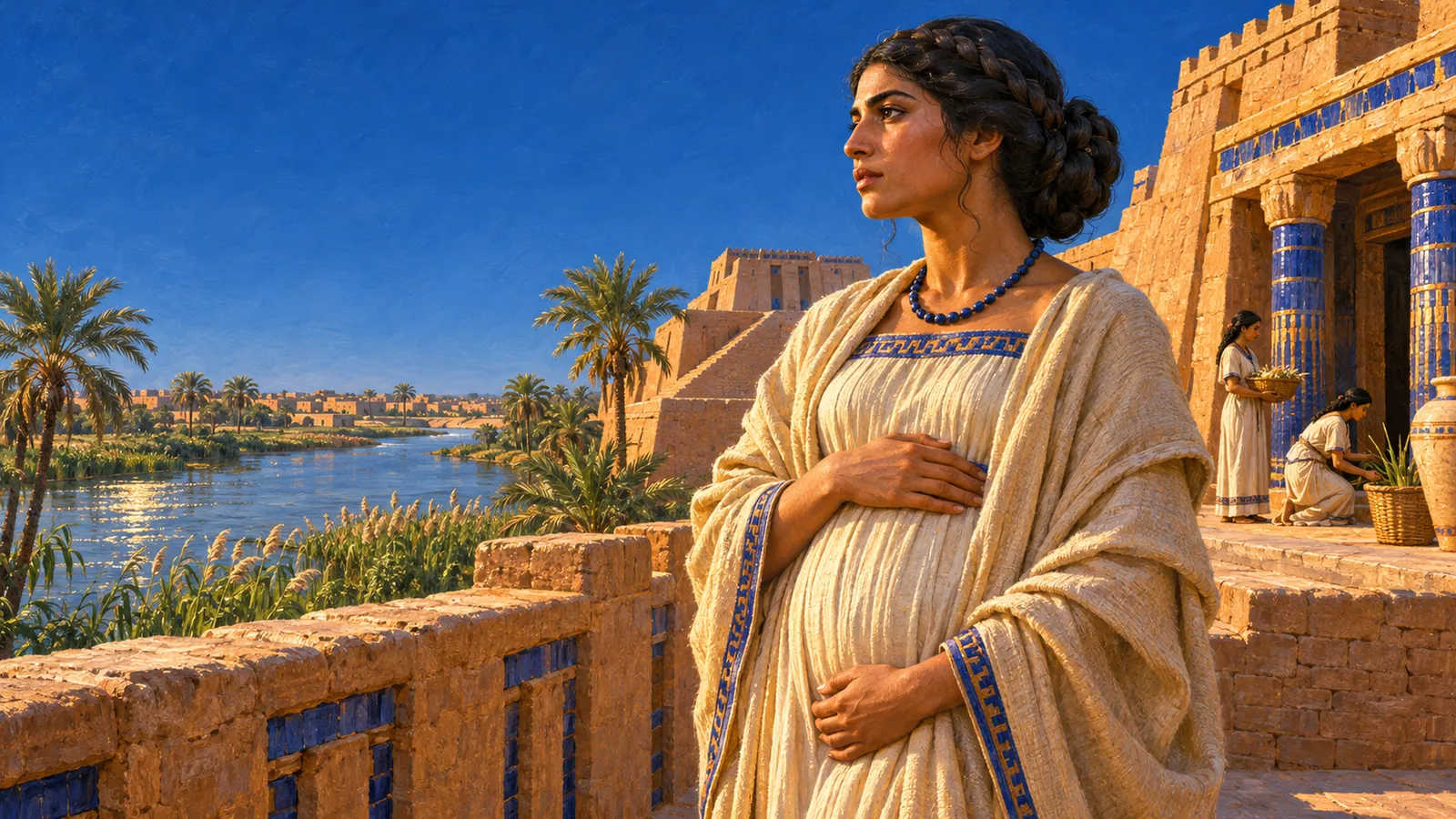
A LENDA DO NASCIMENTO
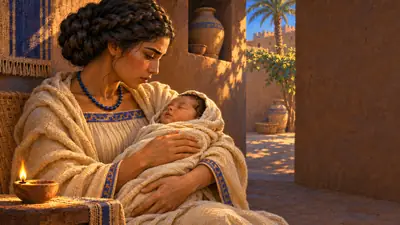
No excerto da lenda do nascimento de Sargão traduzido por Jonathan Valk, Sargão refere-se à sua própria conceção e diz que a sua mãe era uma sacerdotisa ēn.
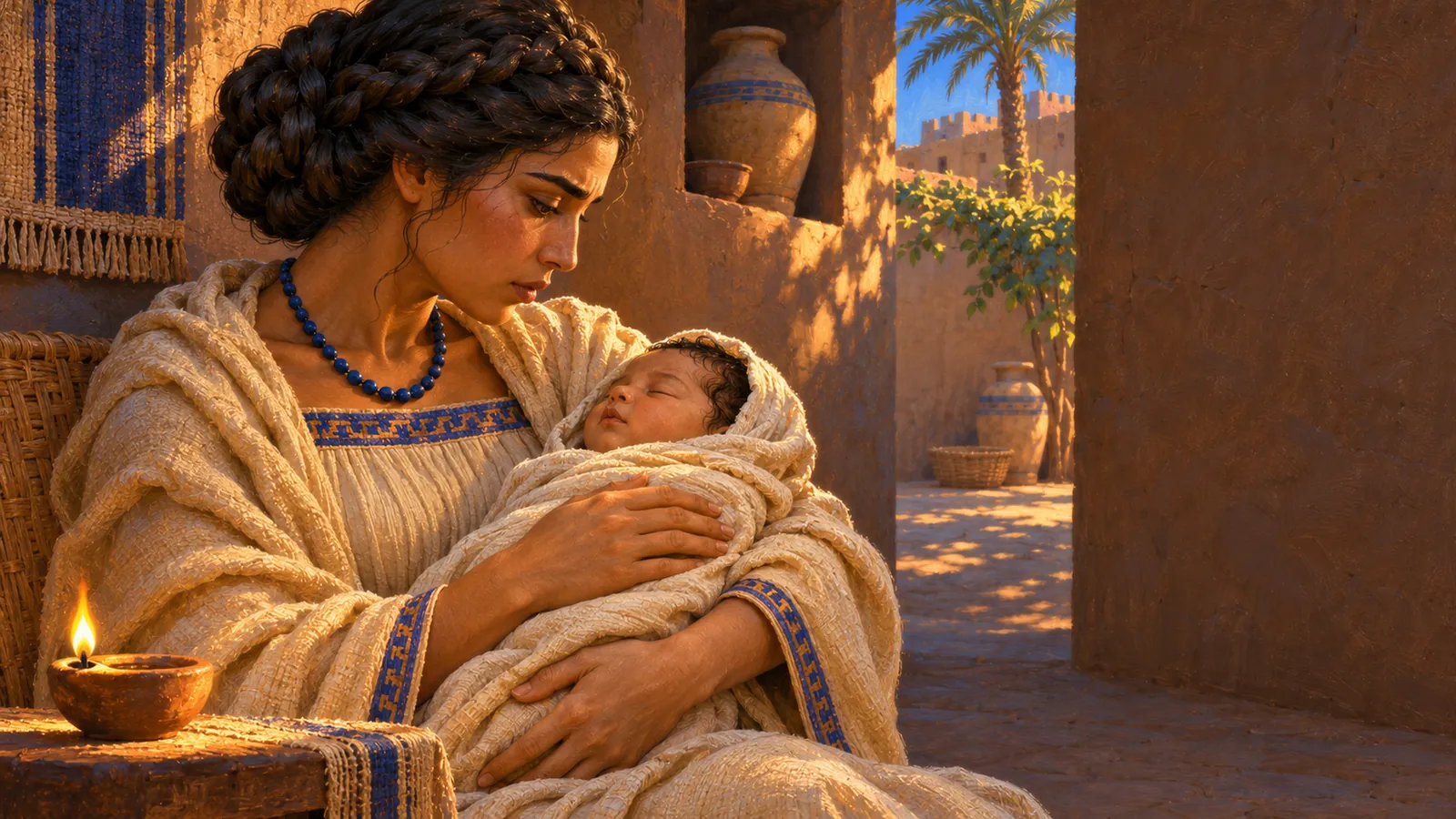
Na segunda parte da primeira linha, Sargão diz que a sua mãe o deu à luz em segredo.
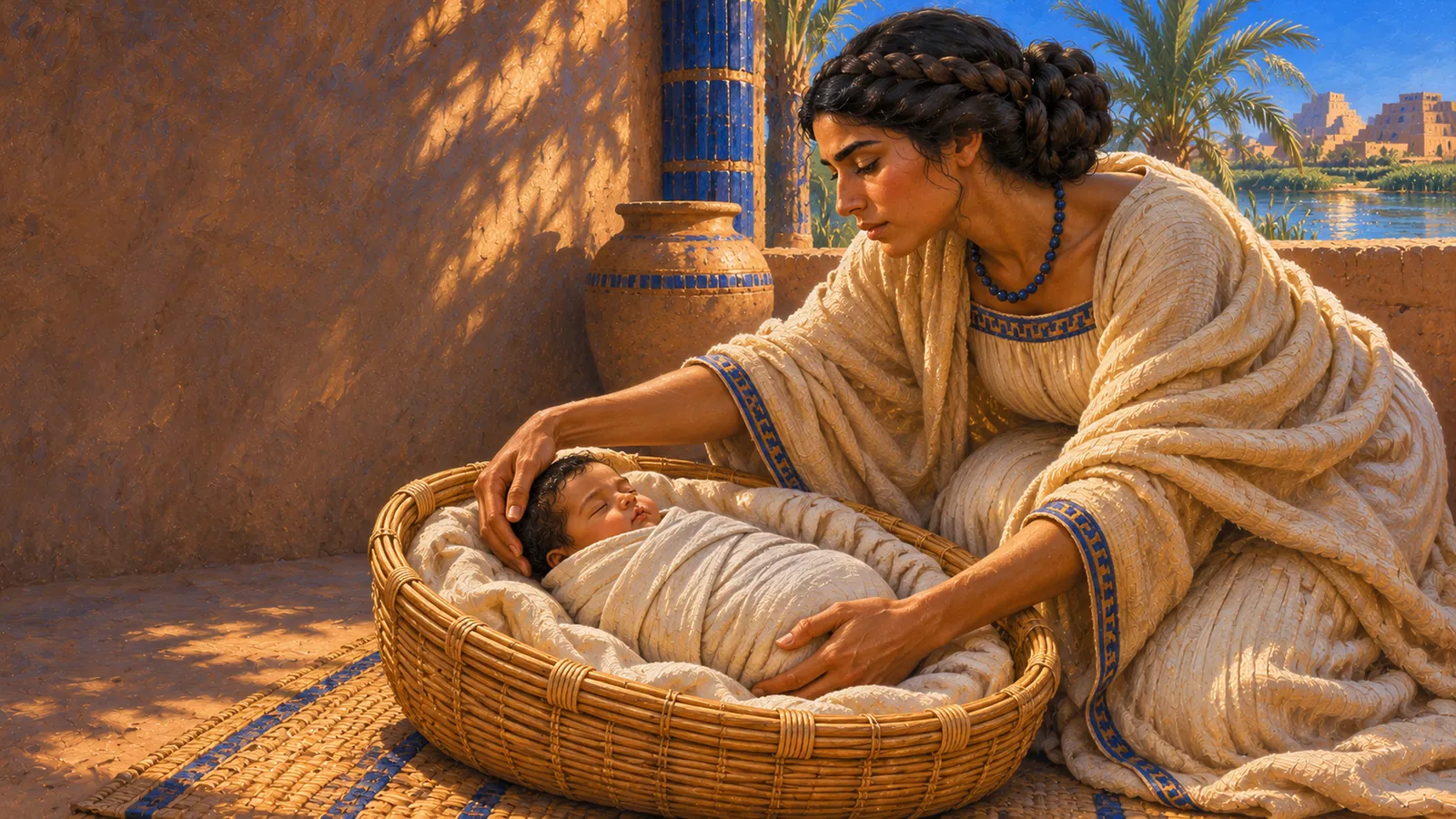
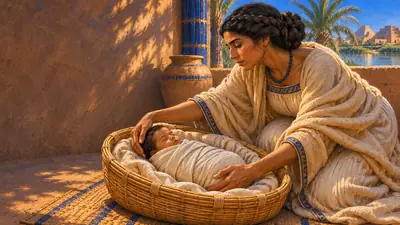
Sargão diz que, depois de nascer, a sua mãe o colocou num cesto feito de canas.
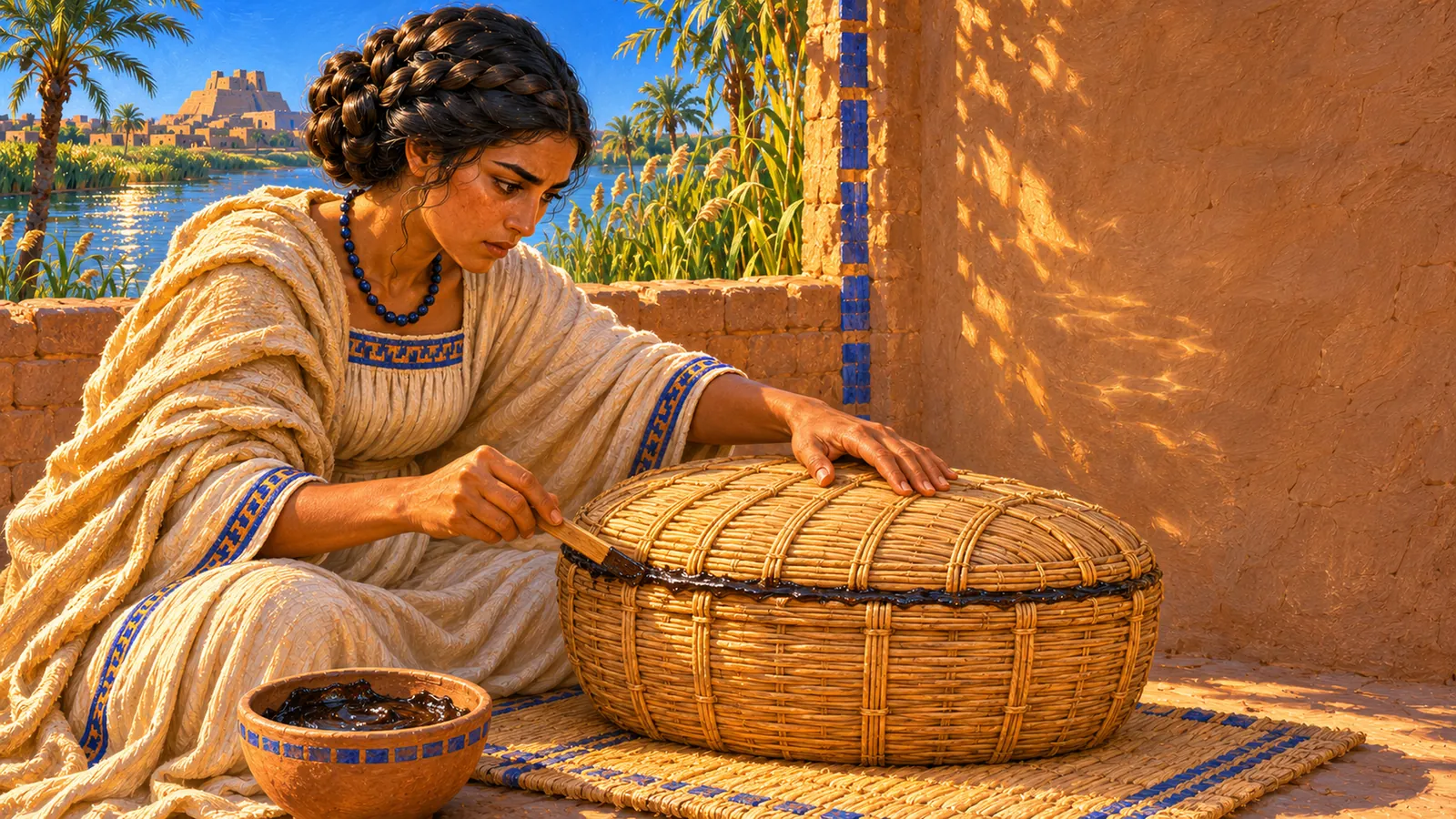
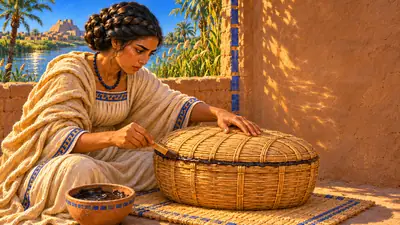
Sargão diz que a sua mãe vedou a abertura com betume. Valk esclarece em nota que a formulação na primeira pessoa se refere à abertura do cesto.

O RIO
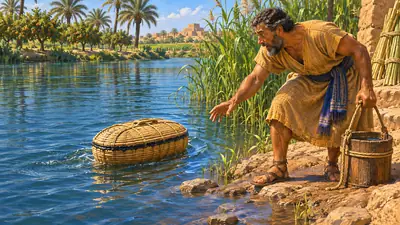
Sargão diz que a sua mãe o pôs no rio. No relato, não conseguia sair da água.
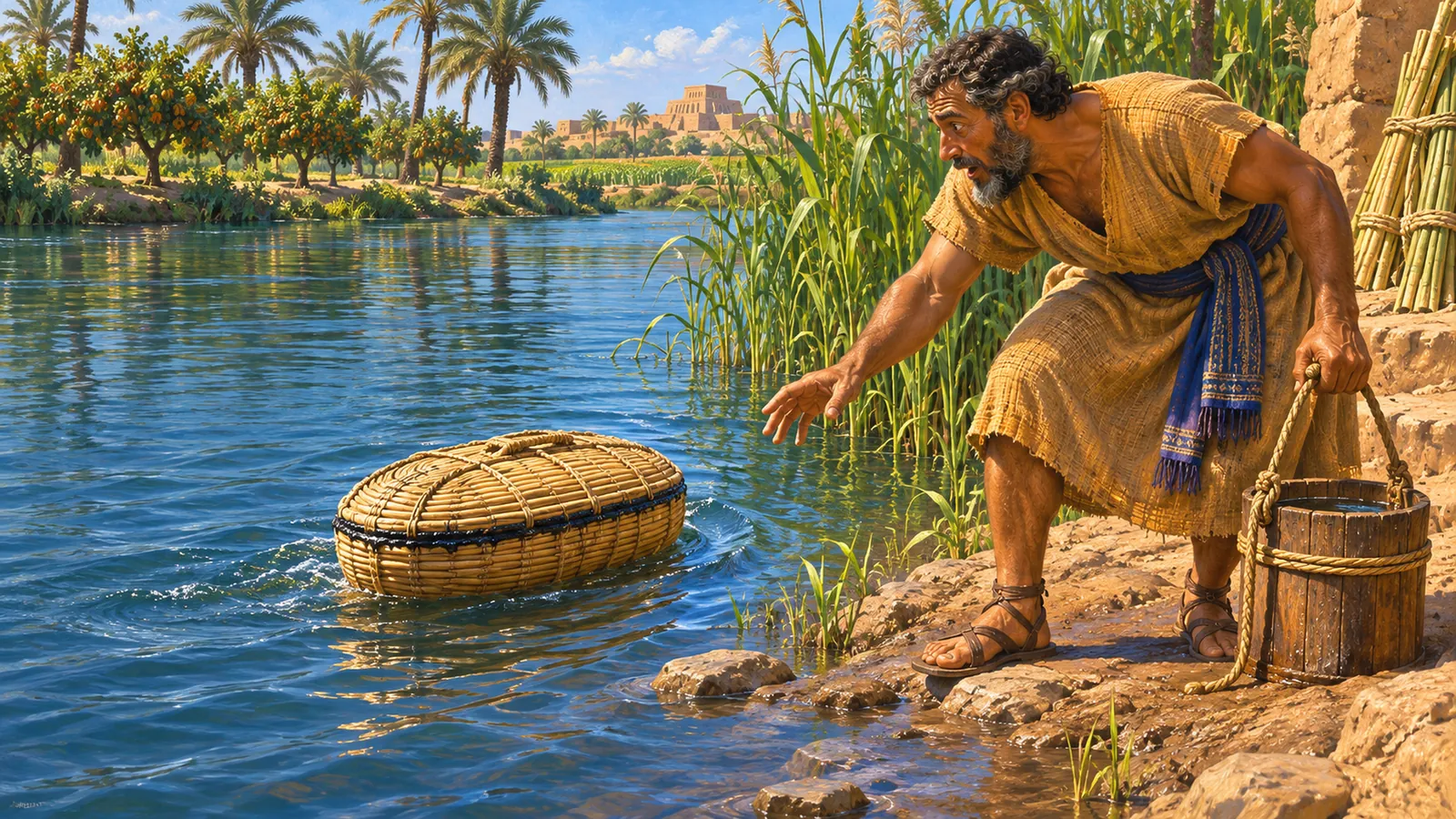
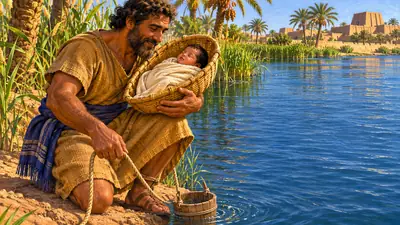
Sargão diz que o rio o levou até um homem chamado Aqqi, cujo trabalho era tirar água.
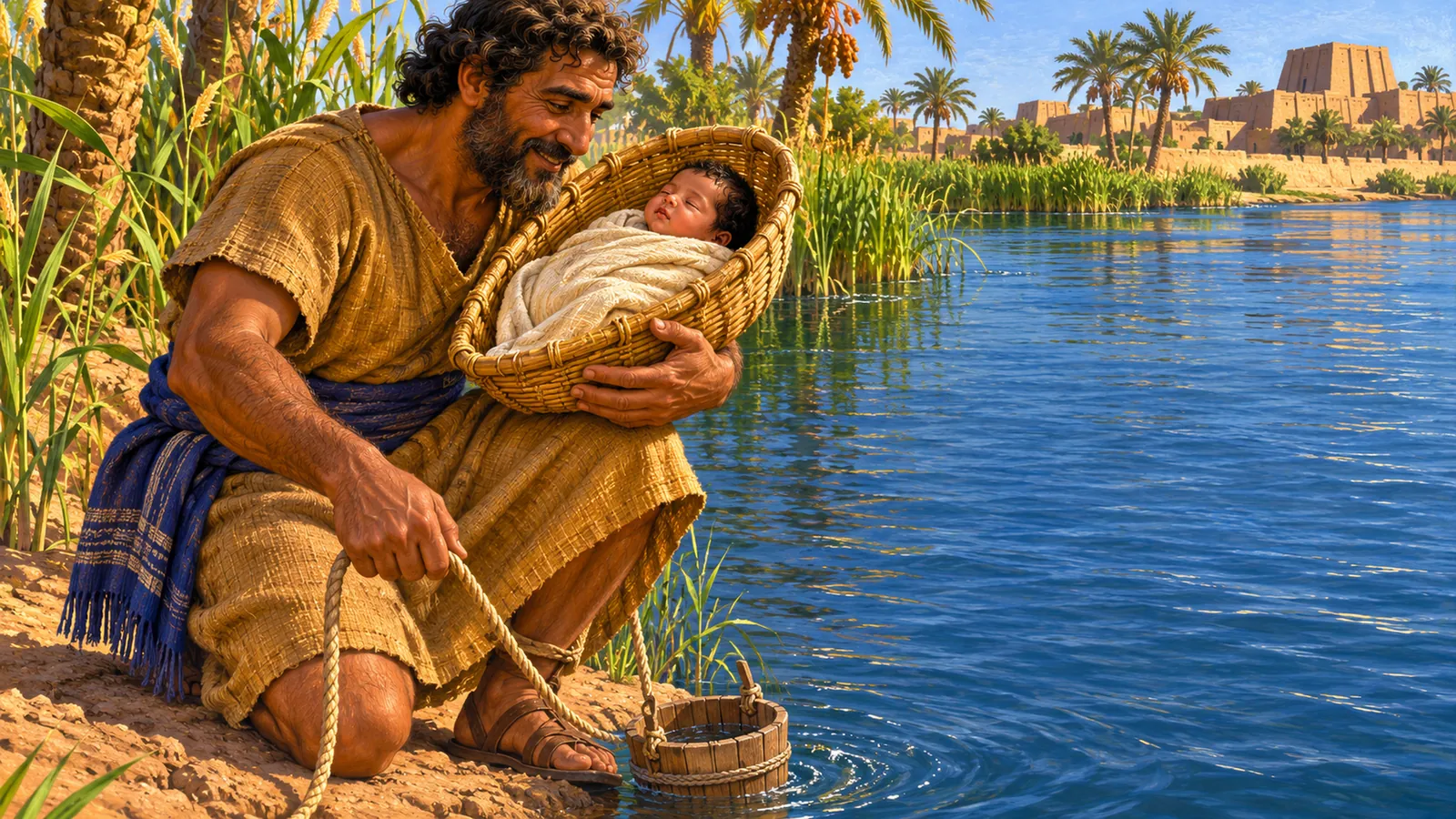
Sargão diz que Aqqi o levantou enquanto baixava o balde com que tirava água do rio.
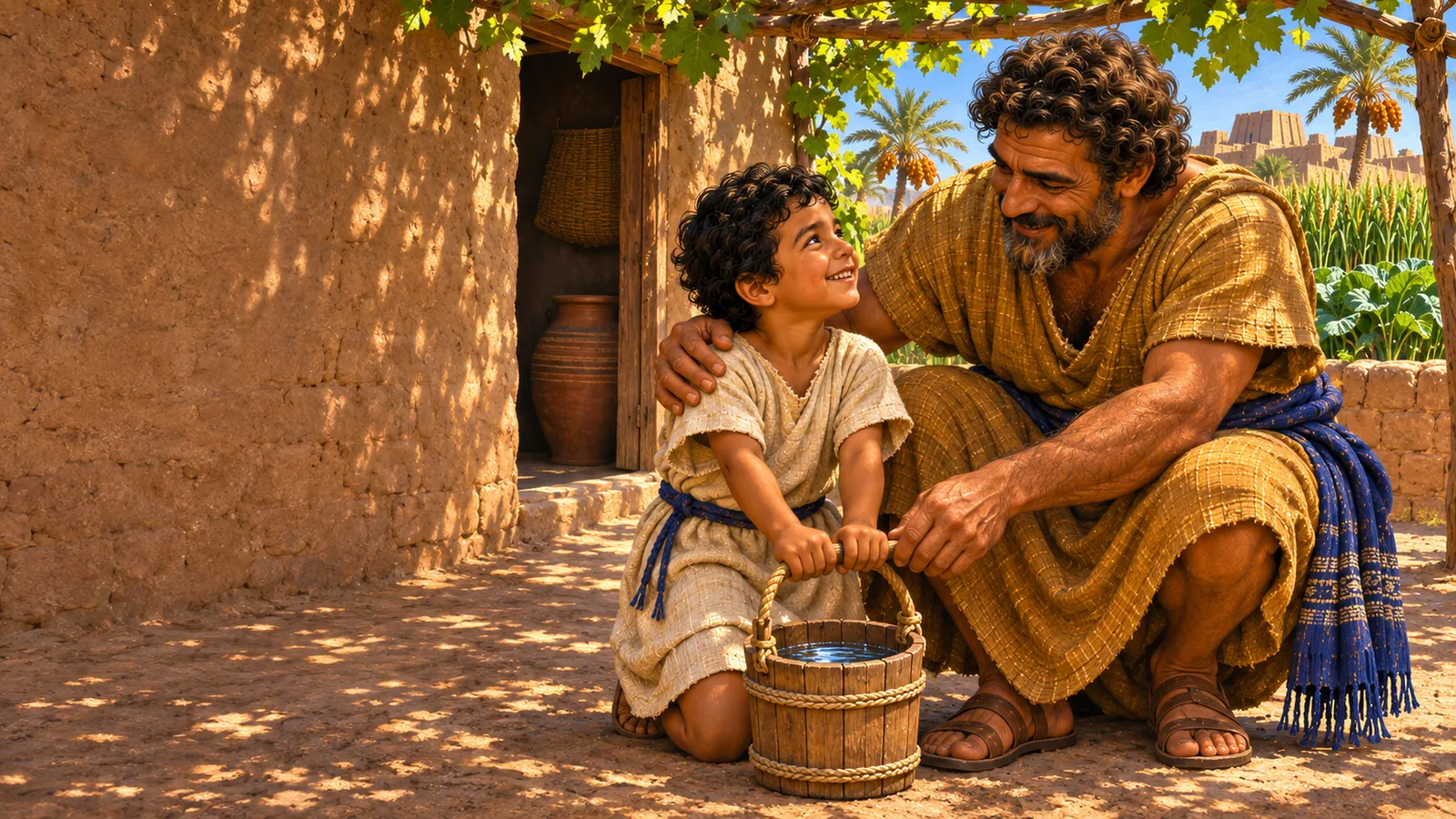
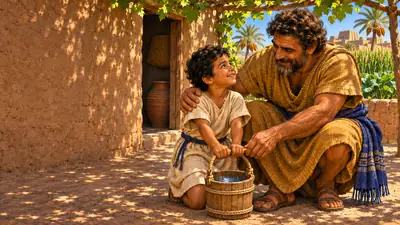
Sargão diz que Aqqi, o tirador de água, o criou como filho adotivo depois de o tirar do rio.
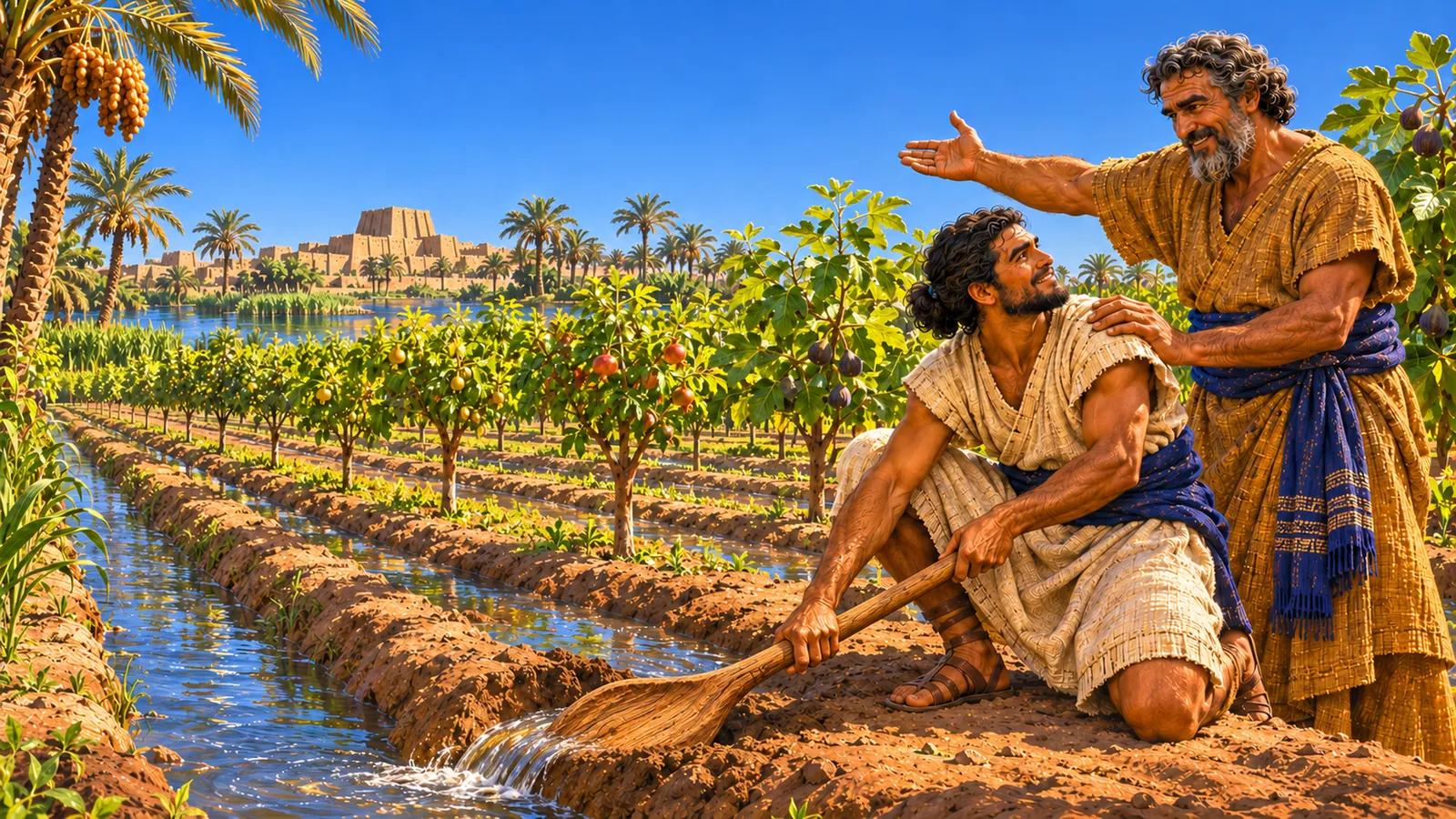
O POMAR
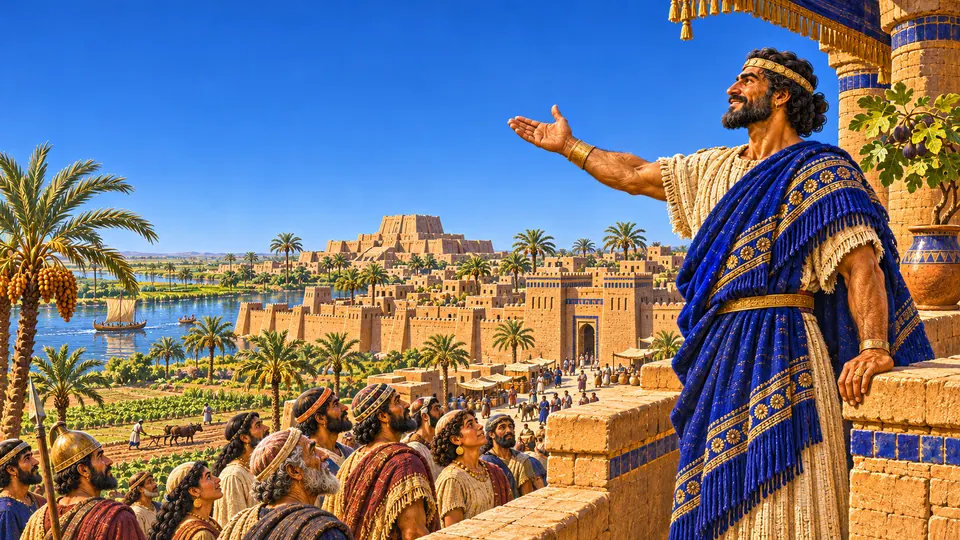
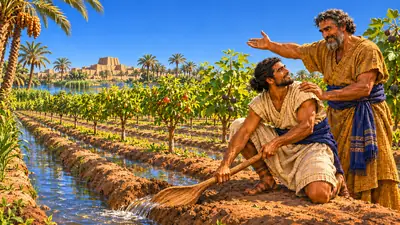
Na última linha do excerto, Sargão diz que Aqqi o encarregou depois de cultivar o seu pomar.
Fim do capítulo 1
Todas as páginas


Fontes
738 of the Journal of the Economic and Social History of the Orient 59 (2016). Valk discusses the basket opening in note 161 and lists the editions used in note 162. The quoted selection leads from the secret birth to the orchard assignment. The CDLI record is a separate manuscript reference. The artwork shows unoccupied ancient riverbanks and ordinary work materials.
Edições consultadas
- Jonathan Valk’s article, University of Helsinki institutional copy, p. 738
- Journal of the Economic and Social History of the Orient, Brill
- CDLI object record P365306 for a manuscript witness
Notas sobre este reconto
Pages 1–2, line 5. Jonathan Valk prints the Akkadian and an English translation on p. 738 of “They Enjoy Syrup and Ghee at Tables of Silver and Gold: Infant Loss in Ancient Mesopotamia,” *Journal of the Economic and Social History of the Orient* 59 (2016), pp. 695–749. The site reading begins at the first clause of numbered line 5. Sargon speaks in the first person. His mother, an ēn-priestess, conceives him and gives birth to him in secret. The two clauses form two scenes.
Pages 3–4, line 6 and note 161. The line first gives the reed basket and then says the opening is sealed with bitumen. Valk’s note explains that the possessive literally says “my” in the first person and that the word refers to the opening of the basket. The two clauses form two scenes.
Page 5, line 7. The mother sets Sargon in the river, from which he cannot escape in Valk’s translation. The river is unnamed in this excerpt.
Page 6, line 8. Sargon says the river carries him to Aqqi, whom the line calls a water-drawer.
Page 7, line 9. Aqqi lifts Sargon while lowering his bucket in Valk’s translation.
Page 8, line 10. Sargon says that Aqqi raises him as his adopted son.
Page 9, line 11. Aqqi puts Sargon to work as his orchard-cultivator. This is the final numbered line that Valk quotes on this page. His discussion of Ištar and kingship follows the quoted excerpt in surrounding prose and falls outside this reading.
Os versos antigos de cada página
- Page 1: Valk 2016, p. 738, Sargon Birth Legend, line 5, opening clause
- Page 2: Valk 2016, p. 738, Sargon Birth Legend, line 5, closing clause
- Page 3: Valk 2016, p. 738, Sargon Birth Legend, line 6, first clause
- Page 4: Valk 2016, p. 738, Sargon Birth Legend, line 6, second clause and note 161
- Page 5: Valk 2016, p. 738, Sargon Birth Legend, line 7
- Page 6: Valk 2016, p. 738, Sargon Birth Legend, line 8
- Page 7: Valk 2016, p. 738, Sargon Birth Legend, line 9
- Page 8: Valk 2016, p. 738, Sargon Birth Legend, line 10
- Page 9: Valk 2016, p. 738, Sargon Birth Legend, line 11
Ilustrações feitas pelo IL Archive com ferramentas de IA; o texto baseia-se nas fontes antigas (veja as fontes no fim de cada capítulo).