Texto antigo · Contextual definition
A Lenda de Aqhat
Um texto para leitura linha a linha, com transliteração, tradução e recursos.
- Região
- Ugarit / Ras Shamra
Tradução automática. Leia o original em inglês.
Narrativa poética ugarítica em três tábuas sobre Aqhat, filho de Danel; a atribuição a Ilimilku se apoia em comparação, com seu nome restaurado em um colofão danificado.
Tempo estimado de leitura: 1 min Publicado em Última revisão:
Compartilhar artigo
Texto
Introdução
A Lenda de Aqhat é uma obra poética em ugaríticoLíngua ugaríticaAncient Semitic language preserved in Ugarit’s tablets on the Syrian coast, from the fourteenth–twelfth centuries BCE, written in a cuneiform alphabet.Glossário · Clique para ler a explicação, preservada em três tábuas de UgaritUgaritAncient city and kingdom at Ras Shamra on the Syrian coast, flourishing between the fourteenth and early twelfth centuries BCE and preserving multilingual archives.Glossário · Clique para ler a explicação, numeradas KTUKTU: referências aos textos de UgaritAbbreviation for a modern edition of alphabetic cuneiform texts. Its text references can be cross-identified with find numbers such as RS or RIH; they are not dates.Glossário · Clique para ler a explicação 1.17–1.19 nas edições modernas. Trata do nascimento e da morte de Aqhat, filho de Danel. Pertence à literatura que explora a família e as relações entre humanos e deuses, e não documenta Aqhat como uma pessoa histórica. Danel, aqui, é a personagem da história ugarítica: um nome semelhante não o identifica, por si só, com figuras religiosas posteriores. [1]
A escrita das tábuas é atribuída a IlimilkuIlimilkuUgaritic scribe associated with the Baal Cycle, Kirta and Aqhat; handwriting and colophons aid attribution. His work alone does not date the traditions’ origins.Glossário · Clique para ler a explicação por meio da comparação de caligrafia e colofões, notas de identificação acrescentadas às tábuas. No entanto, o colofão da KTU 1.17 está gravemente danificado, e o nome do escriba é restaurado, não plenamente preservado. A atribuição da cópia deve, portanto, ser distinguida da invenção da história. São tábuas da cultura da Idade do Bronze Recente de Ugarit; a data de sua escrita, por si só, não data o início das tradições que transmitem. [2]
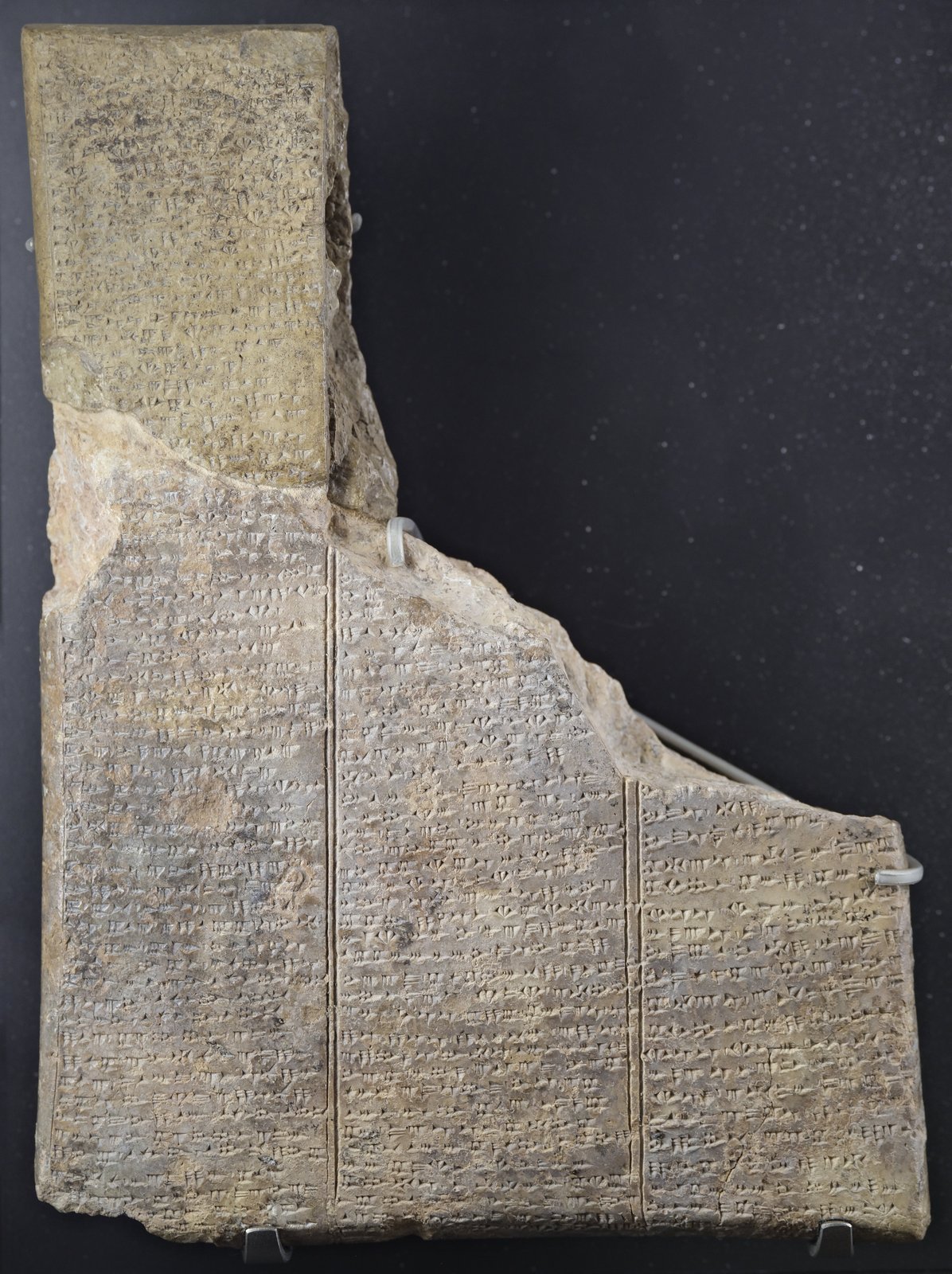
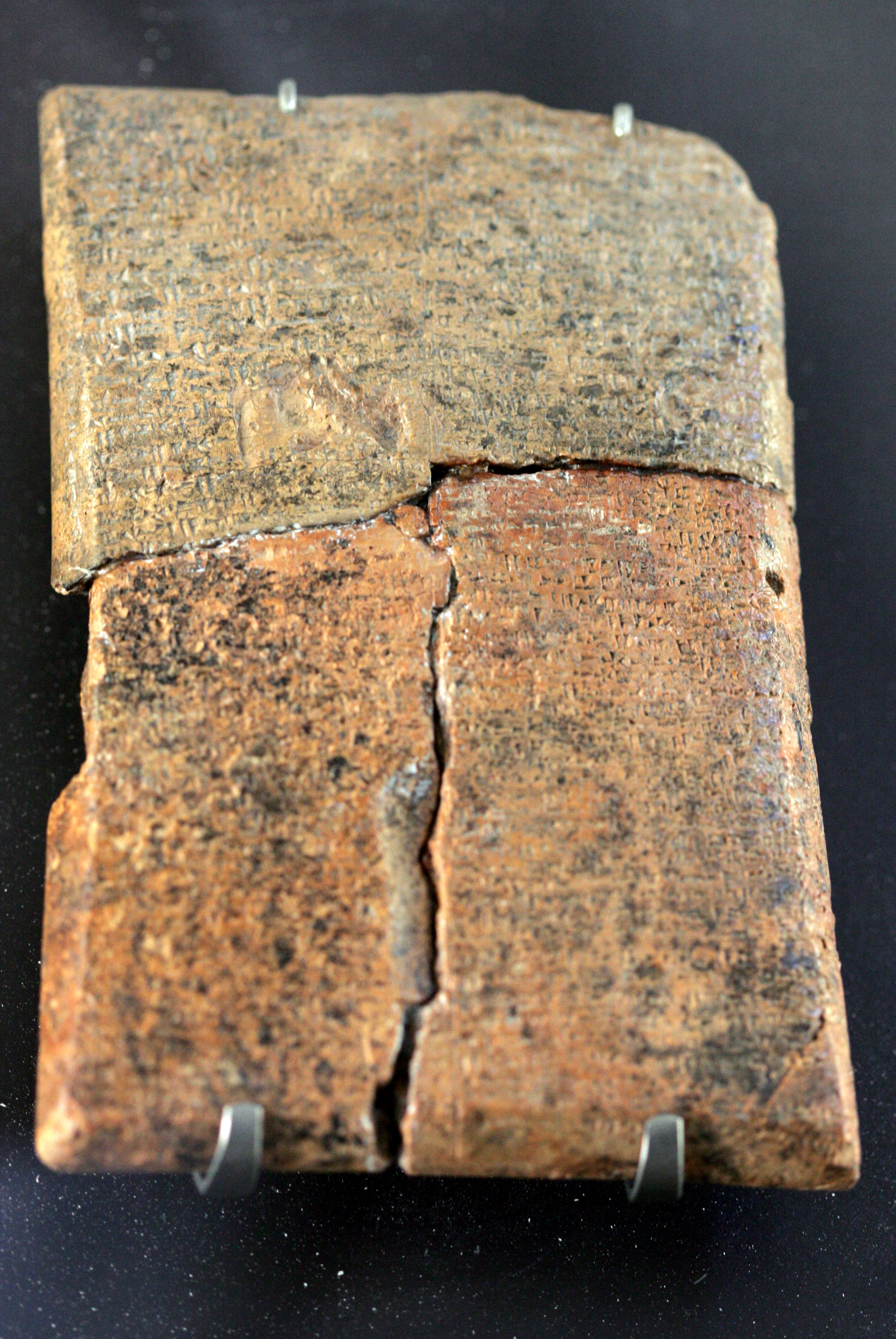
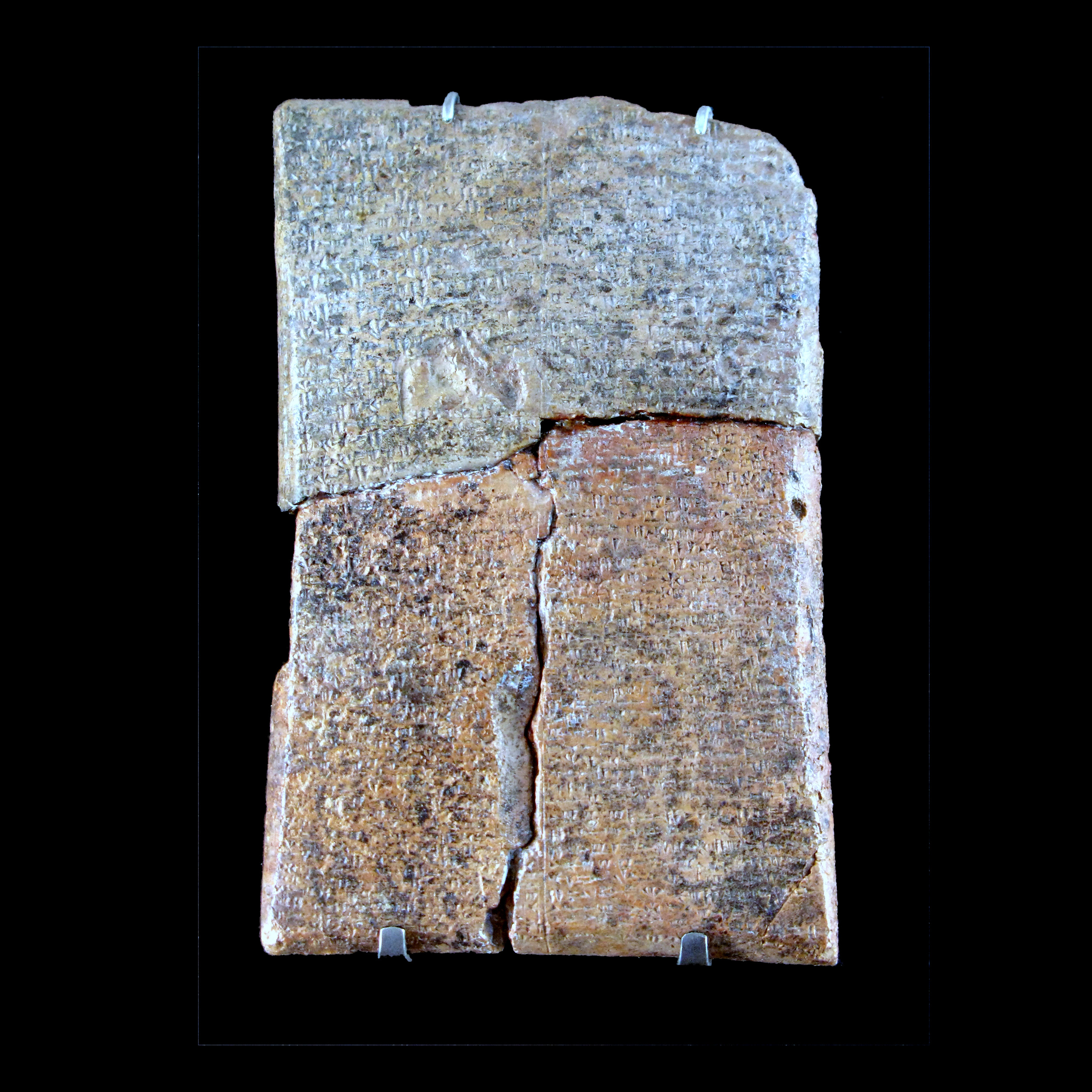
A fotografia mostra a terceira tábua, KTU 1.19, Louvre AO17323, e não a KTU 1.17 com seu colofão danificado. [3]
Referências e notas
- West Semitic Research Project, University of Southern California, Ugaritic Texts catalogue. PDF pages5–7: entries KTU1.14–1.19, excavation numbers and descriptions; these entries read, not the entire catalogue. Voltar ao texto ↑
- Mark S. Smith and Wayne T. Pitard, The Ugaritic Baal Cycle, vol.II, Brill, 2009. p.725: complete KTU1.16 colophon and damaged KTU1.17 colophon; pp.7–8 and11–14: dating and limits of attribution. Voltar ao texto ↑
- Musée du Louvre, tablet AO17323, collections record. Complete record: identity, numbers RS3.322+3.349+3.366 and dating1400–1200BCE; bibliography identifies KTU1.19. Voltar ao texto ↑
Os registros do arquivo podem ser revisados e aprimorados quando surgirem evidências ou fontes melhores. Sugerir uma correção
Sugerir uma correção · Sugerir uma fonte para este registro
Citar este registro
IL Archive, «A Lenda de Aqhat», https://ilarchive.com/pt/texts/aqhat-tale
Continuar lendo