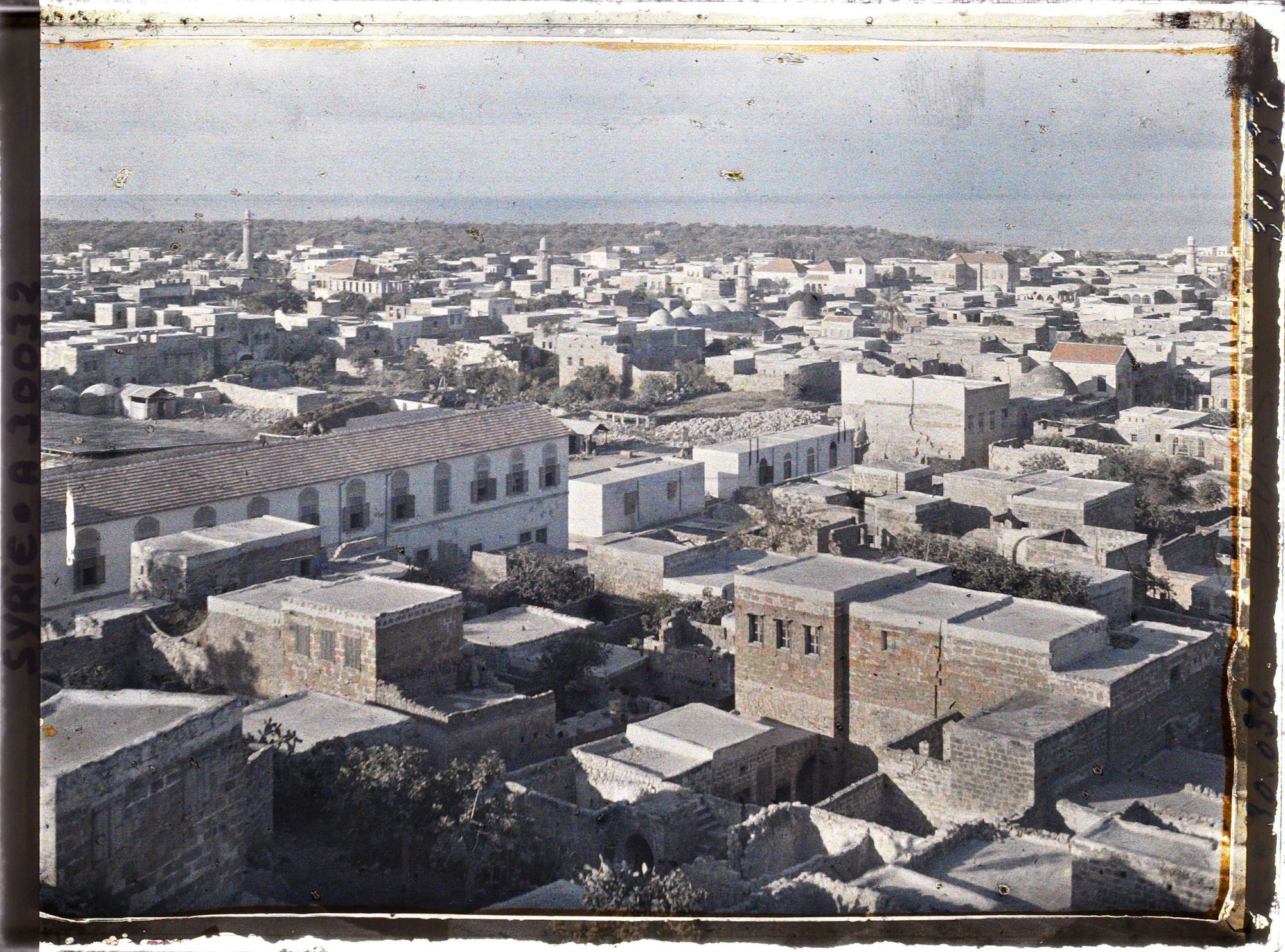
Latakia photographed by Frédéric Gadmer on 27 October 1921, an autochrome, A30032S. A historical city view, rather than the ruins of Ugarit. Musée Albert-Kahn, Département des Hauts-de-Seine
Stätte
A coastal city in Syria, south of ancient Ugarit at Ras Shamra.
Namensvarianten: Latakia, Lattakia
Kontext und Quellen →
Person
Egyptologist studying the erasure of divine names and images in the Amarna period.
Namensvarianten: Laura Taronas
Kontext und Quellen →
Person
Leon Goldman is a scholar of Avestan texts and author of Rašn Yašt.
Namensvarianten: Leon Goldman, Iranian-text scholar
Kontext und Quellen →
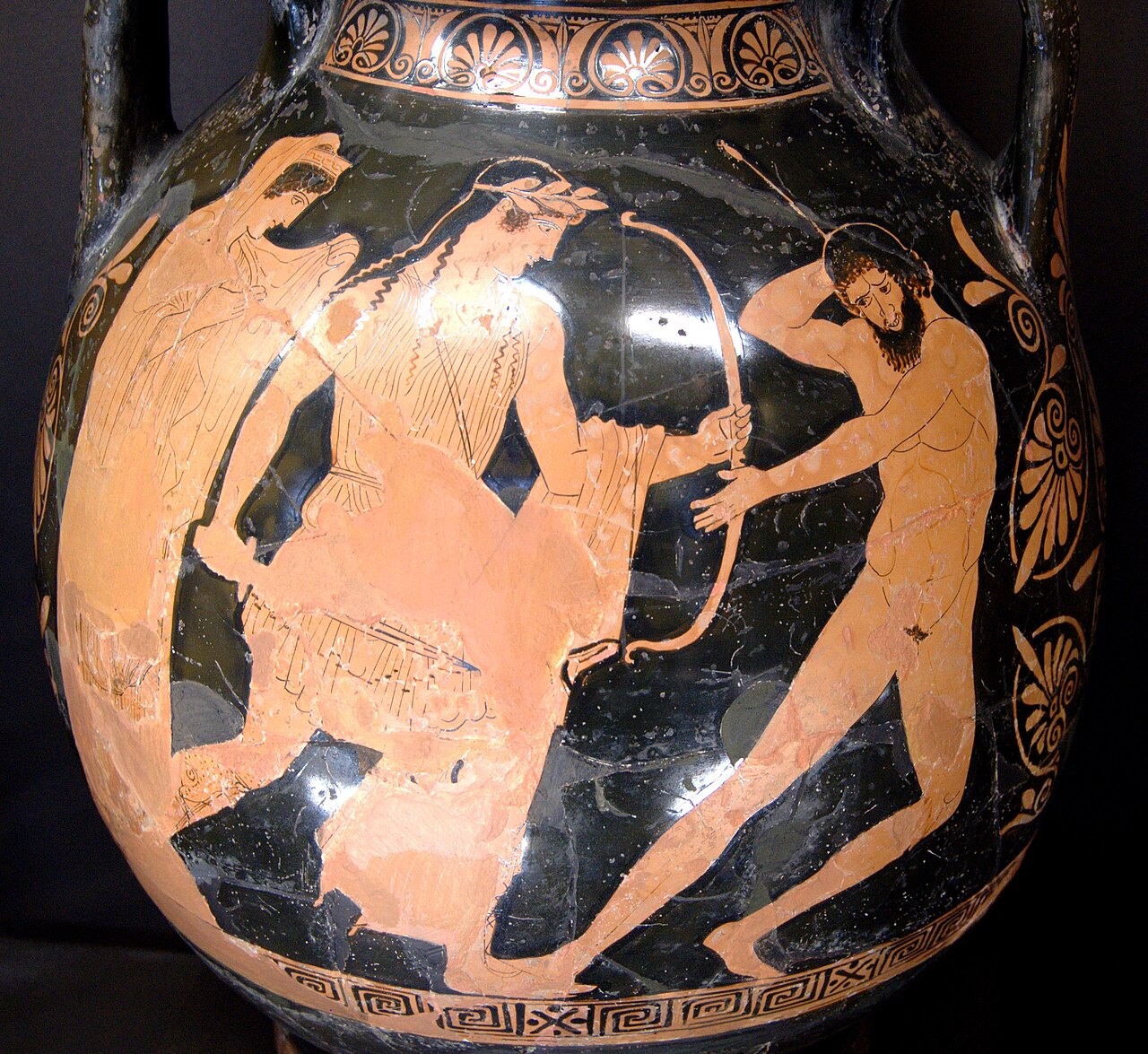
Leto, Apollo and Tityos on an Attic vase, about 450–440 BCE; Louvre G 375, attributed to Polygnotos. The image belongs to the story of the assault on Leto and Tityos’s punishment
Entität
Greek goddess and Apollo’s mother in the Iliad, appearing among the gods supporting the Trojans.
Namensvarianten: Leto
Kontext und Quellen →
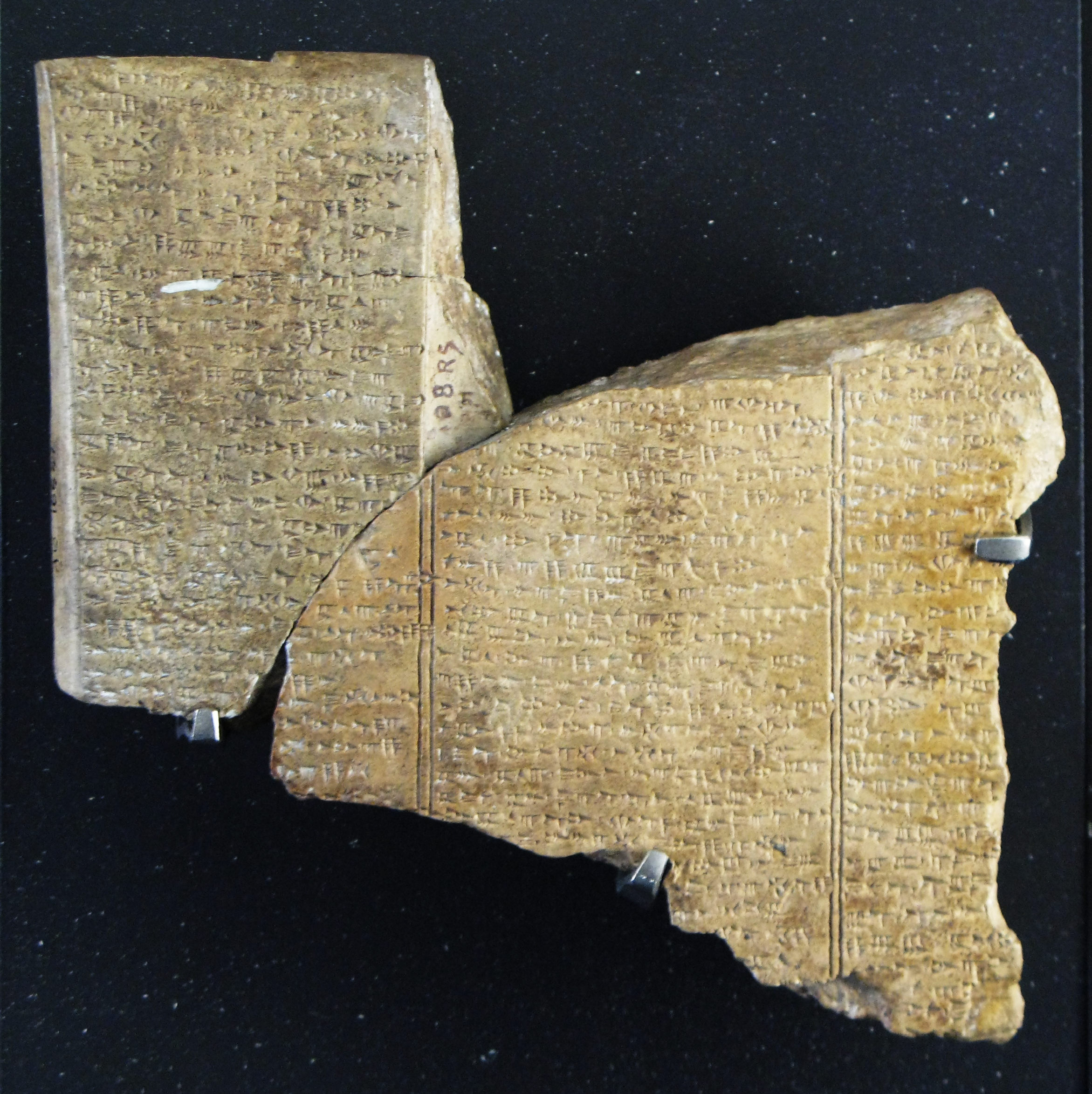
Two fragments of an alphabetic-cuneiform Ugaritic Baal Cycle tablet from Ras Shamra, ca. 1400–1200 BCE; Louvre AO 16641 and AO 16642. A modern photograph of a textual witness, not a depiction of Leviathan or a battle
Entität
Leviathan, a poetic sea creature: its heads are crushed in Psalm 74, it belongs to creation in Psalm 104, and its daunting strength figures in Job. Ugaritic Lotan is a close parallel, not proof of a single fixed myth.
Namensvarianten: Leviathan
Kontext und Quellen →
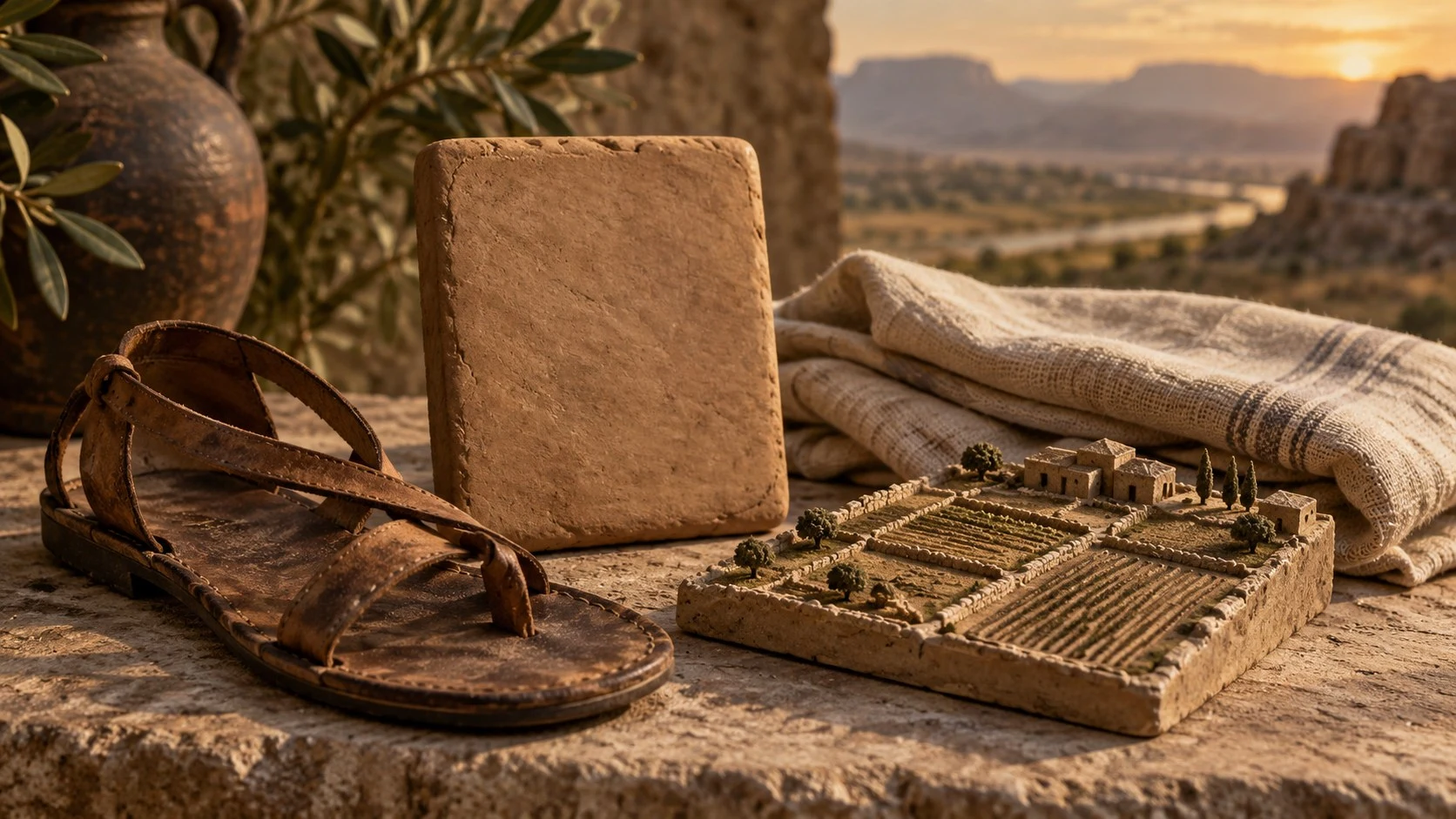
Modern conceptual illustration: a sandal, an uninscribed clay tablet and model fields symbolize kinship and inheritance. No documented artifact or historical scene is depicted. IL Archive / CC0
Entität
A defined kinship arrangement in which a man marries his deceased brother’s widow; obligations, refusal procedures and offspring attribution vary among traditions.
Namensvarianten: levirate, levirate marriage, brother-in-law marriage
Kontext und Quellen →
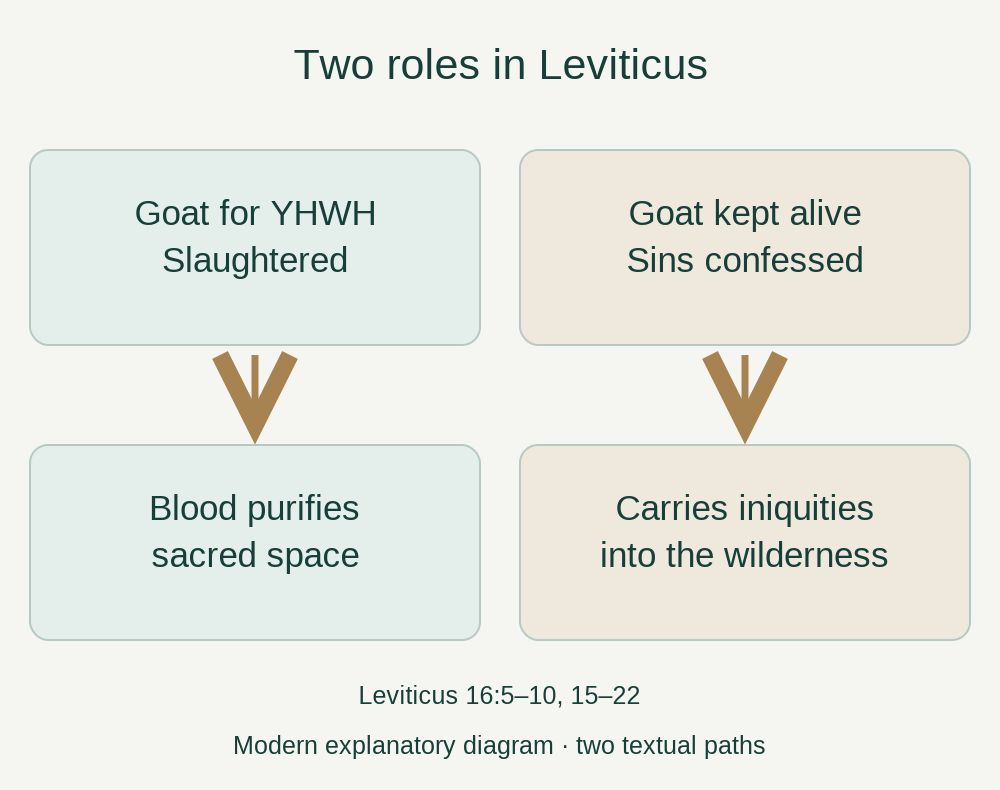
The two goats’ paths in Leviticus 16: the slaughtered goat’s blood purifies sacred space; the living goat carries iniquities into the wilderness. Modern explanatory diagram, not an ancient image
Antiker Text
A Torah book concerning offerings, priesthood, and purity; chapter 16 describes sanctuary purification and a living goat carrying iniquities away.
Namensvarianten: Leviticus
Kontext und Quellen →
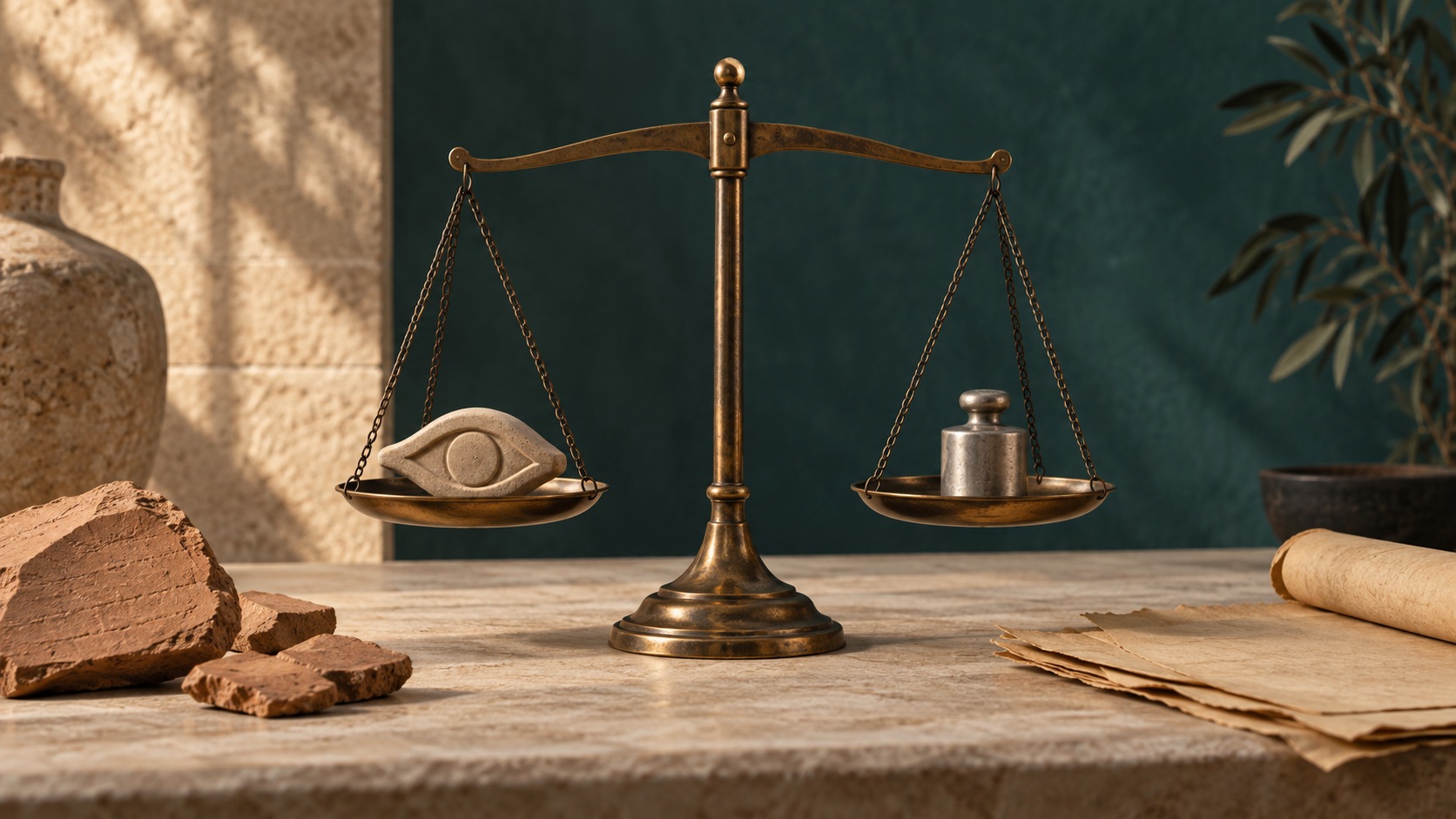
A modern symbolic balance with an eye-shaped stone and a metal weight, evoking matching penalty and monetary compensation. Generated for IL Archive in 2026; neither a historical artifact nor a depiction of an actual ancient judgment
Entität
Principle matching consequence to harm (“eye for an eye”). Ancient texts variously prescribe bodily injury, payment, manumission, or a penalty for malicious testimony; the phrase alone proves neither literal enforcement nor textual borrowing.
Namensvarianten: lex talionis, eye for an eye, law of retaliation
Kontext und Quellen →
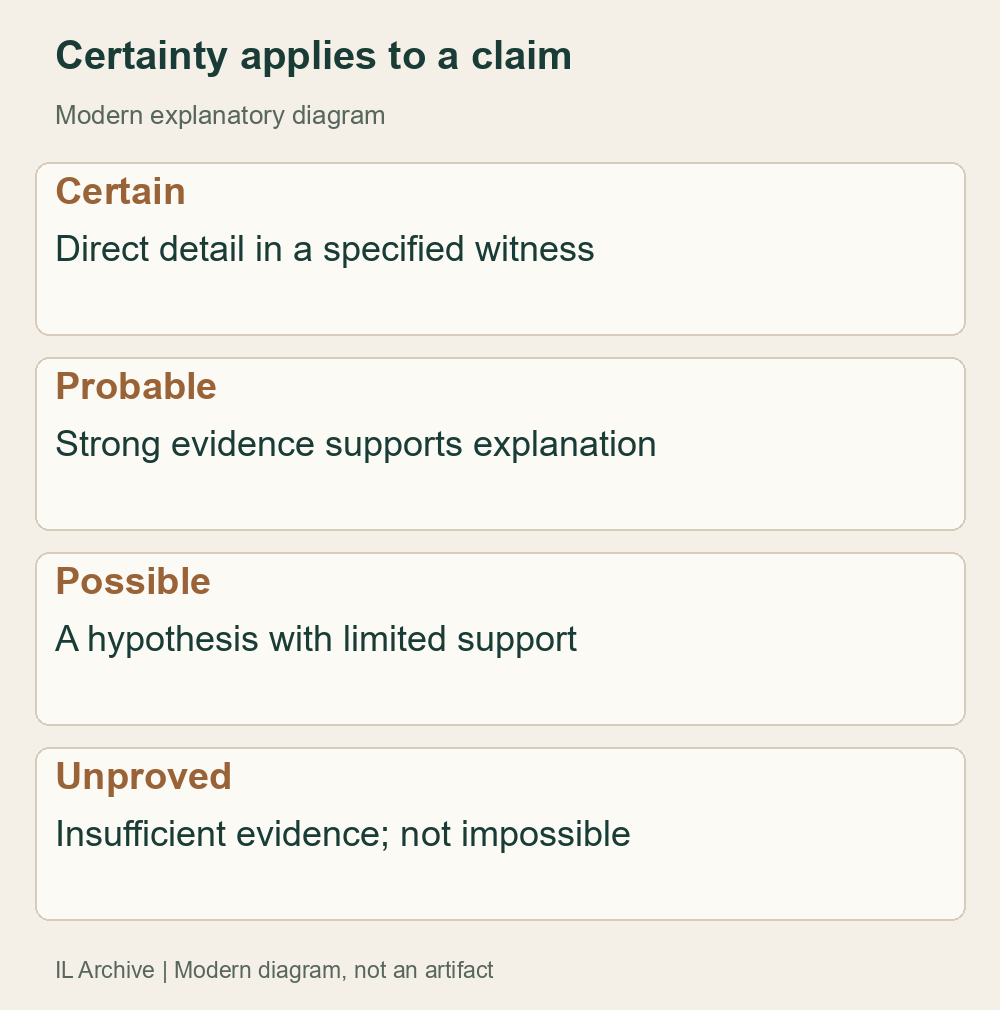
Relationship, source, direction and route can have different levels of support
Entität
A historical relation in which a text was composed using another text or version; similarity alone cannot establish its direction.
Namensvarianten: Literary dependence
Kontext und Quellen →
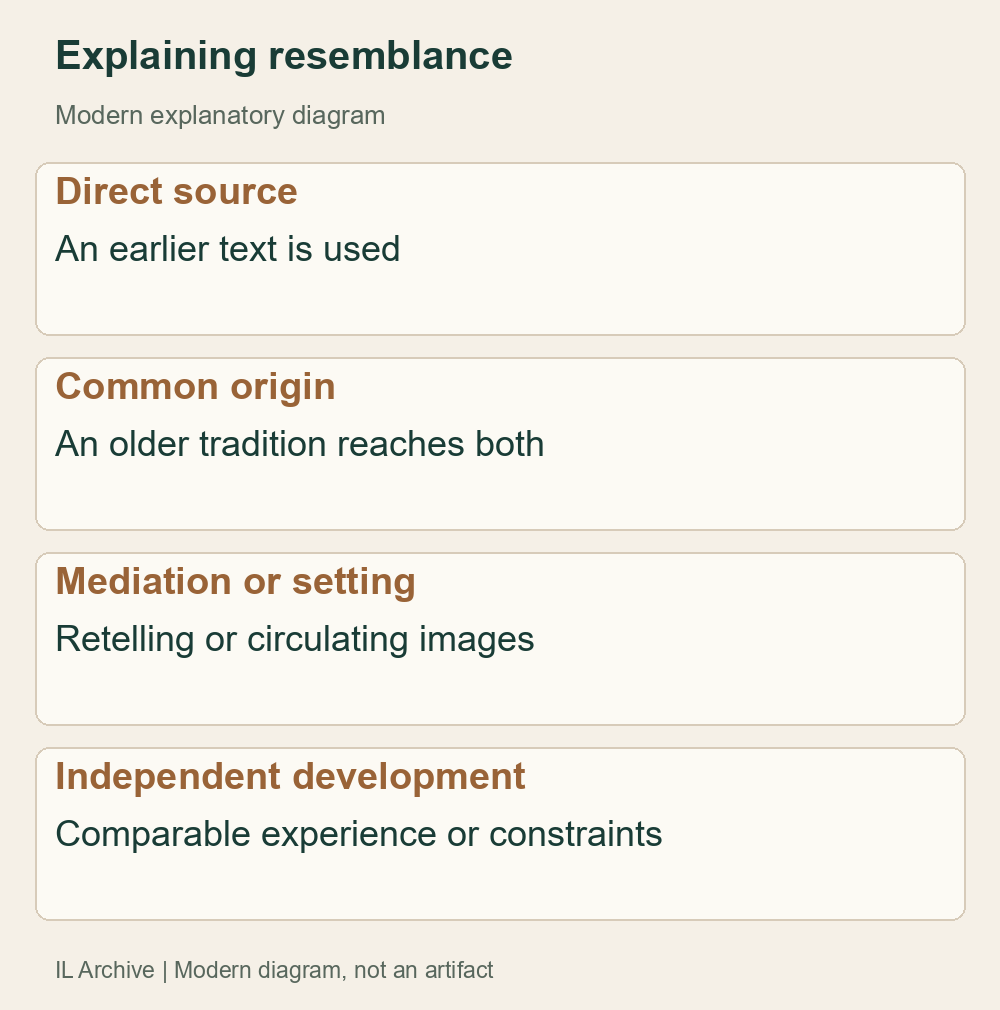
Alternatives can overlap; this diagram does not document a particular narrative’s route
Entität
Use of verbal or narrative material from an earlier text or tradition in a later work, distinguishing evidence of transfer from mere resemblance.
Namensvarianten: Literary borrowing
Kontext und Quellen →
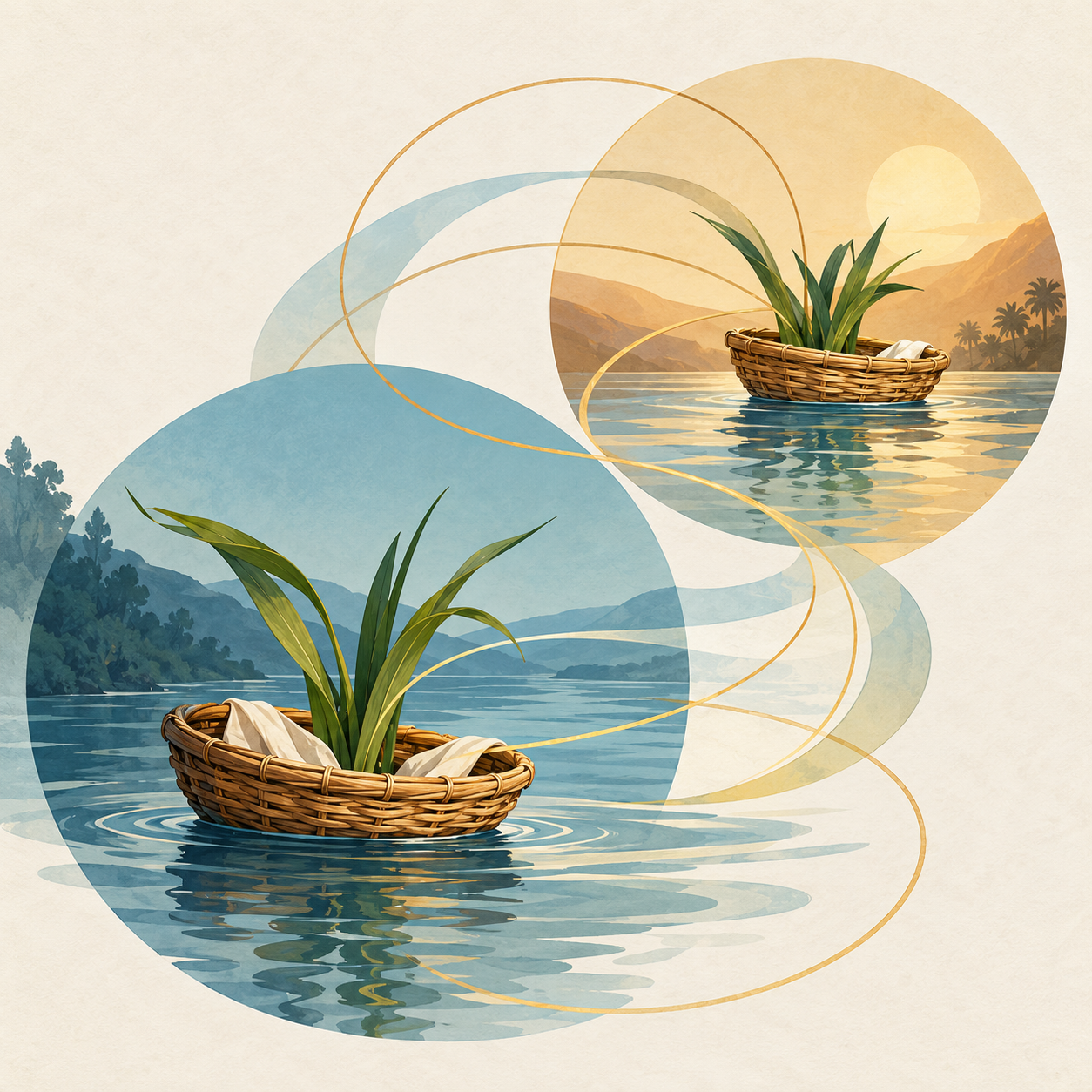
Two symbolic basket images evoke a recurring narrative element. Modern AI-generated cover art, not an ancient artefact or verified reconstruction; Exodus places the basket at the bank, not drifting downstream
Entität
A narrative or imagistic element recurring within or across stories; its role and context matter, and repetition alone cannot prove borrowing.
Namensvarianten: Literary motif, Narrative motif
Kontext und Quellen →
Modern AI-generated conceptual cover suggesting signs, meaning and sound; not an archaeological tablet or an authenticated ancient inscription
Entität
A written sign functioning as a word sign in context; the same form may also have syllabic or determinative uses.
Namensvarianten: logogram, word sign
Kontext und Quellen →
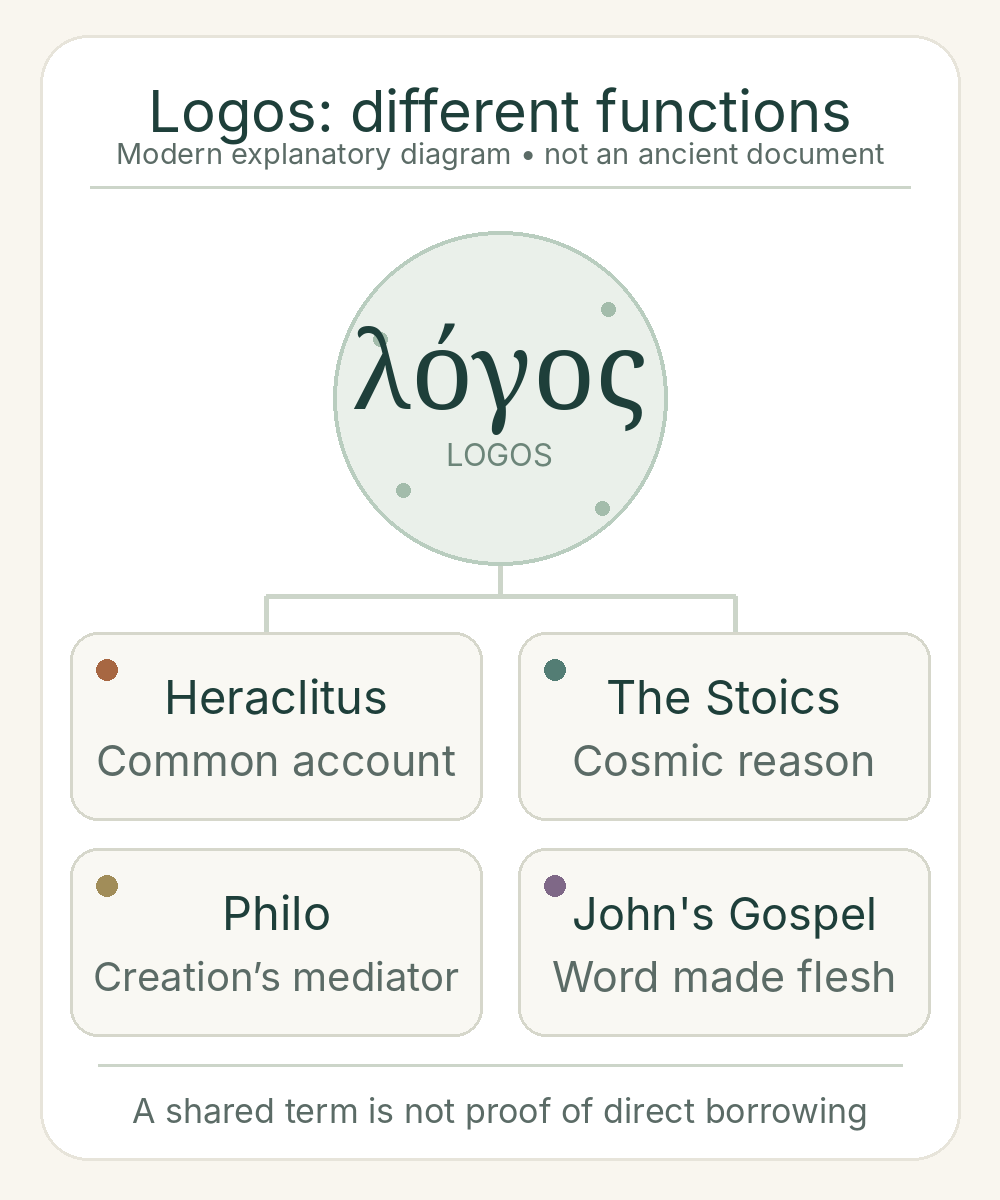
Modern explanatory diagram contrasting four functions of the Greek word “logos” in Heraclitus, Stoic thought, Philo and John’s Gospel. Shared vocabulary does not establish direct transmission; this is not an ancient artefact
Entität
Greek term for speech, explanation or reason, also used for cosmic rationality. Philo uses it in accounts of creation, while John’s prologue speaks of the Word becoming flesh; its function varies with context.
Namensvarianten: Logos
Kontext und Quellen →
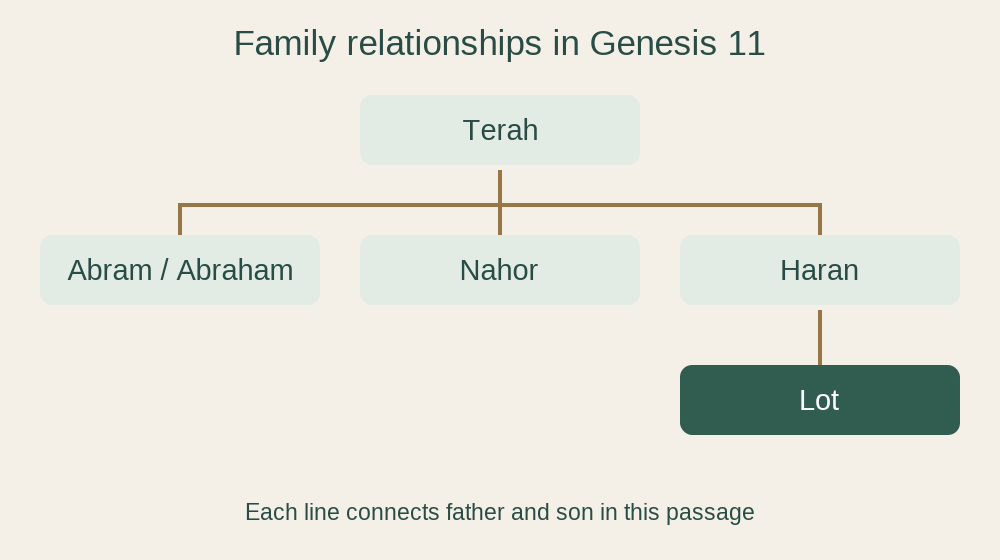
Modern diagram of family relationships in Genesis 11; the highlighted node identifies this entry’s figure. It explains the narrative’s genealogy, not physical likenesses or independent proof of their lives
Person
Figure in Genesis and the Qur’an; Haran’s son and Abraham’s nephew in the biblical genealogy, whose belief appears in a Qur’anic migration scene.
Namensvarianten: Lot
Kontext und Quellen →
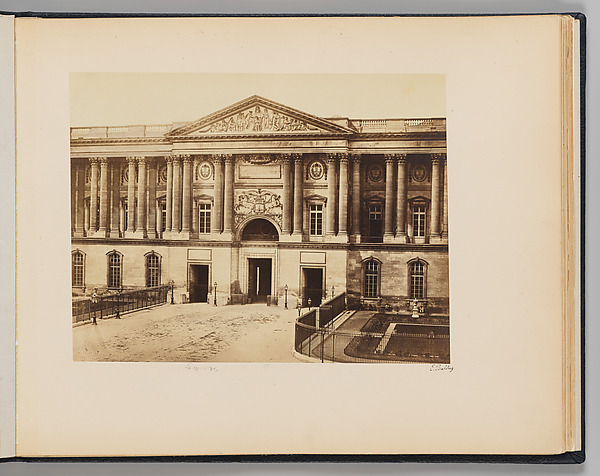
The Louvre colonnade in Édouard Baldus’s photograph of the 1860s. The album leaf and image edges are visible; it documents the museum building at that time, not the display location of the Mesha Stele
Stätte
Museum in Paris holding the Mesha Stele as AO 5066 among its archaeological and art collections.
Namensvarianten: Louvre, Louvre Museum
Kontext und Quellen →
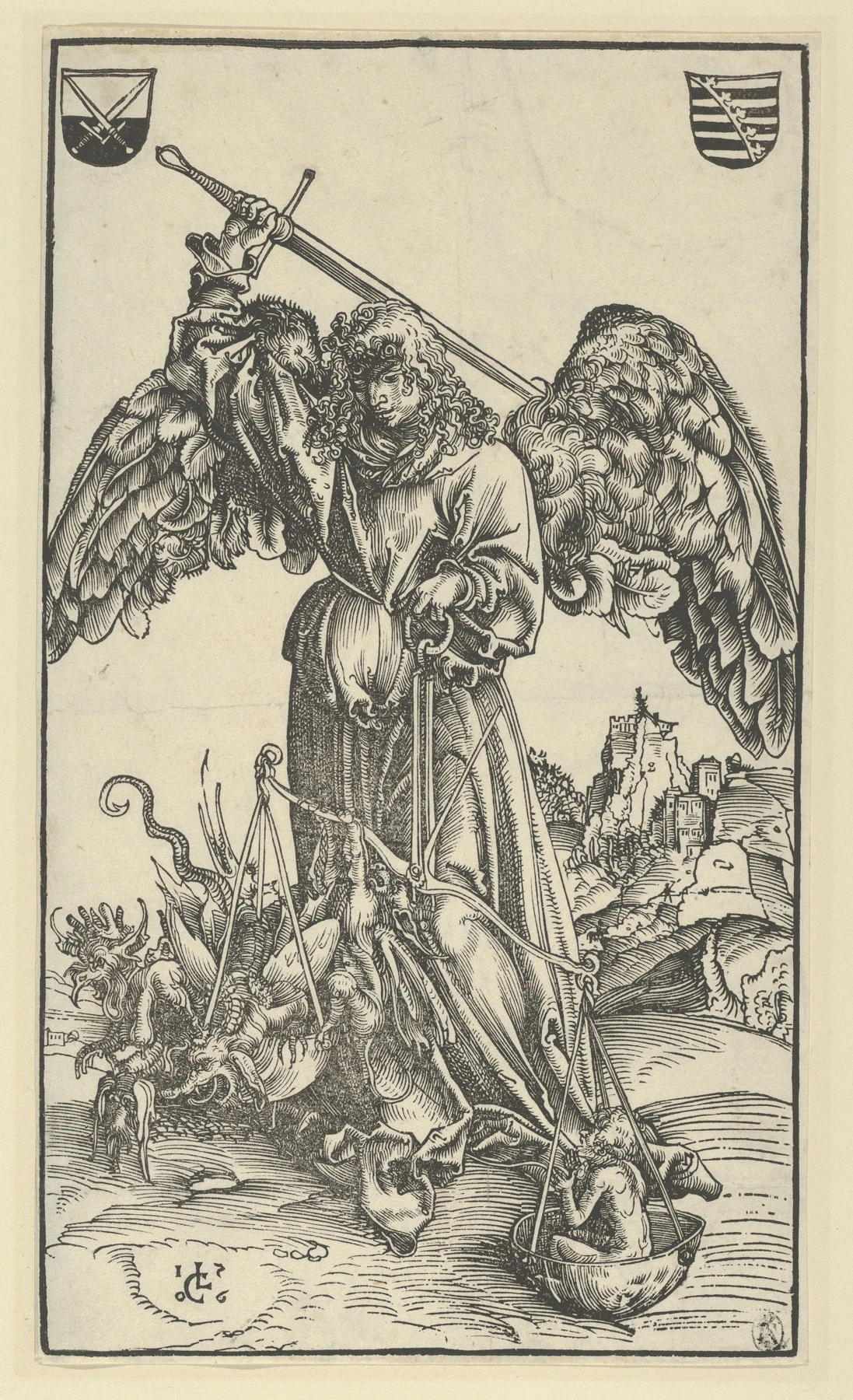
Cranach the Elder, Michael weighing a soul,1506; Met27.54.22. An example of his work, not his portrait
Person
Lucas Cranach the Elder (1472–1553) was a German Renaissance painter and printmaker.
Namensvarianten: Lucas Cranach the Elder
Kontext und Quellen →
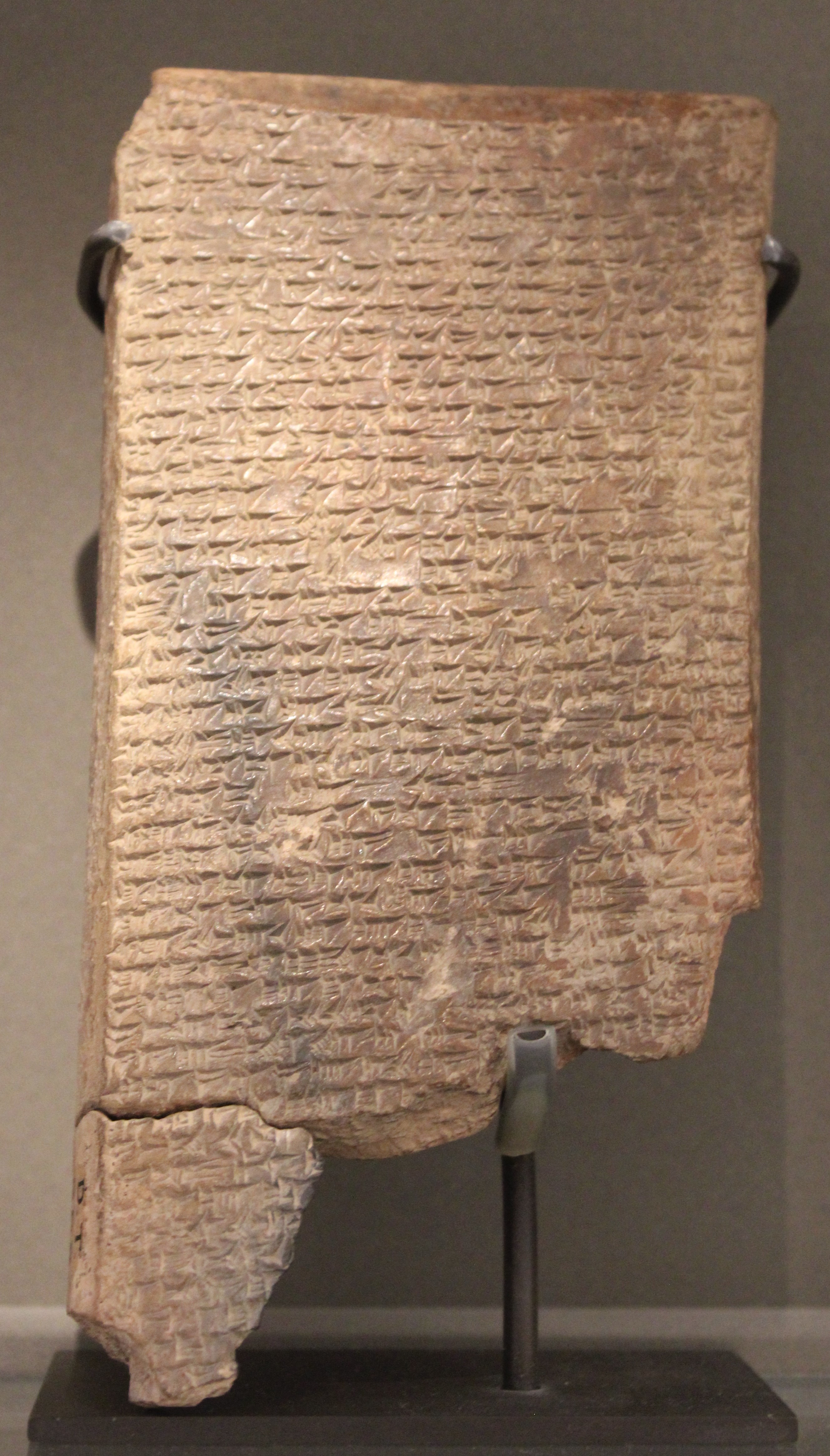
Cuneiform tablet K.2518+DT.358 from Nineveh, a copy of tablet II of Ludlul bēl nēmeqi, probably seventh century BCE; neither the original composition nor the complete poem. British Museum collection, on loan to the Louvre. Photograph by Zunkir, 2020, via Wikimedia Commons; original image unmodified
Antiker Text
Babylonian Akkadian poem about Šubši-mešrê-Šakkan, his suffering, recovery, and praise of Marduk, examined through its five tablets, manuscript witnesses, dating, and qualified comparison with Job.
Namensvarianten: Ludlul bēl nēmeqi, Ludlul bel nemeqi, Babylonian Job
Kontext und Quellen →
Contemporary explainer; it is not an ancient artifact or historical likeness
Antiker Text
New Testament gospel where Satan asks to test the disciples in 22:31–32.
Namensvarianten: Luke (gospel)
Kontext und Quellen →
Person
Lucian of Samosata was a second-century CE writer in Greek, associated with Samosata on the Euphrates.
Namensvarianten: Lucian of Samosata
Kontext und Quellen →
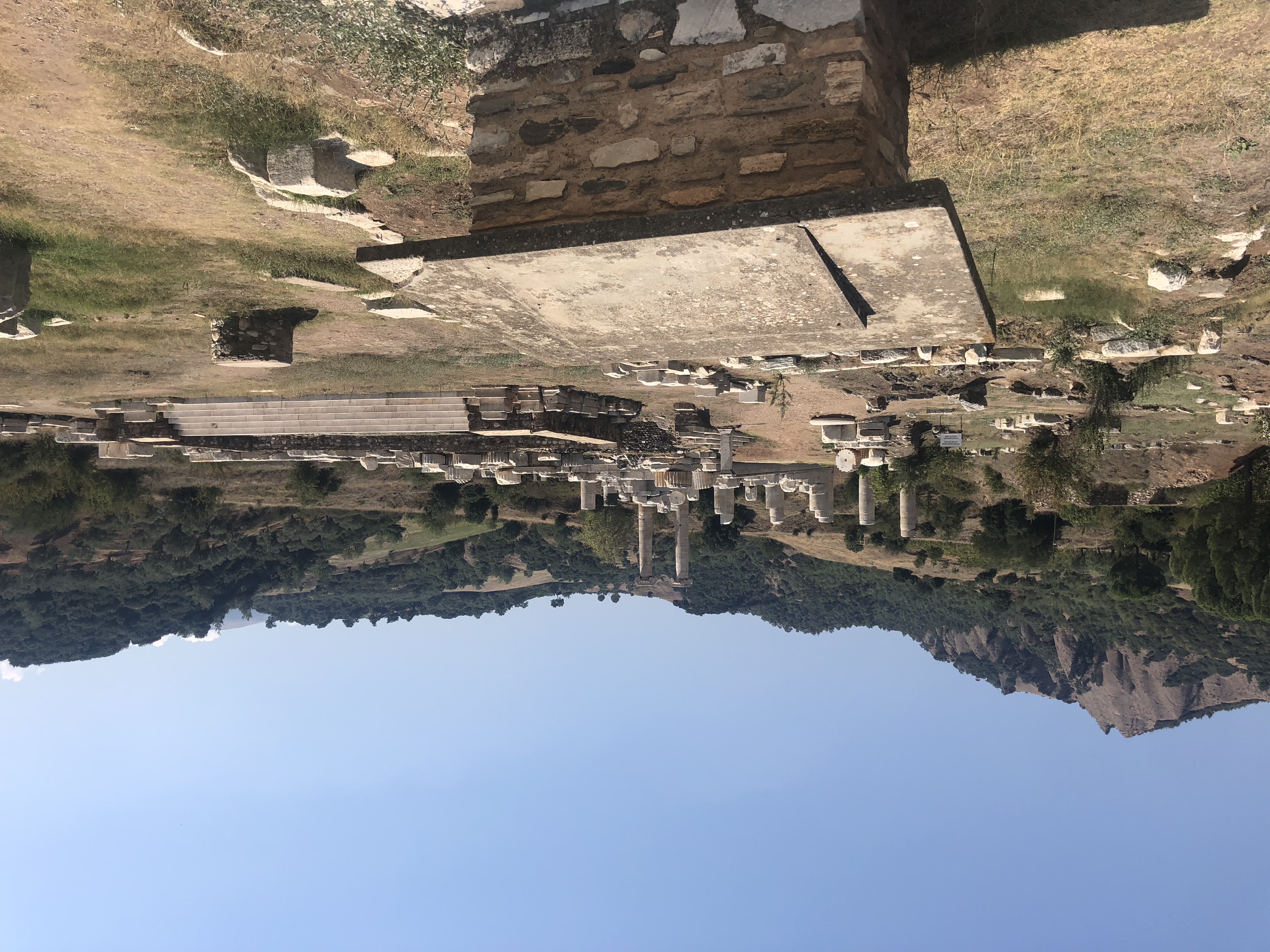
Artemis temple remains at Sardis, ancient Lydia's capital. This temple postdates Gyges; the photograph locates the site rather than his reign
Stätte
Ancient kingdom in western Anatolia with its capital at Sardis; neither a modern state nor a synonym for Magog.
Namensvarianten: Lydia
Kontext und Quellen →
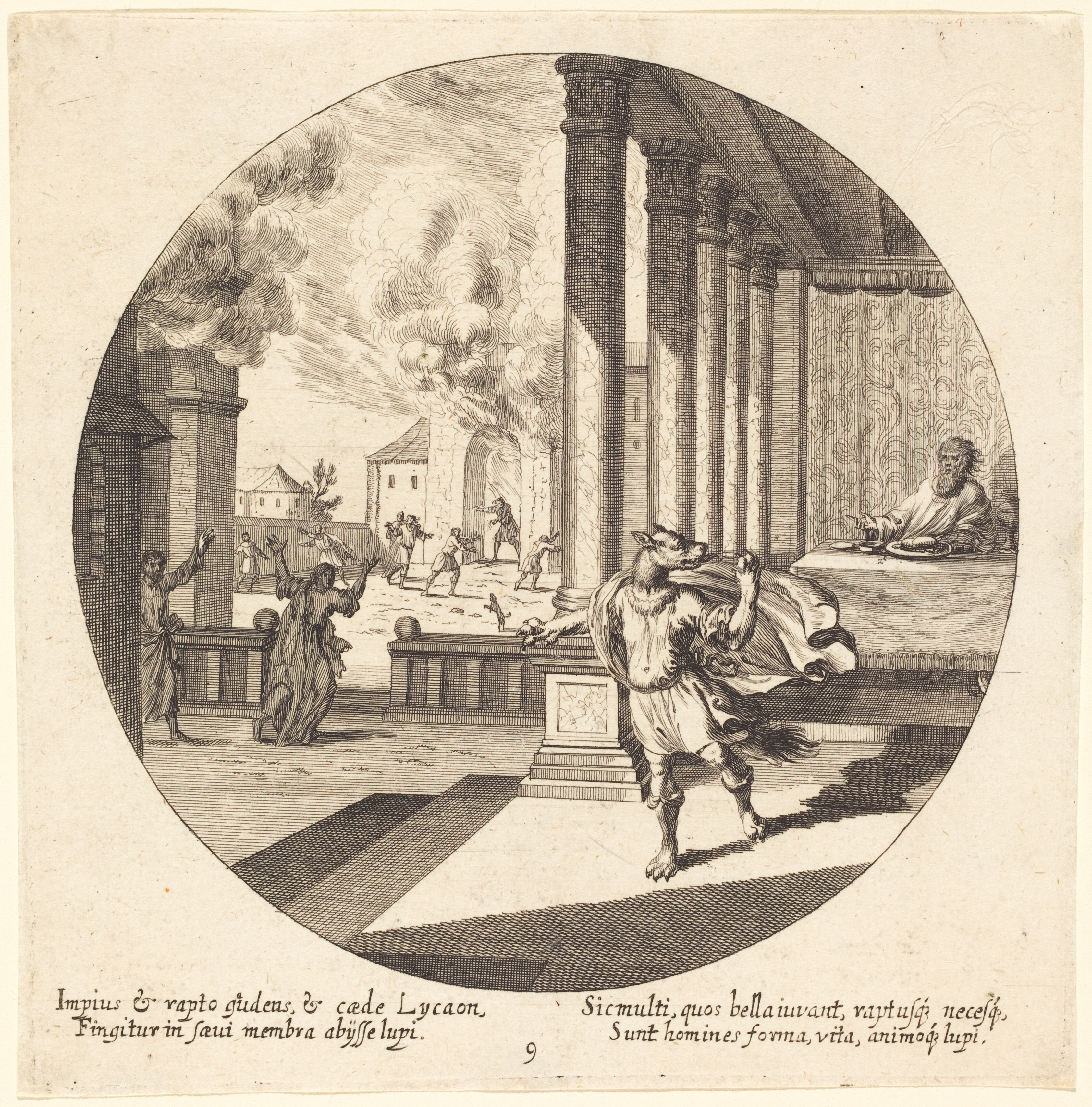
Jove Turns Lycaon into a Wolf, etching by Georg Andreas Wolfgang the Elder, 1665, National Gallery of Art 2005.17.11. Later artistic interpretation of Ovid’s episode
Person
Figure changed into a wolf after testing Jupiter and serving human flesh in the Metamorphoses.
Namensvarianten: Lycaon in Ovid’s account
Kontext und Quellen →
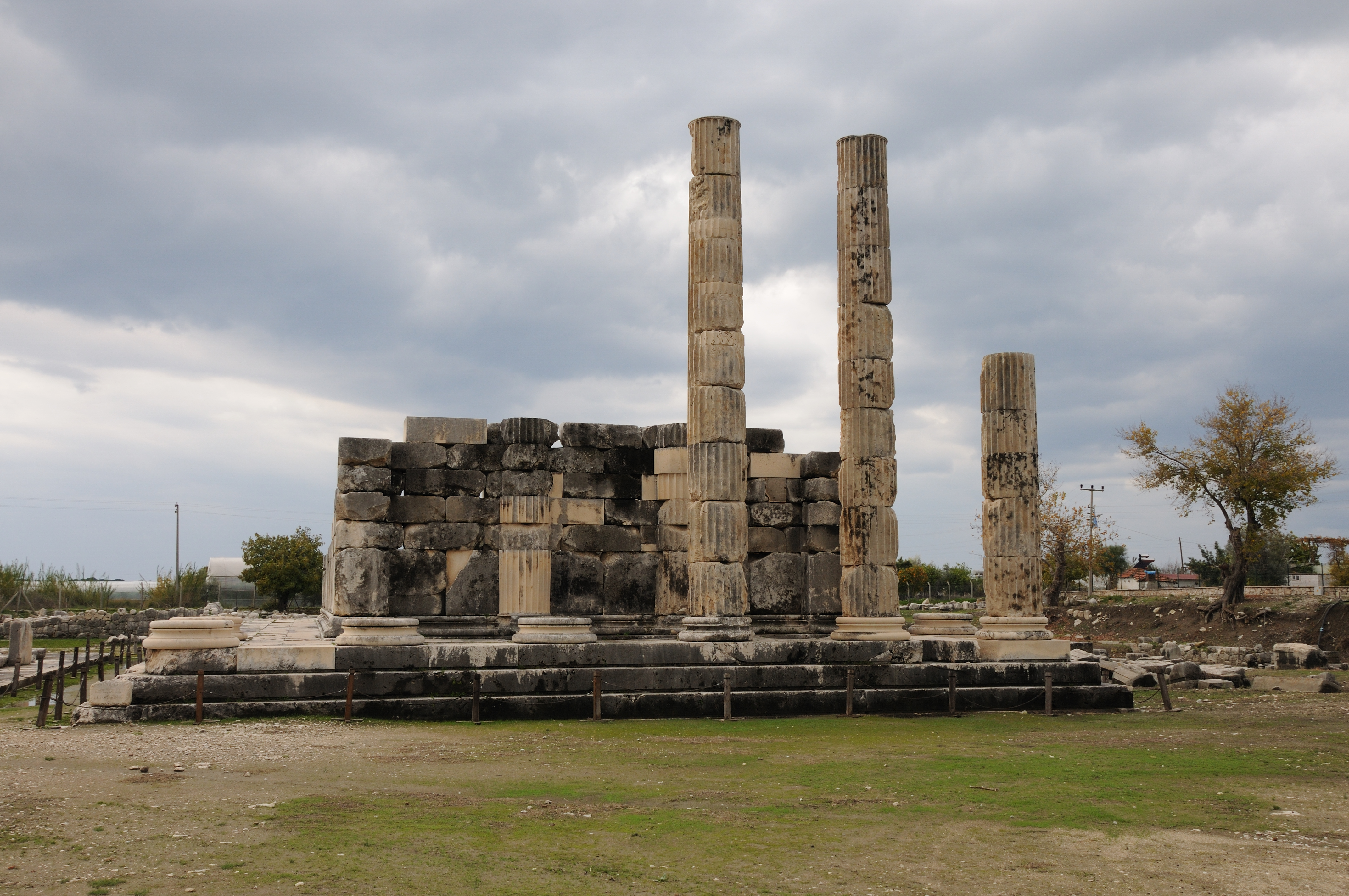
Columns and remains in Xanthos’s Roman Agora area, Türkiye, photographed by Josep M. Gracia, December 2021. A later phase of a Lycian city, not the king’s palace in Bellerophon’s tale
Stätte
Ancient region of southwestern Anatolia, now Türkiye, including Xanthos and Letoon; destination of Bellerophon in the Iliad.
Namensvarianten: Lycia, Lycia
Kontext und Quellen →
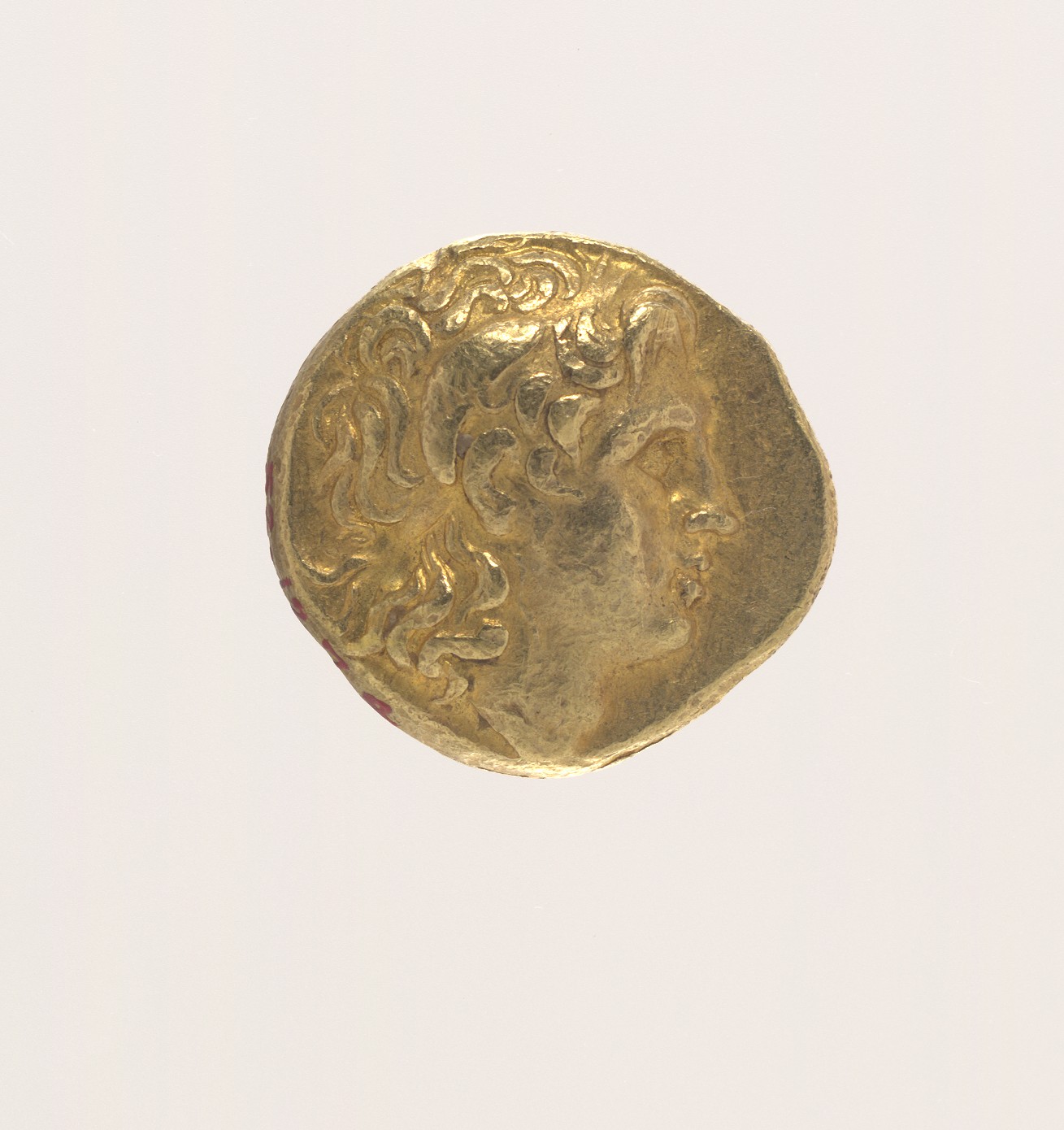
Gold stater issued in the name of Lysimachus, 286–281 BCE; the horned head is Alexander, not Lysimachus. The Met, 52.127.4
Person
A successor of Alexander who ruled Thrace; his coins showed Alexander with Ammon’s horn.
Namensvarianten: Lysimachus, Lysimachos
Kontext und Quellen →
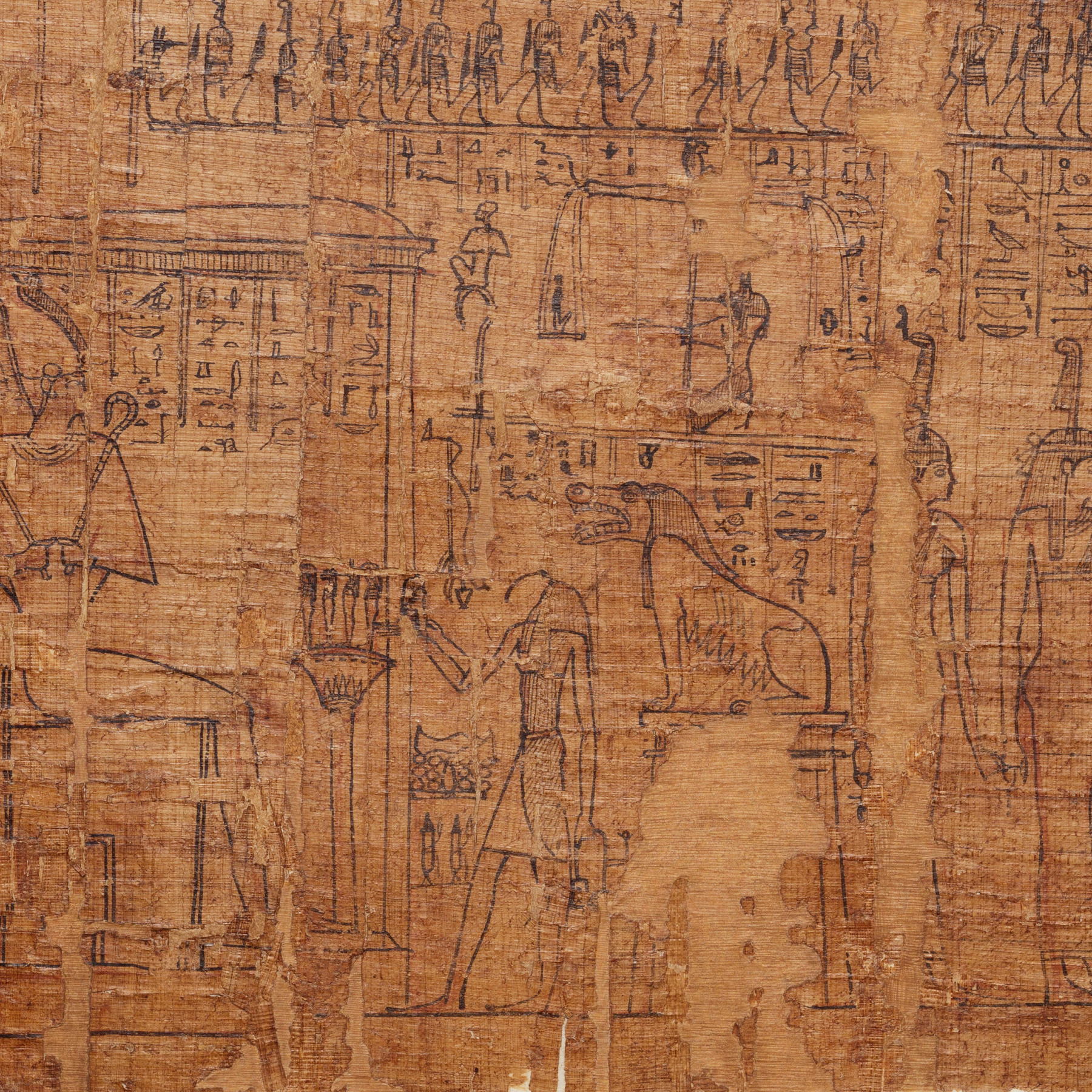
Editorial crop of the judgment papyrus: Anubis by the scale, a small figure of Maat in one pan, and Ammit nearby; Egypt, ca. 230–150 BCE; Met 66.99.142
Entität
An Egyptian principle of truth, justice, and right order, also embodied by the ostrich-feather goddess Maat; differently expressed in rule, ritual, and funerary judgment.
Namensvarianten: Maat, Ma'at, Maʿat
Kontext und Quellen →
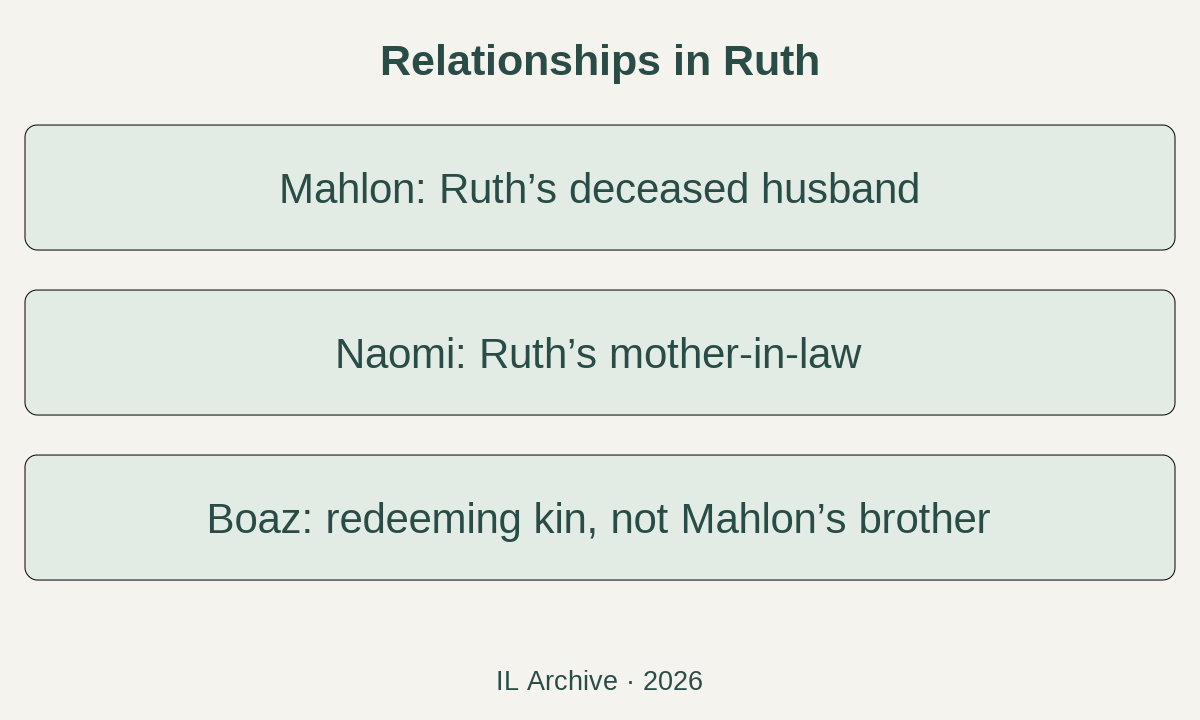
Modern explanatory diagram of relationships or cases in the specified witnesses; not portraits, a legal tablet or an ancient manuscript
Person
Ruth’s deceased husband, named in the marriage scene of chapter 4.
Namensvarianten: Mahlon in Ruth
Kontext und Quellen →
Person
Virologist with a PhD, also researching archaeological shrines and curtains.
Namensvarianten: Madeleine Mumcuoglu
Kontext und Quellen →
Person
Mahmoud Omidsalar is a scholar of Persian literature, folklore and textual history.
Namensvarianten: Mahmoud Omidsalar
Kontext und Quellen →
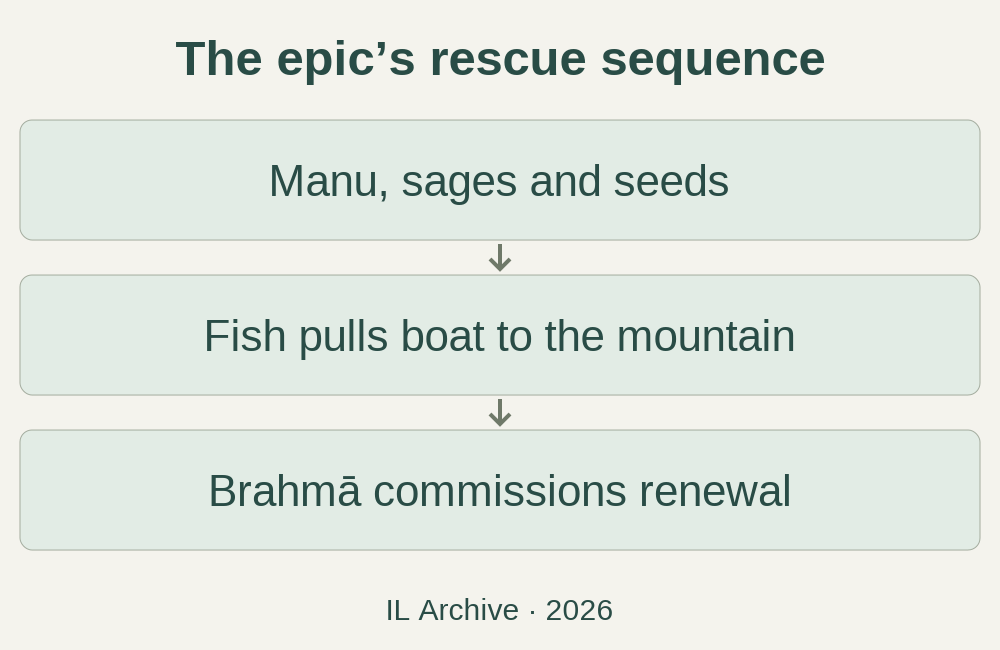
Modern explanatory diagram of narrative sequence and relationships, not a manuscript reproduction or portrait
Antiker Text
Sanskrit epic formed over centuries, preserving a version of Manu, the fish and the seeds.
Namensvarianten: Mahābhārata, Mahabharata
Kontext und Quellen →
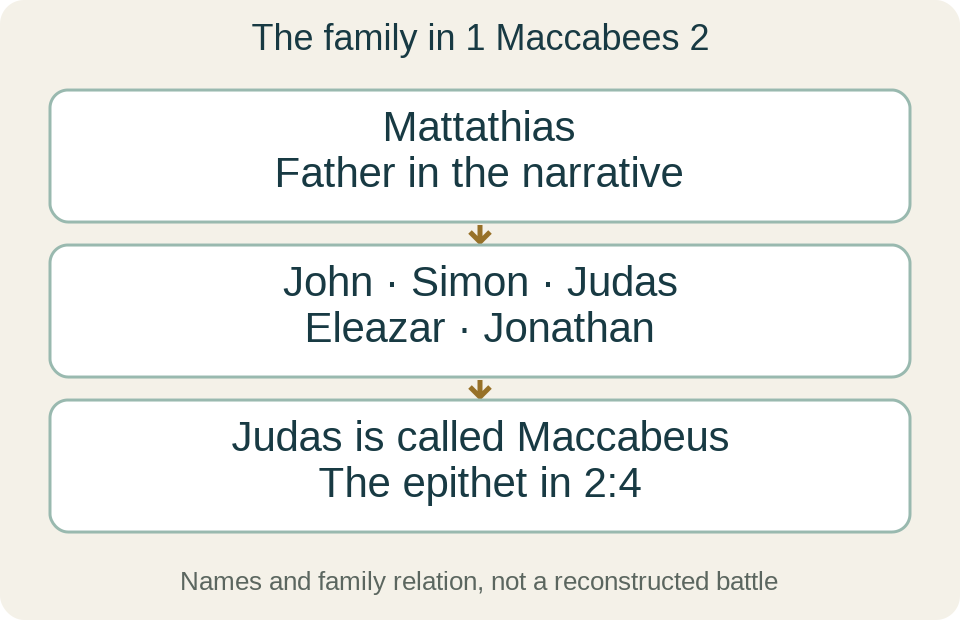
Modern diagram of the family as introduced in 1 Maccabees 2:1–5, not portraits or a battle scene. The collective name concerns Mattathias’s family; Maccabeus is Judas’s epithet in the text
Entität
Jewish family associated with resistance to Seleucid rule in the second century BCE; 1 Maccabees narrates Mattathias and his sons.
Namensvarianten: Maccabees
Kontext und Quellen →
Person
Malka Zeiger Simkovich is a scholar of ancient Judaism and Second Temple literature.
Namensvarianten: Malka Zeiger Simkovich
Kontext und Quellen →

Modern conceptual illustration imagining a horned fish, a boat, vessels and mountains, chiefly inspired by the epic form of Manu’s flood story; neither an ancient artifact nor evidence of a documented location
Person
A central human figure in several Sanskrit accounts of the flood and human renewal; his position and role differ across the Śatapatha Brāhmaṇa, Mahābhārata and Purāṇas.
Namensvarianten: Manu, flood survivor Manu
Kontext und Quellen →
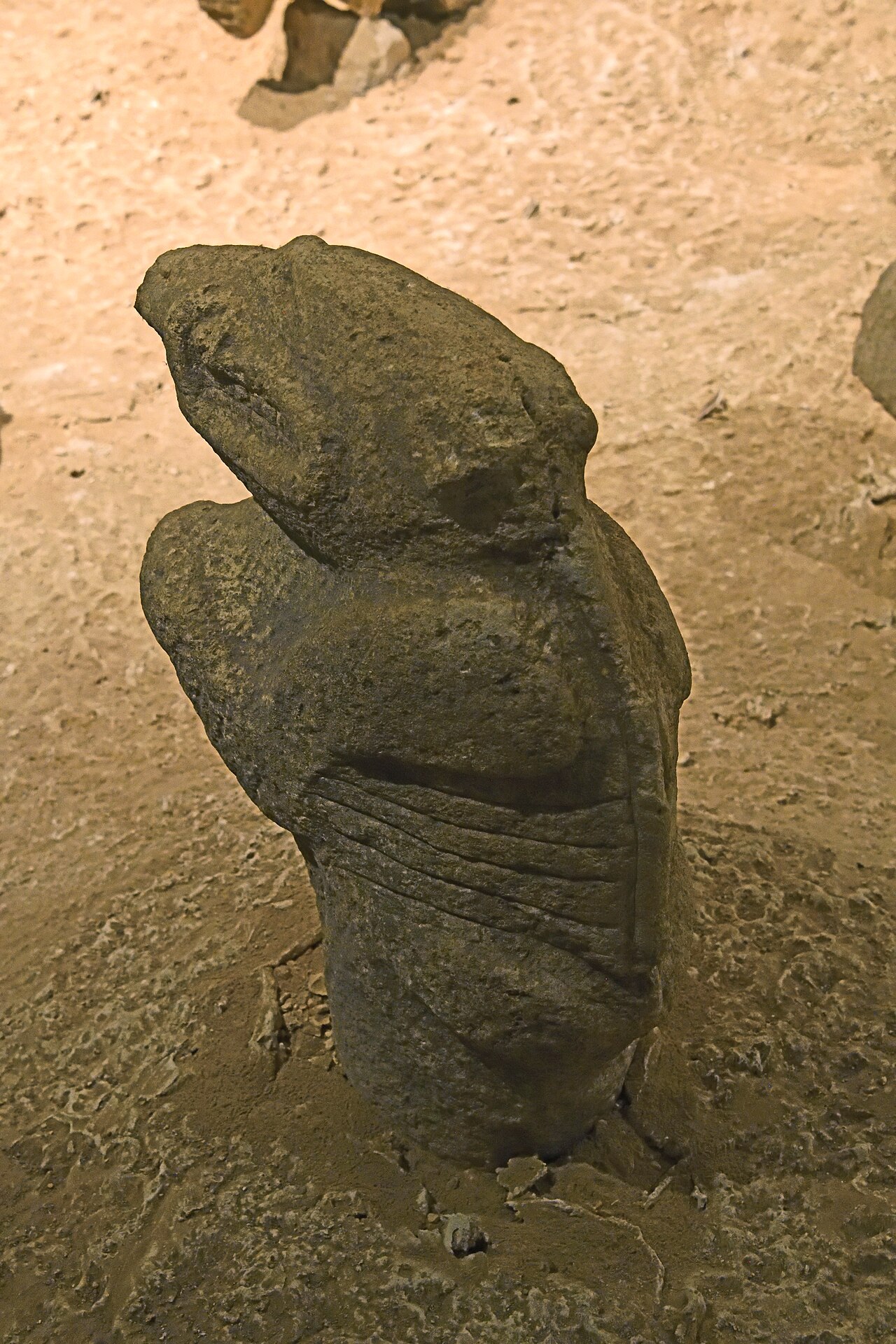
A wild-boar sculpture from Göbekli Tepe in a Şanlıurfa Museum display. It illustrates the animal imagery Marc Verhoeven discusses, not his portrait and not the central pillars
Person
An archaeologist at RAAP in the Netherlands who on 13 June 2025 published a study of humans and animals in Göbekli Tepe’s imagery.
Namensvarianten: Marc Verhoeven
Kontext und Quellen →
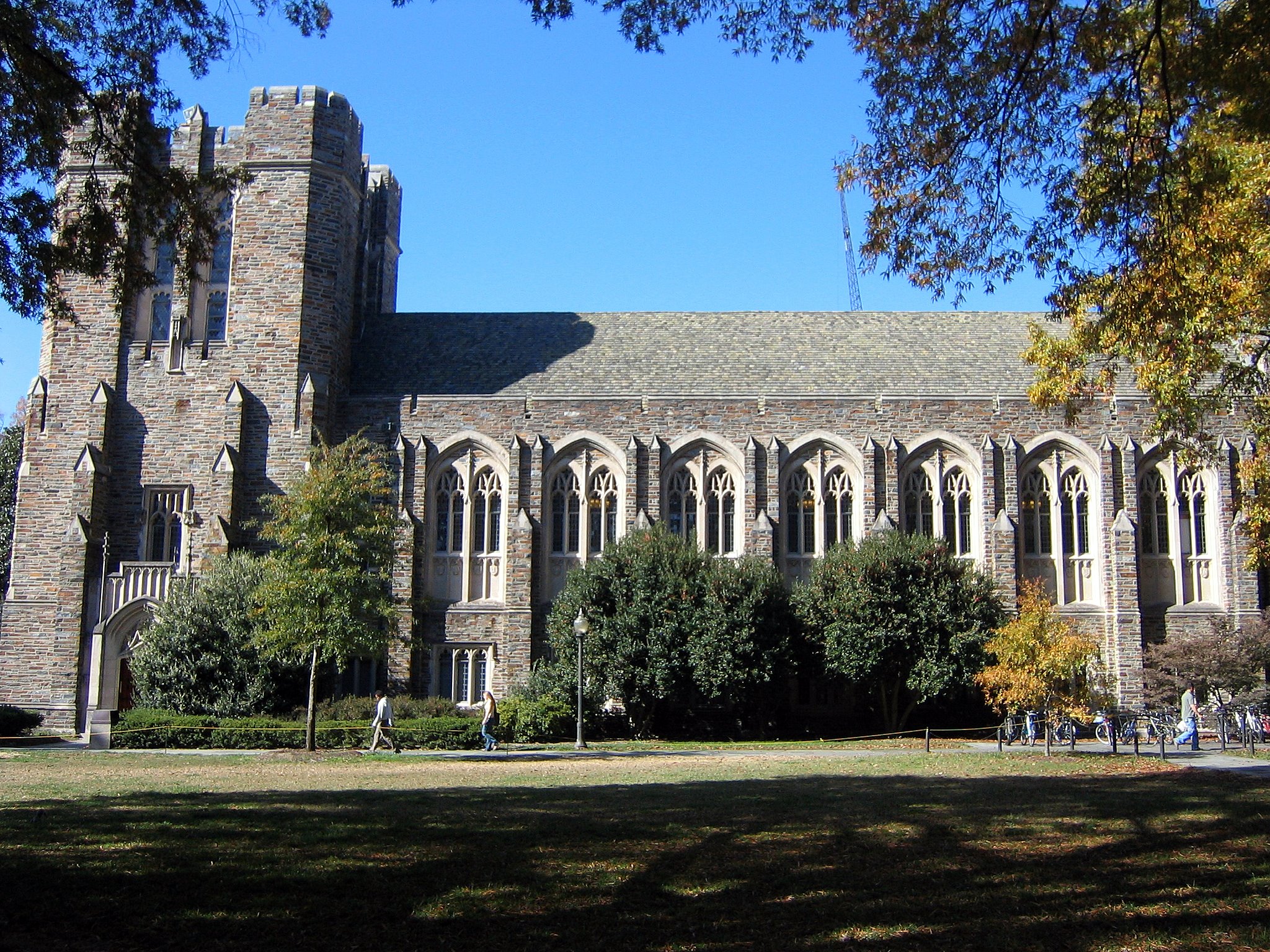
Perkins Library at Duke University in the United States, dated 10 November 2006 in the source record. The photograph shows part of the university setting associated with Marc Zvi Brettler’s work in Judaic and Hebrew Bible studies
Person
Hebrew Bible scholar and professor emeritus at Duke, studying biblical texts historically and literarily.
Namensvarianten: Marc Brettler, Marc Zvi Brettler
Kontext und Quellen →
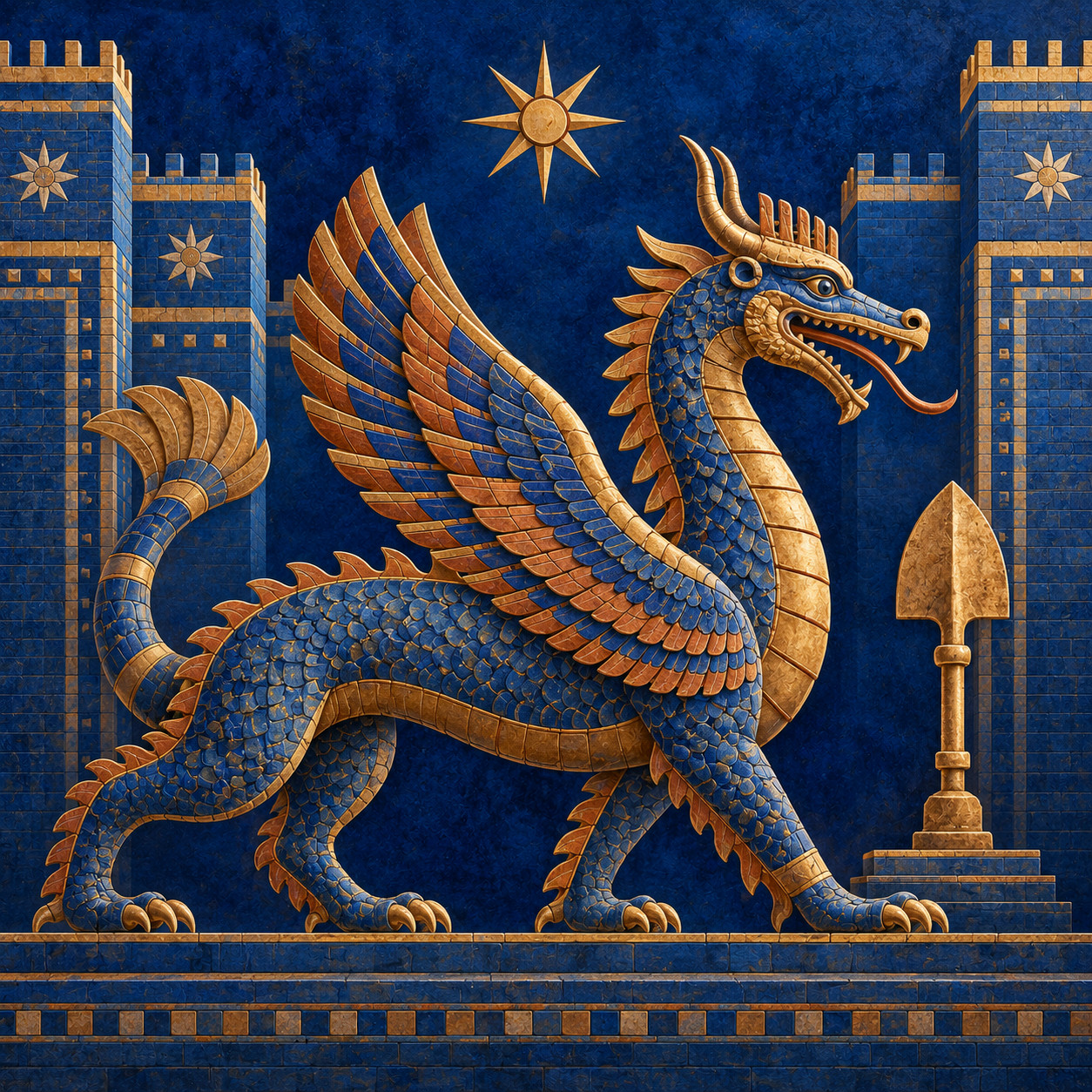
Modern AI-generated symbolic cover inspired by Babylonian colours, the spade and the mušḫuššu dragon. Wings and ornamental details are imaginative, not an ancient artefact or an evidenced reconstruction of Marduk
Entität
Babylon’s leading god, worshipped at Esagil and elevated in the Akkadian Enūma eliš. His symbols include a spade and mušḫuššu dragon. His earliest origins remain obscure; Nibiru is no evidence of a planetary homeland.
Namensvarianten: Marduk, Merodach
Kontext und Quellen →
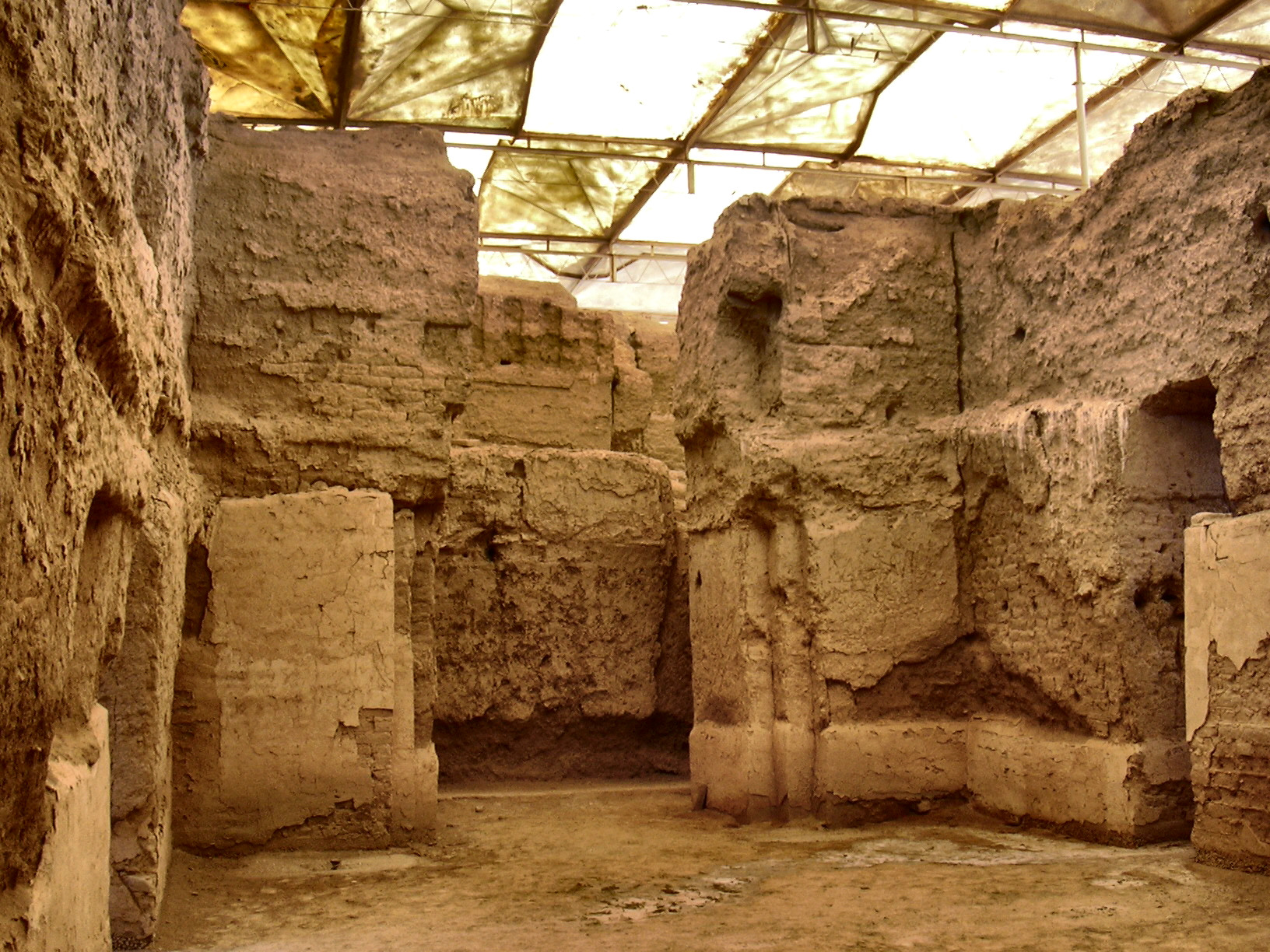
Surviving walls of the palace at Mari, Tell Hariri, photographed in 2006 beneath modern protective roofing. Contrast was adjusted to clarify the mud-brick masonry; this documents the ruins, not a reconstruction of the ancient palace
Stätte
Mari at Tell Hariri on the Syrian Euphrates was founded around 2900 BCE and rebuilt through three major urban phases. Its palace and cuneiform archives illuminate trade, royal government and religious practice, especially in the eighteenth century BCE.
Namensvarianten: Mari, Tell Hariri
Kontext und Quellen →
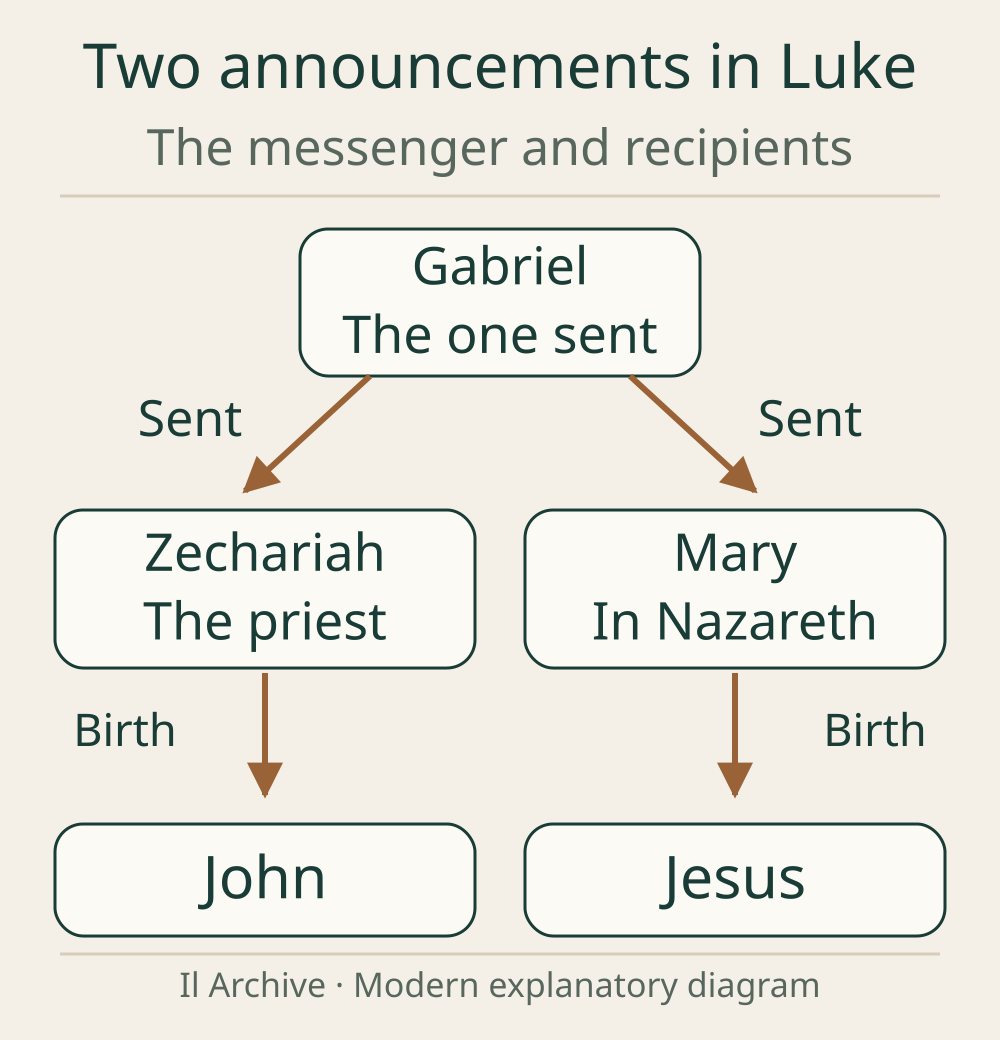
Modern diagram of the two announcements in Luke 1:5–38: Gabriel is sent to Zechariah to announce John’s birth and to Mary to announce Jesus’s birth. Lower arrows show the announcement’s subject, not descent from the angel. No faces or physical appearances are reconstructed
Person
The recipient of Gabriel’s announcement of Jesus’s birth in Luke 1.
Namensvarianten: Mary mother of Jesus
Kontext und Quellen →
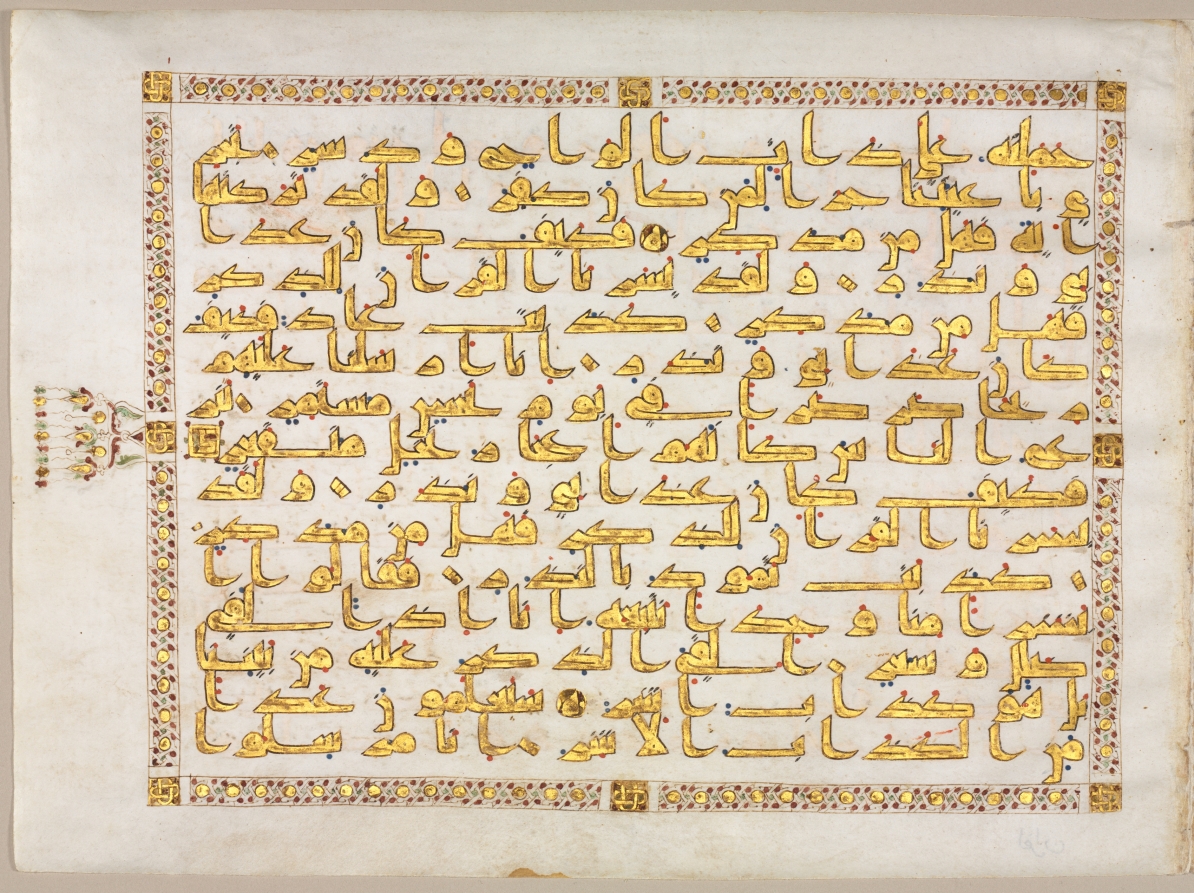
Ninth-century North African Qur'an folio with Sura 54:13–27. It illustrates later manuscript transmission, not Dhul Qarnayn's passage or Marianna Klar. Cleveland Museum of Art, 1993.39.2.a
Person
Scholar of Quranic narrative in its late-antique literary contexts.
Namensvarianten: Marianna Klar
Kontext und Quellen →
Person
Oxford scholar of early Christianity and ancient philosophy.
Namensvarianten: Mark Edwards
Kontext und Quellen →
Person
Scholar of Deuteronomy, kinship and care for outsiders; director of the Centre for Missional Leadership at St. Andrew’s Hall.
Namensvarianten: Mark R. Glanville, biblical scholar
Kontext und Quellen →
Person
Scholar of the Hebrew Bible and Ugaritic religion whose work examines the divine family and biblical monotheism.
Namensvarianten: Mark S. Smith, Hebrew Bible scholar
Kontext und Quellen →