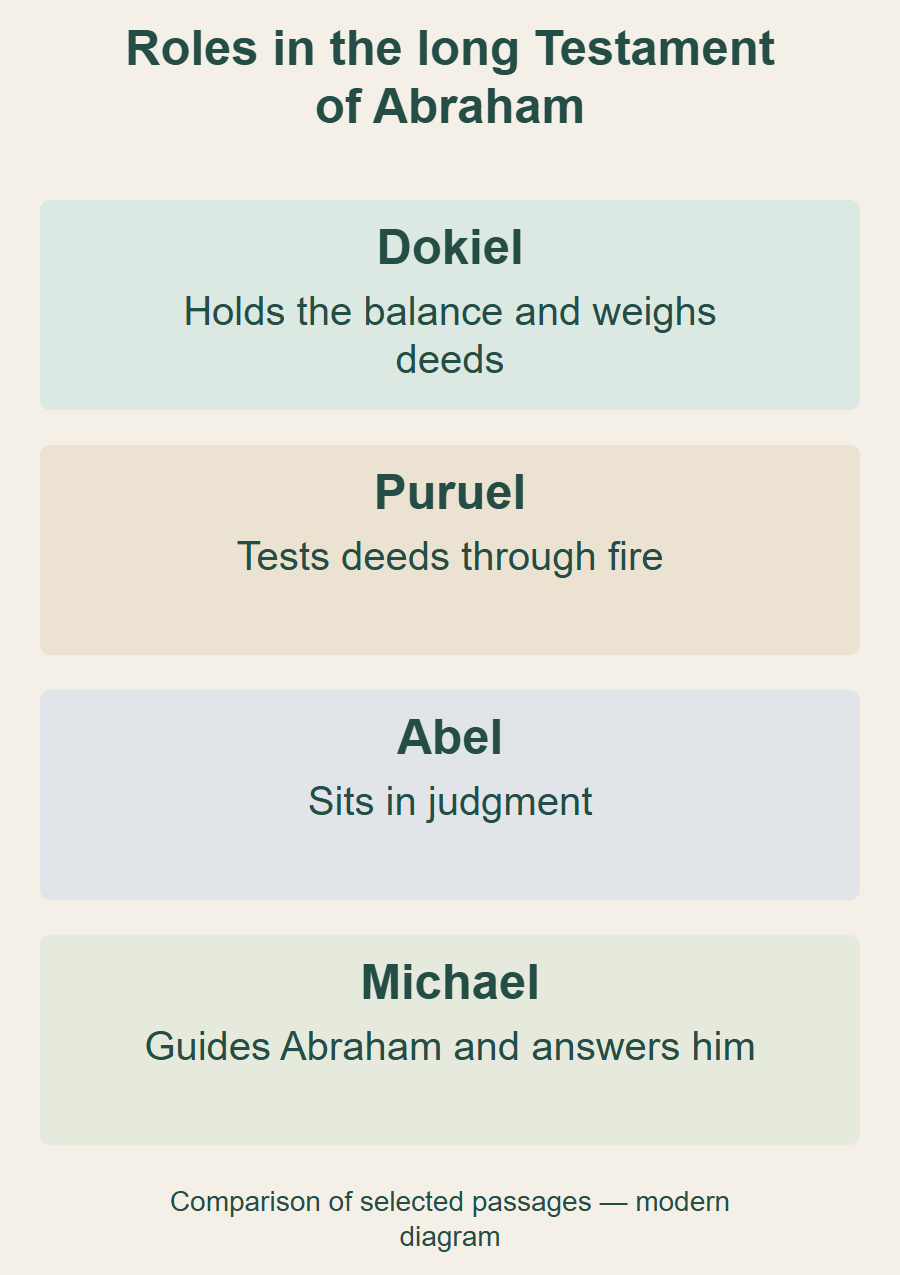
Modern chart of the long Testament of Abraham: Abel judges, Dokiel weighs, Puruel tests by fire and Michael guides Abraham; not ancient likenesses
Entität
Puruel is an angel in the long Testament of Abraham who tests deeds by fire.
Namensvarianten: Puruel
Kontext und Quellen →
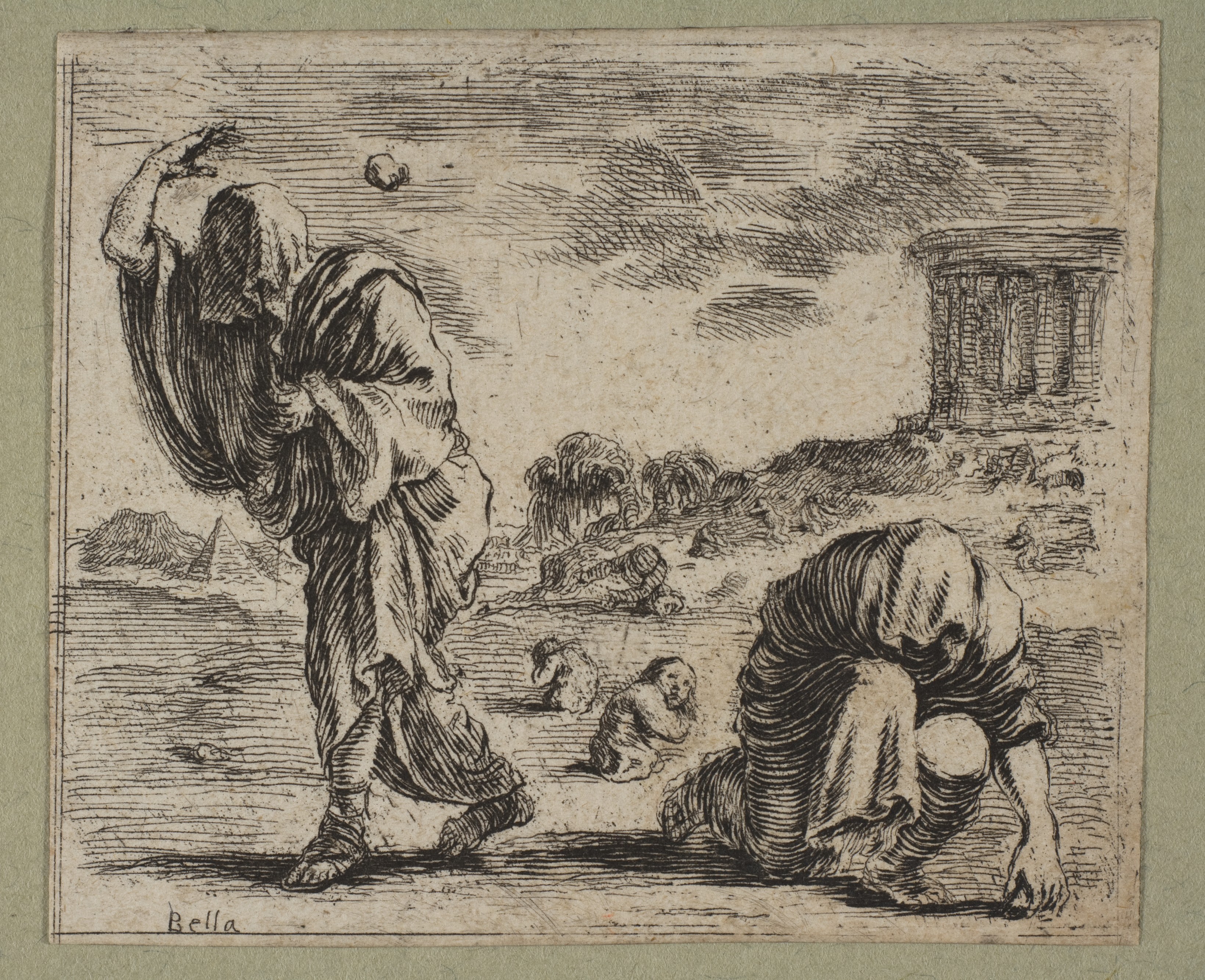
Deucalion and Pyrrha throwing stones; etching by Stefano della Bella, designed by Jean Desmarets de Saint-Sorlin, 1644, Met 18.48.2-48. Later artistic reception, not a witness from Pindar’s time
Person
Greek figure surviving with Deucalion and associated with humanity’s renewal from stones.
Namensvarianten: Pyrrha in Deucalion’s flood story, Pyrrha
Kontext und Quellen →
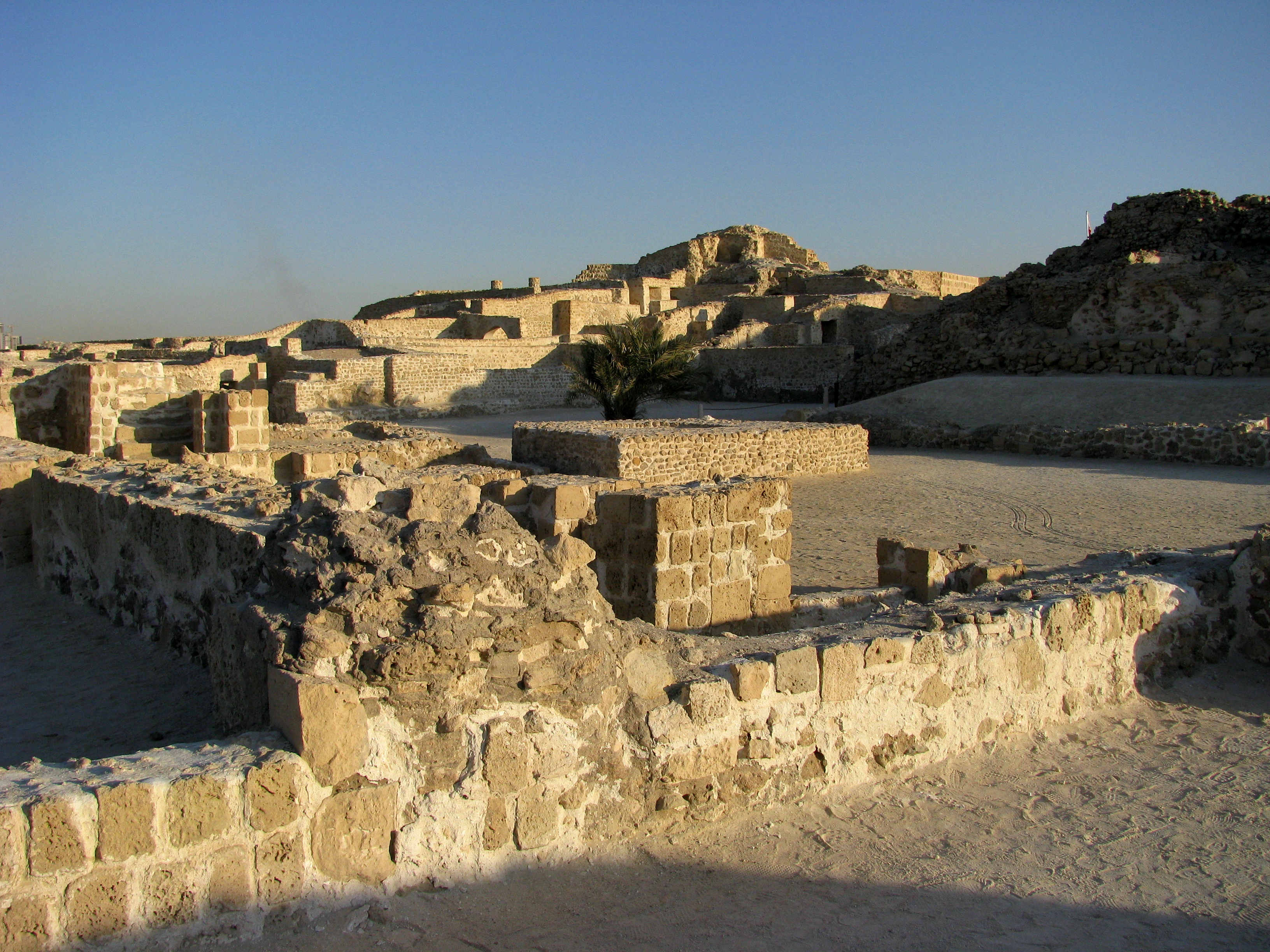
View at Qal’at al-Bahrain, Peter Dowley, 9 December 2008. The site includes successive layers and a sixteenth-century CE fort; not all visible walls date to ancient Dilmun
Stätte
Northern Bahrain site with Dilmun-period layers and a much later Portuguese fort, inscribed by UNESCO in 2005.
Namensvarianten: Qal’at al-Bahrain, harbour and archaeological tell
Kontext und Quellen →
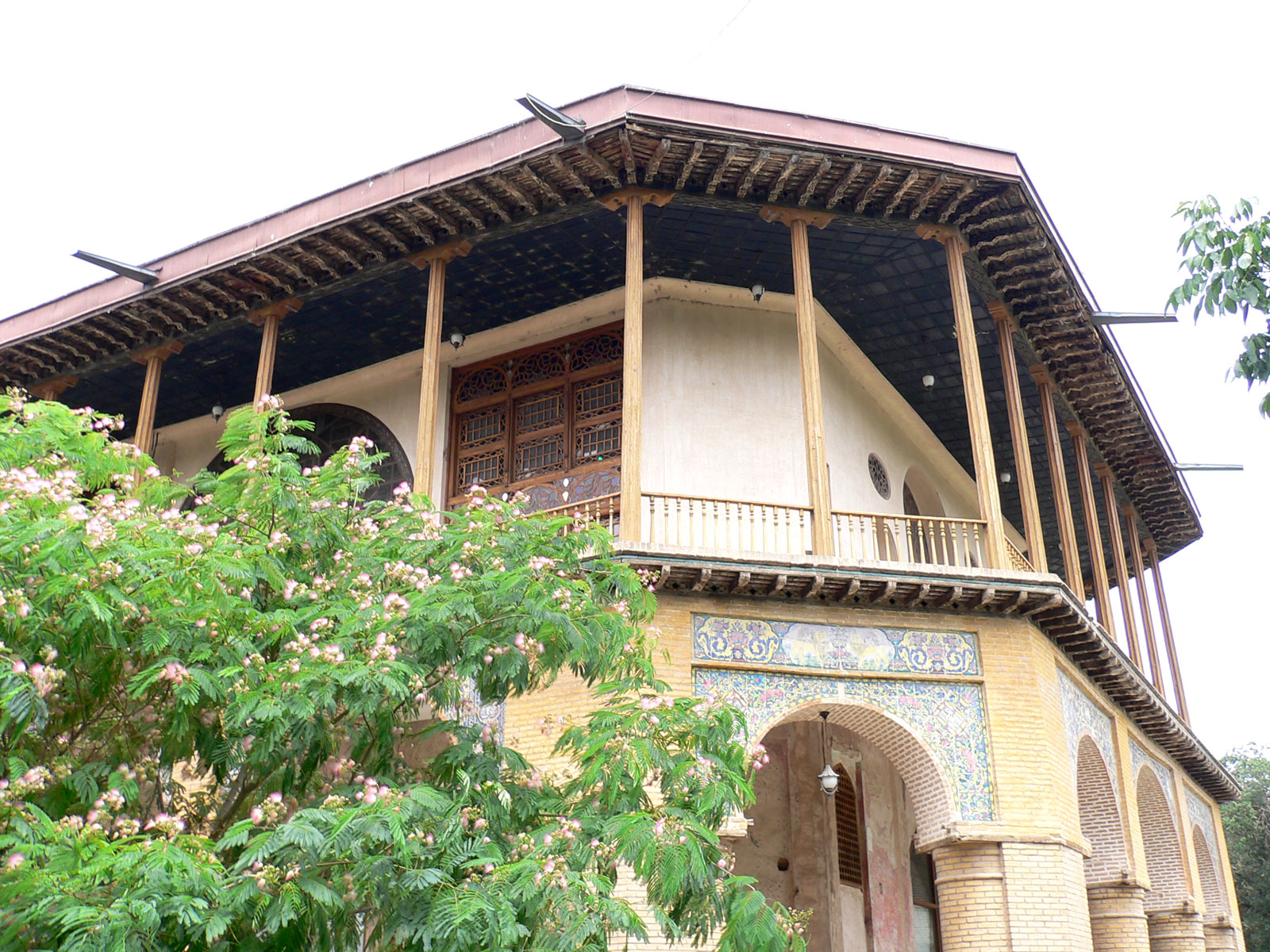
The Chehel Sotun pavilion in Qazvin, in a modern photograph uploaded in 2009. The city's heritage, not a proven production site for the Falnama leaf in the study. Abtin, CC BY-SA 3.0
Stätte
Iranian city that served as a Safavid capital in the later sixteenth century and was associated with manuscript arts.
Namensvarianten: Qazvin, Qazvīn
Kontext und Quellen →
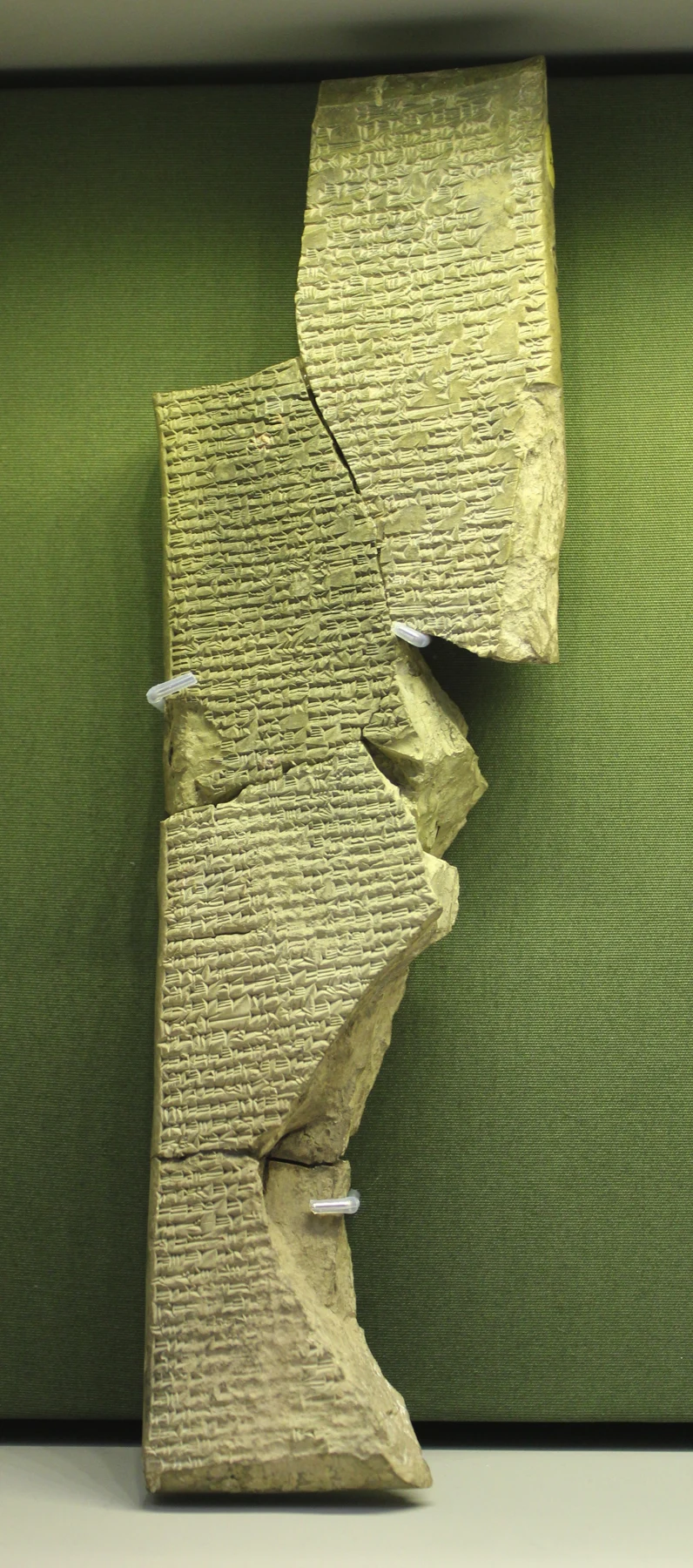
Cuneiform fragment K.3473 from Nineveh, a Neo-Assyrian witness to Enuma Elish Tablet III in the British Museum. This is a photograph of the textual witness, not Qingu or the Tablet VI creation episode
Entität
Qingu (Kingu): a god whom Tiamat appoints commander and gives the Tablet of Destinies; captured after Marduk’s victory, his blood is used to make humans in Tablet VI.
Namensvarianten: Qingu, Kingu
Kontext und Quellen →
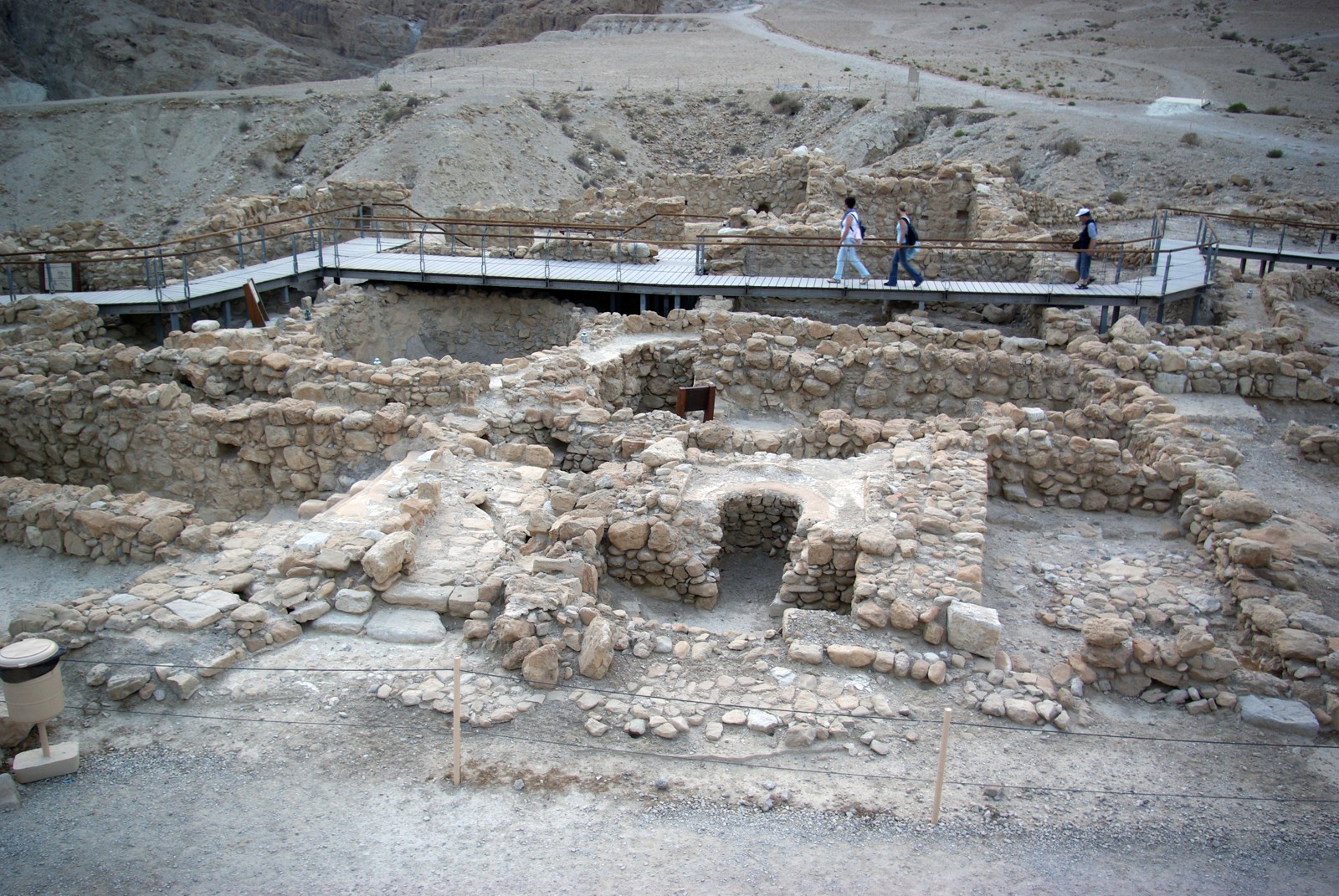
The ruins of Khirbet Qumran photographed in 2008. This is the built site, not a scroll cave or a manuscript fragment; the original photograph is preserved and the display copy is resized without cropping
Stätte
Archaeological site northwest of the Dead Sea near manuscript caves; its settlement and the groups who deposited the scrolls are studied together but not assumed identical. It is not synonymous with all Dead Sea Scrolls.
Namensvarianten: Qumran, Khirbet Qumran
Kontext und Quellen →
Person
Hebrew Bible scholar at Bar-Ilan University studying the Ark and cherubim.
Namensvarianten: Raanan Eichler
Kontext und Quellen →
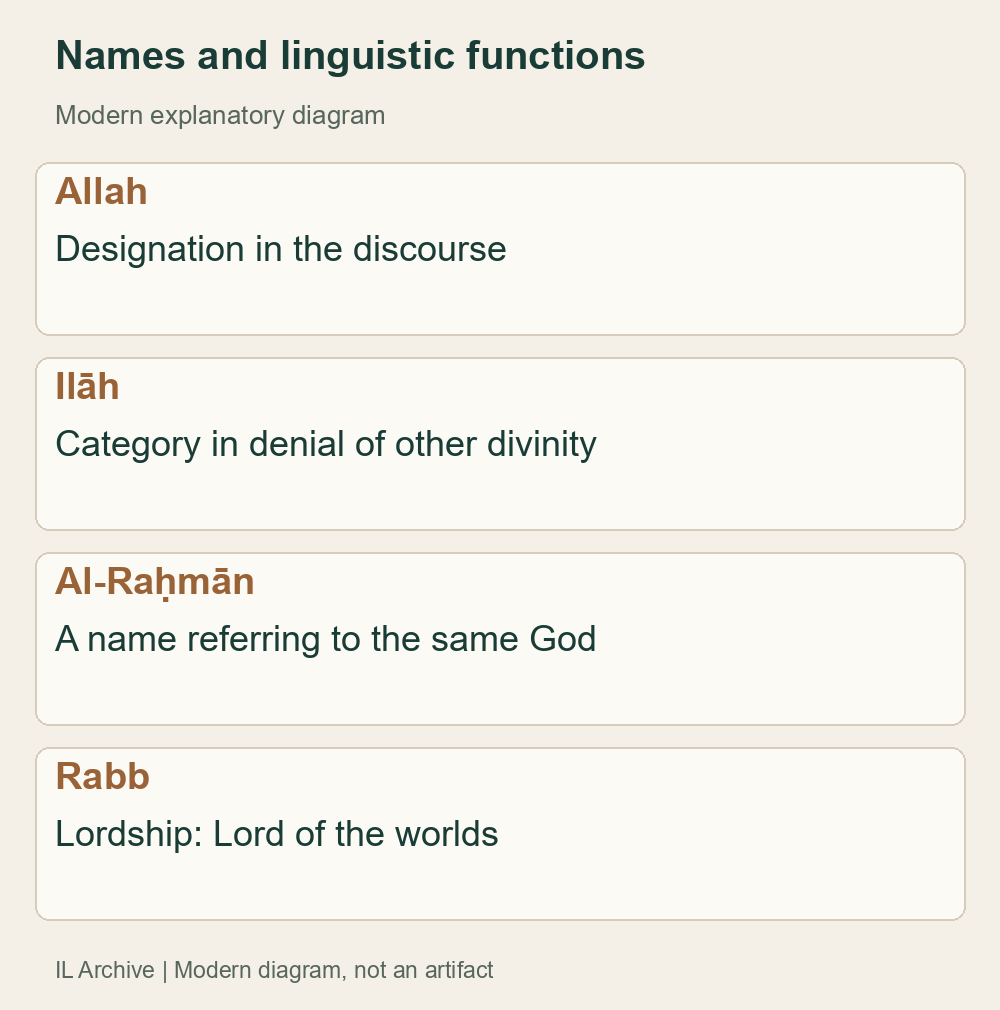
Modern explanatory diagram of Allah, ilāh, al-Raḥmān and rabb in Qur’anic usage; neither an etymological tree nor four separate gods. The etymology of “Allah” is a different question. [1][2][12]
Entität
Arabic term for mastery, ownership or care according to context; used for God and human masters, without itself naming a separate deity.
Namensvarianten: rabb, Lord of the worlds
Kontext und Quellen →
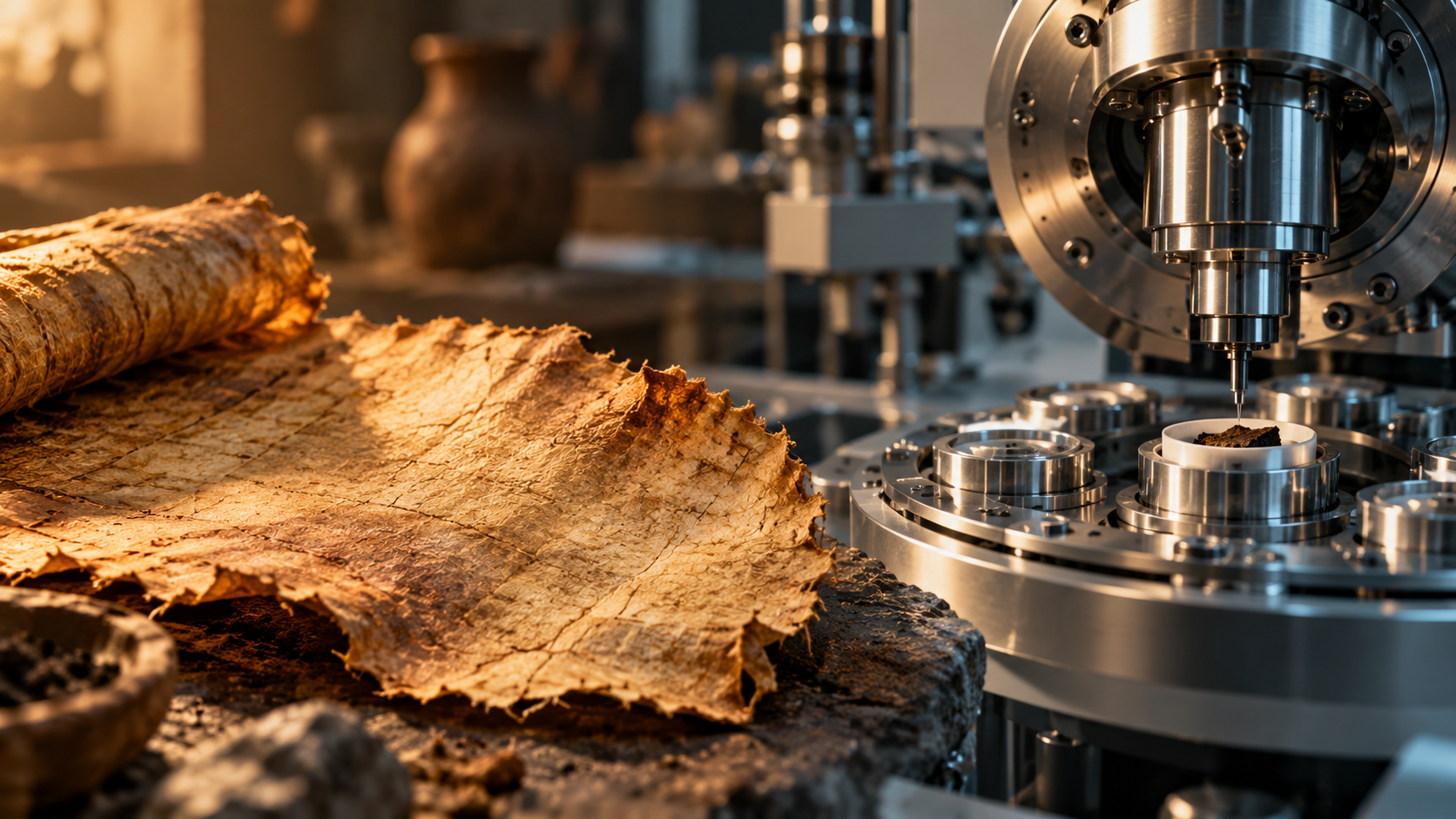
Modern conceptual illustration pairing parchment-like material with a contemporary analyser to distinguish dating a support from dating its writing; not the Birmingham manuscript or a real laboratory photograph
Entität
A method for estimating the age of organic material by measuring carbon-14 and calibrating the result; parchment age does not directly date writing.
Namensvarianten: Radiocarbon dating, Carbon-14 dating
Kontext und Quellen →
Person
Scholar of ancient Mesopotamian and eastern Mediterranean literature; co-authored a 2021 comparison of Isaac and Iphigenia.
Namensvarianten: Heth
Kontext und Quellen →
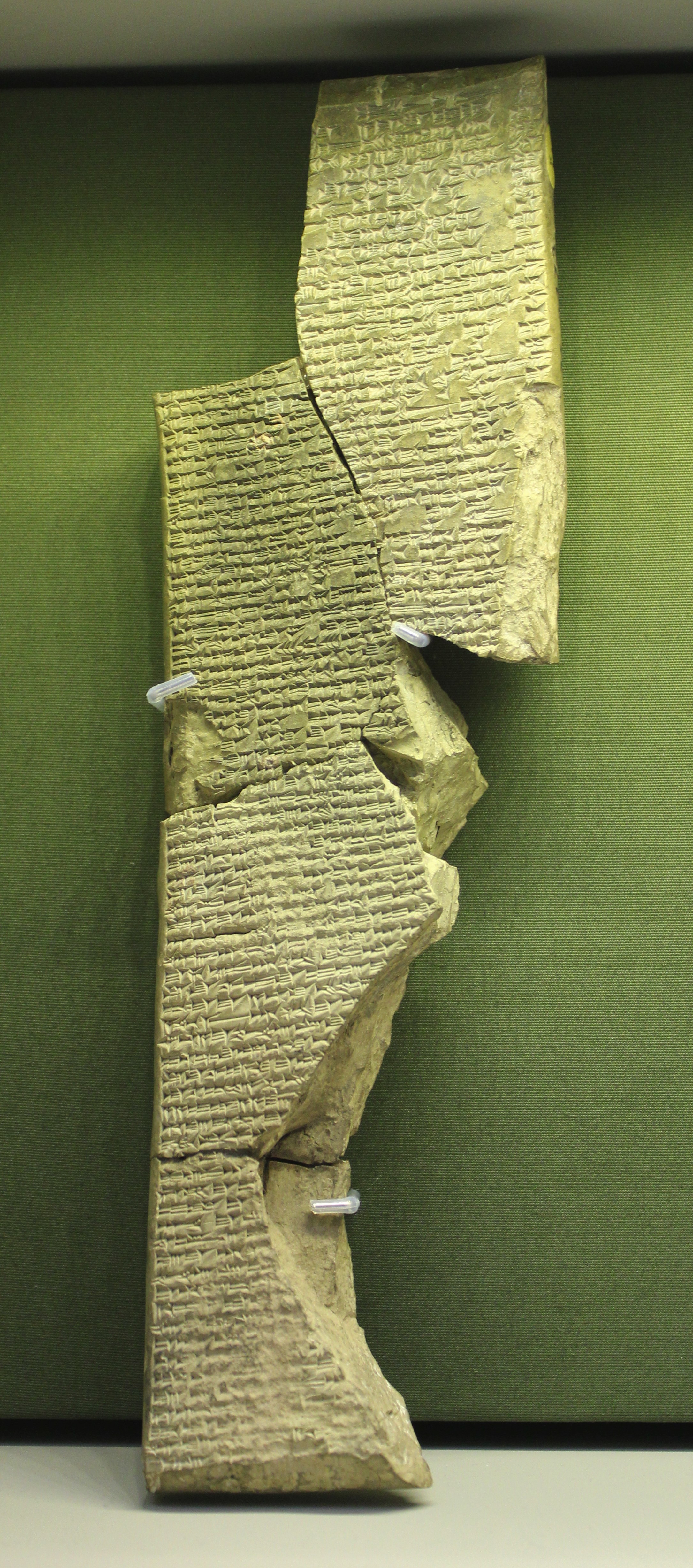
Joined fragments of Enuma Elish Tablet III, from seventh-century BCE Nineveh, in the Neo-Assyrian period, British Museum (K.3473+). A material witness to the poem’s transmission, not a depiction of Anu-rank or the passages quoted here from Tablets I and IV. Photograph, 2020
Entität
An Akkadian term for supreme rank associated with Anu; dictionary and Enuma Elish examples clarify its attribution to other gods and its limits.
Namensvarianten: anūtu, anûtu, Anu-power
Kontext und Quellen →
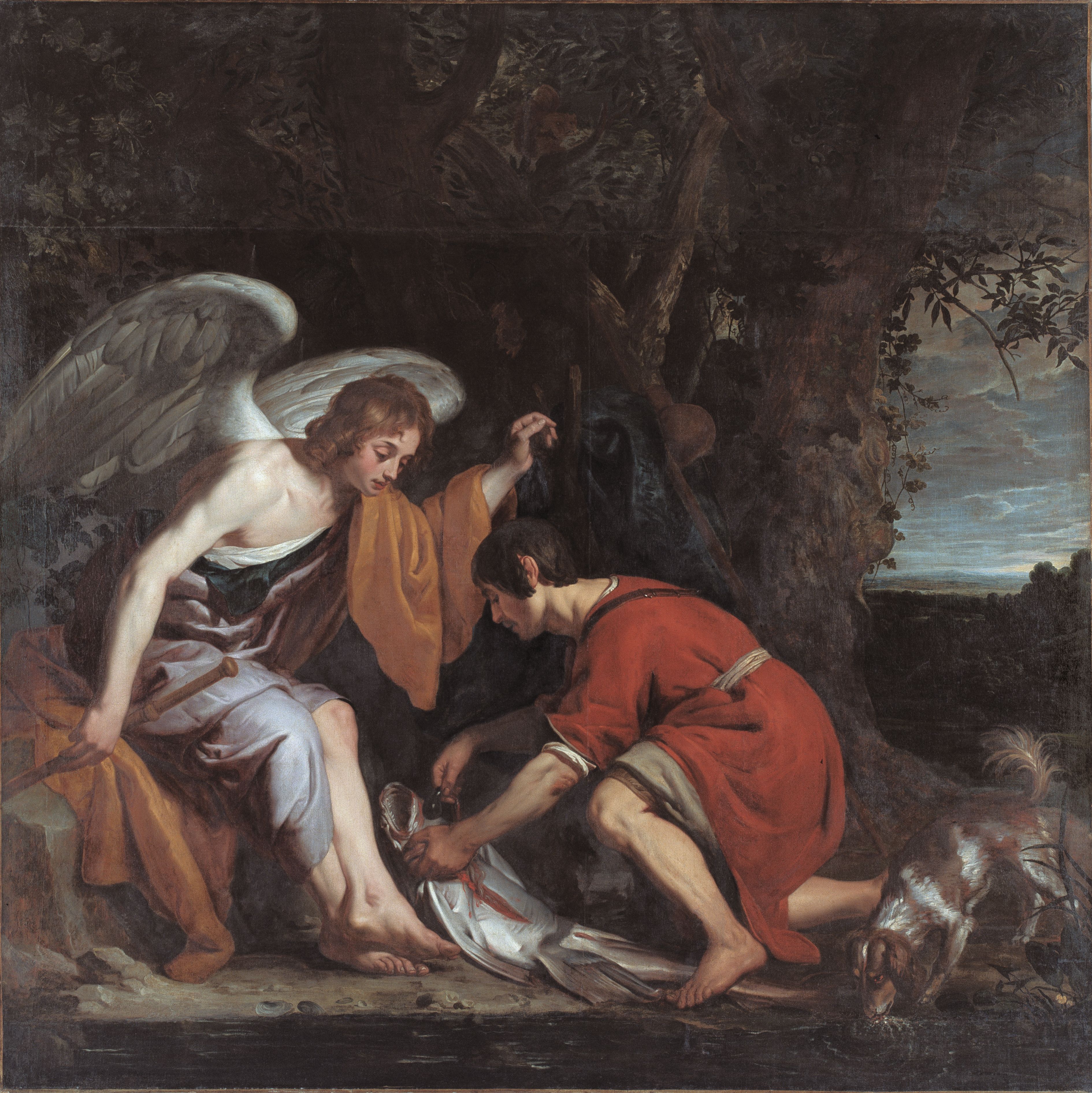
Gaspar de Crayer, Tobias and the Angel, c.1618, oil on canvas, Museum of Fine Arts Ghent, S-13. Raphael is on the left as Tobias cuts open the fish: a later European portrayal of the story, not documentation of the angel or event
Entität
Raphael means “God has healed,” a name borne by a human in Chronicles and an angel in Tobit and 1 Enoch. In Tobit he accompanies the travelling son, helps heal the father and presents prayer before God; in Enoch he executes judgment and explains the places of the dead. Similarity of names does not settle his relationship to Israfil.
Namensvarianten: Raphael, Rephael
Kontext und Quellen →
Modern AI-generated conceptual cover showing an imagined cave entrance, plant imprints and a cereal mortar. This is not a photograph of Raqefet, an excavated object, or a verified reconstruction
Stätte
A Mount Carmel cave with a multigenerational Natufian cemetery. Plant impressions in four graves support a flowering-plant lining, whereas the proposed brewing function of three mortars remains contested.
Namensvarianten: Raqefet, Raqefet Cave
Kontext und Quellen →

Modern AI-assisted illustration of a level balance, evoking impartiality in the Menog i Khrad. Neither a portrait of Rashn nor an excavated balance; the empty pans are a visual choice, not a textual detail
Entität
Rashn is a Zoroastrian divine being linked to uprightness and discerning truth; the Menog i Khrad presents him as an impartial weigher who favors no ruler.
Namensvarianten: Rashn, Rashnu
Kontext und Quellen →

Modern generated expressive cover: dawn light on an uninscribed rock and imagined highlands evoke the South Arabian epigraphic context; not a genuine Ḥimyarite inscription or documented place
Entität
A divine designation written rḥmnn in Late South Arabian inscriptions, especially in Ḥimyar (fourth–sixth centuries CE), used in Jewish and Christian contexts; its referent is not always unambiguous.
Namensvarianten: Raḥmānān, Rahmanan, rḥmnn
Kontext und Quellen →
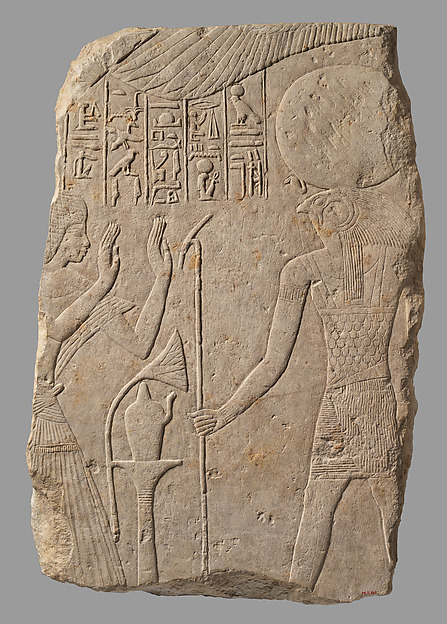
Pay raises his hands before Re-Harakhty, shown with a falcon’s head and solar disk, in a limestone stela fragment from Saqqara. The Met dates the object to about 1328–1318 BCE; inventory 04.2.527
Entität
Re is the Egyptian sun god, associated with creation, life and renewal of cosmic order
Namensvarianten: Ra
Kontext und Quellen →
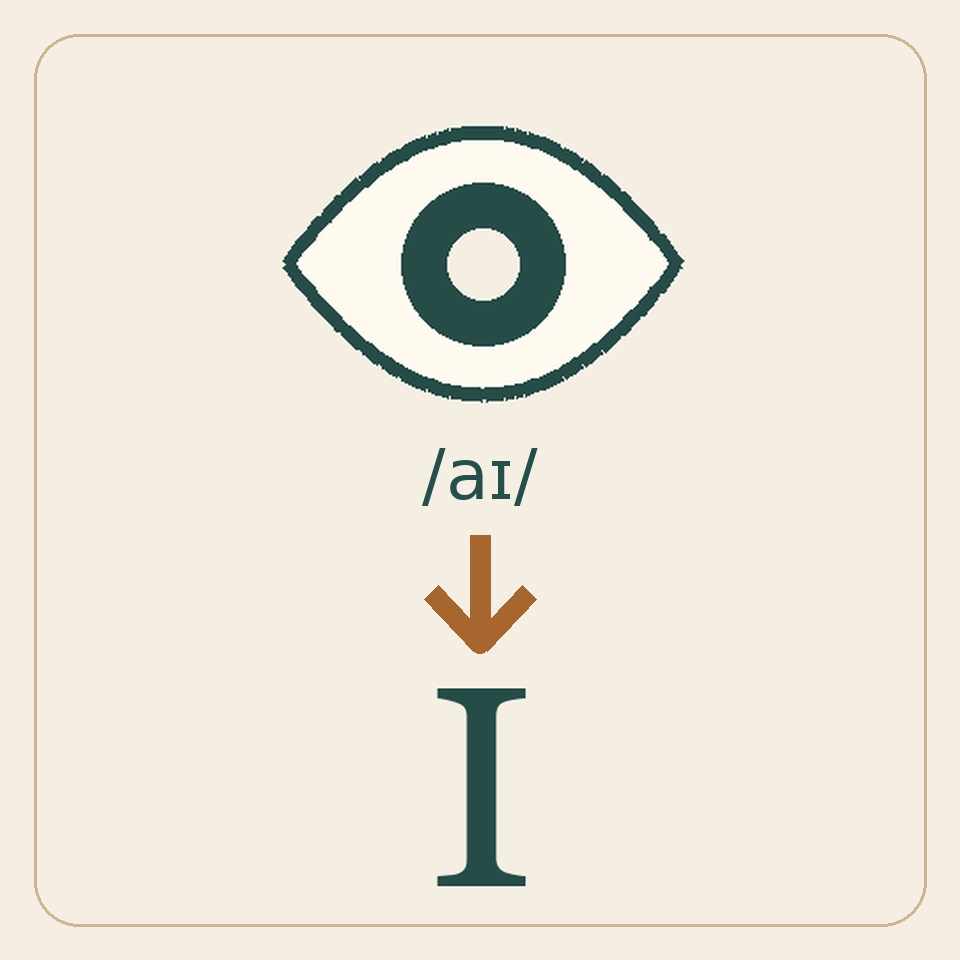
Modern editorial adaptation of an IL Archive diagram: an eye stands for English I through the shared sound /aɪ/. This is not a historical tablet or ancient sign
Entität
A writing principle in which a sign for one word is reused to write another word of similar pronunciation but different meaning; visual similarity alone does not prove an early phonetic use.
Namensvarianten: rebus principle, rebus
Kontext und Quellen →
Person
Researcher in ancient West Asian material and visual culture who has studied standards and symbols in Mesopotamian art.
Namensvarianten: Renate Marian van Dijk-Coombes, Renate van Dijk-Coombes
Kontext und Quellen →
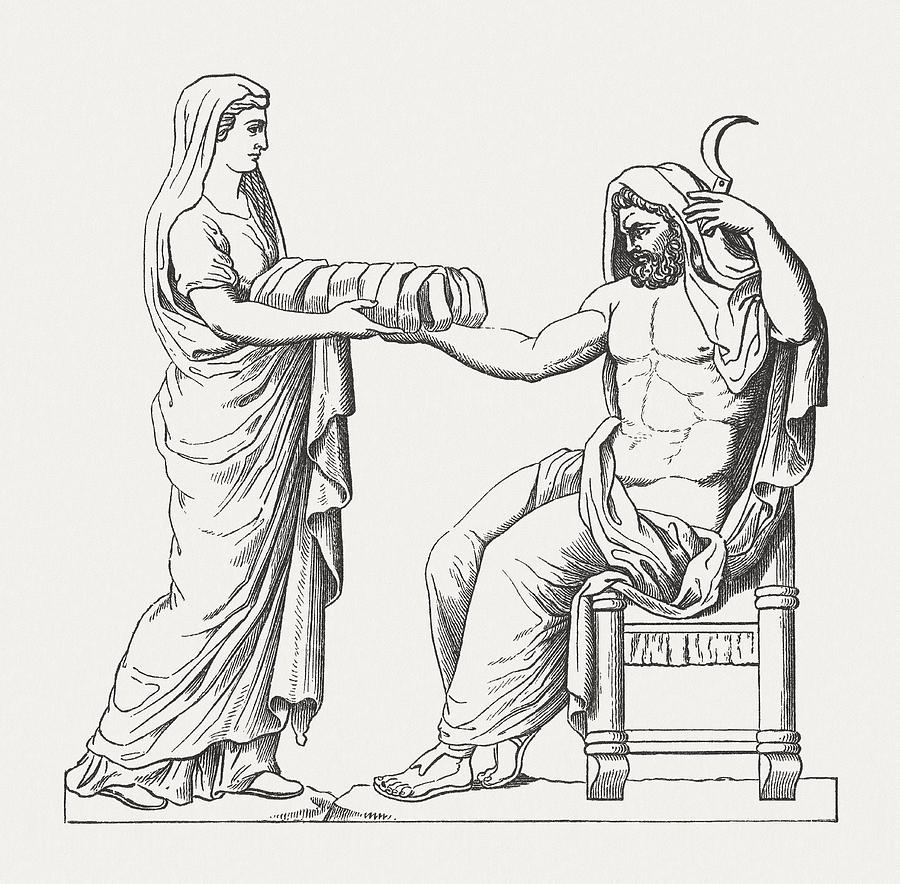
Rhea presents the stone to Kronos; wood engraving published in the 1878 Leipzig edition of Der Olymp. Later printed reception of the scene, not an artifact photograph or a likeness from Hesiod’s time
Entität
Zeus’s mother in Hesiod, hiding the child and giving Kronos a stone instead.
Namensvarianten: Rhea
Kontext und Quellen →
Person
New Testament and early Christianity scholar, emeritus professor at St Andrews.
Namensvarianten: Richard Bauckham
Kontext und Quellen →
Person
Professor of Talmud and rabbinics who studies rabbinic narratives and Jewish Babylonia.
Namensvarianten: Richard Kalmin
Kontext und Quellen →
Person
Old Testament and Semitic-language scholar at Denver Seminary, studying ancient inscriptions, names and religion.
Namensvarianten: Richard S. Hess
Kontext und Quellen →
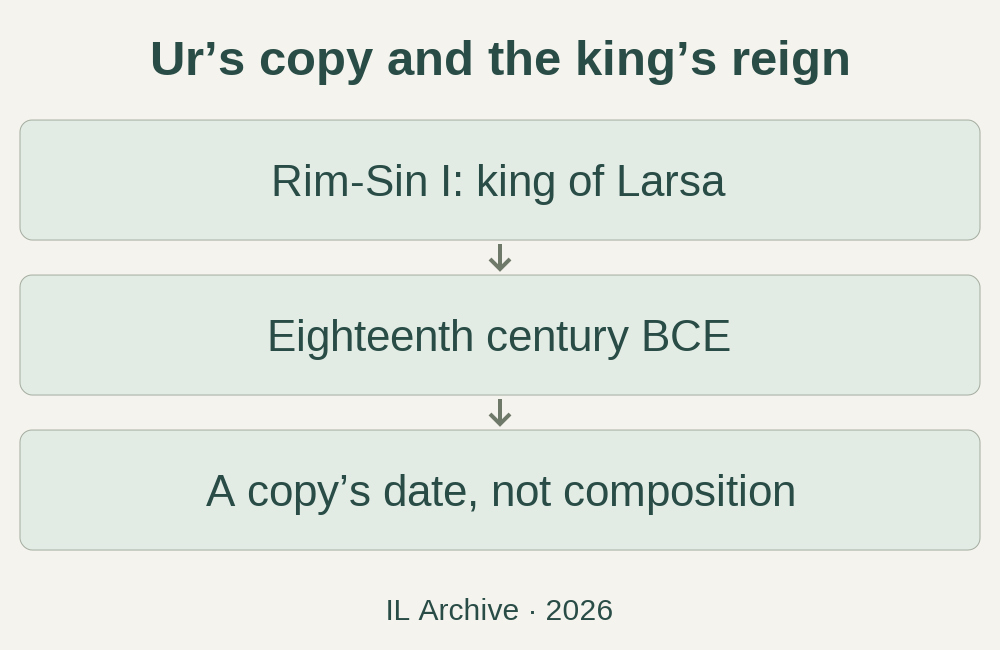
Modern witness-specific explanatory diagram of a sequence or linguistic relationship, not a portrait or fabricated artifact
Person
Eighteenth-century BCE king in southern Mesopotamia, whose reign helps date the Ur copy of the poem.
Namensvarianten: Rim-Sin I, king of Larsa
Kontext und Quellen →
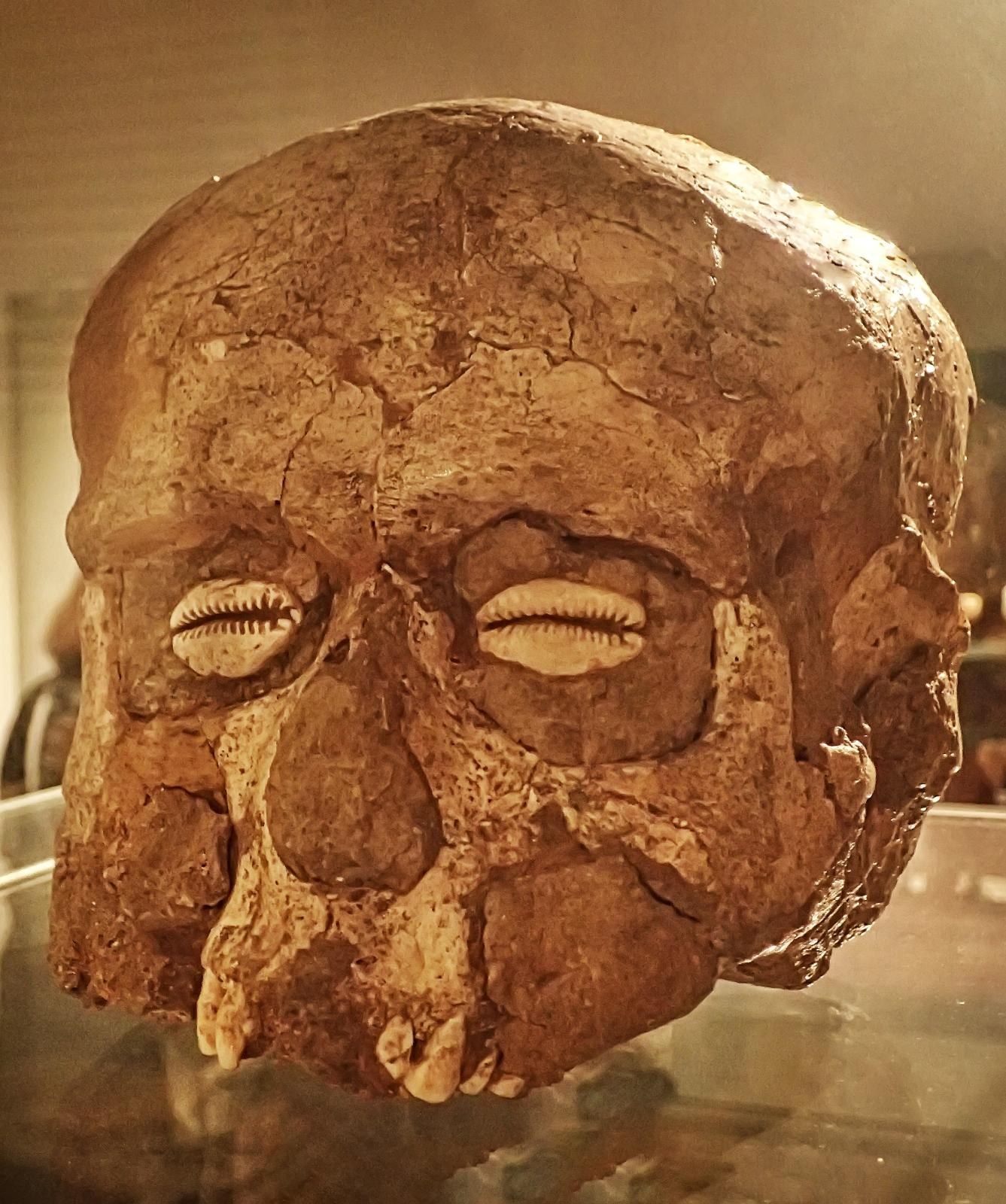
A plastered human skull from Jericho, around 7000 BCE, in the Ashmolean Museum, Oxford. Plaster remodels the face and shells mark the eyes; this treatment alone does not identify the beliefs of its makers
Entität
An organised or distinguished practice meaningful to a community; it may leave traces, but its form alone does not reveal an associated doctrine.
Namensvarianten: ritual, rituals
Kontext und Quellen →
Modern AI-generated conceptual domestic still life: vessels, grains, cloth and ordinary objects. It depicts no documented ritual or historical house; the meaning of the objects depends on their use and context
Entität
The acquisition of special qualities by familiar practices or places; an analytical concept that need not separate ritual from everyday life.
Namensvarianten: ritualization, ritualisation
Kontext und Quellen →
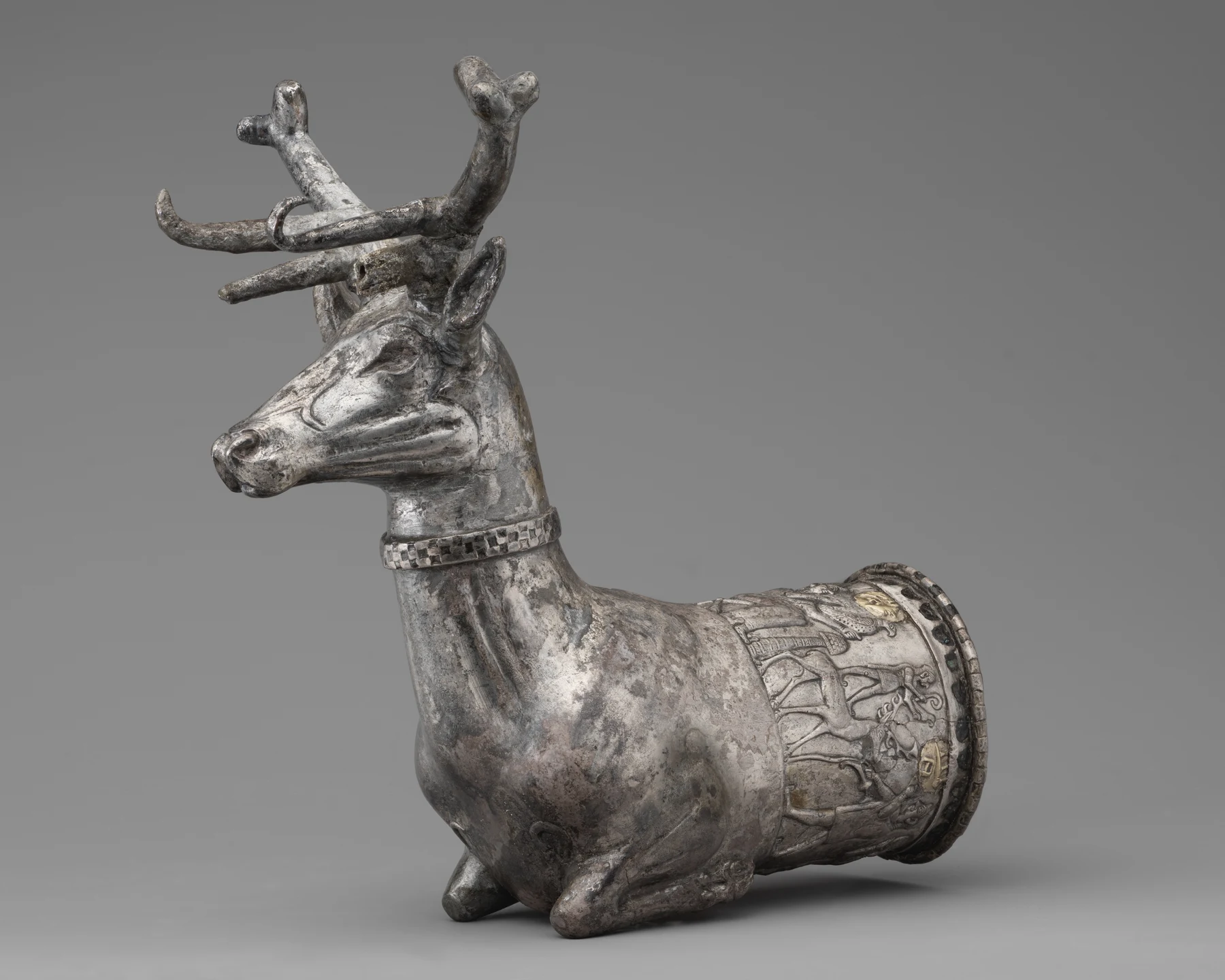
Hittite silver drinking vessel with gold inlay, ending in a stag’s forepart, central Anatolia, ca. 14th–13th century BCE. Its frieze depicts a Hittite cult scene. This is comparative context, not evidence for a kippēr rite or a blood vessel. Metropolitan Museum, 1989.281.10
Entität
Hebrew verb for rites performed on behalf of people or directed at sacred space; the stated outcome may be forgiveness or purification. It does not mean declaring another person an unbeliever.
Namensvarianten: ritual atonement, kippēr
Kontext und Quellen →
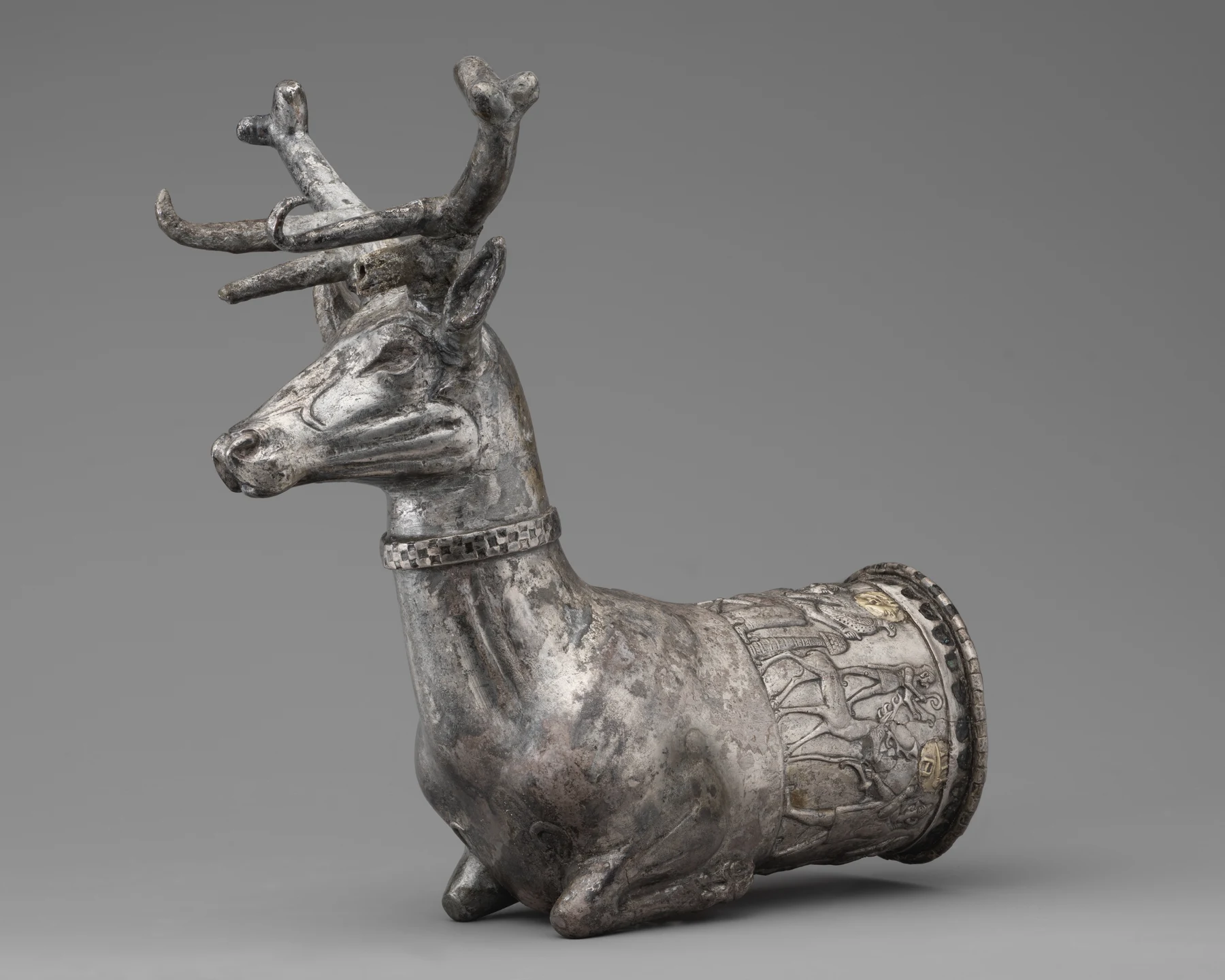
Hittite silver vessel with gold inlay and a stag-shaped forepart, central Anatolia, ca. 14th–13th century BCE. The Metropolitan Museum of Art, 1989.281.10. Its religious frieze has no firmly established specific function; it is not direct evidence of Levitical impurity law
Entität
A religious status regulating contact with the sacred, especially in Leviticus and Numbers. Causes, duration, and remedies vary by context; it does not necessarily imply sin, disease, or diminished dignity.
Namensvarianten: ritual impurity
Kontext und Quellen →
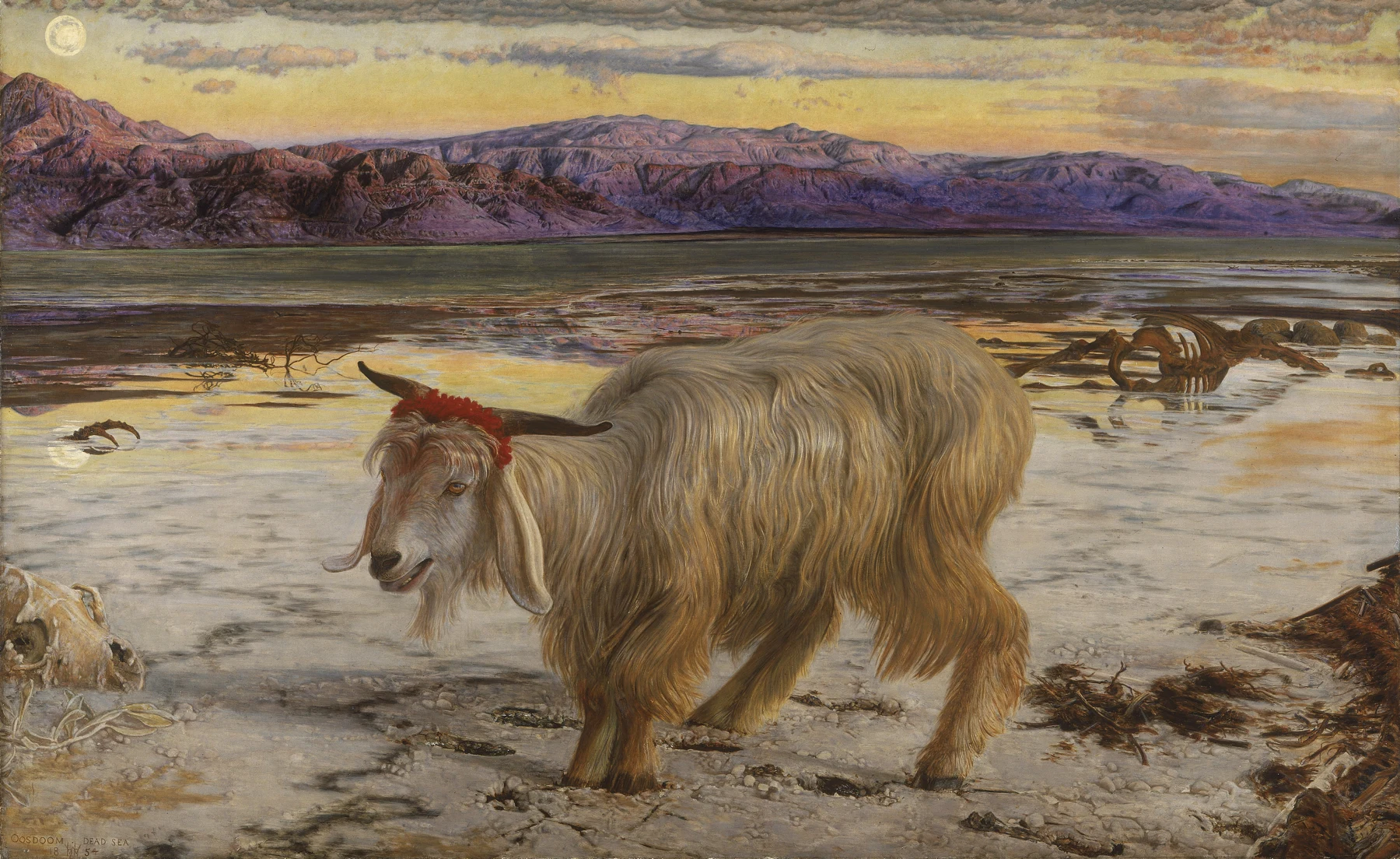
A horned goat stands by saline water before distant hills in William Holman Hunt’s The Scapegoat (1854), Lady Lever Art Gallery, LL 3623. Public-domain image via Wikimedia Commons of a nineteenth-century painting: not archaeological evidence, a depiction of Azazel, or a model for all removal rites
Entität
Analytical term for expelling impurity, harm, or ominous danger from a protected domain; it does not equate transfer, expulsion, slaughter, and destruction.
Namensvarianten: ritual removal
Kontext und Quellen →
Person
Robert Henry Charles (1855–1931) was an Irish scholar, editor and translator of 1 Enoch.
Namensvarianten: Robert Henry Charles, R. H. Charles
Kontext und Quellen →
Person
UCLA Assyriologist and Sumerologist specializing in early Mesopotamian writing; a pioneer of the Cuneiform Digital Library Initiative.
Namensvarianten: Robert K. Englund
Kontext und Quellen →
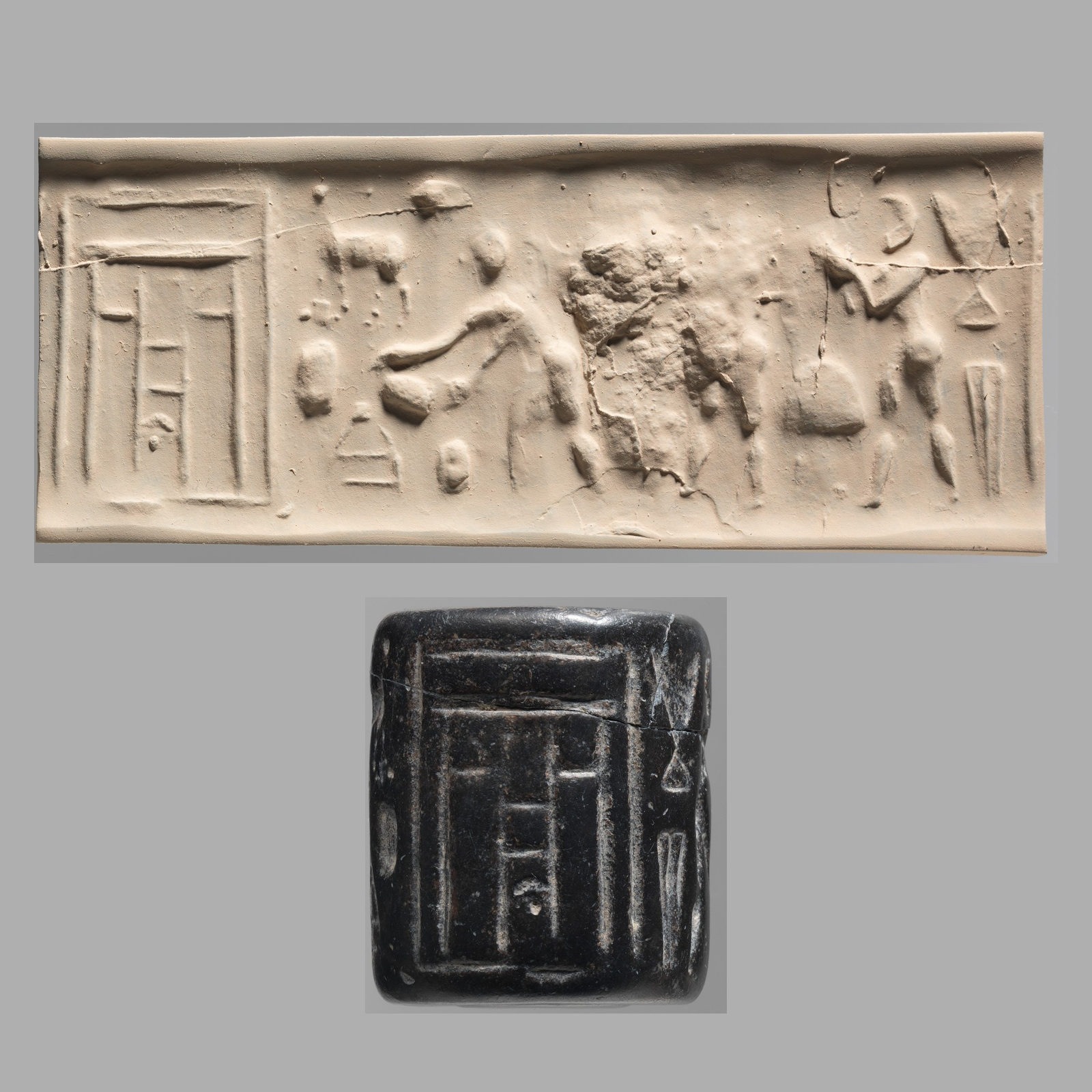
Modern editorial montage of two crops from one museum photograph: ABOVE, a modern clay impression showing the design; BELOW, the ancient limestone cylinder, Met 1983.314.1 (ca. 3500–3100 BCE). The enlarged, stacked arrangement is modern, not two independent ancient finds
Entität
Small engraved cylinder rolled over soft clay to leave an extended image. Used to secure, document and identify administrative actions; its pictures do not automatically constitute writing.
Namensvarianten: cylinder seal, cylinder seals
Kontext und Quellen →
Person
Scholar of Hebrew texts, religion and comparative mythology; emeritus professor at UC Berkeley.
Namensvarianten: Ronald Hendel, Hebrew Bible scholar
Kontext und Quellen →
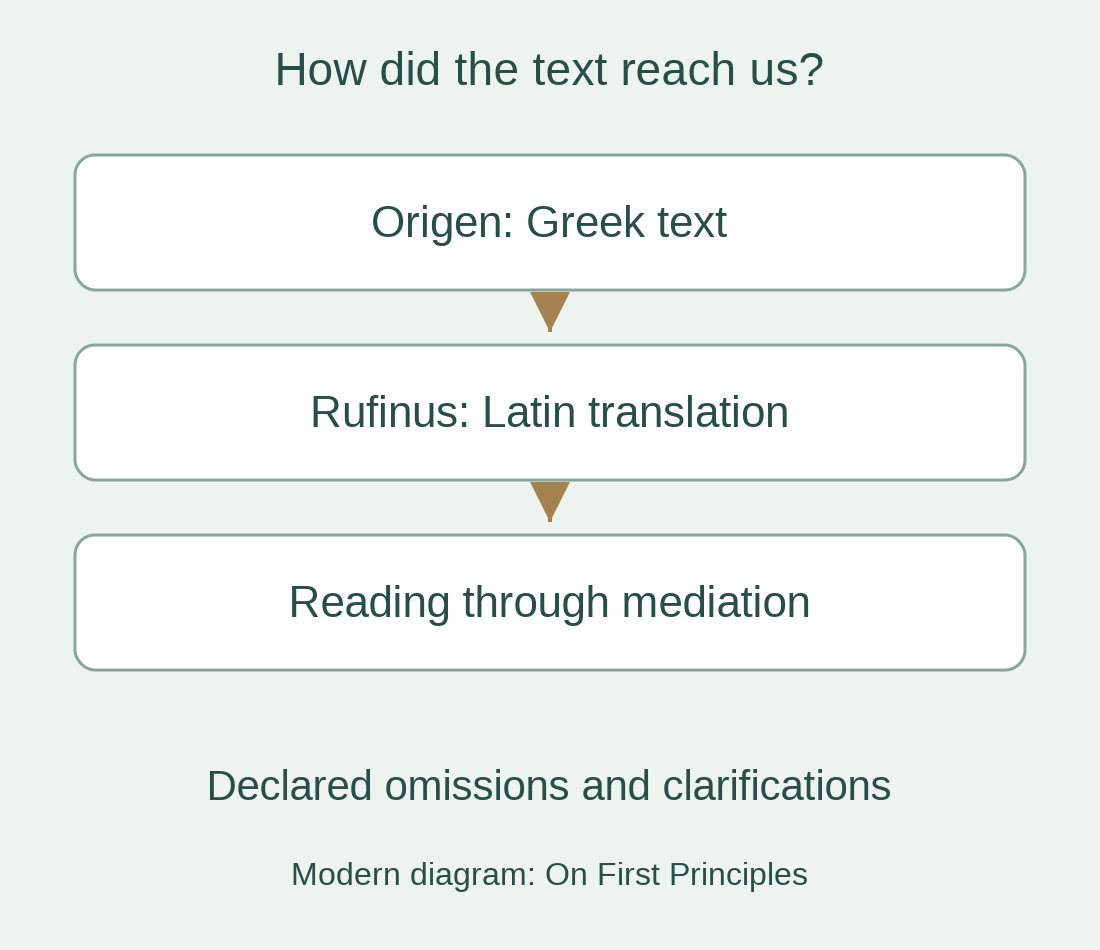
Modern diagram: On First Principles. Declared omissions and clarifications
Person
Christian writer and translator, c.345–411 CE, who translated Greek works including Origen’s On First Principles into Latin.
Namensvarianten: Rufinus of Aquileia, Tyrannius Rufinus
Kontext und Quellen →
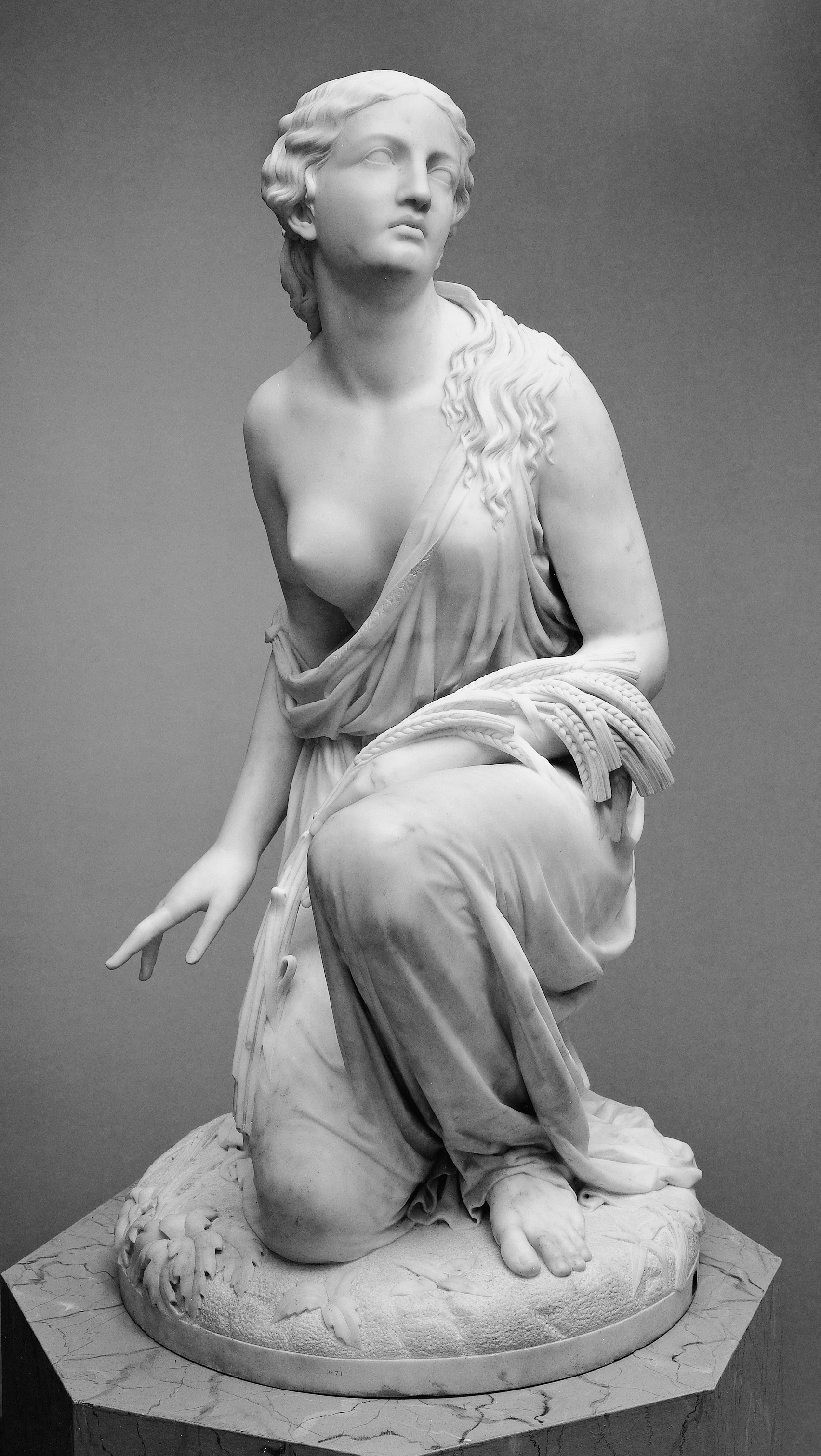
Ruth Gleaning, marble by Randolph Rogers: 1850 design, carved 1855 or 1856; Met 99.7.1. Artistic reception of Ruth 2, not a historical portrait or the chapter 4 redemption scene
Person
Mahlon’s widow and Naomi’s daughter-in-law, marrying Boaz in Ruth.
Namensvarianten: Ruth, biblical character
Kontext und Quellen →
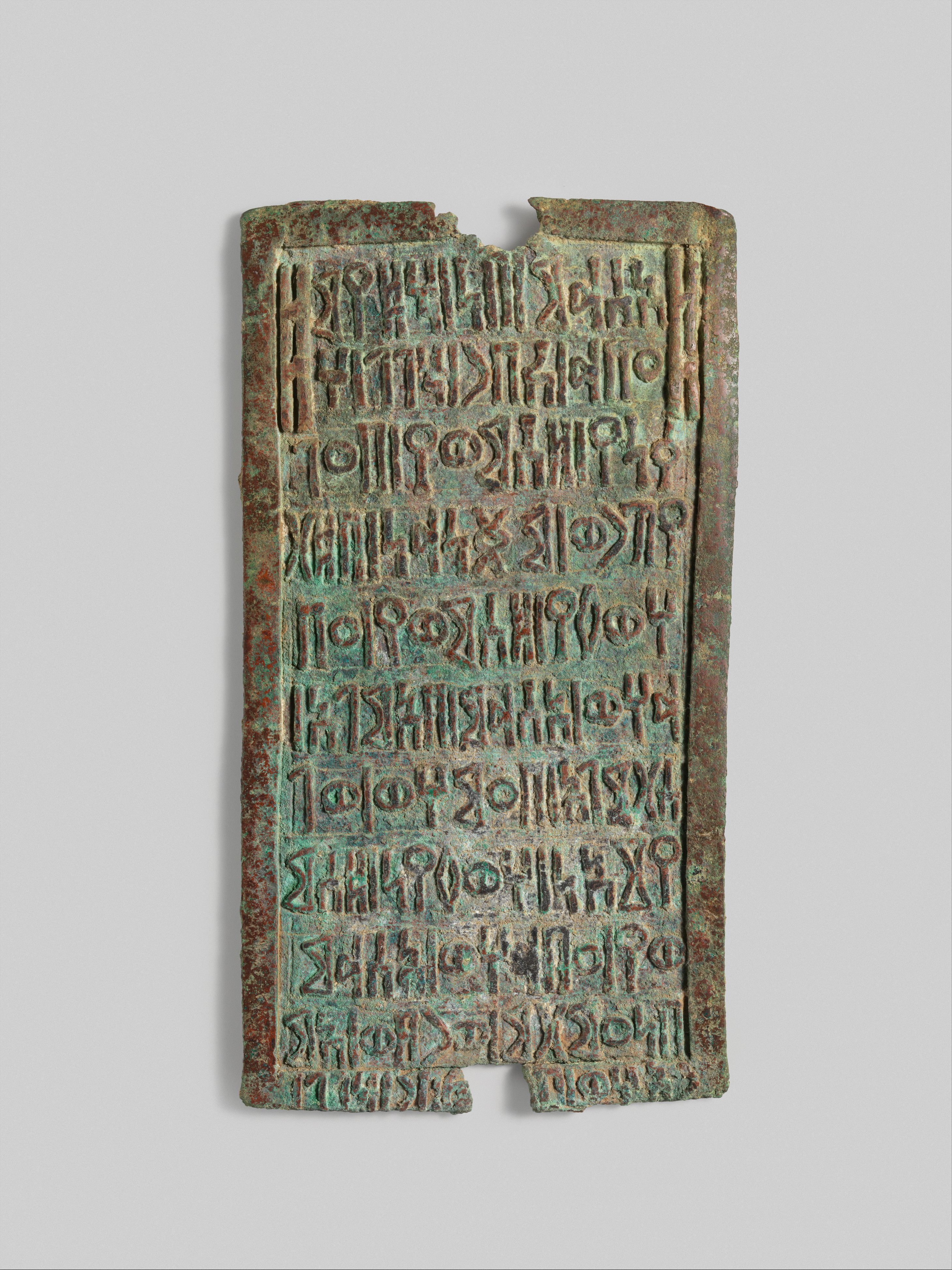
Copper-alloy votive plaque with a Sabaean dedicatory inscription, South Arabia, late first millennium BCE. A witness to Sabaean writing, not to the queen's identity. Met 1993.169; public domain
Stätte
An ancient South Arabian kingdom centered in present-day Yemen and prominent in the first millennium BCE; its attestation does not establish the Queen of Sheba's biography.
Namensvarianten: Saba, Sheba, kingdom of Saba
Kontext und Quellen →
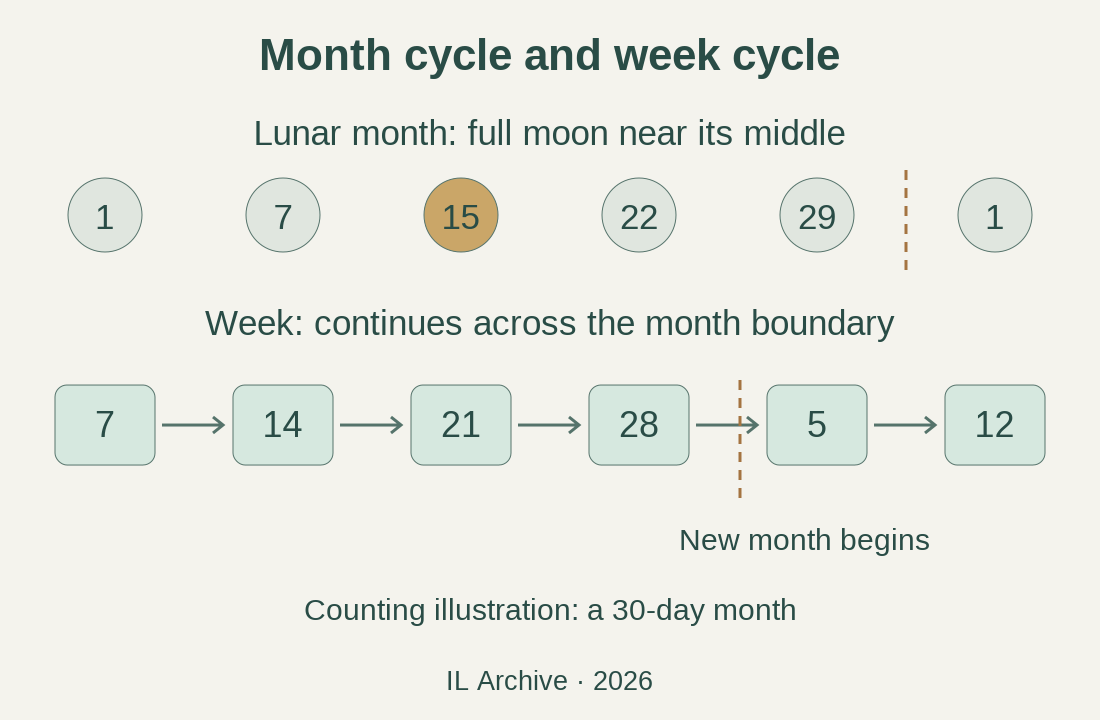
Modern comparison of a monthly lunar date and a continuous week. The counting example assumes a 30-day month and first rest on day 7: after day 28, the next rest falls on day 5 of the following month. Not an ancient calendar or evidence of Sabbath origins
Entität
Sacred seventh day in Jewish traditions, linked by commandments to household rest, creation and liberation.
Namensvarianten: Sabbath, the weekly rest day
Kontext und Quellen →
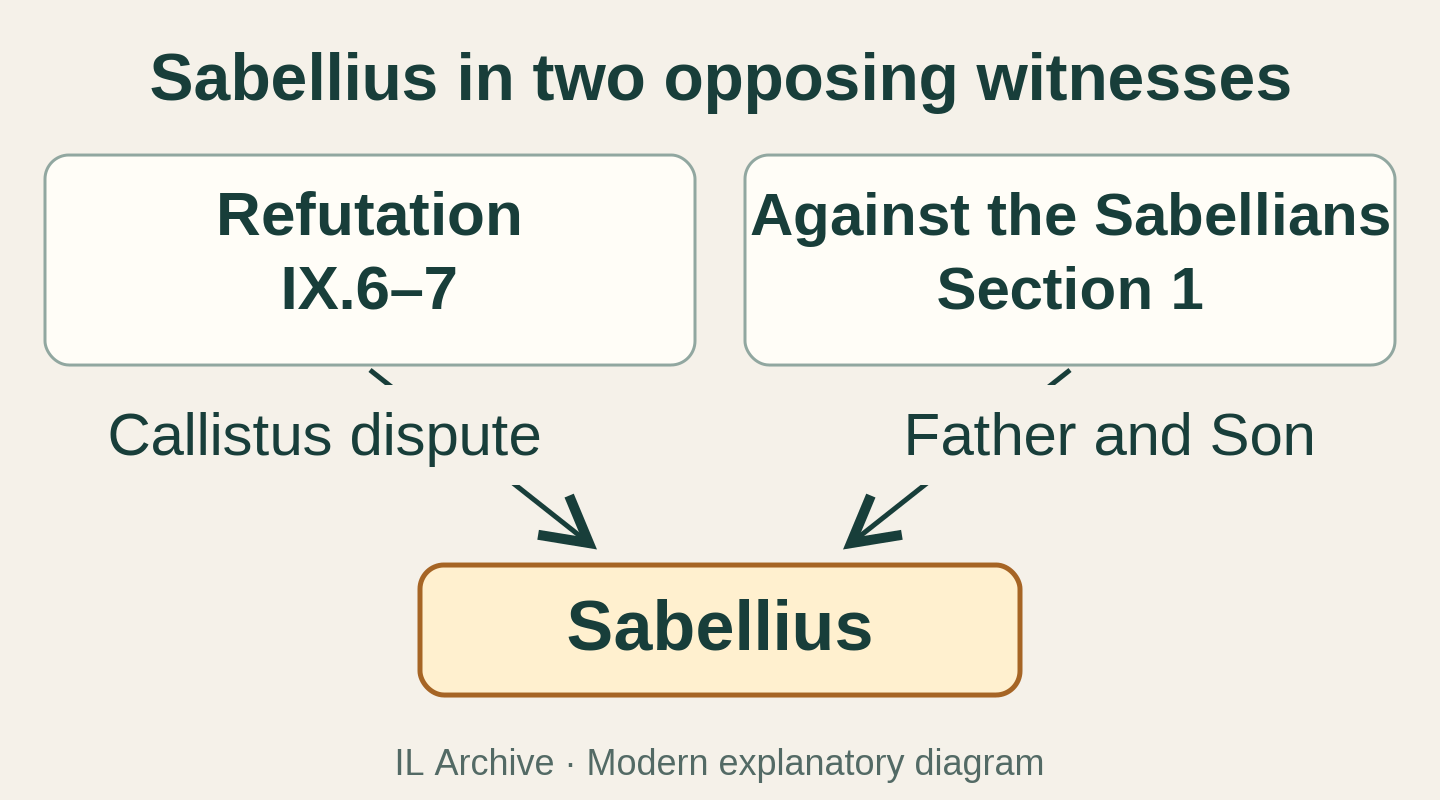
Modern map of two hostile reports about Sabellius: Refutation IX.6–7 and Against the Sabellians 1. Arrows identify their subject, not a surviving work by Sabellius
Person
Christian teacher associated with debates on unity and distinction in the early third century.
Namensvarianten: Sabellius
Kontext und Quellen →

Modern AI-generated symbolic cover: imagined steps, courtyard and blank scroll evoke debates about scripture and tradition in the Second Temple period. Not a photograph or verified reconstruction of a site, the Temple or the Sadducees
Entität
The Sadducees were a Second Temple Jewish current, known mainly from external or rival accounts such as Josephus, the Mishnah and the New Testament rather than any surviving doctrinal writings of their own.
Namensvarianten: Sadducees, Sadducean
Kontext und Quellen →
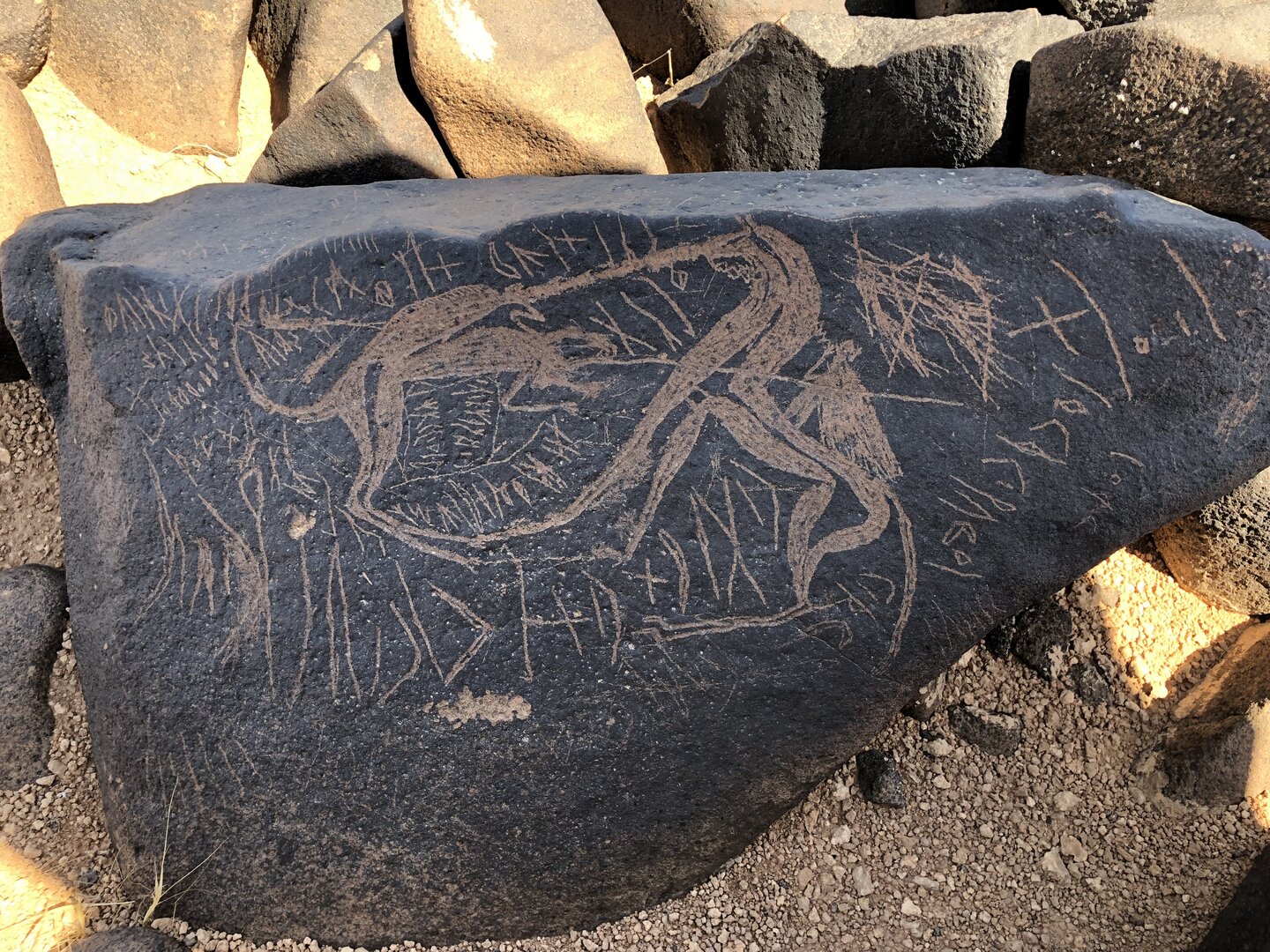
Rock bearing Safaitic inscription BES19s 77.1 and associated carvings, Firʿ Wādī al-Khuḍarī, Al-Mafraq, Jordan; recorded in 2019 and listed in situ by OCIANA. The published reading invokes Allat and later requests relief from lh (interpreted as Allah). OCIANA describes a predator, a person and a mounted rescuer, not images identified as deities
Entität
An Ancient North Arabian consonantal script used for rock inscriptions recording names, kinship, pastoral movement and prayers in the pre-Islamic deserts of Syria, Jordan and northern Arabia.
Namensvarianten: Safaitic, Safaitic script, Safaitic inscriptions
Kontext und Quellen →
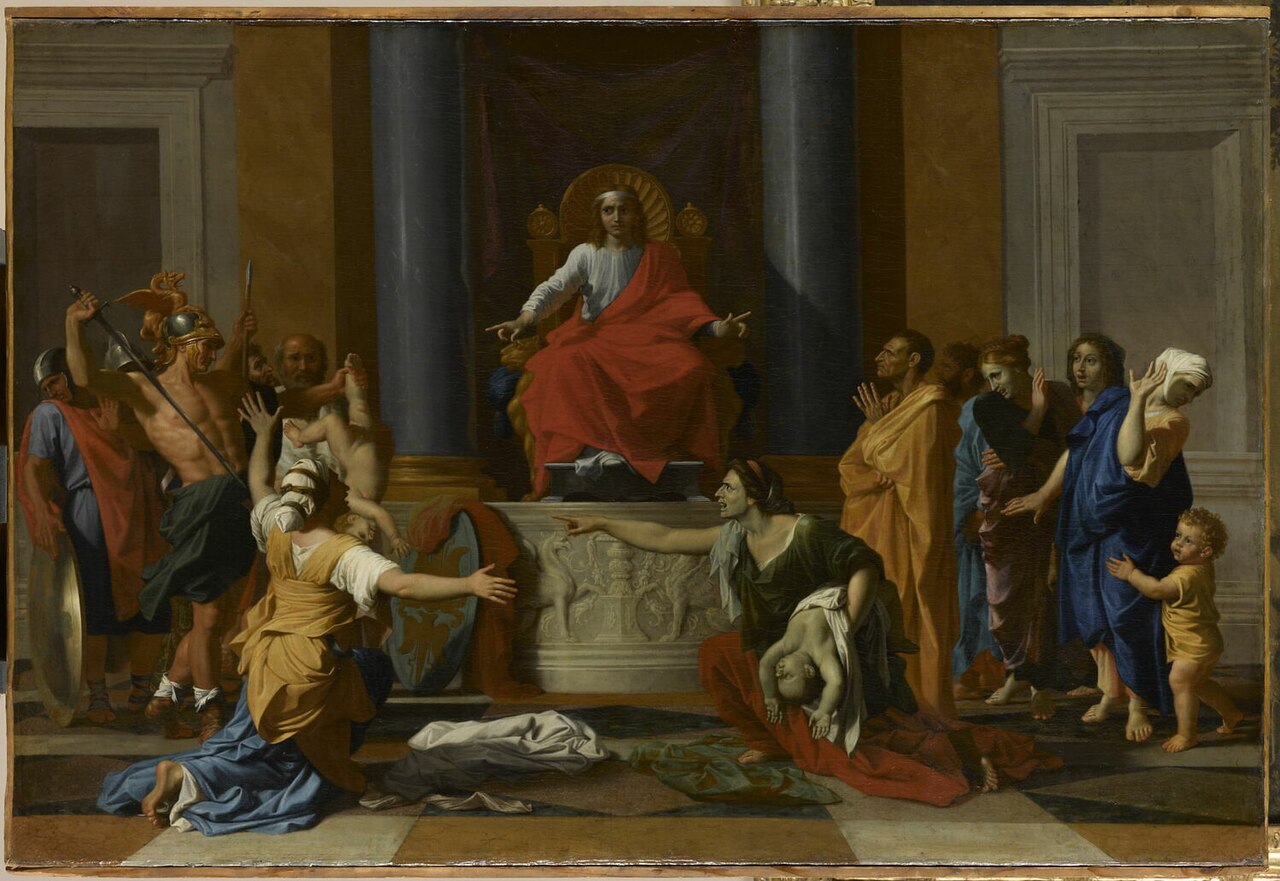
The Judgment of Solomon, an oil painting by Nicolas Poussin from 1649, in the Louvre, INV 7277. It depicts the judgement between two women in 1 Kings 3 and illustrates the story’s reception in seventeenth-century European art
Person
Solomon is the biblical king, David’s son, associated in Kings with Jerusalem and building the temple
Namensvarianten: King Solomon
Kontext und Quellen →