Das Gilgamesch-Epos Kapitel 6
Jenseits der Grenze des Tages
Gilgamesch durchquert die Dunkelheit des Berges Maschu und sucht einen Weg jenseits des Meeres. Seine Suche führt ihn zu Utnapischtim, dessen Worte ihn fragen lassen, was ein Menschenleben umfassen kann.
Den Film ansehenQuellenBlättern Sie mit den Pfeilen, den Pfeiltasten oder durch Wischen.
NACHT
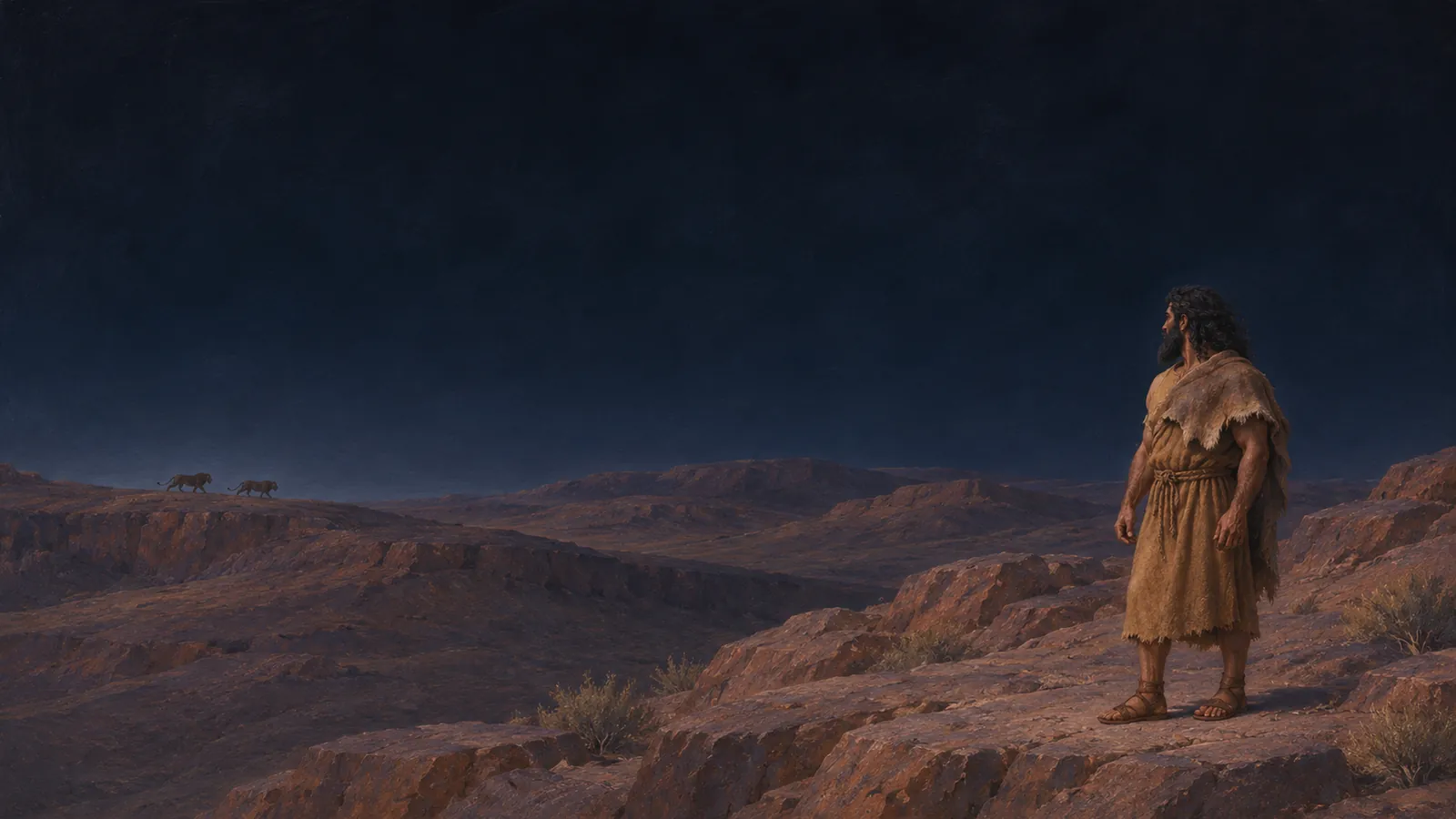
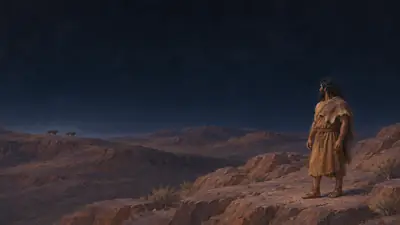
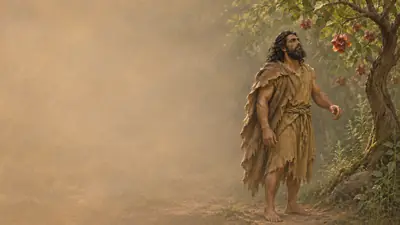
Die Nacht war hereingebrochen, als Gilgamesch die Gebirgspässe erreichte. Im Dunkeln sah er Löwen und bekam Angst, fern von jedem Ort, an dem er sich sicher wusste.
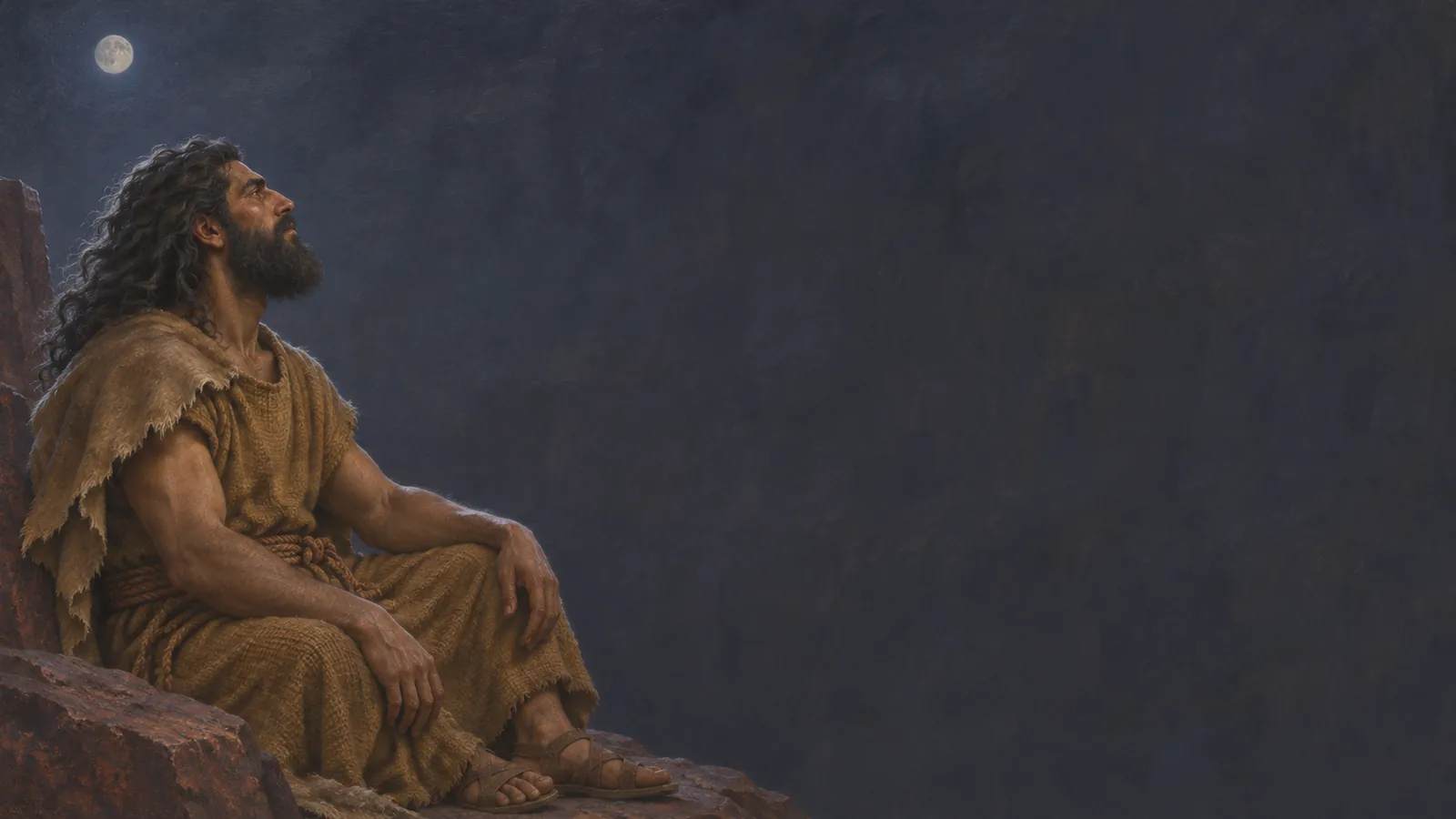
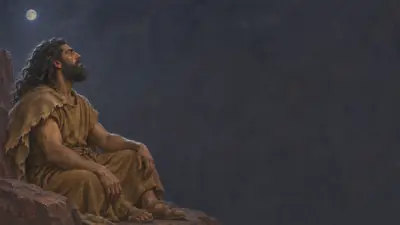
Gilgamesch hob das Gesicht zum Mondgott und bat ihn um Schutz. Weit weg von Uruks Mauern blieb ihm in der Dunkelheit ein Gebet.
Gilgamesch schreckte aus dem Schlaf. Das Gedicht erzählt von einem Ansturm auf die Löwen und bricht dann in Fragmente ab, bis wir ihm am Berg Maschu wieder begegnen.
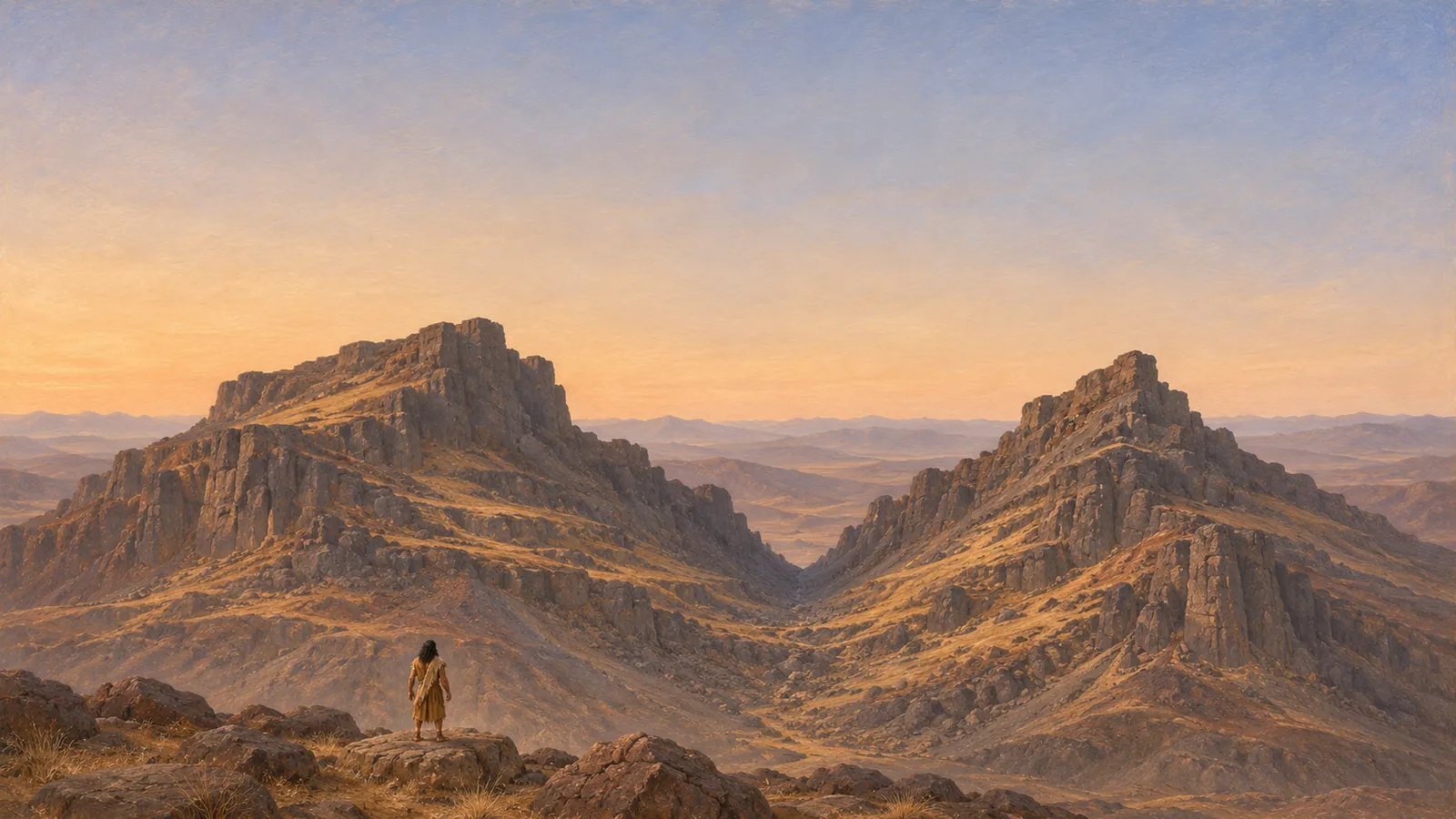
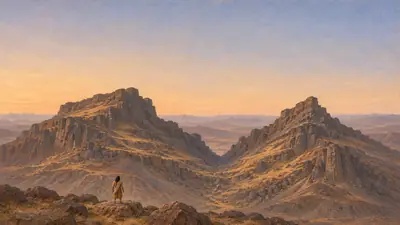
Gilgamesch kam zu den Zwillingsgipfeln des Maschu, wo im Gedicht die Sonne aufgeht. Ihre Spitzen reichen an den Rand des Himmels und ihre Füße berühren die Unterwelt.
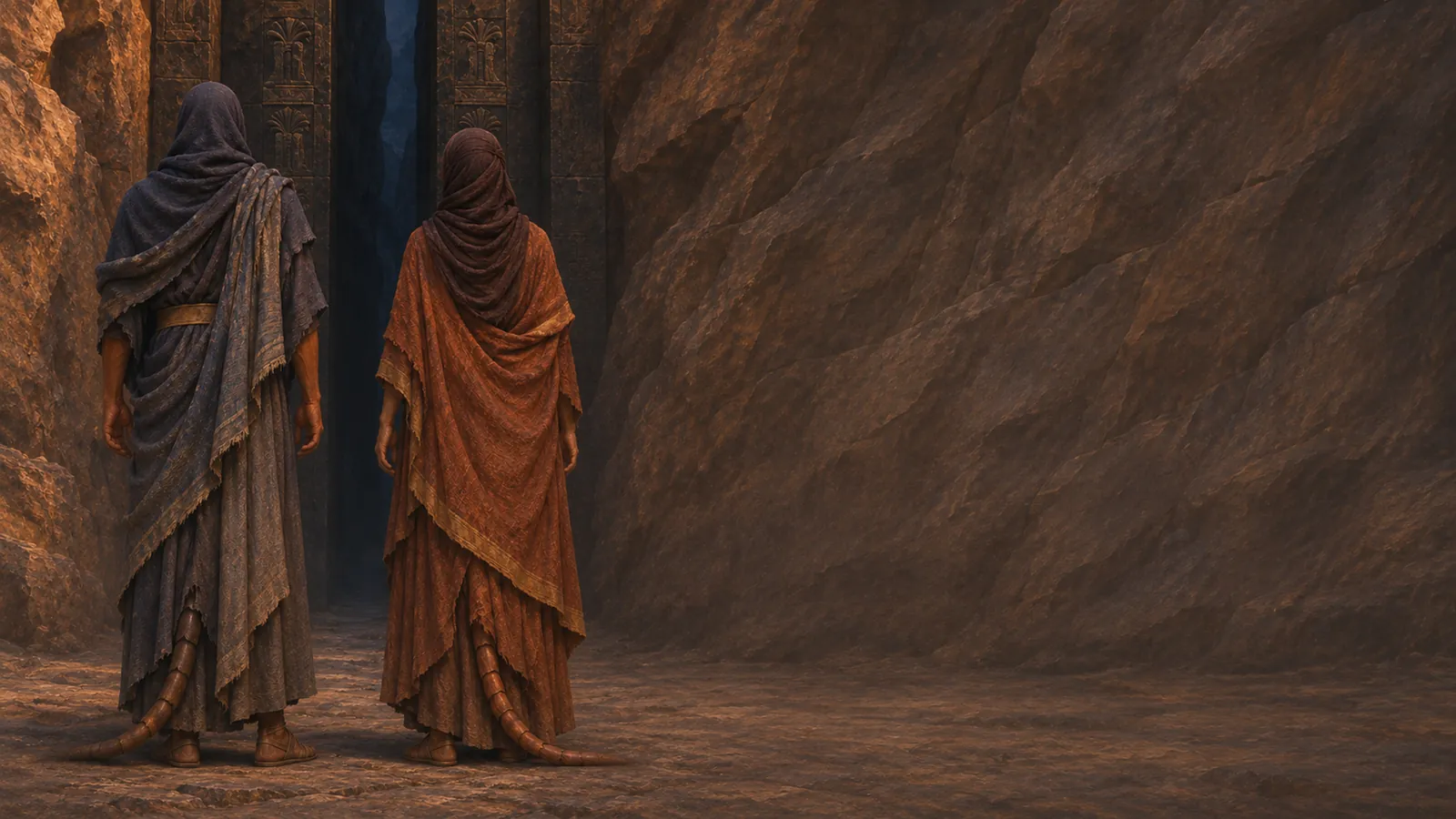
WÄCHTER
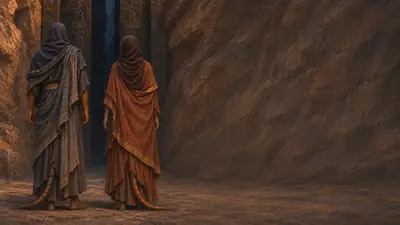
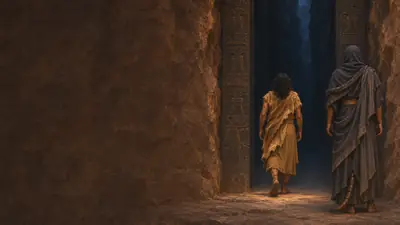
Das Tor gehörte zwei Skorpionwesen. Dem Gedicht zufolge konnte ihr Anblick den Tod bringen, und sie wachten über die Sonne bei ihrem Aufgang und Untergang.
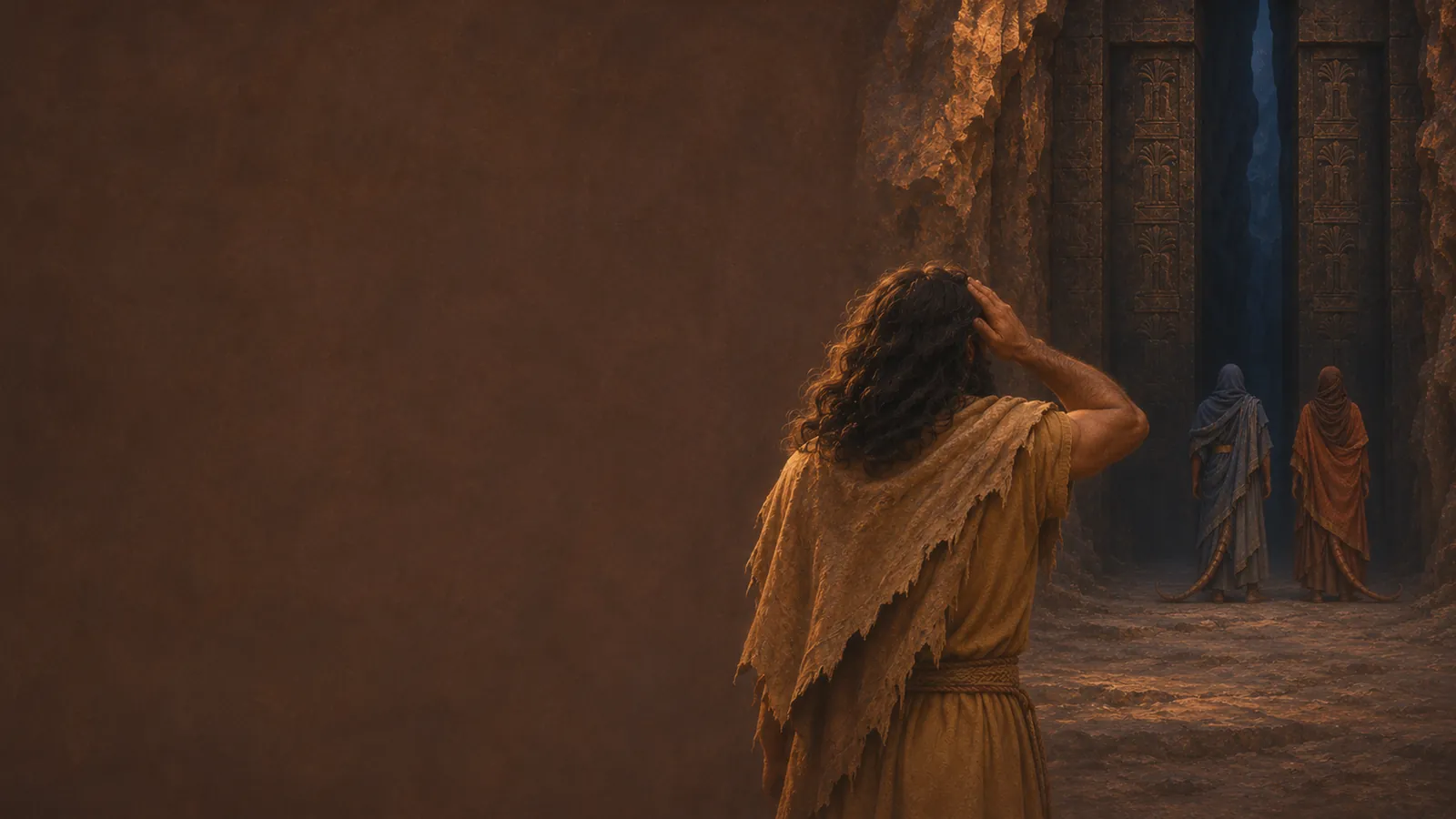
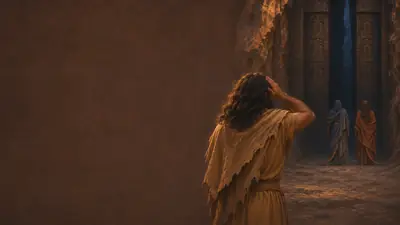
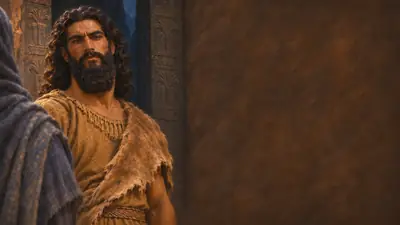
Bei ihrem Anblick bedeckte Gilgamesch vor Angst sein Gesicht. Er fasste sich wieder und trat näher an die beiden Wesen heran, die am Tor standen.
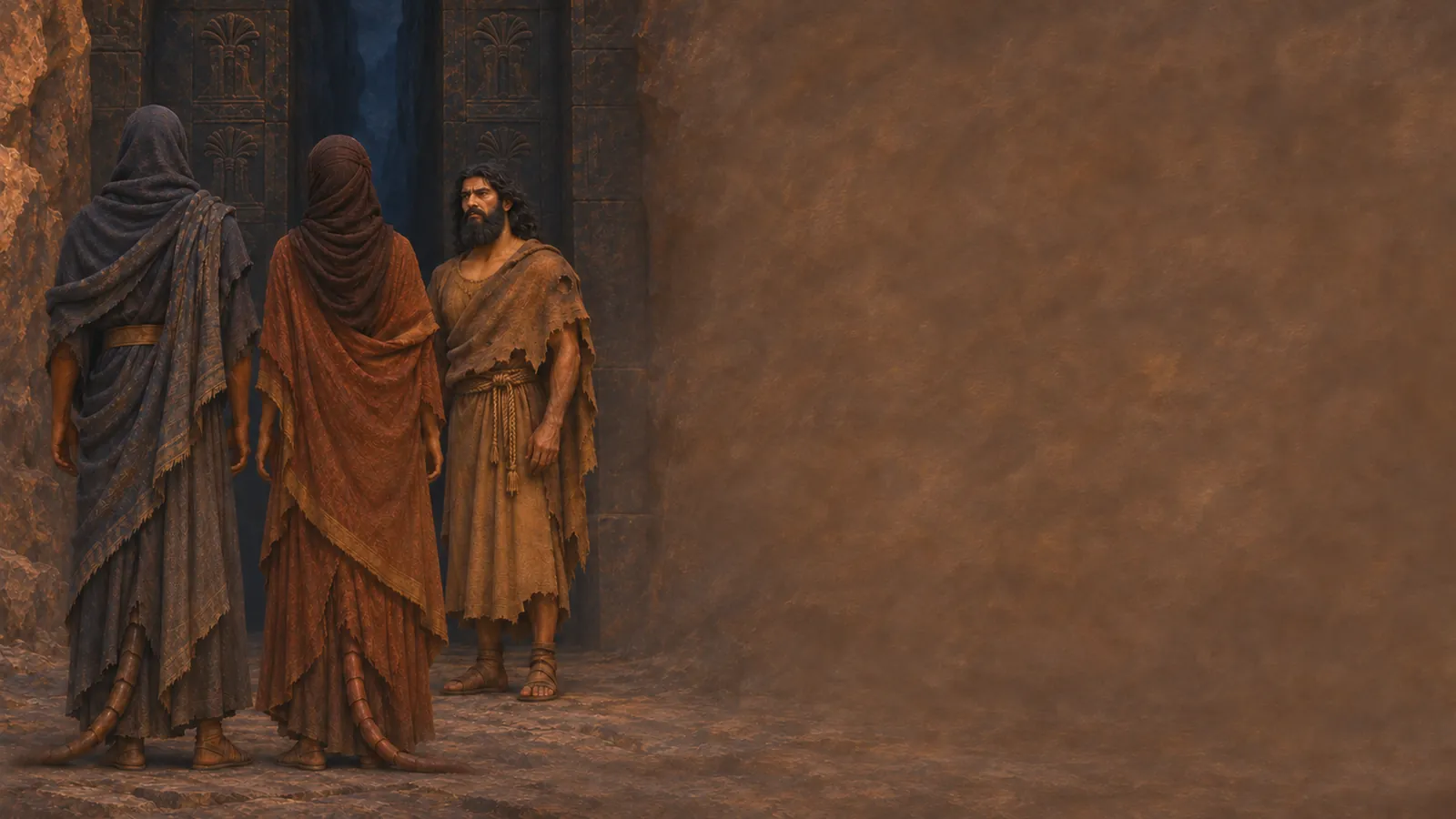
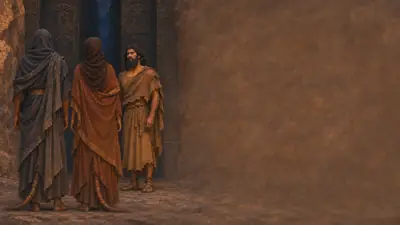
Der erste Wächter erkannte etwas Göttliches in dem Reisenden. Seine Frau sah auch dessen andere Seite: Gilgamesch war zum Teil Gott und zum Teil Mensch.
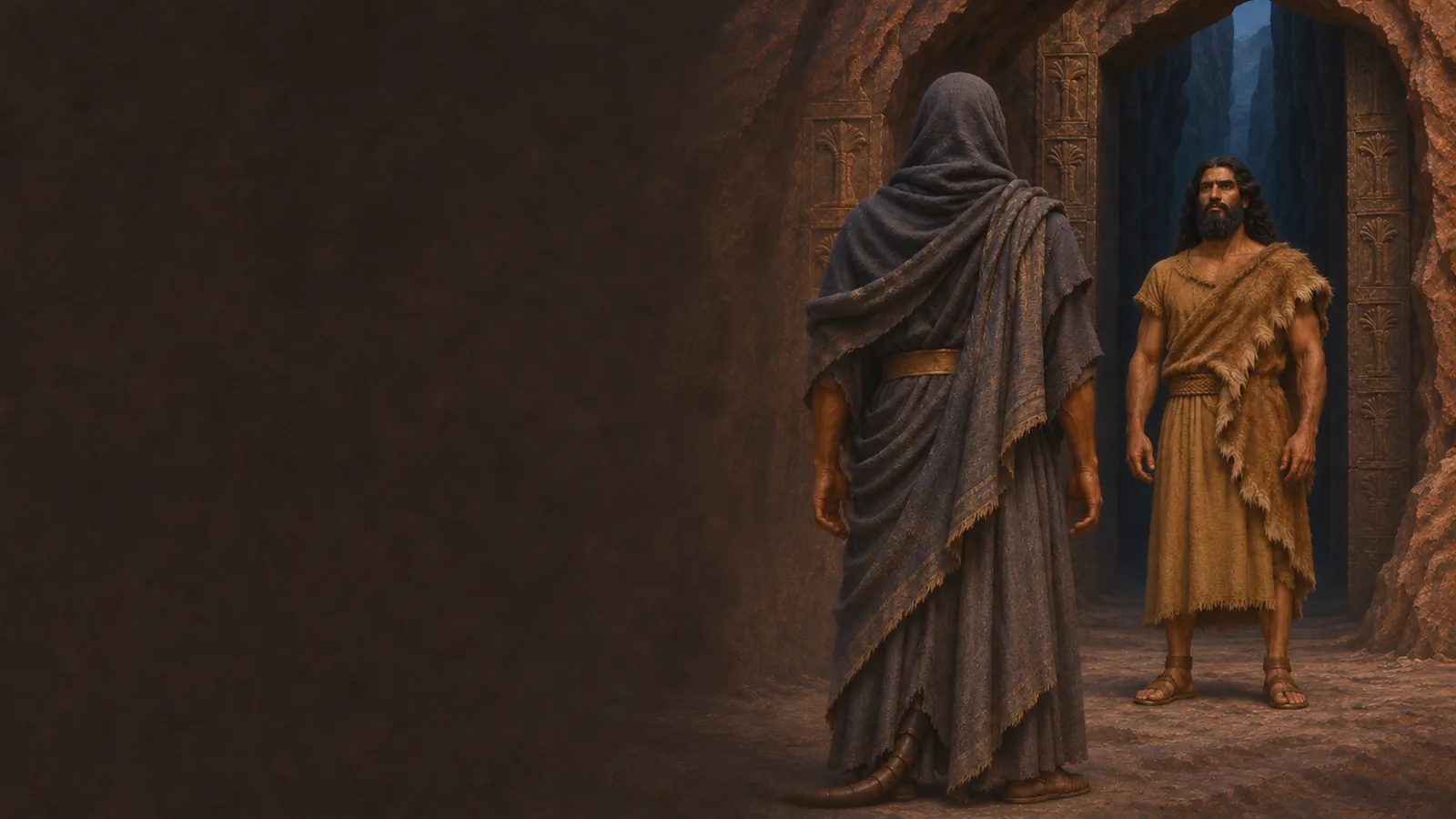
Der Wächter fragte Gilgamesch, was ihn so weit von seiner Heimat weggeführt hatte. Die Frage ist nur in Bruchstücken erhalten, doch es wird deutlich, dass Gilgamesch sich erklären muss.
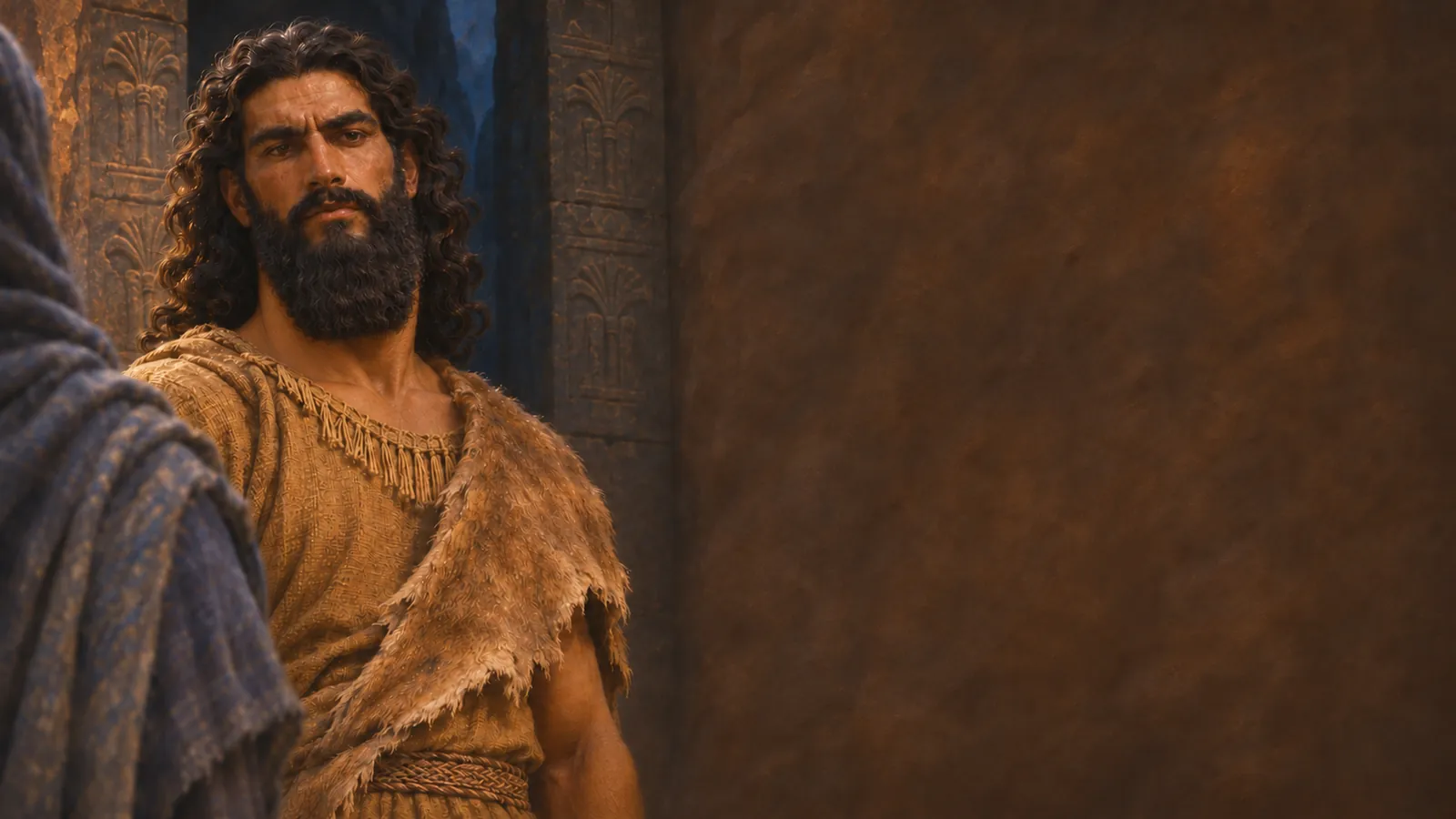
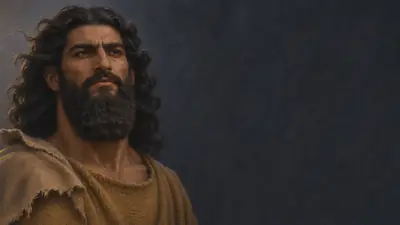
Gilgamesch war wegen Utnapischtim gekommen, seines fernen Ahnherrn. Er wollte ihn nach Leben und Tod fragen. Diese Frage hatte er den ganzen Weg bis Maschu mit sich getragen.
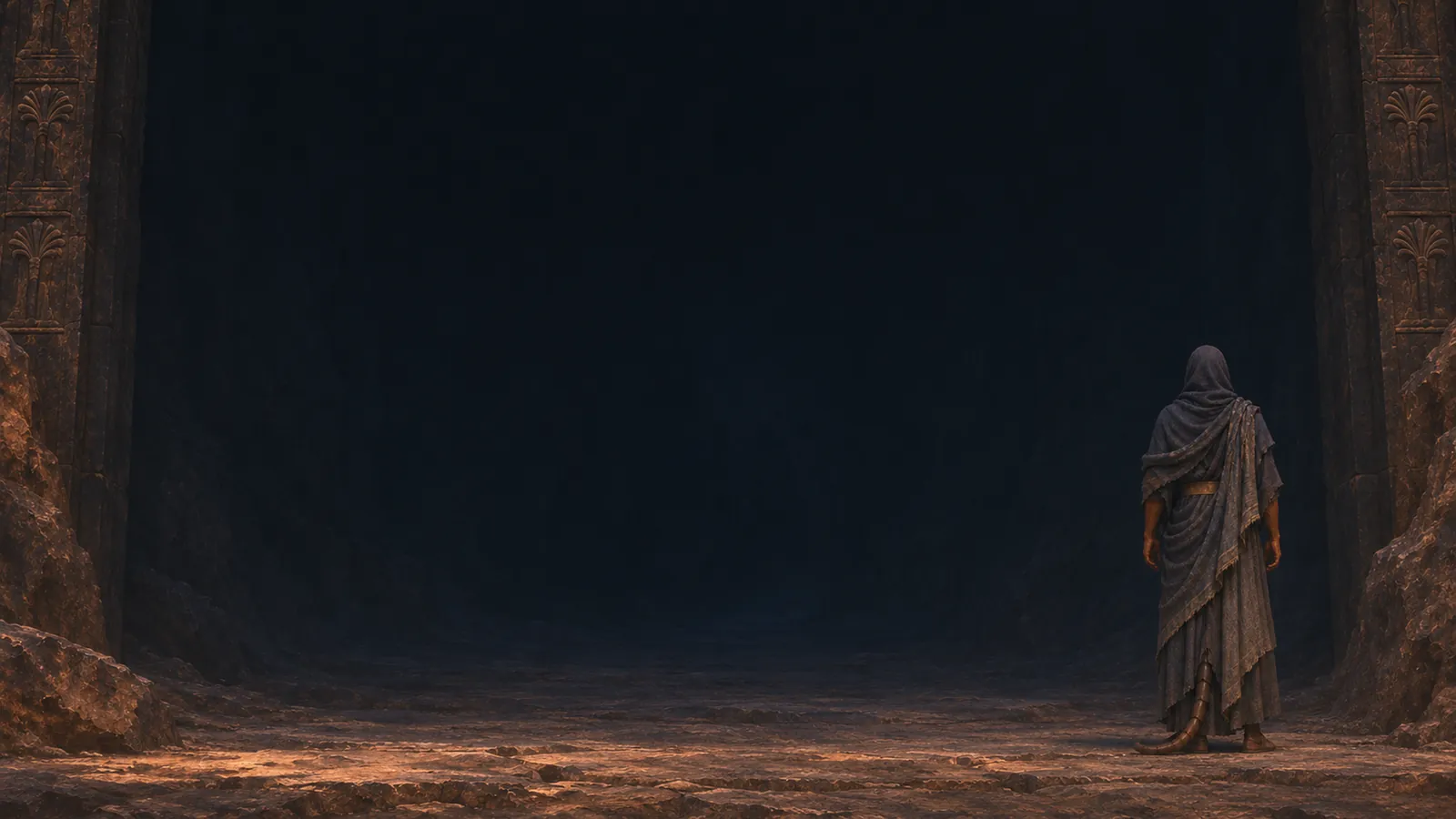
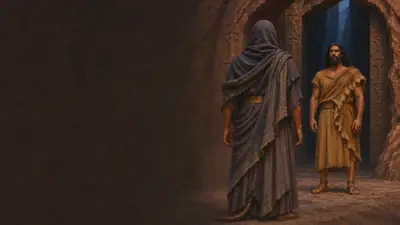
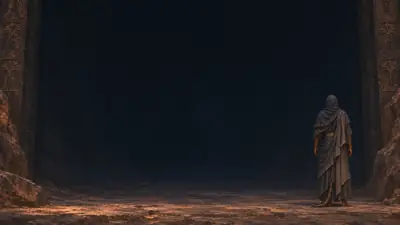
Der Wächter warnte ihn, dass noch niemand den Berg auf diesem Weg durchquert hatte. Über eine lange Strecke war der Gang dunkel, ohne Licht, das einem Reisenden den Weg wies.
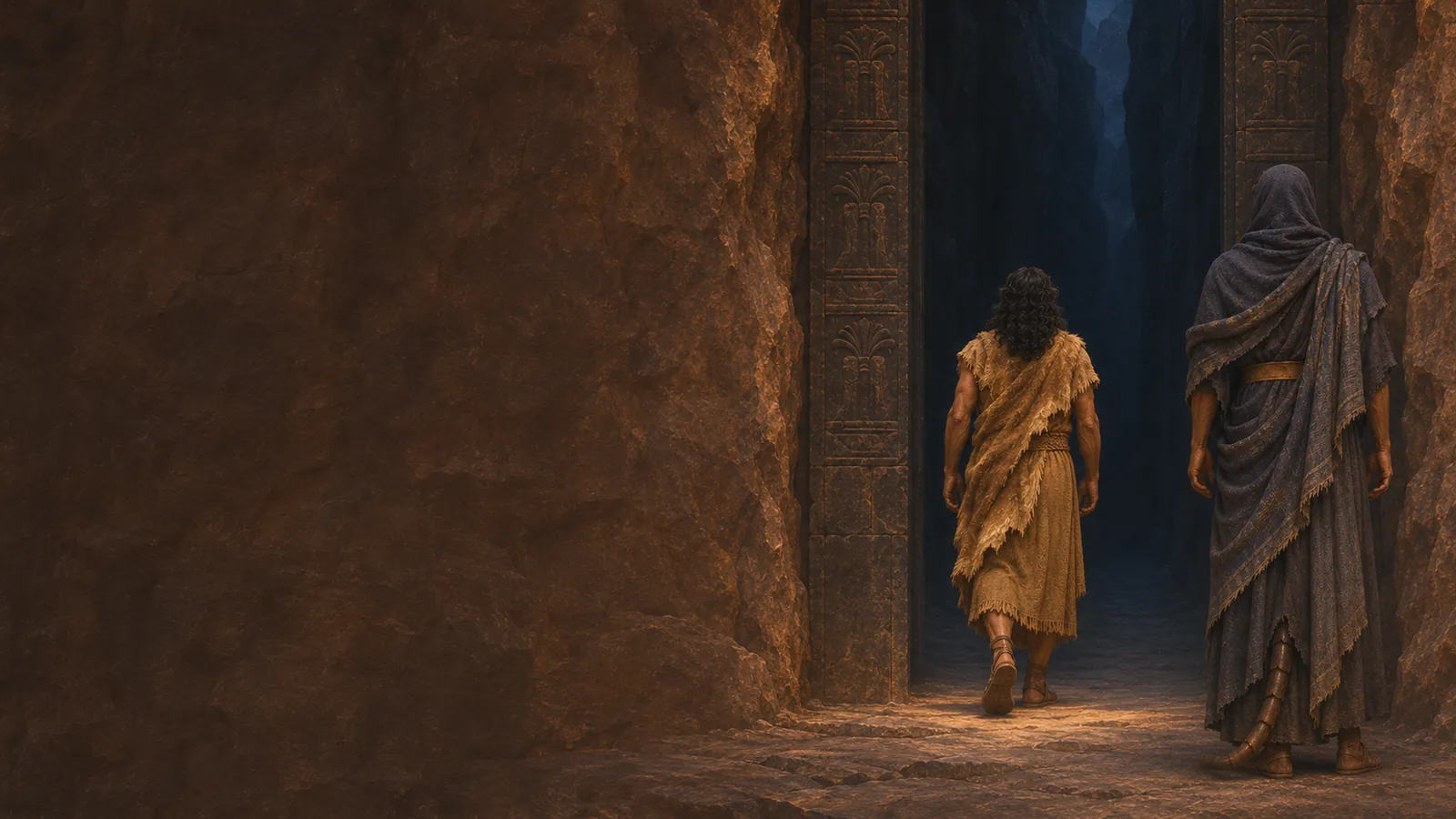
Die Tafel bricht ab, bevor wir den ganzen Wortwechsel hören. Wo die Worte wieder einsetzen, lässt der Wächter Gilgamesch durch Maschu ziehen und wünscht ihm einen sicheren Weg.
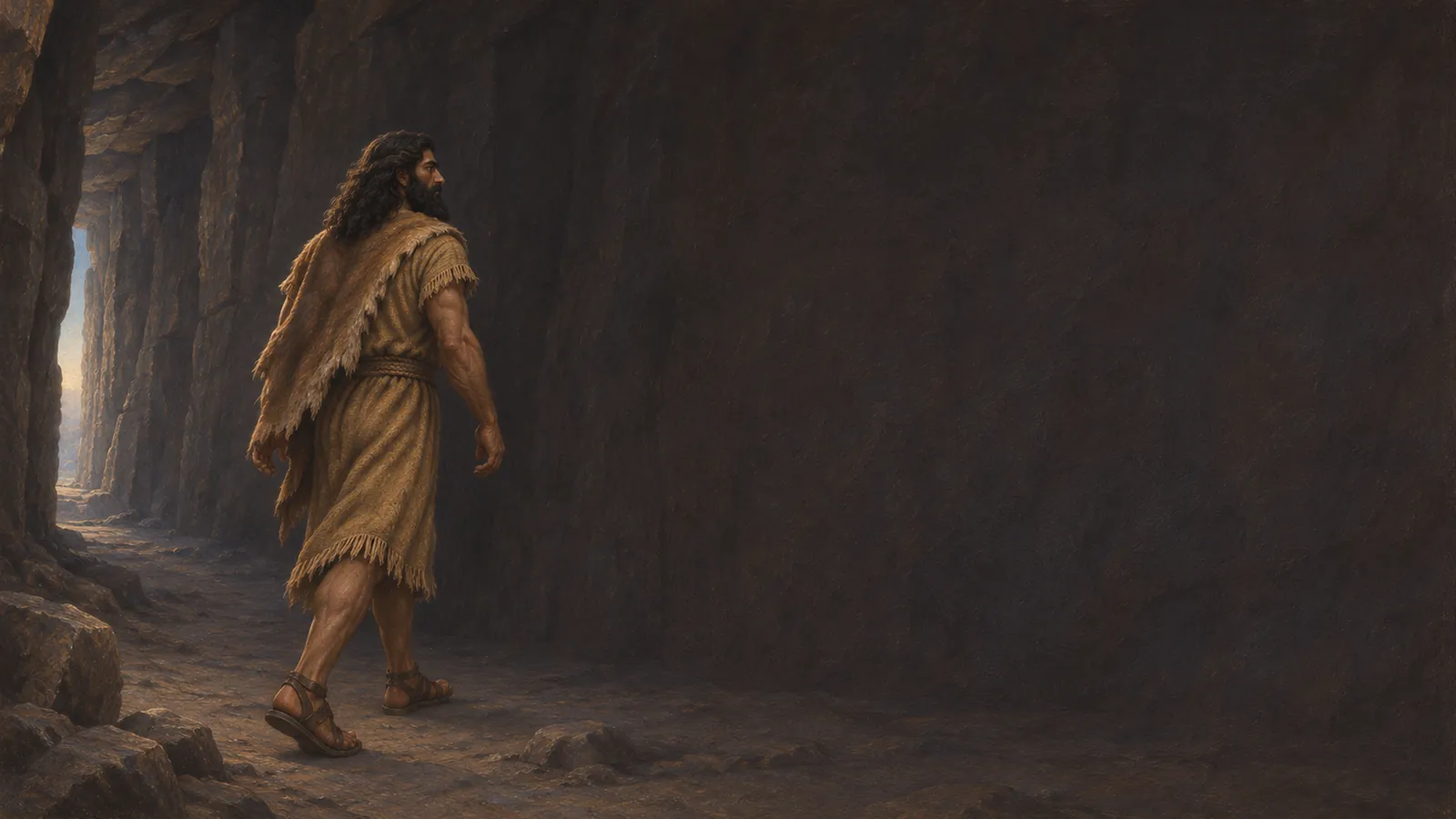
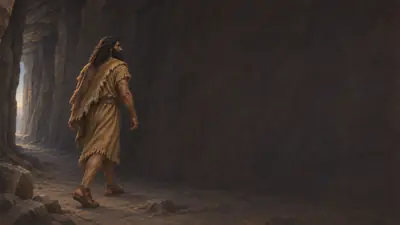
Gilgamesch hörte zu und betrat den Weg, den der Sonnengott nahm. Die Öffnung hinter ihm wurde kleiner, je weiter er in den Fels hineinging.
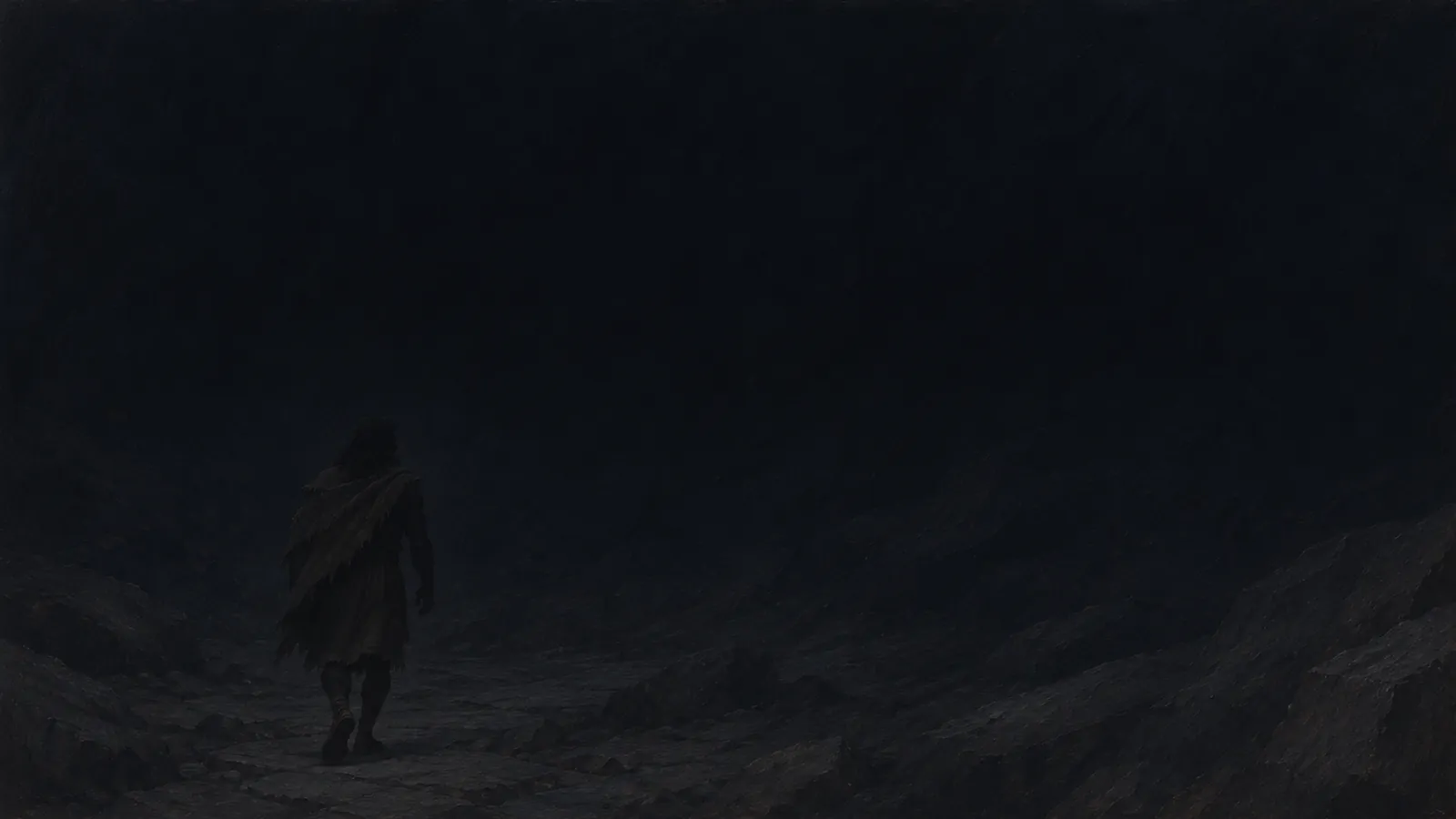
Die erste Strecke führte durch so dichte Dunkelheit, dass Gilgamesch den Weg hinter sich nicht mehr sehen konnte. Das Gedicht wiederholt diese Dunkelheit, während er weitergeht.
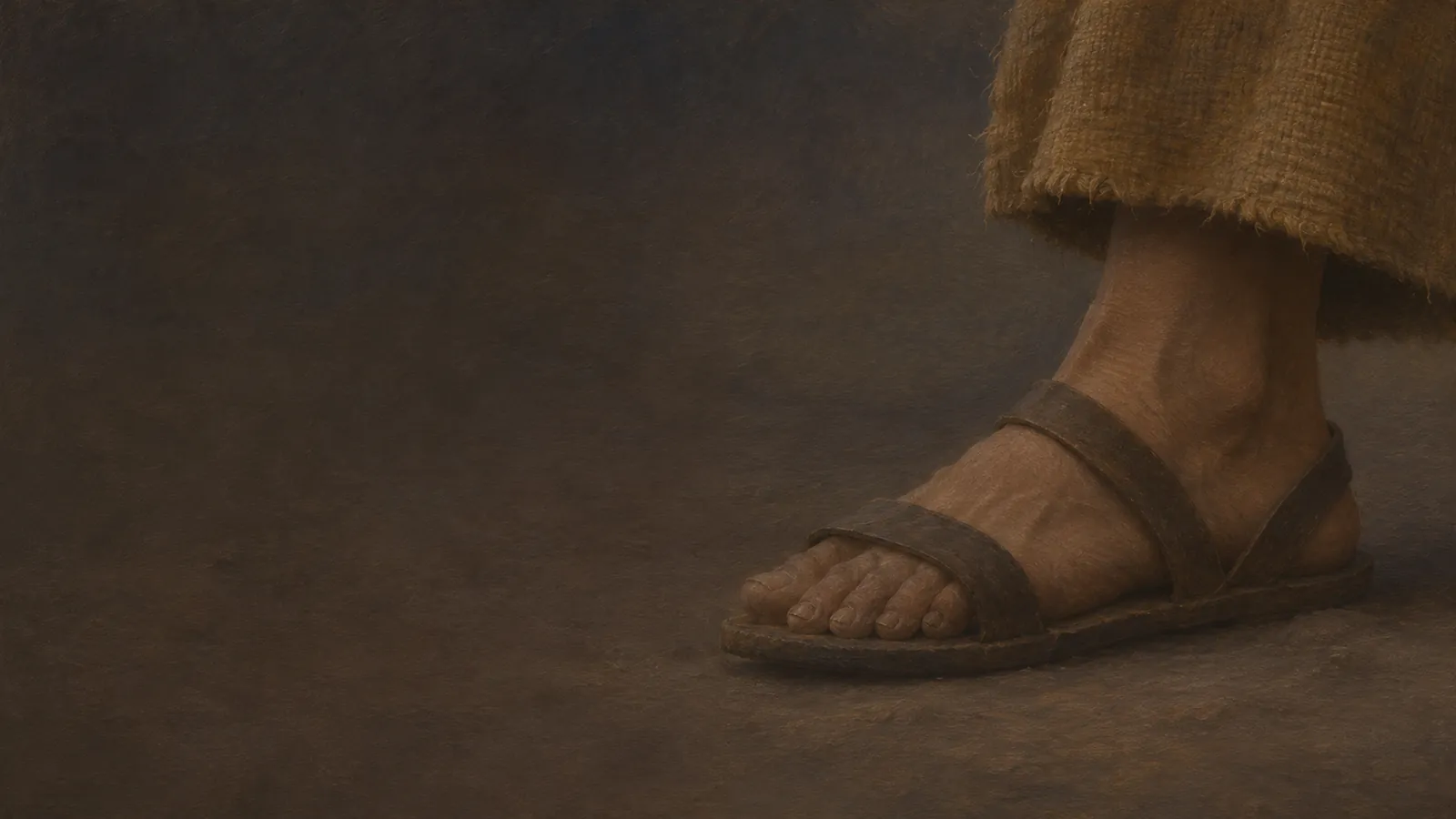
Das Gedicht zählt eine Strecke weiter, dann noch eine. Die wiederholten Worte lassen uns die Entfernung ermessen, während Gilgamesch nichts sieht, woran er sie messen könnte.
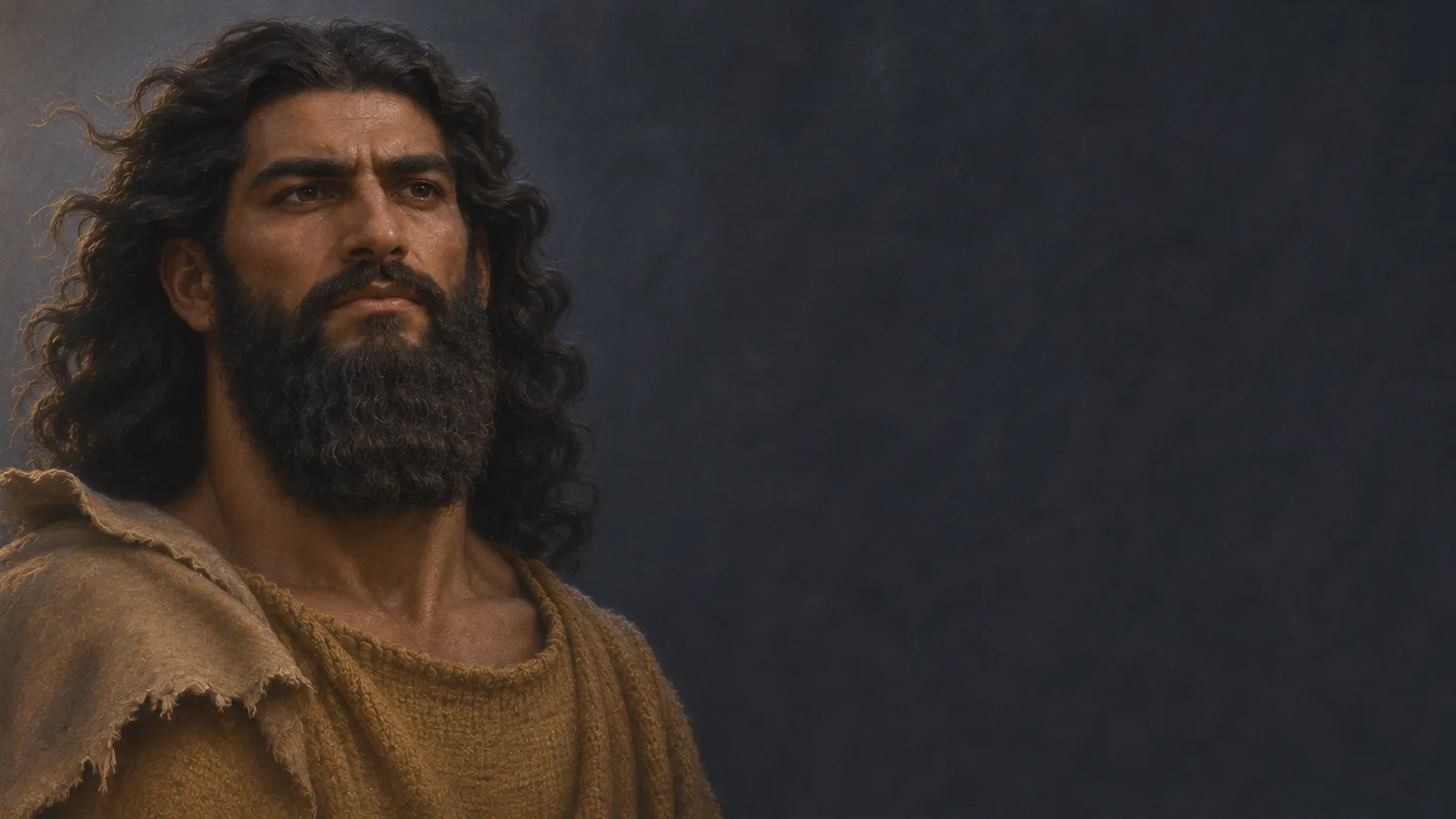
Tief im Gang erwähnt das Gedicht einen Nordwind. Die Zeile ist beschädigt, doch sie steht unmittelbar vor der Stelle, an der die Dunkelheit dem nahenden Tag zu weichen beginnt.
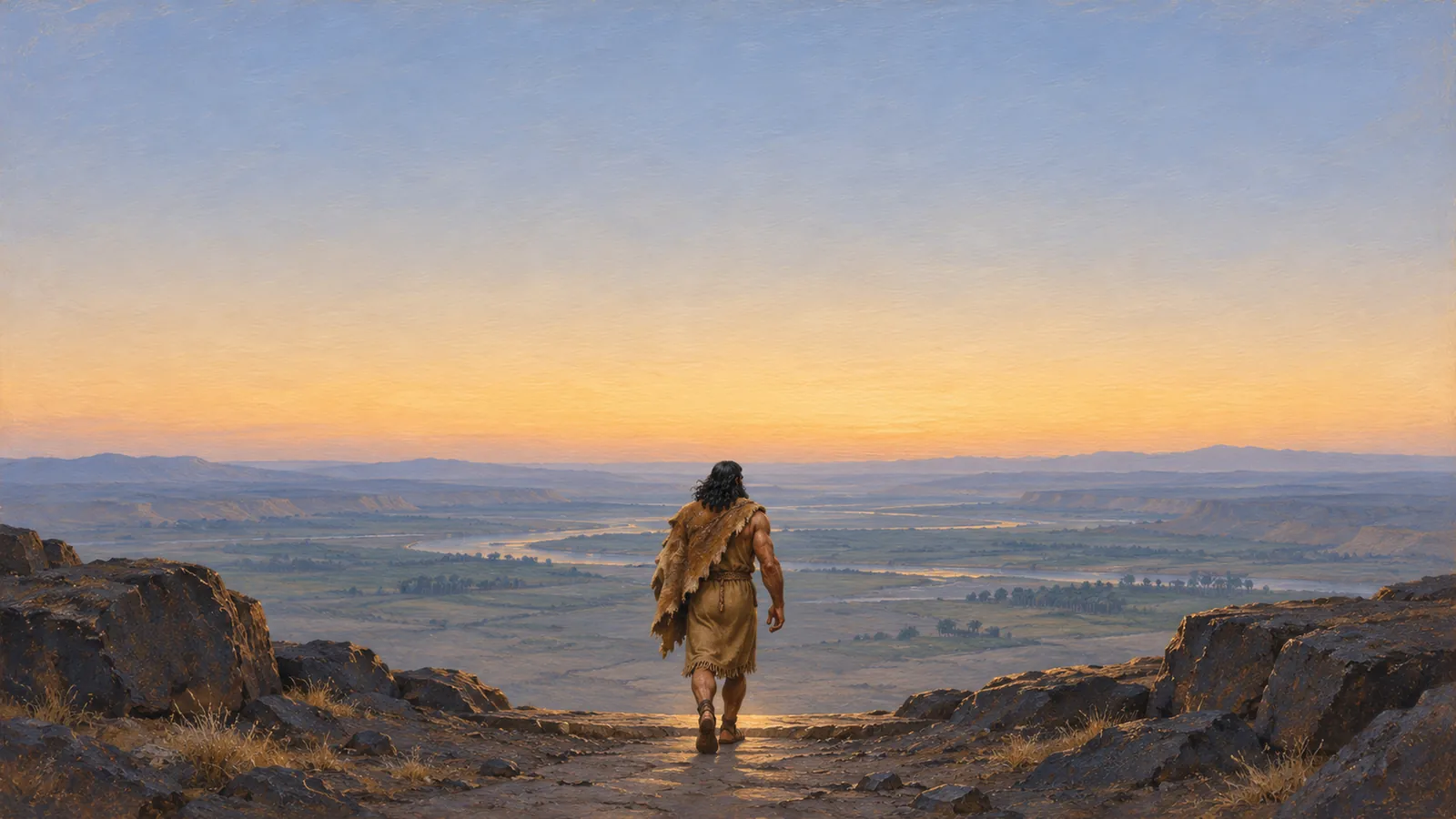
LICHT
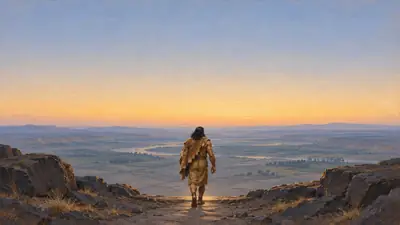
Gilgamesch erreichte das Ende des Ganges vor der Sonne. Er hatte die Dunkelheit in ihrer ganzen Länge durchquert und trat in einen Glanz, den das Gedicht nur in Bruchstücken beschreibt.
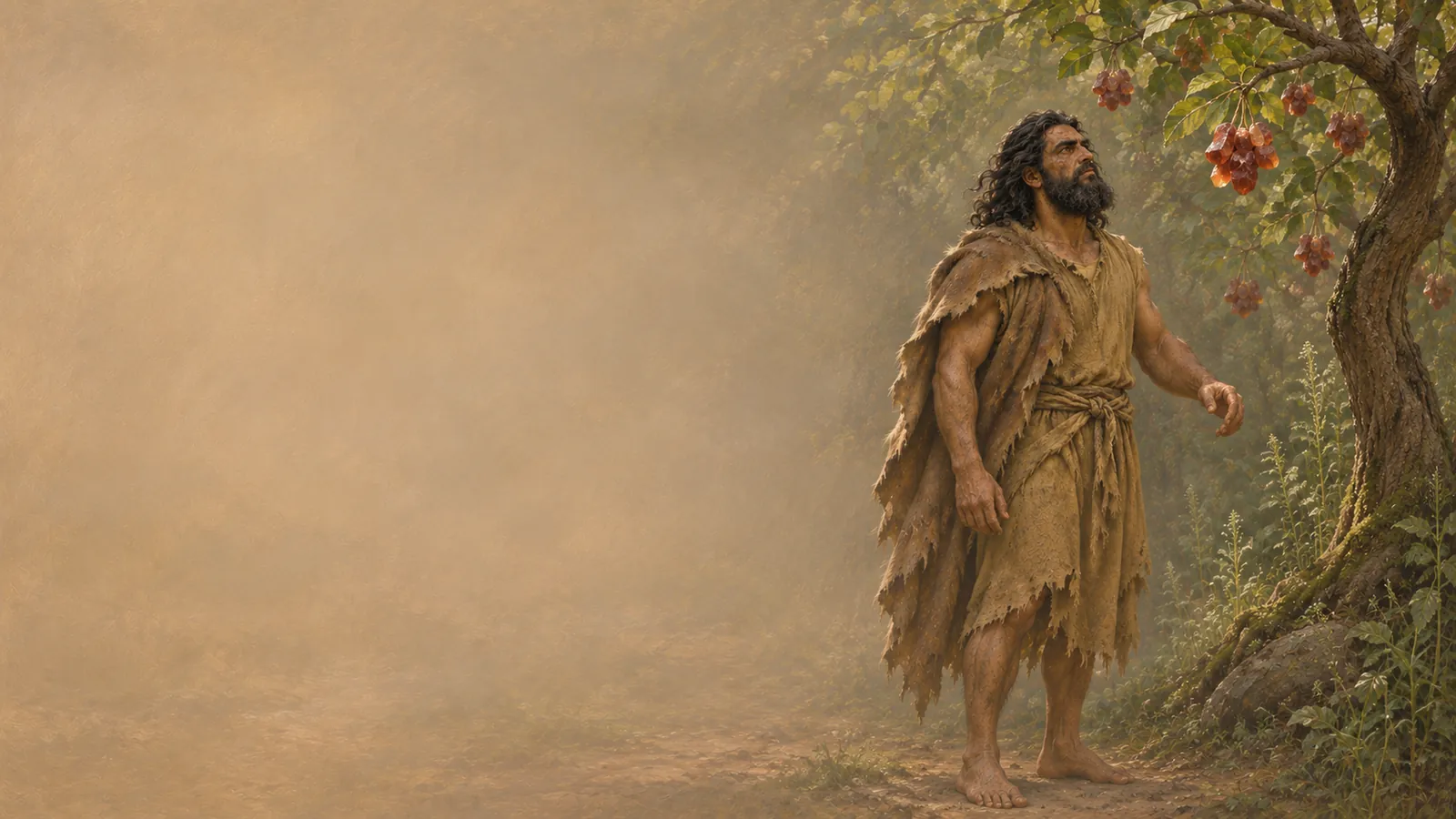
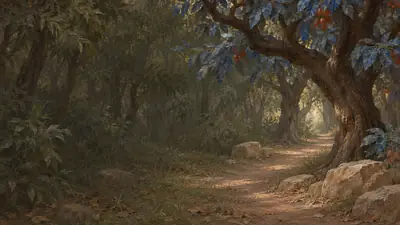
Das Tageslicht enthüllte einen Garten, in dem Edelsteine an den Zweigen wuchsen. Gilgamesch trat näher und sah Trauben aus rotem Karneol, die wie Früchte in der Sonne hingen.
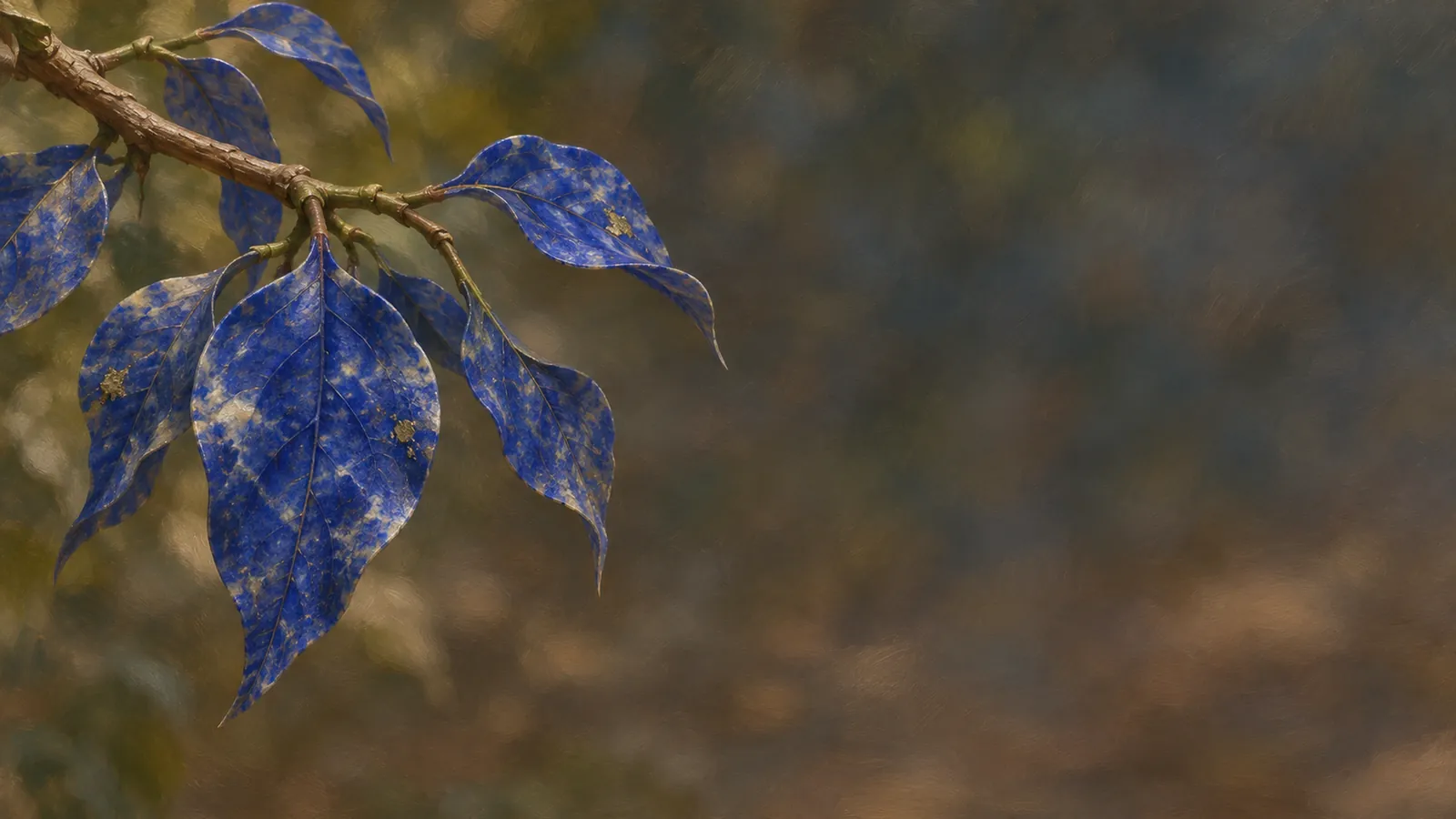
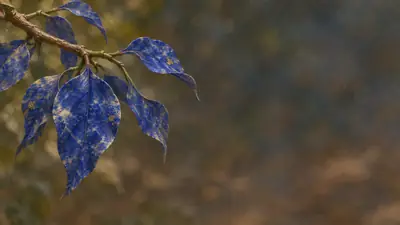
Ein anderer Zweig trug Lapislazuli, wo man Blätter erwarten würde. Das Gedicht verweilt bei dem, was Gilgamesch jetzt sehen konnte, nachdem er einen Weg durch die Dunkelheit genommen hatte.
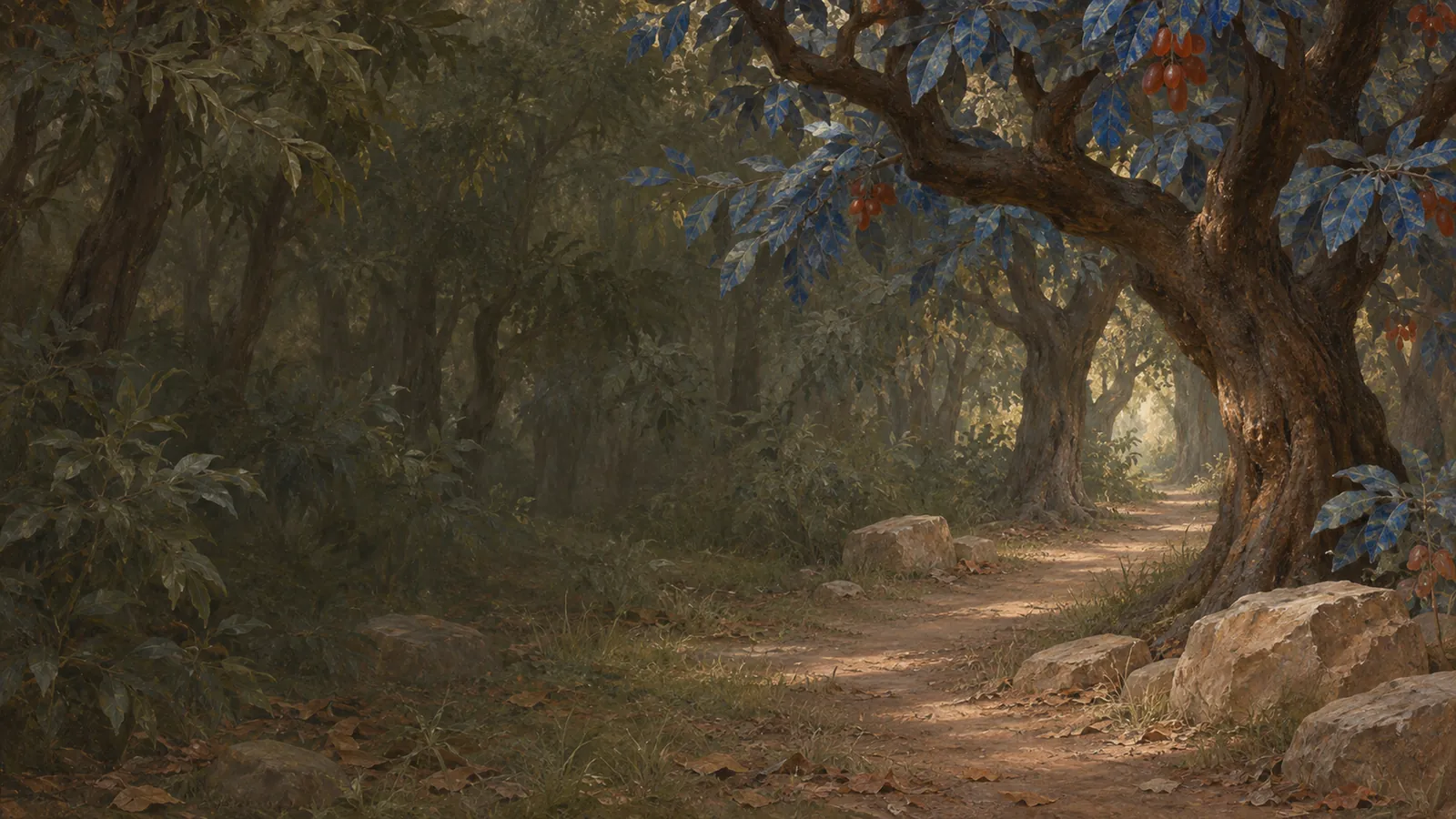
Vom übrigen Garten sind nur flüchtige Eindrücke überliefert. Am Ende der Tafel, als Gilgamesch staunend umhergeht, hebt eine Frau den Kopf, um ihn zu beobachten.
SIDURI
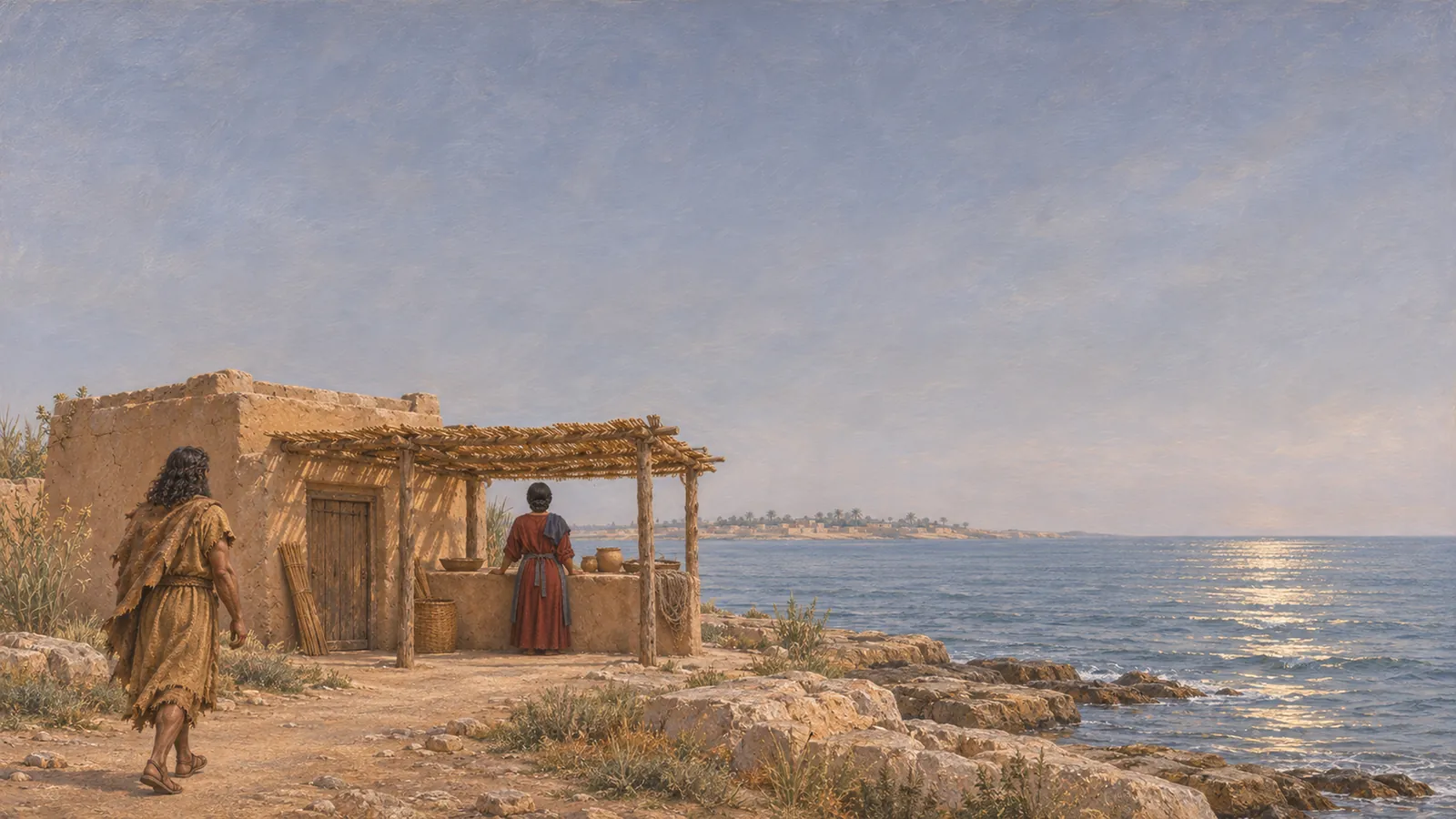
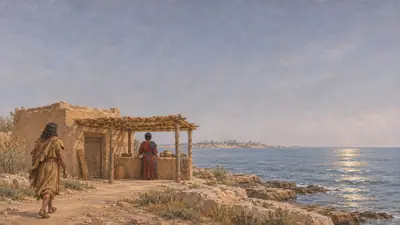
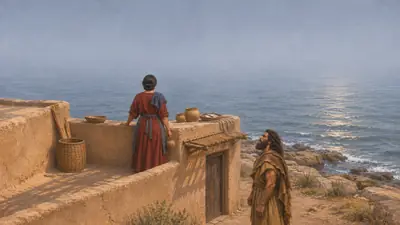
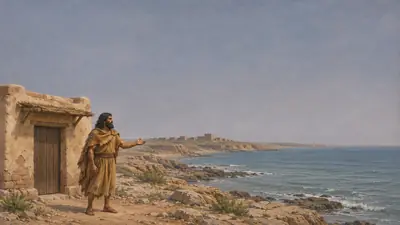
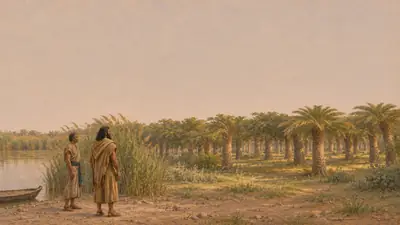
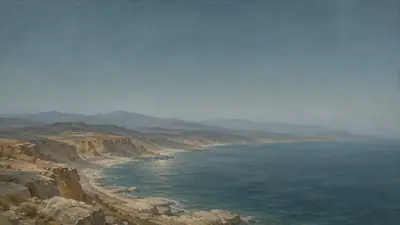
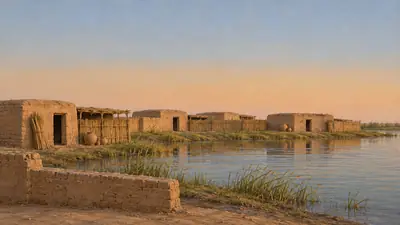
Eine Schankwirtin namens Siduri lebte dort, wo das Land an das weite Wasser heranreichte. Gilgamesch kam aus der Wildnis zu dem Ort, an dem ihre Tür stand.
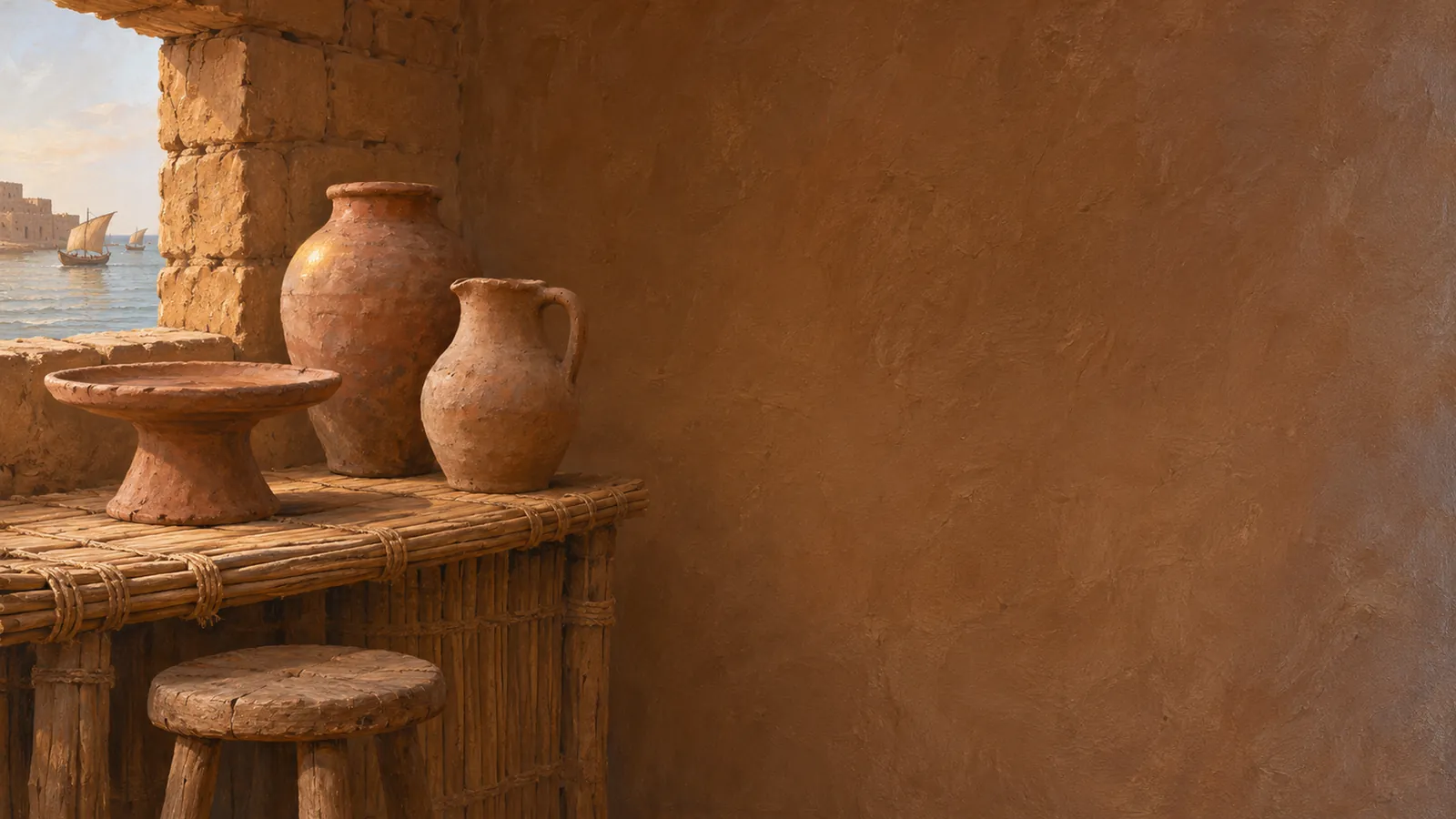
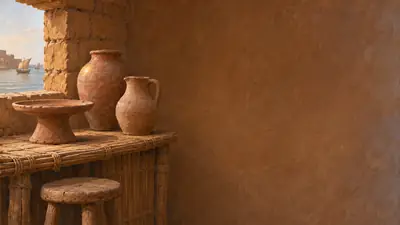
Siduri hatte Ständer für Gefäße, und die beschädigte Zeile beschreibt vielleicht auch goldene Bottiche. Von ihrem Haus aus war jemand zu sehen, der aus der Wildnis herankam.
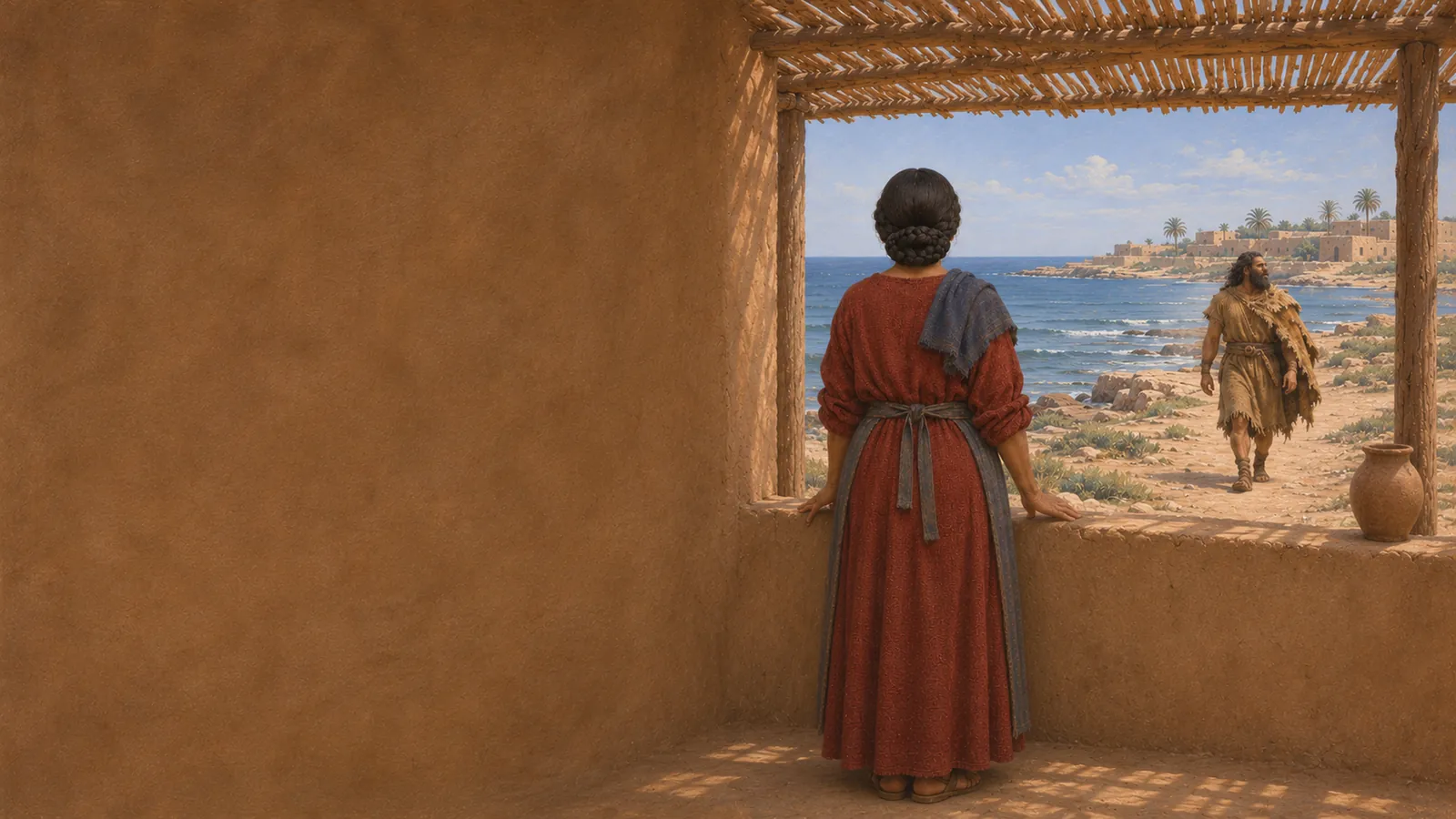
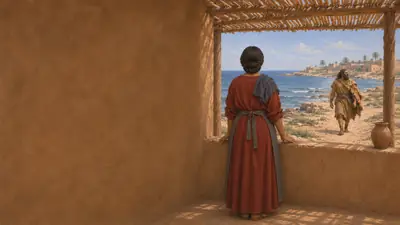
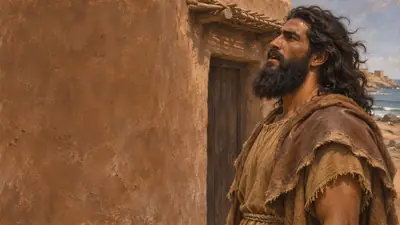
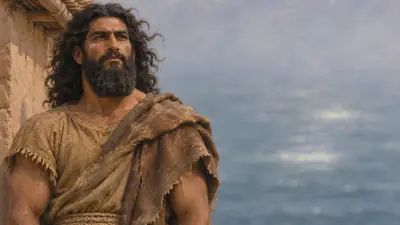
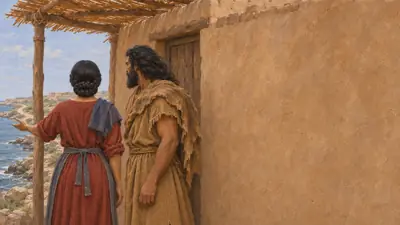
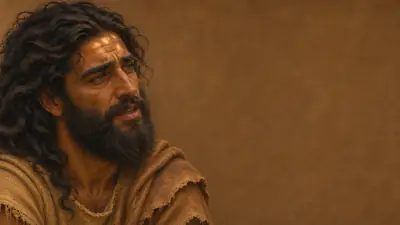
Siduri beobachtete einen Mann in einem Fell, der auf ihr Tor zukam. Er sah aus, als wäre er weit gereist und könnte, so schien es ihr, einen wilden Stier töten.
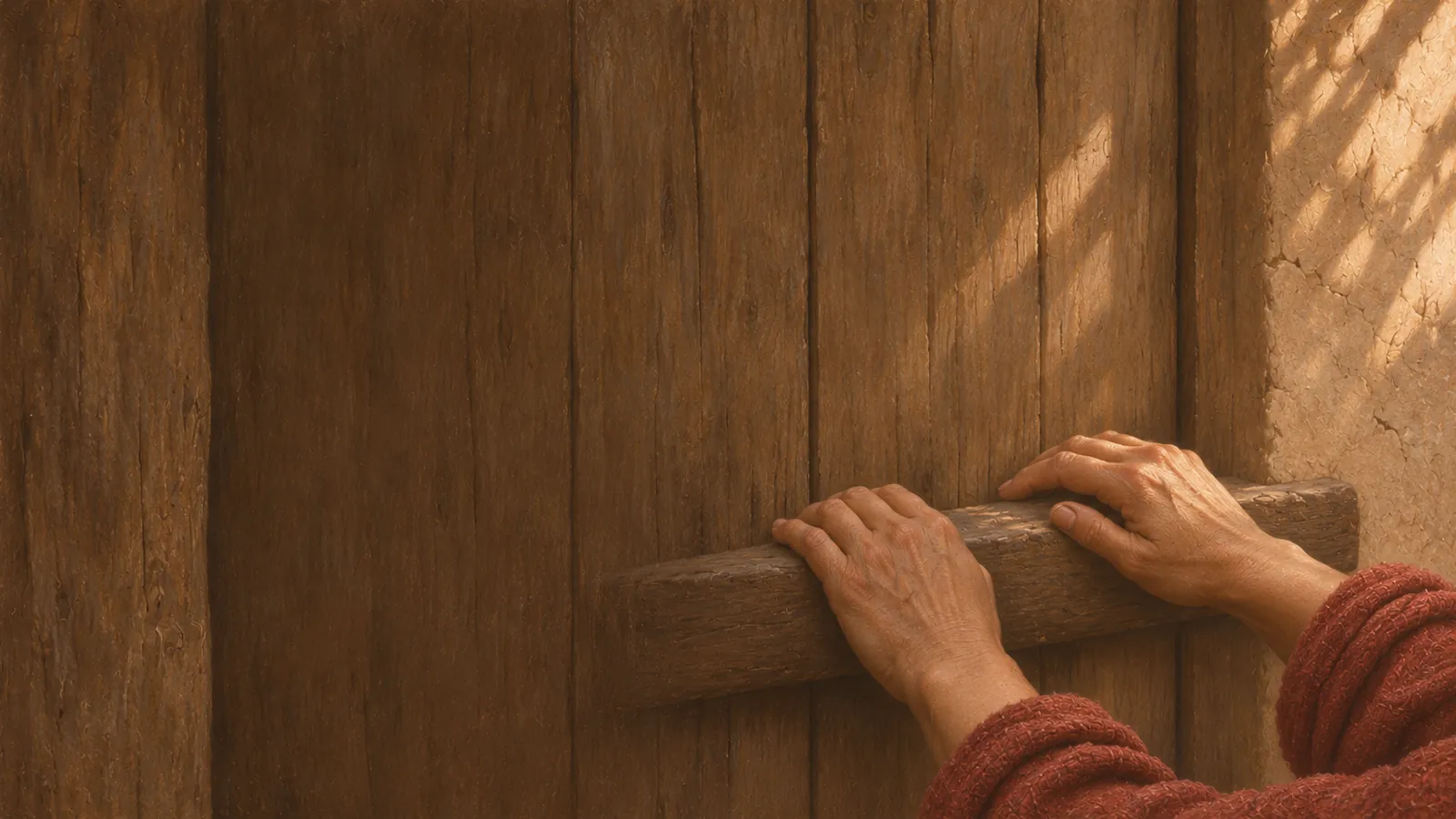
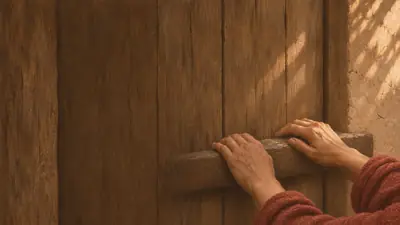
Siduri schloss die Tür und stieg aufs Dach. Bei geschlossener Tür konnte sie sehen, wer gekommen war, ohne ihn hereinzulassen.
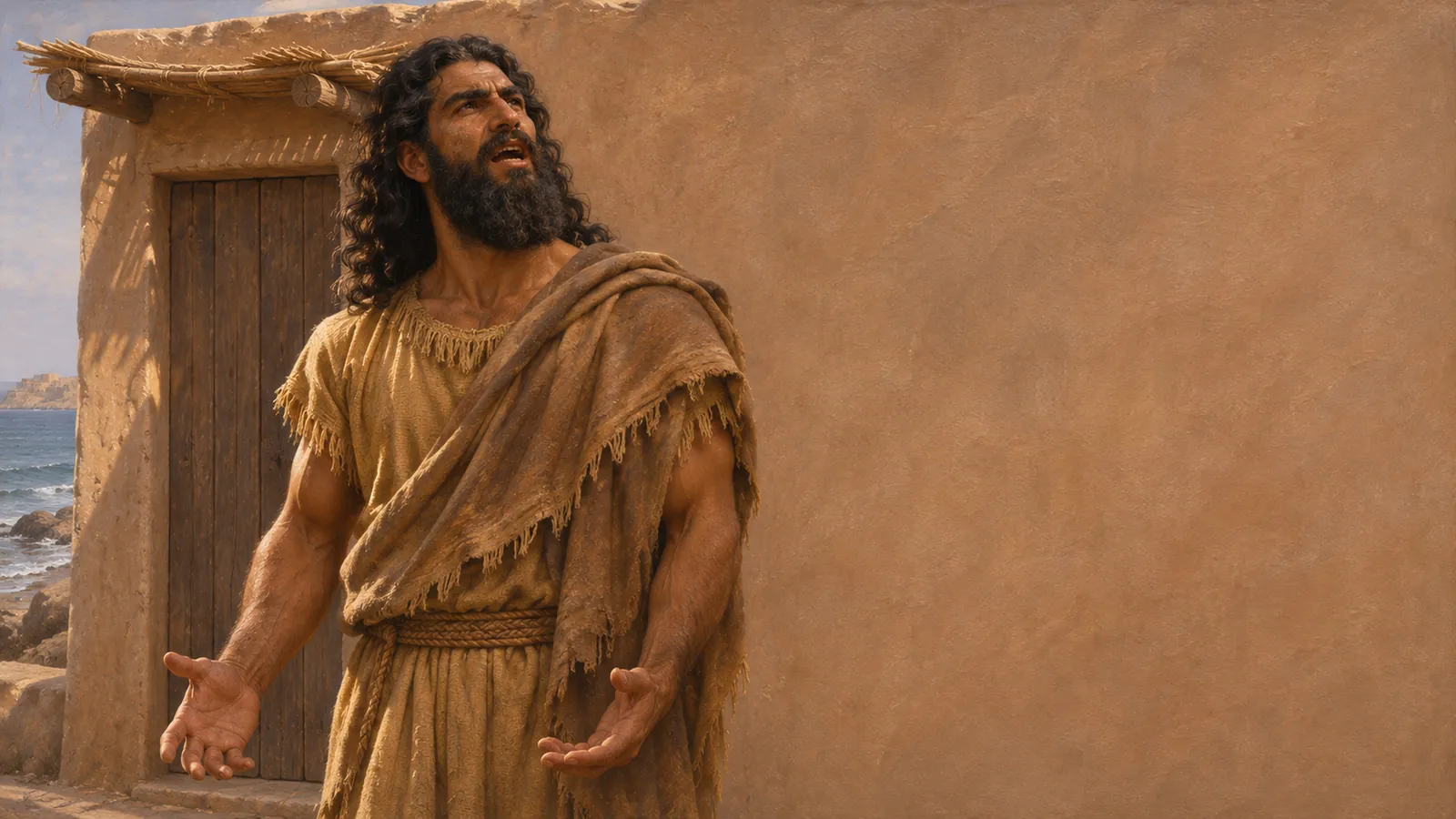
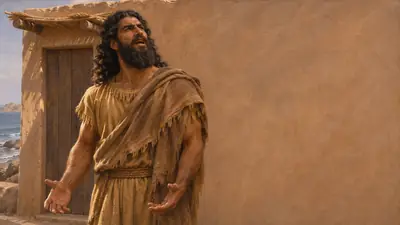
Gilgamesch fragte Siduri, warum sie ihn ausgesperrt hatte. In den erhaltenen Zeilen droht er, die Tür zu zerbrechen, und man hört, wie schroff er für jemanden geklungen haben muss, der ihn nicht kannte.
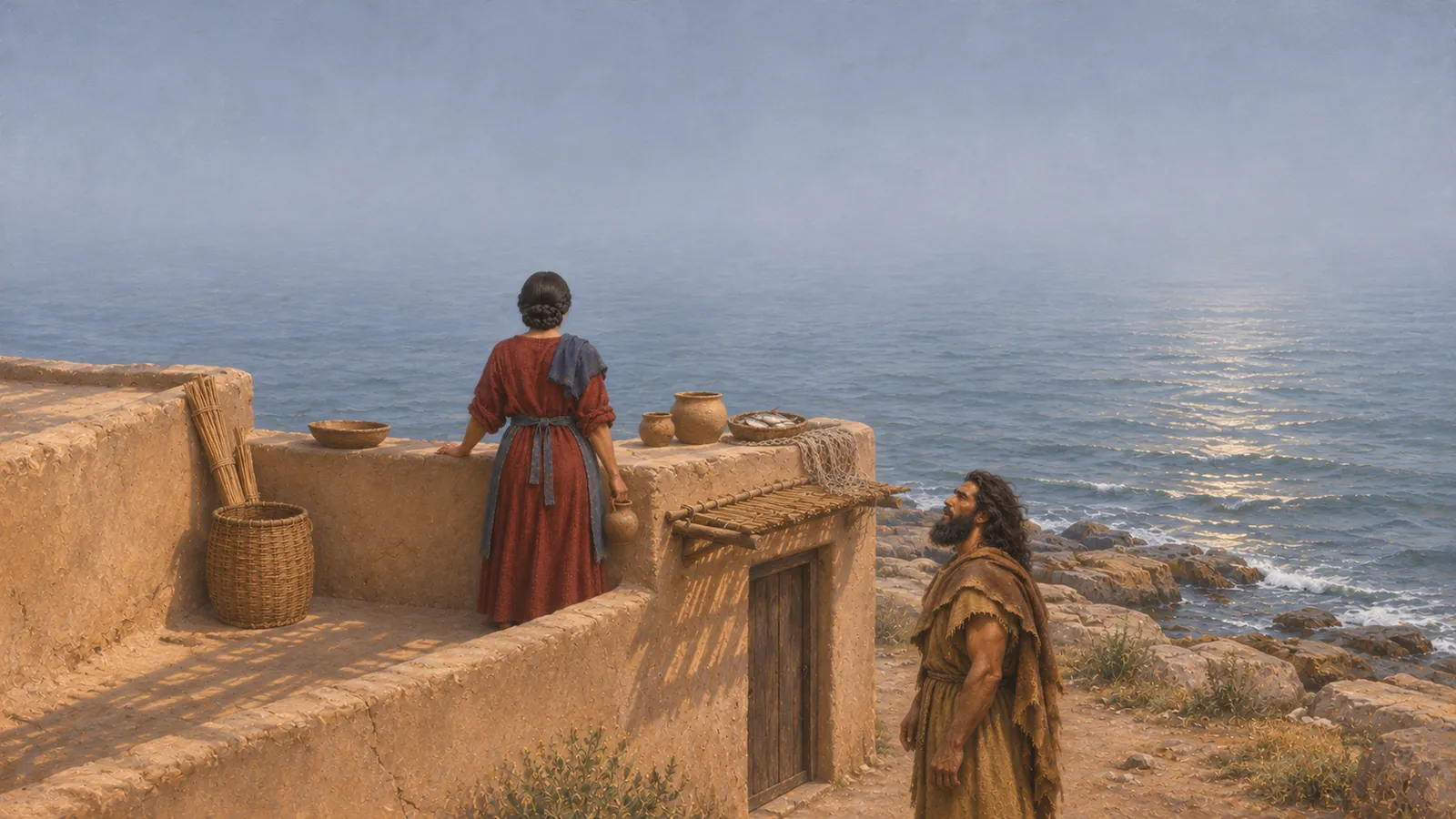
Vom Dach aus fragte Siduri nach dem Weg, der ihn hierhergeführt hatte. In dem beschädigten Wortwechsel bleibt ihre Vorsicht hörbar, auch als sie ihm zuzuhören beginnt.
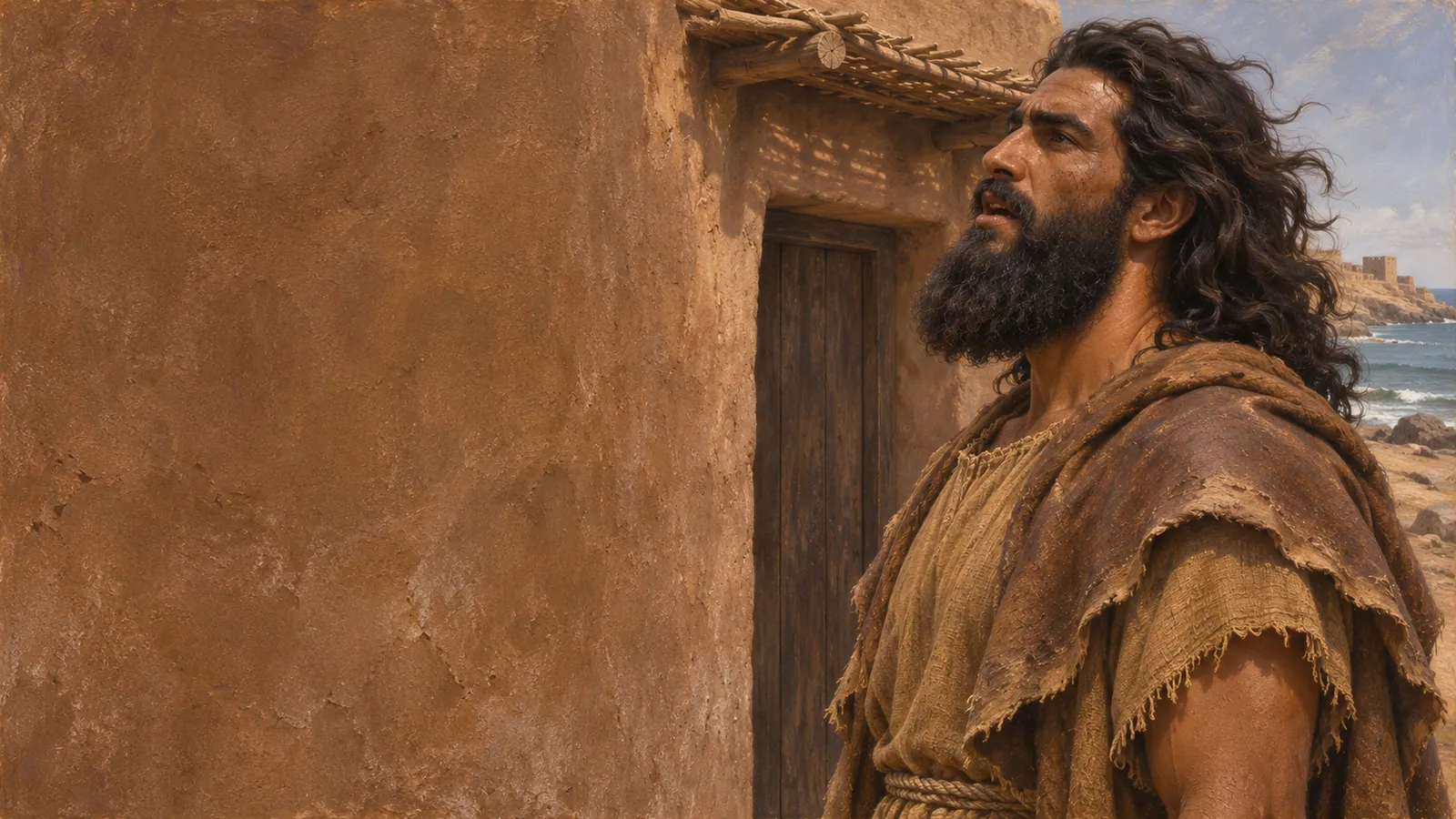
Gilgamesch erzählte ihr von den durchquerten Bergen, vom Himmelsstier und vom Wächter des Waldes. Als er von seinen gemeinsamen Taten mit Enkidu sprach, sprach er im Plural.
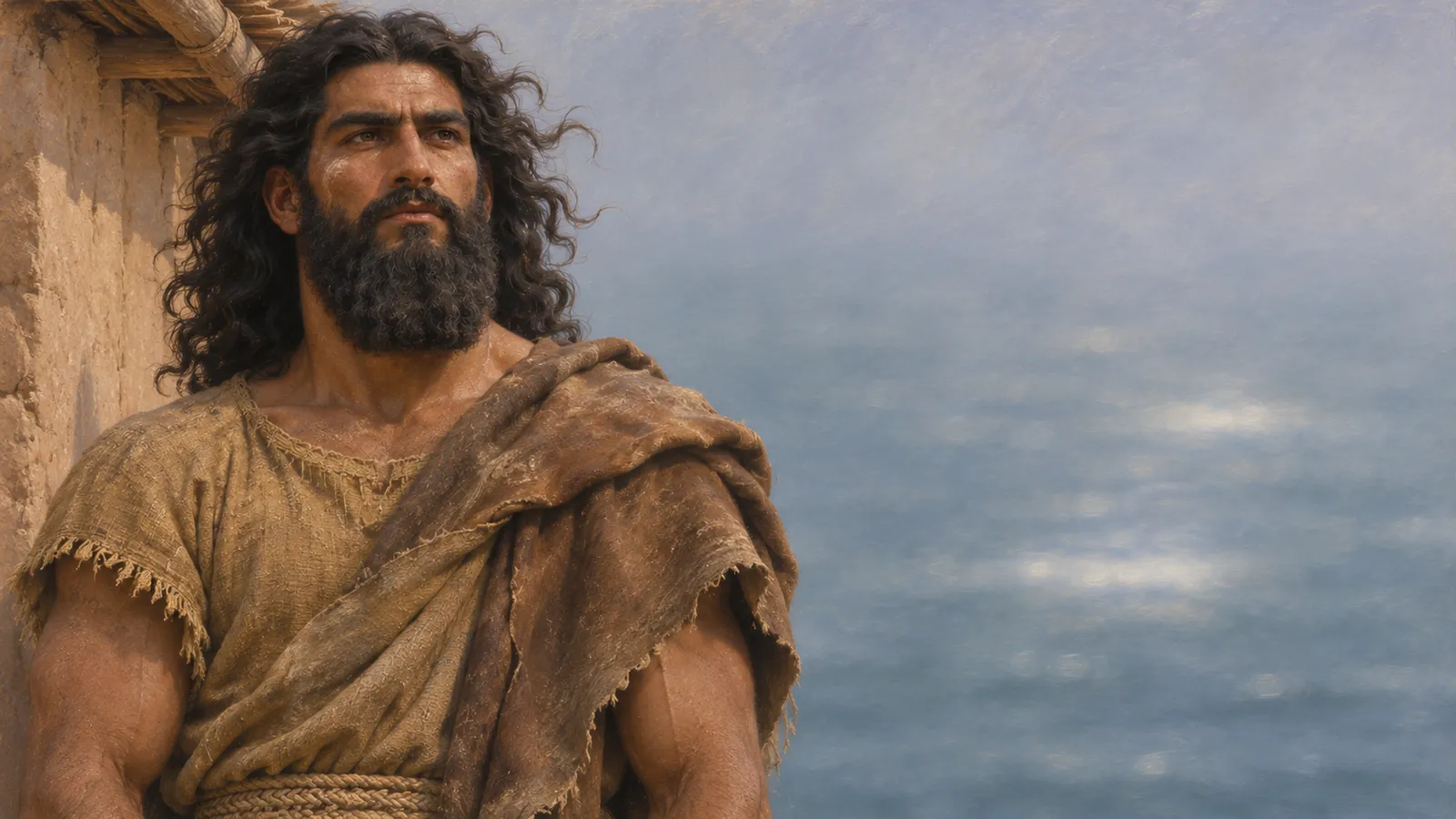
Siduri hatte gehört, was er getan zu haben behauptete. Sie wollte wissen, warum sein Gesicht so aussah, von Wind und Wetter gezeichnet und eingefallen wie das eines Mannes, der einen weiten Weg hinter sich hatte.
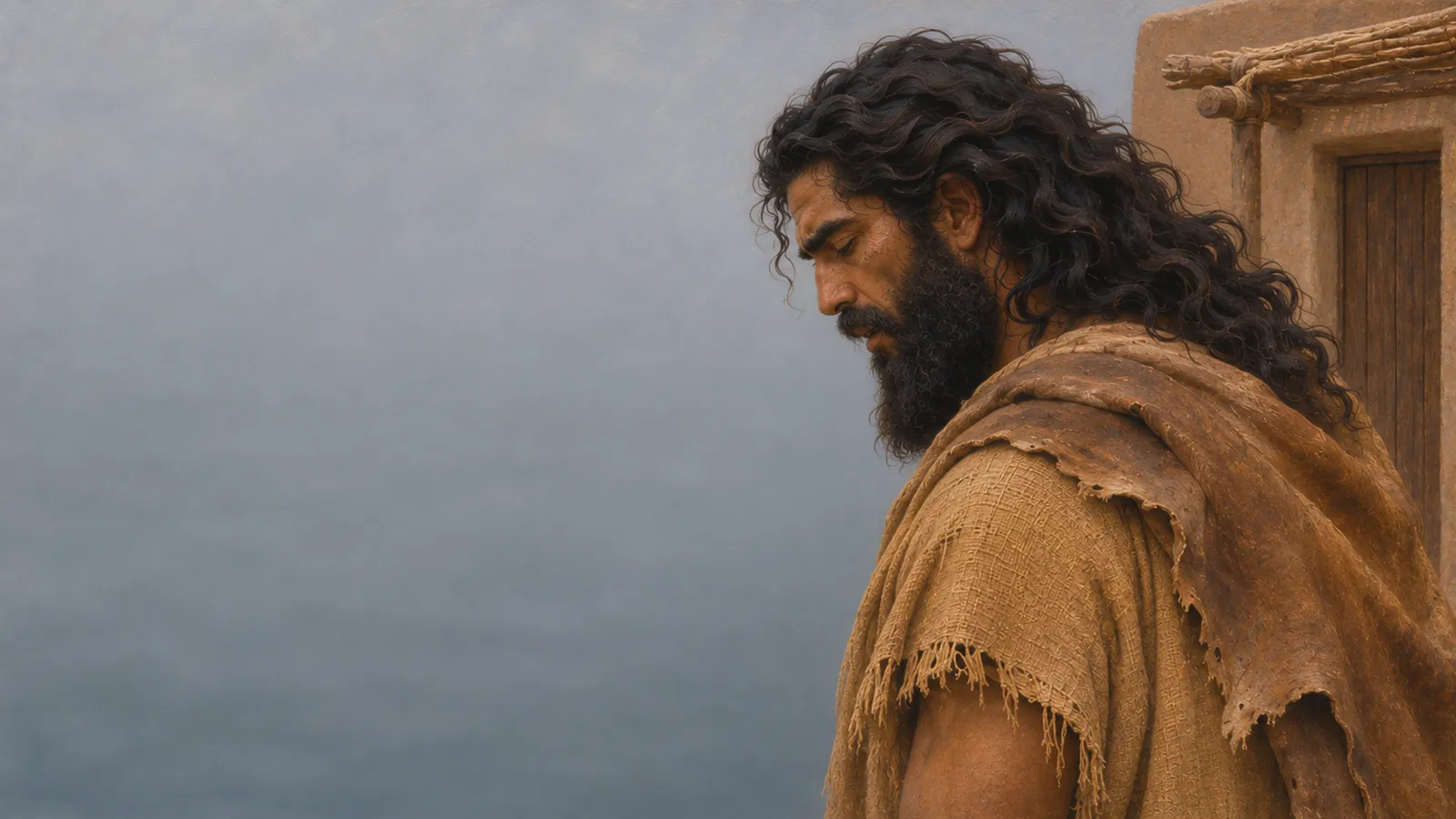
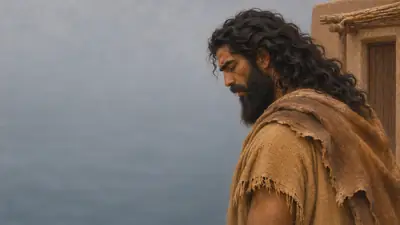
Gilgamesch beweinte Enkidu sechs Tage und sieben Nächte lang und ließ ihn nicht bestatten. Als er an seinem Freund erste Anzeichen des Verfalls sah, fürchtete er sich vor dem eigenen Tod.
WEG
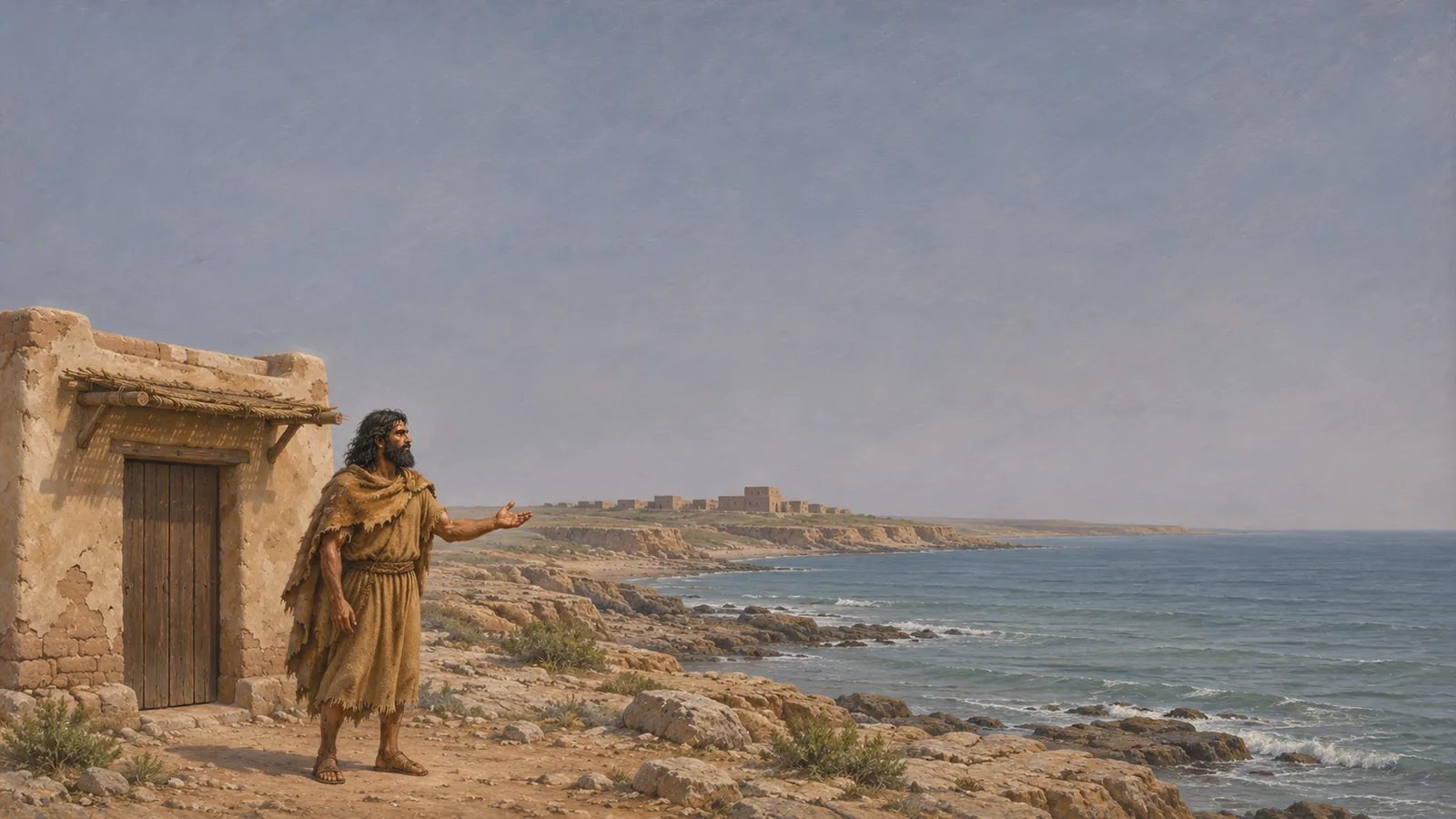
Gilgamesch fragte, wie er zu Utnapischtim gelangen könne. Wenn es einen Weg über das Meer gab, wollte er ihn versuchen, obwohl ihn die Reise bis hierher schon viel gekostet hatte.
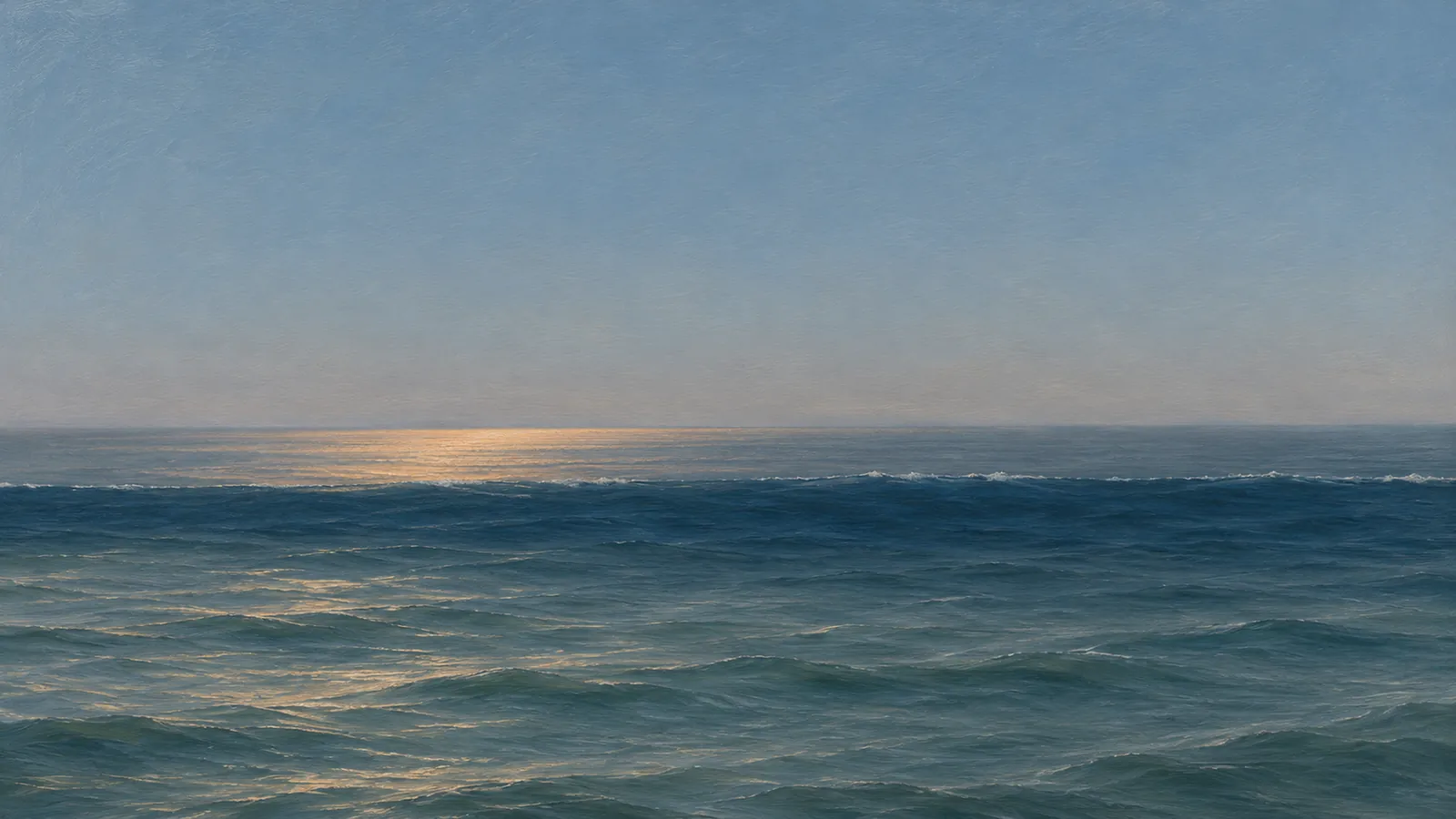
Siduri sagte ihm, der Sonnengott überquere das Meer, doch für gewöhnliche Reisende sei der Übergang zu schwer. Was sie die Wasser des Todes nannte, versperrte den Weg.
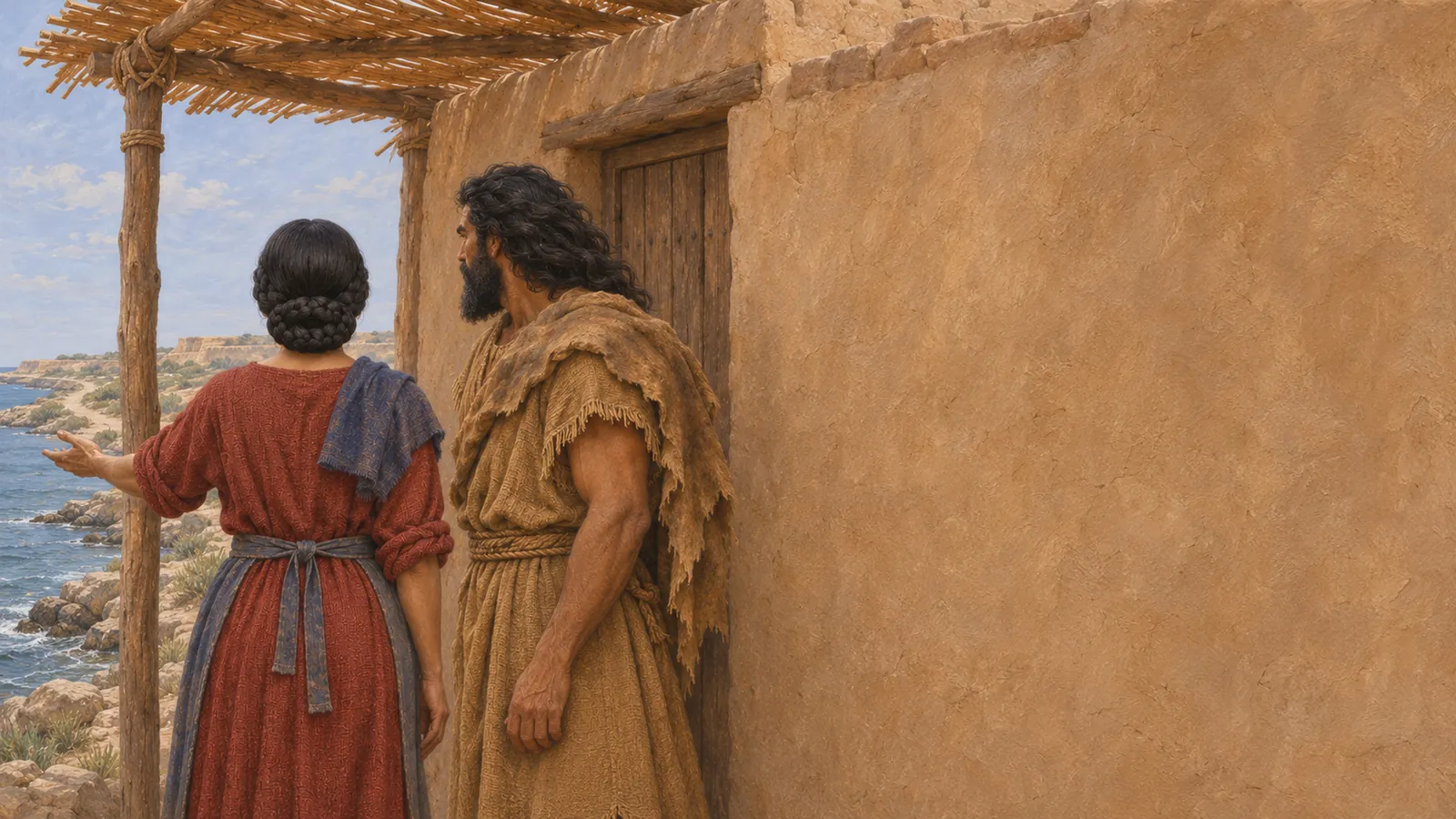
Trotzdem wusste Siduri jemanden, den Gilgamesch aufsuchen konnte. Sie verwies ihn an Urschanabi, Utnapischtims Fährmann, der bei sich hatte, was das Gedicht die „Steinernen“ nennt.
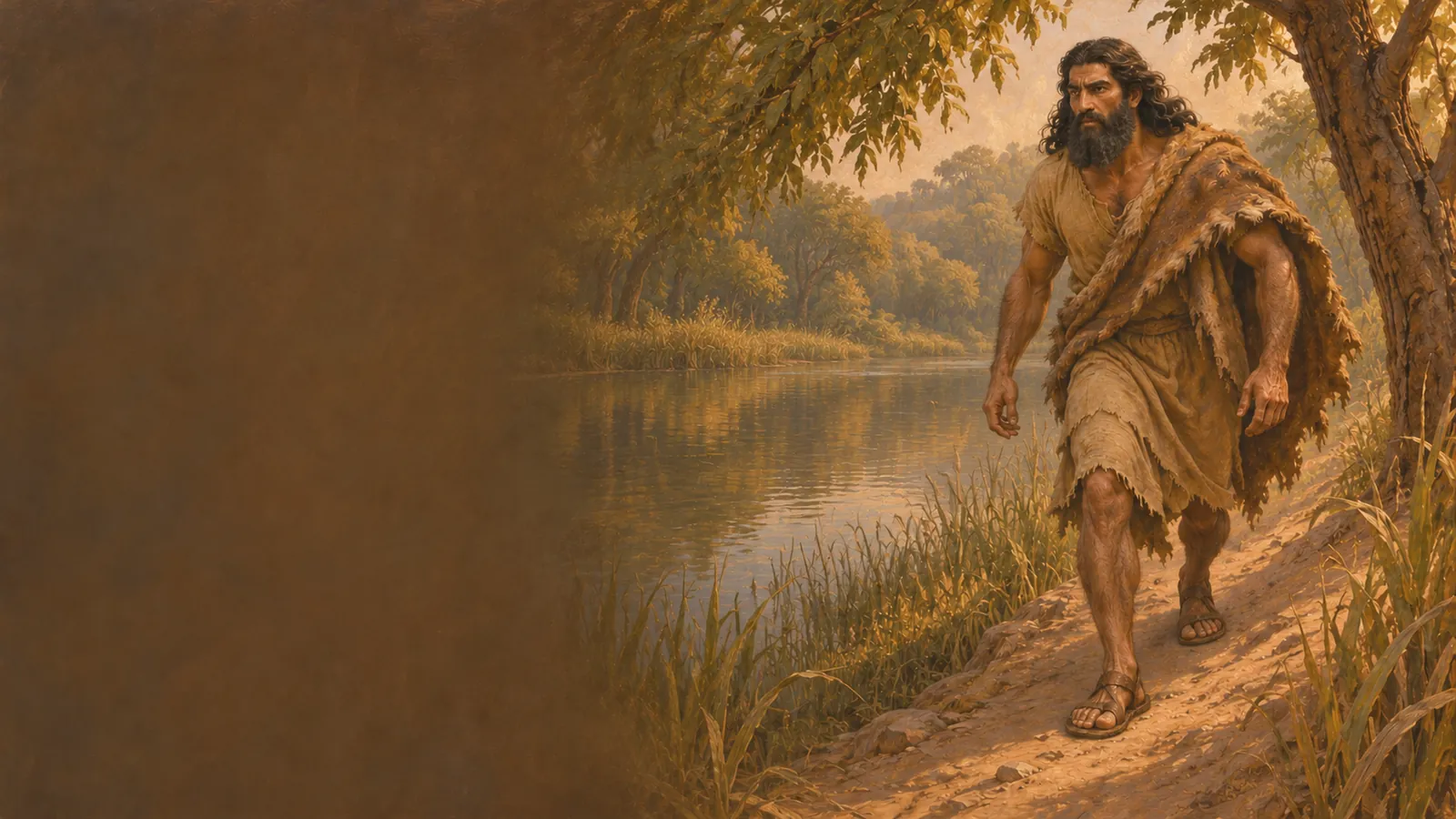
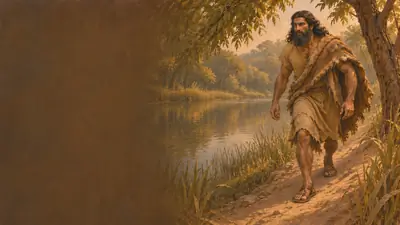
Gilgamesch hörte Siduri und stürmte durch den Wald hinab. Er ging den Fährmann an, ausgerechnet den Mann, von dem Siduri ihm gesagt hatte, dass er helfen könne.
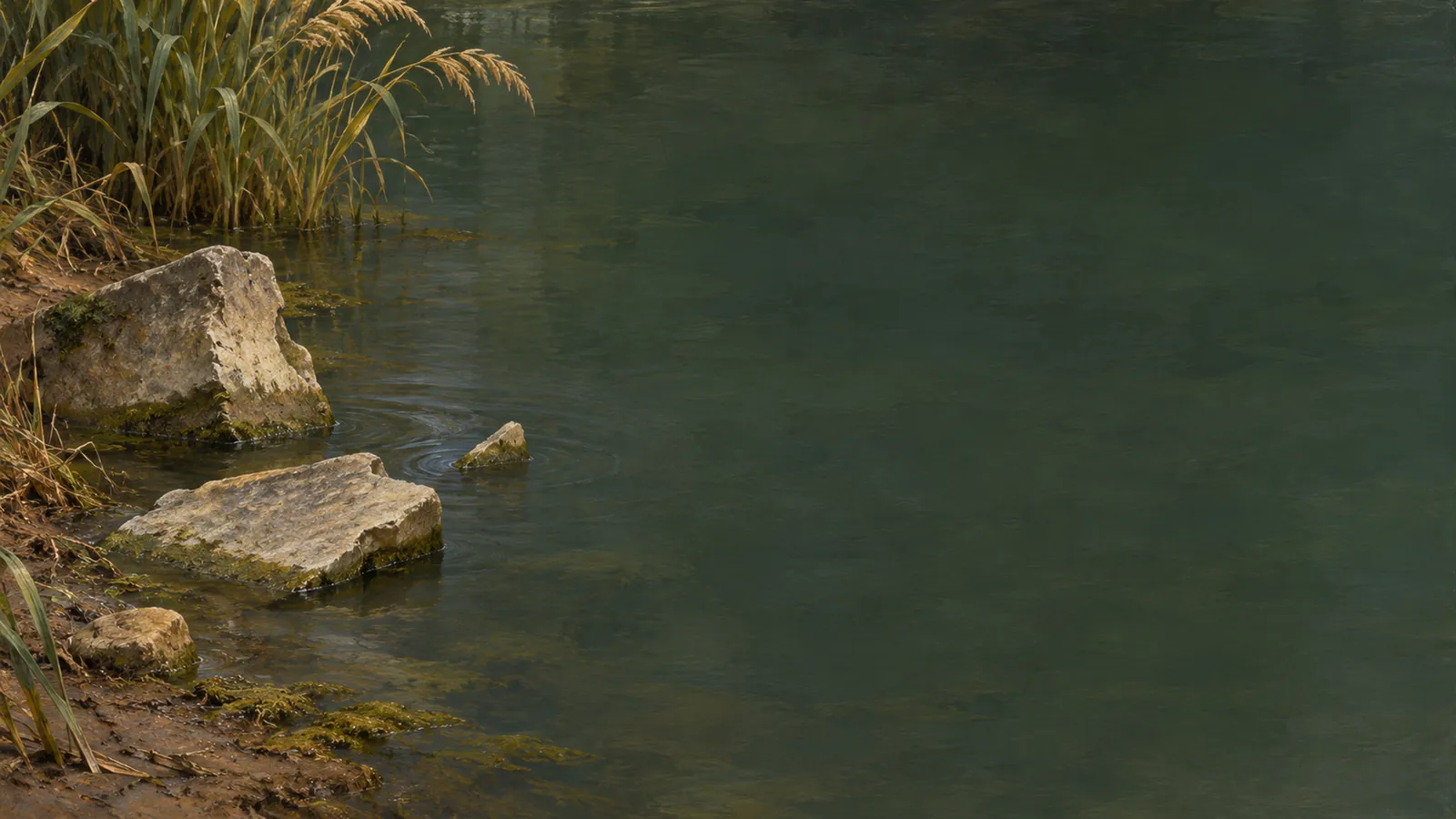
Die Steinernen wurden zerschlagen und in den Fluss geworfen. Das Gedicht sagt uns, was Gilgamesch ihnen antat und wie viel davon abhing, doch was sie genau waren, bleibt ungewiss.
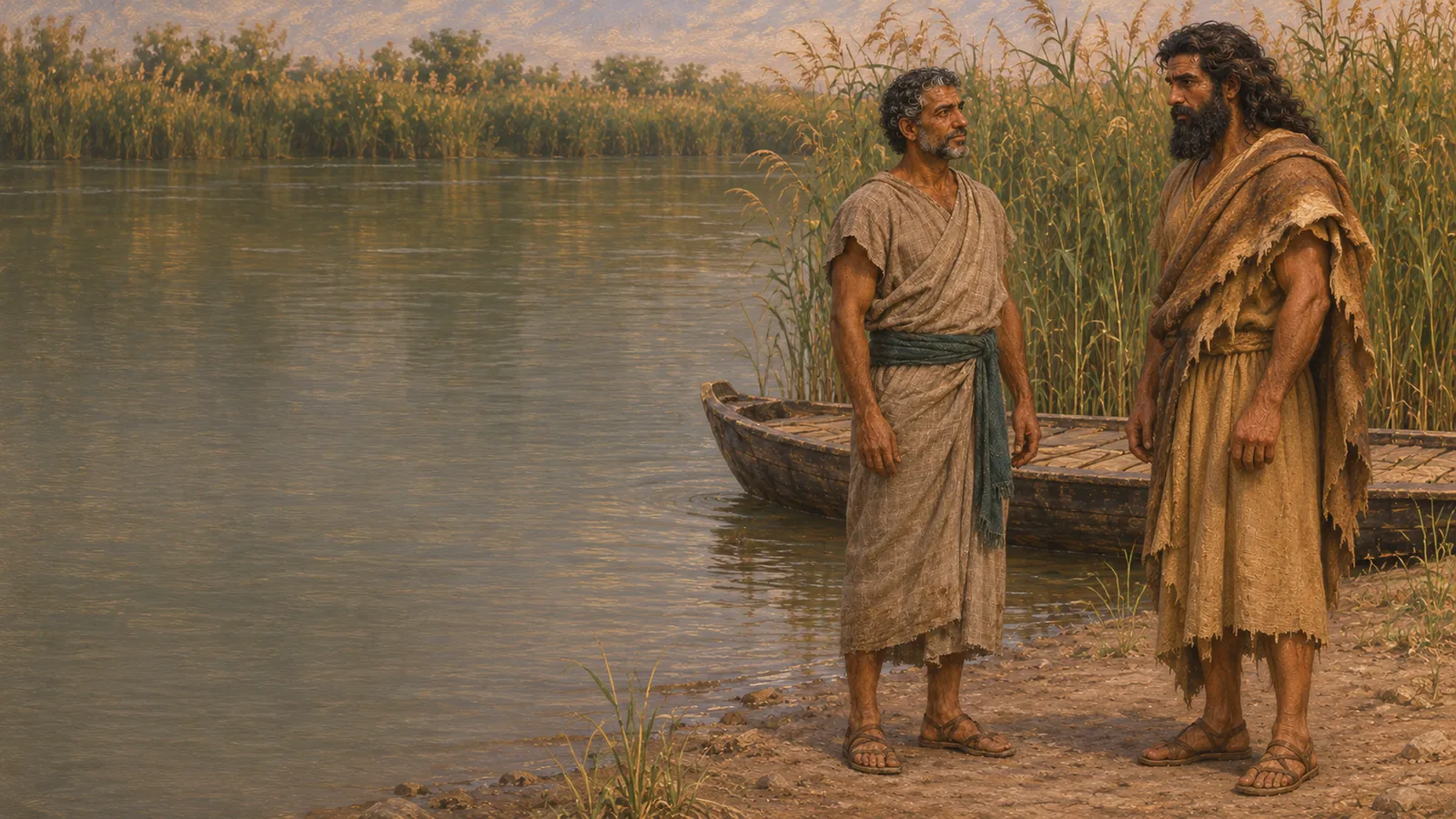
Am Ufer sprach Gilgamesch endlich mit Urschanabi, dem Mann, der ihn hinüberbringen konnte. Der Fährmann sah einen Fremden vor sich, der bereits etwas zerschlagen hatte, das er brauchte.
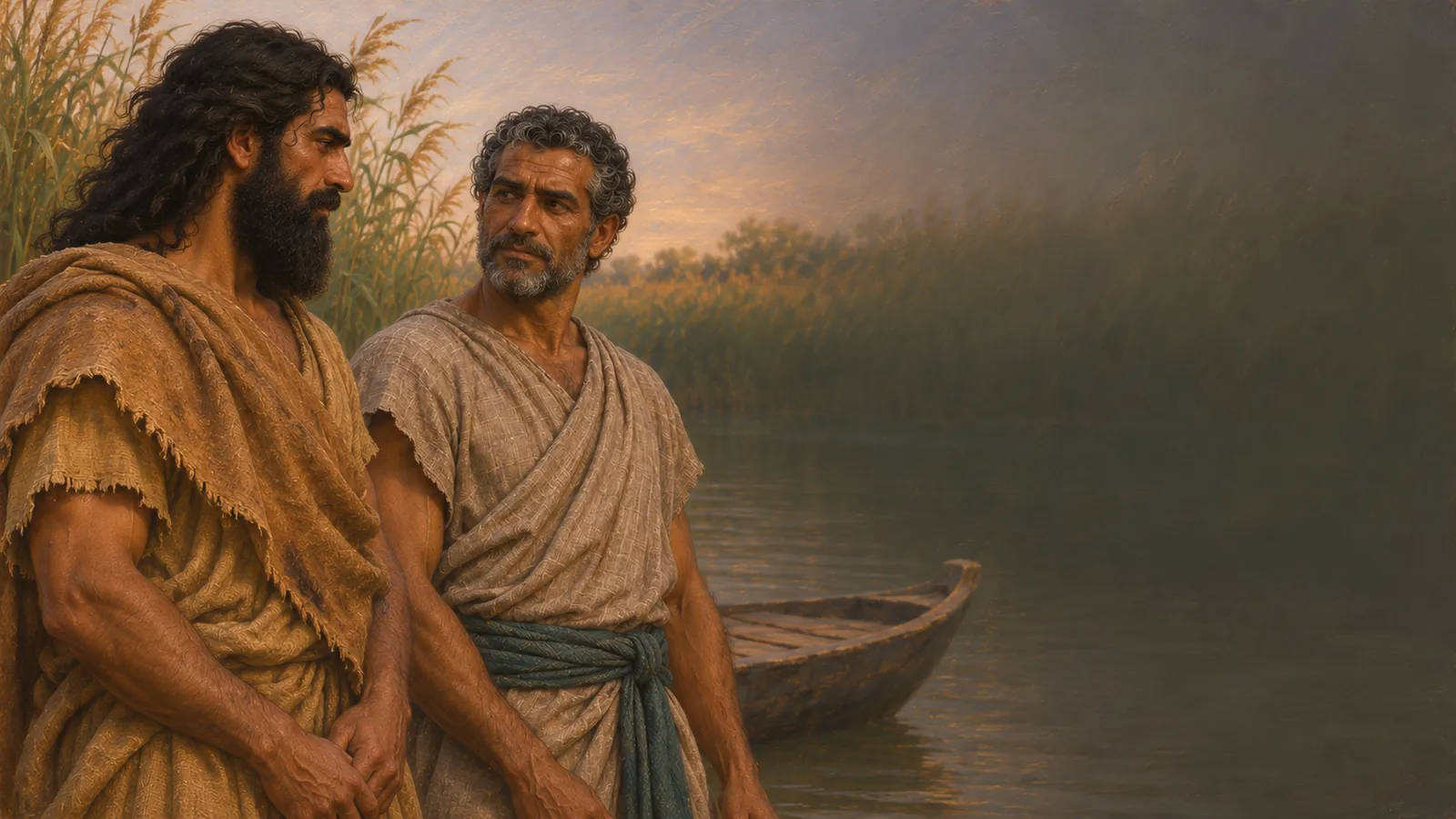
Urschanabi fragte ihn, warum er nach seiner Reise so eingefallen aussah. Wie Siduri wollte er verstehen, was einen Mann so weit von zu Hause fortgetrieben haben mochte.
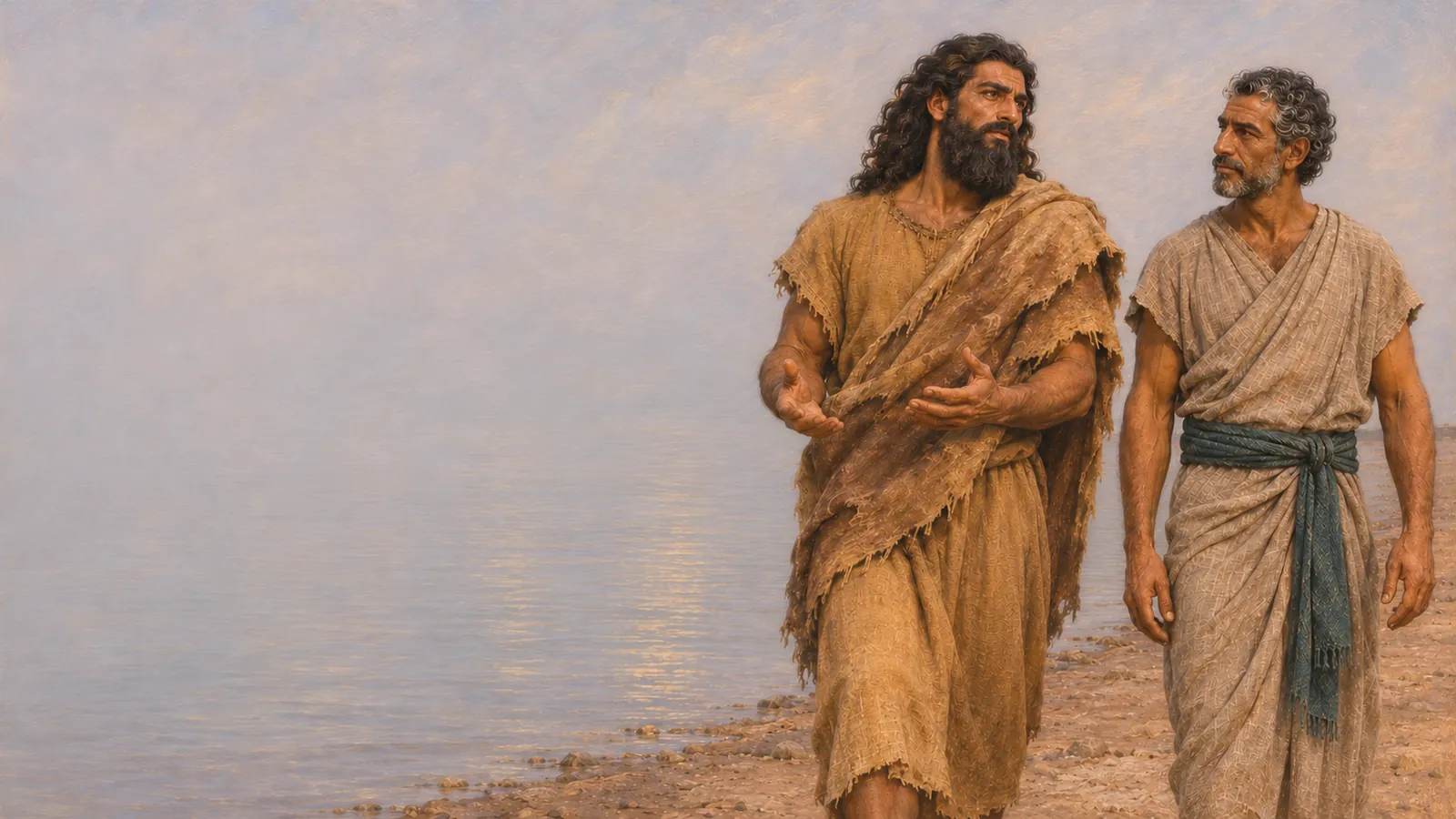
Gilgamesch erzählte die Geschichte noch einmal. Enkidu war ihm in jeder Gefahr zur Seite gewesen, und nun folgte ihm der Gedanke an den Tod des Freundes weiter als jede ihrer gemeinsamen Reisen.
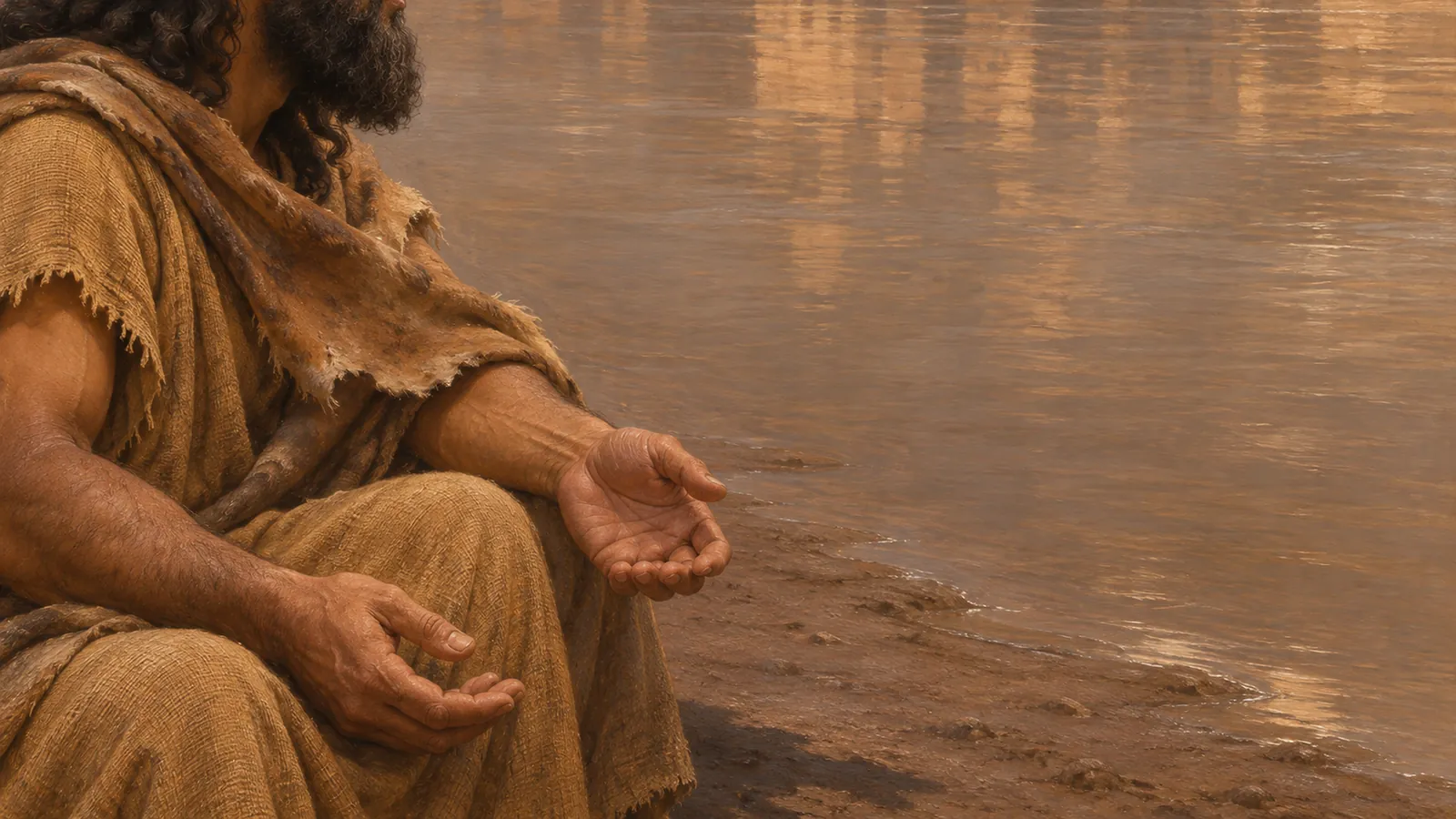
Als Gilgamesch erneut nach dem Weg fragte, sagte Urschanabi ihm, seine eigenen Hände hätten ihn versperrt. Indem er die Steinernen zerschlug, hatte er sich die Überfahrt erschwert.
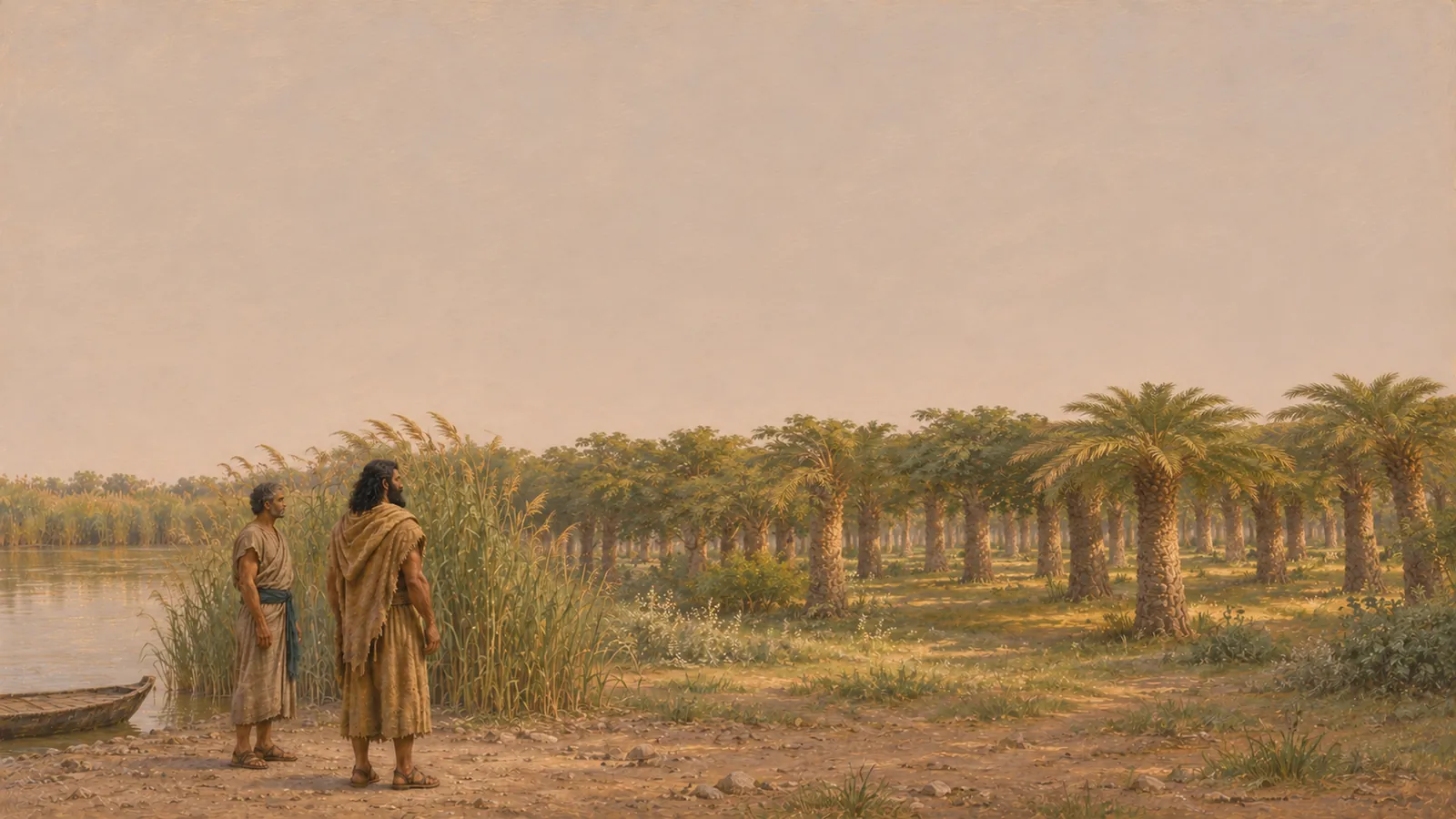
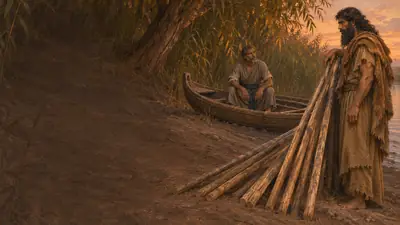
Urschanabi gab Gilgamesch eine Aufgabe. Er musste im Wald lange Stangen schneiden und sie für die Überfahrt ohne die Steinernen herrichten.
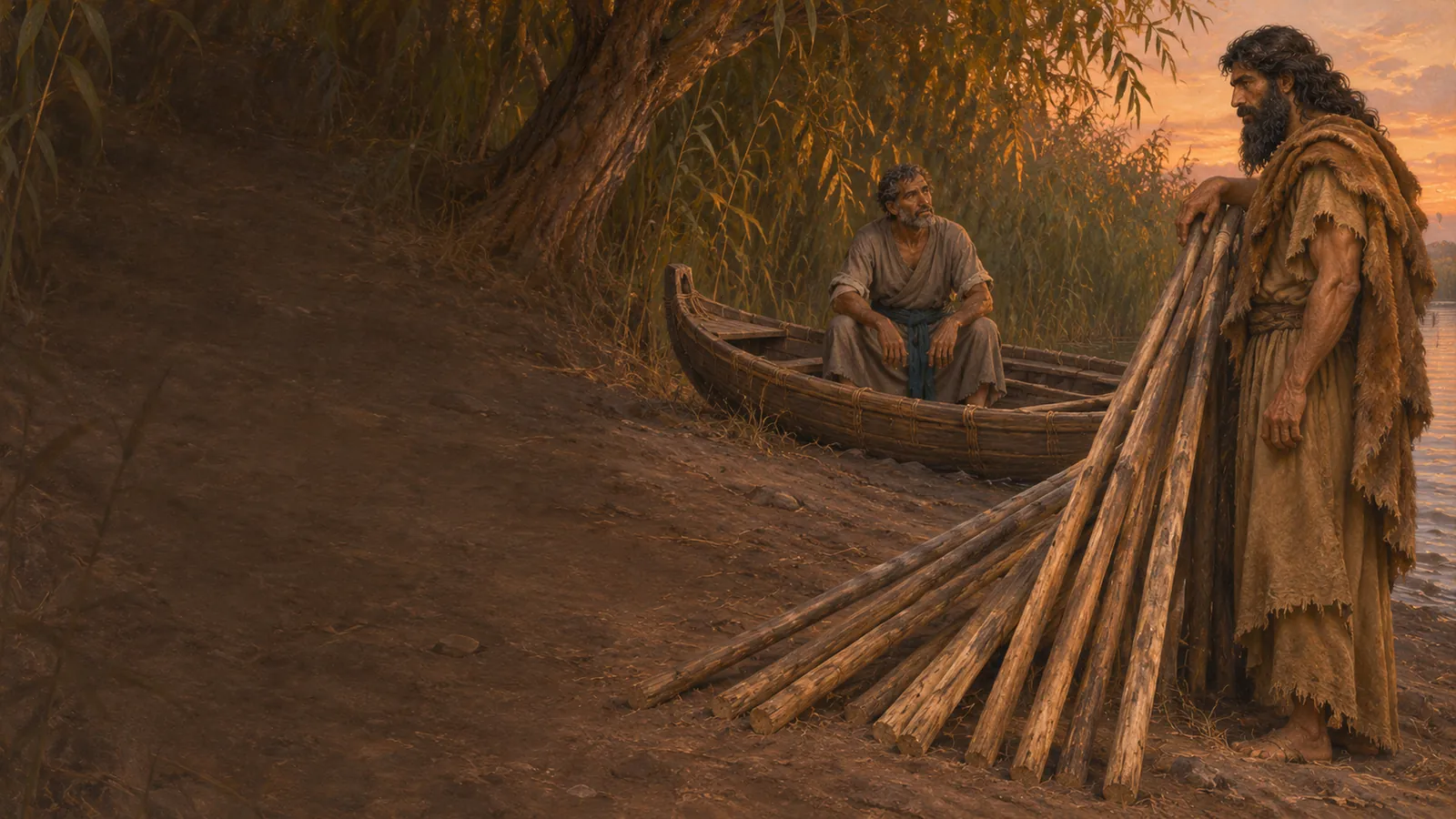
Gilgamesch ging in den Wald, schnitt die Stangen und brachte sie dem Fährmann. Er hatte jemanden gefunden, der das Wasser kannte, und diesmal folgte er seinem Rat.
MEER
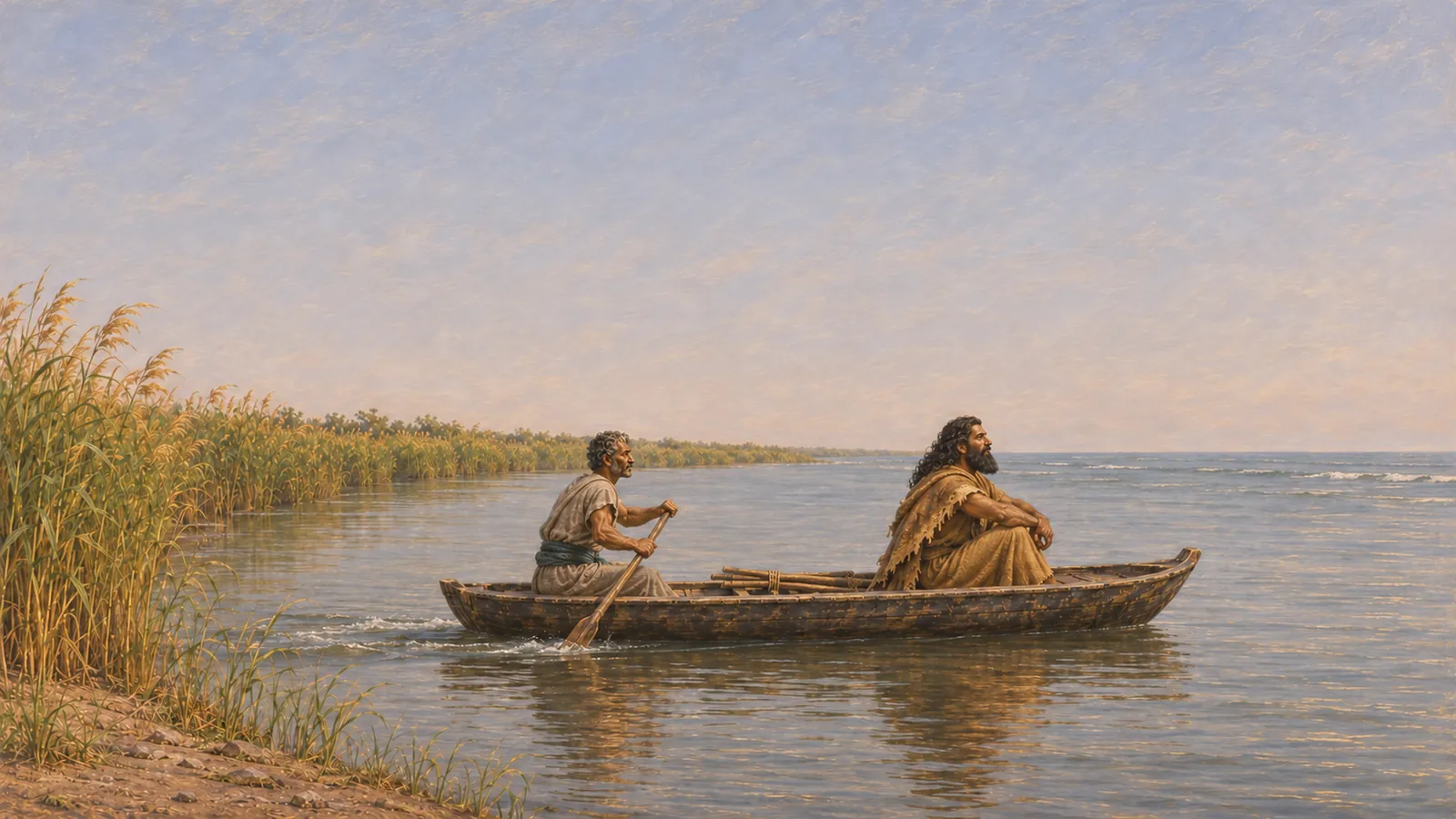
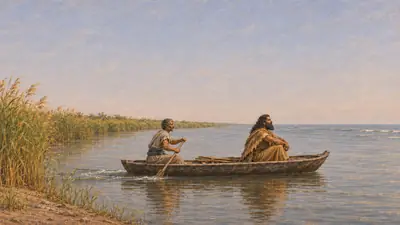
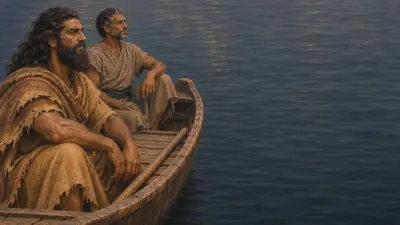
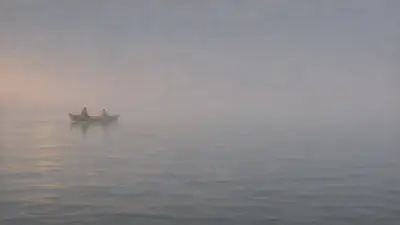
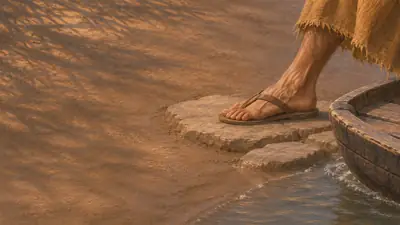
Als die Stangen bereitlagen, stiegen Gilgamesch und Urschanabi ins Boot. Das Land blieb hinter ihnen zurück, als der Fährmann sie aufs offene Wasser hinausbrachte.
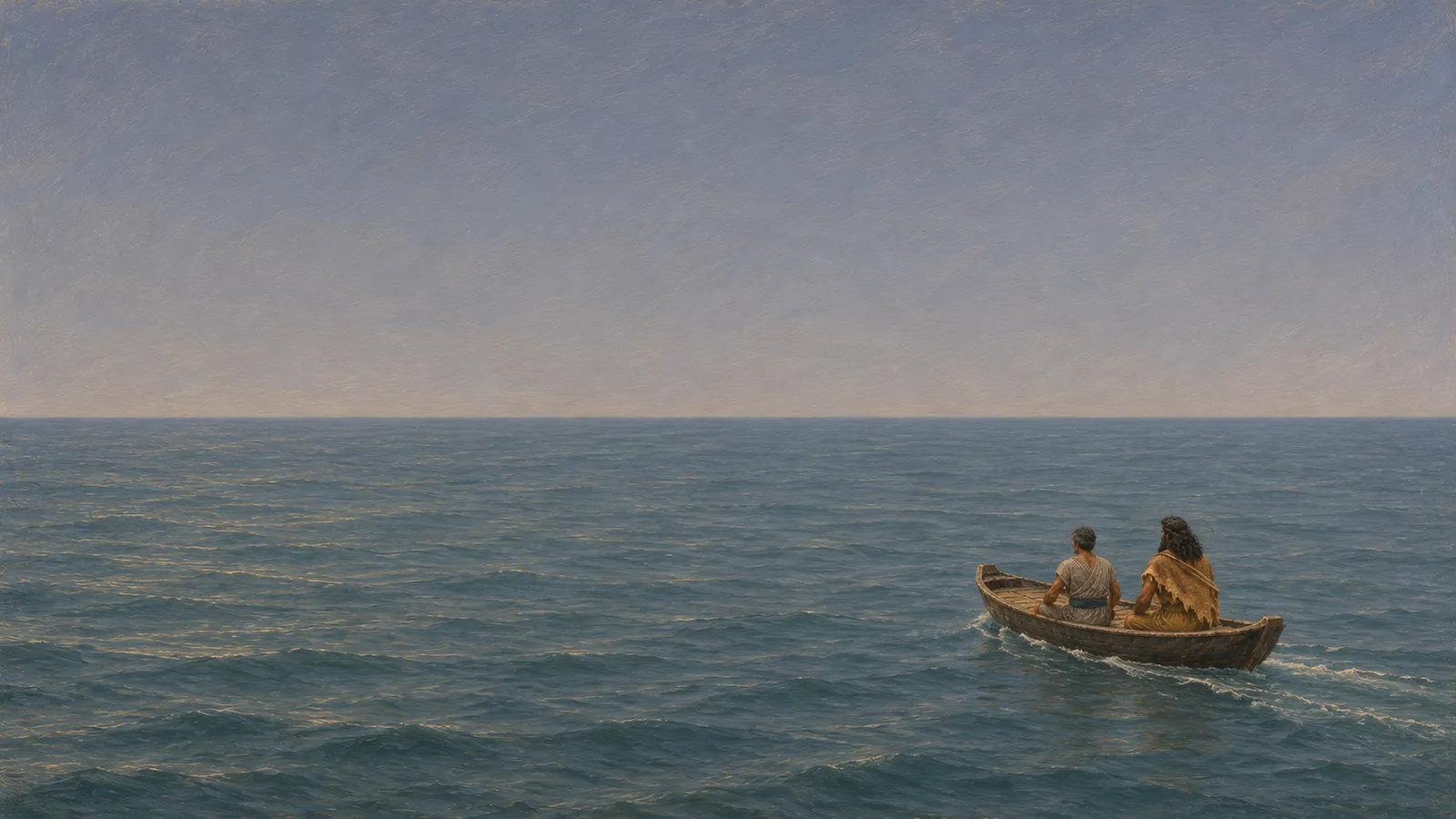
Am dritten Tag hatten sie eine Strecke zurückgelegt, für die man sonst anderthalb Monate auf See gebraucht hätte. Dann brachte Urschanabi Gilgamesch zu den Wassern, vor denen Siduri ihn gewarnt hatte.
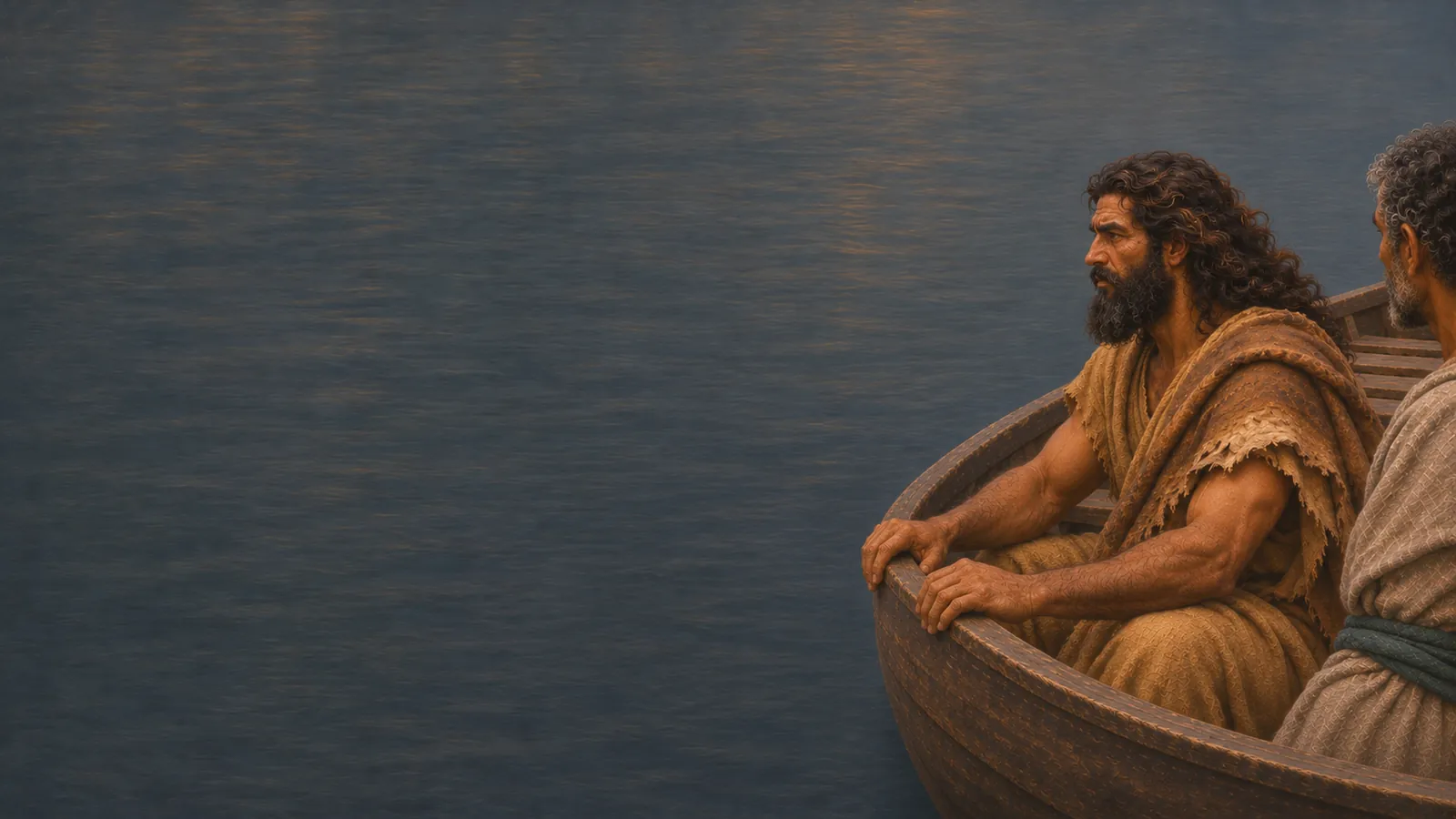
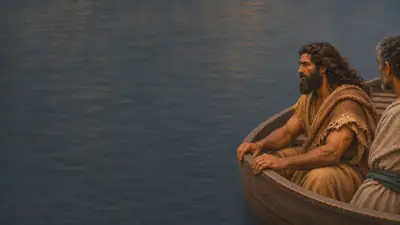
An den Wassern des Todes warnte Urschanabi Gilgamesch davor, das Wasser mit den Händen zu berühren. Was er mit seinen Händen jetzt tun konnte, war, das Boot mit den Stangen zu lenken.
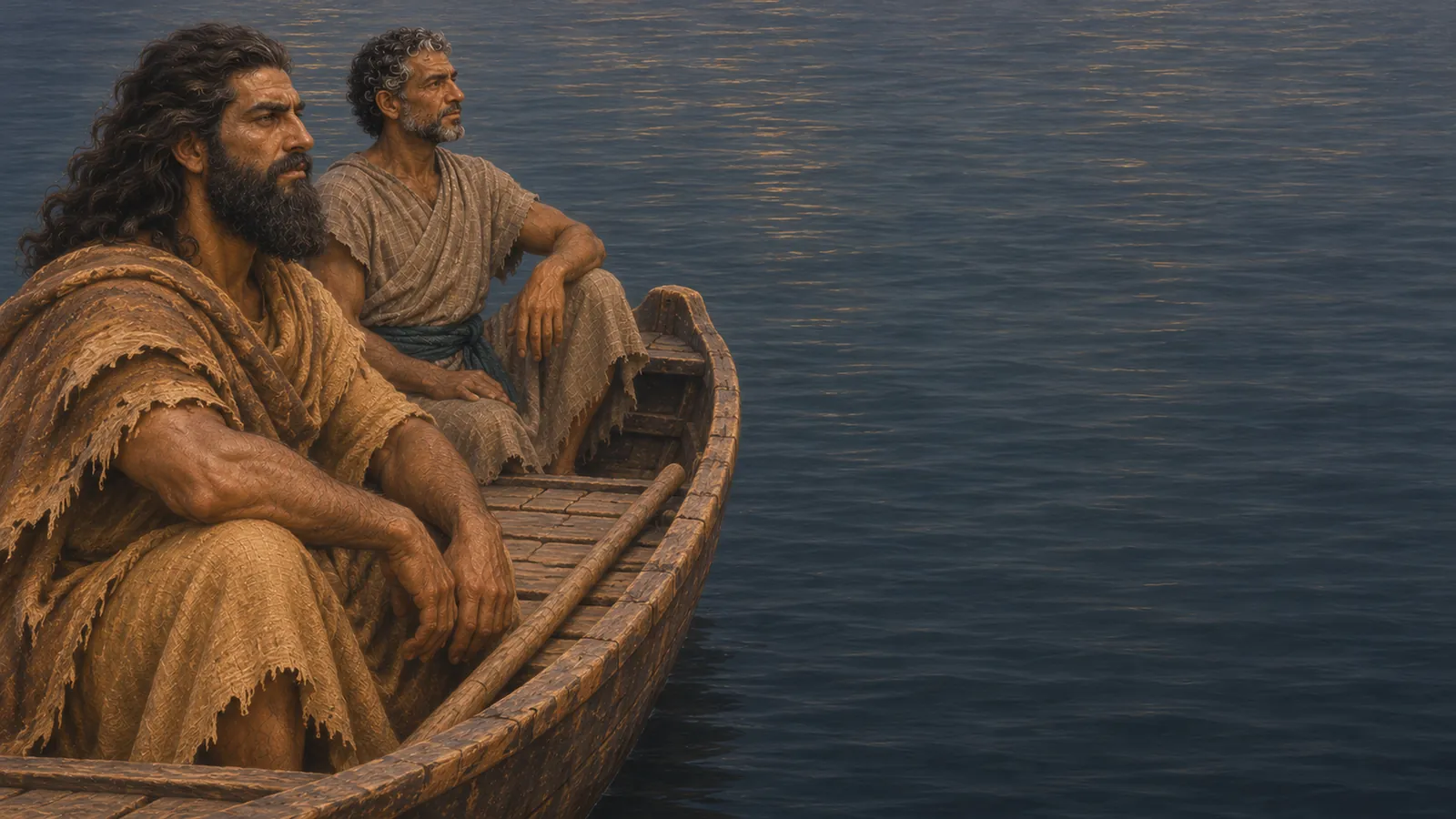
Urschanabi verlangte nach einer weiteren Stange, und dann nach noch einer. Das Gedicht zählt mit, während Gilgamesch arbeitet, doch das Boot hat in der Stille noch einen weiten Weg vor sich.
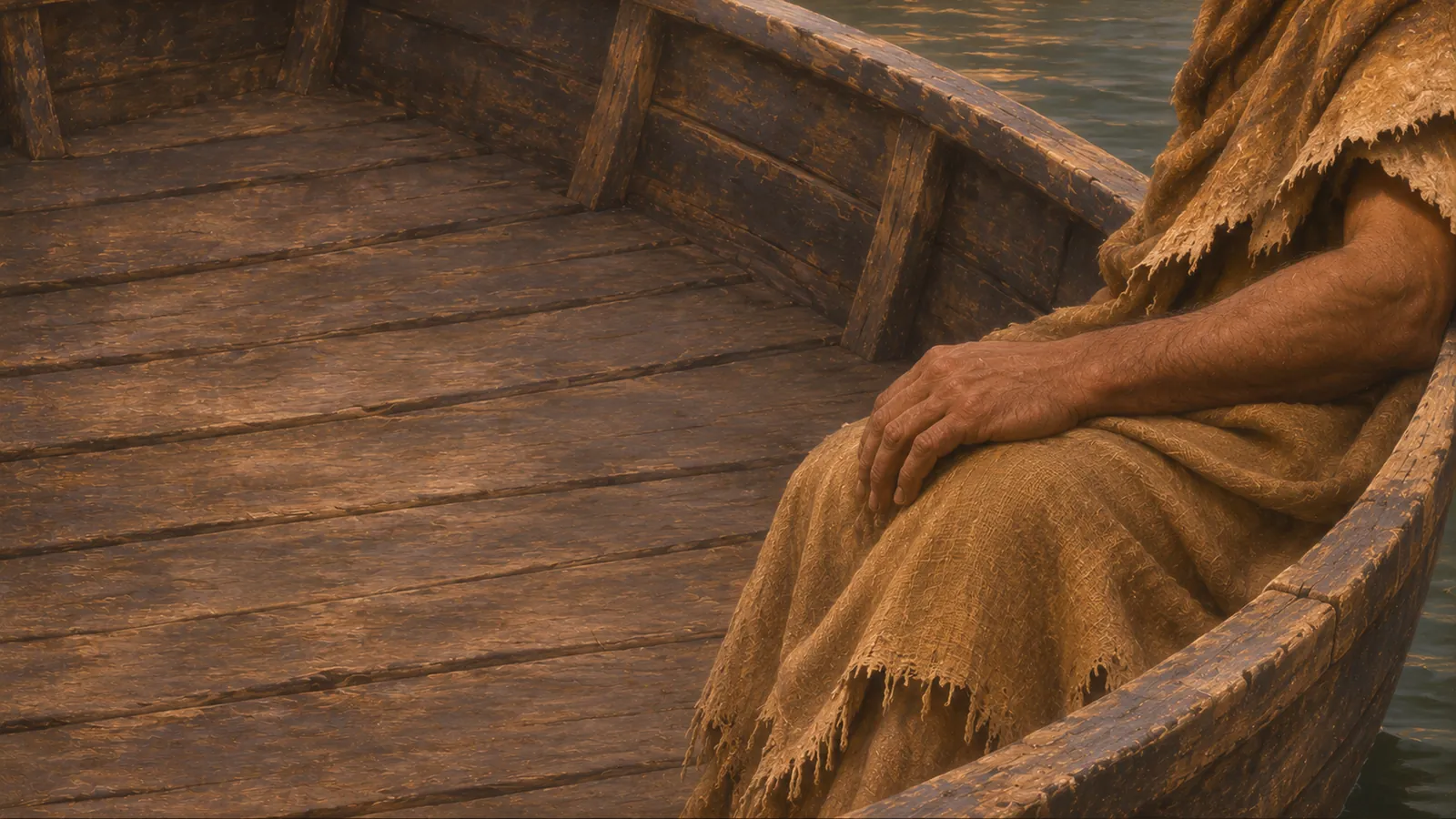
Schließlich war keine Stange mehr übrig. Gilgamesch hatte aufgebraucht, was er für die Fahrt vorbereitet hatte, und das Boot war noch auf den Wassern des Todes.
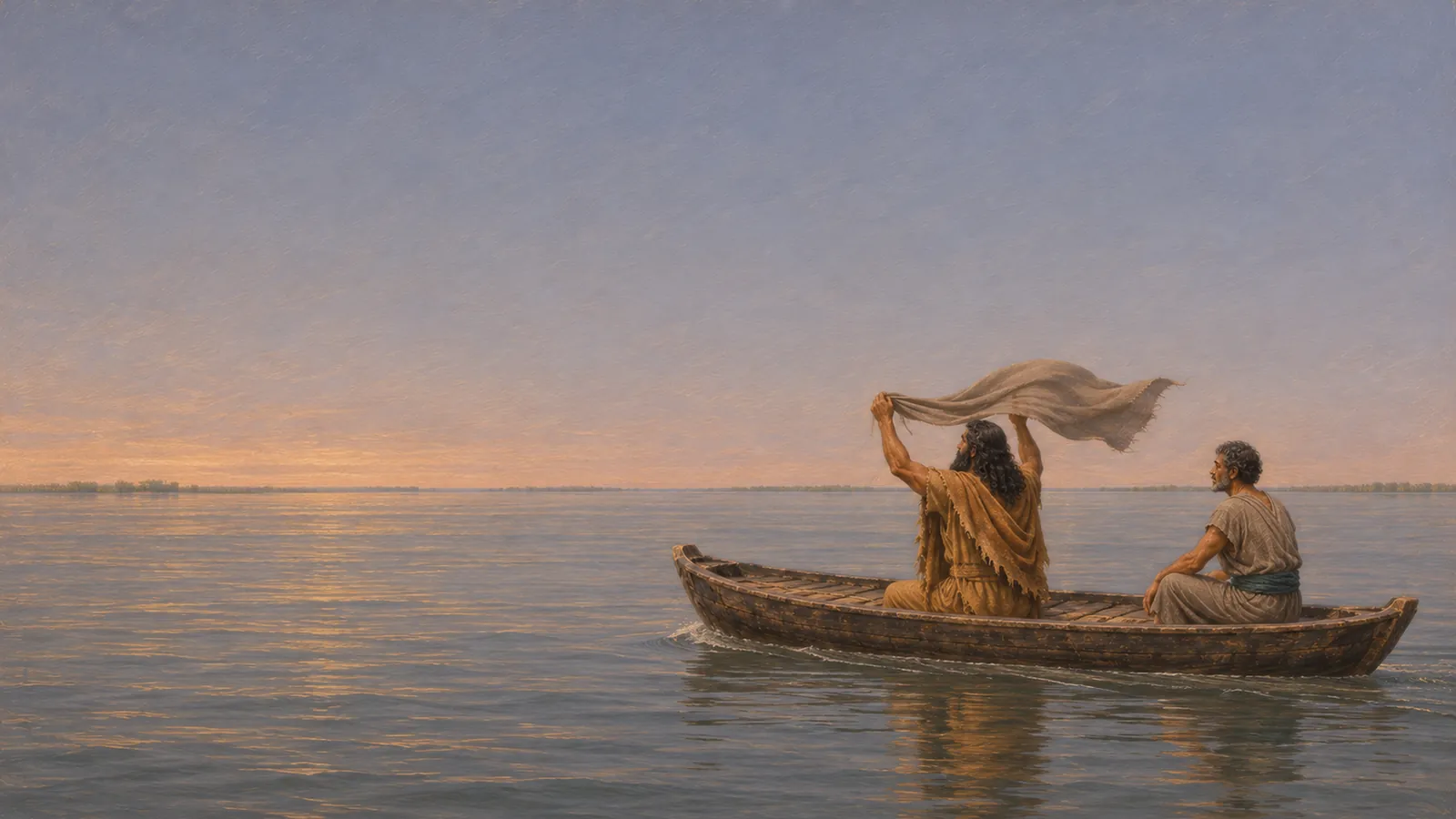
SEGEL
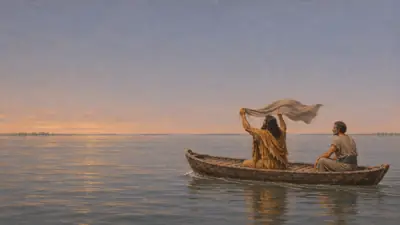
Gilgamesch hielt ein Gewand in den Wind und benutzte es als Segel. Vom fernen Ufer aus konnte jemand das Boot kommen sehen.
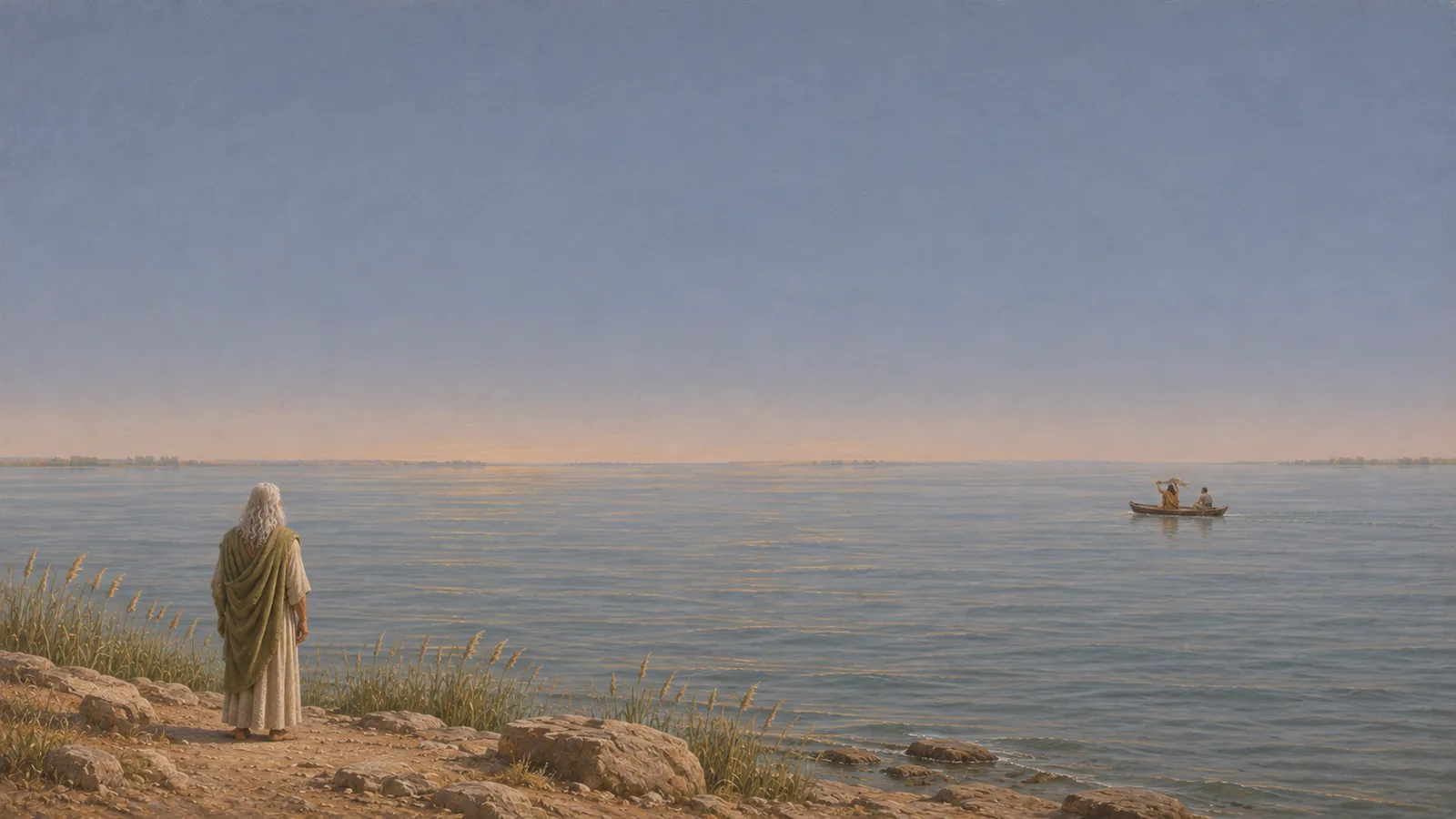
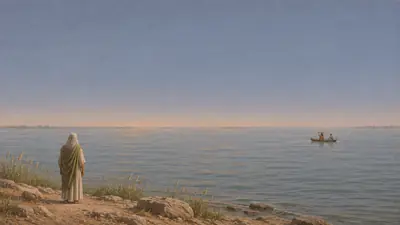
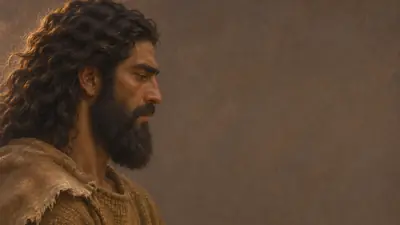
In der Ferne sah Utnapischtim das Boot kommen. Bis hierher hatte Gilgamesch den Namen des alten Mannes durch jede Mühsal mit sich getragen, und jetzt konnte der Mann selbst ihn sehen.
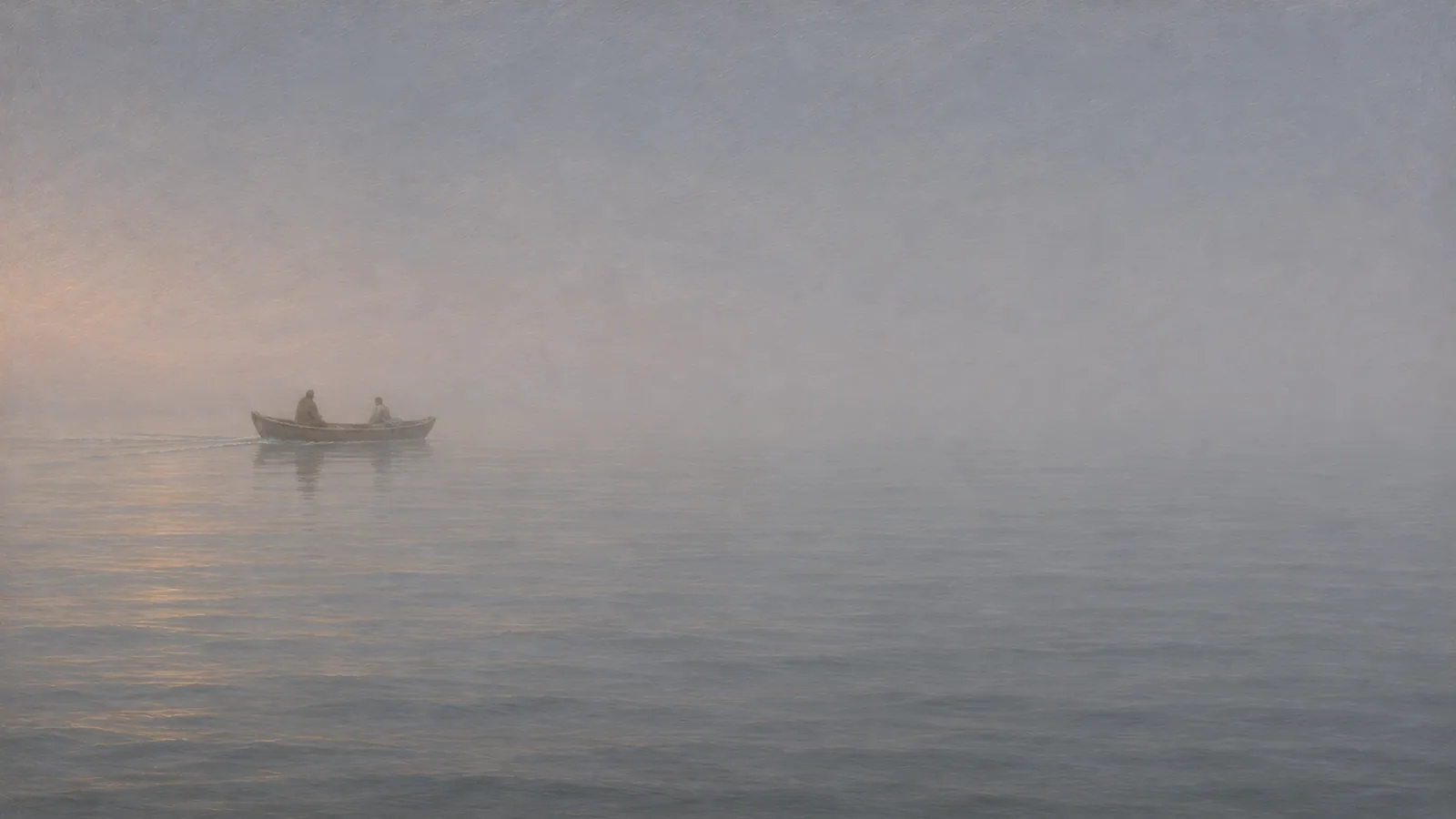
Utnapischtim bemerkte, dass mit dem Boot etwas nicht stimmte. Die Steinernen waren zerbrochen, und den Mann an Bord, der beim Fährmann saß, erkannte er nicht.
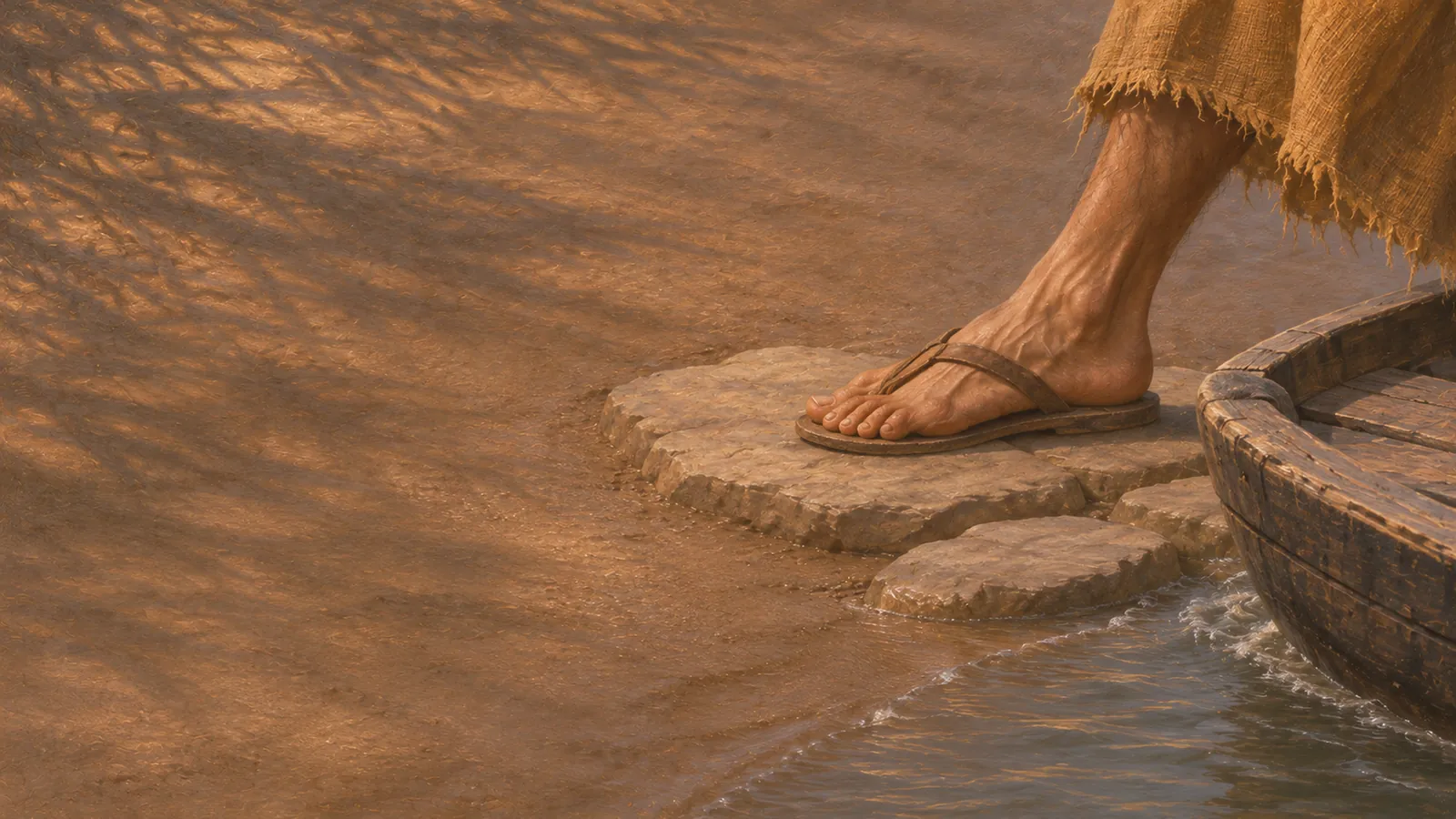
Das Boot erreichte das ferne Ufer. Die Zeilen zur Landung sind beschädigt, doch sie bringen Gilgamesch sicher an das Ufer, an dem Utnapischtim wartet.
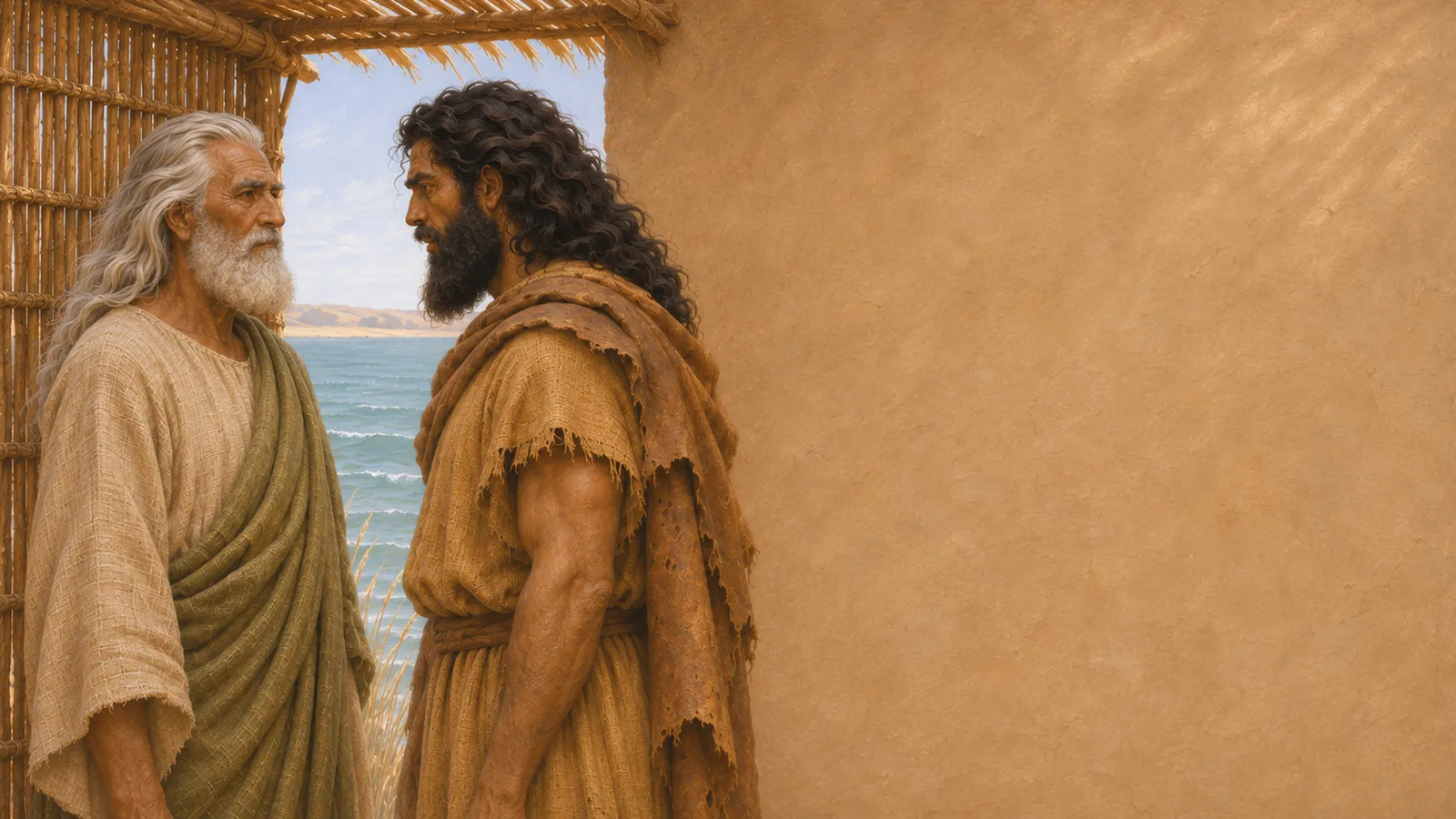
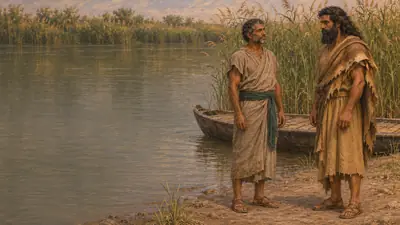
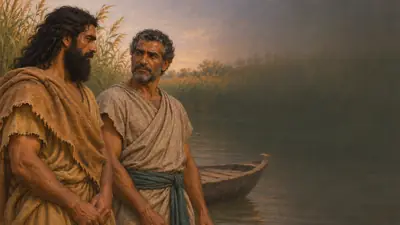
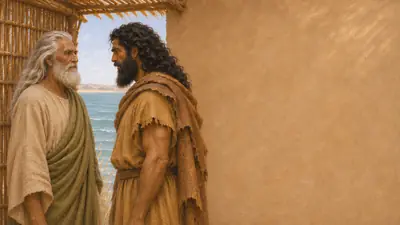
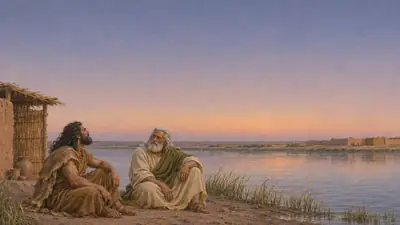
Endlich sprach Gilgamesch mit dem Mann, den er jenseits des Meeres gesucht hatte. Er kannte Utnapischtim als Sohn des Ubar-Tutu. So steht der Name in den erhaltenen Zeilen.
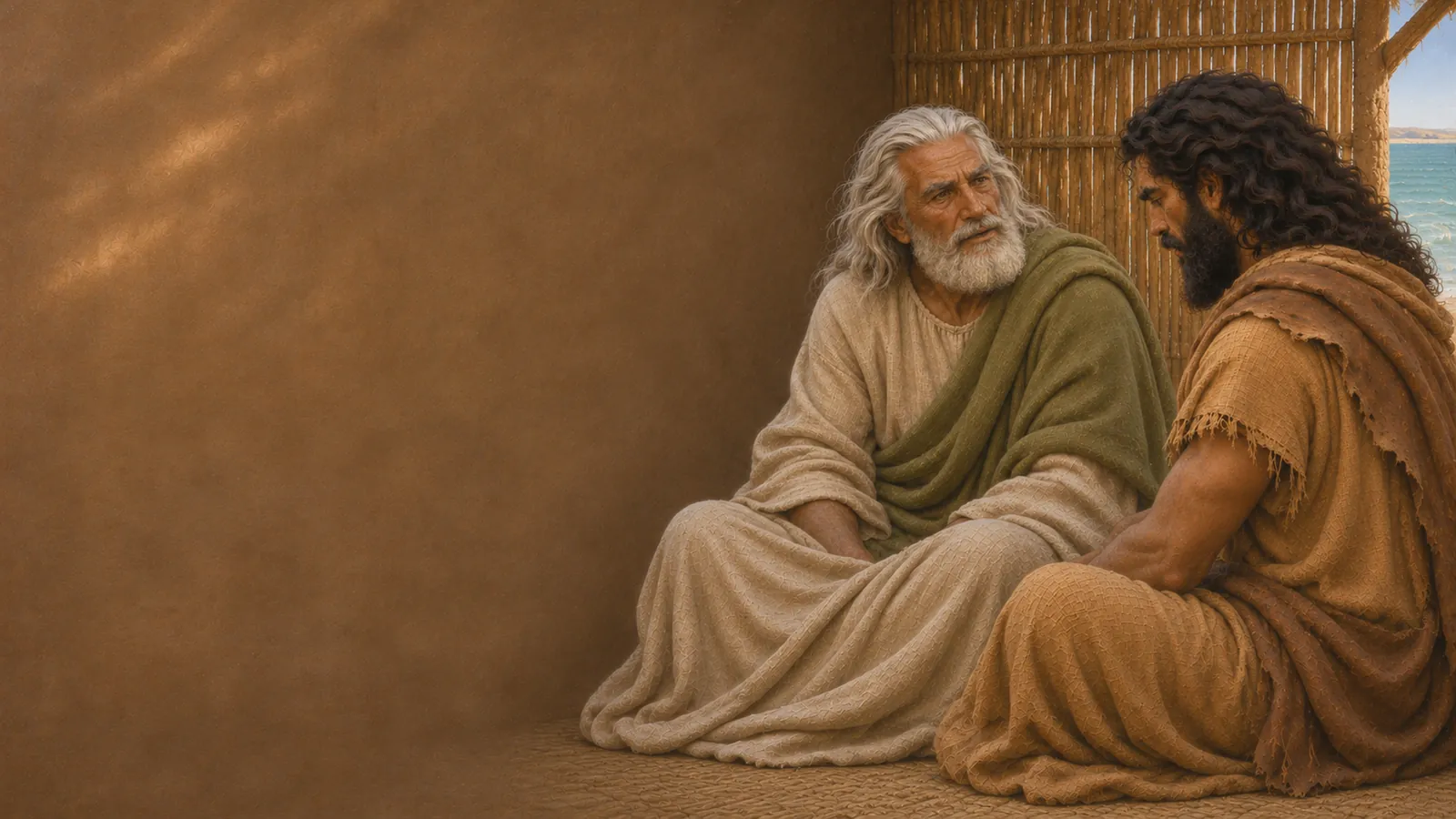
Utnapischtim sah Gilgamesch an und fragte ihn fast dasselbe wie Siduri und der Fährmann. In seinem Gesicht sah er die Spuren der Reise und die Trauer, die ihn auf den Weg gebracht hatte.
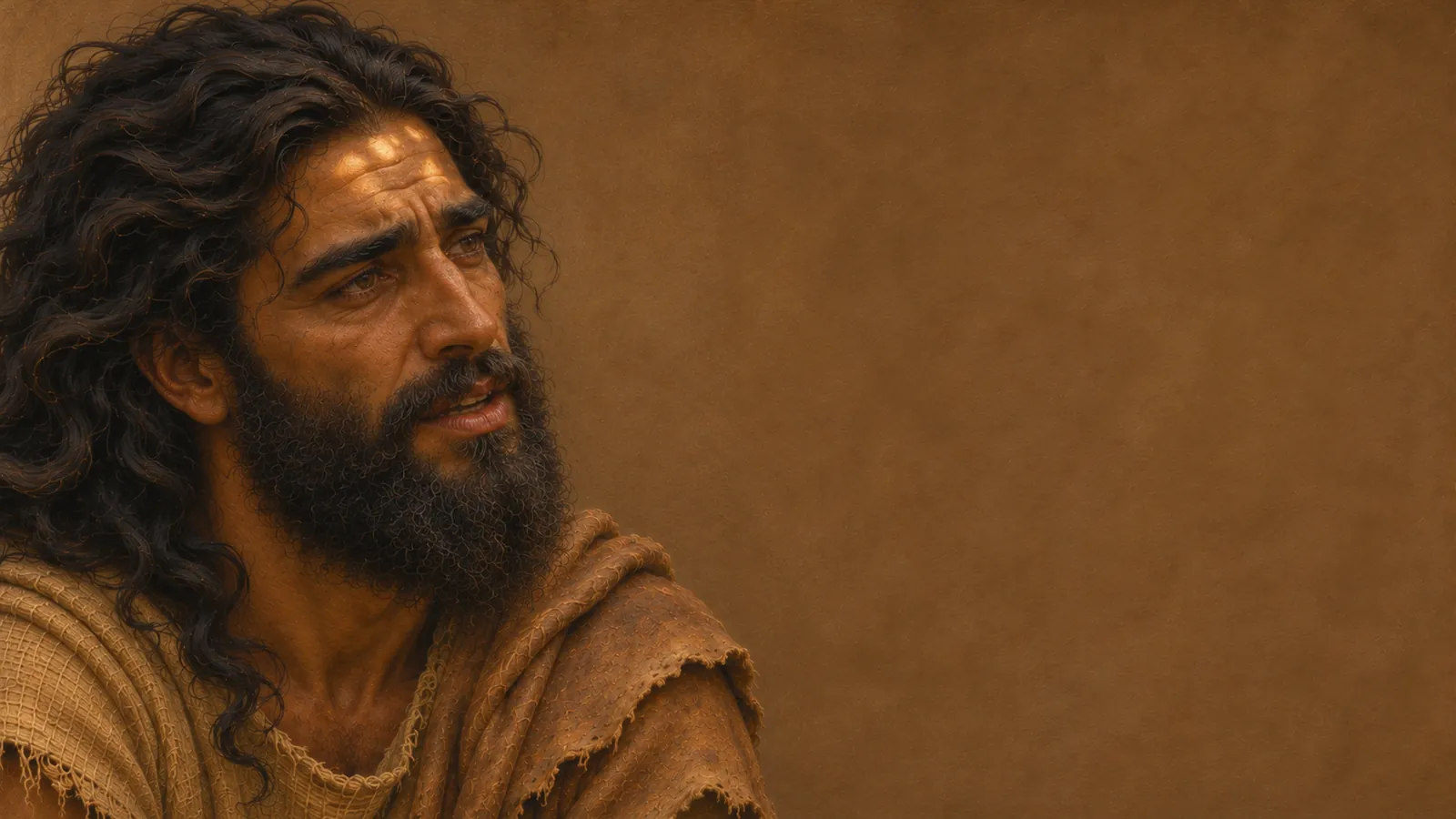
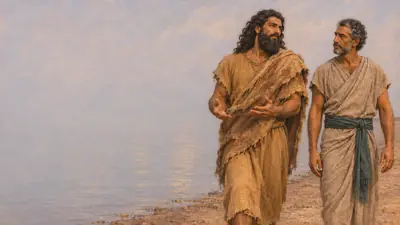
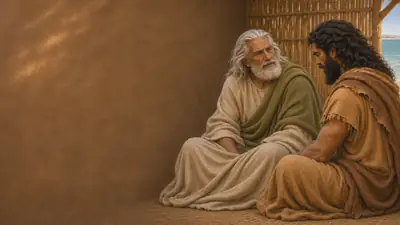
Wieder sprach Gilgamesch von ihren Taten und von dem Freund, den er liebte. Was immer er über seinen eigenen Mut sagen konnte, die Geschichte führte doch zu Enkidus Tod zurück.
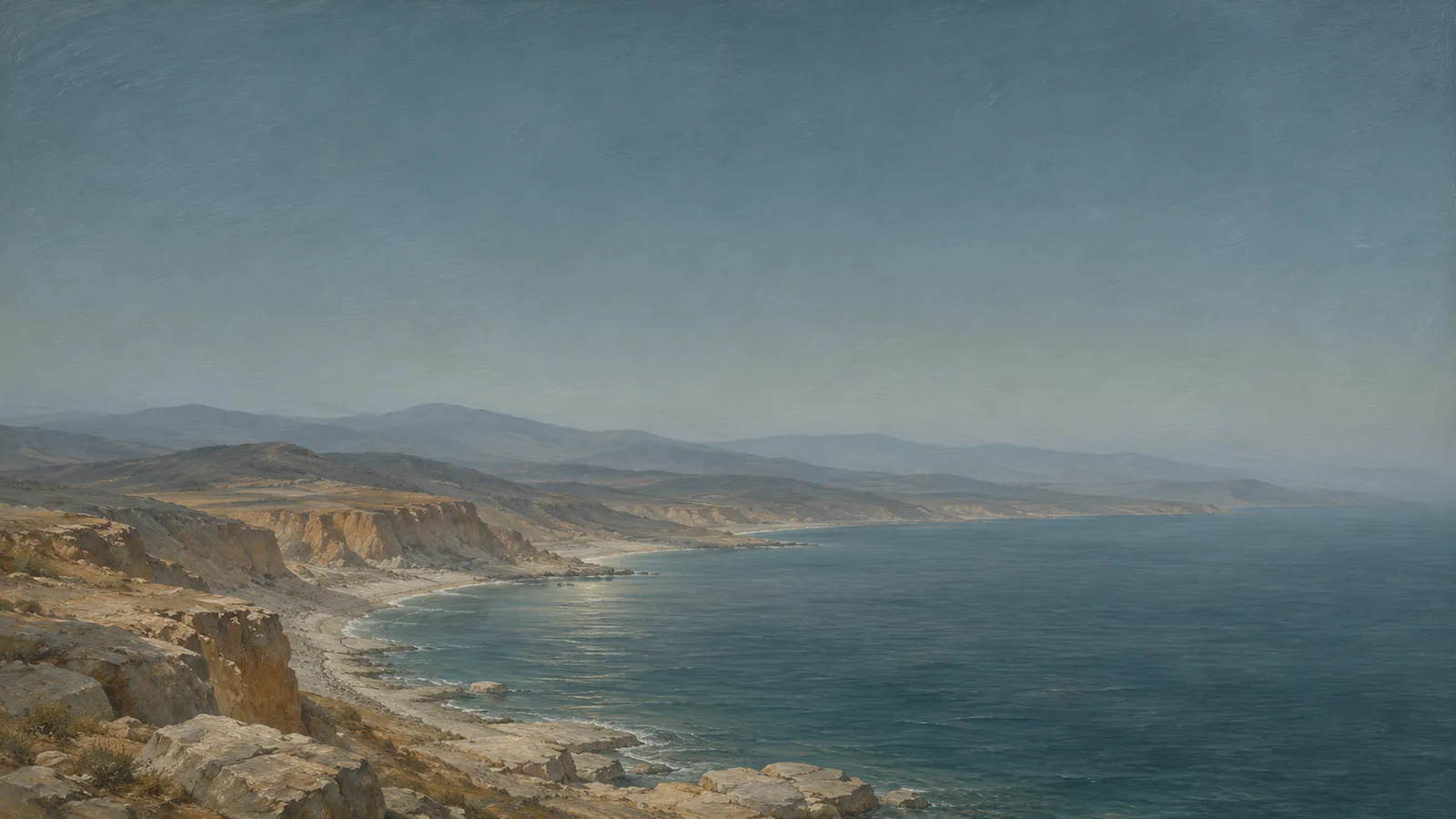
Gilgamesch erzählte ihm von den Ländern, durch die er gekommen war, von den Bergen, die er überquert hatte, und von den Meeren, über die er gefahren war. Diese ganze Entfernung lag zwischen ihm und dem Leben, das er kannte.
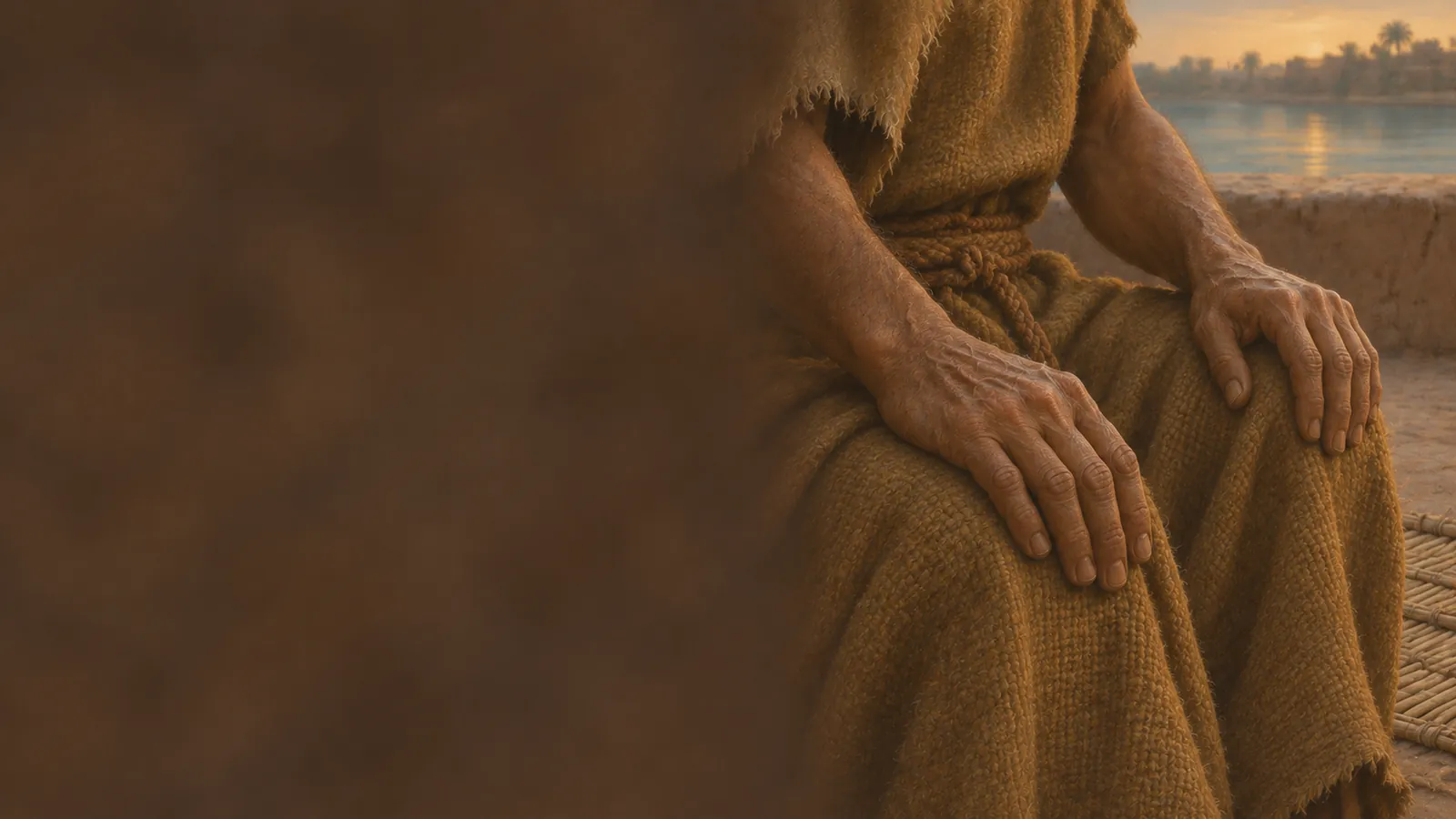
Er sprach von Nächten, in denen er kaum schlafen konnte, und von der Mühsal, die ihm der Weg gebracht hatte. Der Wunsch, Utnapischtim zu finden, hatte ihn weitergetrieben.
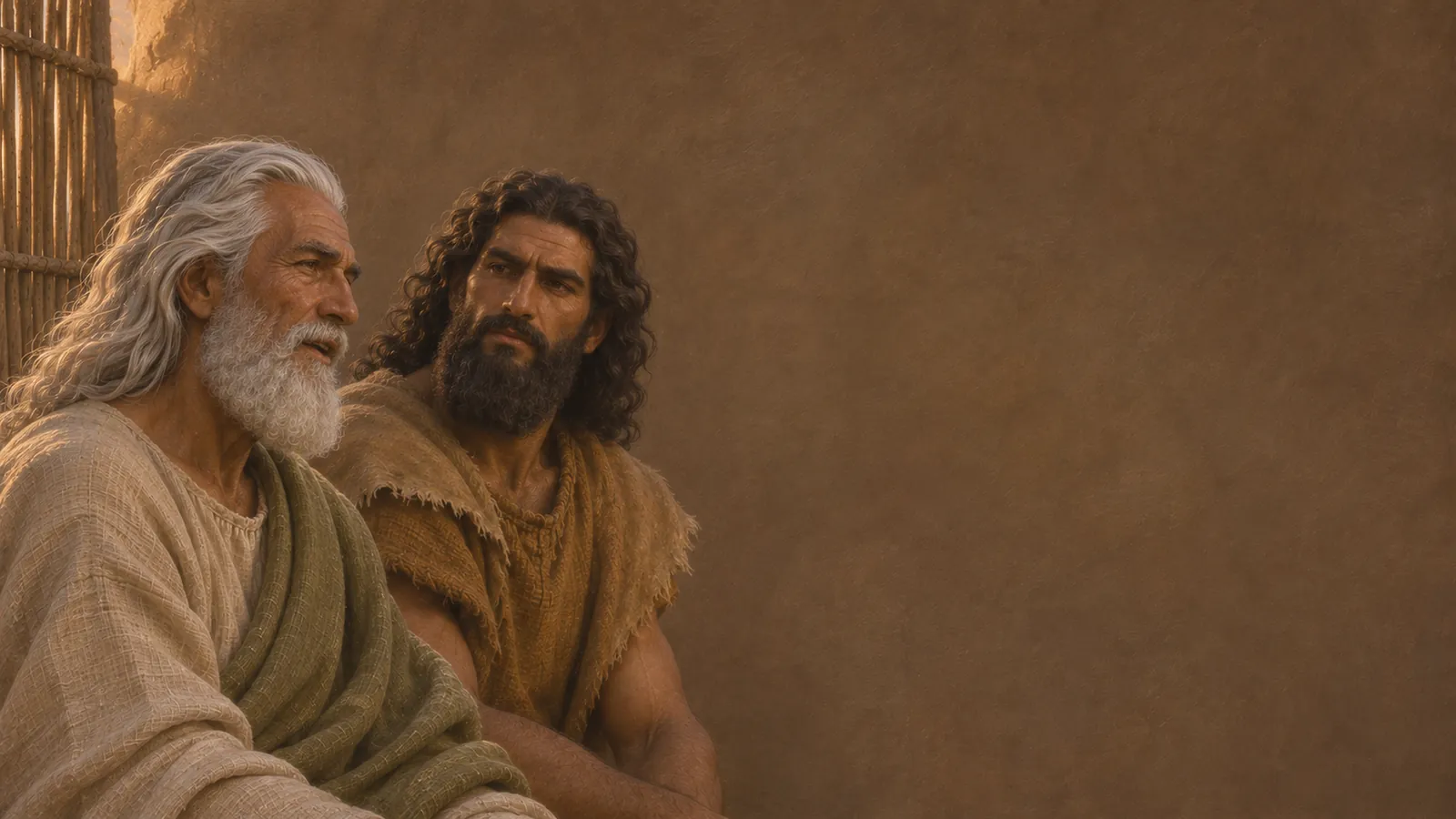
Utnapischtim antwortete, indem er von Gilgameschs Trauer und seiner göttlichen und menschlichen Herkunft sprach. Teile dieser Antwort sind im Ton weggebrochen.
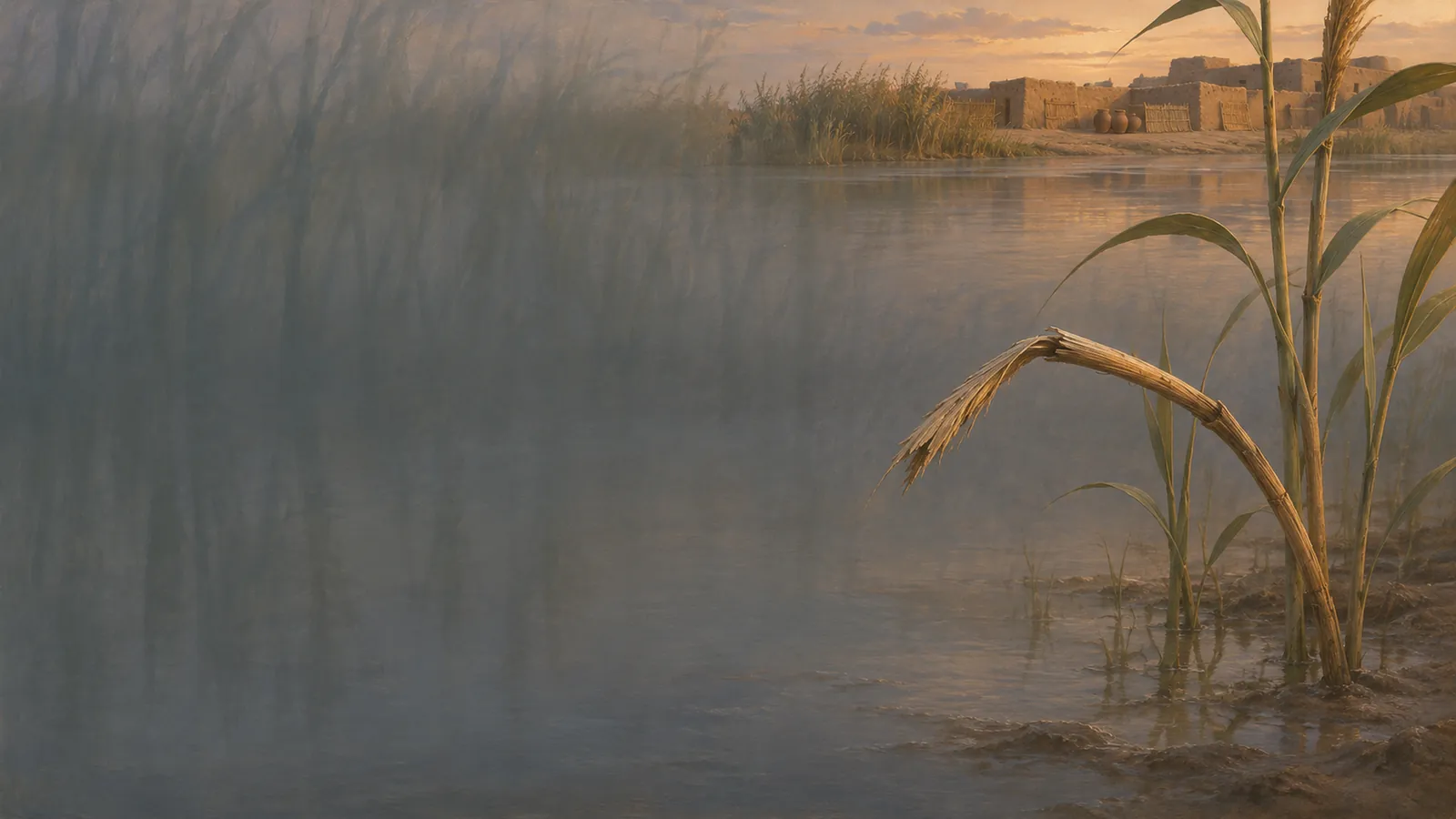
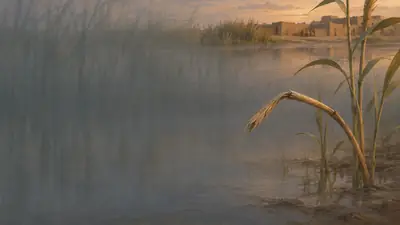
Utnapischtim verglich die Menschen und ihre Kinder mit Schilf, das brechen kann. Der Tod konnte selbst Männer und Frauen in der Blüte ihres Lebens holen.
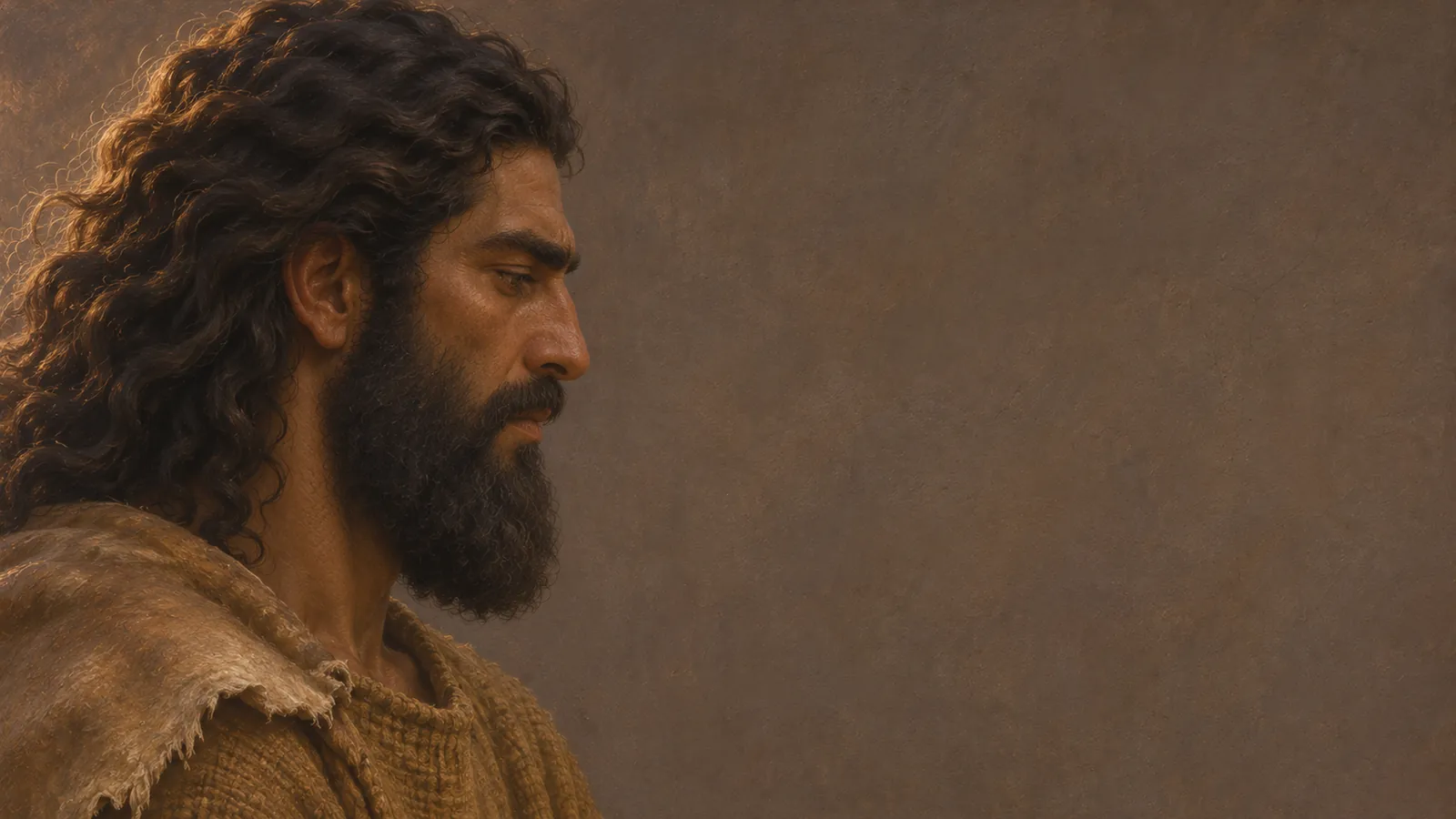
Niemand sieht das Gesicht des Todes oder hört seine Stimme näherkommen, sagte Utnapischtim. Nichts von dem, was Gilgamesch getan hatte, konnte ihm verraten, wann der Tod eintreffen würde.
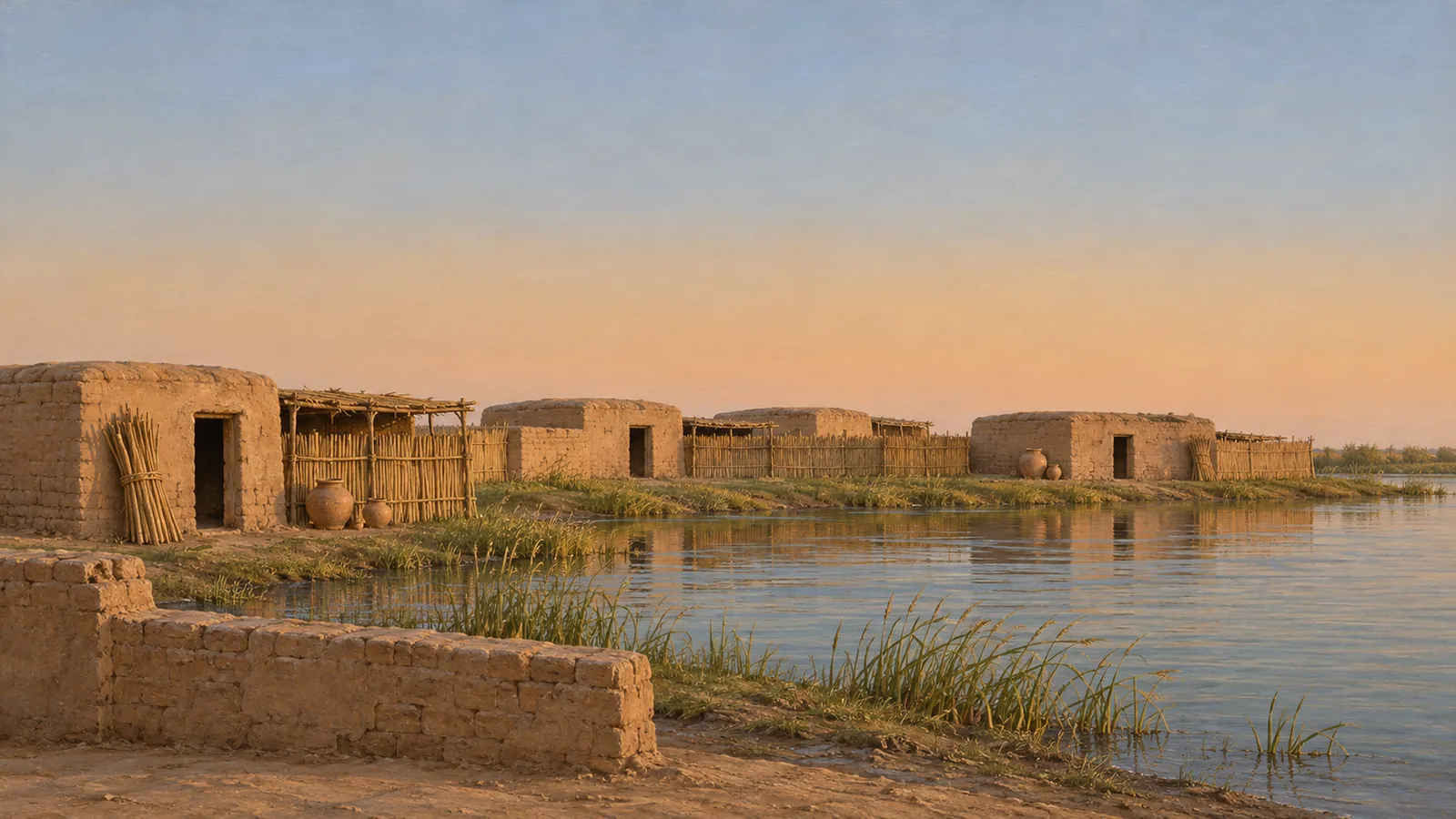
Er sprach davon, wie Häuser gebaut und Familien gegründet werden und wie Brüder ihre Anteile aufteilen. Das Gedicht stellt diesen vertrauten Handlungen ein Bild davon zur Seite, wie schnell ein Leben verschwinden kann.

Utnapischtim zeichnete das Bild eines Flusses im Hochwasser und einer Eintagsfliege, die im Licht auf dem Wasser trieb. Einen Augenblick lang war sie da, dann war sie fort.
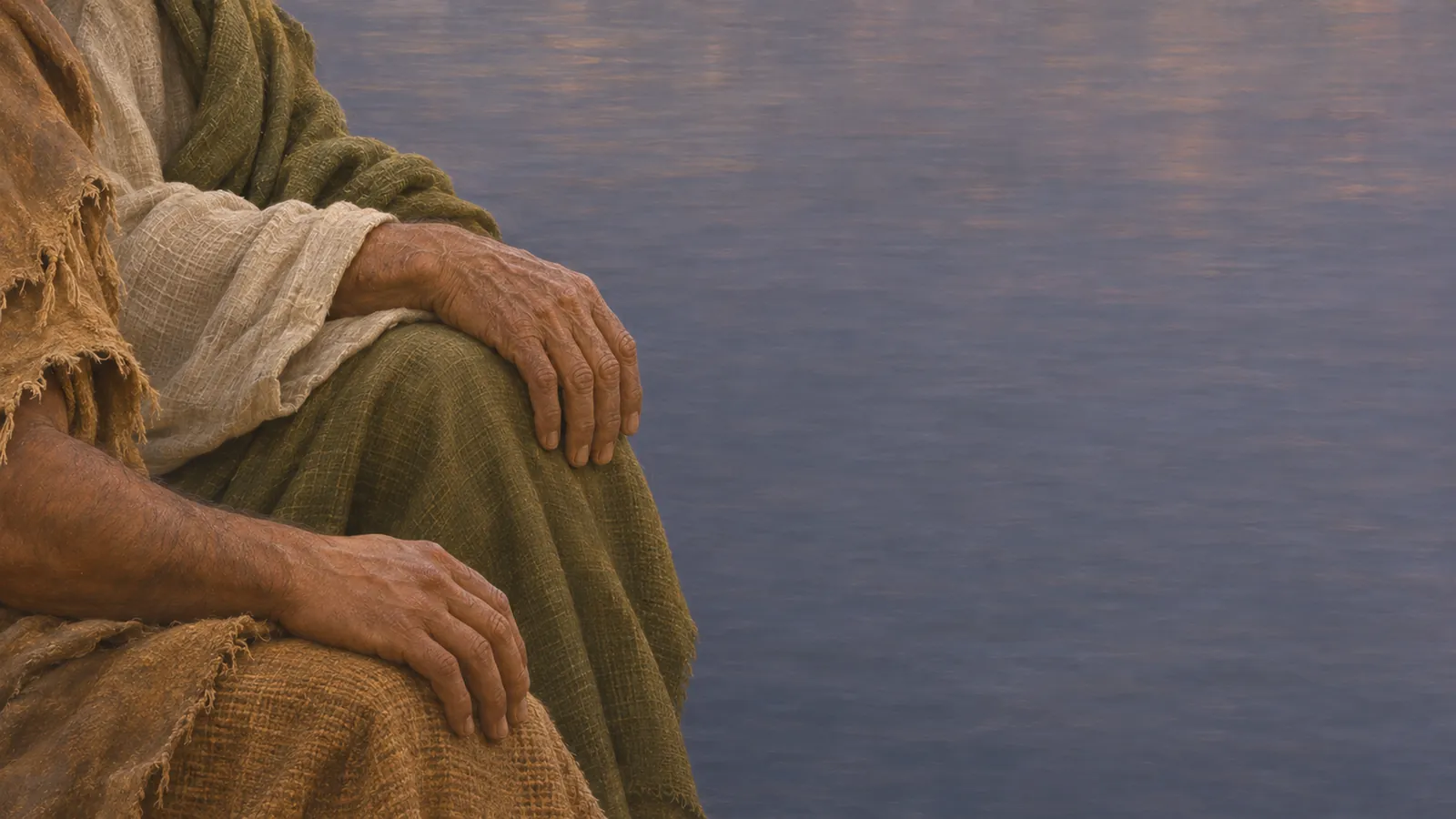
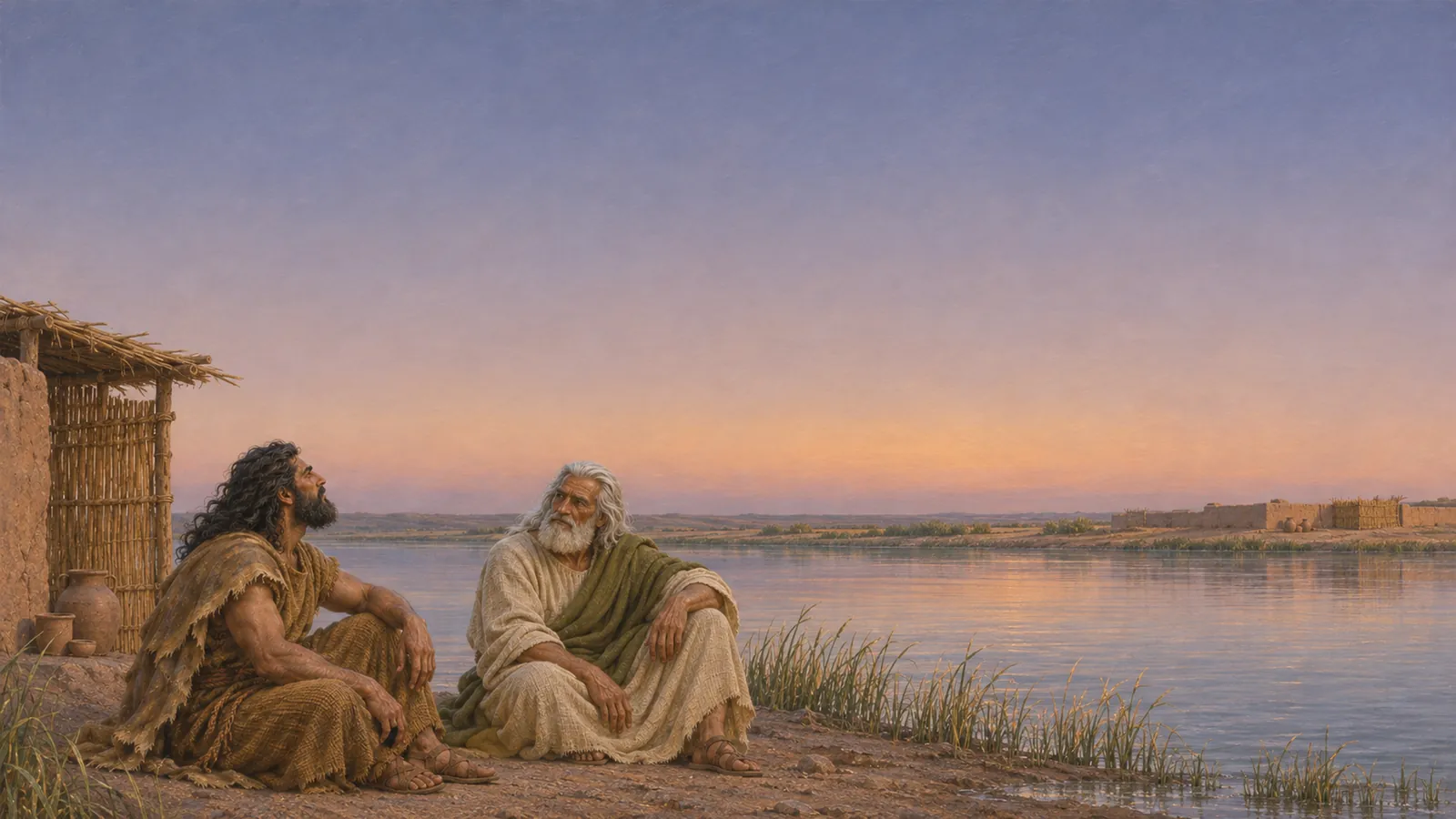
Utnapischtim kam auf das zurück, was Gilgamesch wissen wollte. Die Götter hatten Leben und Tod festgelegt, doch den Menschen hatten sie den Tag ihres Todes nicht offenbart.
TAFEL XI
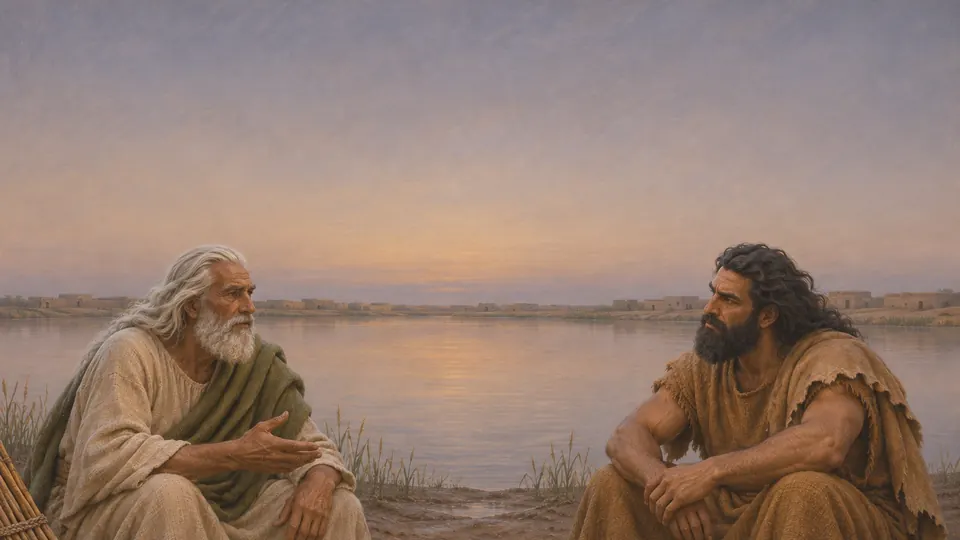
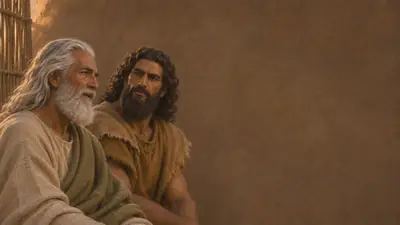
Zu Beginn der nächsten Tafel sieht Gilgamesch Utnapischtim an und erkennt einen Mann, der ihm sehr ähnlich ist. Er fragt, wie dieser Mann unter die Götter kam und weiterlebte.
Ende von Kapitel 6
Alle Seiten



Quellen
On pages 28, 36 and 51, Gilgamesh says he would not give Enkidu up for burial until a maggot fell from his nostril (SB Gilgamesh X 58–62, 135–139 and 235–239, George’s eBL translation). The retelling describes the sign of decay on page 28 and condenses the two later repetitions.
Benutzte Editionen
- Electronic Babylonian Library, Tablet IX: and [Tablet X](https://www.ebl.lmu.de/corpus/L/1/4/SB/X). Both official text exports were checked line by line.
- Electronic Babylonian Library, Tablet XI: opening address credited separately.
- Andrew George, “The Epic of Gilgamesh”: synopsis of the westward journey and Utnapishtim’s answer.
- Andrew George, “Gilgamesh and the Babylonian World”: with the latter part of Tablet X discussed alongside manuscript context.
Hinweise zu dieser Nacherzählung
On page 3, Gilgamesh takes up an axe and a dagger, strikes the lions and kills and scatters them in a partly restored passage (SB Gilgamesh IX 13–18, George’s eBL translation). On page 26 he tells Siduri that he and Enkidu killed the Bull, destroyed Humbaba and killed lions in the passes (SB Gilgamesh X 29–39, partly restored). The retelling condenses the attack and the list of deeds.
Die antiken Verse hinter jeder Seite
- Page 1: SB IX 8–9, eBL
- Page 2: SB IX 10–12, eBL
- Page 3: SB IX 13–29, gap before 37, eBL
The awakening and brief rush are attested. - Page 4: SB IX 37–41, eBL
- Page 5: SB IX 42–45 and 48–51, eBL
- Page 6: SB IX 46–47, eBL
- Page 7: SB IX 48–51, eBL; cf. SB I 48
Her correction is preserved. - Page 8: SB IX 52–59, eBL
- Page 9: SB IX 5–7 and 75–77, eBL
- Page 10: SB IX 78–90, especially 80–83, eBL
- Page 11: SB IX 91–93, lacuna before 125, and 125–135, eBL
- Page 12: SB IX 136–139, eBL
- Page 13: SB IX 139–144, eBL
- Page 14: SB IX 145–162, eBL
- Page 15: SB IX 163–169, eBL
- Page 16: SB IX 169–172, eBL
- Page 17: SB IX 172–174, eBL
- Page 18: SB IX 175–176, eBL
- Page 19: SB IX 184–196, eBL; cf. SB X 1–2
The last line is damaged and the pronoun points forward to Siduri. - Page 20: SB X 1–4, 5–9, eBL; George, synopsis p. 9; George X score
- Page 21: SB X 1–9, eBL; George X score; Heidel, Tablet X, Assyrian version col. i
- Page 22: SB X 5–14, eBL; George X score; Heidel, Tablet X, Assyrian version col. i
- Page 23: SB X 15–16, 20–21, eBL; George X score; George, synopsis p. 9
- Page 24: SB X 17–22, eBL; George X score; Heidel, Tablet X, Assyrian version col. i
Only the spoken threat is attested. - Page 25: SB X 25–28, eBL; George X score; George, synopsis p. 9
The wording of her question is damaged and restored in part. - Page 26: SB X 29–39, eBL; George X score
The shared action is preserved in the repeated lines. - Page 27: SB X 35–45, eBL; George X score
- Page 28: SB Gilgamesh X 53–62, especially 58–62, eBL; compare X 134–139 and 234–239
Original paraphrase of largely restored and repeated lines. - Page 29: SB X 72–77, eBL; George X score
Paraphrased request. - Page 30: SB X 78–86, eBL; George X score; George, synopsis p. 9
- Page 31: SB X 87–91, eBL; George X score; George, Ur-šanabi
- Page 32: SB X 92–105 and 155–158, eBL; George X score; George, synopsis p. 9
The composite preserves the ambush’s broad action despite damaged phrases. - Page 33: SB X 102–108 and 155–158, eBL; George, Ur-šanabi
- Page 34: SB X 108–113, 155–158, eBL; George X score; George, Ur-šanabi
- Page 35: SB X 112–119, eBL; cf. X 40–46; George X score
- Page 36: SB X 119–148, eBL; George X score; George, synopsis p. 9
This is the poem’s deliberate repetition condensed. - Page 37: SB X 149–158, eBL; George X score; George, synopsis p. 9
- Page 38: SB X 159–163, eBL; George X score; George, synopsis p. 9
The composite restorations at X 160 and 166 give three hundred exceptionally long poles. - Page 39: SB X 163–168, eBL; George X score
- Page 40: SB X 169–171, eBL; George X score; George, Ur-šanabi
- Page 41: SB X 169–172, eBL; George X score; George, synopsis p. 9
The exceptional duration is a reading of the poem at X 171. - Page 42: SB X 172–175, eBL; George X score; Heidel, Tablet X, Assyrian version col. iv
- Page 43: SB X 174–179, eBL; George X score
- Page 44: SB X 179–181, eBL; George, synopsis p. 9
- Page 45: SB X 181–183, eBL; George X score; George, synopsis p. 9
The clothing actions in 181–182 are partly restored. - Page 46: SB X 184–186, eBL; George X score; George, synopsis p. 9
- Page 47: SB X 186–195, eBL; George X score
Utnapishtim’s observations are damaged in places. - Page 48: SB X 196–207, especially 204–207, eBL; George X score; George, synopsis p. 9
- Page 49: SB X 207–212, eBL; George X score
The nearby flood word is broken and its sense is uncertain, with the full account starting in XI. - Page 50: SB X 212–225, eBL; George X score; George, synopsis p. 9
- Page 51: SB X 226–248, eBL; George X score; George, synopsis p. 9
- Page 52: SB X 249–253, eBL; George X score
- Page 53: SB X 254–265, eBL; George X score; George, synopsis p. 9
- Page 54: SB X 266–280, eBL; George X score; George, synopsis p. 9
The passage contains partially preserved counsel. - Page 55: SB X 296–307, especially 301–303 and 307, eBL; George X score; George, synopsis p. 9
The simile and examples support the mortality lesson. - Page 56: SB X 304–307, eBL; cf. X 322; George X score
- Page 57: SB X 308–311, eBL; George X score; George, synopsis p. 9
- Page 58: SB X 312–315, eBL
- Page 59: SB X 316–322, eBL; George X score; George, synopsis p. 9
- Page 60: SB X catchline; SB XI 1–7; George, synopsis p. 9; SOAS BAPLAR XI 1–34
Illustrationen von IL Archive mit KI-Werkzeugen; der Text folgt den antiken Quellen (siehe die Quellen am Ende jedes Kapitels).