Das Gilgamesch-Epos Kapitel 3
Der Wächter des Waldes
Die Schönheit des Zedernwaldes weicht der Furcht, als die Freunde seinem Wächter näher kommen. Für das, was sie dort tun, werden sie sich vor Enlil verantworten müssen. Die entscheidende Wahl steht ihnen bevor, nachdem die Winde den Kampf zu ihren Gunsten gewendet haben.
Den Film ansehenQuellenBlättern Sie mit den Pfeilen, den Pfeiltasten oder durch Wischen.
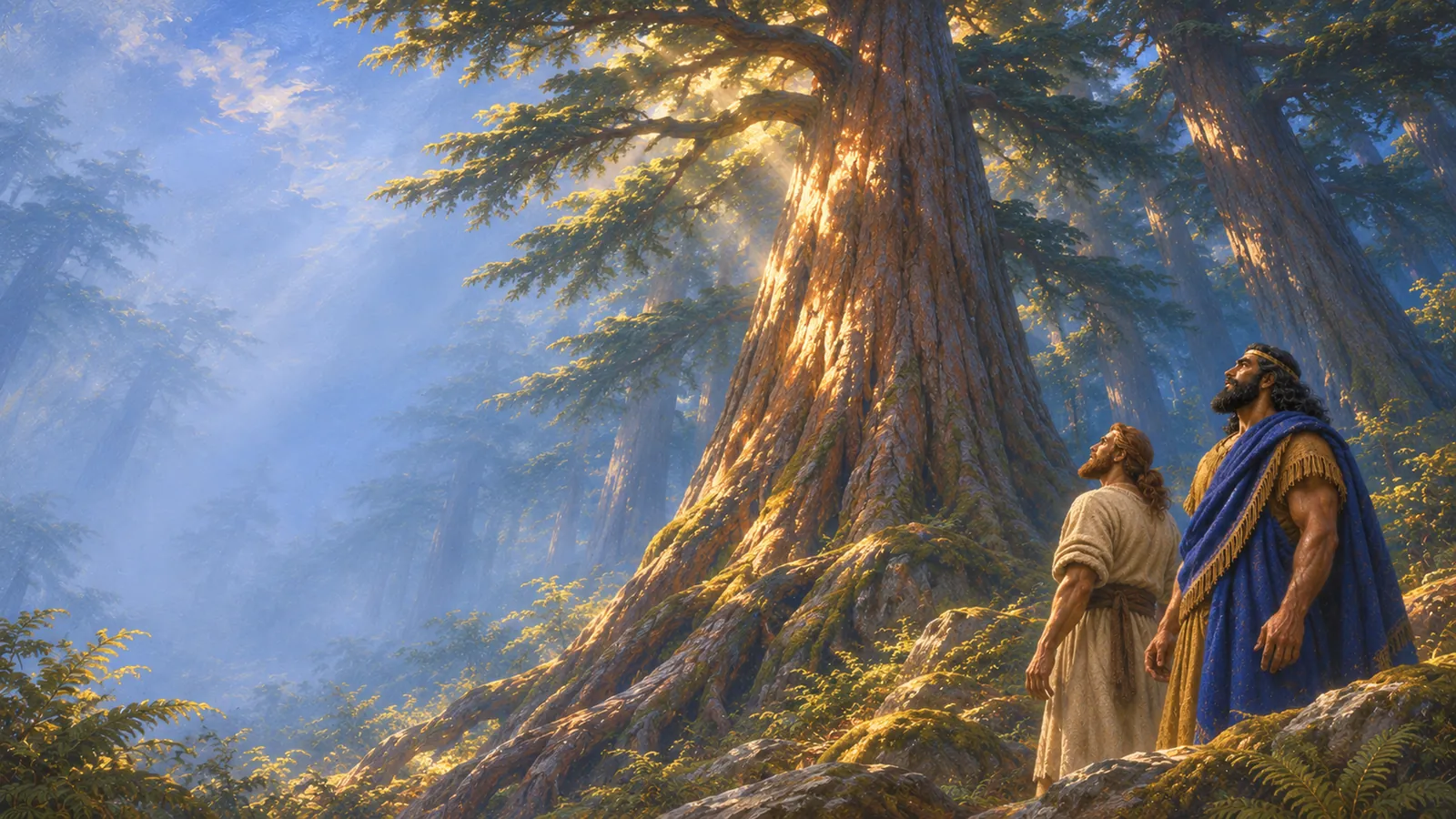
ZEDERN
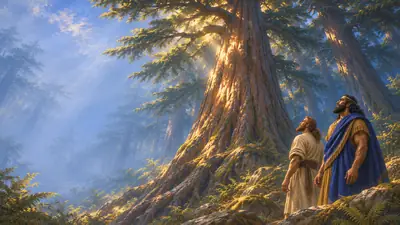
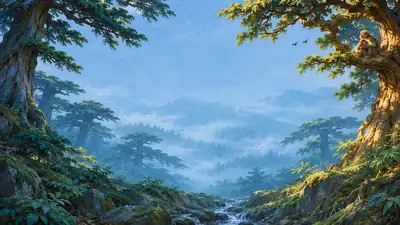
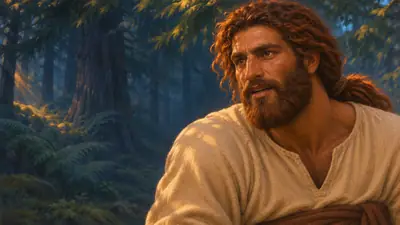
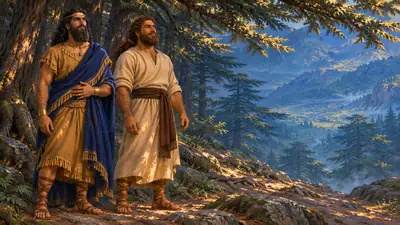
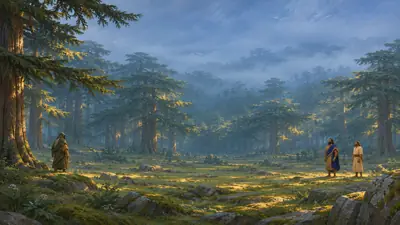
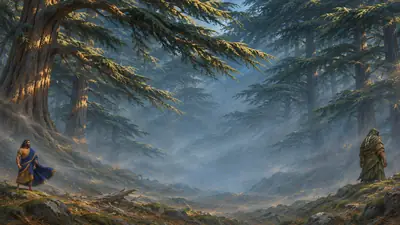
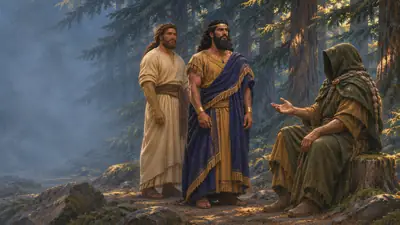
Die beiden Freunde standen unter Bäumen, die höher waren als jedes Dach in Uruk. Sie blickten an den Stämmen hinauf und dann auf den Weg, der zwischen ihnen hindurchführte.

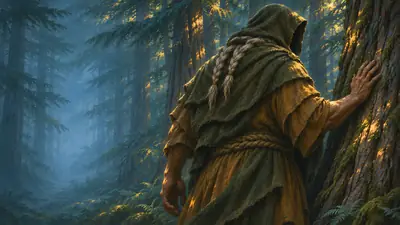
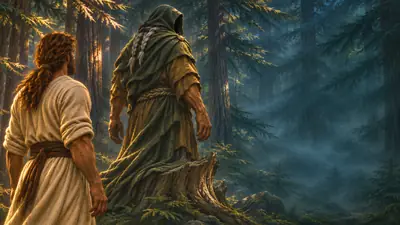
Ein Pfad führte tief in den Wald hinein. Darauf waren die Spuren dessen zu sehen, der hier ein und aus ging: Humbaba, der Wächter des Waldes.
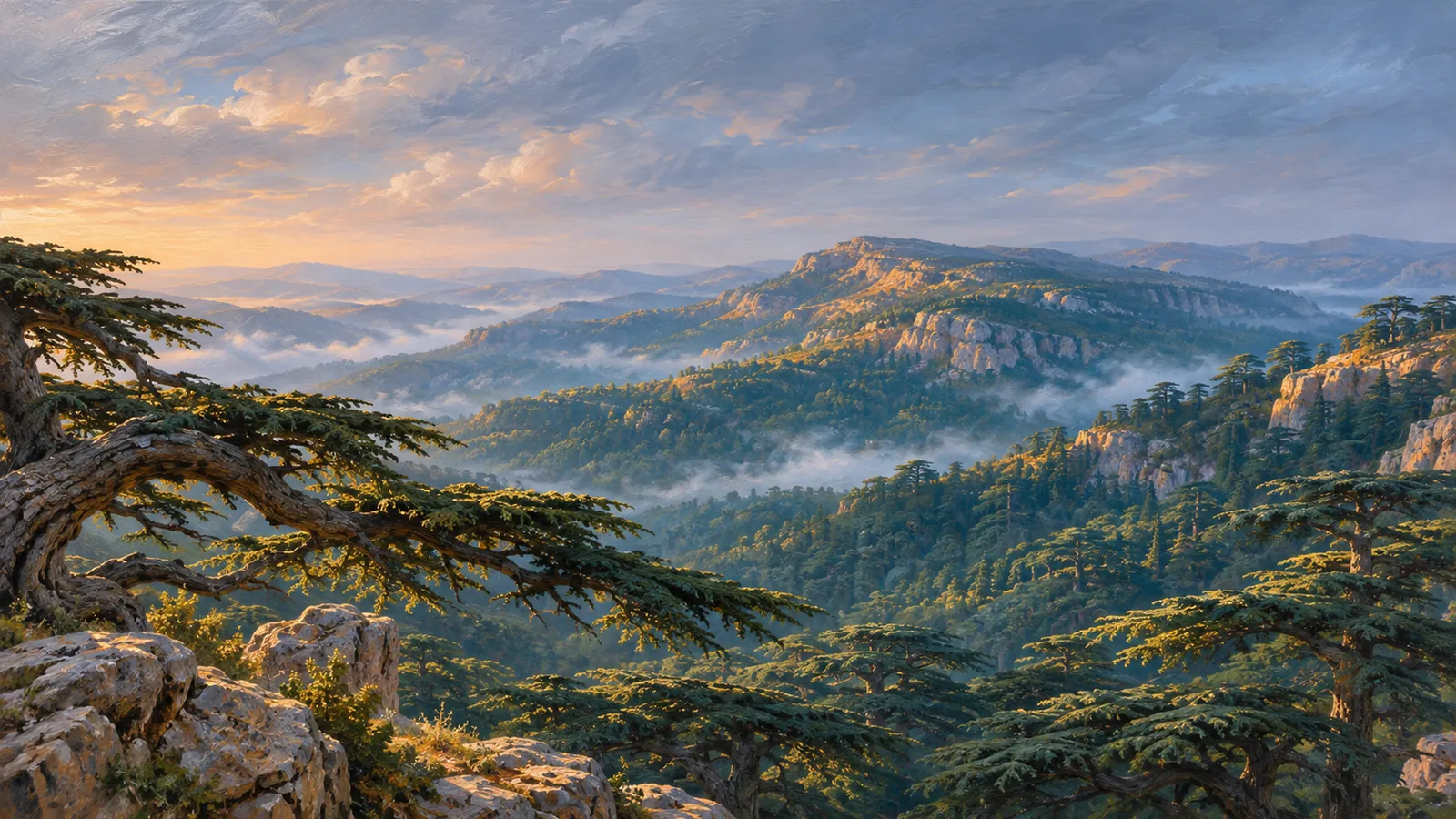
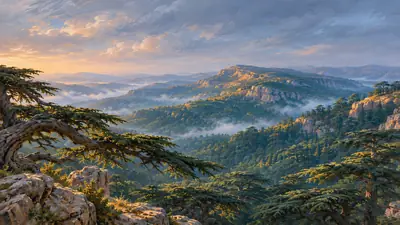
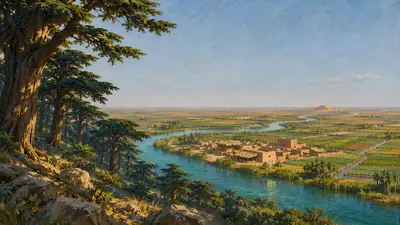
Vor ihnen lag der Zedernberg. Im alten Gedicht wohnen hier die Götter, wo die Schatten tief sind und Bäume in Fülle wachsen.
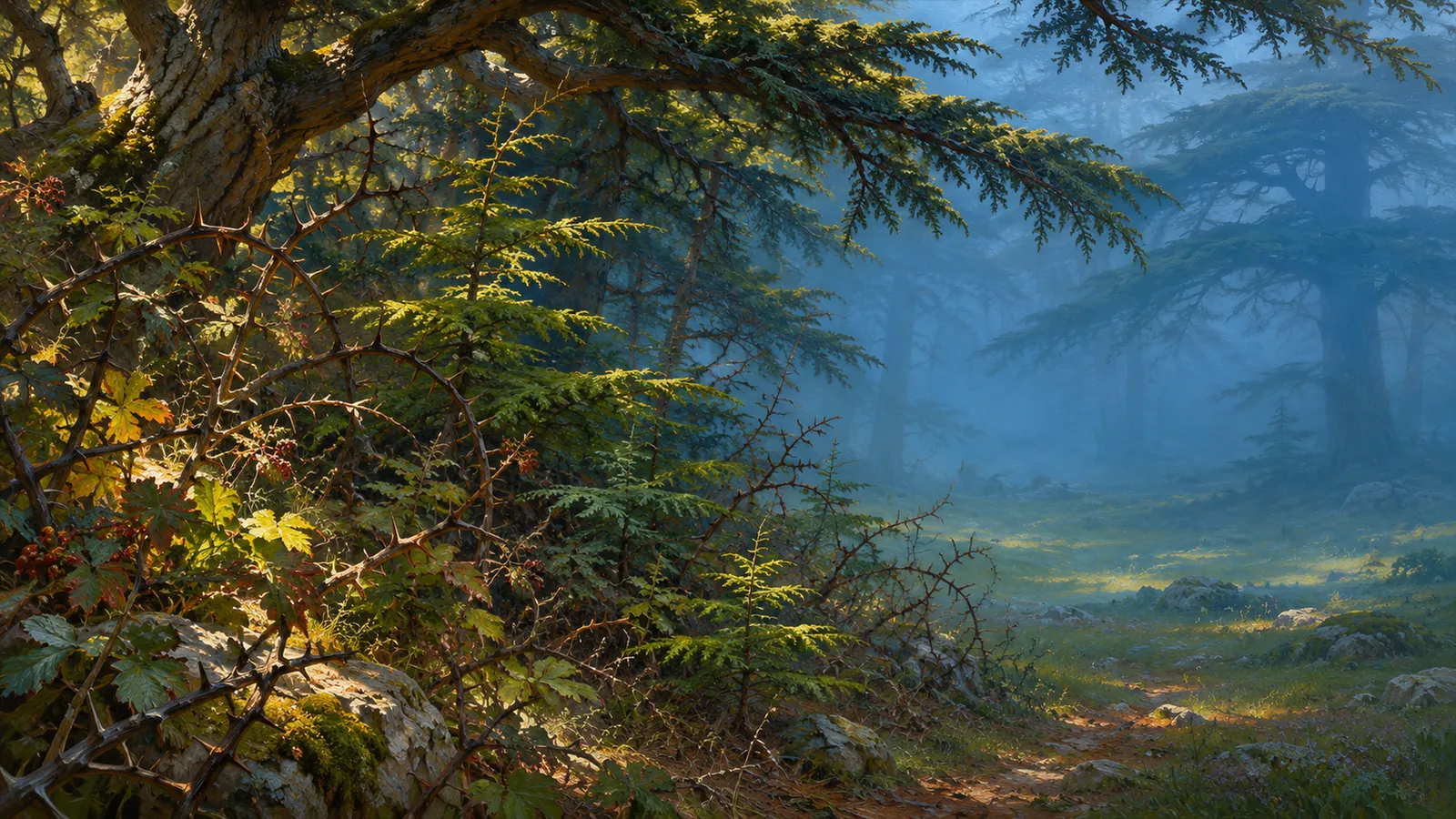
Der Wald rückte dicht an den ausgetretenen Pfad heran. Abseits davon waren junge Bäume und dorniges Gestrüpp so dicht ineinander verwachsen, dass ein Reisender kaum hindurchkam.
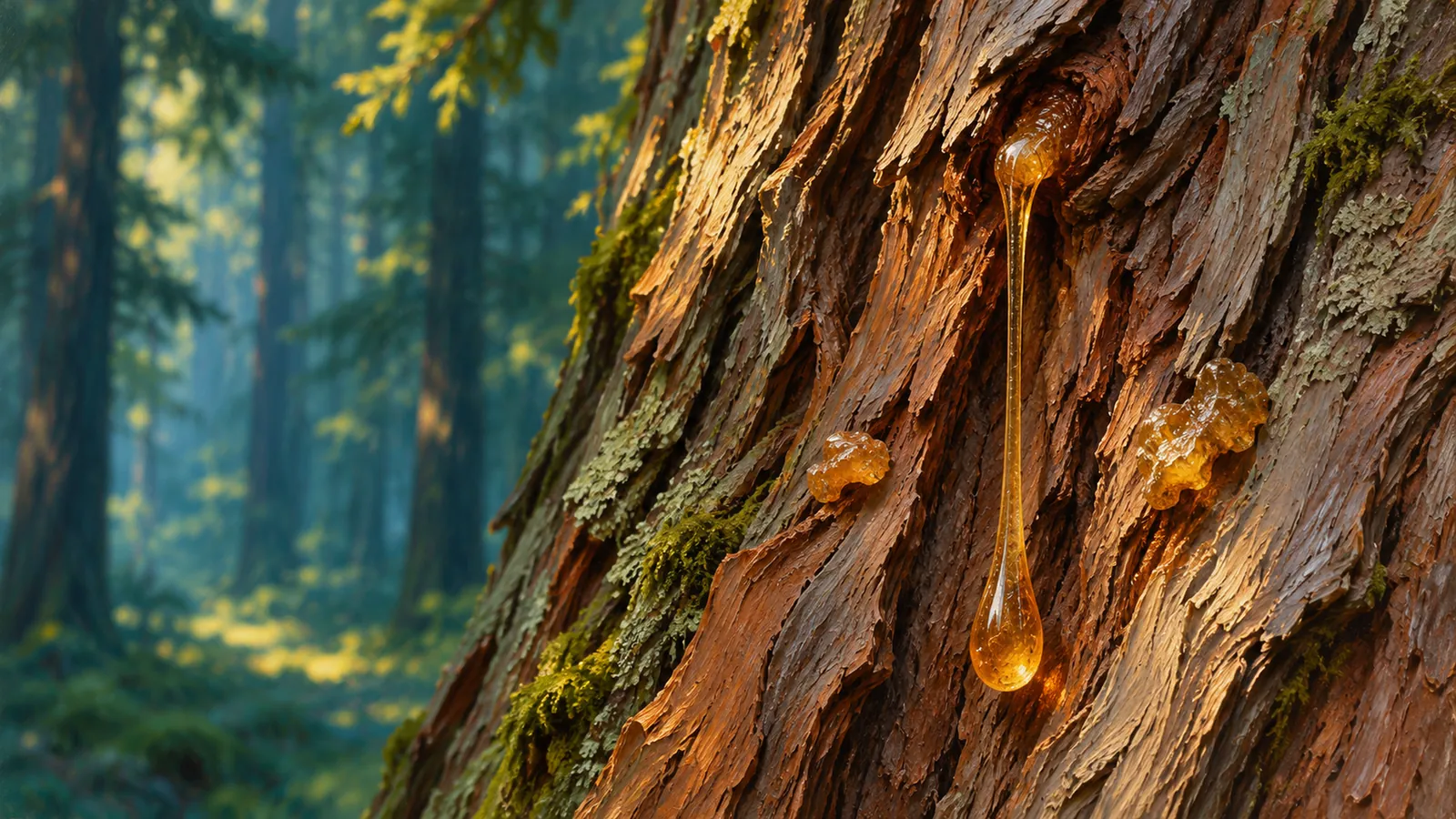
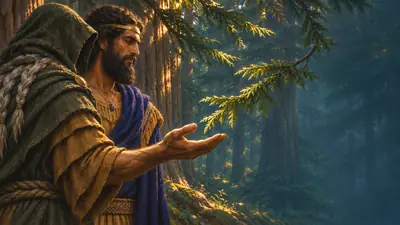
Hoch oben in den Zedern sammelte sich dickes Harz. Tropfen hafteten an der rauen Rinde und rannen langsam herab, bis ihr Duft die ganze Waldluft zu erfüllen schien.
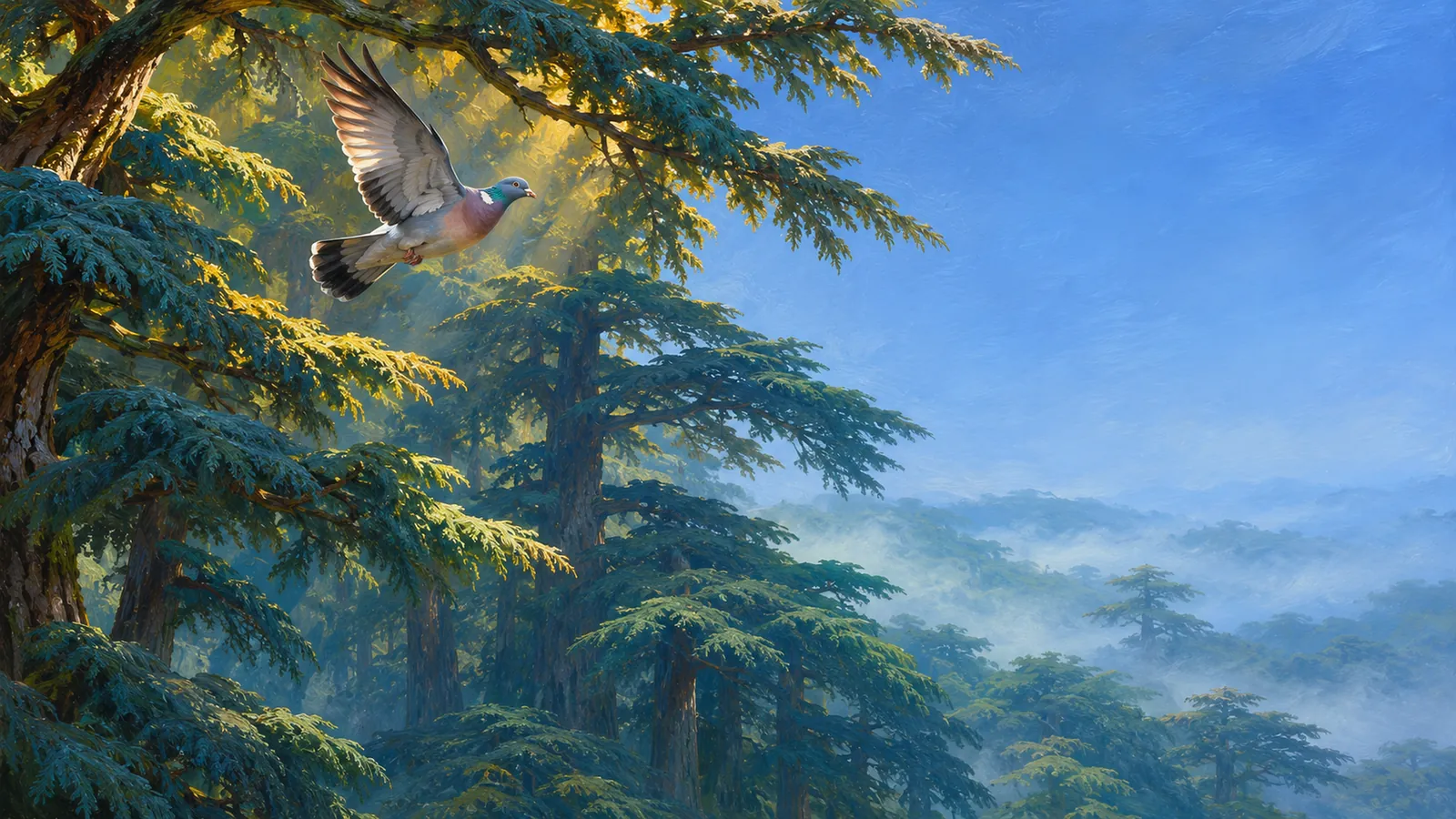
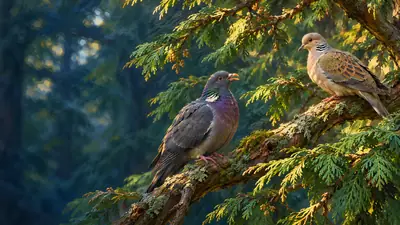
Ein Vogel rief zwischen den Bäumen, und aus den Zweigen kamen andere Laute zurück. Der Wald hatte seine eigenen Stimmen, lange bevor die Reisenden zu sprechen begannen.
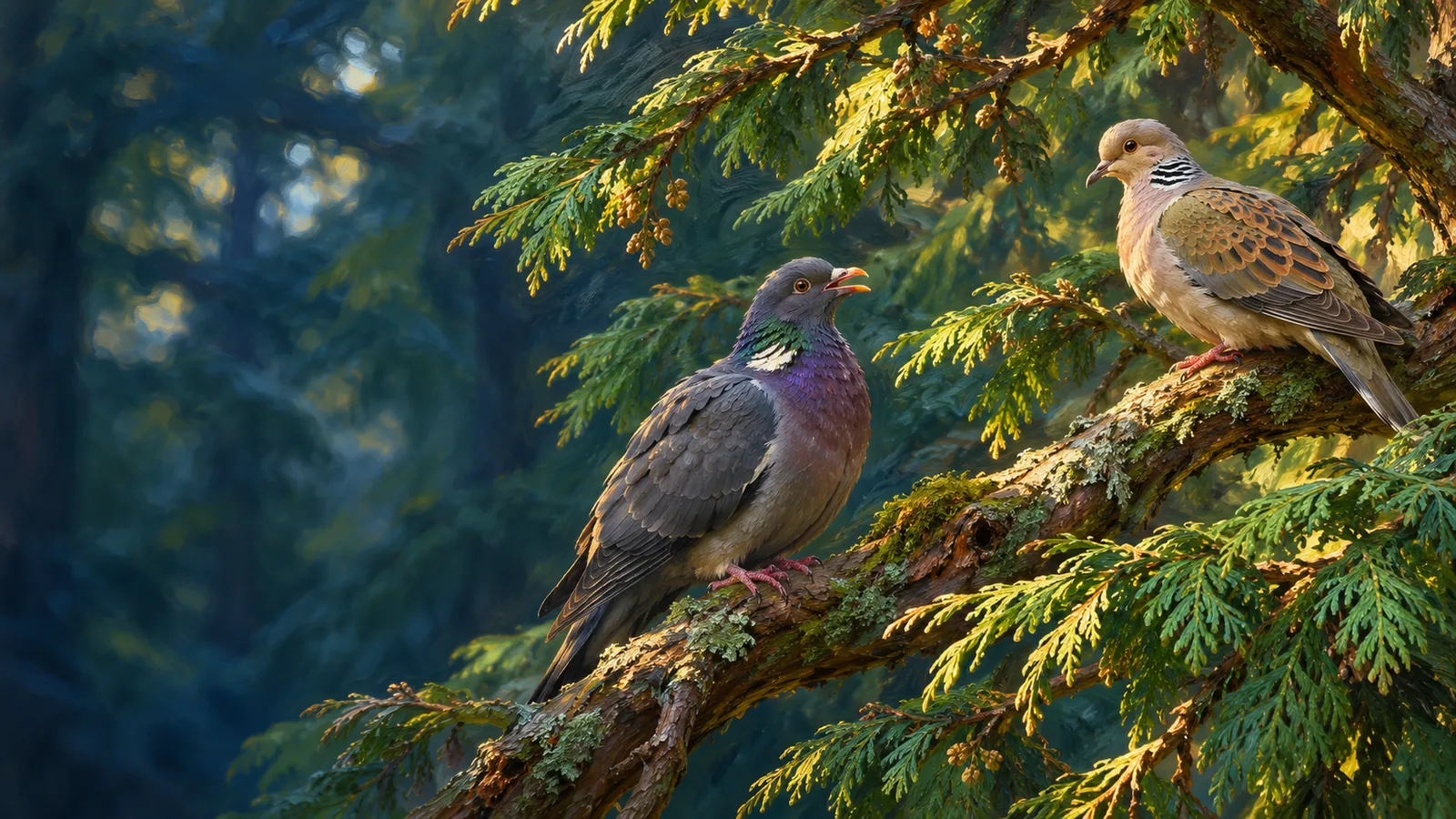
Die Rufe kamen aus verschiedenen Höhen im Geäst. Das alte Gedicht lauscht lange genug, um die Ringeltaube und den Antwortlaut einer Turteltaube herauszuhören.
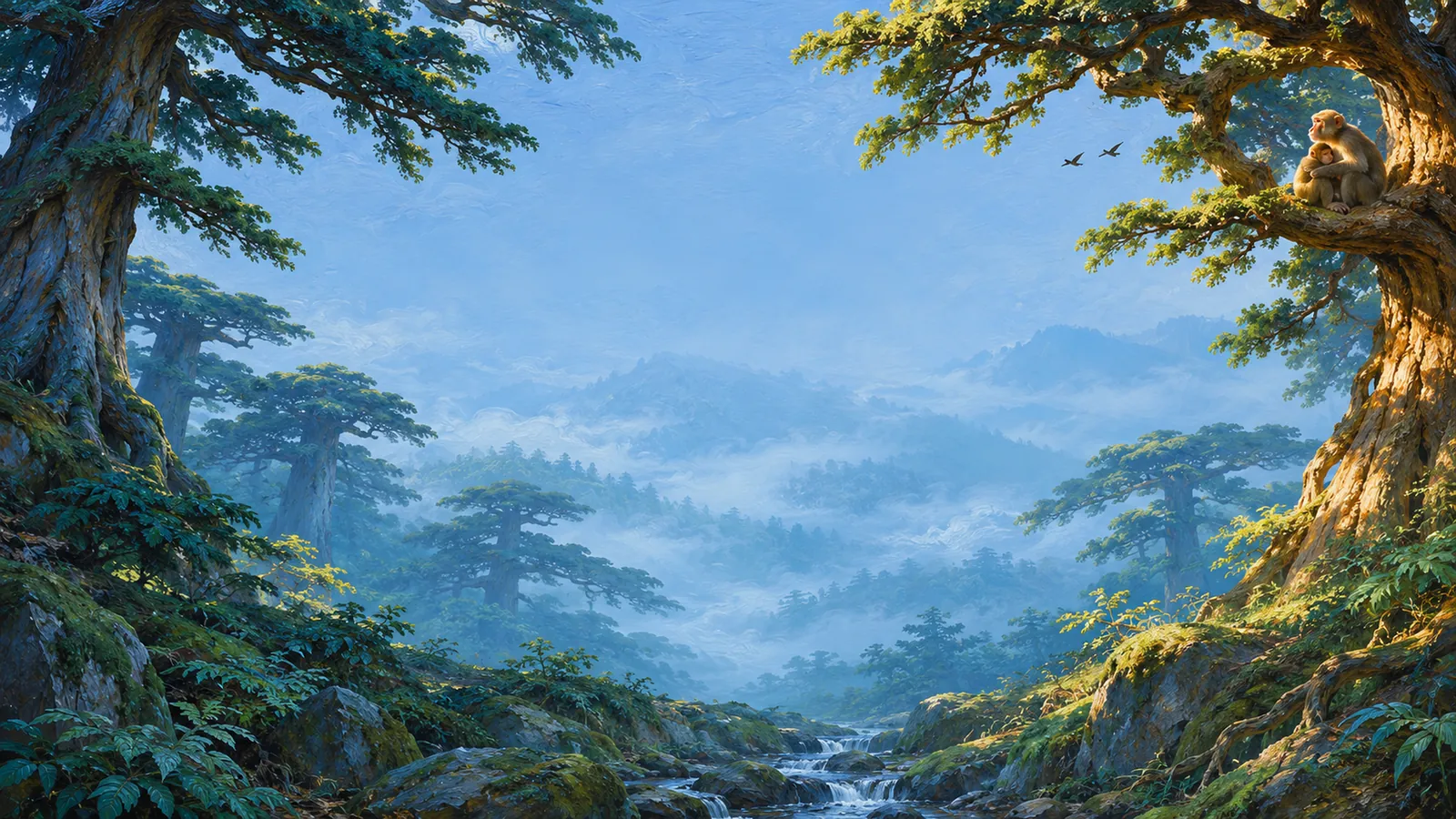
Die Klänge des Waldes mischten sich wie die Töne einer Gruppe von Musikern. Das Gedicht schenkt diesen täglichen Chor dem Wald, in dem Humbaba Wache hält.
ANGST
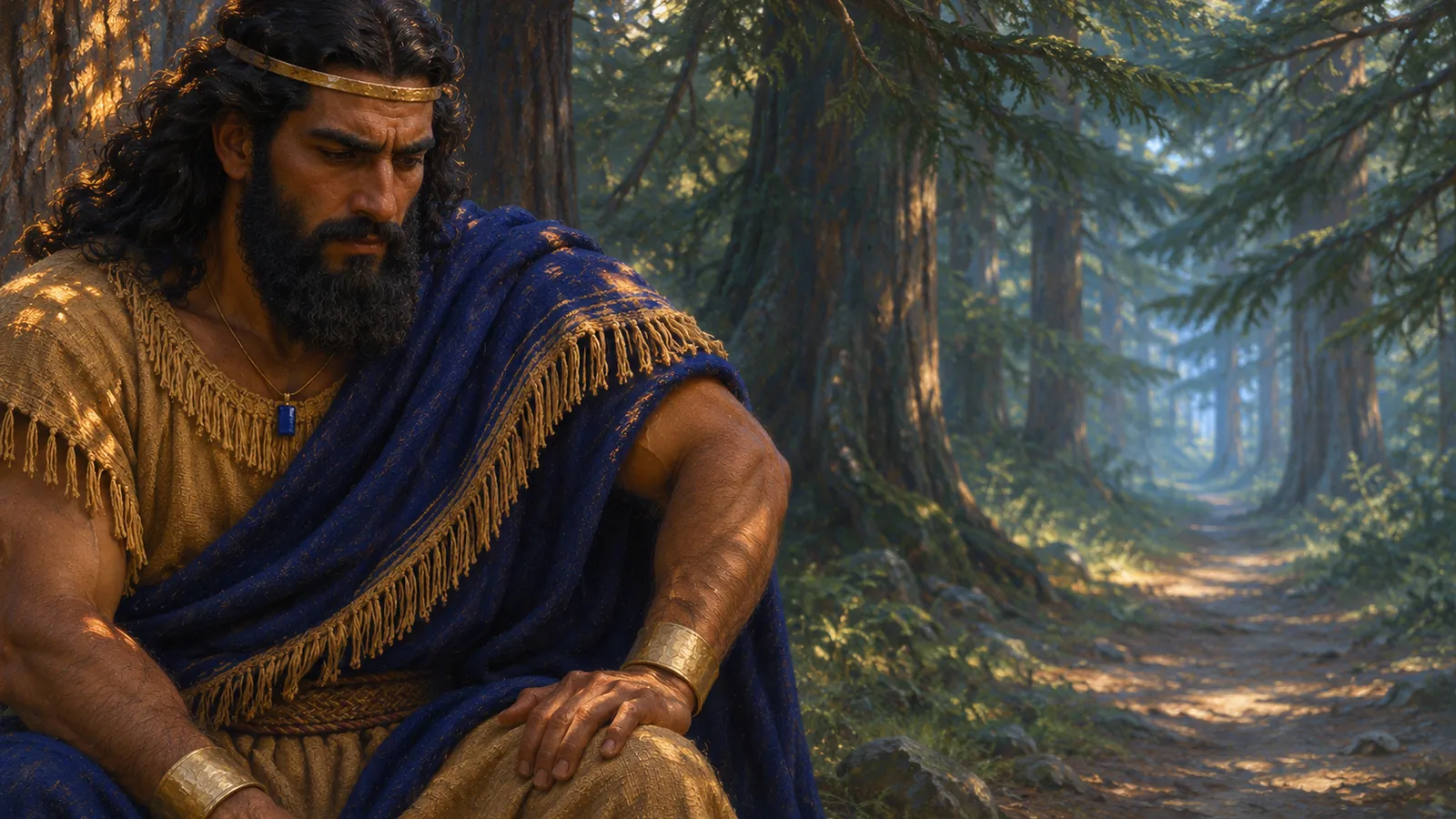
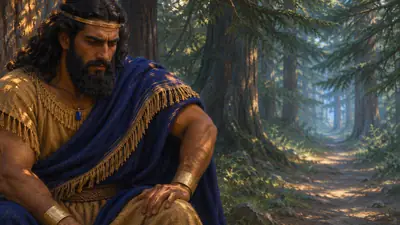
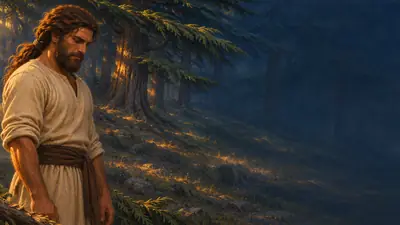
Als der Schatten der Zedern auf ihn fiel, packte Gilgamesch die Angst. Seine Arme wurden starr, und seine Beine schienen ihn kaum noch tragen zu können.
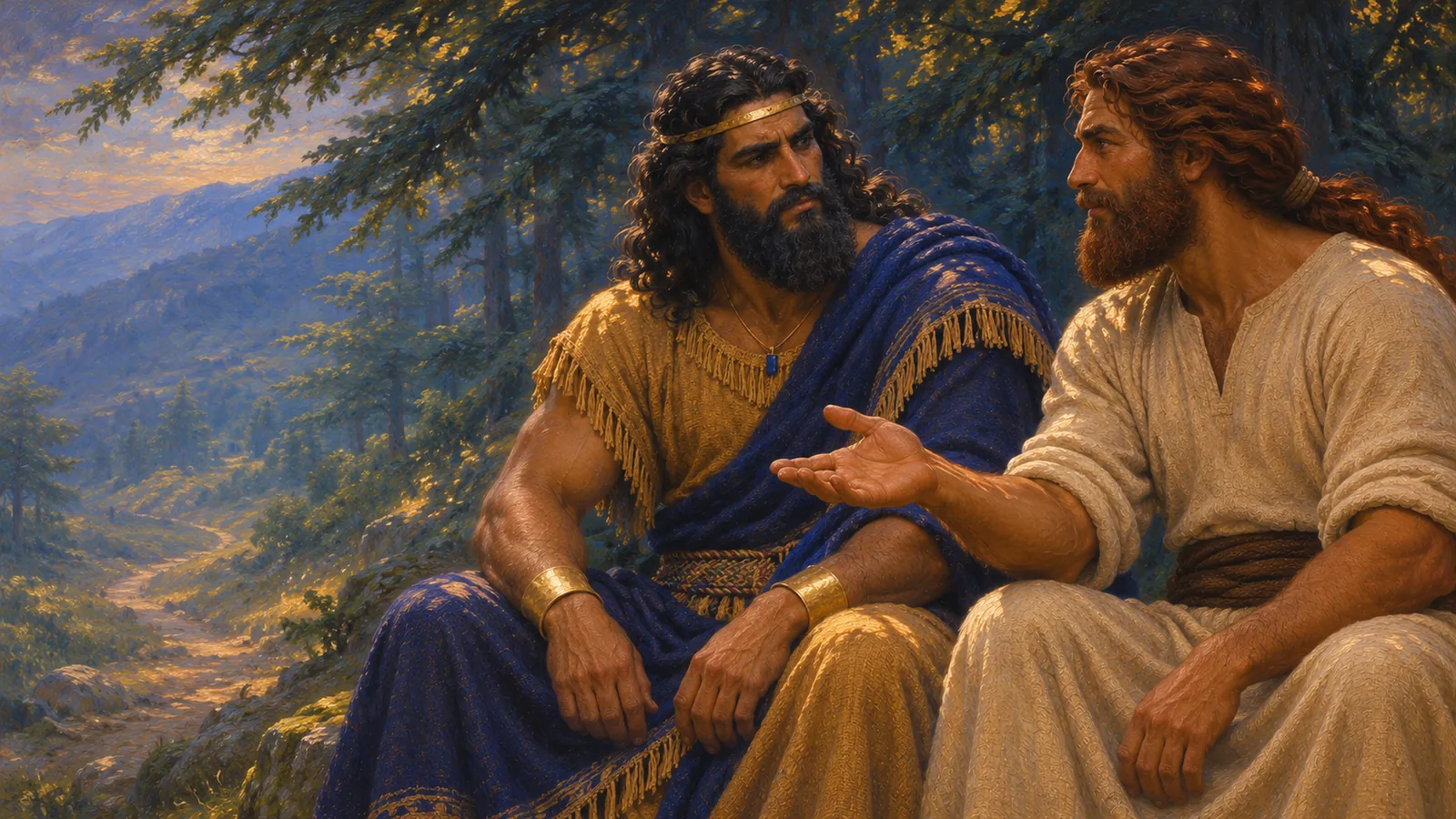
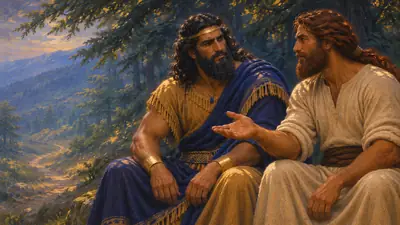
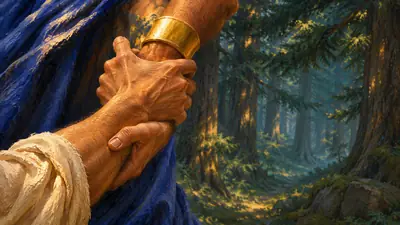
Enkidu sprach in das Schweigen hinein, das zwischen sie getreten war. Er drängte seinen Freund, sich zu fassen und mit ihm ins Herz des Waldes zu gehen.
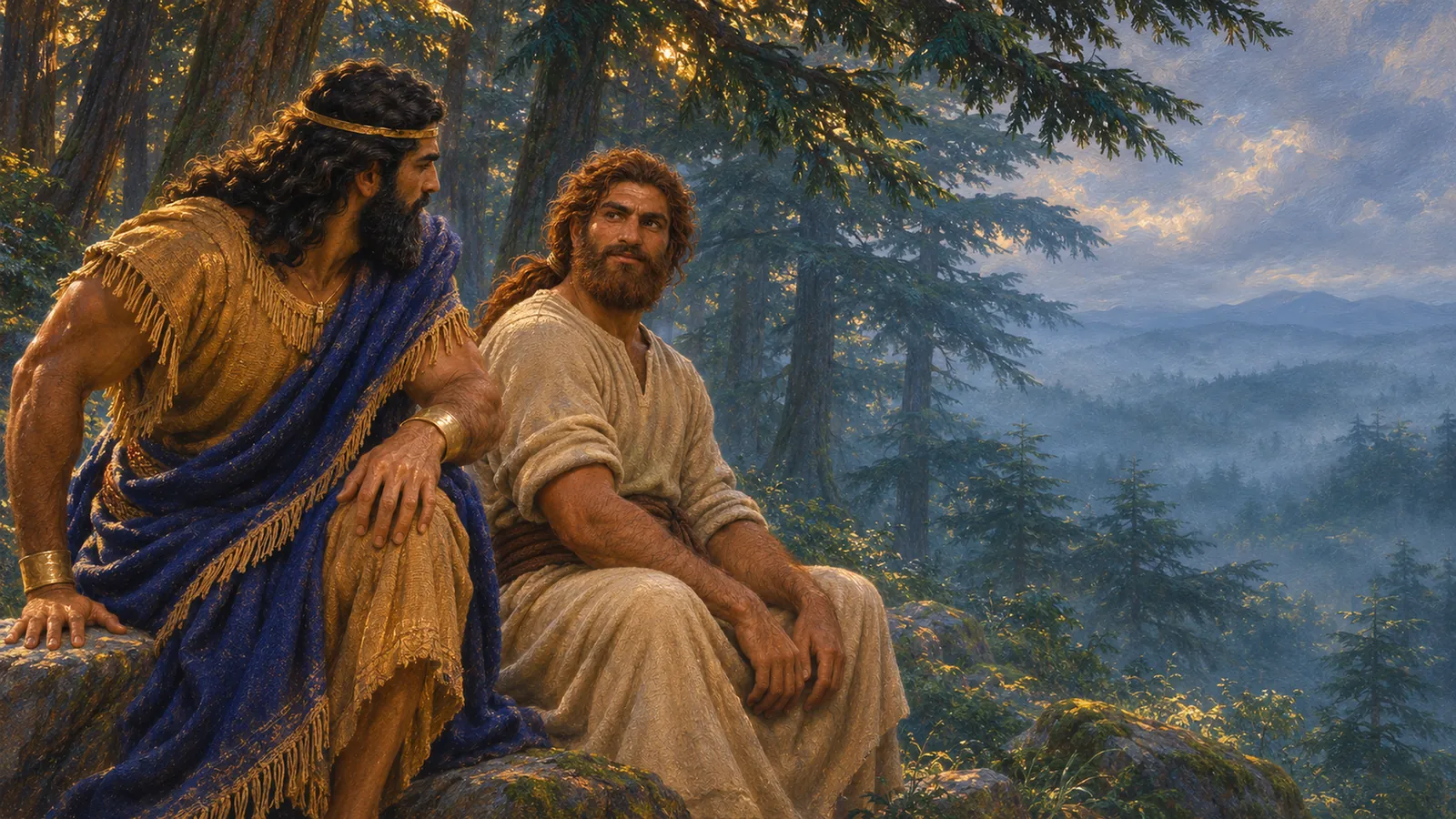
Gilgamesch erinnerte seinen Freund an die Berge, die sie schon überquert hatten. Wie kam es, dass sie nun beide hier unter den Bäumen zitterten?
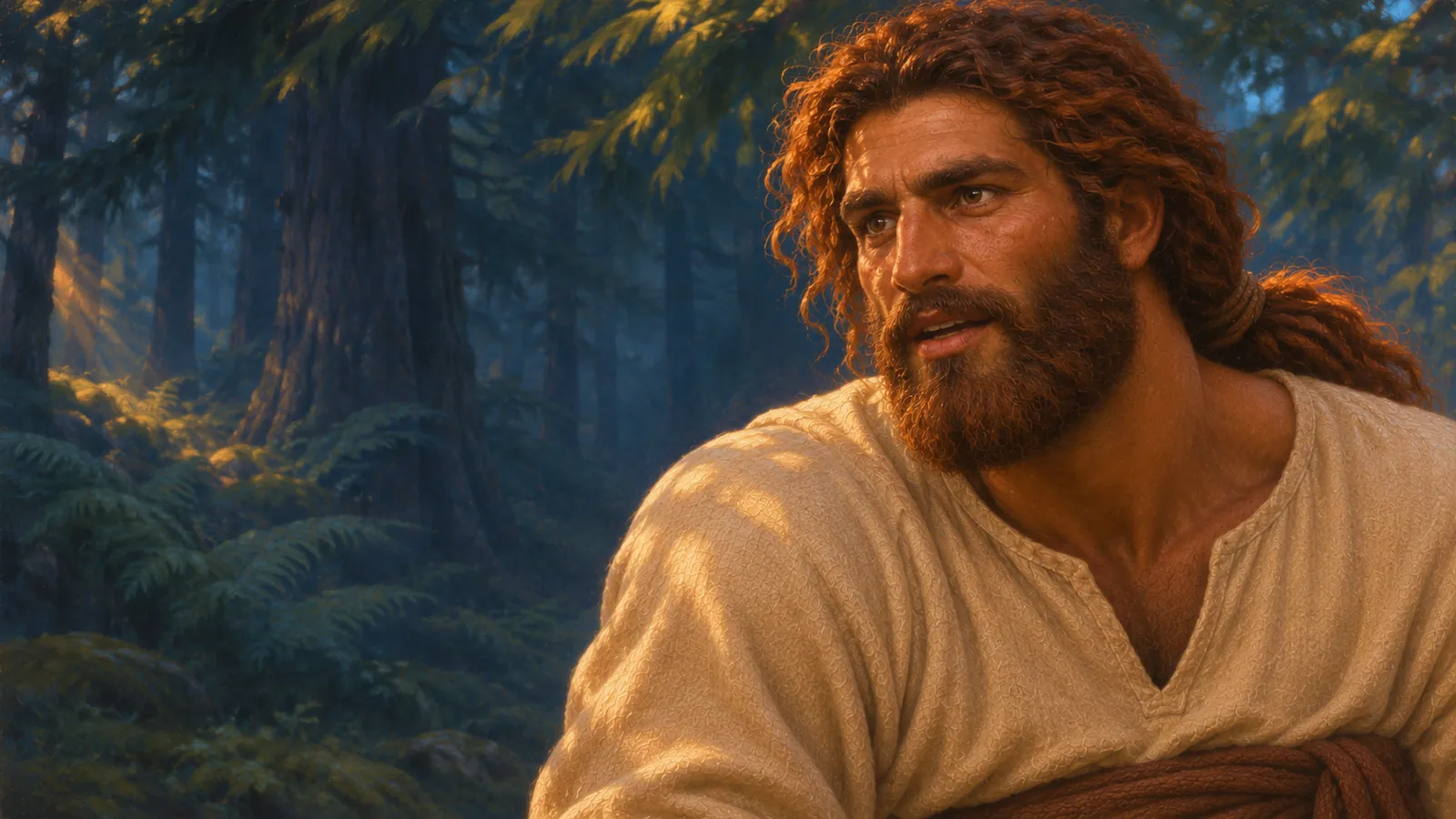
Enkidu appellierte an den Mut, den sein Freund schon früher gezeigt hatte. Er wollte, dass Gilgameschs Beine aufhörten zu zittern und die Kraft in seine Arme zurückkehrte.
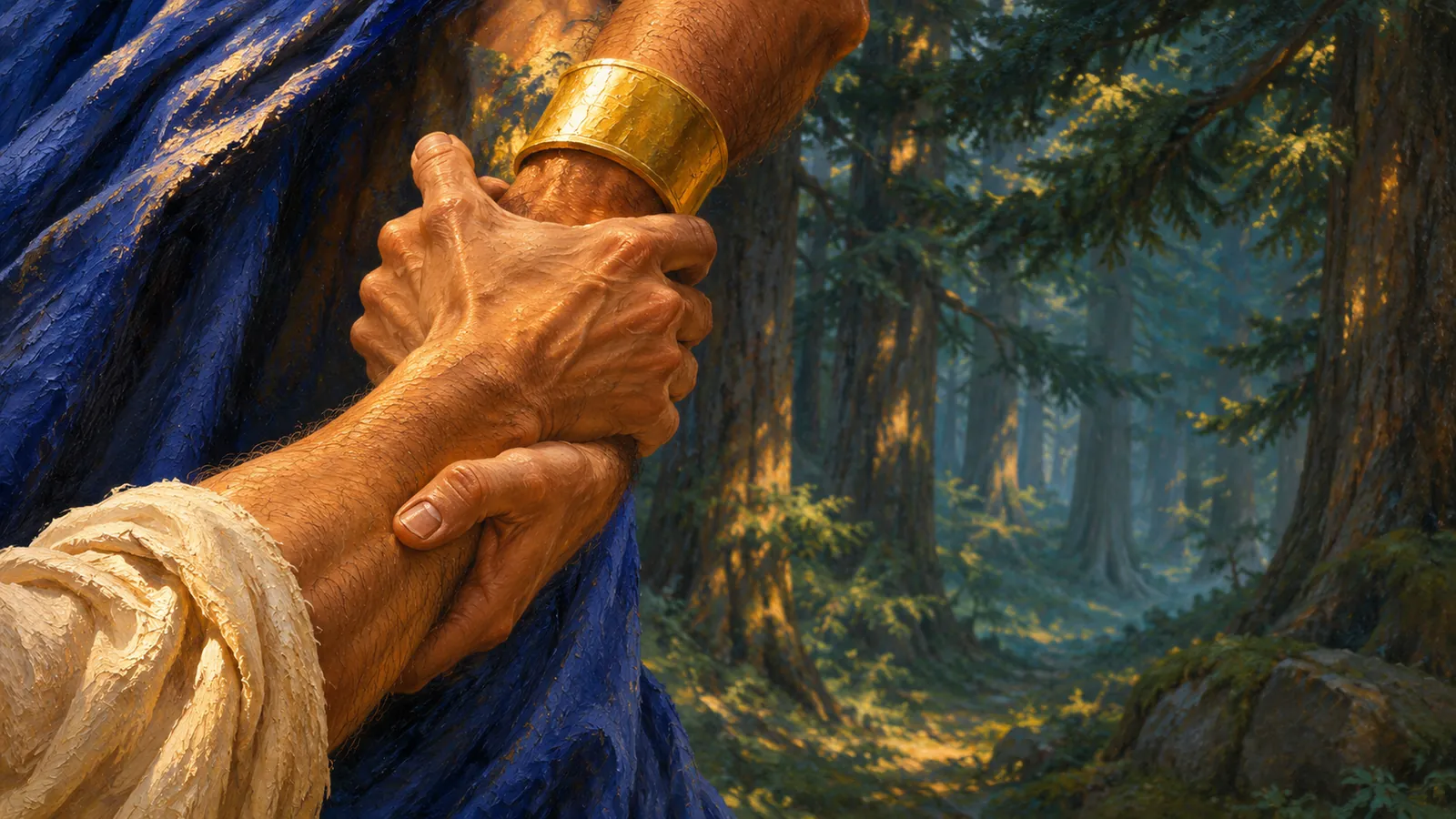
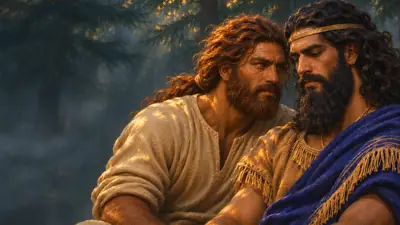
Gilgamesch bat seinen Freund, ihn festzuhalten. Die letzten Wörter der Zeile sind weggebrochen, doch die Bewegung aufeinander zu ist noch erkennbar, bevor die Tafel erneut abbricht.

Hier fehlt ein Stück der alten Tafel. Wo der Text wieder einsetzt, ist die Geschichte beim Wächter, tief zwischen den Bäumen, die die beiden Freunde sehen wollten.
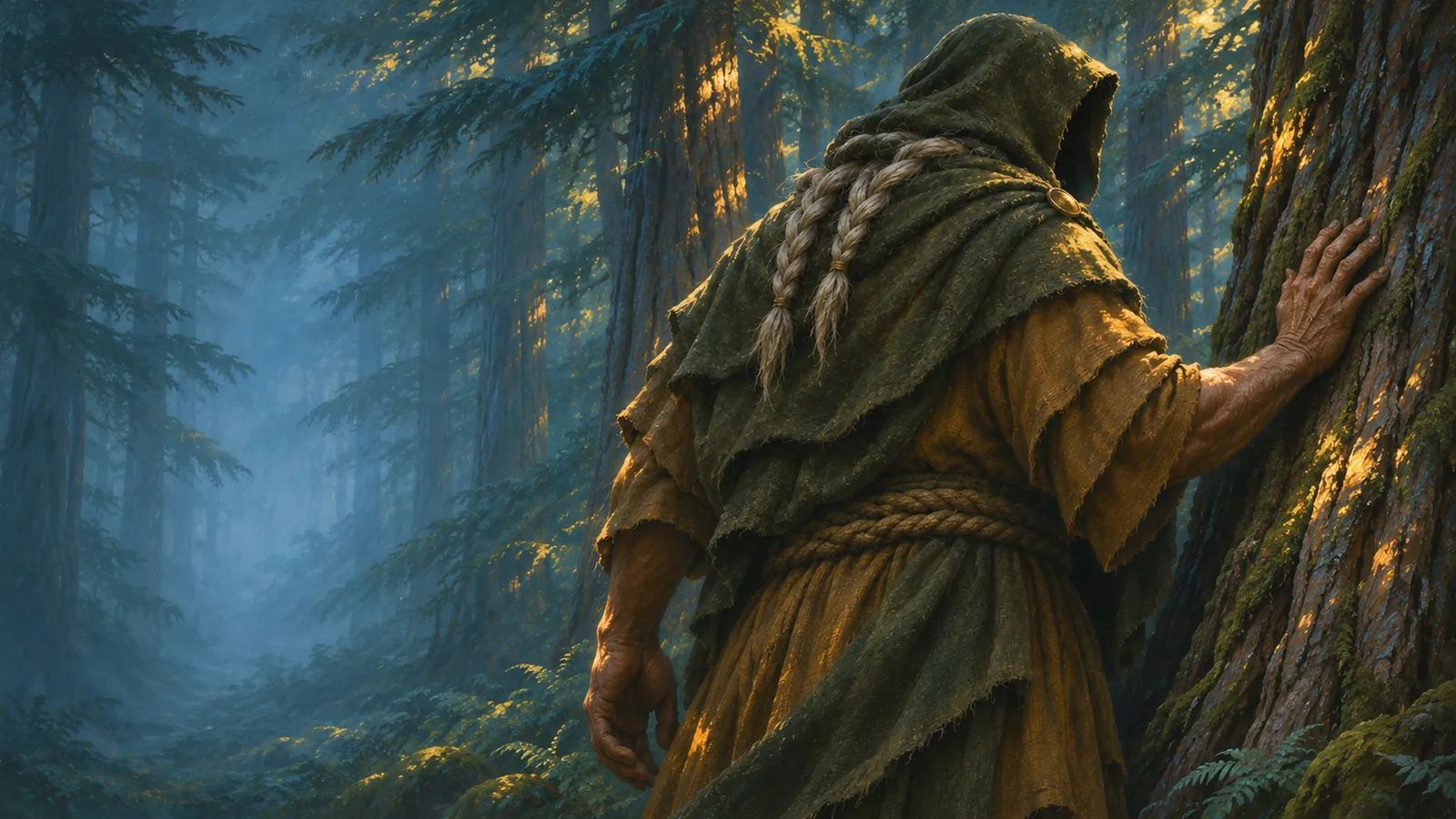
HUMBABA
Humbaba spricht zu sich selbst in einer Passage, die nur in Bruchstücken erhalten ist. Seinen Worten ist schwer zu folgen, doch für einen Augenblick sehen wir den Wald mit seinen Augen.
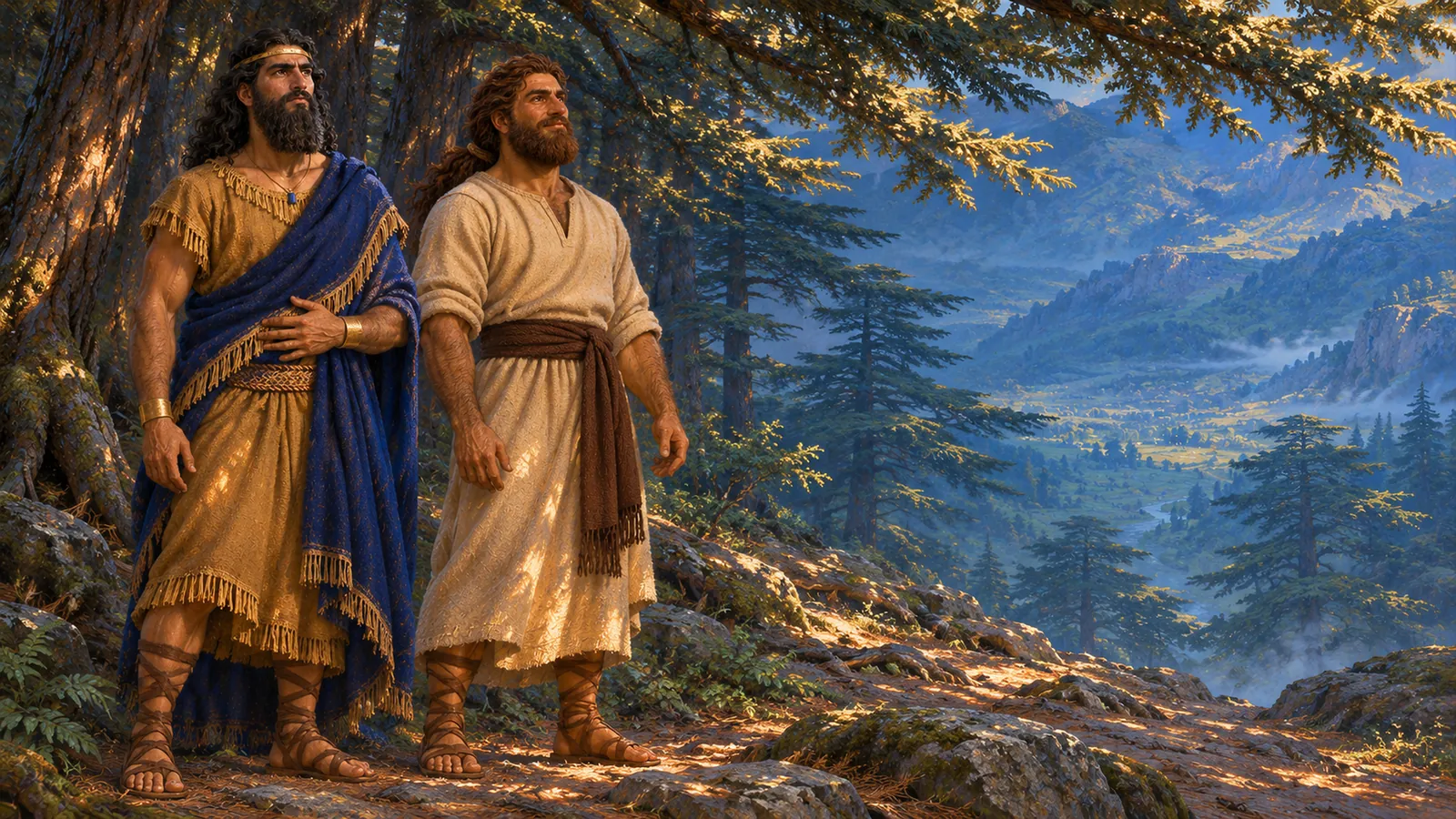
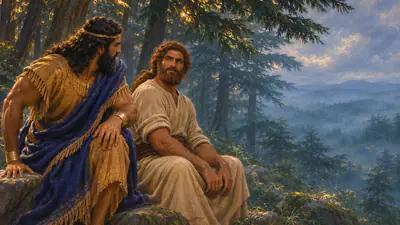
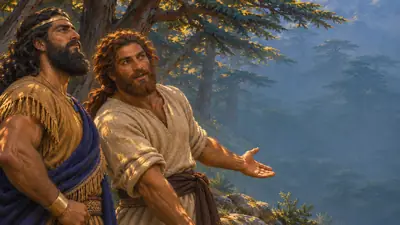
Enkidu sprach davon, wie viel mehr zwei Gefährten gemeinsam ausrichten konnten. Ein Mann allein mochte ins Straucheln geraten, doch ein zweiter konnte ihm helfen, auf den Beinen zu bleiben.
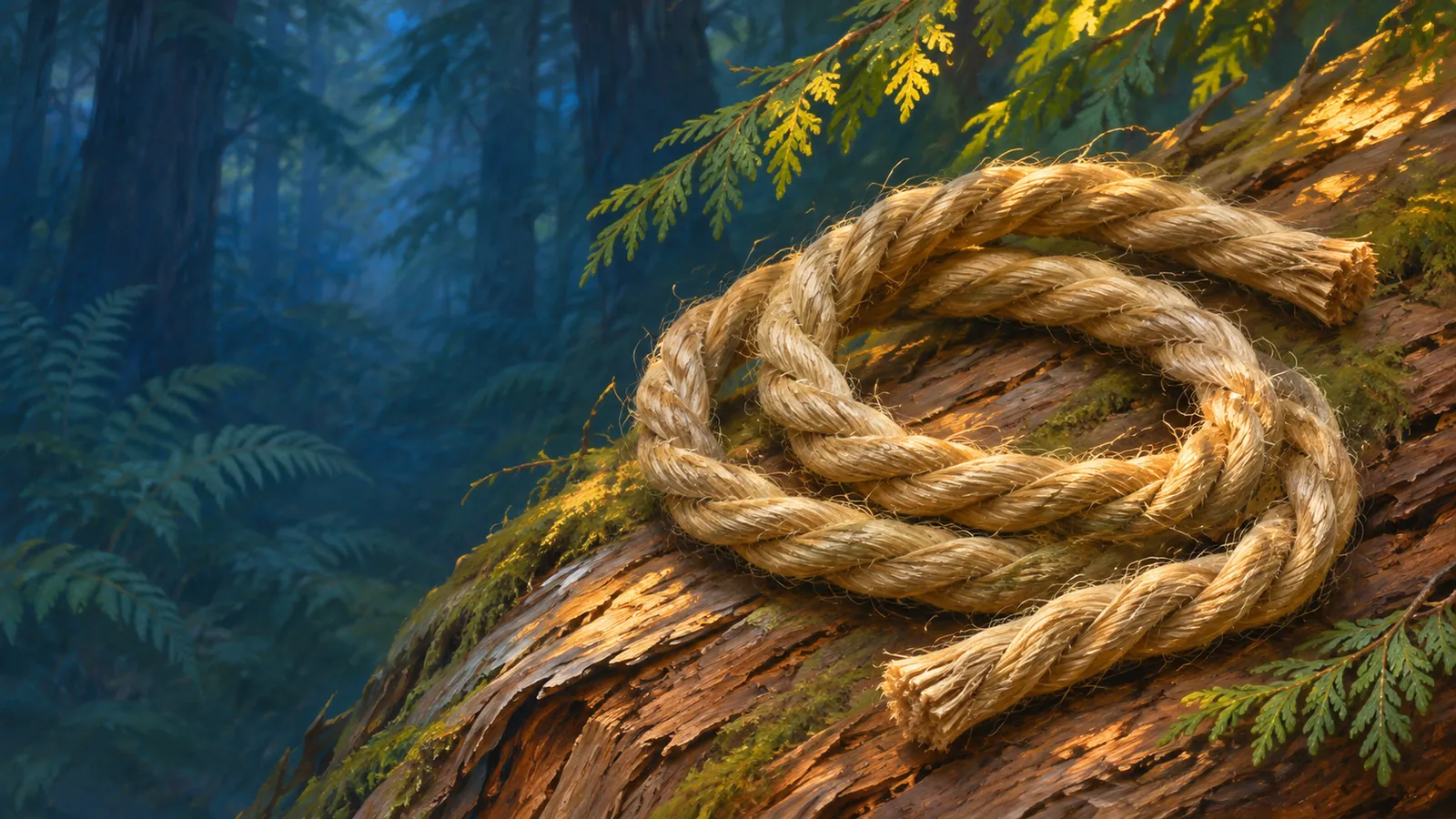
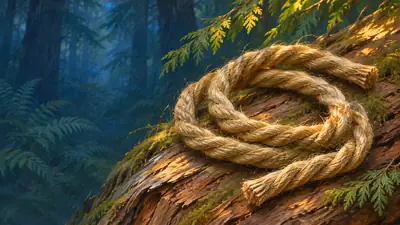
Er gab dem Gedanken eine Form, die sein Freund kannte: Eine Schnur aus drei verflochtenen Strängen reißt nicht leicht. Im Wald würde sich zeigen, wie fest sie miteinander verbunden waren.
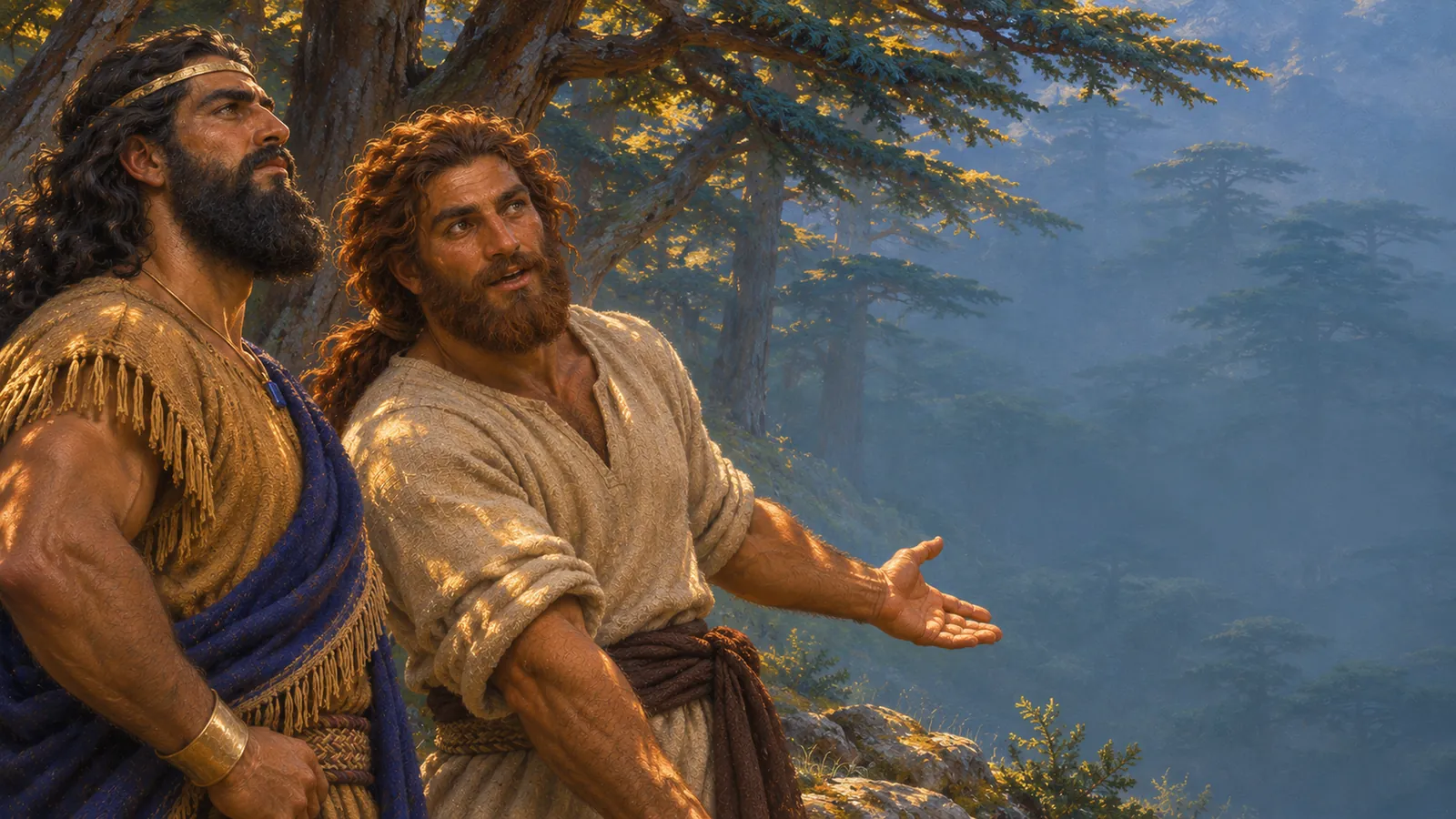
Was könnte dem Sturm standhalten, der den Wächter umgab? In diesen beschädigten Zeilen lenkt Enkidu Gilgameschs Gedanken auf Schamasch und auf die Winde, die ihm zu Hilfe kommen könnten.
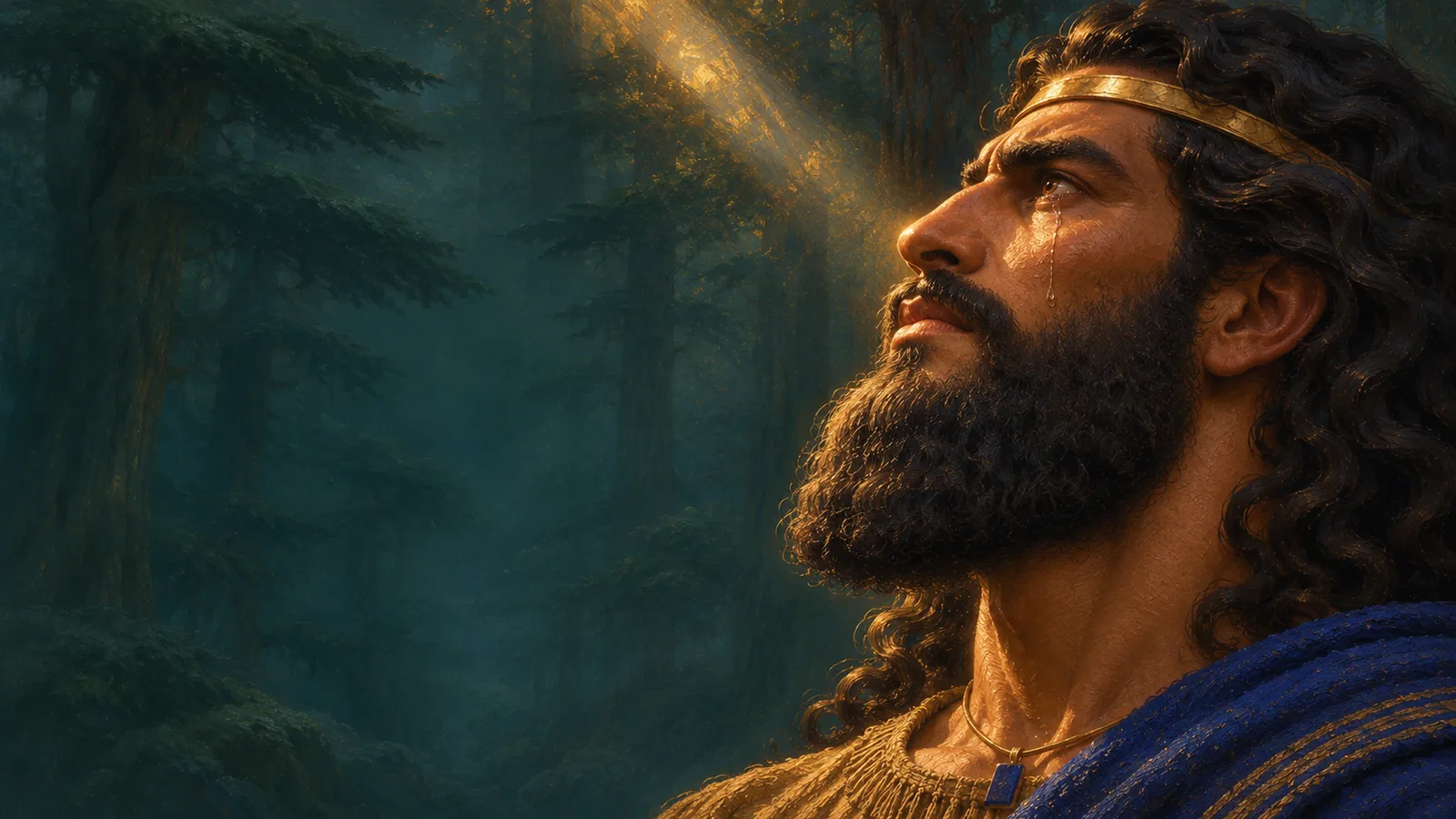
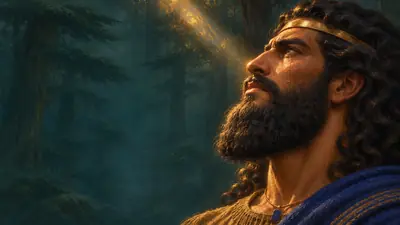
Gilgamesch blickte zur Sonne auf. Ihm kamen die Tränen, als er zu Schamasch betete, und das Licht erreichte ihn selbst hier unter den hohen Zedern.
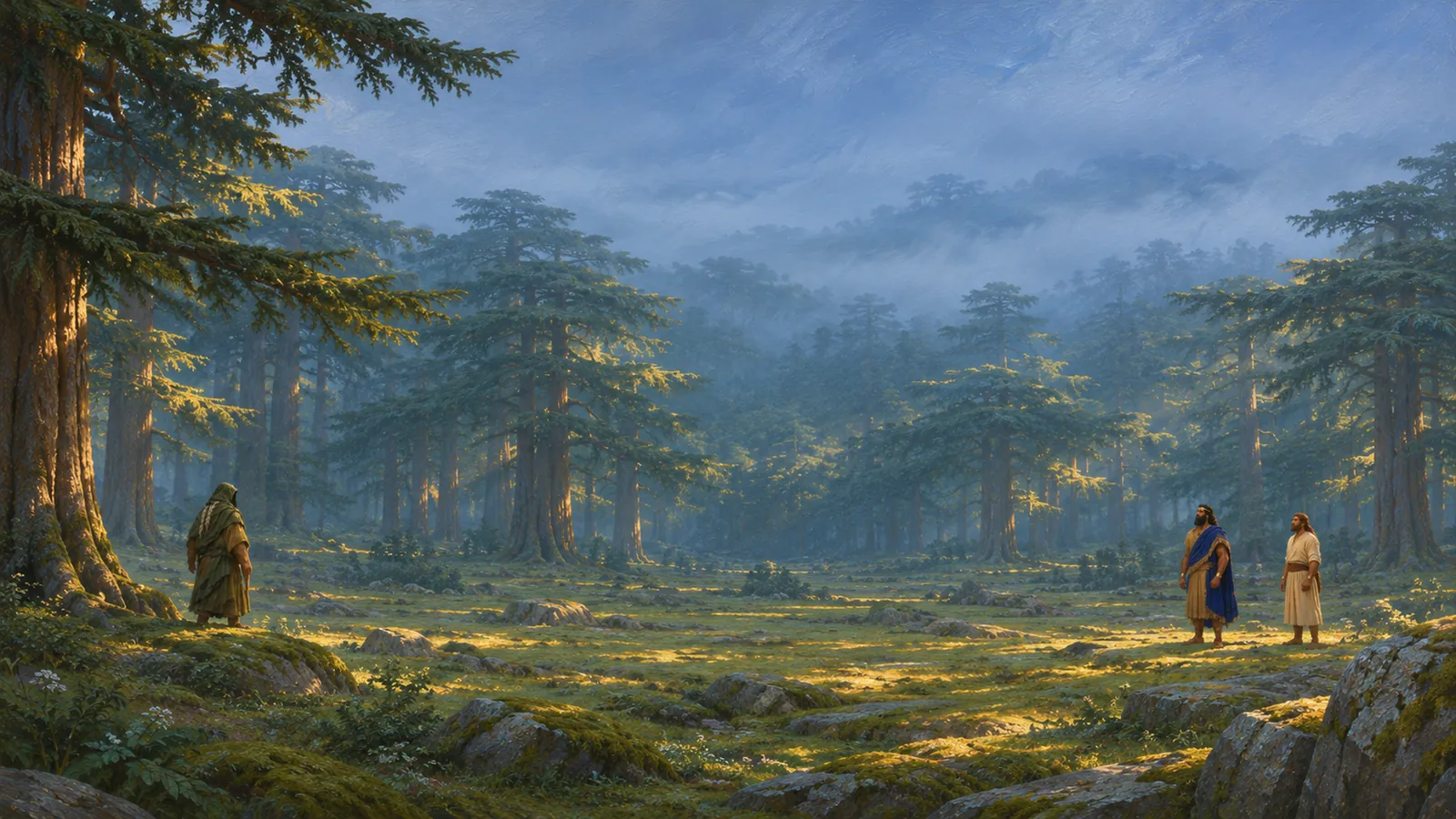
WÄCHTER
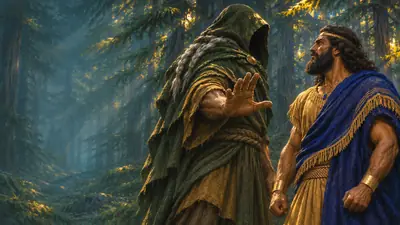
Als die Konfrontation beginnt, steht der Wächter vor ihnen. Der Mann, den sie von Weitem gehört haben, spricht nun zu den Freunden, die seinen Wald betreten haben.
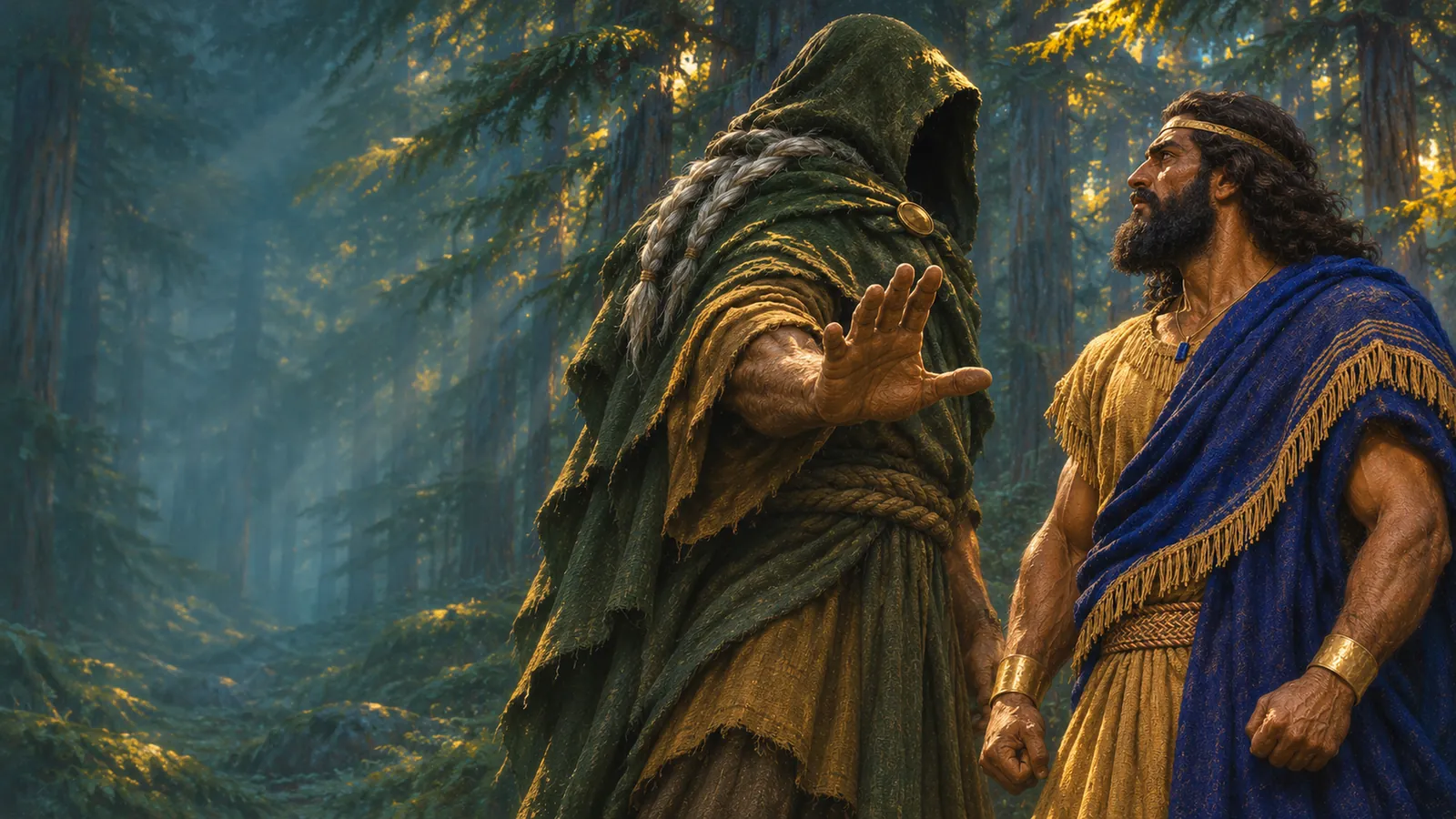
Humbaba hatte dem König, der so weit gereist war, um ihm entgegenzutreten, etwas zu sagen. Seine Herausforderung gab der Stille unter den Bäumen ein anderes Gewicht.
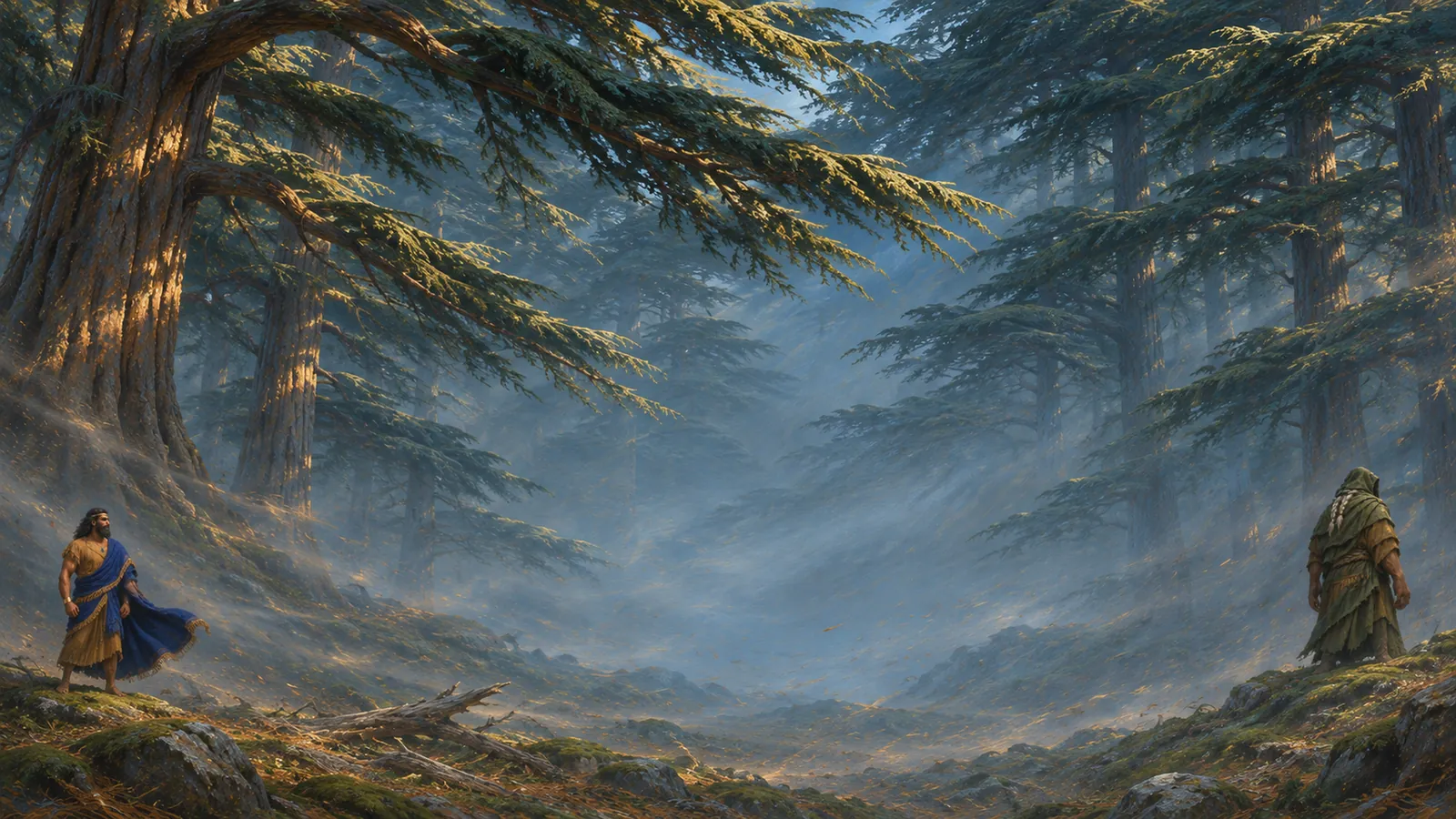
KAMPF
Gilgamesch trat Humbaba im Wald entgegen. Im Gedicht reicht die Wucht der Begegnung über die beiden hinaus, als spürte selbst der Boden ringsum ihre Kraft.
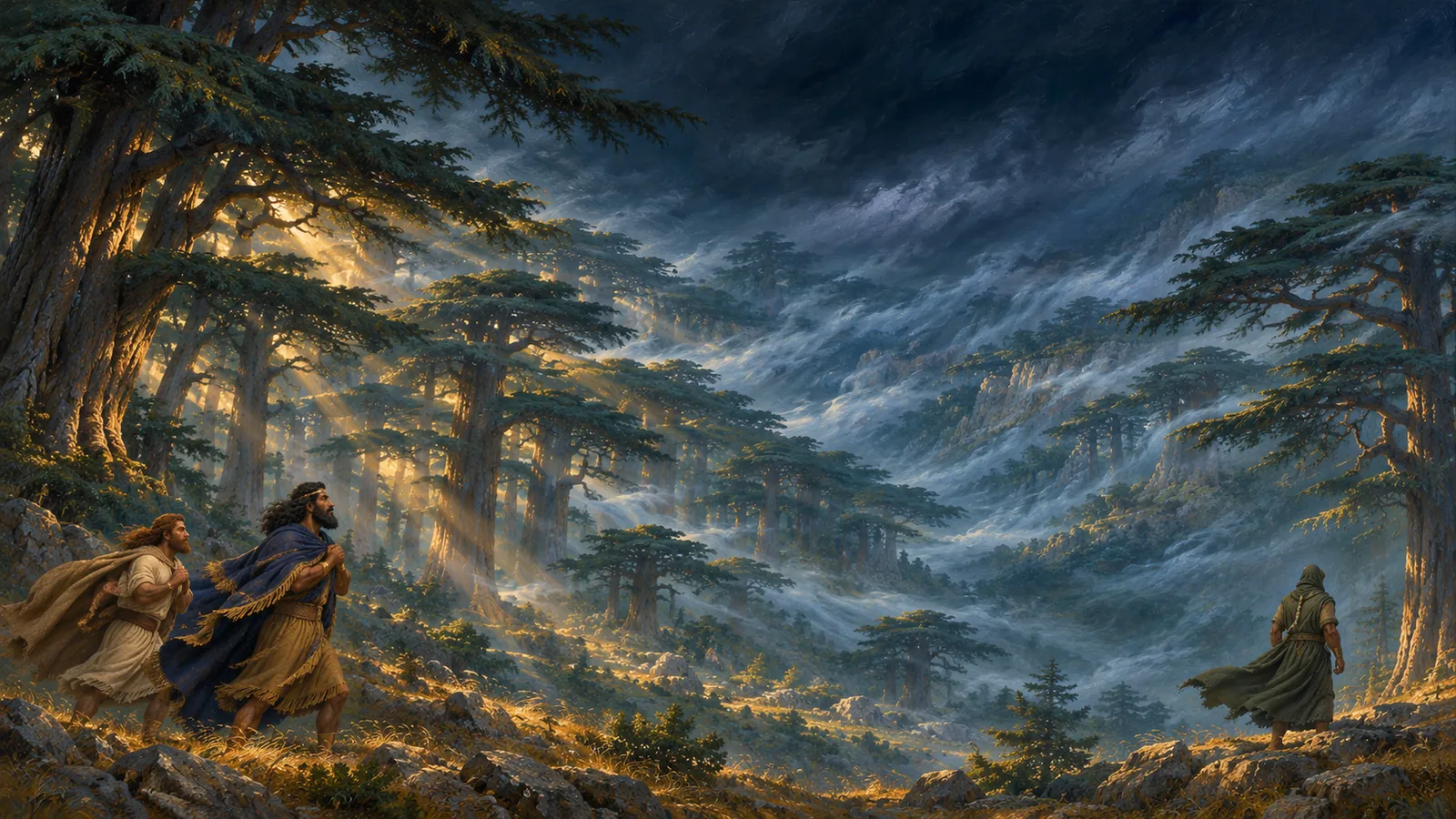
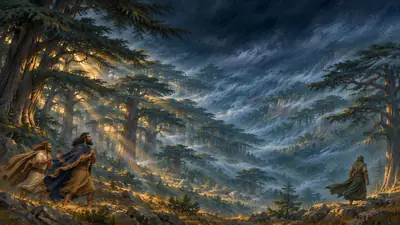
Da brausten die Winde des Schamasch heran. Zweige und Staub wurden zugleich aufgewirbelt, und der Wächter stand einer Macht gegenüber, die er nicht abwenden konnte.
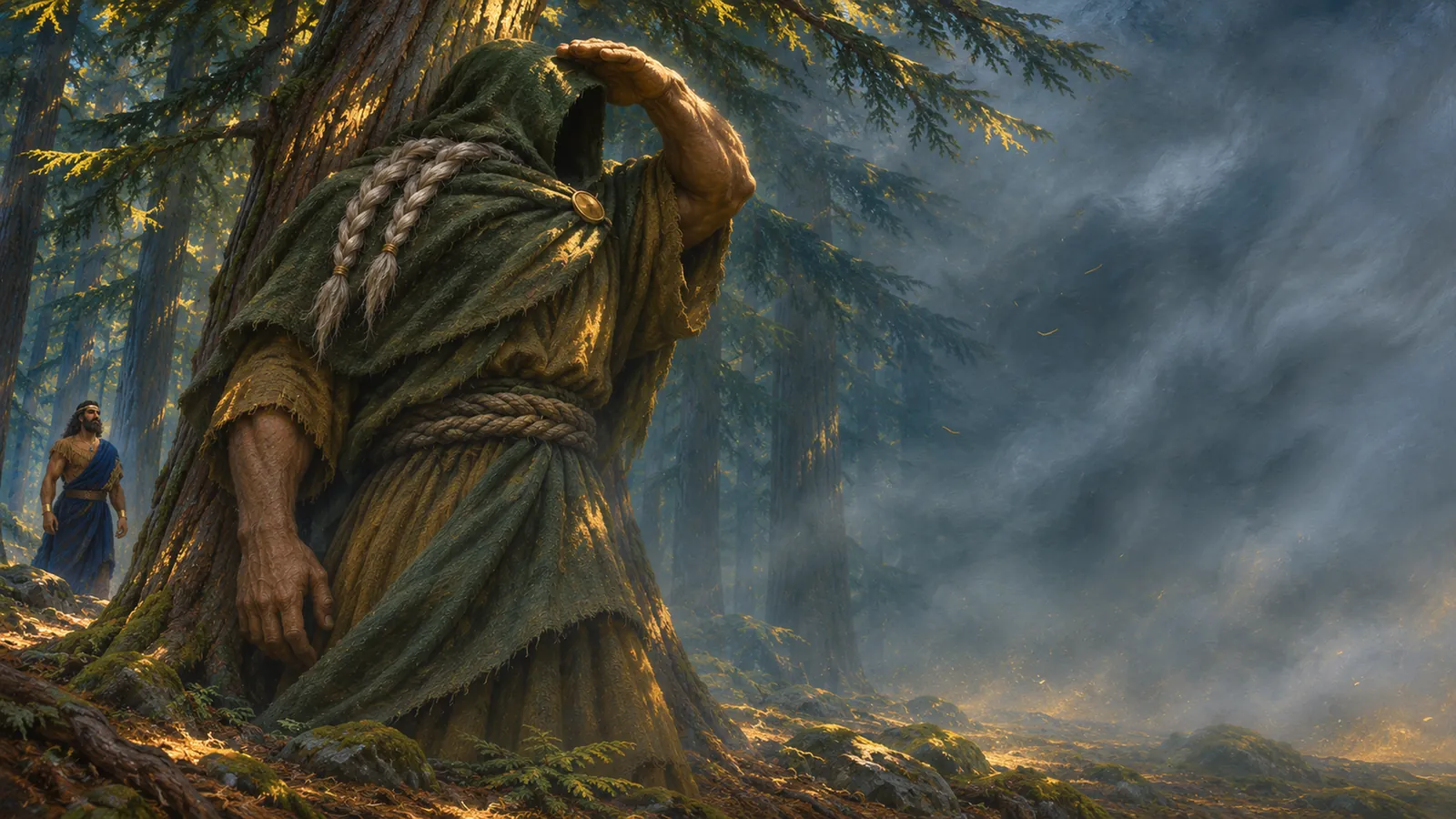
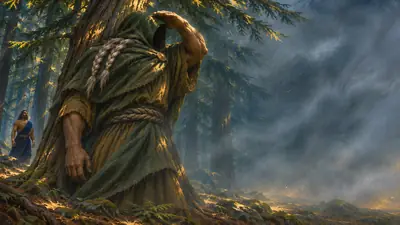
Die Winde blendeten Humbaba, und sein Vorteil war dahin. Gilgamesch, der kaum die Kraft gefunden hatte, weiter zwischen die Bäume zu gehen, konnte ihn nun überwältigen.
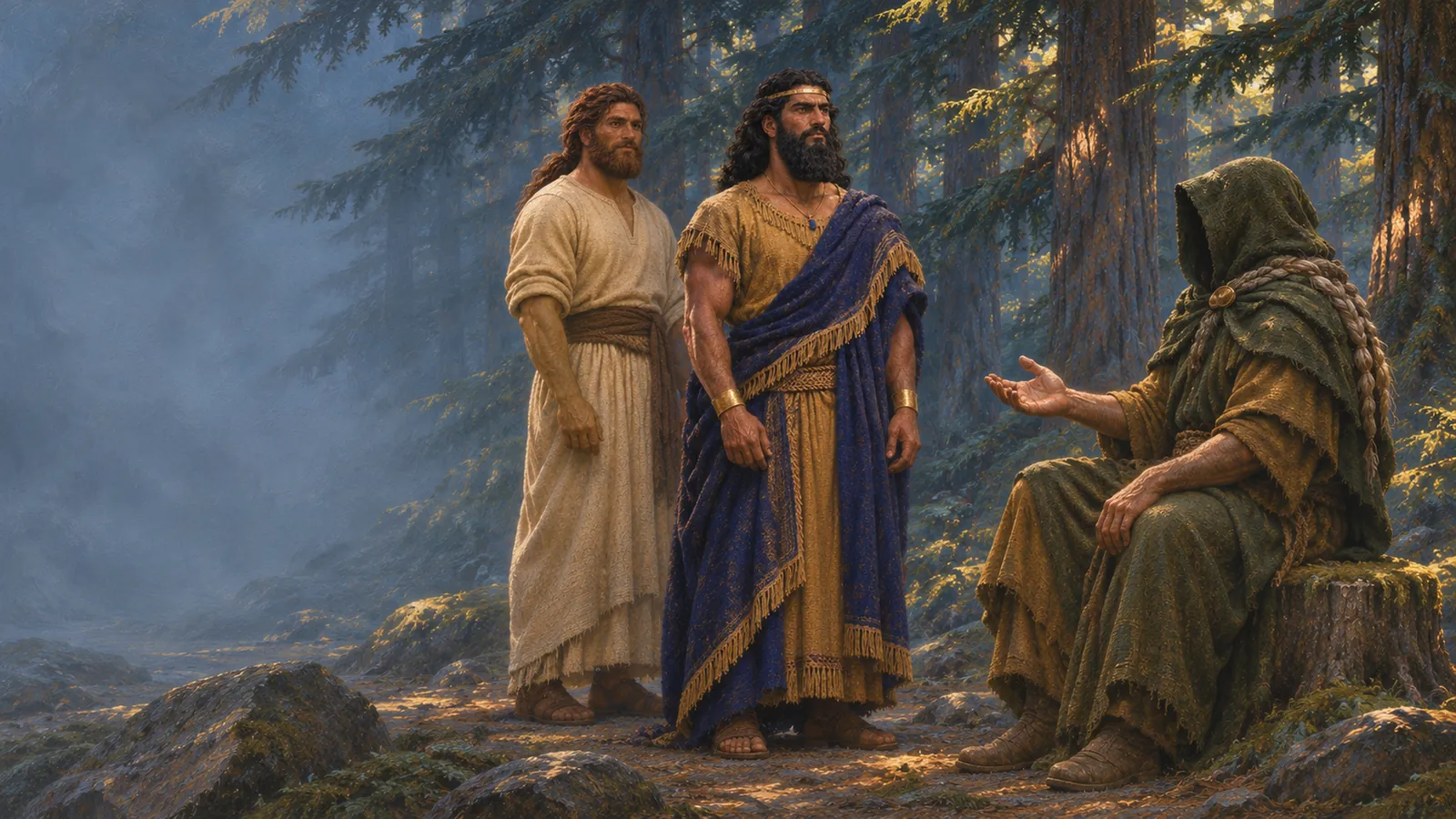
Humbaba hörte auf, sie herauszufordern, und begann zu flehen. Er bat Gilgamesch, ihn am Leben zu lassen, und der Wald wurde still um die beiden, die nun entscheiden mussten.
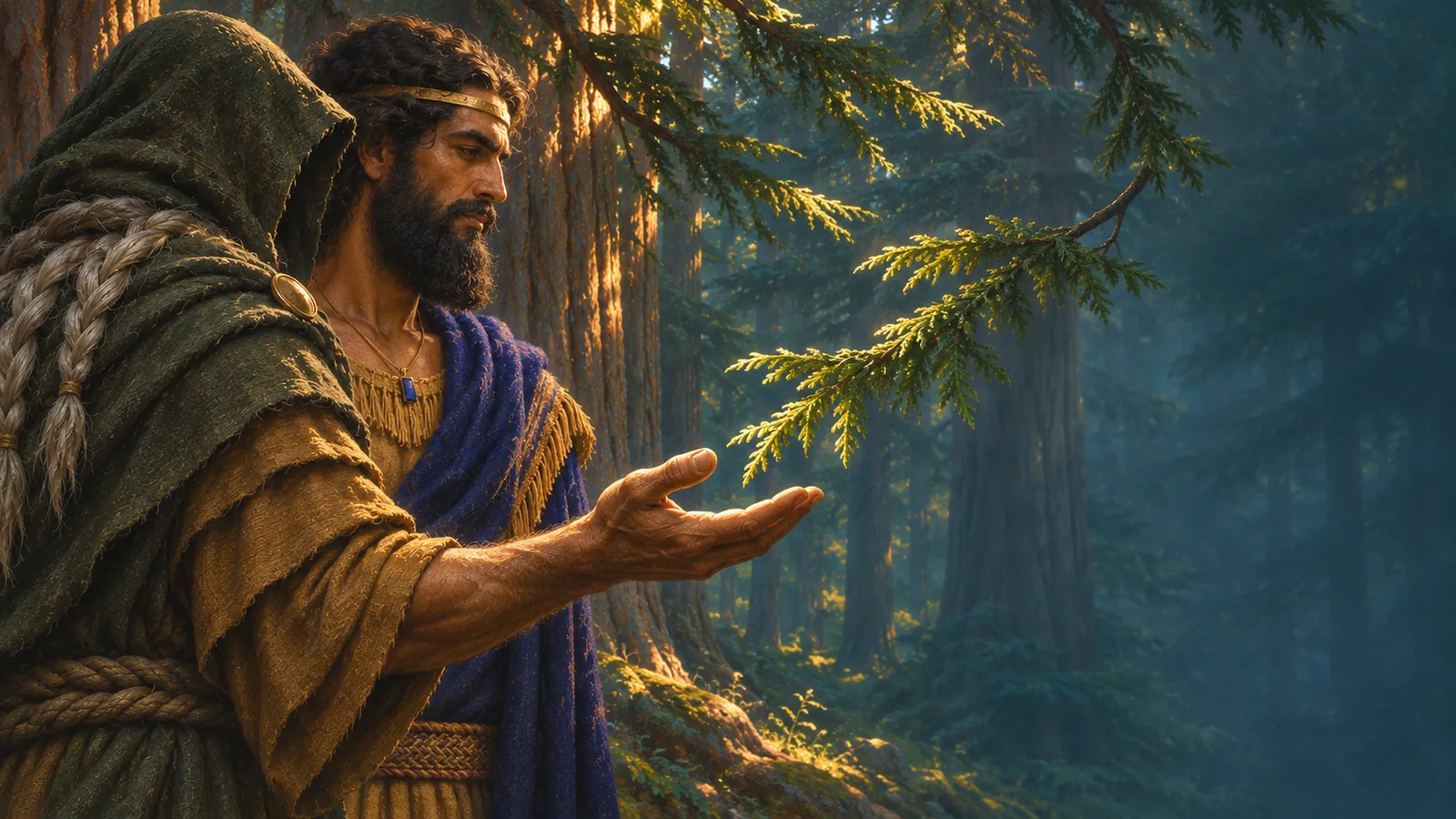
Humbaba bot Gilgamesch an, ihm zu dienen, wenn er ihn am Leben ließe. Die Bäume, die er bewacht hatte, gehörten nun zu seiner Bitte an die Männer, die gekommen waren, um sie mitzunehmen.
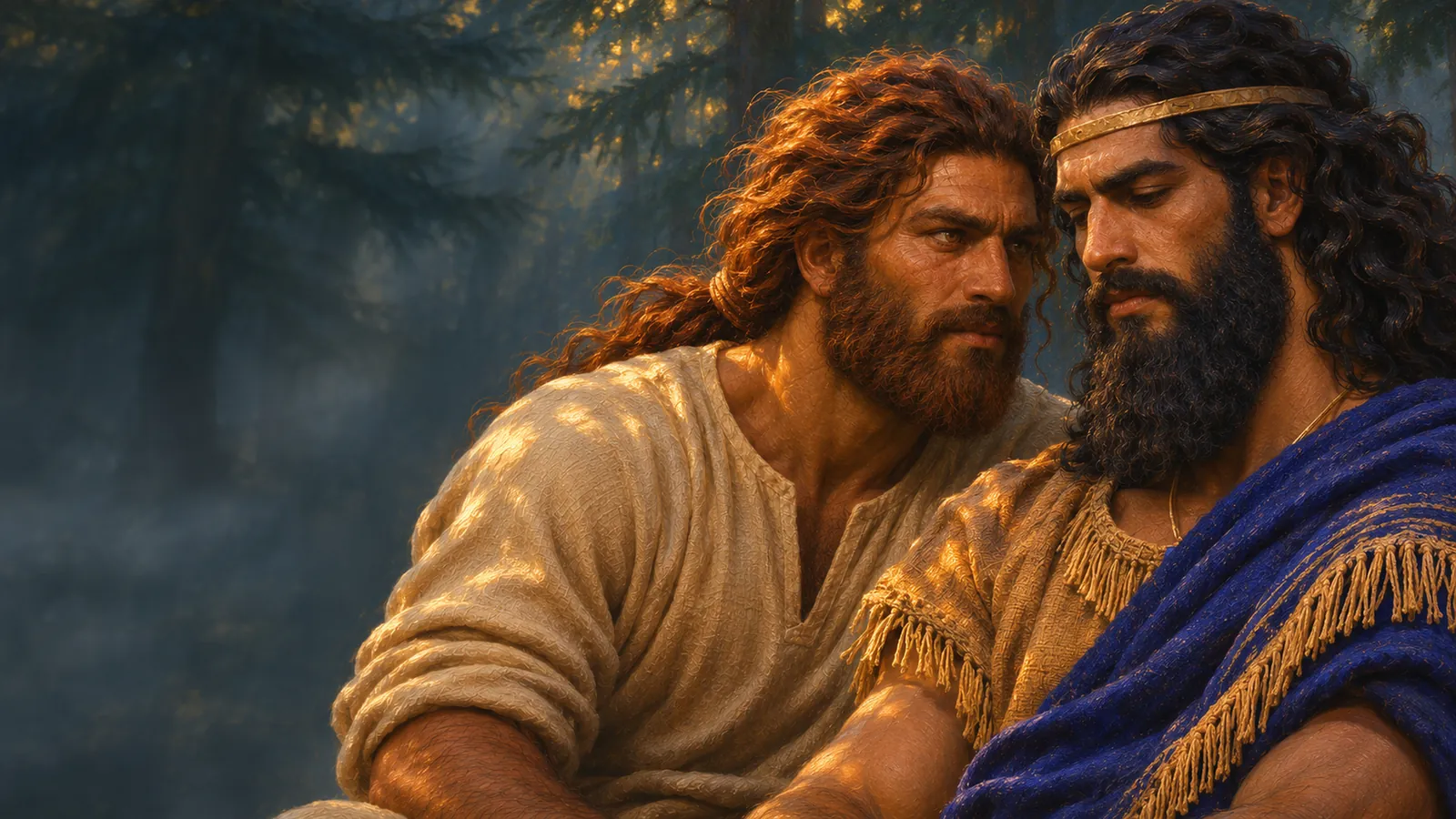
Enkidu sprach sich dagegen aus, den Wächter gehen zu lassen. Nun standen er und Gilgamesch vor einer Entscheidung, in einem stilleren Augenblick als dem Kampf, dessen Folgen keiner von ihnen schon absehen konnte.
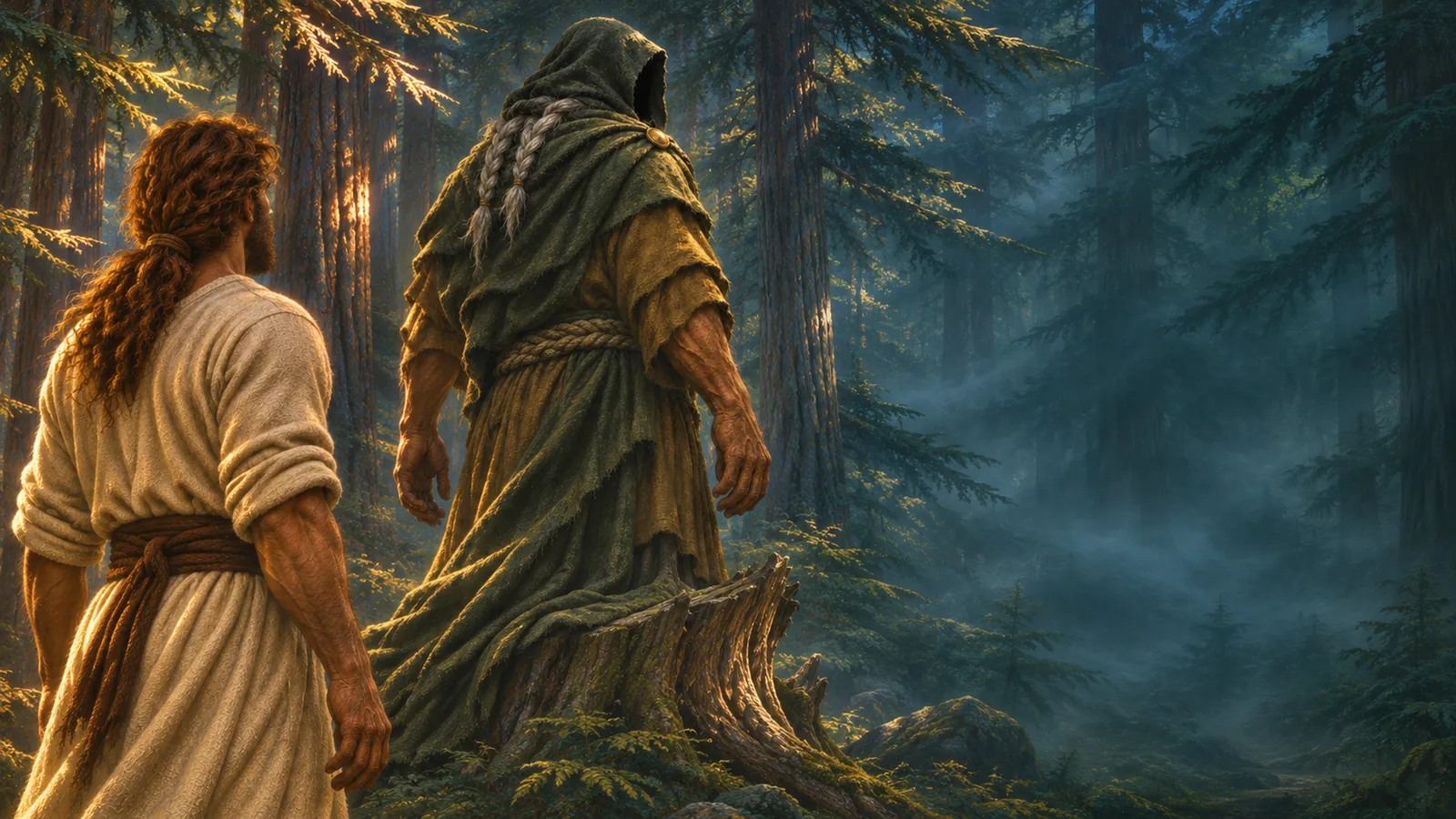
Humbaba hatte erkannt, was die Freunde vorhatten. Vor seinem Tod belegte er sie mit einem Fluch, dessen Schatten Enkidu über den Wald hinaus begleiten würde.
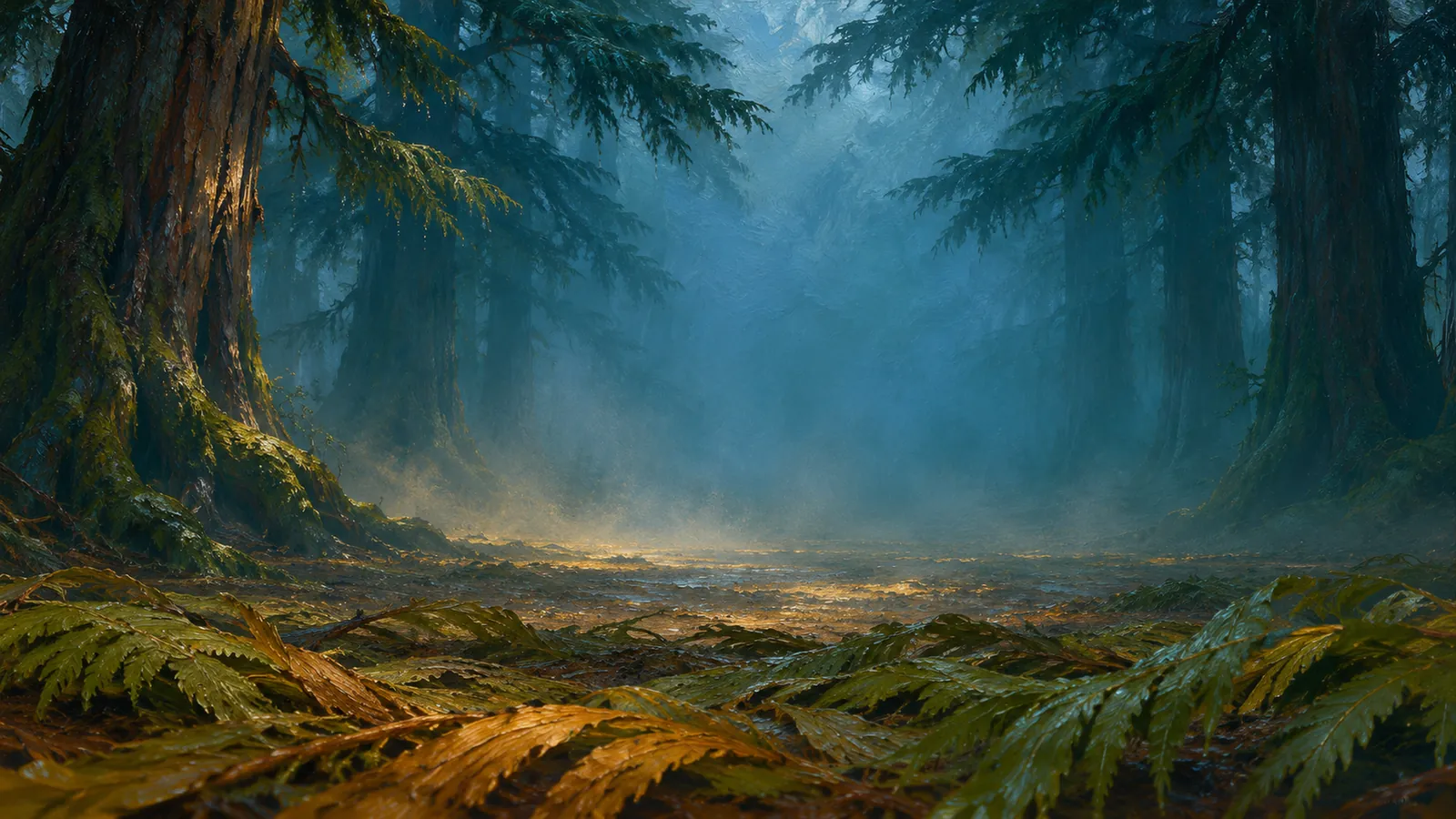
STURZ
Enkidu drängte Gilgamesch zum Handeln, und die beiden töteten Humbaba in dem Wald, den er bewacht hatte. Dann erzählt die Geschichte, was die Freunde mit den Zedern taten.
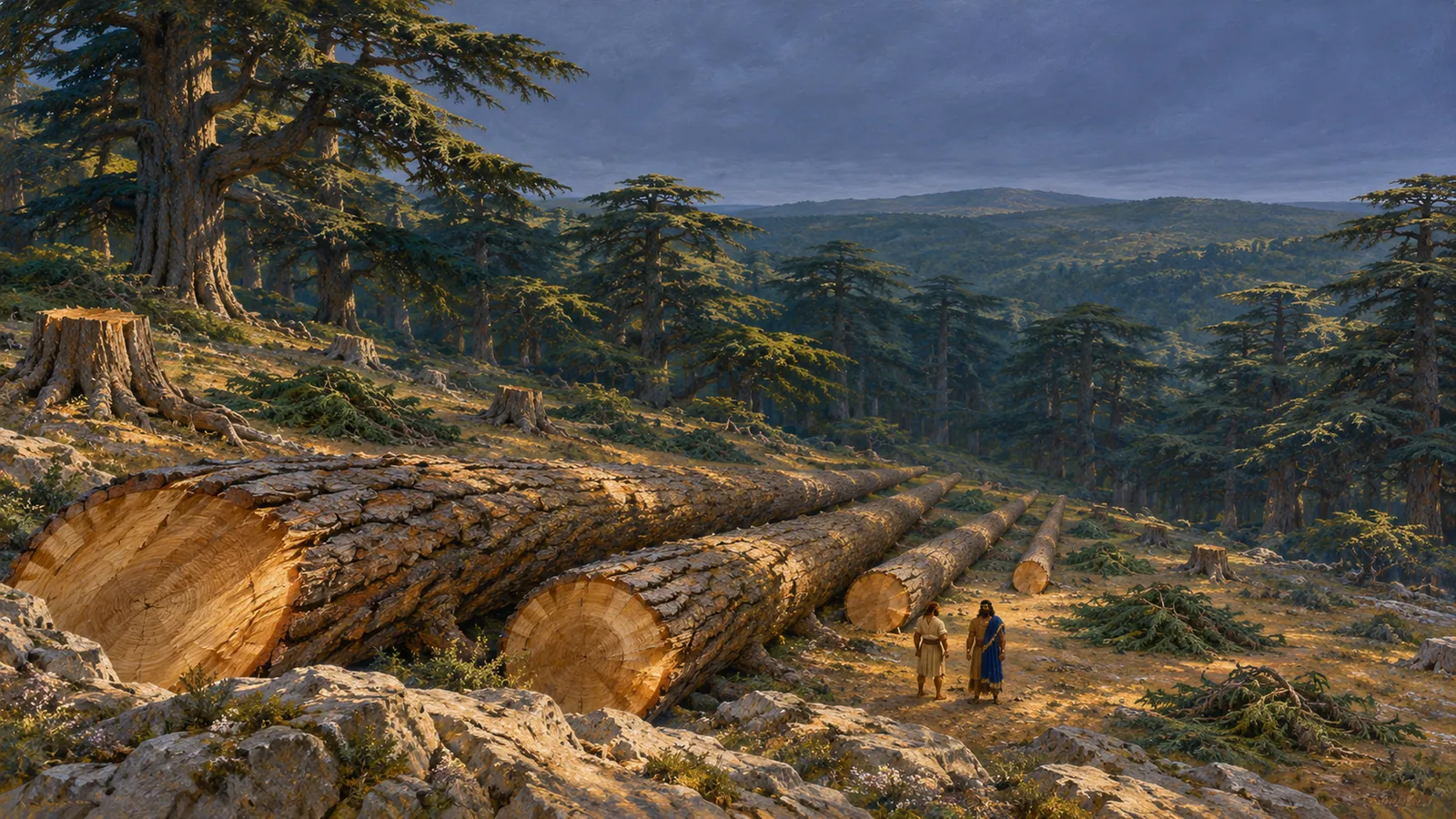
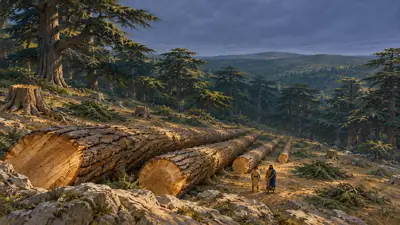
Als der Wächter nicht mehr da war, veränderte sich der Wald rasch. Die Männer nahmen das Holz der Bäume, deren Höhe und Schatten sie bei ihrer Ankunft bestaunt hatten.
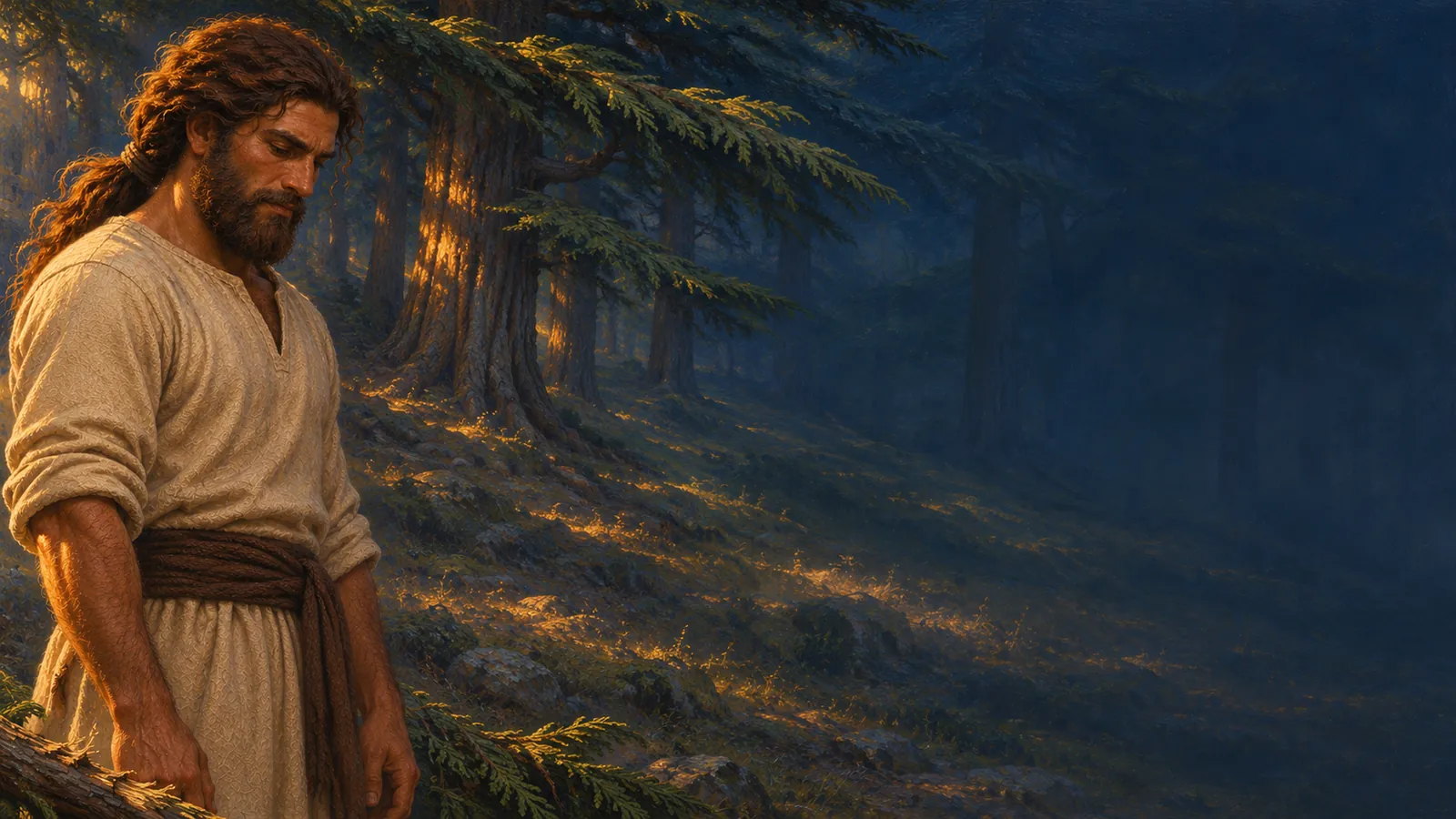
Enkidu blickte auf das, was sie beide getan hatten. Wie sollten sie sich vor Enlil dafür verantworten, dass sie den Wächter getötet und den Wald niedergetrampelt hatten, den er hüten sollte?
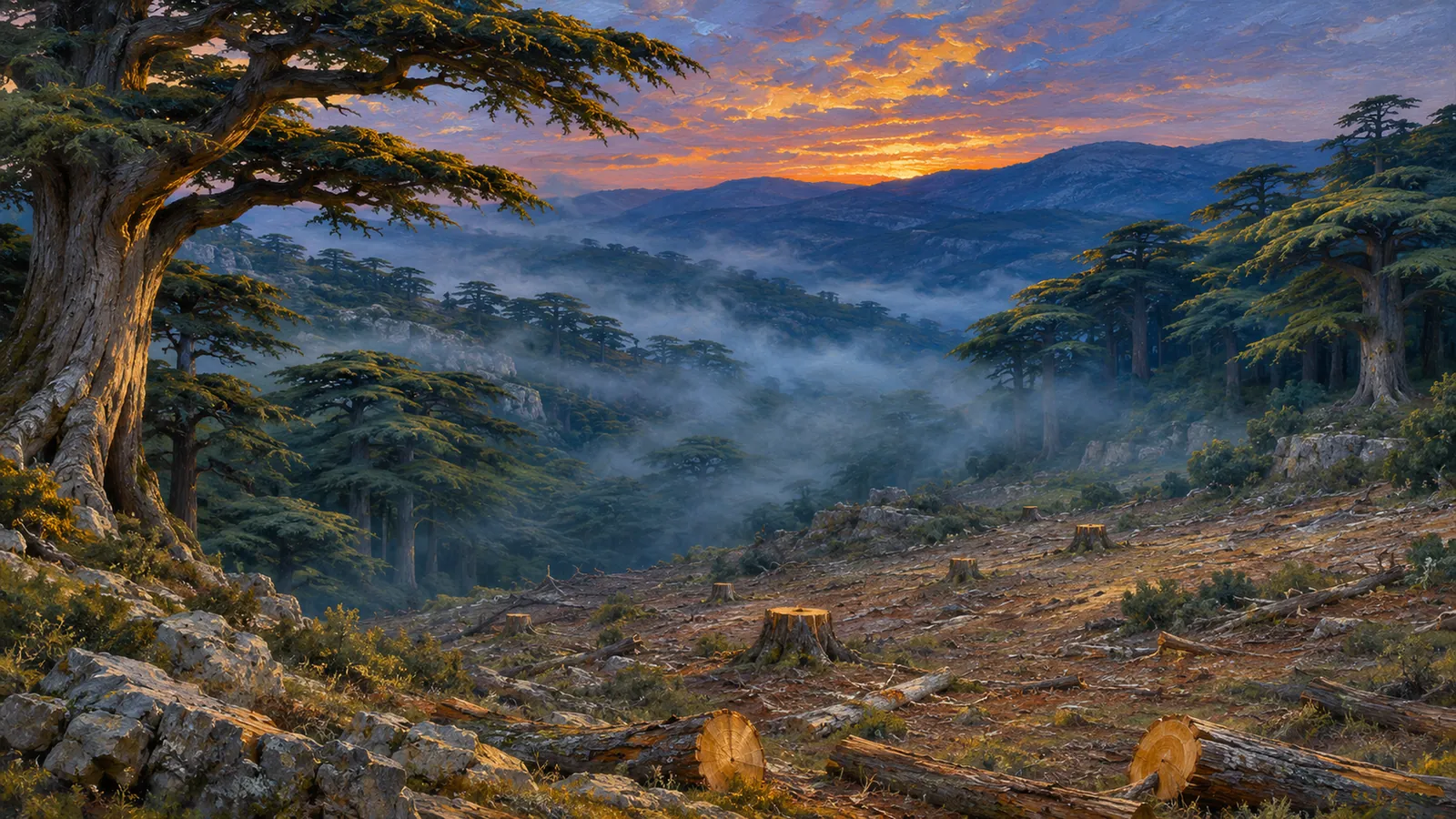
Wo die Bäume gestanden hatten, lag vor ihnen freies Gelände. Das Epos gibt Enkidu die Worte, um zu benennen, was sich verändert hat, während er an die Rückkehr zu Enlil denkt.
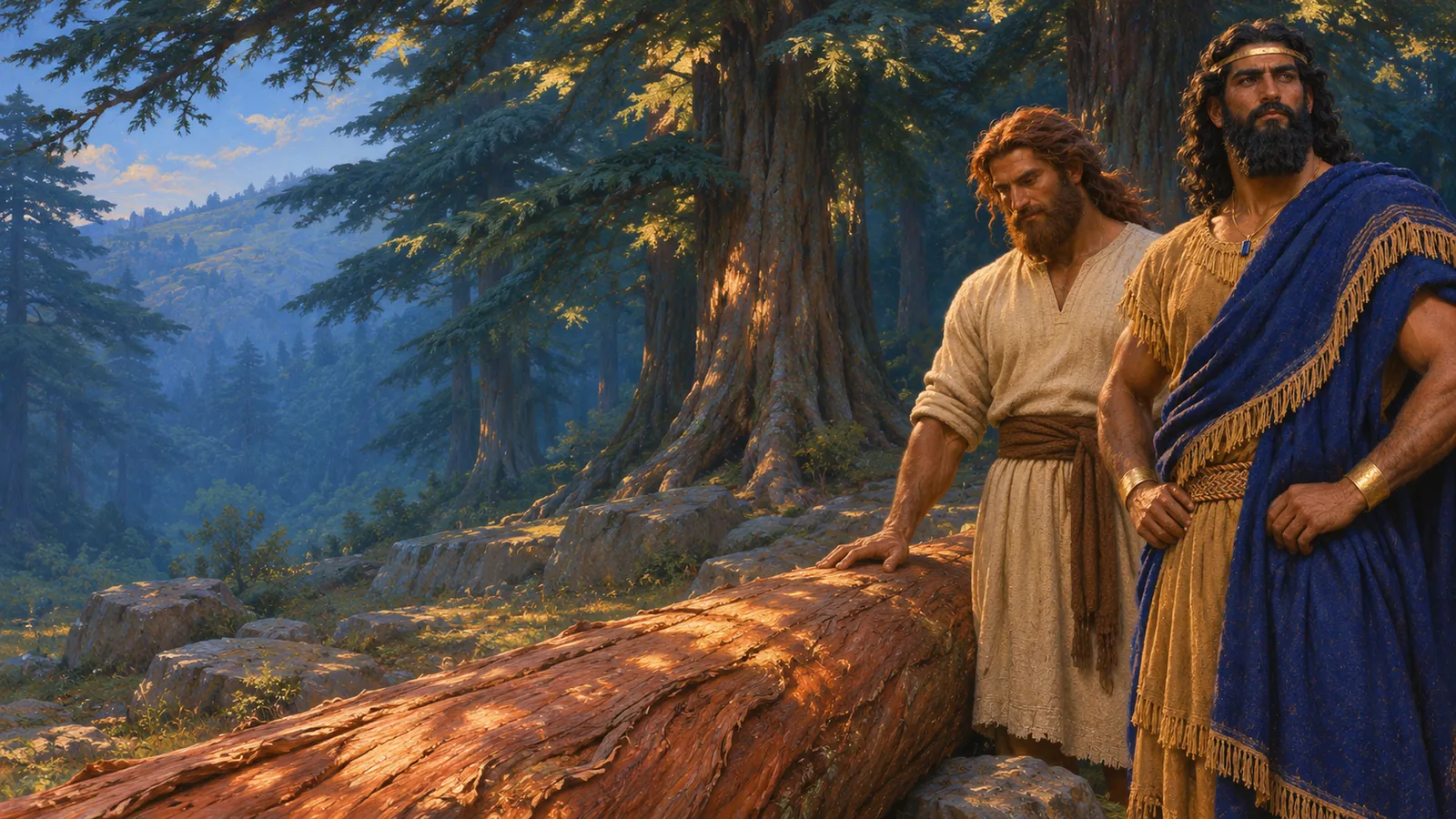
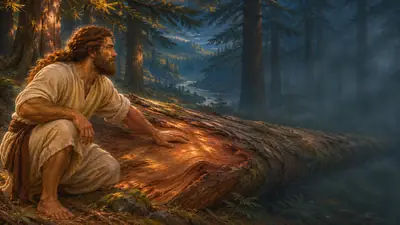
Gilgamesch bearbeitete den Baum, und Enkidu suchte das beste Holz. Die Zeder, die sie gefällt hatten, schien einst bis zum Himmel zu reichen.
TOR
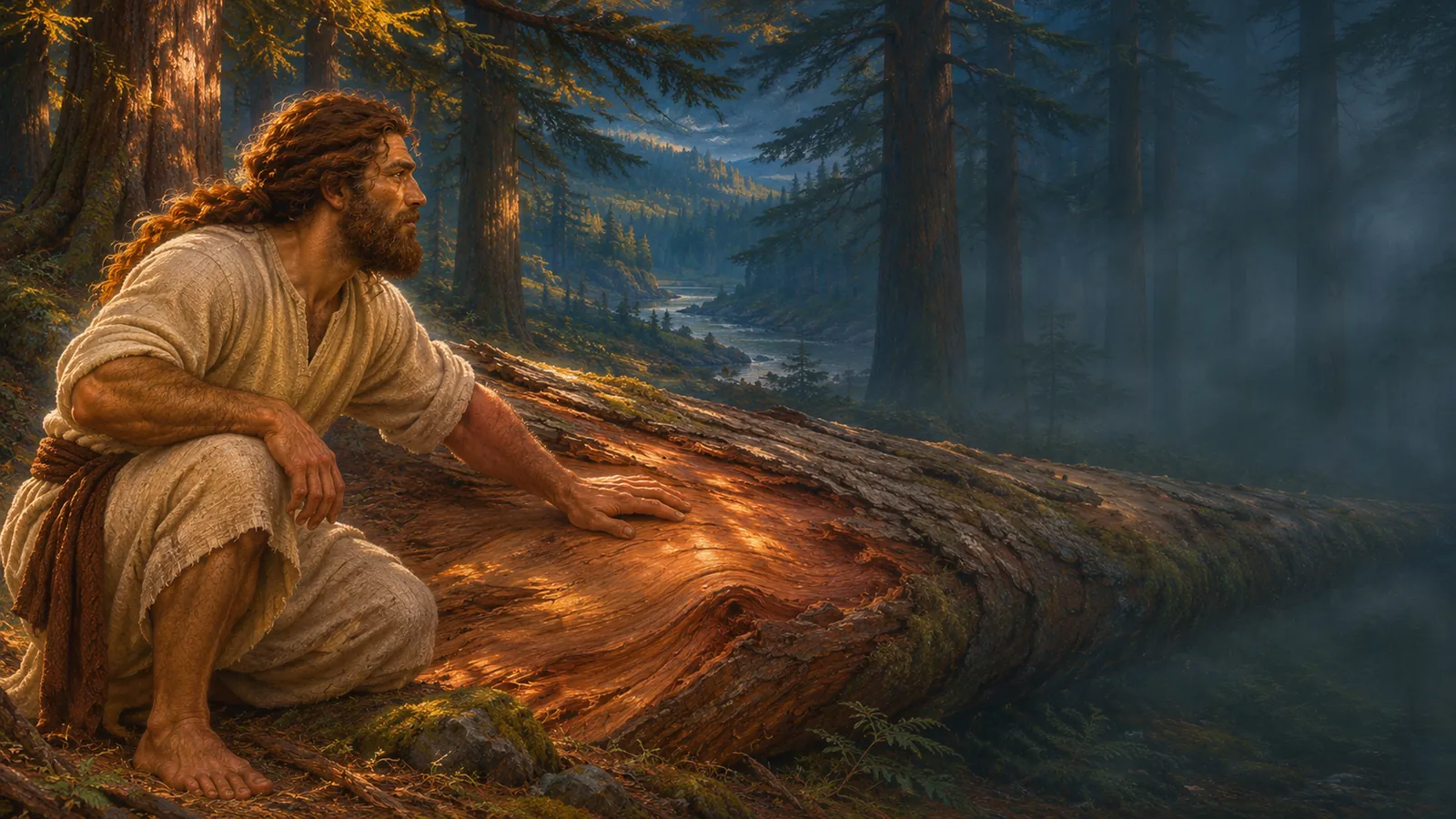
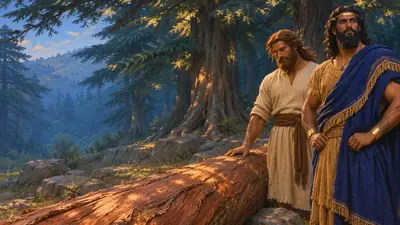
Enkidu hatte mit der hoch aufragenden Zeder etwas vor. Aus ihrem Holz sollte ein großes Tor für Enlil werden, den Gott, dessen Wald sie geöffnet hatten.

Enkidu stellte sich ein Tor vor, dessen Teile alle aus demselben Holz bestehen würden. So gewaltig der Baum war, so sorgfältig sprach er über Höhe und Gewicht des Tors.
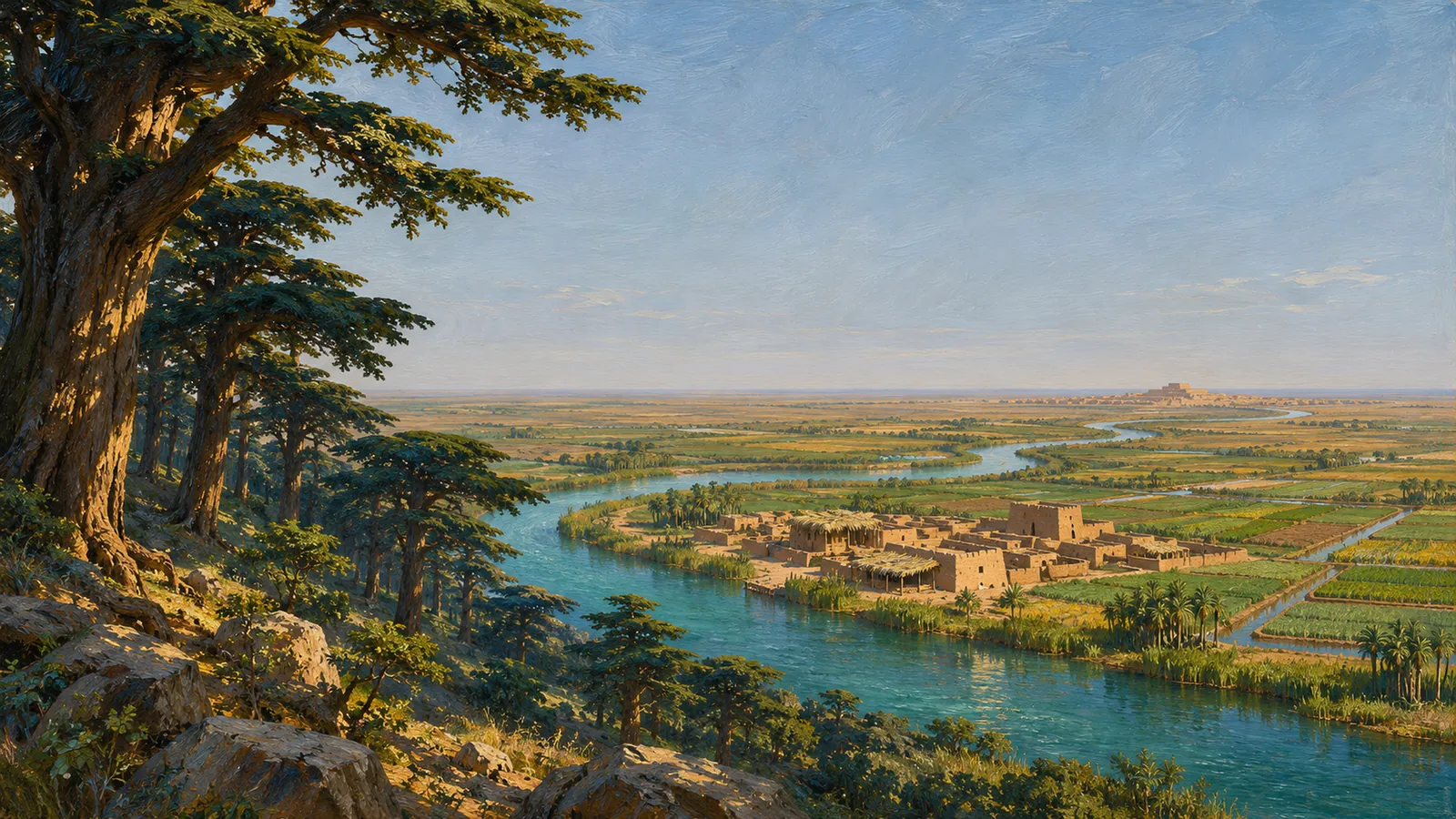
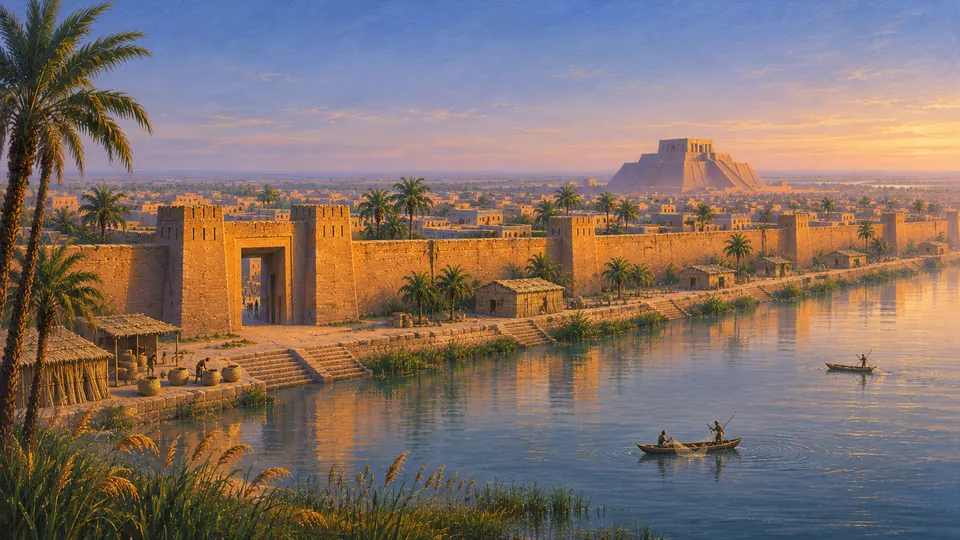
Enkidu dachte bereits an die Fahrt auf dem Fluss. Der Euphrat sollte die Zeder nach Nippur tragen, wo man sie im Heiligtum Enlils in Empfang nehmen würde.
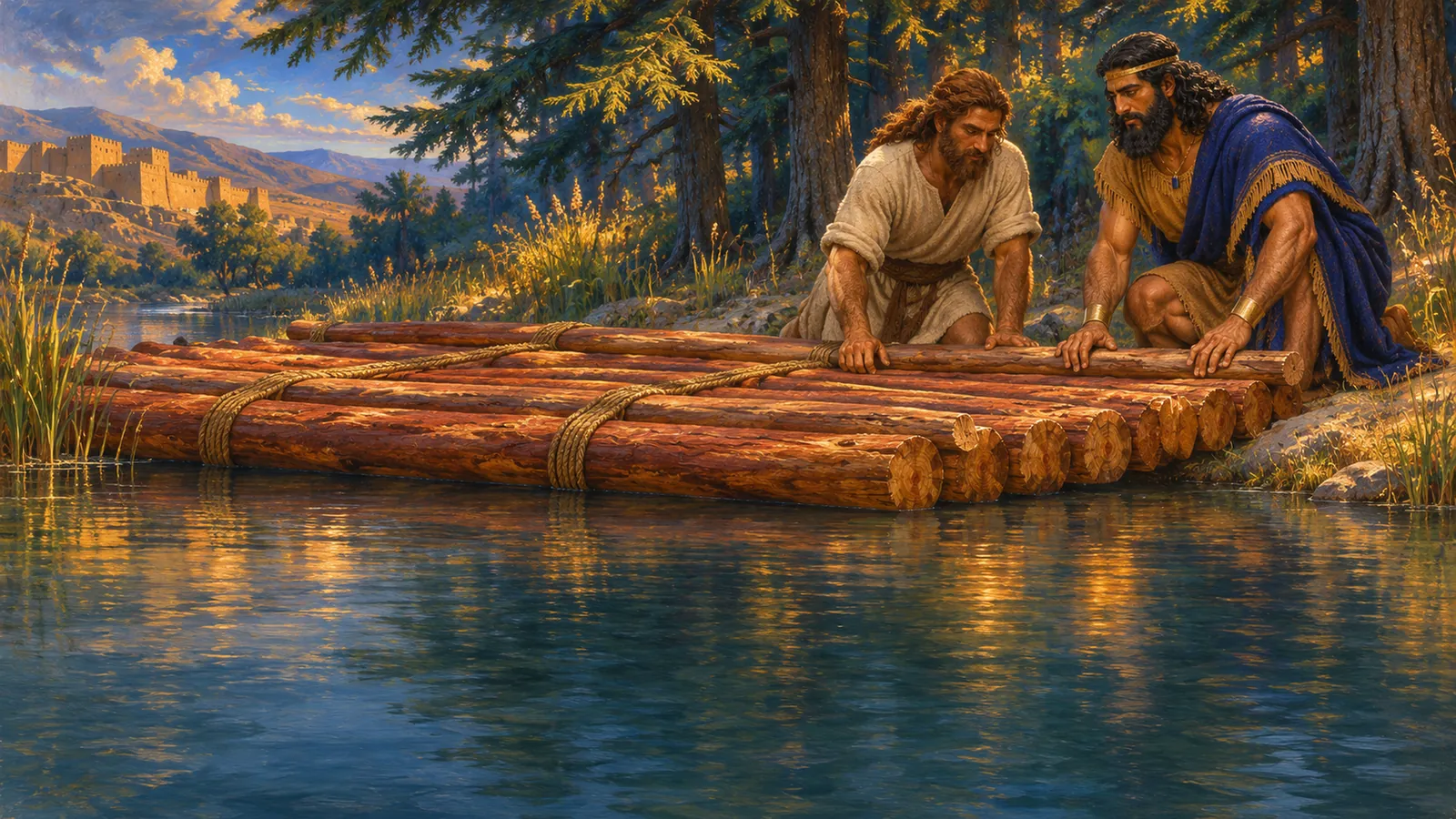
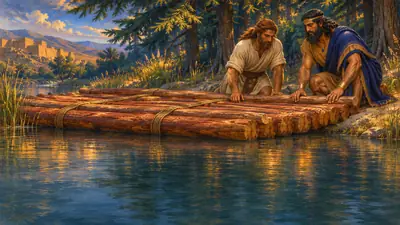
Am Ende der Geschichte im Wald führen die erhaltenen Zeilen die Freunde ans Wasser. Dort banden sie Holzstücke zu einem Floß zusammen, auf dem sie fortfahren konnten.
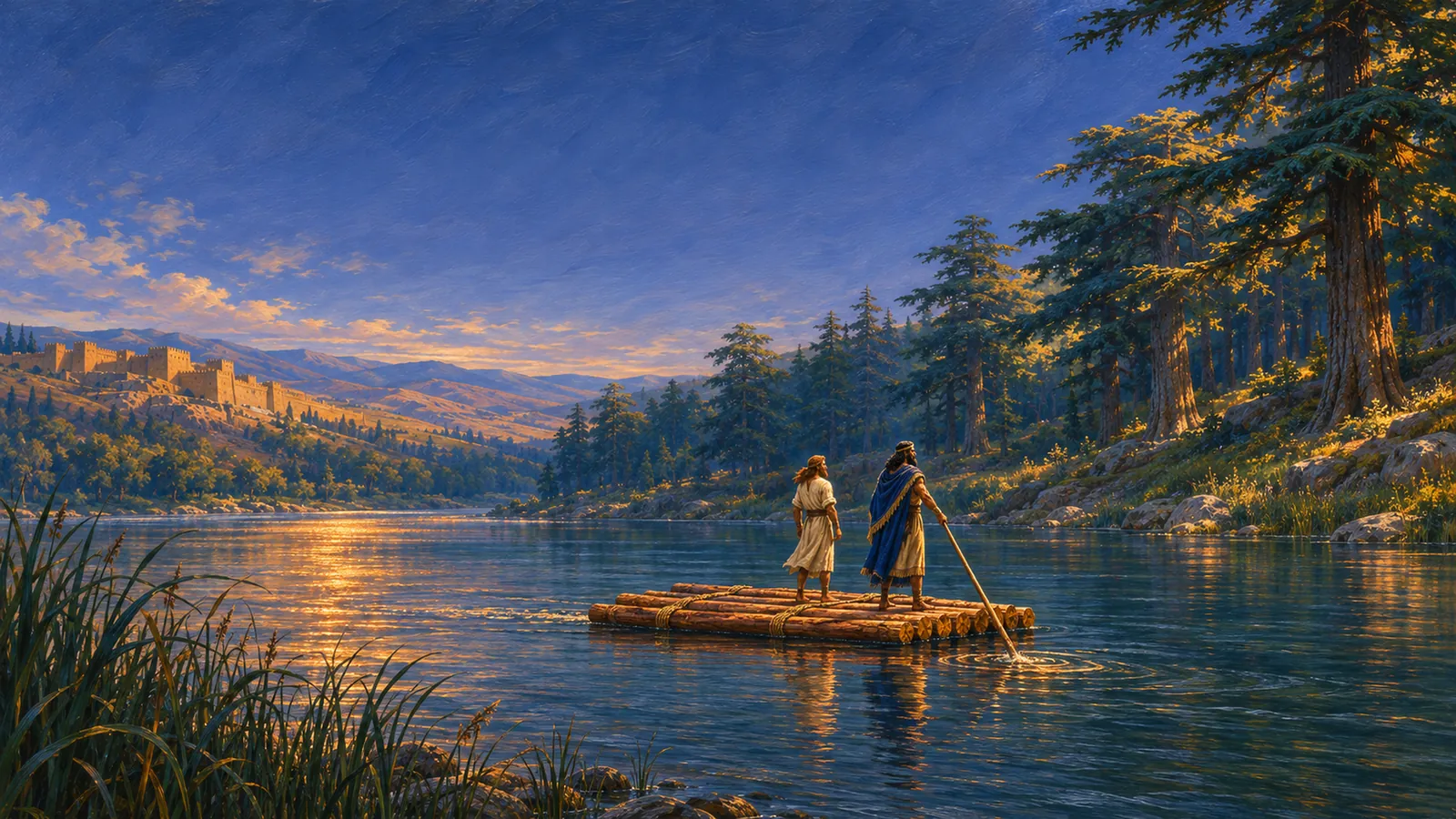
Die Freunde gingen mit der gefällten Zeder an Bord. Die beschädigten Zeilen scheinen zu sagen, dass Gilgamesch Humbabas Kopf trug, während Enkidu das Floß steuerte.

Gilgamesch und Enkidu fuhren auf dem Floß flussabwärts. Sie waren aufgebrochen, um sich im Wald einen Namen zu machen, und hatten dort etwas getan, das sie bis nach Uruk verfolgen würde.
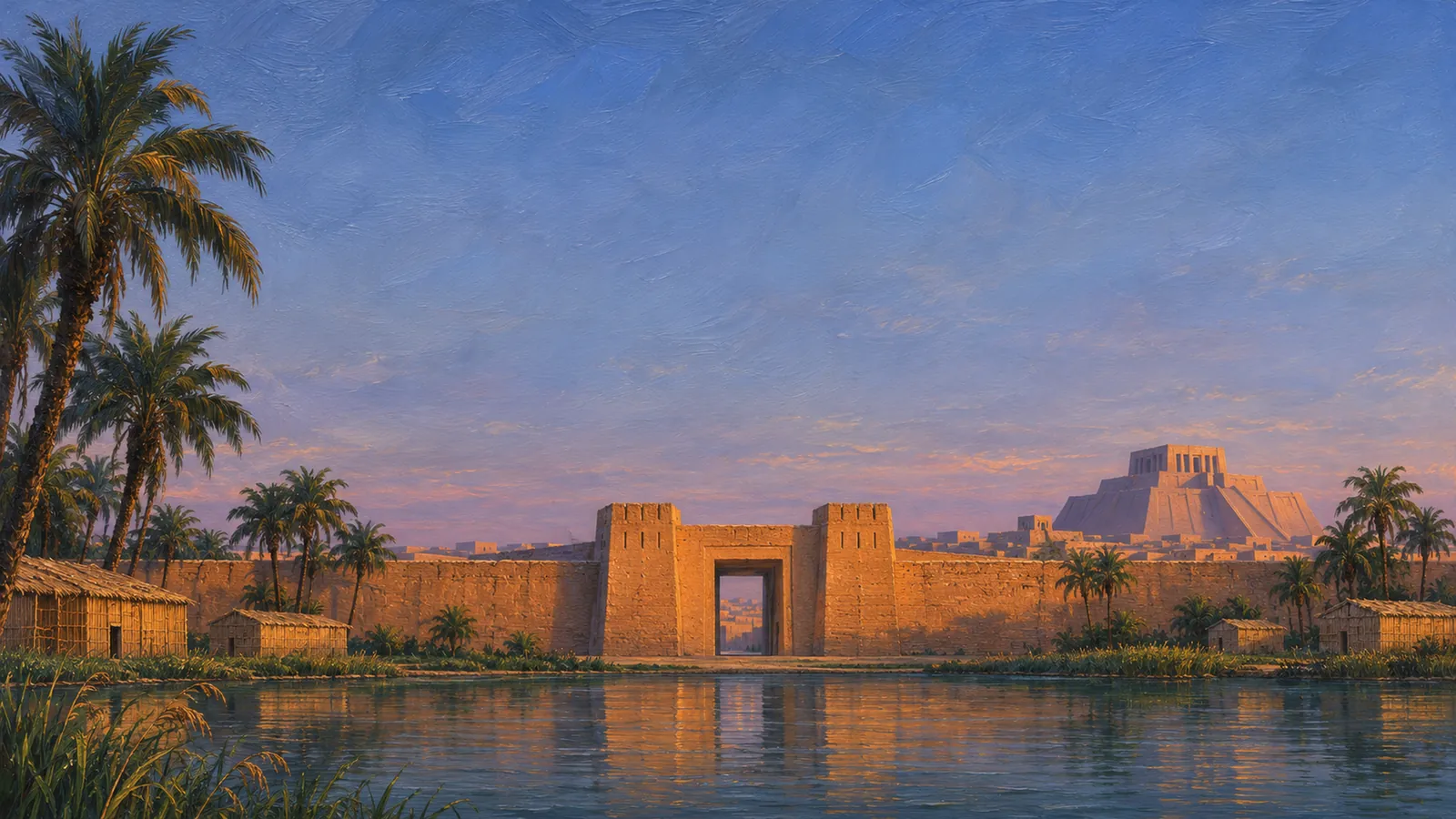
URUK
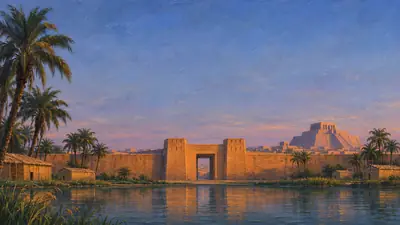
Die Fahrt auf dem Fluss führte sie zurück in Richtung Uruk. In der nächsten Geschichte wäscht sich Gilgamesch den Staub der Reise ab, und jemand in der Stadt wird auf ihn aufmerksam.
Ende von Kapitel 3
Alle Seiten










Quellen
On page 29, Enkidu urges action and the companions kill Humbaba (Standard Babylonian Gilgamesh, Tablet V, George’s synopsis). The retelling condenses the struggle to their decision and the killing. The related Old Babylonian Ishchali account is a separate witness.
Benutzte Editionen
- Al-Rawi and George, Back to the Cedar Forest, JCS 66 (2014)
- Andrew R. George, The Epic of Gilgamesh, Synopsis, Tablet V
- ORACC, Standard Babylonian Tablet V witness P348662
Hinweise zu dieser Nacherzählung
On page 38, the reading of Humbaba’s head among the things the companions take on the raft is partly restored at the end of Tablet V (SB Gilgamesh V 321–324, Al-Rawi and George 2014). The retelling retains that uncertainty.
Die antiken Verse hinter jeder Seite
- Page 1: SB V 1–3, Al-Rawi and George 2014
- Page 2: SB V 3–5, Al-Rawi and George 2014
- Page 3: SB V 6–9, Al-Rawi and George 2014
- Page 4: SB V 10–13, Al-Rawi and George 2014
- Page 5: SB V 14–16, Al-Rawi and George 2014
- Page 6: SB V 17–21, Al-Rawi and George 2014
- Page 7: SB V 20–23, Al-Rawi and George 2014
- Page 8: SB V 24–26, Al-Rawi and George 2014
The restored comparison is paraphrased. - Page 9: SB V 27–30, Al-Rawi and George 2014
The revised edition identifies Gilgamesh as the one weakened here. - Page 10: SB V 31–33, Al-Rawi and George 2014
Text partly restored. - Page 11: SB V 34–38, Al-Rawi and George 2014
The following words are damaged. - Page 12: SB V 39–44, Al-Rawi and George 2014
- Page 13: SB V 45–46 and gap, Al-Rawi and George 2014
- Page 14: SB V gap after 46, resumes at 61, Al-Rawi and George 2014
- Page 15: SB V 61–72, Al-Rawi and George 2014
- Page 16: SB V 73–81, Al-Rawi and George 2014
- Page 17: SB V 75–80, Al-Rawi and George 2014
- Page 18: SB V 87–89, Al-Rawi and George 2014
The published text marks portions of the appeal as uncertain. - Page 19: SB V 90–91, Al-Rawi and George 2014
- Page 20: SB V, confrontation, George, Synopsis, Tablet V
Transition compresses fragmentary exchanges. - Page 21: SB V, Humbaba’s challenge, ORACC P348662 obverse; George, Synopsis, Tablet V
- Page 22: SB V, combat; George, Synopsis, Tablet V
- Page 23: SB V, divine winds; George, Synopsis, Tablet V
- Page 24: SB V, Humbaba blinded; George, Synopsis, Tablet V
- Page 25: SB V, Humbaba’s plea; George, Synopsis, Tablet V
- Page 26: SB V, parley; George, Synopsis, Tablet V
Paraphrase. - Page 27: SB V, Enkidu’s counsel in the parley; George, Synopsis, Tablet V
- Page 28: SB V, Humbaba’s curse; George, Synopsis, Tablet V
- Page 29: SB Gilgamesh V, death of Humbaba, George, Synopsis, Tablet V; compare OB Ishchali
- Page 30: SB V 300–312, Al-Rawi and George 2014
- Page 31: SB V 302–306, Al-Rawi and George 2014
The published translation marks some portions of the speech as restored. - Page 32: SB V 302–306, Al-Rawi and George 2014
- Page 33: SB V 310–315, Al-Rawi and George 2014
- Page 34: SB V 313–319, Al-Rawi and George 2014
- Page 35: SB V 314–317, Al-Rawi and George 2014
- Page 36: SB V 318–319, Al-Rawi and George 2014
- Page 37: SB V 320–322, Al-Rawi and George 2014
Some embarkation details are damaged. - Page 38: SB Gilgamesh V 321–324, Al-Rawi and George 2014 (partly restored)
- Page 39: SB V 321–324, Al-Rawi and George 2014
- Page 40: SB V 321–324; SB VI opening; George, Synopsis, Tablet VI
Illustrationen von IL Archive mit KI-Werkzeugen; der Text folgt den antiken Quellen (siehe die Quellen am Ende jedes Kapitels).