Isis und Osiris Kapitel 1
Die fünf hinzugefügten Tage
Plutarchs Erzählung beginnt mit fünf Tagen, die dem Jahr hinzugefügt werden, und mit den Geburten, die an ihnen gefeiert werden. Osiris wird König und lehrt die Menschen den Ackerbau. Durch Seths List gelangt eine Truhe ins Meer, und Isis macht sich auf die Suche.
QuellenBlättern Sie mit den Pfeilen, den Pfeiltasten oder durch Wischen.
FÜNF TAGE
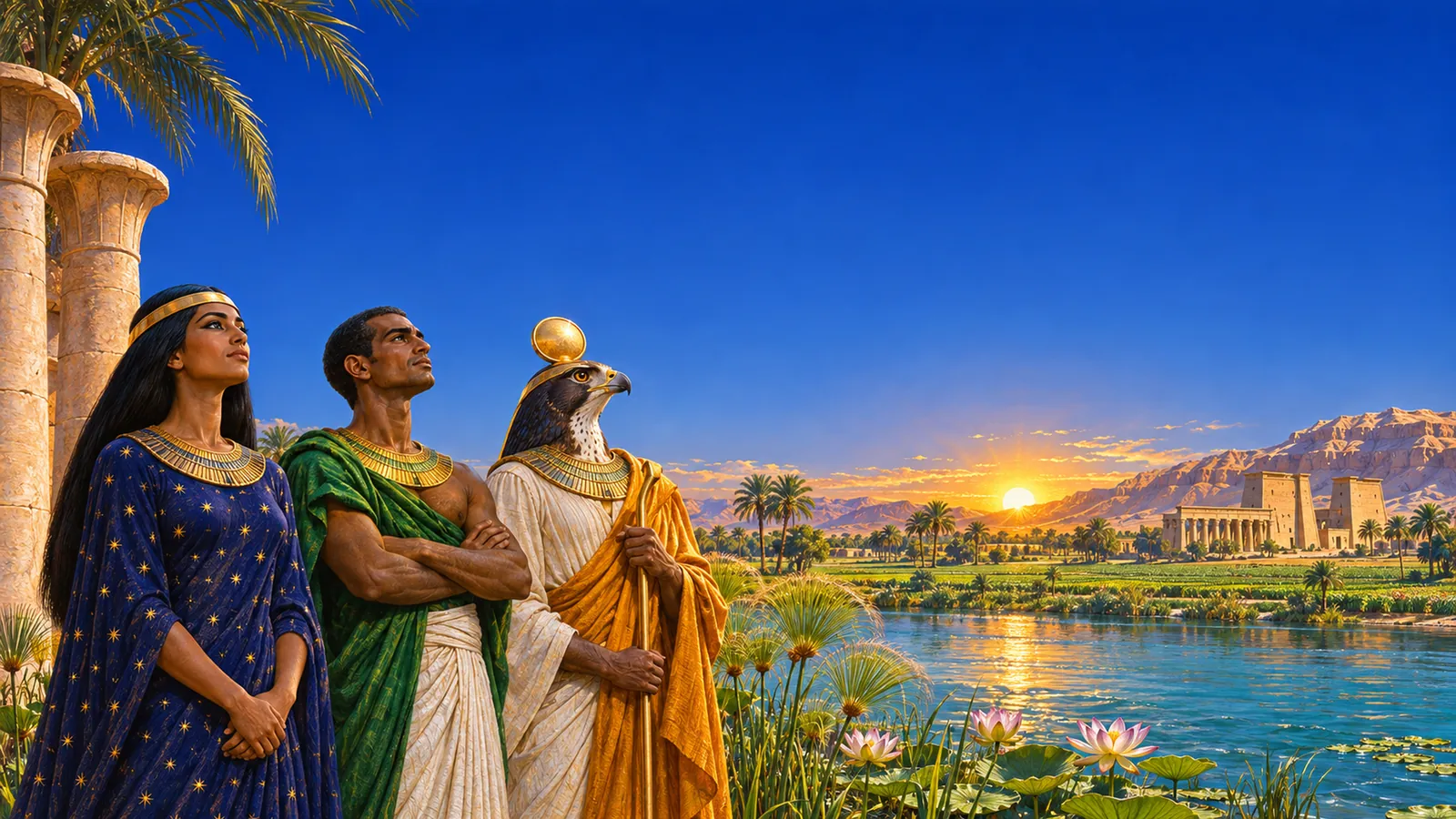
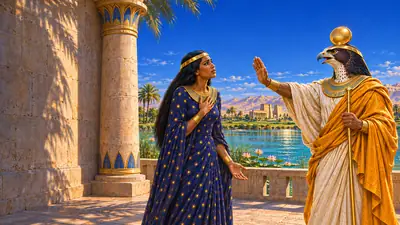
In Plutarchs Fassung eines ägyptischen Mythos wurden dem Jahr fünf Tage hinzugefügt. Die Geschichte, die das erklärt, beginnt mit Nut, Geb und dem Sonnengott Re.
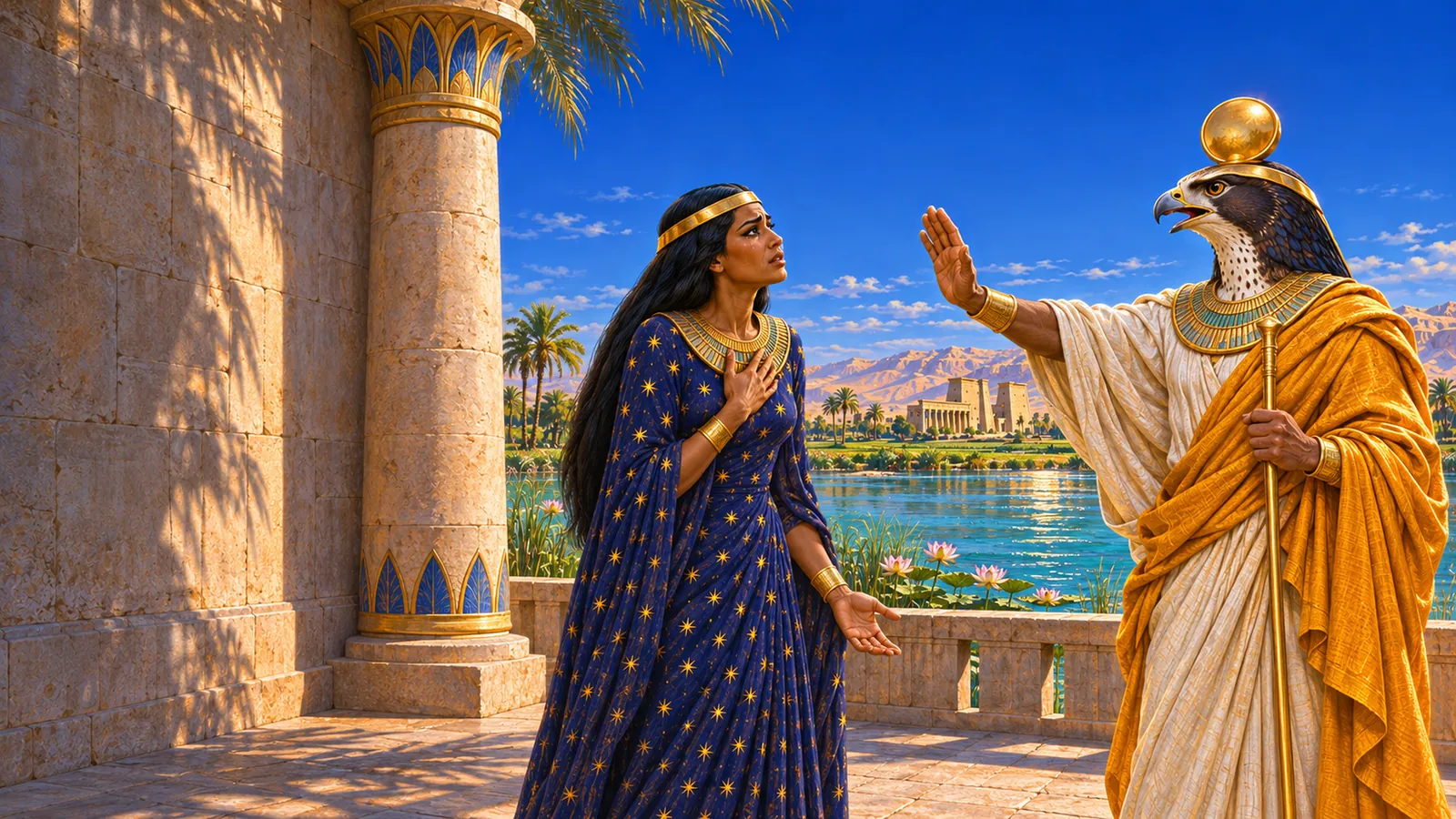
Re fand heraus, dass Nut und Geb heimlich zusammen gewesen waren. Er verfluchte Nut, sodass sie in keinem Monat und keinem Jahr ein Kind gebären sollte.
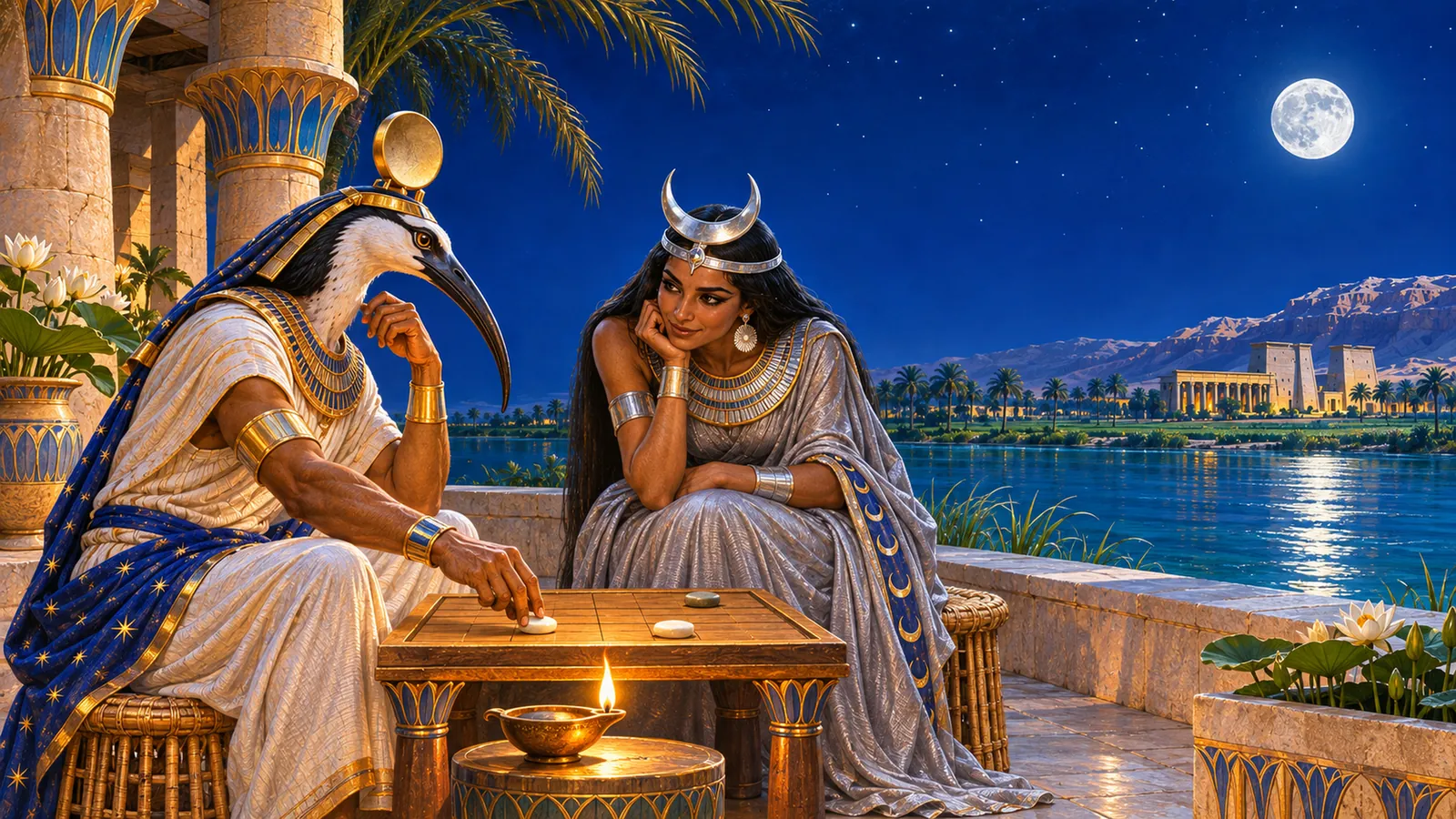
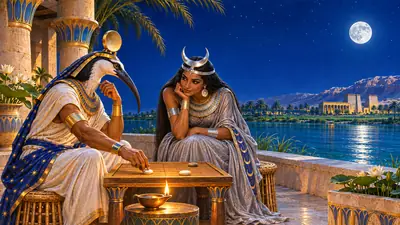
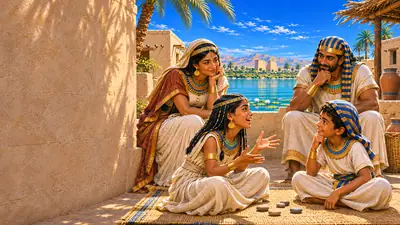
Thot, der Nut liebte, kam ihr zu Hilfe. Er spielte ein Brettspiel mit dem Mond.
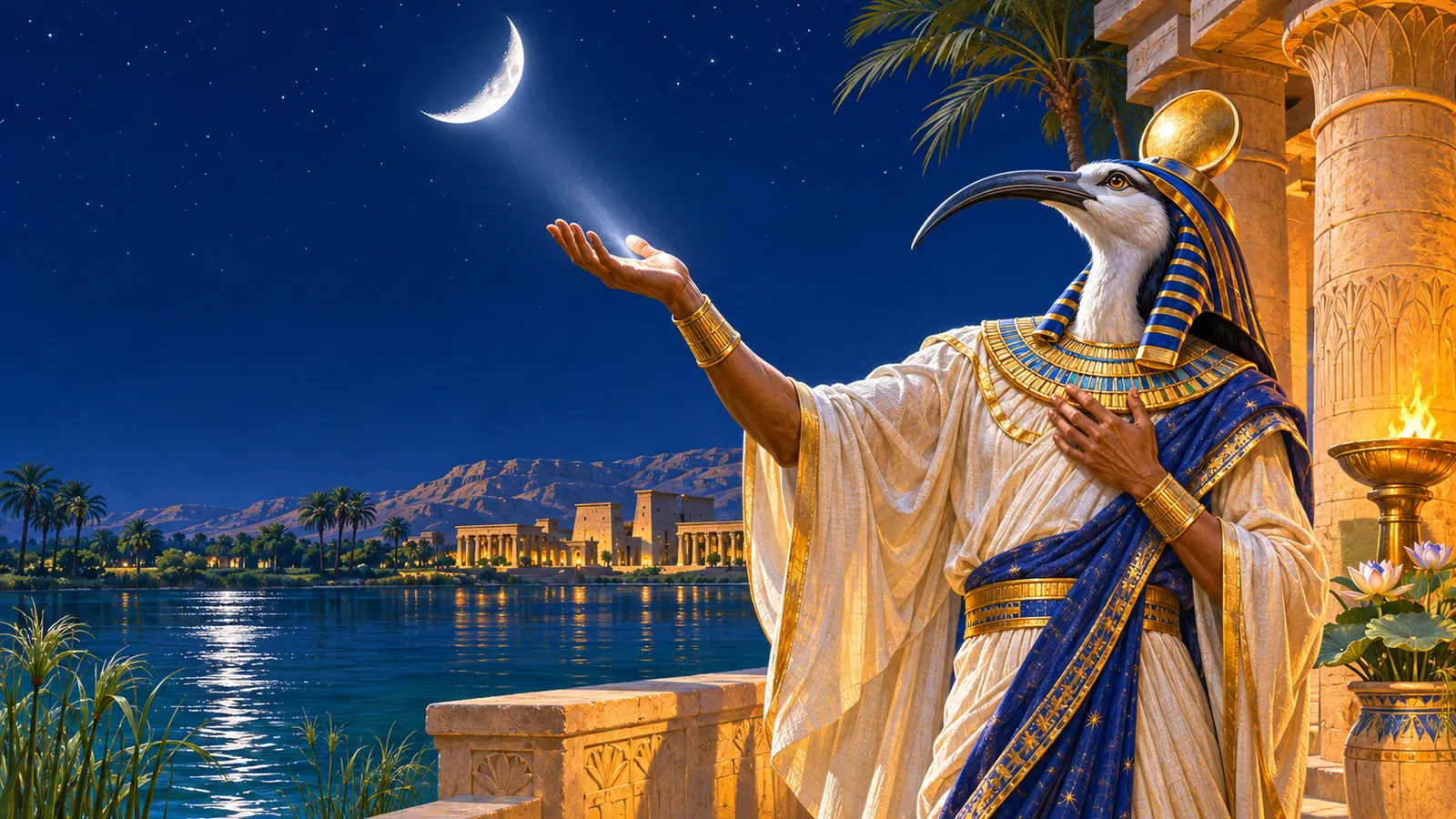
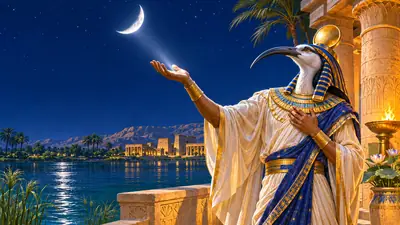
Der Erzählung zufolge gewann Thot ein Siebzigstel jeder Zeitspanne, in der der Mond leuchtete.
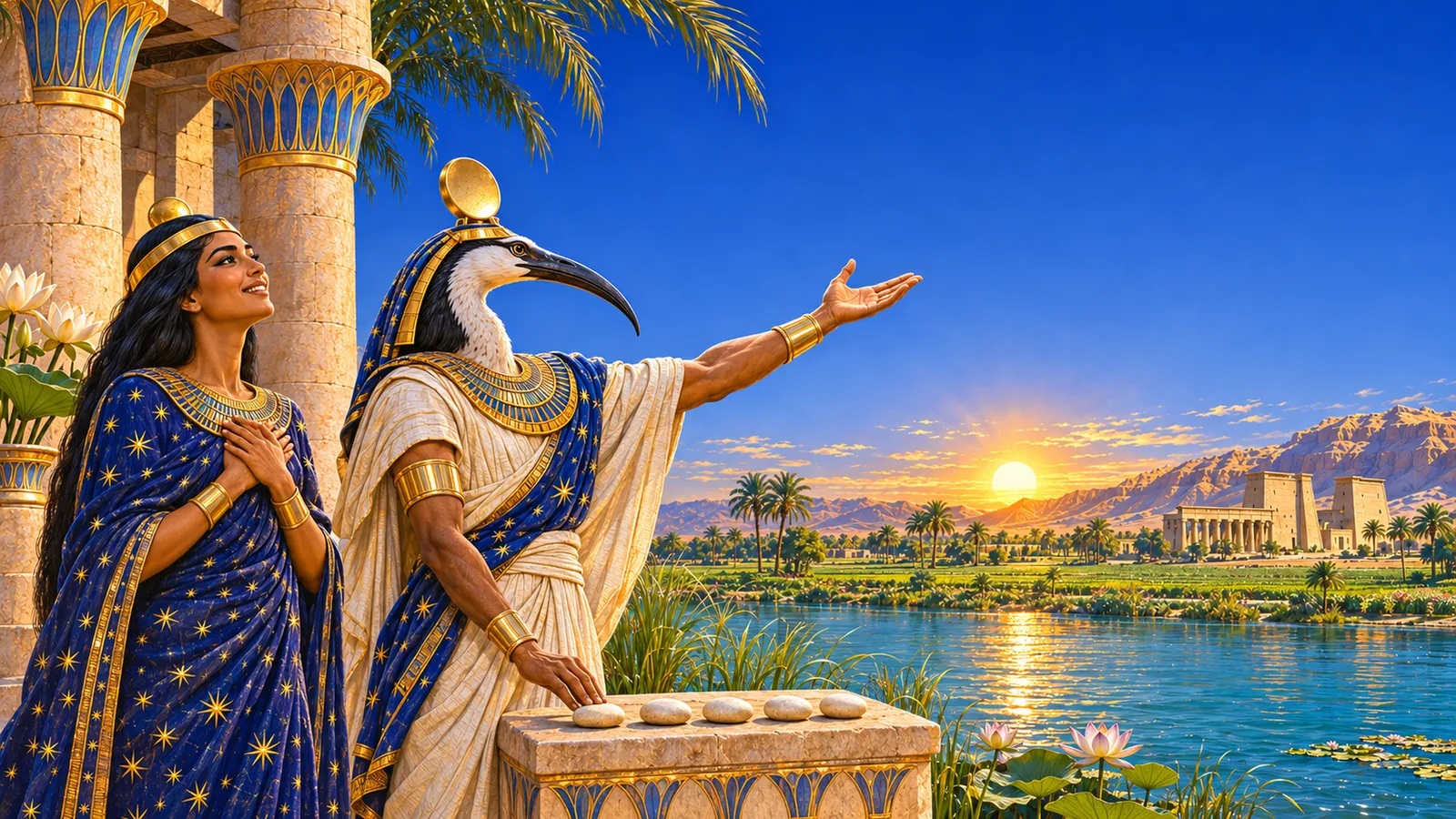
Thot fügte die Anteile zu fünf Tagen zusammen und schlug sie dem bisherigen Jahr zu. Der Erzählung nach hatte dieses Jahr dreihundertsechzig Tage gedauert.
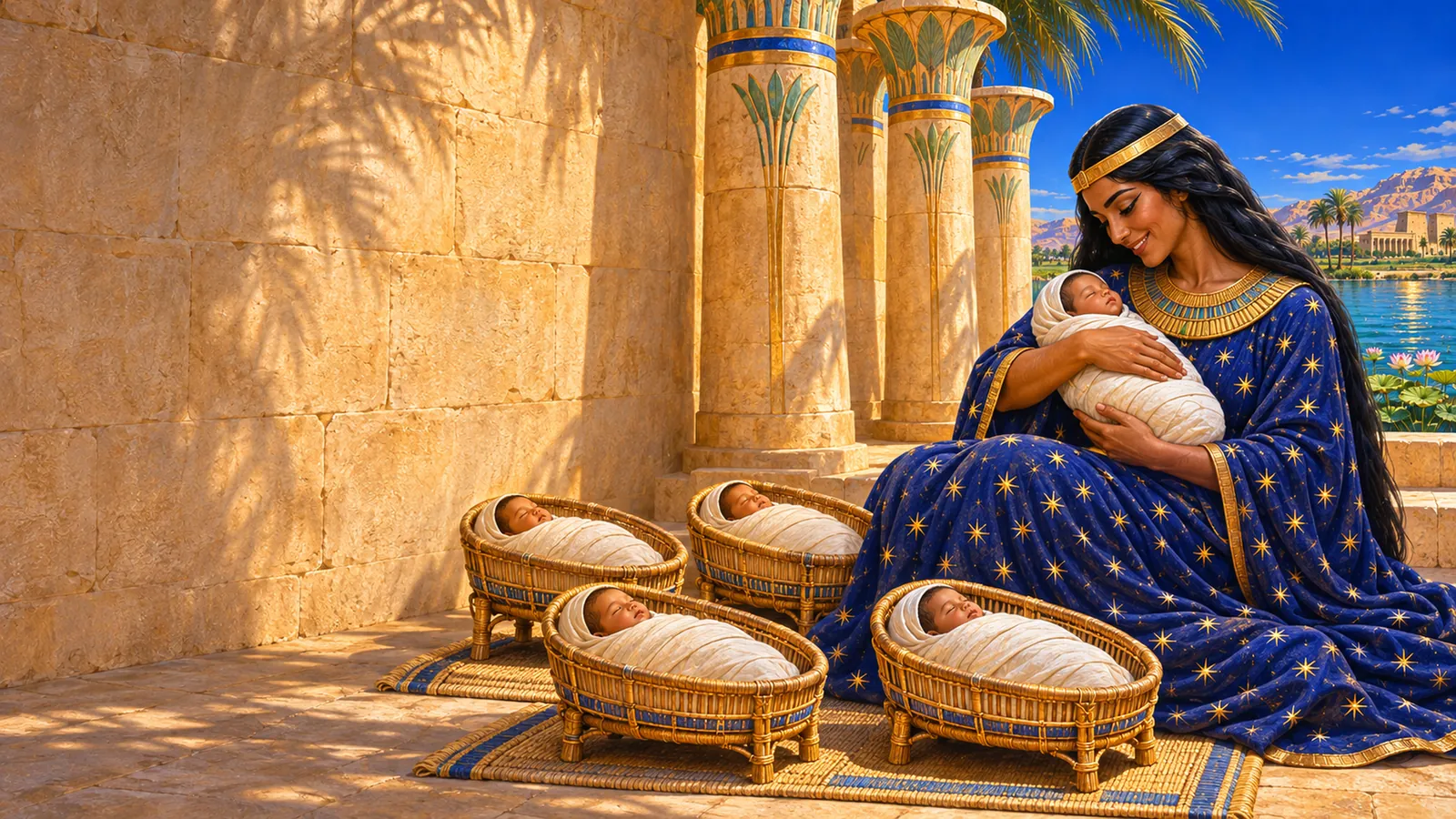
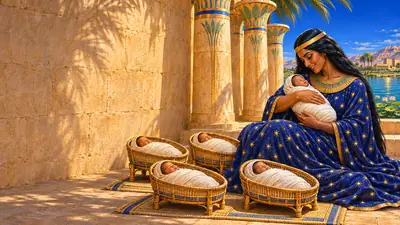
In Plutarchs Erzählung begingen die Ägypter diese fünf zusätzlichen Tage als Geburtstage ihrer Götter. Er erzählt von den Geburten der Reihe nach.
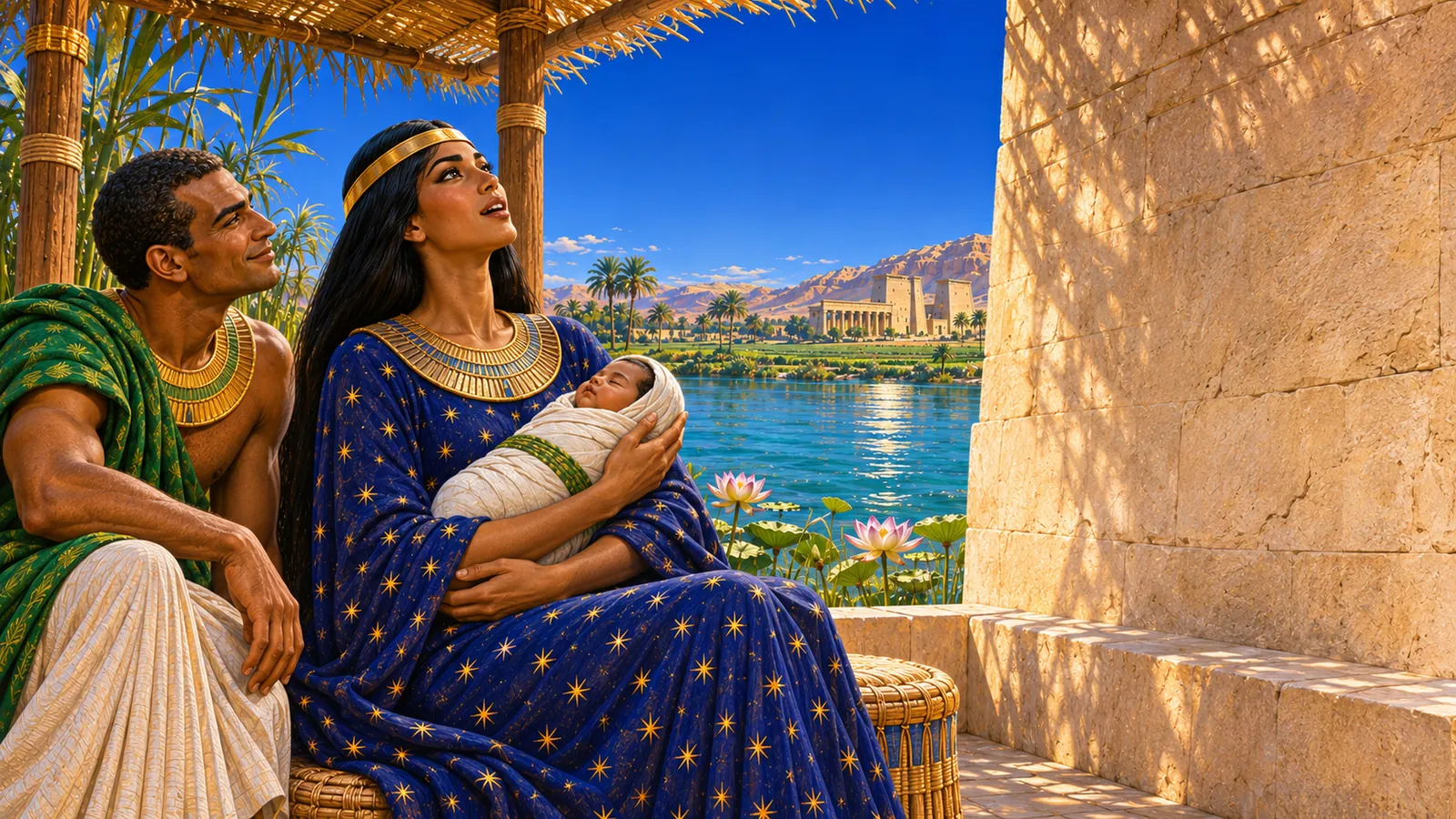
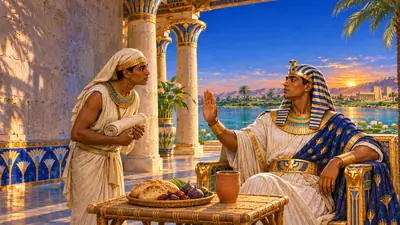
Am ersten zusätzlichen Tag wurde Osiris geboren. Als er zur Welt kam, verkündete eine Stimme die Geburt des Herrn der ganzen Erde.
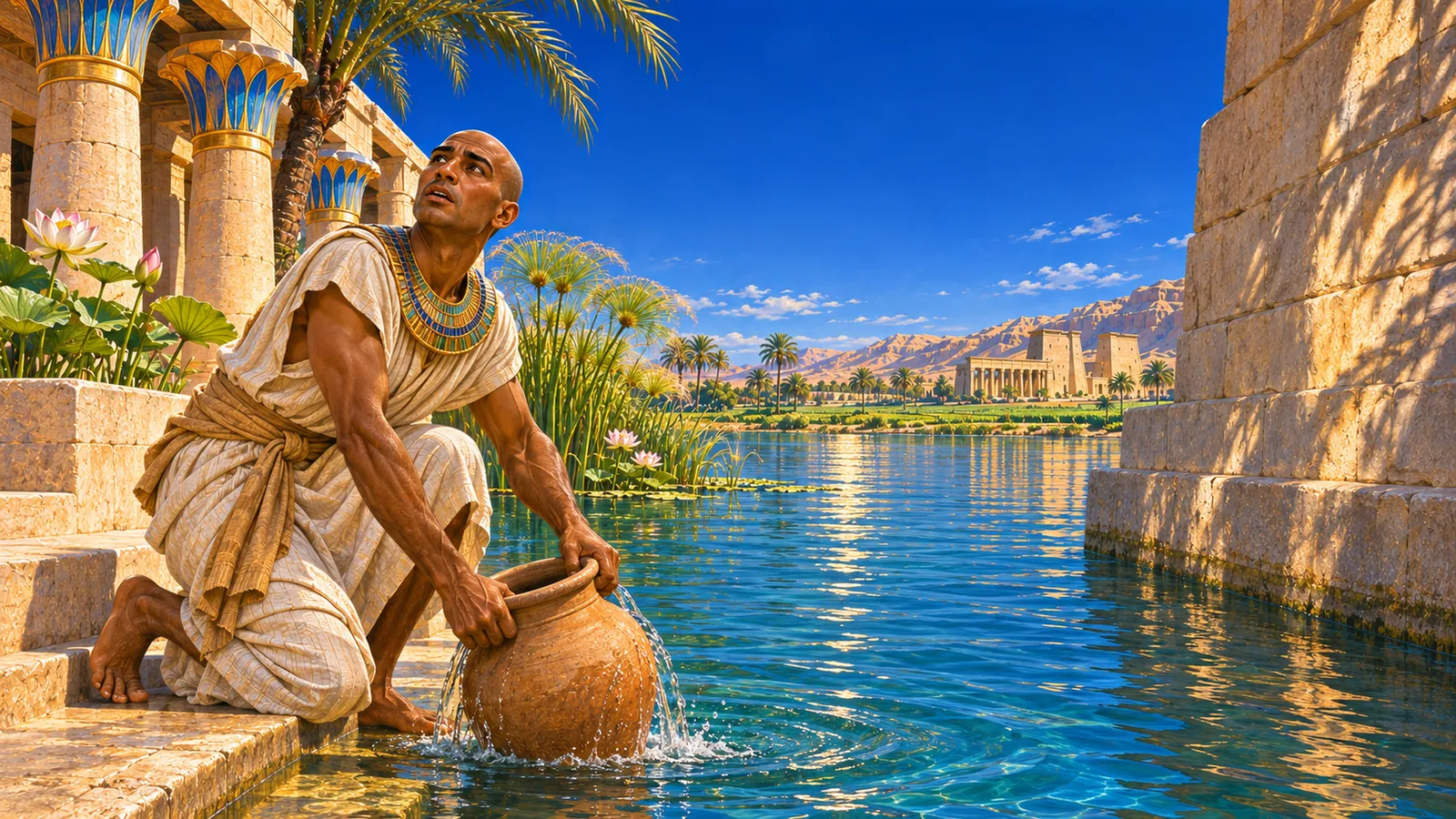
In einer anderen Fassung der Ankündigung holte ein Mann namens Pamyles Wasser an einem Tempel in Theben. Dort hörte er eine Stimme.
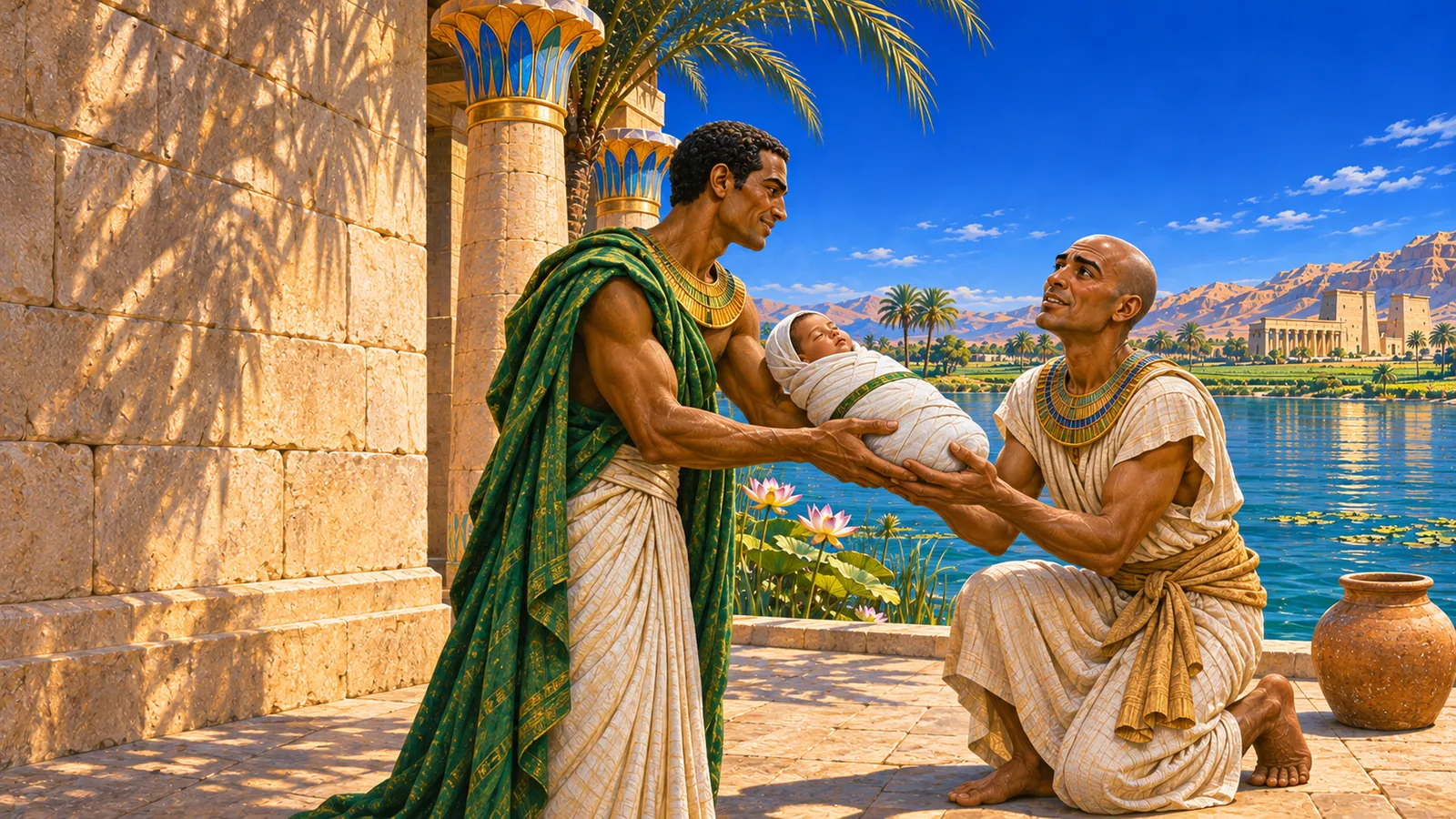
Die Stimme sagte Pamyles, er solle die Geburt des Osiris verkünden. Geb vertraute ihm die Erziehung des Kindes an, und ein Fest namens Pamylia erinnerte an das Ereignis.
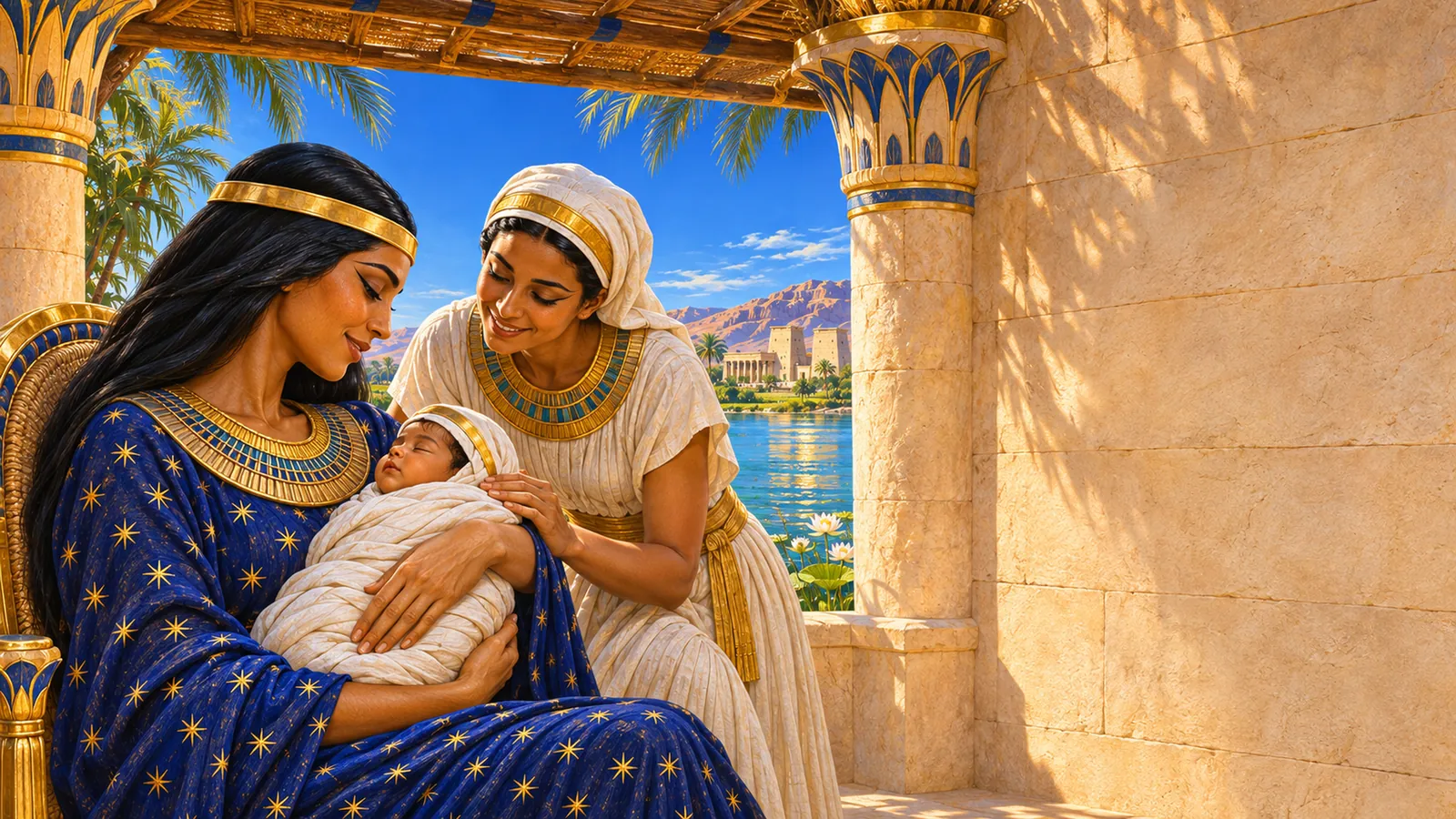
Am zweiten zusätzlichen Tag wurde Aroueris geboren. Einen der Namen, die Plutarch für ihn nennt, kennen wir als Horus den Älteren.
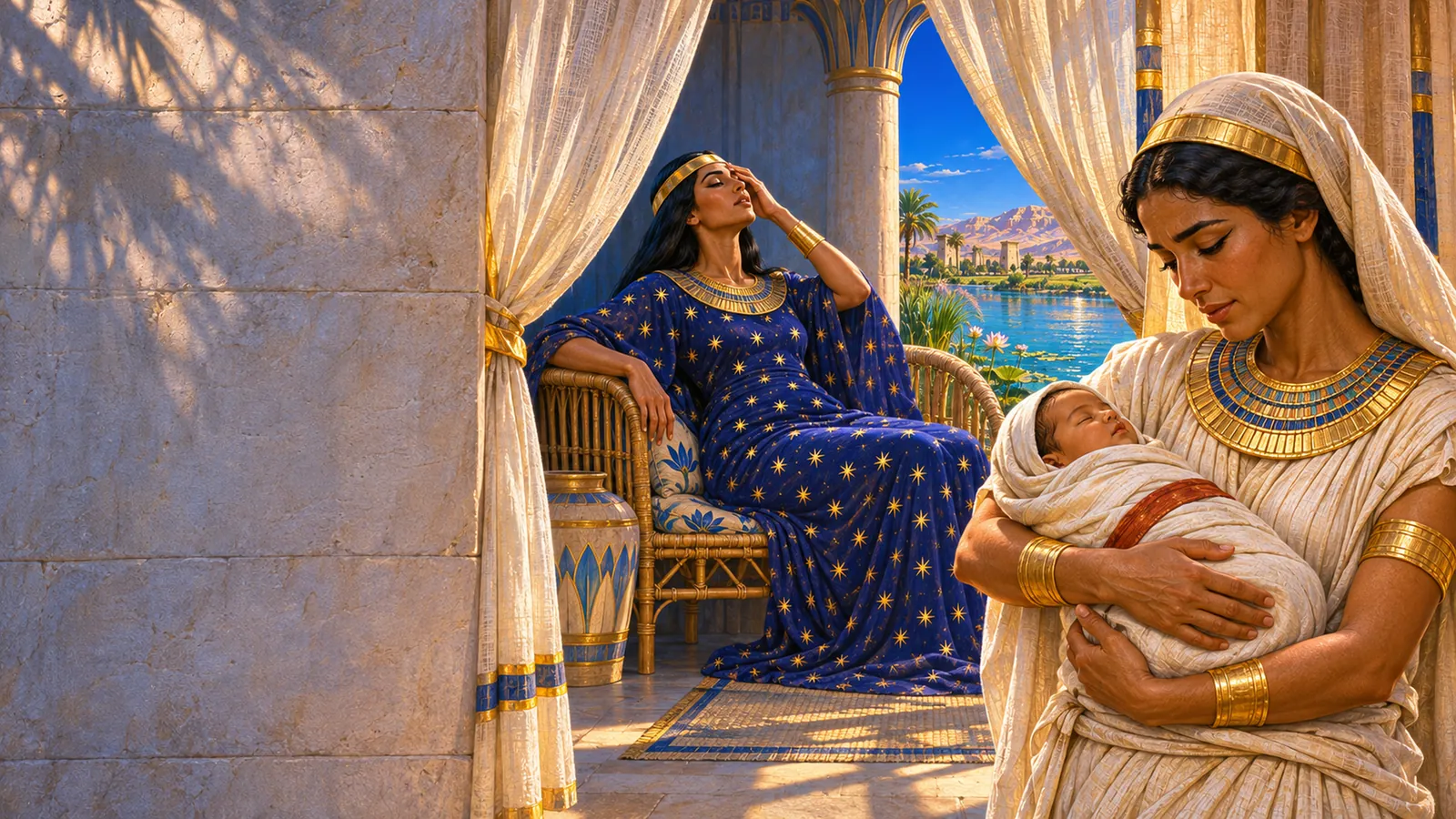
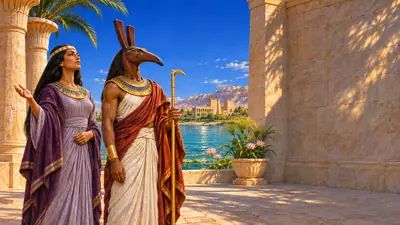
Am dritten zusätzlichen Tag wurde Seth geboren. Laut Plutarch drängte er durch eine Wunde nach draußen, die er seiner Mutter in der Seite zugefügt hatte.
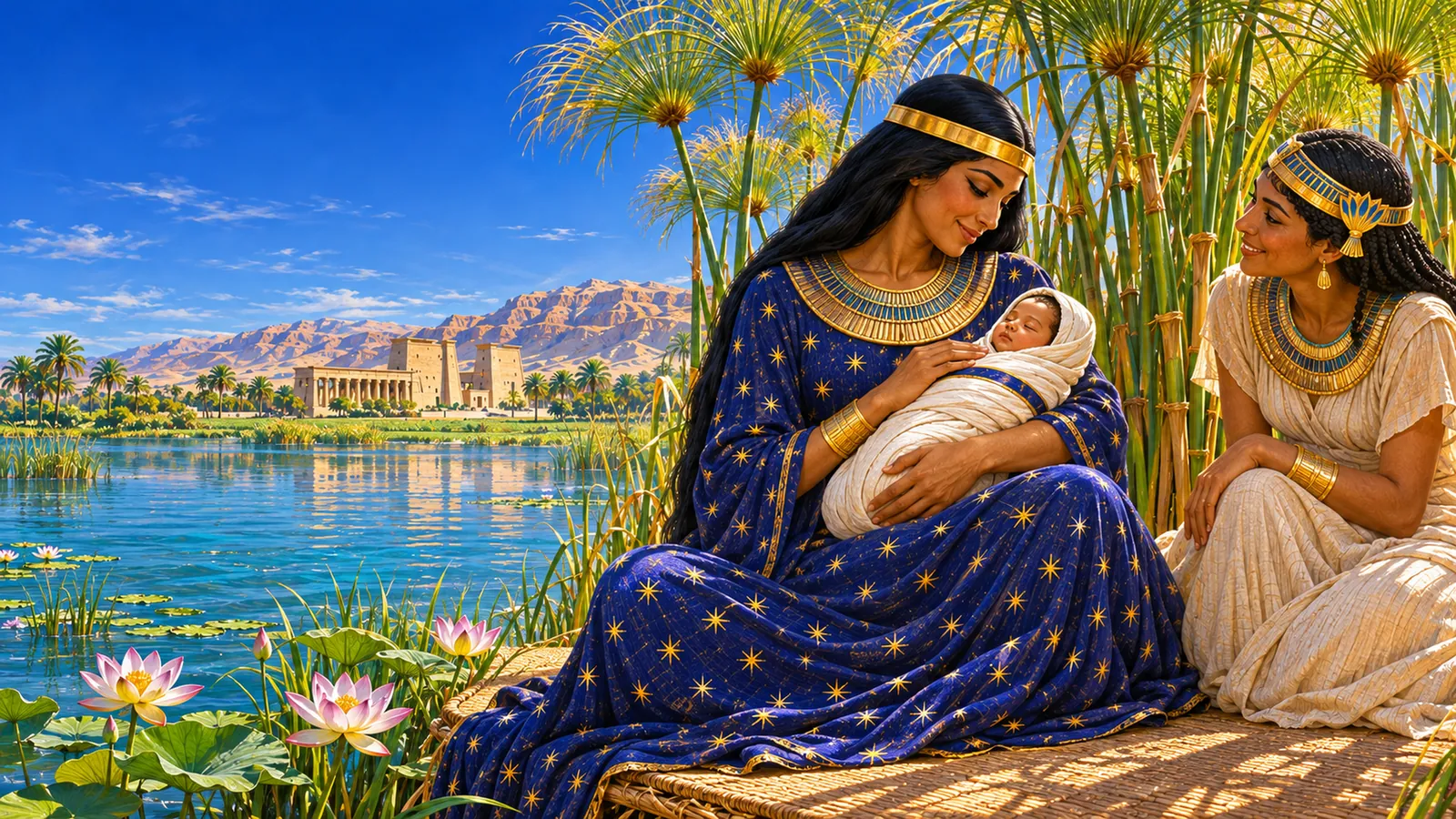
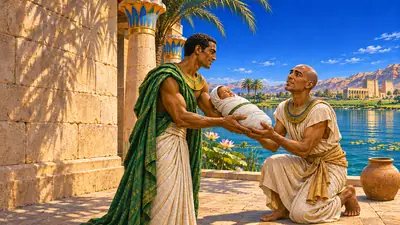
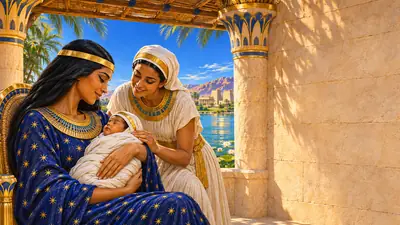
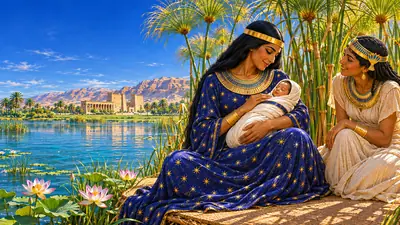
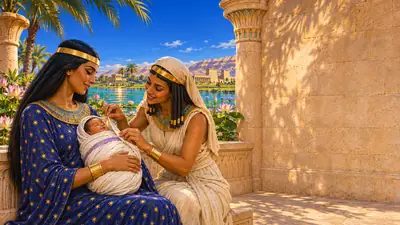
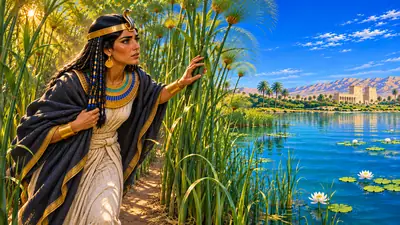
Am vierten der fünf dem Jahr hinzugefügten Tage wurde Isis in den Sümpfen Ägyptens geboren.
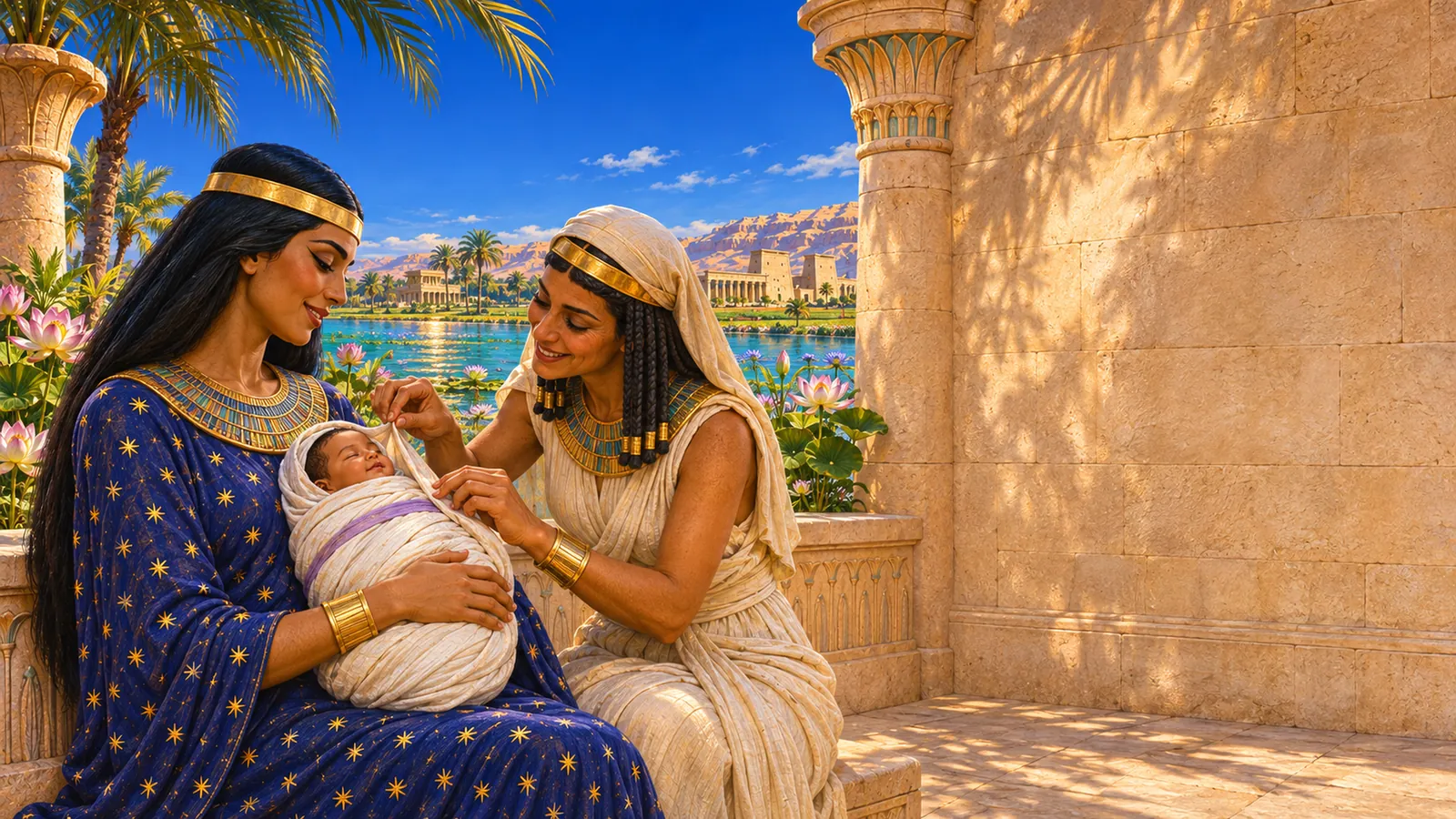
Nephthys wurde am fünften und letzten zusätzlichen Tag geboren. Damit schließt Plutarchs Reihe der Geburten.
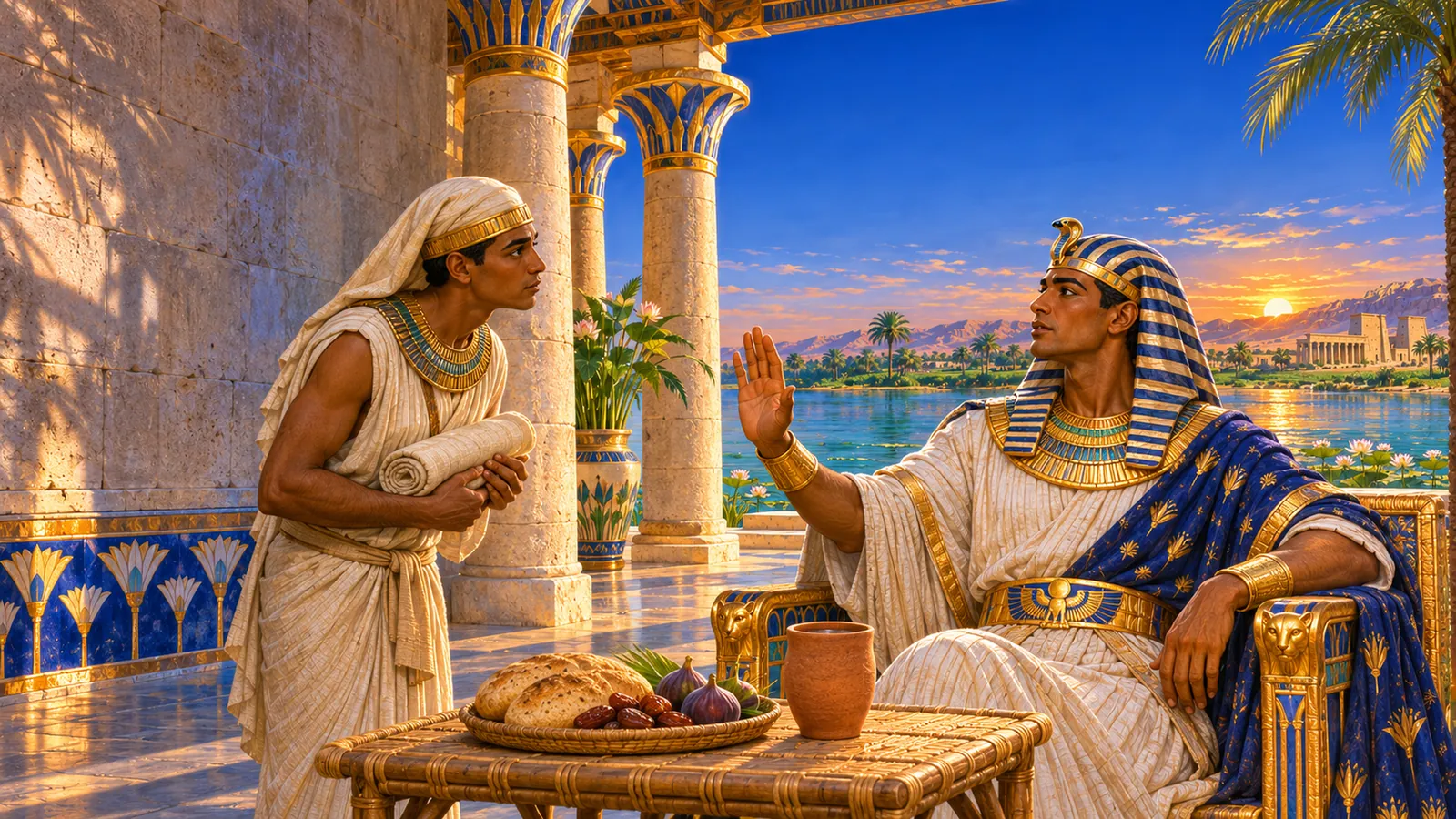
In einer Überlieferung ist Re der Vater von Osiris und Horus dem Älteren, Thot der Vater von Isis und Geb der Vater von Seth und Nephthys. Die Könige hielten Seths Tag für unheilvoll und verzichteten bis zum Abend auf Geschäfte, Essen und Trinken.
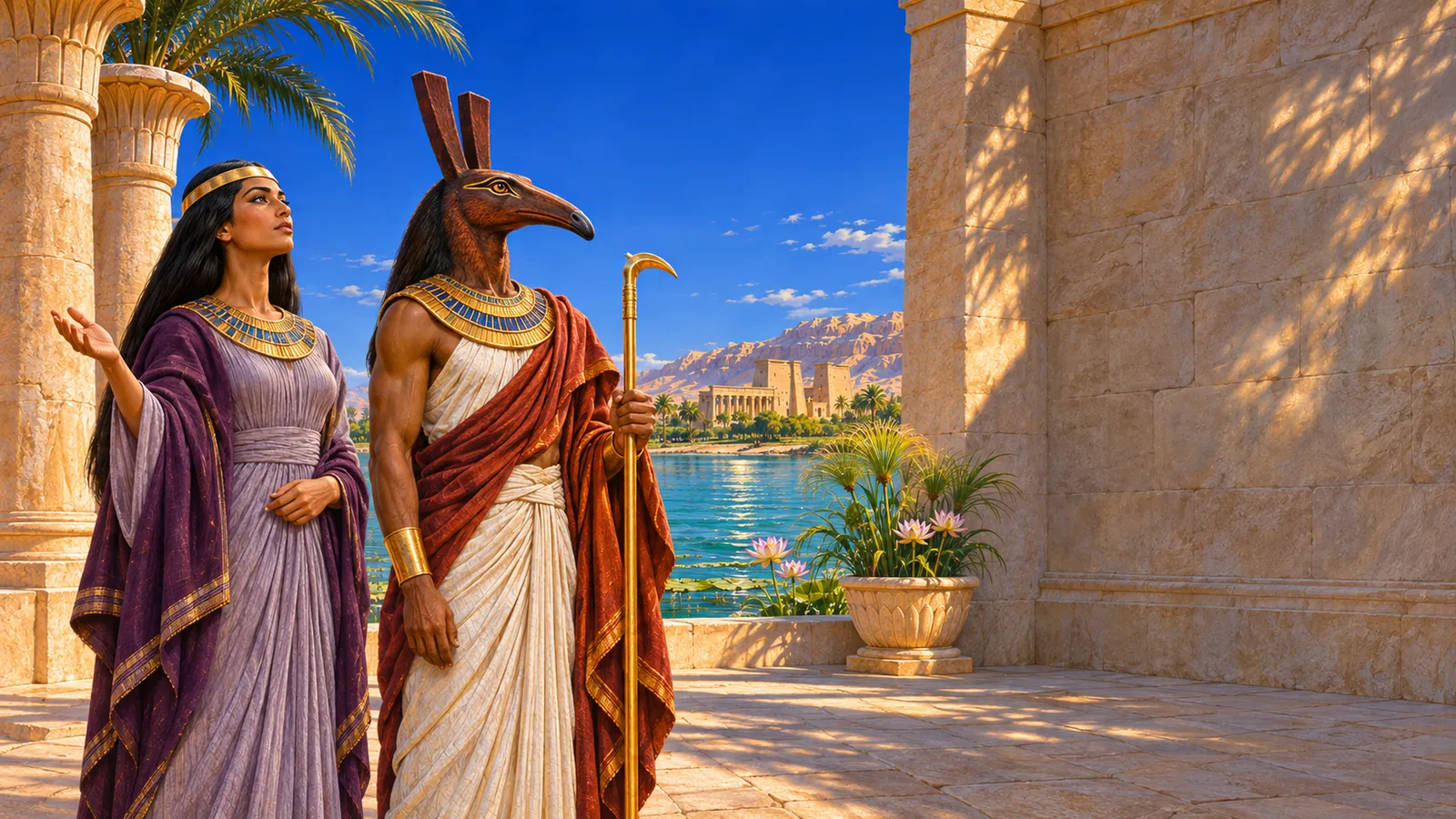
Plutarch sagt, Seth habe Nephthys geheiratet. Er überliefert auch eine Fassung, in der Isis und Osiris sich vor ihrer Geburt verbanden und Horus der Ältere ihr Kind war.
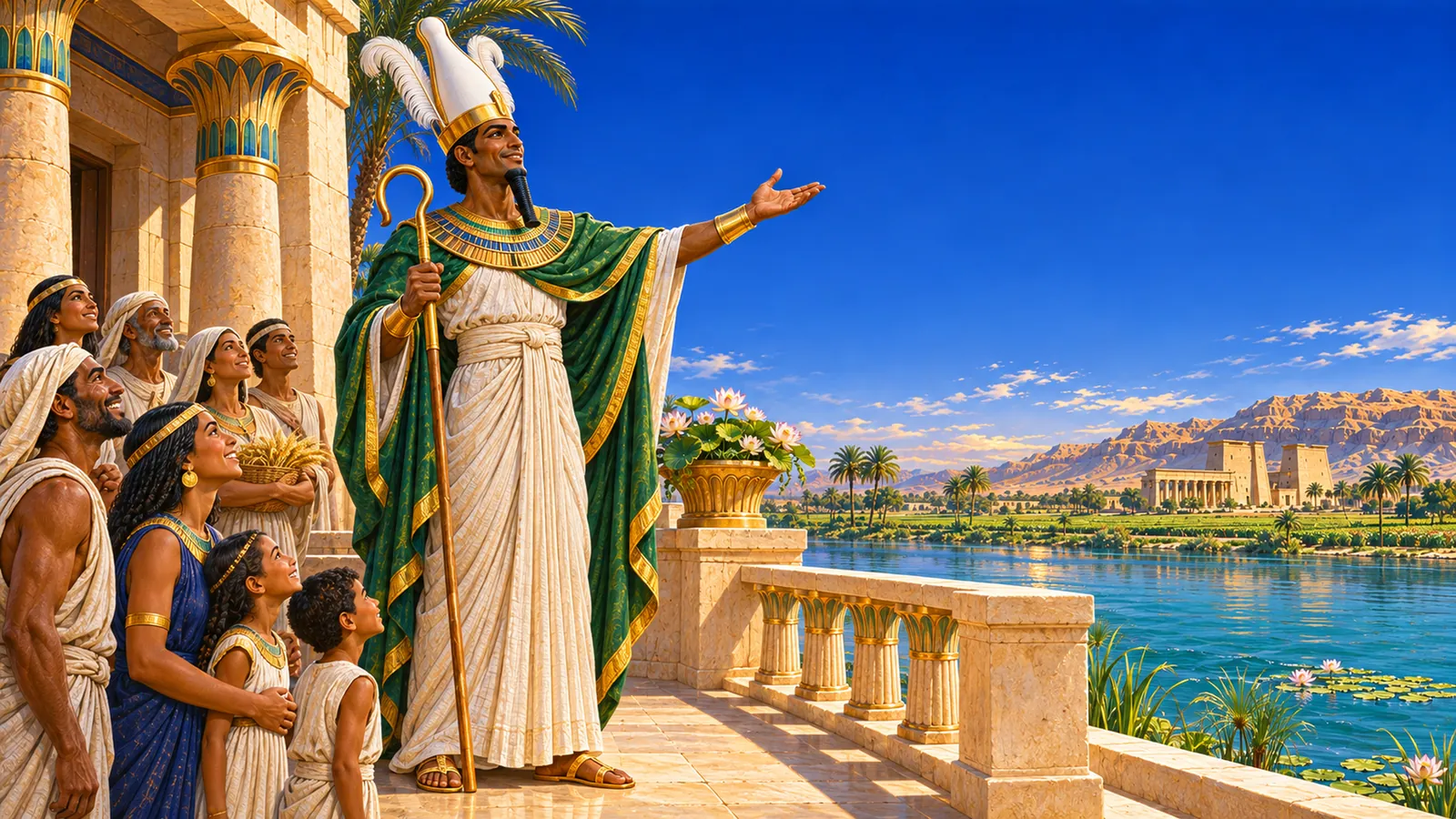
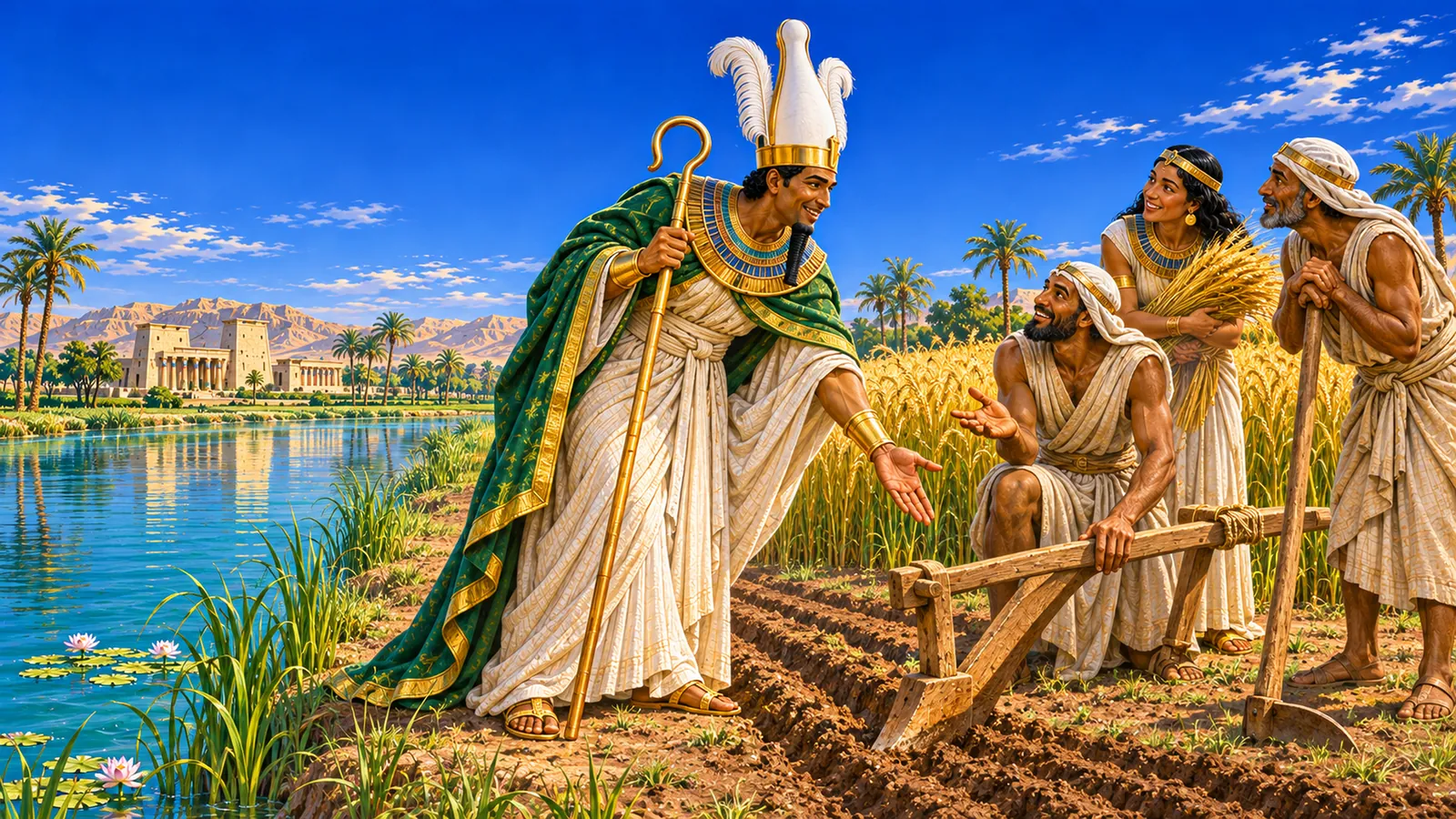
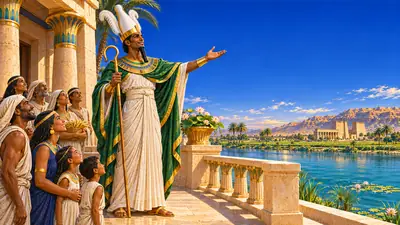
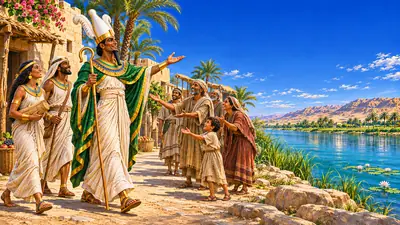
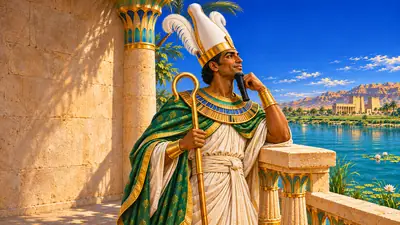
In Plutarchs Erzählung wurde Osiris König von Ägypten. Der Geschichte zufolge machte er sich daran, die Lebensweise seines Volkes zu verändern.
ÄGYPTEN
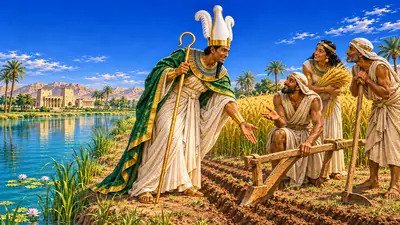
Die Geschichte erzählt, dass Osiris sein Volk lehrte, das Land zu bebauen und bessere Erträge zu erzielen. Er gab ihm Gesetze und lehrte es, die Götter zu ehren.
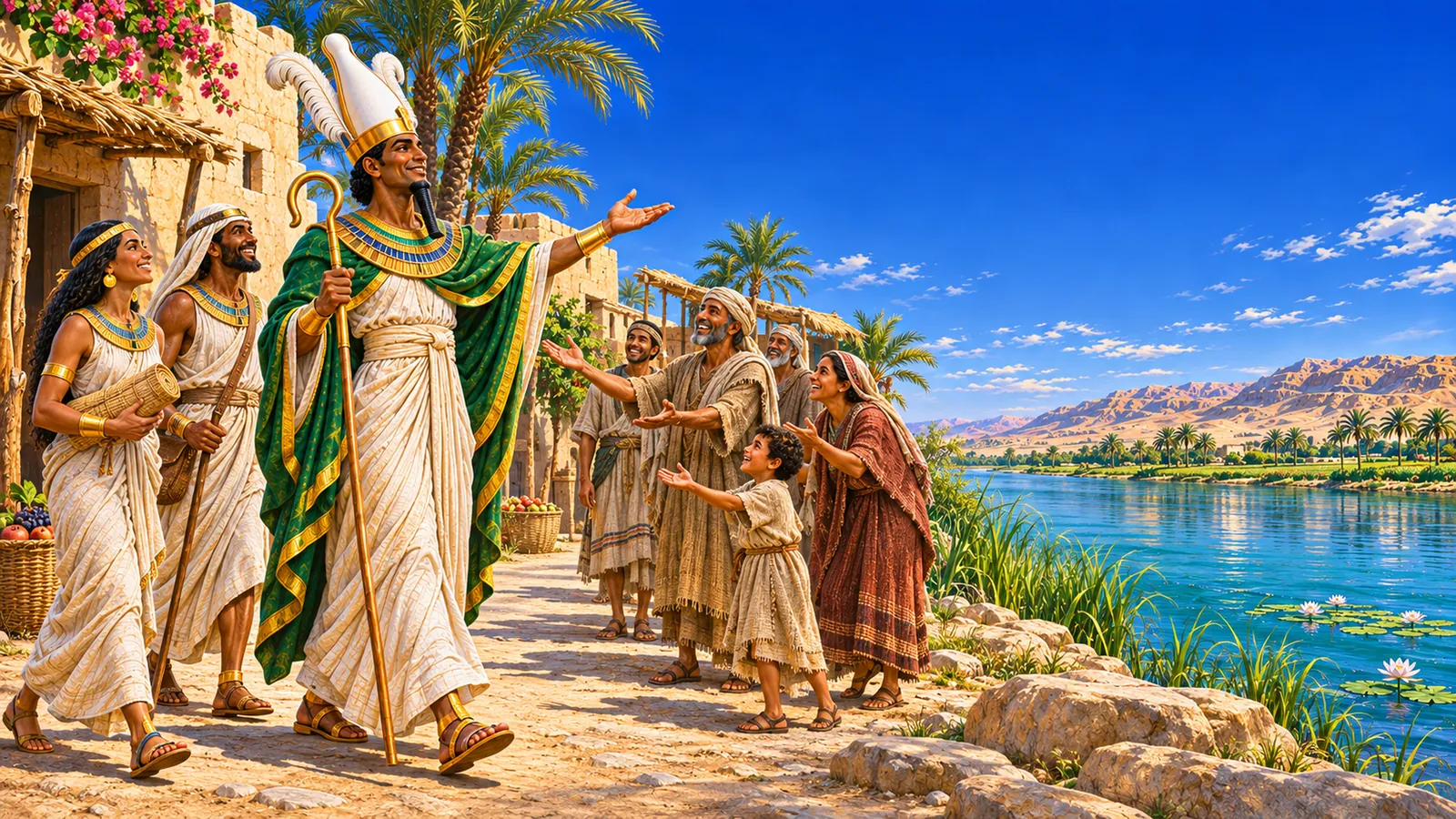
In der Geschichte reiste Osiris über Ägypten hinaus. Er wollte, dass die Menschen in den Ländern, die er besuchte, den Lehren folgten, die er daheim vermittelt hatte.
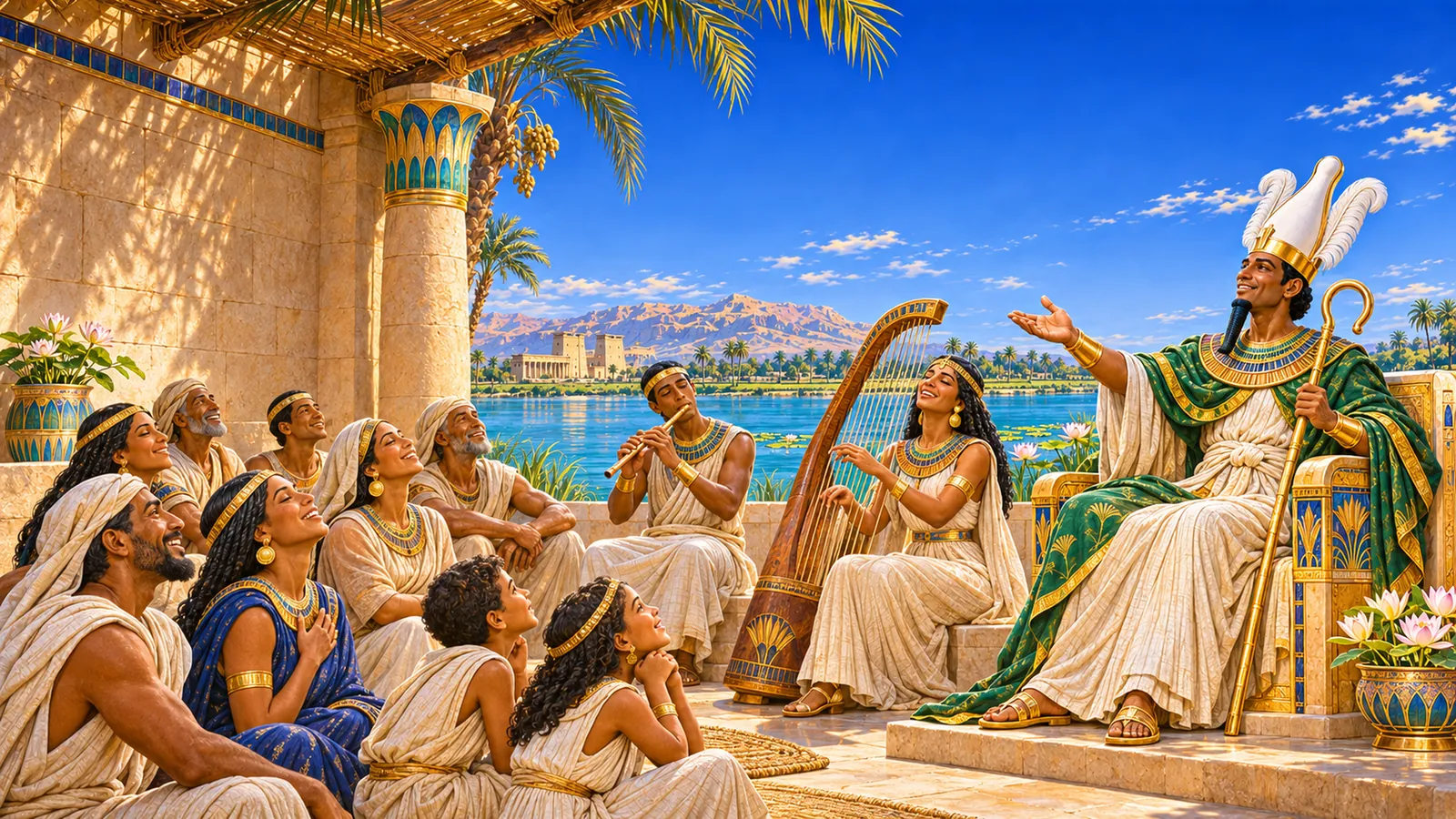
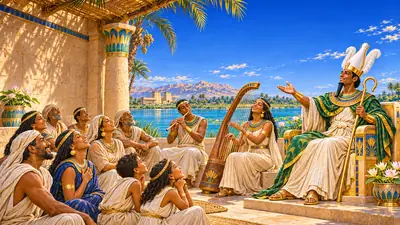
Plutarch sagt, Osiris habe die Menschen überzeugt, indem er seine Gründe in Hymnen und Liedern mit Musik vortrug. Er zwang sie nicht mit Waffengewalt.
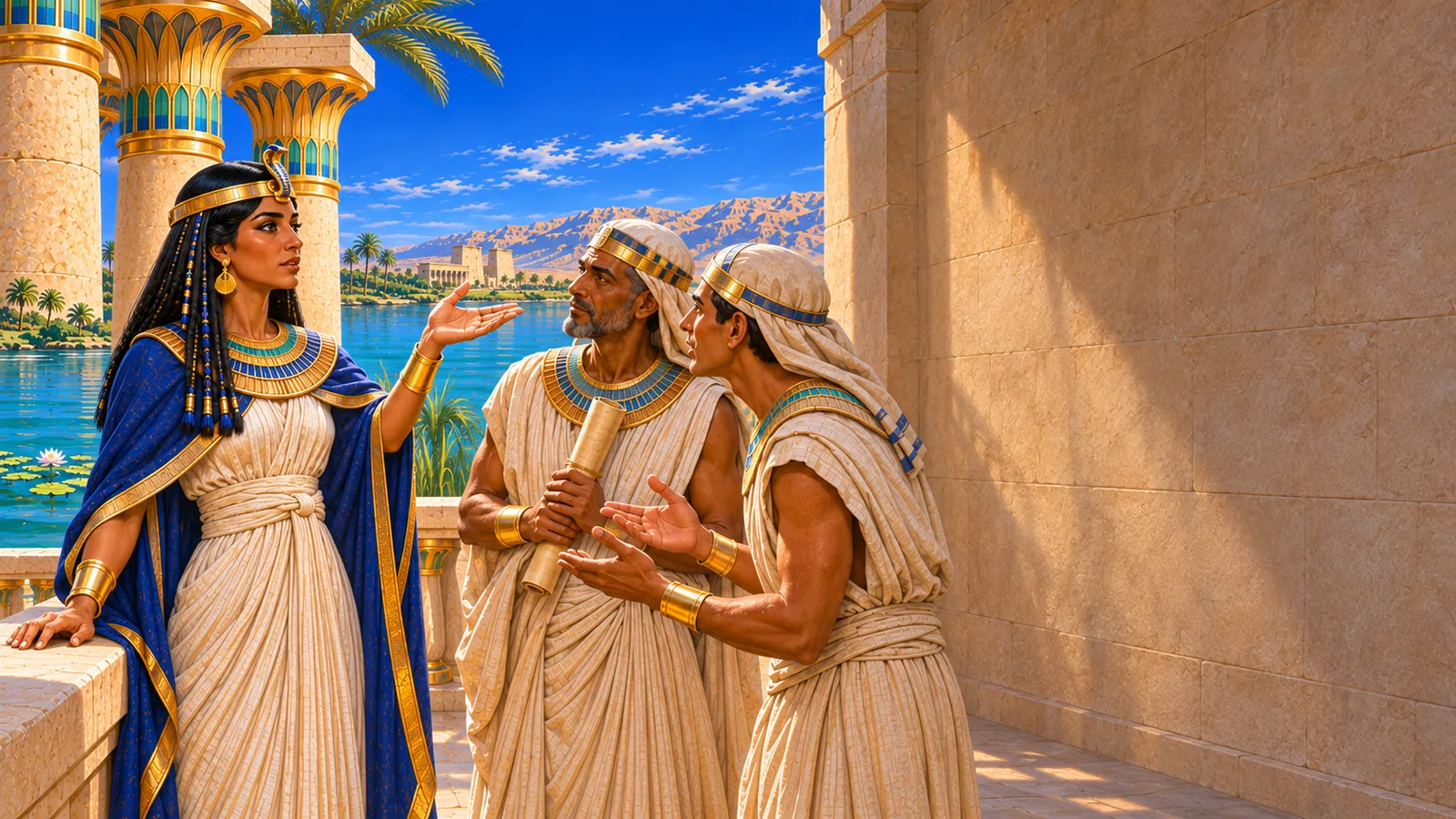
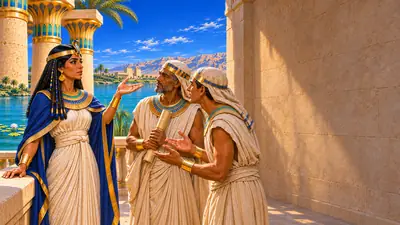
Während Osiris fort war, regierte Isis und blieb auf der Hut. Seth fand keine Gelegenheit zum Handeln, solange sie wachsam blieb.
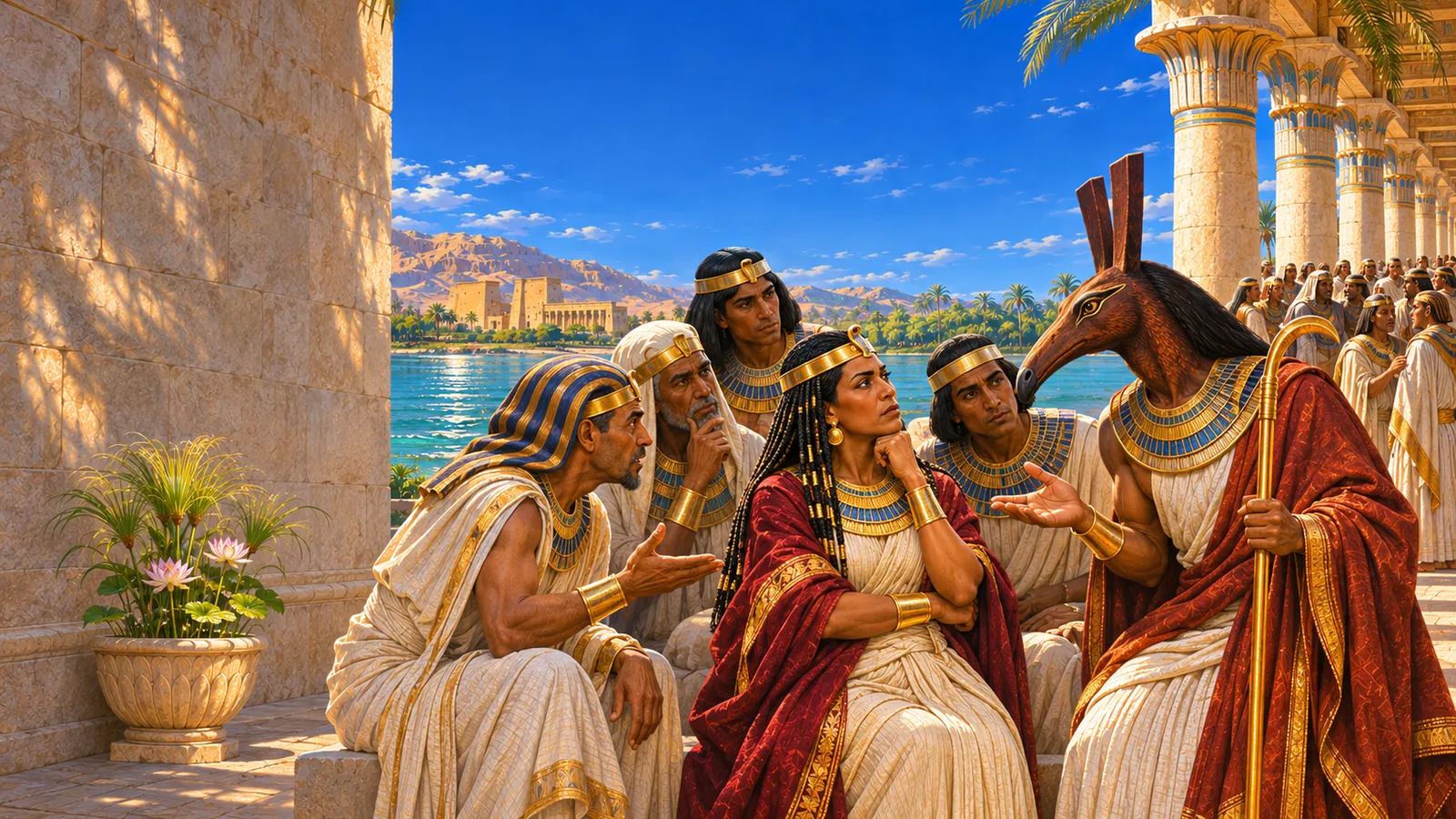
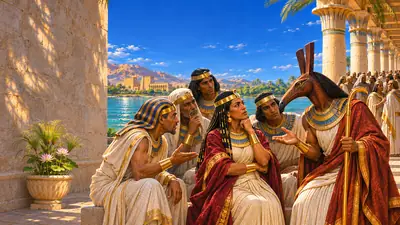
Nach der Rückkehr des Osiris überredete Seth zweiundsiebzig weitere Menschen, sich seiner Verschwörung anzuschließen. Auch eine Königin namens Aso, die damals in Ägypten war, schloss sich an.
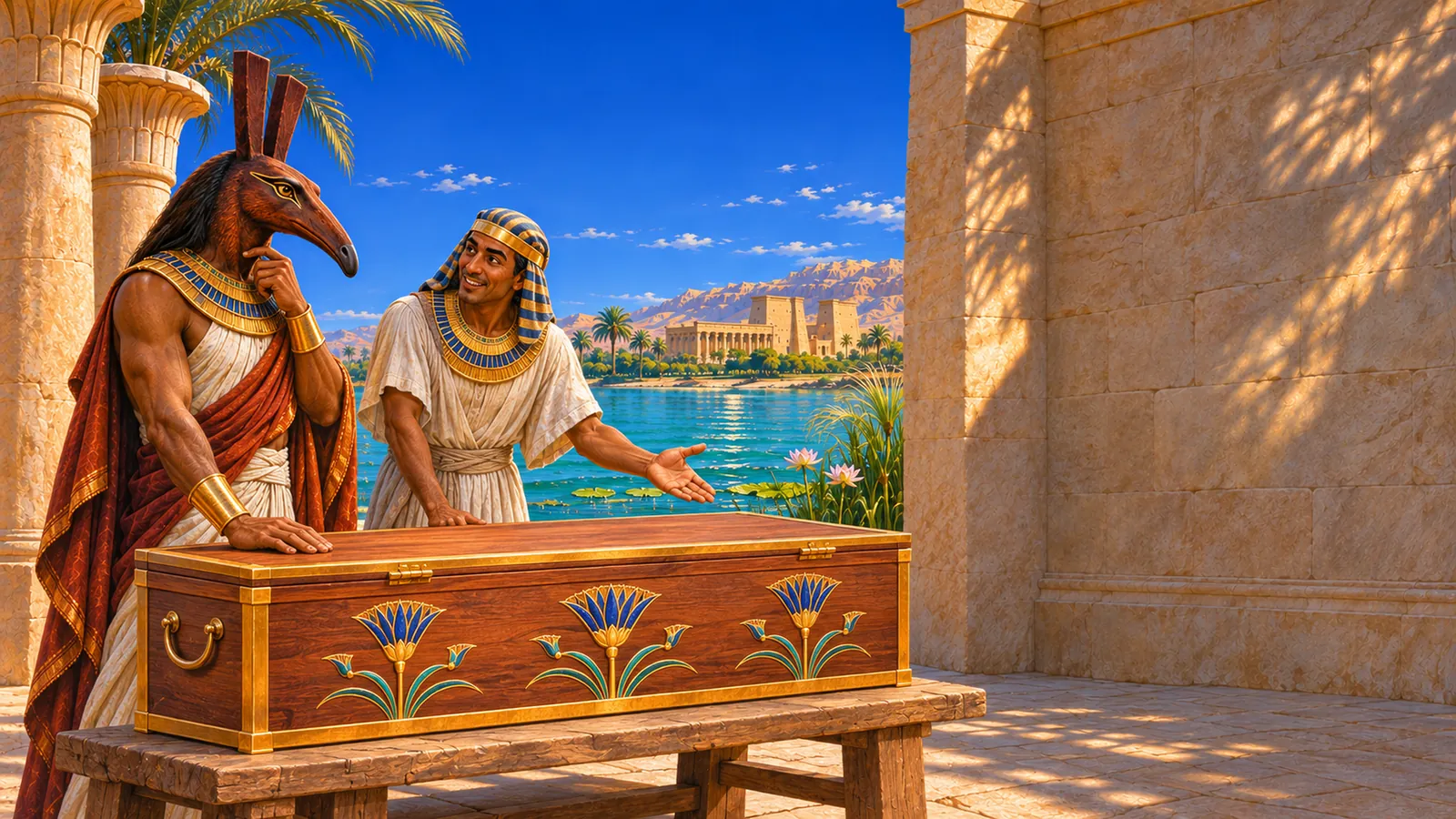
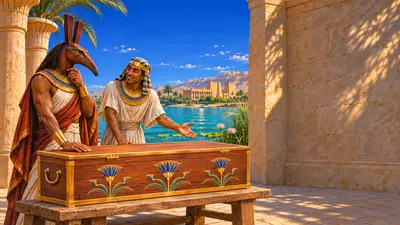
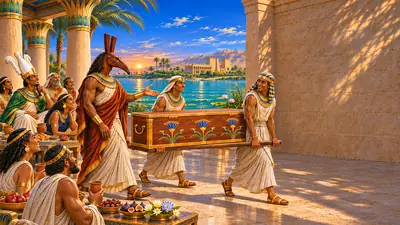
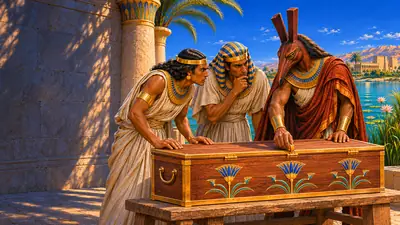
Im Mittelpunkt von Seths Plan stand eine fein verzierte Truhe. In Plutarchs Erzählung ließ Seth sie so anfertigen, dass Osiris hineinpasste.
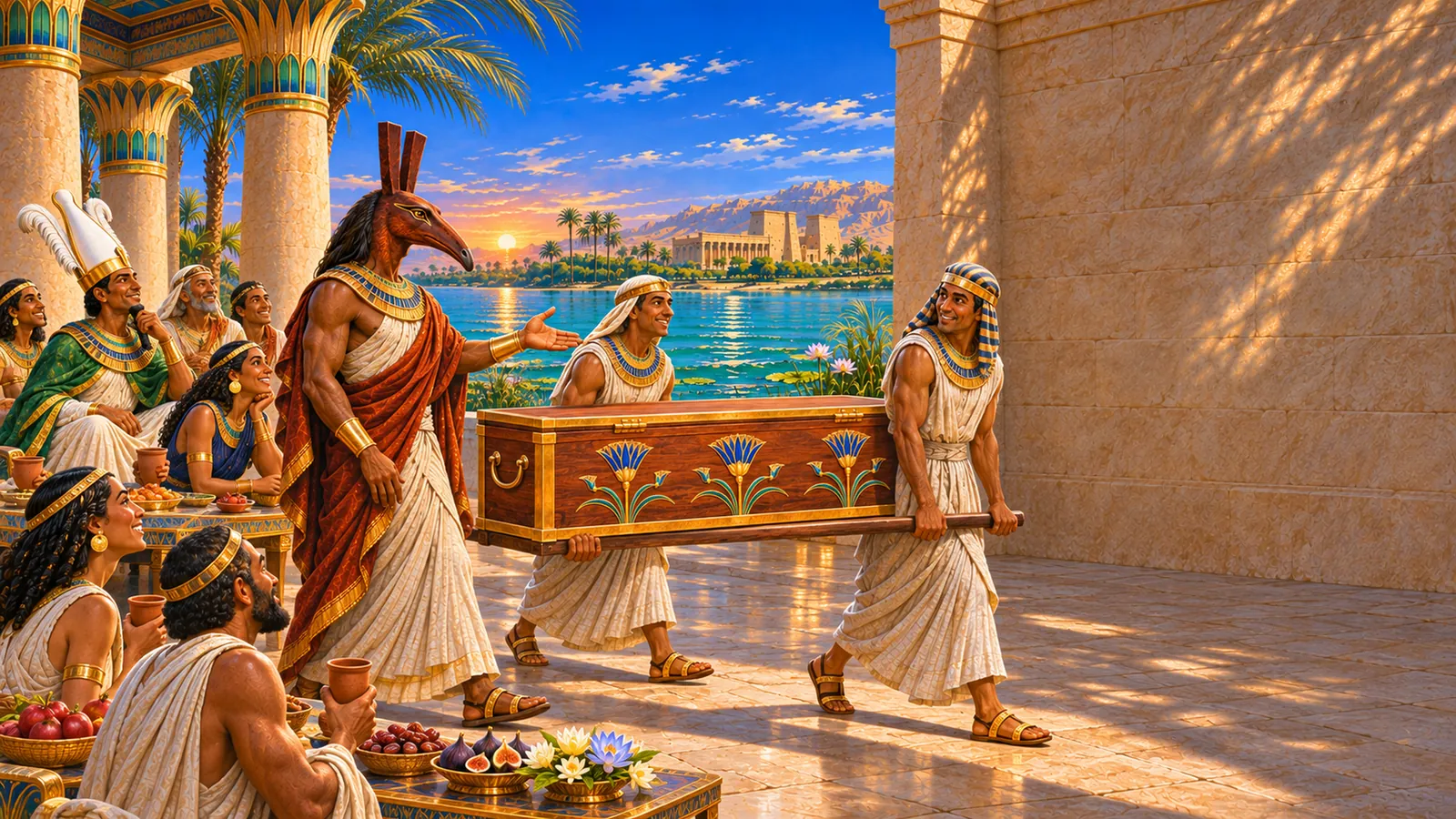
DIE TRUHE
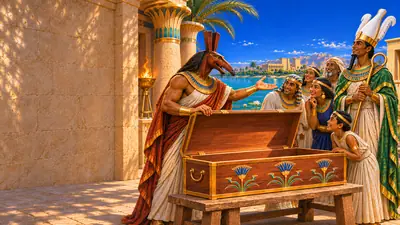
Seth brachte die Truhe in den Raum, in dem er das Festmahl gab. Die Gäste bewunderten sie, als sie sie dort sahen.
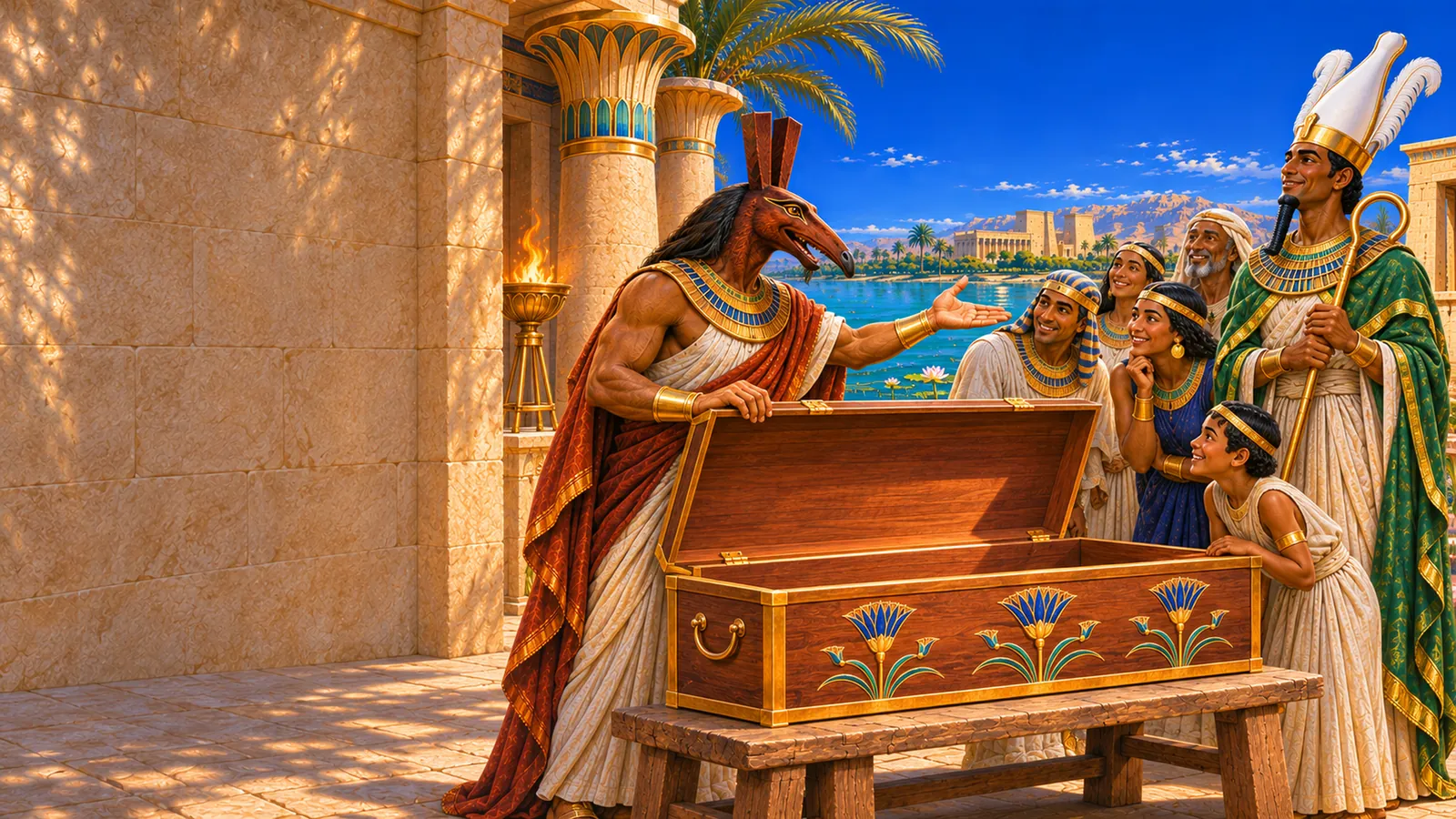
Seth sprach, als mache er einen Scherz. Er versprach die Truhe dem Gast, der hineinpasste.
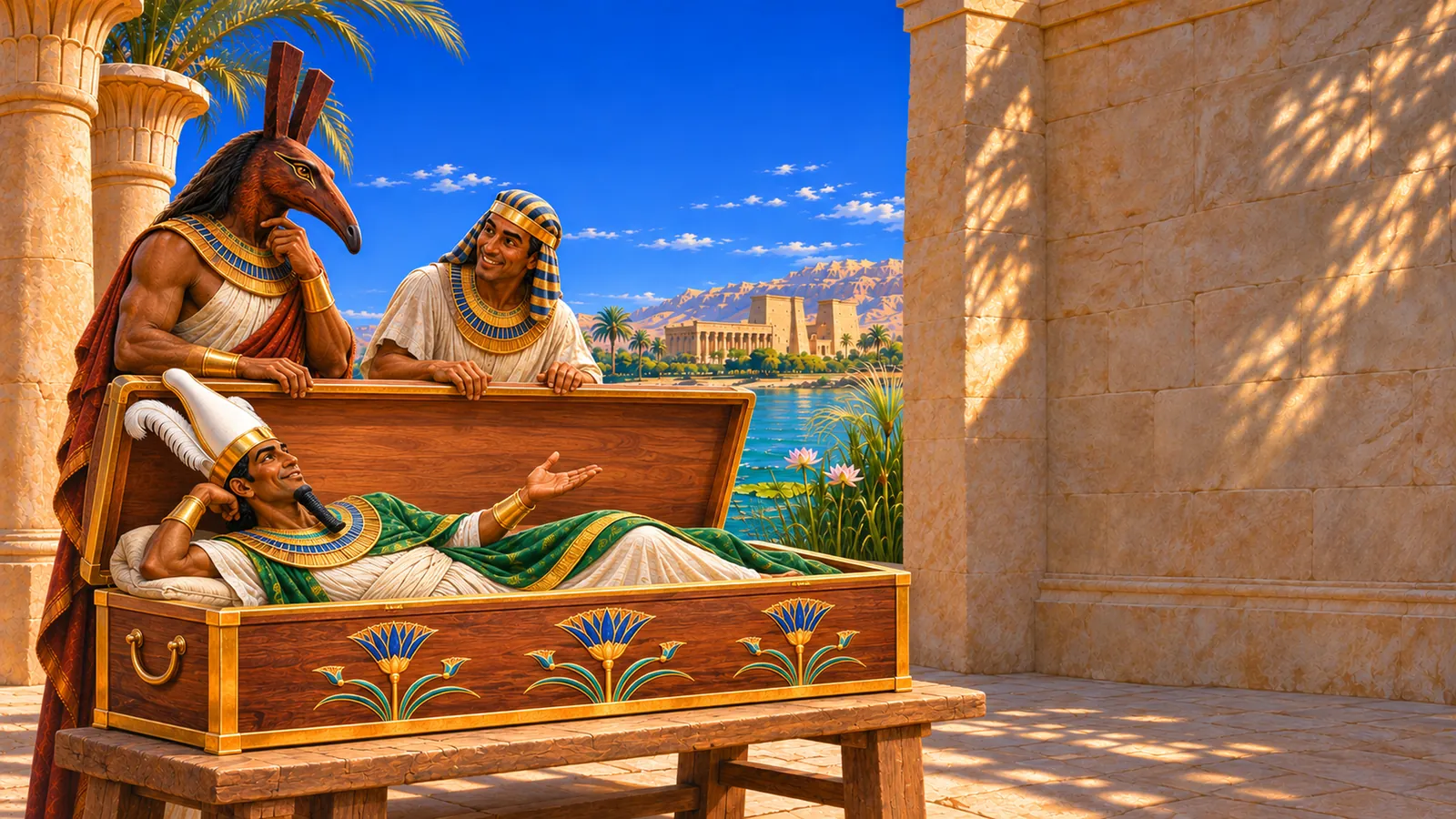
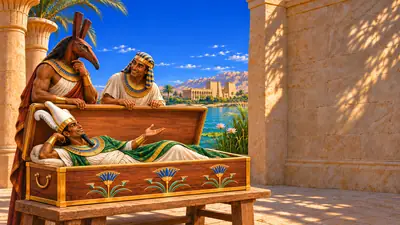
Die Gäste versuchten es nacheinander mit der Truhe, aber sie passte keinem von ihnen. Als Osiris an der Reihe war, legte er sich hinein.
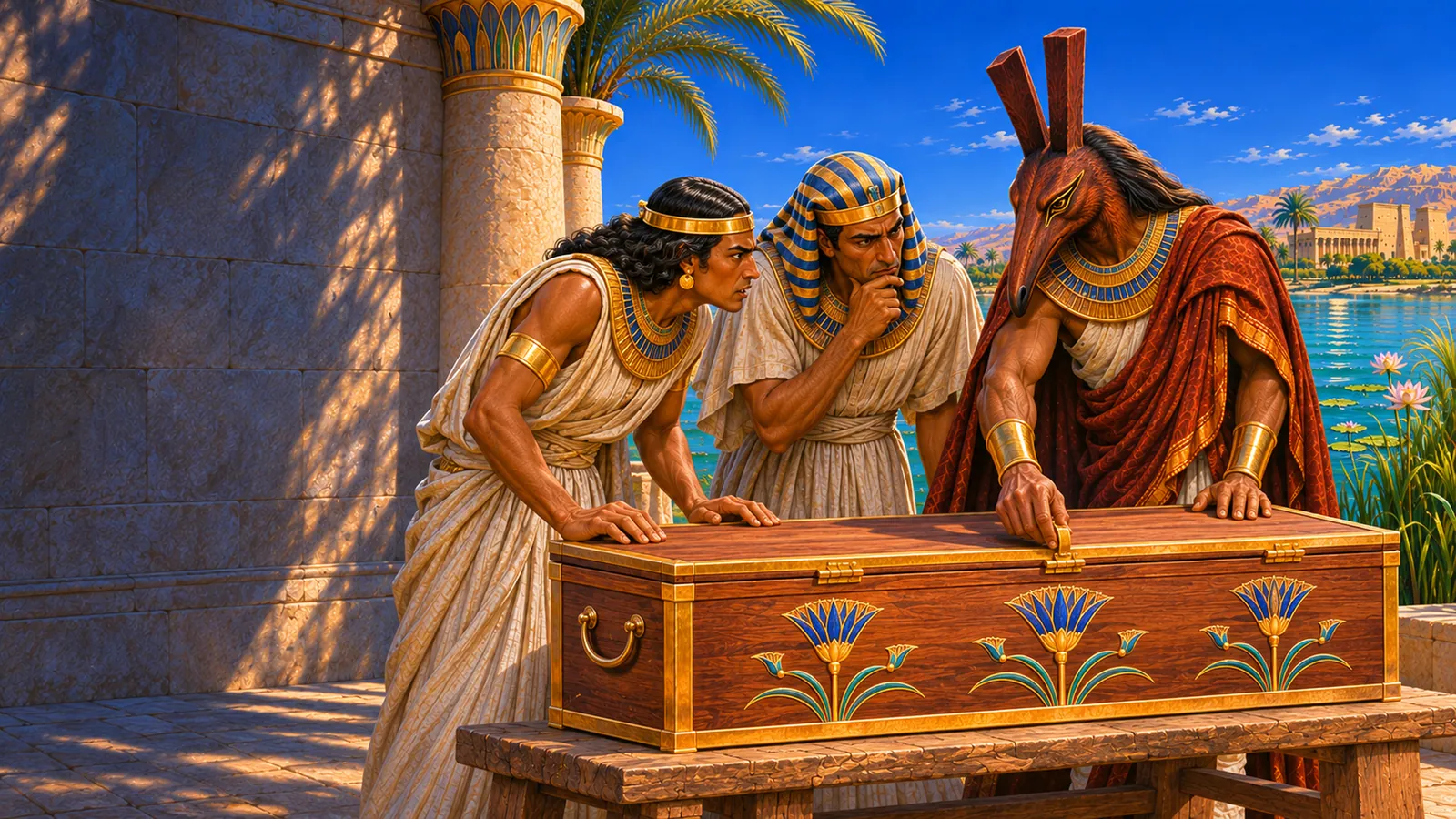
In Plutarchs Erzählung schlossen die Beteiligten der Verschwörung die Truhe mit Osiris darin. Er saß in der Falle.
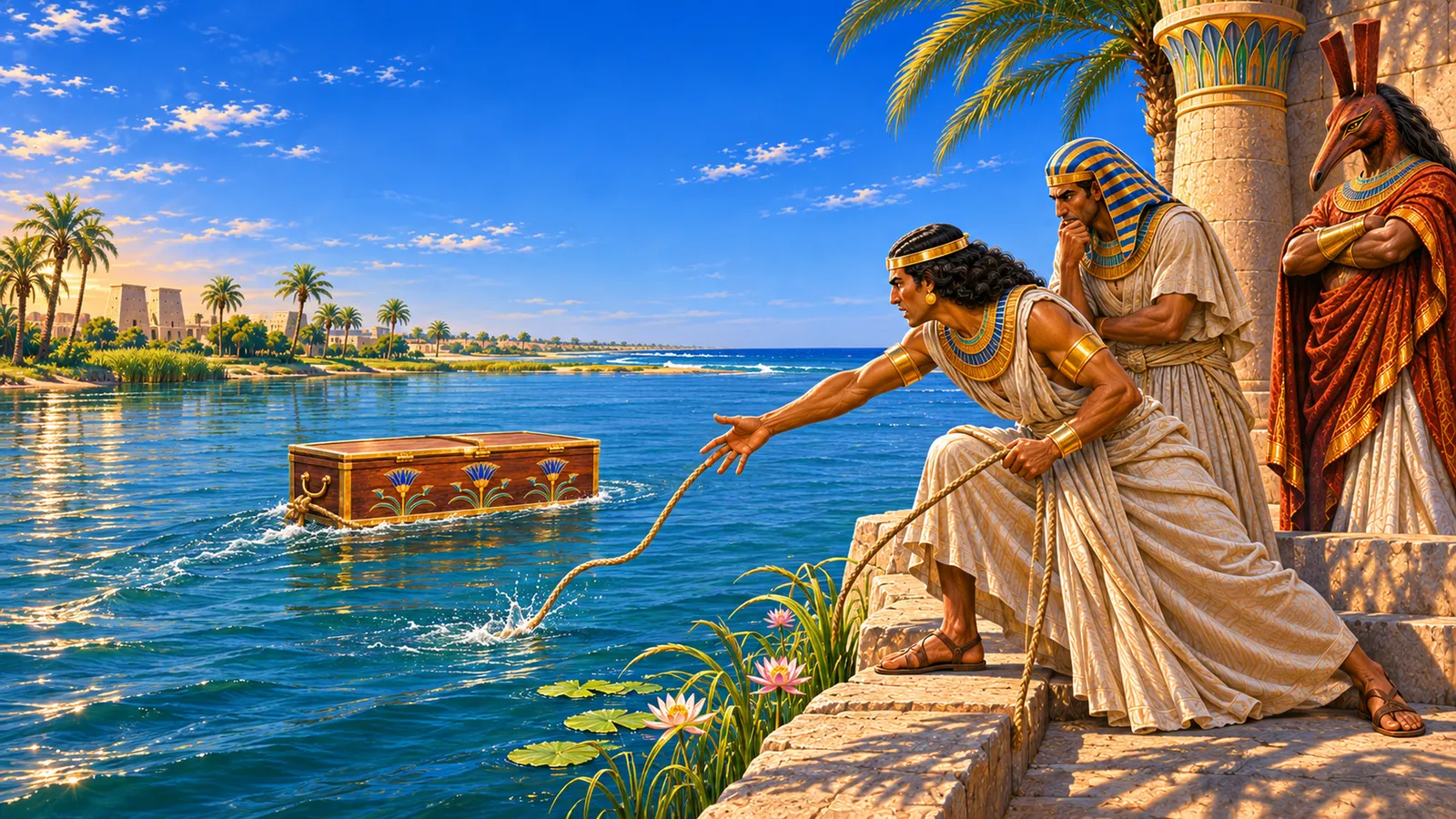
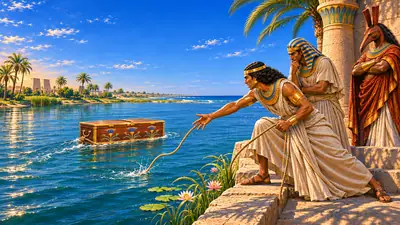
Sie brachten die geschlossene Truhe zum Nil. In der Geschichte gelangte sie durch die tanitische Mündung des Flusses ins Meer.
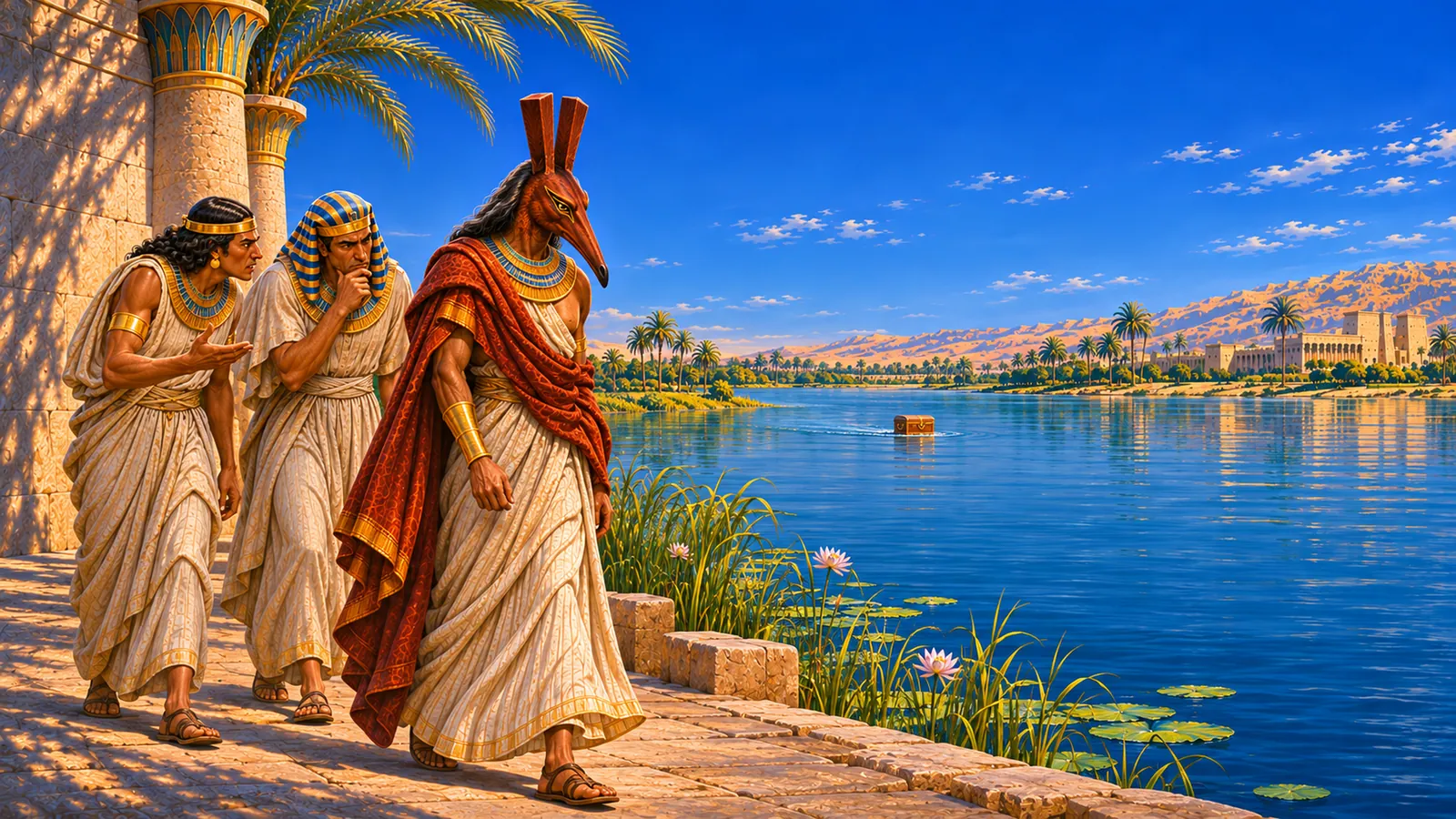
Plutarch verbindet die Geschichte mit der Abneigung, die diese Nilmündung ihm zufolge hervorrief. Er setzt das Ereignis auf den siebzehnten Tag des Monats Athyr.
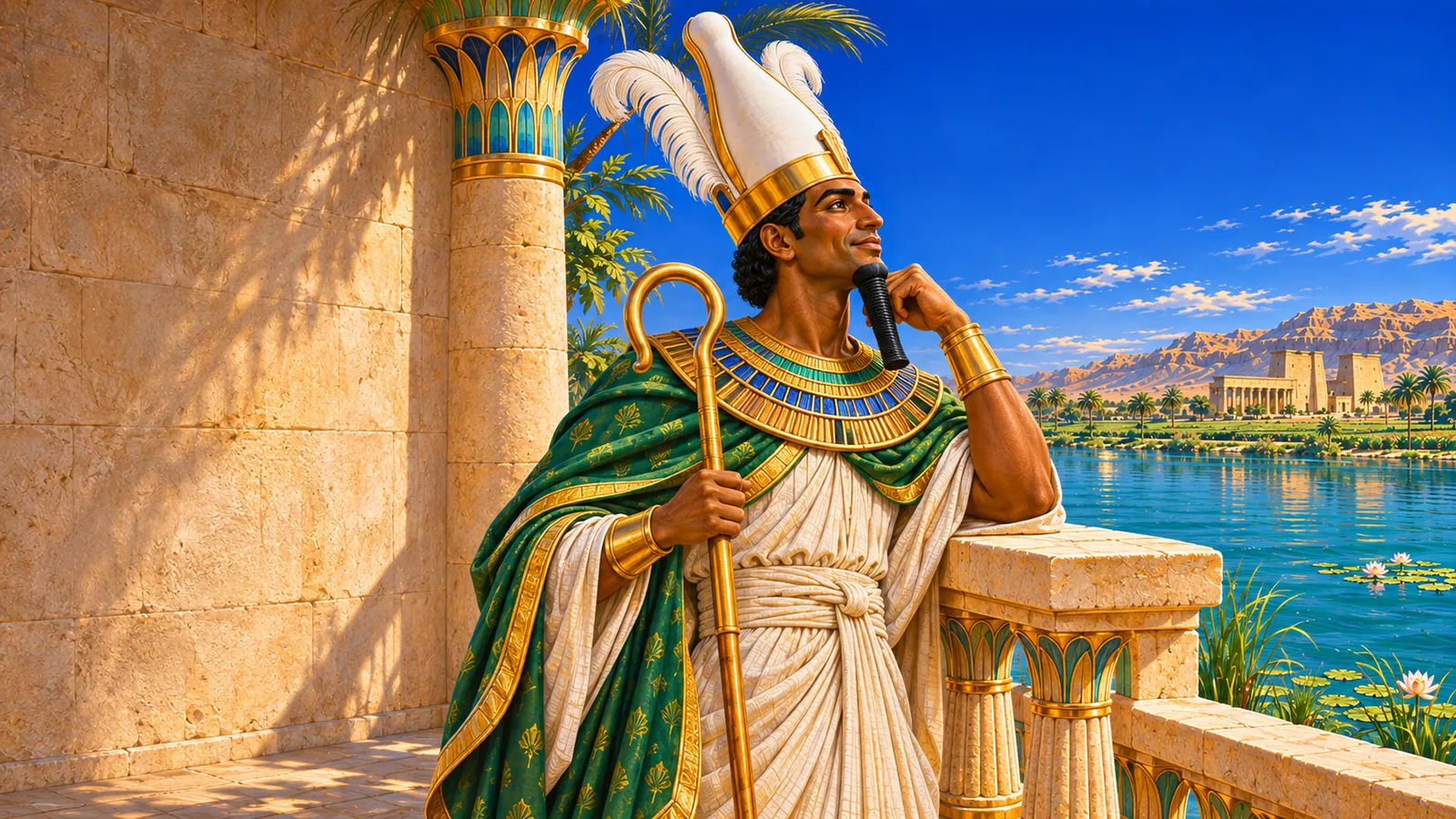
Einige setzten das Ereignis in das achtundzwanzigste Regierungsjahr des Osiris. Andere sagten, er selbst sei achtundzwanzig Jahre alt gewesen, als es geschah.
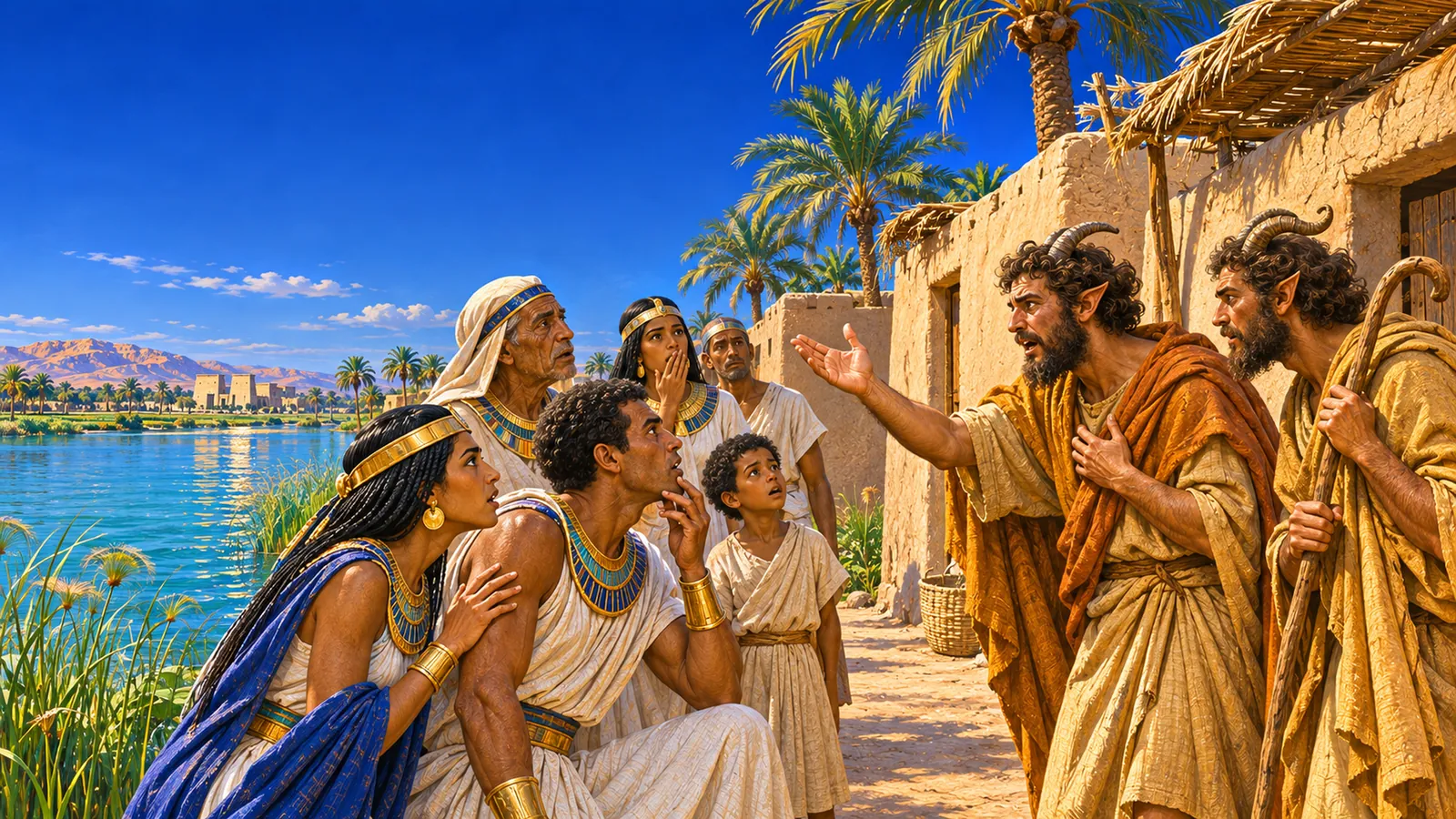
Bei Chemmis erfuhren die Wesen, die Plutarch Pane und Satyrn nennt, als erste, was Osiris zugestoßen war. Dann gaben sie die Nachricht an die Menschen weiter.
DIE NACHRICHT
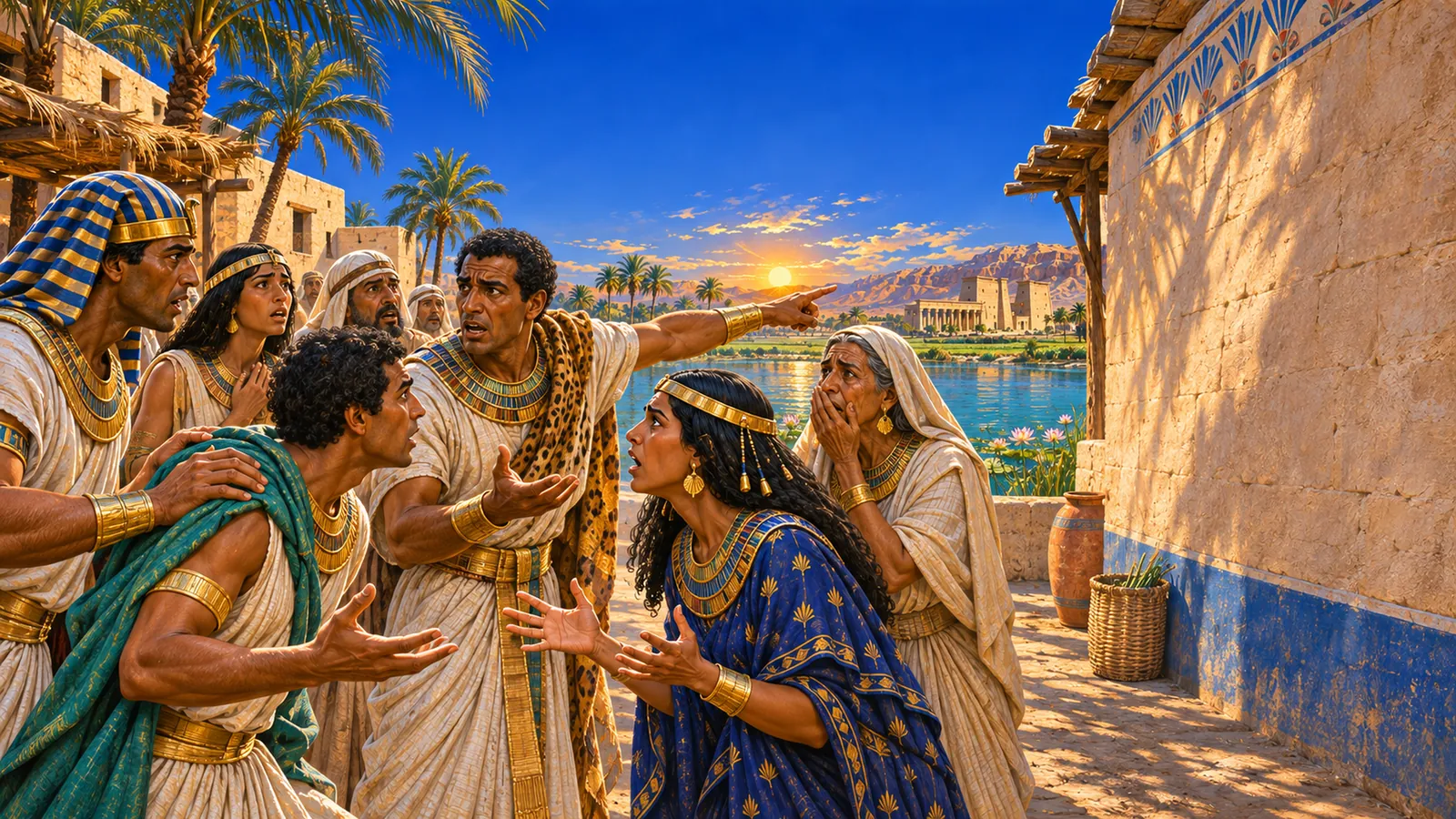
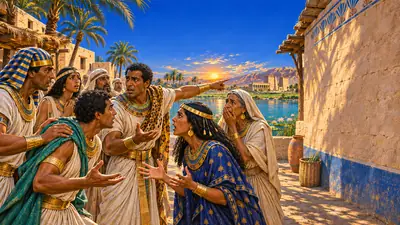
Als die Nachricht die Menschen erreichte, breitete sich auf einmal Schrecken aus. Mit diesem Teil der Geschichte erklärt Plutarch die Bezeichnung für eine plötzliche Panik.
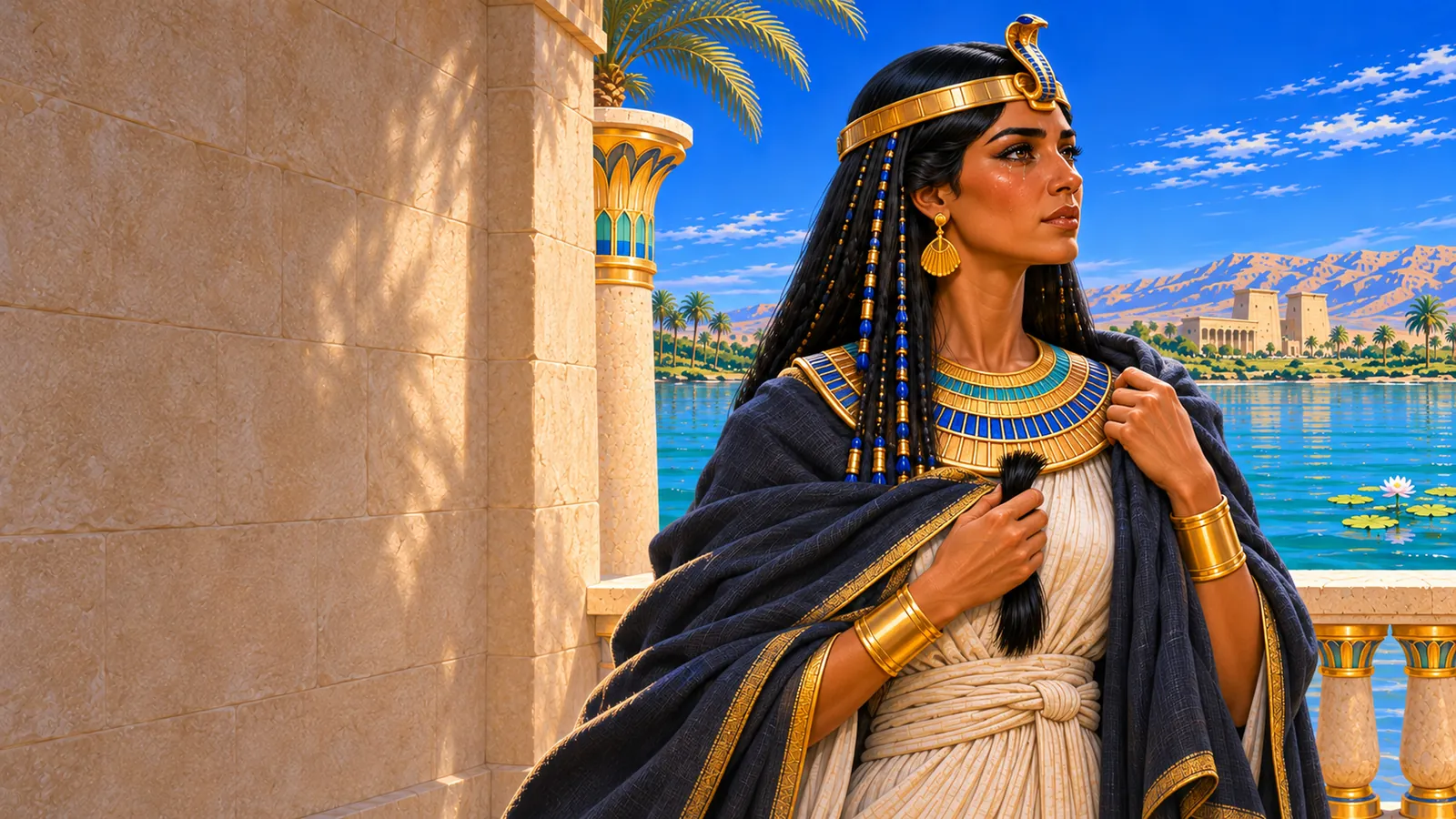
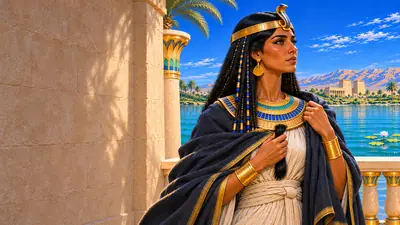
Sobald Isis die Nachricht hörte, schnitt sie sich eine Haarlocke ab. Noch an Ort und Stelle legte sie ihre Trauerkleider an.
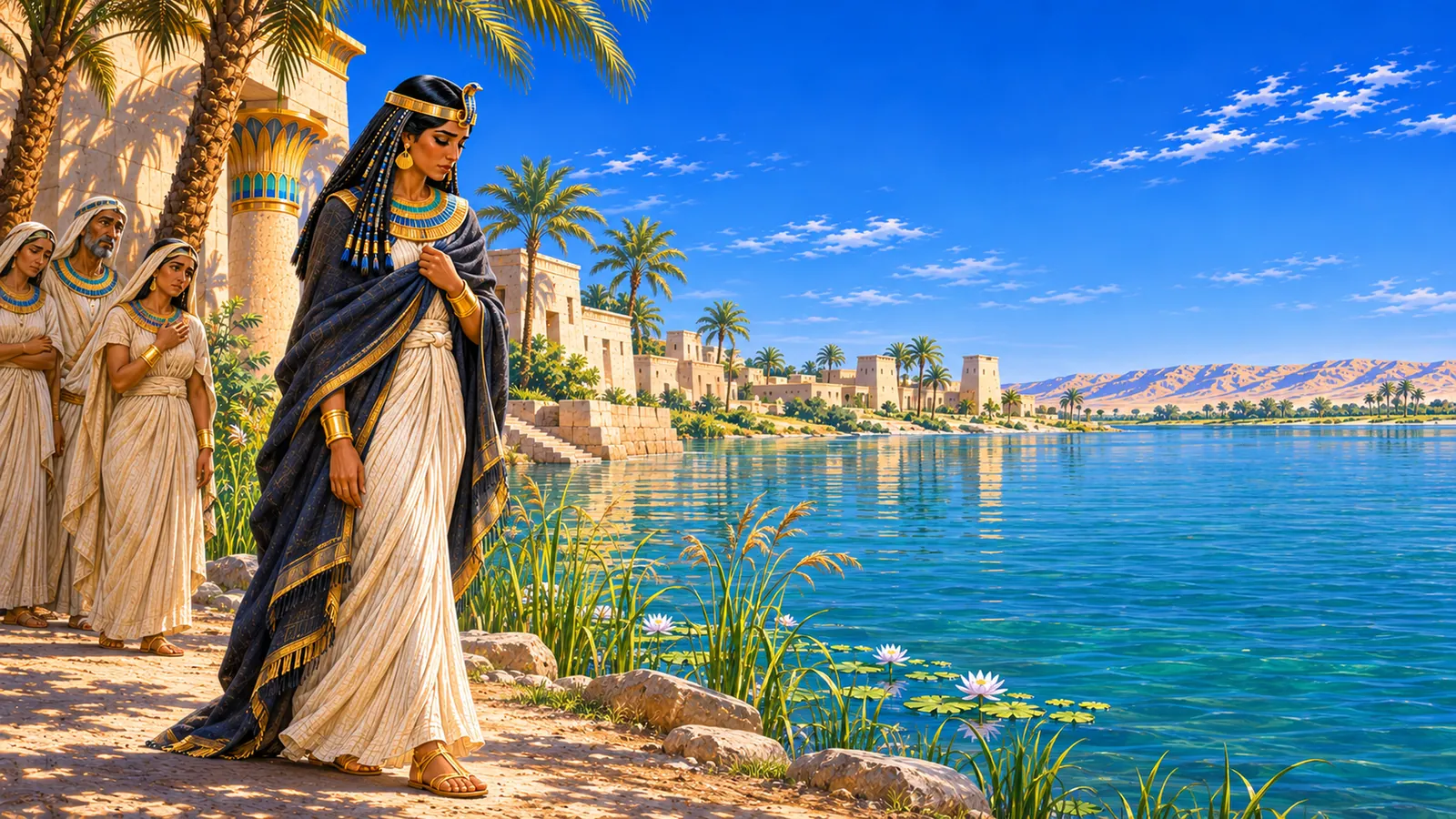
Die Geschichte verbindet den Ort, an dem Isis zu trauern begann, mit dem Namen Koptos. Manche verstanden den Namen als Trauer, andere als Entbehrung.
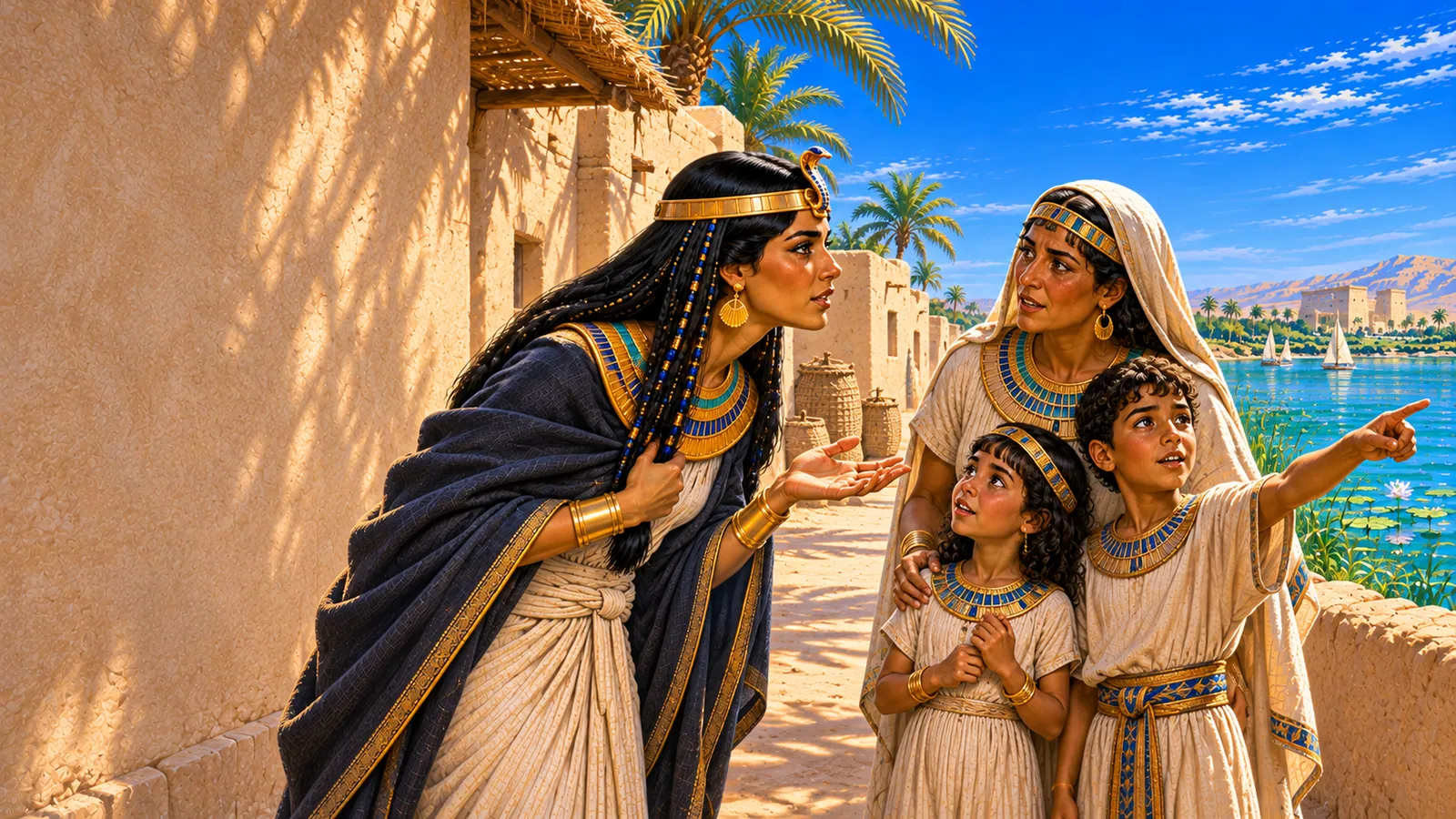
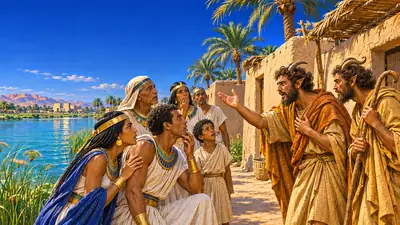
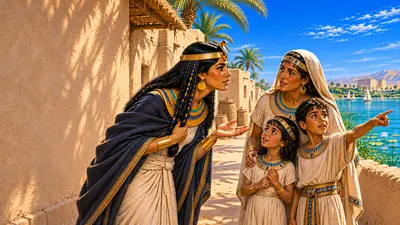
Isis zog von Ort zu Ort und wartete voller Sorge auf irgendeine Nachricht von der Truhe. Sie fragte alle, denen sie begegnete, darunter auch einige Kinder, ob sie sie gesehen hätten.
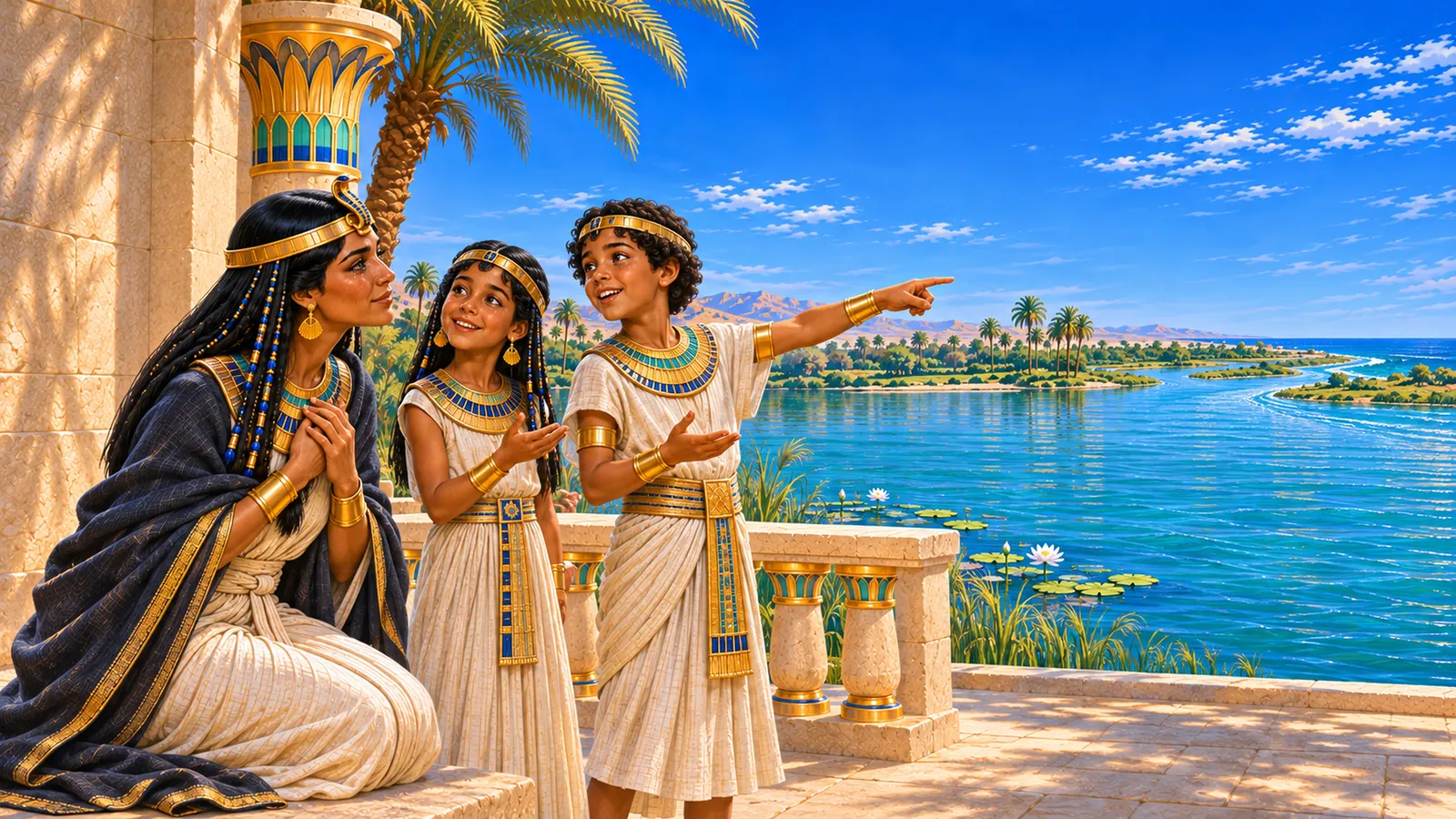
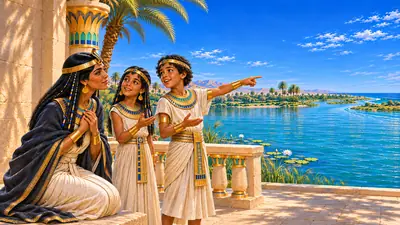
Die Kinder hatten gesehen, wie die Truhe weggebracht worden war. Sie sagten Isis, durch welche Nilmündung man sie ins Meer gebracht hatte.
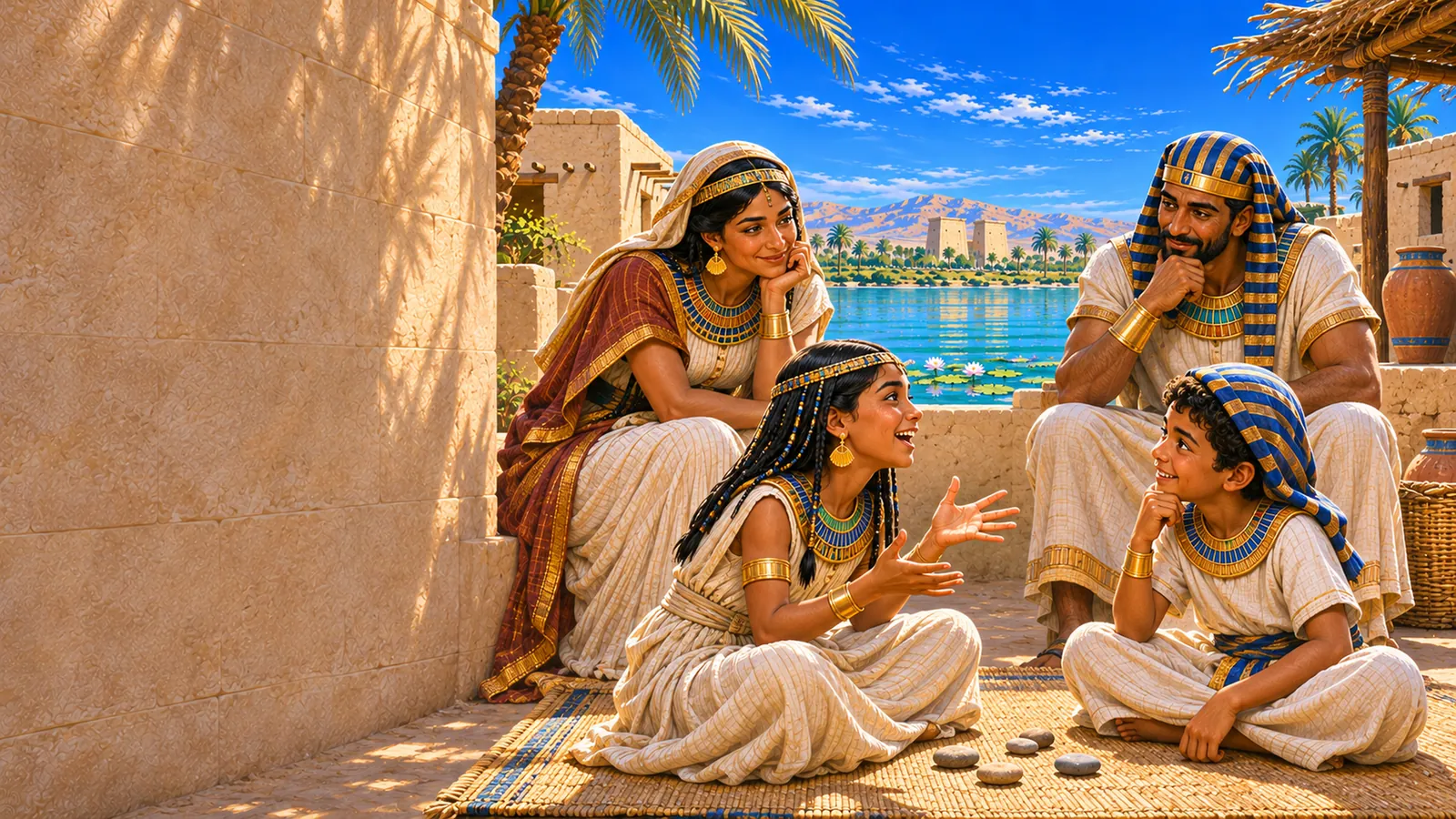
Die Erzählung erklärt einen Brauch mit der Antwort der Kinder. Sie sagt, die Menschen hätten auf Vorzeichen in den beiläufigen Worten spielender Kinder geachtet.
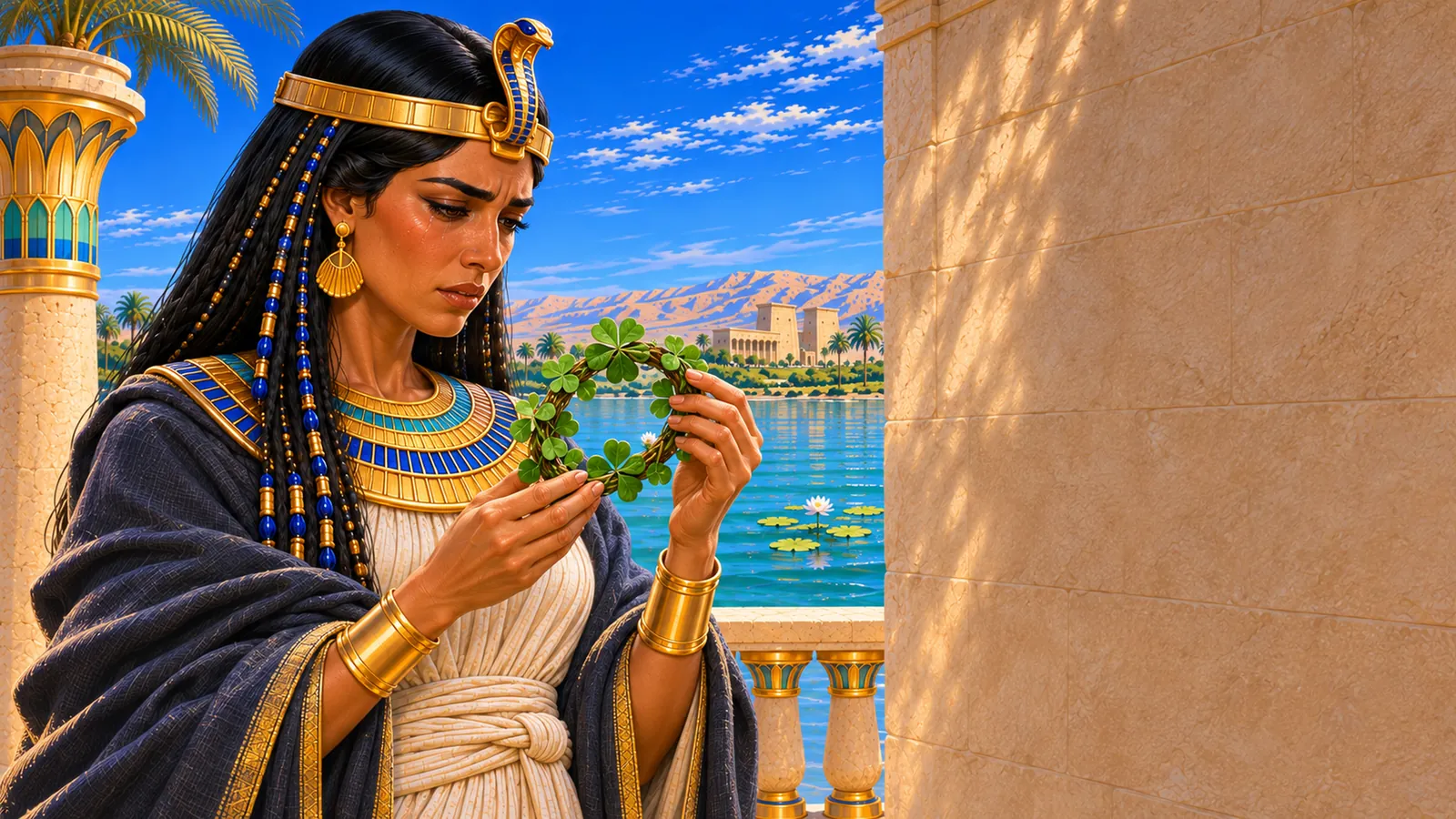
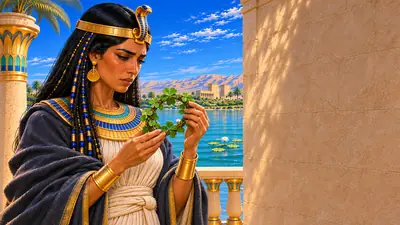
Isis erfuhr, dass Nephthys Osiris getäuscht und er mit ihr geschlafen hatte, weil er sie für Isis hielt. Ein Steinkleekranz, den er bei Nephthys gelassen hatte, half Isis zu verstehen, was geschehen war.
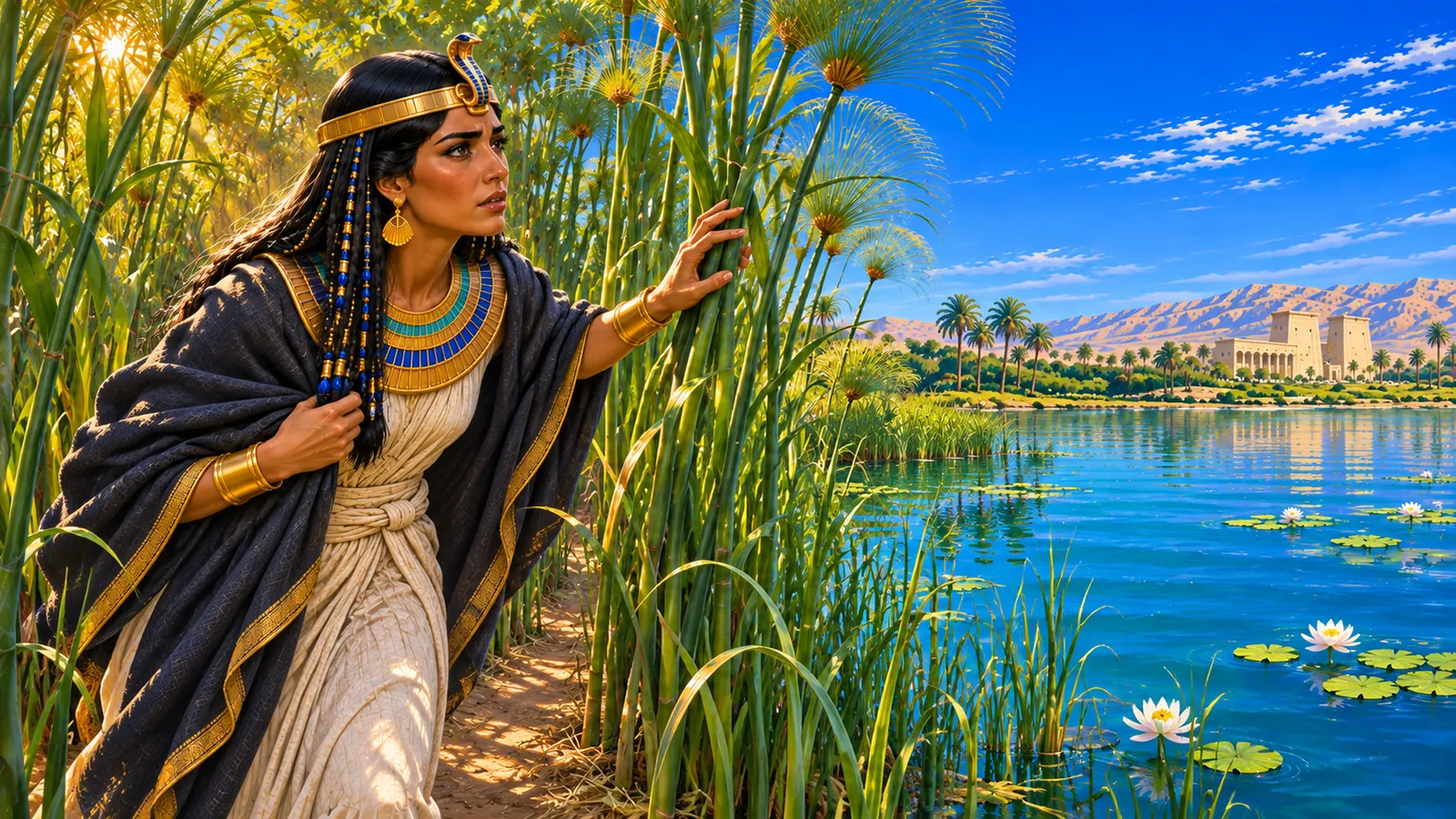
Nephthys fürchtete Seths Zorn und hatte das Kind gleich nach der Geburt ausgesetzt. Isis machte sich nun auf die Suche nach ihm.
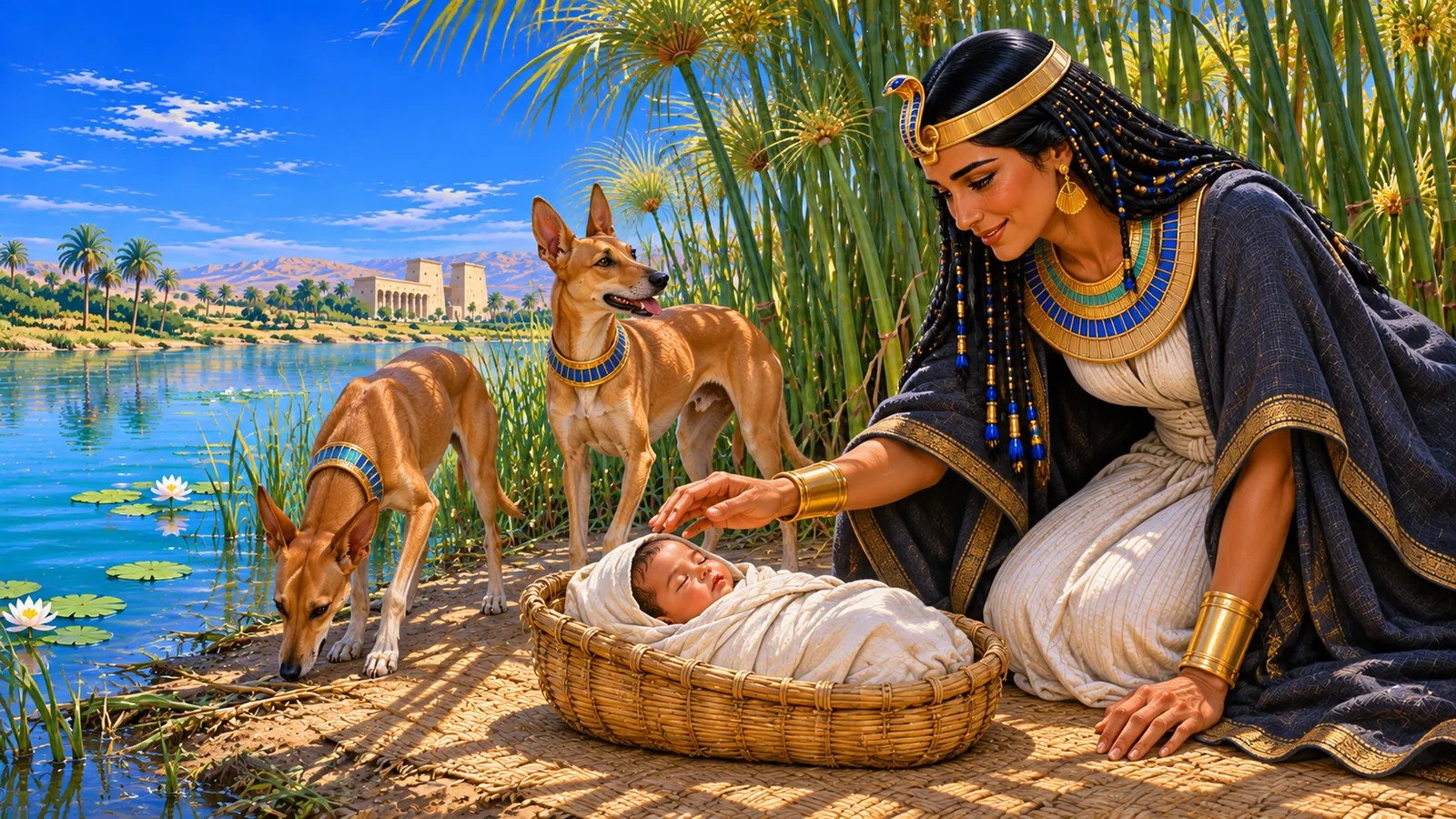
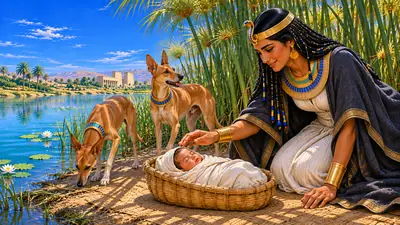
Die Suche war schwierig. Schließlich führten Hunde Isis an den Ort, an dem das Kind zurückgelassen worden war, und dort fand sie es.
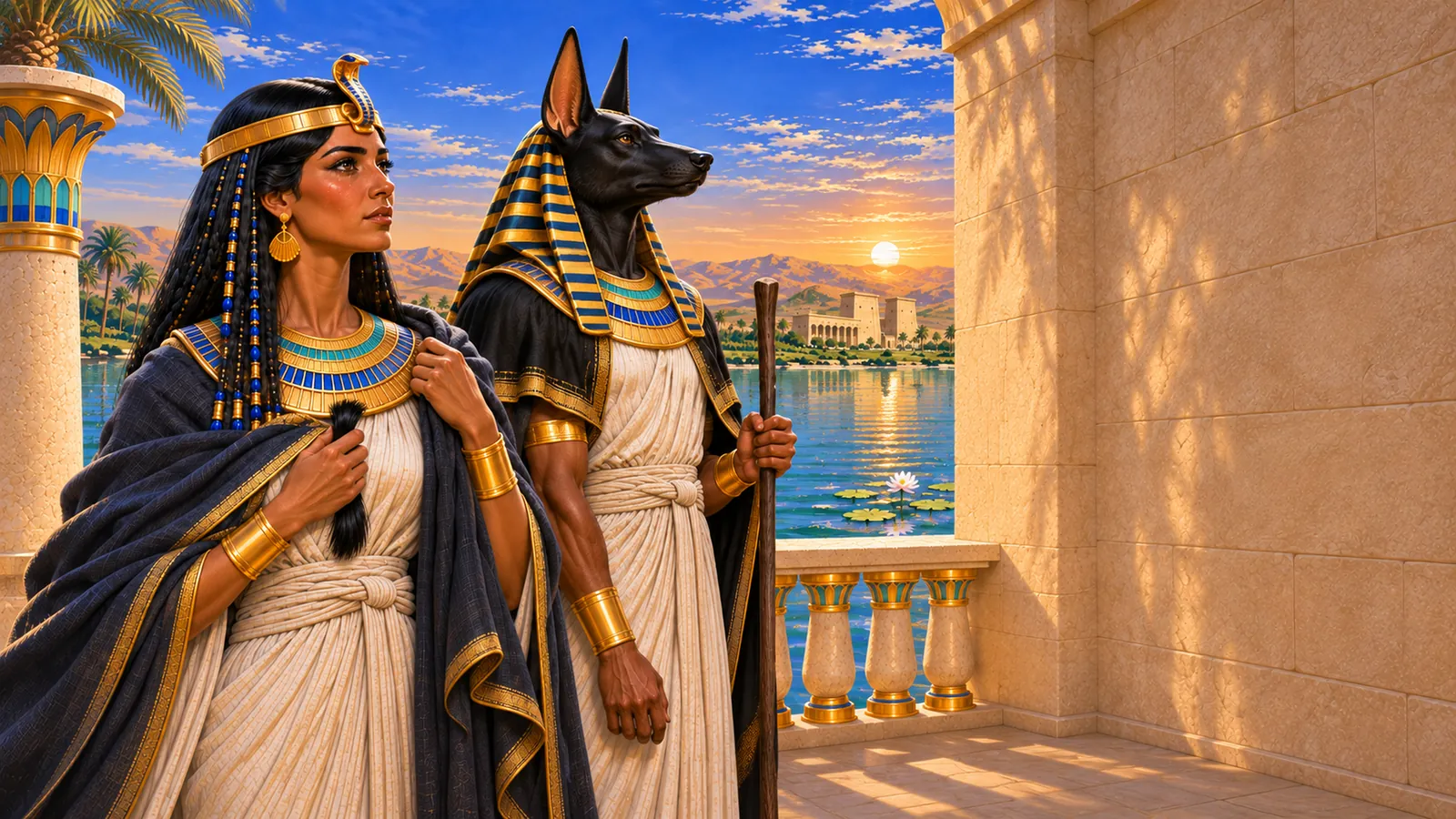
Isis nahm das Kind bei sich auf und zog es groß. Mit der Zeit blieb er als ihr ständiger Wächter und Begleiter an ihrer Seite.

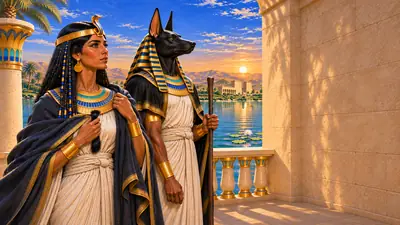
Die Erzählung nennt diesen Wächter Anubis. Er wache über die Götter, wie ein Hund über die Menschen wacht, die er beschützt.

AUF SEE
Die Suche nach der Truhe führte Isis weit von dem Ort fort, an dem sie begonnen hatte. Das Meer hatte die Truhe bereits an eine Küste getragen, die der Erzähler Byblos nennt.
Ende von Kapitel 1

Alle Seiten









Quellen
Page notes give line positions in the published Project Gutenberg HTML. The name Byblos follows the narrative. The location remains uncertain in these sources.
Benutzte Editionen
- E. A. Wallis Budge, Egyptian Ideas of the Future Life, third edition, 1908, Chapter II
- Plutarch’s narrative in Samuel Squire’s translation as quoted in Chapter II
- Budge’s footnote for Samuel Squire’s Cambridge edition, 1744
- Budge’s note on the name Byblos
Hinweise zu dieser Nacherzählung
**Edition.** Plutarch’s *On Isis and Osiris*, Samuel Squire’s Cambridge translation (1744), as quoted in E. A. Wallis Budge’s *Egyptian Ideas of the Future Life*, third edition (1908), chapter II. The introduction at raw HTML 1148–1158 identifies Plutarch and Squire, whose edition is specified in note 42. The local raw HTML lines below are verification locators. [Budge 1908, Project Gutenberg ebook 11277](https://www.gutenberg.org/ebooks/11277)
**P01, 1148–1158 and 1162–1167.** The opening frames the events as Plutarch’s retelling. The five days are the result of the game at 1171–1175. This page introduces the story’s premise in advance of those events.
**P02, 1162–1168.** Squire says that Rhea was with Saturn in secret, that the Sun discovered her, and that he cursed her to give birth in no month or year. Budge’s notes 43–45 identify Rhea with Nut, Saturn with Seb (Geb), and the Sun with Ra.
**P03, 1168–1171.** Squire’s Mercury loves Nut and plays with the Moon in return for favors she has granted him. Squire’s “plays at tables” is presented as a board game. The story gives no board design or rules in this passage.
This is what Plutarch reports about the custom.
**P07, 1176–1178.** Osiris is born on the first day.
**P08, 1179–1182.** An explicitly different account says that Pamyles heard the announcement while fetching water from the temple of Jupiter at Thebes. The spoken version names the city and leaves the Greek temple designation in this note.
Geb entrusts the child’s upbringing to him. Plutarch says the Pamylia commemorated this event and compares it to the Greek Phalliphoria or Priapeia.
**P10, 1186–1188.** Aroueris is born on day two. Budge’s note 46 gives Hera-ur, Horus the Elder. Squire also records Apollo as a name some give him.
**P11, 1188–1192 and note 47.** Squire calls the third child Typho, whom Budge identifies as Set.
**P12, 1192–1194.** Isis is born on the fourth added day in the marshes of Egypt.
**P13, 1193–1194.** Squire says Nepthys is born on the last day. The edition gives Teleute and Aphrodite as names used by some and Nike as one used by others. Those names remain in this note.
**P14, 1195–1201.** One reported genealogy assigns the first two children to the Sun (Ra), Isis to Mercury (Thoth), and Typho (Set) and Nephthys to Saturn (Geb). The next page retains the reported variant fatherhood of Horus the Elder without joining it to this genealogy.
Page 15 (Budge 1908, chapter II, raw HTML 1201–1205). Squire writes Typho and Nepthys for Set and Nephthys. He says they married. He then recounts the pre-birth union of Isis and Osiris, naming Aroueris, or the elder Orus, as their child. This is a different genealogy from the account in lines 1195–1197. Horus the Elder is the presentation name here.
Page 16 (1207–1209). Osiris has become king of Egypt and undertakes to change the way his people live. Squire’s English describes their previous way of life as “indigent and barbarous.” Those terms belong to the older account.
Page 17 (1209–1212). Osiris teaches cultivation and improving crops, gives laws to govern conduct, and instructs his people about reverence and worship due to the gods.
Pages 18–19 (1212–1218). Osiris travels beyond Egypt in the story. Squire says he persuades people through reasoning communicated in hymns and songs with musical instruments. The text expressly distinguishes his persuasion from compulsion by force of arms.
Page 20 (1219–1222). Isis governs vigilantly while Osiris is absent. Squire says this leaves Typho no opportunity to change anything in the state.
Page 21 (1222–1225). After Osiris returns, Typho persuades seventy-two other people to join the plot and also has the help of Aso, a queen then in Egypt. Squire calls her “a certain queen of Ethiopia.” The place label belongs to the older rendering.
Page 22 (1225–1229). Squire describes its fine appearance and ornament.
Page 23 (1229–1230). In his banqueting room Set presents the chest, and those present admire it.
Pages 24–25 (1230–1234). The guests try one after another. Osiris lies down last.
Page 26 (1234–1236). The conspirators close the chest with Osiris inside and trap him.
Page 27 (1236–1238). This retelling uses Tanaitic.
Page 28 (1238–1242). The date in the narrative is the seventeenth of Athyr. The ordinal is on line 1241 and the month starts line 1242. The following page gives the two accounts involving the number twenty-eight.
### Pages 29–42 · The news and the search
Die antiken Verse hinter jeder Seite
- Page 1: Plutarch, Squire 1744 in Budge 1908, chapter II, HTML 1148–1158, 1162–1167
The whole upper text field is calm deep blue-violet morning sky, still one continuous soft tone. - Page 2: Plutarch, Squire 1744 in Budge 1908, chapter II, HTML 1162–1168
- Page 3: Plutarch, Squire 1744 in Budge 1908, chapter II, HTML 1168–1171
- Page 4: Plutarch, Squire 1744 in Budge 1908, chapter II, HTML 1170–1173
- Page 5: Plutarch, Squire 1744 in Budge 1908, chapter II, HTML 1172–1175
- Page 6: Plutarch, Squire 1744 in Budge 1908, chapter II, HTML 1174–1176
- Page 7: Plutarch, Squire 1744 in Budge 1908, chapter II, HTML 1176–1178
- Page 8: Plutarch, Squire 1744 in Budge 1908, chapter II, HTML 1179–1182
- Page 9: Plutarch, Squire 1744 in Budge 1908, chapter II, HTML 1182–1185
- Page 10: Plutarch, Squire 1744 in Budge 1908, chapter II, HTML 1186–1188
- Page 11: Plutarch, Squire 1744 in Budge 1908, chapter II, HTML 1188–1192
- Page 12: Plutarch, Squire 1744 in Budge 1908, chapter II, HTML 1192–1194
- Page 13: Plutarch, Squire 1744 in Budge 1908, chapter II, HTML 1193–1194
- Page 14: Plutarch, Squire 1744 in Budge 1908, chapter II, HTML 1195–1201
- Page 15: Plutarch, Squire 1744 in Budge 1908, chapter II, HTML 1201–1205
The entire right text field is unbroken blue-brown shade on bare plaster. - Page 16: Plutarch, Squire 1744 in Budge 1908, chapter II, HTML 1207–1209
- Page 17: Plutarch, Squire 1744 in Budge 1908, chapter II, HTML 1209–1212
- Page 18: Plutarch, Squire 1744 in Budge 1908, chapter II, HTML 1212–1214
- Page 19: Plutarch, Squire 1744 in Budge 1908, chapter II, HTML 1214–1218
- Page 20: Plutarch, Squire 1744 in Budge 1908, chapter II, HTML 1219–1222
- Page 21: Plutarch, Squire 1744 in Budge 1908, chapter II, HTML 1222–1225
- Page 22: Plutarch, Squire 1744 in Budge 1908, chapter II, HTML 1225–1229
Treat it as a close still-life fragment. - Page 23: Plutarch, Squire 1744 in Budge 1908, chapter II, HTML 1229–1230
- Page 24: Plutarch, Squire 1744 in Budge 1908, chapter II, HTML 1230–1232
- Page 25: Plutarch, Squire 1744 in Budge 1908, chapter II, HTML 1232–1234
- Page 26: Plutarch, Squire 1744 in Budge 1908, chapter II, HTML 1234–1236
- Page 27: Plutarch, Squire 1744 in Budge 1908, chapter II, HTML 1236–1238
The whole right text rectangle is soft uniform slate-teal water and air with no distinct horizon or foam. - Page 28: Plutarch, Squire 1744 in Budge 1908, chapter II, HTML 1238–1242
- Page 29: Plutarch, Squire 1744 as printed by Budge 1908, Chapter II, HTML lines 1241–1244
- Page 30: Plutarch, Squire 1744 as printed by Budge 1908, Chapter II, HTML lines 1246–1249
- Page 31: Plutarch, Squire 1744 as printed by Budge 1908, Chapter II, HTML lines 1248–1251
- Page 32: Plutarch, Squire 1744 as printed by Budge 1908, Chapter II, HTML lines 1251–1255
- Page 33: Plutarch, Squire 1744 as printed by Budge 1908, Chapter II, HTML lines 1254–1257
- Page 34: Plutarch, Squire 1744 as printed by Budge 1908, Chapter II, HTML lines 1256–1260
- Page 35: Plutarch, Squire 1744 as printed by Budge 1908, Chapter II, HTML lines 1260–1262
The entire right half is smooth water in softly graded blue dusk, with no hard horizon line or reflections there. - Page 36: Plutarch, Squire 1744 as printed by Budge 1908, Chapter II, HTML lines 1263–1267
- Page 37: Plutarch, Squire 1744 as printed by Budge 1908, Chapter II, HTML lines 1267–1272
- Page 38: Plutarch, Squire 1744 as printed by Budge 1908, Chapter II, HTML lines 1272–1276
- Page 39: Plutarch, Squire 1744 as printed by Budge 1908, Chapter II, HTML lines 1275–1278
- Page 40: Plutarch, Squire 1744 as printed by Budge 1908, Chapter II, HTML lines 1277–1279
- Page 41: Plutarch, Squire 1744 as printed by Budge 1908, Chapter II, HTML lines 1278–1279
- Page 42: Plutarch, Squire 1744 as printed by Budge 1908, Chapter II, HTML lines 1257–1262, 1282–1285
Illustrationen von IL Archive mit KI-Werkzeugen; der Text folgt den antiken Quellen (siehe die Quellen am Ende jedes Kapitels).