Isis und Osiris Kapitel 2
Der Pfeiler von Byblos
Das Meer trägt die Truhe an eine Küste namens Byblos, wo eine Tamariske sie umwächst. Ihr Stamm wird zum Pfeiler des Königshauses. Isis folgt der Spur zu einem Brunnen, kommt an den Hof und bittet um den Pfeiler. Die Erzählung bewahrt mehrere Fassungen dessen, was danach geschieht.
QuellenBlättern Sie mit den Pfeilen, den Pfeiltasten oder durch Wischen.
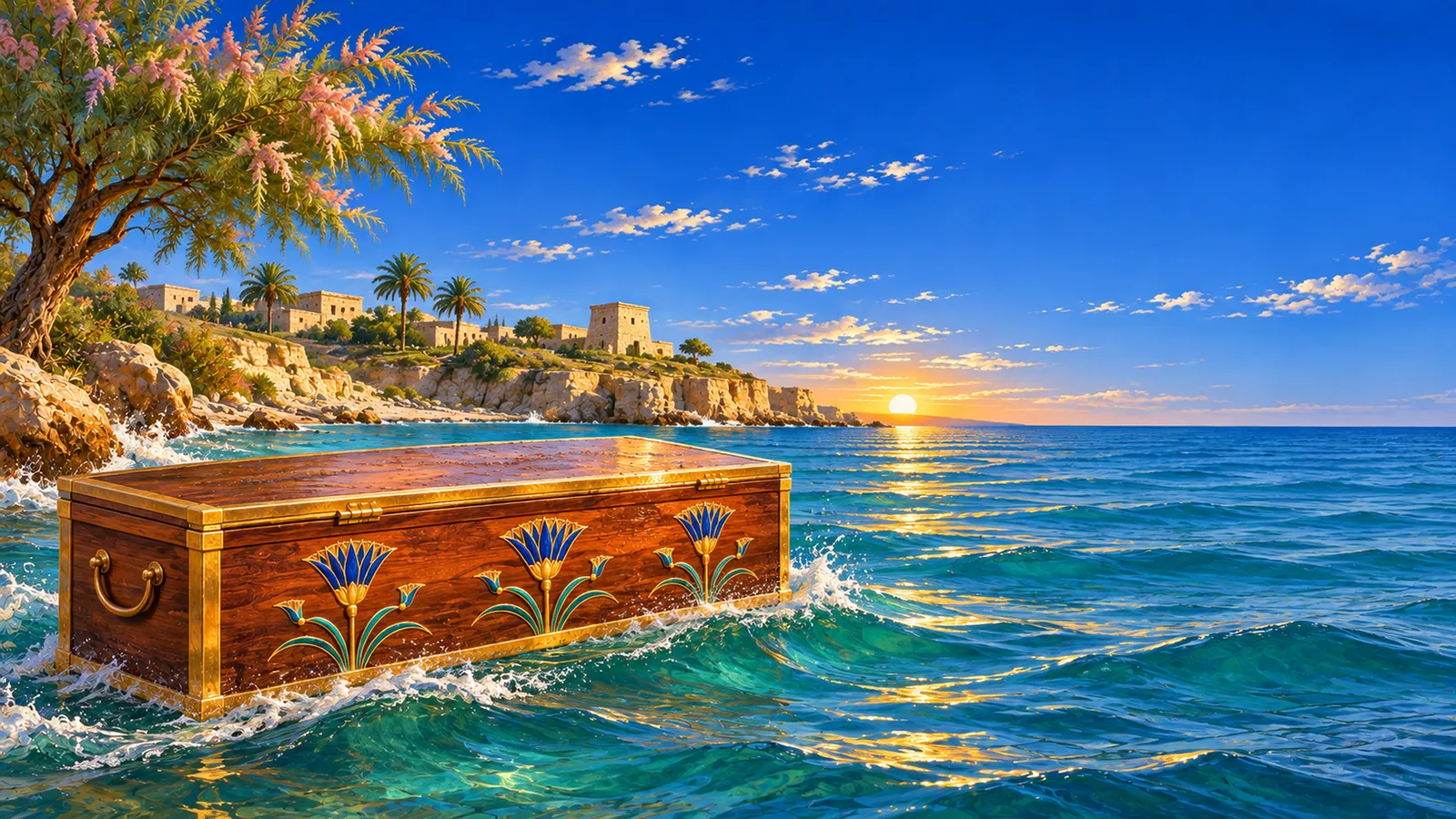
DIE KÜSTE
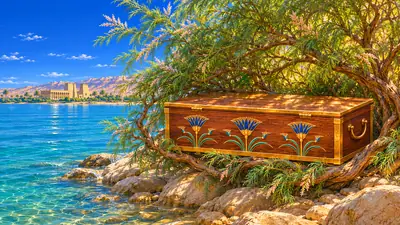
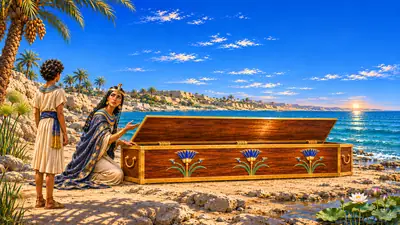
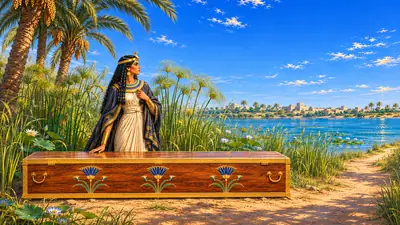
Das Meer trug die Truhe auf seinen Wellen. Der alten Erzählung zufolge erreichte sie einen Küstenort namens Byblos.
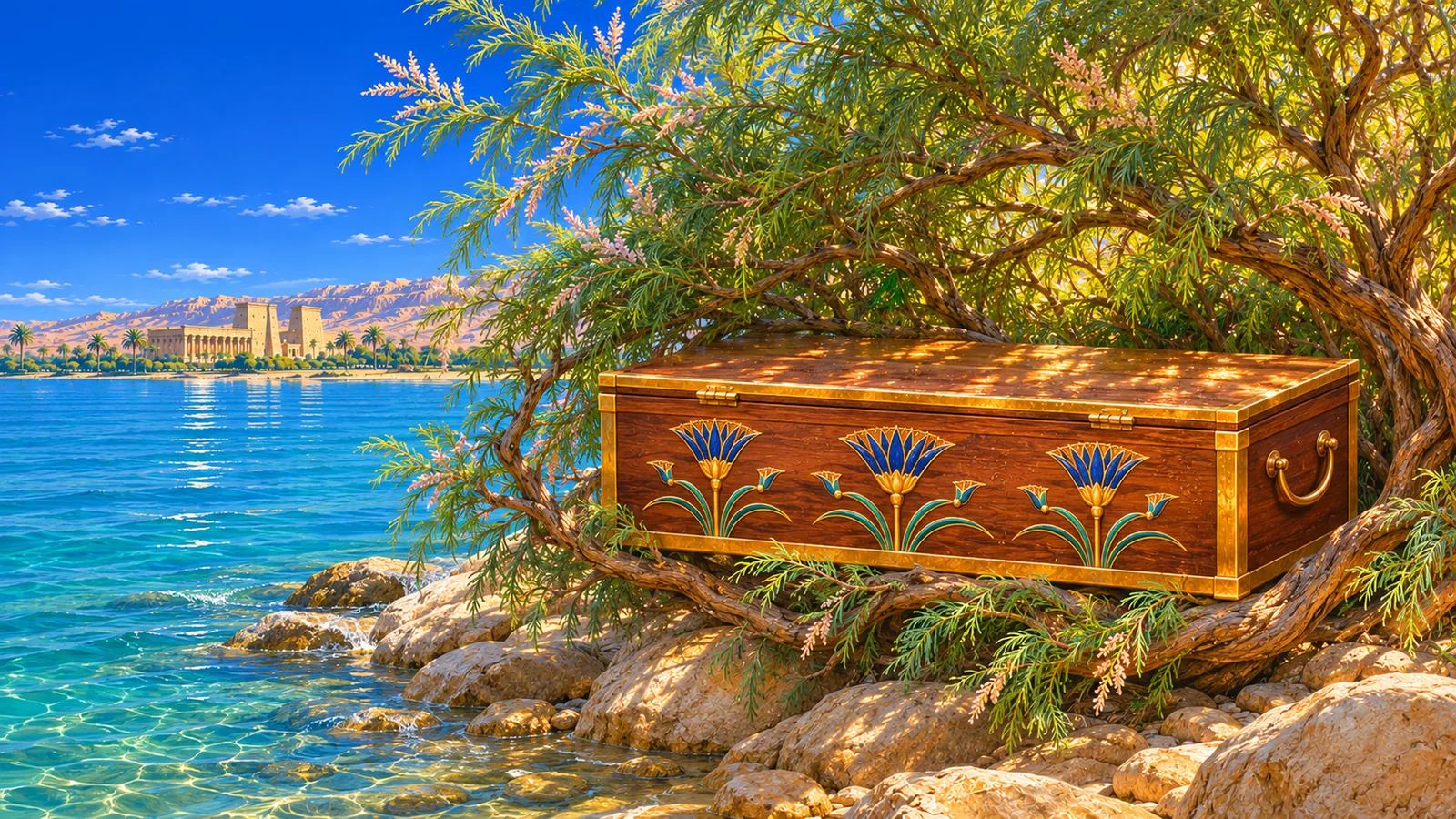
Dort blieb die Truhe zwischen den Zweigen einer Tamariske liegen. Nach der alten Erzählung kam sie dort sanft zur Ruhe.

In kurzer Zeit wuchs die Tamariske zu einem großen, schönen Baum heran. Ihre Zweige wuchsen um die Truhe herum.

Der Baum umschloss die Truhe von allen Seiten. Der Erzählung nach verschwand die Truhe im Inneren des Stammes aus dem Blick.
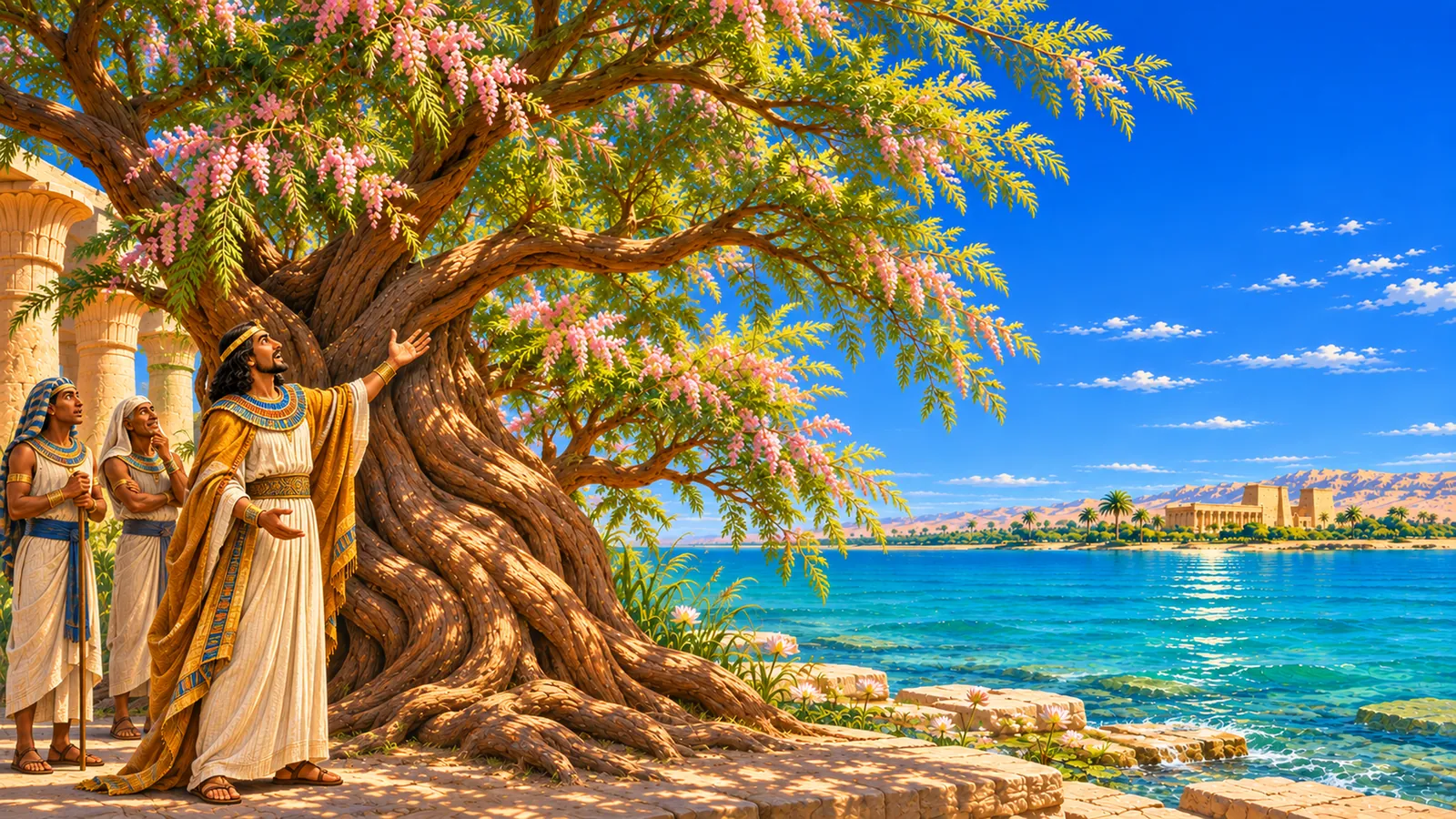
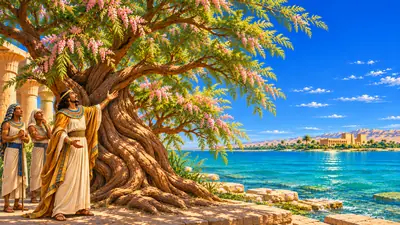
Der König des Landes sah die Tamariske und staunte darüber, wie ungewöhnlich groß sie geworden war.
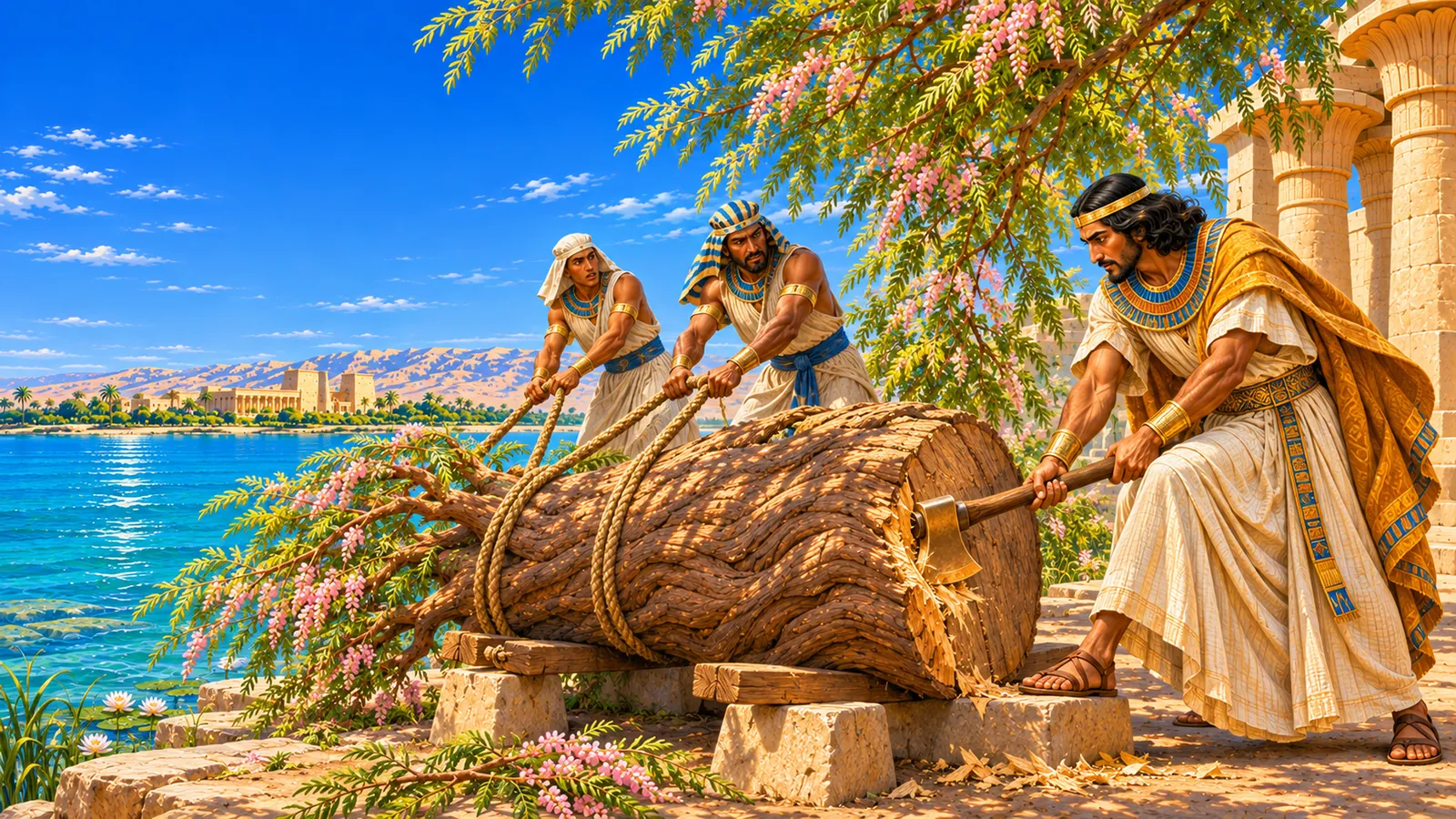
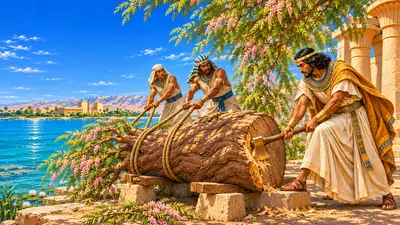
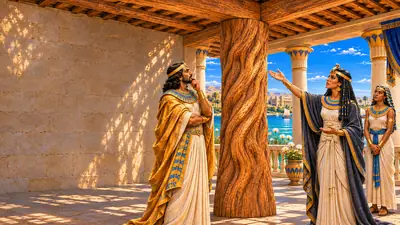
Der König fällte den Baum. Er nahm den Teil des Stammes, in dem die Truhe weiterhin verborgen war.
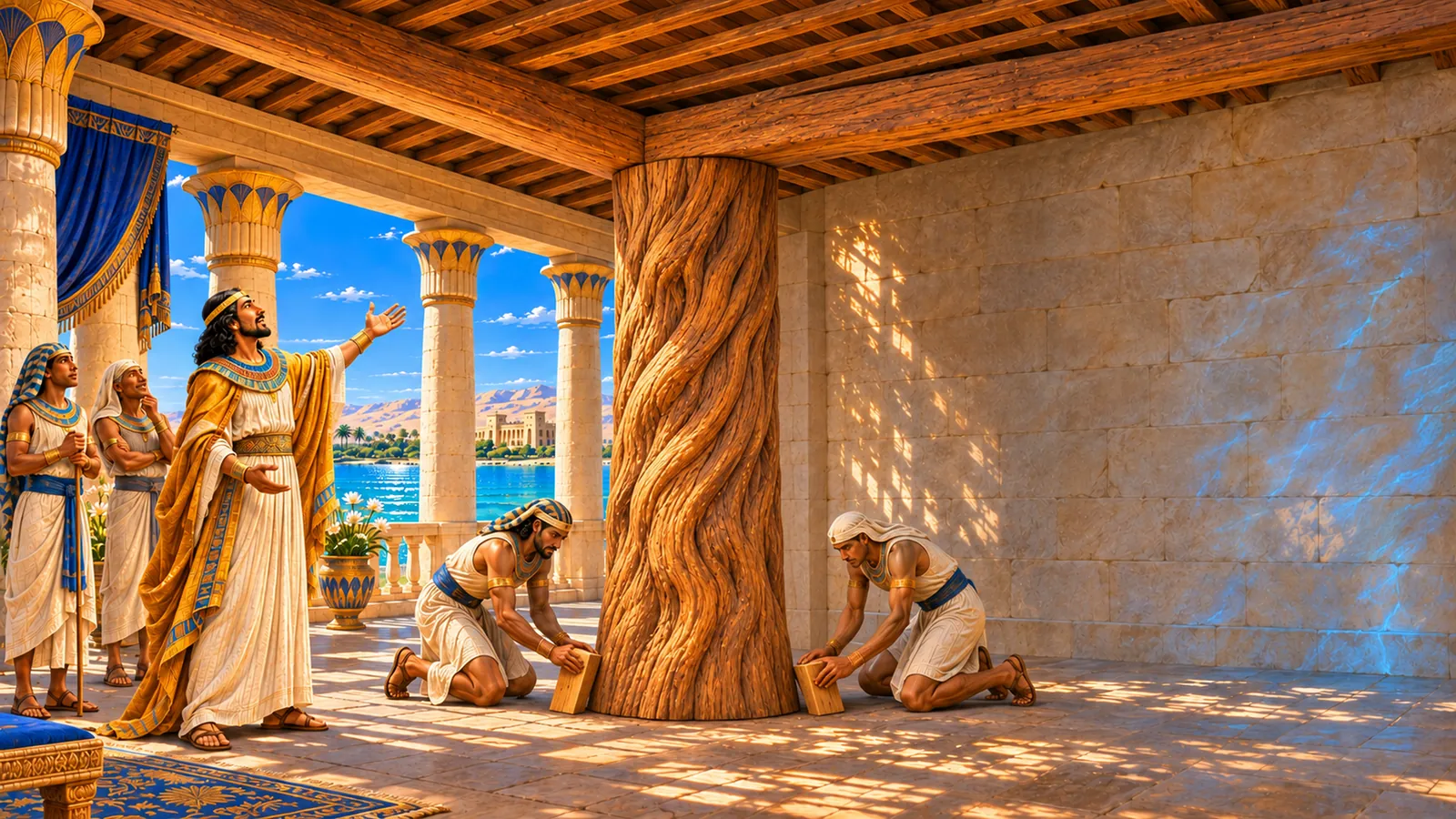
Der König machte aus diesem Teil des Stammes einen Pfeiler. Aufrecht gestellt, trug er das Dach seines Hauses.
DIE NACHRICHT
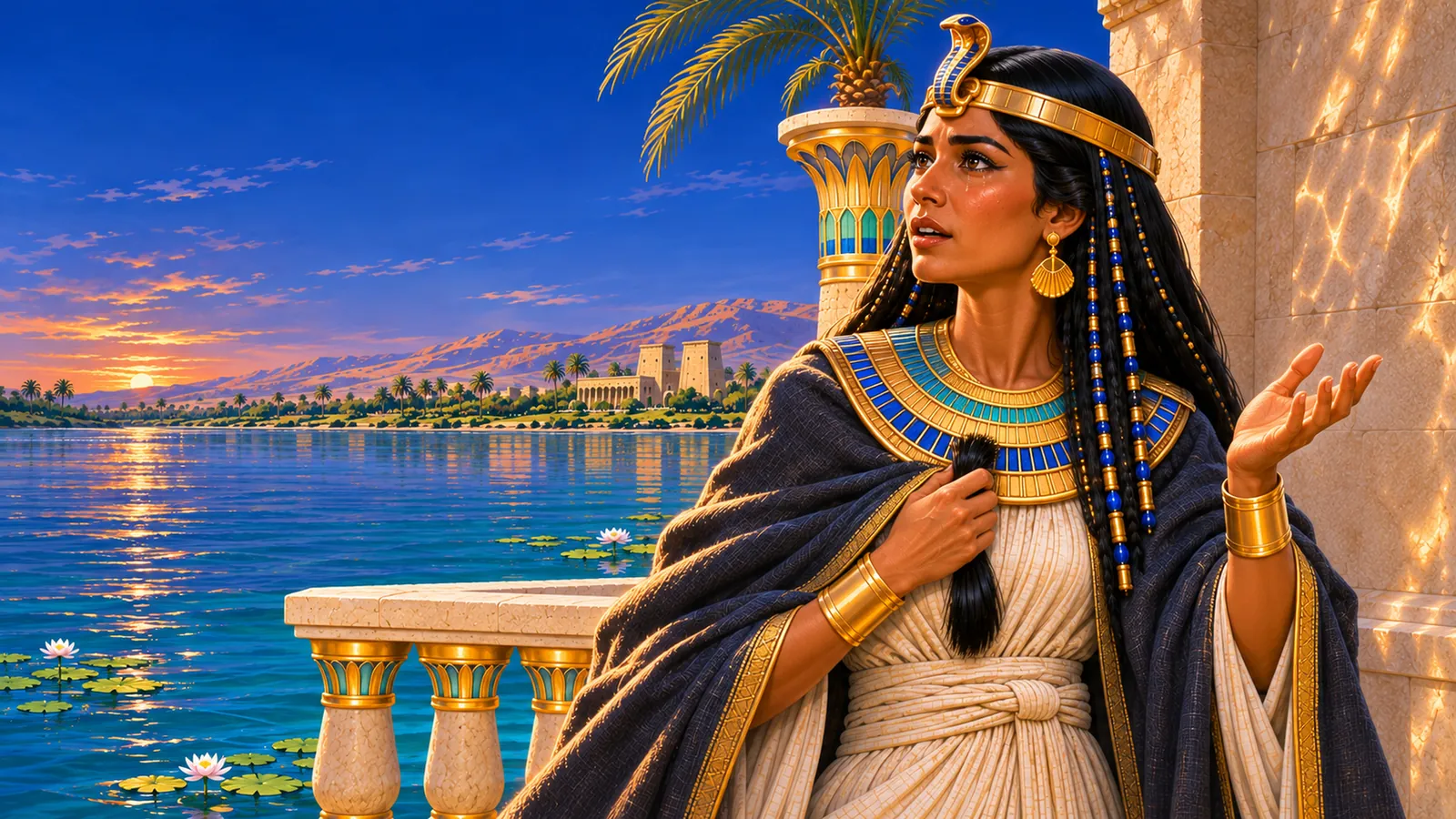
In dieser Erzählung brachten Geister Isis die Nachricht vom Baum und von der Truhe. Der Erzähler beschreibt es als außergewöhnlich, dass sie die Nachricht auf diese Weise erfuhr.
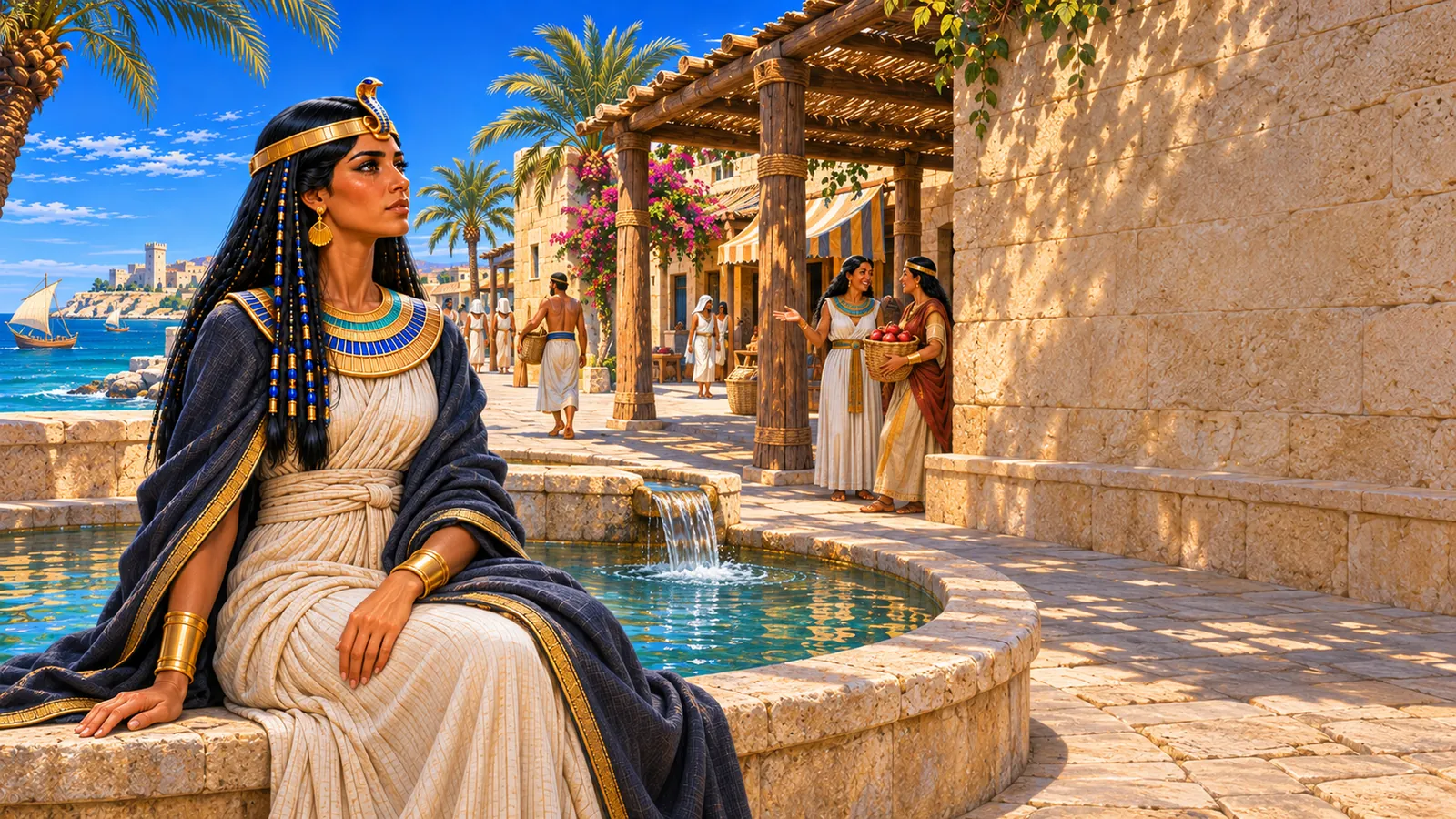
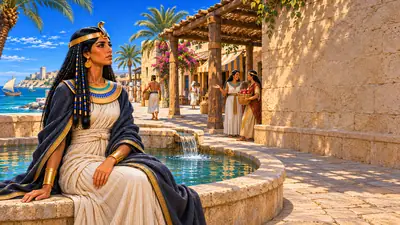
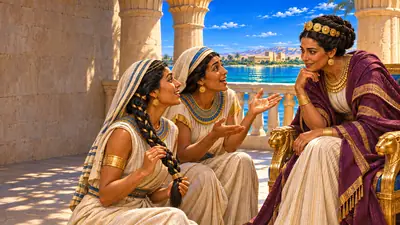
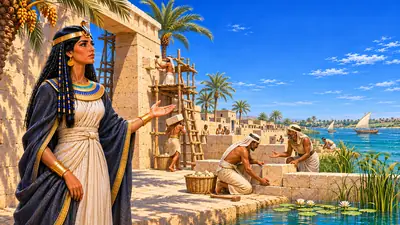
Isis ging sogleich nach Byblos. Als sie ankam, setzte sie sich neben einen Brunnen.
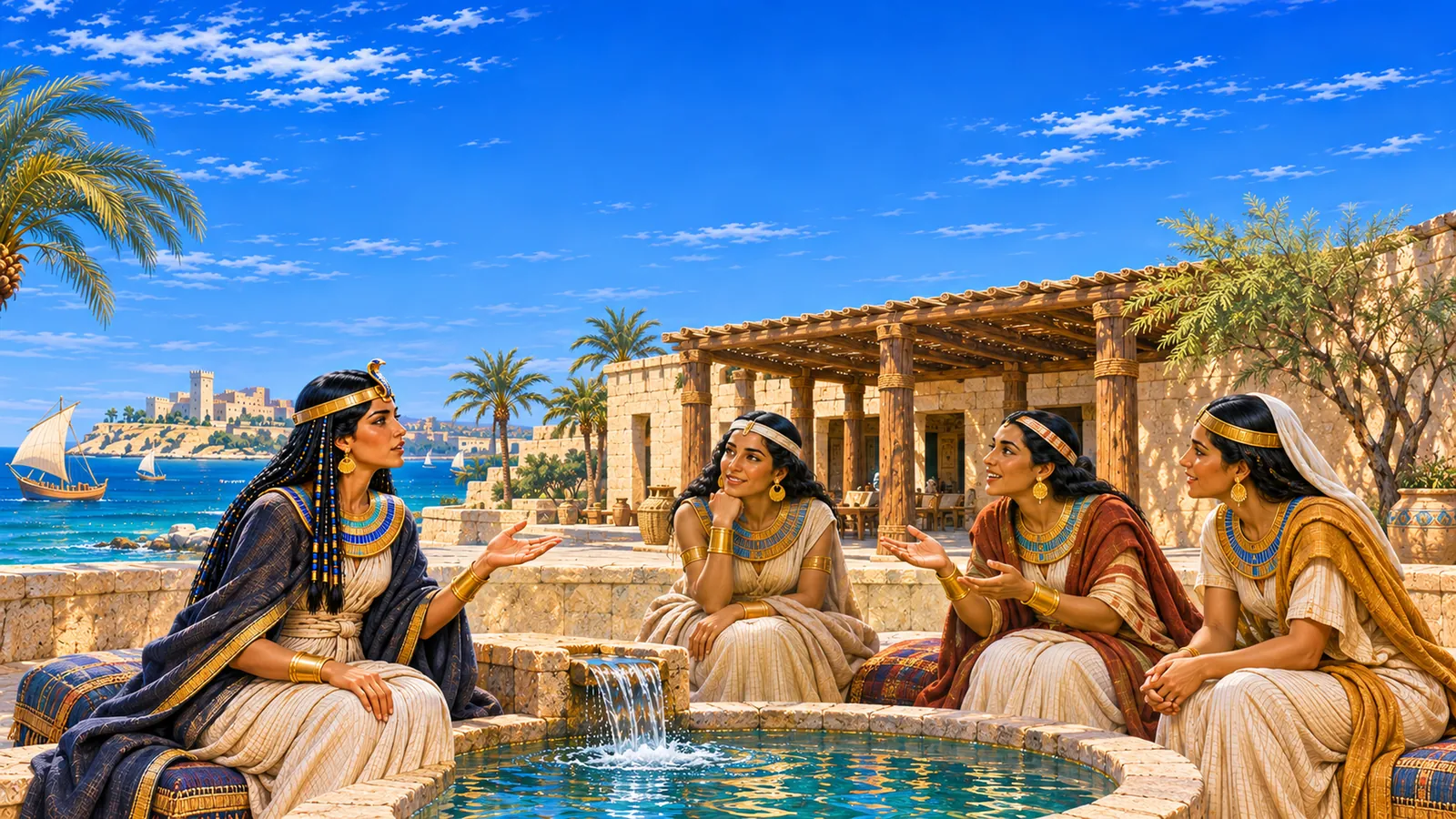
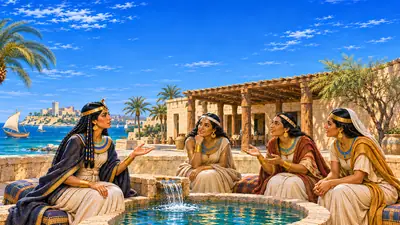
Isis weigerte sich, mit jemandem außer den Dienerinnen der Königin zu sprechen. Sie waren zufällig gerade am Brunnen.
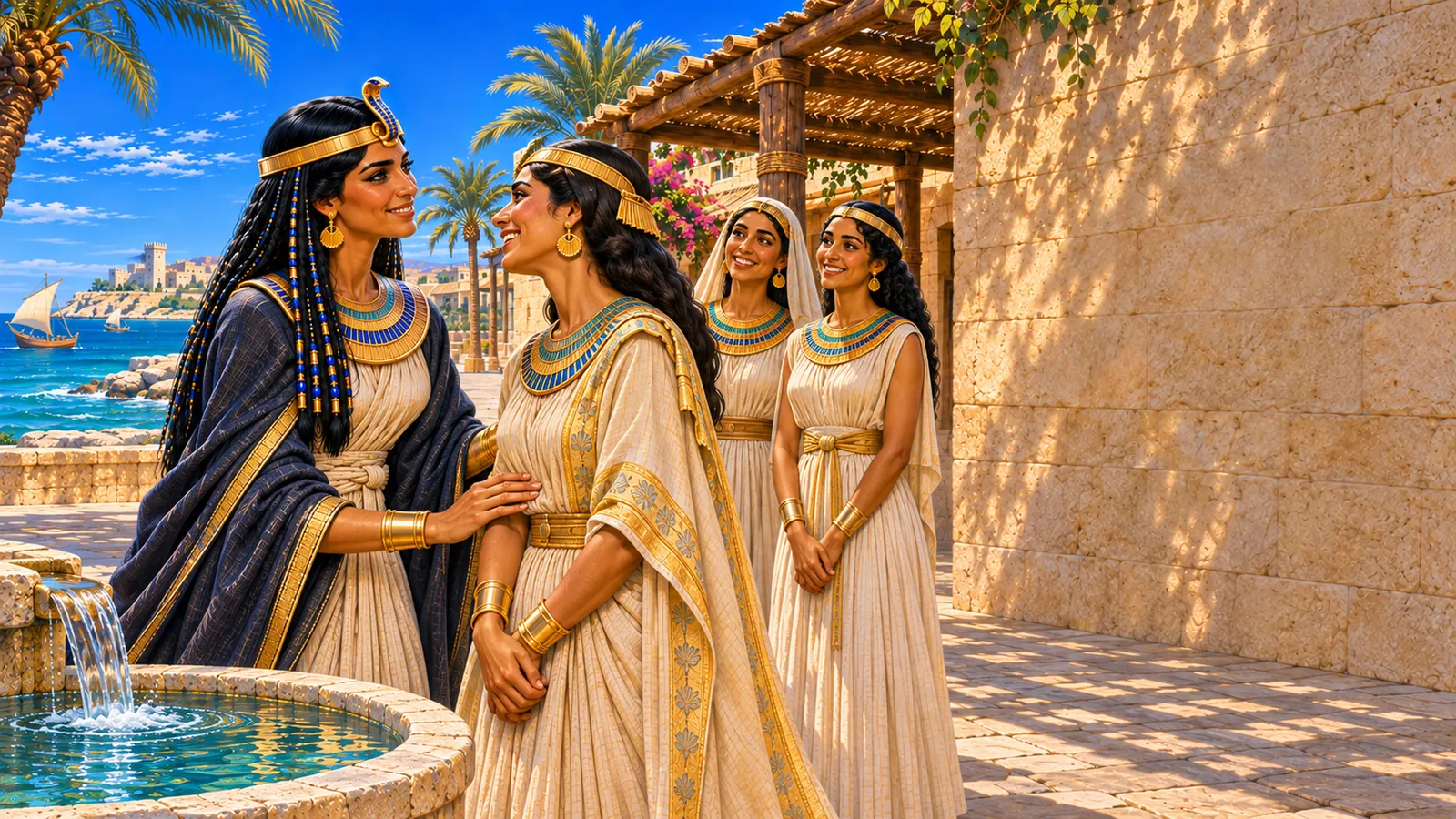
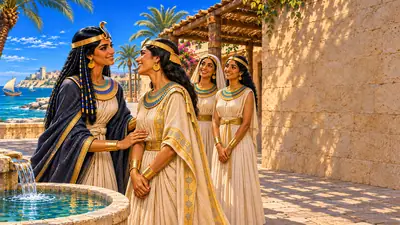
Isis begrüßte die Dienerinnen der Königin herzlich. Der Erzählung zufolge behandelte sie sie mit größter Freundlichkeit.
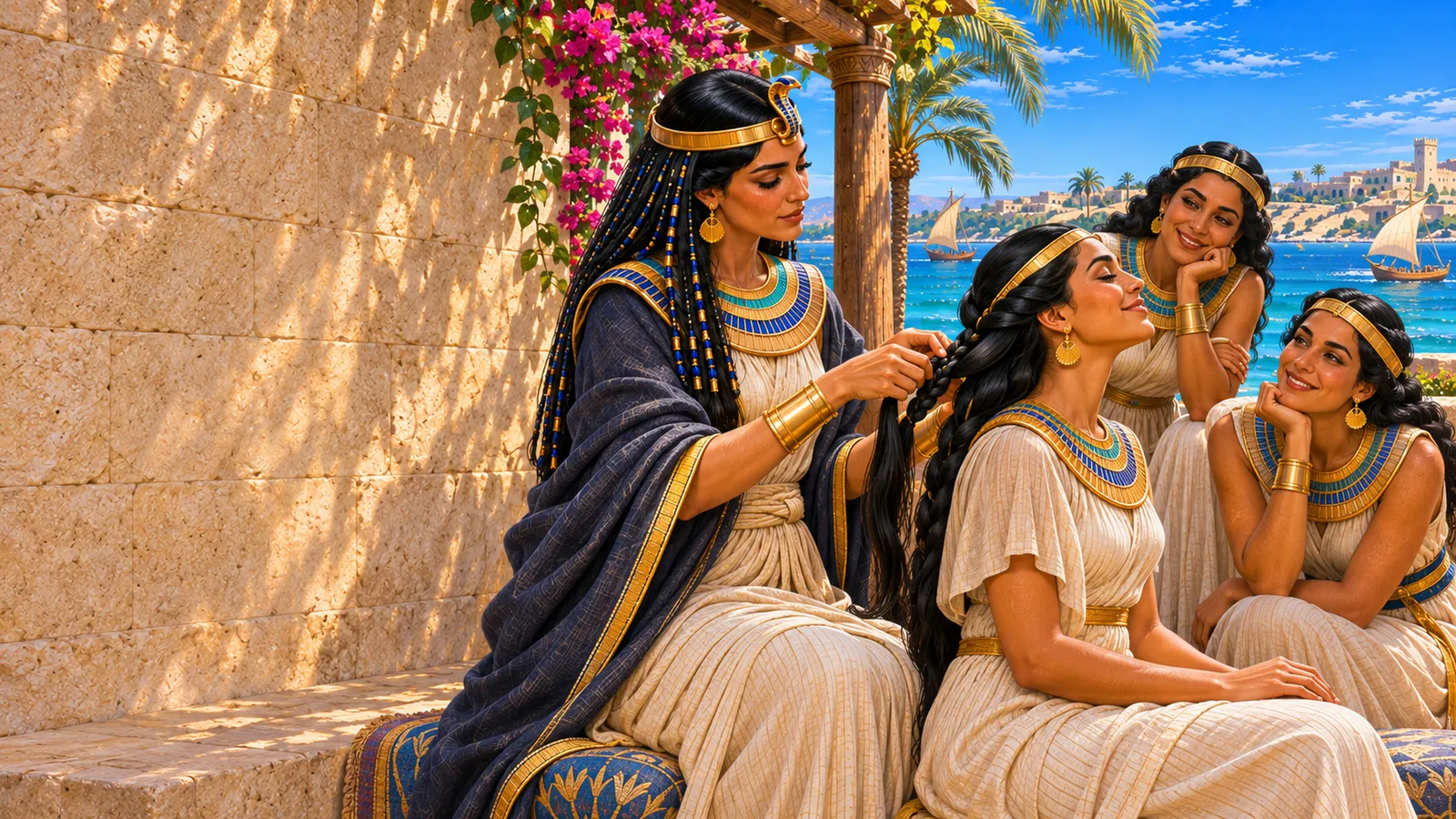
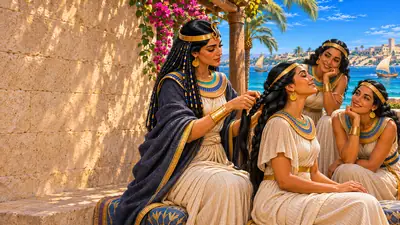
Isis flocht ihnen das Haar. In der Erzählung ging dabei etwas von ihrem eigenen Duft auf die Frauen über.
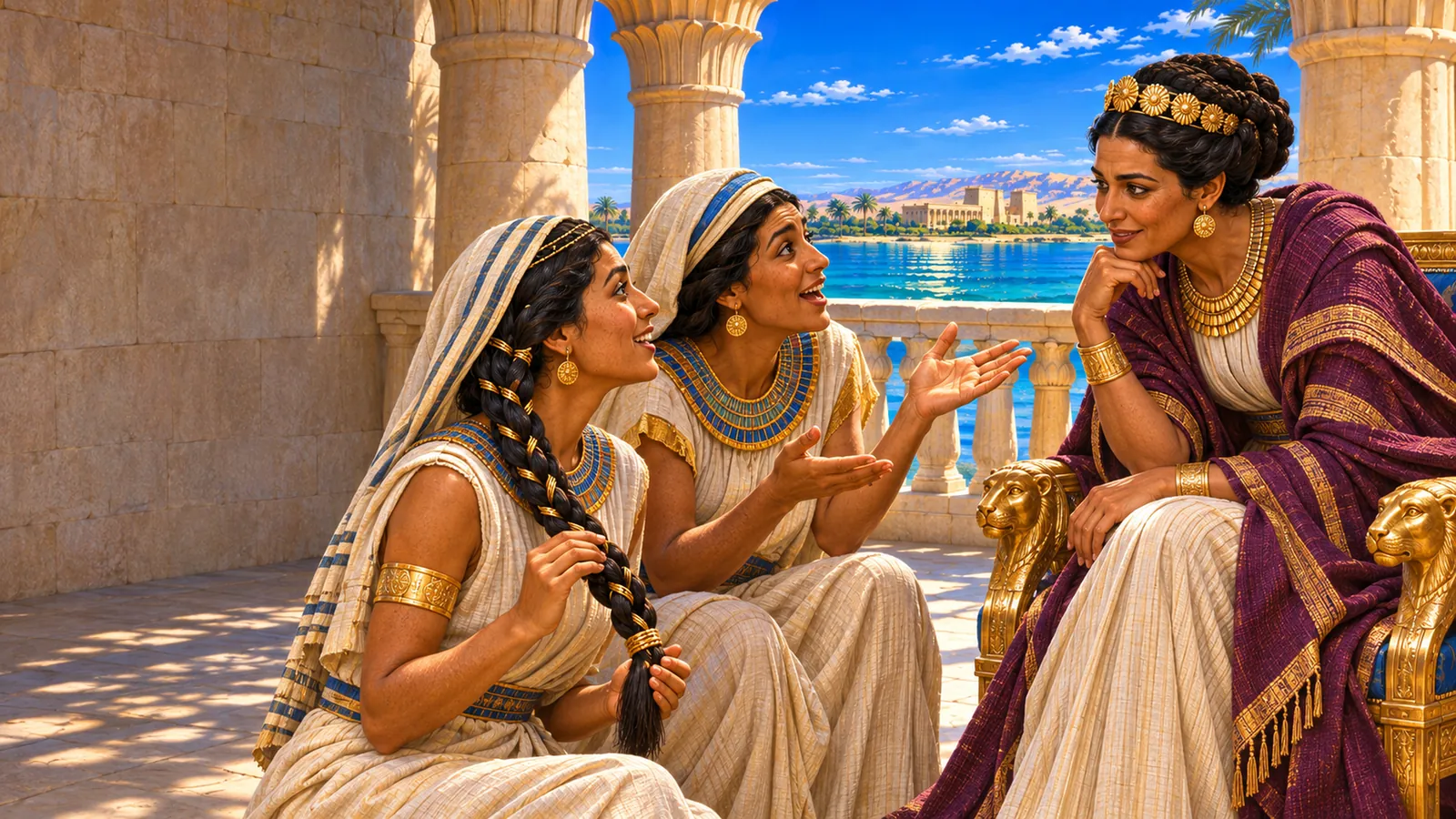
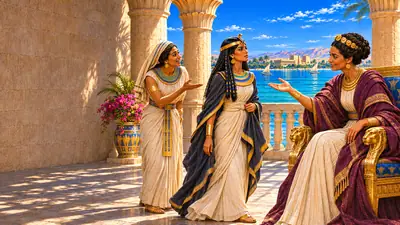
Die Königin erfuhr, dass eine Fremde den Frauen etwas von ihrem eigenen Duft übertragen hatte. Sie wollte die Fremde unbedingt sehen.
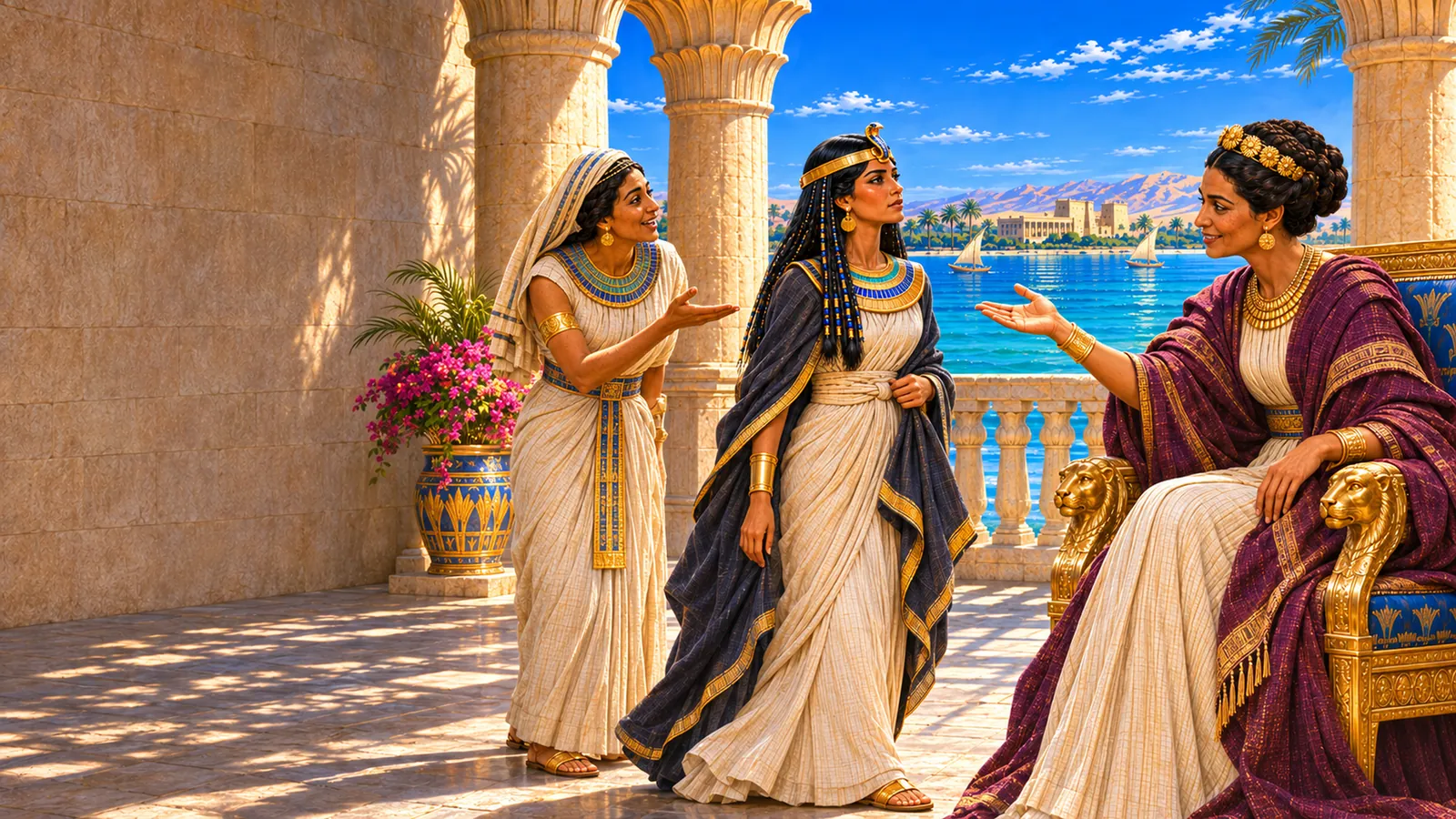
Die Königin ließ nach der Fremden vom Brunnen schicken. Sie rief sie an den Hof, um sie zu treffen.
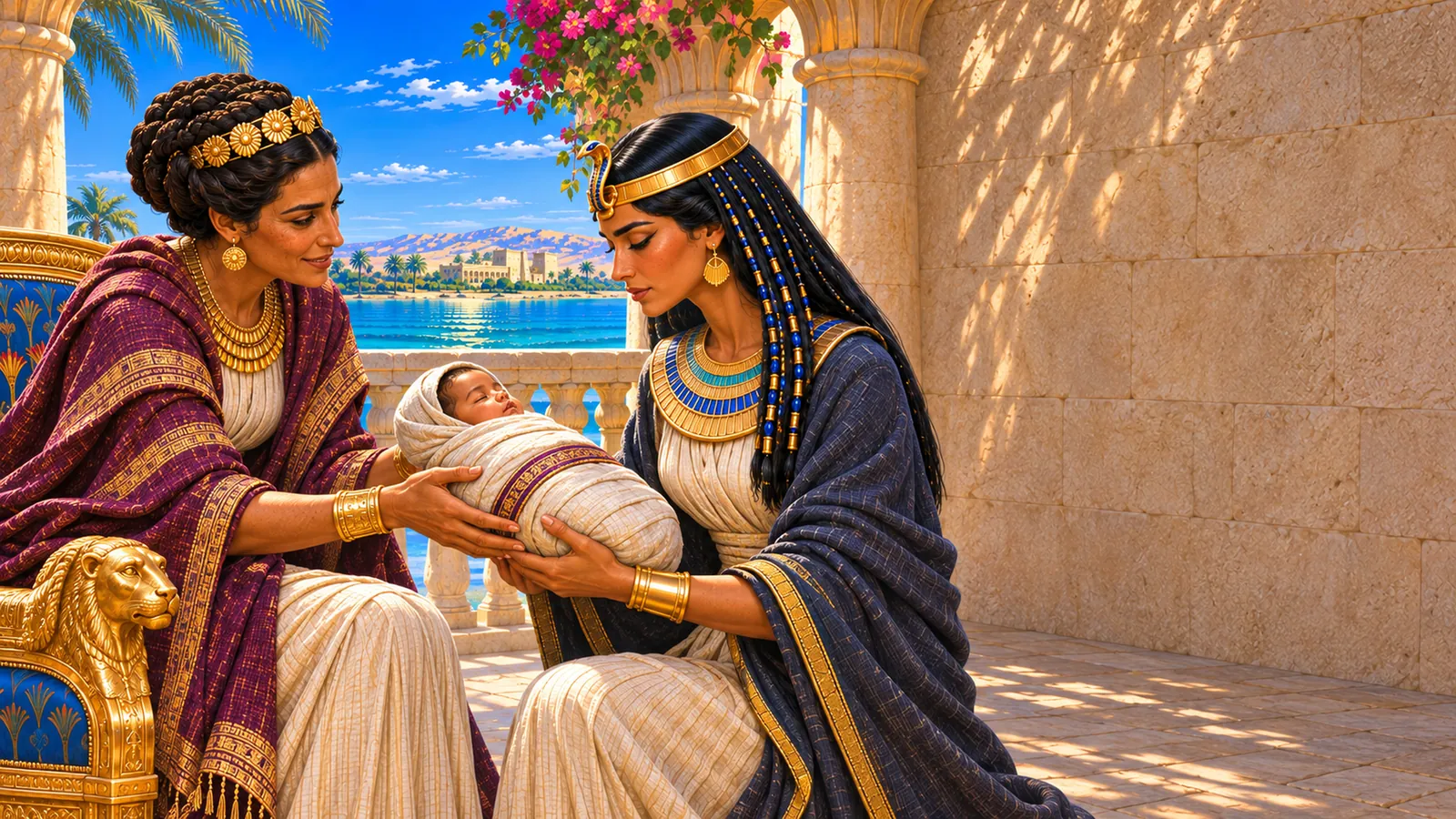
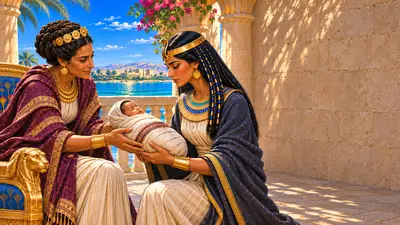
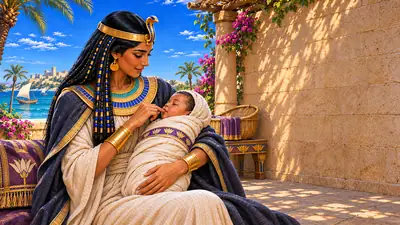
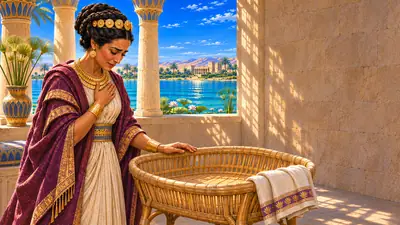
Als die Königin die Besucherin besser kennengelernt hatte, vertraute sie ihr einen ihrer Söhne an. Isis wurde seine Amme.
DER HOF
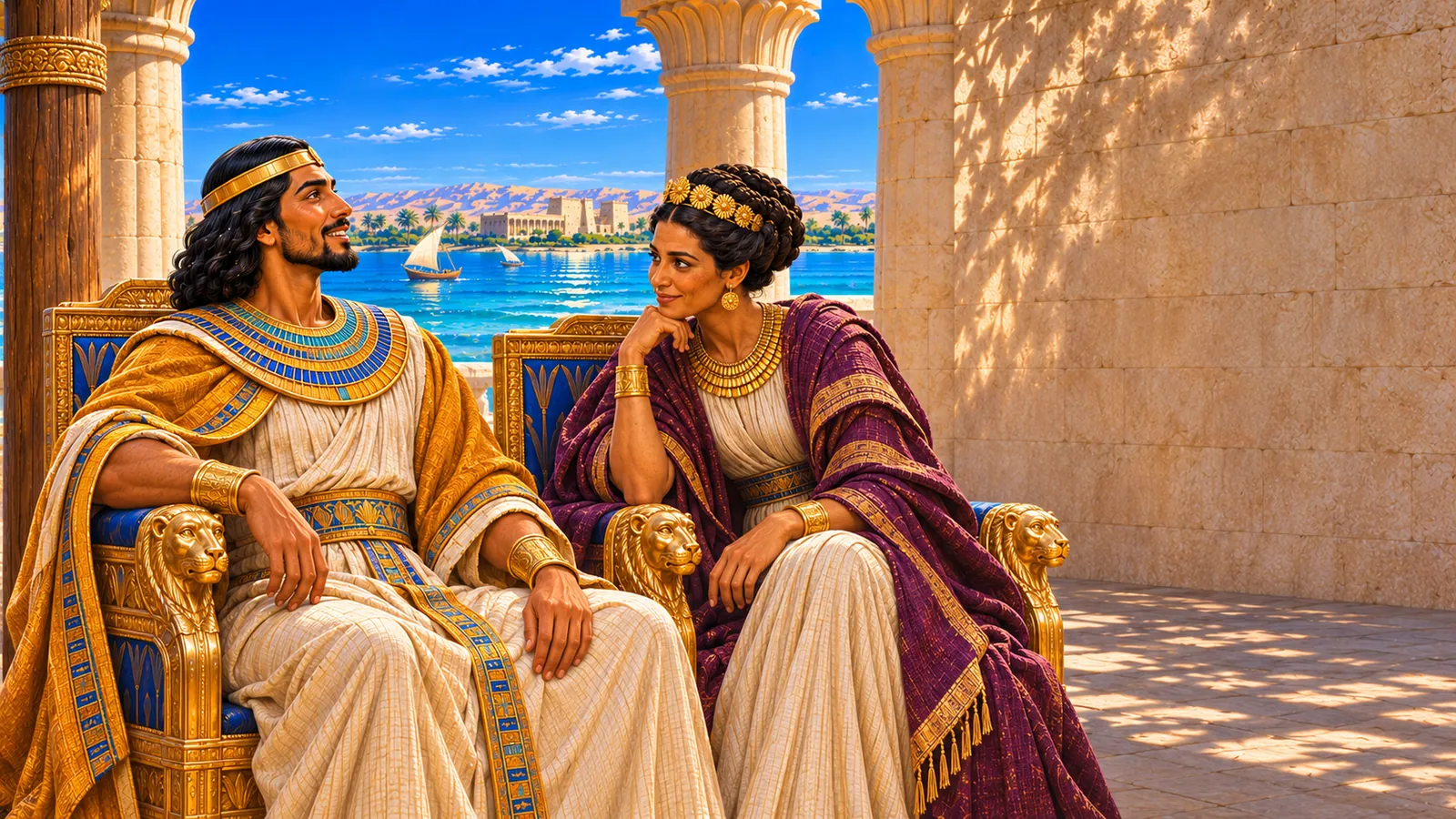
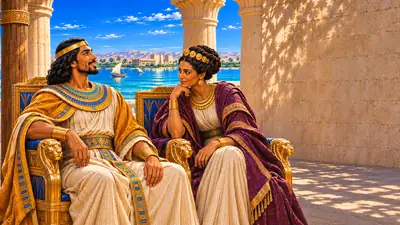
Der König von Byblos hieß Meloarthus. In einer Überlieferung heißt die Königin Astarte, in einer anderen Saosis. Manche nennen sie Nemanoun, was der Text mit dem griechischen Namen Athenais verbindet.
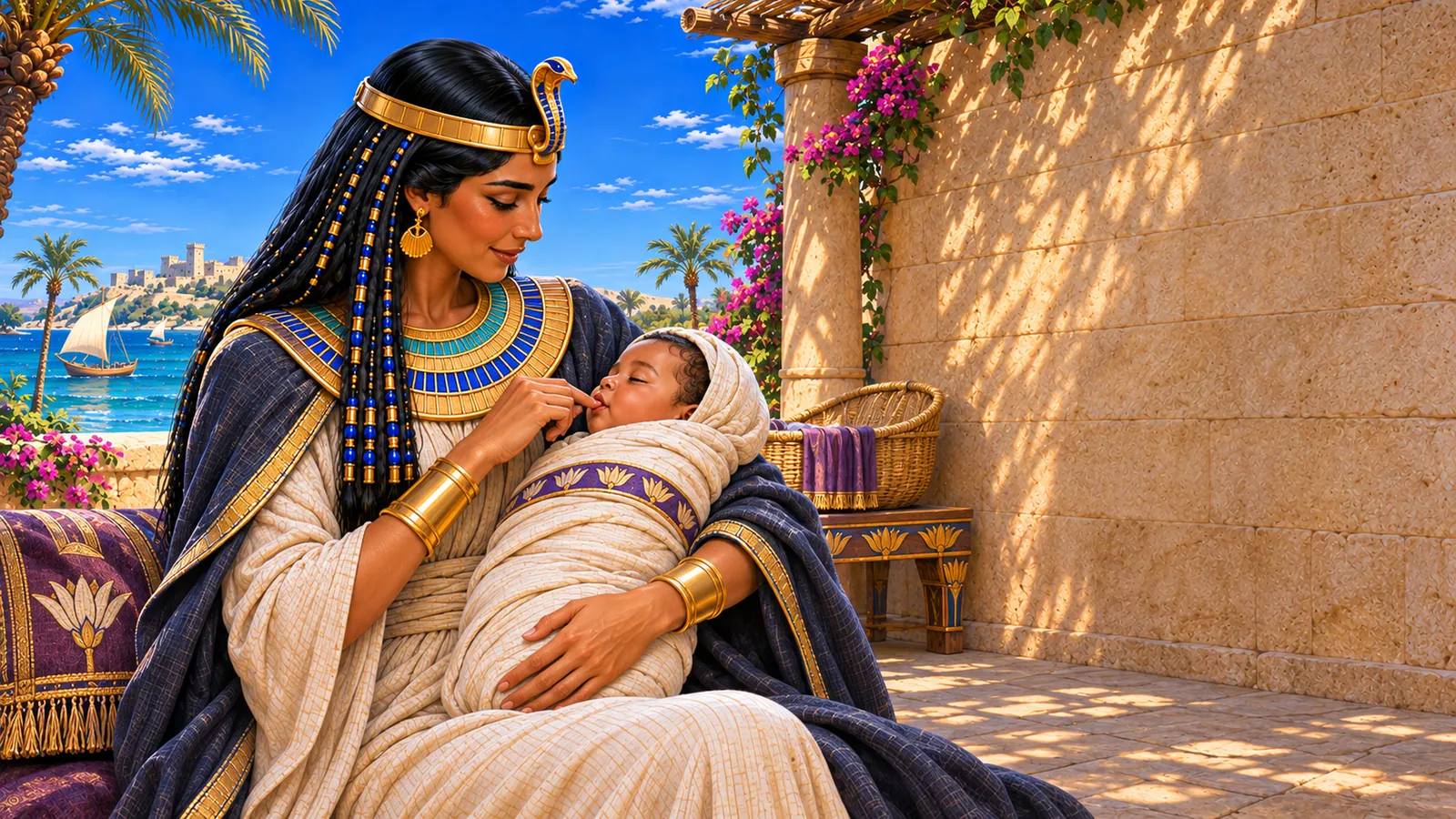
In der Erzählung nährt Isis das Kind auf ungewöhnliche Weise. Laut Squires Übersetzung lässt sie es an ihrem Finger saugen.

Plutarch sagt, Isis habe das Kind nachts ins Feuer gelegt. Im Mythos wollte sie ihm damit nehmen, was an ihm sterblich war.
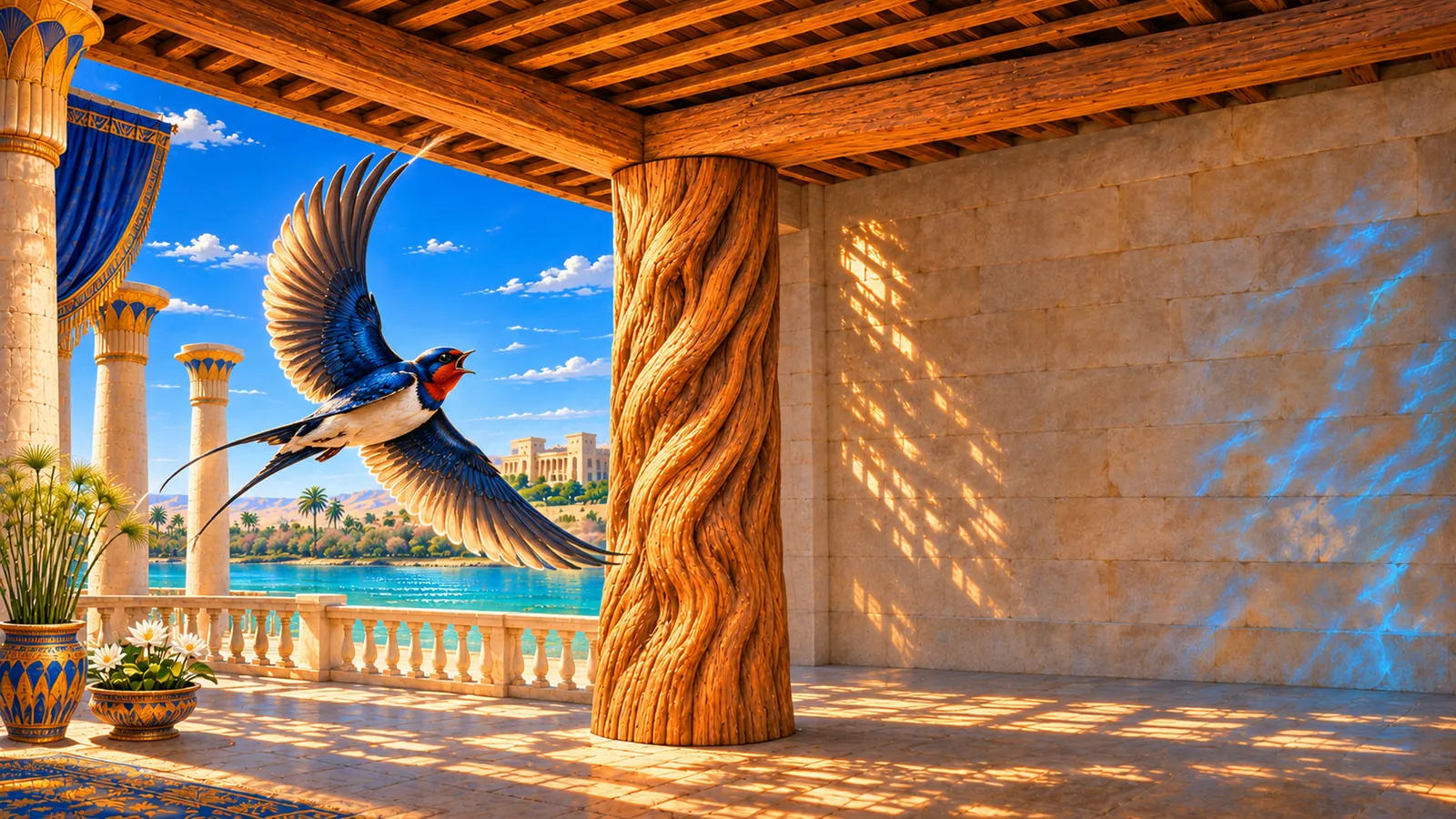
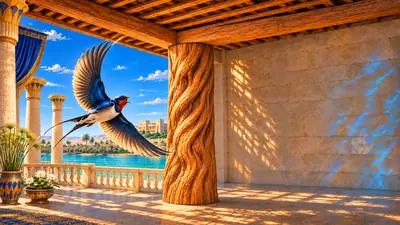
Die Geschichte erzählt, dass Isis sich in eine Schwalbe verwandelte und die Säule umkreiste, während sie ihr Schicksal beklagte.
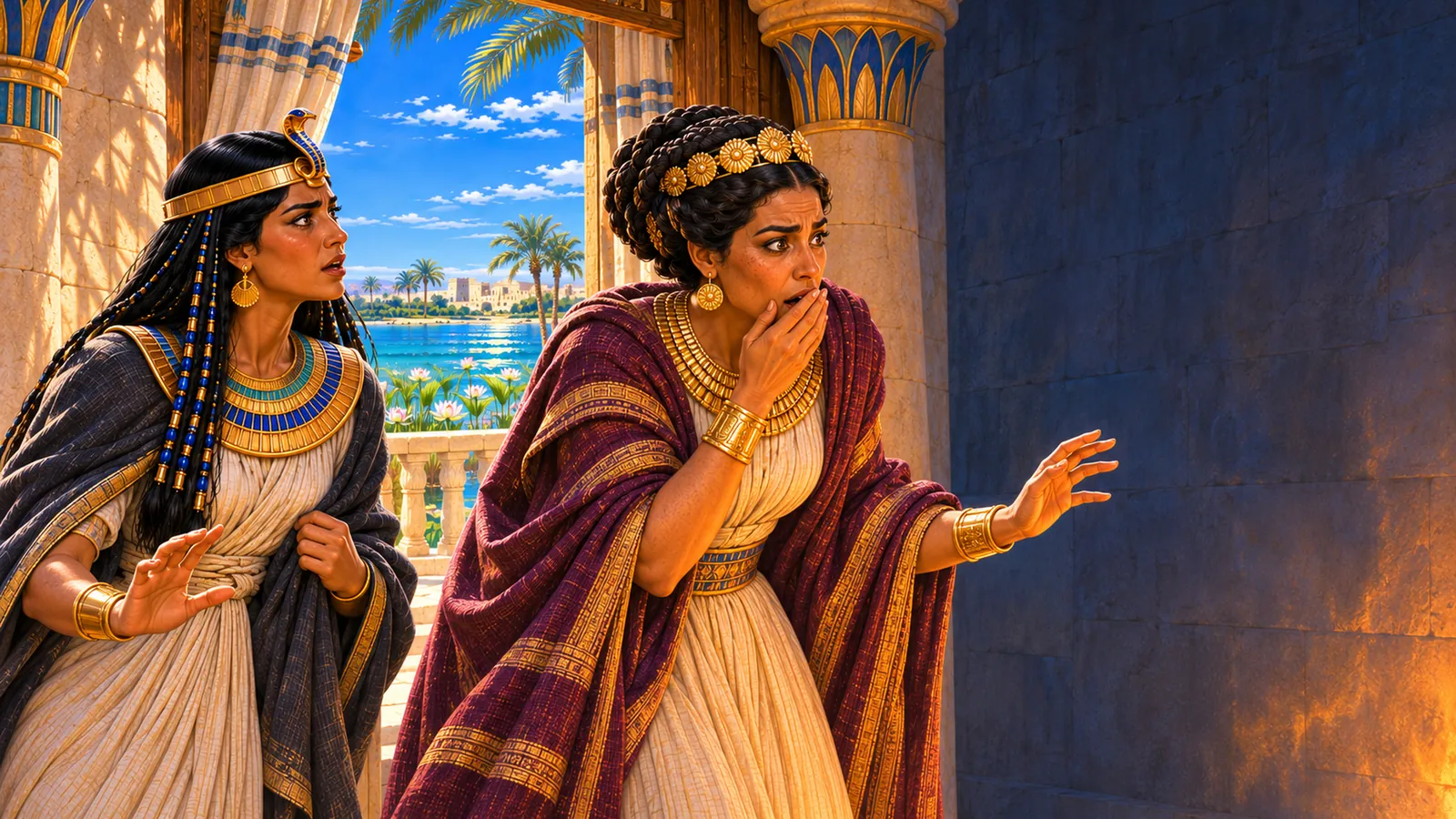
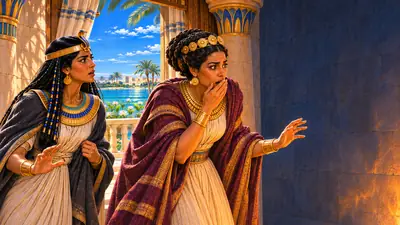
Nachdem dies eine Weile so weitergegangen war, beobachtete die Königin Isis. In Plutarchs Erzählung sah sie das Kind im Feuer.
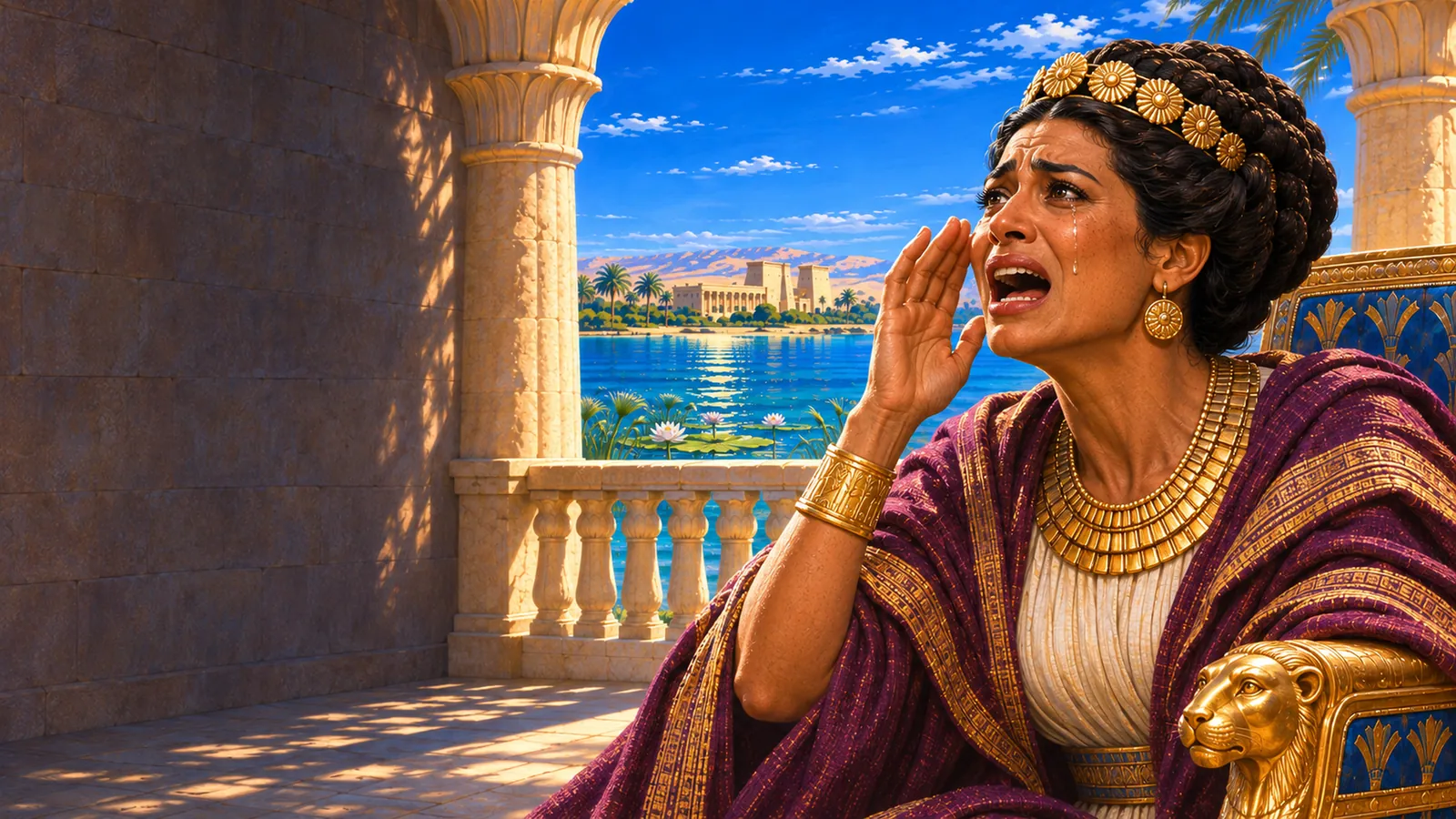
Die Königin schrie auf, als sie ihn sah. In Plutarchs Erzählung verlor das Kind durch ihren Schrei die Unsterblichkeit, die es sonst erlangt hätte.
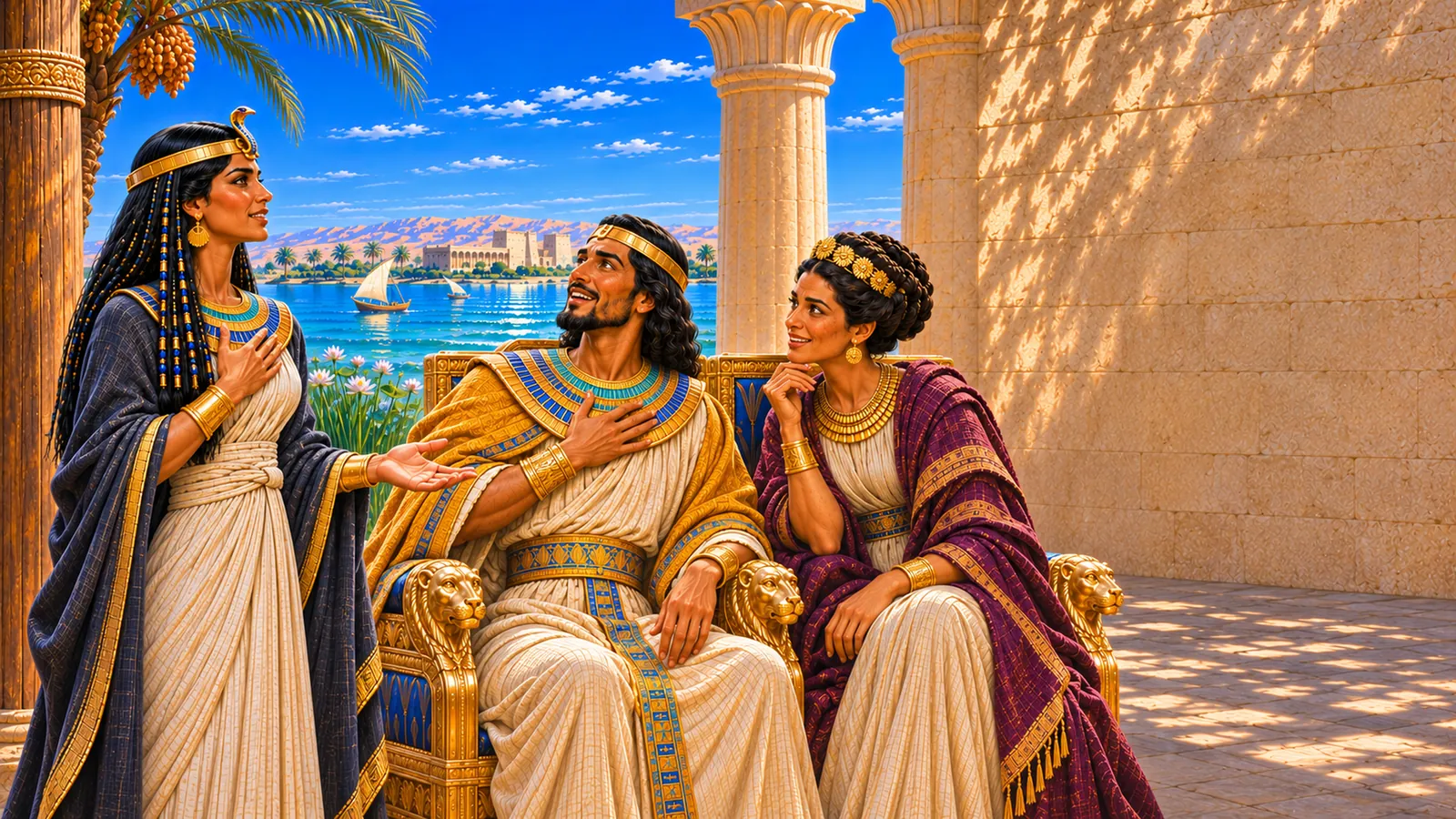
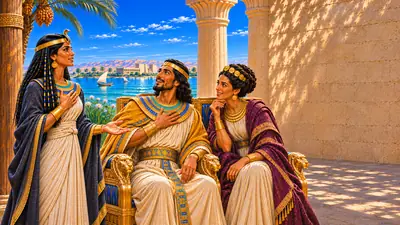
Isis gab sich daraufhin zu erkennen. Bis dahin hatte sie in der Erzählung am Hof als Amme des Kindes gedient.
DIE SÄULE
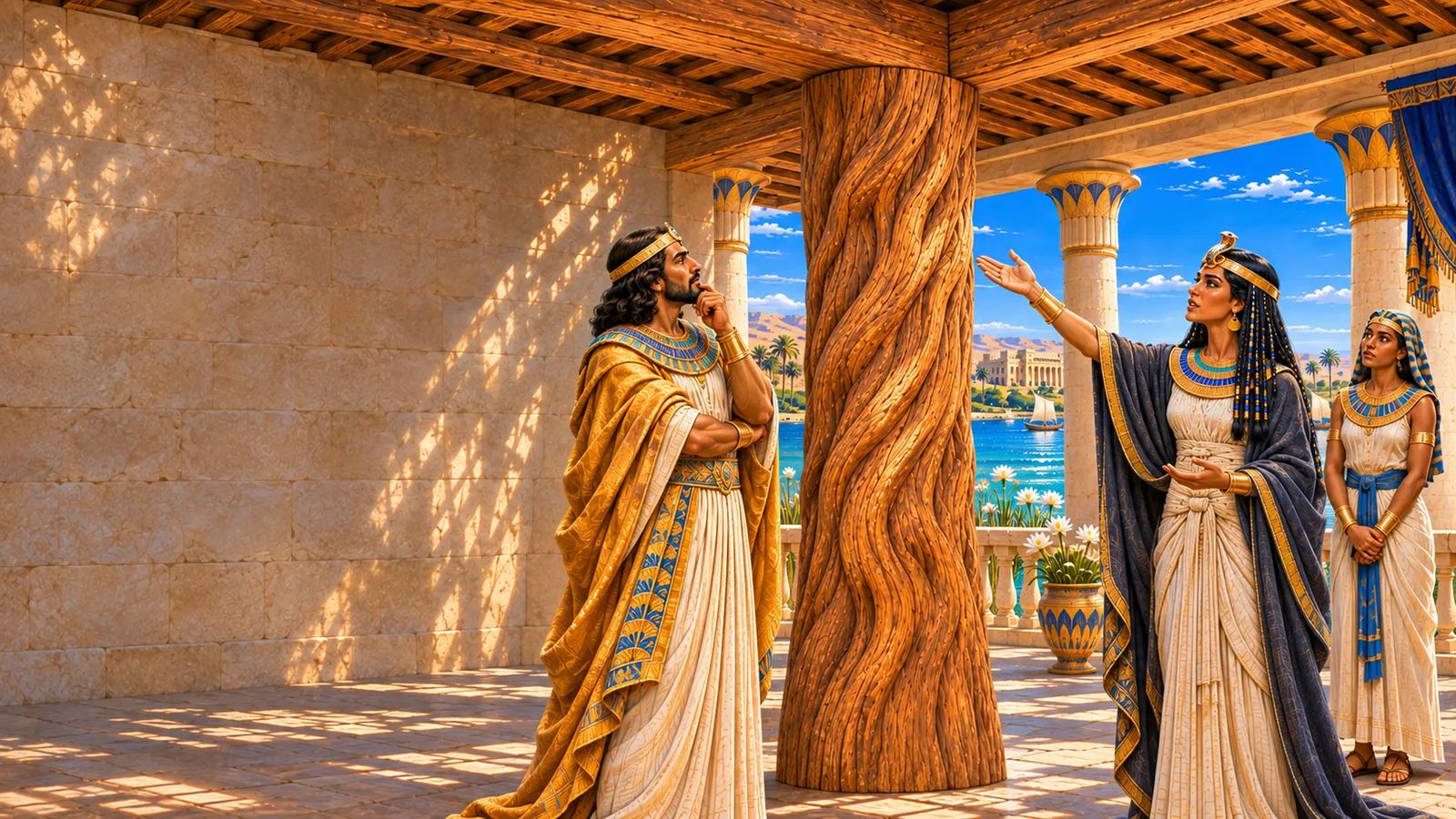
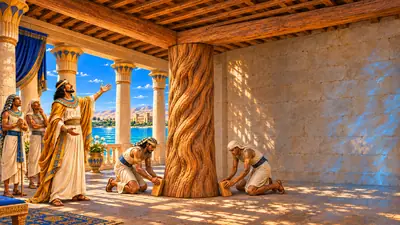
Isis bat darum, ihr die Säule zu geben, die das Dach des Hauses des Königs trug.
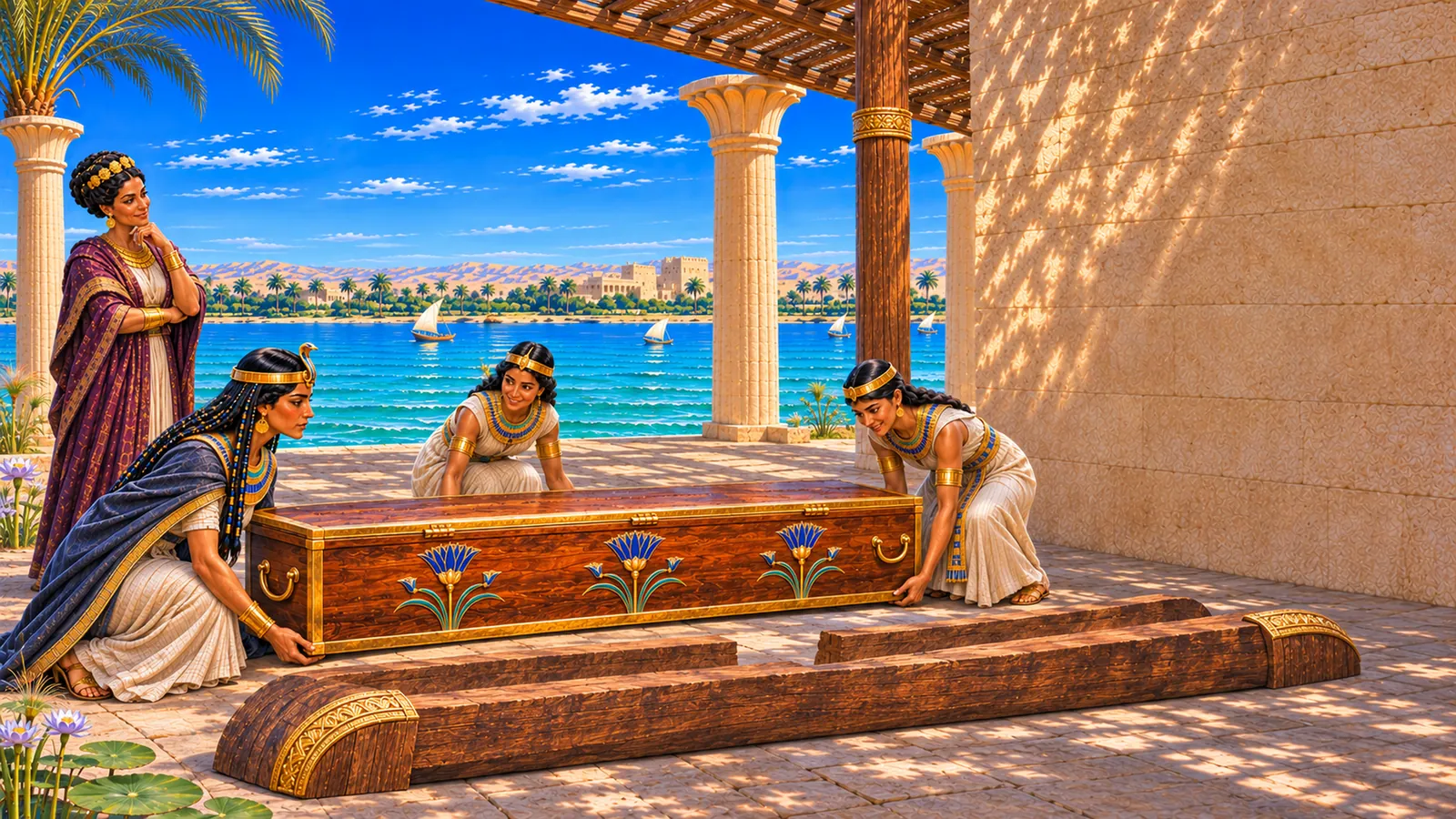
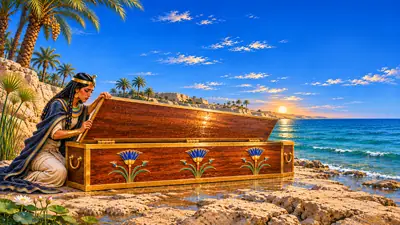
Isis öffnete die Säule und nahm heraus, was sie zurückholen wollte. Die Truhe war im Stamm verborgen gewesen.
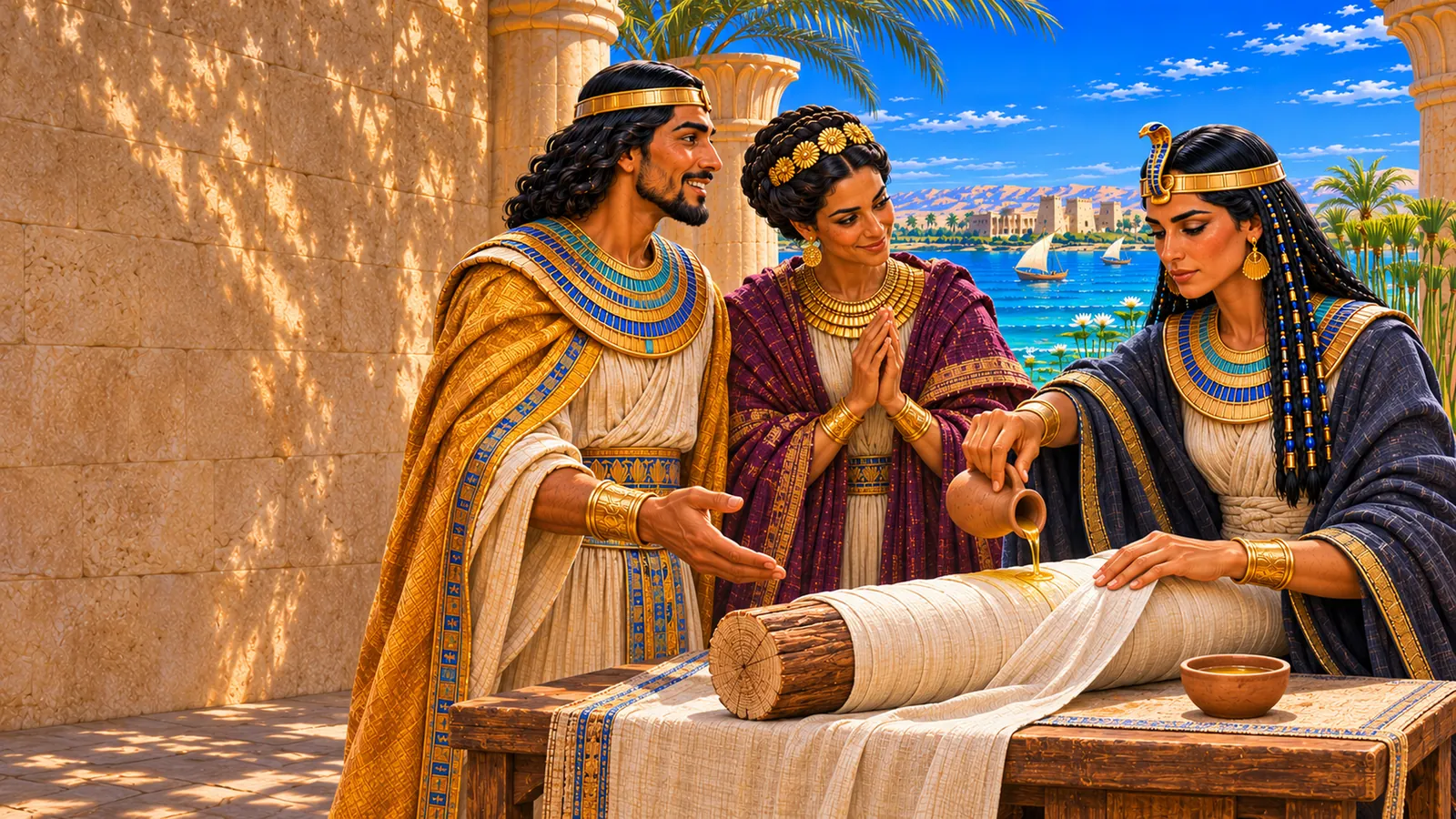
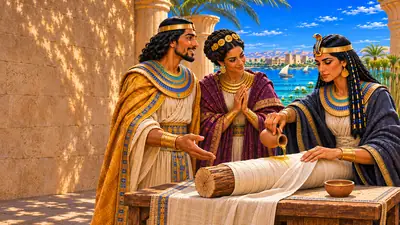
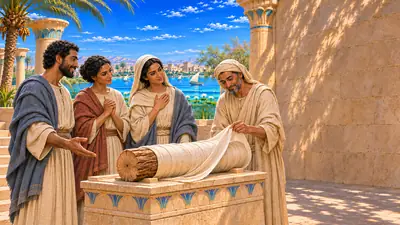
Sie wickelte das verbliebene Holz in feines Leinen und salbte es mit duftendem Öl. Dann gab sie es dem König und der Königin zurück.
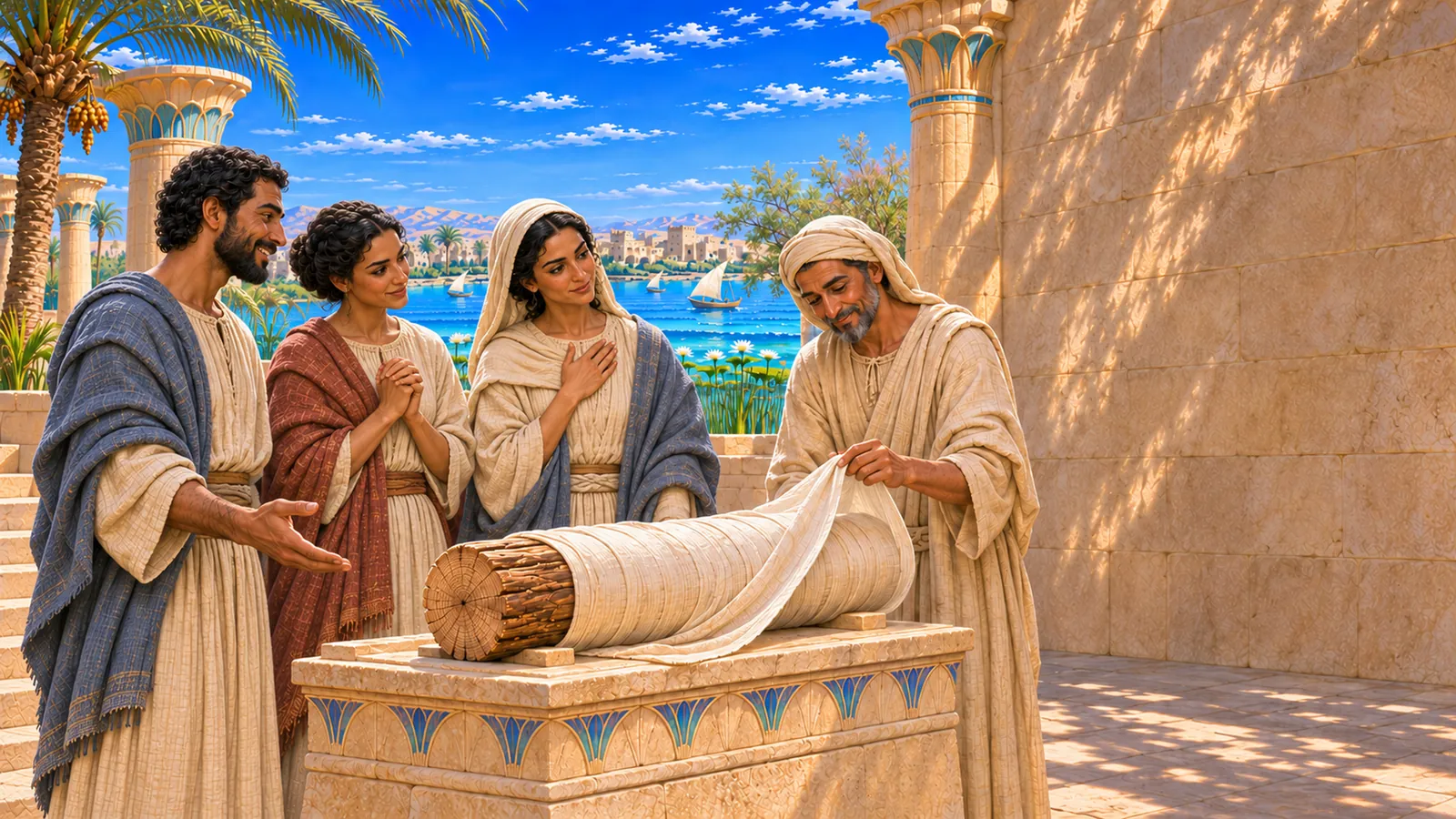
Plutarch sagt, zu seiner Zeit sei das Holz in einem Tempel der Isis aufbewahrt worden. Die Menschen an dem Ort, den er Byblos nennt, hätten es dort verehrt.
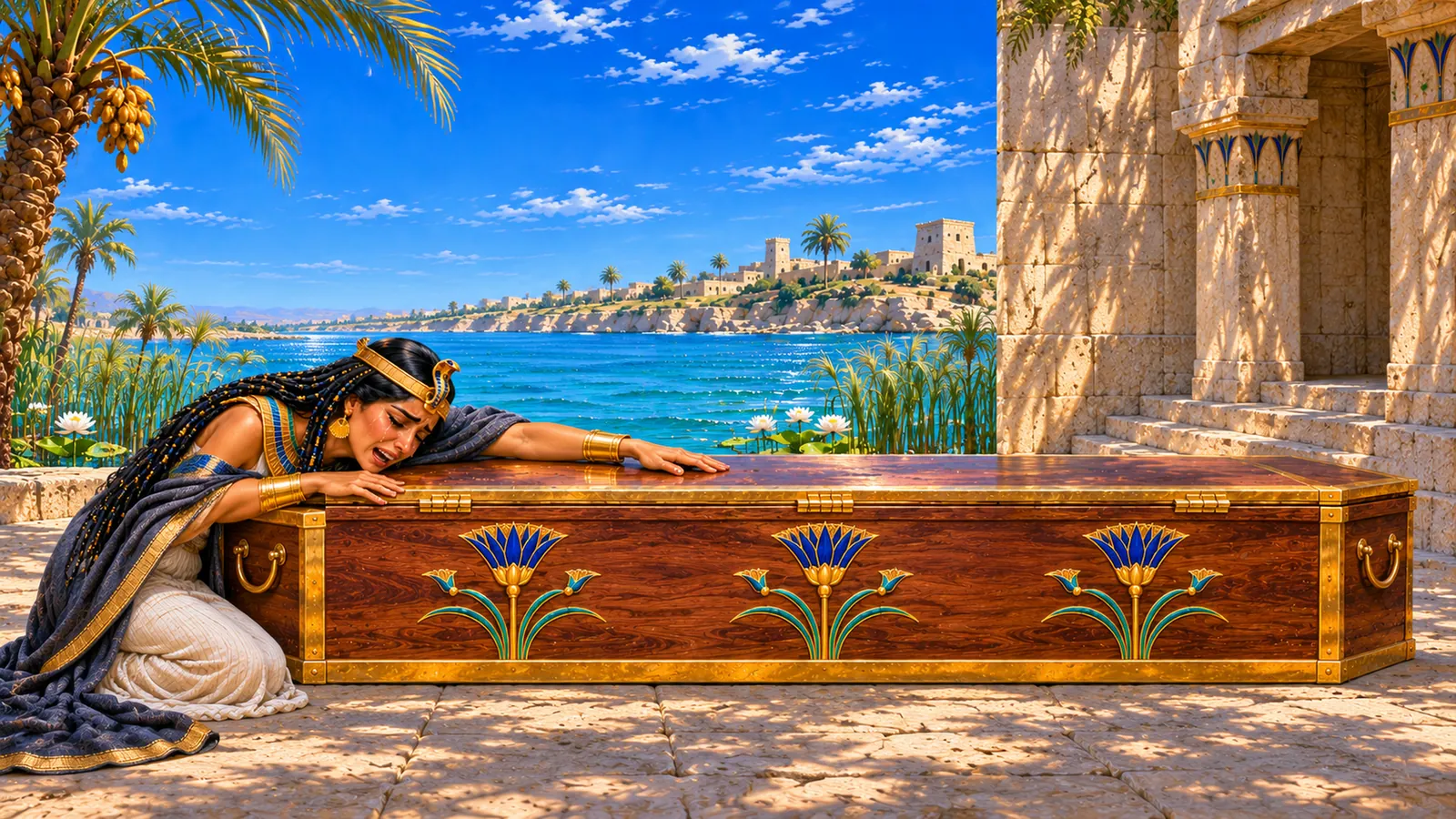
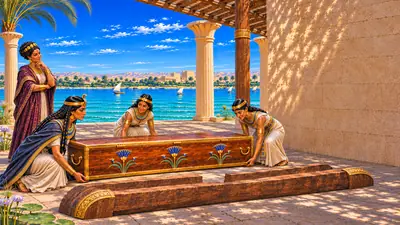
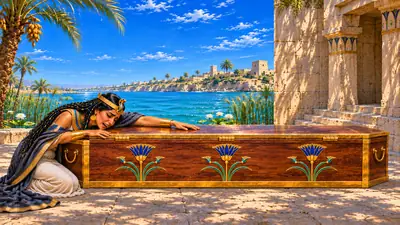
Nachdem das Holz zurückgegeben worden war, warf sich Isis der Erzählung zufolge auf die Truhe und klagte laut.
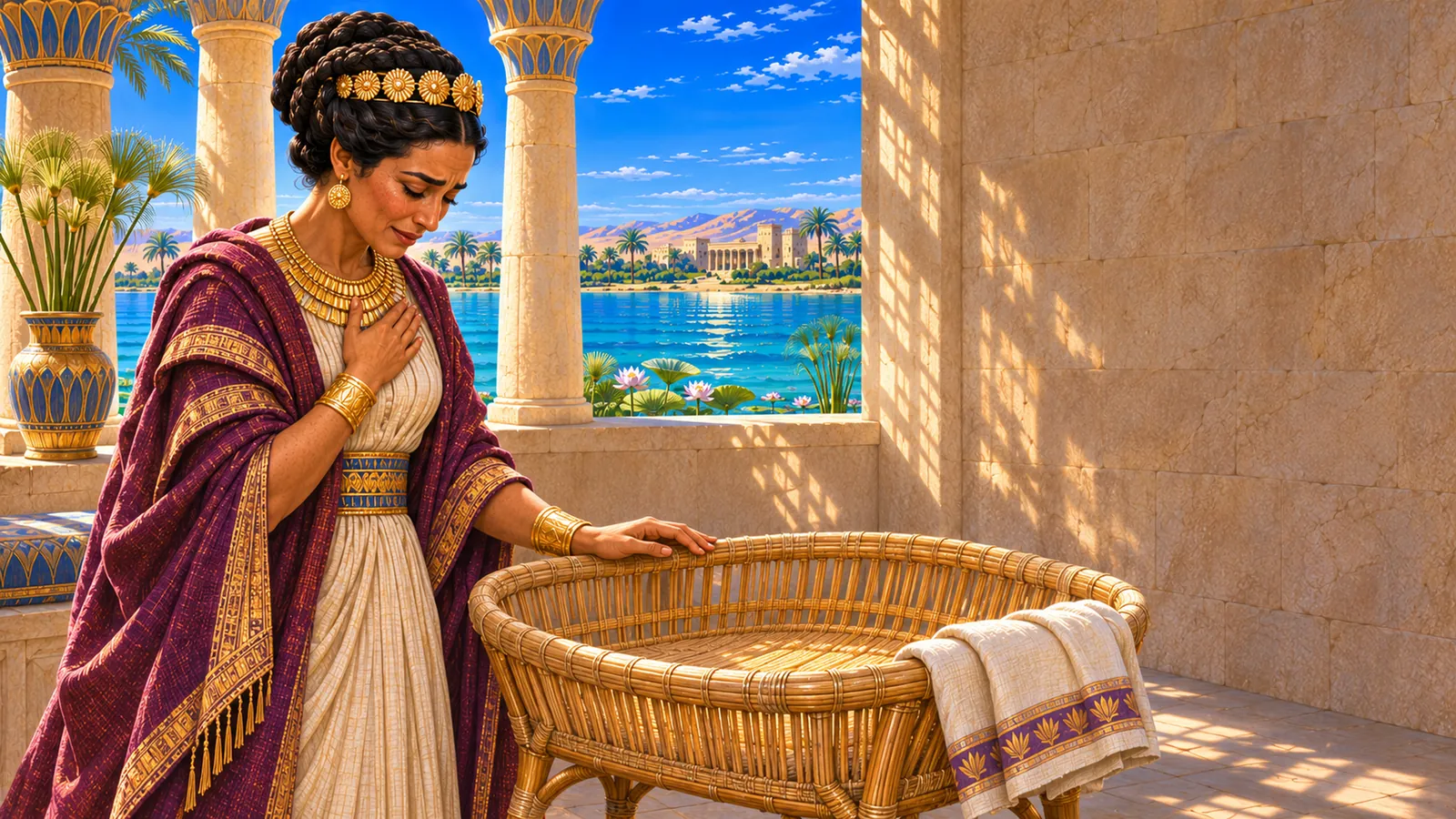
Plutarch sagt, der jüngere der Königssöhne habe Isis klagen hören. In dieser Fassung erschreckte ihn der Schrei zu Tode.

Isis nahm den älteren Sohn des Königs mit sich. Mit der Truhe an Bord segelten sie nach Ägypten.

Der Morgen kam, und vom Fluss Phaidros wehte ein rauer, scharfer Wind. Darüber erzürnt, ließ Isis laut der Erzählung den Fluss versiegen.
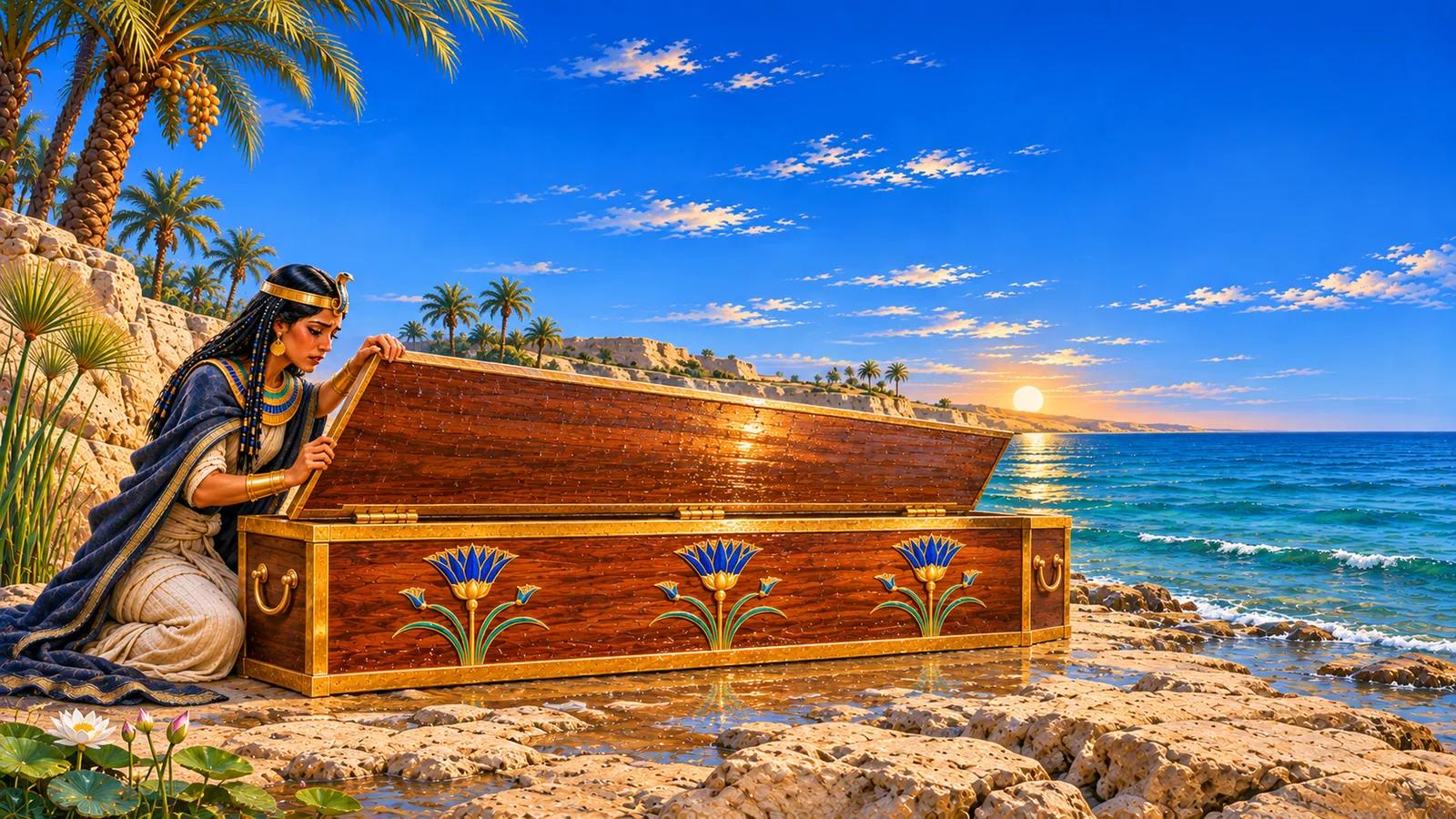
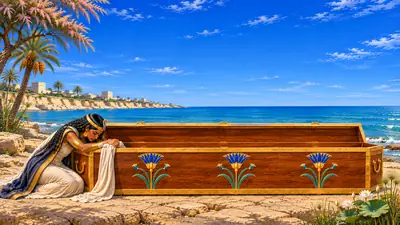
Als Isis an einen verlassenen Ort gelangte, glaubte sie, allein zu sein. Dort öffnete sie endlich die Truhe, die sie übers Wasser gebracht hatte.
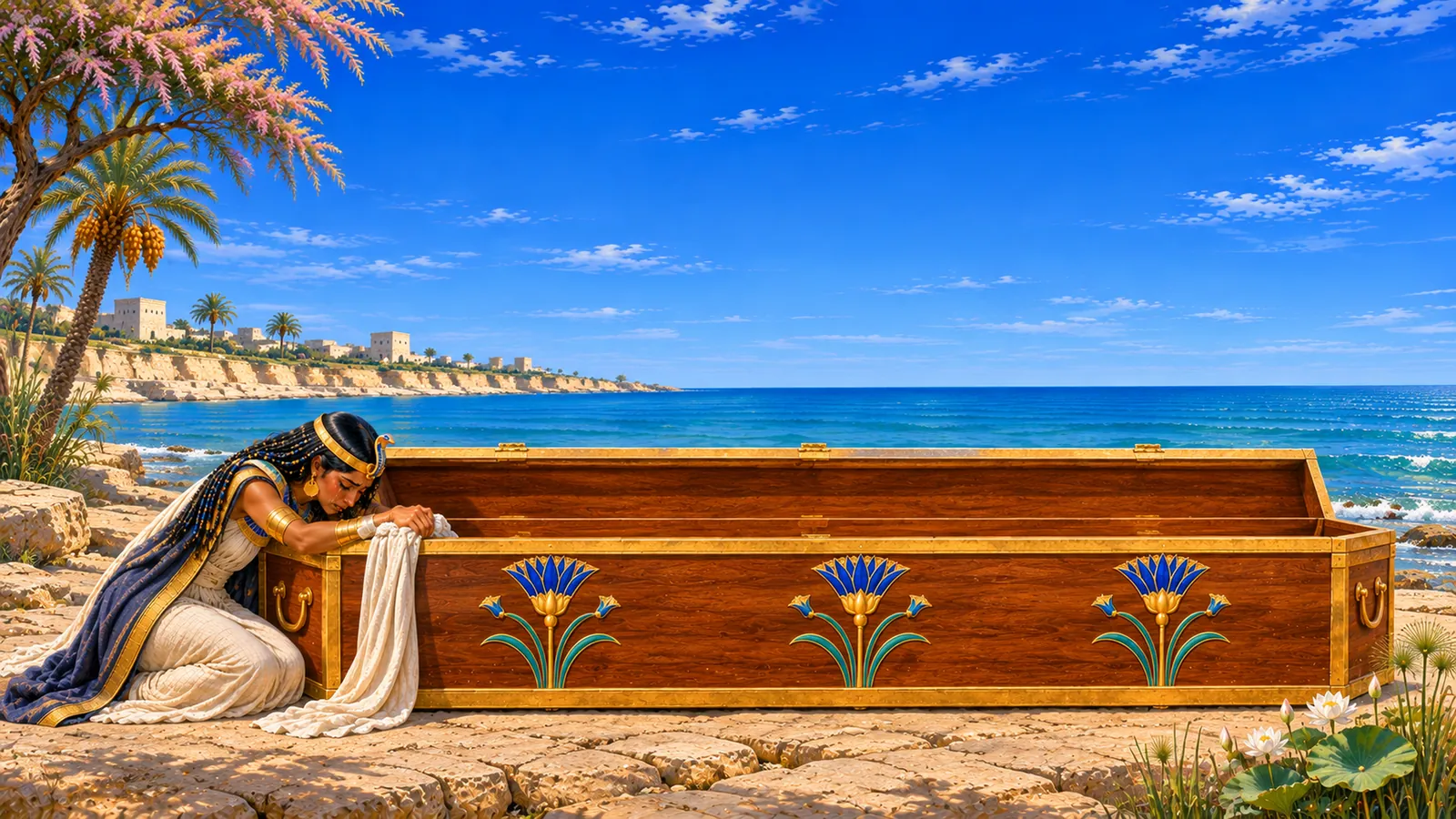
Isis legte ihr Gesicht an das ihres toten Mannes. Sie umarmte Osiris und weinte bitterlich.
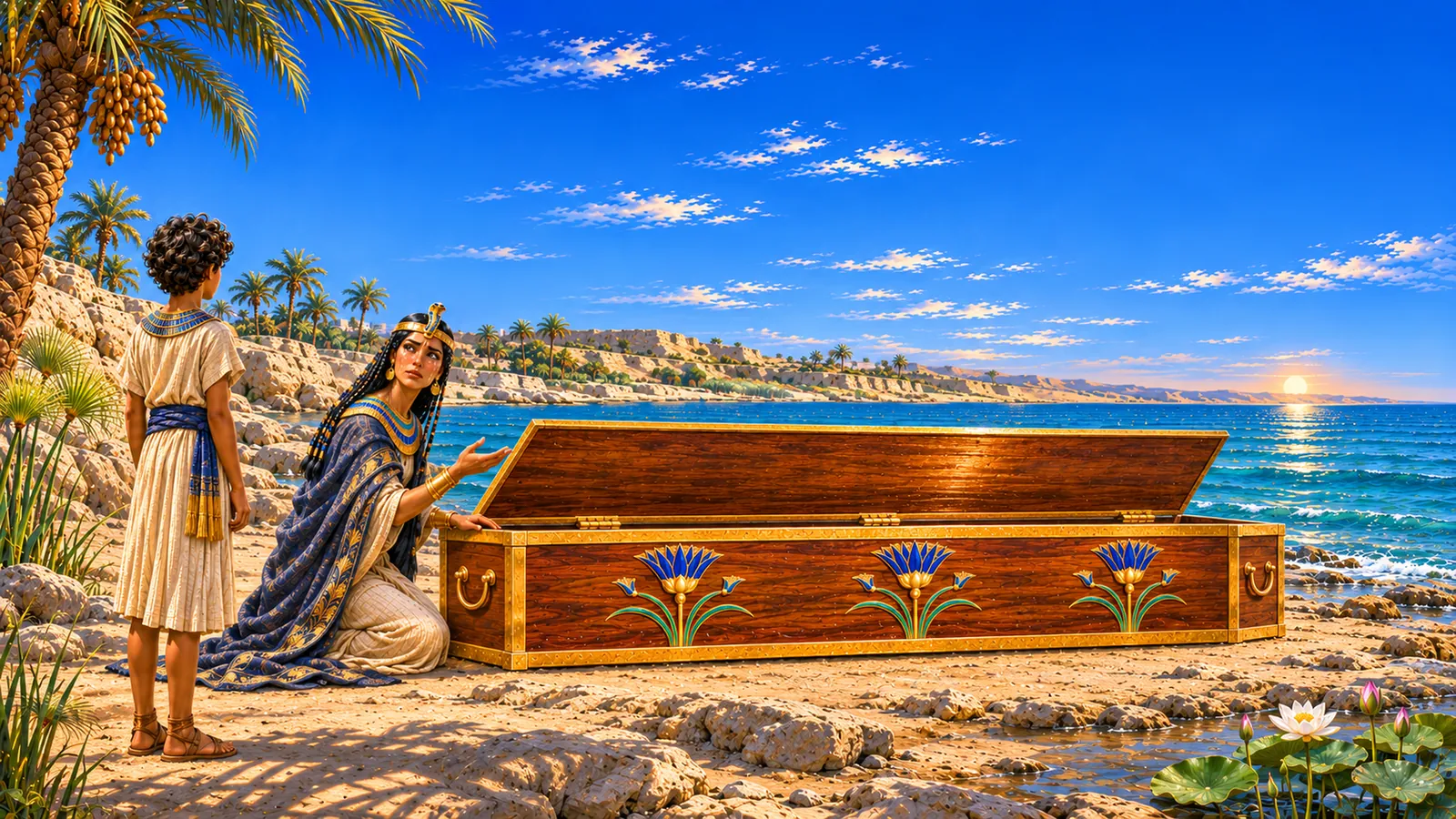
Ein Junge war ihr leise gefolgt und hatte den Grund ihrer Trauer gesehen. Die Erzählung sagt, er sei vor Schreck gestorben, als Isis sich zornig zu ihm umwandte.

Andere erzählten es anders. Sie sagten, der Junge sei bei einem Sturz ins Meer gestorben und später um der Isis willen hoch geehrt worden.
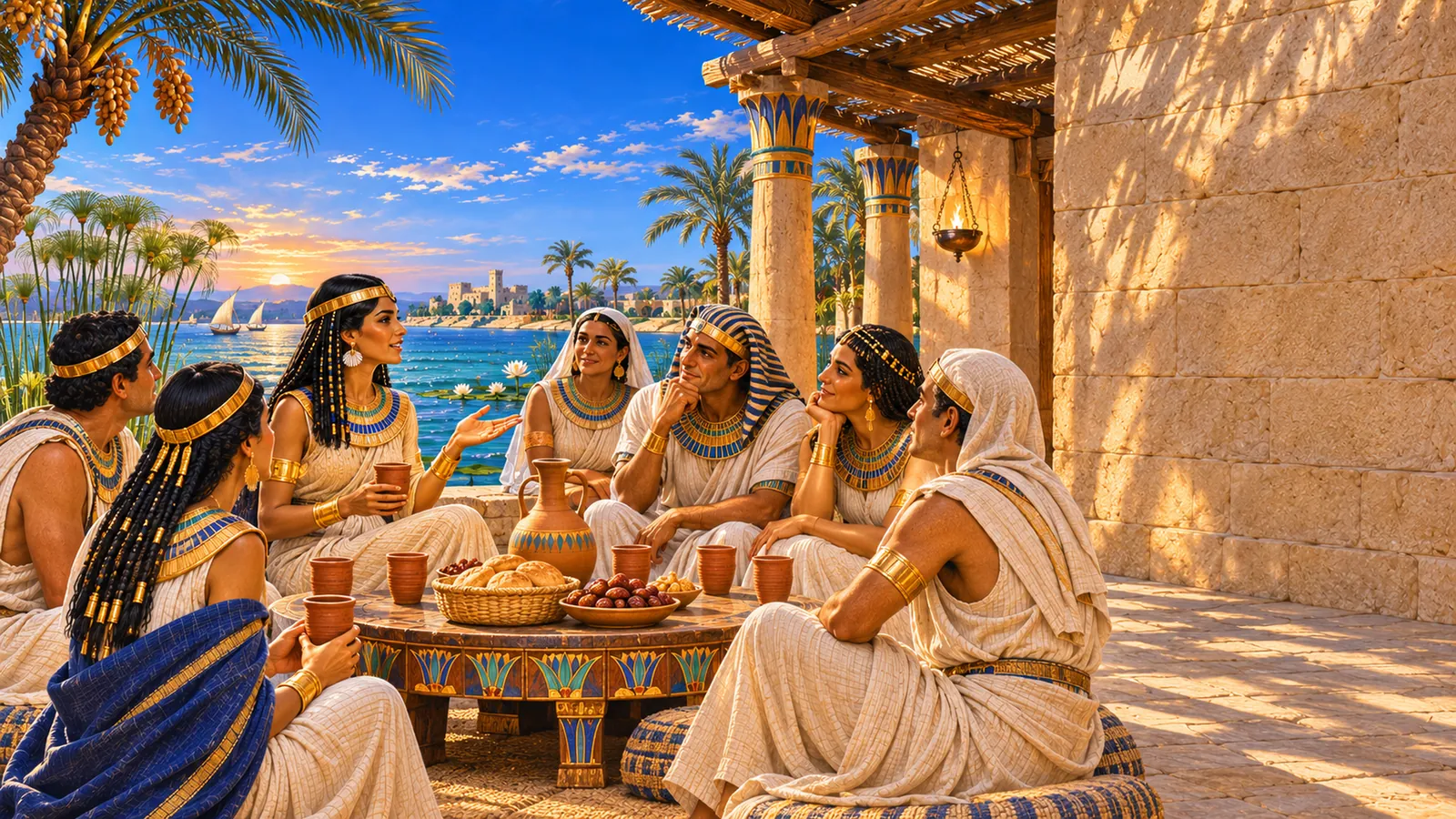
In dieser Fassung ist der Junge Maneros. Sie verbindet ihn mit dem Namen, den man nach Plutarch bei ägyptischen Gastmählern so oft anrief.
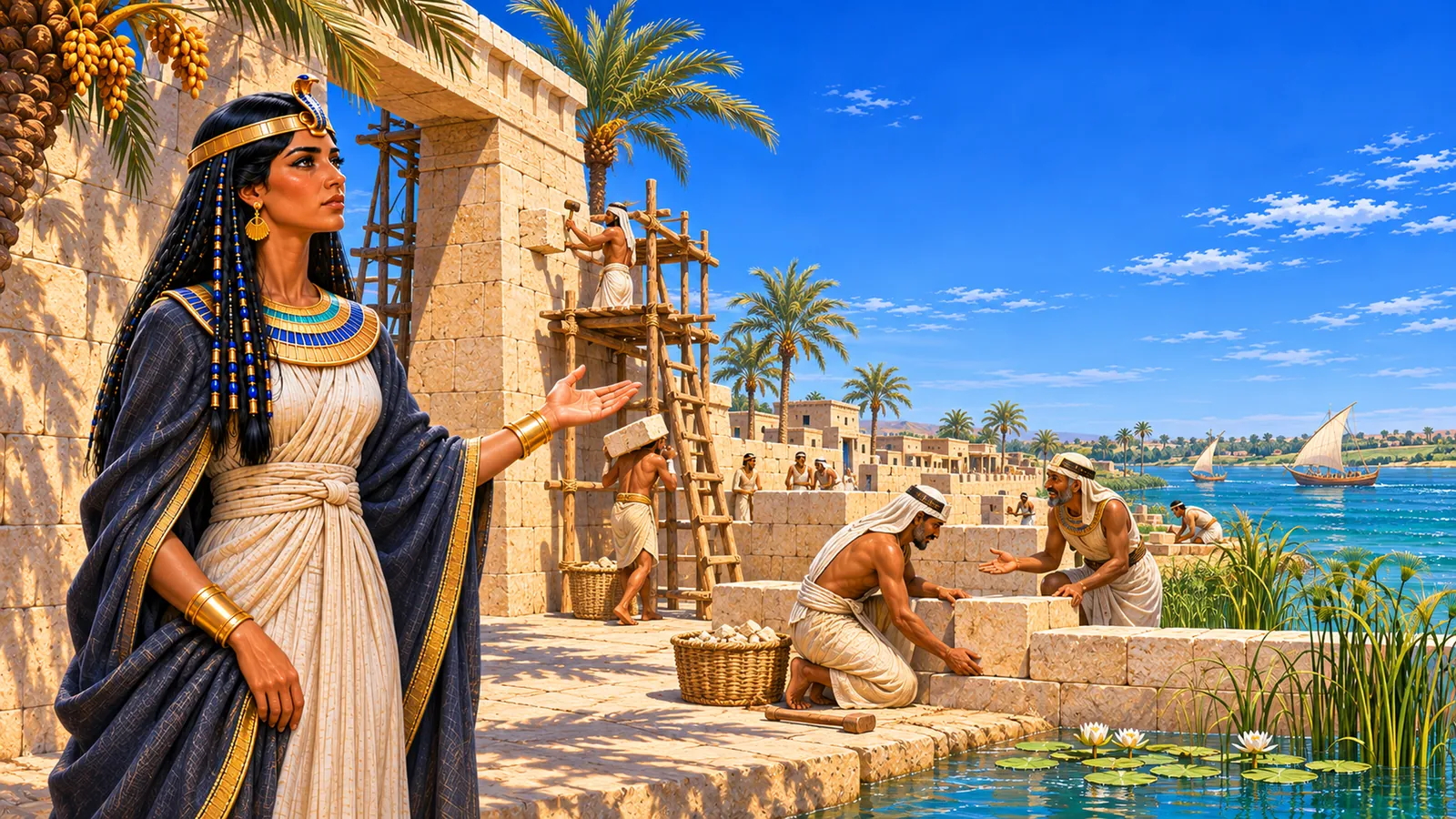
Andere wiesen diese Fassung zurück und nannten das Kind Palaestinus oder Pelusius. Sie sagten, Isis habe zu seinem Andenken eine Stadt gegründet, die seinen Namen trug.
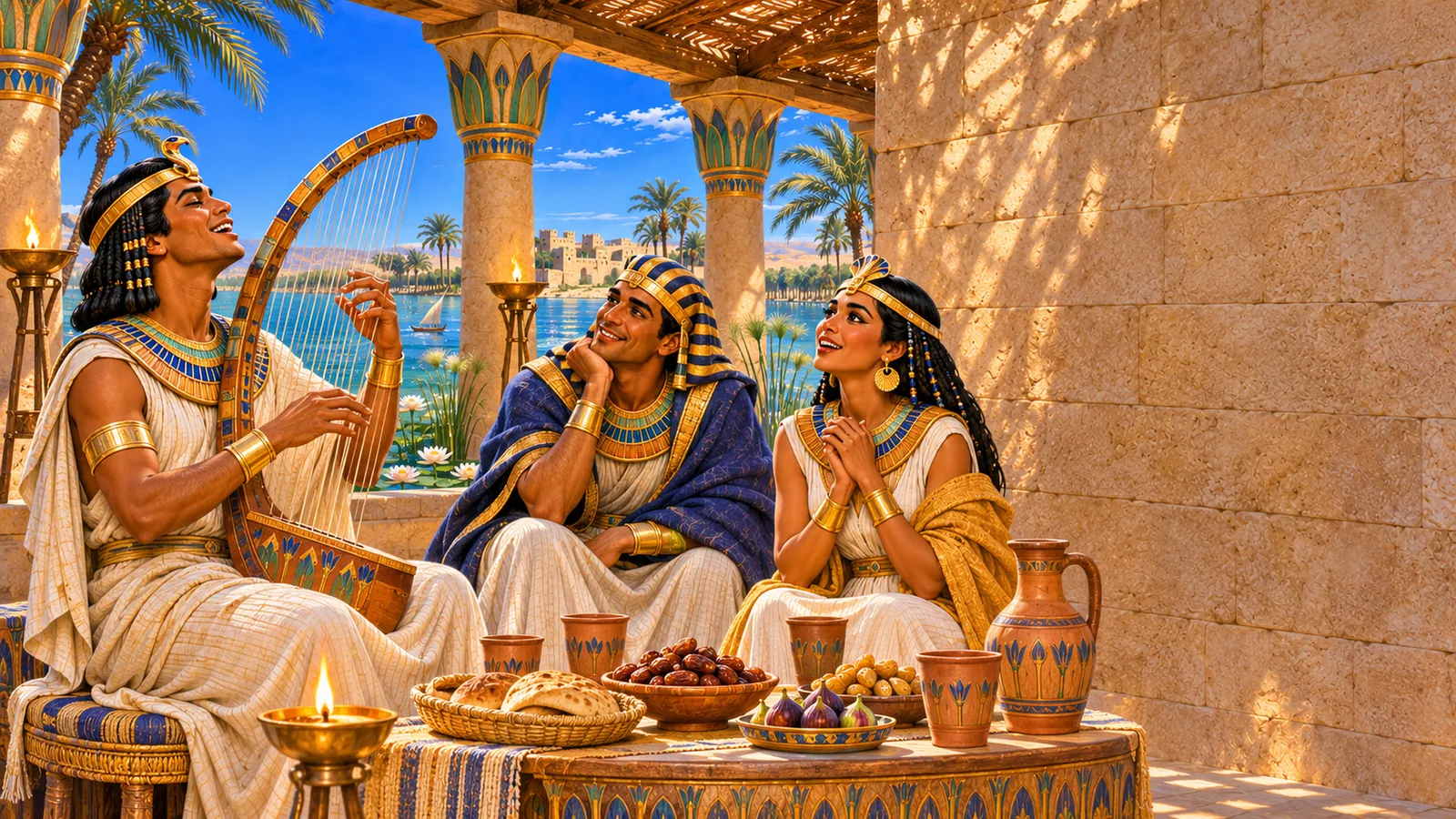
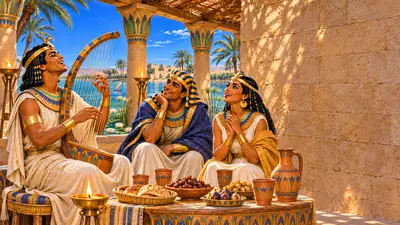
Wer dem Jungen einen anderen Namen gab, erklärte die Ehrung des Maneros bei Festen anders. Maneros sei der Erste gewesen, der Musik erfand.
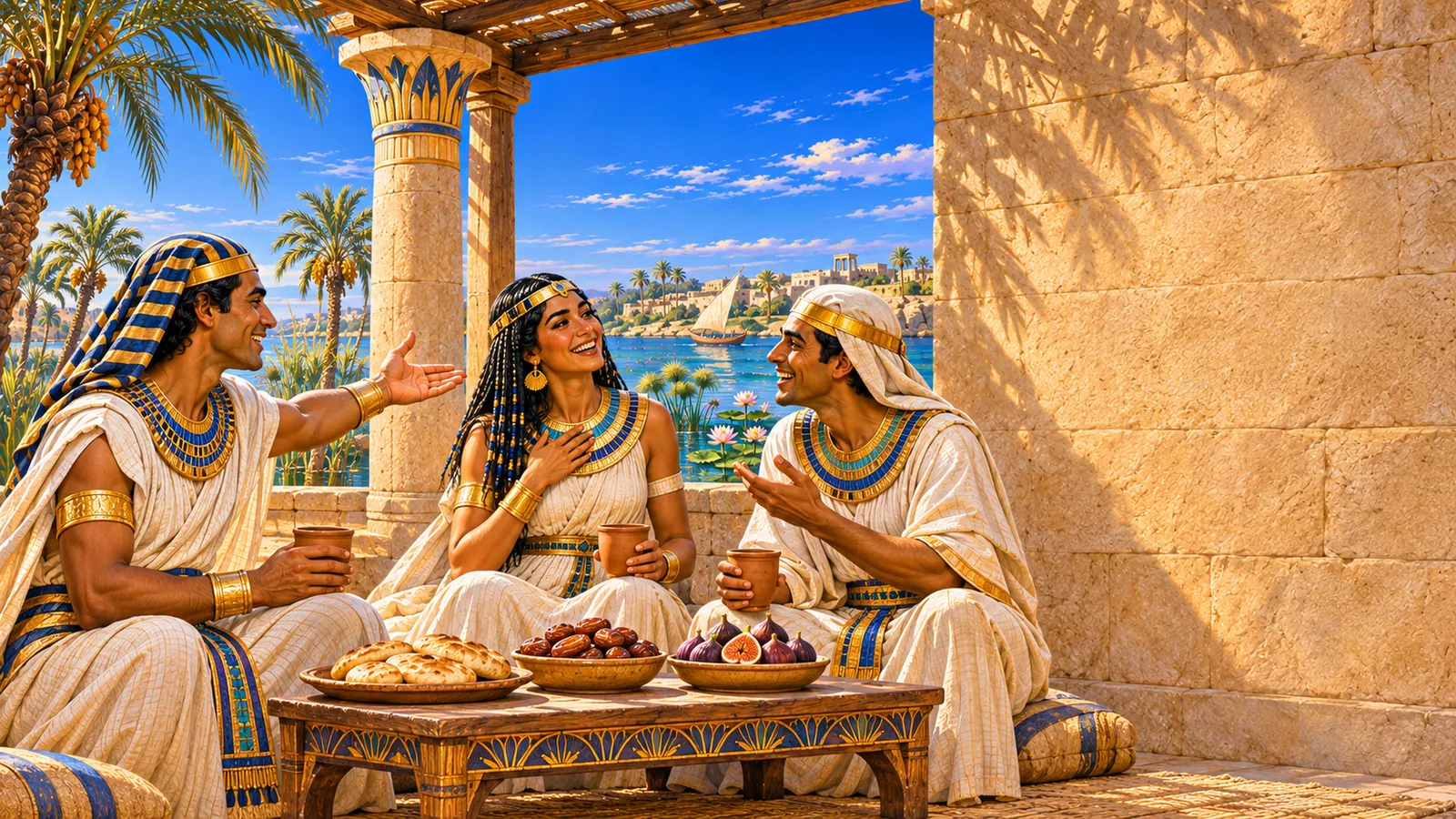
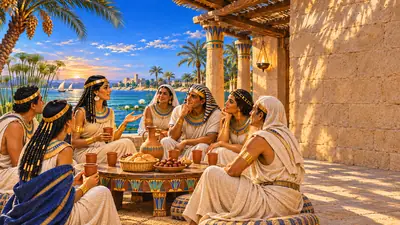
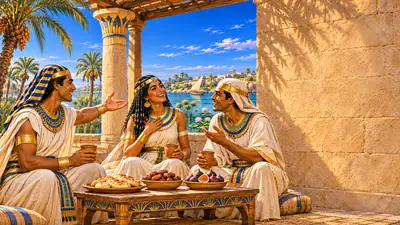
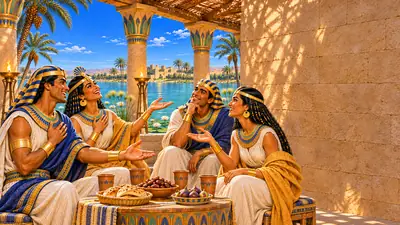
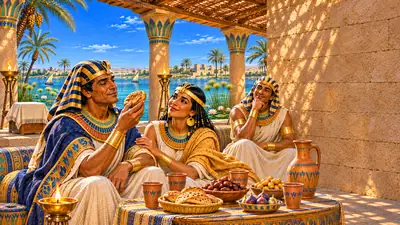
Wieder andere sagten, Maneros sei ein üblicher Gruß bei feierlichen Gastmählern. In ihrer Fassung war es eine Wendung, die die Gäste miteinander wechselten.
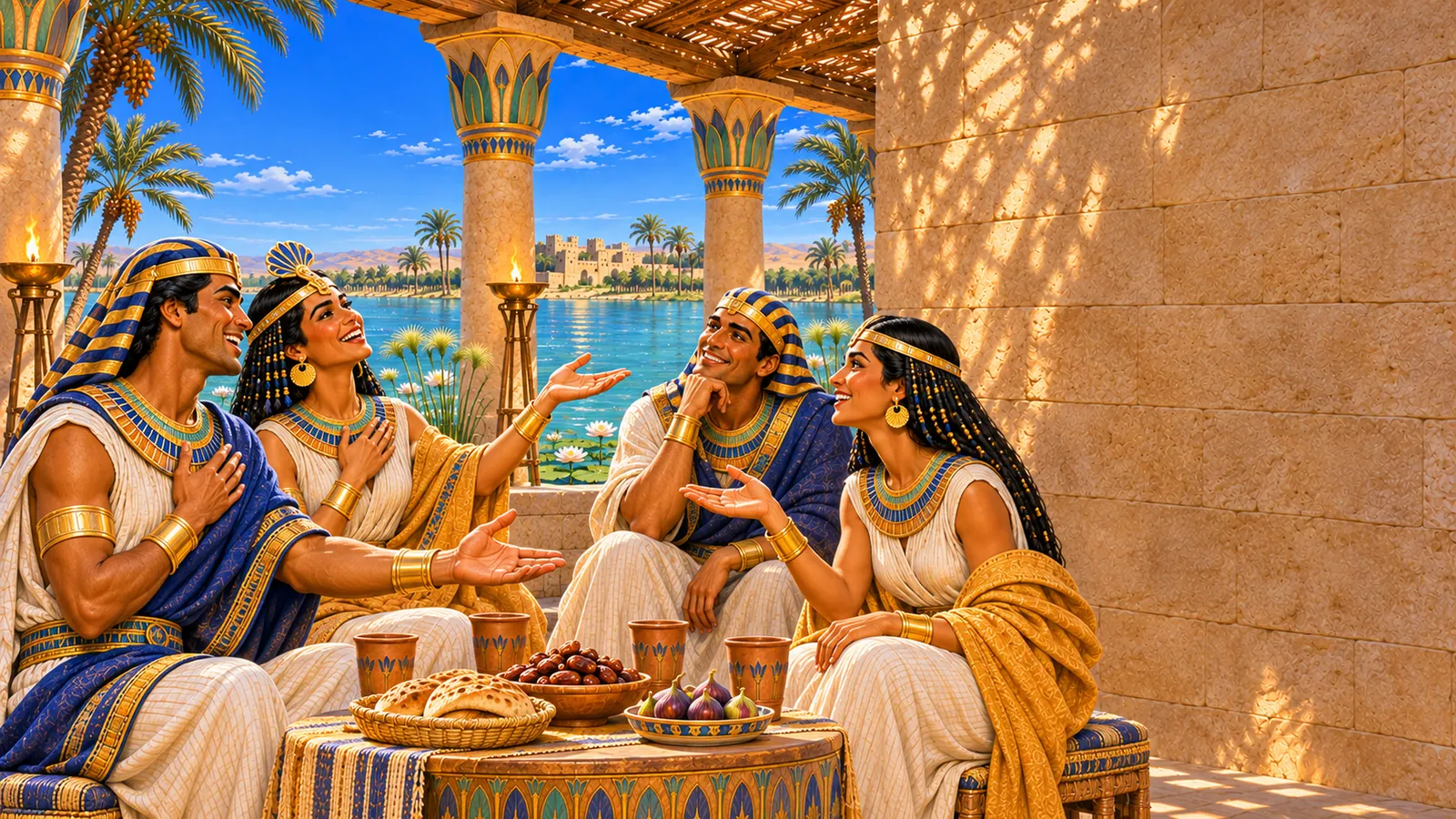
Nach dieser Erklärung drückte der Gruß einen Wunsch aus. Die Gäste hofften, dass ihnen das, was sie nun miteinander teilten, Glück und Freude bringen würde.
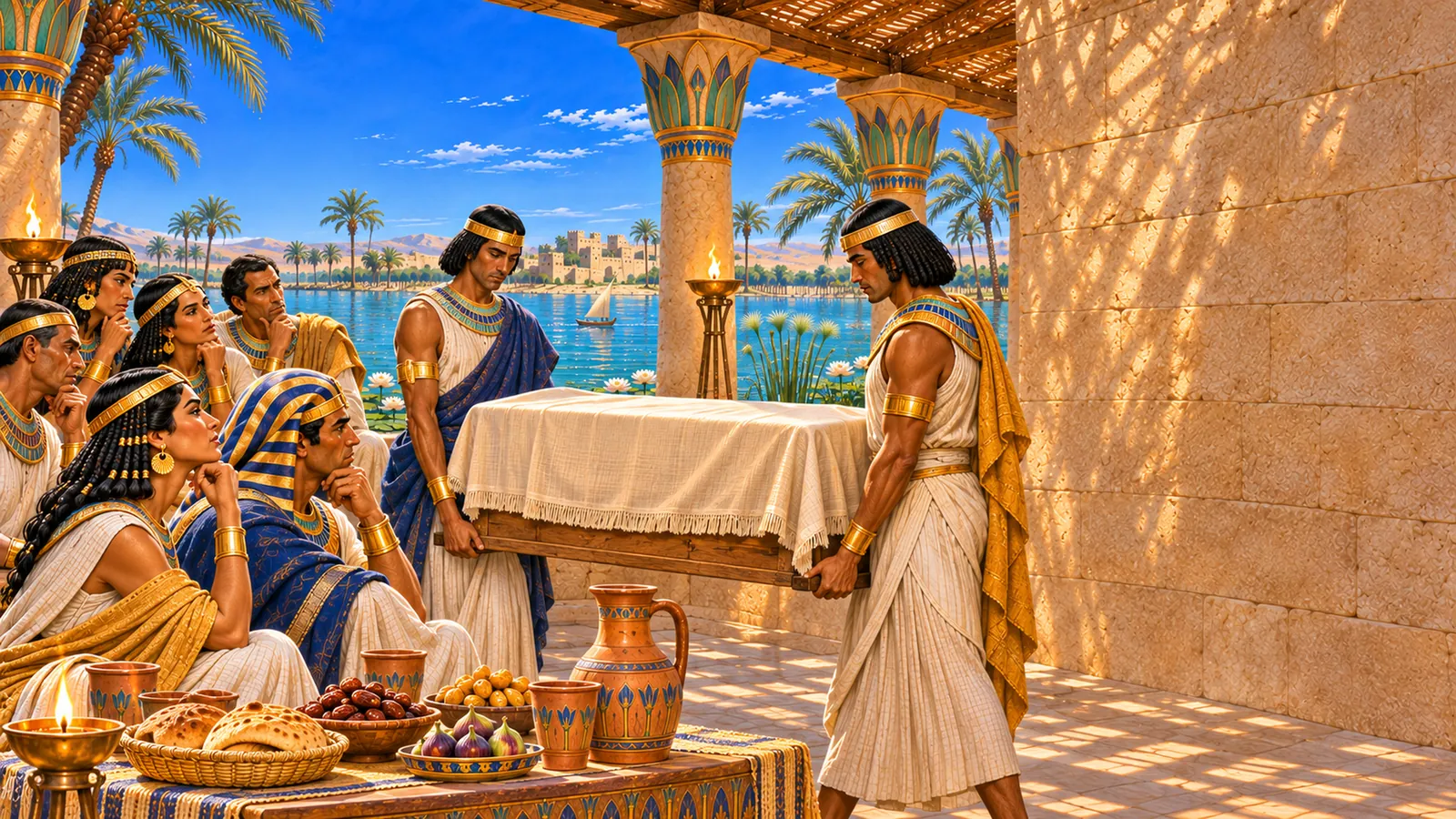
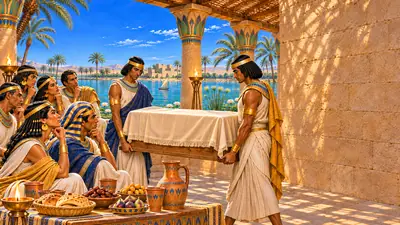
Plutarch erzählt auch von einem menschlichen Skelett, das bei einem Gastmahl in einem Kasten herumgetragen und allen Gästen gezeigt wurde.
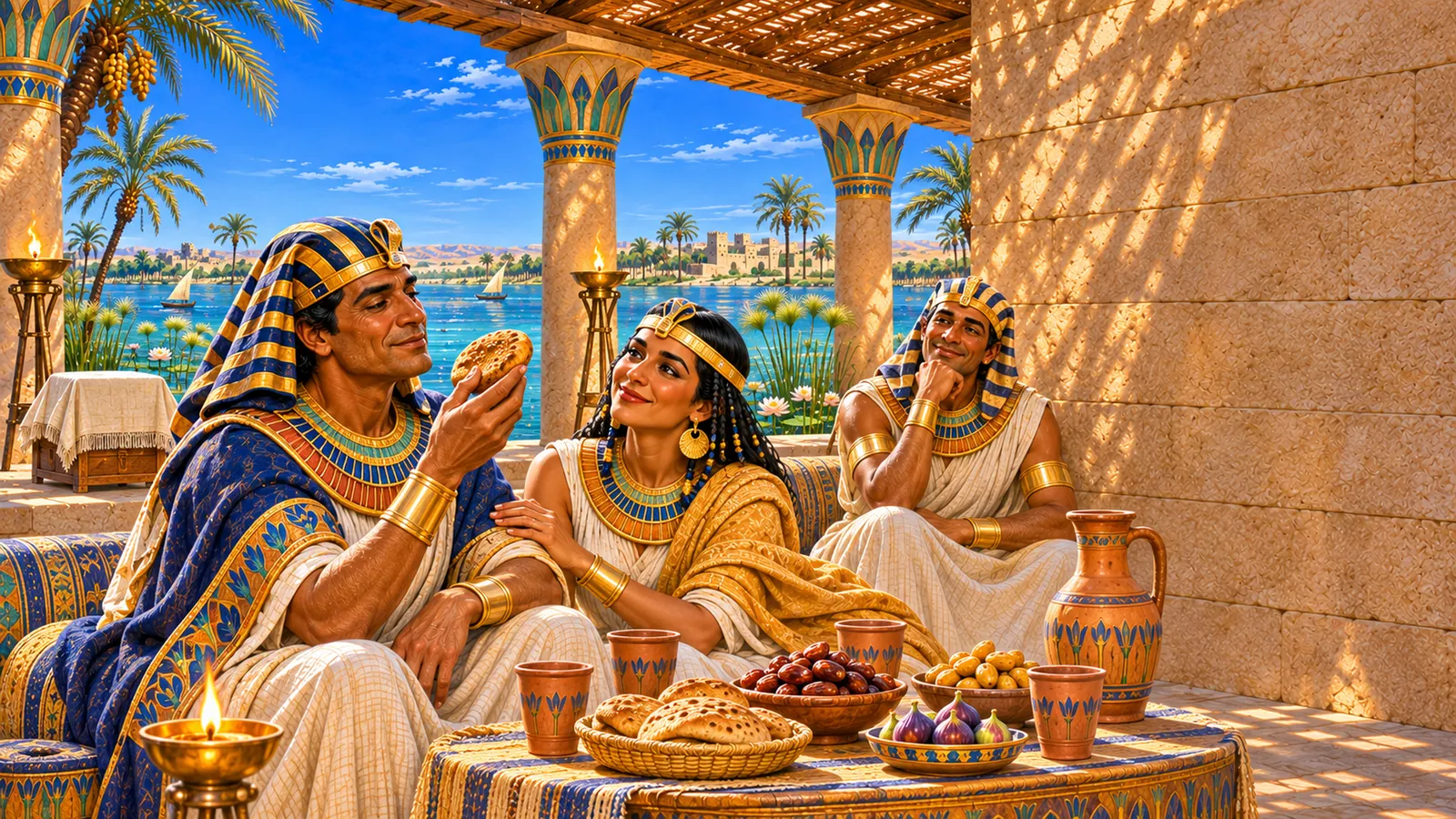
Manche verbanden diesen Brauch mit dem Unglück des Osiris. Andere sagten, er erinnere die Gäste daran, dass sie sterblich seien, und rege sie an, die guten Dinge vor ihnen zu genießen.
VERBORGEN
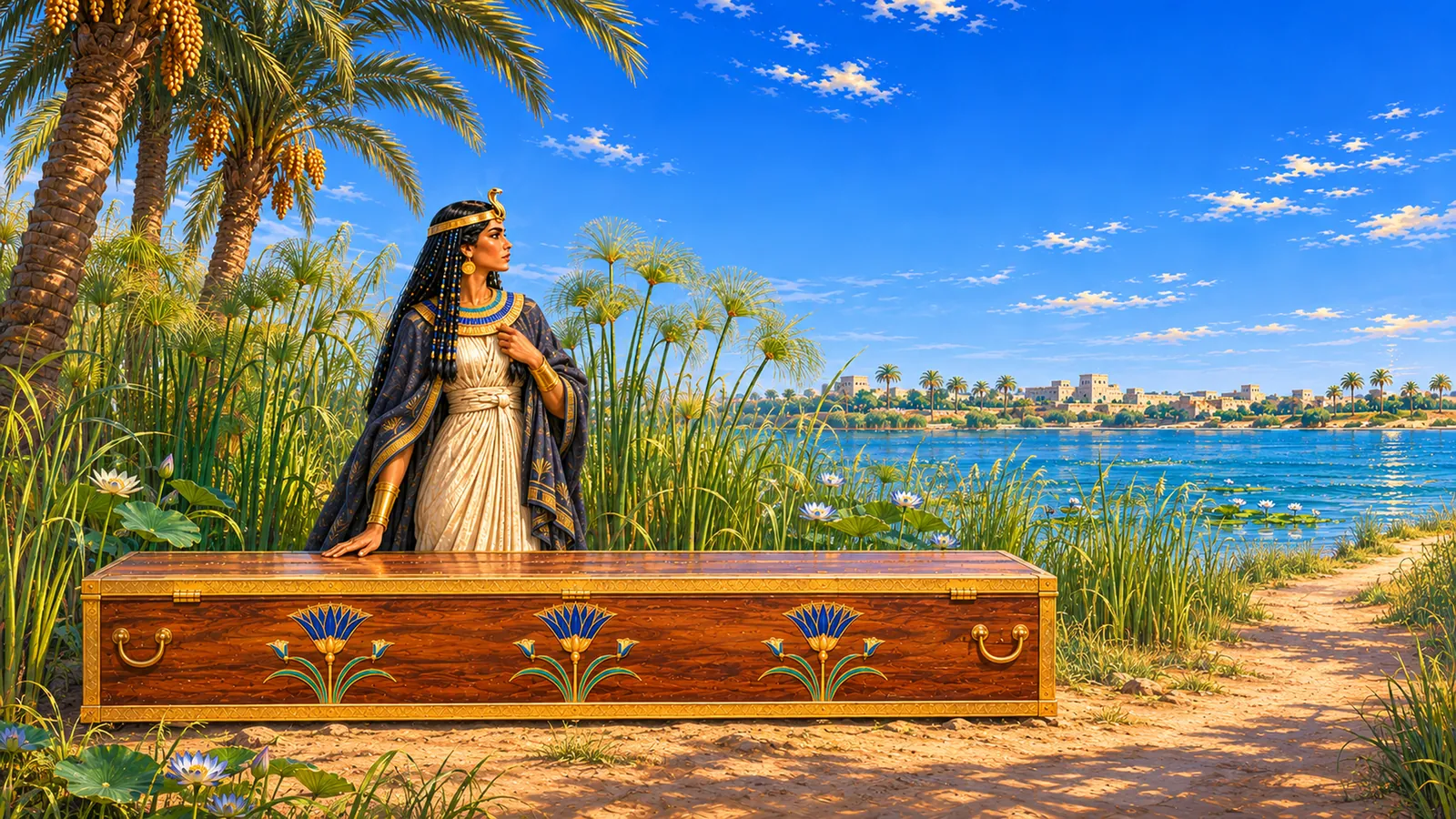
Die Erzählung kehrt zur Truhe zurück. Isis stellt sie an einem selten besuchten Ort ab, weil sie ihren Sohn Horus besuchen will, der in Buto aufwächst.
Ende von Kapitel 2

Alle Seiten









Quellen
Line positions in the page notes refer to the Project Gutenberg HTML of Budge’s edition. The source gives several names for the queen at Byblos.
Benutzte Editionen
- E. A. Wallis Budge, Egyptian Ideas of the Future Life, third edition, 1908, Chapter II
- Plutarch’s narrative in Samuel Squire’s translation as quoted in Chapter II
- Budge’s footnote on the name Byblos
- Budge’s footnote on Maneros
- Budge, Egyptian Ideas of the Future Life, Gutenberg ebook 11277
Hinweise zu dieser Nacherzählung
Plutarch in Samuel Squire’s 1744 translation as quoted by E. A. Wallis Budge, *Egyptian Ideas of the Future Life*, third edition (1908), chapter II. Numbers refer to physical lines in the locally cached Gutenberg HTML. The title pages are 1, “The Coast,” and 8, “The Report.” Stings are on pages 3 and 8.
The text spells the place Byblos.
Page 15 (Squire 1744 in Budge 1908, chapter II, HTML 1301–1303). After getting to know the visitor, the queen appoints her as nurse to one of her sons. The passage leaves the nursed son unnamed.
Page 16 (1303–1306). Squire calls the king at Byblos Meloarthus. Astarte, Saosis and Nemanoun are given as names of the queen. The text pairs Nemanoun with the Greek name Athenais. Byblos is the story’s place name. Budge’s footnote 51 locates it in the papyrus swamps of the Egyptian Delta. The location remains uncertain.
Page 17 (1308–1309). In Squire’s translation, Isis feeds the child by letting him suck her finger in place of ordinary nursing.
Pages 18–19 (1309–1311). The account says Isis puts the child into fire at night in an attempt to remove his mortal part. It also says she changes into a swallow, circles the pillar and laments her fate.
Pages 20–21 (1312–1315). The queen watches and sees the child in the fire. She cries out. The myth says her cry deprives him of the immortality he would otherwise have received.
Pages 22–23 (1315–1317). Isis makes her identity known and asks to be given the pillar that supports the roof.
Page 24 (1317–1318). Isis takes the pillar down, opens it and removes what Squire calls “what she wanted.” In 1285–1291 the trunk enclosed the chest before it was made into a pillar. The chest is named again in the lament at 1322–1324.
Page 25 (1318–1320). Isis wraps the remaining wood in fine linen, applies perfumed oil to it and returns it to the king and queen.
Page 26 (1320–1322). The old account says the wood was preserved and worshipped at a temple of Isis in Byblos “to this day.” The time reference belongs to the teller’s claim.
Pages 27–28 (1322–1325). Isis falls upon the chest and laments aloud. In this telling the king’s younger son hears her and dies of fright. This passage identifies him as the younger son. Earlier it calls the child entrusted to Isis one of the queen’s sons. The elder son appears in the following sentence, and later pages record other accounts of a boy’s death.
### Pages 29–42 · The return across the sea
Die antiken Verse hinter jeder Seite
- Page 1: Plutarch, Squire 1744 in Budge 1908, chapter II, HTML 1282–1285
- Page 2: Plutarch, Squire 1744 in Budge 1908, chapter II, HTML 1285–1287
Left is desaturated matte gray-green water and naturally soft shade, with no ripples, shore line or distinct objects in the box. - Page 3: Plutarch, Squire 1744 in Budge 1908, chapter II, HTML 1286–1288
- Page 4: Plutarch, Squire 1744 in Budge 1908, chapter II, HTML 1287–1288
- Page 5: Plutarch, Squire 1744 in Budge 1908, chapter II, HTML 1288–1289
- Page 6: Plutarch, Squire 1744 in Budge 1908, chapter II, HTML 1289–1291
- Page 7: Plutarch, Squire 1744 in Budge 1908, chapter II, HTML 1290–1291
- Page 8: Plutarch, Squire 1744 in Budge 1908, chapter II, HTML 1291–1293
- Page 9: Plutarch, Squire 1744 in Budge 1908, chapter II, HTML 1292–1294
- Page 10: Plutarch, Squire 1744 in Budge 1908, chapter II, HTML 1293–1295
- Page 11: Plutarch, Squire 1744 in Budge 1908, chapter II, HTML 1295–1296
- Page 12: Plutarch, Squire 1744 in Budge 1908, chapter II, HTML 1296–1298
- Page 13: Plutarch, Squire 1744 in Budge 1908, chapter II, HTML 1298–1301
- Page 14: Plutarch, Squire 1744 in Budge 1908, chapter II, HTML 1300–1302
- Page 15: Plutarch, Squire 1744 in Budge 1908, chapter II, HTML 1301–1303
- Page 16: Plutarch, Squire 1744 in Budge 1908, chapter II, HTML 1303–1306
- Page 17: Plutarch, Squire 1744 in Budge 1908, chapter II, HTML 1308–1309
- Page 18: Plutarch, Squire 1744 in Budge 1908, chapter II, HTML 1309–1310
- Page 19: Plutarch, Squire 1744 in Budge 1908, chapter II, HTML 1310–1311
- Page 20: Plutarch, Squire 1744 in Budge 1908, chapter II, HTML 1312–1313
- Page 21: Plutarch, Squire 1744 in Budge 1908, chapter II, HTML 1313–1315
- Page 22: Plutarch, Squire 1744 in Budge 1908, chapter II, HTML 1315–1316
- Page 23: Plutarch, Squire 1744 in Budge 1908, chapter II, HTML 1316–1317
- Page 24: Plutarch, Squire 1744 in Budge 1908, chapter II, HTML 1317–1318
- Page 25: Plutarch, Squire 1744 in Budge 1908, chapter II, HTML 1318–1320
- Page 26: Plutarch, Squire 1744 in Budge 1908, chapter II, HTML 1320–1322
At far lower right, show only the shallow opening of a low ordinary limestone recess and one matte dark wood fragment on a simple shelf. - Page 27: Plutarch, Squire 1744 in Budge 1908, chapter II, HTML 1322–1324
- Page 28: Plutarch, Squire 1744 in Budge 1908, chapter II, HTML 1324–1325
- Page 29: Plutarch, Squire 1744 as printed by Budge 1908, Chapter II, HTML lines 1325–1326
- Page 30: Plutarch, Squire 1744 as printed by Budge 1908, Chapter II, HTML lines 1326–1328
- Page 31: Plutarch, Squire 1744 as printed by Budge 1908, Chapter II, HTML lines 1330–1332
- Page 32: Plutarch, Squire 1744 as printed by Budge 1908, Chapter II, HTML lines 1331–1333
- Page 33: Plutarch, Squire 1744 as printed by Budge 1908, Chapter II, HTML lines 1333–1336
Right side solid near wall in quiet slate shade, no water line or object in it. - Page 34: Plutarch, Squire 1744 as printed by Budge 1908, Chapter II, HTML lines 1336–1339
- Page 35: Plutarch, Squire 1744 as printed by Budge 1908, Chapter II, HTML lines 1339–1341
- Page 36: Plutarch, Squire 1744 as printed by Budge 1908, Chapter II, HTML lines 1342–1344
- Page 37: Plutarch, Squire 1744 as printed by Budge 1908, Chapter II, HTML lines 1344–1346
- Page 38: Plutarch, Squire 1744 as printed by Budge 1908, Chapter II, HTML lines 1346–1349
- Page 39: Plutarch, Squire 1744 as printed by Budge 1908, Chapter II, HTML lines 1349–1352
- Page 40: Plutarch, Squire 1744 as printed by Budge 1908, Chapter II, HTML lines 1352–1355
- Page 41: Plutarch, Squire 1744 as printed by Budge 1908, Chapter II, HTML lines 1353–1359
- Page 42: Plutarch, Squire 1744 as printed by Budge 1908, Chapter II, HTML lines 1359–1364
Illustrationen von IL Archive mit KI-Werkzeugen; der Text folgt den antiken Quellen (siehe die Quellen am Ende jedes Kapitels).