Die Klage um Ur Kapitel 1
Die Bitte vor der Versammlung
Ningal spricht über Ur in zwei von Thorkild Jacobsen vorgestellten Passagen, denen H. A. Groenewegen Frankfort ihre englische Versform gab. Ihre Furcht vor dem Sturm führt zu einer Bitte vor der Götterversammlung. Die ausgewählten Passagen enden mit dem Beschluss, Ur zu zerstören und seine Bewohner zu töten.
QuellenBlättern Sie mit den Pfeilen, den Pfeiltasten oder durch Wischen.
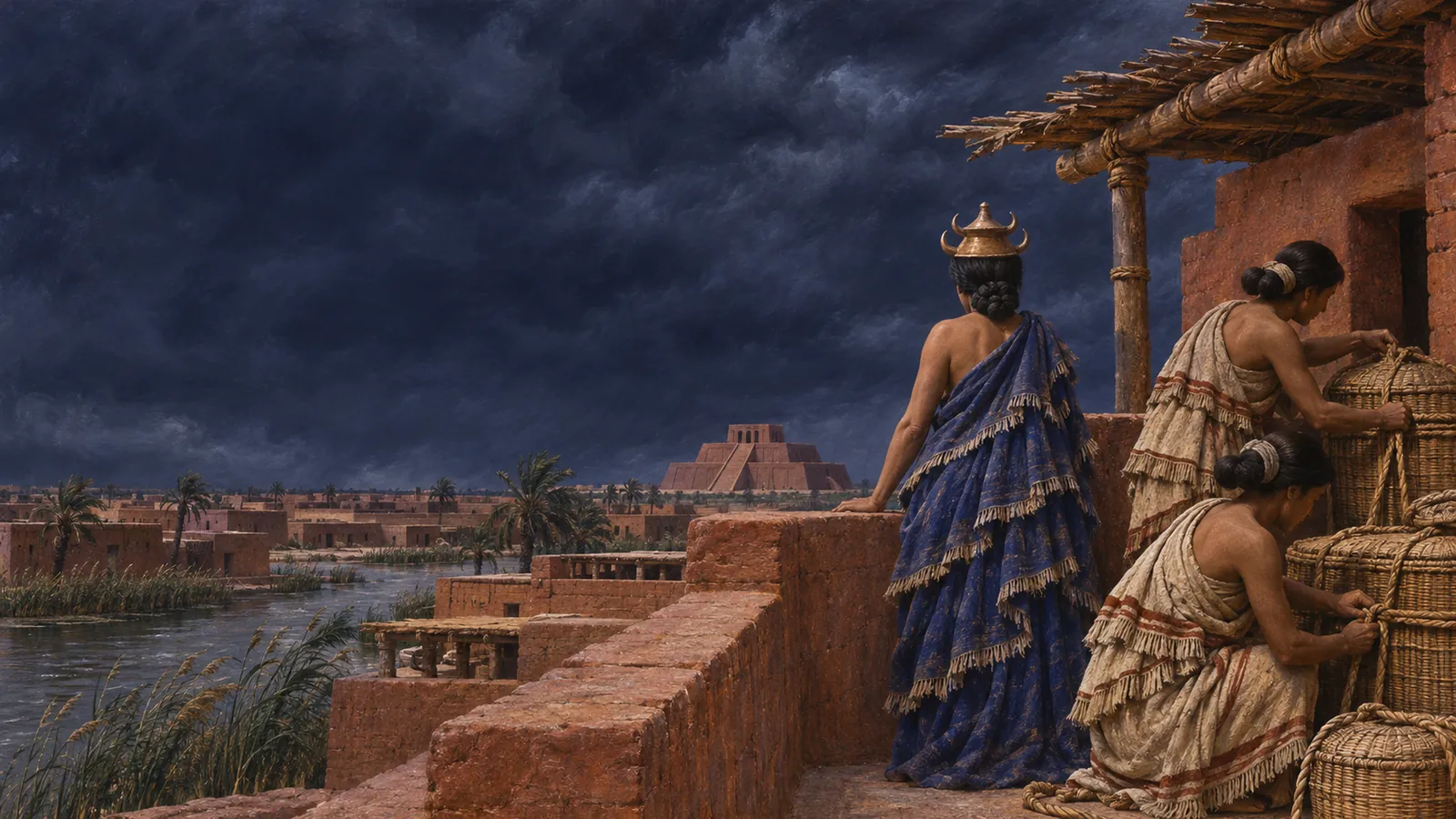
NINGAL
Thorkild Jacobsen stellt zwei ausgewählte Passagen vor, in denen Ningal, die Göttin von Ur, über ihre Stadt spricht. H.A. Groenewegen Frankfort gab den Übersetzungen ihre englische Versform.
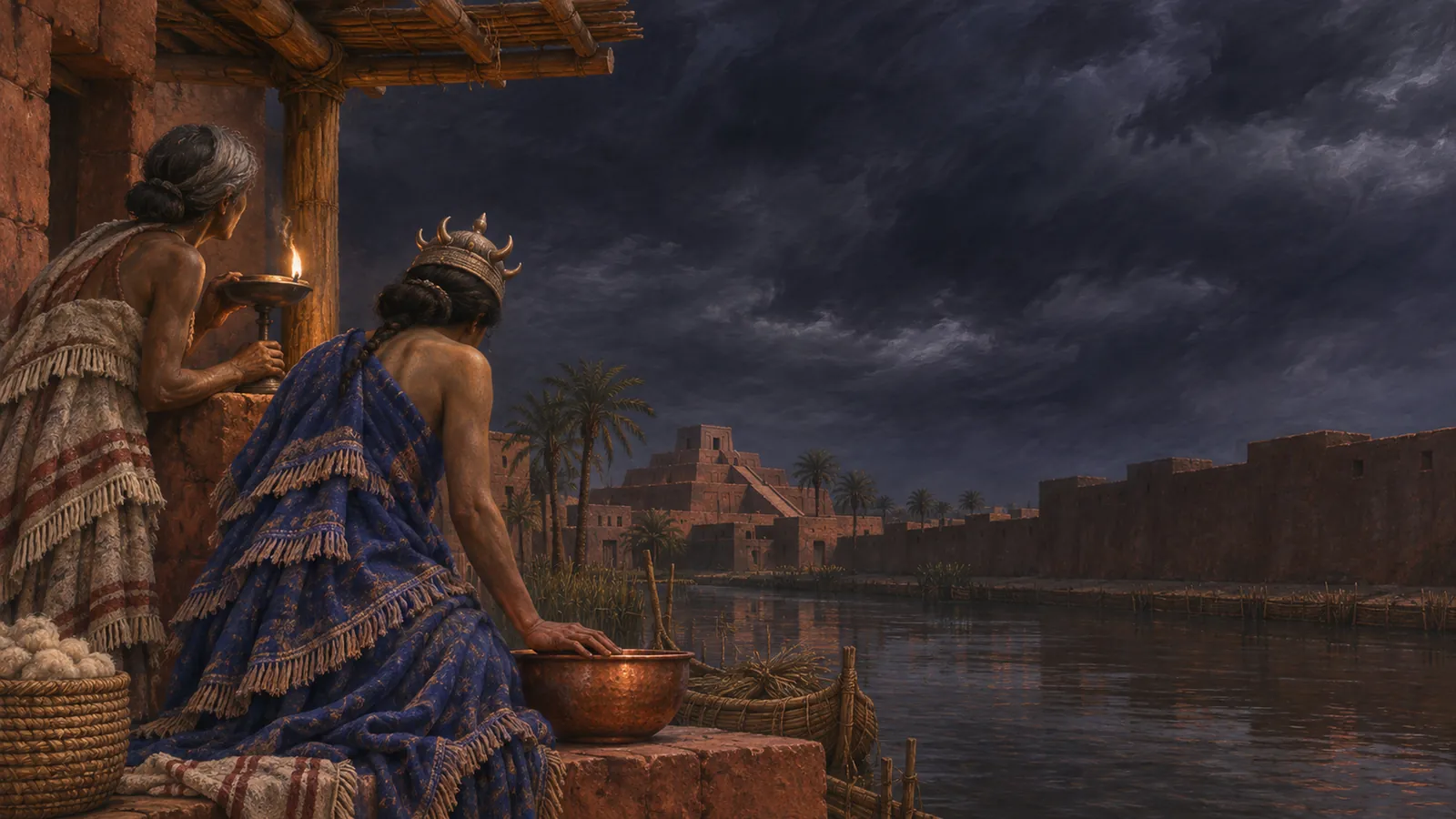
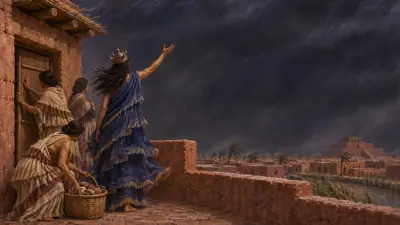
Ningal trauert über einen Sturmtag, der ihr als Schicksal auferlegt ist. Sie spricht als Frau und beschreibt den Tag als eine Last voller Tränen.
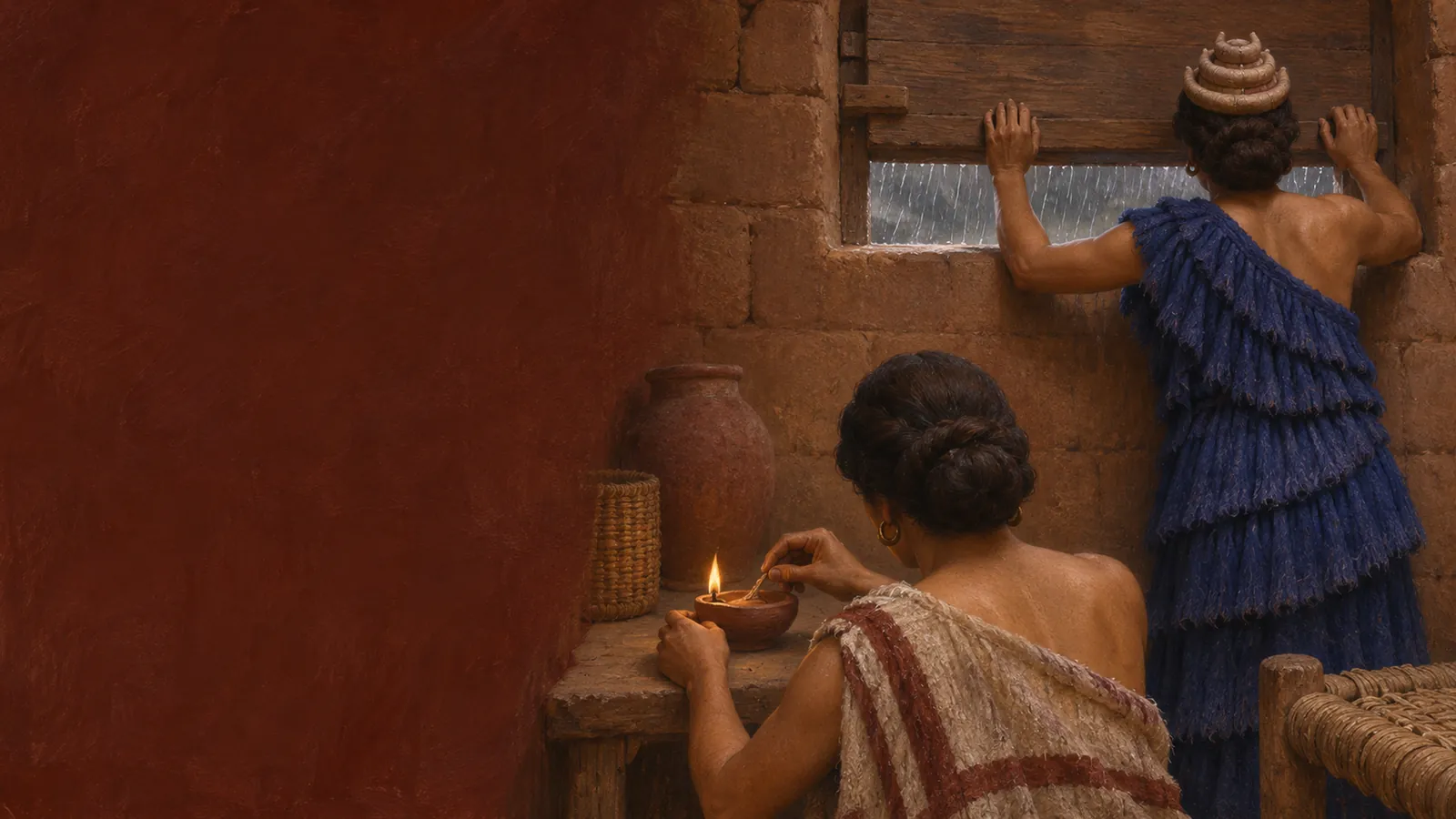
Ihre Stimme kehrt erneut zu dem Sturmtag zurück. Ningal sagt, dass sie vor ihm zittert, und nennt ihn grausam.
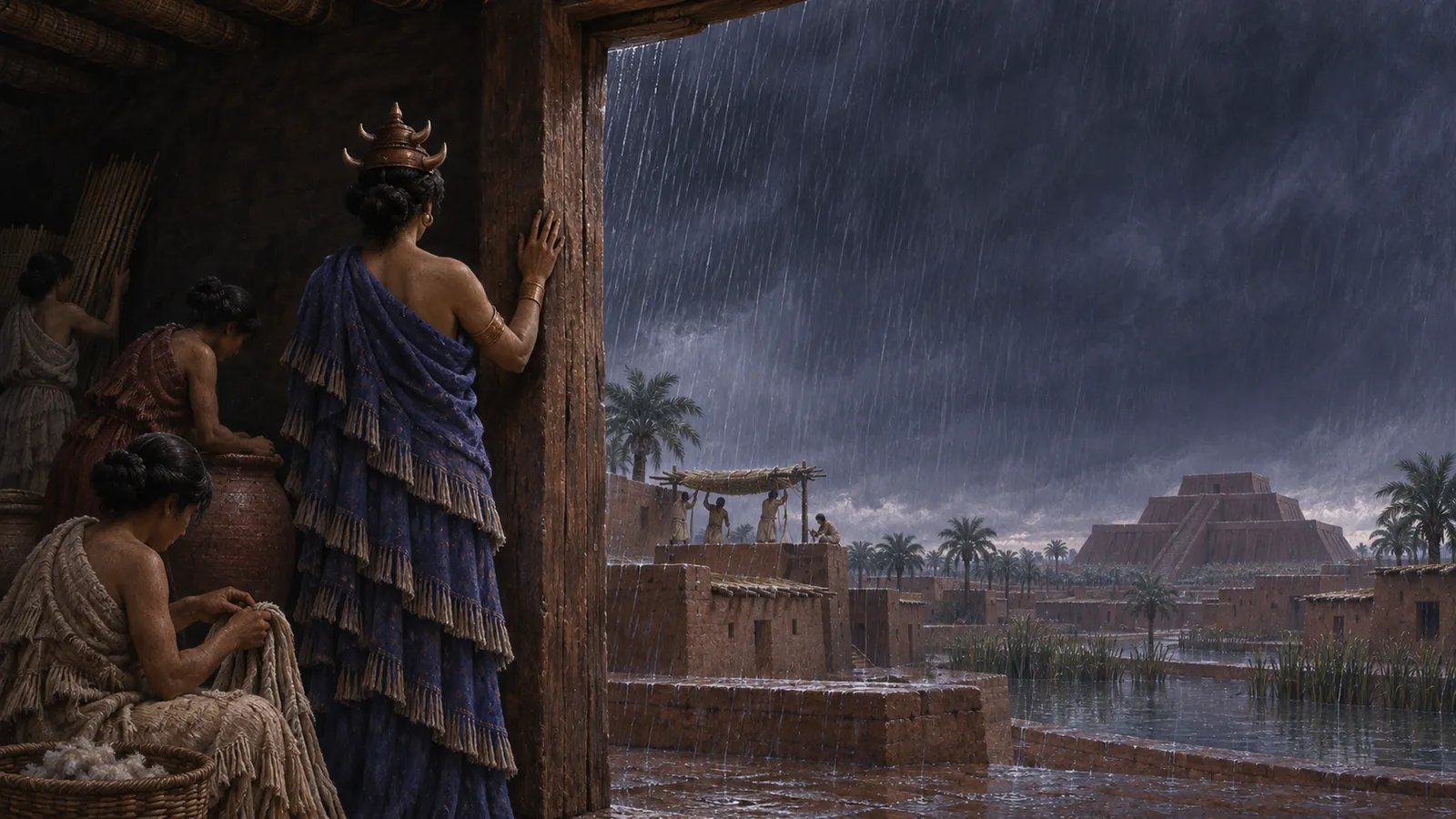
Ningal sagt, sie könne dem nicht entkommen, was ihr für diesen Sturmtag bestimmt worden ist.
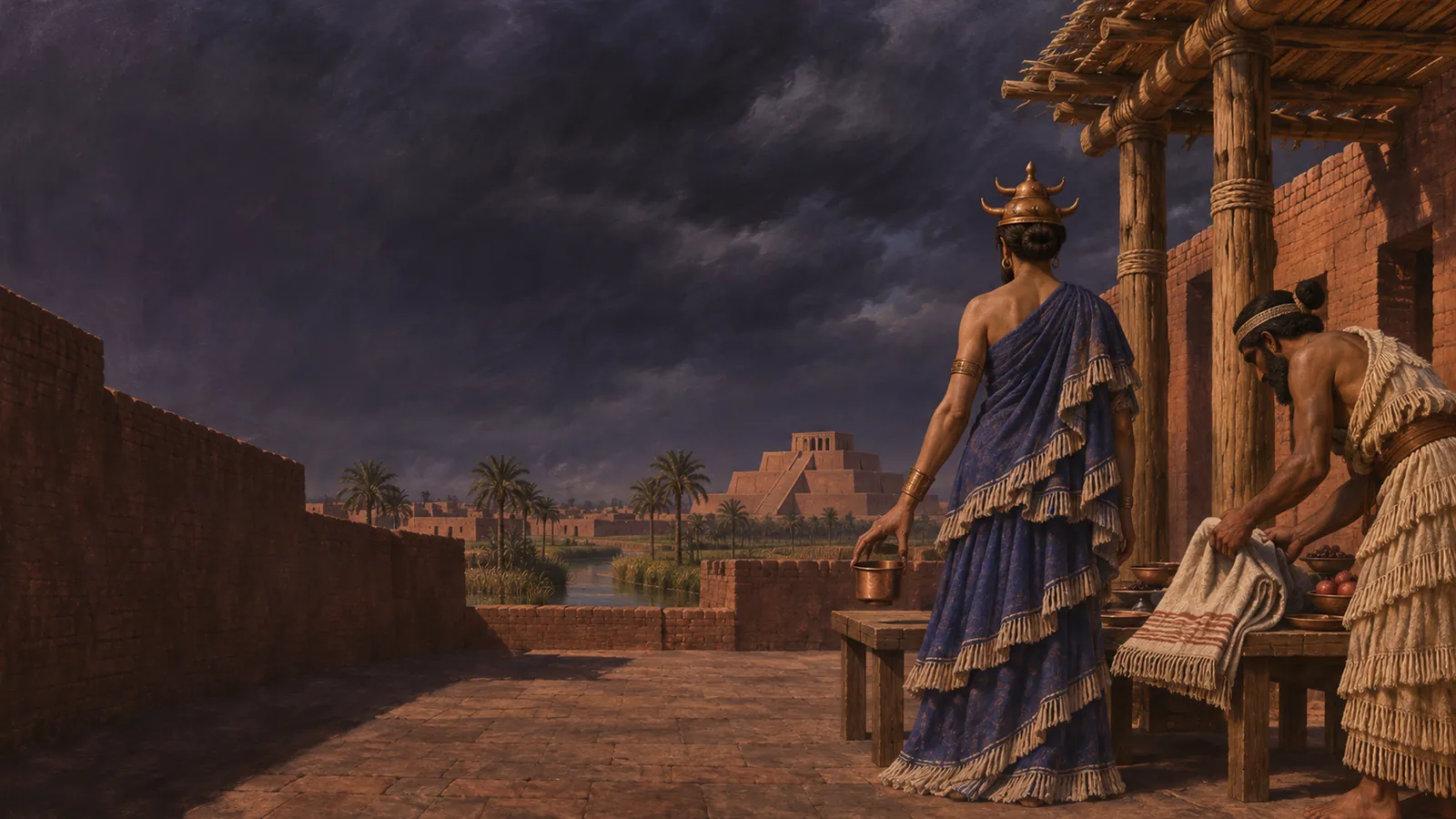
Ningal sagt, sie sehe plötzlich keine glücklichen Tage mehr in ihrer Herrschaft. Ihre Klage wiederholt diesen Gedanken.
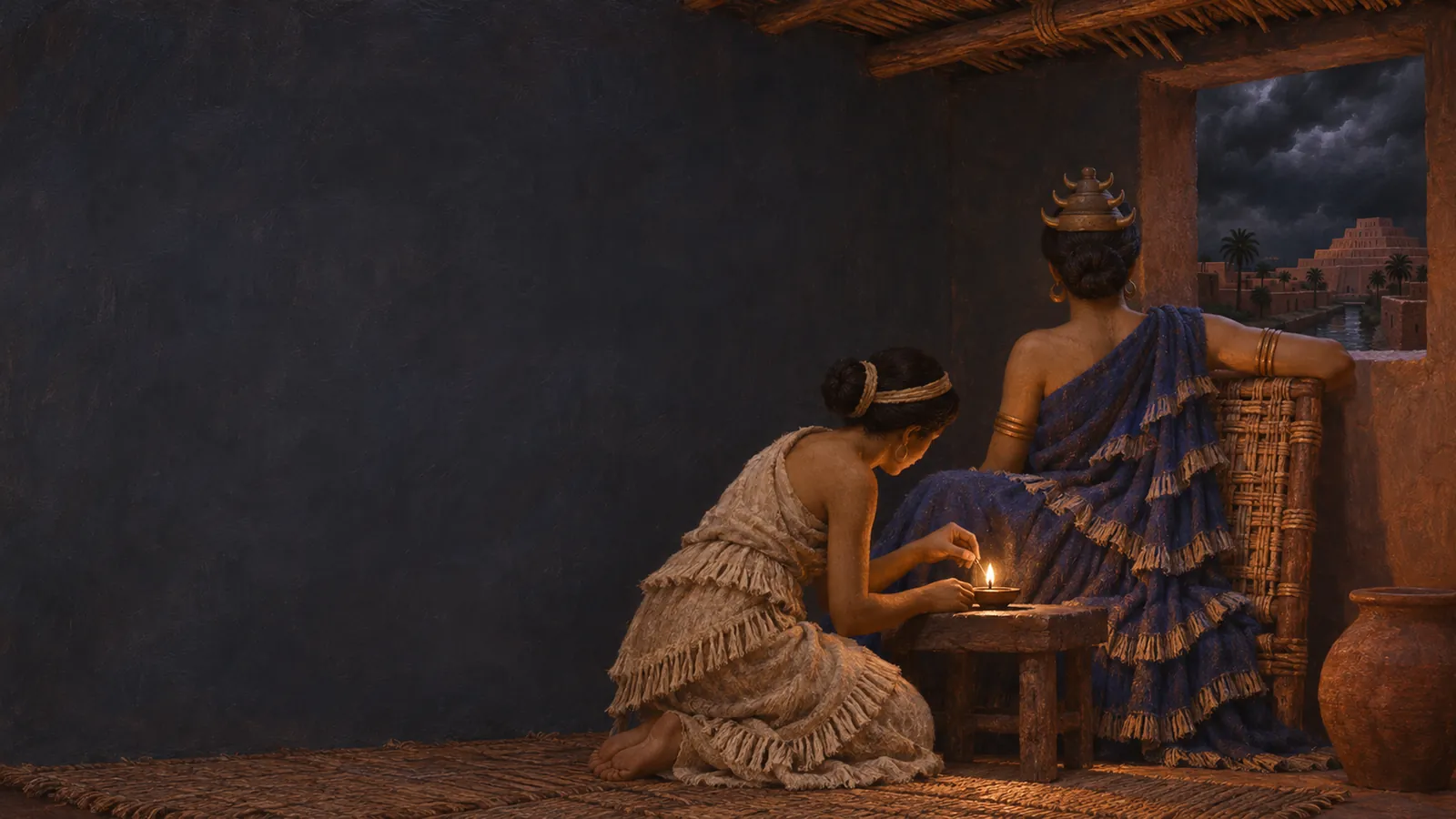
DIE NACHT DES WEINENS
Ningal zittert vor der Nacht bitteren Weinens, die sie erwartet. Sie sagt, sie könne dem nicht entkommen, was diese Nacht für sie bereithält.
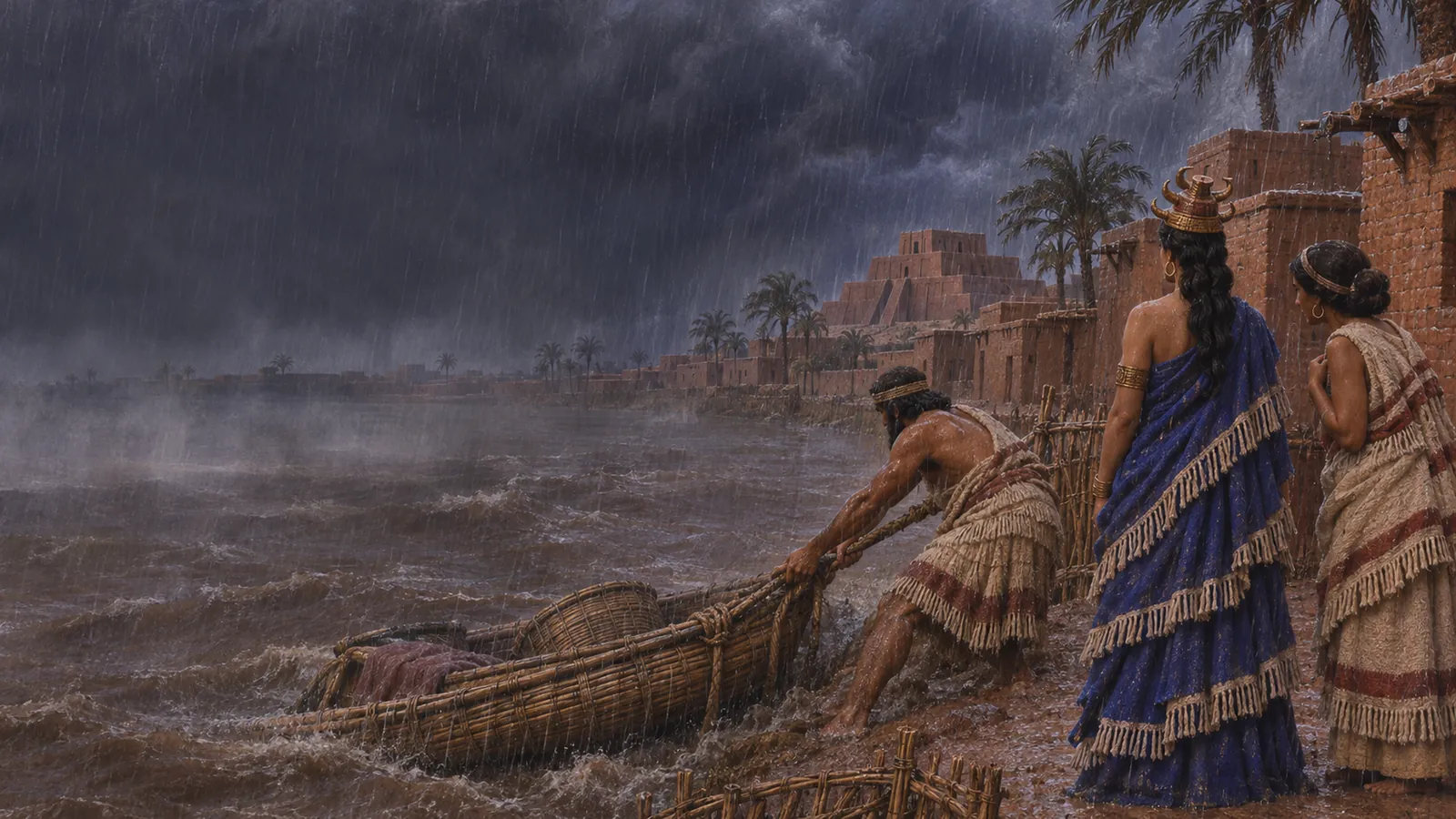
Ningal sagt, die Furcht laste schwer auf ihr. Sie fürchtet die Verwüstungen des Sturms und vergleicht seine Zerstörung mit einer Flut.
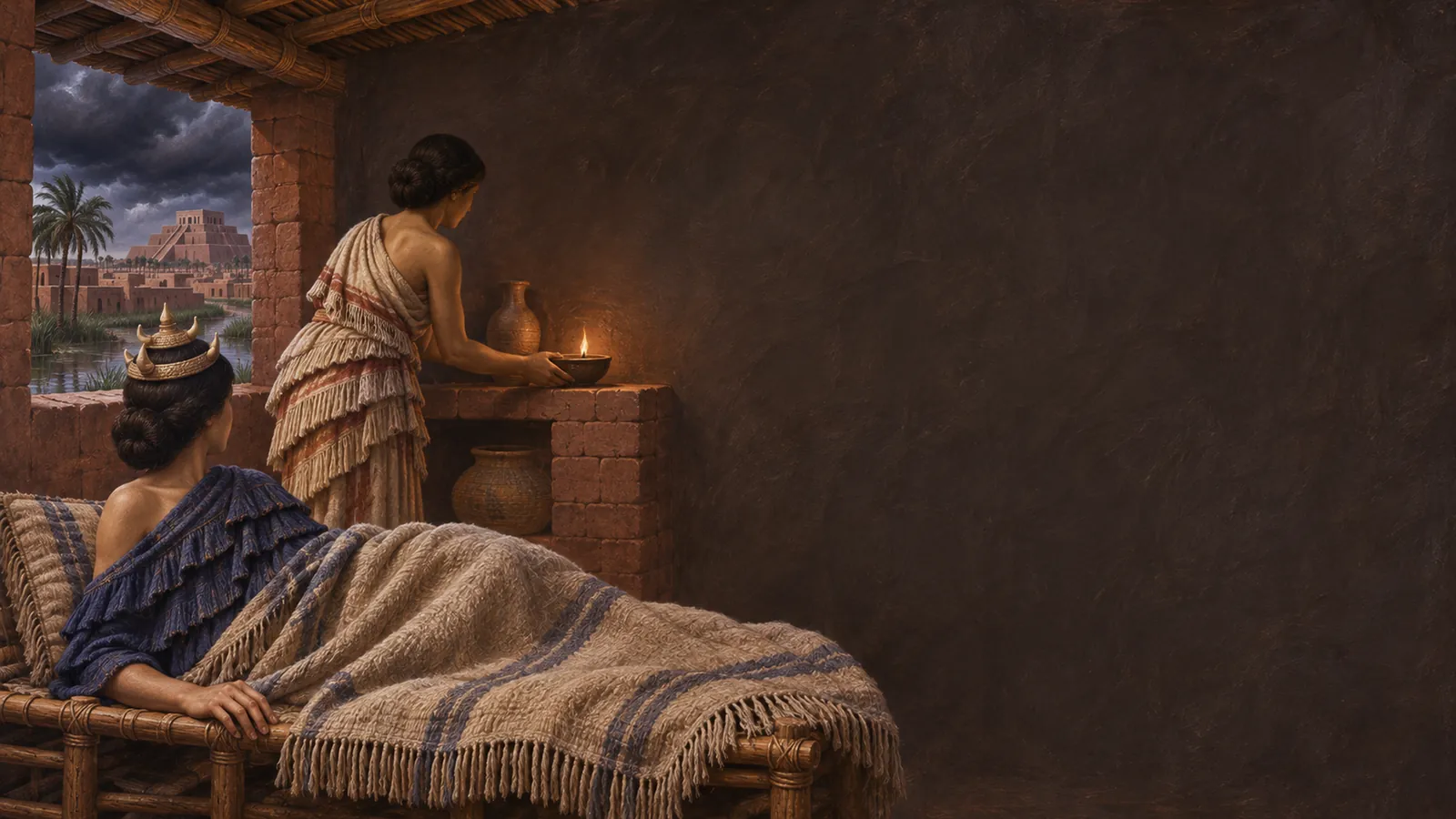
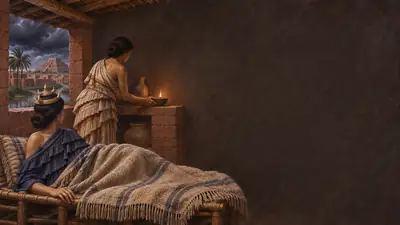
Ningal spricht davon, nachts auf ihrem Lager zu liegen. Sie sagt, dass ihr dort keine Träume gewährt werden.
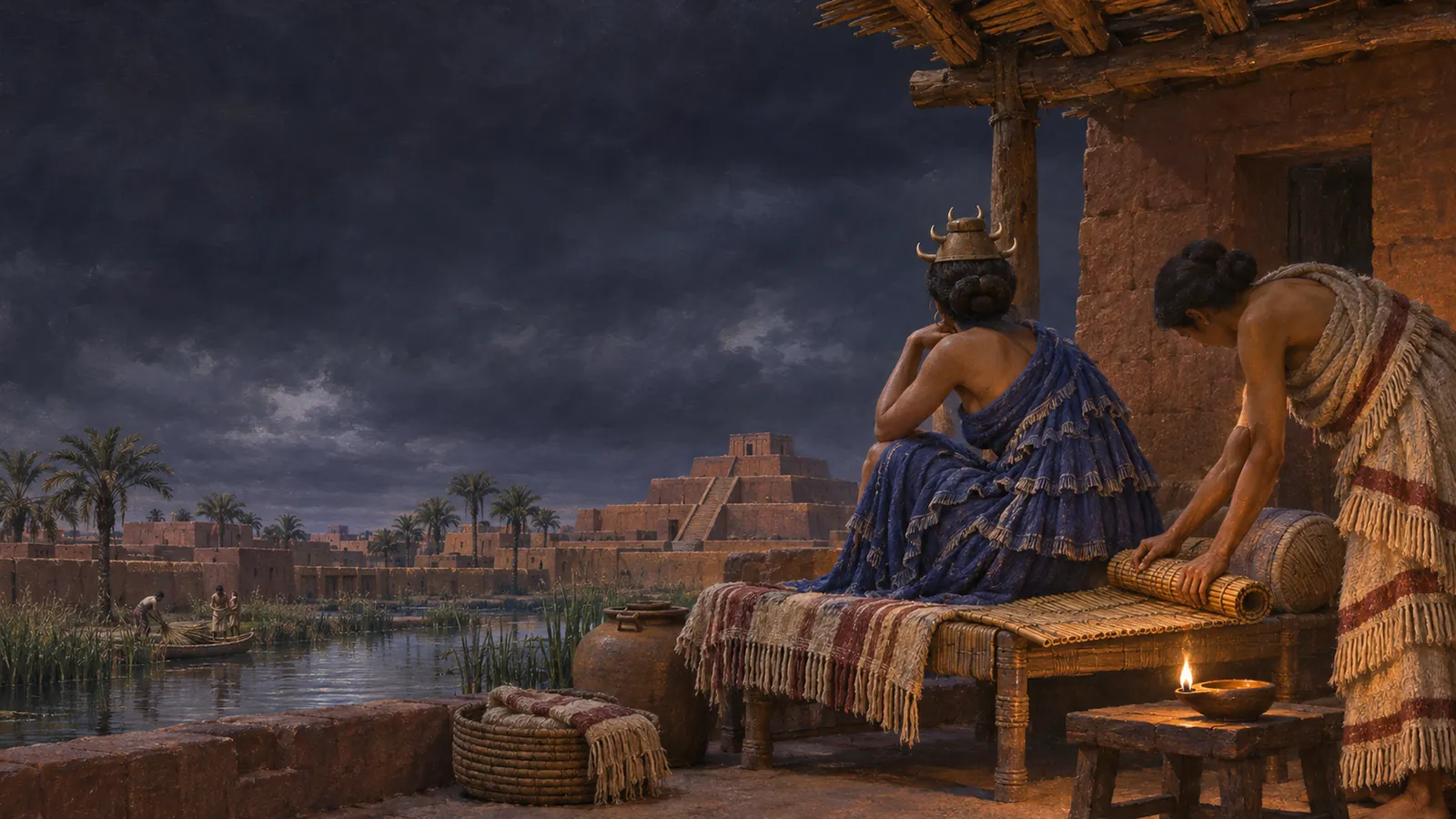
Ningal kehrt in ihrer Klage zu ihrem Lager zurück. Sie sagt, dass ihr dort auch kein Vergessen gewährt werde.
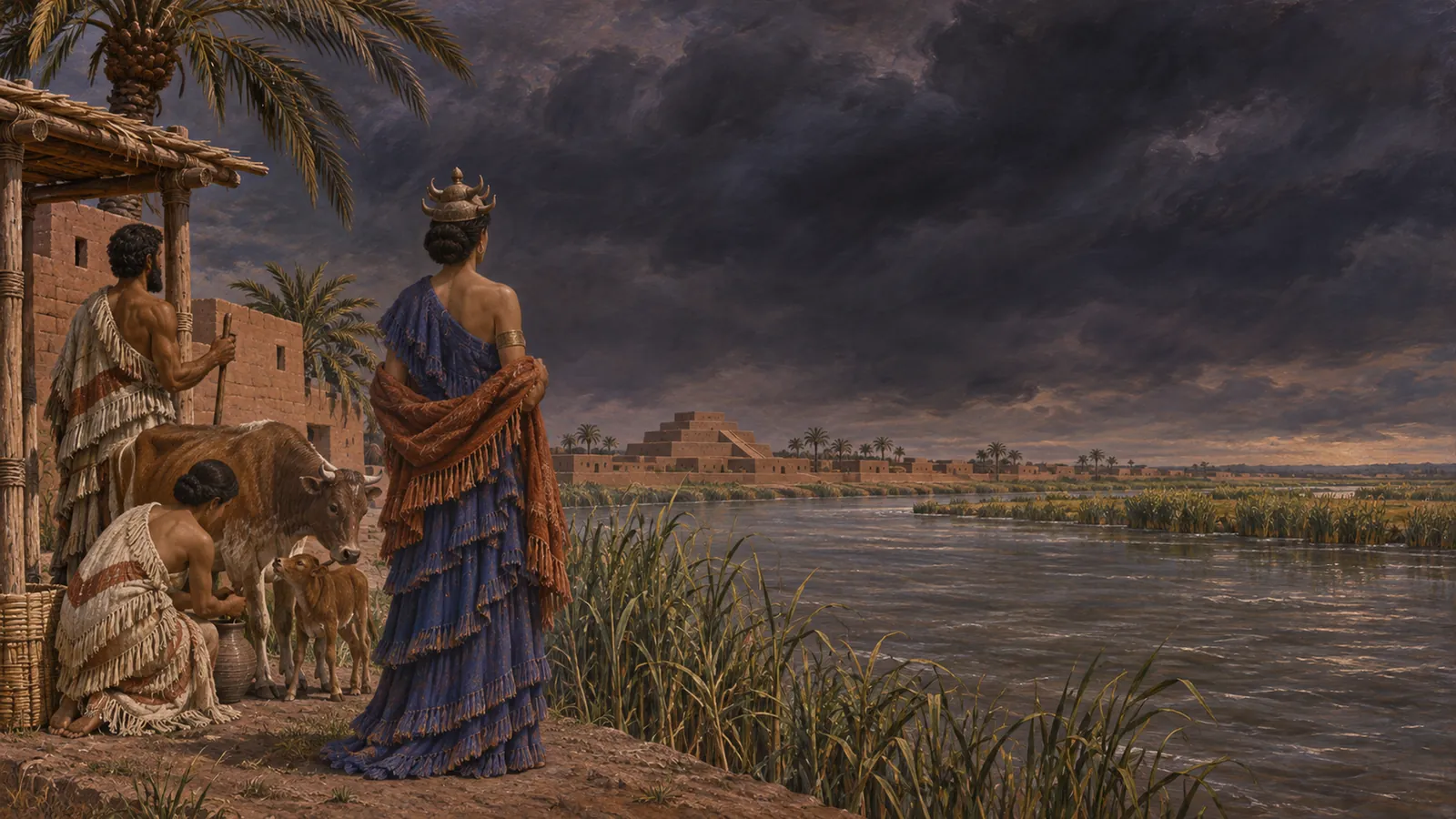
Ningal sagt, ihrem Land sei bitteres Weinen bestimmt. Selbst wenn sie die ganze Erde wie eine Kuh auf der Suche nach ihrem Kalb durchsuchte, könnte sie ihr Volk nicht zurückbringen.
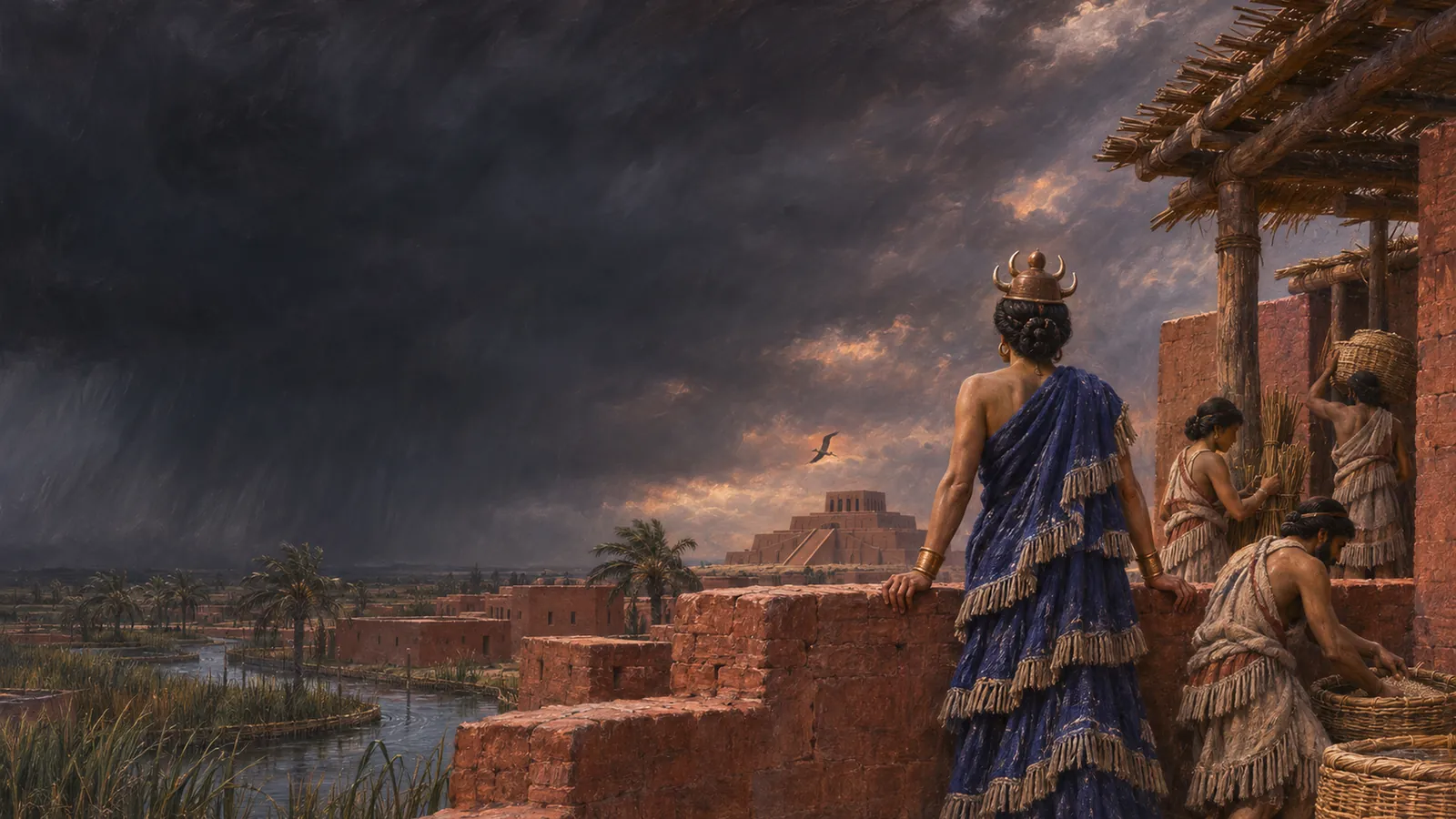
Ningal sagt, bitterer Kummer sei ihrer Stadt bestimmt. Selbst wenn sie ihre Flügel ausbreitete und wie ein Vogel dorthin flöge, würde die Stadt bis auf ihre Grundmauern zerstört und Ur zugrunde gehen.
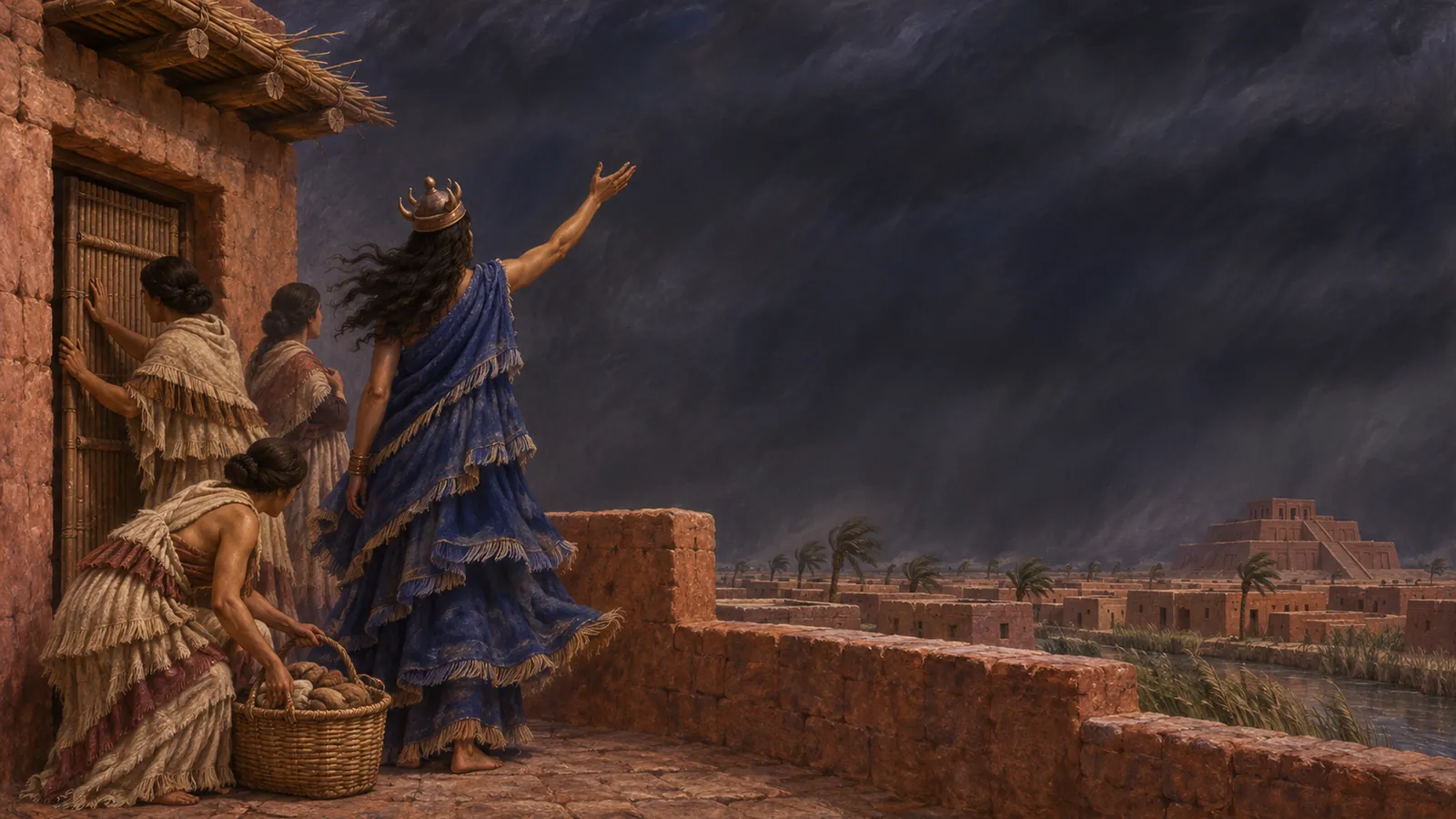
Ningal sagt, der Sturmtag habe seine Hand erhoben. Selbst wenn sie ihm zuriefe, er solle in seine Wüste zurückkehren, würde die Last des Sturms weiter auf ihr liegen.
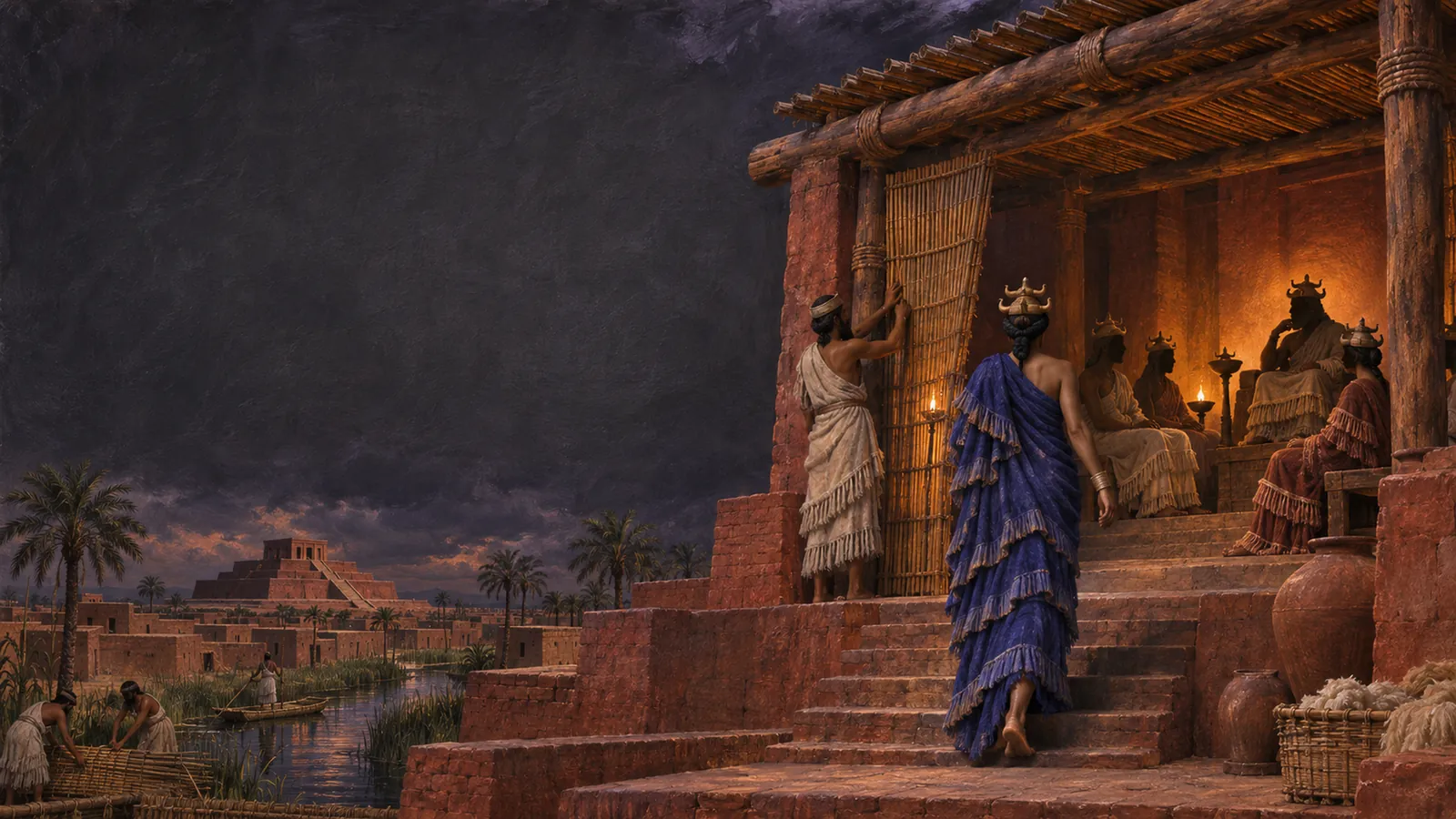
DIE VERSAMMLUNG
Jacobsens verbindende Zusammenfassung beschreibt Ningals erfolglose Bitten an Anu und Enlil, dann an die Versammlung. Seine Auswahl lässt zwischen den beiden zitierten Abschnitten die antiken Zeilen einhundertdreizehn bis einhunderteinundfünfzig aus.
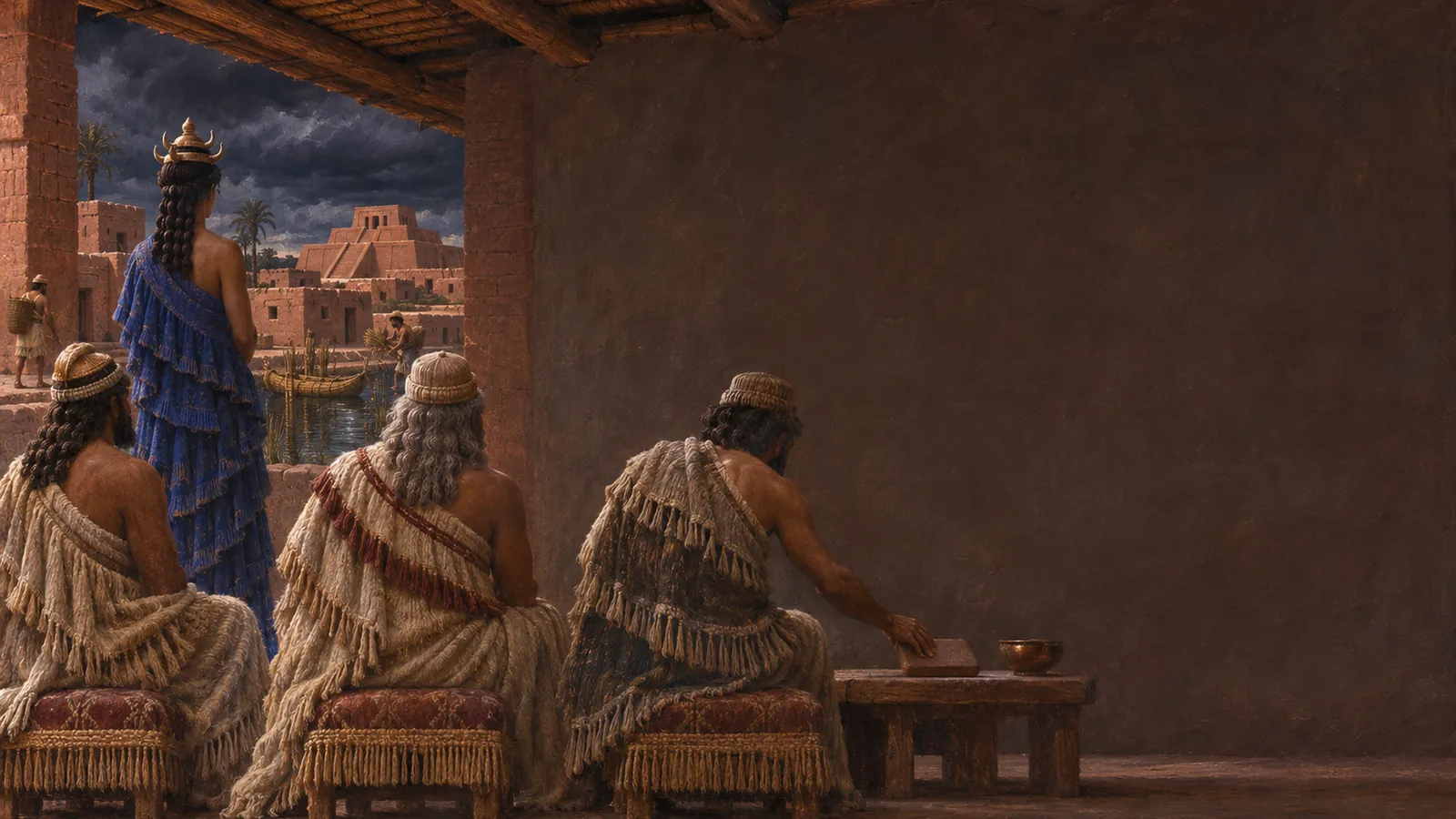
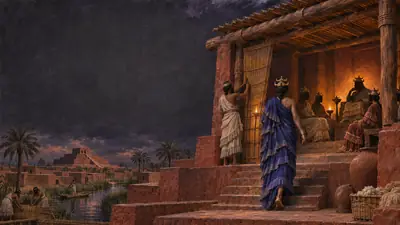
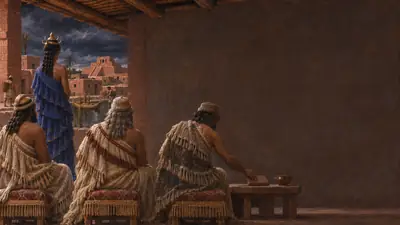
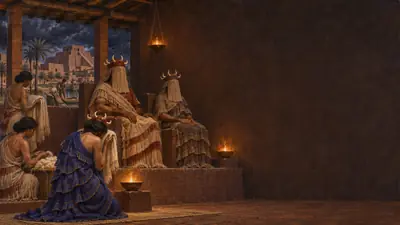
Ningal beschreibt die Versammlung, bevor sie sich erhebt, während die Anunnaki noch sitzen. Der englischen Fassung zufolge verpflichten sie sich, die Entscheidung aufrechtzuerhalten.
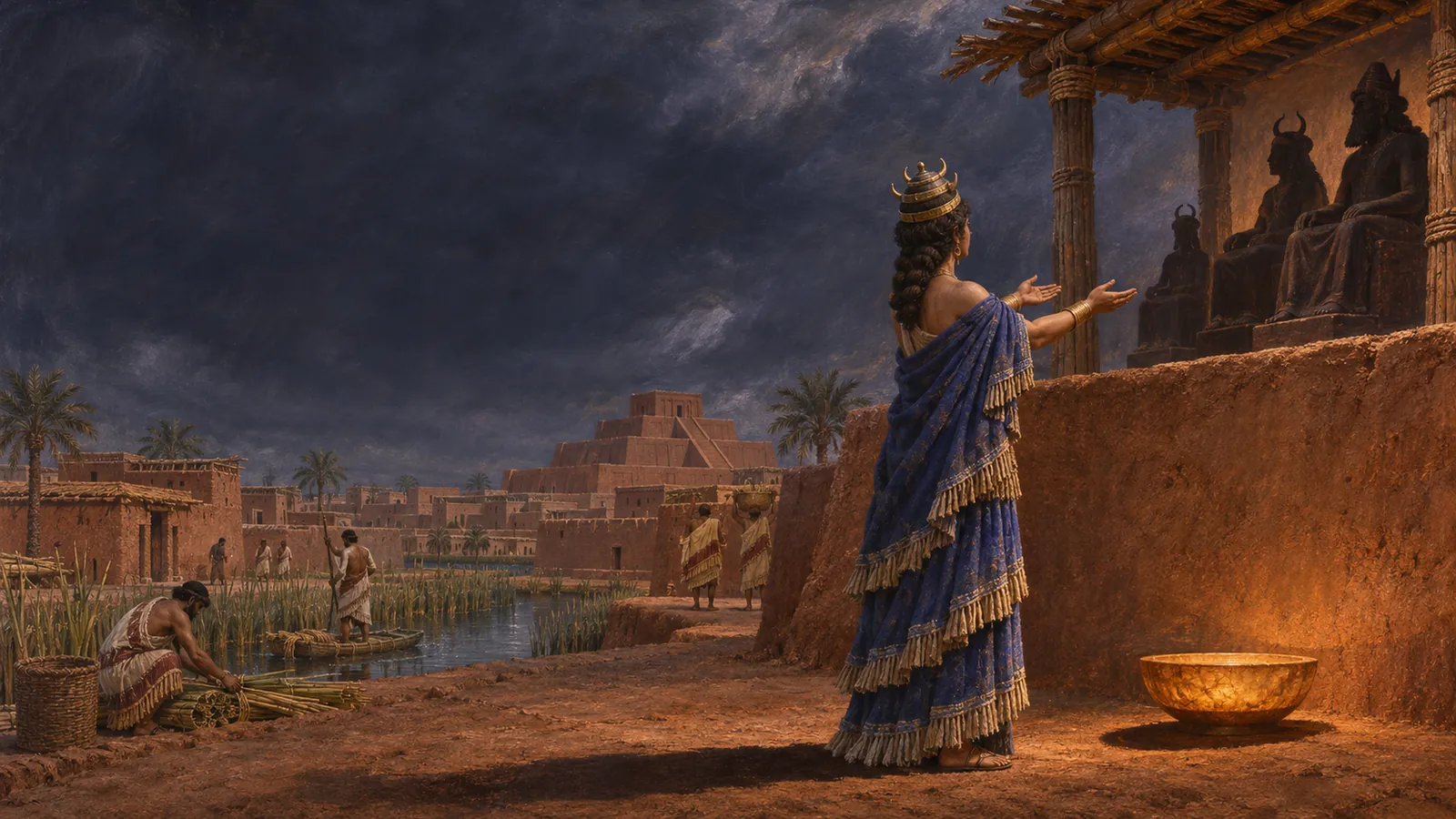
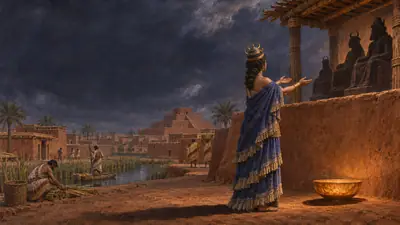
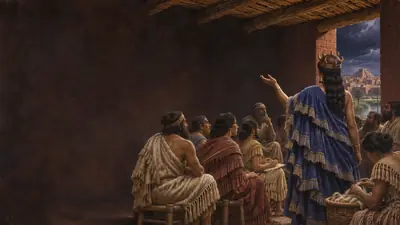
Ningal sagt, sie schleife vor der sitzenden Versammlung ihre Füße über den Boden und strecke bei ihrem Flehen die Arme aus.
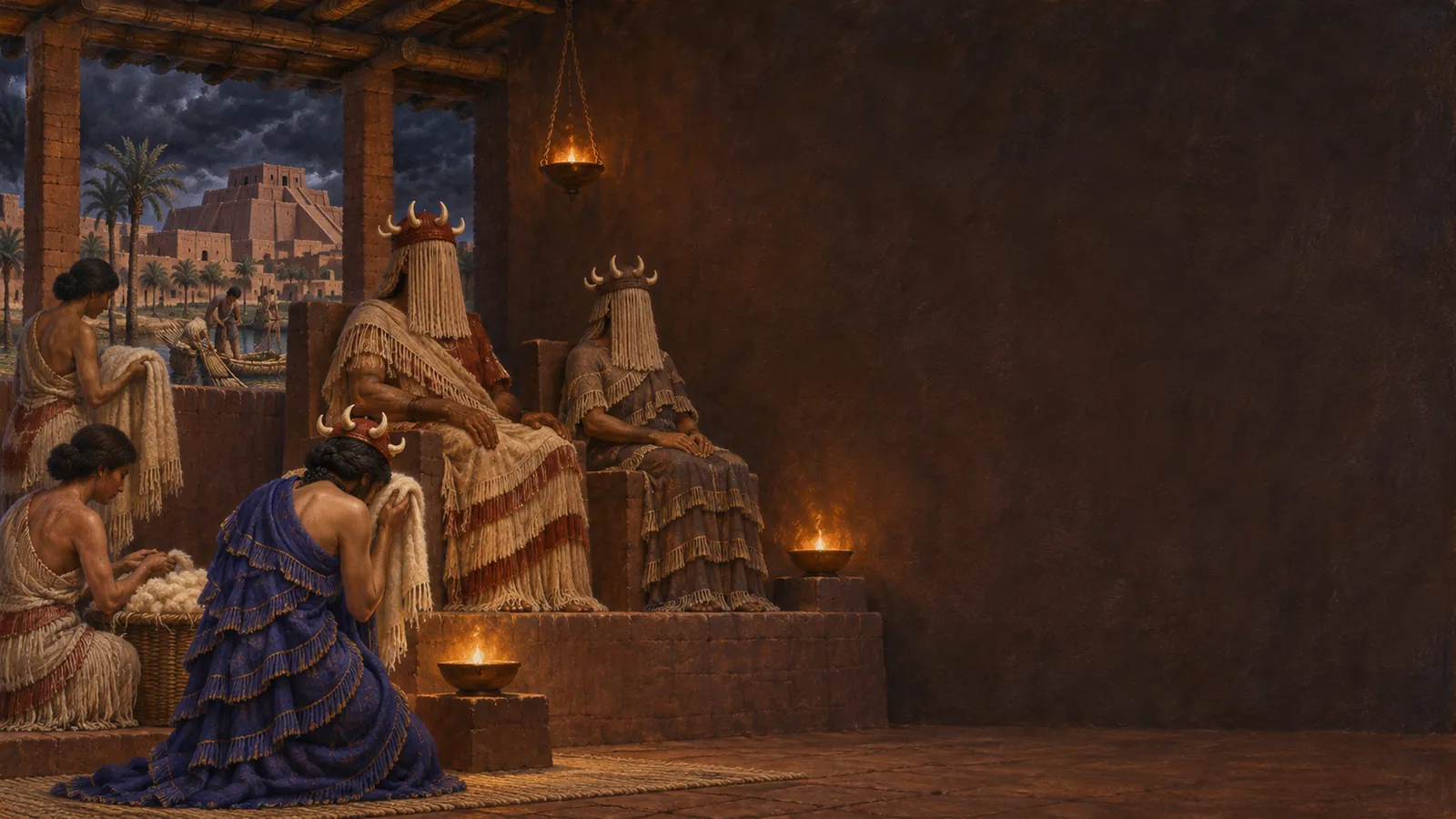
Ningal sagt, sie vergieße ihre Tränen vor Anu. Dann sagt sie, sie selbst klage vor Enlil.
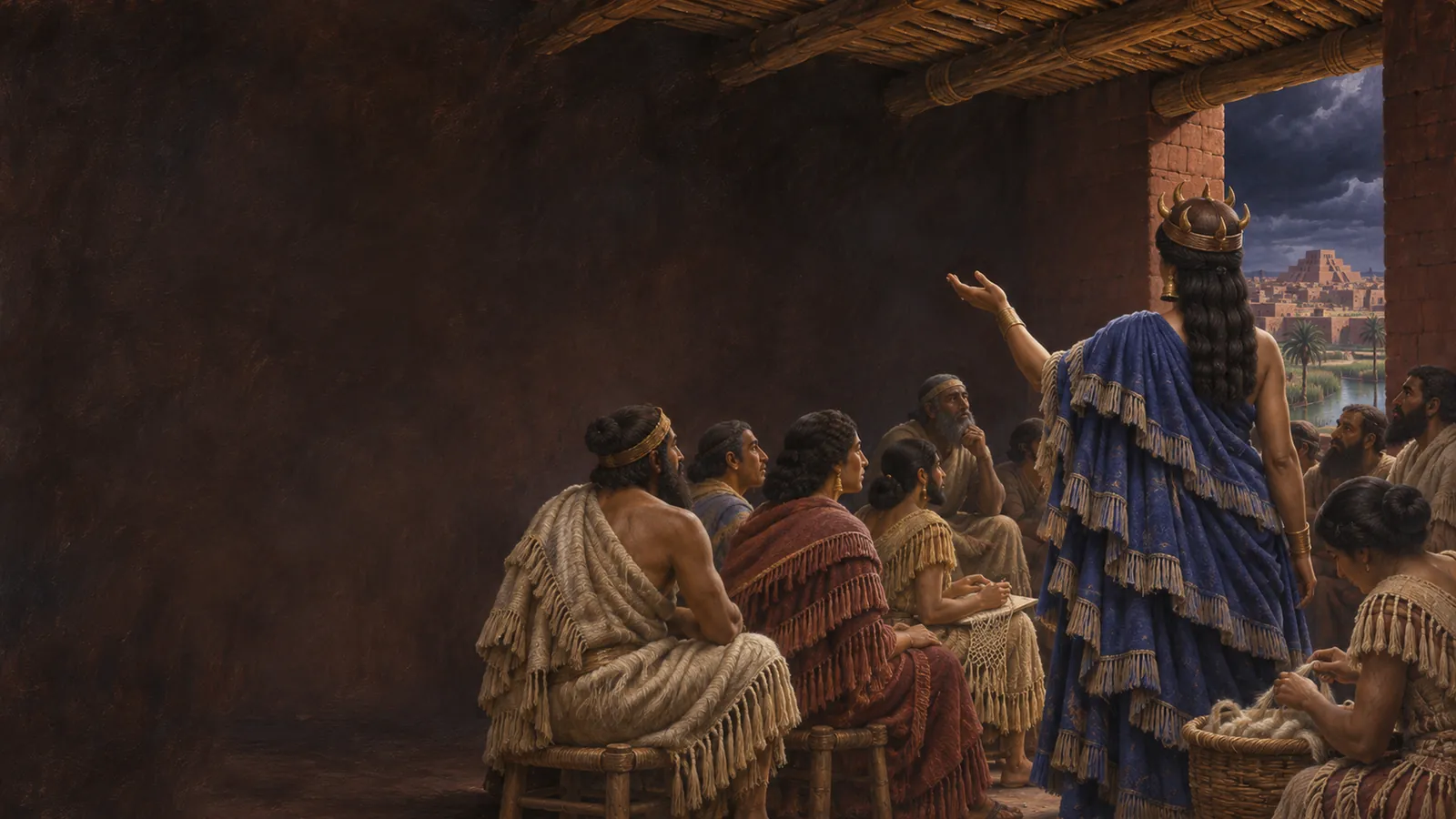
Ningal bittet darum, dass ihre Stadt nicht zerstört werde. Sie wiederholt ihre Bitte, nennt Ur und fleht um die Bewahrung der Stadt.
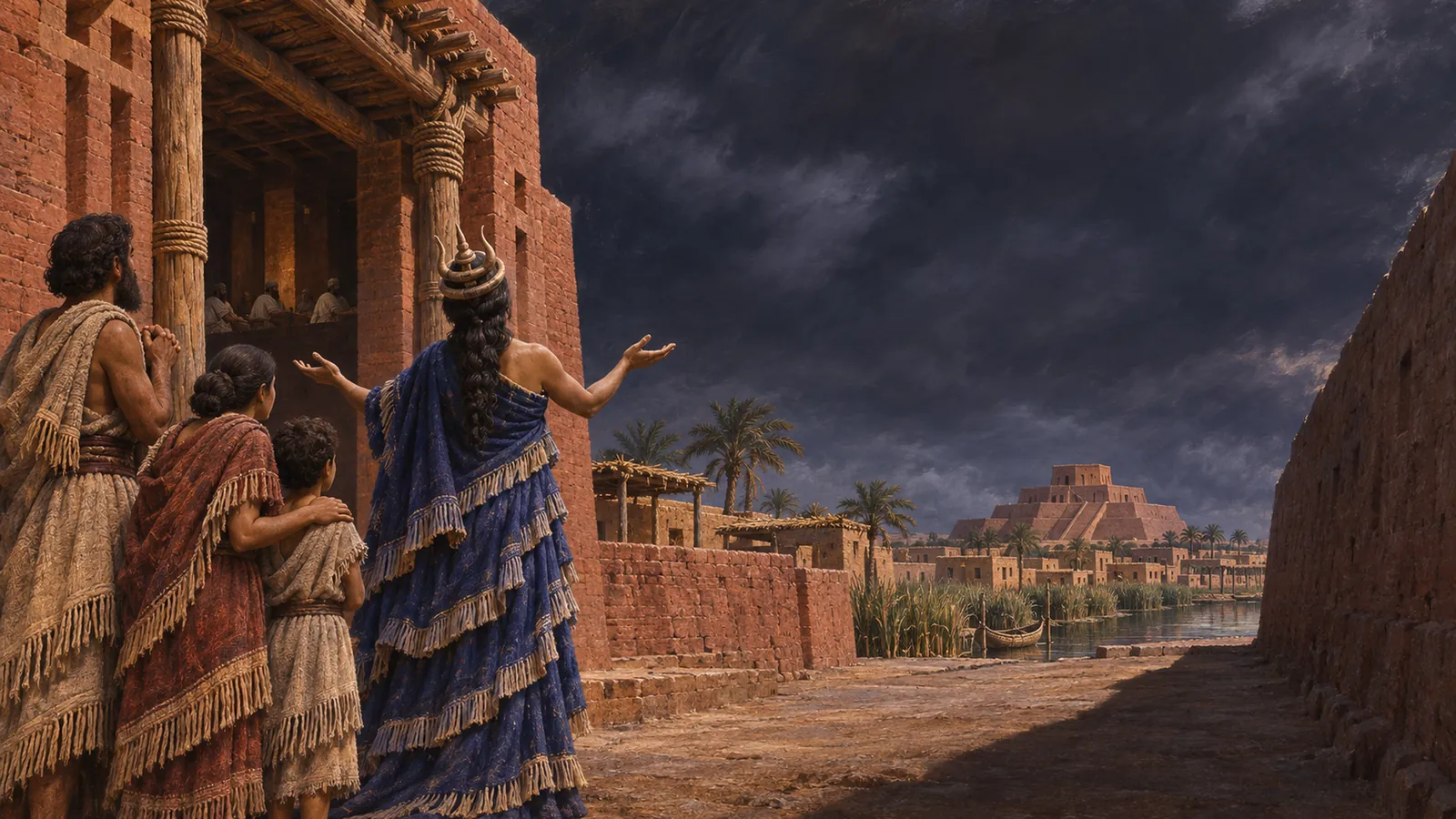
Ningal fleht als Nächstes für die Menschen der Stadt. Sie sagt der Versammlung, dass ihre Bewohner nicht getötet werden sollen.
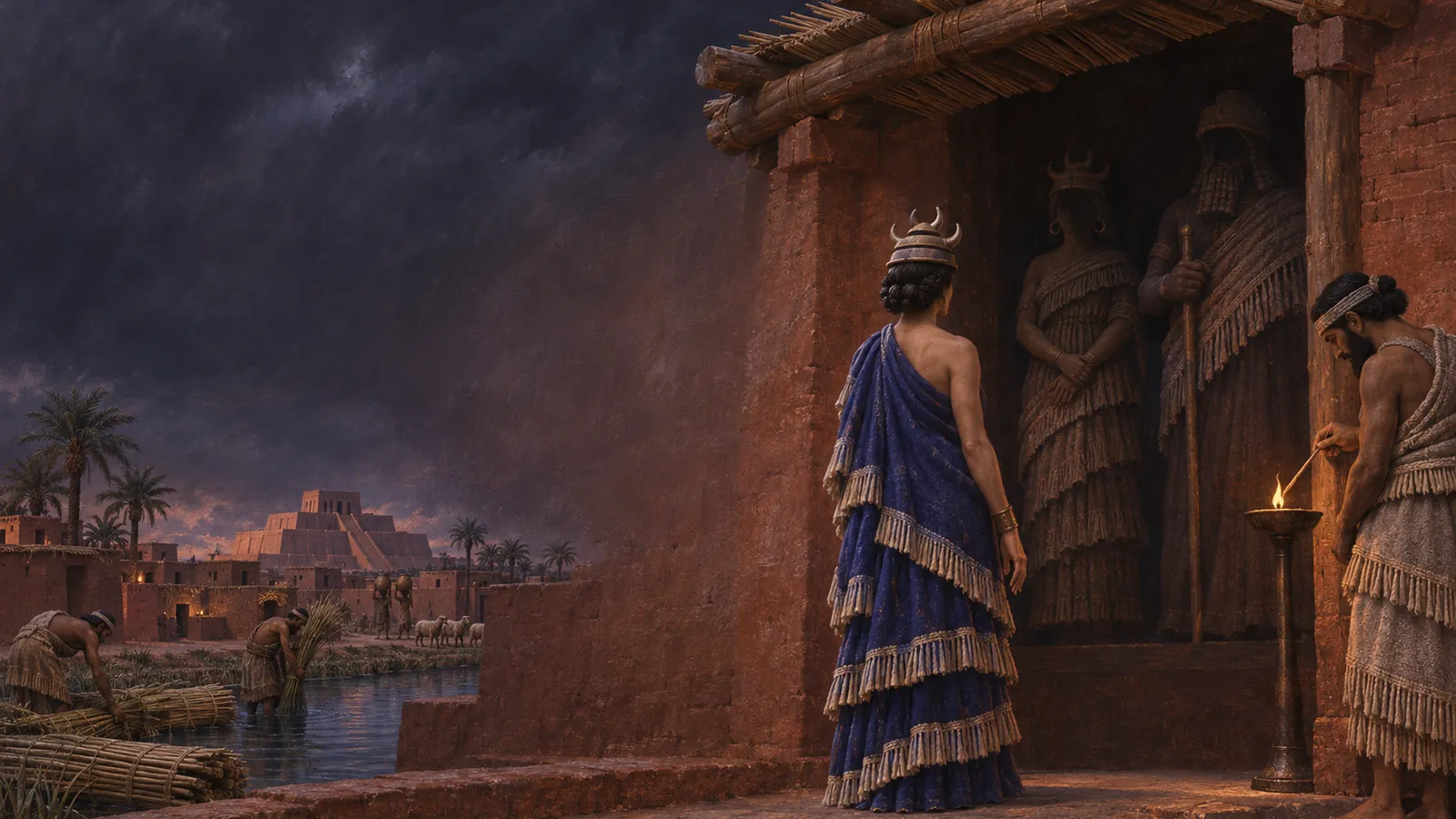
Ningal sagt, Anu höre nicht auf ihre Worte. Enlil gebe keine zustimmende Antwort, die ihr Herz beruhigen würde.
DER BESCHLUSS
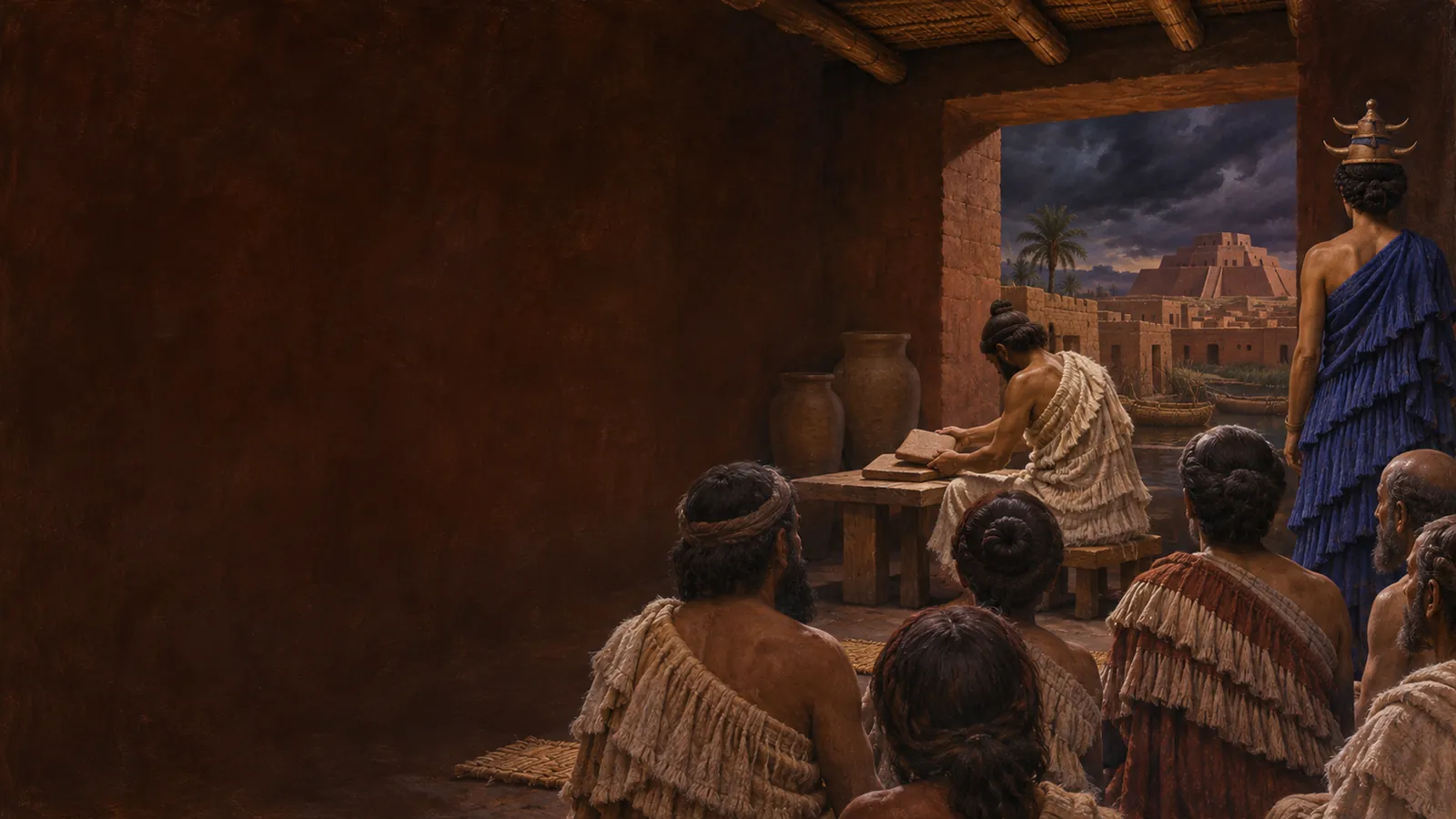
Ningal sagt, die Versammlung befehle die Zerstörung ihrer Stadt Ur. Sie beschließe, dass die Einwohner der Stadt getötet werden sollen.
Ende von Kapitel 1
Alle Seiten
Quellen
This reading follows two translated selections printed by Thorkild Jacobsen in The Intellectual Adventure of Ancient Man, pp. 196–197. The preface credits H. A. Groenewegen Frankfort with the poetic rendering of translations in chapters V–VII. The main text dates to 1946, retained in the first Phoenix edition of 1977. Jacobsen’s notes cite Samuel Noah Kramer, Assyriological Studies XII, pp. 26 and 28, ancient lines 88–112, then p. 32, lines 152–164. Individual ancient line numbers are absent from the printed quotations. Lines 113–151 are outside this modern selection. The second quotation ends with the decree against Ur and its inhabitants.
Benutzte Editionen
- University of Chicago, The Intellectual Adventure of Ancient Man
- Jacobsen’s two printed selections, pp. 196–197
- Source notes 12–13, printed p. 201
Hinweise zu dieser Nacherzählung
Page 1, Jacobsen’s lead-in on p. 196. Jacobsen presents Ningal, the goddess of Ur, as the speaker of the following quotation. 197. His notes on p. 201 cite Kramer, AS XII, pp. 26 and 28, lines 88–112, and p. 32, lines 152–164. The preface credits H. A. Groenewegen Frankfort with the English poetic rendering of the translations in chapters V–VII. The first Phoenix edition dates to 1977 and retains the main text published in 1946.
Page 2, first quotation, lines 88–112, opening storm-day formulas. Ningal grieves over the day of storm described as destined for her and laid upon her, burdened with tears. She calls herself a woman.
Page 3, first quotation, lines 88–112, trembling and cruelty. Repeated storm-day formulas describe Ningal trembling before the coming day and call it cruel.
Page 4, first quotation, lines 88–112, the fate of the day. Ningal says she cannot flee the day’s fatality.
Page 5, first quotation, lines 88–112, happy days.
Page 6, first quotation, lines 88–112, the night formula. Ningal trembles and says she cannot flee what is destined for that night.
Page 7, first quotation, lines 88–112, the flood comparison. Ningal says that dread of the storm’s destruction weighs on her and compares its force to a flood.
Pages 8–9, first quotation, lines 88–112, the couch. On her couch at night, Ningal says that neither dreams nor oblivion are granted to her.
Page 10, first quotation, lines 88–112, the cow comparison. Ningal says bitter weeping is destined for her land.
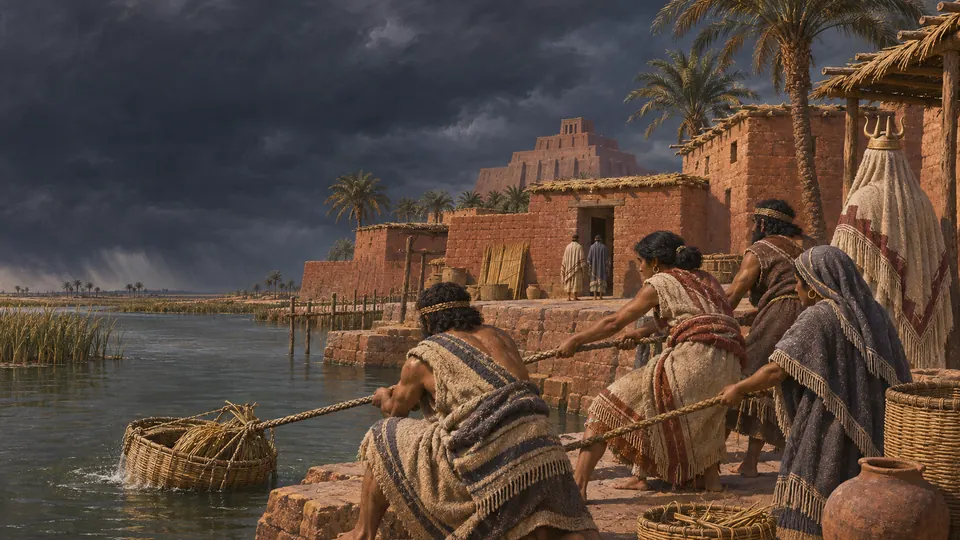
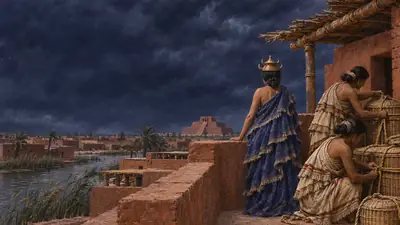
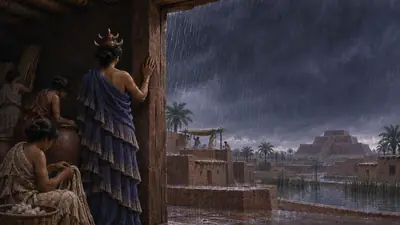
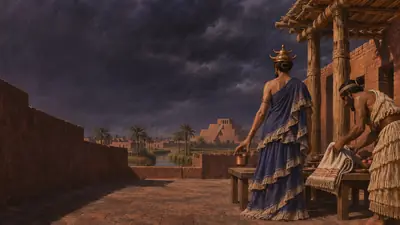
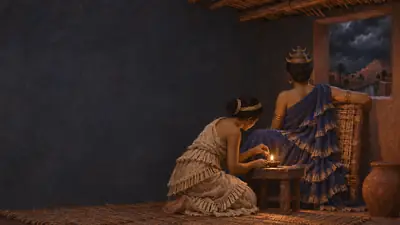
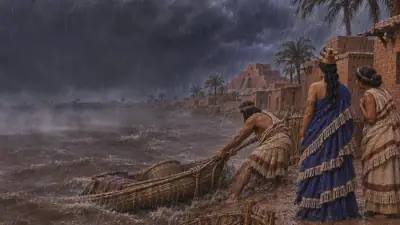
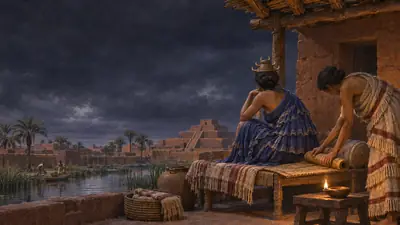
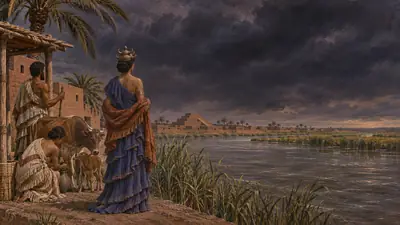
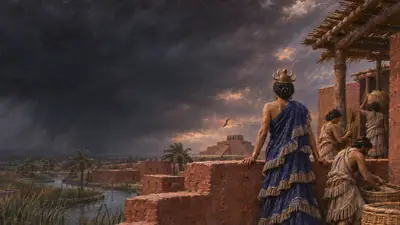
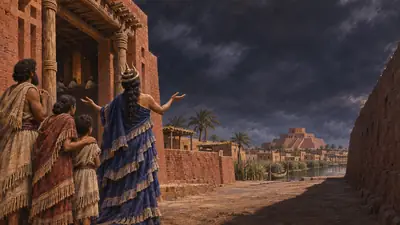
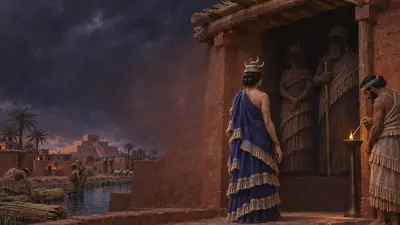
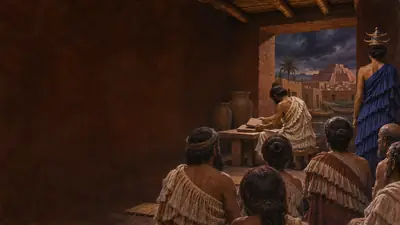
Ningal appears from behind as she watches the storm, searches the riverbanks and pleads before the assembly.
first quotation, lines 88–112 as cited in note 12. Ningal says sorrow is destined for her city. She imagines spreading wings and flying there like a bird, yet the city would still be destroyed on its foundations and Ur would perish. The quotation continues across the page break. The inclusive range is Jacobsen’s own citation, with no individual ancient line numbers printed beside the translated lines.
The storm day raises its hand. This closes the first printed excerpt.
Jacobsen’s connecting paragraph. Ancient lines 113–151 lie outside this modern selection. This interval is an editorial omission between excerpts.
beginning of the second quotation, lines 152–164 as cited in note 13. The assembly remains seated. The rendering explains the Anunnaki’s binding themselves with a parenthetical statement about upholding the decision.
second quotation, cited lines 152–164. Ningal describes dragging her feet and stretching out her arms before the assembly.
second quotation, cited lines 152–164. Ningal sheds tears before Anu and mourns before Enlil. Their order and the distinction between the two clauses are retained.
second quotation, cited lines 152–164. The plea against the destruction of her city is repeated, with Ur named in the second plea.
second quotation, cited lines 152–164. Ningal asks that the inhabitants not be killed. This is her appeal in the poem.
second quotation, cited lines 152–164. Anu does not heed her words and Enlil gives no approving answer to comfort her.
The divine assembly gives the instruction to destroy the city and decrees that its inhabitants be killed. The selection ends with that decree.
Die antiken Verse hinter jeder Seite
- Page 1: Jacobsen, The Intellectual Adventure of Ancient Man, first Phoenix ed. (1977; main text 1946), p. 196, Jacobsen’s lead-in to the two selected passages; poetic rendering by H. A. Groenewegen Frankfort
- Page 2: Jacobsen, The Intellectual Adventure of Ancient Man, first Phoenix ed. (1977; main text 1946), p. 196, first quotation, Kramer lines 88–112, storm-day opening; poetic rendering by H. A. Groenewegen Frankfort
- Page 3: Jacobsen, The Intellectual Adventure of Ancient Man, first Phoenix ed. (1977; main text 1946), p. 196, first quotation, Kramer lines 88–112, repeated trembling formula; poetic rendering by H. A. Groenewegen Frankfort
- Page 4: Jacobsen, The Intellectual Adventure of Ancient Man, first Phoenix ed. (1977; main text 1946), p. 196, first quotation, Kramer lines 88–112, inability to flee the day; poetic rendering by H. A. Groenewegen Frankfort
- Page 5: Jacobsen, The Intellectual Adventure of Ancient Man, first Phoenix ed. (1977; main text 1946), p. 196, first quotation, Kramer lines 88–112, repeated happy-days clause; poetic rendering by H. A. Groenewegen Frankfort
- Page 6: Jacobsen, The Intellectual Adventure of Ancient Man, first Phoenix ed. (1977; main text 1946), p. 196, first quotation, Kramer lines 88–112, night formula; poetic rendering by H. A. Groenewegen Frankfort
- Page 7: Jacobsen, The Intellectual Adventure of Ancient Man, first Phoenix ed. (1977; main text 1946), p. 196, first quotation, Kramer lines 88–112, dread and flood comparison; poetic rendering by H. A. Groenewegen Frankfort
- Page 8: Jacobsen, The Intellectual Adventure of Ancient Man, first Phoenix ed. (1977; main text 1946), p. 196, first quotation, Kramer lines 88–112, couch and dreams; poetic rendering by H. A. Groenewegen Frankfort
- Page 9: Jacobsen, The Intellectual Adventure of Ancient Man, first Phoenix ed. (1977; main text 1946), p. 196, first quotation, Kramer lines 88–112, couch and oblivion; poetic rendering by H. A. Groenewegen Frankfort
- Page 10: Jacobsen, The Intellectual Adventure of Ancient Man, first Phoenix ed. (1977; main text 1946), p. 196, first quotation, Kramer lines 88–112, land’s weeping and cow simile; poetic rendering by H. A. Groenewegen Frankfort
- Page 11: Jacobsen, The Intellectual Adventure of Ancient Man, 1946 text / 1977 Phoenix ed., pp. 196–197, first quotation; n. 12, p. 201 cites Kramer AS XII, lines 88–112
- Page 12: Jacobsen, The Intellectual Adventure of Ancient Man, 1946 text / 1977 Phoenix ed., pp. 196–197, first quotation; n. 12, p. 201 cites Kramer AS XII, lines 88–112
- Page 13: Jacobsen, The Intellectual Adventure of Ancient Man, 1946 text / 1977 Phoenix ed., p. 197, modern connecting paragraph between quoted lines 88–112 and 152–164
- Page 14: Jacobsen, The Intellectual Adventure of Ancient Man, 1946 text / 1977 Phoenix ed., p. 197, second quotation; n. 13, p. 201 cites Kramer AS XII, lines 152–164
- Page 15: Jacobsen, The Intellectual Adventure of Ancient Man, 1946 text / 1977 Phoenix ed., p. 197, second quotation; n. 13, p. 201 cites Kramer AS XII, lines 152–164
- Page 16: Jacobsen, The Intellectual Adventure of Ancient Man, 1946 text / 1977 Phoenix ed., p. 197, second quotation; n. 13, p. 201 cites Kramer AS XII, lines 152–164
- Page 17: Jacobsen, The Intellectual Adventure of Ancient Man, 1946 text / 1977 Phoenix ed., p. 197, second quotation; n. 13, p. 201 cites Kramer AS XII, lines 152–164
- Page 18: Jacobsen, The Intellectual Adventure of Ancient Man, 1946 text / 1977 Phoenix ed., p. 197, second quotation; n. 13, p. 201 cites Kramer AS XII, lines 152–164
- Page 19: Jacobsen, The Intellectual Adventure of Ancient Man, 1946 text / 1977 Phoenix ed., p. 197, second quotation; n. 13, p. 201 cites Kramer AS XII, lines 152–164
- Page 20: Jacobsen, The Intellectual Adventure of Ancient Man, 1946 text / 1977 Phoenix ed., p. 197, second quotation; n. 13, p. 201 cites Kramer AS XII, lines 152–164
Illustrationen von IL Archive mit KI-Werkzeugen; der Text folgt den antiken Quellen (siehe die Quellen am Ende jedes Kapitels).