Sargon und der Fluss Kapitel 1
Der Korb und der Obstgarten
In diesem Ausschnitt aus der akkadischen Geburtslegende erzählt Sargon, wie der Fluss ihn zum Wasserschöpfer Aqqi trug. Aqqi zieht ihn als Adoptivsohn auf und überträgt ihm die Arbeit im Obstgarten. Die Folge folgt den sieben Zeilen in der Übersetzung von Jonathan Valk.
QuellenBlättern Sie mit den Pfeilen, den Pfeiltasten oder durch Wischen.
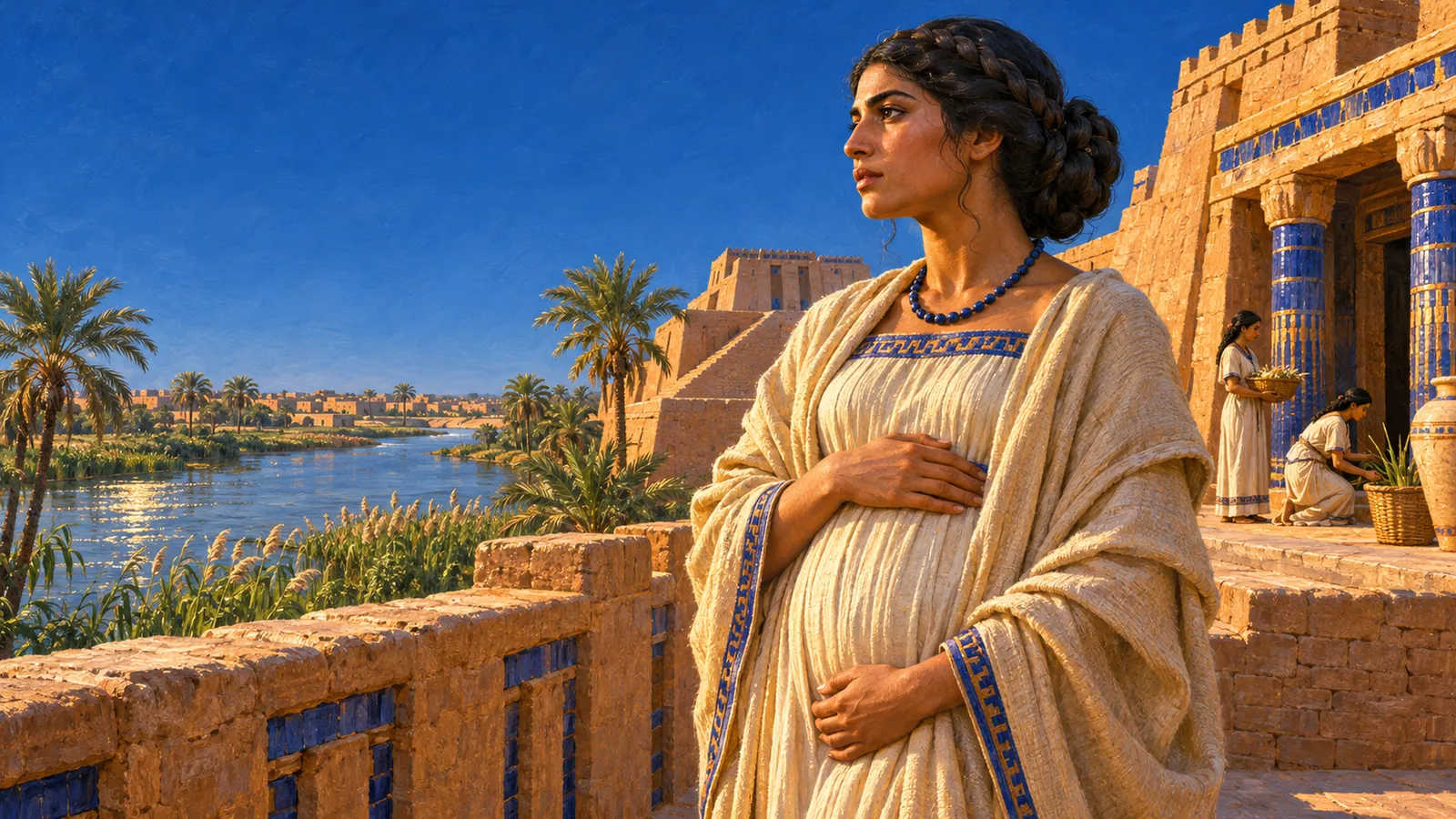
DIE GEBURTSLEGENDE
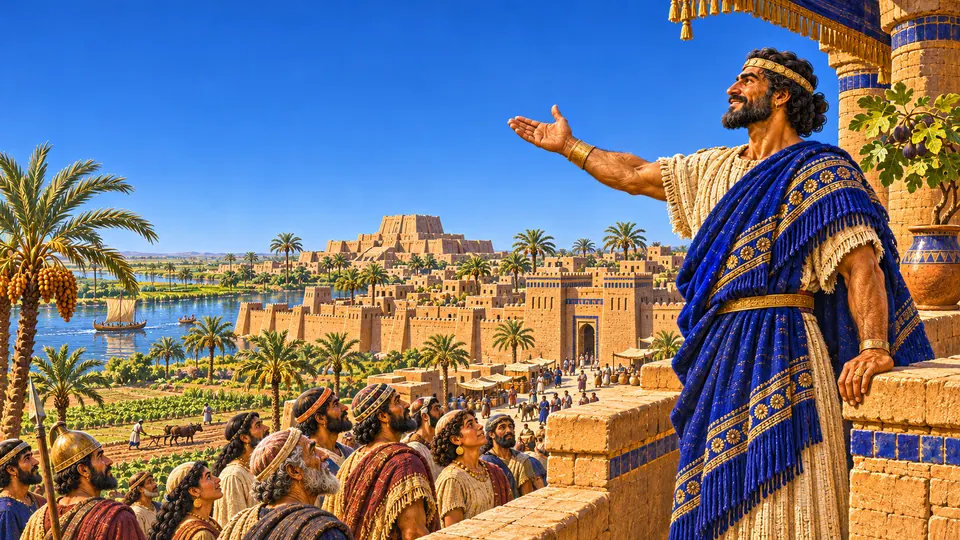
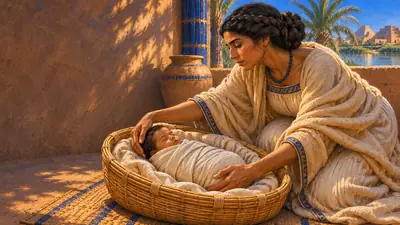
In dem von Jonathan Valk übersetzten Ausschnitt aus der Geburtslegende Sargons spricht Sargon von seiner eigenen Zeugung und bezeichnet seine Mutter als eine ēn-Priesterin.
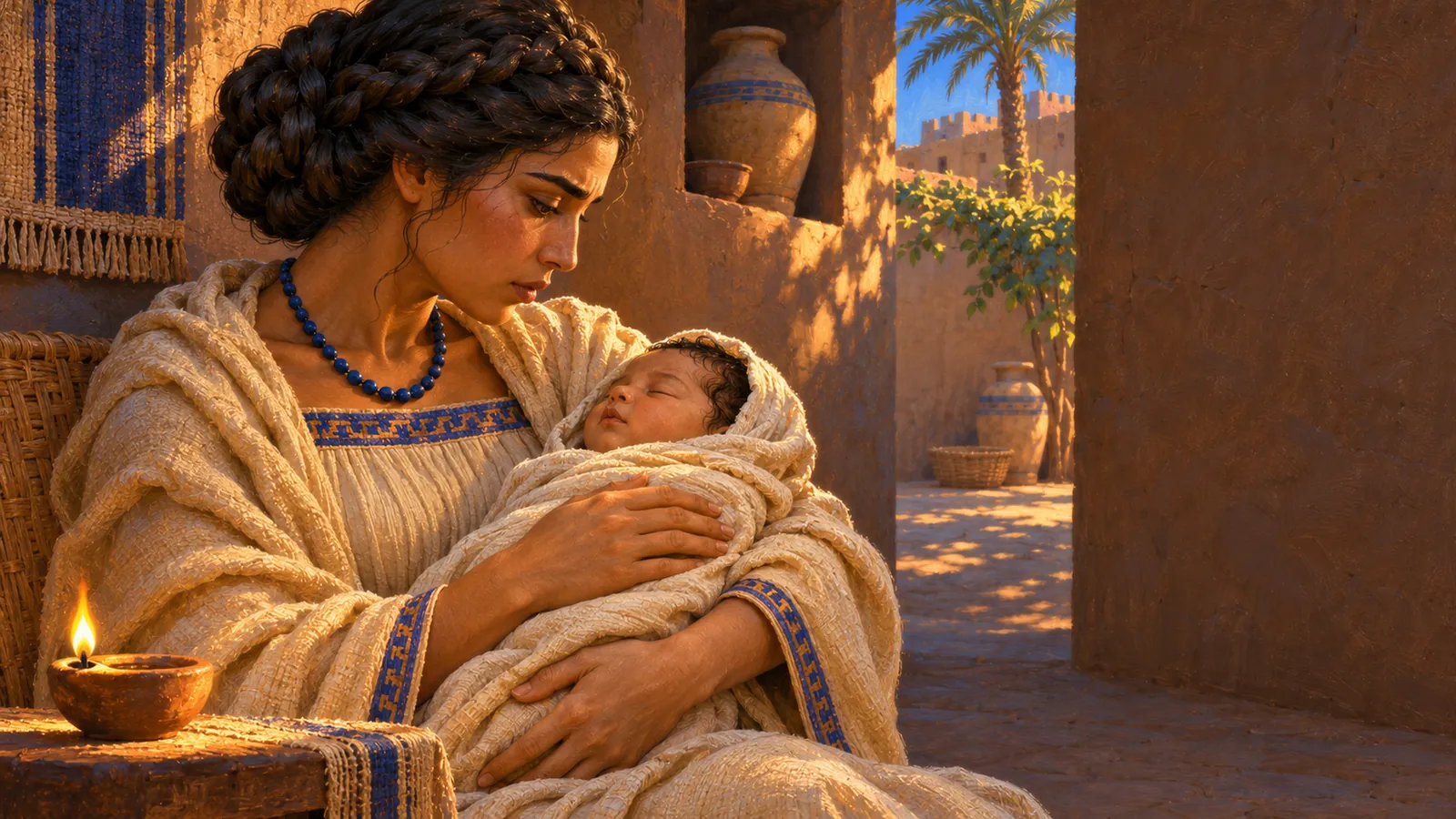
Im zweiten Teil der ersten Zeile sagt Sargon, seine Mutter habe ihn im Geheimen zur Welt gebracht.
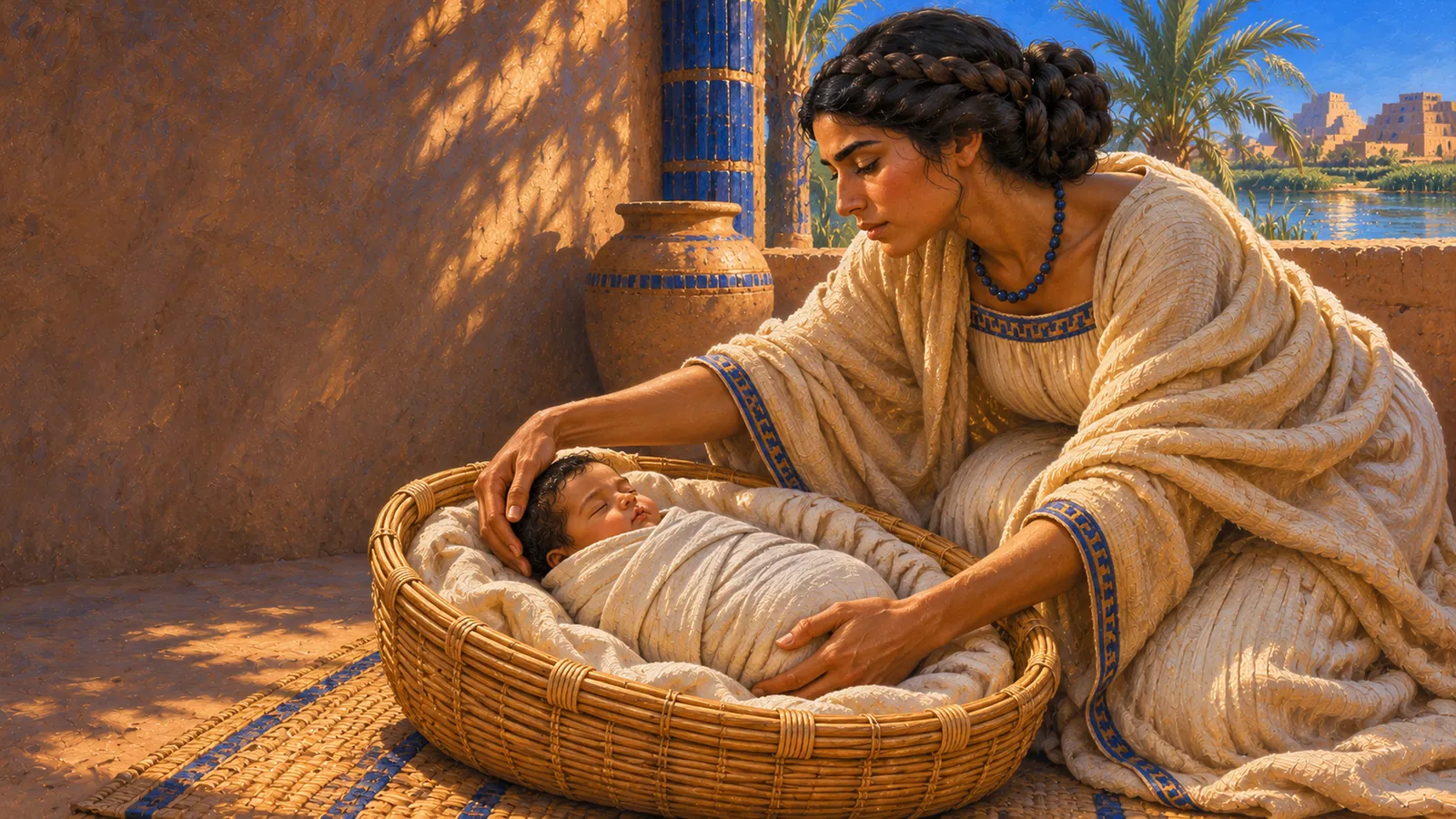
Sargon sagt, dass seine Mutter ihn nach seiner Geburt in einen Korb aus Schilf legte.
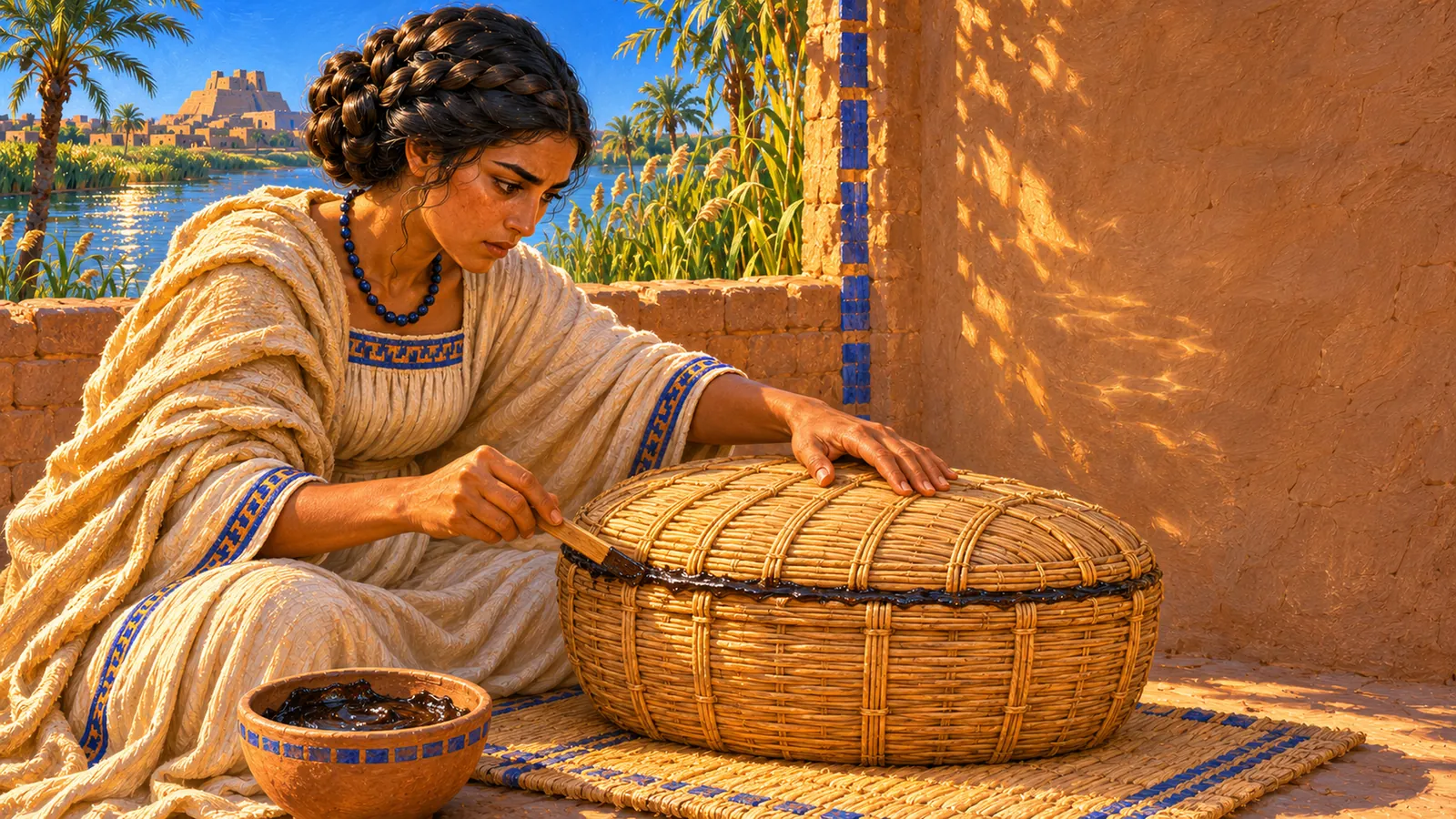
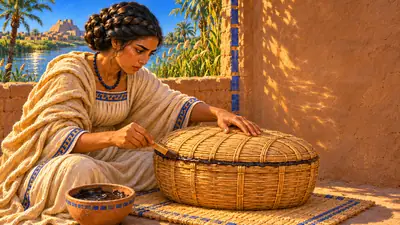
Sargon sagt, seine Mutter habe die Öffnung mit Bitumen abgedichtet. Valk erläutert in einer Anmerkung, dass sich die Formulierung in der ersten Person auf die Korböffnung bezieht.
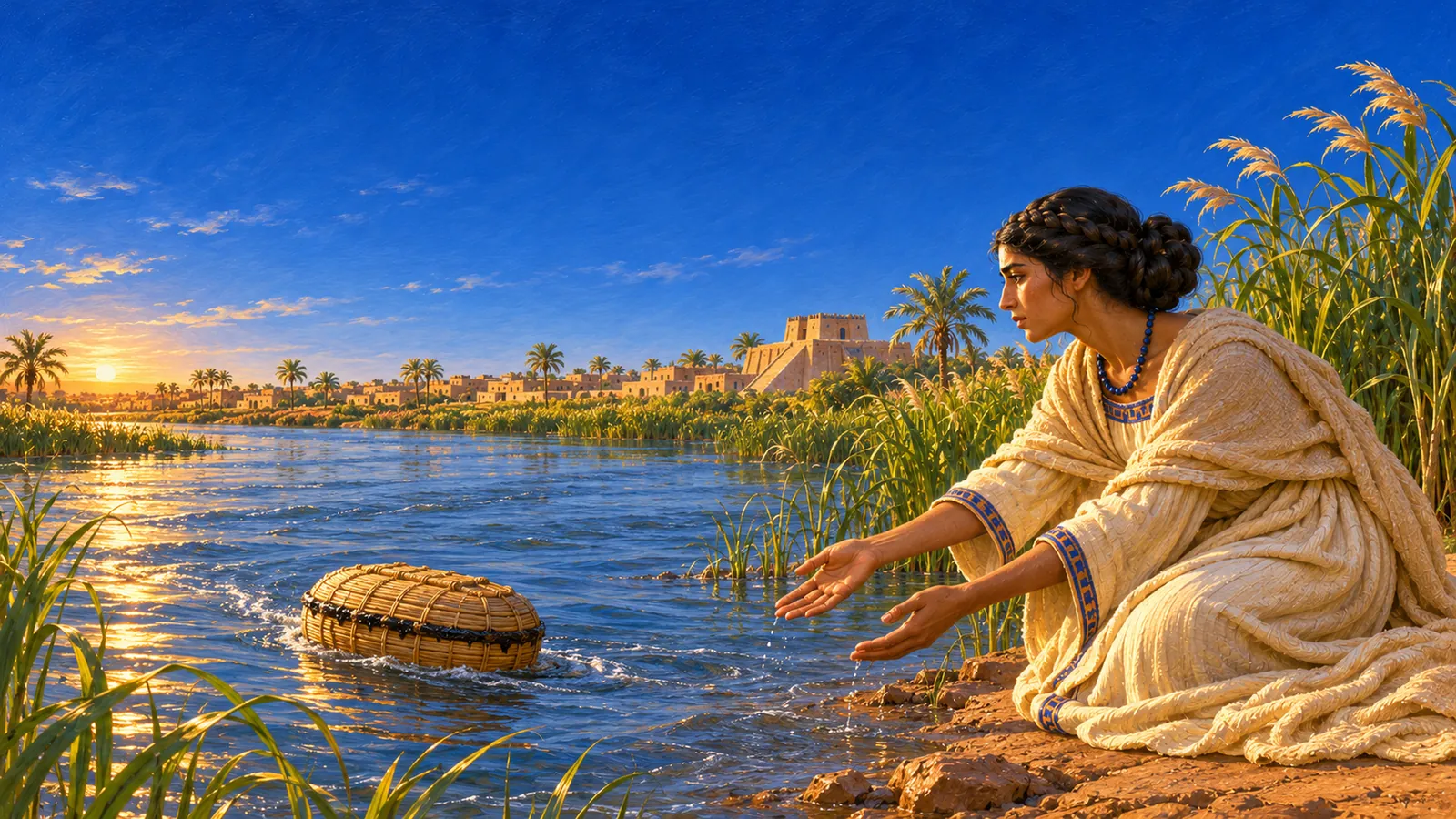
DER FLUSS
Sargon sagt, seine Mutter habe ihn in den Fluss gesetzt. Seiner Erzählung zufolge konnte er dem Wasser nicht entkommen.
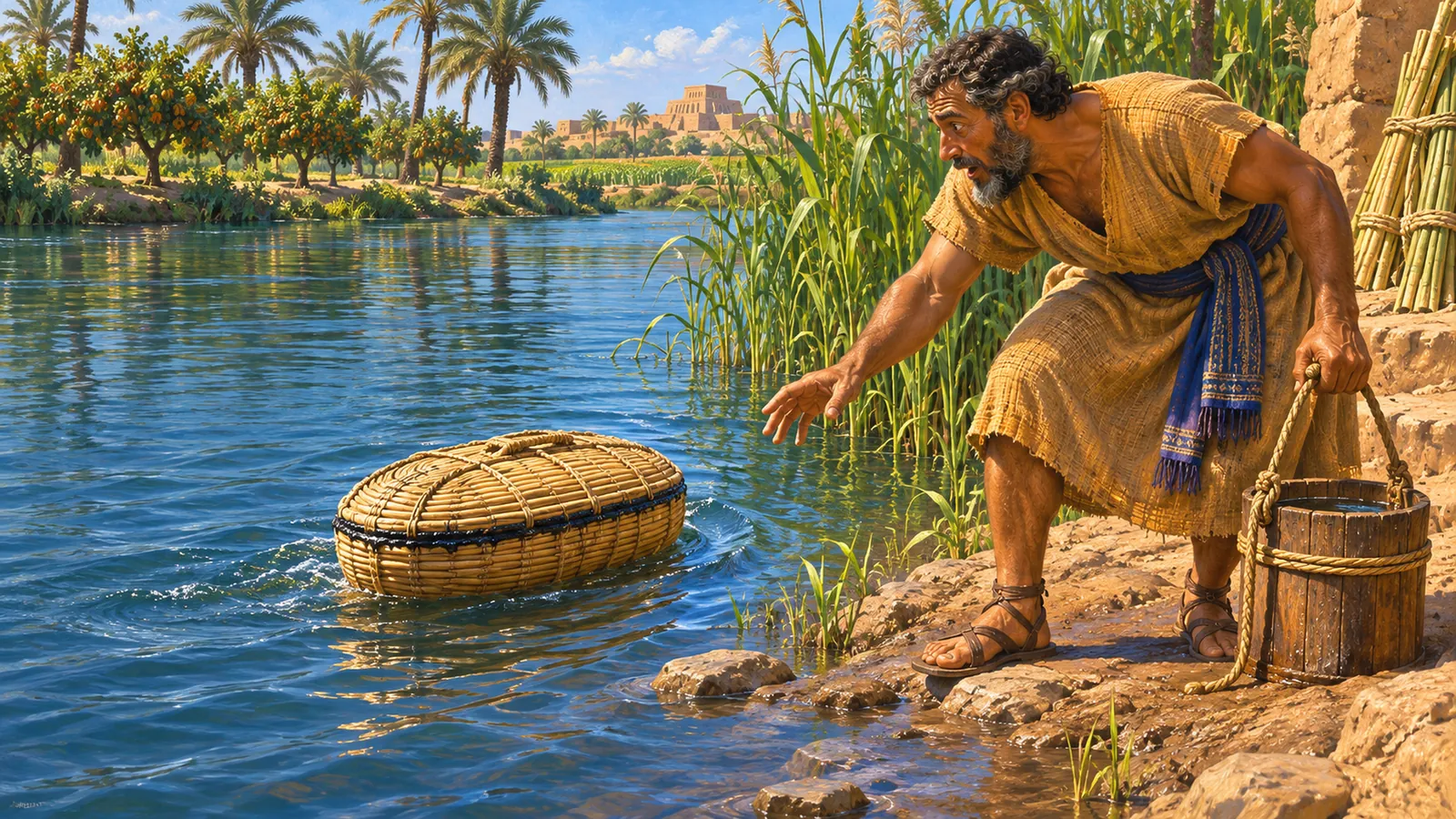
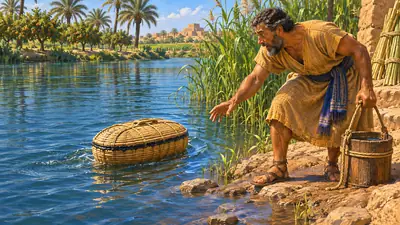
Sargon sagt, der Fluss habe ihn mitgetragen und zu einem Mann namens Aqqi gebracht, der Wasser schöpfte.
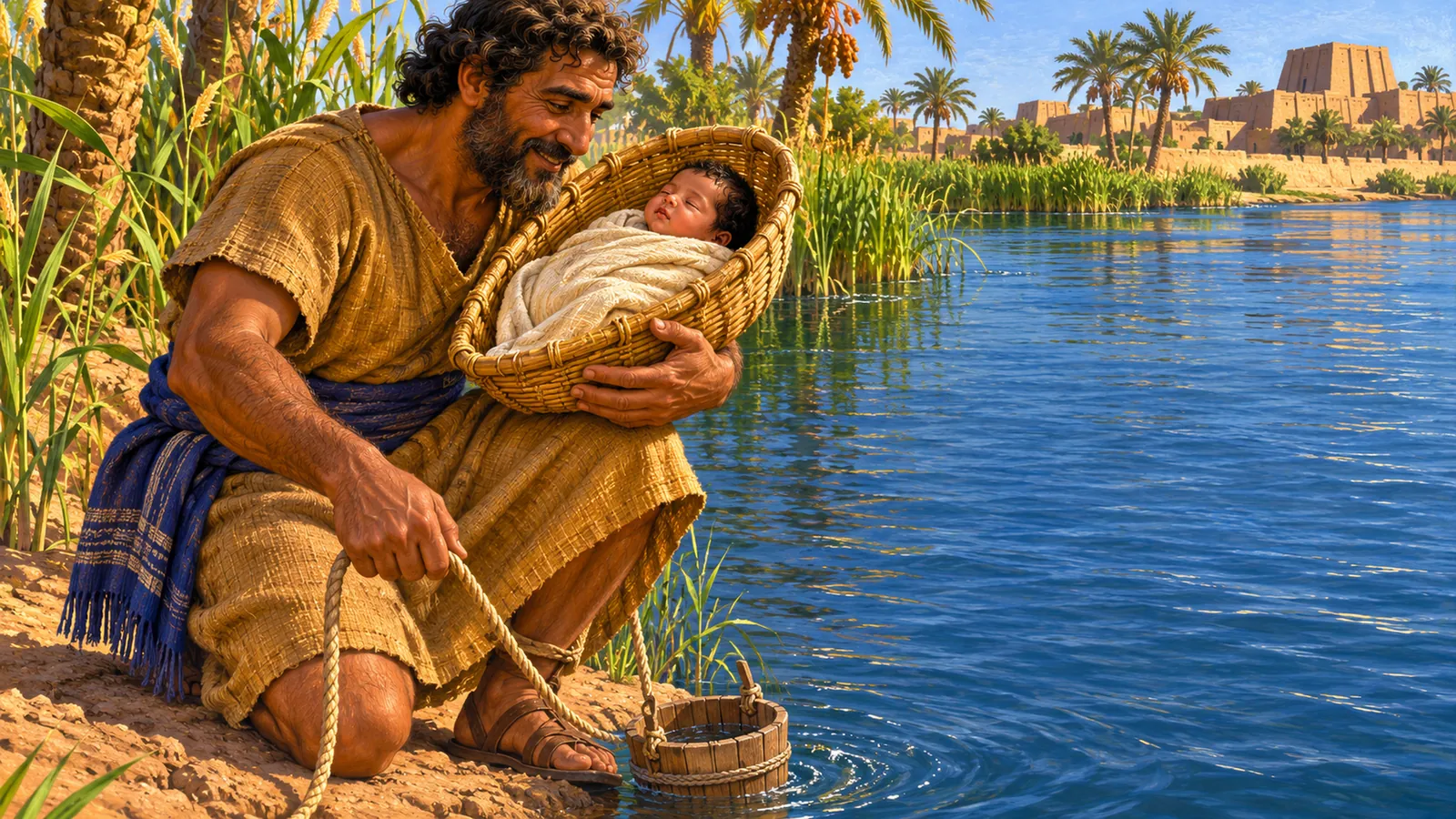
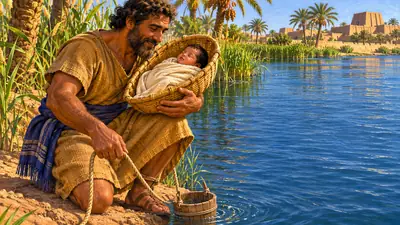
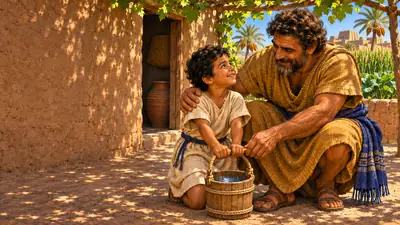
Sargon sagt, Aqqi habe ihn hochgehoben, während er den Eimer hinabließ, mit dem er Wasser aus dem Fluss schöpfte.
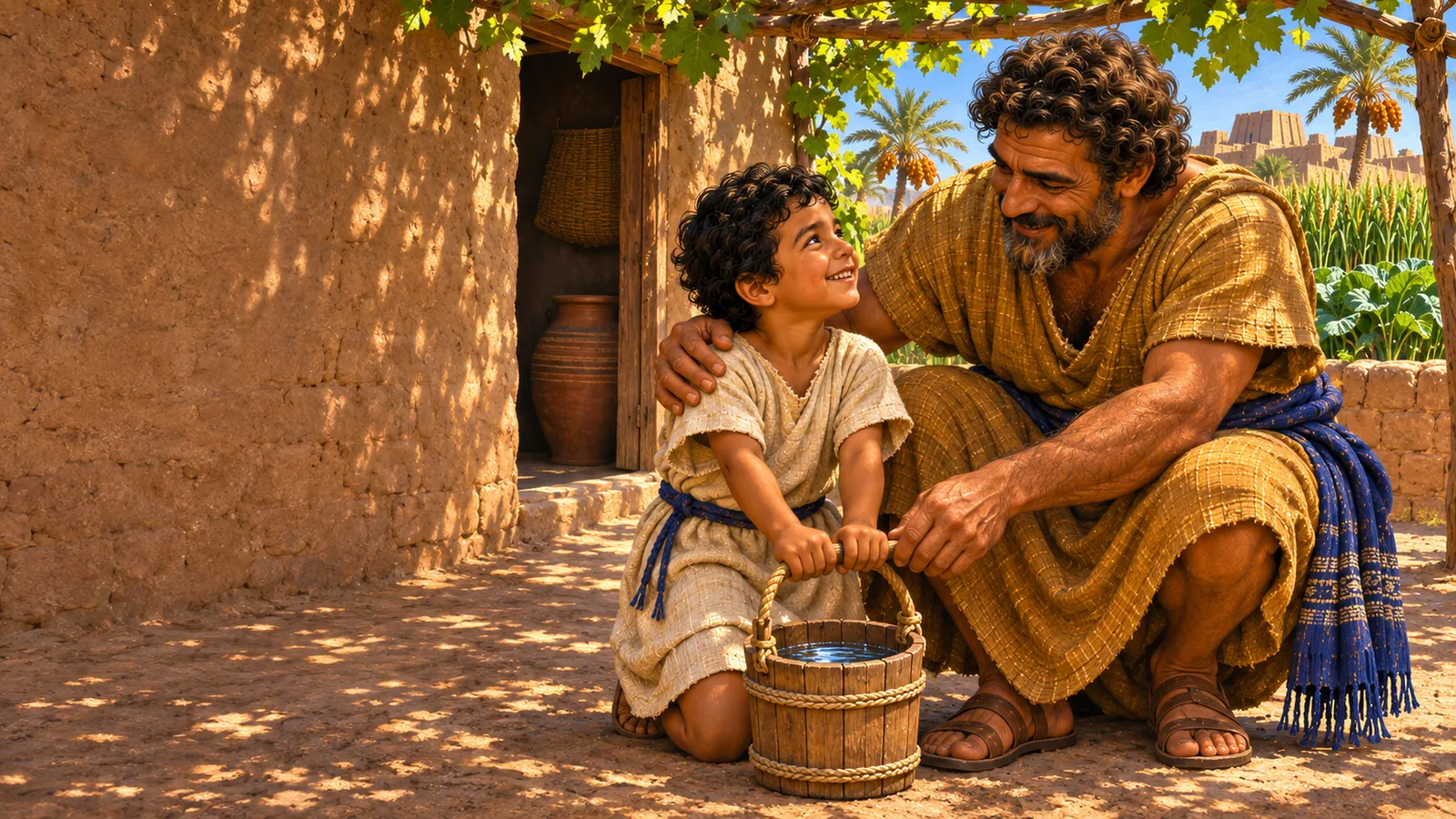
Sargon sagt, der Wasserschöpfer Aqqi habe ihn nach der Rettung aus dem Fluss als seinen Adoptivsohn aufgezogen.
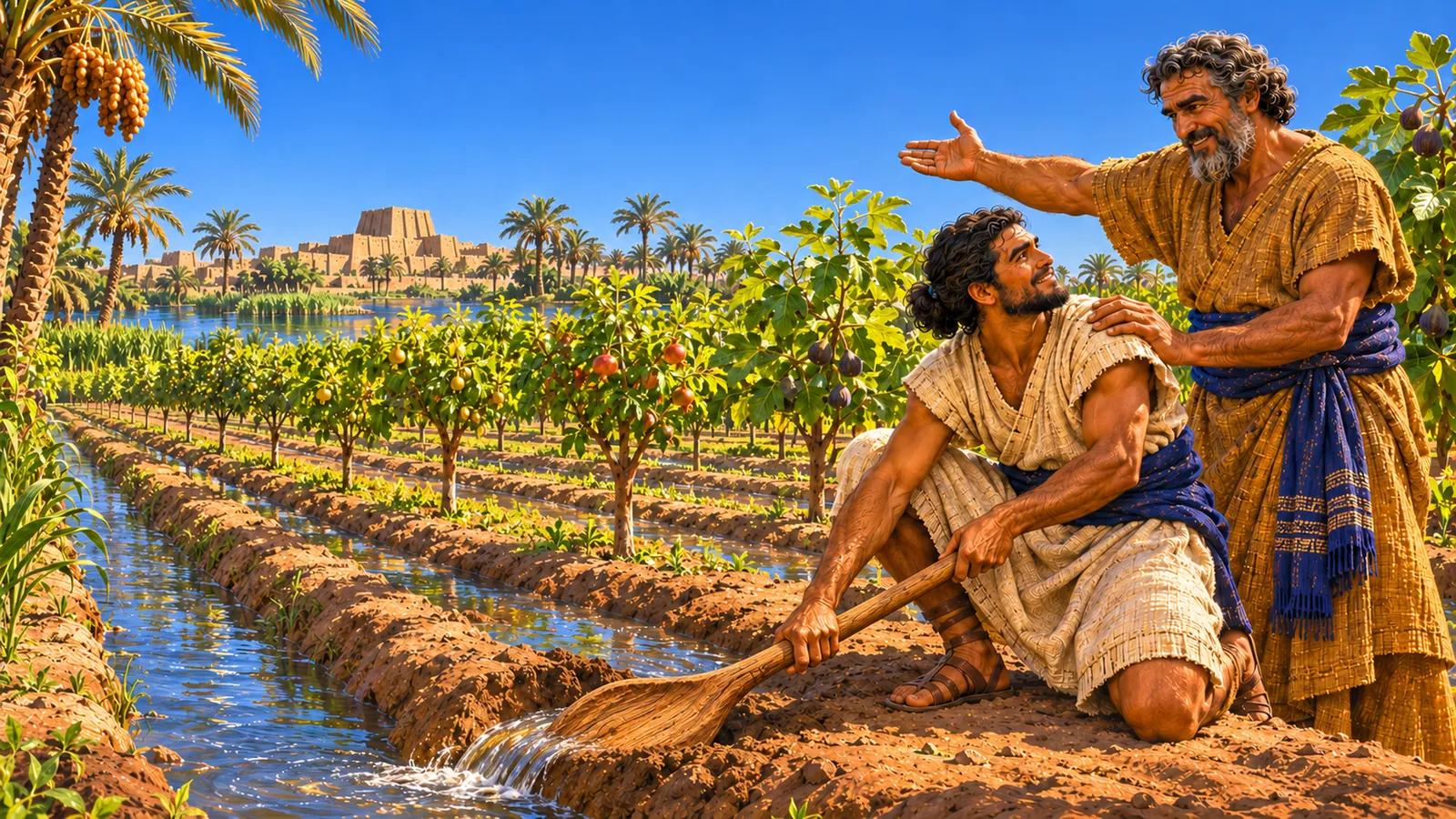
DER OBSTGARTEN
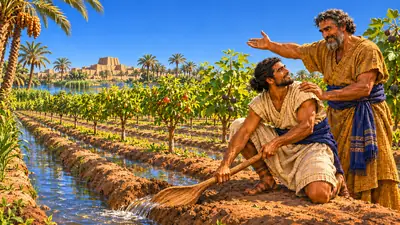
In der letzten Zeile des Ausschnitts sagt Sargon, Aqqi habe ihm danach die Pflege seines Obstgartens übertragen.
Ende von Kapitel 1
Alle Seiten

Quellen
738 of the Journal of the Economic and Social History of the Orient 59 (2016). Valk discusses the basket opening in note 161 and lists the editions used in note 162. The quoted selection leads from the secret birth to the orchard assignment. The CDLI record is a separate manuscript reference. The artwork shows unoccupied ancient riverbanks and ordinary work materials.
Benutzte Editionen
- Jonathan Valk’s article, University of Helsinki institutional copy, p. 738
- Journal of the Economic and Social History of the Orient, Brill
- CDLI object record P365306 for a manuscript witness
Hinweise zu dieser Nacherzählung
Pages 1–2, line 5. Jonathan Valk prints the Akkadian and an English translation on p. 738 of “They Enjoy Syrup and Ghee at Tables of Silver and Gold: Infant Loss in Ancient Mesopotamia,” *Journal of the Economic and Social History of the Orient* 59 (2016), pp. 695–749. The site reading begins at the first clause of numbered line 5. Sargon speaks in the first person. His mother, an ēn-priestess, conceives him and gives birth to him in secret. The two clauses form two scenes.
Pages 3–4, line 6 and note 161. The line first gives the reed basket and then says the opening is sealed with bitumen. Valk’s note explains that the possessive literally says “my” in the first person and that the word refers to the opening of the basket. The two clauses form two scenes.
Page 5, line 7. The mother sets Sargon in the river, from which he cannot escape in Valk’s translation. The river is unnamed in this excerpt.
Page 6, line 8. Sargon says the river carries him to Aqqi, whom the line calls a water-drawer.
Page 7, line 9. Aqqi lifts Sargon while lowering his bucket in Valk’s translation.
Page 8, line 10. Sargon says that Aqqi raises him as his adopted son.
Page 9, line 11. Aqqi puts Sargon to work as his orchard-cultivator. This is the final numbered line that Valk quotes on this page. His discussion of Ištar and kingship follows the quoted excerpt in surrounding prose and falls outside this reading.
Die antiken Verse hinter jeder Seite
- Page 1: Valk 2016, p. 738, Sargon Birth Legend, line 5, opening clause
- Page 2: Valk 2016, p. 738, Sargon Birth Legend, line 5, closing clause
- Page 3: Valk 2016, p. 738, Sargon Birth Legend, line 6, first clause
- Page 4: Valk 2016, p. 738, Sargon Birth Legend, line 6, second clause and note 161
- Page 5: Valk 2016, p. 738, Sargon Birth Legend, line 7
- Page 6: Valk 2016, p. 738, Sargon Birth Legend, line 8
- Page 7: Valk 2016, p. 738, Sargon Birth Legend, line 9
- Page 8: Valk 2016, p. 738, Sargon Birth Legend, line 10
- Page 9: Valk 2016, p. 738, Sargon Birth Legend, line 11
Illustrationen von IL Archive mit KI-Werkzeugen; der Text folgt den antiken Quellen (siehe die Quellen am Ende jedes Kapitels).