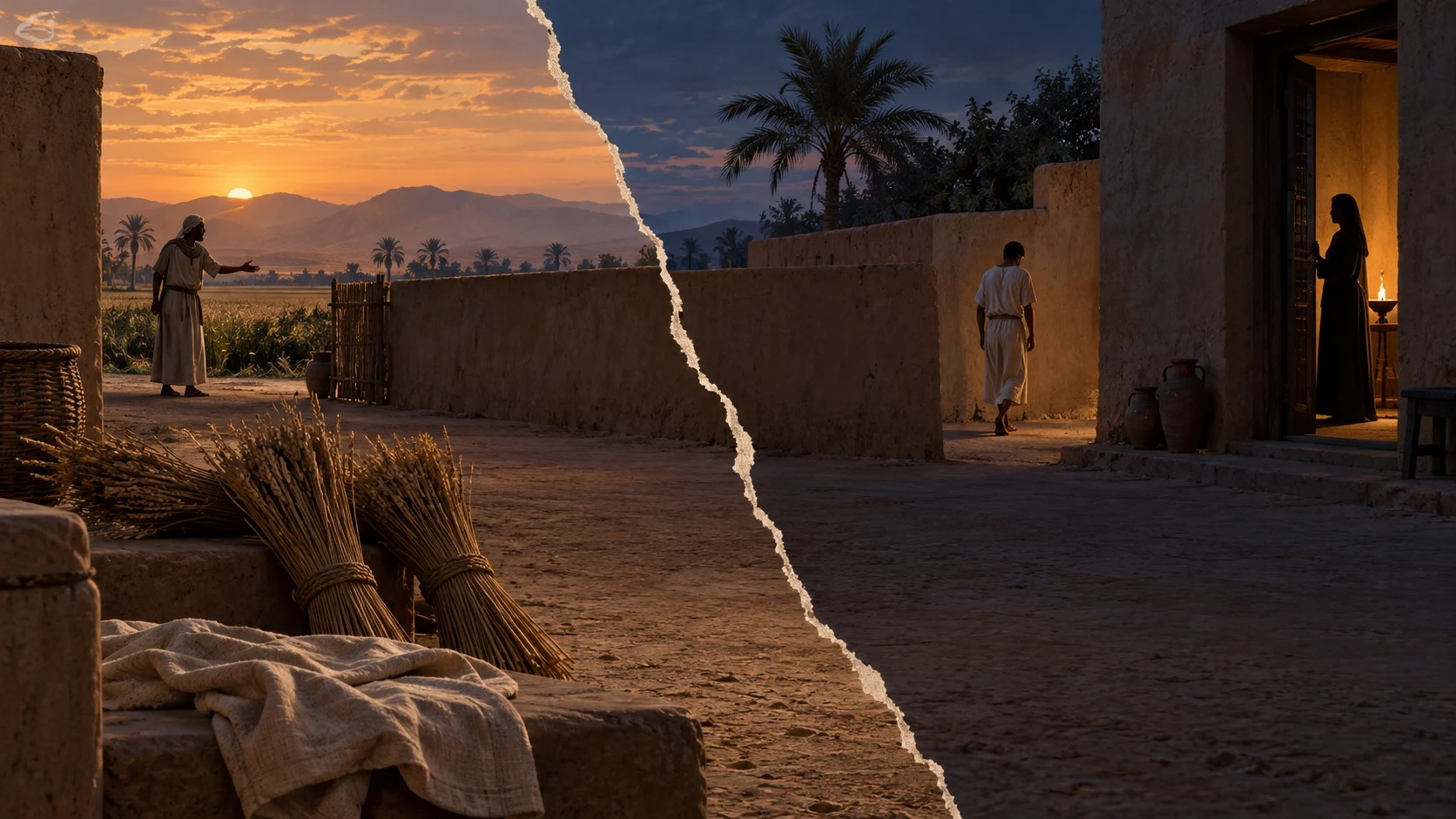
Modern interpretive illustration of a household divided after Bata’s accusation; not a photograph of EA10183 or a verified historical reconstruction
Pieza
Nineteenth-Dynasty hieratic papyrus (c. 1215 BCE), British Museum EA10183; the sole known manuscript of the Tale of the Two Brothers, copied by Inena.
Variantes del nombre: Papyrus D’Orbiney, Tale of the Two Brothers
Contexto y fuentes →
Modern editorial illustration of a sage writing at an ancient court. Generated explanatory image, not a photograph of P.13446 or a documented reconstruction of Daniel or Ahiqar. © IL Archive, CC0
Pieza
A fragmentary Aramaic witness, probably from the later fifth century BCE, preserving Ahiqar’s tale and sayings with gaps and editorial restorations.
Variantes del nombre: Ahiqar papyrus, Elephantine Ahiqar
Contexto y fuentes →
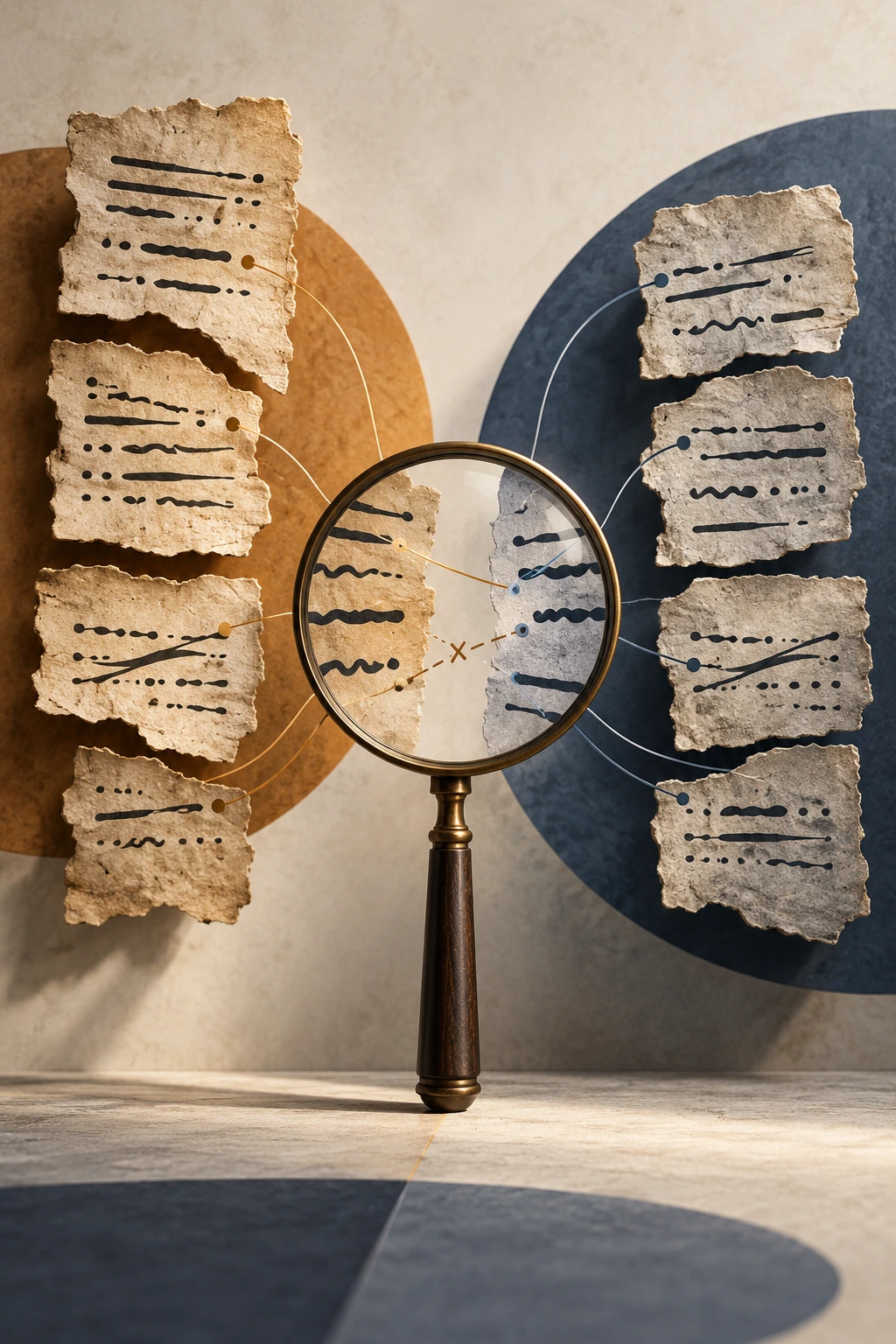
Newly generated conceptual illustration of textual resemblances and differences; its fragments and marks are fictional, not ancient manuscript evidence
Entidad
Overstating textual or conceptual parallels and inferring historical dependence without adequate contextual, chronological, or transmission evidence; not a rejection of comparison.
Variantes del nombre: Parallelomania
Contexto y fuentes →

Modern conceptual cover: a DNA helix and abstract connections above house-plan-like shapes; neither a Çatalhöyük artifact nor evidence of a documented pedigree
Entidad
An estimate of biological relatedness from inherited DNA shared by two people; its precision depends on sample quality and comparison, and it does not by itself define social family ties.
Variantes del nombre: genetic kinship, biological relatedness
Contexto y fuentes →

AI-generated conceptual cover: branching paths evoke shared ancestry without depicting an actual linguistic family tree or documented historical transfer
Entidad
Common linguistic descent demonstrated by systematic sound and morphological correspondences, unlike borrowing or accidental resemblance.
Variantes del nombre: linguistic relatedness, linguistic kinship, linguistic relationship
Contexto y fuentes →
Persona
Sumerian language and literature scholar, emeritus professor at the University of Bern.
Variantes del nombre: Pascal Attinger
Contexto y fuentes →

Halliburton Tower on the Rhodes College campus in Memphis, Tennessee, on 24 October 2009. The photograph provides context for the institution where Patrick Gray teaches religion, early Christianity and its Greco-Roman setting
Persona
Religious studies scholar at Rhodes College, researching the New Testament, early Christianity and biblical interpretation.
Variantes del nombre: Patrick Gray
Contexto y fuentes →
Persona
Hebrew Bible scholar studying sea imagery, monsters and the literary construction of space.
Variantes del nombre: Paul K.-K. Cho
Contexto y fuentes →
Persona
Scholar and translator who published Syriac, Arabic and Armenian infancy texts in 1914.
Variantes del nombre: Paul Peeters
Contexto y fuentes →
Persona
German theologian and writer (1821–1892) whose Esther commentary included an appendix on the Second Targum.
Variantes del nombre: Paulus Cassel
Contexto y fuentes →

Modern generated conceptual artwork: abstract scroll-like bands converge before an imaginary mountain landscape, evoking the transmission of the Pentateuch. Not a photograph of a Samaritan manuscript or a documented archaeological site
Entidad
Samaritan Hebrew five-book tradition sharing an older textual history, with linguistic and theological variants, including readings involving Mount Gerizim.
Variantes del nombre: Samaritan Pentateuch
Contexto y fuentes →
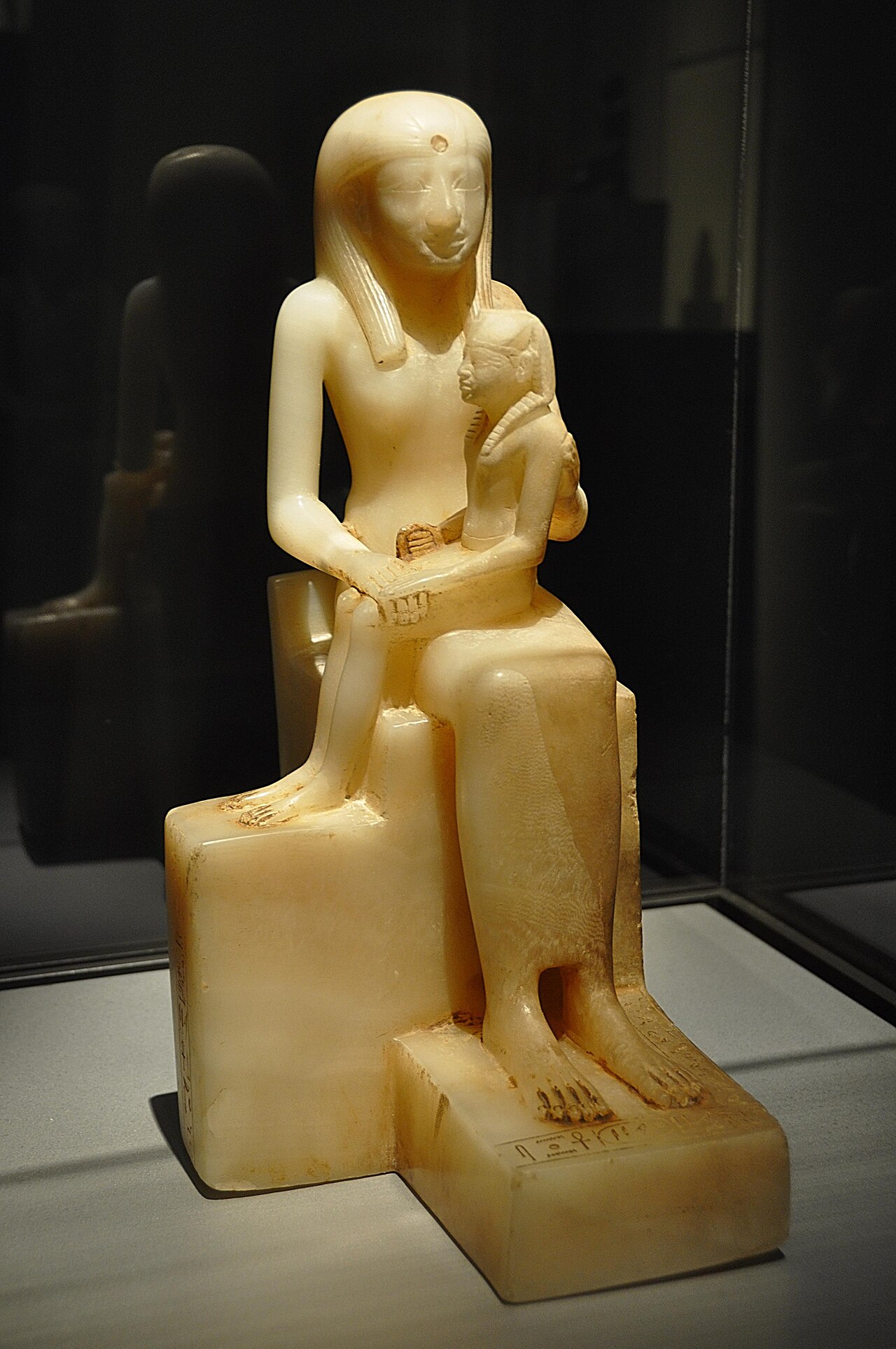
Queen Ankhnes-meryre II with her son King Pepi II on her lap, in an Egyptian-alabaster statuette of the Sixth Dynasty, late third millennium BCE. Brooklyn Museum, 39.119. Photograph by Stephen Sandoval, February 2009
Persona
Pepi II was an Egyptian king of the Sixth Dynasty in the late third millennium BCE
Variantes del nombre: Pepi II, Pepy II
Contexto y fuentes →
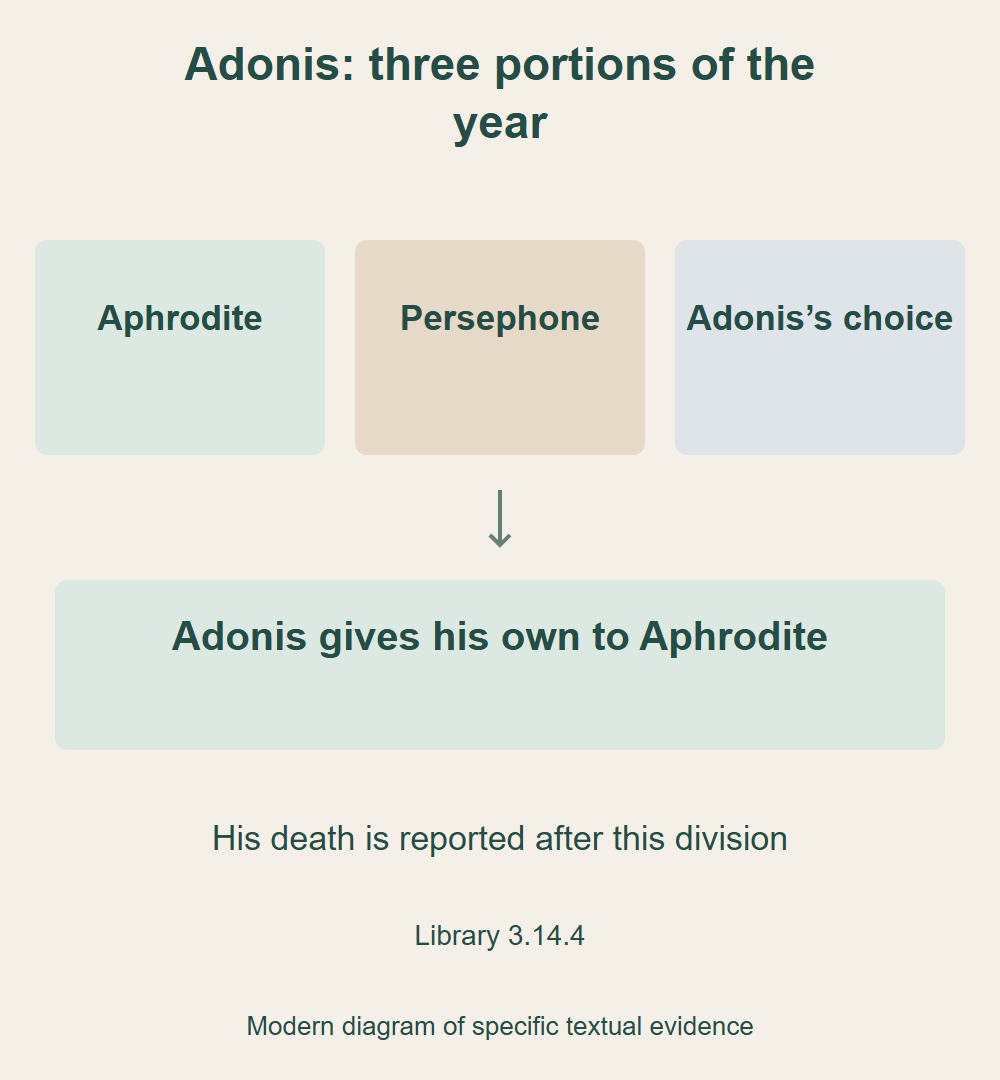
Modern chart of Library3.14.4: three original portions, after which Adonis assigns his own to Aphrodite. The division precedes his death in the narrative
Entidad
Persephone is a Greek goddess associated with the underworld and a participant in one account of Adonis’s childhood.
Variantes del nombre: Persephone
Contexto y fuentes →
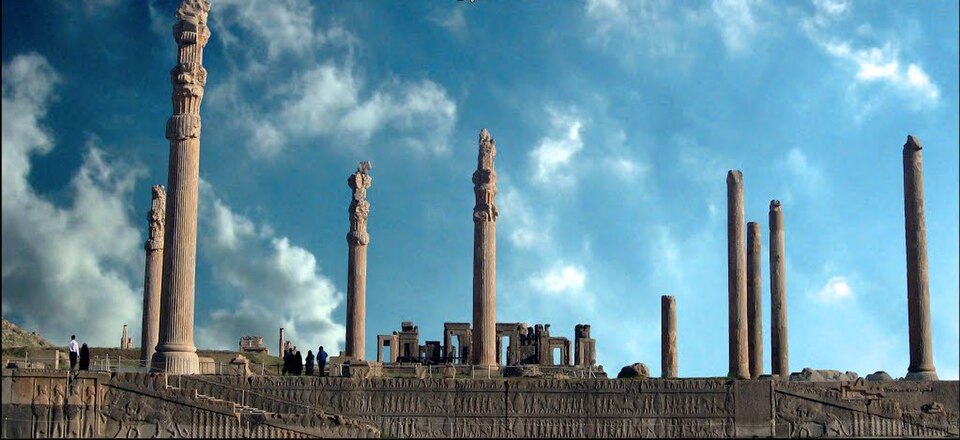
Apadana columns at Persepolis,photographed by Maryam.farhadi 1380,8 October 2018. Modern view of archaeological remains, not a reconstruction of the complete palaces
Yacimiento
Achaemenid royal center in southwestern Iran, begun by Darius I around 518 BCE.
Variantes del nombre: Persepolis, Takht-e Jamshid
Contexto y fuentes →
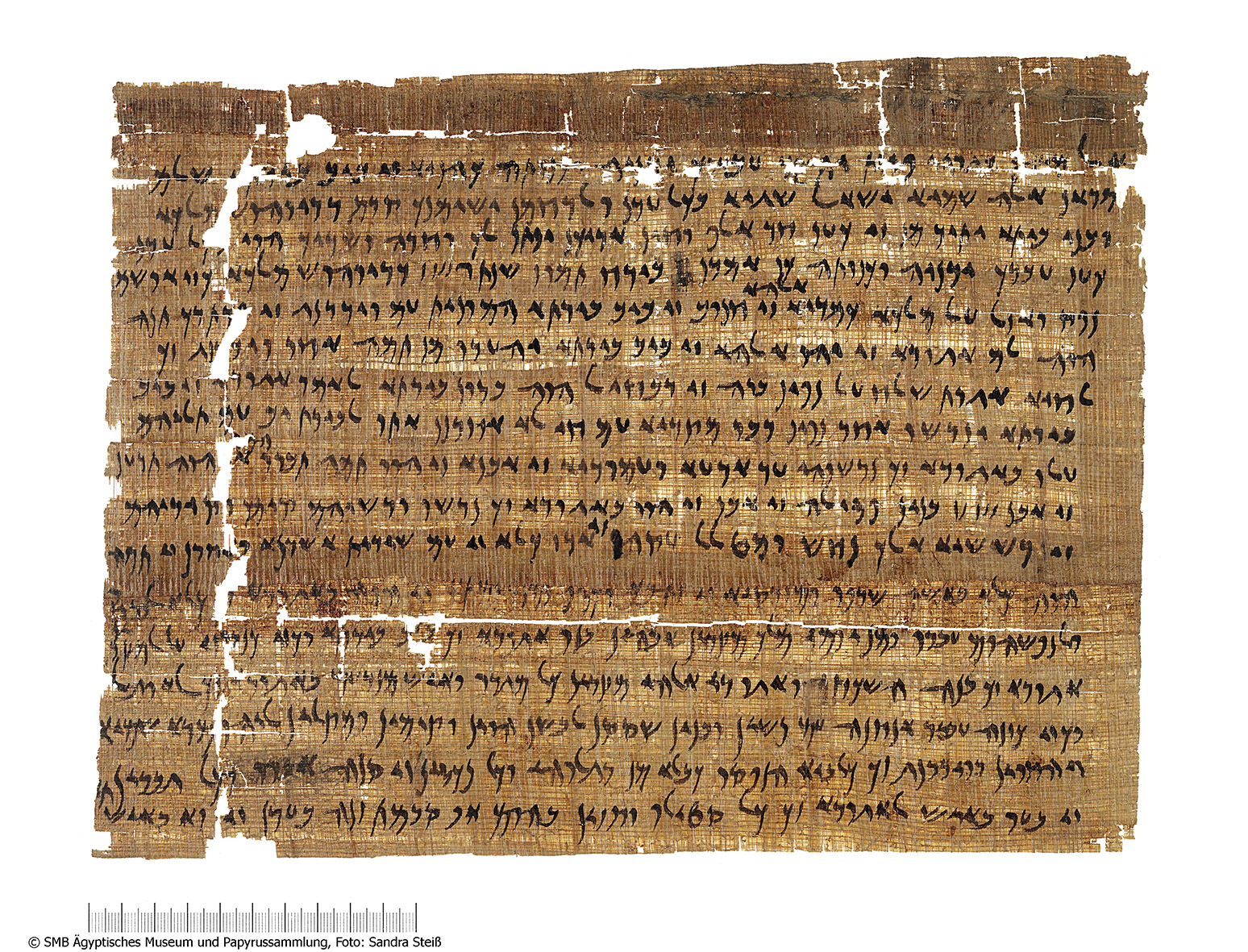
Recto of Berlin papyrus P.13495, the Elephantine temple-rebuilding petition. Photograph of the original object; the verso is shown below
Pieza
Berlin Aramaic papyrus P.13495 (TAD A4.7), dated 25 November 407 BCE. Jedaniah and Elephantine’s priests petitioned to rebuild Yaho’s temple. The article distinguishes the reported destruction, a later memorandum restricting offerings to grain and incense, and indirect evidence from 402 BCE that may suggest rebuilding.
Variantes del nombre: Elephantine temple-rebuilding petition
Contexto y fuentes →
Persona
Philippe Gignoux (1931–2023) was a French scholar of ancient Iranian languages and religions.
Variantes del nombre: Philippe Gignoux
Contexto y fuentes →
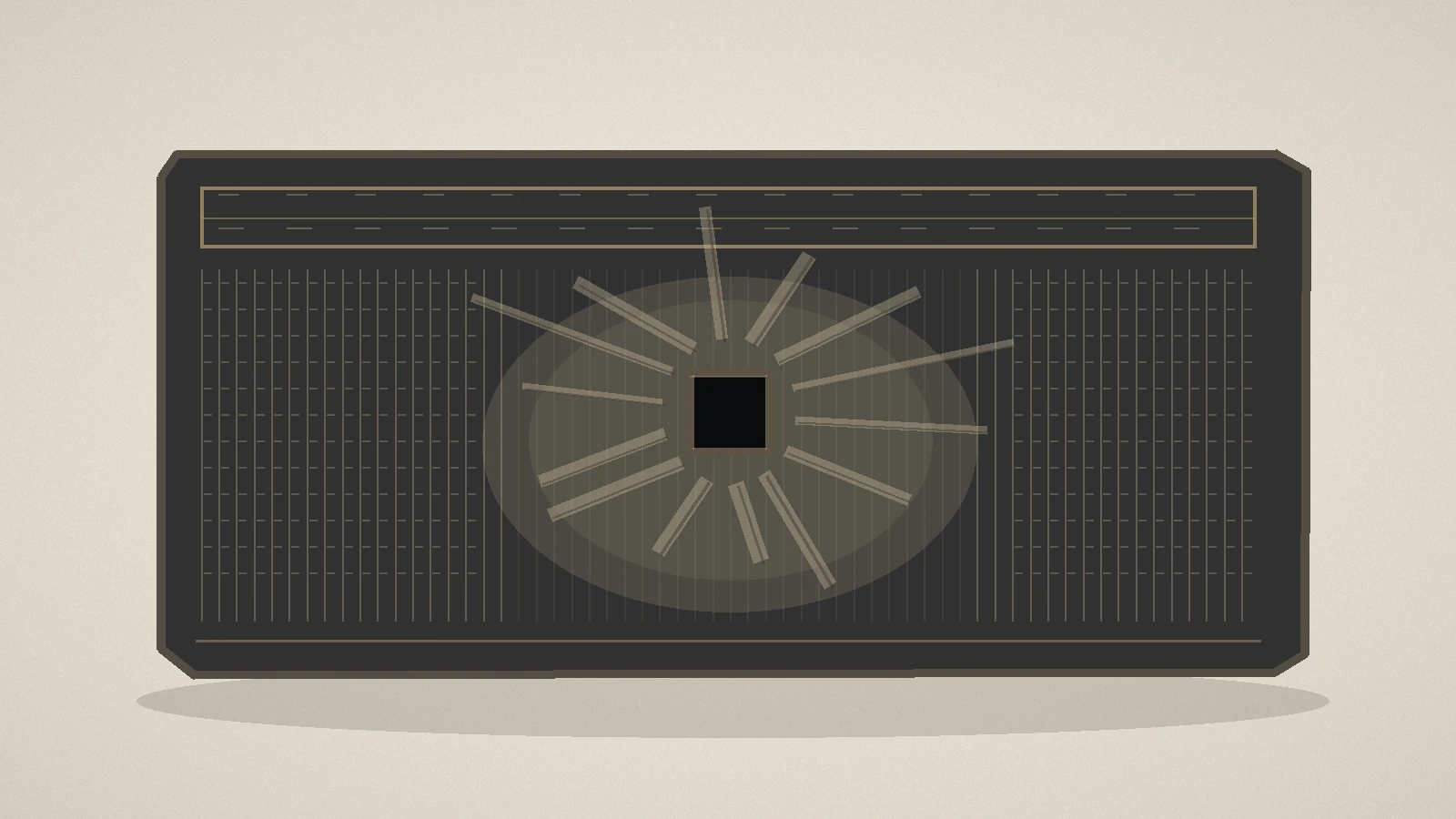
Modern schematic of the slab and abrasion around its centre. Not a photograph of EA498, a transcription of its signs, or a restoration of missing columns; proportions and marks are indicative
Pieza
The Shabaka Stone (British Museum EA498), inscribed c. 710 BCE, links Ptah, heart, speech, creation, and kingship; its damage, textual readings, and alleged older papyrus remain central questions.
Variantes del nombre: Shabaka Stone
Contexto y fuentes →
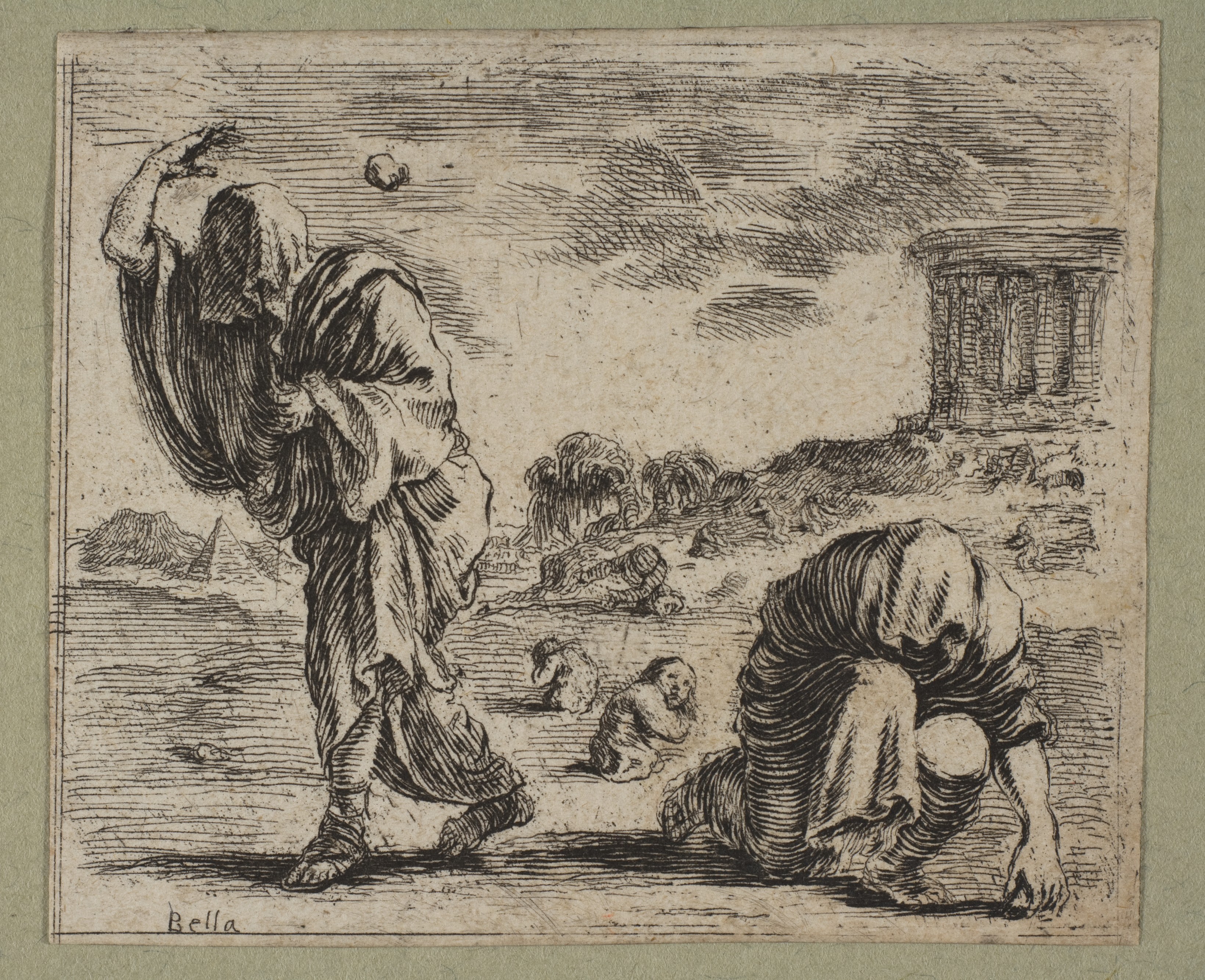
Deucalion and Pyrrha throwing stones; etching by Stefano della Bella, designed by Jean Desmarets de Saint-Sorlin, 1644, Met 18.48.2-48. Later artistic reception, not a witness from Pindar’s time
Persona
Greek figure surviving with Deucalion and associated with humanity’s renewal from stones.
Variantes del nombre: Pyrrha in Deucalion’s flood story, Pyrrha
Contexto y fuentes →
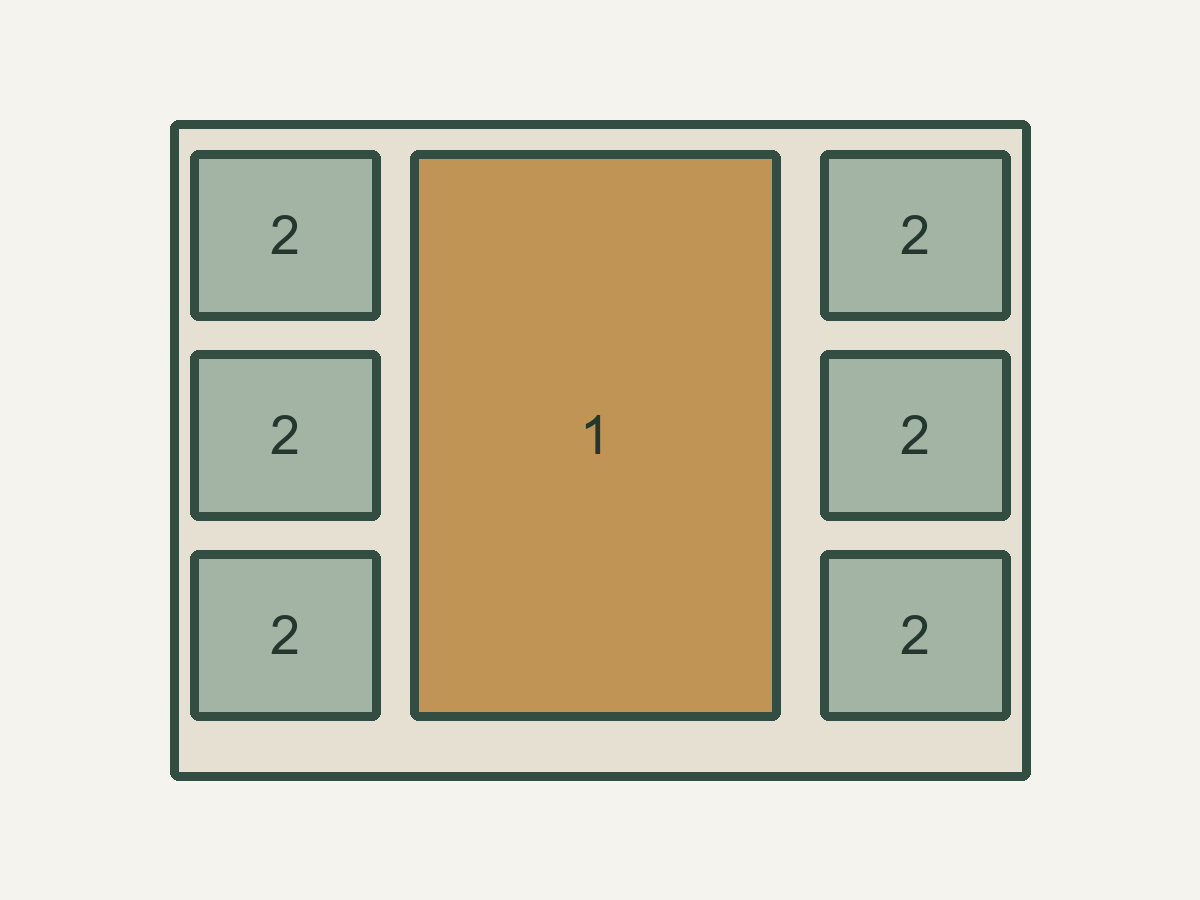
Modern explanatory diagram of a tripartite plan: 1 elongated central hall or space; 2 groups of lateral rooms. The room count and proportions are schematic; this is neither an excavation plan nor a reconstruction of an Eridu building
Entidad
Plan with an elongated central hall and rooms or room groups to either side; the hall may be T-shaped or cruciform. The three parts are spatial zones, not exactly three rooms; the form alone does not identify a building’s function.
Variantes del nombre: tripartite plan, Ubaid tripartite plan
Contexto y fuentes →
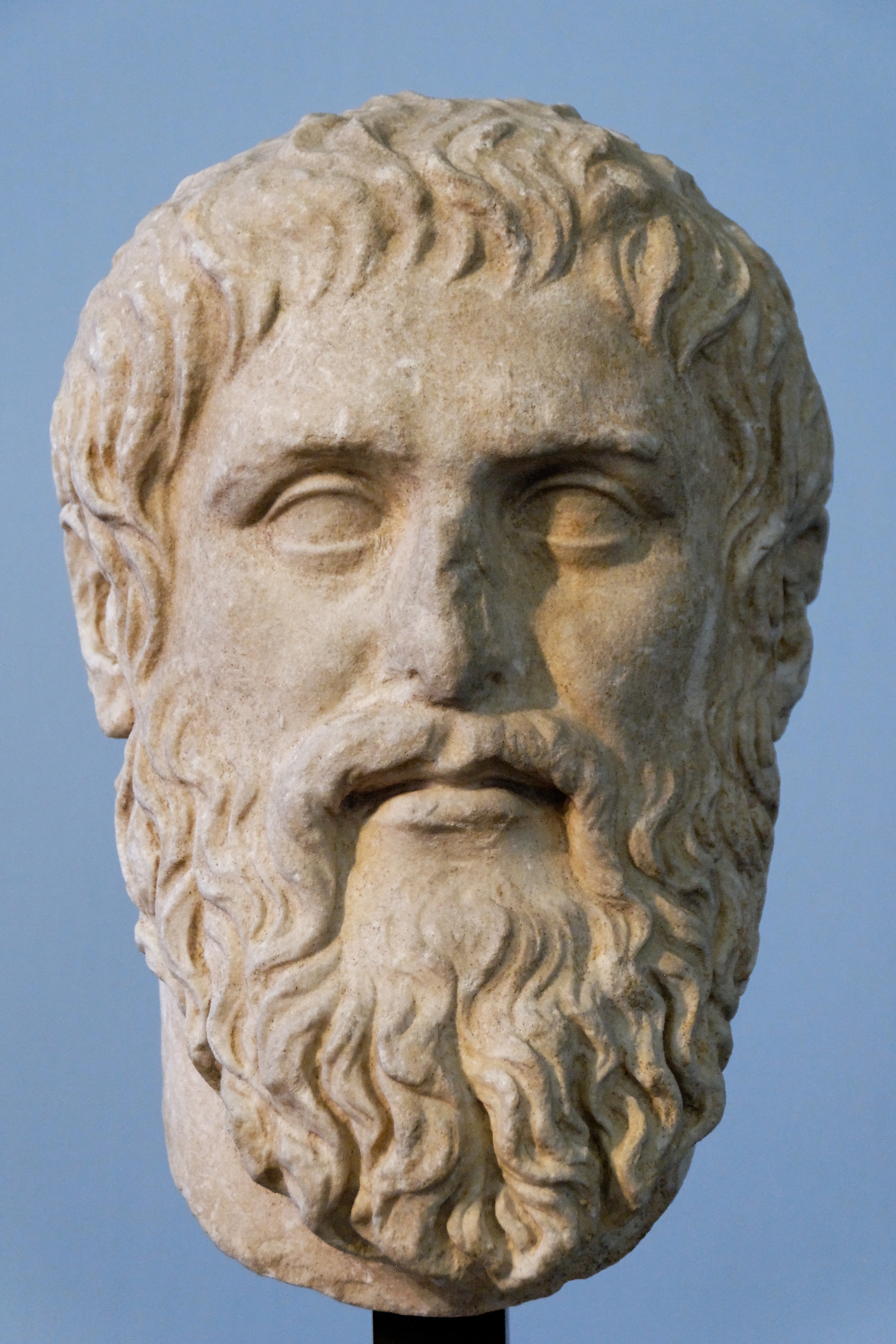
Portrait of Plato, Capitoline Museums, Rome, MC 1377. A Roman marble copy of the first century CE after an older Greek model attributed to Silanion. Photograph by Marie-Lan Nguyen, 2009; the sculpture postdates the philosopher’s lifetime
Persona
Plato (approximately 427–347 BCE) was a Greek philosopher who explored goodness, justice and cosmic order through philosophical dialogues.
Variantes del nombre: Plato, Platōn
Contexto y fuentes →
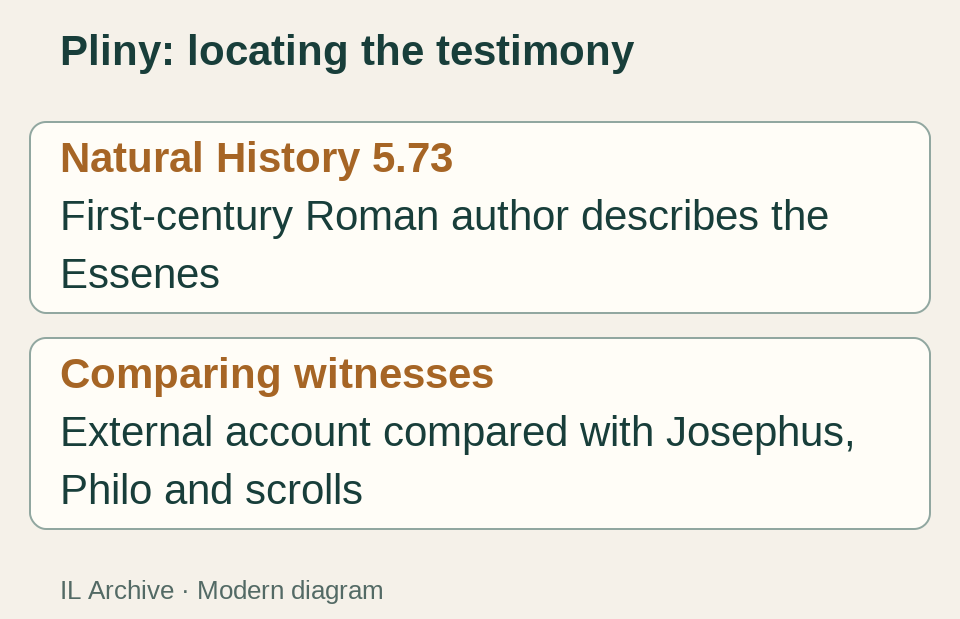
Modern diagram locates Pliny’s Essene description in Natural History 5.73 within his Roman geography, distinct from Josephus, Philo and manuscript witnesses. It is not Pliny’s portrait or an ancient manuscript
Persona
Roman writer and statesman, around 23/24–79 CE, author of the Natural History.
Variantes del nombre: Pliny the Elder
Contexto y fuentes →
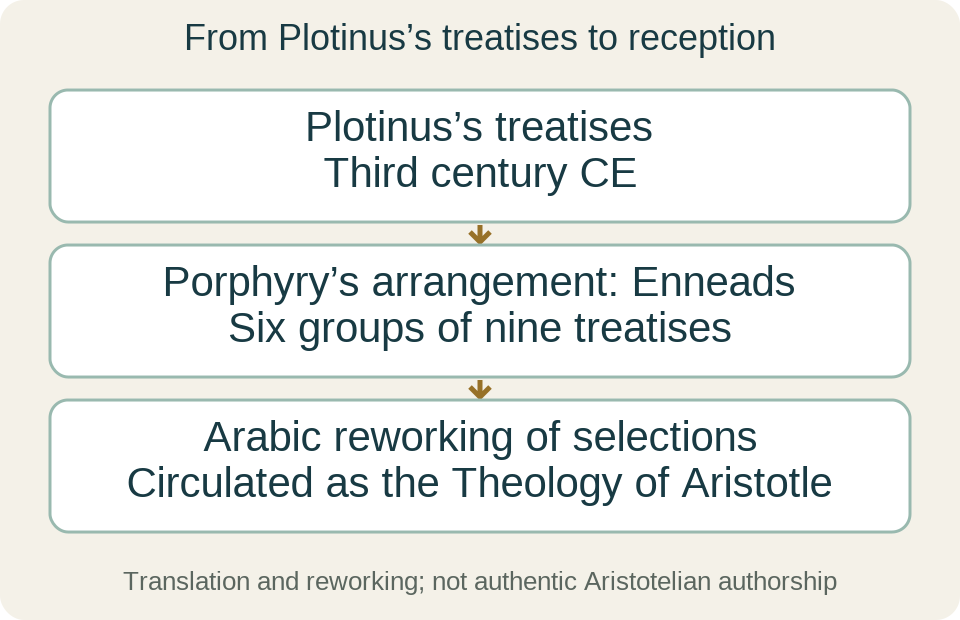
Modern diagram distinguishing author, editor and the Arabic reception title of selected material. Neither a portrait nor an ancient manuscript; it does not imply an Arabic translation of all the Enneads
Persona
Third-century CE philosopher central to Neoplatonism, whose treatises were collected as the Enneads.
Variantes del nombre: Plotinus
Contexto y fuentes →

Newly AI-generated symbolic cover bringing together a fish, spring, and mountainous gate; not a manuscript image, archaeological object, or verified historical reconstruction
Texto antiguo
Syriac metrical homily on Alexander, life-water, and the gate against Gog and Magog, attested by a ninth-century manuscript catalogue and described in scholarship as having three recensions. Traditionally attributed to Jacob of Serugh; Brock proposes composition after 629/630 CE. Recensions are not collated here.
Variantes del nombre: Syriac Alexander Poem
Contexto y fuentes →
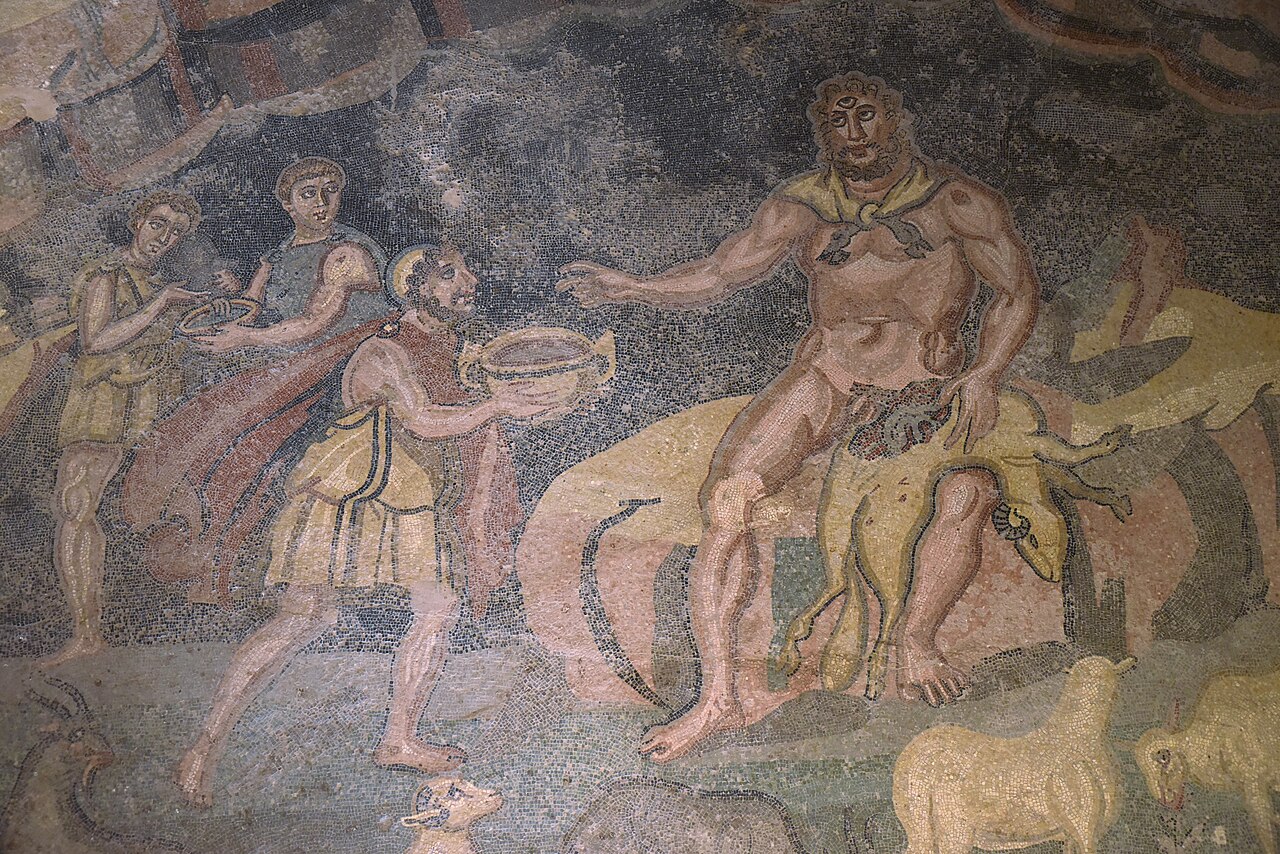
Odysseus offering a drink to Polyphemus in a Roman mosaic at Villa del Casale, Sicily. A later representation of the adventure narrated in Odyssey Book 9
Entidad
One-eyed giant in the Odyssey and Poseidon’s son within the narrative.
Variantes del nombre: Polyphemus
Contexto y fuentes →
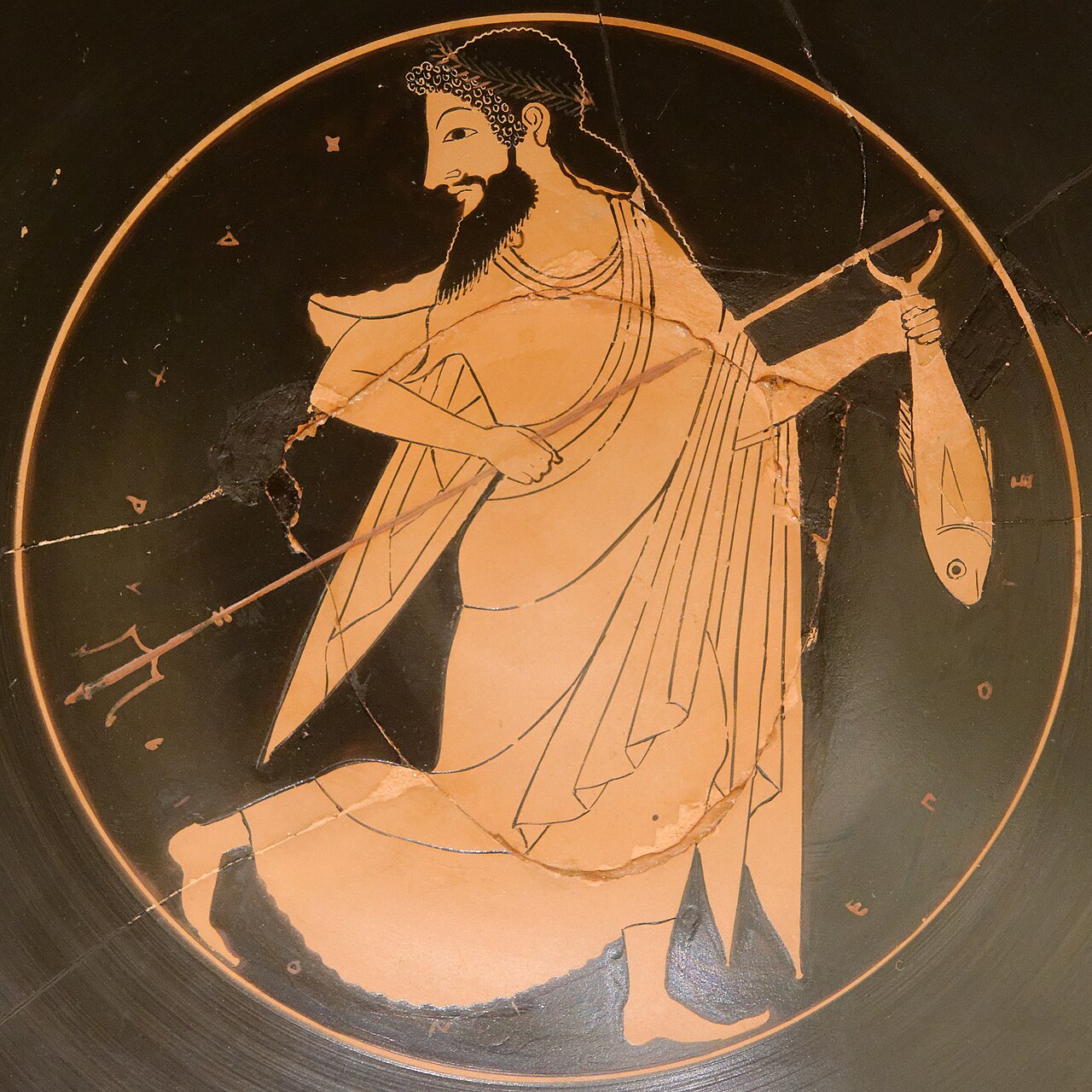
Poseidon with a trident and a fish inside an Attic cup, about 510 BCE; National Museum of Denmark 13407. An ancient representation of the deity
Entidad
Sea god in Greek traditions and an influential figure in the Iliad and Odyssey.
Variantes del nombre: Poseidon
Contexto y fuentes →
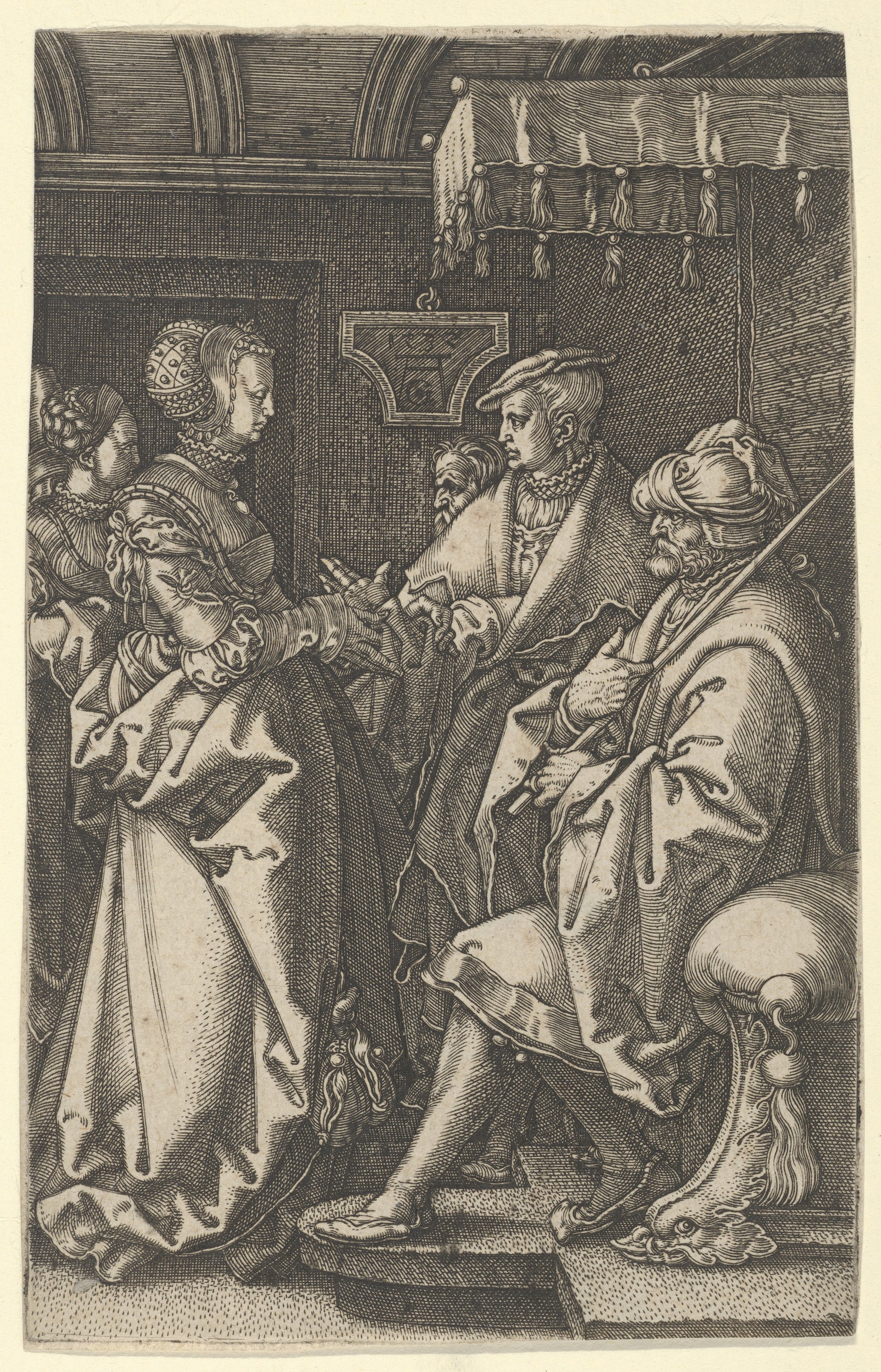
Potiphar’s Wife Accusing Joseph, Heinrich Aldegrever engraving, 1532; Met 49.132.83. Wife at left, seated Potiphar at right, Joseph behind him: artistic reception of Genesis 39:17, not historical portraits
Persona
Egyptian official who buys Joseph and places him over his household in Genesis 39.
Variantes del nombre: Potiphar in Genesis, Potiphar
Contexto y fuentes →
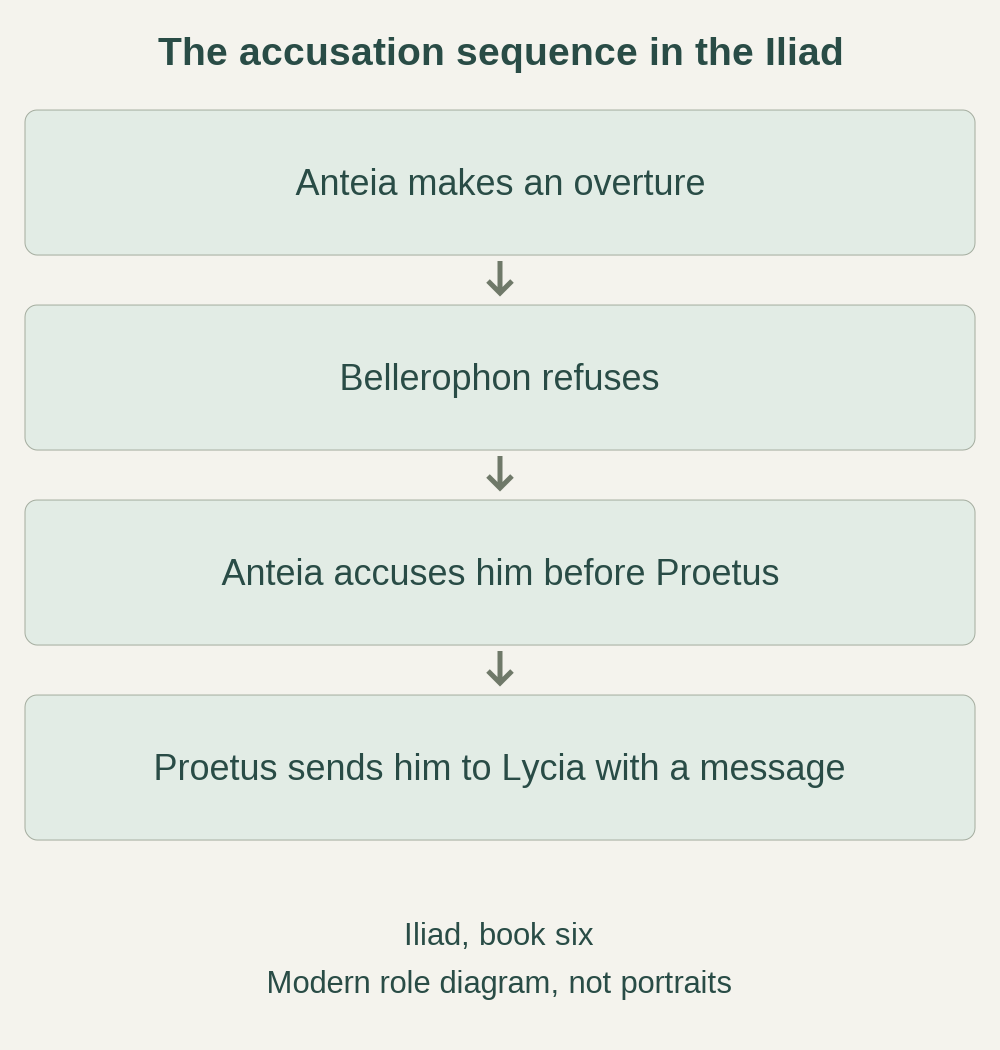
Modern diagram of Anteia, Bellerophon and Proetus in the Iliad episode; explains sequence without deciding other texts’ dependence
Persona
King hearing Anteia’s accusation and sending Bellerophon to Lycia with a message threatening his life.
Variantes del nombre: Proetus in the Iliad, Proetus
Contexto y fuentes →
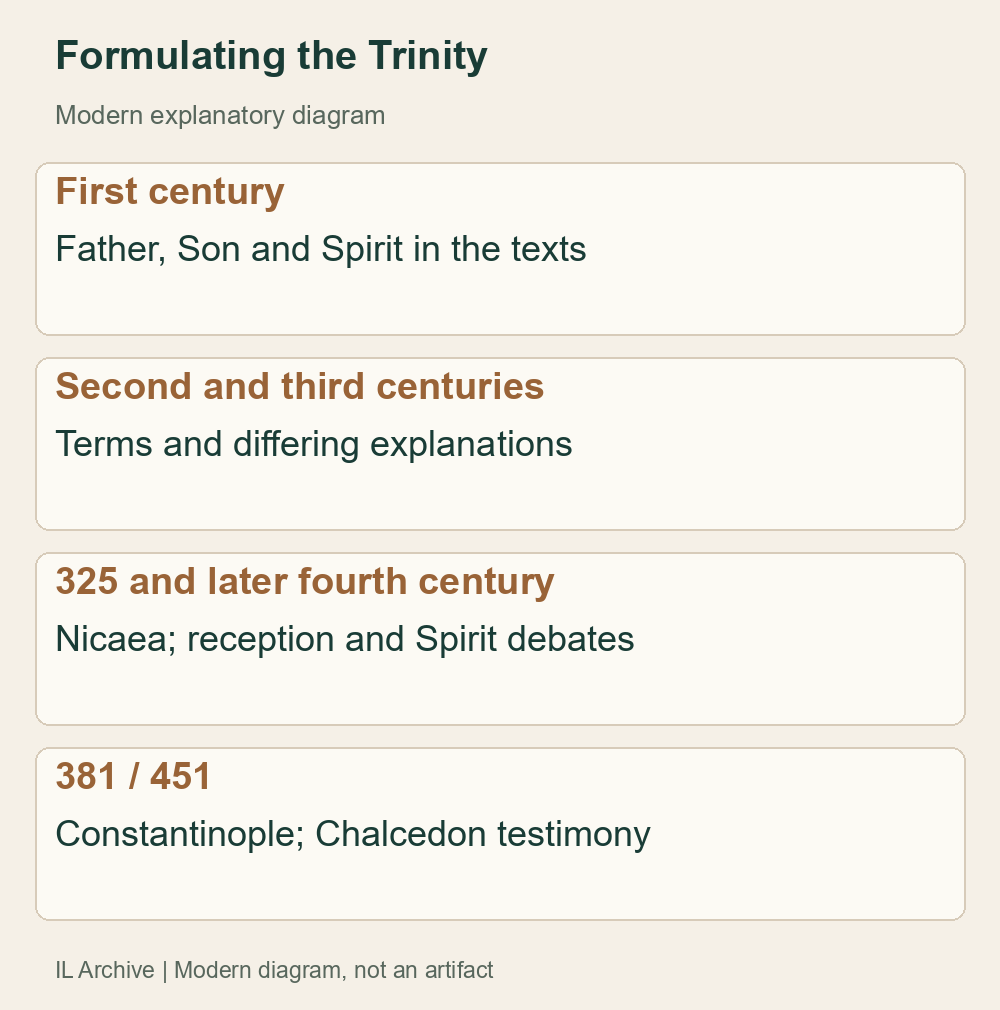
Modern timeline of witnesses and formulations, not one birth date for belief or immediate consensus. It distinguishes 381 from the expanded creed’s attestation in 451
Entidad
Christian council convened by Constantine in 325 at Nicaea; issued a creed on Father and Son and addressed church affairs, with disputes continuing over its reception.
Variantes del nombre: Council of Nicaea, First Council of Nicaea, Nicaea 325
Contexto y fuentes →

Modern AI-generated conceptual illustration evoking sky and time in Enochic literature; neither a historical manuscript nor a verified ancient cosmological reconstruction
Entidad
A composite Second Temple Jewish apocalyptic collection on the Watchers, parables, celestial cycles, historical visions, and judgment, preserved complete in Geʽez.
Variantes del nombre: First Enoch, 1 Enoch, Ethiopic Enoch
Contexto y fuentes →
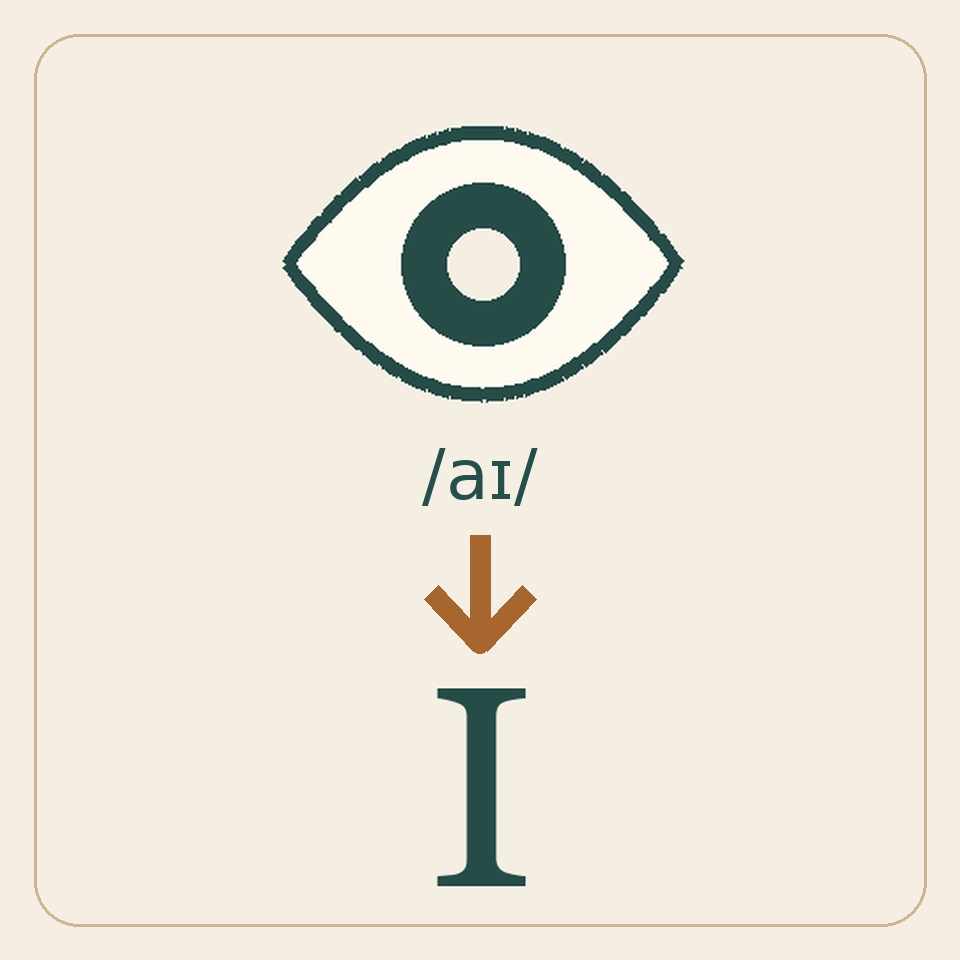
Modern editorial adaptation of an IL Archive diagram: an eye stands for English I through the shared sound /aɪ/. This is not a historical tablet or ancient sign
Entidad
A writing principle in which a sign for one word is reused to write another word of similar pronunciation but different meaning; visual similarity alone does not prove an early phonetic use.
Variantes del nombre: rebus principle, rebus
Contexto y fuentes →
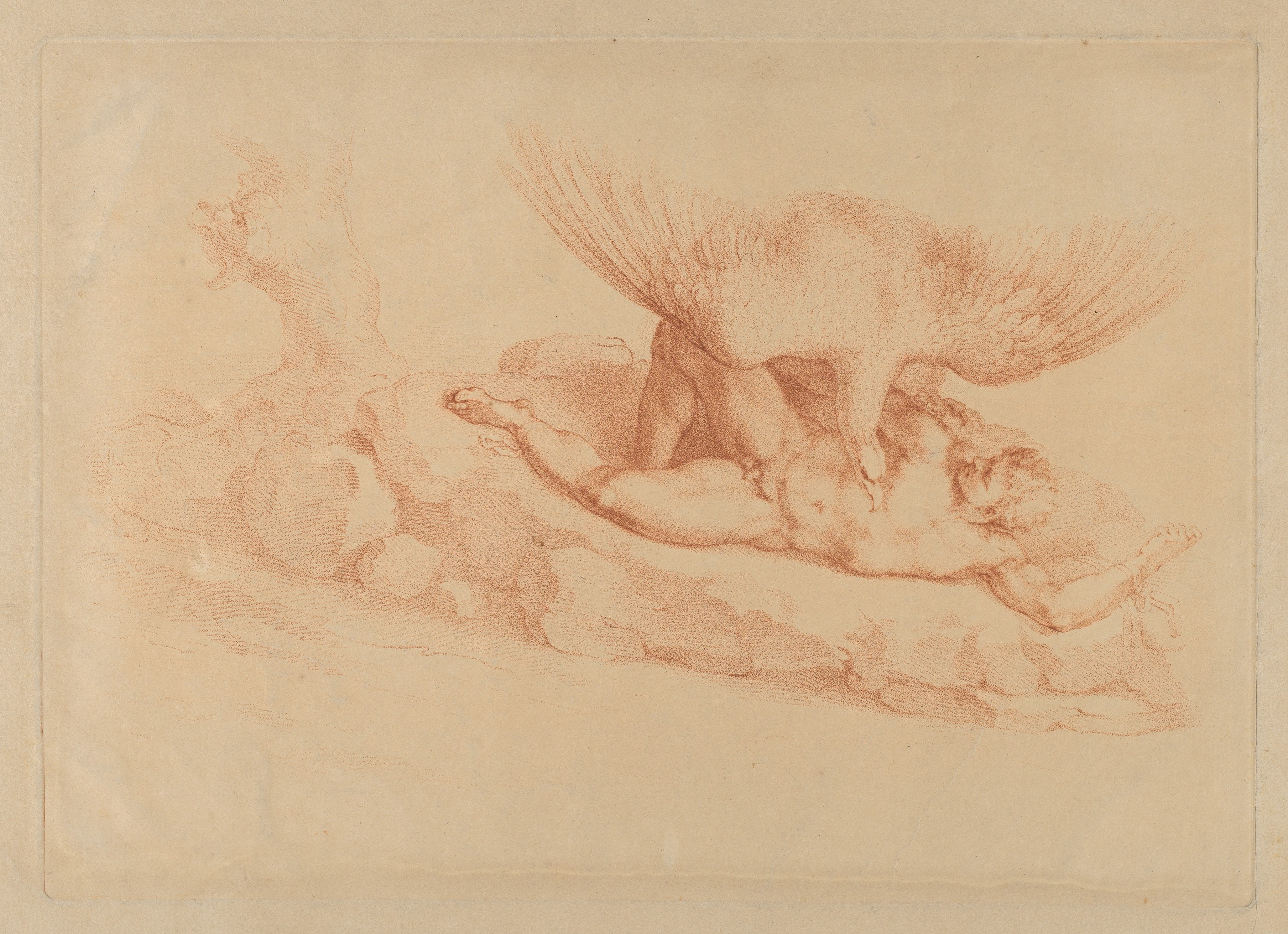
Prometheus chained to a rock beneath an eagle; red crayon-manner print by Francesco Bartolozzi after Michelangelo, 1795, Met 62.557.193. Punishment tradition, not Deucalion’s warning
Entidad
Greek divine figure advising and protecting humans in some Deucalion accounts.
Variantes del nombre: Prometheus
Contexto y fuentes →
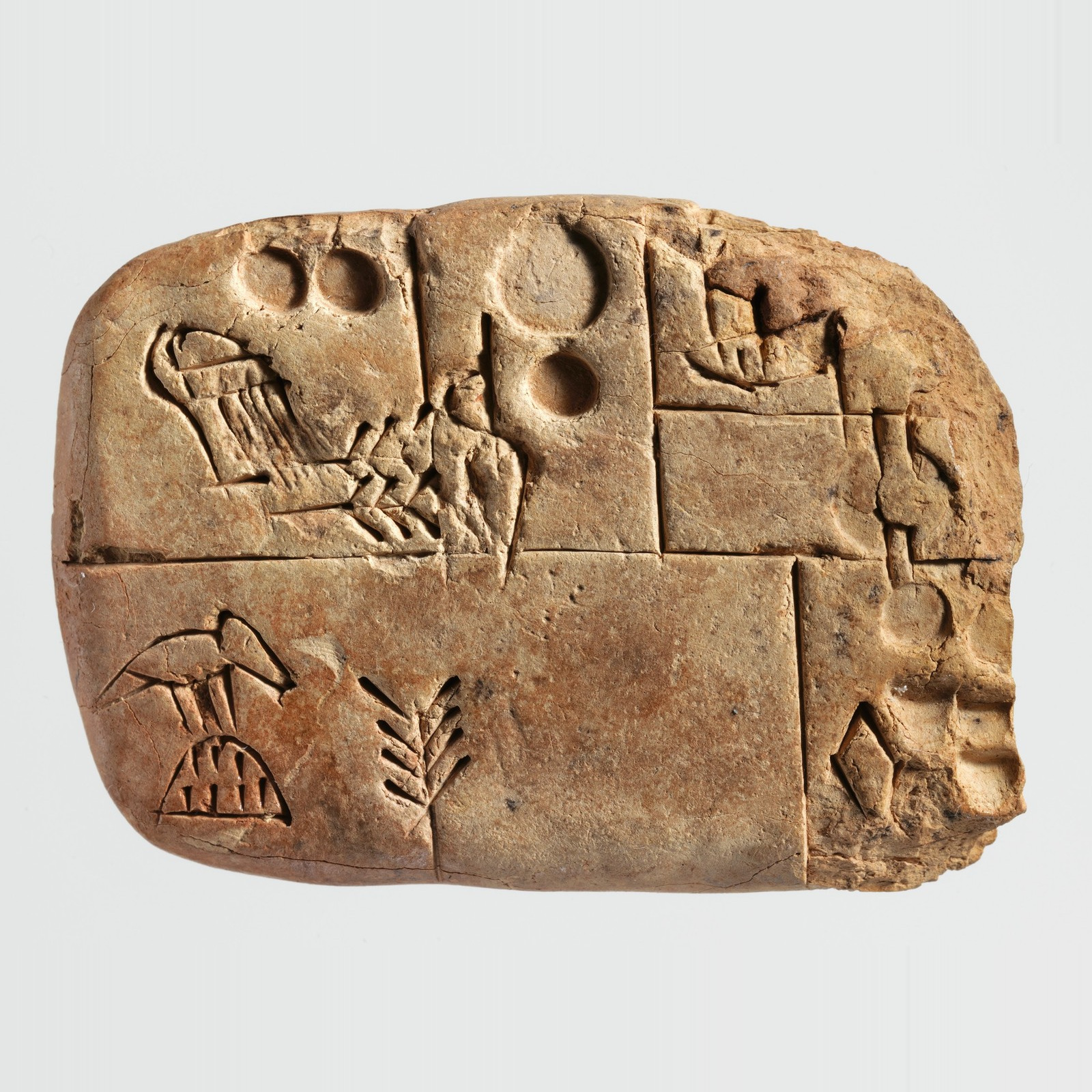
Cover: actual Met clay tablet 1988.433.2, c. 3100–2900 BCE, probably from Uruk. Modern square presentation with extended background margins; no marks changed and no edge of the object cropped
Entidad
Early southern Mesopotamian script (c. 3350–3000 BCE): clay tablets with counting systems and signs for commodities, people and offices, as well as lexical lists; not yet a full rendering of speech.
Variantes del nombre: proto-cuneiform, proto-cuneiform writing
Contexto y fuentes →
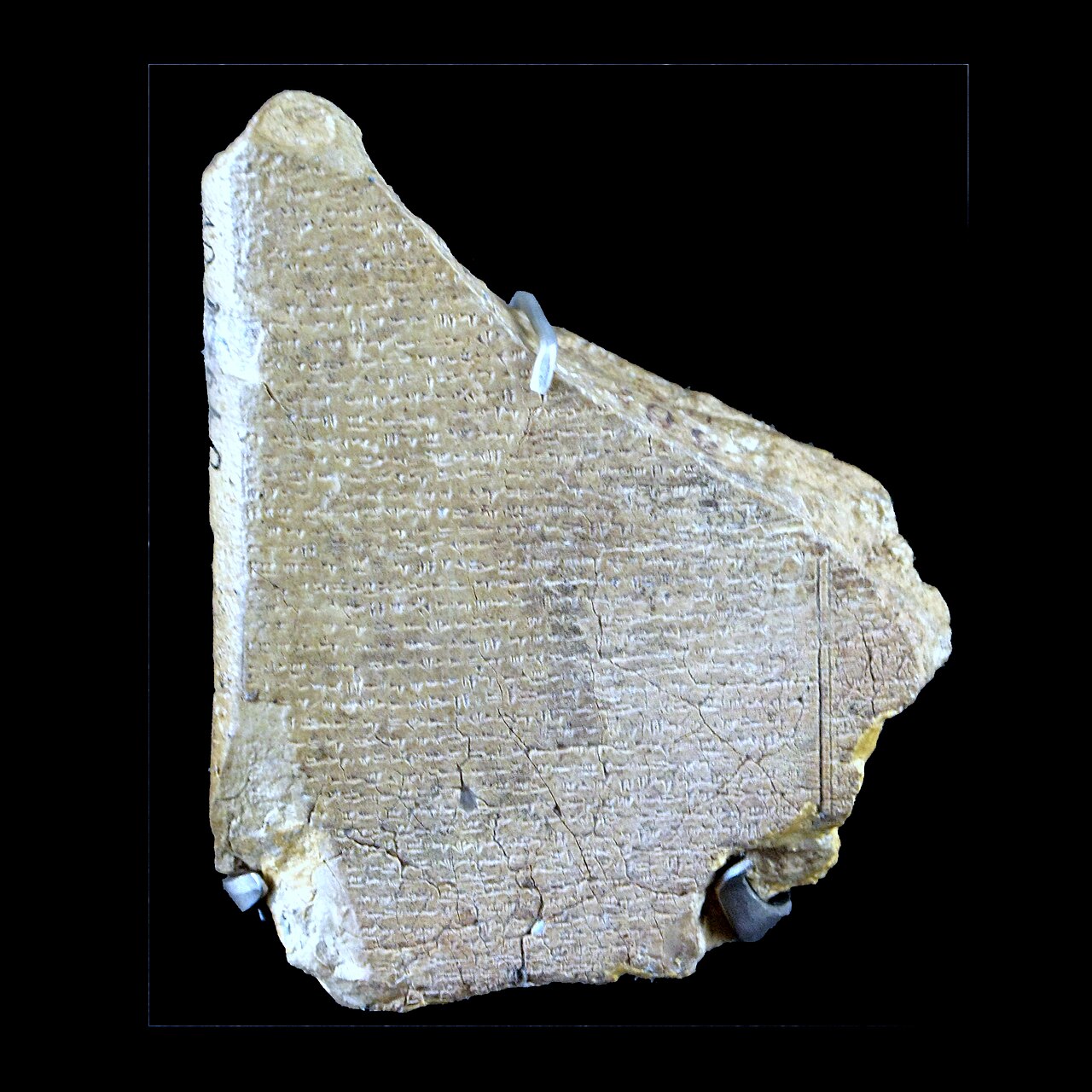
Ugaritic tablet from the Baal Cycle, Ras Shamra, c. 14th–13th centuries BCE; Louvre, AO 16640. An attested Semitic language, not a document in reconstructed Proto-Semitic
Entidad
The inferred ancestral language of Semitic, reconstructed from comparative sound, morphological and lexical evidence; no direct Proto-Semitic inscription survives.
Variantes del nombre: Proto-Semitic
Contexto y fuentes →
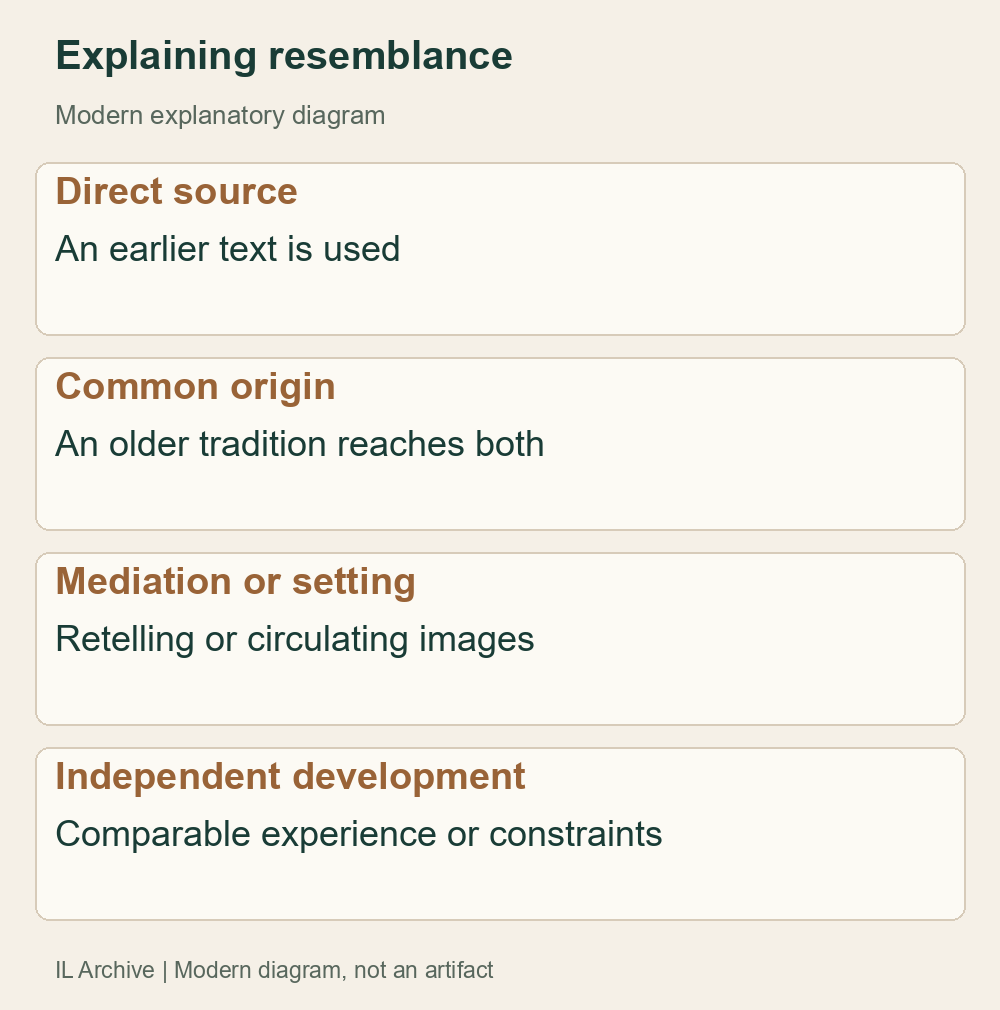
Alternatives can overlap; this diagram does not document a particular narrative’s route
Entidad
Use of verbal or narrative material from an earlier text or tradition in a later work, distinguishing evidence of transfer from mere resemblance.
Variantes del nombre: Literary borrowing
Contexto y fuentes →
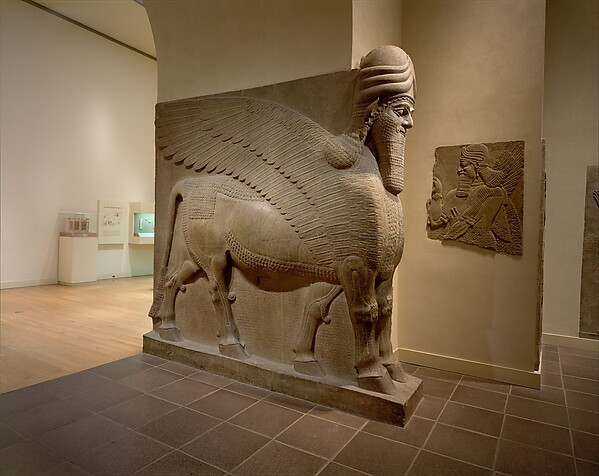
Assyrian lamassu: human-headed winged bull from Nimrud (Kalhu), ca. 883–859 BCE, The Met, 32.143.1. An example of Assyrian palace art, not an image of every ancient Near Eastern society or a depiction of El
Entidad
Modern scholarly label for ancient societies of Mesopotamia, the Levant, Anatolia and Iran, sometimes extending to Egypt and other neighbours depending on the study; not one civilization or religion.
Variantes del nombre: Ancient Near East
Contexto y fuentes →
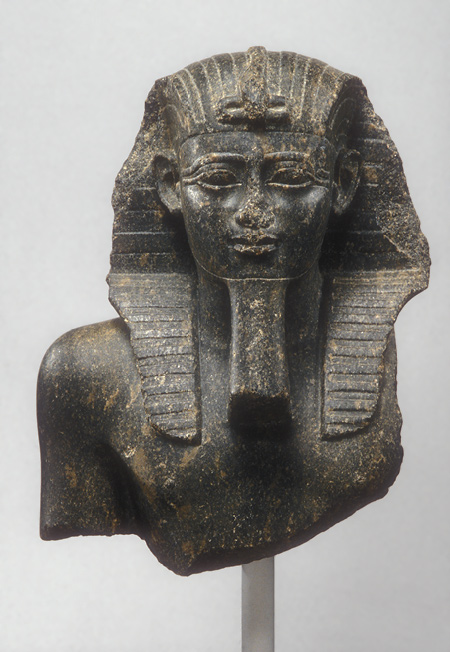
Granite bust from a royal statue dated by the museum to Psamtik I’s reign, about 664–610 BCE, Metropolitan Museum of Art, X.358
Persona
Psamtik I was an Egyptian king of Dynasty 26, reigning about 664–610 BCE during the Saite period.
Variantes del nombre: Psamtik I
Contexto y fuentes →
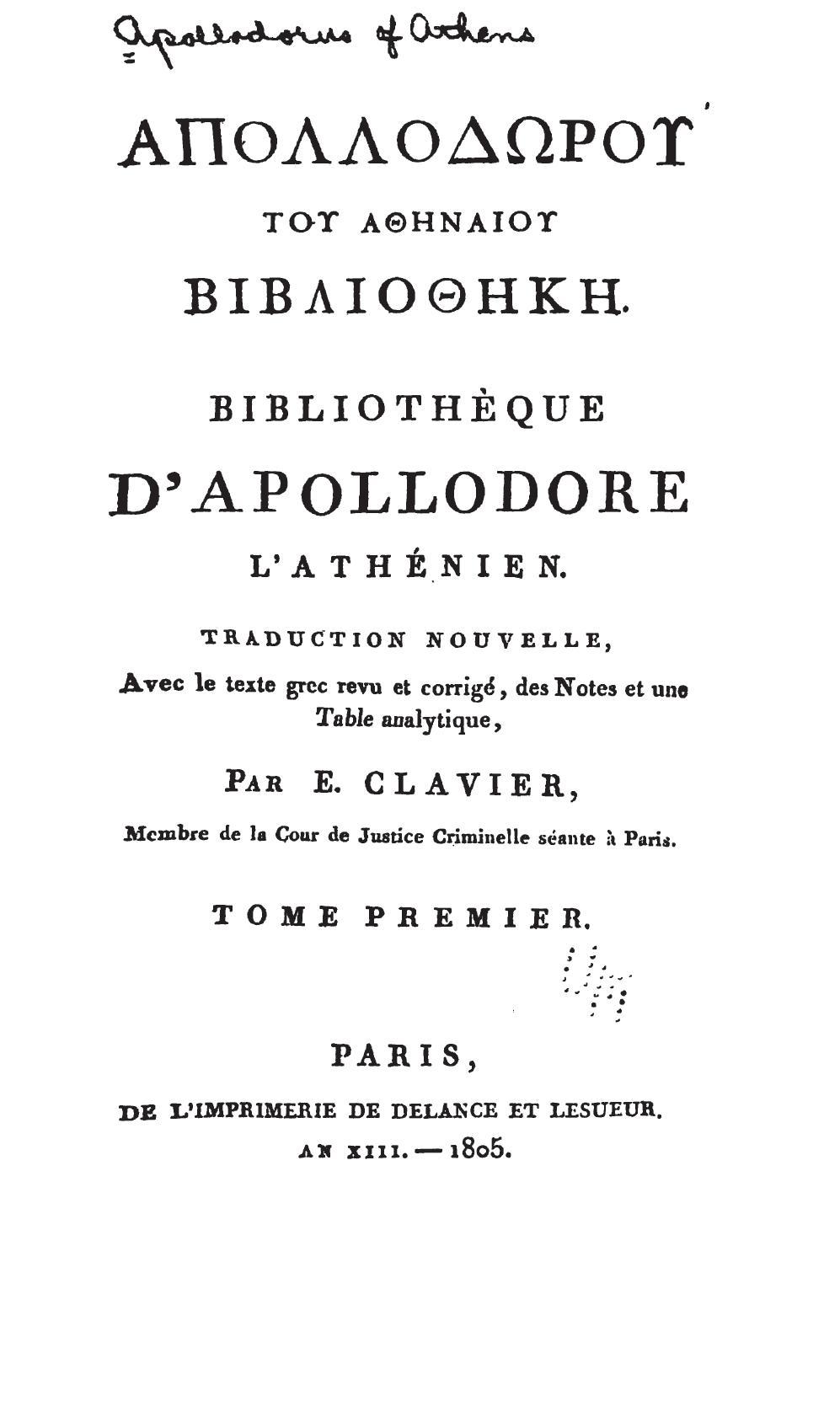
Title page of the Bibliothèque d’Apollodore in E. Clavier’s edition, Paris, 1805, volume I, in Greek and French. It documents a later printed edition; the title’s author attribution is traditional
Persona
Name used for the author of the Bibliotheca, a Greek mythographic collection usually dated to the first or second century CE.
Variantes del nombre: Pseudo-Apollodorus
Contexto y fuentes →
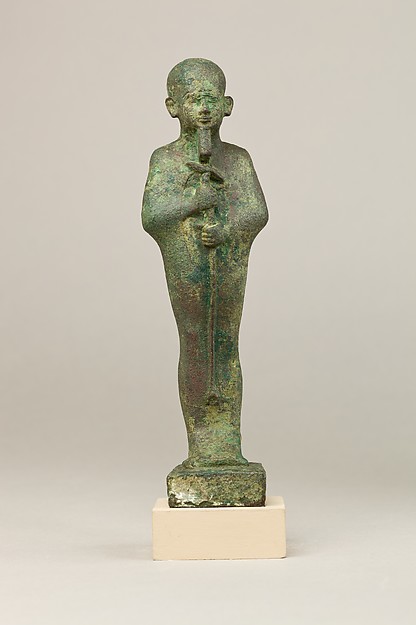
Statuette of Ptah wearing a close-fitting cap, straight beard and enveloping garment. Made of cupreous metal, it is dated by the Met to 664–30 BCE; object 04.2.406
Entidad
Ptah is an Egyptian god associated with Memphis, craftsmanship and creation
Variantes del nombre: Ptah
Contexto y fuentes →
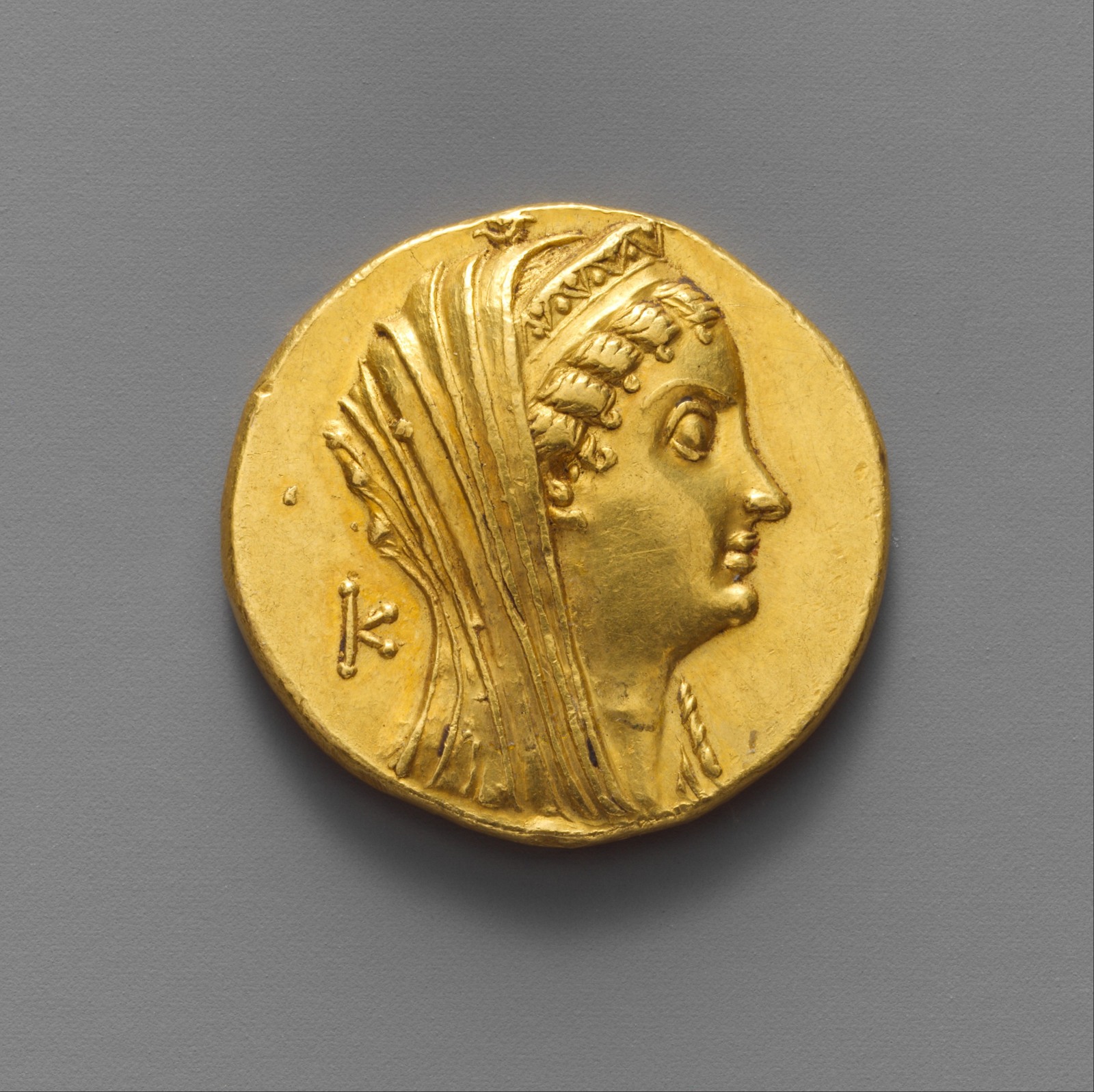
Gold coin obverse, reign of Ptolemy II, Alexandria, c. 261–246 BCE. The portrait is Arsinoe II, not the king. Met 30.115.23. Context for Ptolemaic Egypt, not evidence of Torah translation. Original preserved; resized without cropping
Entidad
Ptolemaic ruler of Egypt (sole reign c. 282–246 BCE), linked to Alexandrian cultural patronage and, in the later Letter of Aristeas, the Greek Torah translation; the particulars of royal commissioning remain independently unverified.
Variantes del nombre: Ptolemy II, Ptolemy II Philadelphus, Ptolemy II Philadelphos
Contexto y fuentes →

Modern conceptual illustration of receding water, two survivors, a boat, stones and a mountain evoking Deucalion; not an archaeological photograph, identified historical vessel or documented location
Entidad
Mythic people arising from stones after the flood of Deucalion and Pyrrha. Pindar names the stone-born lineage; Ovid and Pseudo-Apollodorus recount stone throwing in different forms.
Variantes del nombre: stone-born people, people from stones
Contexto y fuentes →