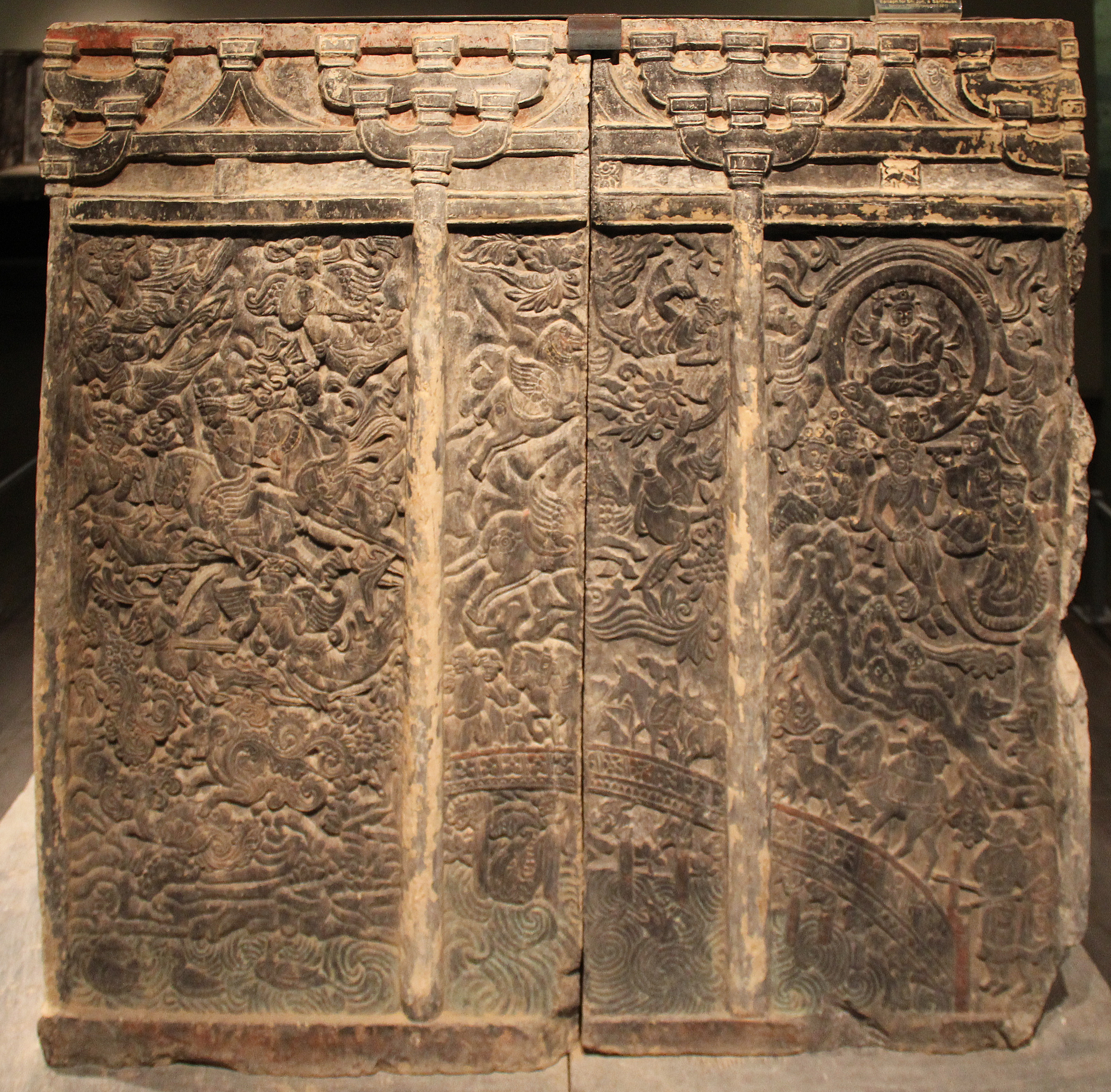
East panels of Wirkak’s (Shi Jun’s) sarcophagus, Xi’an, c. 579–580 CE. The lower crossing scene is interpreted as the Chinvat Bridge: later funerary imagery in a mixed religious setting, not a Gathic-period depiction
Entidad
The crossing associated with the soul’s judgment after death in Zoroastrian tradition. Named in the Gathas, it receives fuller descriptions of guardians, weighing and unequal passage in later texts; it is distinct from resurrection and world renovation.
Variantes del nombre: Chinvat Bridge, Činwad Puhl, Cinvat
Contexto y fuentes →
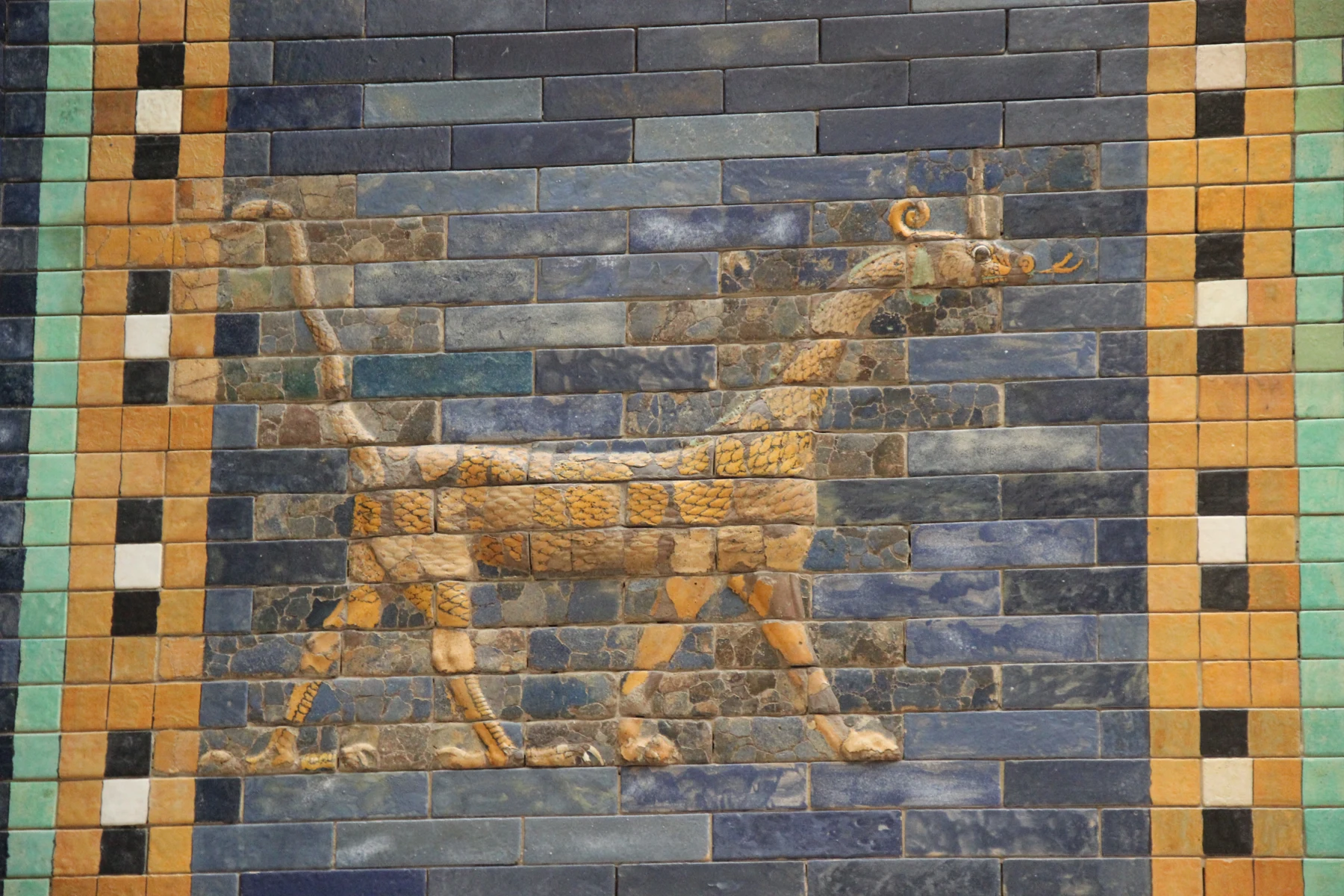
Dragon panel from the Ishtar Gate decoration, sixth century BCE, in a museum reconstruction incorporating ancient bricks at the Pergamon Museum. A gate detail, not its complete appearance at Babylon. Photograph Gary Todd, 1 August 2016
Yacimiento
A gate in Nebuchadnezzar II’s sixth-century BCE Babylonian building program, decorated with glazed-brick animals associated with Mesopotamian deities.
Variantes del nombre: Ishtar Gate
Contexto y fuentes →
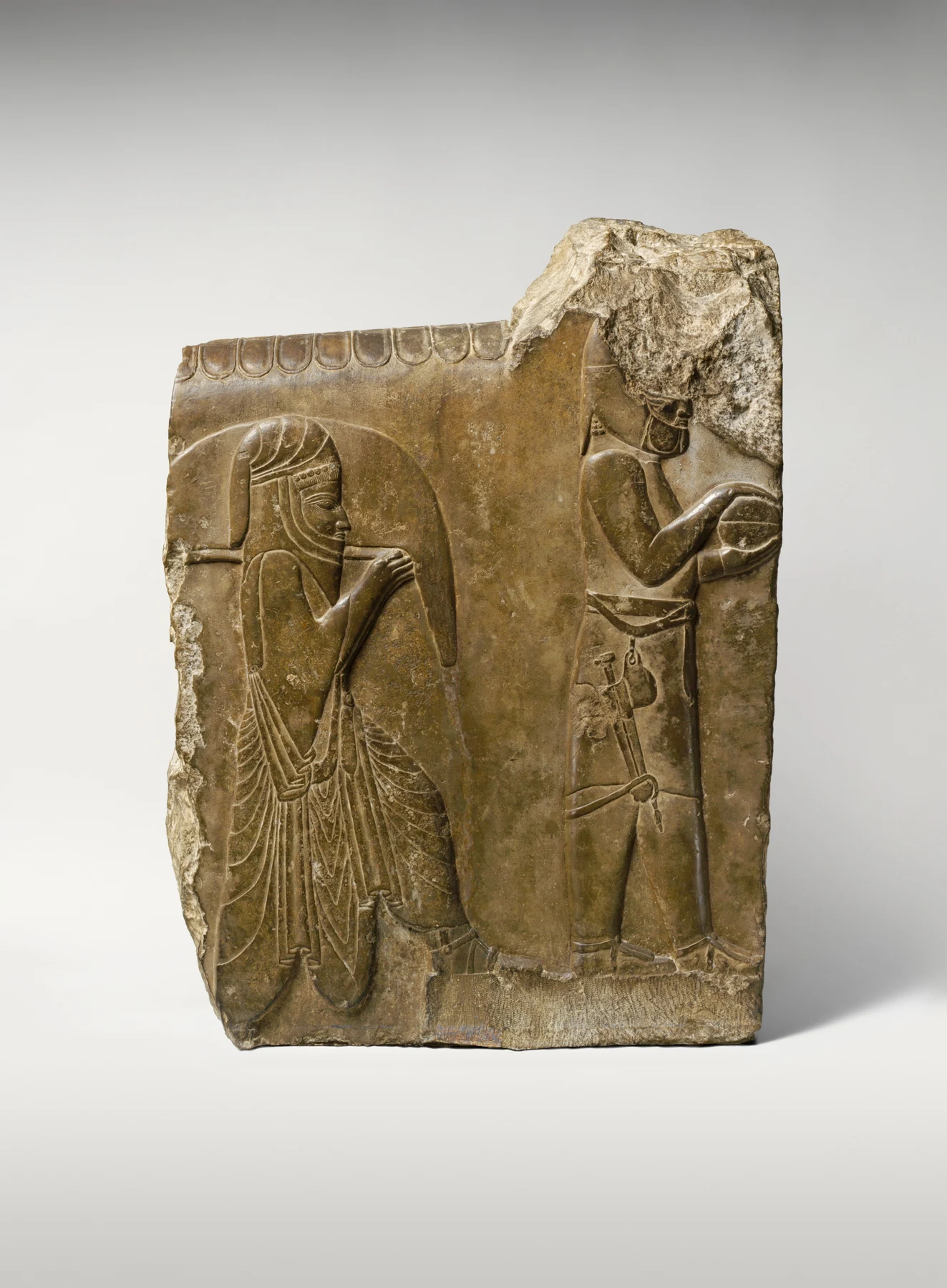
Limestone relief of two servants carrying food and drink, Persepolis, ca. 358–338 BCE, under Artaxerxes III. Metropolitan Museum, 34.158, public-domain photograph. Evidence for the representation of banquet service, not Esther, Haman or a banquet of Xerxes
Entidad
Jewish festival connected in Esther with rescue and lots; the book’s explanation alone does not establish the first historical origin of every element.
Variantes del nombre: Purim, Purim festival
Contexto y fuentes →
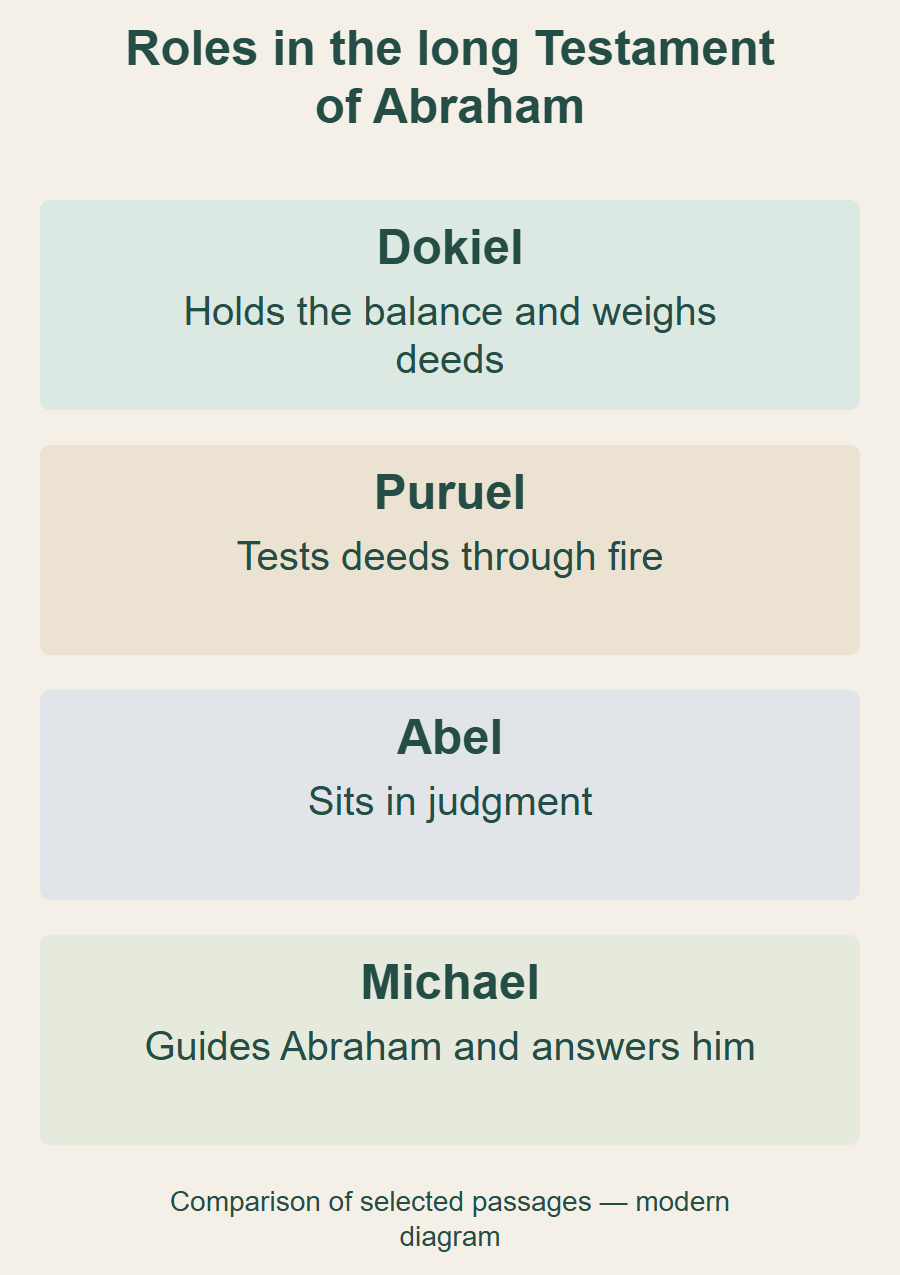
Modern chart of the long Testament of Abraham: Abel judges, Dokiel weighs, Puruel tests by fire and Michael guides Abraham; not ancient likenesses
Entidad
Puruel is an angel in the long Testament of Abraham who tests deeds by fire.
Variantes del nombre: Puruel
Contexto y fuentes →
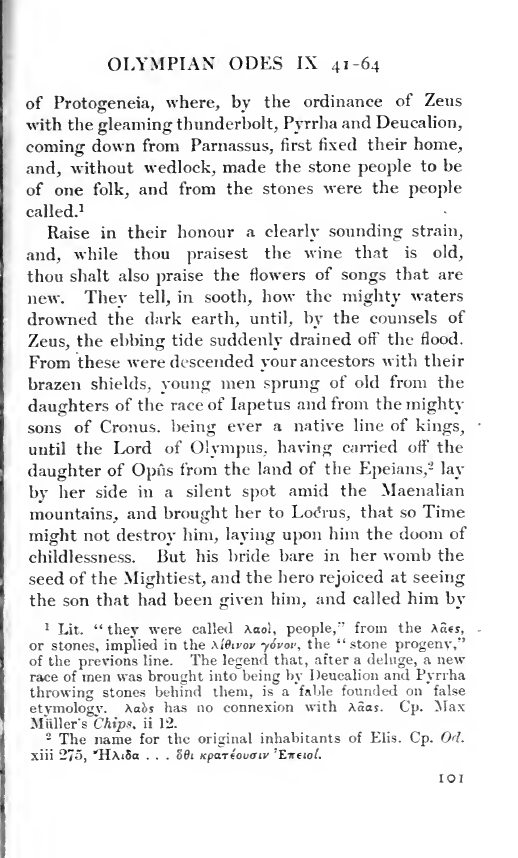
Olympian 9.41–64, John Sandys’s English translation, Loeb 1915, p. 101/PDF 157. A historical modern edition page, not an ancient Greek manuscript
Persona
Greek poet, about 518–438 BCE, linking athletic victories with gods, genealogies and cities.
Variantes del nombre: Pindar, Greek lyric poet
Contexto y fuentes →
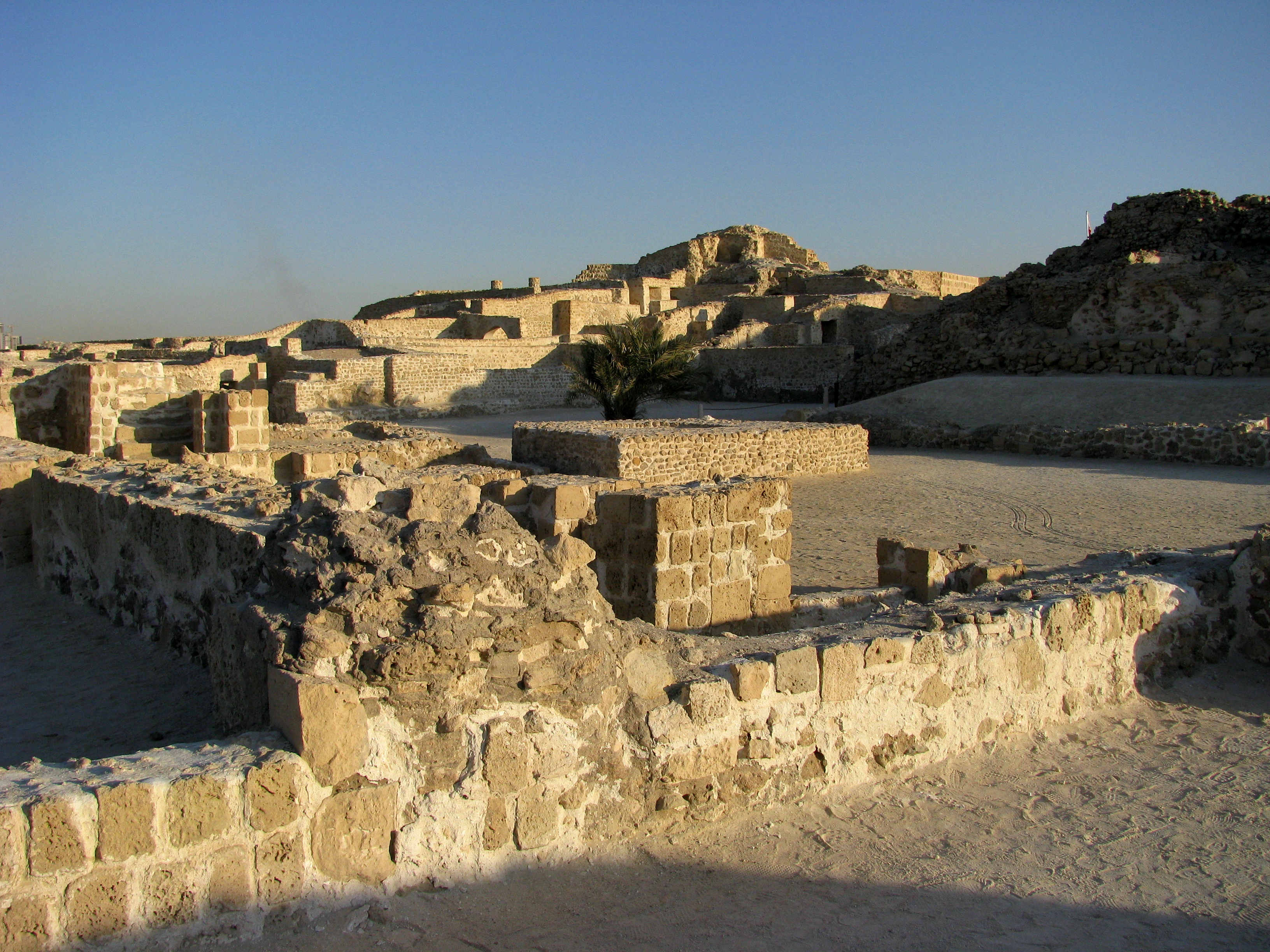
View at Qal’at al-Bahrain, Peter Dowley, 9 December 2008. The site includes successive layers and a sixteenth-century CE fort; not all visible walls date to ancient Dilmun
Yacimiento
Northern Bahrain site with Dilmun-period layers and a much later Portuguese fort, inscribed by UNESCO in 2005.
Variantes del nombre: Qal’at al-Bahrain, harbour and archaeological tell
Contexto y fuentes →
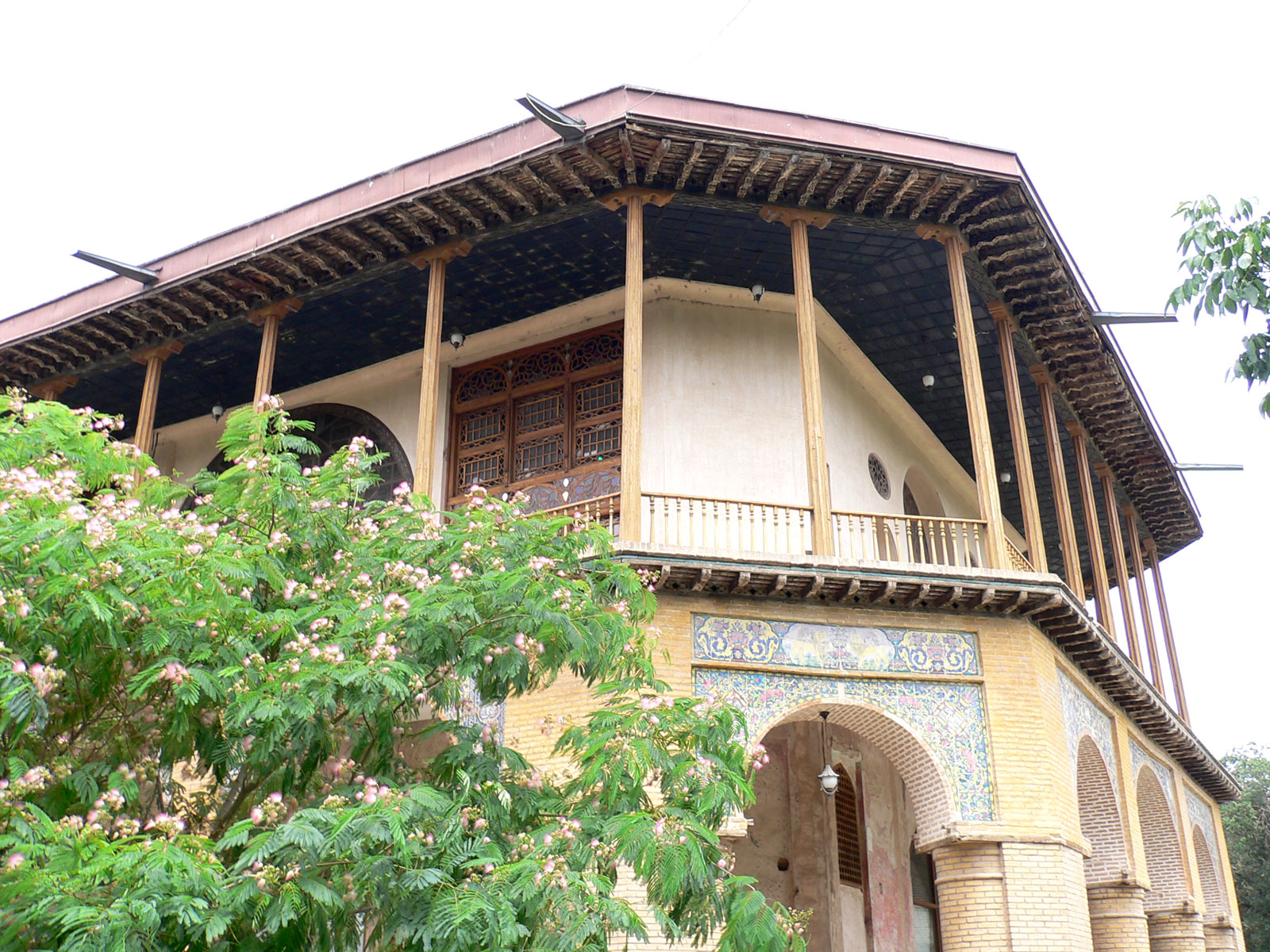
The Chehel Sotun pavilion in Qazvin, in a modern photograph uploaded in 2009. The city's heritage, not a proven production site for the Falnama leaf in the study. Abtin, CC BY-SA 3.0
Yacimiento
Iranian city that served as a Safavid capital in the later sixteenth century and was associated with manuscript arts.
Variantes del nombre: Qazvin, Qazvīn
Contexto y fuentes →
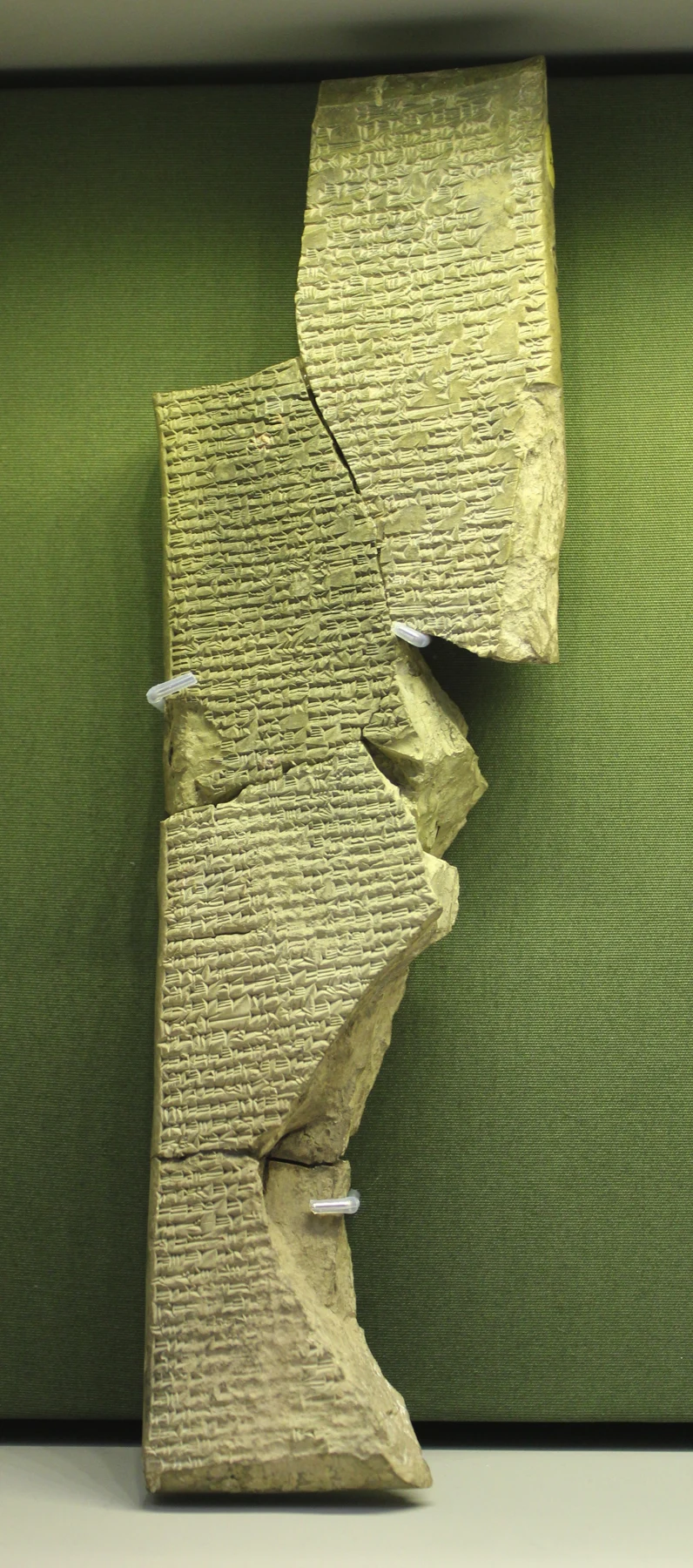
Cuneiform fragment K.3473 from Nineveh, a Neo-Assyrian witness to Enuma Elish Tablet III in the British Museum. This is a photograph of the textual witness, not Qingu or the Tablet VI creation episode
Entidad
Qingu (Kingu): a god whom Tiamat appoints commander and gives the Tablet of Destinies; captured after Marduk’s victory, his blood is used to make humans in Tablet VI.
Variantes del nombre: Qingu, Kingu
Contexto y fuentes →
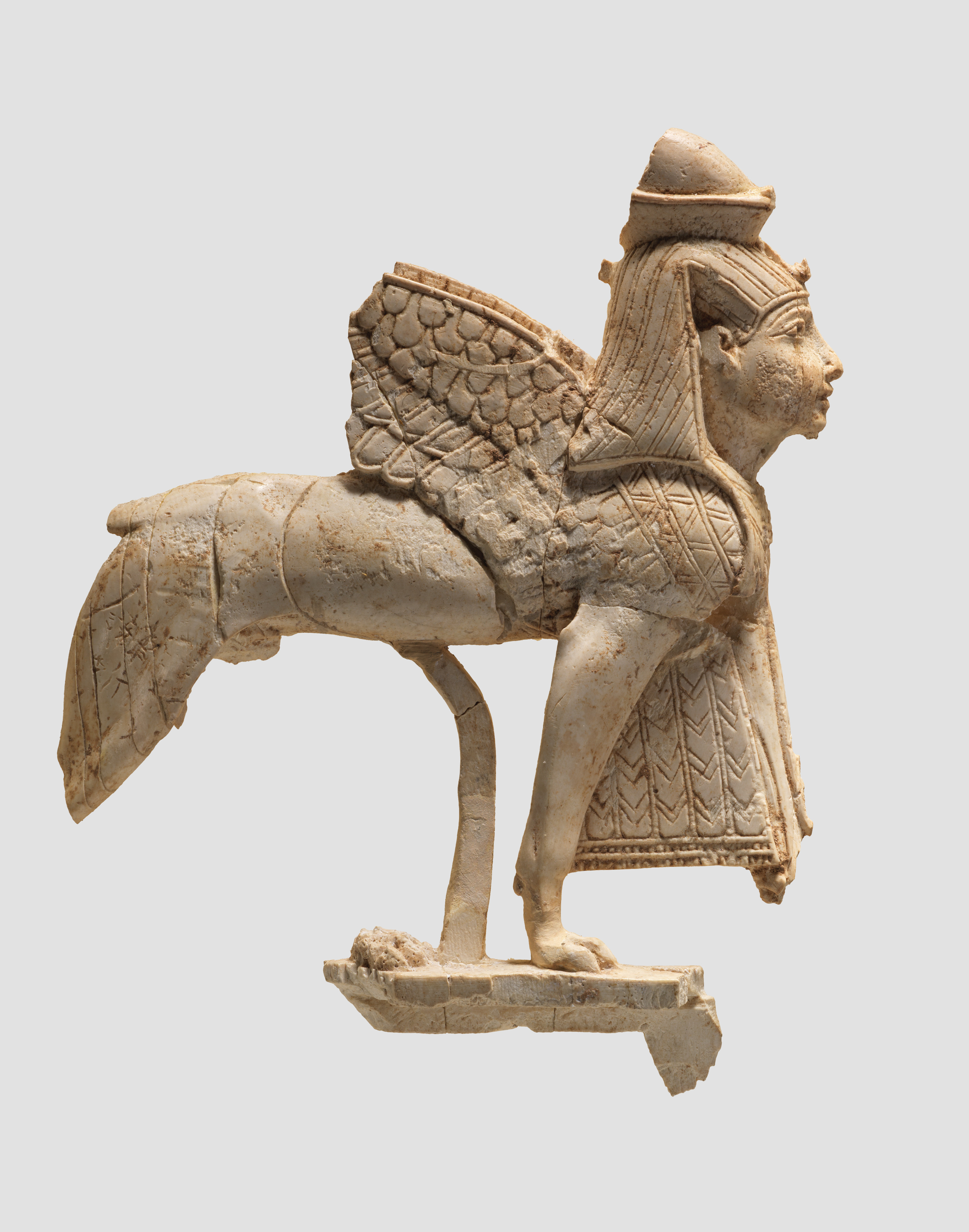
Ivory furniture plaque with a winged sphinx, ca. ninth–eighth century BCE; probably from Arslan Tash, Syria. The Met, 57.80.1. Comparative evidence, not a securely identified cherub or an image of the Ark
Entidad
Cherubim as Eden’s guardians, Ark and Temple figures, and beings in Ezekiel’s vision: a plural name, varying descriptions, and the limits of ancient visual comparisons.
Variantes del nombre: cherubim, cherub
Contexto y fuentes →
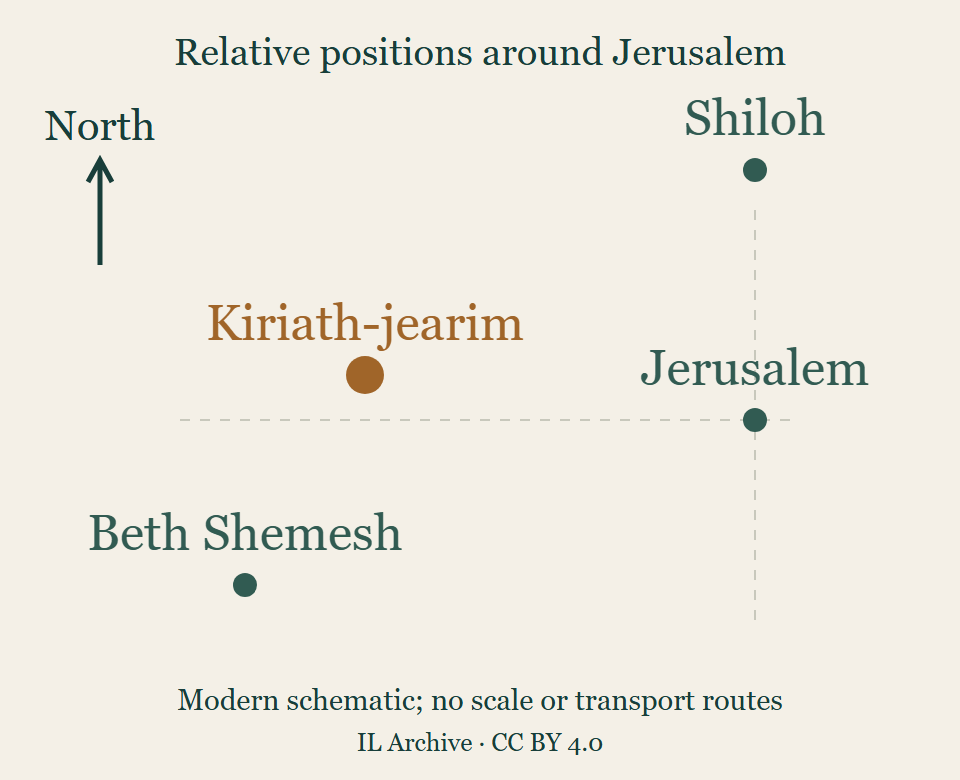
Modern schematic highlighting Kiriath-jearim / Deir el-Azar relative to Jerusalem and the other two sites. General directions, not a scale map or the Ark’s route
Yacimiento
Archaeological hill west of Jerusalem near Abu Ghosh, associated with the Ark in Samuel.
Variantes del nombre: Kiriath-jearim / Deir el-Azar
Contexto y fuentes →
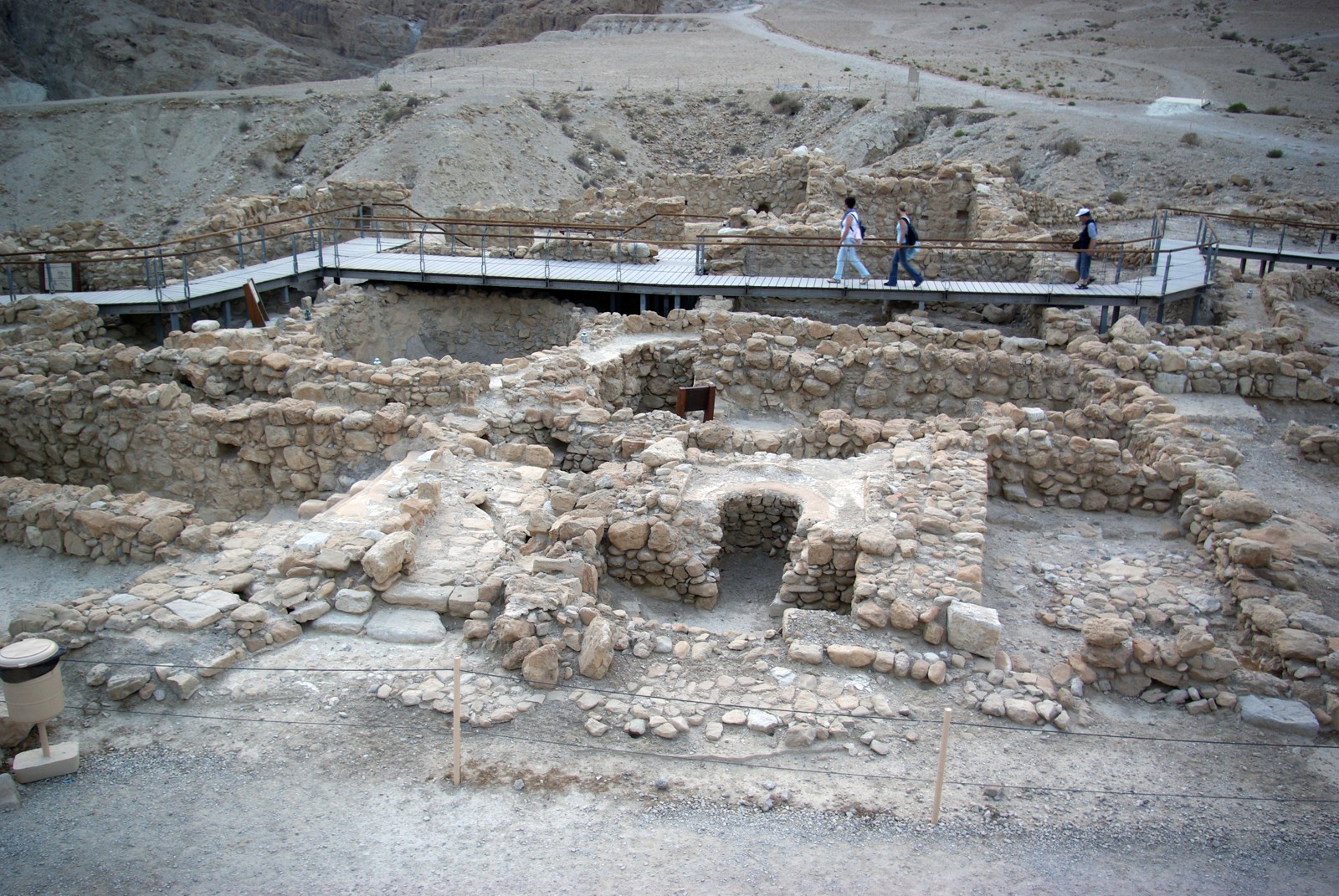
The ruins of Khirbet Qumran photographed in 2008. This is the built site, not a scroll cave or a manuscript fragment; the original photograph is preserved and the display copy is resized without cropping
Yacimiento
Archaeological site northwest of the Dead Sea near manuscript caves; its settlement and the groups who deposited the scrolls are studied together but not assumed identical. It is not synonymous with all Dead Sea Scrolls.
Variantes del nombre: Qumran, Khirbet Qumran
Contexto y fuentes →
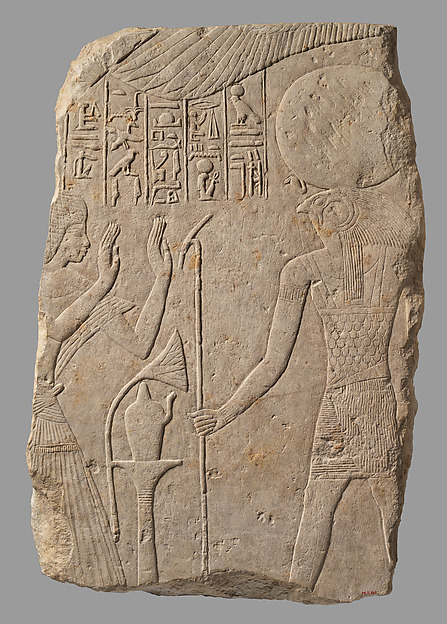
Pay raises his hands before Re-Harakhty, shown with a falcon’s head and solar disk, in a limestone stela fragment from Saqqara. The Met dates the object to about 1328–1318 BCE; inventory 04.2.527
Entidad
Re is the Egyptian sun god, associated with creation, life and renewal of cosmic order
Variantes del nombre: Ra
Contexto y fuentes →
Persona
Hebrew Bible scholar at Bar-Ilan University studying the Ark and cherubim.
Variantes del nombre: Raanan Eichler
Contexto y fuentes →
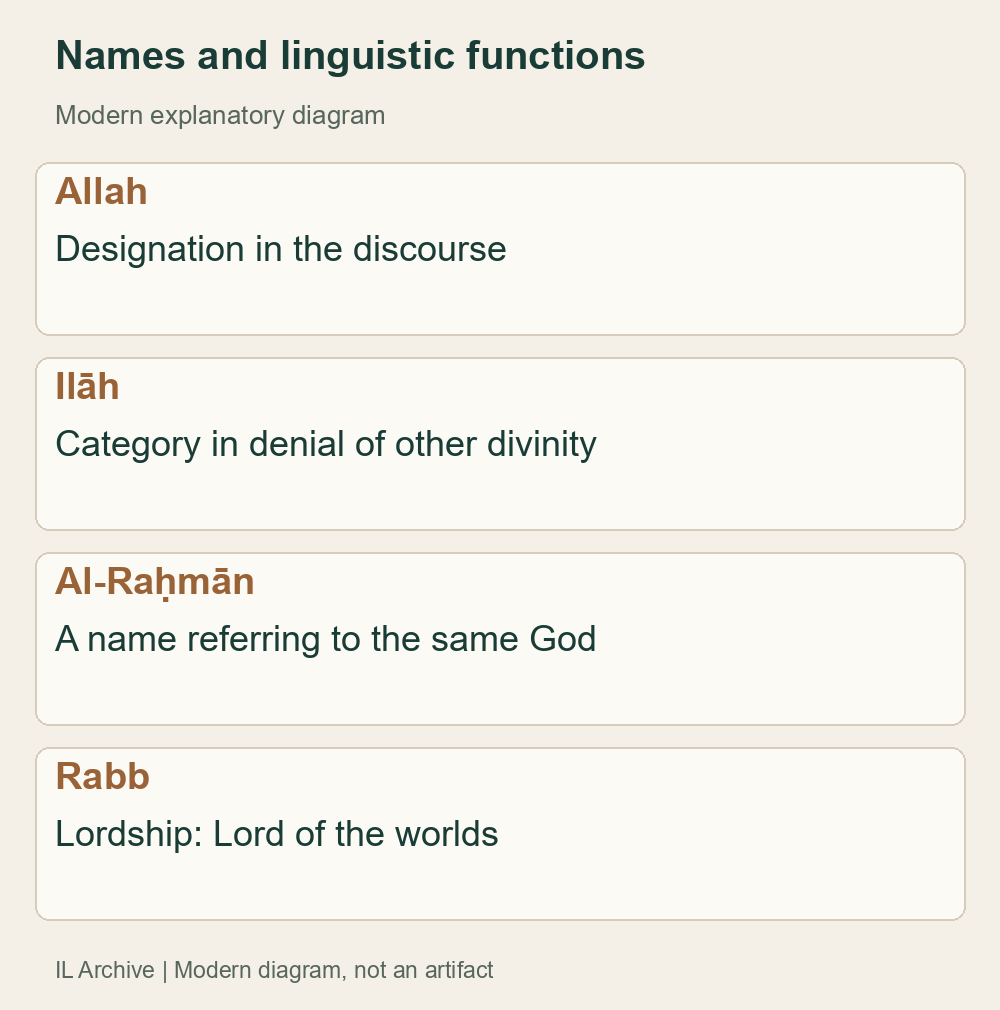
Modern explanatory diagram of Allah, ilāh, al-Raḥmān and rabb in Qur’anic usage; neither an etymological tree nor four separate gods. The etymology of “Allah” is a different question. [1][2][12]
Entidad
Arabic term for mastery, ownership or care according to context; used for God and human masters, without itself naming a separate deity.
Variantes del nombre: rabb, Lord of the worlds
Contexto y fuentes →
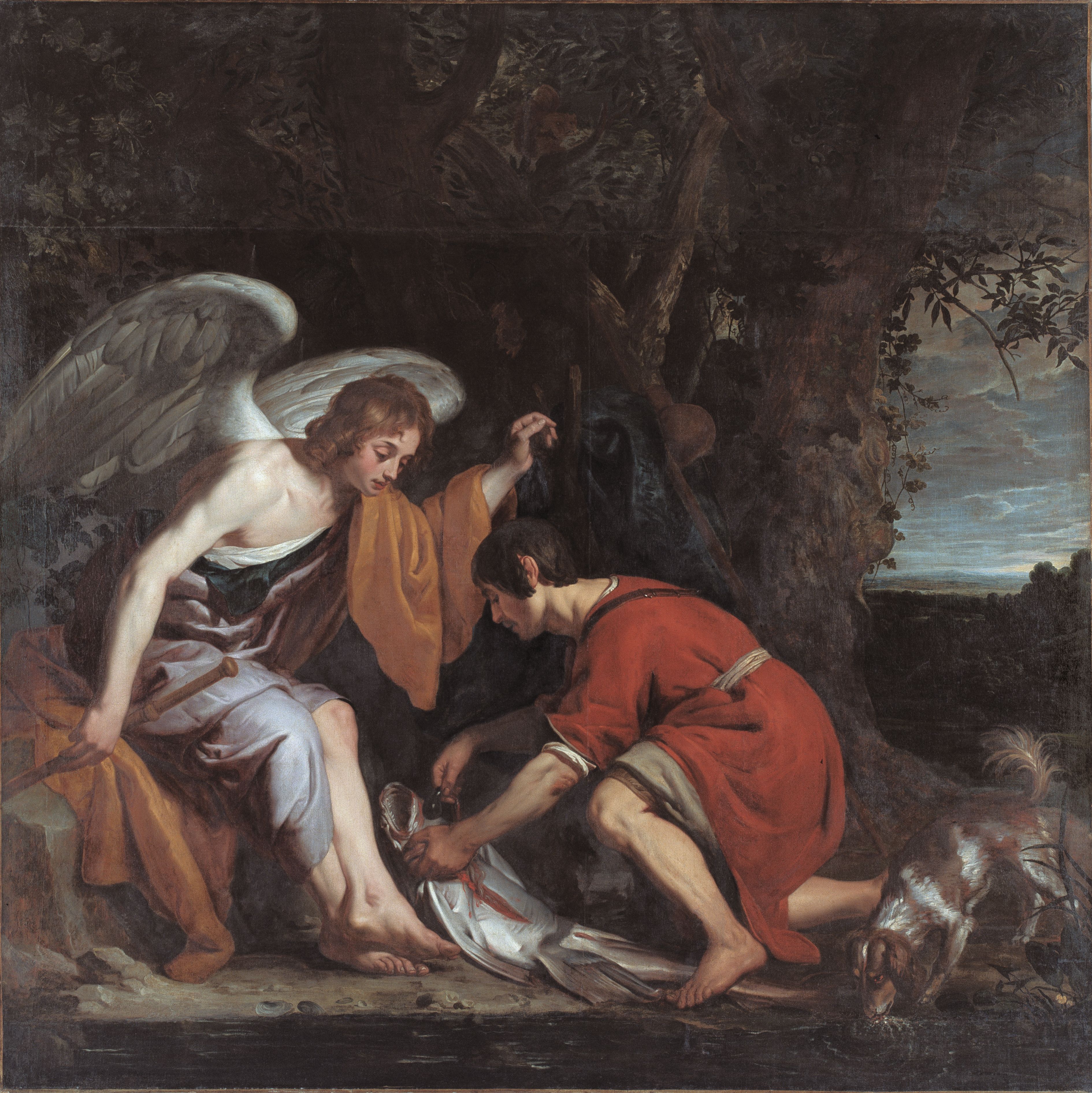
Gaspar de Crayer, Tobias and the Angel, c.1618, oil on canvas, Museum of Fine Arts Ghent, S-13. Raphael is on the left as Tobias cuts open the fish: a later European portrayal of the story, not documentation of the angel or event
Entidad
Raphael means “God has healed,” a name borne by a human in Chronicles and an angel in Tobit and 1 Enoch. In Tobit he accompanies the travelling son, helps heal the father and presents prayer before God; in Enoch he executes judgment and explains the places of the dead. Similarity of names does not settle his relationship to Israfil.
Variantes del nombre: Raphael, Rephael
Contexto y fuentes →
Persona
Scholar of ancient Mesopotamian and eastern Mediterranean literature; co-authored a 2021 comparison of Isaac and Iphigenia.
Variantes del nombre: Heth
Contexto y fuentes →
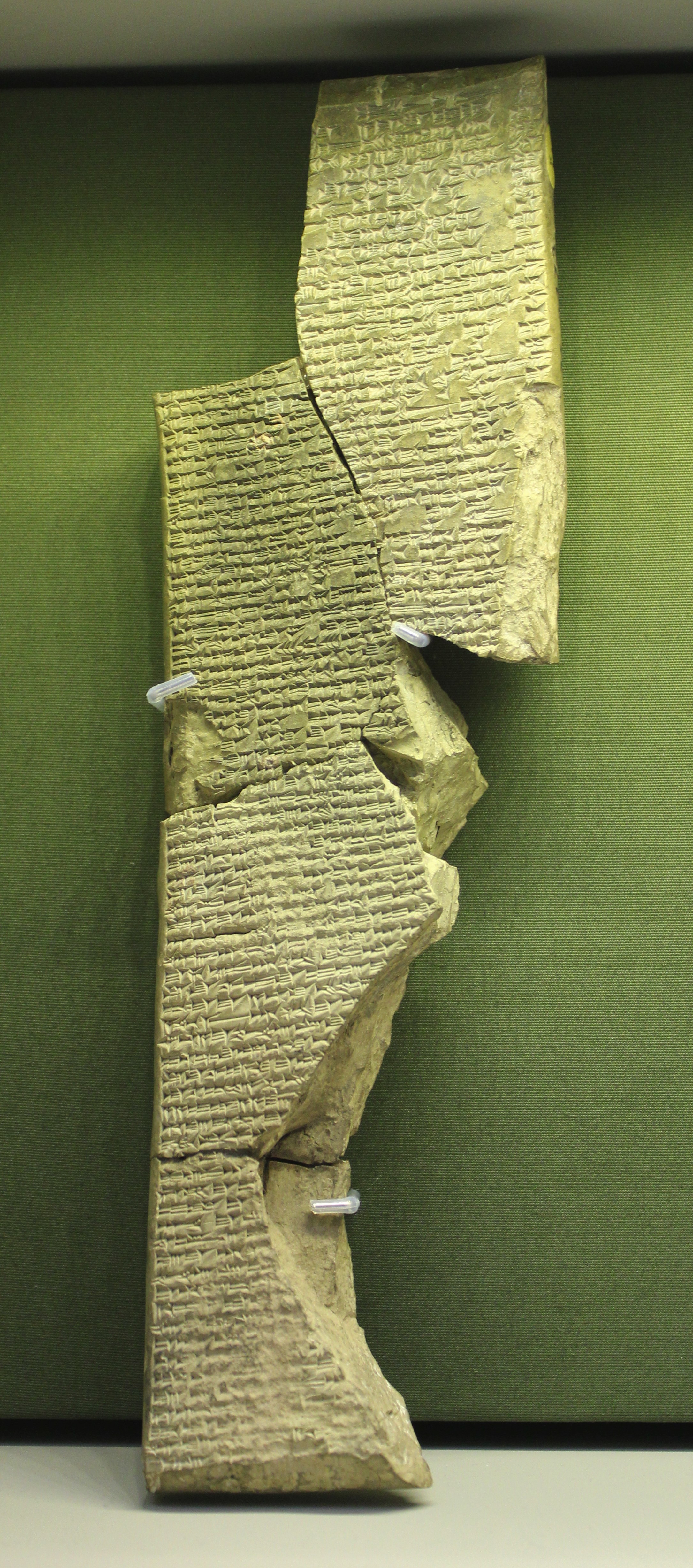
Joined fragments of Enuma Elish Tablet III, from seventh-century BCE Nineveh, in the Neo-Assyrian period, British Museum (K.3473+). A material witness to the poem’s transmission, not a depiction of Anu-rank or the passages quoted here from Tablets I and IV. Photograph, 2020
Entidad
An Akkadian term for supreme rank associated with Anu; dictionary and Enuma Elish examples clarify its attribution to other gods and its limits.
Variantes del nombre: anūtu, anûtu, Anu-power
Contexto y fuentes →

Modern AI-assisted illustration of a level balance, evoking impartiality in the Menog i Khrad. Neither a portrait of Rashn nor an excavated balance; the empty pans are a visual choice, not a textual detail
Entidad
Rashn is a Zoroastrian divine being linked to uprightness and discerning truth; the Menog i Khrad presents him as an impartial weigher who favors no ruler.
Variantes del nombre: Rashn, Rashnu
Contexto y fuentes →

Modern generated expressive cover: dawn light on an uninscribed rock and imagined highlands evoke the South Arabian epigraphic context; not a genuine Ḥimyarite inscription or documented place
Entidad
A divine designation written rḥmnn in Late South Arabian inscriptions, especially in Ḥimyar (fourth–sixth centuries CE), used in Jewish and Christian contexts; its referent is not always unambiguous.
Variantes del nombre: Raḥmānān, Rahmanan, rḥmnn
Contexto y fuentes →
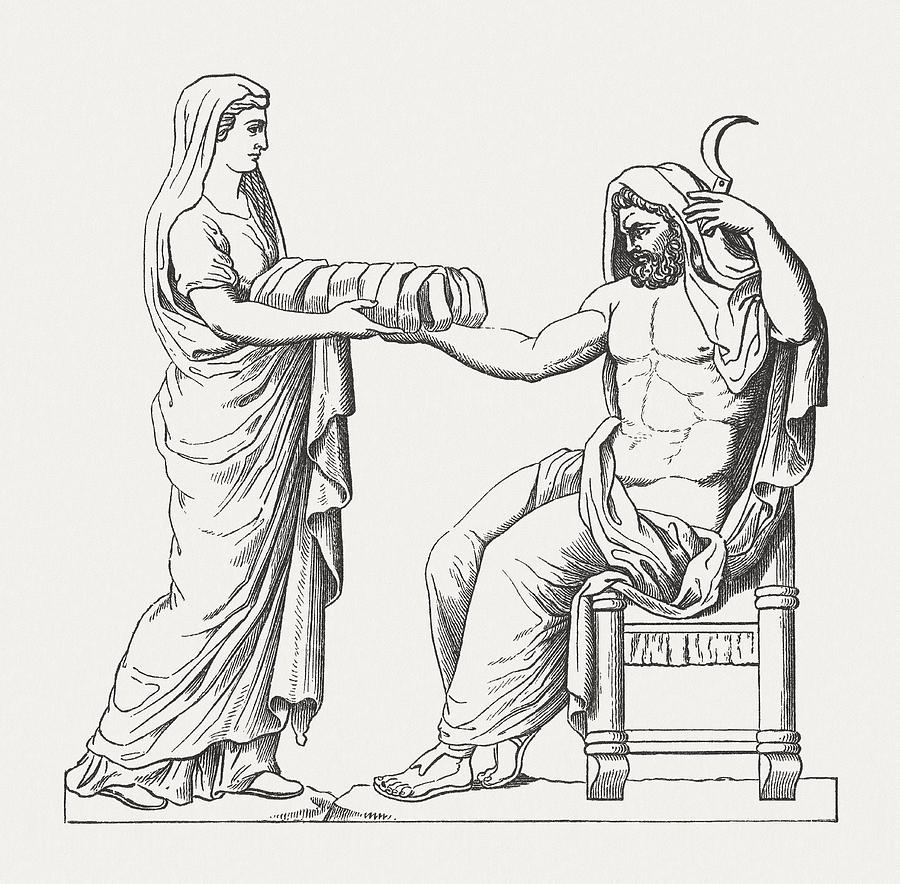
Rhea presents the stone to Kronos; wood engraving published in the 1878 Leipzig edition of Der Olymp. Later printed reception of the scene, not an artifact photograph or a likeness from Hesiod’s time
Entidad
Zeus’s mother in Hesiod, hiding the child and giving Kronos a stone instead.
Variantes del nombre: Rhea
Contexto y fuentes →
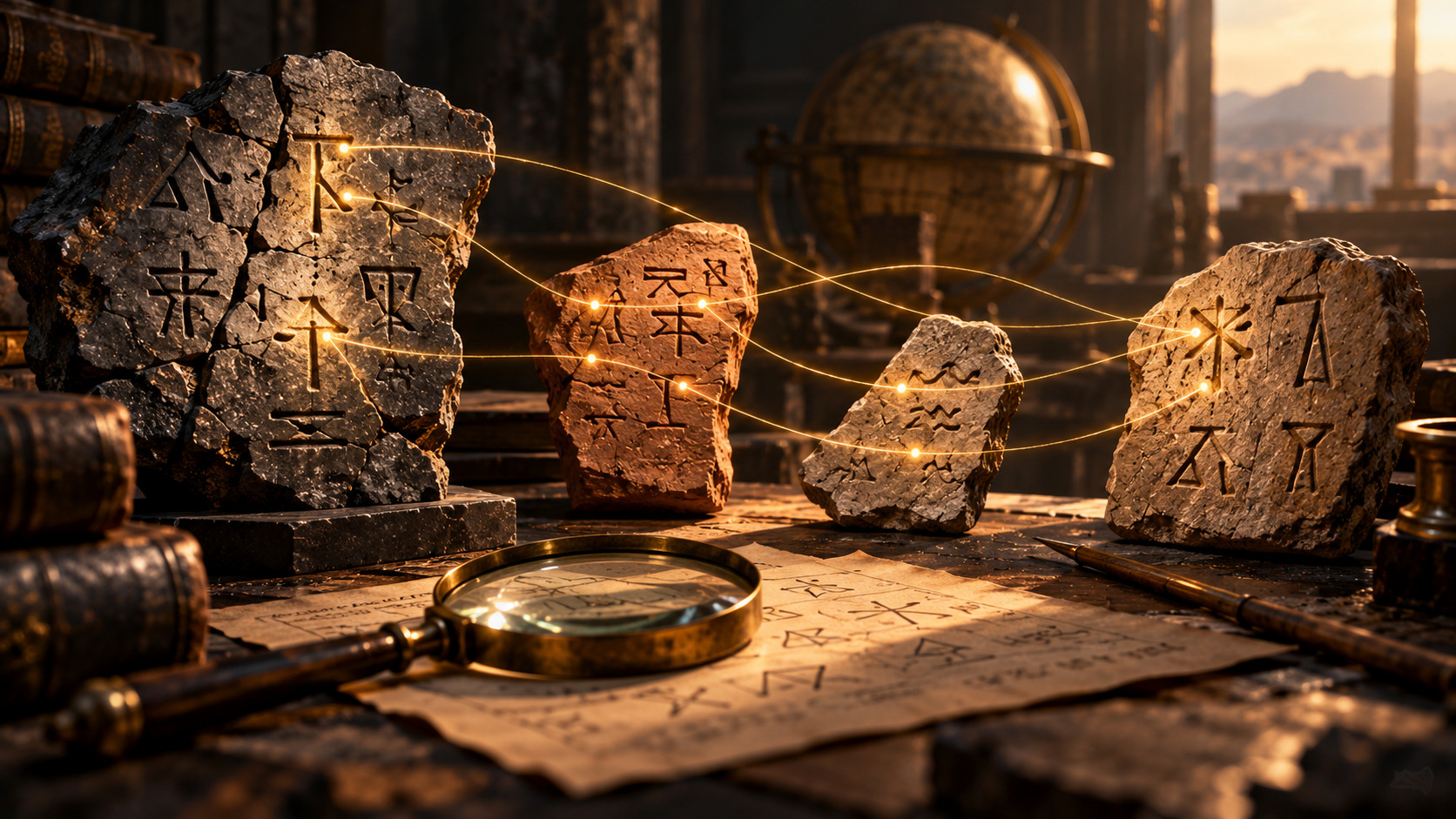
Modern imaginative illustration of comparing inscriptions and sound patterns to infer older forms. The depicted objects and symbols are designed elements, not identified archaeological finds
Entidad
A method inferring earlier, sometimes unattested sounds and forms from recurring correspondences in related languages; the result is a hypothesis, not a discovered text.
Variantes del nombre: linguistic reconstruction, comparative reconstruction
Contexto y fuentes →
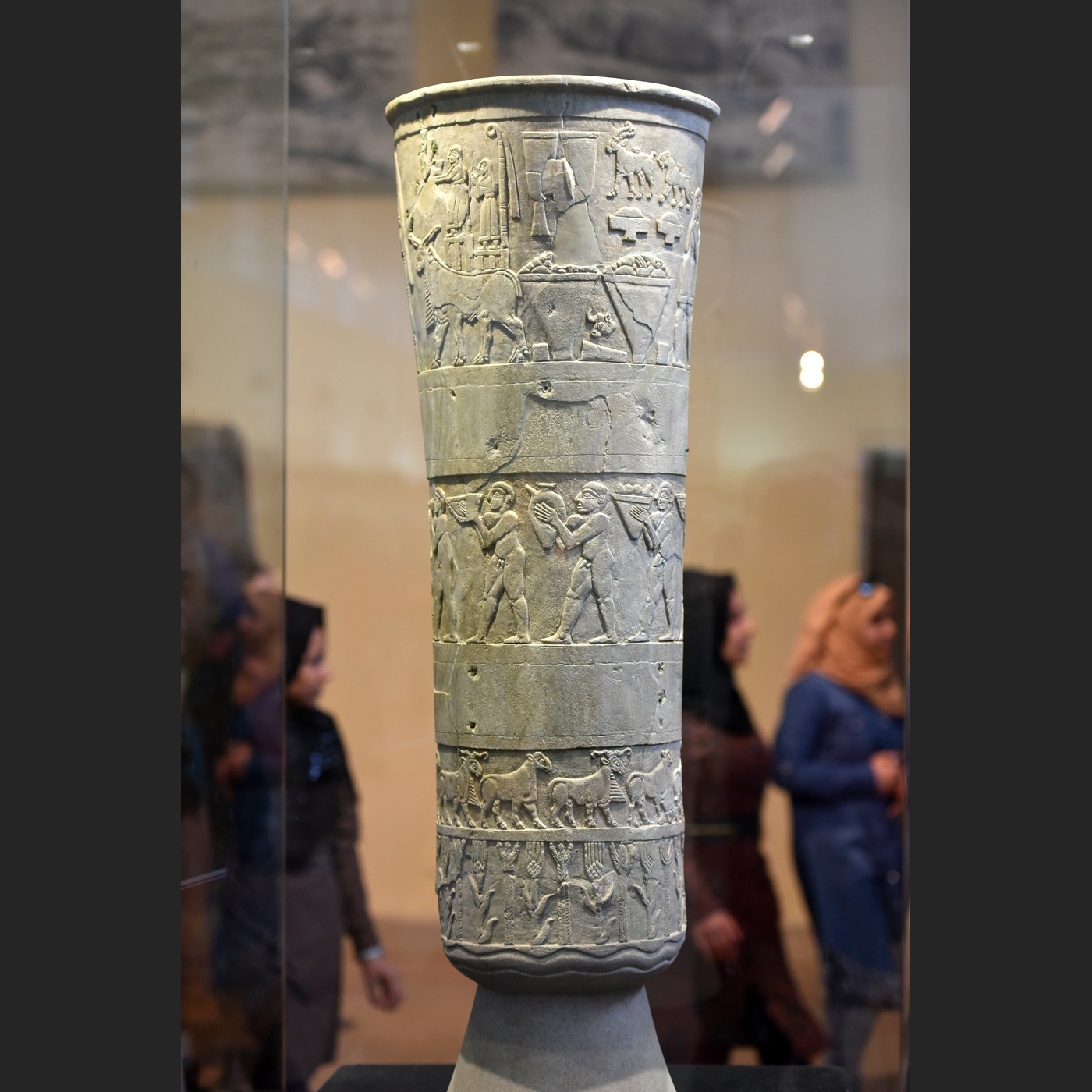
The Warka Vase in the Iraq Museum, photographed in 2019 and placed in a square frame with side margins so the complete height remains visible; not a reconstruction or drawing
Entidad
A horizontal zone or band grouping related images in an artwork; the count can depend on how rows are grouped, and their order alone does not establish chronology.
Variantes del nombre: pictorial register, pictorial registers
Contexto y fuentes →
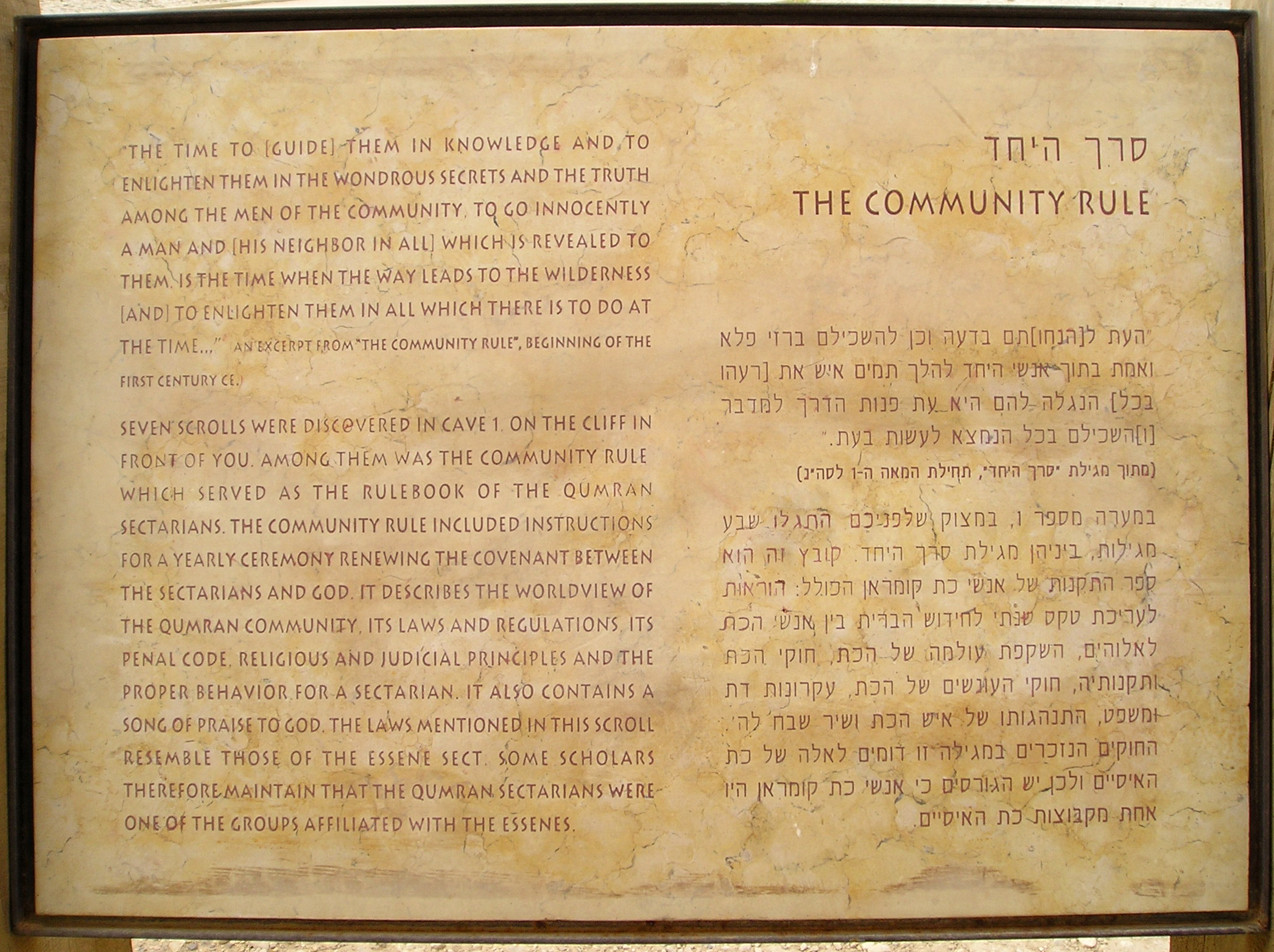
Modern explanatory sign about the Community Rule at Qumran, photographed by A. Sobkowski on 9 March 2006. It contains English and Hebrew text; this is not a photograph of the ancient scroll
Entidad
Hebrew text among the Dead Sea Scrolls; the copy designated 1QS includes teaching on the spirits of truth and perversity and conflict within the human heart.
Variantes del nombre: Community Rule, 1QS
Contexto y fuentes →
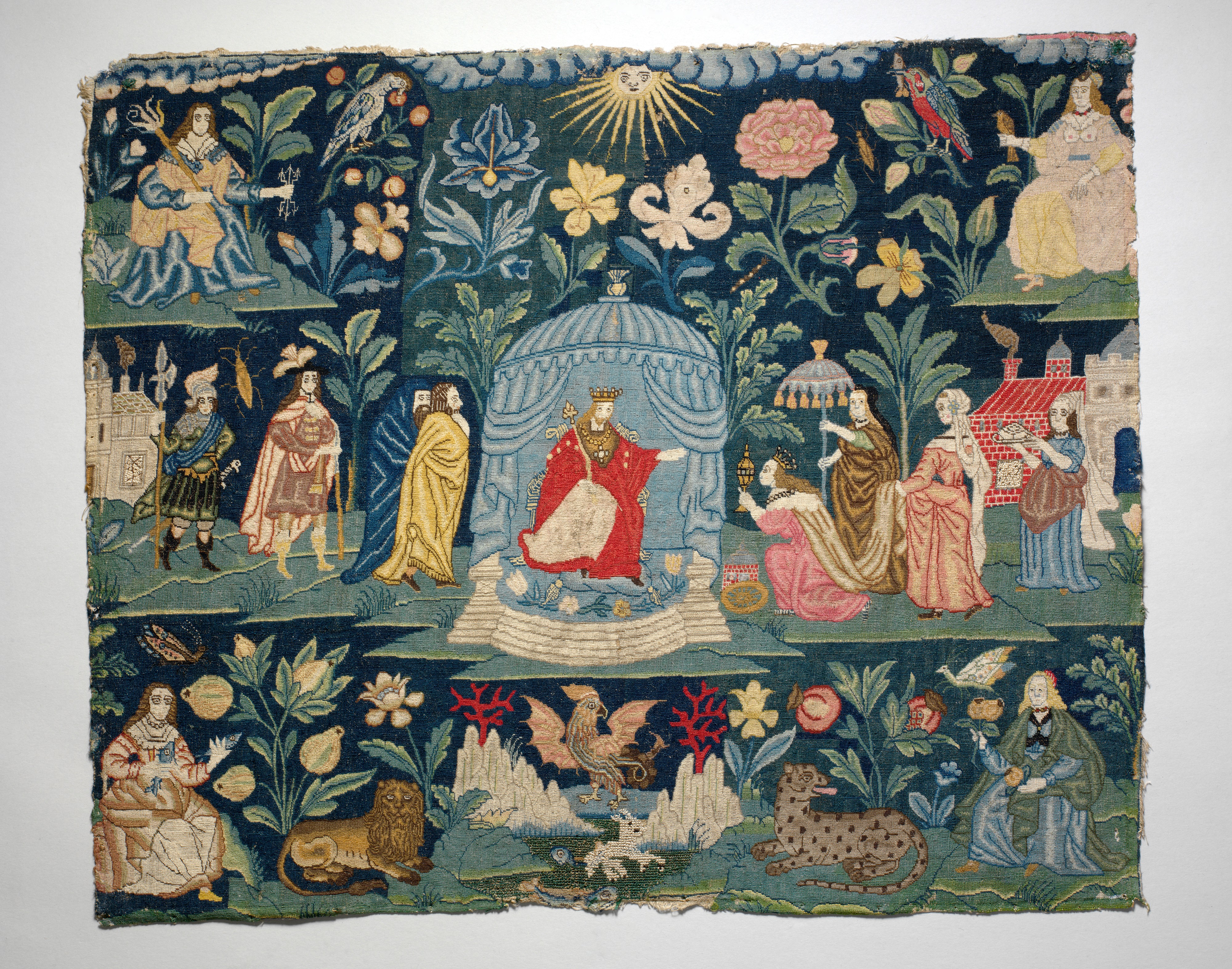
Solomon's meeting with the Queen of Sheba in British embroidery, ca. 1700: later artistic reception, not a historical portrait. Met 64.101.1307; public domain
Persona
The ruler in narratives of Solomon's encounter with Sheba; neither First Kings nor the Quran gives her a personal name, and her historical identification is unresolved.
Variantes del nombre: Queen of Sheba
Contexto y fuentes →
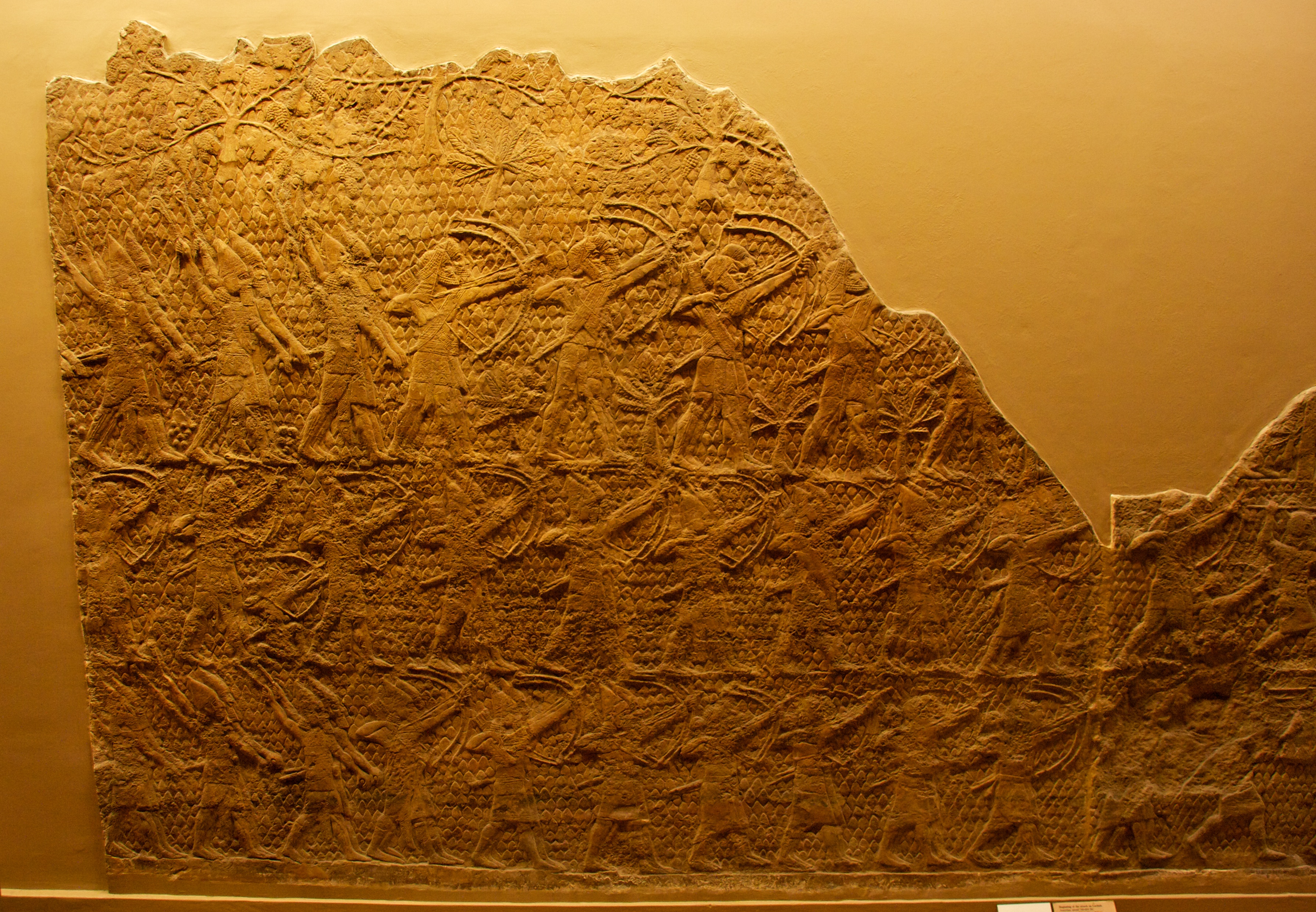
Detail of the Assyrian reliefs showing the siege of Lachish, a city of the kingdom of Judah, during Sennacherib’s campaign of 701 BCE. Carved at Nineveh around 700–692 BCE and held in the British Museum. Photographed on 12 September 2010; an Assyrian representation of the event from the attackers’ perspective
Yacimiento
Judah was an ancient southern Levantine kingdom centered on Jerusalem in the Iron Age
Variantes del nombre: kingdom of Judah
Contexto y fuentes →
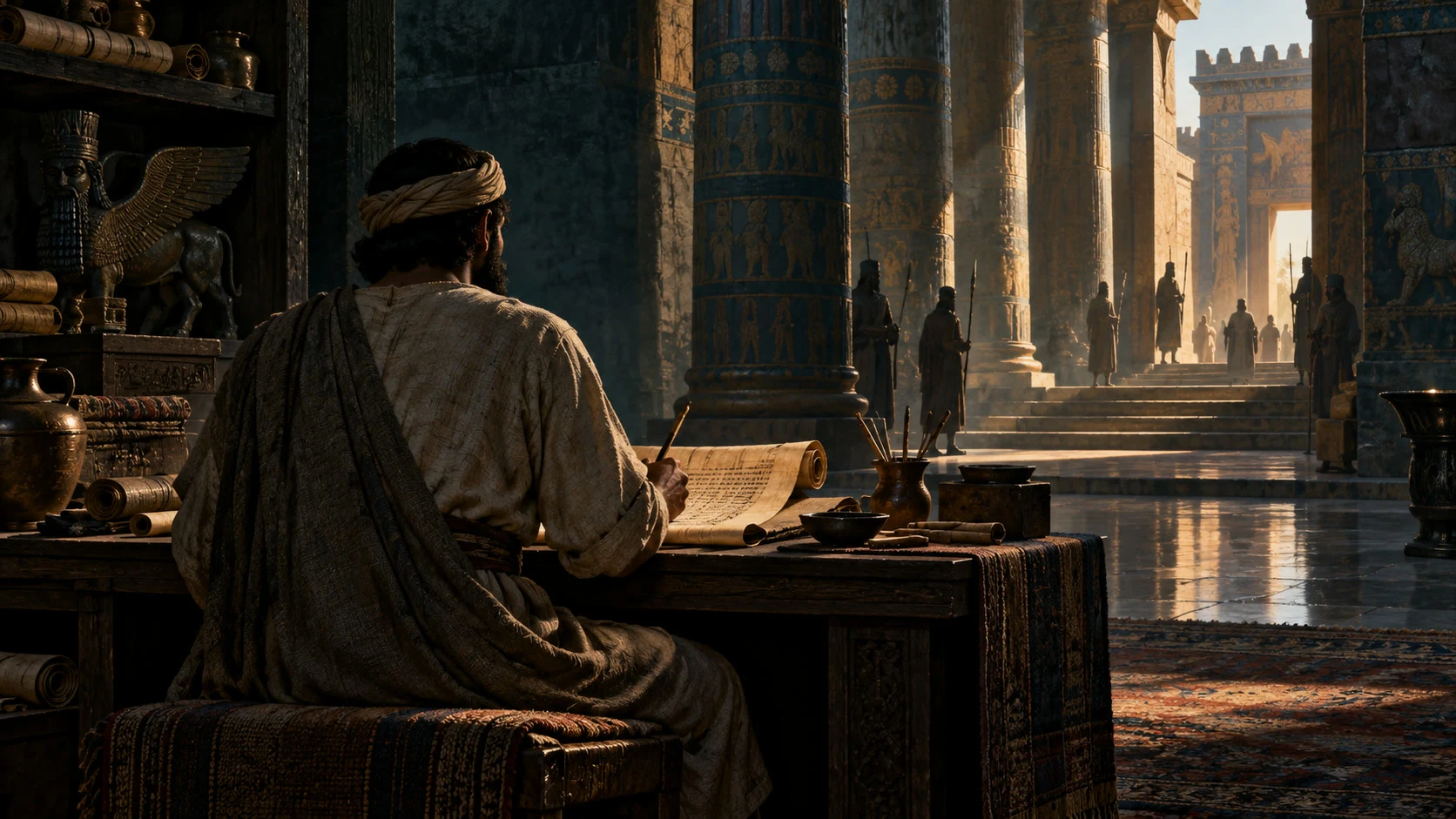
Modern editorial illustration of a sage writing at an ancient court. Generated explanatory image, not a photograph of P.13446 or a documented reconstruction of Daniel or Ahiqar. © IL Archive, CC0
Entidad
An analytical category for stories in which a sage or outsider faces tests of skill, loyalty, or survival at a royal court, through contest, accusation, or reversal; it does not establish one textual origin.
Variantes del nombre: court tales, court narrative
Contexto y fuentes →
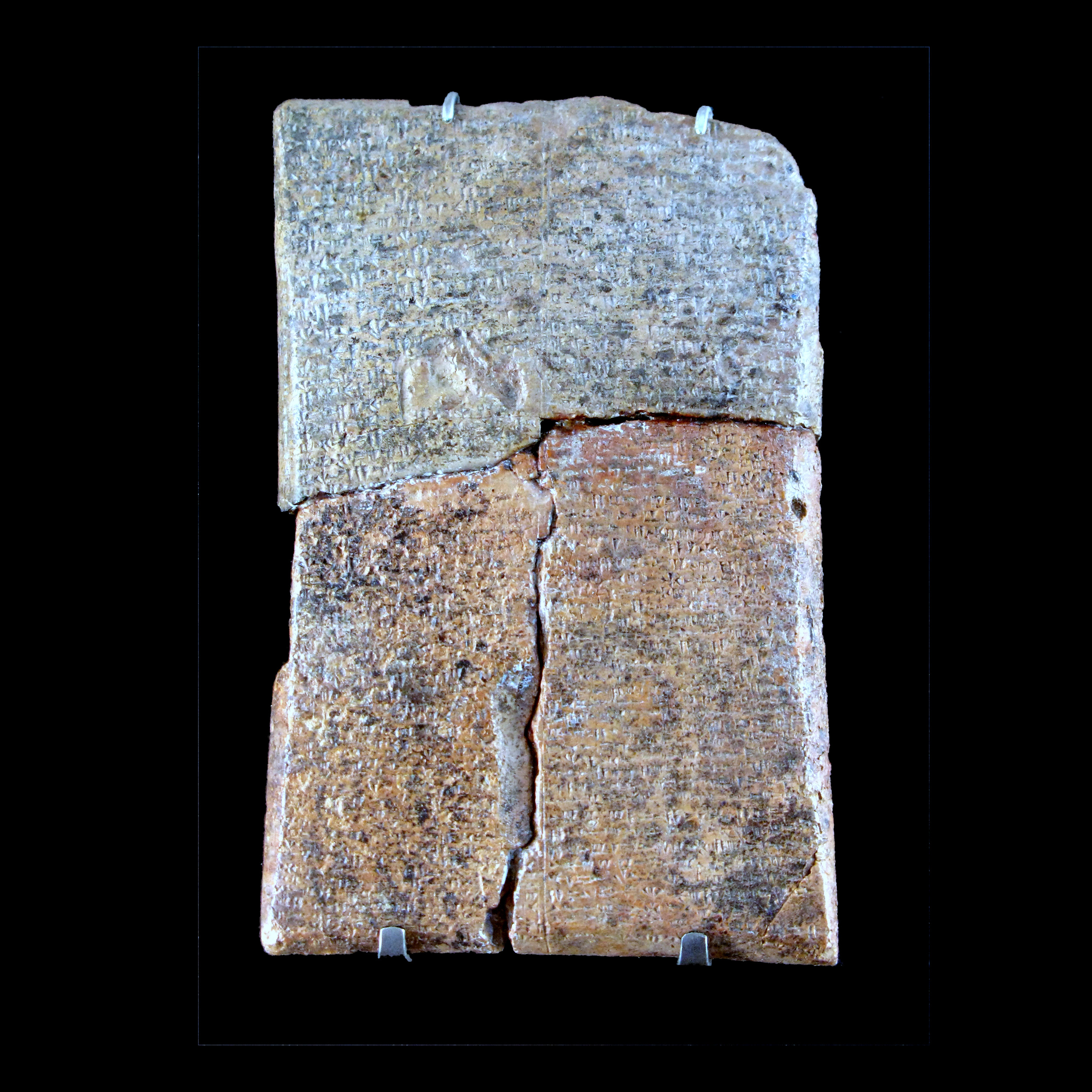
Third tablet of the Tale of Aqhat, KTU 1.19, Louvre AO 17323, from Ras Shamra; museum dating 1400–1200 BCE. This is not the first tablet, KTU 1.17, with its damaged colophon
Texto antiguo
Ugaritic poetic narrative in three tablets about Aqhat, Danel’s son; attribution to Ilimilku relies on comparison, with his name restored in a damaged colophon.
Variantes del nombre: Tale of Aqhat
Contexto y fuentes →
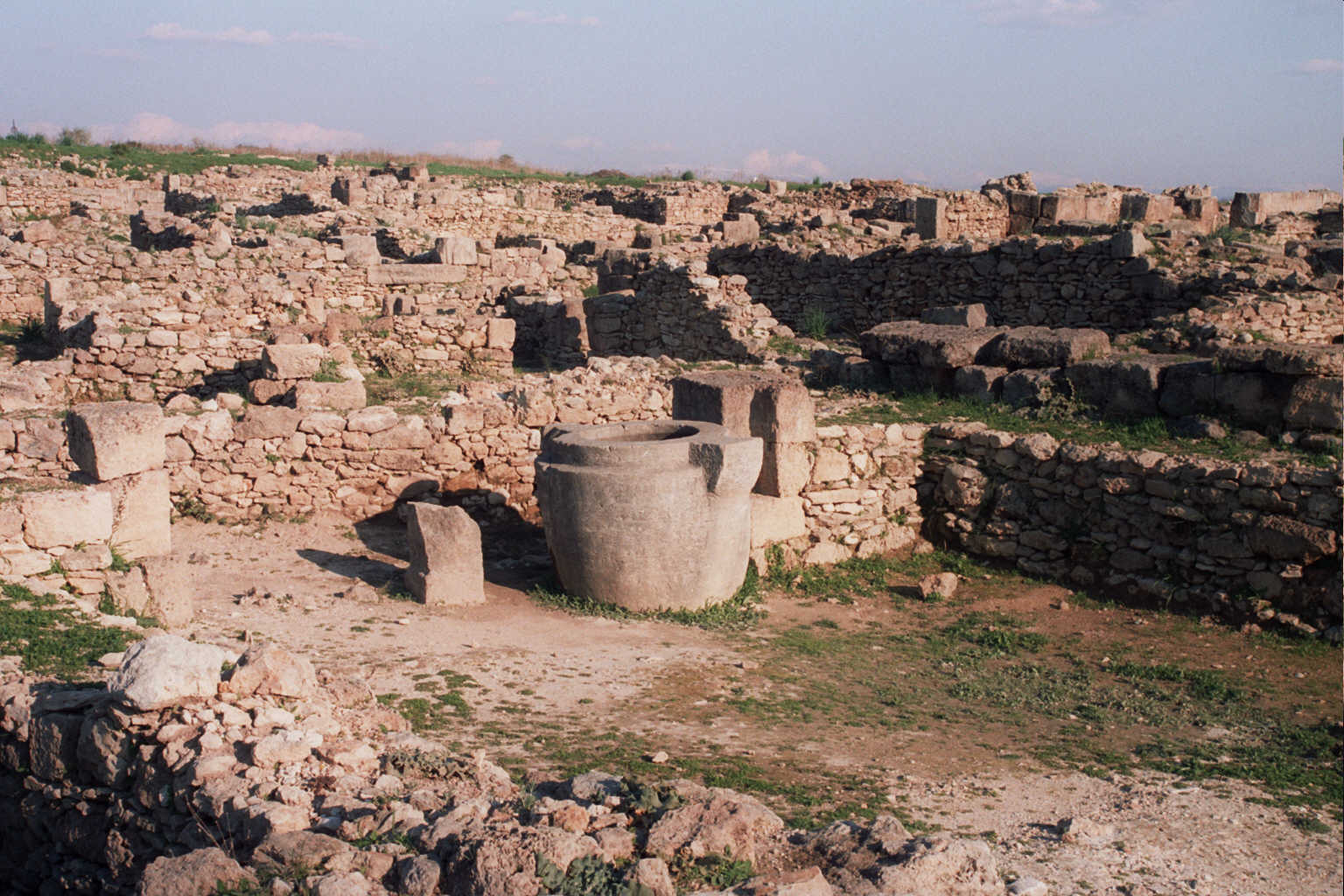
Ruins of Ugarit at Ras Shamra, photographed by Loris Romito on a 2005 trip. Context for the site that preserved the Kirta tablets, not the hero’s palace or an identified findspot; not every visible structure is dated here to the text’s writing
Texto antiguo
Ugaritic poetic narrative in three tablets about King Kirta, his family and a vow; KTU1.16 names Ilimilku, without proving he invented all its traditions.
Variantes del nombre: Tale of Kirta
Contexto y fuentes →
Persona
Researcher in ancient West Asian material and visual culture who has studied standards and symbols in Mesopotamian art.
Variantes del nombre: Renate Marian van Dijk-Coombes, Renate van Dijk-Coombes
Contexto y fuentes →

Modern AI-generated conceptual cover: dawnlight, a new sprout, and luminous human figures symbolize revival and transformation. Neither an ancient artefact nor an established portrayal of resurrection
Entidad
Resurrection: the hope of the dead returning to life through divine action. Ancient traditions differ on who rises, what embodiment means, and how this relates to judgment or cosmic renewal.
Variantes del nombre: resurrection, resurrection of the dead, raising the dead
Contexto y fuentes →
Persona
New Testament and early Christianity scholar, emeritus professor at St Andrews.
Variantes del nombre: Richard Bauckham
Contexto y fuentes →
Persona
Professor of Talmud and rabbinics who studies rabbinic narratives and Jewish Babylonia.
Variantes del nombre: Richard Kalmin
Contexto y fuentes →
Persona
Old Testament and Semitic-language scholar at Denver Seminary, studying ancient inscriptions, names and religion.
Variantes del nombre: Richard S. Hess
Contexto y fuentes →
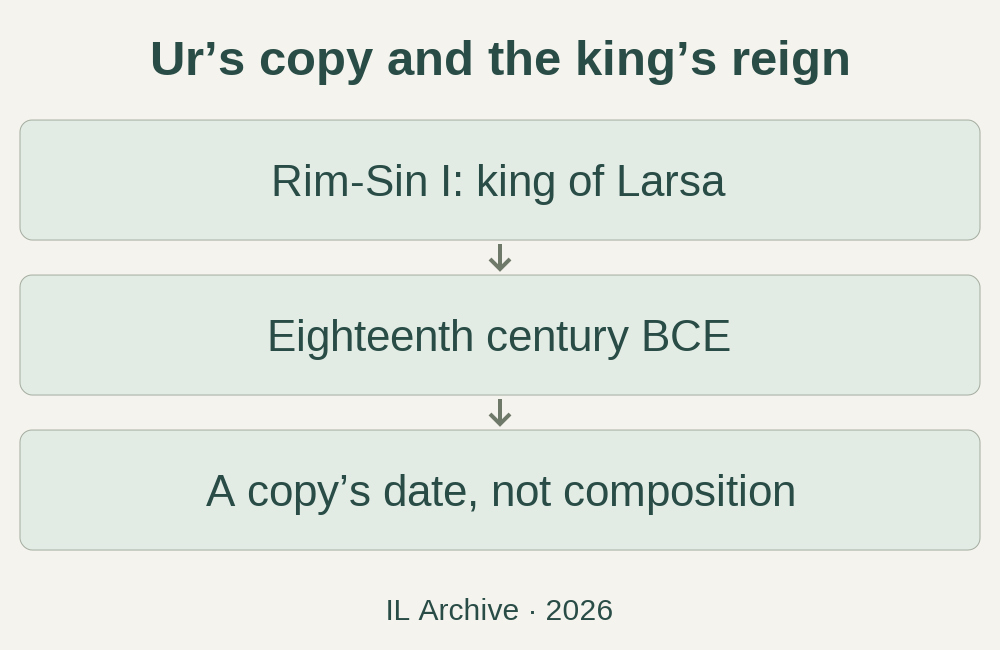
Modern witness-specific explanatory diagram of a sequence or linguistic relationship, not a portrait or fabricated artifact
Persona
Eighteenth-century BCE king in southern Mesopotamia, whose reign helps date the Ur copy of the poem.
Variantes del nombre: Rim-Sin I, king of Larsa
Contexto y fuentes →
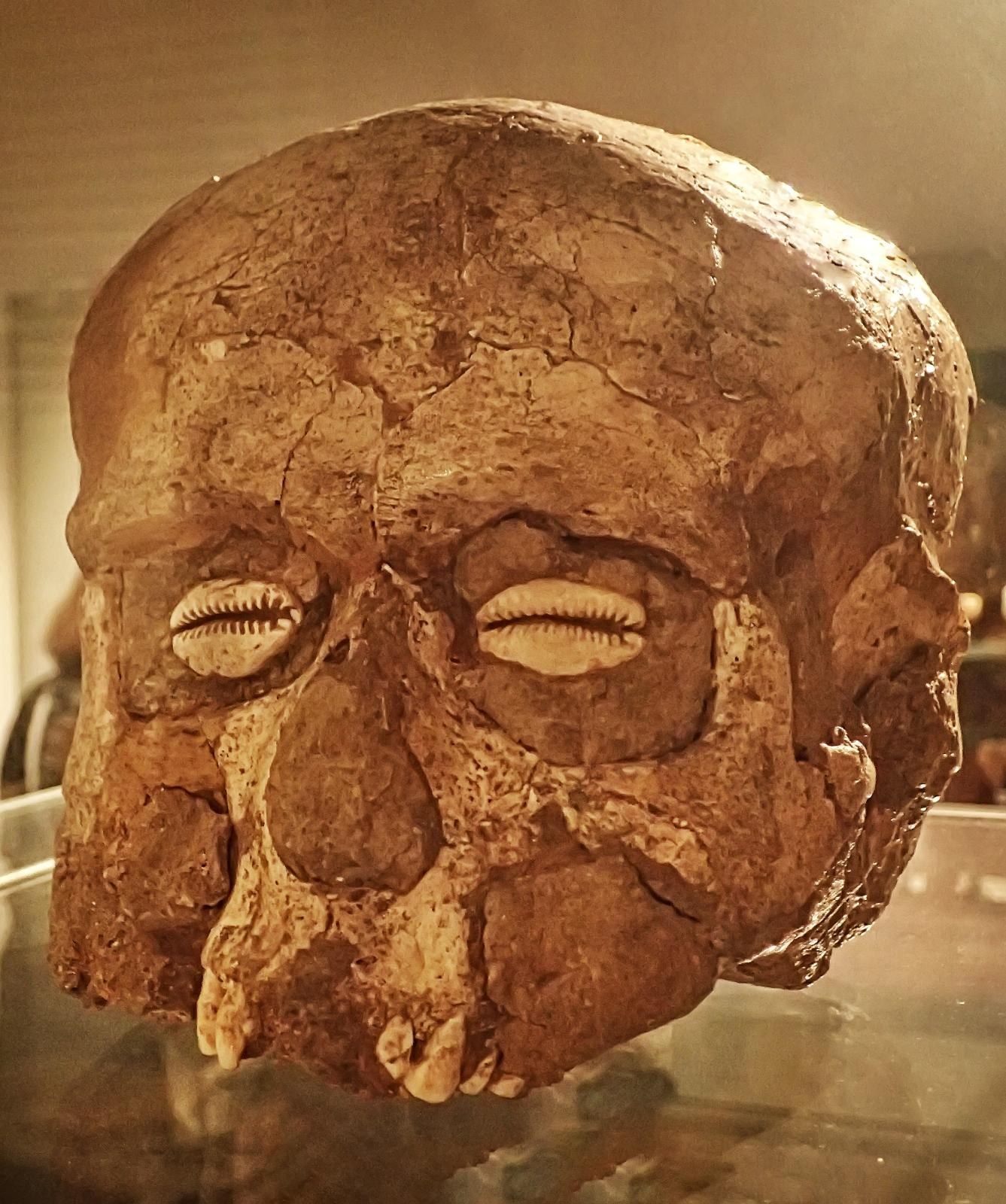
A plastered human skull from Jericho, around 7000 BCE, in the Ashmolean Museum, Oxford. Plaster remodels the face and shells mark the eyes; this treatment alone does not identify the beliefs of its makers
Entidad
An organised or distinguished practice meaningful to a community; it may leave traces, but its form alone does not reveal an associated doctrine.
Variantes del nombre: ritual, rituals
Contexto y fuentes →
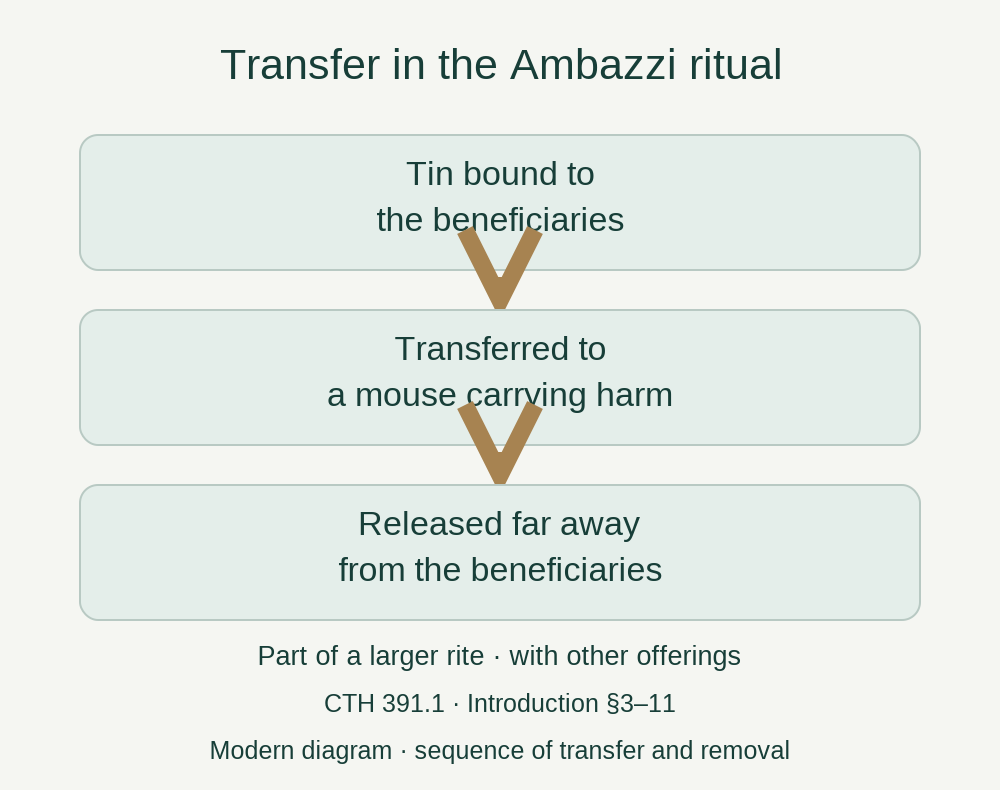
Tin, beneficiaries, and mouse in Ambazzi, following the scholarly introduction to CTH 391.1. Other offerings provide broader context, without asserting a subsequent step after release. Modern diagram
Texto antiguo
A Hittite rite attributed to a female ritual expert, CTH 391.1; tin passes from beneficiaries to a mouse released to carry harm away.
Variantes del nombre: Ambazzi ritual of removing harm
Contexto y fuentes →
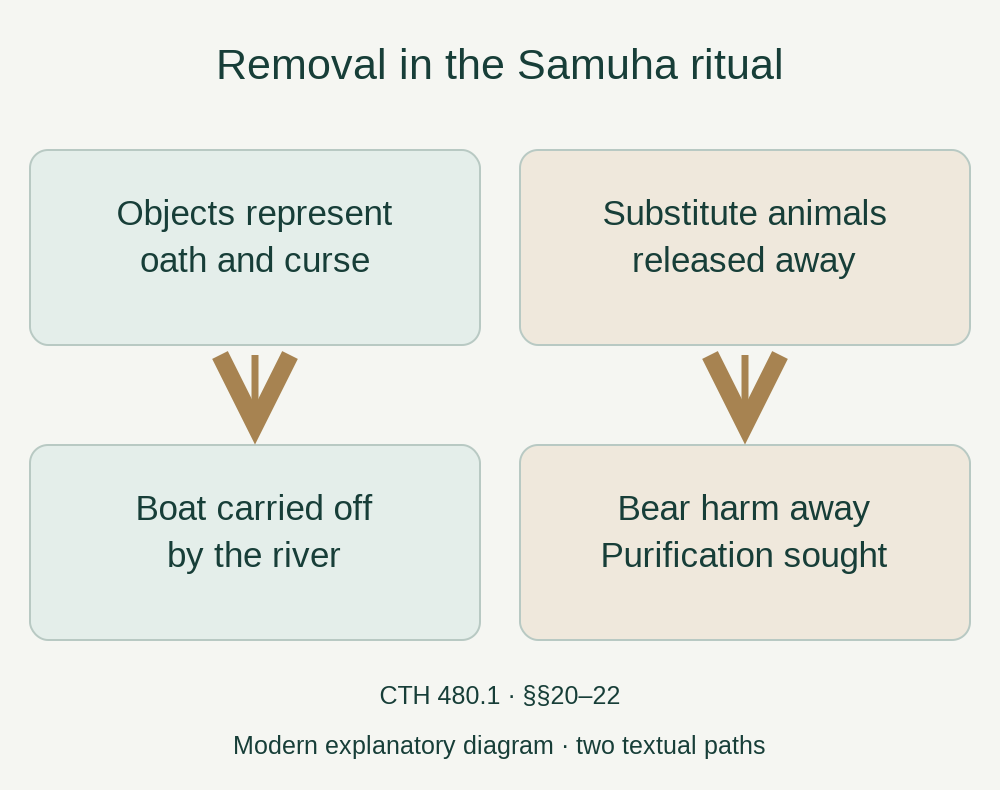
Two means of removal in Samuha, CTH 480.1, §§20–22: a boat with objects representing oath and curse, and animals carrying harm. Modern explanatory diagram
Texto antiguo
A Hittite purification text, CTH 480.1, removing harmful speech, curse, and impurity by boat and animals in temple and royal contexts.
Variantes del nombre: Samuha purification ritual
Contexto y fuentes →
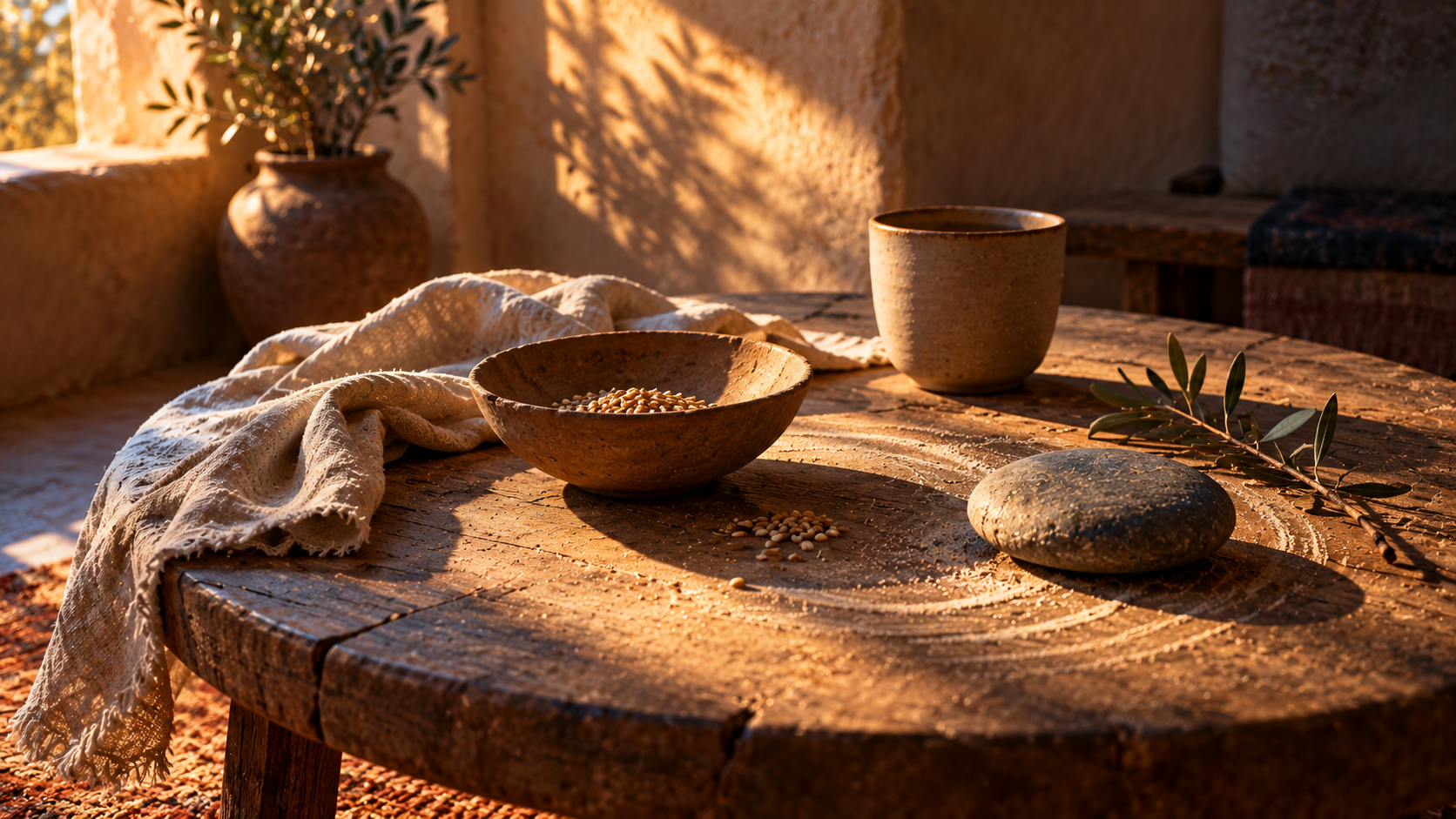
Modern AI-generated conceptual domestic still life: vessels, grains, cloth and ordinary objects. It depicts no documented ritual or historical house; the meaning of the objects depends on their use and context
Entidad
The acquisition of special qualities by familiar practices or places; an analytical concept that need not separate ritual from everyday life.
Variantes del nombre: ritualization, ritualisation
Contexto y fuentes →
Persona
Robert Henry Charles (1855–1931) was an Irish scholar, editor and translator of 1 Enoch.
Variantes del nombre: Robert Henry Charles, R. H. Charles
Contexto y fuentes →
Persona
UCLA Assyriologist and Sumerologist specializing in early Mesopotamian writing; a pioneer of the Cuneiform Digital Library Initiative.
Variantes del nombre: Robert K. Englund
Contexto y fuentes →