Entidade
Substituição sacrificial
Página de referência que liga um nome, grupo ou conceito aos materiais que o tratam.
Tradução automática. Leia o original em inglês.
Uma comparação baseada em fontes do carneiro oferecido no lugar de Isaque em Gênesis, do resgate não especificado em Alcorão 37 e do cervo substituindo Ifigênia em Eurípides, distinguindo os textos de interpretações posteriores.
Tempo estimado de leitura: 4 min Publicado em Última revisão:
Compartilhar artigo

Texto
Introdução
Como uma oferenda pode tomar o lugar de uma pessoa diante do sacrifício? O resgate por substituição aparece em narrativas diferentes, mas seus detalhes não são intercambiáveis. Este verbete compara o Gênesis, a Surata al-Ṣāffāt e uma peça grega sobre Ifigênia, separando o que os textos efetivamente afirmam dos detalhes acrescentados por intérpretes posteriores.
A comparação ilumina um motivo narrativo comum. Por si só, não pode estabelecer que uma história tenha sido tomada emprestada de outra, nem que um rito sacrificial específico tenha ocorrido na história.
O que significa substituição sacrificial
Aqui, "substituição sacrificial" descreve uma oferenda ou um resgate que toma o lugar de uma pessoa dentro de uma narrativa de sacrifício humano ameaçado. O termo não significa que os relatos nomeiem o mesmo animal ou derivem de uma única prática histórica. A primeira pergunta é o que cada fonte afirma explicitamente e o que deixa não especificado.
Um carneiro no lugar de Isaque no Gênesis
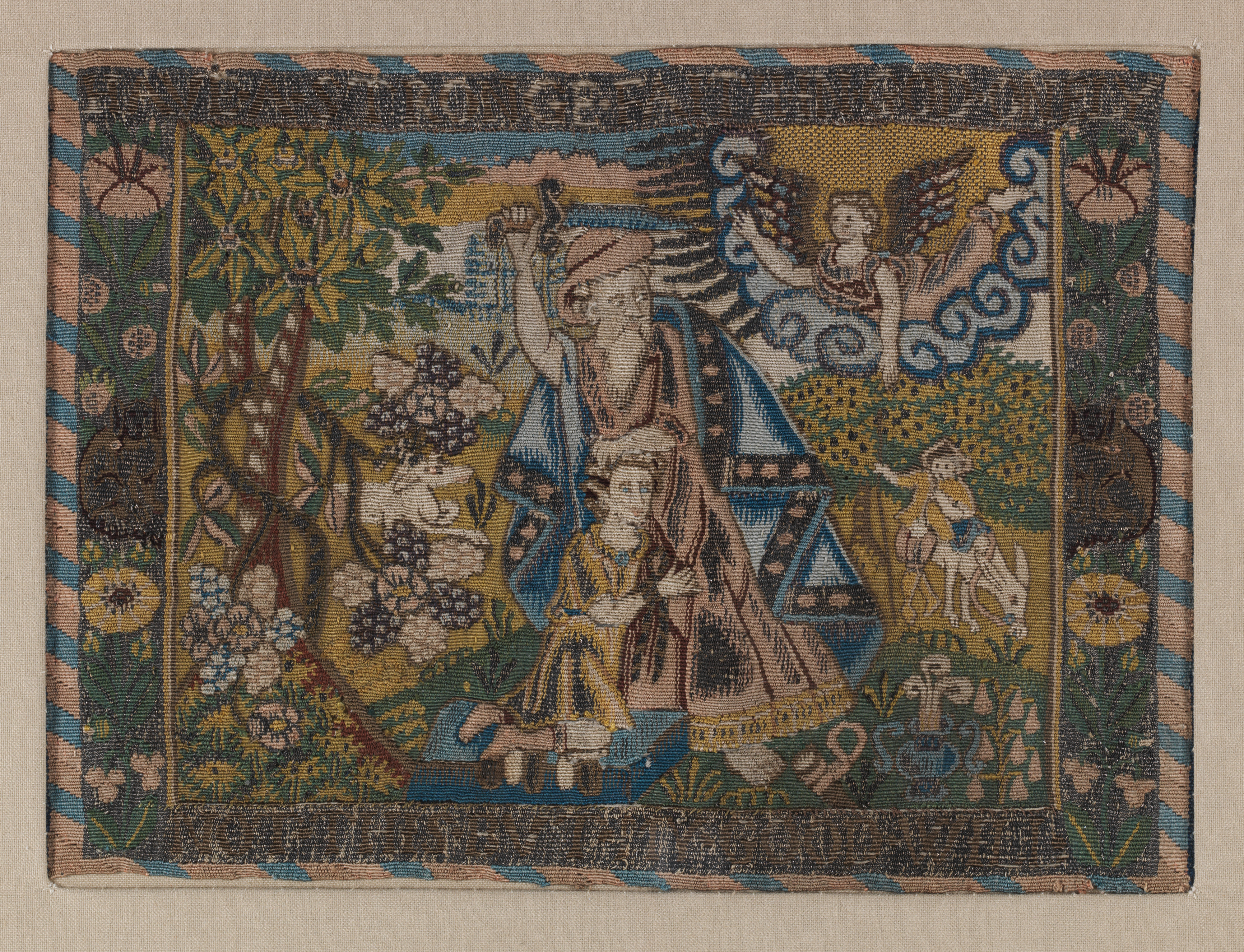
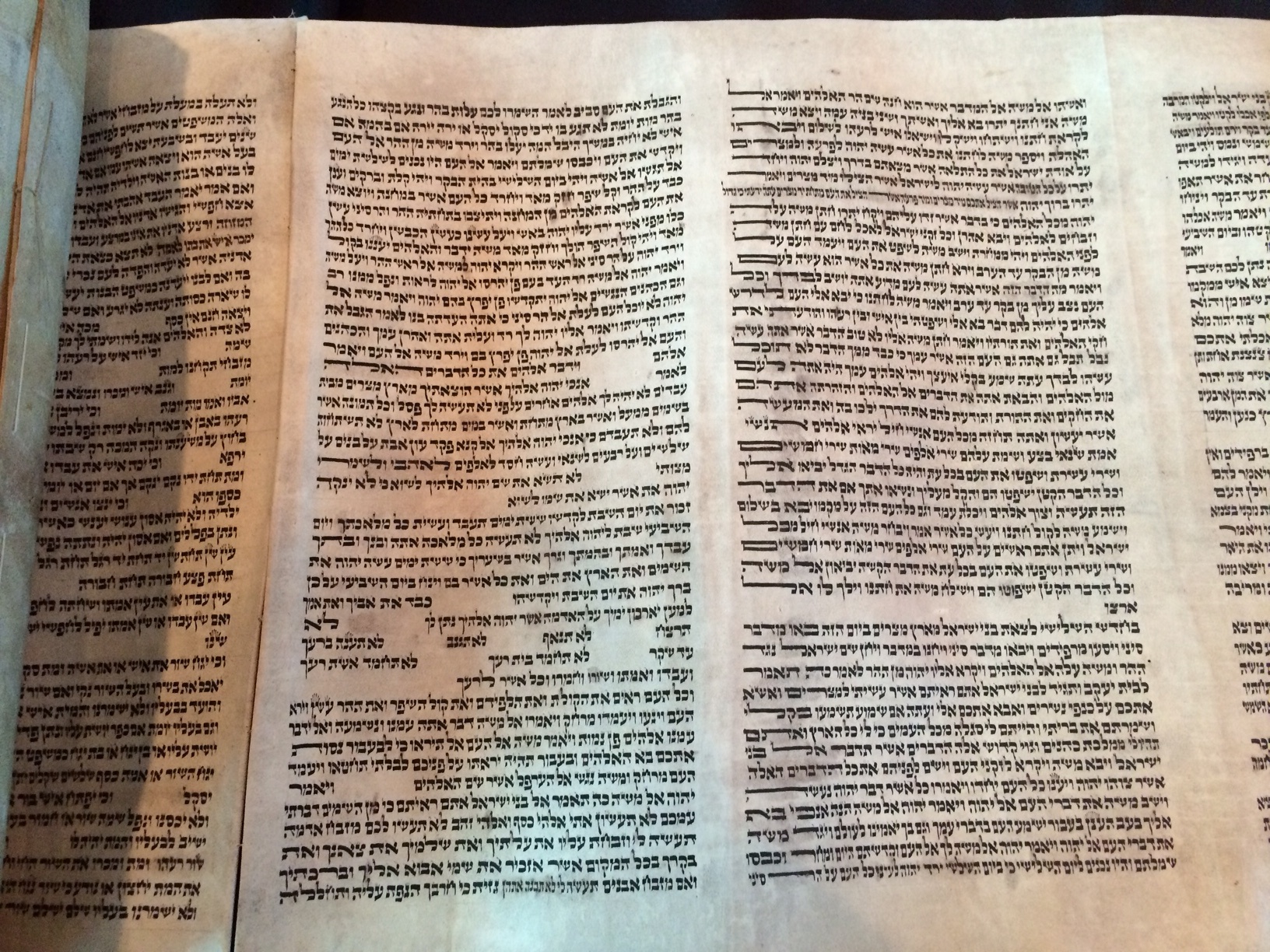
O Livro do GênesisLivro do GênesisHebrew book of the Torah containing Noah’s flood, survival offering and covenant with living creatures.Glossário · Clique para ler a explicação, parte da ToráTorá / PentateucoThe first five books of the Jewish and Christian Bible: Genesis, Exodus, Leviticus, Numbers and Deuteronomy. They combine narrative and law from creation to Moses’ death; in Jewish usage, “Torah” can also encompass a wider body of authoritative teaching.Glossário · Clique para ler a explicação hebraica, descreve a prova de AbraãoAbraãoCentral figure in Genesis, the Qur'an and Jewish, Christian and Islamic traditions; the sacrifice study compares what each text says about him.Glossário · Clique para ler a explicação quando ele recebe a ordem de oferecer seu filho IsaqueIsaqueSon of Abraham and Sarah in Genesis; named explicitly in Genesis 22's sacrifice episode, while named after the unnamed-son scene in Qur'an 37.Glossário · Clique para ler a explicação como holocausto. Abraão constrói um altar e amarra o filho, mas um anjo do Senhor o detém antes da morte. Então Abraão vê um carneiro preso pelos chifres num matagal e o oferece como holocausto "em lugar de seu filho" (Gênesis 22:2, 9–13). [1][15]
Entre as três passagens, esta é a que identifica mais explicitamente tanto a pessoa ameaçada quanto o animal substituto. A expressão hebraica taḥat beno (תחת בנו) significa "em lugar de seu filho". A passagem é uma narrativa religiosa escrita; sua presença não estabelece, por si só e de modo independente, uma prática ritualRitualAn organised or distinguished practice meaningful to a community; it may leave traces, but its form alone does not reveal an associated doctrine.Glossário · Clique para ler a explicação histórica específica. [15]
O resgate na Surata al-Ṣāffāt
No AlcorãoO AlcorãoThe central scripture of Islam, consisting of 114 Arabic surahs; its study distinguishes Quranic discourse from manuscript history, reading traditions, and historical inference.Glossário · Clique para ler a explicação, a Surata al-Ṣāffāt (37:99–113) relata o sonho de Abraão de sacrificar seu filho, o diálogo entre pai e filho e o anúncio de que a prova foi cumprida. O versículo 107 afirma que o filho foi resgatado com um "grande sacrifício". No entanto, o filho não é nomeado na cena do sacrifício, nem são especificados a espécie, a cor ou os chifres do animal. Isaque é nomeado no versículo 112, depois do relato do resgate. [10]
A interpretação posterior é uma camada diferente de evidência. O historiador e comentarista al-ṬabarīAl-TabariAbbasid-era historian and Qur'anic exegete (c. 839–923 CE). His commentary records competing views on Abraham's son, then favors Isaac.Glossário · Clique para ler a explicação (m. 923 EC) registra tradições que identificam ou Isaque ou IsmaelIsmaelSon of Hagar and Abraham in Genesis; later Muslim interpretation identified him with the unnamed son in Qur'an 37's sacrifice scene.Glossário · Clique para ler a explicação, antes de preferir Isaque. O historiador e comentarista Ibn KathīrIbn KathirSyrian Qur'anic exegete and historian (c. 1301–1373 CE) who favors Ishmael in his reading of the sacrifice account.Glossário · Clique para ler a explicação (m. 1373 EC) favorece Ismael e transmite relatos que descrevem um carneiro, incluindo detalhes de seus chifres e cor. Esse material importa para a história da exegese, mas não faz parte da formulação do próprio versículo 107. [16][17]
Um cervo no lugar de Ifigênia no drama grego
No início de Ifigênia em Táuride, do dramaturgo grego EurípidesEurípidesFifth-century BCE Greek tragedian, died 406 BCE. In his Iphigenia among the Taurians, the heroine recounts a deer substituted for her.Glossário · Clique para ler a explicação (século V AEC), IfigêniaIfigêniaMythic and dramatic daughter of Agamemnon. In Iphigenia among the Taurians, Artemis rescues her at the altar and substitutes a deer.Glossário · Clique para ler a explicação relembra que foi levada a um altar em ÁulisÁulisAncient place on the Boeotian coast near the Euripus Strait in Greece; setting of Iphigenia's Greek story and site of a fifth-century BCE Artemis temple.Glossário · Clique para ler a explicação depois que seu pai, o lendário comandante AgamêmnonAgamêmnonFigure of Greek narrative, commander of the expedition to Troy and Iphigenia's father in Euripides; the play does not independently establish his historicity.Glossário · Clique para ler a explicação, resolveu oferecê-la à deusa ÁrtemisÁrtemisGoddess of hunting in Greek traditions and Apollo’s sister, named among the divine company in the Iliad.Glossário · Clique para ler a explicação. A deusa, em vez disso, salvou Ifigênia, substituiu-a por um cervo e a transportou para TáurideTáurisAncient Greek name for Taurian territory on the Black Sea, associated with today's Crimean peninsula; the setting of Euripides' Iphigenia play.Glossário · Clique para ler a explicação, no Mar Negro, onde ela se tornou sacerdotisa. [14][18]
O grego emprega ἔλαφον, que significa cervo, e não gazela no sentido zoológico, e não especifica aqui o sexo do animal. São palavras pronunciadas por uma personagem numa peça ambientada num mundo mítico. Elas atestam uma versão literária grega da história, não a ocorrência histórica do evento lendário. [18][19]
O que se parece com o quê, e o que difere?
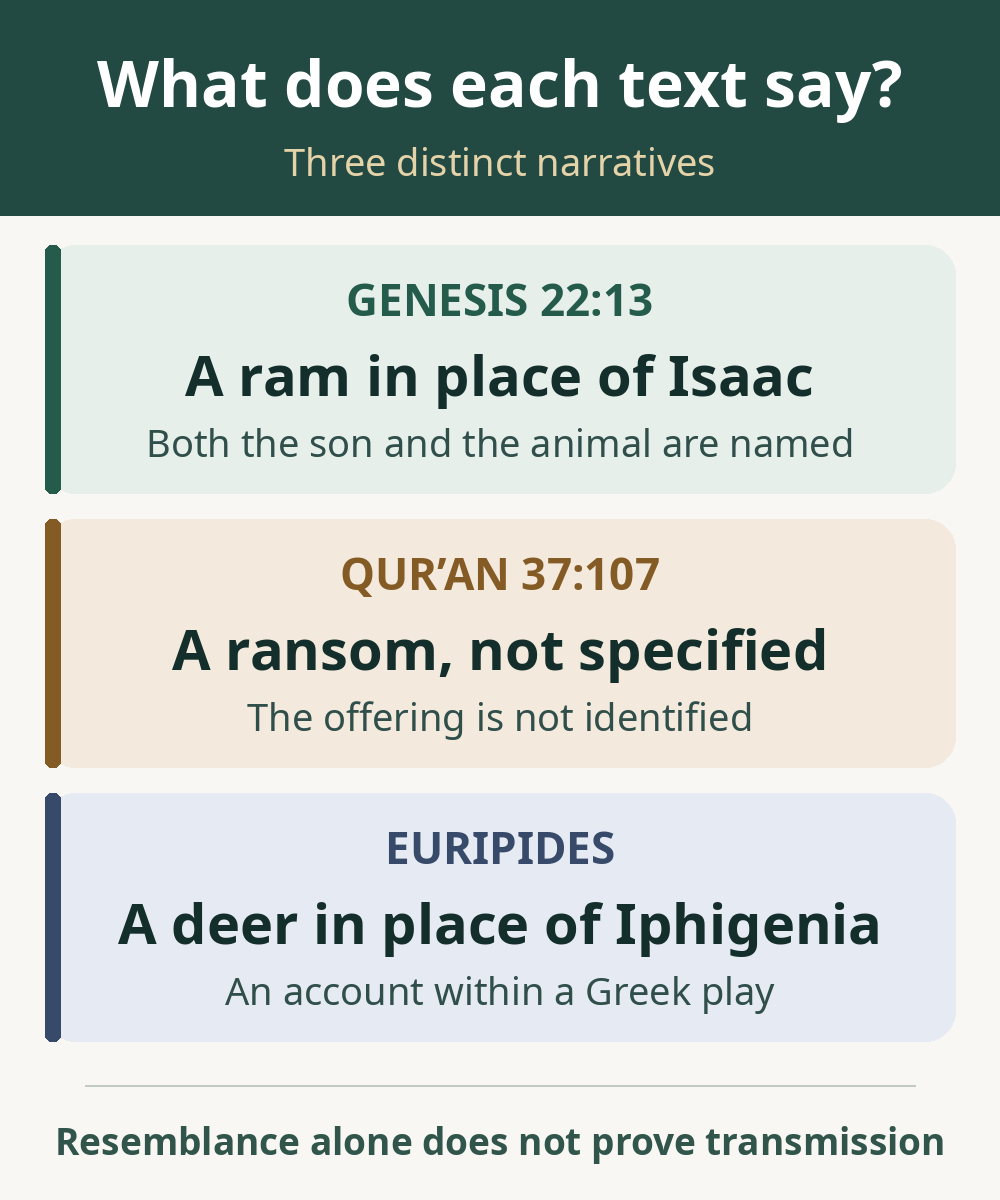
As três passagens afastam o sacrifício humano ameaçado, mas identificam o substituto de modos diferentes. O Gênesis nomeia Isaque e o carneiro, e afirma explicitamente que este último é oferecido no lugar do filho. A passagem corânica fala de um "grande sacrifício" sem nomear o filho nem especificar a oferenda na cena. Eurípides descreve uma moça salva por Ártemis mediante a substituição por um cervo. Os cenários, os propósitos e as funções narrativas também diferem. [1][10][18]
O motivo compartilhado, portanto, não pode, por si só, estabelecer empréstimo. Um argumento histórico em favor da transmissão literária exigiria atenção à formulação, à cronologia e a evidências de circulação e contato. Tal argumento pode apoiar-se em indícios convergentes mesmo sem um intermediário identificado, mas as passagens aqui consideradas não estabelecem uma rota específica. Da mesma forma, uma afirmação sobre a prática sacrificial real precisa de evidência além das próprias histórias. [1][10][18]
Referências e notas
- Genesis 22 in the English King James Version (1611), especially verses 2 and 9–13; Hebrew text also checked in note [15]. Genesis 22:1–24 (KJV); focus 22:2, 9–13 Voltar ao texto ↑
- Qur’an, Sūrat al-Ṣāffāt 37:99–113, especially 101–107 and 112; distinct from later exegetical explanations. Qur’an 37:99–113, esp. 101–107 and 112 Voltar ao texto ↑
- Euripides, Iphigenia in Tauris, opening (lines 1–40) in Gilbert Murray’s English verse translation and preface; the translation is compared with Greek in [18]. Iphigenia in Tauris, opening 1–40; Murray translation and preface Voltar ao texto ↑
- Genesis 22:2, 9–13, Hebrew text with facing English translation at Mechon-Mamre. Verse 13 names the ram and its horns and uses תחת בנו (“instead of his son”). Genesis 22:2, 9–13, especially 22:13 Voltar ao texto ↑
- Al-Ṭabarī, Jāmiʿ al-bayān, commentary on Qur’an 37:107: competing identifications and his preference for Isaac; an exegetical position, not an explicit naming in the verse. Commentary on 37:107, especially “wa-awlā al-qawlayn” and following Voltar ao texto ↑
- Ibn Kathīr, Tafsīr al-Qurʾān al-ʿaẓīm on Qur’an 37:101 and 107: favors Ishmael, cites traditions about the ram and horns, and records the contrary identification. Commentary on 37:101 and 107; reports and preferred interpretation Voltar ao texto ↑
- Euripides, Iphigenia in Tauris, Greek opening (standard lines approximately 25–30), compared with the English translation by Edward P. Coleridge (1891), via Perseus. The Greek reads ἔλαφον ἀντιδοῦσά μου (“giving a deer instead of me”). Greek lines 25–30; opening lines of the English translation Voltar ao texto ↑
- Liddell and Scott, Ancient Greek lexicon, s.v. ἔλαφος: a deer, male or female; it should not be rendered as gazelle. Lexicon entry ἔλαφος Voltar ao texto ↑
Sugerir uma correção · Sugerir uma fonte para este registro
Citar este registro
IL Archive, «Substituição sacrificial», https://ilarchive.com/pt/entities/sacrificial-substitution
Continuar lendo