Atrahasis Capítulo 1
O peso da terra
Os deuses que escavaram os cursos de água pedem alívio, e Mami prepara a argila de que nascerão os seres humanos. Quando as suas vozes enchem a terra, Atrahasis pede a ajuda de Enki contra a doença e a seca.
Ver o filmeFontesVire as páginas com as setas, o teclado ou deslizando o dedo.
O PESO DA TERRA
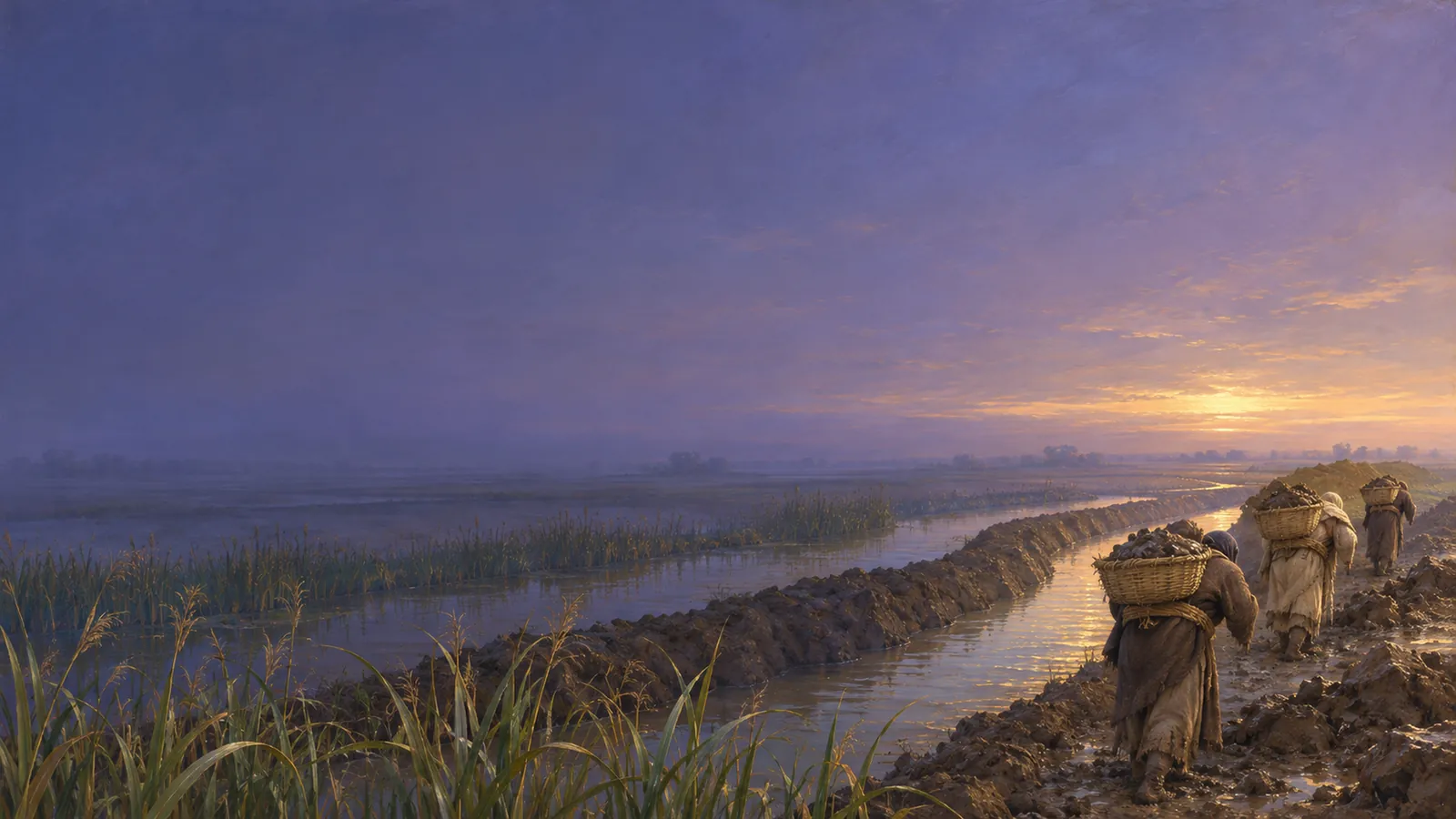
Antes de haver seres humanos para lavrar a terra, os próprios deuses faziam o trabalho. Cavavam e carregavam terra, e o peso acabava por os esgotar.
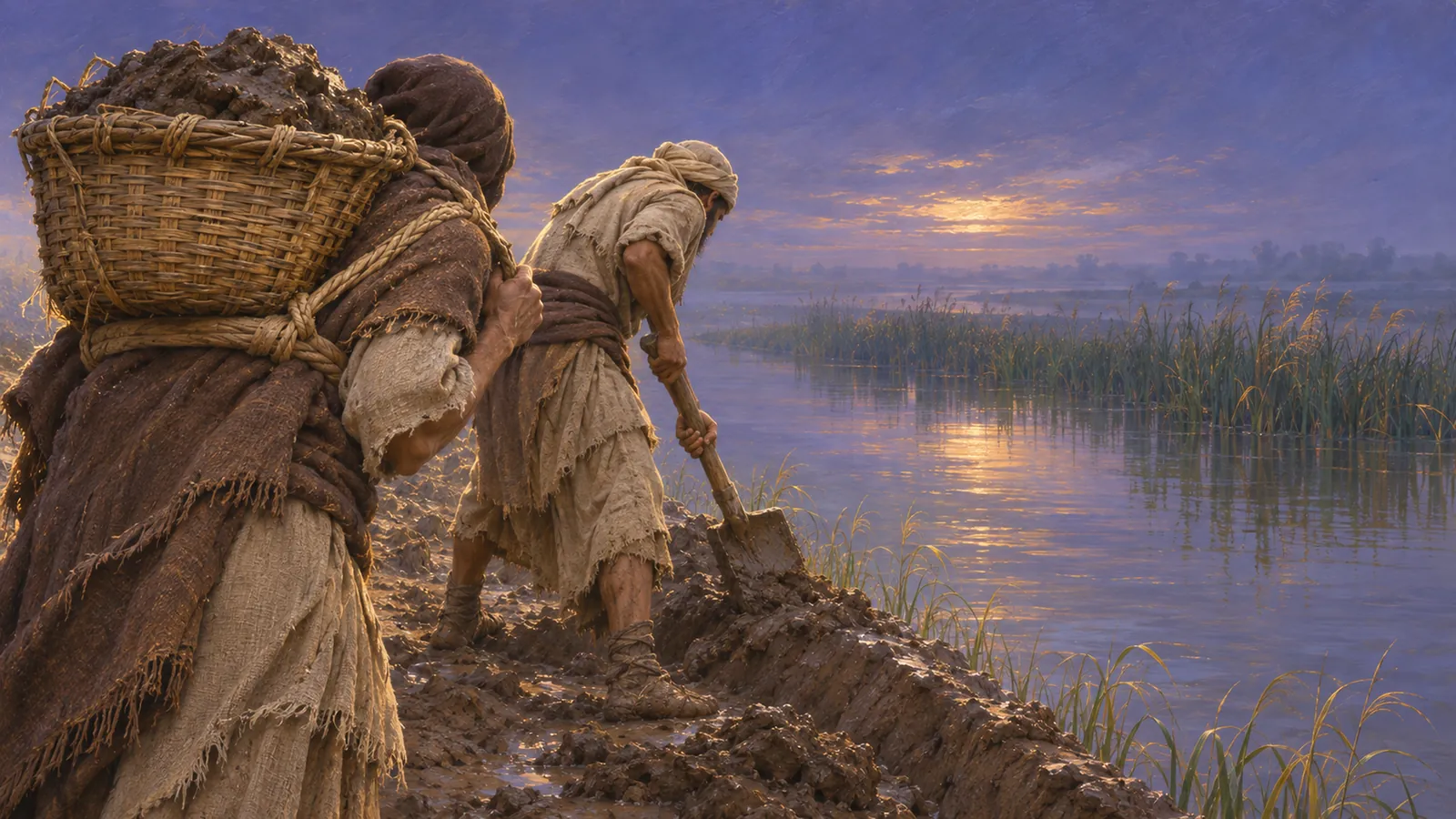
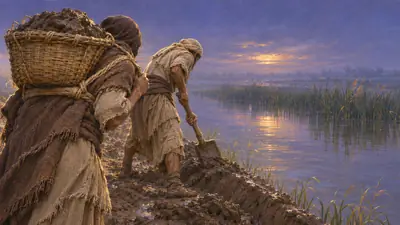
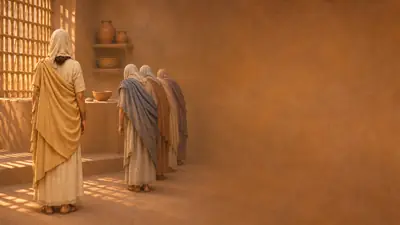
Os grandes deuses encarregaram os Igigi de cavar e carregar terra. Dia após dia, eram os seus ombros que suportavam a carga.
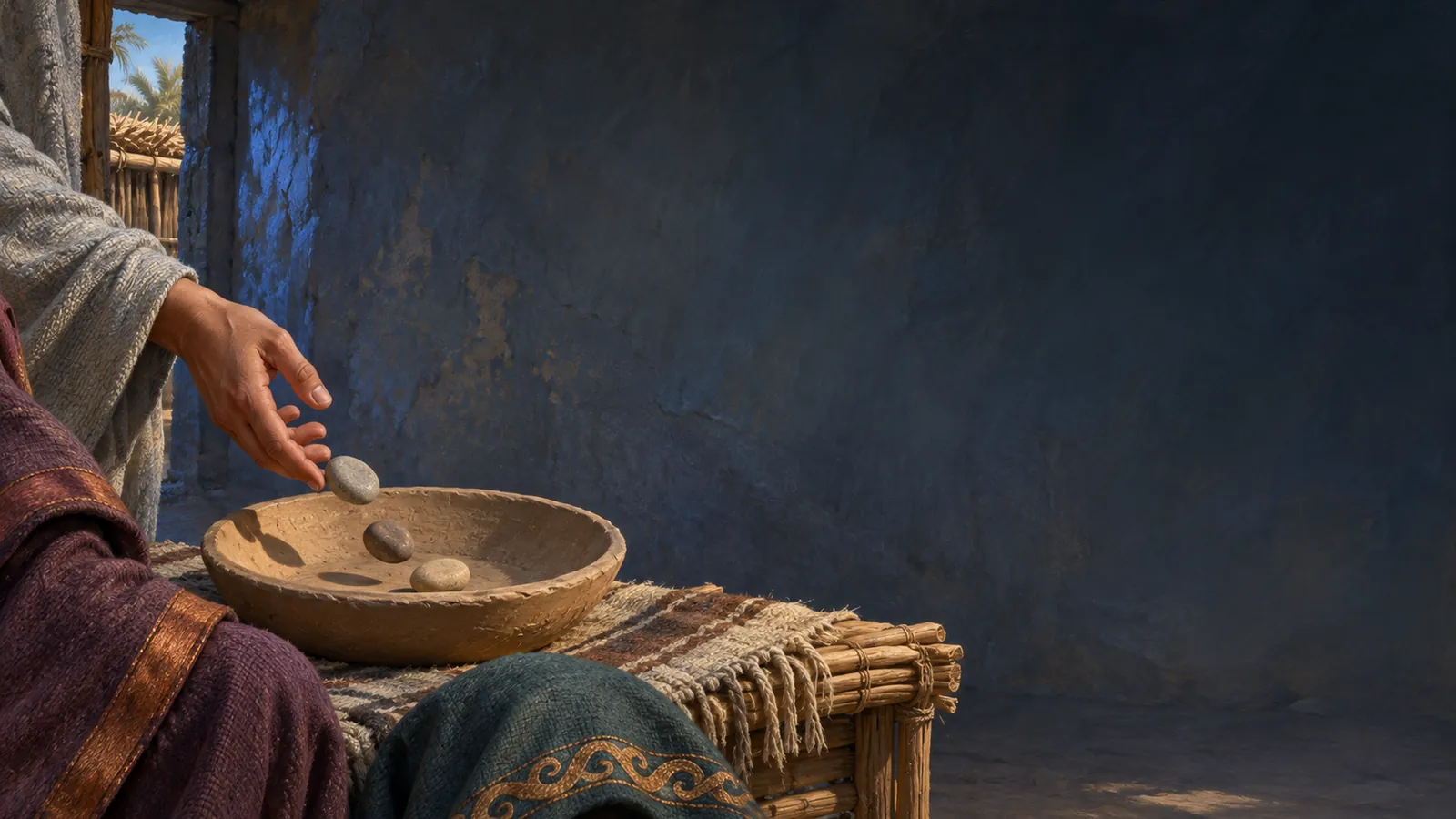
Os deuses lançaram sortes. Anu subiu ao céu, Enlil recebeu a terra e Enki ficou encarregado da barreira que continha o mar.
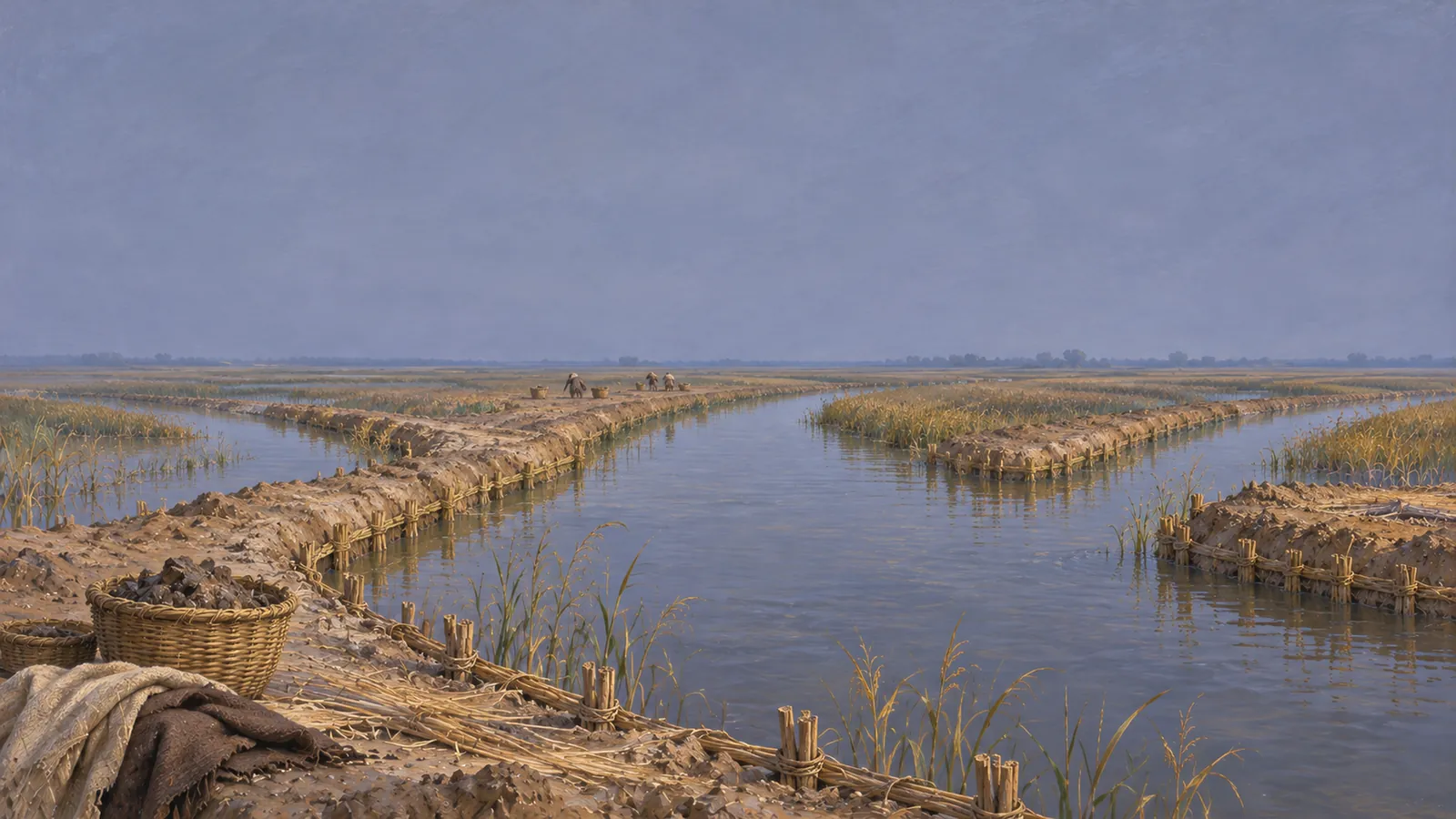
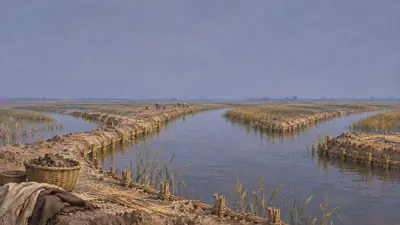
Em baixo, o trabalho continuava. Os deuses que cavavam abriram cursos de água pela terra, e o poema recorda esses canais como a própria vida da terra.
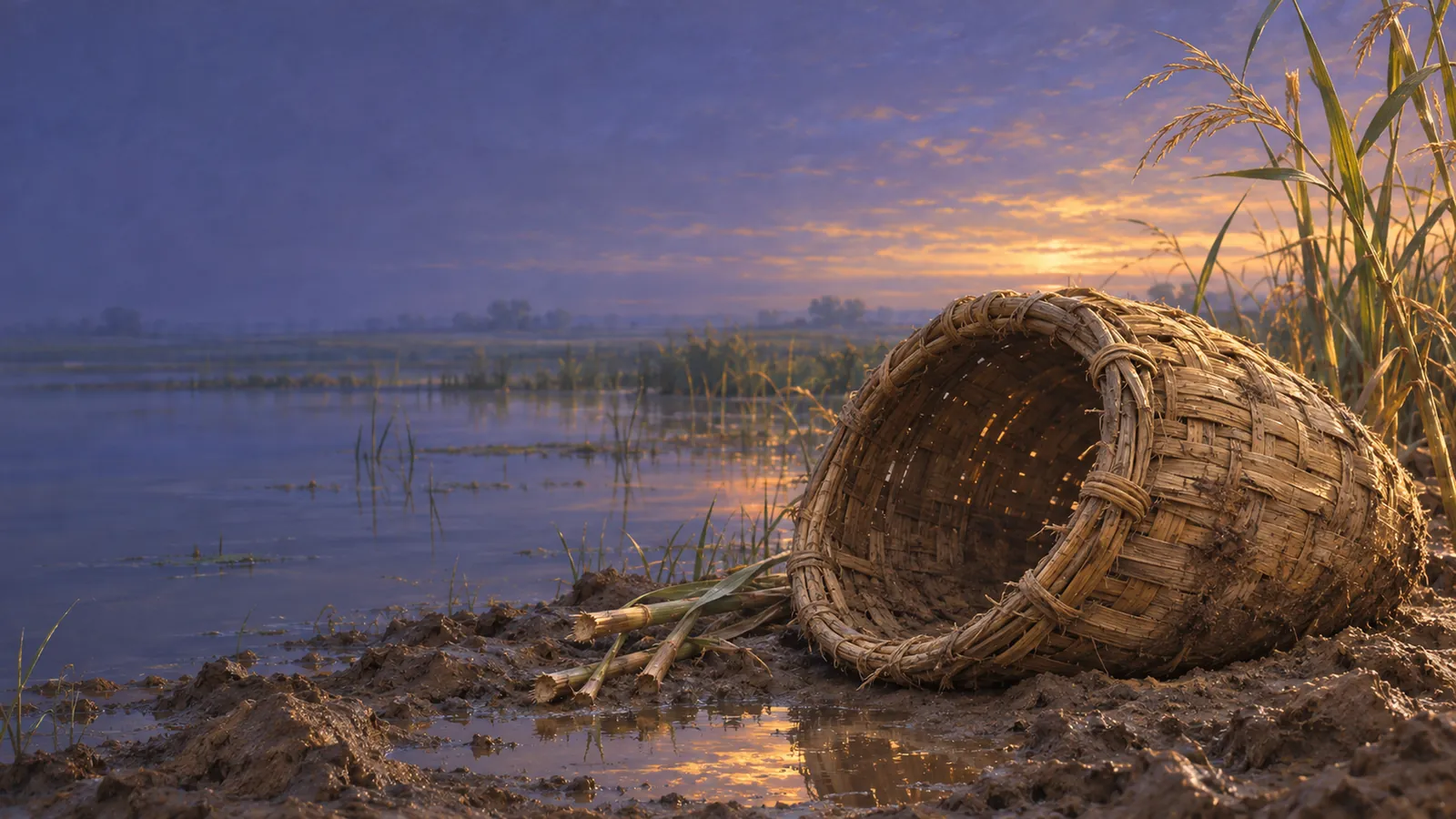
Os versos incompletos ainda guardam a memória dos juncos com que se faziam os cestos. Para os deuses que os carregavam, aqueles cestos passaram a representar anos de trabalho árduo.
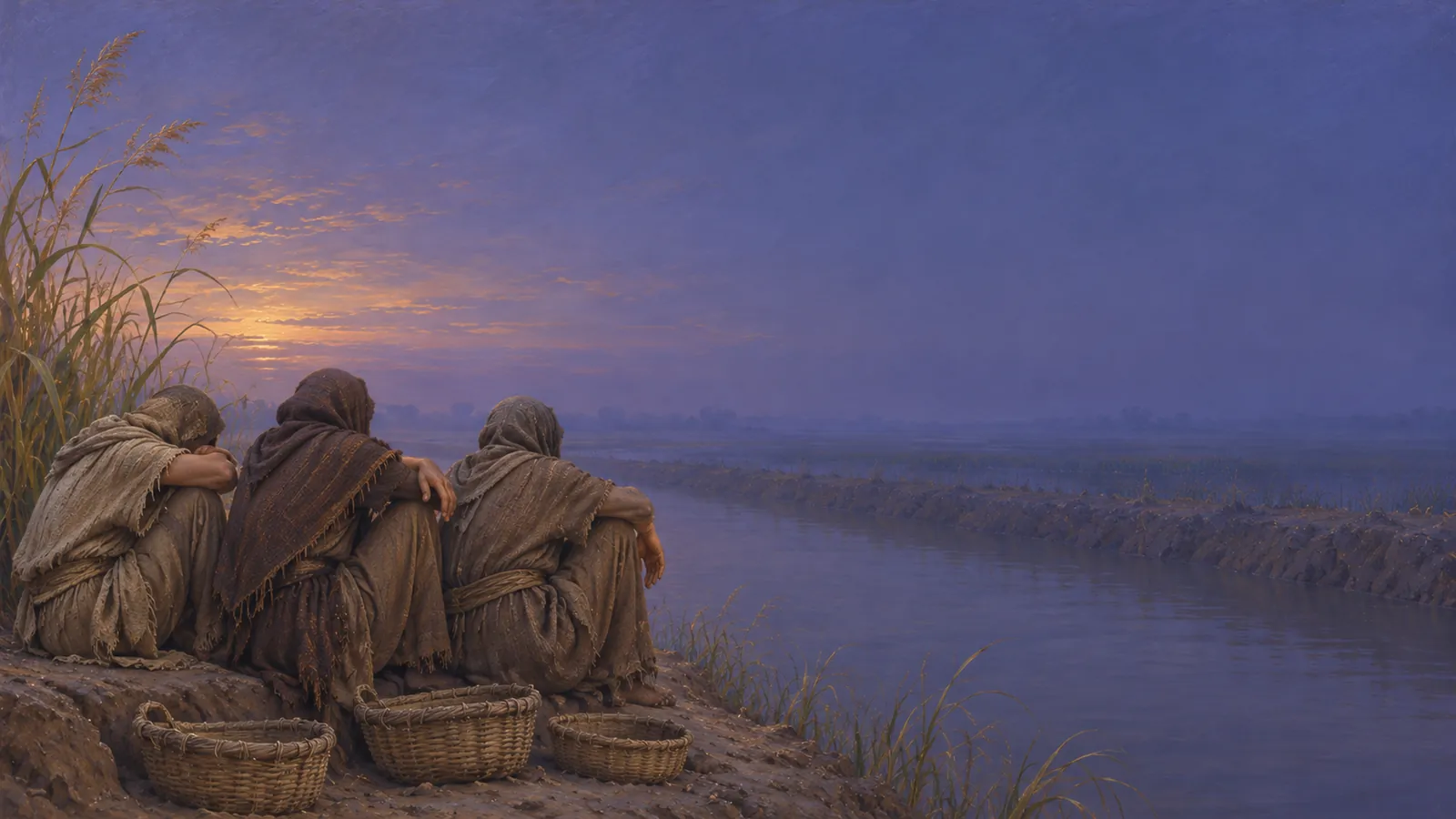
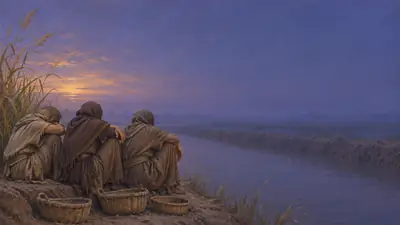
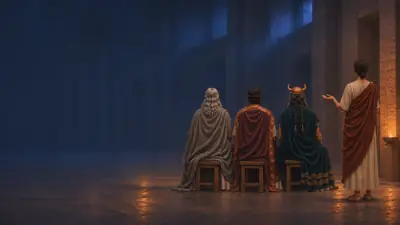
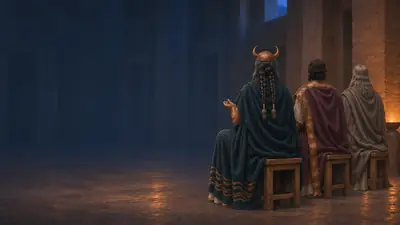
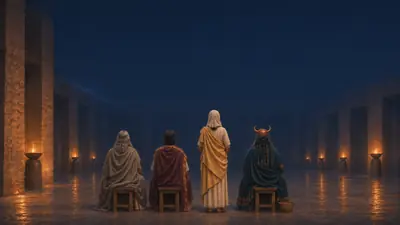
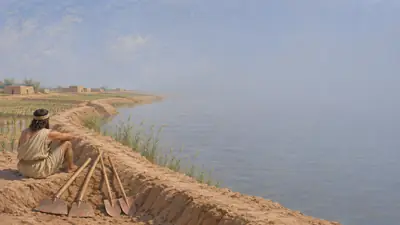
Trabalhavam de dia e de noite. Depois, os trabalhadores sentaram-se na própria escavação e começaram a dizer em voz alta o que aquele trabalho lhes tinha custado.
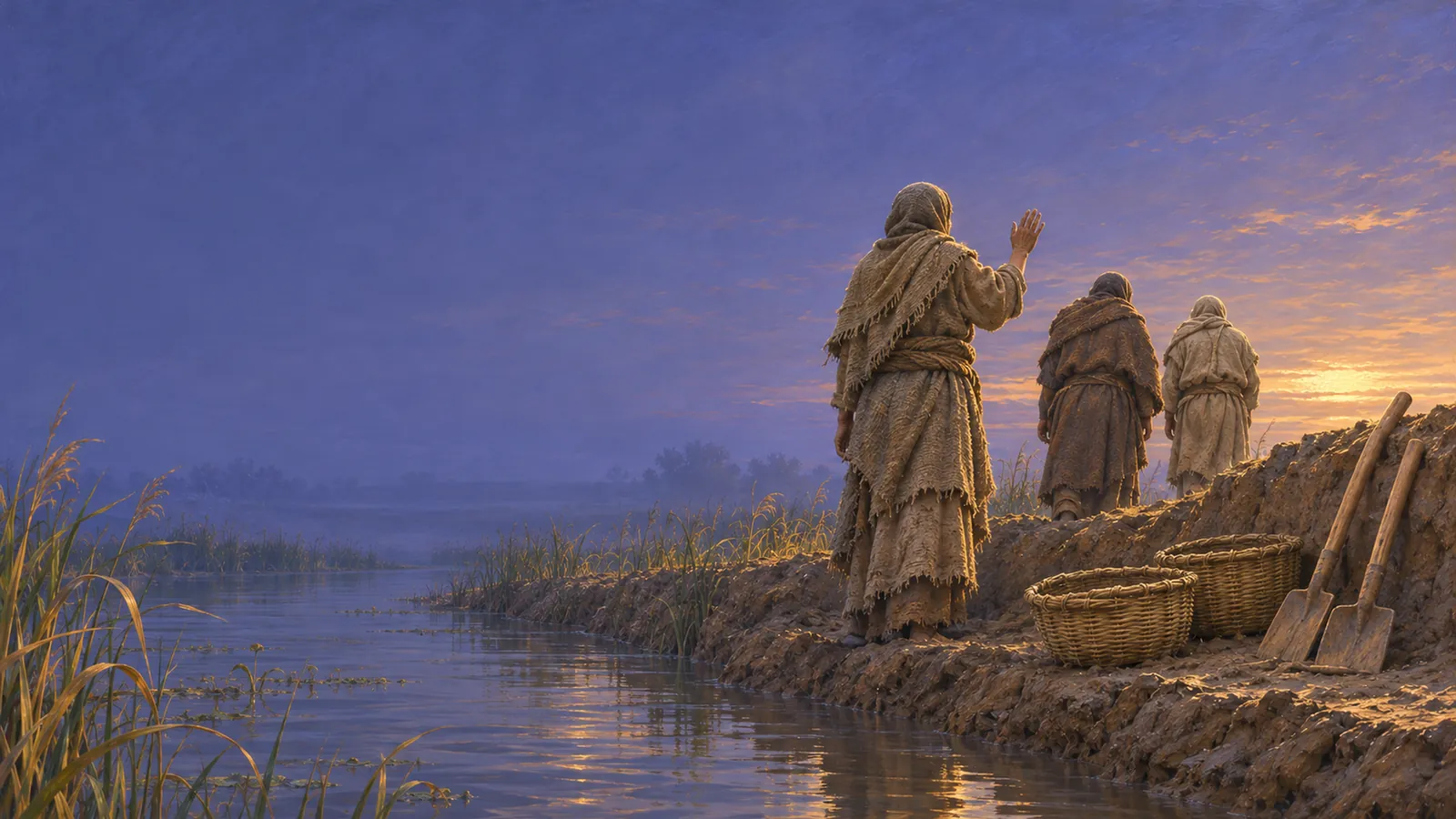
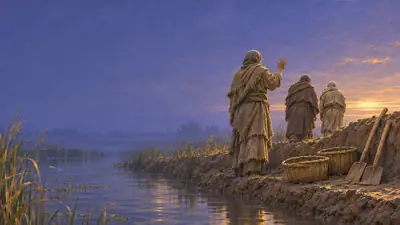
Entre os trabalhadores, uma voz chamou os outros a deixar a escavação e a confrontar Enlil. Queriam que ele respondesse pelo fardo que os obrigara a carregar.
AS FERRAMENTAS EM CHAMAS
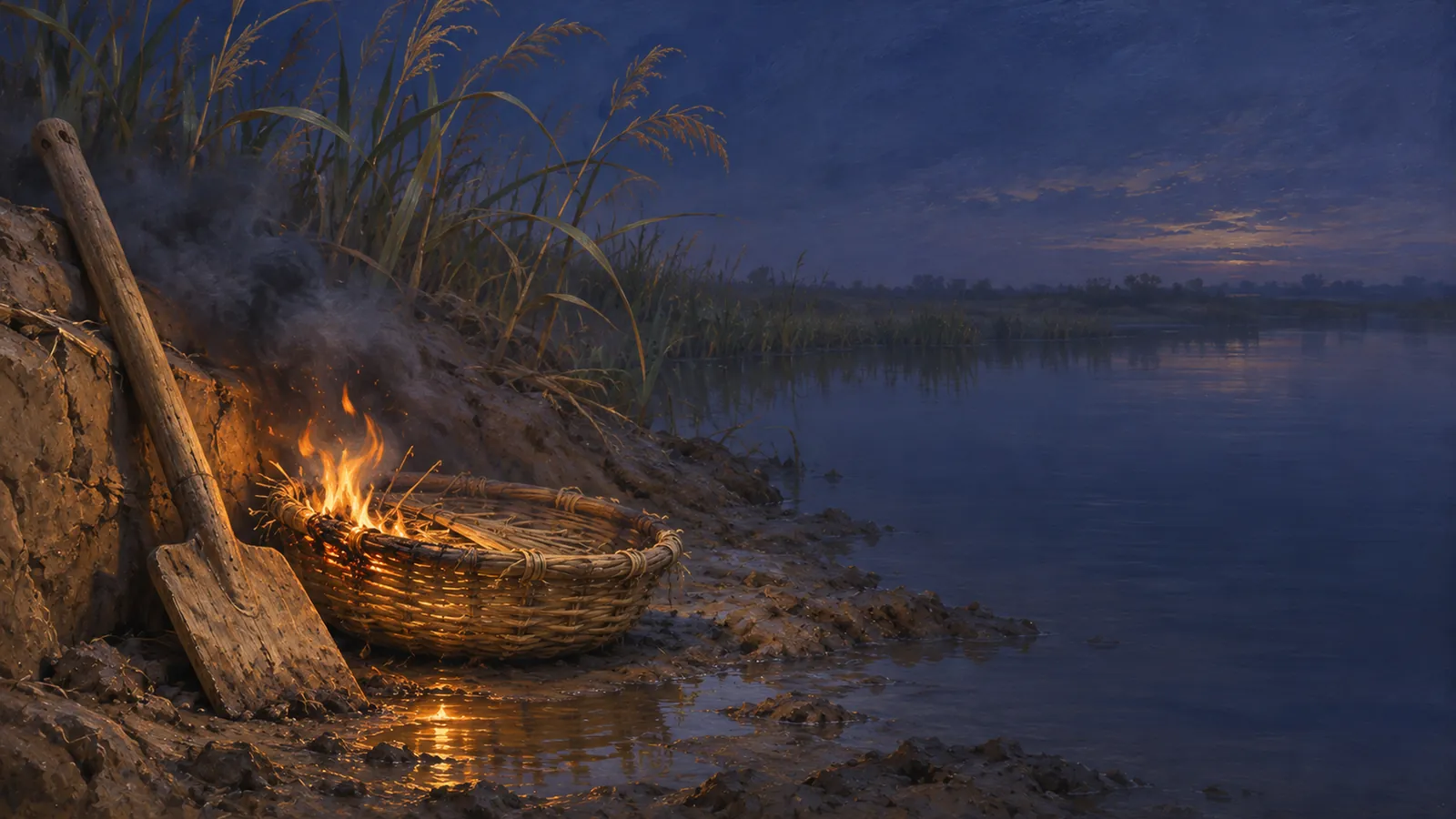
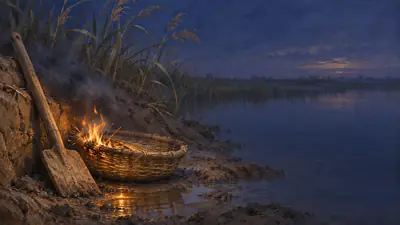
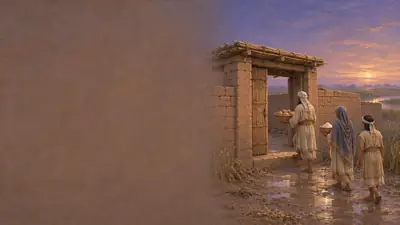
Os trabalhadores ouviram o apelo. Lançaram ao fogo as pás e os cestos de carga e foram juntos até à porta do santuário de Enlil.
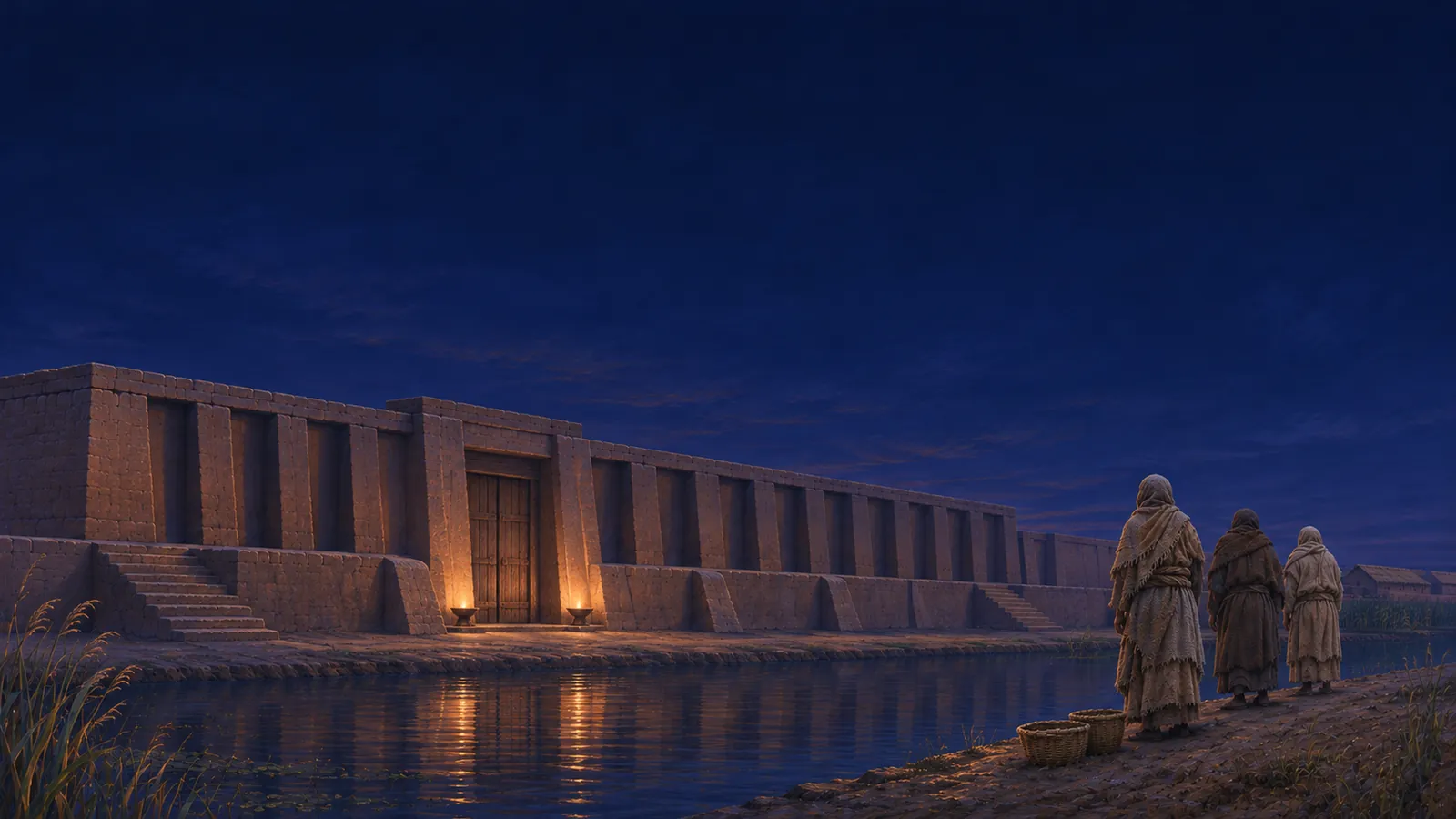
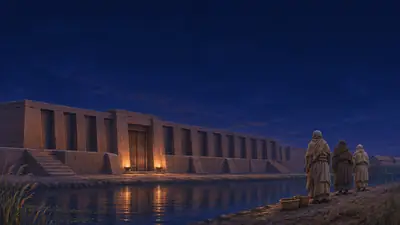
Ia a meio a vigília da noite quando os trabalhadores cercaram o Ekur. Dentro de casa, Enlil ainda não tinha ouvido quem se juntava à sua porta.
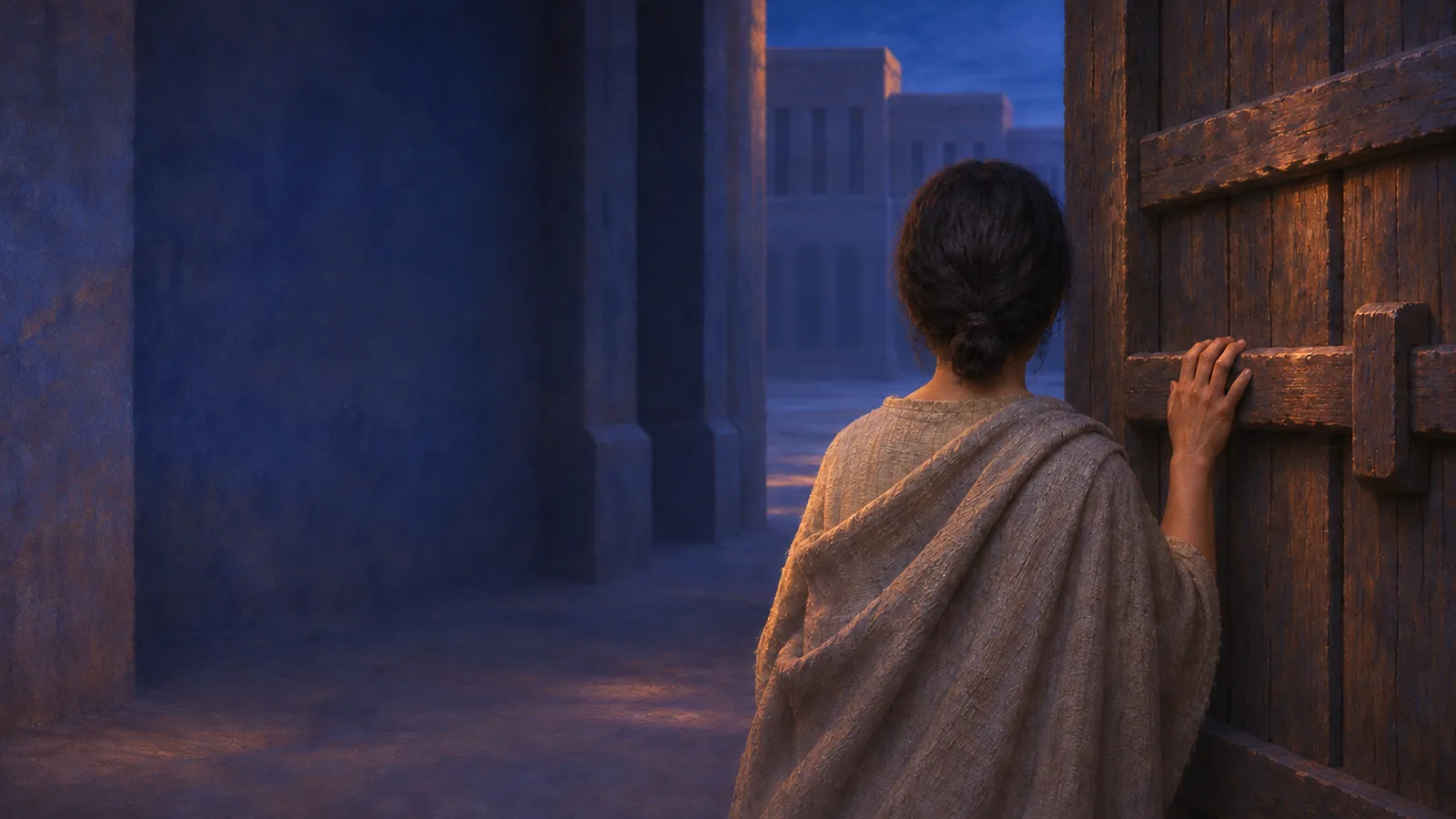
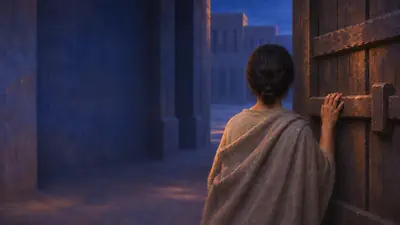
À porta, Kalkal pôs a mão no ferrolho e foi acordar Nuska. Os dois escutaram as vozes dos trabalhadores lá fora.
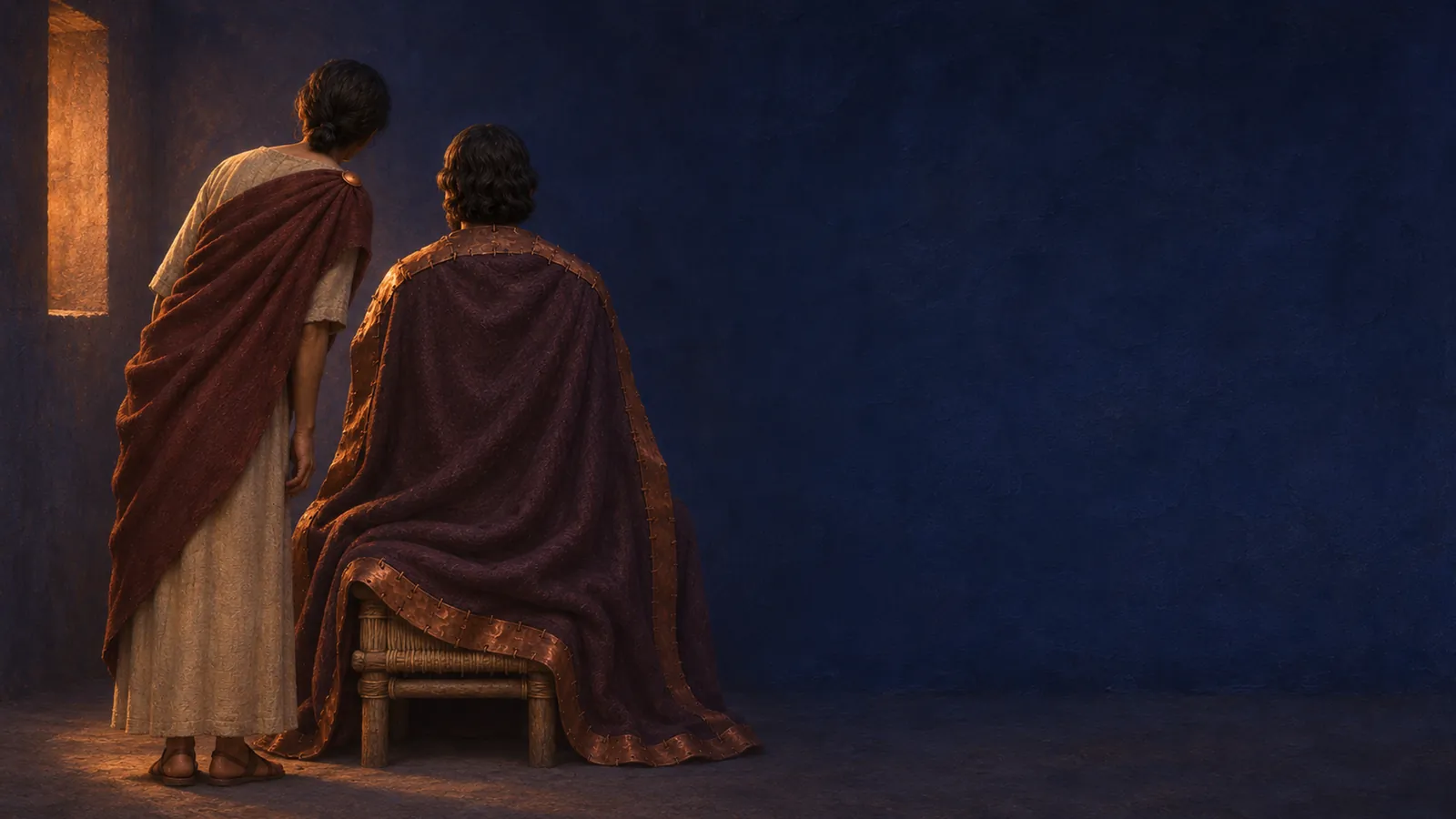
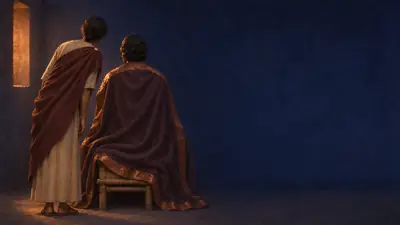
Nuska acordou o seu senhor e disse-lhe que a casa estava cercada. A disputa que começara na escavação chegara agora à própria porta de Enlil.
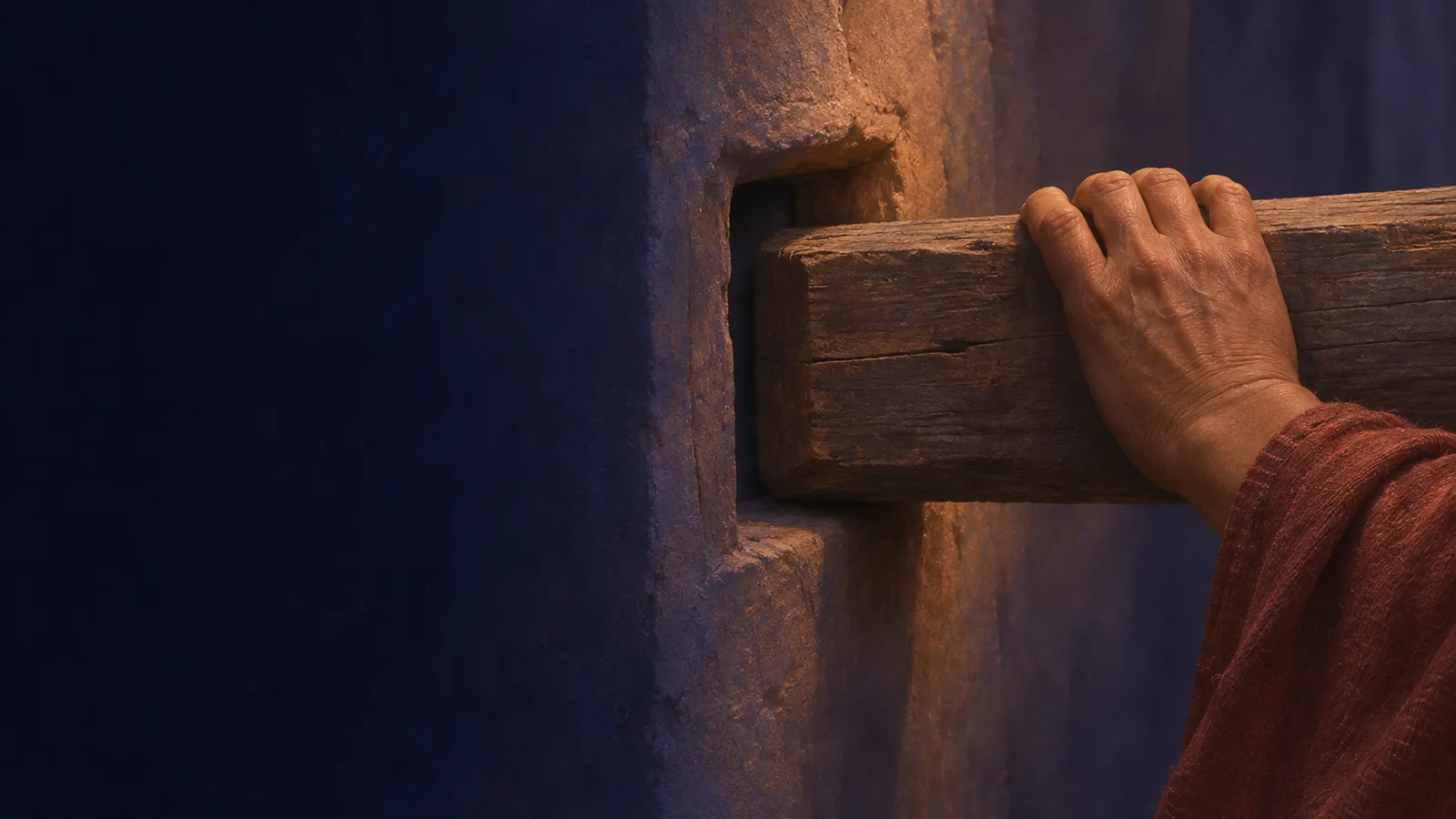
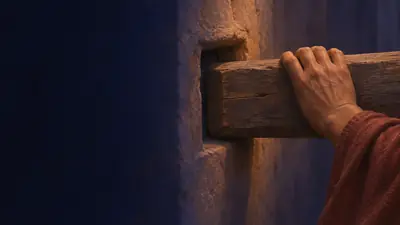
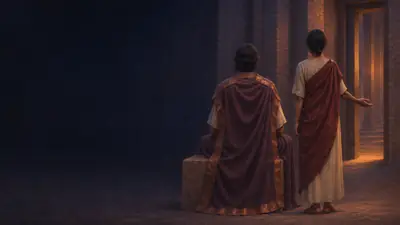
Enlil mandou Nuska trancar a porta, pegar nas armas e pôr-se diante dele. Nuska fez o que lhe fora ordenado. Lá fora, os trabalhadores continuavam à espera.
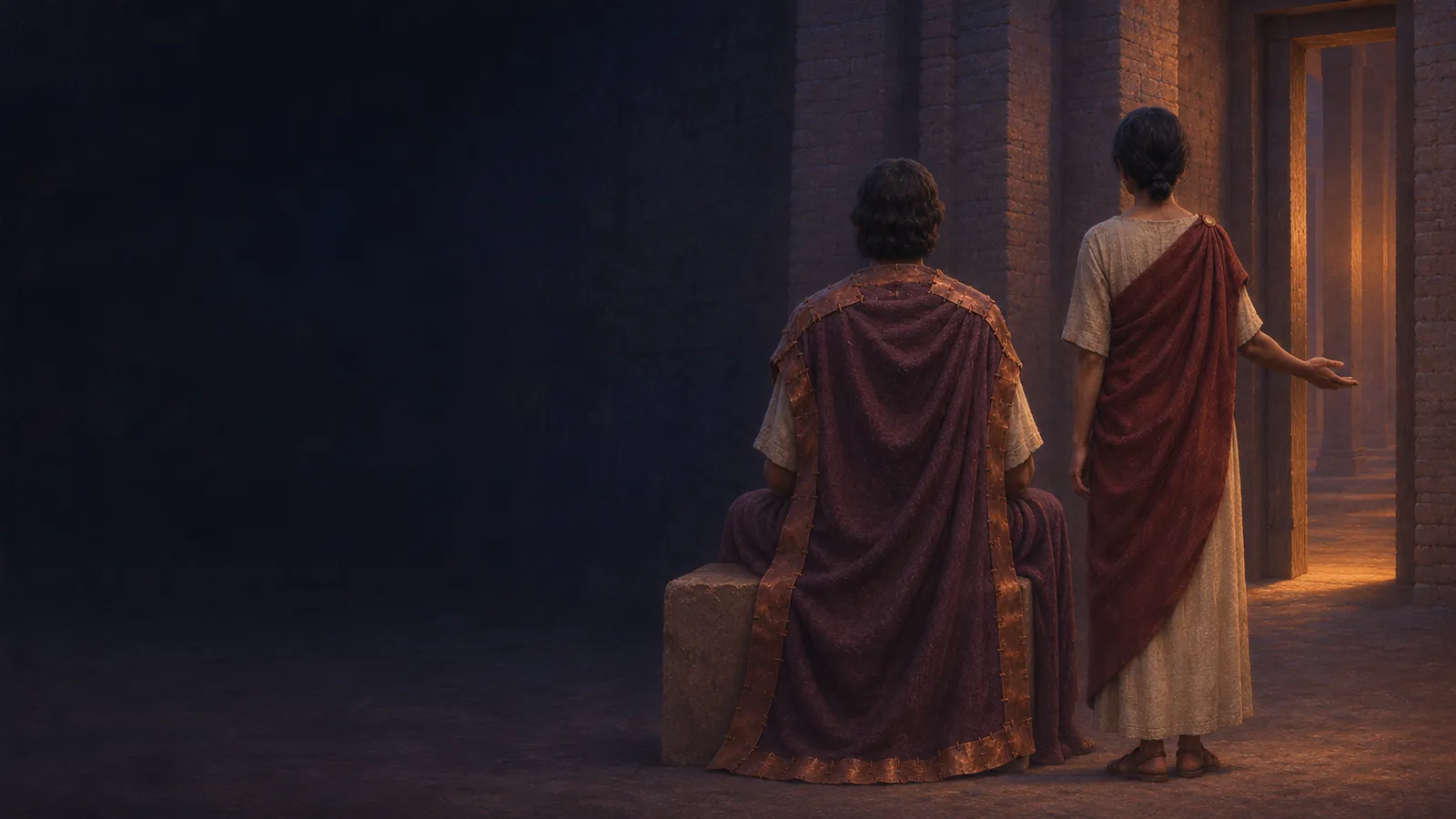
Nuska viu como o seu senhor estava assustado. Aconselhou-o a mandar descer Anu e chamar Enki à sua presença, para que os deuses pudessem ouvir o caso em conjunto.
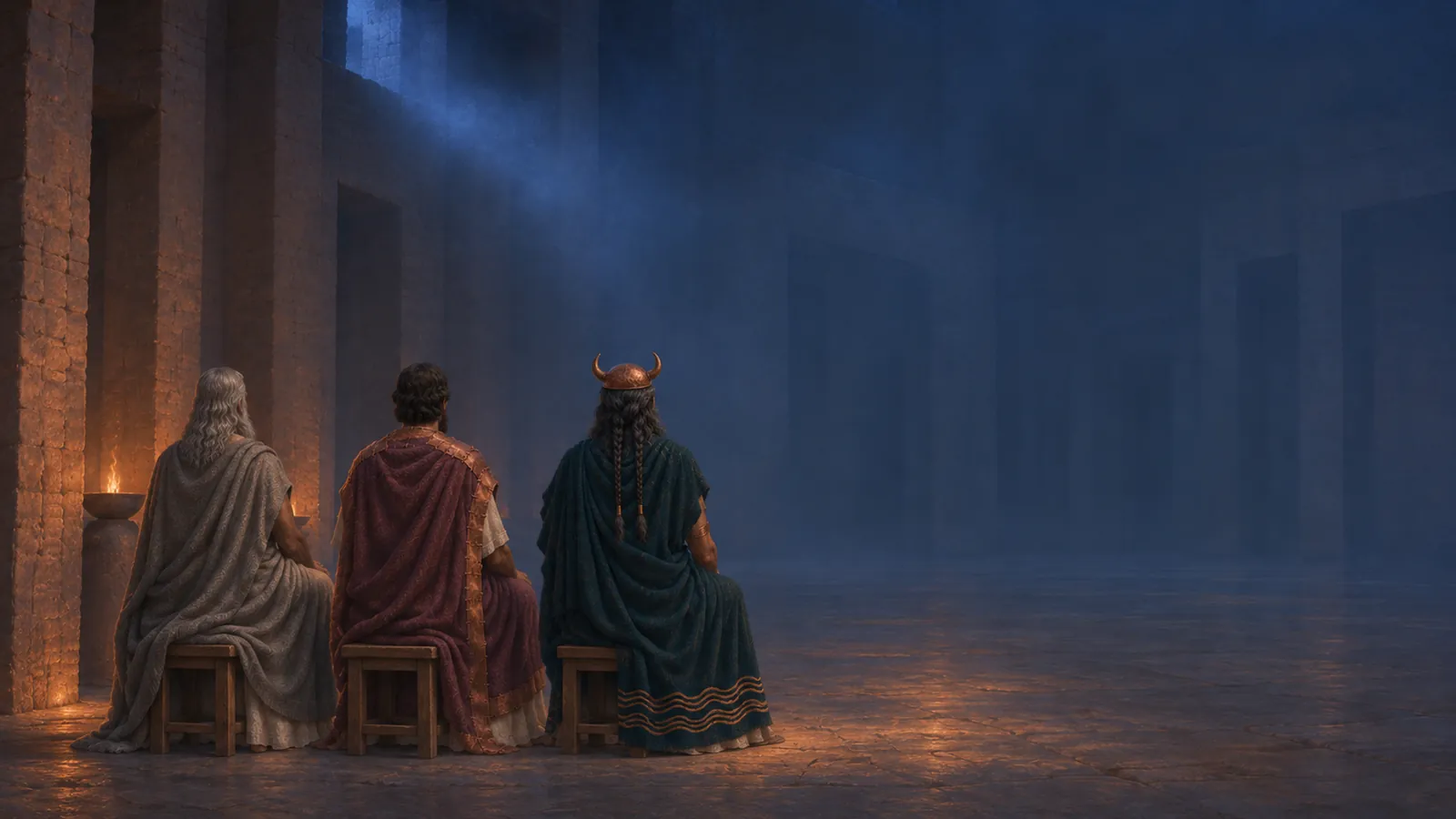
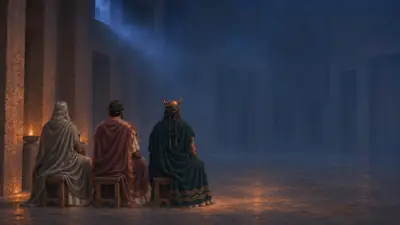
Enlil perguntou ao conselho por que razão os trabalhadores se tinham revoltado contra ele. Anu aconselhou-o a enviar Nuska lá fora e a ouvir dos próprios trabalhadores o que os trouxera à porta.
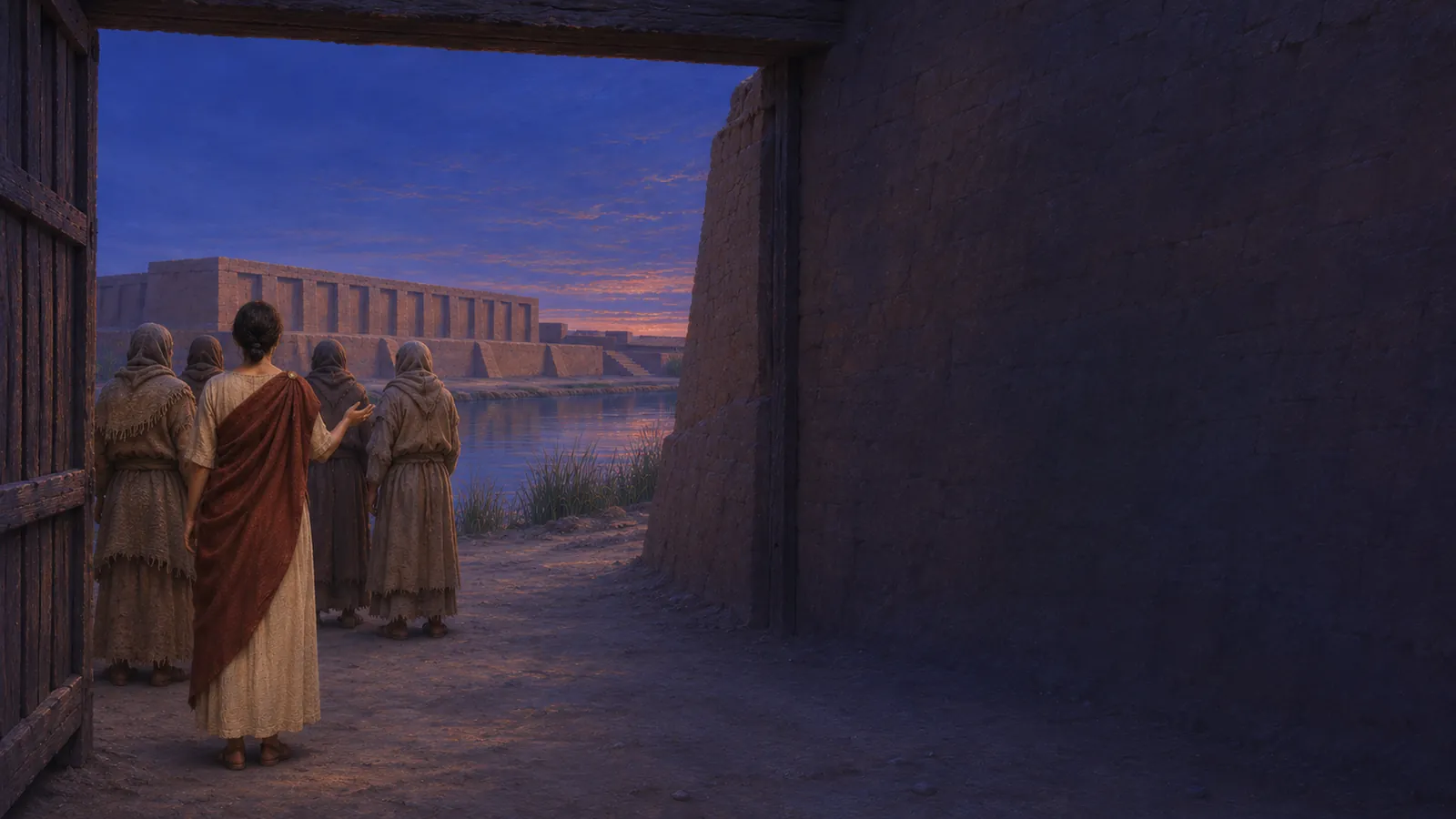
Nuska abriu a porta, pôs-se diante do grupo reunido lá fora e transmitiu as palavras que lhe tinham confiado. Perguntou que deus os conduzira até ali.
TODOS NÓS
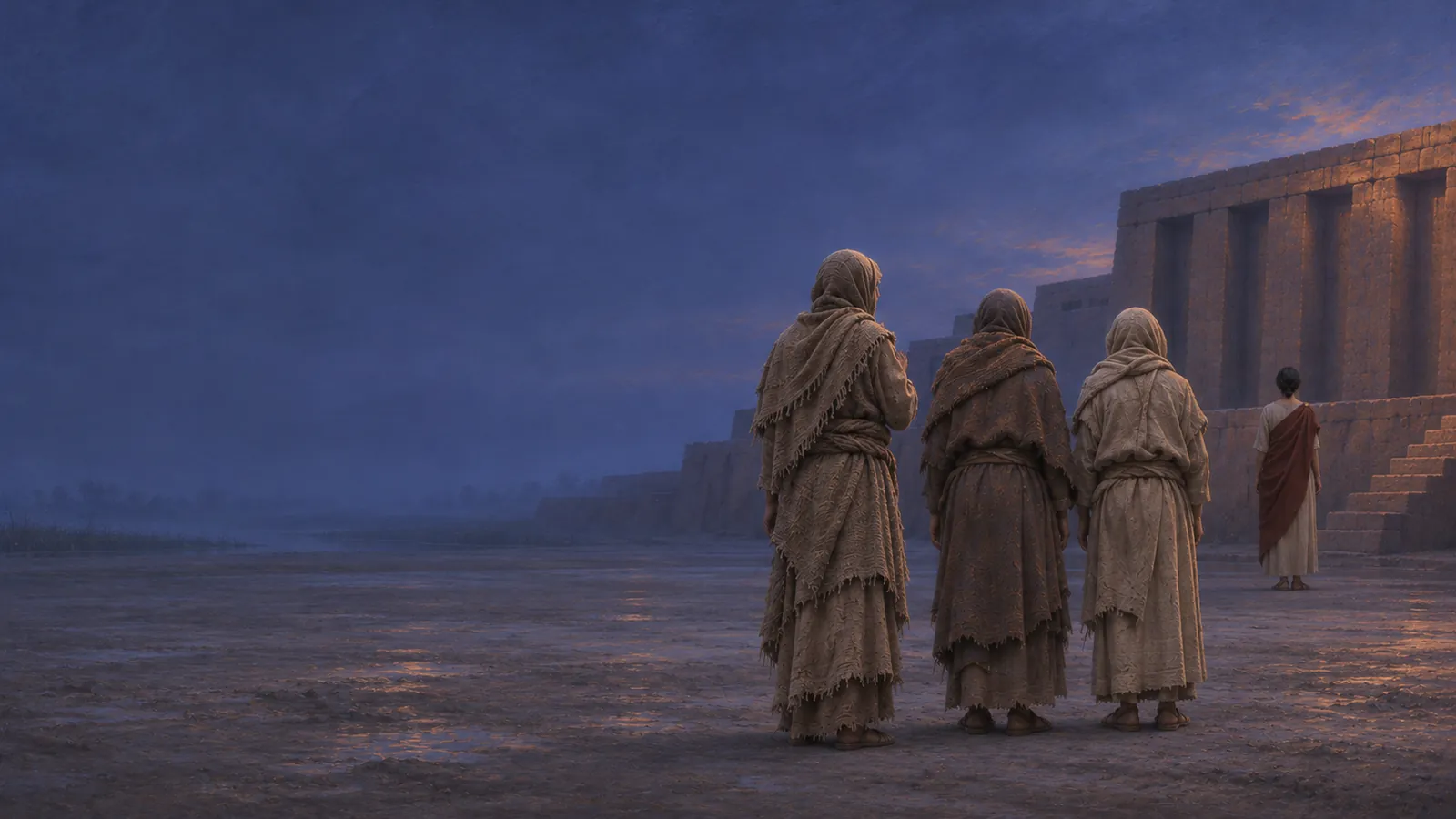
A resposta veio de todo o grupo de trabalhadores. Tinham-se reunido todos na escavação, disseram, e o trabalho tornara-se pesado demais para o suportarem.
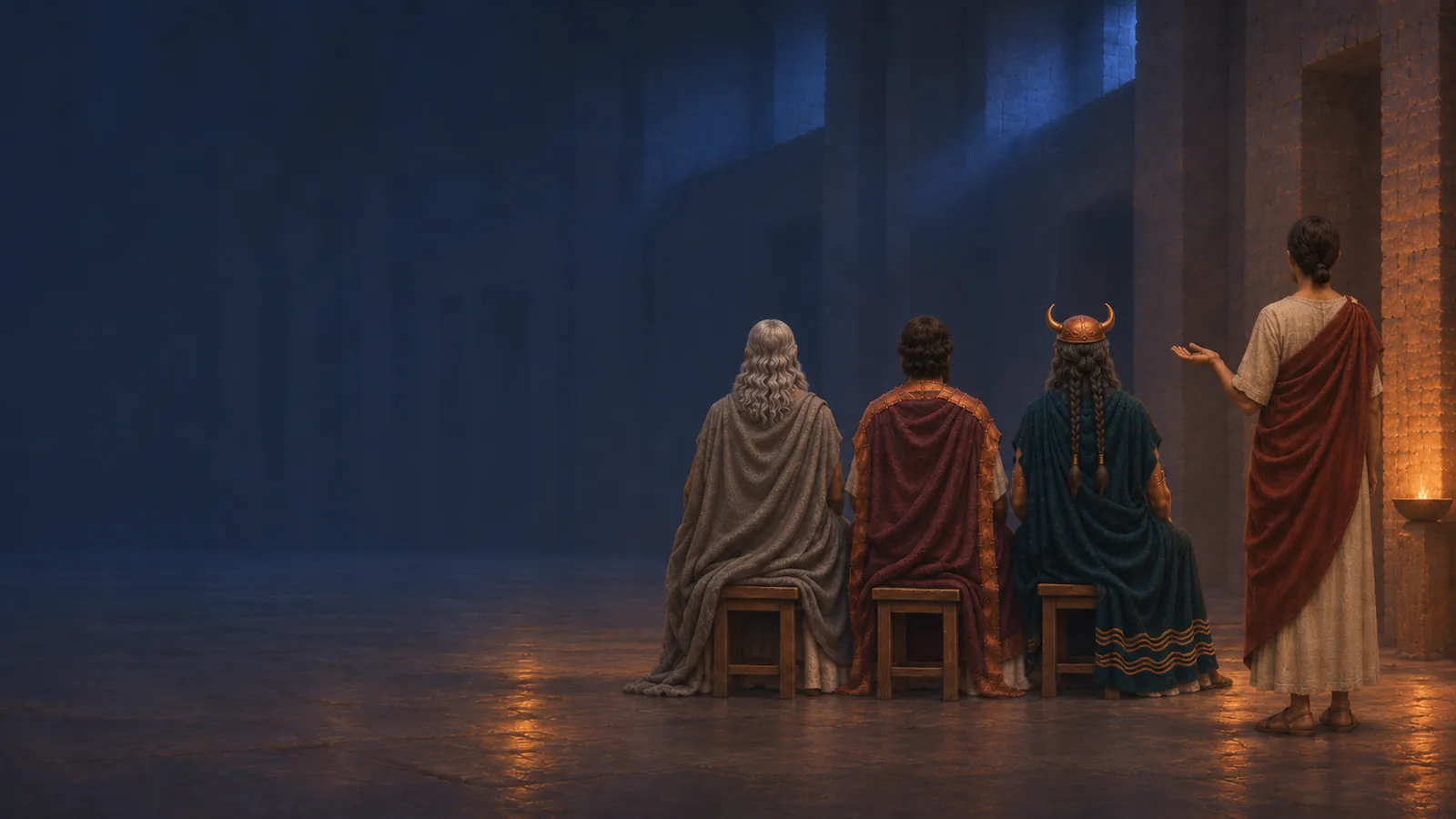
Nuska levou as palavras dos trabalhadores de volta à sala do conselho. Todos, sem exceção, tinham participado, disse. Fora o peso dos cestos que os levara ali.
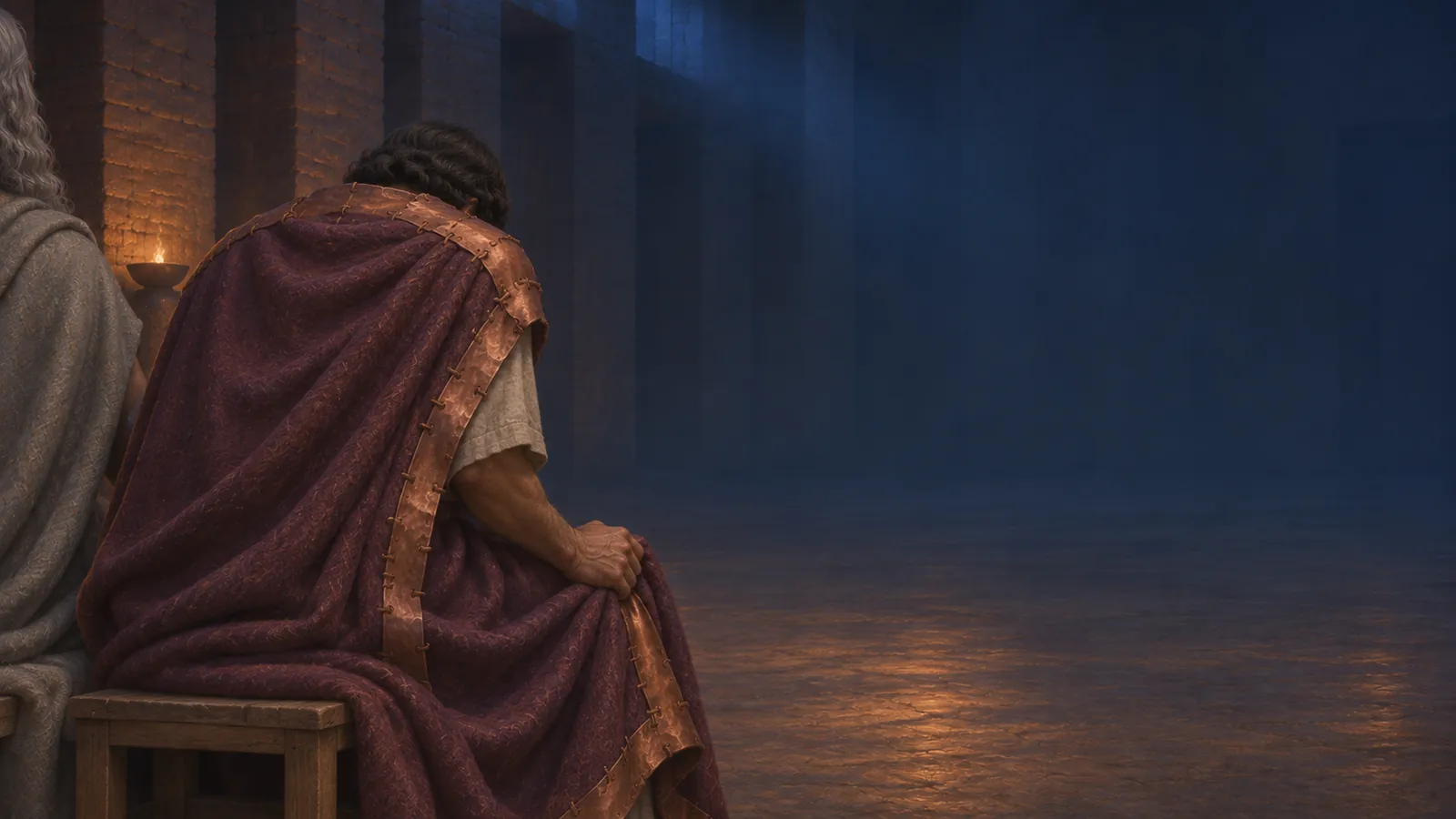
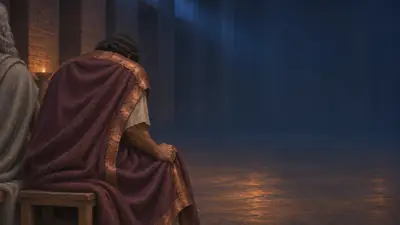
O relato levou Enlil às lágrimas. Voltou-se para Anu e falou em subir ao céu com ele, deixando ao conselho a decisão sobre o que fazer.
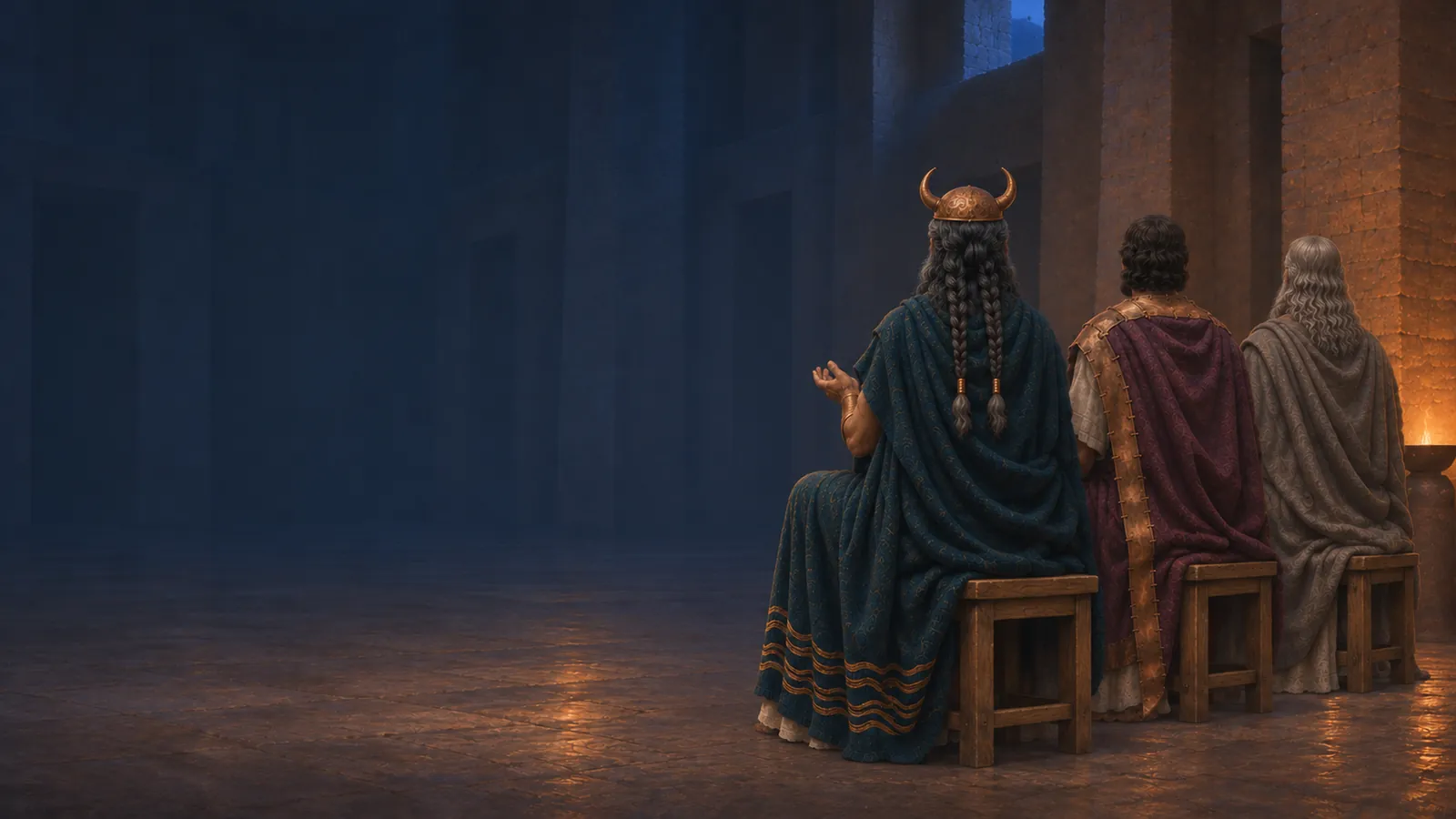
Enki perguntou como se podia culpar os trabalhadores. O trabalho era demasiado pesado, disse, e todos os presentes podiam agora ouvir o que lhes tinha custado.
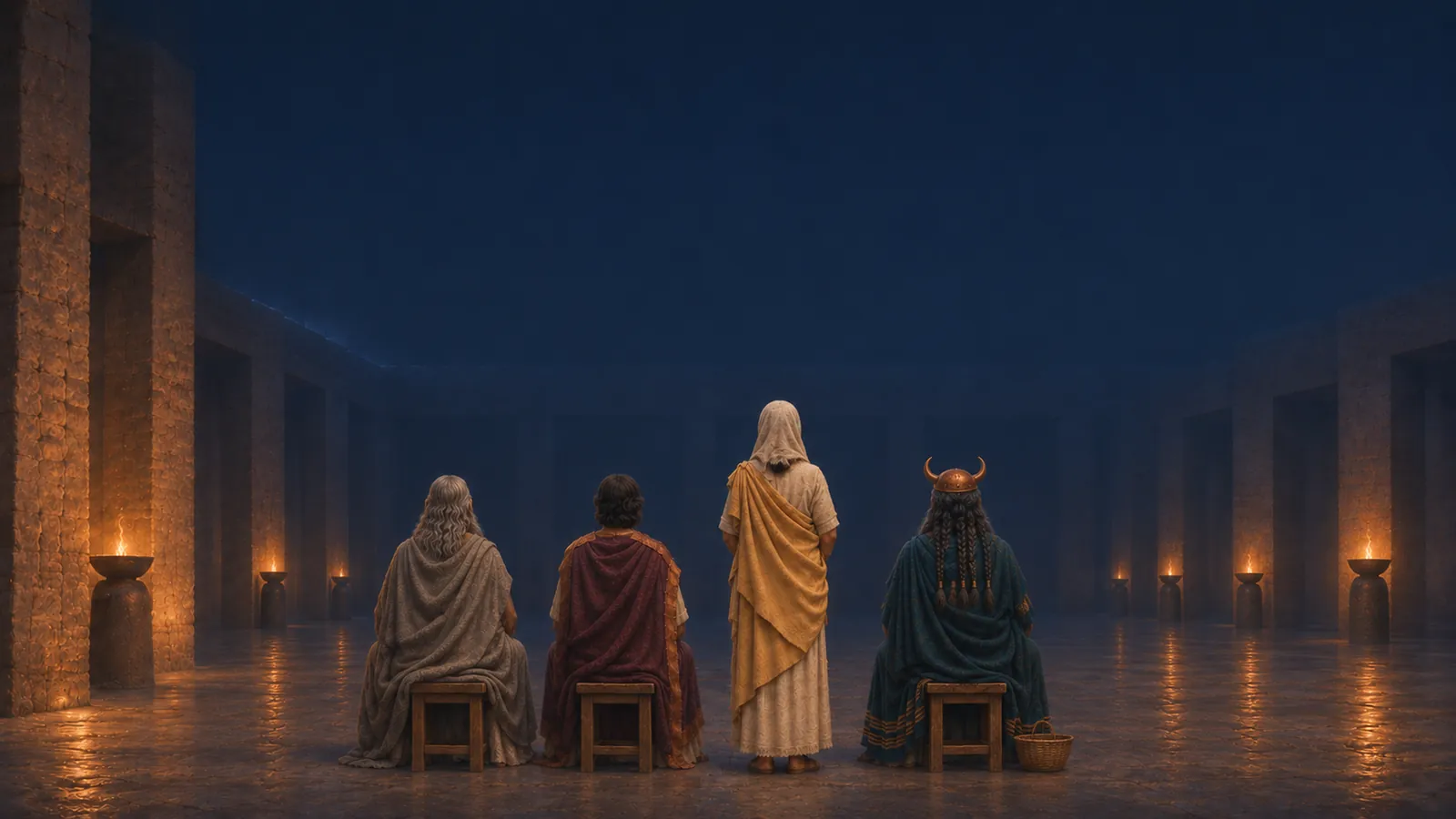
Alguém teria de continuar a carregar o cesto. Os deuses pediram a Mami, a sábia parteira, que trouxesse seres humanos ao mundo e lhes pusesse o trabalho aos ombros.
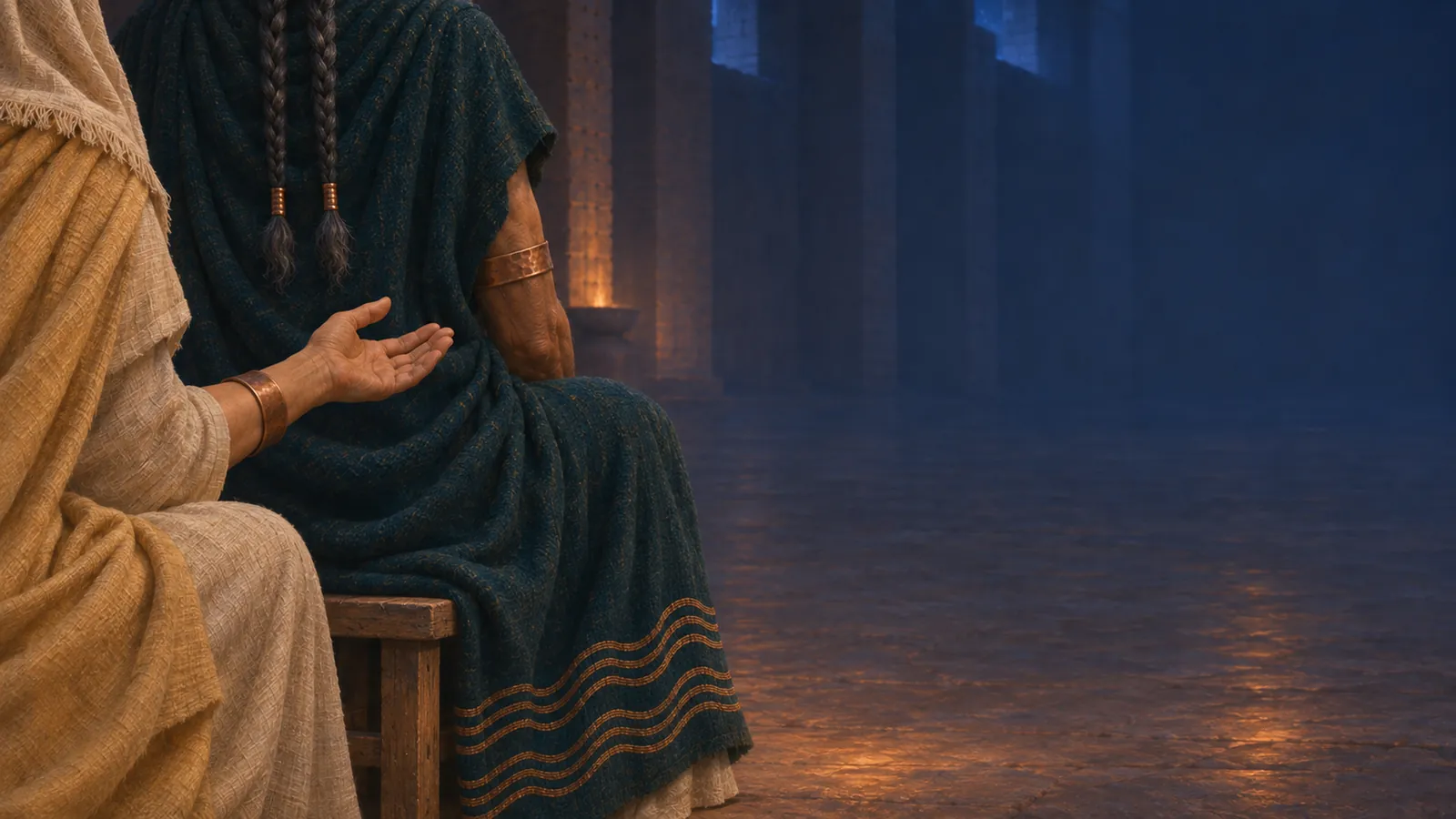
Mami devolveu a pergunta a Enki. Era ele quem conhecia o trabalho da purificação, disse ela. Que lhe desse a argila, e ela faria a sua parte.
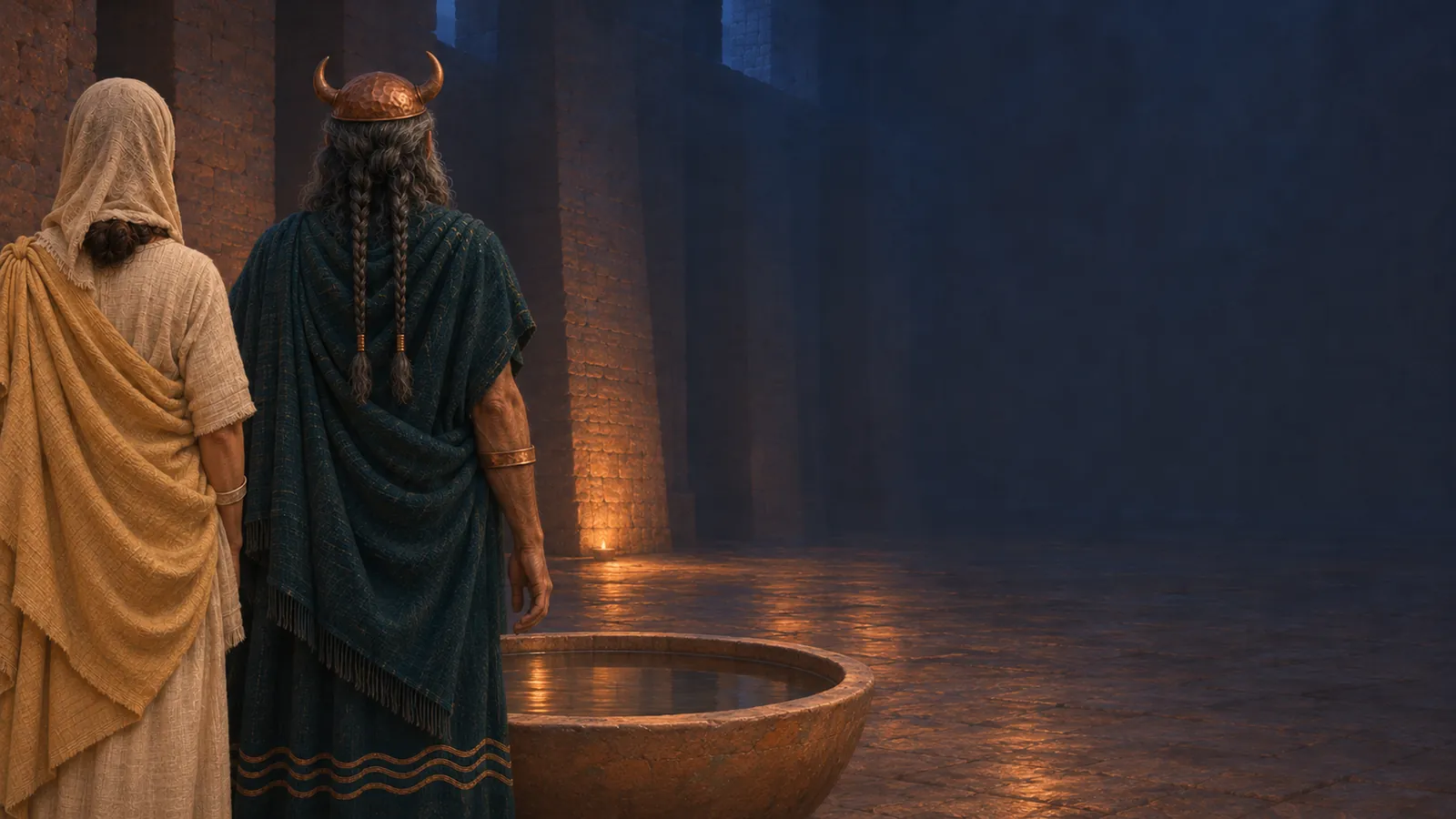
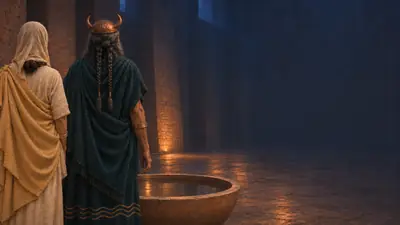
Enki determinou um banho de purificação a repetir em dias marcados. A nova argila, disse ele, guardaria em si algo de um deus. A assembleia deu o seu assentimento.
ARGILA E MEMÓRIA
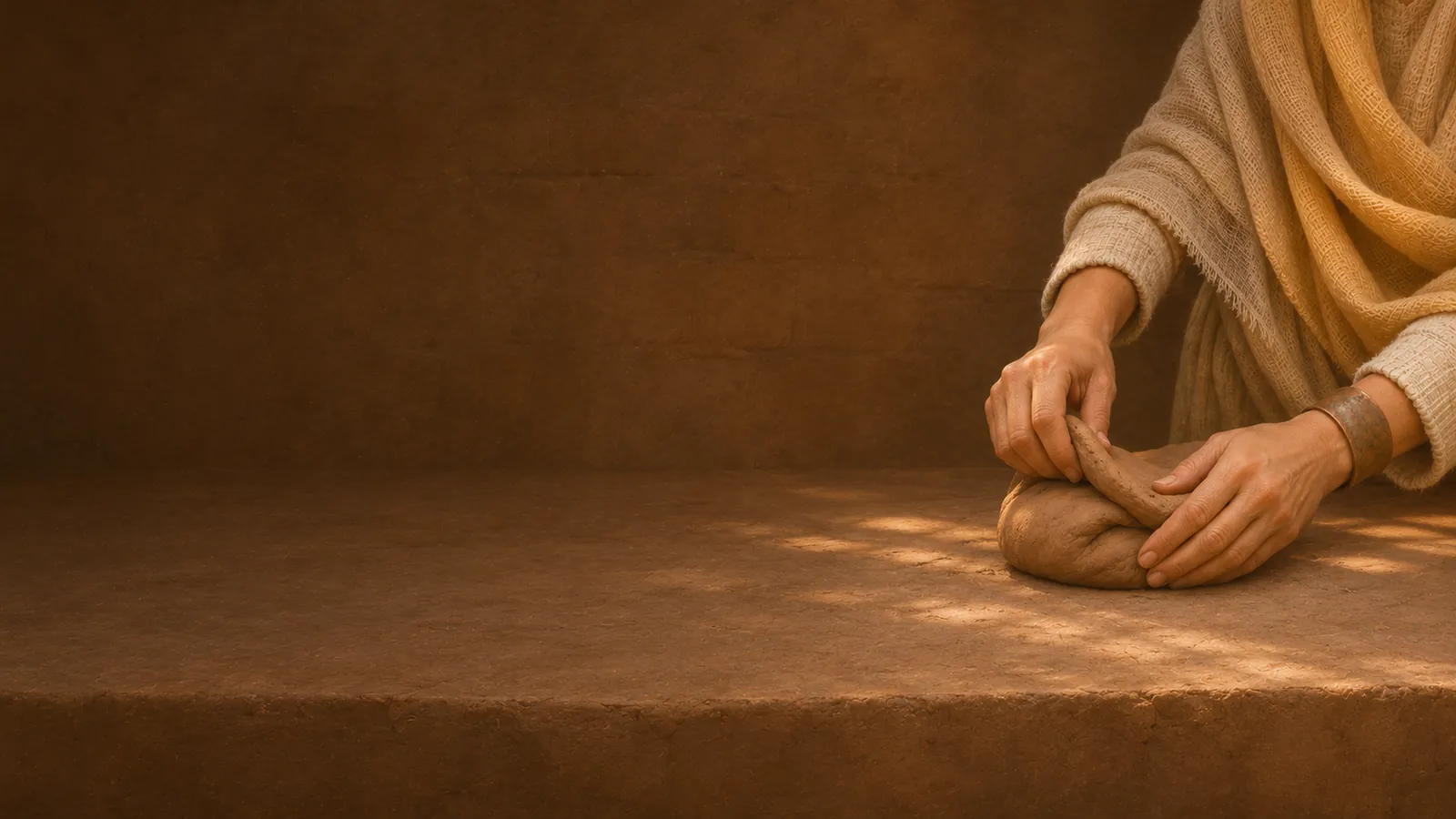
Na assembleia, um dos deuses foi morto. Mami misturou a carne e o sangue dele com argila, e o poema diz que o seu espírito permaneceria como memória entre os vivos.
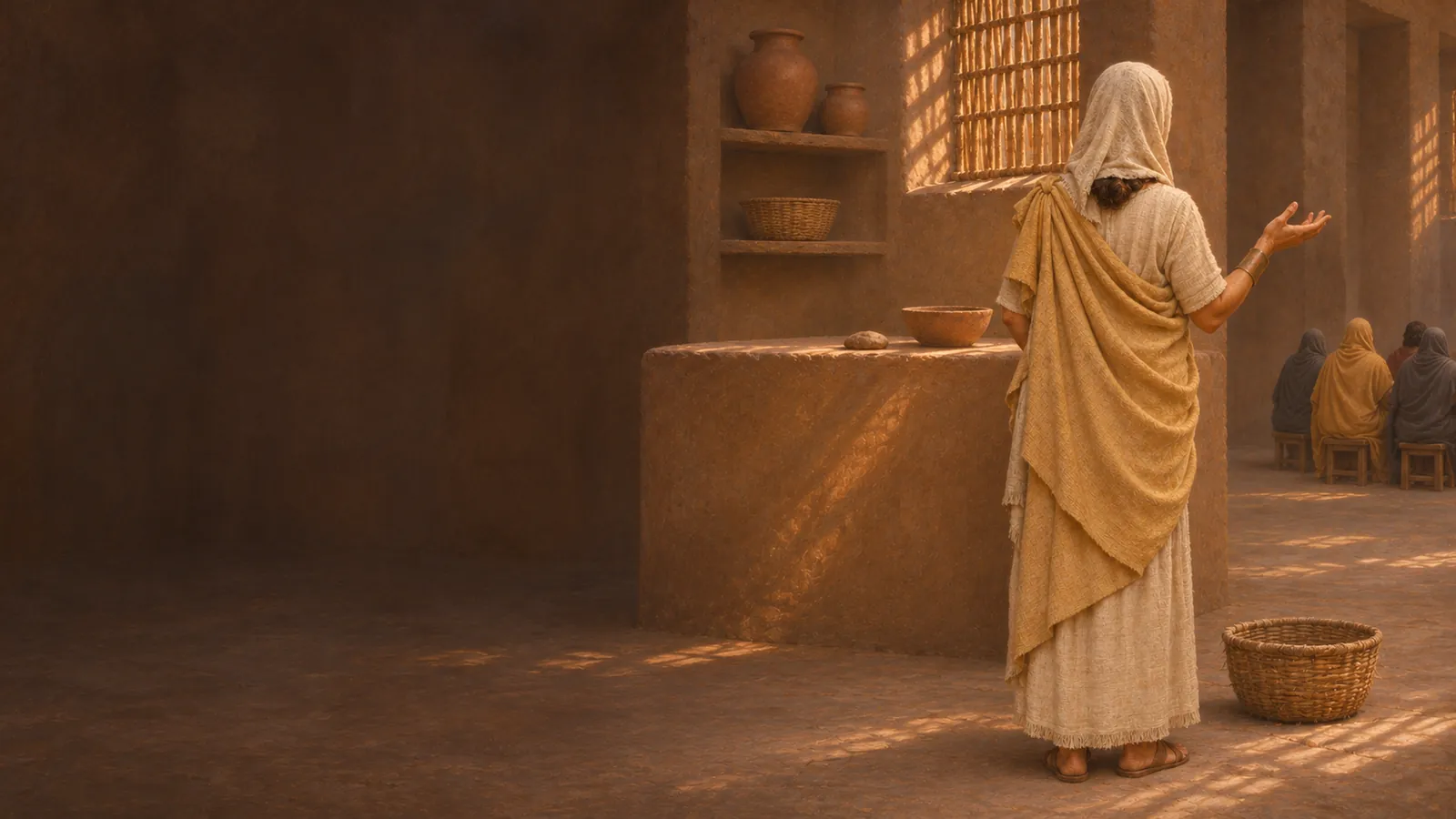
Quando a argila ficou pronta, Mami disse aos deuses que os livrara do trabalho pesado. O cesto passaria para a humanidade. Os deuses estavam livres do jugo.
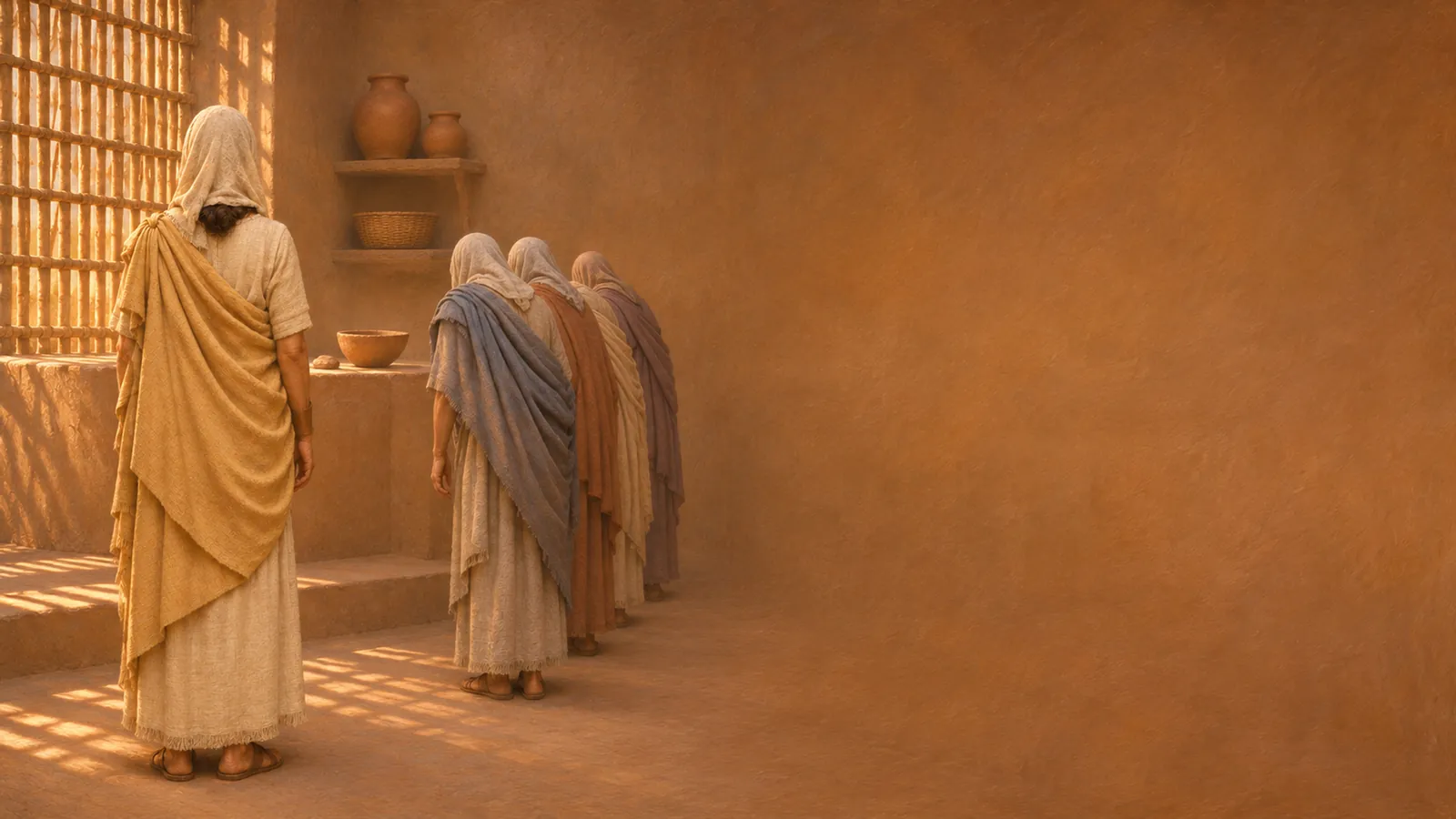
Os deuses avançaram para honrar Mami. Até então, disseram, tinham-lhe chamado Mami. Agora chamar-lhe-iam Senhora de Todos os Deuses.
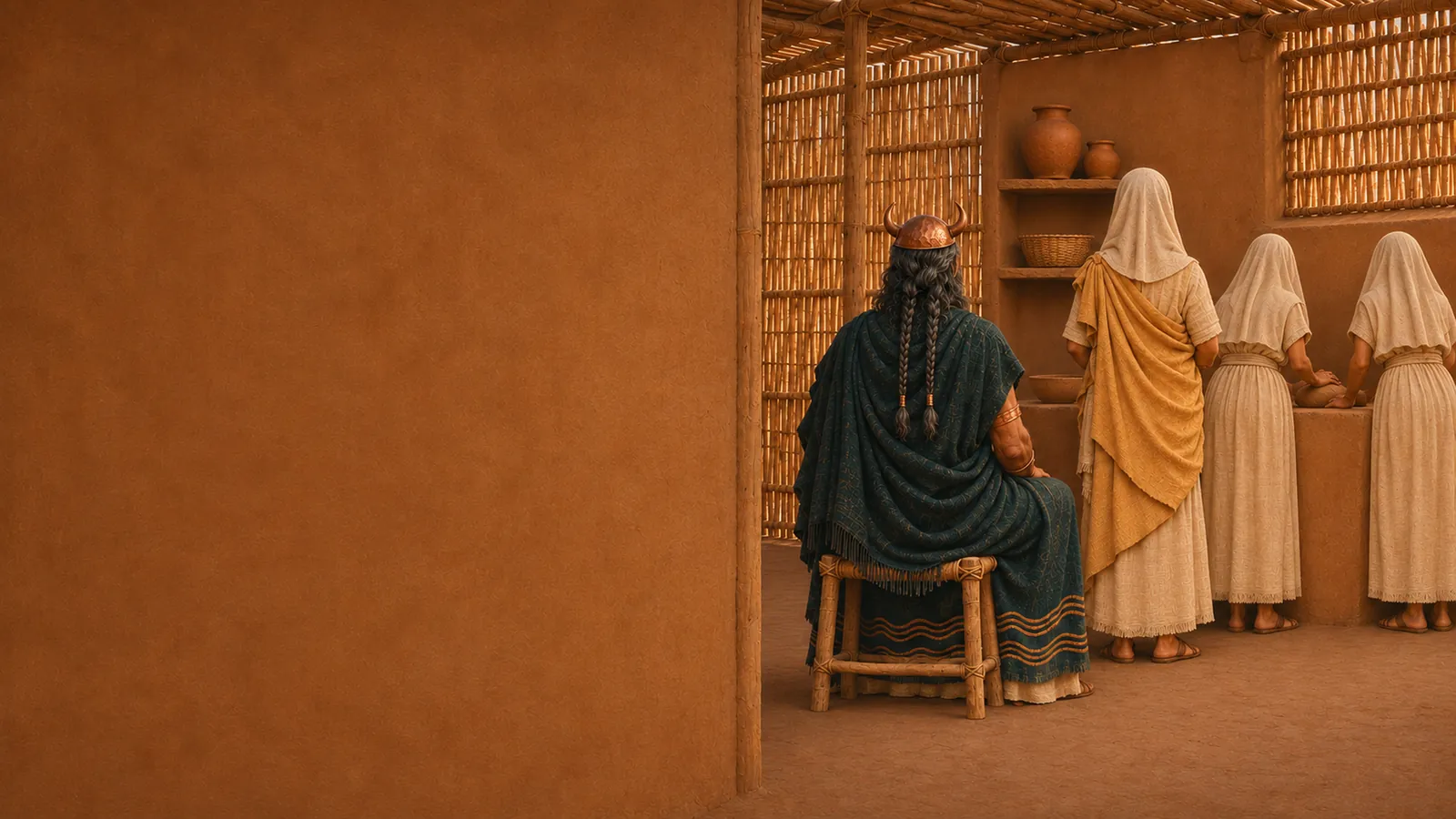
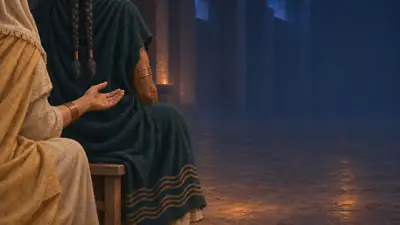
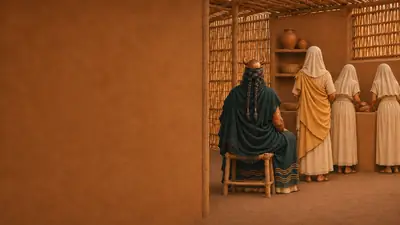
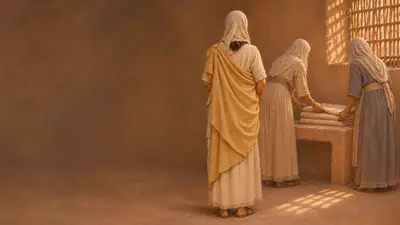
Enki entrou com Mami na Casa do Destino. As parteiras reuniram-se ali para trabalhar a argila. Com Enki sentado diante dela, Mami recitou o encantamento sobre a argila.
SETE E SETE
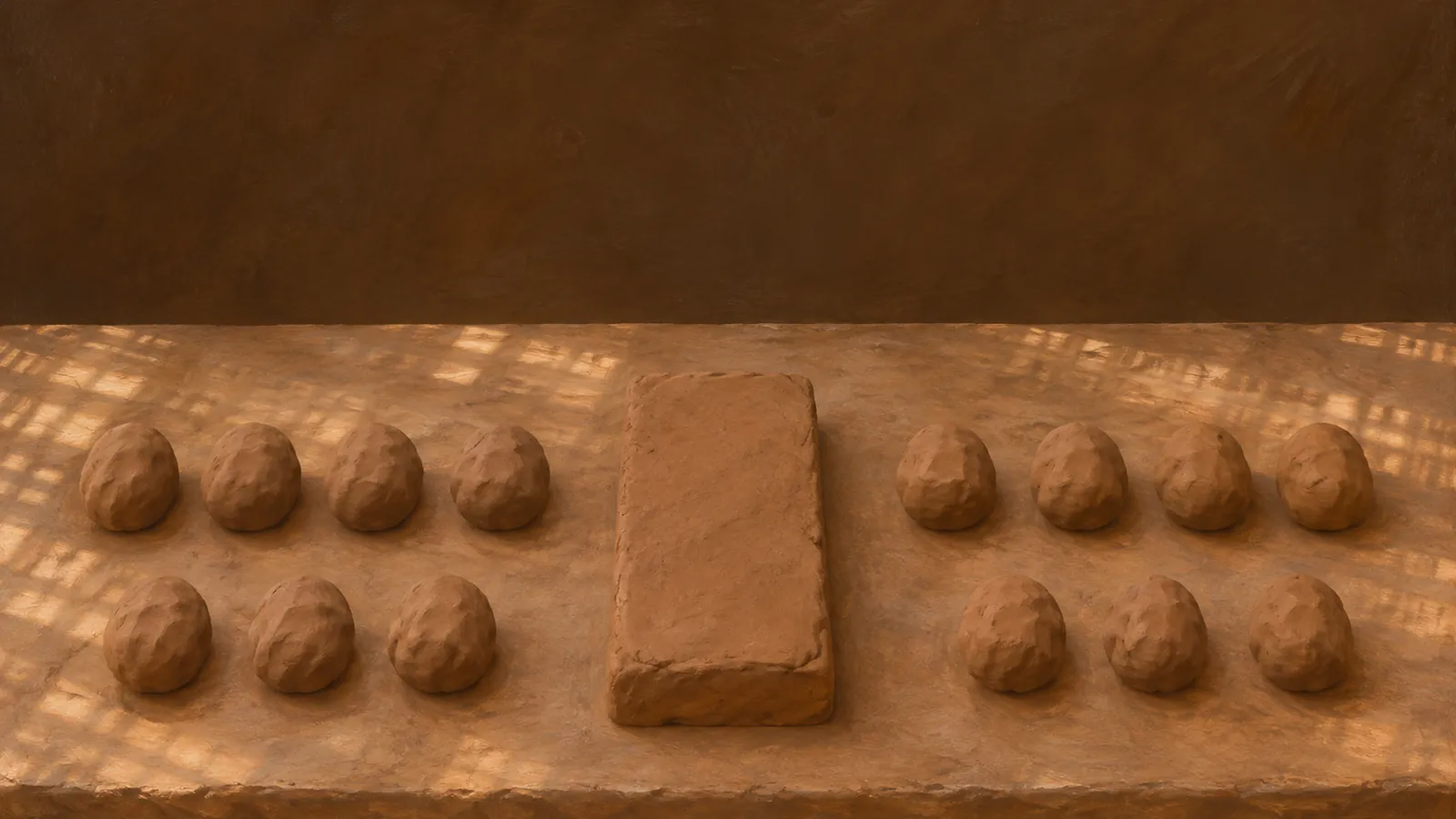
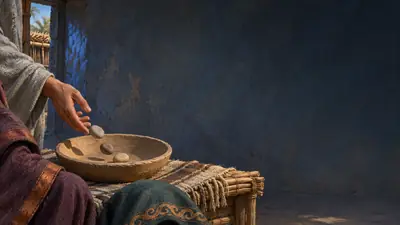
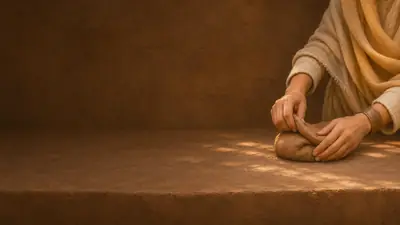
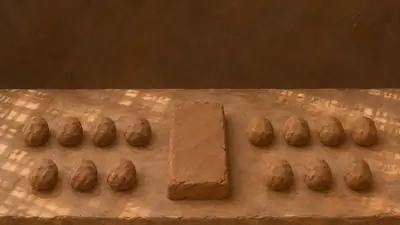
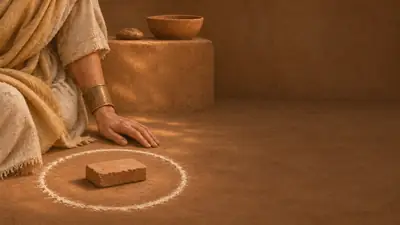
Mami separou com os dedos catorze pedaços de argila. Colocou sete de um lado e sete do outro, com um tijolo no espaço entre eles.
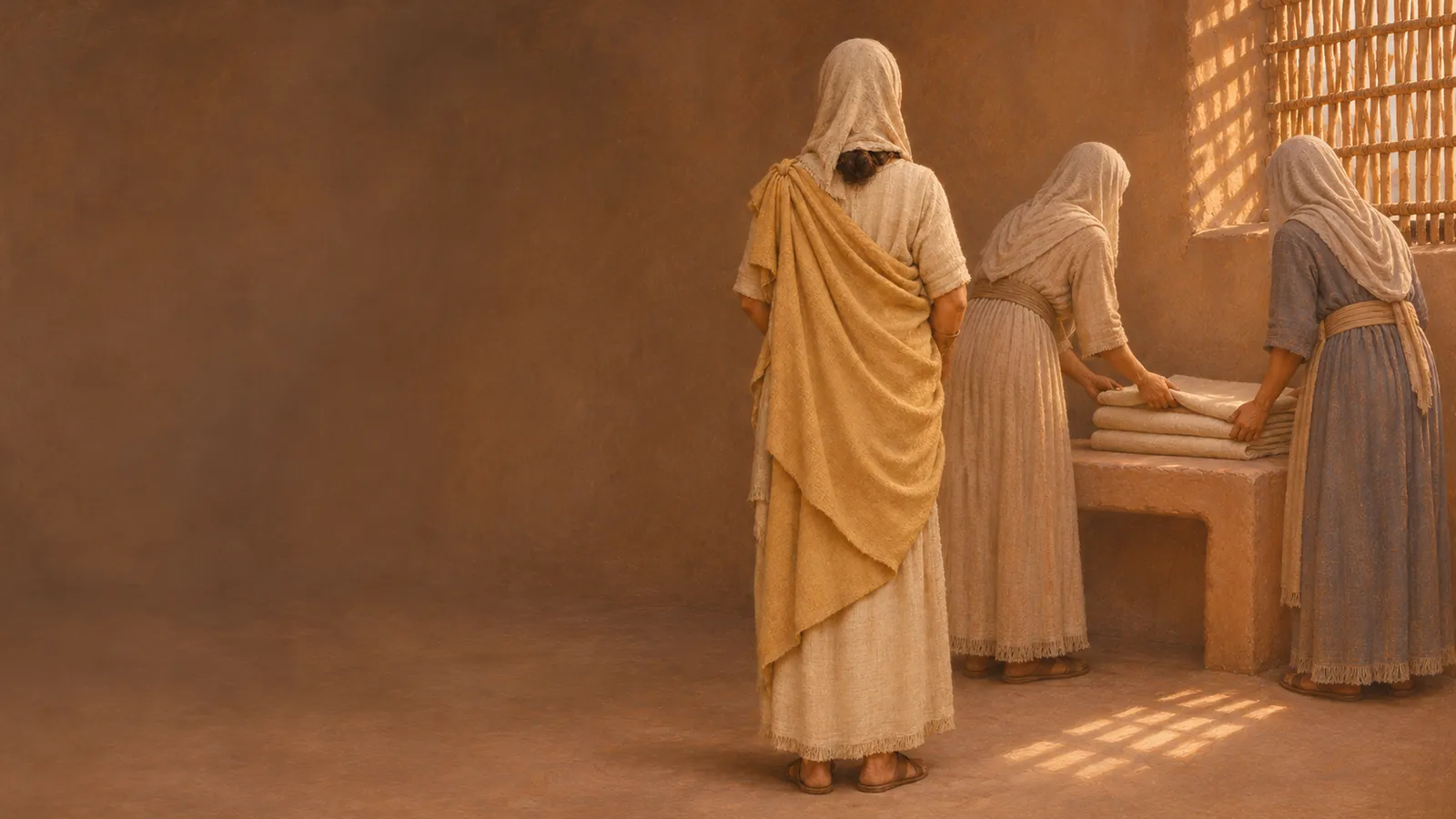
O poema recorda sete meninos e sete meninas no princípio. Mami disse o que viria depois, quando crescessem e começassem a escolher com quem partilhar a vida.
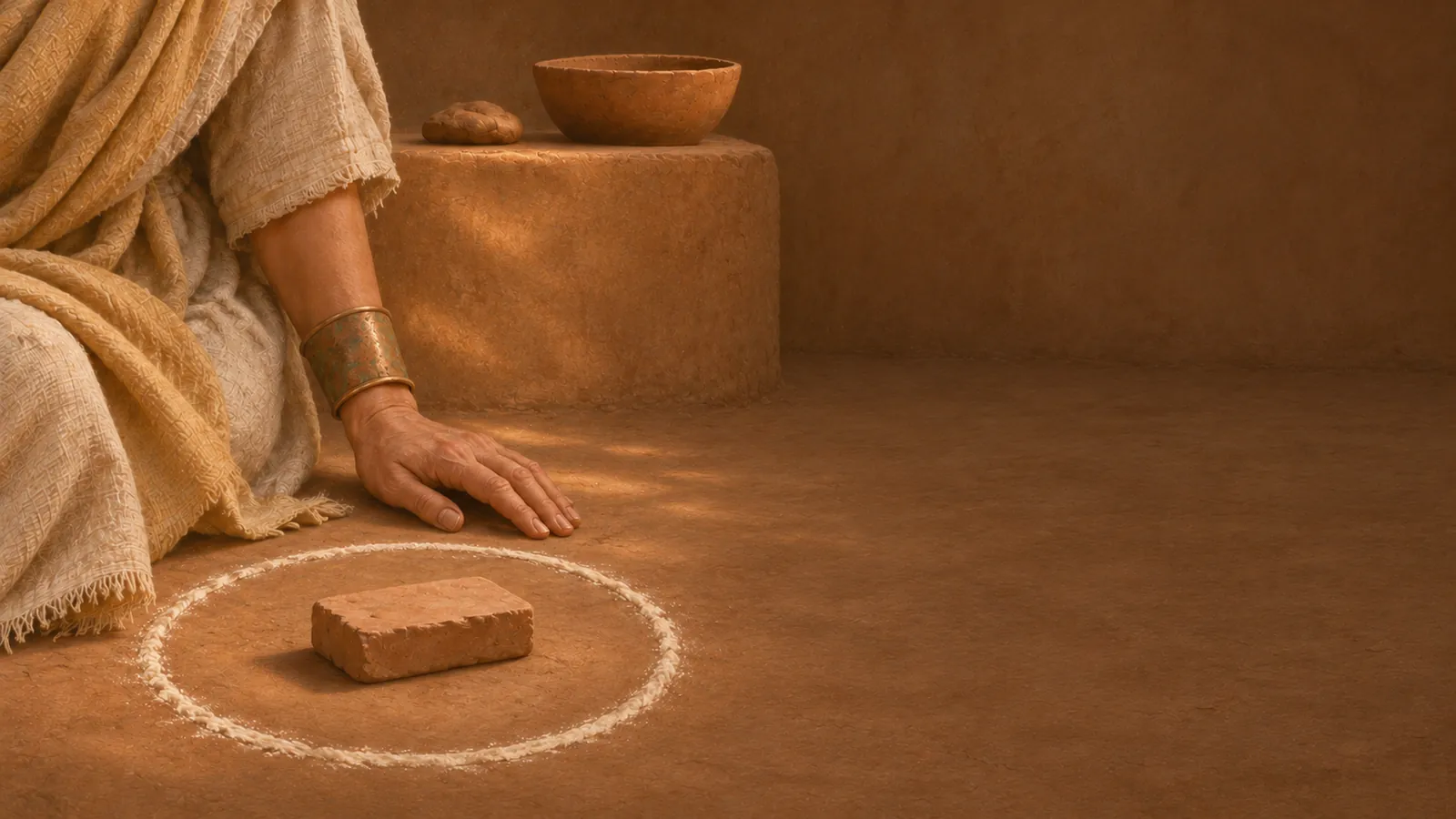
Quando chegou o mês marcado, a parteira cumpriu o seu trabalho com alegria. Nintu deu a sua bênção, traçou um círculo com farinha e pôs ali um tijolo.
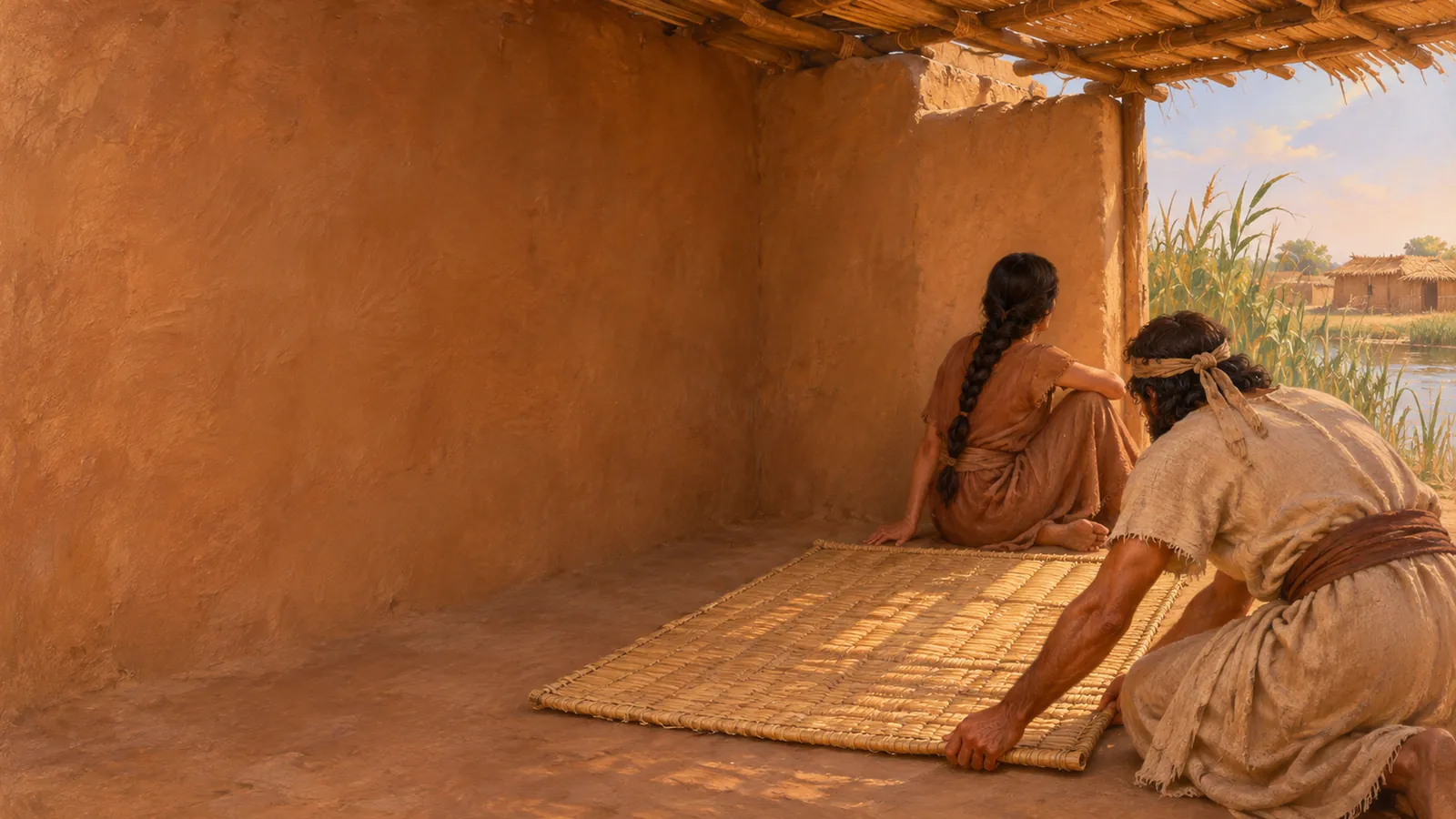
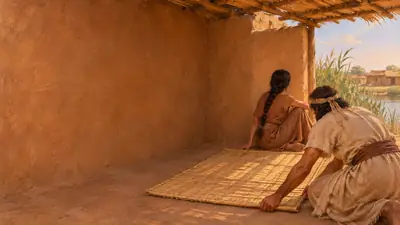
O fragmento que sobreviveu fala de uma esteira de junco e da escolha de um cônjuge. Convida à alegria quando as pessoas começam a sua vida em comum.
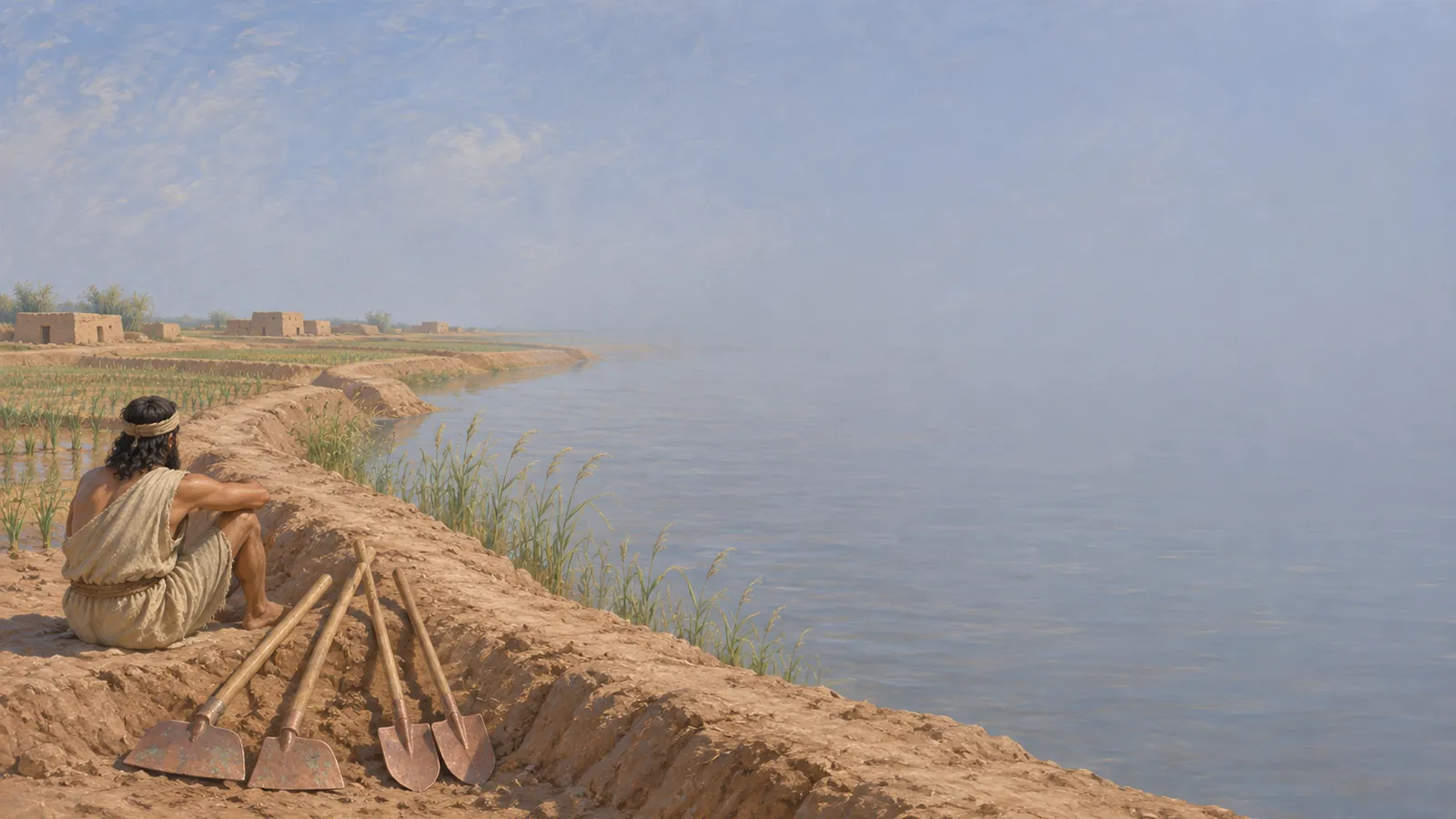
Perdeu-se aqui parte da tabuinha. Quando as linhas voltam a ser legíveis, surgem enxadas e pás novas e grandes diques para o trabalho que dará alimento às pessoas.
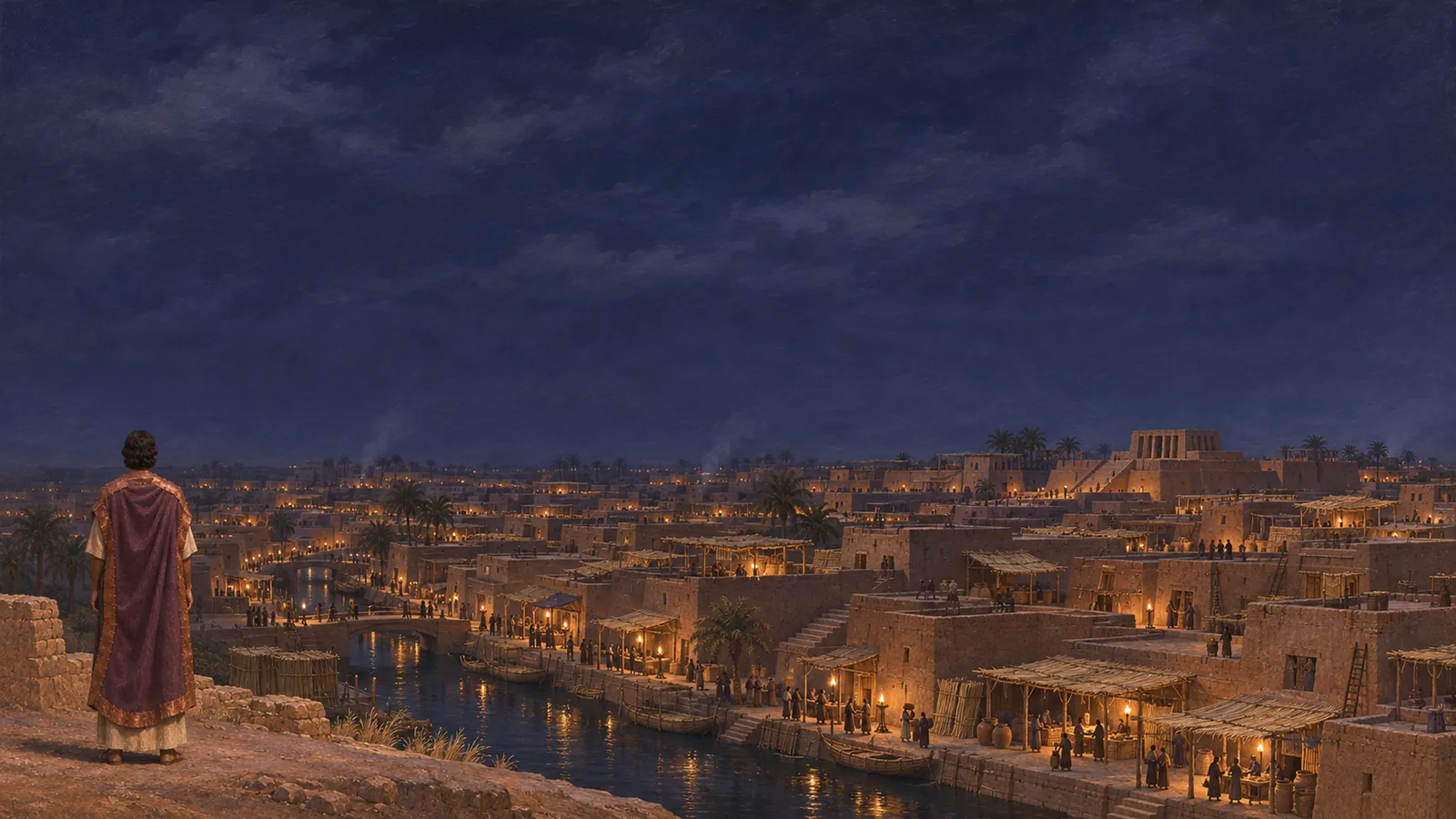
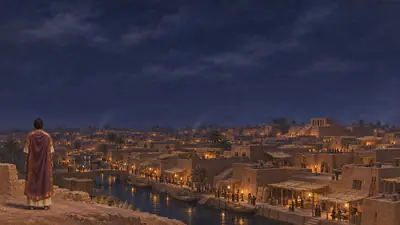
Com o tempo, a terra encheu-se de gente. O seu ruído ergueu-se como o bramido de um touro e, à noite, não deixava Enlil dormir.
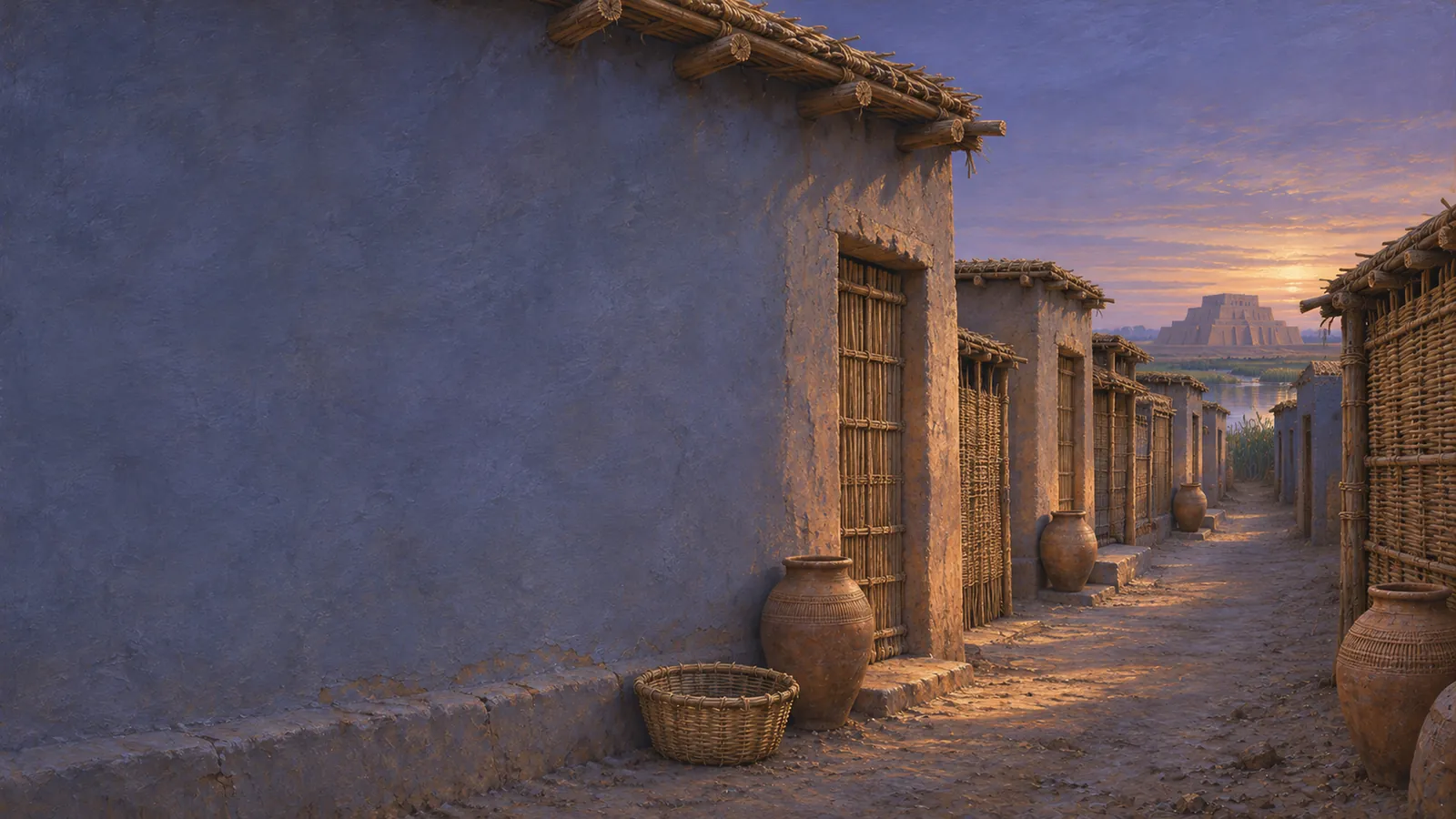
Enlil disse aos deuses quanto o atormentava aquele ruído. Pediu a Namtar que espalhasse doença e calafrios pela terra até que o clamor cessasse.
ATRAHASIS
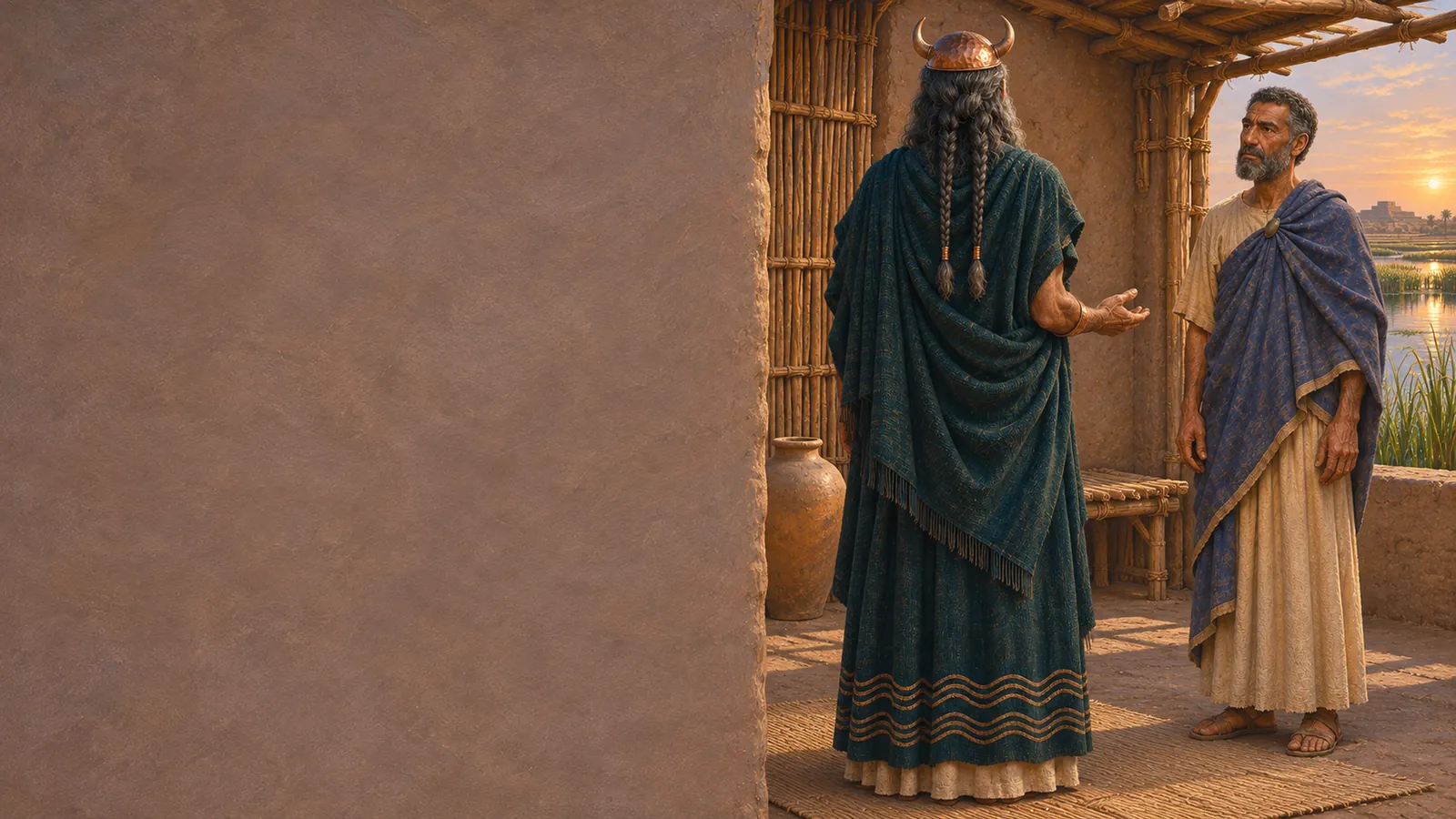
Havia um homem chamado Atrahasis que falava com Enki, e Enki respondia-lhe. Agora, esse homem levou ao seu deus a voz de uma terra que gemia de doença.
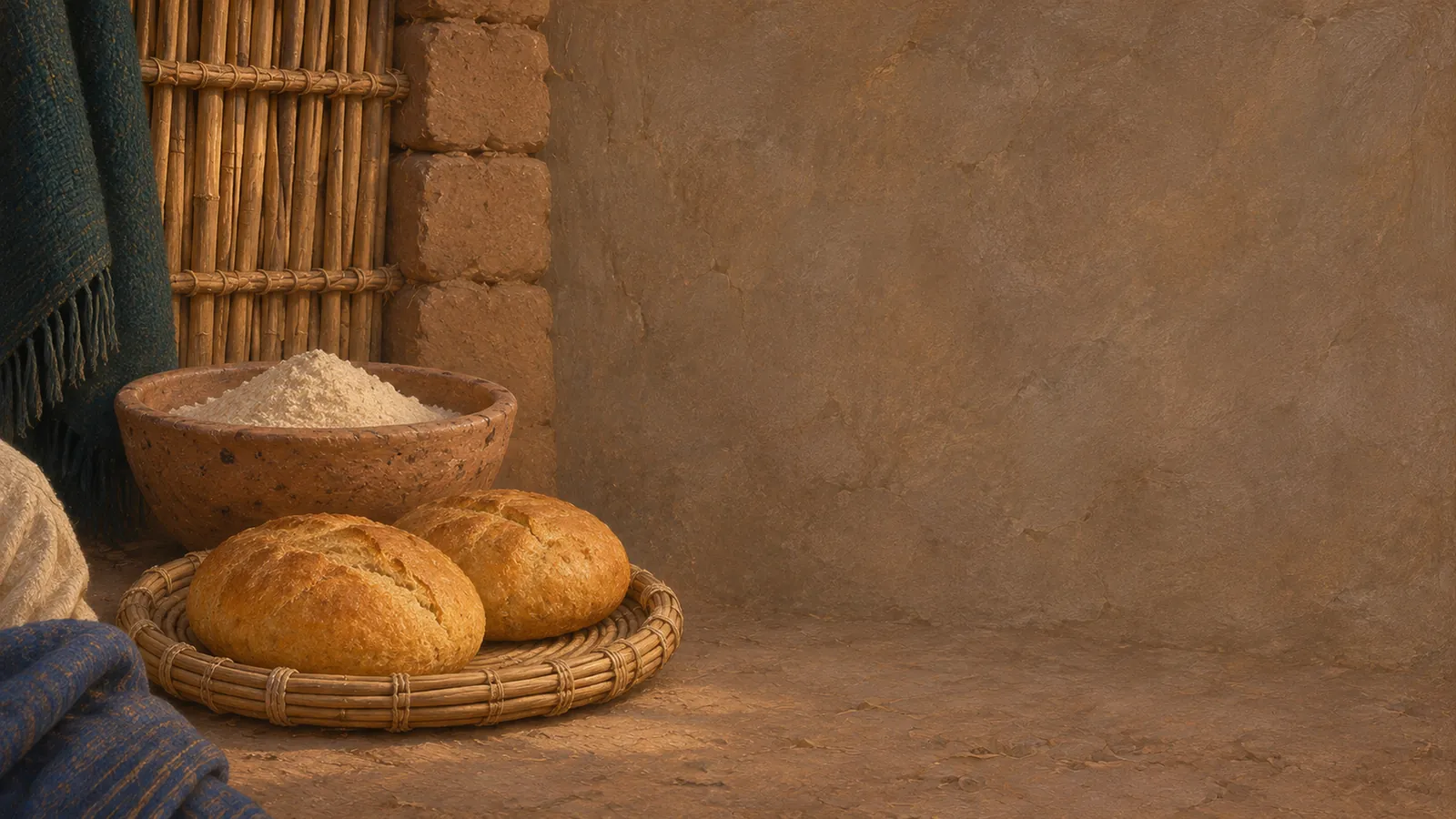
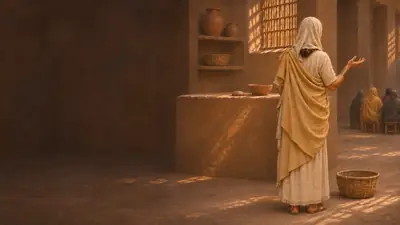
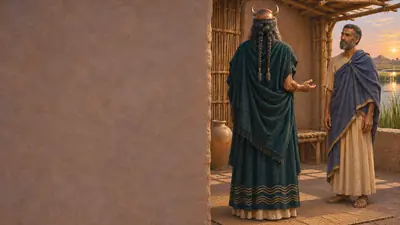
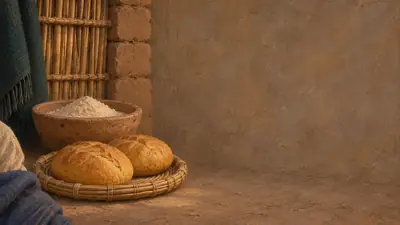
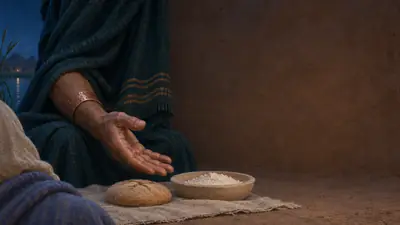
Enki indicou a Atrahasis o que devia fazer. Reuniria os anciãos e pediria que mandassem o povo a Namtar com pão cozido e uma oferta de farinha.
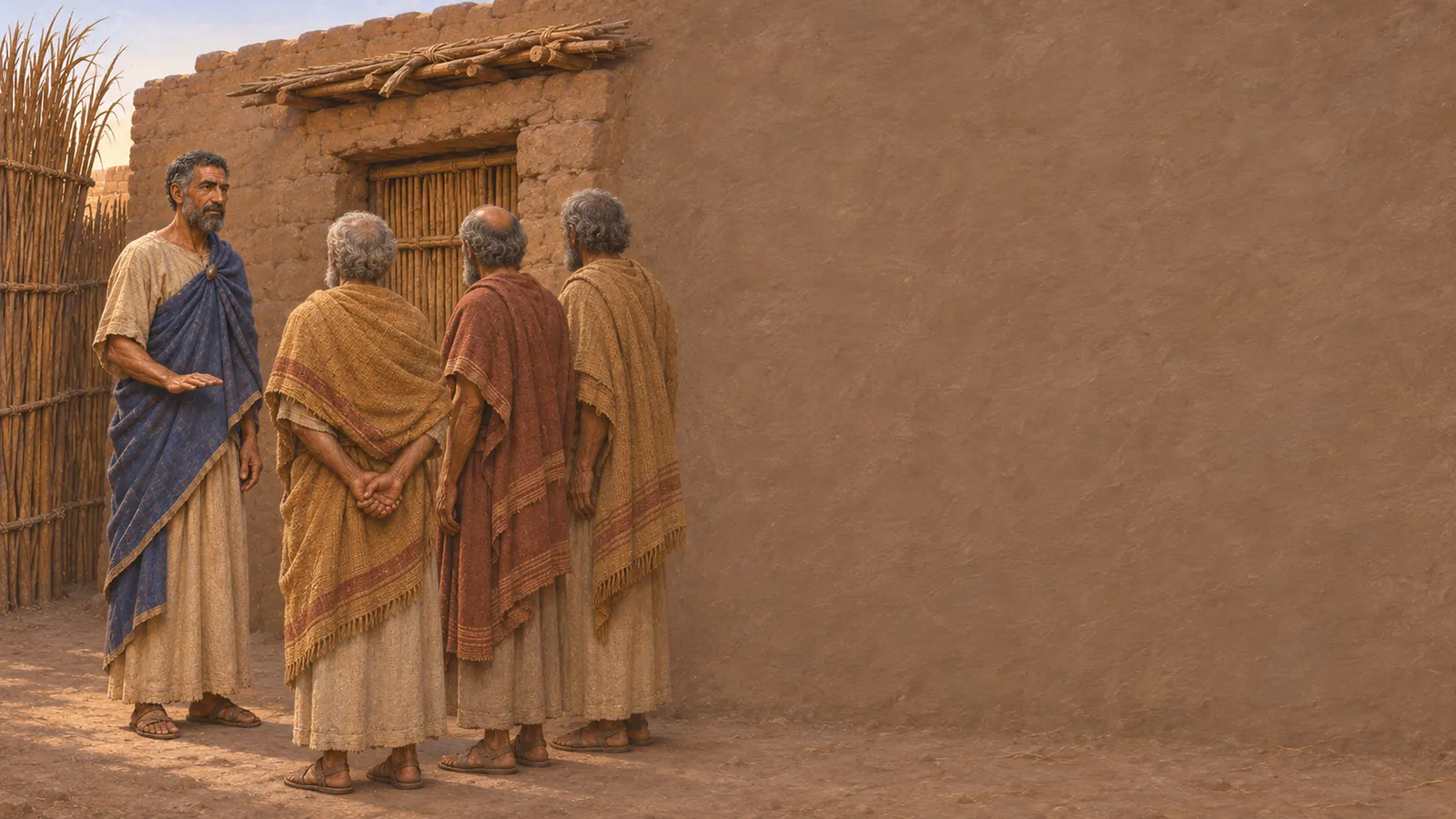
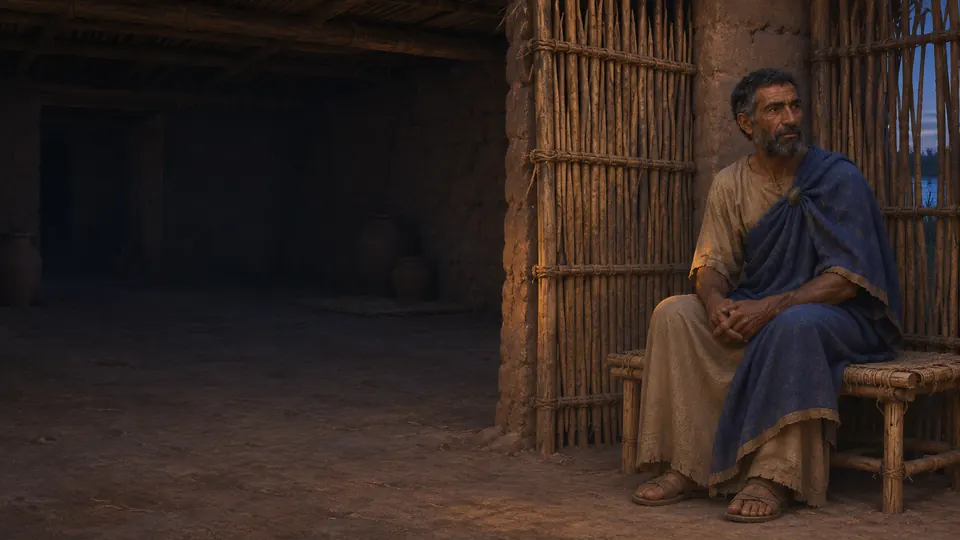
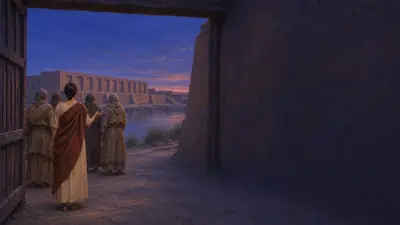
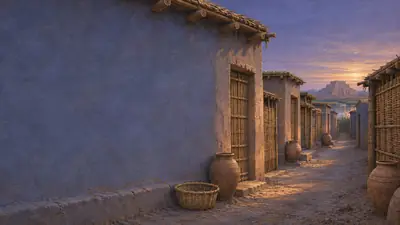
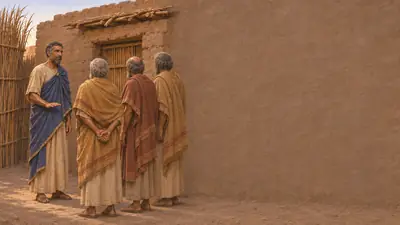
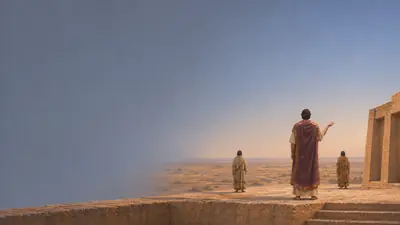
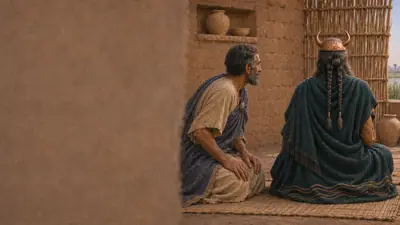
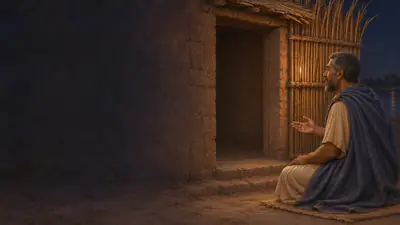
Atrahasis reuniu os anciãos à sua própria porta. Transmitiu-lhes o que Enki dissera, para que os arautos levassem o conselho por toda a cidade.
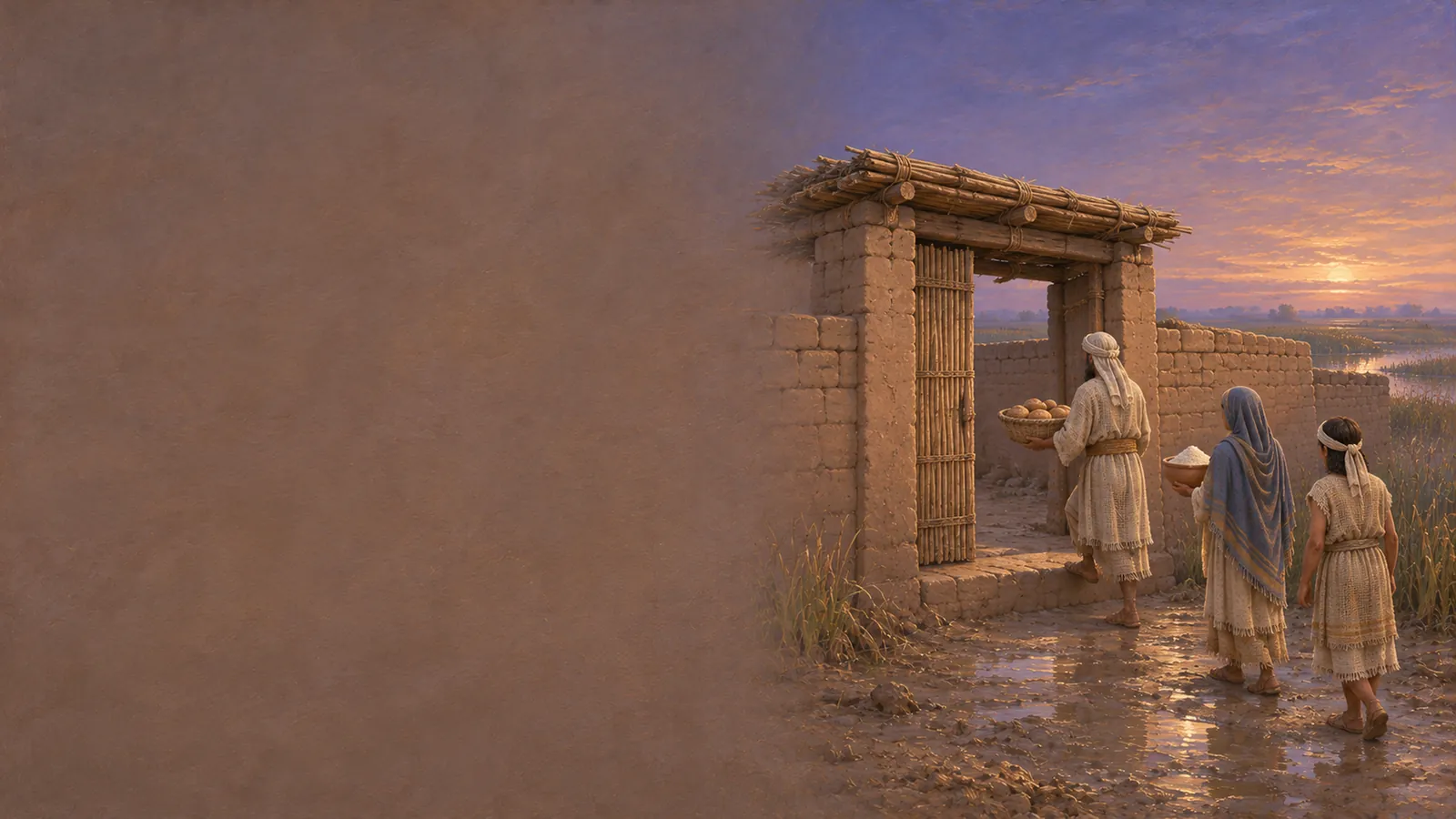
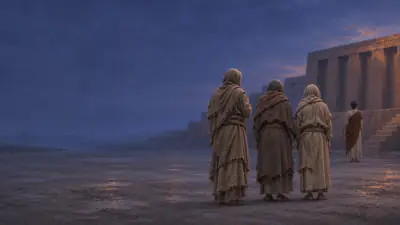
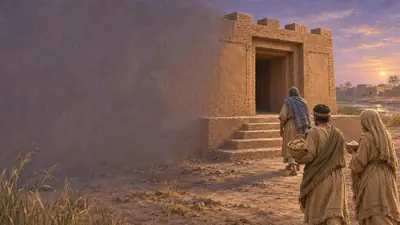
Os anciãos escutaram, e a cidade ergueu um templo para Namtar. Os arautos saíram, e o povo levou o seu pão e a sua farinha até à porta dele.
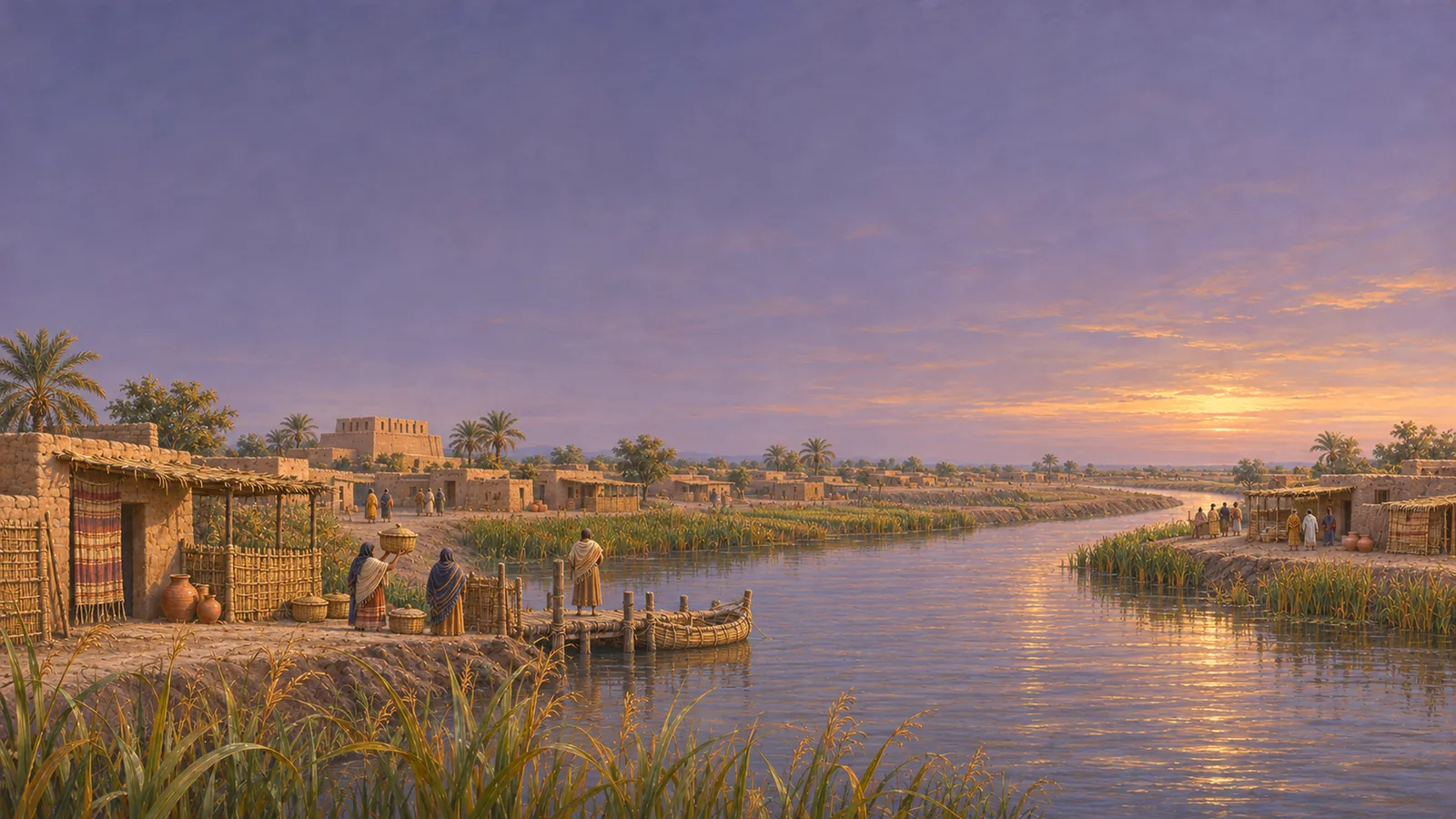
Namtar aceitou a oferta e afastou-se do povo. Voltaram os dias de saúde, nasceram crianças e, em breve, as vozes voltaram a erguer-se como dantes.
SECA
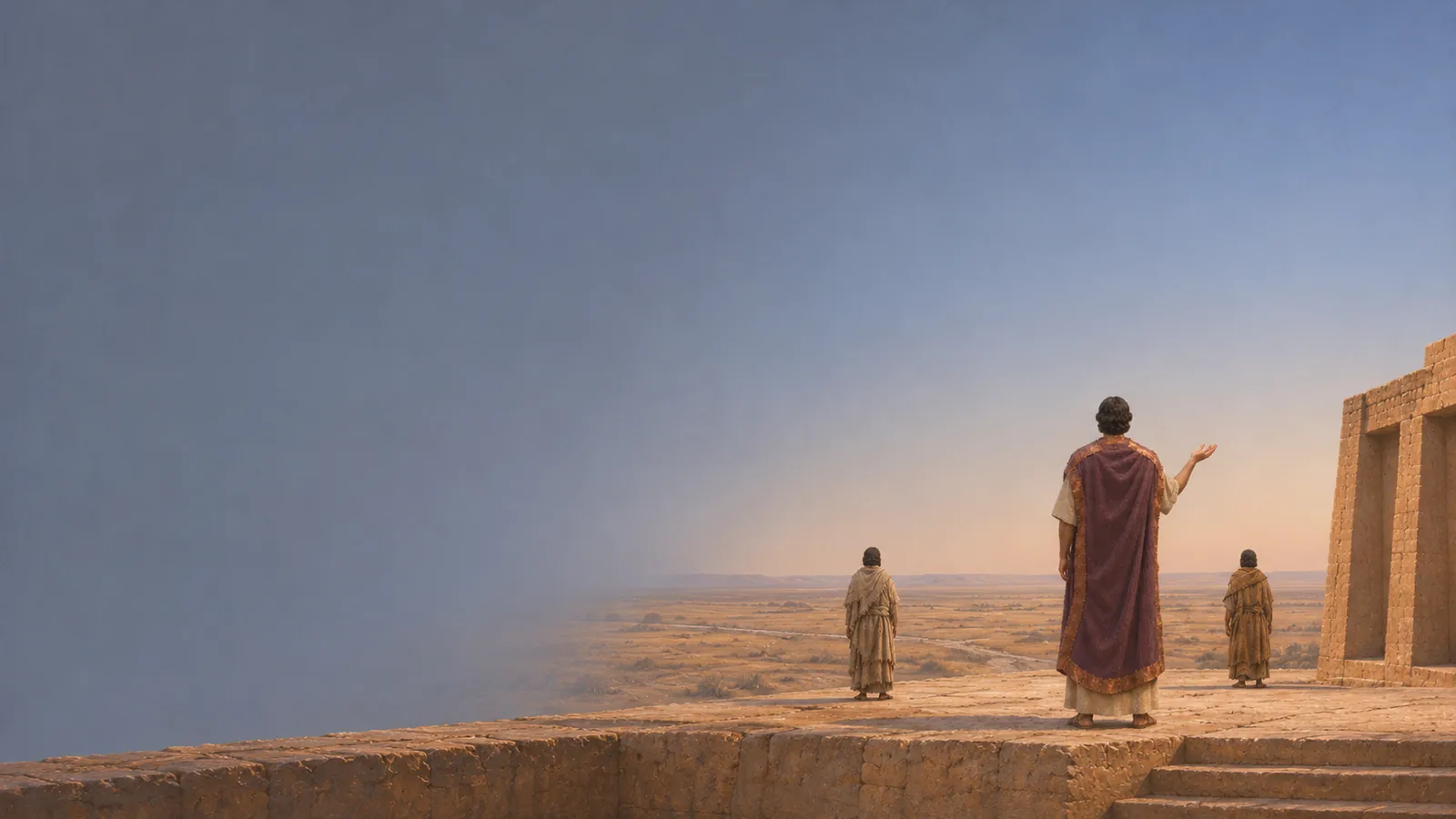
As vozes voltaram a erguer-se até chegarem a Enlil. Ele ordenou que se cortasse o sustento da terra, que Adad retivesse a chuva e que o solo secasse.
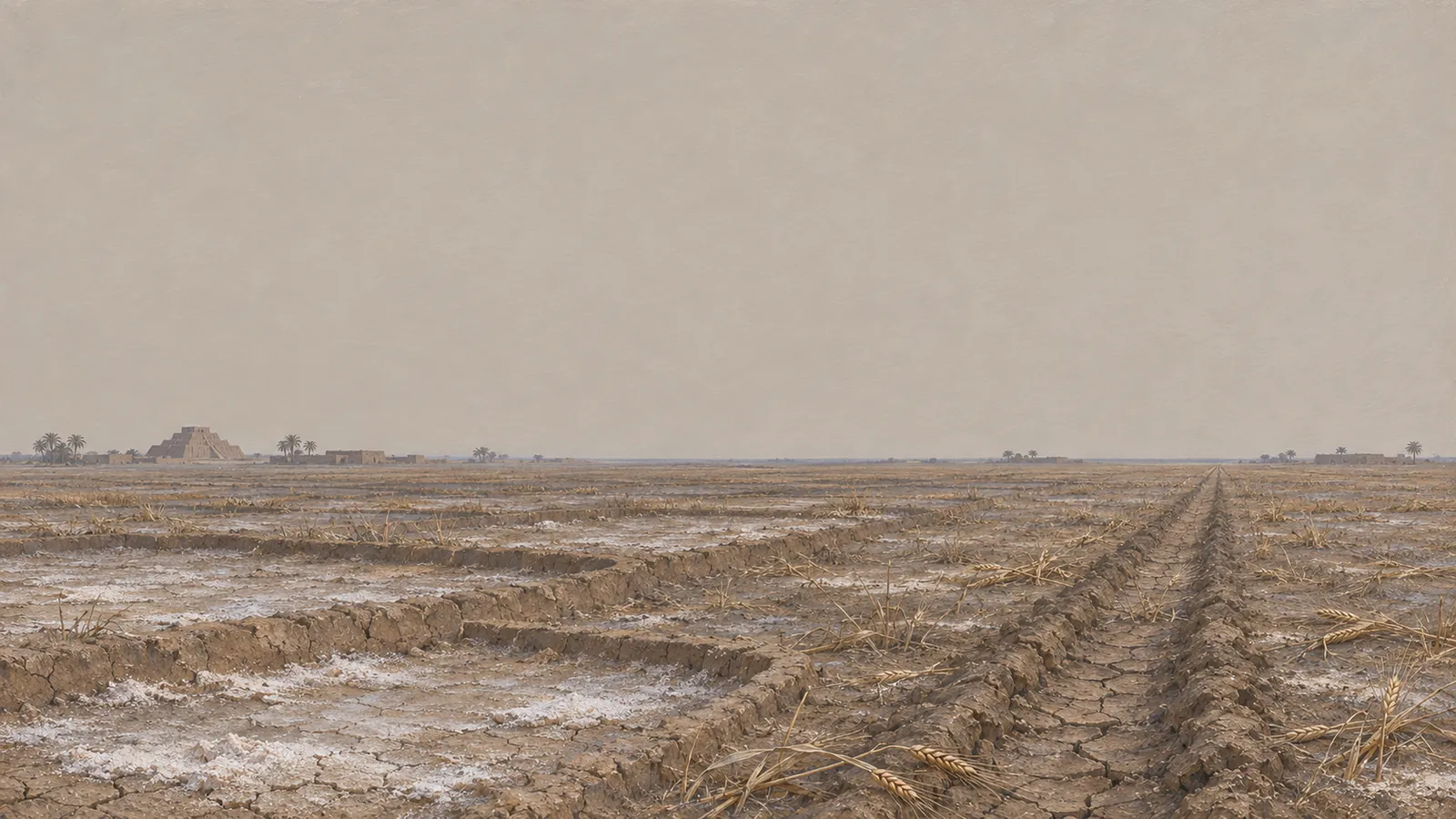
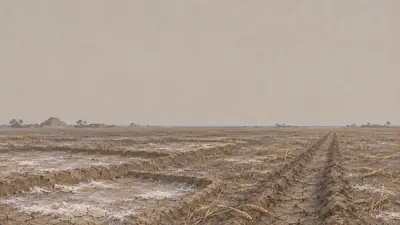
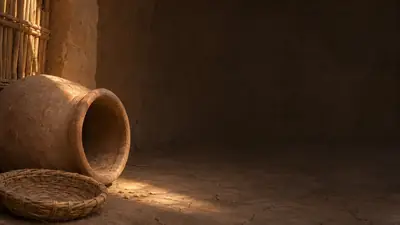
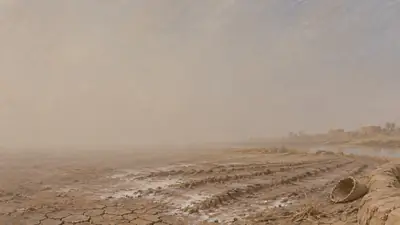
As nuvens não trouxeram alívio. O cereal perdeu-se, e o solo que fora escuro ficou branco de sal. A terra mal conseguia alimentar quem nela vivia.
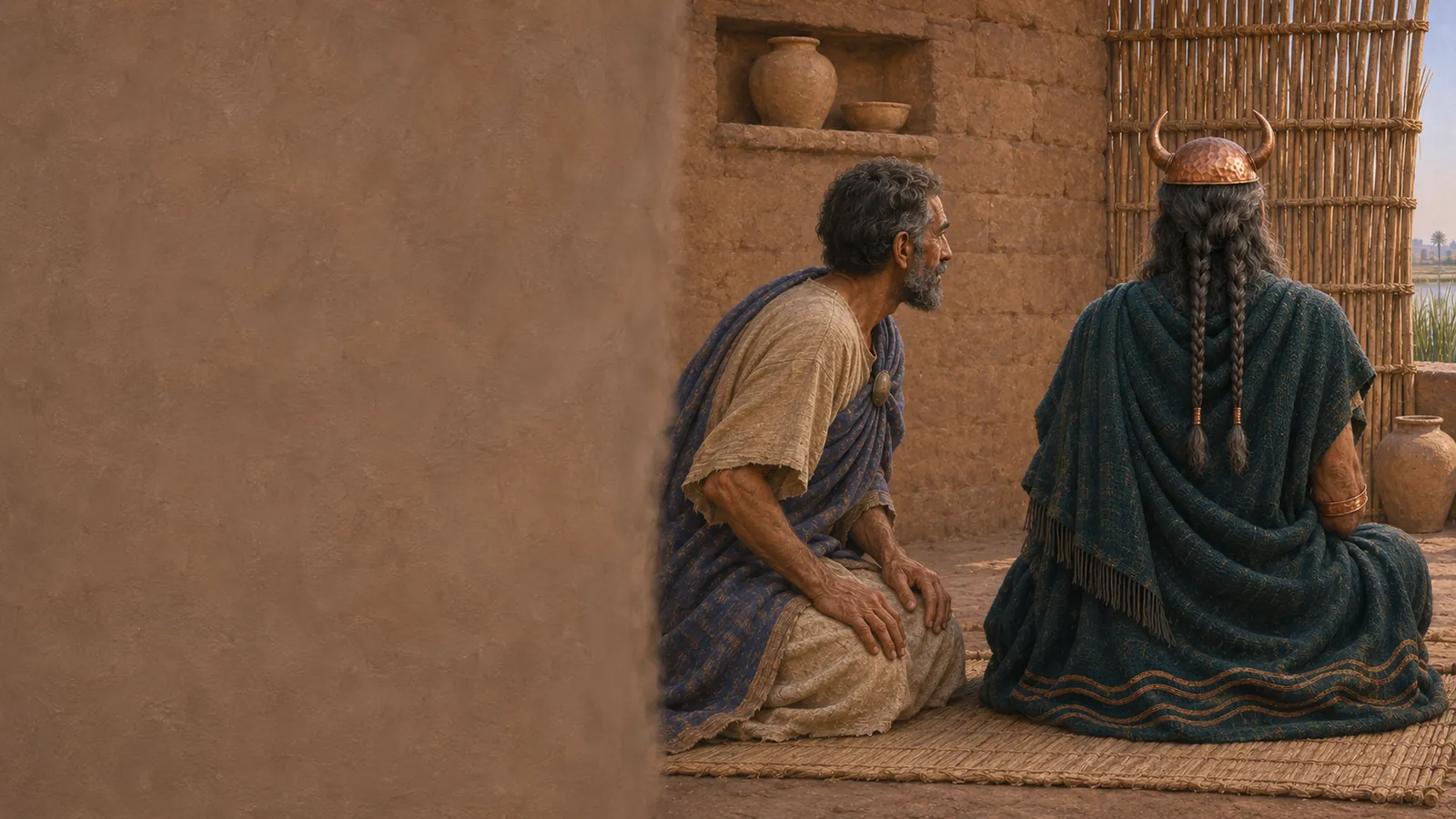
Atrahasis viu o que a fome fizera e voltou a falar com Enki. Muito do que disse perdeu-se, mas as linhas legíveis que se seguem dão-nos a resposta de Enki.
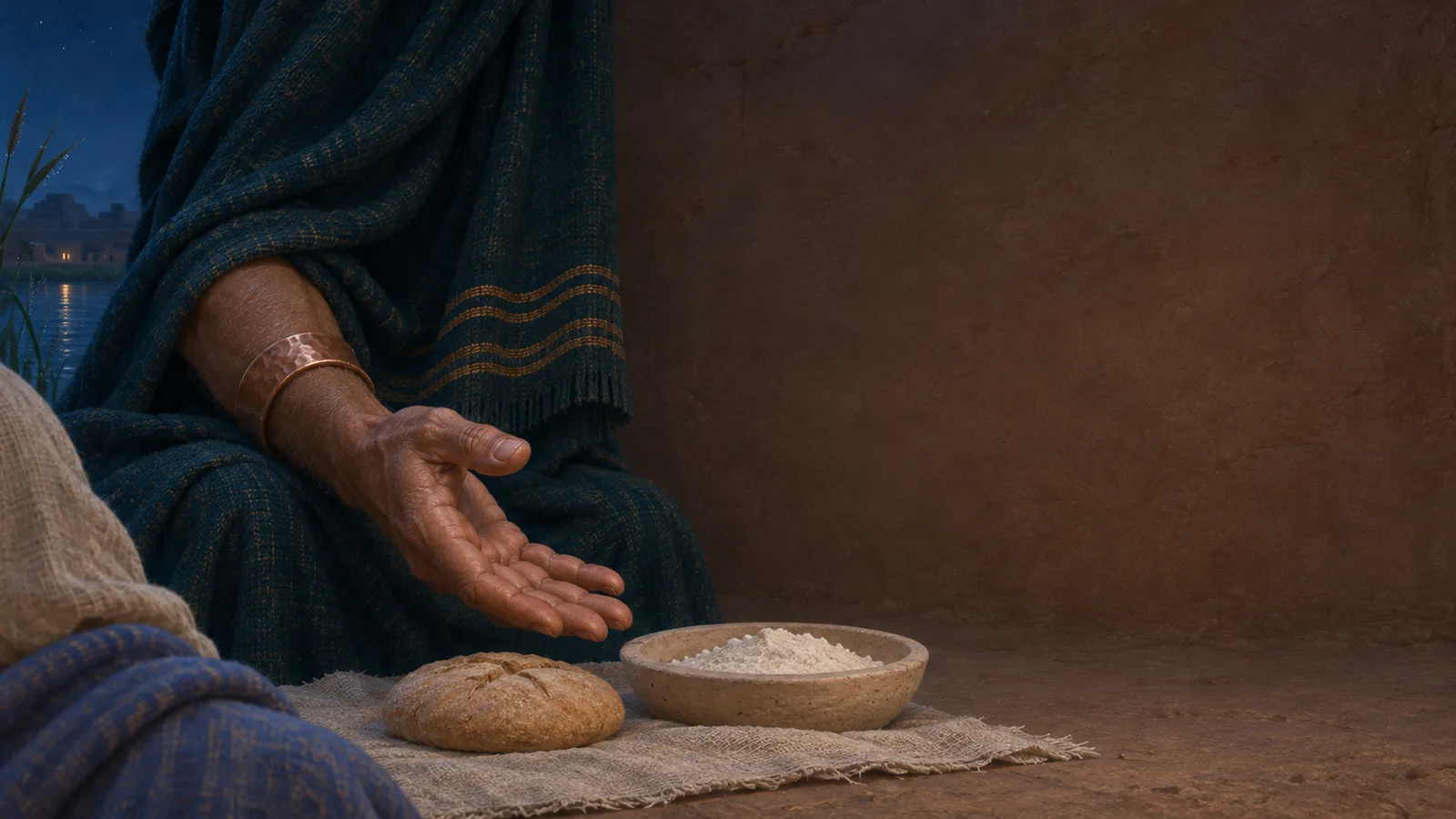
Enki disse a Atrahasis que mandasse o povo à porta de Adad com pão e farinha. A chuva podia ficar retida, mas um pouco de orvalho à noite ajudaria os campos a rebentar de novo.
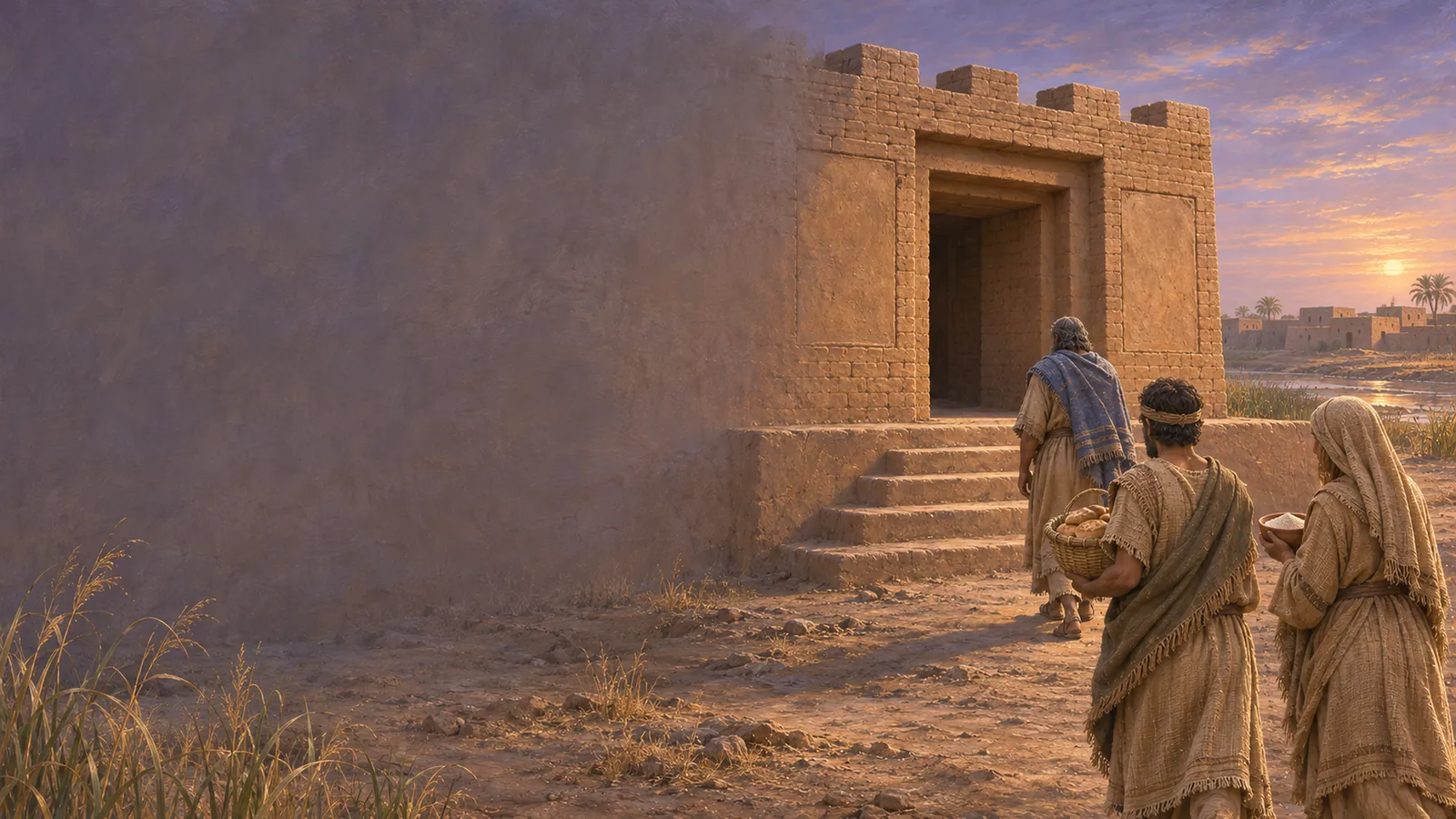
Atrahasis reuniu os anciãos e transmitiu-lhes o conselho de Enki. Os arautos levaram-no por toda a cidade, e o povo trouxe pão e farinha ao novo templo de Adad.
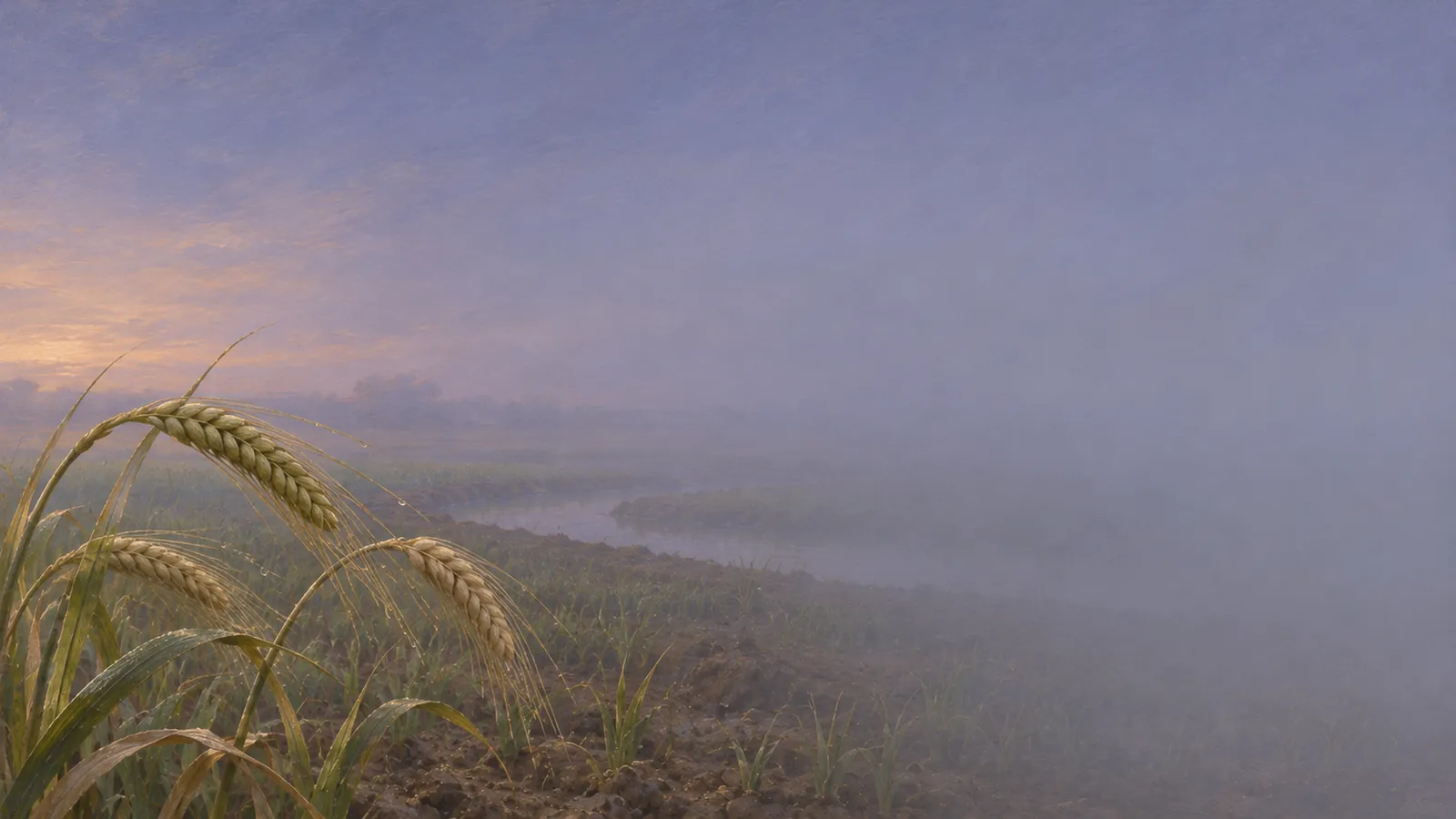
A manhã trazia neblina e, à noite, o orvalho caía sobre os campos. A terra voltou a dar colheitas. O povo recuperou, e Enlil em breve ouviu as vozes erguerem-se como dantes.

Desta vez, Enlil quis pôr guardas em todo o mundo. Destinou vigilantes às alturas e à terra e encarregou Enki e os seus companheiros de guardar a barreira que continha o mar.
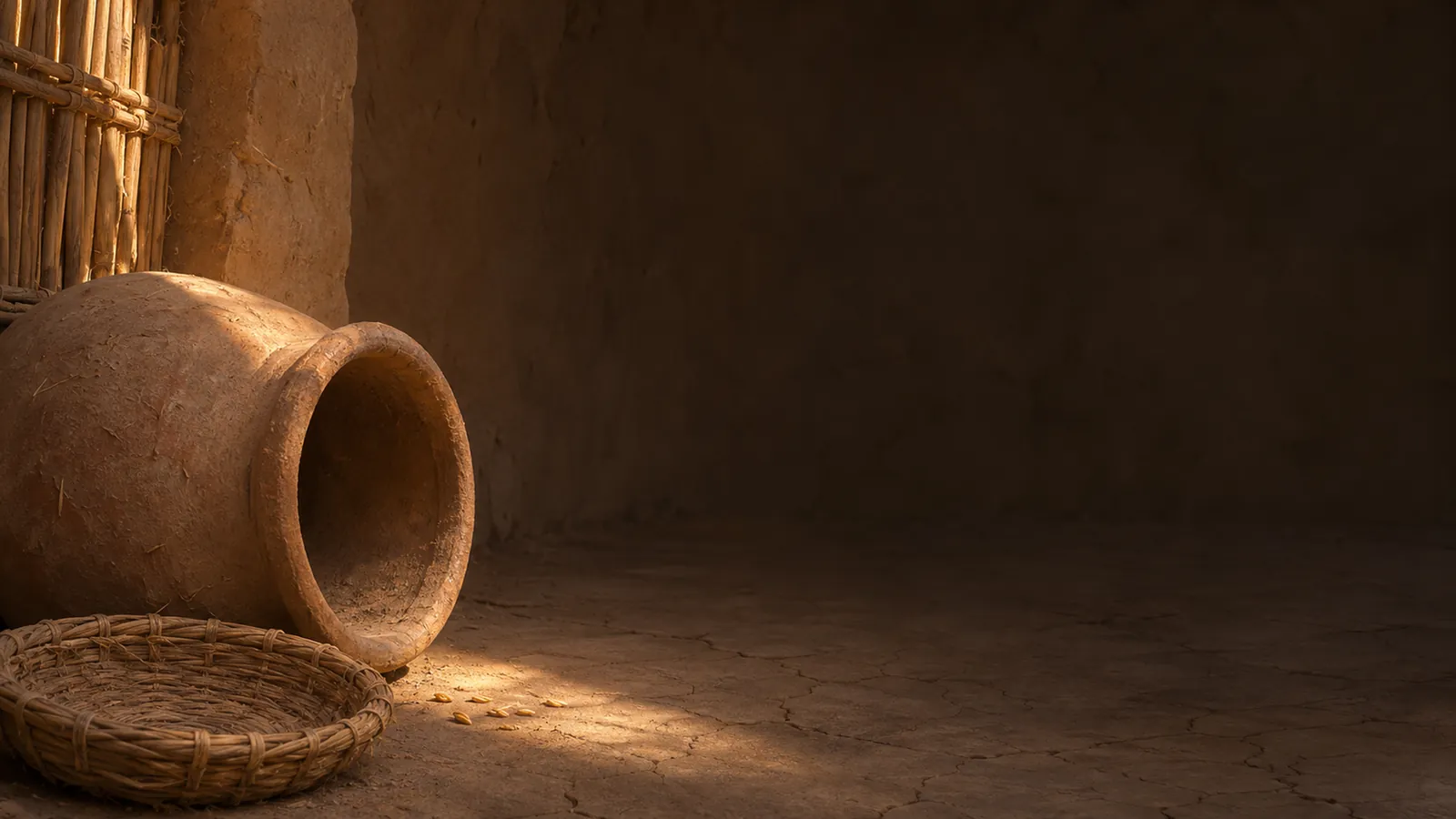
Os campos voltam a falhar e o poema conta os anos de fome. Numa passagem danificada, uma filha é servida como alimento e as pessoas comem-se umas às outras.
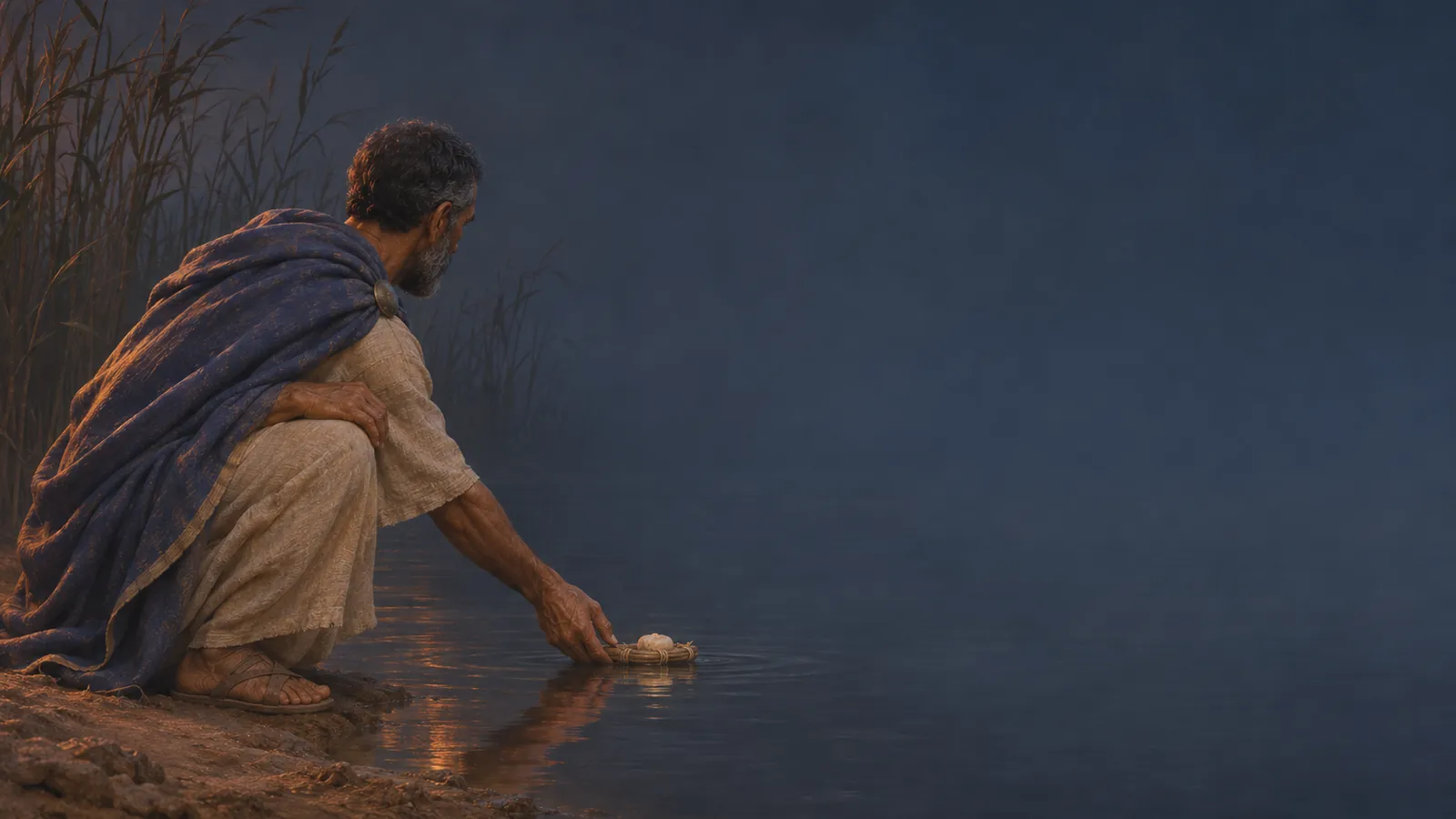
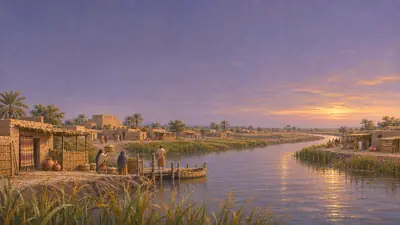
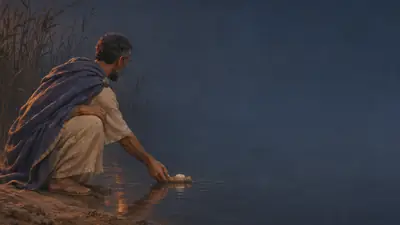
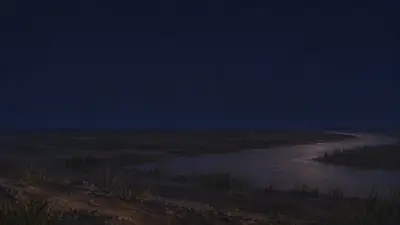
Atrahasis chorou e pediu a Enki que lhe respondesse num sonho. À noite, fez uma oferta à beira do rio e pediu à água que levasse a sua dádiva ao seu deus.
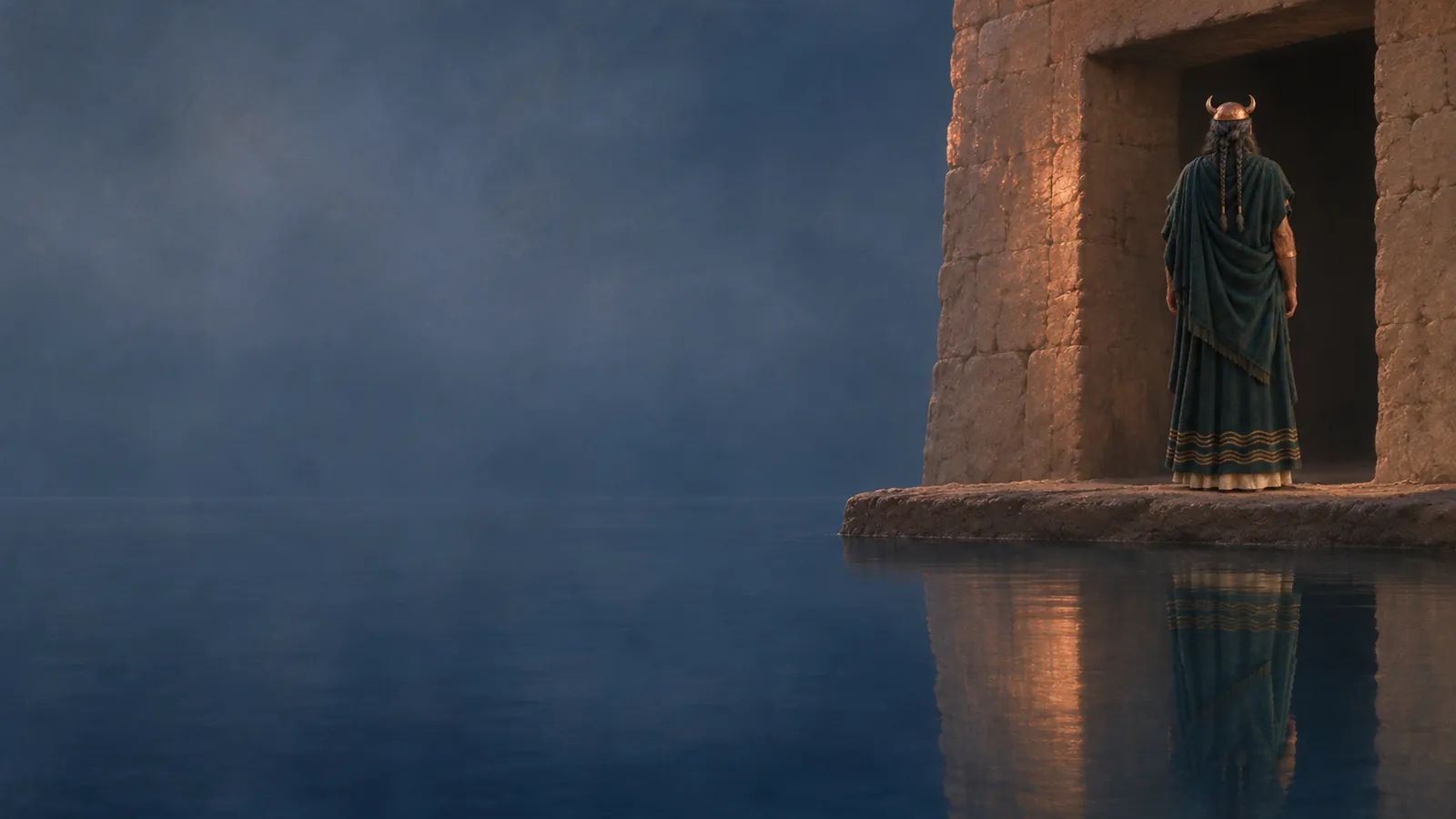
PROFUNDEZAS
Diz o poema que a voz do homem desceu até ao Apsu e que Enki a ouviu lá. Enviou mensageiros para saber como ia a terra.
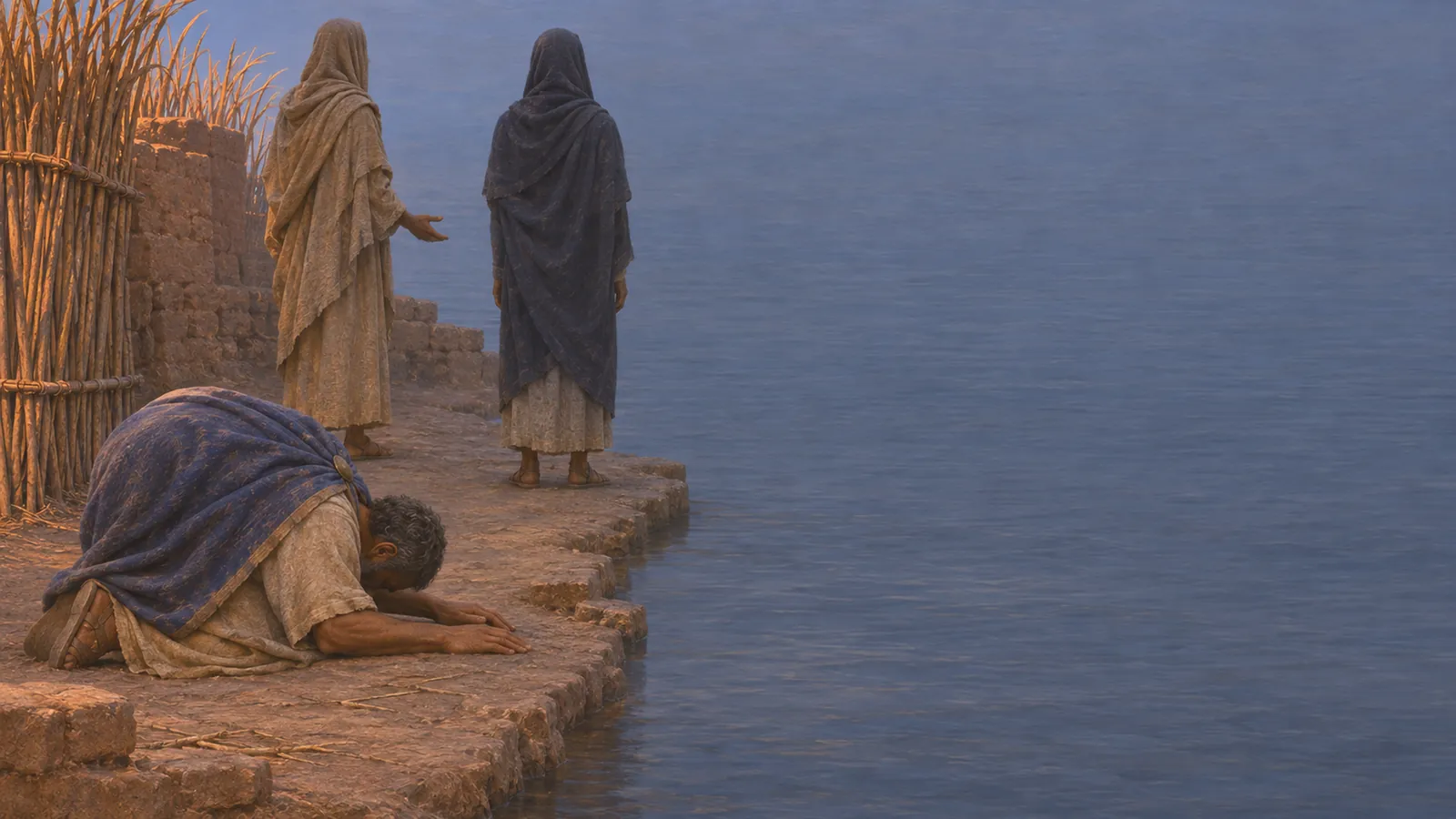
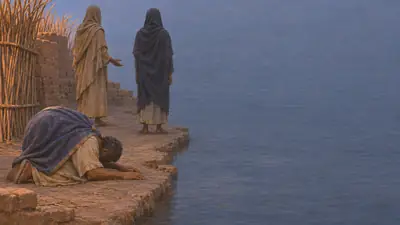
Os mensageiros atravessaram as águas e chegaram ao cais. Disseram a Atrahasis que a sua oferta chegara a Enki. Ele inclinou-se e beijou o chão diante deles.
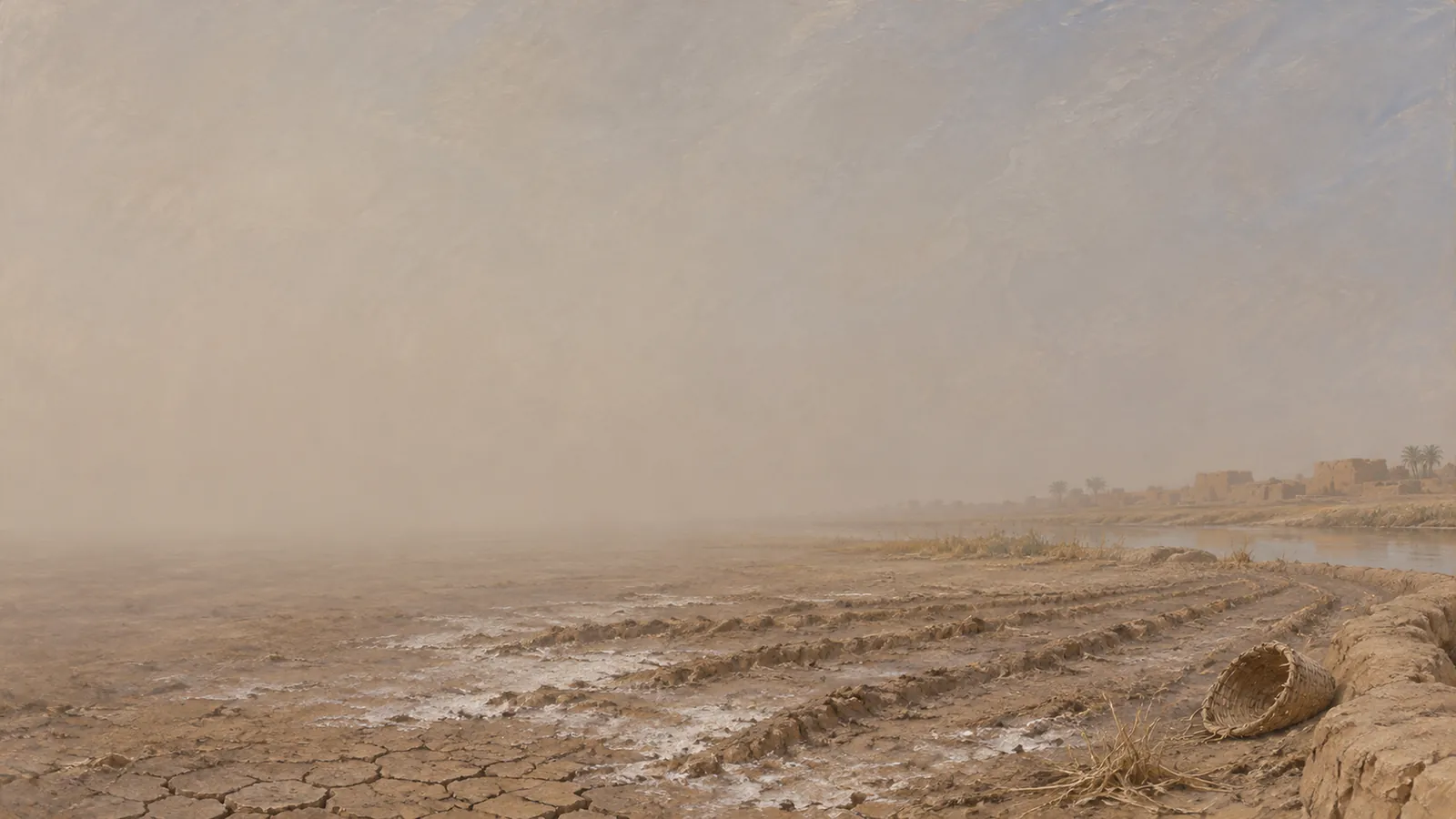
O diálogo que se segue está danificado. Enki envia o seu ministro, e chegam notícias da falta de chuva, dos campos sufocados pelo sal e do grão que o povo esgotou.
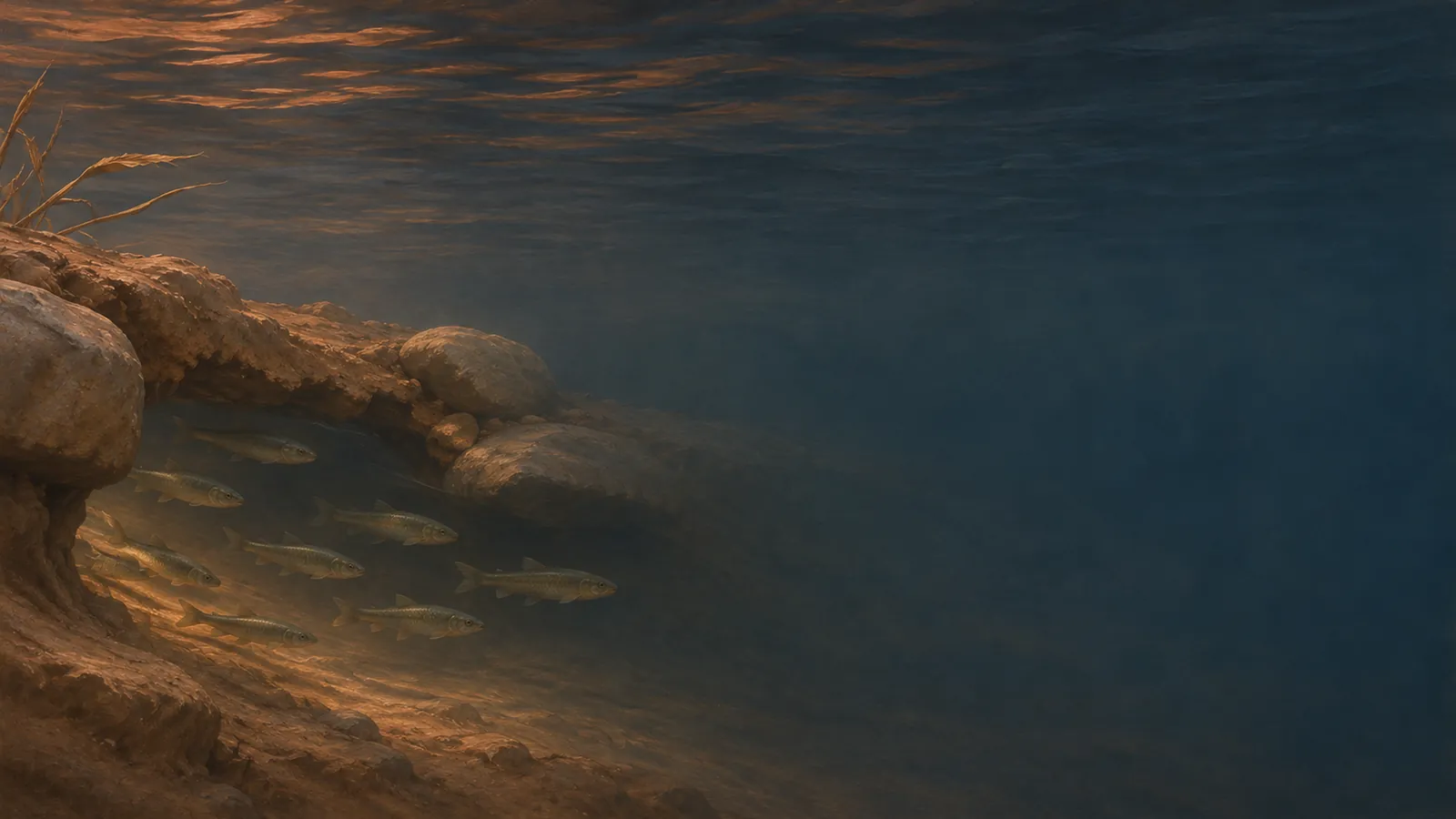
Os fragmentos seguintes falam de peixes que passam por uma barreira partida e de alimento que volta a chegar ao povo. No conselho, Enlil diz que Enki soltou aquela abundância.
JURAMENTO
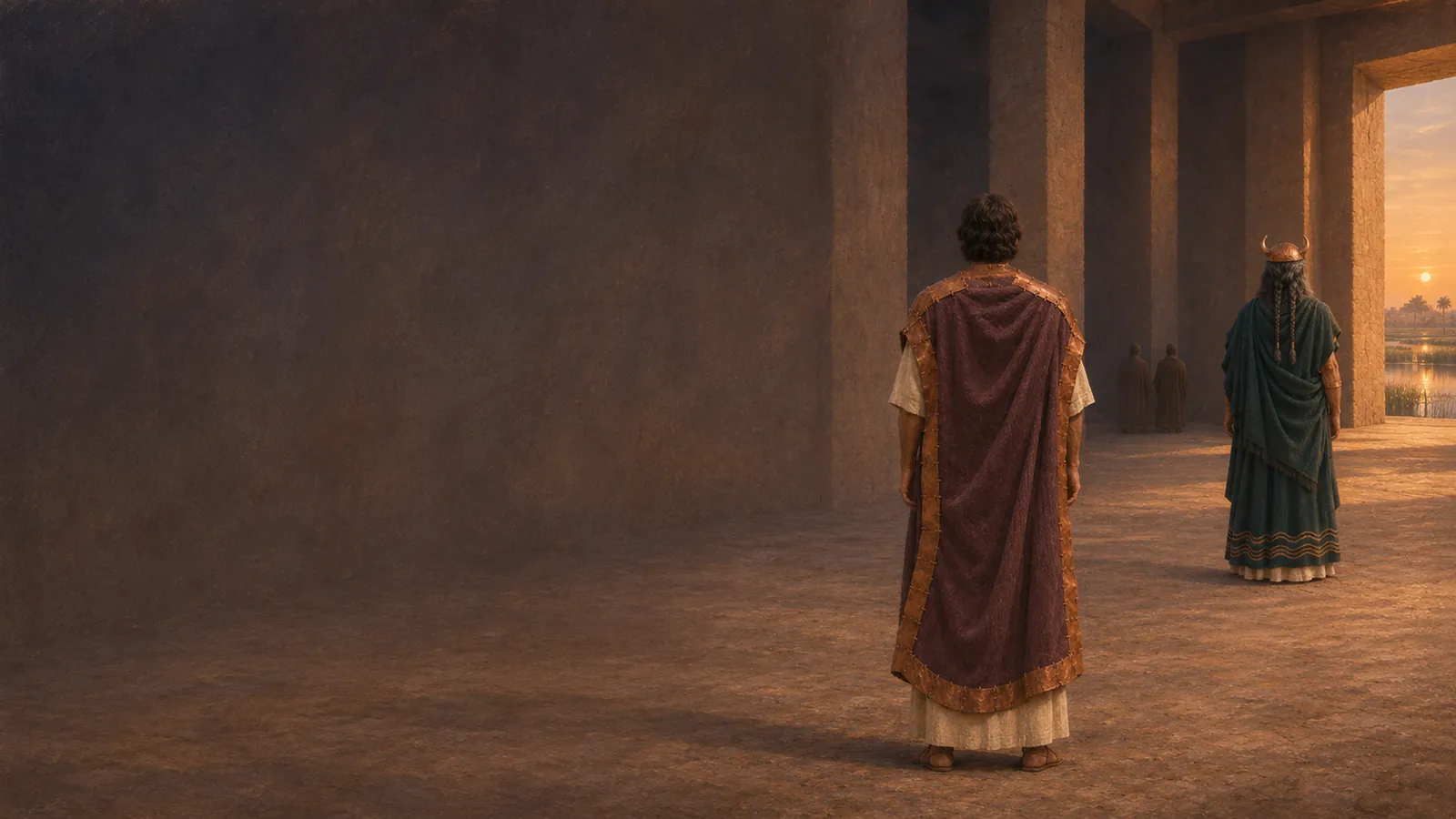
A decisão seguinte do conselho foi enviar um dilúvio. Os deuses queriam prender Enki a um juramento, mas as linhas quebradas conservam o seu protesto ao pedirem-lhe que se voltasse contra o seu povo.

As vozes da assembleia tornam-se difíceis de seguir. A tabuinha quebrada ainda fala de águas que transbordarão e de uma tarefa a cumprir na lua nova.
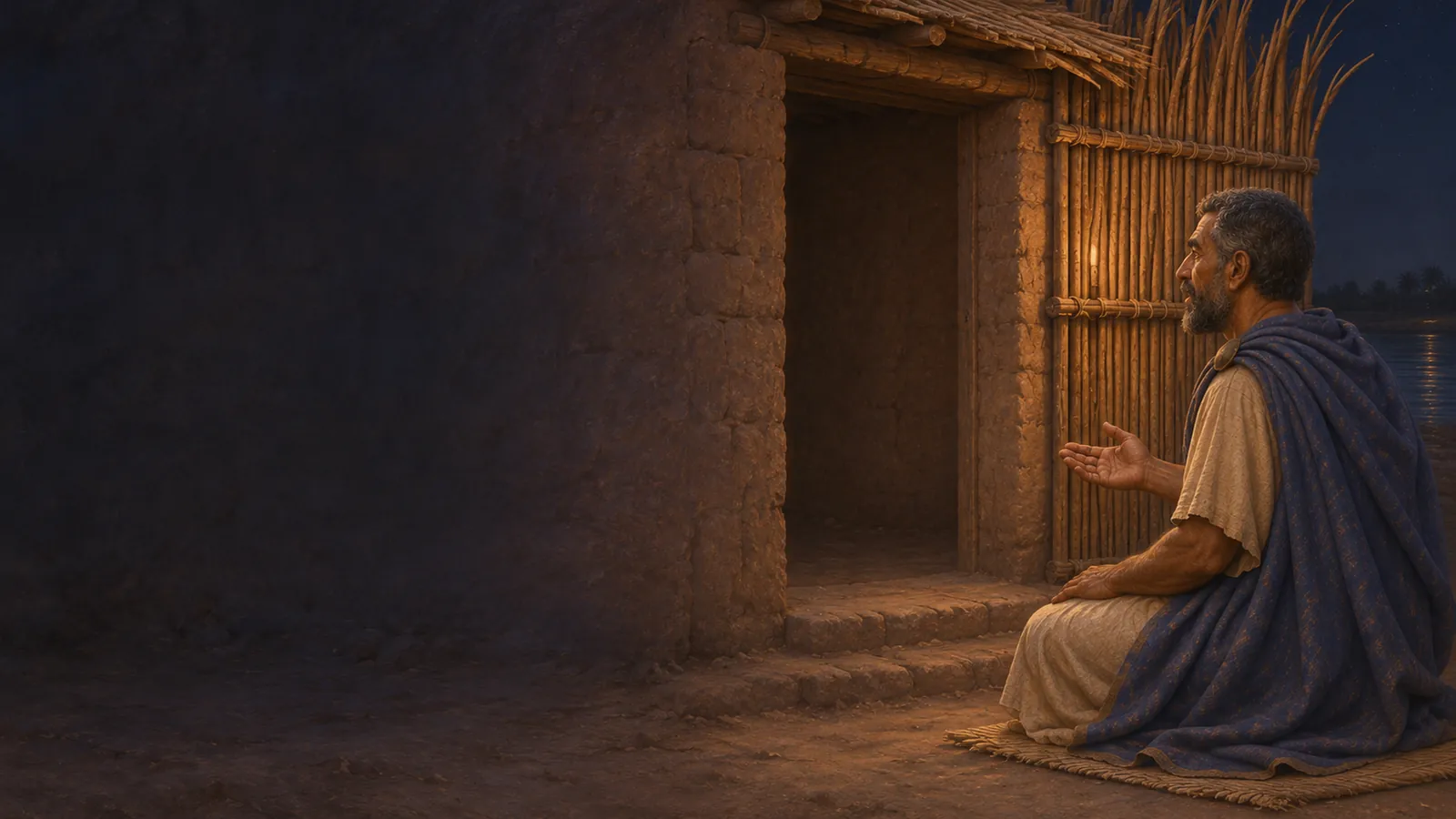
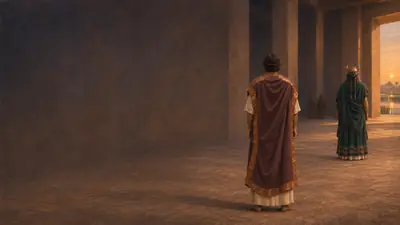
Os deuses tinham decidido a destruição. No fim desta tabuinha, um só homem continua a falar com Enki. Que poderá Enki dizer-lhe agora, com um juramento entre os dois?
Fim do capítulo 1
Todas as páginas





Fontes
On page 46, the fragmentary famine lines preserve the serving of a daughter as food and the consuming of one person by another (Atrahasis II, section E 78q–78w, SEAL 39732). Parts of the lines are restored, and the retelling condenses them to one sentence.
Edições consultadas
- SEAL 1515, Atrahasis I with translation and manuscript apparatus
- SEAL 39732, Atrahasis II with translation and manuscript apparatus
- SEAL 1516, Old Babylonian Sippar Tablet II witness
- SEAL 1518, Old Babylonian Larsa Tablet II–III fragment
- Wasserman 2020, Old Babylonian Atra-ḫasīs and Flood recensions, pp. 16–19
- IL Archive, Atrahasis: Epic and Hero
Notas sobre este reconto
On page 23, the slain god is Wē in the SEAL reading of the Sippar passage, traditionally read We-ila. The Igigi spit on the clay after Mami mixes it with his flesh and blood (Atrahasis I 223–234, SEAL 1515). The retelling gives the killing and mixing.
Os versos antigos de cada página
- Page 1: Atrahasis I 1–4, SEAL 1515
- Page 2: Atrahasis I 1–6, 37–38, SEAL 1515
- Page 3: Atrahasis I 7–18, SEAL 1515
- Page 4: Atrahasis I 19–26, SEAL 1515
The Tigris and Euphrates are partly restored here. - Page 5: Atrahasis I 33–38, SEAL 1515
Reeds are explicated in the SEAL translation. The exact numeral for the duration varies by witness. - Page 6: Atrahasis I 37–42, SEAL 1515
- Page 7: Atrahasis I 43–63, SEAL 1515
The name Wē is preserved in the composite, with variation in the witnesses. - Page 8: Atrahasis I 63–69, SEAL 1515
- Page 9: Atrahasis I 68–73, SEAL 1515
The Ekur appears by name in line 73. - Page 10: Atrahasis I 74–77, SEAL 1515
The verb following Kalkal’s inspection is fragmentary. - Page 11: Atrahasis I 78–83, SEAL 1515
- Page 12: Atrahasis I 84–90, SEAL 1515
- Page 13: Atrahasis I 91–104, SEAL 1515
- Page 14: Atrahasis I 103–123, SEAL 1515
- Page 15: Atrahasis I 124–143, SEAL 1515
- Page 16: Atrahasis I 144–152, SEAL 1515
- Page 17: Atrahasis I 153–165, SEAL 1515
- Page 18: Atrahasis I 166–173, SEAL 1515
The later part of Enlil’s response is fragmentary. - Page 19: Atrahasis I 174–180, SEAL 1515
The speaker is Ea in the composite. Several later witnesses assign the speech to Anu. - Page 20: Atrahasis I 181–197, SEAL 1515
- Page 21: Atrahasis I 198–203, SEAL 1515
- Page 22: Atrahasis I 204–222, SEAL 1515
- Page 23: Atrahasis I 213–217, 223–230, SEAL 1515
The victim is Wē in the Sippar tradition, Alla in other witnesses. - Page 24: Atrahasis I 231–245, SEAL 1515
- Page 25: Atrahasis I 244–248, SEAL 1515
- Page 26: Atrahasis I 249–255, SEAL 1515
- Page 27: Atrahasis I 255–260, SEAL 1515
The later Neo-Assyrian witness supplies the fourteen pieces, their arrangement and the central brick. - Page 28: Atrahasis I 260b–260g, 265–276, SEAL 1515
The later Neo-Assyrian witness supplies the seven-and-seven births. - Page 29: Atrahasis I 277–295, SEAL 1515
- Page 30: Atrahasis I 296–308, SEAL 1515
The events around these customs are fragmentary. - Page 31: Atrahasis I 309–339, SEAL 1515
- Page 32: Atrahasis I 351–359, SEAL 1515
The comparison is a simile. - Page 33: Atrahasis I 357–363f, SEAL 1515
- Page 34: Atrahasis I 364–371, SEAL 1515
- Page 35: Atrahasis I 372–384, SEAL 1515
- Page 36: Atrahasis I 385–400, SEAL 1515
- Page 37: Atrahasis I 400–409, SEAL 1515
The temple and action toward line 412 are partly restored in the composite. - Page 38: Atrahasis I 407–416, SEAL 1515
Some lines are restored. - Page 39: Atrahasis II A 1–20, SEAL 39732
- Page 40: Atrahasis II A 14–20, B 7–18, SEAL 39732
II A survives in Old Babylonian and later copies. - Page 41: Atrahasis II D 1–11, E 1–10, SEAL 39732
Its closing address and the opening of Segment E are damaged. - Page 42: Atrahasis II E 9–24, SEAL 39732
The instructions in E 9–24 are primarily preserved in later copies. The Old Babylonian text repeats the advice and preserves the relief at II E 32–60. - Page 43: Atrahasis II E 25–53, SEAL 39732
- Page 44: Atrahasis II E 54–70, SEAL 39732
- Page 45: Atrahasis II E 63–78, SEAL 39732
Different witnesses vary as to which gods guard the middle region. - Page 46: Atrahasis II, Seg. E 78q–78w, SEAL 39732 (fragmentary); E 144–156 for the wider famine episode
- Page 47: Atrahasis II E 79–105, SEAL 39732
The surviving account names the gift but leaves its container unspecified. - Page 48: Atrahasis II E 106–113, SEAL 39732
- Page 49: Atrahasis II E 114–131, SEAL 39732
- Page 50: Atrahasis II E 132–168, SEAL 39732
Usmû is named as Enki’s minister. The dialogue and several stages of the famine are fragmentary. - Page 51: Atrahasis II G 14–35, 42–49, 55–62, 73–93, SEAL 39732; C₀ i–ii, Wasserman 2020
The surviving exchanges differ by witness and include Enki’s account of the gatekeepers. - Page 52: Atrahasis II H 9–16, I 3–5, SEAL 39732; C₀ iii 1–8, Wasserman 2020
The longer oath sequence in Segment G is supplemented by a Middle Babylonian witness. The protest is preserved in Old Babylonian witnesses D and C₀. - Page 53: Atrahasis II H 20–31, SEAL 39732; C₀ iii 7–20, Wasserman 2020
The month’s dark transition is used without settling a precise astronomical reading. - Page 54: Atrahasis II I 1–7, SEAL 39732
Atrahasis addresses his lord in the closing preserved line; C₀ iii–iv and Tablet III carry the transition onward.
Ilustrações feitas pelo IL Archive com ferramentas de IA; o texto baseia-se nas fontes antigas (veja as fontes no fim de cada capítulo).