A Epopeia de Gilgamesh Capítulo 7

A história do dilúvio

Utnapishtim conta a Gilgamesh como construiu um barco e sobreviveu ao grande dilúvio. Quando acaba de contar a sua história, pede a Gilgamesh que fique acordado seis dias e sete noites.

Ver o filmeFontes

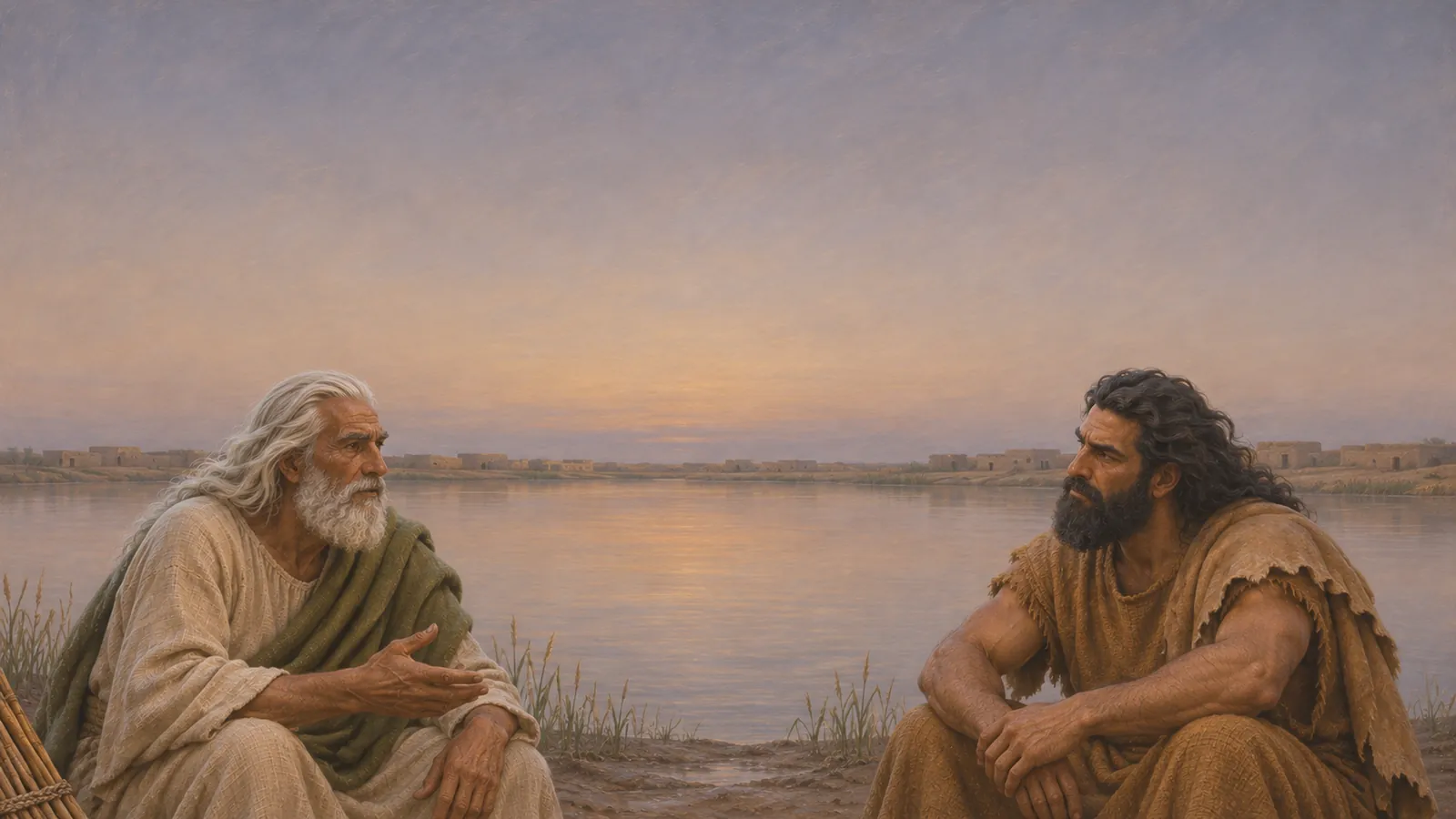
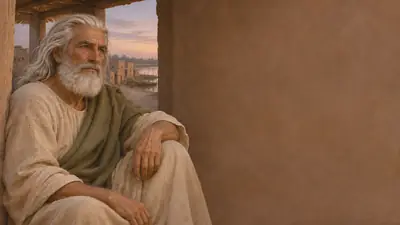
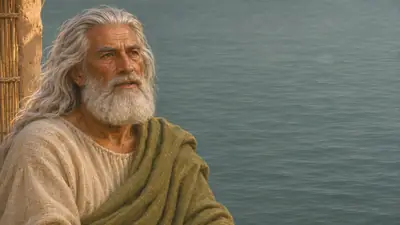
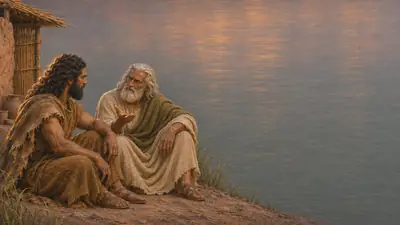
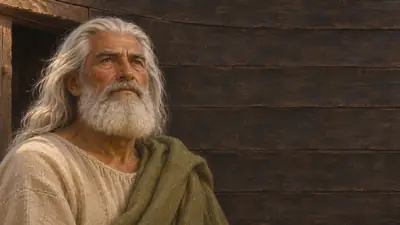
Utnapishtim begins his answer with an open hand, his white hair and olive cloak visible in the last light. Gilgamesh listens opposite him in his travel-worn hide. The river lies still behind them under a wide gray-gold sky.

SEGREDO

Na margem distante, Utnapishtim começou a responder. O que Gilgamesh queria saber remontava a um segredo dos deuses e a uma cidade que, havia muito tempo, ficava à beira de um rio.
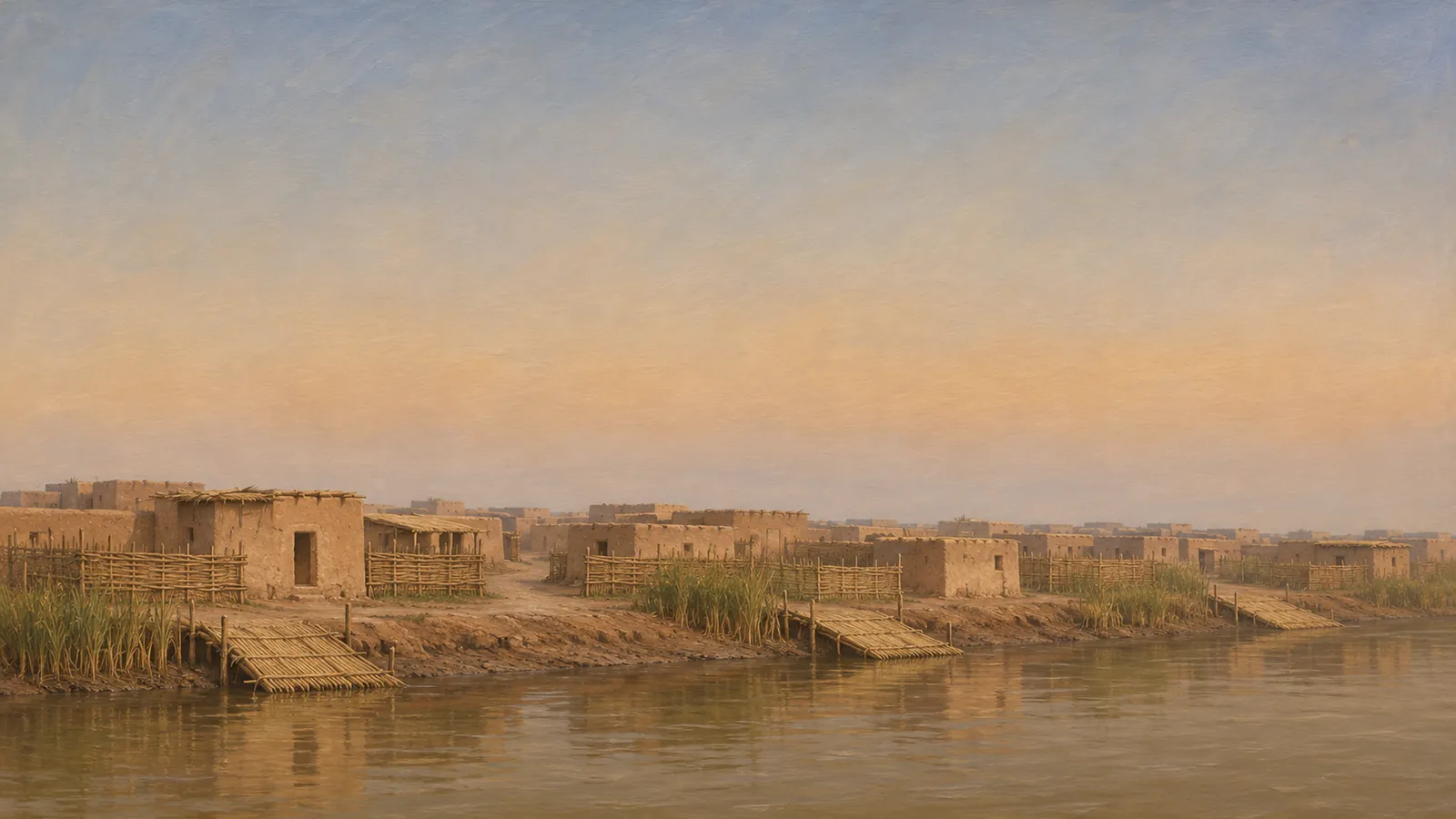
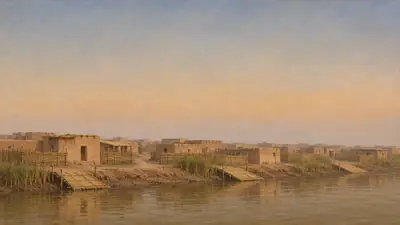
Low earthen houses and reed fences stretch along the Euphrates at old Shuruppak. Woven landings slope from the muddy bank into the quiet river. The settlement sits low under a broad sky tinged with gold.

A cidade era Shuruppak, nas margens do Eufrates. Já era antiga quando, segundo se dizia, os grandes deuses viviam ali.
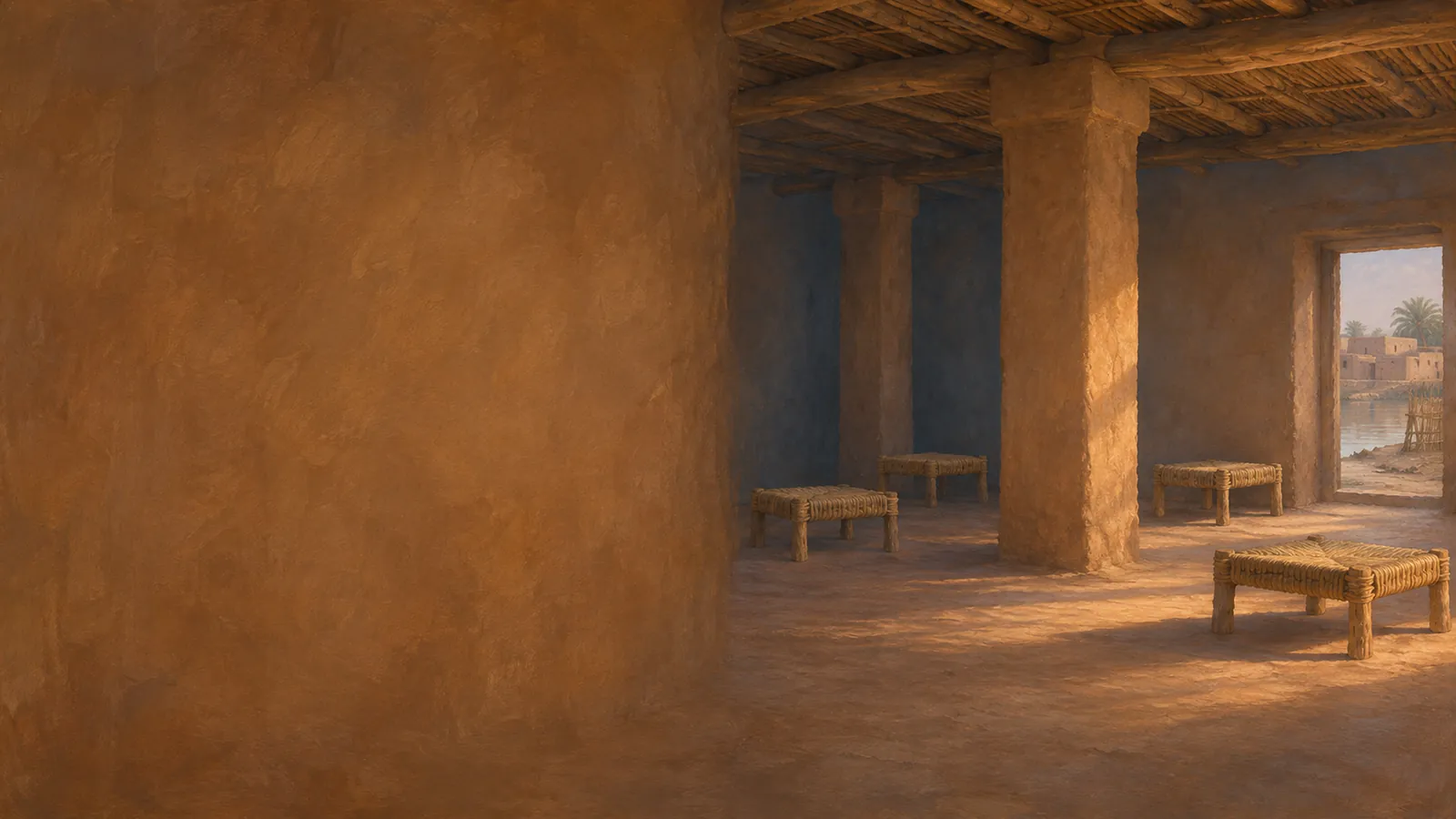
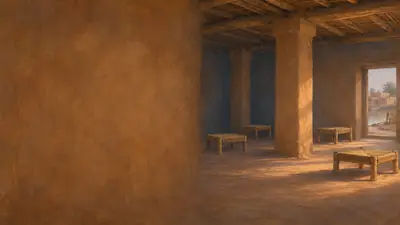
Plain woven stools stand empty between square earthen pillars. A band of warm daylight crosses the floor and fades into the blue shadows behind them. Through the open door, a stretch of water and low houses are just visible.

Utnapishtim falou dos grandes deuses e da decisão de enviar um dilúvio. Os membros da assembleia comprometeram-se a cumprir essa decisão por meio de um juramento.
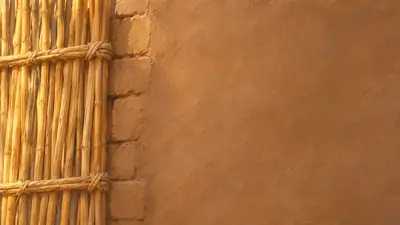
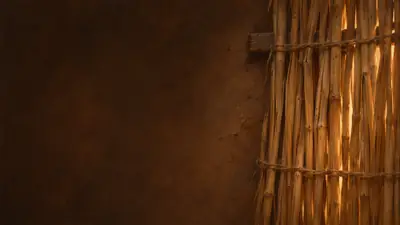
A screen of golden reeds meets the corner of a clay wall. The light brings out the coarse fibers of the ties and the uneven faces of the bricks. It softens into warm shadow across the plaster to the right.

Enlil fazia parte do conselho, e Ea havia jurado com os outros deuses. O que Ea diria em seguida, diria aos juncos.
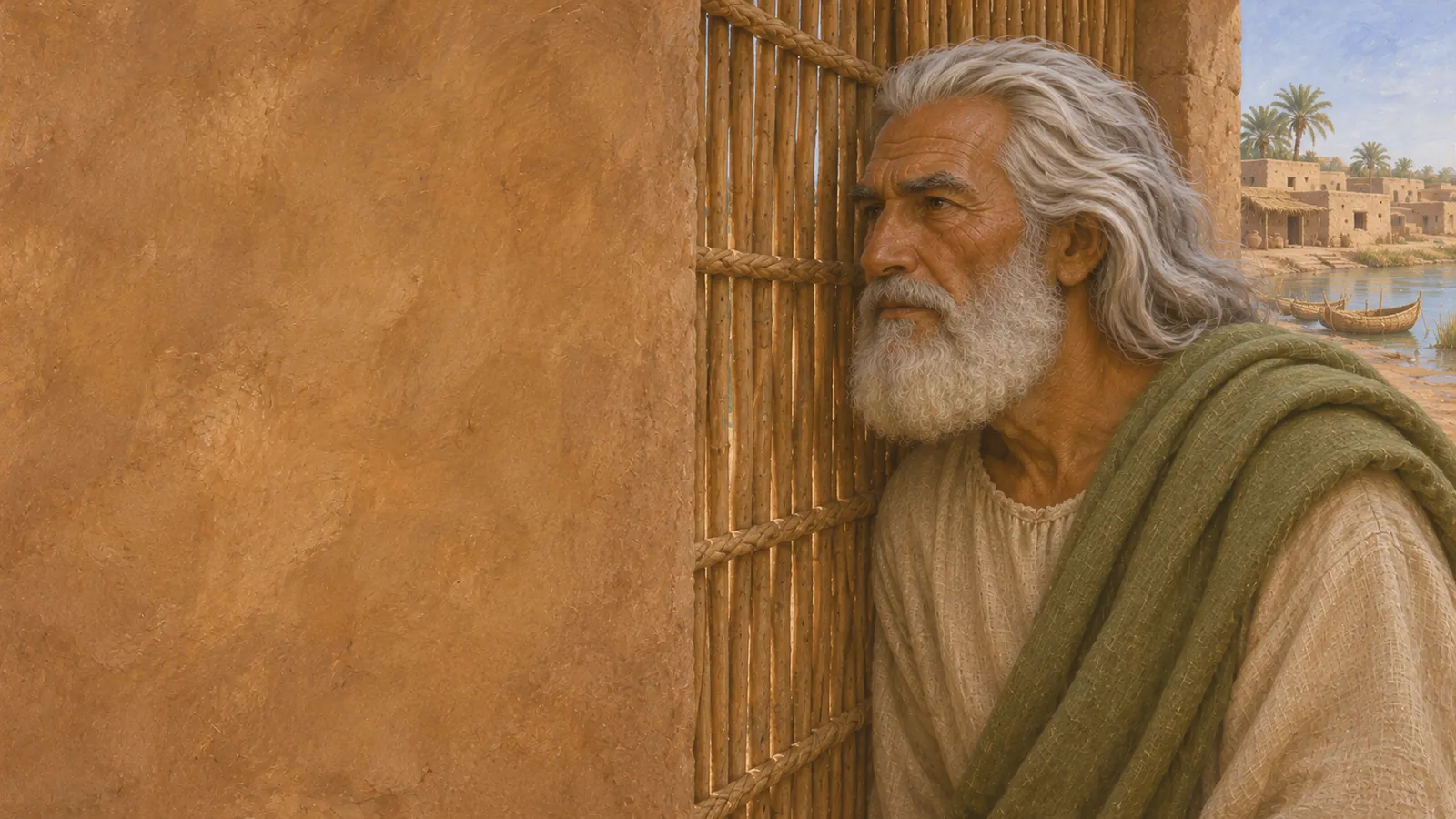
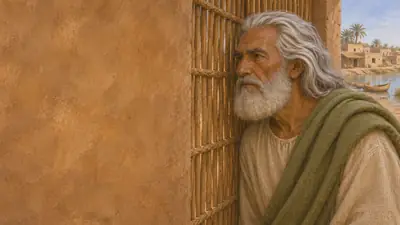
Utnapishtim stands close to the reed fence, his face turned as though listening. His silver-white hair rests over the folds of his muted olive cloak. Beyond the screen, small reed boats lie near the low houses on the riverbank.

O aviso foi dirigido a uma cerca de juncos e a um muro. Por aquelas palavras, Utnapishtim soube o que precisava fazer, enquanto o deus falava aos juncos.
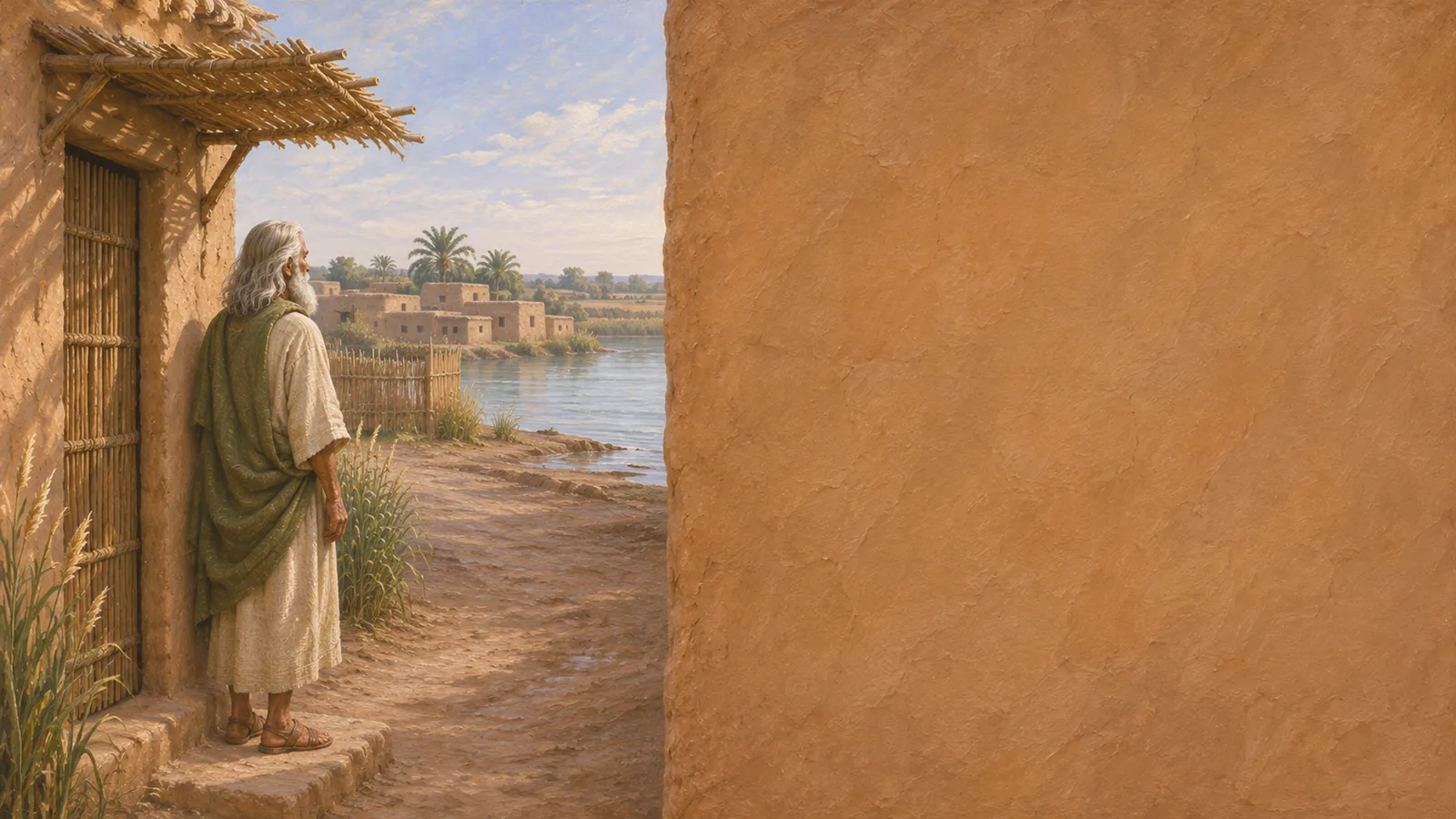
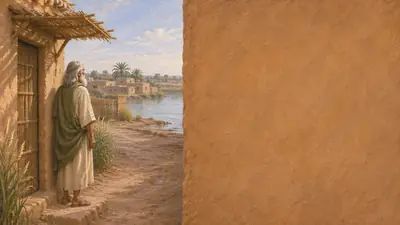
Utnapishtim stands at the doorway of an intact earthen house, looking along the lane toward the river. A woven awning gives the threshold a little shade. Across the water, low houses and palms rise just above the reeds.

Ea disse-lhe que deitasse a casa abaixo e construísse um barco. O que pudesse conservar importava agora menos do que aquilo que pudesse manter vivo.
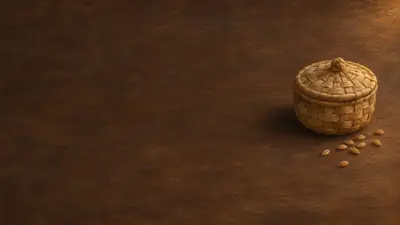
A small lidded reed basket rests on a dark wooden surface. A few whole grains lie scattered beside it, bright in a narrow patch of warm light. Across the left, the wood grain fades into a soft brown shadow.

O barco deveria levar as sementes dos seres vivos. Utnapishtim recebera a ordem de deixar para trás as riquezas e dar aos seres vivos uma chance de sobreviver.
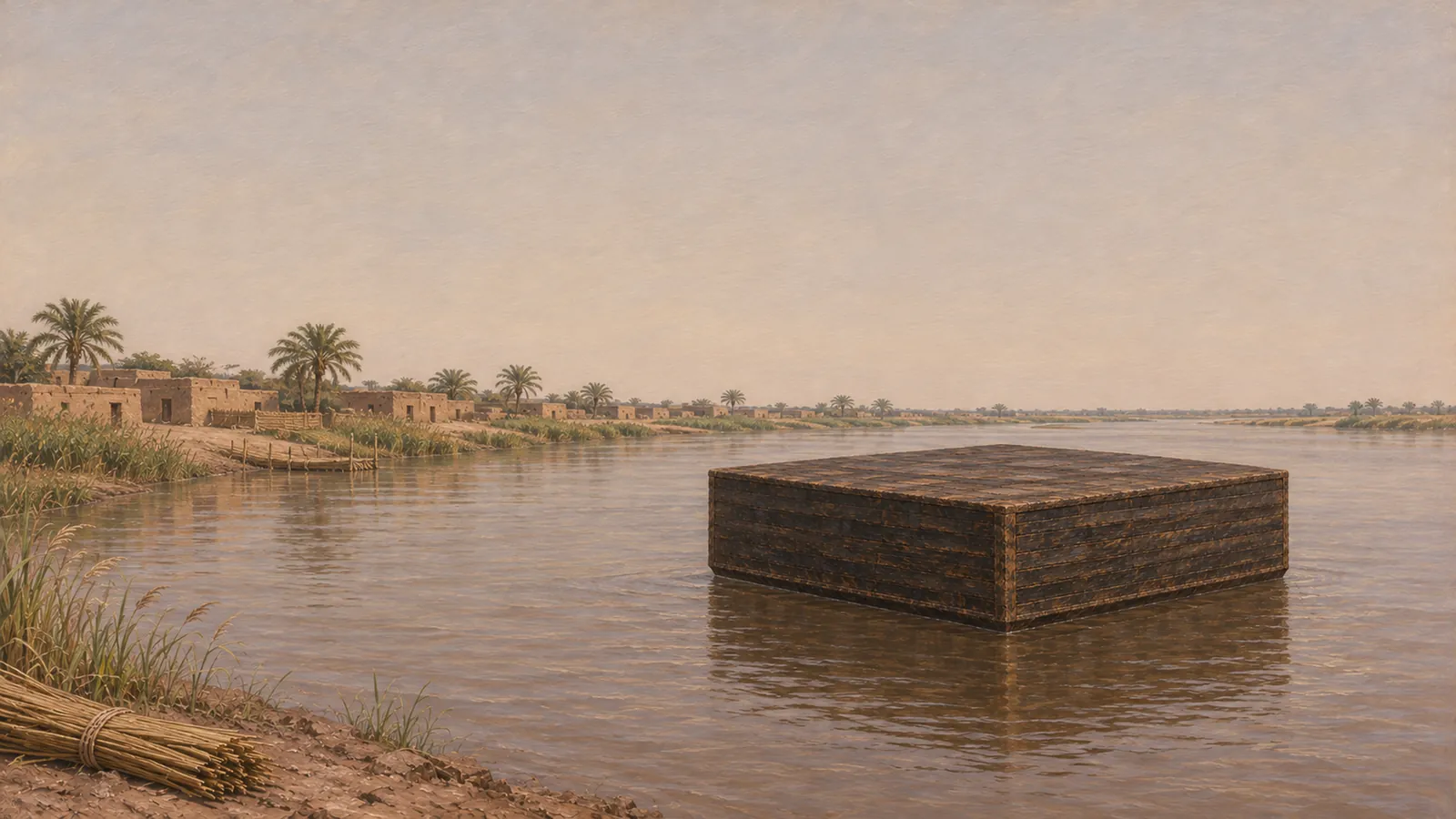
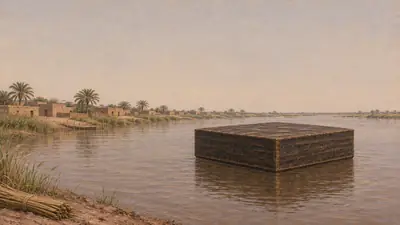
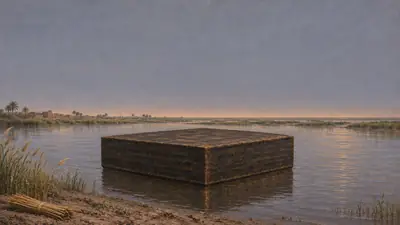
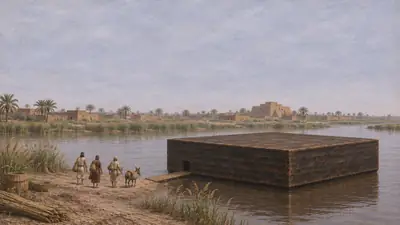
The broad, square roofed boat floats low on the muddy river, with two sides of equal breadth visible. Its dark planks cast a reflection in the slow water. Low houses, palms, and reed landings sit back from the vessel under a pale open sky.

O barco que Ea descreveu deveria ter a mesma largura e comprimento. Teria um teto, e a sua forma seria diferente da dos barcos comuns do rio.
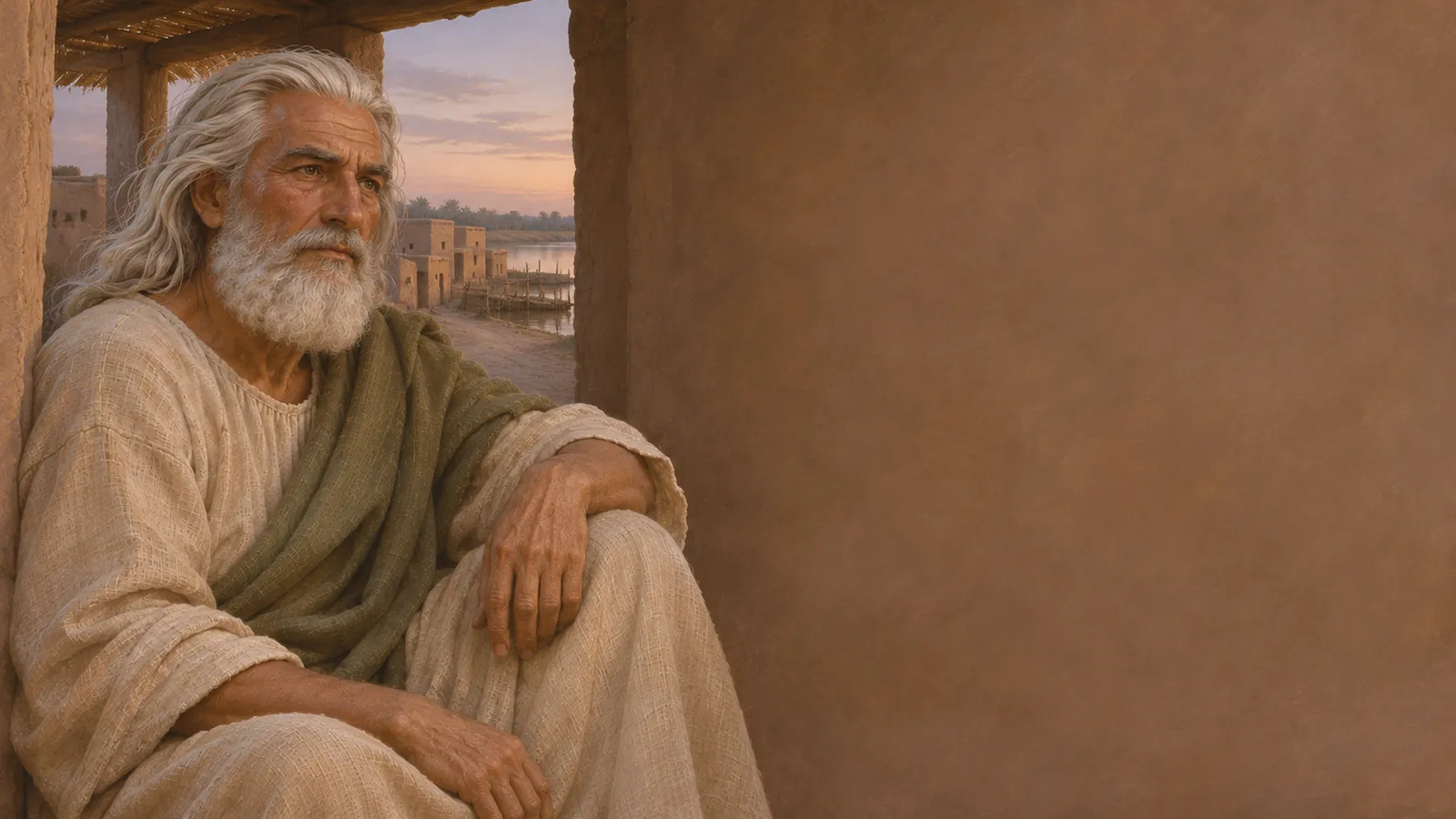
Utnapishtim sits alone at his doorway, his hand resting on his raised knee. Evening light reaches his white hair and the olive folds over his shoulder. The low houses of Shuruppak and a reed landing are visible through the opening.

Utnapishtim disse que faria o que lhe haviam mandado. Depois perguntou o que deveria dizer aos habitantes e aos anciãos quando vissem o que estava a fazer.
The dark blue river fills the view beside a low bank of wet mud. A clump of reeds leans over the shallows, with a soft reflection below it. Farther out, the last warm color of dusk dissolves into shadow.

Ea disse-lhe que contasse que perdera o favor de Enlil. Assim poderia explicar por que deixava a cidade para viver com Ea nas profundezas.
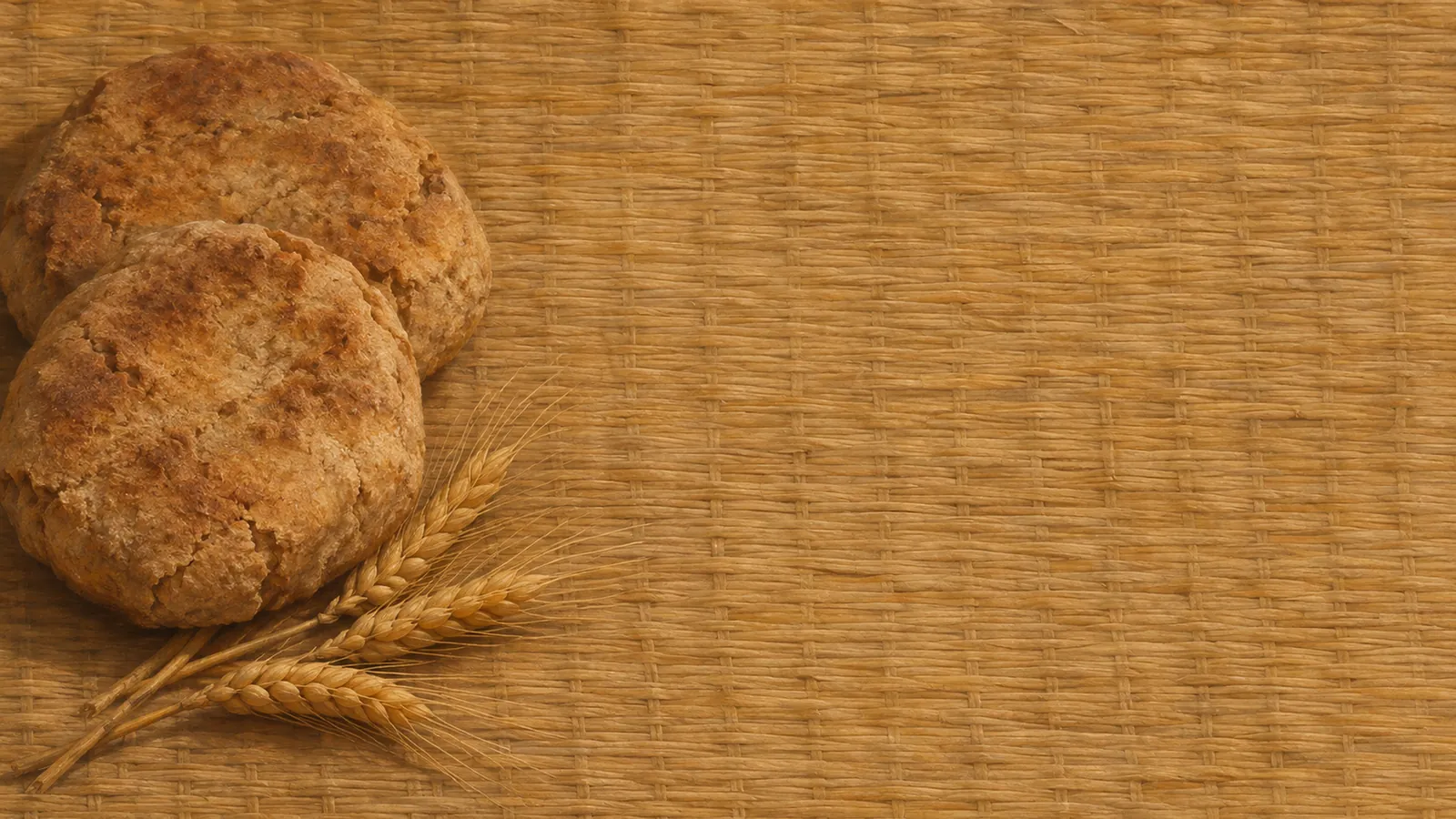
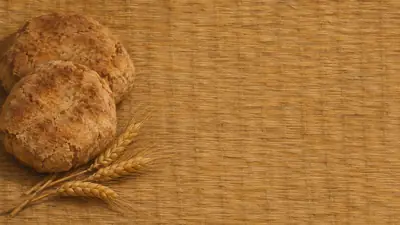
Two rough bread rounds sit beside a few heads of wheat on a woven reed mat. Warm light touches their browned crust and the fine points of the wheat ears. The weave continues quietly across the empty right side.

A mensagem à cidade falava de abundância. Pão e trigo cairiam como chuva, dizia ela, palavras que soavam promissoras para quem não sabia o que estava por vir.
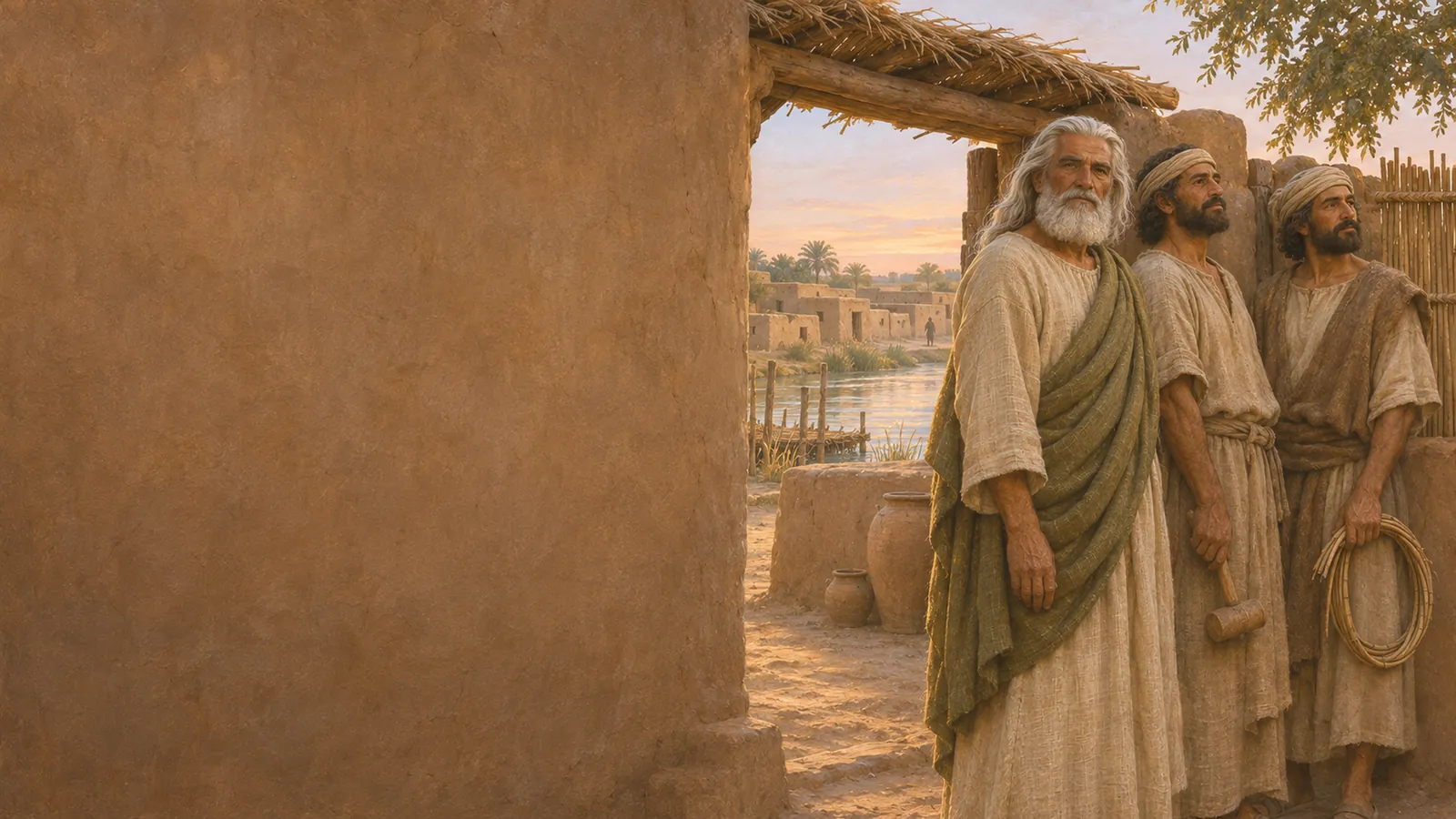
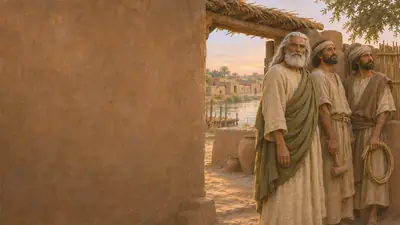
Utnapishtim stands with two workers at the entrance to the yard in the early light. One carries a plain wooden mallet, and the other holds a coiled bundle of reeds. Behind them, the opening looks out toward the river and the low town.

Ao amanhecer, as pessoas se reuniram diante da entrada de Utnapishtim. Entre os que vieram, o poema destaca um carpinteiro e um artesão que trabalhava com juncos, cada qual com uma ferramenta de seu ofício.
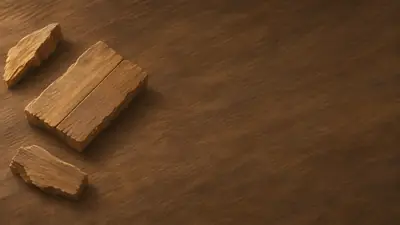
Several rough wood pieces lie beside one fitted joint on an old timber surface. Low light brings out the worn edges and the rough ends of the cut wood. The grain falls into warm shadow across the rest of the frame.

Várias linhas sobre o trabalho estão quebradas. Ainda se percebe o contorno de um esforço coletivo, em que diferentes mãos contribuíam com o que podiam.
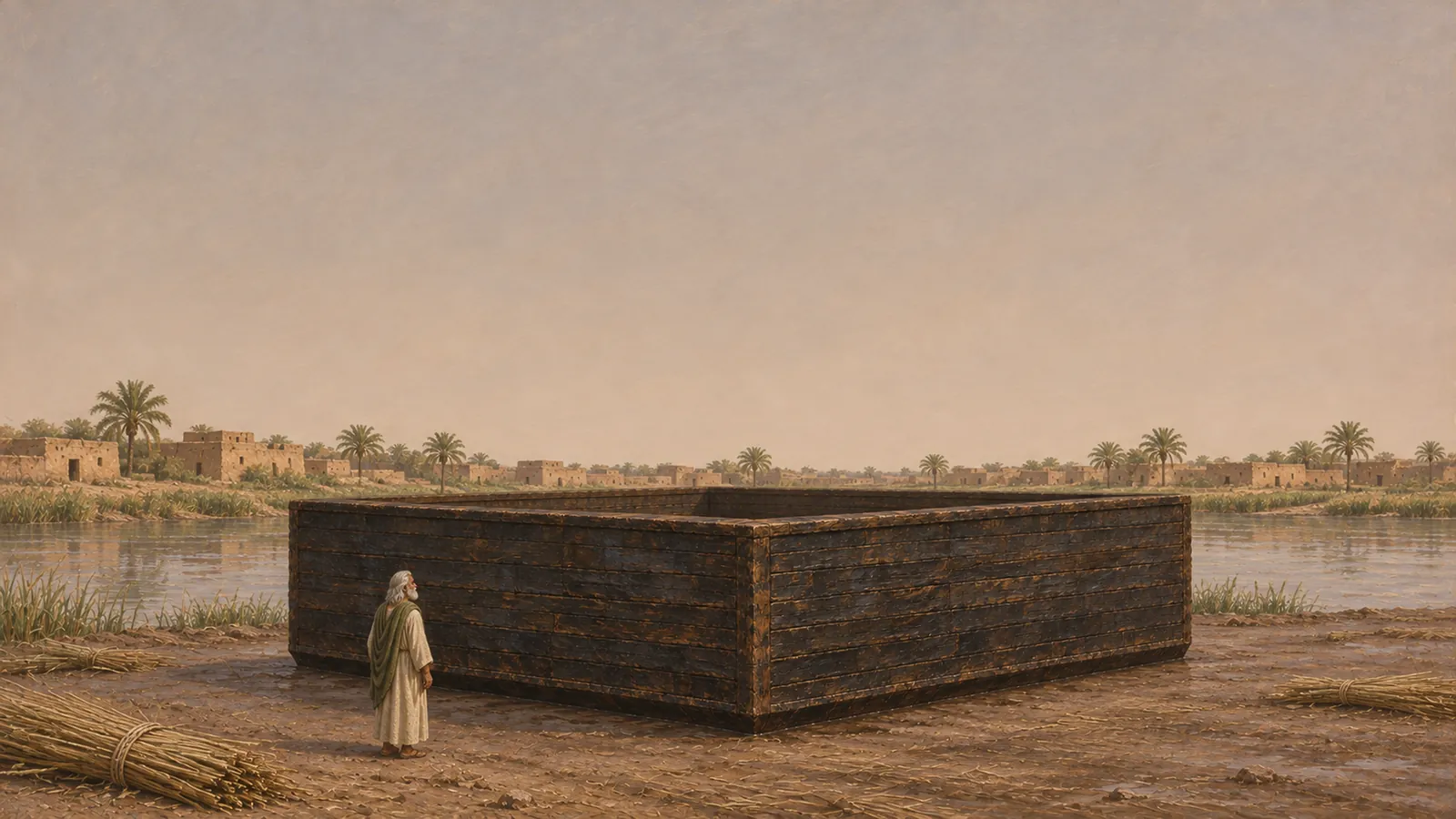
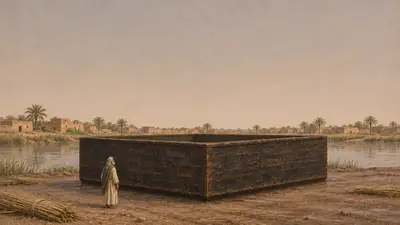
The unfinished square hull rests on the muddy riverbank, its two visible sides broad and dark. A narrow glimpse into the open top shows that the roof is still absent. Utnapishtim stands beside it, small against the high planking.

A história volta ao barco que vai tomando forma. Os lados altos e as arestas iguais davam-lhe a largura necessária para abrigar tanta vida à sua volta.
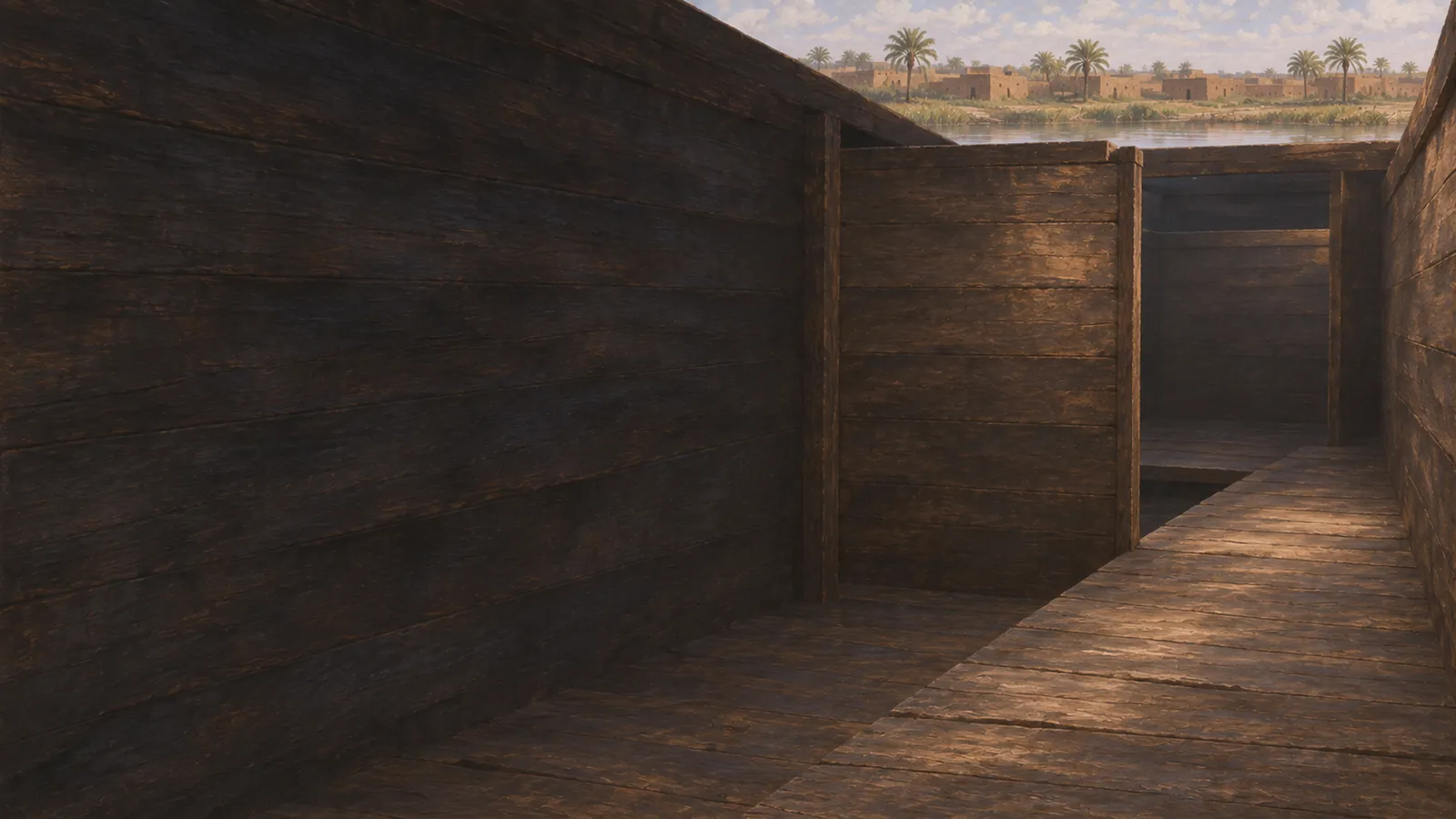
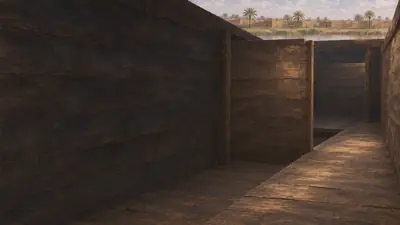
Soft daylight from above catches a lower platform and the worn timber walkway. The near side of the vessel remains in blue shadow.

Utnapishtim descreve conveses dispostos uns sobre os outros, com o interior do barco dividido em partes. O poema antigo se detém no espaço preparado para o que entraria ali.
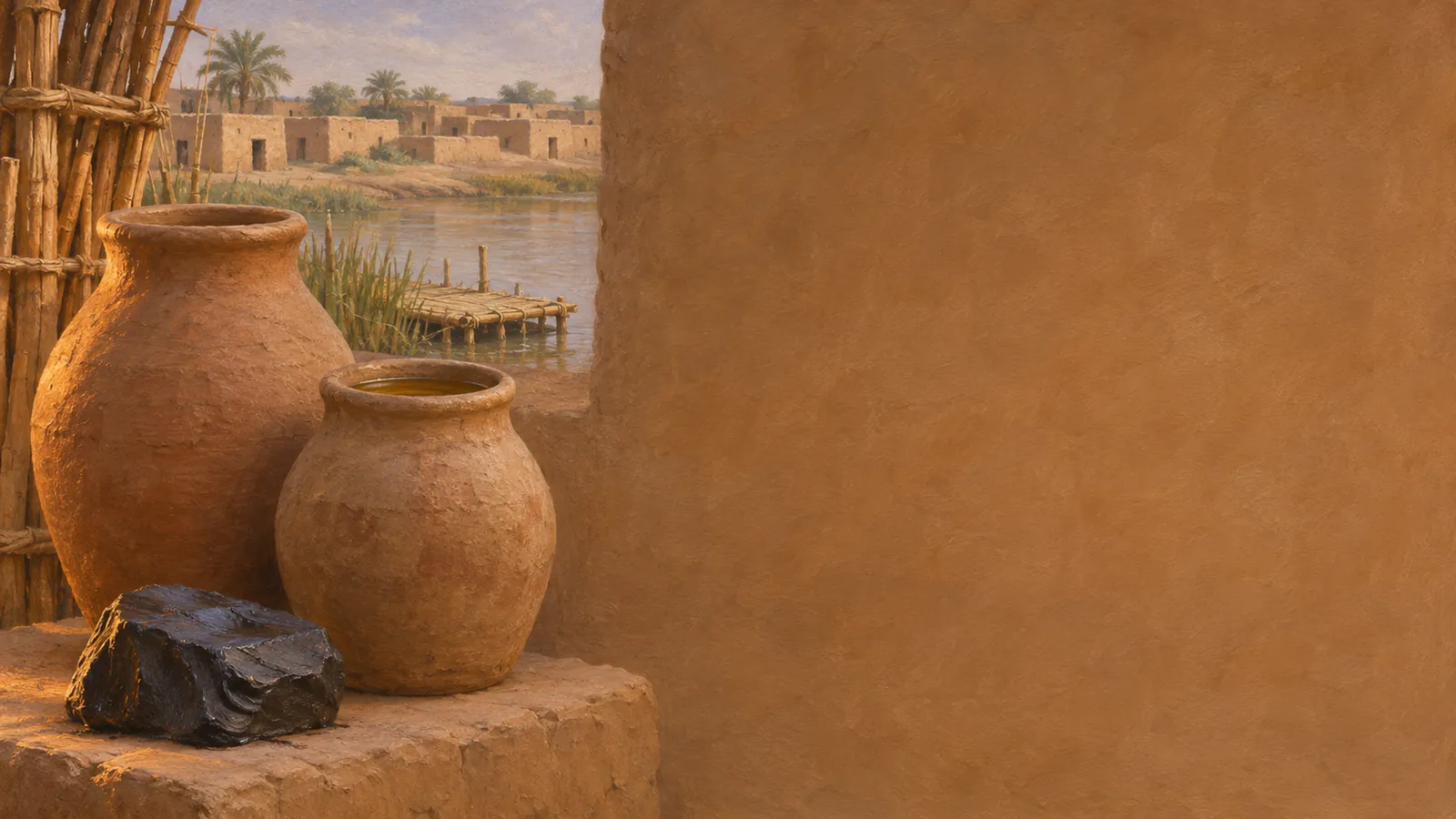
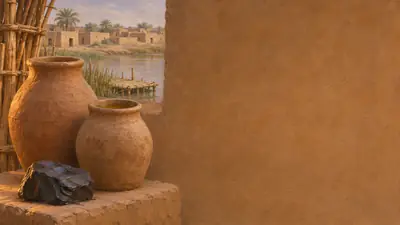
Two plain clay jars sit beside a small block of black pitch. Light catches the oil just inside the smaller jar and the rough contours of the pitch. A reed screen and a glimpse of the river are visible beyond the ledge.

Na construção usou-se betume e grandes quantidades de óleo. Parte do relato está danificada, mas o breu escuro e as cargas de óleo ainda sobressaem na descrição.
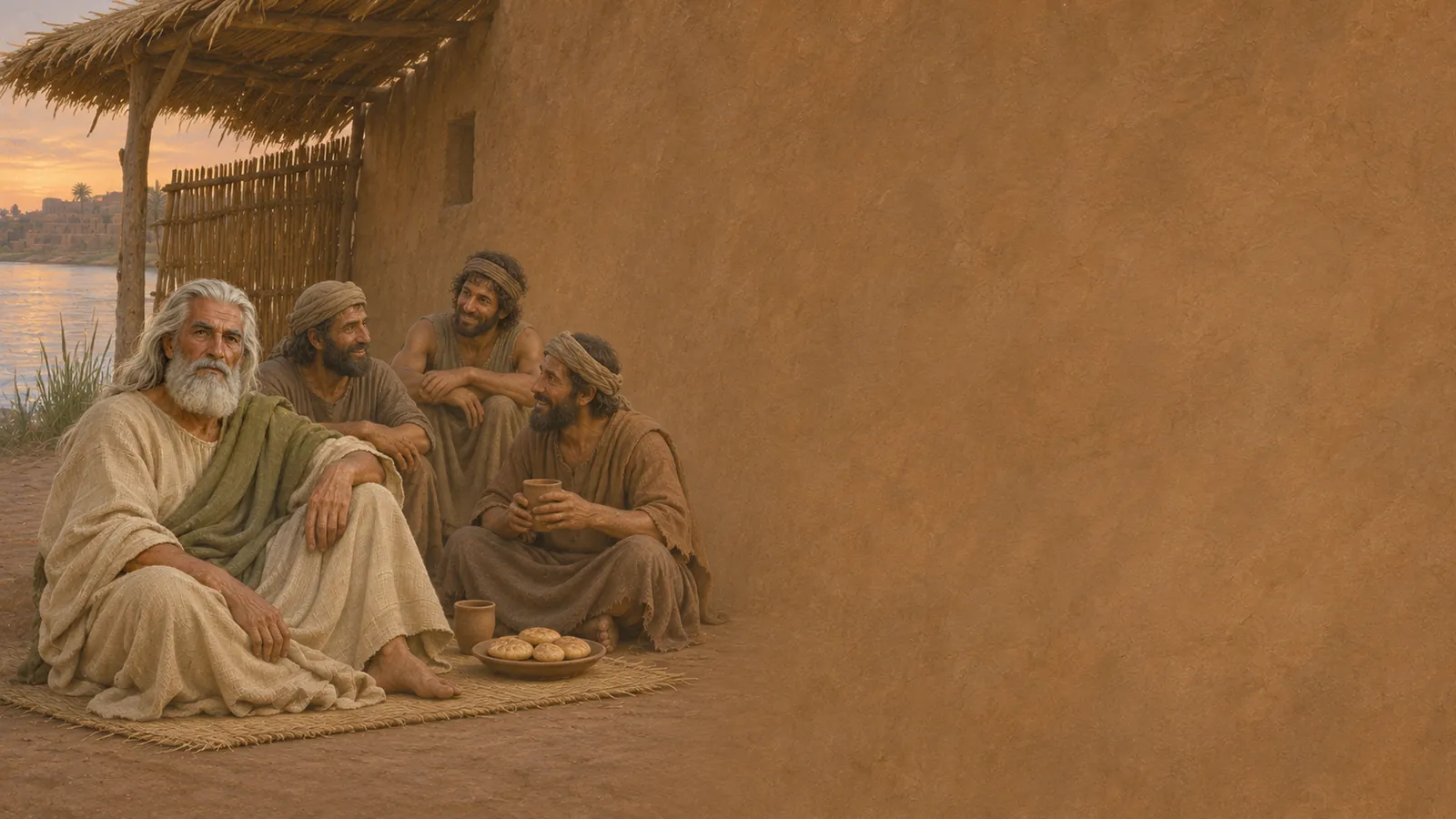
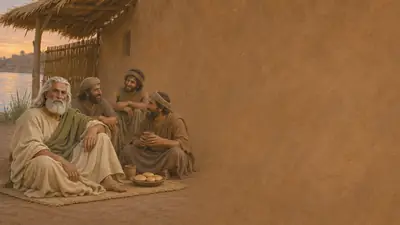
Utnapishtim sits with three workers on a woven mat at the end of the day. They share round loaves and plain clay cups in the shelter of the yard. The warmth of late light softens the wall beside them.

Utnapishtim deu de comer e de beber às pessoas que faziam o trabalho. Lembra-se da cerveja e do vinho a correrem à vontade e conta que os trabalhadores festejaram como no Ano Novo.
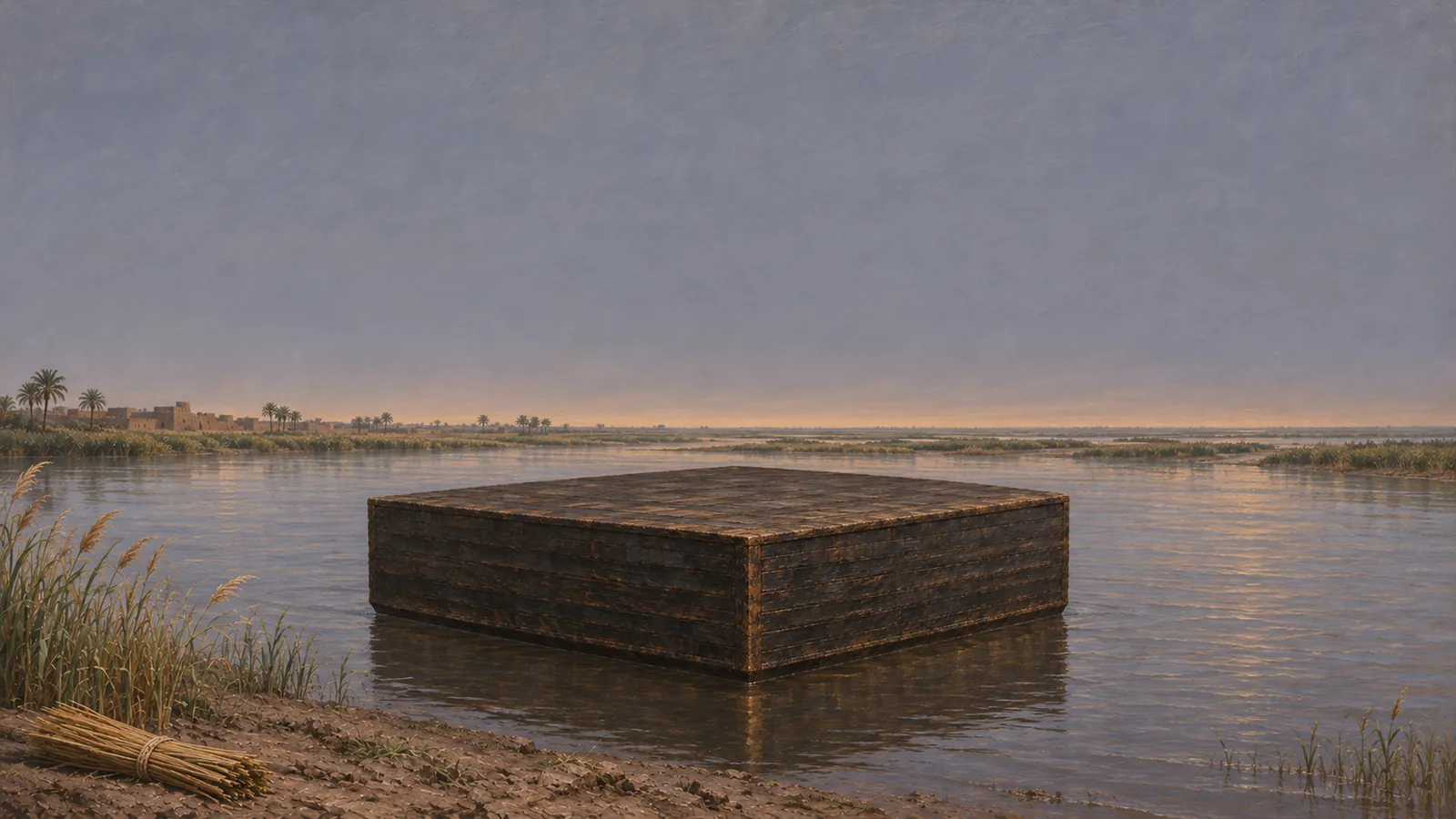
The finished boat lies near the bank in the last evening light. Its continuous flat roof and squared walls make a broad dark shape on the river. A strip of reeds and low mudbrick houses marks the far bank.

Antes de o sol se pôr, o barco estava pronto. As linhas seguintes estão danificadas e só nos deixam fragmentos do último trabalho antes do início do carregamento.
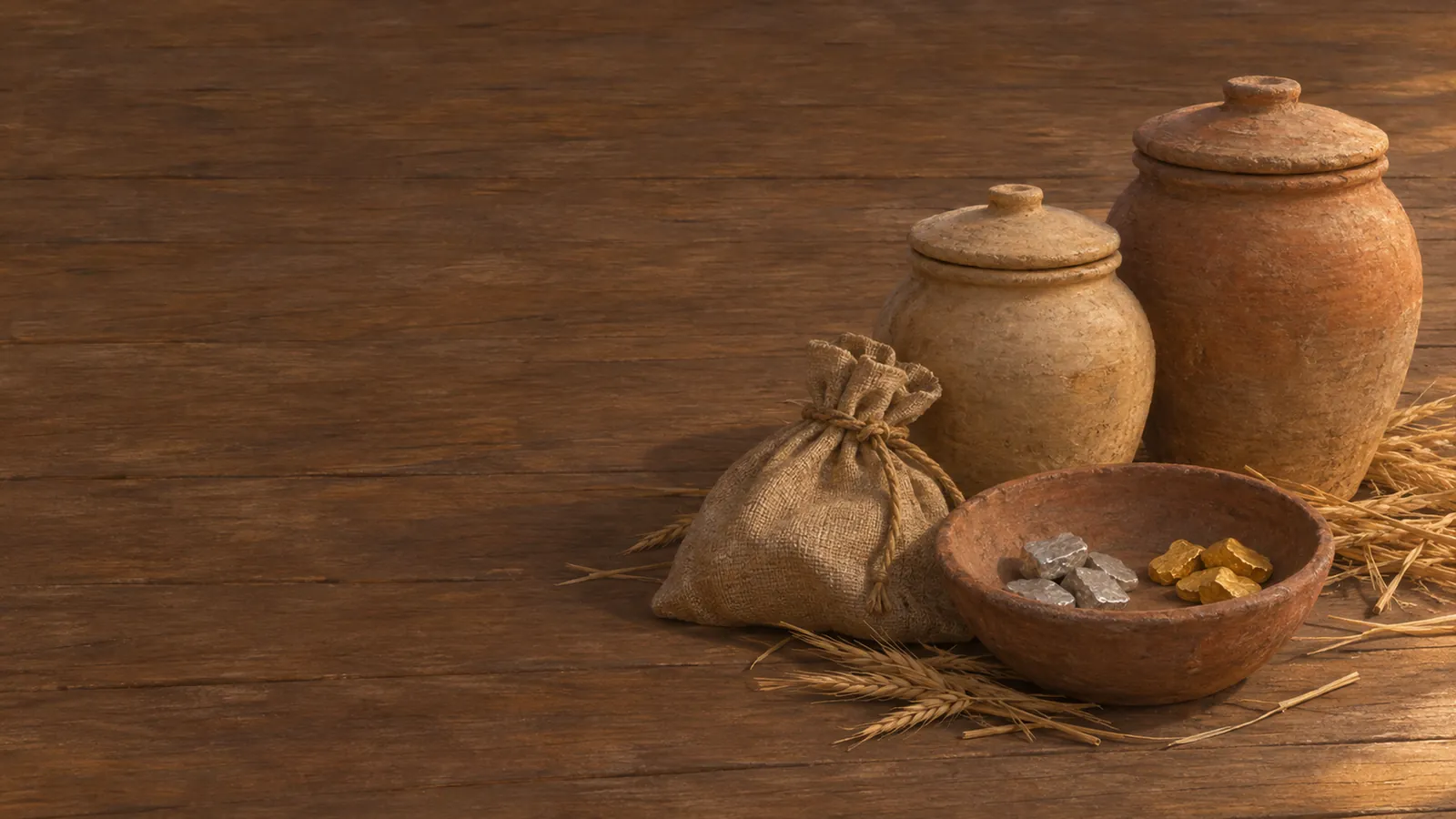
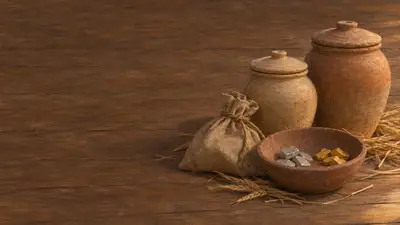
Two lidded clay jars and a tied cloth bag sit at the right on worn wooden planks. A shallow bowl holds separate pieces of dull silver and warm yellow gold, with straw tucked around it. The shaded timber on the left catches only a little of the morning light.

Quando começou o carregamento, conta Utnapishtim, levou para bordo a prata e o ouro que possuía. Entre o que transportava ia a semente dos seres vivos.
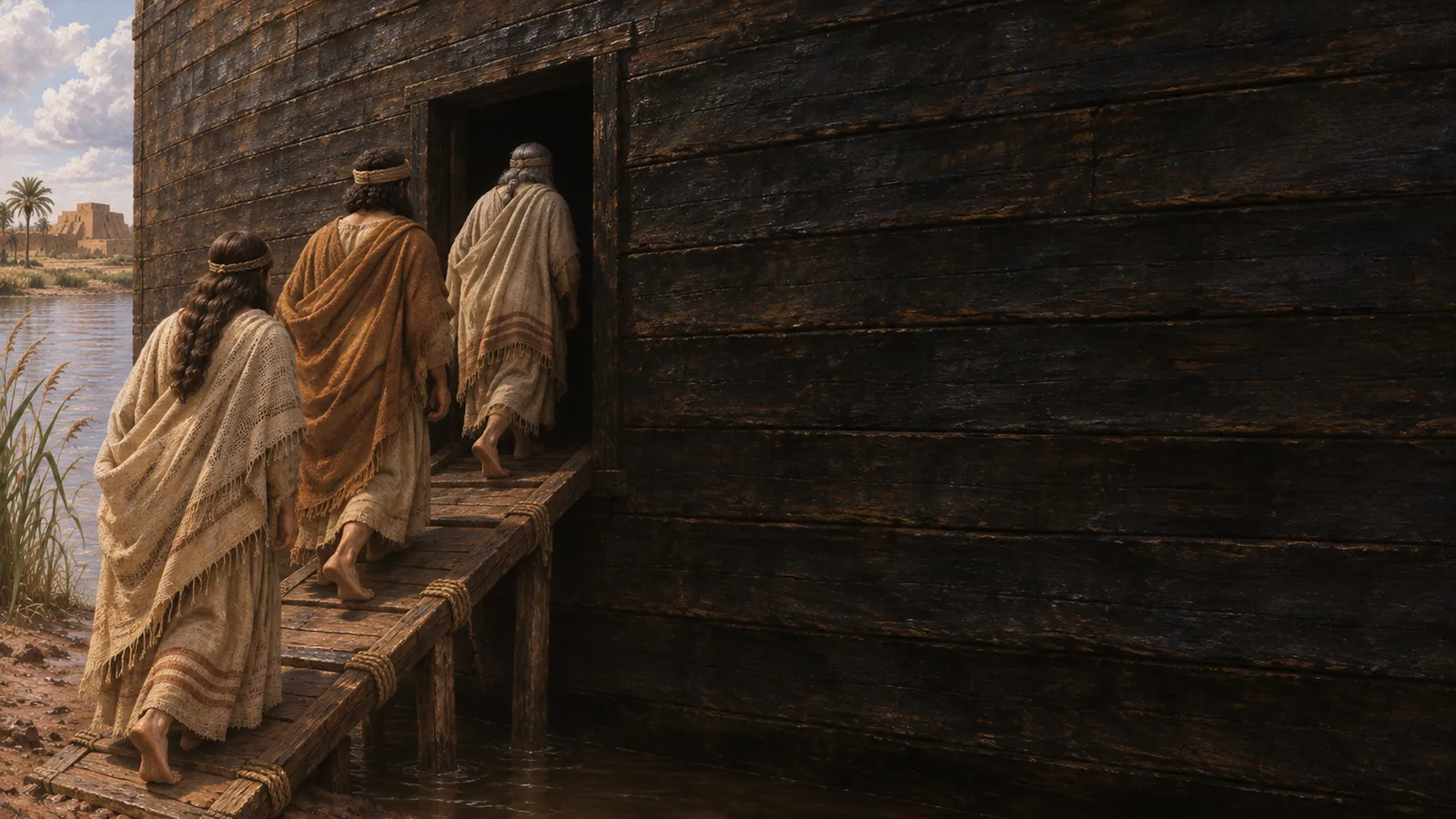
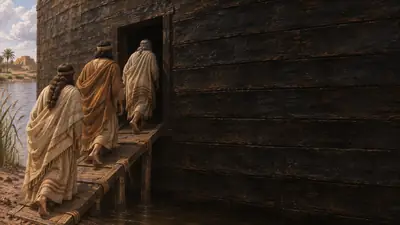
Three relatives in coarse woven garments walk up a short wooden gangplank. Seen from behind, they are just reaching a low opening in the dark side of the boat. A narrow glimpse of the river and its opposite bank remains at far left.

Depois menciona a família e os parentes. Subiram para o grande barco enquanto este ainda estava junto à terra que conheciam.
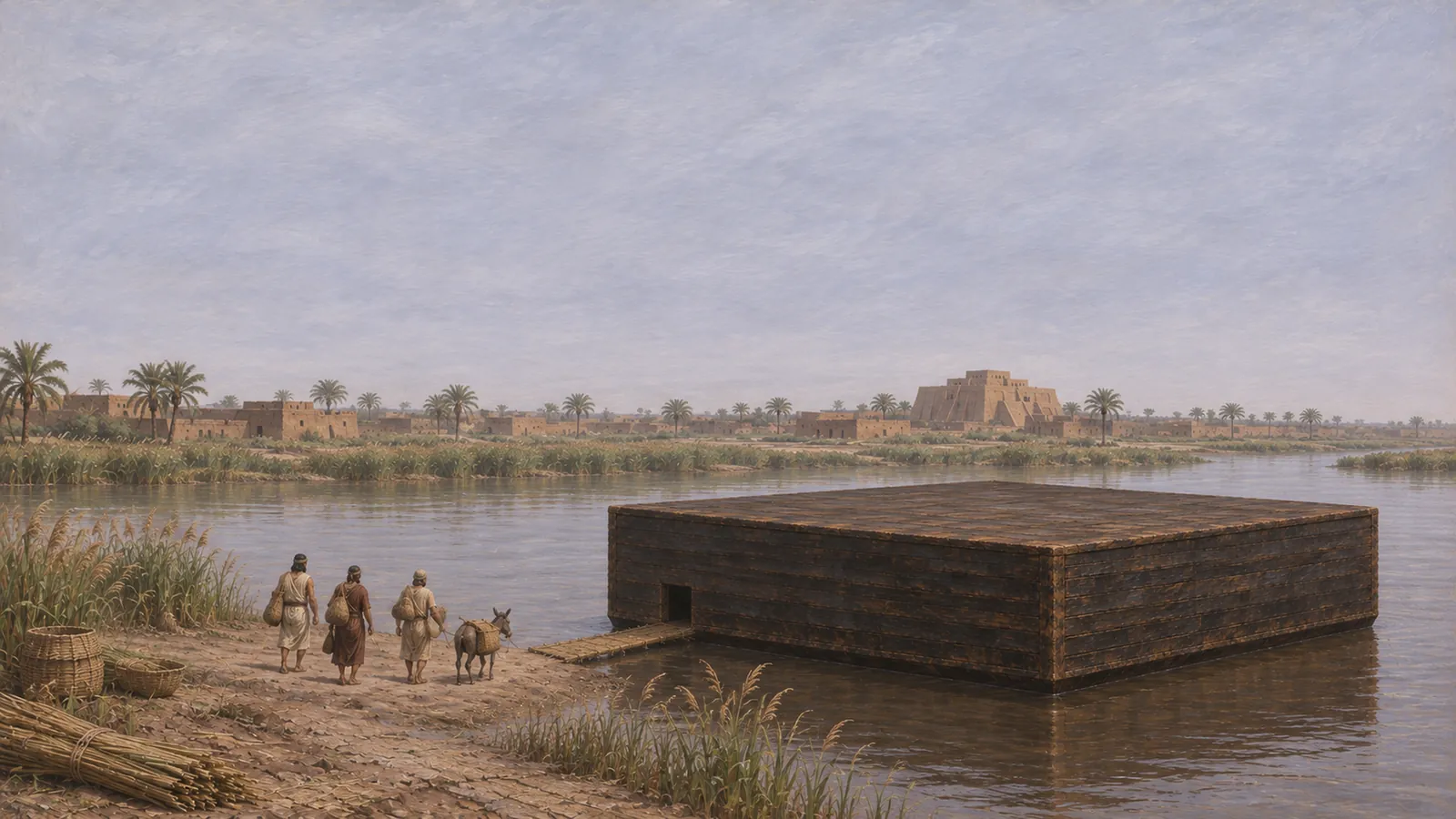
Three people carrying bundles and a small laden donkey approach the gangplank from the left bank. The wide, flat-roofed boat rests at the shallows, with one dark entry near the water. Low mudbrick buildings and reed beds extend along the opposite bank.

Levou animais das terras abertas e pessoas que dominavam vários ofícios. O relato menciona esses grupos, sem dizer quantos chegaram a embarcar.
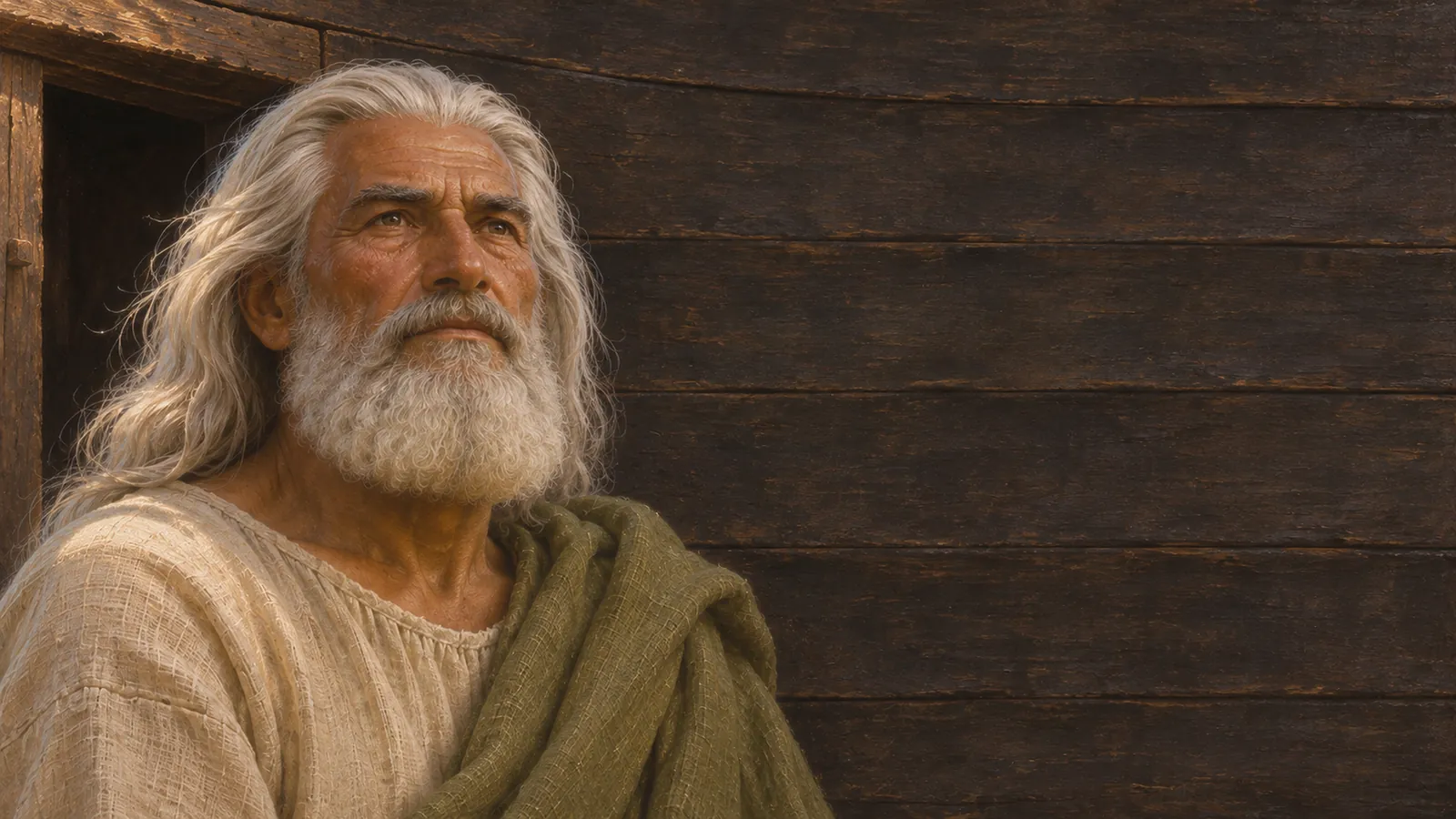
Utnapishtim stands by the open hatch and looks slightly upward. Filtered light rests on his lined face, white hair, and rough olive mantle. The boat’s dark horizontal planks continue across the right side of the frame.

Shamash tinha dito a Utnapishtim a que horas devia entrar e fechar a escotilha. As palavras sobre o pão e o trigo voltaram, agora ligadas àquela hora.
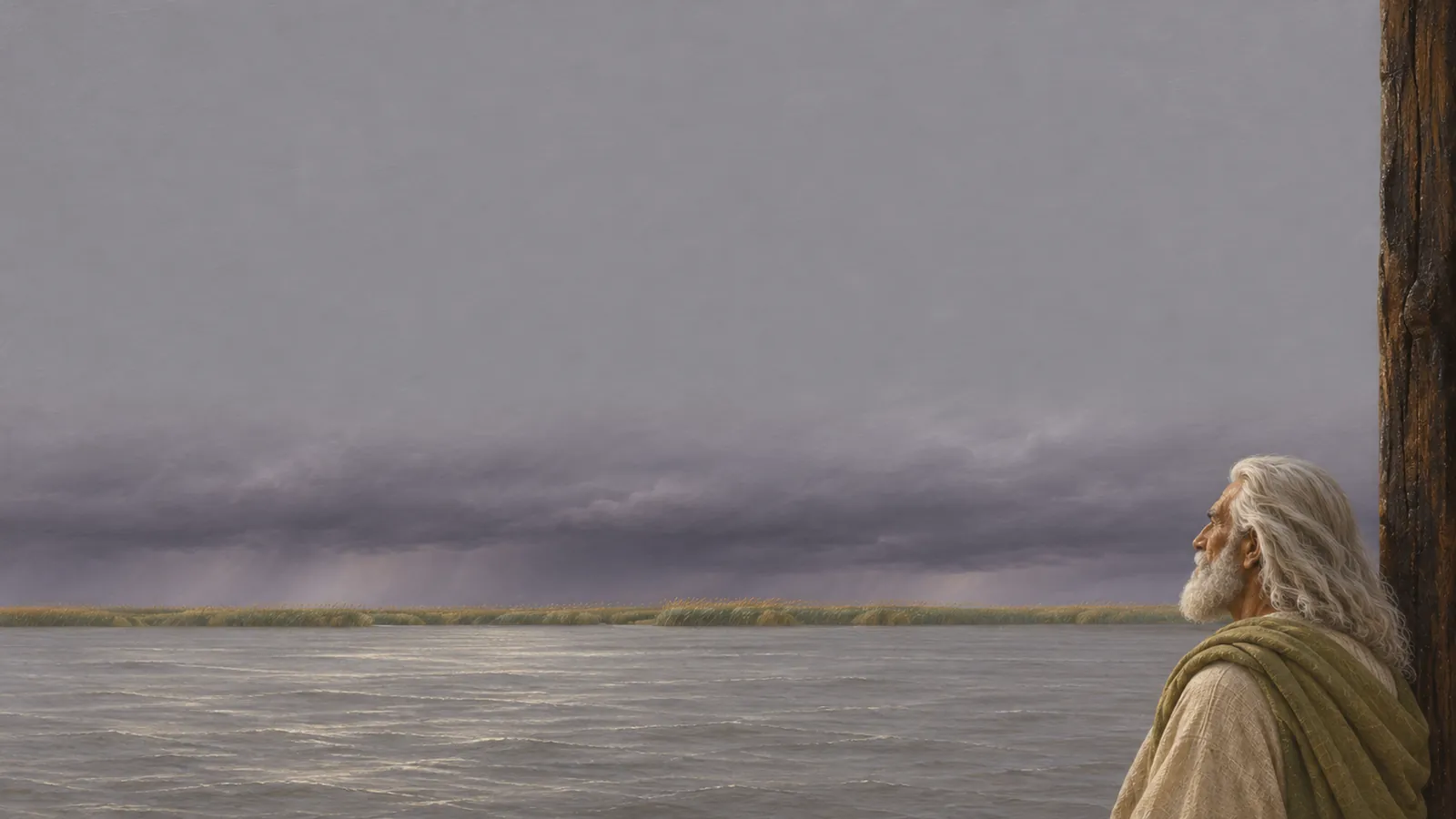
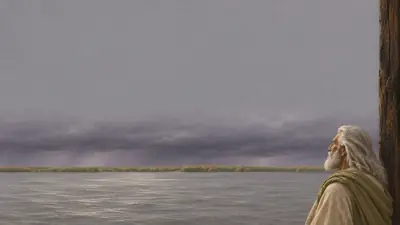
At the far right, Utnapishtim looks out from beside a dark timber post. A band of bruised-gray storm cloud hangs above the reeds across the Euphrates. The changes are still far off, but his face is intent.

Chegou a hora marcada. Utnapishtim olhou para o céu, e o que viu assustou-o.
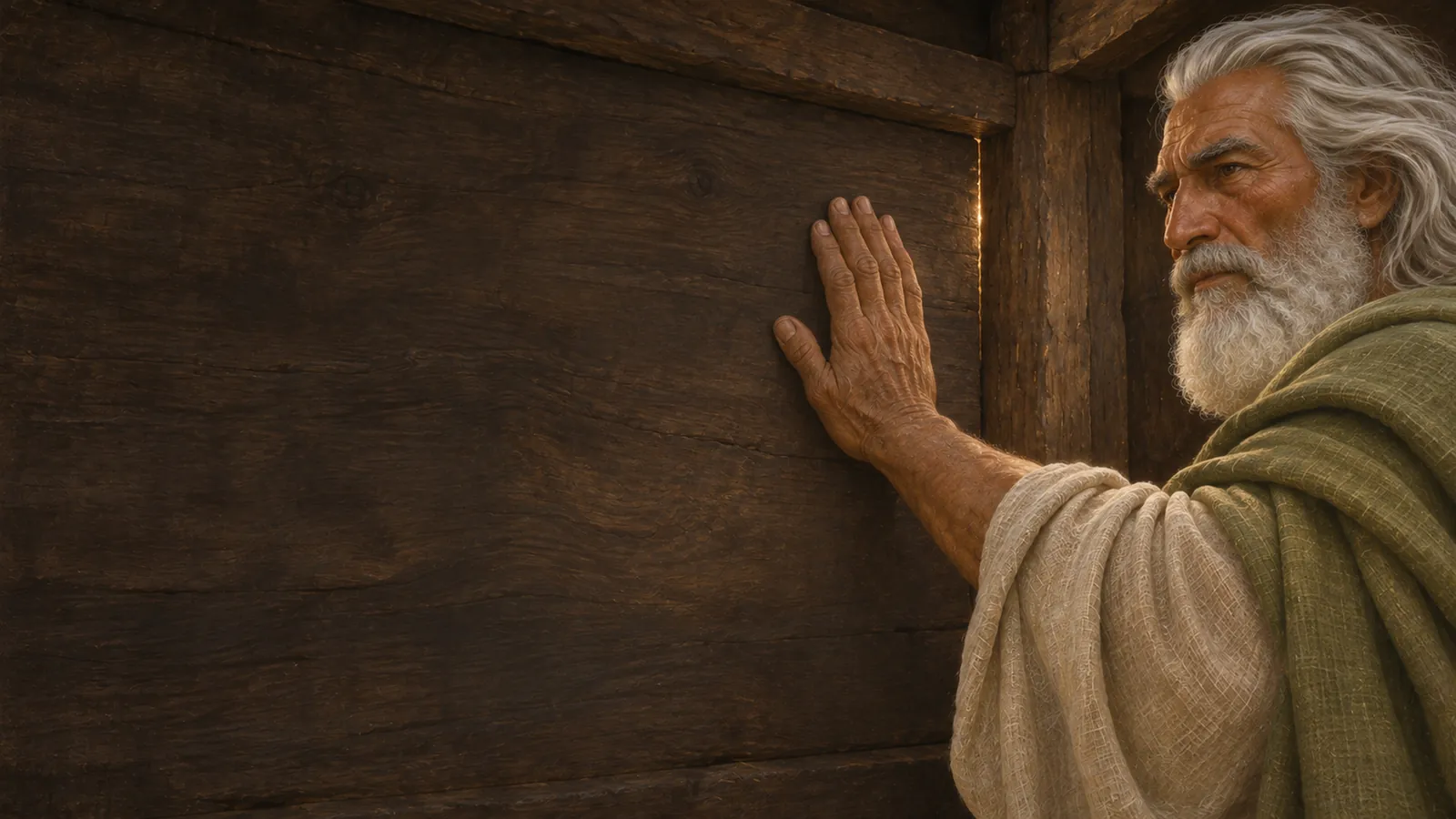
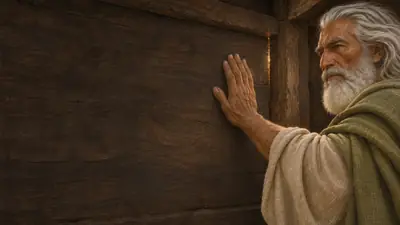
Inside the vessel, Utnapishtim presses a hand flat against the heavy plank hatch. The broad timber boards at left are already in shadow.

Utnapishtim entrou e selou a escotilha. Recorda ter recompensado Puzur-Enlil, o homem que trabalhara no barco, com um palácio e tudo o que lá havia.
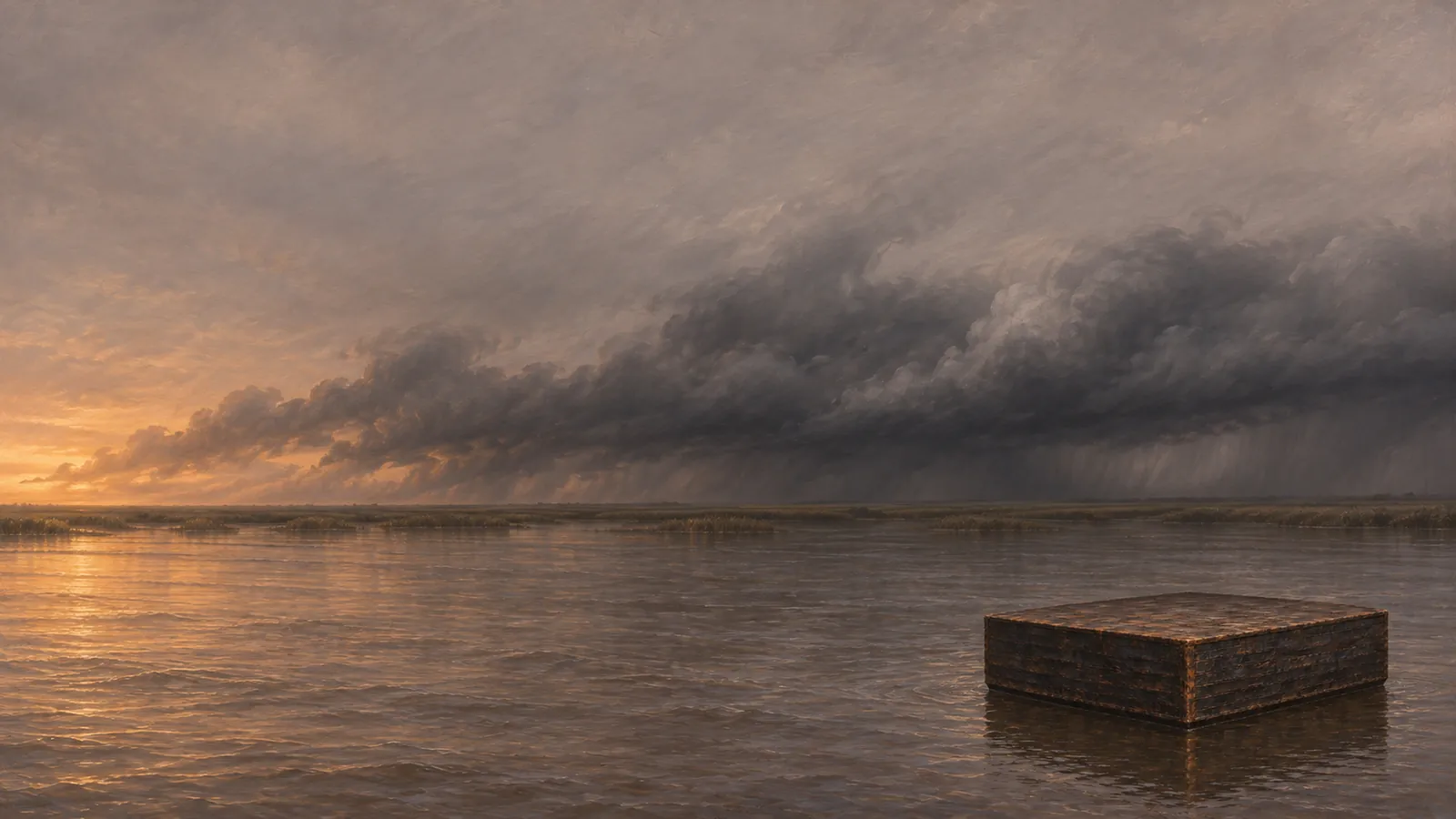
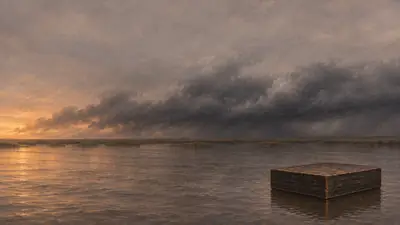
A dark storm bank rises across the horizon as dawn touches the river at far left. Rain gathers under the dark cloud beyond the reed beds. The flat-roofed boat floats alone in the lower right.

TEMPESTADE

À primeira luz, uma nuvem negra ergueu-se no horizonte. No relato de Utnapishtim, o estrondo dentro da nuvem era o rugido de Adad, o deus da tempestade.
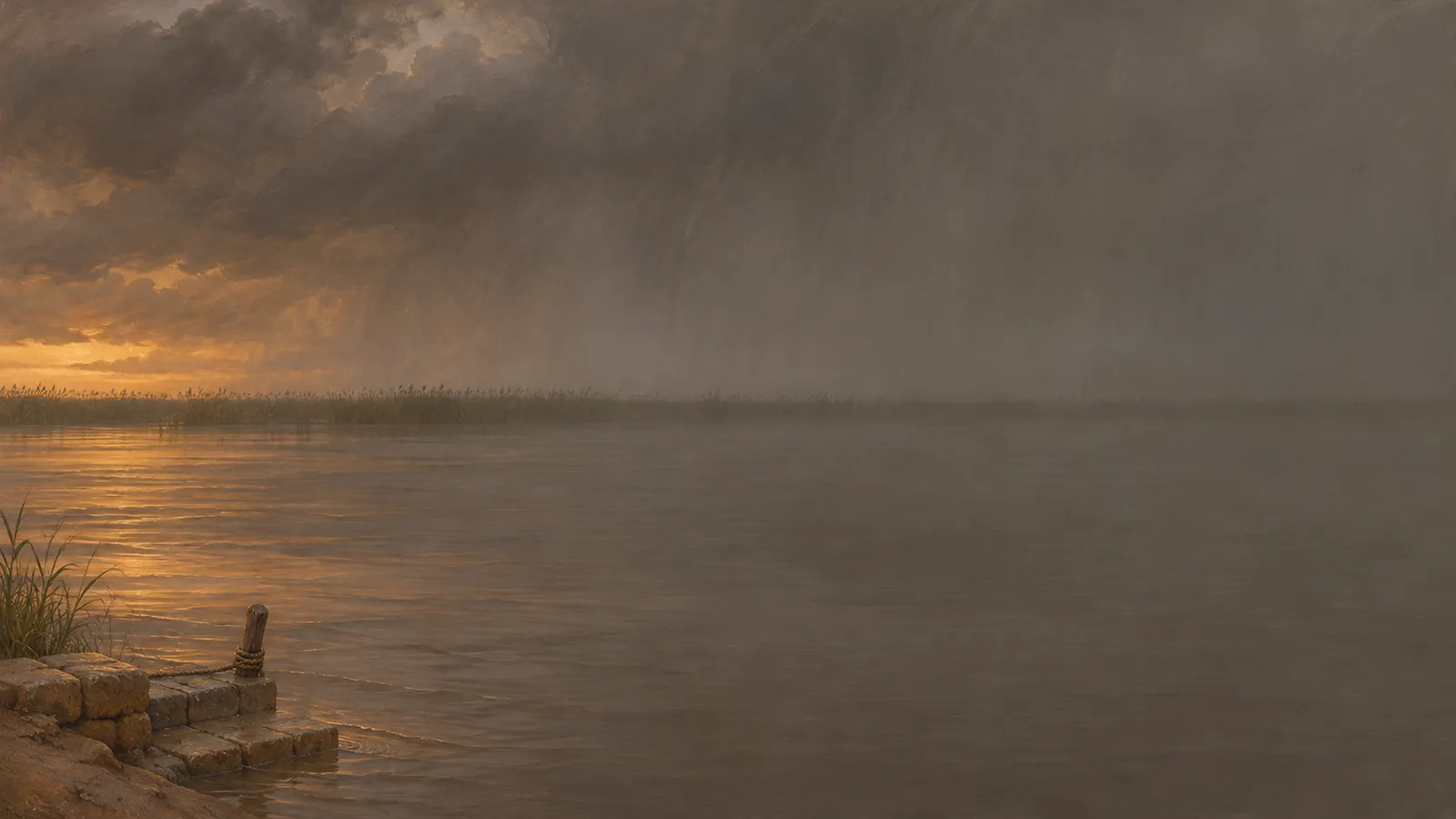
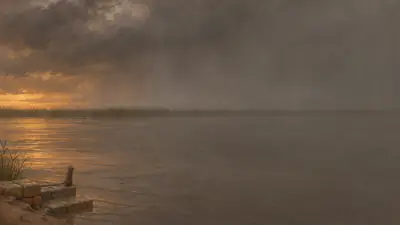
Rising water reaches a stone landing and its mooring post at the far left. A dull amber light clings to the reeds and spreads across a small patch of water. To the right, the flooded river disappears into a gray curtain of rain.

O poema nomeia as forças que avançaram à frente da tempestade. As águas transbordaram por cima das estruturas do rio, as amarras cederam e as tochas dos deuses iluminaram a terra.
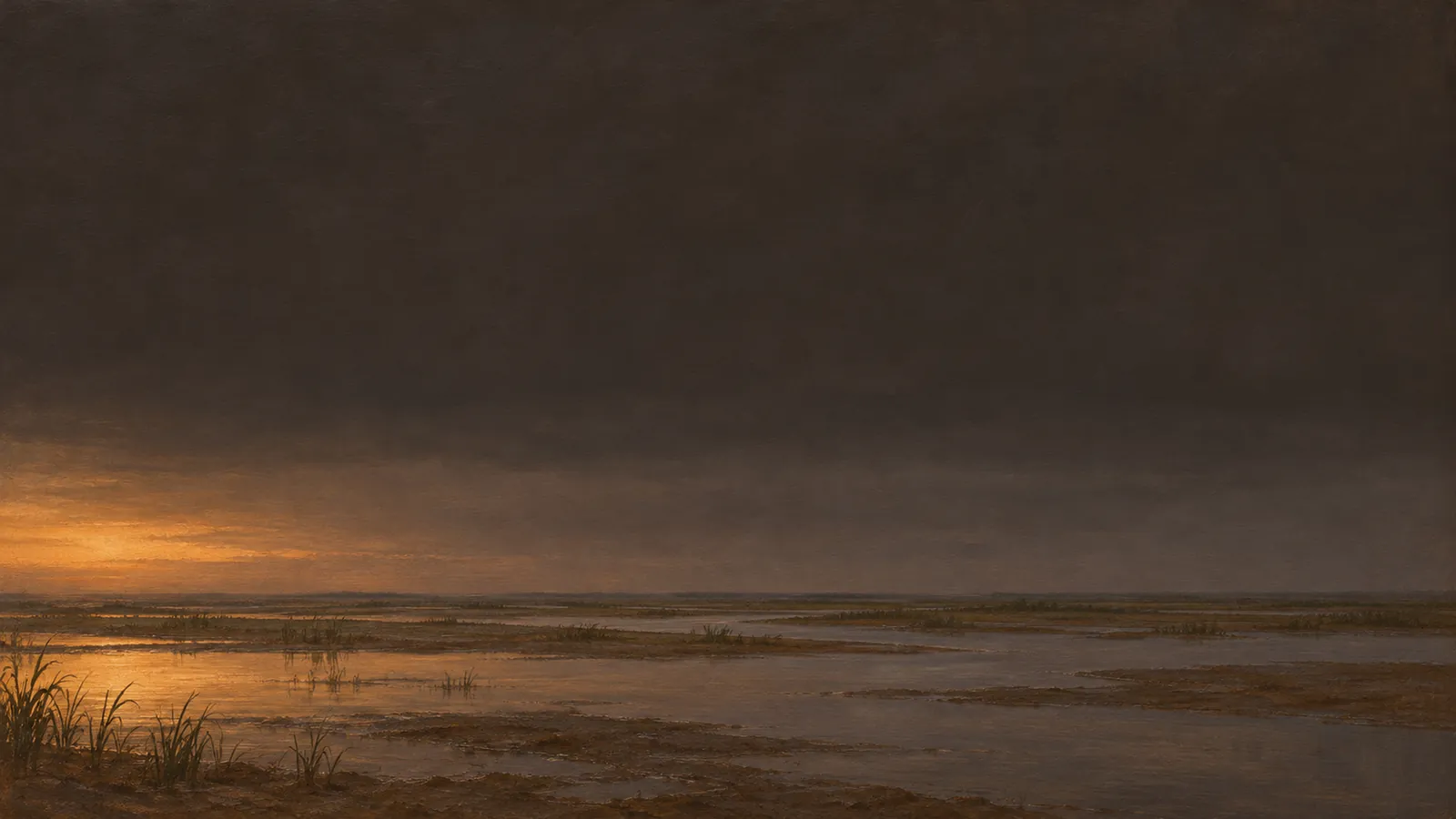
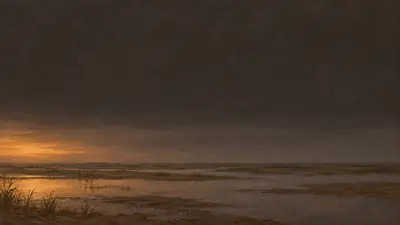
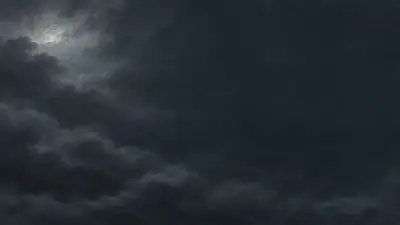
A dark ceiling of cloud covers the old floodplain. A narrow strip of ochre light survives at the far left and glances off shallow water among the reeds. The plain beyond is already hard to make out.

A luz deu lugar à escuridão enquanto a tempestade atravessava o céu. Faltam aqui algumas palavras, mas subsiste no relato antigo a imagem da escuridão que crescia.
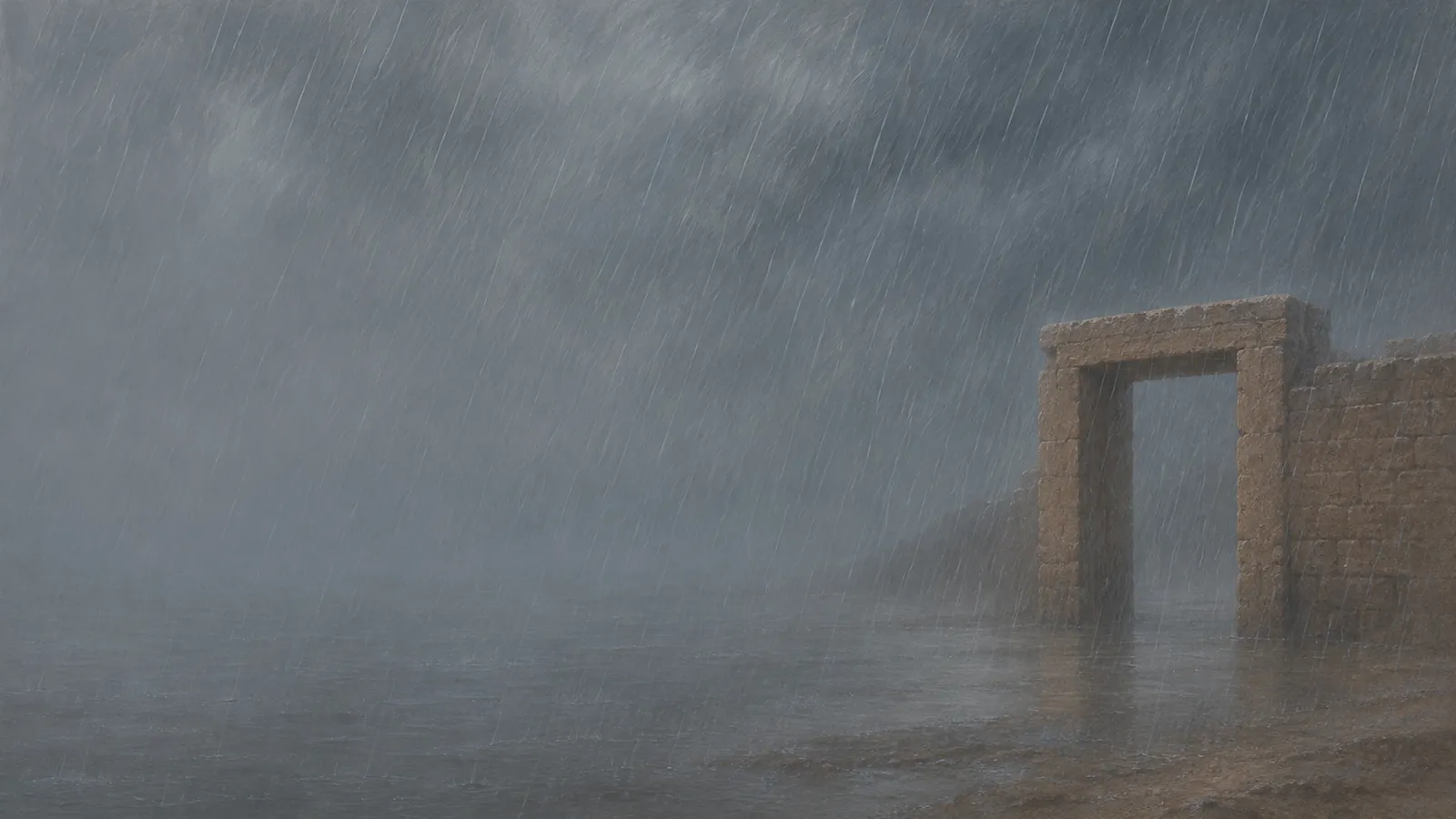
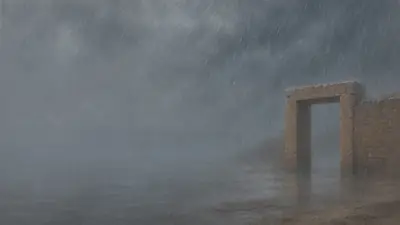
Driving rain hides almost everything beyond an empty mudbrick doorway and a short stretch of wall. Shallow floodwater covers the threshold, and gray mist takes over the left half of the view. Beyond the opening there is only more rain.

No auge da tempestade, já ninguém conseguia ver outra pessoa. Utnapishtim conta como o mundo desapareceu de vista antes mesmo de as águas sossegarem.
Dark blue-gray clouds lie in banks, one above the other. A small gleam of silver light filters through an opening toward the upper left. The broad cloud bank to the right remains in deep shadow.

Até os deuses que tinham enviado o dilúvio sentiram medo dele. Retiraram-se para o céu de Anu enquanto a tempestade continuava lá em baixo.
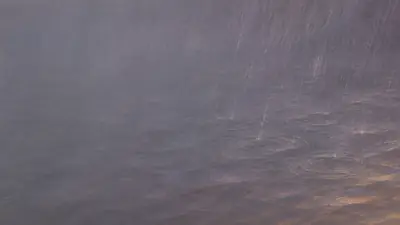
Slanting rain strokes the dark floodwater. Small ripples spread and overlap on the right, where a trace of dull warm light catches them. On the left, the water fades into violet-gray rain haze.

A deusa-mãe gritou e lamentou o que dissera na assembleia. Aquele era o seu povo, disse ela, e os outros deuses choraram com ela.
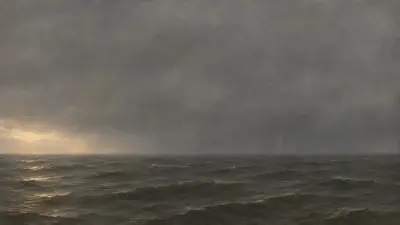
Small ridges still run across the empty floodwater. Rain blurs the horizon, but a low opening at far left lets in a little pale gold. The rest of the gray sky remains closed.

Dia após dia, noite após noite, o vento e o dilúvio persistiram. Ao sétimo dia, a força da tempestade começou enfim a ceder.
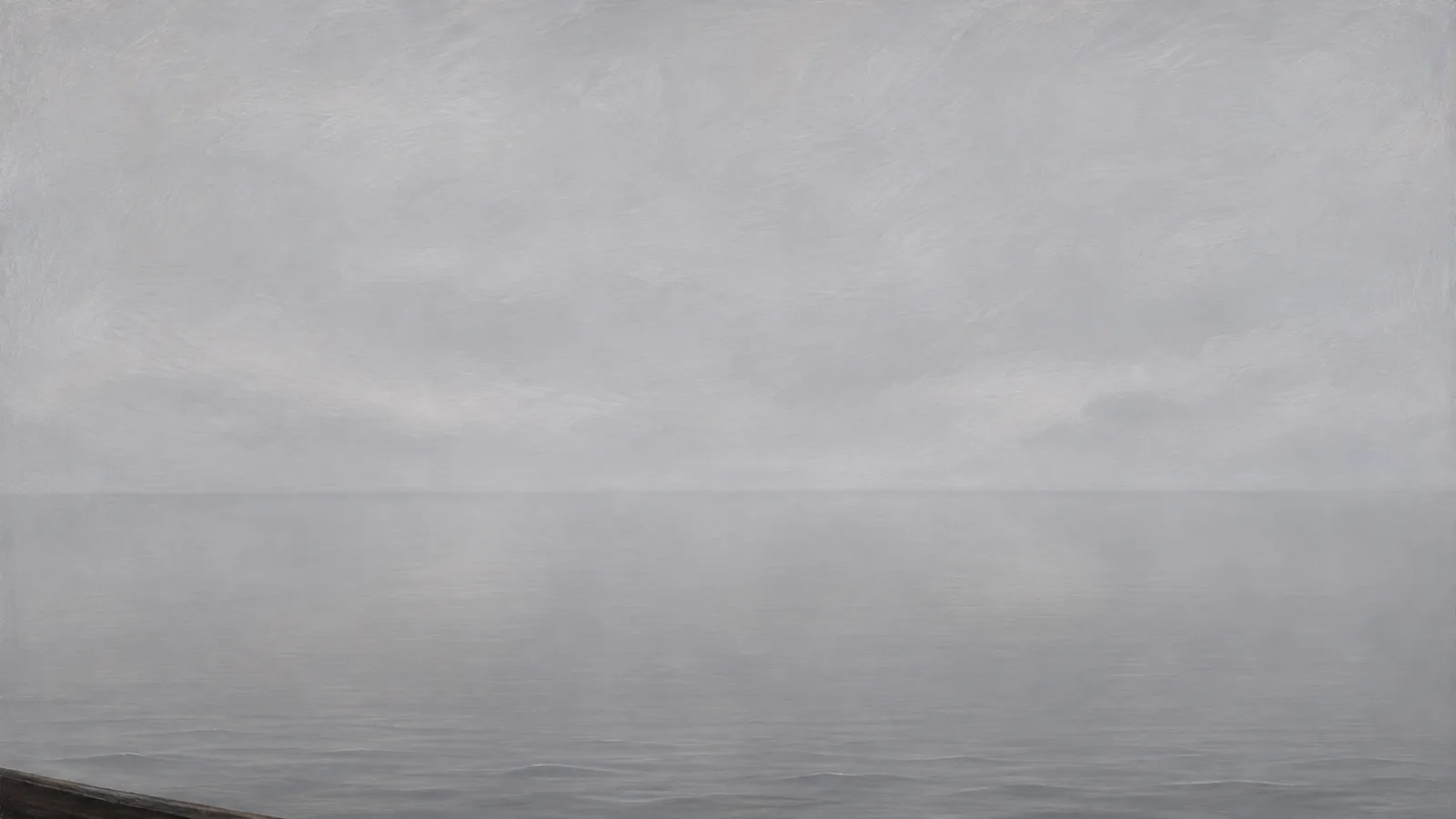
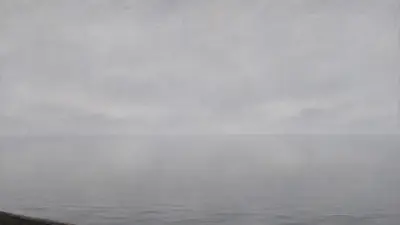
The floodwater has gone almost still under a pale, pearl-gray sky. The horizon dissolves into mist, leaving only a few small ripples close by. A sliver of dark wood at the lower-left edge marks the view from the boat.

SILÊNCIO

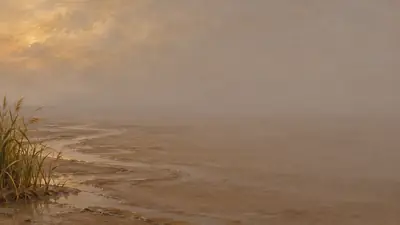
Ao sétimo dia, o mar aquietou-se. Utnapishtim pôde enfim olhar para um mundo em que a água e o céu tinham deixado de lutar.
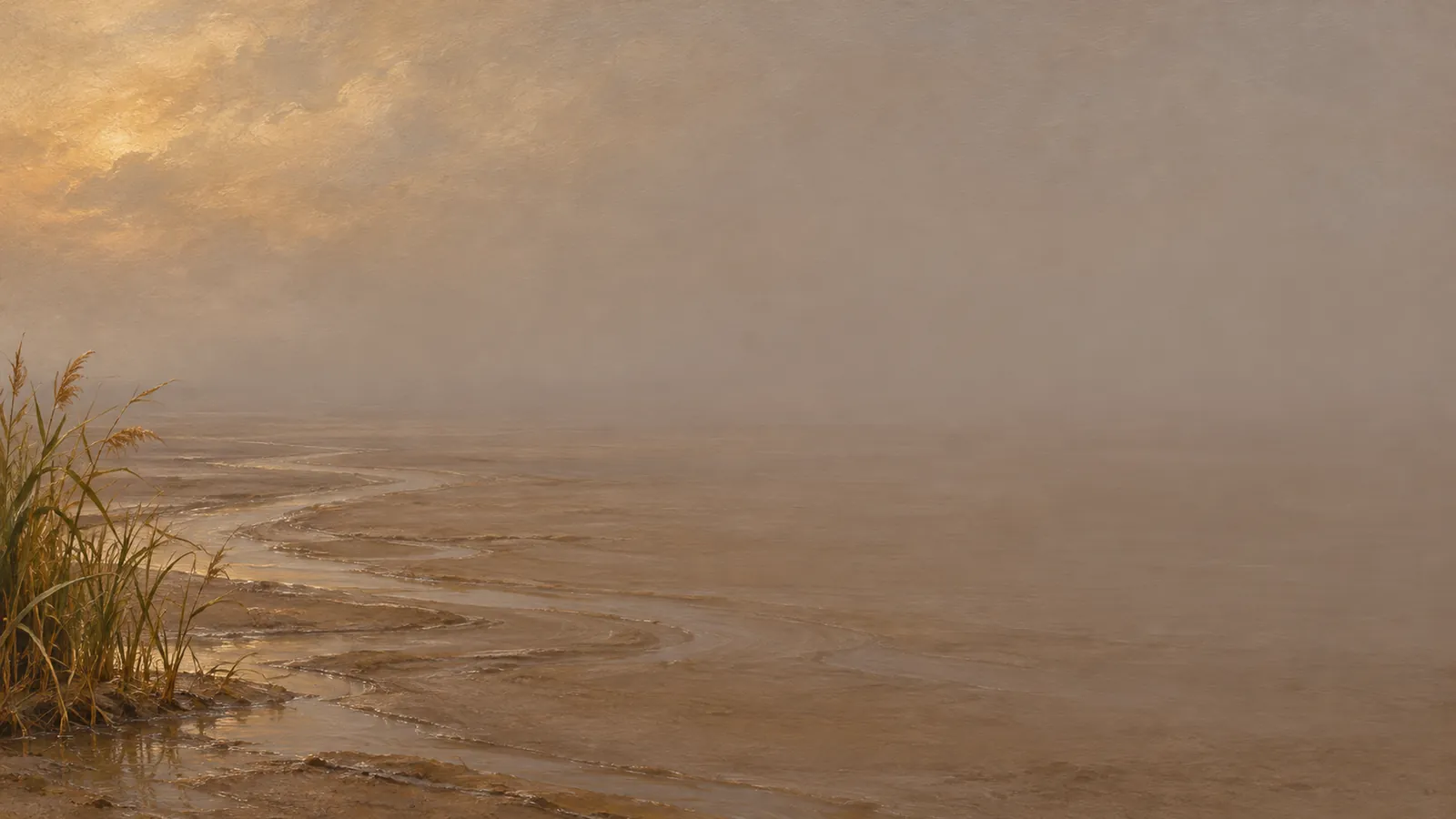
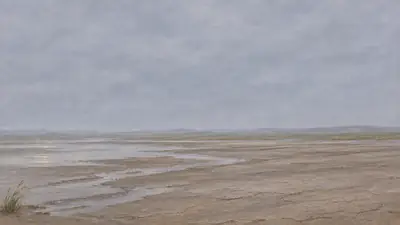
Shallow rivulets wind across exposed brown silt. A handful of reeds stands at the lower left under weak warm light. The now-empty plain blends into haze on the right.

Lá fora, o mundo estava silencioso e plano. Utnapishtim diz que as pessoas se tinham tornado barro e que, onde antes havia vida, viu apenas uma planície.
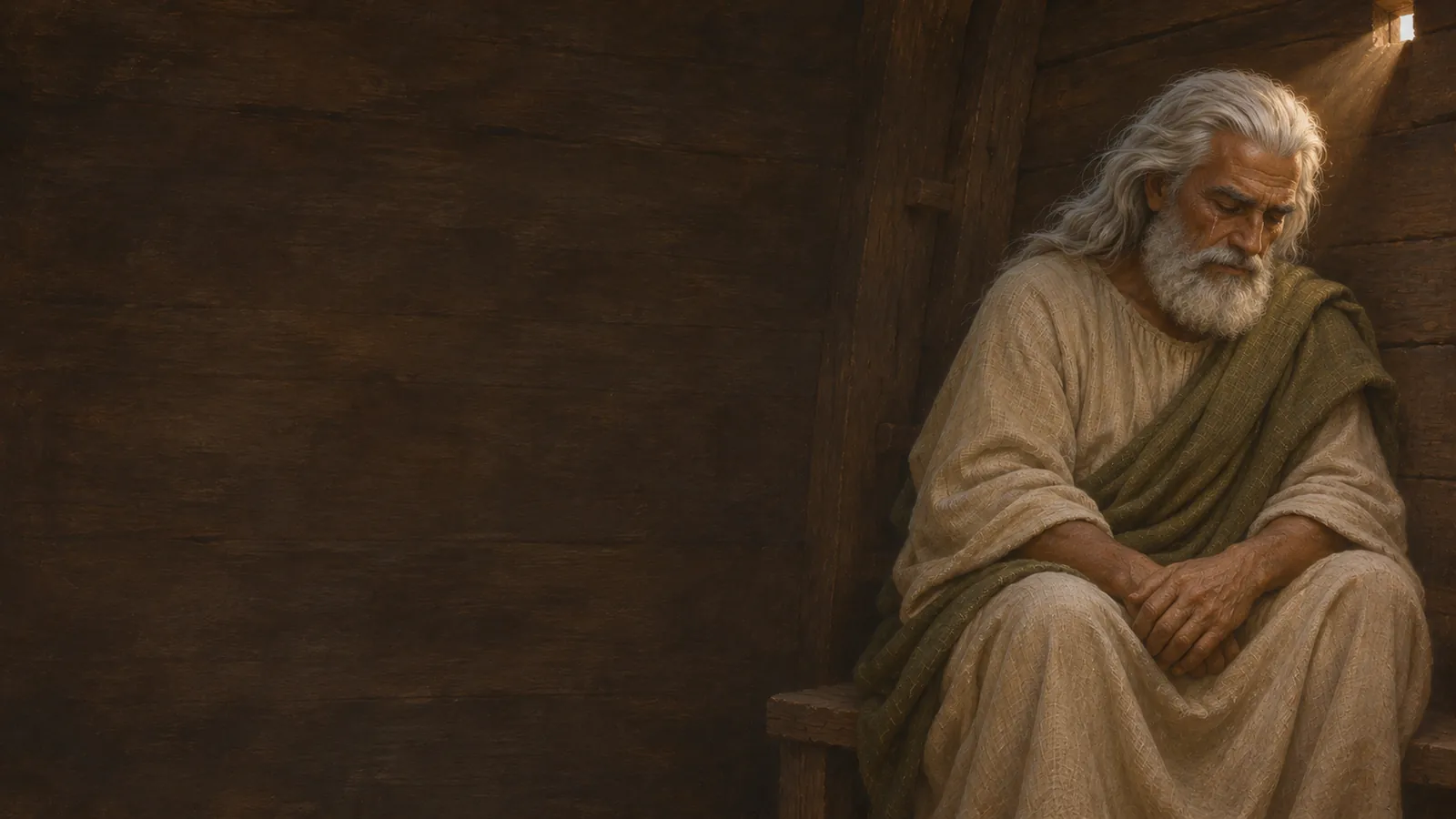
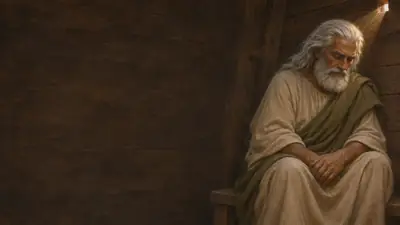
Utnapishtim sits low inside the boat, with his head bowed and hands resting in his lap. A narrow beam from a small opening in the upper-right planks strikes his silver hair and the side of his face. A tear catches the light beside the still-dark timber wall.

Utnapishtim abriu um respiradouro, e a luz do sol tocou-lhe o rosto. Deixou-se cair e chorou enquanto a luz entrava pela abertura.
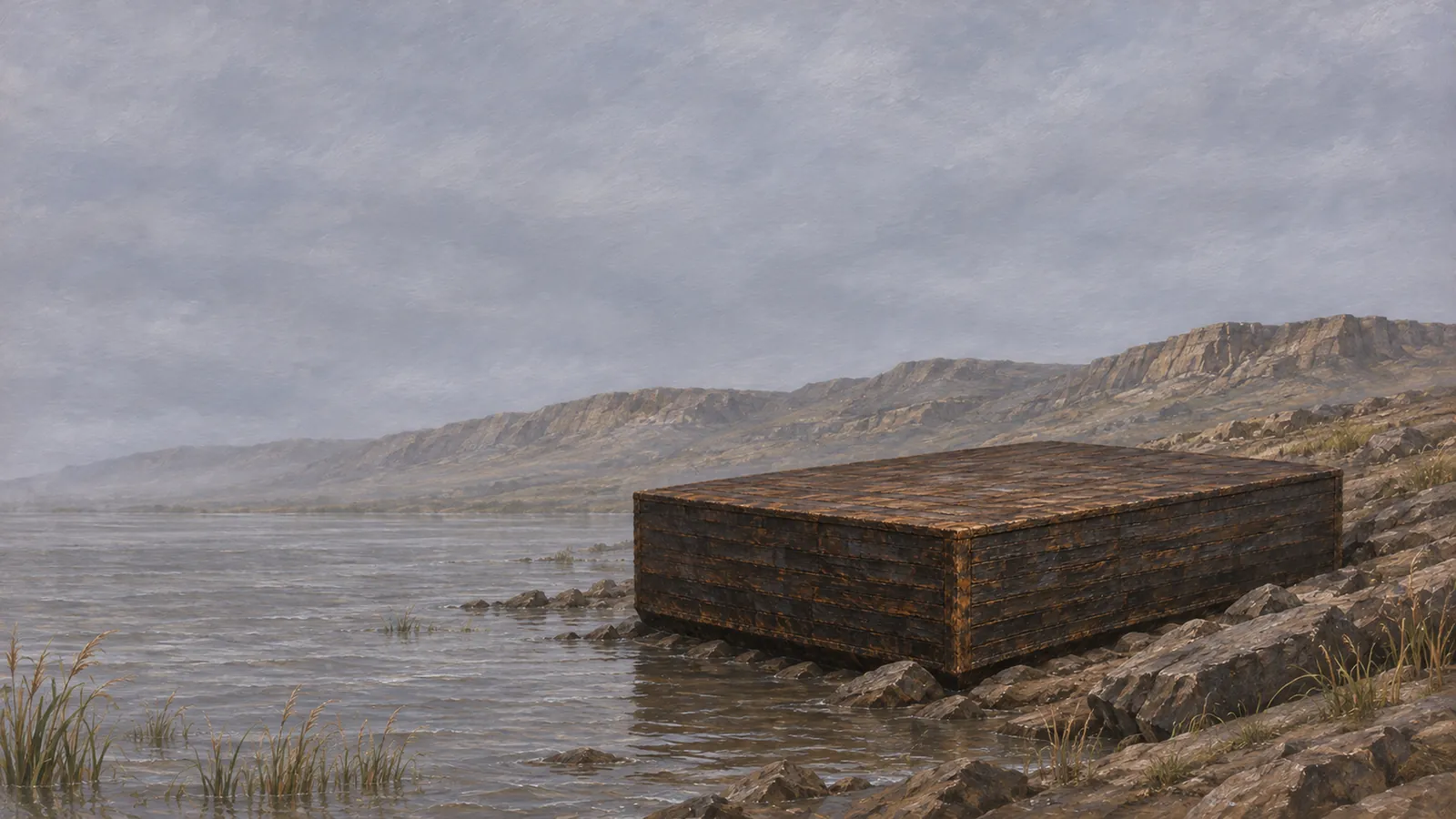
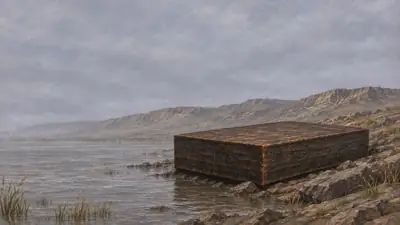
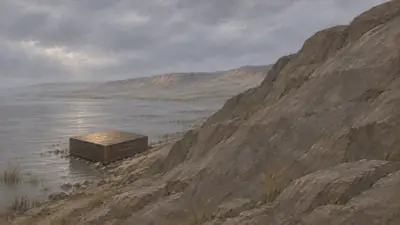
The dark flat-roofed boat has come to rest among the rocks at the foot of Mount Nimush. Water still covers the lower shore, touching the squared hull and scattered reeds. A long ridge rises through the gray haze behind it.

NIMUSH

A terra começou a aparecer enquanto Utnapishtim olhava para fora. O barco encalhou no monte Nimush, e a montanha segurou-o onde estava.
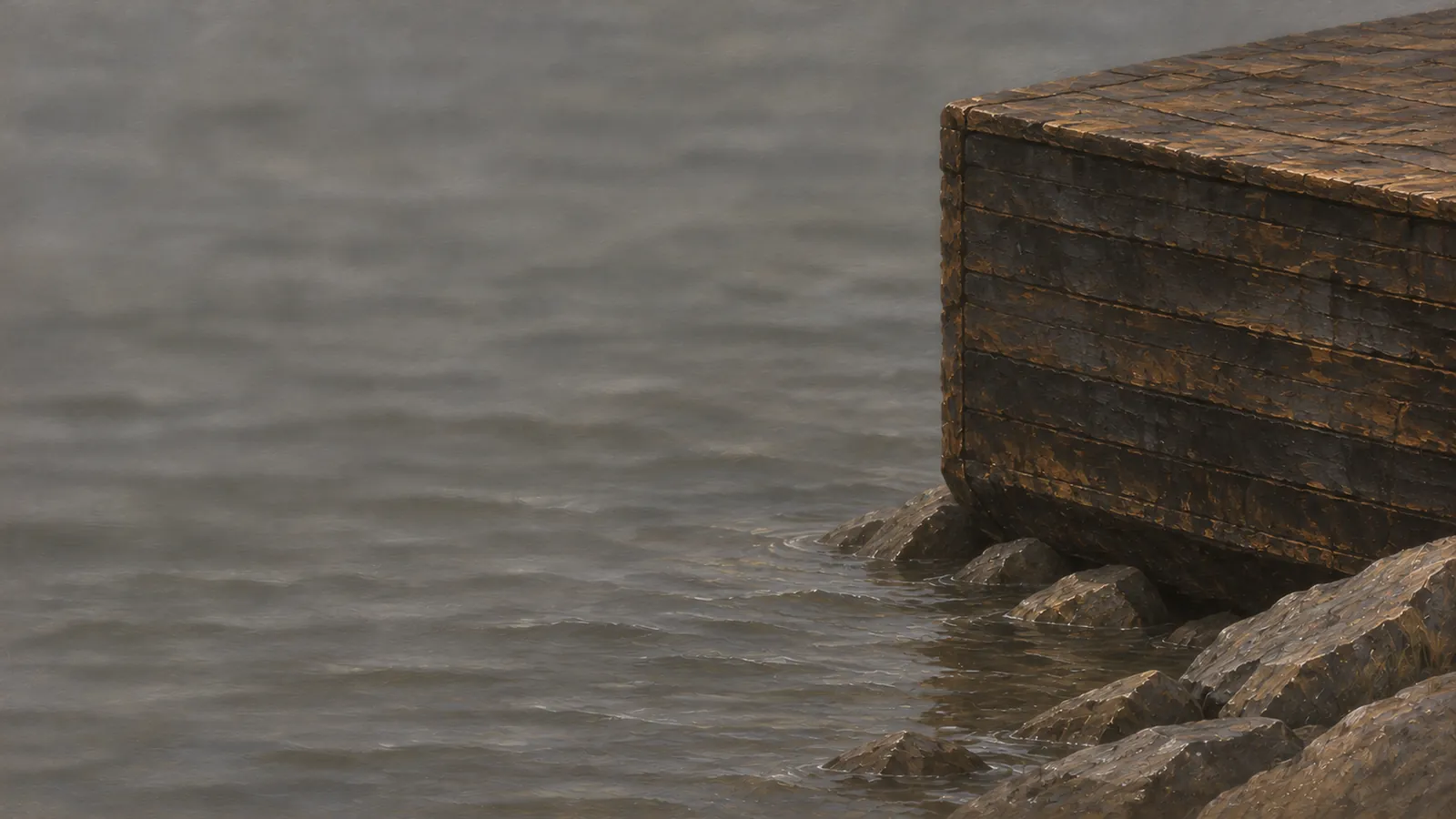
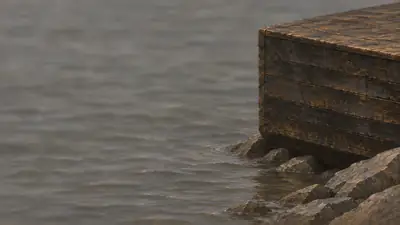
The tar-dark corner of the boat rests firmly among the rocks at Nimush. Soft warm light catches the roof edge and the exposed stone. Small ripples move around the rocks below the motionless hull.

Dia após dia, o barco não conseguiu ir mais longe. O poema conta os dias de espera enquanto o monte Nimush mantém o barco preso contra si.
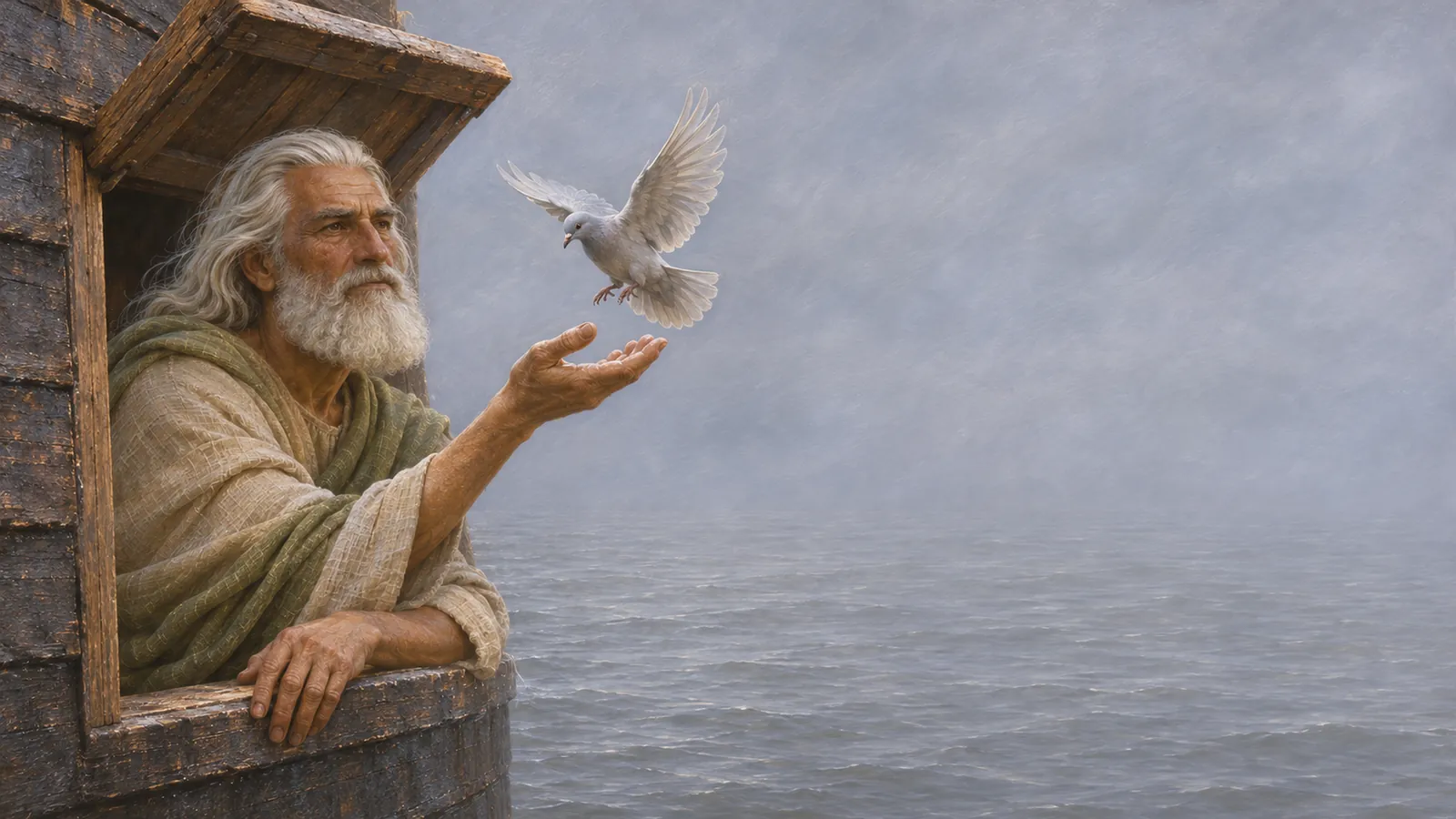
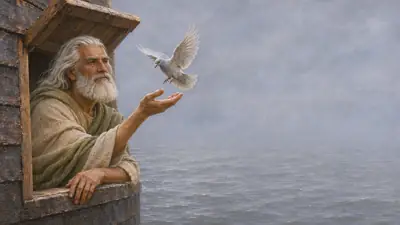
A single pale gray dove drops toward Utnapishtim’s open hand, its wings lifted and feet extended. The old man leans out of a dark plank hatch, watching it come near. Cool haze hangs over the water beyond them.

Utnapishtim soltou uma pomba. Como não encontrou onde pousar, regressou ao barco.
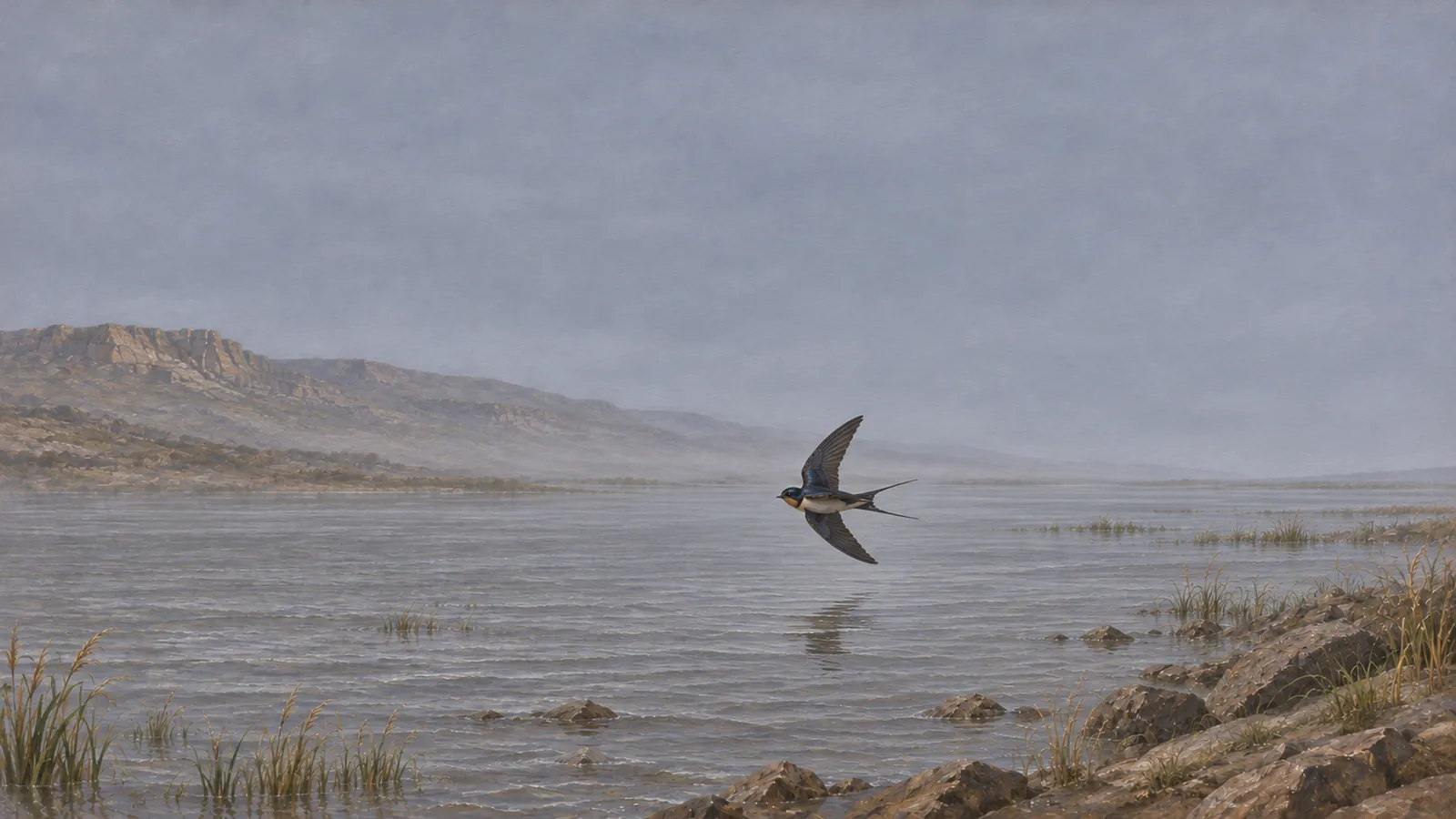
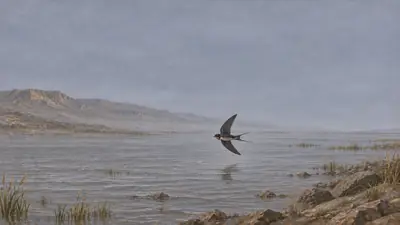
A single swallow skims the gray water with its long wings angled in flight. Its forked tail stands out against the pale floodwater. The rocky slope of Nimush recedes into mist beyond it.

Depois soltou uma andorinha. Tal como a pomba, não encontrou onde repousar e voltou para junto dele.
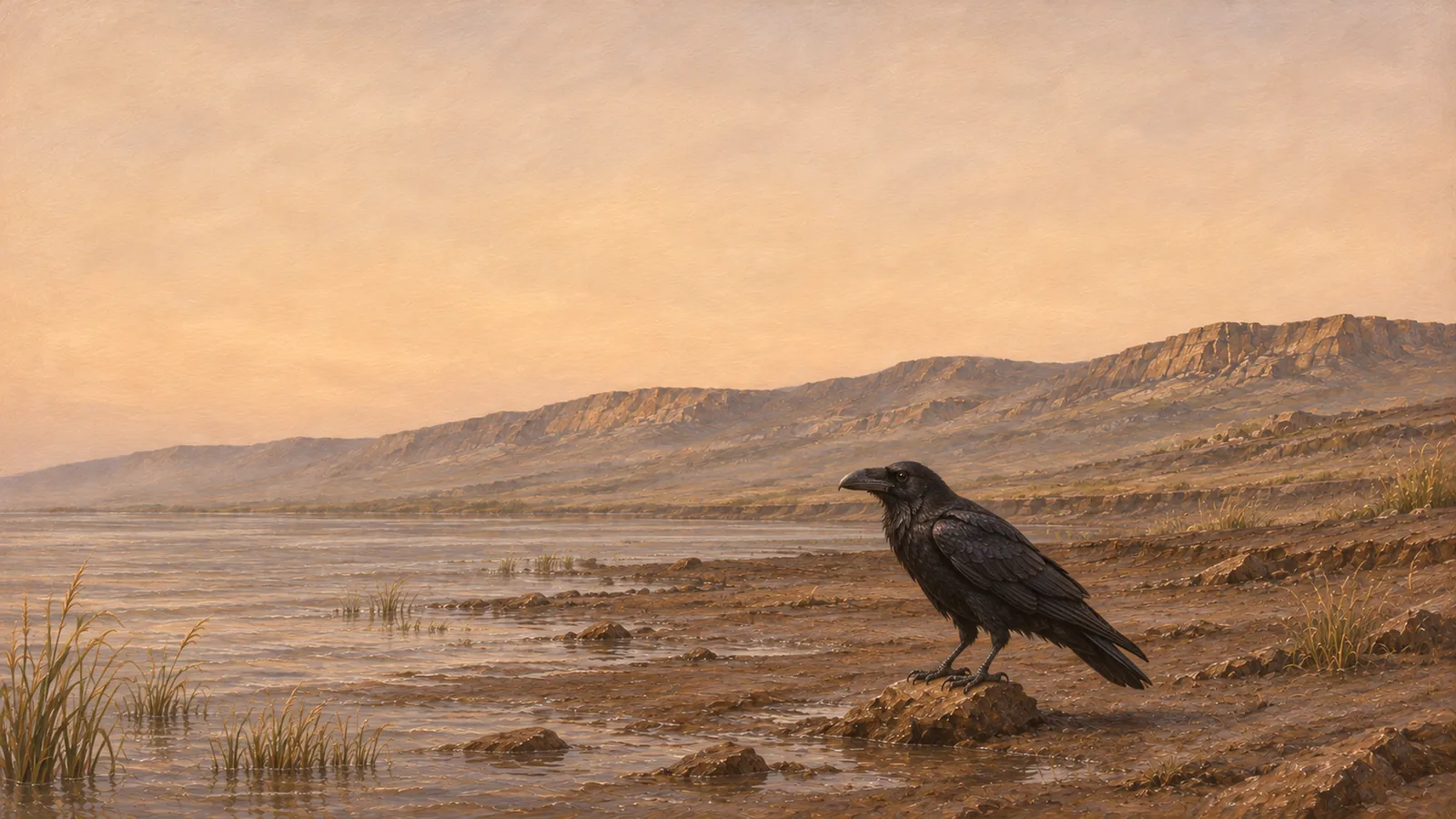
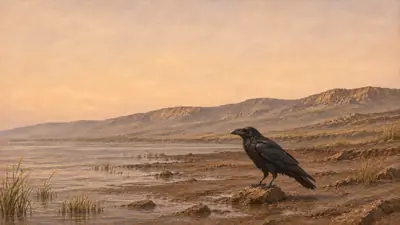
A black raven stands on a stone at the edge of the receding water. Its heavy bill and dark feathers are distinct against the damp brown bank. Warm light reaches the exposed shore under a pale sky.

CORVO

O corvo saiu a voar e viu que as águas tinham baixado. Encontrou alimento e, desta vez, a ave não regressou ao barco.
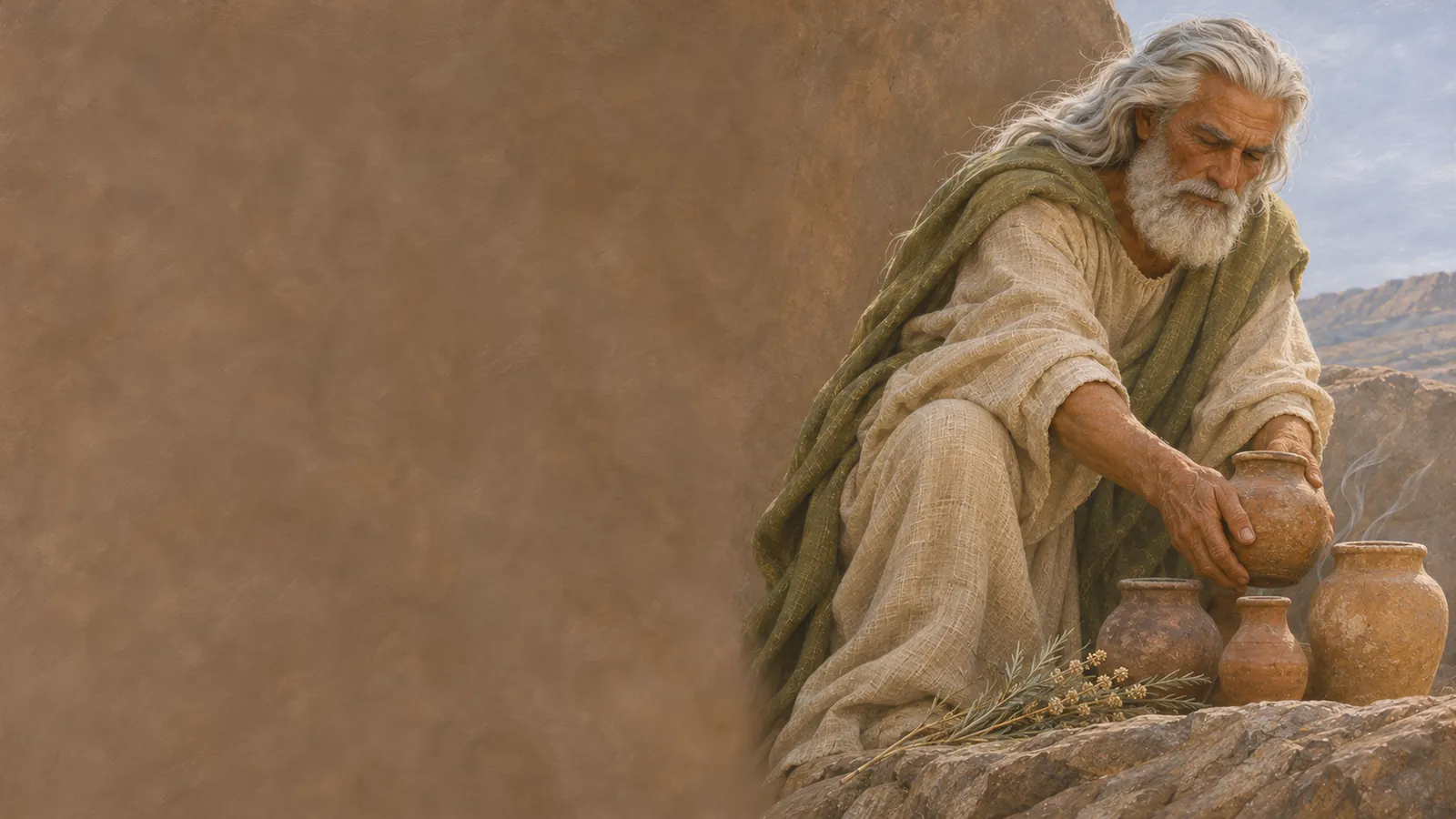
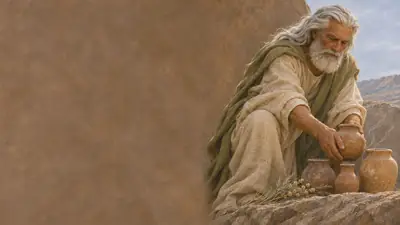
Utnapishtim lowers a rounded clay vessel beside several others on the rock. Dry sprigs lie beside the vessels, and a light wisp rises behind them. The blurred face of a boulder fills the left side.

Utnapishtim fez então uma oferenda voltada para os quatro cantos da terra. Dispôs recipientes no monte, com canas, cedro e murta por baixo.
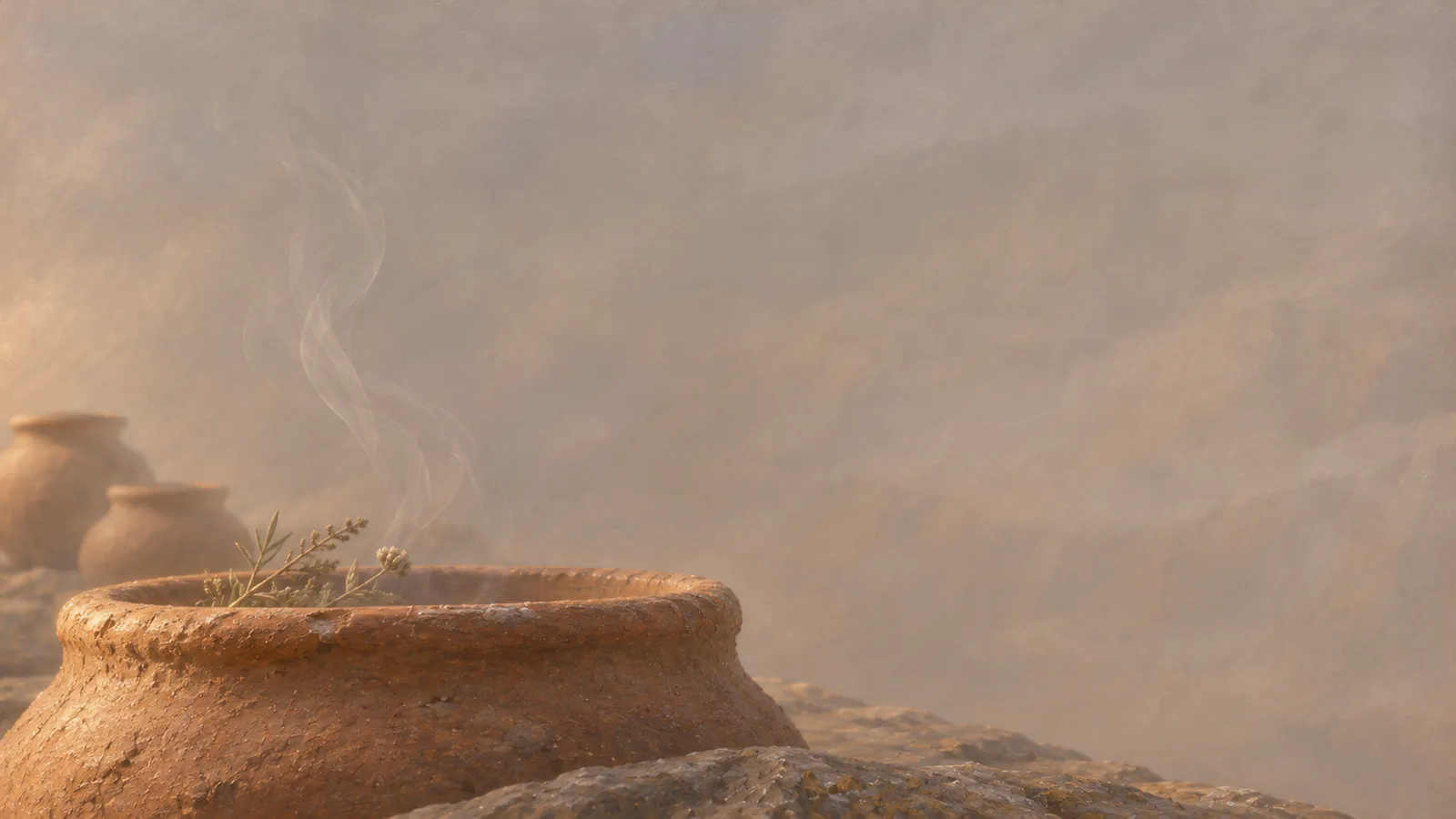
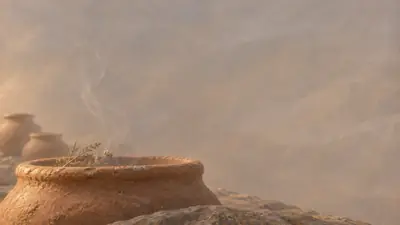
A fine thread of smoke rises above a clay vessel and a few dry sprigs. Two softly blurred pots stand farther back to the left. Warm haze spreads across the stone behind them.

O aroma da oferenda subiu. Utnapishtim diz que os deuses se juntaram em torno dela como moscas, uma imagem surpreendente depois de tanto silêncio.
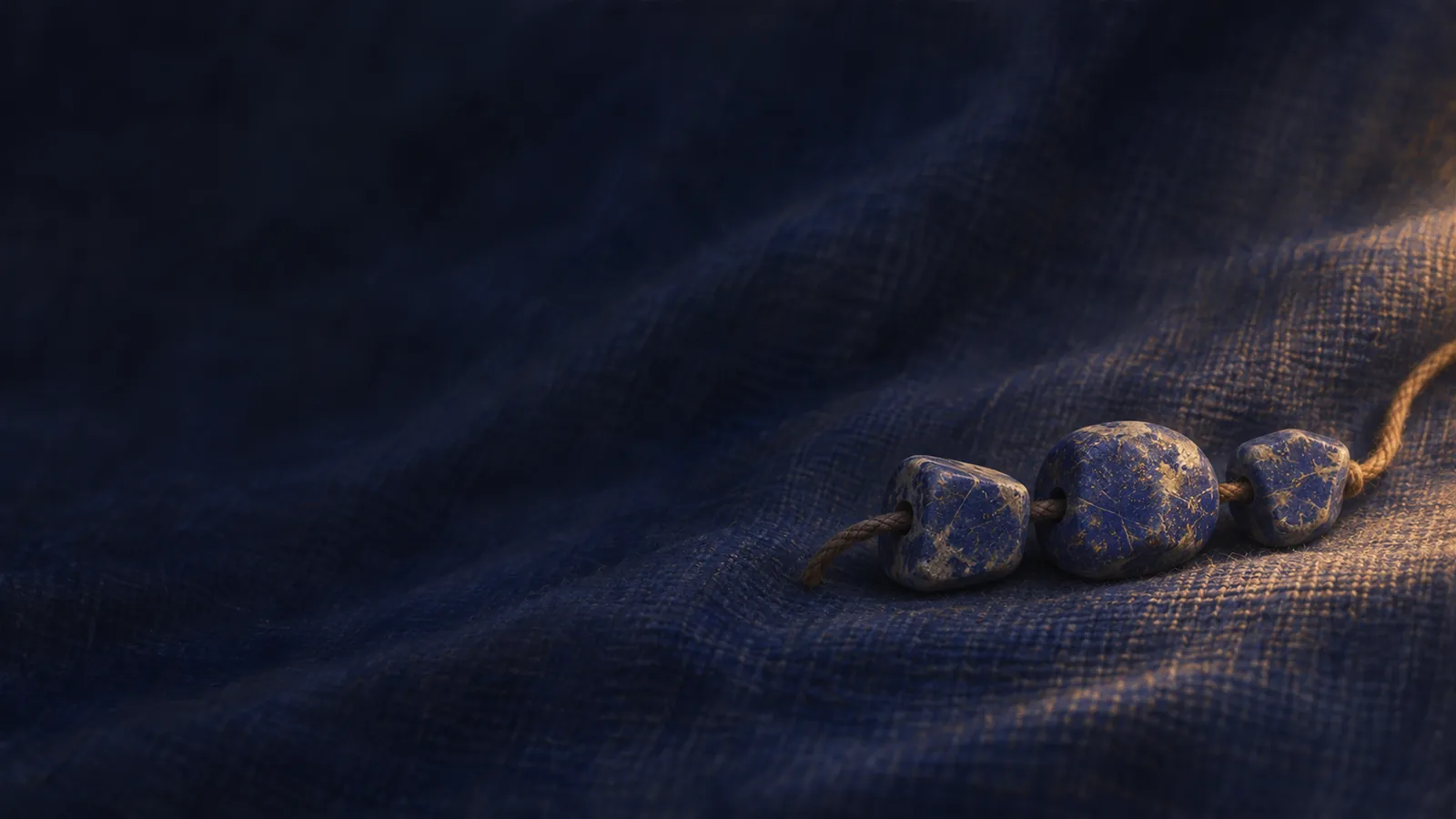
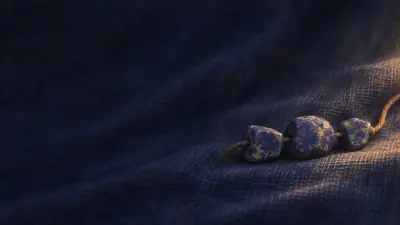
Several lapis beads lie on a simple cord over dark indigo cloth. A little warm light reveals scratches and mineral flecks in the blue stones. The fabric fades to shadow toward the left.

Uma deusa ergueu as suas joias de lápis-lazúli e disse que se lembraria sempre daqueles dias. Culpou Enlil pelo que o dilúvio fizera ao seu povo.
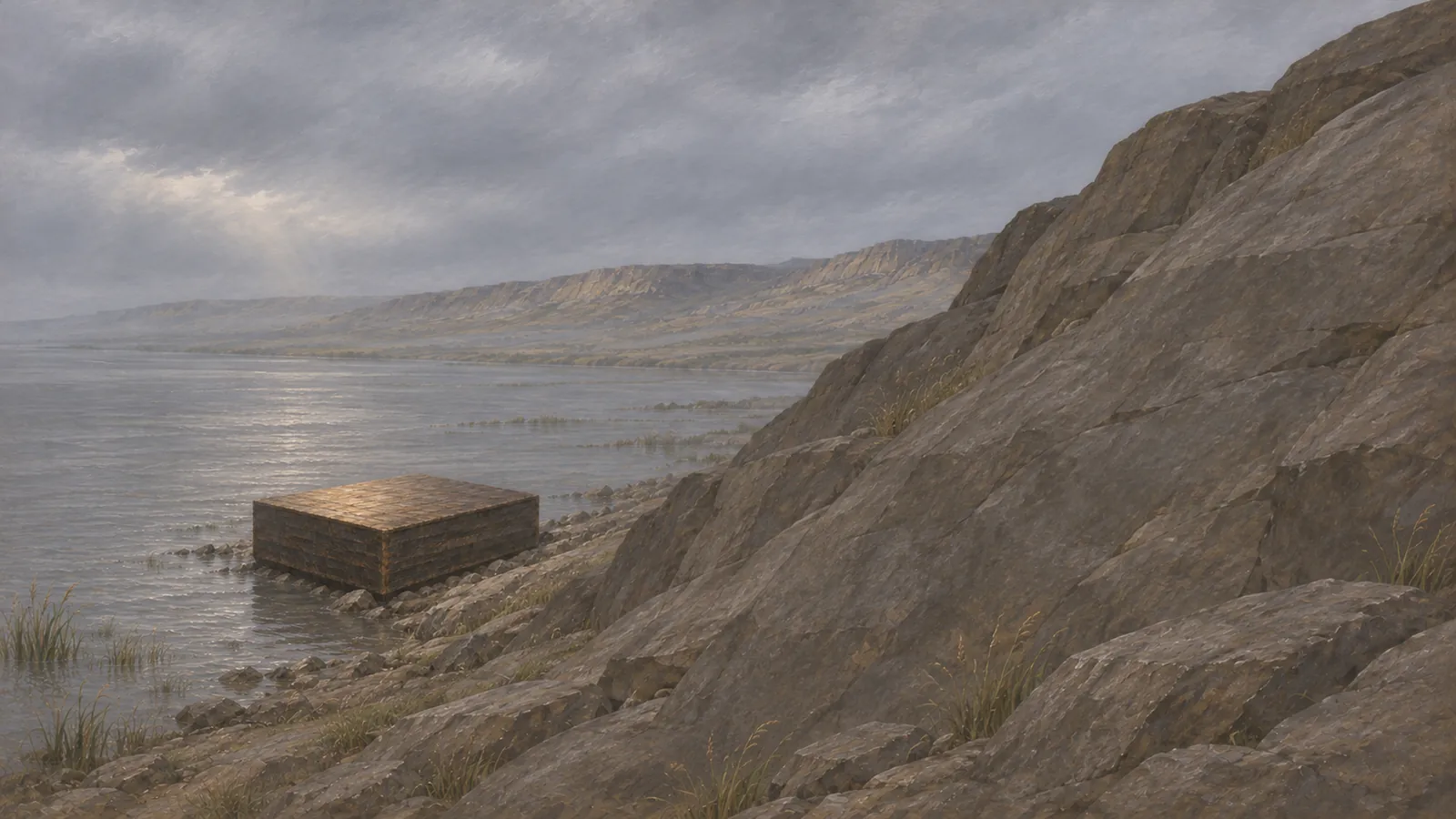
From high on the slope, the squared boat looks small where it rests against the rocks. A break in the clouds casts pale light on the flat roof and the water beside it. A broad shadowed rock face fills the right side.

Enlil viu o barco e enfureceu-se. Alguém sobrevivera, embora ele esperasse que o dilúvio não deixasse ninguém vivo.
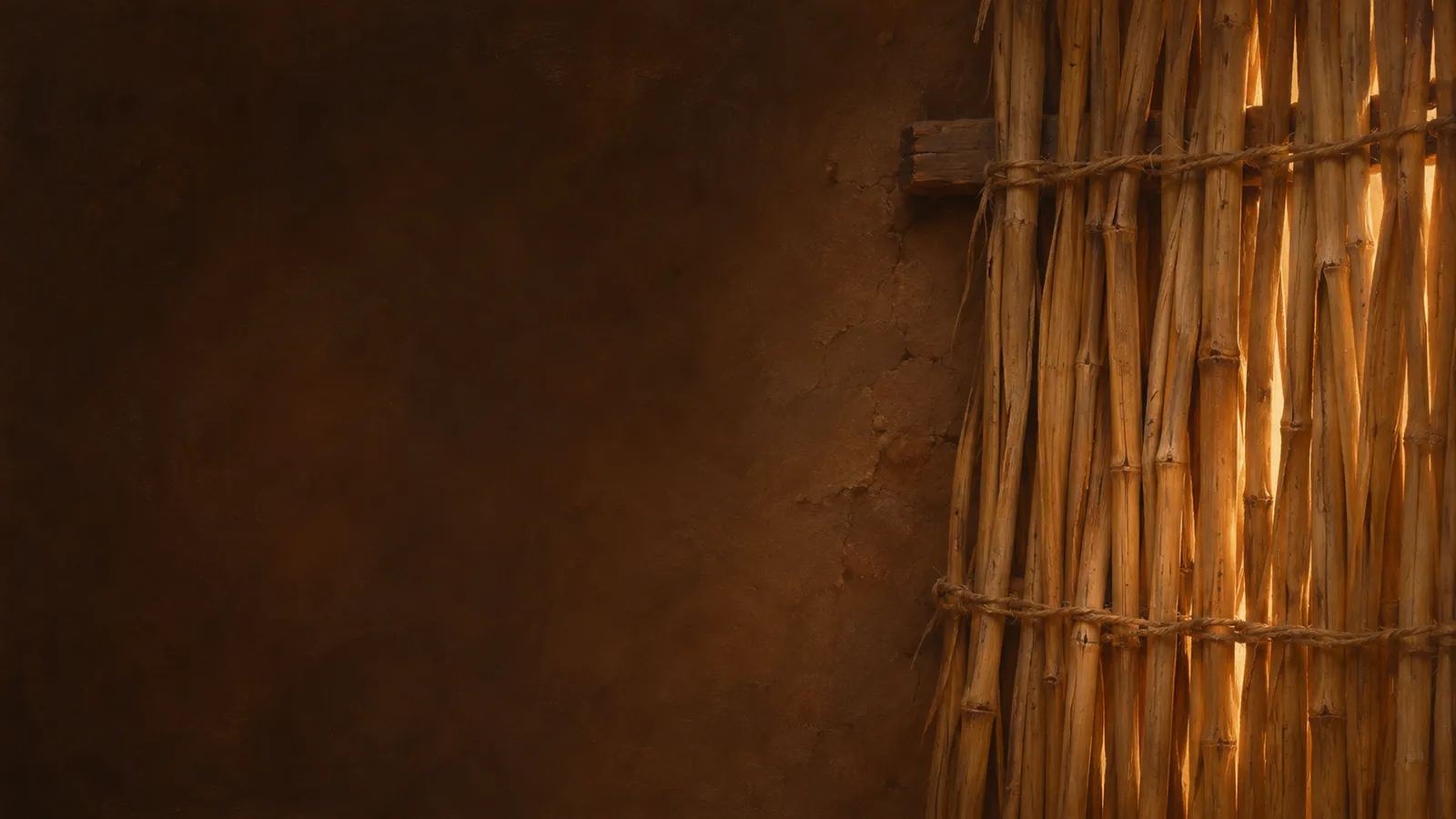
Warm light leaks between the dry stalks of a reed screen. A rough wooden crosspiece and simple ties hold the stalks in place. The clay wall on the left falls into shadow.

Ninurta respondeu-lhe, apontando para Ea. Quem mais, perguntou, poderia ter feito isto? O relato volta-se agora para aquele que avisara Utnapishtim.
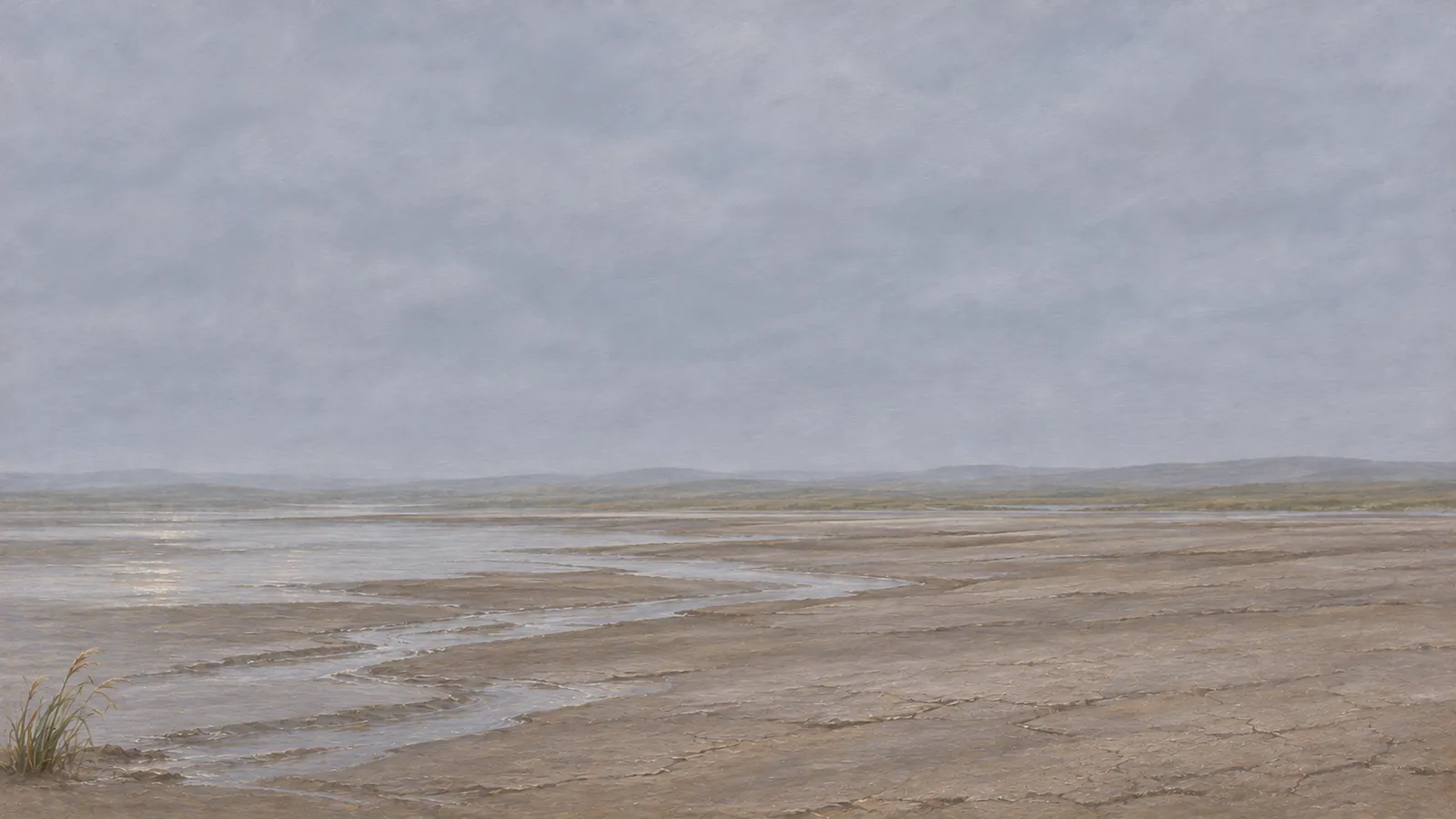
Thin streams wind across the exposed silt where the flood has receded. One tuft of reeds remains at the near edge. Low distant slopes sit beneath a pale, overcast sky.

Ea perguntou como pôde Enlil provocar um dilúvio daqueles sem o ponderar devidamente. Quem tivesse feito mal devia responder por isso, disse, em vez de todos pagarem juntos.
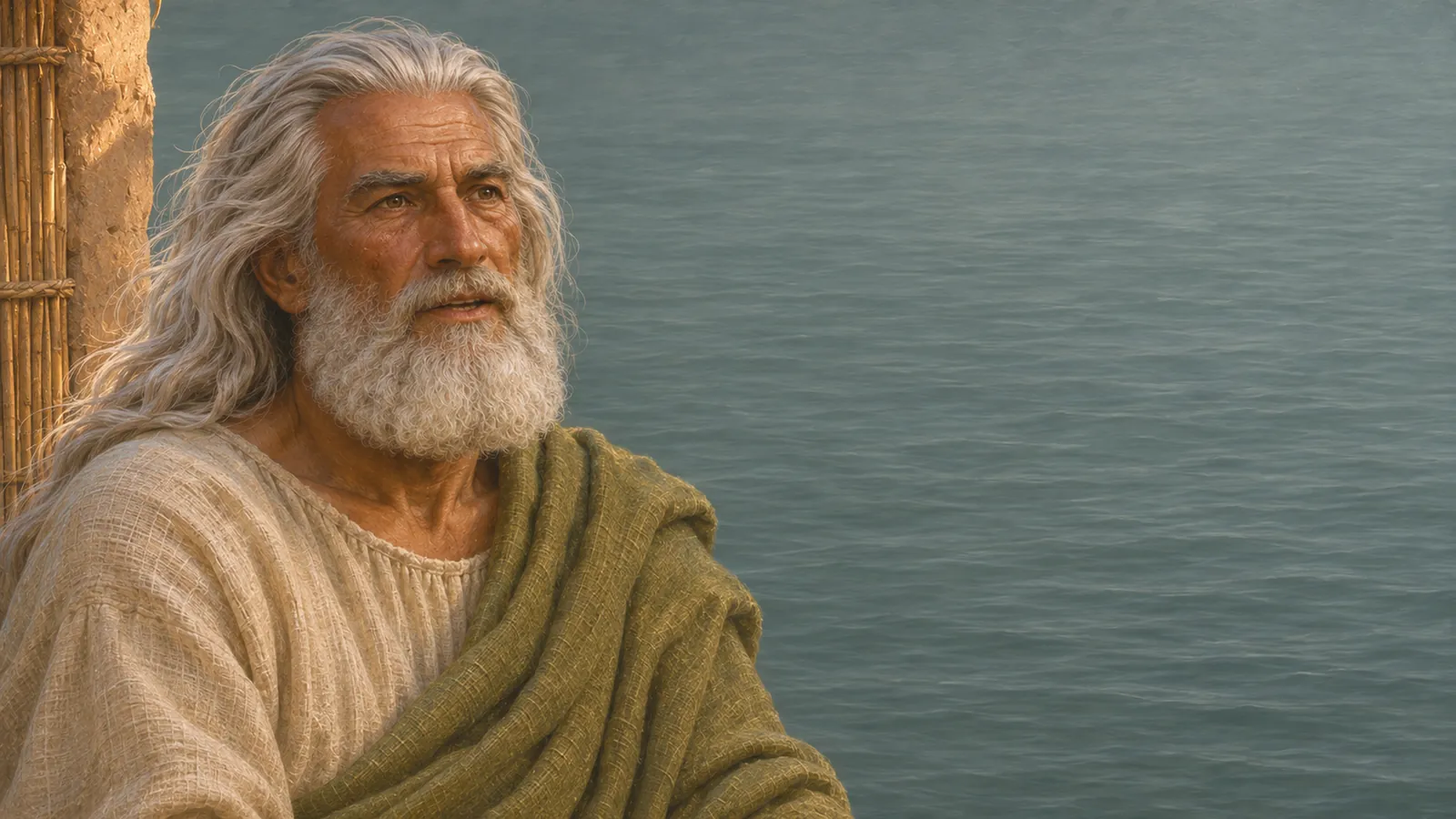
Utnapishtim speaks on the far shore, his silver hair and white beard warmed by the light. A clay wall and a small section of reed screen stand directly behind him. The quiet water fills the right side in muted blue-green.

Ea disse que enviara um sonho através do qual o sábio soubera o segredo dos deuses. Pediu à assembleia que decidisse o que lhe devia acontecer a seguir.
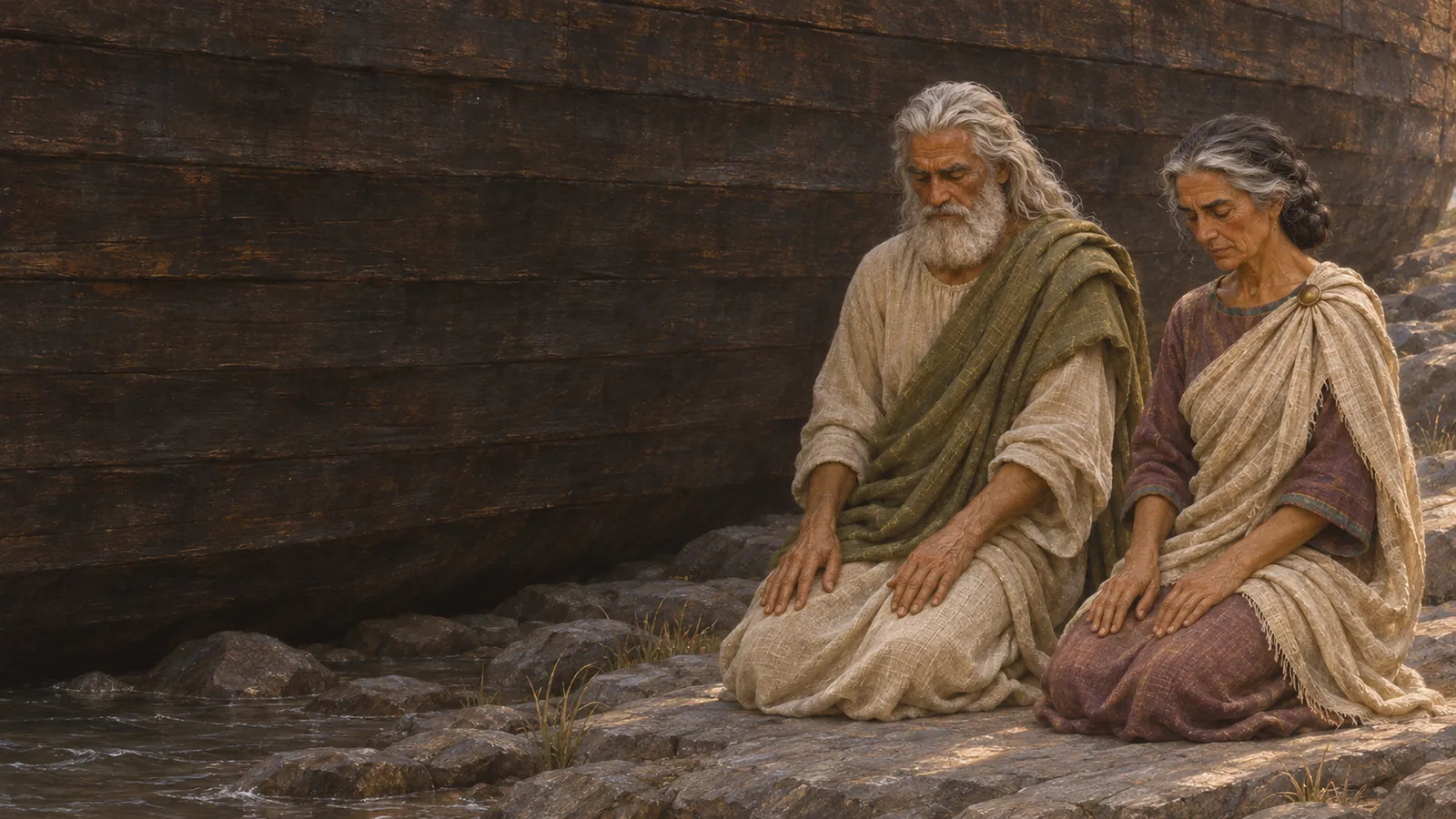
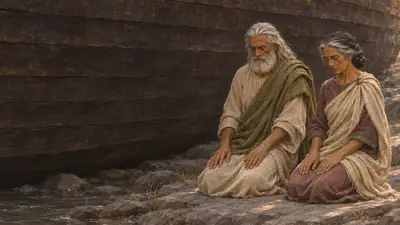
Utnapishtim and his wife kneel side by side on the rock beside the grounded boat. Both lower their eyes and let their hands rest on their knees. Gentle daylight finds the woman’s plum and ivory garments and the man’s olive mantle.

Enlil fez Utnapishtim sair do barco e trouxe também a sua mulher para fora. Ela ajoelhou-se junto dele, e ambos receberam uma bênção.
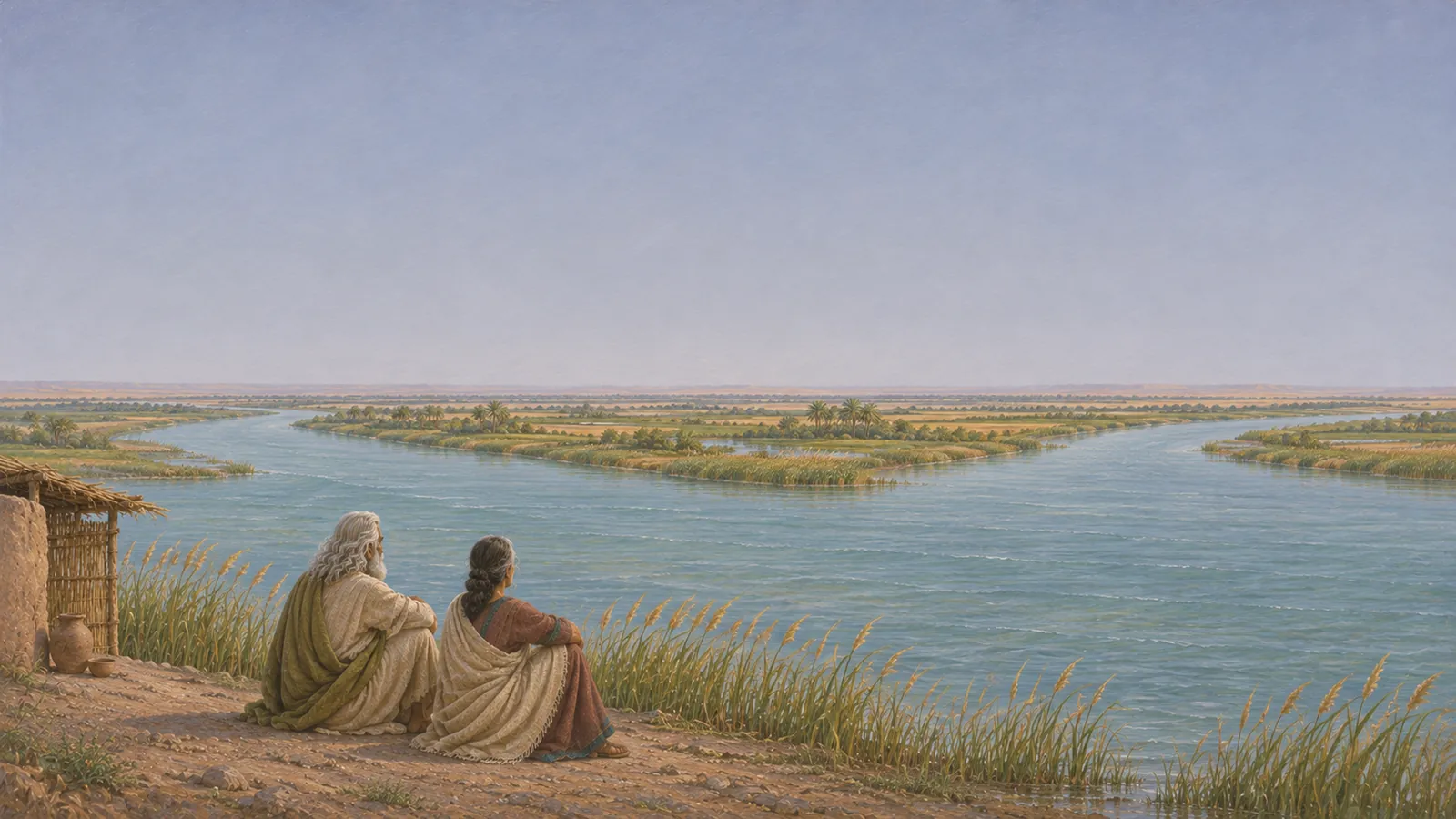
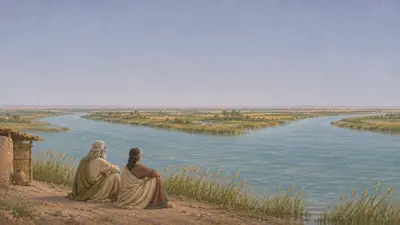
Utnapishtim and his wife sit beside a simple reed shelter, looking out over the water. Two broad channels meet beyond the reeds, parting around low strips of land. A pale blue sky stretches over the river mouths.

Enlil concedeu a Utnapishtim e à sua mulher uma vida como a dos deuses. Levaram-nos para longe, para viverem na foz dos rios.
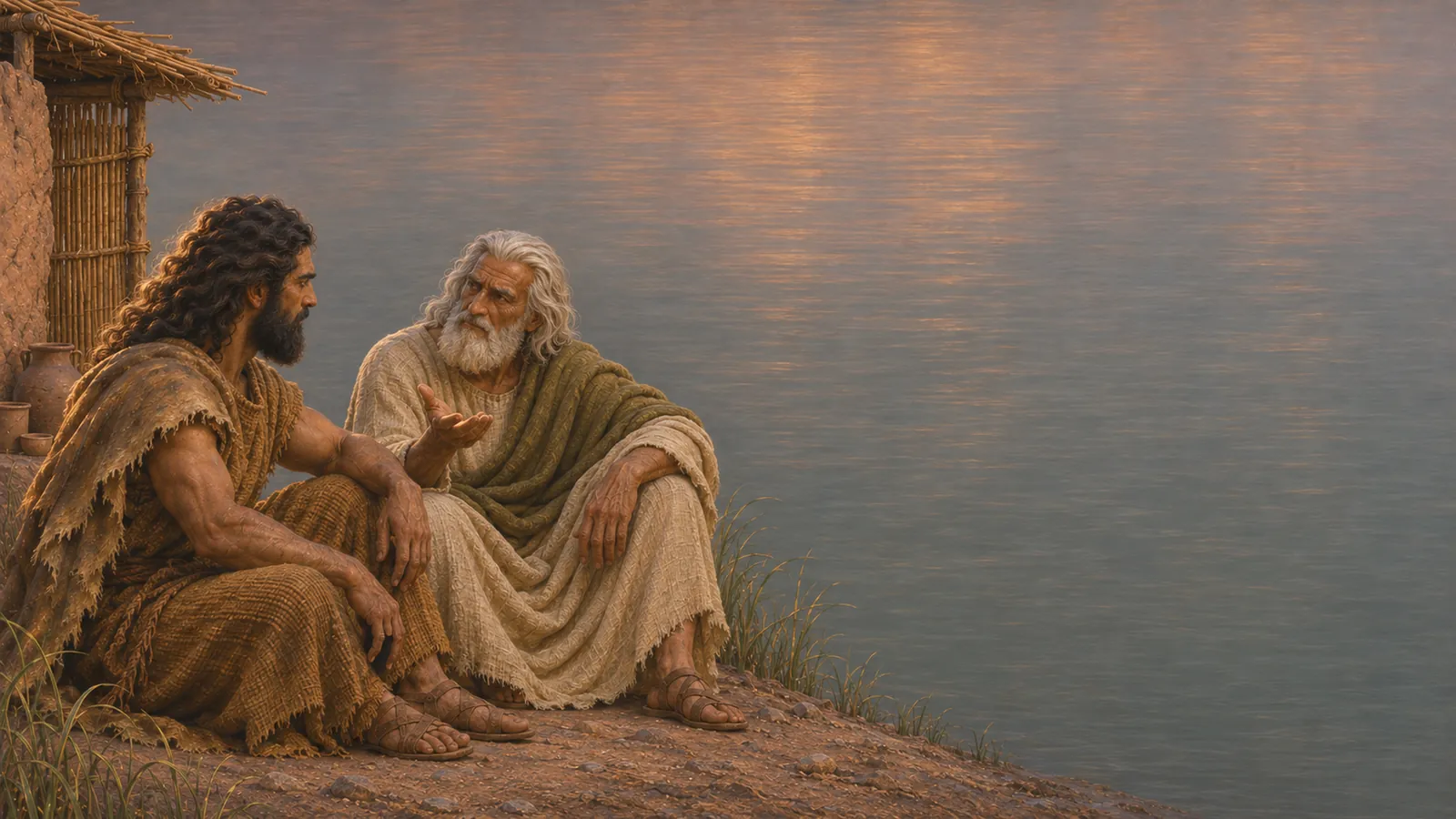
Utnapishtim leans toward Gilgamesh and turns one palm upward as he speaks. Gilgamesh listens in his worn tawny hide, beside the clay and reed shelter. Reflected evening light warms the open water to their right.

Utnapishtim voltou à pergunta de Gilgamesh. Quem convocaria os deuses em seu favor, para que encontrasse a vida que procurava?
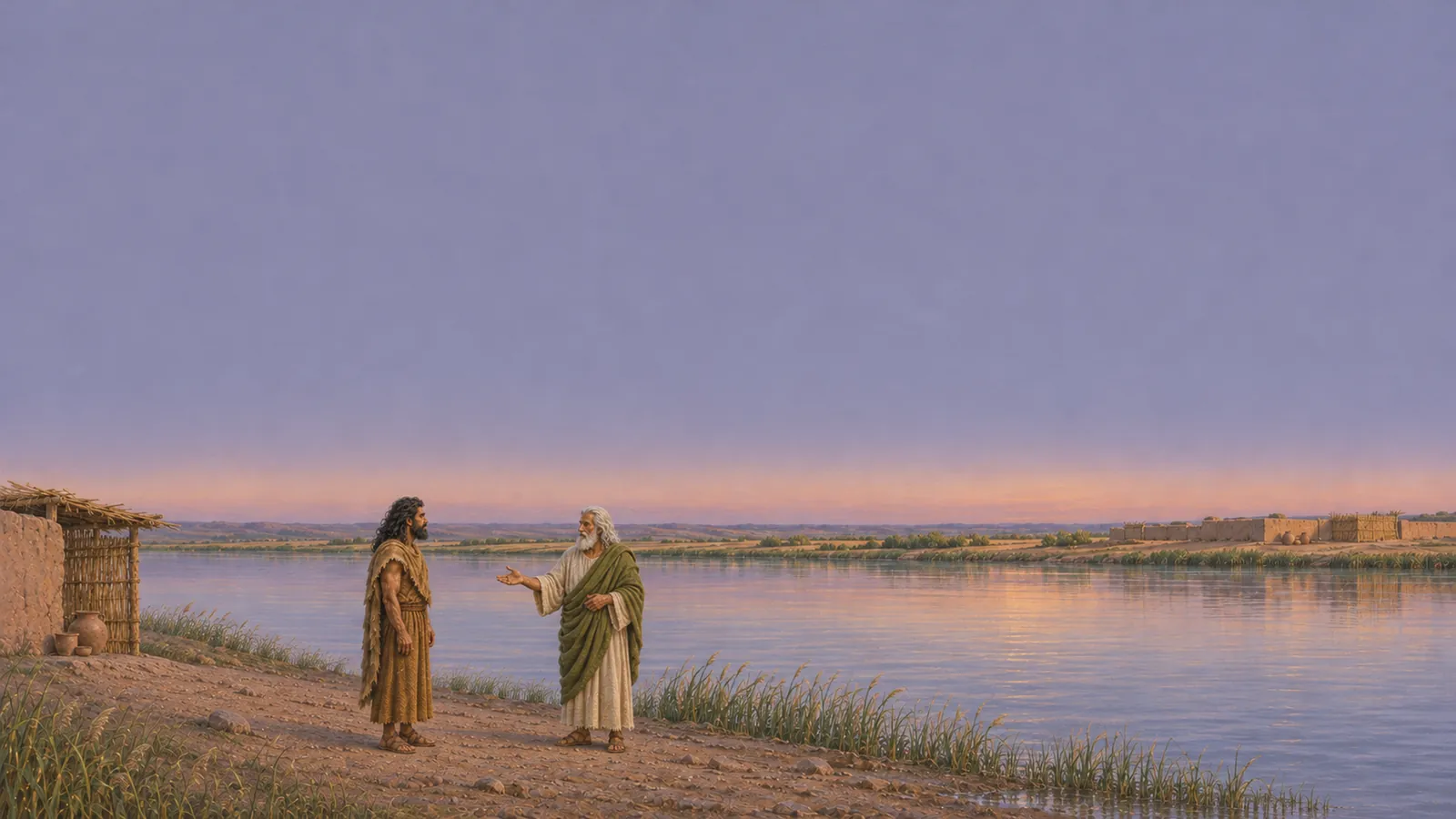
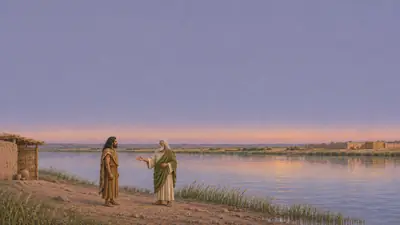
Under the twilight sky, Utnapishtim and Gilgamesh stand facing one another by the river. The older man holds his palm open as he sets the challenge, and Gilgamesh listens with his eyes open. The last warm light lies low across the water.

FICA ACORDADO

Utnapishtim propôs uma prova. Pediu a Gilgamesh que tentasse manter-se acordado durante seis dias e sete noites.

Fim do capítulo 7
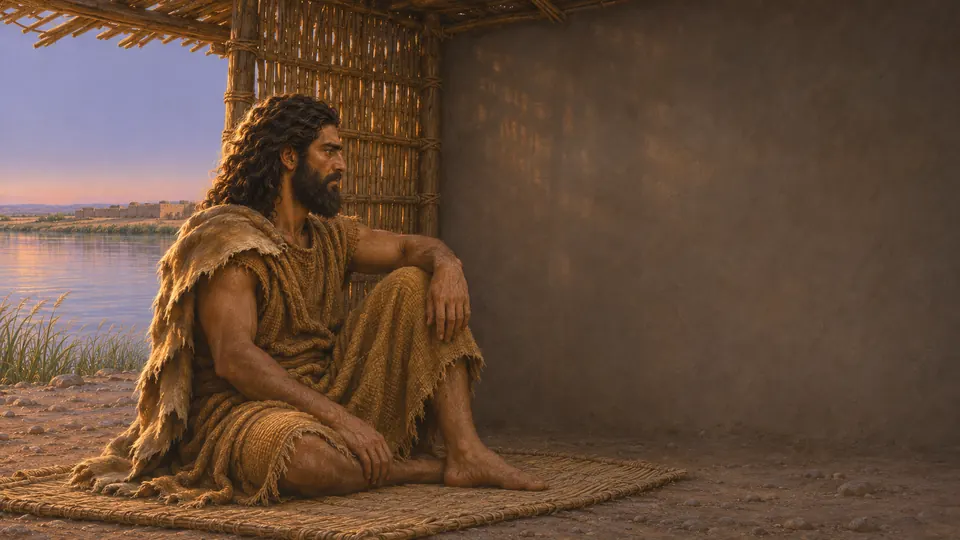
Próximo capítulo · Capítulo 8O que o rei traz de volta

Capítulo anterior Todos os capítulos Ver o filme

Todas as páginas
  1. 1
  2. 2
  3. 3
  4. 4
  5. 5
  6. 6
  7. 7
  8. 8
  9. 9
  10. 10
  11. 11
  12. 12
  13. 13
  14. 14
  15. 15
  16. 16
  17. 17
  18. 18
  19. 19
  20. 20
  21. 21
  22. 22
  23. 23
  24. 24
  25. 25
  26. 26
  27. 27
  28. 28
  29. 29
  30. 30
  31. 31
  32. 32
  33. 33
  34. 34
  35. 35
  36. 36
  37. 37
  38. 38
  39. 39
  40. 40
  41. 41
  42. 42
  43. 43
  44. 44
  45. 45
  46. 46
  47. 47
  48. 48
  49. 49
  50. 50

Fontes

Edições consultadas

Os versos antigos de cada página
  1. Page 1: SB XI 8–12
  2. Page 2: SB XI 11–14
  3. Page 3: SB XI 13–19
  4. Page 4: SB XI 15–22
  5. Page 5: SB XI 19–24
  6. Page 6: SB XI 23–27
    Instructions are attested.
  7. Page 7: SB XI 25–27; cf. XI 82–86
  8. Page 8: SB XI 28–31
    The Apsû simile is in the source.
  9. Page 9: SB XI 32–35
  10. Page 10: SB XI 36–42
  11. Page 11: SB XI 43–47; Andrew George, The Sign of the Flood
    The wording is difficult and possibly ominous.
  12. Page 12: SB XI 48–51; see source note on the epithet Atrahasis
  13. Page 13: SB XI 50–57
  14. Page 14: SB XI 57–60; cf. XI 28–31
  15. Page 15: SB XI 60–65
  16. Page 16: SB XI 64–70
  17. Page 17: SB XI 71–75
  18. Page 18: SB XI 76–81
    The details of the launch and the timing of the last work are partly restored.
  19. Page 19: SB XI 81–84
  20. Page 20: SB XI 85
  21. Page 21: SB XI 84–86
  22. Page 22: SB XI 87–91; Andrew George, The Sign of the Flood
    The recurring wording may carry a hidden warning.
  23. Page 23: SB XI 90–93
  24. Page 24: SB XI 94–96
  25. Page 25: SB XI 97–99
  26. Page 26: SB XI 100–105
  27. Page 27: SB XI 106–111
  28. Page 28: SB XI 111–113
  29. Page 29: SB XI 114–116
  30. Page 30: SB XI 117–127
    Bēlet-ilī in the source.
  31. Page 31: SB XI 128–132
    Witnesses vary between six days and six nights and six days and seven nights.
  32. Page 32: SB XI 130–134
    The last clause paraphrases the poem’s storm simile.
  33. Page 33: SB XI 134–136
  34. Page 34: SB XI 137–139
  35. Page 35: SB XI 140–143
  36. Page 36: SB XI 143–147
  37. Page 37: SB XI 147–150
    Some words describing the flight are uncertain.
  38. Page 38: SB XI 151–153
  39. Page 39: SB XI 154–156
    The poem’s additional verbs of motion have variant translations.
  40. Page 40: SB XI 157–160
  41. Page 41: SB XI 161–163
  42. Page 42: SB XI 164–171
  43. Page 43: SB XI 172–177
  44. Page 44: SB XI 178–182
  45. Page 45: SB XI 181–195
    The speech names several foregone calamities.
  46. Page 46: SB XI 196–198
  47. Page 47: SB XI 199–202
  48. Page 48: SB XI 203–206
  49. Page 49: SB XI 207–208; compare the framing at XI 1–10
  50. Page 50: SB XI 209; no action from XI 210 onward

Ilustrações feitas pelo IL Archive com ferramentas de IA; o texto baseia-se nas fontes antigas (veja as fontes no fim de cada capítulo).