آني أمام الميزان الفصل الأول
وزن القلب
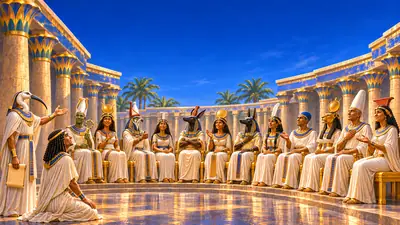
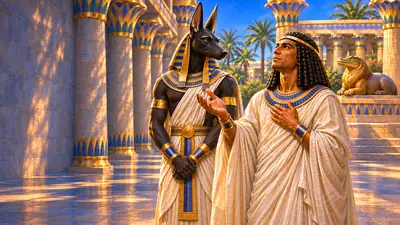
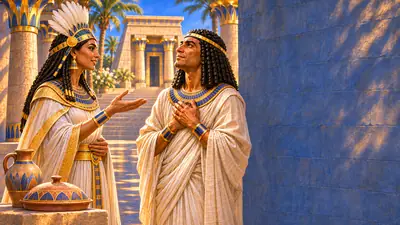
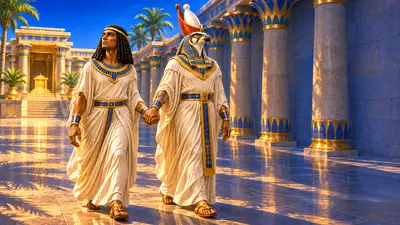
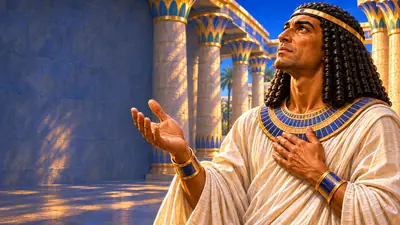
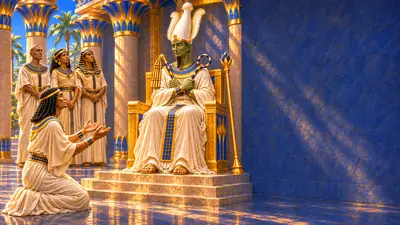
يخاطب آني قلبه قبل الوزن، ثمّ يتكلّم تحوت وجماعة الآلهة في شأن النتيجة. يقود حورس آني إلى أوزيريس. وبعد أن يقدّمه حورس، يرفع آني ابتهاله بنفسه.
المصادرقلّب الصفحات بالأزرار أو بمفاتيح الأسهم أو بسحب الإصبع.
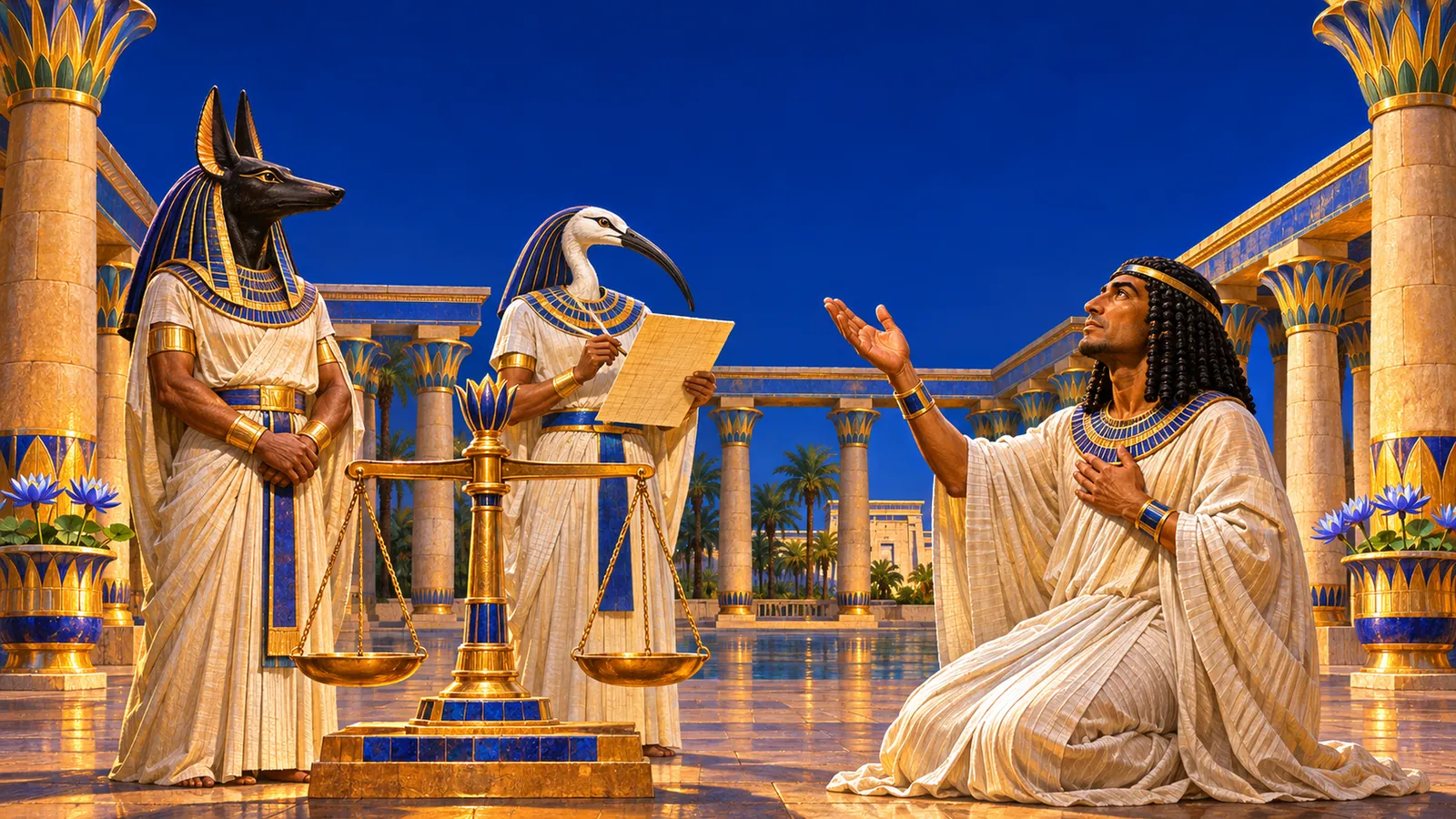
آني أمام الميزان
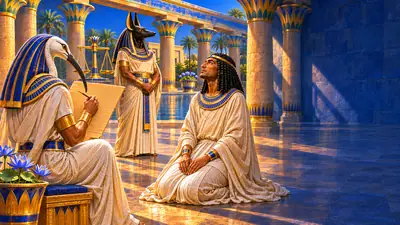
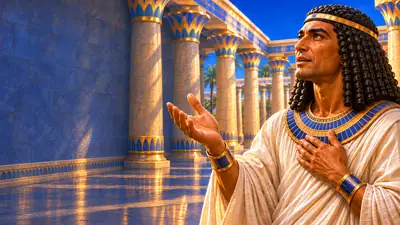
قبل الوزن يخاطب آني قلبه. يقول له مرّتين «أمّي»، ثمّ يصفه بأنّه القلب الذي به جاء إلى الوجود.
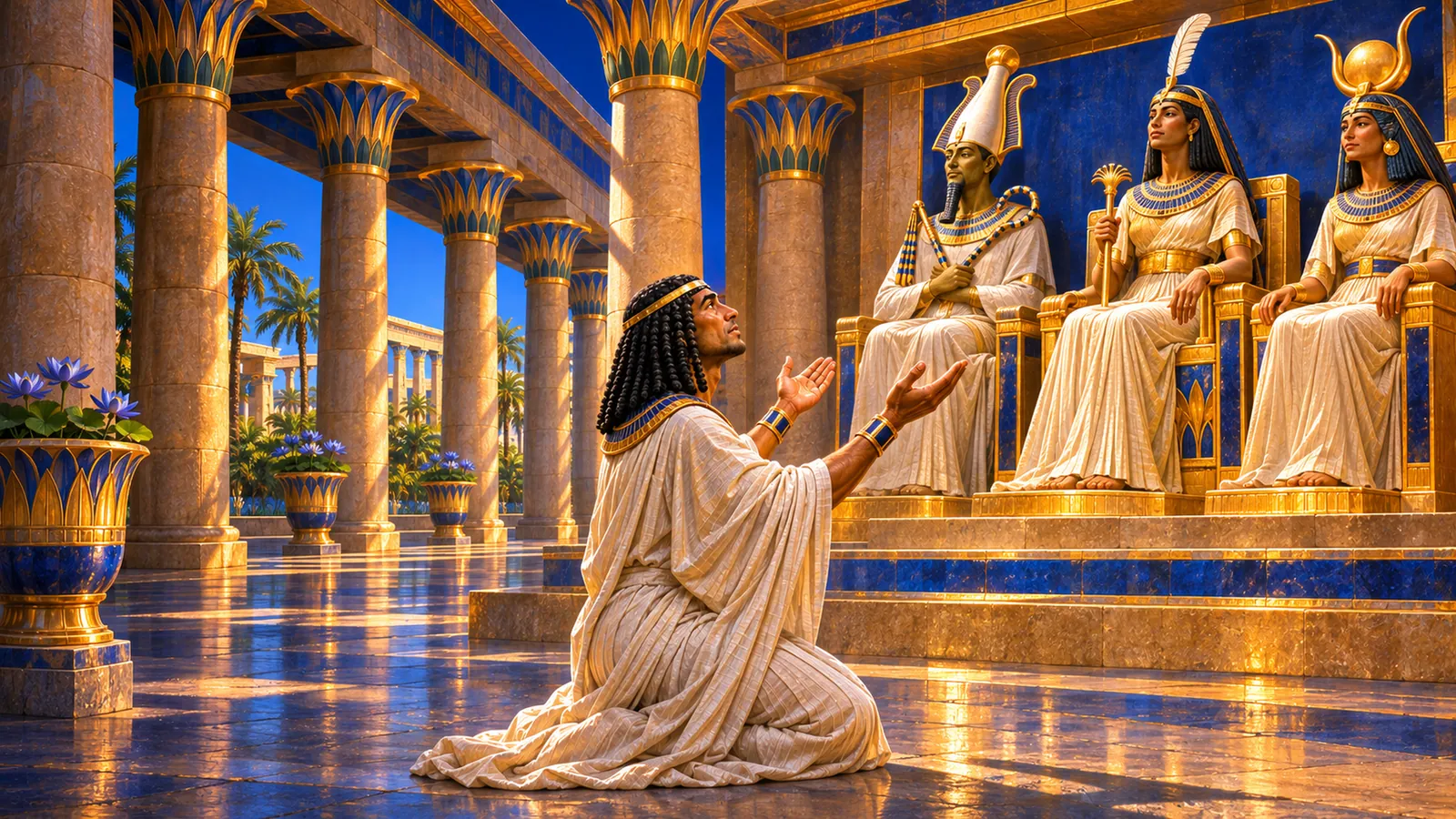
يسأل ألّا يقوم عليه شيء في الحكم. ويسأل ألّا يلقى معارضة في حضرة الأمراء أصحاب السيادة.
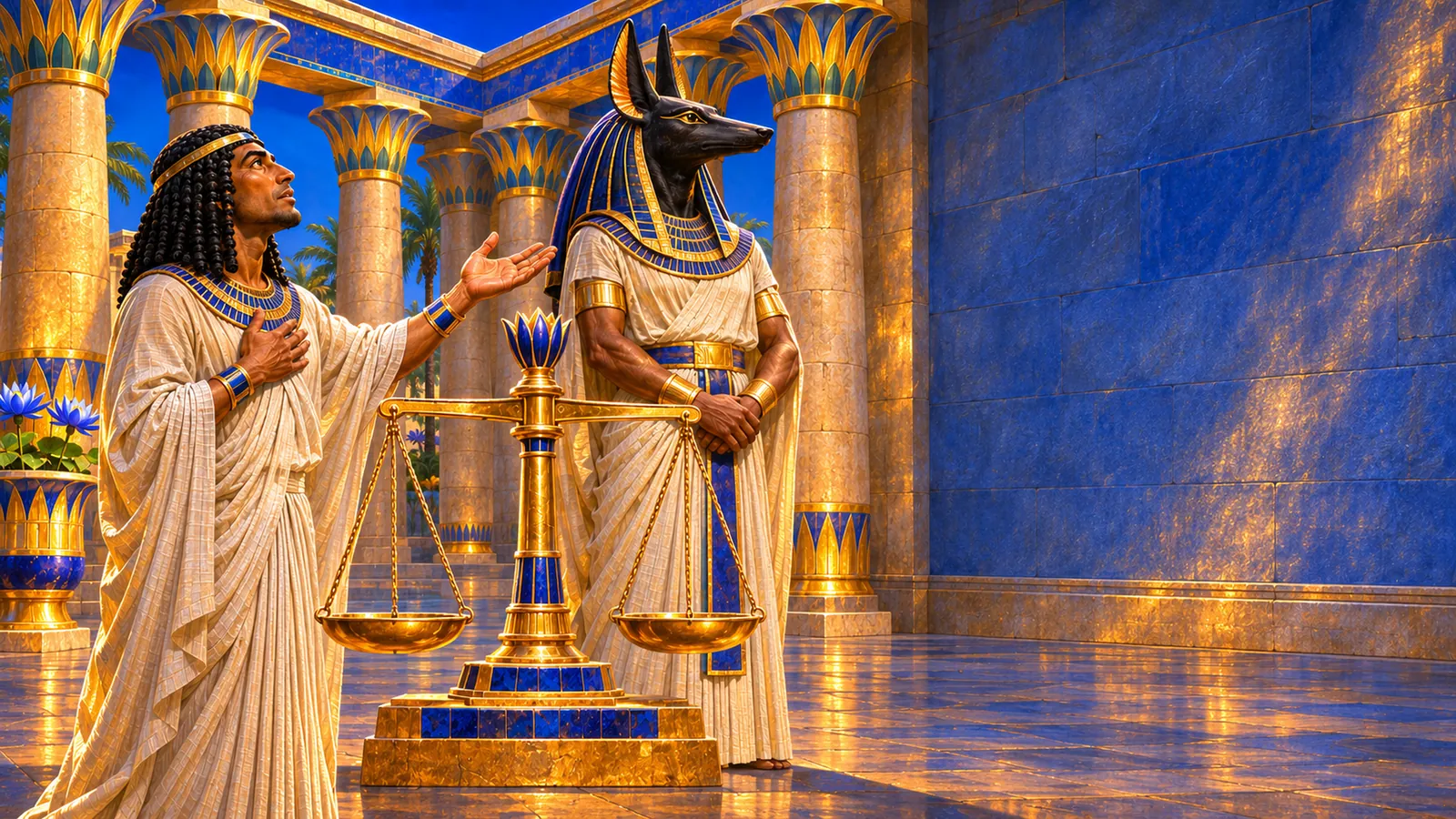
يسأل آني ألّا يُفرَّق بينه وبين قلبه في حضرة حارس الميزان.
يواصل آني مخاطبة قلبه ويقول له إنّه الكا الخاصّ به، الساكن في جسده.
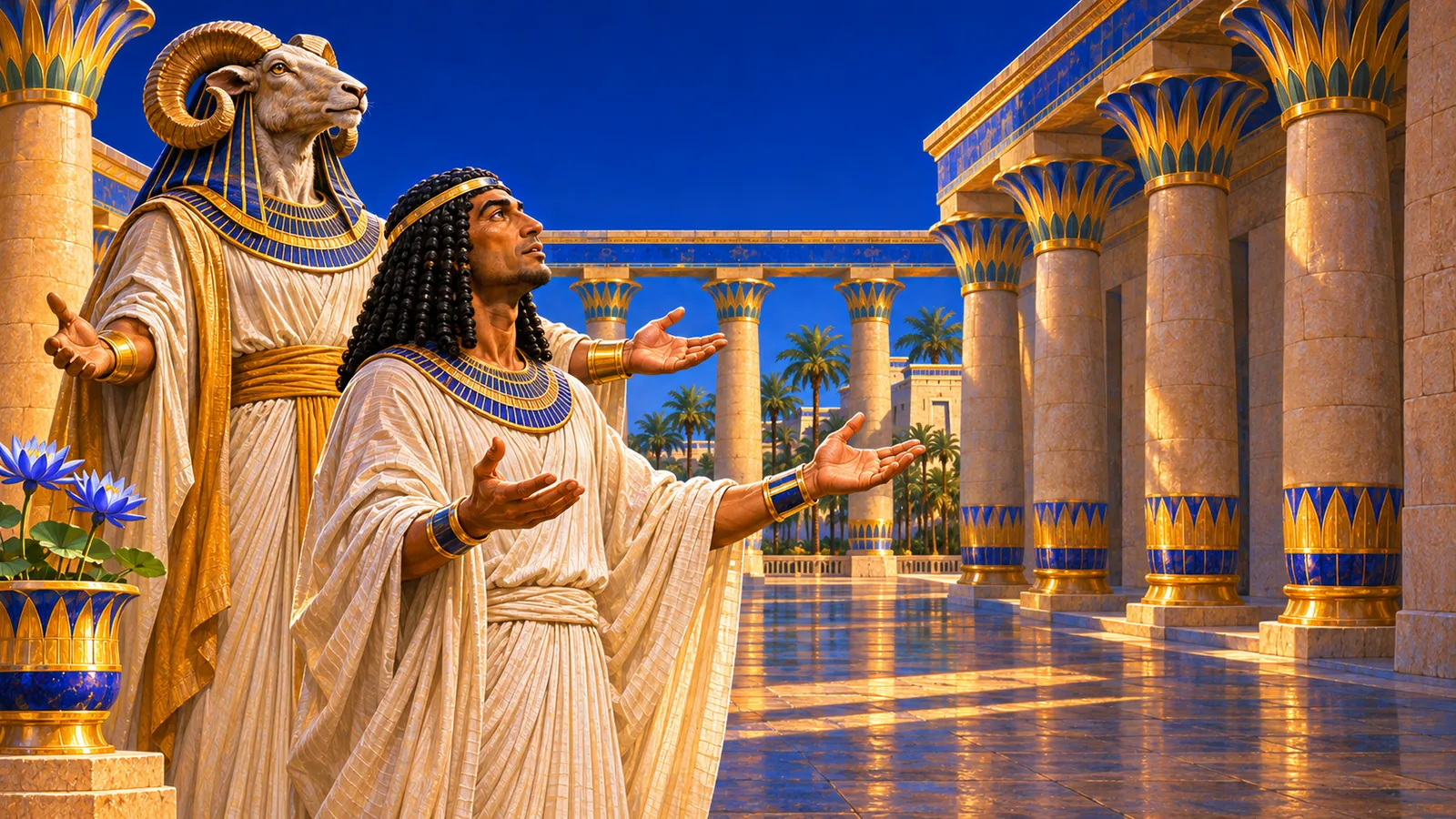
وفي الخطاب نفسه يسمّي آني قلبه الإله خِنِمو، الذي يصل أطرافه بعضها ببعض ويقوّيها.

يسأل آني قلبه أن يخرج إلى موضع السعادة، وهو المكان الذي يقول إنّهما يتوجّهان إليه معًا.
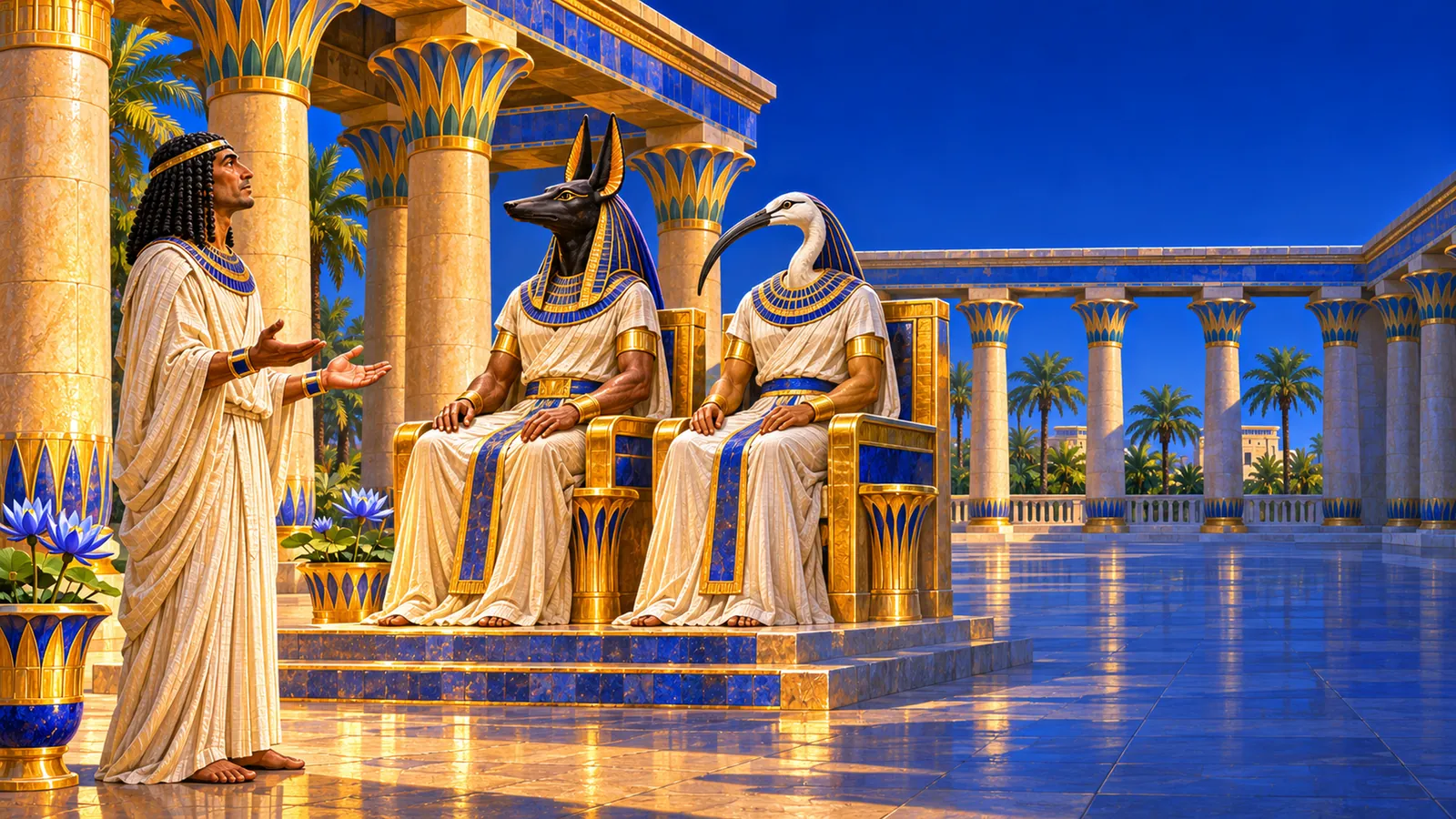
يقول آني إنّ أمراء محكمة أوزيريس يرتّبون أحوال حياة الناس. ويسألهم ألّا يجعلوا اسمه كريه الرائحة.
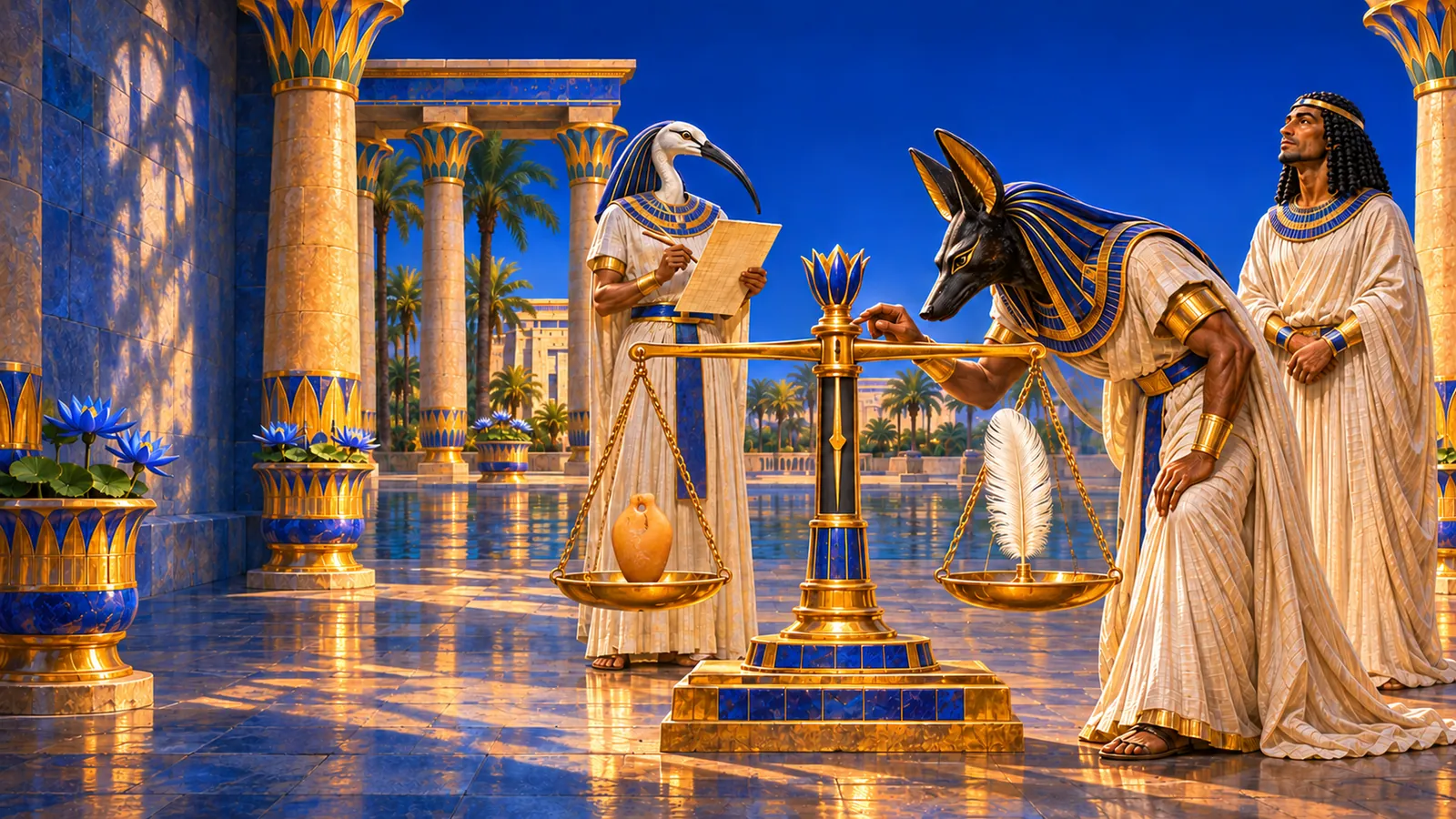
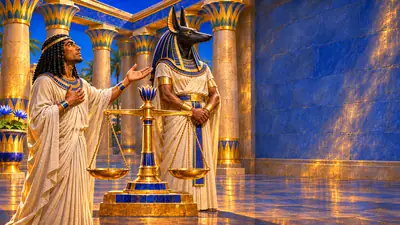
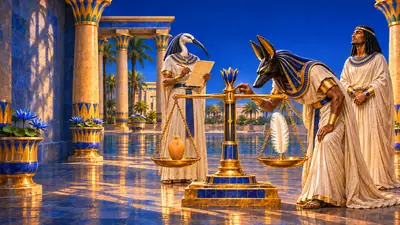
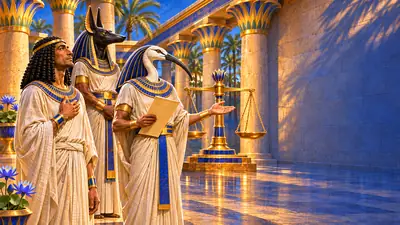
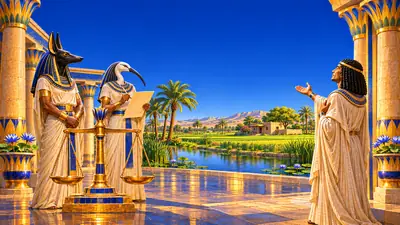
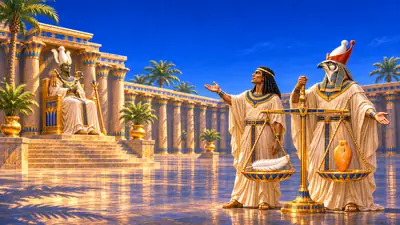
يصف بدج الآن الوزن. وفي وصفه يتفحّص أنوبيس لسان الميزان، وهو المؤشّر الذي يبيّن وضعه.
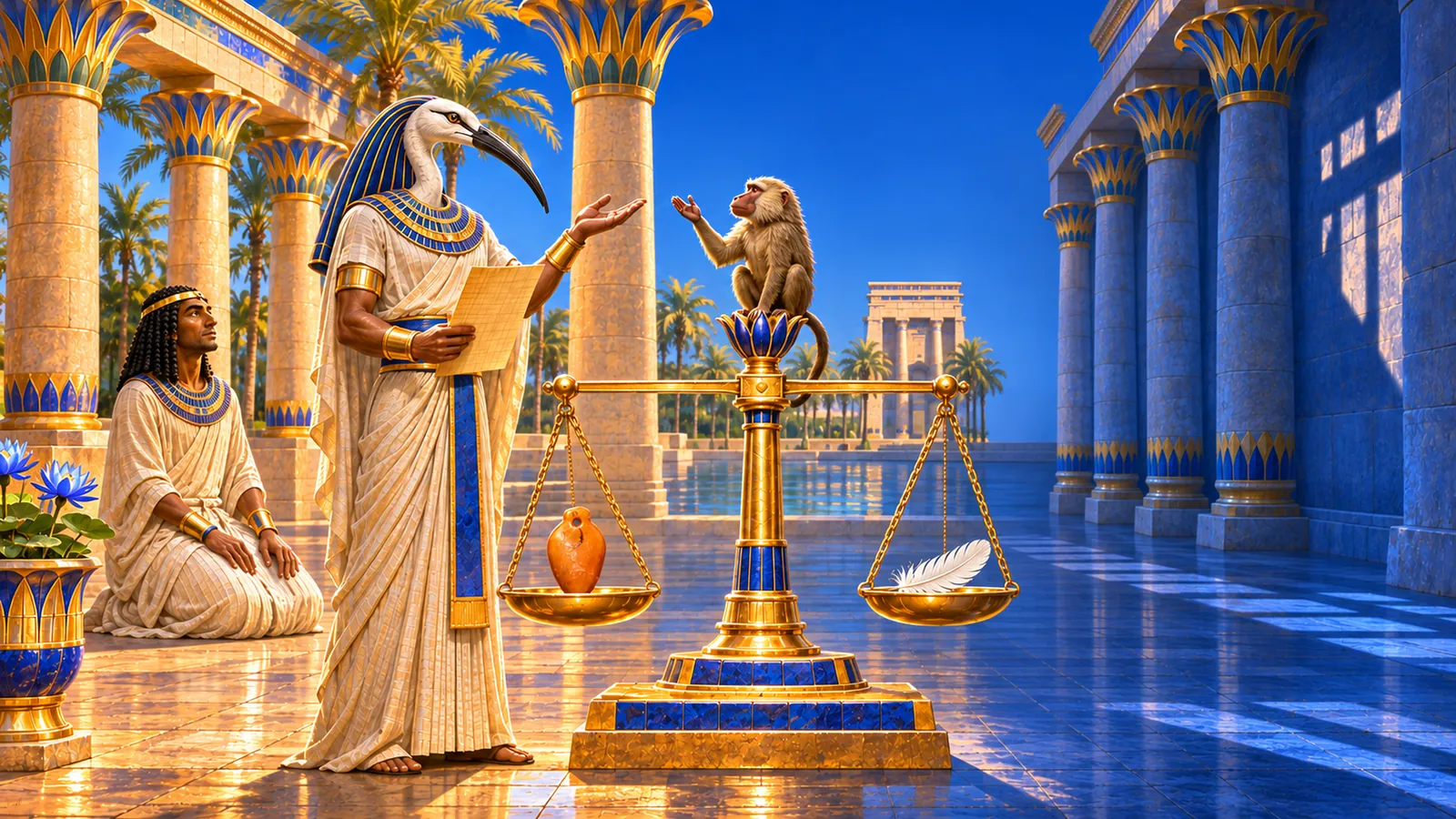
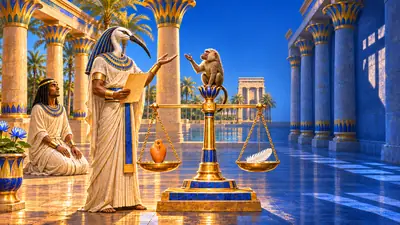
يصف بدج القرد وهو يشير إلى رفيقه تحوت بأنّ عارضة الميزان أفقيّة تمامًا.
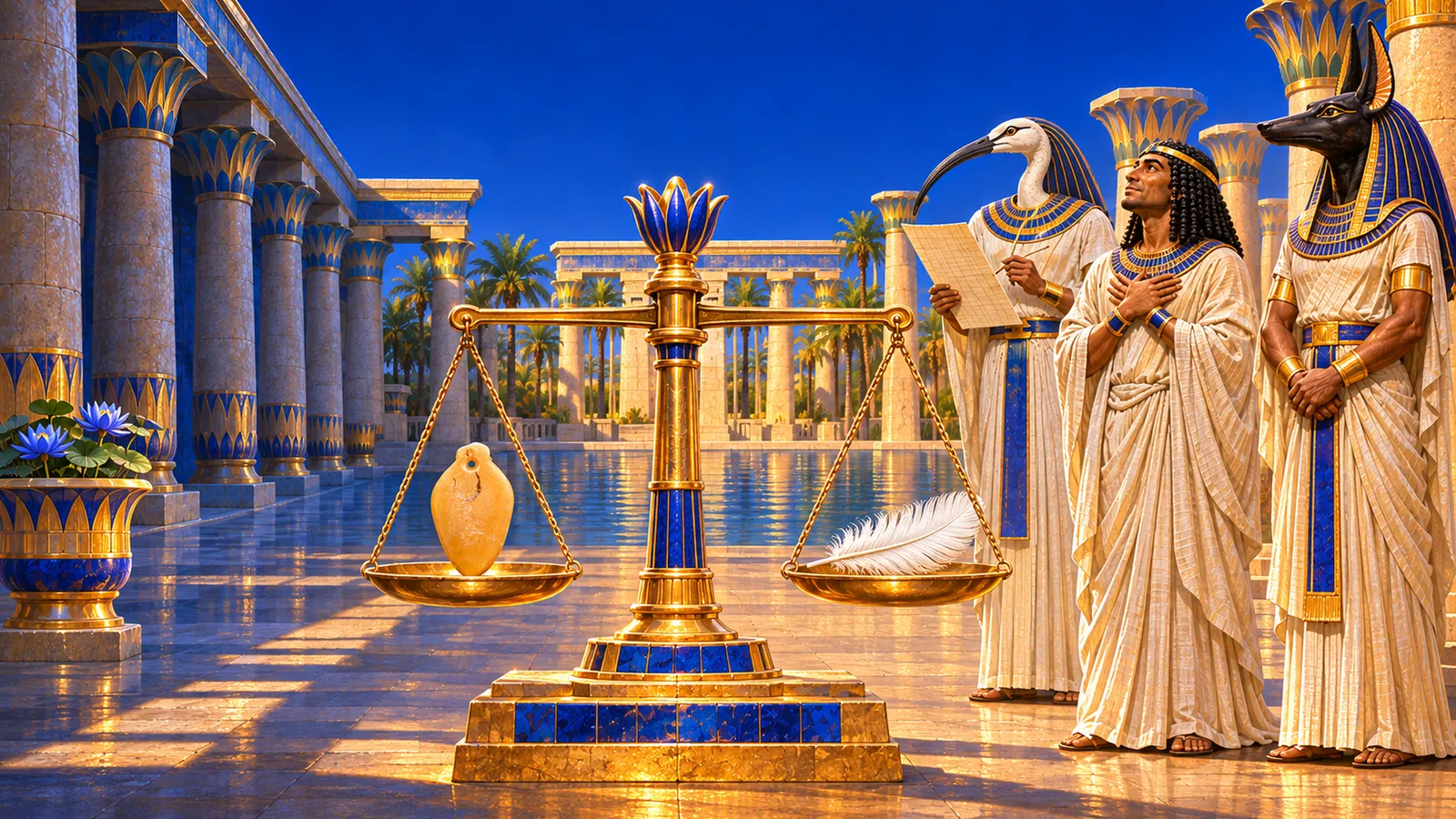
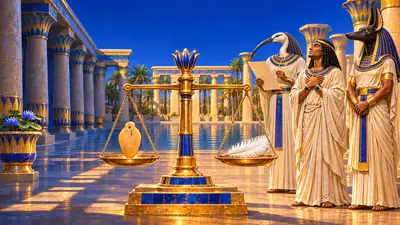
في وصف بدج، يعادل قلب آني تمامًا الريشة التي ترمز إلى ماعت. ويفسّر بدج ماعت هنا بالصواب والحقيقة والقانون.
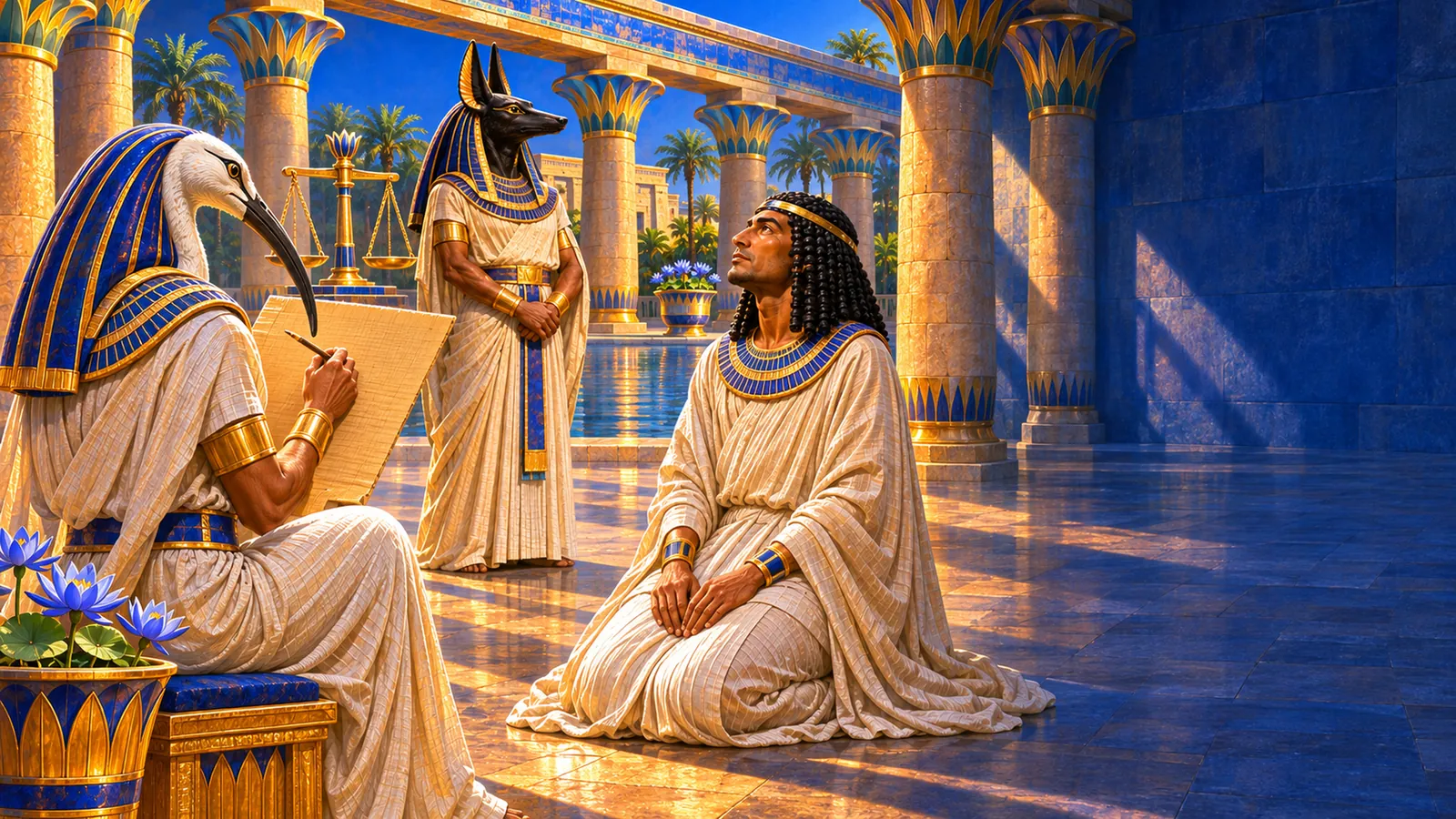
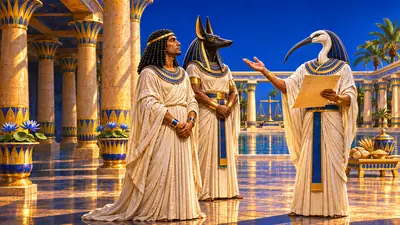
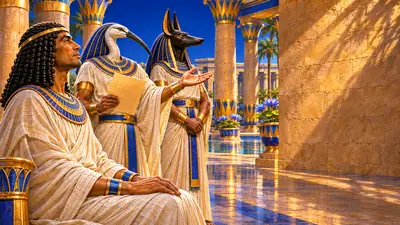
يقول بدج إنّ تحوت يدوّن نتيجة الوزن. ثمّ يوجّه كلامه إلى الآلهة.
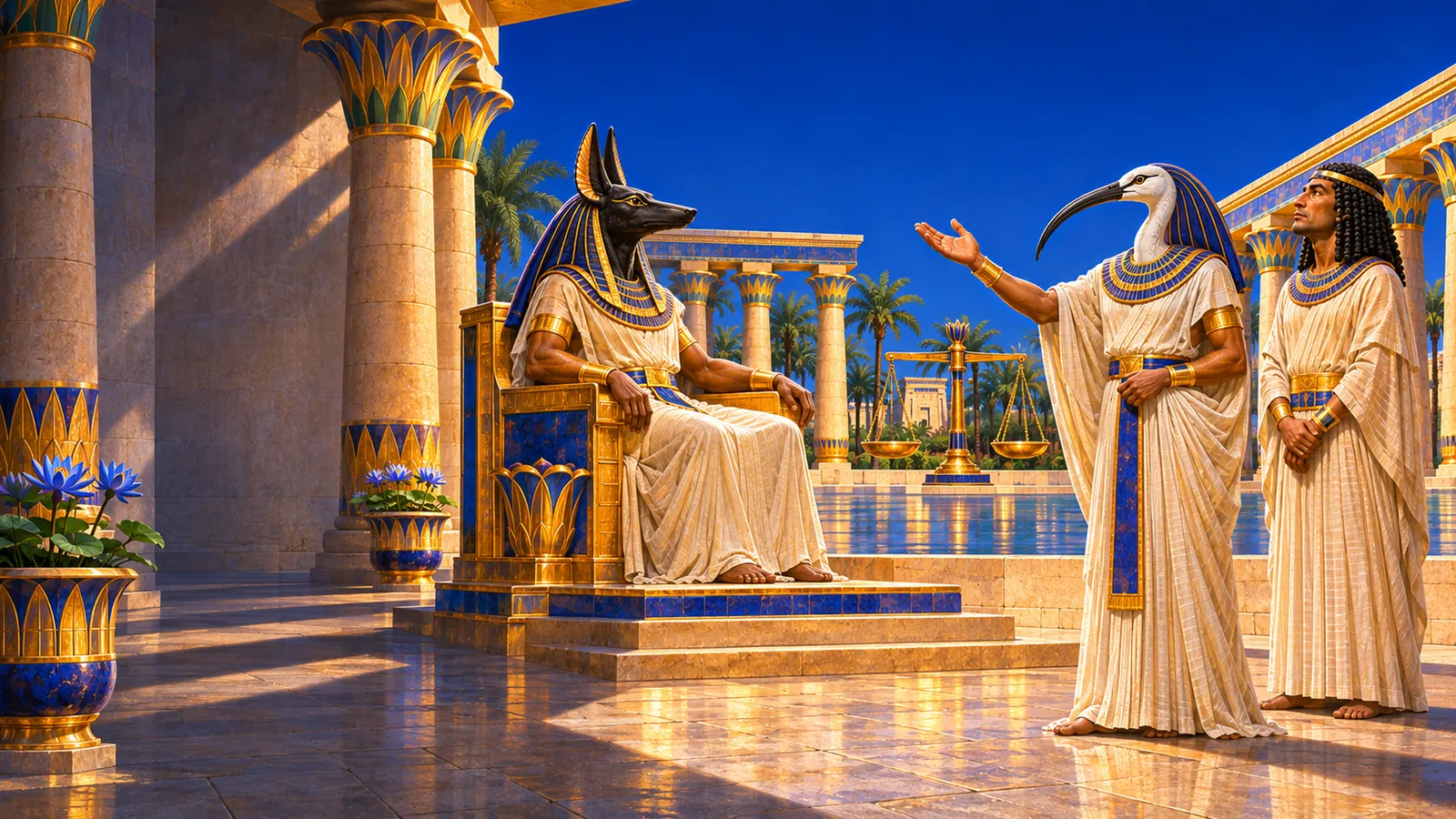
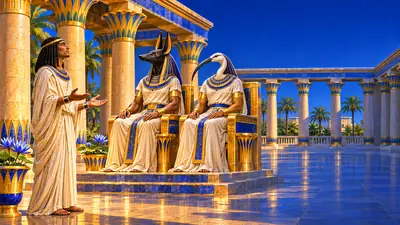
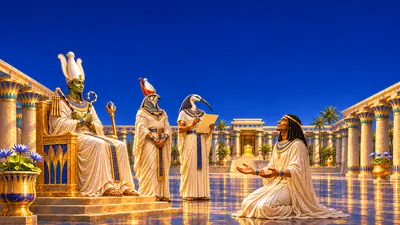
يدعو تحوت الآلهة إلى سماع الحكم. ويقول لها إنّ قلب أوزيريس قد وُزن حقًّا.
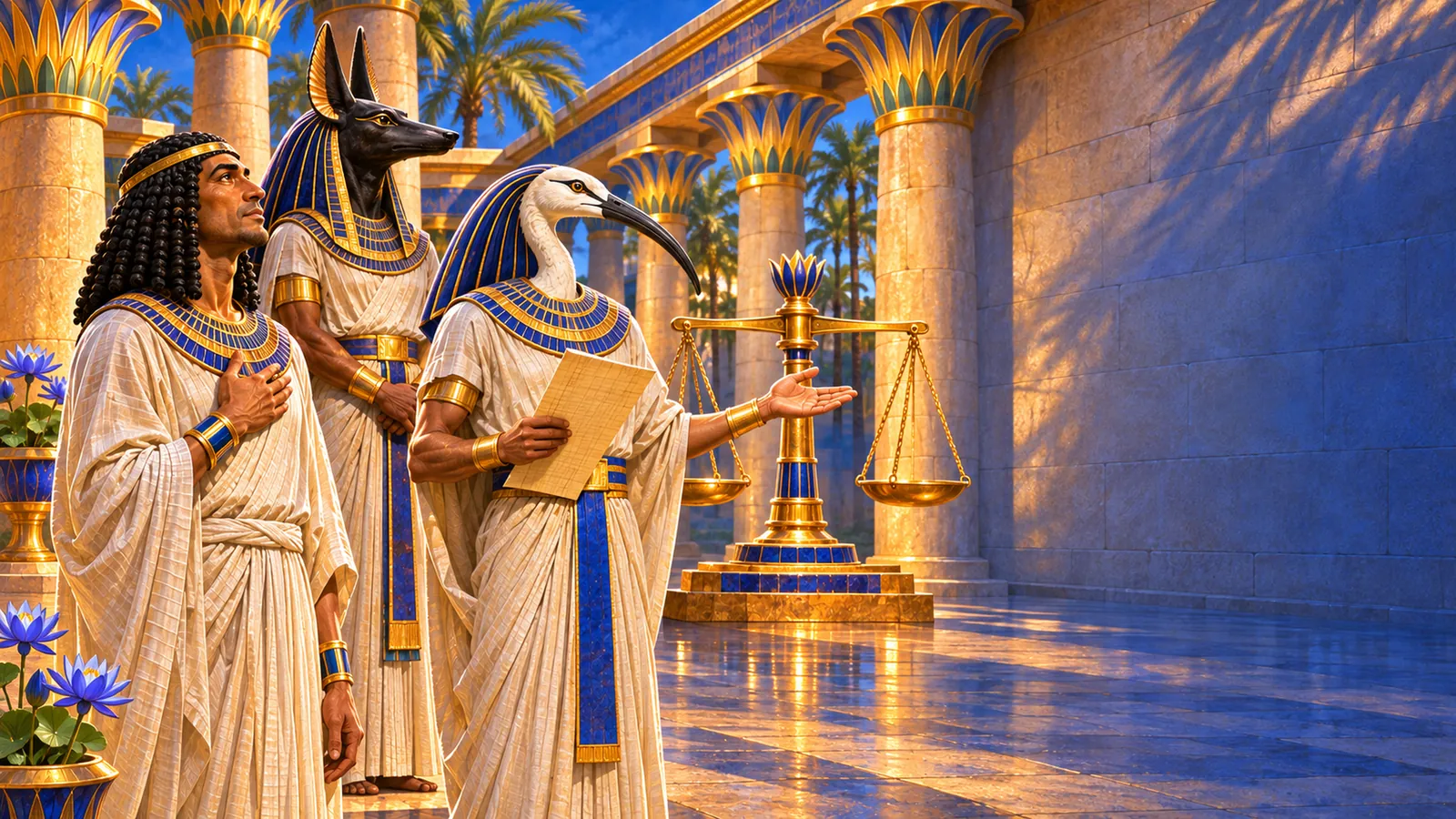
يقول تحوت إنّ روح المتوفّى قامت شاهدةً له. ويضيف أنّه ثبت صدقه عند الاختبار في الميزان العظيم.
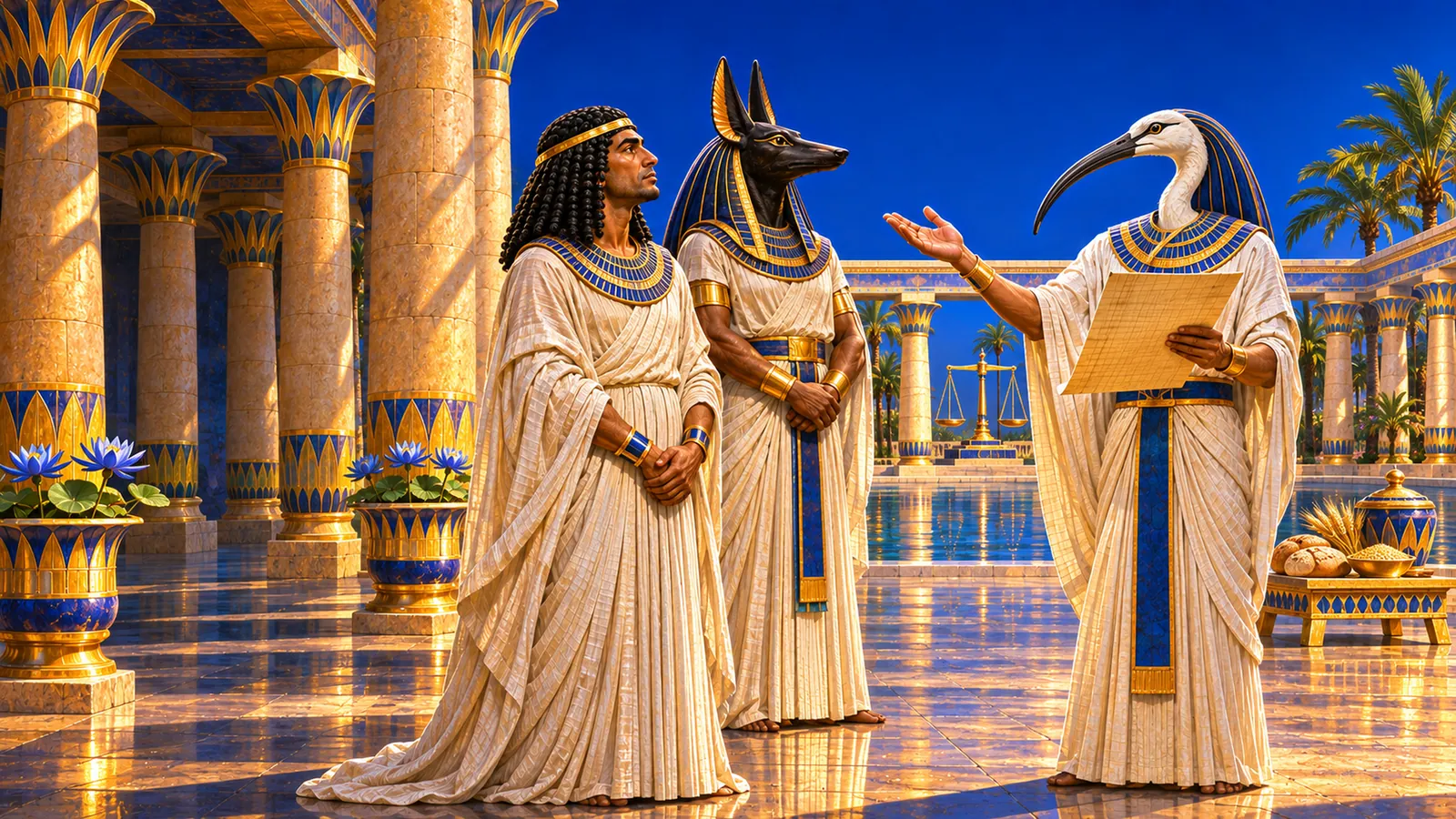
يذكر تحوت أنّه لم يُوجَد شرٌّ في آني. ويضيف أنّ آني لم يبدّد القرابين في المعابد.
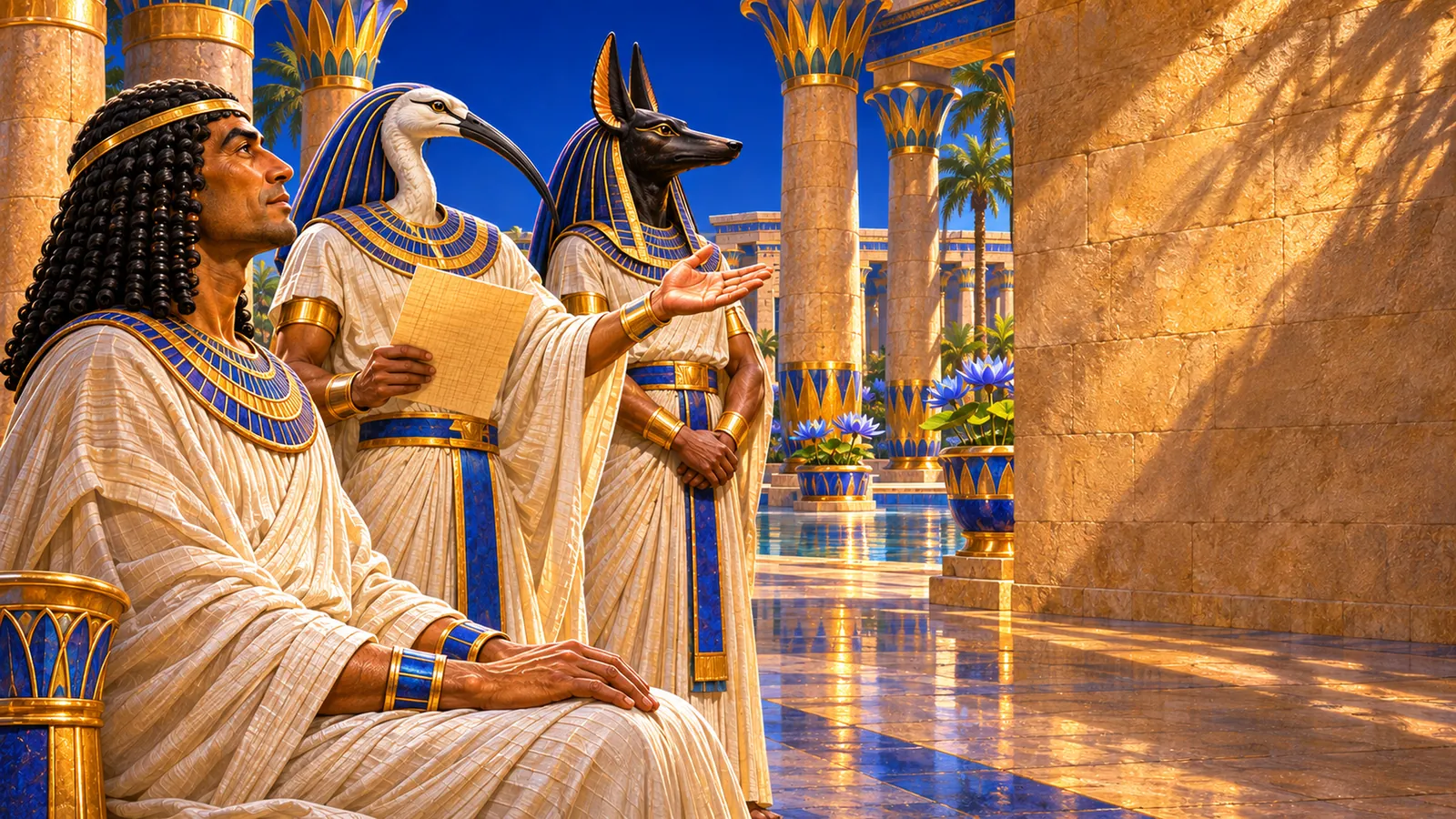
يقول تحوت إنّ آني لم يُلحق أذًى بأفعاله ولم ينشر أخبارًا سيّئة حين كان على الأرض.
الردّ
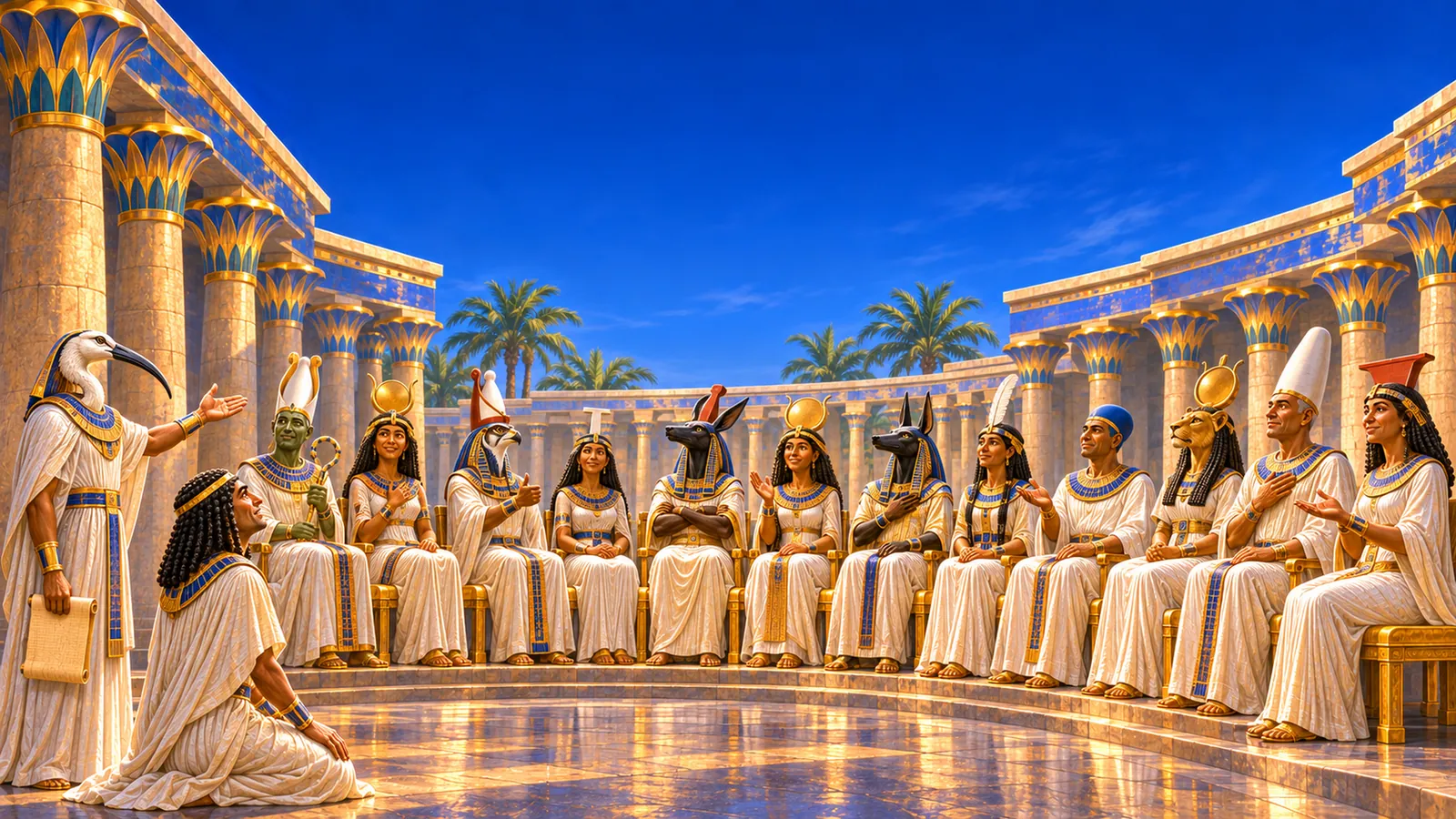
يقول جمع الآلهة العظيم لتحوت إنّه يؤكّد كلامه. ويخاطبه بوصفه مقيمًا في خِمِنّو، التي يحدّدها بدج بأنّها هرموبوليس.
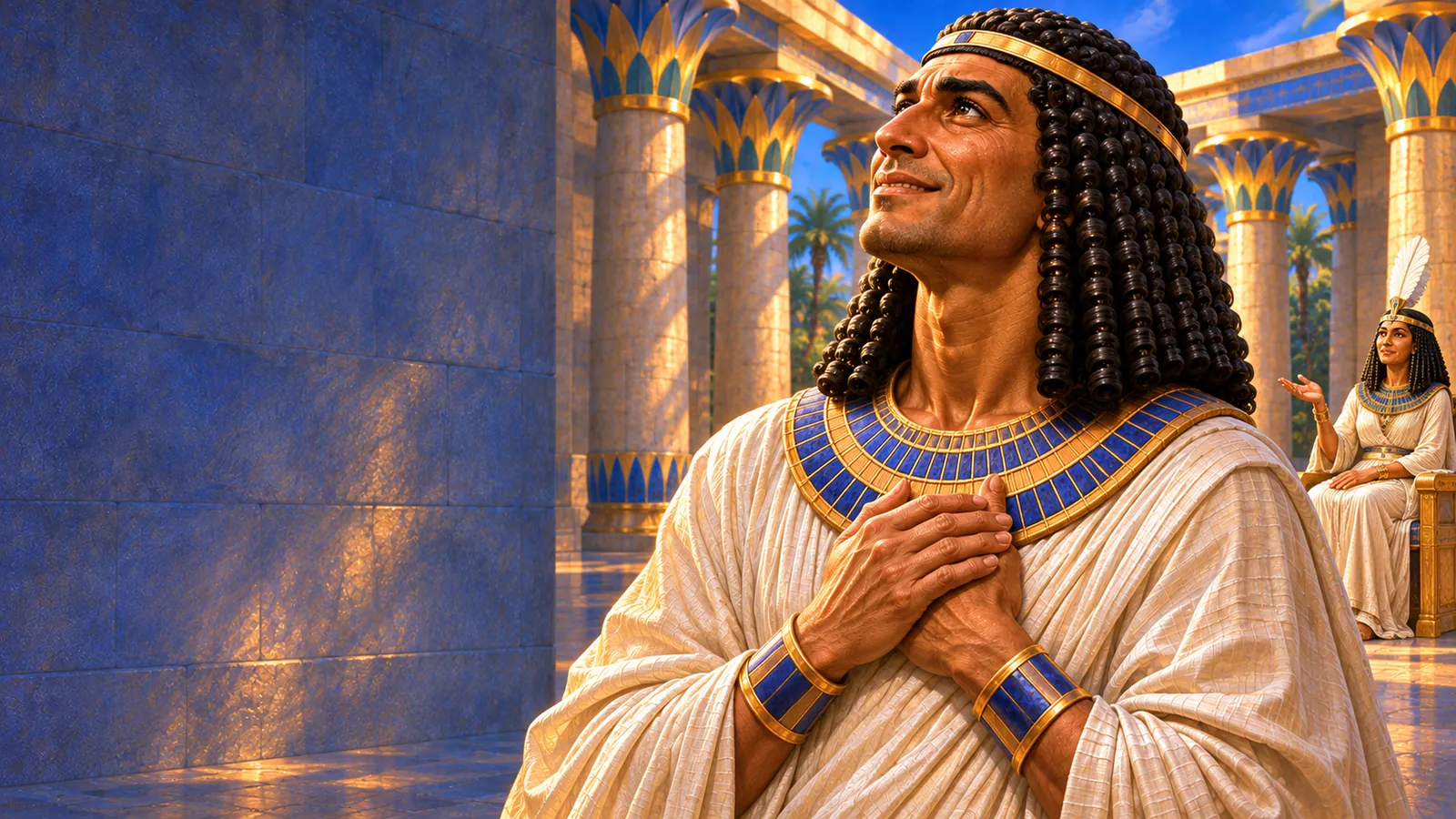
يسمّيه الجمع أوزيريس الكاتب آني الظافر. ويعلن أنّه طاهر وبارّ.
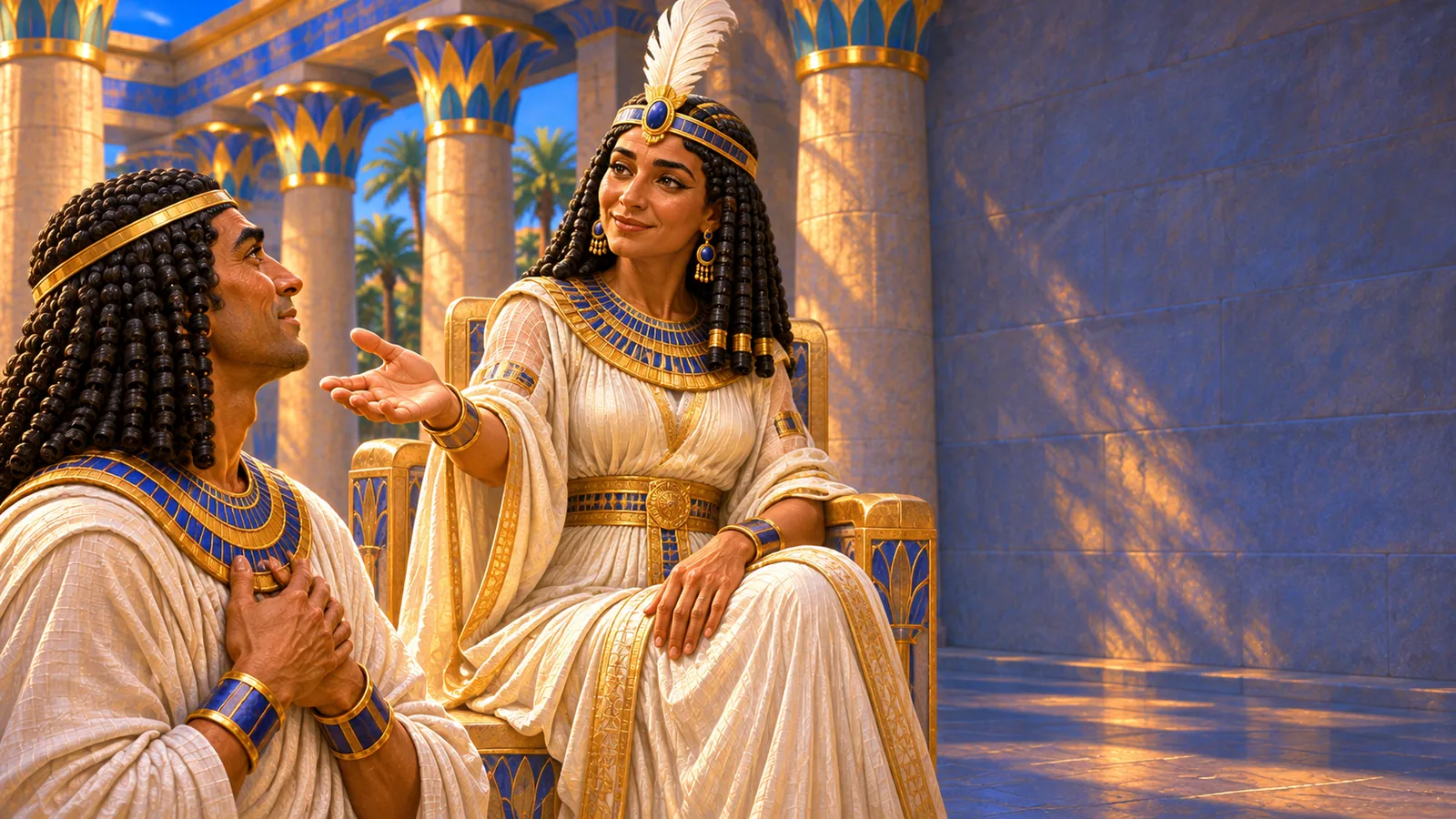
يقول الجمع إنّ آني لم يأثم. ويضيف أنّه لم يرتكب شرًّا في حقّهم.
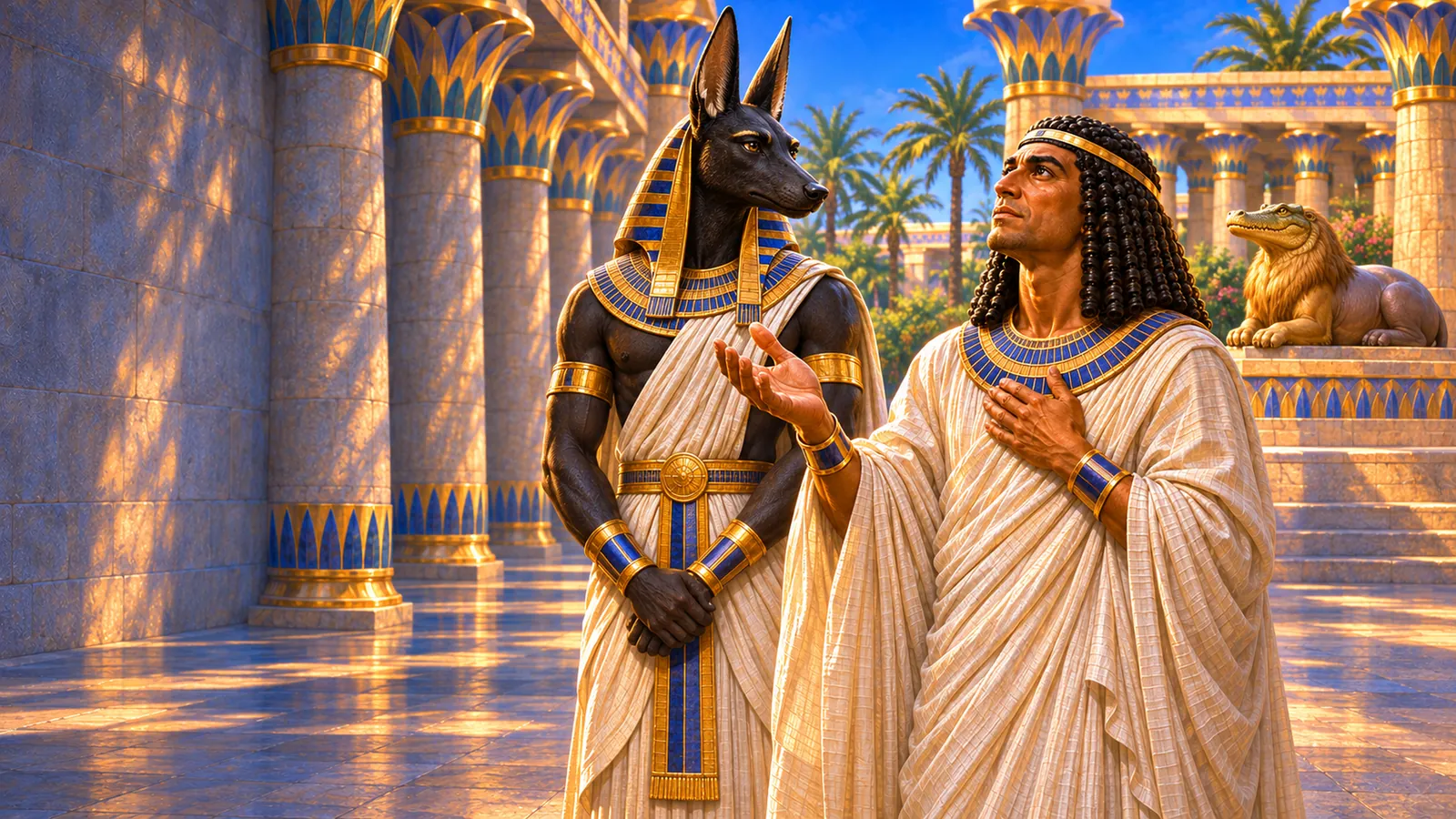
يعلن الجمع في ردّه أنّه لن يُسمح للملتهمة آم-ميت بأن تغلب آني.
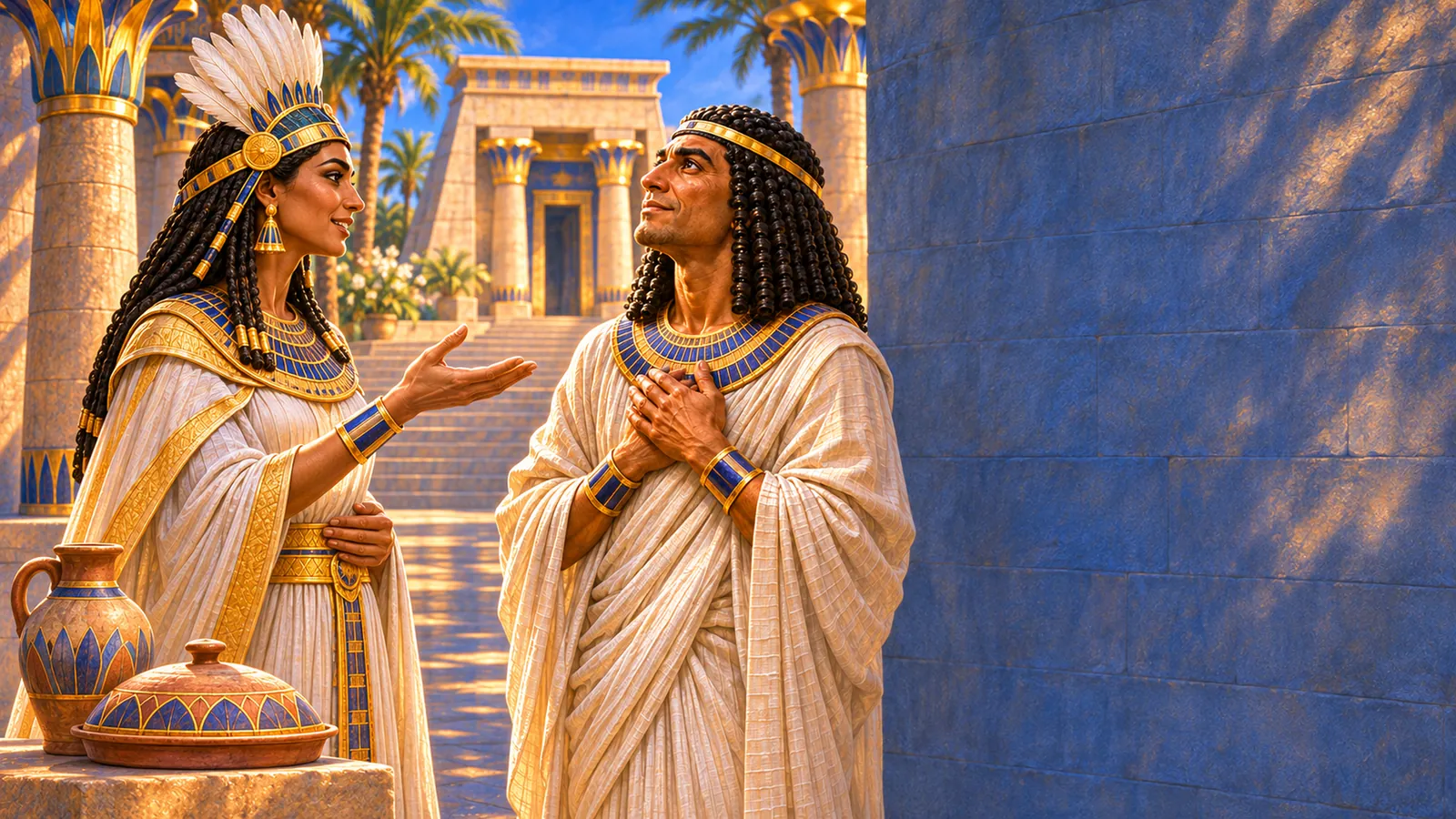
يقول الجمع إنّ آني سيُمنح قرابين من اللحم ويُؤذن له بالدخول إلى حضرة الإله أوزيريس.
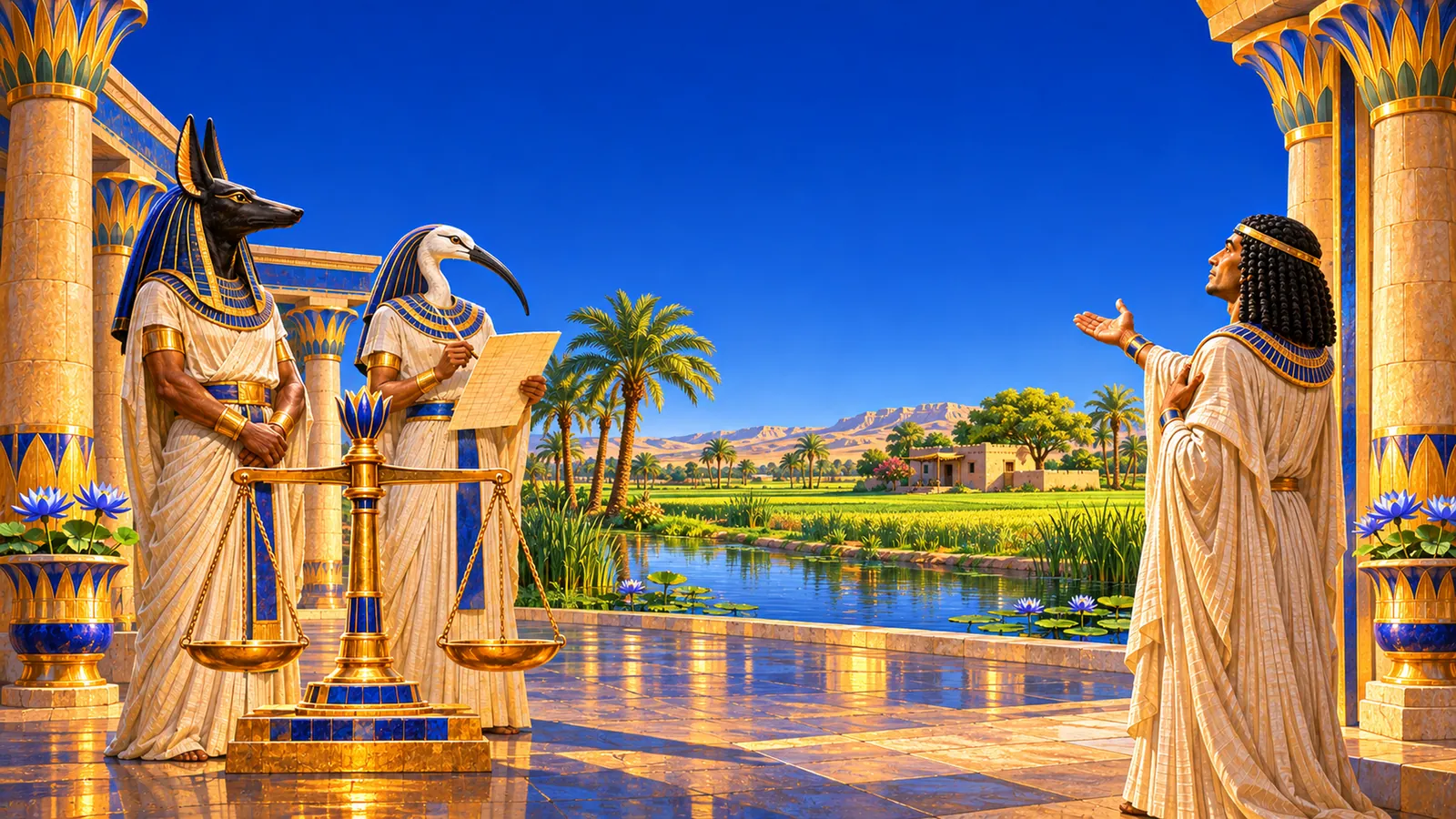
ويعد الجمع آني أيضًا بدار في حقل السلام يقيم فيها أبدًا، على مثال ما مُنح لأتباع حورس.
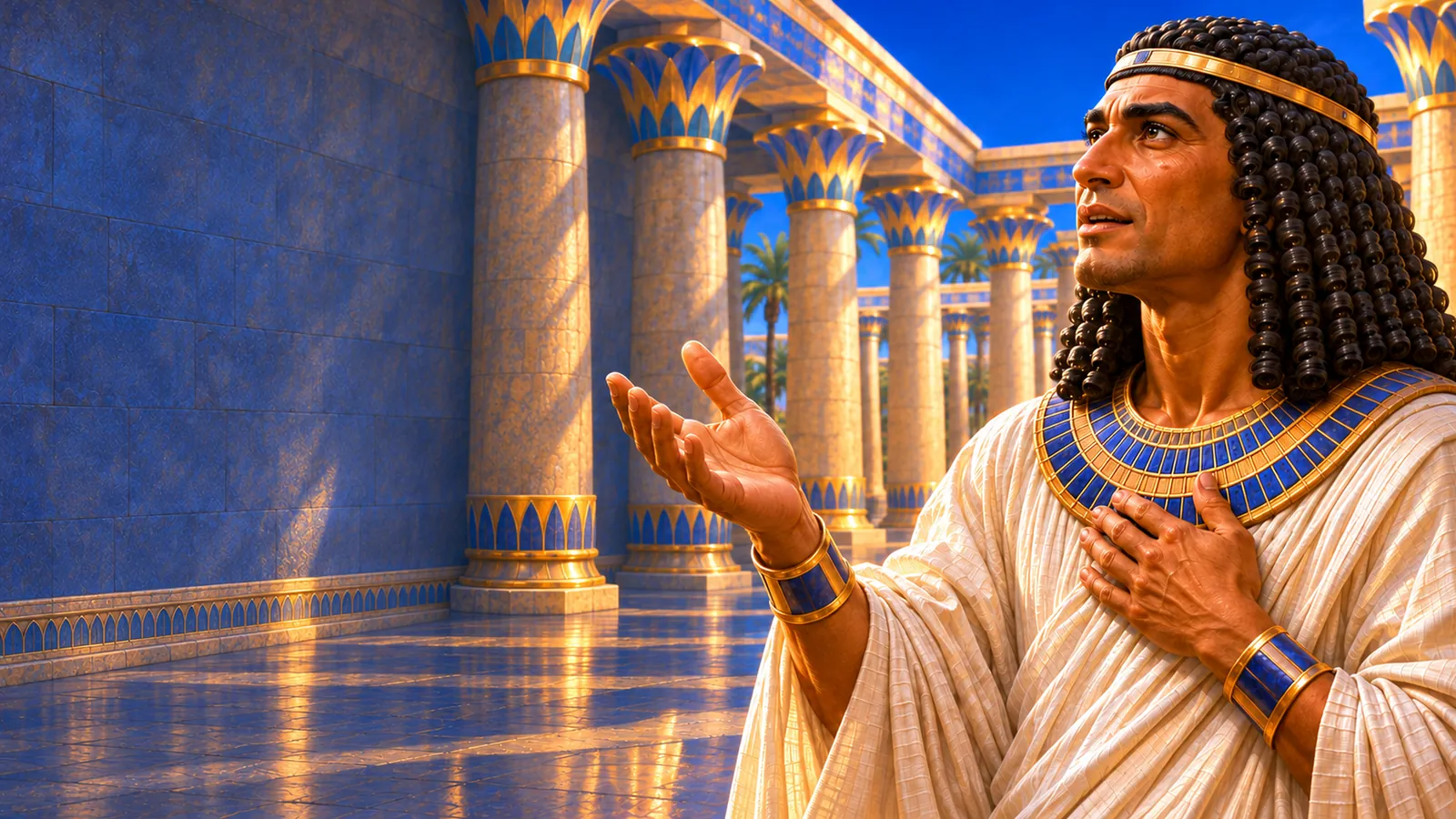
يترجم بدج العبارة المصريّة «ما خِرو» بمعنى «ظافر». ويشرحها بمعنى «صادق الصوت» أو «سديد الكلمة».
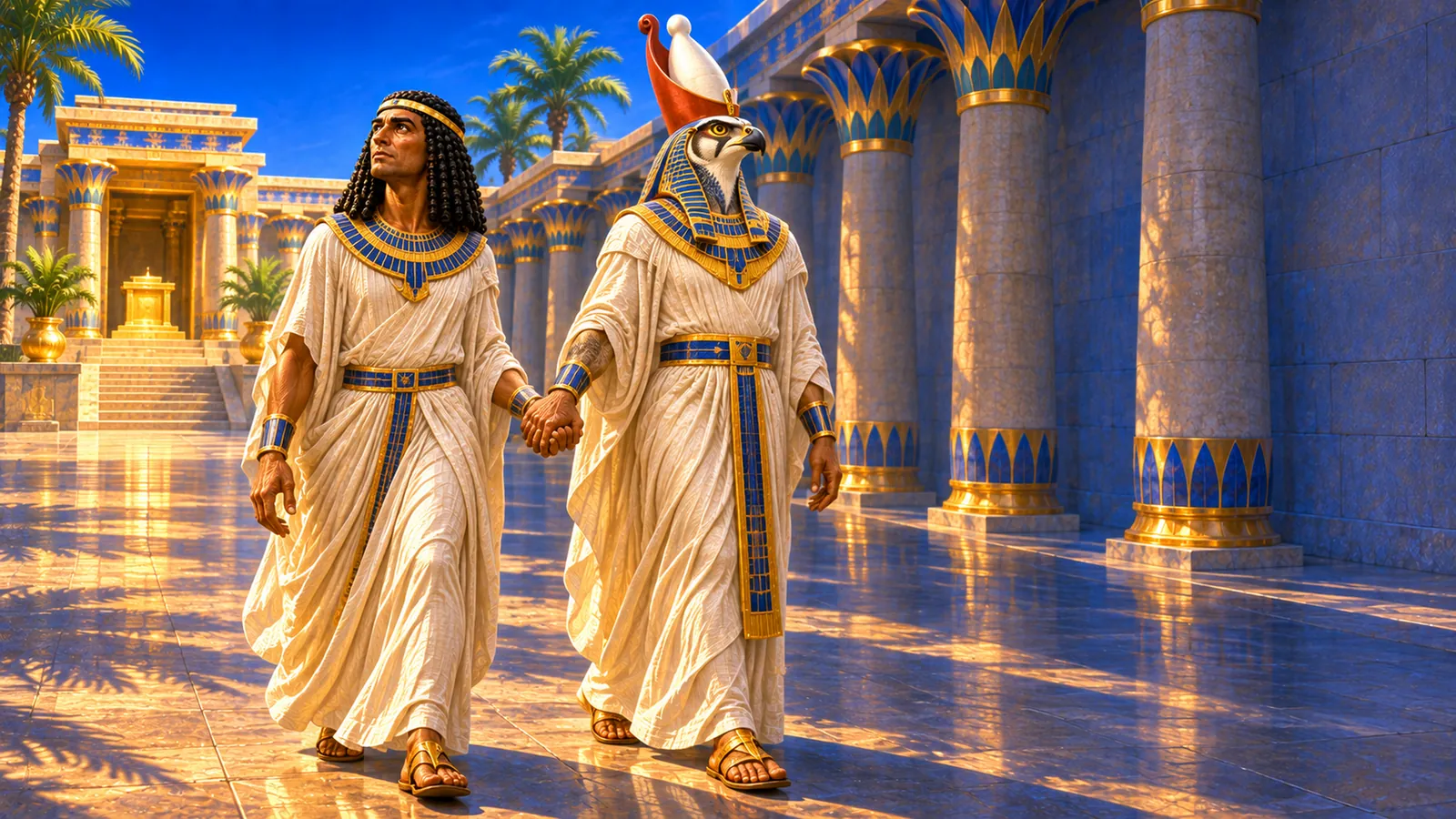
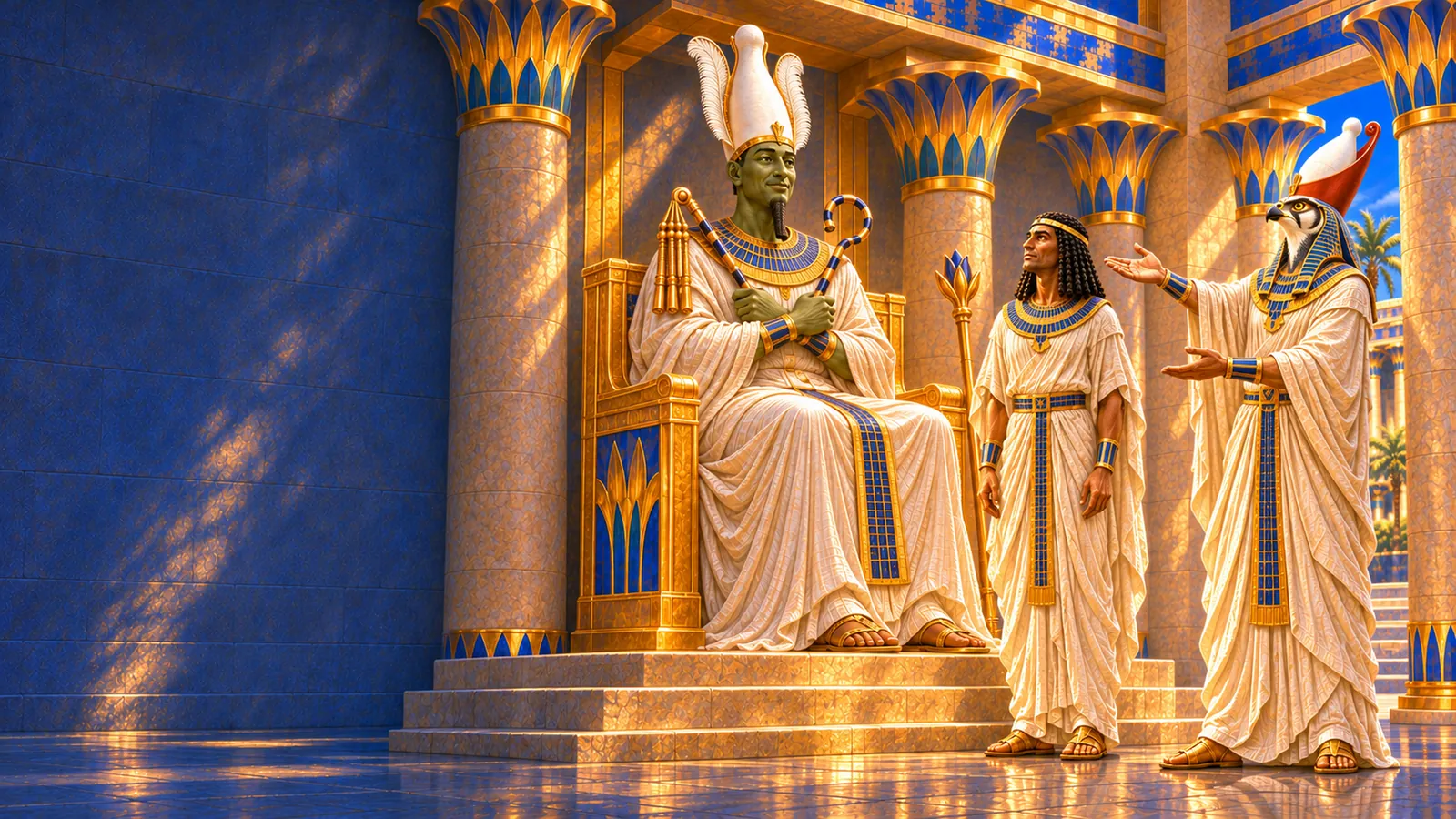
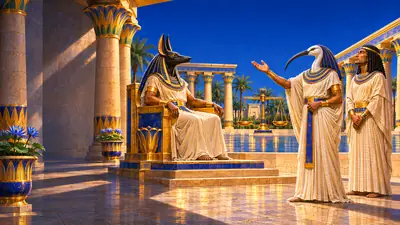
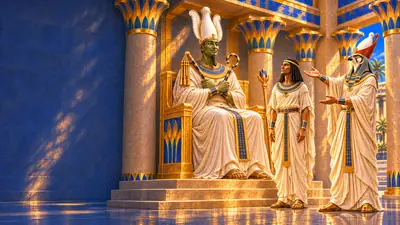
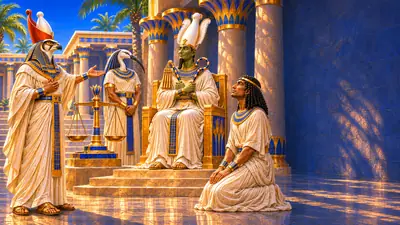
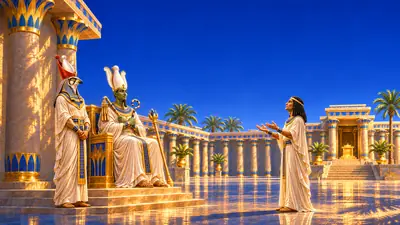
في وصف بدج لما بعد الحكم، يتّخذ حورس ابن إيزيس جميع صفات أبيه أوزيريس. ويأخذ بيده اليمنى يد آني اليسرى ويقوده إلى المقصورة.
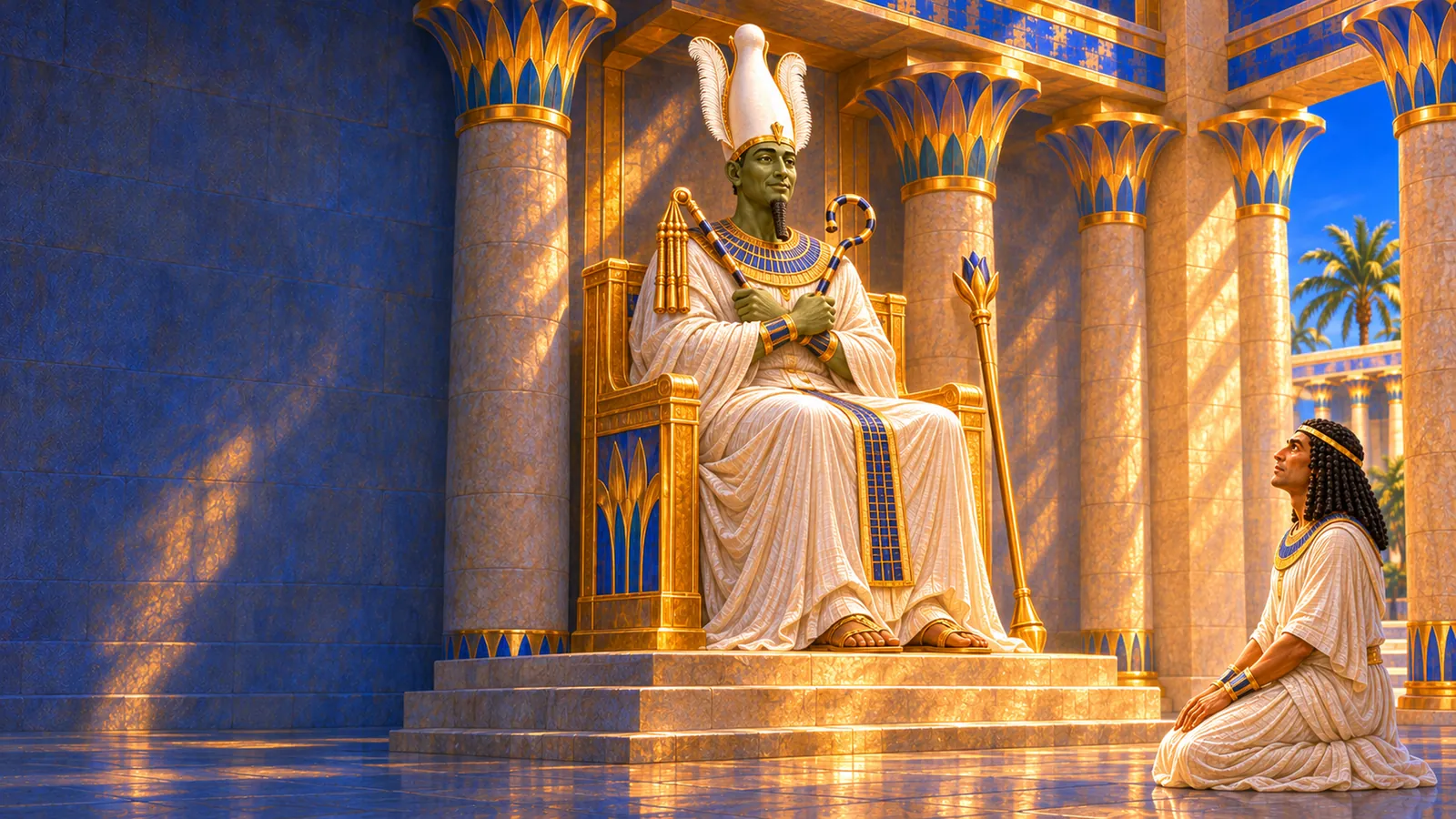
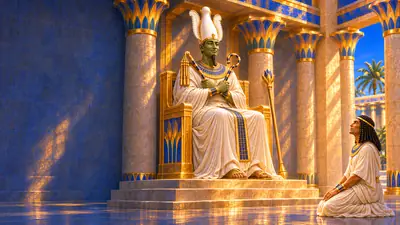
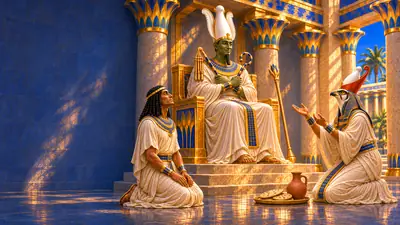
يصف بدج أوزيريس جالسًا في المقصورة، يلبس تاجًا أبيض مزيّنًا بالريش ويحمل صولجانًا وعصًا معقوفة وسوطًا أو مِذَبّة. ويقول إنّ هذه الأدوات ترمز إلى السيادة والسلطان.
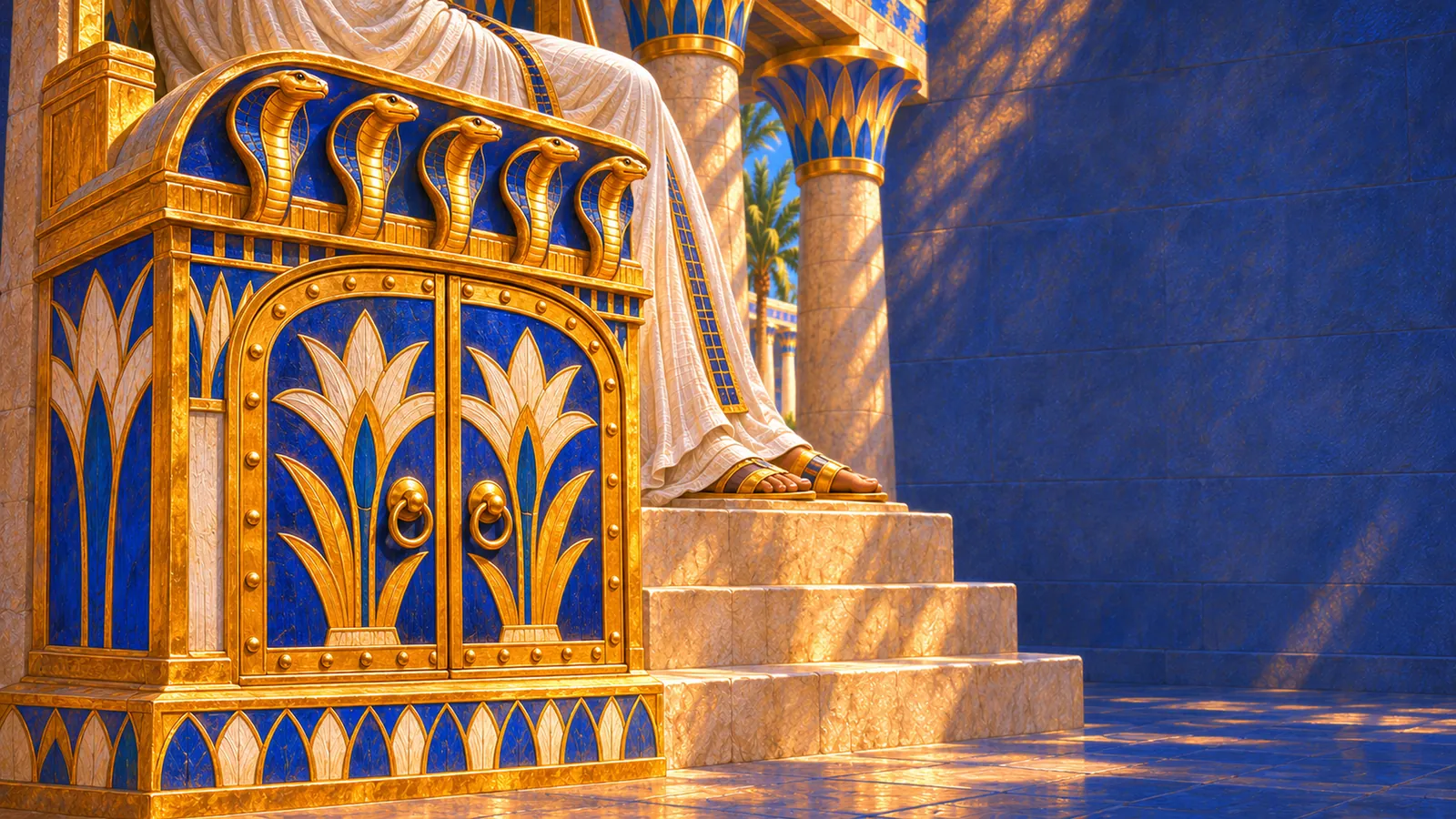
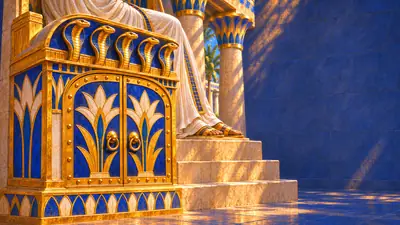
في وصف بدج، العرش مقبرة. وعلى جانبه تظهر الأبواب الموصدة وإفريز حيات الكوبرا الملكية في الرسم.
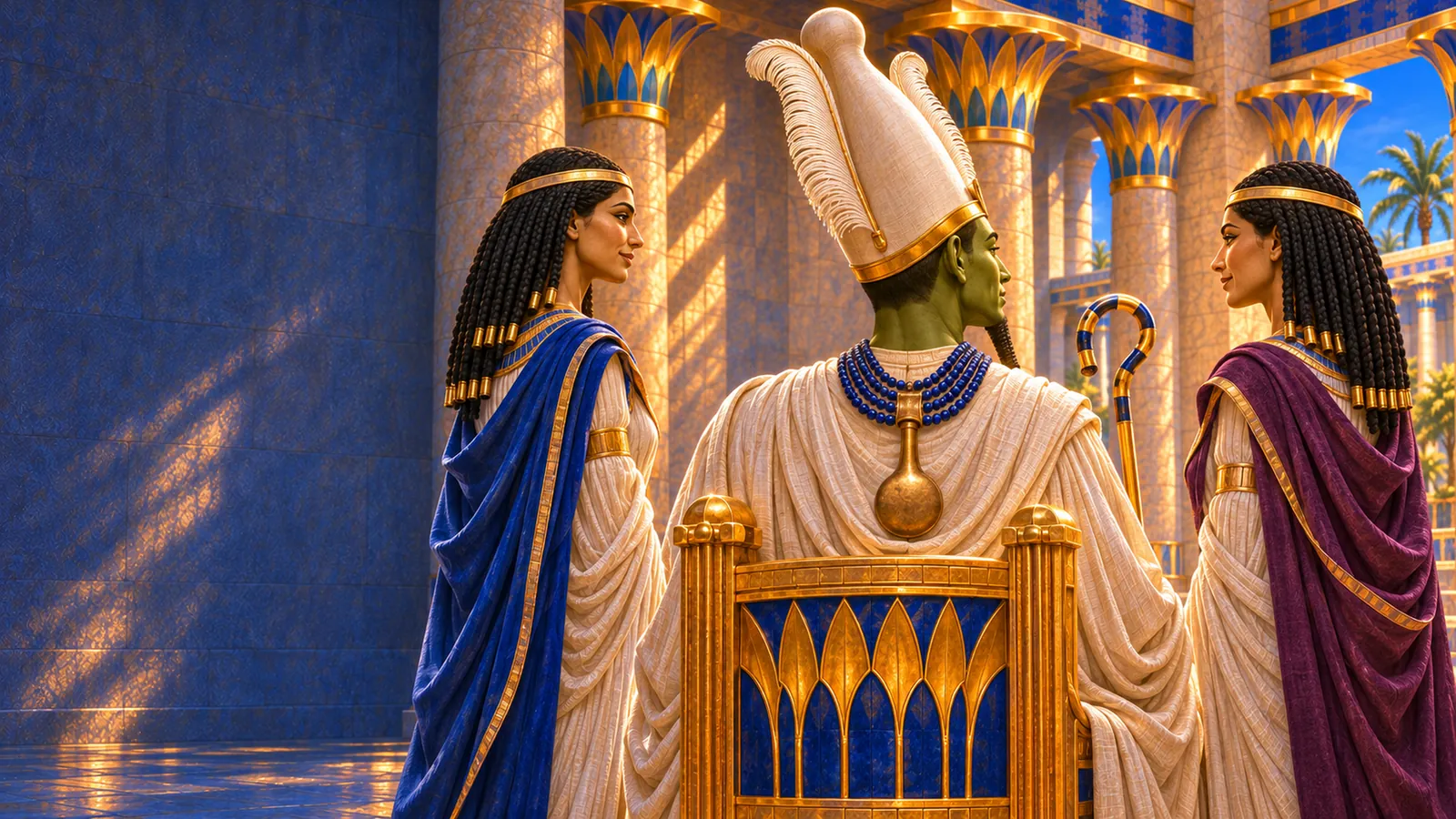
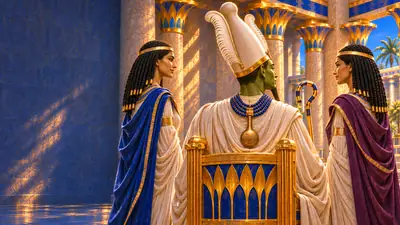
يقول بدج إن مِناتًا يتدلّى خلف عنق أوزيريس، رمزًا للفرح والسعادة. وتقف نفتيس عن يمينه وإيزيس عن يساره.
تقديم آني
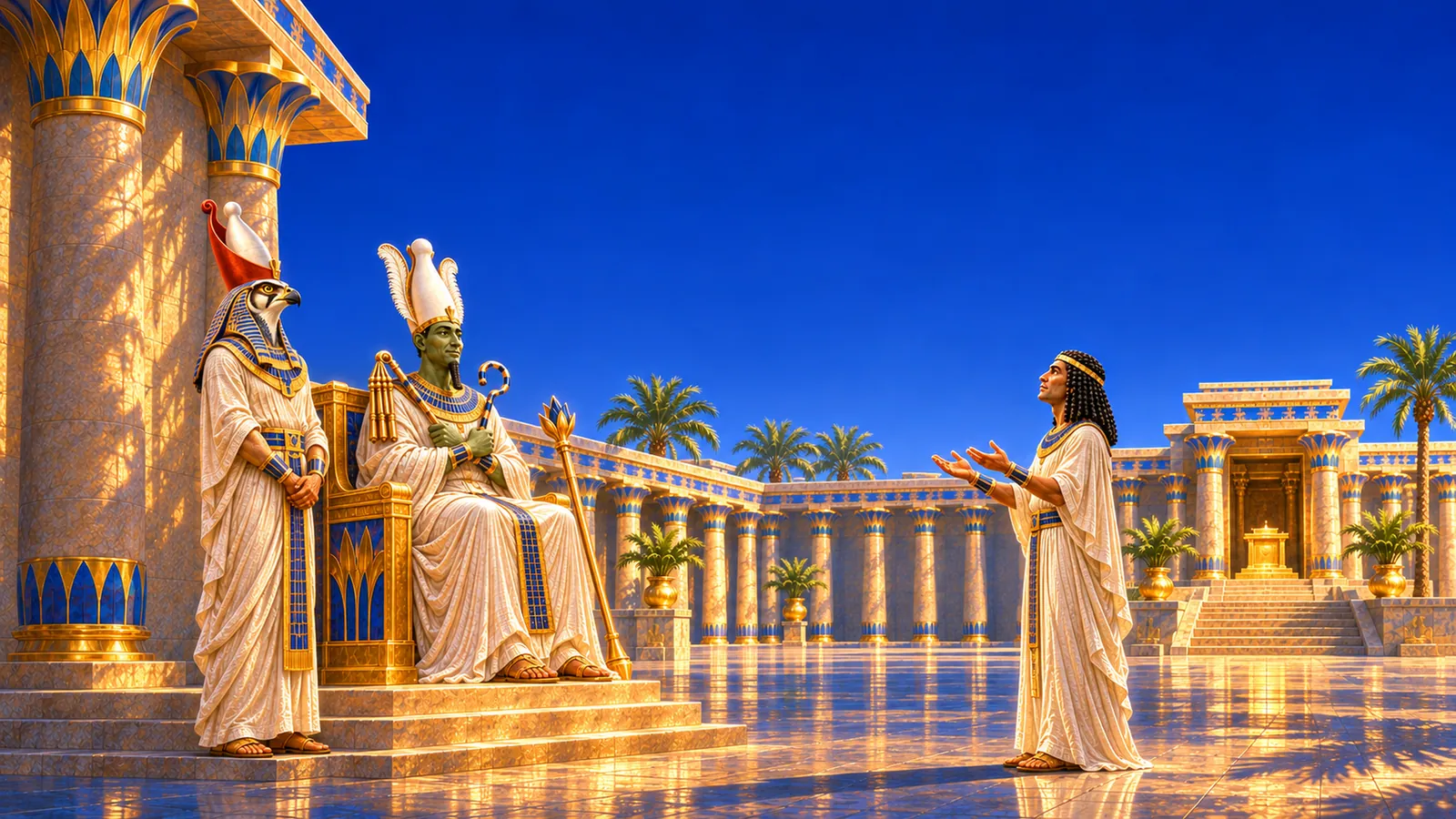
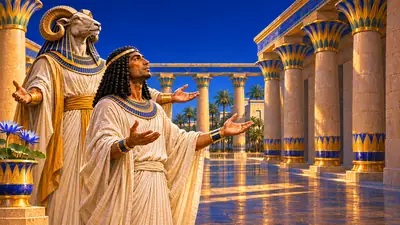
يكلّم حورس أوزيريس ويدعوه ون نفر. ويقول إنه حضر أمامه وجاء إليه بأوزيريس آني.
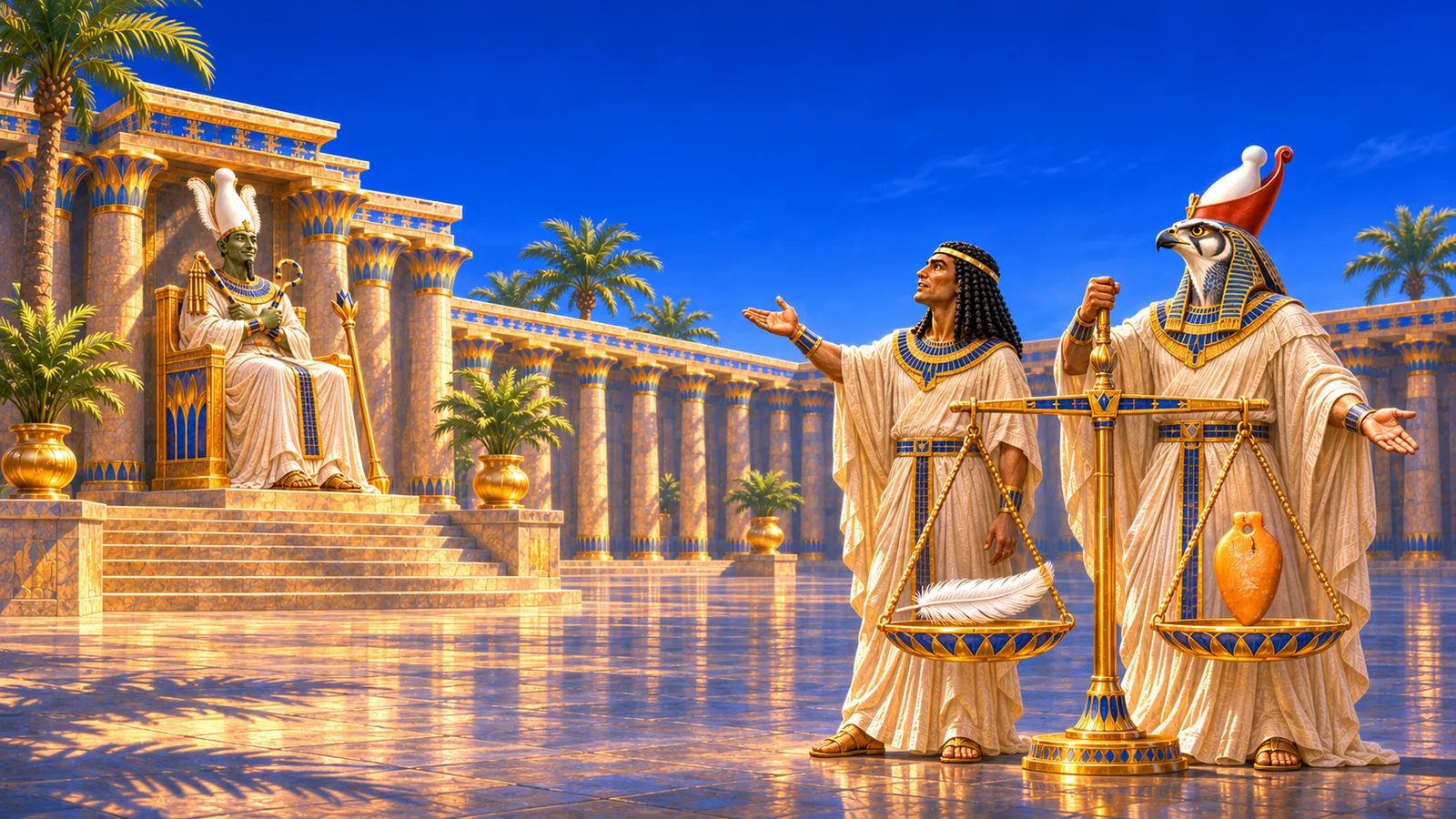
يقول حورس إن قلب آني ثبتت استقامته وخرج من الميزان. ولم يذنب في حق أي إله أو إلهة.
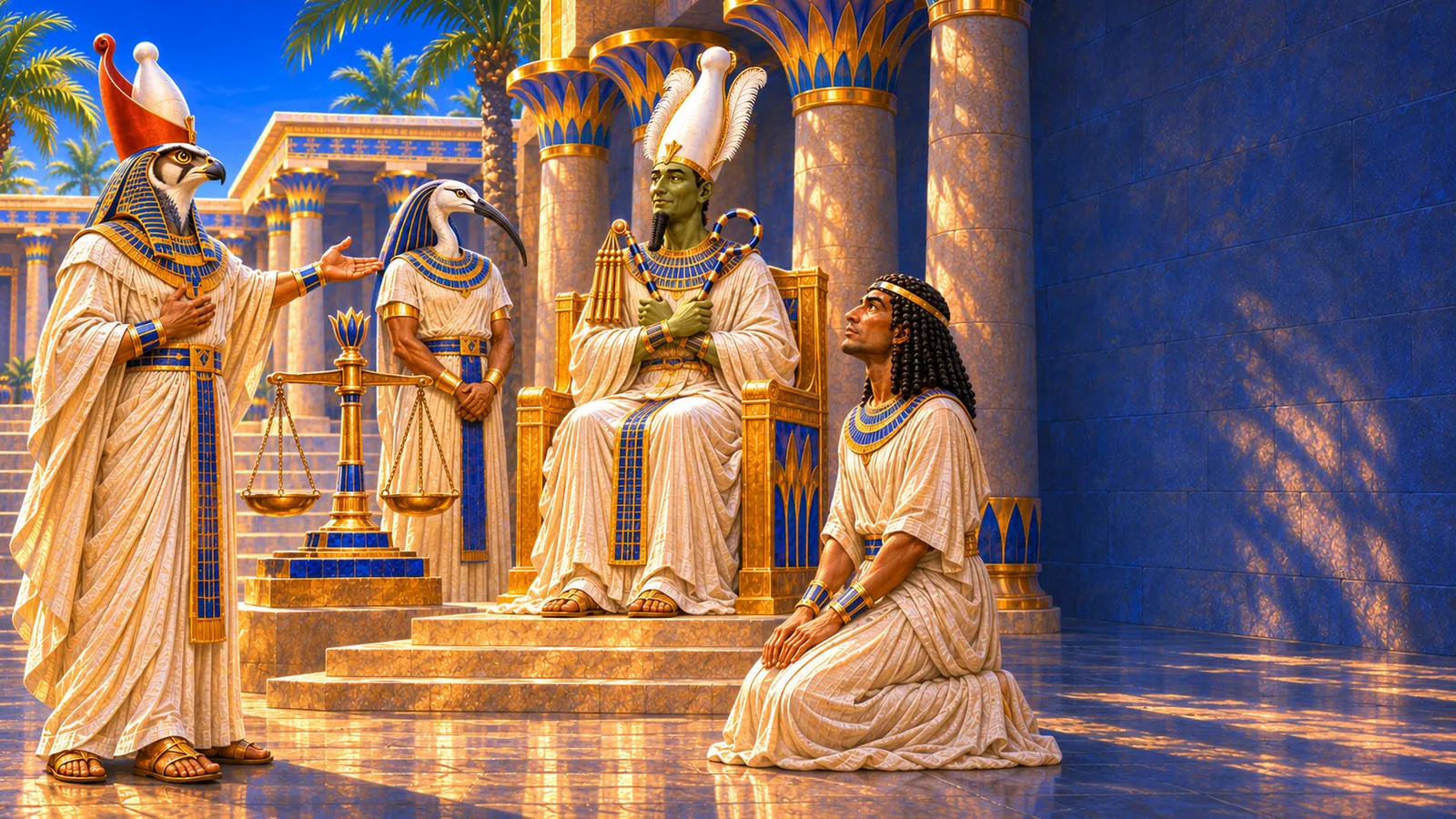
ويضُيف حورس أن تحوت وزنه بموجب القرار الذي أصدرته إليه جماعة الآلهة. ويصف ما ثبت بالوزن بأنه حق وصواب.
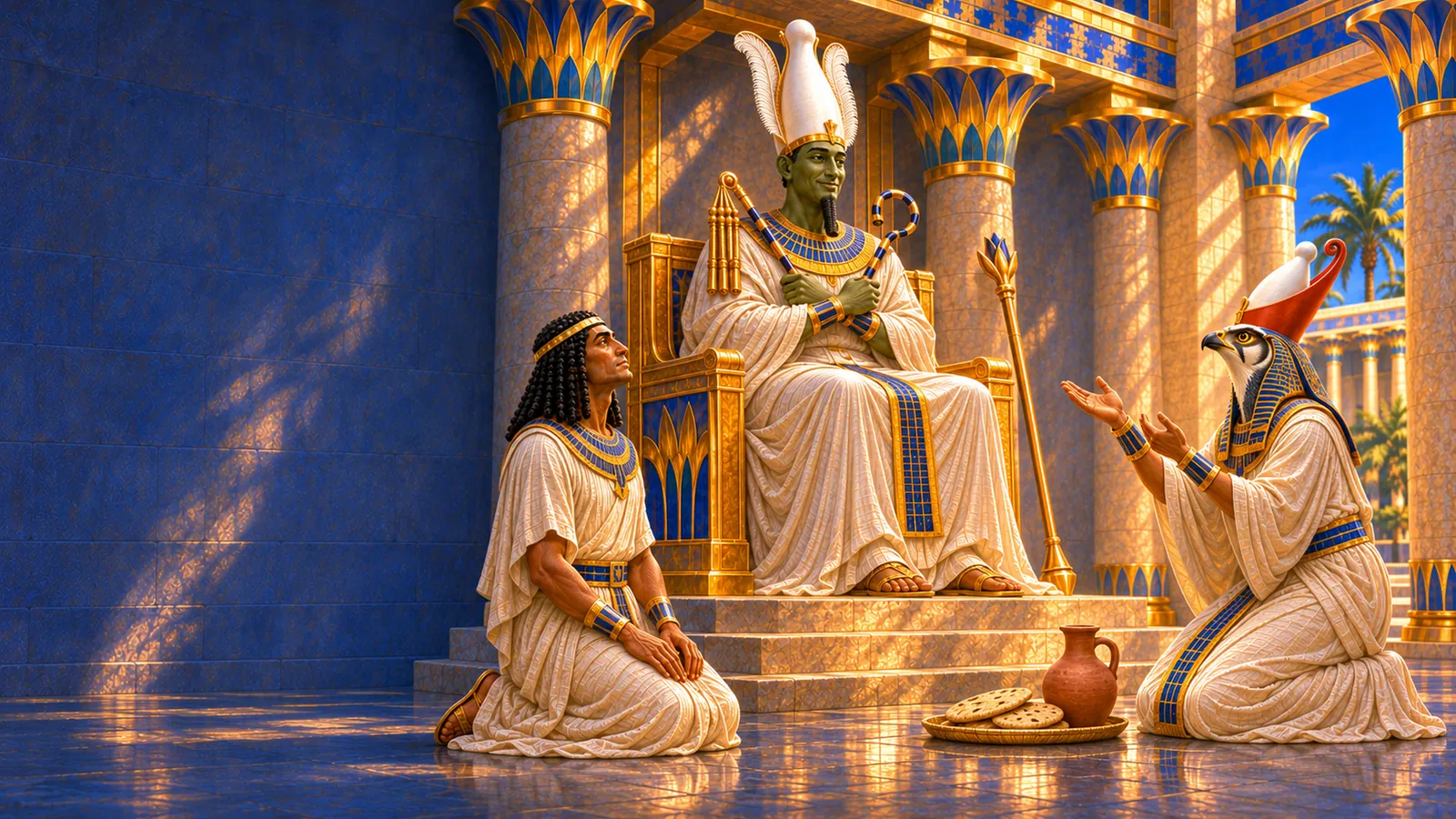
يطلب حورس من أوزيريس أن يمنح آني كعكًا وجعة، وأن يأذن له بالمثول أمامه. ويطلب أن يكون آني مثل أتباع حورس إلى الأبد.
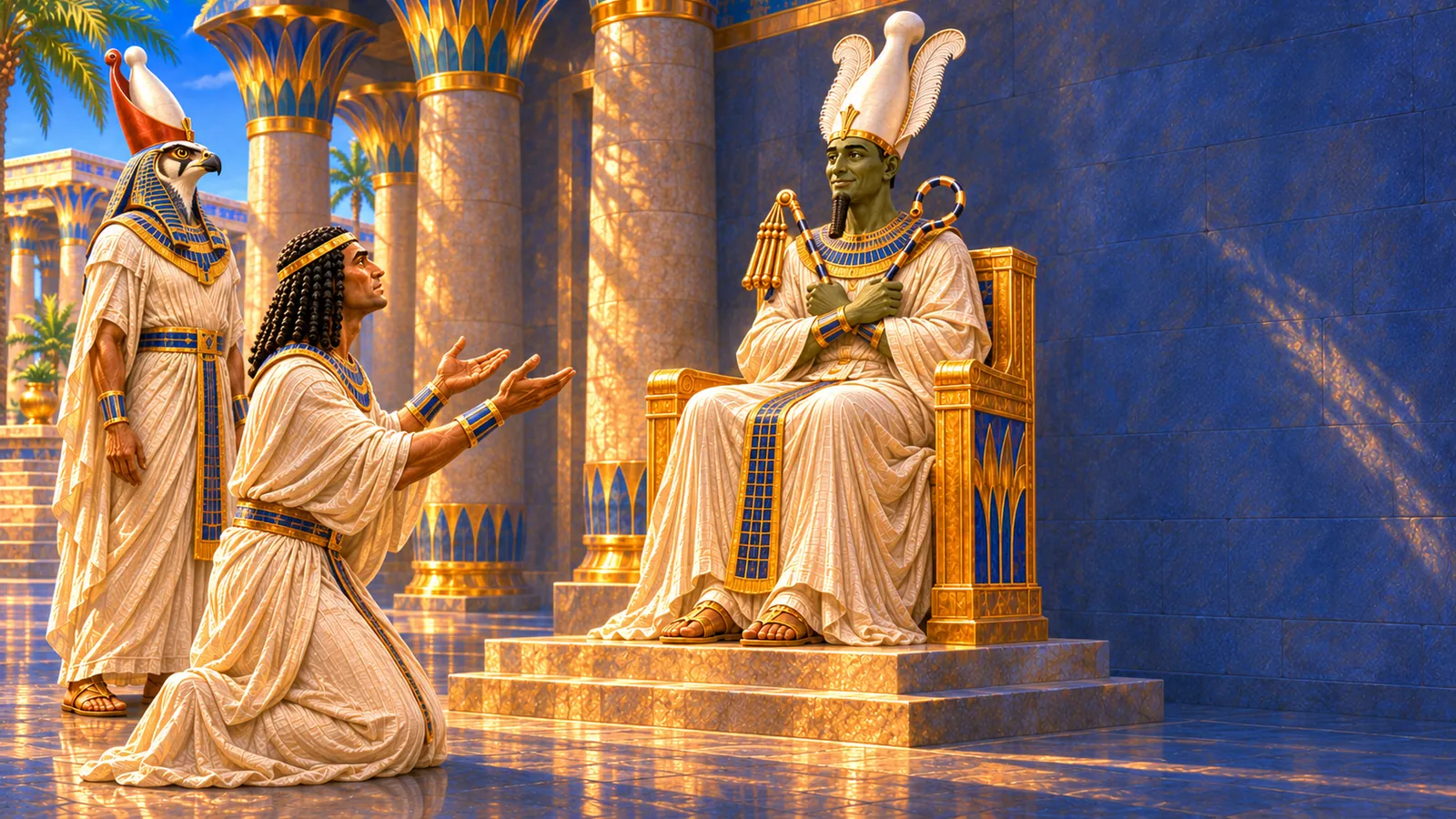
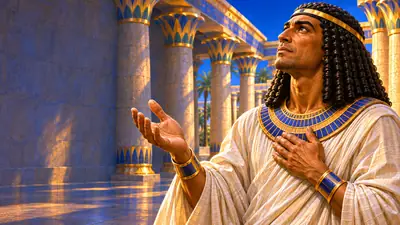
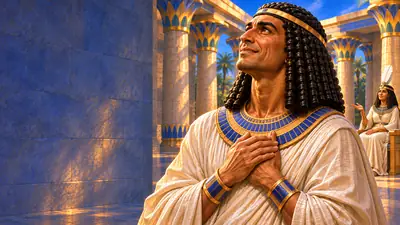
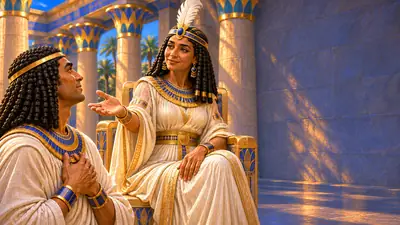
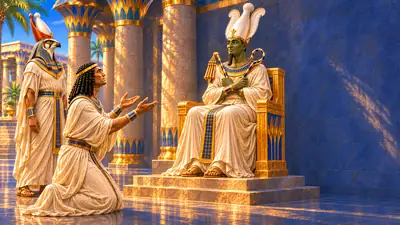
ثم يتقدّم آني بطلبه بنفسه. فيخاطب أوزيريس باسم رب أمنتت ويقول إنه في حضرته.
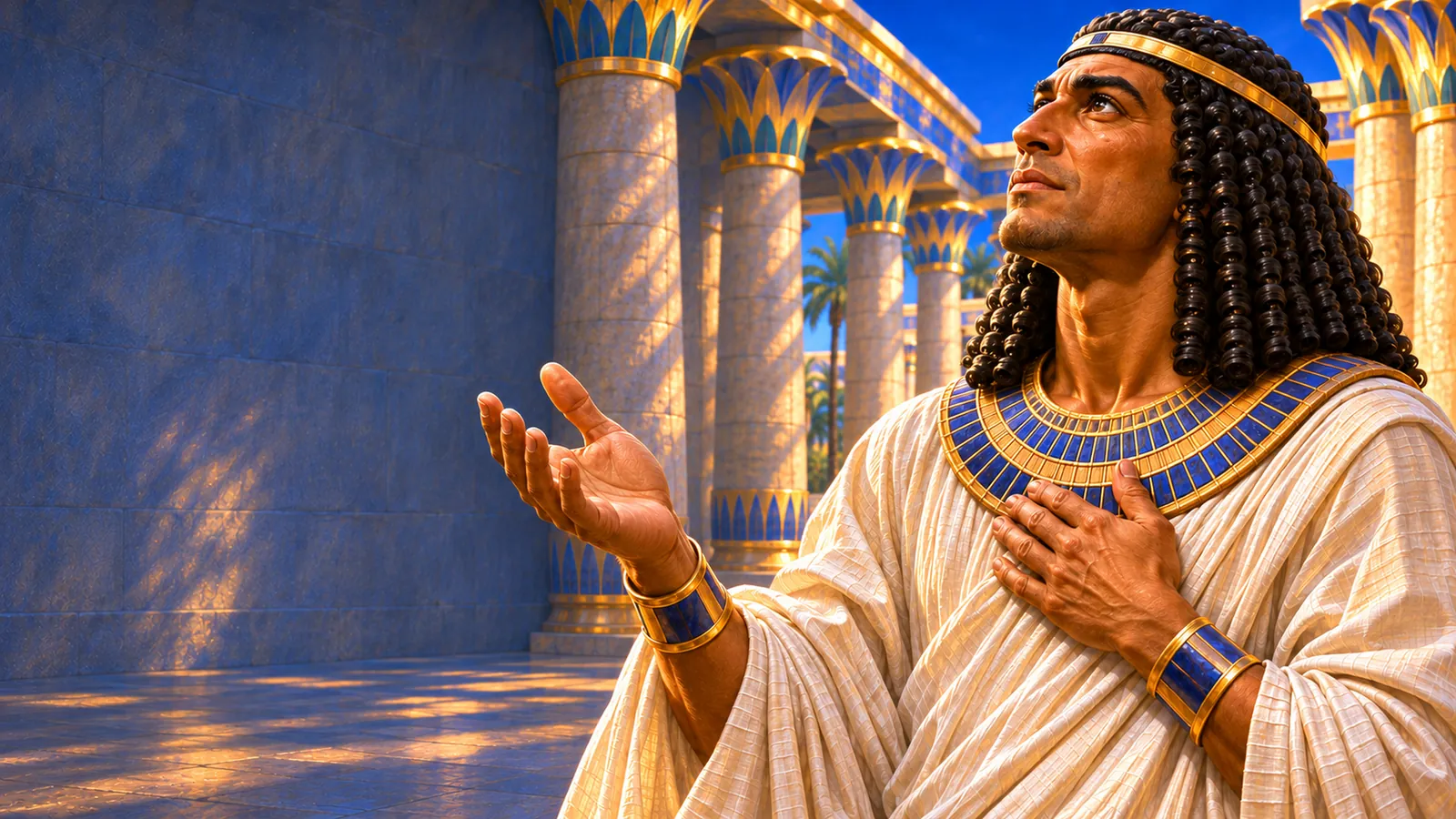
يقول آني إنه بلا ذنب. ويقول إنه لم يكذب عن علم، ولم يفعل شيئًا بقلب مخادع.
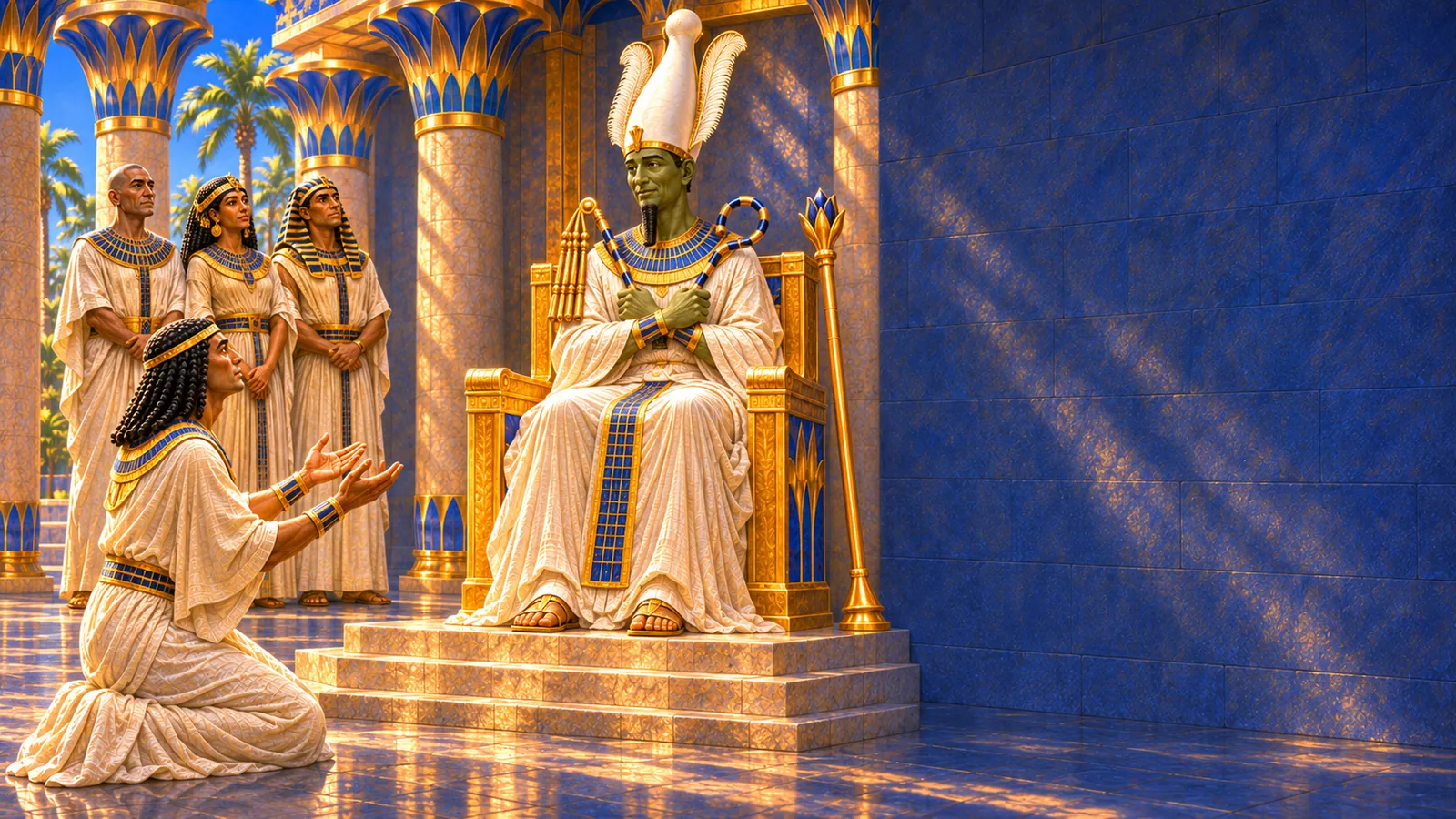
يرجو آني في طلبه أن يكون مثل أصحاب الحظوة المجتمعين حول الرب الذي يخاطبه.
يطلب آني أن يكون أوزيريس يحظى برضا الإله الجميل. ويرجو أن يكون محبوبًا عند رب العالم.
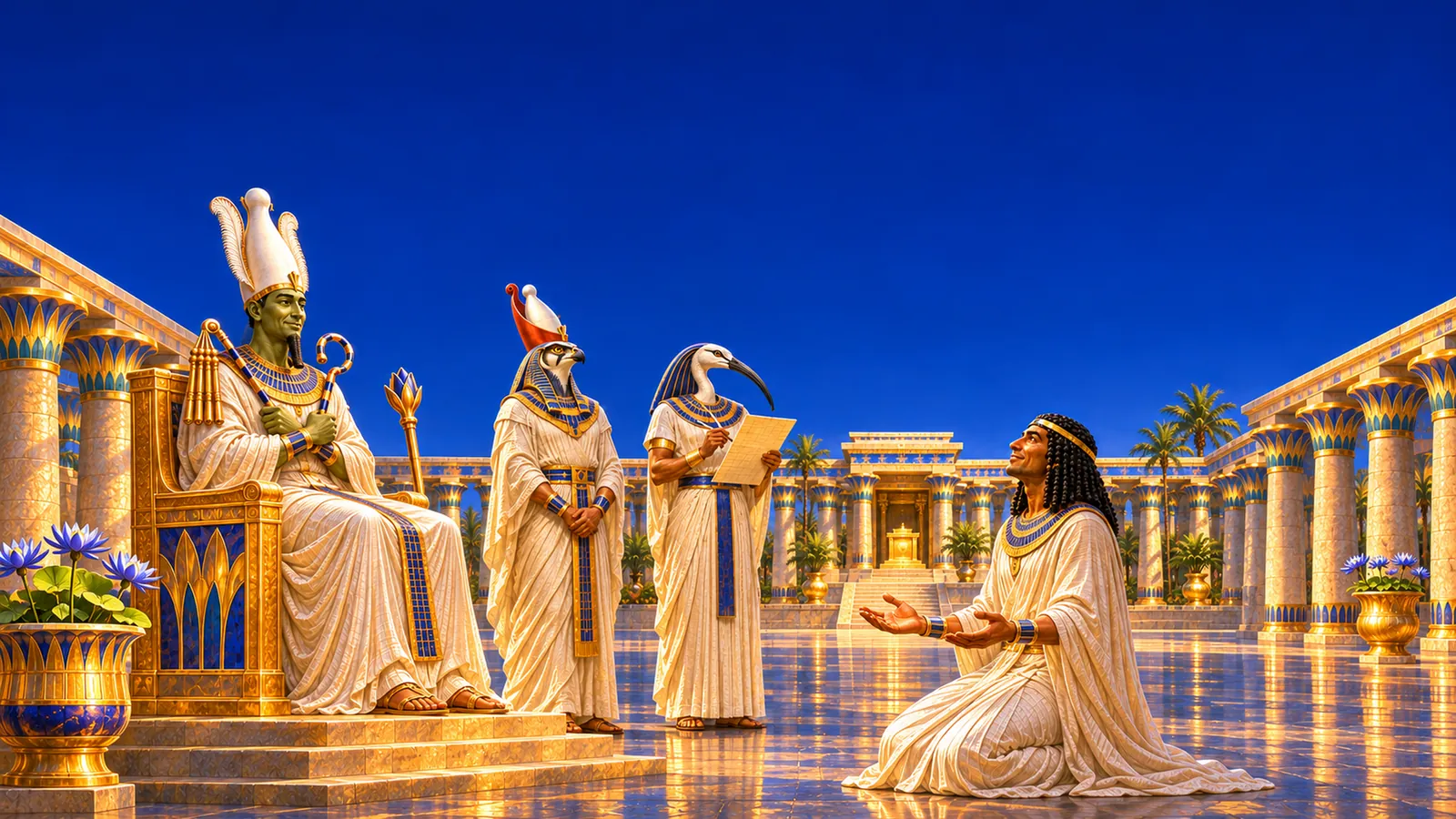
آني أمام أوزيريس
يعرّف آني بنفسه بوصفه كاتب ماعت الملكي، ويقول «الذي يحبّه». ويختم باسمه وبعبارة يترجمها بدج بمعنى المنتصر أمام أوزيريس.
نهاية الفصل الأول
كل الصفحات

المصادر
المصادر والملاحظات مكتوبة بالإنجليزية كما وردت في المراجع.
The five speeches are paraphrased in order.
الطبعات المعتمدة
- Publication record for Egyptian Ideas of the Future Life
- The 1908 edition, Chapter IV
- Budge’s illustration and description of Ani’s weighing
- Budge’s illustration and description of Ani’s audience before Osiris
- Budge note 90, British Museum Papyrus of Ani No. 10470
- Budge note 118, sources for the scene and its response
- Budge note 119, closing speech and variant
ملاحظات على هذه الرواية
Pages 01–02 · transcription lines 3476–3479. Budge introduces Ani’s words before the weighing. Ani calls his heart his mother twice and names it as the heart through which he came into being. His first requests concern opposition at judgment and opposition in the presence of the sovereign princes.
Pages 03–04 · transcription lines 3479–3481. Ani asks that he and his heart remain together before the keeper of the Balance. He tells his heart that it is his ka, which dwells in his body.
Pages 05–06 · transcription lines 3481–3483. The Khnemu phrase follows a semicolon in Budge and continues Ani’s direct address to the heart. The two actions are joining the limbs and strengthening them. Next Ani asks his heart to come forth into the place of happiness to which they go.
Page 07 · transcription lines 3483–3485a. Ani’s closing appeal names the princes of Osiris’s court as those who order the circumstances of people’s lives. The phrase about his name stinking is his request that they spare his name from disgrace. His speech closes on the first part of line 3485. Budge then introduces a separate addition found in “some papyri.”
Pages 08–09 · transcription lines 3491–3493. In Budge’s description, Anubis examines the tongue of the balance. The ape indicates to its associate Thoth that the beam is exactly level.
Pages 10–11 · transcription lines 3493–3496. The heart exactly counterbalances the feather symbolic of Maāt. Budge explains Maāt in this passage through right, truth and law. Thoth writes down the result and prepares to address the gods in Budge’s account.
Page 12 · transcription lines 3500–3501. Thoth calls for the judgment to be heard and reports that the heart of Osiris has indeed been weighed. This title is spoken within the judgment of Ani. His soul’s witness, the trial in the Great Balance and the reported findings follow on the next pages.
Page 13 · Thoth’s report, lines 3501–3502. The soul stands as a witness for the deceased.
Pages 14–15 · Thoth’s report, lines 3502–3505. Thoth says that no wickedness was found in Ani, the temple offerings were not wasted, no harm was done by Ani’s deeds and no evil reports were spread by him while he was on earth.
Pages 16–18 · The great company’s reply, lines 3509–3513. Budge identifies the respondents as the great company of the gods. They confirm Thoth’s words and address him as dwelling in Khemennu. Budge’s parenthetical identification gives Hermopolis. They name the deceased as Osiris, the scribe Ani, triumphant, and declare him holy and righteous. The next sentence says he has not sinned or done evil against them.
Pages 19–20 · The great company’s reply, lines 3513–3515. The company says the Devourer Ām-mit will not be allowed to prevail over Ani. It then states that Ani will be granted meat-offerings and entrance into the presence of Osiris. The actual introduction by Horus in Budge’s later description follows at its own point.
Page 21 · The great company’s reply, lines 3516–3517. The grant concludes with a homestead forever in the Field of Peace, as for the followers of Horus. Note 118 at transcription line 4999 describes those followers as a class of mythological beings and refers to Budge’s *Papyrus of Ani*, p. cxxv.
Page 22 · Budge’s gloss, lines 3529–3533. His adjoining discussion elaborates on the powers he attributes to this expression.
Pages 23–24 · Budge’s shrine description, lines 3581–3586. Horus takes Ani’s left hand in his right and leads him up to the shrine. Budge describes Osiris seated there, wearing the white crown with feathers and holding a sceptre, a crook and a whip or flail. Budge says the implements signify sovereignty and dominion. The details remain in the spoken description.
Page 25, Papyrus of Ani with Budge’s attributed prose where specified, transcription lines 3586–3587. Budge describes the tomb that forms the throne and says the bolted doors and uraeus cornice appear painted at its side. Only his prose carries these details.
Page 26, Papyrus of Ani with Budge’s attributed prose where specified, transcription lines 3587–3589. Budge glosses it as a symbol of joy and happiness and separately specifies the positions to Osiris’s right and left.
Page 27, Papyrus of Ani with Budge’s attributed prose where specified, transcription lines 3607–3608. Budge introduces Horus as the speaker. Un-nefer addresses Osiris. The Osiris Ani is the person Horus is introducing.
Page 28, Papyrus of Ani with Budge’s attributed prose where specified, transcription lines 3608–3610. Horus applies the three clauses to Ani’s heart and says it had sinned against neither god nor goddess.
Page 29, Papyrus of Ani with Budge’s attributed prose where specified, transcription lines 3610–3612. Horus attributes the weighing to Thoth under the company’s decree. Budge leaves the finding as “it” in this sentence.
Page 30, Papyrus of Ani with Budge’s attributed prose where specified, transcription lines 3612–3614a. The cakes and ale, entry and enduring likeness to Horus’s followers complete the speech. Stop at “for ever!” on 3614 before Budge’s account of what follows.
Page 31, Papyrus of Ani with Budge’s attributed prose where specified, transcription lines 3616.
Page 32, Papyrus of Ani with Budge’s attributed prose where specified, transcription lines 3616–3617. The three claims are Ani’s own words within the appeal and distinct from the prior verdict. All three appear in these lines.
Page 33, Papyrus of Ani with Budge’s attributed prose where specified, transcription lines 3617–3618. Ani asks to be like the favored ones around the addressee. The wish remains a request.
Page 34, Papyrus of Ani with Budge’s attributed prose where specified, transcription lines 3618–3620. The text distinguishes the beautiful god and the title Lord of the world. It does not resolve their relationship in these lines.
Page 35, Papyrus of Ani with Budge’s attributed prose where specified, transcription lines 3620–3622 and n. 119. Budge supplies [I] in 3620.
الأسطر القديمة وراء كل صفحة
- Page 1: Budge 1908, Egyptian Ideas of the Future Life, ch. IV, Papyrus of Ani judgment, Ani’s speech to his heart (local HTML 3476–3477)
- Page 2: Budge 1908, Egyptian Ideas of the Future Life, ch. IV, Papyrus of Ani judgment, Ani’s speech to his heart (local HTML 3477–3479)
- Page 3: Budge 1908, Egyptian Ideas of the Future Life, ch. IV, Papyrus of Ani judgment, Ani’s speech to his heart (local HTML 3479–3480)
- Page 4: Budge 1908, Egyptian Ideas of the Future Life, ch. IV, Papyrus of Ani judgment, Ani’s speech to his heart (local HTML 3480–3481)
- Page 5: Budge 1908, Egyptian Ideas of the Future Life, ch. IV, Papyrus of Ani judgment, Ani’s speech to his heart (local HTML 3481–3482)
- Page 6: Budge 1908, Egyptian Ideas of the Future Life, ch. IV, Papyrus of Ani judgment, Ani’s speech to his heart (local HTML 3482–3483)
- Page 7: Budge 1908, Egyptian Ideas of the Future Life, ch. IV, Papyrus of Ani judgment, Ani’s speech to his heart (local HTML 3483–3485a)
- Page 8: Budge 1908, Egyptian Ideas of the Future Life, ch. IV, Papyrus of Ani judgment, Budge’s weighing description (local HTML 3491)
- Page 9: Budge 1908, Egyptian Ideas of the Future Life, ch. IV, Papyrus of Ani judgment, Budge’s weighing description (local HTML 3491–3493)
- Page 10: Budge 1908, Egyptian Ideas of the Future Life, ch. IV, Papyrus of Ani judgment, Budge’s weighing description (local HTML 3493–3495)
- Page 11: Budge 1908, Egyptian Ideas of the Future Life, ch. IV, Papyrus of Ani judgment, Budge’s weighing description (local HTML 3495–3496)
- Page 12: Budge 1908, Egyptian Ideas of the Future Life, ch. IV, Papyrus of Ani judgment, Thoth’s report (local HTML 3500–3501)
- Page 13: Budge 1908, Egyptian Ideas of the Future Life, 3rd ed., ch. IV, Ani’s judgment, Thoth’s report
- Page 14: Budge 1908, Egyptian Ideas of the Future Life, 3rd ed., ch. IV, Ani’s judgment, Thoth’s report
- Page 15: Budge 1908, Egyptian Ideas of the Future Life, 3rd ed., ch. IV, Ani’s judgment, Thoth’s report
The entire right is an unbroken, naturally shaded blue-gray near wall, gently out of focus, with no line or mark through it. - Page 16: Budge 1908, Egyptian Ideas of the Future Life, 3rd ed., ch. IV, Ani’s judgment, the company’s reply
- Page 17: Budge 1908, Egyptian Ideas of the Future Life, 3rd ed., ch. IV, Ani’s judgment, the company’s reply
- Page 18: Budge 1908, Egyptian Ideas of the Future Life, 3rd ed., ch. IV, Ani’s judgment, the company’s reply
The entire right is one cool muted blue plaster plane, smoothly shaded, without a wall edge or meeting line. - Page 19: Budge 1908, Egyptian Ideas of the Future Life, 3rd ed., ch. IV, Ani’s judgment, the company’s reply
- Page 20: Budge 1908, Egyptian Ideas of the Future Life, 3rd ed., ch. IV, Ani’s judgment, the company’s reply
- Page 21: Budge 1908, Egyptian Ideas of the Future Life, 3rd ed., ch. IV, Ani’s judgment, the company’s reply
- Page 22: Budge 1908, Egyptian Ideas of the Future Life, 3rd ed., ch. IV, Ani’s judgment, gloss on maā kheru
- Page 23: Budge 1908, Egyptian Ideas of the Future Life, 3rd ed., ch. IV, Ani’s judgment, Budge’s shrine description
- Page 24: Budge 1908, Egyptian Ideas of the Future Life, 3rd ed., ch. IV, Ani’s judgment, Budge’s shrine description
- Page 25: Budge 1908, Egyptian Ideas of the Future Life, ch. IV, Ani’s judgment (local HTML 3586–3587)
- Page 26: Budge 1908, Egyptian Ideas of the Future Life, ch. IV, Ani’s judgment (local HTML 3587–3589)
- Page 27: Budge 1908, Egyptian Ideas of the Future Life, ch. IV, Ani’s judgment (local HTML 3607–3608)
- Page 28: Budge 1908, Egyptian Ideas of the Future Life, ch. IV, Ani’s judgment (local HTML 3608–3610)
- Page 29: Budge 1908, Egyptian Ideas of the Future Life, ch. IV, Ani’s judgment (local HTML 3610–3612)
- Page 30: Budge 1908, Egyptian Ideas of the Future Life, ch. IV, Ani’s judgment (local HTML 3612–3614a)
Every shelf line and sharp highlight is confined to far right. - Page 31: Budge 1908, Egyptian Ideas of the Future Life, ch. IV, Ani’s judgment (local HTML 3616)
- Page 32: Budge 1908, Egyptian Ideas of the Future Life, ch. IV, Ani’s judgment (local HTML 3616–3617)
- Page 33: Budge 1908, Egyptian Ideas of the Future Life, ch. IV, Ani’s judgment (local HTML 3617–3618)
- Page 34: Budge 1908, Egyptian Ideas of the Future Life, ch. IV, Ani’s judgment (local HTML 3618–3620)
- Page 35: Budge 1908, Egyptian Ideas of the Future Life, ch. IV, Ani’s judgment (local HTML 3620–3622 and n. 119)
الرسوم من صنع أرشيف إيل بأدوات الذكاء الاصطناعي؛ والنص مبني على المصادر القديمة (انظر المصادر في آخر كل فصل).