Entität
Ningischzida und Gizzida
Eine Übersichtsseite, die einen Namen, eine Gruppe oder einen Begriff mit den Materialien verbindet, die ihn behandeln.
Automatische Übersetzung. Lesen Sie das Original auf Englisch.
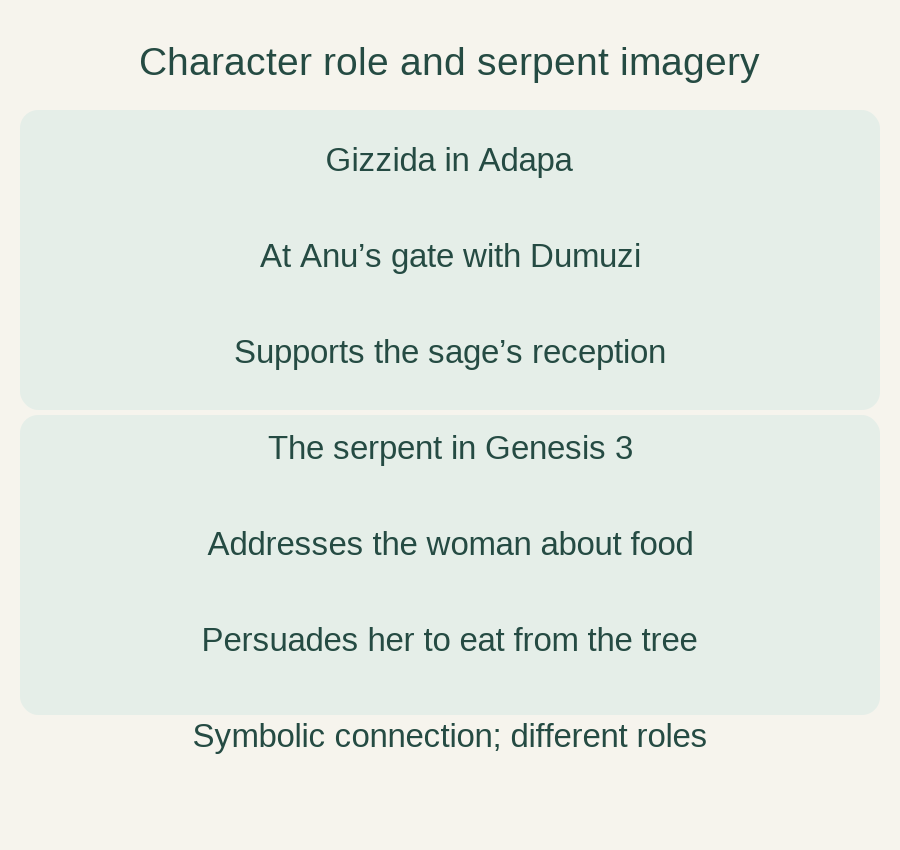
Ningischzida ist ein mesopotamischer Gott, der in der Adapa-Erzählung Gizzida heißt; dort unterstützen er und Dumuzi den Weisen am Tor des Anu.
Zuletzt geprüft:
Text
Ningischzida ist ein Gott der mesopotamischenMesopotamienHistorical region associated with the Tigris and Euphrates: Uruk, Ur, Eridu, cuneiform, Sumer, Akkad, Babylon and Assyria, their languages and cults, and the limits of archaeological evidence.Glossar · Zum Lesen der Erläuterung klicken Überlieferungen, der in Adapa und der SüdwindAdapa und der SüdwindDivergent Sumerian and Akkadian witnesses recount Adapa’s disabling of the South Wind, his ascent and his refusal of life’s food; immortality, Ea’s intentions and the sage’s fate remain debated.Glossar · Zum Lesen der Erläuterung klicken Gizzida heißt. Er steht mit DumuziDumuzi / TammuzDumuzi is a deity of ancient Mesopotamian traditions associated with shepherding and Inanna; Tammuz appears as the name in later linguistic and textual traditions.Glossar · Zum Lesen der Erläuterung klicken am Tor des AnuAn / AnuAn is the Sumerian sky god, called Anu in Akkadian. The sign AN by itself does not identify him: it also denotes sky or divinity.Glossar · Zum Lesen der Erläuterung klicken. Adapas Klagerede über ihr Fehlen gewinnt ihre Unterstützung für sein Erscheinen. Diese Rolle gehört zur Etikette der Begegnung im Himmel und nicht zur Überredung zum Essen durch die Schlange in der Genesis. [1]
Frühere Belege bezeugen seine Verehrung. GudeaGudeaRuler of Lagash in the late third millennium BCE, whose inscriptions document temple construction and the name Anunna.Glossar · Zum Lesen der Erläuterung klicken, Herrscher von Lagasch, weihte ihm ein Chloritgefäß, den Louvre AO190, den das Museum auf ungefähr 2120–2110 v. u. Z. datiert. Es trägt Schlangenbilder. Diese symbolische Verbindung erlaubt einen Vergleich, belegt aber nicht, dass jede Schlange in einem späteren Text denselben Gott darstellt. [2]
Verweise und Anmerkungen
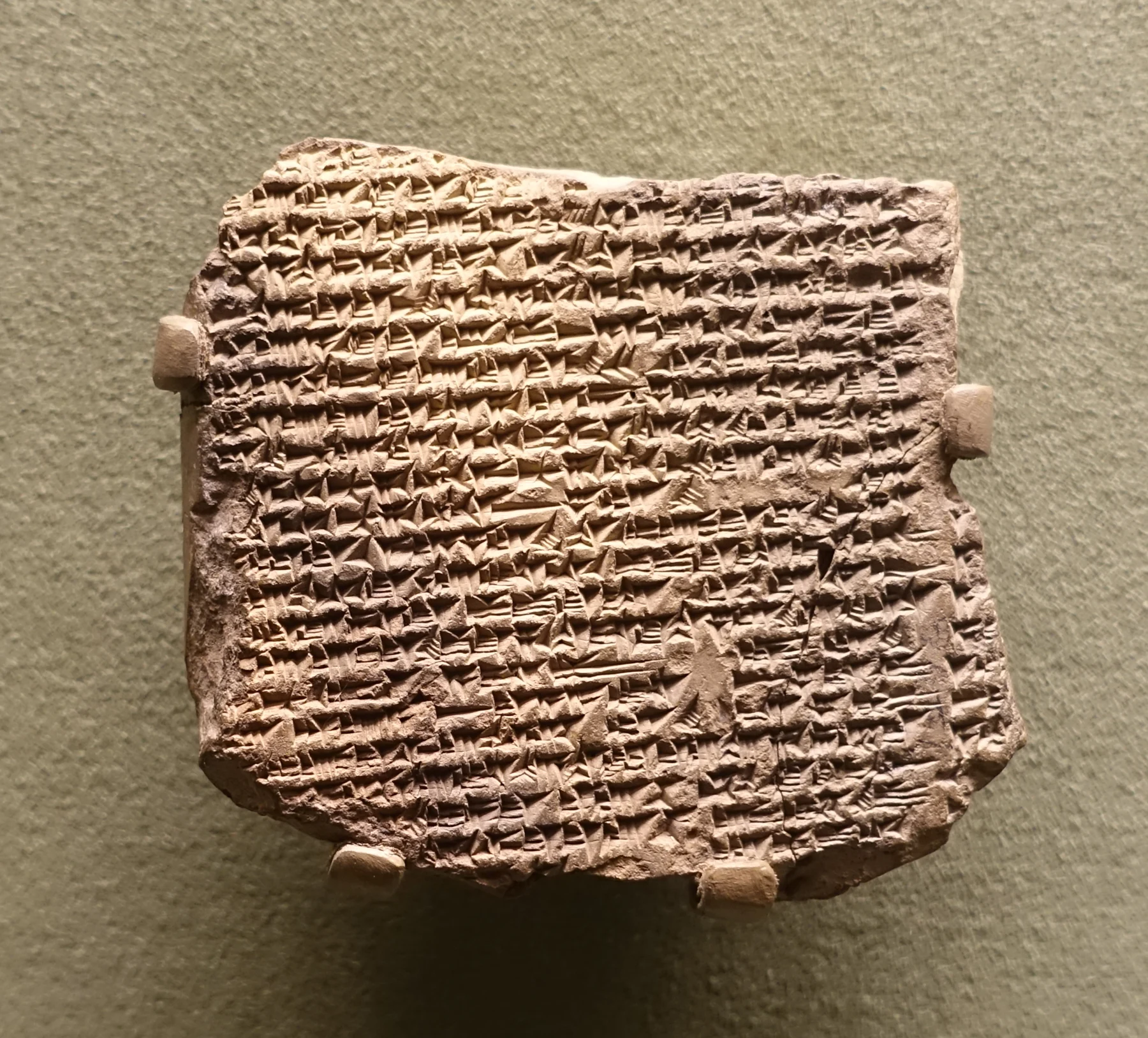
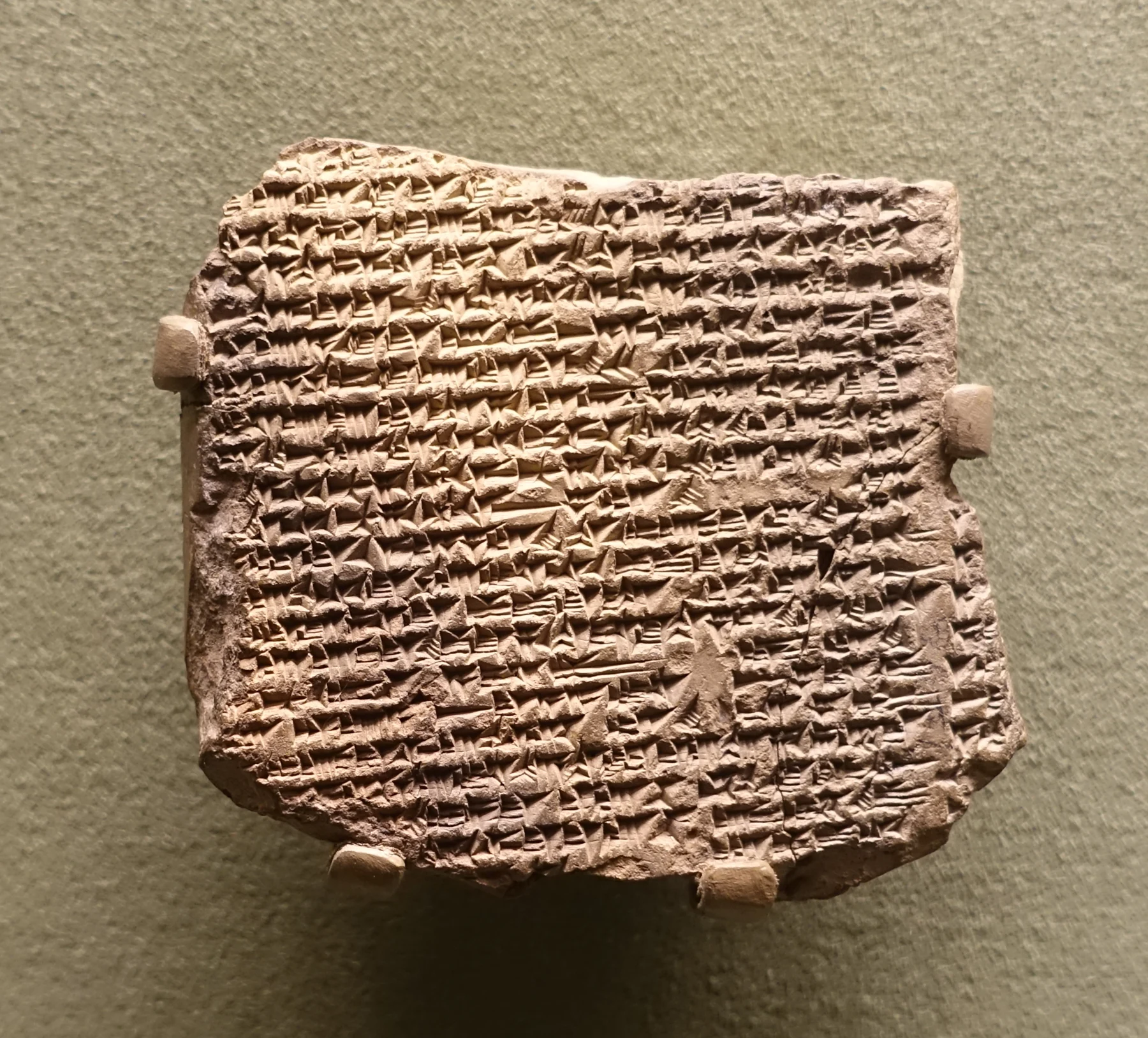
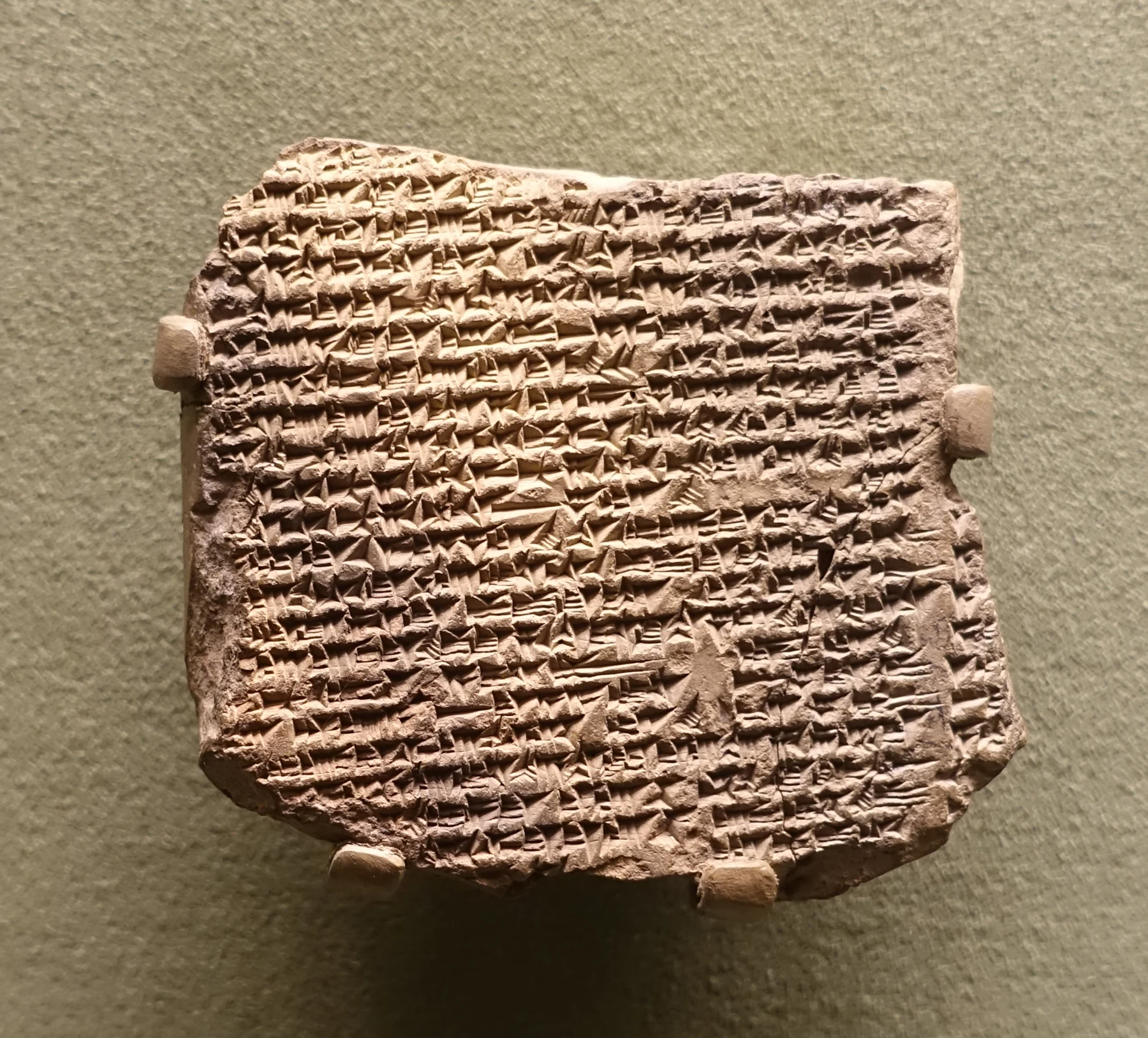
- Catalogue and displayed transliteration read. CDLI gives the broad period about 1400–1100 BCE; Izre’el specifies the fourteenth century. SEAL1557 metadata and lines 29–34, 60–70 also consulted. No independent Akkadian translation or cuneiform collation claimed. CDLI P270855; EA356 / VAT00348; obverse 1′–36′, reverse 1–35 Zurück zum Text ↑
- Catalogue, chlorite material, date, dedication to Ningishzida, serpent imagery and Girsu provenance read. Symbolism does not identify Genesis’s serpent as the same god. Museum photo copyright is not a general reuse licence. Louvre, Gudea’s libation vessel, AO190; about 2120–2110 BCE, dedication and iconography Zurück zum Text ↑
Korrektur vorschlagen · Eine Quelle zu diesem Eintrag vorschlagen
Diesen Eintrag zitieren
IL Archive, «Ningischzida und Gizzida», https://ilarchive.com/de/entities/ningishzida-gizzida
Weiterlesen
Verwandte Lektüren