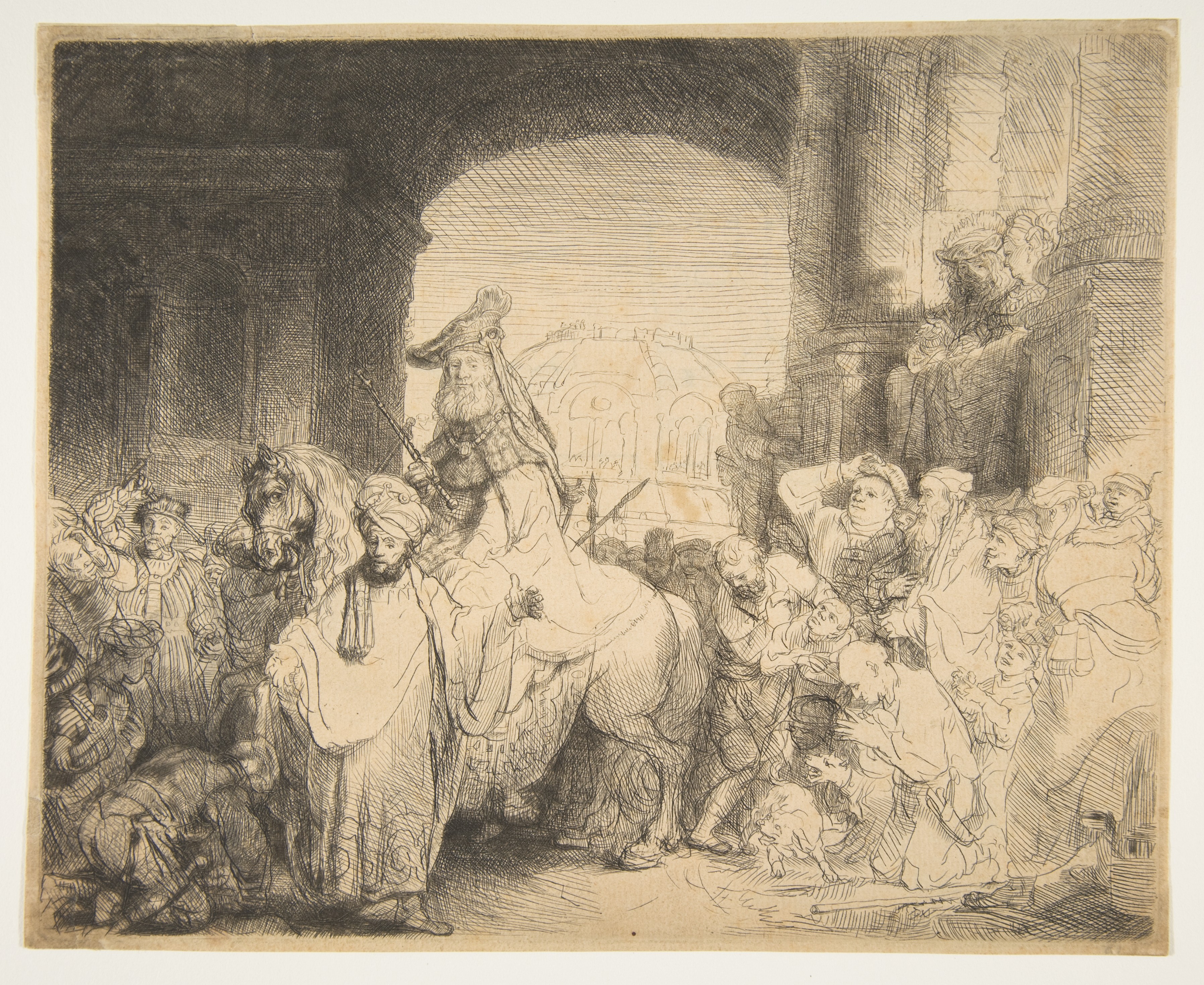
The Triumph of Mordecai, Rembrandt print,about 1641; Met 17.37.191. Mordecai rides while Haman leads: later interpretation of Esther 6, not documentary evidence of the event
Person
Esther’s relative and guardian in the story, who uncovers a plot, confronts Haman and rises at court.
Namensvarianten: Mordecai in Esther, Mordecai, Mardochaios
Kontext und Quellen →
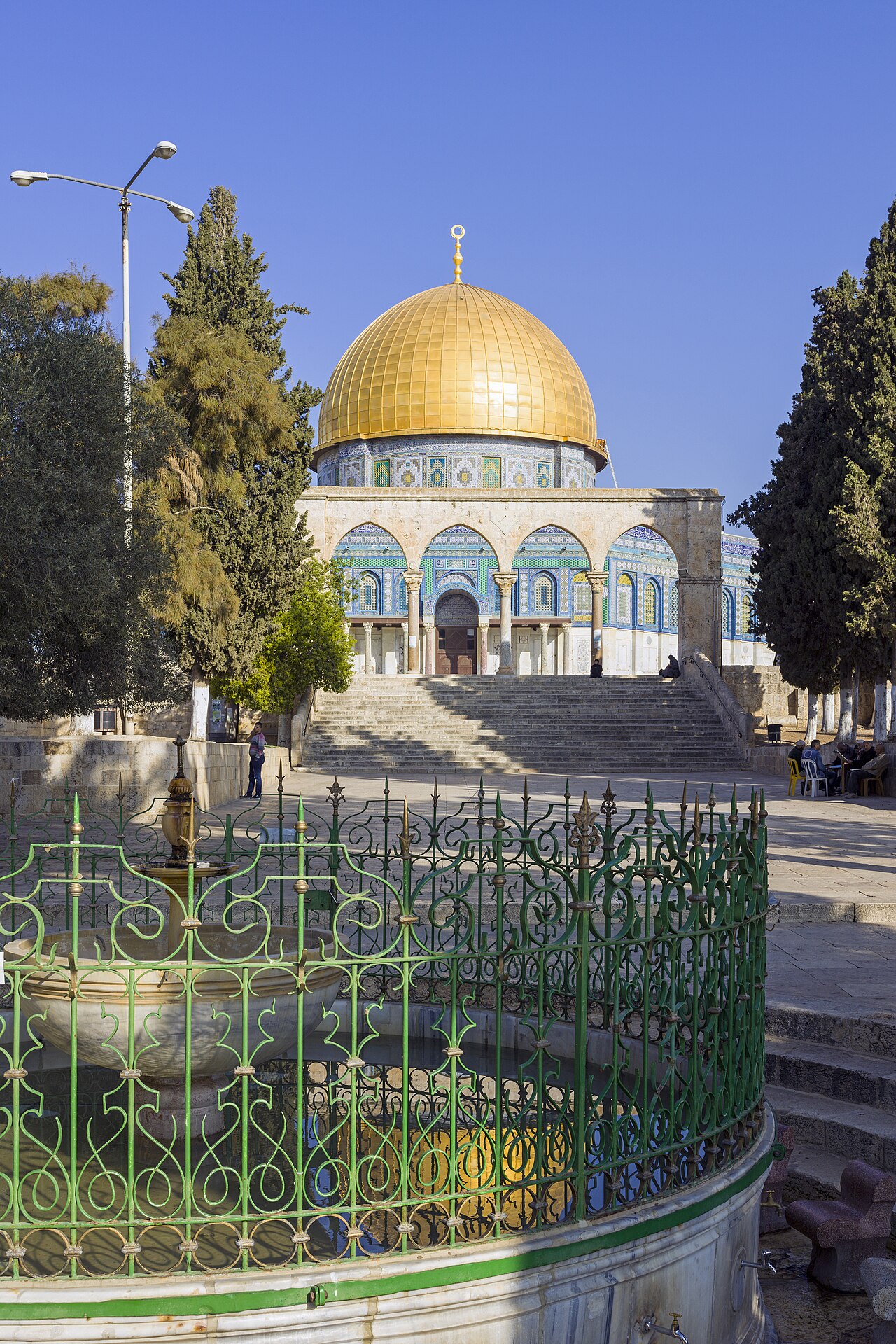
Dome of the Rock, Jerusalem, photographed in 2013. 2 Chronicles associates Mount Moriah with the Temple site; this modern view illustrates that later association, not an independently located Genesis mountain
Stätte
The land named in Genesis 22 as Abraham's destination; 2 Chronicles later associates Mount Moriah with the Jerusalem Temple site, not an independently located journey.
Namensvarianten: Land of Moriah, Mount Moriah
Kontext und Quellen →
Person
Historian of ancient religions associated with Columbia University’s history department.
Namensvarianten: Morton Smith
Kontext und Quellen →

Newly generated modern symbolic illustration for this entry: a reed basket by water, symbolic tablets and imagined mountains. It brings together motifs from Moses narratives; it is neither an ancient object nor a verified historical or geographical reconstruction
Person
Central figure in Exodus, Torah traditions and the Qur’an; childhood accounts differ in detail.
Namensvarianten: Moses, Moshe
Kontext und Quellen →

Newly generated modern conceptual illustration combining books, astronomy, and medicinal plants to evoke Maimonides’ legal, philosophical, and medical work; not a historical artifact, manuscript, or portrait
Person
Jewish jurist, philosopher, and physician (c. 1138–1204). Wrote the Commentary on the Mishnah and Guide in Judeo-Arabic, and the Mishneh Torah in Hebrew; practiced in Egypt.
Namensvarianten: Maimonides, Moses Maimonides, Moses ben Maimon, Rambam
Kontext und Quellen →
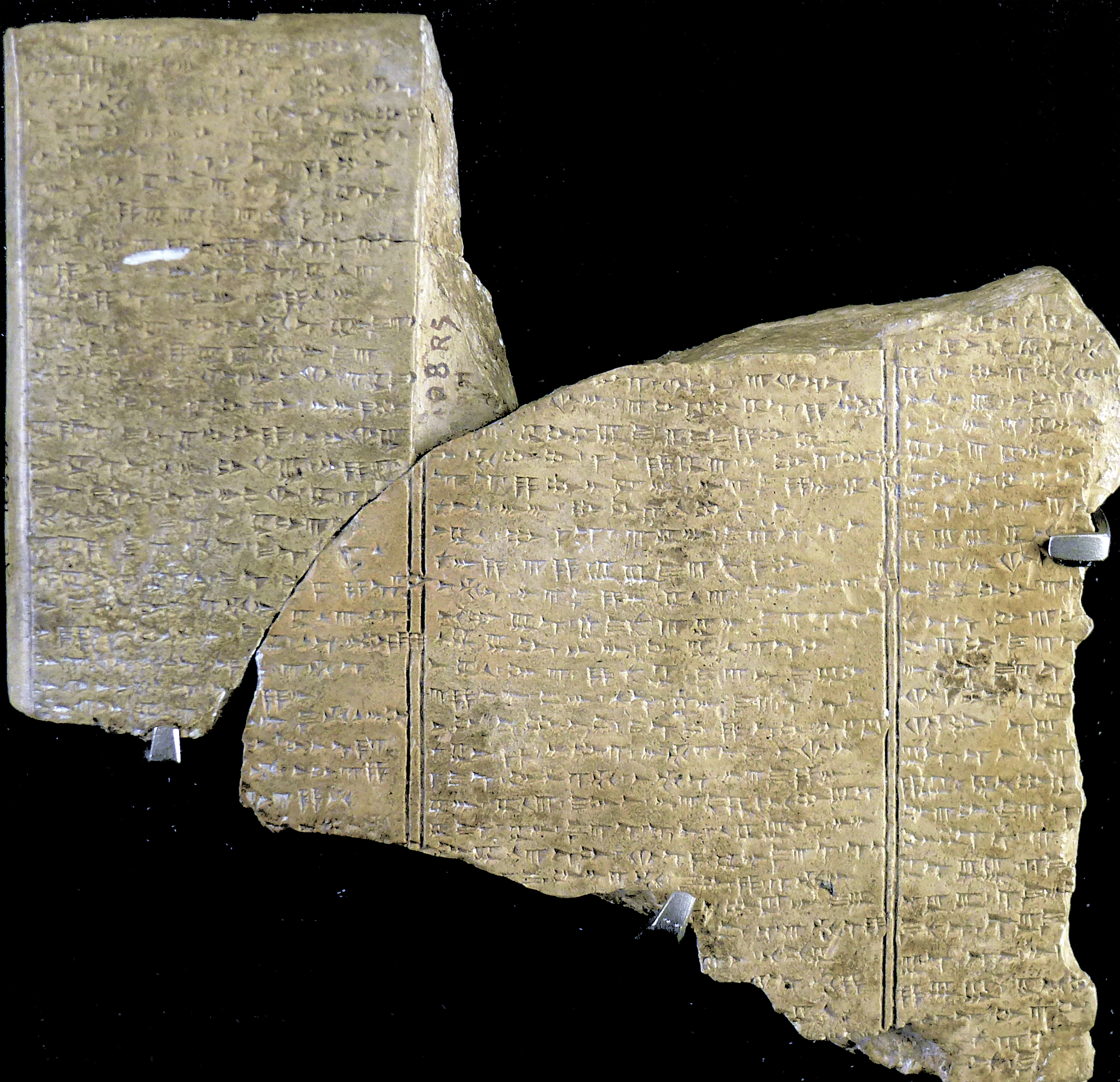
Baal Cycle tablet, Louvre AO16641/AO16642, approximately 1400–1200 BCE, identified as KTU 1.5. A textual witness to the Baal–Mot dossier, not a portrait of the god or the KTU 1.6 tablet of Anat’s attack
Entität
God of death in the Baal Cycle; an adversary who returns even after a violent attack.
Namensvarianten: Mot, Motu
Kontext und Quellen →
Person
Historian of ancient Iran and Mesopotamia (1928–2017), associated with the Russian Academy’s Institute of Oriental Manuscripts.
Namensvarianten: Muhammad A. Dandamaev, Muhammad A. Dandamayev, Muhammad Dandamaev, M. A. Dandamaev
Kontext und Quellen →
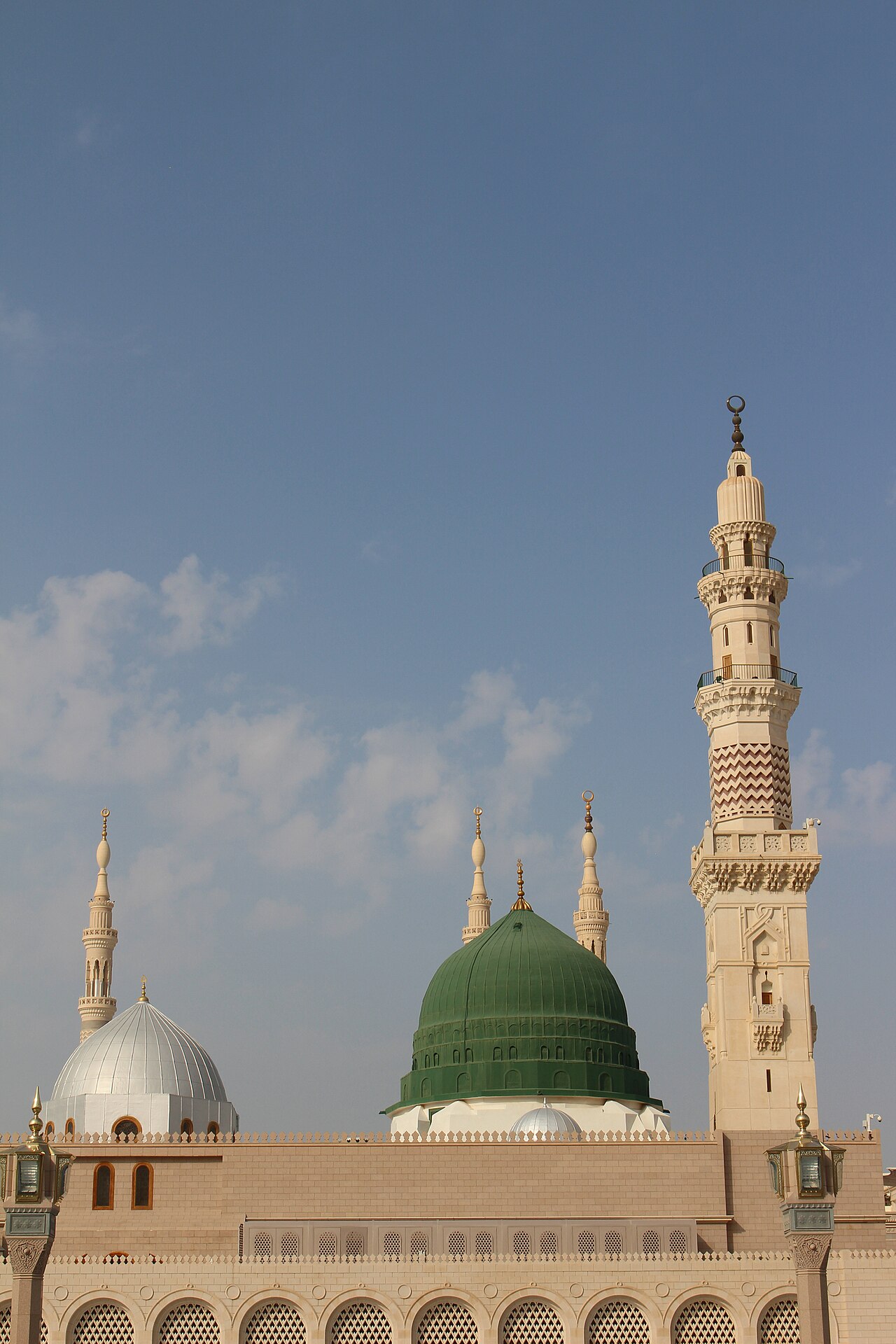
The Green Dome and minarets of the Prophet’s Mosque in Medina, Saudi Arabia, on 26 November 2025. This contemporary photograph shows part of the place associated with Muhammad’s life; the visible buildings reflect later architectural phases
Person
Muhammad is the prophet of Islam, living about 570–632 CE in the setting of Islam’s seventh-century emergence
Namensvarianten: Prophet Muhammad, the Prophet Muhammad
Kontext und Quellen →
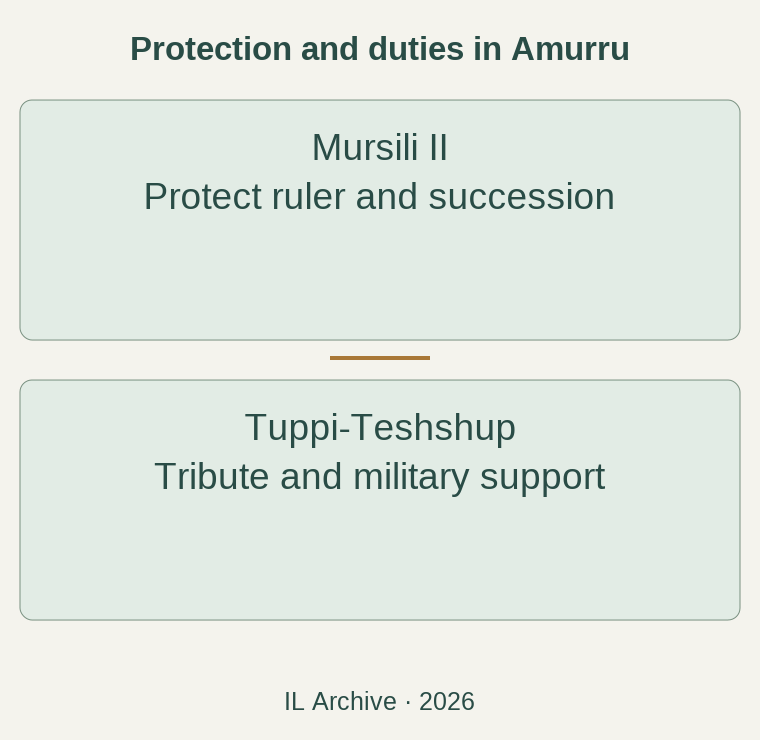
Modern diagram explaining the specified relationship in the witness; not an ancient tablet or portrait, or a boundary map
Person
Hittite king of the late fourteenth century BCE, party to a loyalty treaty with Amurru’s ruler.
Namensvarianten: Mursili II
Kontext und Quellen →
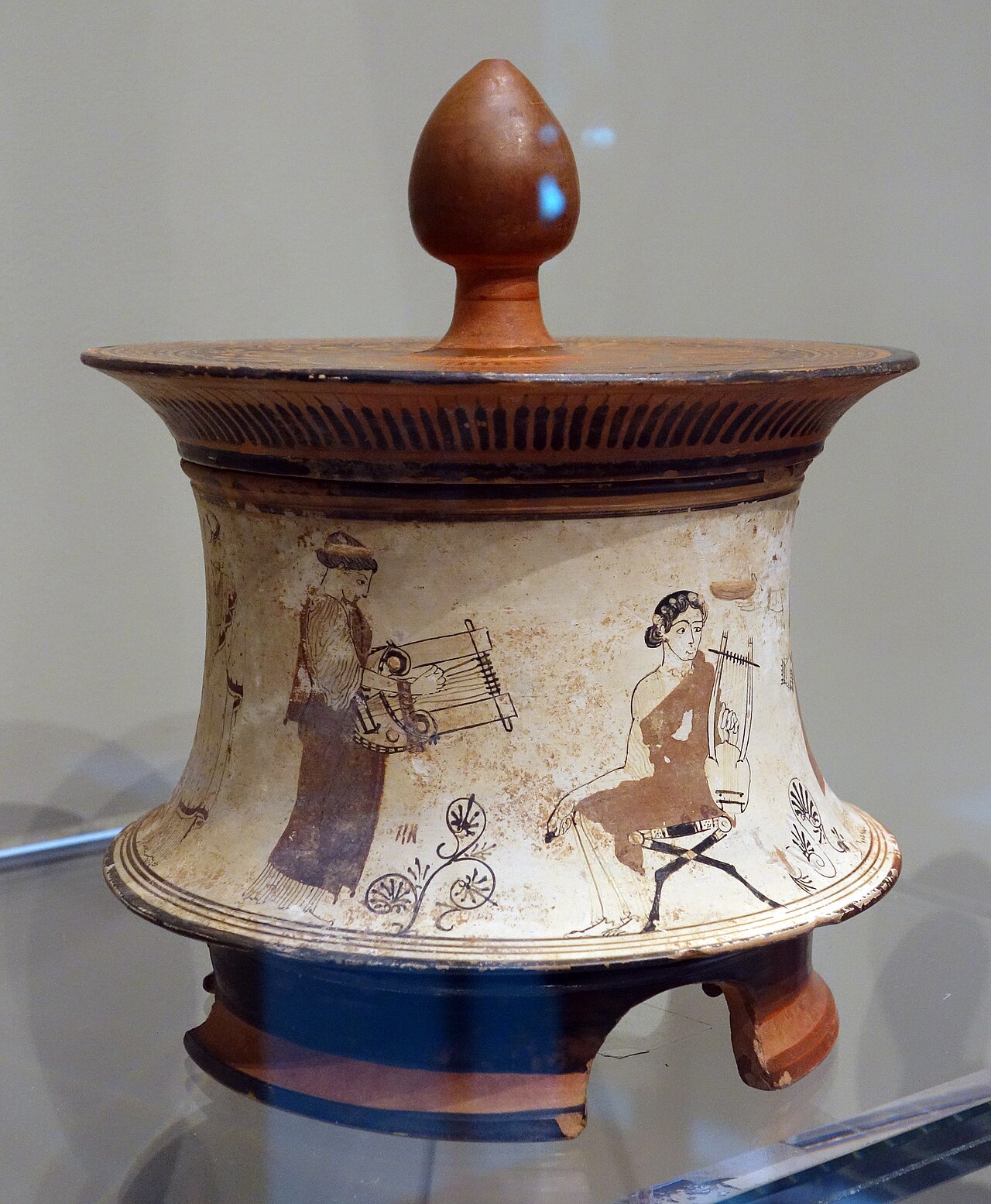
Muses in a musical scene on an Attic white-ground pyxis, about 460–450 BCE; Museum of Fine Arts, Boston, 98.887. This caption leaves the depicted man’s debated identity open
Entität
A group of Greek divine figures associated with song and poetry.
Namensvarianten: Muses
Kontext und Quellen →
Person
Old Testament and Hebrew scholar studying asylum and non-surrender in Deuteronomy.
Namensvarianten: Myrto Theocharous
Kontext und Quellen →
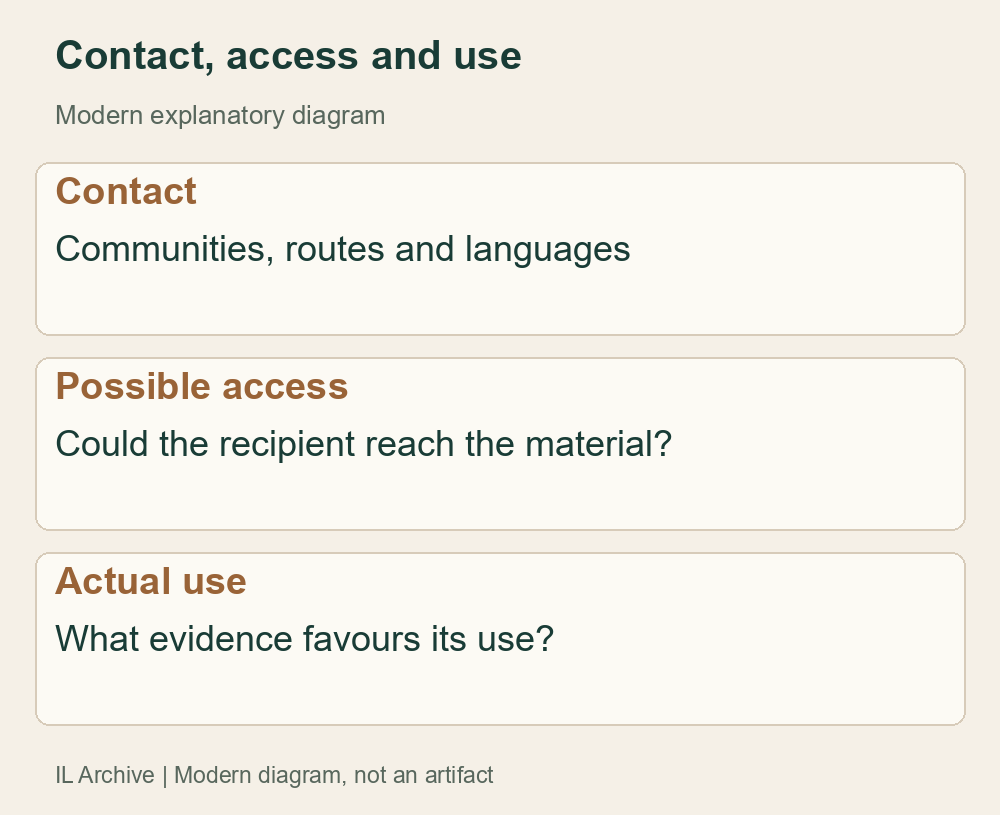
Distinct claims: population contact alone does not prove reading or narrative transfer
Entität
The passing-on of words, narratives or knowledge through hearing, performance and learning, sometimes alongside writing; degrees of stability vary with genre, setting and controls.
Namensvarianten: Oral transmission
Kontext und Quellen →
Person
Hebrew Bible scholar who examined the structure and meaning of Daniel 1–6 in a 2019 study.
Namensvarianten: Naama Golan, biblical scholar, Naama Golan
Kontext und Quellen →
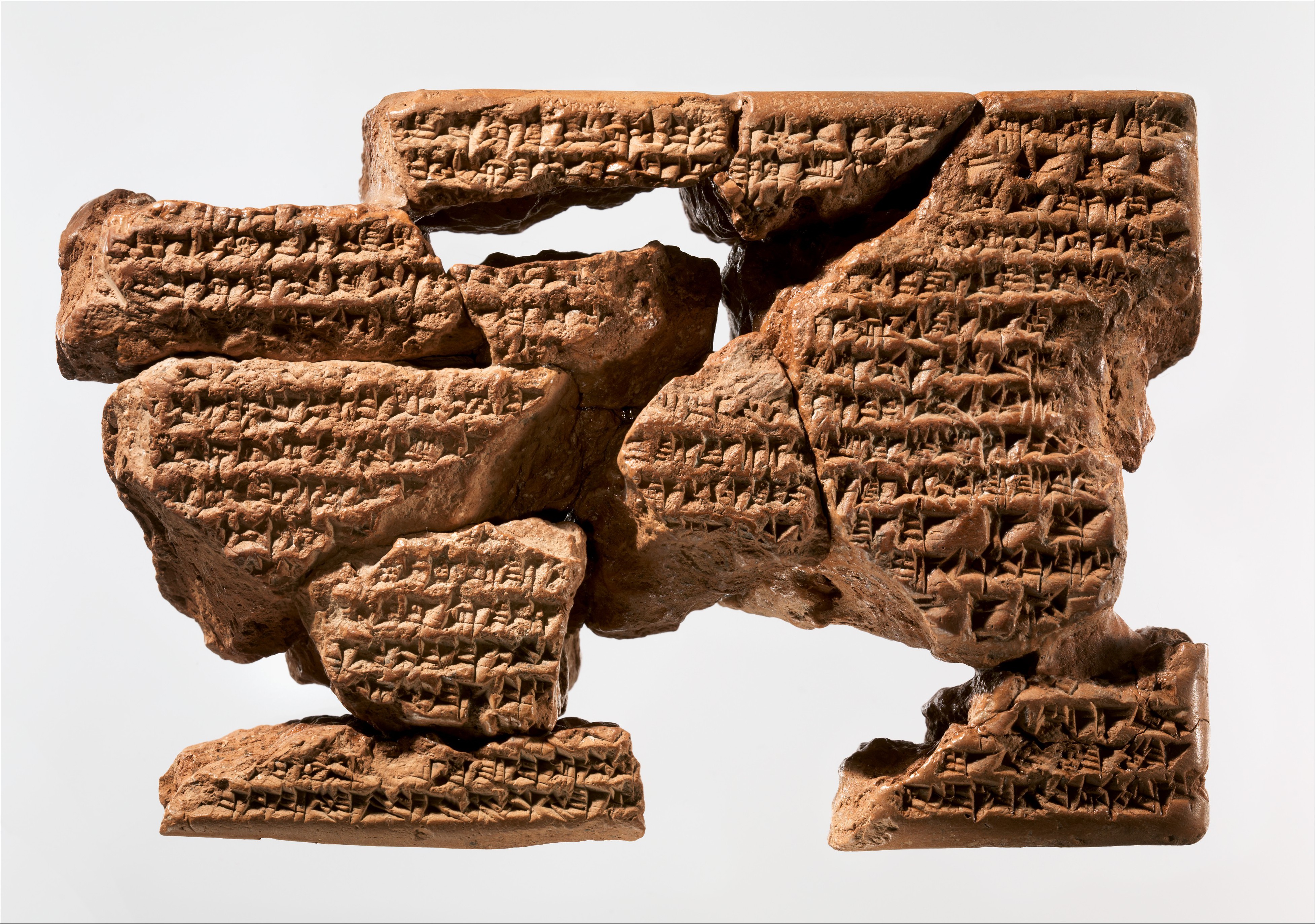
Part of a copy of a letter to Nabopolassar, Met 86.11.383c–e. Copy about the second century BCE; original letter’s setting late seventh century BCE. Not Etemenanki’s restoration inscription or a royal portrait
Person
Nabopolassar was a late-seventh-century BCE Babylonian king who claimed to rebuild Etemenanki.
Namensvarianten: Nabopolassar
Kontext und Quellen →
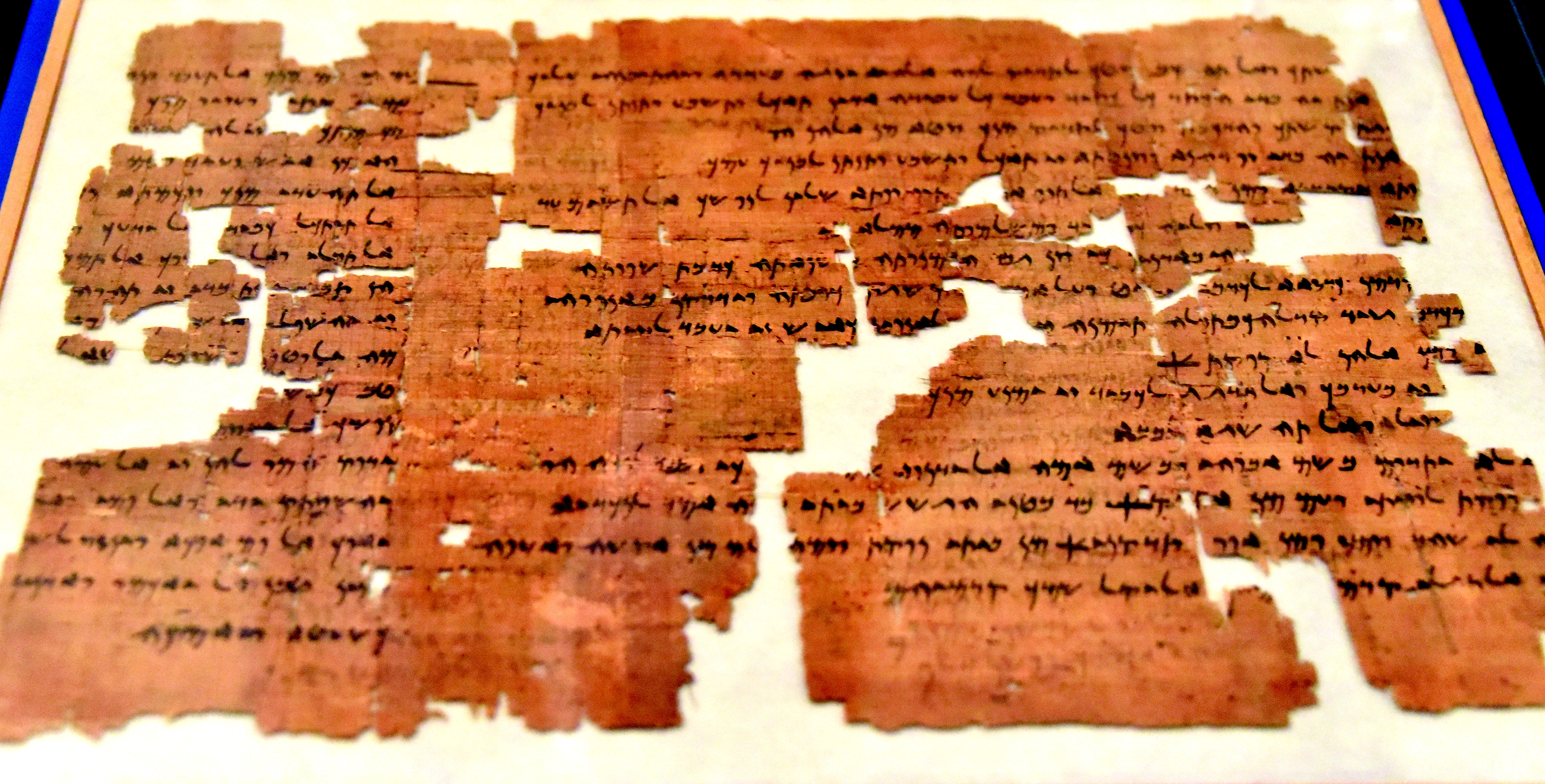
Fragment of the Aramaic Ahiqar papyrus, Elephantine, fifth century BCE; Berlin P.13446/G, photographed at Neues Museum in 2019. Witness to a work combining narrative and sayings, not a portrait of Nadin or a complete story copy
Person
The young man Ahiqar raises and prepares as successor, then portrayed as betraying the sage.
Namensvarianten: Nadin in Ahiqar, Nadin in Ahiqar
Kontext und Quellen →
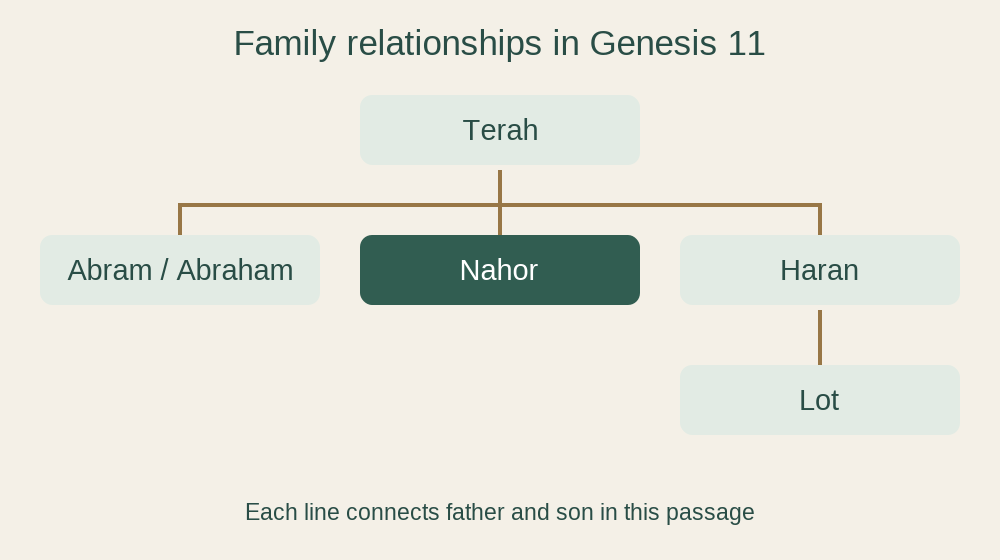
Modern diagram of family relationships in Genesis 11; the highlighted node identifies this entry’s figure. It explains the narrative’s genealogy, not physical likenesses or independent proof of their lives
Person
Son of Terah and brother of Abram and Haran in Genesis, distinct from Terah’s father of the same name.
Namensvarianten: Nahor, son of Terah, Nahor
Kontext und Quellen →

Newly generated modern interpretive illustration of subterranean waters and clay beneath an imagined Mesopotamian setting, evoking themes associated with Namma. Not an artefact, an image of the goddess, or a verified historical reconstruction
Entität
Namma, also traditionally read Nammu, is a Sumerian goddess and mother of Enki who helps initiate human creation in Enki and Ninmah; a royal inscription records her temple.
Namensvarianten: Namma, Nammu
Kontext und Quellen →

Modern AI-generated conceptual view of crescent moonlight over an imagined river landscape. Neither an ancient depiction of Nanna nor a verified reconstruction of Ur
Entität
Mesopotamian moon god known as Nanna, Su’en and Sîn/Sin. Worshipped especially at Ur and Harran, he is associated with the crescent and lunar cycle; names and myths have different histories.
Namensvarianten: Nanna, Nanna-Suen, Su’en, Suen, Sin (moon god), Sîn
Kontext und Quellen →
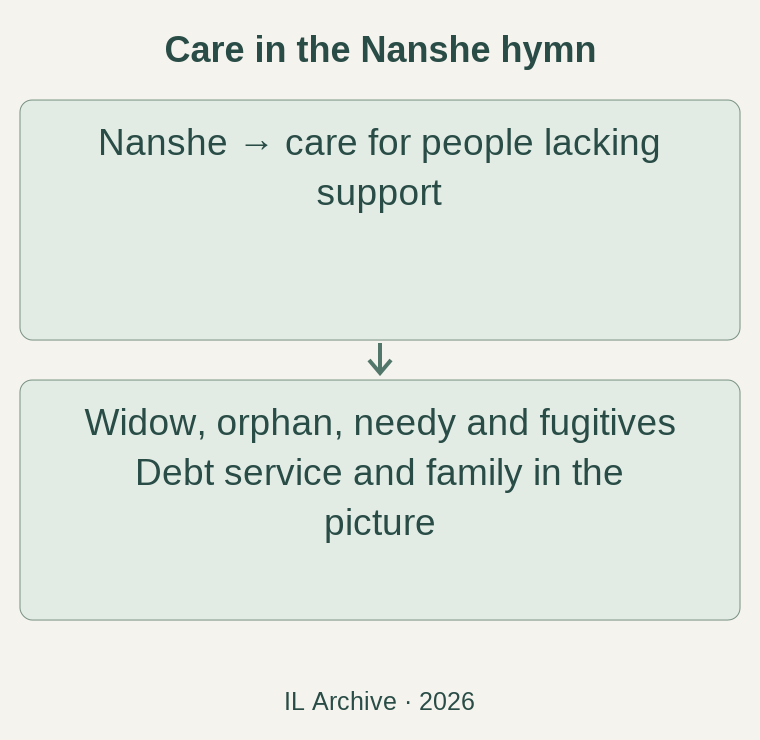
Modern diagram of the relationship or demand in the specified text; not an artifact photograph, a divine likeness or a portrait
Entität
Sumerian goddess praised in a hymn for caring for widows, orphans, people in need, and fugitives.
Namensvarianten: Nanshe
Kontext und Quellen →
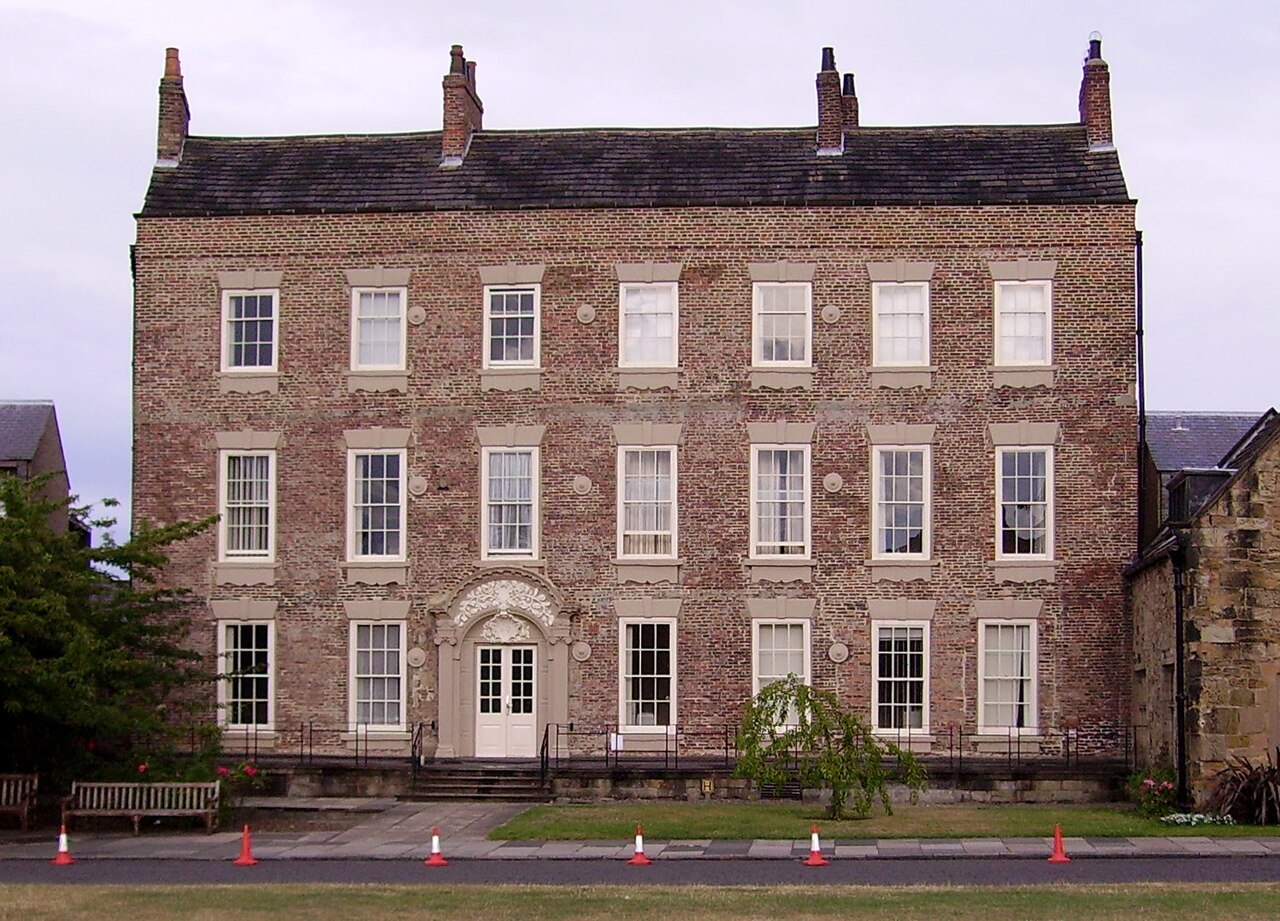
Cosin’s Hall on Palace Green in Durham, England. The original photograph dates from July 2006; this crop was made available later by the source. The building provides context for Durham University, where Nathan J. Chambers completed his thesis in 2017
Person
Scholar of Genesis interpretation and Christian theology, studying Genesis 1 and creation from nothing.
Namensvarianten: Nathan Chambers, Nathan J. Chambers
Kontext und Quellen →
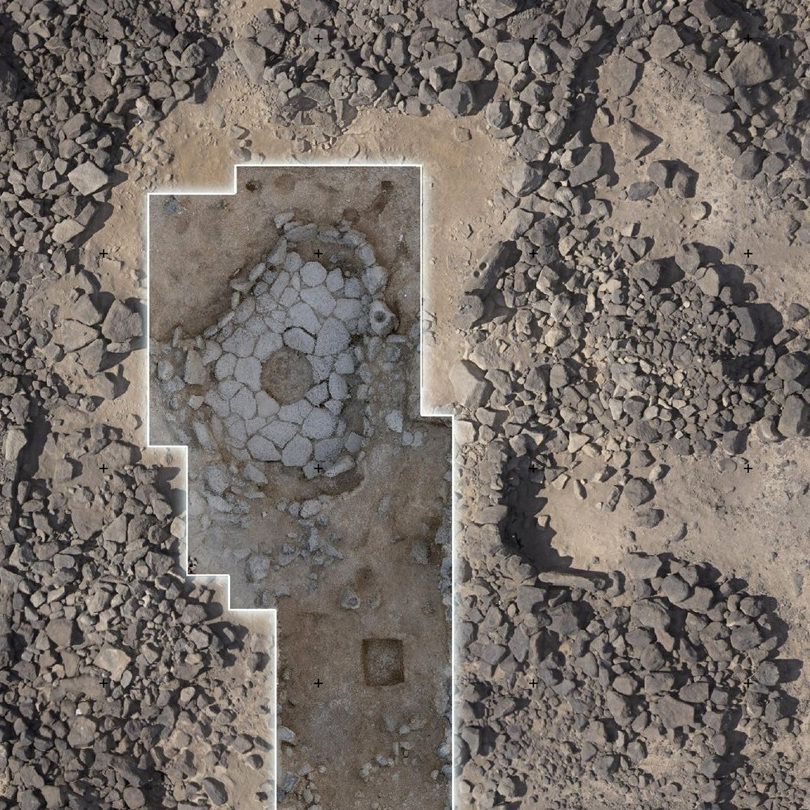
Actual aerial photograph of the excavation area at Shubayqa 1, northeastern Jordan; cropped from Fig. 1 (2017). The white line is a modern excavation outline, not an ancient wall; the inset location map was removed for the cover
Epoche
A Levantine archaeological culture, roughly 13,000–9500 BCE, marked at some sites by stone buildings, extended occupation, varied food tools and burials before domesticated farming; not a documented ethnic self-name.
Namensvarianten: Natufian culture, Natufian, Natufians
Kontext und Quellen →
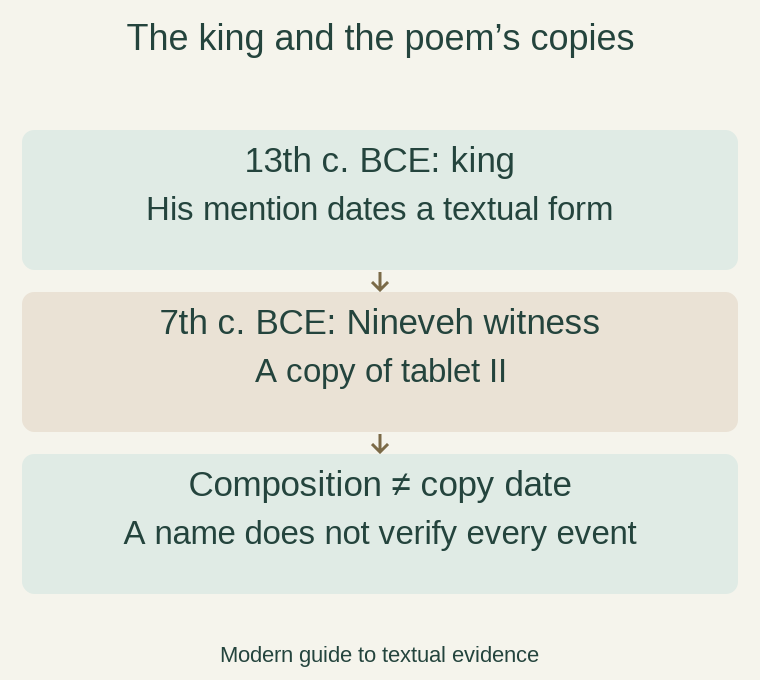
Modern diagram distinguishing the thirteenth-century BCE king mentioned in Ludlul from a seventh-century BCE Nineveh copy. Royal reference and manuscript date inform composition history without automatically dating it
Person
Nazi-Maruttaš was a Kassite king of Babylon in the thirteenth century BCE.
Namensvarianten: Nazi-Maruttaš
Kontext und Quellen →
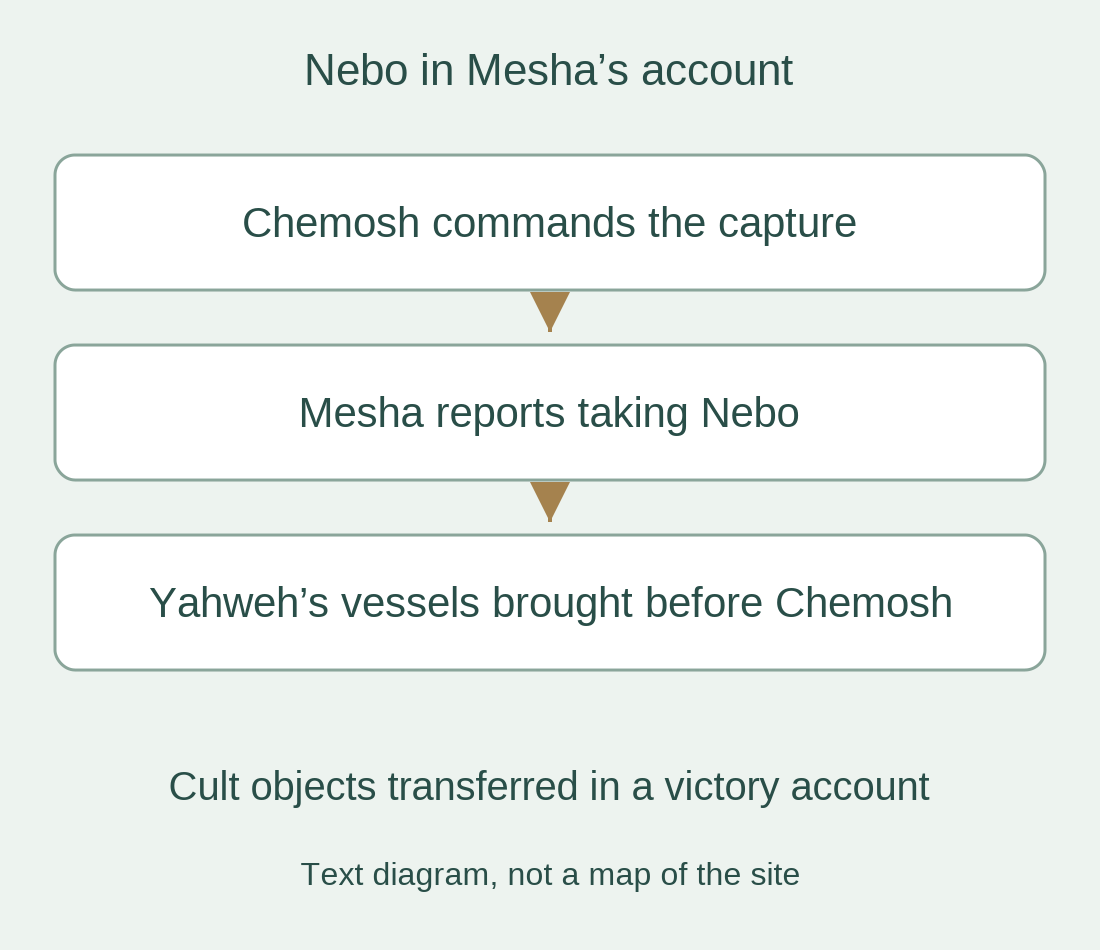
Text diagram, not a map of the site. Cult objects transferred in a victory account
Stätte
Town named in Mesha's conflict with Israel, from which he reports taking Yahweh's vessels before Chemosh.
Namensvarianten: Nebo
Kontext und Quellen →
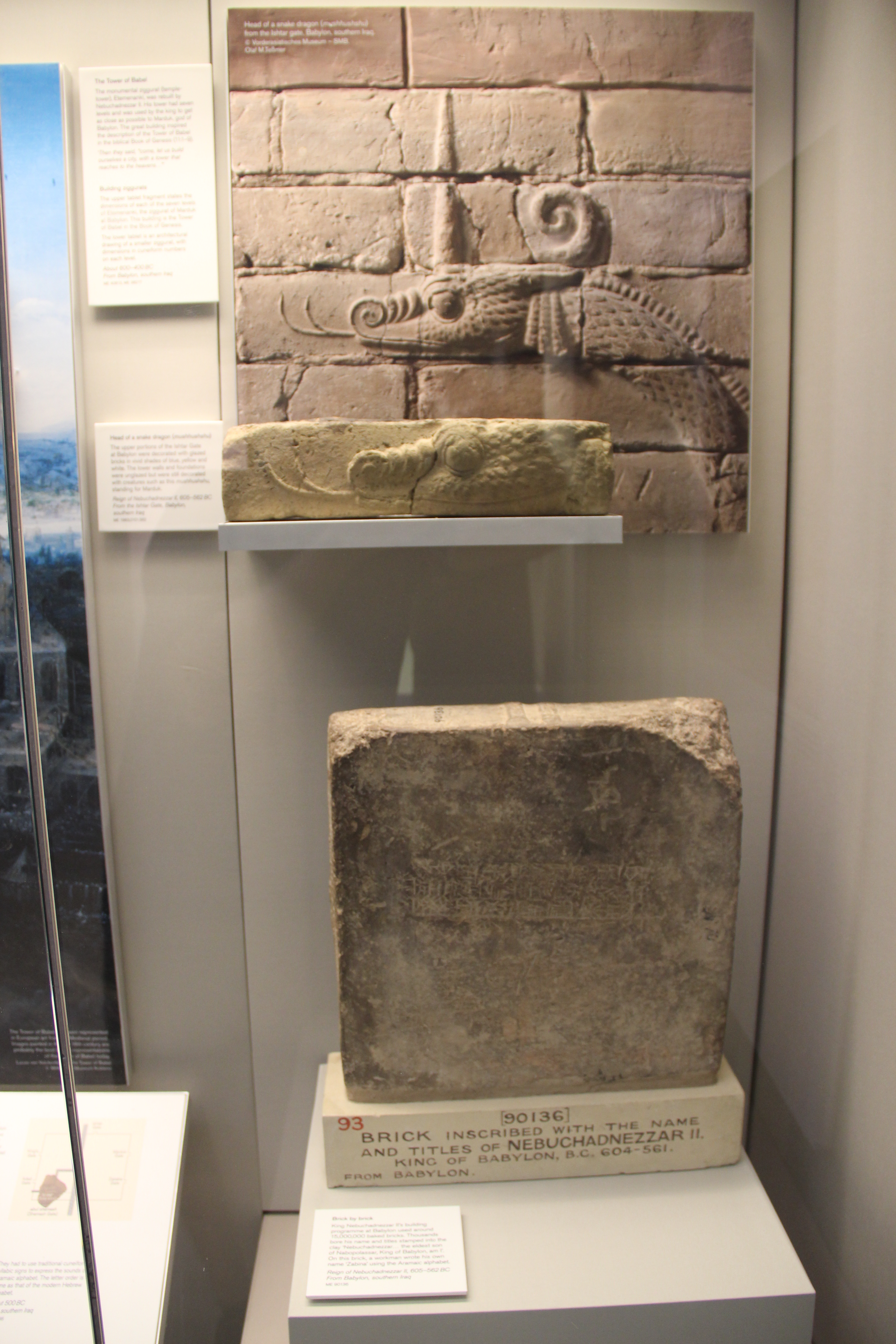
Brick bearing Nebuchadnezzar II’s name and titles in the foreground, Babylon, sixth century BCE; British Museum 90136. Dragon fragments above are separate exhibits, not the king’s portrait or this brick’s decoration
Person
Babylonian king, 605–562 BCE, appearing in Daniel and independently attested in inscriptions and building remains.
Namensvarianten: Nebuchadnezzar II, Nebuchadnezzar, Nebuchadnezzar II
Kontext und Quellen →

Modern digitally generated symbolic cover: light beyond an imaginary architectural opening evokes the limits of description. Not an artifact, historical site or depiction of God
Entität
An approach to divine language that denies limitations or defects and may emphasize the failure of human categories to capture divine essence; its forms vary across traditions.
Namensvarianten: Negative theology, apophatic theology, apophasis
Kontext und Quellen →
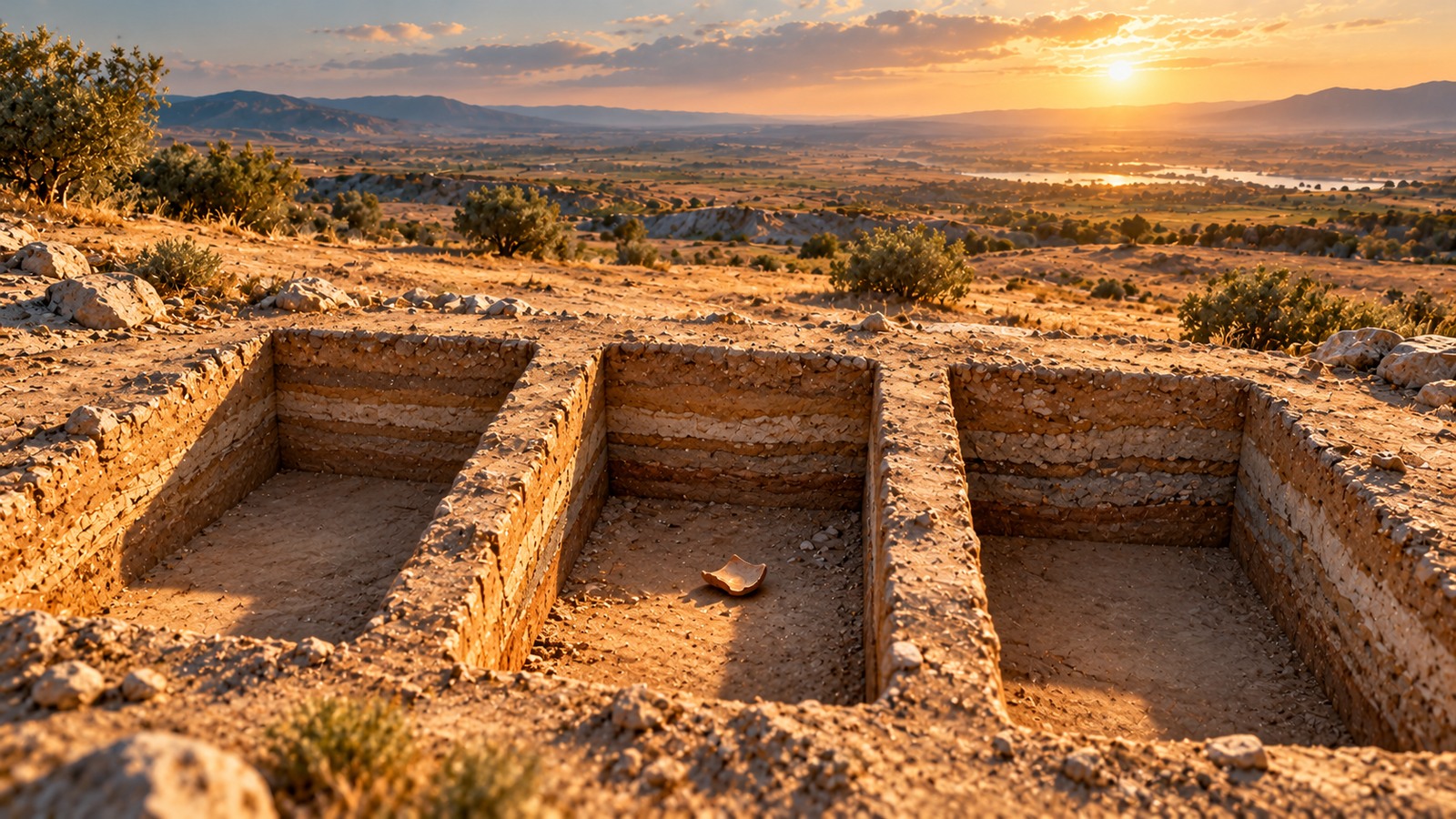
Contemporary conceptual image of three imagined excavation units, one containing a pottery sherd. It illustrates differing observations; it does not depict a real site or excavation results
Entität
Failure to find an expected trace can test a hypothesis when preservation and investigation make discovery expectable; not every absence is evidence.
Namensvarianten: negative evidence
Kontext und Quellen →

New AI-generated symbolic view of scouts facing immense cliffs, inspired by the fearful report in Numbers 13; not a historical reconstruction, an archaeological portrait of Nephilim, or evidence of their size
Entität
Hebrew name in Genesis 6:4 and Numbers 13:33, linked to ancient heroes and the scouts’ report; its identification with giants or heavenly offspring depends on interpretation.
Namensvarianten: Nephilim
Kontext und Quellen →

New AI-generated expressive cover: three luminous focal points metaphorically evoke the One, Intellect and Soul in a Plotinian reading. Neither a literal cosmological map nor a historical artefact or photograph
Entität
Modern name for Platonic currents flourishing from the third century CE, including Plotinus, Porphyry, Iamblichus and Proclus. They examined the first principle, Intellect, Soul and the world, while disagreeing over interpretation and practice.
Namensvarianten: Neoplatonism, Neo-Platonism
Kontext und Quellen →

Lower Manhattan, New York City, seen from Governors Island in 2017. A contemporary city view; the Metropolitan Museum mentioned in the definition is not shown
Stätte
New York City is in the United States and houses the Metropolitan Museum of Art
Namensvarianten: New York, New York City
Kontext und Quellen →

Photographic mosaic of Jupiter from Cassini images taken on 29 December 2000. It illustrates one identification of Nibiru, not a reconstruction of an ancient Babylonian observation
Entität
An Akkadian word for a crossing, ford or ferry, also a celestial name associated with Marduk and applied to Jupiter or Mercury in particular contexts; it does not identify one body in every use.
Namensvarianten: Nibiru, Nēbiru, Nēberu
Kontext und Quellen →
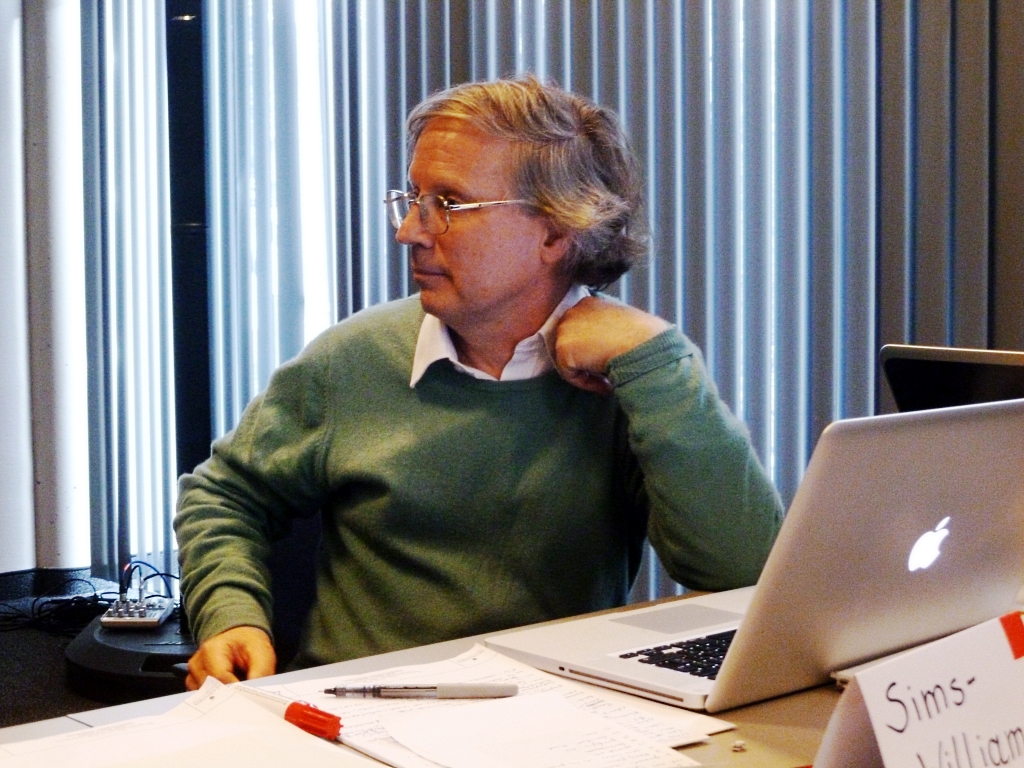
Nicholas Sims-Williams at the Berlin Symposium on the Kushans, December 2013. Photograph by John Hill, CC BY-SA 3.0
Person
Scholar of Middle Iranian languages, including Sogdian, and of Christian texts translated from Syriac.
Namensvarianten: Nicholas Sims-Williams
Kontext und Quellen →
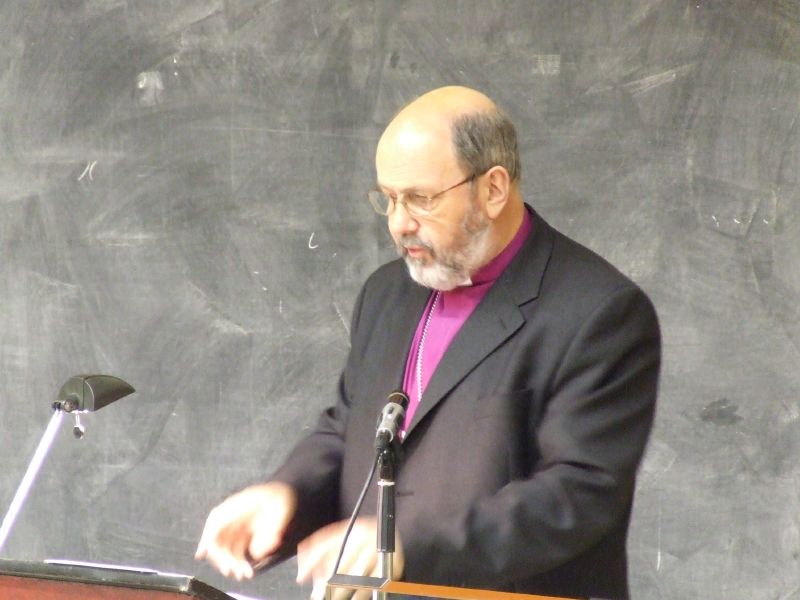
Nicholas Thomas Wright at the James Gregory Lecture, St Andrews, 20 December 2007. Photograph by Gareth Saunders, CC BY-SA 2.0; unchanged original
Person
New Testament and early Christianity scholar, publishing as N. T. Wright.
Namensvarianten: Nicholas Thomas Wright, N. T. Wright, Tom Wright
Kontext und Quellen →
Person
Scholar of the Quran, its interpretation and its relations to Arabic poetry and Jewish and Christian traditions.
Namensvarianten: Nicolai Sinai
Kontext und Quellen →
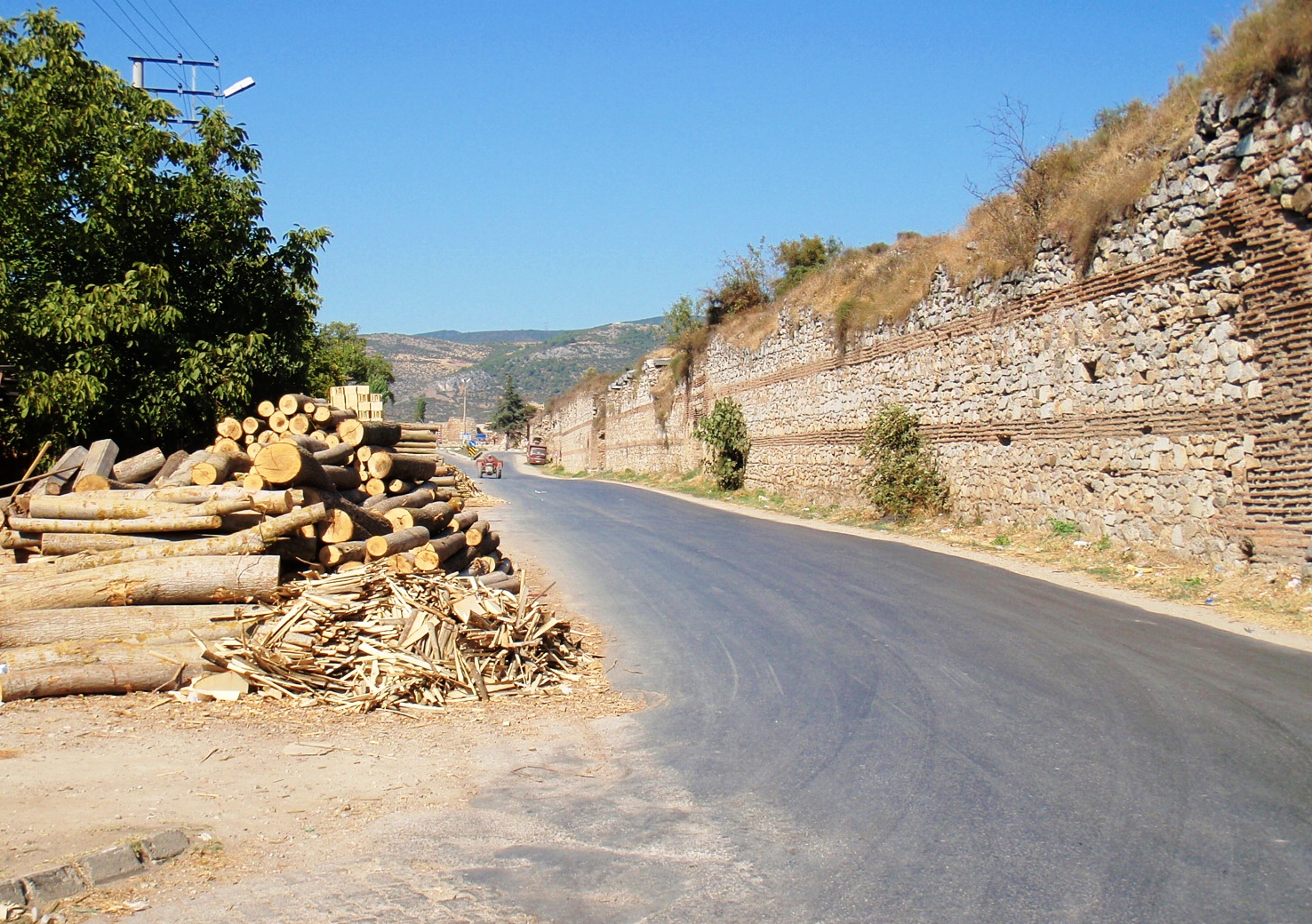
Part of İznik’s city walls, photographed by Raki_Man on 5 September 2008. The walls have several building and repair phases; the image locates the city, not the meeting room of the 325 council
Stätte
City in northwestern Türkiye where the Council of Nicaea met in 325 CE.
Namensvarianten: Nicaea (İznik)
Kontext und Quellen →
Person
Nili Shupak is a scholar of the Bible and its comparison with ancient Egyptian literature.
Namensvarianten: Nili Shupak
Kontext und Quellen →
Person
Aarhus University scholar of church history and early Christian literature, coauthor of a study of Solomonic rings.
Namensvarianten: Nils Arne Pedersen
Kontext und Quellen →
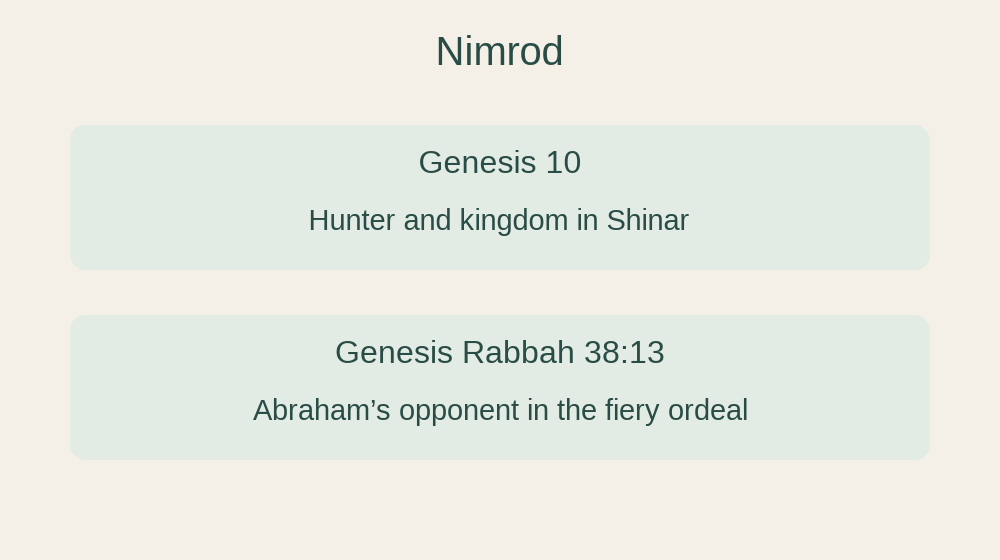
Modern comparison distinguishing what the named passages say about the figure; not a historical likeness or identification of a person behind the narrative
Person
Figure associated with hunting and kingship in Genesis, appearing in Genesis Rabbah as a ruler who opposes Abraham and casts him into fire.
Namensvarianten: Nimrod
Kontext und Quellen →
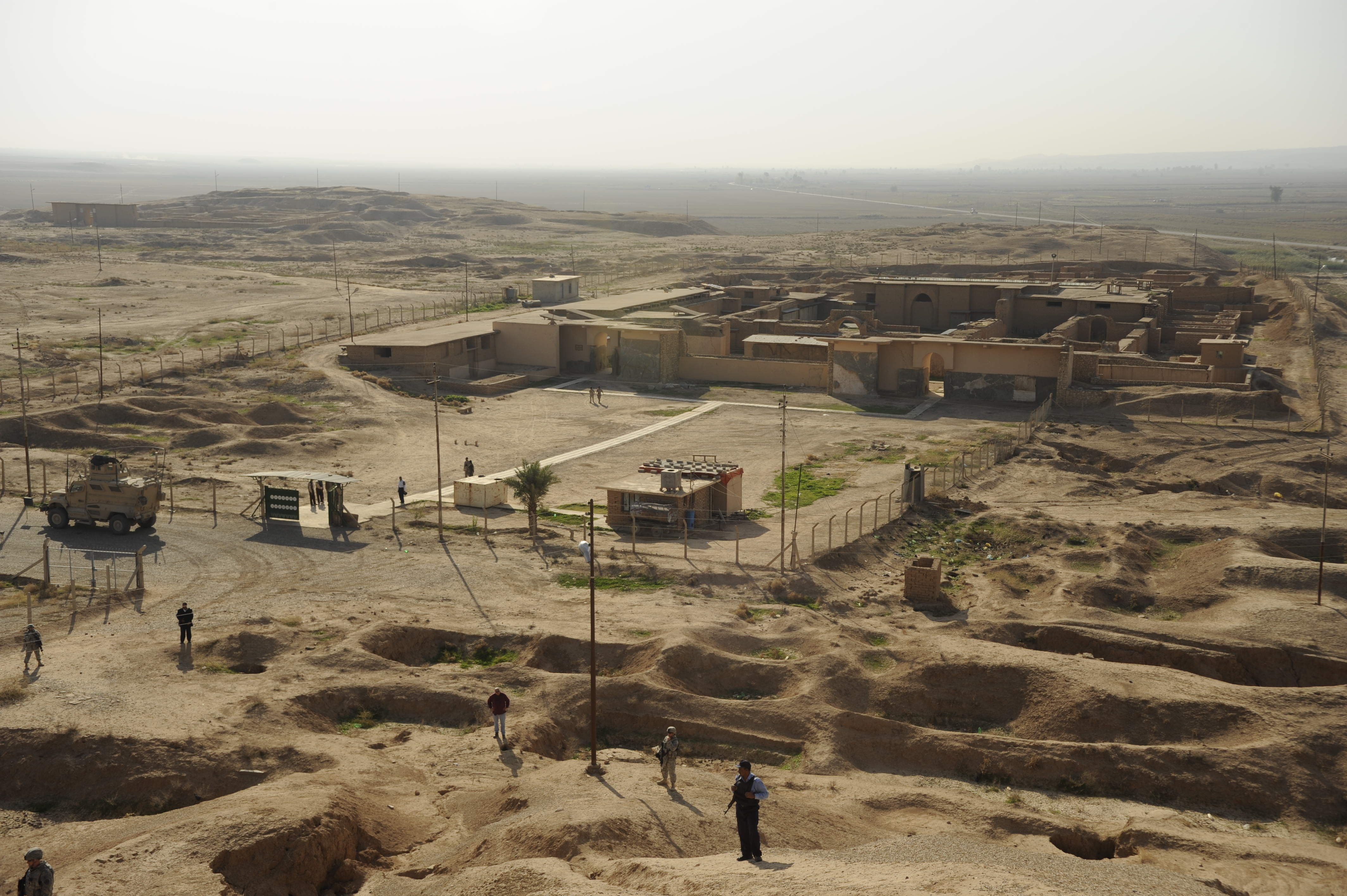
Nimrud on 19 November 2008, showing archaeological remains and modern restoration. Photograph by Staff Sgt. JoAnn Makinano; the view predates the destruction in 2015
Stätte
Nimrud is the site of the Assyrian city Kalhu in present-day northern Iraq, near Mosul.
Namensvarianten: Nimrud: ancient Kalhu
Kontext und Quellen →
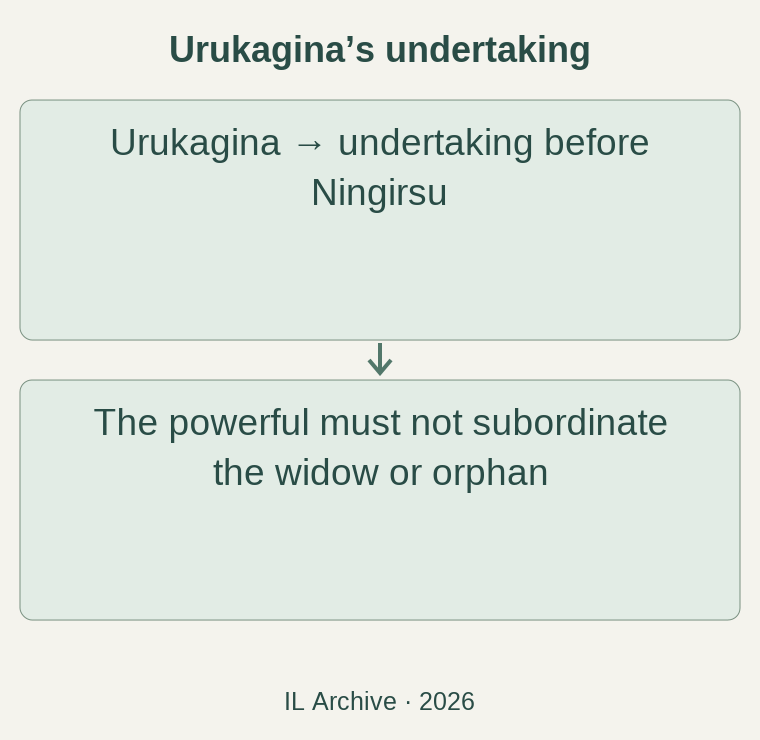
Modern diagram of the relationship or demand in the specified text; not an artifact photograph, a divine likeness or a portrait
Entität
A major god of the Sumerian state of Lagash, invoked in Urukagina’s reform undertaking.
Namensvarianten: Ningirsu
Kontext und Quellen →
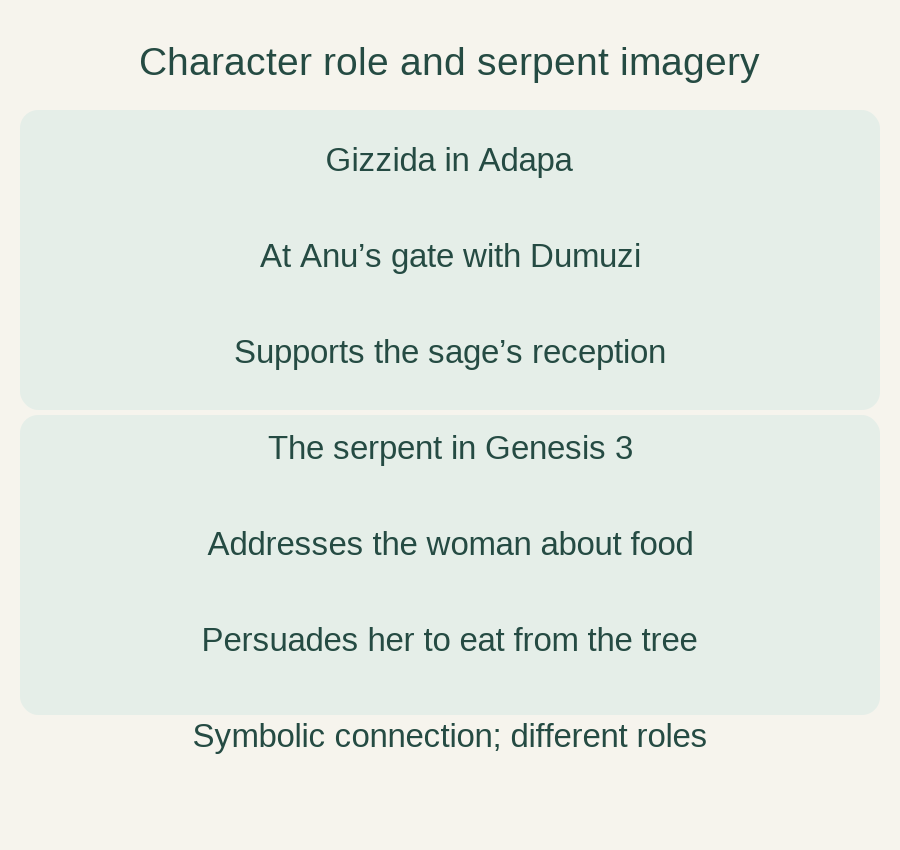
Modern comparison of Gizzida’s role in Adapa with the serpent’s role in Genesis; not a divine portrait or an artifact image
Entität
Ningishzida is a Mesopotamian god called Gizzida in Adapa’s story, where he and Dumuzi support the sage at Anu’s gate.
Namensvarianten: Ningishzida, Gizzida
Kontext und Quellen →