Entity · theological_term
Hypostasis
A reference page linking a name, group, or concept to the materials that discuss it.
Term later used for distinguishing Father, Son and Spirit within one divinity.
Text
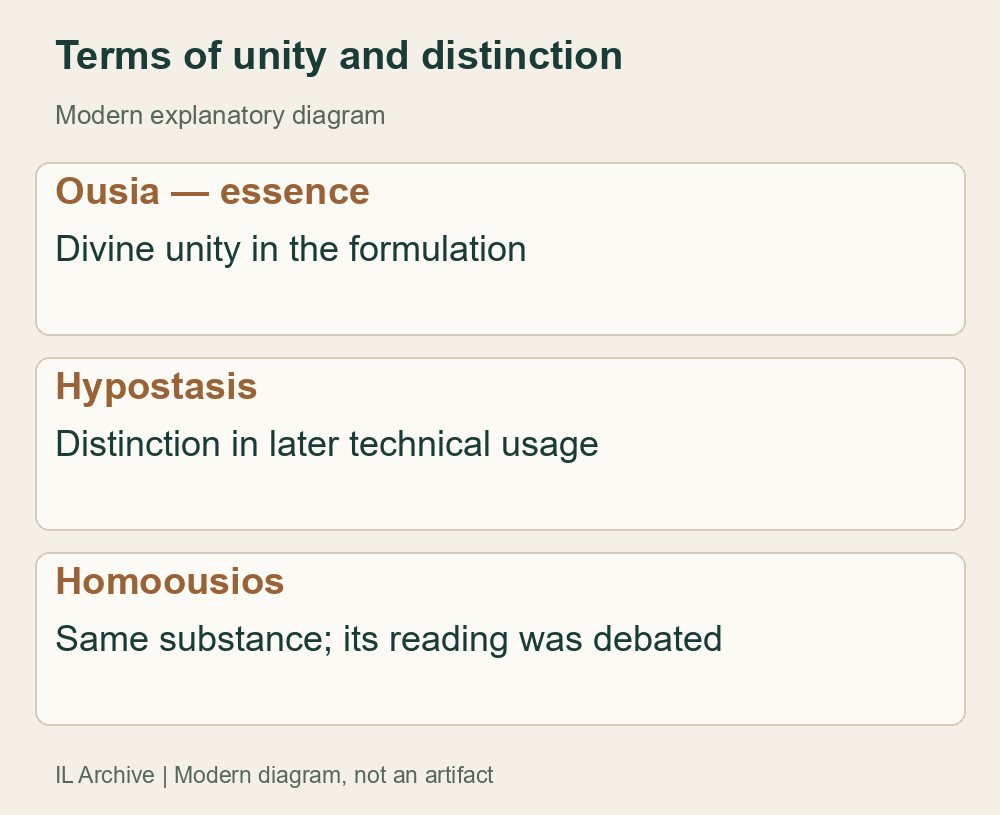
Hypostasis changes meaning between authors and periods. Later Cappadocian usage identifies particularity with shared essenceOusia — essenceGreek term for essence or nature, with meanings changing between authors.Glossary · Click to read the explanation. It is neither a temporary role nor an automatic equivalent of the modern psychological individual. [1][2]
The modern image explains later usage; every text first needs reading in its own vocabulary.
References and notes
- Basil of Caesarea, Letter 236.6, translated in NPNF 8. Distinguishes general ousia from particular hypostasis, one divinity with Father/Son/Spirit properties. Section 6 only read. Return to the text ↑
- Paul S. Fiddes, Spirit, Cambridge Elements in Religion and Monotheism (2026), sections 3.1–3.2. Selected passages in 3.1–3.2 on theological vocabulary, Spirit and Cappadocians read, not the whole book. Modern person is not an automatic synonym of ancient hypostasis. Return to the text ↑
Research history
Substantive changes are retained here. Minor copy edits remain in the internal operational log.
-
Substantive record update
Suggest a correction · Suggest a source for this record
Cite this record
IL Archive, «Hypostasis», Edition 2, https://ilarchive.com/en/entities/hypostasis