Person · Literary figure
Alcestis in Euripides’ play
A Greek narrative figure who accepts death for her husband Admetus and returns at the end of Euripides’ play, performed in 438 BCE.
Last reviewed:
Text
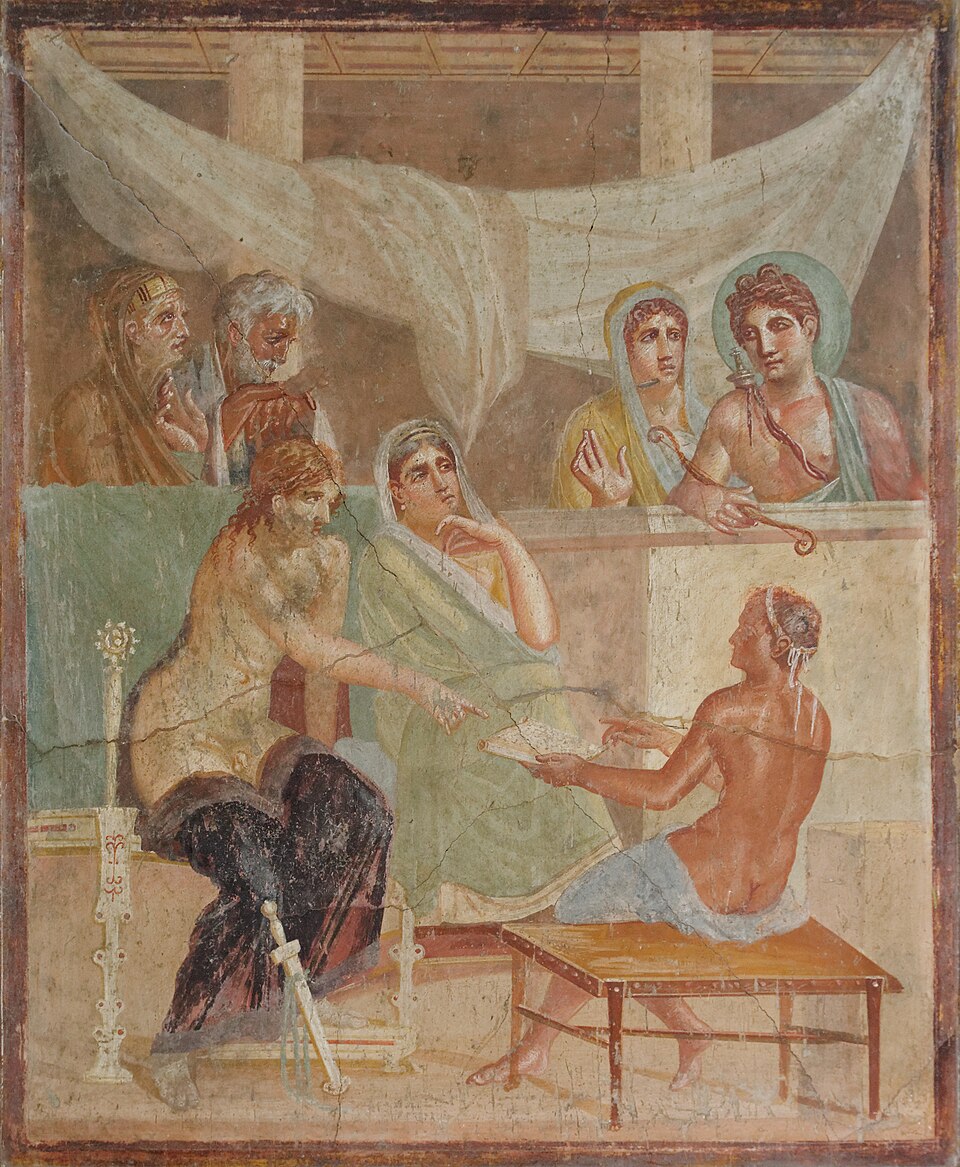
Alcestis is Admetus’s wife in Greek narrative. In Euripides’ play, performed in Athens in 438 BCE, she accepts death in his place when others refuse and asks that their children be protected from a later marriage that might harm them. [1]
Heracles brings her home at the end. She remains silent until purification and the third day; the interval concerns speech after return, rather than specifying how long she was dead before rescue. She is a literary figure;438 BCE dates the performance, not an established historical lifetime. [1]
References and notes
- Alcestis 244–392,1118–1163; performance date in Lloyd 2025. Alcestis 244–392,1118–1163; performance date in Lloyd 2025. Return to the text ↑
Suggest a correction · Suggest a source for this record
Cite this record
IL Archive, «Alcestis in Euripides’ play», https://ilarchive.com/en/people/alcestis-euripides-character