The Stele of the Vultures Chapter 1
The Boundary Stone
Lagash and Umma disputed fields that needed the same network of canals. Eannatum’s account follows the claim to the Gu’edena through a victory, burial rites and promises to honour the boundary. Read the carved scenes beside the oath, then see how a later inscription carried the dispute beyond Eannatum’s reign.
SourcesTurn the pages with the arrows, the arrow keys or a swipe.
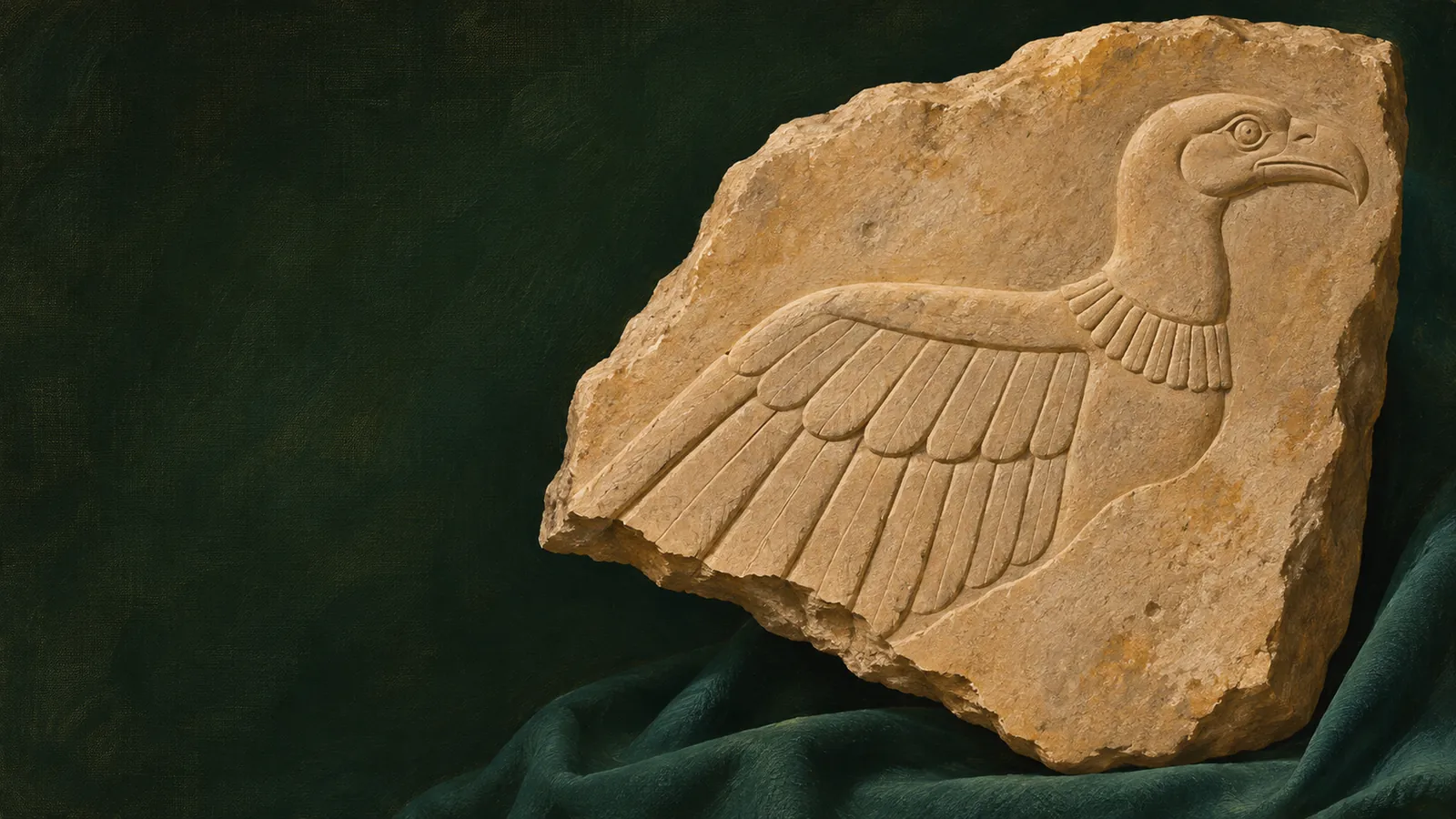
THE STELE
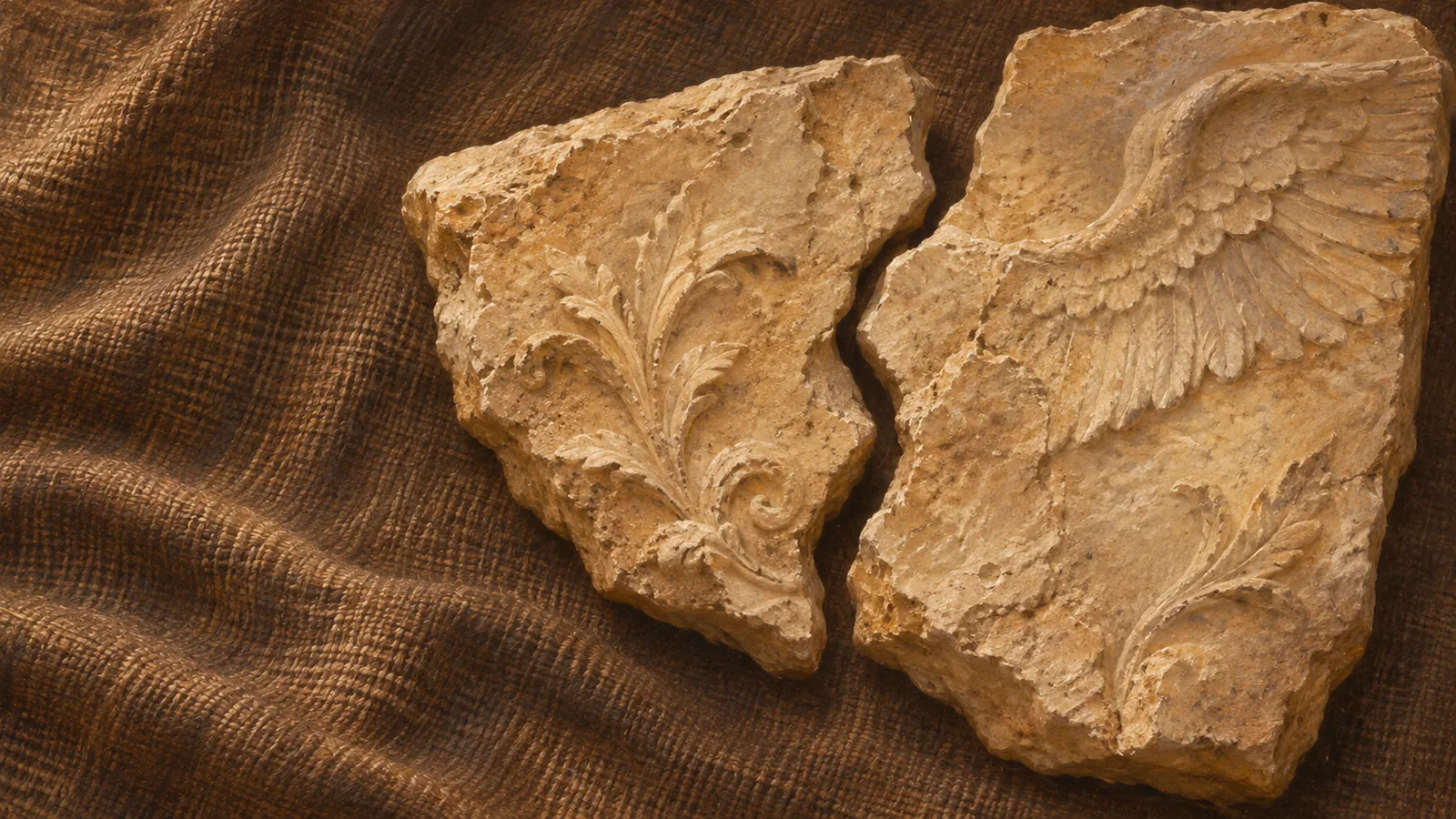
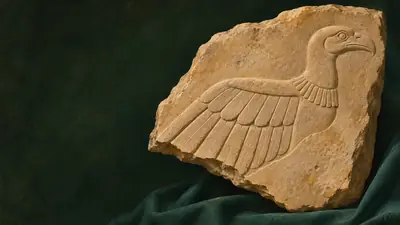
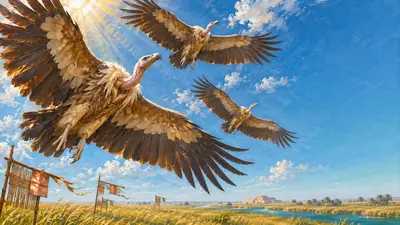
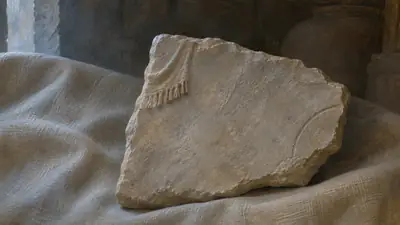
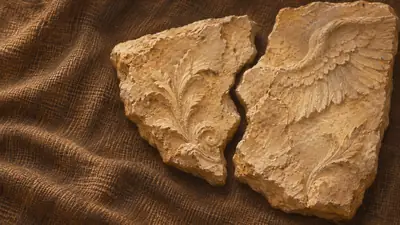
A wing spreads across a broken piece of limestone. The bird gave the Stele of the Vultures its modern name. The monument is much older than the name we use.
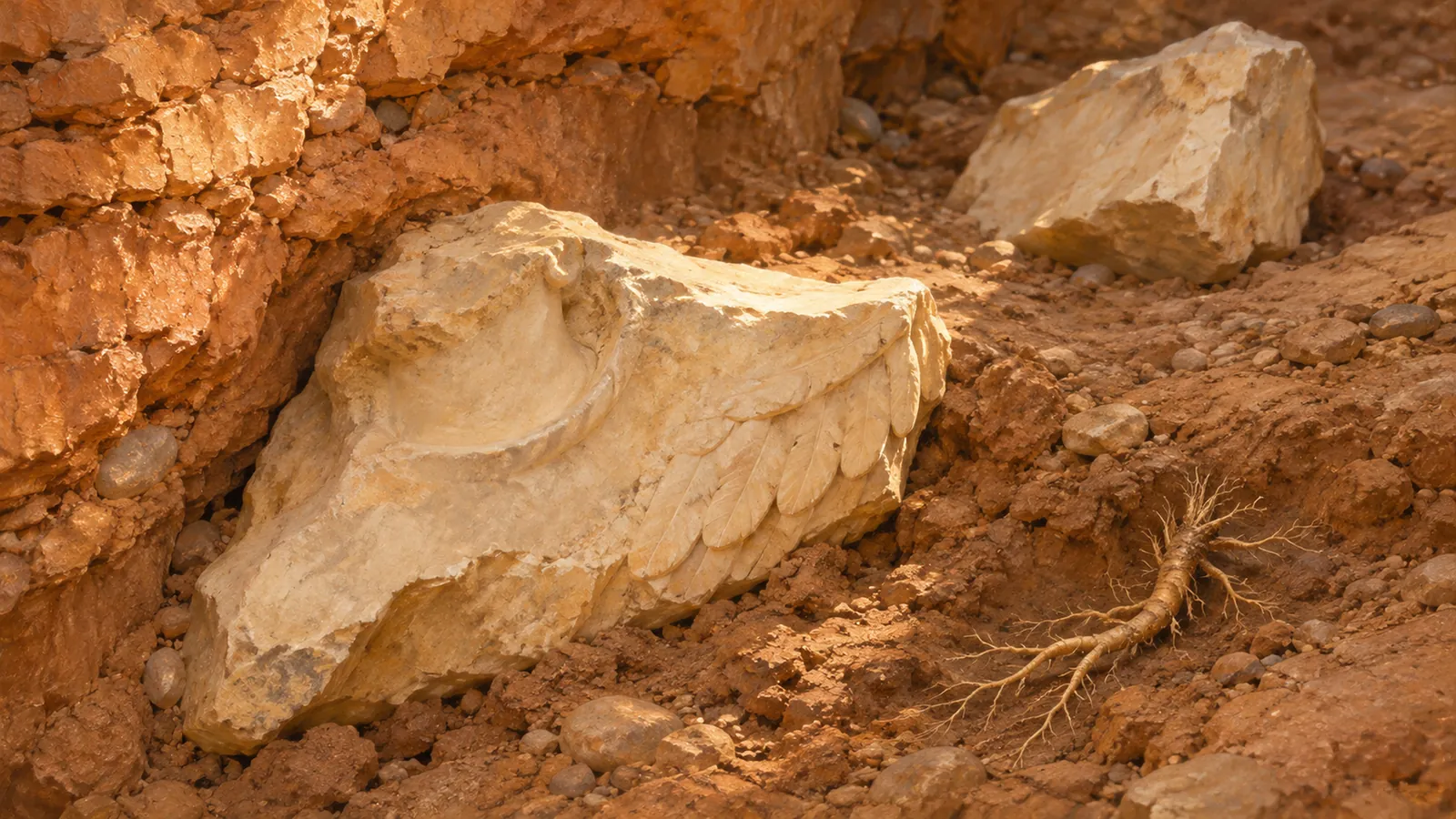
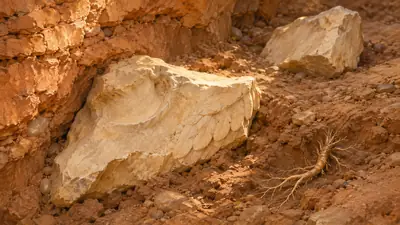
Several of the seven surviving pieces were found at Girsu, now called Tello in southern Iraq. One was found in a later building where people had reused the stone.
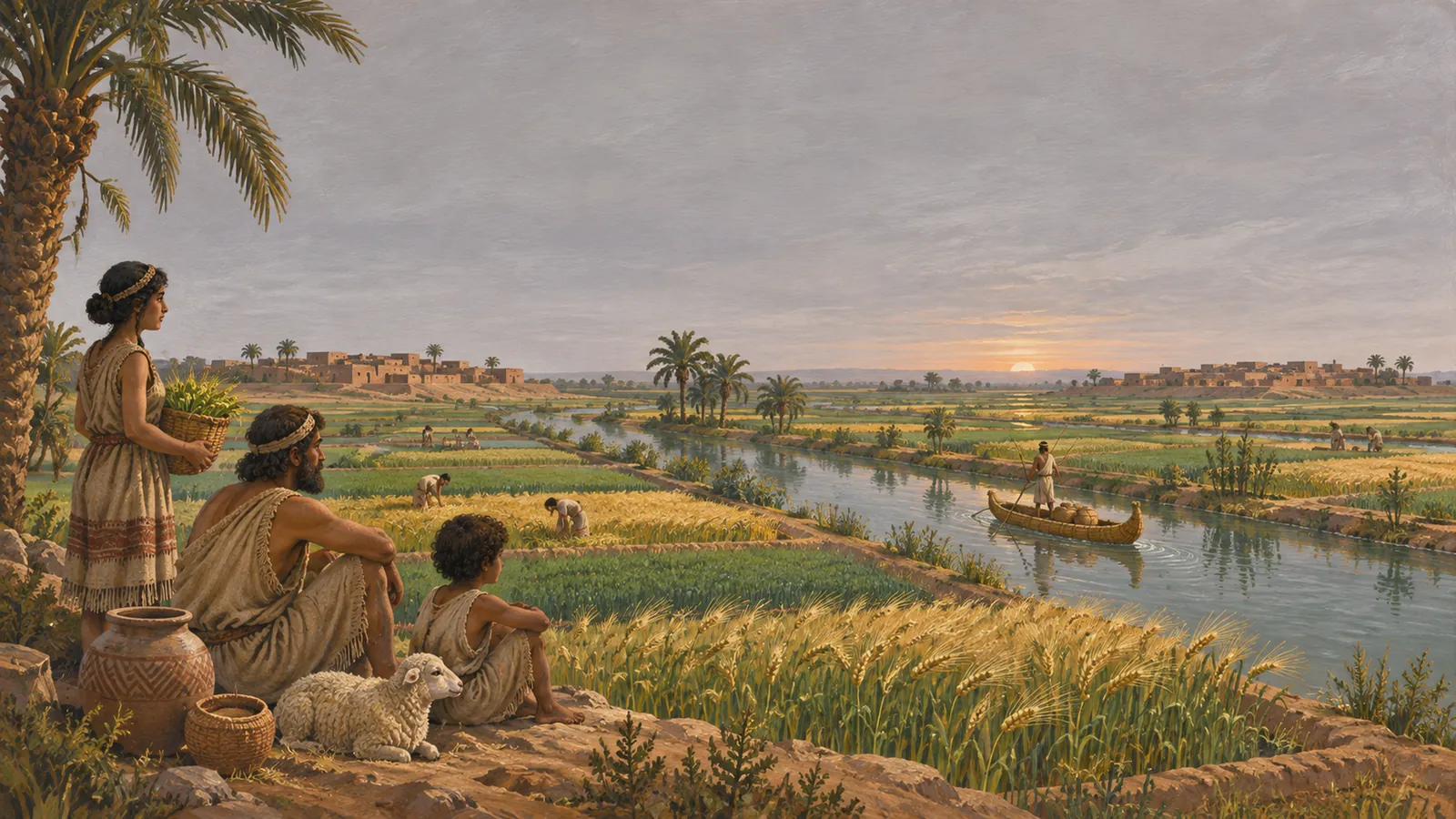
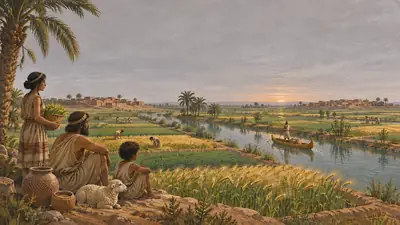
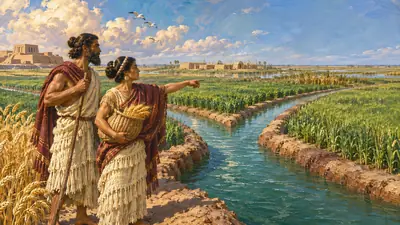
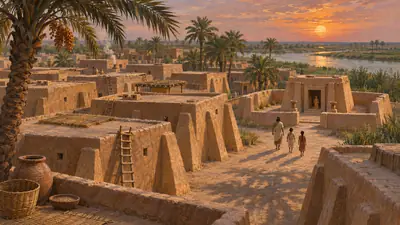
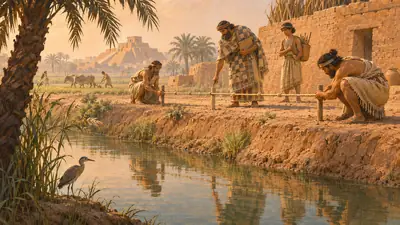
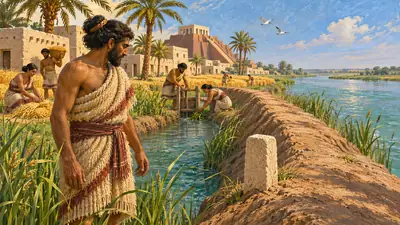
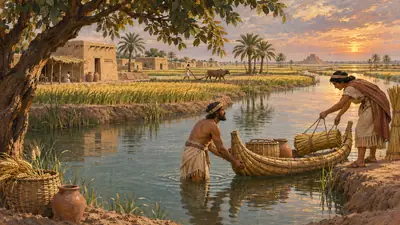
Follow a canal across the southern plain and it branches into smaller channels. The stele tells how two neighbors fought over a stretch of fields in this irrigated country.
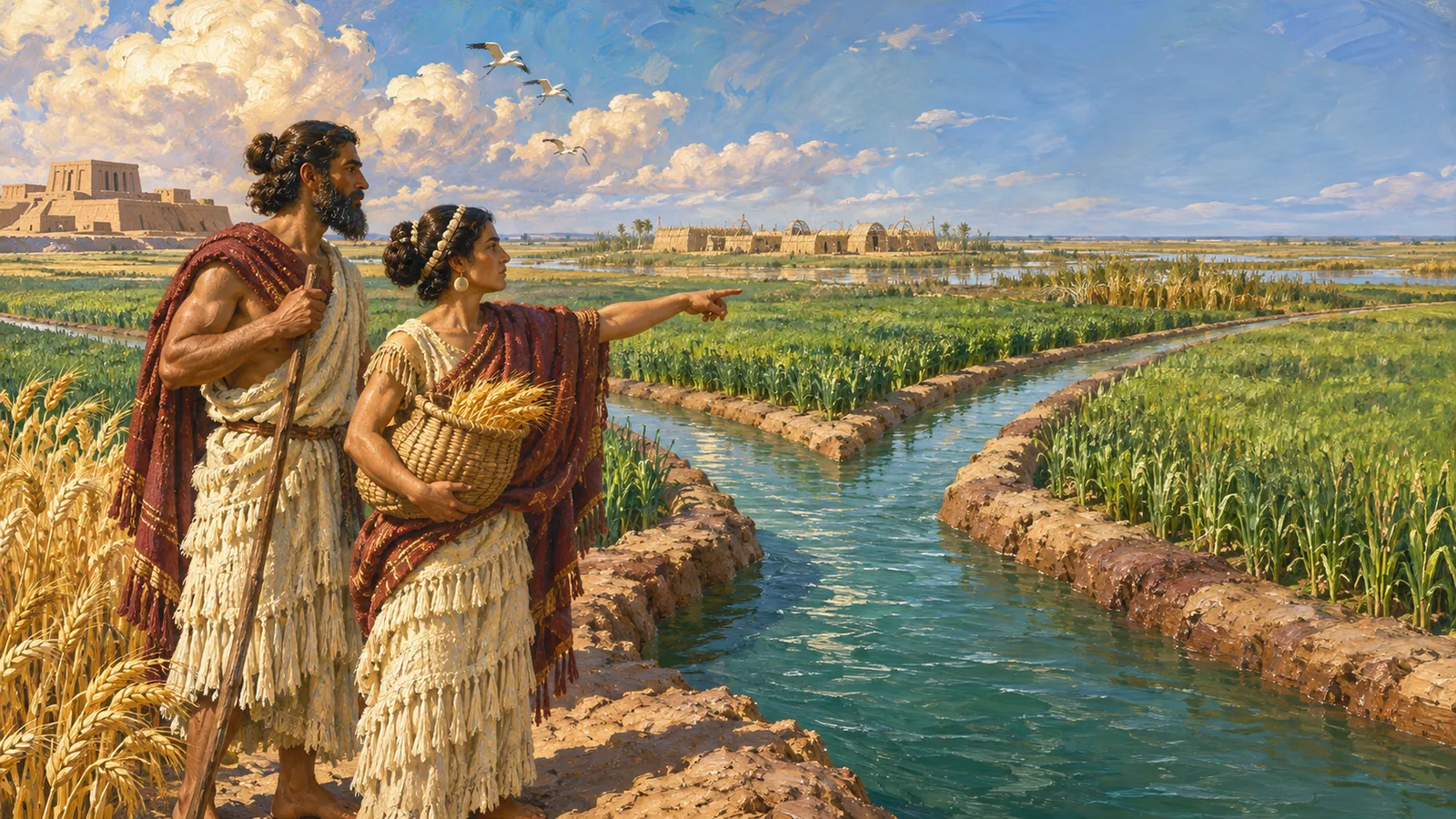
Lagash and Umma lay on the same southern plain. The Gu’edena tract lay between their interests. The man who ordered this monument ruled Lagash, and the stone tells his city’s story.
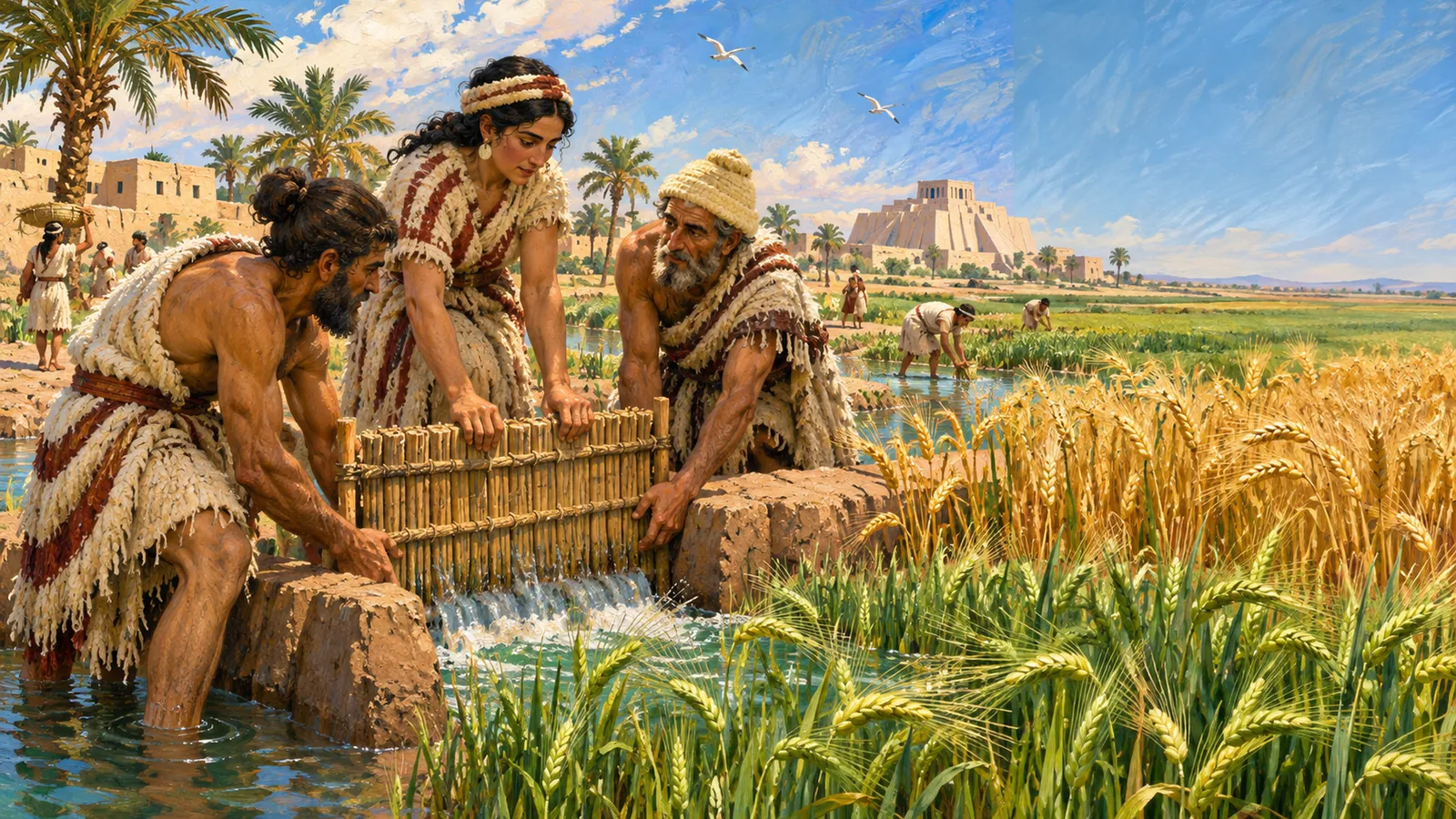
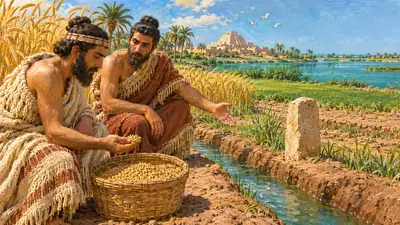
Banks kept water in the channel. Smaller ditches took it to the fields. The oath cut into the stone names both kinds of earthwork, because moving either could change where the water went.
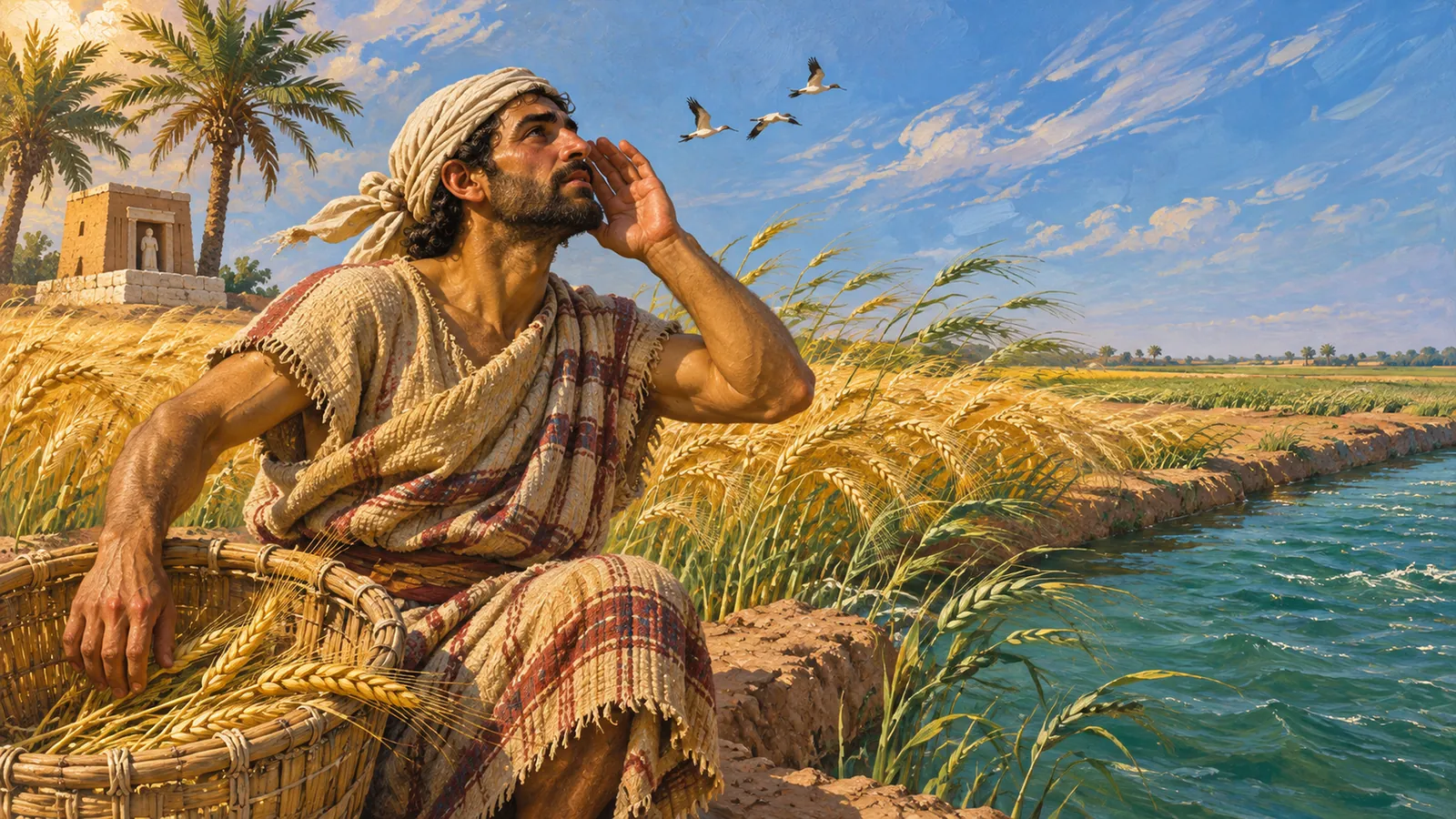
Lagash’s inscription says the Gu’edena belonged to Ningirsu, its city god. It accuses Umma’s ruler of taking the field and making use of it. The accusation is part of Lagash’s claim.
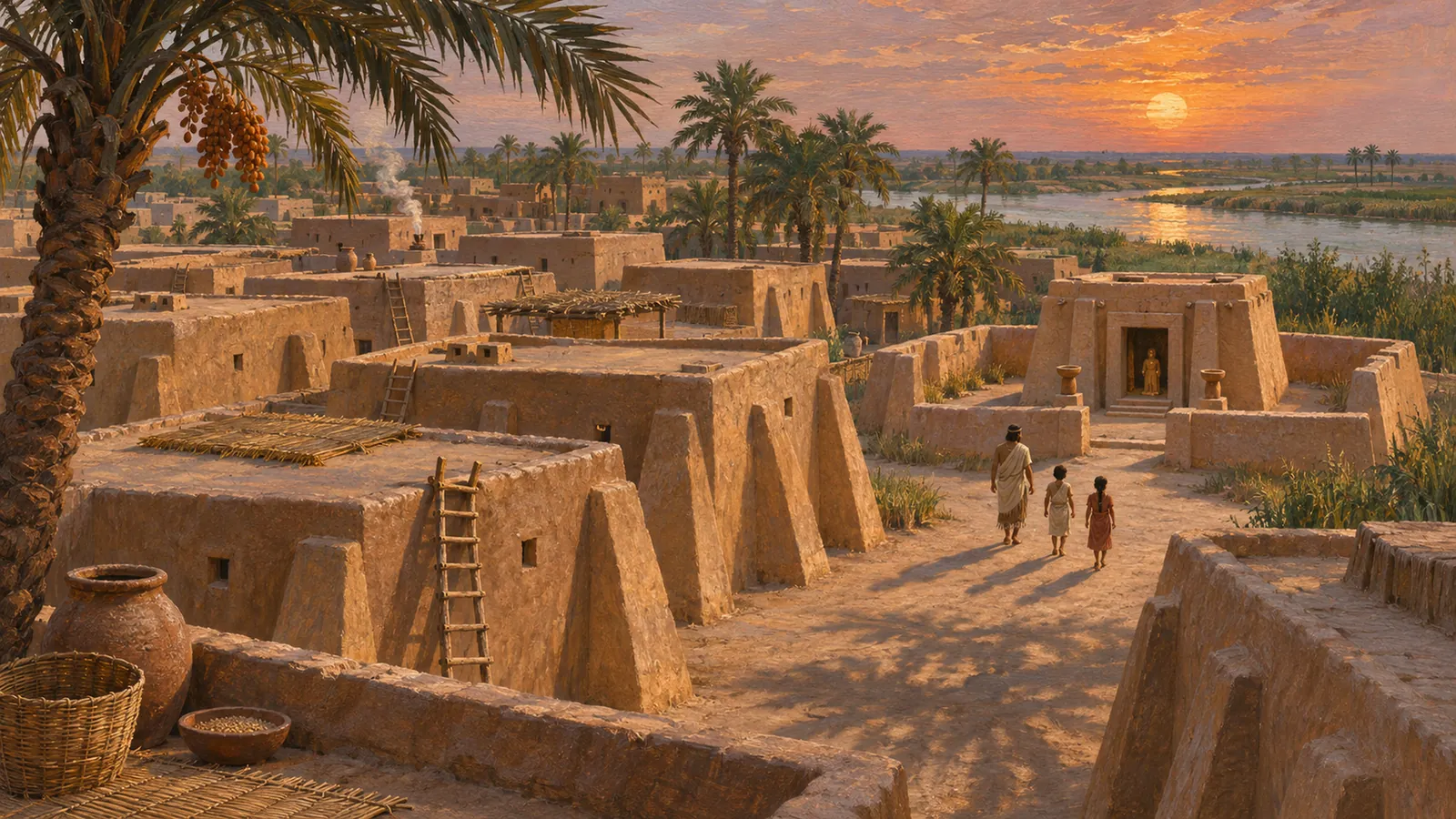
At Girsu, Ningirsu had a sanctuary. Calling a piece of land his made the quarrel matter to the temple as well as the ruler. The inscription returns to the god’s claim again and again.
EANNATUM
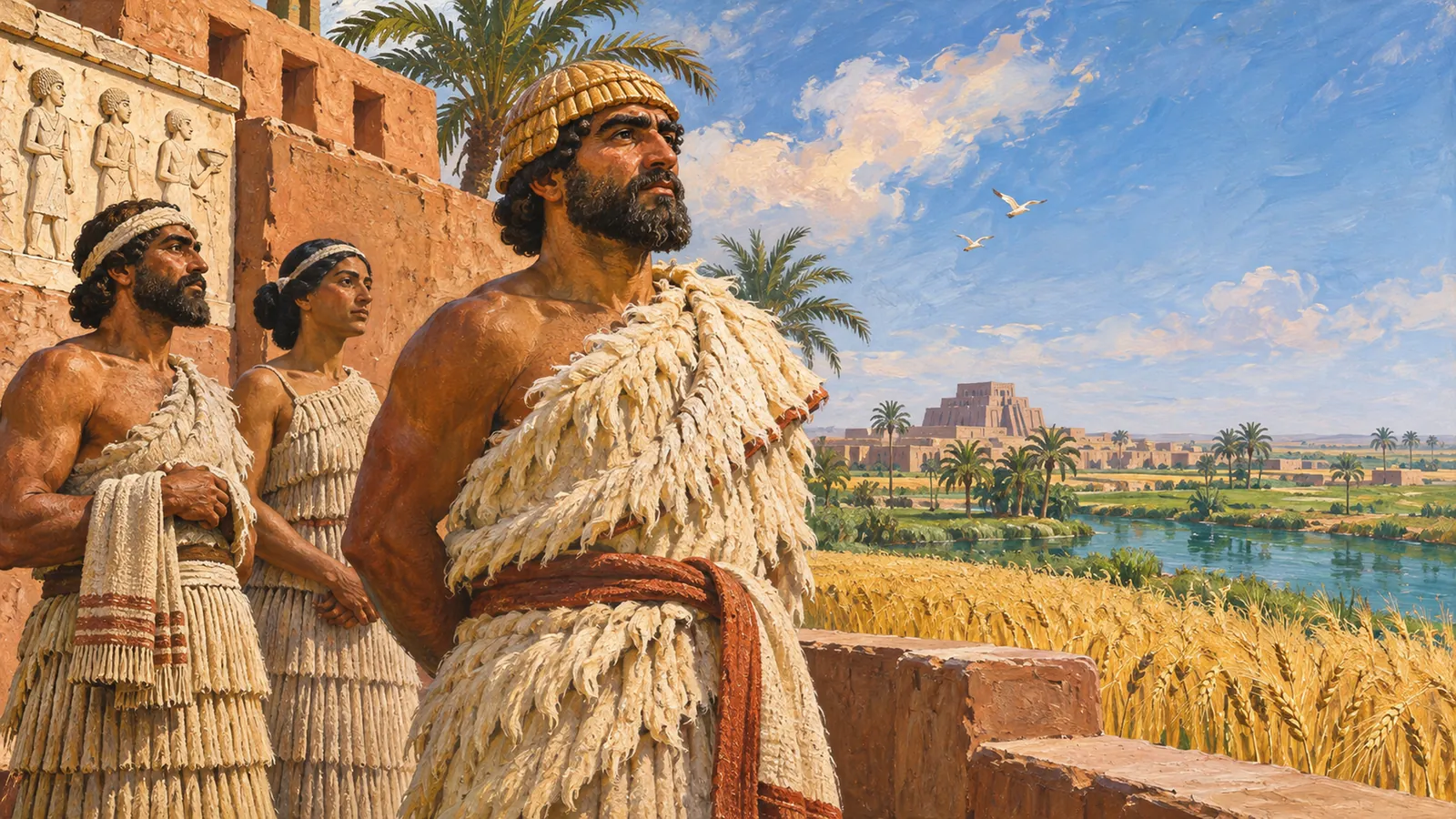
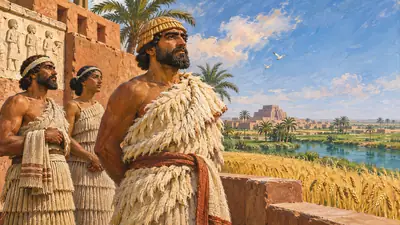
Eannatum had the stone name his father Akurgal and his grandfather Ur-Nanshe, both rulers of Lagash. Visitors who heard the inscription read could place Eannatum in a family that already governed their city.
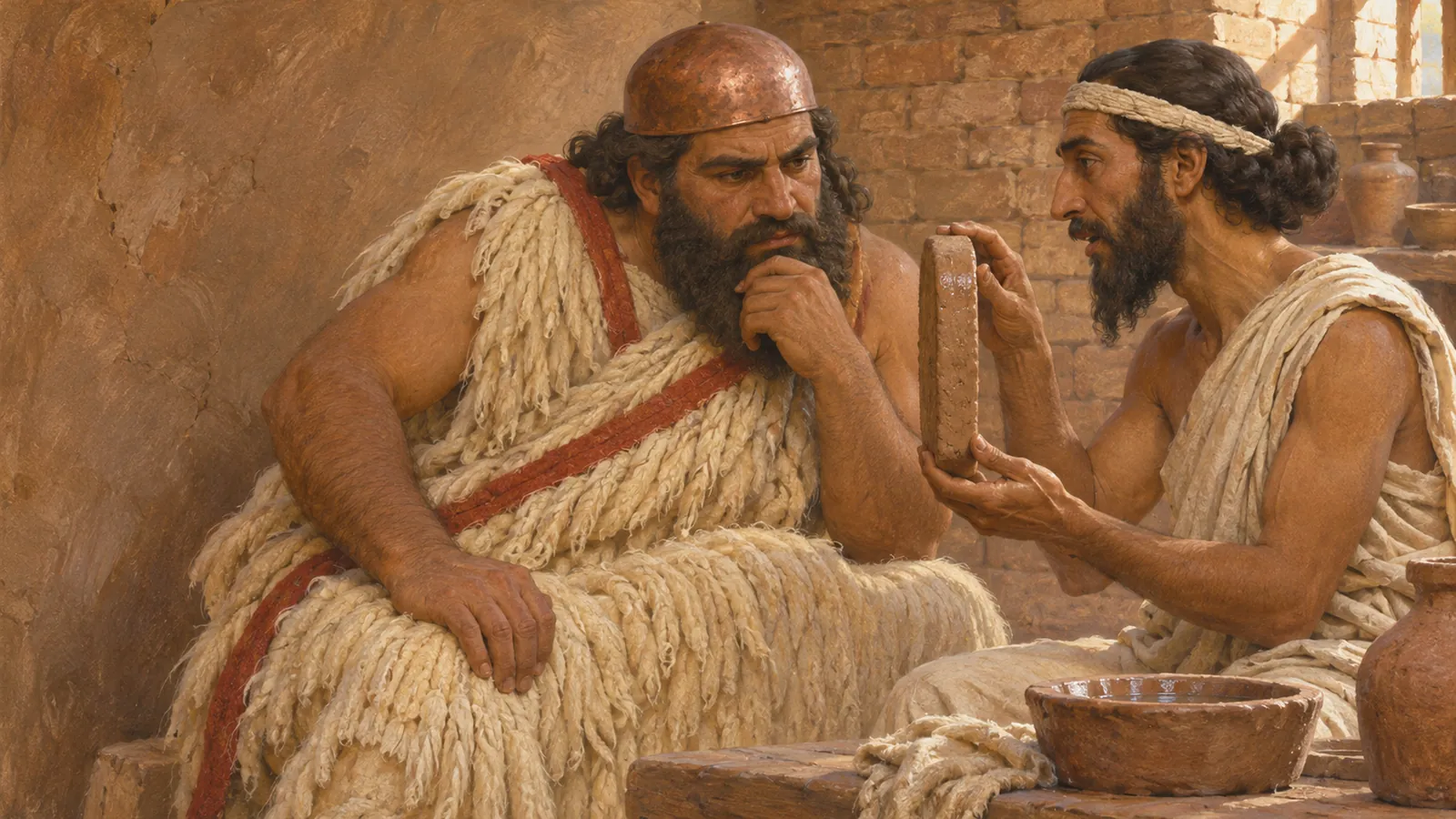
The inscription says Inanna named Eannatum, Enlil gave him strength and Enki gave him wisdom. The writer names each gift separately, giving different gods a place in Lagash’s account of its ruler.
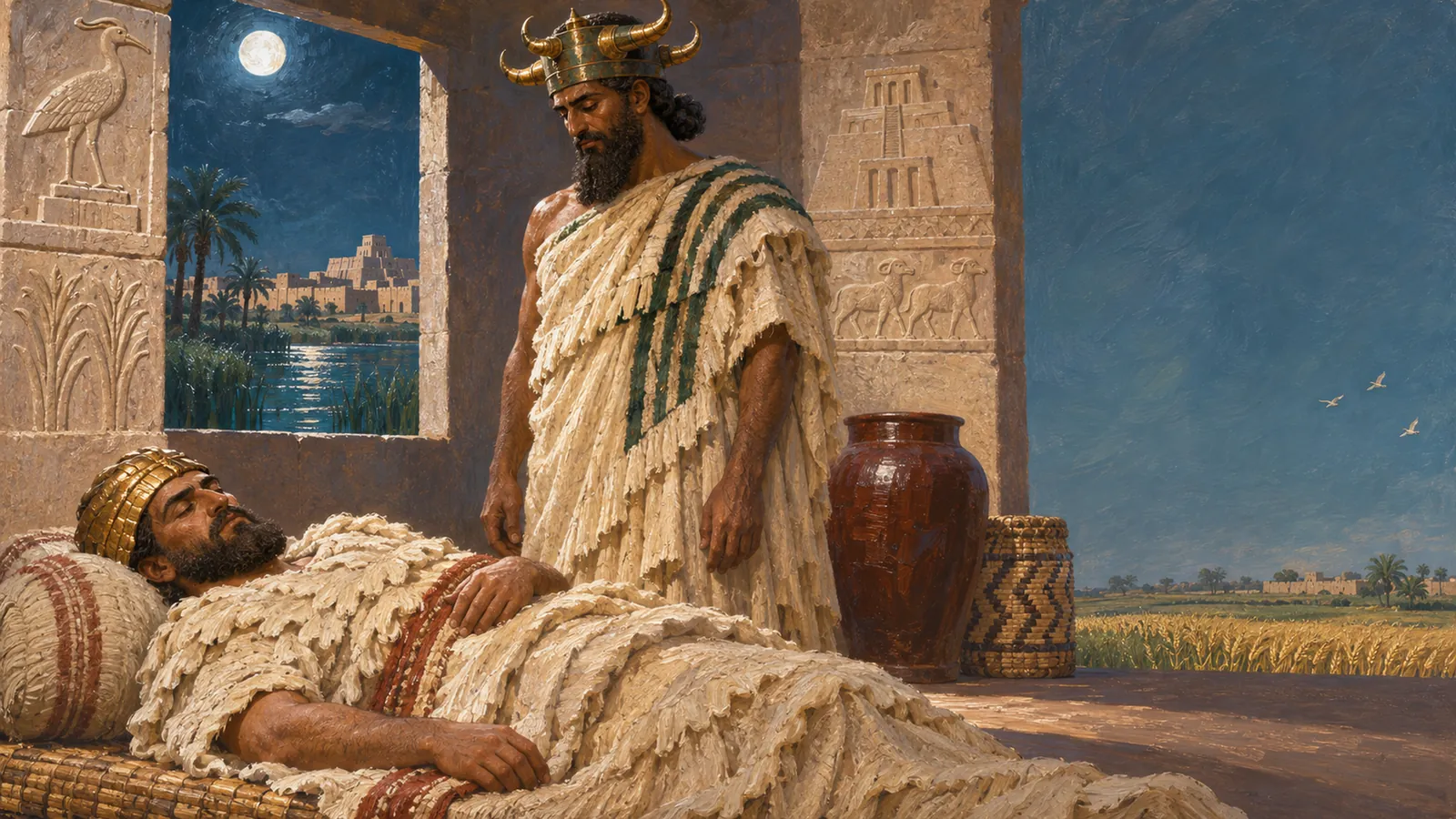
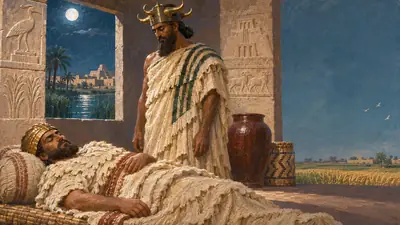
Ningirsu stands over the sleeping Eannatum, according to the inscription. Some of the words have broken away. In the surviving speech the god promises to bring out Utu, the sun, at Eannatum’s right.
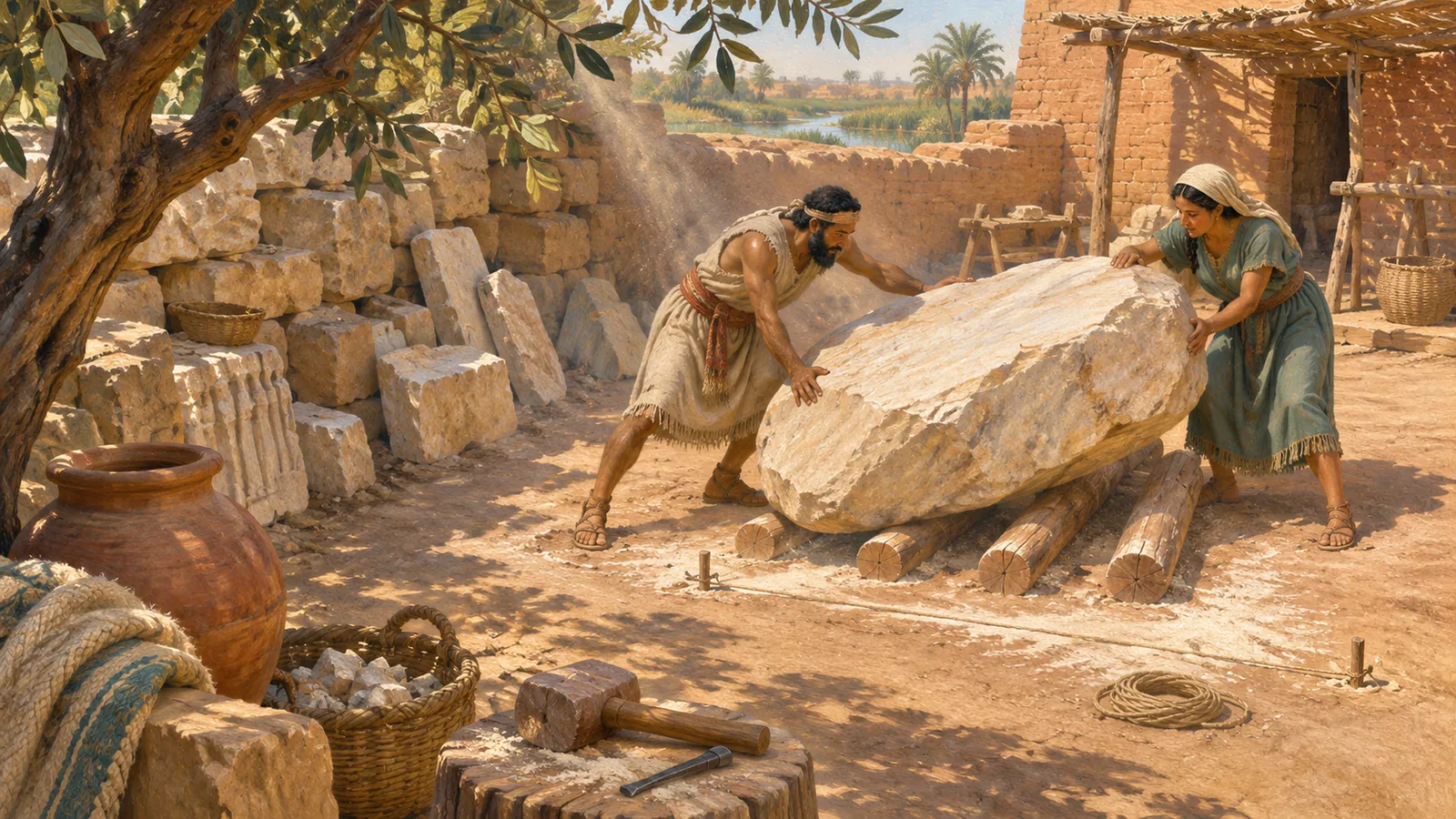
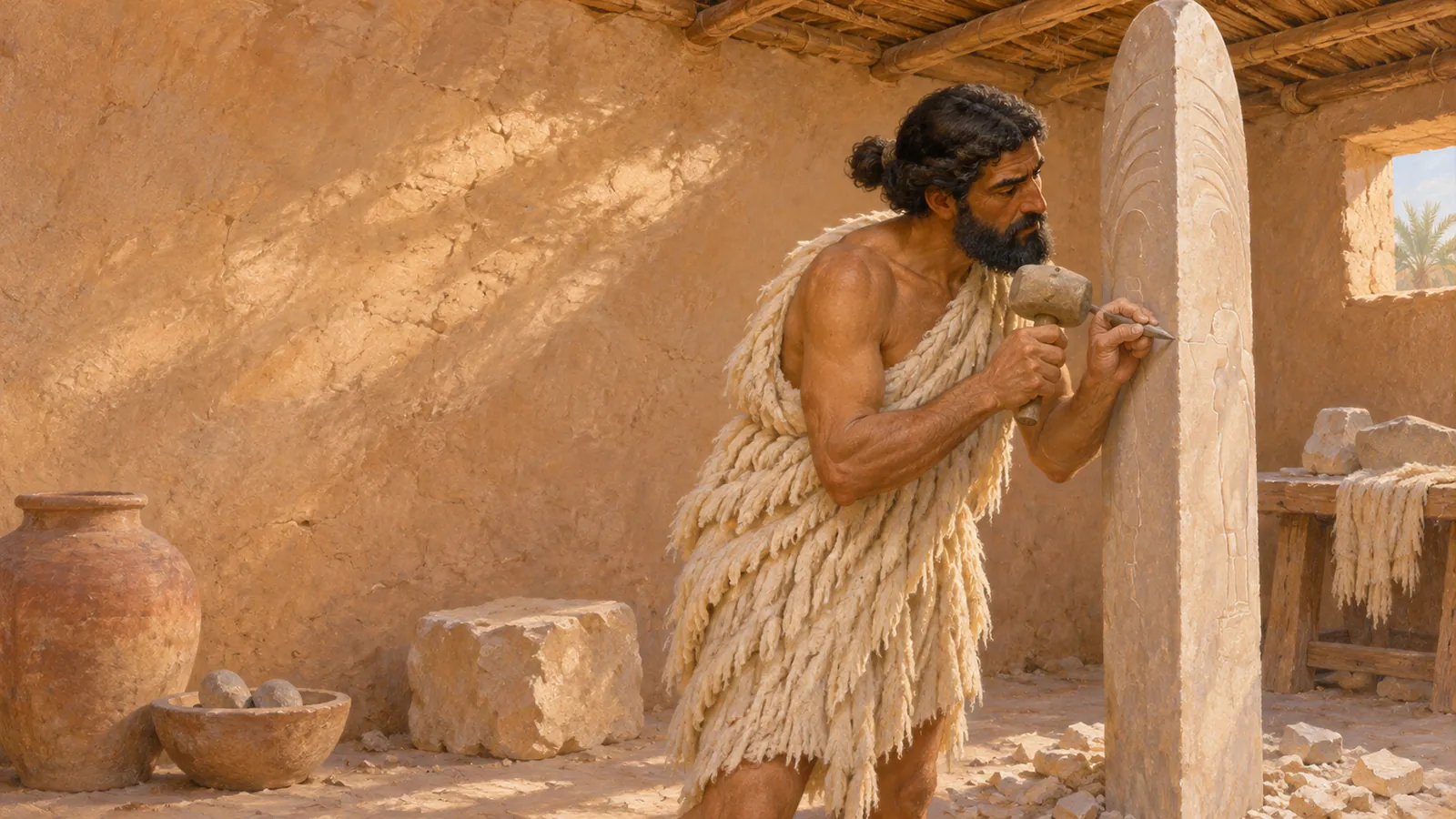
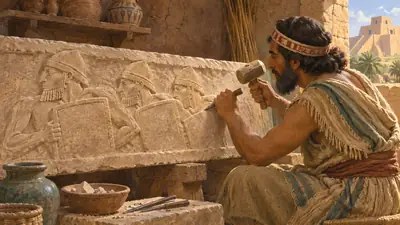
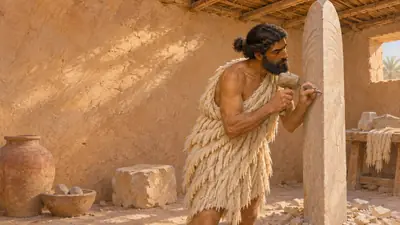
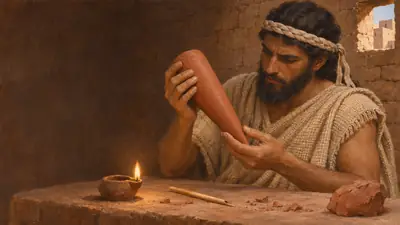
Imagine a pale slab in a workshop. The sculptors used both broad faces, leaving room for lines of writing as well as figures. They divided the scenes into bands the eye could follow.
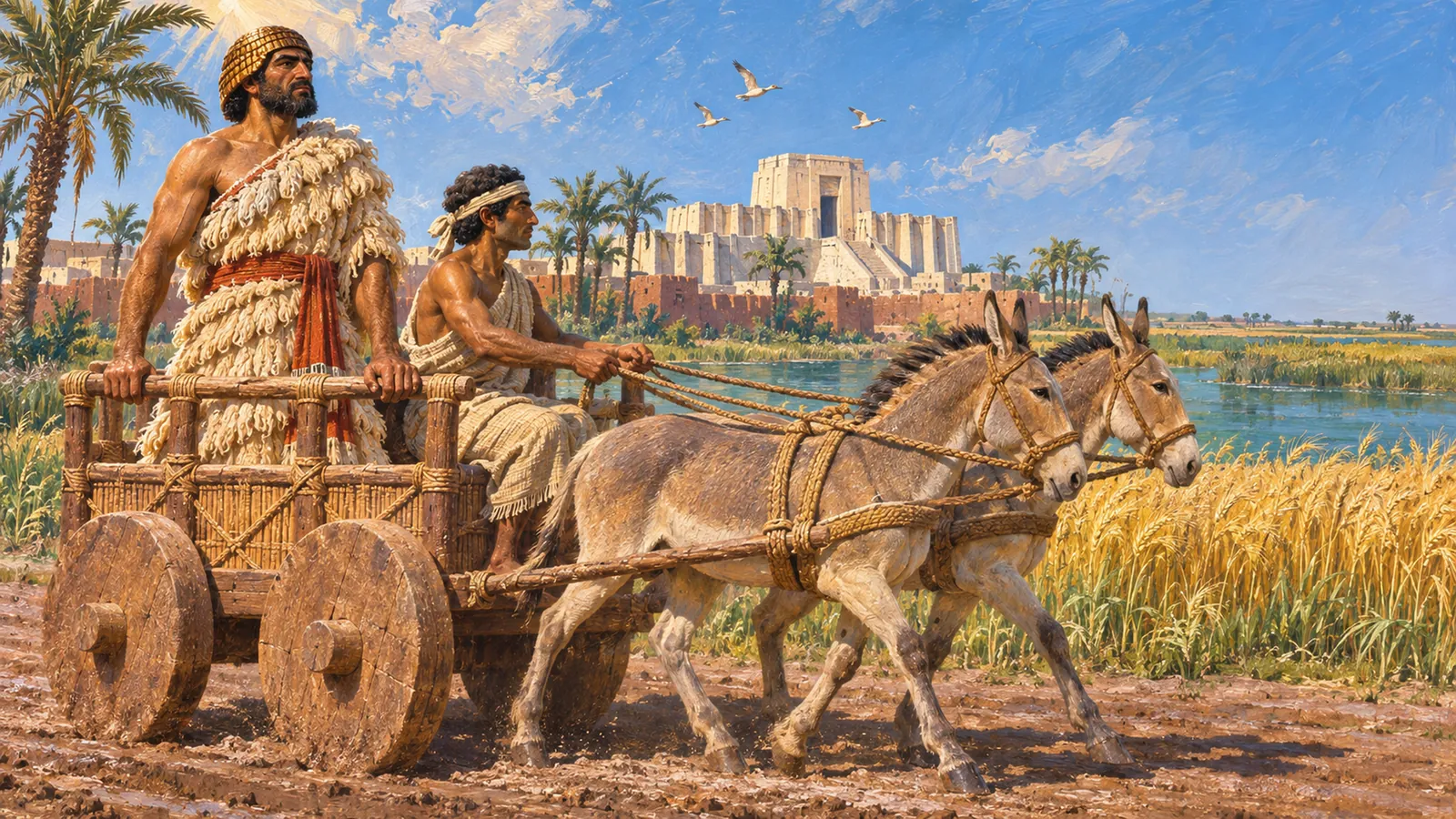
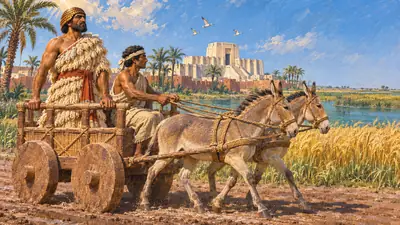
On the face that depicts the conflict, Eannatum appears on a wheeled cart in one band. Here the animals and the heavy wheels bring the low carving into the world of the fields.
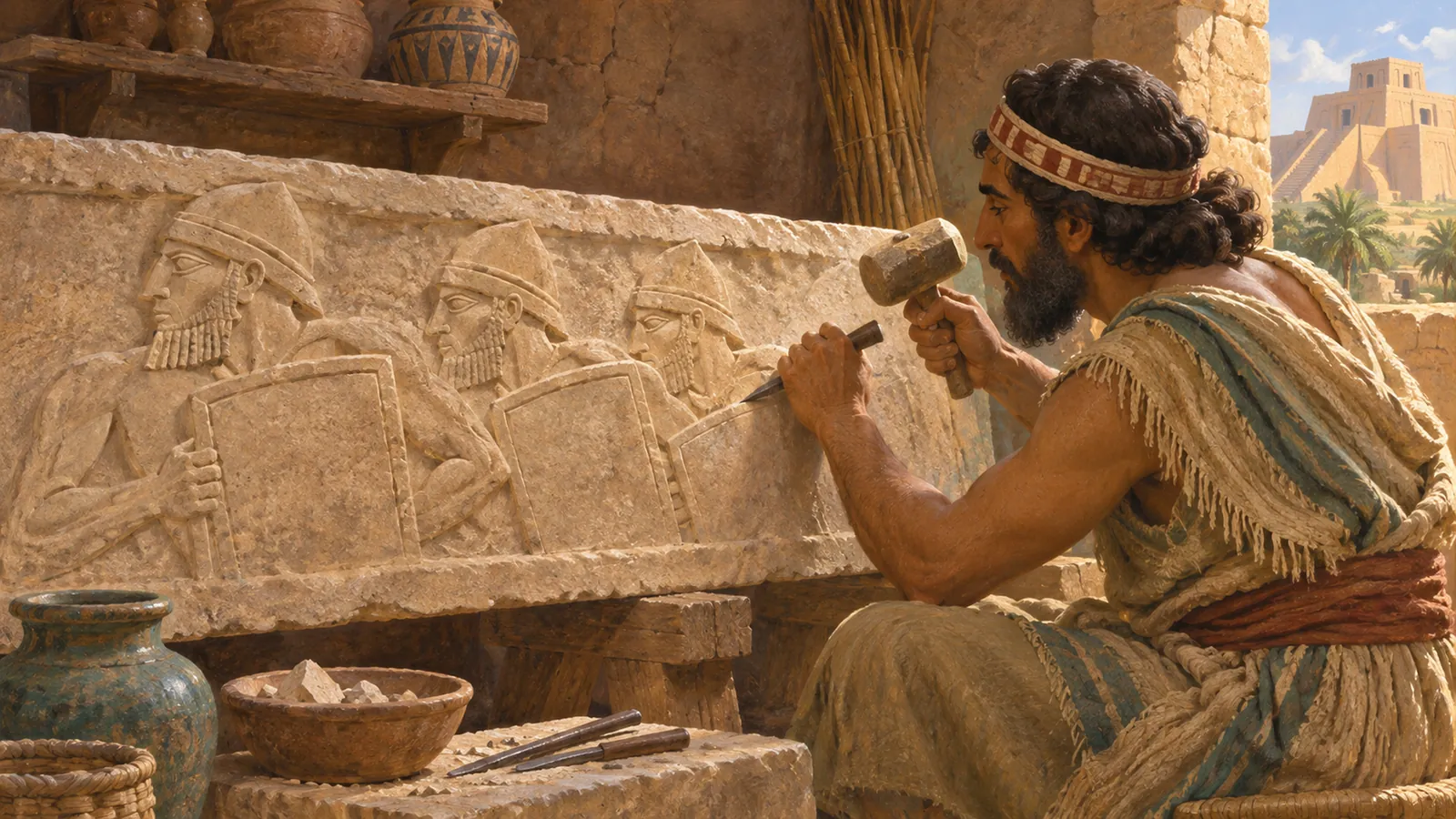
In an upper band, the ruler leads a group on foot. The sculptor repeats helmets and shields so the ranks read as a single group, while Eannatum’s figure stands out at their head.
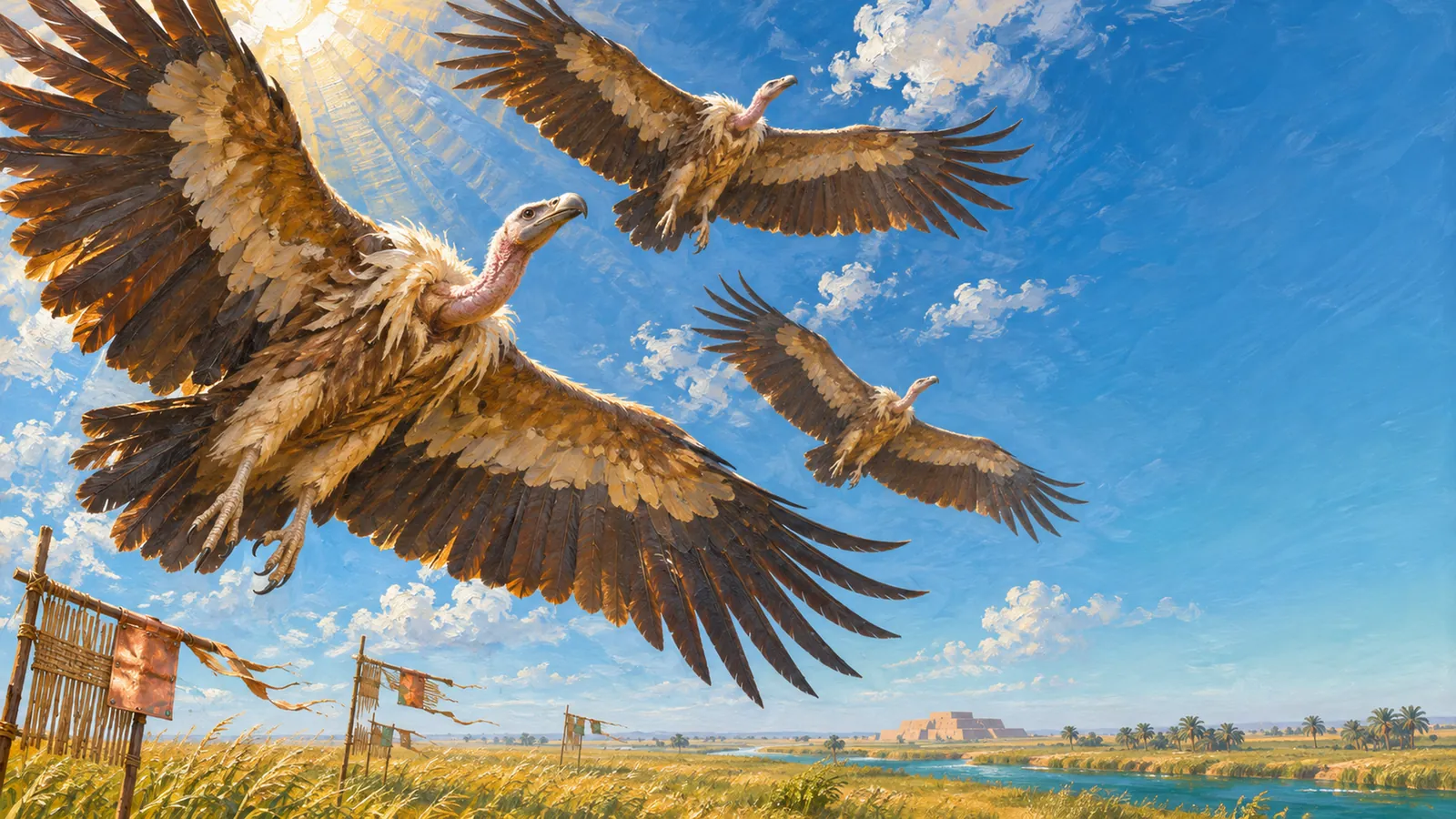
The bird fragment belongs to that upper band. Its feathers are cut into the same limestone as the ranks below. Each curve in a spread wing helps us tell one bird from the next.
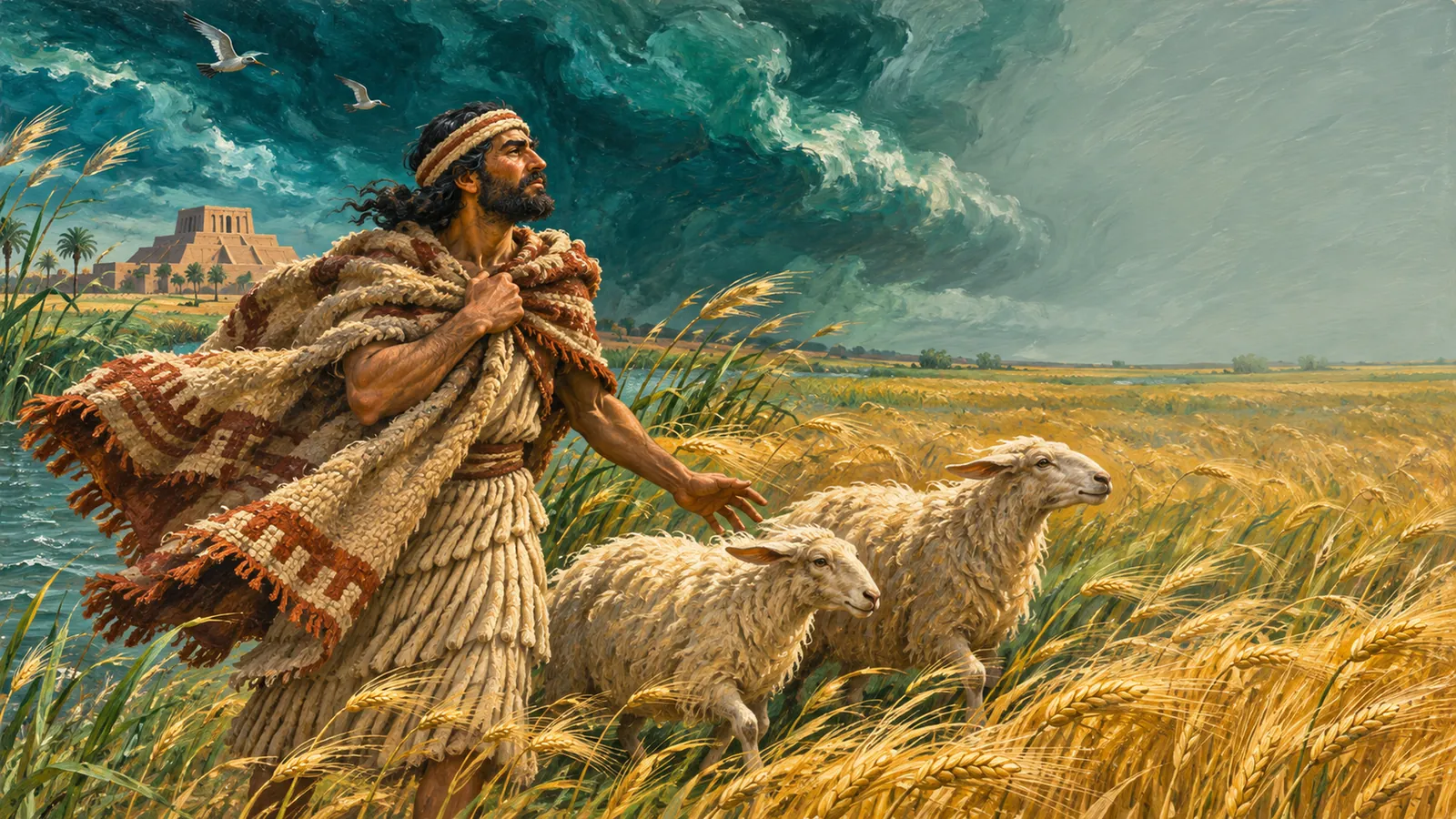
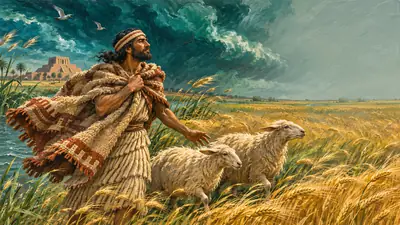
The account of the fighting has gaps. Lagash claims victory, and the writer compares the devastation to storm and flood. The wind in the painted fields carries the image that the words leave us.
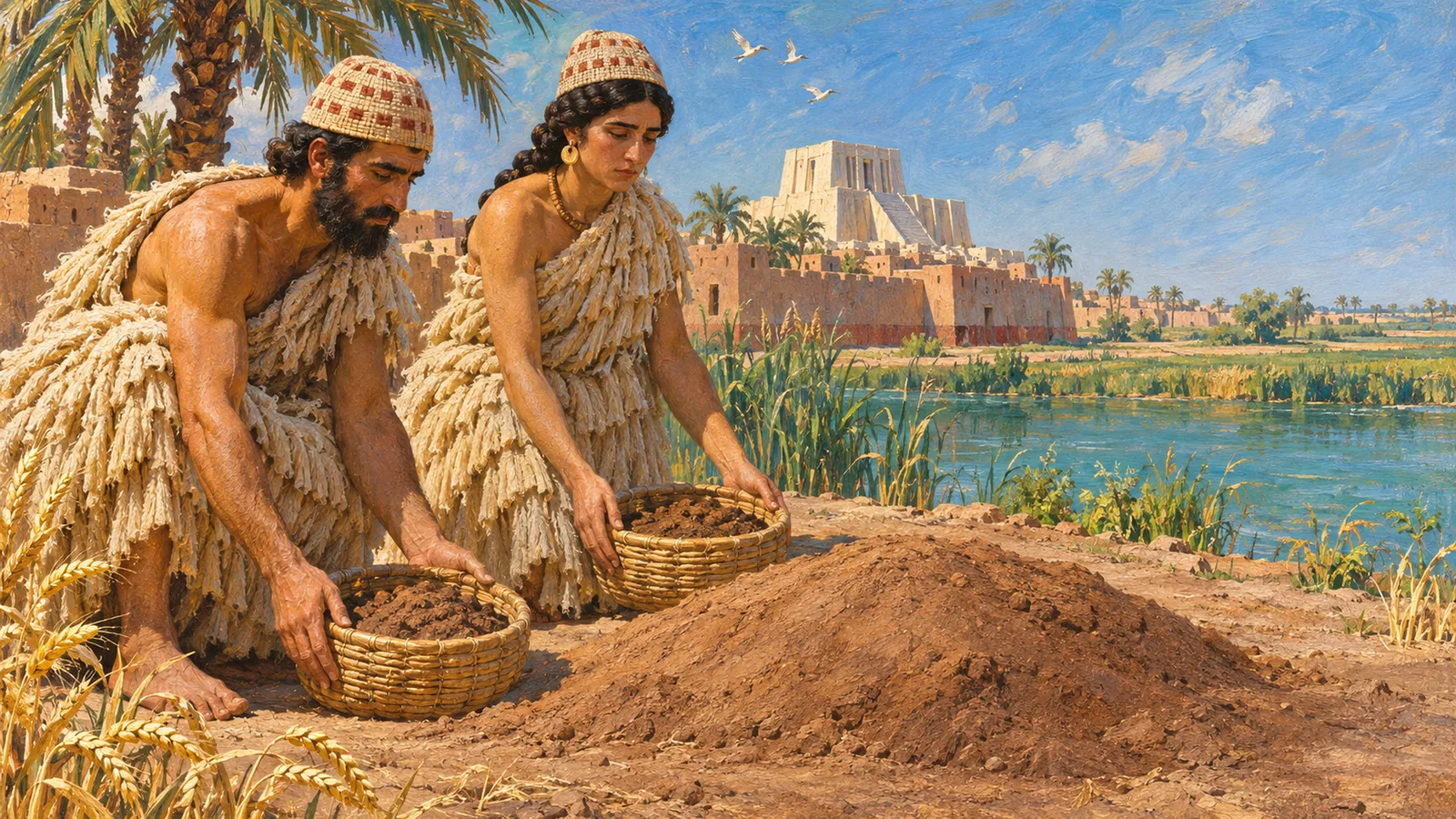
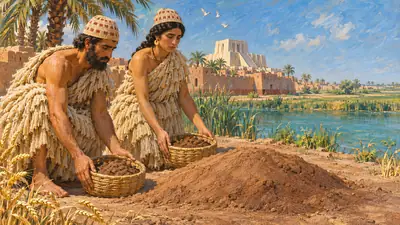
After the fighting, the inscription counts twenty burial mounds. On a surviving band, small figures lift baskets. The carver gave the labor of carrying and heaping earth its own part of the story.
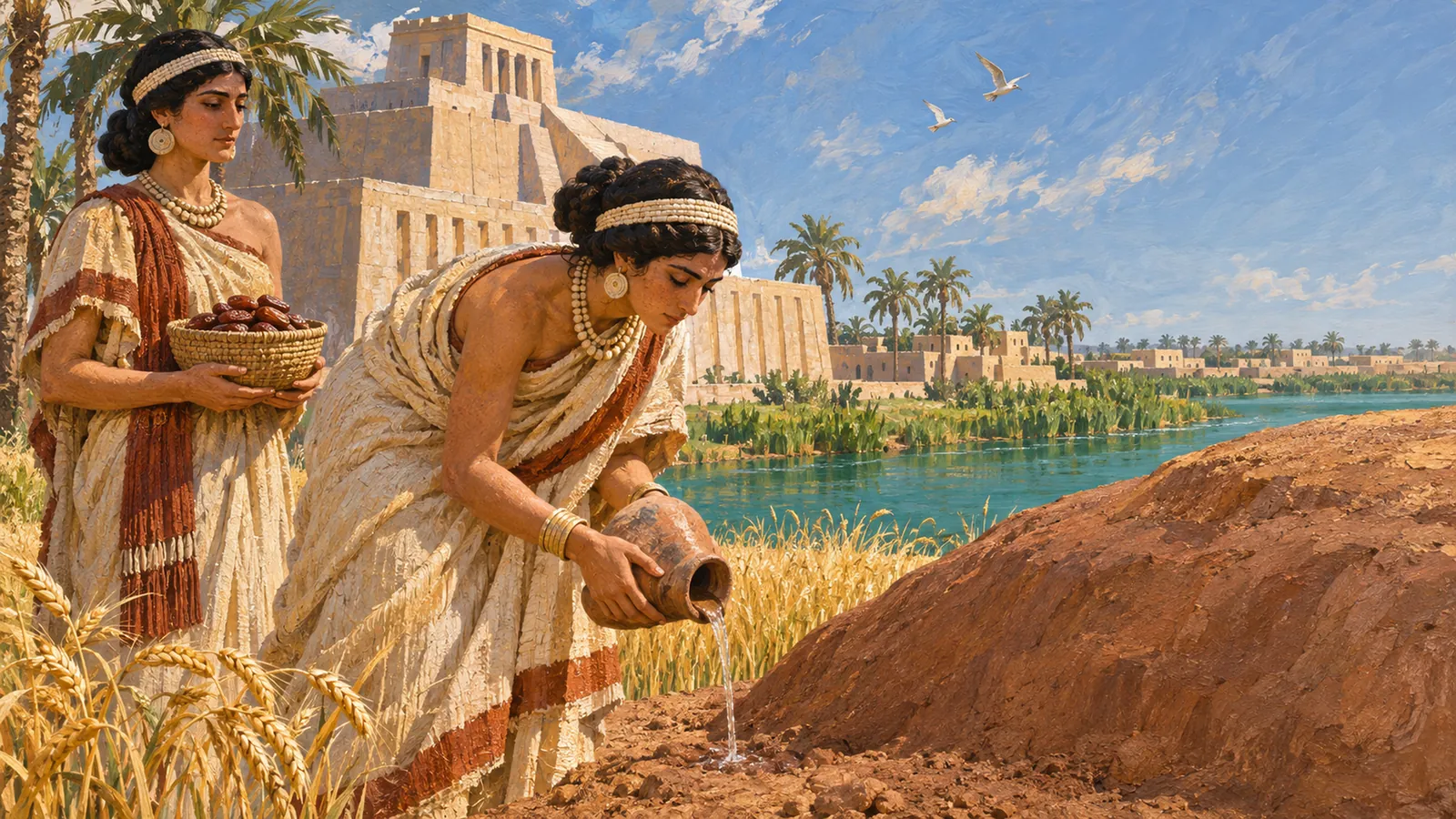
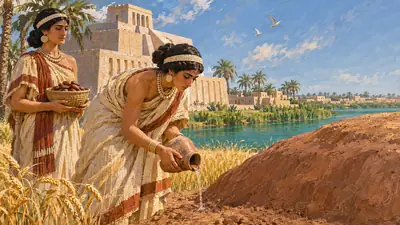
In the same part of the stone, a figure pours a liquid offering. Vessels and gifts sit nearby. The stone preserves the outline of this quiet rite amid a ruler’s account of victory.
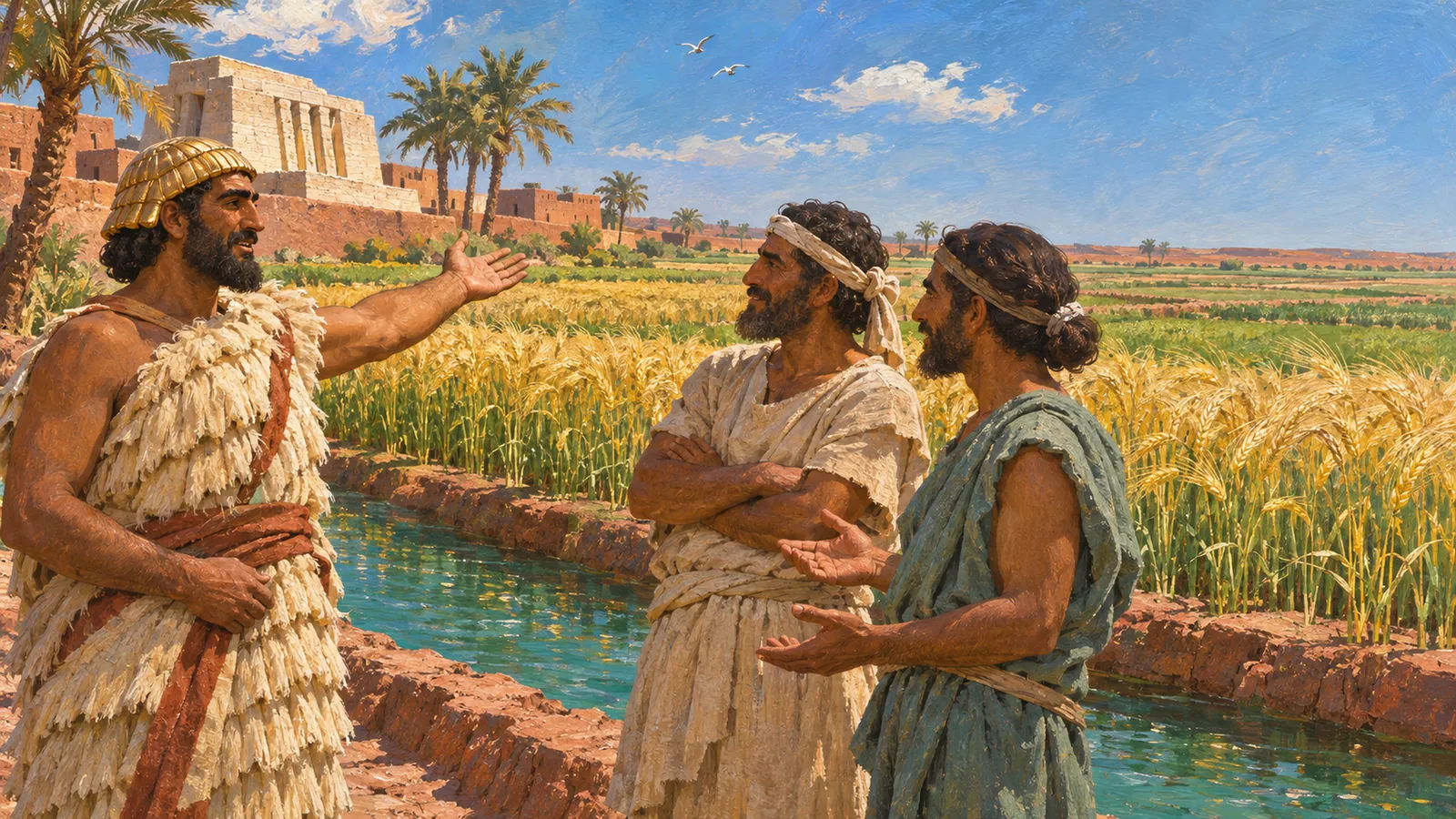
Lagash’s inscription says Eannatum returned the Gu’edena to Ningirsu. After giving the ruler so much space, the account turns back to the field that his city god had claimed.
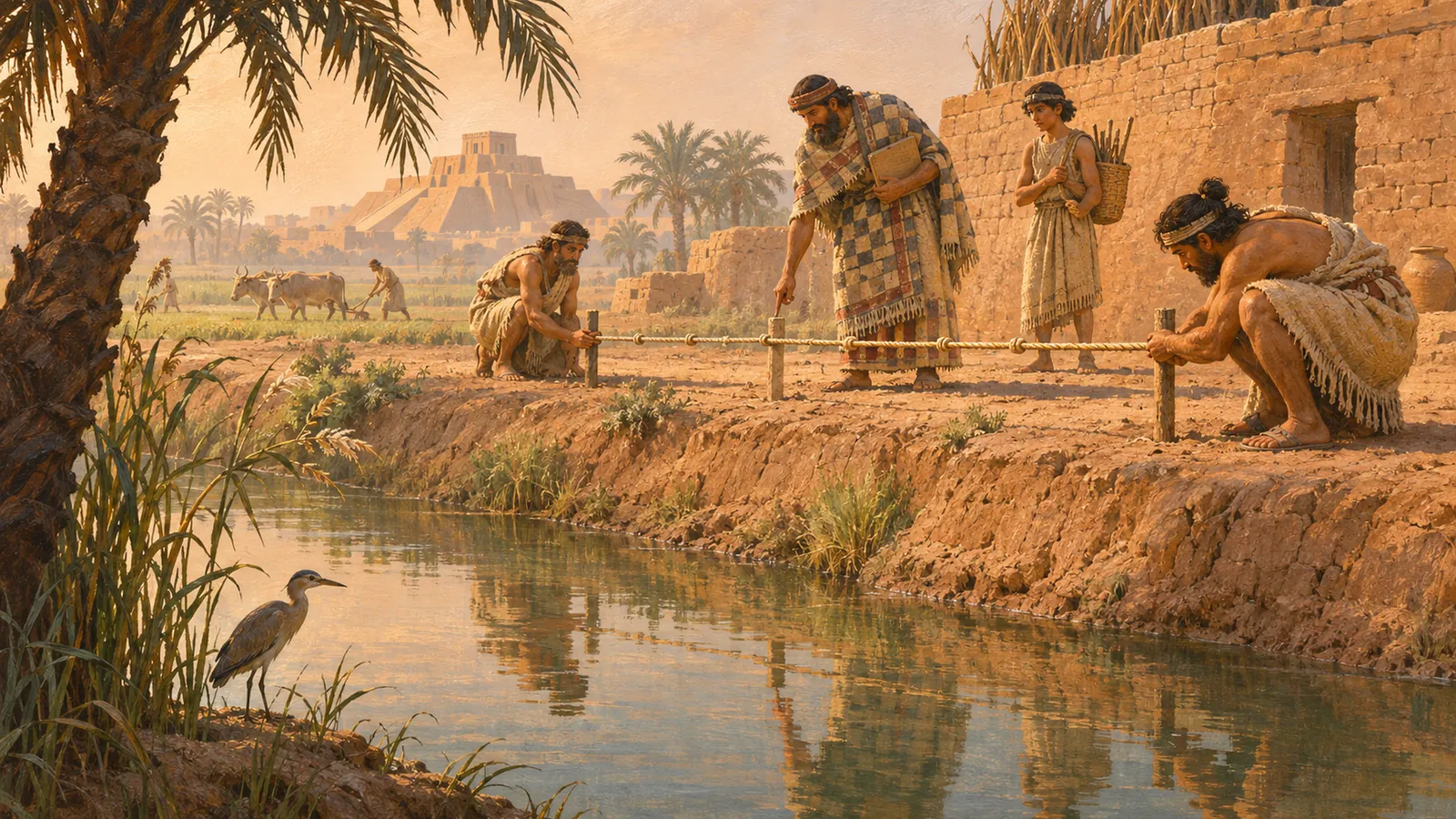
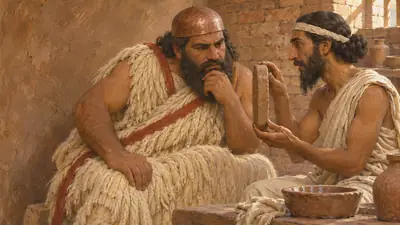
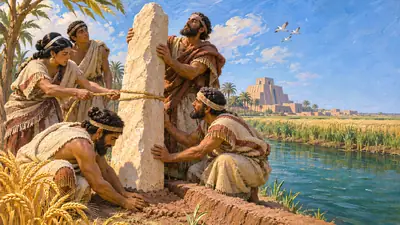
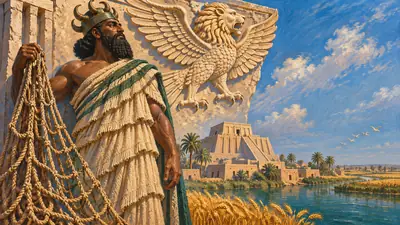
A later inscription from Lagash remembers Mesilim of Kish measuring the boundary and setting up a marker in an earlier generation. Here a knotted rope lets us imagine the work of measuring.
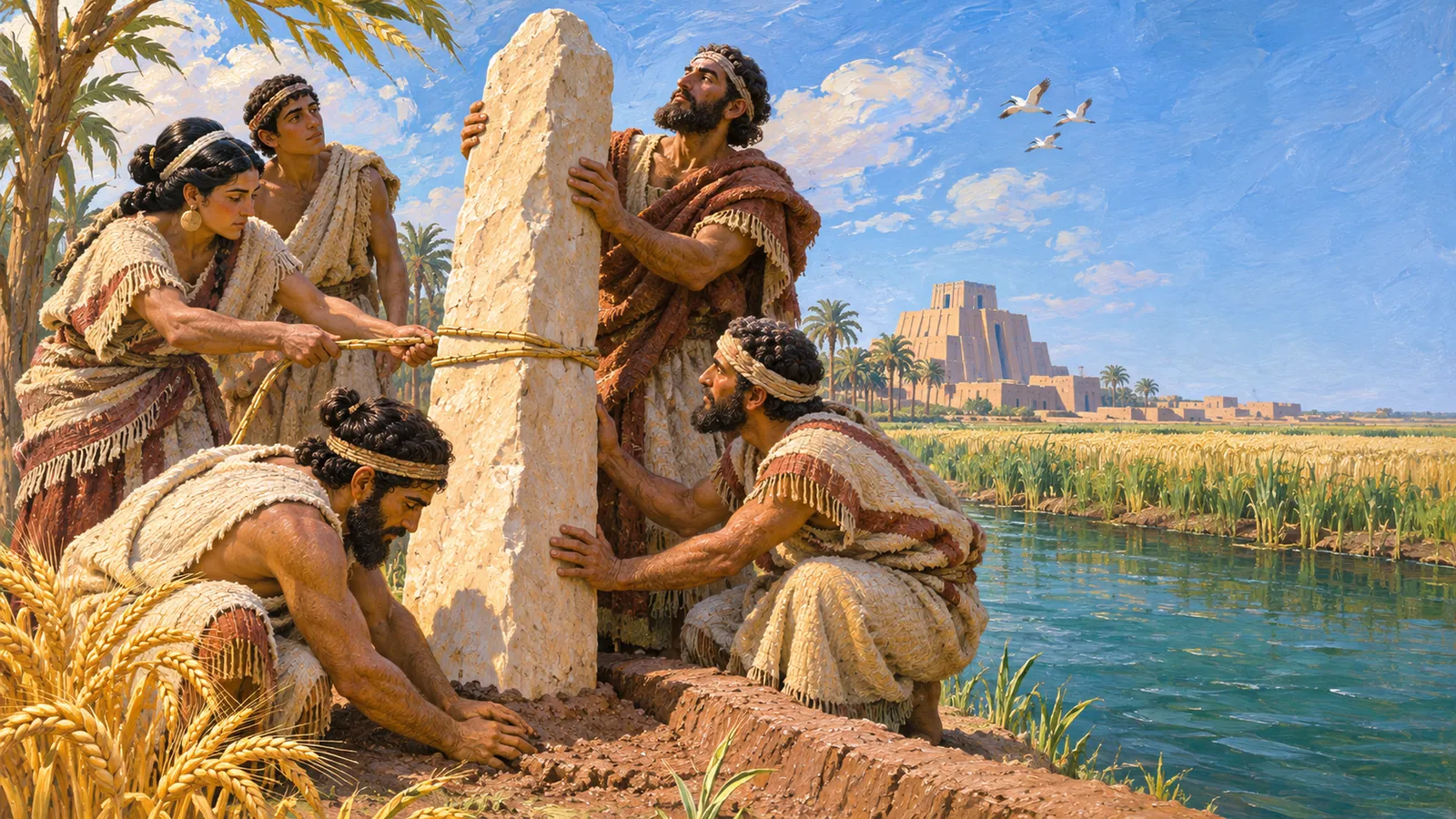
This stele says Eannatum erected a marker and left a tract at the boundary under Umma’s control. The surviving words distinguish that tract from the Gu’edena field the text calls Ningirsu’s.
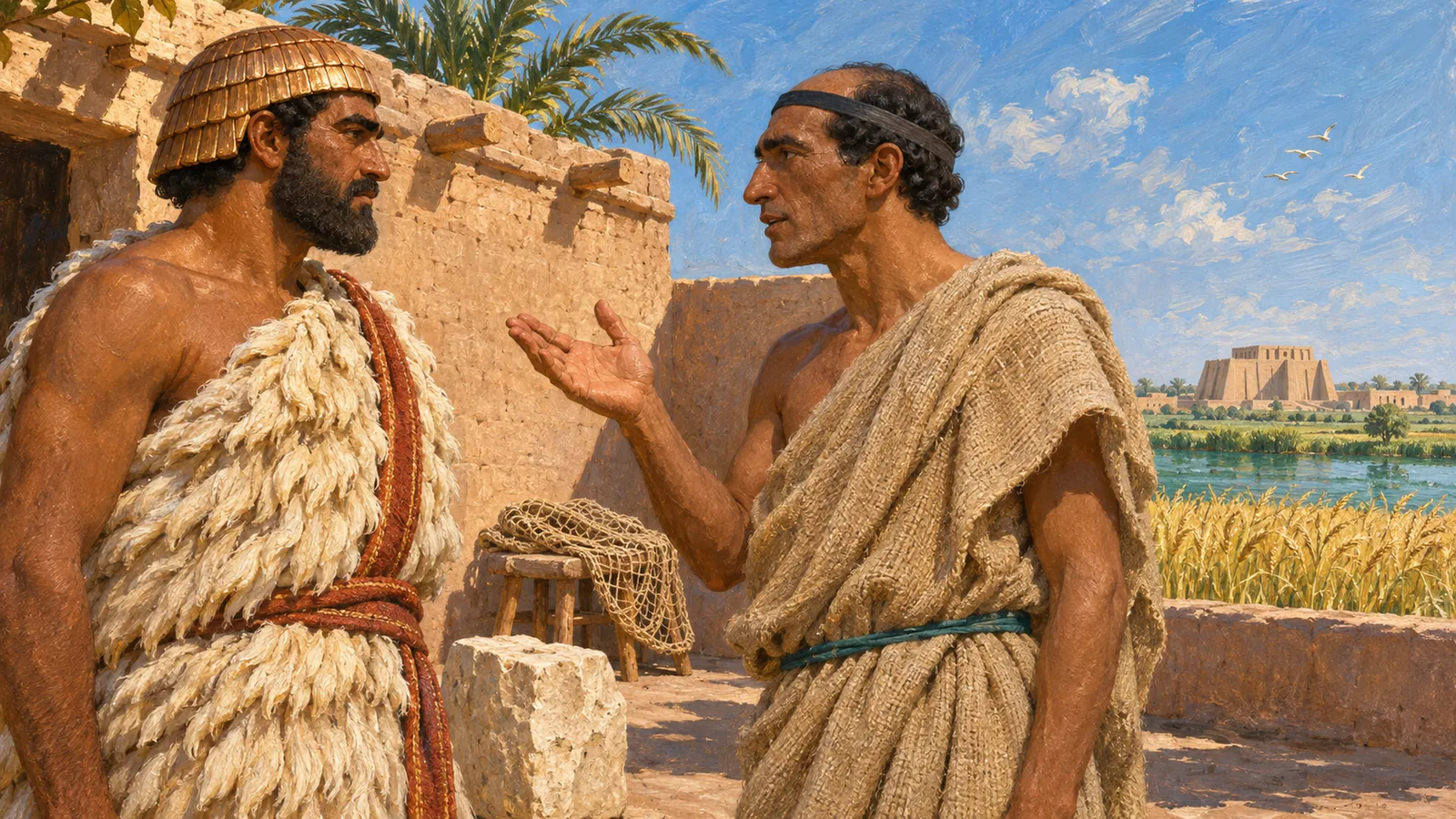
THE OATH
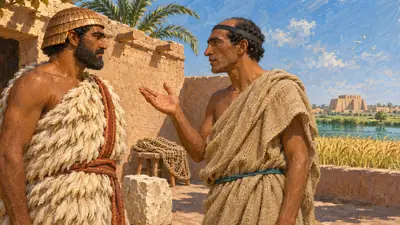
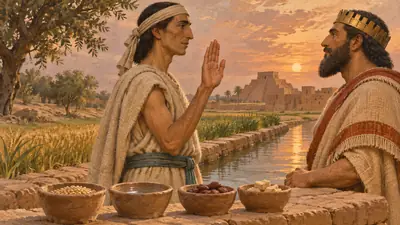
Eannatum requires the ruler of Umma to swear by Enlil’s great net. The inscription sets out the promises in the ruler’s voice. It imagines a consequence with every appeal to a divine witness.
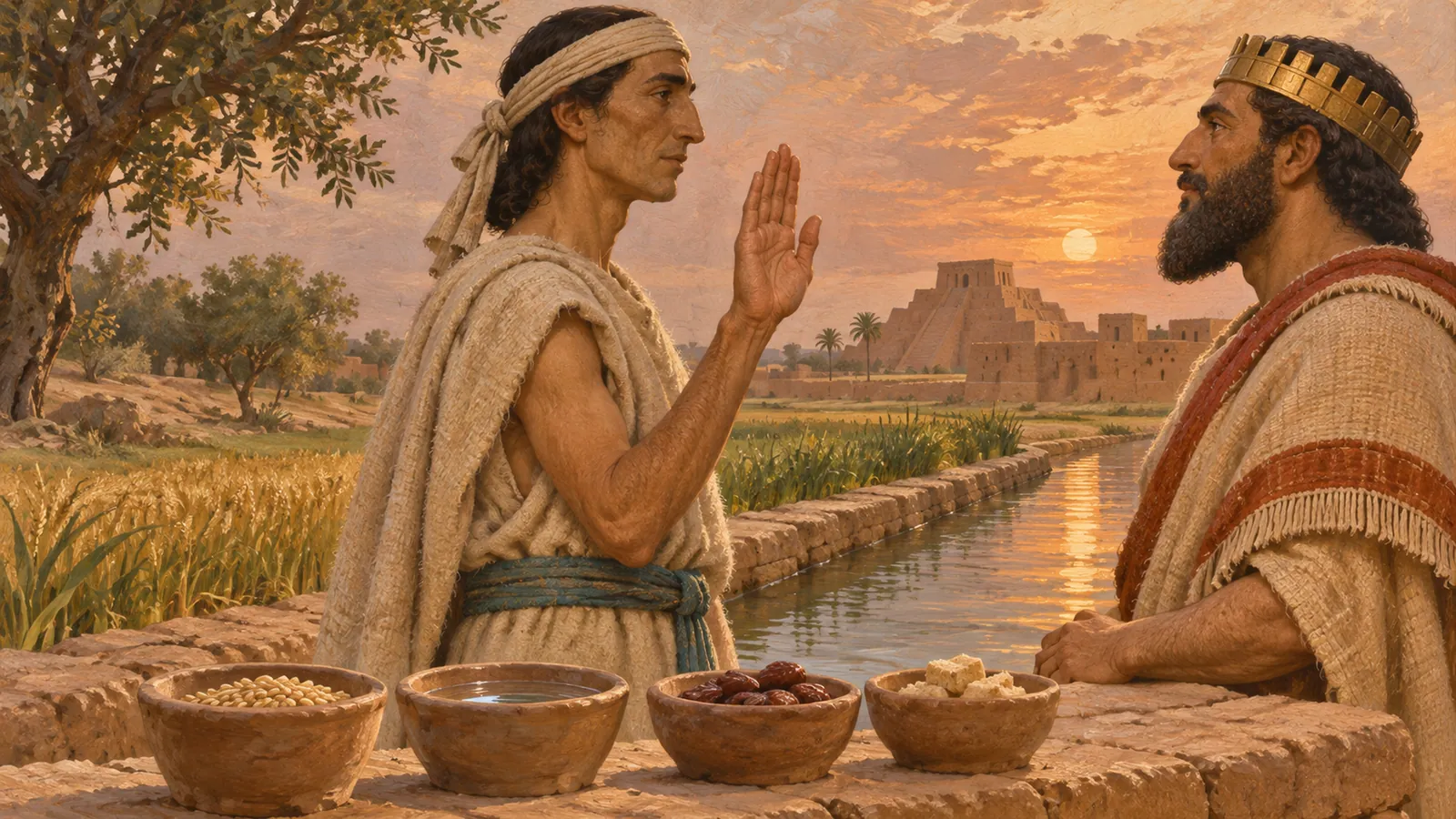
The oath returns in the names of Enlil, Ninhursaga, Enki, Suen, Utu and Ninki. Repeated promises give the inscription a rhythm. The change of witnesses also brings a change to the final warning.
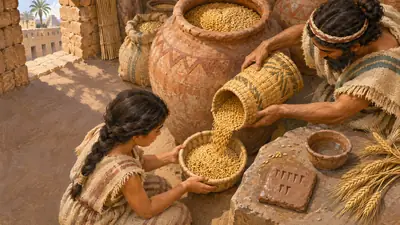
The ruler of Umma could use the fields under agreed terms. One reading compares those terms to borrowing at interest. For the people who worked the land, the harvest could also mean an obligation.
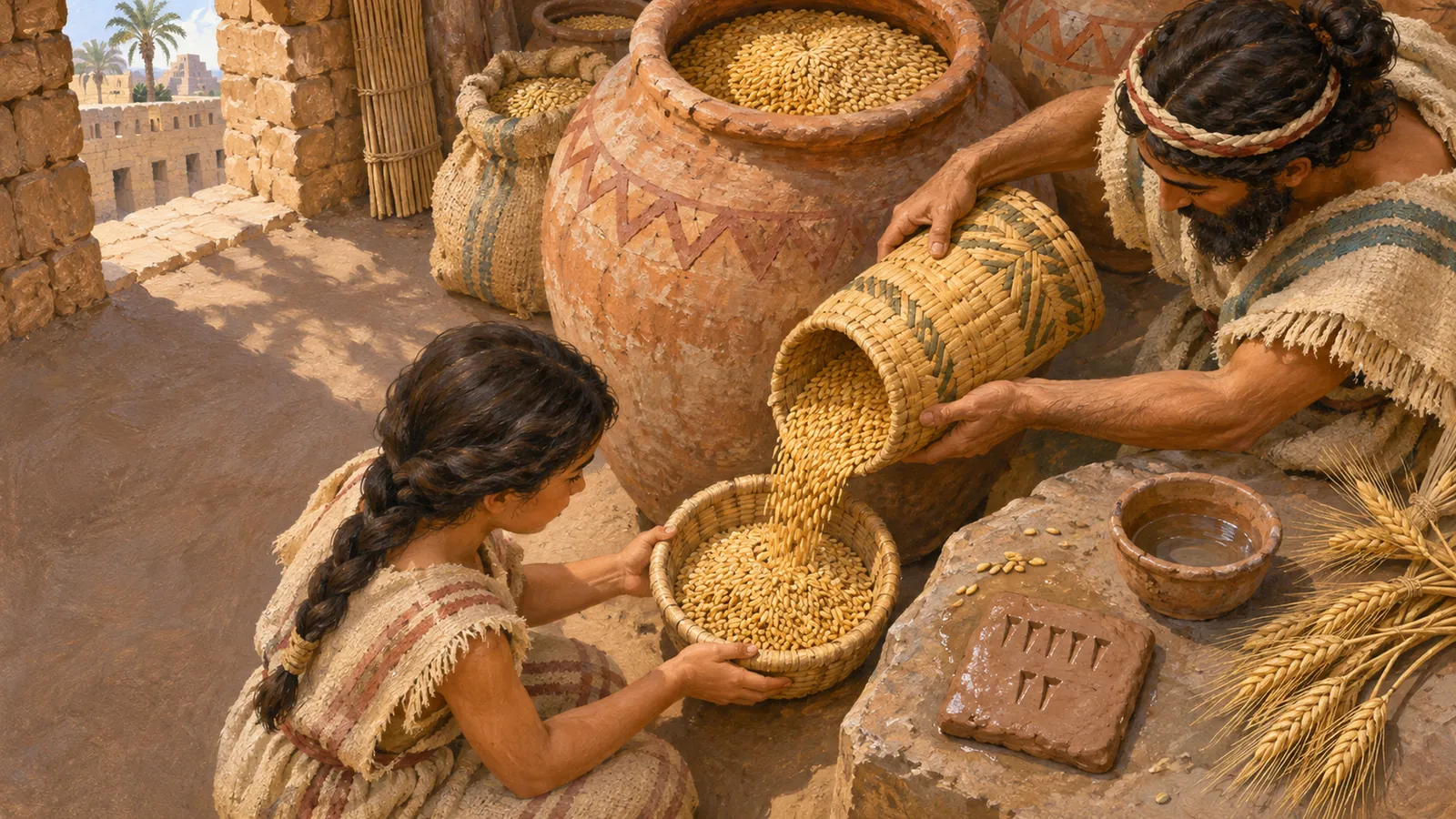
A later inscription from Lagash describes an obligation paid in barley and a debt that grew when payments failed. That account was written in another reign. It shows how grain could keep a dispute going.
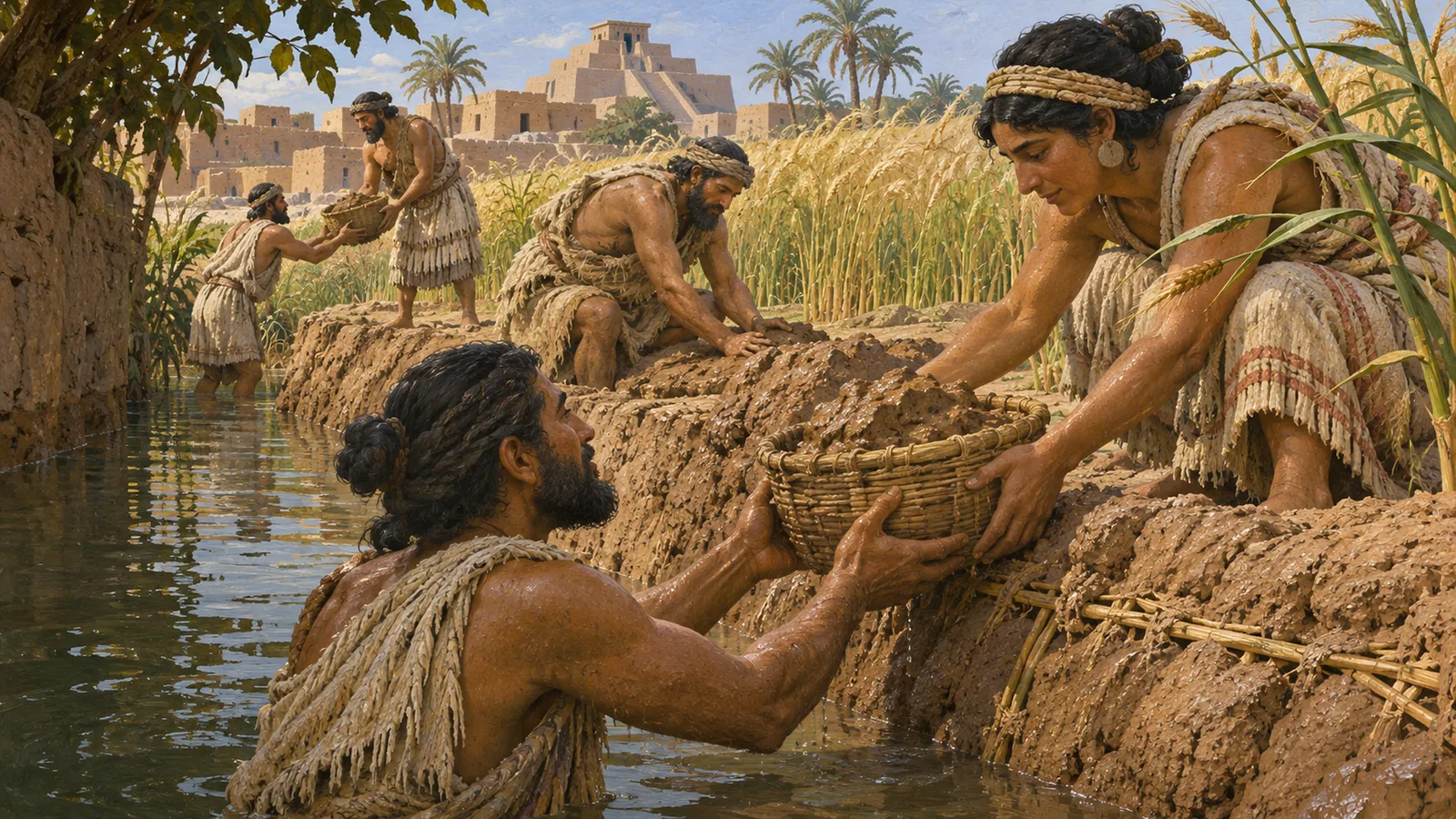
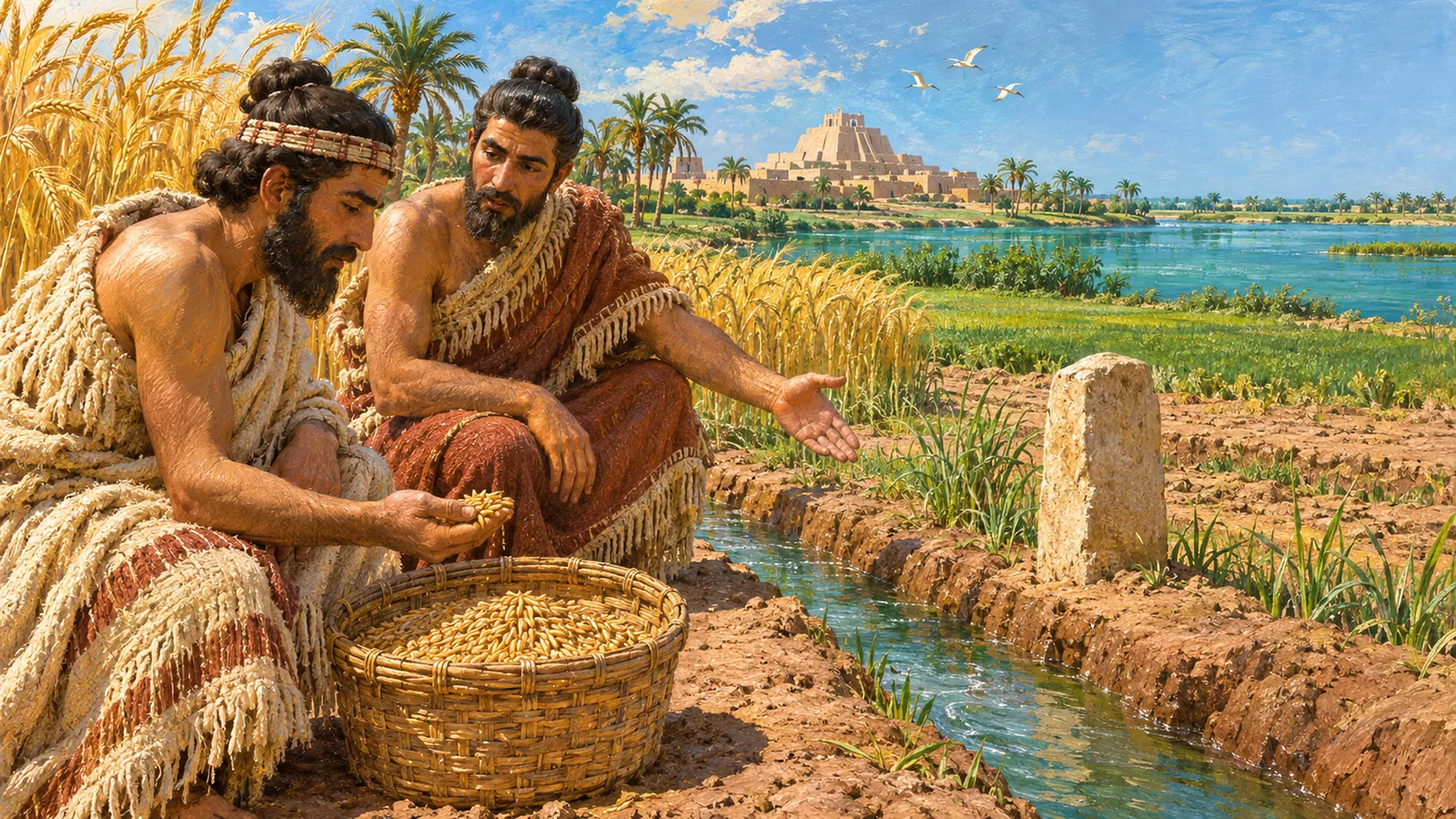
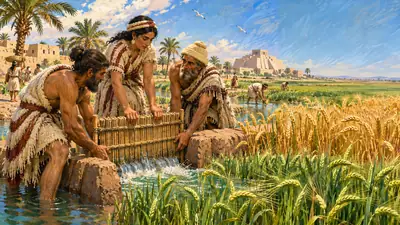
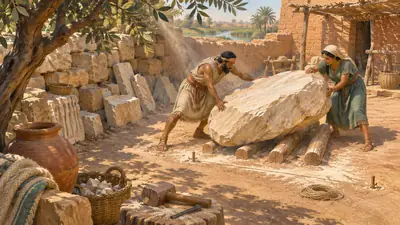
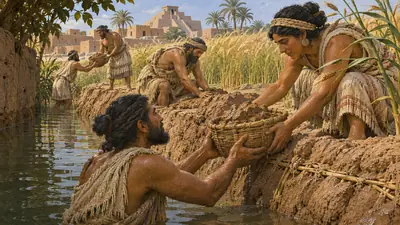
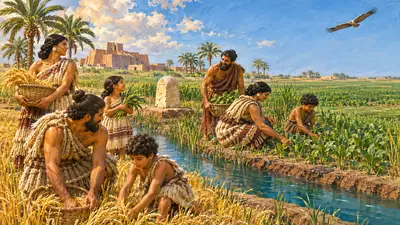
Umma’s ruler agrees to tend the levees. In this illustration, neighbors hand up baskets of damp earth. On a shallow plain, keeping water in a ditch took work year after year.
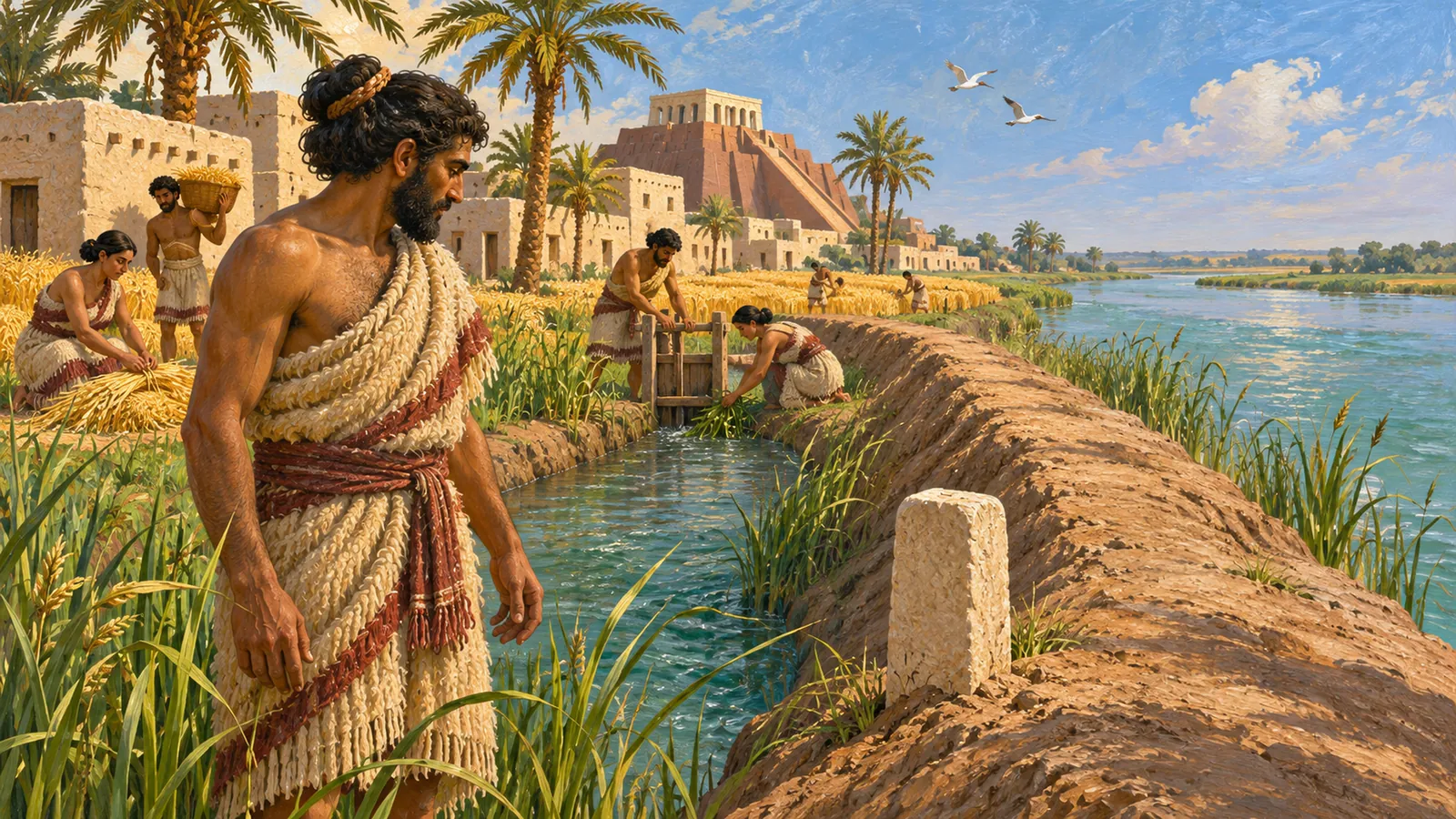
In the oath the ruler promises to stay within the boundary, leave the banks and channels in place and spare the stone markers. The terms protect the boundary and the water that made the fields worth claiming.
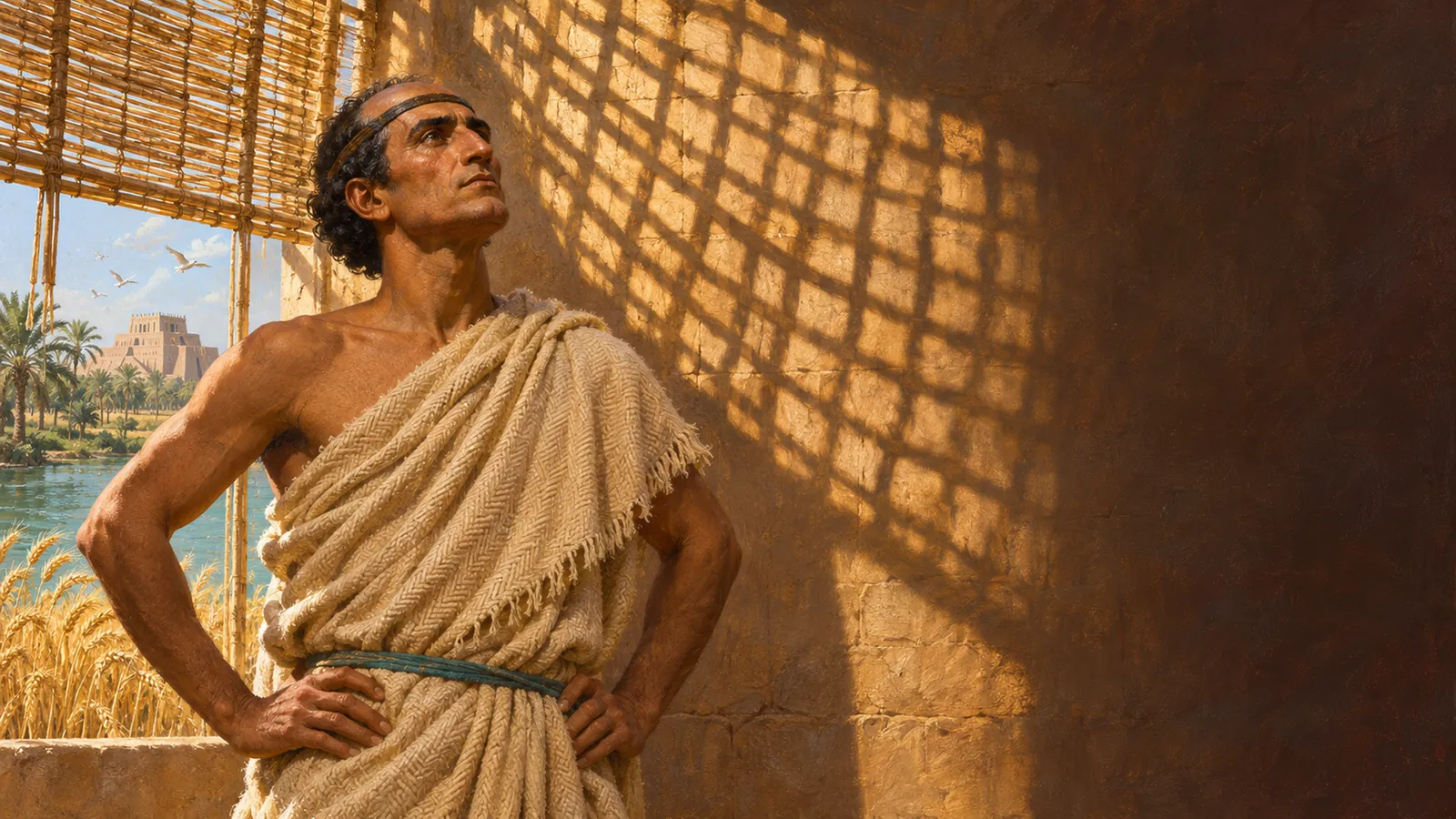
Several oaths warn that a god’s net will fall upon Umma if it breaks the agreement. The oath to Ninki, near the end of the sequence, sets out a different punishment.
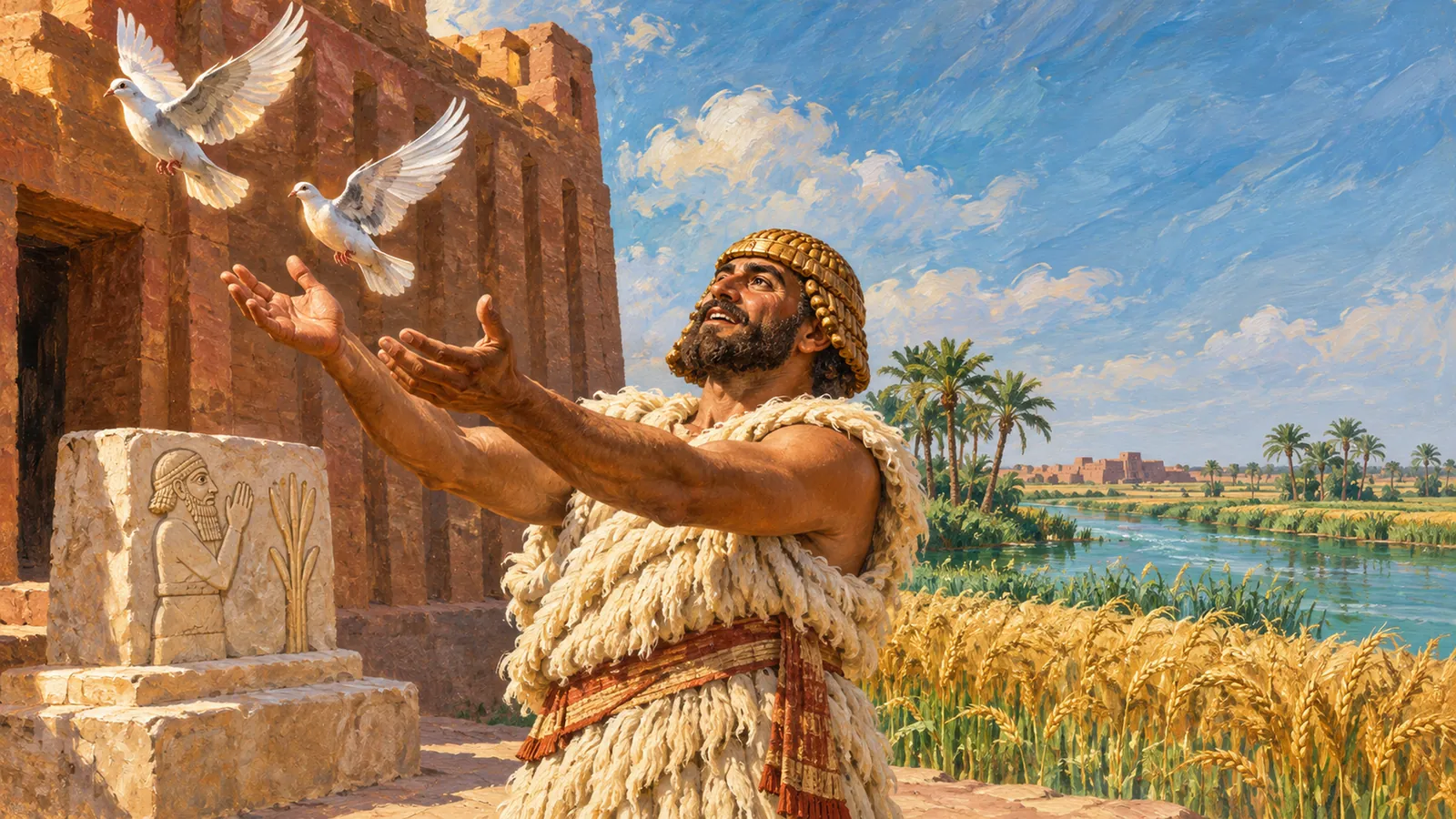
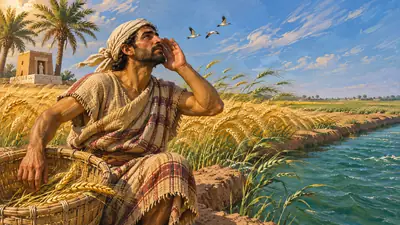
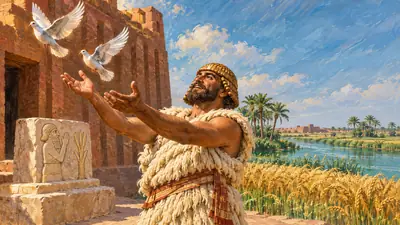
The inscription tells how Eannatum released two doves in the passage addressed to Enki. Their flight fits a repeated ceremony in the text. In the painted scene, both birds have just left his hands.
THE OTHER FACE
Walk around the edge of the stele and the story changes scale. On the second face, the sculptor gave space to an immense figure and a net. Here victory belongs to the world of the gods.
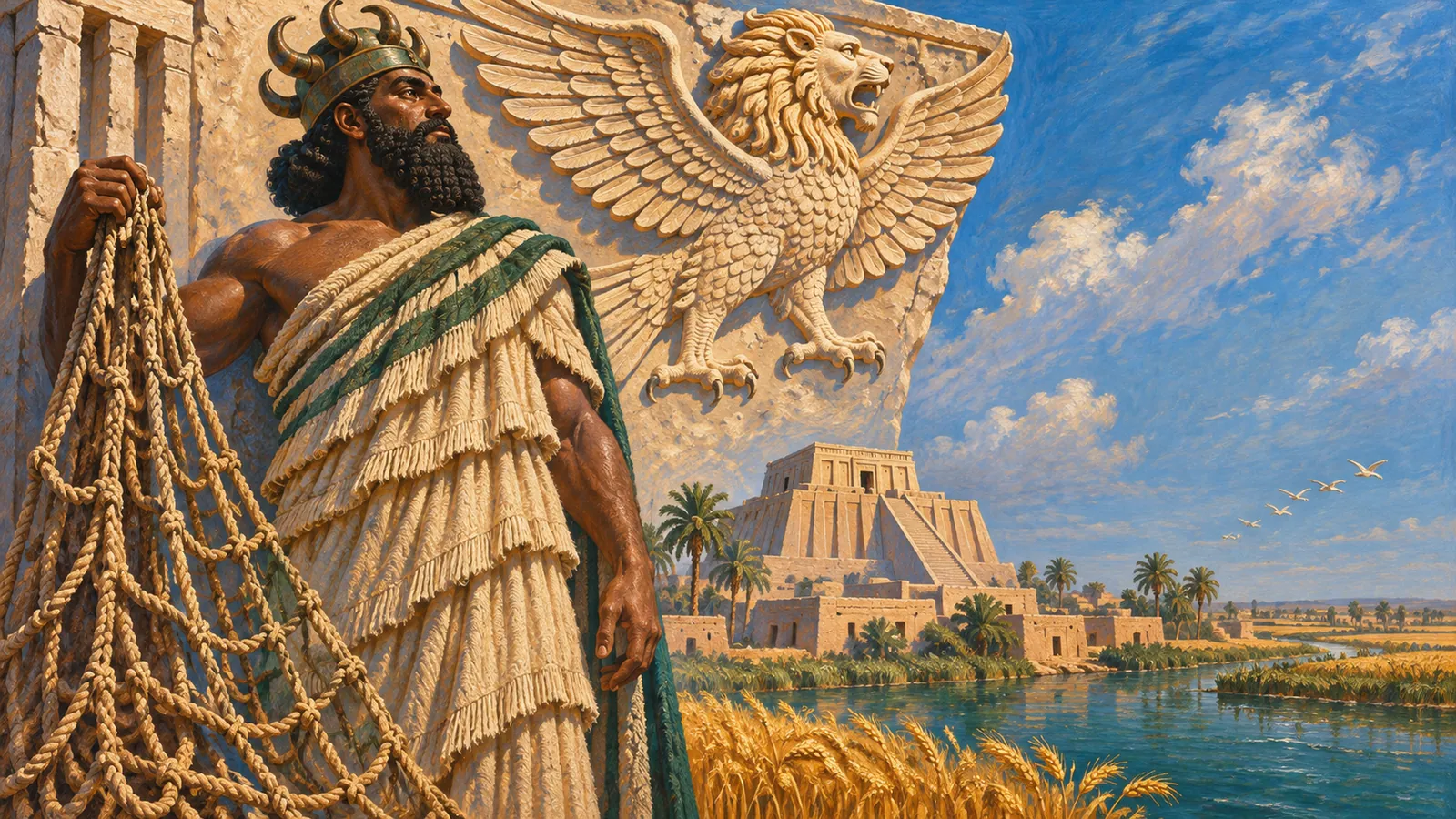
The large figure is usually identified as Ningirsu. The lion-headed eagle Imdugud is associated with his great net. The image echoes the oath’s warning through a pattern readers could recognize across the courtyard.
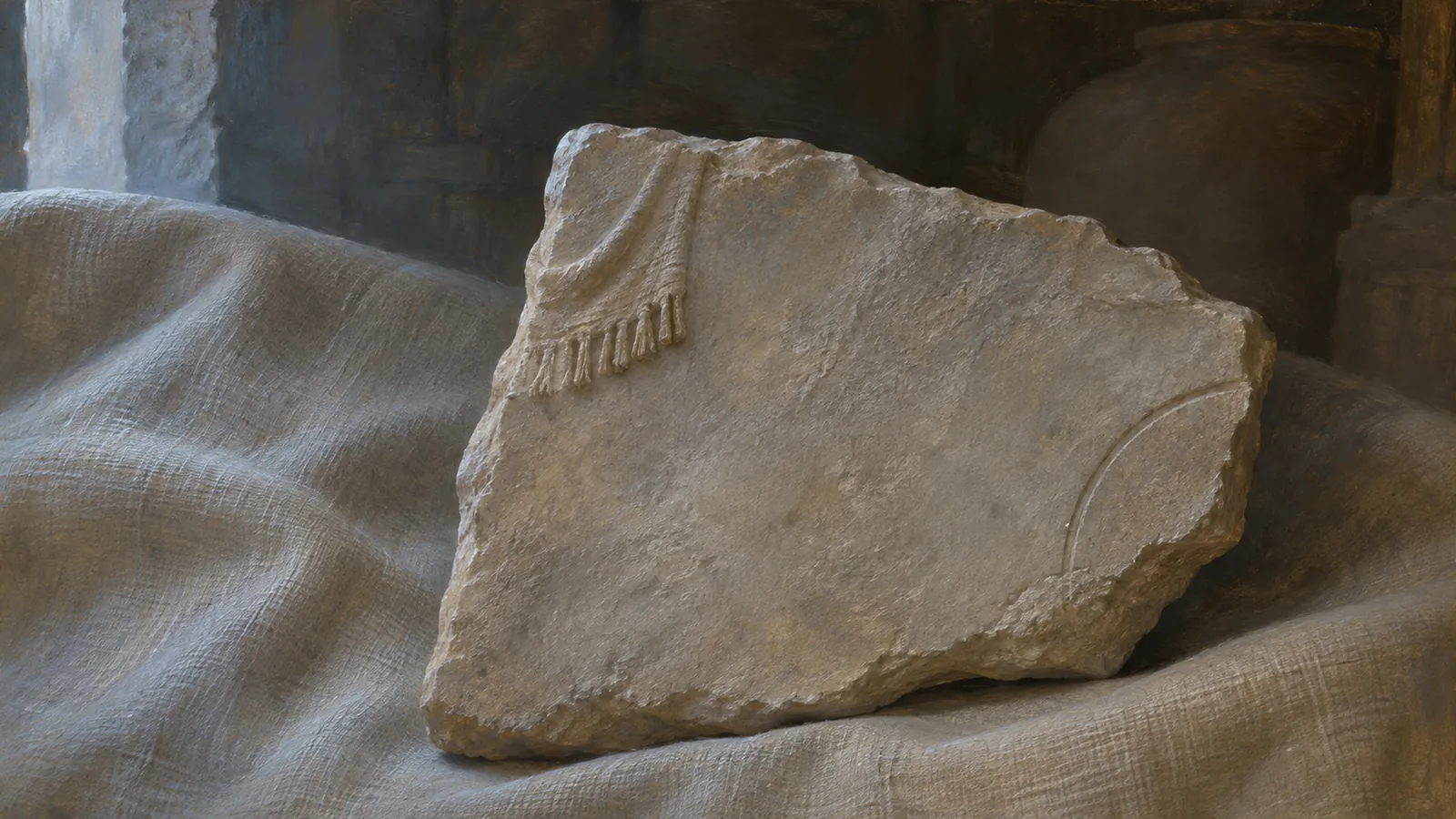
Along the lower band on the divine face, part of a chariot and a goddess survive. Look at the edge of the break. We can trace fragments of those forms and wonder how they once joined.
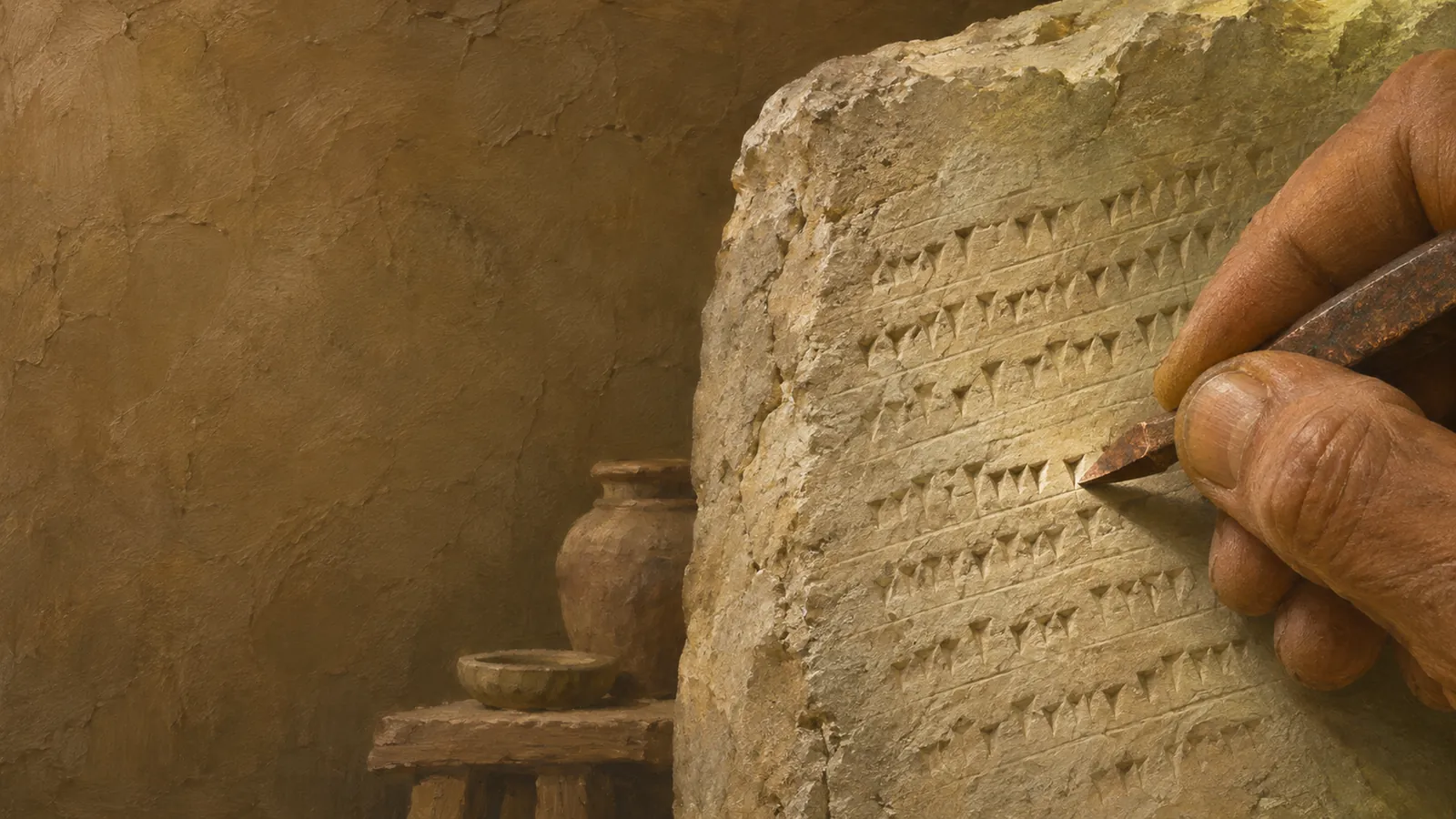
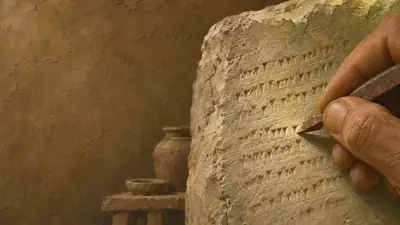
Writing sits close to the carvings. Light at an angle picks out the shallow wedges. Where a crack runs through the stone, several words can be lost even when the carved figure nearby survives.
Near the end, the inscription gives its own name to the monument. The surviving words call on Ningirsu and name a canal, the Lion of the Plain. The carved birds supplied a second name much later.
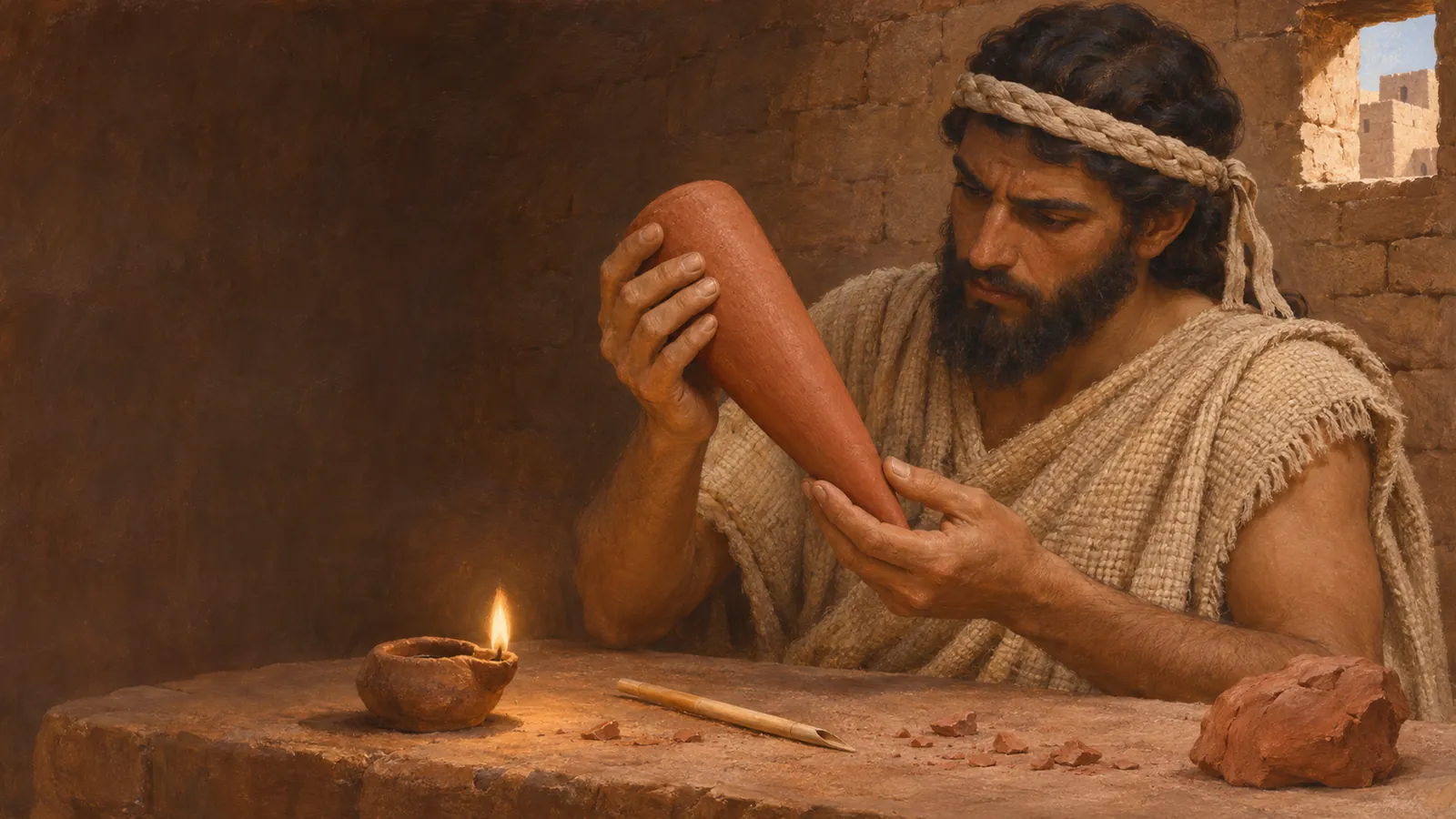
Eannatum’s nephew Enmetena had a later account written on clay. It looks back at Mesilim and Eannatum and recounts more fighting over the banks. The older stone had fixed a claim that others would contest again.
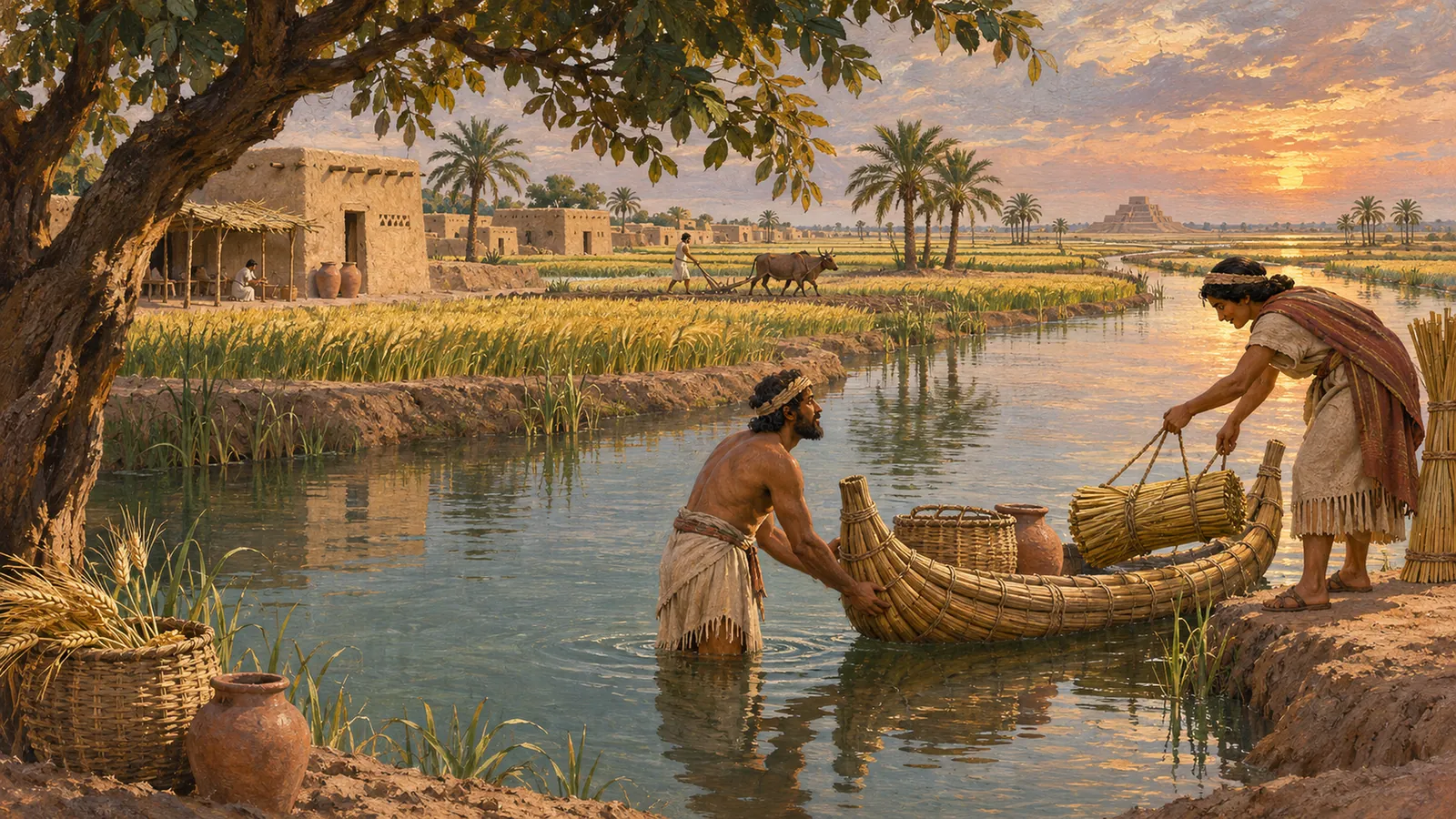
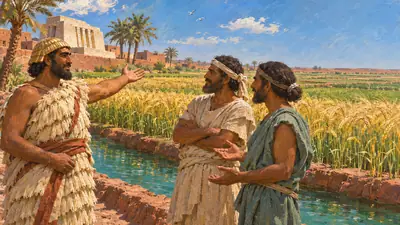
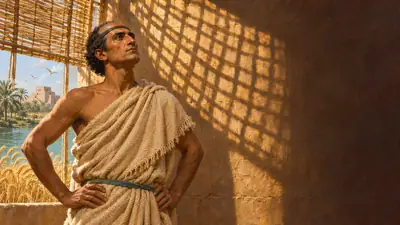
Along an ordinary canal, reeds could be carried by boat and barley harvested near the bank. Those everyday things explain the importance of a line on the ground. Families depended on the water reaching their fields.
FRAGMENTS
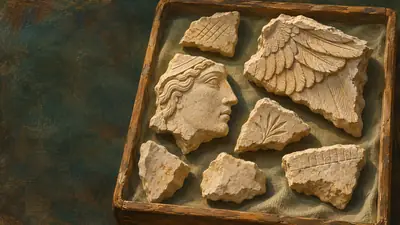
To study a fragment, turn it toward the light and look for a matching edge or a repeated sign. The seven pieces preserve parts of both faces, with missing stretches between them.
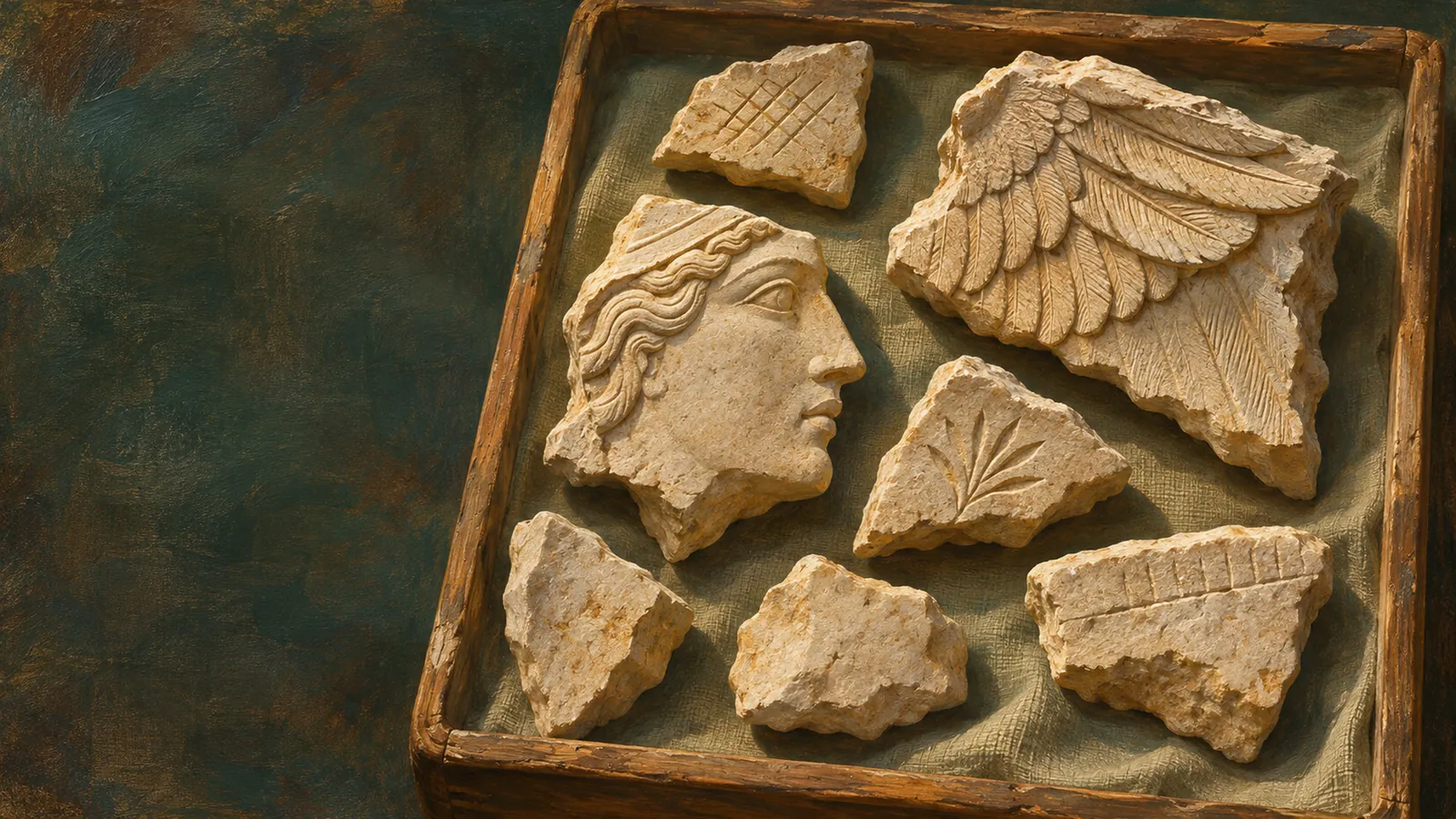
The fragments let us read part of the oath and see parts of the scenes. They also show exactly where the account stops mid-line. Those gaps belong to the history of the object.
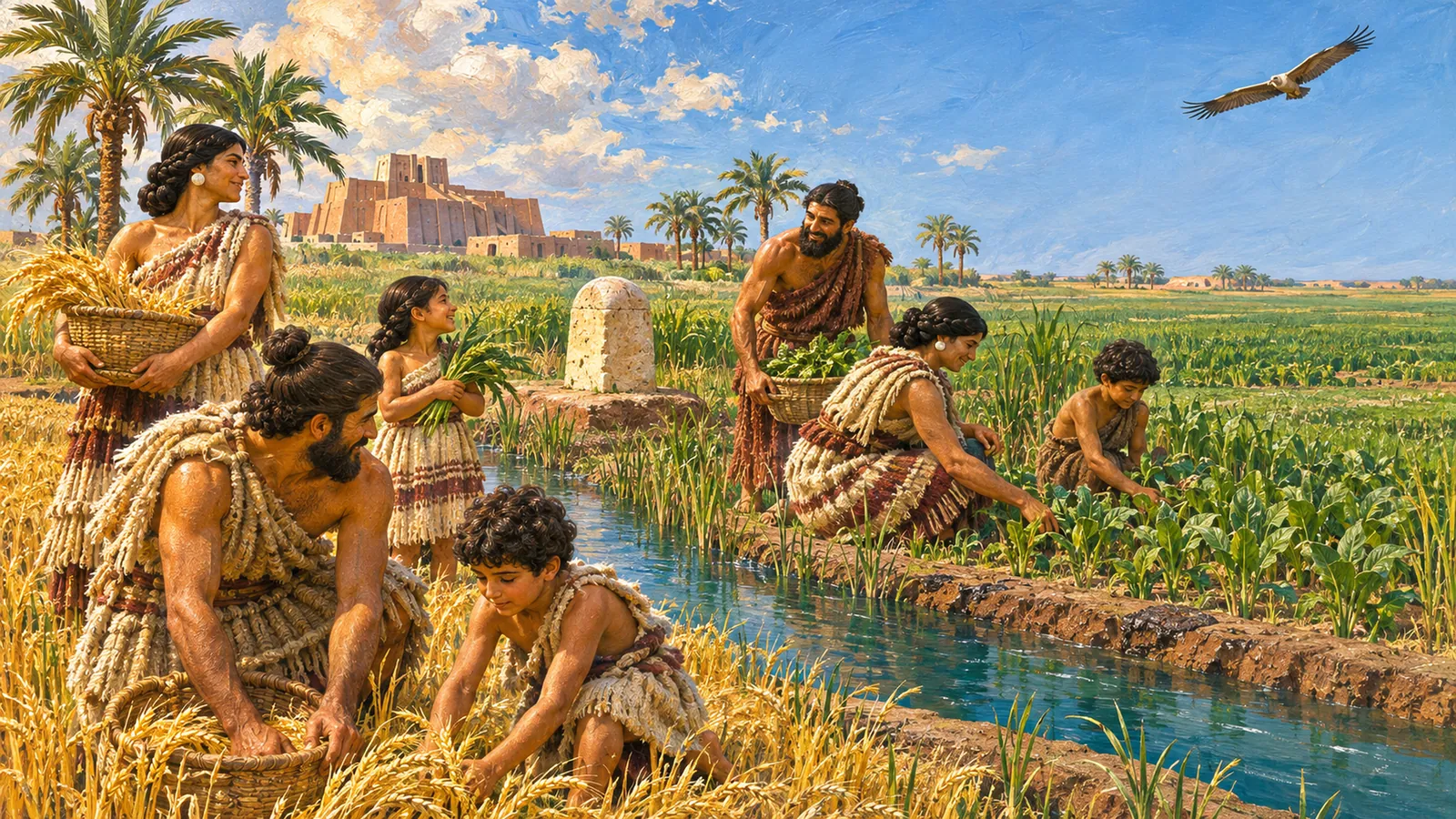
A bird, a bank and a basket of grain take us back to the same plain. More than four thousand years later the stone still tells us what Lagash wanted remembered about this border.
End of chapter 1
All pages
Sources
Editions consulted
- Louvre, Stèle des vautours (AO 50 and associated fragments)
- CDLI, Eannatum 1 composite (P431075, RIME 1.09.03.01)
- ORACC ETCSRI, Eannatum 1 (Q001056)
- Gábor Zólyomi, How to Let Someone Swear an Oath by a Battle Net in Sumerian
- CDLI, Enmetena’s clay cone (P222532)
- ORACC ETCSRI, Enmetena 1 composite (Q001103)
- Louvre, Cone A of Enmetena (AO 3004)
Ancient lines behind each page
- Page 1: Louvre AO 50a
- Page 2: Louvre AO 50 et al.
- Page 3: Louvre AO 50; CDLI P431075 ll. 238′–250′
- Page 4: RIME ll. 28′–38′, 105′–112′
- Page 5: RIME ll. 238′–250′
- Page 6: RIME ll. 28′–38′, 105′–112′
- Page 7: Louvre AO 50; CDLI P431075 ll. 28′–38′
- Page 8: RIME ll. 1′–20′
- Page 9: RIME ll. 54′–62′, 564′–579′
- Page 10: RIME ll. 121′–142′
- Page 11: Louvre AO 50 et al.
- Page 12: Louvre AO 50 et al., historical face register 2
- Page 13: Louvre AO 50 et al., historical face register 1
- Page 14: Louvre AO 50a; historical face register 1
- Page 15: RIME ll. 153′–181′
- Page 16: RIME ll. 178′–181′; Louvre historical face register 3
- Page 17: Louvre historical face register 3
- Page 18: RIME ll. 190′–194′, 622′–629′
- Page 19: CDLI P222532 RIME 1.09.05.01
- Page 20: RIME ll. 169′–176′
- Page 21: RIME ll. 227′–257′
- Page 22: CDLI P431075 ll. 227′–538′
- Page 23: RIME ll. 240′–243′ and repeated oath terms
- Page 24: CDLI P222532 RIME 1.09.05.01
- Page 25: CDLI P431075 ll. 240′–250′
- Page 26: RIME ll. 244′–250′ and repeated oath terms
- Page 27: RIME ll. 251′–257′, 304′–309′, 356′–362′, 415′–424′, 475′–481′; 511′–538′
- Page 28: RIME ll. 363′–371′ and parallel passages
- Page 29: Louvre AO 50 et al., mythological face
- Page 30: Louvre AO 50 et al., mythological face register 1
- Page 31: Louvre mythological face register 2
- Page 32: Louvre AO 50; CDLI P431075
- Page 33: RIME ll. 615′–629′
- Page 34: CDLI P222532 RIME 1.09.05.01
- Page 35: CDLI P431075 ll. 238′–250′; illustrative scene
- Page 36: Louvre AO 50 et al.
- Page 37: Louvre AO 50 et al.; CDLI P431075
- Page 38: RIME ll. 564′–579′, 615′–629′; Louvre fragment ensemble
Illustrations made with AI tools by IL Archive; the text is based on the ancient sources (see the sources at the end of each chapter).