Ancient text
Book of Revelation
A text for line-by-line reading, with transliteration, translation, and resources.
Christian apocalypse commonly dated in its present form to the late first century CE, reusing earlier scriptural imagery.
Last reviewed:
Text
Revelation is a Christian text of symbolic visions of conflict, judgment and the end. Its author calls himself John; identification with the John associated with the fourth Gospel is disputed. Its present form is commonly dated near the end of Domitian’s reign, 81–96 CE. [1]
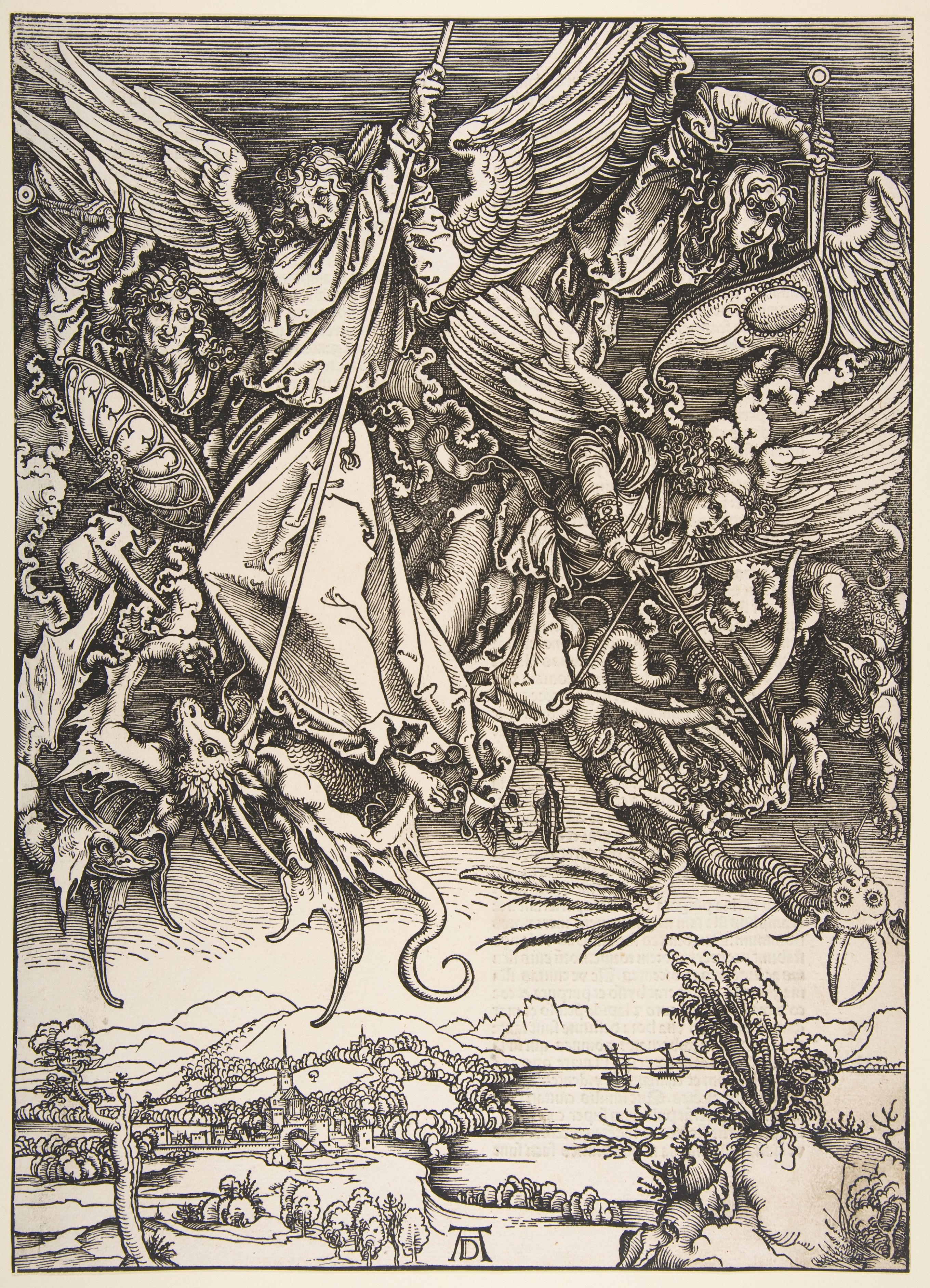
A seven-headed dragon appears in 12:3 and is identified as Satan and the ancient serpent in 12:9, without the name Leviathan. The 1498 print represents later European reception, not a first-century depiction. [1][2]
References and notes
- Revelation 12:3, 7–9, KJV: all specified verses read, not the whole book. Full USCCB introduction also read for John’s disputed identity and the proposed late-Domitian date: https://bible.usccb.org/bible/revelation/0 . Return to the text ↑
- Met360117, Saint Michael Fighting the Dragon,1498,40.139.6(12); catalogue read and public-domain image viewed. The museum attributes the work as After Albrecht Dürer; this qualified attribution is retained. Return to the text ↑
Archive records may be reviewed and refined as better evidence or sources become available. Suggest a correction
Suggest a correction · Suggest a source for this record
Cite this record
IL Archive, «Book of Revelation», https://ilarchive.com/en/texts/book-of-revelation-christian-apocalypse