Enki et l’ordre du monde Chapitre 1
Enki organise le domaine du monde
Cette adaptation illustrée suit le récit en prose de Thorkild Jacobsen qui décrit Enki s’occupant des fleuves, des pluies, des cultures, de la construction et des animaux. La comparaison finale vient de Jacobsen. Il rapproche l’organisation de ces différents travaux de la gestion d’un grand domaine.
SourcesTournez les pages avec les flèches, le clavier ou en balayant l’écran.
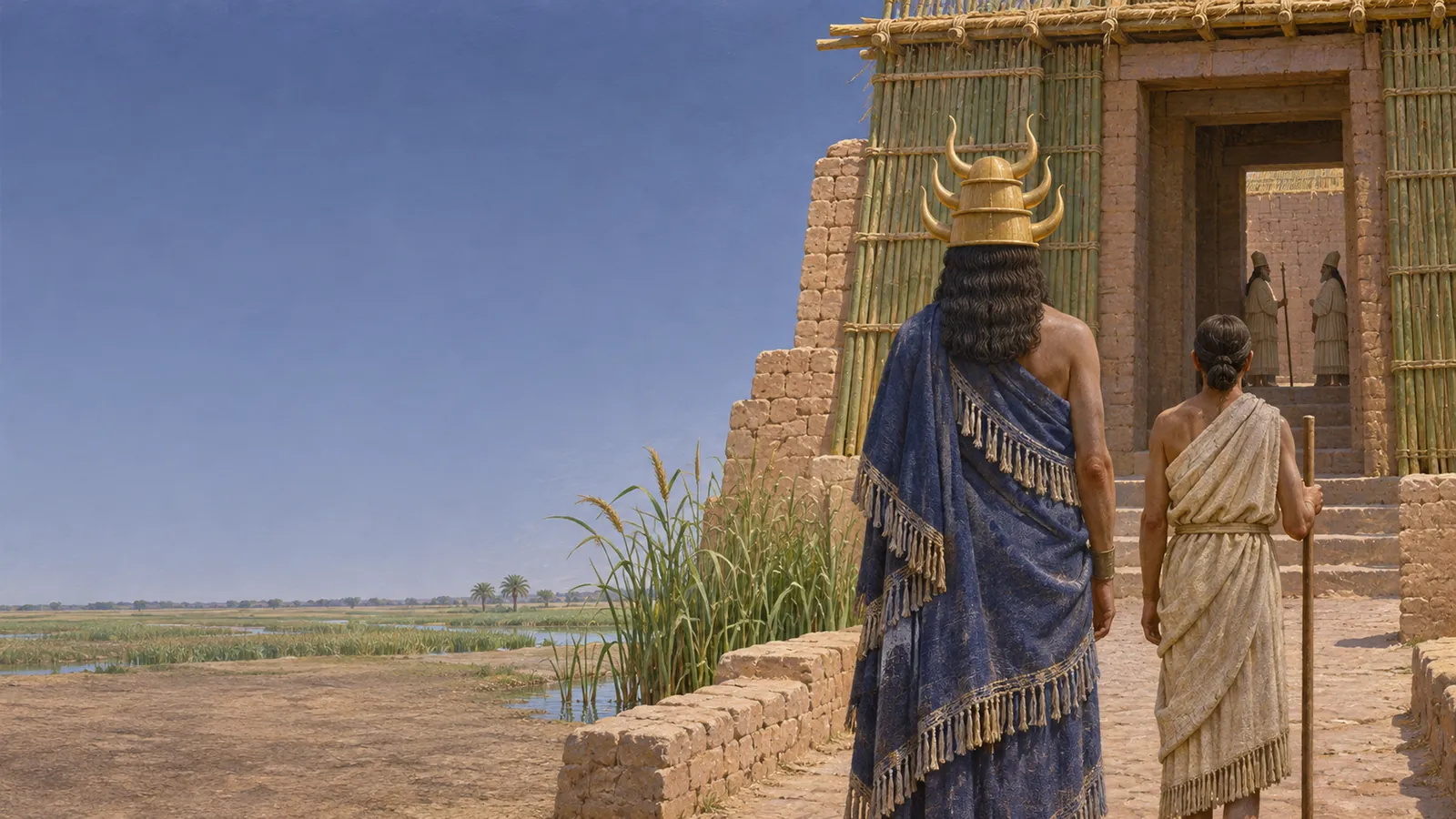
LE RÉCIT DE JACOBSEN
Cet épisode adapte le récit en prose publié par Thorkild Jacobsen. Jacobsen dit que le début est perdu et propose qu’il racontait peut-être comment Anu et Enlil ont nommé Enki.
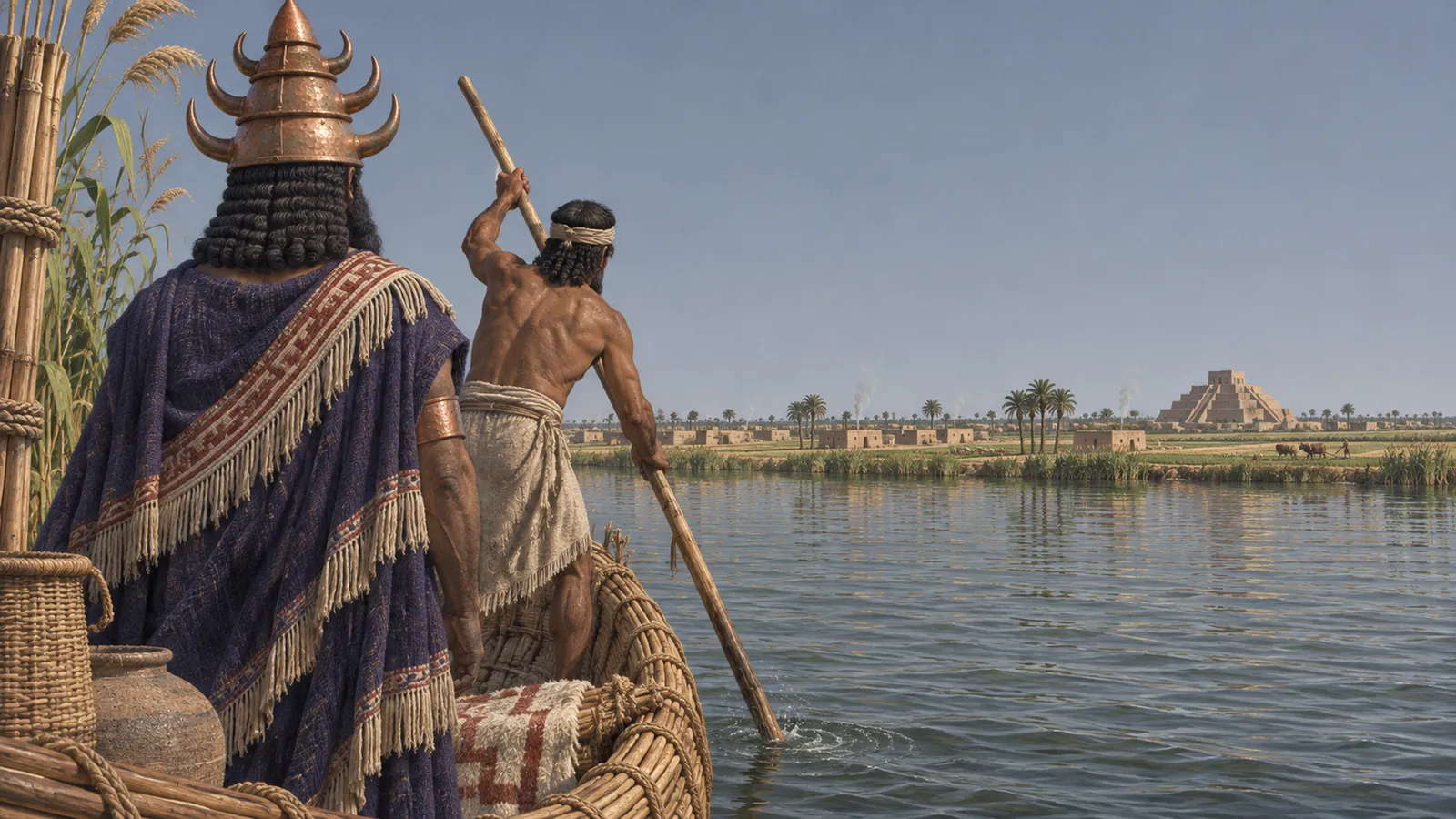
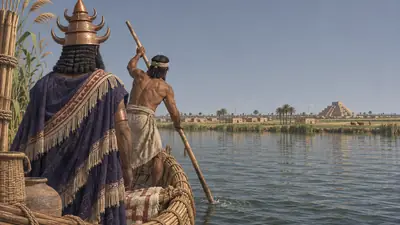
Là où le texte redevient lisible, Jacobsen décrit Enki en tournée dans son territoire. Celui-ci couvre la majeure partie du monde connu à l’époque dans son récit, et Enki en visite les grandes divisions administratives.
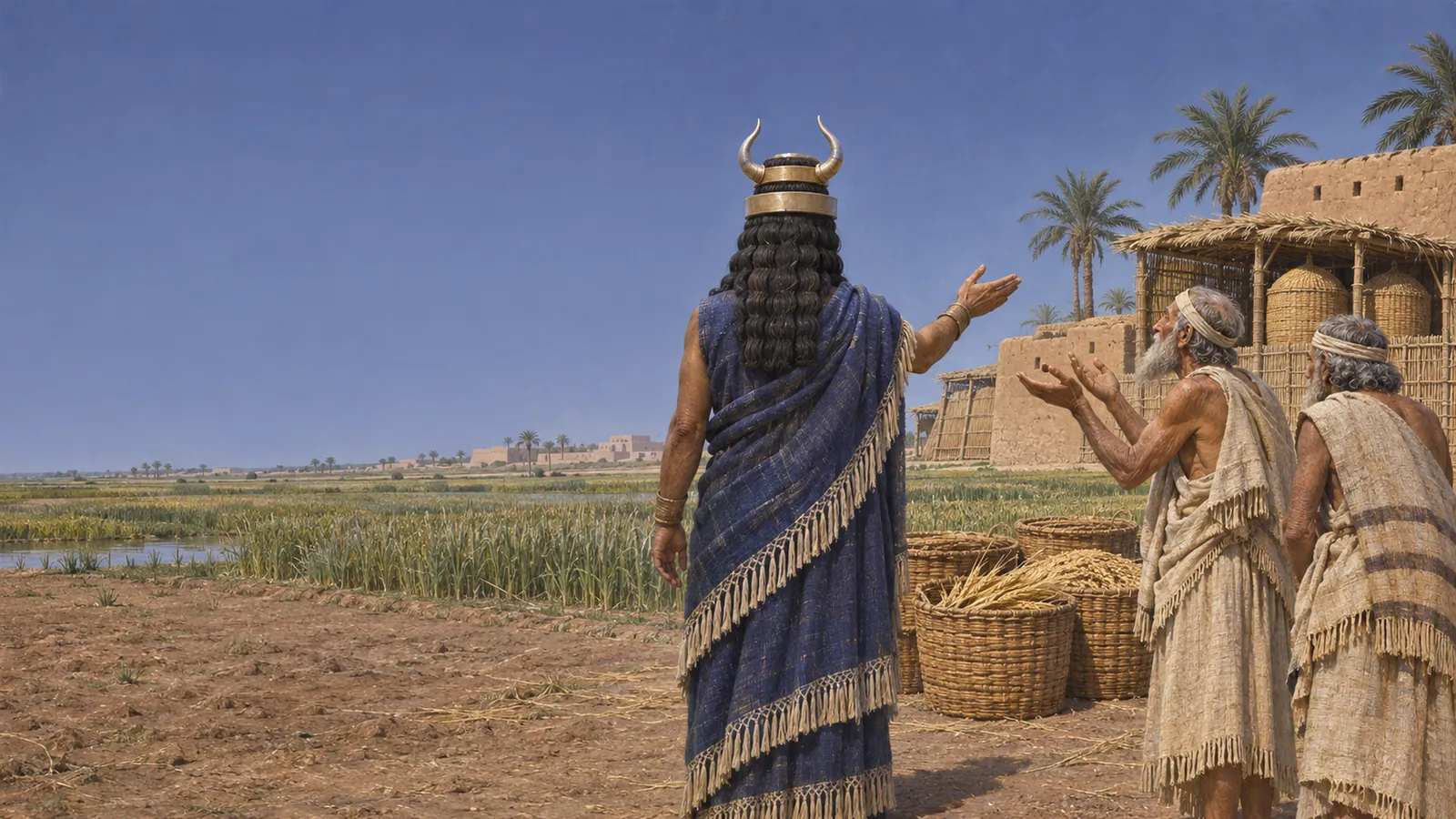
Jacobsen dit qu’Enki s’arrête dans chaque pays et le bénit. La bénédiction lui apporte la prospérité et confirme les fonctions qui lui reviennent.
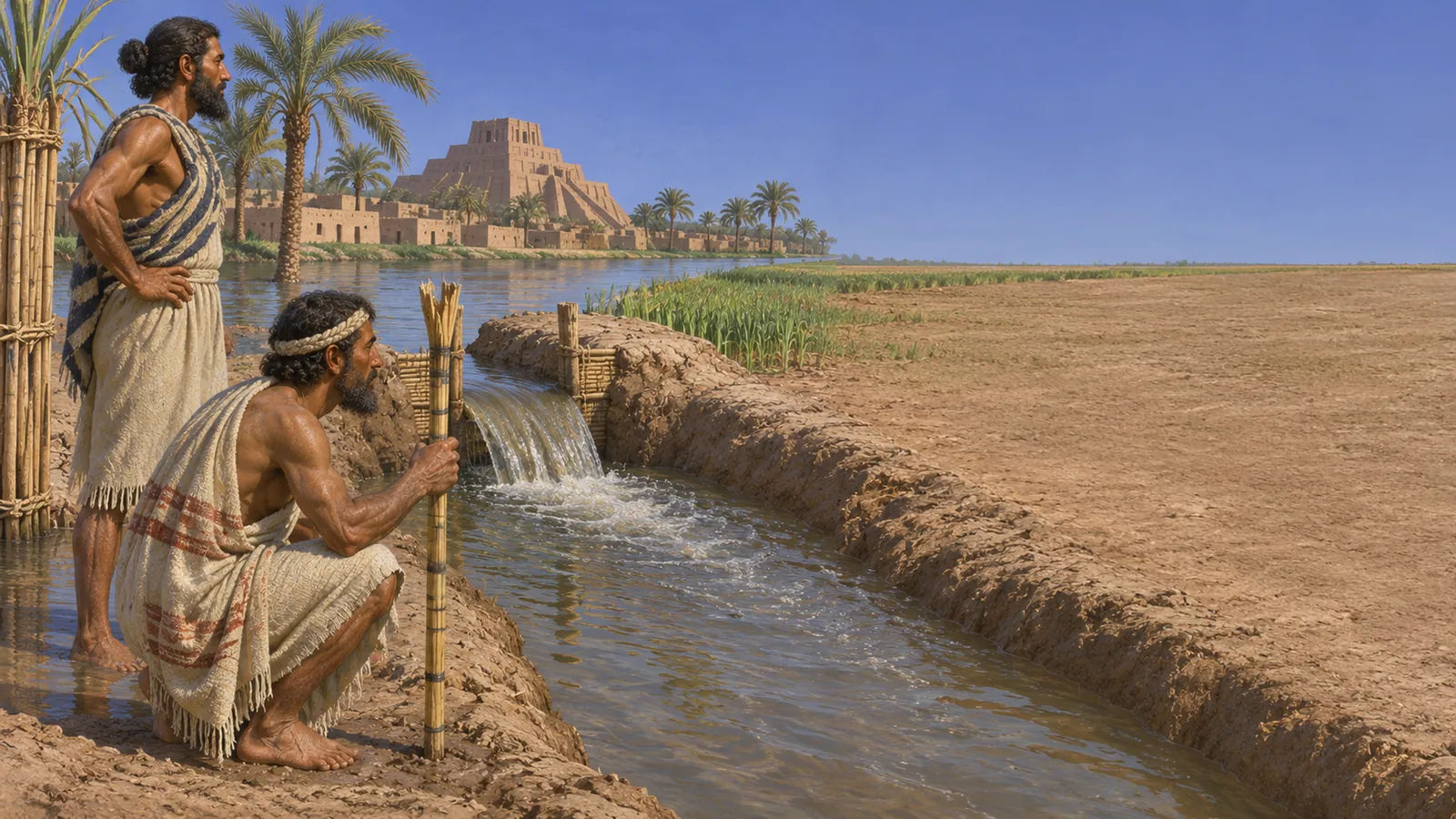
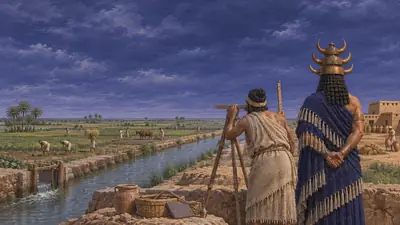
Dans le récit de Jacobsen, Enki s’occupe ensuite des eaux et de ce qui en dépend. Il remplit l’Euphrate et le Tigre d’eau claire et en confie la surveillance à un dieu.
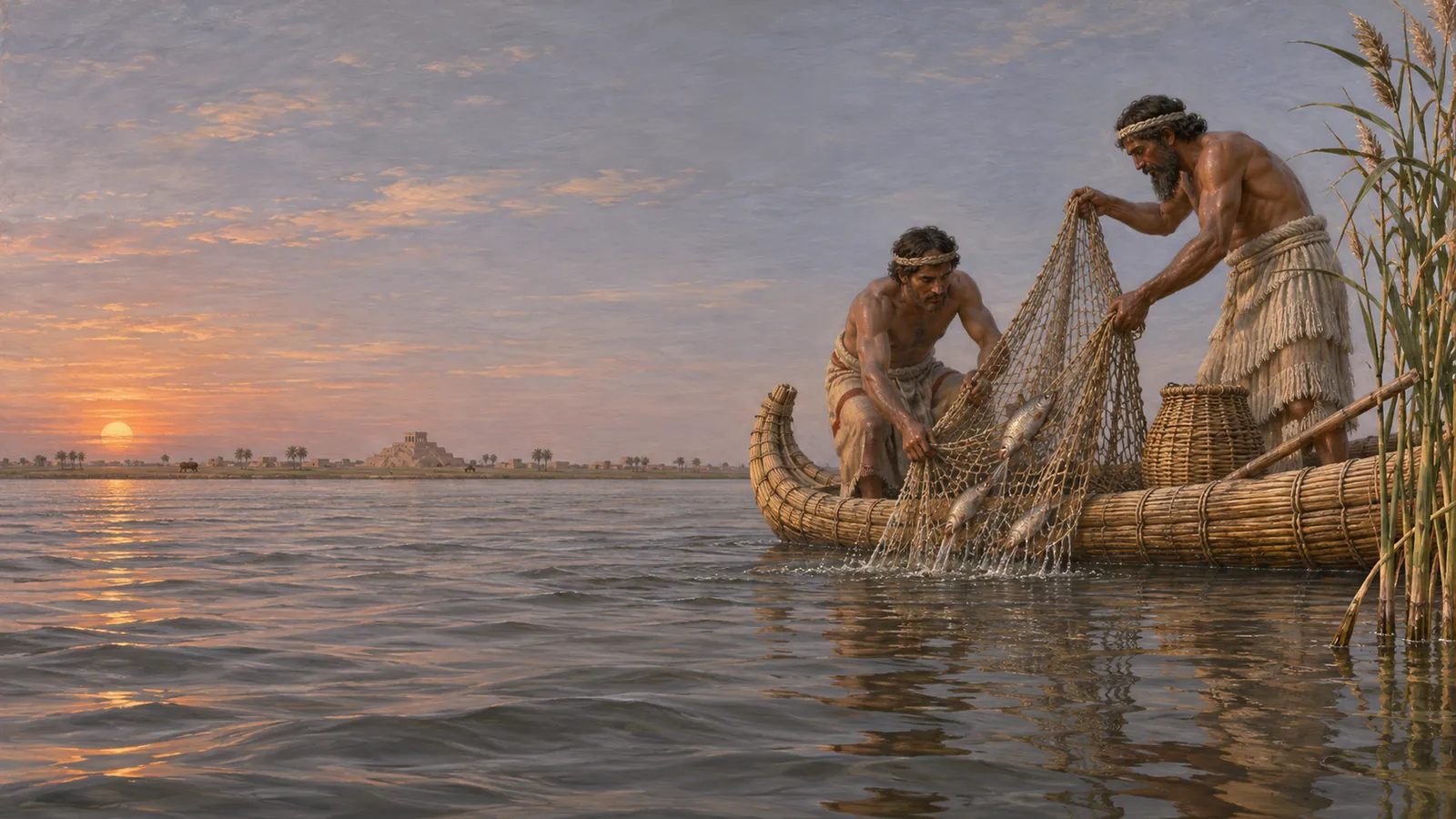
POISSONS ET ROSEAUX
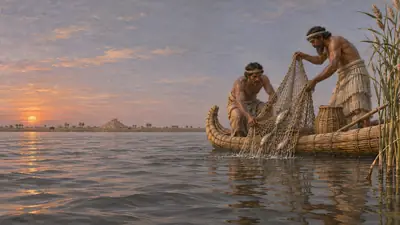
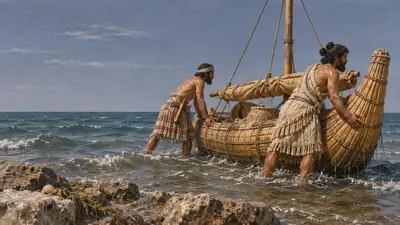
Jacobsen dit qu’Enki peuple les fleuves de poissons et aménage des massifs de roseaux. Il confie les poissons et les roseaux à un autre dieu.
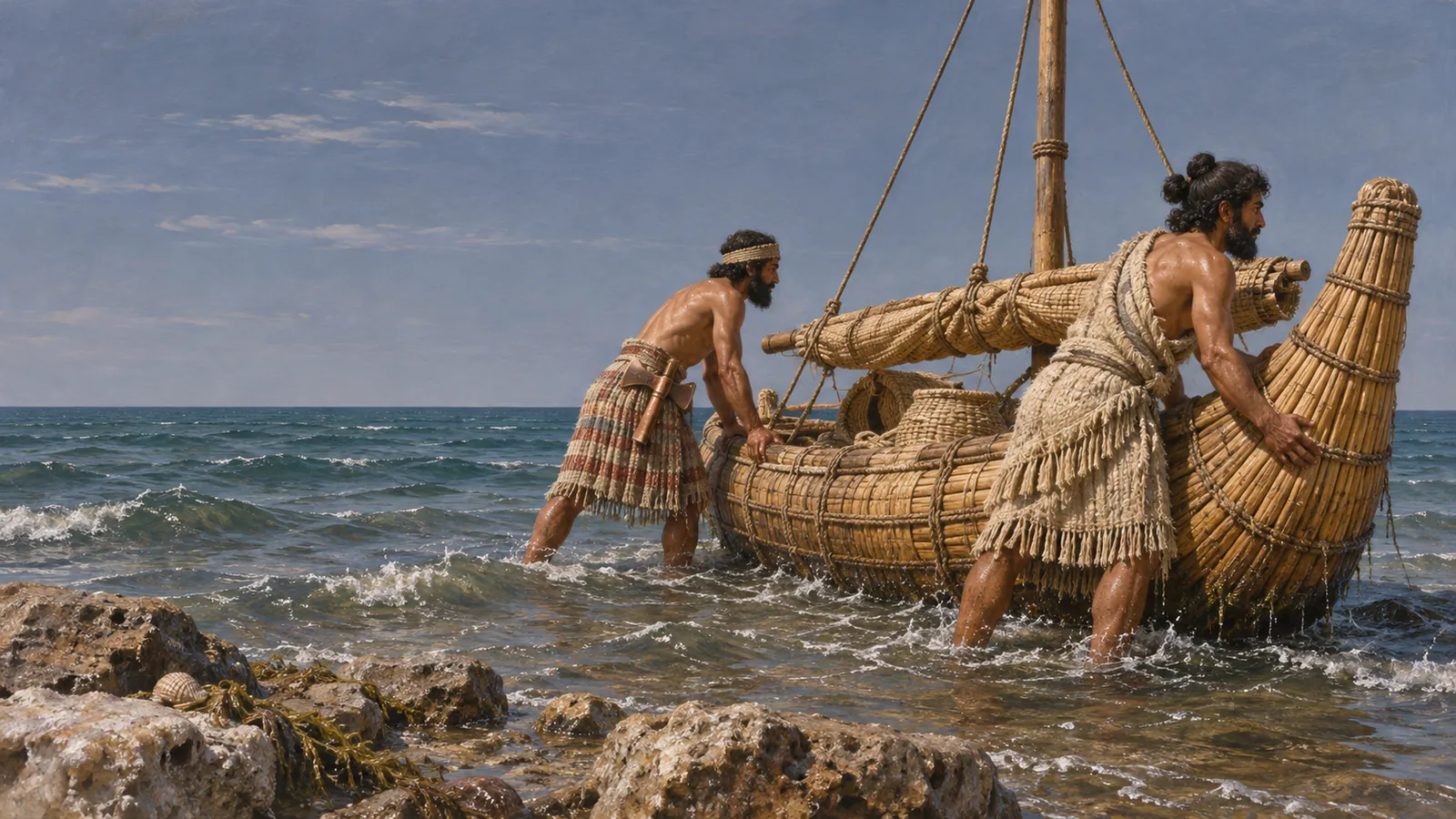
Jacobsen décrit ensuite Enki qui règle le fonctionnement de la mer et confie sa surveillance à un dieu. Son récit laisse sans nom la mer et le dieu qui en a la charge.
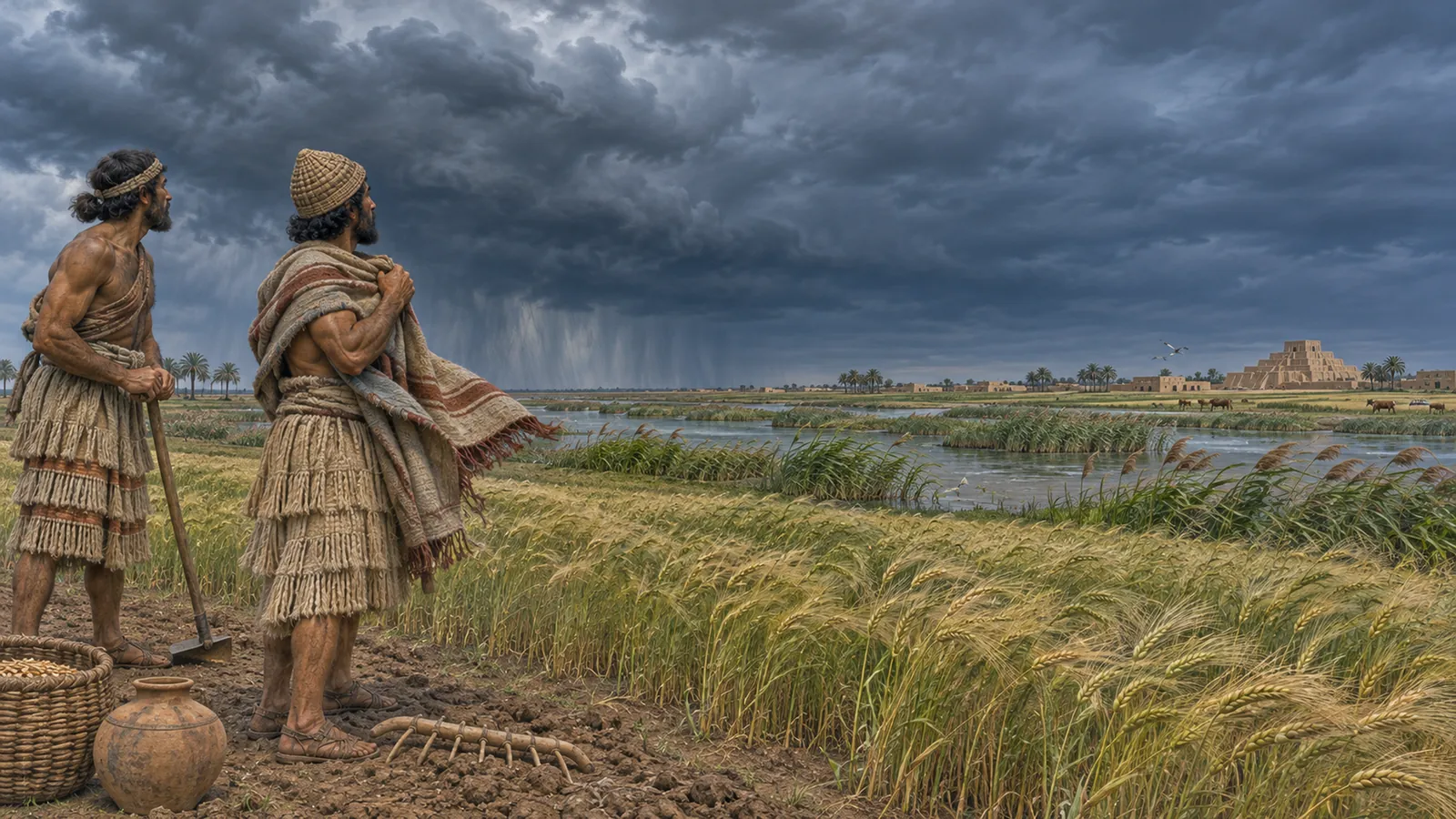
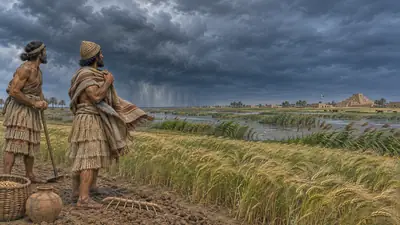
Dans le récit de Jacobsen, après avoir réglé le fonctionnement de la mer, Enki se tourne vers les vents qui apportent les pluies.
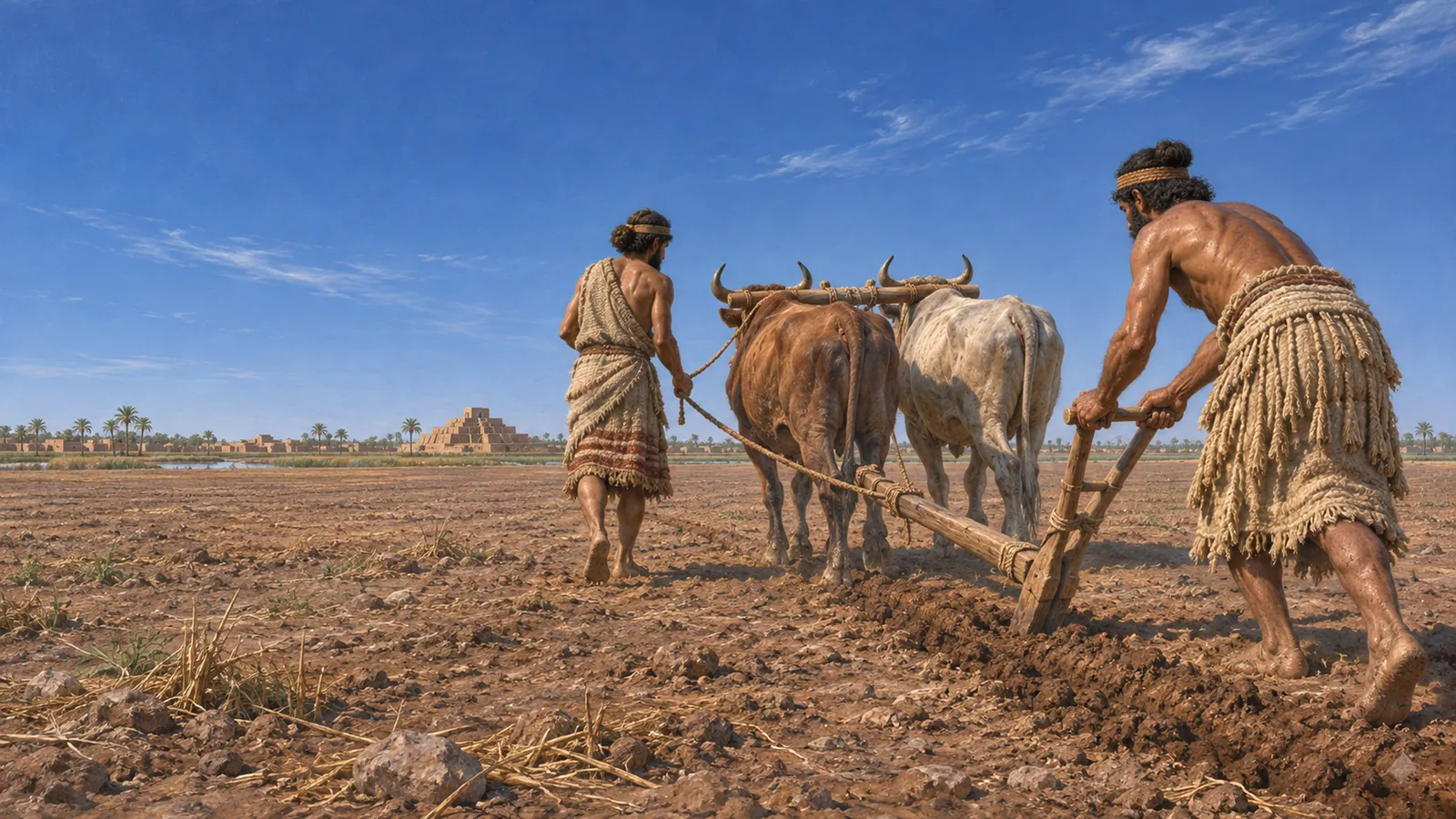
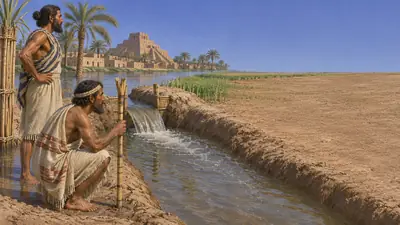
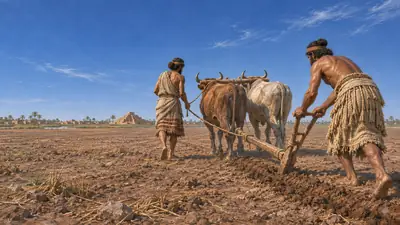
Le récit de Jacobsen passe ensuite à l’agriculture. Enki s’occupe de la charrue et ouvre les sillons dans les champs.
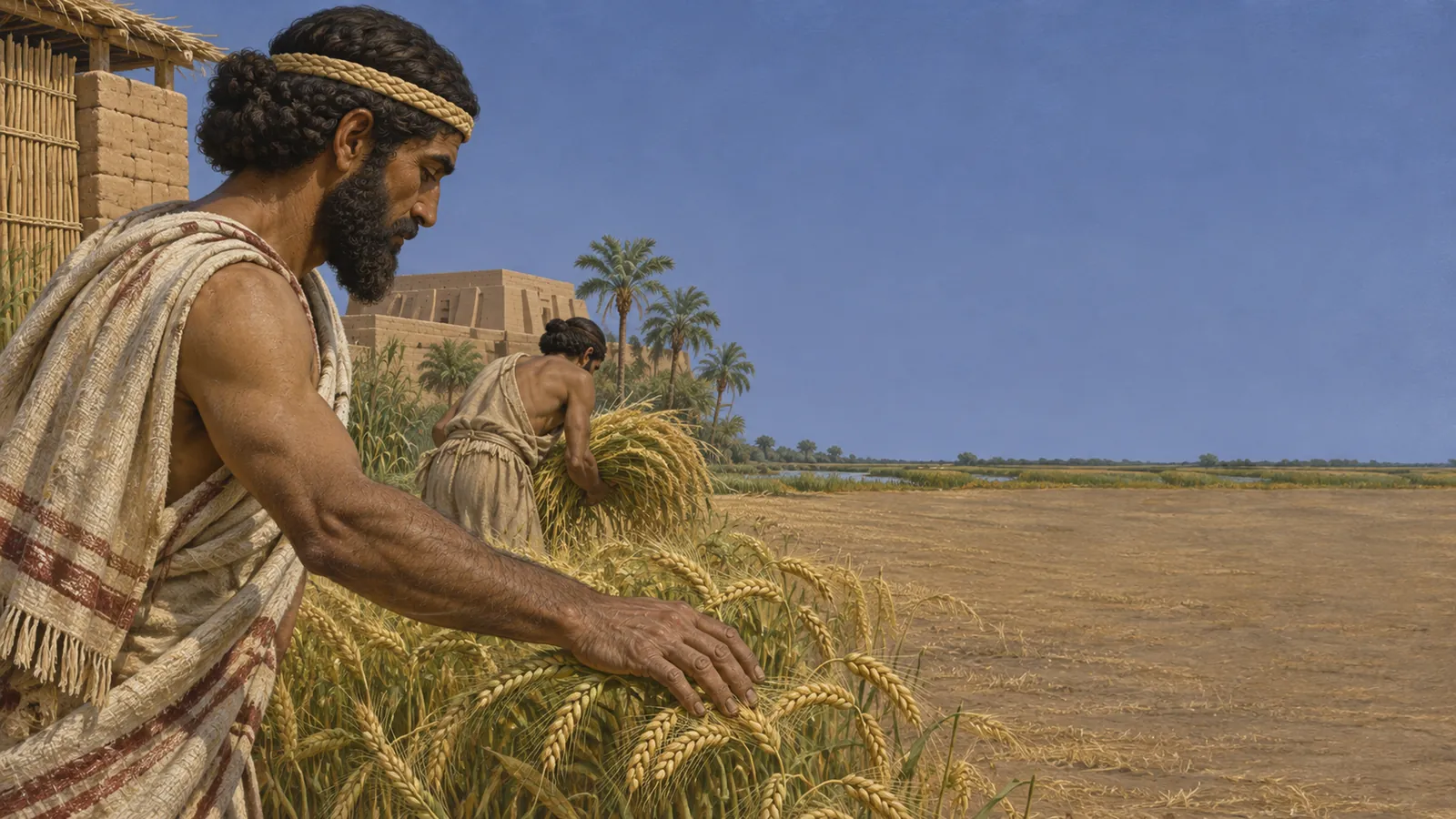
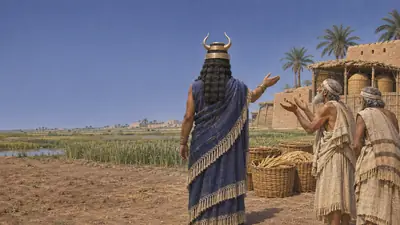
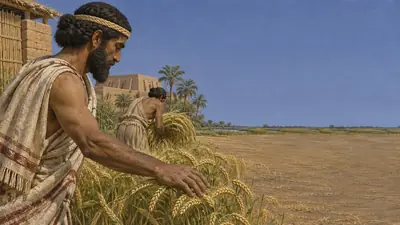
Dans le récit de Jacobsen sur l’organisation de l’agriculture, Enki laisse pousser le grain dans le champ.
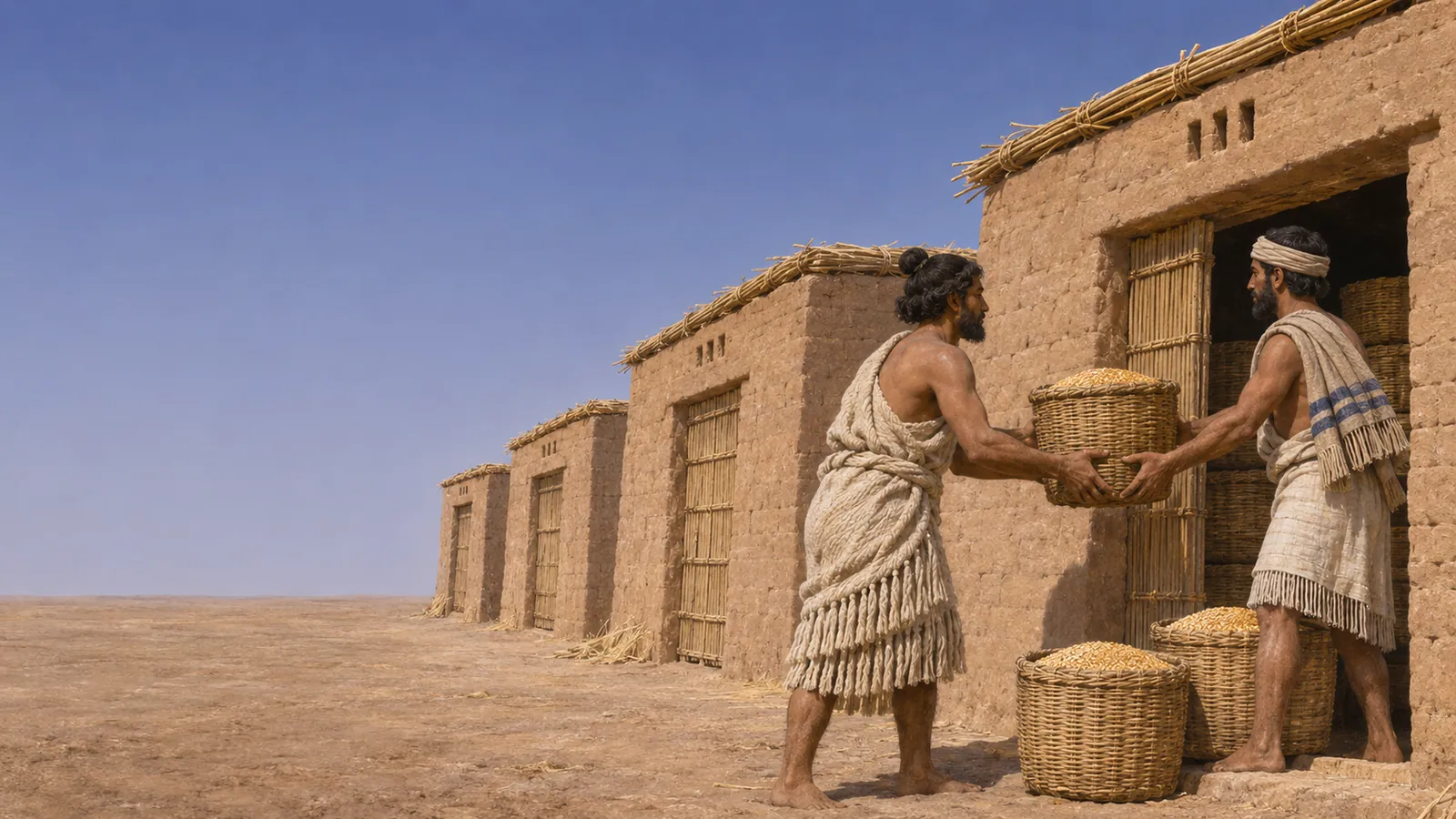
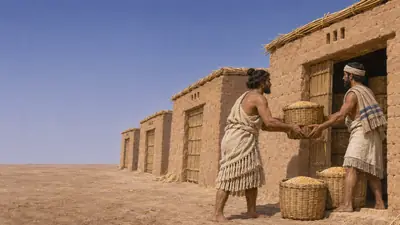
Dans le récit de Jacobsen, vient ensuite le stockage. Enki dispose les greniers en rangée.
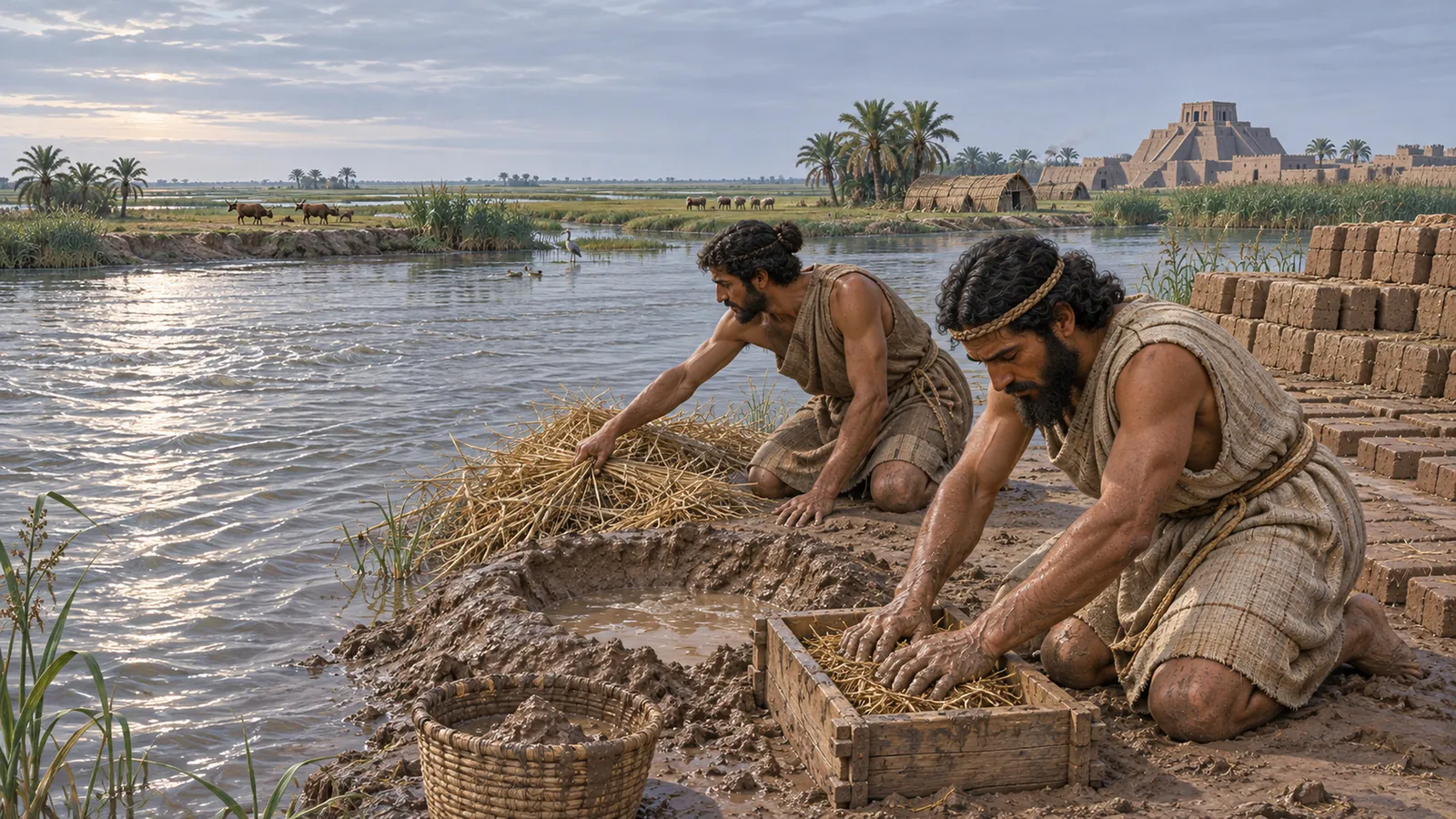
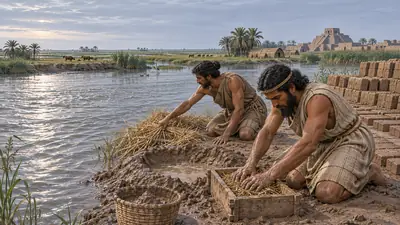
Jacobsen dit qu’Enki passe des champs aux villes et aux villages et charge le dieu des briques de surveiller leur fabrication. Le récit ne donne aucun nom propre à ce dieu.
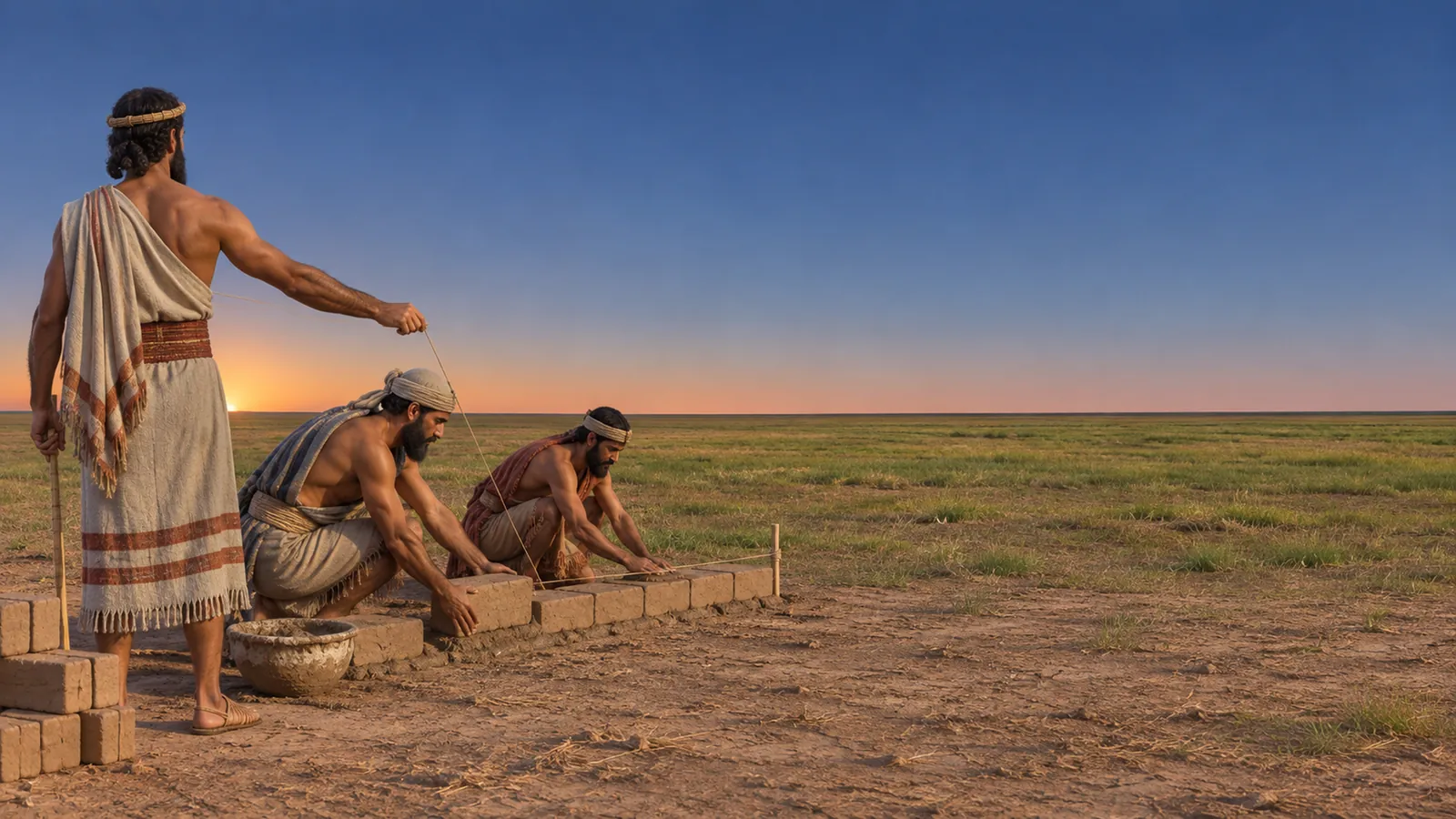
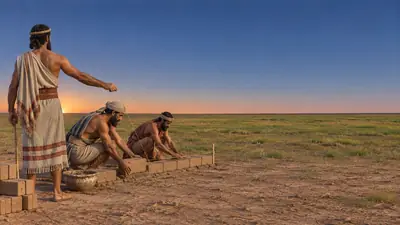
Dans le récit de Jacobsen, Enki pose des fondations et bâtit des murs. Il charge Mushdama, le maître bâtisseur divin, de superviser ces travaux.
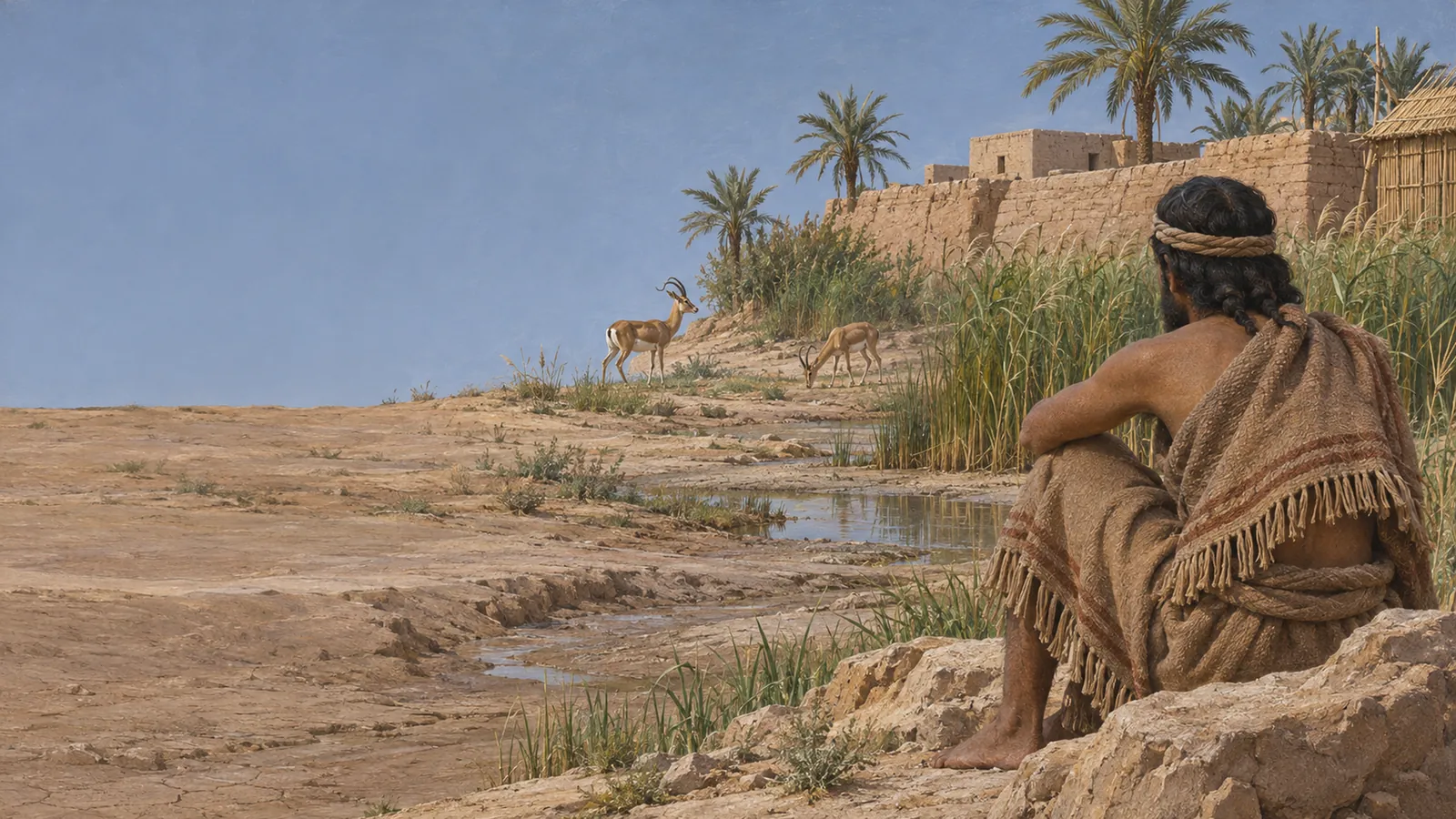
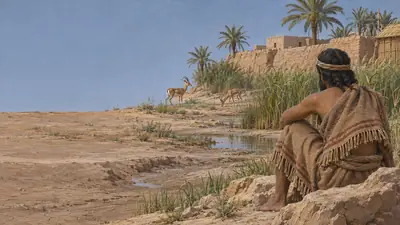
Jacobsen passe ensuite au désert, où Enki confie les animaux sauvages aux soins du dieu Sumukan.
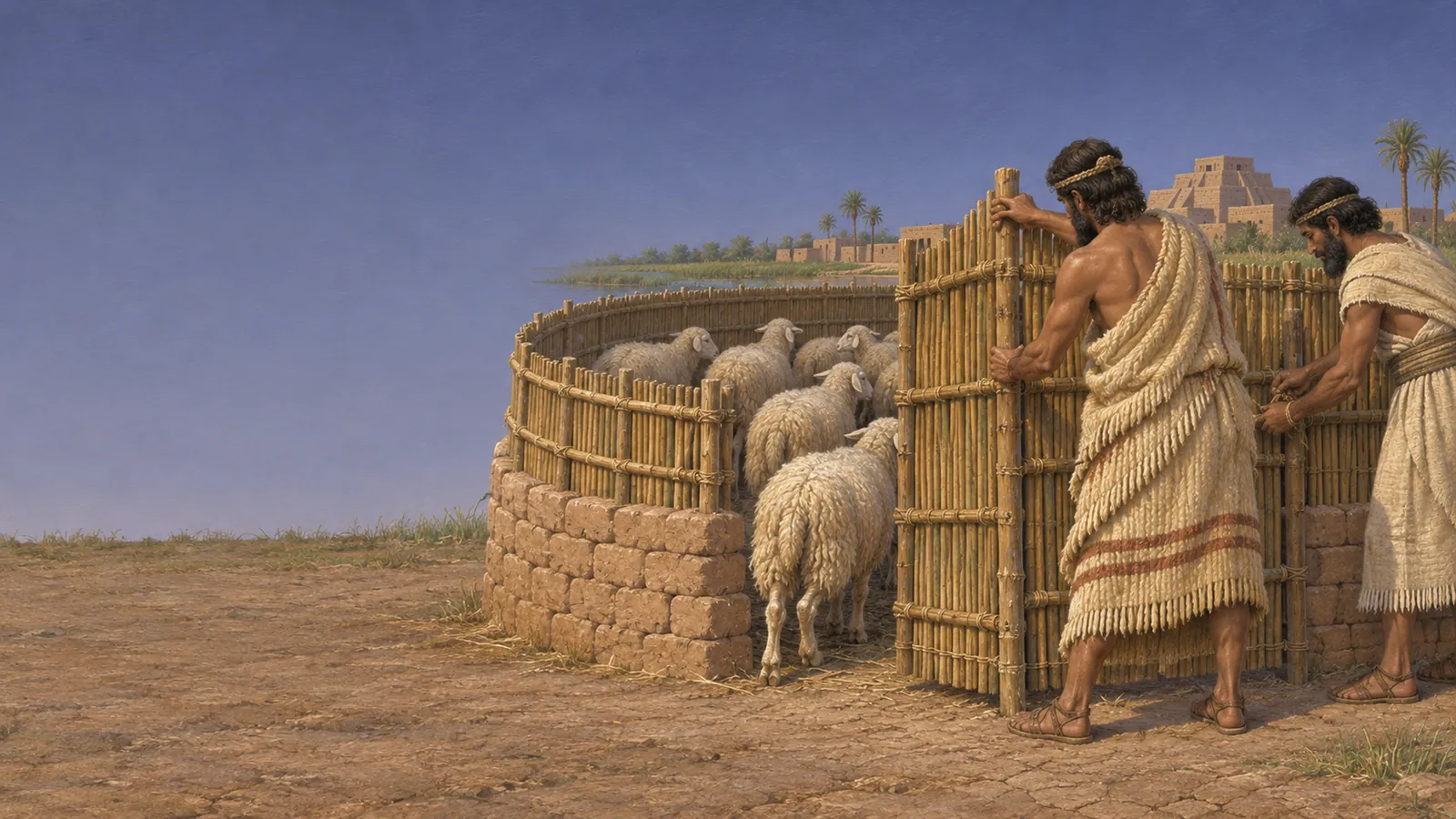
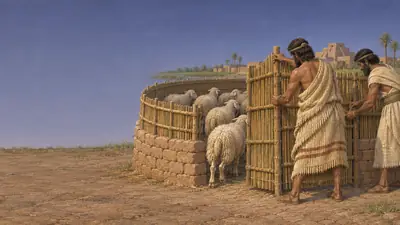
Jacobsen dit qu’Enki bâtit des enclos et des bergeries pour les animaux domestiques. Il les confie au dieu berger Dumuzi, que Jacobsen appelle aussi Tammuz.
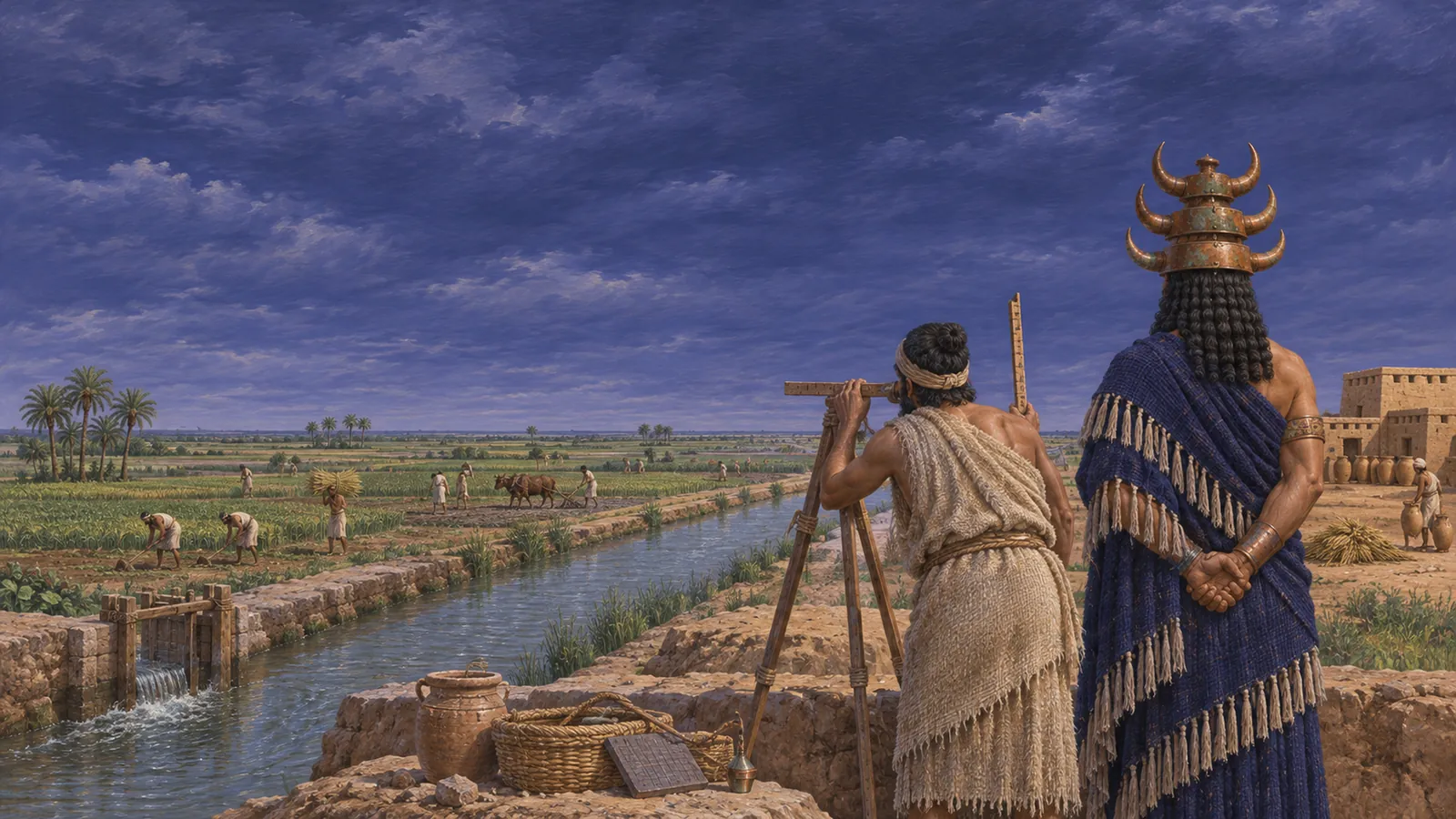
LE DOMAINE DU MONDE
Jacobsen présente Enki comme celui qui organise les principales activités de l’économie mésopotamienne, les met en route et leur donne des responsables divins. Il compare cet ordre de la nature à un domaine dirigé par un intendant compétent.
Fin du chapitre 1
Toutes les pages
Sources
160–161. Chapter note 25 directs readers to Kramer’s Mythology, note 59. Jacobsen’s subsection gives a prose summary and an interpretation. The ancient poem itself has no directly translated verses under this heading. Jacobsen explicitly treats the original opening as conjectural.
Éditions consultées
- University of Chicago, The Intellectual Adventure of Ancient Man
- Jacobsen’s printed subsection, pp. 160–161
- Chapter note 25, p. 184
Notes sur ce récit
Page 1, attribution and the lost opening. 160. Jacobsen reports that the beginning is lost. He proposes that it probably described how Anu and Enlil appointed Enki. Note 25 on p. 184 refers to note 59 in Samuel Noah Kramer’s *Sumerian Mythology*.
Pages 2–3, territory and prosperity. Jacobsen resumes his account on p. 160 with Enki’s tour and visits to the larger administrative areas. He describes Enki stopping in each country and assigning it prosperity and particular functions by his blessing. The countries and functions remain unspecified in these sentences.
Pages 4–5, rivers, fish and reeds. Jacobsen gives the names Euphrates and Tigris and describes the clear water and one divine overseer. He then separates the stocking of fish and the establishment of stands of cane from the previous act, giving those resources to another overseer. Jacobsen does not supply the names of either overseer here.
Pages 6–7, sea and rain. The sentence across pp. 160–161 gives responsibility for the sea to another divine overseer. Both the sea and its overseer are unnamed. On p. 161, Jacobsen next mentions the winds that bring rain. The passage gives no named season.
Page 8, the plow and the furrows. The summary on p. 161 then turns to Enki’s concern with the plow and the opening of furrows.
p. 161, first paragraph. Jacobsen says that Enki lets grain grow on the field after the work involving the plow and furrows. He sets granaries side by side.
p. 161, first paragraph. Enki moves from the fields to town and village in Jacobsen’s account. He appoints the brick god to oversee brickmaking. Jacobsen gives that god no personal name here. Enki lays foundations and builds walls, appointing Mushdama, the divine master builder, to oversee this work.
p. 161, second paragraph. Jacobsen says the wild animals of the desert are placed under the god Sumukan. Enki builds pens and sheepfolds for the domestic animals and puts them in the charge of the shepherd god Dumuzi, whom Jacobsen also calls Tammuz. These names belong to Jacobsen’s printed account.
p. 161, end of second paragraph. Jacobsen sums up Enki’s work as establishing economic activities in Mesopotamia, getting them started and appointing divine overseers. His comparison interprets natural order as a well-run estate. The selection ends before the heading for the distinct Enki and Ninmah story.
Les vers antiques de chaque page
- Page 1: Jacobsen, “Enki Organizes the World Manor,” 1977 Phoenix ed., p. 160, subsection opening and conjecture
- Page 2: Jacobsen, “Enki Organizes the World Manor,” 1977 Phoenix ed., p. 160, first paragraph, Enki’s inspection
- Page 3: Jacobsen, “Enki Organizes the World Manor,” 1977 Phoenix ed., p. 160, second paragraph, visits and blessings
- Page 4: Jacobsen, “Enki Organizes the World Manor,” 1977 Phoenix ed., p. 160, second paragraph, river water and oversight
- Page 5: Jacobsen, “Enki Organizes the World Manor,” 1977 Phoenix ed., p. 160, second paragraph, fish and canebrakes
- Page 6: Jacobsen, “Enki Organizes the World Manor,” 1977 Phoenix ed., pp. 160–161, sentence on the sea
- Page 7: Jacobsen, “Enki Organizes the World Manor,” 1977 Phoenix ed., p. 161, first paragraph, winds and rain
- Page 8: Jacobsen, “Enki Organizes the World Manor,” 1977 Phoenix ed., p. 161, first paragraph, plow and furrows
- Page 9: Jacobsen 1977, The Intellectual Adventure of Ancient Man, ch. V, Enki Organizes the World Manor, p. 161, first paragraph, grain
- Page 10: Jacobsen 1977, The Intellectual Adventure of Ancient Man, ch. V, Enki Organizes the World Manor, p. 161, first paragraph, storage
- Page 11: Jacobsen 1977, The Intellectual Adventure of Ancient Man, ch. V, Enki Organizes the World Manor, p. 161, first paragraph, the brick god
- Page 12: Jacobsen 1977, The Intellectual Adventure of Ancient Man, ch. V, Enki Organizes the World Manor, p. 161, first paragraph, building and Mushdama
- Page 13: Jacobsen 1977, The Intellectual Adventure of Ancient Man, ch. V, Enki Organizes the World Manor, p. 161, second paragraph, desert and Sumukan
- Page 14: Jacobsen 1977, The Intellectual Adventure of Ancient Man, ch. V, Enki Organizes the World Manor, p. 161, second paragraph, domestic animals and Dumuzi
- Page 15: Jacobsen 1977, The Intellectual Adventure of Ancient Man, ch. V, Enki Organizes the World Manor, p. 161, second paragraph, Jacobsen’s closing comparison
Illustrations réalisées par IL Archive avec des outils d’IA ; le texte s’appuie sur les sources antiques (voir les sources à la fin de chaque chapitre).