Regina et Barates Chapitre 1
Deux inscriptions pour Regina
Un monument de South Shields conserve des détails sur Regina et Barates en latin et en araméen palmyrénien. L’épisode suit les deux inscriptions l’une après l’autre, de la dédicace latine au mot de deuil en araméen.
SourcesTournez les pages avec les flèches, le clavier ou en balayant l’écran.
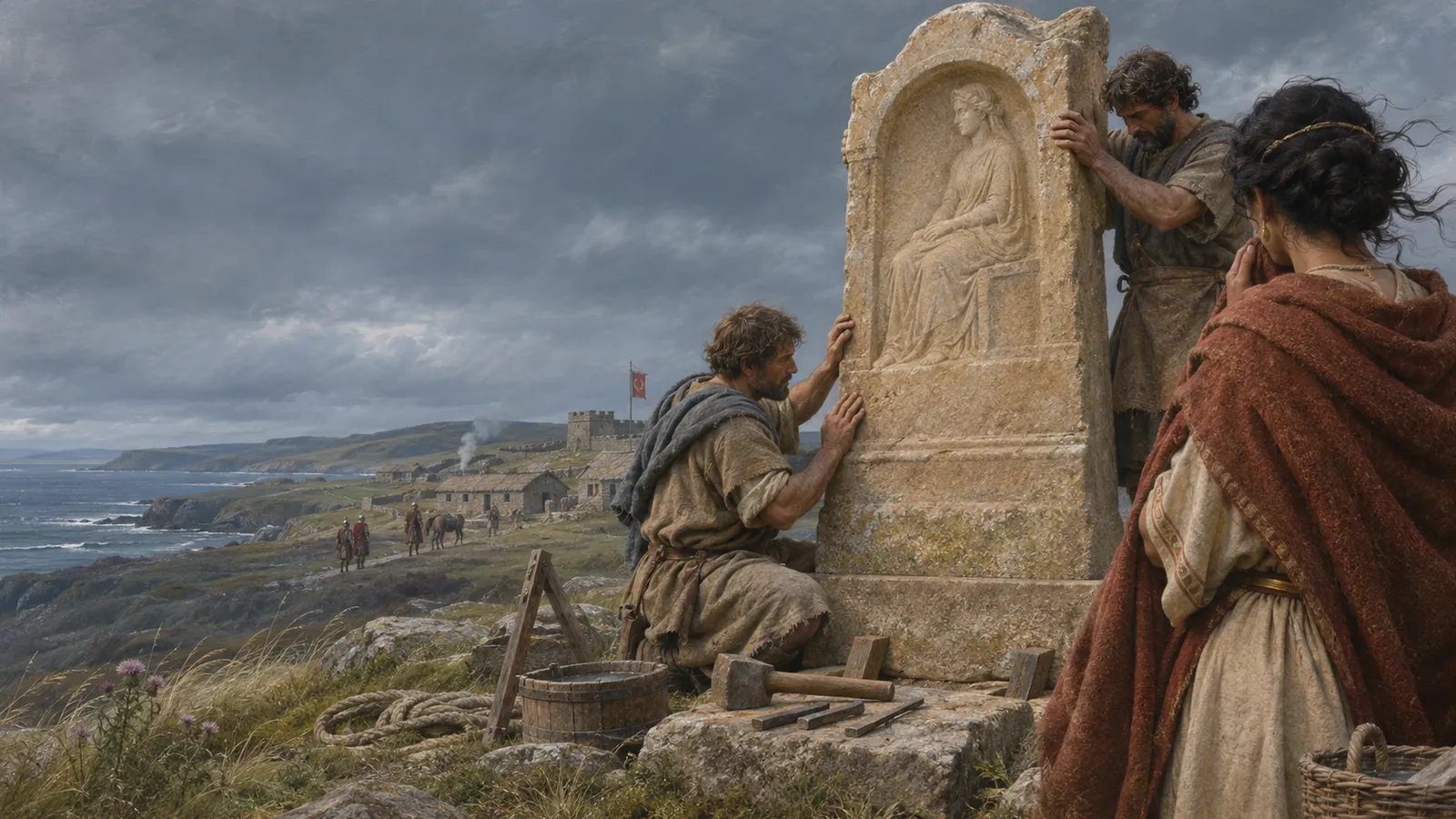
UN SEUL MONUMENT
Un monument de pierre découvert à South Shields en 1878 porte un texte latin au-dessus d’une ligne en araméen palmyrénien. Jeremy Hutton et Catherine Bonesho publient et traduisent les deux inscriptions.
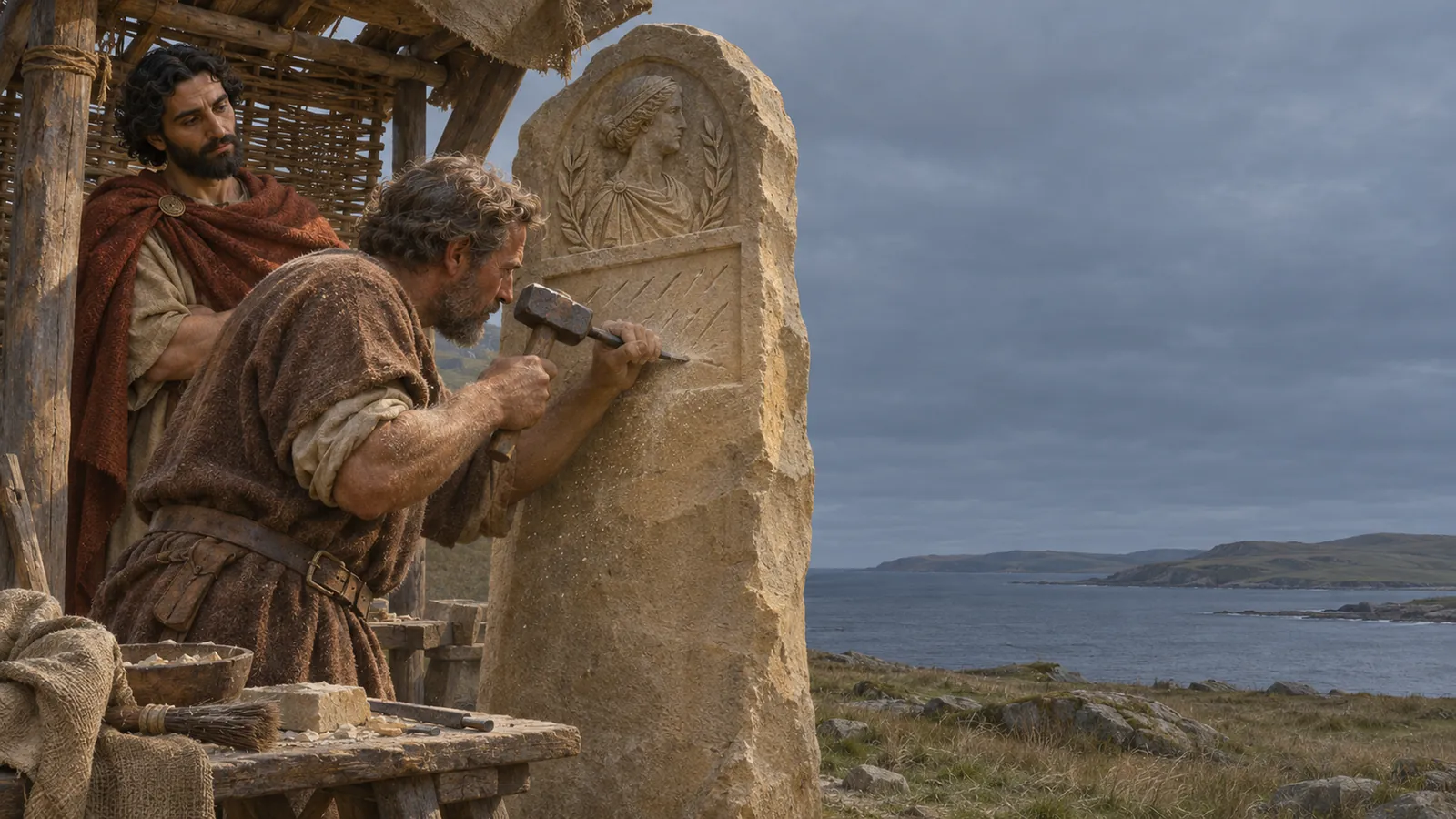
Le latin s’ouvre sur une dédicace aux esprits des morts. Il nomme Regina et la présente comme une affranchie.
L’INSCRIPTION LATINE
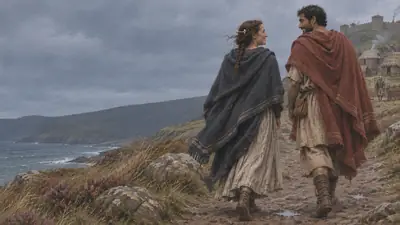
L’inscription latine appelle Regina l’épouse de Barates. Elle identifie Barates comme un Palmyrénien.
L’inscription latine dit que Regina appartient au peuple des Catuallauniens et lui donne trente ans. Les traducteurs restituent le verbe qui indique qu’elle a vécu aussi longtemps.
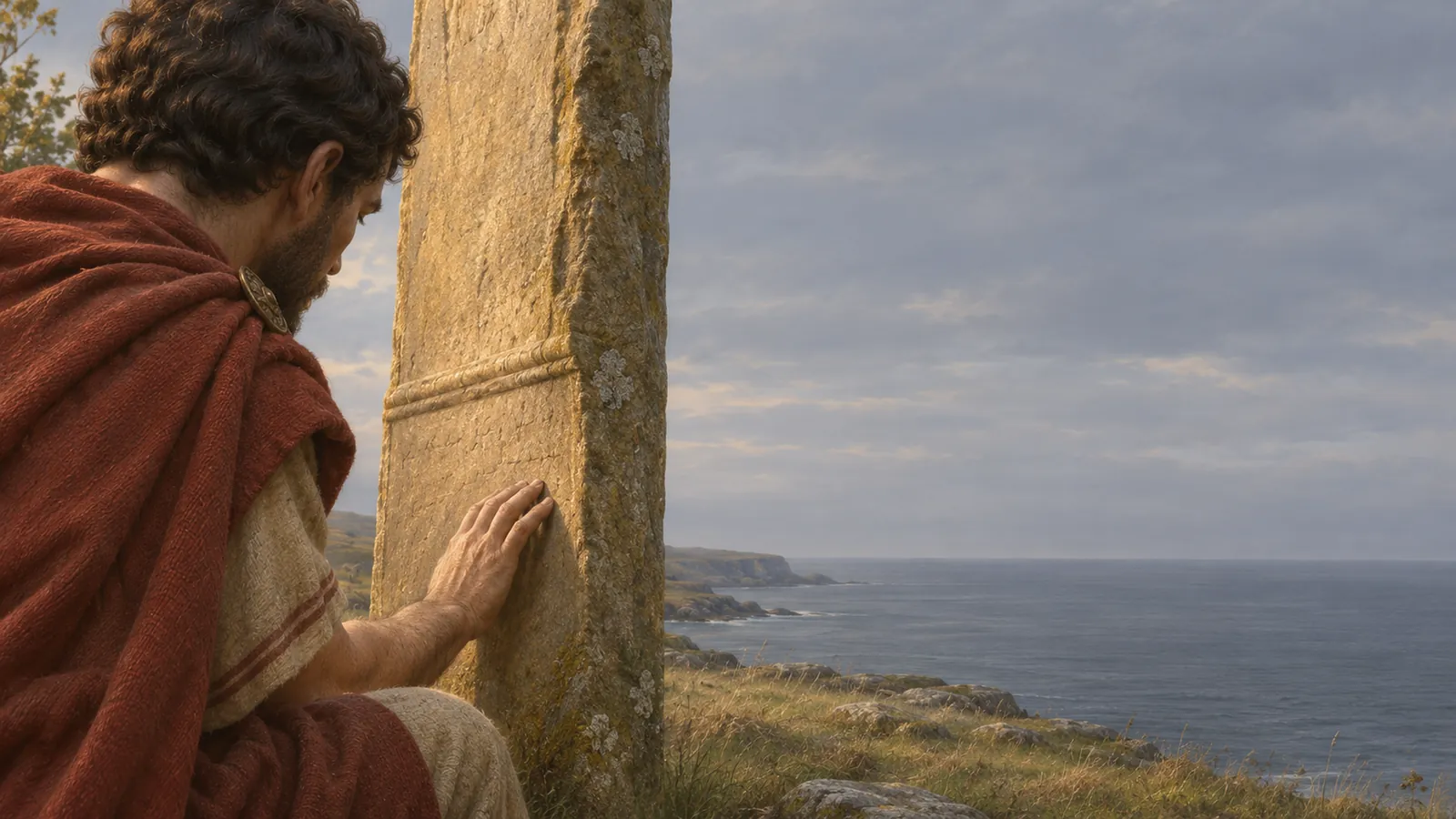
Dans la traduction publiée, la ligne en araméen palmyrénien présente Regina comme l’affranchie de Barates. Le nom de celui-ci figure sous sa forme palmyrénienne.
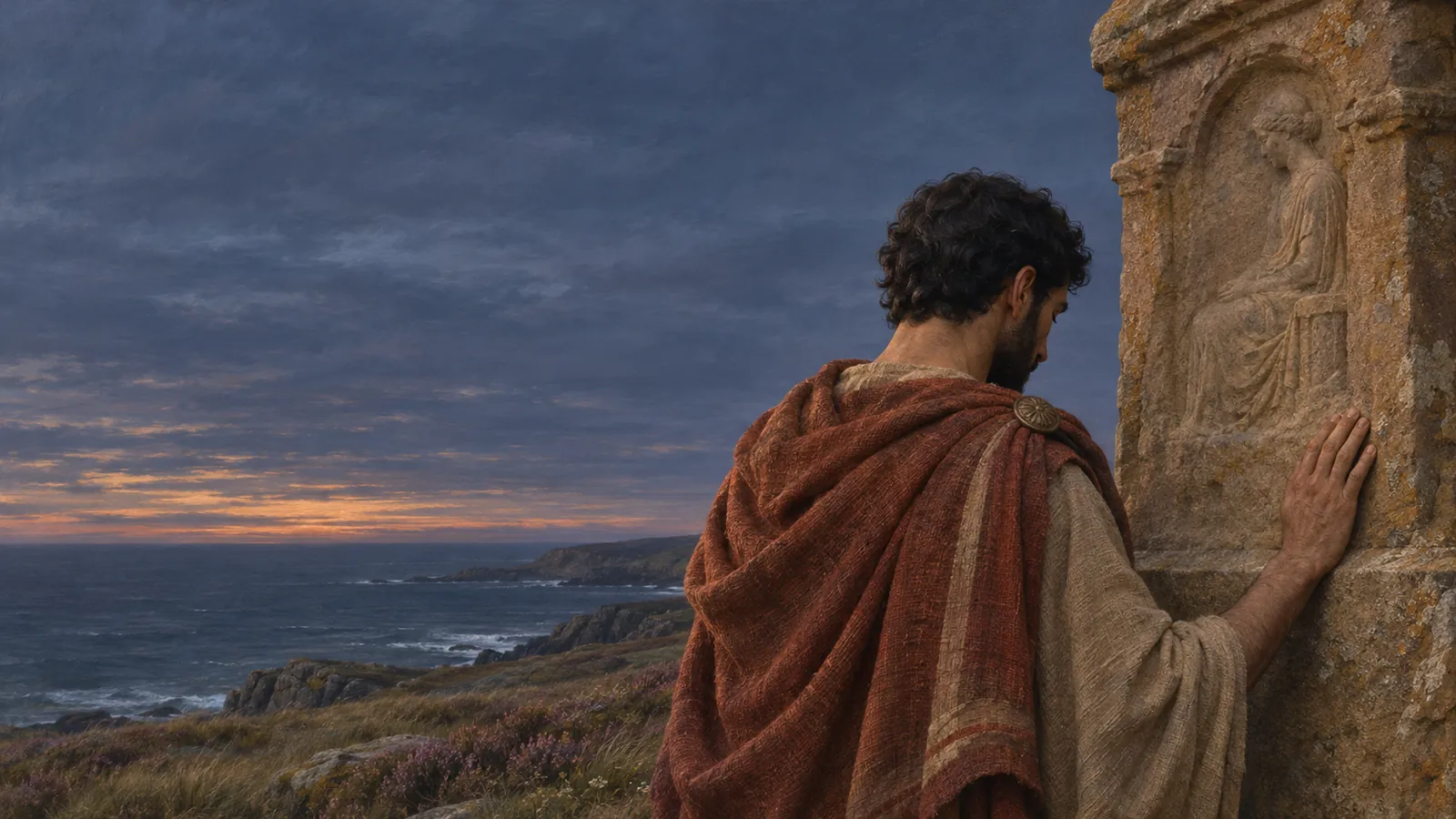
LA LAMENTATION
La ligne en araméen palmyrénien se termine par un seul mot de deuil, que Hutton et Bonesho rendent par hélas.
Fin du chapitre 1
Toutes les pages


Sources
The complete Latin and Palmyrene Aramaic inscriptions on the South Shields memorial have the respective references RIB 1065 and PAT 0246. This reading follows the texts and translations on pp. 271–272 in Jeremy M. Hutton and Catherine E. Bonesho’s contribution to Epigraphy, Philology, and the Hebrew Bible, SBL Press, 2015.
Éditions consultées
- SBL Press, Epigraphy, Philology, and the Hebrew Bible, publisher’s edition
- Hutton and Bonesho, pp. 271–272, inscriptions and translations
- Hutton and Bonesho, pp. 275–277, the names and freed status
Notes sur ce récit
Page 1, the bilingual memorial. Hutton and Bonesho introduce RIB 1065 and PAT 0246 on p. 271. Page 272 gives their English translations. The discovery year refers to the find.
Page 2, Latin line 1, dedication and status. The standard formula to the spirits of the dead opens the Latin text. The published translation supplies the verb of dedicating in square brackets. It renders the status term as “free-woman,” and the authors use the conventional “freedwoman” in their later discussion.
Page 3, Latin lines 1–2, marriage and Barates. The Latin calls Regina the wife of Barates and identifies him as a Palmyrene. The edition prints the word for wife on line 1 and the name and origin on line 2.
Page 4, Latin line 3, people and age. The authors’ translation gives “Catuallaunian” based on the reading noted at p. 271, note 66. The number is thirty.
Page 5, Palmyrene Aramaic line 1, names and status. The published translation on p. 272 names Regina and calls her the freedwoman of the person named Barates in the Latin. Hutton and Bonesho align the Palmyrene spelling with Barates on p. 275. On pp. 276–277 they discuss the literal status phrase and consider whether its context could carry a marital connotation.
Page 6, Palmyrene Aramaic line 1, lament. The line ends in the word the translators render as “Alas!” The reading ends there. The neighboring example in the article concerns a separate memorial.
The published readings provide the text of both inscriptions.
Les vers antiques de chaque page
- Page 1: Hutton and Bonesho (2015), Regina memorial, p. 271, description of RIB 1065 and PAT 0246
- Page 2: Hutton and Bonesho (2015), Regina memorial, p. 272, Latin line 1, dedication and status
- Page 3: Hutton and Bonesho (2015), Regina memorial, p. 272, Latin lines 1–2, relationship and origin of Barates
- Page 4: Hutton and Bonesho (2015), Regina memorial, p. 272, Latin line 3 and note 66
- Page 5: Hutton and Bonesho (2015), Regina memorial, p. 272, Aramaic line 1, names and status; 275–277, discussion
- Page 6: Hutton and Bonesho (2015), Regina memorial, p. 272, Aramaic line 1, final expression
Illustrations réalisées par IL Archive avec des outils d’IA ; le texte s’appuie sur les sources antiques (voir les sources à la fin de chaque chapitre).