Le Conte du naufragé Chapitre 1
Le Conte du naufragé
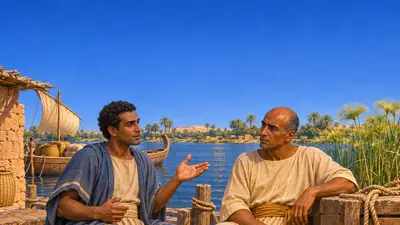
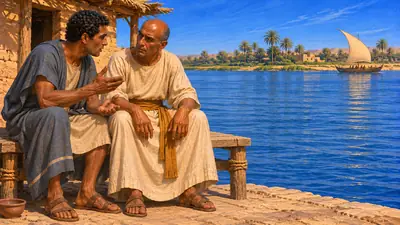
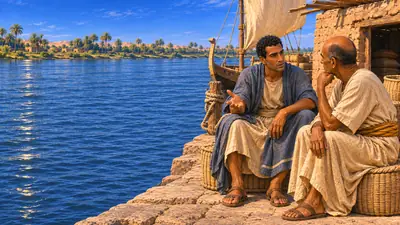
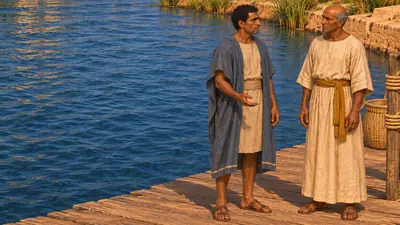
À l’abri au débarcadère, un marin raconte à son chef d’expédition comment un voyage précédent l’a laissé seul sur une île. Un serpent doué de parole lui donne l’espoir de rentrer chez lui, et de son aventure le marin tire un conseil pour son chef.
SourcesTournez les pages avec les flèches, le clavier ou en balayant l’écran.
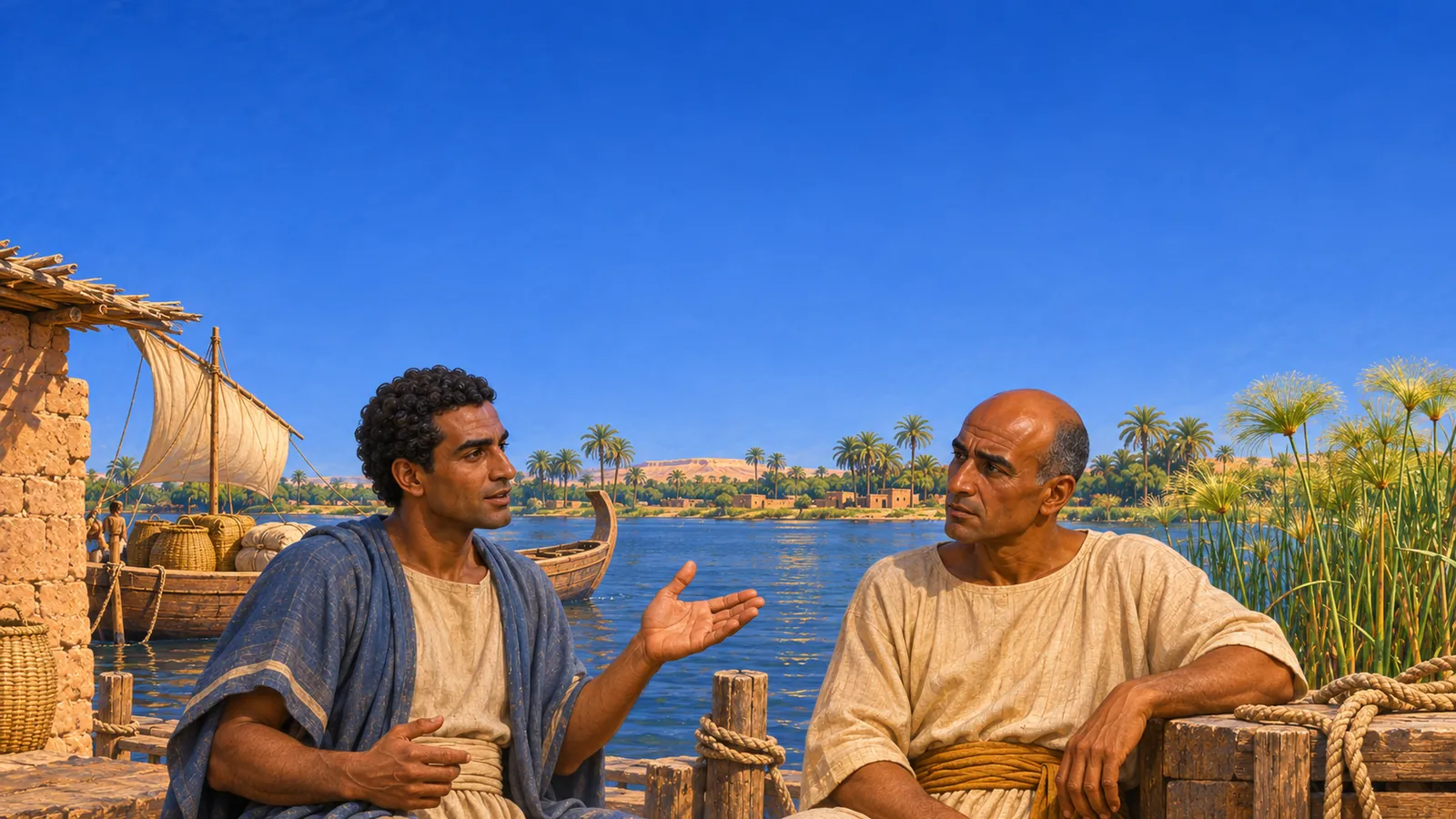
LE MARIN NAUFRAGÉ
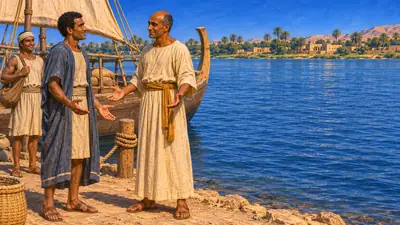
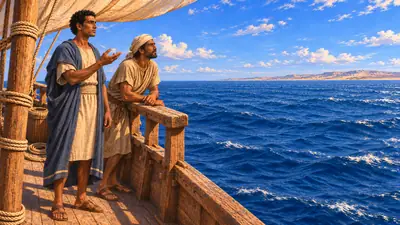
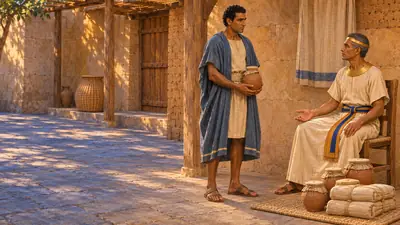
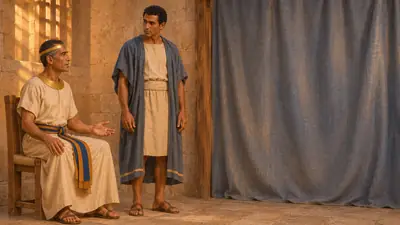
Le récit conservé s’ouvre sur un marin qui s’adresse au chef de son expédition. Il l’invite à reprendre courage, car ils sont arrivés chez eux.
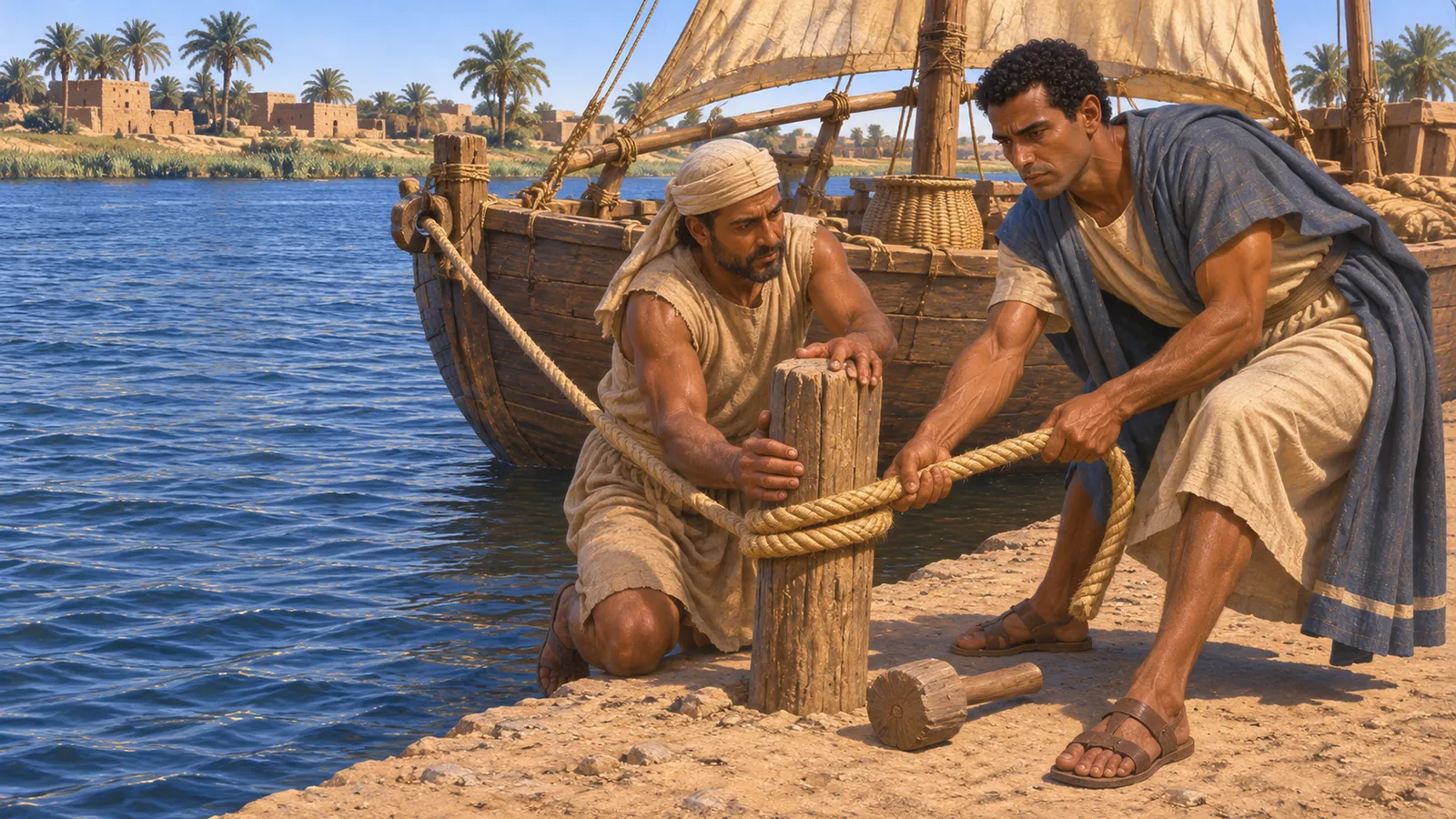
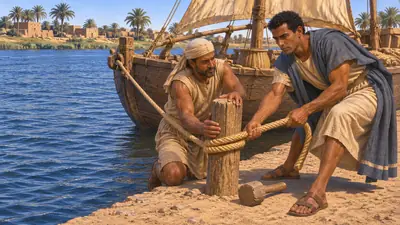
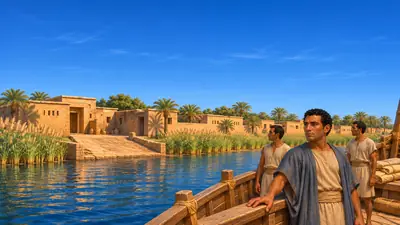
Le marin montre les signes d’une arrivée sans encombre. L’équipage enfonce le poteau d’amarrage et passe l’amarre de proue à terre.
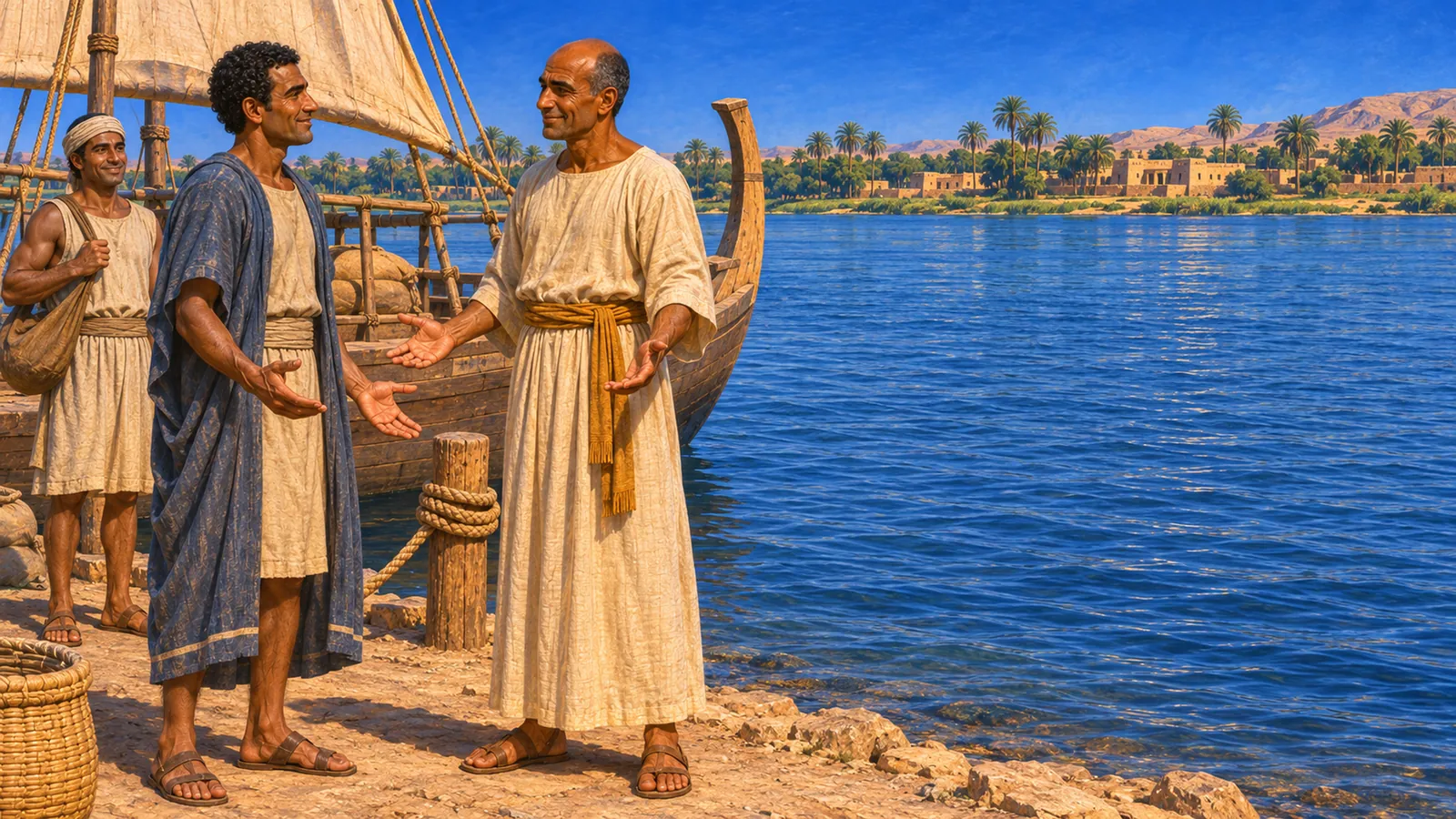
Les membres de l’équipage rendent grâce et se saluent. Le marin rappelle à son chef que toute l’expédition est rentrée saine et sauve.

Le marin se souvient d’avoir laissé Wawat derrière lui et d’être passé par Senmwt. Ces noms appartiennent au trajet qui vient de ramener l’expédition en Égypte.
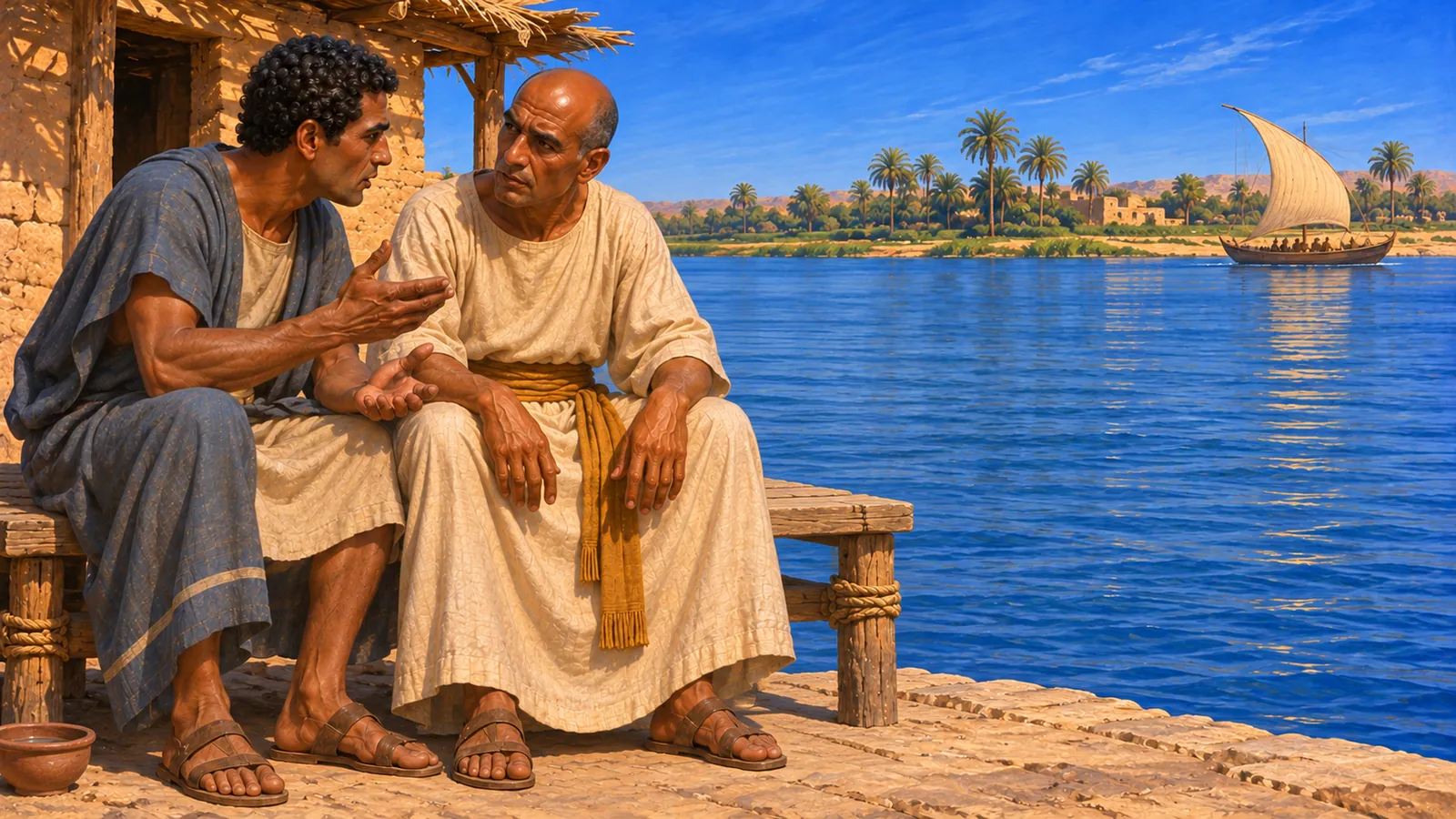
Le marin conseille à son chef de se laver les doigts et de garder son calme. Bientôt, il devra parler devant le roi.
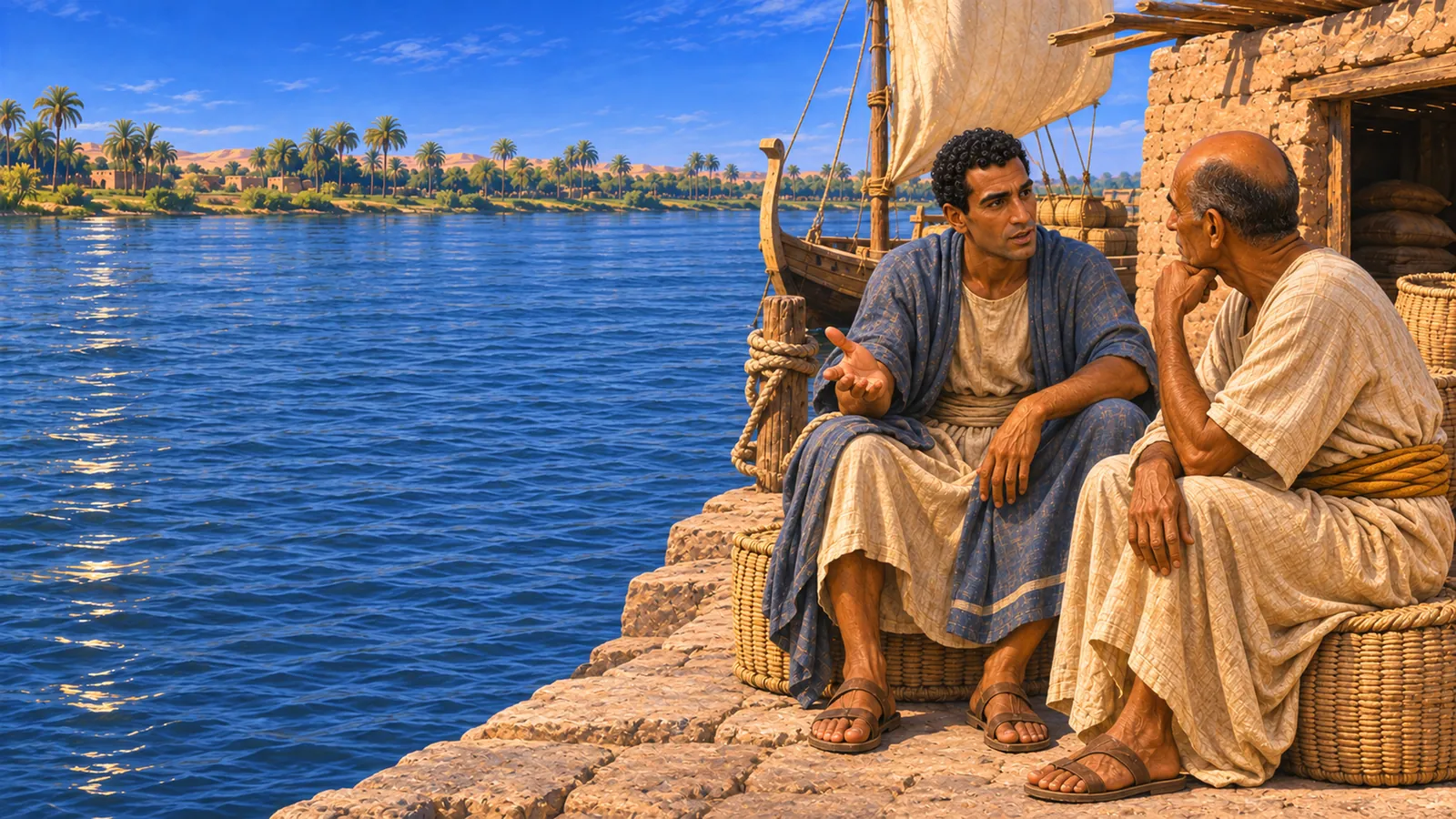
UN VOYAGE ANTÉRIEUR
Le marin dit que savoir parler peut protéger une personne. Puis il propose au chef de raconter ce qui lui est arrivé au cours d’un voyage précédent.
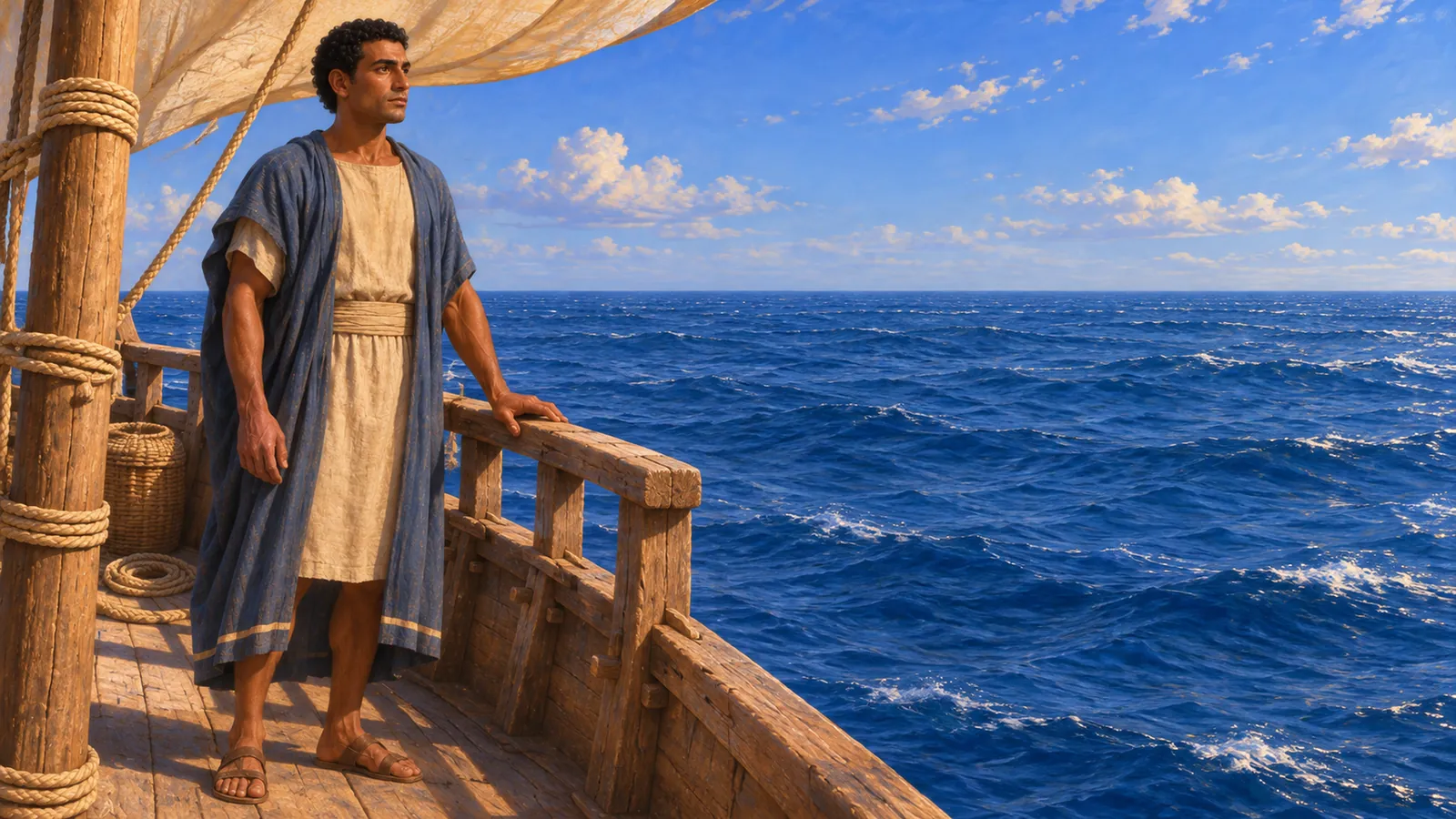
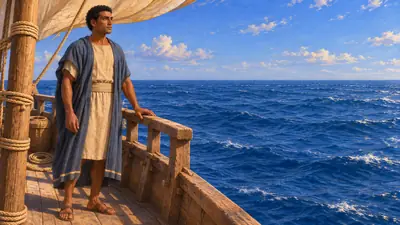
Le marin commence le récit du voyage précédent. Il dit qu’il a été envoyé aux mines du souverain et qu’il y est allé par mer.
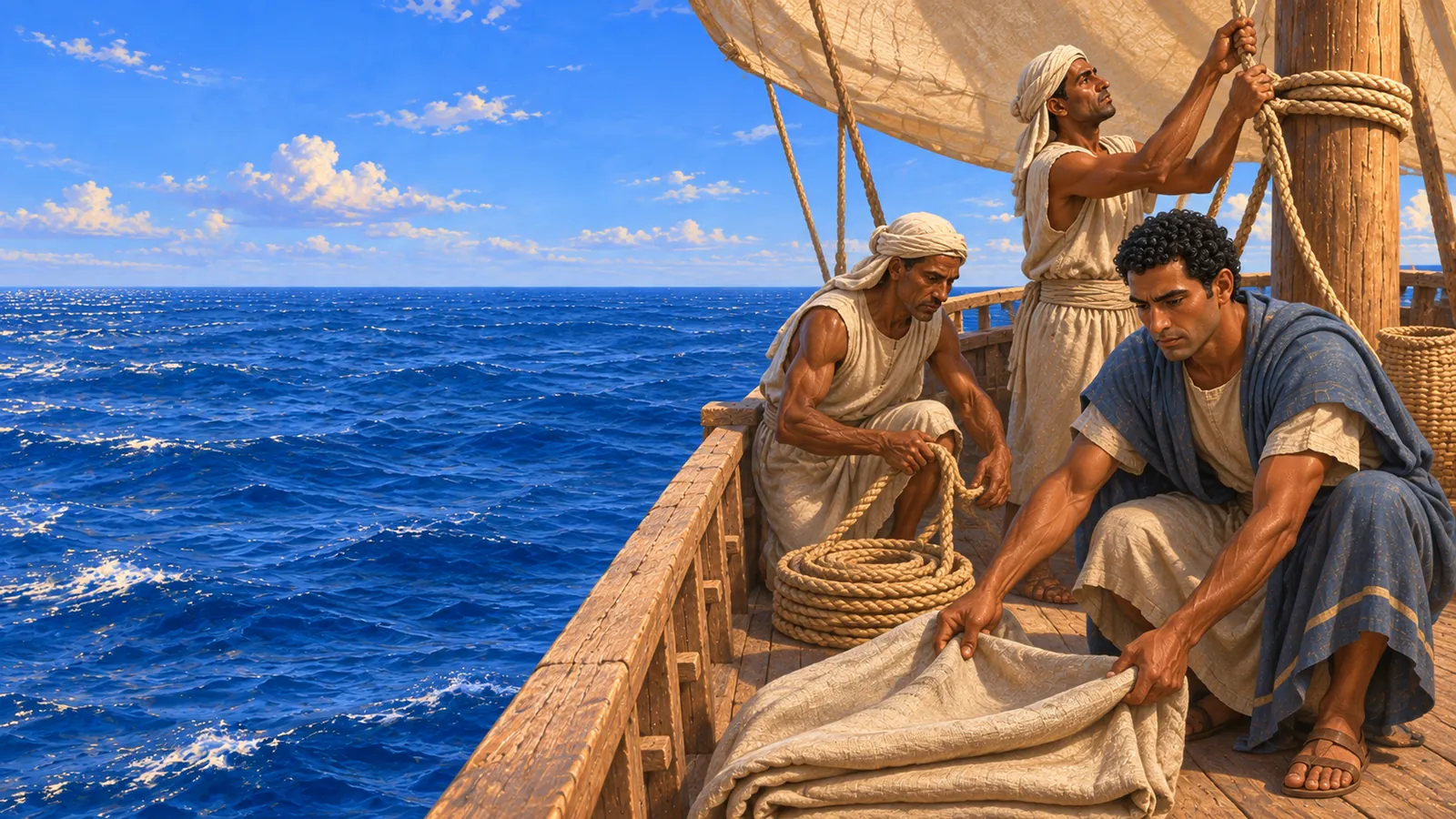
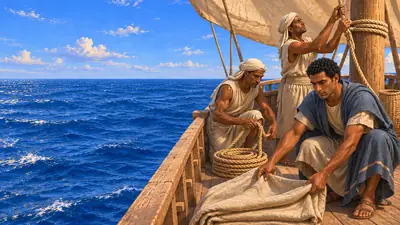
Le marin se souvient d’un navire de cent vingt coudées de long sur quarante de large. Il emmenait cent vingt marins choisis parmi les équipages d’Égypte.
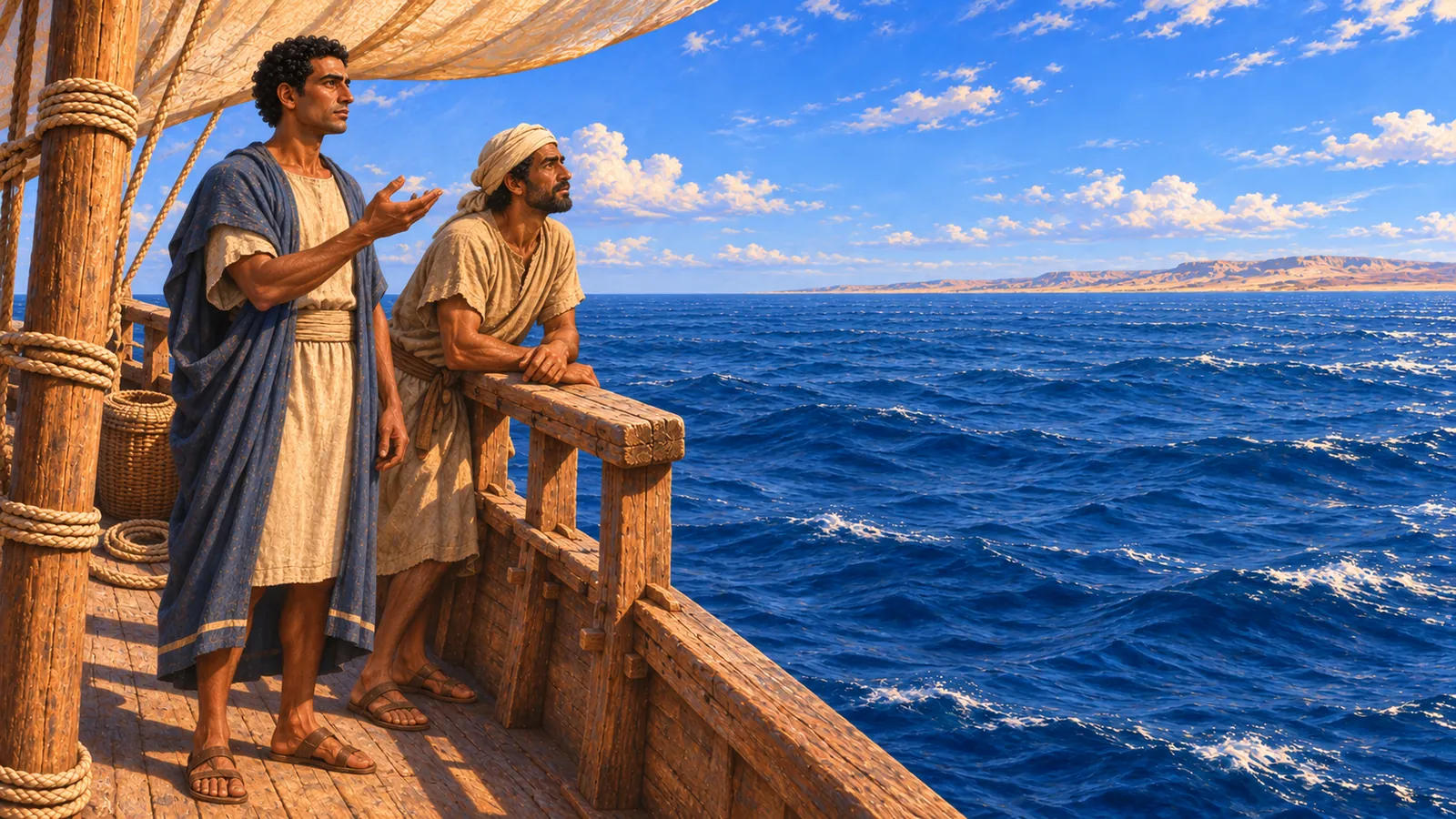
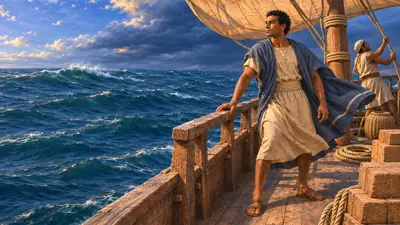
Dans le récit du marin, l’équipage savait observer le ciel et la terre. Les marins pouvaient reconnaître les signes du mauvais temps qui approchait.
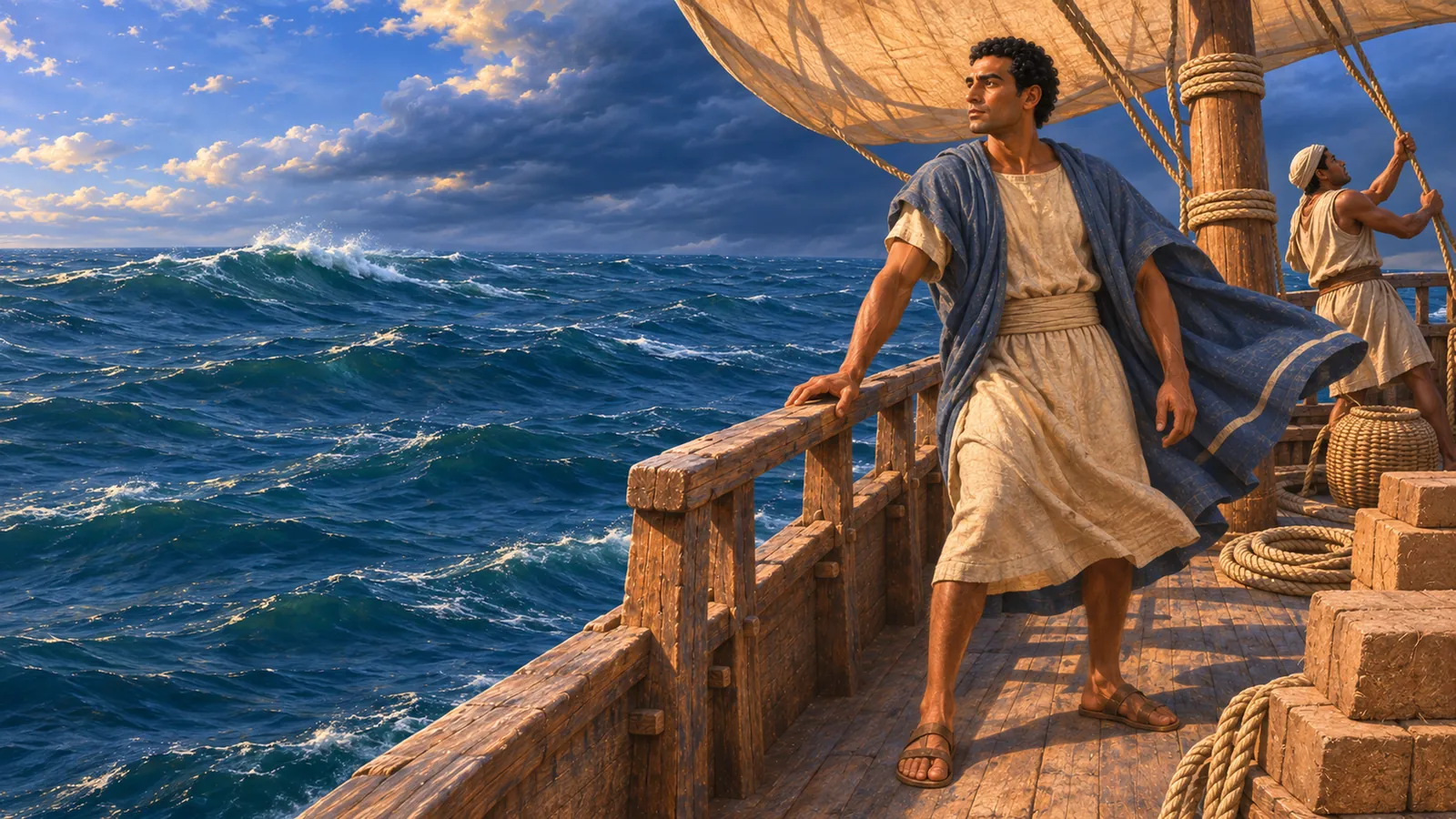
Avant que le navire puisse atteindre la terre, le vent se lève en pleine mer. Le marin se rappelle la haute vague venue avec la tempête.
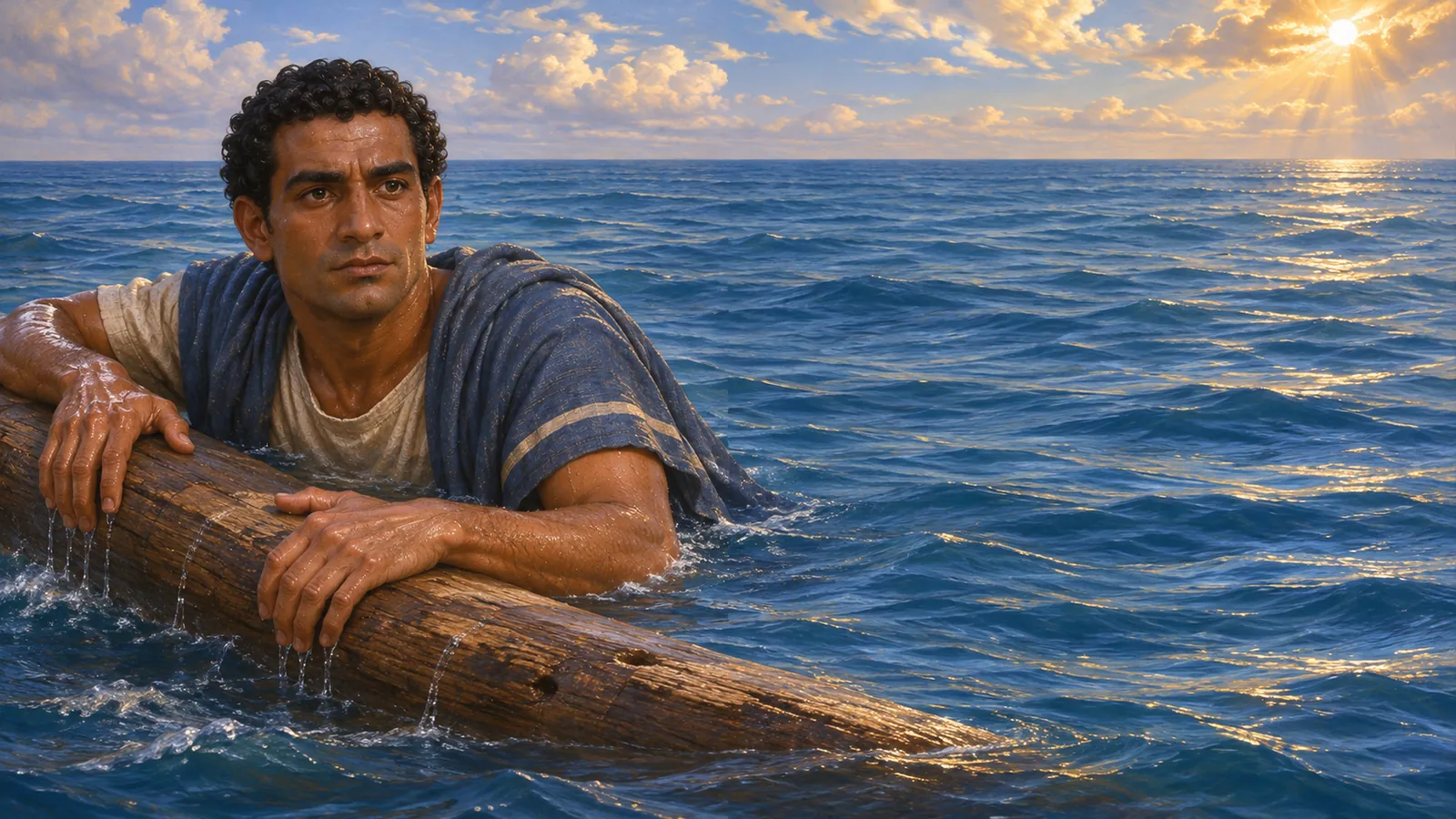
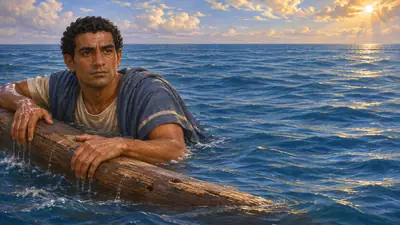
Le marin s’accroche à un morceau de bois qui flotte. Le navire fait naufrage et aucun des autres marins ne survit.

L’ÎLE
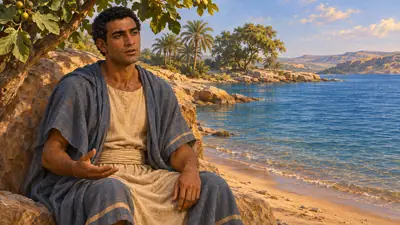
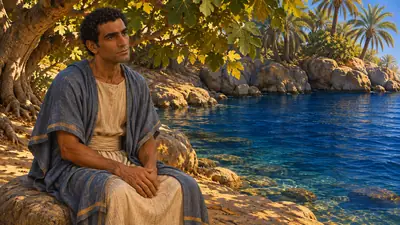
Une vague porte le marin jusqu’à une île. Il s’y retrouve seul et dit que son cœur fut son unique compagnon.
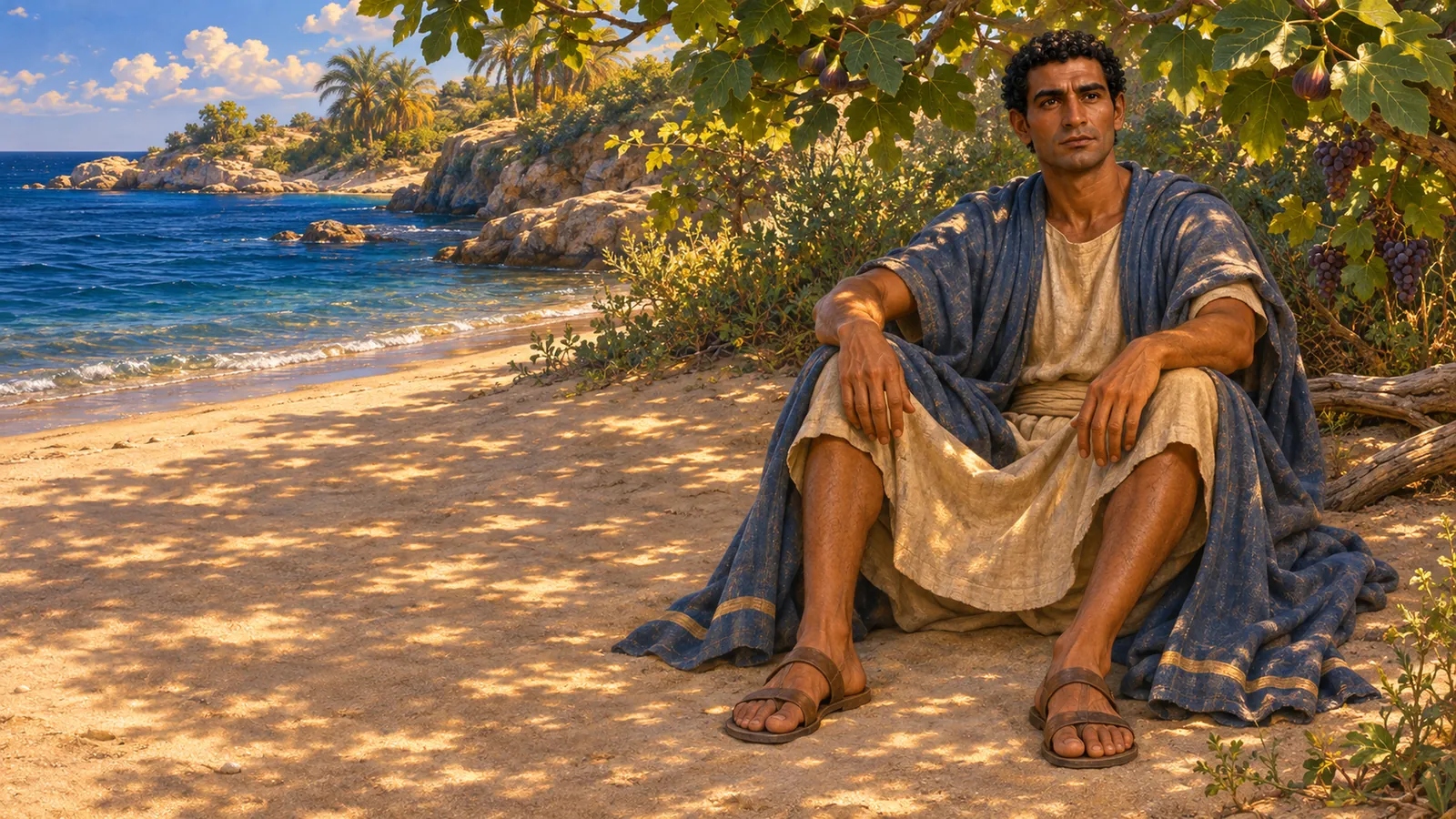
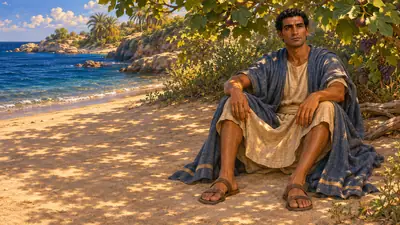
Le marin se repose à l’ombre, dans un endroit abrité. Il se souvient d’y être resté allongé, seul parmi les branches et les buissons de l’île.
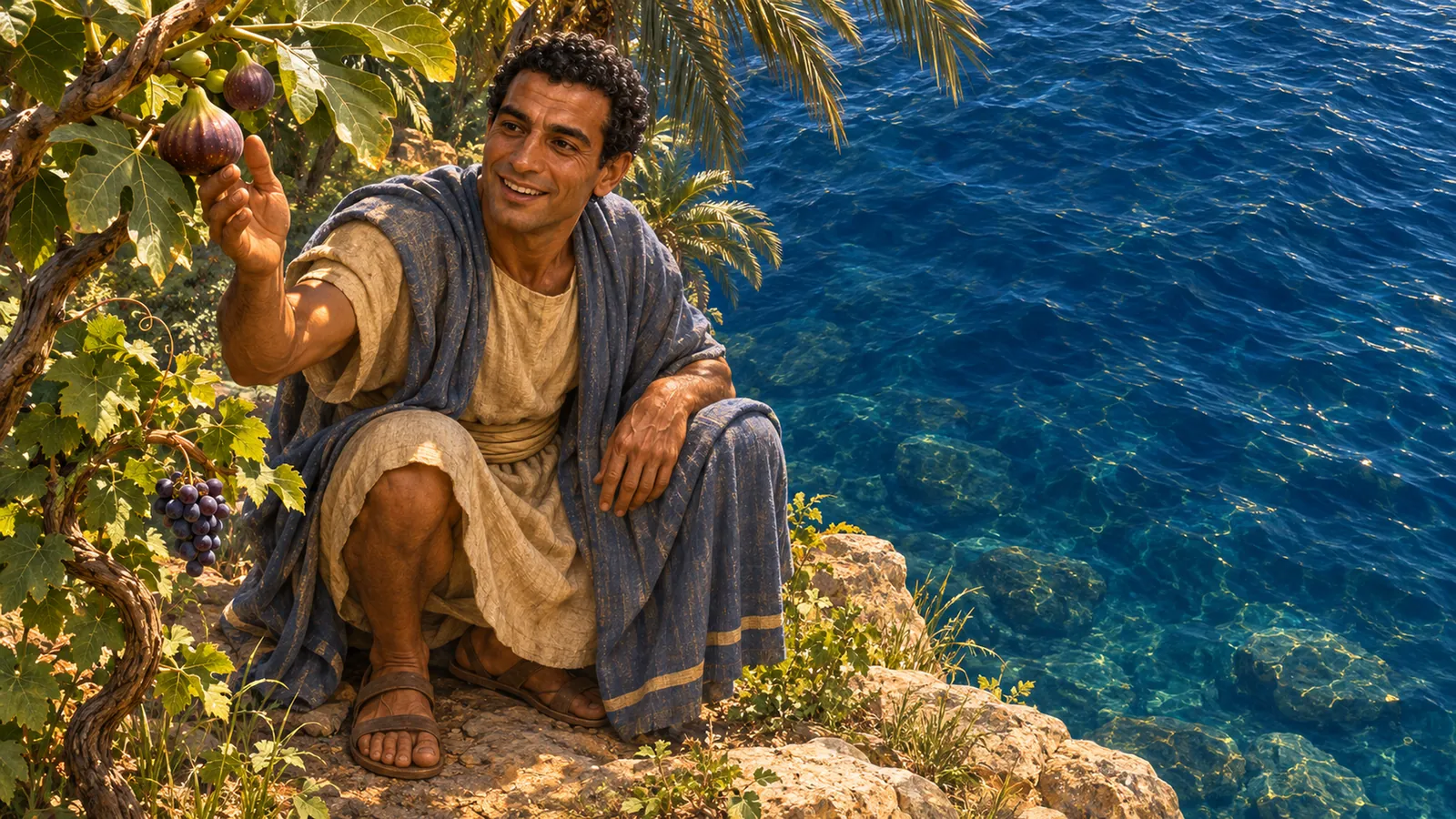
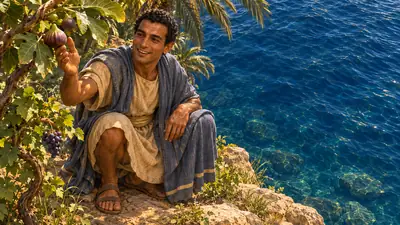
Quand le marin se lève pour chercher de quoi manger, il découvre des figues et du raisin. Il voit d’autres plantes qui poussent là et les décrit avec plaisir.

Le marin poursuit sa description des ressources de l’île, parmi lesquelles des fruits, des poissons et des oiseaux. Il lui semble que rien ne manque en cet endroit.
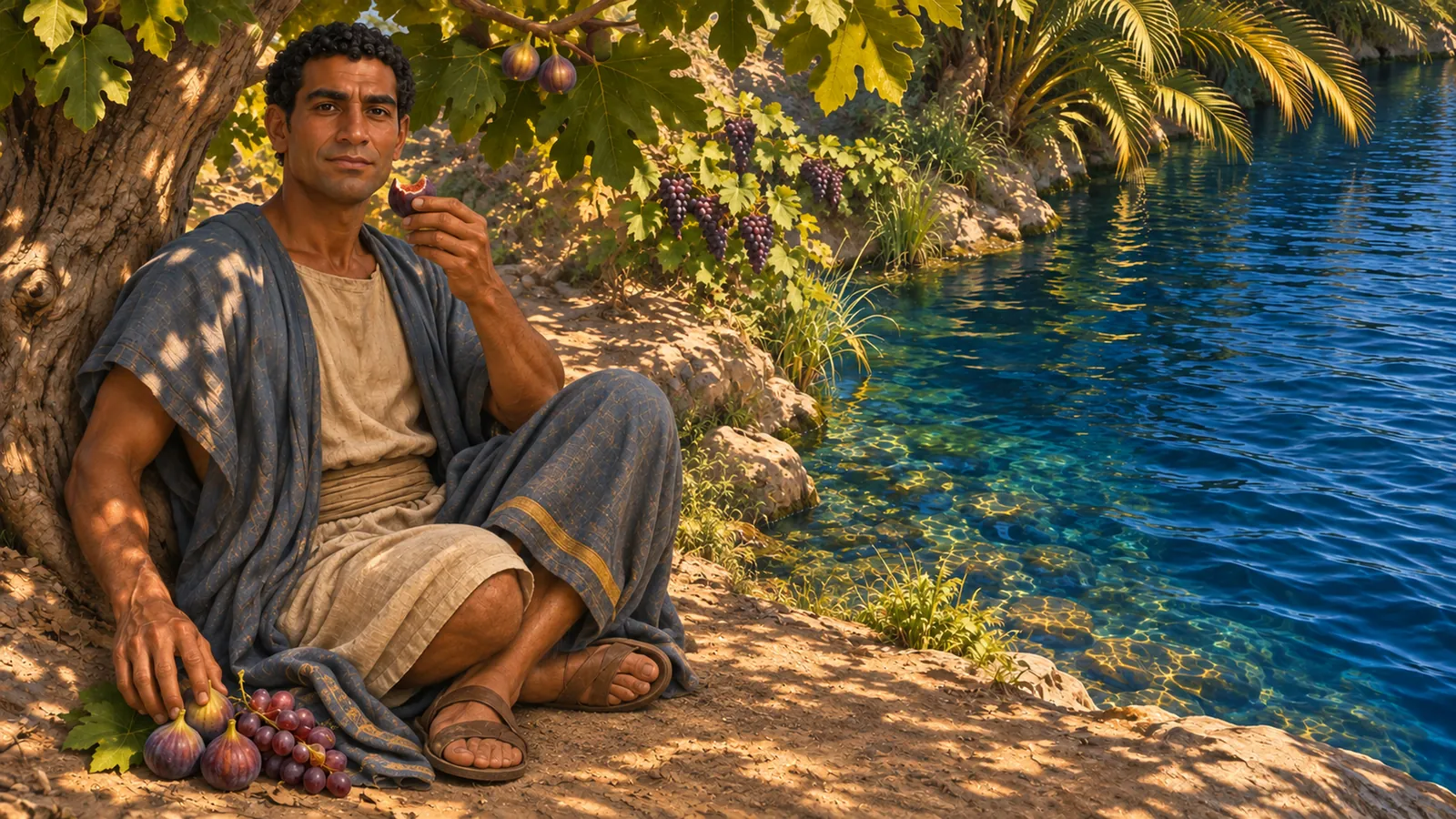
Le marin a enfin assez à manger. Il dit avoir posé le reste à terre parce que c’était trop lourd à porter.
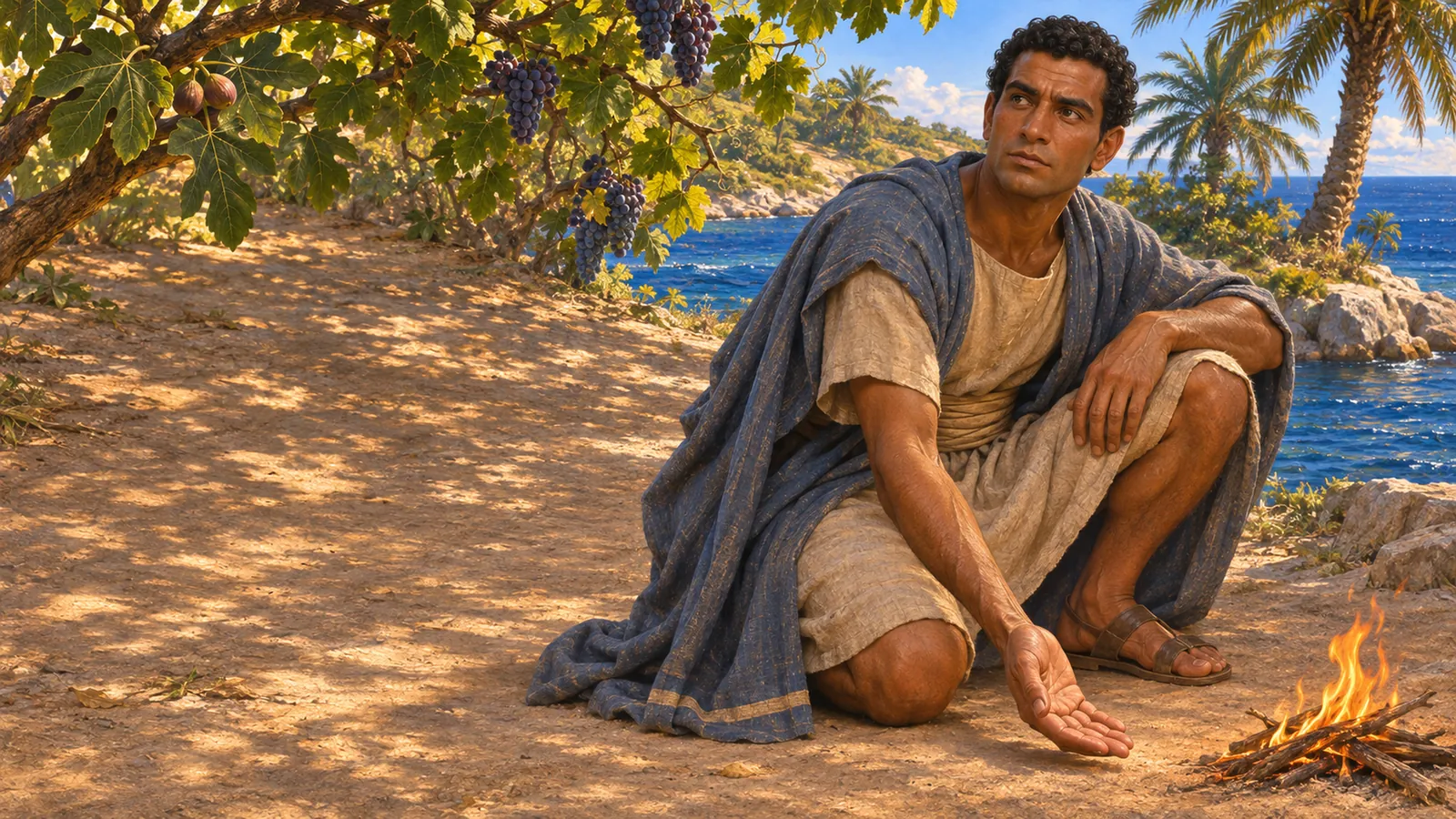
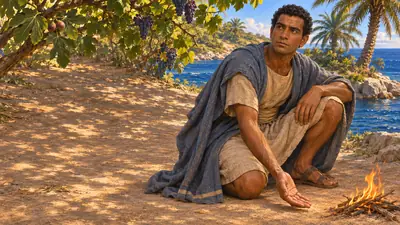
Après avoir trouvé de quoi manger, le marin allume un feu et fait une offrande aux dieux. Puis il entend un bruit.
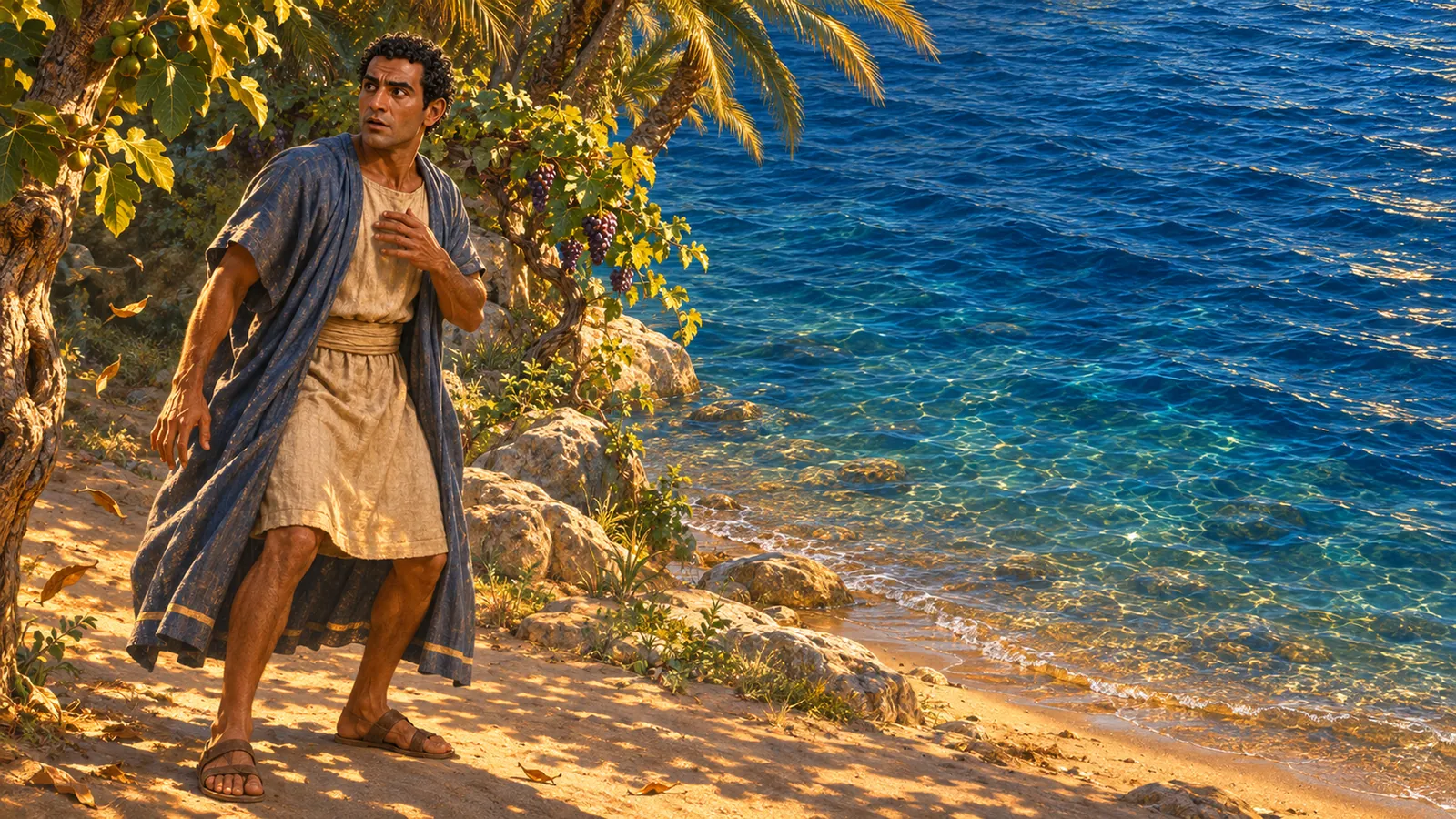
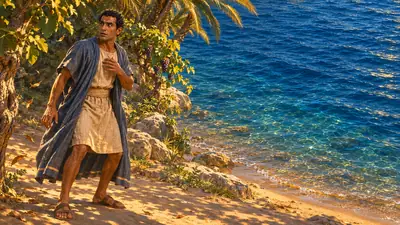
Le marin entend un grondement et pense d’abord à une vague. Puis les arbres et le sol autour de lui se mettent à trembler.
LE SERPENT
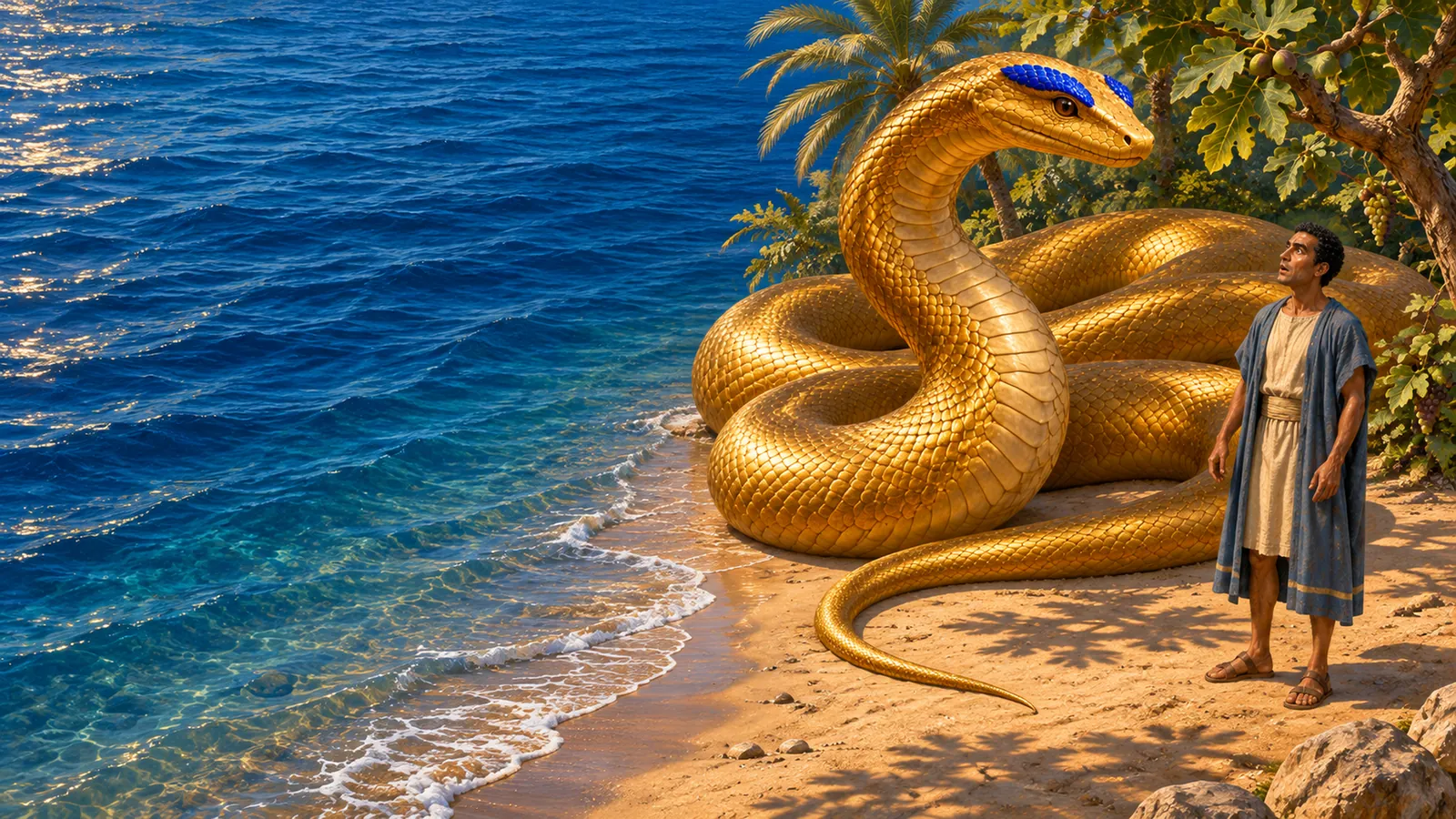
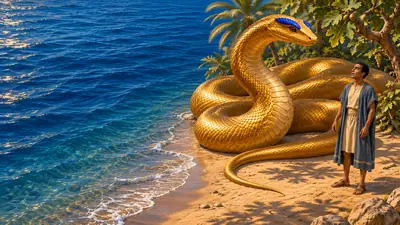
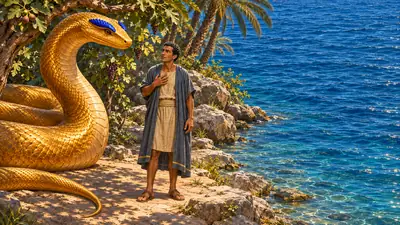
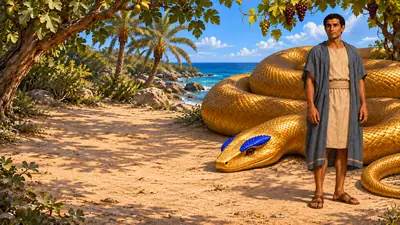
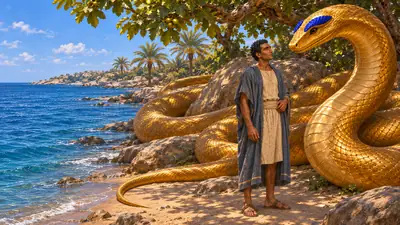
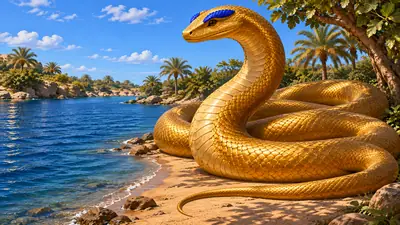
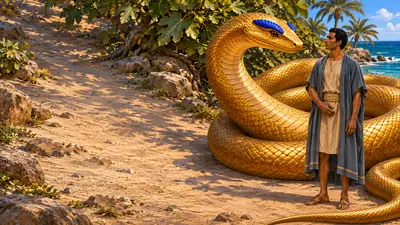
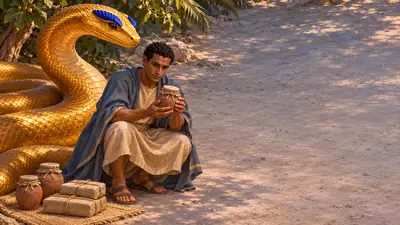
Le marin voit s’approcher un grand serpent. Dans son récit, son corps brille comme de l’or et ses sourcils ont la couleur du lapis-lazuli.
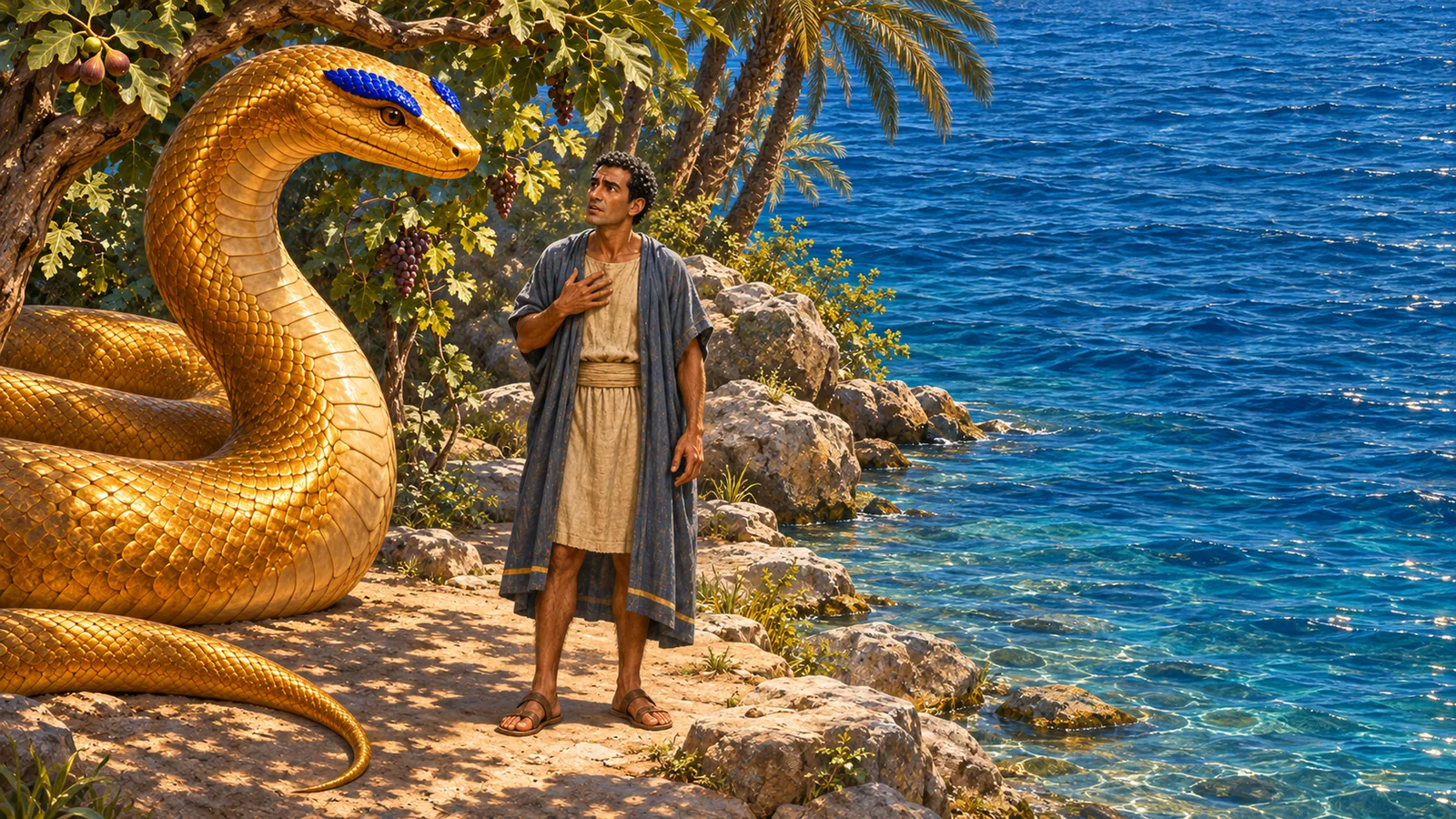
Le serpent lui demande encore qui l’a amené sur l’île et menace de le réduire en cendres s’il ne répond pas. Le marin a du mal à parler.
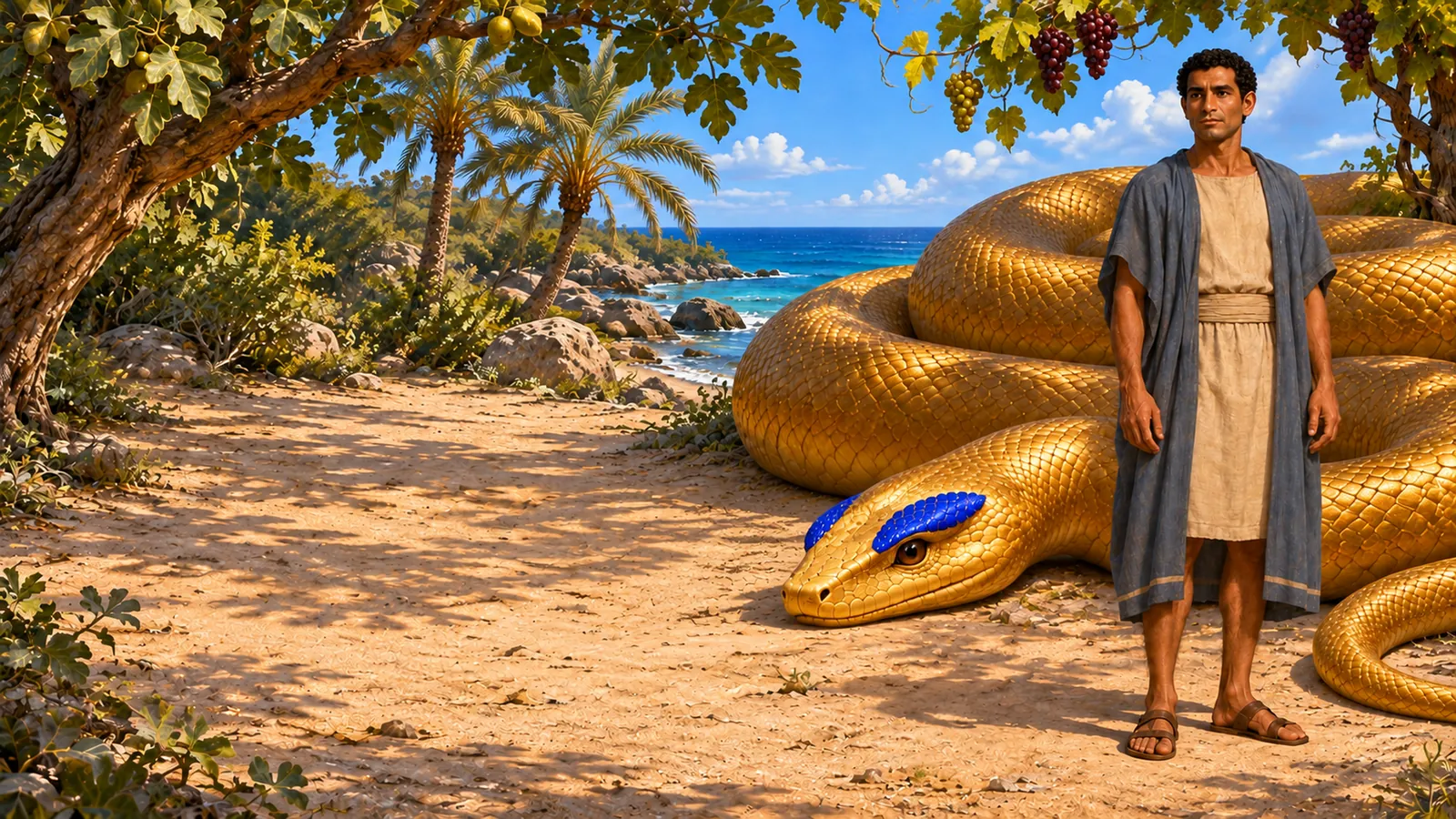
Le serpent emporte le marin dans sa gueule jusqu’à son lieu de repos et l’y dépose indemne.
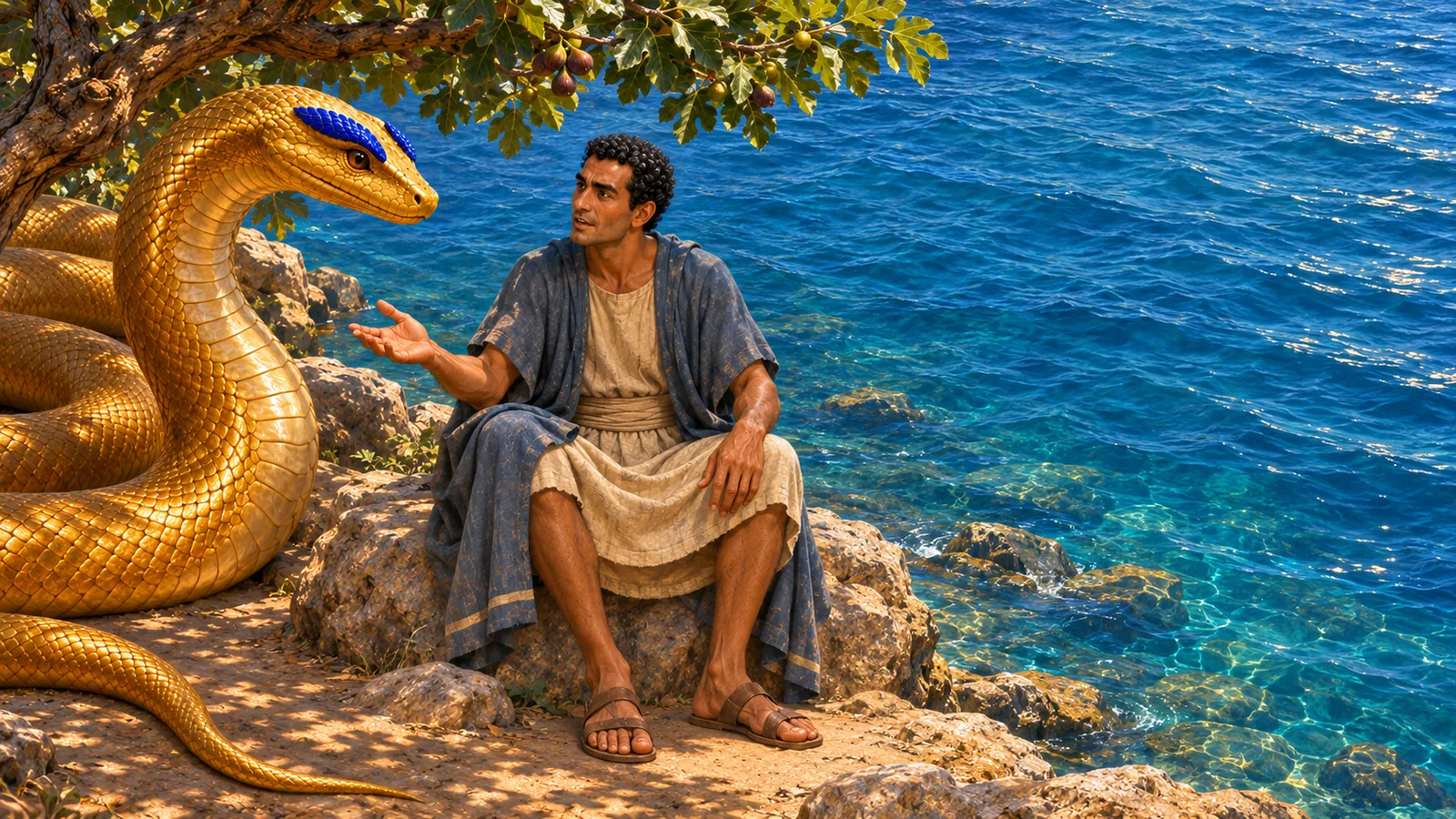
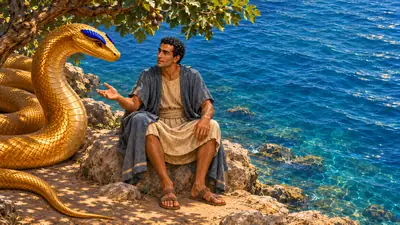
Au lieu de repos, le serpent demande de nouveau qui l’a amené là. Cette fois, le marin parvient à répondre et commence son récit.
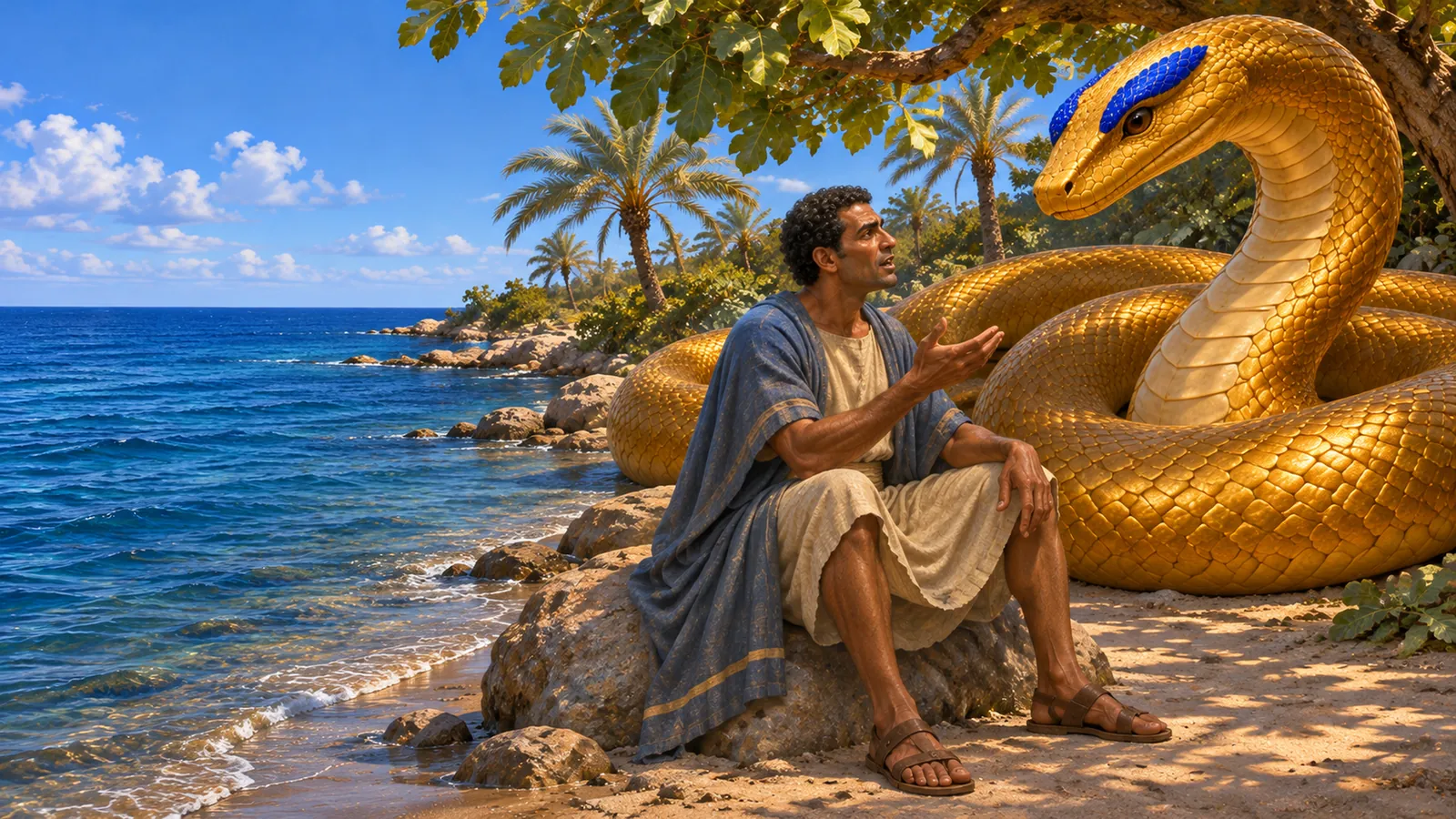
Le marin raconte au serpent pourquoi il a pris la mer. Il faisait voile vers les mines du roi avec un équipage de marins égyptiens aguerris.
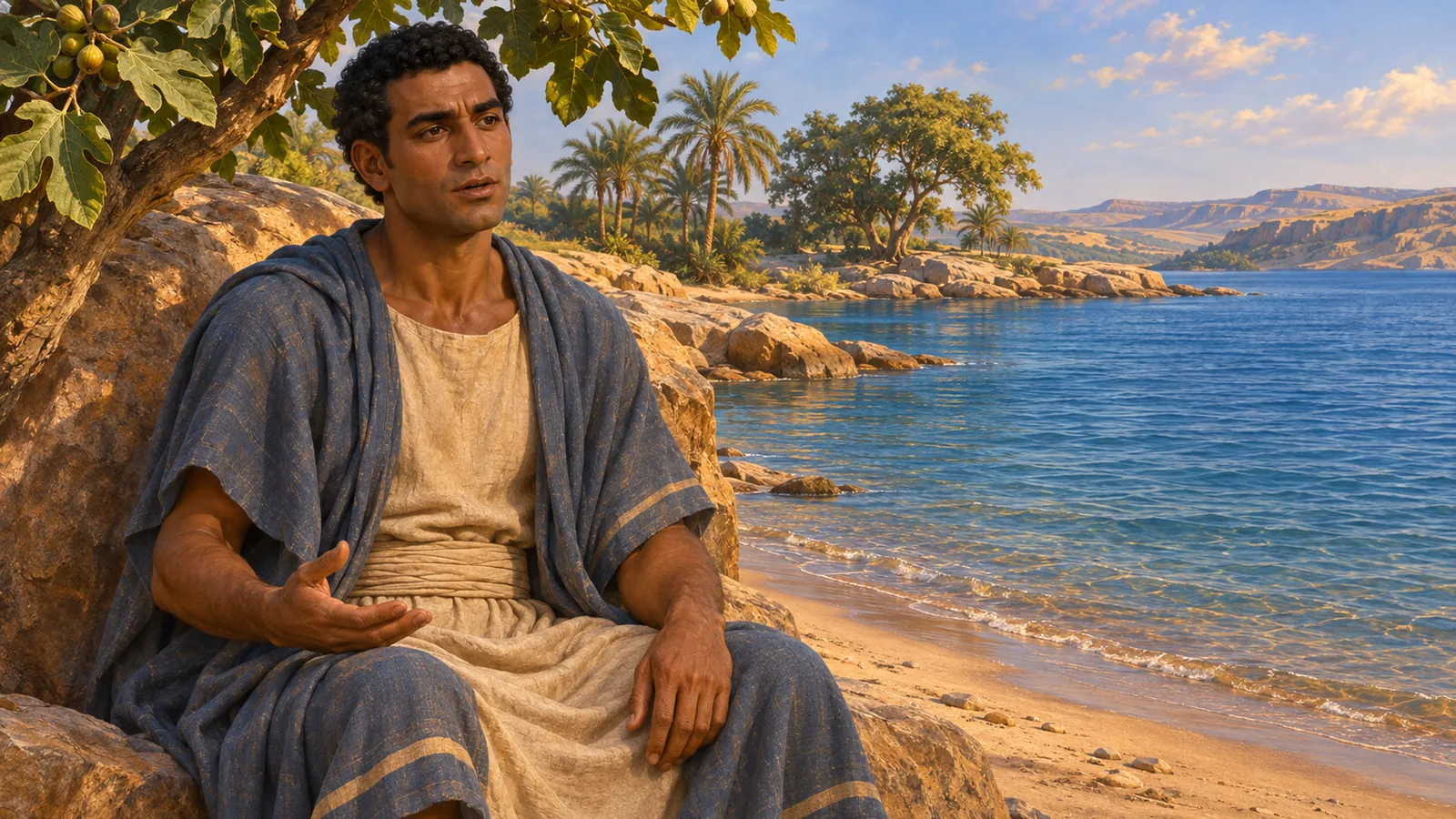
Il raconte comment le vent s’est levé avant qu’ils atteignent la terre. Il s’est accroché à un morceau de bois, et la mer l’a déposé ici, seul.
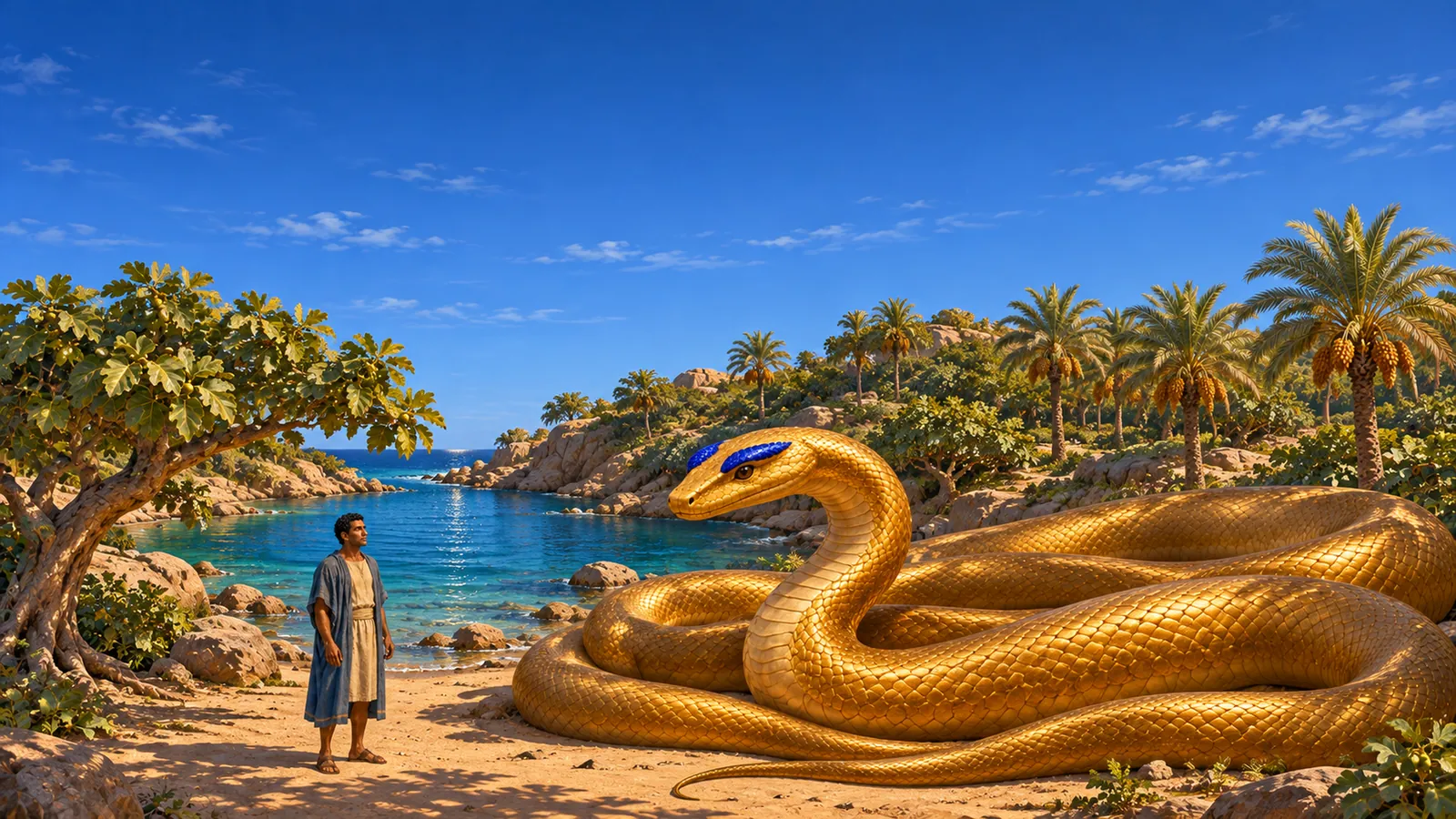
L’ÎLE DU KA
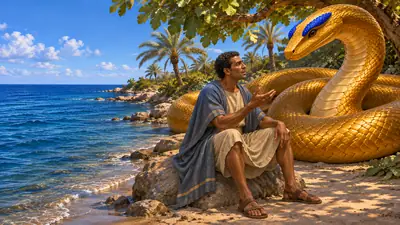
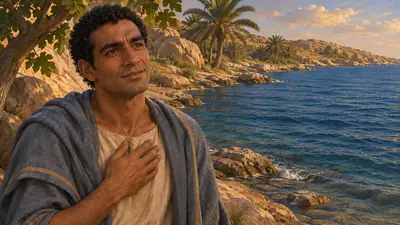
Le serpent lui dit de reprendre courage. Il est arrivé sur l’île du Ka, où il trouvera tout ce dont il a besoin.
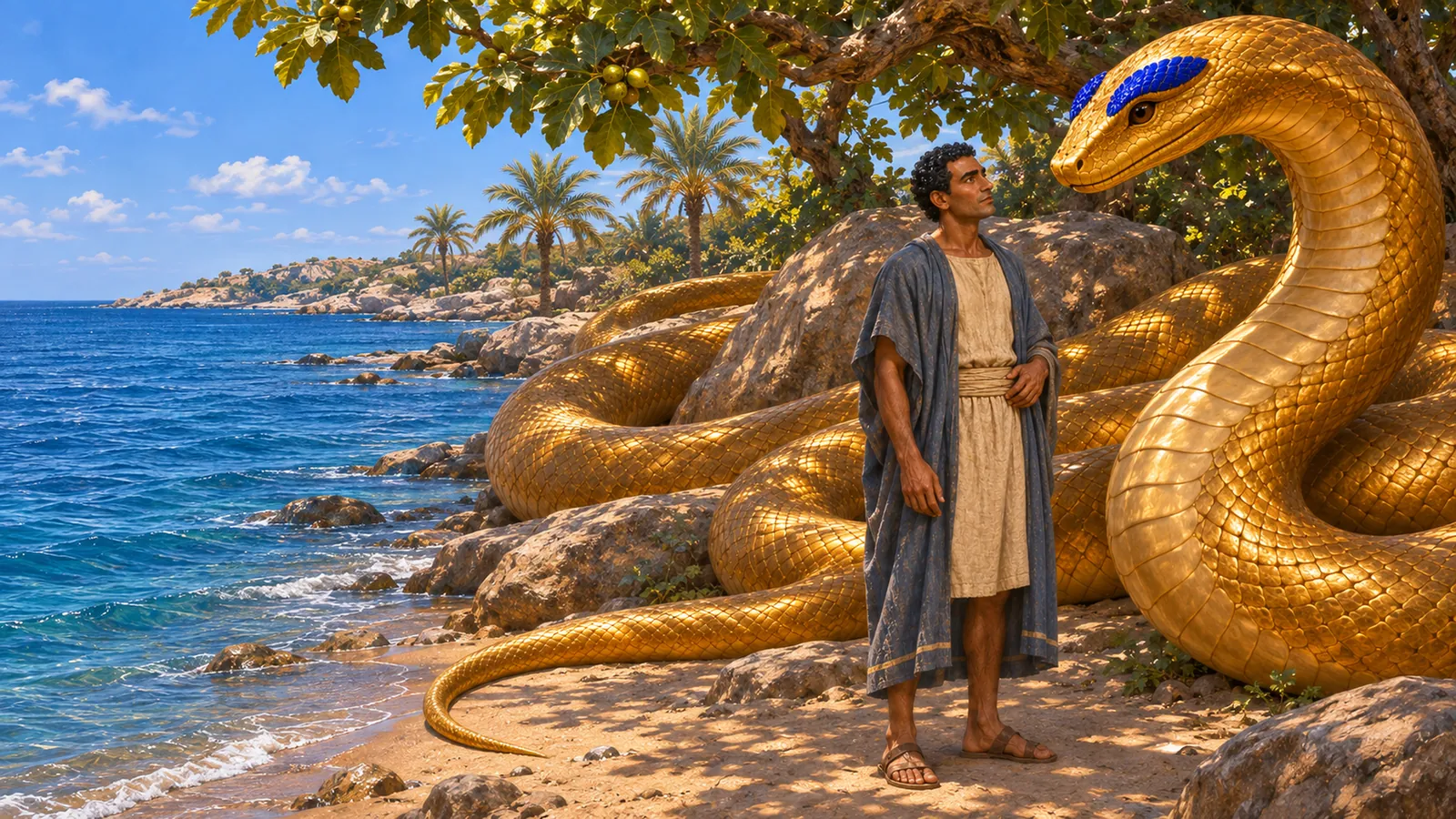
Le serpent lui dit qu’il restera quatre mois sur l’île. Puis un navire arrivera avec des hommes qu’il connaît.
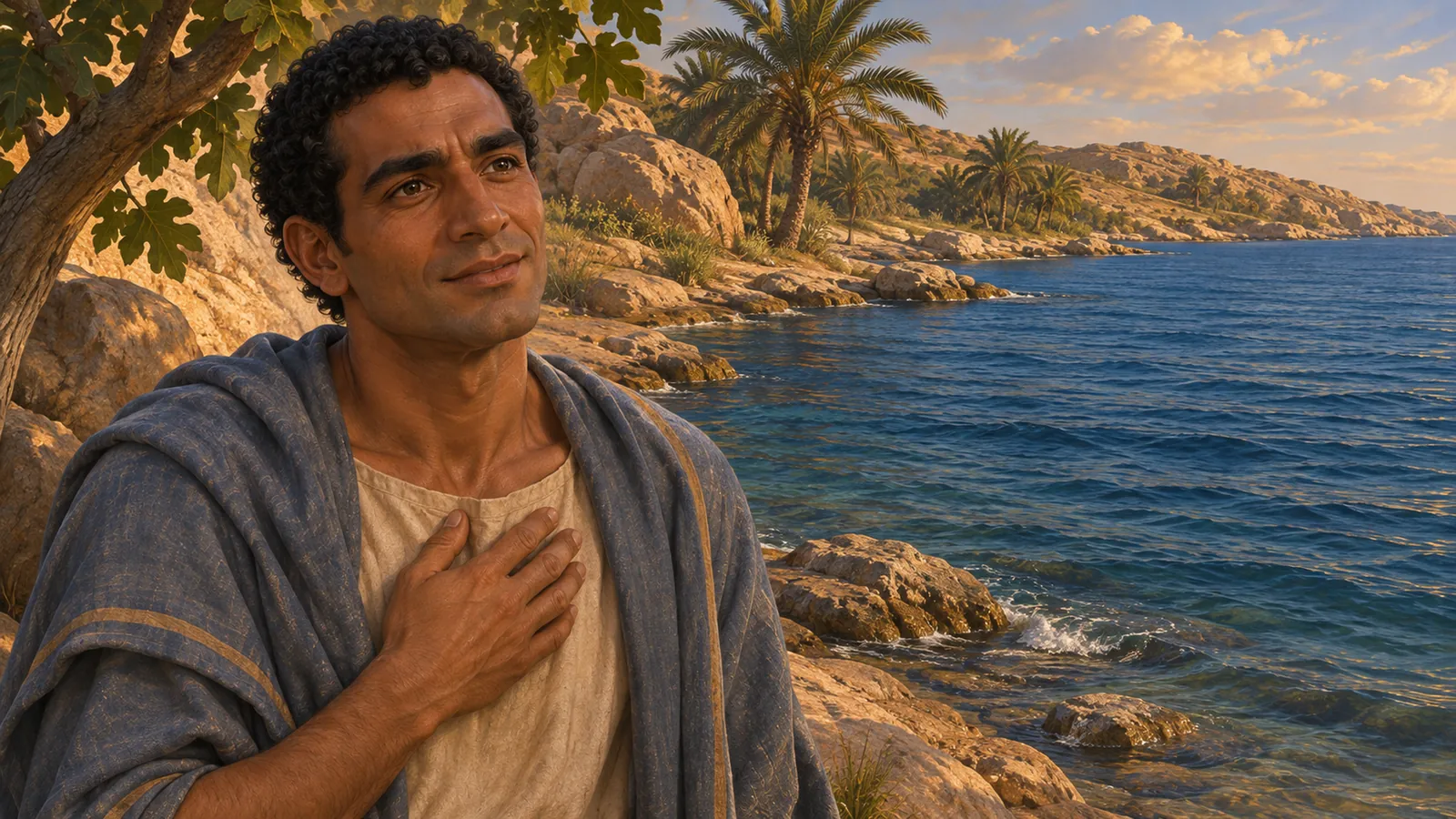
Le serpent dit que le marin rentrera chez lui. Une fois ses épreuves passées, il aura plaisir à raconter ce qu’il a vécu.
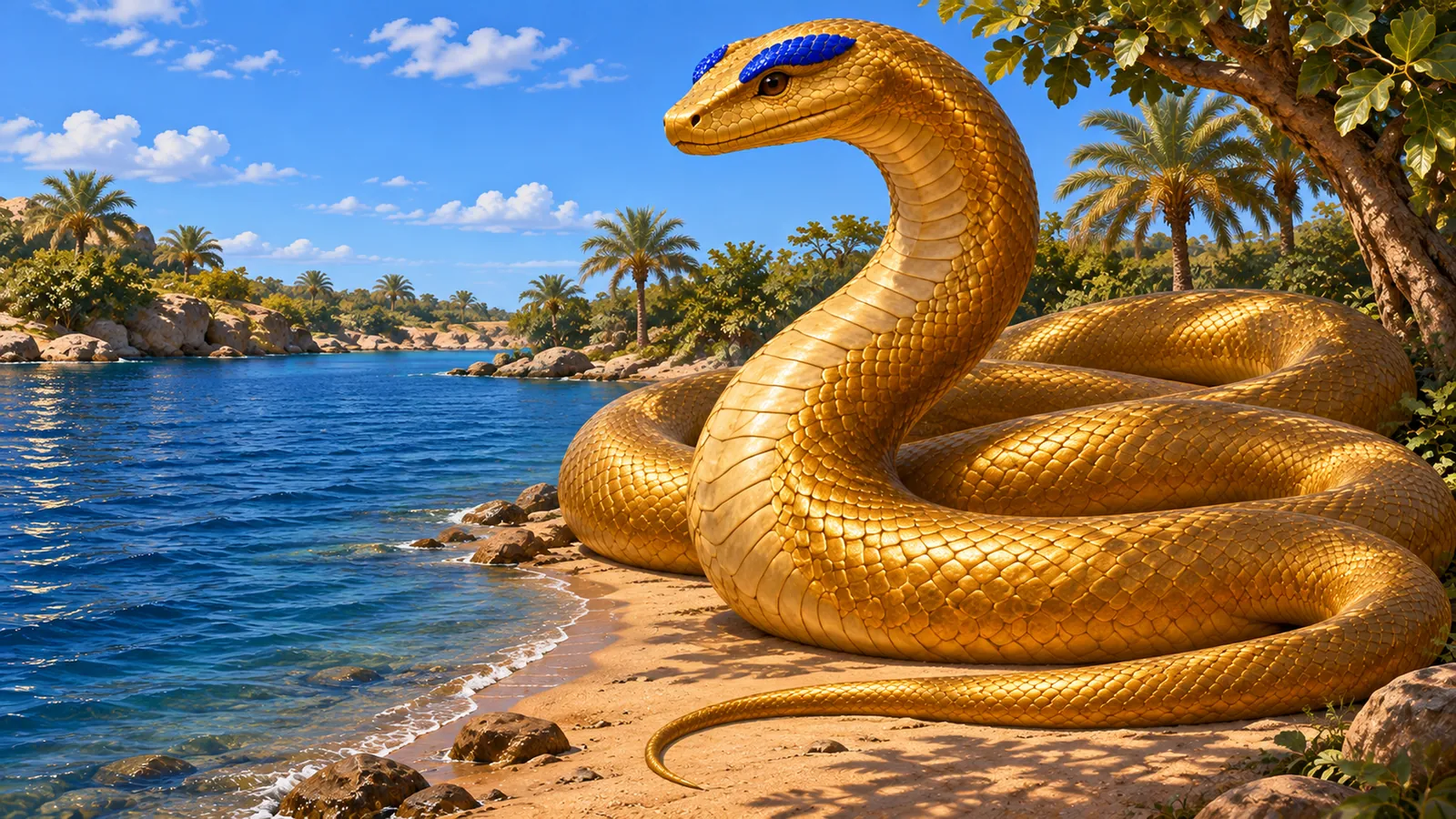
Le serpent se met à raconter sa propre histoire. Il se souvient du temps où il vivait ici, sur l’île, avec sa famille.
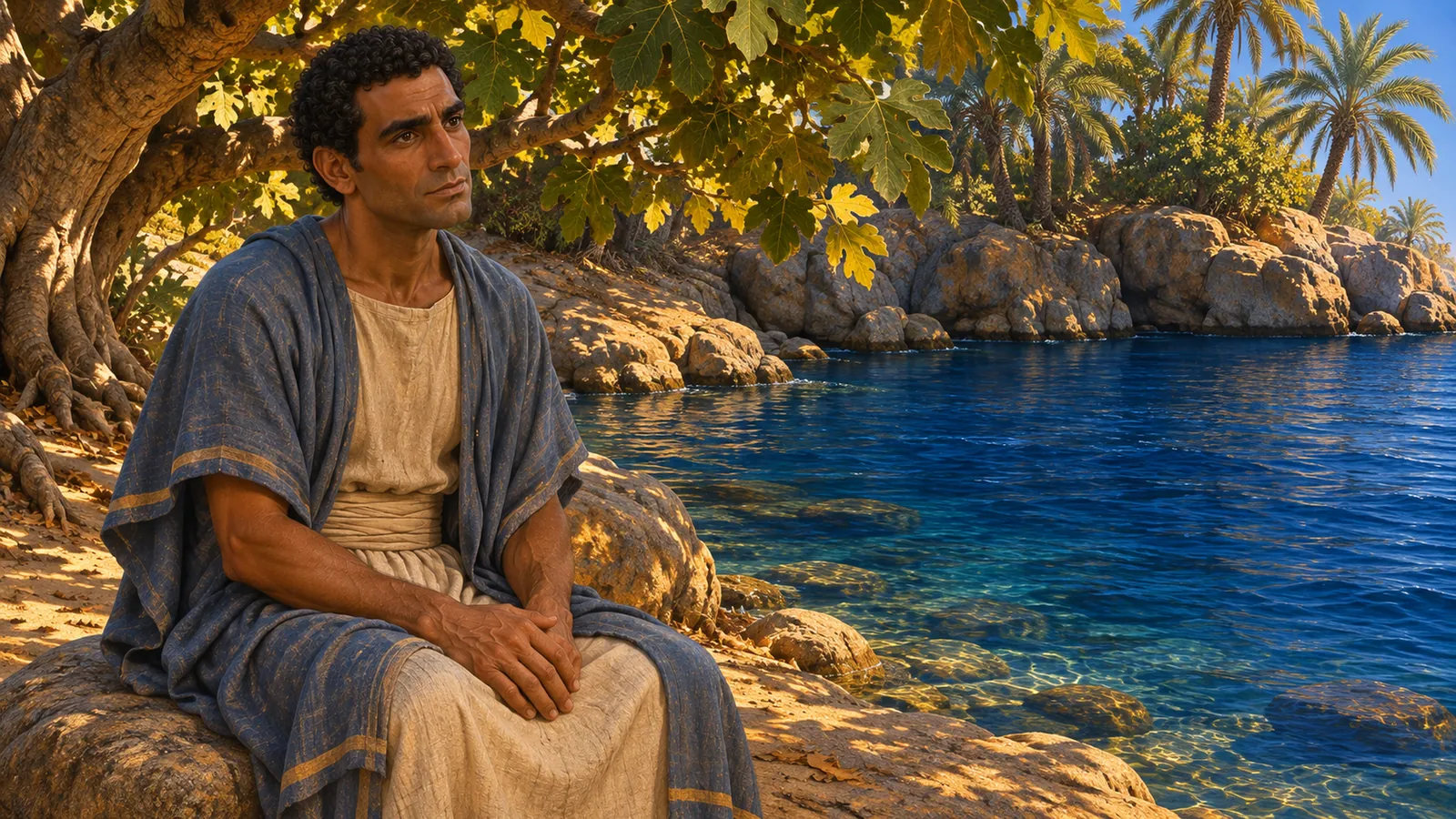
Le serpent raconte qu’une étoile est tombée en son absence et que sa famille est morte dans le feu. Il engage le marin à tenir bon et à garder l’espoir de revoir ses enfants et sa maison.
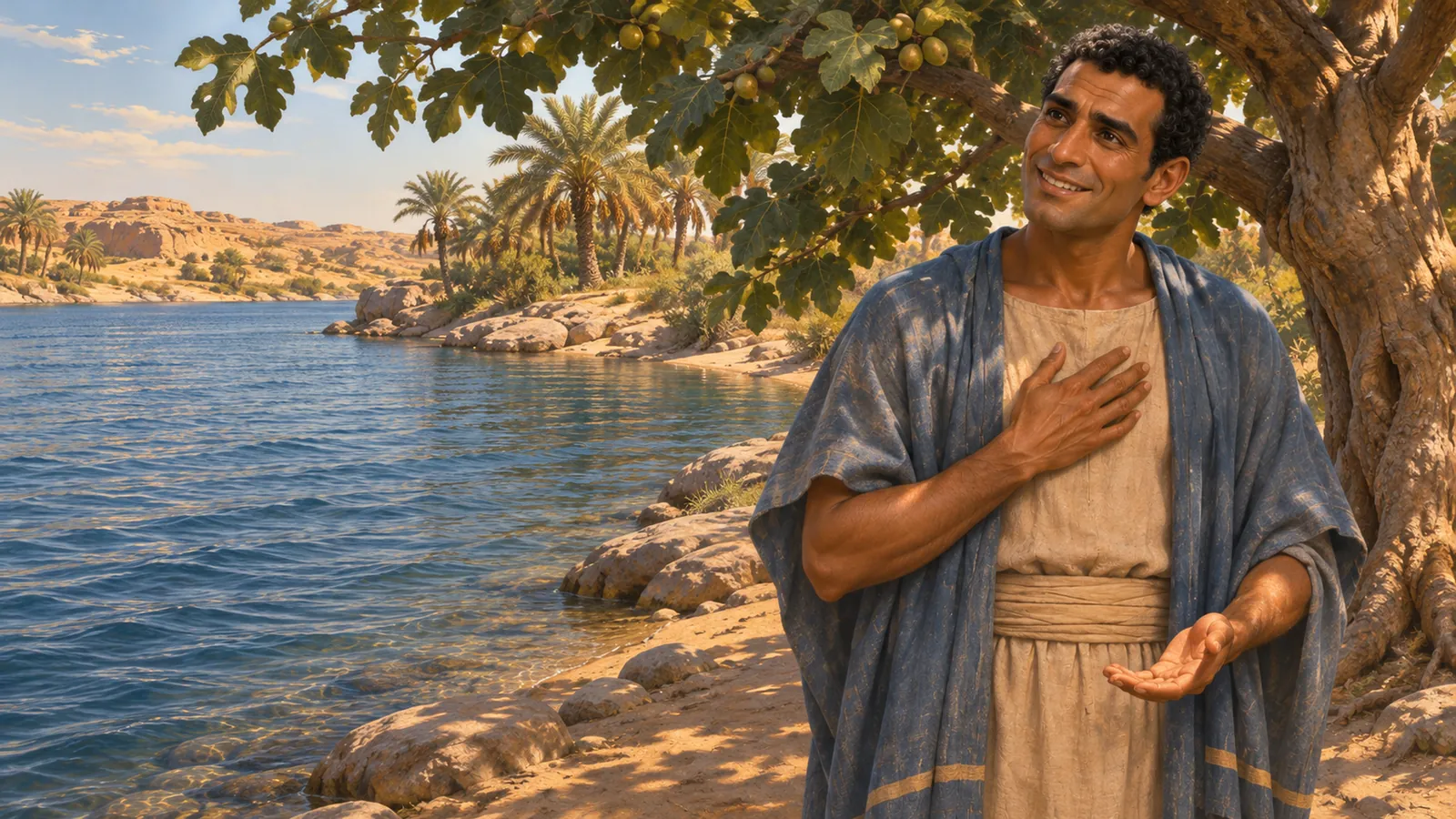
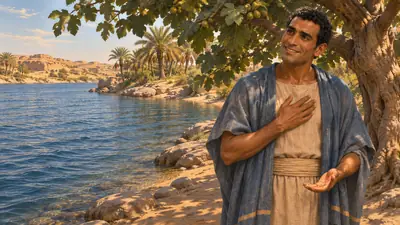
Le marin remercie son hôte et promet de dire au roi ce qu’il a vu. Rentré chez lui, dit-il, il enverra des aromates précieux.
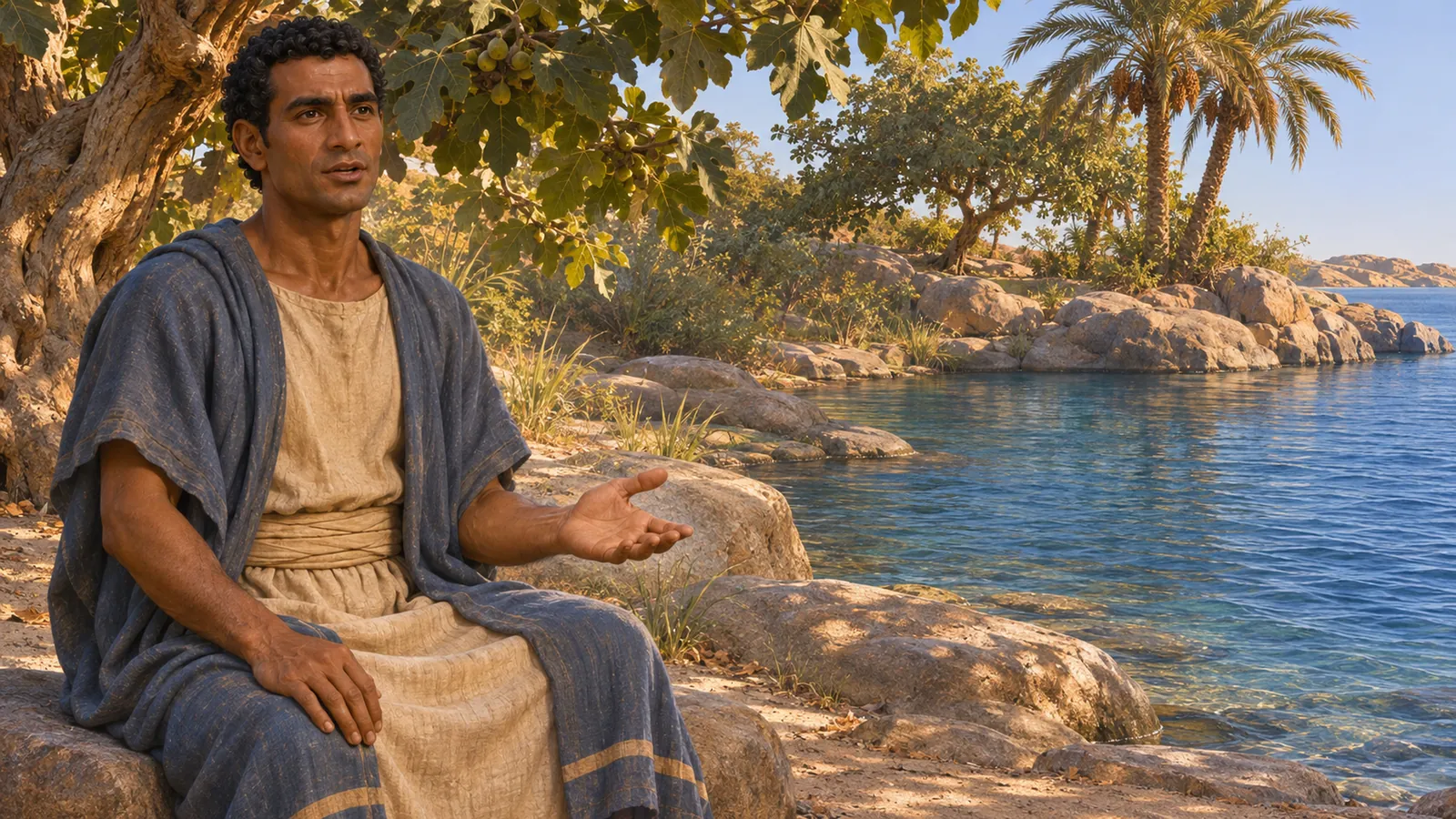
Le marin promet de louer le serpent en Égypte et de sacrifier en son honneur du bétail et des oiseaux. Il promet aussi des navires chargés de biens d’Égypte.
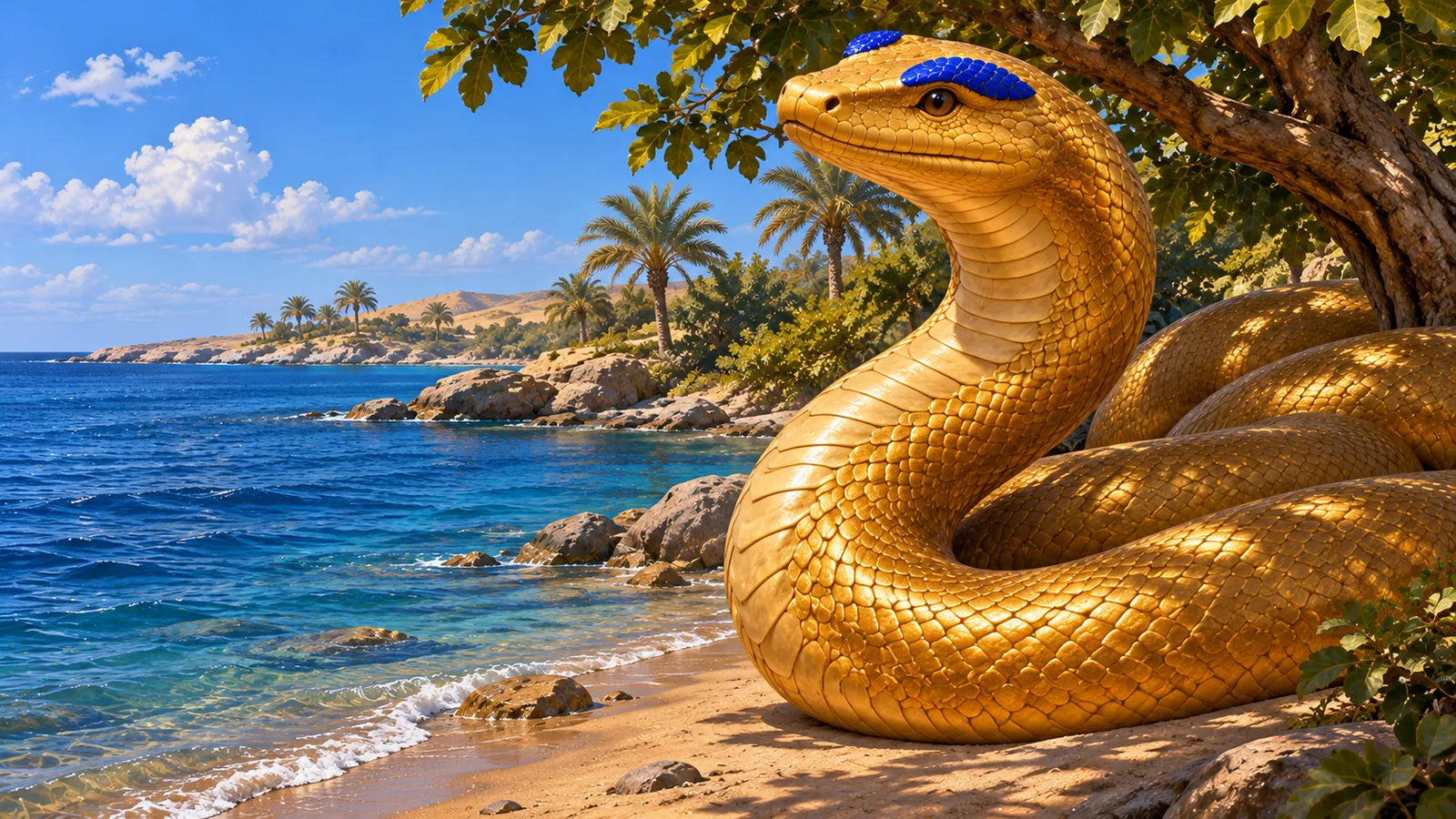
Le serpent rit de son offre. Il dit qu’il est le souverain de Pount et qu’il possède déjà les aromates que le marin a promis d’envoyer.
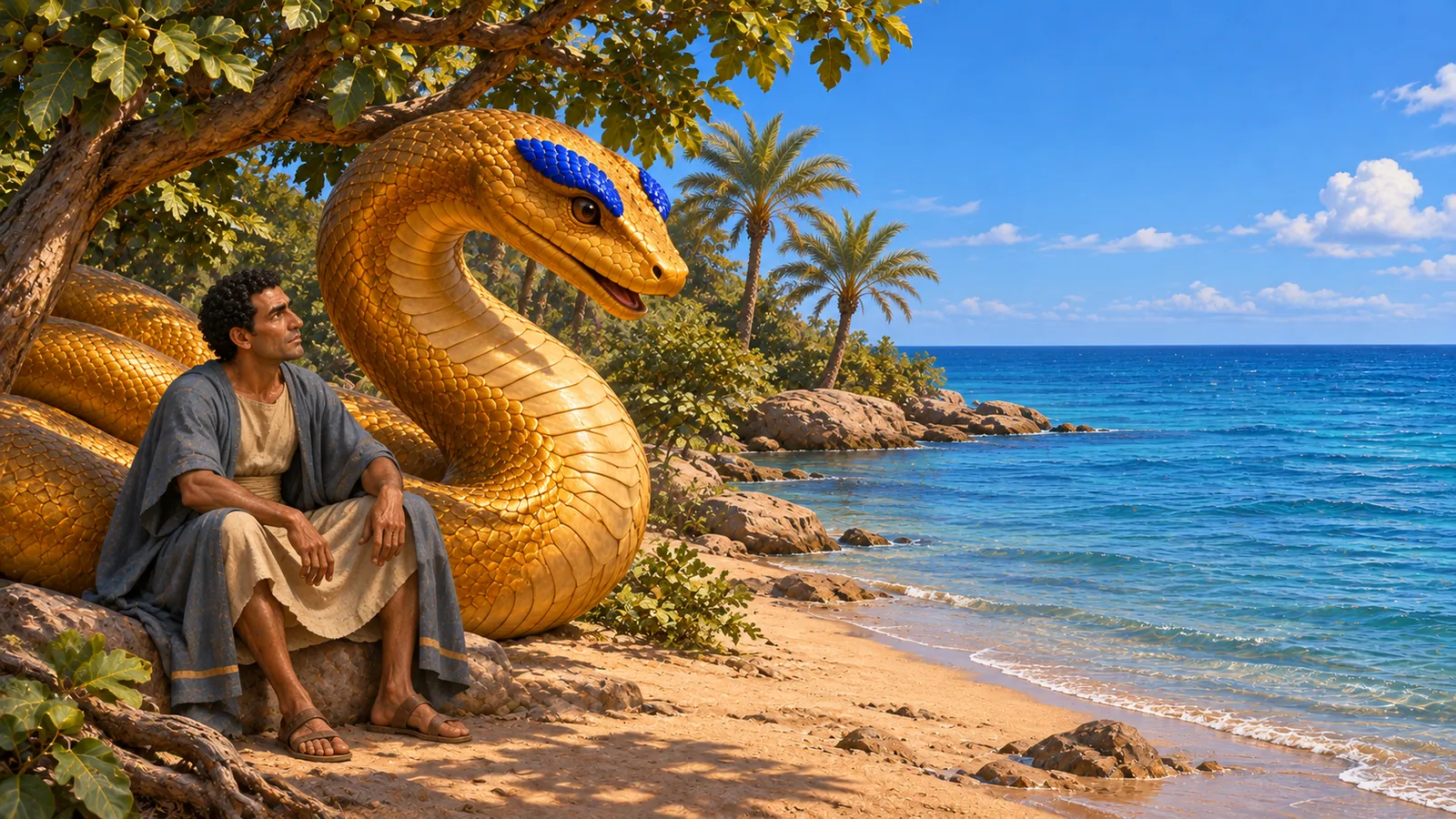
Le serpent dit qu’une fois parti le marin ne reverra jamais cette île. L’endroit où ils se parlent deviendra des vagues.
UN NAVIRE ENFIN
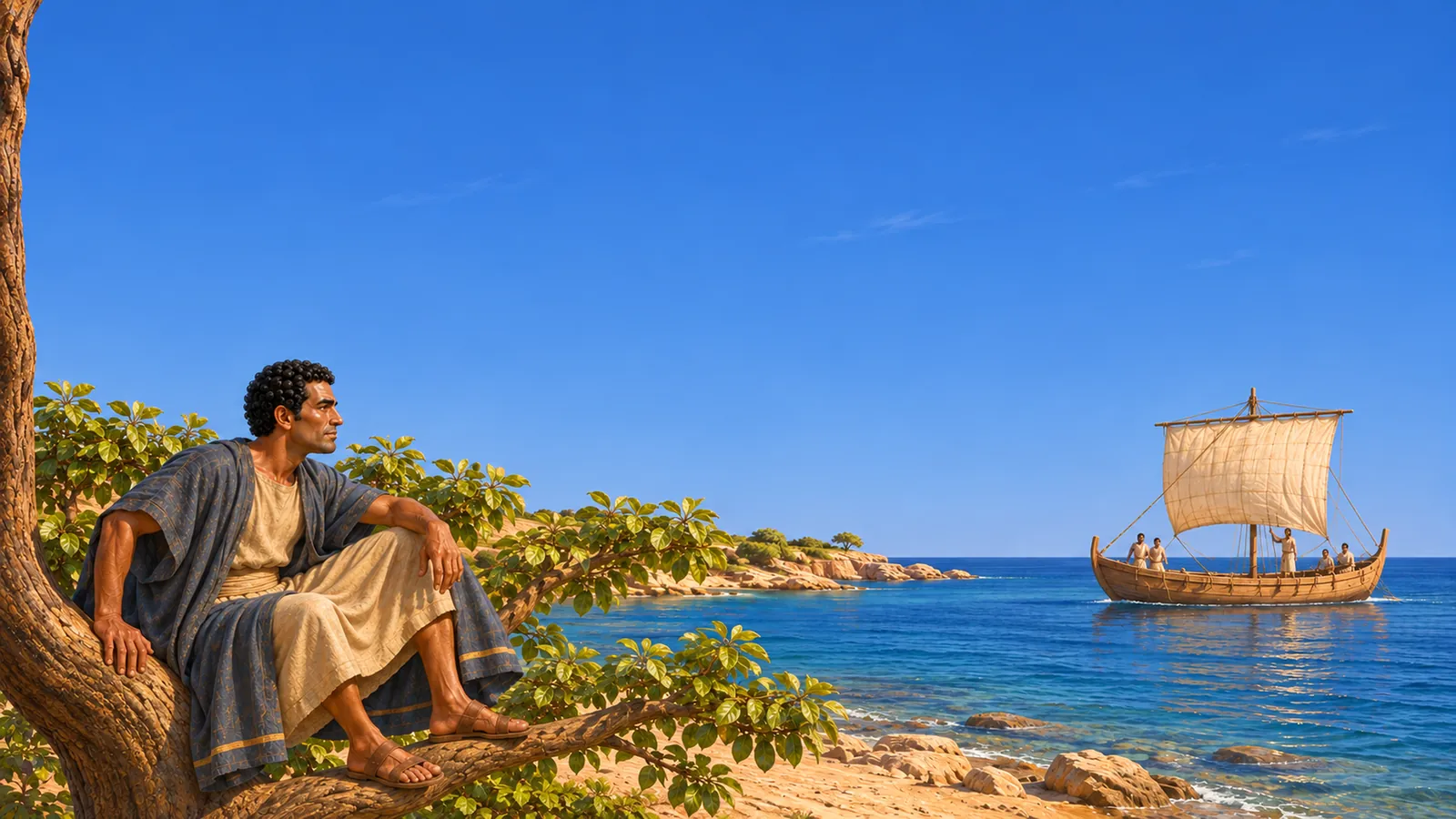
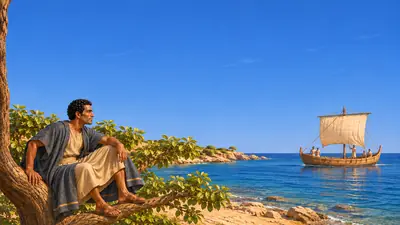
Un navire paraît au loin. Le marin grimpe à un arbre pour mieux voir, et de son perchoir il reconnaît les hommes à bord.
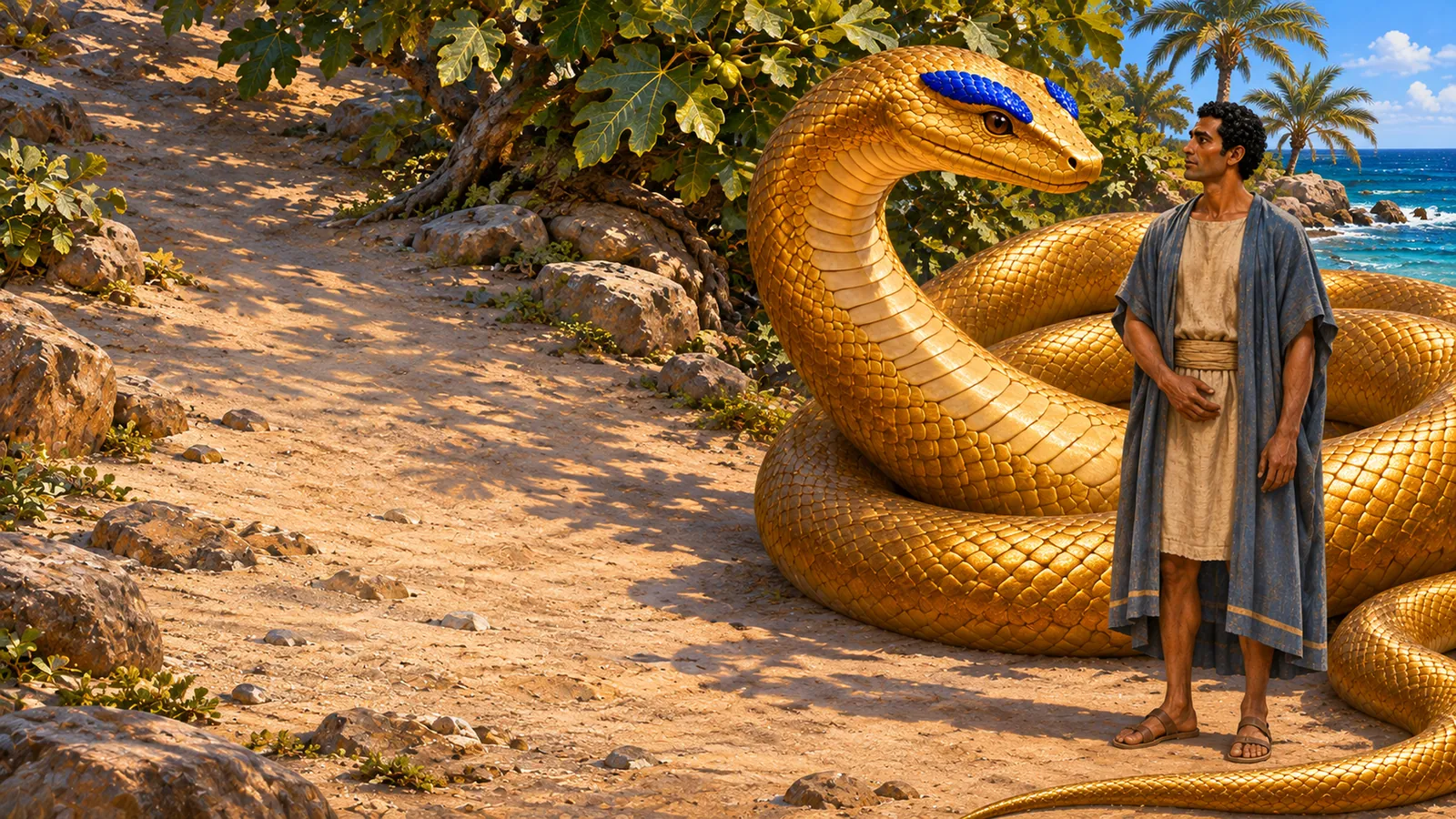
Le serpent sait déjà que le navire est arrivé. Il dit au marin de rentrer chez lui retrouver ses enfants et lui demande de garder un bon souvenir de lui.
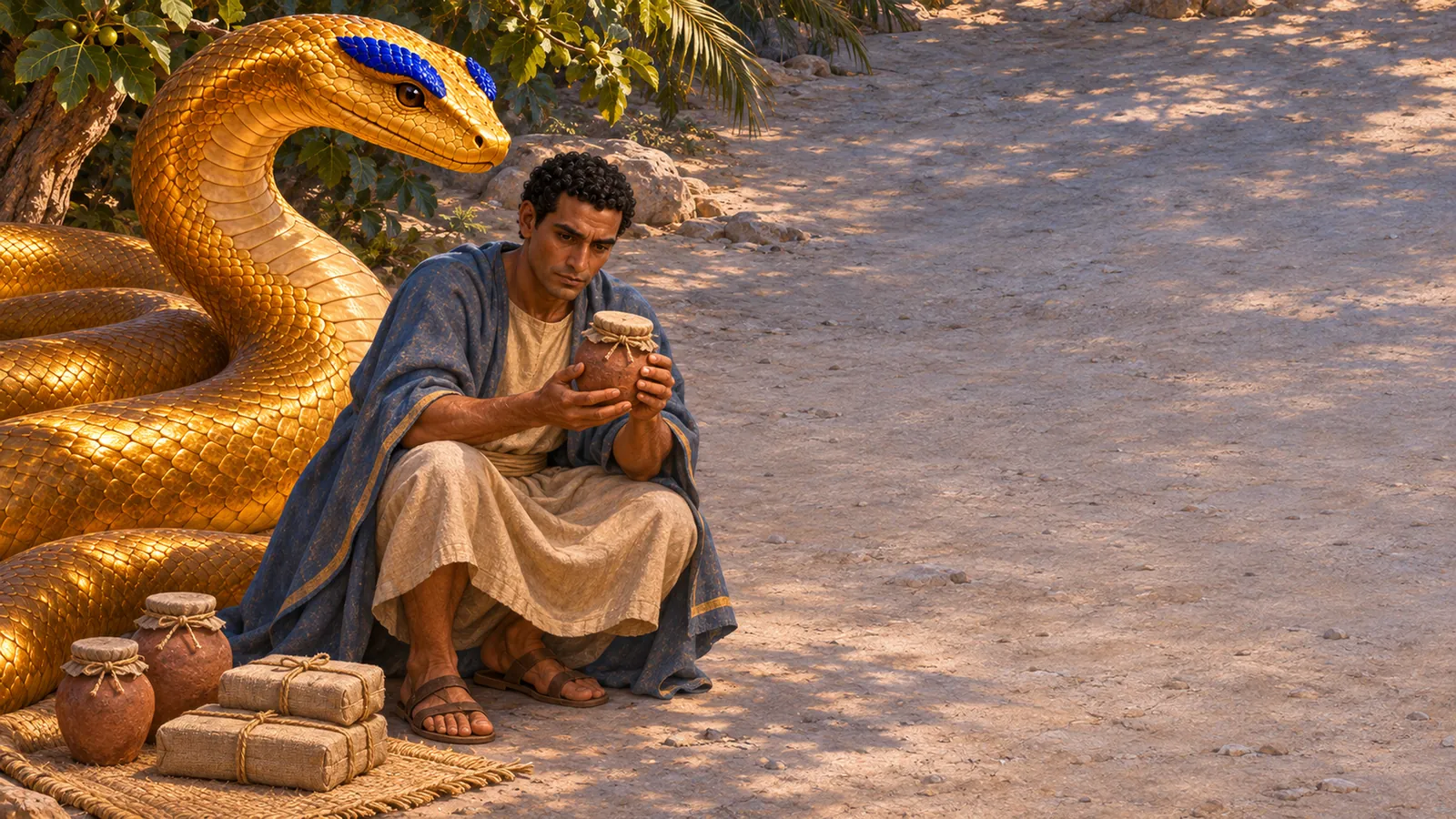
C’est maintenant le serpent qui donne au marin des présents d’adieu. Il reçoit entre autres des aromates et des pigments à rapporter chez lui.
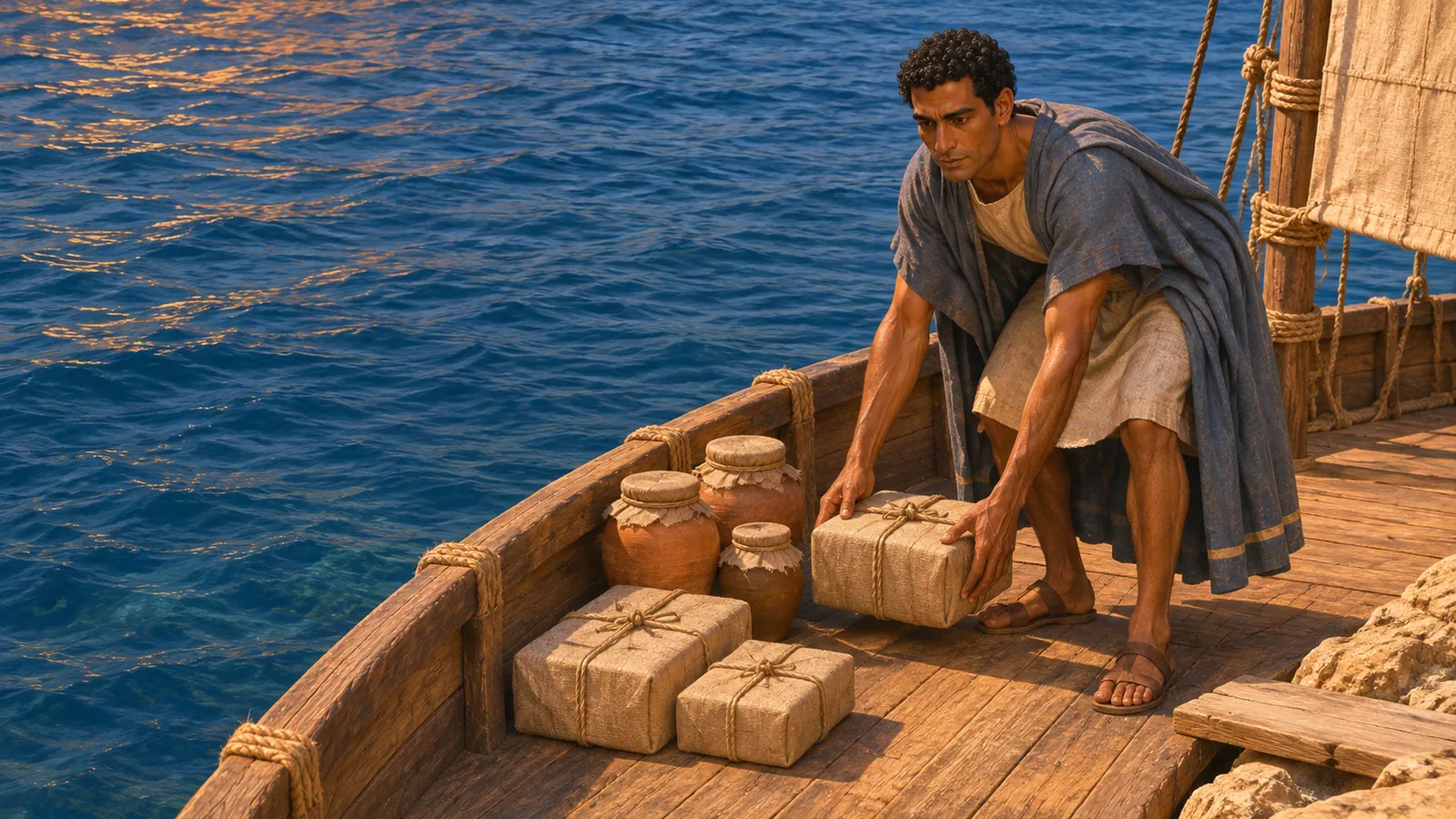
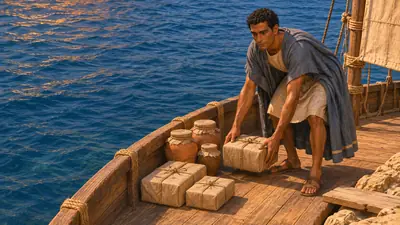
Le marin charge ses présents à bord. Le serpent lui dit que le voyage du retour durera deux mois et qu’il reverra ses enfants.
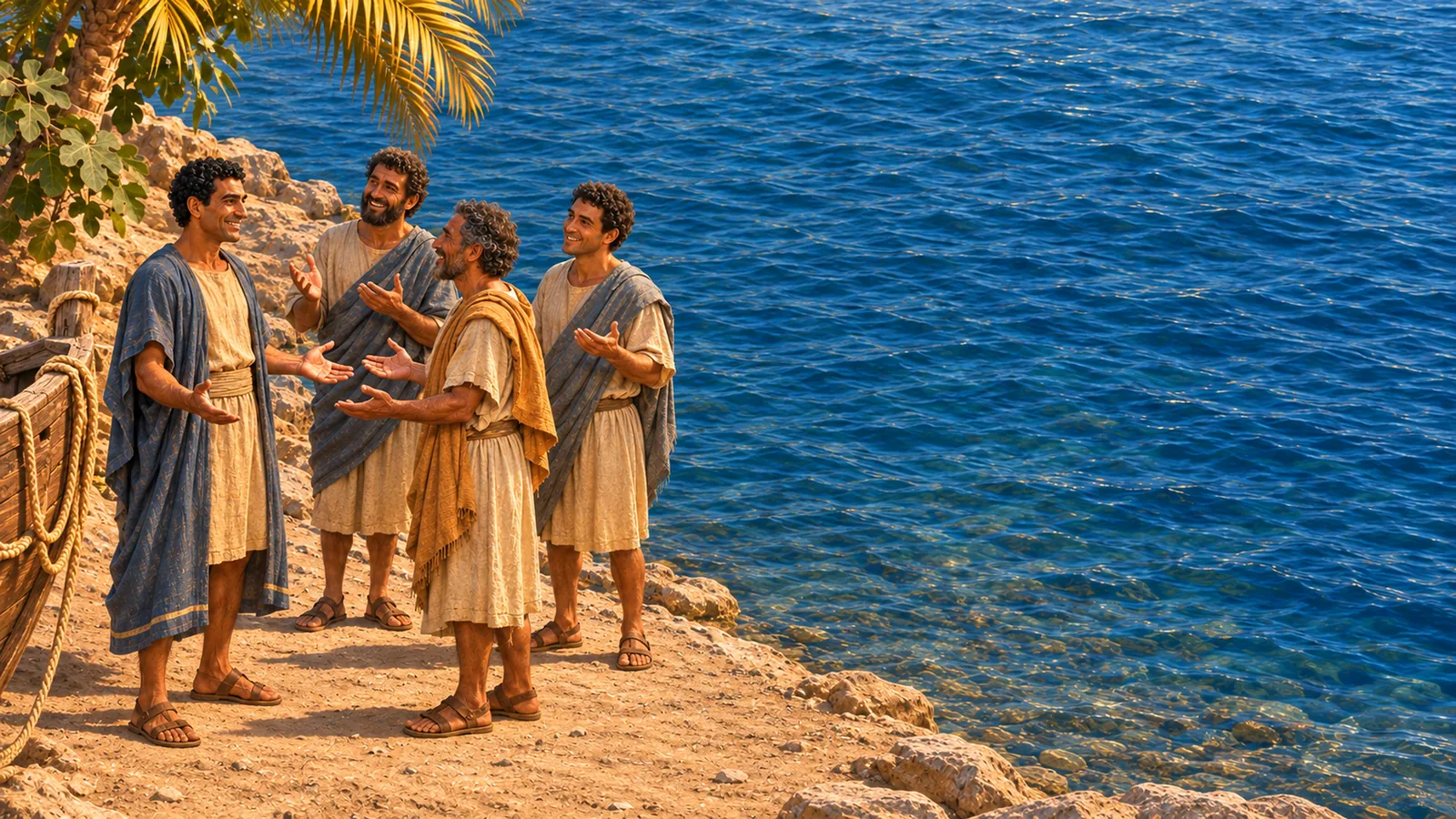
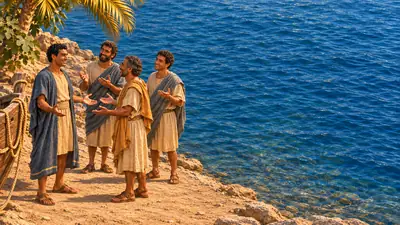
Le marin descend sur le rivage. Il salue les hommes venus le chercher, et ensemble ils rendent grâce avant de reprendre la mer.
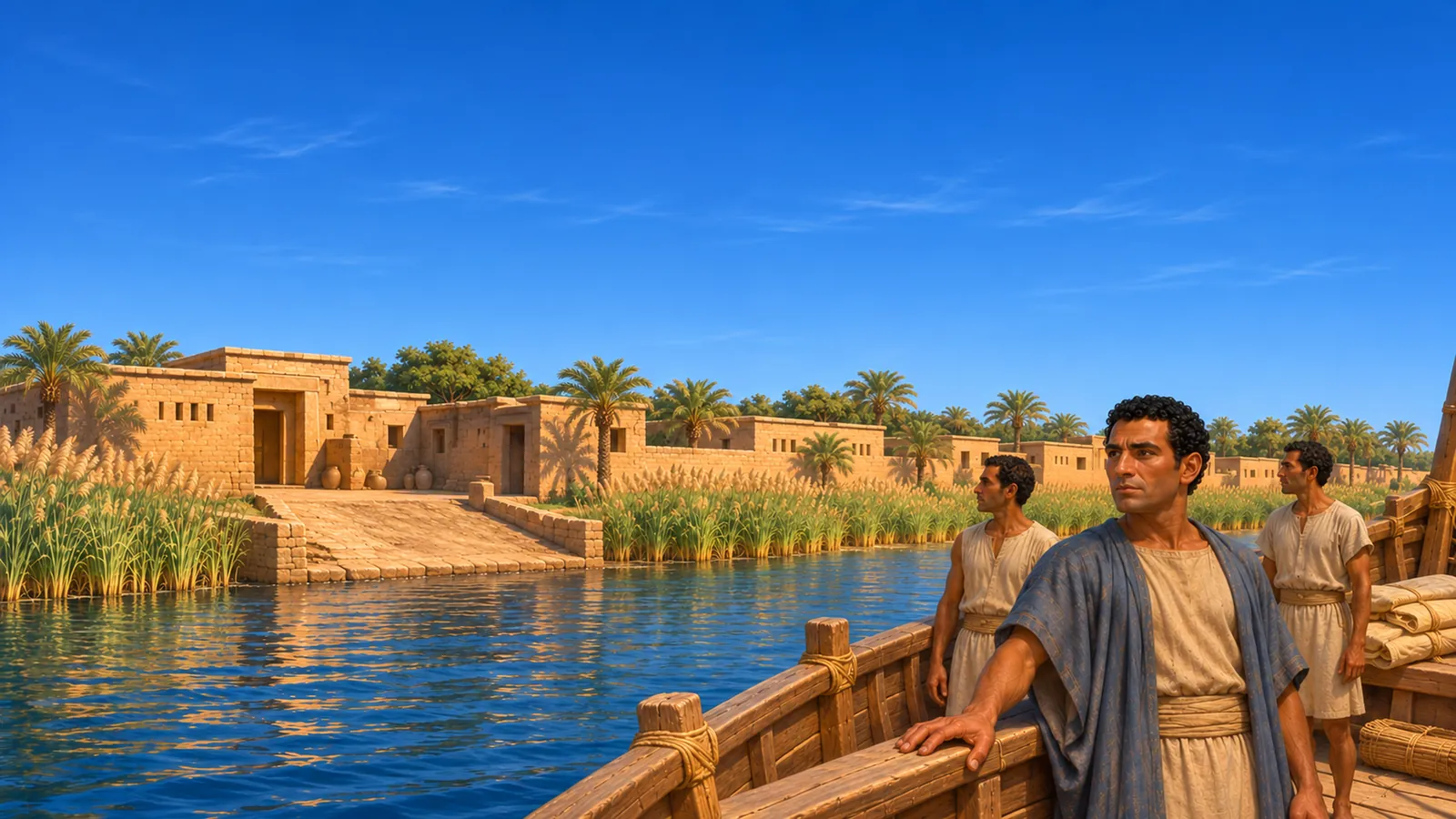
Le navire atteint la résidence royale en deux mois, comme le serpent l’avait prédit. De la mer, le marin est revenu en Égypte.
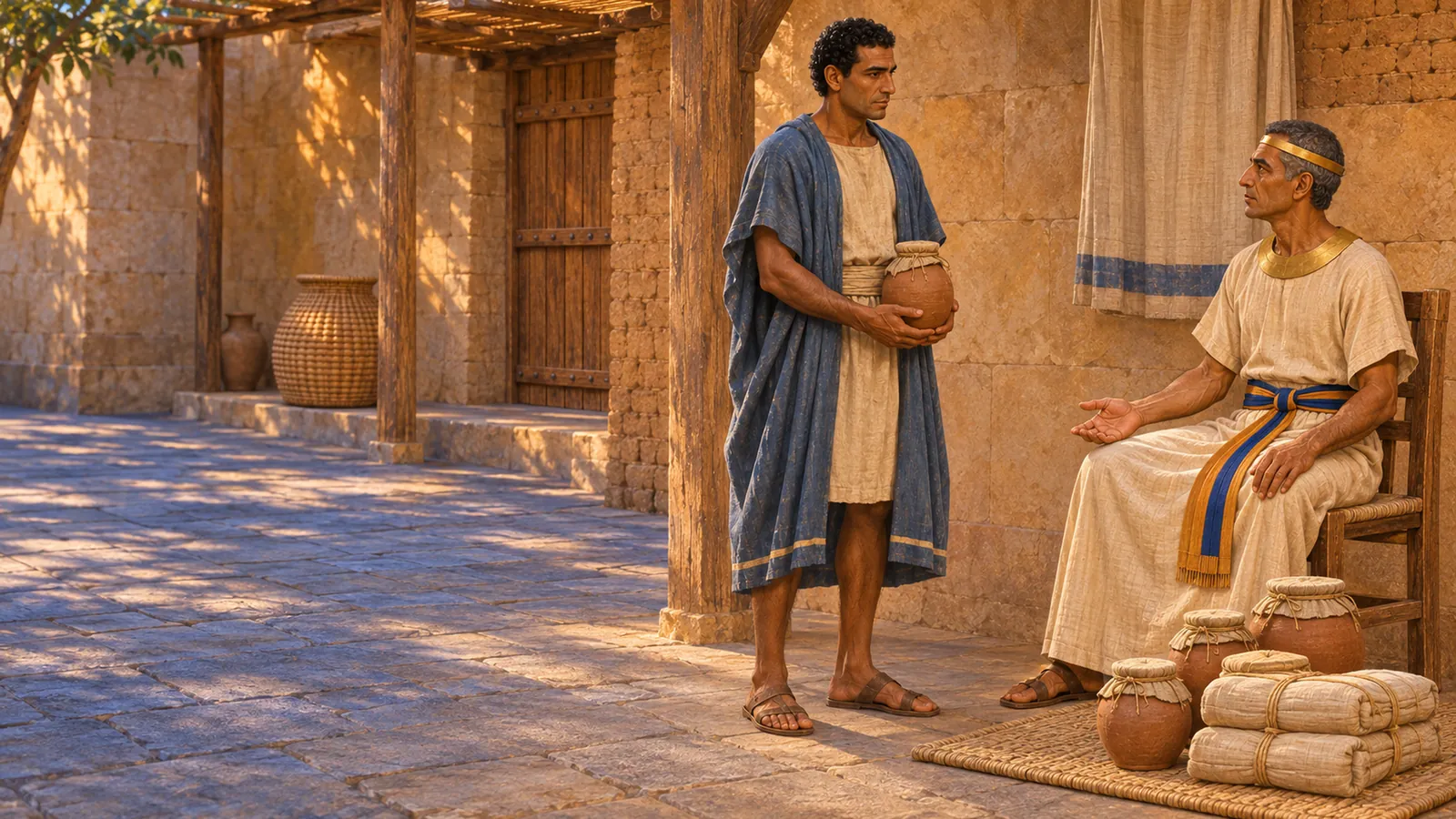
Le marin se présente devant le roi et lui offre ce qu’il a rapporté. Les présents de l’île sont arrivés avec lui à la cour.
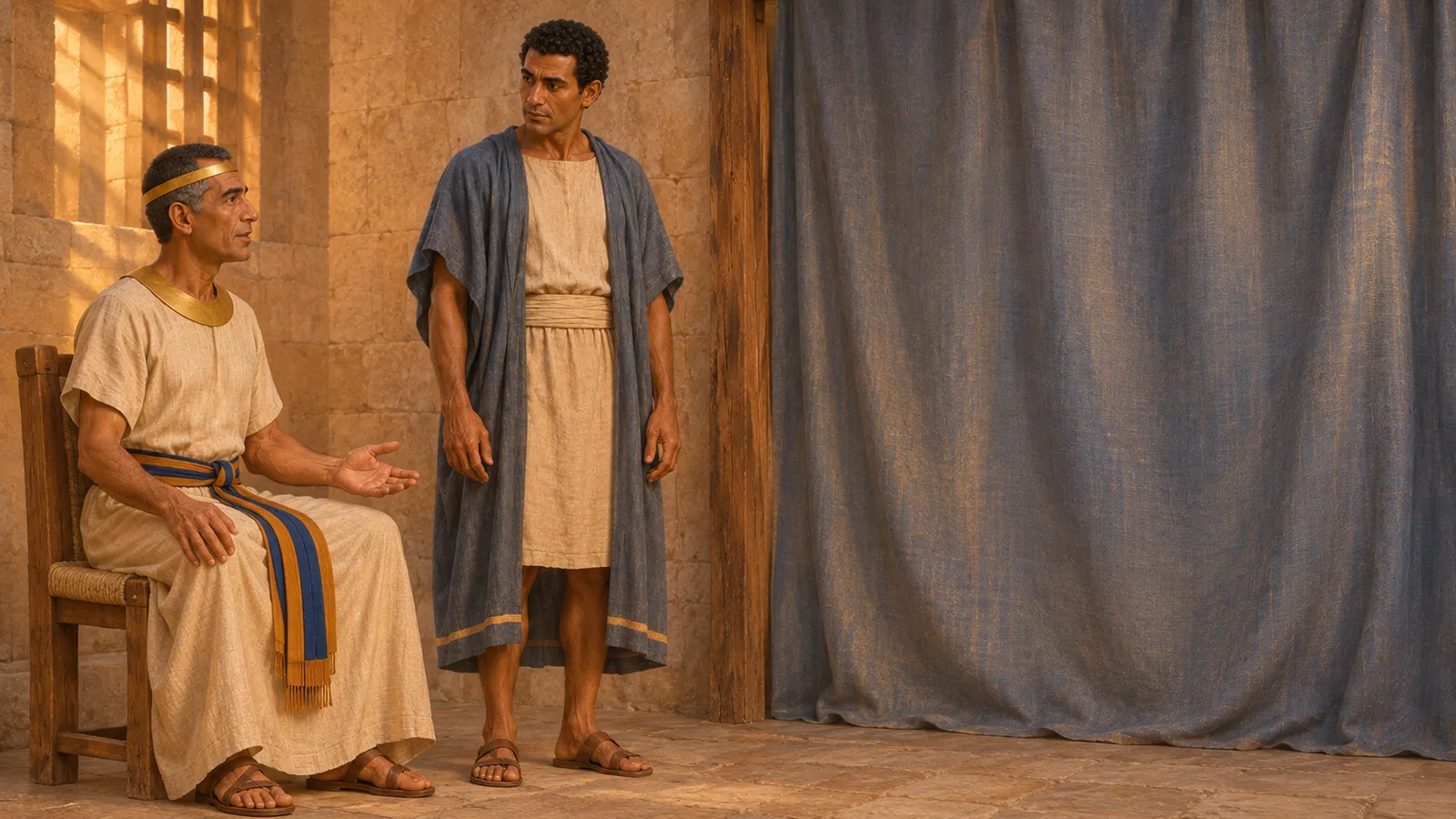
Le marin dit que le roi l’a admis parmi ses suivants et l’a récompensé. C’est ainsi que se termine le récit de son premier voyage.
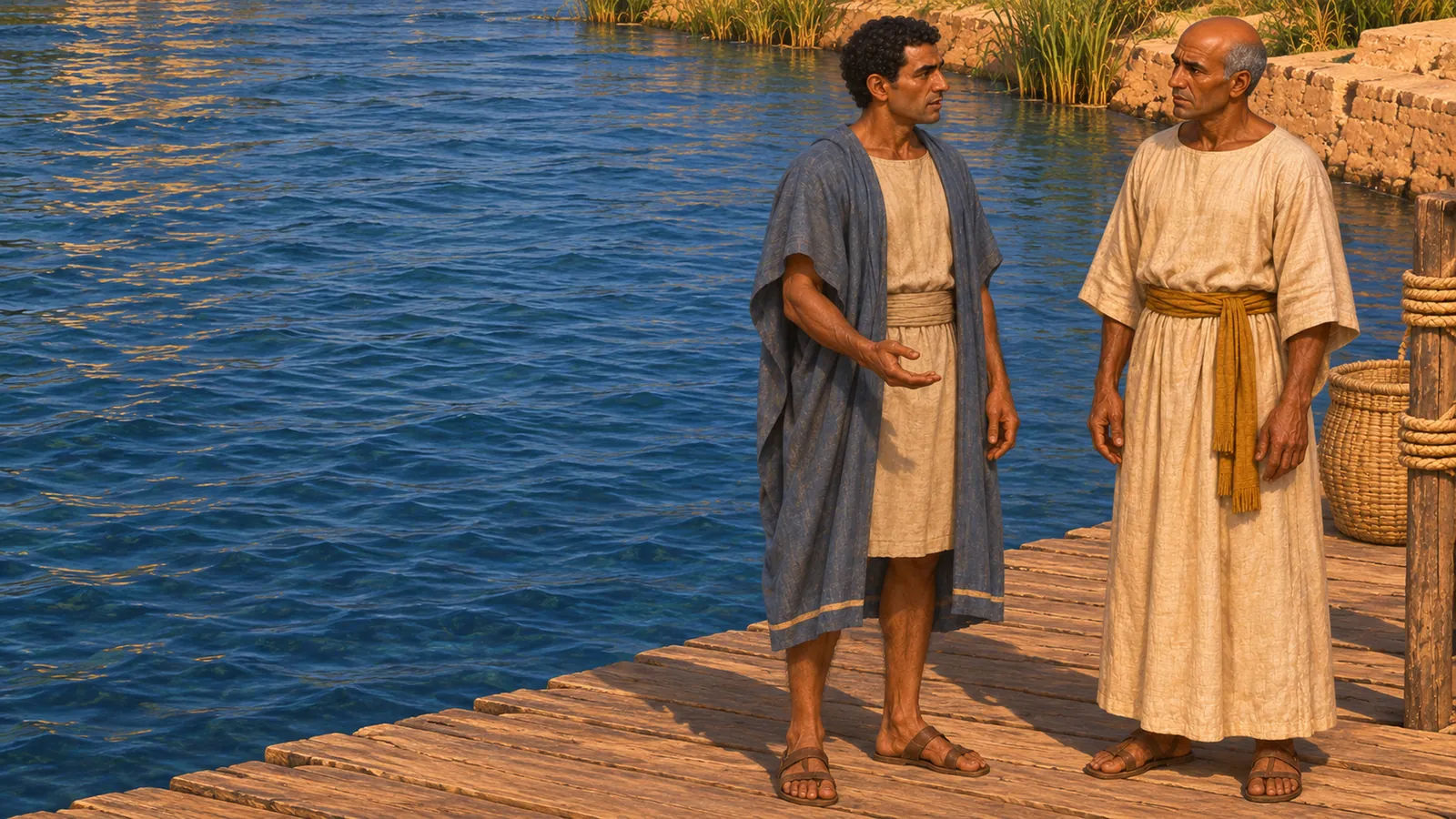
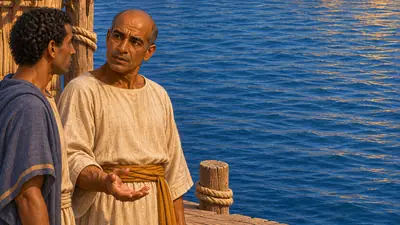
De retour à l’embarcadère, le marin a fini de raconter son voyage. Il demande au chef de l’expédition d’écouter le conseil qu’il lui a donné.
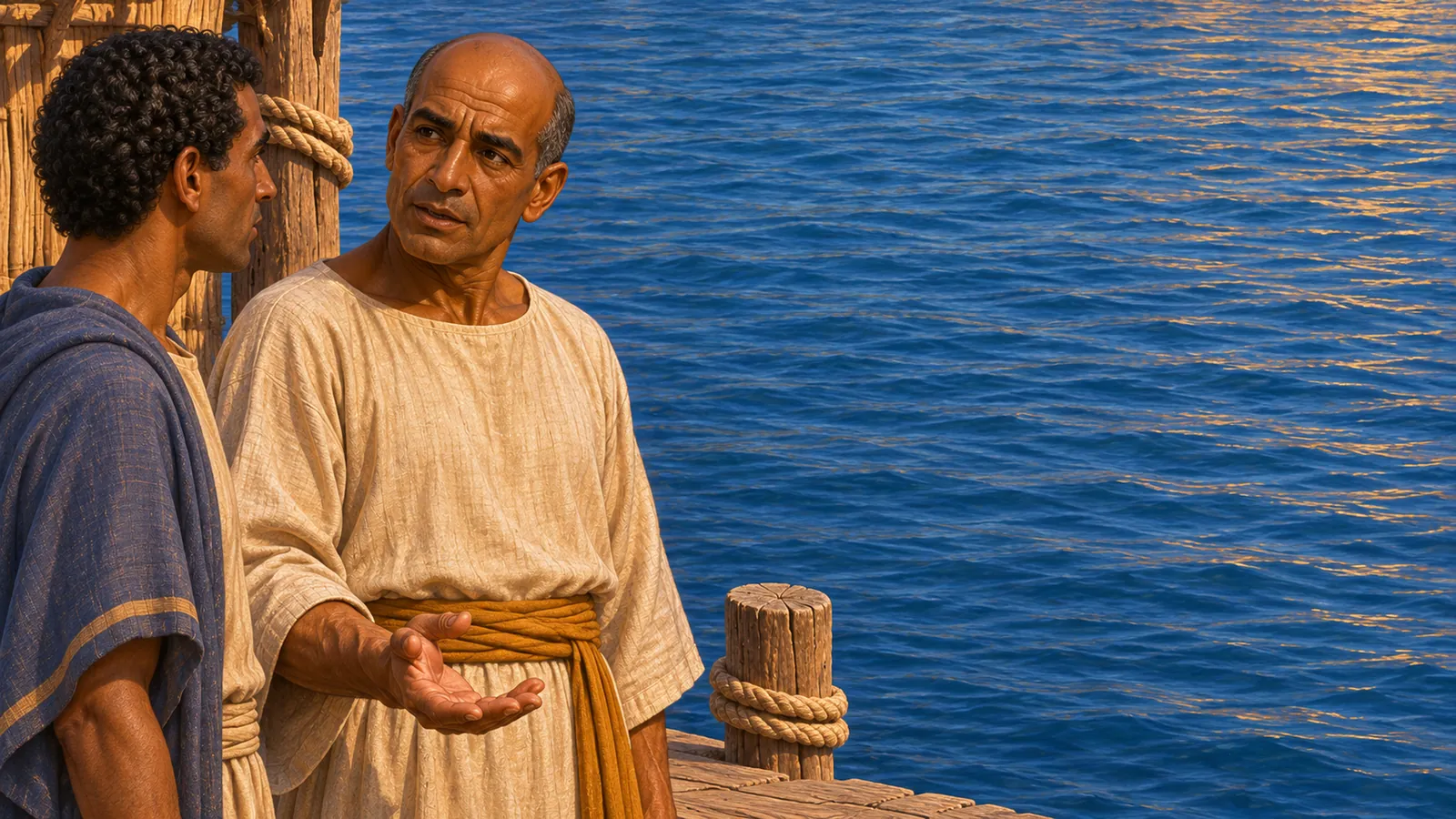
LA RÉPONSE
Le chef de l’expédition demande qui donnerait de l’eau à un oiseau le matin où il doit être abattu. Sa réponse met fin à leur conversation.
Après cette dernière réponse vient la note finale du scribe. Elle marque l’achèvement de la copie dans le seul papyrus qui nous ait transmis le récit.
Fin du chapitre 1
Toutes les pages








Sources
The notes below refer to the papyrus units in that edition.
Éditions consultées
- Ronaldo G. Gurgel Pereira and Thais Rocha da Silva, 2023, numbered Middle Egyptian text, Portuguese translation and commentary
- Universidade de São Paulo, journal record for the Pereira and Silva edition
- Peter Dils and Heinz Felber, Thesaurus Linguae Aegyptiae, manuscript and edition metadata
- James P. Allen, Cambridge University Press, manuscript introduction and opening passage
- UCL Digital Egypt, manuscript summary
Notes sur ce récit
On pages 11 and 24, the sailor describes the wreck and says none of the others survived (Pereira and Silva 2023, units 36–39 and 101–110). The retelling states the deaths once and condenses the second account to the sailor’s arrival alone.
On page 17, the sailor makes a fire with a fire drill and offers to the gods (Pereira and Silva 2023, units 54–56). The retelling condenses the preparations to kindling the fire and making the offering.
On page 20, the serpent threatens to reduce the sailor to ashes and make him disappear if he delays answering (Pereira and Silva 2023, units 69–76). The retelling condenses the warning to its threat of burning.
On page 21, after threatening to turn the sailor to ashes, the serpent takes him in its mouth to its resting place and sets him down unharmed (Pereira and Silva 2023, Papyrus Hermitage 1115, units 69–80).
On page 29, the serpent counts seventy-five serpents and mentions its little daughter. It says a falling star caused the fire that killed its kin and that it found their bodies together (Pereira and Silva 2023, Papyrus Hermitage 1115, units 125–136).
On page 31, the sailor promises cattle as burnt offerings and birds whose necks he will wring, along with ships laden with Egyptian goods (Pereira and Silva 2023, units 143–148). The retelling gives the proposed killing of the animals as a promise of sacrifice.
On page 36, the serpent’s gifts include aromatics, pigments and animal goods (Pereira and Silva 2023, units 161–165). The retelling names the aromatics and pigments as examples from the longer list.
On page 43, the expedition leader dismisses the sailor’s advice with a question about giving water to a bird on the morning of its slaughter (Pereira and Silva 2023, units 183–186a). The retelling condenses the reply to his question.
Les vers antiques de chaque page
- Page 1: P. Hermitage 1115, 1–3 (Pereira and Silva 2023)
- Page 2: P. Hermitage 1115, 3–5 (Pereira and Silva 2023)
- Page 3: P. Hermitage 1115, 5–8 (Pereira and Silva 2023)
- Page 4: P. Hermitage 1115, 8–11 (Pereira and Silva 2023)
- Page 5: P. Hermitage 1115, 12–16 (Pereira and Silva 2023)
- Page 6: P. Hermitage 1115, 17–22 (Pereira and Silva 2023)
- Page 7: P. Hermitage 1115, 22–25 (Pereira and Silva 2023)
- Page 8: P. Hermitage 1115, 25–28 (Pereira and Silva 2023)
- Page 9: P. Hermitage 1115, 29–32 (Pereira and Silva 2023)
- Page 10: P. Hermitage 1115, 32–36 (Pereira and Silva 2023)
- Page 11: P. Hermitage 1115, 36–39 (Pereira and Silva 2023)
- Page 12: P. Hermitage 1115, 39–42 (Pereira and Silva 2023)
- Page 13: P. Hermitage 1115, 42–45 (Pereira and Silva 2023)
- Page 14: P. Hermitage 1115, 45–49 (Pereira and Silva 2023)
- Page 15: P. Hermitage 1115, 49–52 (Pereira and Silva 2023)
- Page 16: P. Hermitage 1115, 53–54 (Pereira and Silva 2023)
- Page 17: P. Hermitage 1115, 54–56 (Pereira and Silva 2023)
- Page 18: P. Hermitage 1115, 56–60 (Pereira and Silva 2023)
- Page 19: P. Hermitage 1115, 60–68 (Pereira and Silva 2023)
- Page 20: P. Hermitage 1115, 69–76 (Pereira and Silva 2023)
- Page 21: P. Hermitage 1115, 76–80 (Pereira and Silva 2023)
- Page 22: P. Hermitage 1115, 81–88 (Pereira and Silva 2023)
- Page 23: P. Hermitage 1115, 89–101 (Pereira and Silva 2023)
- Page 24: P. Hermitage 1115, 101–110 (Pereira and Silva 2023)
- Page 25: P. Hermitage 1115, 111–116 (Pereira and Silva 2023)
- Page 26: P. Hermitage 1115, 117–121 (Pereira and Silva 2023)
- Page 27: P. Hermitage 1115, 122–124 (Pereira and Silva 2023)
- Page 28: P. Hermitage 1115, 124–129 (Pereira and Silva 2023)
- Page 29: P. Hermitage 1115, 129–136 (Pereira and Silva 2023)
- Page 30: P. Hermitage 1115, 137–143 (Pereira and Silva 2023)
- Page 31: P. Hermitage 1115, 143–148 (Pereira and Silva 2023)
- Page 32: P. Hermitage 1115, 149–152 (Pereira and Silva 2023)
- Page 33: P. Hermitage 1115, 153–154a (Pereira and Silva 2023)
- Page 34: P. Hermitage 1115, 154b–156 (Pereira and Silva 2023)
- Page 35: P. Hermitage 1115, 157–160 (Pereira and Silva 2023)
- Page 36: P. Hermitage 1115, 161–165 (Pereira and Silva 2023)
- Page 37: P. Hermitage 1115, 166–169a (Pereira and Silva 2023)
- Page 38: P. Hermitage 1115, 169b–172 (Pereira and Silva 2023)
- Page 39: P. Hermitage 1115, 172–174 (Pereira and Silva 2023)
- Page 40: P. Hermitage 1115, 174–176 (Pereira and Silva 2023)
- Page 41: P. Hermitage 1115, 177–179a (Pereira and Silva 2023)
- Page 42: P. Hermitage 1115, 179b–182 (Pereira and Silva 2023)
- Page 43: P. Hermitage 1115, 183–186a (Pereira and Silva 2023)
- Page 44: P. Hermitage 1115, 186b–189 (Pereira and Silva 2023)
Illustrations réalisées par IL Archive avec des outils d’IA ; le texte s’appuie sur les sources antiques (voir les sources à la fin de chaque chapitre).