Entity
Henotheism
A reference page linking a name, group, or concept to the materials that discuss it.
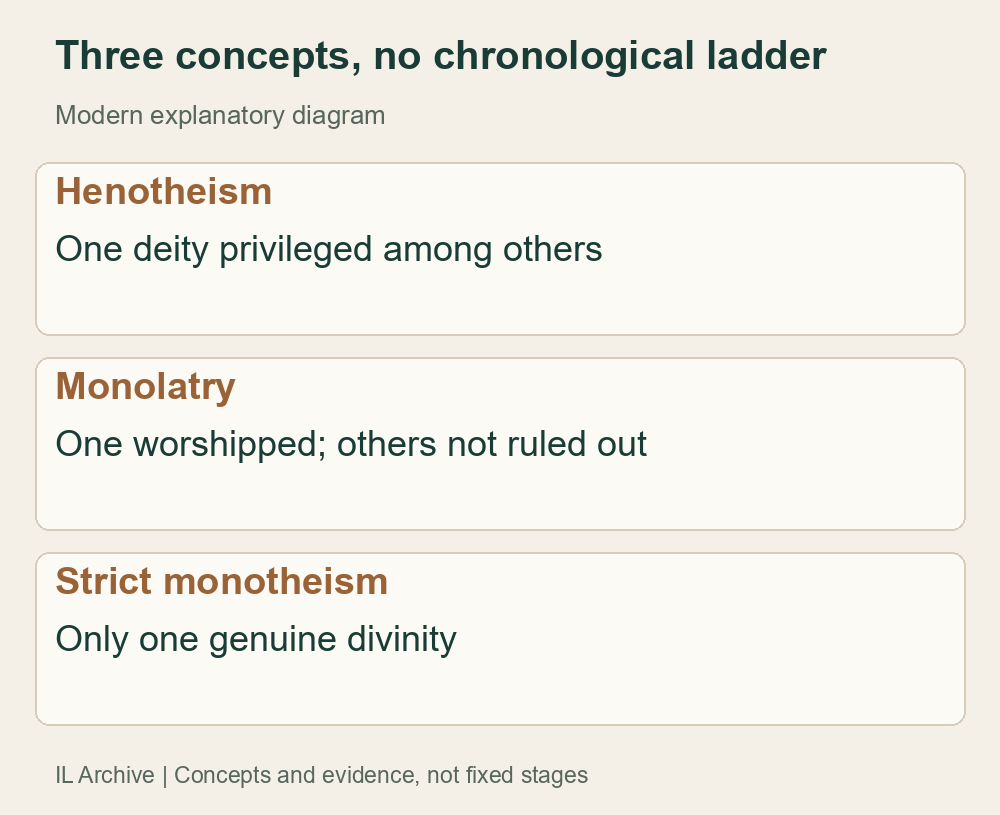
Privileging one god while acknowledging others in the working definition used here; not automatically monotheism or a fixed social phase.
Text
Usage varies: focus on one deity in worship or supremacy within a plural divine world. It sometimes overlaps with monolatryMonolatryWorship of one deity without necessarily denying others; variable analytical term, not one uniform doctrine of all Israelites.Glossary · Click to read the explanation; an author’s definition must precede historical dating. [1]
Greatest among all does not necessarily mean no other god. Heavenly beings alone do not automatically make a text polytheistic; their nature, independence and role also matter. [2]
References and notes
- Baruch A. Levine. Global Monotheism: The Contribution of the Israelite Prophets. In Melammu: The Ancient World in an Age of Globalization, 2014. DOI: 10.34663/9783945561003-04. Introduction, proposed phases/dating and expanded prophetic horizon read. Late eighth/early seventh in Levine’s model; imperial explanation attributed, not consensus or universal adoption. Return to the text ↑
- Benjamin D. Sommer. Appendix: Monotheism and Polytheism in Ancient Israel. The Bodies of God and the World of Ancient Israel. Cambridge University Press, 2009, pp. 145–174. DOI: 10.1017/CBO9780511596568.009. Cambridge summary only, not appendix text: reports debate then states own case for biblical monotheism not unusual before exile and limits of term. Others’ views not substituted for his own. Return to the text ↑
Research history
Substantive changes are retained here. Minor copy edits remain in the internal operational log.
-
Substantive record update
Suggest a correction · Suggest a source for this record
Cite this record
IL Archive, «Henotheism», Edition 2, https://ilarchive.com/en/entities/henotheism