Entity
Katabasis: descent to the underworld
A reference page linking a name, group, or concept to the materials that discuss it.
Comparative term for a journey to the realm of the dead; does not by itself establish that its traveler died and rose.
Text
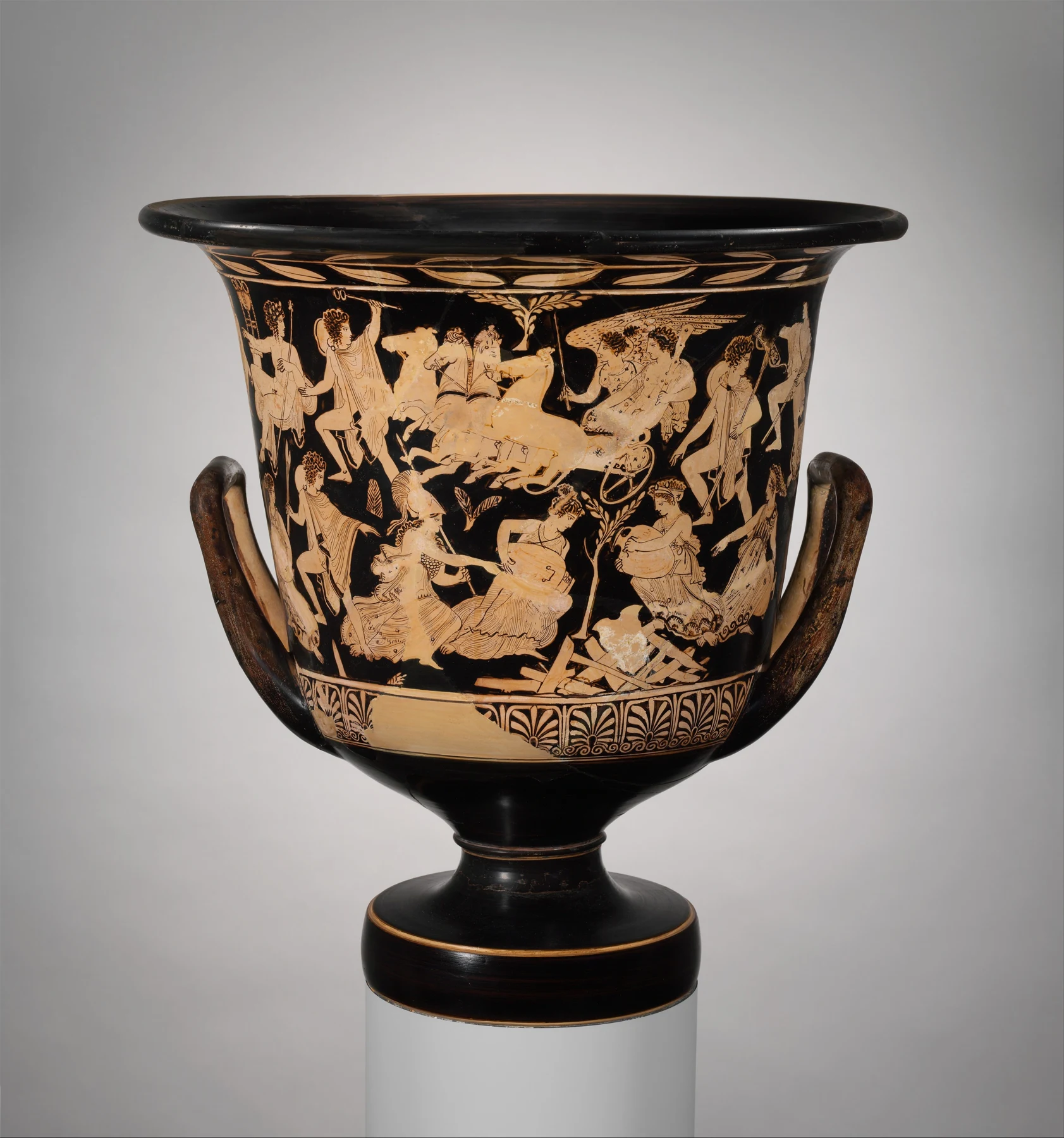
Distinguish a living traveler’s journey from restoring a dead human. In Alcestis Heracles proposes visiting the underworld if Death is absent at the tomb; the closing dialogue instead reports combat beside the tomb. A plan is not a reported event. The cover depicts Heracles’s apotheosisApotheosis: acquiring divine statusTransformation granting divine status; differs from returning to an earlier human life or raising the dead for judgment.Glossary · Click to read the explanation, not this journey. [2][3][8]
References and notes
- Specified passages of Coleridge’s historical translation read, not the whole play. TEI: Perseus/Tufts, CC BY-SA4.0; underlying translation public domain. Alternative plan distinguished from reported action. Euripides, Alcestis; E. P. Coleridge, 1906 printing; lines 1–75, 244–392, 837–860, 962–1007, 1118–1163; Perseus TEI Return to the text ↑
- Full article and29notes read; CC BY4.0. Its cited works not thereby read; interpretation not generalized to every Greek belief. Michael Lloyd, Death, Resurrection, and Realism in Euripides’ Alcestis, Greece & Rome72(1),2025,109–125; DOI10.1017/S0017383524000214 Return to the text ↑
- Catalogue, API and rights checked; original viewed. Scene is Heracles’s apotheosis, not Alcestis’s rescue. Metropolitan Museum52.11.18; Attic red-figure calyx-krater,4thcenturyBCE; Herakles’s death/apotheosis Return to the text ↑
Research history
Substantive changes are retained here. Minor copy edits remain in the internal operational log.
-
Substantive record update
Suggest a correction · Suggest a source for this record
Cite this record
IL Archive, «Katabasis: descent to the underworld», Edition 2, https://ilarchive.com/en/entities/katabasis