Entity
Leviathan
A reference page linking a name, group, or concept to the materials that discuss it.
A poetic sea being in Hebrew texts, related to Ugaritic ltn; its role varies between combat and creation imagery.
Text
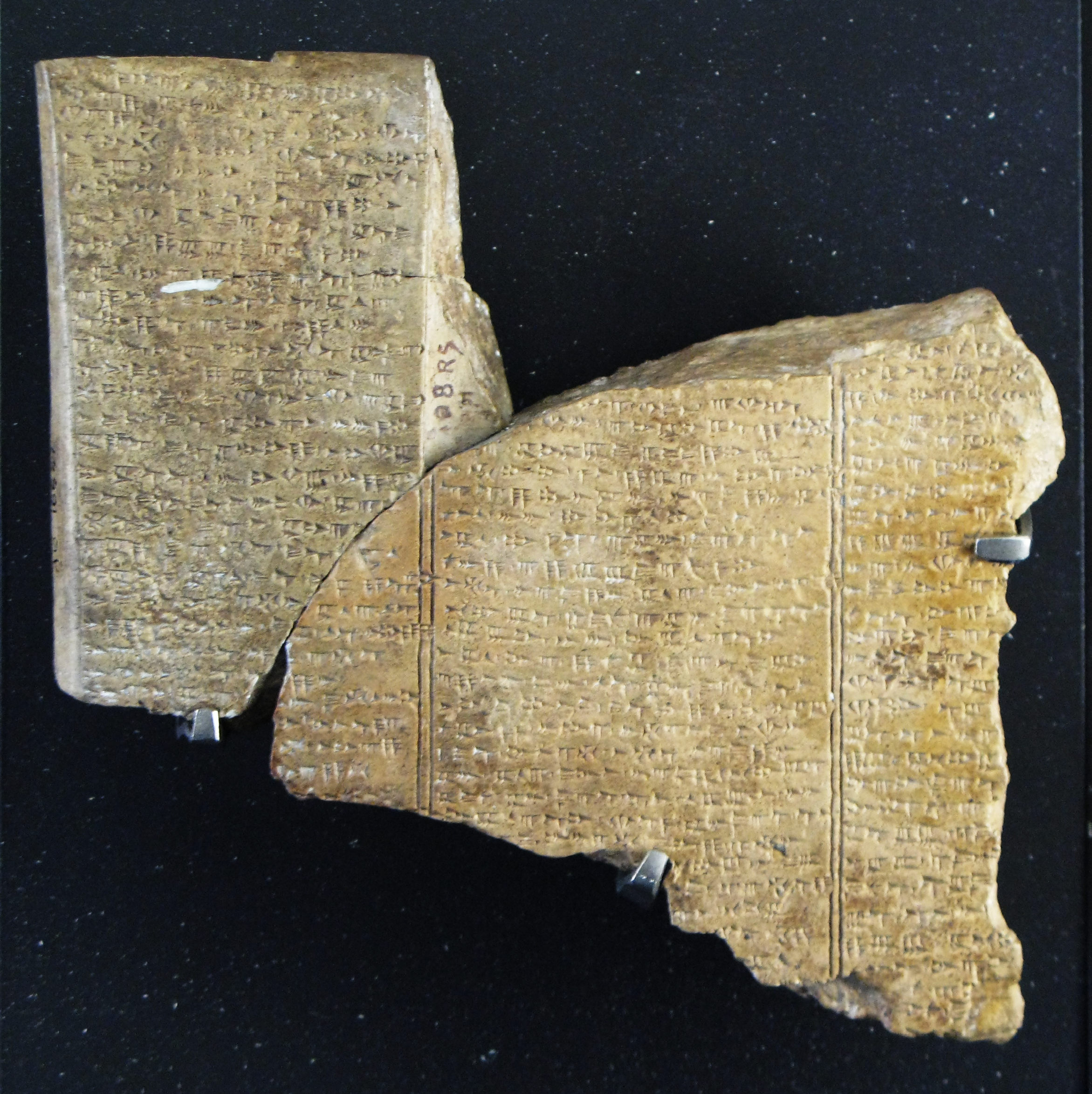
Leviathan is the fleeing and twisting serpent in Isaiah 27:1, has crushed heads in Psalm 74:14, and is a creature God formed in Psalm 104:26. Ugaritic KTUKTU: Ugaritic Text ReferencesAbbreviation for a modern scholarly corpus of alphabetic cuneiform texts; its numbers are references, not dates.Glossary · Click to read the explanation 1.5 has related ltn, similar epithets and seven heads. The precise parallels strongly indicate a shared Northwest Semitic poetic tradition, not proof that Isaiah copied this particular tablet. [2][3][7][8]
References and notes
- PDF pp. 0–5 read and selections from pp. 6–8 inspected. KTU text is quoted from KTU3 in modern scholarship, not independently collated with the tablet. The whole chapter was not read. Ola Wikander, “From Indo-European Dragon-Slaying to Isaiah 27.1,” pp. 116–121; KTU 1.5 I 1–4 Return to the text ↑
- Complete chapter read, especially verse 1 and its vineyard/exile context; only brief sense translation used. Isaiah 27, especially 27:1; Hebrew and JPS 1917 Return to the text ↑
- Complete psalm read; plural “heads,” with no number seven, and the sanctuary-destruction setting checked. Psalm 74, especially 74:13–14; Hebrew and JPS 1917 Return to the text ↑
- Complete psalm read; ships, sea life, Leviathan as formed and absence of a battle in these verses checked. Psalm 104, especially 104:25–26; Hebrew and JPS 1917 Return to the text ↑
Research history
Substantive changes are retained here. Minor copy edits remain in the internal operational log.
-
Substantive record update
Suggest a correction · Suggest a source for this record
Cite this record
IL Archive, «Leviathan», Edition 2, https://ilarchive.com/en/entities/leviathan