Entity · Deity
Numushda, the God of Kazallu and Father of Martu’s Bride
A reference page linking a name, group, or concept to the materials that discuss it.
- Names
- Numushda · Numušda
- Region
- Mesopotamia
Numushda was the chief god of Kazallu, where rulers recorded work on his sanctuary and waterways. In The Marriage of Martu, he presides over a festival and negotiates his daughter’s marriage.
Estimated reading time: 5 min Published Last reviewed:
Share article
Text
Introduction
Numushda was the principal god of Kazallu, a city in Babylonia whose archaeological site has yet to be identified with certainty. A year name of Shulgi of Ur records his entry into his temple. A later hymn praises him as a fierce power and asks him to favour a king from Larsa. Another Sumerian poem presents him in a family setting, with his wife Namrat and their daughter Adgar-kidug, who decides to marry the god Martu. [1][2][3][4]
These sources depict Numushda through his relationships with a city, rulers and other gods. Royal and administrative records attest his cult. Hymns describe the qualities worshippers attributed to him. The marriage poem gives him a role in a story about a festival, a wrestler and a household. The two settings named most clearly in these traditions are Kazallu and Inab, the city that hosts the festival in the marriage poem. [1][2][3][4][5]
The god brought into his sanctuary
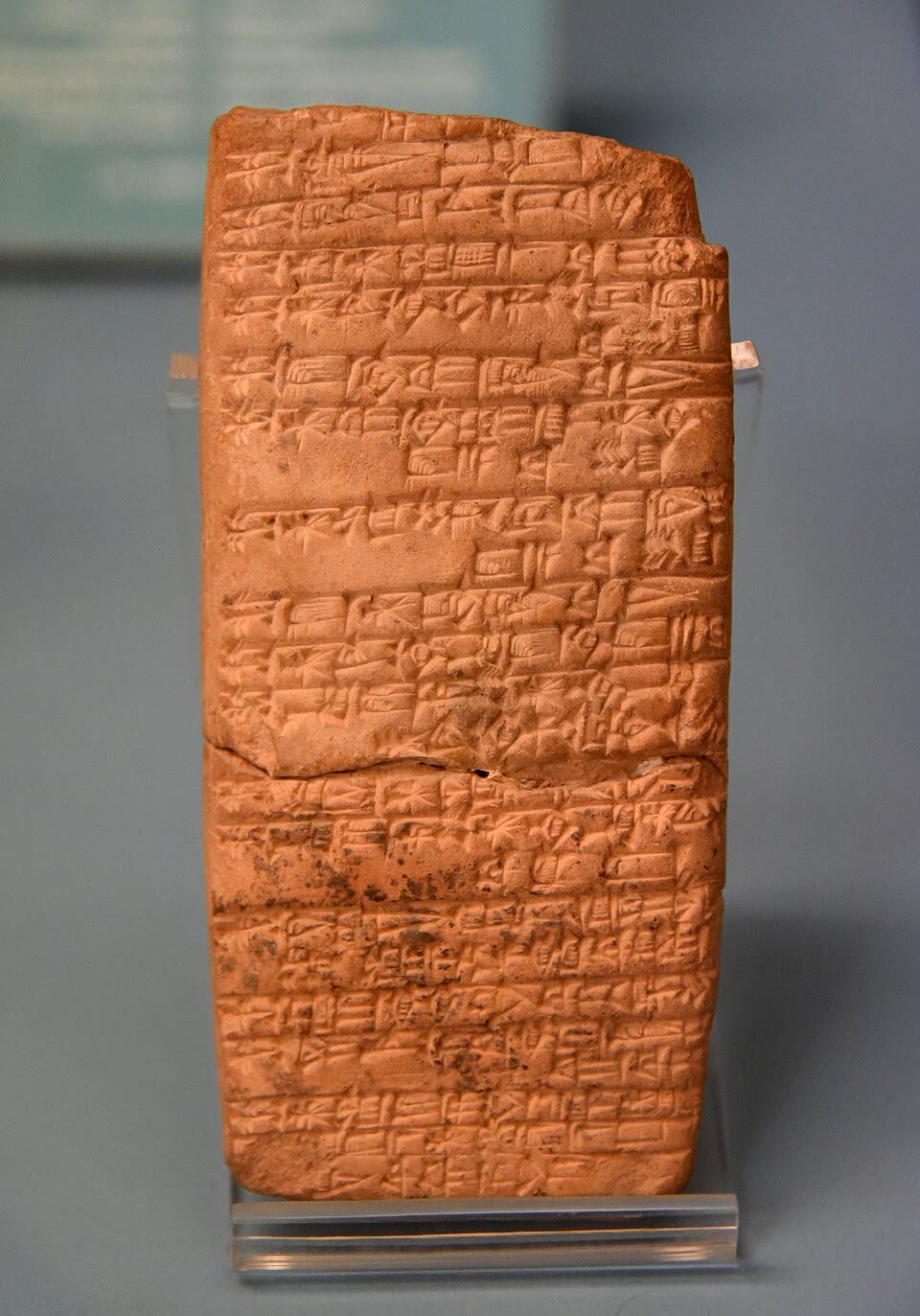
During the Third Dynasty of Ur, years were identified by formulas that could commemorate a particular event. The twelfth year of Shulgi is named for Numushda of Kazallu being brought into the temple. An Old Babylonian copy of Shulgi’s year names from Nippur preserves this entry between records of other royal and religious events. The surviving tablet was written later than the reign it records. Its text shows that the installation of the god remained part of the record of Shulgi’s rule. [2]
The Sumerian collection known as the Temple Hymns addresses Kazallu and calls its sanctuary Kun-satu, translated by the Oxford edition as Threshold of the Mountain. In that hymn, Numushda is described through images of a wild bull and a lord with a lion’s teeth. The closing image shows him establishing his house and sitting on its dais. In a study of tablets linked with Drehem, Sara Brumfield also identifies three seal inscriptions whose owners call themselves servants of Numushda. Their appearance in Drehem records suggests that the institutions associated with his worship were active beyond the city where his principal sanctuary stood. [1][5][6]
Water in the hymn and the lament
The hymn for Sin-iqisham compares Numushda to a snarling lion and a flood that overwhelms its banks. The opening gives him divine parents, Ningal and Suen, and associates his birth with abundance. The poem later speaks of canals, levees and irrigation ditches as things the king had put in order on divine instruction. Managing the water supply is part of the hymn’s account of restoring abandoned settlements and making the god’s city thrive. It closes by asking Numushda to look favourably on the king and prolong his days. [3]
In the Lament for Sumer and Ur, Kazallu is one of the cities that suffer when order fails. Numushda leaves his city and Namrat laments the ruin of her house. The river bed empties, its opening channel is blocked and the fields produce no fine grain. The hymn and lament use the same features of a city’s life to present different conditions. The hymn pictures water being made available by the king, while the lament pictures its absence after the city loses the presence of its god. [3][7]
The Assyriologist Jeremiah Peterson draws attention to these descriptions and to a fragmentary tablet in the Penn Museum that he reconstructed from two pieces. Its preserved lines include Numushda’s name and a difficult passage about water overflowing. The edition marks breaks and uncertainties in the text. Peterson treats the royal hymn, the lament and the fragment together when discussing a possible association with flooding. The comparison helps explain how a god whose hymn likens him to destructive high water also presides over a place whose prosperity depends on reliable canals. [1][3][7][8]
Wrestling and marriage at Inab
In The Marriage of Martu, a festival is announced in Inab. Numushda attends with Namrat and Adgar-kidug. Drums sound, and wrestlers enter to compete for the god at the temple. Martu takes part. Numushda is pleased and offers him silver and jewels. Martu asks instead to marry Adgar-kidug. The passages that follow name calves, lambs and kids as marriage gifts and repeat the father’s requirement that Martu give his word before the marriage can take place. The damaged tablet leaves parts of the exchange unclear. [4]
Adgar-kidug speaks for herself at the end of the surviving account. A friend urges her to reconsider and describes Martu and his people through hostile stereotypes about food, worship and nomadic life. Adgar-kidug answers that she will marry him. The poem places her decision after the festival and the negotiations in which Numushda took part. His roles as the god honoured by a public contest and as the father of the bride belong to that story. Kazallu’s connection with him is independently attested by the year name, the hymns and the seal inscriptions. [2][3][4][5][6]
The works preserve different kinds of authority. In the hymn, NunamnirEnlilEnlil/Ellil: a major Mesopotamian god associated with destinies, kingship, and Ekur at Nippur, already prominent in third-millennium god lists. His name’s origin and cult beginnings remain debated.Glossary · Click to read the explanation, a title of Enlil, assigns Kazallu to Numushda as his cult place, and a king is called on to restore its settlements. In the marriage poem, an invitation to a festival opens a sequence in which the god can reward a wrestler and set terms for a union. The surviving texts give him a place both at the centre of a sanctuary and in a household whose members have their own roles and voices. [3][4]
References and notes (8)
- Jeremiah Peterson, New Sumerian Literary Texts Involving the Gods Numušda and Gibil Read §1 on Kazallu, the cult centre and the sanctuary, the discussion of flooding and the fragment assembled from UM 29-13-80 and N 4500. Return to the text ↑
- Cuneiform Digital Library Initiative, Shulgi Year Names, P265995, Ist Ni 00394 Read the copy’s provenance and date, and obverse lines 9–16, including the twelfth year formula that names Numushda of Kazallu. Return to the text ↑
- Electronic Text Corpus of Sumerian Literature, A Hymn to Numushda for Sin-iqisham, 2.6.7.1 Read lines 1–23, 34–41 and 42–60, on divine parents, the animal and flood images, the temple, restoration of waterways and the concluding prayer. Return to the text ↑
- Electronic Text Corpus of Sumerian Literature, The Marriage of Martu, 1.7.1 Read lines 53–111 on the festival, wrestling and the gifts, and lines 127–141 on the friend’s speech and Adgar-kidug’s answer. Return to the text ↑
- Sara Brumfield, The Cuneiform Tablet Collection of the Los Angeles Unified School District, CDLB 2016:1 Read §2.2.2, especially §2.2.2.2 on the seals naming servants of Numushda and the limits of localising other cult offices. Return to the text ↑
- Electronic Text Corpus of Sumerian Literature, The Temple Hymns, 4.80.1, line 396 and paragraph 396–405 Read the entry addressed to Kazallu and Kun-satu, the imagery depicting Numushda and the reference to his dais. Return to the text ↑
- Electronic Text Corpus of Sumerian Literature, The Lament for Sumer and Urim, 2.2.3 Read lines 123–132 on Numushda, Namrat, Kazallu’s abandoned river bed and the loss of grain. Return to the text ↑
- Cuneiform Digital Library Initiative, UM 29-13-080 + N 4500, P255122 Read museum and findspot fields and the partly preserved obverse and reverse text, especially reverse 3–4, with the reading uncertainties. Return to the text ↑
Suggest a correction · Suggest a source for this record
Cite this record
IL Archive, «Numushda, the God of Kazallu and Father of Martu’s Bride», https://ilarchive.com/en/entities/numushda