Entity · Deity
Telipinu, the Missing God
A reference page linking a name, group, or concept to the materials that discuss it.
- Names
- Telepinu · Telipinus
- Region
- Hittite Anatolia (present-day Türkiye)
In a Hittite myth, Telipinu leaves in anger and crops, herds and households cease to flourish. His return is sought through a search, an invocation and the removal of his anger.
Estimated reading time: 5 min Published Last reviewed:
Share article
Text
Introduction
Telipinu is the Hittite god whose departure suspends the growth of crops and the reproduction of animals and people. In the best-preserved version of the myth, the Storm God calls him his son and the goddess Hannahanna sends a bee to seek him. The bee’s search and the removal of the god’s anger occupy different parts of the surviving tradition. A separate royal prayer addresses Telipinu directly and asks him to protect the king, his family and the land. [1] [2] [3]
A household comes to a halt
The beginning of the first version is damaged. Its early scenes show vapor at the windows, smoke seizing the house, and wood smothered in the hearth. Sheep and cattle turn away their young. When Telipinu leaves, the text says he carries away grain and the conditions that allow life to flourish. He hides in a marsh and a plant grows above him. Fields cease to produce, pastures and springs dry up, and pregnant people and animals fail to give birth. The narrative moves from hearth and stall to the whole land, where both humans and gods face hunger. [1]
The Sun God holds a feast and summons the gods. They eat without satisfying their hunger and drink without satisfying their thirst. The Storm God notices Telipinu’s absence and says he has taken the good things away with him. The gods begin to look for him. The first version also remarks on the messenger’s size: its wings are small, and so is the creature. After the gods’ own search has failed, the text leaves open whether so small a searcher can find the missing one. [1]
The bee and the anger
The third version supplies details of the bee’s journey where the first version is damaged. It searches high mountains, low valleys and waters. The partly restored translation places the encounter in a meadow among the woods at Liḫzina. The bee stings Telipinu’s hands and feet and he gets up. Orders in this version also mention wax and cleansing. Waking him fails to settle the crisis by itself. He asks why he was made to rise and speak. The passage that follows describes his rage affecting rivers, settlements and herds. These details come from a separately transmitted version and help show how the Hittite copies differ in what they preserve. [1] [2]
In the first version, materials placed before the god give concrete form to the request to calm him. The sweetness of honey is invoked alongside the softness of clarified butter. The desired change in the god is likened to qualities the speaker can point to. Fine oil is sprinkled on the paths he is called to walk. When the angry Telipinu arrives, Kamrusepa intervenes. The text has the anger stopped and taken away. It asks for the god’s anger to go to bronze vessels in the dark earth whose contents cannot escape. [1] [4]
The ending reverses the opening. Smoke leaves the house, the gods are put in order at the altar and mothers recognize their young. Telipinu again attends to the land and its rulers. A tree stands before him with a sheep’s fleece hanging from it. The text associates the fleece with grain, wine, livestock, long life and descendants. The sequence restores things and relationships that the first scenes had already made familiar. [1]
What the manuscripts show
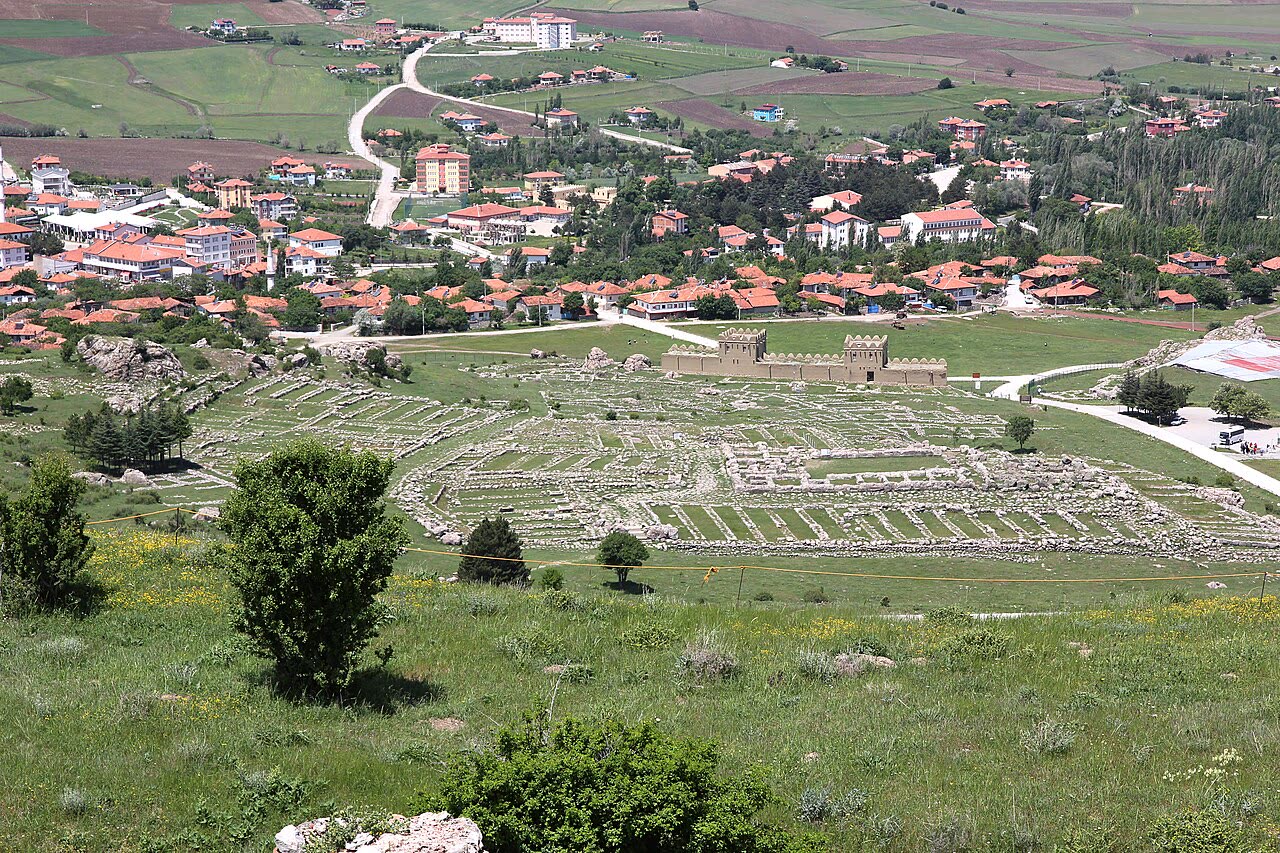
The first version is catalogued as CTH 324.1, with KUB 17.10 as a principal witness. The Mainz concordance records a join with fragment 445/z, published as KBo 55.8. The fragment was found in older excavation debris in front of a storeroom on the east street of the Great Temple at Hattusa, shown here. The concordance attributes the temple findspot of KUB 17.10 to this join. That qualification matters because the evidence comes from the record of a joined piece recovered in disturbed material. Other copies and parallel versions help an editor read passages where individual pieces have broken away. [1] [2] [5] [6]
The combination of story and ritualRitualAn organised or distinguished practice meaningful to a community; it may leave traces, but its form alone does not reveal an associated doctrine.Glossary · Click to read the explanation speech leaves room for different readings of the composition’s use. Romina Della Casa discusses suggestions that link it with the seasons and annual festivals, and proposes that its language and parallels fit a ritual addressing an immediate crisis. In such a reading, references to items lying before the speaker connect the story’s successful resolution with a practitioner’s present situation. The surviving tablets give evidence for the words and ritual actions imagined or described. They leave the circumstances in which this particular composition was performed open to interpretation. [1] [4]
Prayer and public cult
In the prayer catalogued as CTH 377, Muršili II and the queen send a speaker to invoke Telipinu as their personal god. The prayer directs a scribe to read it daily. It summons the god with cedar, oil, bread and a liquid offering, and appeals to his care for the royal household. The text also names temples, utensils and periods of celebration, giving the god a place in worship independent of the account of his disappearance. [3]
Records of festivals for Telipinu are grouped separately in the Hittite catalogue as CTH 638. Carlo Corti relates the festival material to Hanhana and Kaška and notes the presence in its local setting of the Storm God of Atalhazi and Mount Takurga. These named places and deities make it possible to trace Telipinu in cult documents as well as in the ritual story of a land restored. [7] [8]
References and notes (8)
- TITUS, Corpus of Hittite Mythological Texts, CTH 324.1 First version, lines 1–69, 81–153 and 190–225, German translation and witnesses Return to the text ↑
- TITUS, Corpus of Hittite Mythological Texts, CTH 324.3 Third version, lines 1–35, bee, reconstructed find location and anger Return to the text ↑
- Alexei Kassian and Ilya Yakubovich, Muršili II’s Prayer to Telipinu Introduction and translation, especially §§1–10 and reverse §1′ Return to the text ↑
- Romina Della Casa, The Power of Human Speech in Hittite Anatolia pp. 65–71, performance debate, KUB 17.10, present ritual language and parallels Return to the text ↑
- Silvin Košak, Konkordanz der hethitischen Keilschrifttafeln KUB 17.10 and fragment 445/z, join and documented find context Return to the text ↑
- UNESCO World Heritage Centre, Hattusha: the Hittite Capital Site description and location of the Great Temple in the Lower City Return to the text ↑
- Hethitologie-Portal Mainz, Catalogue of Hittite Texts, Telipinu CTH 324 and separate festival classification CTH 638 Return to the text ↑
- Carlo Corti, Along the Road to Nerik Discussion of Hanhana in KBo 23.89, CTH 638 and its local pantheon Return to the text ↑
Suggest a correction · Suggest a source for this record
Cite this record
IL Archive, «Telipinu, the Missing God», https://ilarchive.com/en/entities/telipinu-deity
Continue reading