Person
Deucalion in Greek Flood Traditions
A Greek figure linked with the flood, Pyrrha, Prometheus and stone-born people; details differ between Pindar, Pseudo-Apollodorus and Ovid.
Metadata
These are descriptive fields, not conclusions.
- Edition
- 2
Text
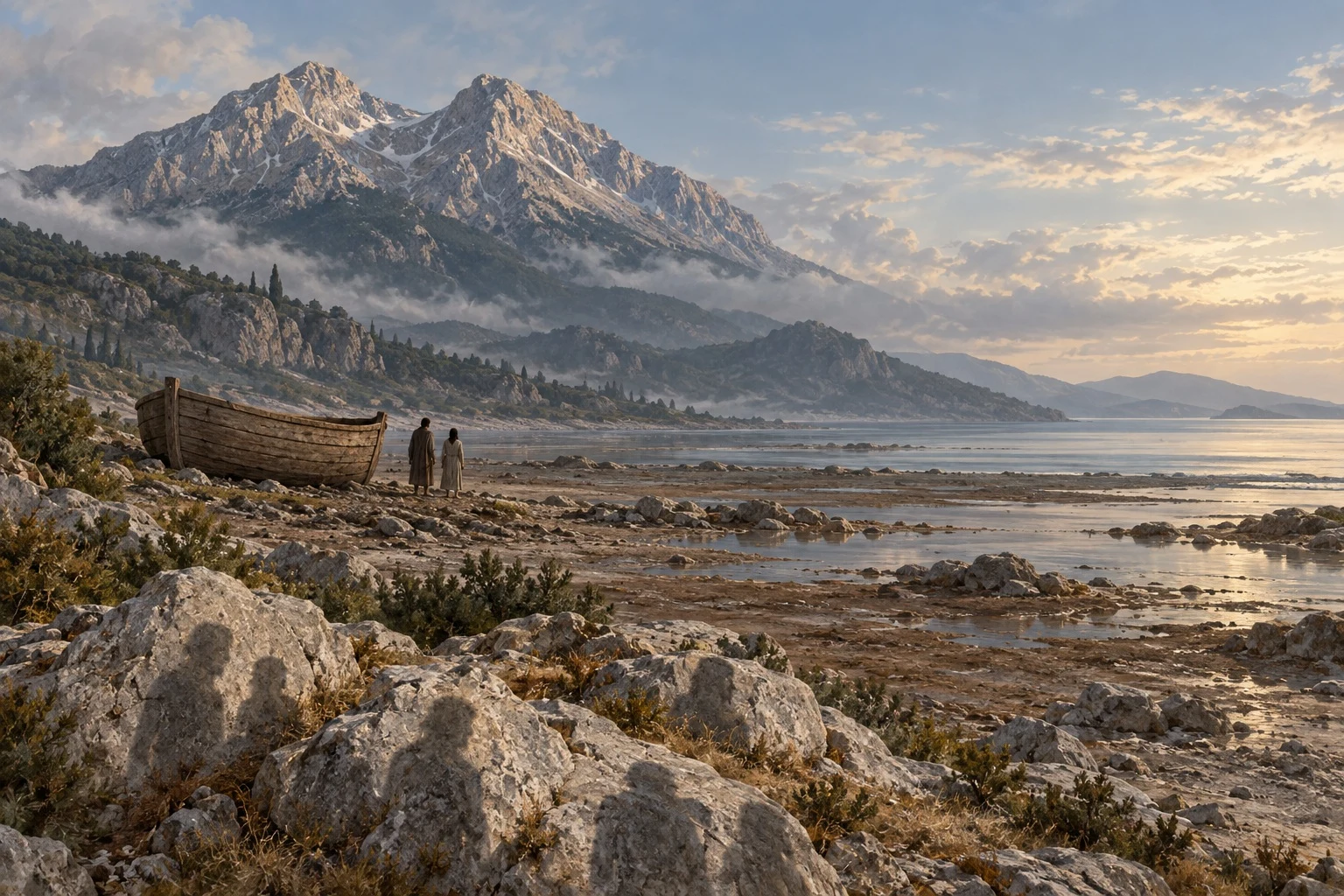
The surviving Catalogue of Women fragments link Deucalion to Prometheus, Pyrrha and Hellen but do not preserve a complete flood story. In Pindar’s ninth Olympian ode, he and Pyrrha descend from Parnassus after waters have covered the earth, and stone-born peopleStone-born People in Deucalion’s StoryA Greek image of humanity renewed from stones after the flood, attested by Pindar and elaborated by Ovid and Pseudo-Apollodorus.Glossary · Click to read the explanation arise; no vessel is mentioned. The later Library describes Prometheus’ warning, a chest, nine days, a sacrifice and a few other mountain survivors. Ovid makes the story part of a reflection on human corruption and Themis’s oracle. These witnesses should not be fused into one imagined ancient Greek text. [1][2][3][4]
References and notes
- Hesiodic Catalogue of Women, fragments 1–5, Evelyn-White translation; surviving genealogy, not a complete flood narrative Hesiodic Catalogue of Women, Evelyn-White fragments 1–5 Return to the text ↑
- Pindar, Olympian 9.40–56, older Paley translation; poem and context Pindar, Olympian 9, especially 40–56; Paley 19th-century translation Return to the text ↑
- Pseudo-Apollodorus, Library 1.7.2; Greek text and Frazer’s 1921 translation Pseudo-Apollodorus, Library 1.7.2; Greek and Frazer 1921 translation Return to the text ↑
- Ovid, Metamorphoses 1.163–415, especially 240–415; Brookes More’s 1922 translation Ovid, Metamorphoses 1:163–415, especially 240–415; Brookes More 1922 translation Return to the text ↑
Research history
Substantive changes are retained here. Minor copy edits remain in the internal operational log.
-
Substantive record update
Suggest a correction · Suggest a source for this record
Cite this record
IL Archive, «Deucalion in Greek Flood Traditions», Edition 2, https://ilarchive.com/en/people/deucalion-greek-flood