Person · Figure
Hordedef, the Giza Prince Remembered as a Sage
- Names
- Djedefhor · Hardjedef · Harzedef · Hordedef · Hordjedef
- Region
- Egypt
Hordedef was a Fourth Dynasty prince buried in Giza's Eastern Cemetery. Papyrus Westcar casts him as the man who brings Djedi to Khufu, and later manuscripts remember him as a teacher.
Estimated reading time: 5 min Published Last reviewed:
Share article
Text
Introduction
Hordedef is known from a double mastaba in the Eastern Cemetery beside Khufu's pyramid and from Egyptian writing that kept his name in circulation for centuries. At Giza, archaeologists assigned the southern burial shaft of the mastaba to him. In Papyrus Westcar, he is the royal son who brings a living magician to Khufu. Manuscript copies of a teaching and lists of admired writers give the prince a further association with the transmission of wisdom. Each kind of evidence preserves a different part of his Egyptian reputation. [1][2][3][4]
The prince in the Eastern Cemetery
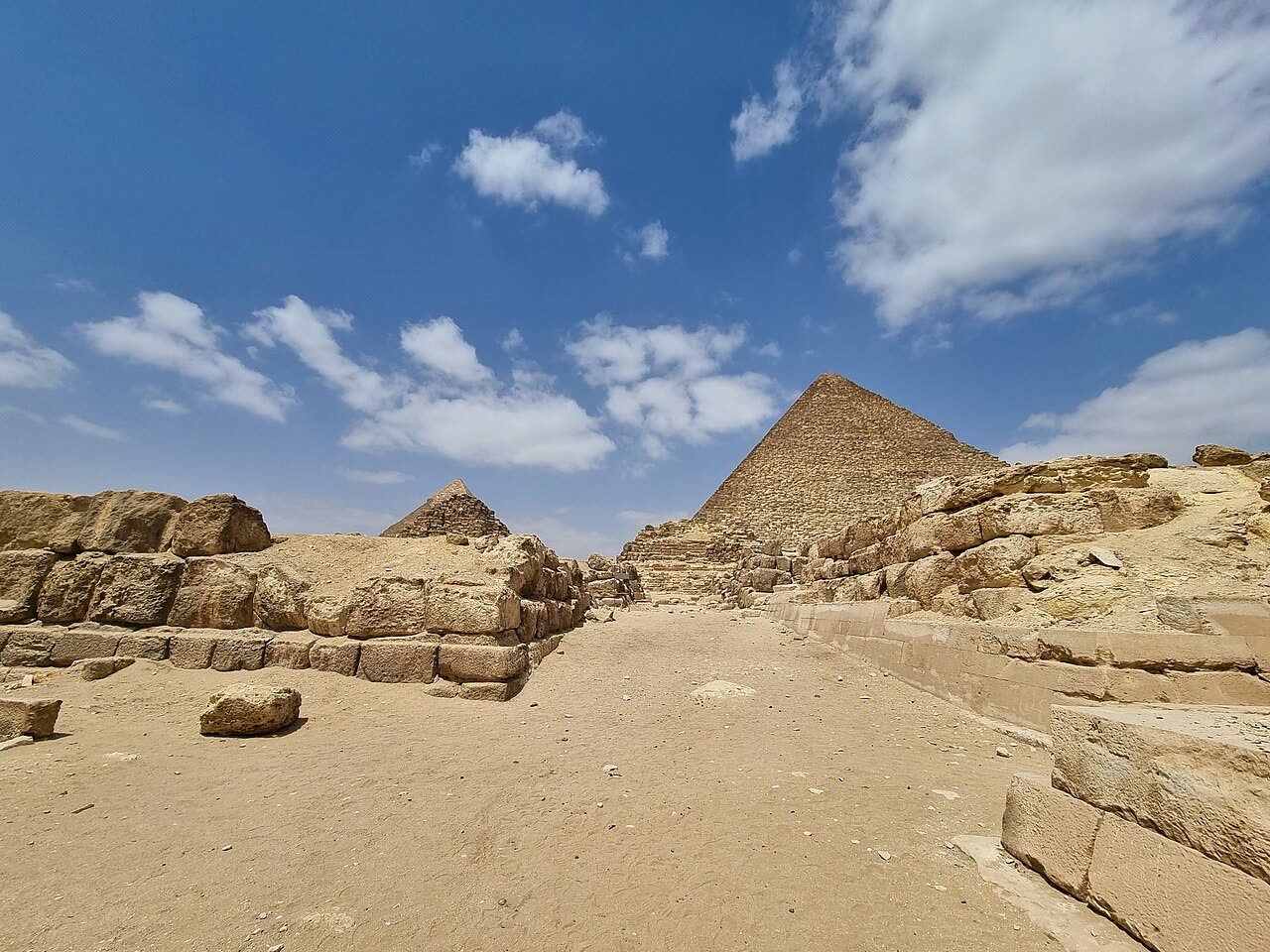
Hordedef, also called Hordjedef or Djedefhor, belonged to the Fourth Dynasty royal family. Julia Troche identifies him as a son of Khufu and places his burial in the double mastaba numbered G 7210–7220. The Digital Giza catalog records the double monument as a stone-built mastaba, with chapel spaces and multiple shafts under the two constituent numbers. It assigns his burial to G 7220. Khufu and Meretites I appear as attested people in the monument record. The entry records their presence in the archaeological documentation without specifying a maternal relationship for Hordedef. [1][3][5]
The red granite sarcophagus from pit G 7220 A is now entered in the Grand Egyptian Museum collection as GEM 14911. The object catalog describes it as unfinished and uninscribed. Red guide lines remain and the bottom is only partly sawn. Its recorded length is 245 centimetres. The link between the sarcophagus and the prince rests on its findspot in the tomb complex. The object thus contributes evidence for the preparation of his burial even though the stone itself does not carry his name. [3][6]
The prince who goes to fetch Djedi
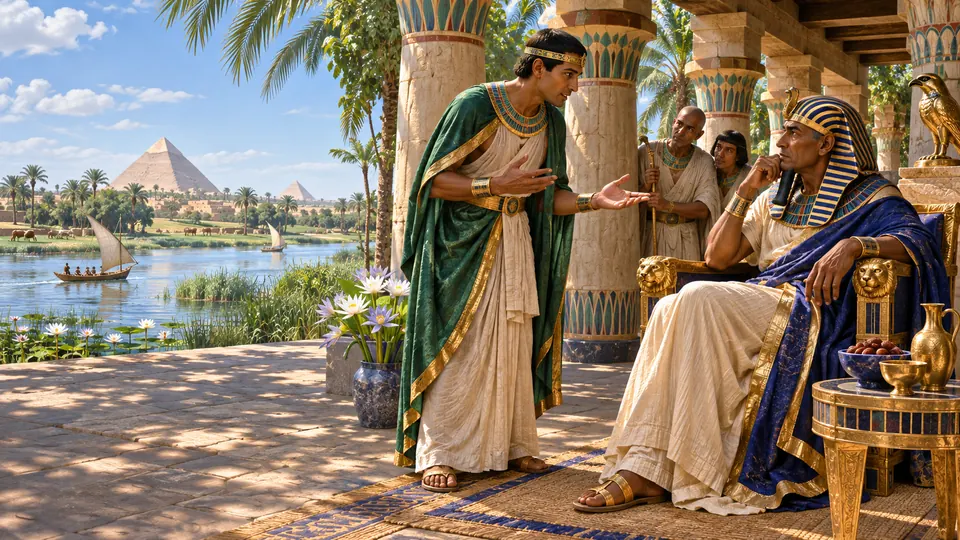
In Papyrus Westcar, Hordedef speaks after the court has heard stories about earlier reigns. He raises the difficulty of knowing how much of such accounts is true and offers Khufu the example of a man still alive. Djedi, he says, lives at Djed-Sneferu, can rejoin a severed head and knows about the hidden rooms of the sanctuary of Thoth. Khufu has been seeking information about those rooms and tells his son to bring Djedi to him. The initiative turns the court's attention from stories told in the hall to a person the king can summon. [2]
The narrative follows Hordedef south by boat and then on land in a carrying chair. He finds Djedi resting by the entrance to his house, greets him with deference and delivers the royal summons. Djedi returns his greeting by wishing the prince favor from his father and advancement among the elders. Hordedef gives him his arm on the way back to the shore. Djedi asks for boats for his children and writings, then travels north with the prince. The care taken over departure and return shows what it means in the story for a royal son to act as an intermediary. [2]
At the residence Hordedef reports his arrival and goes to bring Djedi to the king. Djedi then speaks for himself. When he reveals that the children of Redjedet will assume high office and the eldest will become Great Seer in HeliopolisHeliopolis, ancient IunuHeliopolis is the Greek name of Egyptian Iunu, at Matariya in northern present-day CairoGlossary · Click to read the explanation, Khufu is troubled. The king eventually assigns Djedi to Hordedef's household and orders his provisions. Hordedef thus remains responsible for the man he first proposed bringing to court. That continuing relationship belongs to the plot of the tale. The manuscript's literary account and the prince's excavated tomb preserve different evidence about him. [1][2][5]
Advice passed down under his name
The surviving Instruction of Hordedef is framed as advice by the prince to his son. Megaera Lorenz discusses passages about establishing a household and having a son of one's own. These practical concerns give the work a place among Egyptian teachings that transmit knowledge through the relationship of father and son. Troche notes that only the beginning of the composition survives and that the witnesses include New Kingdom scribal copies and a later wooden tablet. The attribution shows how people remembered Hordedef when those copies circulated. The material evidence leaves the date of composition and the identity of its author uncertain. [3][4]
Another Ramesside text, preserved on Papyrus Chester Beatty IV, honors writers whose teachings keep their names alive long after burial monuments decay. Its speaker includes Hordedef and Imhotep among celebrated predecessors. They are names the intended reader is expected to recognize. Troche also notes the juxtaposition of the two figures in the Harper's Song preserved in Papyrus Harris 500. These references give some sense of how the prince's standing survived outside the teaching attributed to him. [3][7]
The prince also appears in a rock inscription in the Wadi Hammamat. There his name and Baufre's appear in cartouches alongside Khufu, Djedefre and Khafre. The engraving is difficult to date, and Troche finds little corroboration for the suggestion that Hordedef himself reigned. The inscription gives his name royal framing in a source whose date and purpose are still debated. [3]
That standing had a local expression as well. Troche discusses the false door of Kha, found reused in another burial installation near Hordedef's mastaba. One of its inscriptions identifies Kha as an adorer of Hordedef. Troche compares it with another funerary monument from the vicinity, relating both to the distinction the prince acquired after his death. Where Papyrus Westcar remembers his conduct at court and the teaching makes him an adviser to his son, these inscriptions preserve the importance of his name to people with burials at Giza. [2][3][4]
References and notes (7)
- Digital Giza, Hordjedef (G 7210–7220) Read the person record, spelling variants, assignment of the burial to G 7220 and object links. Return to the text ↑
- Bibliotheca Alexandrina, The Westcar Papyrus Read the fourth tale from Hordedef's speech and journey to Djedi through the audience, forecast and assignment of Djedi to Hordedef's house. Return to the text ↑
- Julia Troche, Death, Power, and Apotheosis in Ancient Egypt Read chapter 5, the case of Hordjedef, on his burial, Kha's false door, literary reputation and witnesses to the Instruction. Return to the text ↑
- Megaera C. Lorenz, The Role of Male Royal Offspring in 18th Dynasty Egypt Read pp. 54–56 on the father-to-son frame, content and uncertain date of the Instruction. Return to the text ↑
- Digital Giza, G 7210–7220 Read the Eastern Cemetery entry, stone-built double mastaba, listed individuals, dating and burial shafts. Return to the text ↑
- Digital Giza, Red Granite Sarcophagus of Hordjedef Read the object description, findspot, inventory number, material and dimensions. Return to the text ↑
- University College London, Digital Egypt for Universities, The Immortality of the Writer Read Papyrus Chester Beatty IV verso 2.5–3.11, especially the passage on tombs and writings and the sequence of named authors. Return to the text ↑
Suggest a correction · Suggest a source for this record
Cite this record
IL Archive, «Hordedef, the Giza Prince Remembered as a Sage», https://ilarchive.com/en/people/hordedef