Person · Researcher
Marianna Klar
Marianna Klar researches Qur’anic narrative and commentary. Her work looks at how the Qur’an uses stories and how its passages are patterned.
Estimated reading time: 2 min Published Last reviewed:
Share article
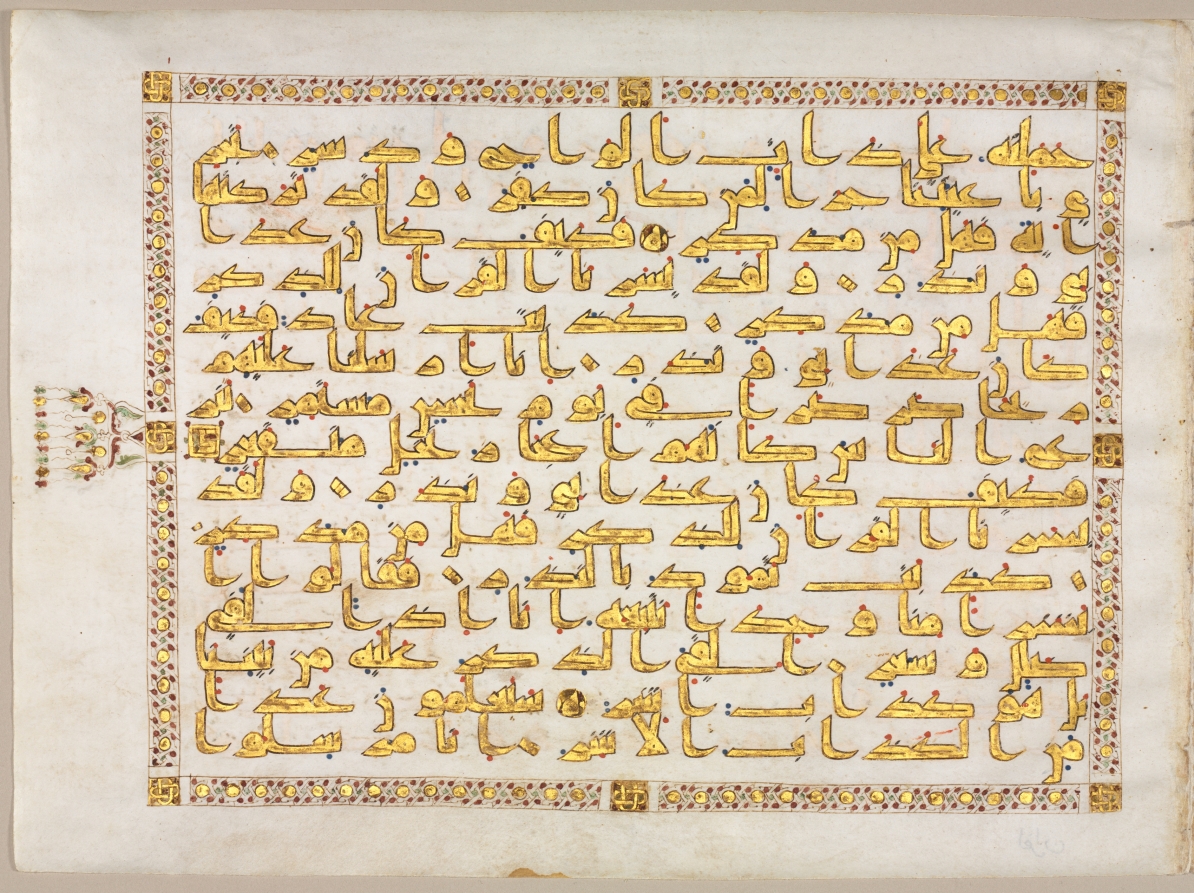
Text
Introduction
Marianna Klar researches Qur’anic narrative and commentary. Her University of Oxford profile lists her as a post-doctoral researcher on the Qur’anic Commentary: An Integrative Paradigm project and a Senior Research Associate at Pembroke College, with interests in the literary aspects of the Qur’an, medieval Islamic scriptural exegesis, historiography, popular literature and manuscripts. The project’s people page also lists her among its researchers. [1][2]
How stories function within the Qur’an
Klar’s chapter “Qur’anic Exempla and Late Antique Narratives” appeared in The Oxford Handbook of Qur’anic Studies in 2020, on pages 128 to 139. An exemplum is a story told as an example for its audience. The chapter’s abstract describes the use of narratives as exempla as a pervasive technique of the Qur’anic corpus, with shorter or longer references to figures such as NoahNoahNoah is the flood-story figure in Genesis and a prophet in the Qur’anGlossary · Click to read the explanation and MosesMosesCentral figure in Exodus, Torah traditions and the Qur’an; childhood accounts differ in detail.Glossary · Click to read the explanation. It adds that recent scholarship has replaced the search for straightforward parallels in Judaeo-Christian narratives, and that the contexts of the Qur’an and its references to other literatures and religious traditions are being reassessed. [3]
Her subject therefore combines two questions: what a story does within the Qur’anic passage that contains it, and how it relates to earlier narratives from Late Antiquity. The abstract gives only the outline of the chapter’s argument. [3]
Structure and commentary
Klar edited Structural Dividers in Qur’ānic Material, published by Routledge in 2021. The Oxford profile also lists her contribution to that volume, “A Preliminary Catalogue of Qur’ānic Sajʿ Techniques: Beat Patterning and Parallelism as a Structuring Device”, on pages 181 to 231. Sajʿ is a form of patterned, rhythmic prose. In 2016 she guest-edited an issue of the Journal of Qur’anic Studies (volume 18, issue 2) on the commentator al-Ṭabarī, titled “Exegetical Facets of Muḥammad b. Jarīr al-Ṭabarī (d. 310/923)”. [1]
These publications address different parts of the Qur’an’s literary character. One concerns how stories are used, one the patterns of wording that mark structure, and one the work of a classical commentator. [1][3]
References and notes (3)
- University of Oxford, Faculty of Asian and Middle Eastern Studies, Marianna Klar Staff profile: position, research interests, and publication list including Structural Dividers in Qurʾānic Material (Routledge, 2021), her chapter on sajʿ techniques (pp. 181–231), the Journal of Qur’anic Studies 18:2 special issue (2016) and the Oxford Handbook chapter (2020, pp. 128–139). Return to the text ↑
- University of Oxford, Qur’anic Commentary: An Integrative Paradigm, people page Project people list: entry for Marianna Klar. Return to the text ↑
- Marianna Klar, “Qur’anic Exempla and Late Antique Narratives,” The Oxford Handbook of Qur’anic Studies (Oxford University Press, 2020), chapter 8, pp. 128–139 Publisher’s chapter page: title, author, pages, publication date (8 June 2020) and abstract. Return to the text ↑
Suggest a correction · Suggest a source for this record
Cite this record
IL Archive, «Marianna Klar», https://ilarchive.com/en/people/marianna-klar