Site · Contextual definition
Ganj Dareh
- Names
- Ganj Dareh
Neolithic site in western Iran’s Zagros, important for early settlement, herding, burial and cranial modification.
Last reviewed:
Text
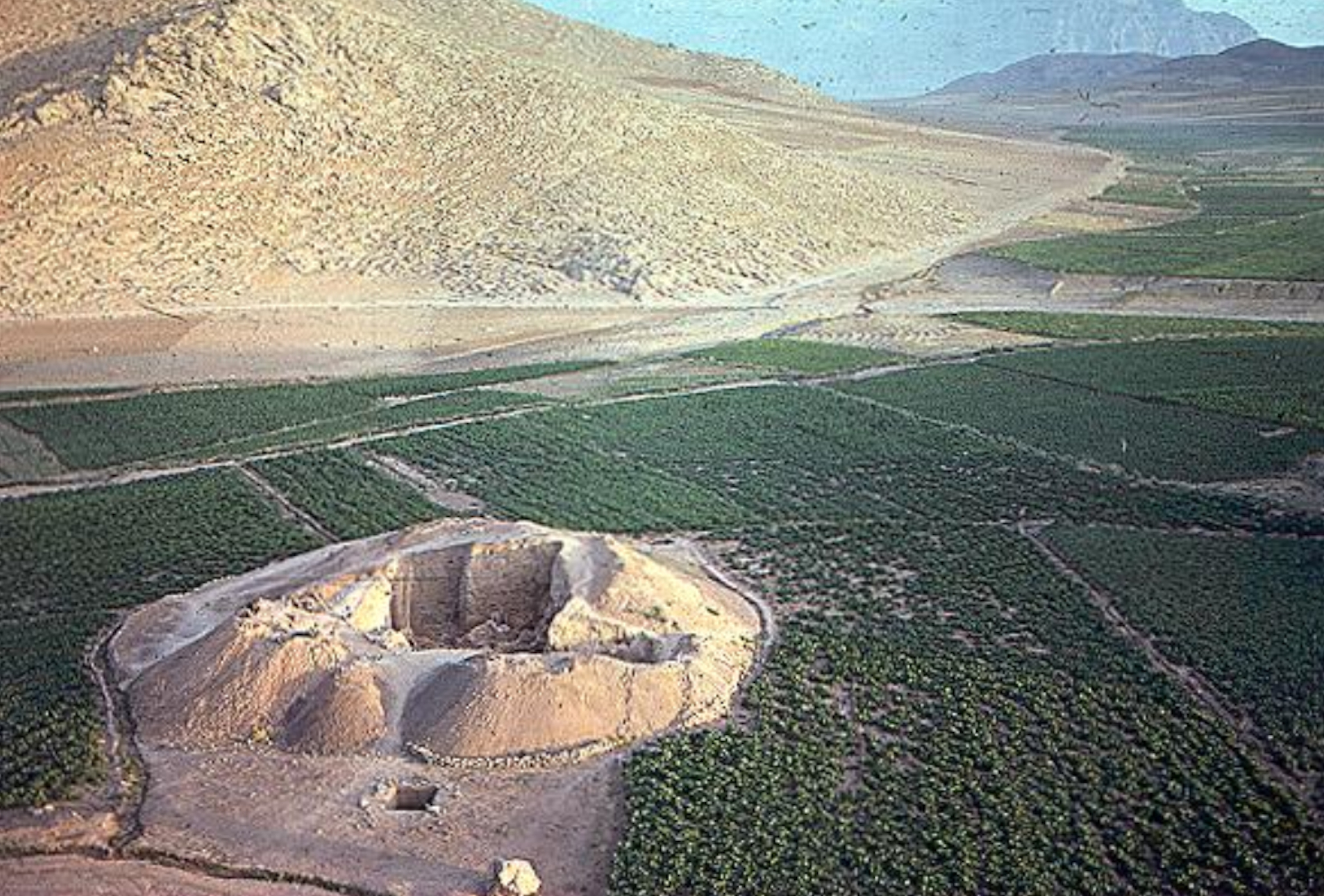
Ganj Dareh is a Neolithic site in western IranIranIran is the modern country containing Shush, ancient SusaGlossary · Click to read the explanation’s Zagros Mountains. Its buildings and burials provide evidence for an early community and the treatment of bodies within a settlement.[1]
A 2021 study places the beginning of the examined occupation around 10,100 calibrated years before present (cal BPCalibrated years before present (cal BP)cal BP denotes calibrated calendar years before the fixed reference year 1950, not raw ¹⁴C BP measurements; calibrated intervals depend on the curve, sample and probability model.Glossary · Click to read the explanation)—approximately 8150 BCE, since BP uses 1950 as its reference—and estimates a duration of about 200–300 years. It reports at least 14 modified crania among remains representing at least 116 individuals. The latter is not the number of assessable crania, so dividing these figures does not yield a reliable prevalence.[1]
References and notes
- Julien Riel-Salvatore, Andrew Lythe & Alejandra Uribe Albornoz (2021). New insights into the spatial organization, stratigraphy and human occupations of the Aceramic Neolithic at Ganj Dareh, Iran. PLOS ONE 16(8), e0251318. DOI: 10.1371/journal.pone.0251318. Read site, chronology and burial passages in the full text, especially Burials: a minimum of 116 individuals and at least 14 modified crania, drawing on prior studies. Most levels span about 200–300 years beginning around 10,100 cal BP; an older horizon is discussed. Not every supplement or specimen record was audited. Return to the text ↑
Suggest a correction · Suggest a source for this record
Cite this record
IL Archive, «Ganj Dareh», https://ilarchive.com/en/sites/ganj-dareh