Site · Region
Mannea, a Kingdom Between Assyria and Urartu
- Names
- Mannaea · Mannai · Mannea · Mannean Kingdom
- Region
- The Near East
The Mannean kingdom lay south of Lake Urmia and negotiated with two powerful neighbours. Assyrian records and finds from Qalaichi preserve different sides of its history.
Estimated reading time: 5 min Published Last reviewed:
Share article
Text
Introduction
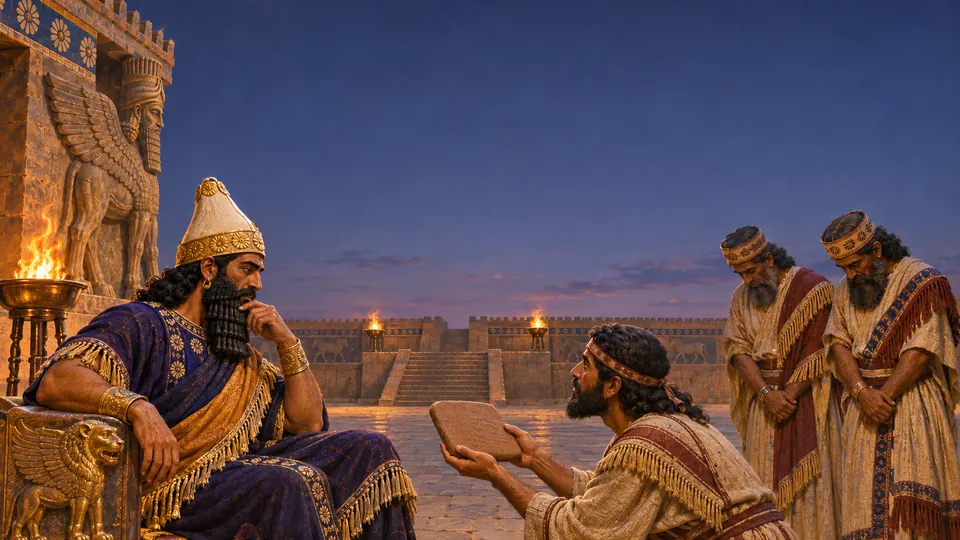
In 714 BCE, Ullusunu of Mannea left his royal city of Izirtu to meet Sargon IISargon IISargon II was an Assyrian king of the late eighth century BCE; ORACC dates his reign about 721–705 BCEGlossary · Click to read the explanation at a border fortress. Sargon's account records the horses, cattle and sheep he received and later describes a banquet at which he honoured Ullusunu. The Mannean king wanted help against Urartu and its allies. Archaeology south of Lake Urmia supplies a different view of the kingdom. A fortified site near Bukan has yielded glazed architectural bricks and the closing lines of an Old Aramaic inscription invoking two gods. [1][2][3]
A kingdom in the Zagros
Mannea lay in the northern Zagros of what is now western IranIranIran is the modern country containing Shush, ancient SusaGlossary · Click to read the explanation. Yousef Hassanzadeh places its core south of Lake Urmia and north of Lake Zaribar. He distinguishes that core from areas where he sees political expansion or influence. The pattern matters because neither a shared kind of pottery nor the appearance of a settlement in an Assyrian itinerary gives a secure line for the kingdom's borders. The Assyrian sources identify a royal centre and name districts, fortresses and local governors, some of whom could act against their king. [2][4]
The Black Obelisk of Shalmaneser III recounts an earlier approach to Mannea. In its account of the king's thirtieth regnal year an Assyrian commander reaches the cities of a Mannean ruler, Udaki, who leaves his royal city of Zirtu as the army approaches. Shalmaneser says he had remained at Calah and sent his field marshal, who crossed the Zab and collected tribute from other local rulers along the way. The text claims the seizure of livestock and other property. It records the place through the actions of an invading force, while the royal title and the reference to surrounding towns disclose some of the geography over which the Mannean king exercised power. [2]
A throne in dispute
Sargon's annals describe a struggle after the death of Iranzi. Azâ was killed, and Ullusunu took the throne. The inscriptions blame Rusâ of Urartu for encouraging dissension among Mannean leaders. The Assyrian court's own correspondence adds detail. A letter mentions Ullusunu sending horses to Aššur-le'i of Karalla, whom the editors of the letters identify as part of a regional alliance promoted by Rusâ. The documents preserve the Assyrian side's view of who was in contact with whom during the crisis. [4][5]
Sargon says that in his seventh regnal year Rusâ took twenty-two fortresses from Ullusunu. The same passage names Dayukku, a Mannean governor, whose son Rusâ received as a hostage. Sargon claims to have taken the fortresses for Assyria and deported Dayukku and his household. The repeated changes in control show how quickly a governor's position, an alliance and the possession of a stronghold could become bound up with the standing of the Mannean king. [4]
Sargon's eighth campaign
In the detailed campaign account addressed to the god Aššur, Ullusunu comes from Izirtu with members of the ruling family and other leading men. They meet the Assyrian king at Sinihinu in Luckenbill's rendering. Later, at Sirdakku, Ullusunu supplies provisions for the Assyrian army. Sargon represents the Mannean leaders as asking him to drive back Rusâ and restore their country. He says he offered protection and gave Ullusunu a banquet, seating Manneans with Assyrians. [1]
The account gives space to both sides' needs. Ullusunu seeks intervention against named adversaries and helps supply a campaigning army. Sargon presents the result as a demonstration that Assyria can confer status on a neighbouring king. The annals also say he took Uišdiš from Rusâ in 714 BCE and gave the district to Ullusunu. A separate report that a Mannean king attacked Urartian towns along a lake shore shows why Assyrian officials had reason to follow Mannean actions in their own right. Its date and the ruler's identity are less secure than the identities in the campaign narrative. [1][4][5]
Qalaichi and the stele of Bukan
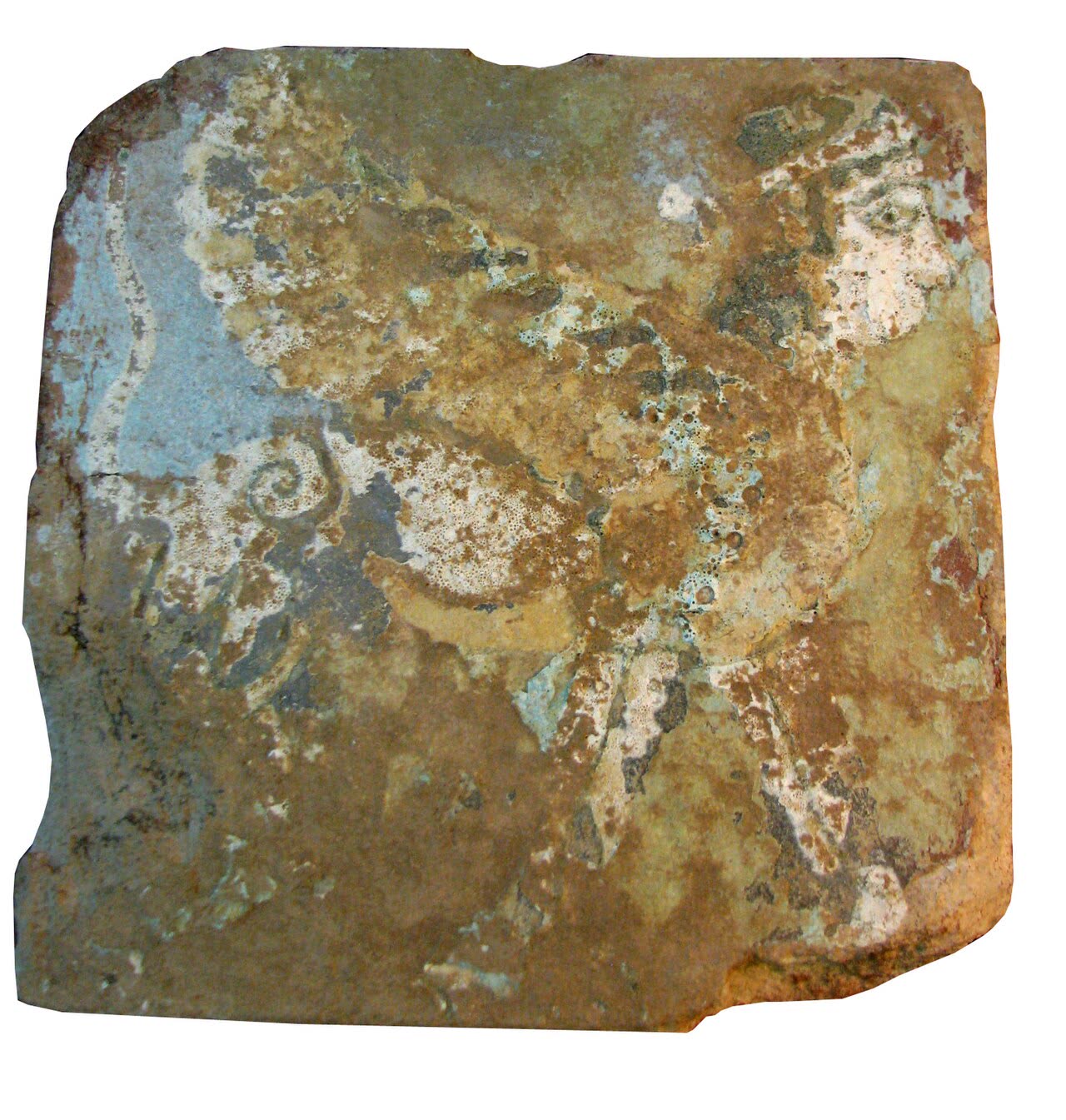
Qalaichi, near modern Bukan, was excavated in 1985 and again from 1999. The excavation team identifies the site with Izirtu. A stone enclosure, a large columned hall and adjoining chambers survive in the archaeological record. The site also produced glazed bricks with floral designs and animal and composite figures. Finds with an excavated context are especially valuable here because bricks that appeared on the antiquities market often lacked reliable records of where they had been found. [2][6][7]
Only the end of the stone inscription from Qalaichi survives. Edward Lipiński's edition reads the surviving portion as curses against a ruler who would remove the stone or write on it. It names Haldi at Za'ter and asks Hadad to overthrow the offending king. Among the penalties are failing bread production and the disappearance of the sound of milling. The relationship of Za'ter to Izirtu is an interpretation that draws on the place-name and the site's wider evidence. The surviving monument cannot supply the lost opening or the full circumstances of its erection. [3][6][7]
Together, the court documents, stone inscription and buildings show political life at different scales. Sargon's inscriptions record meetings, pledges and disputes in which Assyria took part. At Qalaichi, the labour of marking a sacred or public place can be seen in the stone, painted rooms and glazed bricks. The stele's threats to anyone who interferes with it are among the few surviving words from the Mannean heartland itself. [1][2][3][6]
References and notes (7)
- Daniel David Luckenbill, Ancient Records of Assyria and Babylonia, vol. II Read §§ 144–151, pp. 75–79, the translation of Sargon's eighth campaign with the border meetings, supplies, petition and banquet. Return to the text ↑
- Yousef Hassanzadeh, An Archaeological View to the Mannaean Kingdom Read sections I, II, IV.5 and VII on the heartland, the Black Obelisk, Qalaichi's architecture and finds, and identifying sites. Return to the text ↑
- Edward Lipiński, The Mannaean Kingdom and the Old Aramaic Inscription from Tepe Qalaichi Read the translation and interpretation of the inscription's 13 surviving lines, including Za'ter and the curses invoking Haldi and Hadad. Return to the text ↑
- Grant Frame, The Royal Inscriptions of Sargon II, King of Assyria Read the introduction's section on the campaigns and Sargon II 1, lines 78–109 and 133–137, plus Sargon II 4 on the succession. Return to the text ↑
- Giovanni B. Lanfranchi and Simo Parpola, The Correspondence of Sargon II, Part II Read the discussion of the northeastern sector and letters 84, 131 and 216–218 in the introduction, including the uncertainties of dating. Return to the text ↑
- Yousef Hassanzadeh, The Glazed Bricks from Bukan (Iran) Read the excavation and research history, the architectural use of the glazed bricks, the possible link between Za'ter and Izirtu, and the sphinx motif in fig. 4. Return to the text ↑
- Bahman Kargar, Ali Binandeh and Behruz Khanmohamadi, Excavations at Tepe Qalaychi Read the published abstract on the field seasons, Iron Age III context, the Bukan stele, and the excavators' identification of Qalaychi with Izirtu. Return to the text ↑
Suggest a correction · Suggest a source for this record
Cite this record
IL Archive, «Mannea, a Kingdom Between Assyria and Urartu», https://ilarchive.com/en/sites/mannea