Site · Contextual definition
Tepe Abdul Hosein
- Names
- Tepe Abdul Hosein
Neolithic site in western Iran’s Zagros whose human remains have been studied for early cranial modification.
Last reviewed:
Text
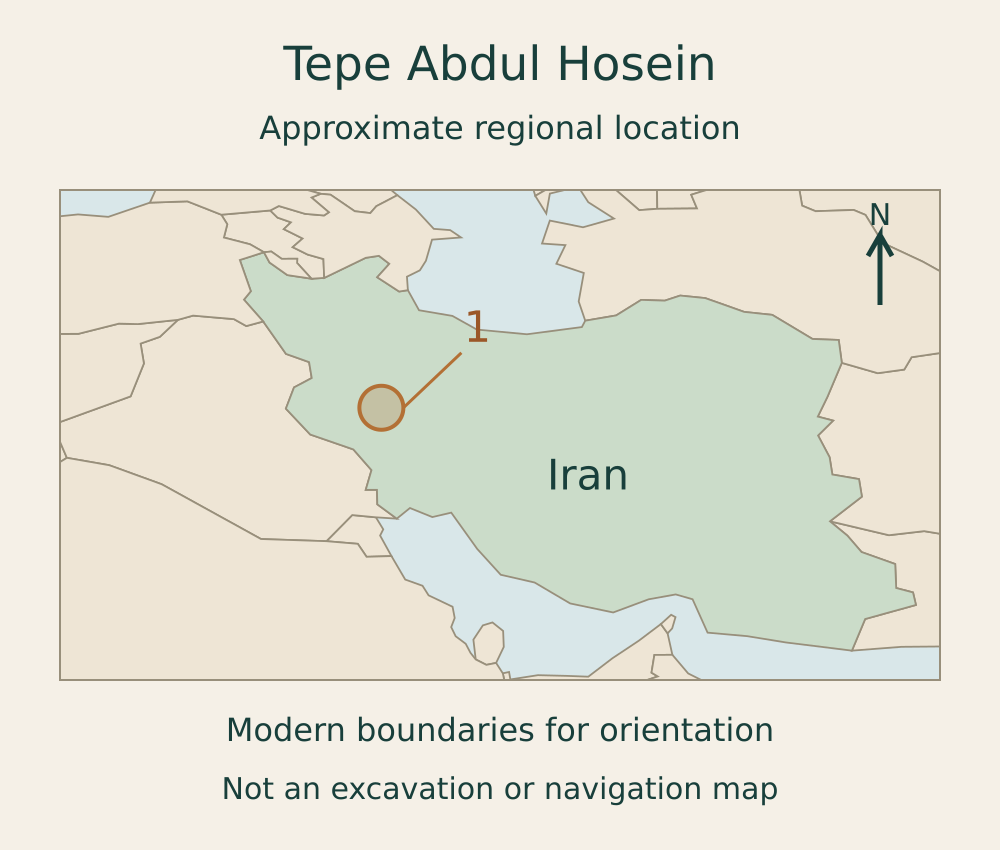
Tepe Abdul Hosein is a Neolithic site in the Zagros Mountains of western IranIranIran is the modern country containing Shush, ancient SusaGlossary · Click to read the explanation. Its human remains matter to the study of head shaping because they permit examination of bone rather than inference from artistic representations.[1]
Bioarchaeologist Kirsi O. LorentzKirsi O. LorentzBioarchaeologist whose research includes human remains and cranial modification in the ancient Near East.Glossary · Click to read the explanation examined twelve individuals from eight mortuary contexts. Of five assessable adult crania, four were modified and one was not. This small sample cannot establish the practice’s prevalence in the entire community. The published abstract describes remains around ten thousand years old; this entry does not assign a direct date to every skull.[1]
References and notes
- Kirsi O. Lorentz (2017), study of cranial modification at Tepe Abdul Hosein. Published abstract only; full paper not read. Return to the text ↑
Suggest a correction · Suggest a source for this record
Cite this record
IL Archive, «Tepe Abdul Hosein», https://ilarchive.com/en/sites/tepe-abdul-hosein
Continue reading