The Seven Sages from the Sea Chapter 1
The Sages of the Water
In Berossus’s account Oannes emerges from the sea and teaches the arts of ordinary life before returning at dusk. Cuneiform tablets preserve the names and deeds of seven river-born sages. A small Assyrian clay figure shows how that tradition entered the protection of a room.
SourcesTurn the pages with the arrows, the arrow keys or a swipe.
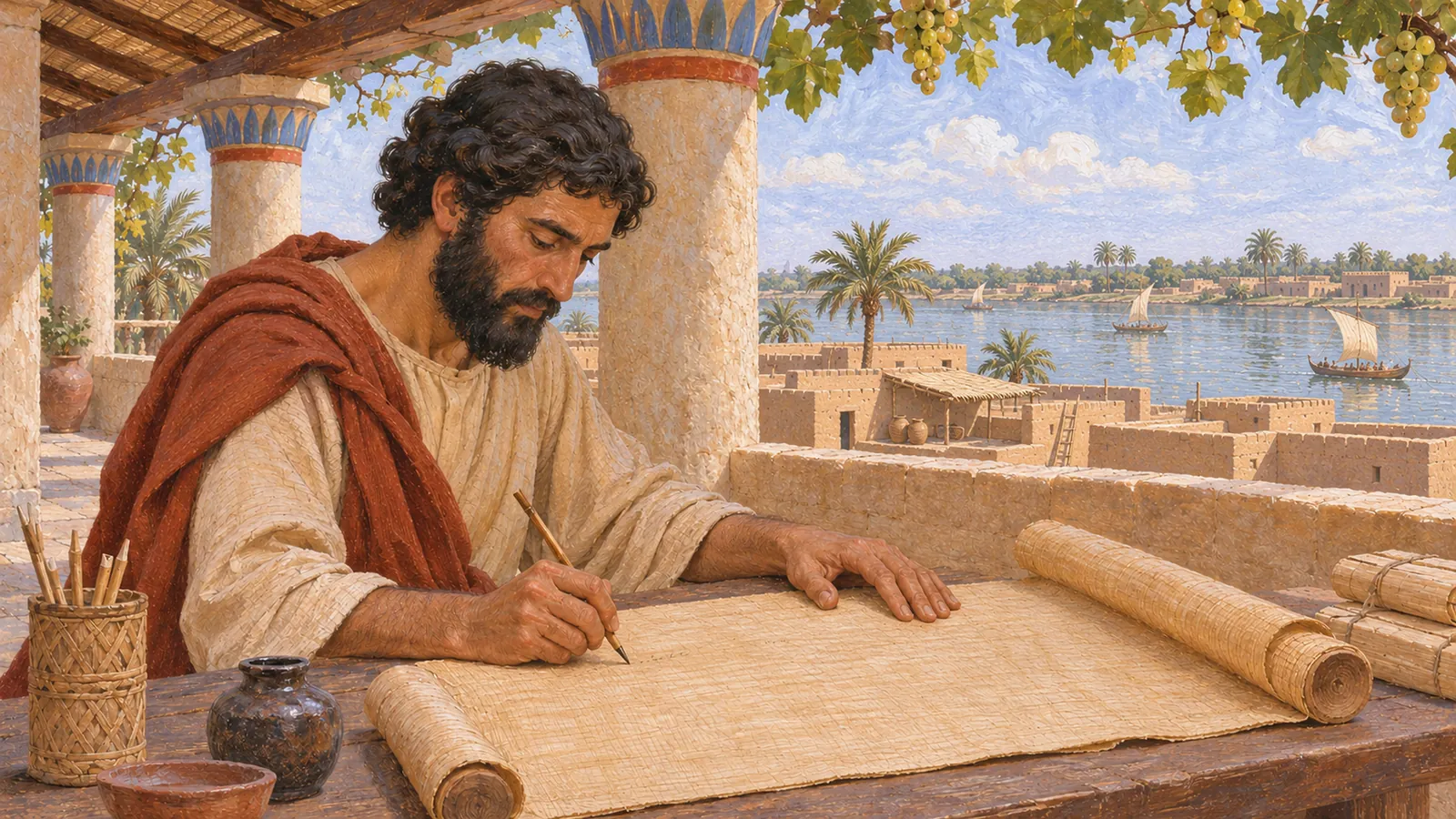
BEROSSUS
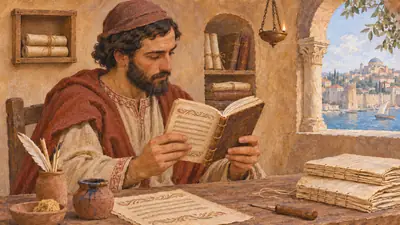
Berossus wrote about his own country in Greek more than two thousand years ago. He said that records carefully kept in Babylon told of the sky and sea, of the first births, and of the deeds of kings.
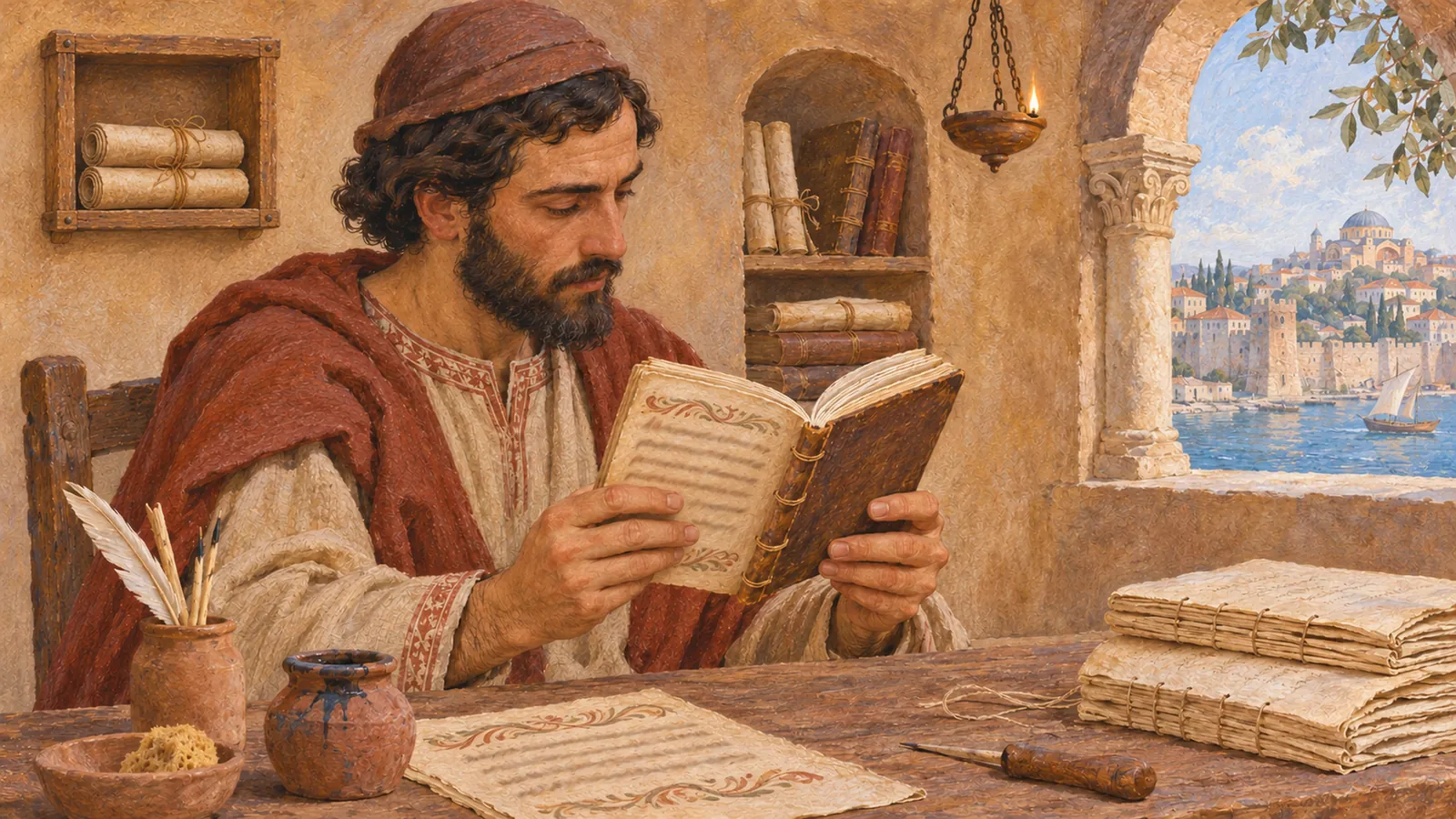
The original book is lost. Alexander Polyhistor made an abridgment. Eusebius used that account, and George Syncellus preserved excerpts in Greek centuries later.
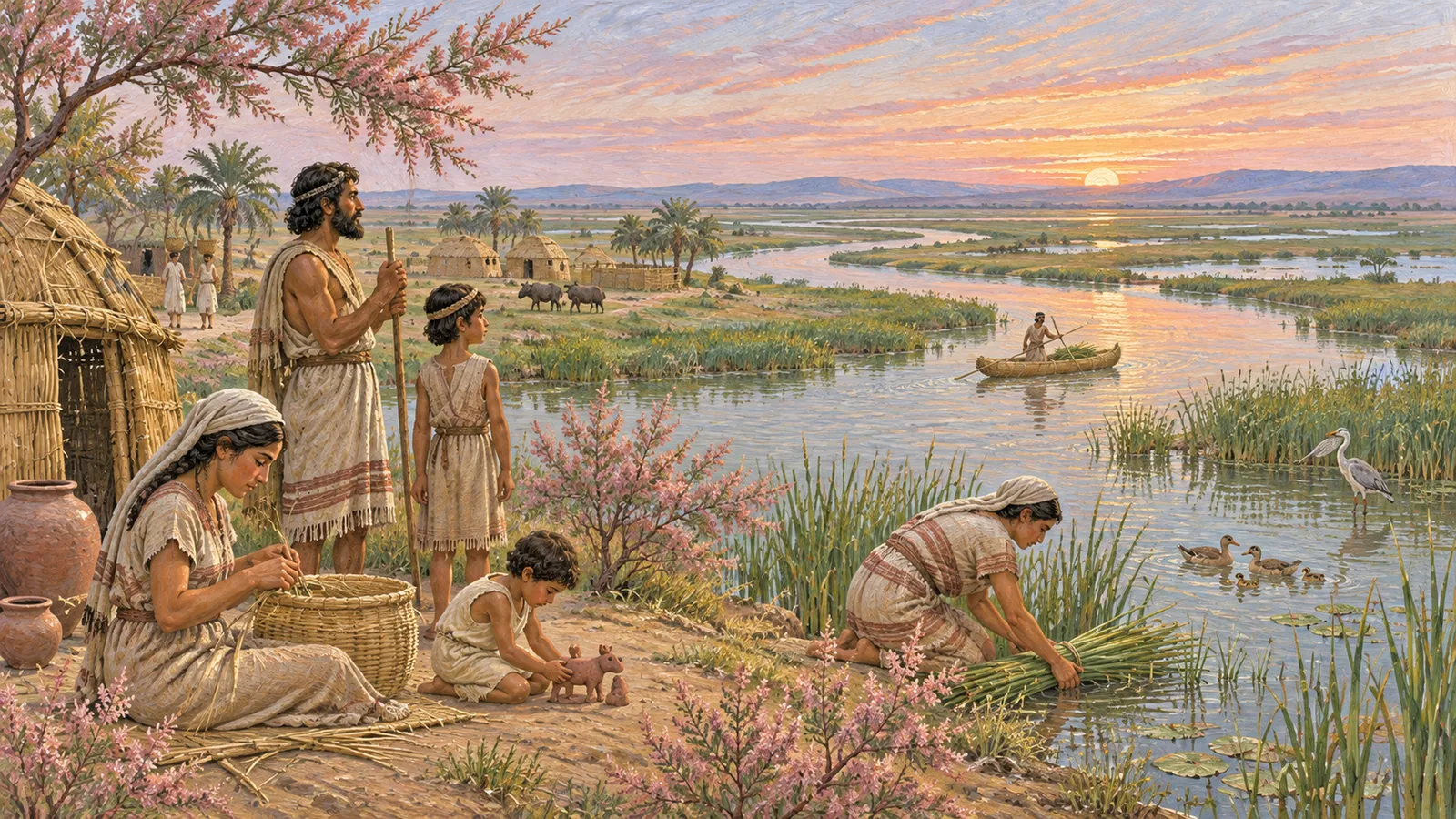
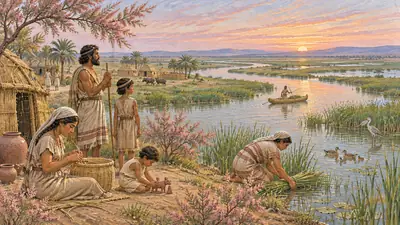
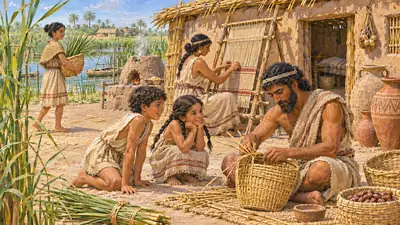
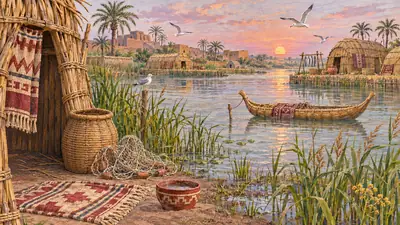
The account begins between the Tigris and the Euphrates. It describes grain and fruit, fish and water birds. There is dry country on one side and fertile hill country on the other.
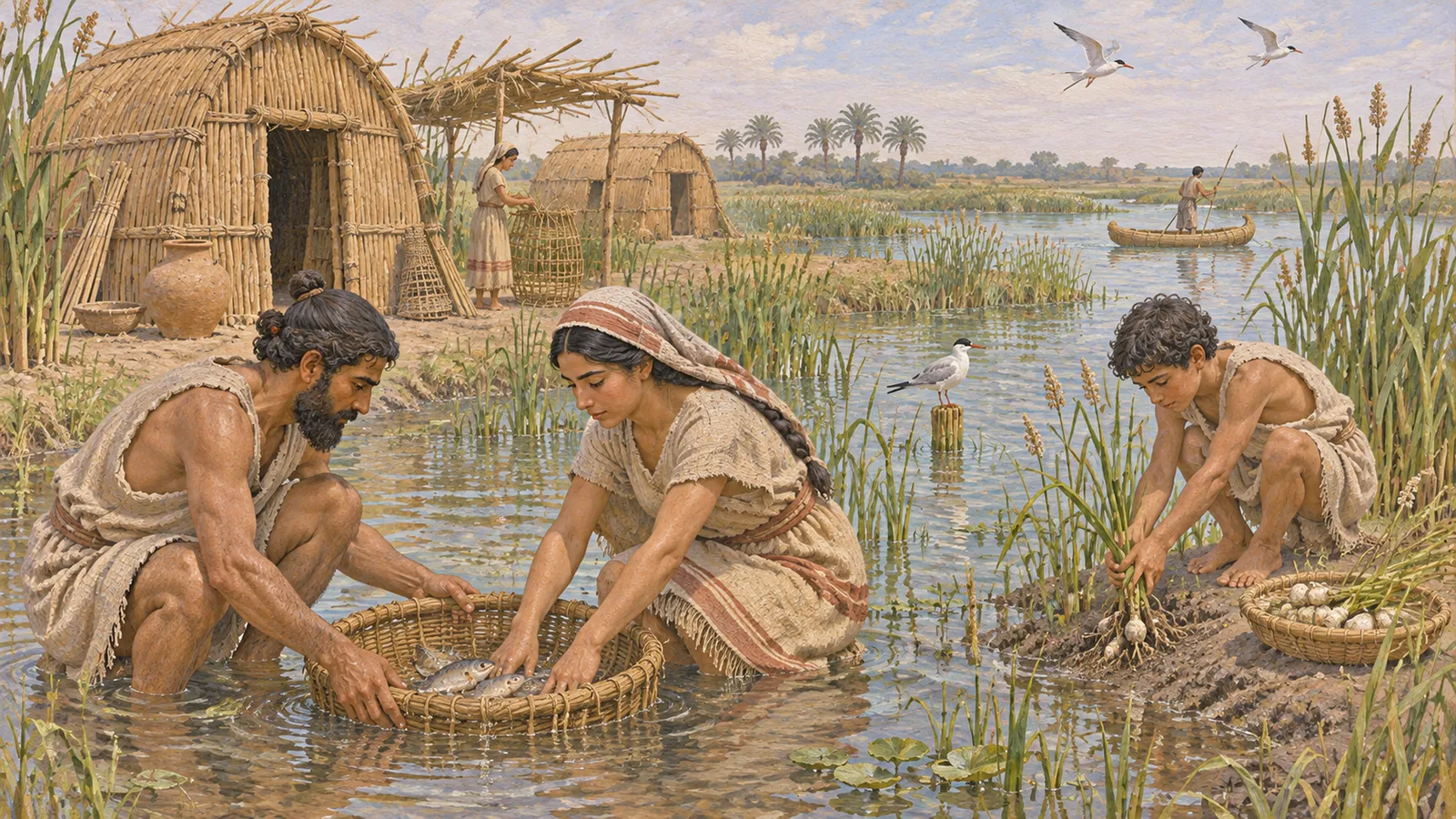
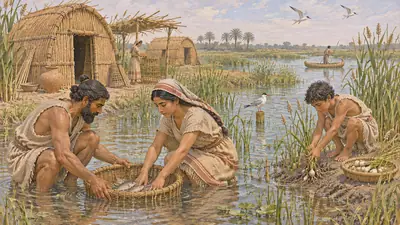
The writer notices edible roots in the marsh and birds on both land and water. A basket of fresh fish and a hand pulling a root from the reeds show how much life already surrounds the shore.
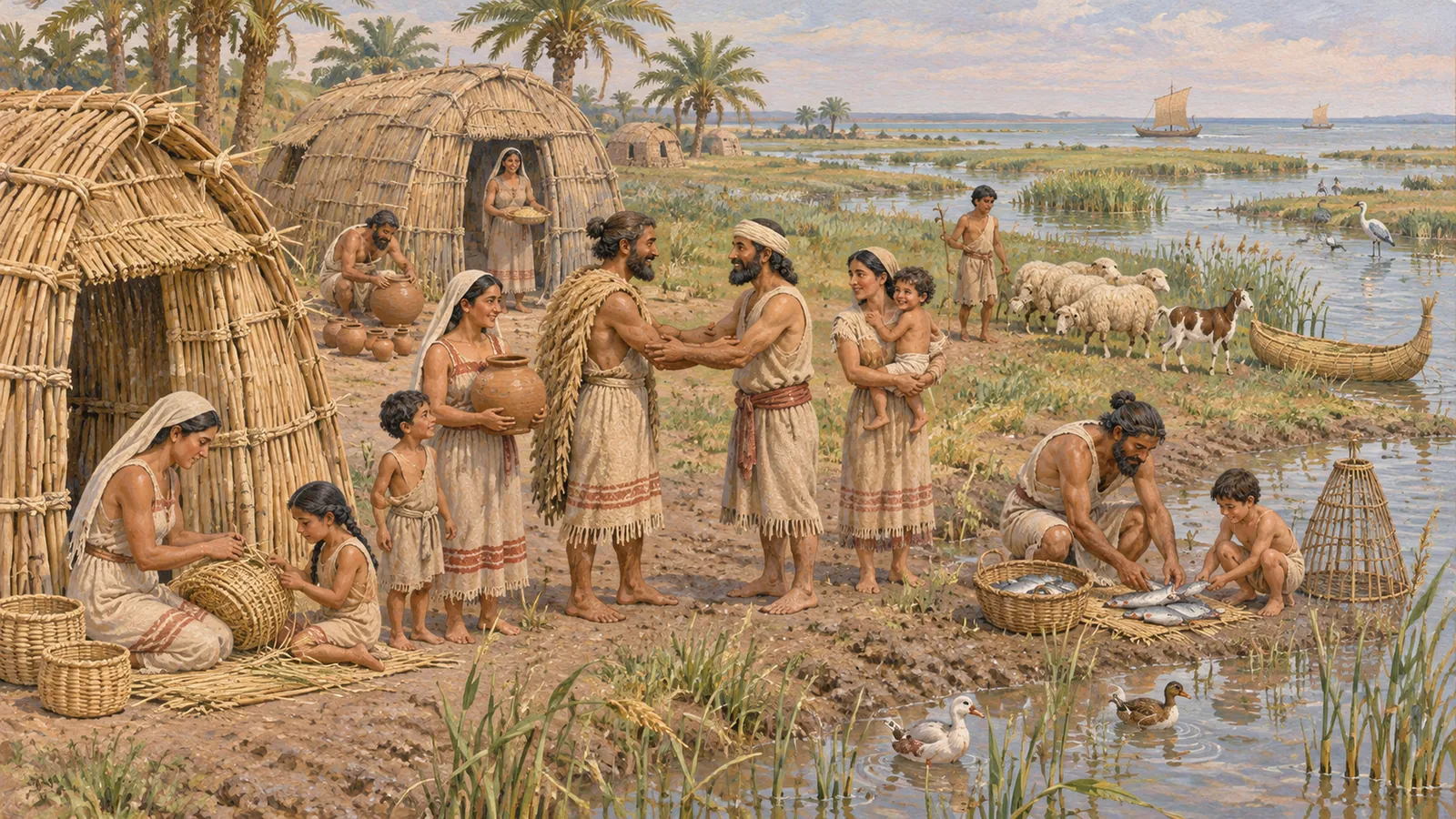
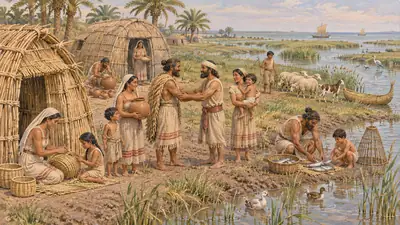
For all the plain’s riches, Berossus imagines a time when people had no settled laws. They have the shore, their hands and one another. The story asks where the rules and skills of shared life come from.
OANNES
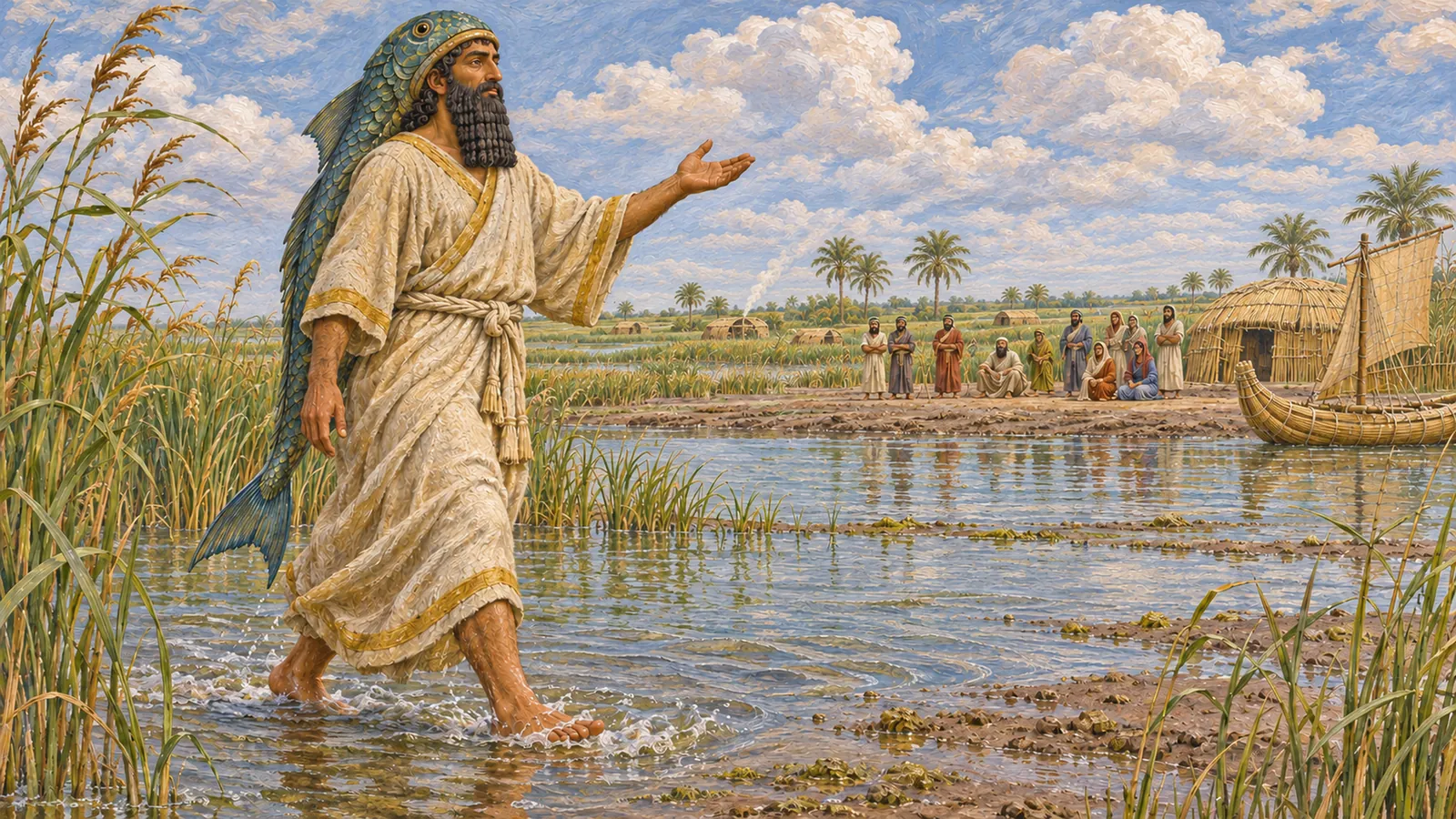
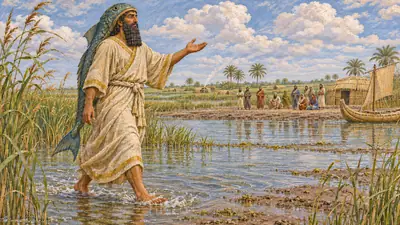
In the first year of the old account, Oannes emerges from the sea beside Babylonia. The Greeks called it the Erythraean Sea. At this shore they probably meant what we now call the Persian Gulf.
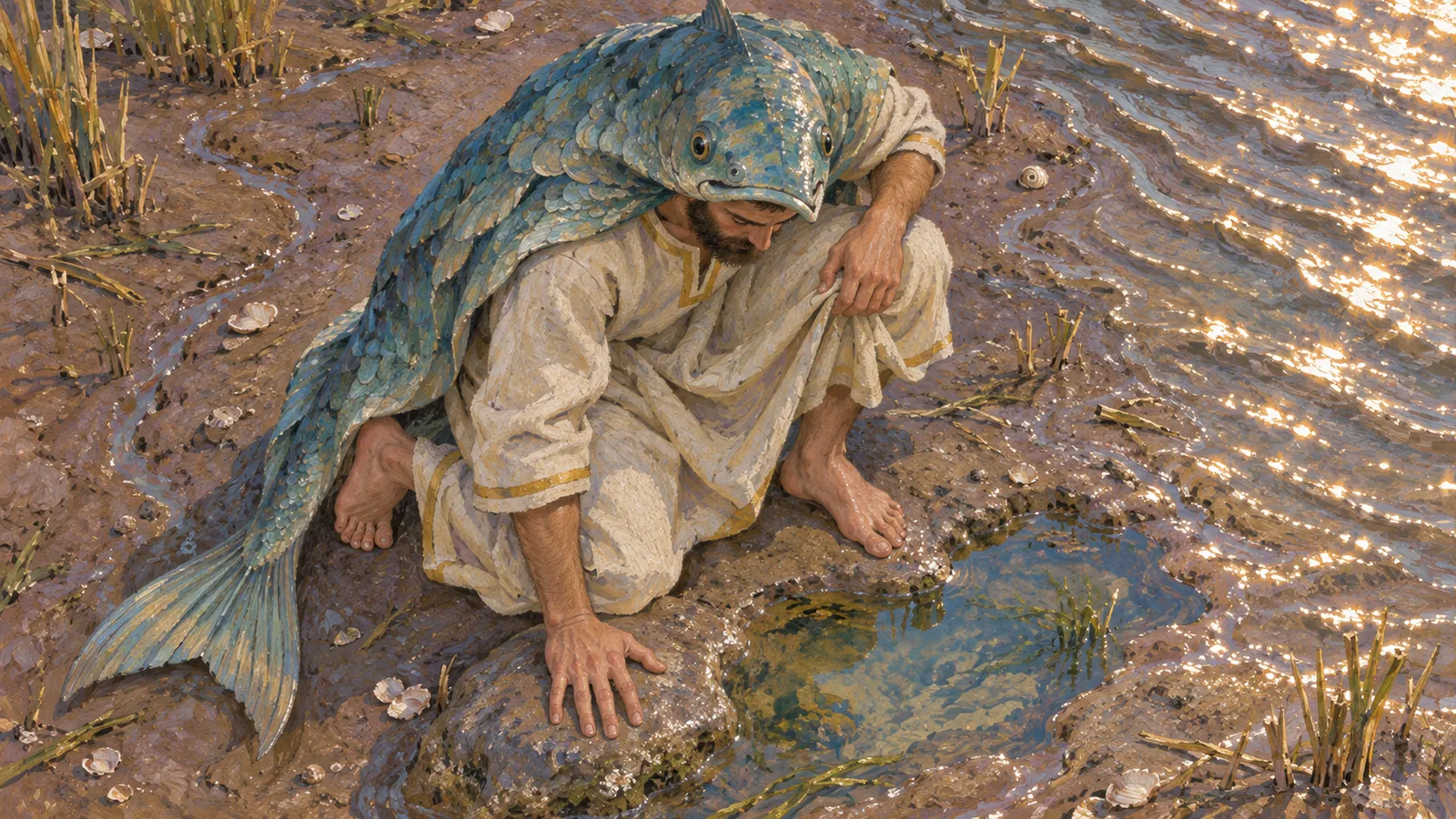
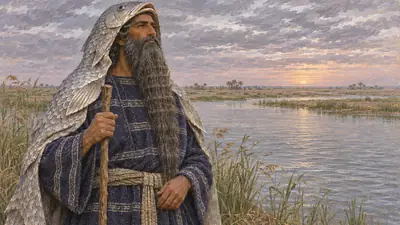
The teller gives Oannes a fish’s body and sets a human head beneath the fish’s head. Human feet extend beneath the tail. The full figure looks at home in two places at once.
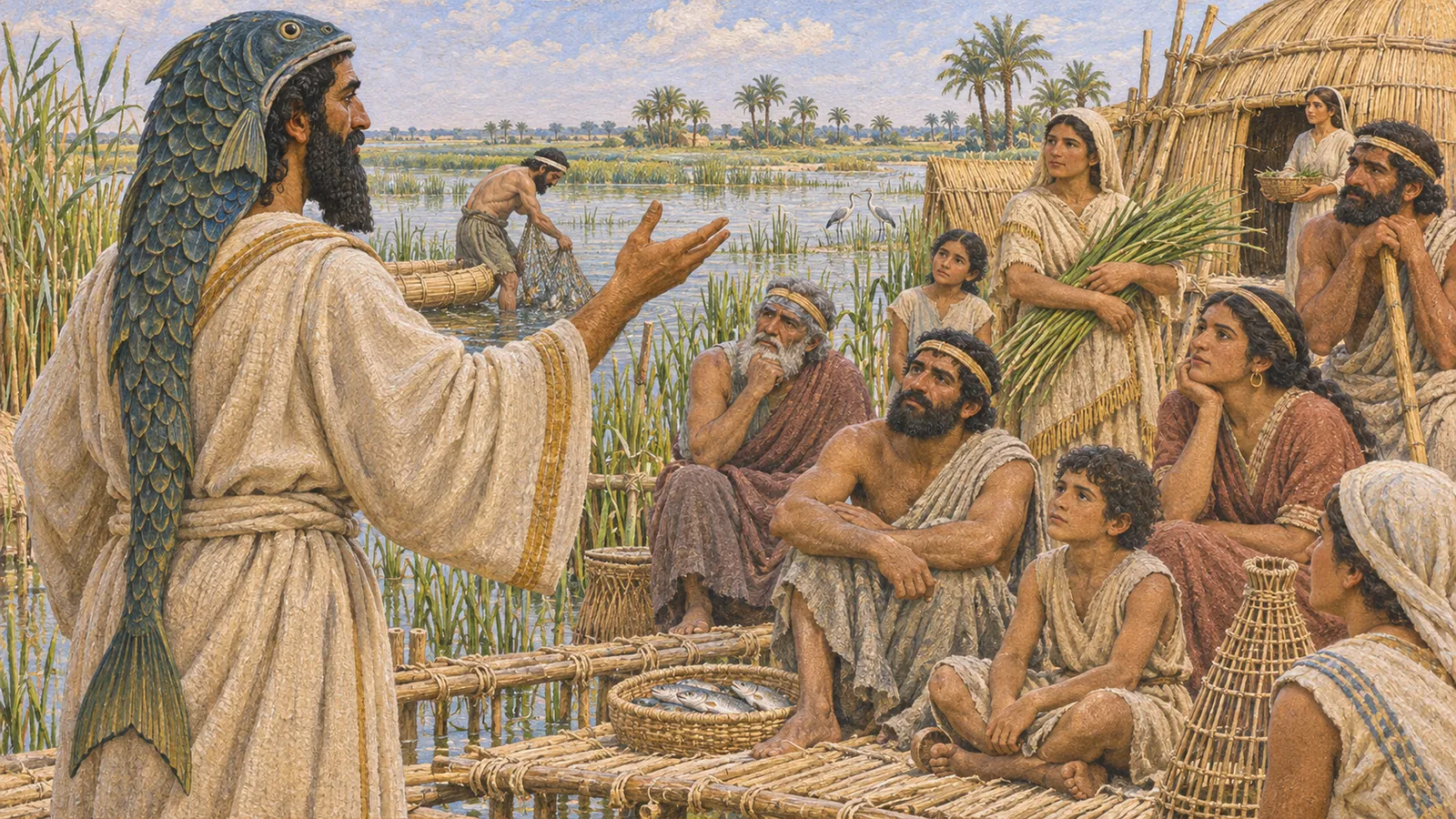
The voice of this double-shaped visitor is human. Berossus even says that an image of him could still be seen in his own day. In the story it is the voice that draws people nearer.
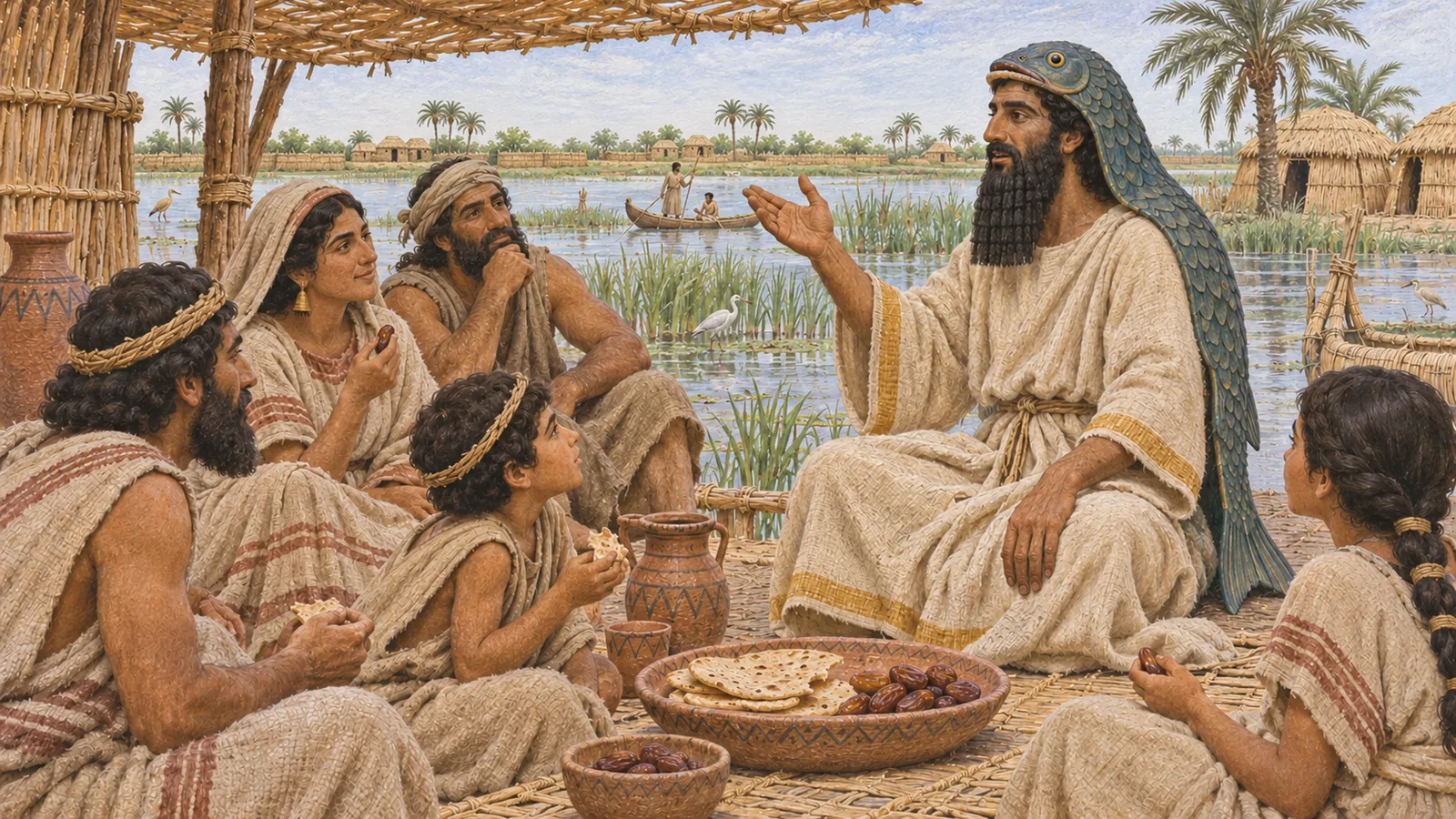
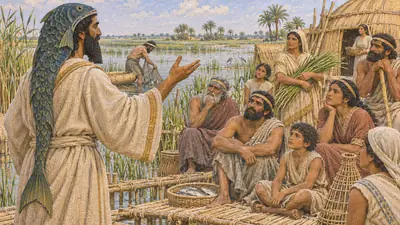
Oannes spends the daylight hours among people on land. They have food beside them, and he takes none while he is there. He passes the hours showing them skills that can shape their lives.
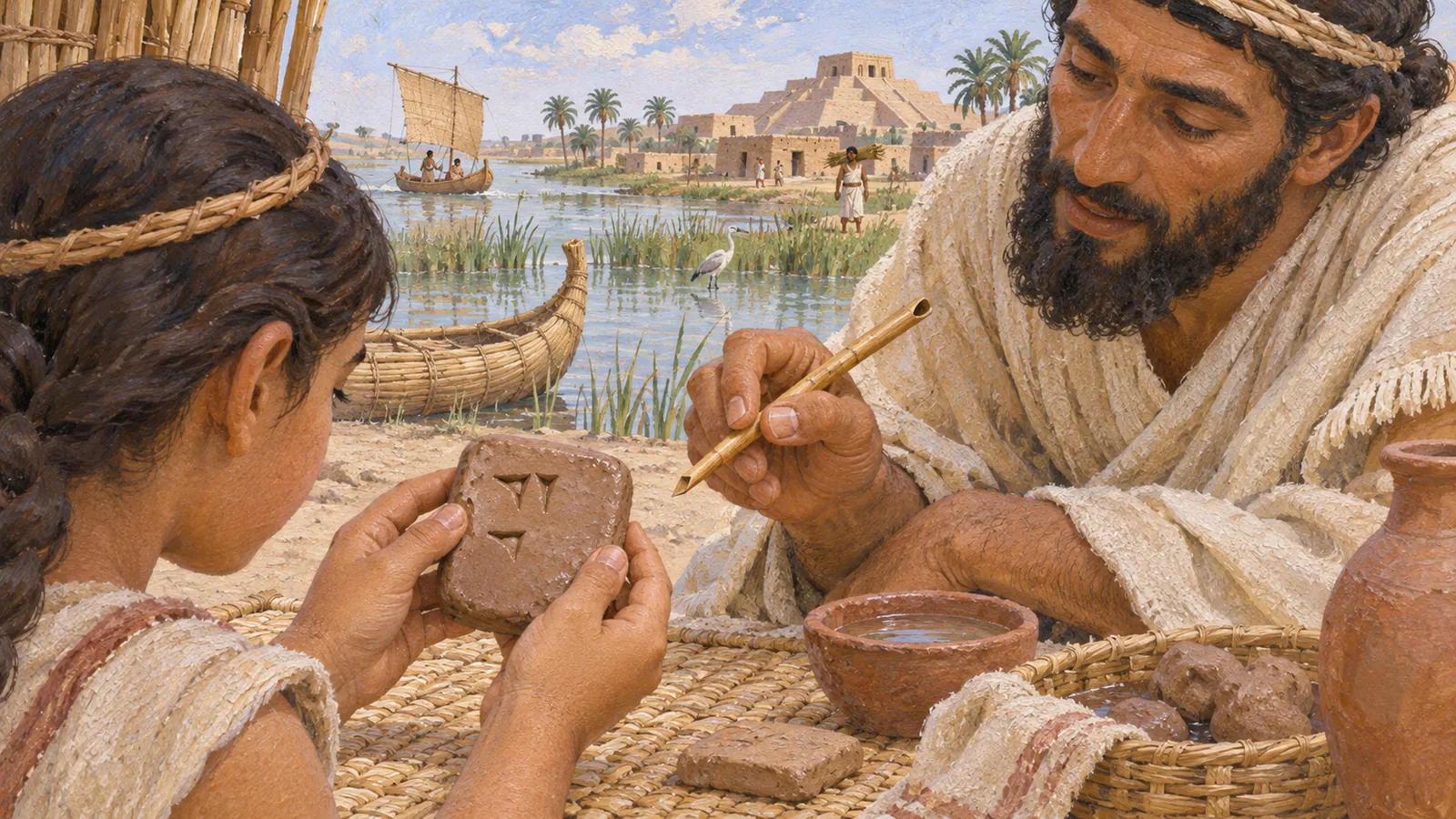
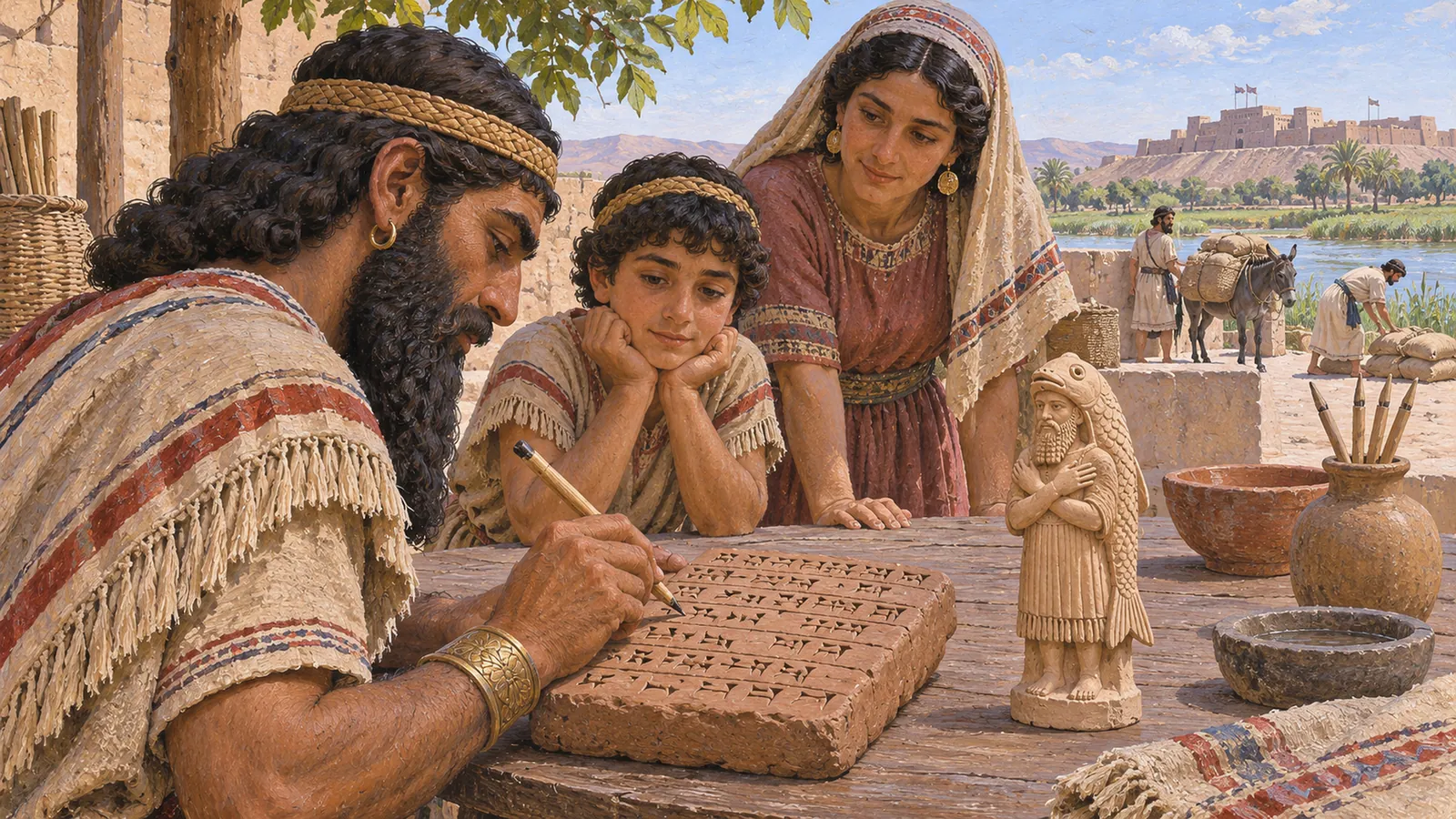
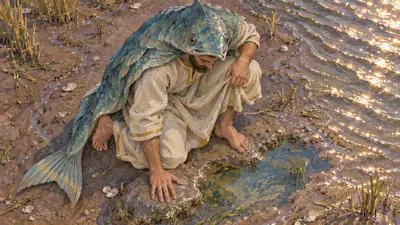
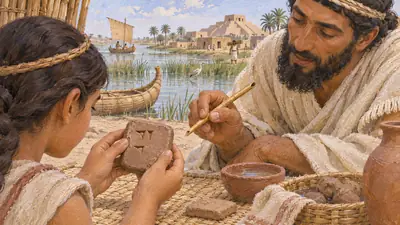
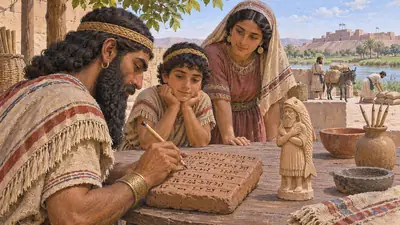
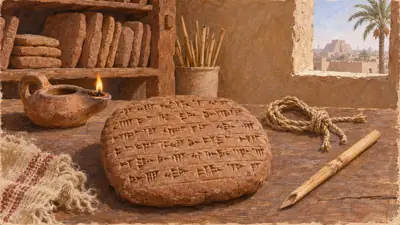
He brings knowledge of letters and practical skills. Here a learner tries a few marks and turns the clay to see them catch the light. A thought may now be remembered by an object held in the hand.
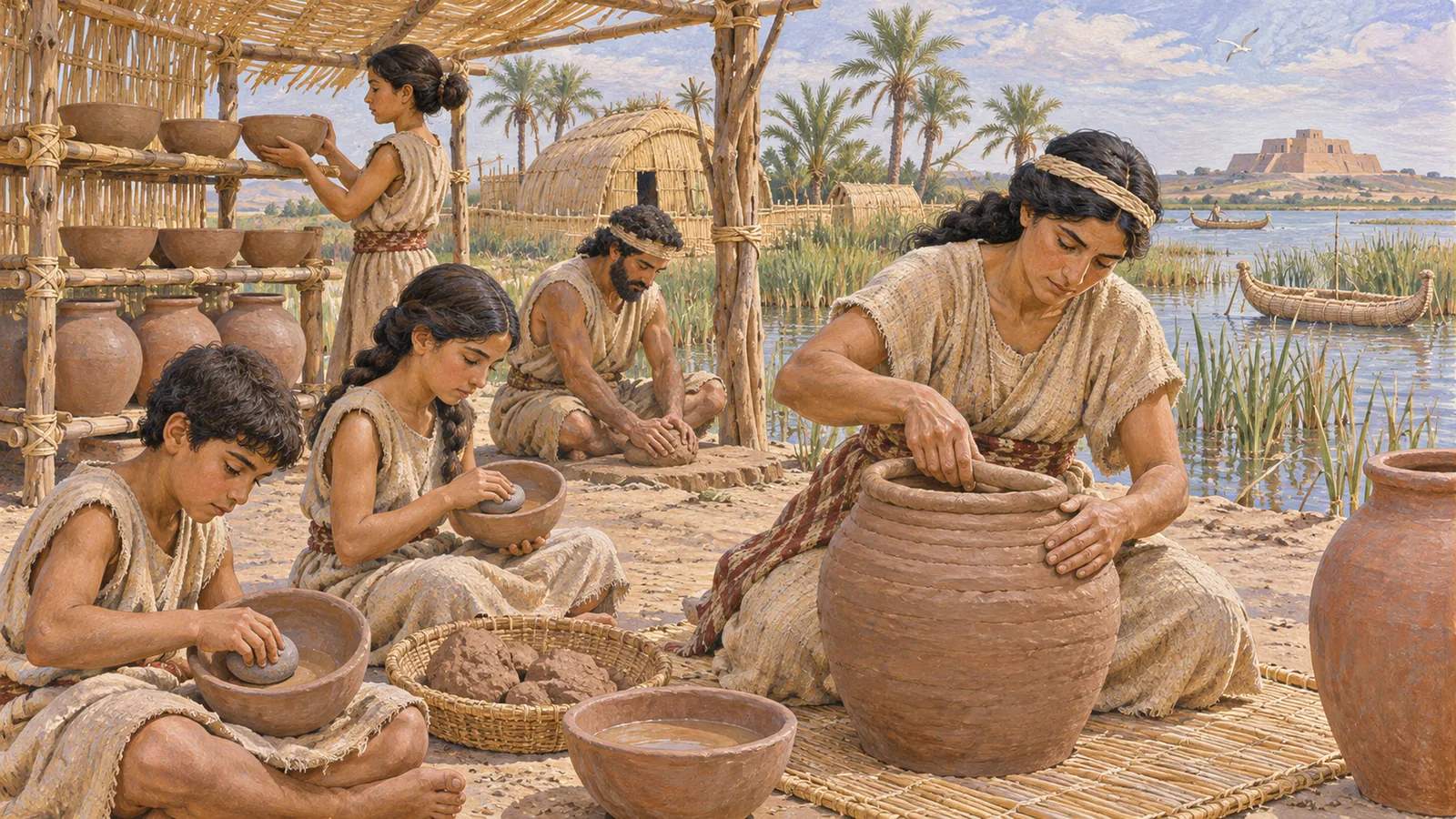
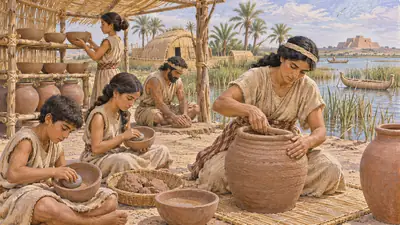
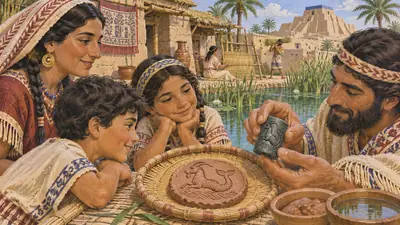
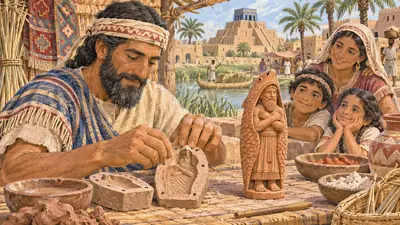
Berossus gathers many crafts into the gift. An imagined workshop shows how a skill can pass from person to person. Someone shows how to shape a vessel, then a learner tries it.
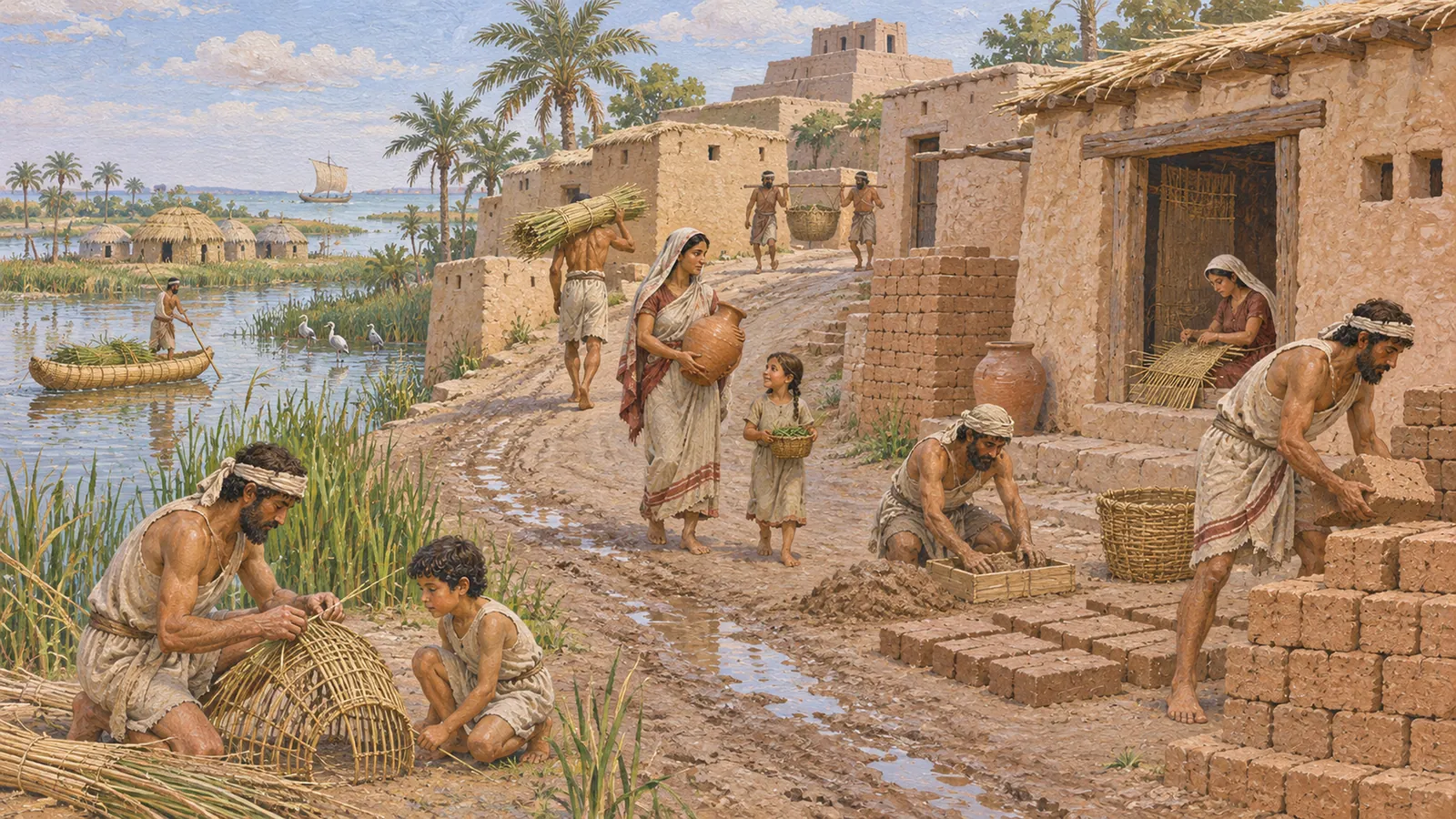
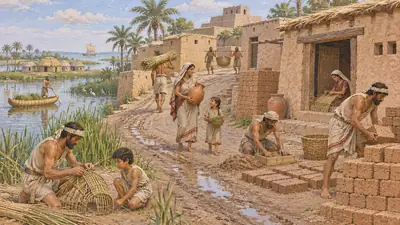
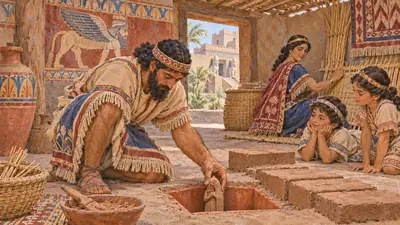
Oannes teaches people to found cities. The tale gives no plan of the first one. A street takes shape here because neighbors set their walls in relation to one another and leave room for people to pass.
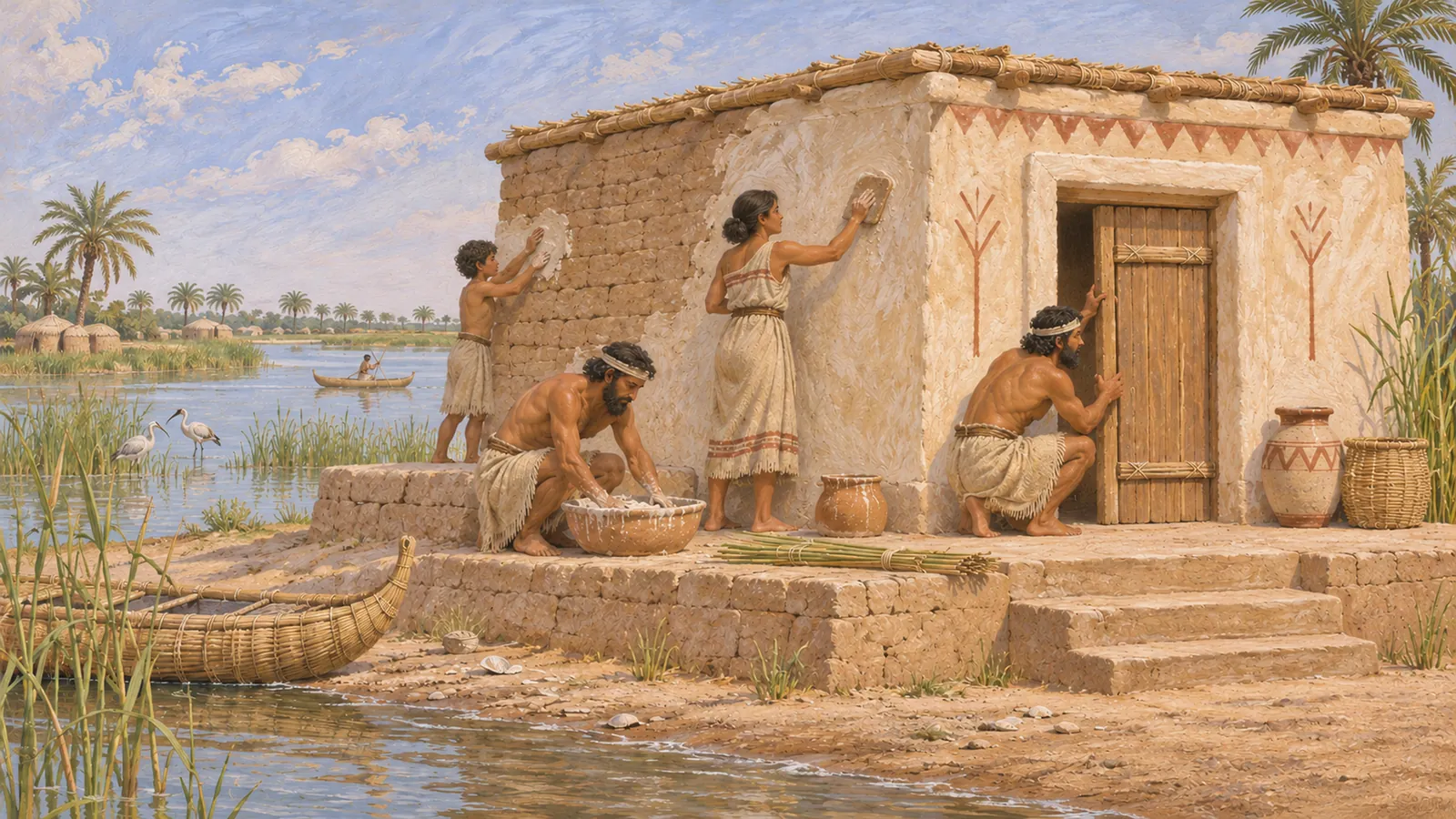
The skill includes establishing sanctuaries. A shared building stands apart from the houses. For the storyteller, knowing how to make room for worship is part of knowing how a city lives.
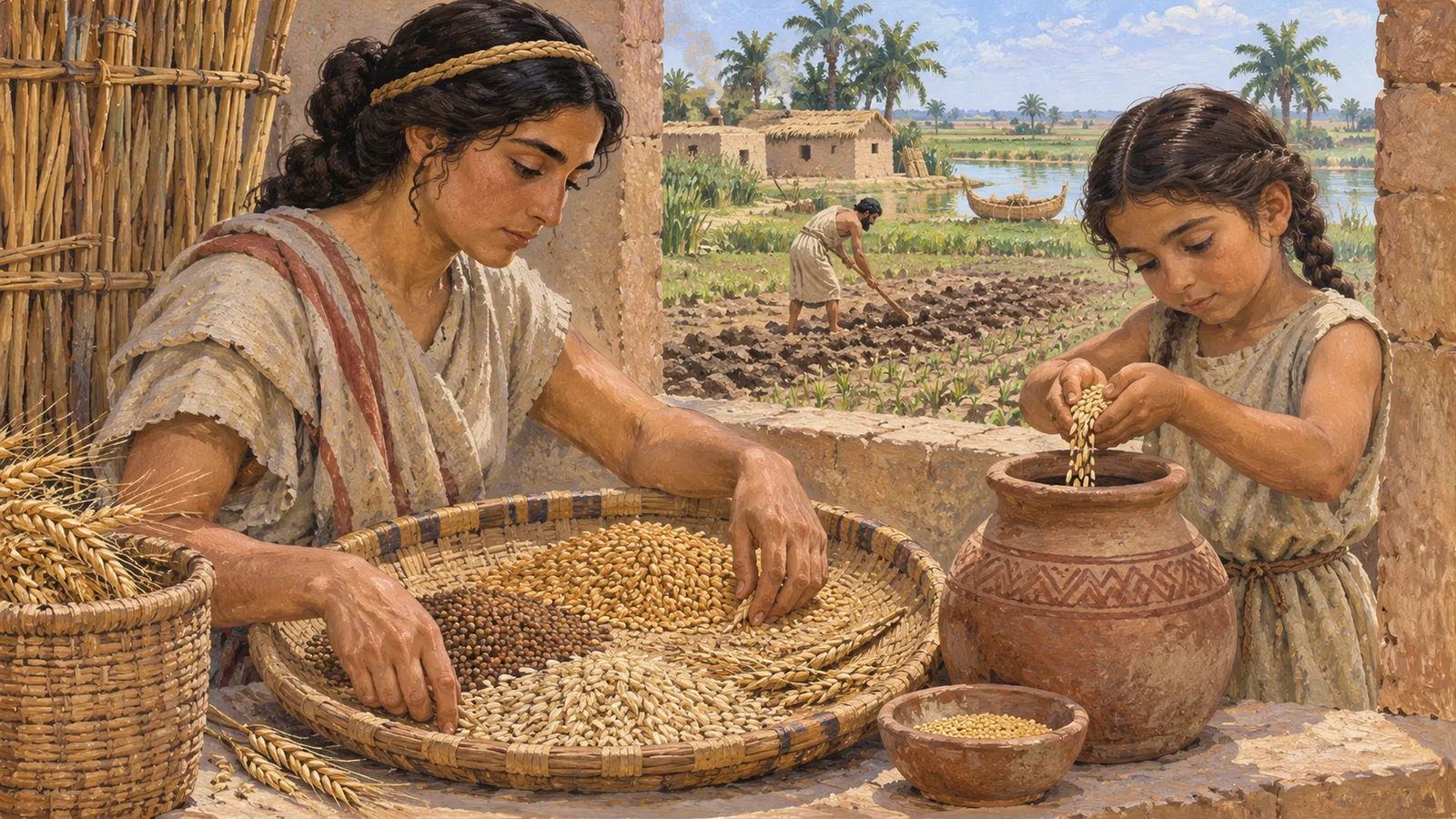
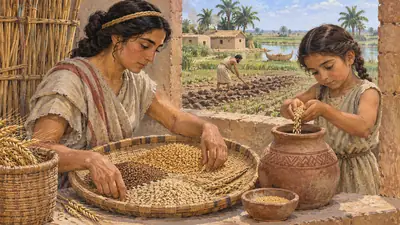
Oannes teaches people to recognize the earth’s seeds. A small handful now can be a field later. Here a grower takes time to choose what to save before the next sowing.
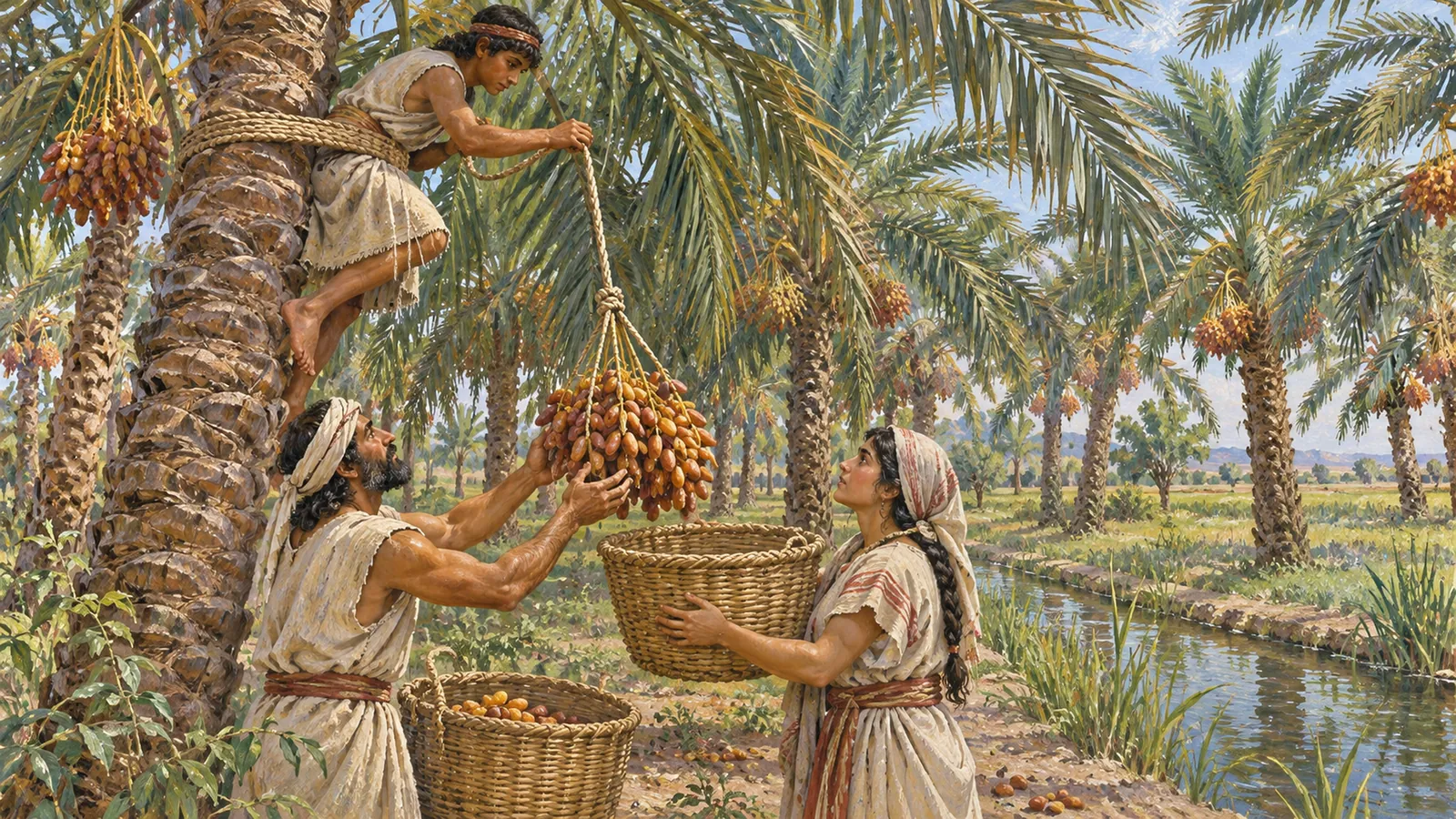
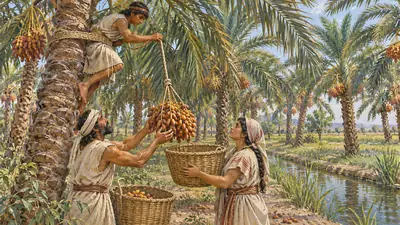
He teaches how to gather fruits, too. At a date palm, a heavy cluster can be lowered into baskets. The gift lives on in the different jobs that make up a harvest.
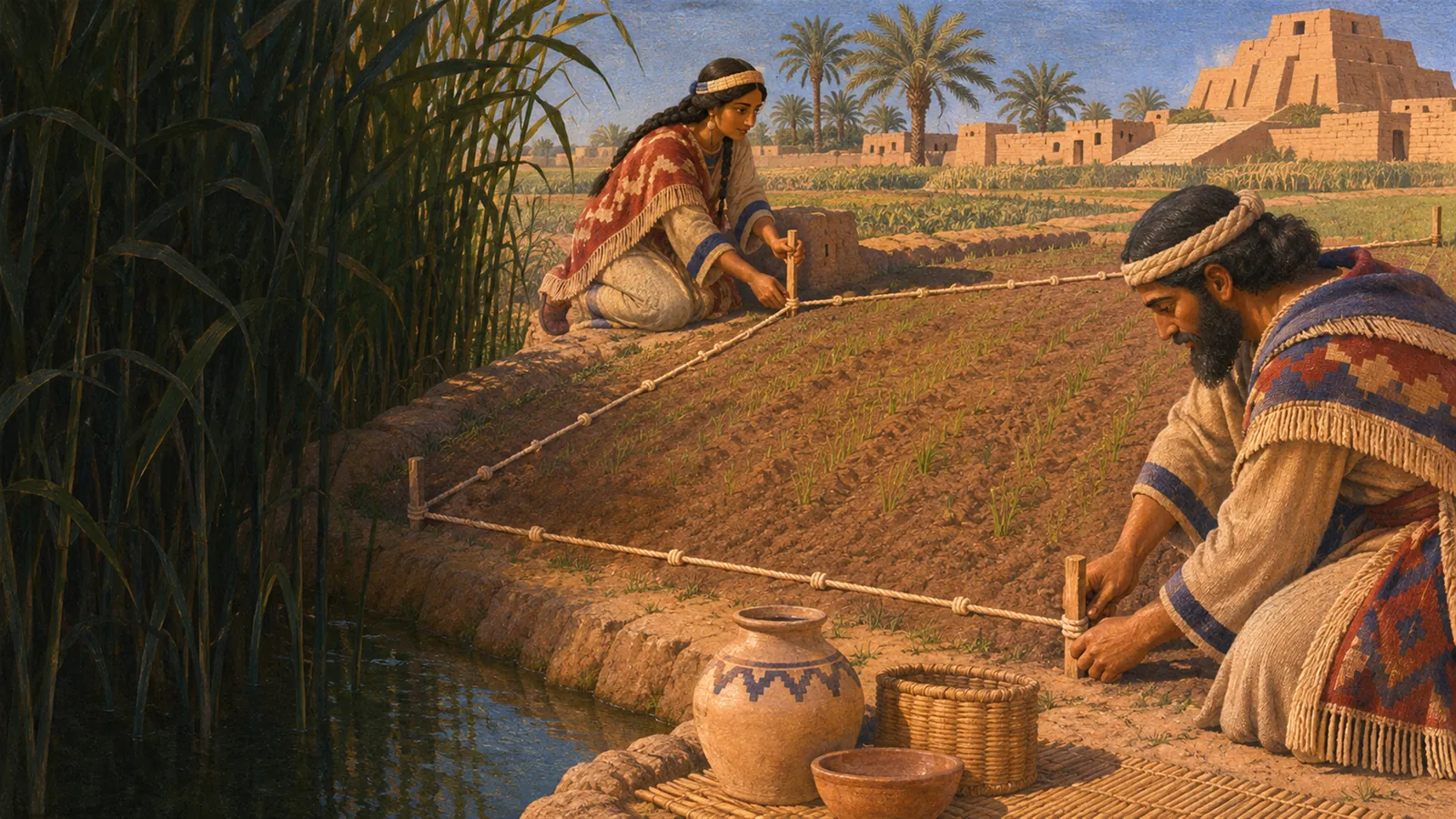
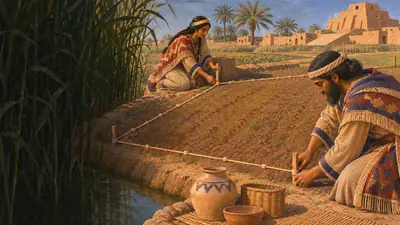
The tale also gives Oannes the teaching of measurement. A stretch of ground can be worked out together. Someone holds the far end of a cord while another sees how far it reaches.
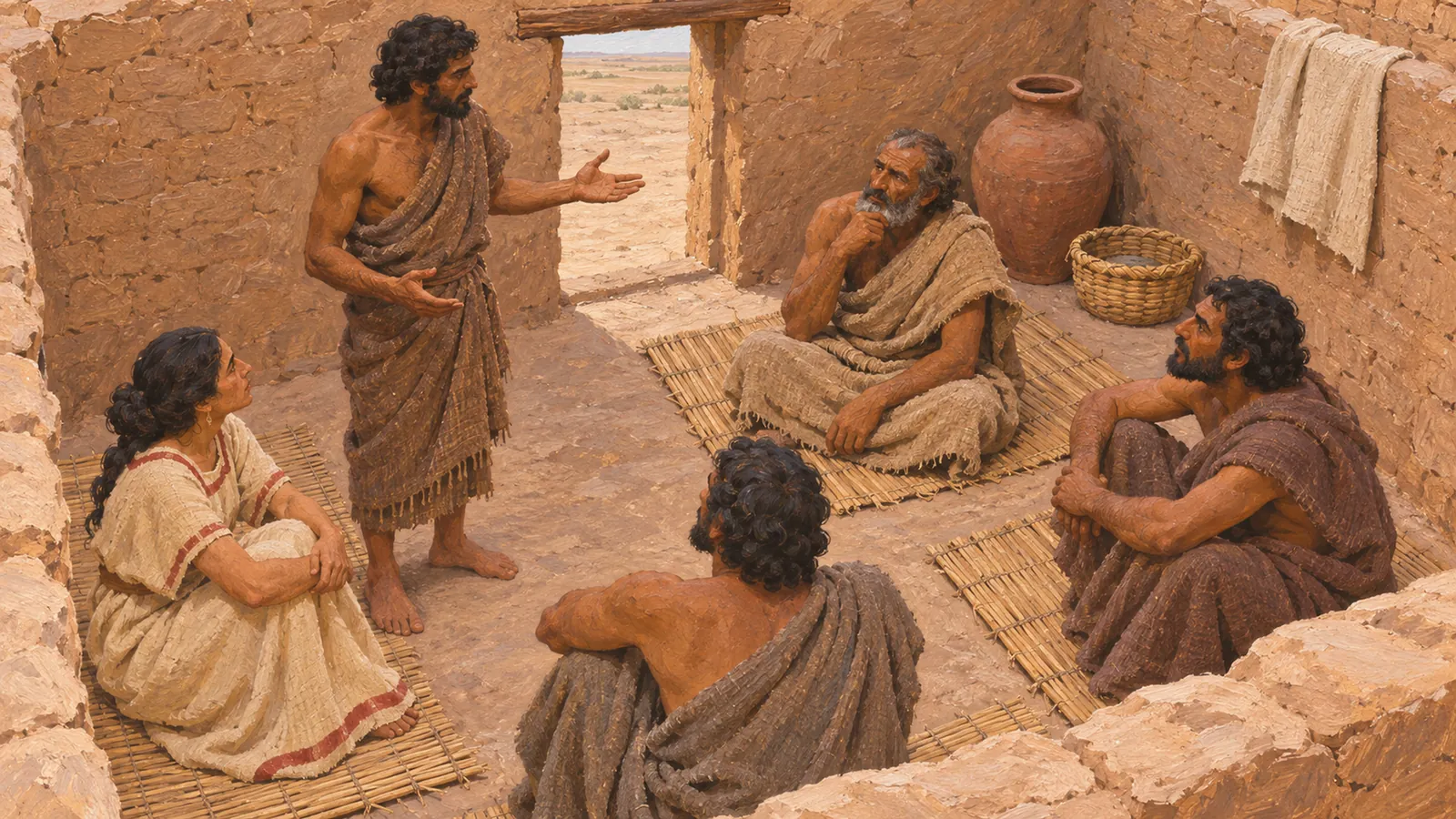
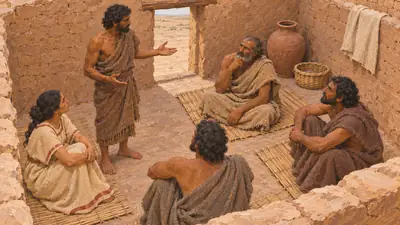
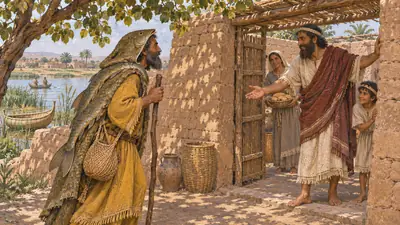
Oannes teaches people how to make laws. Here people gather at a threshold to be heard. The learning on the shore now reaches the disputes and agreements that shape the life of a town.
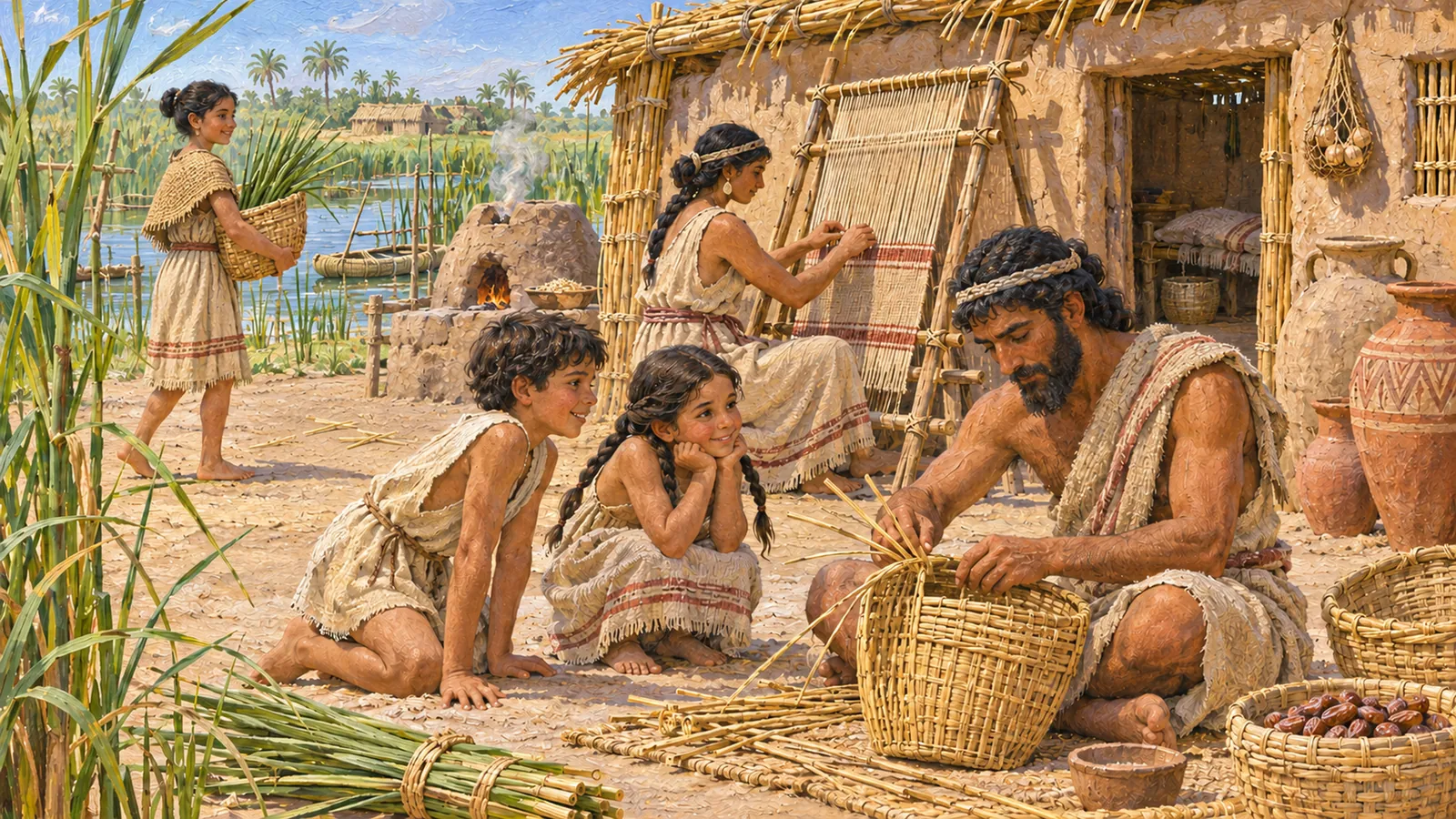
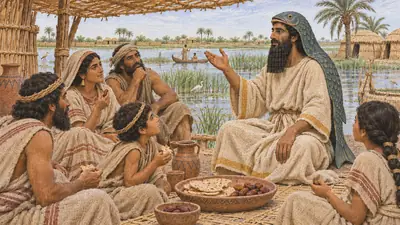
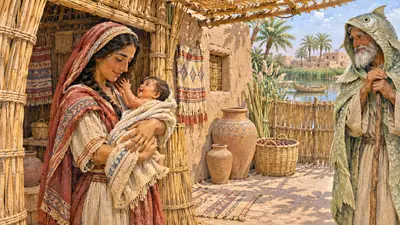
Berossus tells his readers that the teacher left all the essentials of ordinary life. People still had work to do with what they had learned. In the courtyard, another generation sees how it is done.
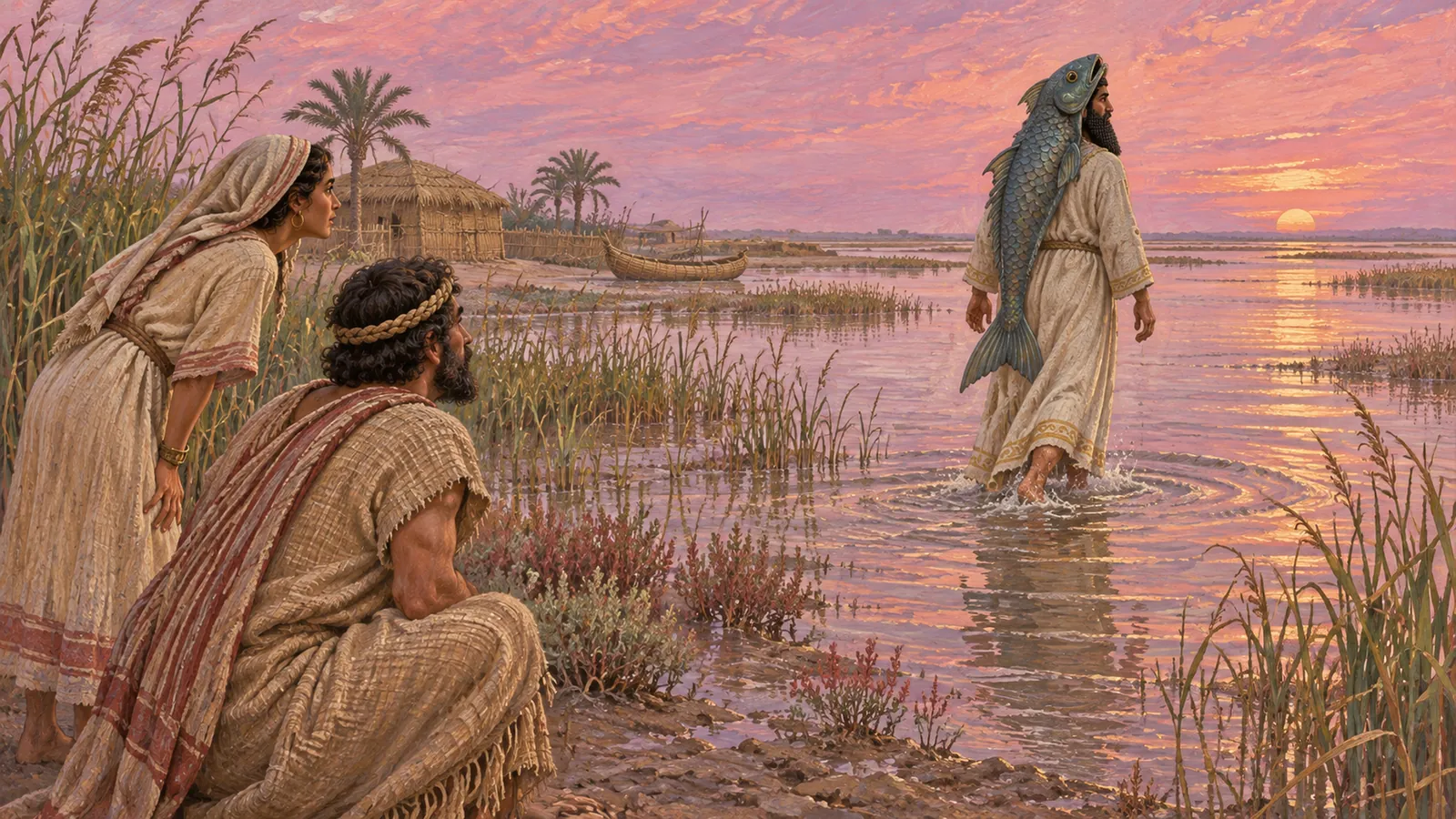
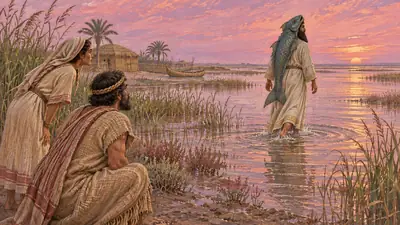
When the sun goes down, Oannes returns to the sea. The figure whose voice filled the daylight now walks away into the salt water. The waves close behind his feet.
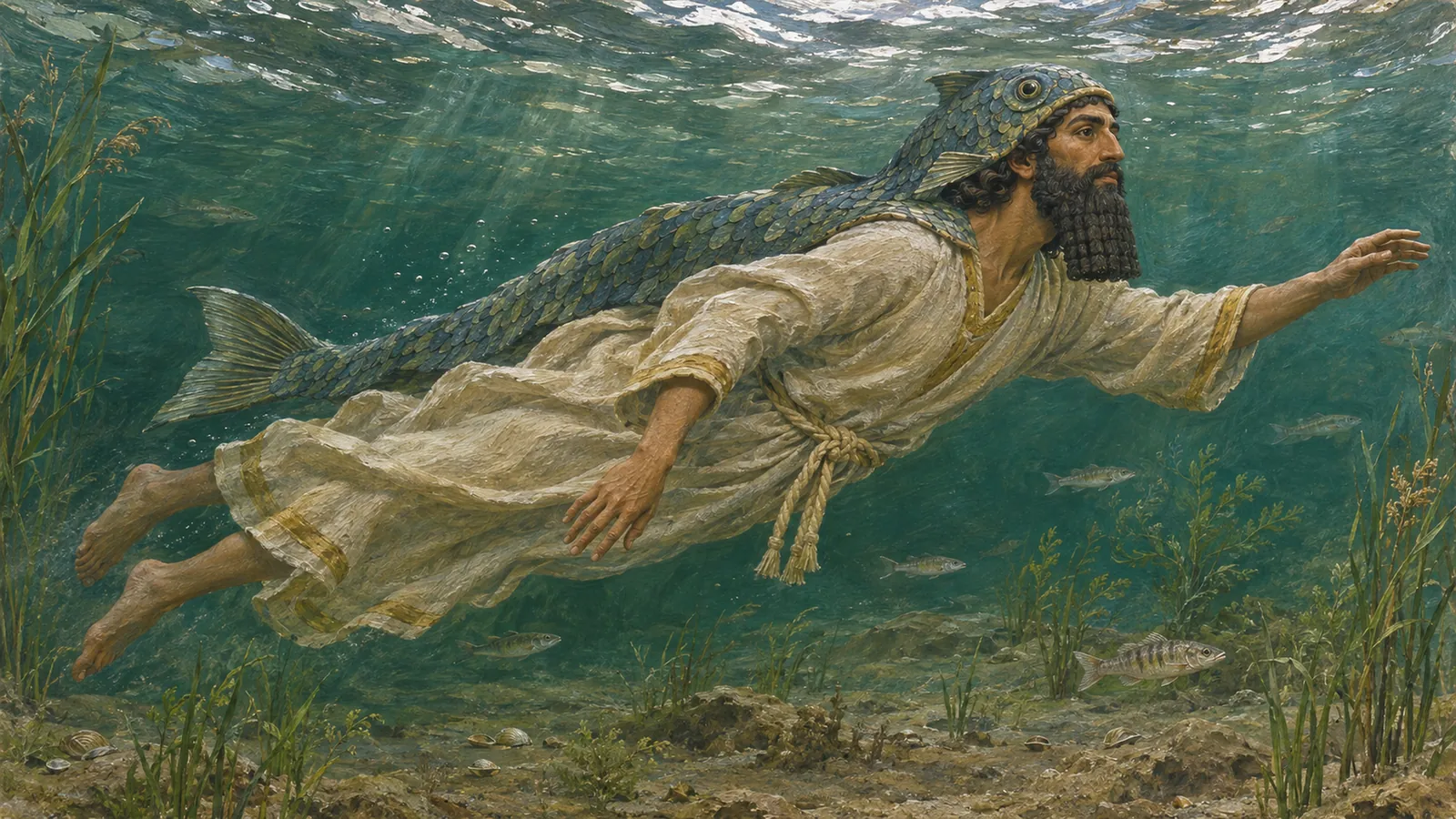
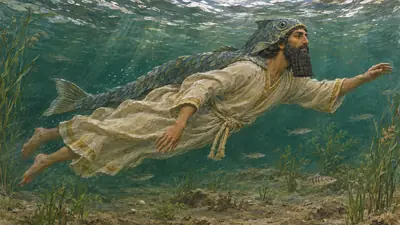
The account says Oannes passes the night in the depths. A swimmer who can teach among people in the morning can disappear where their eyes cannot follow. The village keeps what he taught.
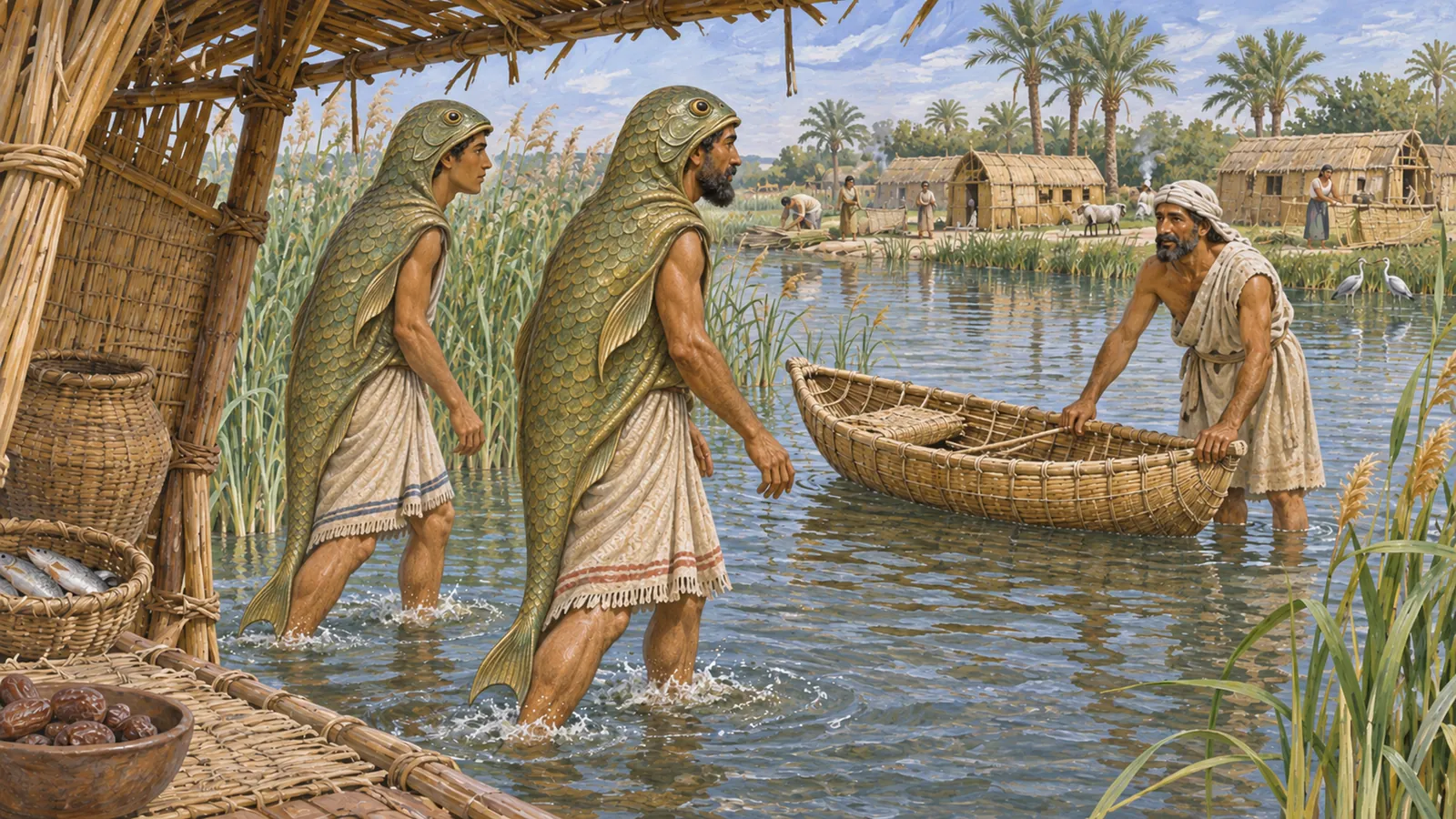
The first account promises other visitors like Oannes. The excerpts about the early rulers set new arrivals in later reigns. The story of a single day at the shore is part of a longer memory.
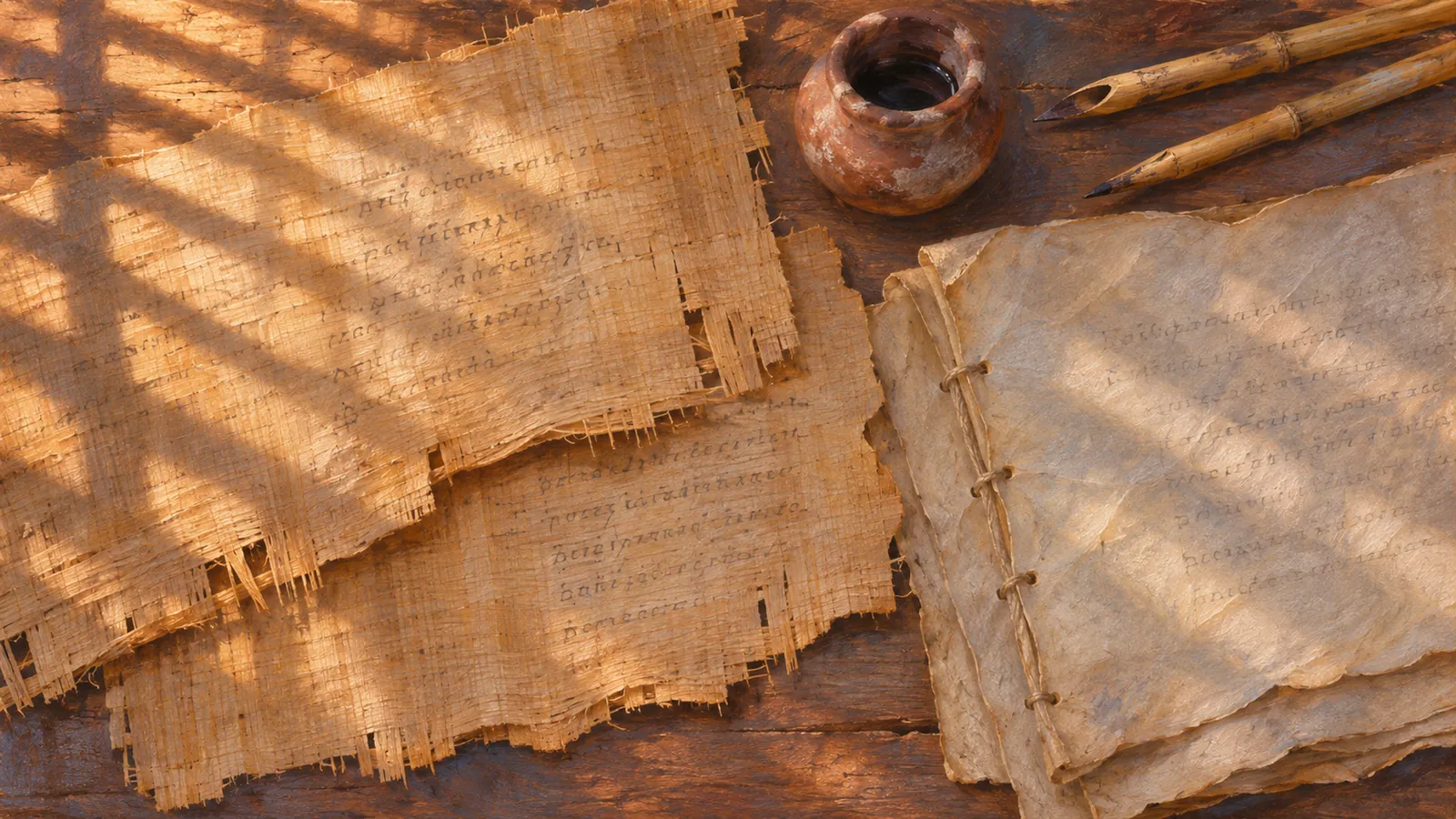
One account calls a visitor Odakon. Another gives the name Anodaphos. In one strand the later visitors take up the older teaching in greater detail. Their names and deeds reach us along different routes.
THE SEVEN SAGES
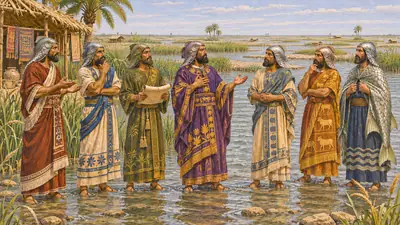
A different tradition survives in cuneiform. The series Bīt Mēseri names seven apkallu, or sages, in an incantation. Their names are written for a setting where spoken words and images help protect people.
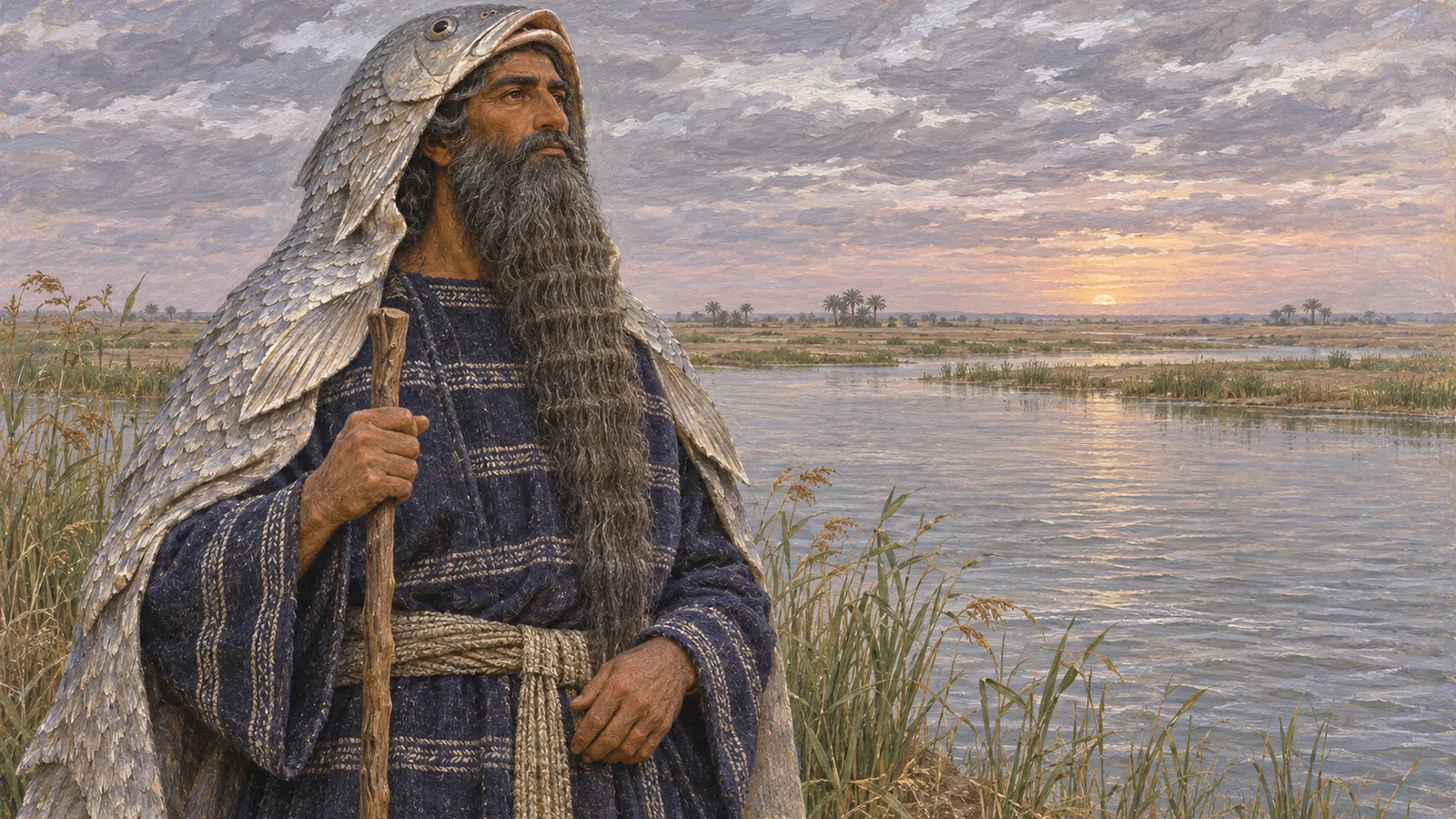
The first name is Uanna. He brings the designs of heaven and earth to completion. His name is usually linked with the Greek Oannes. On this tablet he belongs to a different account of wisdom.
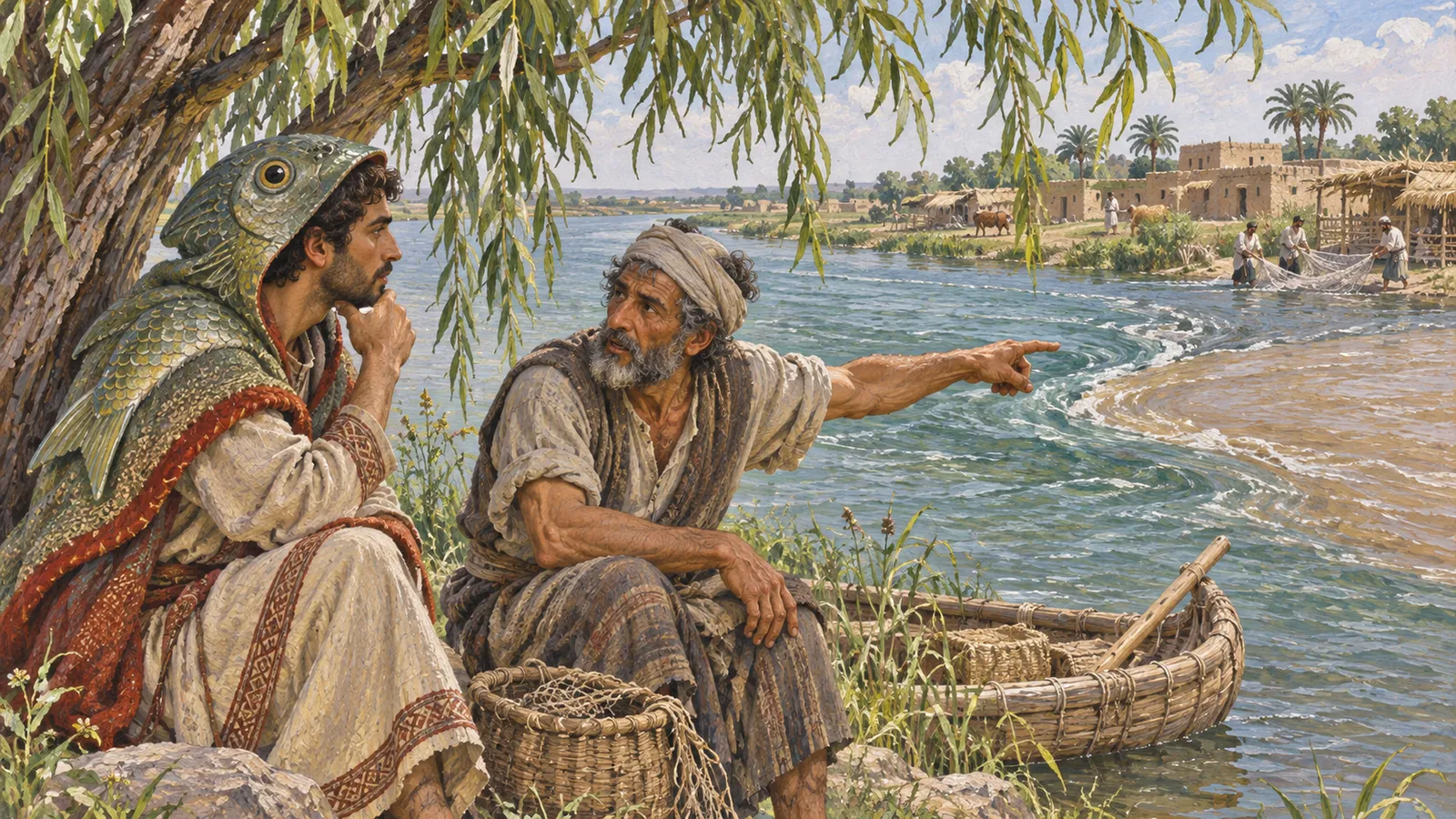
The second sage, Uannedugga, is given deep understanding. The incantation has space for that quality beside his name. It leaves readers to imagine what such a person might hear or notice.
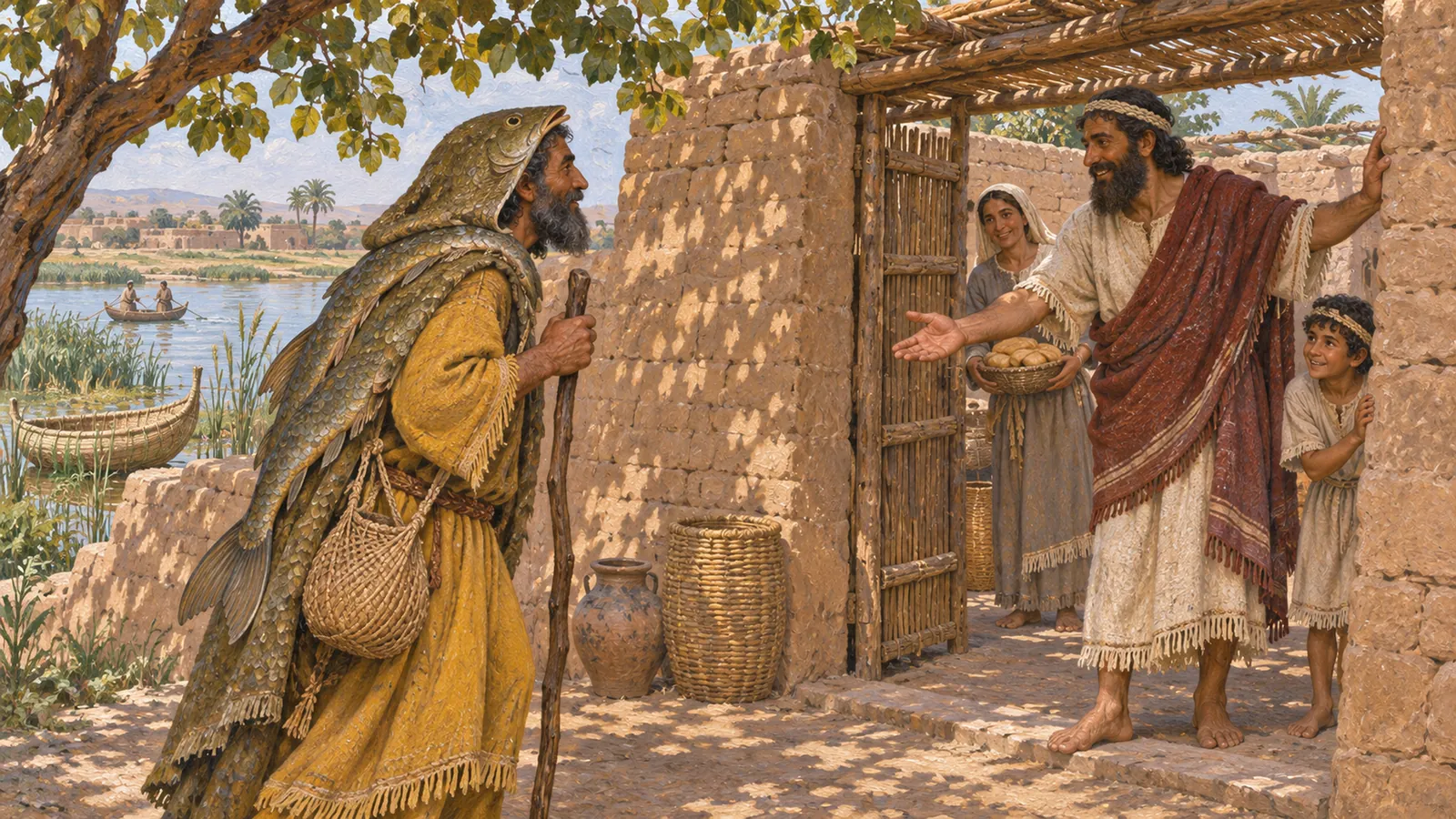
The third sage is Enmedugga. A good destiny is decreed for him. In a few words the ritual remembers his name and the blessing given to him.
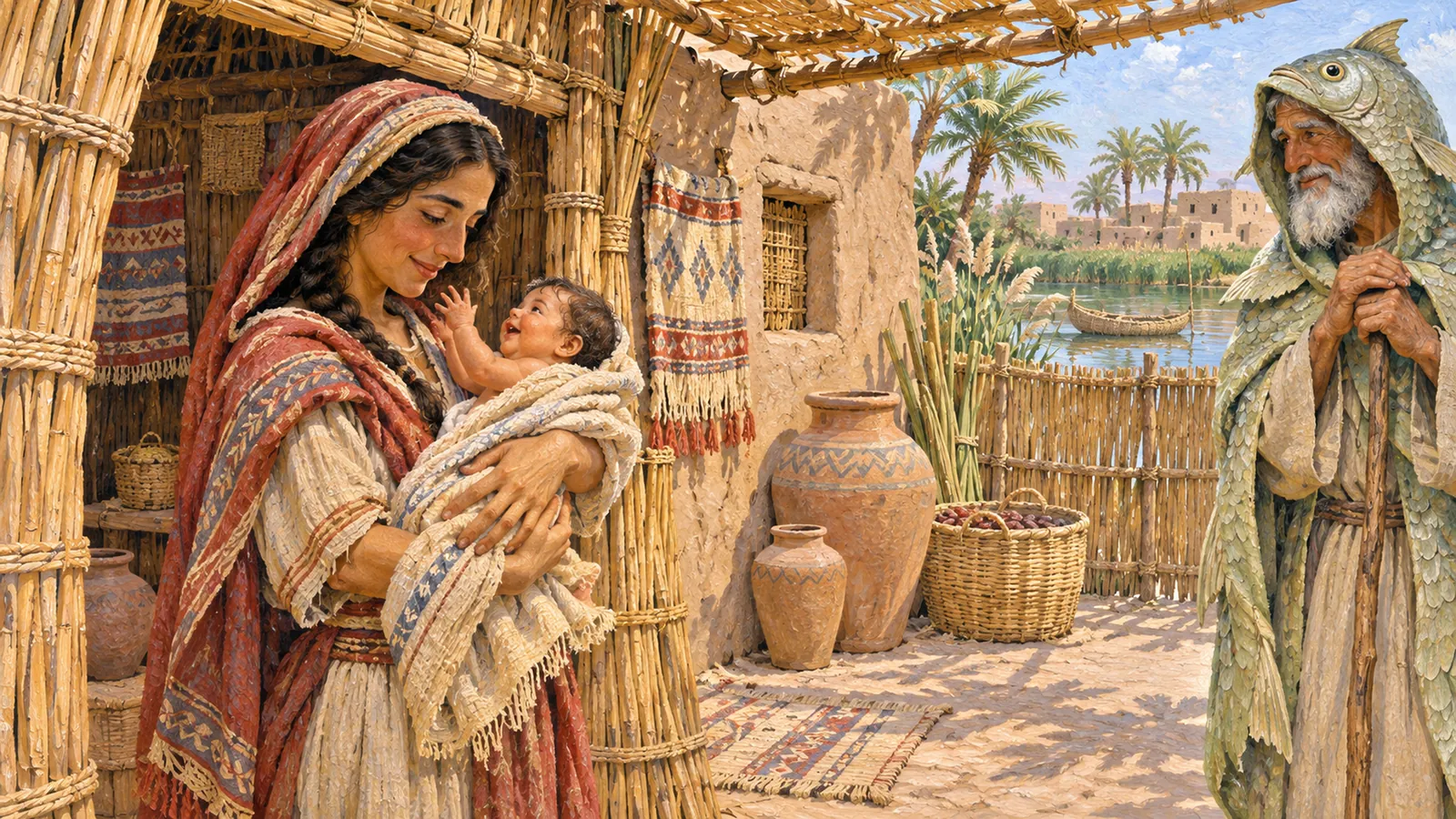
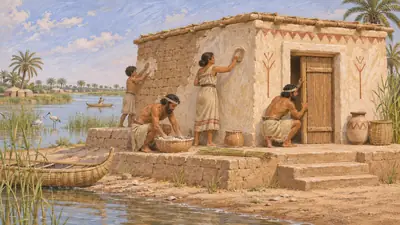
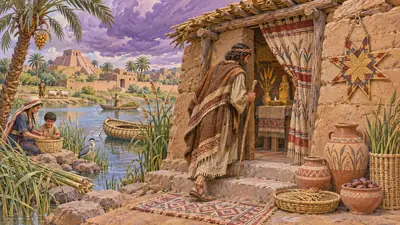
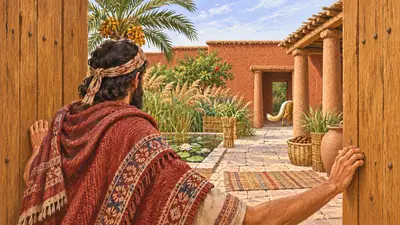
Enmegalamma is the fourth sage. His line says he was born in a house. An ordinary doorway turns up among the strange beginnings of the seven.
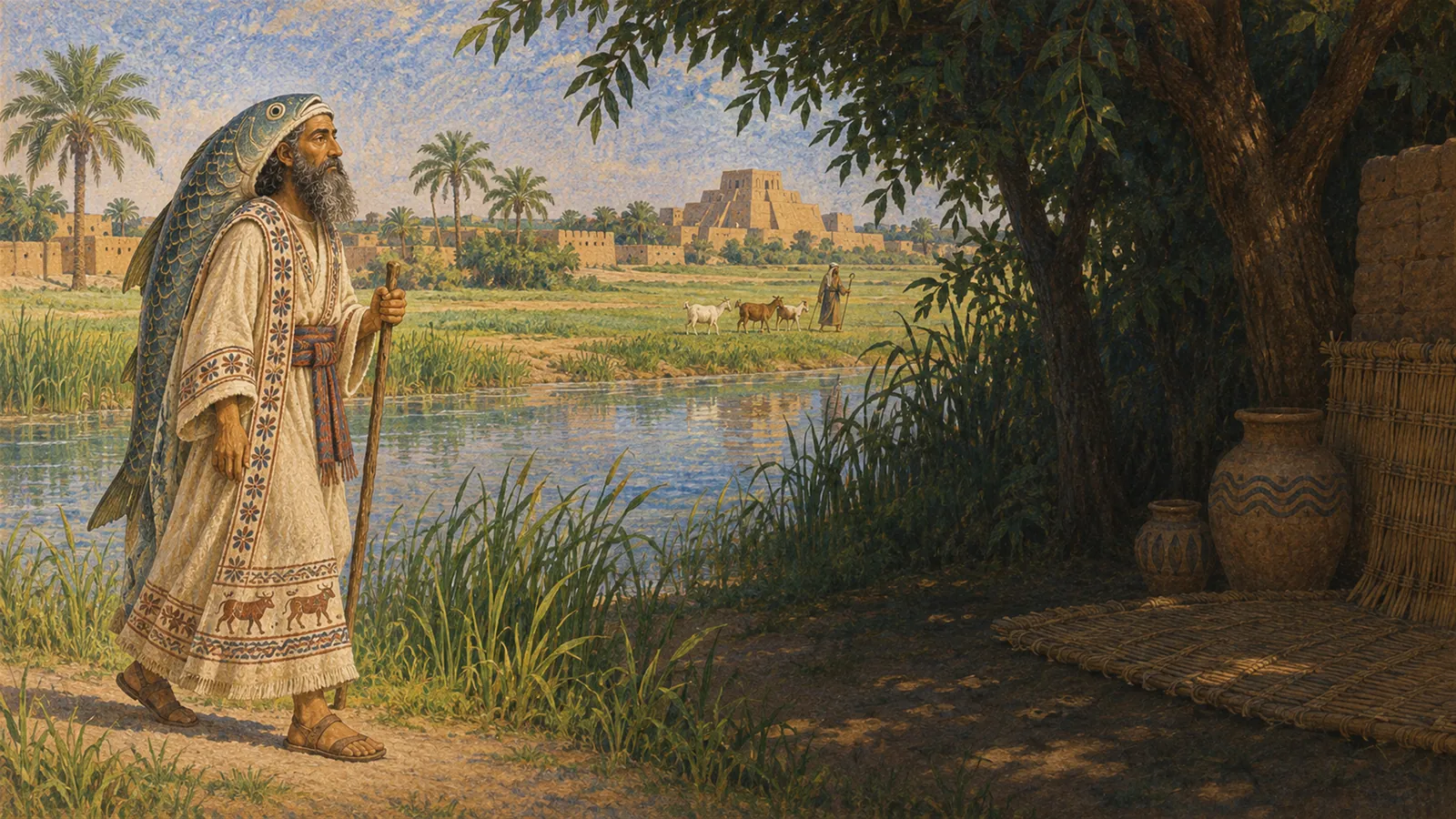
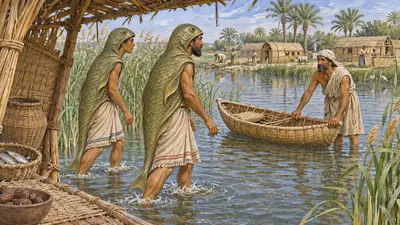
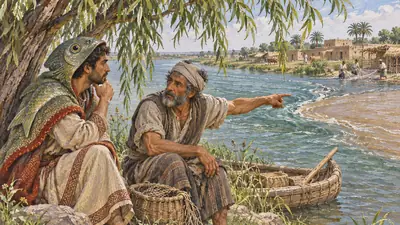
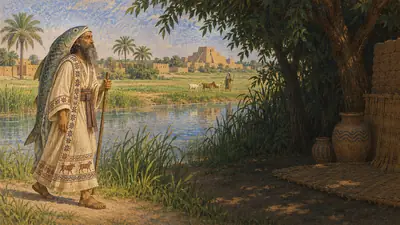
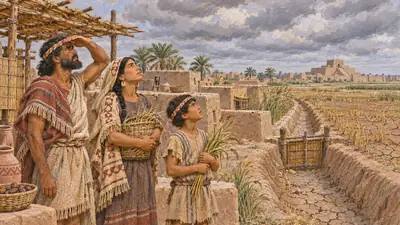
The fifth sage, Enmebulugga, grew up on the flat land beside a river. Soft mud, reed beds and paths just above flood level mark the kind of country that could raise a water-born sage.
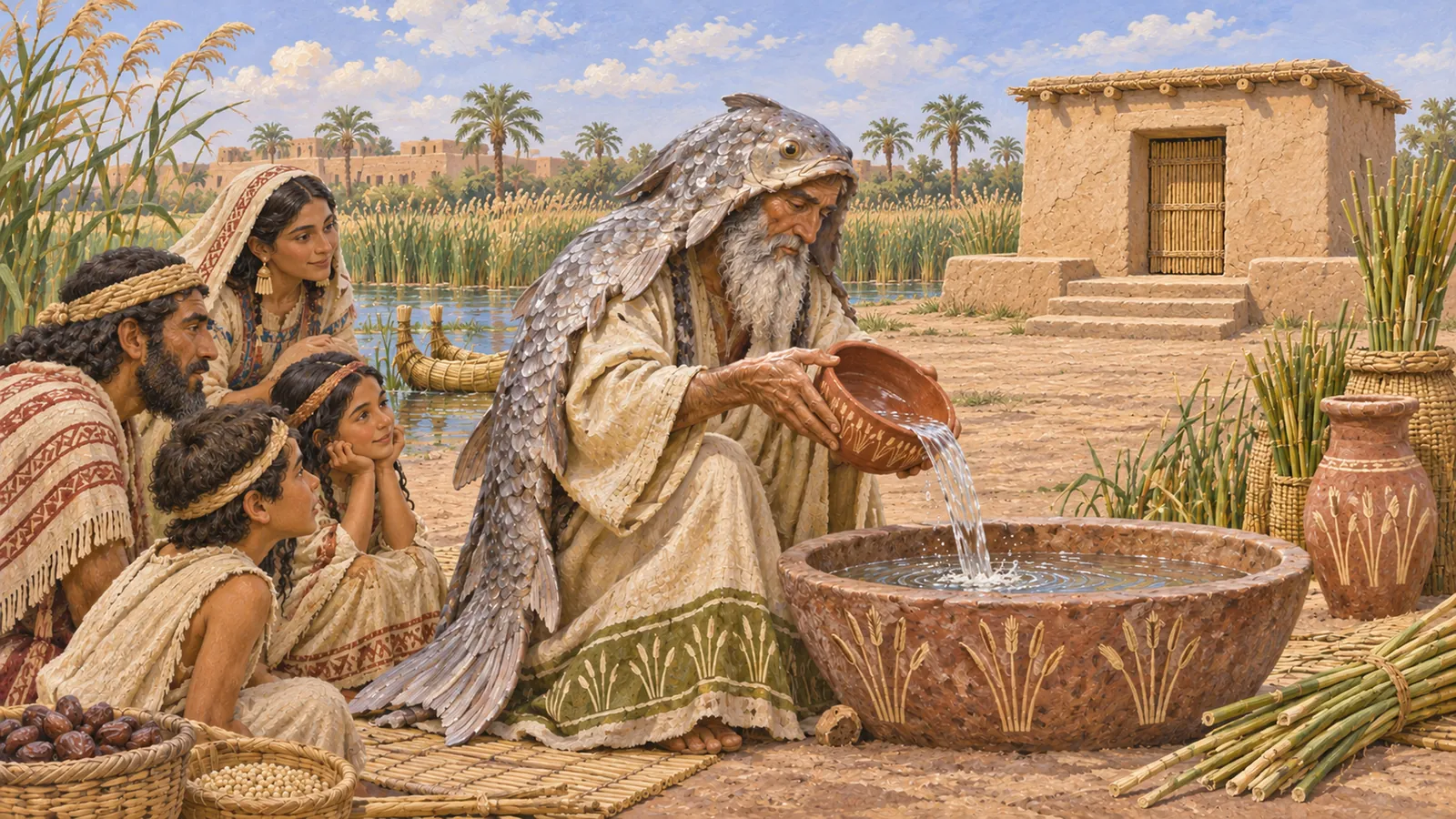
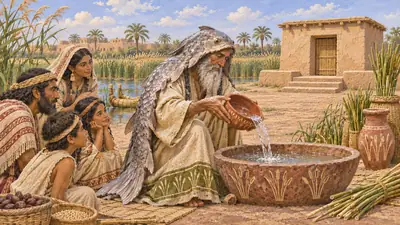
The sixth sage is An-Enlilda. The incantation remembers his work of purification at Eridu. Fresh water appears as something that touches the hands and prepares a place for what comes next.
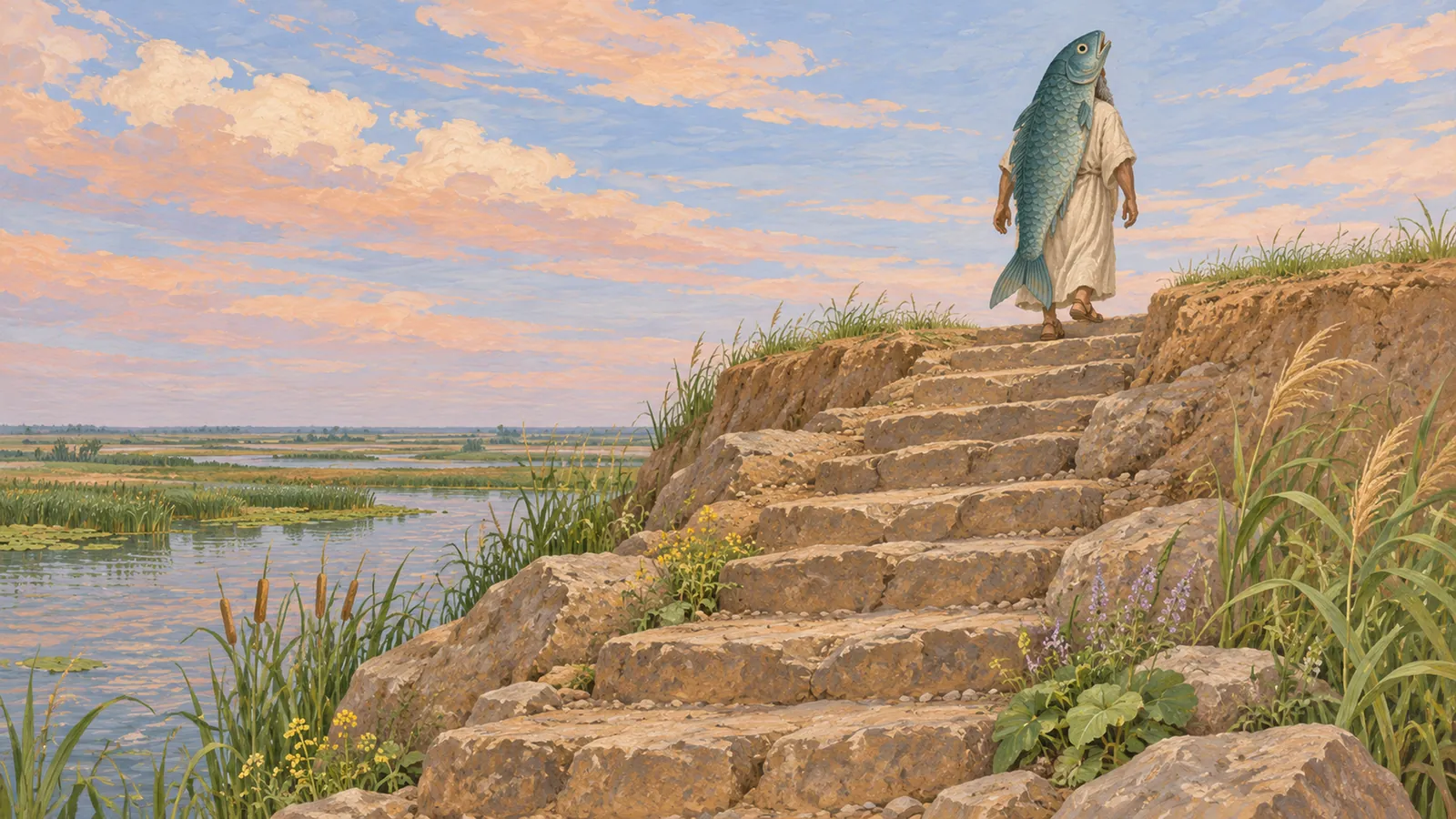
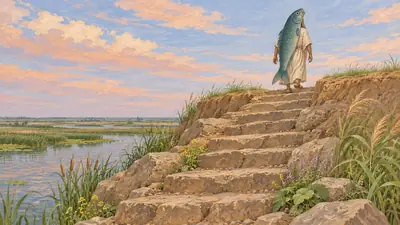
The seventh name is Utuabzu. The incantation says he went up to heaven. The picture gives him a stair and a view of the light above the plain, one way to imagine those few words.
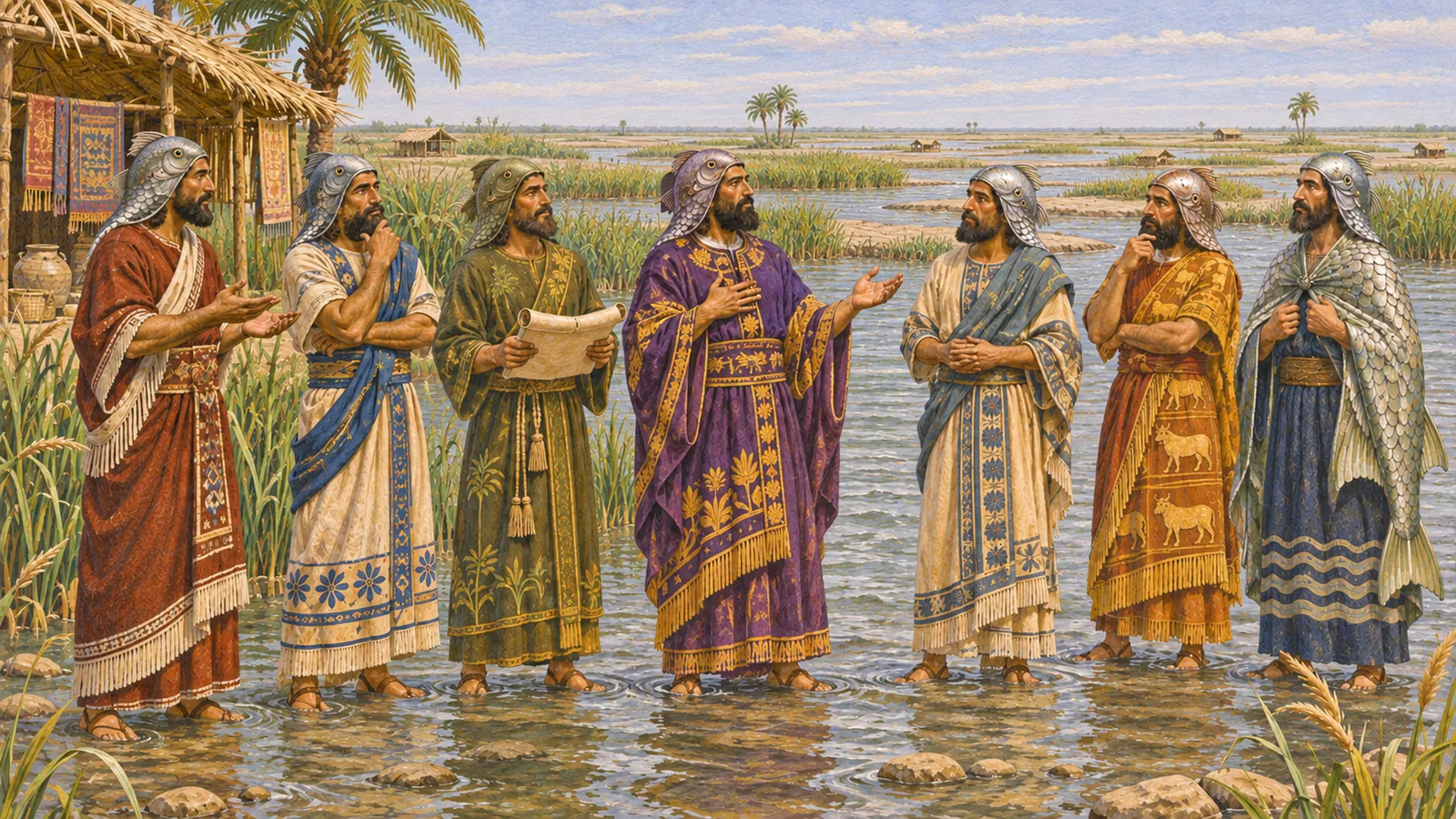
Together they are seven purādu fish of the sea, born in the river. Their shared work is to preserve the designs of heaven and earth. The incantation brings the seven names together here.
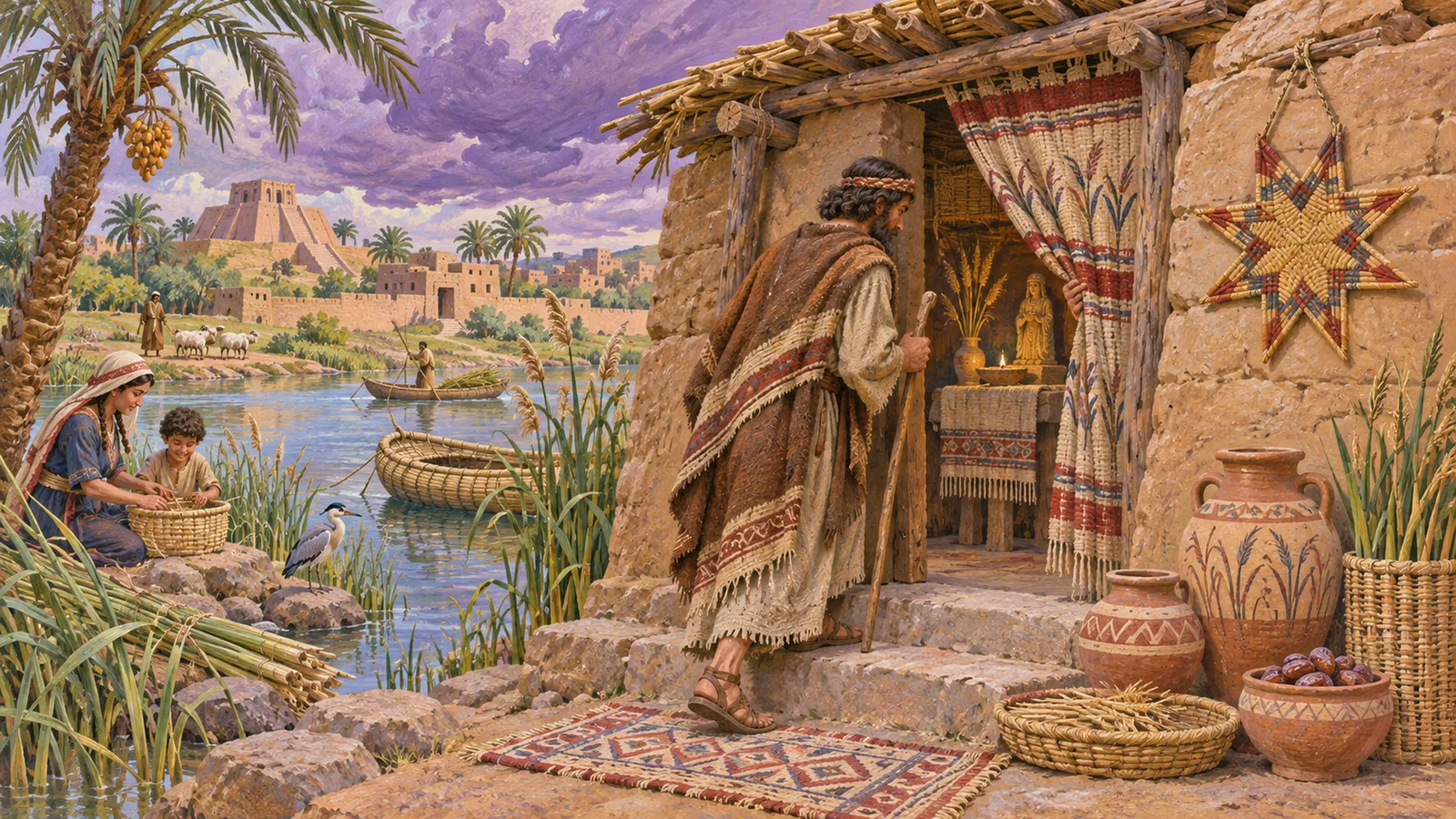
After the seven, the incantation names sages of human descent. First comes Nungalpiriggaldim, the sage of Enmerkar. His lines connect him with Ishtar and a sanctuary, and carry the list from river-born sages to people.
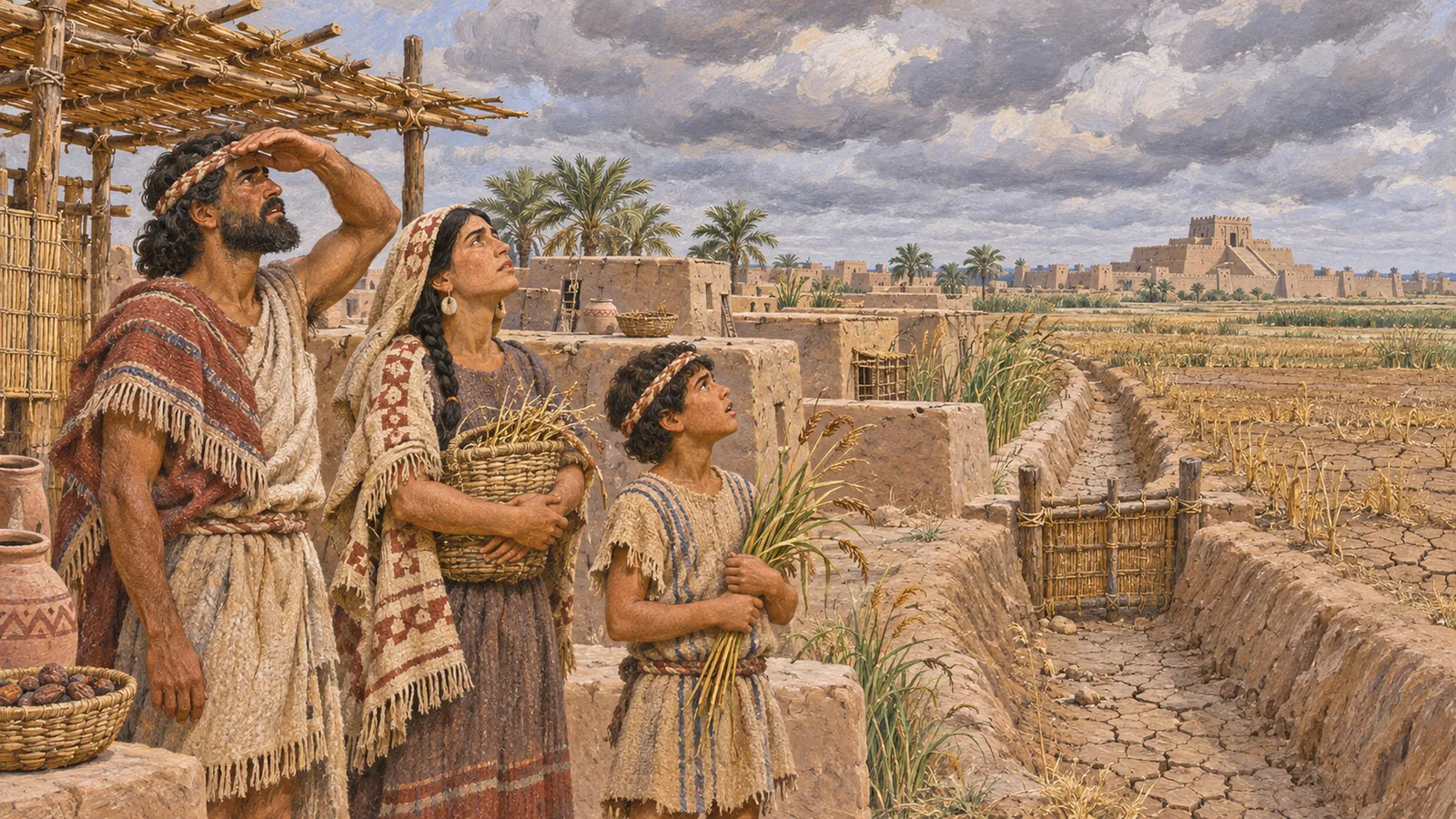
Piriggalnungal, born in Kish, angers the storm god Adad. The incantation says three years go by without rain. Here a sage is remembered in a story of trouble.
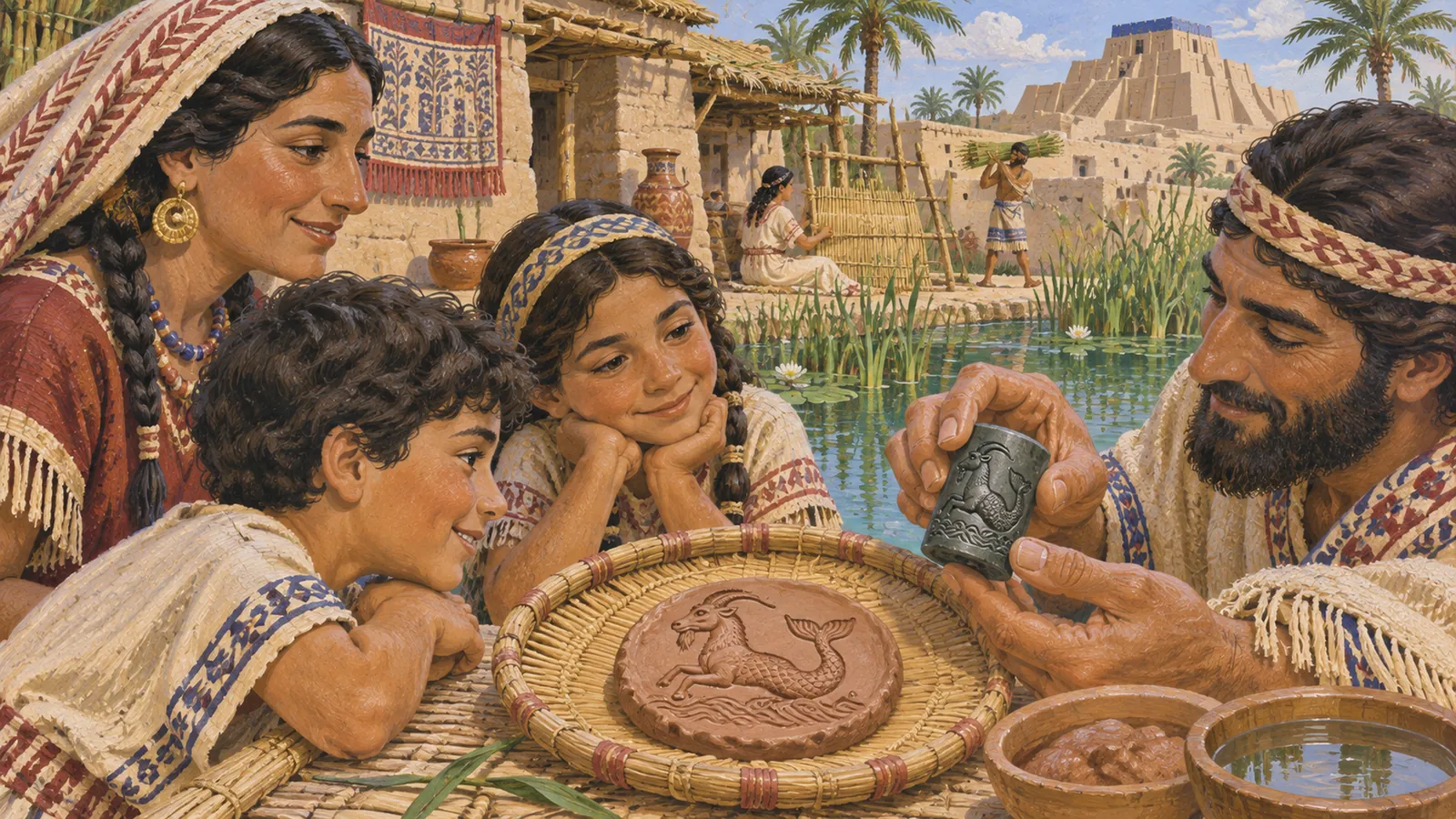
Piriggalabzu uses his seal on a goat-fish and angers Ea in the fresh waters. Scholars read some details of the passage differently. The seal and the strange animal are part of the surviving story.
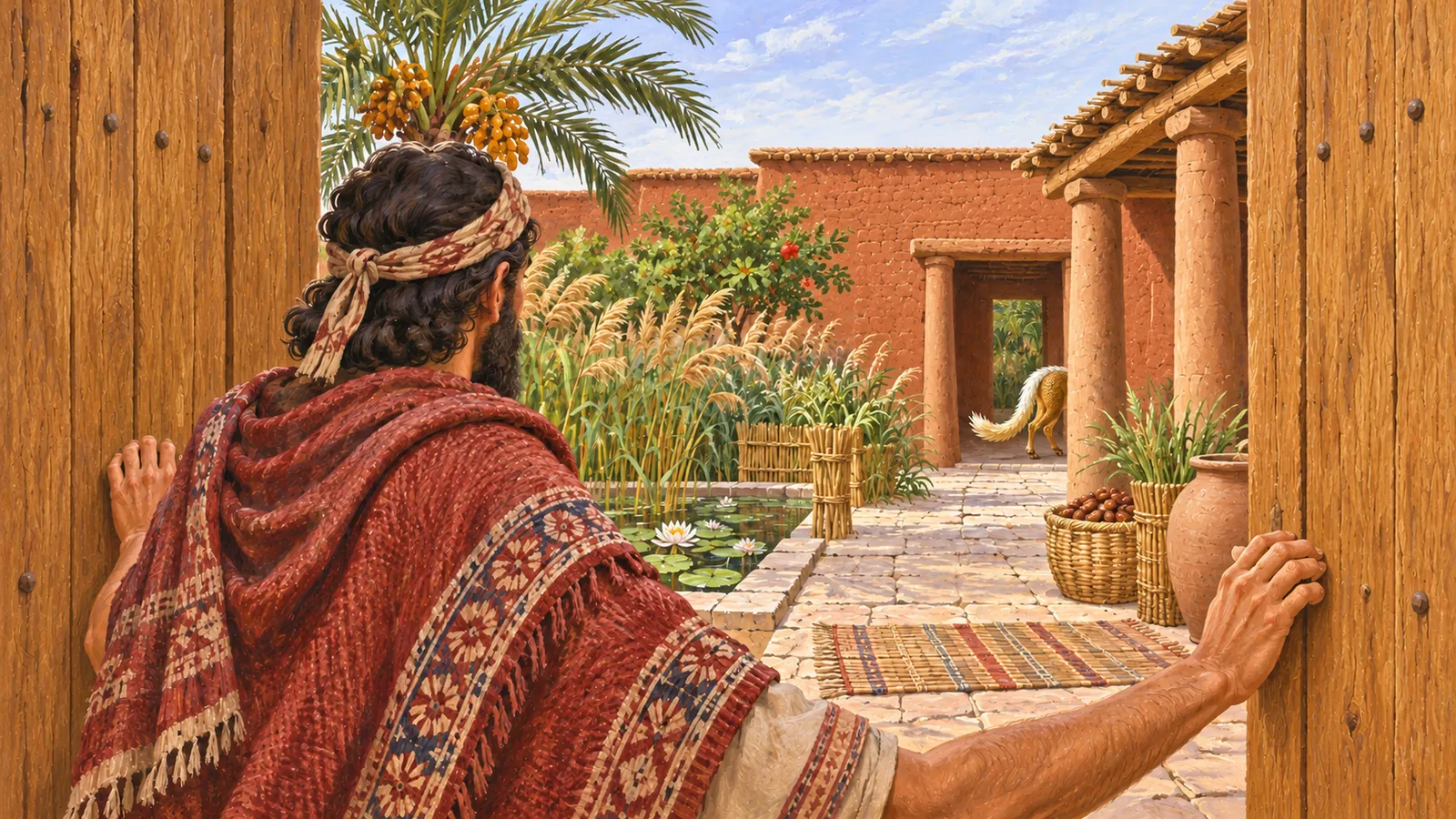
Lu-Nanna is fourth in this later group. The text calls him two-thirds sage and gives him a task involving a creature driven from a temple. The close credits Ea with the wisdom of the four.
FIGURES IN CLAY
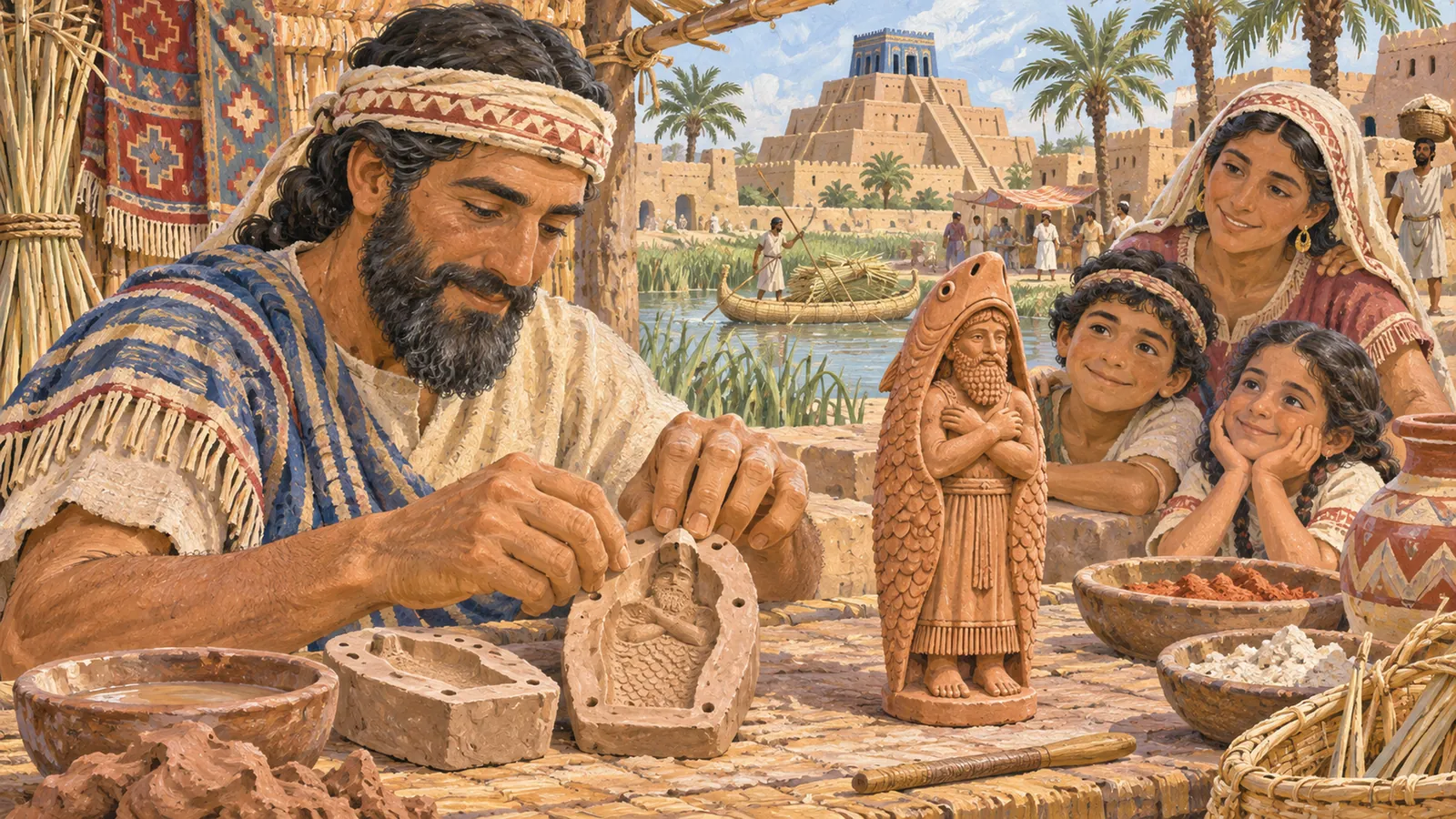
The ritual tradition joins recited words to images. A surviving Assyrian clay figure shows a person in a fish-skin hood, with hands held to the chest. It was pressed in a mold.
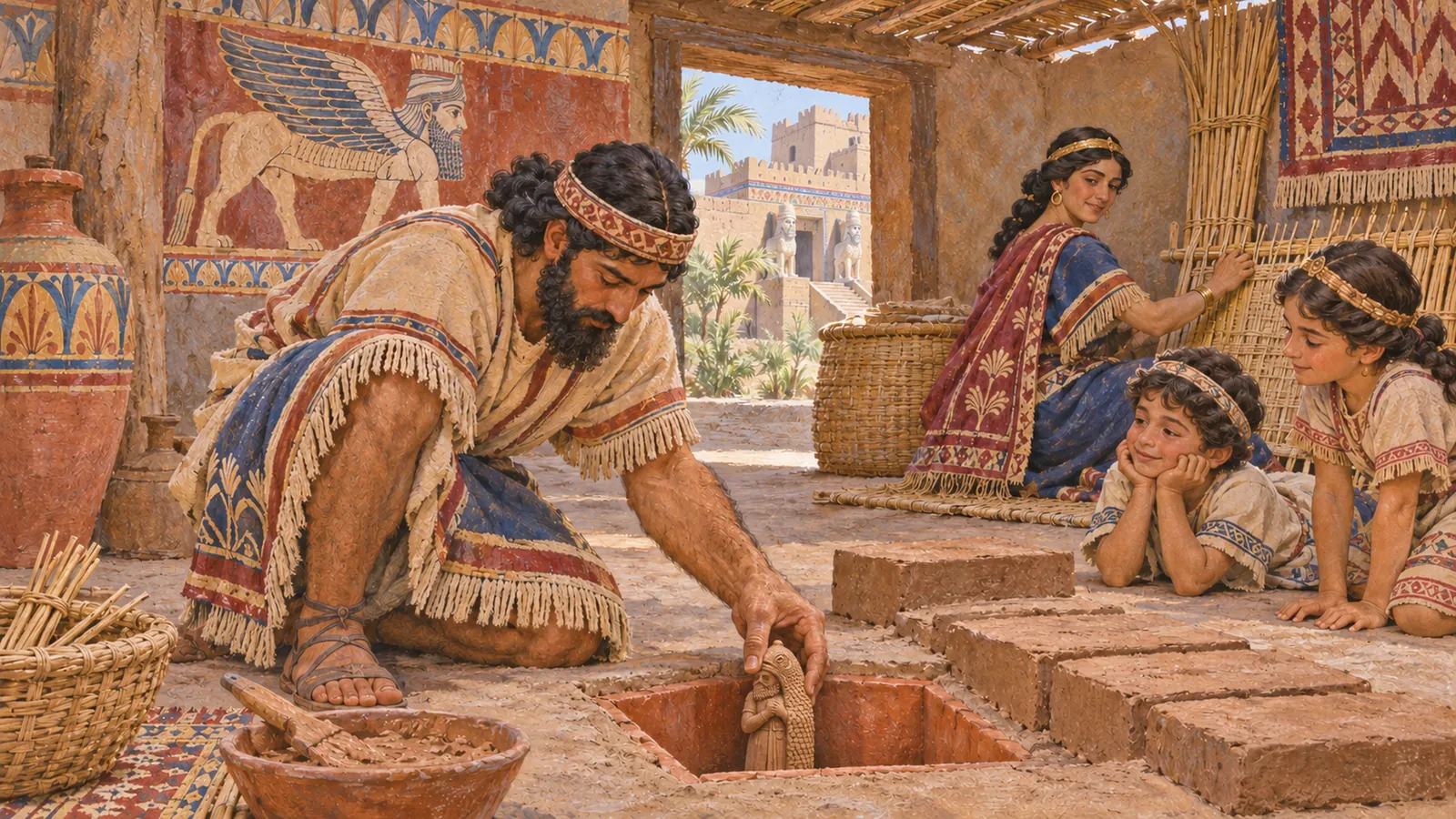
The figure was found beneath a palace floor at Nimrud. It gives a scale to the protection imagined here. An object small enough to cradle in two hands could be put out of sight beneath a room.
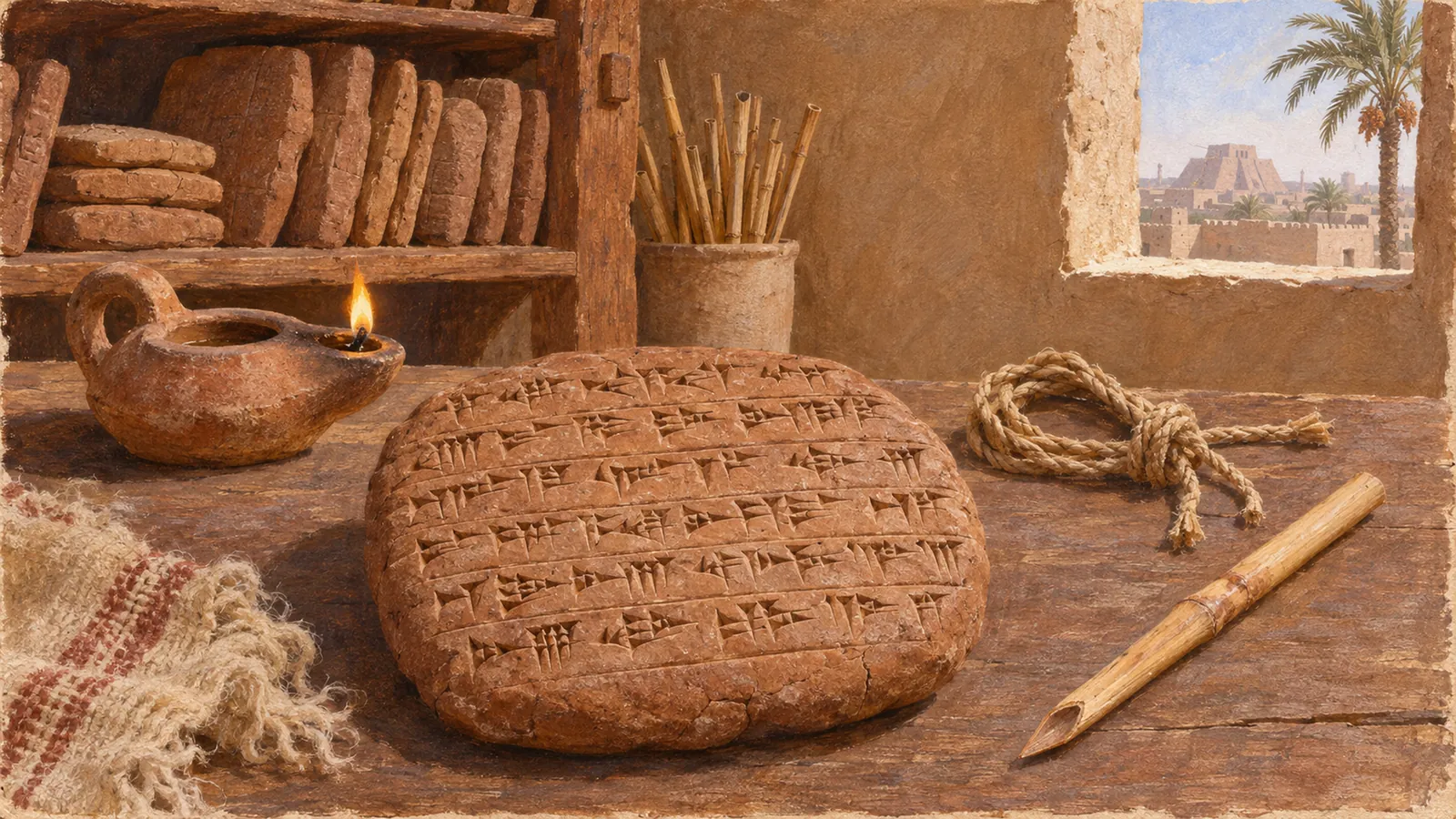
A tablet from Uruk pairs Uanna with an early king and continues with other royal and scholarly names. That first pairing helps explain why readers connect Uanna with Oannes.
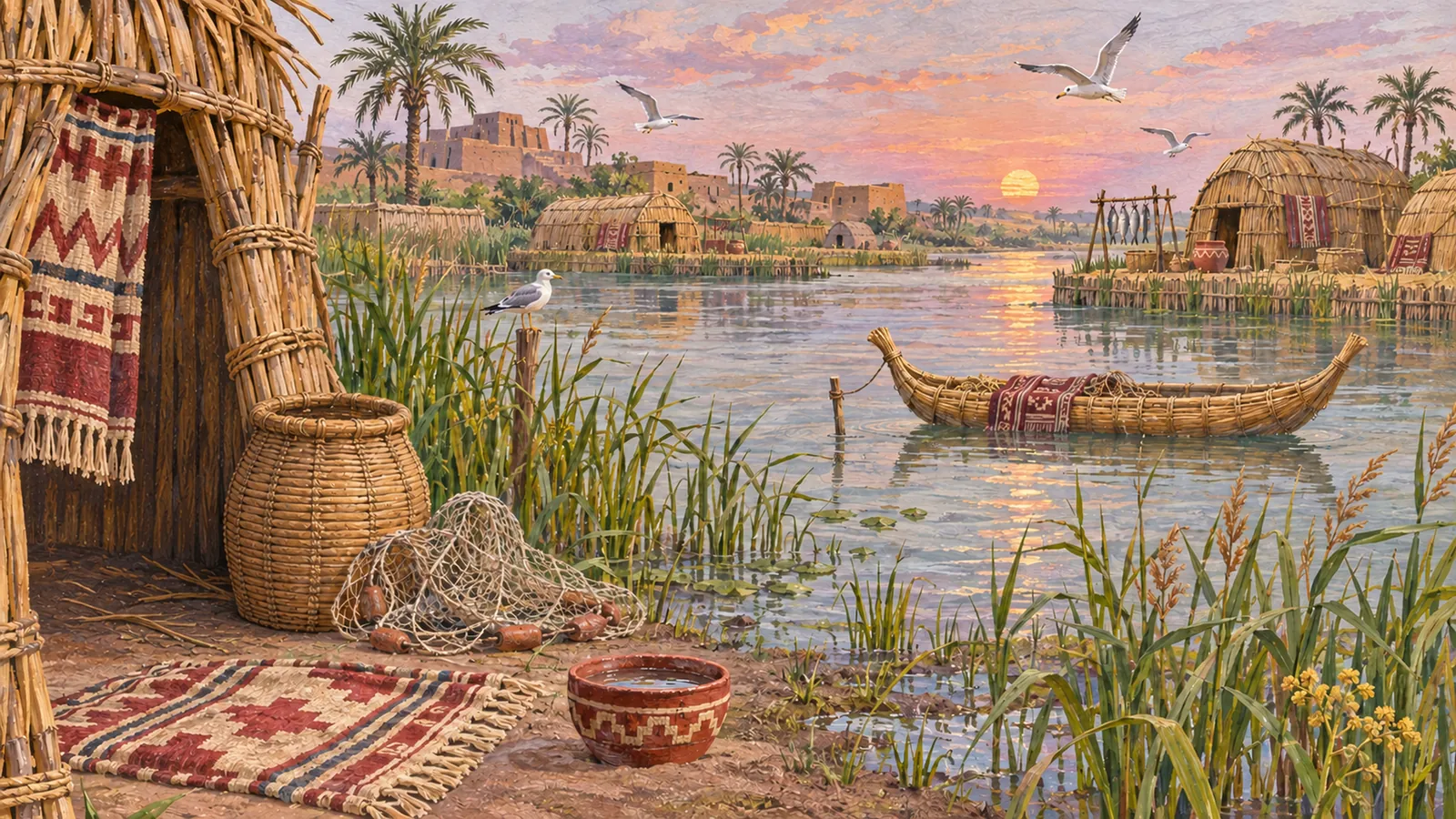
At one shore a teacher leaves people the means to build a life together. In the incantation, seven sages preserve the world’s designs. Both traditions give water a place in what people know.
End of chapter 1
All pages
Sources
Editions consulted
- Stanley M. Burstein, The Babyloniaca of Berossus, published translation, I.1 and II.1
- Berossus I.1, Greek and older English translation, Alexander Polyhistor in George Syncellus, with a manuscript reference
- Berossus II, the excerpt transmitted under Apollodorus in George Syncellus
- Abydenus in George Syncellus, Greek text and English translation of the later arrivals, with a manuscript reference
- Gerald Verbrugghe and John Wickersham, Berossos and Manetho, annotated translation
- Erica Reiner, The Etiological Myth of the Seven Sages, cuneiform edition
- Rykle Borger, Bīt Mēseri, critical edition
- Helge S. Kvanvig, Primeval History, pp. 107–108, translation of the Uanna incantation
- Daniel Schwemer, Bīt mēseri at Aššur, archaeological witnesses and ritual setting
- Sophus Helle, The First Authors, appendix with transliteration of the Uruk List of Kings and Sages
- Metropolitan Museum of Art, Assyrian fish-cloaked apkallu figurine, 54.117.25
Ancient lines behind each page
- Page 1: Babyloniaka I.1 §1
- Page 2: Babyloniaka I.1, transmission
- Page 3: Babyloniaka I.1 §§2–3
- Page 4: Babyloniaka I.1 §§2–4
- Page 5: Babyloniaka I.1 §4
- Page 6: Babyloniaka I.1 §5
- Page 7: Babyloniaka I.1 §5
- Page 8: Babyloniaka I.1 §5
- Page 9: Babyloniaka I.1 §5
- Page 10: Babyloniaka I.1 §5
- Page 11: Babyloniaka I.1 §5
- Page 12: Babyloniaka I.1 §5
- Page 13: Babyloniaka I.1 §5
- Page 14: Babyloniaka I.1 §5
- Page 15: Babyloniaka I.1 §5
- Page 16: Babyloniaka I.1 §5
- Page 17: Babyloniaka I.1 §5
- Page 18: Babyloniaka I.1 §5
- Page 19: Babyloniaka I.1 §5
- Page 20: Babyloniaka I.1 §5
- Page 21: Babyloniaka I.1 §5; II, witnesses under Apollodorus and Abydenus
Variants in later excerpts are kept separate from the cuneiform roster. - Page 22: Babyloniaka II, witnesses under Apollodorus and Abydenus
- Page 23: Bīt Mēseri III, Uanna incantation, opening; Schwemer 2023, pp. 51–57
- Page 24: Bīt Mēseri III, Uanna incantation, lines 1–2; Uruk list W 20030,7, line 1
The association of the names is a linguistic identification. - Page 25: Bīt Mēseri III, Uanna incantation, lines 3–4
- Page 26: Bīt Mēseri III, Uanna incantation, line 5
- Page 27: Bīt Mēseri III, Uanna incantation, line 6; Schwemer 2023, p. 67
- Page 28: Bīt Mēseri III, Uanna incantation, line 7
- Page 29: Bīt Mēseri III, Uanna incantation, line 8
- Page 30: Bīt Mēseri III, Uanna incantation, line 9
- Page 31: Bīt Mēseri III, Uanna incantation, lines 10–13
- Page 32: Bīt Mēseri III, Uanna incantation, lines 14–15
- Page 33: Bīt Mēseri III, Uanna incantation, lines 16–19
- Page 34: Bīt Mēseri III, Uanna incantation, lines 20–23
- Page 35: Bīt Mēseri III, Uanna incantation, lines 24–29
- Page 36: Schwemer 2023; Met acc. 54.117.25
- Page 37: Met acc. 54.117.25; Schwemer 2023
- Page 38: Uruk List of Kings and Sages W 20030,7, obv. 1–10
- Page 39: Babyloniaka I.1 §5; Bīt Mēseri III, Uanna incantation, lines 10–13
Illustrations made with AI tools by IL Archive; the text is based on the ancient sources (see the sources at the end of each chapter).