The Sun God, the Cow and the Fisherman Chapter 1
A Child on the Hillside
The fisherman finds the child as birds rise from a mountain slope. His wife helps welcome him into the household, and the people of Urma arrive with gifts of bread, beer and oil.
SourcesTurn the pages with the arrows, the arrow keys or a swipe.
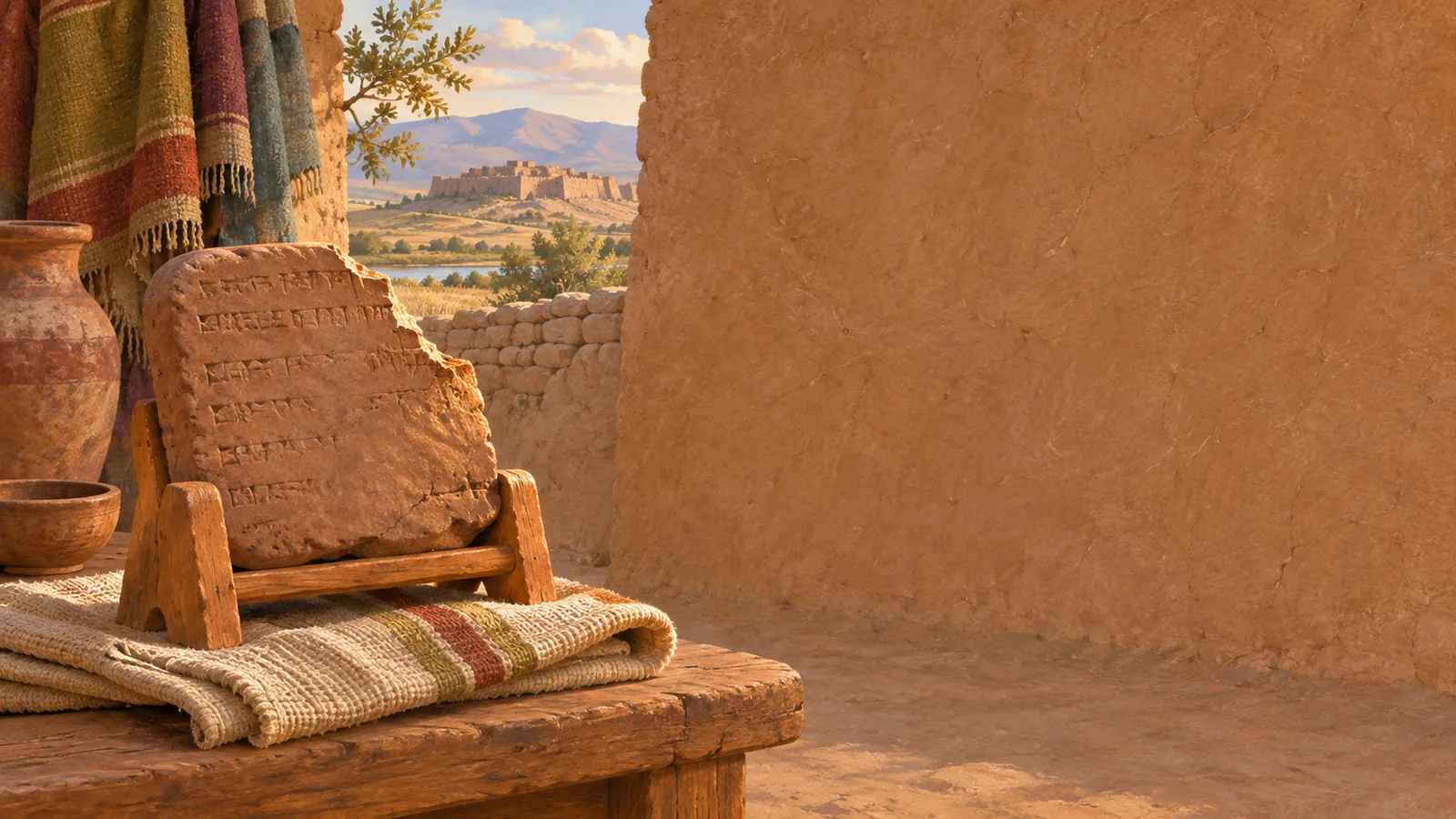
THE SUN GOD, THE COW AND THE FISHERMAN
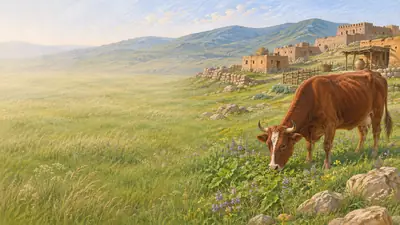
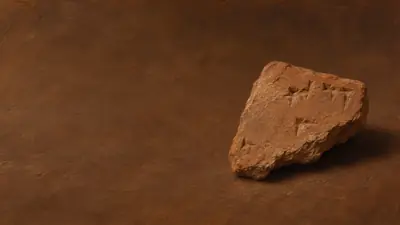
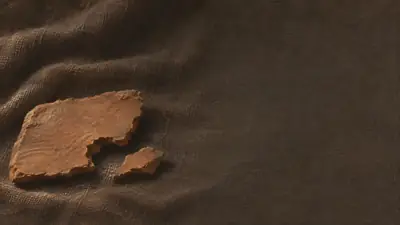
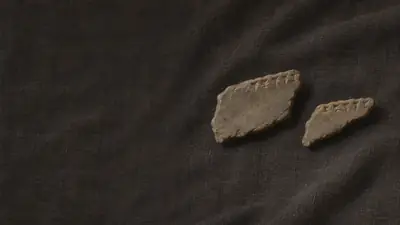
A damaged Hittite tablet tells how a child passes from a meadow to a house in Urma. In between lie stretches of broken clay and a climb into the mountains.
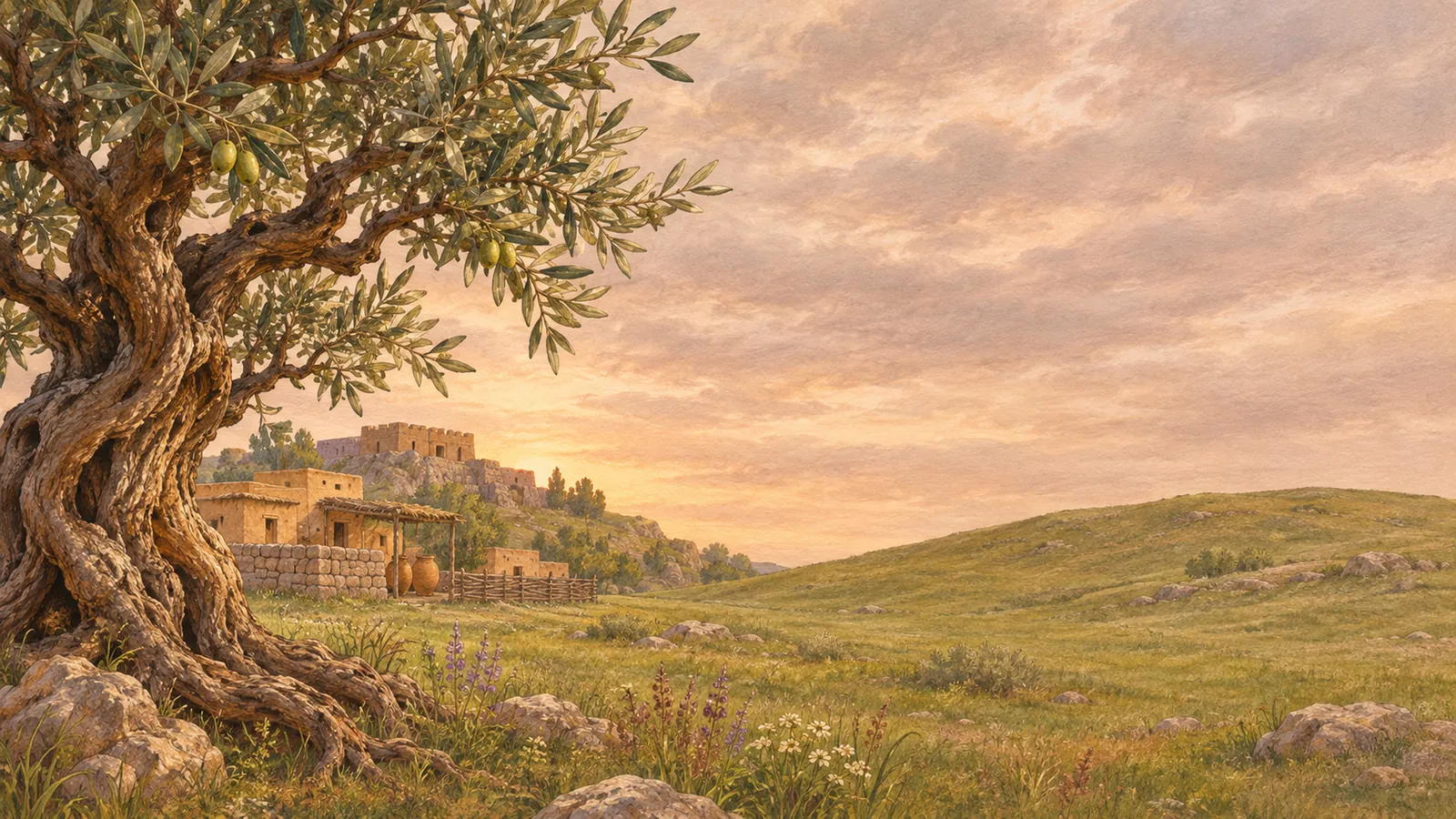
Among the first surviving words is a mention of an olive tree or its fruit. The rest of that line is gone. Farther on, there is something the cow can eat.
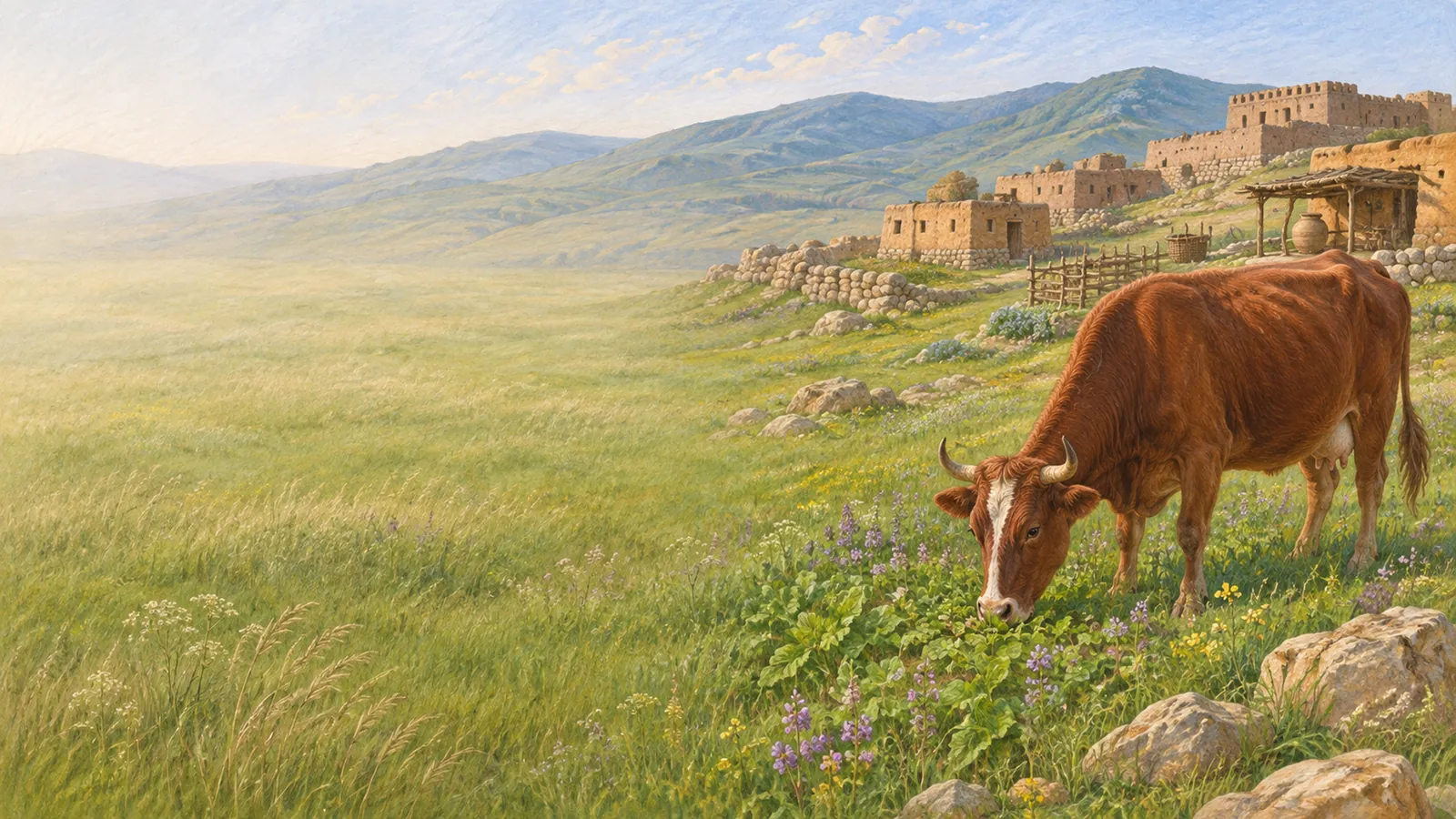
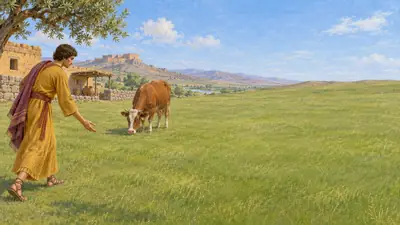
The cow finds fresh green growth. A plant called artati is mentioned nearby, though its identity is uncertain. We can still follow the cow as she feeds and thrives.
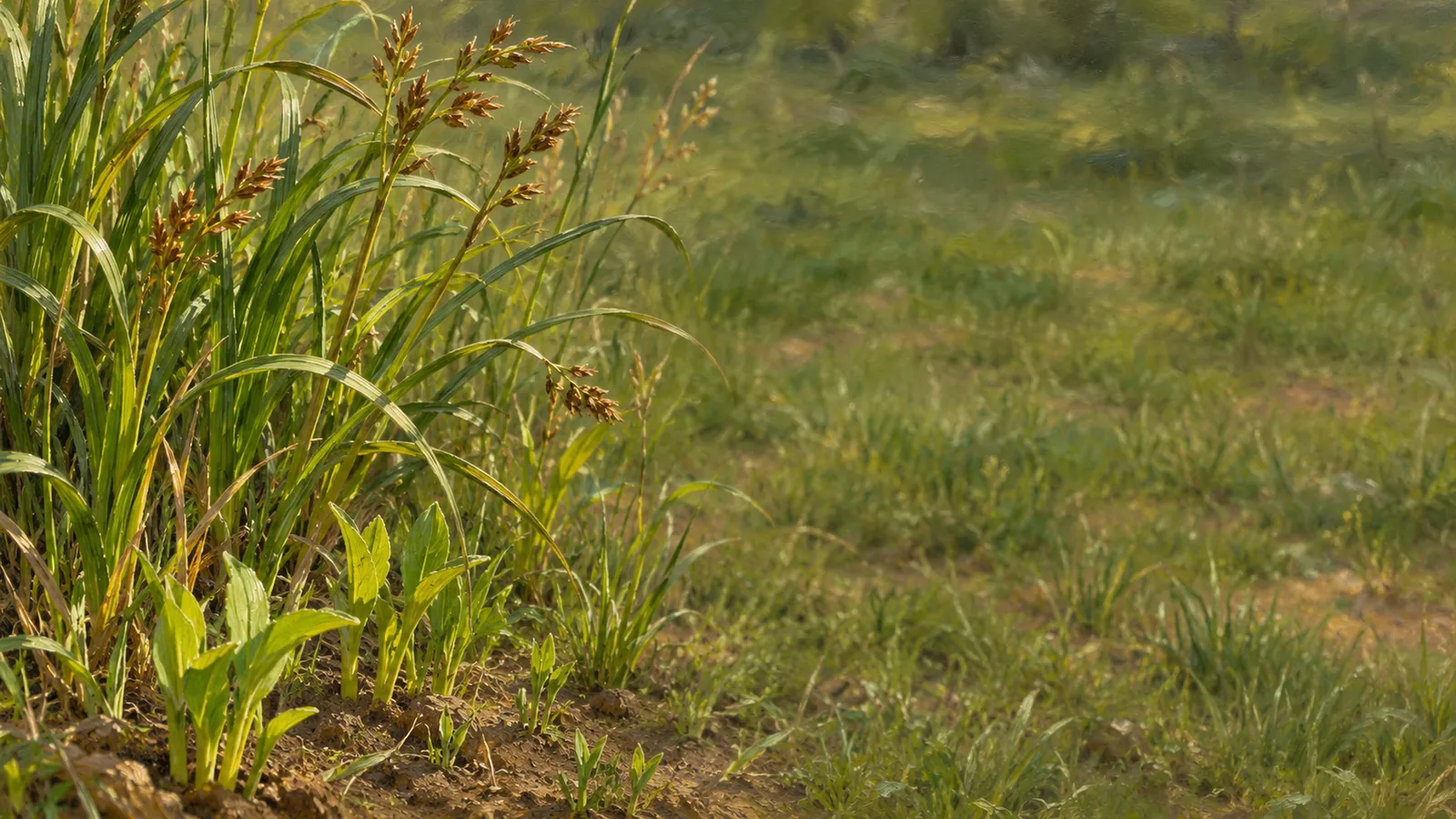
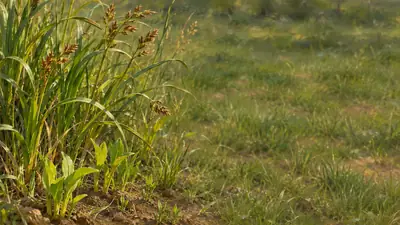
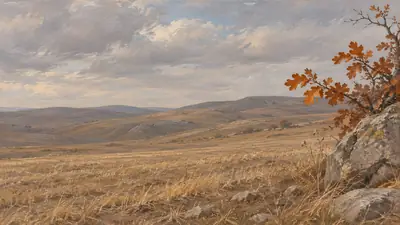
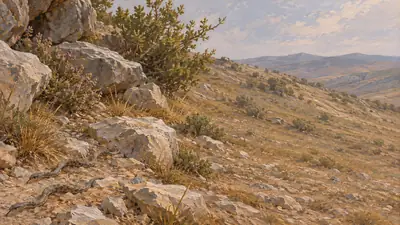
Young shoots rise through last season’s dry grass. The tablet may also name a reed. In the picture we come down to the level of the plants before anyone speaks.
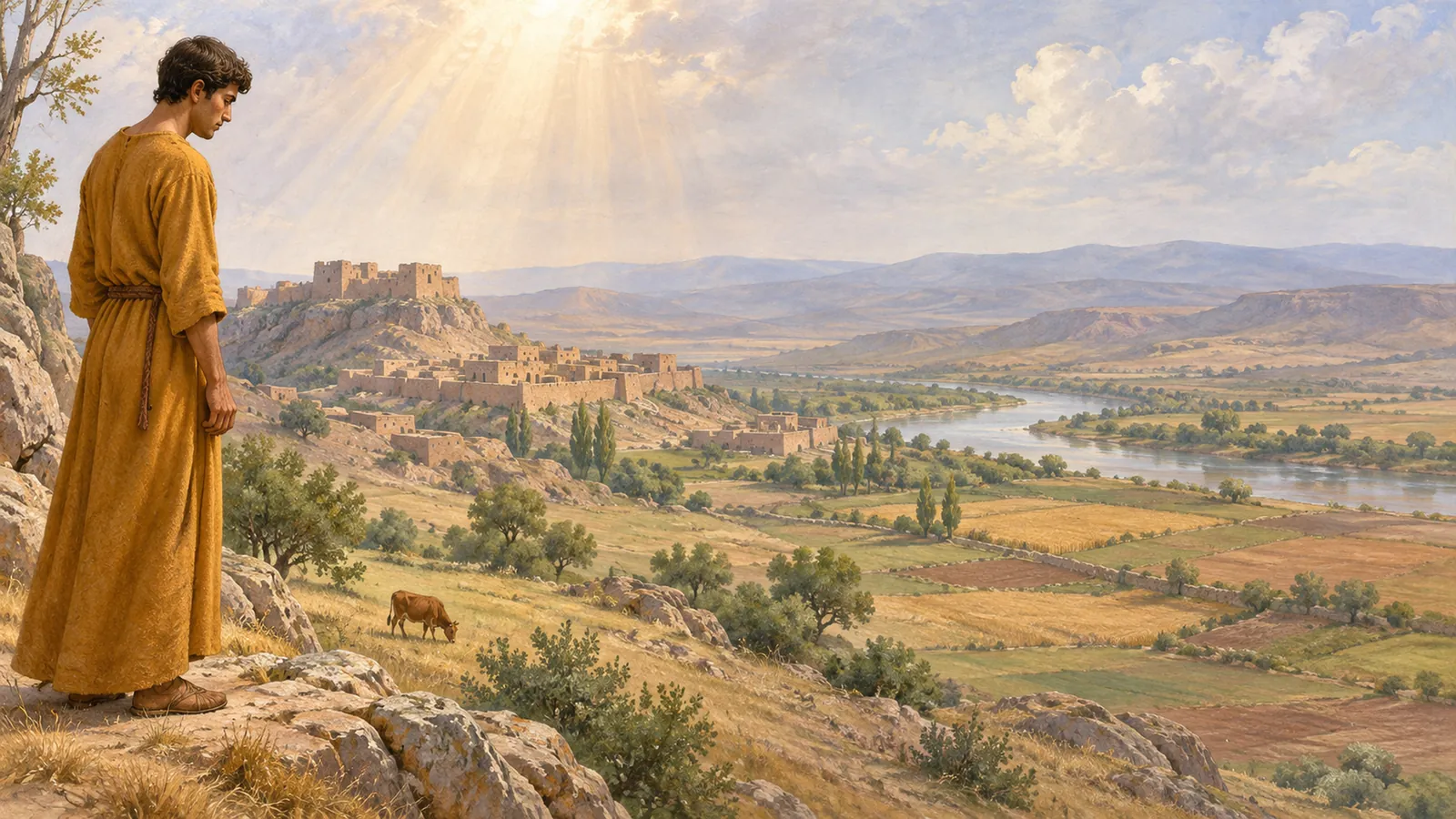
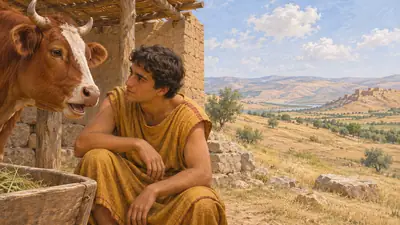
The Sun God looks down from the sky and sees the flourishing cow. He comes down to the ground. A damaged line seems to describe him as a young man.
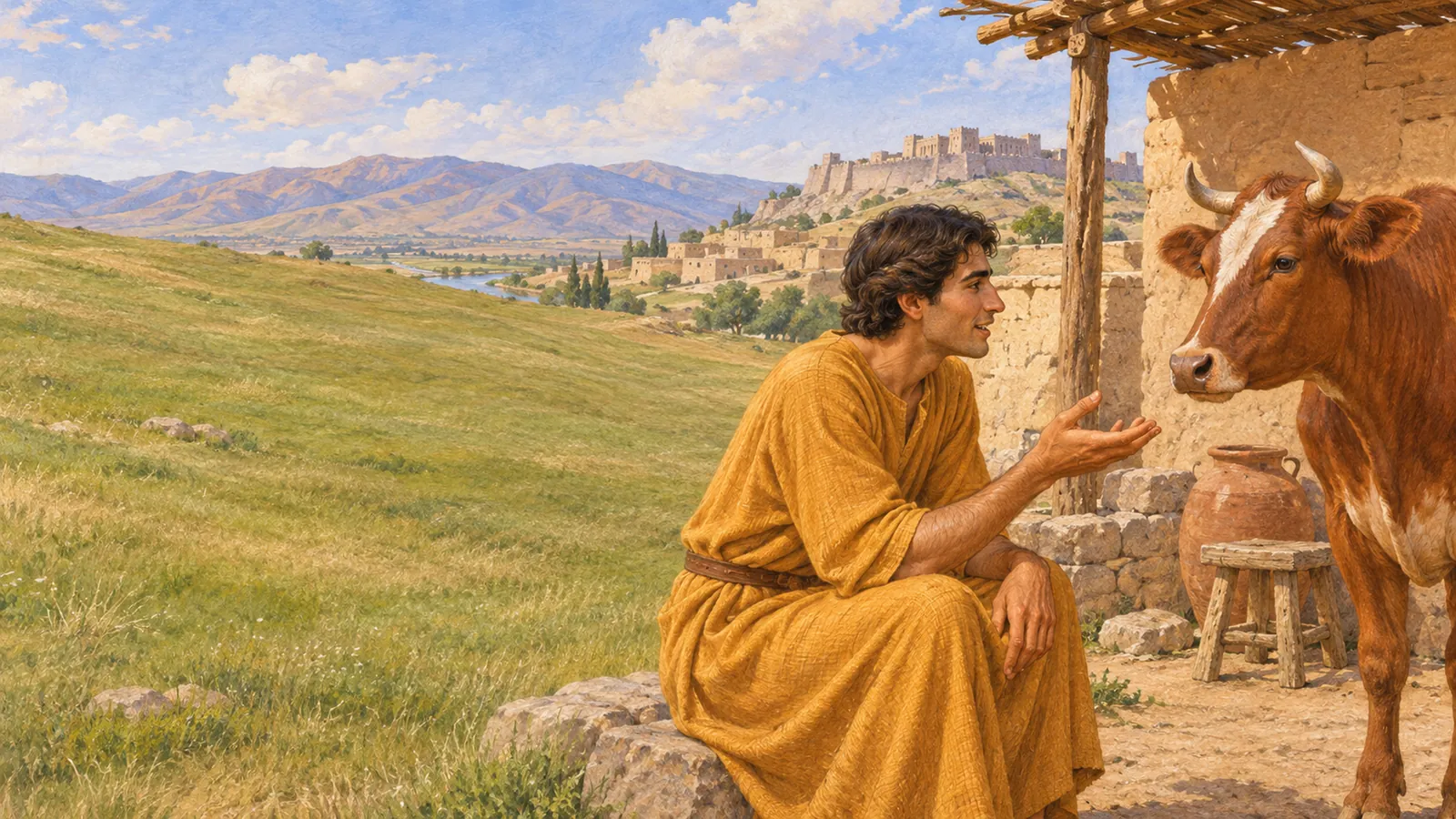
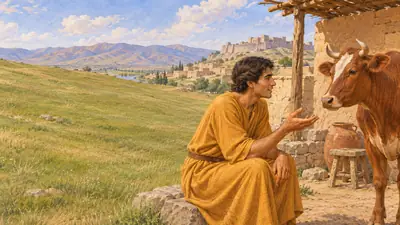
The Sun God asks who she is and why she grazes in the meadow. He speaks of the tender growth and tells her she is destroying the pasture.
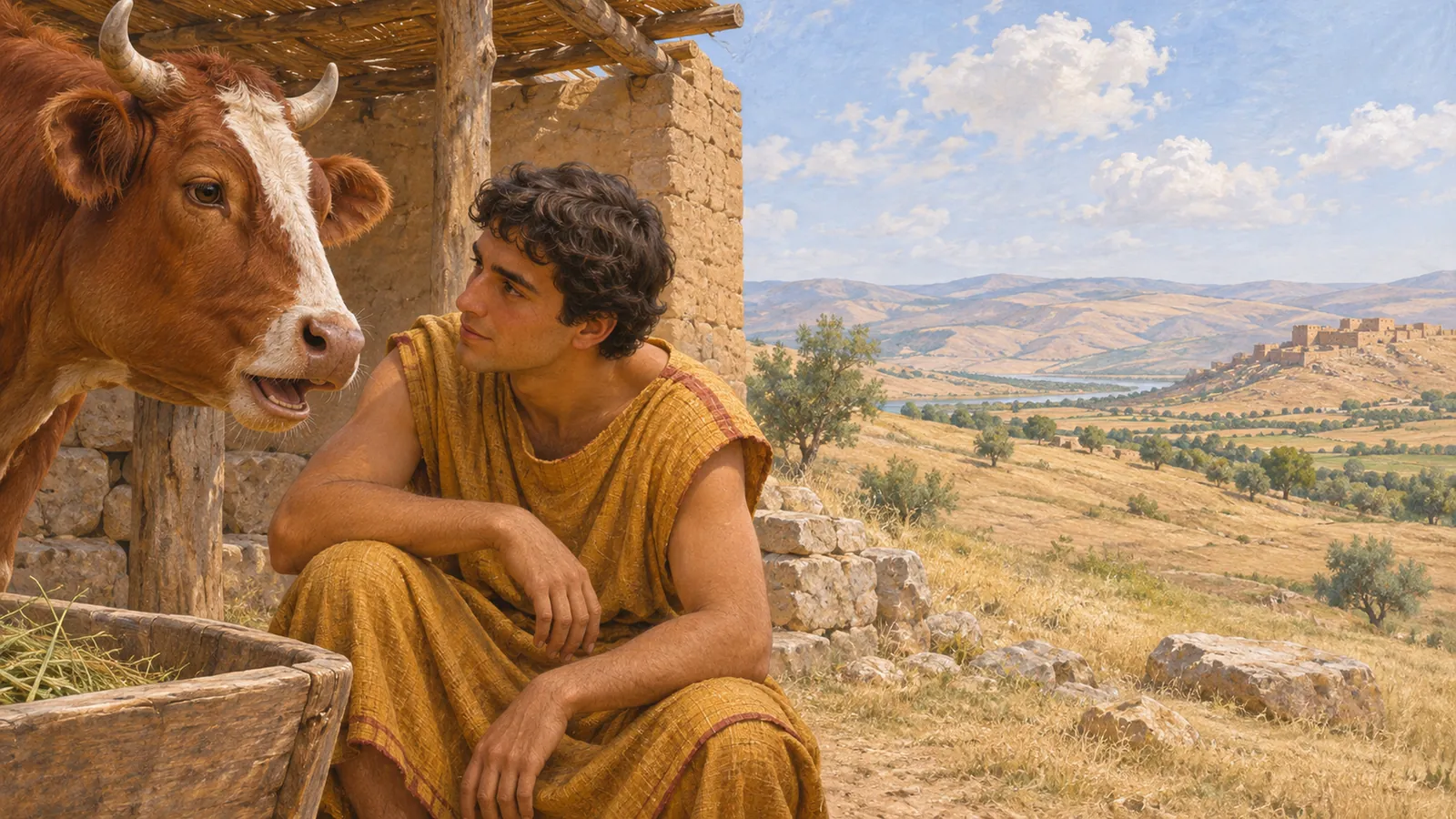
The cow has a reply. The Sun God answers her in turn. We can tell when each one speaks because the lines announce a new voice, even where its words have gone.
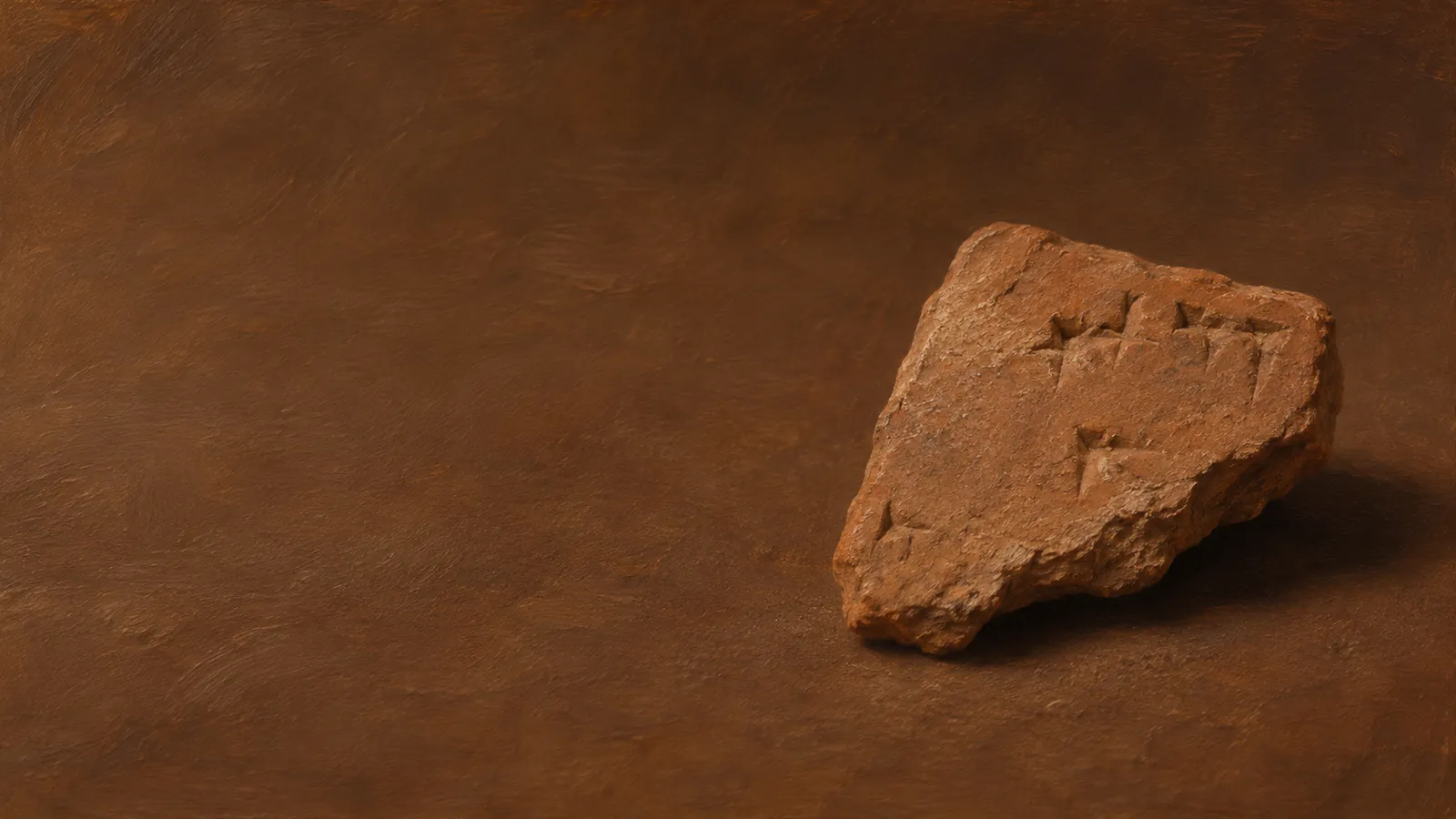
The signs thin out across the damaged surface. The cow and the Sun God are still named, but their exchange slips out of reach. When we can follow the story again, months pass.
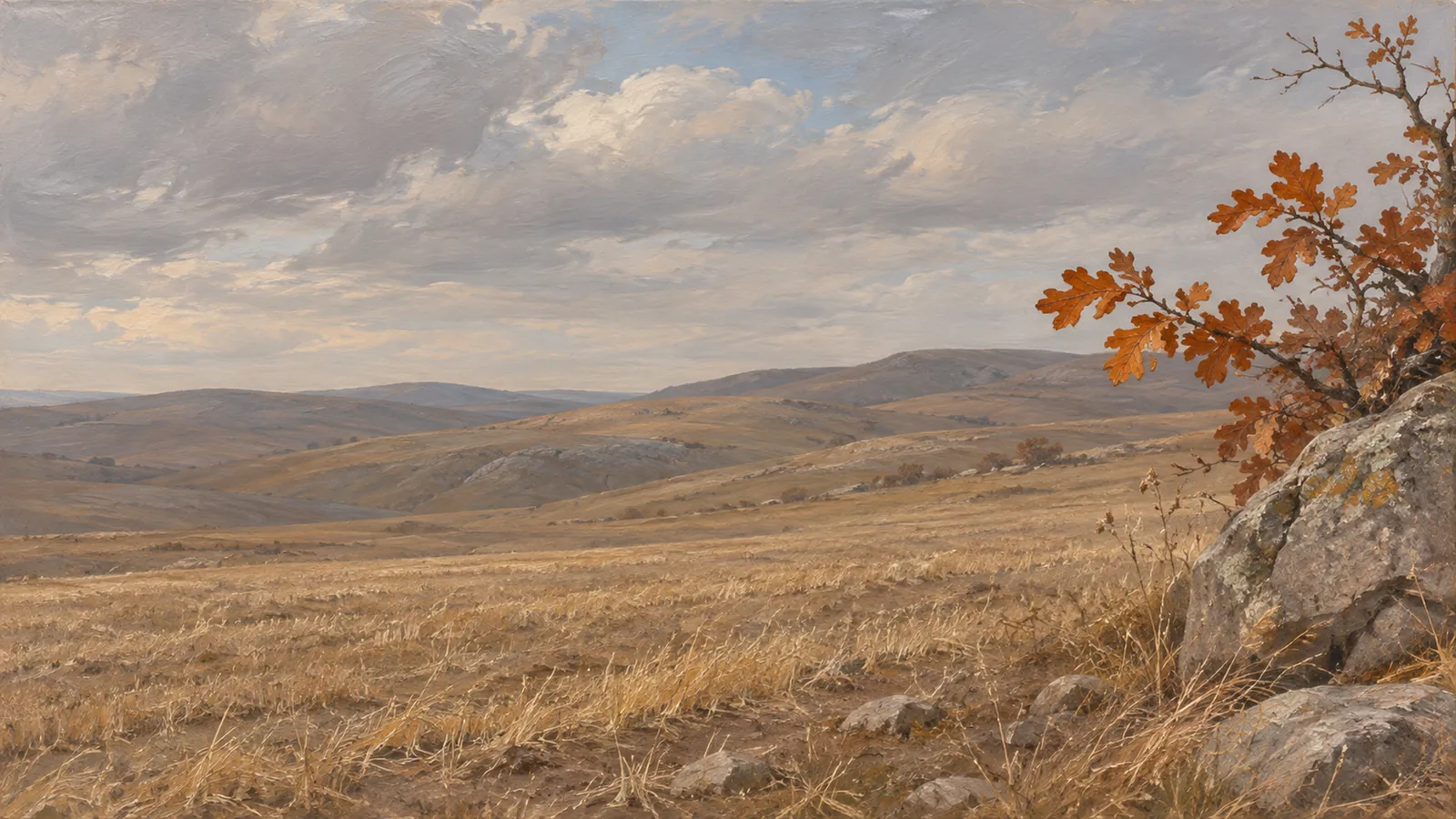
The old storyteller counts from the second month through to the tenth. The middle of the list has to be restored. The ninth and tenth months can still be read.
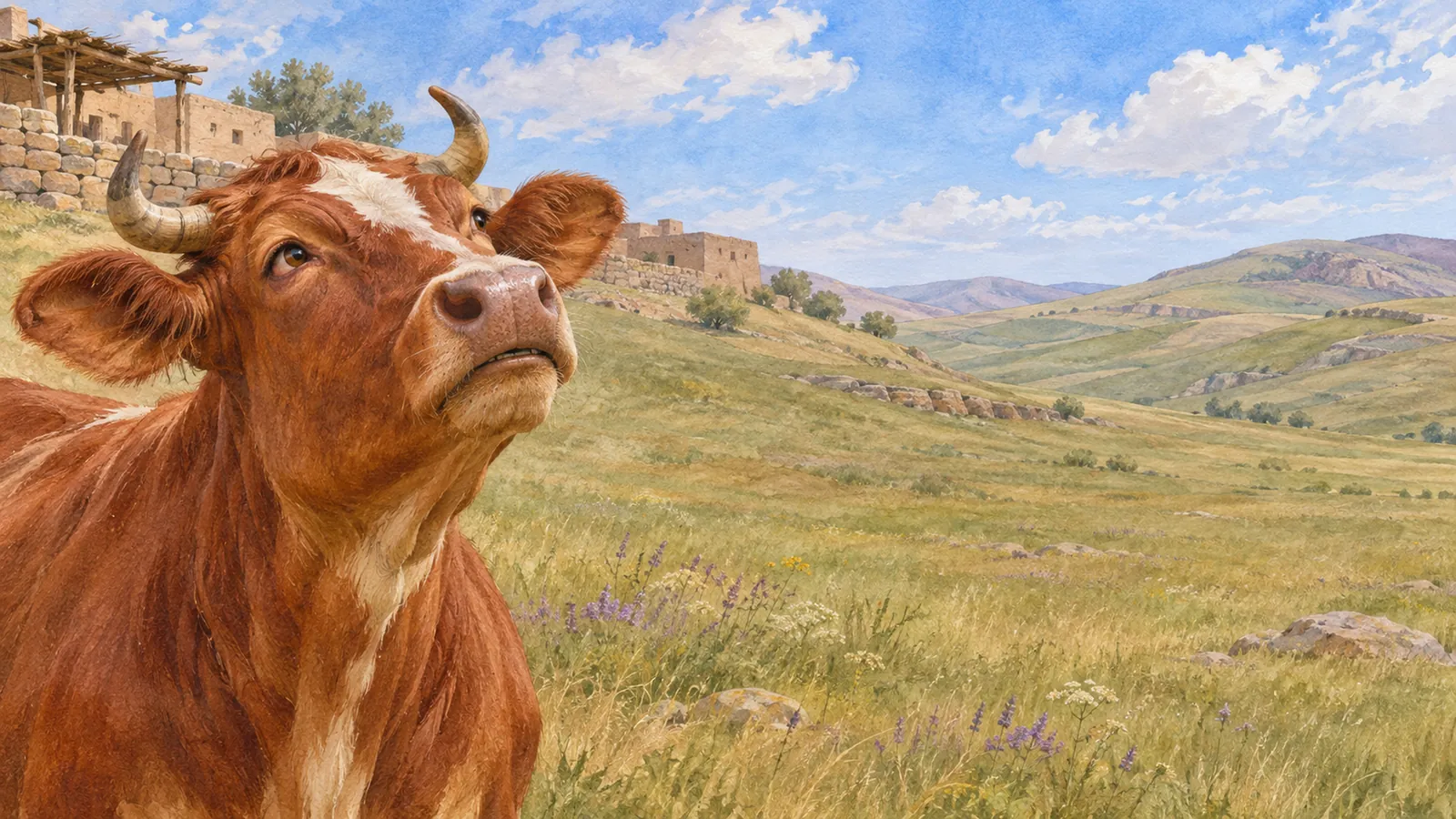
THE TENTH MONTH
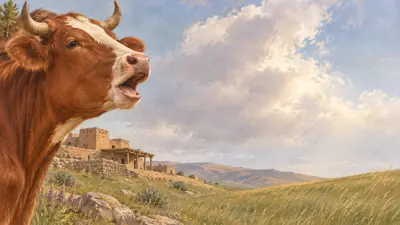
By the tenth month the cow has given birth. She calls up toward the sky and looks angrily away. She had expected the newborn to be a calf.
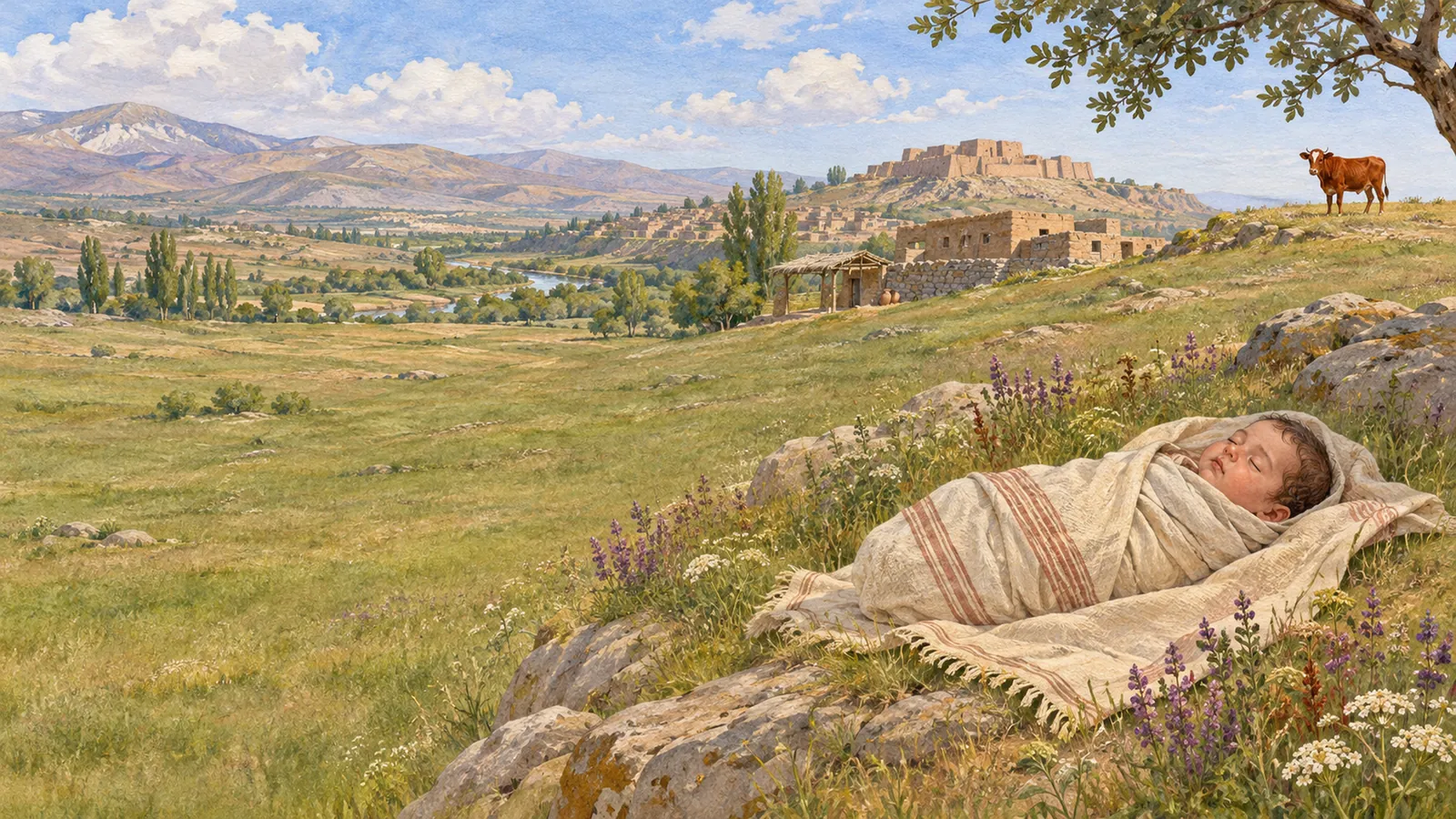
A calf has four feet. This child has two. The cow counts the difference aloud, asking how she came to bear a child like this one.
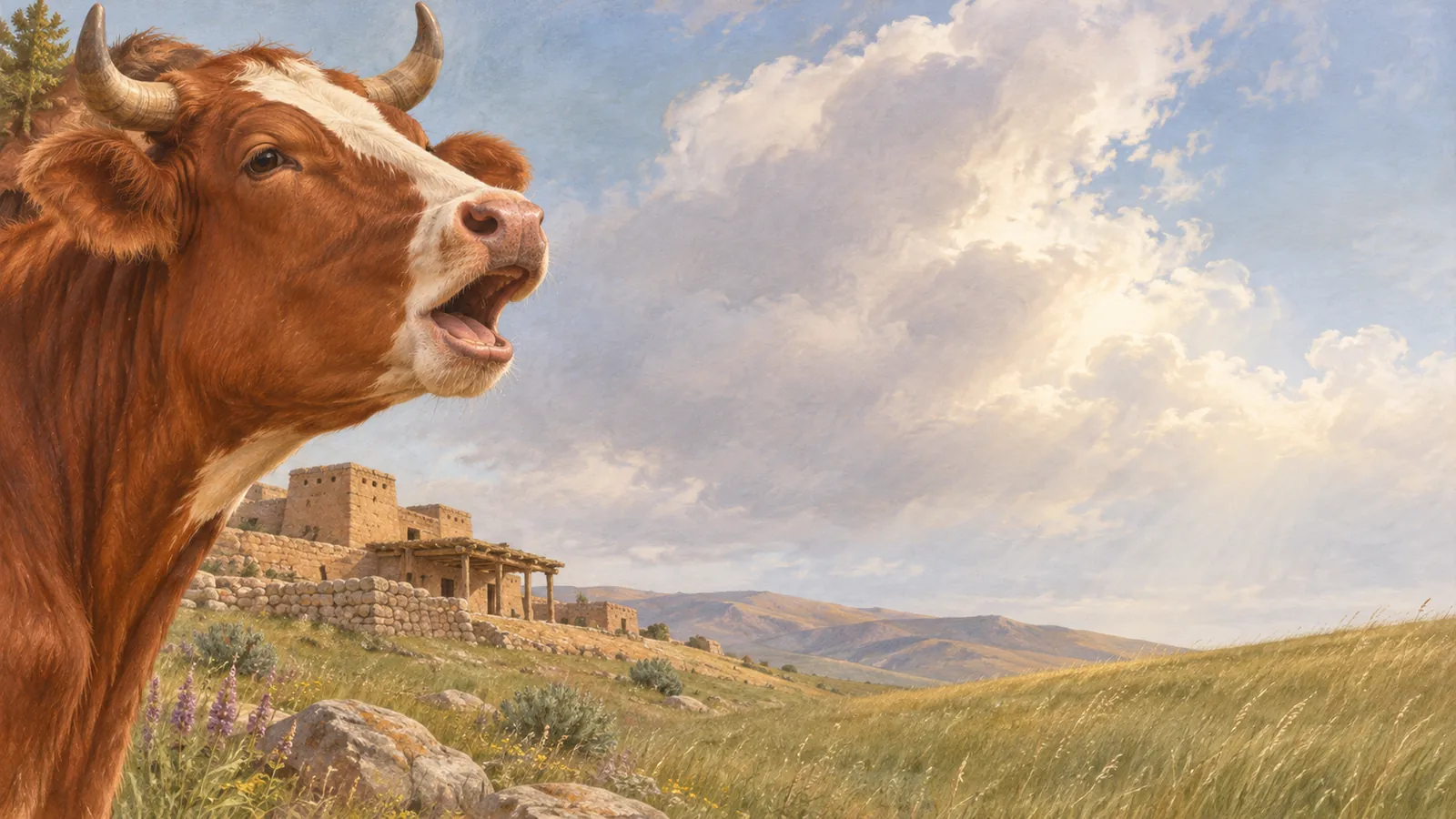
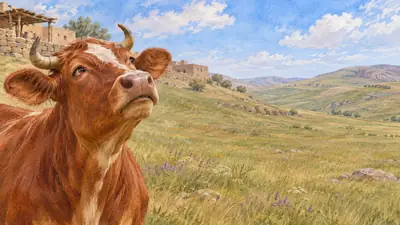
The tale compares the cow to a lion as she opens her mouth and goes toward the child. We see her from across the grass. Above her, the Sun God is looking down again.
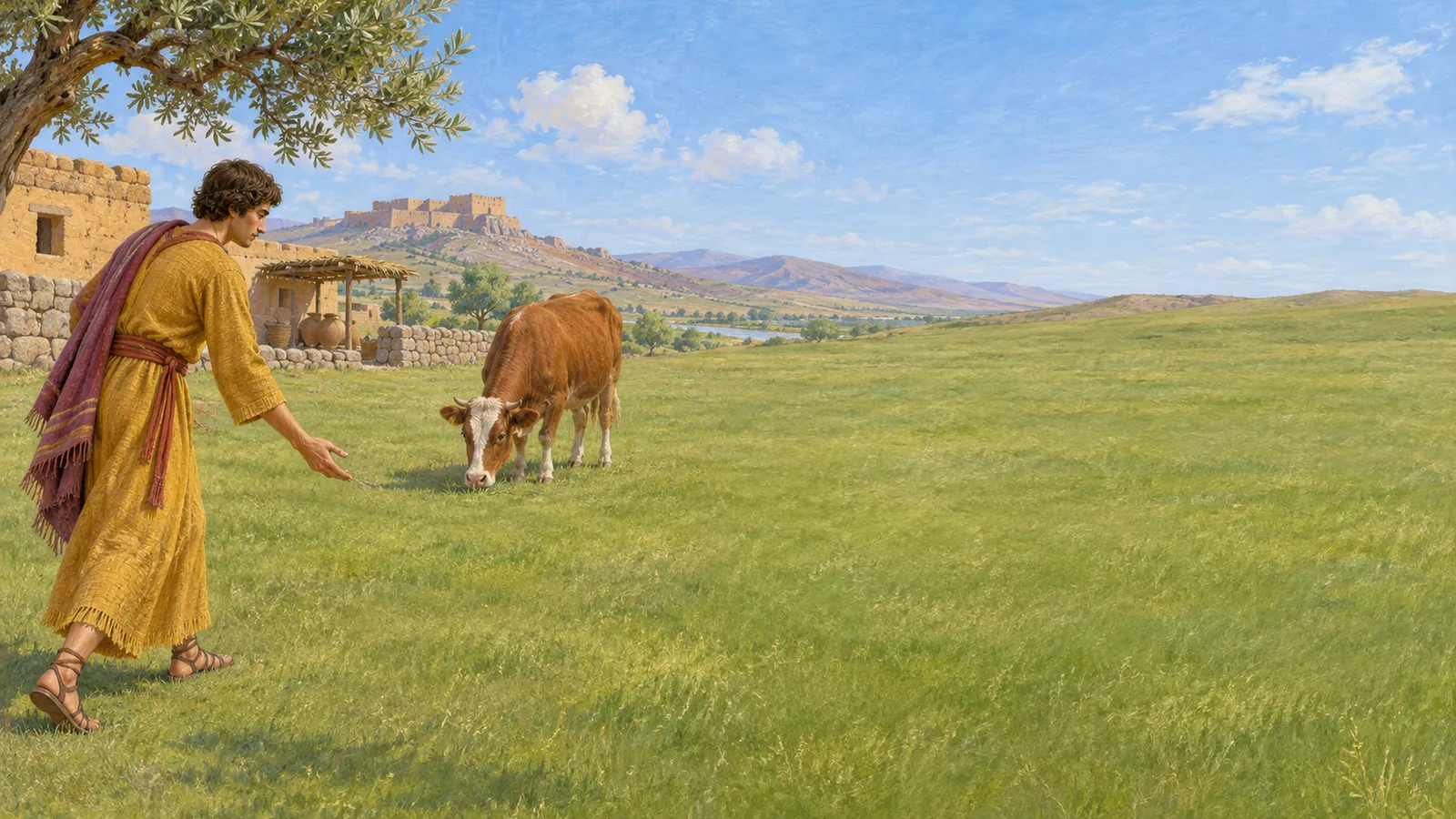
The Sun God steps up beside the cow. Their words here are fragmentary. A surviving word about swallowing helps explain why he has come between the cow and the child.
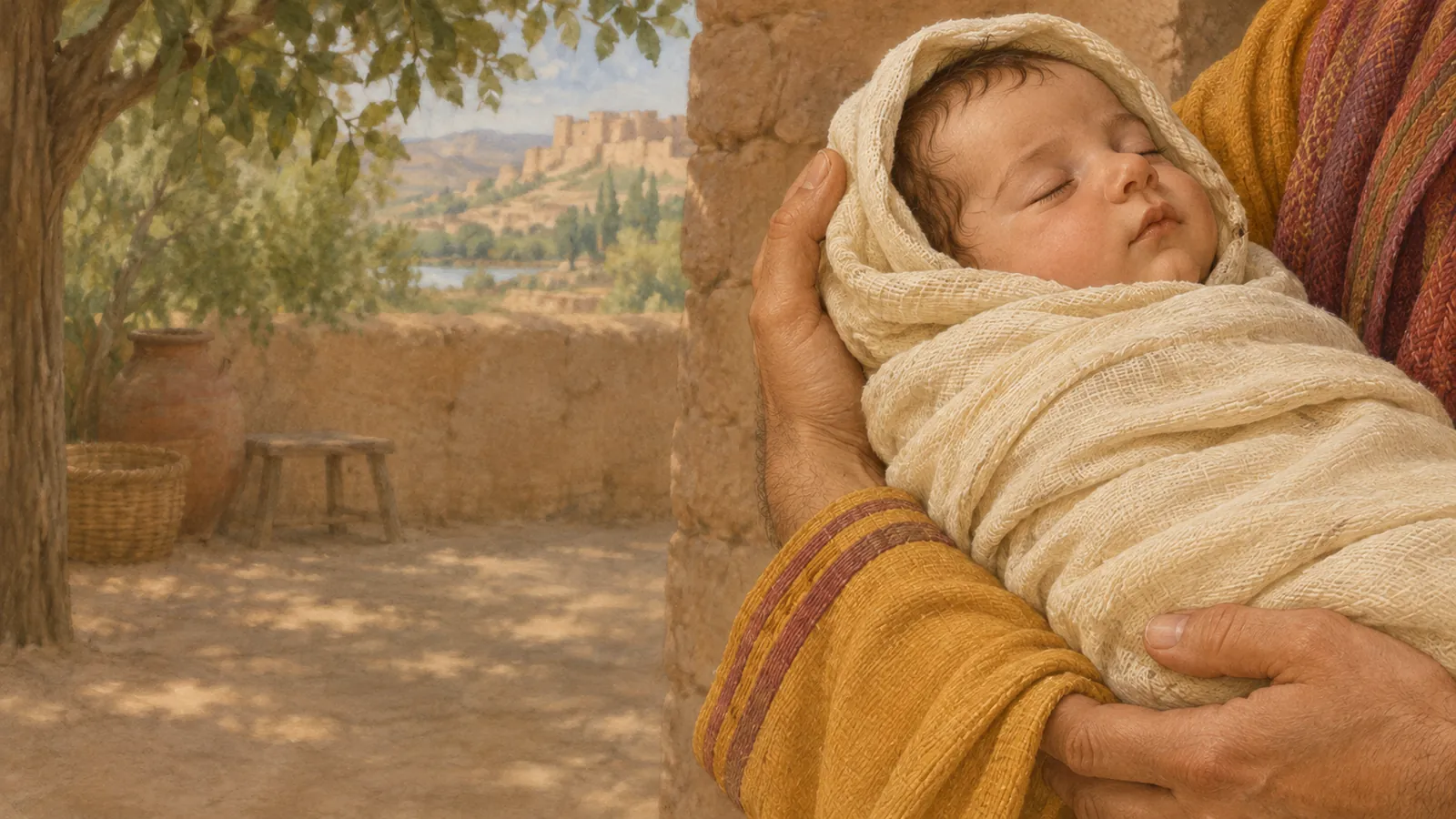
The tablet has broken along the lines that follow. There are traces of grass, of the child’s eyes and of a gesture that may be a caress. The picture imagines a moment of care.
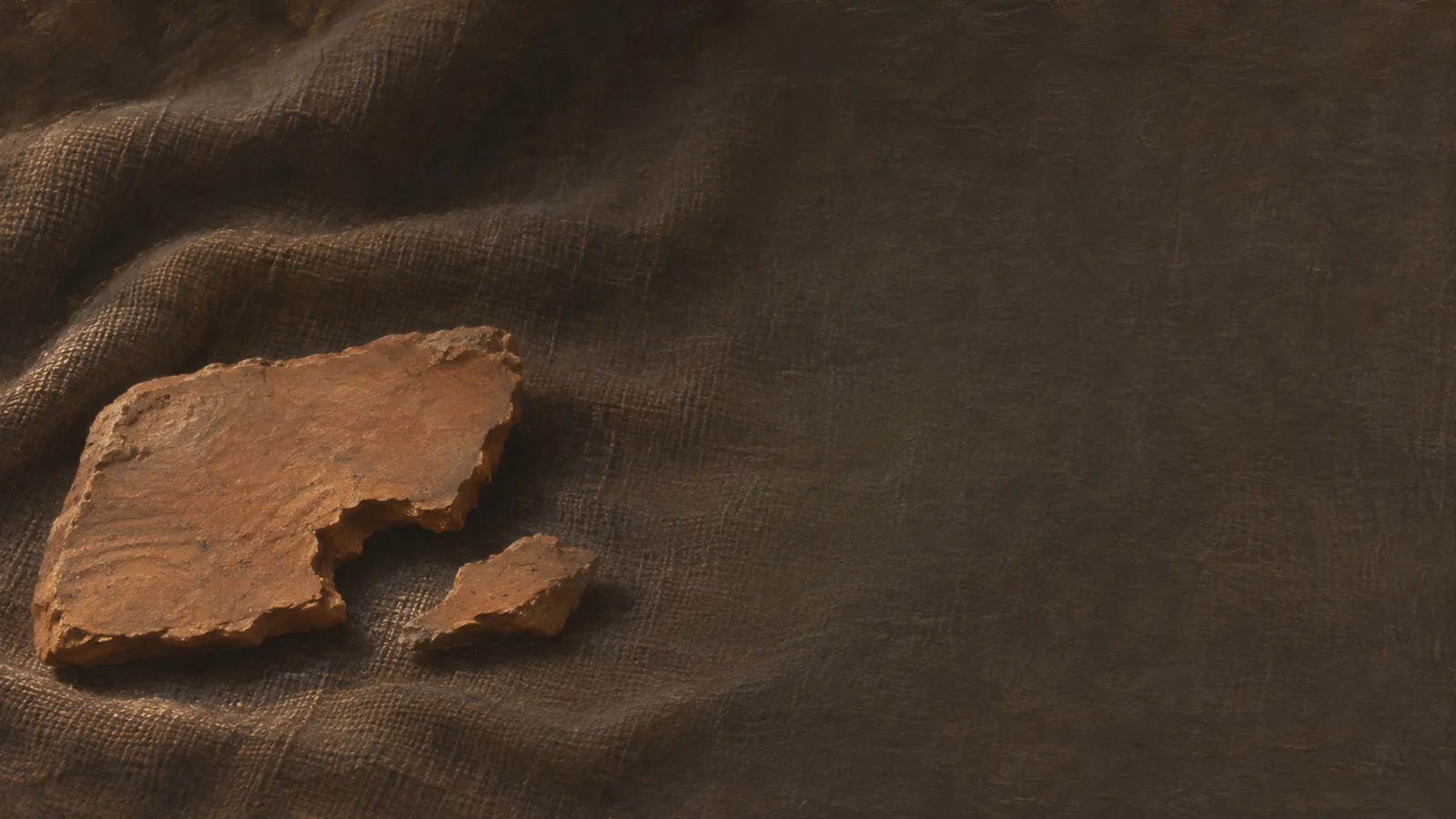
For several lines only scattered signs remain. The child’s route from the meadow to the hillside runs through this damaged part of the story. There is no continuous account of the journey.
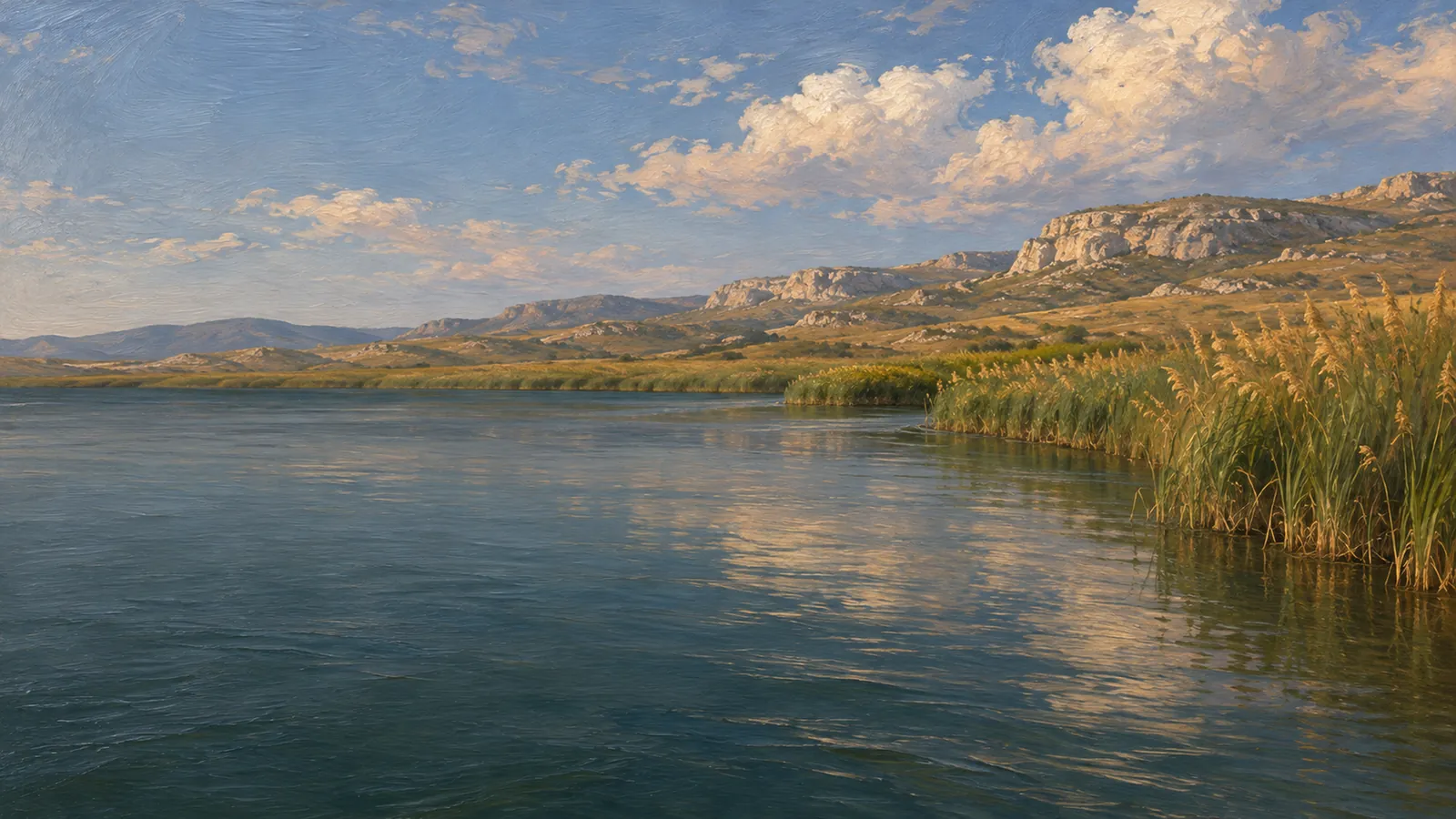
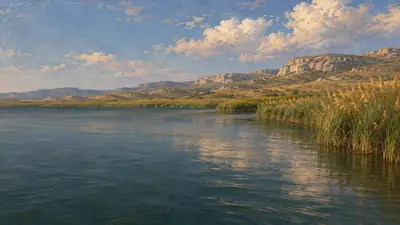
The great rivers enter the story in a torn passage beside words about washing. An illustrated bank and its plants evoke the lines. The tablets leave the place and purpose of the washing uncertain.
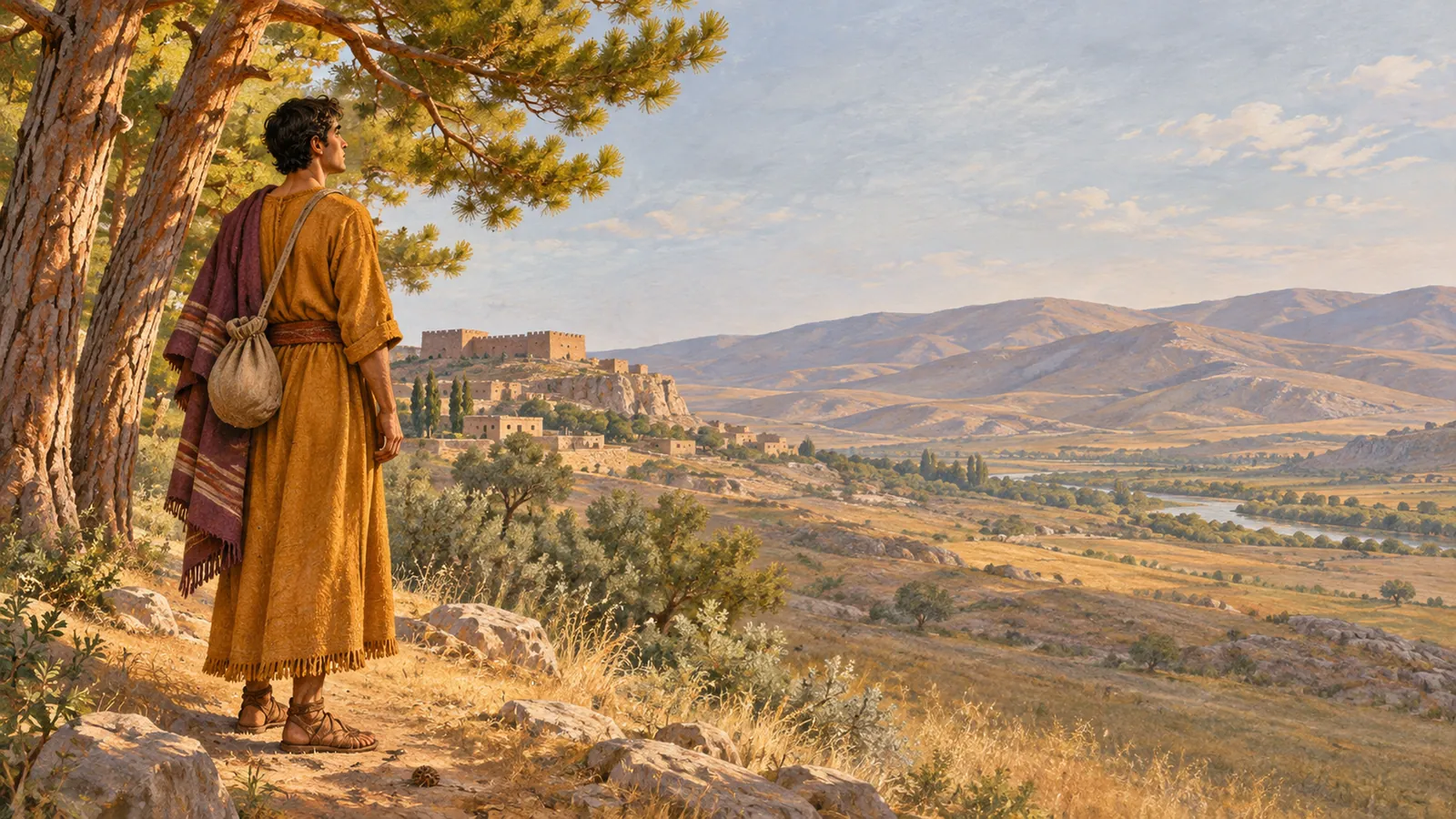
Then the text says, quite plainly, that the day turns warm. A few lines on, the Sun God prepares to go back into the sky. There is another small gesture toward the child.
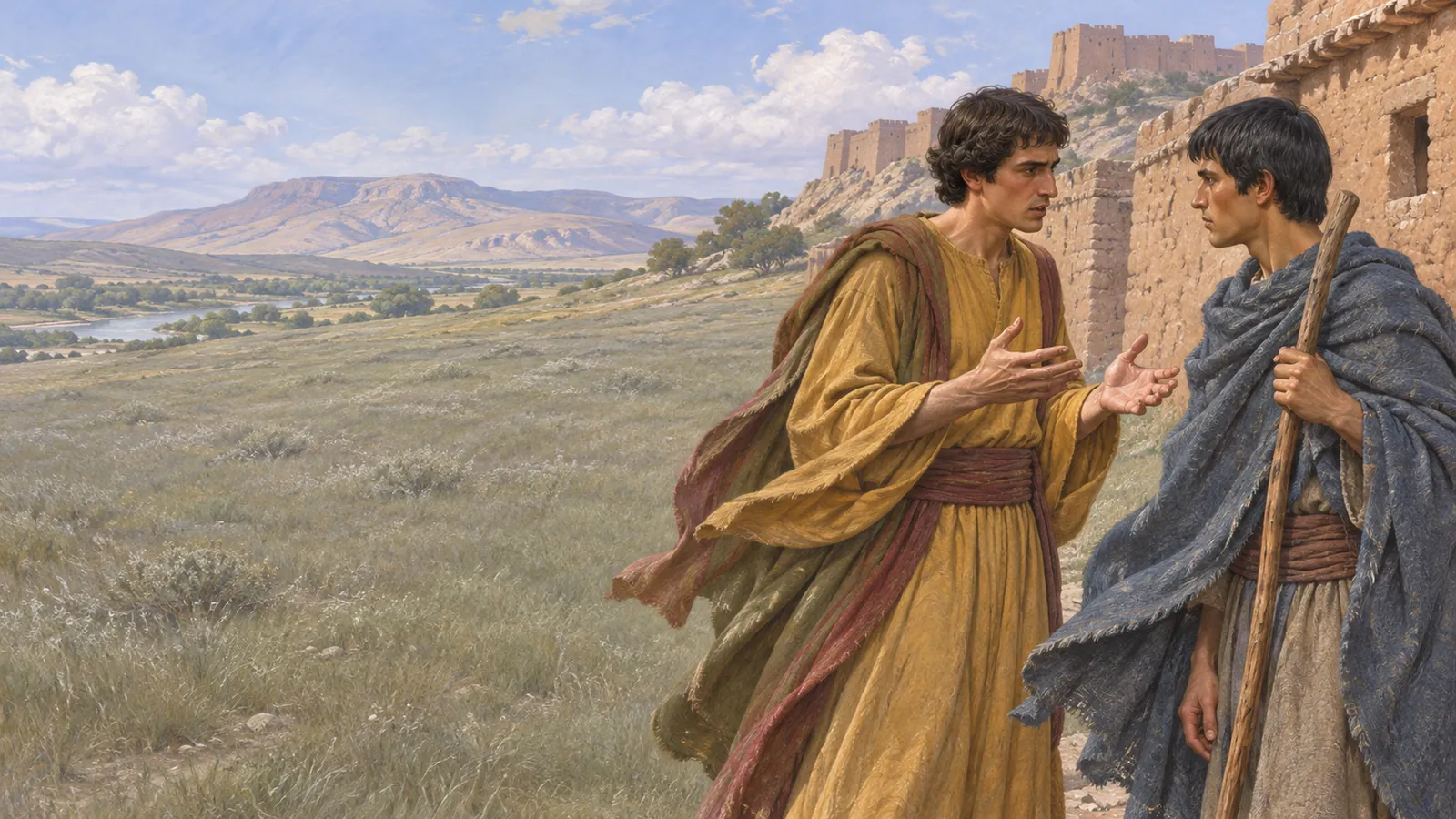
The Sun God gives orders to someone whose name begins with Sha. He tells this figure to take a staff. The rest of the name is broken away.
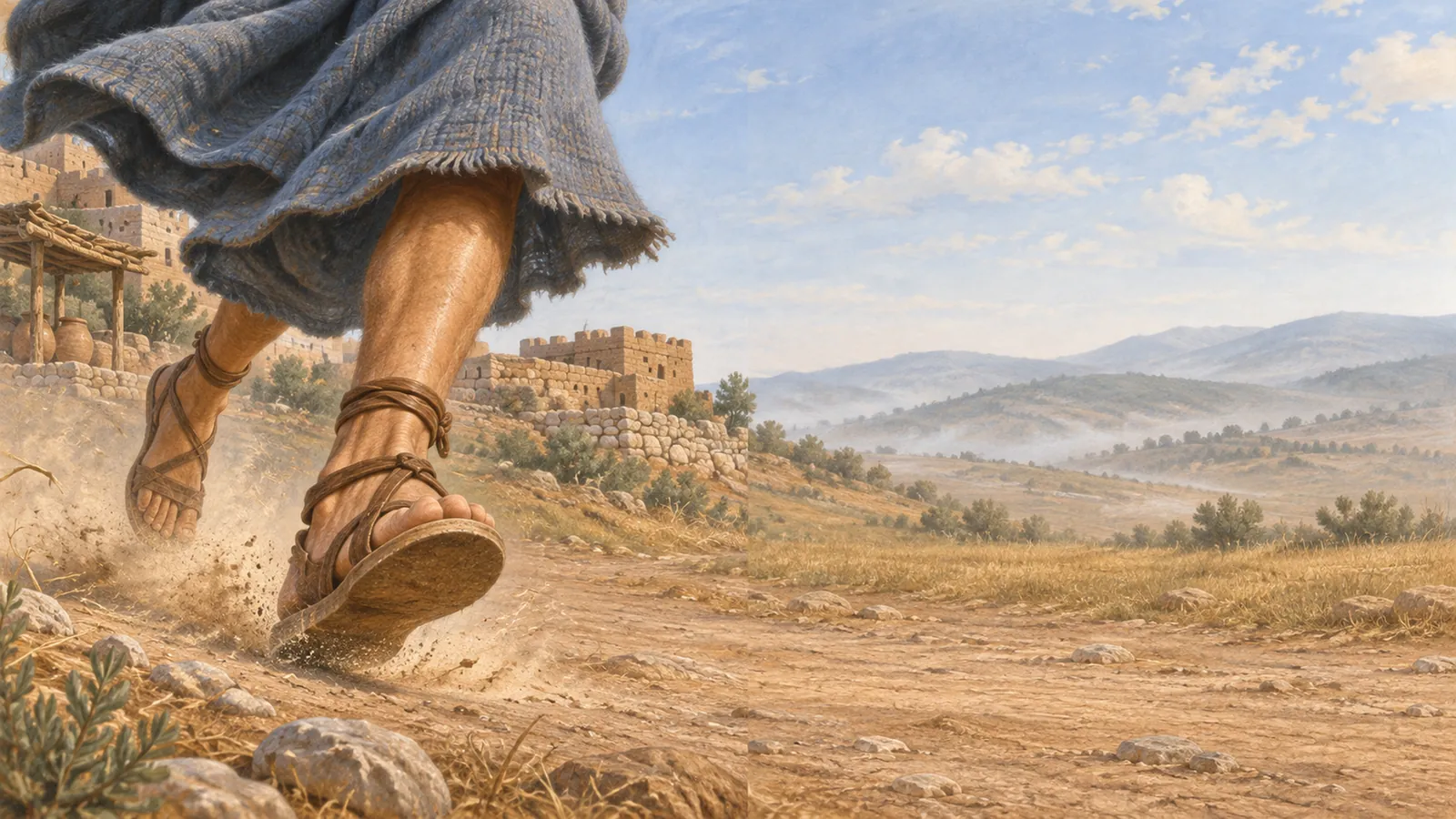
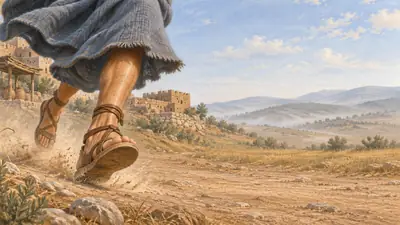
The messenger is to wear the swift winds like shoes. The image turns that instruction into a gust sweeping round two sandalled feet. It is time to go, and speed matters.
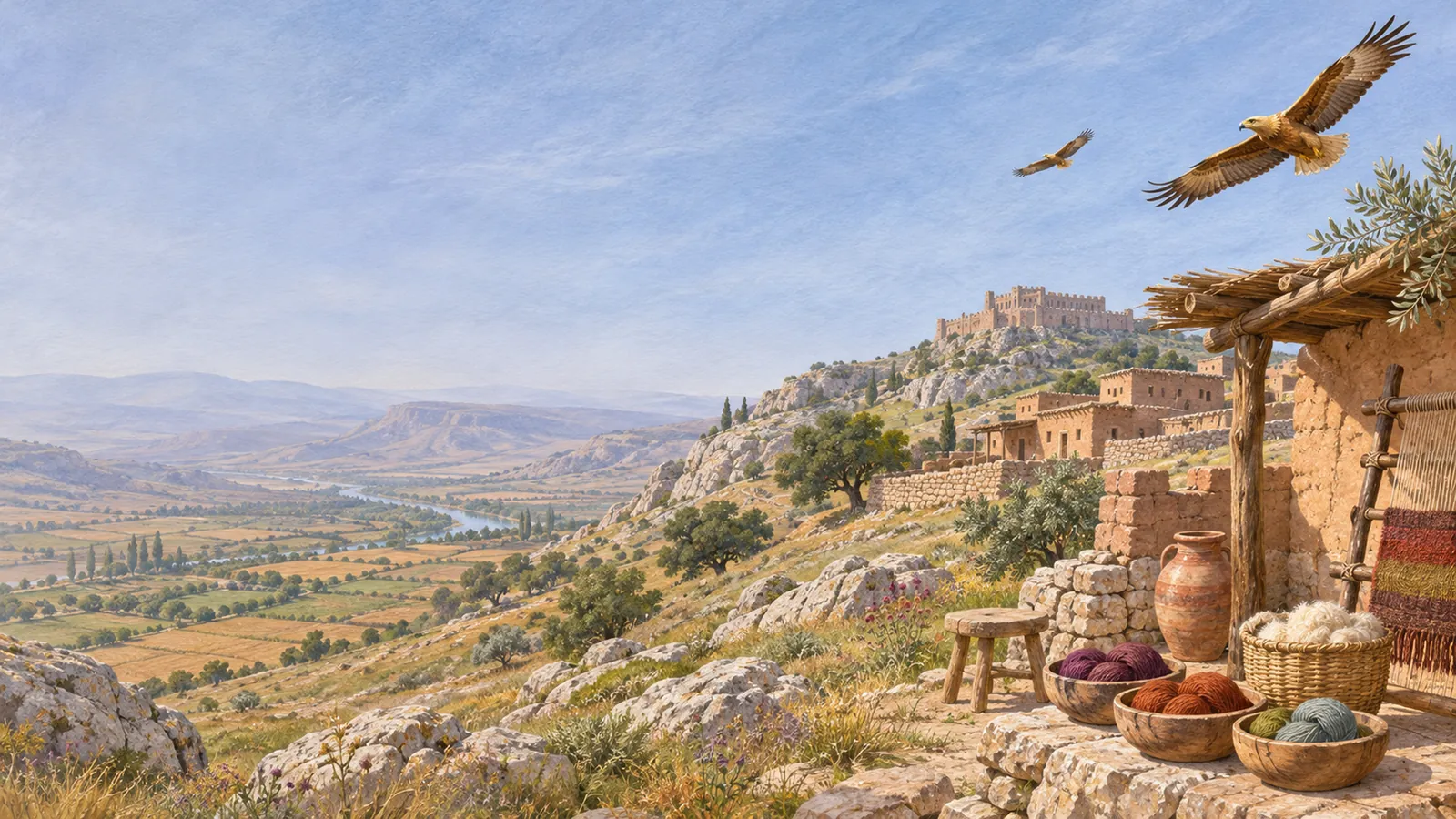
The next lines name birds above the child, among them eagles and birds whose old names are hard to identify. Further words about pegs and snakes are damaged and difficult to connect.
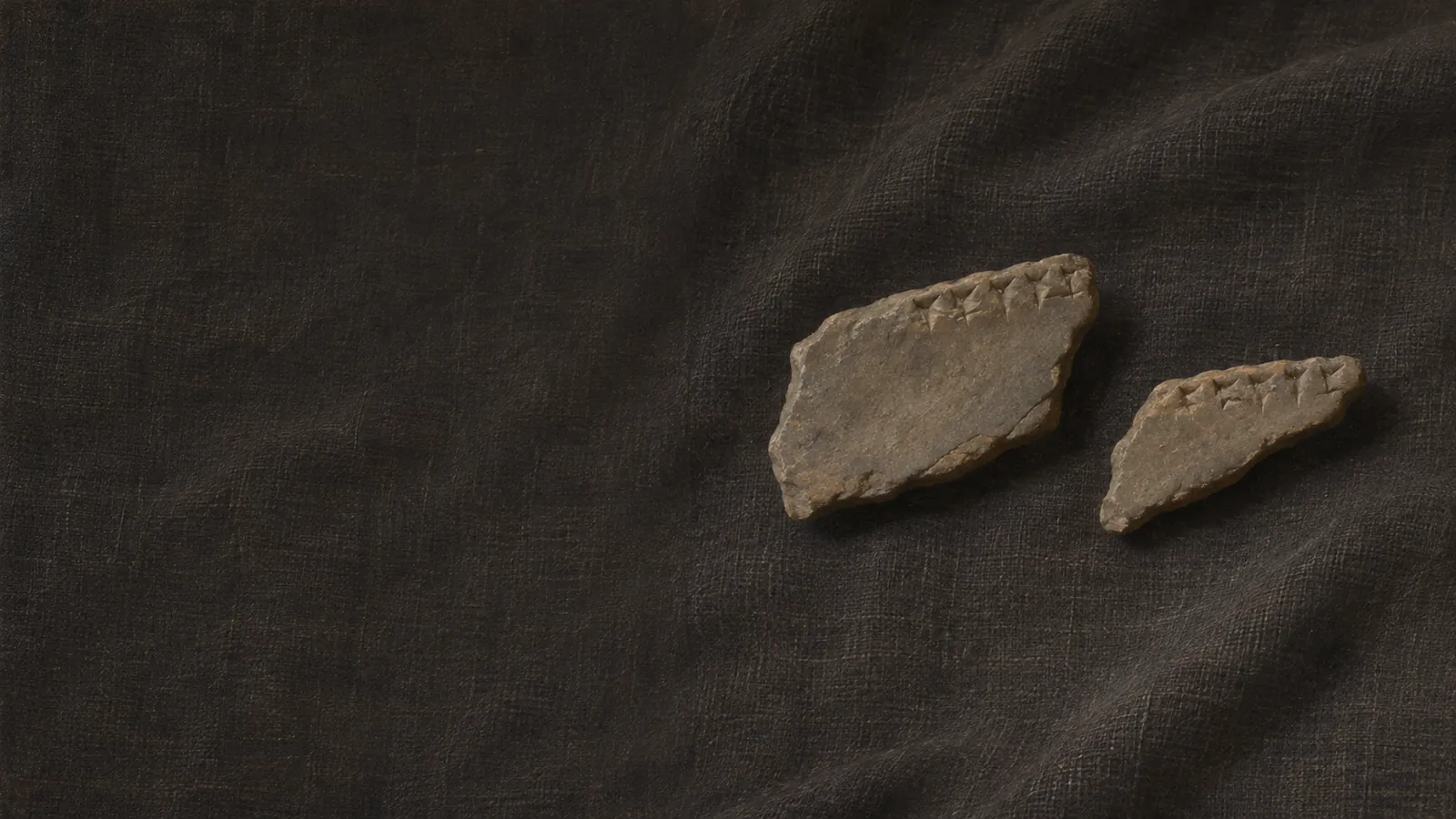
After the birds, scraps of a scene mention a raised surface and someone watching. Whole lines are missing. When the next clear words come, they lead us into the mountains.
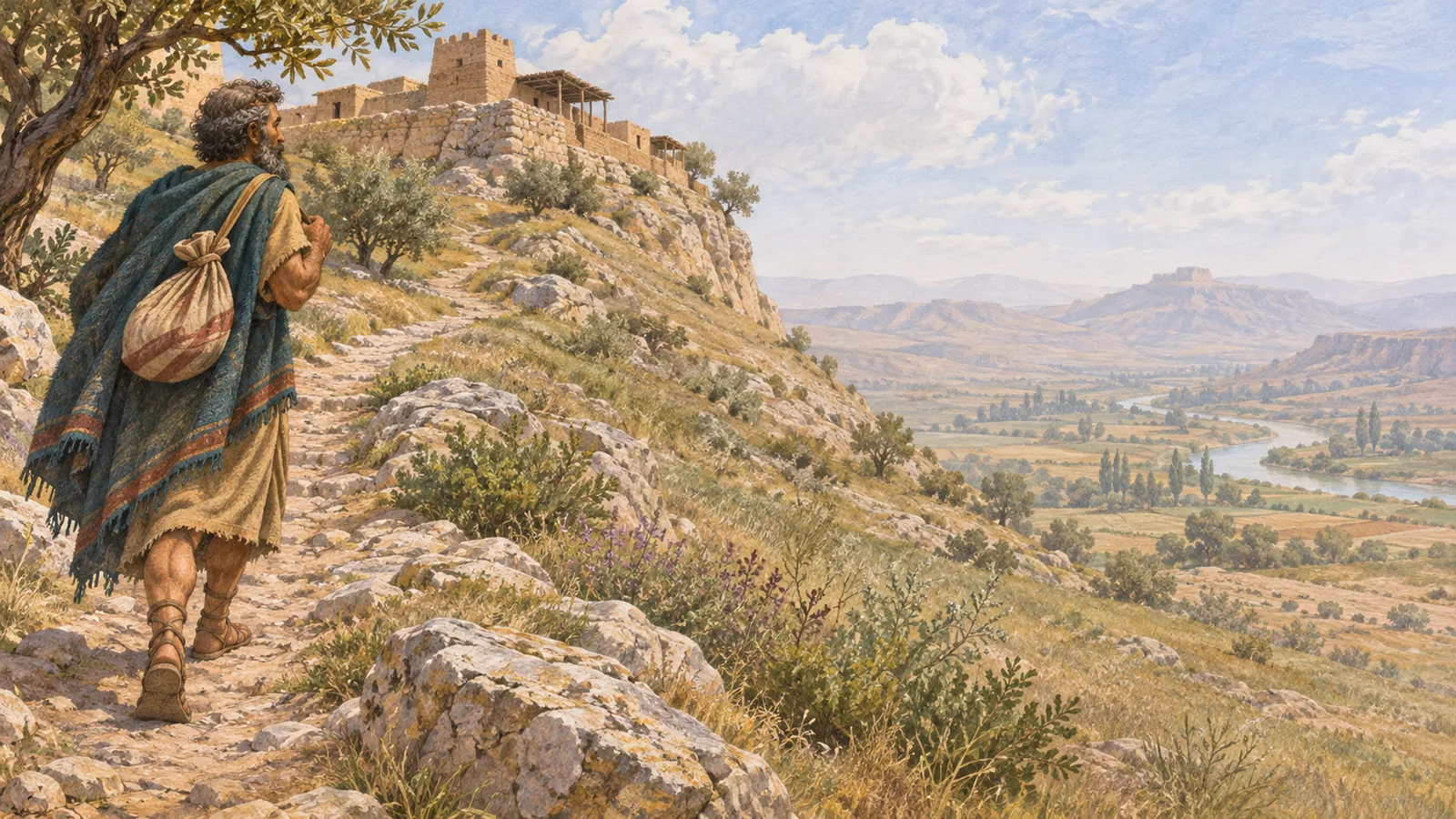
ON THE HILLSIDE
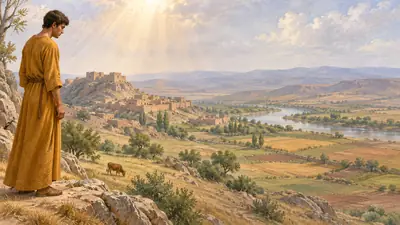
Someone says he will go and see. The next lines put him among the mountains. By the time the child is reached, the story has brought a fisherman far from the water where he works.
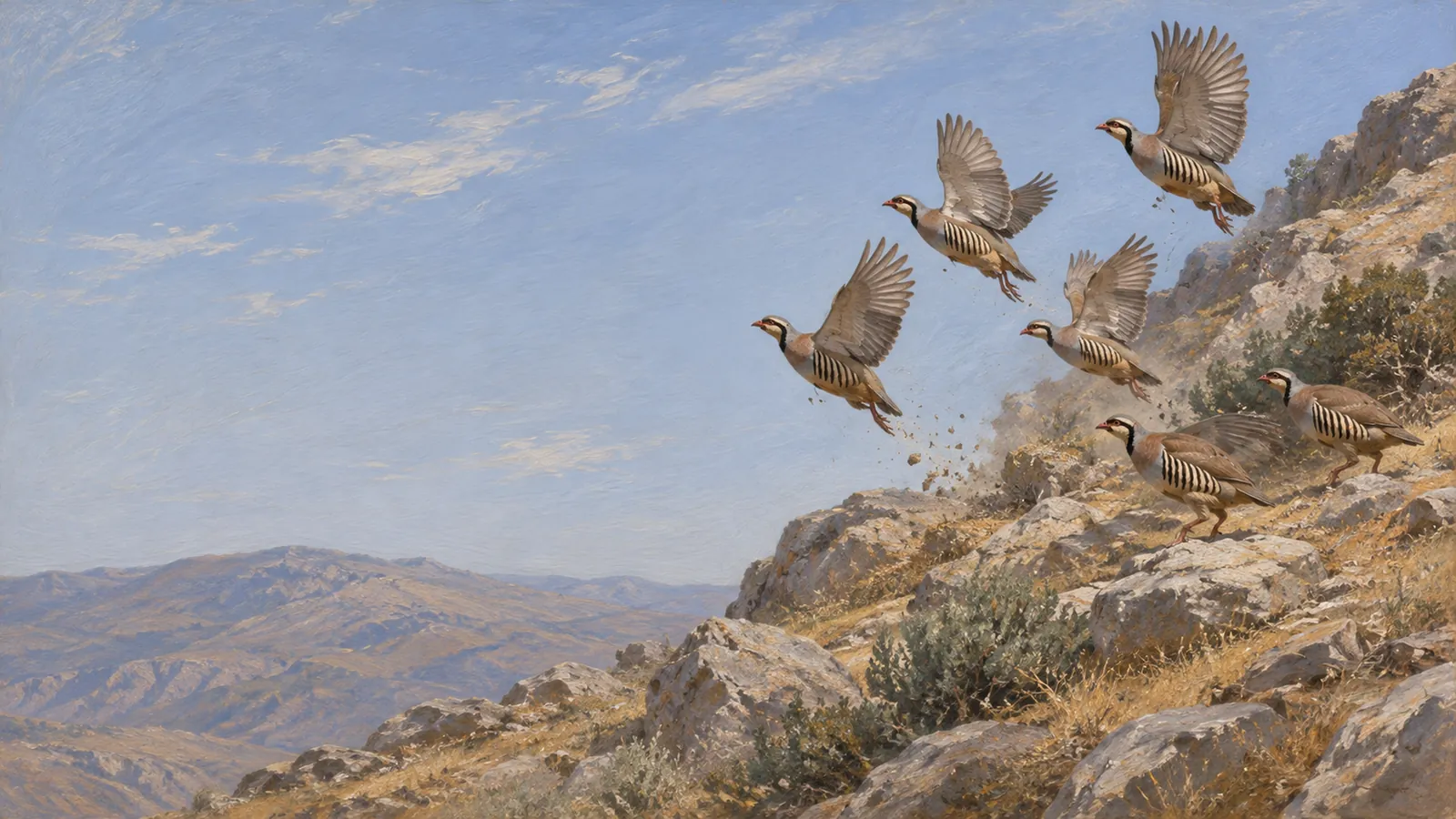
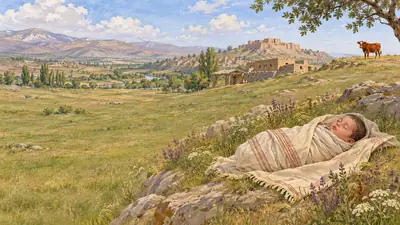
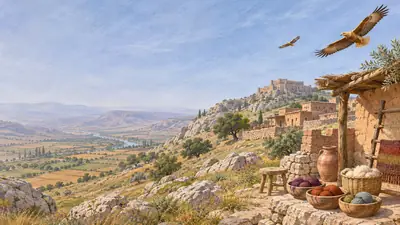
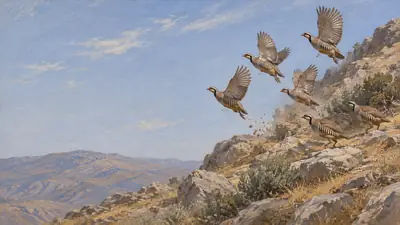
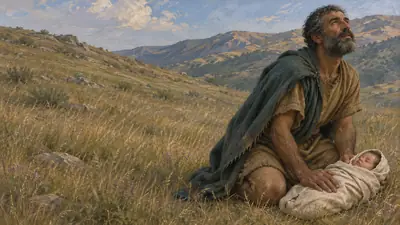
Birds lift from the slope and climb into the sky. The old word may refer to rock partridges. Whatever the species, their departure clears the view across the hillside.
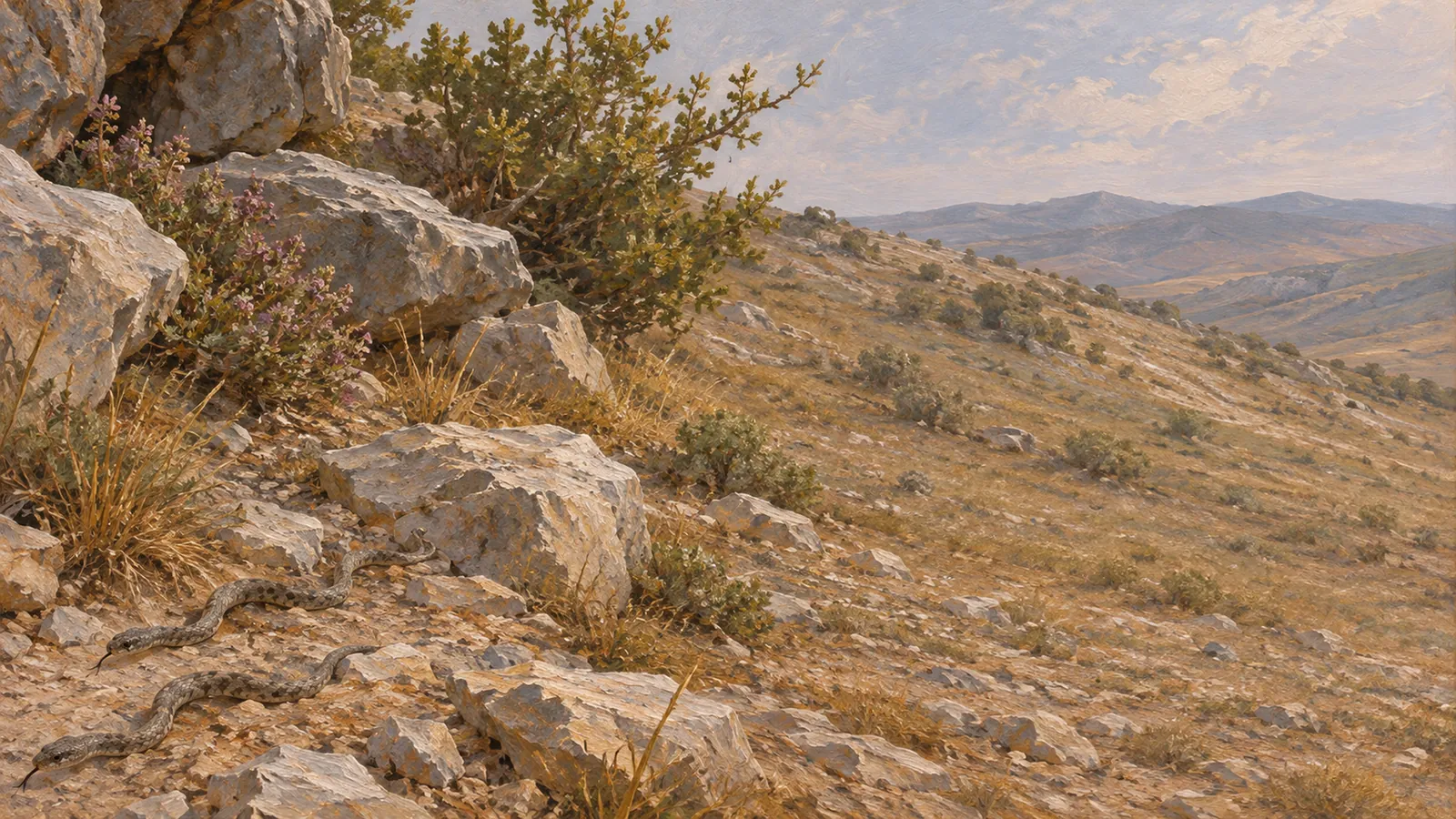
Snakes move away in the surviving lines. Here they are small shapes across a stretch of stone. The fisherman can come near the place where the child lies.
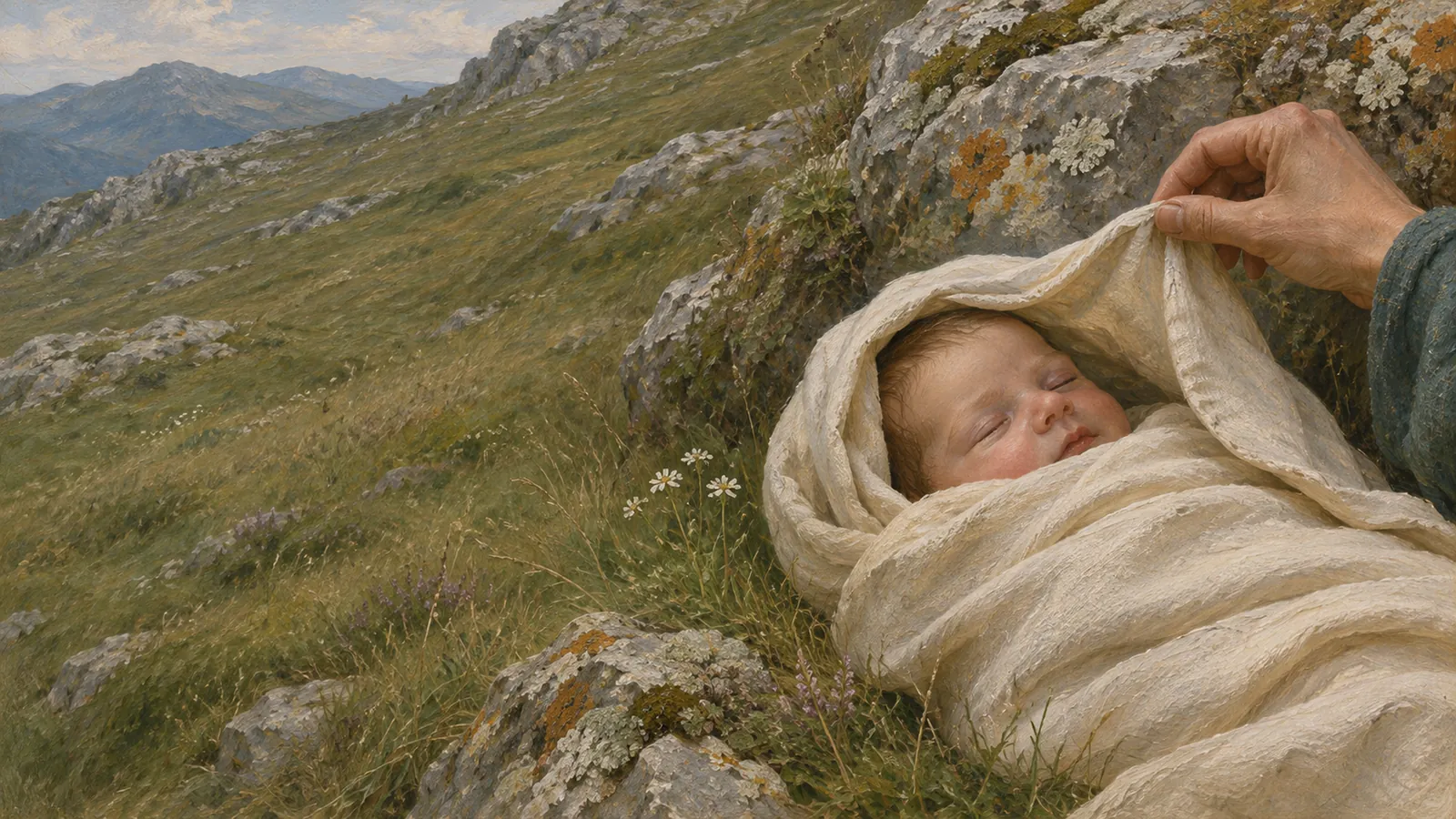
A line describes someone touching the child’s head and limbs. The words around it are damaged. Then the fisherman begins to speak, first to himself and then to the Sun God.
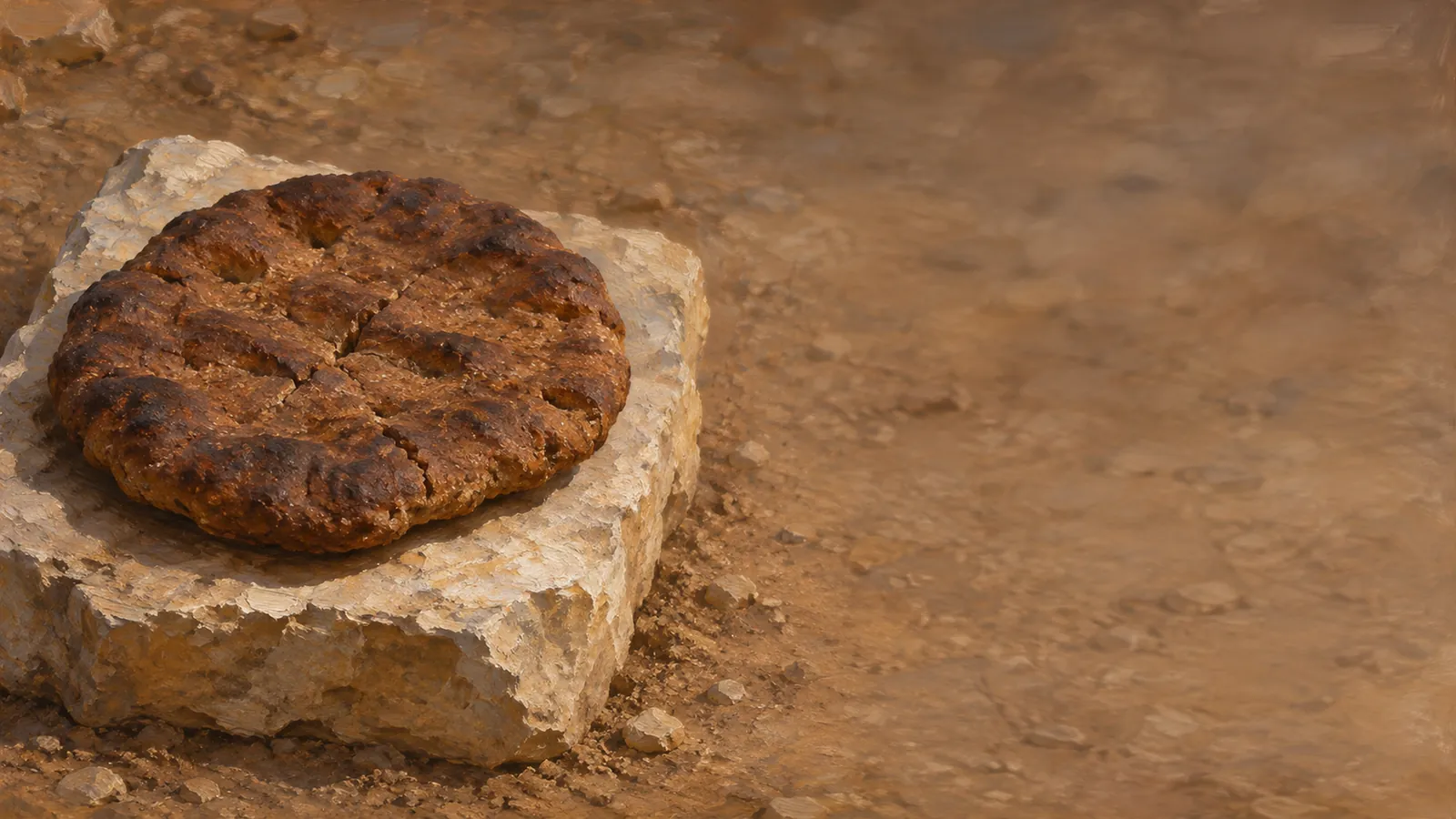
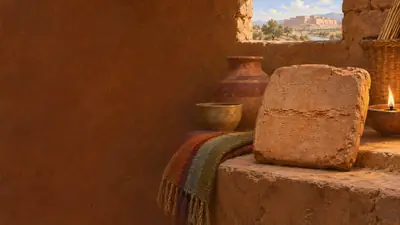
The fisherman talks about unlucky bread taken away from a stone. The meaning is hard to recover. As he speaks, he begins to see his arrival as a change in his fortune.
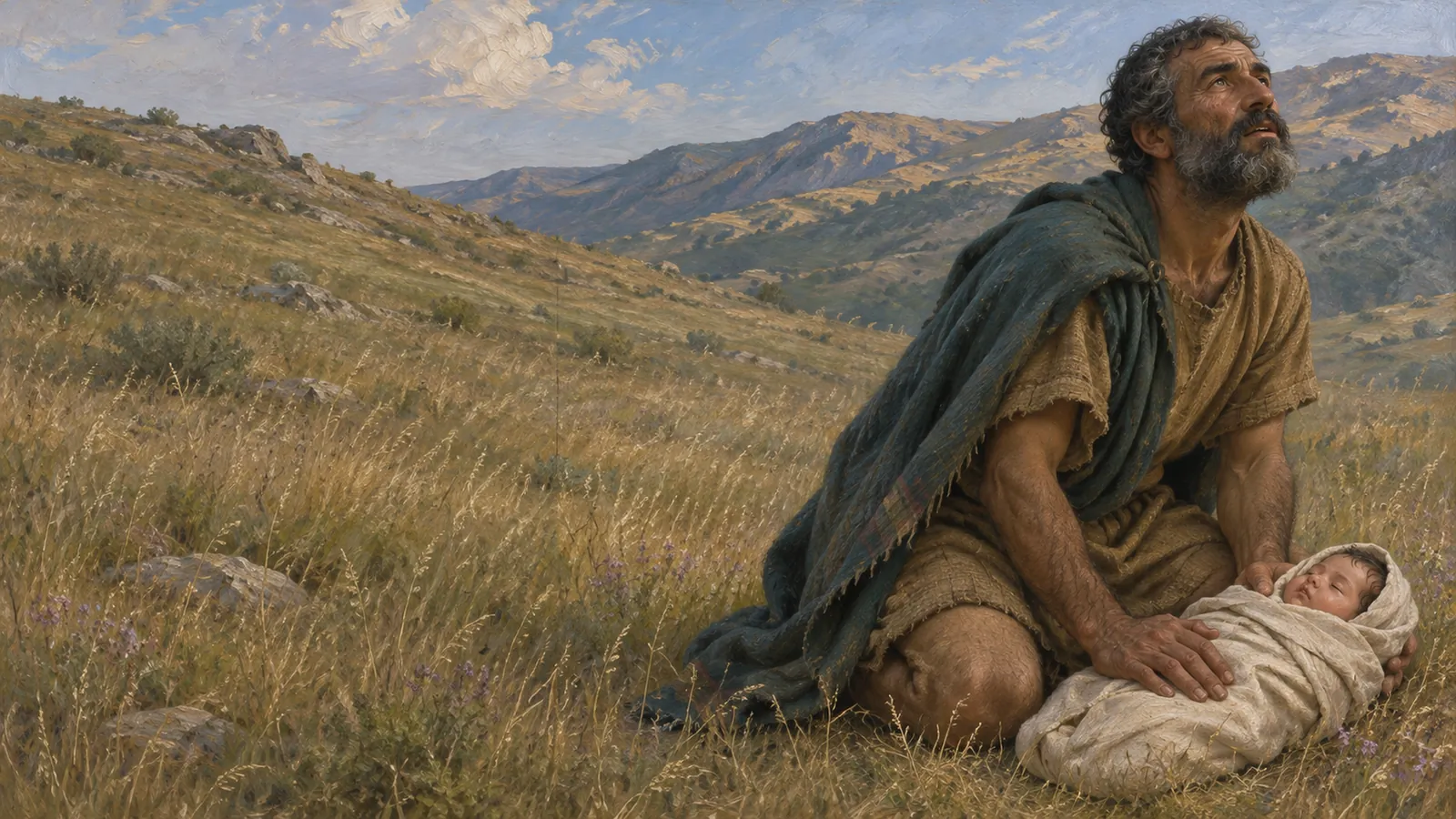
He wonders whether the Sun God knows he has no child. Perhaps that is why the god brought him here. He speaks of the bread given to someone dear to the Sun God.
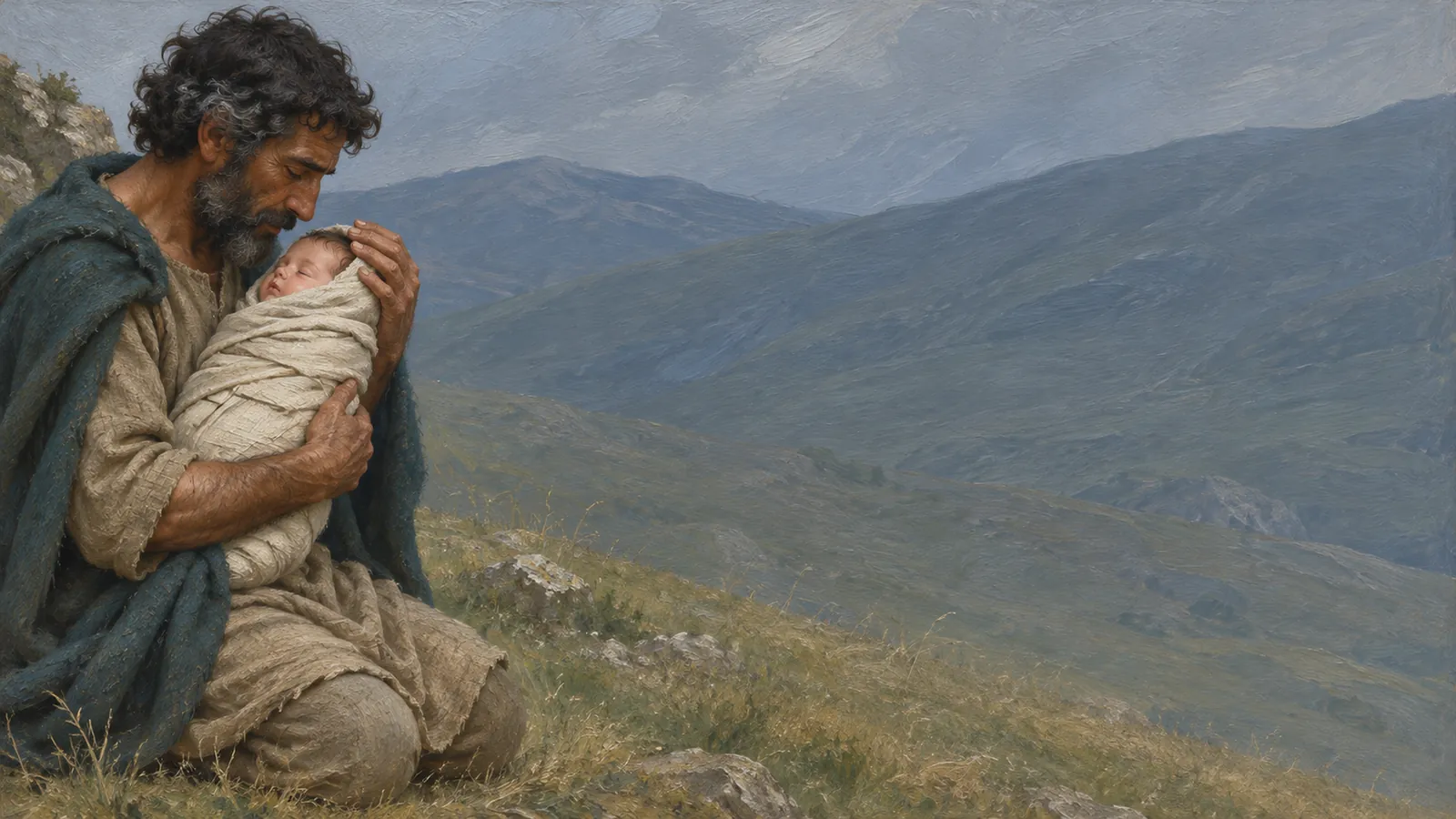
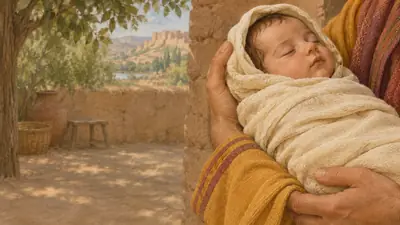
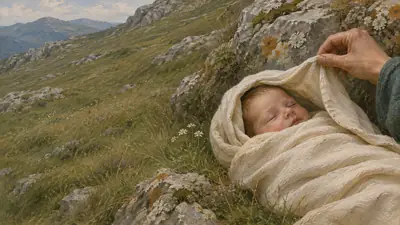
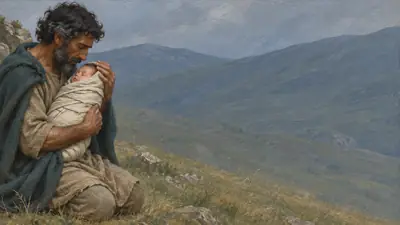
The fisherman raises the child from the ground. He holds him close and rejoices. The same man who wondered aloud about having no child now starts back with one in his arms.
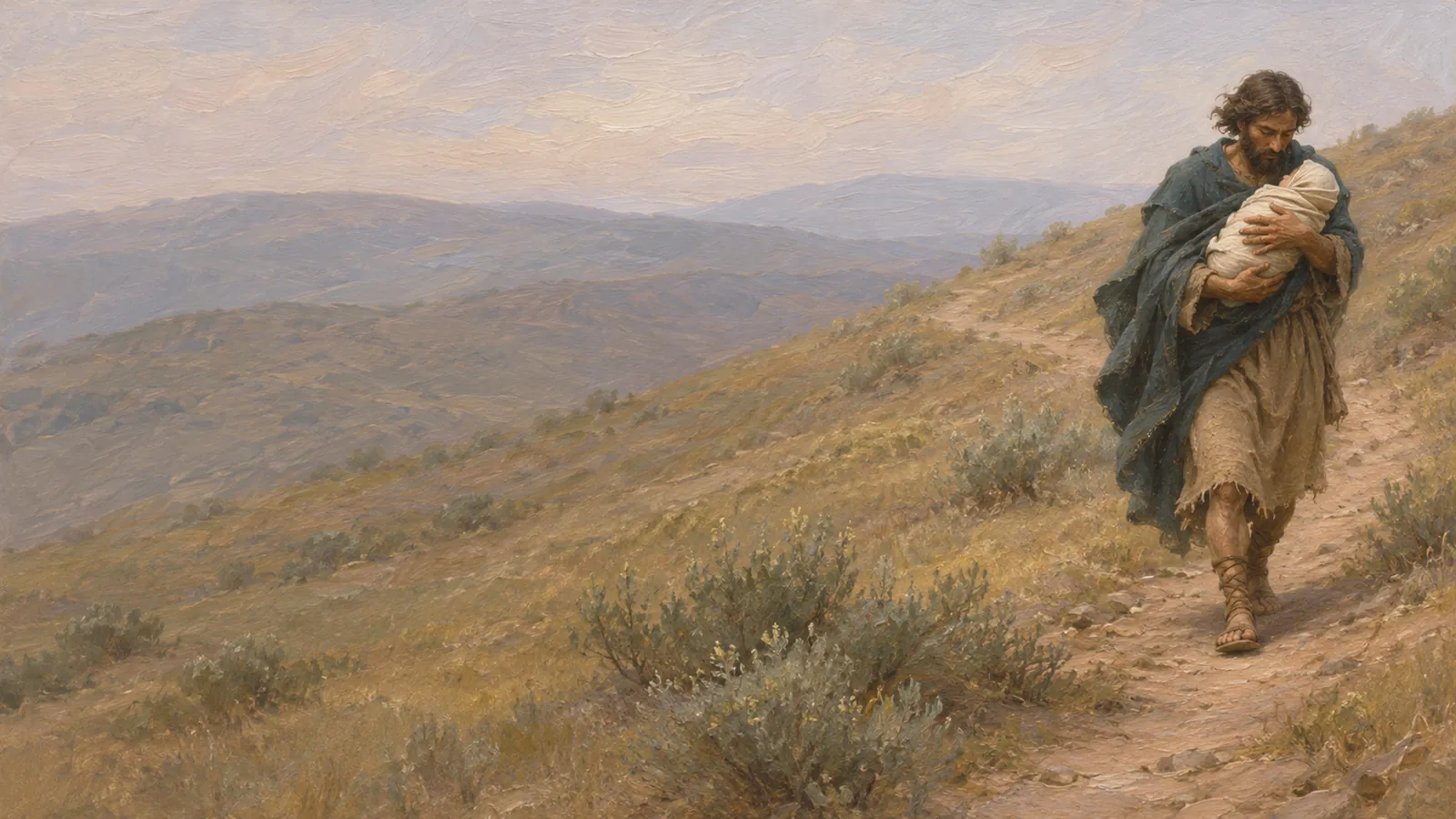
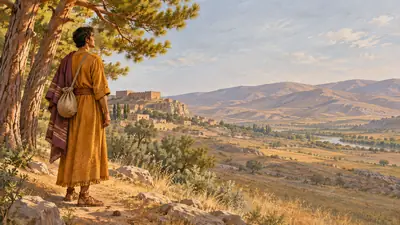
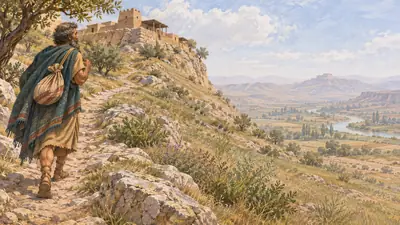
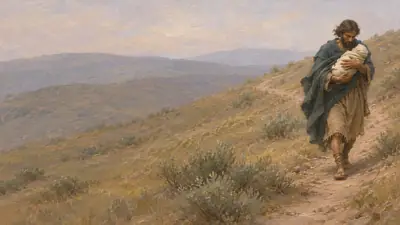
We picture the fisherman taking the path downhill, with the child held against his chest. The lines carry him straight from his joy at the discovery to his arrival in town.
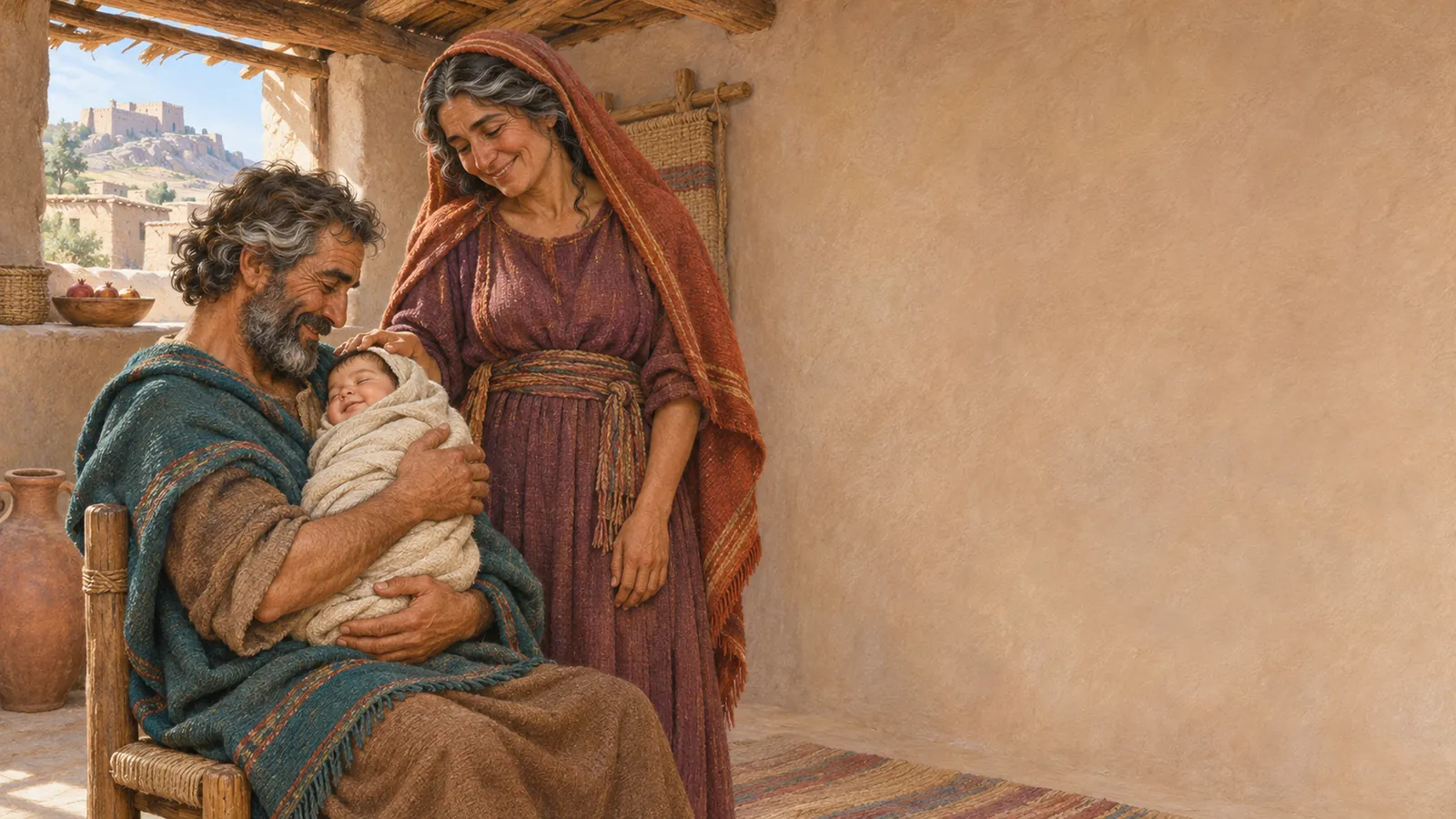
HOME IN URMA
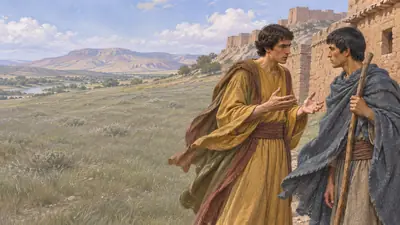
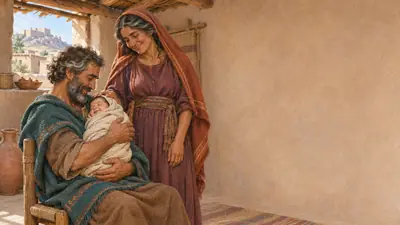
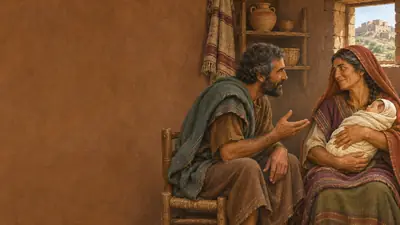
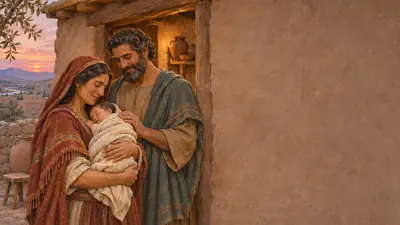
The fisherman reaches Urma and goes into his house. The tablet even tells us that he sits down in a chair before speaking. His wife is the first person to hear his plan.
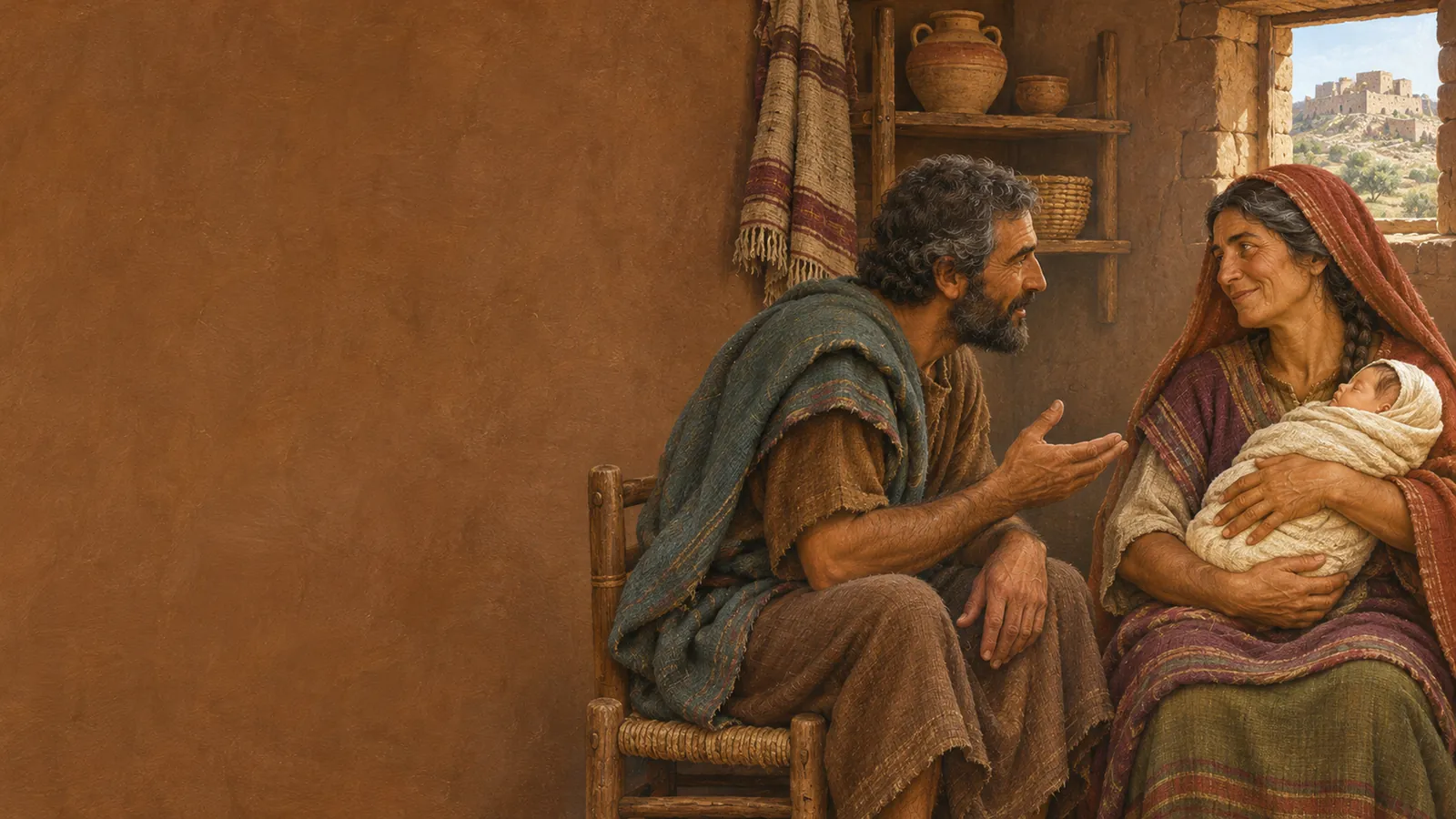
He asks her to take the child to the sleeping room, lie on the bed and cry out. The people of Urma will hear and think she has given birth, he tells her.
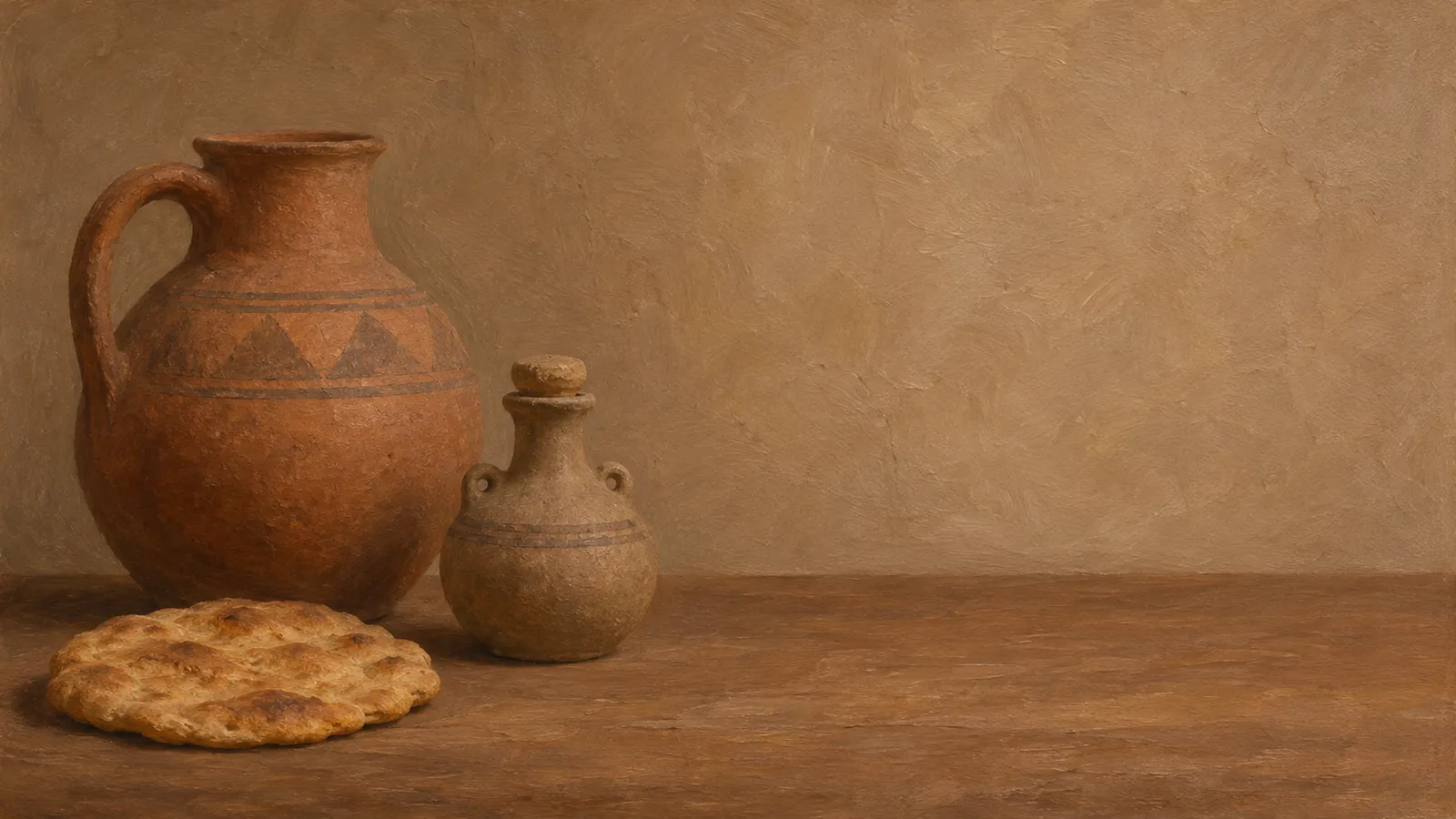
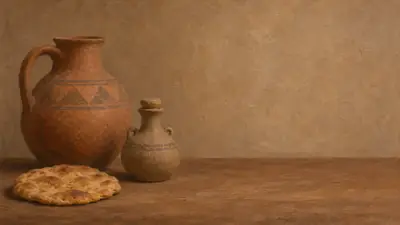
The fisherman names three things that might come to the house. One person will bring bread, another beer and a third oil or fat. Each is an ordinary gift for an extraordinary arrival.
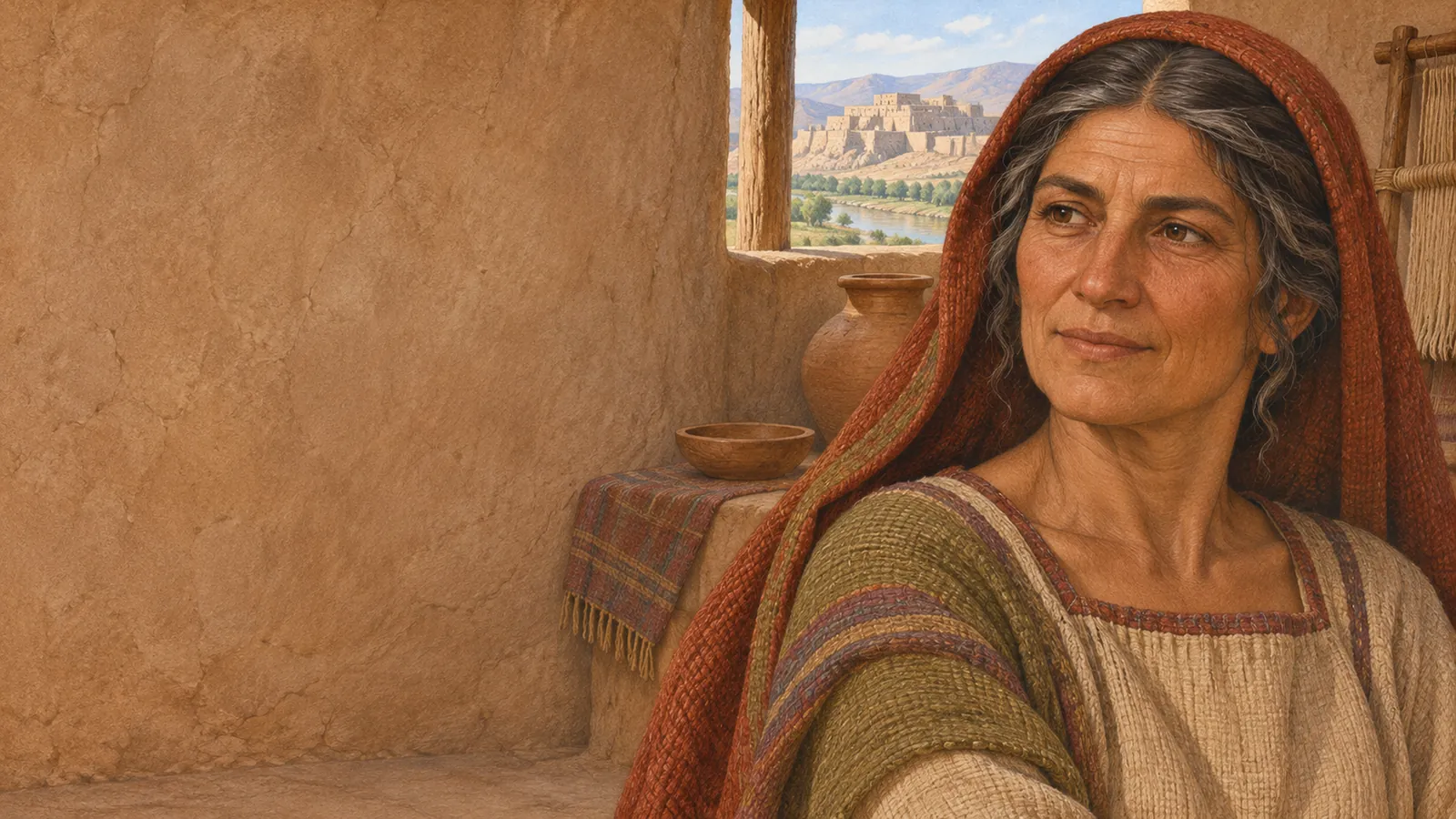
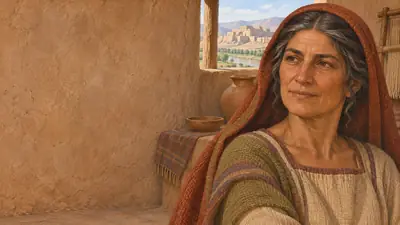
Here the old narrator pauses to describe what was expected of a wife. Her cleverness is praised and her obedience is expected. Those are the narrator’s ideas, recorded on the ancient clay.
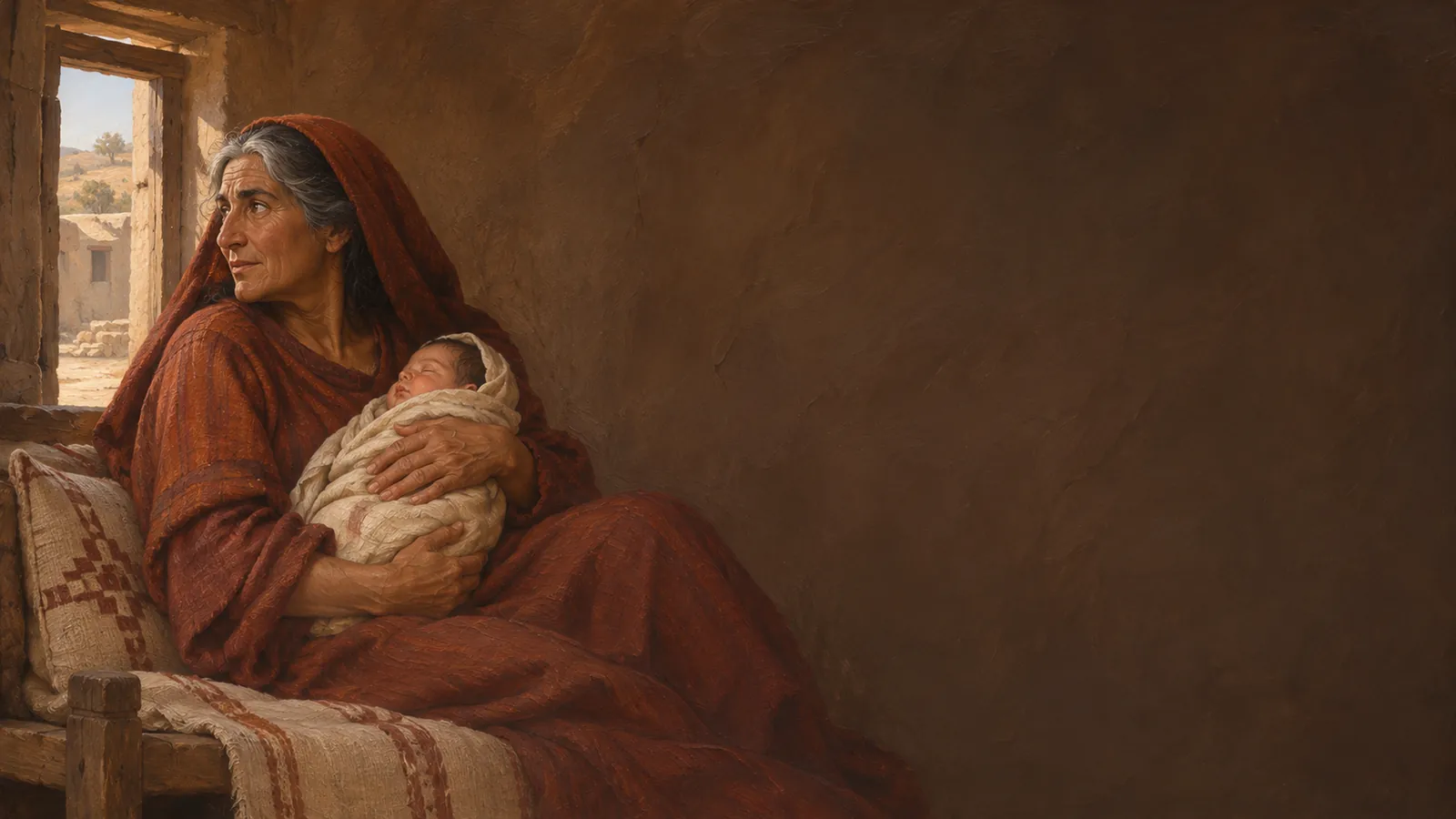
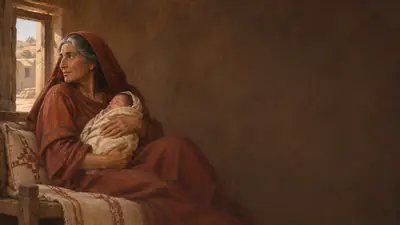
The fisherman’s wife takes the child into the sleeping room and lies down. The words for what she does next are partly lost. The people outside soon hear her.
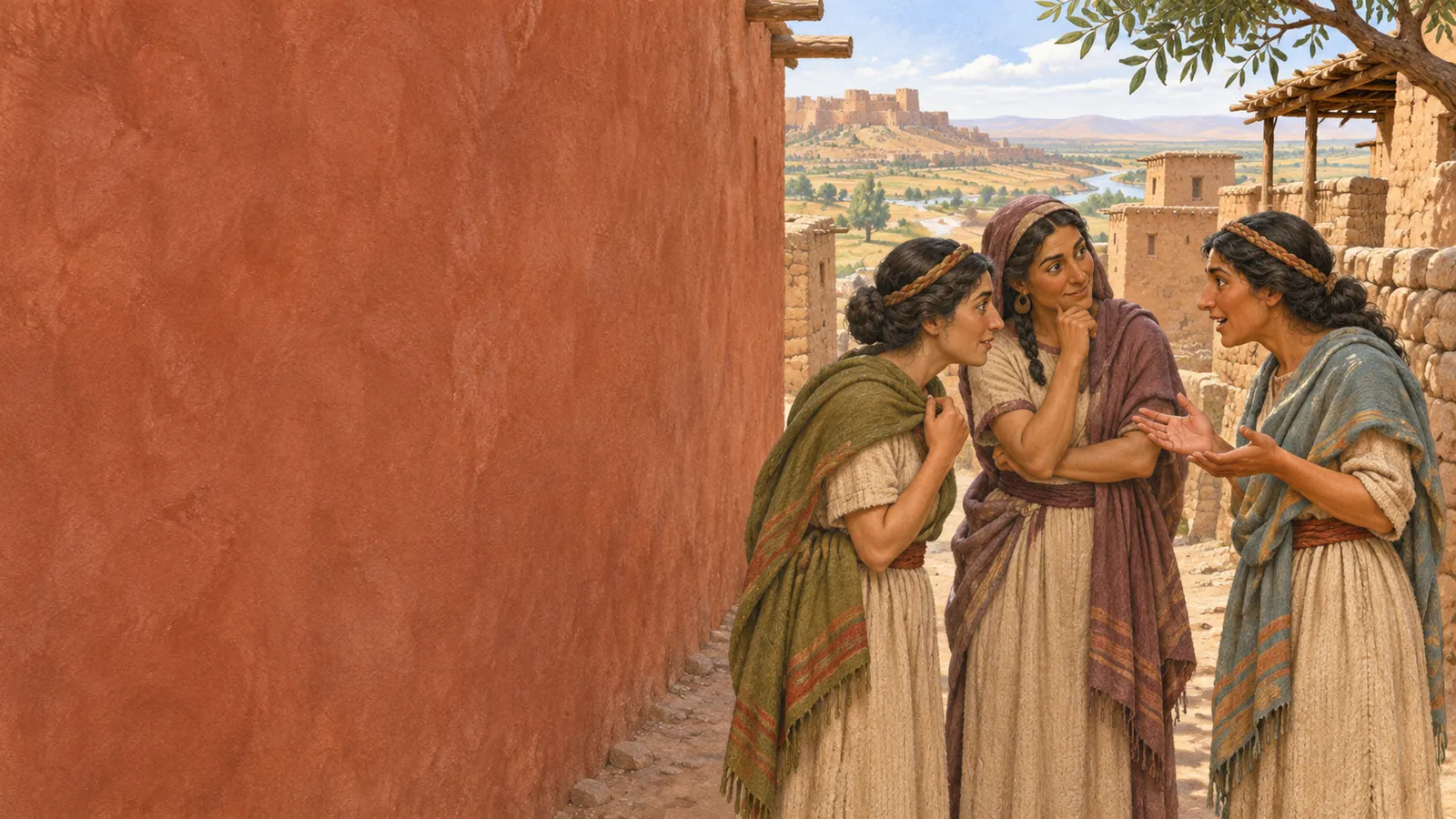
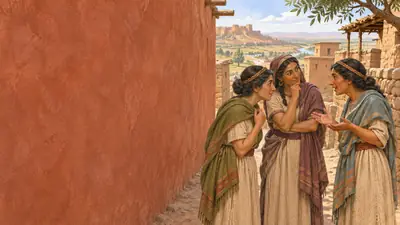
The neighbours tell one another that the fisherman’s wife has had a son. Nobody outside the house has seen the hillside. They respond to the news in the way the fisherman hoped.
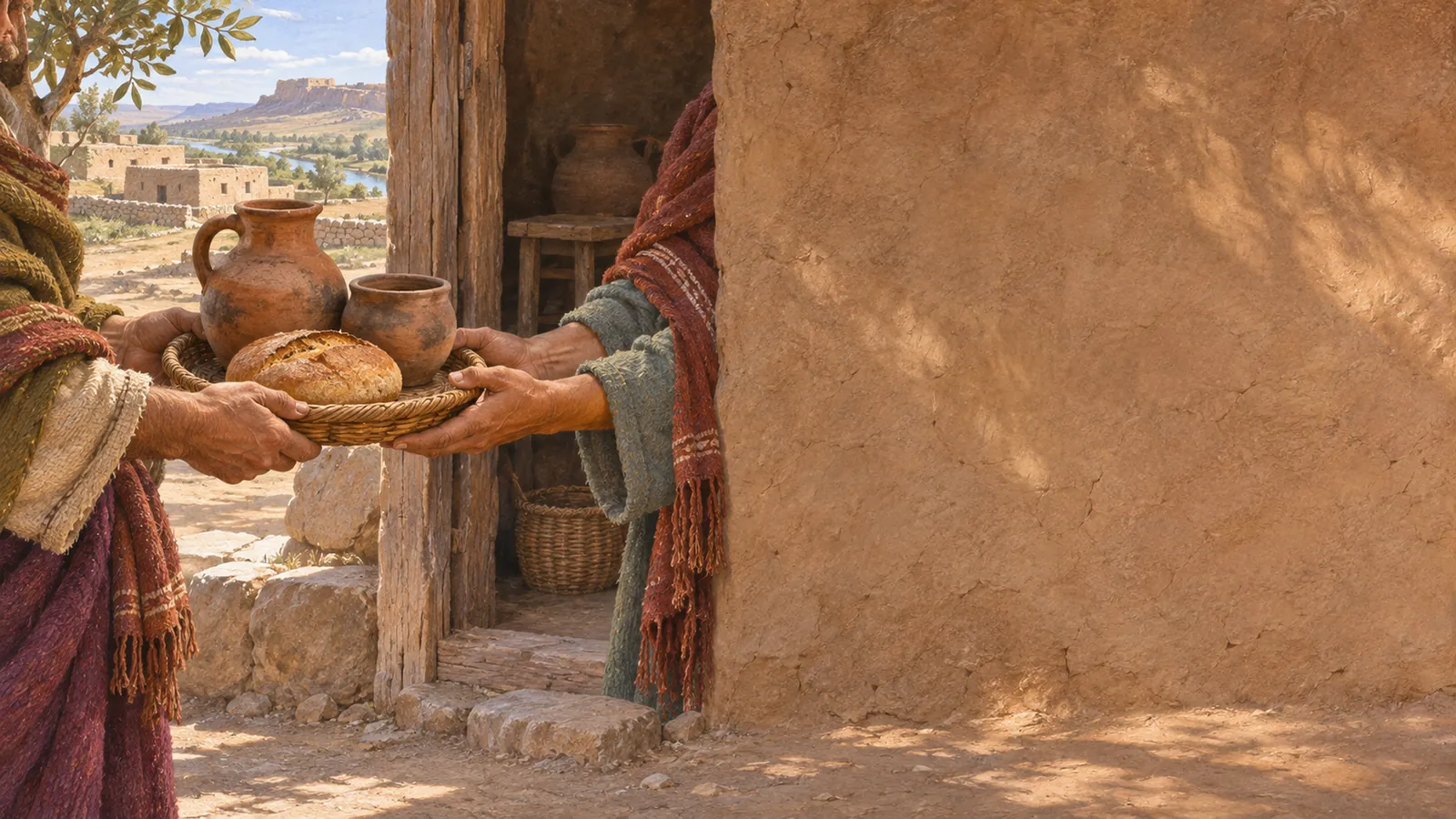
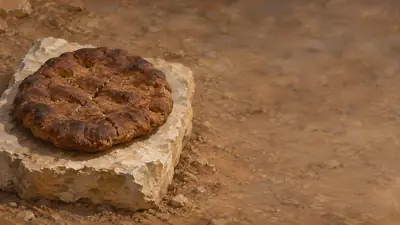
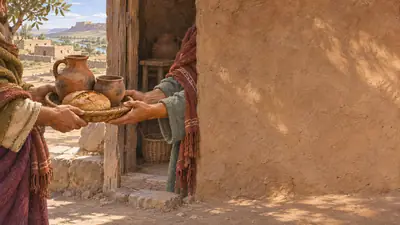
Gifts start arriving. Near the end of the surviving account, marks remain for the things the fisherman names. The picture gathers a loaf and two vessels close to the threshold.
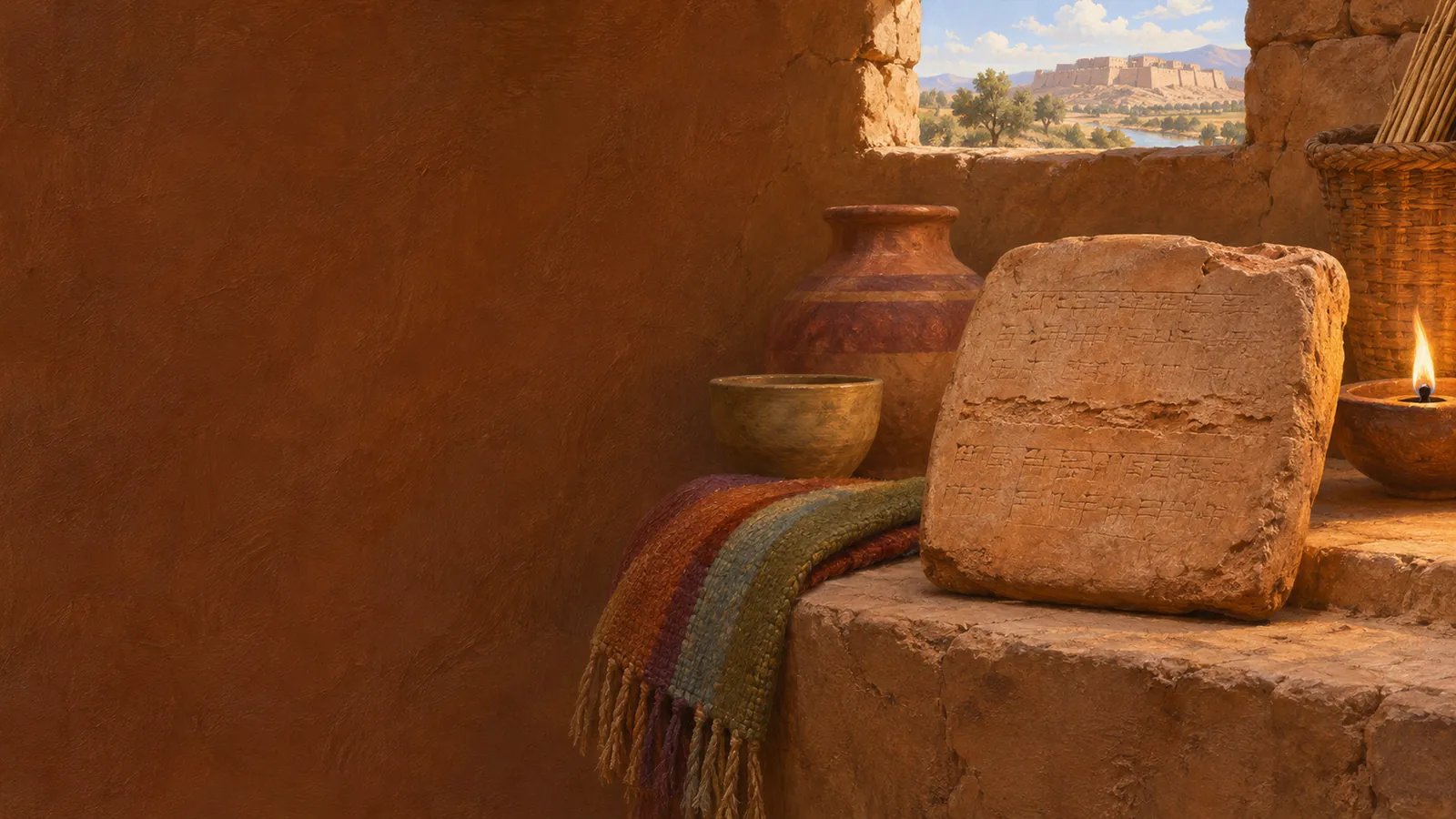
This tale shares a clay tablet with a hymn and ritual for Ishtar. They occupy the earlier columns. The relationship between those texts and this story remains uncertain.
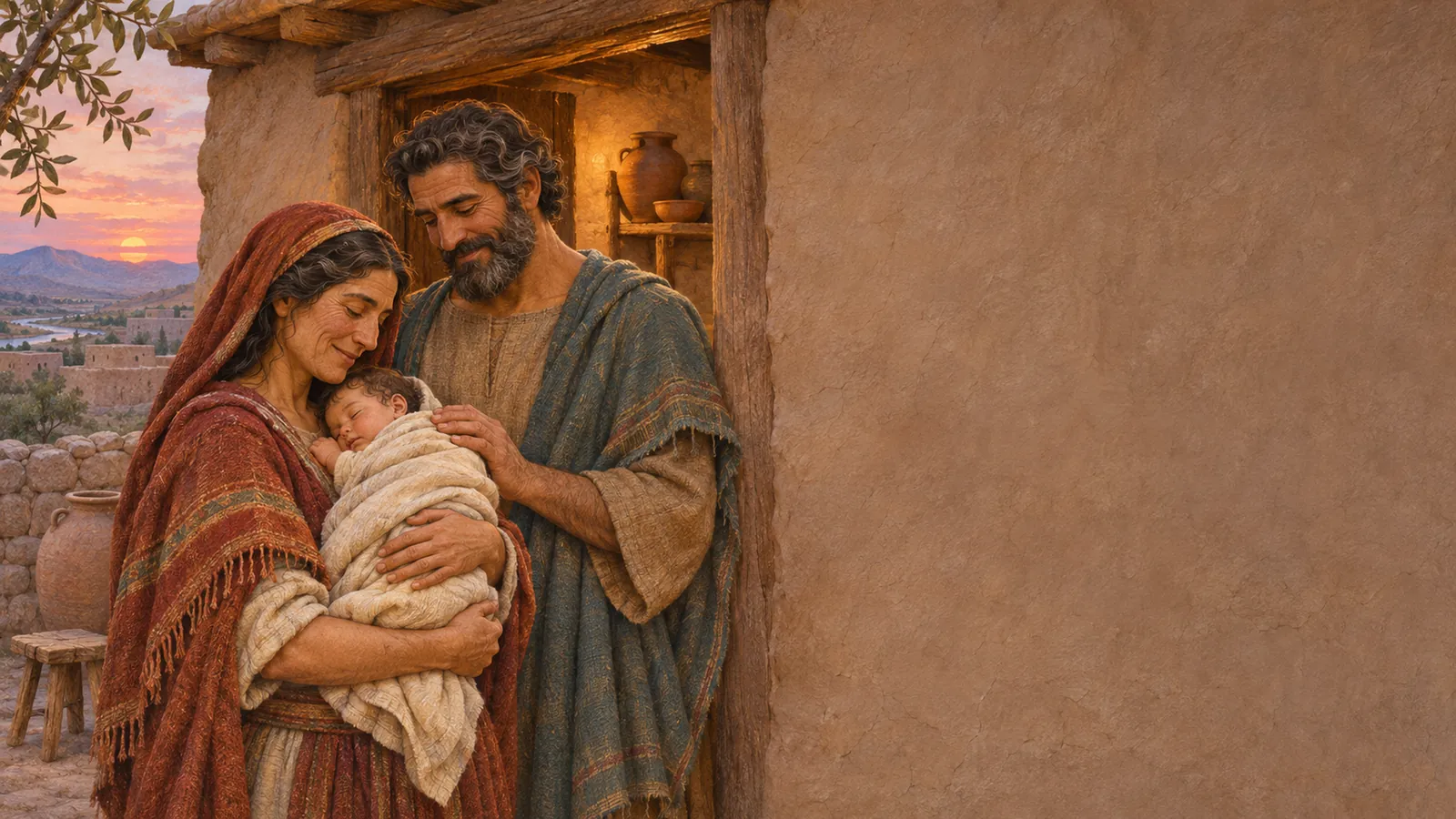
The last surviving marks include a damaged scribal note. A small separately catalogued fragment cannot tell us the child’s later life. We leave him in the house in Urma as the neighbours arrive.
End of chapter 1
All pages
Sources
Editions consulted
- Hethitologie Portal Mainz, CTH 363.1 introduction and witnesses
- Rieken and colleagues, CTH 363.1 translation and textual notes
- Hethitologie Portal Mainz, KUB 24.7 cuneiform edition
- Hethitologie Portal Mainz, CTH 363.2 manuscript entry
- Güterbock, A Hurro-Hittite Hymn to Ishtar, discussion of the shared tablet
- Galhano, Hittite Ideas about the Body, pp. 71–72 and 83–84
- Peled, Bestiality in Hittite Thought, discussion of the departure and rescue scenes
- Hoffner, Hittite Myths, second edition, pp. 85–87
Ancient lines behind each page
- Page 1: CTH 363.1 translation lines 1–169
See source notes for which details are attested. - Page 2: CTH 363.1 translation lines 1–3
See source notes for which details are attested. - Page 3: CTH 363.1 translation lines 6–10
See source notes for which details are attested. - Page 4: CTH 363.1 translation lines 6–8
See source notes for which details are attested. - Page 5: CTH 363.1 translation lines 9–15
See source notes for which details are attested. - Page 6: CTH 363.1 translation lines 15–21
See source notes for which details are attested. - Page 7: CTH 363.1 translation lines 22–38
See source notes for which details are attested. - Page 8: CTH 363.1 translation lines 31–47
See source notes for which details are attested. - Page 9: CTH 363.1 translation lines 44–48
See source notes for which details are attested. - Page 10: CTH 363.1 translation lines 47–54
See source notes for which details are attested. - Page 11: CTH 363.1 translation lines 52–54
See source notes for which details are attested. - Page 12: CTH 363.1 translation lines 55–61
See source notes for which details are attested. - Page 13: CTH 363.1 translation lines 59–66
See source notes for which details are attested. - Page 14: CTH 363.1 translation lines 67–71
See source notes for which details are attested. - Page 15: CTH 363.1 translation lines 70–83
See source notes for which details are attested. - Page 16: CTH 363.1 translation lines 84–88
See source notes for which details are attested. - Page 17: CTH 363.1 translation lines 89–94
See source notes for which details are attested. - Page 18: CTH 363.1 translation lines 95–97
See source notes for which details are attested. - Page 19: CTH 363.1 translation lines 96–98
See source notes for which details are attested. - Page 20: CTH 363.1 translation lines 99–103
See source notes for which details are attested. - Page 21: CTH 363.1 translation lines 104–115
See source notes for which details are attested. - Page 22: CTH 363.1 translation lines 113–116
See source notes for which details are attested. - Page 23: CTH 363.1 translation lines 117–120
See source notes for which details are attested. - Page 24: CTH 363.1 translation lines 121–124
See source notes for which details are attested. - Page 25: CTH 363.1 translation lines 122–126
See source notes for which details are attested. - Page 26: CTH 363.1 translation lines 125–129
See source notes for which details are attested. - Page 27: CTH 363.1 translation lines 128–134
See source notes for which details are attested. - Page 28: CTH 363.1 translation lines 135–139
See source notes for which details are attested. - Page 29: CTH 363.1 translation lines 138–140
See source notes for which details are attested. - Page 30: CTH 363.1 translation lines 140–146
See source notes for which details are attested. - Page 31: CTH 363.1 translation lines 146–153
See source notes for which details are attested. - Page 32: CTH 363.1 translation lines 150–153
See source notes for which details are attested. - Page 33: CTH 363.1 translation lines 154–158
See source notes for which details are attested. - Page 34: CTH 363.1 translation lines 159–163
See source notes for which details are attested. - Page 35: CTH 363.1 translation lines 163–167
See source notes for which details are attested. - Page 36: CTH 363.1 translation lines 165–168
See source notes for which details are attested. - Page 37: CTH 363.1 introduction and tablet KUB 24.7
See source notes for which details are attested. - Page 38: CTH 363.1 169 and CTH 363.2 catalogue
See source notes for which details are attested.
Illustrations made with AI tools by IL Archive; the text is based on the ancient sources (see the sources at the end of each chapter).